
Racing roots
In fiercely hot conditions on a June week in 1906, a motorsport event which is widely (though not universally) regarded as the inaugural Grand Prix race was held in north-west France, only two decades after the first patent was issued for a car with an internal-combustion engine.
Now, 120 years later, we’re taking the opportunity to investigate that ‘original Grand Prix’ claim, which is certainly worth looking at more closely, as well as the format of the race.
We will then run through each of the manufacturers involved in reverse order of how they fared, and finally look at which – if any – of them are still part of the sport we know today as Formula One.
Early Grands Prix
Confusion about whether this really was the first Grand Prix has been caused by the fact that that name has been retrospectively applied to other races held in France before 1906.
These were mostly city-to-city events, at least one of the cities in question usually being Paris, as in the Paris-Berlin of 1901.
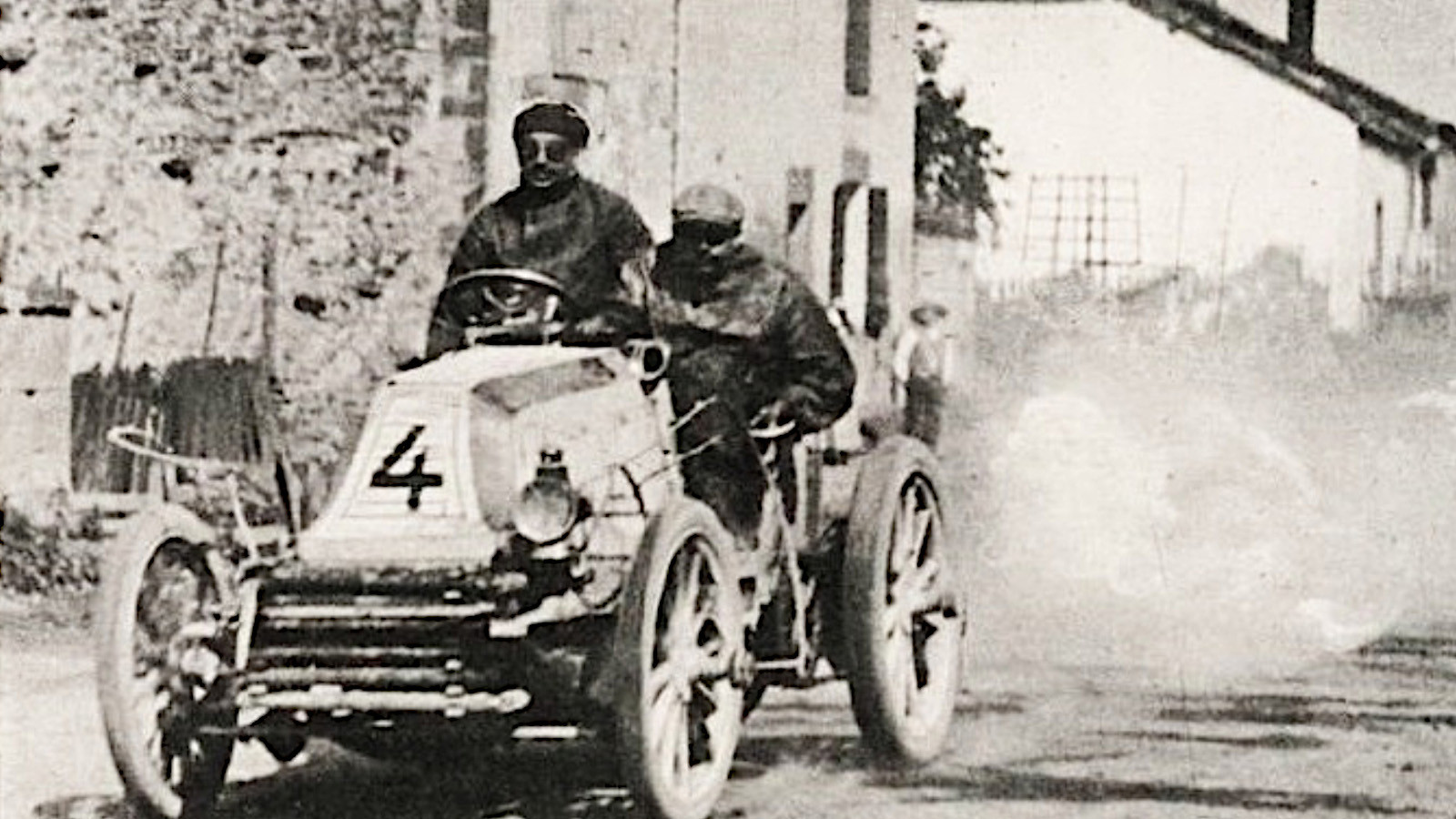
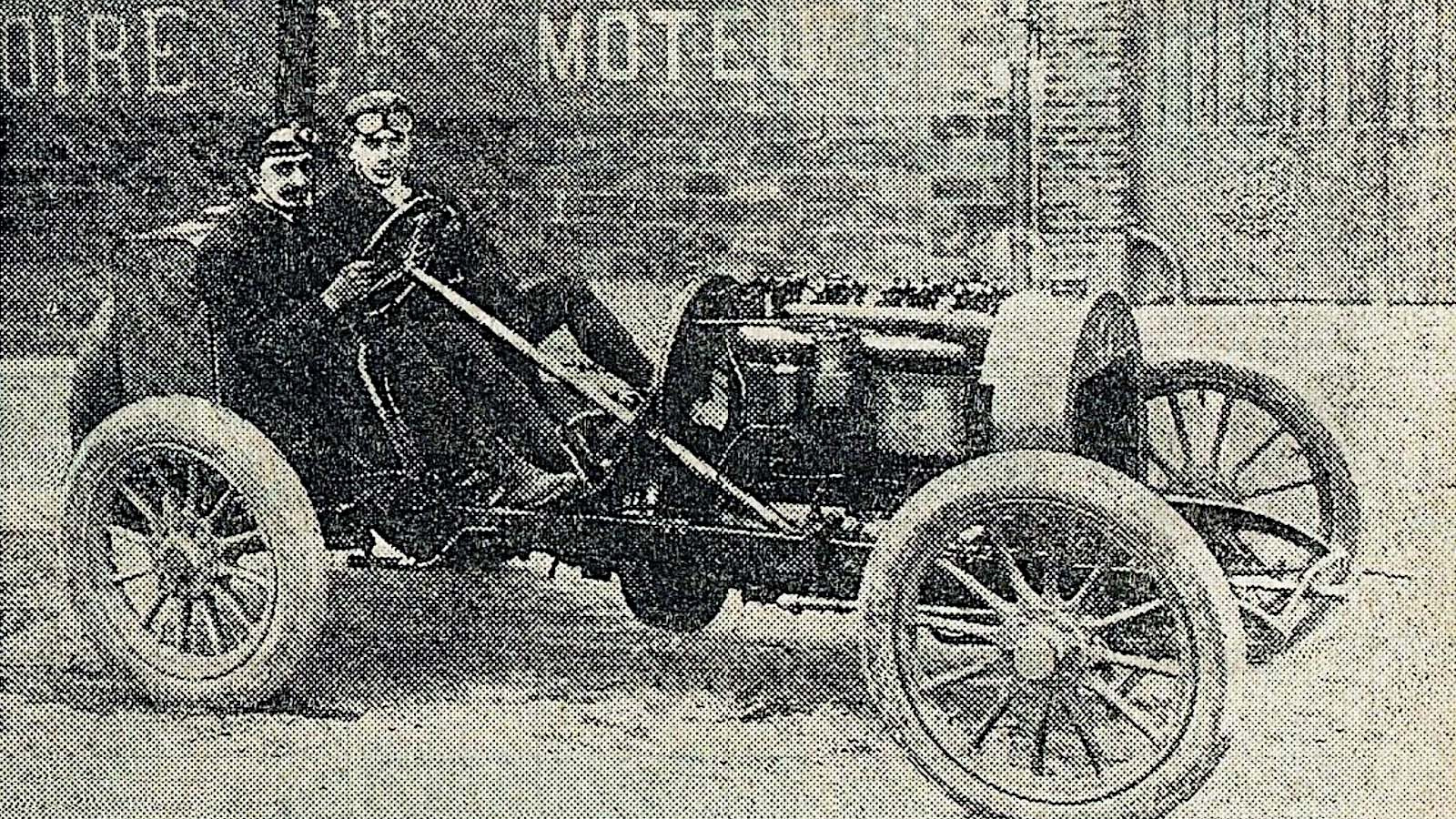
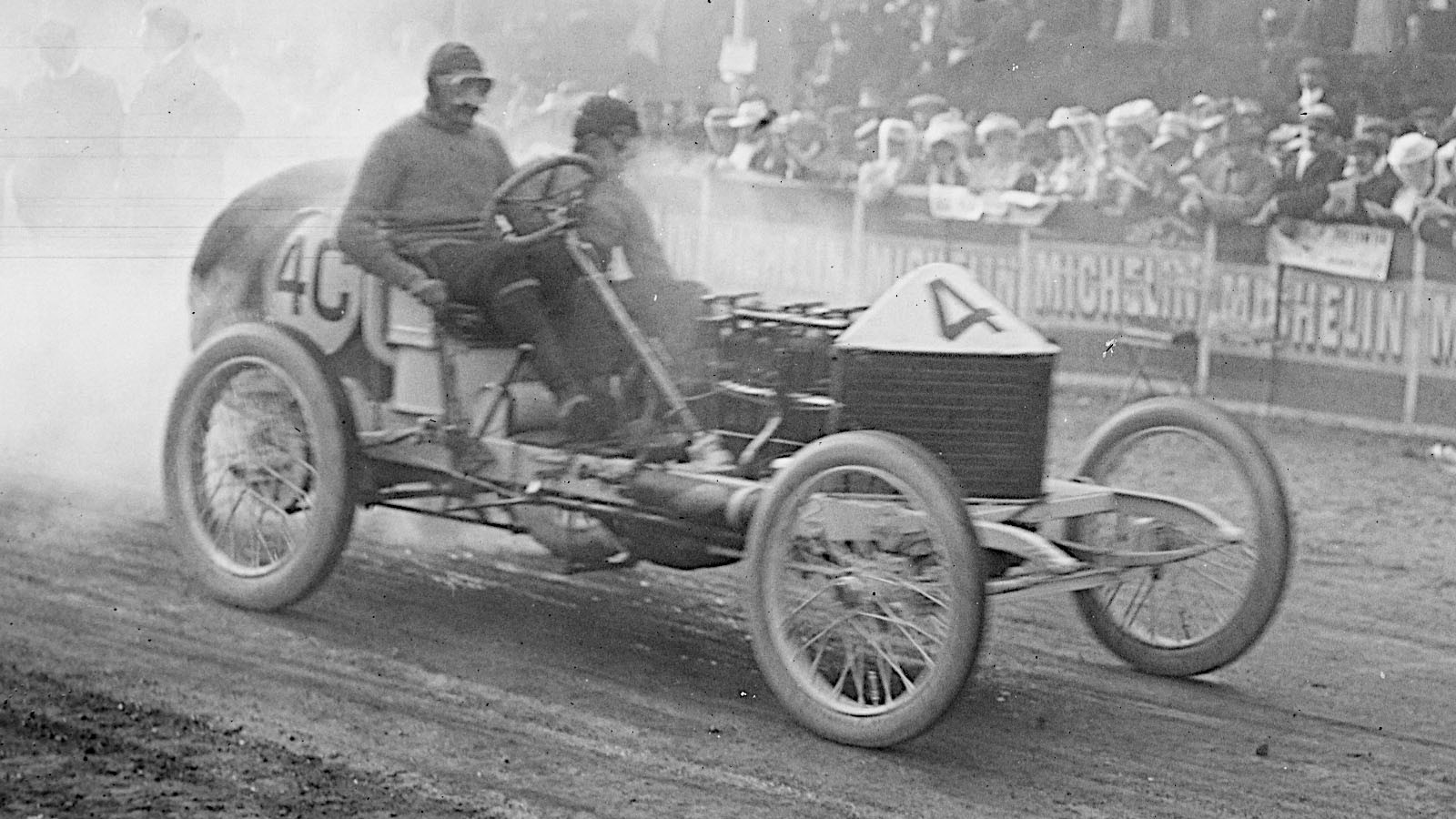
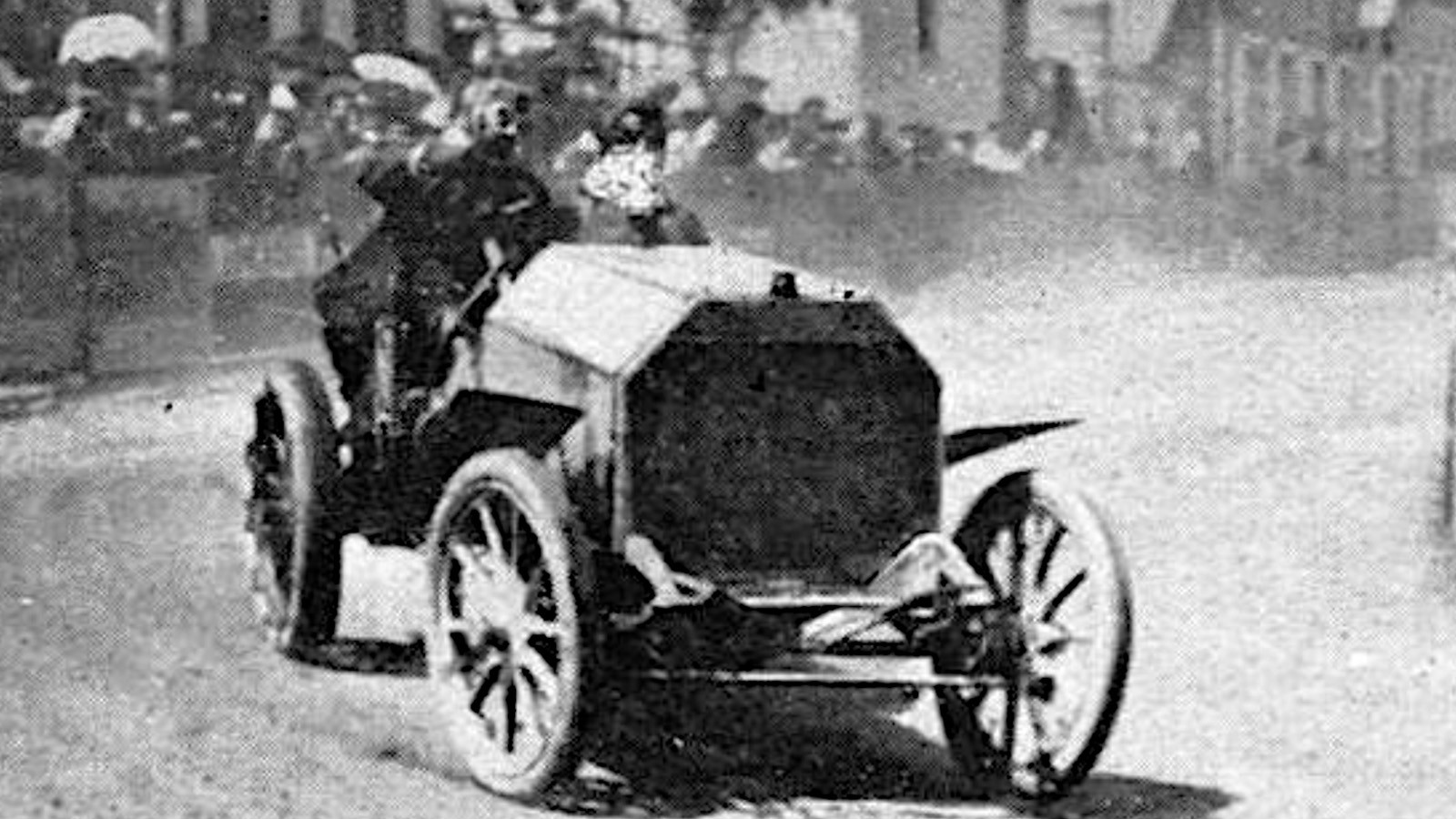
That was dominated by Henri Fournier, accompanied by his then-compulsory riding mechanic on a Mors (pictured), but despite the much later attribution this race was not known as a Grand Prix at the time.
There is no doubt that Fournier, and the other winning drivers of the period, did a magnificent job, but because they didn’t win races which were called Grands Prix while they were happening, it’s difficult to think of these heroes as Grand Prix winners.
The Pau ‘Grand Prix’
There are many references online to a February 1901 event apparently called the Pau Grand Prix, which would predate the original French Grand Prix by five years.
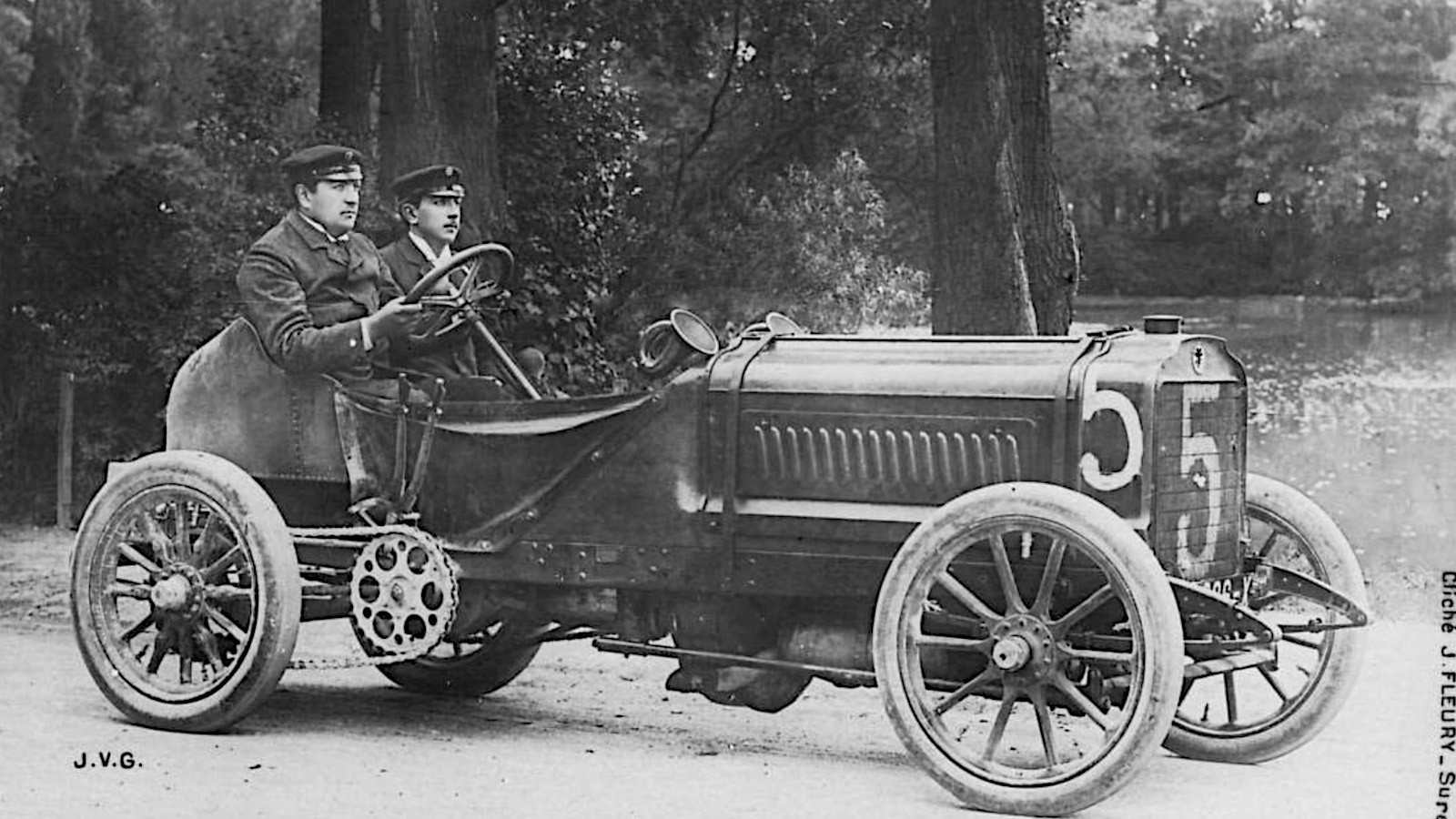
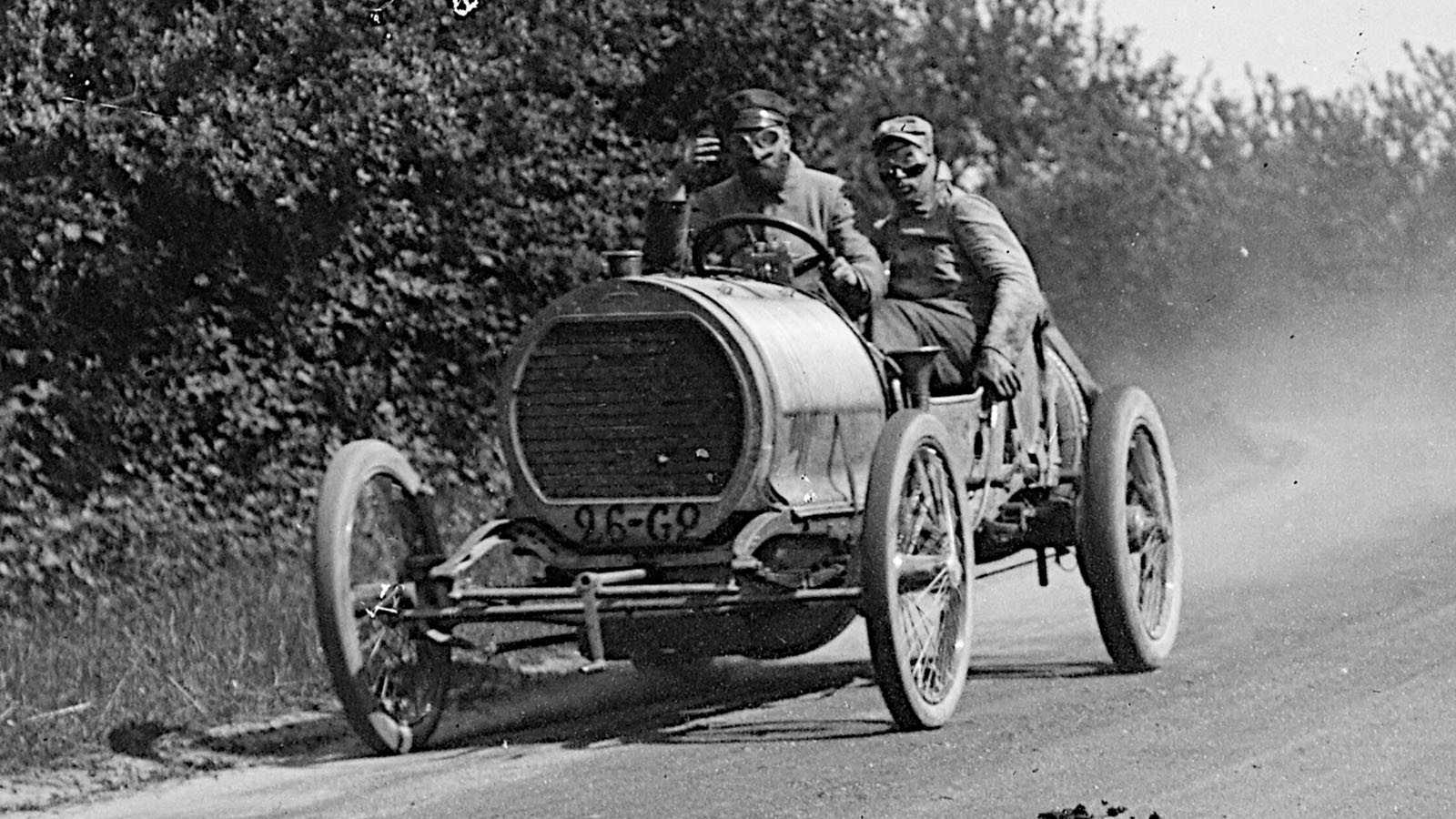
The event – held on a very long road course outside the city, quite unlike the current Pau street circuit – was in fact called the Circuit du sud-ouest (approximately the ‘tour of the south-west’), and the Grand Prix de Pau, meaning ‘Pau grand prize’, was the award given to the winner of the category for cars weighing over 650kg, Panhard driver Maurice Farman (pictured).
Two accolades called Grand Prix du Palais d’Hiver (‘Winter Palace grand prize’, referring to what later became the Beaumont Palace) were presented to the 400-650kg and up-to-400kg category winners, who were Farman’s brother Henri and Louis Renault respectively.
‘Grand Prix’ was therefore not the title of the event as we would understand it today, but simply the names of the prizes given to the winners of three different classes in the same race.
The Gordon Bennett Cup races
The immediate predecessors of the French Grand Prix were not any of the events previously mentioned, but the series of Gordon Bennett Cup races held annually from 1900 to 1905.
Sponsored by James Gordon Bennett, the publisher of the New York Herald newspaper (who created similar competitions in other sports), they were contested by countries, each of which could send up to three cars and, in a foreshadowing of the Eurovision Song Contest, the country that took victory in one race would host the one after it.
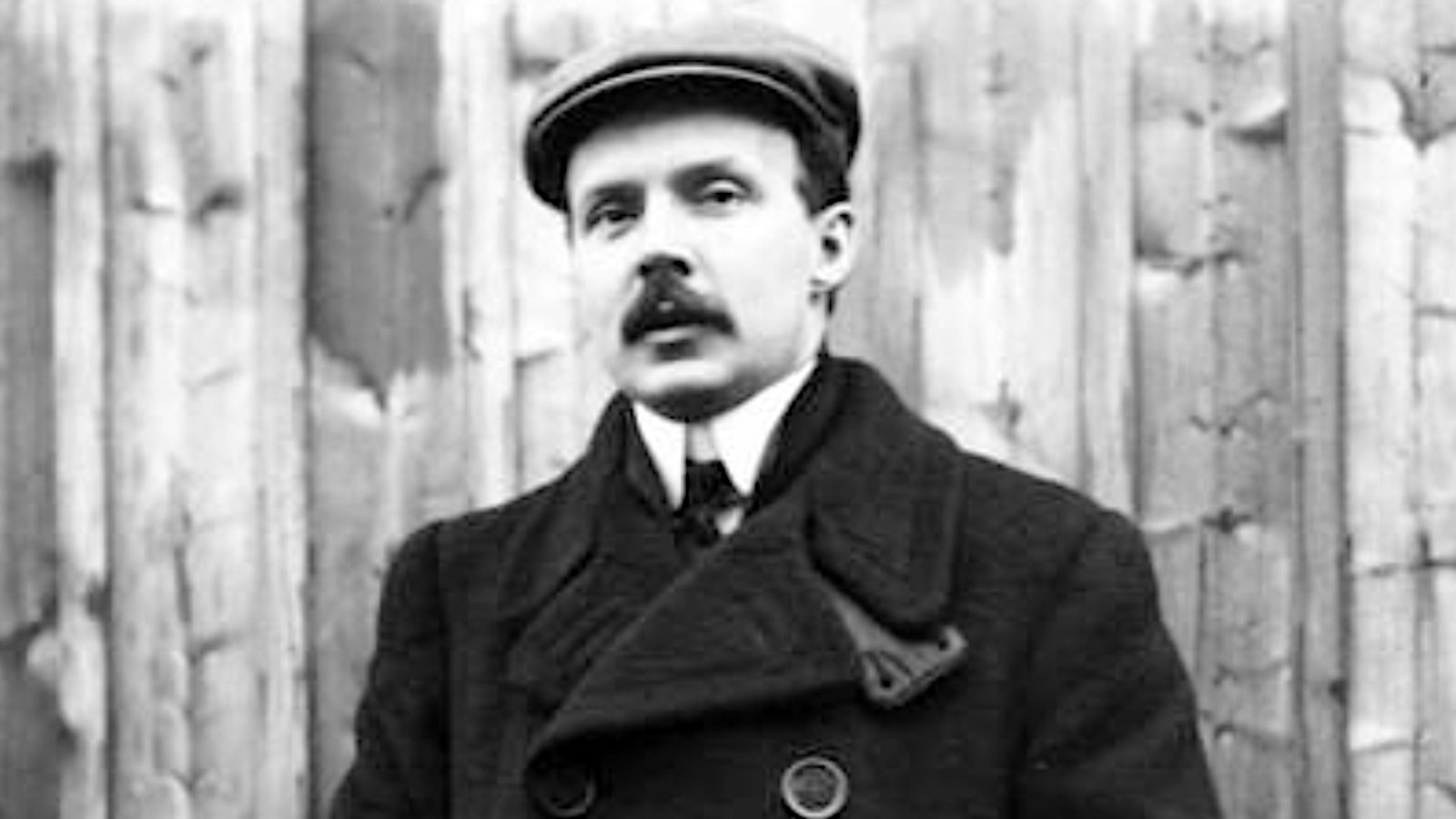
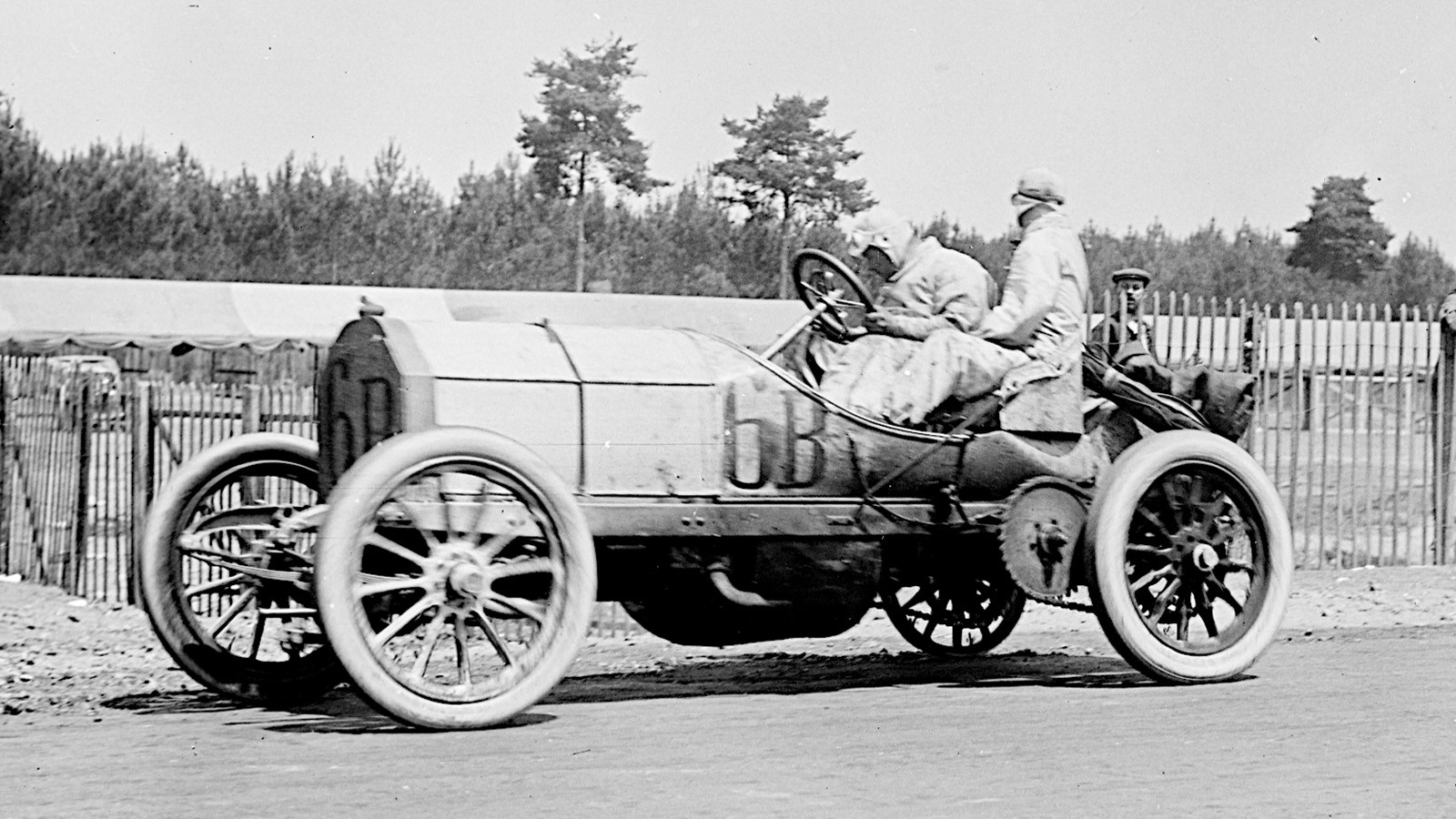
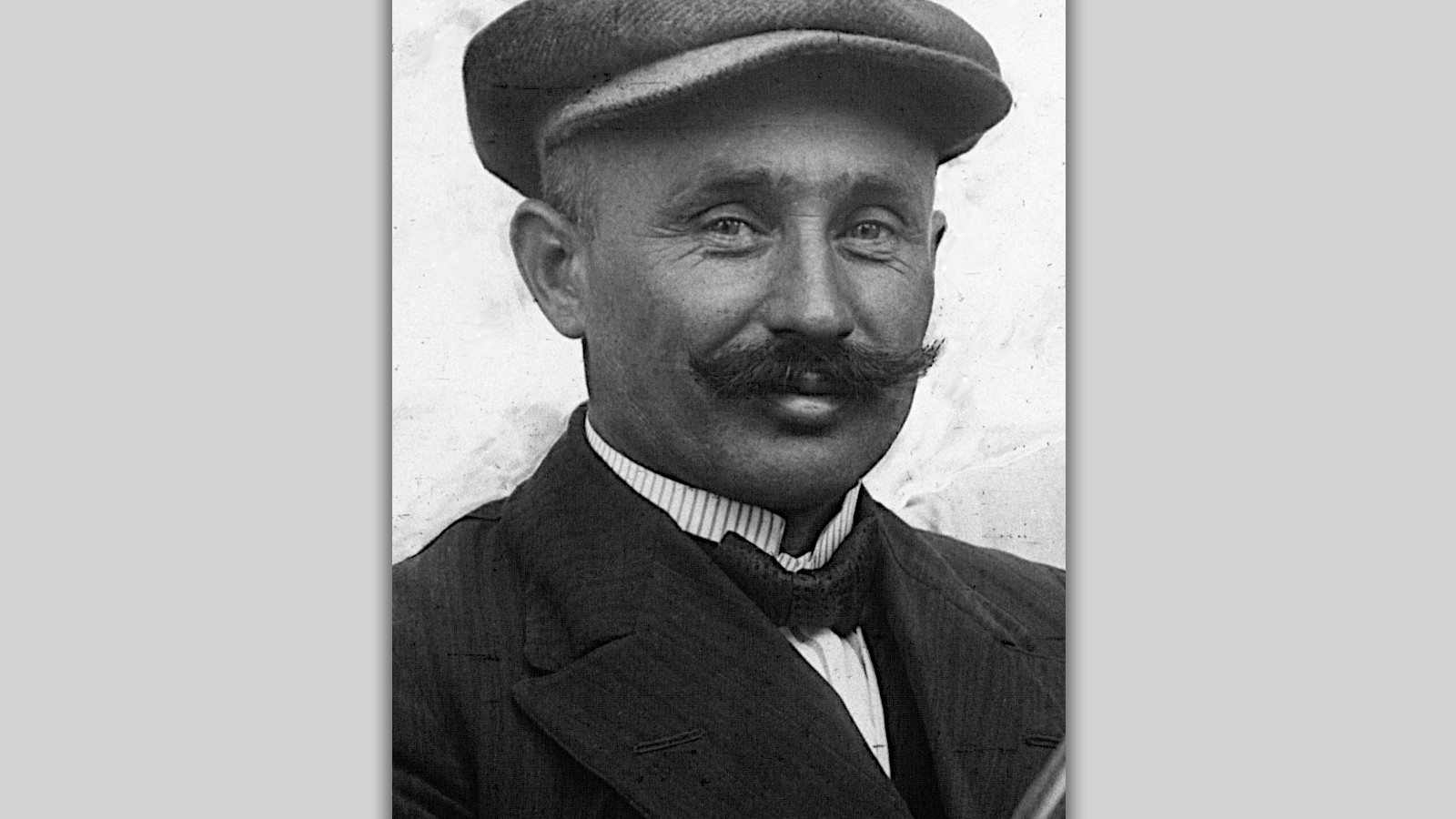
One Gordon Bennett Cup each was won by Germany and the UK, but the other four, including the 1905 event in which Léon Théry (pictured) was the top driver as he had been the year before, were won by France, which was therefore expected to organise a similar event in 1906.
After Gordon Bennett
The ‘three cars per country’ rule of the Gordon Bennett Cup races did not sit well with the French, who had a great many manufacturers involved in motorsport and felt they were not being fairly represented.
Although France had the right to organise a Gordon Bennett Cup event in 1906, it decided not to, and instead created the Grand Prix, which would be run to nearly identical rules with one major exception.
The three-car limit would apply not to countries but instead to marques, and there was no restriction on how many manufacturers from any one country could participate.
The Grand Prix entry list therefore looked very different from those of any of the Gordon Bennett races.
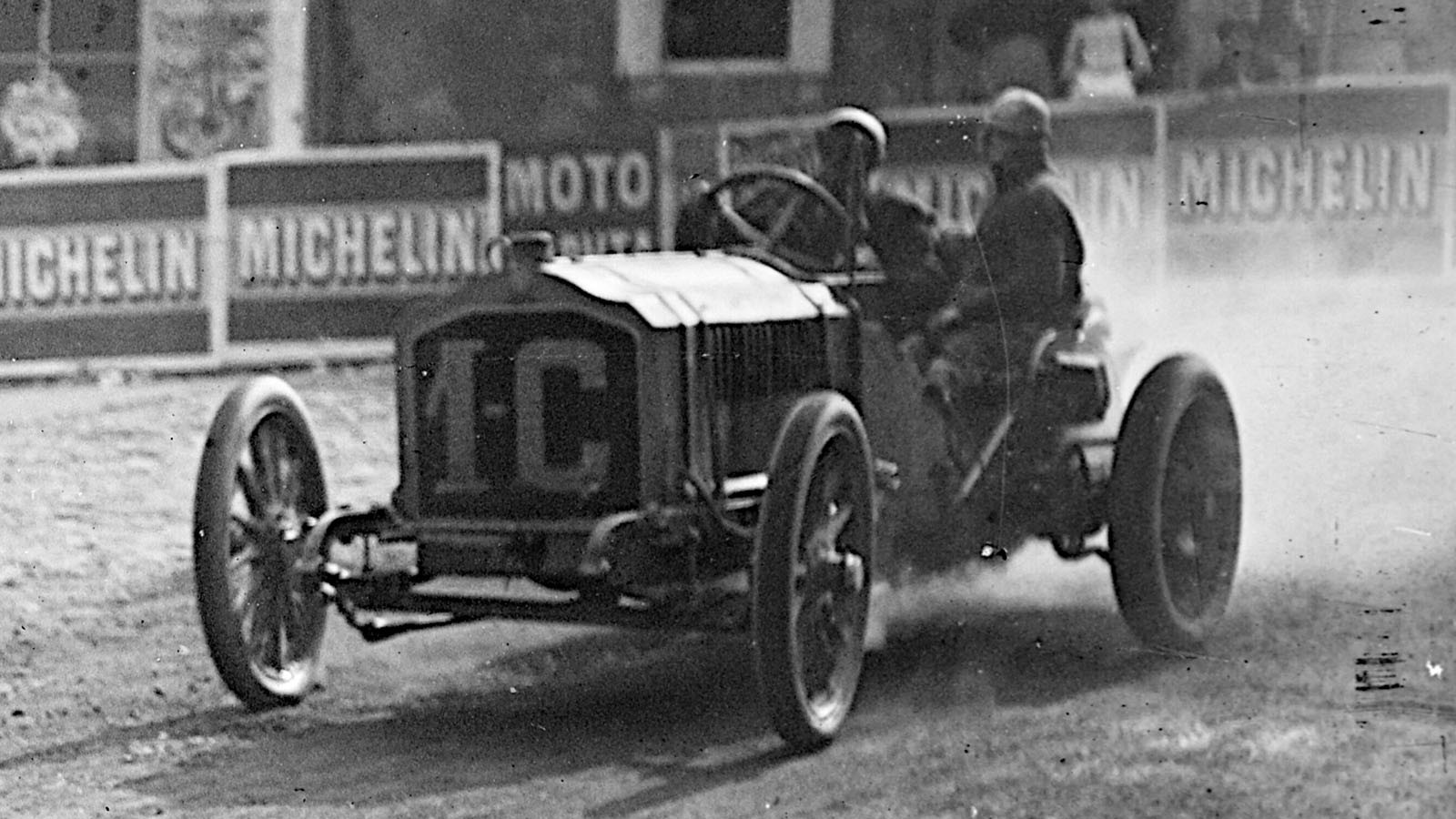
Of the 13 car makers represented, one was German, two were Italian and no fewer than 10 (including Renault, whose 1903 car is pictured competing in the disastrous Paris-Madrid event) were French.
The course
As was the fashion at the time, the 1906 French Grand Prix was, in modern terms, slightly more like what we would today call a rally rather than a race.
The competitors did not compete head-to-head but started at 90-sec intervals, and the winner was not necessarily the one who reached the finish first but the one who did so in the shortest time.
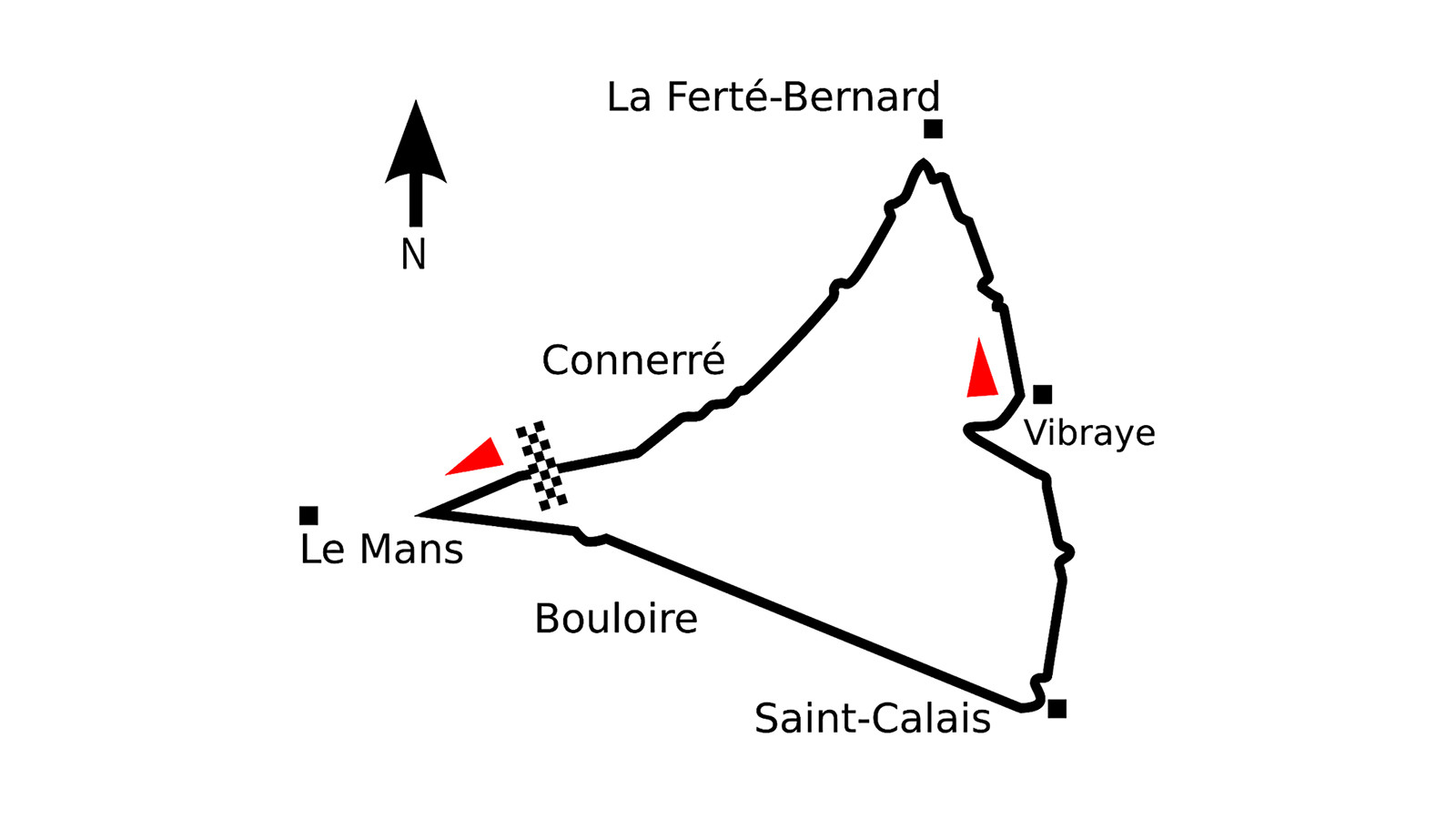
The race was held over 12 laps (six on Tuesday 26 June and another six the following day) of a very fast, anti-clockwise, approximately triangular, 64-mile road course to the east of the city of Le Mans.
Describing it as having been held at Le Mans is reasonably accurate, but it’s worth noting that not a single yard of the course was shared with the one which has hosted the famous 24-hour race since 1923.
The regulations
The Grand Prix was run to international technical regulations which had come into force in 1902 and would be replaced in 1907.
In dramatic contrast to the way things are in Formula One today, manufacturers were free to build their cars more or less any way they wanted to, with one important exception.
Not counting trivial items such as horns, lights and wings, they could not weigh more than 1000kg (2205lb) – or 1007kg (2220lb) if fitted with a magneto, as they all were.
In addition, the combined weight of the driver and mechanic had to be at least 120kg (265lb).
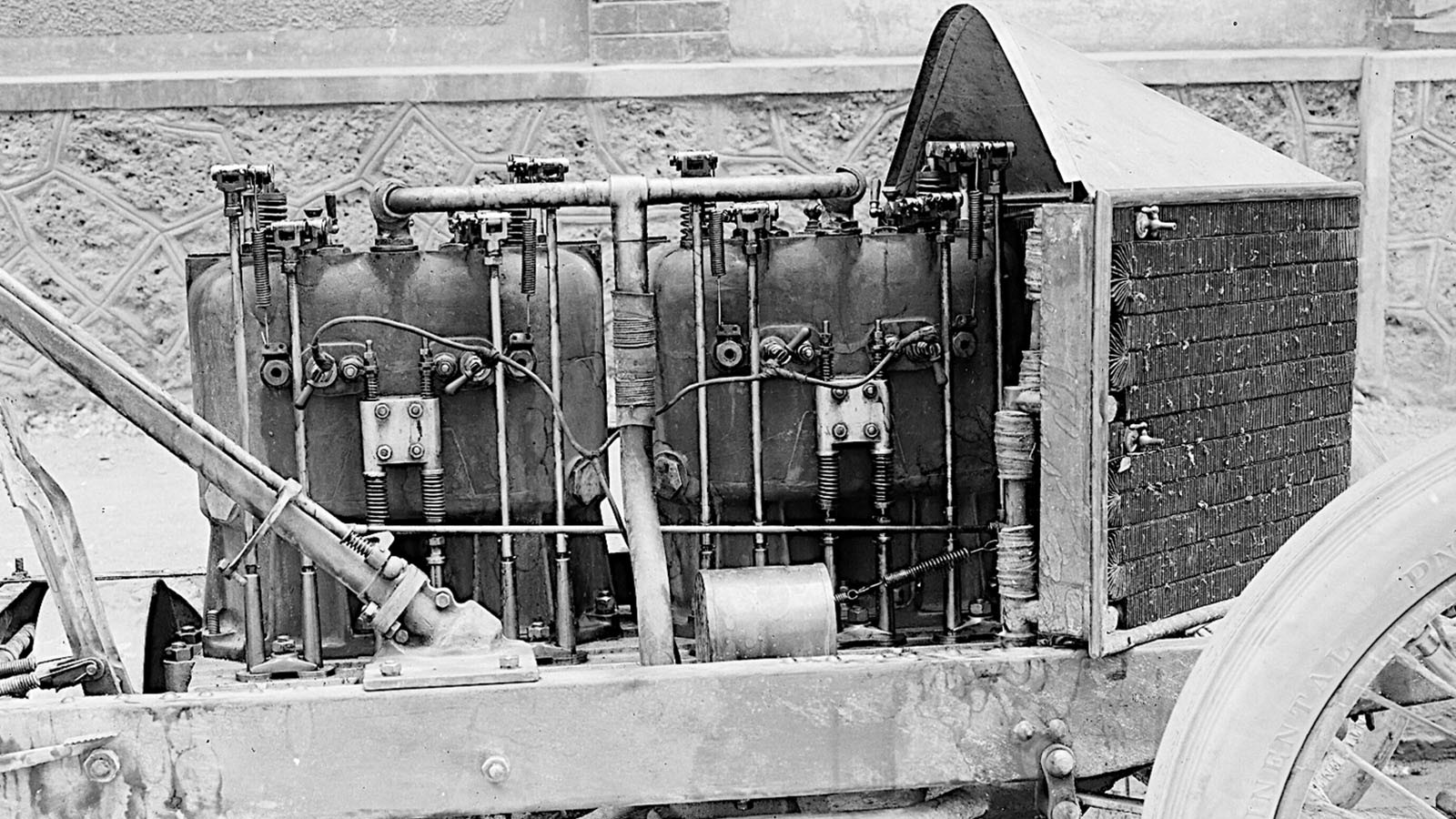
Engines were free, at least within the technology and understanding of the time, and while all the manufacturers opted for four cylinders, the choice of capacity was so varied that the largest had more than twice the capacity of the smallest, with the Darracq unit pictured here sitting roughly in the middle of the range.
An innovation
The result of the Grand Prix was determined partly by which cars were able to use a new and very important piece of technology.
This was the jante amovible, usually translated into English as ‘detachable rim’, in which inflated tyres were mounted on rims which were in turn bolted to the main part of the wheels.
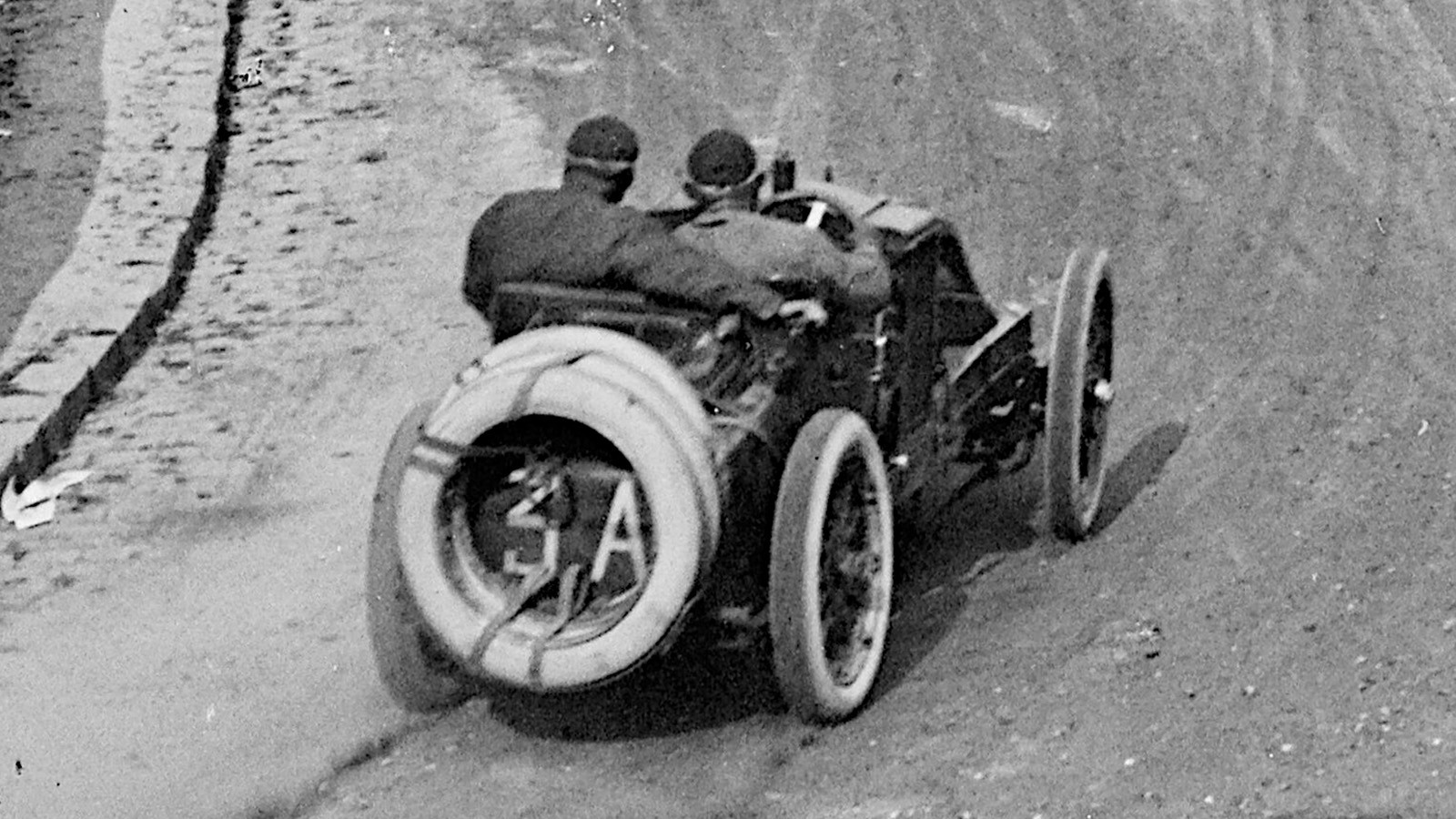
In the event of a puncture – and there were a great many of those during the Grand Prix – the driver and mechanic could simply replace the rim with one of the spares they carried (as seen here on the winning car), a process which took only about 3 mins, rather than the much greater time required to cut off a damaged tyre then fit and pump up a new one.
Using detachable rims seems like the obvious choice, but their extra weight, and that of the sturdy frame required to carry them, made doing this impossible for manufacturers whose cars were already close to the 1007kg/2220lb limit and would have been disqualified for exceeding it if they had tried to take advantage of the system.
Vulpès: did not start
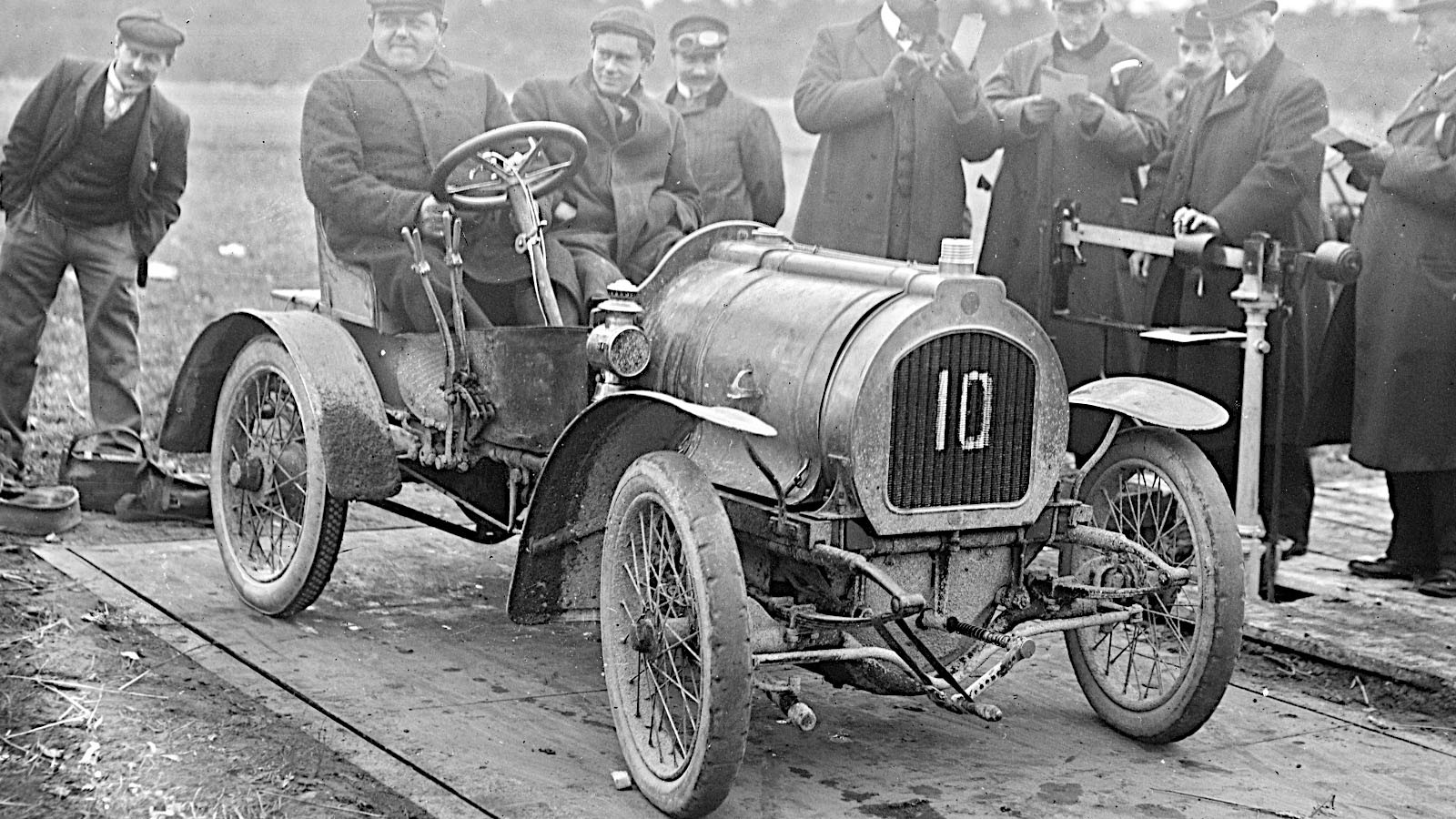
The unfortunate distinction of being the first car manufacturer to enter a Grand Prix but not be allowed to take part goes to the short-lived Parisian marque Vulpès.
Pictured here is a Vulpès with a two-cylinder, 1272cc engine, campaigned on several occasions by Gaston Charles Barriaux, who is said to have won the voiturette (light car) class in the 1906 Tour de France Automobile.
It is out of the question that it was the one entered for the Grand Prix, which had a 15.3-litre engine and was described in a report published in the American magazine Automobile Topics on 14 July 1906 as being ‘so much too heavy that there was no possibility’ of reducing its weight to within the limit specified in the regulations.
Grégoire: did not finish
Based in Poissy, in north-central France and where Stellantis has a factory today, Grégoire took a unique approach to designing a Grand Prix car.
For an event in which no other team used an engine smaller than 10 litres, Grégoire devised an 8-litre unit (or a 7.4 – in this as in other cases, the historical sources don’t agree) with an extremely low output of 70 horsepower, just over half that of the most powerful entrant, but fitted it to what, at a mere 886kg (1953lb), was the lightest car in the field.
How effective this philosophy might have been is difficult to say, since one of the two Grégoires entered either crashed in practice or broke down on the way to the event (again, reports differ).
The other – driven by Xavier Civelli de Bosch, who later manufactured cars under his own name for a brief period – was reportedly unable to exceed 30kph (19mph) due to some mechanical issue, and was withdrawn before the end of the opening lap.
Itala: did not finish
According to a very detailed pre-race article in the French magazine Omnia, Itala’s three cars were powered by one of the most undersquare engines in the field, a 180mm bore and a 145mm stroke giving a capacity of 14.8 litres, though a capacity of 16.7 litres has also been quoted.
By the time of the Grand Prix, Itala had already won the 1905 Coppa Florio and the 1906 Targa Florio, held in Italy and Sicily respectively, and would dominate the monumental Peking to Paris race of 1907.
There was every reason to expect that the Italas would be competitive in France, but in fact they were all out of the picture less than halfway through the first day.
Maurice Fabry and Pierre de Caters crashed on the first and second laps respectively, while Alessandro Cagno (pictured) failed to complete the third because a stone damaged his radiator beyond immediate repair.
Gobron-Brillié: did not finish
While Gobron-Brillié, like all the other manufacturers, built an engine with four cylinders, it also followed its usual practice of putting two pistons in each of them, with the space between acting as the combustion chamber.
This odd arrangement was certainly effective, because Gobron-Brillié cars raised the Land Speed Record four times from July 1903 to July 1904, twice with Louis Rigolly (the first to achieve more than 100mph) at the wheel.
Rigolly also drove the single, 13.5-litre example of the marque in the Grand Prix, but despite his obvious ability and the proven effectiveness of the engine design he was always outside the top 10, and he retired on lap eight (the second of day two) with a burst radiator.
Darracq: did not finish
The rear axles of the 1906 Darracqs were fitted with differentials, which the company had not thought necessary as recently as the previous year, and the engines measured 15.3 litres by Omnia’s account, though later sources claim 12.7 litres.
Darracq already had an excellent reputation both for racing and for record-breaking, and the additional factor of a very strong driving team persuaded Charles Faroux to predict, in La Vie au grand air, that the marque had a ‘first-rate chance’ of success in the Grand Prix.
A week after the race, however, Automobile Topics wrote that the Darracqs had ‘failed lamentably’.
René Hanriot (pictured) was still on the first lap when his engine broke, Louis Wagner retired on the third, and Victory Hémery made it only as far as the seventh.
Hotchkiss: did not finish
French enthusiasts left aghast by the performance of the Darracqs will have been similarly unimpressed by Hotchkiss, which might have been expected to do very well.
The Hotchkiss engine was above-averagely large at 16.3 litres, and two of the team’s drivers, Hubert le Blon (pictured) and Jacques Salleron, had plenty of experience.
The wealthy, and by all accounts colourful, American Elliott Shepard had less, but he turned out to be the fastest (running as high as third at one point) and was the only one of the three who survived into the second day before retiring.
Largely thanks to him, Hotchkiss had the perhaps questionable honour of completing more laps (13) than any other manufacturer which failed to reach the finish of the first Grand Prix.
Mercedes: best result 10th
Wilhelm Maybach designed a radical new racing car with a six-cylinder, overhead-cam engine for the 1906 season, but there was so much opposition to it that the marque decided to bring out a mildly updated version of its 1905 Mercedes instead.
Today, even Mercedes-Benz isn’t sure whether its capacity was the original 14,047cc or had been raised to 14,432cc, while the 16,128cc implied by Omnia’s reported bore and stroke figures seems unlikely.
The team was hobbled by the lack of detachable rims, which led to Vincenzo Florio retiring on the first day and ruined any chances Camille Jenatzy/Joseph Alexander Burton (the latter driving on day two because Jenatzy’s eyes had been damaged by dust) and Gabriel Mariaux (pictured) might have had of achieving good results.
Their cars finished, but they were 10th and 11th of the 11 finishers, more than four hours behind the winner.
Lorraine-Dietrich: best result eighth
Lorraine-Dietrich, also referred to by some sources as De Dietrich, used one of the largest engines in the race, measuring either 17.2 or 18.1 litres.
Arthur Duray made a tremendous start, recording a time on his opening lap only 6.8 secs slower than the best of all over a course which no car completed in less than 52 mins.
Duray faded badly after that, having apparently had to change 14 tyres (without the benefit of detachable rims) on day one, though he recovered, or at least benefitted from other people’s retirements, to finish eighth.
Teammate Henri Rougier retired on the final lap with engine failure, while Fernand Gabriel did not reach the end of the first tour.
Panhard et Levassor: best result sixth
Exceeding even that of Lorraine-Dietrich, Panhard’s engine was the largest of all in this first Grand Prix, measuring 18.3 litres.
On a course with very long straights and very few corners, this might have been considered an advantage, and the cars were certainly competitive, but they were not the quickest in the field.
Georges Teste, who ran as high as second at one point, and teammate Henri Tart were both eliminated by mechanical failures, the one in Teste’s case leading to the most serious accident in the event.
George Heath (pictured), one of the two American drivers in the field, had better luck and finished sixth, just over two and a half hours behind the winner.
Brasier: best result fourth
Brasier, or Richard-Brasier as it was originally called, had won the last two Gordon Bennett Cup races, and confidently left its cars (of which Charles Faroux wrote that ‘everything in them is admirably designed and wonderfully balanced’) more or less as they had been before for the Grand Prix.
This decision was vindicated on the opening lap, which Paul Baras covered in 52 mins 25.4 secs, a time neither he nor anyone else could match later in the race.
He was still in the lead at the end of lap two, with ‘Pierry’ (Pierre Huguet, pictured here) second and Jules Barillier seventh in the other two Panhards.
The challenge eventually faded, but Barillier, Baras and ‘Pierry’ finished in fourth, seventh and ninth places respectively, without the benefit of detachable rims, making Brasier the only manufacturer to enter three cars and get them all to the end of the first Grand Prix.
Clément-Bayard: best result third
Oddly referred to in some reports as Bayard-Clément, the French company used 12.9-litre engines in its three cars, one of which was driven by the founder’s son.
While ‘de la Touloubre’ (Henri-François Genty) and Alfred Villemain both failed to finish, Albert Clément was involved in a tremendous late-race battle with the Fiat of Felice Nazzaro, and is generally agreed to have lost out by just three and a half minutes because he didn’t have detachable rims and Nazzaro did.
We can only speculate what would have happened if Clément (pictured) had been using the new technology, or about how his career would have progressed after this excellent drive if he hadn’t been killed in an accident during practice for the 1907 French Grand Prix.
Fiat: best result second
Fiat (then known as F.I.A.T., for Fabbrica Italiana Automobili Torino, or ‘Italian Automobile Factory of Turin’) did not win the Grand Prix, but it surpassed all the other manufacturers by having two of its 16.3-litre cars finish in the top five.
Felice Nazzaro (pictured) won that battle for second with Albert Clément, and would go on to become one of the most celebrated drivers of the era, taking victory in the next French Grand Prix, the Targo Florio and the Kaisperpries in 1907, plus the French Grand Prix again in 1922.
Vincenzo Lancia, who was about to set up a car company under his own name, finished fourth, half an hour behind Barillier’s Brasier, but 25 mins clear of Heath’s Panhard.
The less well-known Dr Aldo Weill-Schott (also referred to as Weill Schott and Weillschott), a wealthy Italian of German ancestry, was clearly a formidable driver, too, because he was running third, just behind Clément and ahead of both Nazzaro and Lancia, when he crashed out on the sixth lap.
Renault: best result first
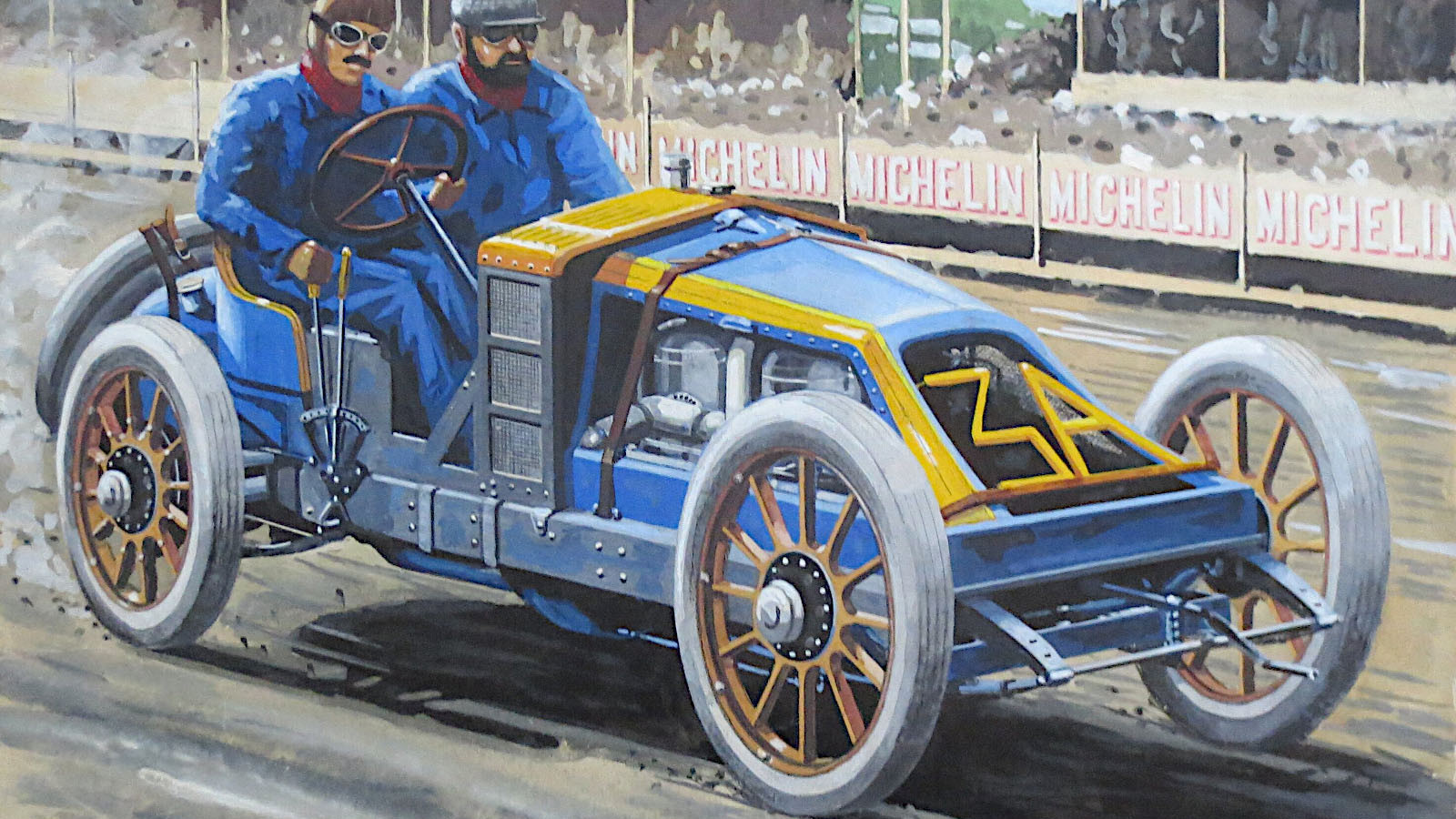
In 1905, Renault built an extraordinarily low racing car whose like would not be seen again for many years.
Its Grand Prix contender was more conventional, though like other early Renaults its radiator was mounted behind the relatively small, 13-litre engine, which improved the front-rear weight distribution.
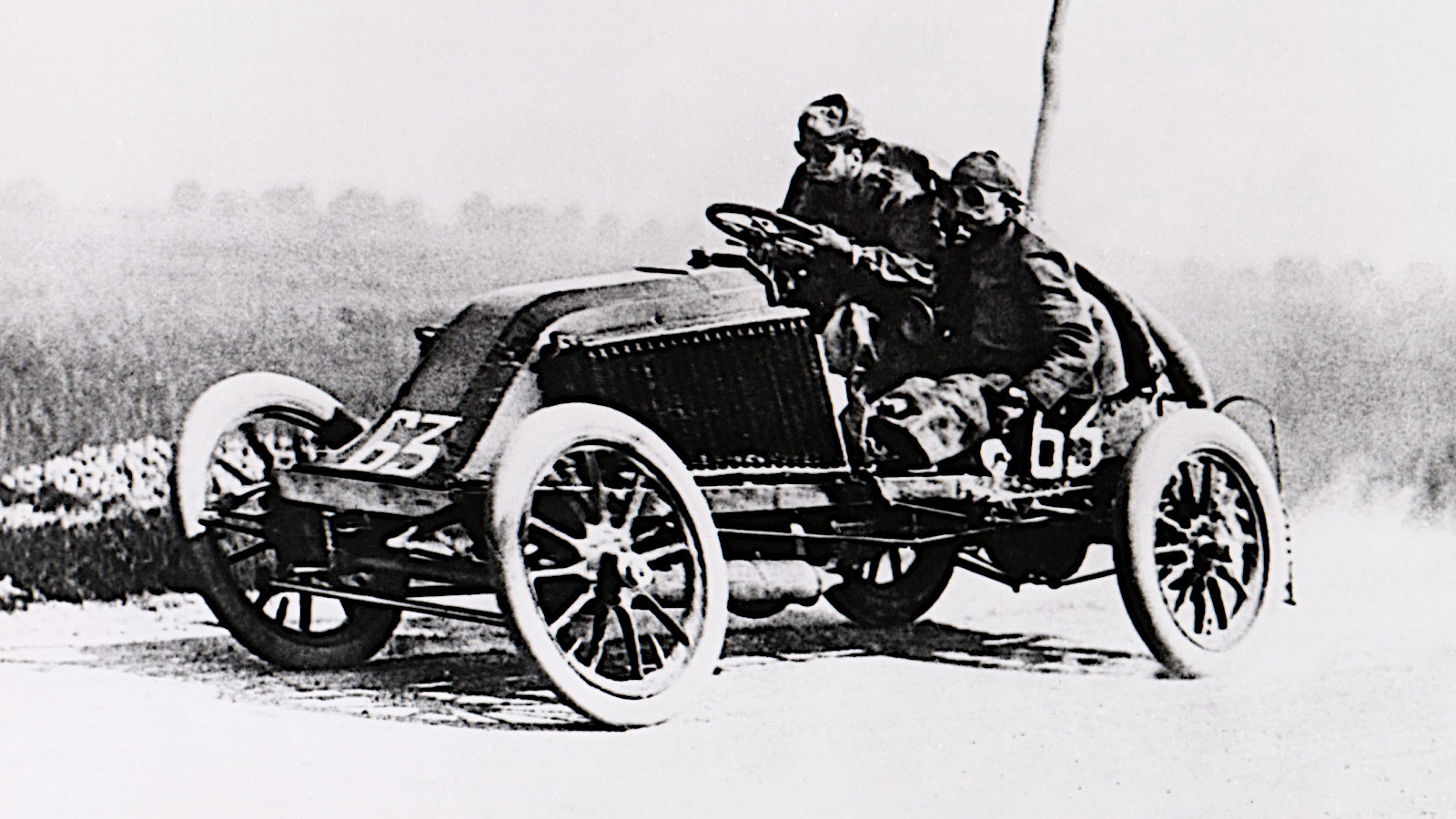
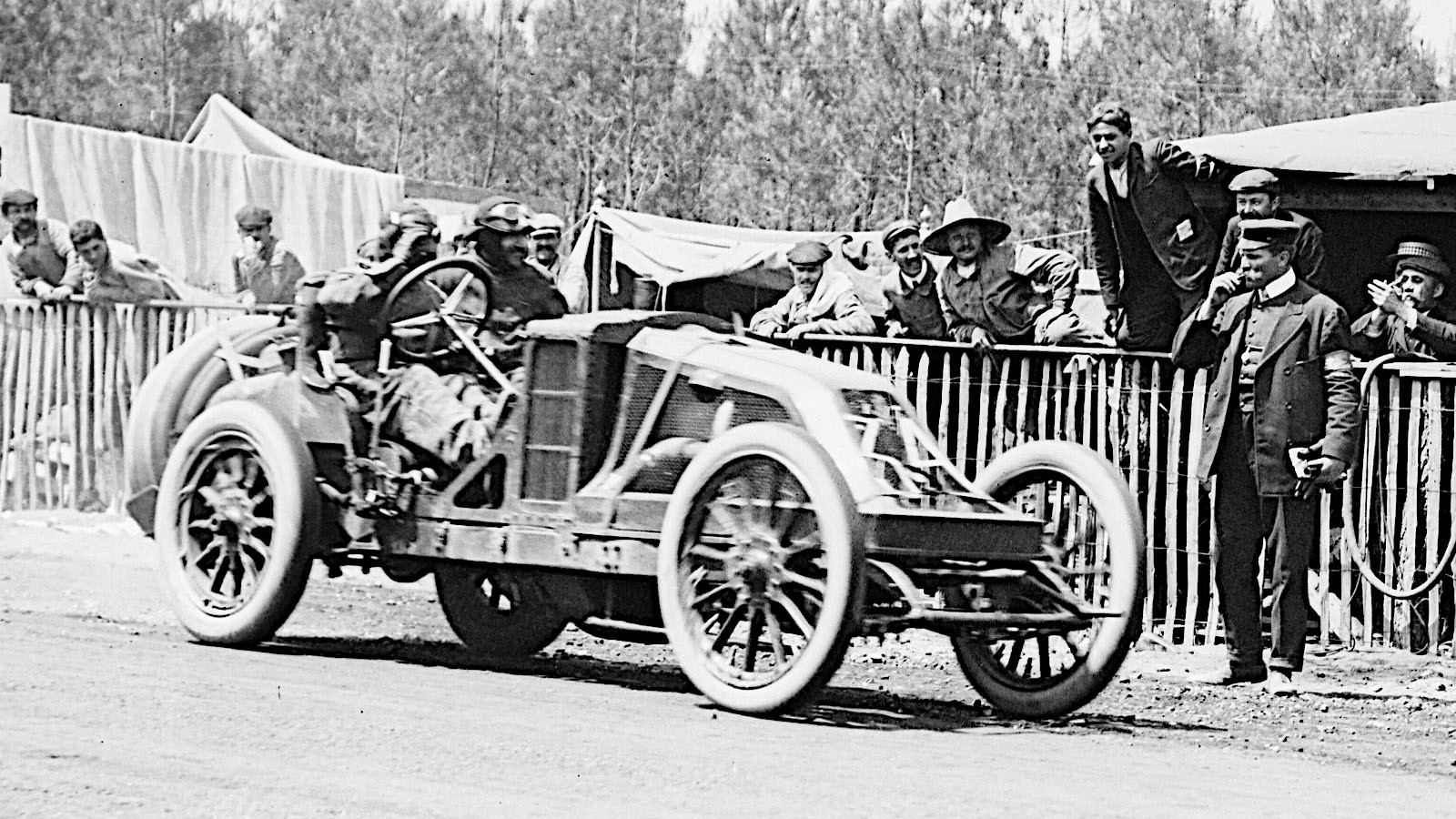
Claude Richez and Edmond Morelle both retired, but Ferenc Szisz (pictured) easily compensated for that by running strongly from the start, taking the lead on the third lap and retaining it for the remainder of the race.
He was 26 mins ahead of Albert Clément at the end of day one and, despite not pushing quite as hard on day two, he beat Nazzaro by 32 mins.
Ferenc Szisz
Ferenc Szisz, known in his native Hungary as Szisz Ferenc (surnames come first in Hungarian) and in France as François Szisz, was a Renault employee who acted as Louis Renault’s riding mechanic in early 20th-century races, before being appointed as a driver.
The 1906 French Grand Prix victory – often attributed, a little unfairly, to the detachable rims which some of his rivals had, too – was his crowning achievement in motor racing, though he followed it reasonably nobly by finishing second behind Felice Nazzaro in the 1907 edition.
His career faded after that, but he has an unchallengeable place in history as the first Grand Prix winner if, as discussed earlier, we don’t count the people who won prizes of that name at Pau in 1901.
Furthermore, as of the 120th anniversary of that great race, he remains the only Hungarian driver ever to have won a Grand Prix, and one of only two (the other being Zsolt Baumgartner) to have competed in one.
Futures of the first Grand Prix teams
Of the 13 car manufacturers which took part in the 1906 Grand Prix, only three remained in the sport for a significant period of time.
Renault soon turned its attention elsewhere, but caused a stir by bringing turbocharging to the sport in the 1970s, and has competed since then either as a constructor or, more frequently, as a supplier of engines to other teams.
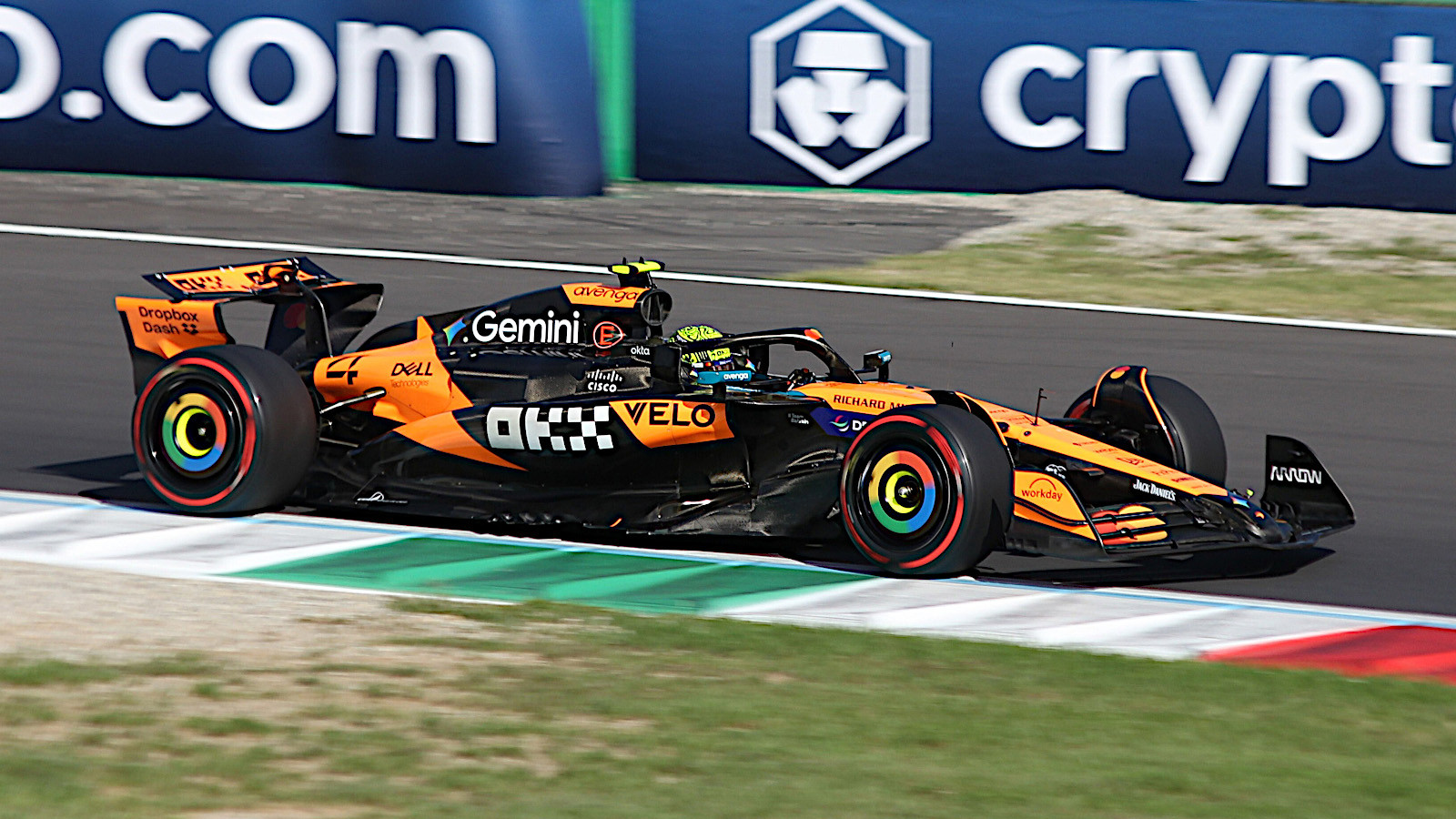
Mercedes made dramatic returns to Grand Prix racing in the 1930s (with the formidable Silver Arrows) and the 1950s, and, like Renault, has been both a constructor and an engine supplier in more recent years, notably providing the engine that powered the McLaren of Lando Norris (pictured) to the 2025 drivers’ title – the year in which his team claimed its second successive constructors’ crown. Norris is the reigning world champion in the 120th-anniversary year of the first Grand Prix.
Fiat has not figured in Grand Prix racing for many years, but for a long time it owned Ferrari, which at the time of writing holds the record for F1 constructors’ titles at 16.