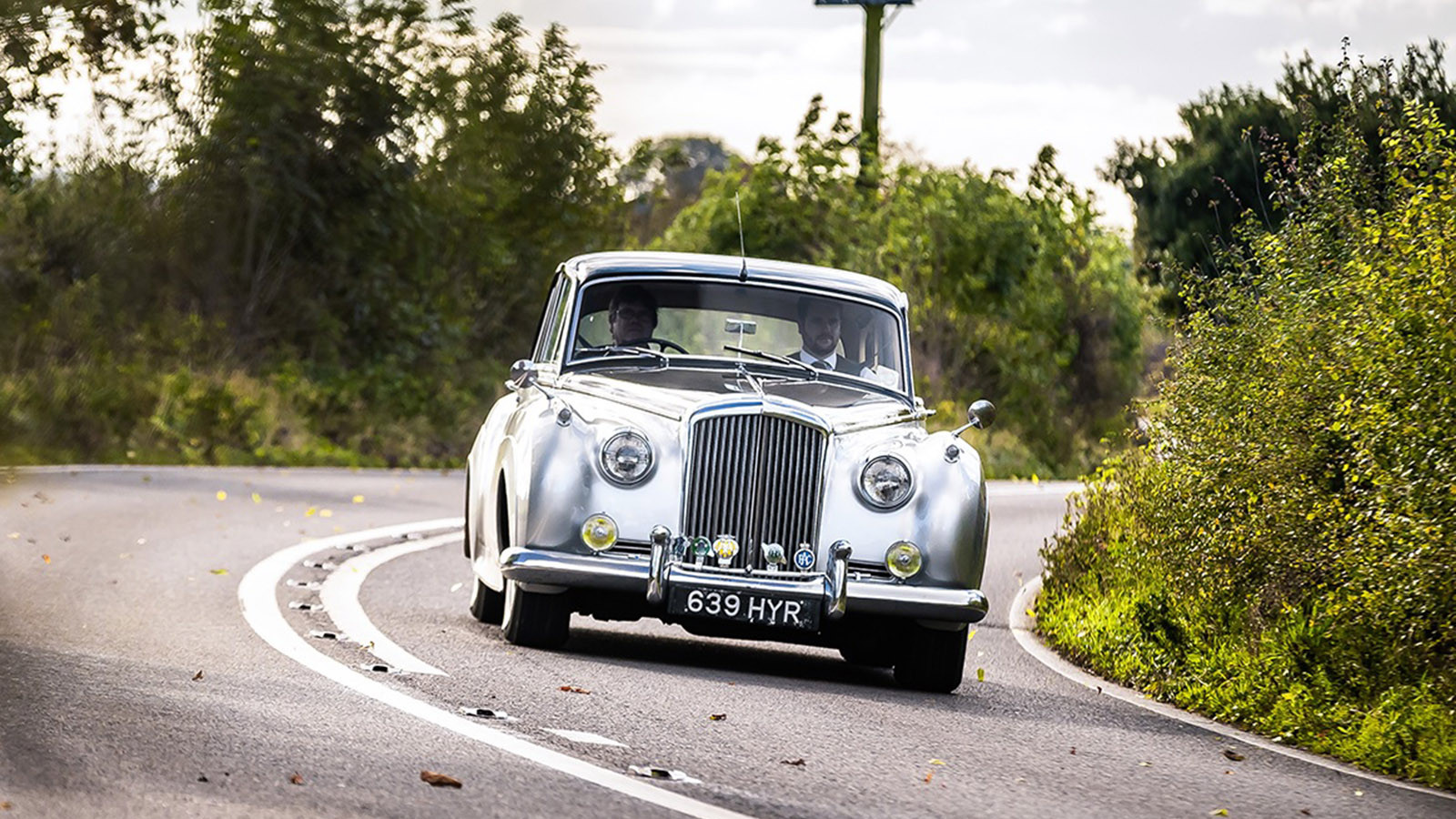
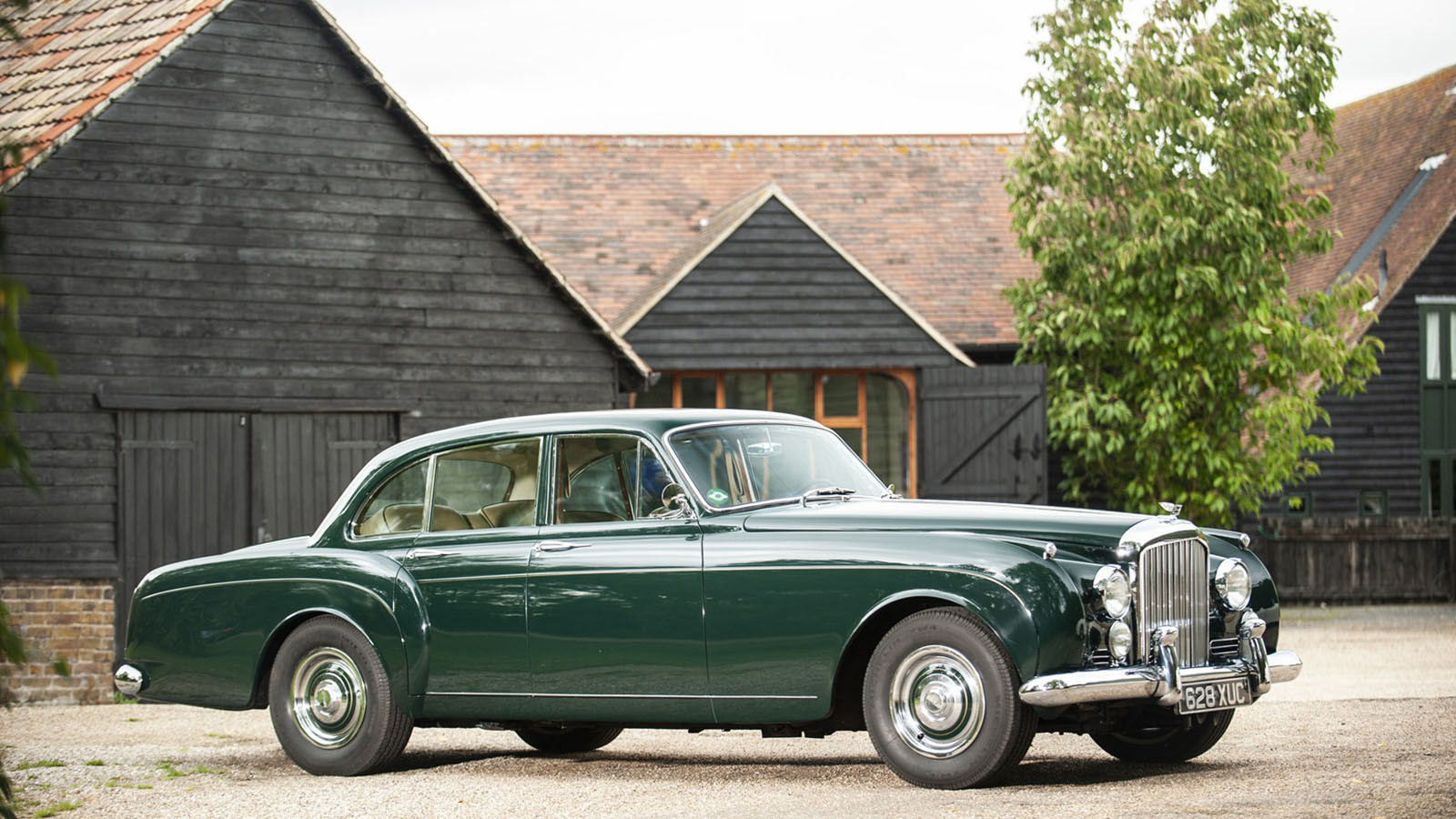
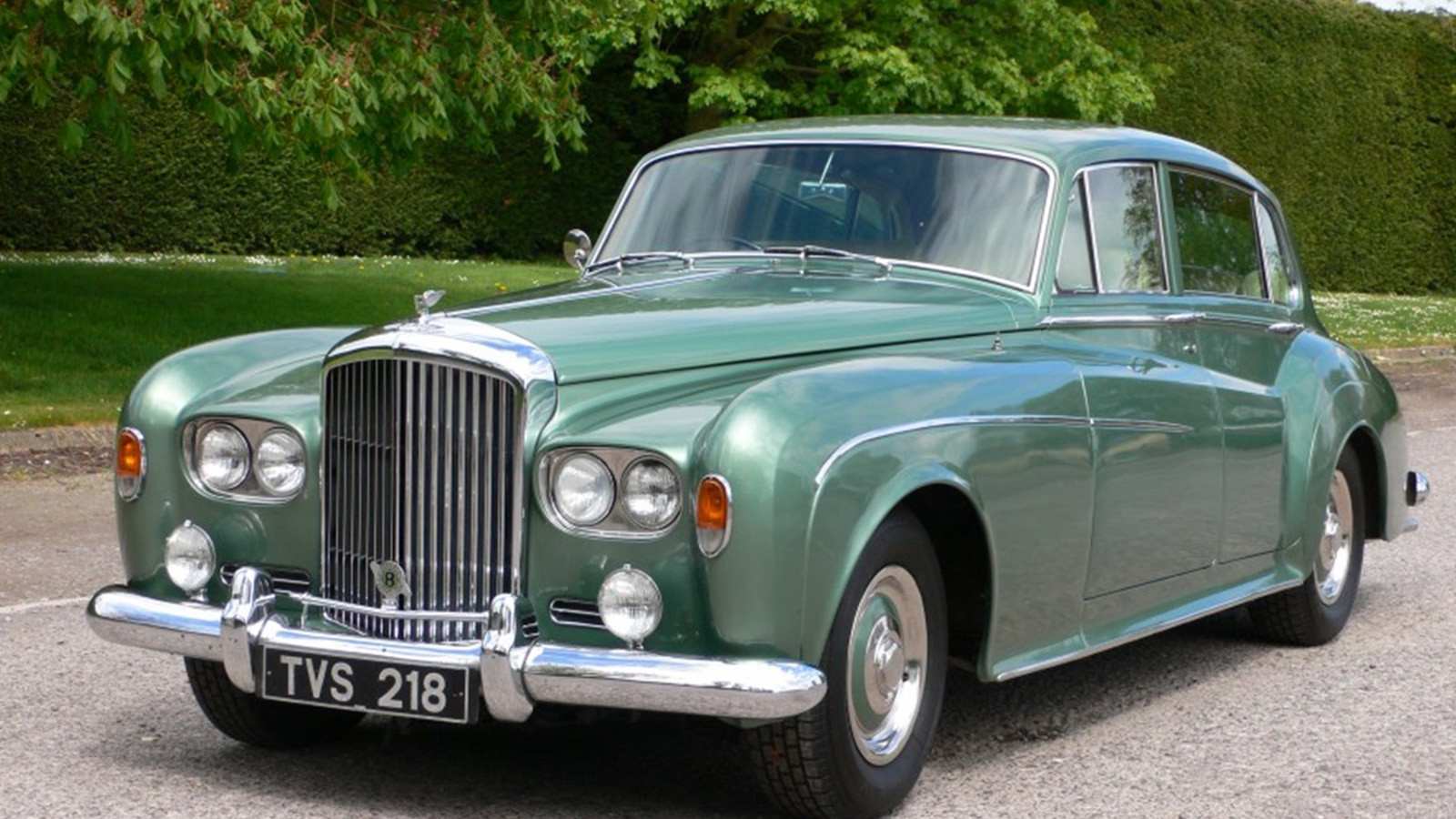
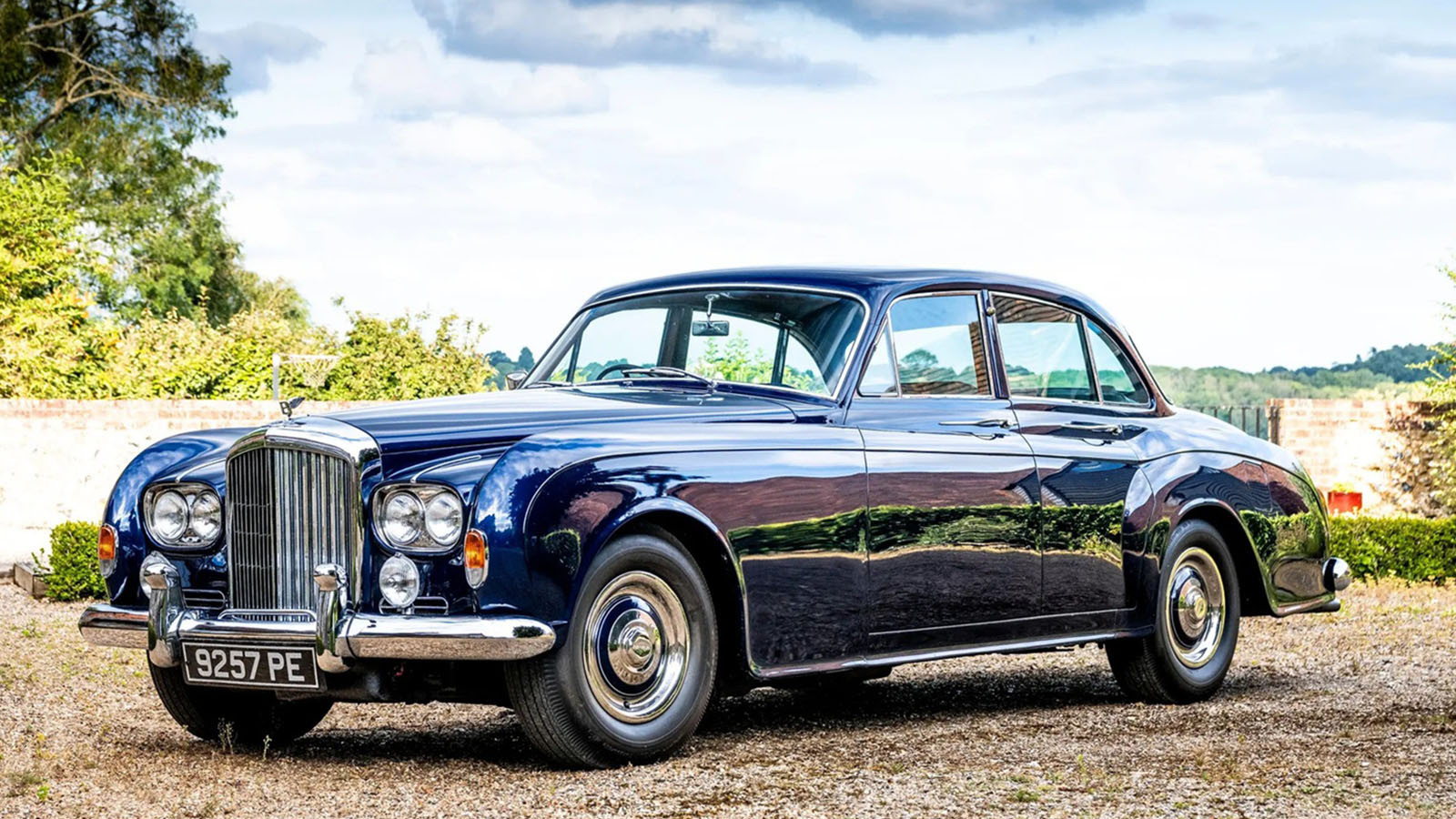
Bentley’s four-door best
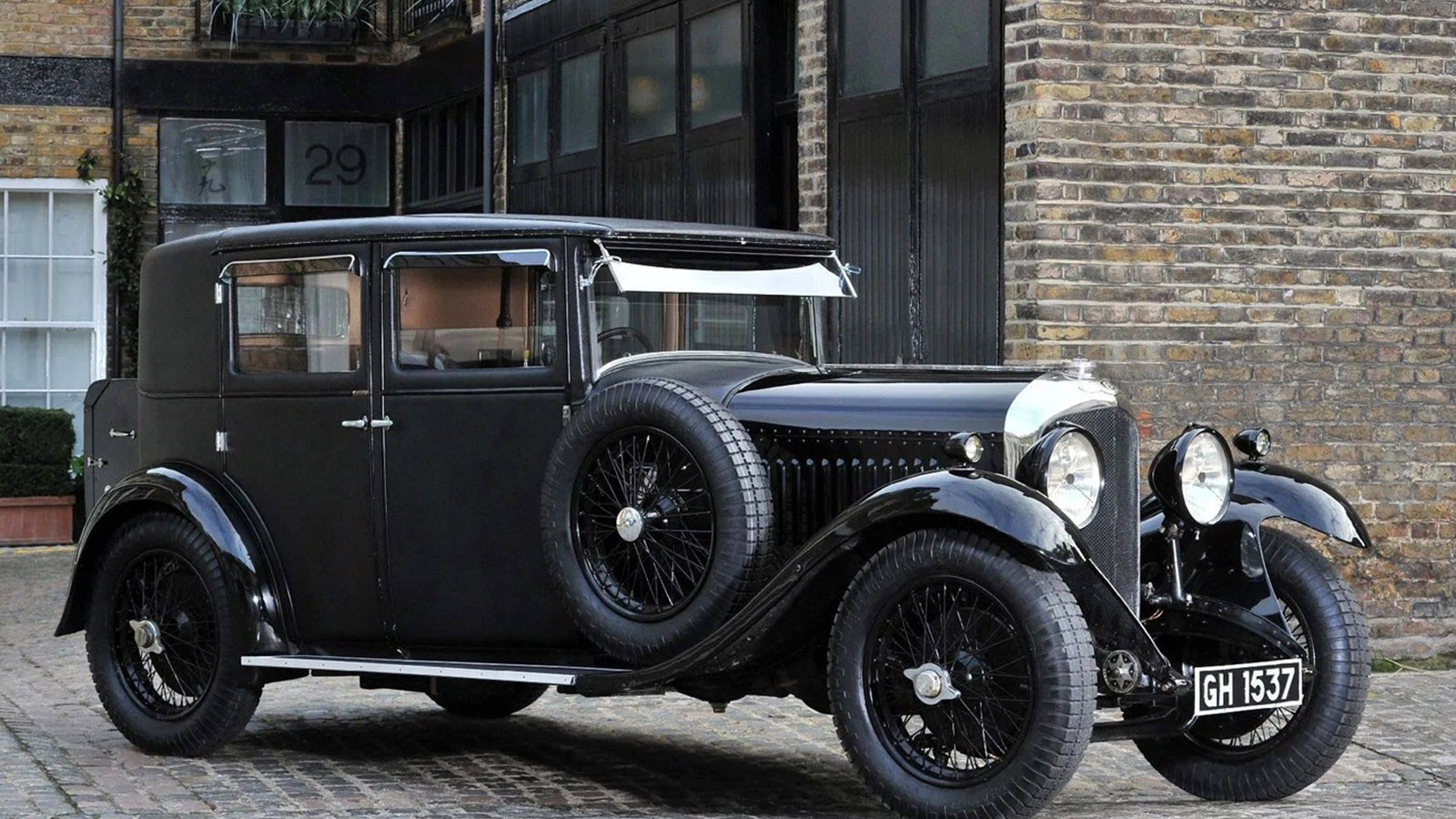
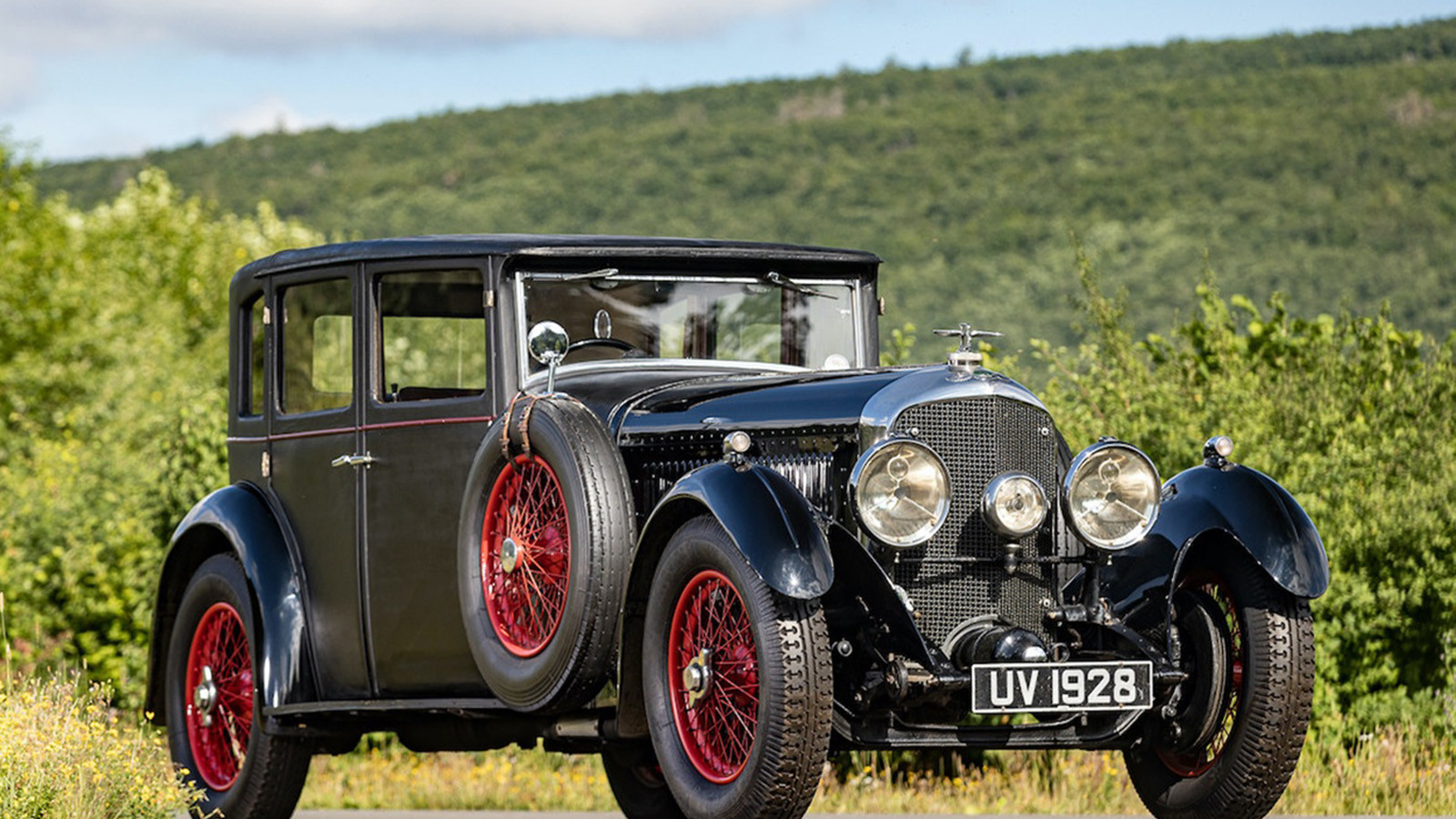
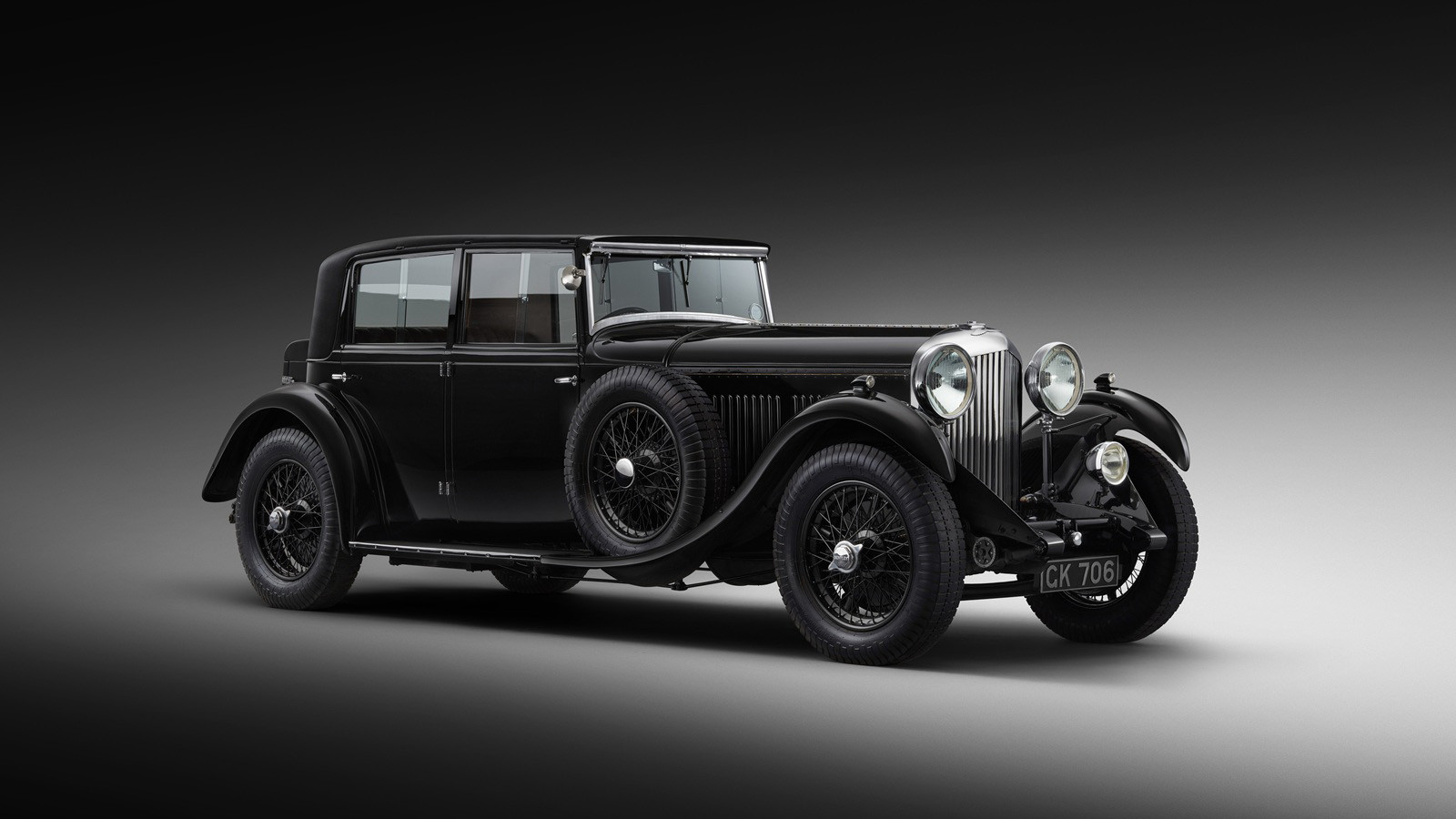
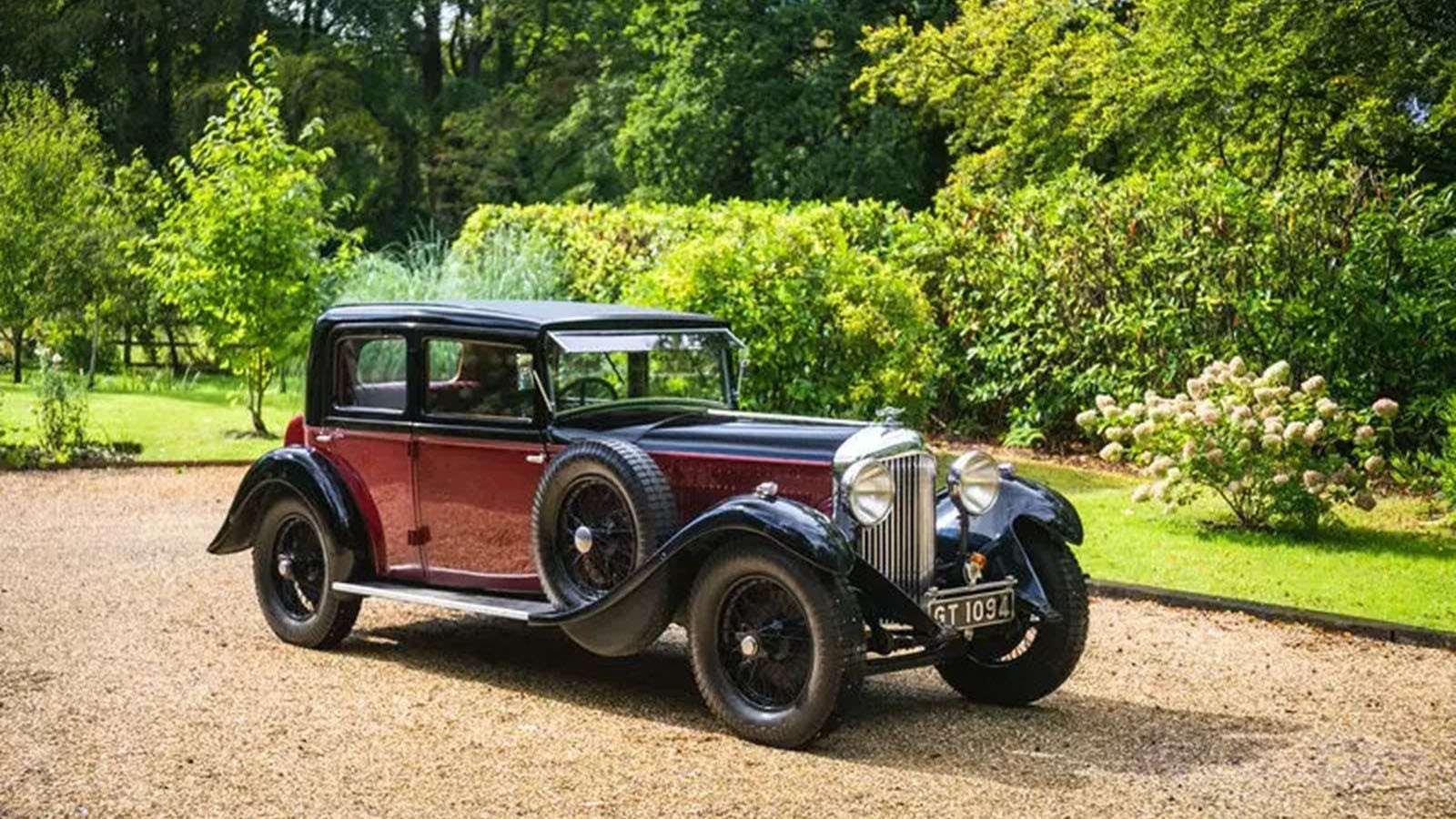
Bentley became famous because of its open-top racing cars, but it was saloons that made the money for the company.
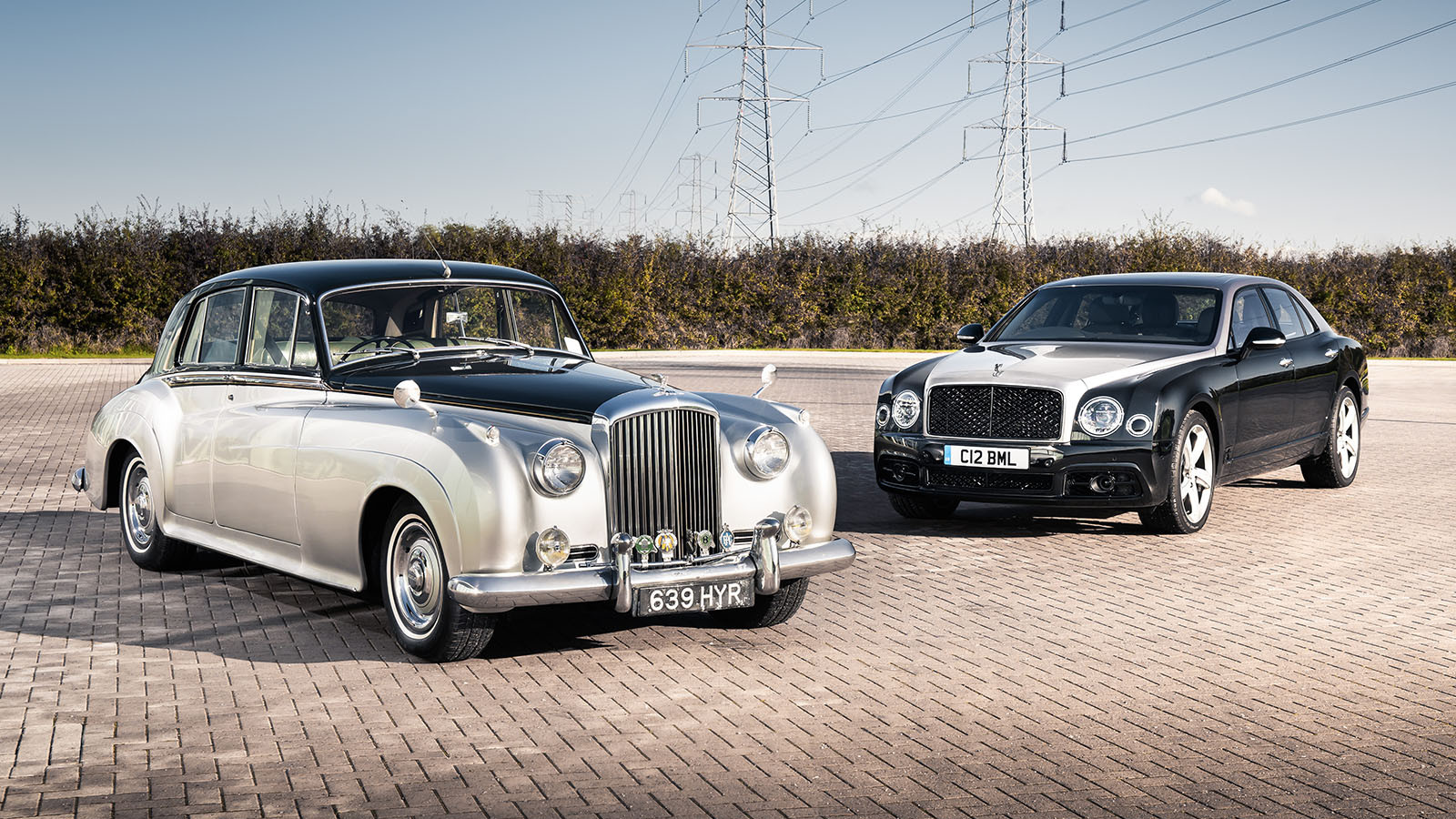
Throughout its history, Bentley has produced many of the most elegant and desirable four-door models, either in-house or providing the basis for coachbuilders to work their magic.
From the 3 Litre through Derby models, to the Flying Spurs and T-series all the way to the brawny Arnage and the latest offerings, Bentley’s saloons have stood out as luxury cars with potent performance.
Here’s every Bentley that has been available as a saloon model, at the time of writing, presented in chronological order.
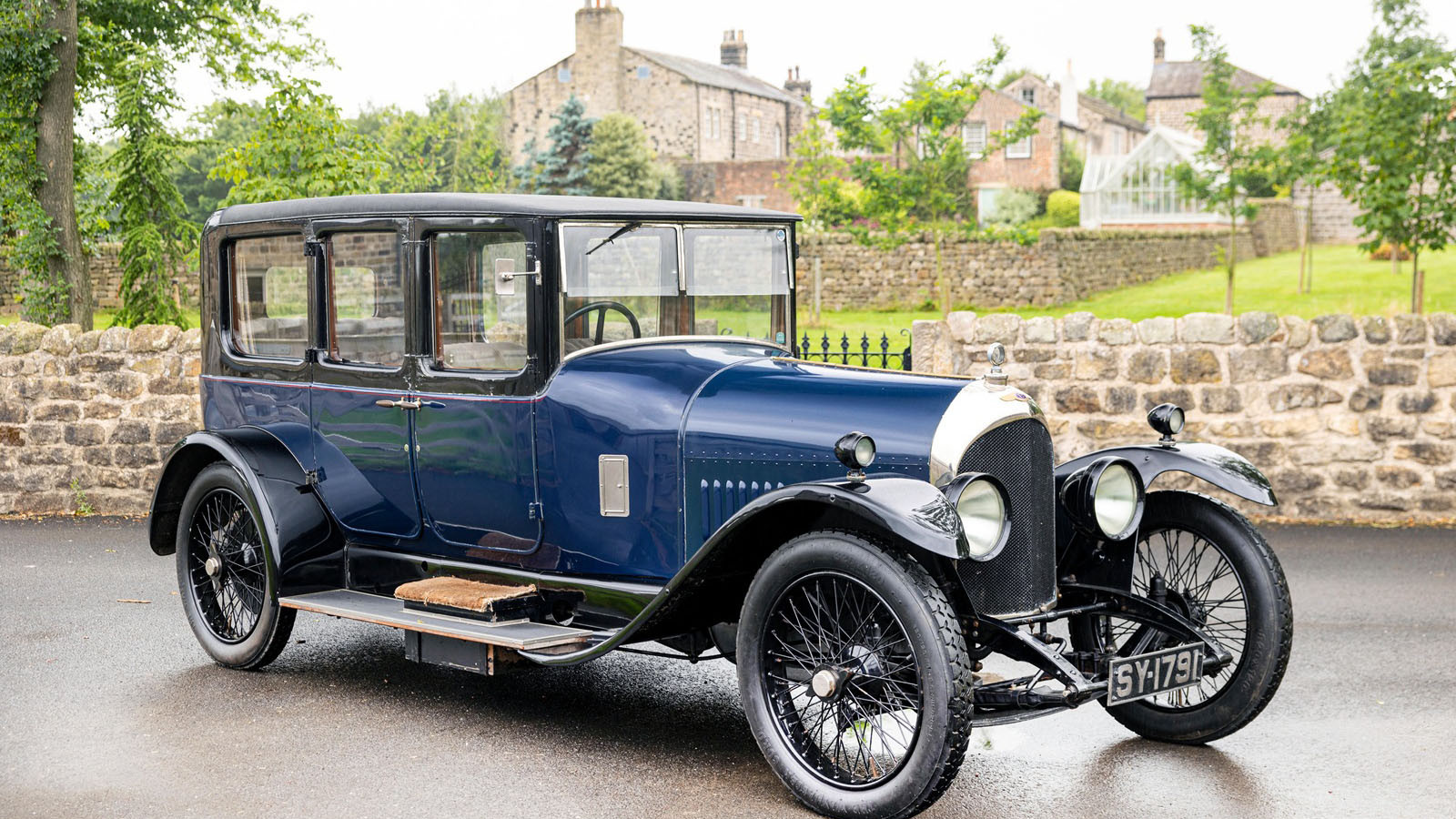
1. 1919 Bentley 3 Litre
The 3 Litre was Bentley’s first car, made its debut in 1919, and was the one that went on to give the firm its first Le Mans victory in 1924.
That win later popularised the open body style of the racing cars, but Bentley sold many 3 Litre chassis to be finished with saloon coachwork.
The Blue Label model was the most numerous and, with the longer-wheelbase chassis, was particularly well suited to saloon bodywork.
With 70bhp from its 2996cc, four-cylinder engine, the 3 Litre also delivered generous pulling power to cope with saloon bodies that were heavier than open versions.
Among the more common saloons from the 1622 Bentley 3 Litres built were ones with bodies by Gurney Nutting and Weymann.
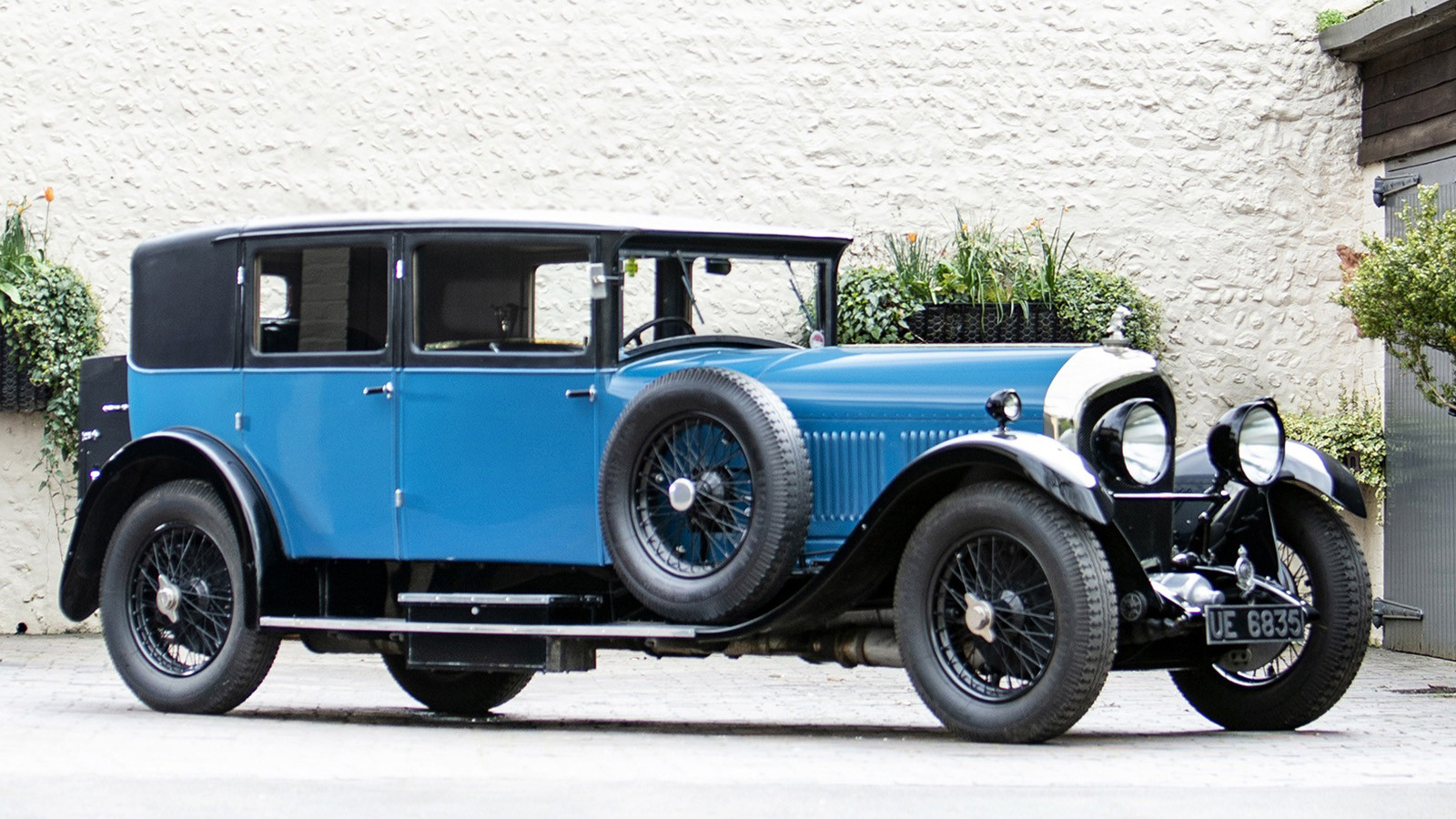
2. 1926 Bentley 6½ Litre
Bentley’s 6½ Litre was a logical progression from the 3 Litre, and the new model offered even greater luxury and performance.
It was announced in 1925 and went on sale in 1926 to counter concerns the smaller-engined offering could struggle with weighty saloon coachwork.
With a 6597cc straight-six, the 6½ Litre was a direct rival to the Rolls-Royce Phantom and the Bentley could reach 90mph.
This sort of performance kept Bentley among the elite of luxury saloons, even though by now the company was being financially supported by Woolf Barnato.
Bentley built around 360 6½ Litre chassis with this engine and standard chassis to supply to coachbuilders.
3. 1927 Bentley 4½ Litre
While the 4½ Litre supercharged model has gone on to become the most famous ‘WO’ era Bentley, it was the standard 4½ Litre that sold in far greater numbers – 665 versus 55 for the ‘Blower’.
The majority of 4½ Litre cars were sold to be fitted with saloon bodywork, though many have subsequently been swapped to Le Mans-style open coachwork.
When tested in period, the 4½ Litre saloon could hit a top speed of 90mph.
The 4½ Litre’s engine was a four-cylinder version of the 6½ Litre’s straight-six. With a 4398cc capacity, the 4½ Litre delivered 110bhp and was the final four-cylinder engine to power a Bentley.
4. 1928 Bentley Speed Six
The Speed Six was, in essence, a high-performance version of the 6½ Litre.
It incorporated a number of improvements to the engine such as two SU carburettors and different camshaft to increase power to 174bhp from the standard 6½ Litre’s c140bhp.
The Speed quickly earned many race wins, but its semi-elliptic leaf springs for both the front and rear axles also gave it a plush ride well suited to the luxury saloon bodies chosen by many owners.
It is famously the model used by Woolf Barnato to race the Blue Train from Cannes, France to London in the UK, and it was a saloon they used to win this challenge.
As well as the smooth suspension, the Bentley Speed Six came with finned brake drums on all four wheels to make sure it had the stopping power to cope with whatever body was fitted.
Depending on the coachwork added to the chassis, a Speed Six could reach 120mph flat out.
5. 1930 Bentley 8 Litre
This was Bentley’s technical tour de force and the 8 Litre was rightly revered as one of the most luxurious cars in the world when it was launched.
The 8 Litre was also the largest car Bentley had ever made, which leant itself to saloon coachwork.
The 215bhp, 7982cc, six-cylinder engine was mounted in a suitably hefty chassis and there was a choice of two wheelbases – 144in or 156in (3658mm or 3962mm respectively).
It stuck with the leaf-spring suspension of the 4½ Litre models and was rightly regarded as a serious threat to the Rolls-Royce Phantom II.
Impressive as the 8 Litre was in every way, its price made it a difficult car to sell during the Depression era. Only 100 of this ultimate WO Bentley model were made.
6. 1931 Bentley 4 Litre
The 4 Litre was the last model to be made by Bentley at its Cricklewood factory before the company was taken over by Rolls-Royce.
The chassis was adapted from that of the larger 8 Litre and there was a choice of two wheelbase lengths.
Both were used for saloon bodywork and the 4 Litre was mostly finished in this form, because the car was created as a direct rival for the Rolls-Royce 20/25.
To give the 4 Litre more refinement, Bentley used a 3915cc, six-cylinder engine supplied by Ricardo that offered smooth, if leisurely, performance.
Just 50 4 Litre models were completed before Bentley folded and was bought by its rival Rolls-Royce.
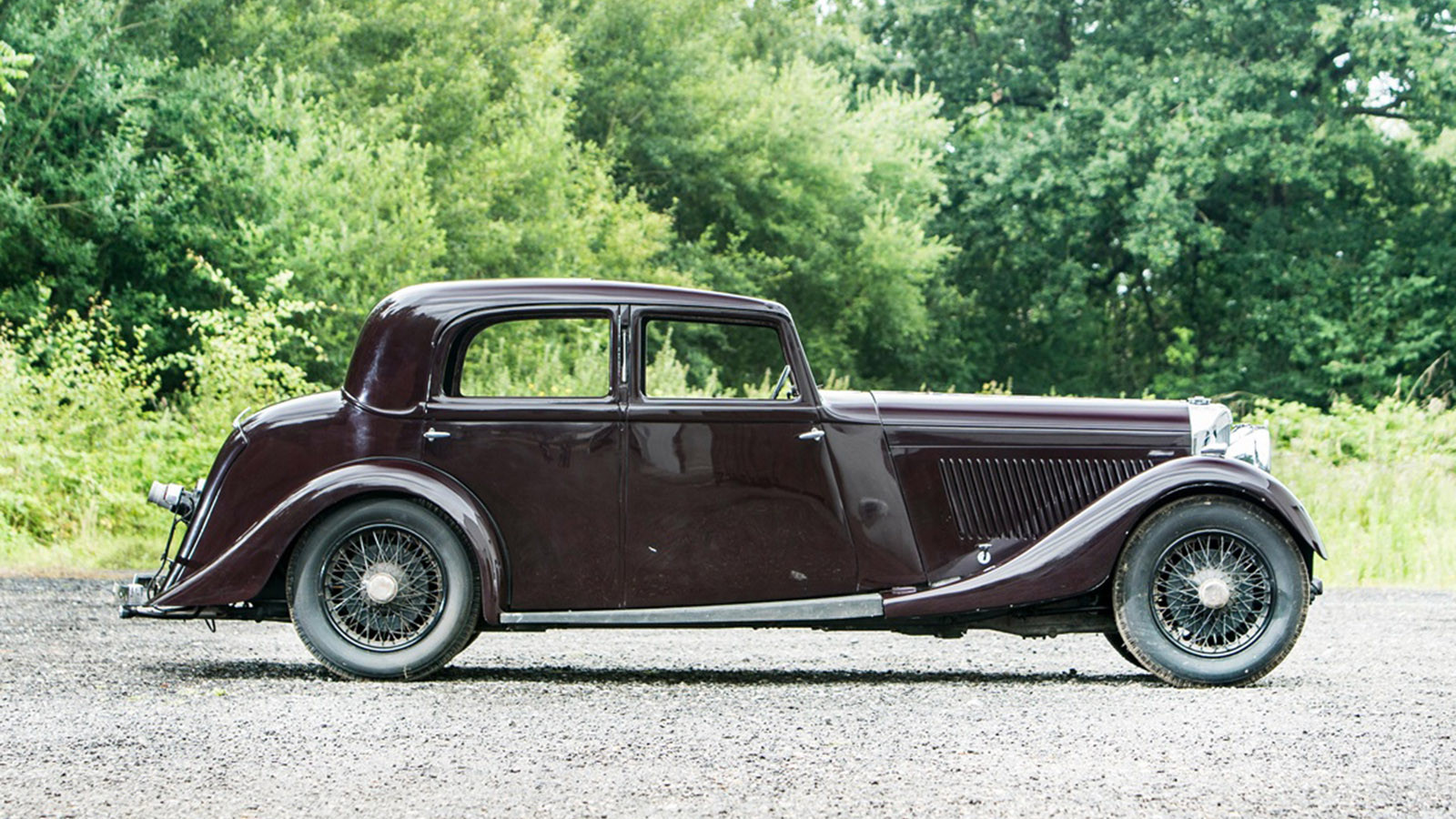
7. 1933 Bentley 3½-litre
Bentley might have fallen under the control of Rolls-Royce by the time of the 3½-litre’s launch in 1933, but this new ‘Silent Sports Car’ had the blessing of WO Bentley himself.
While the 3½-litre was a more refined car than previous Bentleys, it went on to sell strongly, 1177 finding homes before it went off sale in 1937.
Many of these were for cars to be bodied with saloon coachwork, which showed the shift in luxury car buyers’ desires by this time.
The 3½-litre used a twin-carburettor version of the Rolls-Royce 20/25 six-cylinder engine.
There was also a much slicker, four-speed manual gearbox than Bentley’s previous transmission, plus it received the hypoid rear axle before Rolls-Royce used it on its own models.
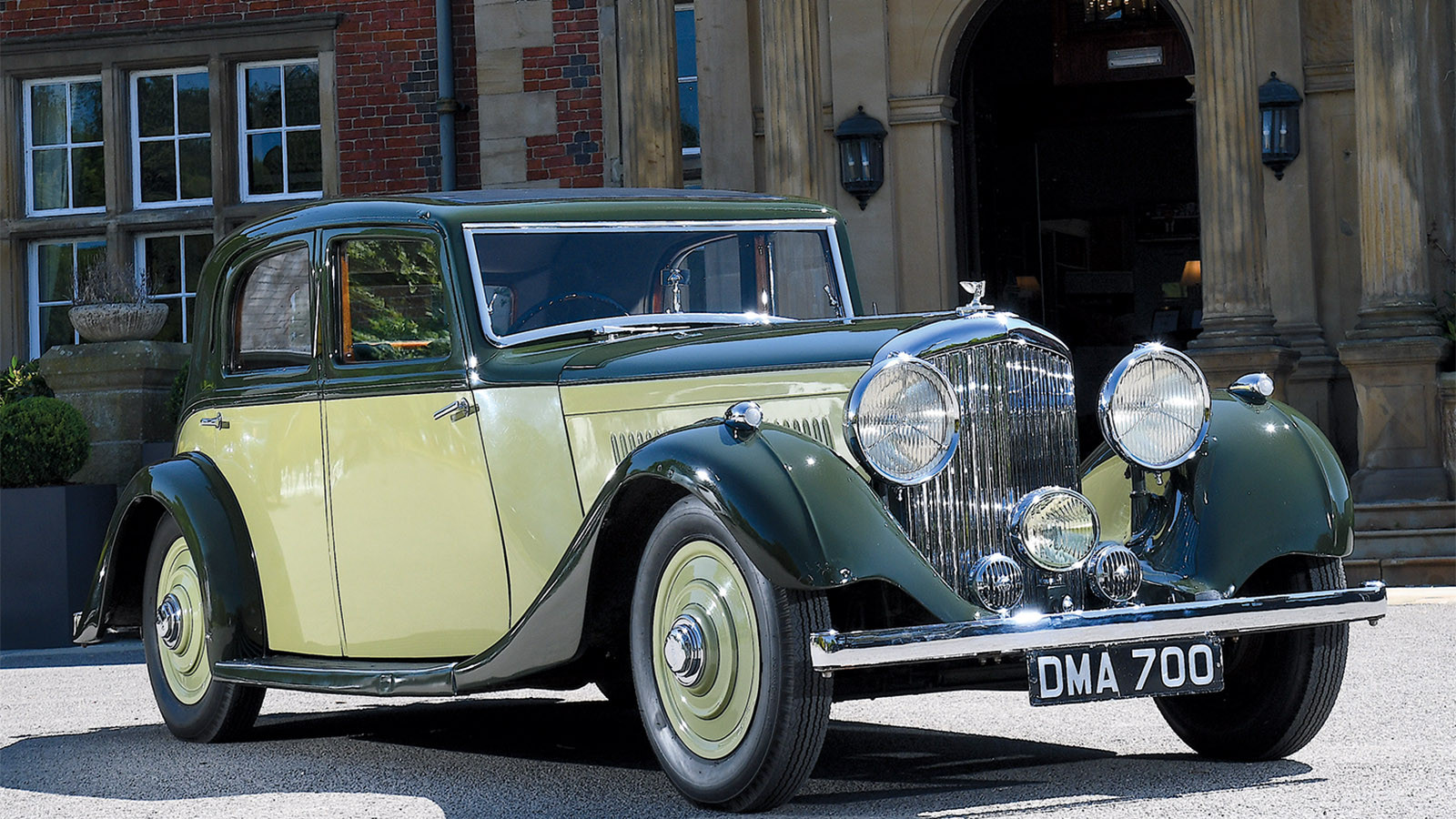
8. 1936 Bentley 4¼-litre
The Bentley 4¼-litre arrived in 1936 to overlap for a while with the 3½-litre, but the larger-capacity model went on to last until 1939.
Even with its briefer production span, the 4¼-litre sold in greater numbers and 1234 chassis were built.
Although Bentley, and its Rolls-Royce owner, had not yet gone down the route of a standard body, the Park Ward saloon was the most commonly specified bodywork on the 4¼-litre.
With its larger, 4257cc engine, the 4¼-litre was better able to cope with more luxurious appointments and coachwork, while still offering an 80mph top speed.
From 1938, there was extra power and an overdrive gearbox so the Bentley could deal with the faster continental roads such as the autobahn.
9. 1939 Bentley Corniche
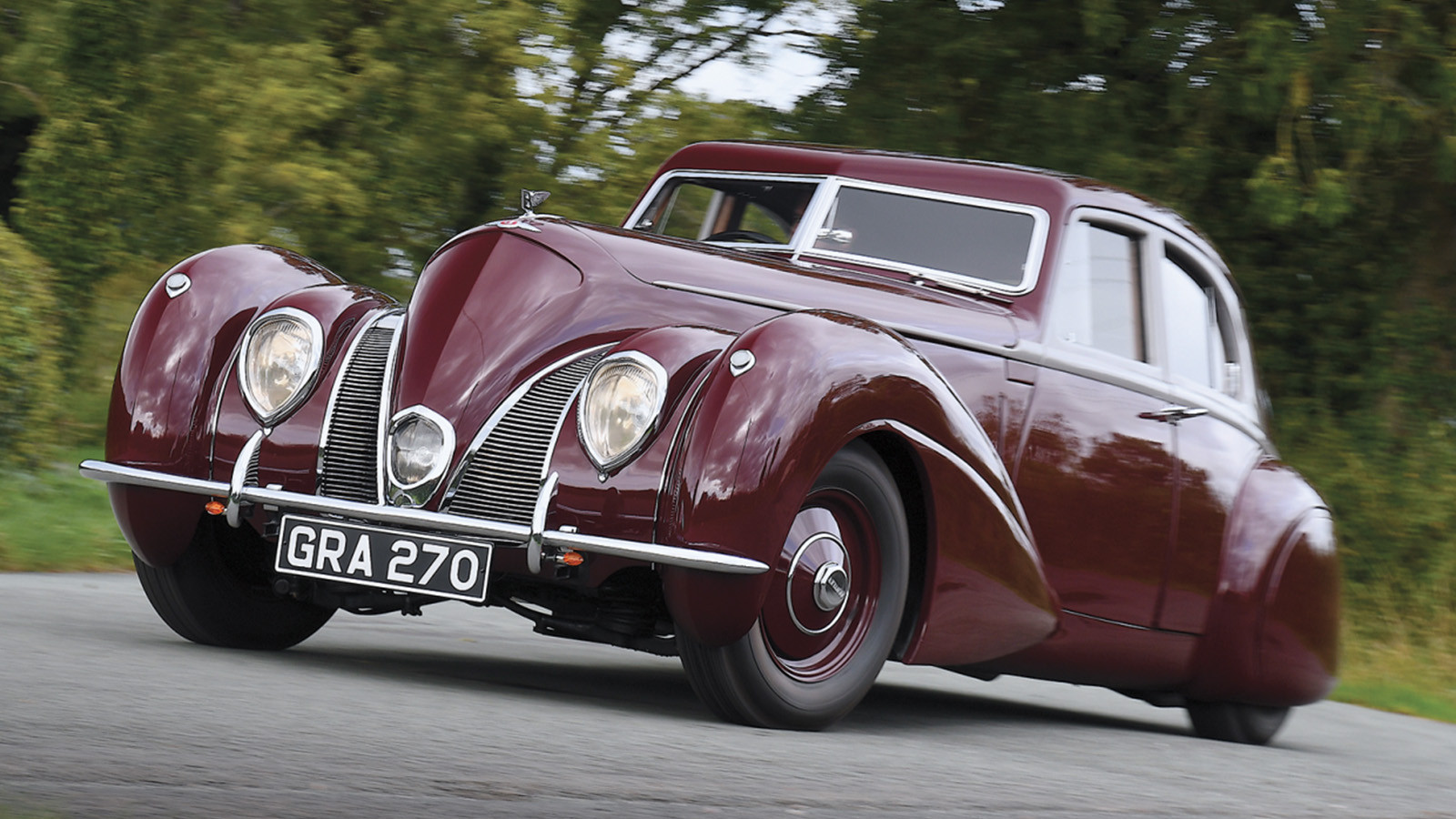
Part prototype, part one-off commission, the 1939 Bentley Corniche saloon was designed and made for Greek racing driver and Bentley fan André Embiricos.
He wanted a fast, touring Bentley and the body was styled by Georges Paulin of French coachbuilder Partout, then built by Carrosserie Vanvooren in Paris.
The strikingly streamlined Corniche was extensively tested on the Continent, covering 15,000 miles before the car’s body was destroyed in an air raid while being stored in France at the start of the Second World War.
The chassis, based on a 4¼-litre, was late returning to France after it had been repaired following a crash during testing.
The Corniche was faithfully recreated by enthusiasts and Bentley Motors using original parts and was completed in 2019.
10. 1940 Bentley MkV
The MkV was so near to production that Bentley was due to unveil it at the Earls Court Motor Show in London in 1939.
War then intervened and only 17 MkVs were ever built, though it had been planned to make 35 of this model.
Power for the MkV came from the same 4257cc straight-six as the 4¼-litre this new model was based on.
However, there were high-compression pistons and improved carburettors, camshaft and inlet and exhaust manifolds. This was all aimed at making the MkV sportier to drive than its Rolls-Royce relatives.
Park Ward saloons were the most common among MkVs, and the new car was the first Bentley to feature independent front suspension, to give it the ride and handling to match its sporting intent.
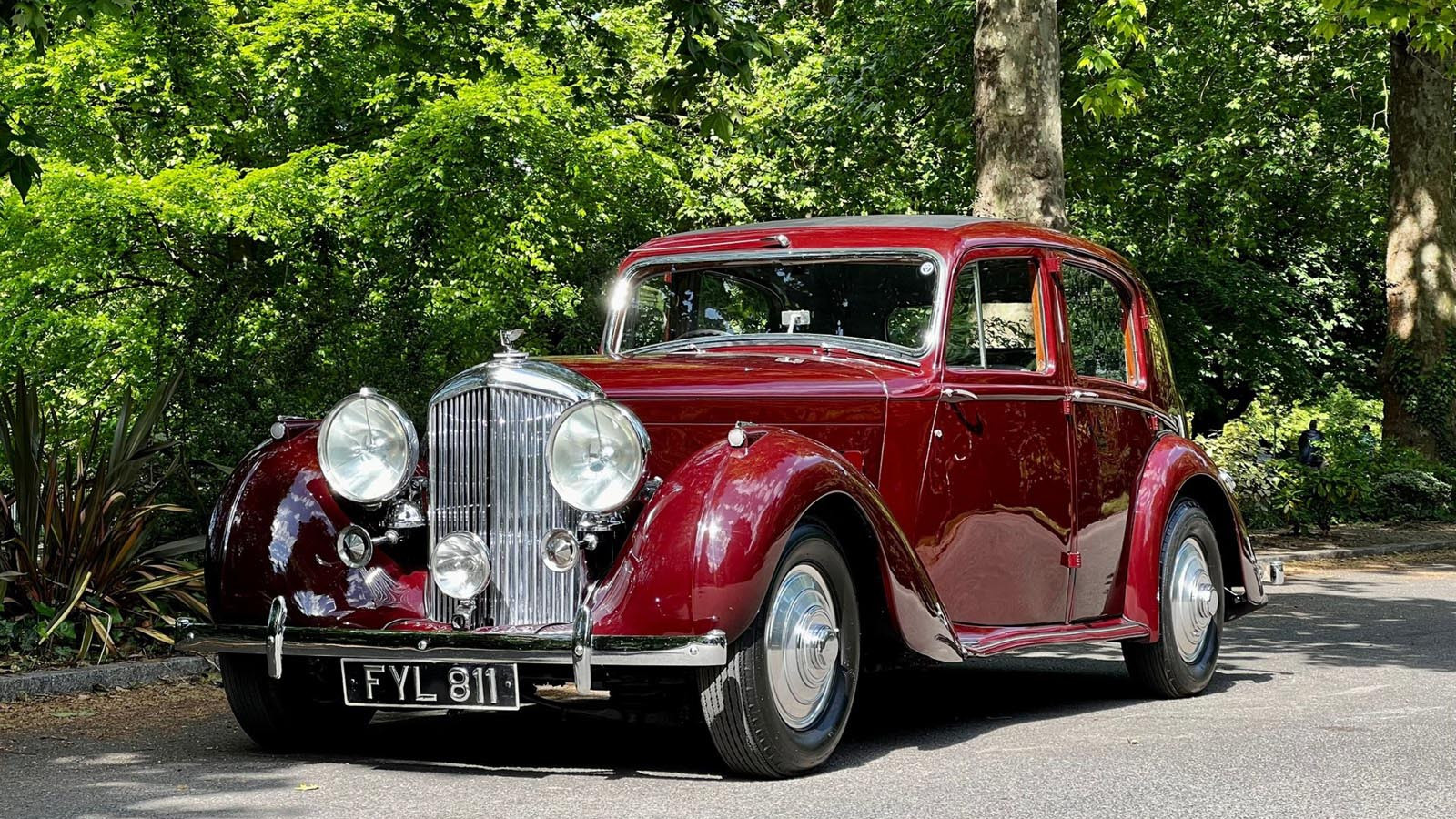
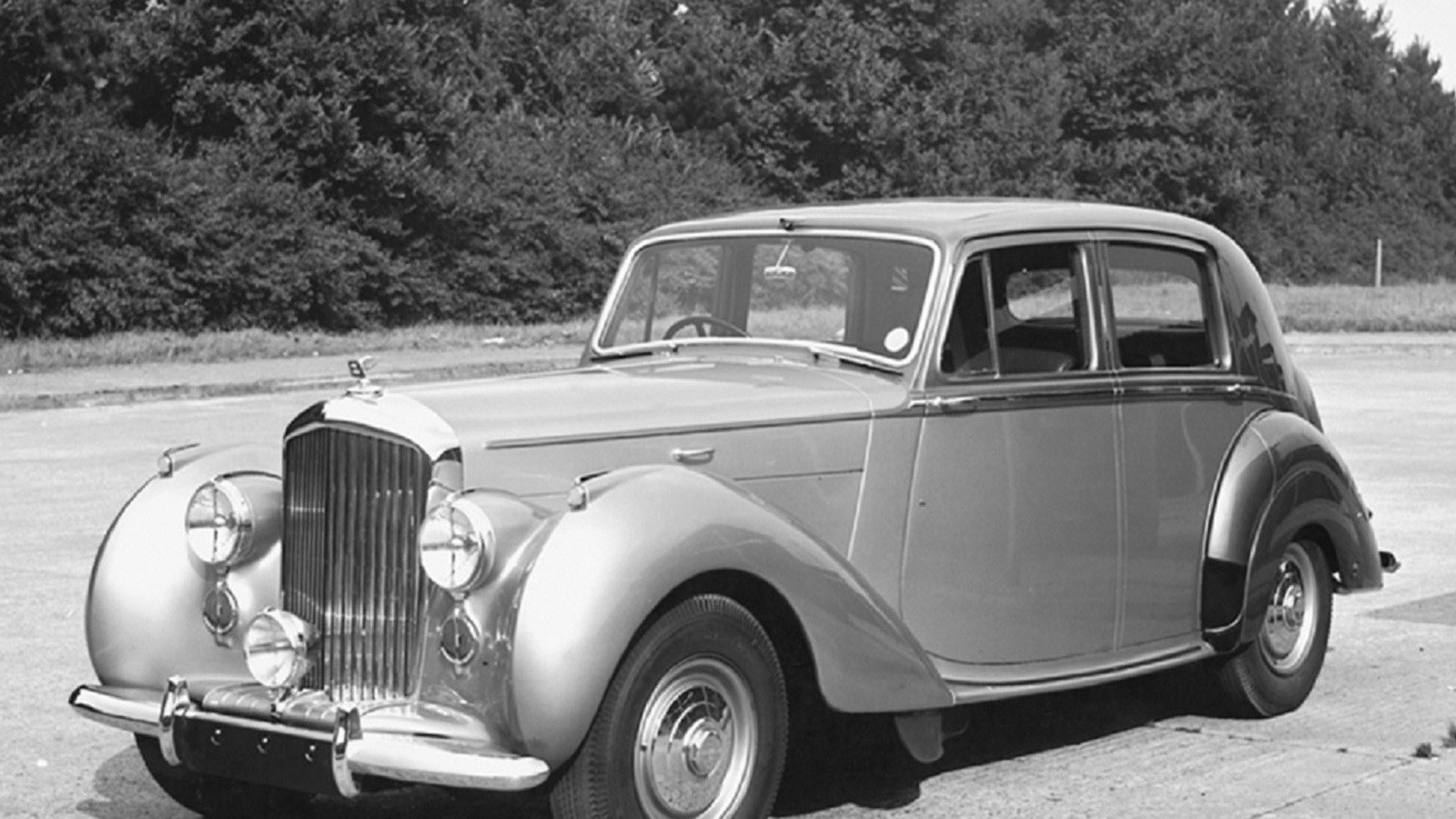
11. 1946 Bentley MkVI
Bentley was quick out of the blocks with a new post-war model in the shape of the MkVI.
It helped that it was based closely on the pre-war MkV that had been scuppered by the outbreak of war, so much of the work had already been done.
However, the MkVI was notable for being the first Bentley built at Crewe and the first to be offered with a standard body from the factory, rather than bespoke coachwork.
Four out of five MkVIs sold came with the Standard Steel body styled by John Blatchley, though customers could still order a chassis to send to a coachbuilder.
A larger version of the straight-six engine arrived in 1951 and the MkVI went on to be Bentley’s best-selling model up to that point, with a total of 5201 cars of all body styles made.
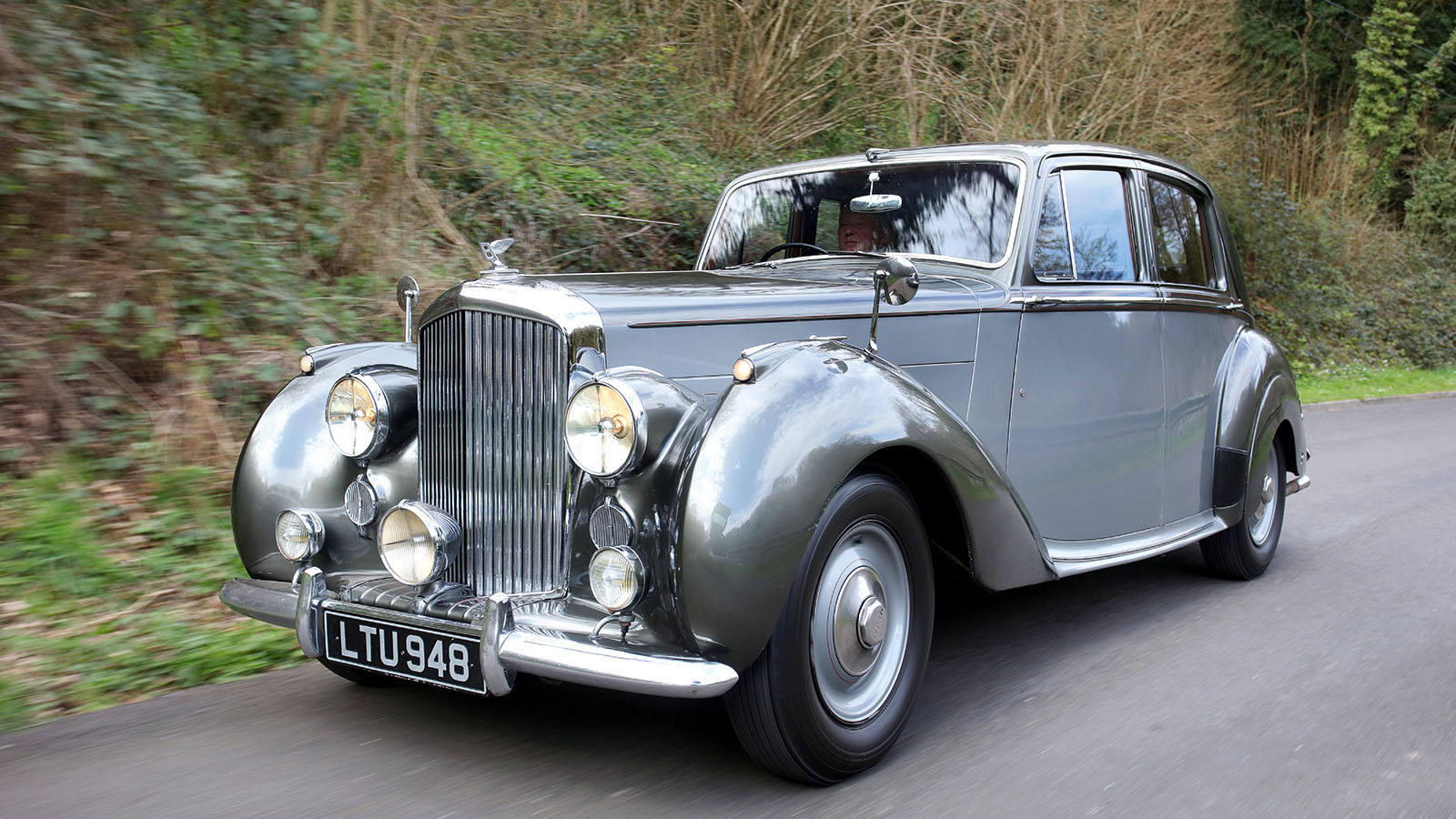
12. 1952 Bentley R-type
By the time Bentley replaced the MkVI with the R-type, the Standard Steel saloon body accounted for almost all of the 2320 cars made between 1952 and 1955.
There were some coachbuilt cars, but they had become very much the exception.
It’s easy to see why buyers chose to stick with the elegant factory body and the R-type added a larger boot. A revised dashboard design was introduced in 1953.
Power for the Bentley R-type was from the later MkVI’s 4.6-litre, six-cylinder engine, which gave refined cruising and a top speed of more than 100mph.
A four-speed automatic transmission also became an option with the R-type for the first time in Bentley history.
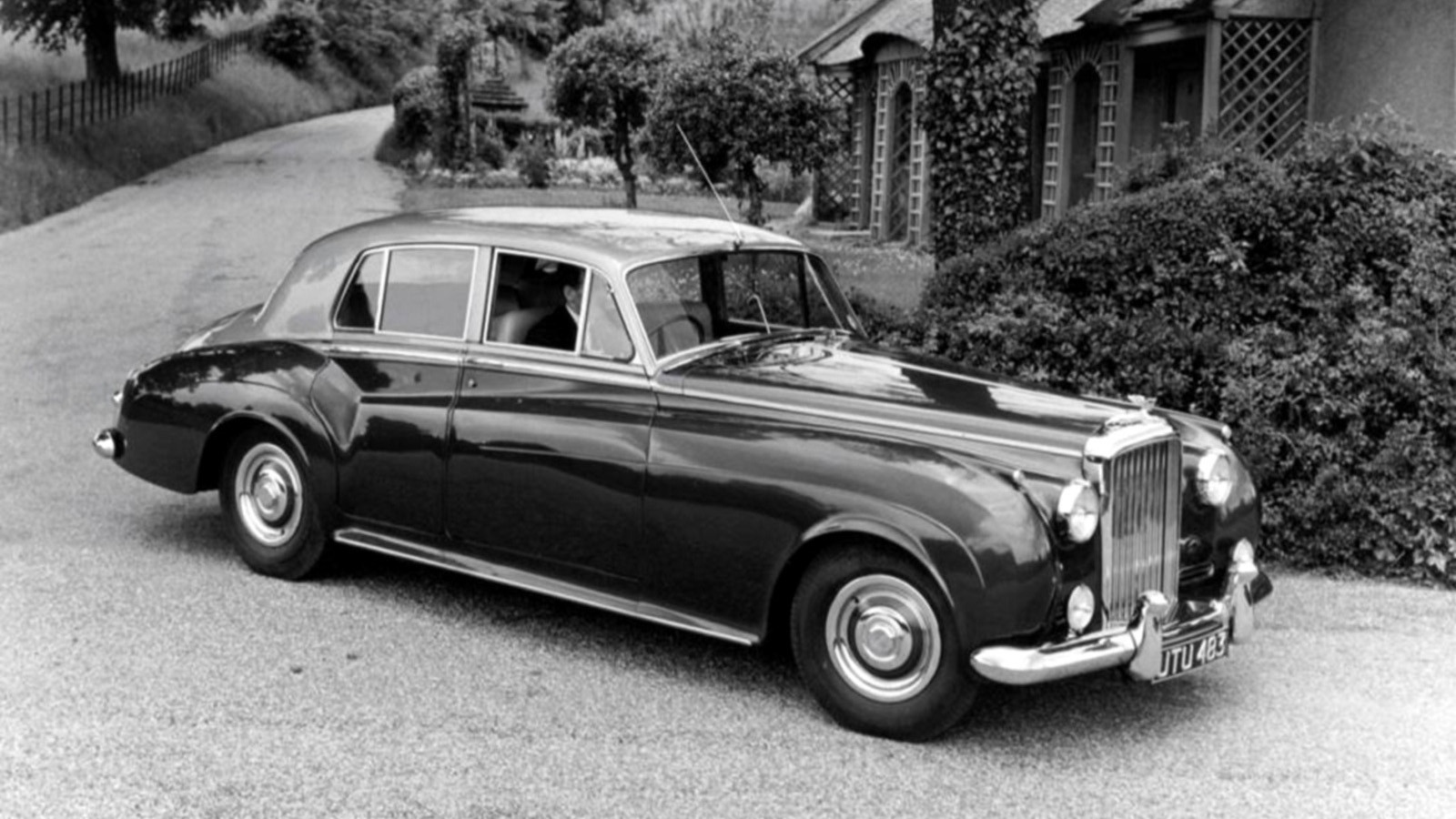
13. 1955 Bentley S1
The S1 neatly bridged the gap between Bentley’s pre-war past and post-war future.
Power for this sizeable saloon came from a development of the venerable straight-six, now enlarged to 4887cc to give a reputed 175bhp.
If the engine linked to the earlier times, the S1’s full-width bodywork pointed resolutely to what was to come.
As well as being to a standardised design and made mostly from aluminium, the body was shared in all but badges and radiator with the Rolls-Royce Silver Cloud.
Also standard now was the four-speed automatic gearbox, while new front suspension and better brakes dealt with the S1’s size and weight. Power steering became an option from 1956.
The S1 may have been a Rolls-Royce in most respects, but the Bentley model outsold its sibling with 3107 S1s made compared to 2231 Silver Clouds.
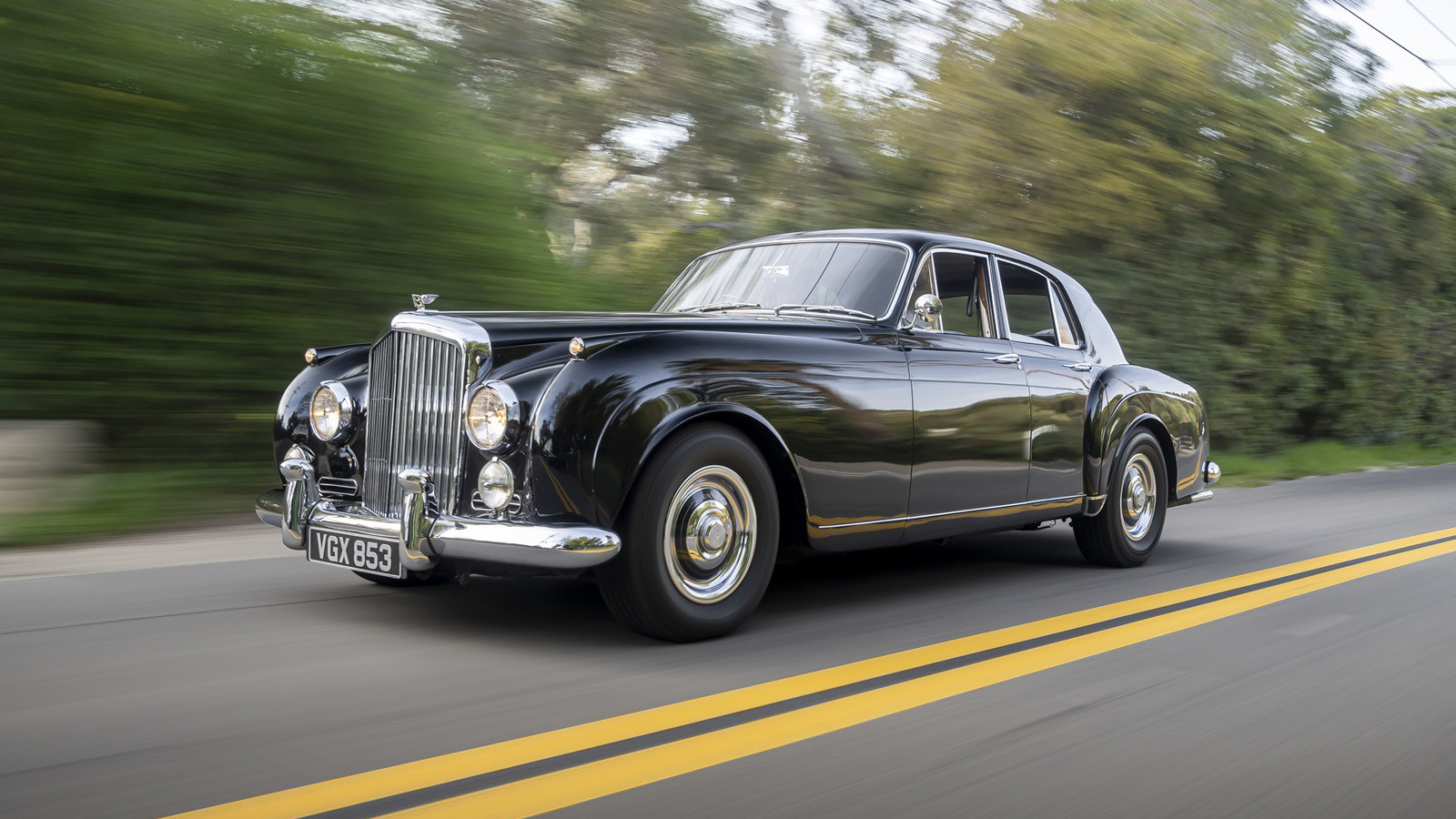
14. 1955 Bentley S1 Continental Flying Spur
The vast majority of Bentley S1 Continentals made were two-door saloons and dropheads.
However, HJ Mulliner reckoned there was a select group of buyers who wanted a sleeker, Continental-style four-door, and this proved a good bet.
The Flying Spur name came from a Scottish heraldic device of the clan Johnstone, which was put forward by HJ Mulliner’s Managing Director, Arthur Talbot Johnstone.
The very first Flying Spur had this mascot on its radiator.
Inspired by HJ Mulliner’s success, James Young also went on to offer a four-door Continental saloon on the S1 Bentley chassis.
15. 1959 Bentley S2
You would have to be a keen student of Bentley saloon styling to spot the S2 that replaced the S1 in 1959.
However, open the bonnet and the difference was immediately apparent with the new, aluminium, 6.2-litre V8 engine nestling where the S1’s straight-six had previously been.
The V8 was clearly designed with US customers in mind and it offered an estimated 200bhp.
However, it was not significantly quicker than the S1 yet had worse fuel economy, so was not universally welcomed.
Smooth power delivery convinced plenty to buy the S2, however, and it came with an automatic gearbox and power steering as standard for the first time in a Bentley.
Only on sale until 1962, the factory turned out 1932 standard saloon S2s.
16. 1959 Bentley Continental S2
Bentley continued to supply chassis to be turned into four-door Continental models, which carried on being called Flying Spur for those with HJ Mulliner coachwork.
James Young also kept the faith with its four-door Continental saloon.
As with the standard S2 saloon, the changes for the Continental models were largely limited to the engine bay with the arrival of the new, 6.2-litre V8.
The more powerful engine did, however, also provide the opportunity to fit the S2 with a much better air-conditioning system to appeal to customers in warmer climates.
Another improvement for the Bentley Continental S2 was the addition of electrically operated ride control as standard, along with an automatic gearbox and power steering.
17. 1962 Bentley S3
The new quad headlights of the Bentley S3 caused a sensation when the car was unveiled in 1962, and not all of the reaction was positive.
However, there were other changes to the S3’s body that went largely unnoticed, such as the lower bonnet line, the reshaped front wings, and the recessed sidelights and indicators. There were also wider rear wheels from 1964.
As with the previous two S-series models, the S3 could be ordered with a long-wheelbase version of the standard body, though only 32 of this generation were made in this extended form.
Revised carburettors and raised engine compression improved power to around 210bhp. The S3 also enjoyed better power steering for smoother low-speed driving.
18. 1962 Bentley S3 Continental
The S3 Continental stands as the last uniquely Bentley model while under Rolls-Royce ownership.
As with the factory saloon, the Continental now came with four headlights, though the saloons stuck with a slightly less controversial style than the Park Ward two-door’s design.
Underneath the sleek saloon bodywork by HJ Mulliner or James Young, the S3 Continental adopted all of the mechanical updates of the factory saloon.
This brought a power increase to around 210bhp for the 6.2-litre V8 engine, better power steering and slightly improved performance.
The S3 Continental was a slower seller than its predecessors, generating a total of 312 sales compared to 388 for the S2 and, best of all, 431 for the S1.
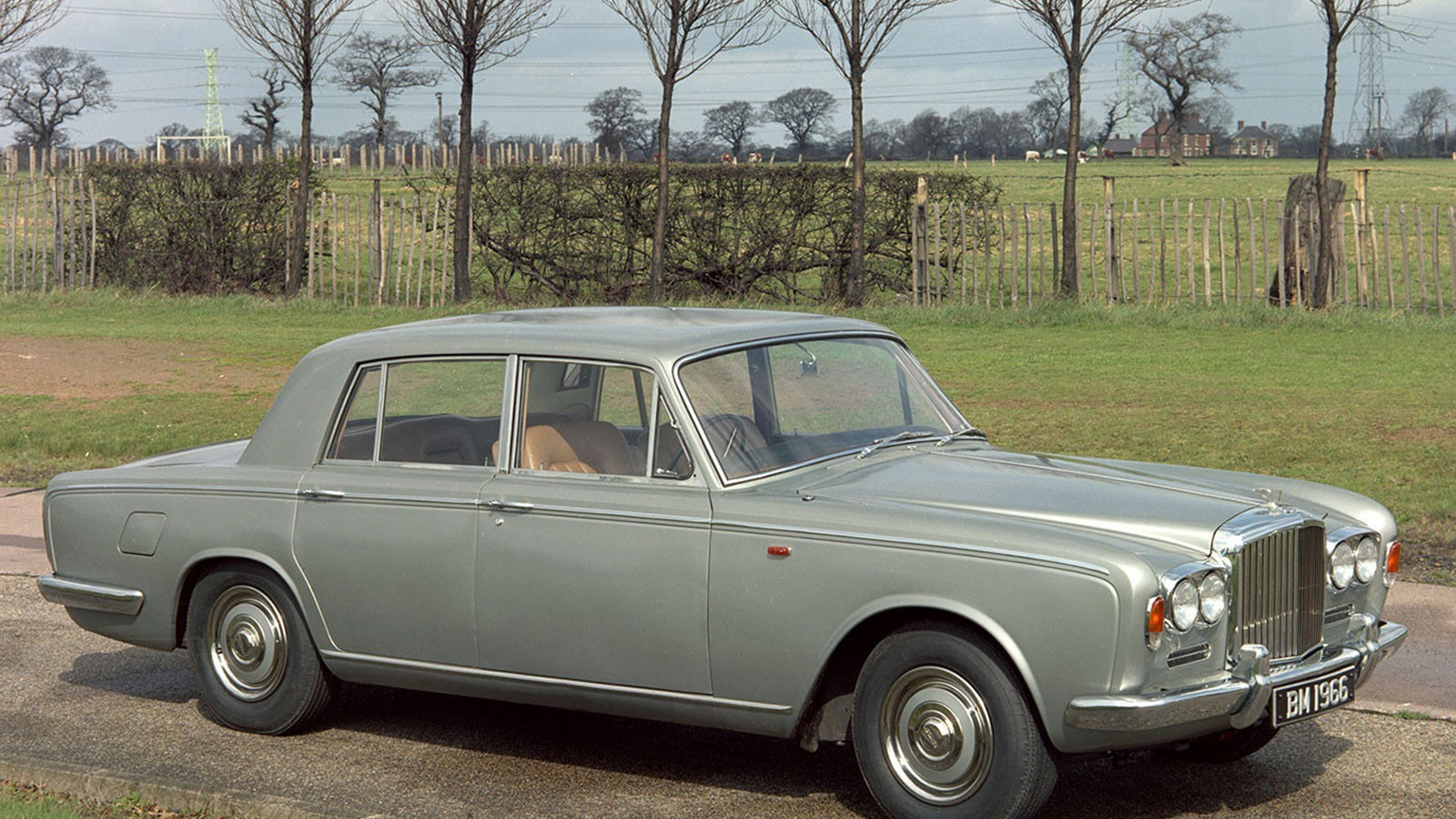
19. 1965 Bentley T1
The Bentley T1 was all but identical to the Rolls-Royce Silver Shadow, save for the badges and radiator grille.
A more fundamental change was the Bentley model was now comprehensively outsold by its Rolls-Royce counterpart.
The T1 found 1867 buyers for all types, while the standard Shadow saloon generated 16,717 sales on its own.
The four-door T1 was the most common Bentley and shared the Shadow’s unitary construction, hydropneumatic suspension and brakes, and the 6.2-litre V8 in early cars. The 6750cc V8 arrived in 1970.
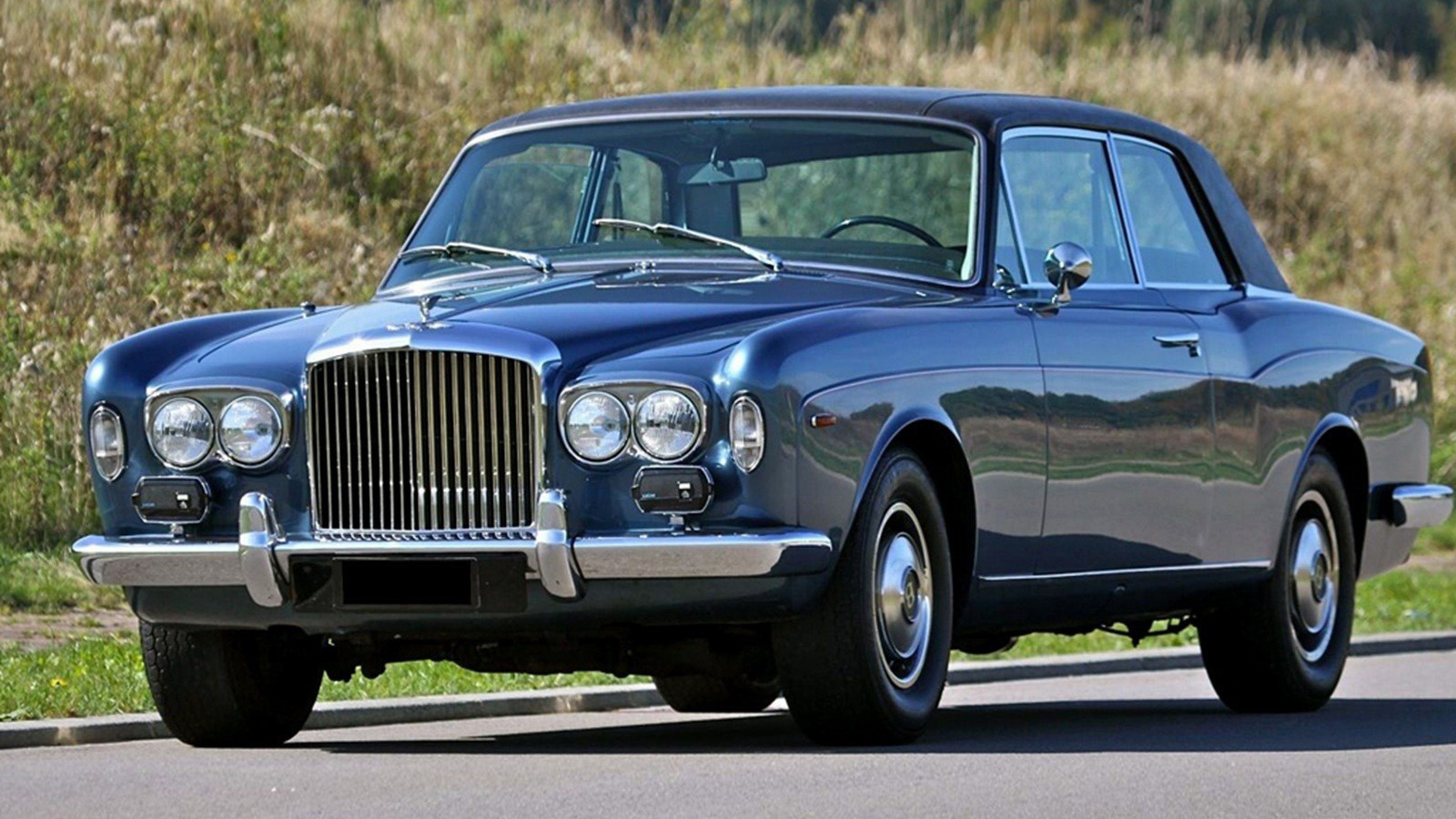
Bentley also sold a small number of two-door T1 saloons and these cars were created by coachbuilder James Young.
20. 1971 Bentley Corniche
The Corniche revived the name from the ill-fated, pre-war, one-off made for André Embiricos and it was shared with the two-door Rolls-Royce.
More were made as convertibles (around 80) compared to 69 two-door saloons.
Where the Mulliner Park Ward-made Bentley Corniche differed from the earlier James Young two-door saloon was along the beltline.
Where the earlier car had the same straight line as the four-door saloons, the Corniche had a ‘Coke-bottle’ dip along its rear flank.
Because all Corniches were made from 1971-on, they benefited from the larger, 6750cc V8 with more power, and the 2.2-tonne (2200kg), two-door saloon could reach 126mph and cover 0-62mph in 9.7 secs.
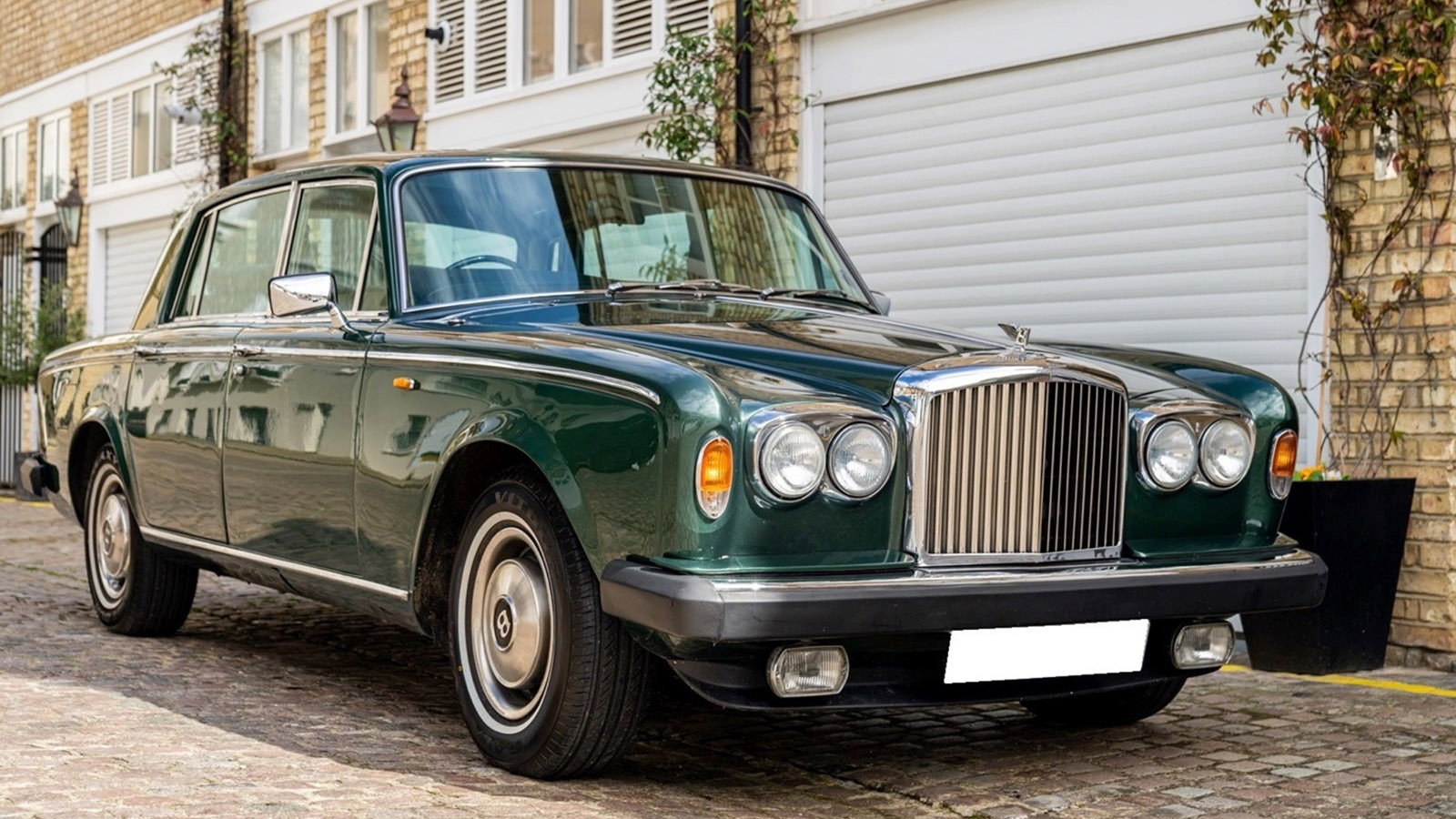
21. 1977 Bentley T2
Just as the Rolls-Royce saloon became the Silver Shadow II, the Bentley morphed into the T2.
Again, Rolls sales outstripped the Bentley by more than 10 to one, to make the Bentley a much rarer sight then and now.
Improvements for the T2 included split-level air conditioning and a revised dashboard, as well as a front air dam to improve aerodynamics. There was rack-and-pinion steering to give more precise steering feel and reaction.
When the Bentley T2 reached the end of its production life in 1980, 558 standard models has been built, along with a mere 10 long-wheelbase versions.
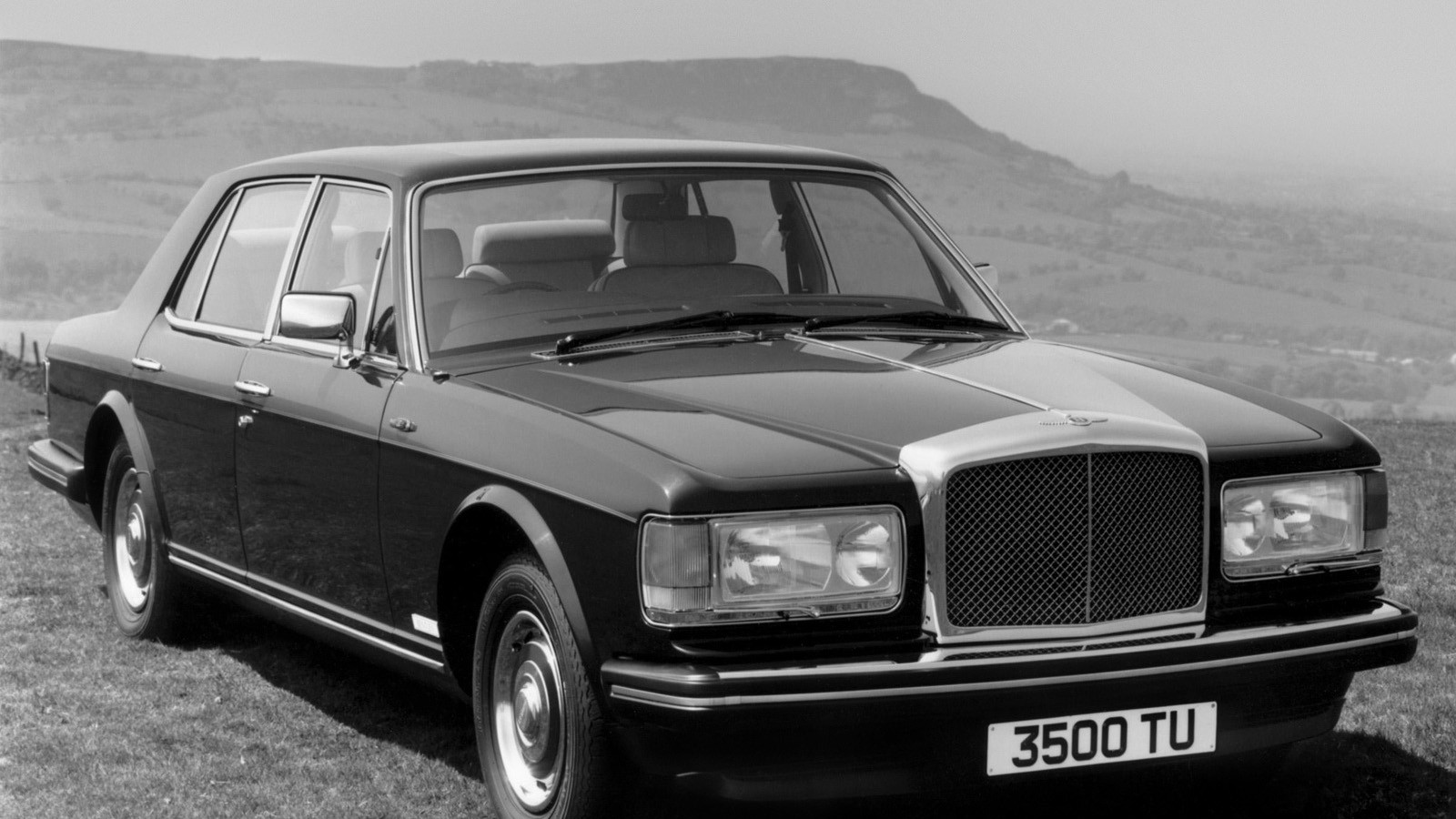
22. 1980 Bentley Mulsanne
To begin with, it looked like the Bentley Mulsanne would just be more of the same as with the T-series cars – rebadged Rolls-Royce models.
However, there were hints that Bentley was beginning to wake from its slumber.
The Mulsanne gently began to remind buyers of the badge’s motorsport history, with front sports seats in place of the Silver Spirit’s armchairs.
There was also a black insert for the radiator grille to make the Bentley’s more rounded front stand out.
It was a modest start and the Silver Spirit continued to be the stronger seller, but by the time the Mulsanne S arrived in 1987 things were going more Bentley’s way.
The S shared the quad headlights of the Turbo R, along with the same firmer suspension, alloy wheels and a different interior.
The S continued up to 1992 and, along with the earlier Mulsanne, generated 2039 sales for Bentley.
23. 1982 Bentley Turbo
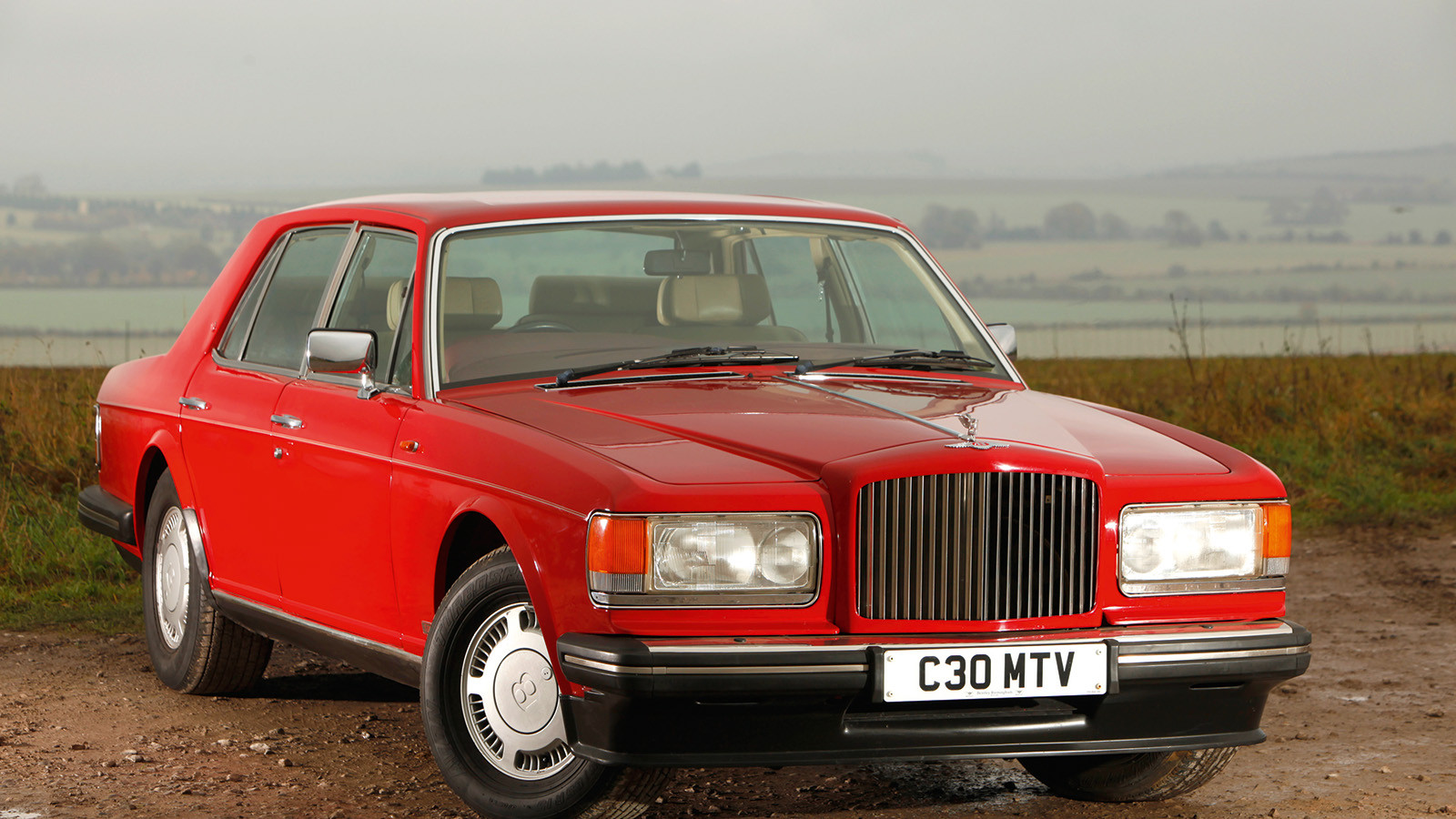
It’s easy to pinpoint where Bentley’s revival began in the 1980s with the launch of the Turbo in 1982.
There was no equivalent model in Rolls-Royce’s line-up and the focus was on performance as much as luxury.
By adding a Garrett AiReseach turbocharger to the 6750cc V8, Bentley boosted power by 50% to an estimated 320bhp and colossal 457lb ft of torque.
That was enough to propel the Turbo from 0-60mph in 6.7 secs and on to 135mph, which were figures to shame hot hatches weighing half as much as the Bentley.
In 1985, the Turbo R added more power and improved handling, while the Turbo S of 1995 increased output further.
The final RT Mulliner version of the Turbo arrived in 1998 with 420bhp and was a special-order car. Only 56 RT Mulliners were made, part of an overall total of 4815 Turbo models produced.
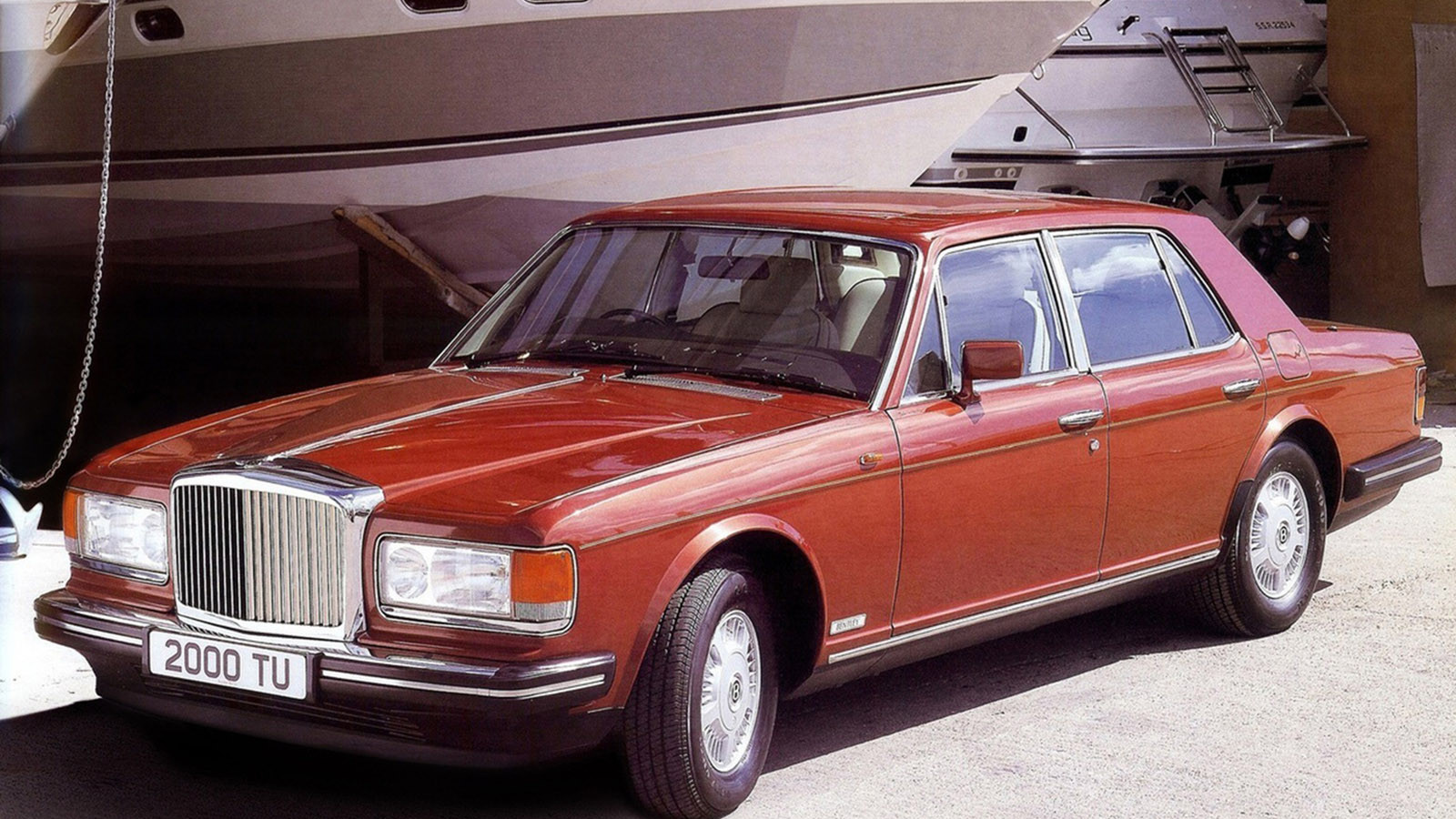
24. 1984 Bentley Eight
While the Turbo was winning Bentley a legion of new buyers and generating column inches in the press, the Eight was instrumental in repositioning the marque as a more affordable option for those wanting a luxury sports saloon.
The Eight cost some £10,000 less than a Mulsanne, which was around £50,000 new in 1980.
This was achieved with a slightly simpler interior and specification, while a mesh grille, front spoiler and quad headlights marked out the Eight to passers-by. There was also slightly firmer suspension for improved handling.
It was a great success and Bentley sales not only held up through the 1980s, they increased and the company name once again became synonymous with high-speed comfort.
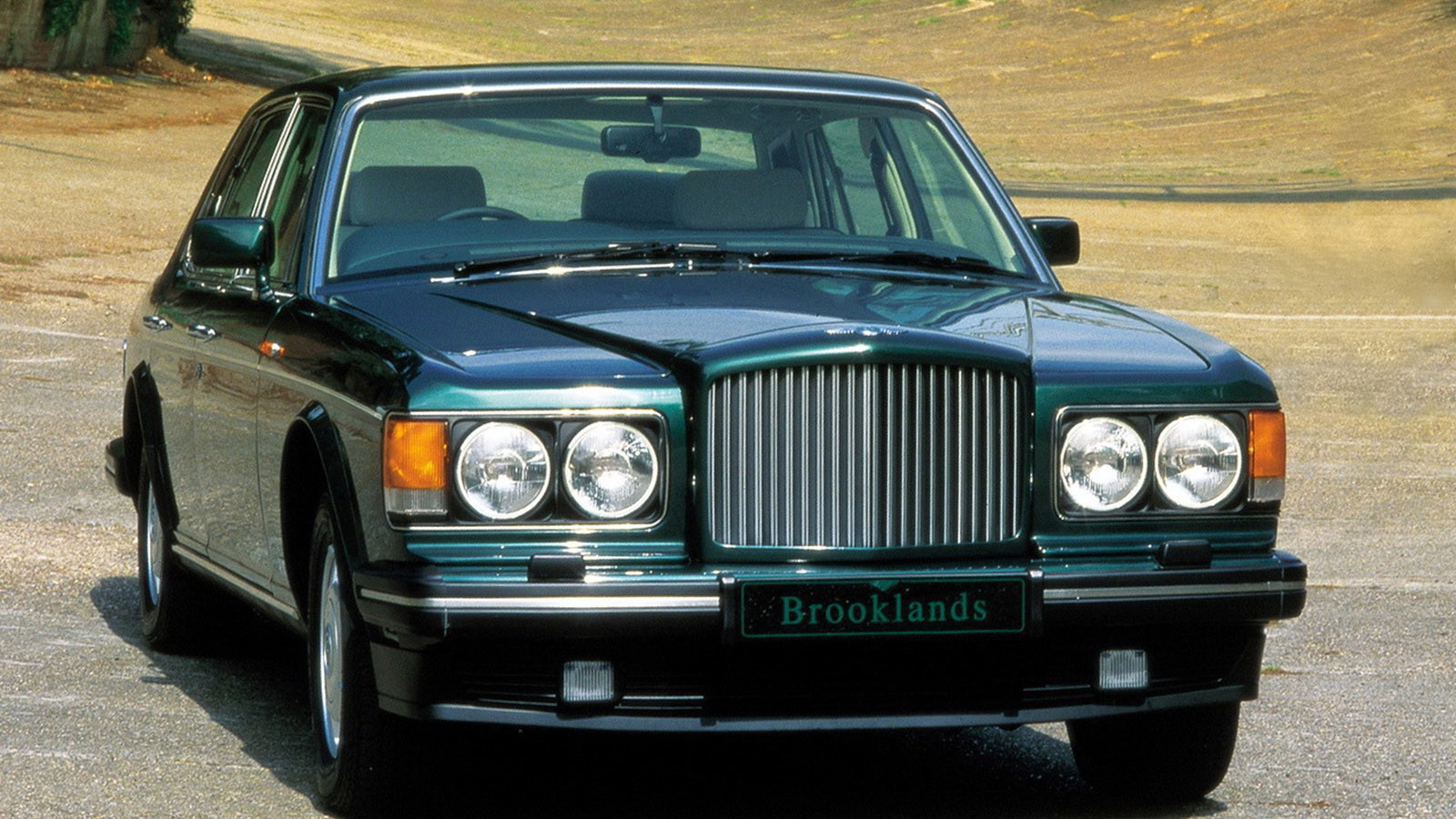
25. 1992 Bentley Brooklands
This Bentley saloon took its name from the Brooklands track in Surrey, UK, where the company had enjoyed many successes in the pre-war years.
The Bentley Brooklands was another concerted push by parent company Rolls-Royce set the Bentley and Rolls-Royce brands apart – and it worked a treat.
Despite the huge cost to buy a Brooklands, Bentley sold 1722 of this model between 1992 and 1998.
It helped that the Brooklands looked superb and was powered by the 6.75-litre V8, to give 0-62mph in 7.9 secs and 140mph.
It could cruise effortlessly at high speeds with four people on board plus their luggage, evoking the grand-touring credentials of early Bentley models.
All Brooklands came with a body-coloured grille surround and four headlamps, as well as adaptive suspension.
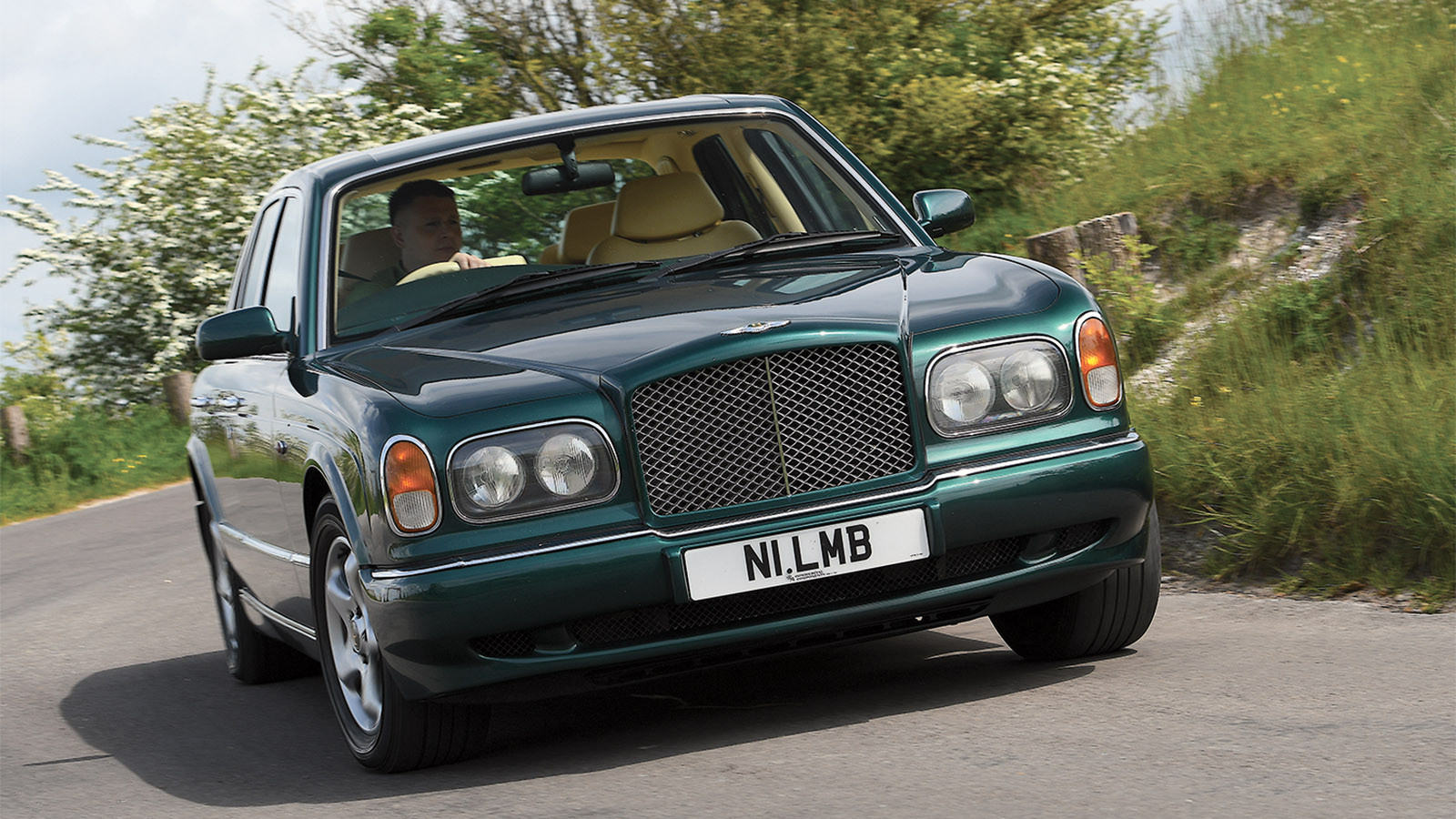
26. 1998 Bentley Arnage
After 18 years of service, the Mulsanne and its derivatives were replaced by the Bentley Arnage.
Gone too was the 6.75-litre V8, with a Cosworth-tuned twin-turbo 4.4-litre BMW V8 in its place.
This engine produced a decent 349bhp, but it didn’t quite hit the spot in the way the previous motor had, and plenty of customers wanted the old engine back.
When Volkswagen took charge of Bentley, the 6.75-litre V8 duly made its way under the bonnet again by October 1999 and the Arnage never looked back.
You could also have a long-wheelbase version from 2001, which was renamed RL in 2003.
Power increased over the years and culminated in the Arnage T.
27. 2002 Bentley State Limousine
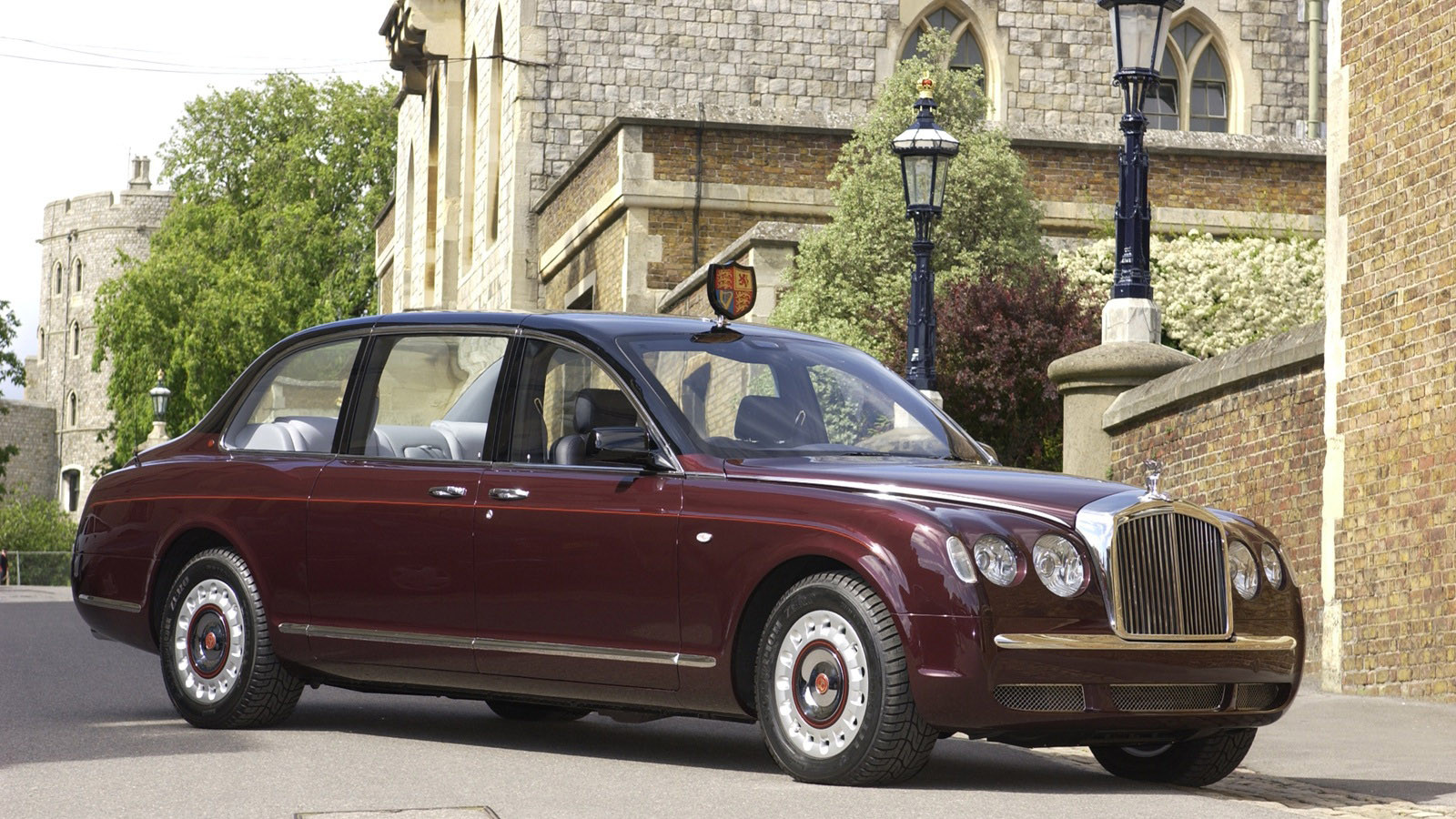
Created to mark the Platinum Jubilee of Her Majesty The Queen, the Bentley State Limousine was based on an extended Arnage platform.
The body was created by Mulliner, by now Bentley’s in-house bespoke car division.
The State Limousine is 83cm (a little more than 32in) longer than a standard Arnage, as well as 25.5cm (10in) taller and 6.8cm (2.7in) wider.
Finished in claret and black, the car has rear-hinged back doors that open to almost 90 degrees to allow easy entry and exit for passengers.
The seats are trimmed in lambswool cloth and the rear windows can be covered with opaque panels for greater privacy.
Power comes from a 400bhp Arnage R engine and the State Limousine is claimed to be capable of 130mph. Two cars were built, each valued at £10 million in 2002.
28. 2005 Bentley Continental Flying Spur
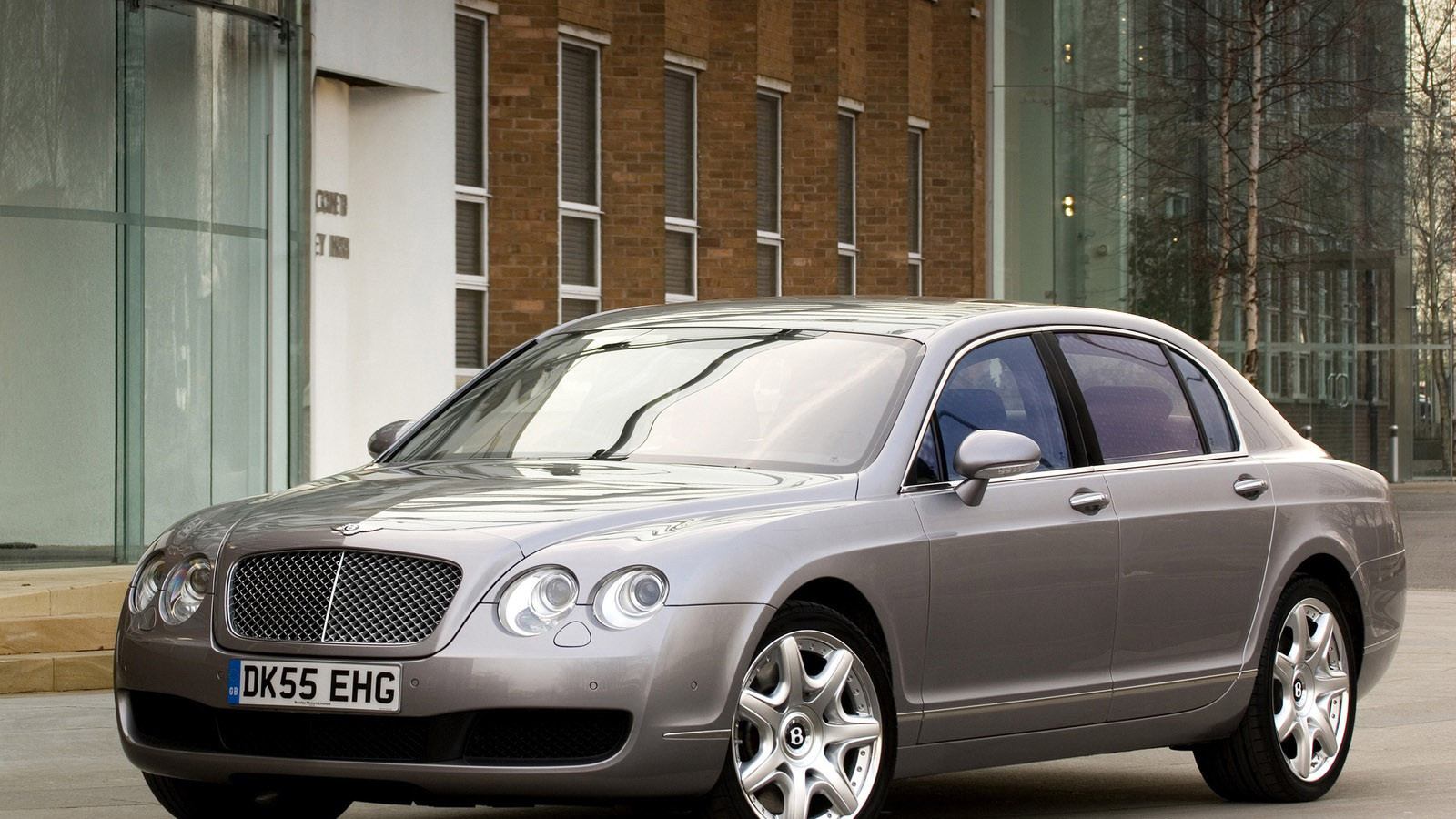
The Flying Spur name was back in 2005 and given to Bentley’s new four-door saloon based on the same platform as its Continental GT coupé.
That meant it had the same turbocharged, W12, 6-litre engine and 553bhp, making it capable of 195mph officially, but tests showed it could top 200mph.
To create the Flying Spur, Bentley lengthened the GT’s wheelbase by 320mm (12.6in) to give enough length for the rear doors.
There isn’t the coupé’s kicked-up waistline, because the saloon instead has an uninterrupted line all the way from the front to rear.
Unlike its forebears that were always exclusive and rare, the new Flying Spur was a huge sales hit and Bentley sold more than 20,000 of these before an updated, second-generation version arrived in 2013.
This model then added the option of a turbocharged, 4-litre V8 in 2014 and carried on until 2019.
29. 2010 Bentley Mulsanne
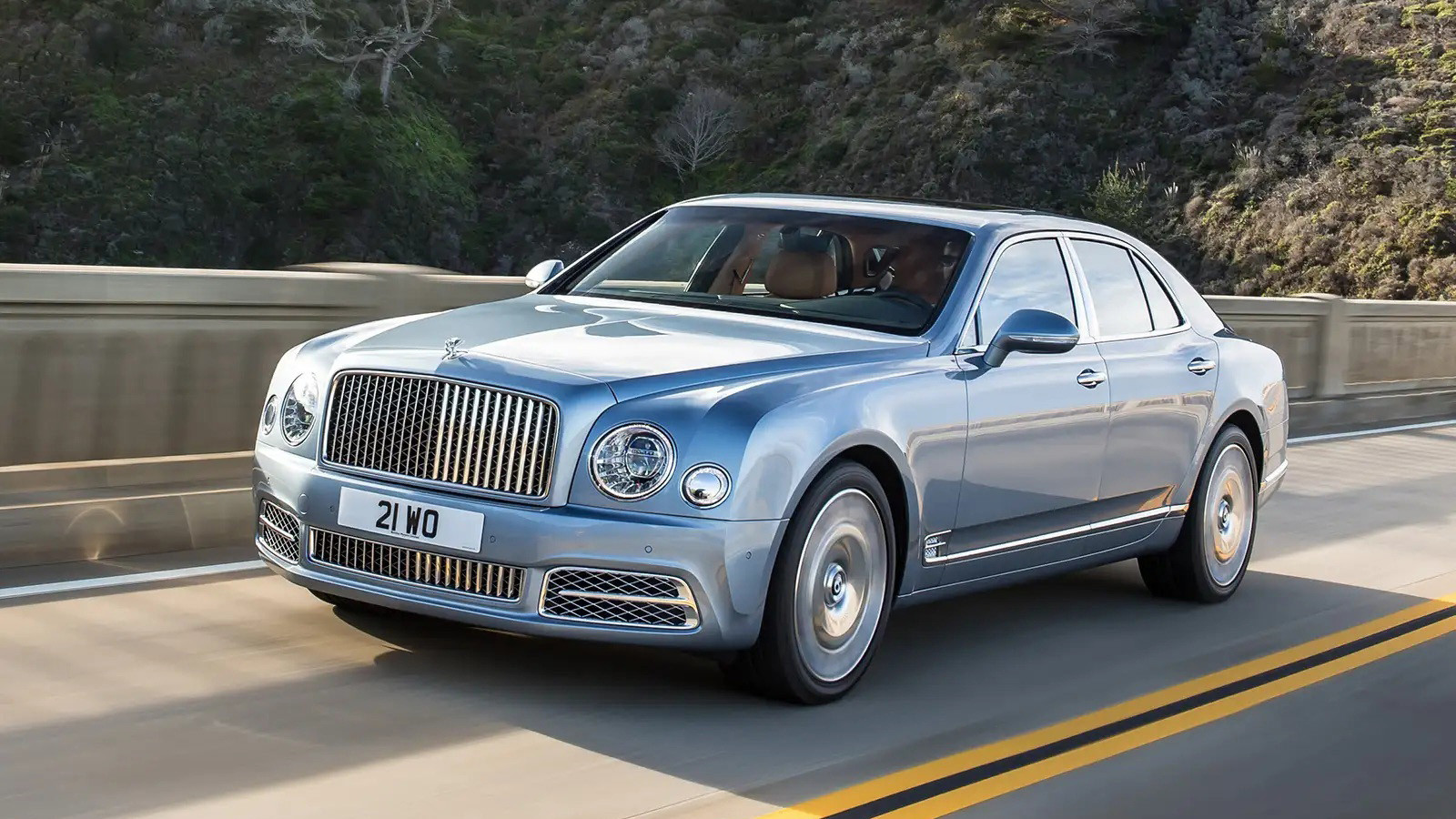
Another much-loved name from Bentley’s past was reinstated in 2010 when the all-new Mulsanne took over full-size luxury saloon duties from the Arnage.
The styling of the Mulsanne did a good job of disguising its 5.5m (18ft) length in standard form, or you could get an Extended Wheelbase model at 5.8m (19ft) long. If that still wasn’t enough rear legroom for you, the Grand Limousine version was a generous 6.5m (21.3ft) from tip to tail.
Aluminium was used for much of the Mulsanne’s bodywork to keep weight down, with the standard model tipping the scales at 2.6 tonnes (2600kg).
To move that heft, the 6.75-litre V8 produced 506bhp, or you could have a Speed version from 2014 with 530bhp.
The Mulsanne was the last car to use this V8 engine, with the final model made in June 2020 after 61 years and more than 36,000 engines built.
30. 2019 Bentley Flying Spur
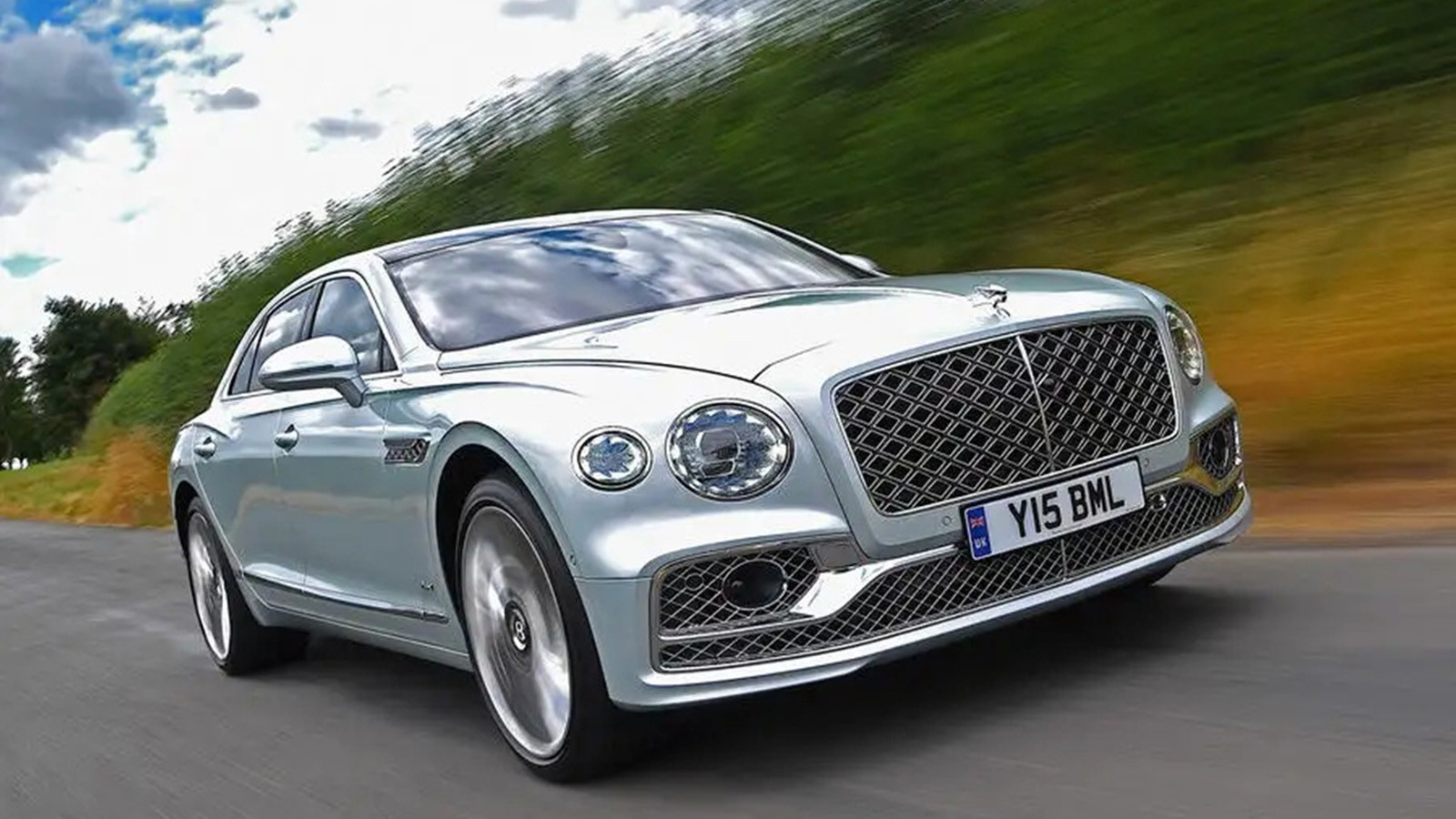
For 2019, Bentley launched an all-new Continental Flying Spur based on the latest platform shared with the contemporary GT coupé.
At 5.3m (17.4ft) long, the Flying Spur was not quite as big as the Mulsanne, yet the interior was as roomy as you could hope for and lavishly appointed.
To counter the car’s length, Bentley fitted the car with rear-wheel steering, while larger airbags for the suspension improved the ride and handling balance for this all-wheel-drive saloon.
As before, power was initially provided by the W12 engine, with a 4.8 V8 as a smaller alternative.
The W12 is capable of 211mph, while those with half an eye on fuel economy can opt for the plug-in hybrid model with a 2.9-litre, V6 petrol motor that will still top out at 177mph.
At the time of writing, the Flying Spur is now the only four-door saloon in Bentley’s new-car line-up.