Fabulous at 50
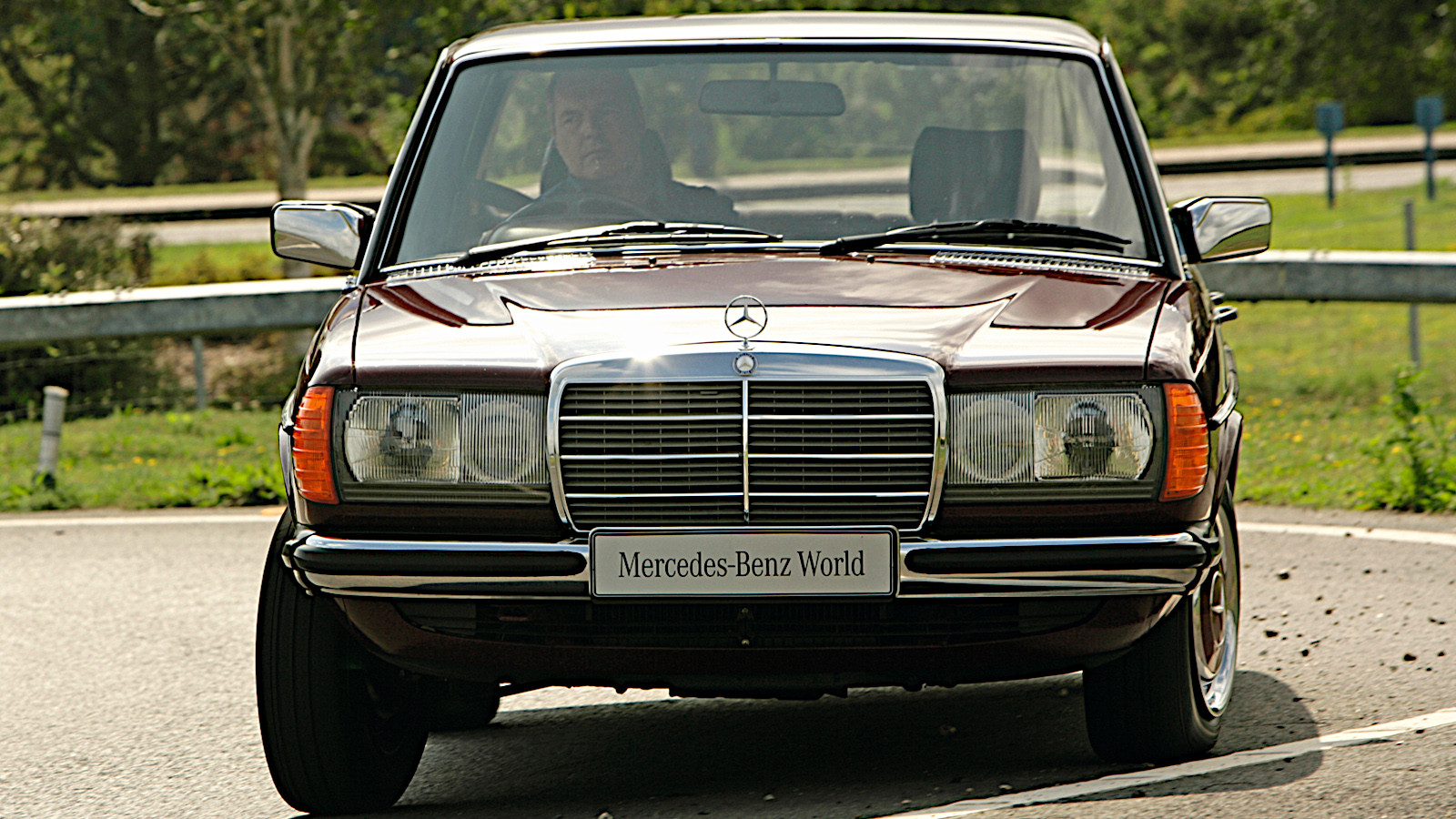
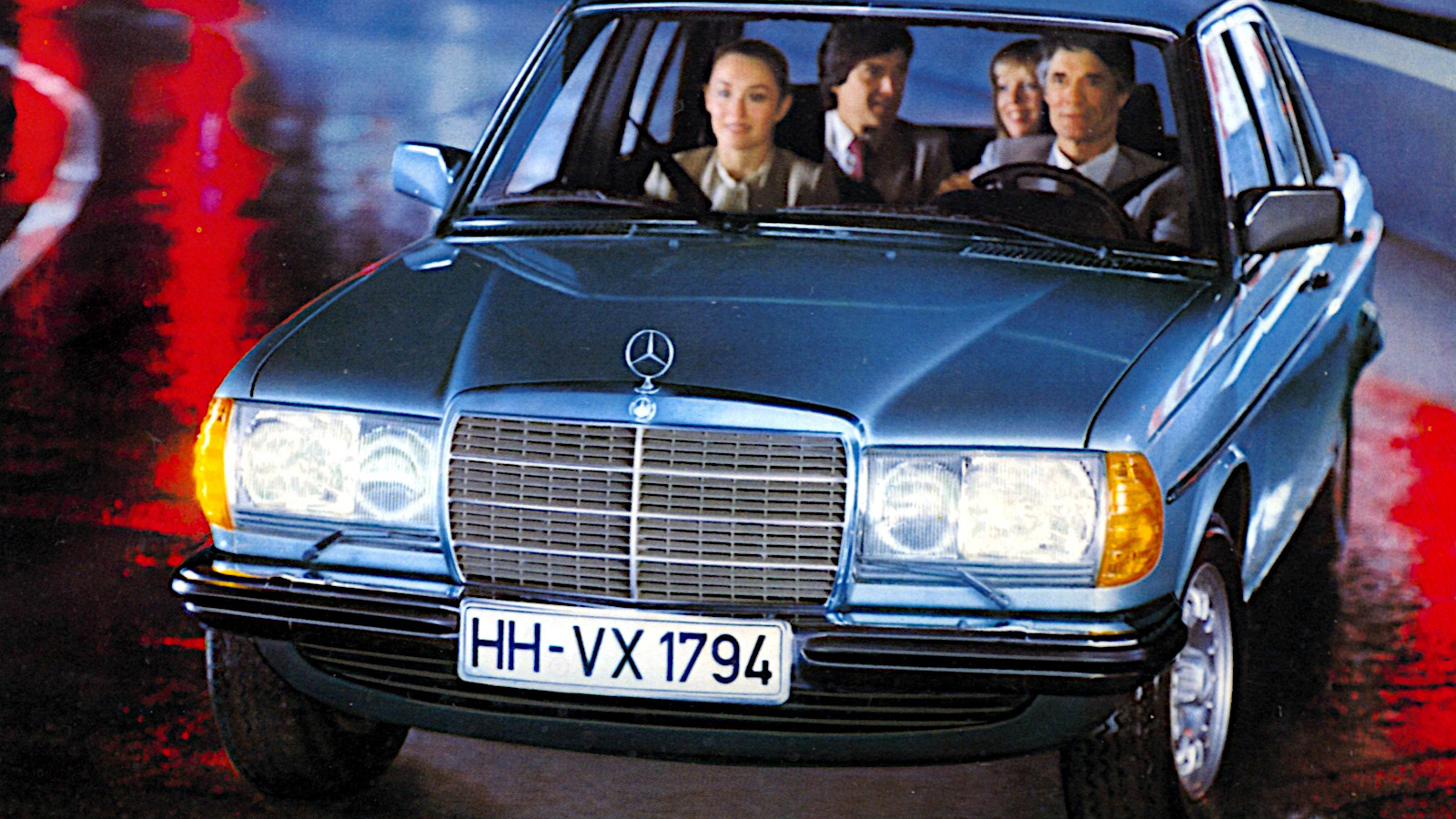
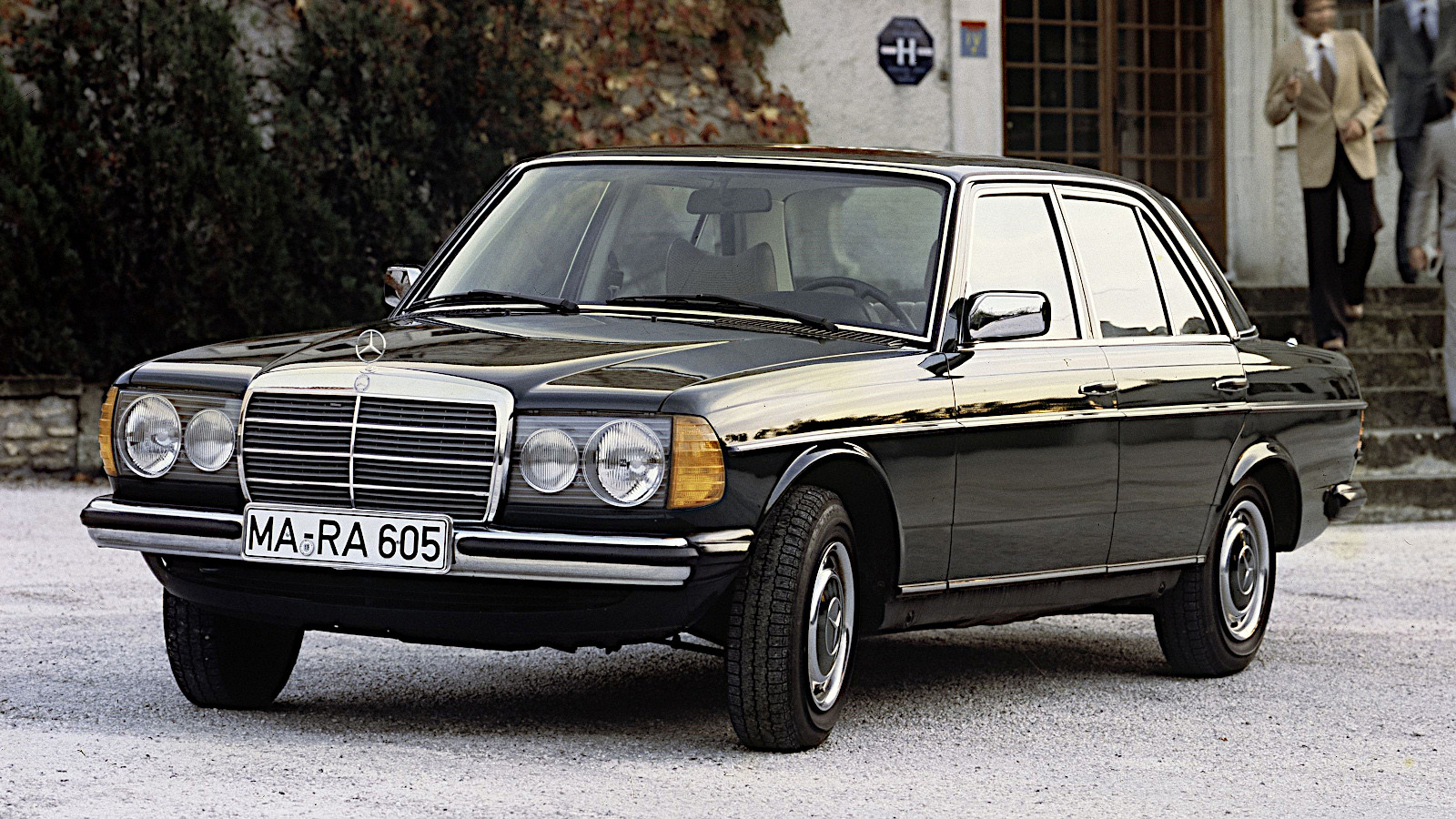
Half a century ago, in January 1976, Mercedes-Benz put on sale a new mid-range saloon car whose name varied according to the capacity of whatever engine was fitted to it, but is generally referred to by its factory codename: W123.
Closely related models with different body styles were added to the range later, and production continued for just two months short of 10 years – at the time a new record for a Mercedes-Benz of this type, and one which has rarely been surpassed since.
This was therefore one of the most significant cars the company has ever produced, and we hope you’ll agree that it’s worth a closer look today.
What came before
Mercedes-Benz regards its 123-series as a predecessor of the models known as E-Class, though that name was not used until the 1990s.
The line began in 1946 with the Type 170, which was followed in 1953 by the far more modern-looking Ponton, replaced in turn by the Fintail in 1961.
The last of the pre-W123 models, given the codenames W114 or W115 depending on the type of engine fitted, is known informally as the Stroke Eight because its internal designation included the term /8, a reference to the fact that it first appeared in 1968.
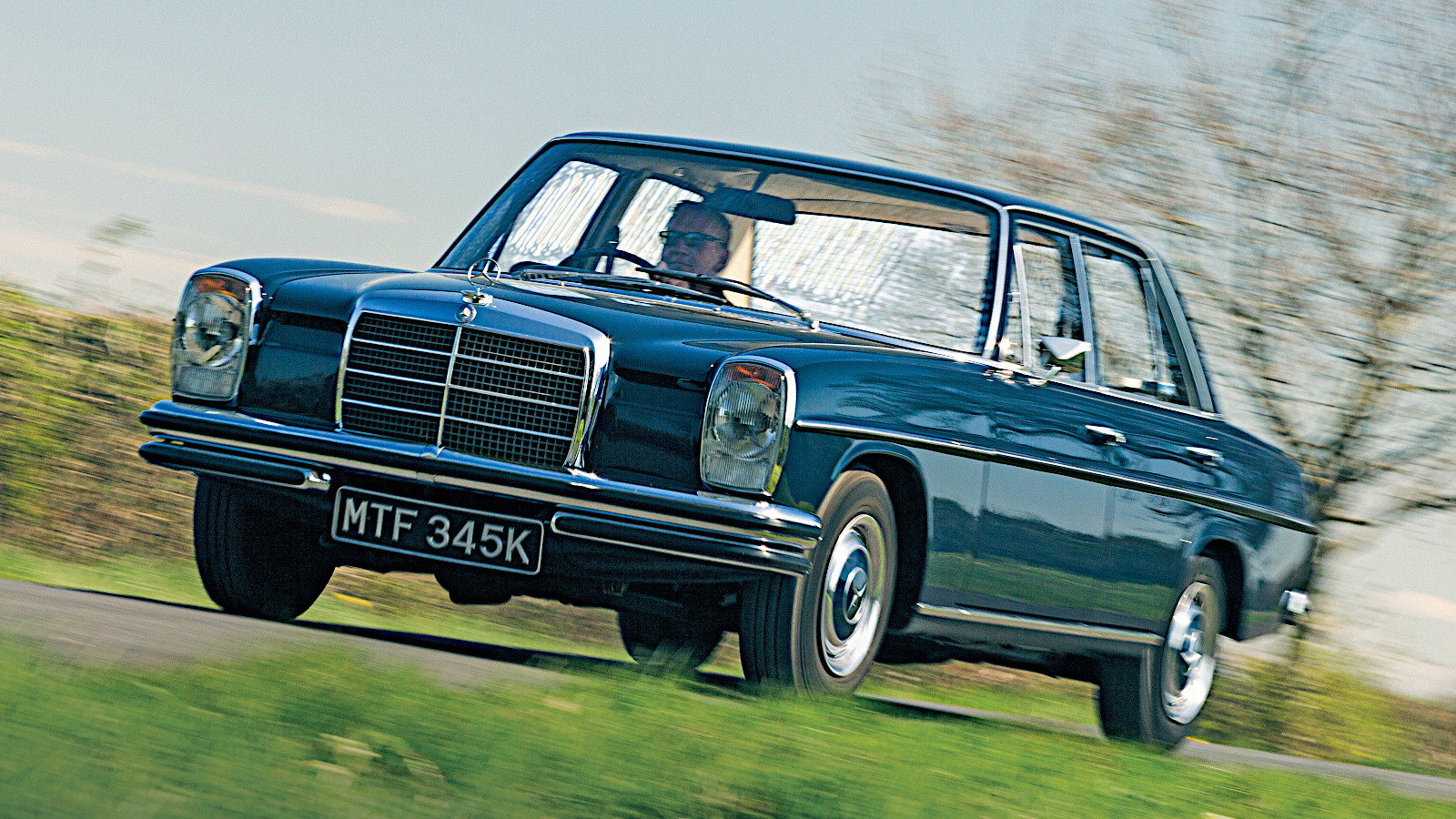
Distinguished by Paul Bracq’s simple but elegant three-box shape, as well as by vertically aligned, oblong headlight units which could be described in the same way, the Stroke Eight (pictured) was notable for being the first mass-production Mercedes-Benz with a semi-trailing-arm rear axle.
The first W123s
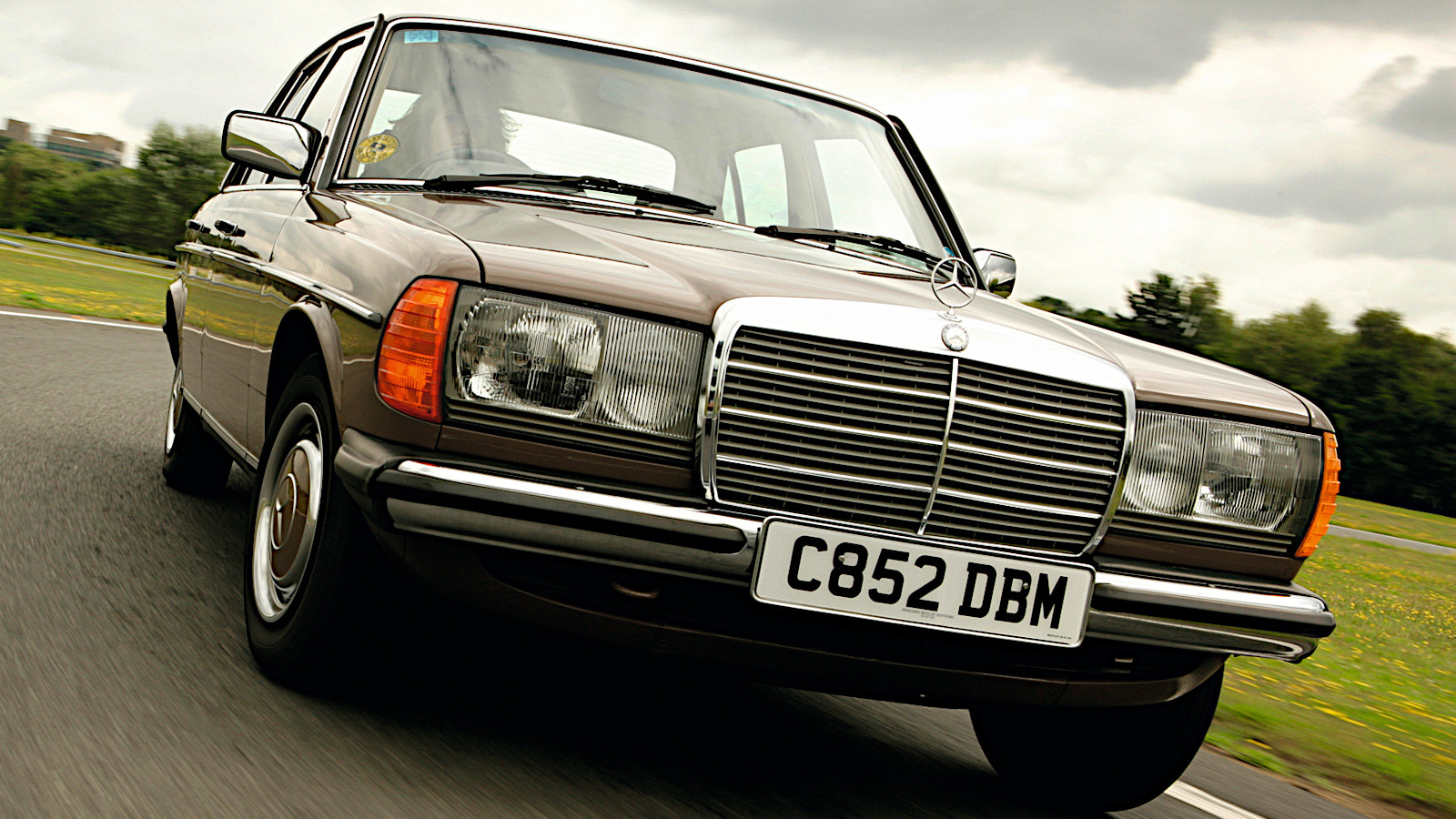
While retaining the same basic shape as the Stroke Eight, the W123 adopted new corporate styling created by Friedrich Geiger and first used in the 116-series S-Class launched in 1972.
The Stroke Eight’s semi-trailing-arm rear axle was carried over, but now there was double-wishbone front suspension, too.
In the interests of safety, Mercedes-Benz took the trouble to make the passenger compartment far more sturdy than it had been in the previous model, while also making the front and rear ends crumple in a controlled manner in the event of an impact.
A further safety development was the introduction of an arrangement whereby the steering wheel moved to the side if the car hit something unyielding in front of it, rather than being pushed towards the driver.
Early W123 engines
At launch, the W123 was powered mostly by engines already available in the Stroke Eight.
These ranged from a 2-litre, four-cylinder diesel with an output of only 54bhp to a very much more capable, fuel-injected, 2.7-litre straight-six which produced 175bhp.
The only new engine in the range was a carburettor-fed, 2.5-litre ‘six’, the replacement for a 2.8-litre unit of the same layout whose design dated back to the early 1950s.
Custom-bodied 123s
W123s were produced not only as saloons but as rolling chassis with partial bodywork, some of them in long-wheelbase form.
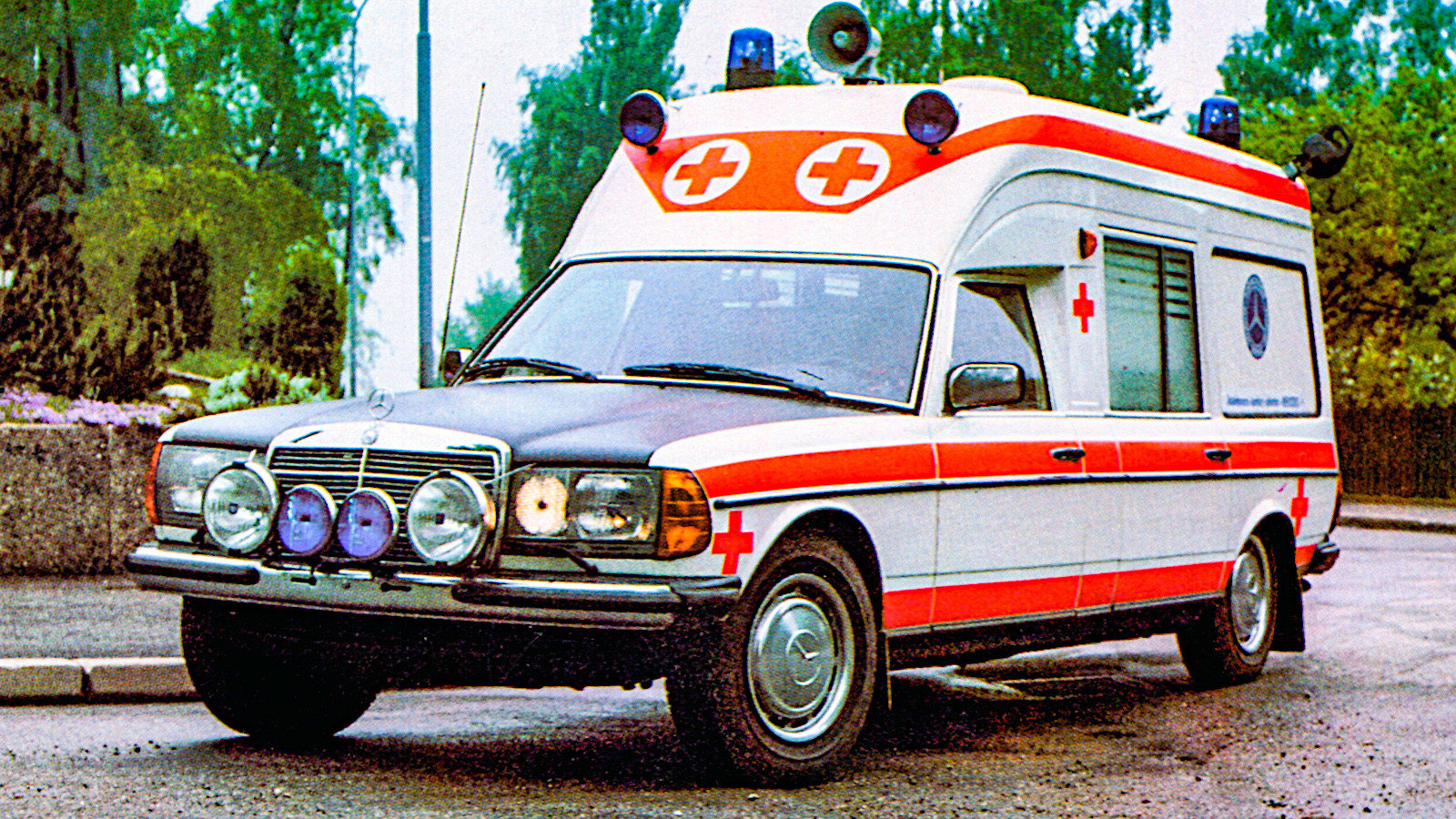
After purchase, they would be taken to independent companies to be converted into special vehicles, notably ambulances (a 1977 example pictured) and hearses.
According to Mercedes-Benz, most of the ambulances were completed by Binz in Lorch and Miesen in Bonn, both of which are still active as of 2026, while the hearse builders included Pollman (Bremen), Rappold (Wülfrath), Stolle (Hanover) and Welsch (Mayen).
By the standards of any mass-production car, this was of course a minority activity, but the fact that Mercedes-Benz felt justified in producing 8373 chassis of this type suggests that it was well worth being involved in.
The coupé
In 1977, Mercedes’ 123-series range began to expand dramatically.
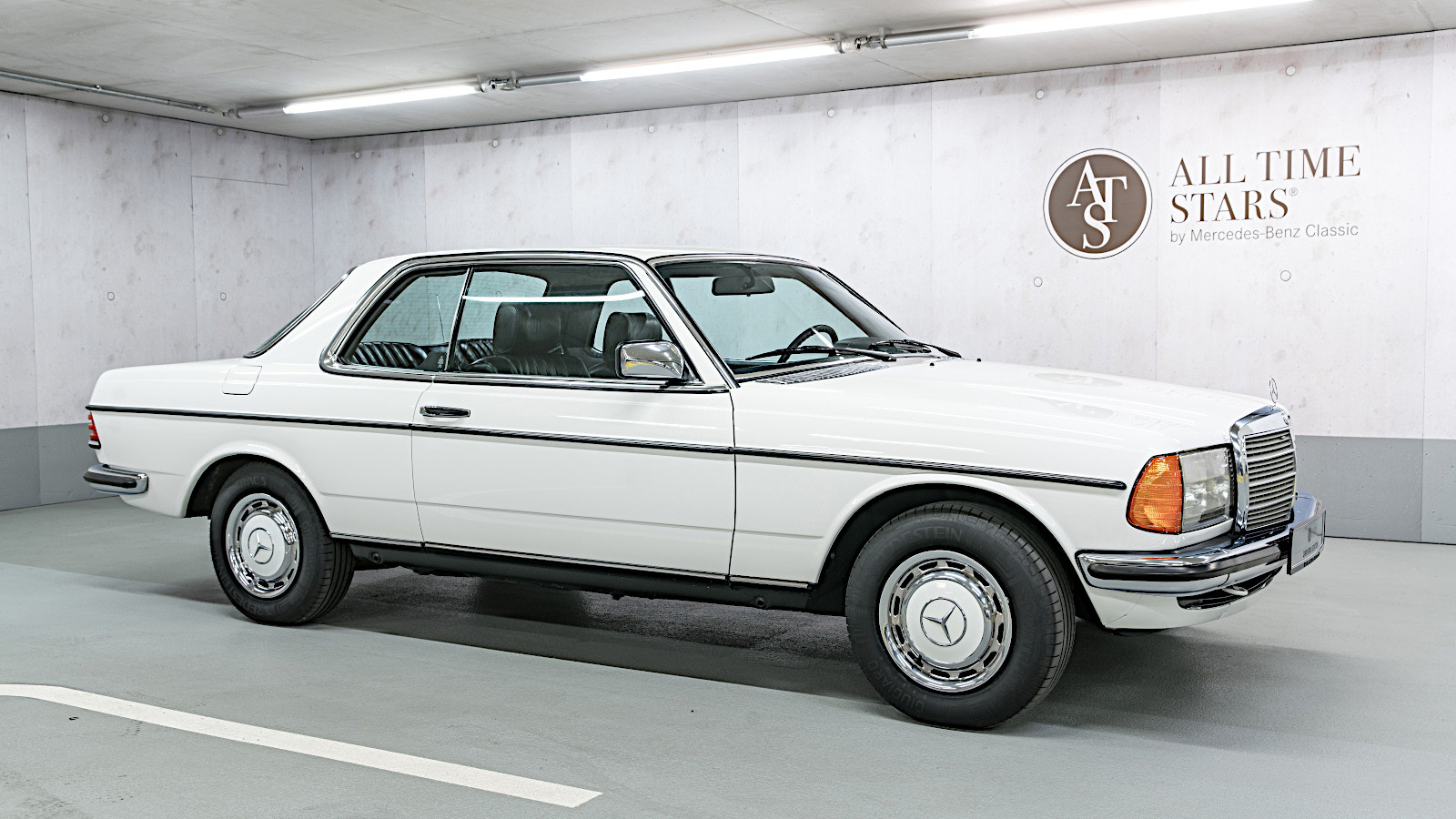
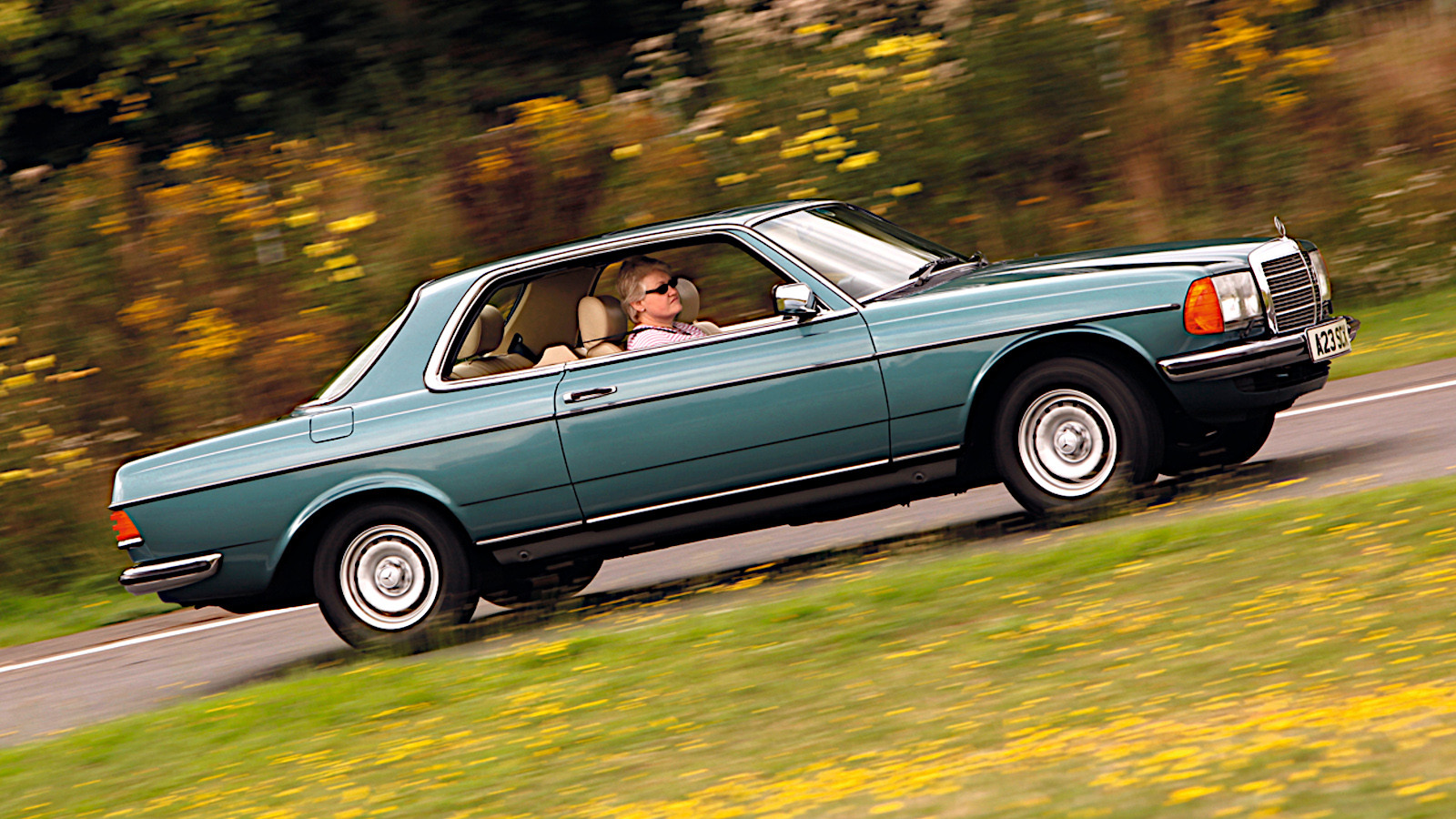
The first new derivative was the two-door coupé (codenamed C123), which was in most respects very similar to the saloon, but had an 85mm (3⅓in) shorter wheelbase.
No doubt assuming that coupé buyers would be relatively affluent, thus not interested in a basic model, Mercedes-Benz made sure each car would correspond to one of the higher-level saloons.
Early versions sold in Europe were therefore only available with the larger 2.3- and 2.7-litre petrol engines (though the former had an output of just 108bhp, and is described by Mercedes-Benz today as being ‘not of overwhelming temperament’), and every coupé sold in the region had rectangular headlights rather than the round ones fitted to cheaper saloons.
300CD
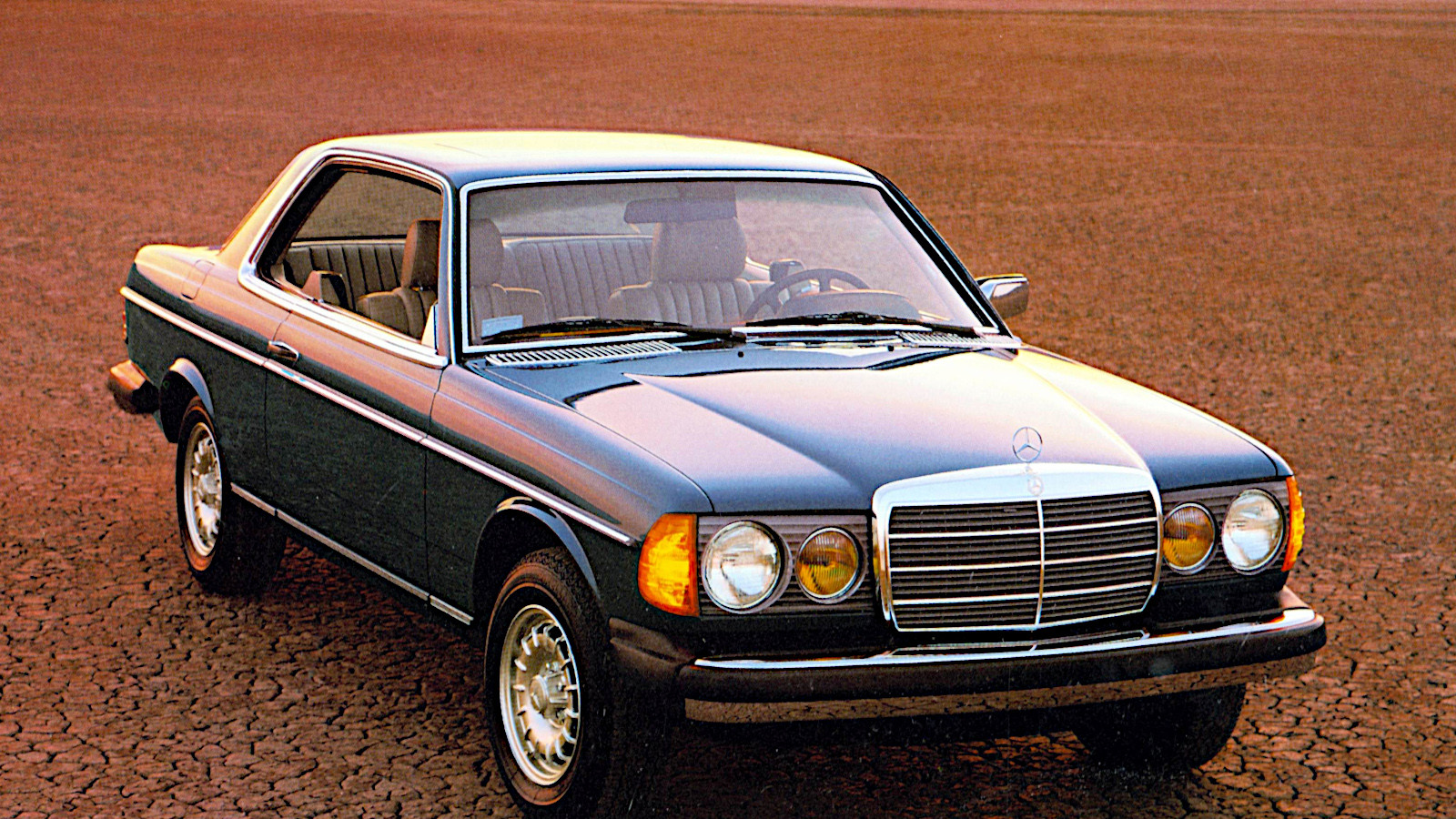
Described by Mercedes-Benz today as ‘unusual, almost bizarre’, the 300CD was only ever exported to North America.
Its 3-litre, five-cylinder, naturally aspirated, diesel engine produced only 77bhp, but at a time when the USA had a more or less nationwide speed limit of 55mph, the coupé’s lack of performance was not considered to be a major issue, and the car helped to lower the company’s corporate average fuel economy.
It went on sale in September 1977 (with round headlights, contrary to the policy adhered to in Europe), and exactly two years later the fuel-injection system was revised, raising the power output to 83bhp.
Nearly two years after that, in mid-1981, the original engine was replaced by a turbocharged unit, whereupon the available power soared to 119bhp.
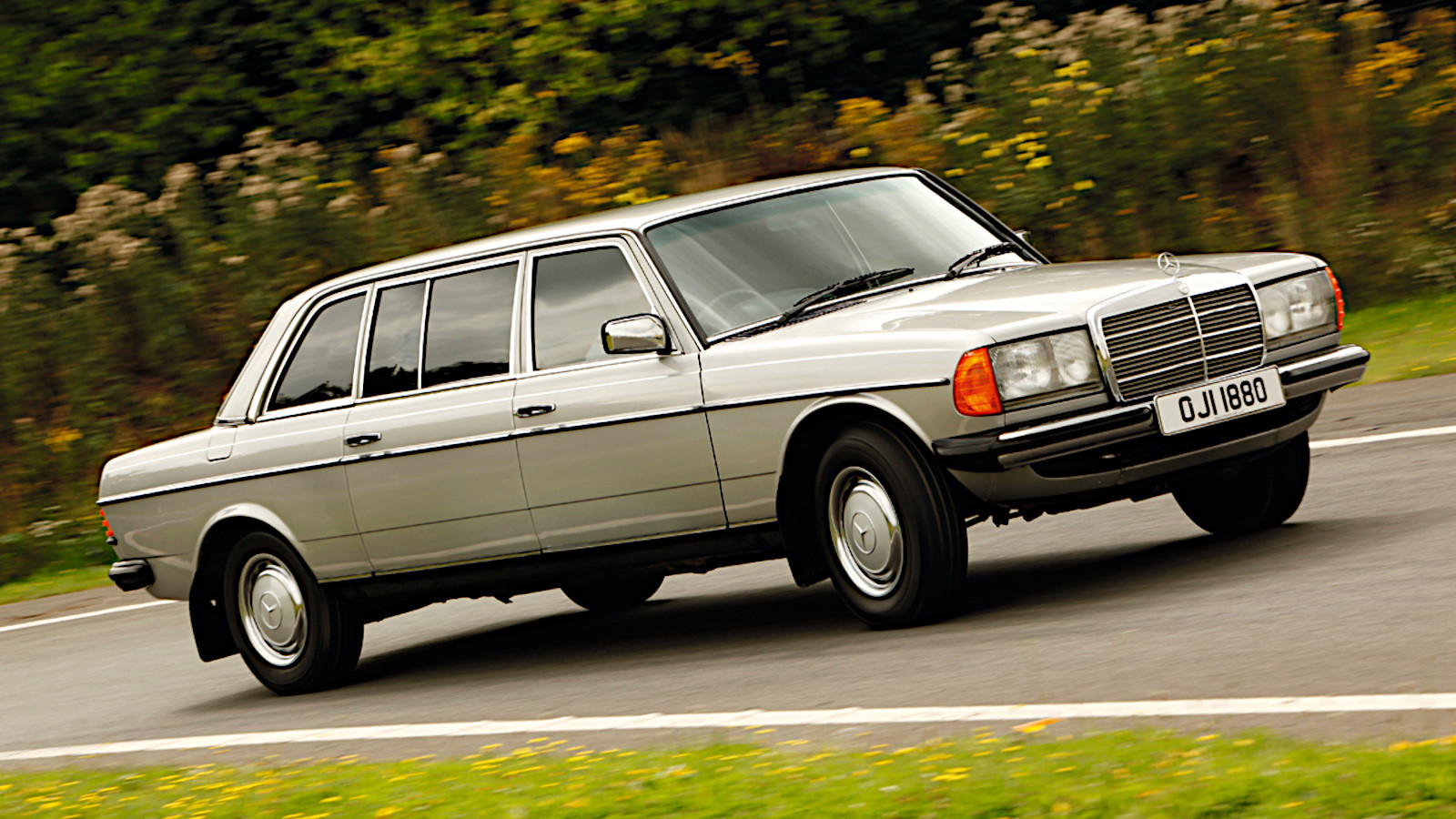
Long-wheelbase W123
The second major development in 1977 was the introduction of another body style.
This new version was a saloon, like the car introduced the previous year, but its wheelbase was no less than 63cm (24.8in) longer at 3.43m (11ft 3in).
This made it possible to fit a third row of seats and allow the car to carry up to eight passengers.
It was used mostly as a taxi, a hire car or a hotel limousine, and demand was such that Mercedes-Benz was able to build 13,700 examples.
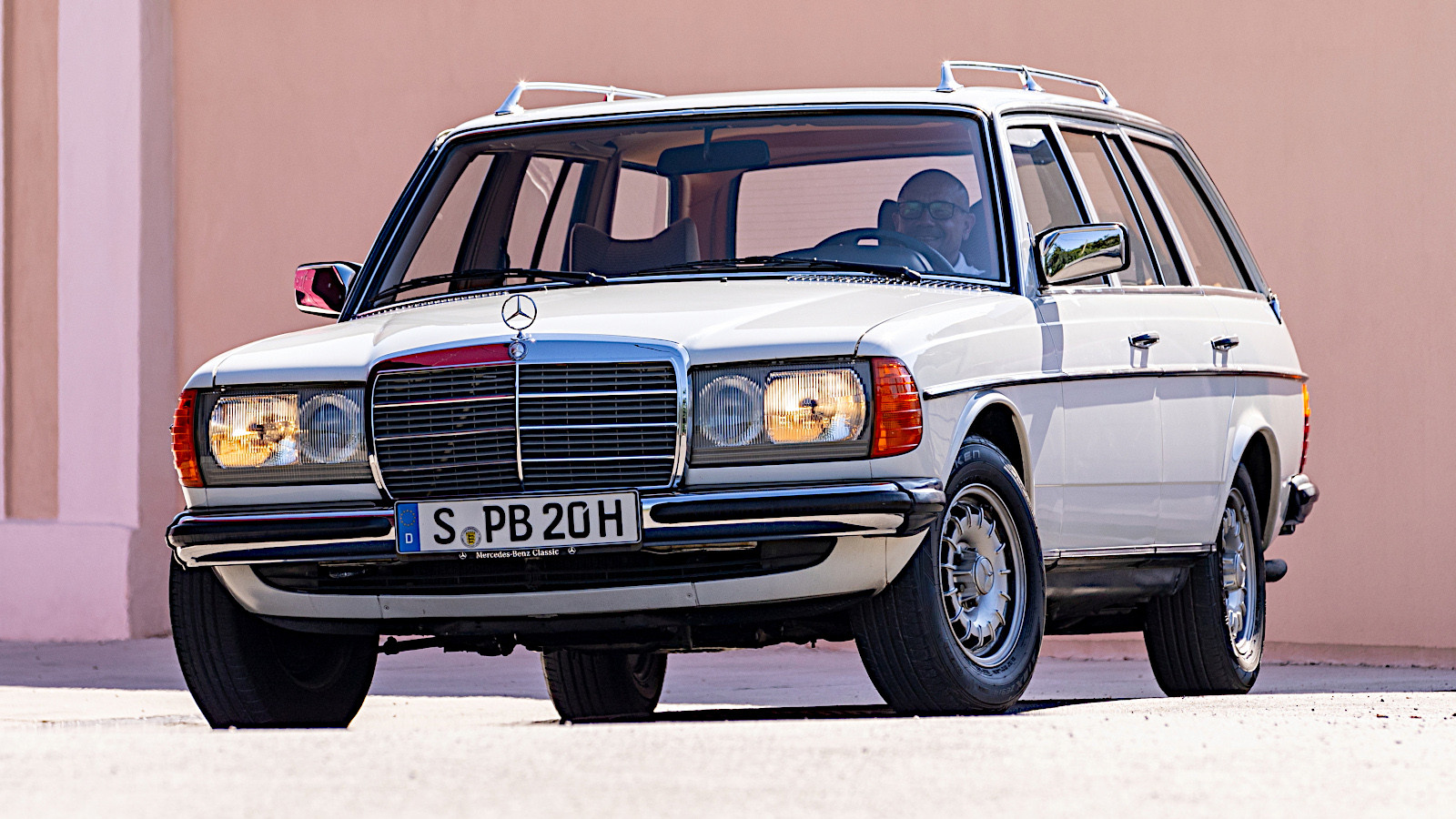
The 123 estate
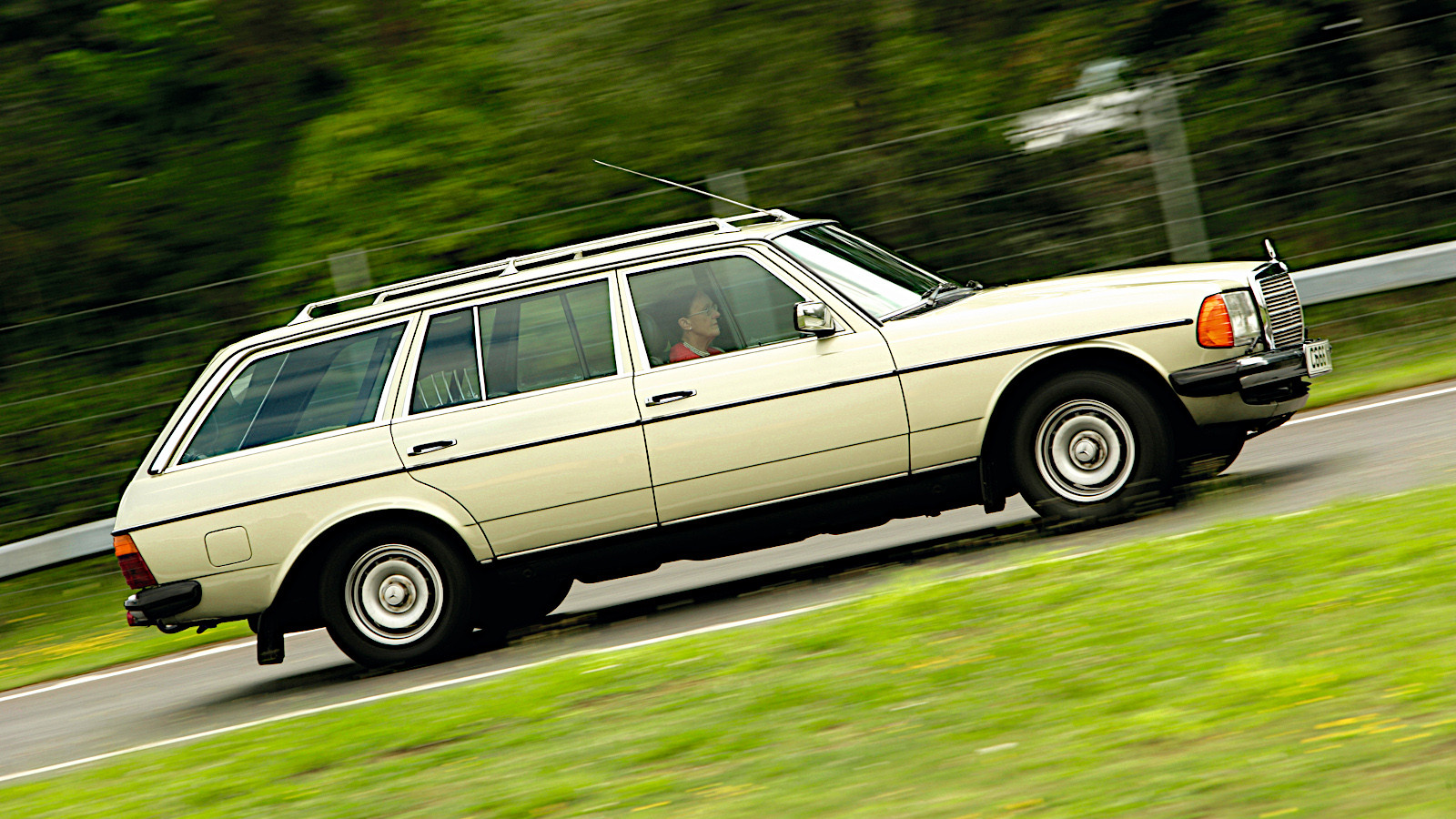
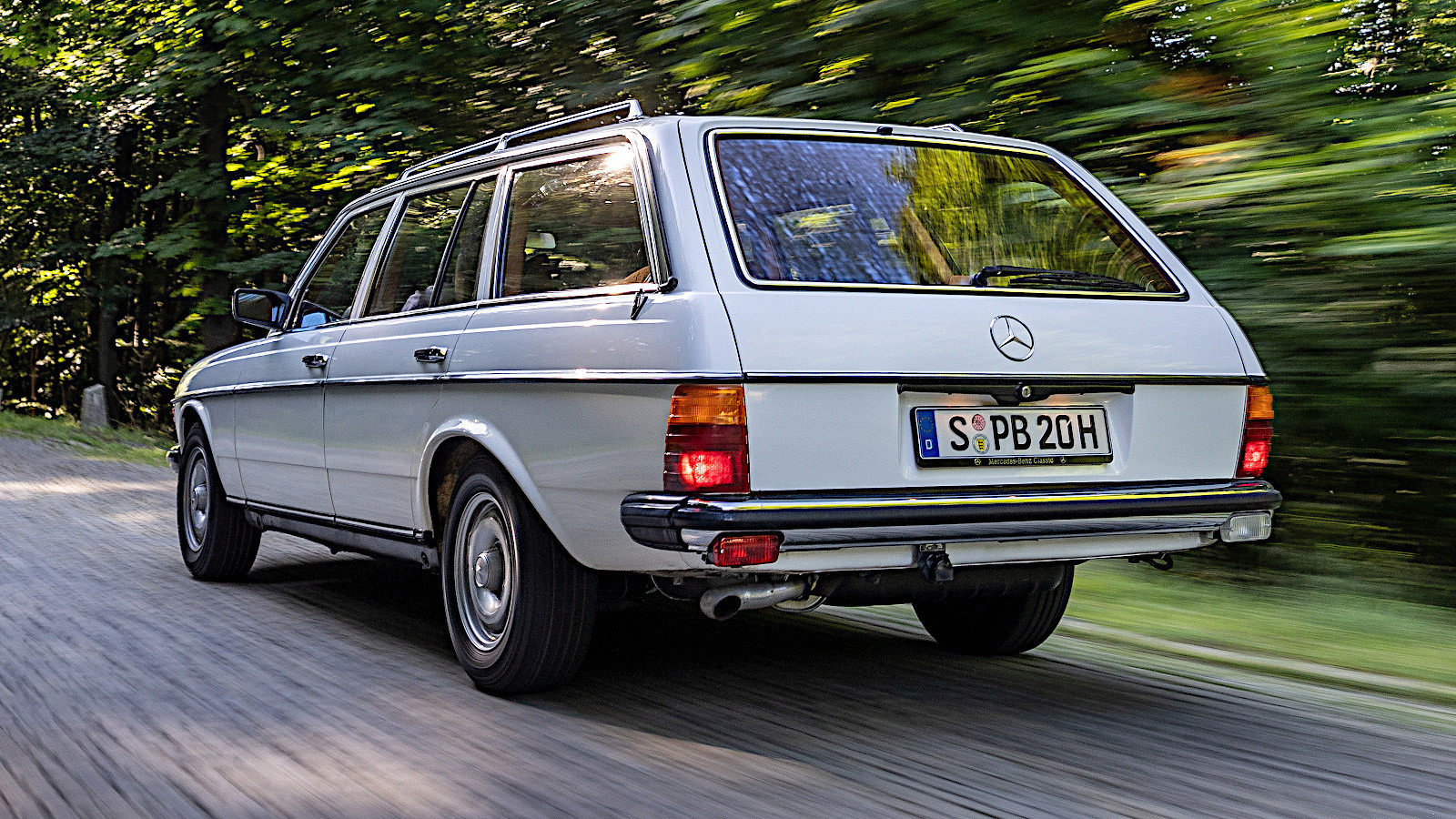
Yet another new 123-series body was revealed at the Frankfurt motor show in September 1977, though it did not go into production (at a former Borgward factory in Bremen which had previously been devoted to building trucks) until the following April.
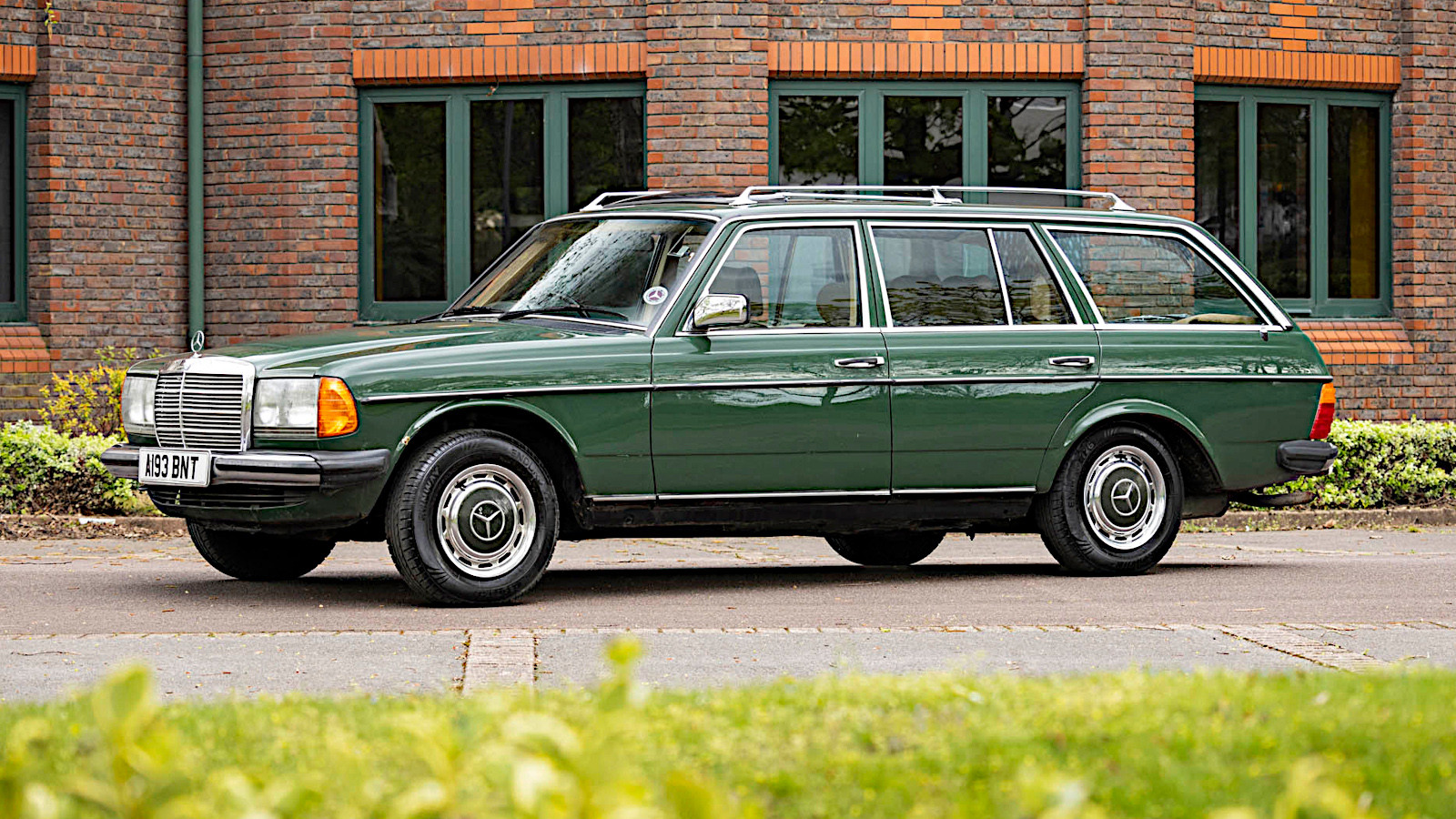
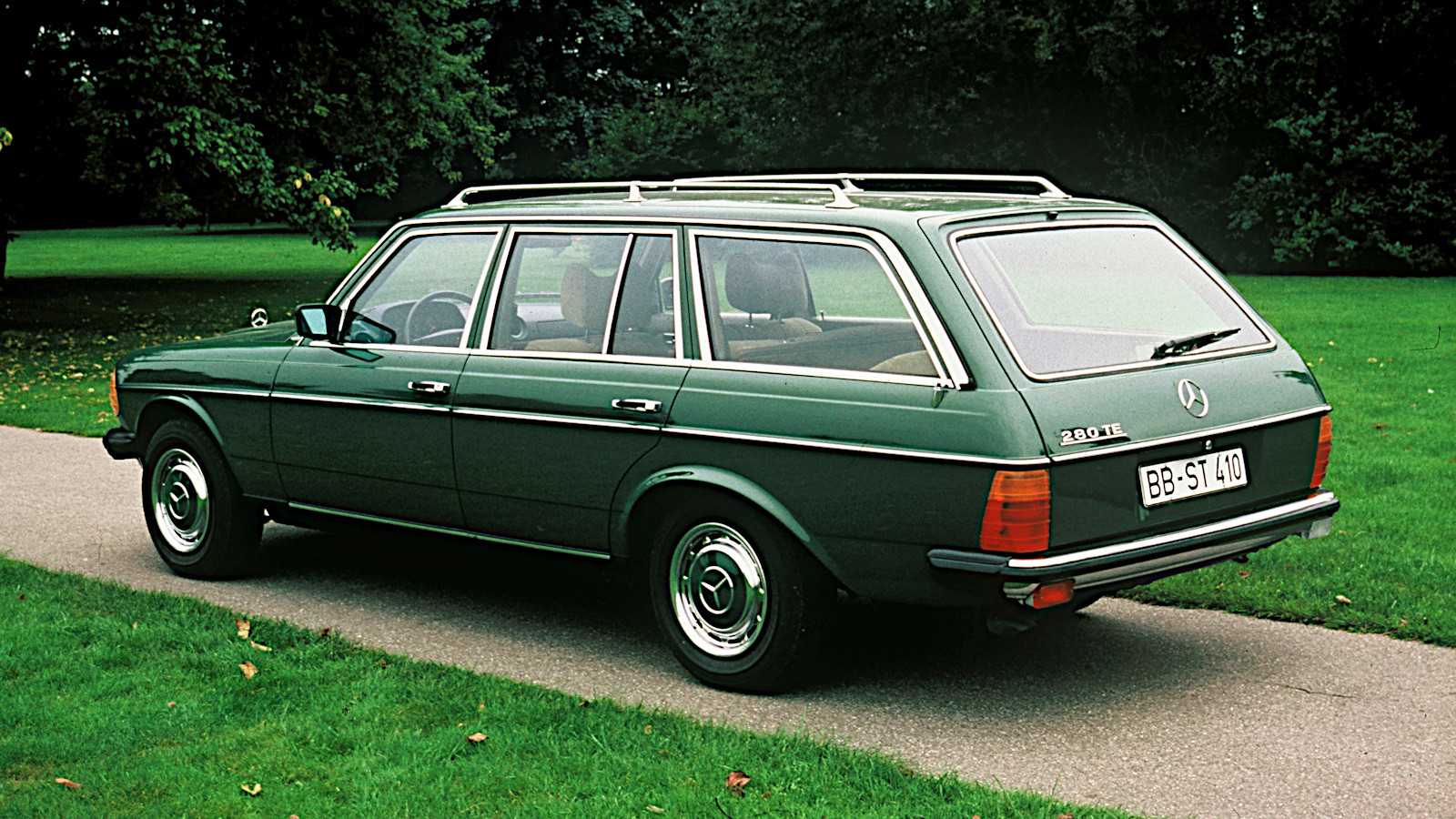
Known variously as the S123 or T-model, this was the first Mercedes-Benz estate built entirely in-house, previous bodies of the type having been added to chassis by independent companies.
In most respects, the estate was mechanically identical to the saloon, a major exception being that it had hydropneumatic, levelling rear suspension.
Mercedes-Benz did not develop a 123-series convertible (though some coachbuilders did), so the estate was the last of the four body styles offered for the model by its manufacturer.
Rally success
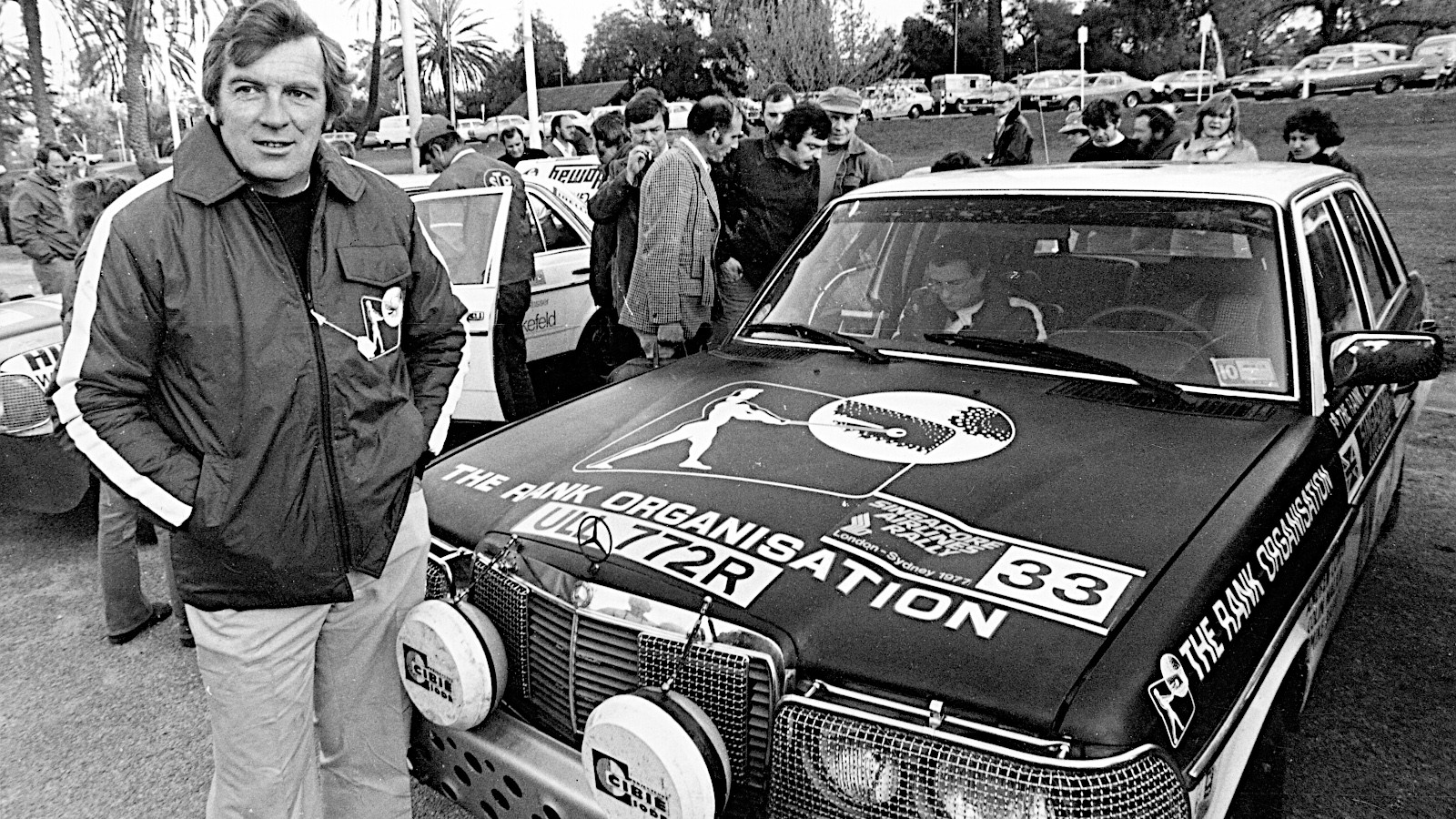
Mercedes’ 123 models are not generally noted for their success in motorsport, but one derivative achieved a spectacular result in the 19,000-mile London to Sydney Marathon of 1977.
Andrew Cowan (pictured) and Colin Malkin, who had won the 1968 running of the event in a Hillman Hunter, and were joined on this occasion by navigator Mike Broad, took overall victory in a 280E, which proved to be very strong and reliable.
Three other 280Es also performed well, and were placed second, sixth and eighth among the 47 finishers.
Engine updates
Having established all four of the 123-series body types, Mercedes-Benz turned its attention in the late 1970s to altering the range’s engines.
The process began in April 1978, when the maximum output of the 2.7-litre ‘six’ fitted to the 280E was raised from 175bhp at 6000rpm to 182bhp at 5800rpm.
In August of the same year, the 2.4-litre, four-cylinder diesel (240D) went through a similar upgrade, after which it produced 71bhp at 4400rpm rather than the previous 64bhp at 4200rpm.
In 1979, the 3-litre, five-cylinder diesel (300D) was boosted from 79bhp to 87bhp, the 2-litre, four-cylinder diesel (200D) went from 54bhp to 59bhp, the 2.5-litre, six-cylinder petrol (250) from 127bhp to 138bhp, while the 2.2-litre, four-cylinder diesel, whose output was now matched by that of the 2-litre, was dropped from the range.
New petrol engines
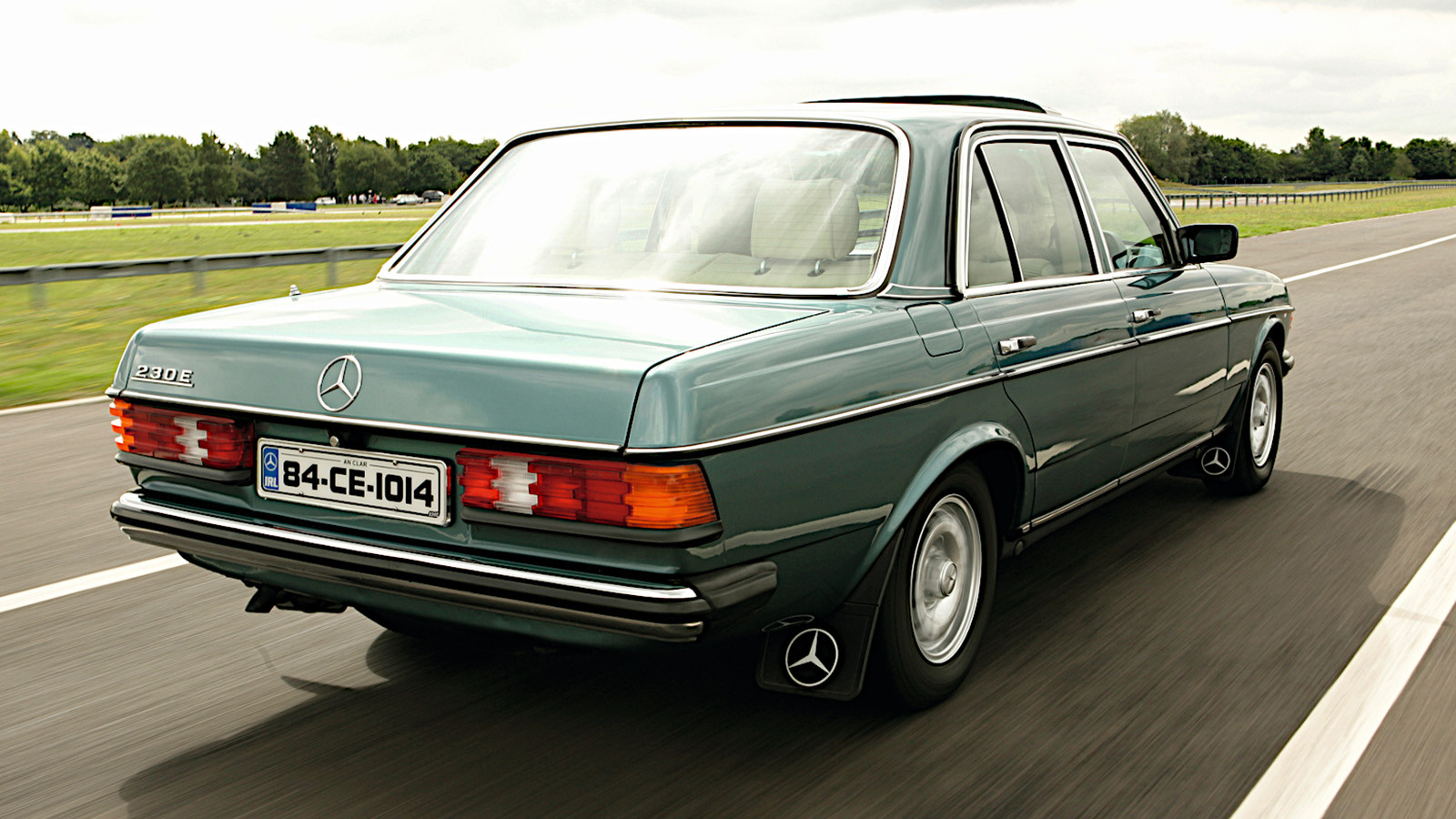
In June 1980, the previous 2- and 2.3-litre M115 four-cylinder, petrol engines were replaced by similar-sized units from the new M102 family, which were inclined by 15 degrees to reduce their height, had wider bores and shorter strokes than their predecessors and produced significantly more power.
The output of the 200 models rose from 93bhp to 108bhp, while the new 230Es produced 134bhp, up from the 230’s 108bhp.
This considerably greater improvement is partly explained by the fact that the 2.3-litre M102 had Bosch K-Jetronic fuel injection, whereas the 2-litre, and both the M115s, each had a single Stromberg carburettor.
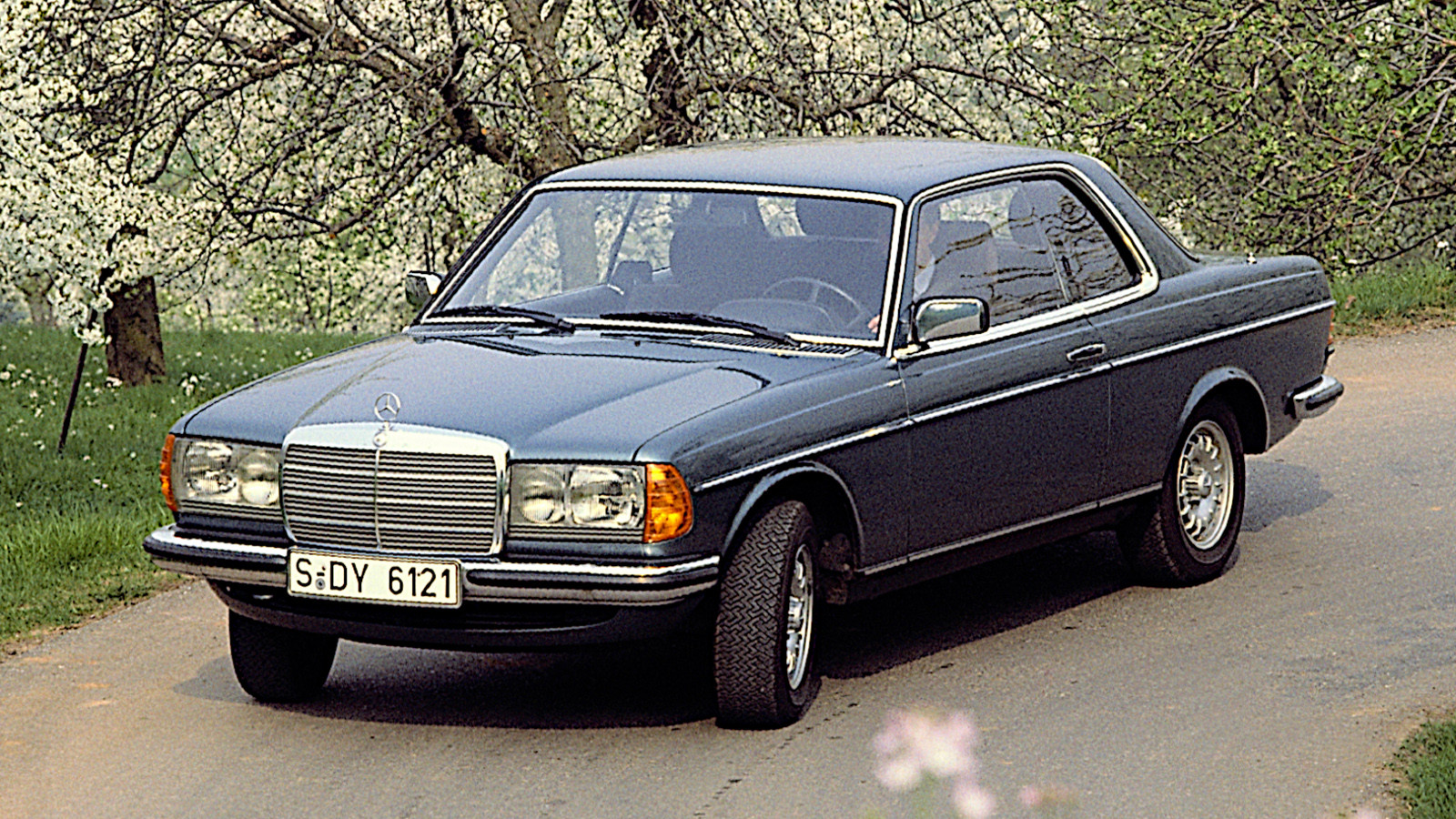
Both units were used for the regular saloon, but the 2-litre M102 was the only engine of this size fitted to the estate and was never available in the coupé (230C pictured), and neither of them ever powered the long-wheelbase saloon.
The turbo diesel
As mentioned earlier, a turbocharged version of the 3-litre, five-cylinder diesel became available in 123-series coupés sold in North America in mid-1981, first with 119bhp and later 123bhp.
The engine had first appeared in export models of the 116-series S-Class in May 1978.
In 123bhp form, it became available in the 123-series estate in October 1980, making this both the first turbocharged Mercedes-Benz production car sold in the company’s home market of Germany (though supercharged models were available much earlier) and the only 123-series turbo available anywhere in Europe.
As with the coupé, the turbocharged diesel was added to the saloon range in August 1981, but once again only in cars intended for export.
Safety developments
Although Mercedes-Benz had taken care to ensure that the W123’s structure was far stronger than that of the Stroke Eight, increasing demand for safety meant that other developments were introduced while the model was still in production.
The first of these – small but important – happened in 1979, when the estate was given a rear wiper to help with visibility in wet conditions.
Anti-lock braking became optional in August 1980, while a driver’s airbag (a technology Mercedes-Benz had first explored as far back as 1966) was offered at extra cost from January 1982, and would become standard on all the company’s models 10 years later.
The 1982 update
The single series-wide revision to the 123-series range was introduced in September 1982.
Power steering was now standard and all versions had rectangular headlights, though this didn’t affect the coupé to any great extent because, in Europe at least, it had always had those.
The only obvious exterior change to the coupé was that the previously chrome ventilation louvre in front of the windscreen was now black, as was the case on the saloon and estate, too, but like those models it also benefitted from some interior improvements.
None of the above applied to the 250T (an estate powered by a 2.5-litre, straight-six, petrol engine latterly producing 138bhp), because it had been discontinued the previous month.
Taxis
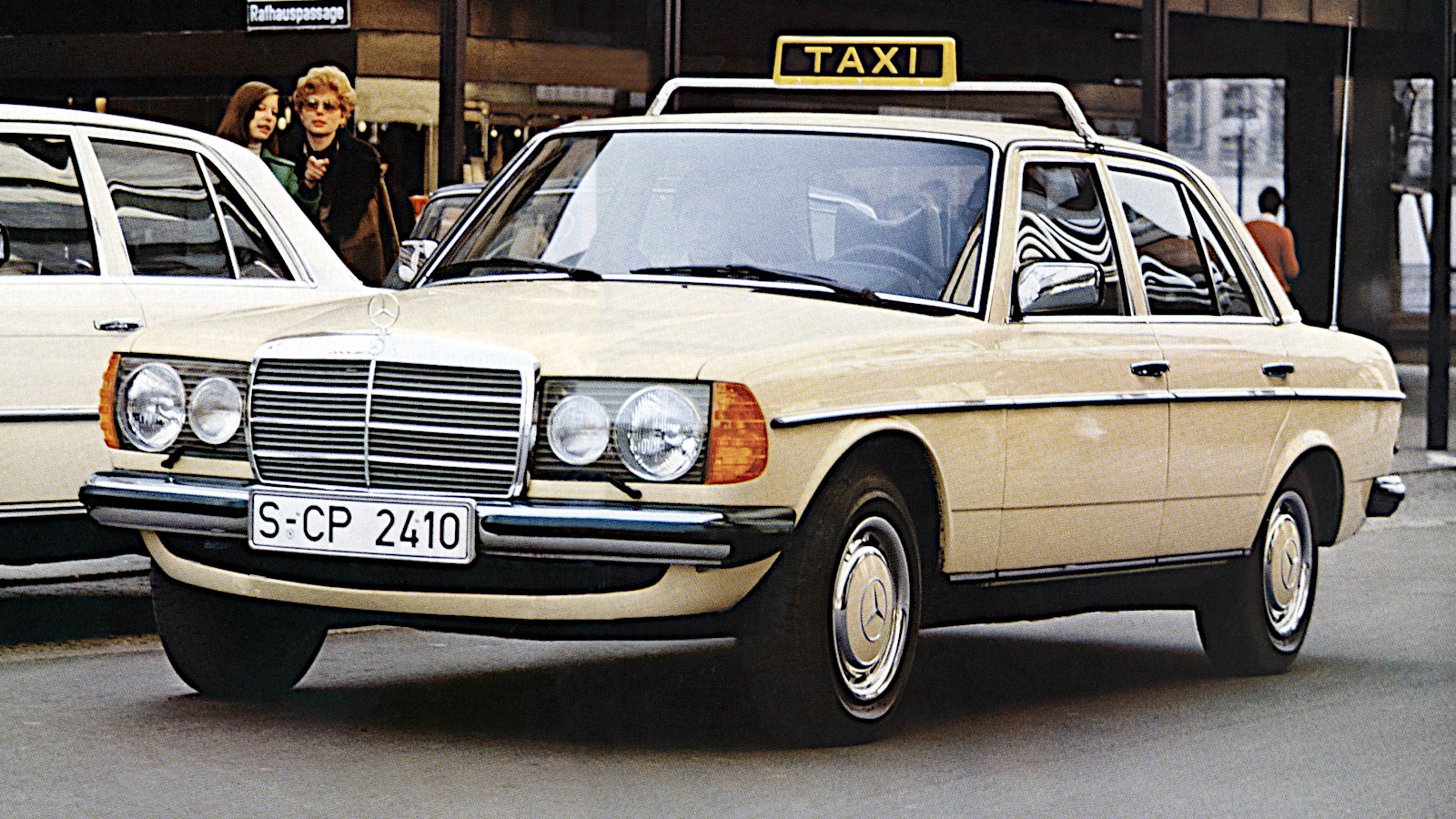
Lower-priced W123s were roomy, comfortable, tough, economical in diesel form and – because of their generally unstressed engines – reliable.
These were all compelling reasons for a private customer to buy one, but they also made the car ideal for use as a taxi.
Sure enough, anyone who visited Germany during the W123’s lifetime, and indeed for many years afterwards, could hardly avoid seeing several taxi examples on the roads.
This also applied in other countries – notably Morocco, where the diesel W123 was exceptionally popular among taxi operators.
The successor
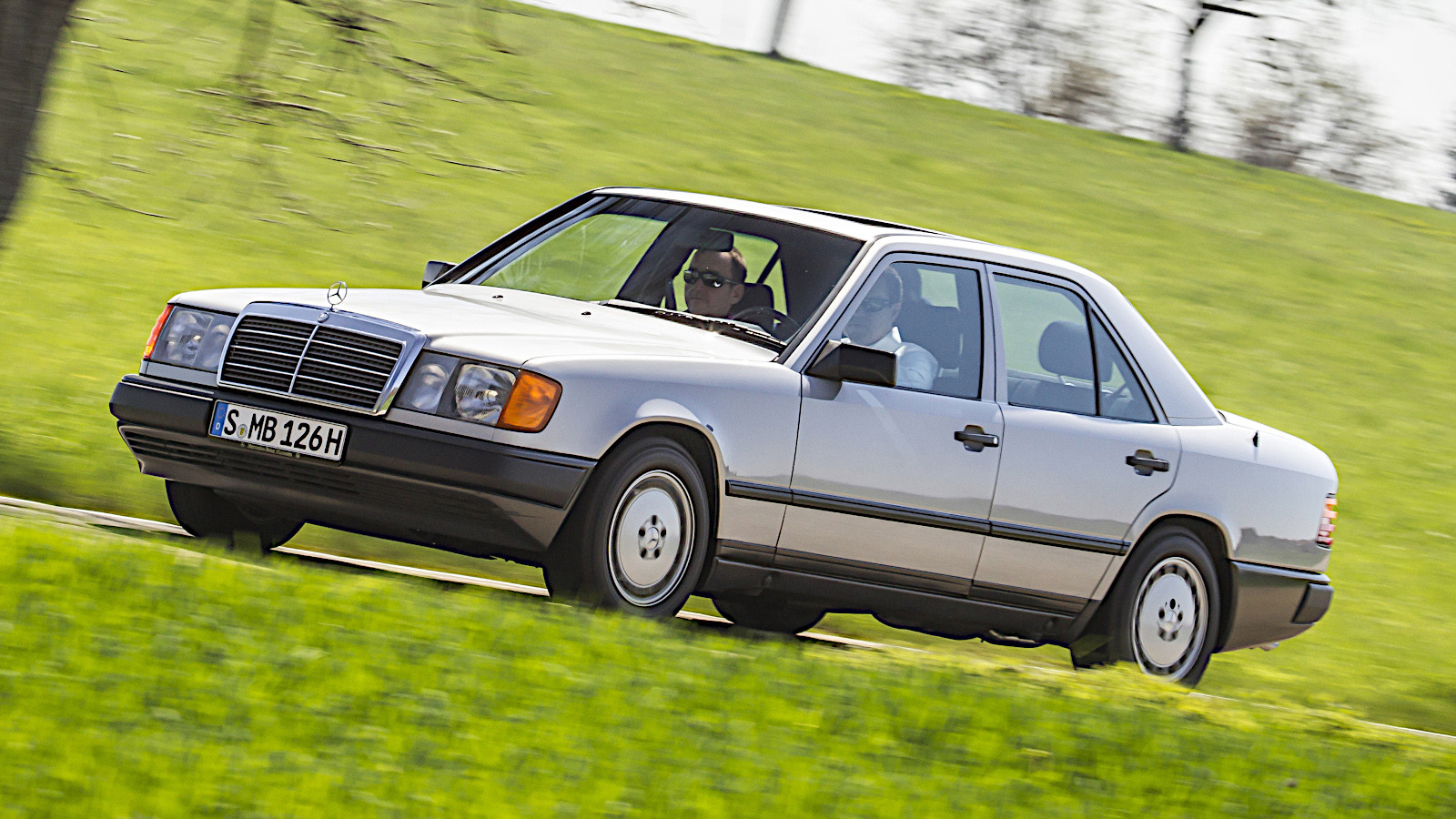
The W123 was replaced by the W124 (pictured), which had similar though modernised styling and, in most cases, new engines.
The handover wasn’t immediate, though, and in fact during 1985 saloon and estate versions of both models were being produced simultaneously.
The W124 would go on to have a longer life than the W123, being produced in Germany from January 1985 to August 1995 with major updates in 1989 and 1993, though total production was similar at just over 2.7 million units.
However, that wasn’t quite the end of the story, because kits of W124 parts were exported to India and assembled into complete cars in Pune until June 1996.
End of the coupé
The W123 coupé (or, more properly, the C123) was the first of the range to be discontinued, and the only one whose replacement was not already on sale at the time.
Its production life came to an end in August 1985, and people who wanted a Mercedes-Benz of this type had to wait until April 1987 before the C124 became available, with a choice of 2.3-litre four-cylinder and 3-litre straight-six petrol engines.
Of the nearly 2.7 million 123-series cars built, 99,884 were coupés, 84,375 of them powered by petrol engines of one kind or another and 15,509 by diesels.
The rarest coupé, with a production total of only 3704 examples, was the 280C, which was discontinued in March 1980.
End of the saloon
Mercedes-Benz continued to build 123-series saloons until November 1985, 10 months after it began series production of the W124.
Despite the extra practicality of the estate, and the extra glamour of the coupé, there is no doubt that the saloon dominated the range in terms of production numbers.
By Mercedes-Benz’s own account, 2,375,400 of the nearly 2.7 million 123-series cars produced were regular-wheelbase saloons, and there were a further 13,700 long-wheelbase versions.
That gives a total of 2,389,100, which is to say, in round figures, that of every 10 123-series models ever built, nine were saloons.
End of the estate
By one of those coincidences which appeal to people who like this sort of thing, January 2026 marked not only the 50th anniversary of the 123-series going on sale but also the 40th anniversary of the final example being built.
The last-surviving body style was the estate, which finally went out of production in January 1986.
The 230T and 250T had fallen by the wayside in 1980 and 1982 respectively, but in that final month Mercedes-Benz was still building the 240TD and 300TD diesels (the latter both with and without turbocharger) and the 200T, 230TE and 280TE petrol models.
Though well behind the saloon, the estate was the second-most-popular body style, with 199,517 models manufactured in a little under eight years, all of them at the factory in the German city of Bremen.