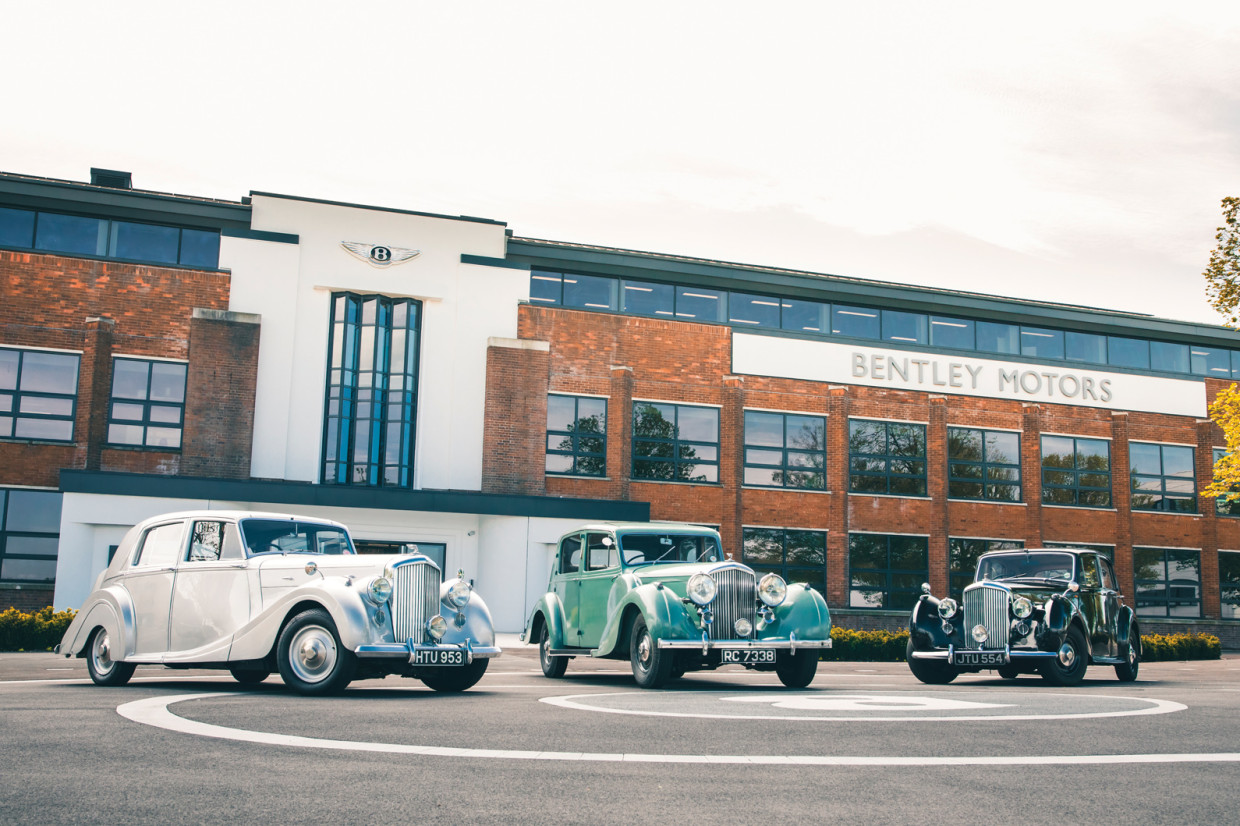
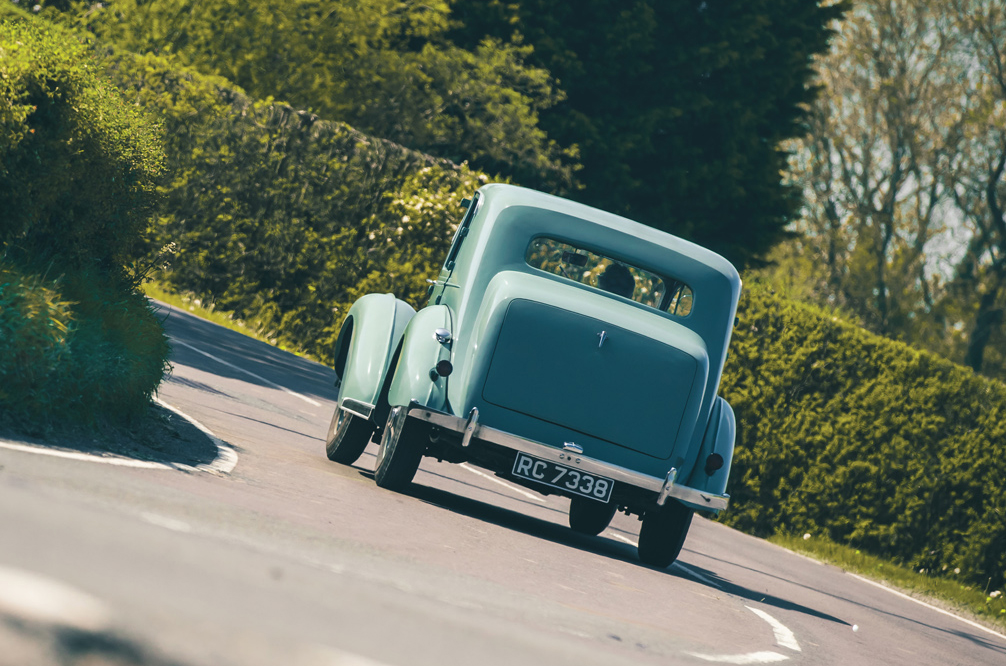
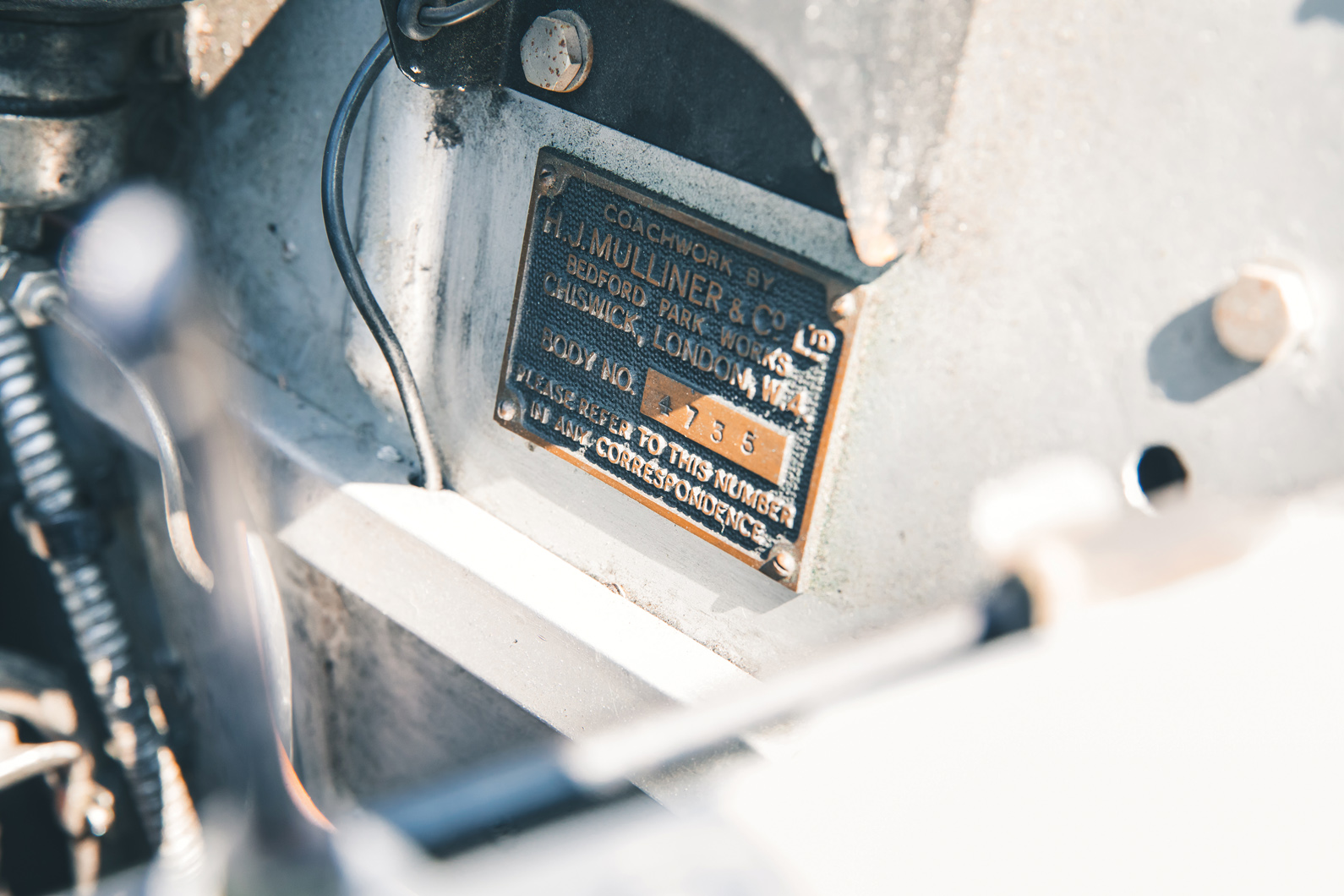
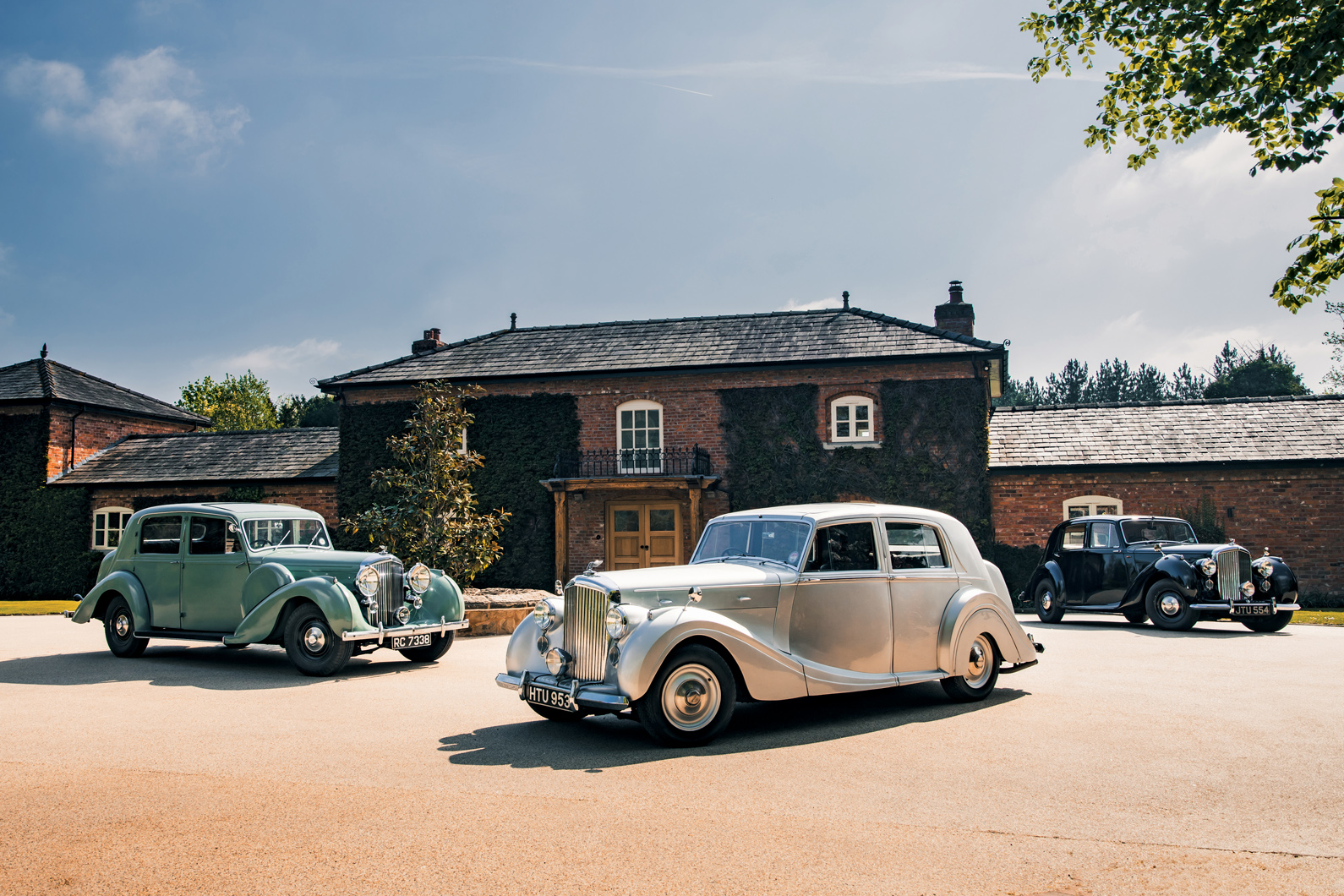
Viewing B4AK today gives an insight into how the first MkVI would have appeared.
The chassis of Bentley’s first MkVI experimental car – 1-B-VI – was completed by November 1945 and was then sent across to HJ Mulliner for a coachbuilt body.
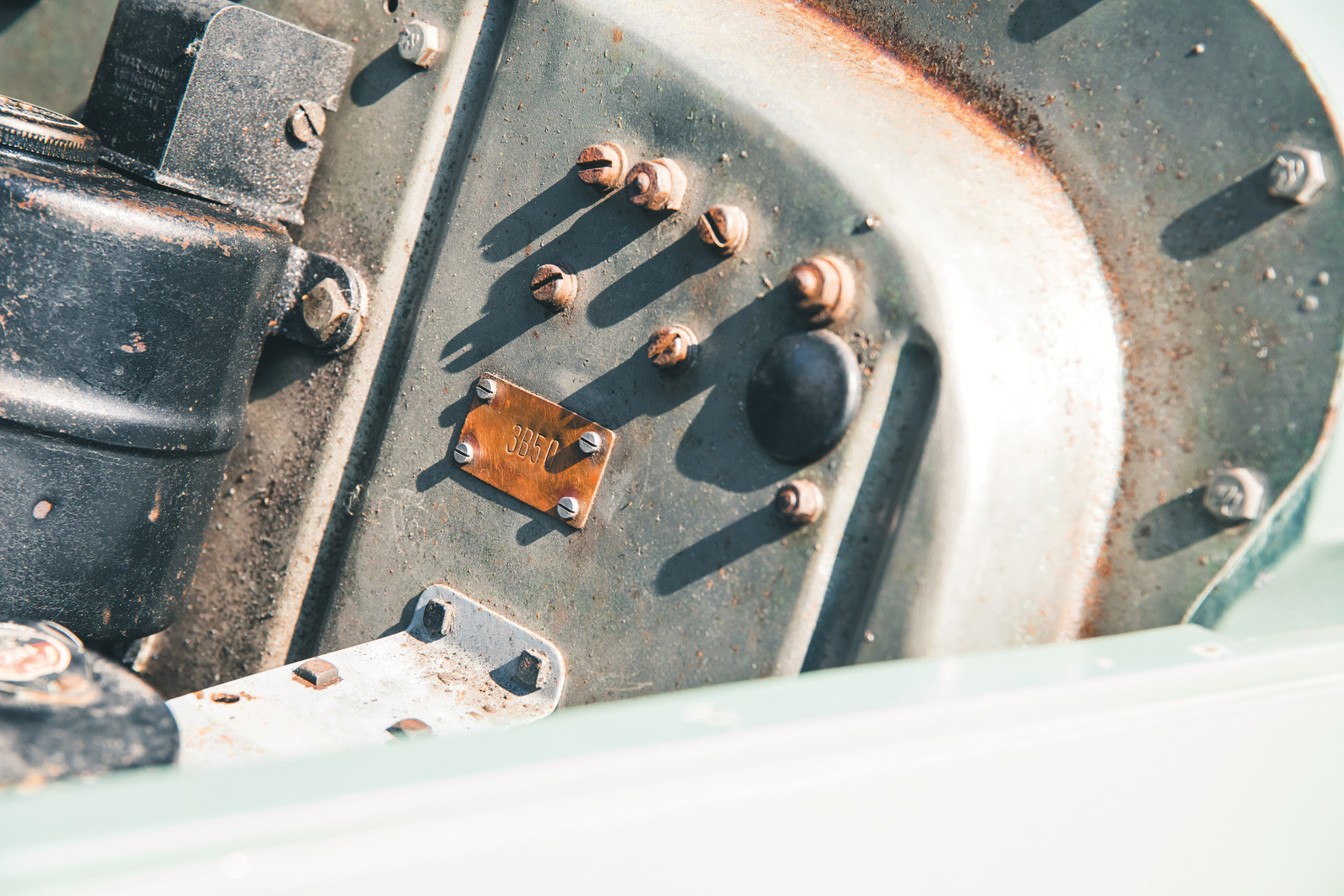
In B4AK’s history file there is an instruction to make the body match that of 1-B-VI – so when B4AK is viewed alongside 3-B-50, we have not only the MkVI concept and the stylistic origin of the Standard Steel saloon, but also the first completed MkVI production car and a carbon copy of the very first MkVI prototype. Not bad in just two cars!
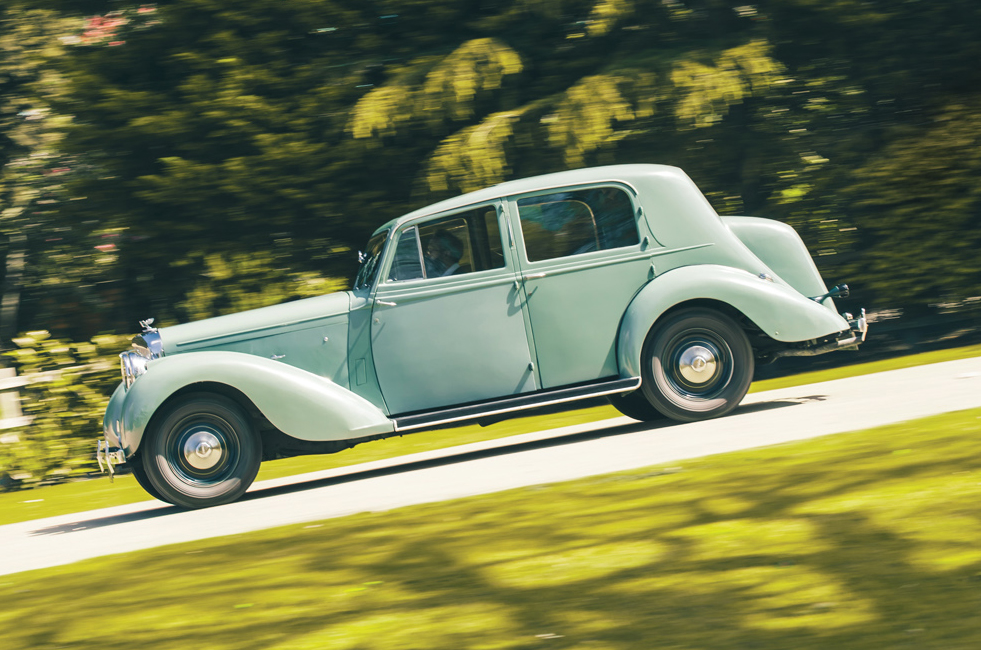
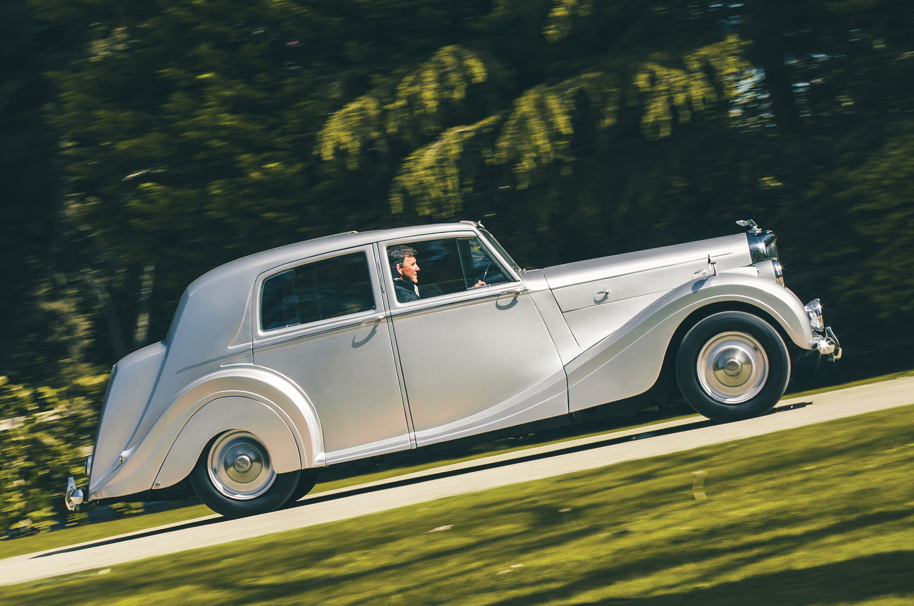
The first production Bentley MkVI’s graceful, semi-razor-edge body by HJ Mulliner took pre-war themes and updated them for the post-war world
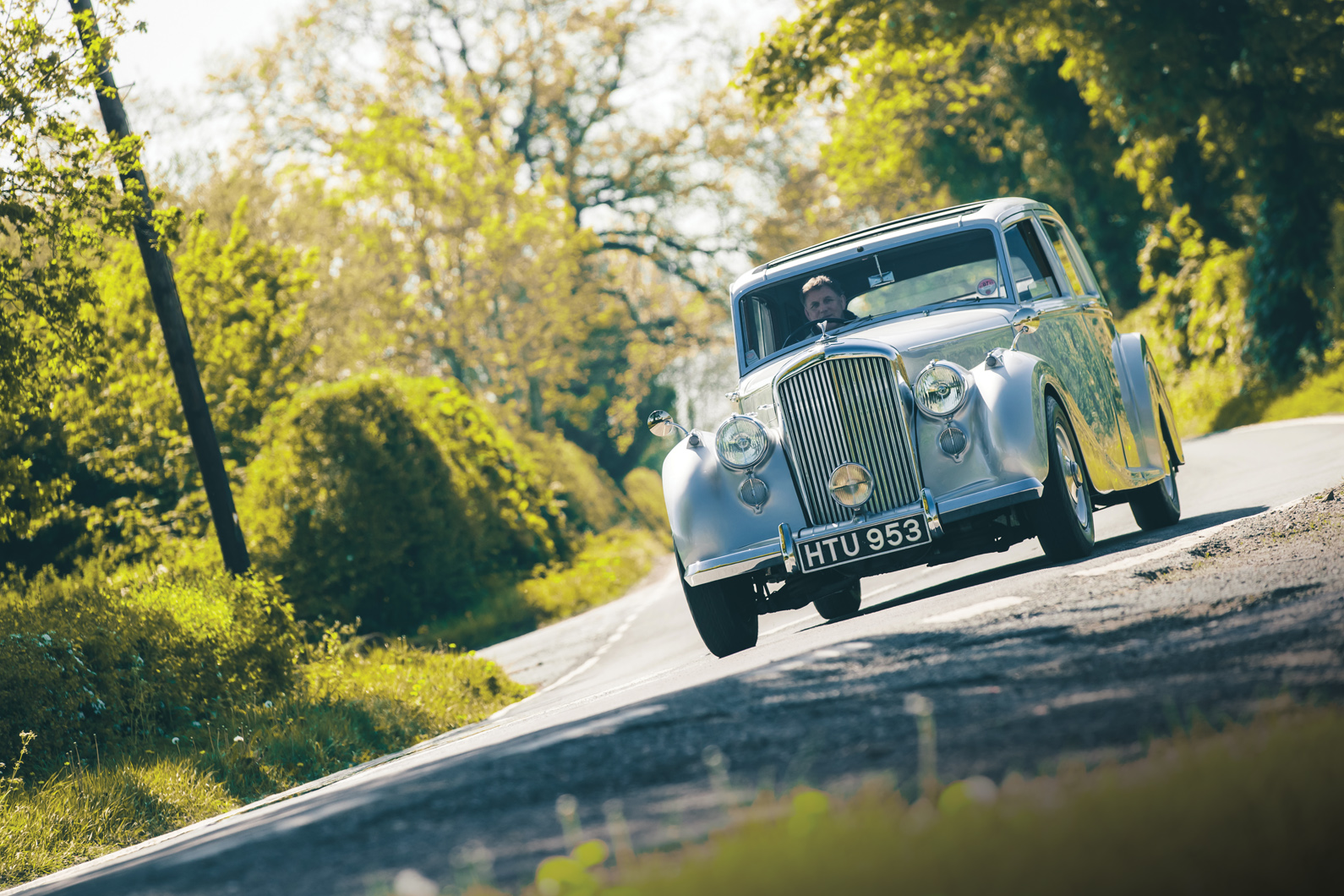
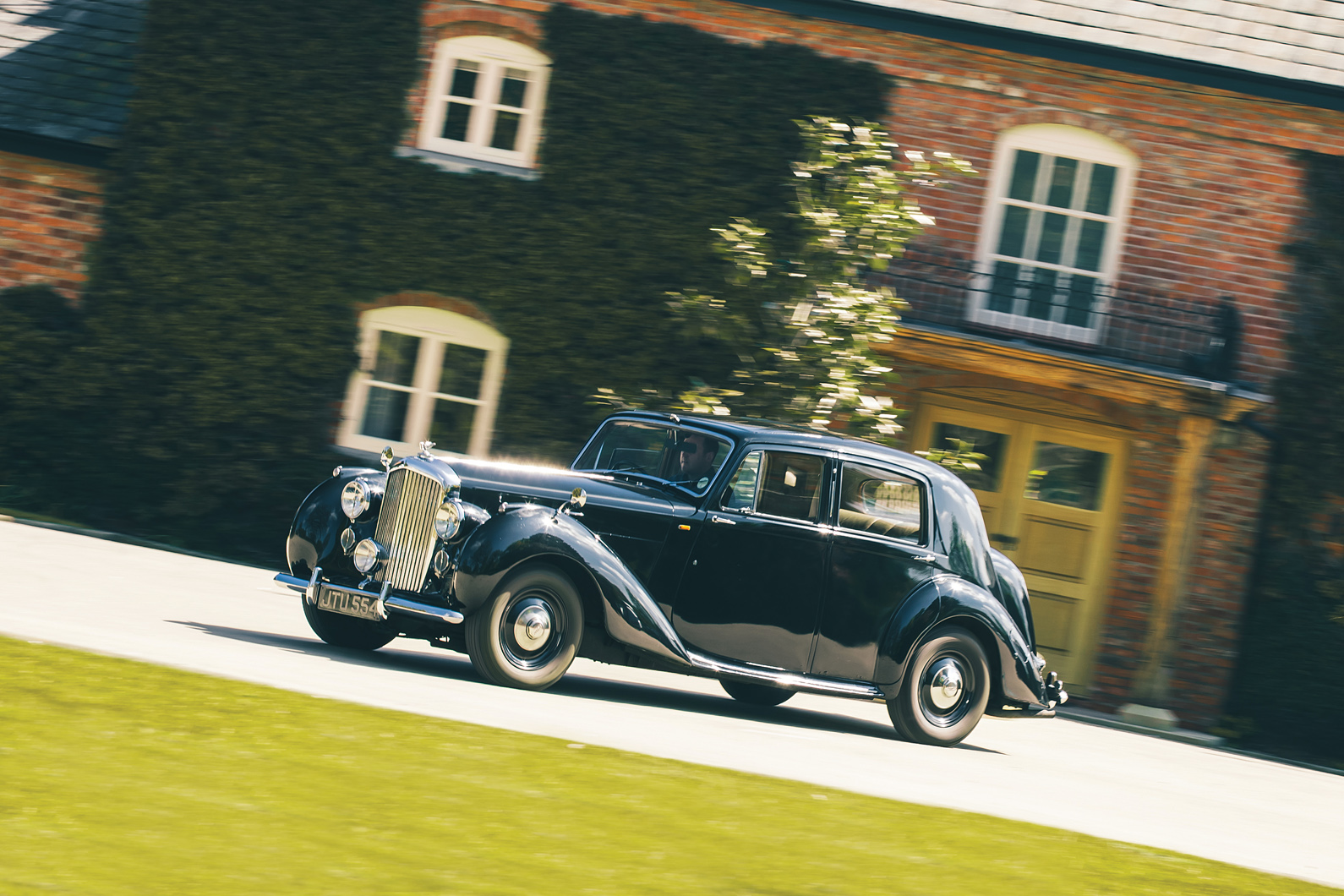
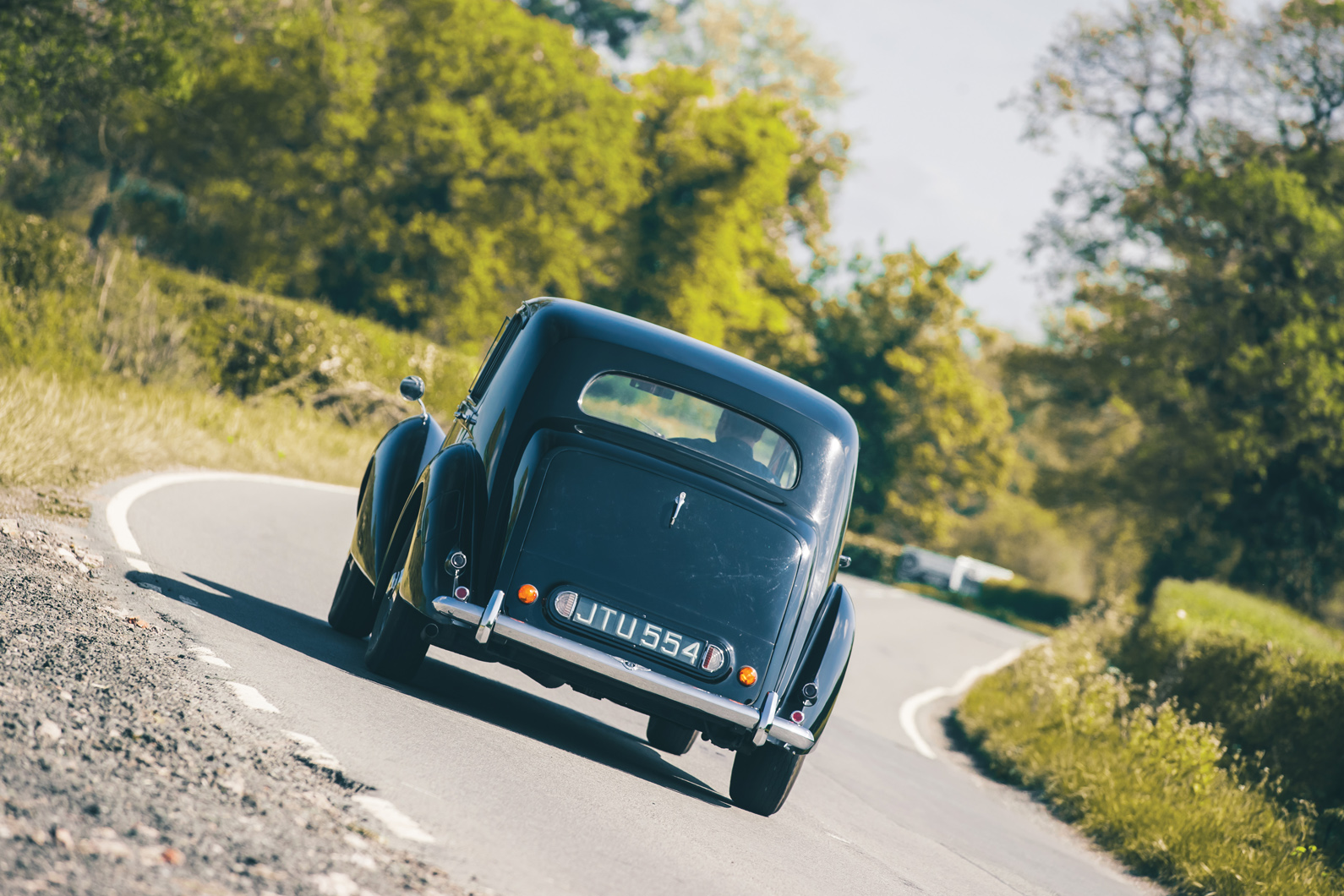
The last of our trio, the black 1947 Standard Steel saloon, chassis B119BG, is perhaps a little reserved in comparison with the rather glitzy HJ Mulliner car.
Delivered in 1947 to its first owner, Sir Alfred Hammond Aykroyd, and finished in black with beige leather, B119BG is as discreet as B4AK is striking.
It is a textbook early example of the first Standard Steel saloon, with twin front-seat armrests and plain, rather than pleated, seat squabs.
The Standard Steel saloon body is stylistically an evolution of the 3-B-50 concept, mounted on a 10in-shorter chassis, but its construction was fundamentally different.
Gone was the pre-war ash frame wrapped in sheet-aluminium skins, replaced by an all-steel body and closures.
B4AK, the first completed production Bentley MkVI, wears an HJ Mulliner Sports Saloon body built in early 1946
The move from skilled, low-volume coachbuilding to high-investment, tooled bodies made by the Pressed Steel Company Ltd of Oxford marked a fundamental shift in company thinking.
When Robotham told Hives the tooling bill would be £250,000 for the new Standard Steel saloon, but the production of each body would cost approximately half that of a coachbuilt item from Park Ward, eyebrows were raised.
Rolls-Royce chairman Sir Arthur Sidgreaves made it clear that the board would not be signing off any large investment without first seeing a mock-up of the final design.
A huge effort was made to build a wooden styling model, with the team pulling a number of all-nighters to finish it in time to get approval and keep Rolls-Royce’s all-important place in the queue with Pressed Steel.
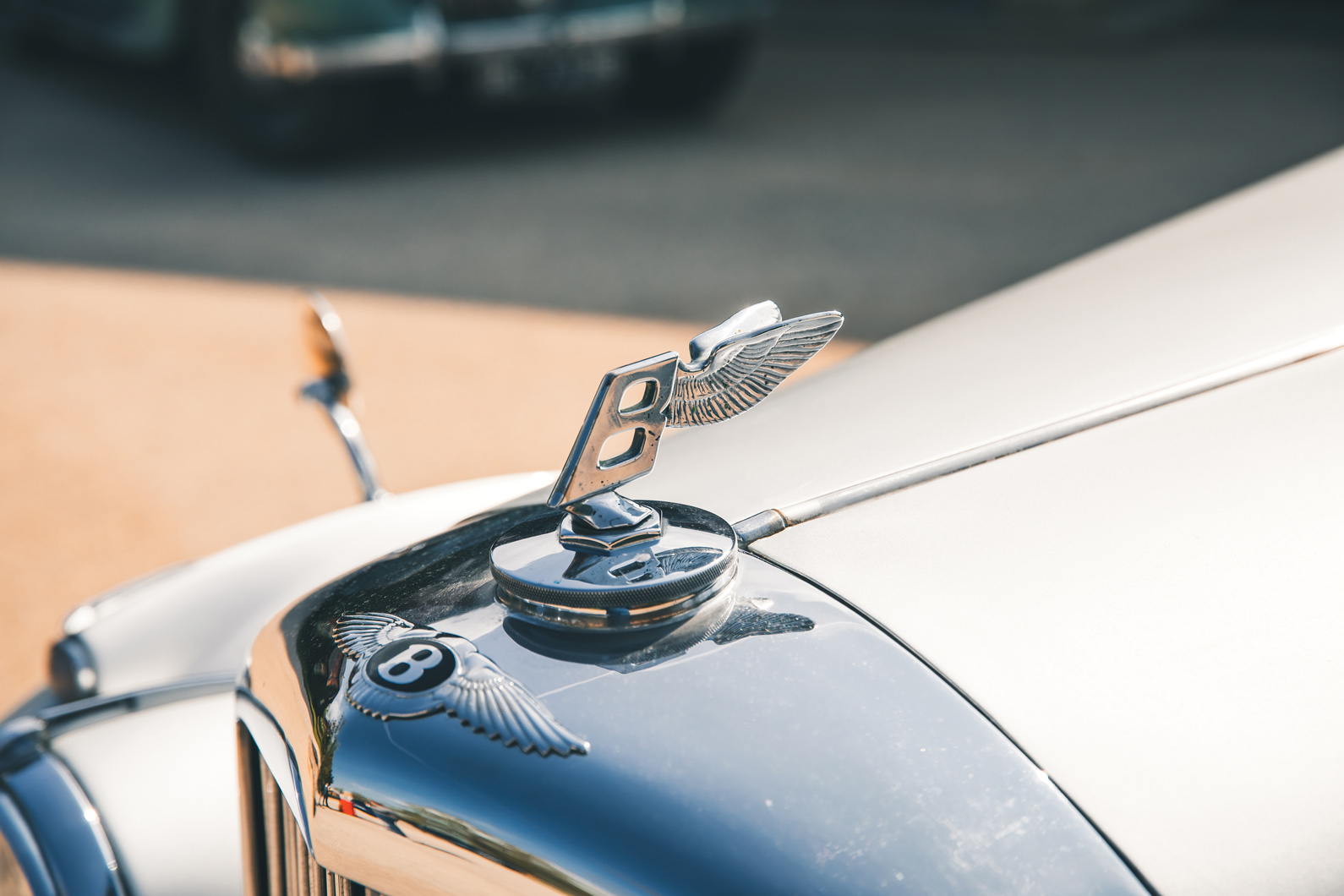
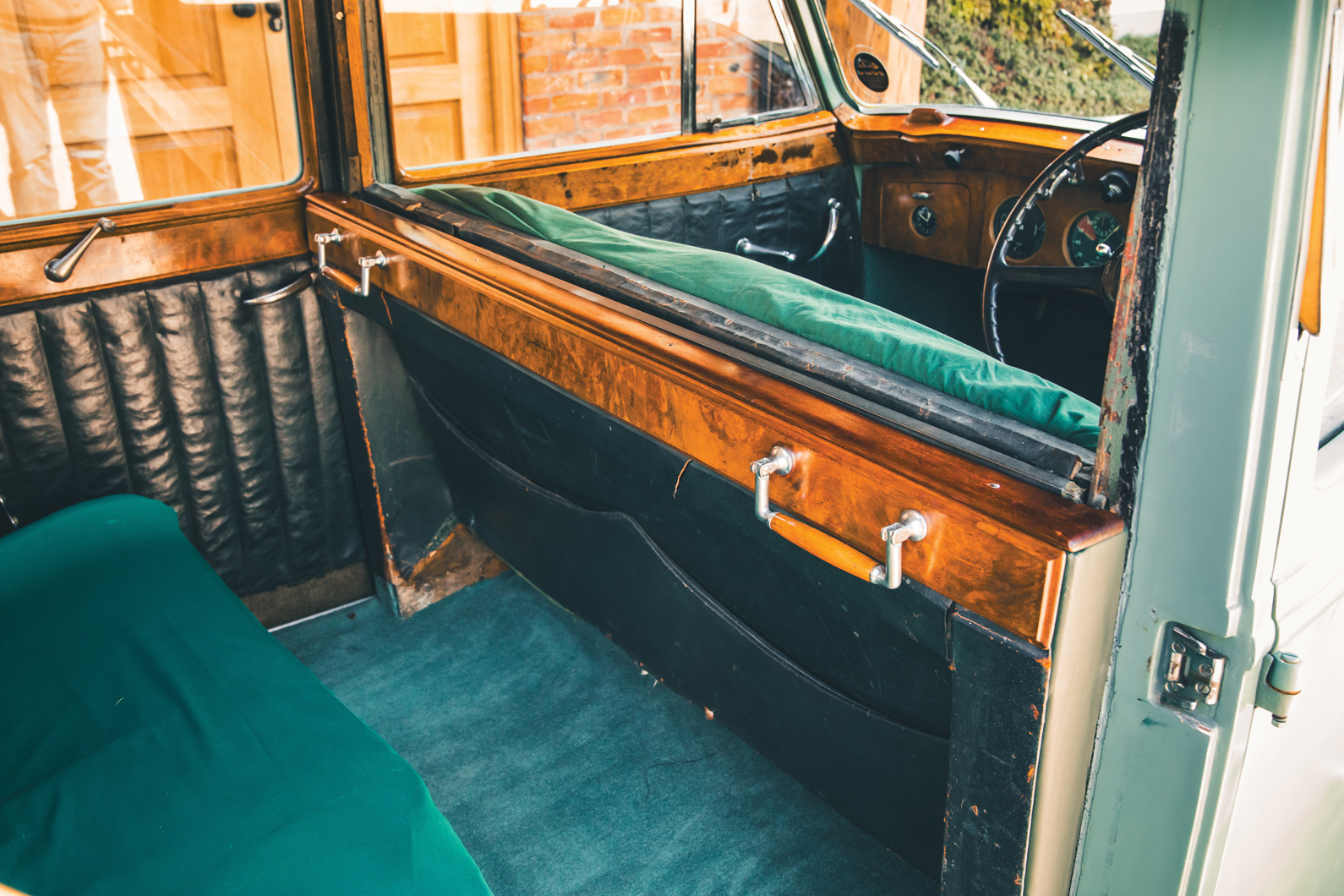
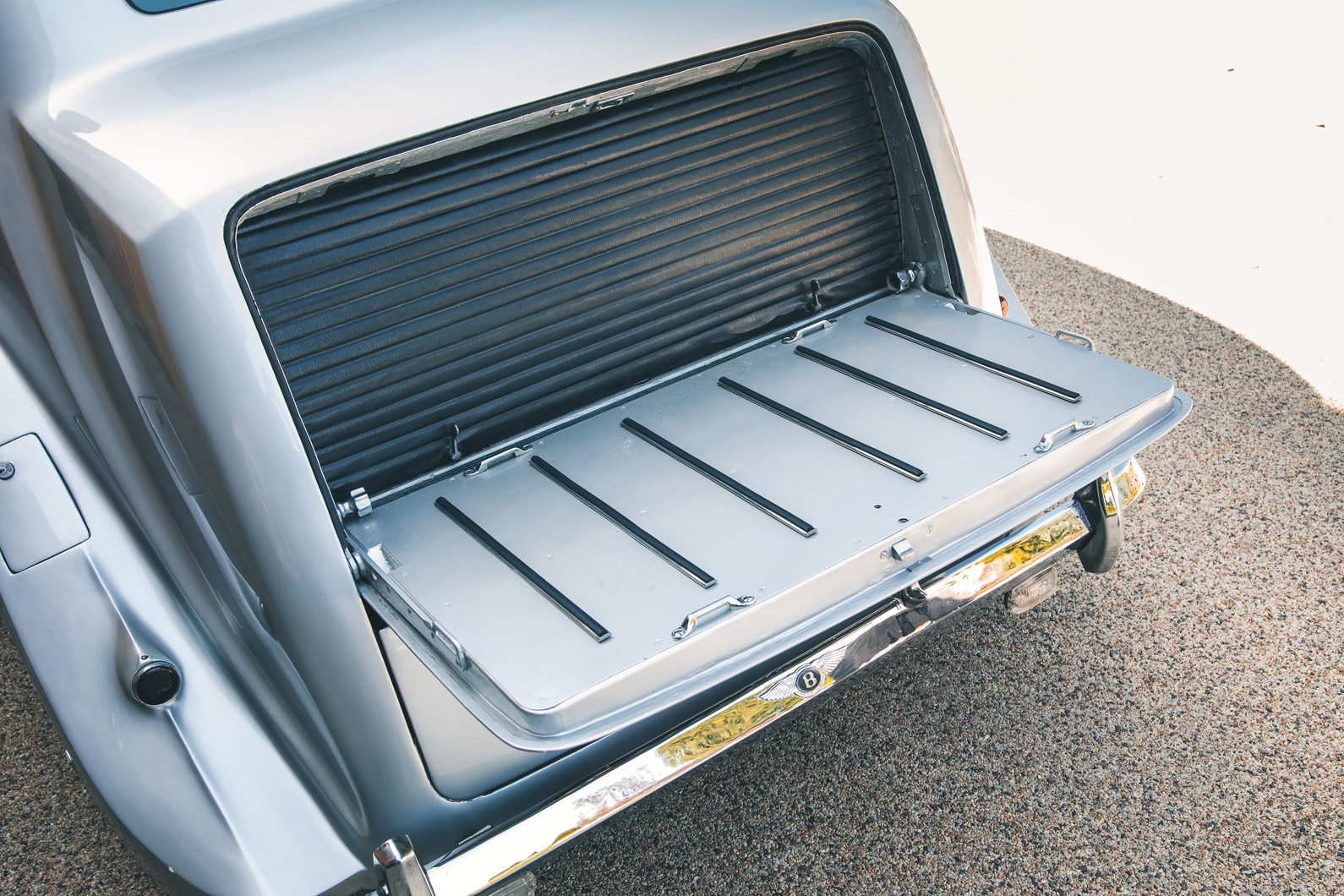
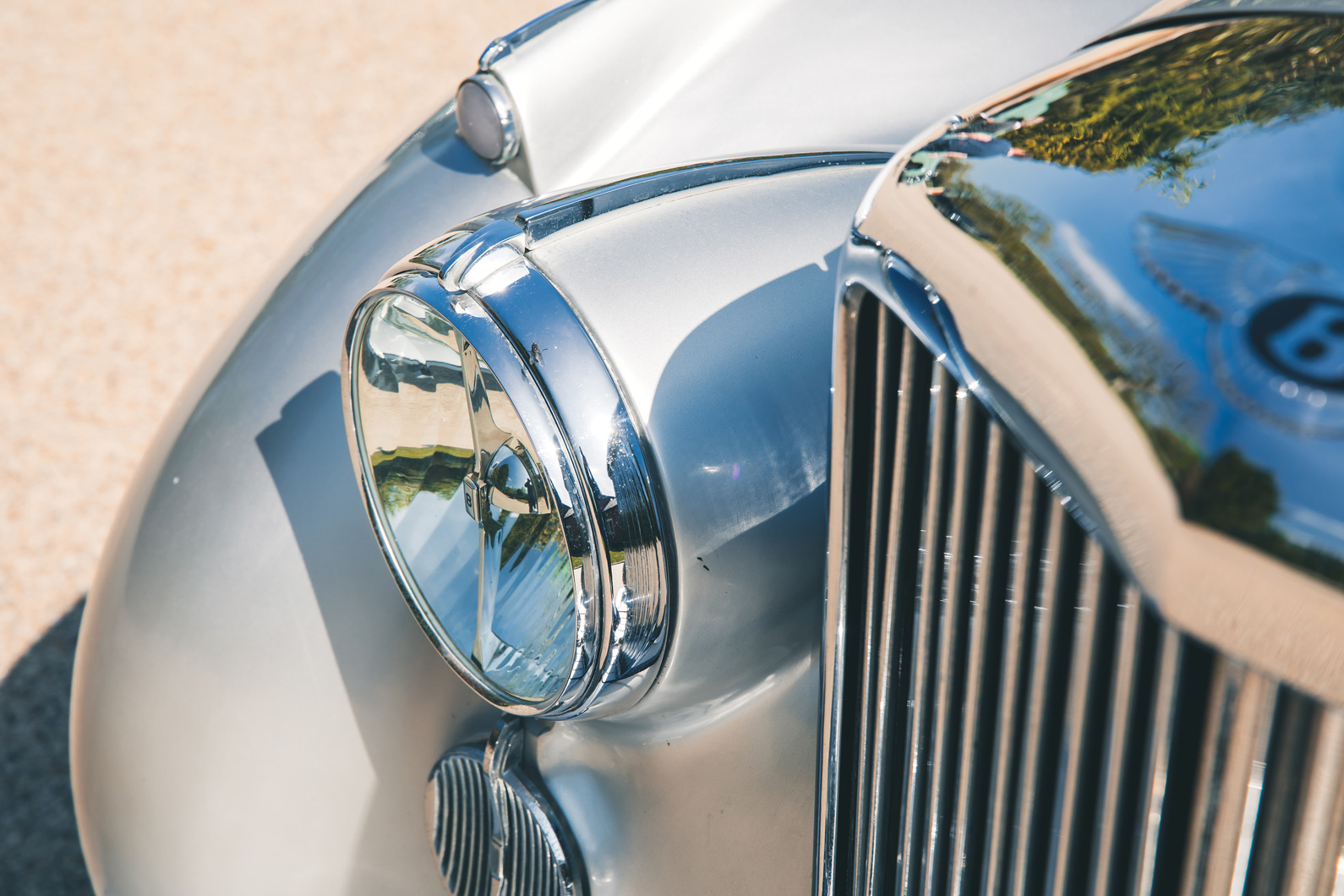
The Bentley MkVI is decorated with rich chrome and fine detailing
The only real concerns were around the integration of the headlights into the wings, as previewed on the sensational pre-war 4¼-litre ‘Embiricos’ coupé and the MkV Corniche, but in aesthetic terms this was exactly the right decision because it made the design so much more contemporary.
Today, the giveaway to this change in approach is found by closing the doors: a MkVI Standard Steel saloon shuts with a metallic clang rather than the traditional clunk of an ash-framed, aluminium-skinned coachbuilt panel.
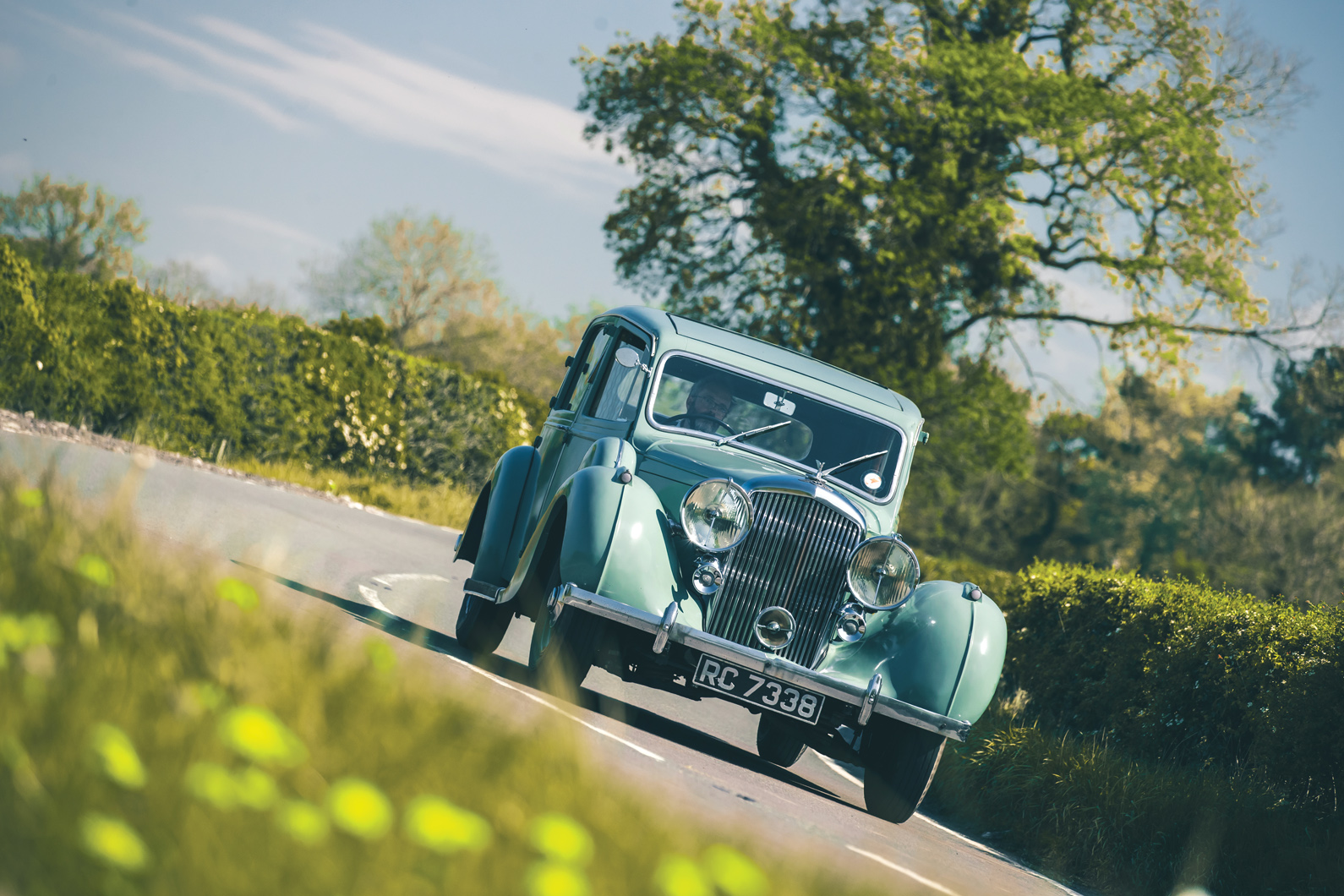
To gain a full impression of driving a MkVI, it is instructive to compare the pre-war origins of the 1939 MkVI concept (3-B-50) with the fully finished production car of 1947 (B119BG).
The Bentley MkVI – here in Standard Steel saloon guise – is a pleasure to drive, while the drum brakes inspire confidence for its age
From the driver’s chair, the dynastic link between the two is clear.
The low-speed torque and tractability of the B60 engine are a delight, making town and A-road driving a joy: it pulls cleanly from as low as 15mph in top gear.
This flexibility will comfortably take both cars to 60mph and beyond, so they can cope with motorway driving.
Some Bentley owners, being inveterate tinkerers, have uprated their own MkVIs with R-type Continental-spec rear axles and overdrives to make them even more long-legged, especially for use on lengthy pan-European runs.
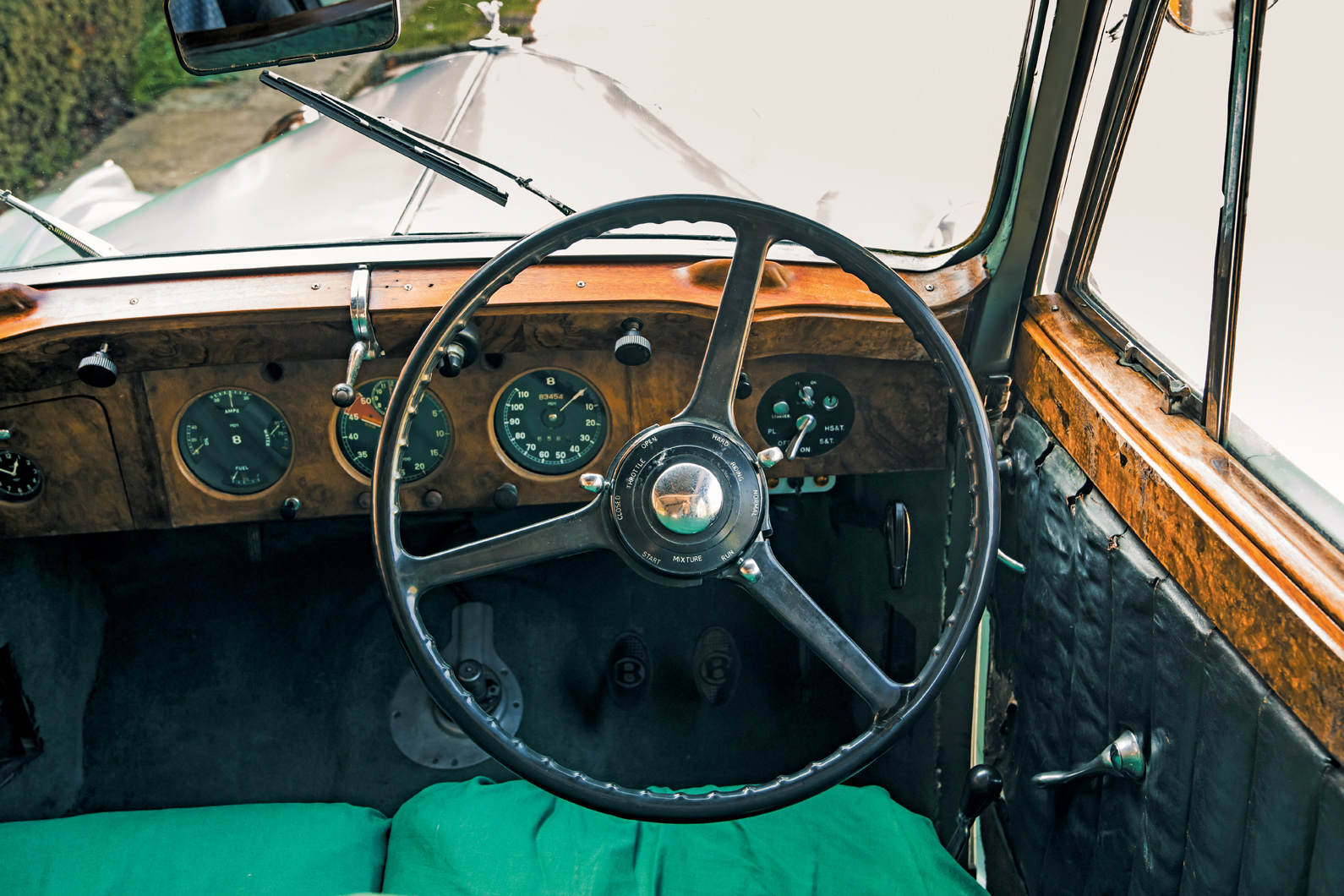
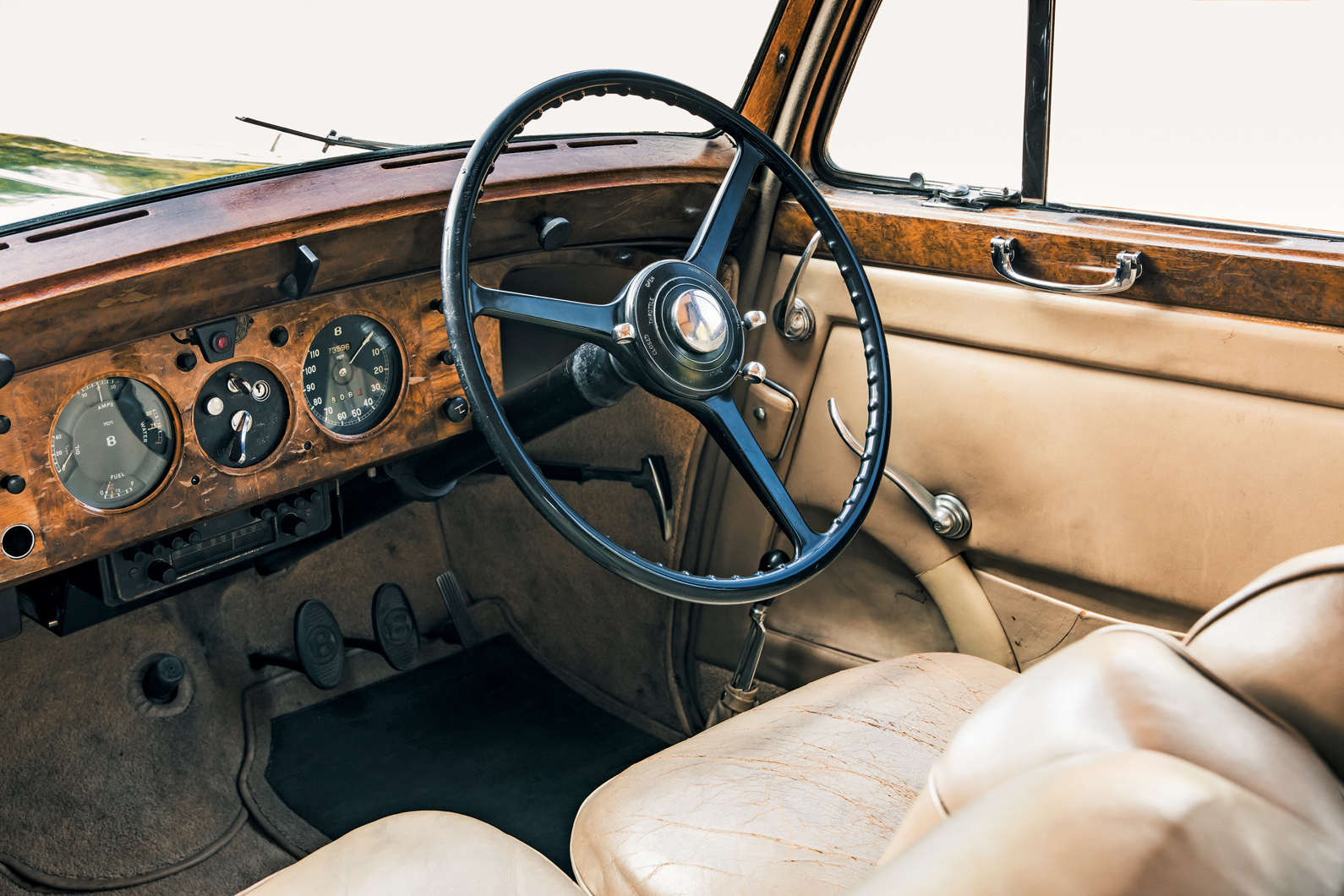
The Bentley MkVI’s steering is heavy at low speeds
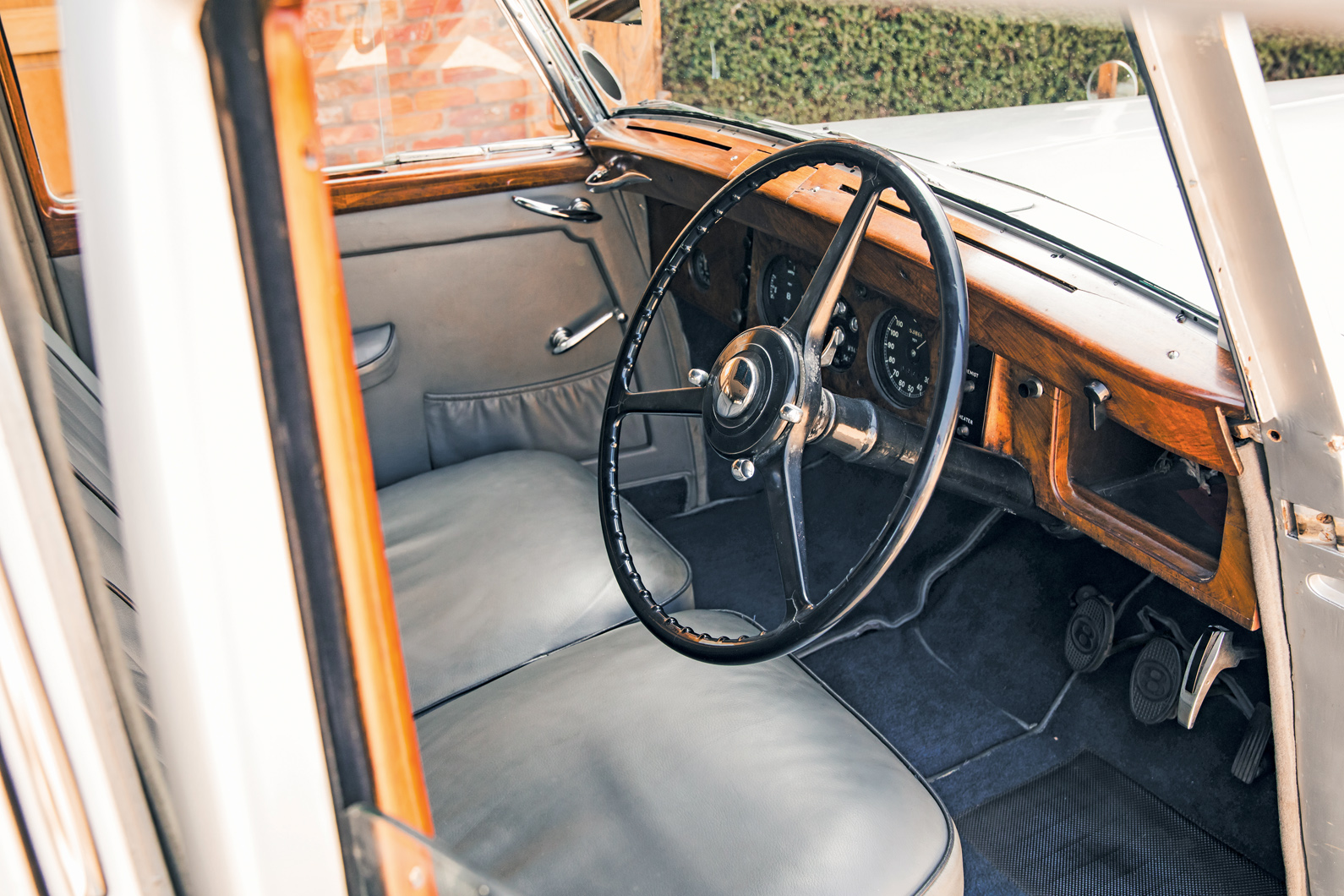
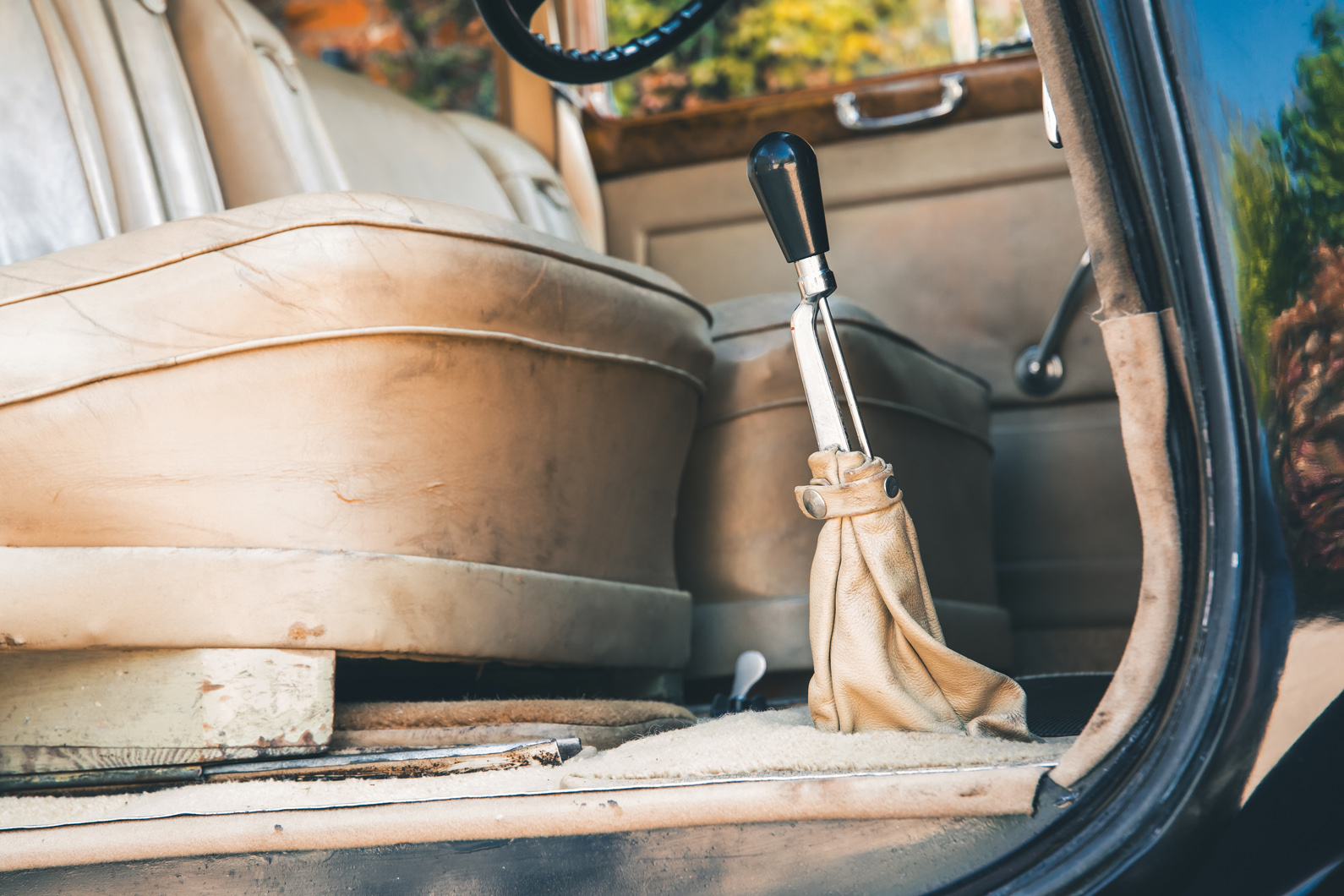
Your right hand falls comfortably to the gearknob, but care must be taken when climbing aboard, to avoid the lever diving up your trouserleg.
Once the driver is in place, the ’box is very easy to use, with synchromesh on second, third and top, the smoothest changes coming from a slight pause as you move the lever between ratios and a healthy blip of the throttle to ease the downchanges.
The brakes inspire lots of confidence, with a mechanical servo aiding the hydraulically actuated front drums and cables pulling on the rear.
Mike Couper took a MkVI (B216DA) on the ’49 Rallye Monte-Carlo and said the brakes were: “The best ever – no fading, no grabbing when cold. They were only adjusted on our return to compete with the Paris taxis.”
The Bentley MkVI’s gearlever must be avoided on entry
It is from a steering, ride and handling perspective that the two cars diverge the most.
Both do without power assistance, the action of the wheel being directed to the road wheels via a steering box and side-lever-arm arrangement.
While heavy at first, it lightens at higher speeds and gives progressive increases in load as you add greater steering angles.
However, it is the influence of their wheelbases that drives the differences in character. With its 10ft 10in wheelbase, 3-B-50 is very much the limousine and rides with serenity.
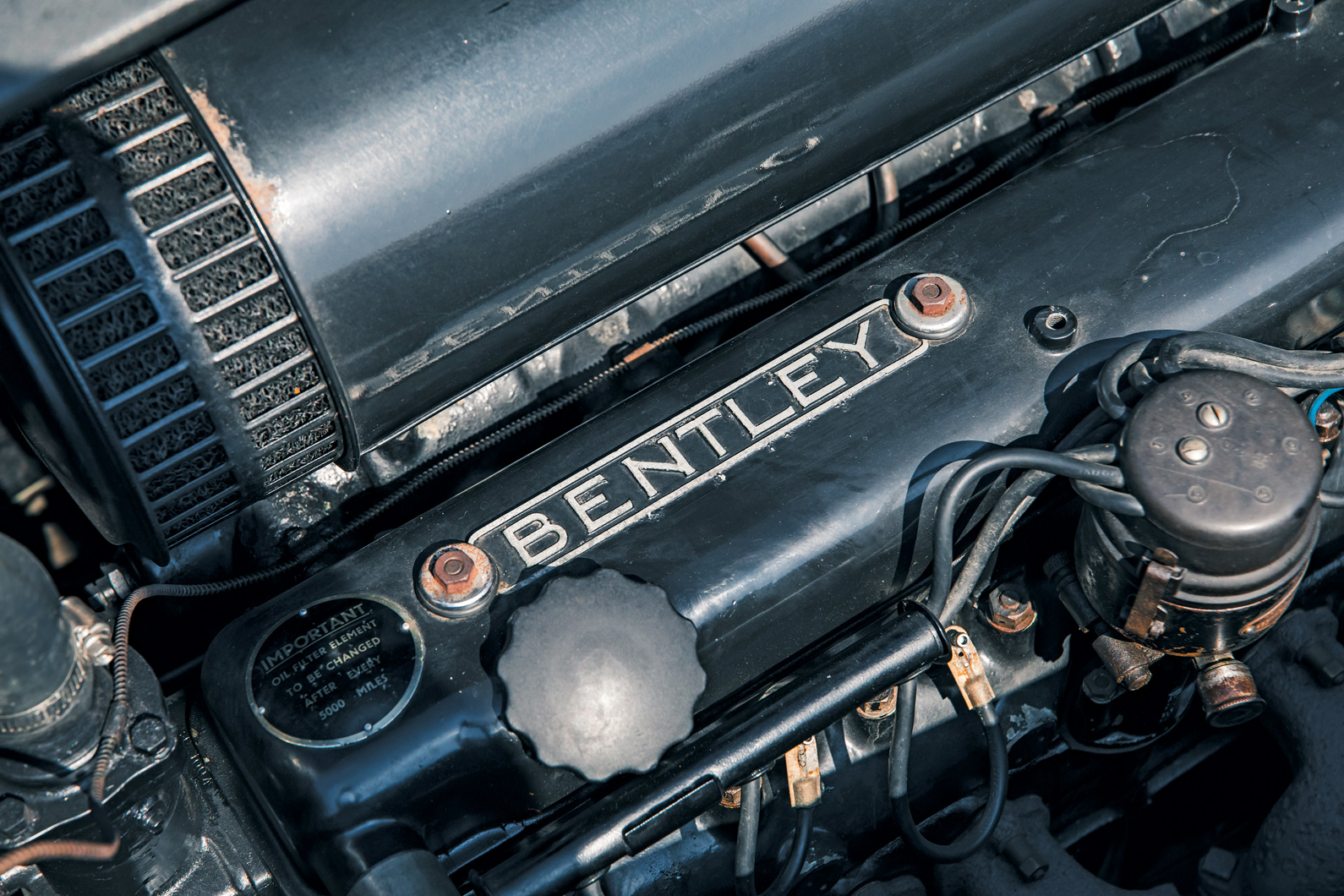
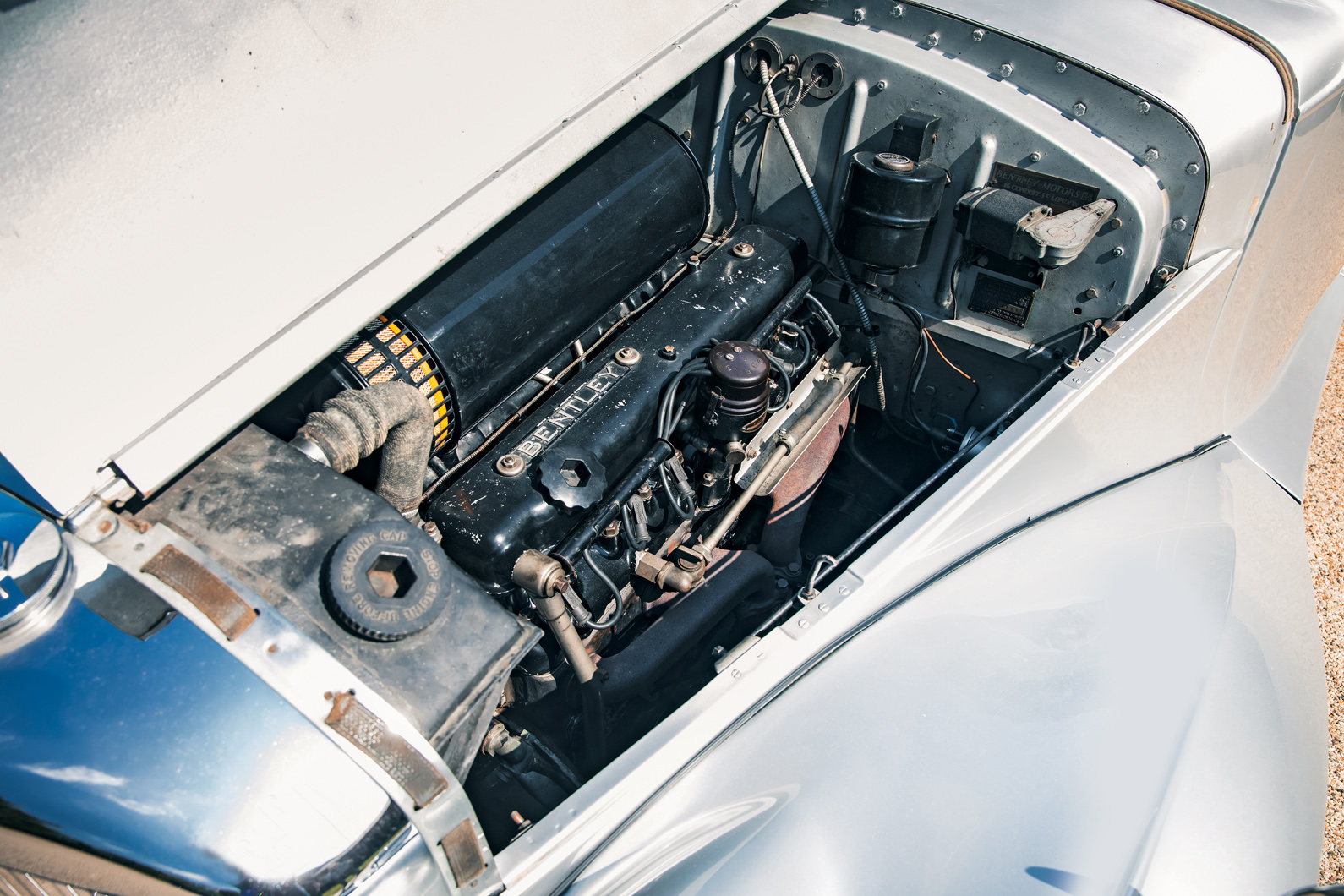
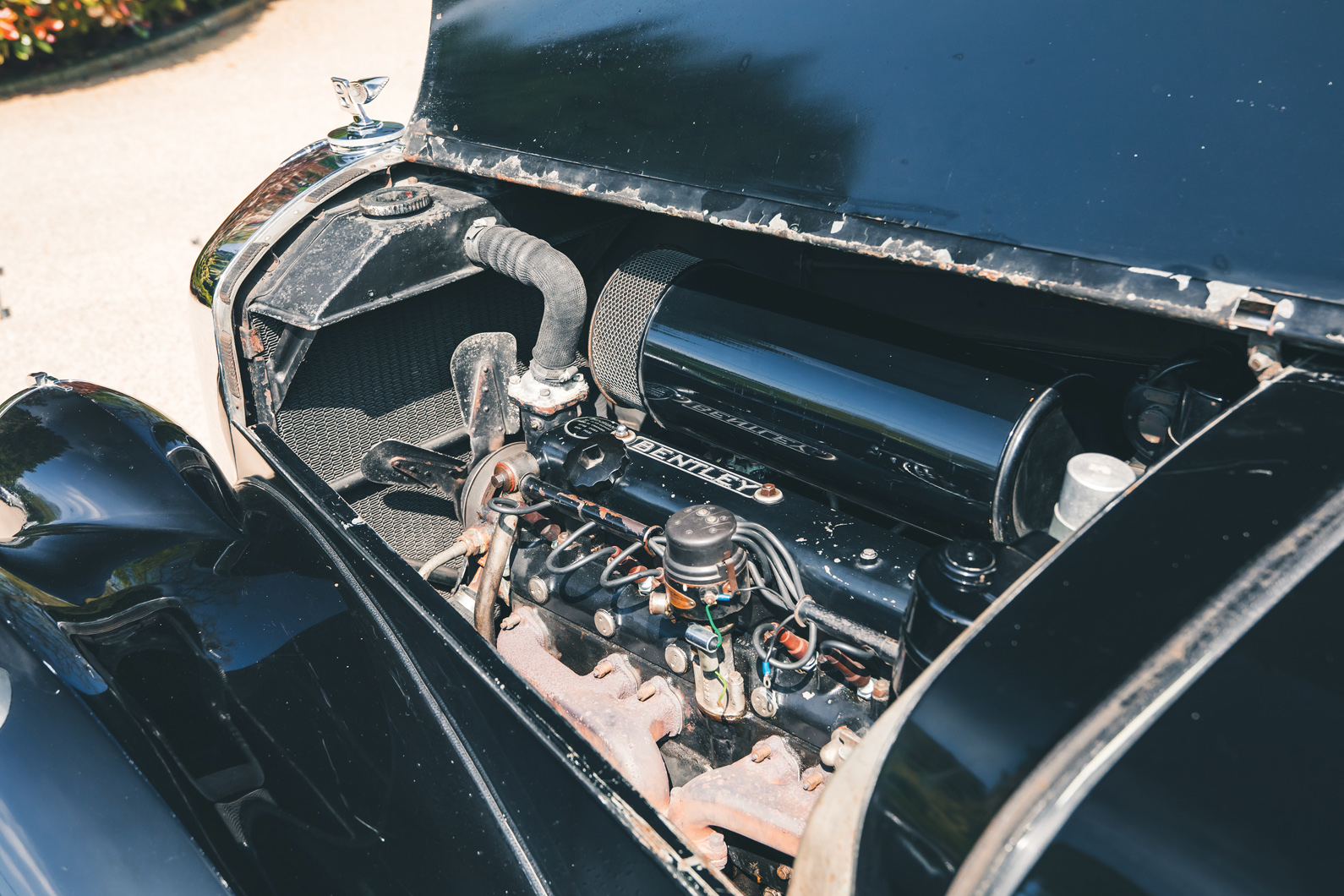
The Bentley MkVI’s B60 4257cc engine makes 146bhp
Shortened by 10in, the MkVI is a more wieldy motor car and feels as if it pivots around the driver when changing direction. So much so that you can’t help wondering how a MkVI would feel on the snow and ice of the Monte.
Couper gives us something of a clue, having recorded in his post-rally report: ‘The steering was first class, light and positive… Even on ice, if the car slid at all it was the back that broke away first, never the front.’
From a dynamic perspective, both cars respond best to a traditional approach: get the braking and gearchanging done in a straight line before the corner, roll off the brake pedal and turn in, allowing the car to settle, and then balance it on the throttle around the remainder of the turn to the exit.
Done this way, you can make real progress in a MkVI and easily keep up with modern traffic – you just have to remember that, even with some of the finest brakes of the time, everyone else can stop rather more quickly than you can.
The production Bentley MkVI’s wheelbase was reduced by 10in from the prototype, aiding agility
The MkVI can rightfully take its place in history as one of Bentley’s great motor cars.
The product of rational thinking, while superbly engineered it remains an underappreciated model, having neither the noise and thunder of the Cricklewood era, nor the glamour of the later 1950s R-type Continental.
But I leave the final verdict to Andrew Wood, the ‘A’ of the renowned Rolls-Royce and Bentley specialist P&A Wood.
Andrew was asked in 2003 about his own cars – at the time he owned a Rolls-Royce Silver Ghost and a Bentley MkVI. He said: “They were the best two cars the company ever made.” So now you know.
Images: Jack Harrison
Thanks to: Stephen Cutts; Bentley Motors Ltd; H Horsfield & Son; The Real Car Co
Factfile
Bentley MkVI
- Sold/number built 1946-’52/5201
- Construction steel chassis, pressed-steel body
- Engine iron-block, alloy-head, inlet-over-exhaust 4257cc ‘six’ (4566cc from mid-1951), twin SU HD4 (later H6) carburettors
- Max power 146bhp @ 4000rpm (later 156bhp)
- Max torque n/a
- Transmission four-speed, three-synchro manual or Hydramatic four-speed automatic with fluid coupling, RWD
- Suspension: front independent, by double wishbones, coil springs rear live axle, semi-elliptic leaf springs; lever-arm dampers f/r
- Steering cam and roller
- Brakes drums, hydraulic at front, mechanical servo
- Length 15ft 11½in (4864mm)
- Width 5ft 9in (1753mm)
- Height 5ft 4½in (1638mm)
- Wheelbase 10ft (3048mm)
- Weight 3954lb (1793kg)
- 0-60mph 15.2 secs
- Top speed 100mph
- Mpg 17
- Price new £2997 (chassis £1785)
- Price now £20-40,000 (Standard Steel)*
*Price correct at date of original publication
Enjoy more of the world’s best classic car content every month when you subscribe to C&SC – get our latest deals here
READ MORE
Rolls-Royce Phantom III: excellence at all costs
How the other half lived: Bentley MkVI vs Armstrong Siddeley Sapphire 346
Bentley MkV Corniche: unique prototype reborn