TVR in 10 wedges
The arrival of the 1980s saw TVR adopt a bold new style for its sports cars, which have become known collectively as the wedge cars.
It’s easy to see why the name stuck thanks to the aggressive, angular styling by Oliver Winterbottom.
Help with the engineering came from Ian Jones, formerly of Lotus, and together they created a range of open and closed cars that sustained TVR throughout a turbulent decade.
When Peter Wheeler took over the firm in 1981, Rover’s V8 became the mainstay for power.
Here’s our look at TVR’s wedges, presented in chronological order, that resulted in around 2600 cars being built in total.
1. 1980 TVR Tasmin
TVR had flirted with wedge styling in 1971 with its Harris Mann-designed SM Zante prototype for the 1971 Earls Court Motor Show, but it really got into the wedge shape with the Tasmin.
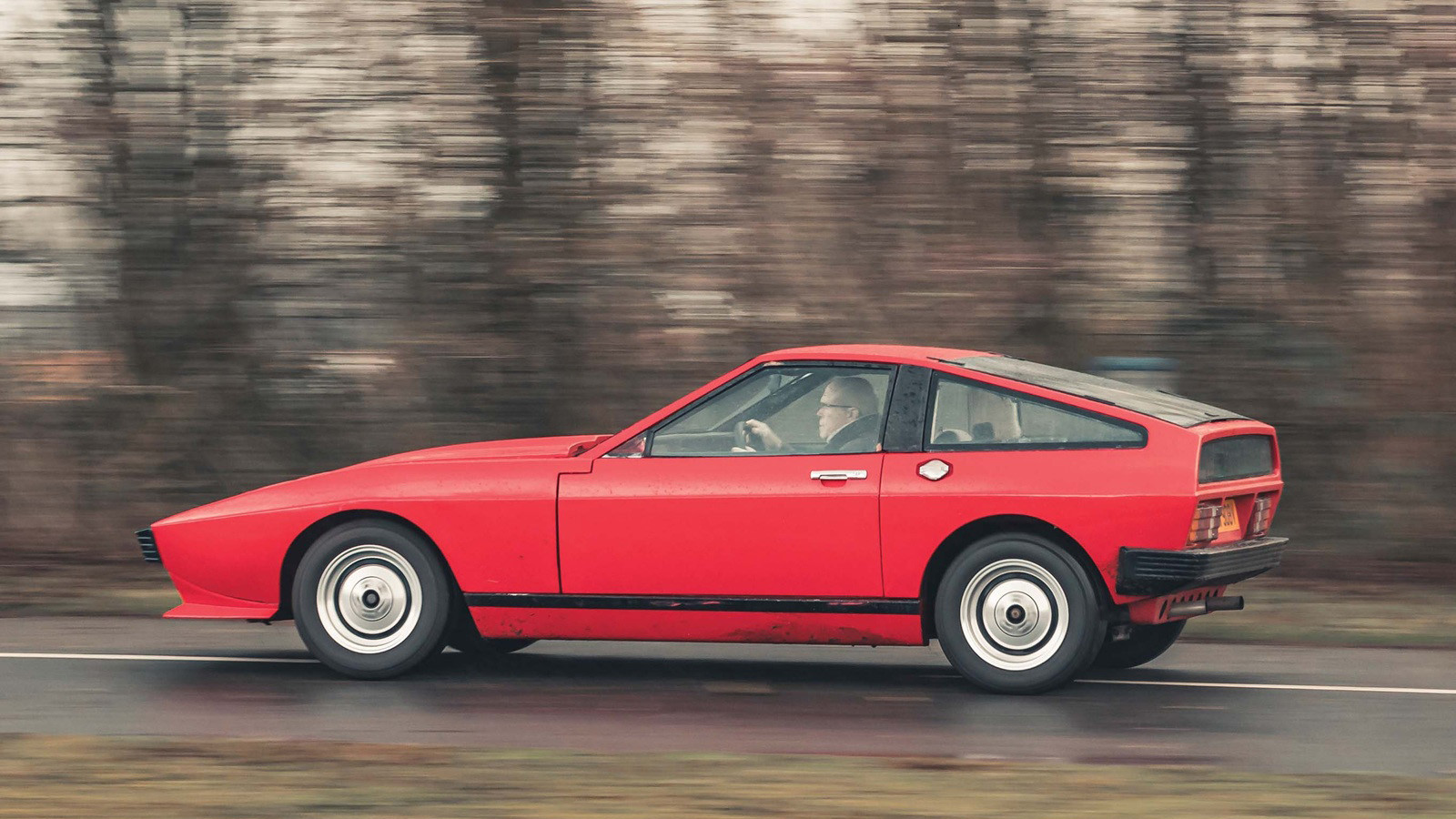
Styled by Oliver Winterbottom, the distinctive look of the Tasmin was in stark contrast to the curves of previous TVR models.
The Tasmin began life as a two-seater open-top or closed coupé, with 2+2 seating from 1981, and the range was known as 280i from 1984.
Power was from Ford’s 2.8-litre, fuel-injected V6, offering 0-60mph in 8.2 secs and 130mph.
A total of 1167 TVR Tasmins with this engine were built by the time it went off sale in 1988.
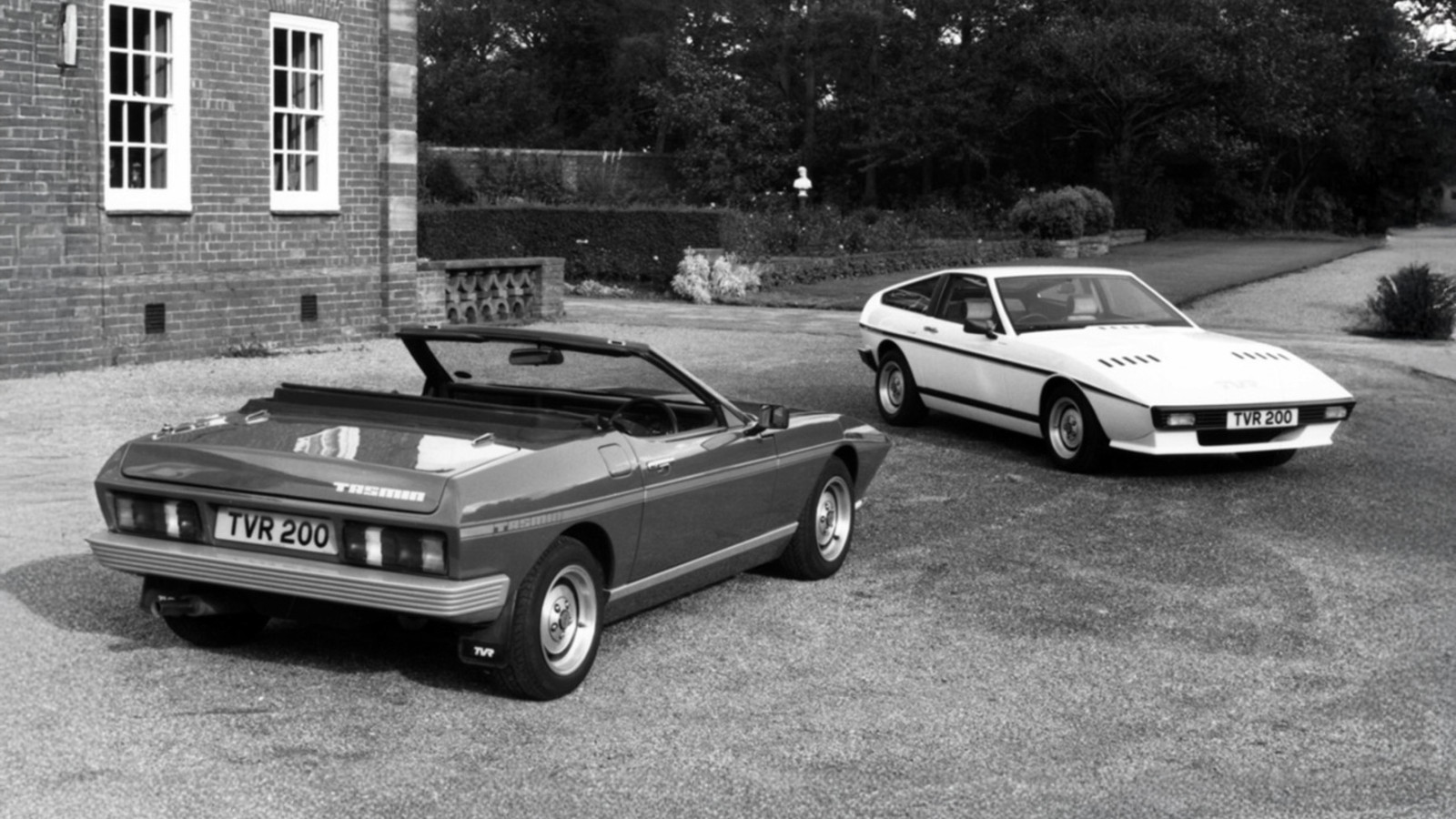
2. 1981 TVR Tasmin 200
In a bid to fill the void left by the MGB GT and Triumph TR7 disappearing from the market, TVR cannily slotted the 2-litre Ford Pinto engine into the Tasmin.
Creating the Tasmin 200 made perfect sense on paper and in the boardroom, but in showrooms it was a flop.
Only 16 coupés and 45 convertibles left the Blackpool factory, and it’s easy to see why it was a slow seller with only about 100bhp from its four-cylinder engine.
The Tasmin 200 could manage just 114mph flat out and 0-60mph in 9 secs, if you tortured the Pinto motor that missed the thrust and sound of its V6 counterpart.
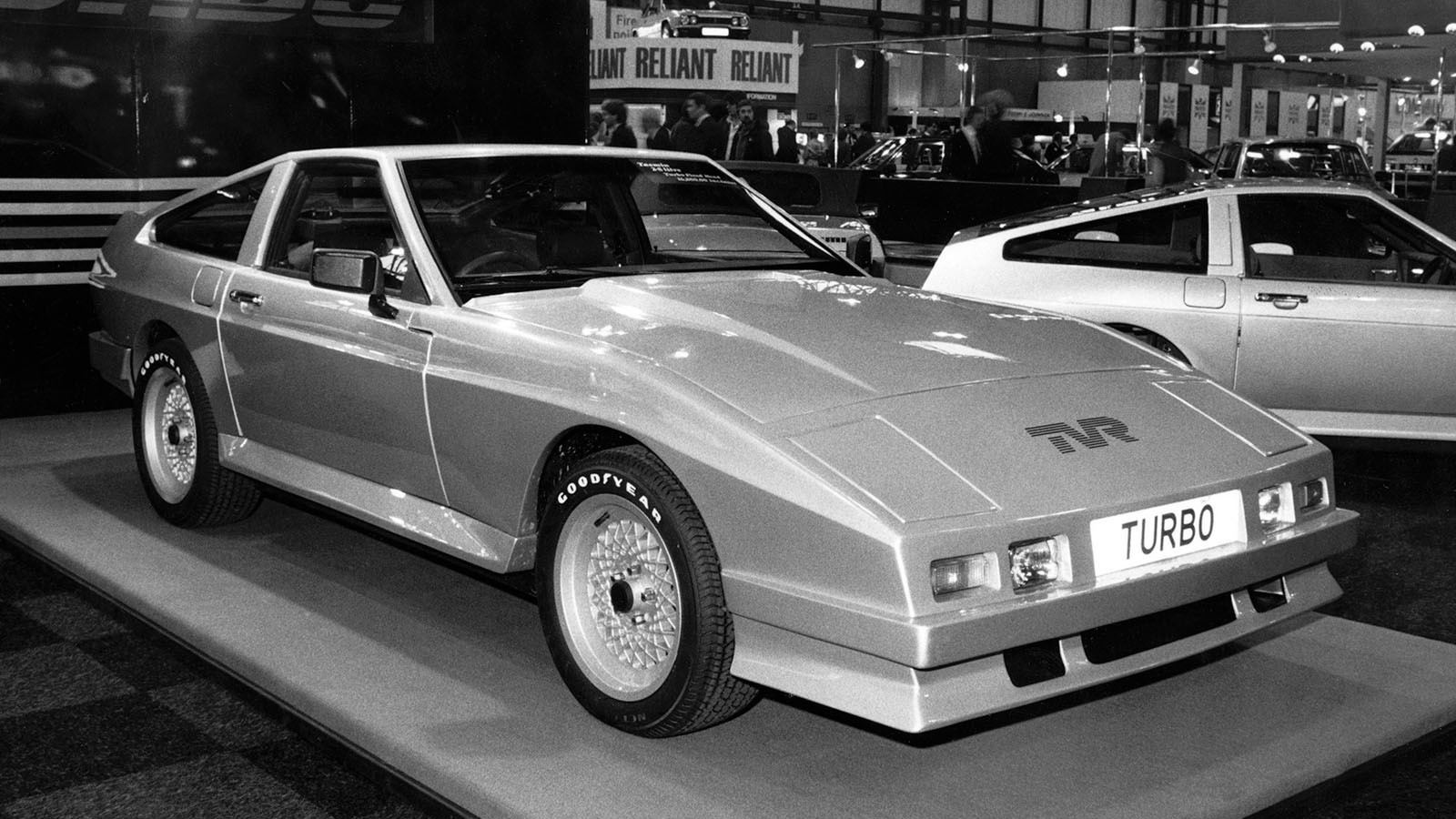
3. 1982 TVR Tasmin Turbo
TVR was no stranger to turbocharging, having built around 30 of its Taimar Turbo cars in the late 1970s.
When Peter Wheeler took over the company in 1981, he looked to forced induction for a quick win with the V6-powered Tasmin.
Two prototypes were built, each with a 228bhp 2.8 V6 that also delivered a punchy 249lb ft of torque.
That claimed performance was never officially confirmed, but 0-60mph in 5.5 secs and a top speed of 145mph were mentioned.
However, Wheeler was more keen on a different route to increased performance and turbocharging was quietly dropped from the firm’s plans.
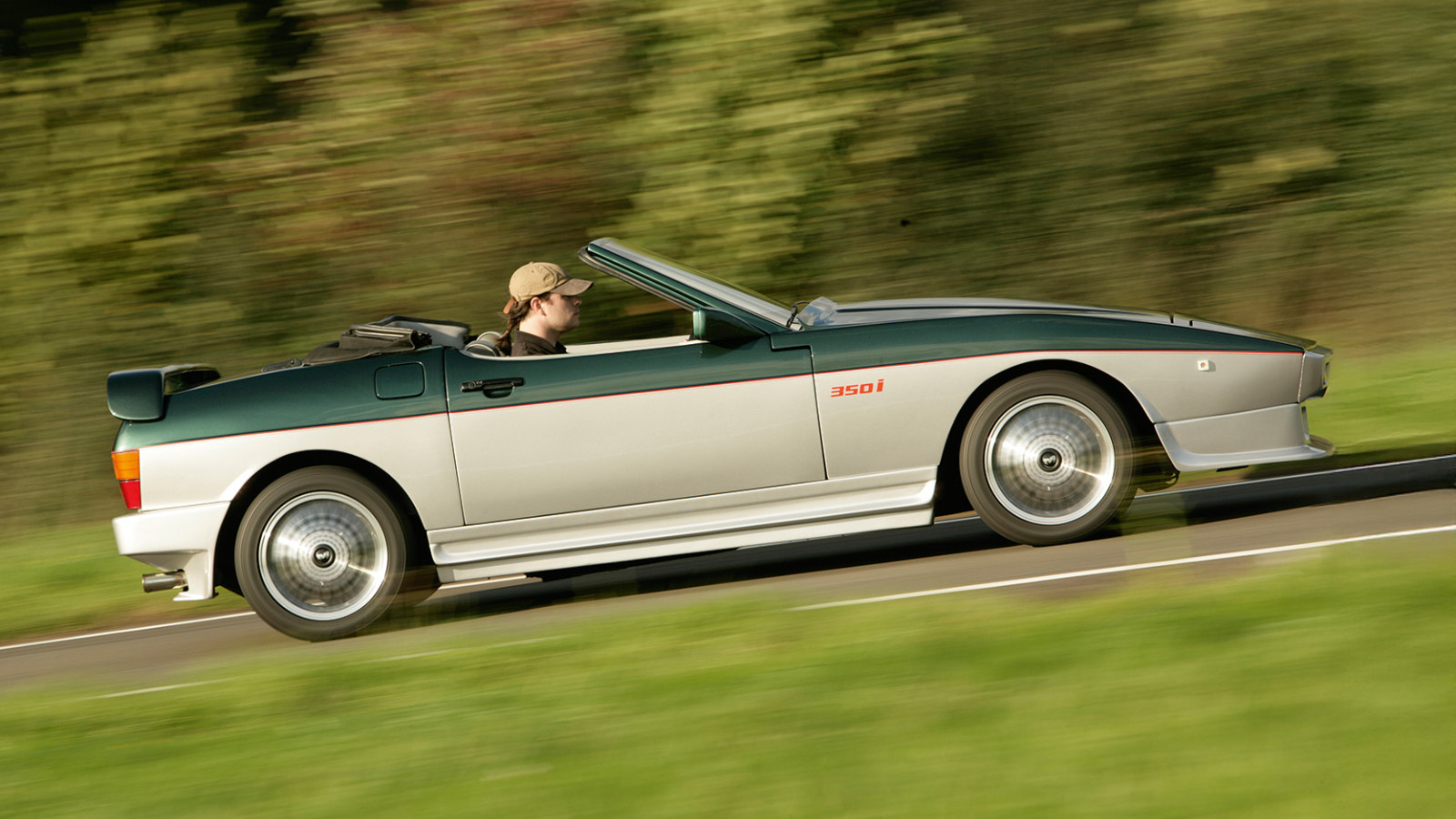
4. 1983 TVR 350i
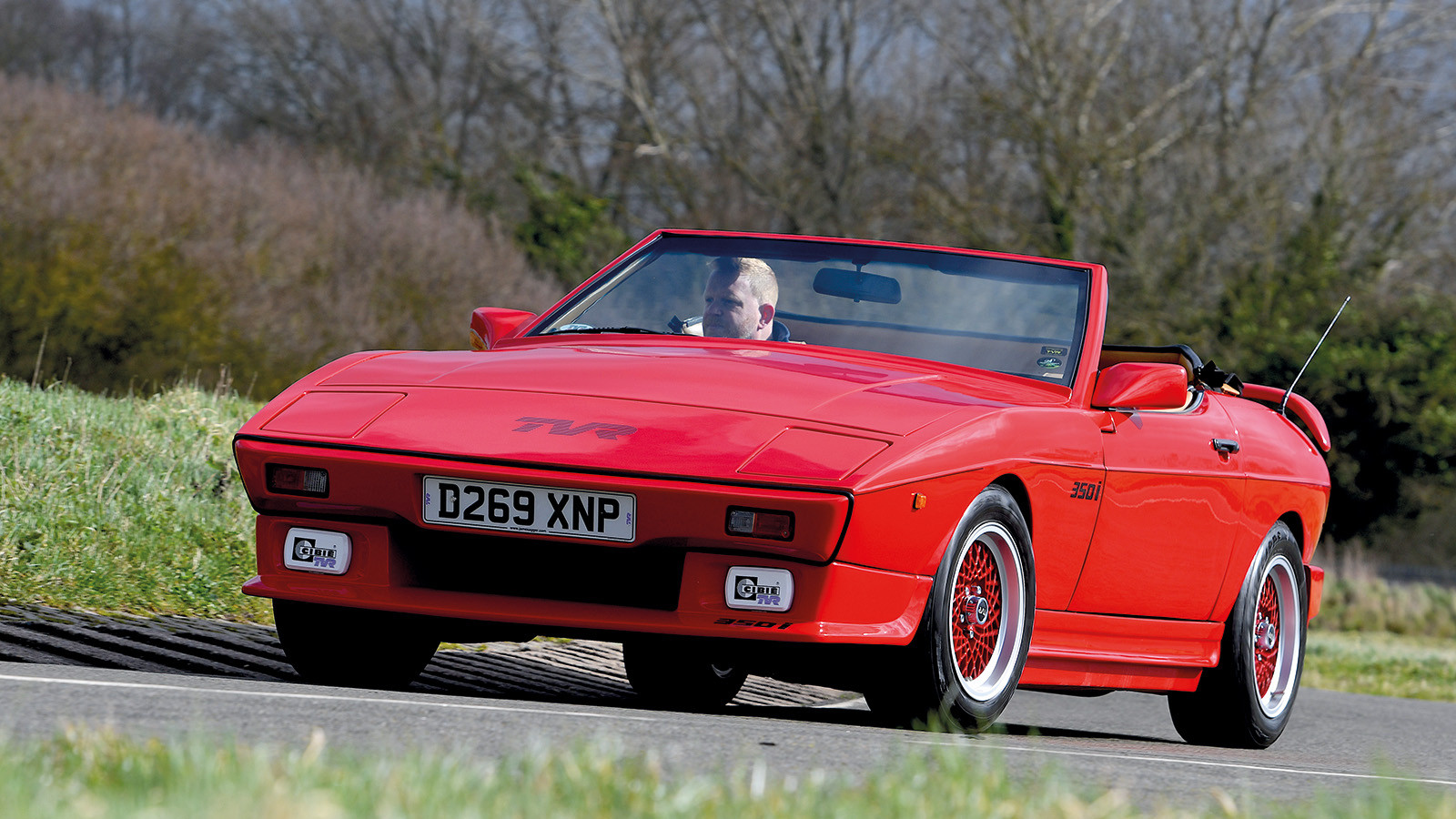
In 1983, the 350i set the tone for all future TVR models by using Rover’s all-aluminium, 3.5-litre V8.
With fuel injection in Rover Vitesse spec, it propelled the 350i from rest to 60mph in 6.6 secs and on to 136mph.
This made the 350i significantly faster than the V6 model and it proved a strong seller in its lifespan from 1983-’86, with 955 sold including six of the rare 2+2 FHC versions and 52 coupés, in addition to 897 convertibles.
Eleven supercharged 350i cars were converted by dealer David Haughin to his SX spec, which have near 420 SEAC pace.
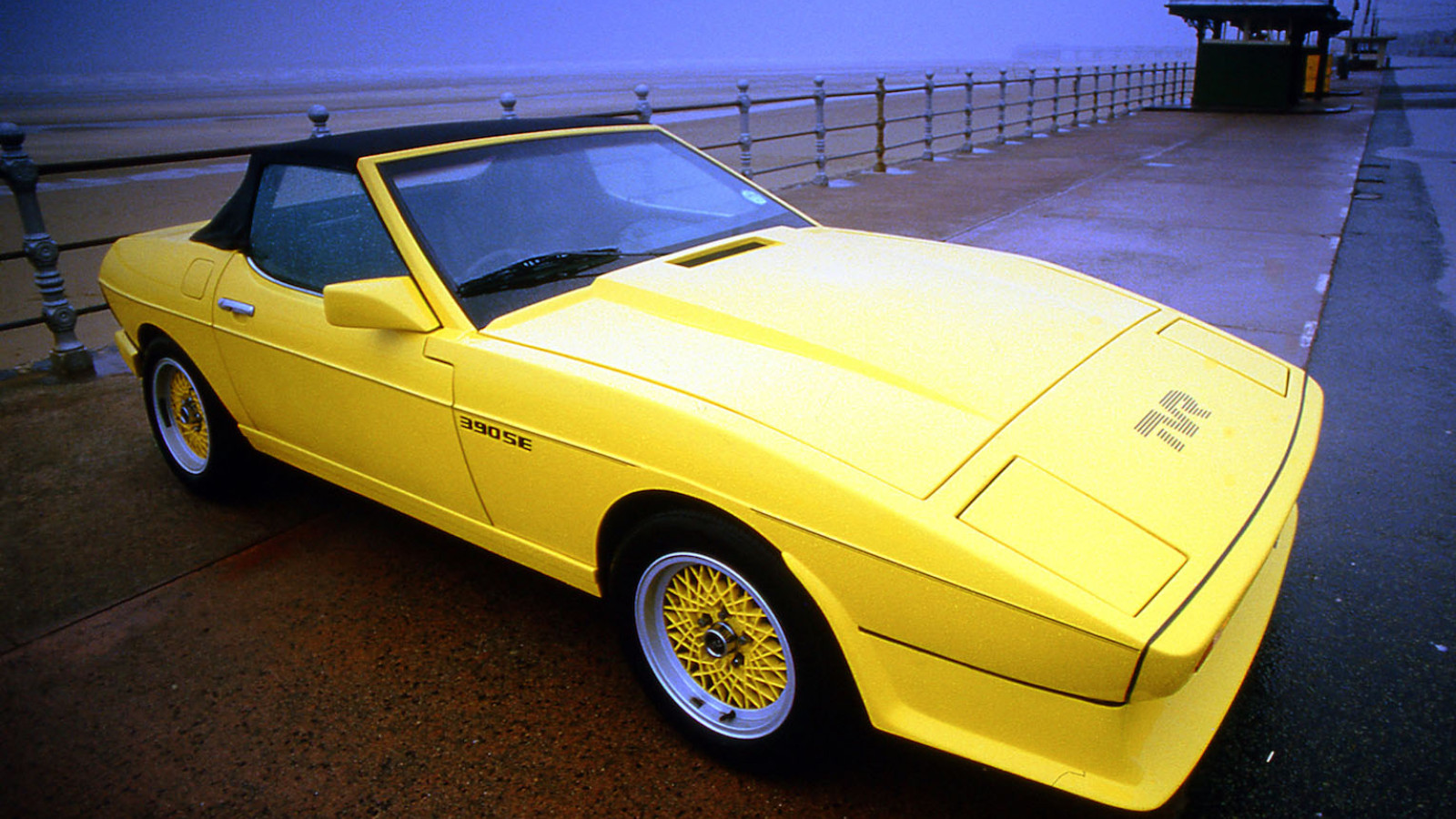
5. 1984 TVR 390SE
Always keen on more power, TVR turned to racer and engineer Andy Rouse to build a 3.9-litre version of the Rover V8.
This resulted in the 390SE with its 275bhp motor, which required TVR to add a Torsen limited-slip differential and brake-cooling ducts to cope with the increased performance.
Against the stopwatch, the 390SE delivered 0-60mph in 5.6 secs and 144mph.
If you felt that was a bit tame, TVR offered the 420SE with 300bhp that tore its way from 0-60mph in 4.6 secs and went on to 147mph.
Altogether, TVR sold a modest 103 390SE and 420SE cars, all with convertible bodies.
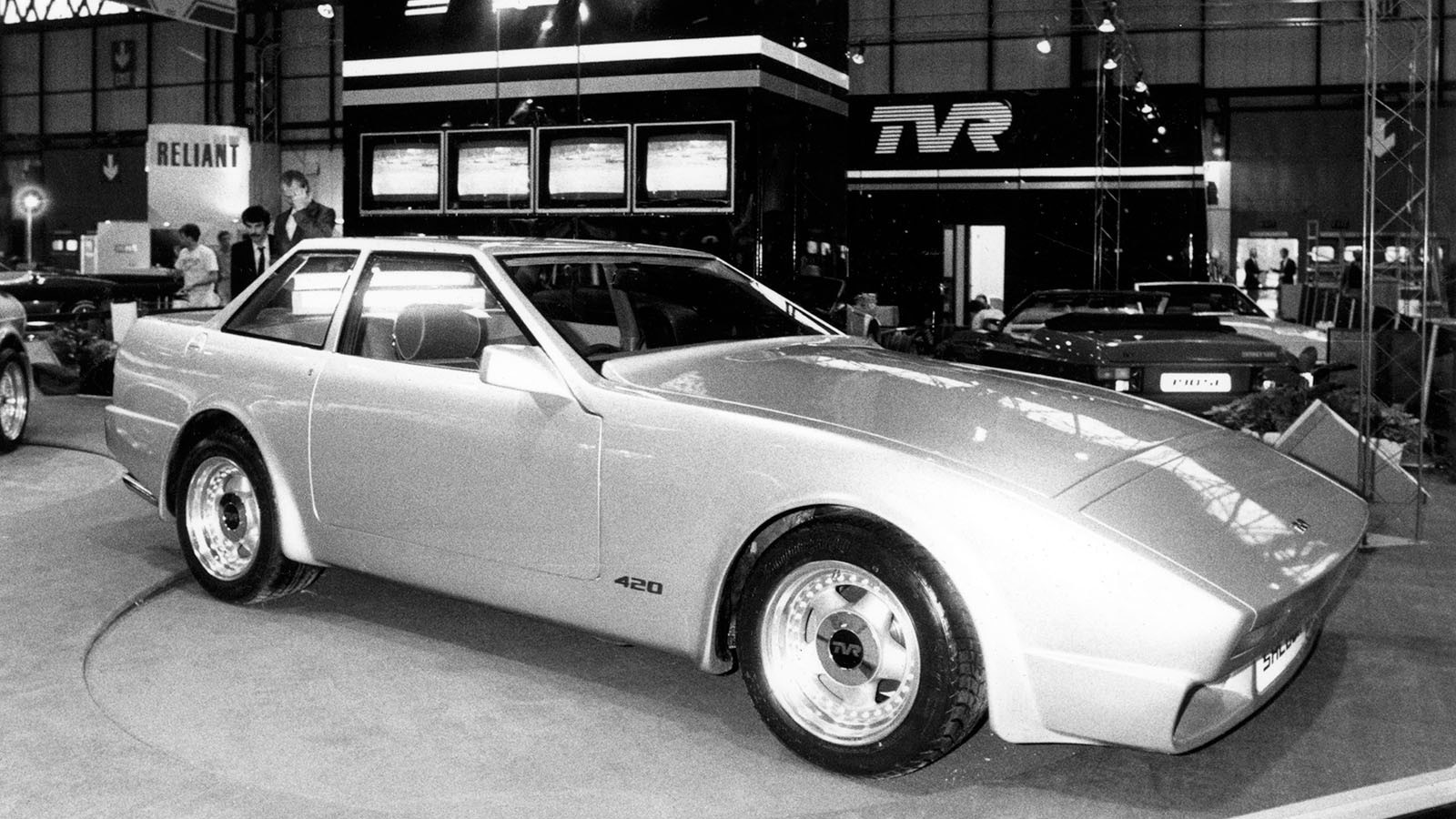
6. 1986 TVR 420 Sports Saloon
With convertibles becoming the default choice for most TVR buyers, the Blackpool car manufacturer reckoned there might be a need for a closed car to keep sales steady during the winter months.
This thinking gave birth to the 420 Sports Saloon in 1986, which was destined for the Birmingham motor show that year.
It had an ungainly roofline and was 8in (203mm) longer than the convertible 420SE it was based on, including that car’s improved rear-suspension design.
TVR claimed it would cost £24,500 when it went into production, but lack of customer interest put paid to those plans.
7. 1986 TVR 420 SEAC
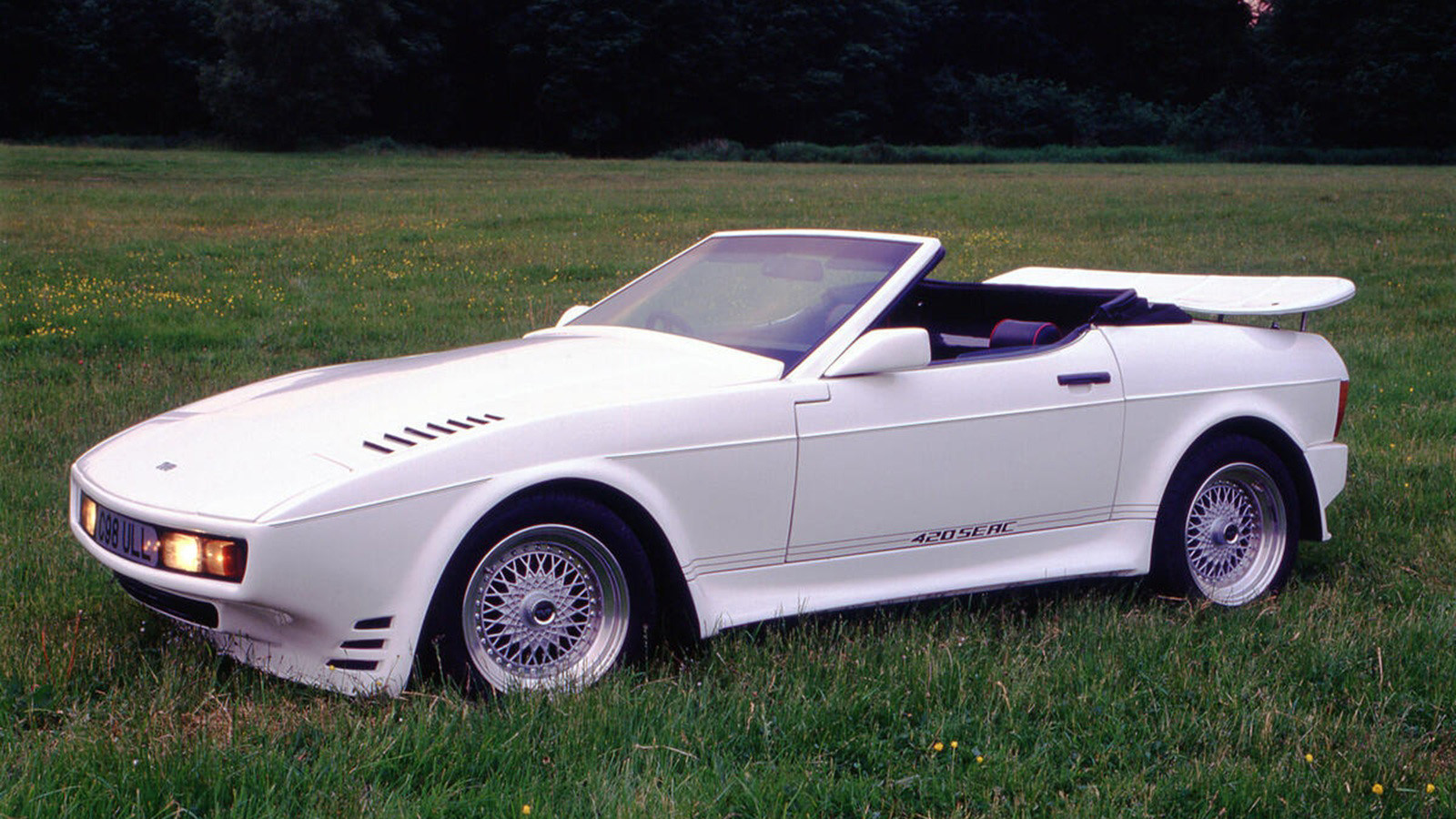
There are two notable features of the TVR 420 SEAC and the most obvious was its slightly more rounded edges for improved aerodynamics.
The other was what lent the car its new name, because SEAC stands for Special Equipment Aramid Composite.
Using the same carbonfibre and Kevlar materials from Formula One in place of much of the body’s usual glassfibre, it reduced weight by 100kg (220lb).
A lower weight coupled to 300bhp from the 4.2-litre V8 meant 0-60mph in 4.5 secs and a 165mph top speed.
To keep the TVR 420 SEAC stable at such high speeds, a huge rear spoiler was fitted across the full width of the boot.
8. 1988 TVR 450 SEAC
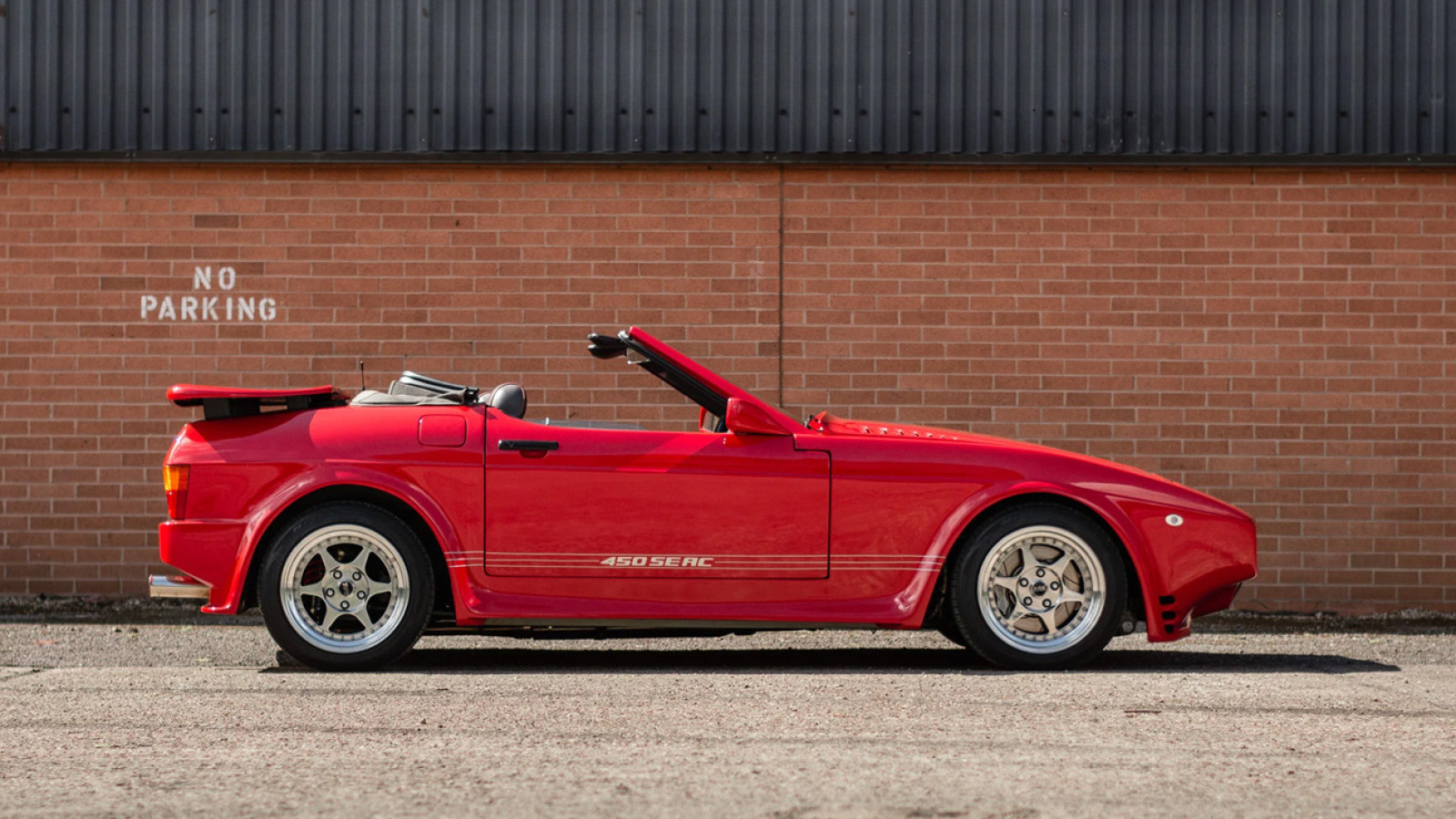
The ultimate TVR wedge of the 1980s in terms of performance and power, the 450 SEAC was only offered between 1988 and 1989.
In that time, just 18 of the 325bhp monsters were built, matching the 420 SEAC’s production numbers.
Although the engine was derived from the original Rover motor, it was now built by TVR Power.
The five-speed manual transmission was geared so the 450 SEAC could hit a top speed of 175mph all out, helped by its aerodynamic shape and 320lb ft of torque from the 4441cc V8.
The TVR 450 SEAC could match a Lamborghini Countach LP500 qv’s top speed and out-accelerate that car.
9. 1988 TVR White Elephant
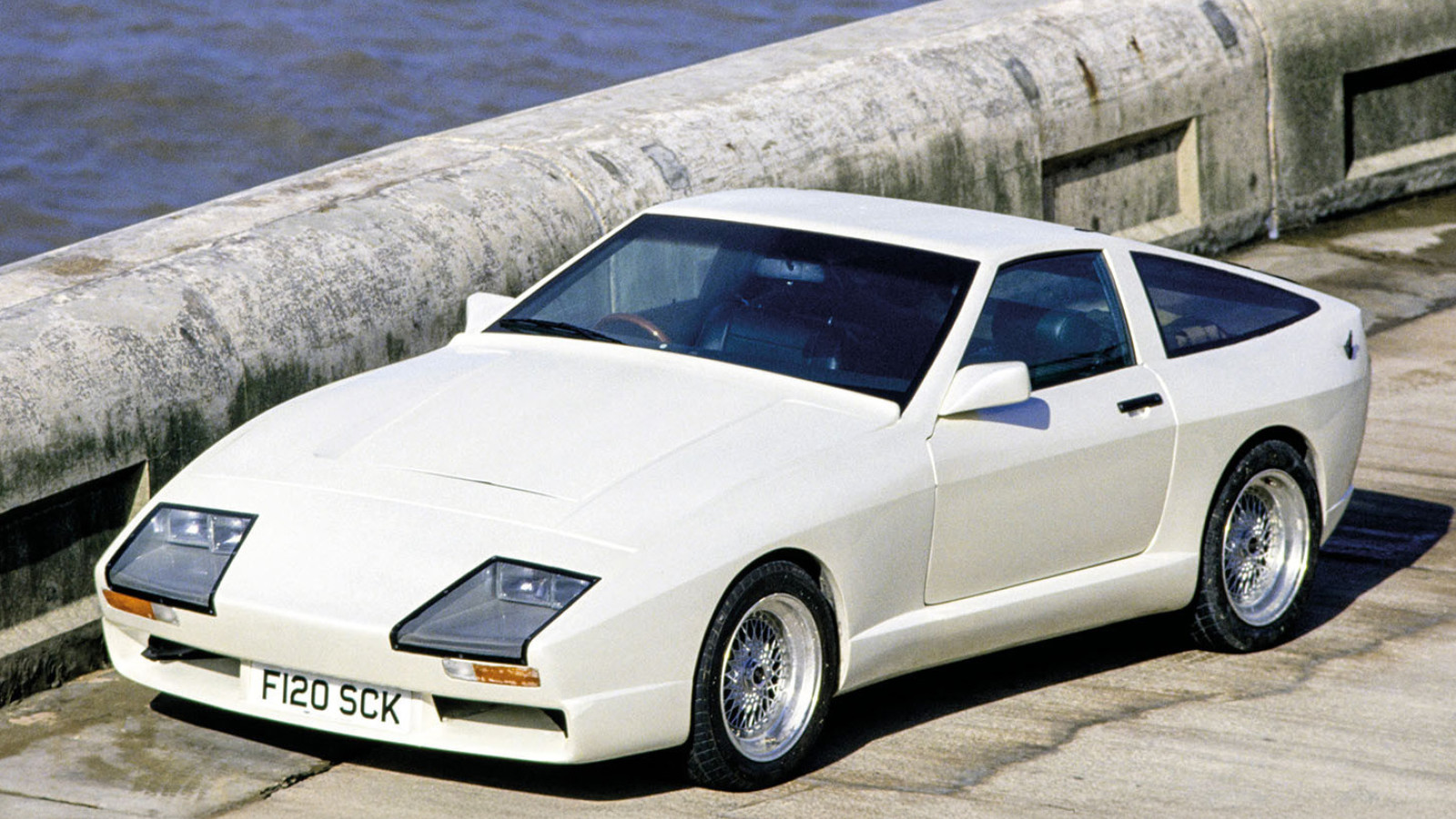
When you own TVR, you could have what you wanted and Peter Wheeler decided on a one-off that was named the White Elephant.
Built on a slightly modified SEAC chassis, the White Elephant had a unique coupé body that used similar front-end styling to the 420 Sports Saloon.
Under the bonnet was a 5-litre Holden V8 supplied by Tom Walkinshaw to assess as a potential successor to the Rover V8 in TVR’s models.
Wheeler used the car for two years. It had unusual extra features such as a built-in shotgun cabinet and a fitted dog basket behind the seats.
10. 1988 TVR 400SE
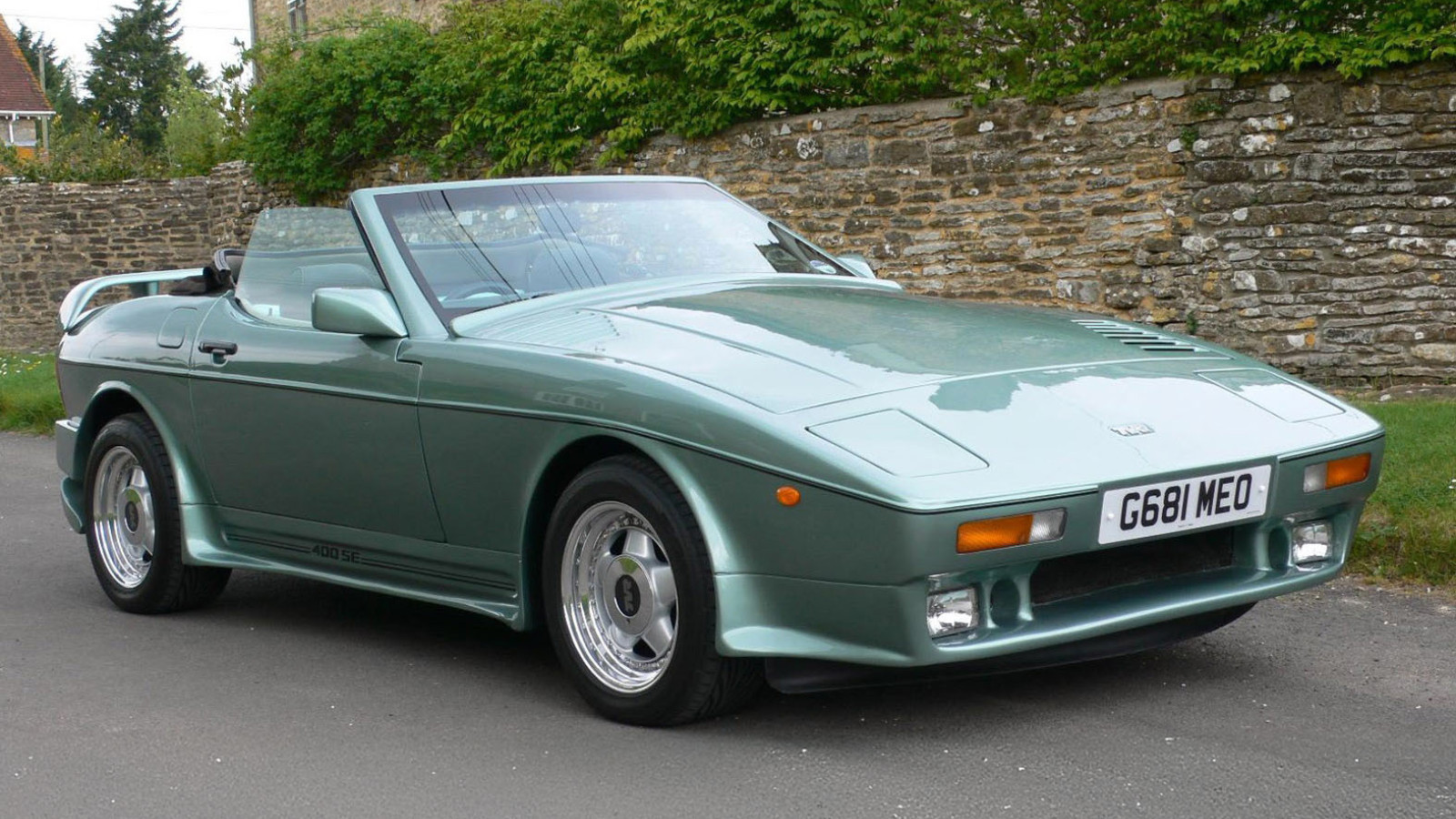
The 400SE signalled the beginning of the end for TVR’s wedge cars of the 1980s.
It came with the wraparound cockpit body of later wedge models and asymmetrical bonnet vents to cope with engine-bay temperatures.
The 3948cc V8 replaced the 390i’s 3095cc motor and the 400SE delivered 275bhp for 0-60mph in 5.6 secs and 145mph all in.
Alongside the 400SE from 1989 came the 450SE with 321hp for 0-60mph in 5.2 secs and 150mph.
Just 35 450SE models were built, while the 400SE enjoyed surprisingly healthy sales of 242 cars before the new Griffith ushered in a very different style of TVR in 1991.