Viva Vauxhall!
Sporting Vauxhalls? Really? If you have visions of Cavalier company cars, or beige-coloured Vivas and Victors pounding the UK’s (and the Commonwealth’s) roads, that’s only part of this manufacturer’s story.
Between British brand Vauxhall producing its first model in 1903 and US giant General Motors taking control in 1925, the Luton-based (from 1905) marque was pre-eminent as a maker of ‘superexcellent’ sports cars, winning countless trophies in competition, and every bit a match for WO Bentley’s new machines during the 1920s.
And while GM initially forged a more mainstream path for its new acquisition, from the 1960s onwards, Vauxhall’s sporting aspirations were once again realised with a series of performance saloons which aligned neatly with its Dealer Team Vauxhall (DTV) race successes.
So here, in chronological order, are 25 of Vauxhall’s most memorable sporting models, including one or two from its 21st-century VXR brand.
1. 1908 Vauxhall A-type
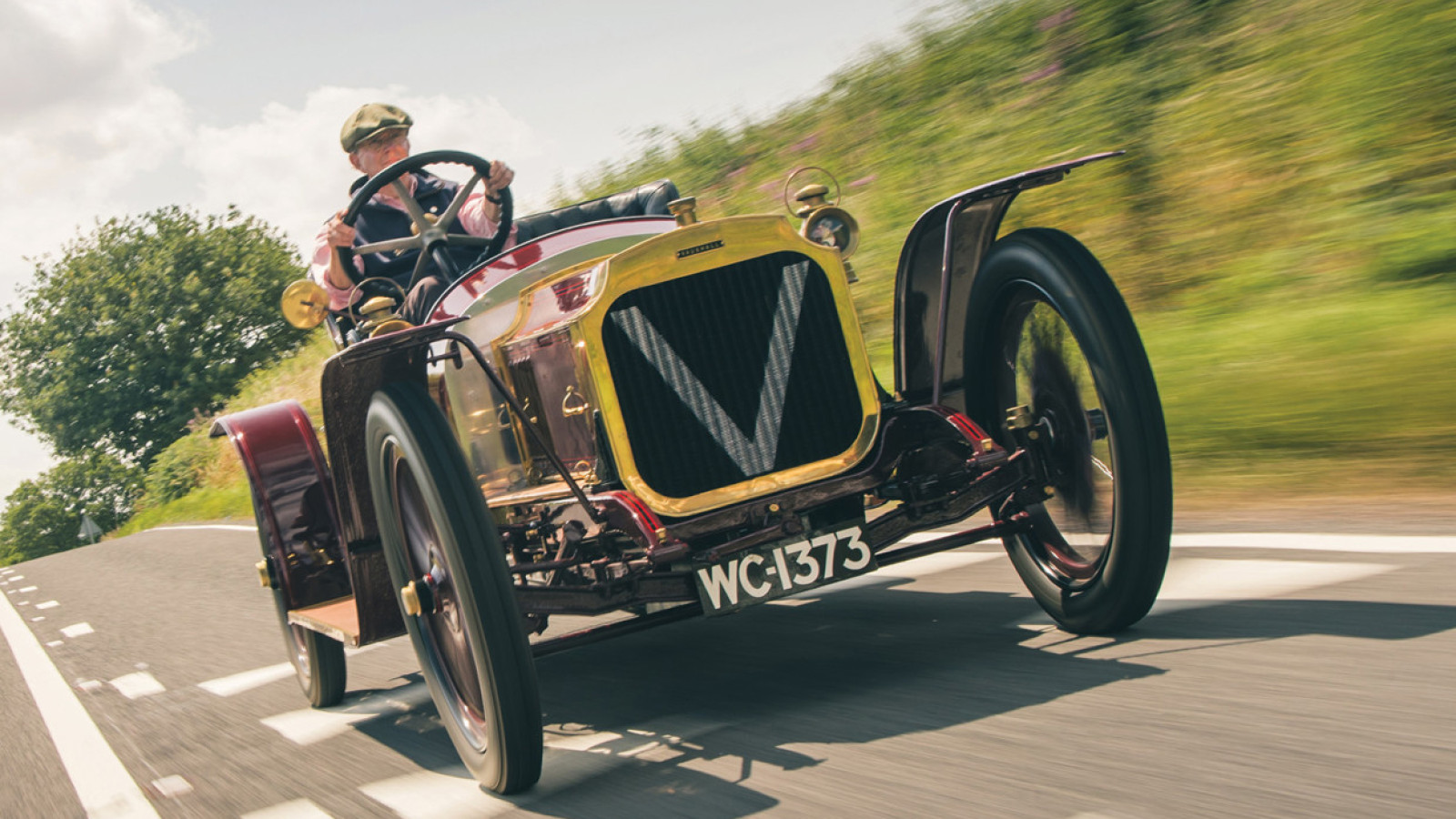
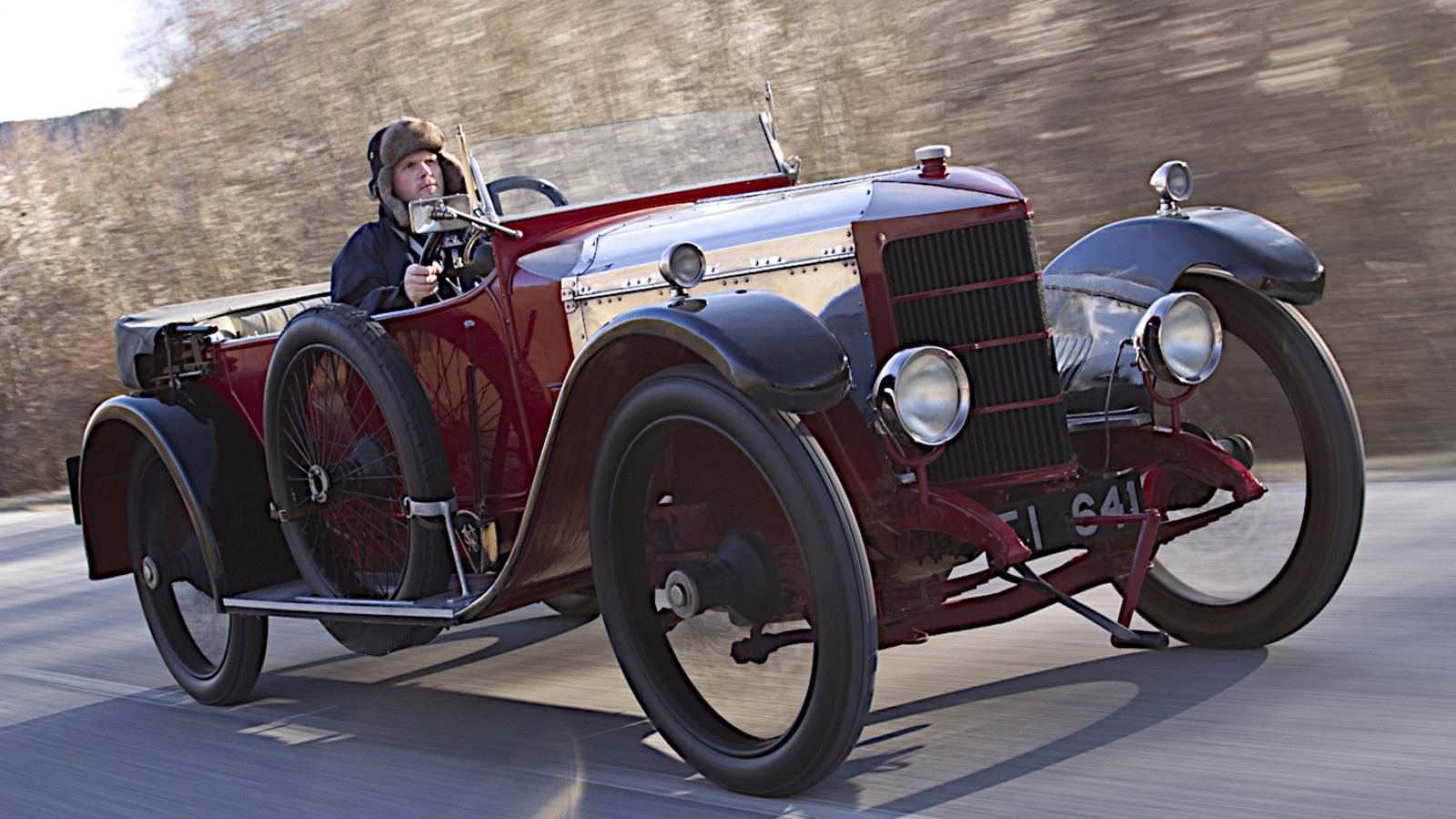
Disarmingly handsome, low-slung and rakish in Two Seat Semi-racer guise, as pictured, Vauxhall’s 20hp A-type was a genuine race replica, inspired by the company’s entry for the 1908 International Touring Car Trial.
Vauxhall’s MD, Percy Kidner, had driven the racing car upon which the A-type was based (confusingly, known as the Y-type) in the aforementioned event, receiving a Gold Medal for the Scottish sector, and a Silver Cup for the 2000-Mile Trial.
In production, the A-type was marketed as ‘The No Smoke Car’, thanks to its Laurence Pomeroy-designed, 3139cc, L-head, four-cylinder engine’s pressure-fed lubrication system.
Driving the rear wheels via a four-speed gearbox, the Vauxhall A-type was a genuine 60mph car – and the first in a long line of sporting Vauxhalls.
2. 1909 Vauxhall B-type
Earlier versions of the B-type, fitted with six-cylinder engines, had been conceived for the luxury market, but the 1909 ‘semi-racer’ once more indicated Vauxhall’s growing interest in motorsport.
Fitted with a 2354cc, four-cylinder, sidevalve engine with an integrated head and block, producing 16bhp, the B-type was good for a maximum speed of around 50mph.
As with most cars from this era, the driver had their work cut out: ignition timing required manual adjustment on the go, while braking comprised a foot-operated transmission brake as well as an external hand-lever for braking the rear wheels.
A complete car cost £365, or £330 for a rolling chassis.
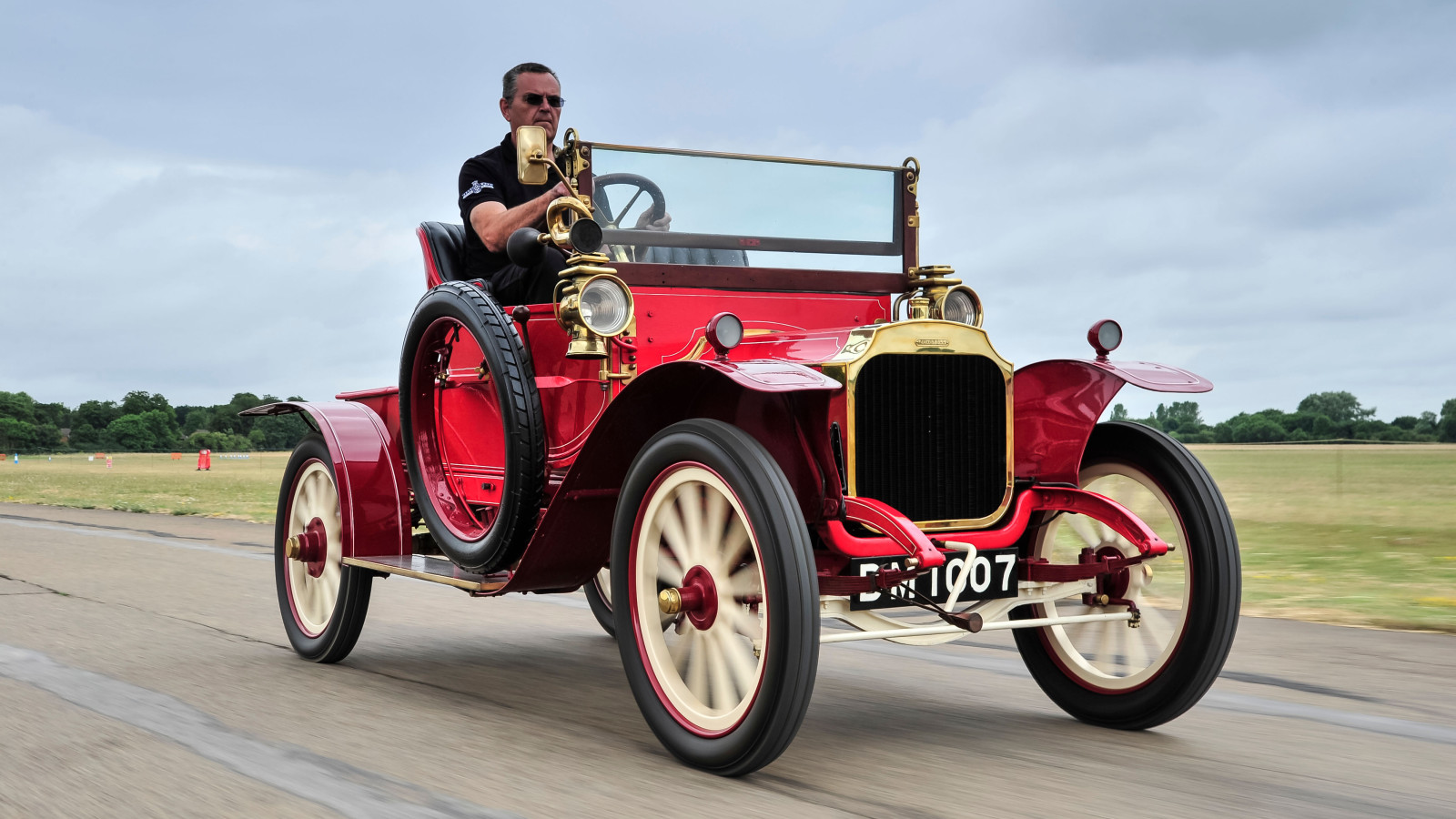
3. 1910 Vauxhall C10 ‘Prince Henry’
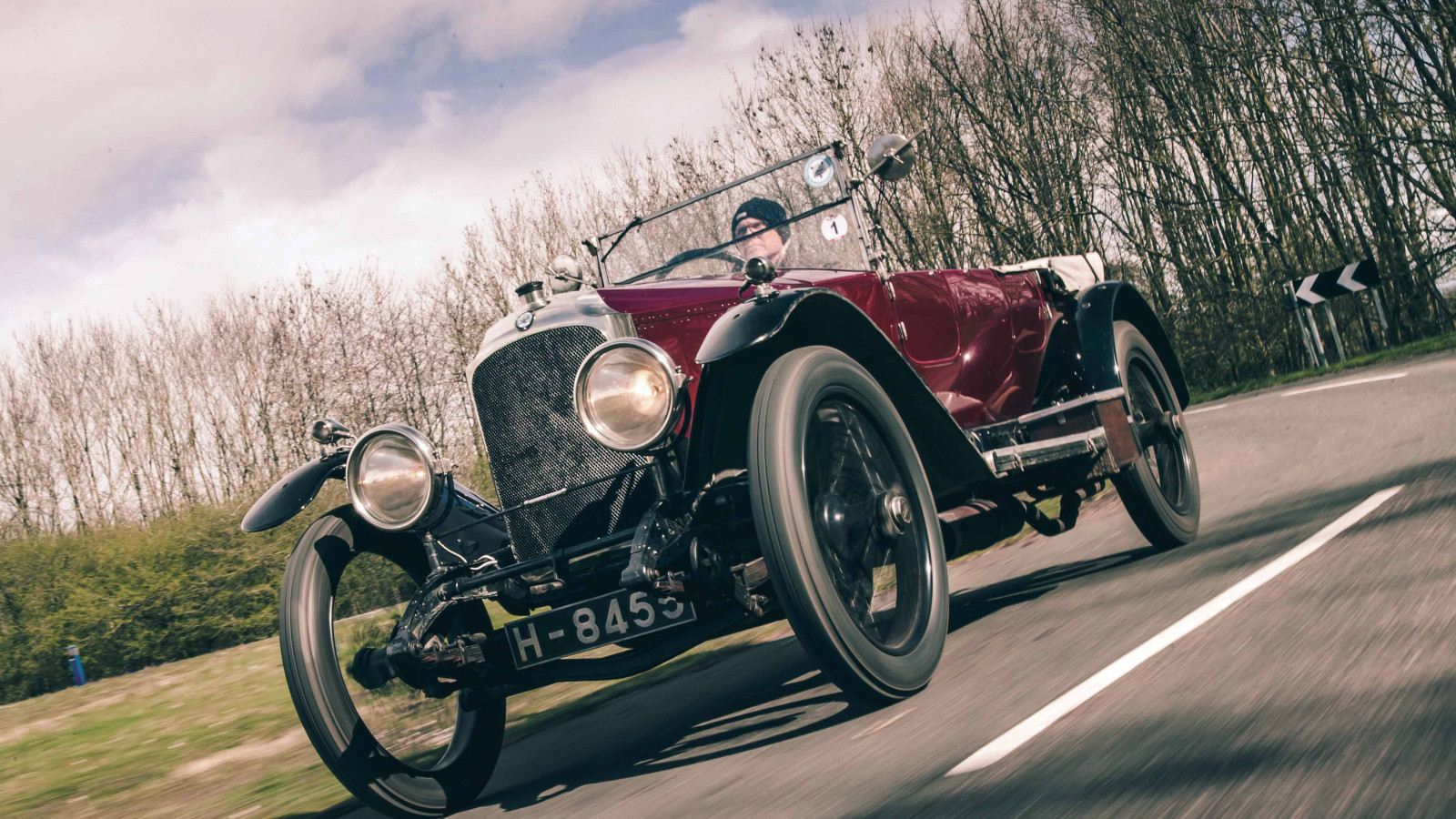
Originally built to compete in the 1910 Prince Henry Trophy, Vauxhall’s C10 3-litre has since been acknowledged as Britain’s, if not Europe’s, first true sports car.
Laurence Pomeroy, Vauxhall’s chief engineer, entered three C10s into the 1910 event, each with tuned versions of the company’s 3054cc, sidevalve engine.
While the cars failed to take any trophies, due to their speed and durability, a legend had been created and later the same year a road version, known as the ‘Prince Henry Type’ was shown to the media.
The Autocar noted that the new car was, ‘…a particularly fast, light car for road work’, with Vauxhall guaranteeing that the Prince Henry could achieve ‘more than 90mph’ when fitted with a single-seat body.
4. 1913 Vauxhall 30-98 E-type
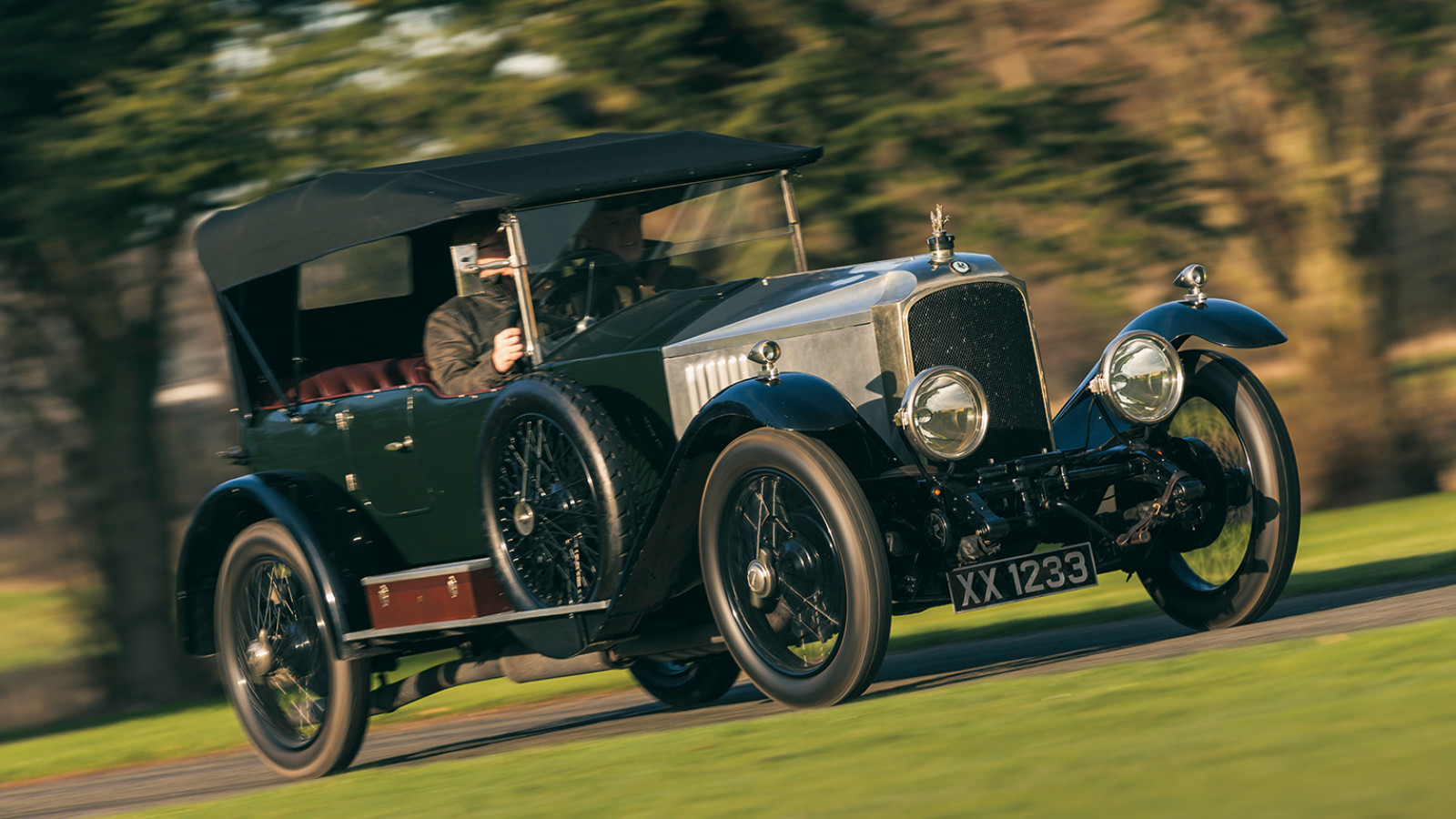
In 1913, wealthy businessman Joseph Higginson challenged Vauxhall Motors with producing a fast, lightweight road car that could double as a hillclimb winner.
The car maker’s chief engineer, Laurence Pomeroy, modified the company’s existing A10 sidevalve engine, then fitted it in a simple chassis derived from Vauxhall’s A-type model.
The completed car, named the ‘30-98’ (possibly to signify a 30bhp output at 1000rpm and 98bhp maximum power) was duly delivered to Higginson, who entered the car at a Shelsley Walsh meeting in Worcestershire, where he set a 55.2-sec time on the hill, a record that would stand until 1921.
The mould for an omnipotent new vintage-era sports car had been cast.
5. 1922 Vauxhall TT
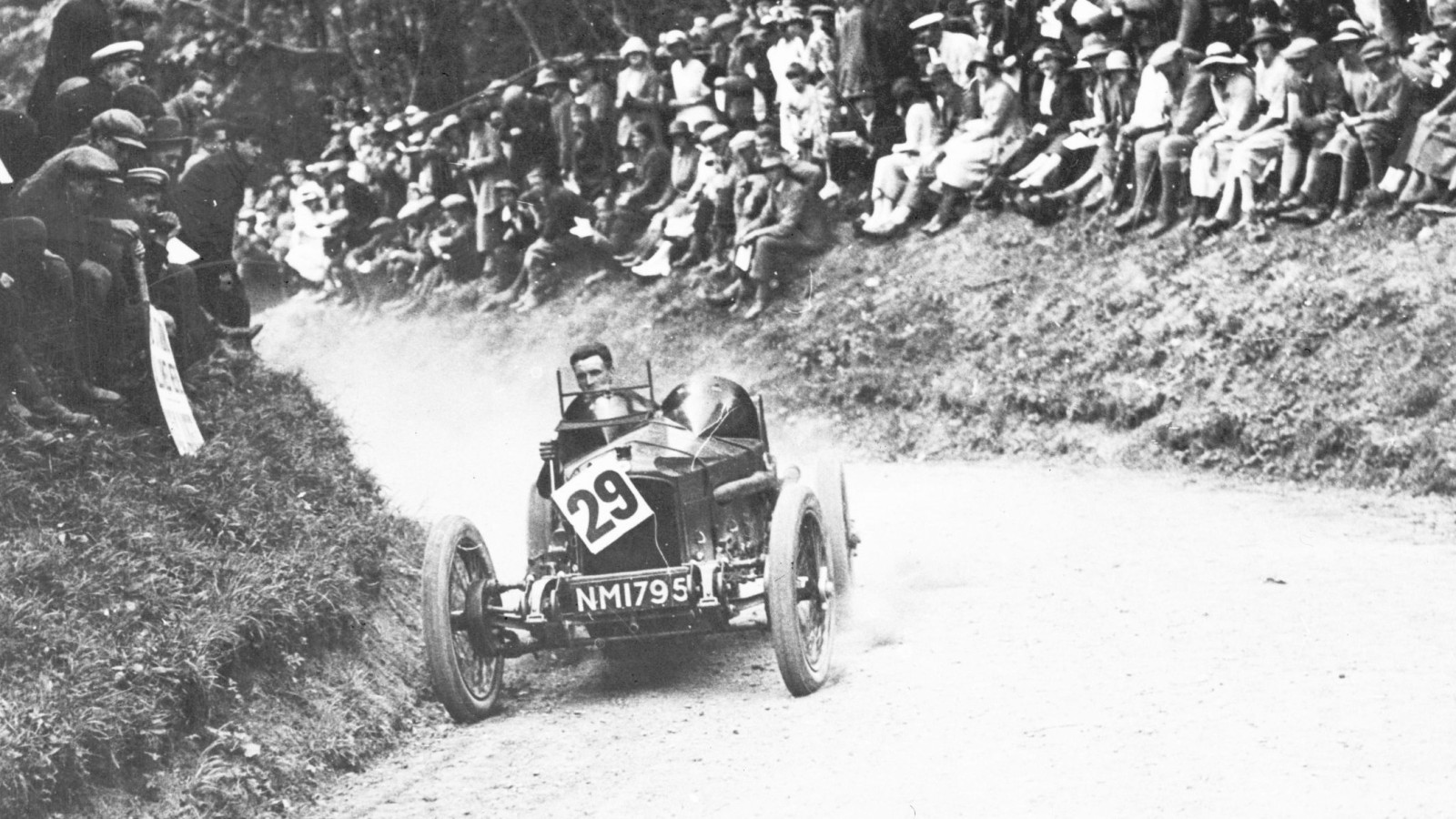
After a disastrous showing in the last pre-war Tourist Trophy competition, where all three cars entered by Vauxhall failed to finish, the company was determined to redress the balance for the 1922 event.
This time, instead of basing its racers on a roadgoing production model, Vauxhall commissioned an all-out motorsport machine with a radical engine designed by Harry Ricardo.
With twin overhead camshafts, four valves per cylinder, a six-bearing crankshaft and an aluminium, wet-liner block, the 2996cc unit was truly state-of-the-art – plus, it could power the ‘TT Vauxhall’ to a top speed of 112mph.
Alas, only one of the factory cars finished the race, in fourth, while the other two retired.
It was only years later that the cars enjoyed the race success they deserved in the hands of privateer owners.
6. 1923 Vauxhall 30-98 OE-type
Post-war Vauxhall 30-98 E-type production restarted in 1919, and three years later 288 4.5-litre, sidevalve-engined cars had been built.
It was then time for a more advanced machine to keep pace with the competition, and by January 1923 Vauxhall had produced its first 30-98 with an overhead-valve engine, known as the ‘OE-type’.
Displacing 4224cc versus the E-type’s 4525cc thanks to a 10mm reduction in piston stroke, the engine’s crankcase was retained, but it used a new cylinder block.
Its boost in performance meant it was catalogued as Britain’s very first 100mph production car.
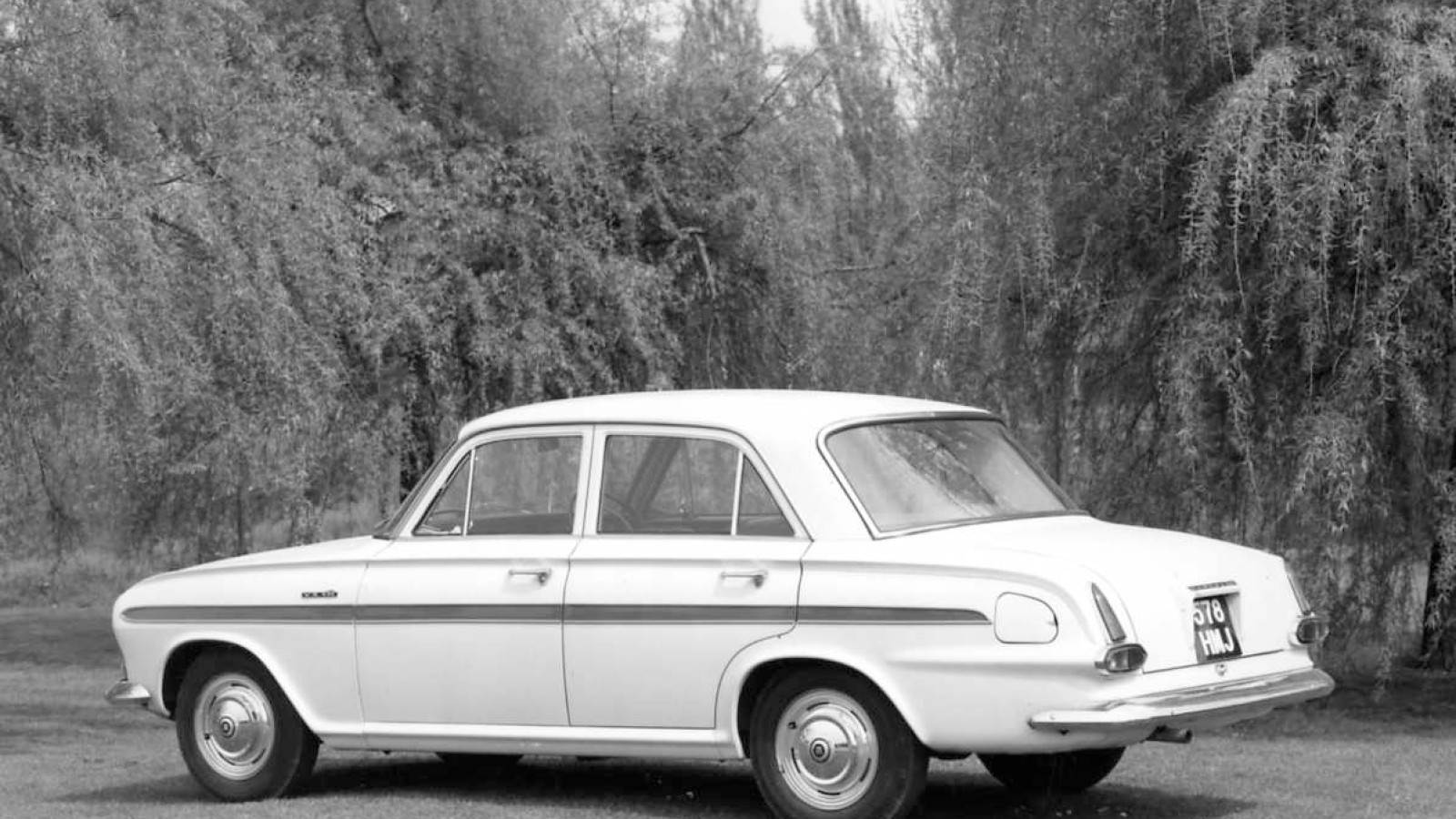
7. 1961 Vauxhall VX4/90 (FB)
The hiatus had lasted nearly 40 years, but by the start of the 1960s – other than some privateer rally success with Crestas during the ’50s – Vauxhall was finally ready with a sporting model.
Called the VX4/90, it was based on the previous year’s Victor FB saloon, which was already established as a competent and decent-handling motor car.
Boosting performance from the Victor’s 1508cc, four-cylinder engine, Vauxhall added two downdraught Zenith carburettors and a revised aluminium cylinder head with its compression ratio raised from 8.1:1 to 9.1: 1, meaning the model had a maximum output of 71bhp.
Performance was markedly improved (top speed was now 90mph, versus the standard car’s 76mph), and as a result front disc brakes replaced the regular car’s drums.
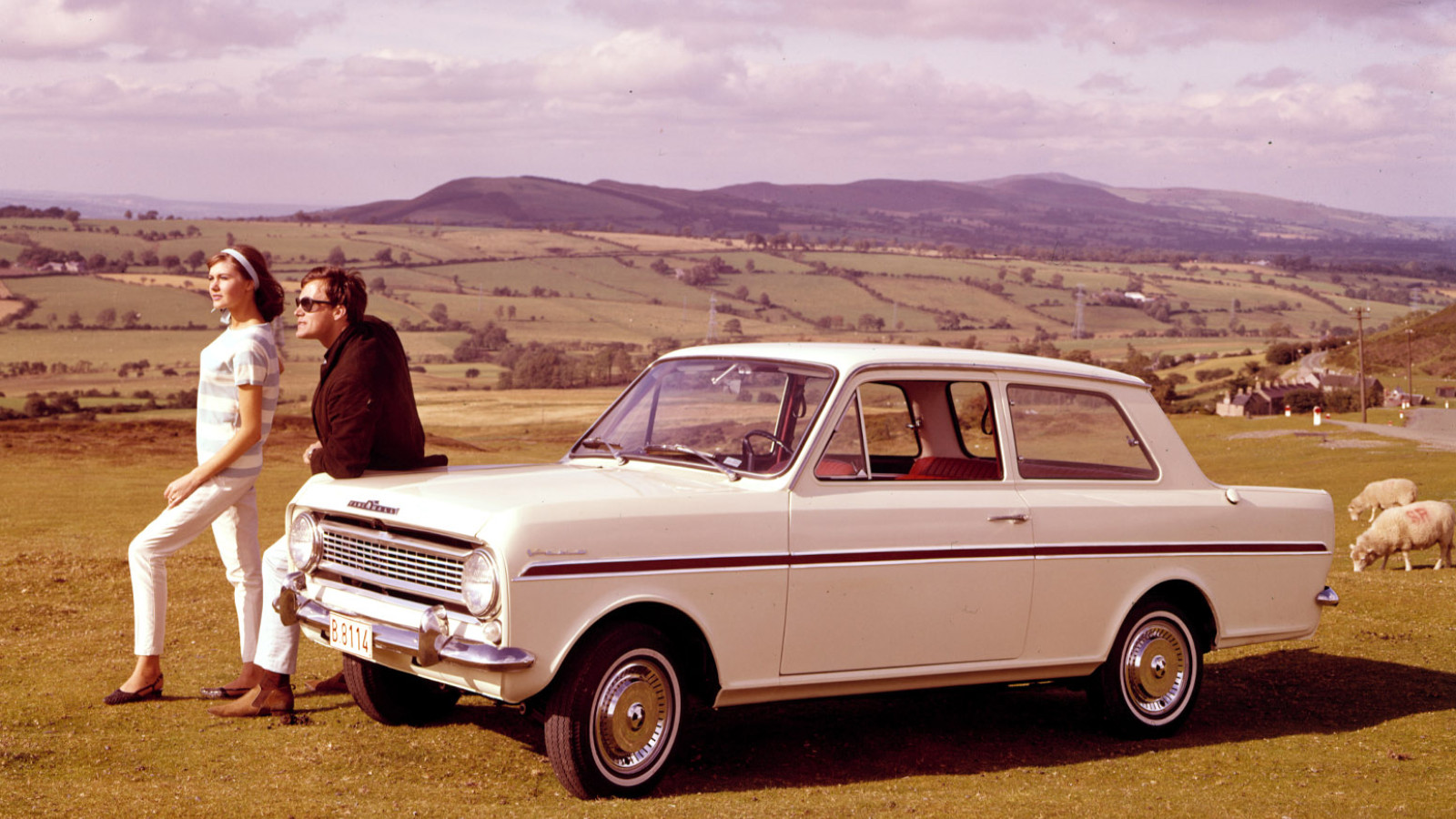
8. 1963 Vauxhall Viva SL90 (HA)
Vauxhall and Opel had both been under GM ownership for more than 30 years, but had never shared an engineering platform.
Then came the HA Viva in 1963. Based on Opel’s Kadett, it was the first small Vauxhall since the pre-war H-type, but while it was capable enough, the regular model hardly set the world alight.
So, while the SL90 derivative was no racing car, by dint of some cylinder-head tweaks to its 1075cc, overhead-valve, four-cylinder engine, the compression ratio was raised and with it maximum output, which grew from 44bhp to 60bhp.
Front disc brakes were also standardised, while externally the SL90 was identifiable by a band in a contrasting colour along its flanks, snazzier wheel trims, and optional foglights and spotlamps.
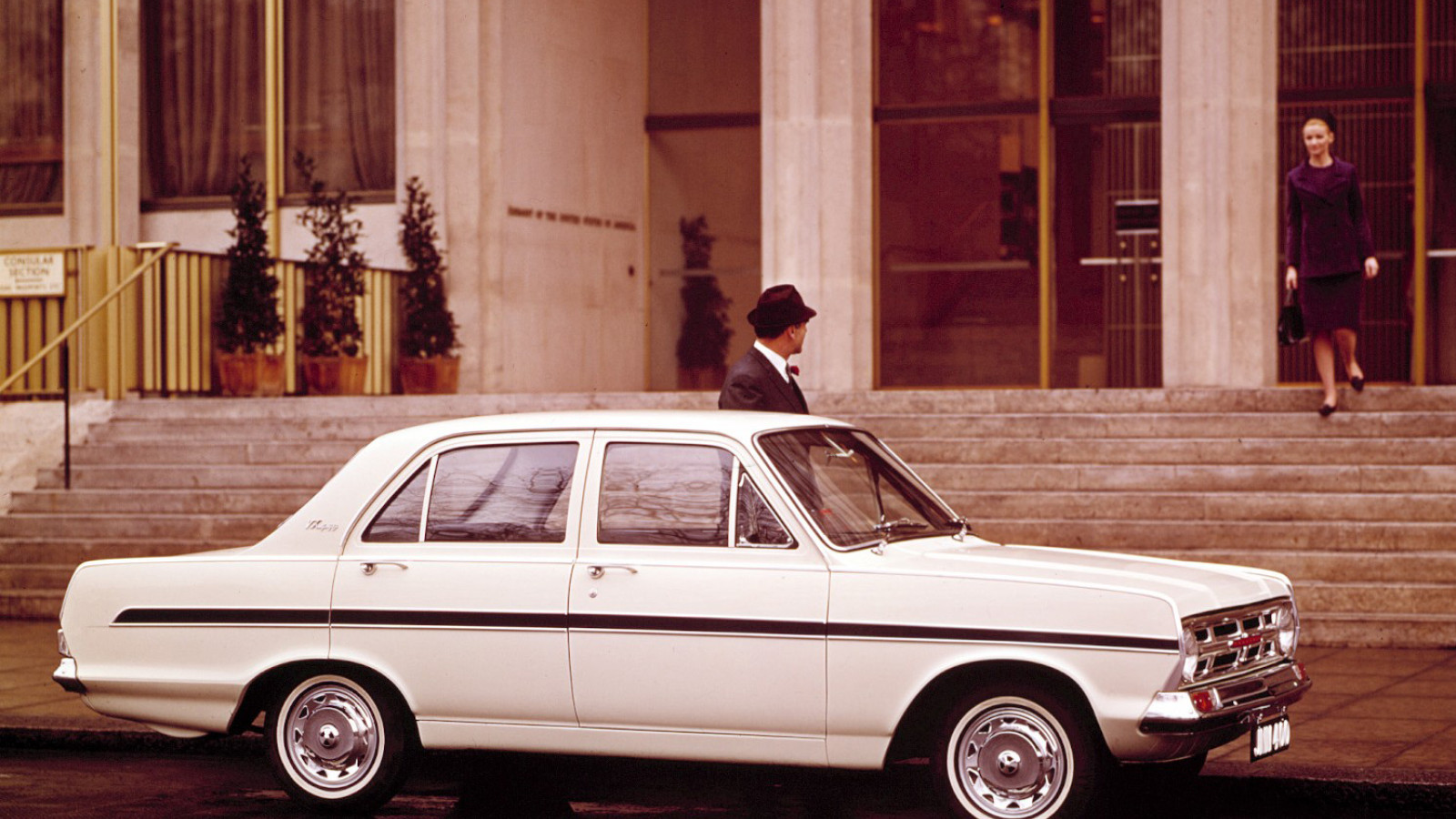
9. 1964 Vauxhall VX4/90 (FC)
The third-generation Vauxhall Victor, known internally as the ‘101 FC’, was still based on the well-regarded FB’s underpinnings, but its markedly different body was now 1.5in (38mm) longer and 0.5in (13mm) wider.
For the new VX4/90 derivative, even though the model was still aimed at the comfort end of the market, Vauxhall liberated an extra 20bhp, again through raising the compression ratio and by the addition of a second Zenith carburettor.
As a result, the VX4/90 could now sprint to 60mph in 14 secs and on to a top speed of 93mph.
Deploying that extra power was helped by the option of a Borg-Warner limited-slip differential, which also dialled out the standard car’s tendency for rear-axle hop.
Once again, front disc brakes were standard, as was a 50% stiffer front anti-roll bar.
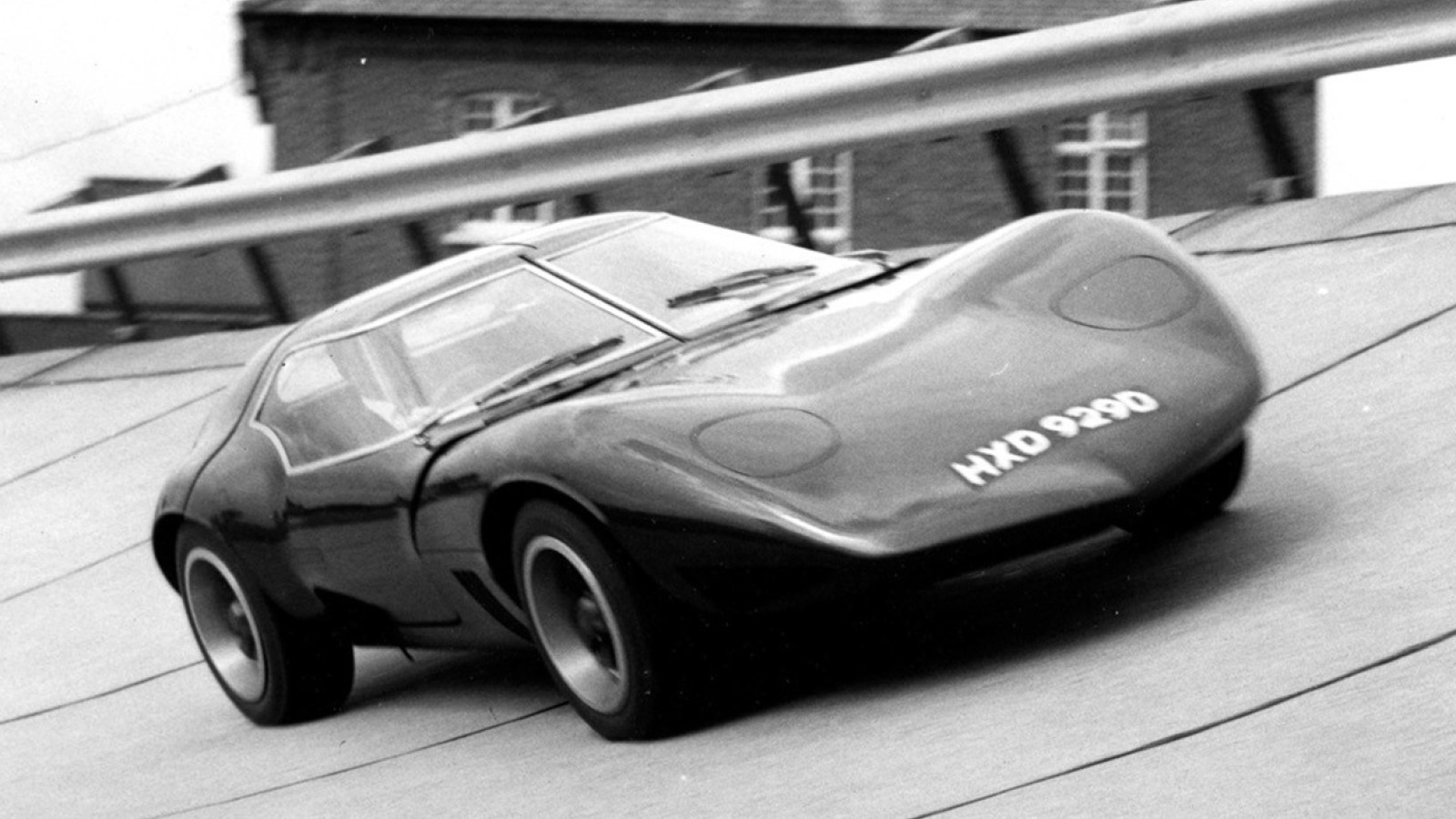
10. 1966 Vauxhall XVR concept
Built to showcase Vauxhall’s design innovation, and displayed on the company’s stand at the Geneva motor show in 1966, the XVR project was managed by the legendary Wayne Cherry at Luton’s Design & Engineering Centre.
Inspired by parent company GM’s work with concepts in the USA – including the 1965 Mako Shark II – the XVR (Xperimental Vauxhall Research) had a simple purity of line, gullwing doors forming a unique split windscreen, a clamshell bonnet and pop-up headlights.
Three cars were built, including a 100mph drivable vehicle (pictured) with a 1.6-litre engine producing 74bhp.
While the car never reached production, design cues like the ultra-slim rear lights could later be seen in Vauxhall’s Viva HC and Firenza models.
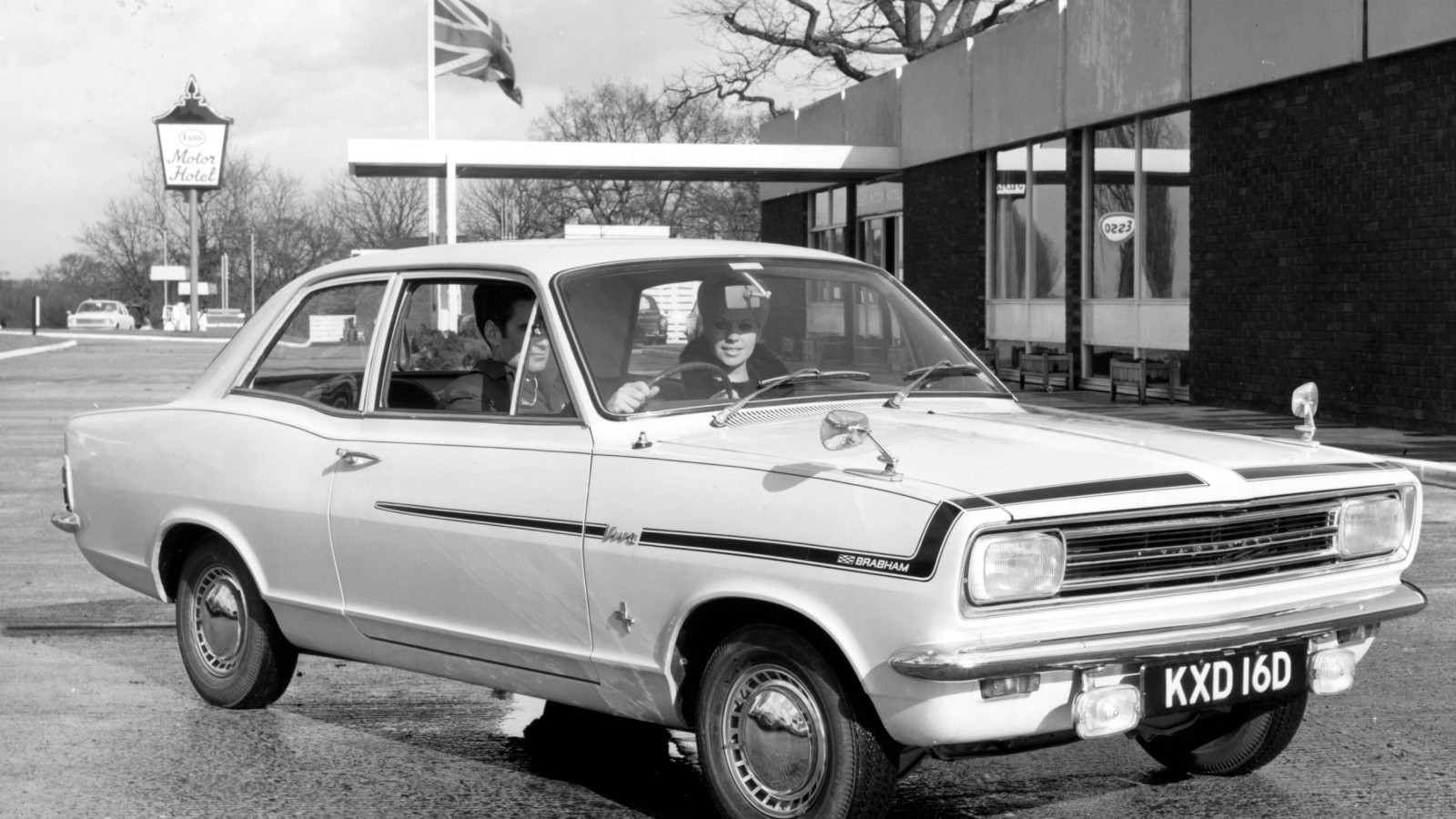
11. 1967 Vauxhall Brabham Viva (HB)
The 1966 Viva HB had reverted to being an entirely Vauxhall-engineered model, unique from its Opel counterpart.
However, before Vauxhall had the chance to launch its own performance derivative (see next slide), Formula One star Jack Brabham had developed a range of dealer-fit packages for the attractively styled saloon.
Based on the HB90 model’s uprated, 1159cc, overhead-valve, four-cylinder engine, the package comprised a higher-lift camshaft, a longer, curved, aluminium manifold linking the twin Stromberg carburettors to the vertical inlet ports, plus a raised compression ratio.
A free-flow exhaust, chrome tailpipe and Brabham body graphics completed the package, which cost £37 10s, plus £10-12 for fitting.
But it was worth it, because the little Viva was now capable of a 14.4-sec 0-60mph sprint and a 90mph top speed.
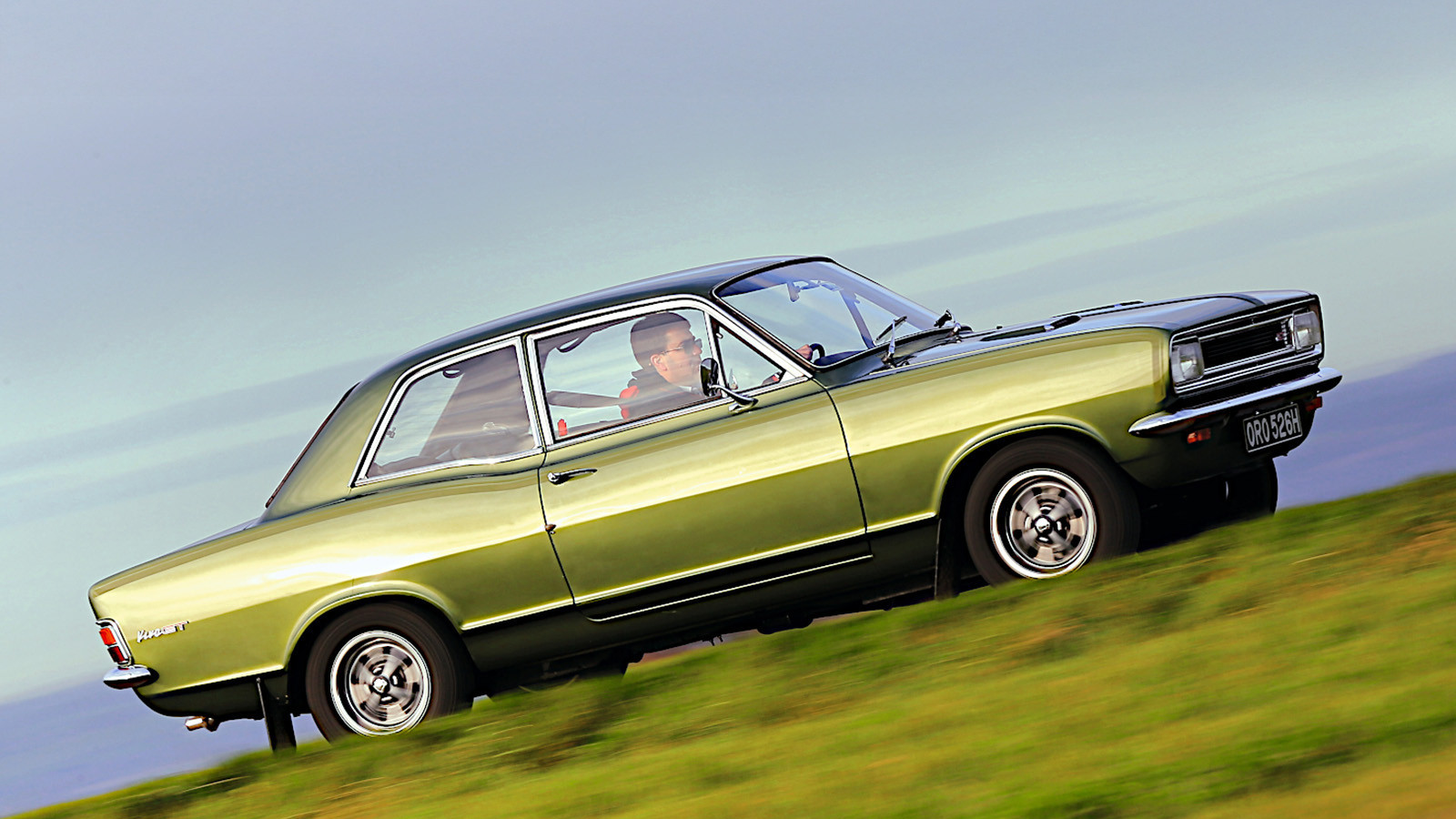
12. 1968 Vauxhall Viva 2000GT (HB)
Vauxhall had launched the second version of the Viva, the HB, in 1966, and by the end of the decade it represented the company’s answer to the newly launched Ford Escort.
The GT came two years later and was the first genuine performance Viva.
It was fitted with the 1975cc engine from the Victor, plus twin carburettors. Drive was sent to the rear wheels via a four-speed manual gearbox.
Bonnet scoops, a black radiator grille and stiffer, lower suspension set it apart from lesser Vivas, as did the GT’s top speed, which Autocar recorded as 101mph.
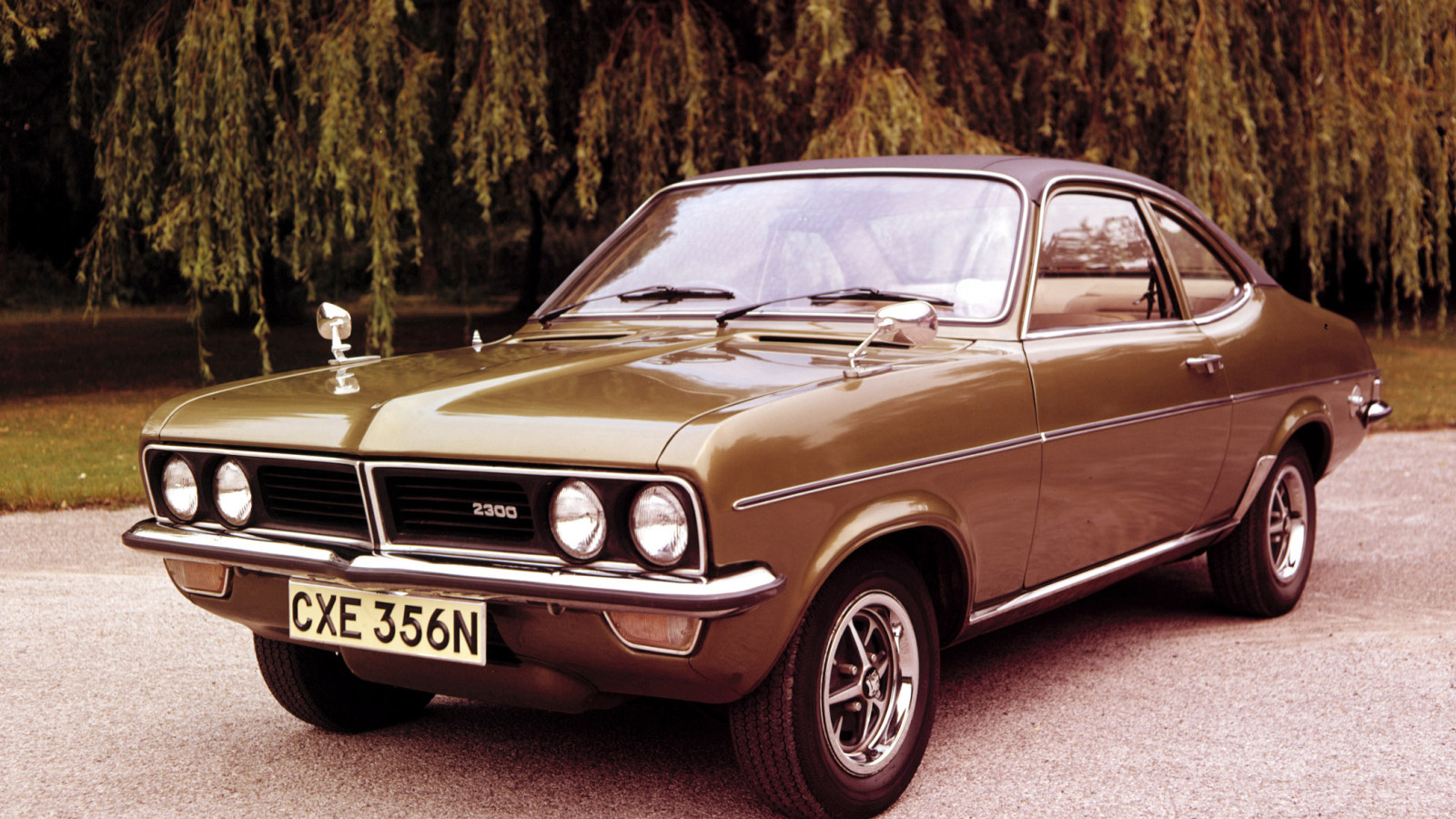
13. 1973 Vauxhall Magnum 2300
From 1973, all Viva saloons, estates and coupés fitted with either 1759cc or 2279cc four-cylinder engines were renamed ‘Magnum’.
More of a ‘sleeper’ in 2.3-litre coupé guise, versus the Firenza HP (next slide), the Magnum still afforded all the right sporting credentials.
The engine received a higher compression ratio, improved combustion-chamber design, firmer mountings and a stiffer cylinder block.
Externally, the Vauxhall Magnum was equipped with wider 5J wheel rims wearing 175-section, radial-ply tyres, and its rear live axle was located with four links and suspended by coil springs and telescopic dampers.
Performance was competitive, with 0-60mph in 11.2 secs and a top speed of 99mph.
In 1974, £1464 would buy you a 2.3-litre Vauxhall Magnum Coupé.
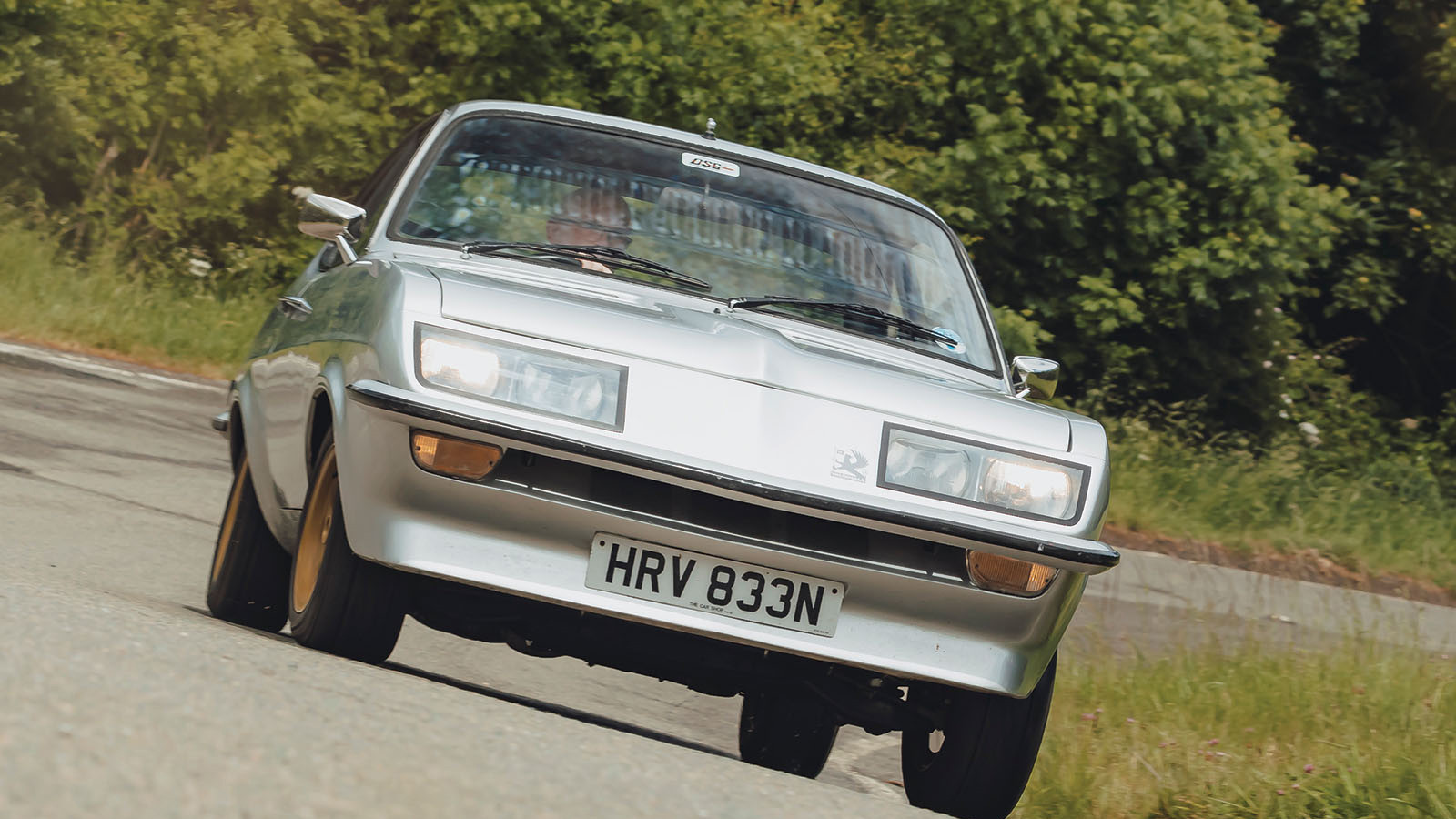
14. 1973 Vauxhall Firenza HP ‘Droopsnoot’
In 1973, Vauxhall rationalised its Firenza range, and the HP (for ‘High Performance’) model was created.
Based on the Magnum Coupé, the HP received additional aero treatment at the front, giving rise to its nickname, ‘Droopsnoot’.
It was the first Vauxhall with a five-speed gearbox, and its 2.3-litre, slant-four engine had hand-finished combustion chambers, inlet tracts and valve throats to liberate an extra 21bhp.
Enough, in fact, to make it then the fastest-accelerating Vauxhall, with a 0-60mph time of just 7.6 secs.
Despite a brave sales projection of 1000 cars per year, only 204 Firenza HPs were ever built, because its launch coincided with a global fuel crisis.
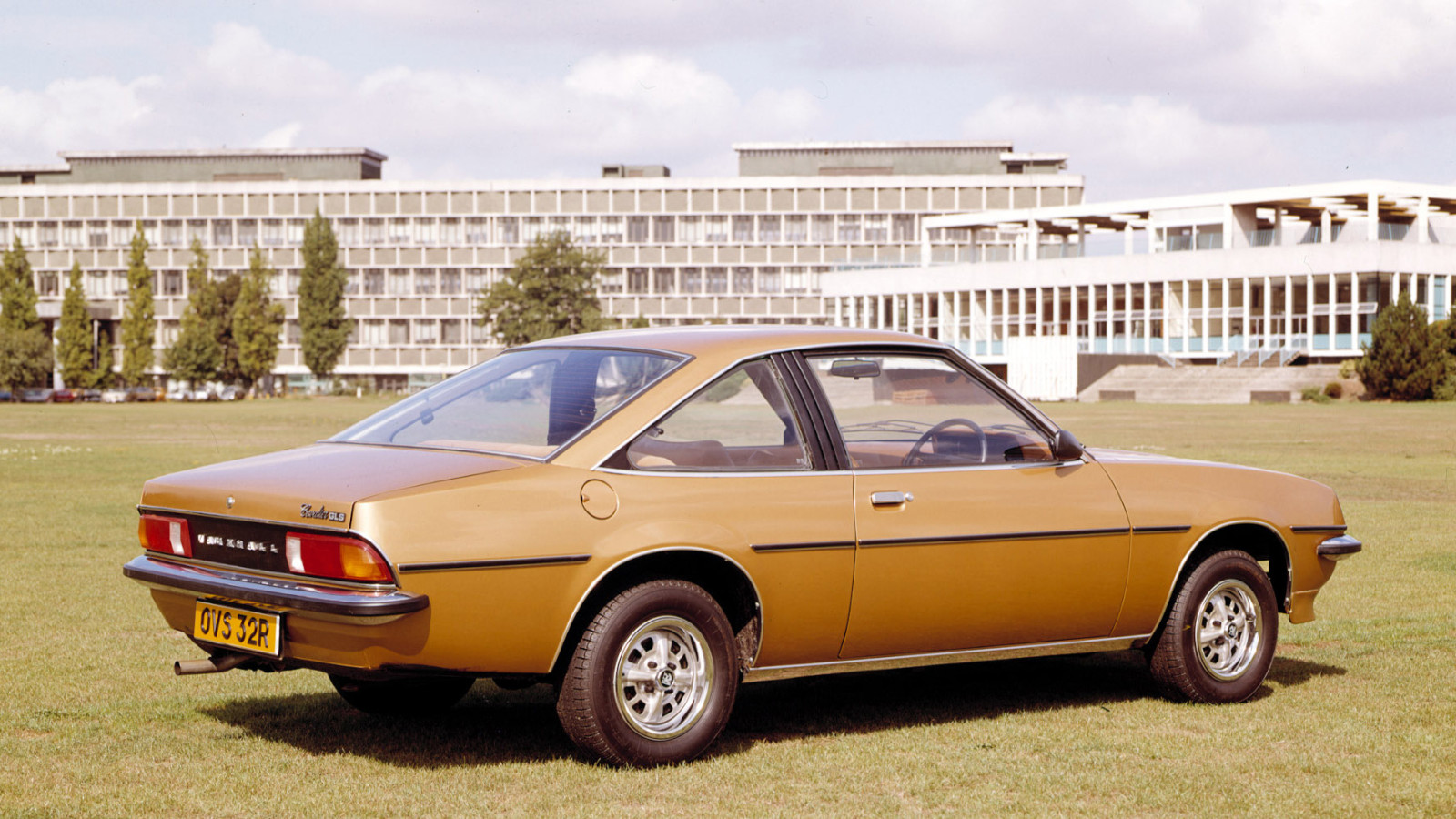
15. 1975 Vauxhall Cavalier Coupé
While we’re only including it here by dint of its styling, versus the Cavalier saloon on which it’s based, the Cavalier Coupé’s sporty and rakish profile makes it an obvious entrant.
It also sat on a largely Opel-engineered chassis, with independent suspension by wishbones at the front, and, at the rear, trailing arms, a Panhard rod and torque tube.
In other words, a real advance from Vauxhall’s more traditional platforms – and this meant the model was well balanced and great to drive.
The Coupé had performance to match its looks, with 11.2-sec 0-60mph acceleration and a top speed of 106mph.
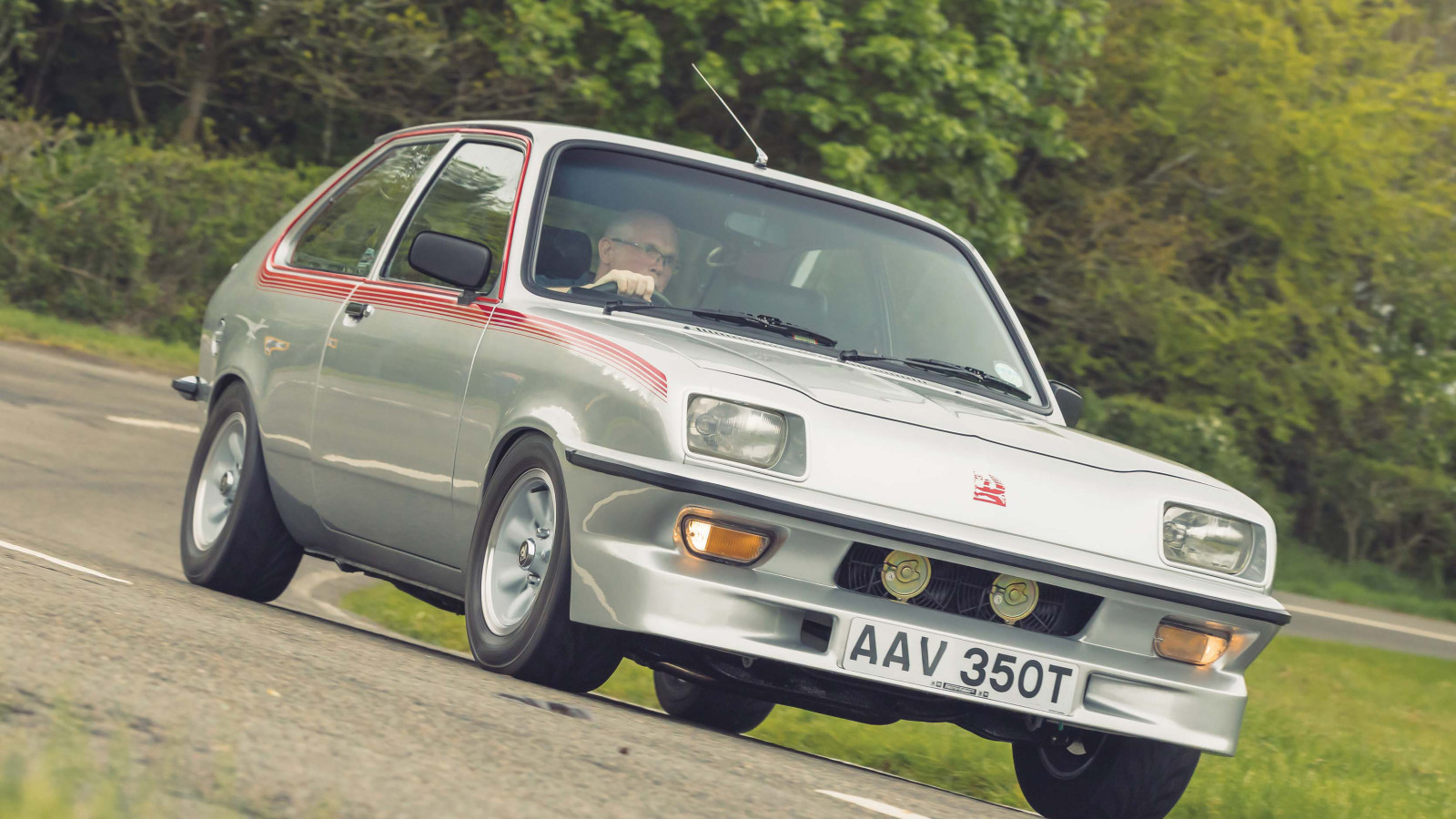
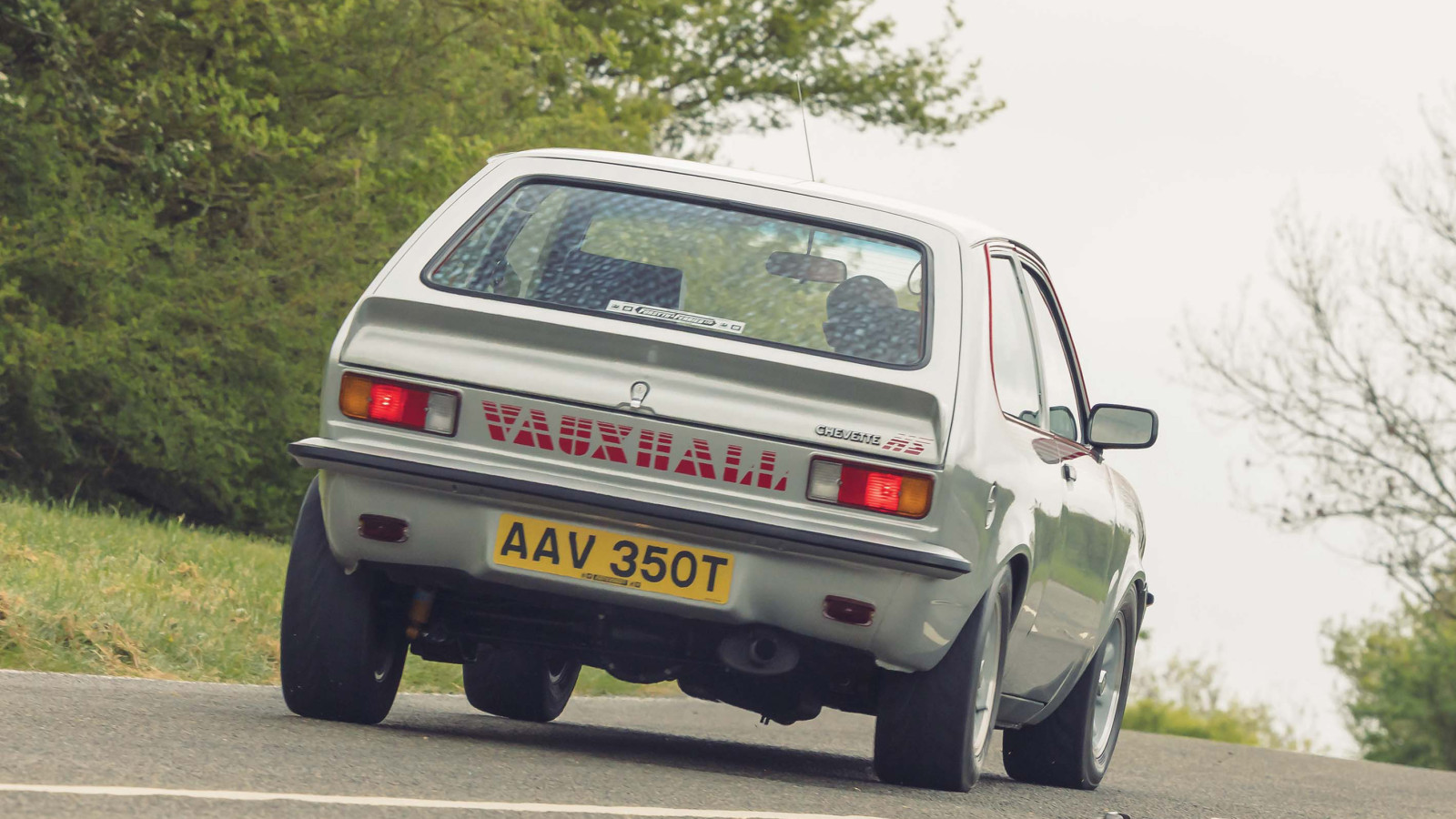
16. 1978 Vauxhall Chevette HS
By the late 1970s, Vauxhall wanted a response to the Ford Escort’s domination in world rallying, and with the recently launched Chevette hatchback core to the company’s sales, it was the natural choice for homologation.
The Chevette’s wheezy 1300cc ‘four’ was replaced by Vauxhall’s 2279cc slant-four engine, but now modified with an aluminium, 16-valve, twin-cam cylinder head.
Fitted with a pair of Stromberg carburettors, it made 135bhp, and mated to a five-speed Getrag gearbox, gave a respectable 8.5-sec 0-60mph time on the way to a 115mph top speed.
Beefed-up, gas-filled Bilstein dampers, stiffer springs and larger Cavalier disc/drum brakes were the only significant changes to the Chevette’s basic front double-wishbone/rear live axle layout.
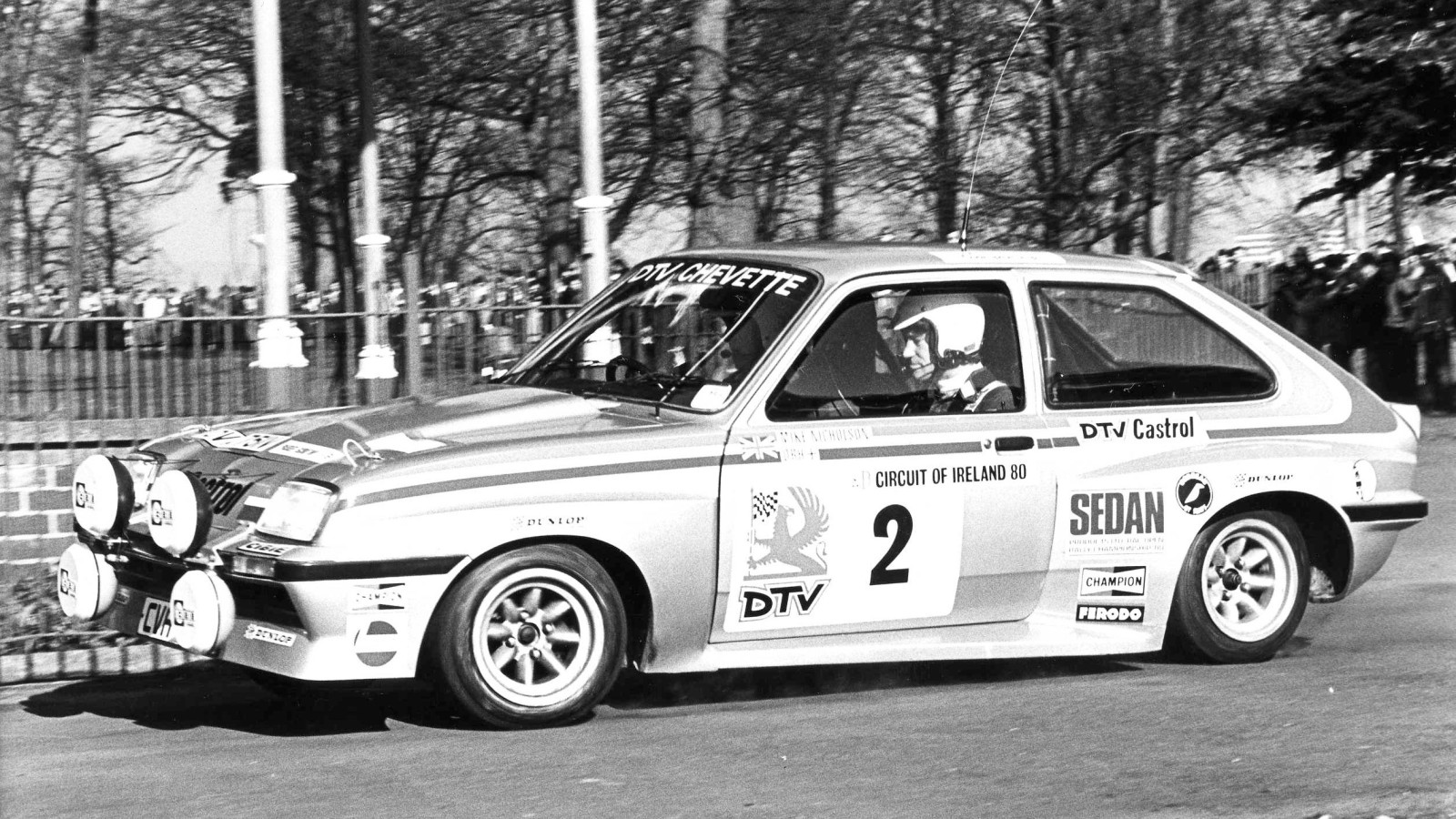
17. 1978 Vauxhall Chevette HSR
While the HS production car provided the necessary 400-unit volume to allow Vauxhall to go rallying (largely funded by Dealer Team Vauxhall, because parent GM had effectively banned its marques from motorsport activity), the HSR was more representative of what appeared in world rallies.
With around 230bhp – nearly 100bhp more than the HS – the HSR used a different, Lotus-designed, twin-cam, 16-valve cylinder head due to supply problems with the Vauxhall component.
It was also equipped with a ZF, rather than a Getrag, gearbox, the swapping of both components initially getting Vauxhall into trouble with the FIA, motorsport's governing body.
In 1979, with homologation issues sorted, Pentti Airikkala took a number of event victories en route to winning the RAC British Open Rally Championship.
In 1980, an evolved HSR was homologated with boxed wheelarches, wider wheels and a revised rear-axle location.
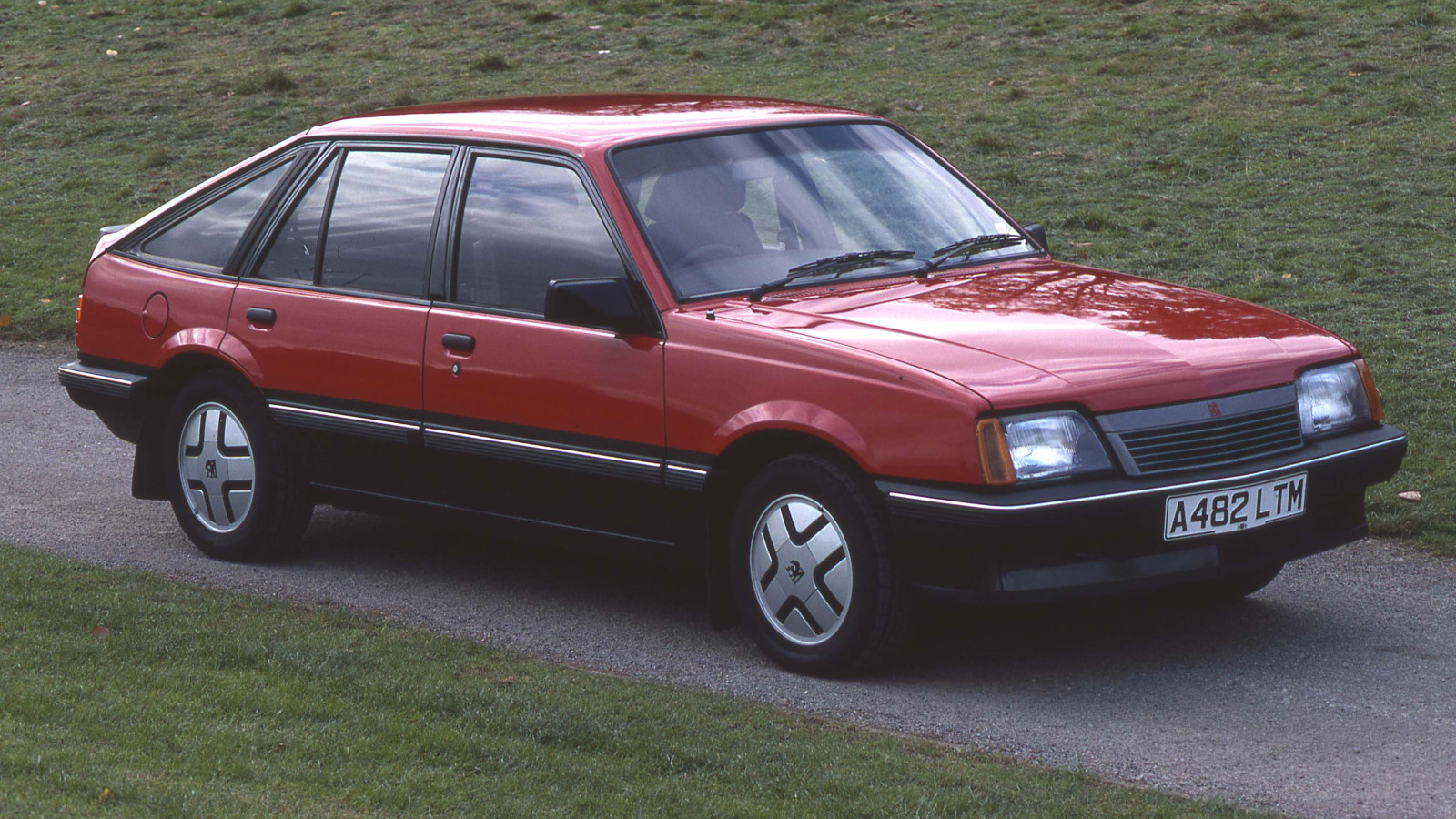
18. 1982 Vauxhall Cavalier (Mk2) 2.0 SRi
Vauxhall had launched the Cavalier Mk2 in 1981 and it had become a lynchpin in its mission to out-sell Ford in both the UK’s company and private car sectors.
The most aspirational model in the Cavalier’s range was the SRi.
With its two-tone bodywork – a nod to Crestas of old – distinctive alloy wheels, five-speed gearbox and Recaro sports seats, it gave the impression of sportiness, even though its performance was only comparable with the more luxurious CD version.
Nevertheless, by the time of its facelift in 1987, it had been equipped with the uprated 20SEH 2-litre engine, giving it a top speed of more than 120mph and a 0-60mph time of 9.3 secs.
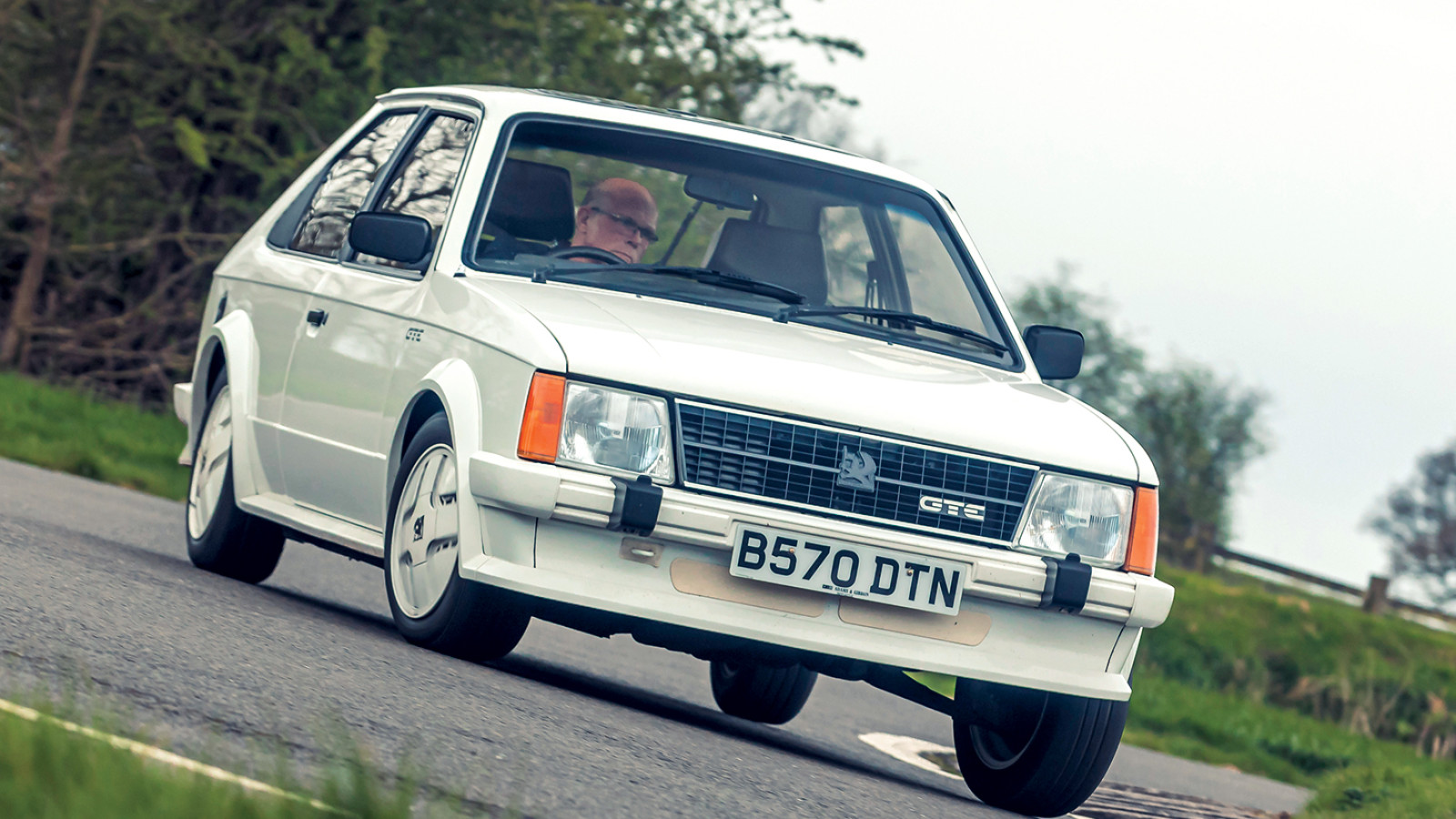
19. 1983 Vauxhall Astra GTE (Mk1)
Vauxhall had been a latecomer in a fast-growing sector originally captured with gusto by Volkswagen’s first Golf GTI around six years before.
Based on the 1980 Astra, the GTE’s fuel-injected, naturally aspirated, 1.8-litre, four-cylinder engine produced 114bhp, for a top speed of 115mph.
Acceleration from 0-60mph was a highly competitive 8.5 secs.
The GTE built on the standard Astra’s already acclaimed underpinnings with revised springing and damping, wider and lower-profile tyres, as well as a close-ratio gearbox on later cars.
As Car & Car Conversions magazine reported: ‘Remarkably high cornering loads are attained without any deliberate “unsettling” of the chassis’.
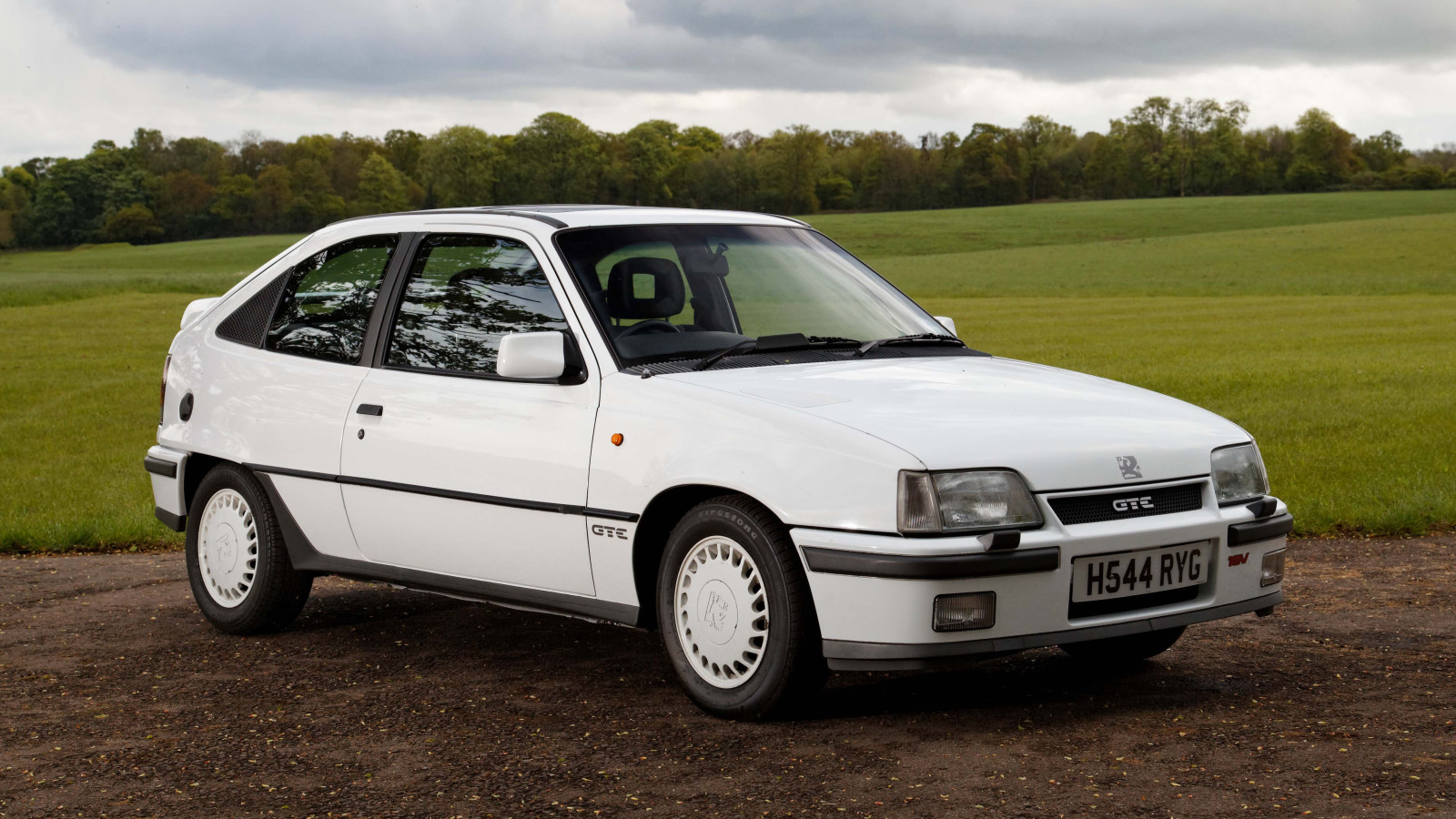
20. 1988 Vauxhall Astra GTE 16v (Mk2)
A new version of the Vauxhall Astra GTE was launched with the Mk2 range in 1984, but carried over the Mk1 GTE’s 1.8-litre, 114bhp engine.
It wasn’t until 1988 that the model received the firepower it deserved, though, while at the same time becoming the most powerful Astra ever.
The revised model was equipped with Vauxhall’s 1998cc, 16-valve ‘red-top’ engine, projecting the aerodynamic hatchback from 0-60mph in 7.7 secs and on to a top speed of 134mph.
Perhaps just as well-known for its digital speedometer as for its brisk performance, the GTE was a snip at £7344 and quickly became the must-have hot hatch of the late 1980s.
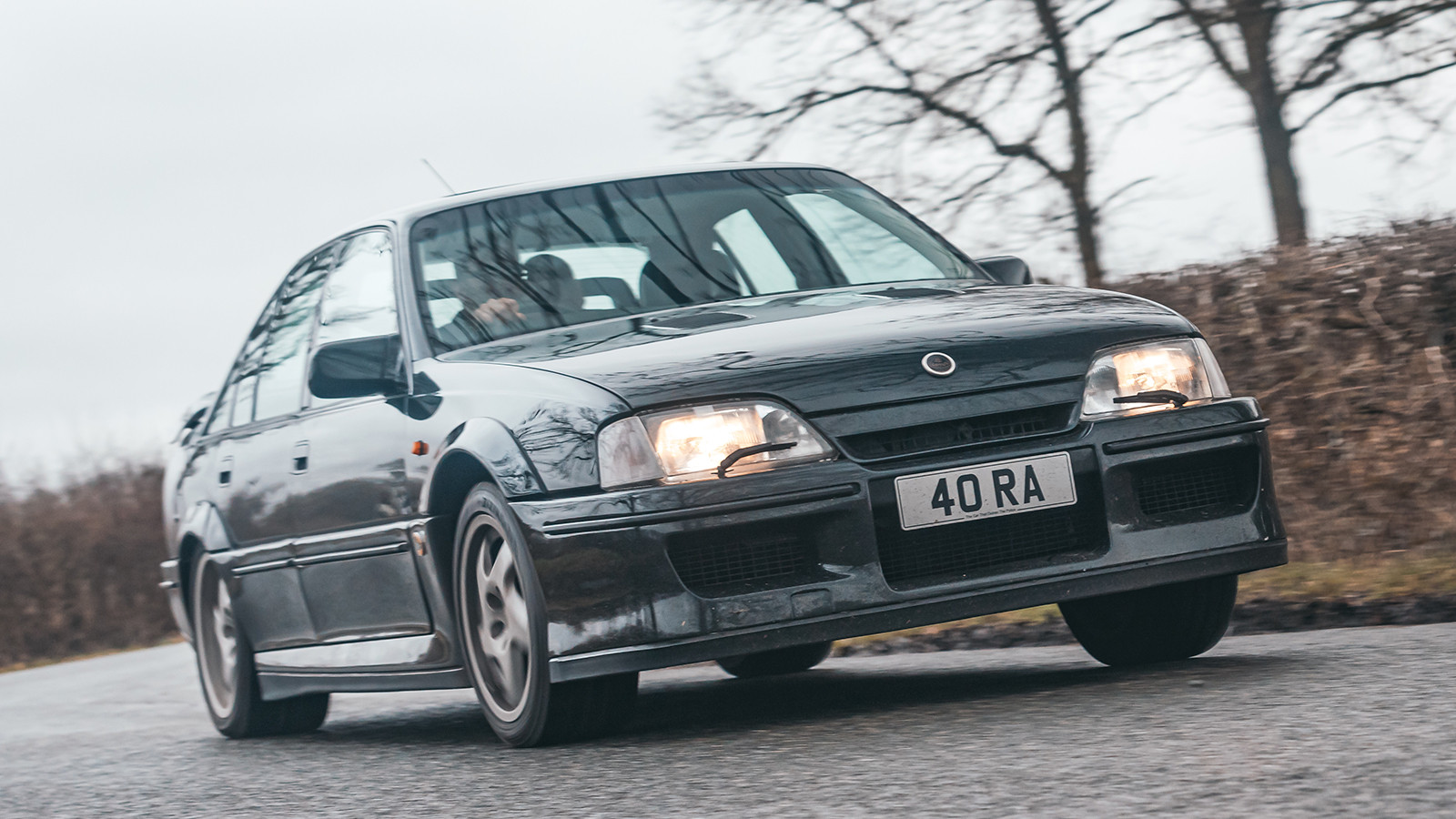
21. 1989 Vauxhall Lotus Carlton
In 1989, Vauxhall Lotus Carlton became the world’s fastest four-door saloon, capable of achieving 176mph flat out.
Power came from a GM-sourced, 3.6-litre, straight-six engine, which also received a pair of Garrett T25 turbochargers plus twin water-cooled intercoolers.
All this meant a very impressive 377bhp and 419lb ft of torque, propelling the Carlton to its headline-grabbing top speed, which was later found to be conservative.
Not only that, this four-door Vauxhall had the acceleration to beat a Ferrari Testarossa and, thanks to work by Lotus Engineering developing its chassis, it was great to drive, too.
All of this for £48,000 new. A total of 286 Lotus Carltons were sold in the UK.
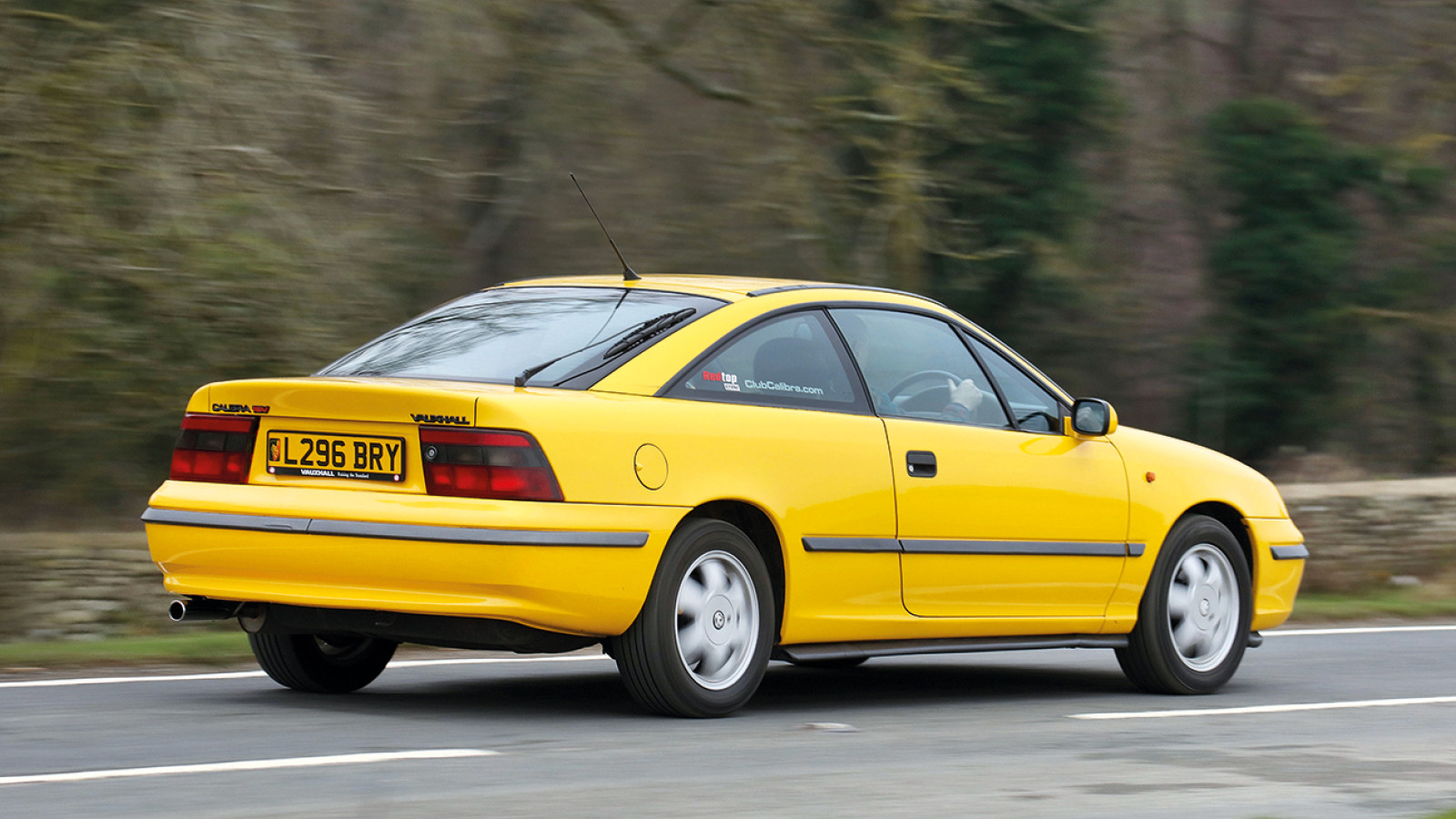
22. 1990 Vauxhall Calibra
At its launch in June 1990, the Calibra (produced as both a Vauxhall and an Opel) was the world’s most aerodynamic production coupé, achieving a drag coefficient of 0.26Cd.
Initially powered by a choice of 8- and 16-valve 2-litre engines, the Calibra was based on the Cavalier saloon’s front-wheel-drive underpinnings and, despite its slippery shape, offered ample space for four adults.
During its seven-year life, many powertrains were offered for the Calibra, including a 2-litre, 16-valve, four-wheel-drive option, a 2-litre, turbocharged, four-wheel-drive version and a 2.5-litre V6.
All Vauxhall Calibras were manufactured by Valmet in Finland, with 238,647 units built by the time production ceased in 1997.
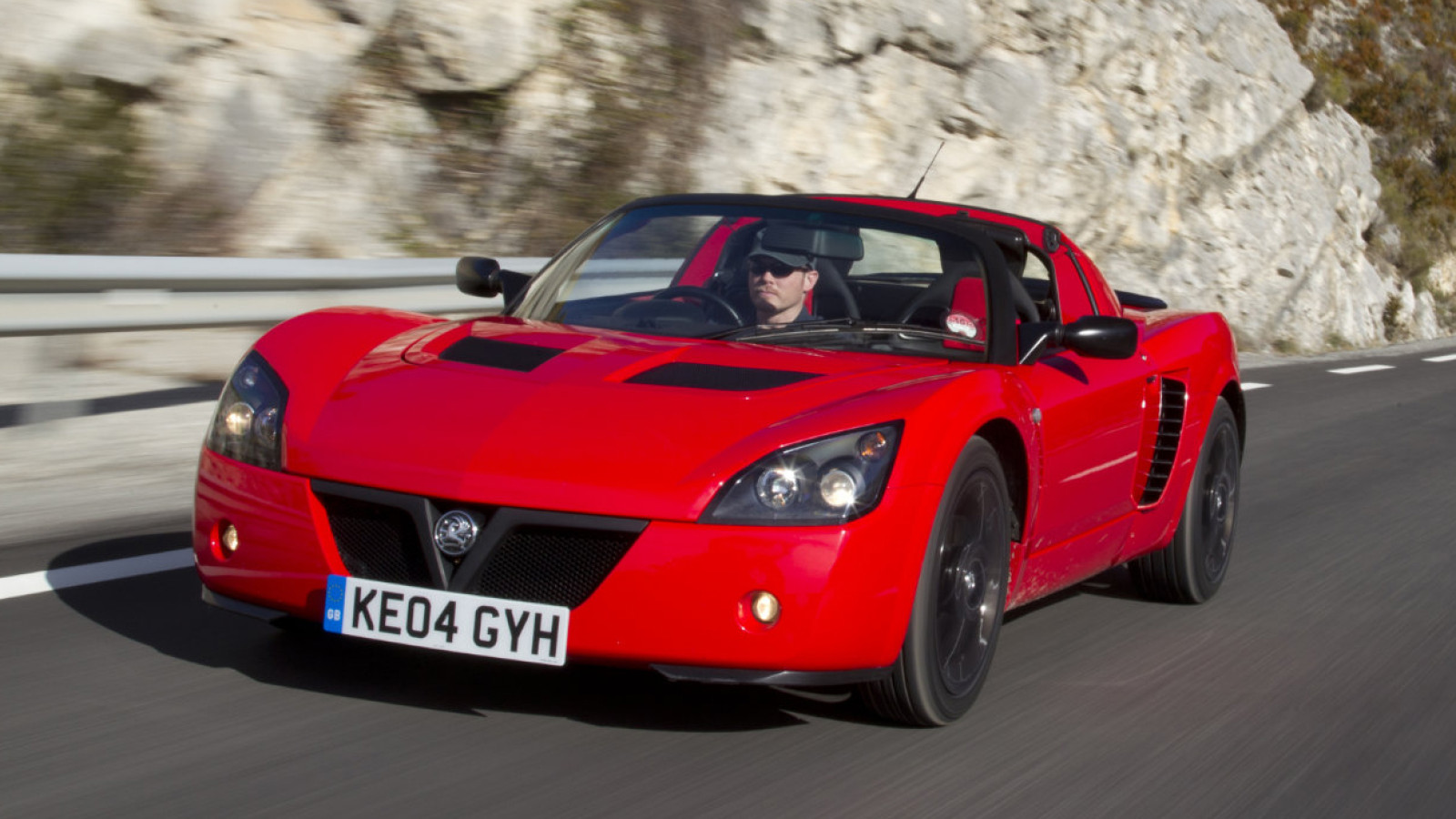
23. 2000 Vauxhall VXR220
Built before series production started, the car you see in the photograph (individually numbered ‘VXR-000’) effectively launched Vauxhall’s VXR brand in 2004.
Based on the already successful VX220 Turbo model, the VXR220’s 2-litre ‘Family2’ turbocharged engine produced 220bhp, thanks to a free-flow air filter, a hybrid turbocharger and reprogrammed ECU.
In addition, minor revisions were made to the Turbo’s chassis to cater for the extra performance.
Capable of 0-60mph in 4.2 secs and with a top speed of 155mph, the VXR220 arguably put its Lotus Elise cousin in the shade, with a more pliant ride and a more flexible engine.
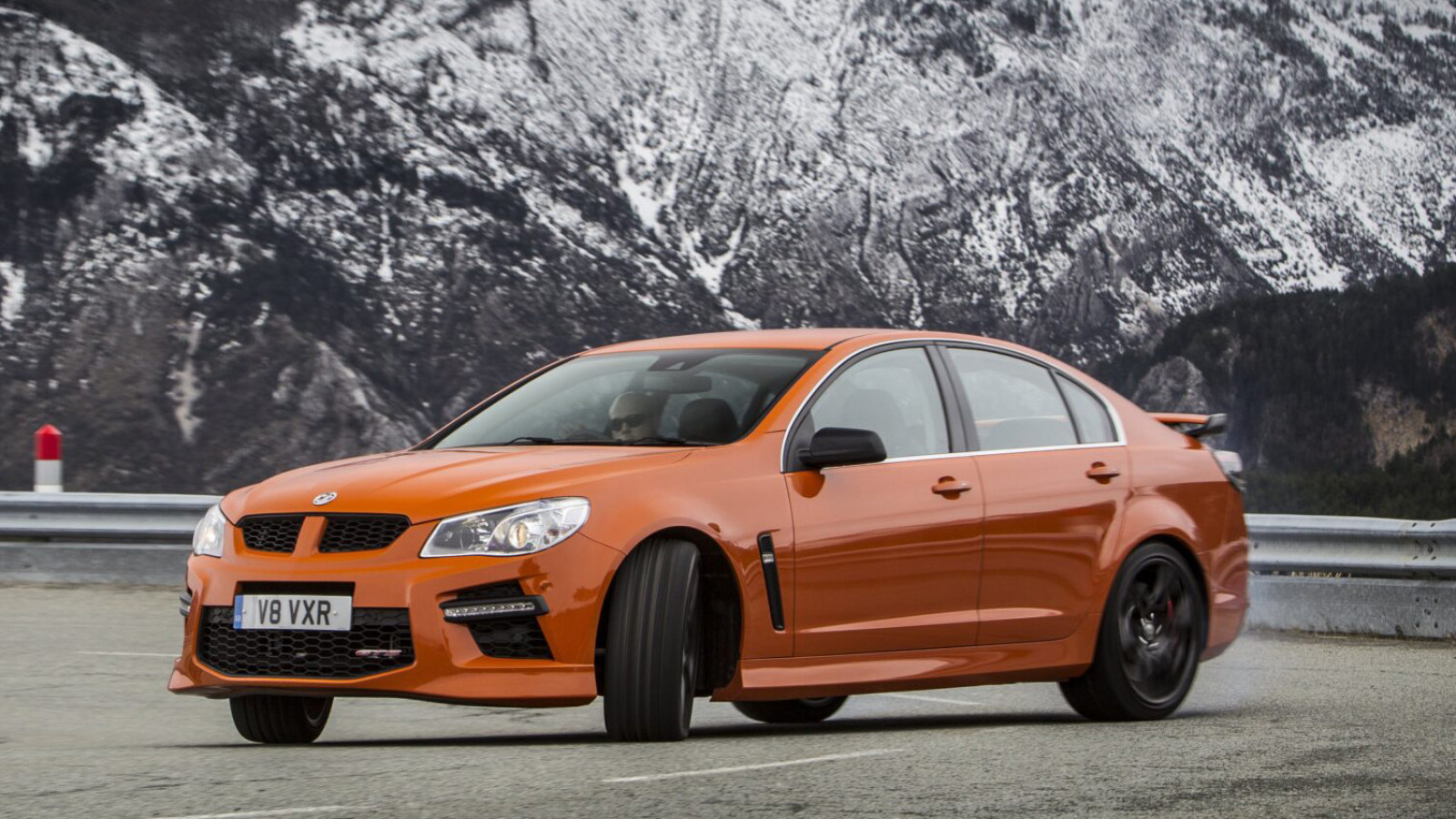
24. 2012 Vauxhall VXR8 GTS
Vauxhall’s blue-collar VXR8 originally hit UK shores in 2007 and evolved through a variety of ever-more-powerful derivatives across the next decade.
The penultimate version of HSV’s V8-powered, rear-wheel-drive E-series saloon imported by Vauxhall was the 6.2-litre, supercharged VXR8 GTS.
Producing 568bhp and a fearsome 546lb ft of torque, it was not only the most powerful Vauxhall of all time, but a real challenger to the might of German rivals, like BMW’s M5 and the Mercedes-Benz E63 AMG.
Autocar magazine praised the VXR8 GTS for its ‘…epic, unending power, beautifully measured ride…’ and ‘adhesive yet addictive handling’.
Sold for £54,499, the Vauxhall VXR8 GTS also substantially undercut the price of every key rival.
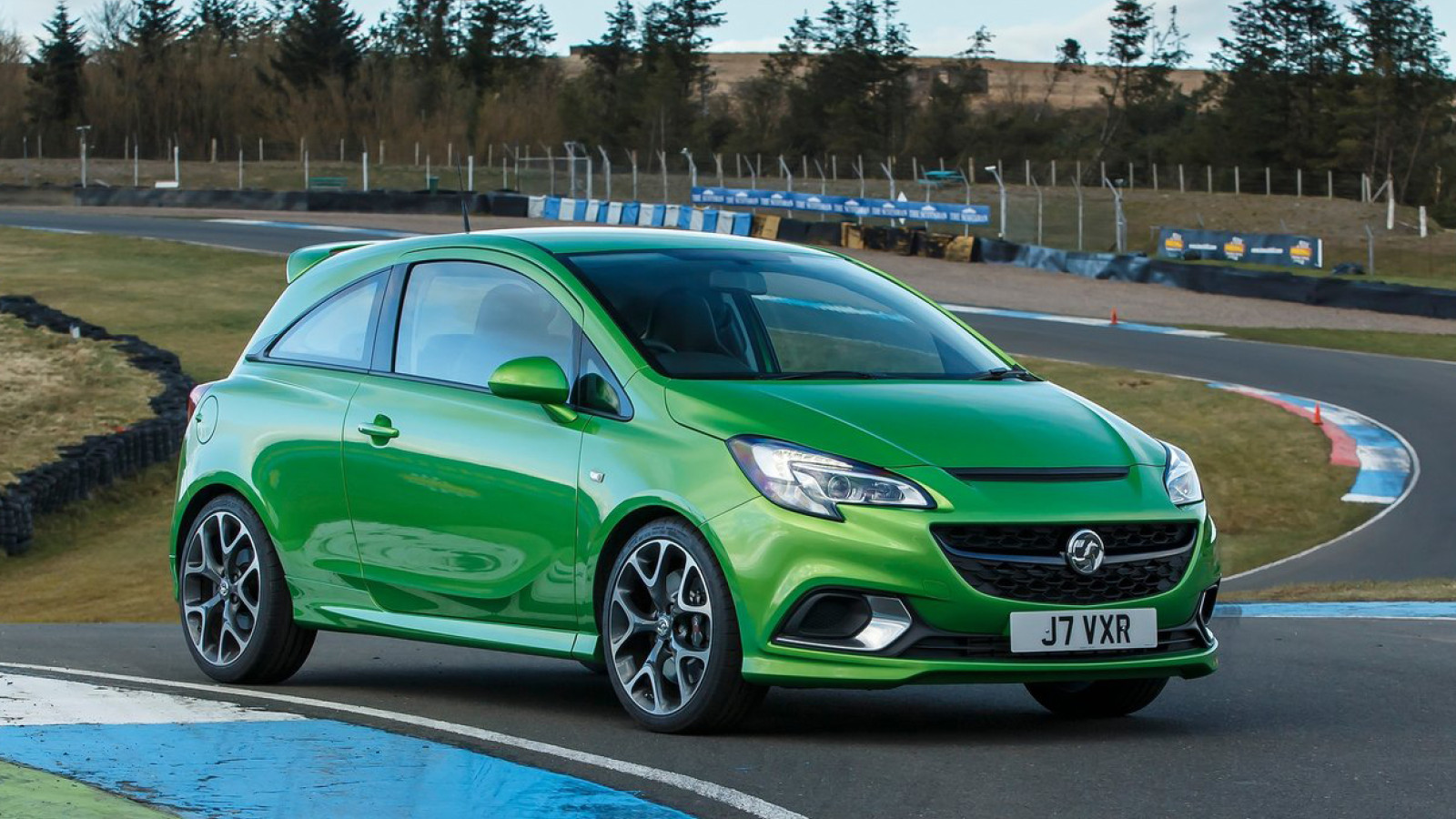
25. 2015 Vauxhall Corsa VXR
The 2015 Vauxhall Corsa VXR was the final Corsa to wear a VXR badge, and the last to use a General Motors platform, prior to the 2020 model adopting all-new Stellantis architecture.
Some of the new car’s technology – like the trick Drexler limited-slip differential – had been seen before in a special edition of the outgoing VXR called the Nürburgring.
But for the latest, facelifted series it was available as part of the Performance Pack option, which also included Brembo four-piston brakes and bespoke Koni dampers.
Power from the turbocharged, 1.6-litre, four-cylinder engine was now up to 205bhp, with 207lb ft of torque available from just 1900rpm.
You might not be surprised to read that this was the fastest Corsa VXR of all, with a top speed of 143mph and 0-60mph time of 6.8 secs.