Posterior power
There are pros and cons to mounting an engine behind the rear axle of a car.
On one hand it maximises interior space, because no part of the drivetrain intrudes into the passenger compartment, while on the other it carries the maximum risk of vehicle instability, unless you can find a way of mounting the engine on the roof.
Because of the first point, and in spite of the second, the rear-engine layout was once very popular, at least until the equally space-efficient, front-wheel-drive configuration became common.
It was particularly prevalent during the 1960s, and we’re going to illustrate that with this list of rear-engined cars which first went on sale in that decade.
Cars are presented in alphabetical order by manufacturer, not necessarily by model.
1. Alpine A110
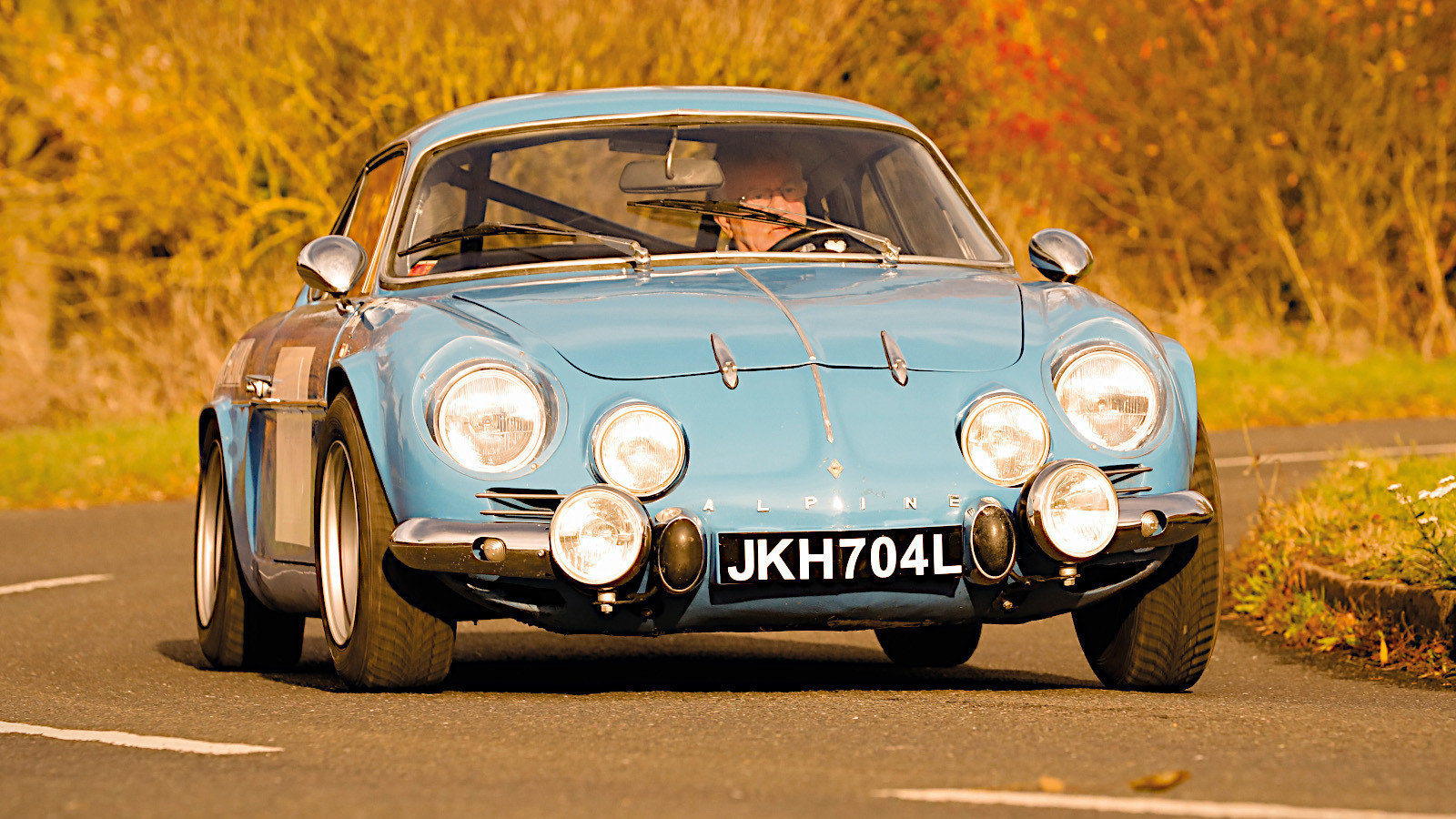
Like its two predecessors, the third Alpine model was based on a small, rear-engined Renault, in this case the 8 launched in 1962.
The A110 arrived a year later, and featured both an attractive, glassfibre, coupé body and Renault’s Cléon-Fonte engine.
The larger, all-aluminium Cléon-Alu unit, which made its debut in the Renault 16, was added to the A110 range almost as soon as it became available, and this version, in competition form, was briefly the most successful rally car on the planet (winning the inaugural World Rally Championship by a devastating margin in 1973) until the arrival of the Lancia Stratos.
Production ended in 1977, but Alpine followed it with a new, retro-styled and mid-engined A110 40 years later.
2. Amphicar 770
In nearly every case, cars are designed to operate exclusively on the ground, but occasionally one appears which is also intended for use either in the air or on water.
Although the subject has been discussed for decades, there is still no practical flying car, but there have been a few amphibious ones.
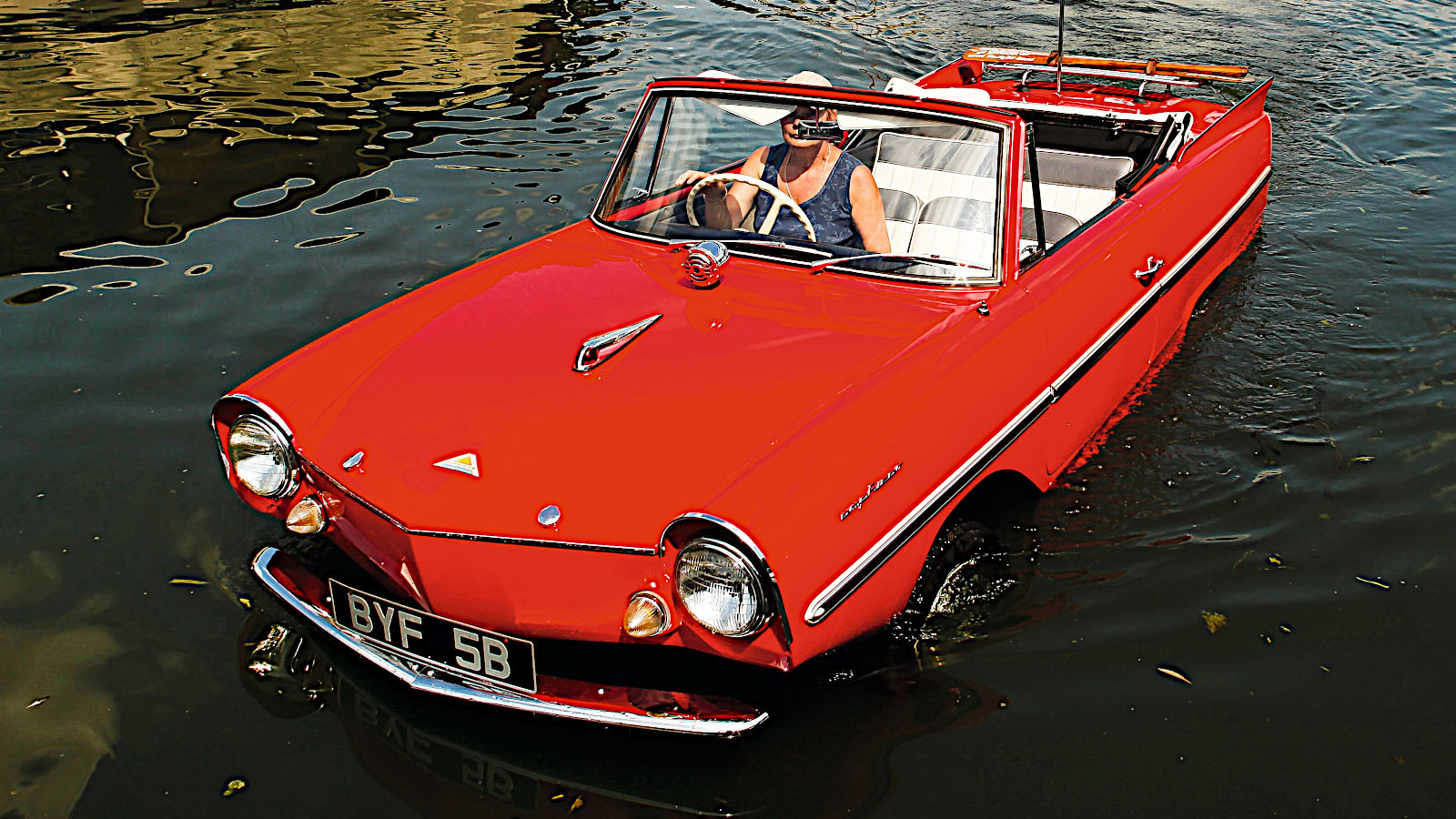
Perhaps the best known of these is the German Amphicar 770, sold between 1961 and 1968.
Its engine was the 1147cc version of the four-cylinder Standard SC, which was used in a few Standards, a great many Triumphs and the last generation of the MG Midget.
Amphicar was the only marque to mount it at the back of the vehicle, where it drove either the rear wheels or two propellers, according to the requirements of the situation.
3. Autobianchi Stellina
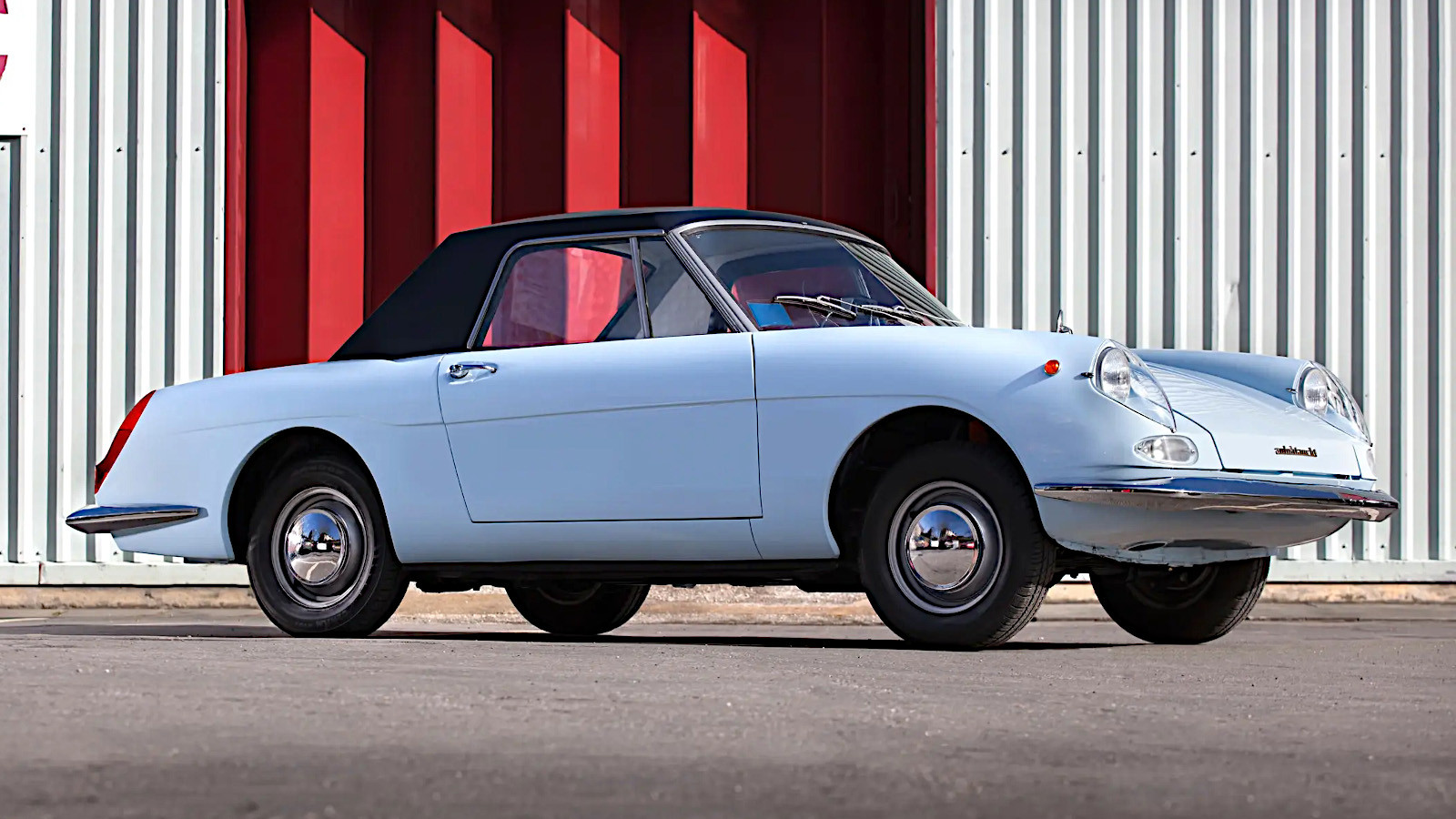
The Stellina was the second car produced by Autobianchi, a joint venture created by Fiat, Pirelli and the Bianchi bicycle manufacturer.
The first had been the Bianchini, based on the Fiat 500, and by a similar process the Stellina was derived from the Fiat 600.
It looked nothing like the 600, though, because this car was a two-door roadster with, very unusually for the time, a glassfibre body.
Only 502 examples are believed to have been built in 1964 and 1965 before lack of public enthusiasm brought the project to a halt.
Suggested reasons for this include the car’s relatively high price and the lack of power from its 747cc engine.
4. Chevrolet Corvair
The original Corvair doesn’t make it to our list because, although it was marketed as a 1960 model, it was available to buy in late 1959.
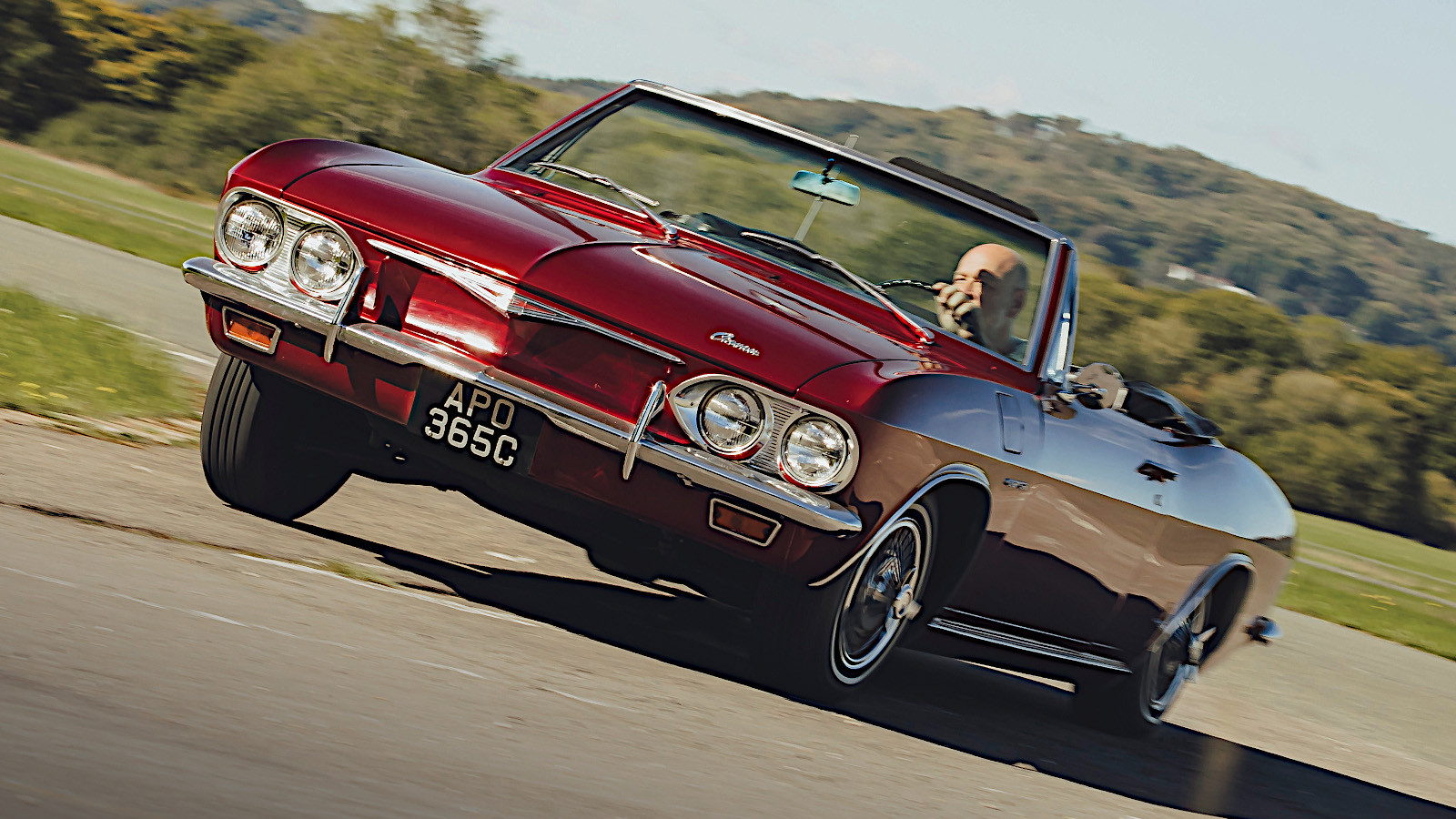
We’ll concentrate instead on the second Chevrolet Corvair (Corsa Turbo convertible pictured), which was introduced in the middle of the decade after a switch to more dramatic styling and conventional independent, rather than swing-axle, rear suspension.
Chevrolet retained the earlier car’s rear-mounted, air-cooled, flat-six engine, similar in concept to that of the Porsche 911 and now measuring 2683cc, having started out at 2287cc.
Customer enthusiasm for the Corvair plummeted after the car was heavily criticised for poor road manners in Ralph Nader’s book Unsafe At Any Speed, but this was unfortunate because Nader had been referring to the old swing-axle car, and not to the considerably better-handling one which was already on sale by the time the book was published.
5. Davrian
Although we’re using the 1970-registered Mk5 pictured here to illustrate the marque, this car and all Davrians of the 1960s, and most built thereafter, were either the original concept or minor variations of it.
First appearing in the middle of the decade, Davrians were manufactured in London and based on a glassfibre monocoque, with most of the mechanical components including the engine being taken from the Hillman Imp, which will be discussed later, and mounted, as in the Imp, behind the rear wheels.
The business moved to Wales, and after the Imp went out of production (though there was a good supply of parts for many years after that) Davrians were adapted to take other engines, and one Mk8 owner even fitted a 2-litre Cosworth BDG.
Imp-powered Davrians were used with great success in motorsport, and the company even built cars of the same type with Hillman Imp silhouette bodies for special-saloon racing.
6. Fiat 850
Fiat’s first rear-engined car was the 600 of 1955, followed two years later by the Nuova 500.
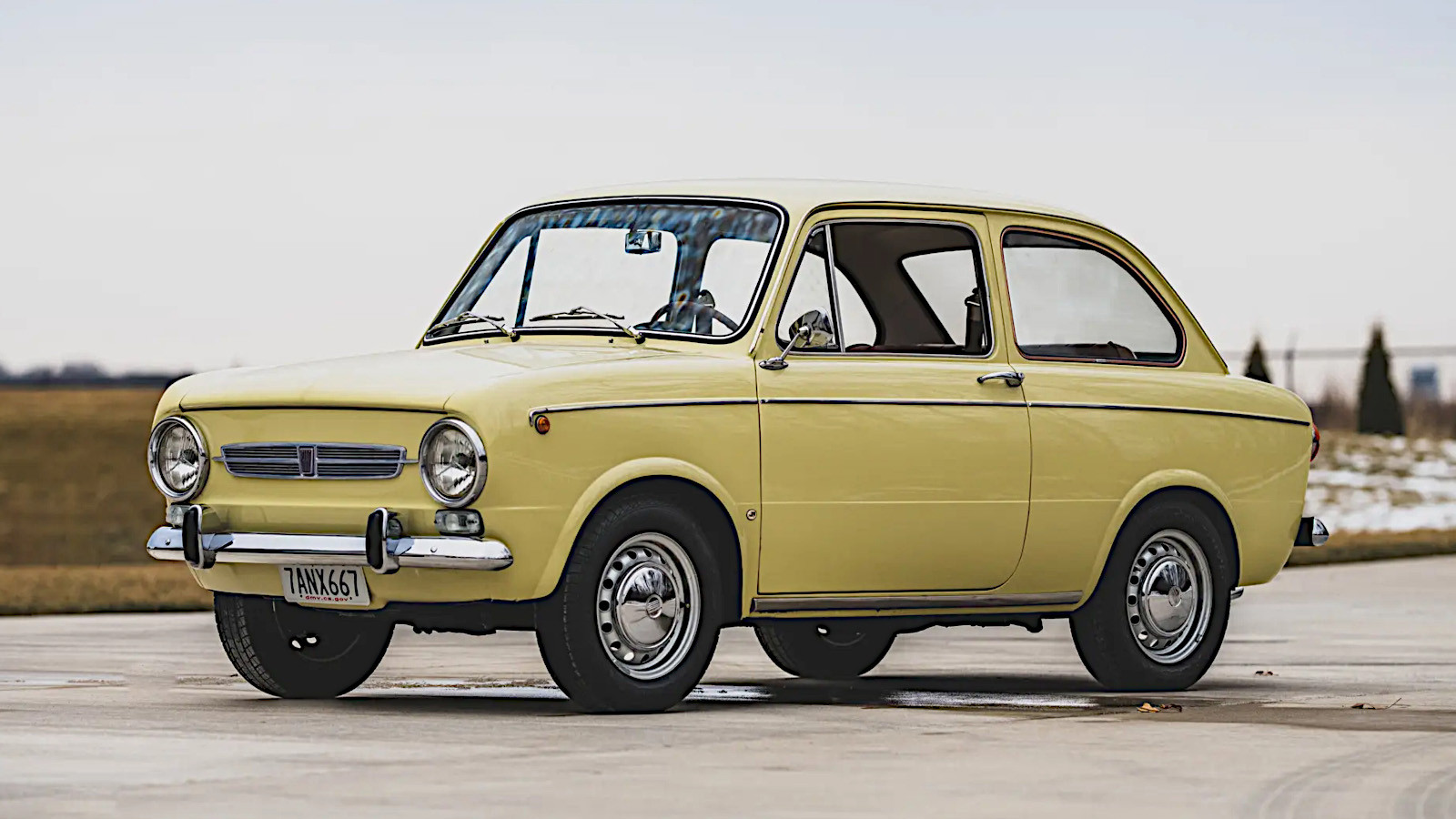
The company returned to this layout in 1964 with the larger and more powerful 850, which was available with more body styles than both the earlier cars put together.
The most common was a pleasantly cute, fastback saloon, as pictured here, but you could also have an 850 as a coupé, a spider, a van or a Familiare (essentially an early MPV), none of them, with the possible exception of the last two, looking anything like the others.
The 850 was named approximately after the 843cc capacity of its four-cylinder engine – a larger version of the 100-series first used in the 600 – though for some later models this was increased further to 903cc.
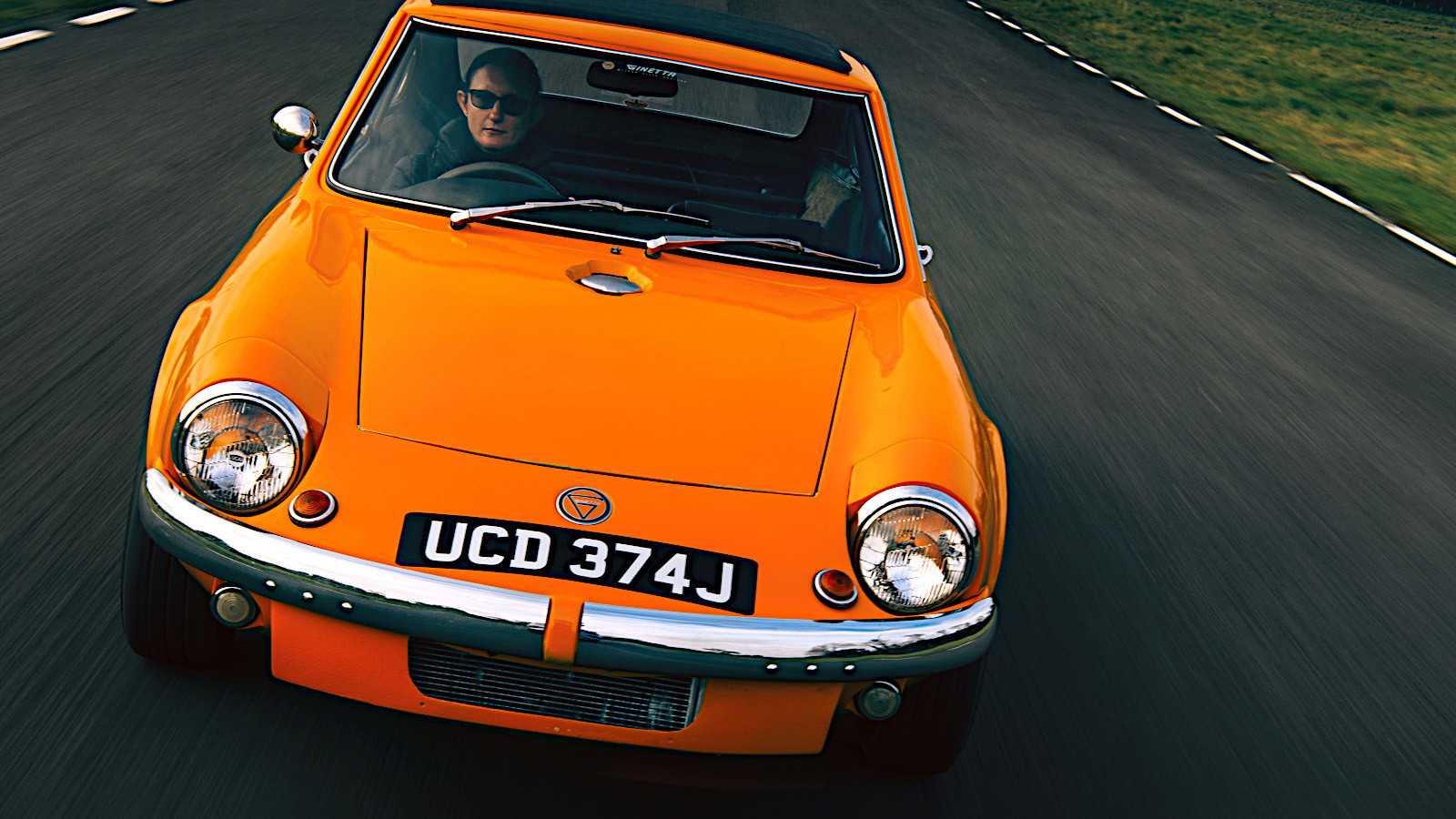
7. Ginetta G15
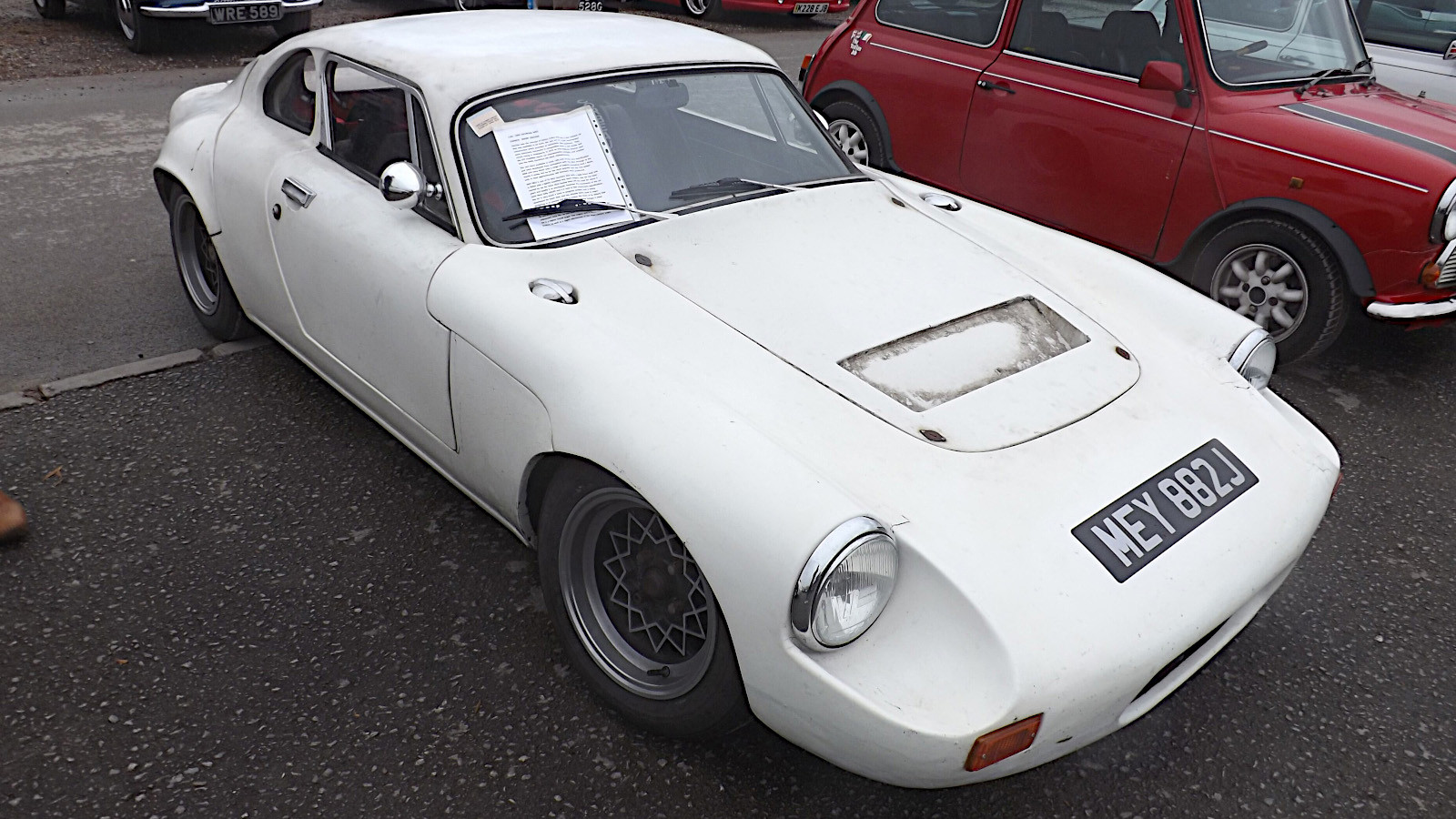
Ginetta had nearly a decade’s worth of experience in building sports and racing cars when it unveiled the G15 at the 1967 London Motor Show.
The new model had a steel chassis, a pretty, glassfibre body and mechanical components taken from the Hillman Imp.
As in the Imp, the canted-over, all-aluminium, four-cylinder engine was mounted at the extreme rear behind a four-speed transaxle.
Although conceived as a roadgoing car, the G15 was very successful in British motorsport: Alison Davis was a regular winner in circuit racing, while Andrew Russell has been using his example in hillclimbs for around 40 years.
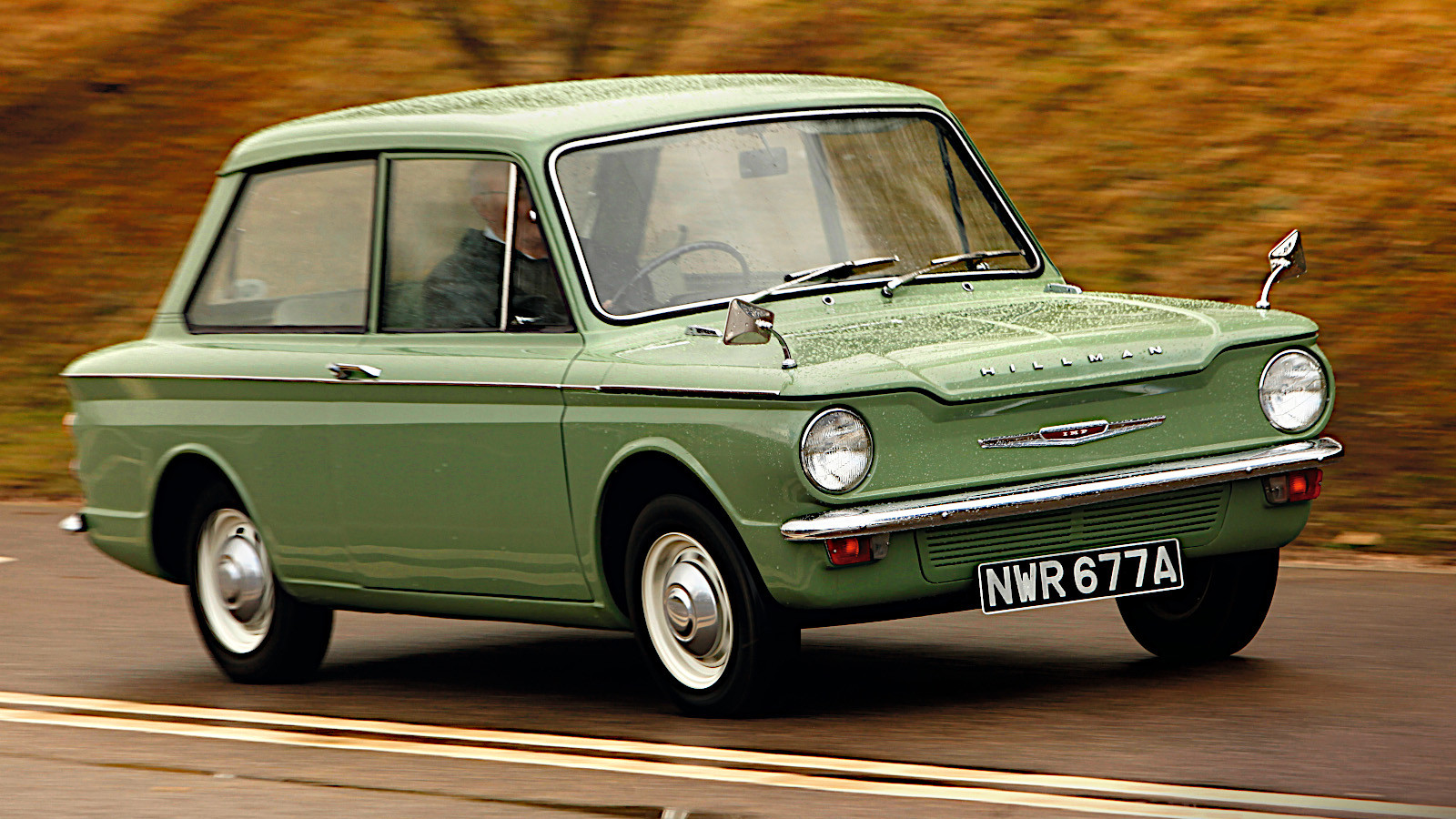
8. Hillman Imp
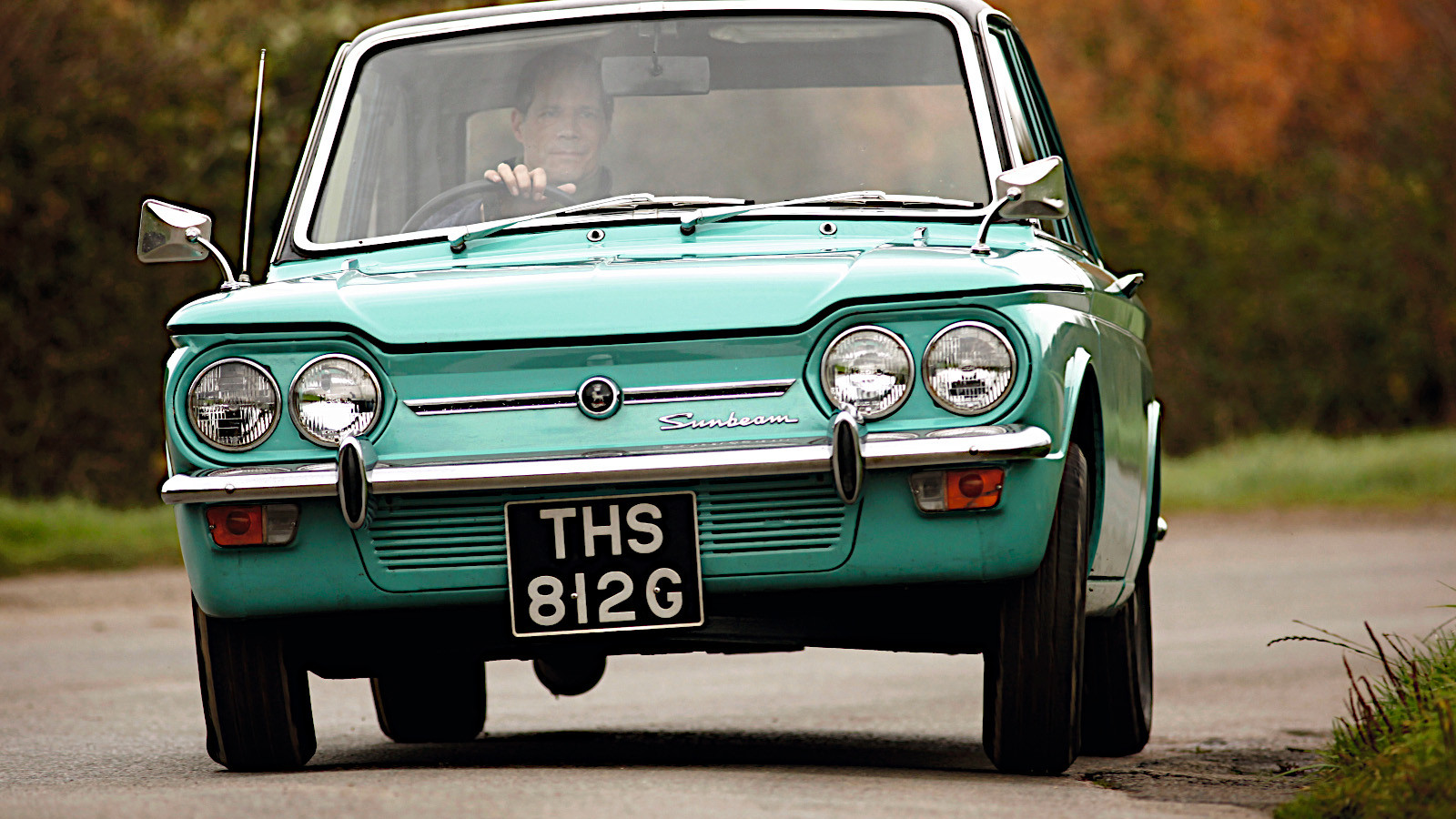
The Imp was completely without precedent or successor in the history of Hillman, or indeed of the Singer and Sunbeam marques under which it was also sold.
A radical rival to the Mini which had been introduced in 1959, the Imp appeared four years later with a rear-mounted, all-alloy, 875cc engine and accompanying transaxle, both of which were used in many low-cost sports cars such as the Clan Crusader and, as mentioned earlier, various Davrians and the Ginetta G15, along with several single-seat racers.
The engine had been developed by Coventry Climax, and was so tunable that maximum outputs approaching 120bhp were achieved in competition-prepared, 998cc versions, or about the same but with far more mid-range power when extended, by increasing the stroke, to nearly 1200cc.
If kept within normal operating temperatures, it was more or less perfectly reliable, but if allowed to overheat it was not, and this led to a reputation for fragility which limited sales and, it has been suggested, was responsible for parent company the Rootes Group being absorbed into Chrysler Europe in 1967.
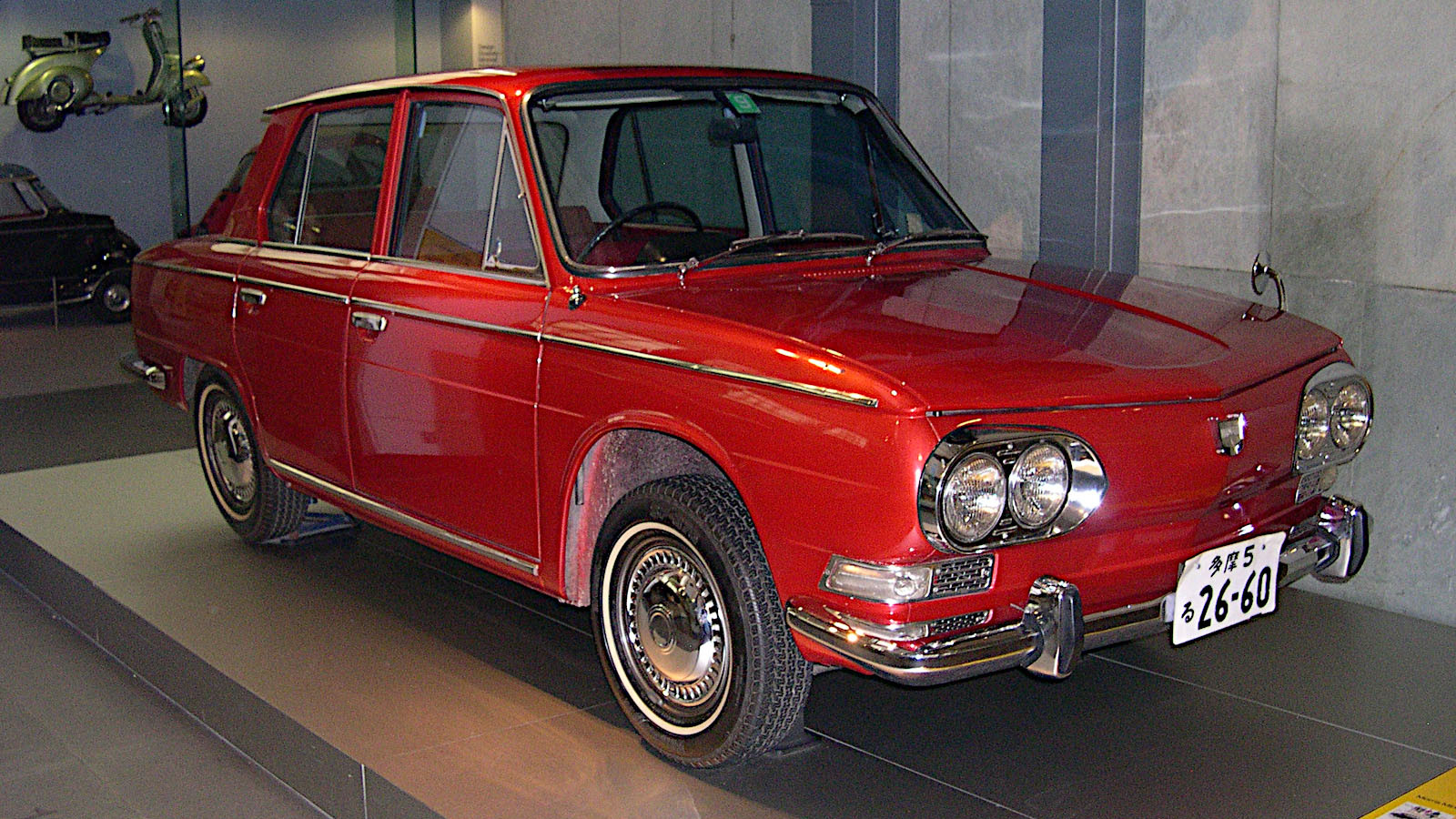
9. Hino Contessa
The Japanese Hino company, now better known for its commercial vehicles, built Renault’s first post-war model, the rear-engined 4CV, under licence for several years.
In 1961, at about the time the 4CV was discontinued and shortly after it became Renault’s first million-seller, Hino created its own version with the same running gear but very different saloon and coupé body styles.
It was known as the Contessa, the Italian word for ‘countess’, and so was its 1964 replacement (saloon pictured), which was considerably heavier but also had the larger and substantially more powerful Renault Cléon-Fonte engine, rather than the original model’s Billancourt unit.
Hino Contessas were produced not only in Japan but also in Israel and New Zealand.
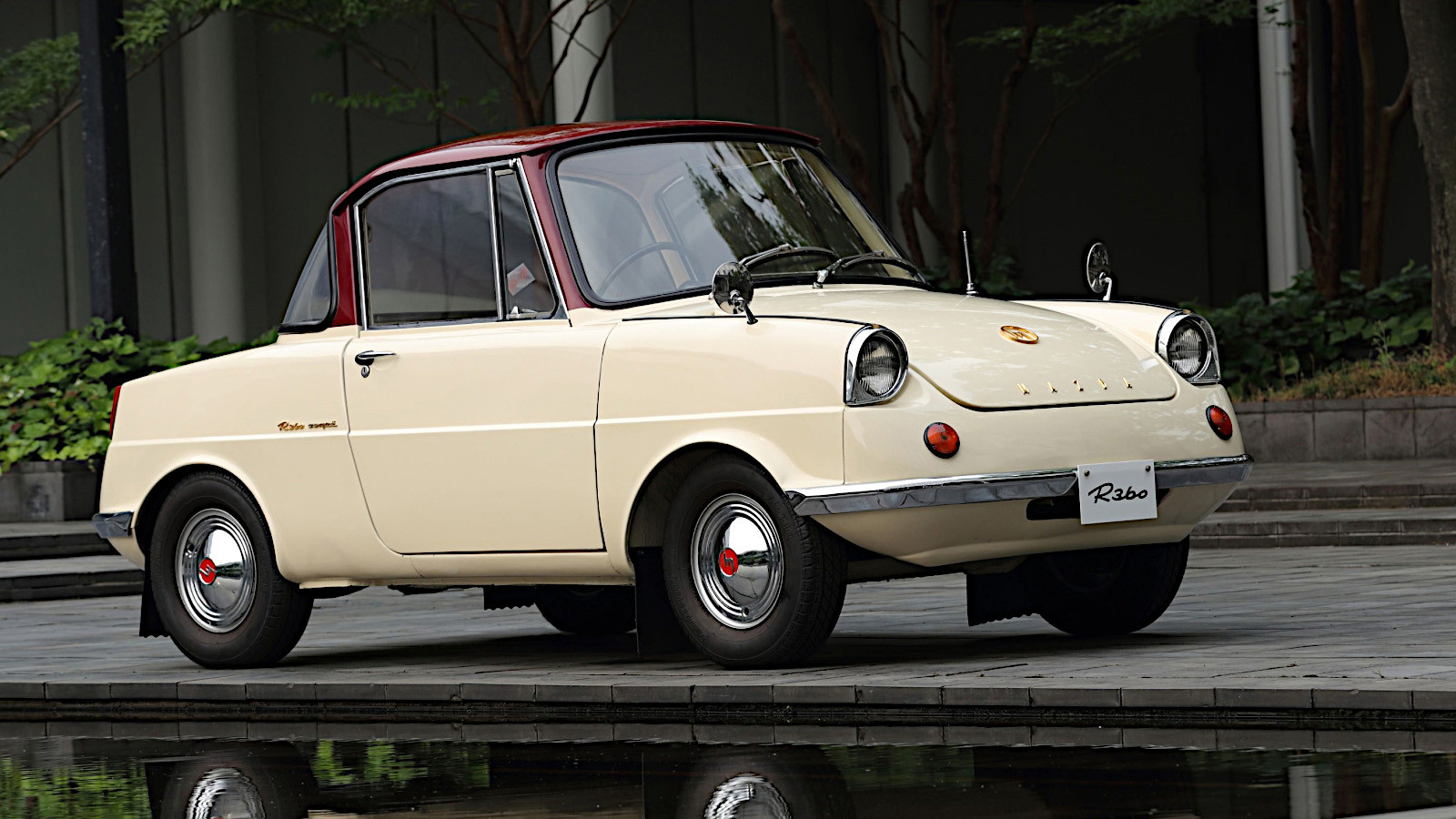
10. Mazda R360
Mazda’s first car, and its second powered vehicle of any kind after many versions of the Mazda-Go three-wheeled truck, was a coupé named R360 in reference to the 360cc maximum engine size permitted by the Japanese kei car regulations as they stood at the time and, more approximately, to the capacity of its rear-mounted, two-cylinder engine.
That unit was unusual for kei cars of the period in that it was a four- rather than a two-stroke.
Plus, despite the R360’s limited size, this little car was just about capable of seating four adults.
According to Mazda, 4500 orders had been taken by the day the model went on sale in May 1960, and production had exceeded 23,000 by the end of the year.
Public enthusiasm for the R360 was such that Mazda was able to keep it on the market until 1969.
11. Mazda Carol 360
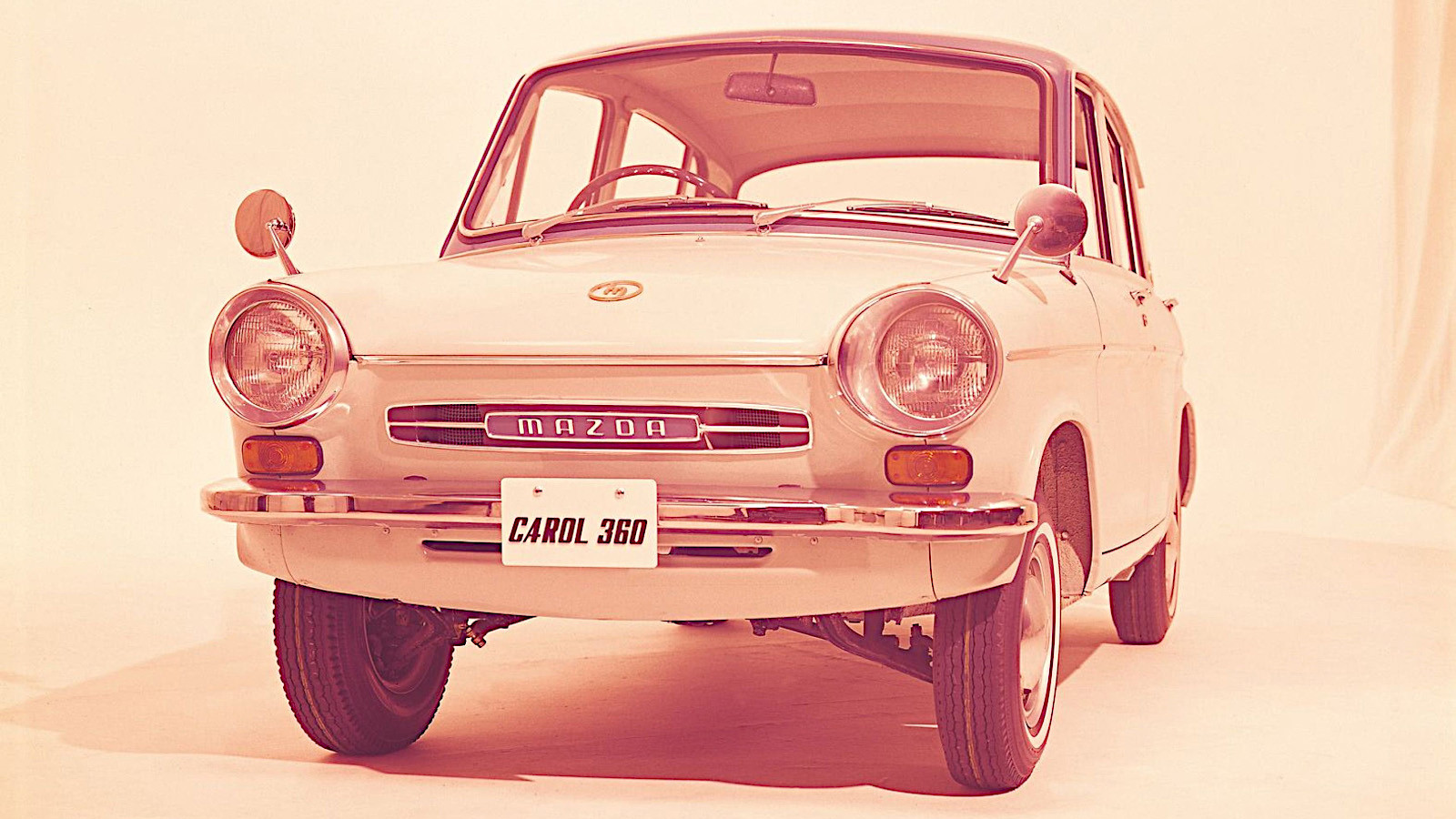
The first of many Mazdas to bear the name Carol, and the only one of them with its engine at the back, was added to the company’s line-up in February 1962.
This time, the motor was a four-cylinder unit, and the Carol was also somewhat larger than the R360 (though still within the kei car regulations) and had more interior space.
There were several developments early in a long run which lasted until 1970, including a slight power increase and the provision of four doors rather than the original two.
The non-kei Carol 600 was more or less the same car with a larger engine, while a gold-painted example which left the factory in March 1963 was the one-millionth Mazda vehicle ever built.
12. Mitsubishi 500
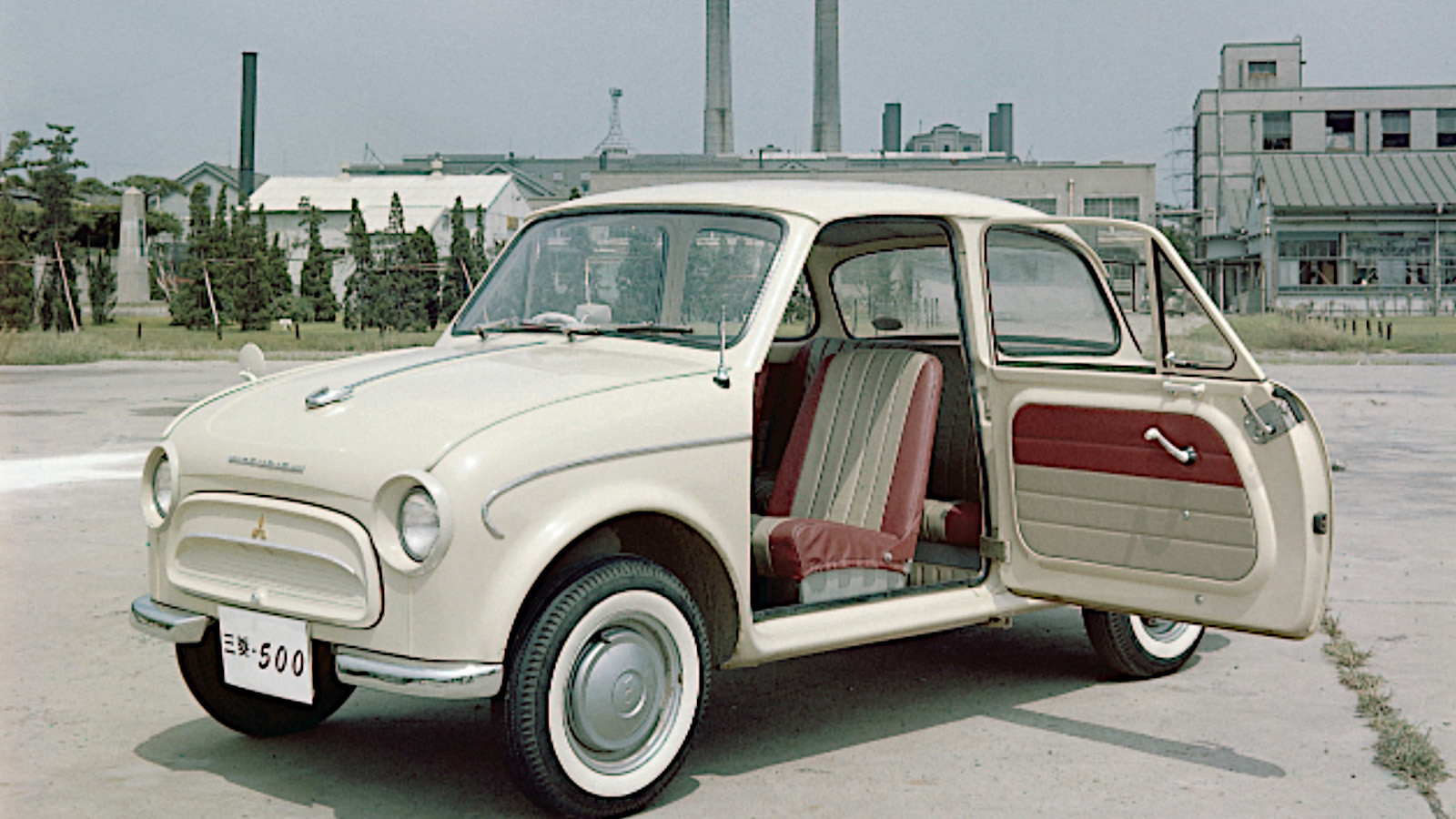
Regardless of how it might appear to those outside Japan, the Mitsubishi 500 was not a kei car, being too long and wide, and having too large an engine.
Reputed to be the earliest Japanese car ever tested in a wind tunnel, Mitsubishi’s first post-war model was nevertheless very small by non-kei standards, and designed and built in such a way that it could be offered at a low price.
Cost-cutting measures included providing only a single windscreen wiper, and mounting one indicator light on each side pillar without going to the extra expense of fitting more at the front and the back.
The Mitsubishi 500 made its debut in 1960 with a 493cc, two-cylinder engine, but in 1961 this was replaced by a 594cc unit, and the car was renamed, perhaps optimistically, the 500 Super Deluxe.
13. Mitsubishi Colt 600
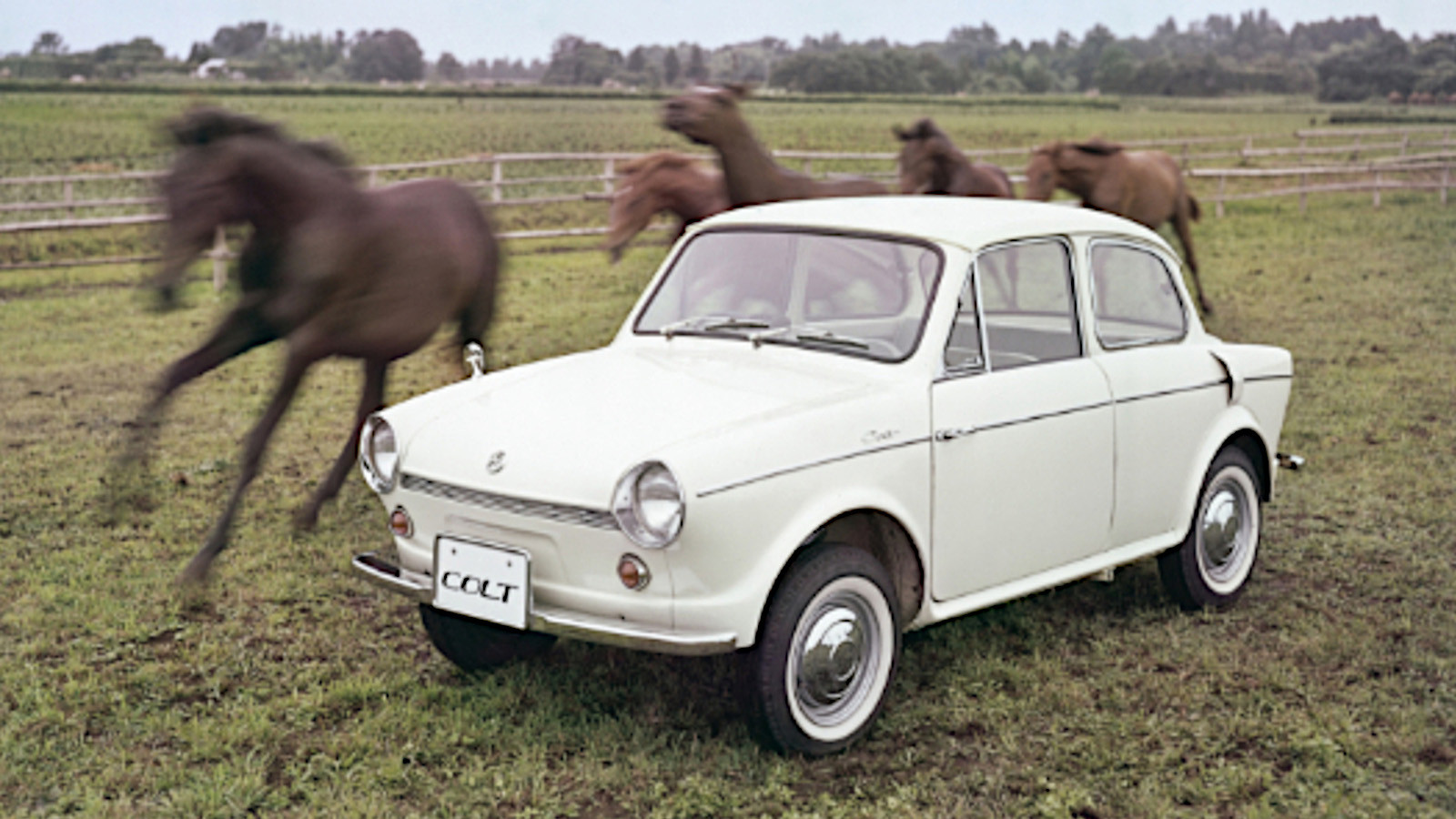
The unadventurous styling of the Mitsubishi 500 came in for some criticism, so in 1962 the model was replaced by the Colt 600.
This was essentially the 500 Super Deluxe with a different and more attractive body, though there were also some minor updates including a bench seat, a larger fuel tank and a gearlever mounted on the steering column.
There was also more practicality, because although the Colt 600 was only marginally wider, and a little lower, than the 500, it was 245mm (9.6in) longer.
The ‘600’ part of the name reflected the capacity of the 594cc engine, which was carried over from the Super Deluxe, while ‘Colt’, which Mitsubishi would go on to use well into the 21st century, appeared for the first time on this model.
14. NSU Prinz 4
Having previously built cars with their engines at the front, NSU adopted the rear-engine layout when it restarted production after the Second World War.
The Prinz I, II and III were all variants of the same car, launched in the 1950s and moderately successful, with (according to Audi, into which NSU was later absorbed), 94,567 examples manufactured in four years.
In 1961, NSU introduced the newly developed and significantly larger Prinz 4, which retained the earlier models’ rear-mounted, two-cylinder engine, but featured a new body design not unlike that of the much larger Chevrolet Corvair.
This was by far the most successful of the two-cylinder models. Average annual production was more than twice as high than that of its predecessors, and by the time the Prinz 4 was discontinued in 1973, NSU had built 576,619 examples.
15. NSU Spider
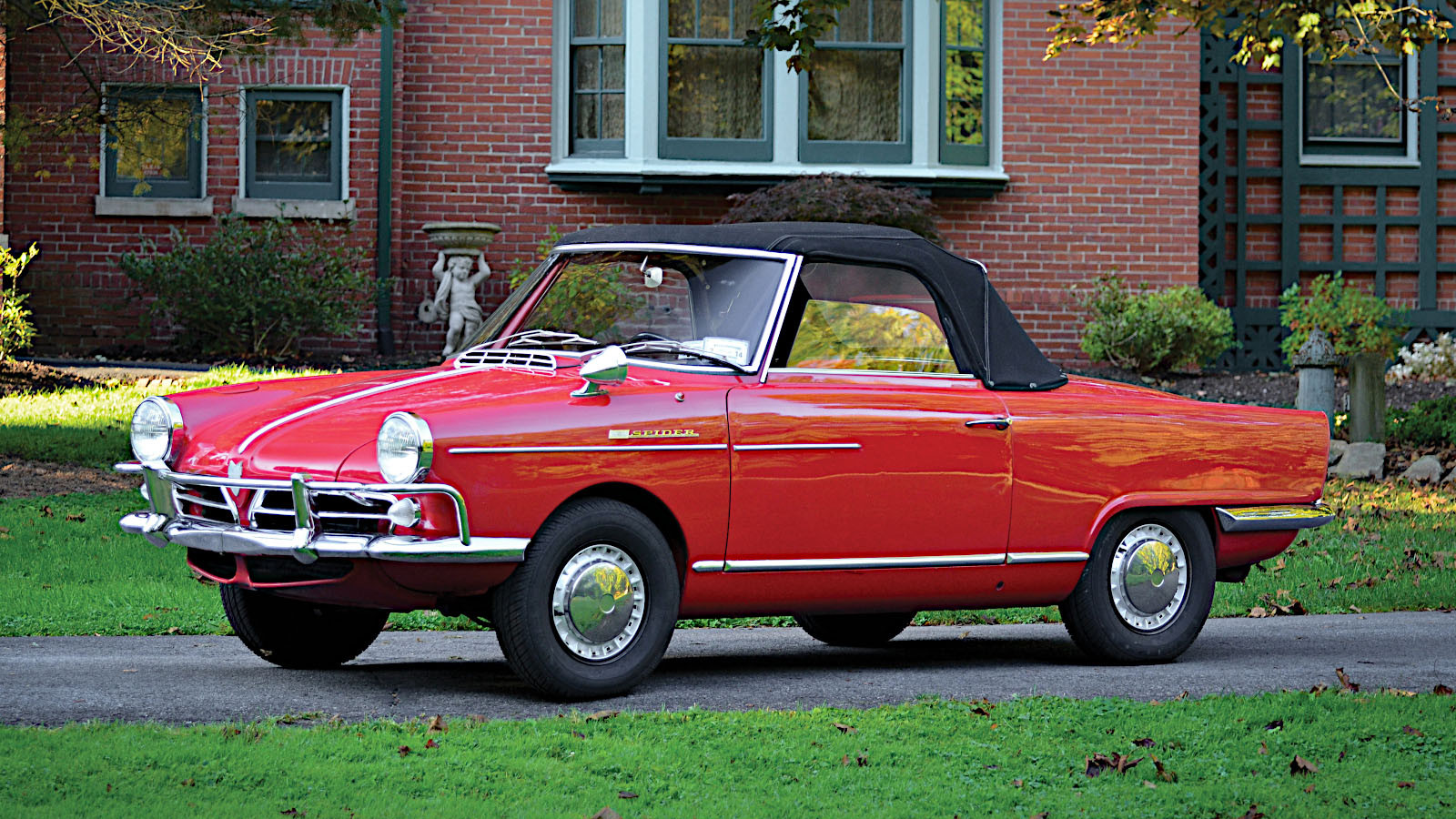
Although it made its debut at the Frankfurt motor show in 1963, the NSU Spider was closely related to an earlier, Bertone-designed, coupé version of the original Prinz.
The Spider differed from the Sport Prinz in that it was a convertible rather than a coupé, and in some styling details, but the major change was the abandonment of the two-cylinder engine in favour of one with a single rotor.
It was the first rotary-engined car ever to go on sale, beating the Mazda Cosmo and NSU’s own Ro80 by three years, and the marque proclaimed that it was as quiet as anything with a six-cylinder, piston unit, though that soon changed if you fitted a megaphone exhaust for tuning purposes.
In total, 2375 Spiders were built before NSU called a halt in July 1967.
16. NSU Type 110
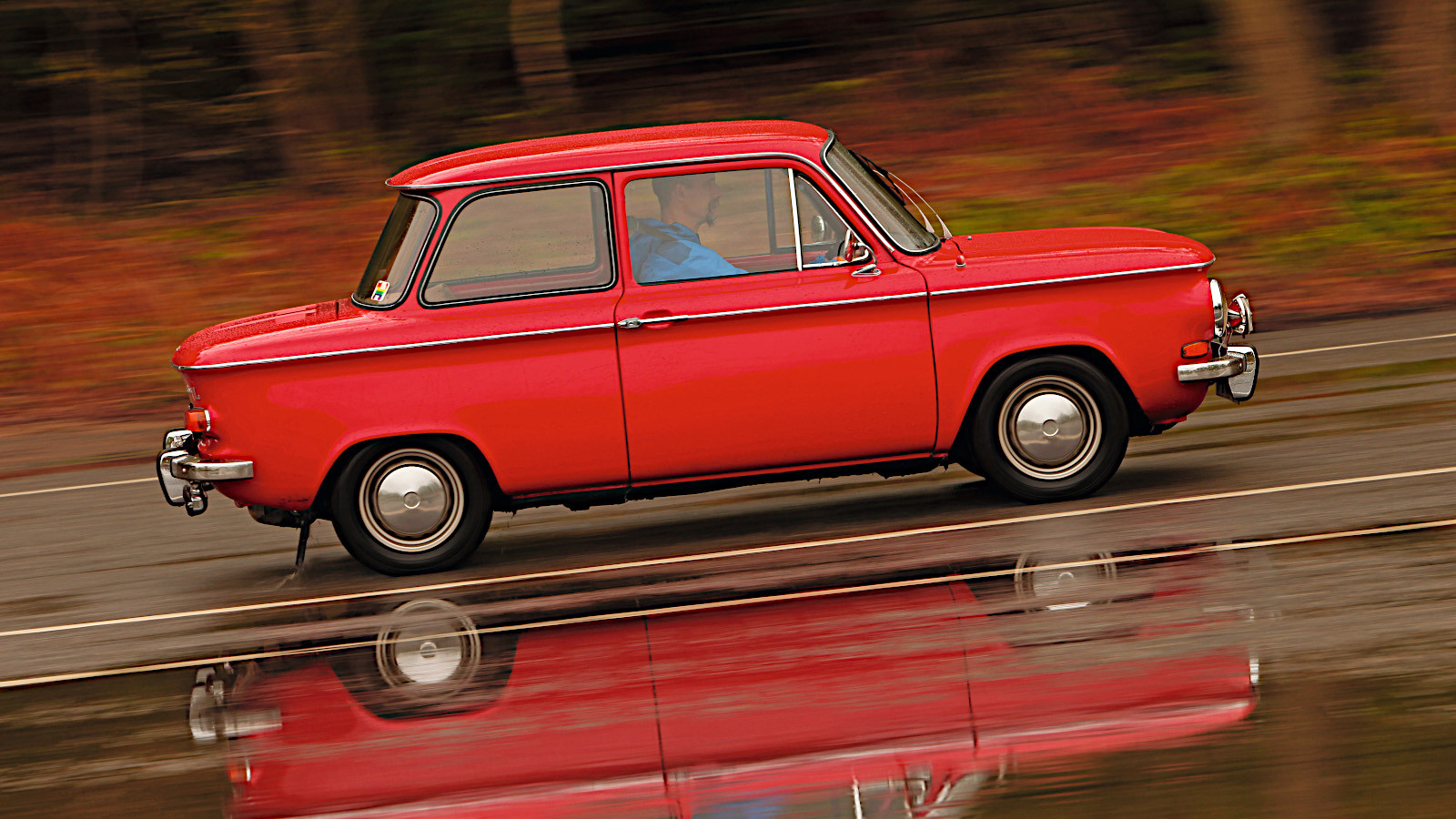
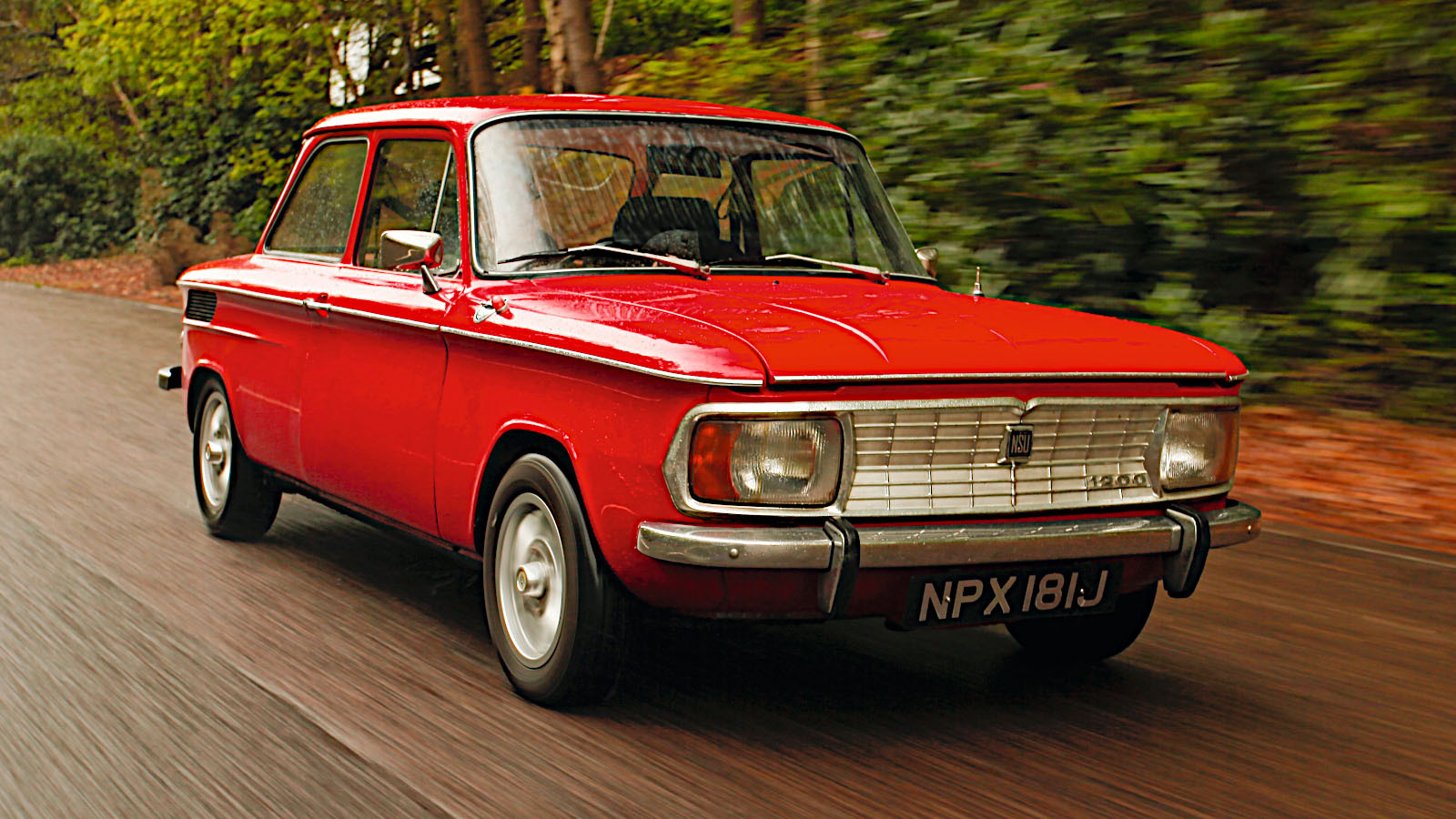
Type 110 is the generic title for an NSU which was sold under several names generally alluding to its engine capacity, such as 1200C in the example pictured here.
Unlike the Prinz, the NSU Type 110 always had a four-cylinder engine (still air-cooled, like the twins) which started out at 1085cc and was later expanded to 1177cc.
Greater power was matched by a considerable increase in body size, both factors being intended to move NSU slightly upmarket, though the appearance was similar to that of the Prinz and the mechanical layout identical.
By the time the Type 110 was discontinued in 1973, NSU had already moved on to the rotary-engined, front-wheel-drive Ro80 and to the more conventional K70 which, as the result of a marketing decision, was rebadged as a Volkswagen shortly before it went on sale.
17. Porsche 911
Ferdinand Porsche was enthusiastic about the rear-engined layout and used it in the Volkswagen Beetle, the Auto Union Grand Prix cars and the 356, the first model produced under his own name.
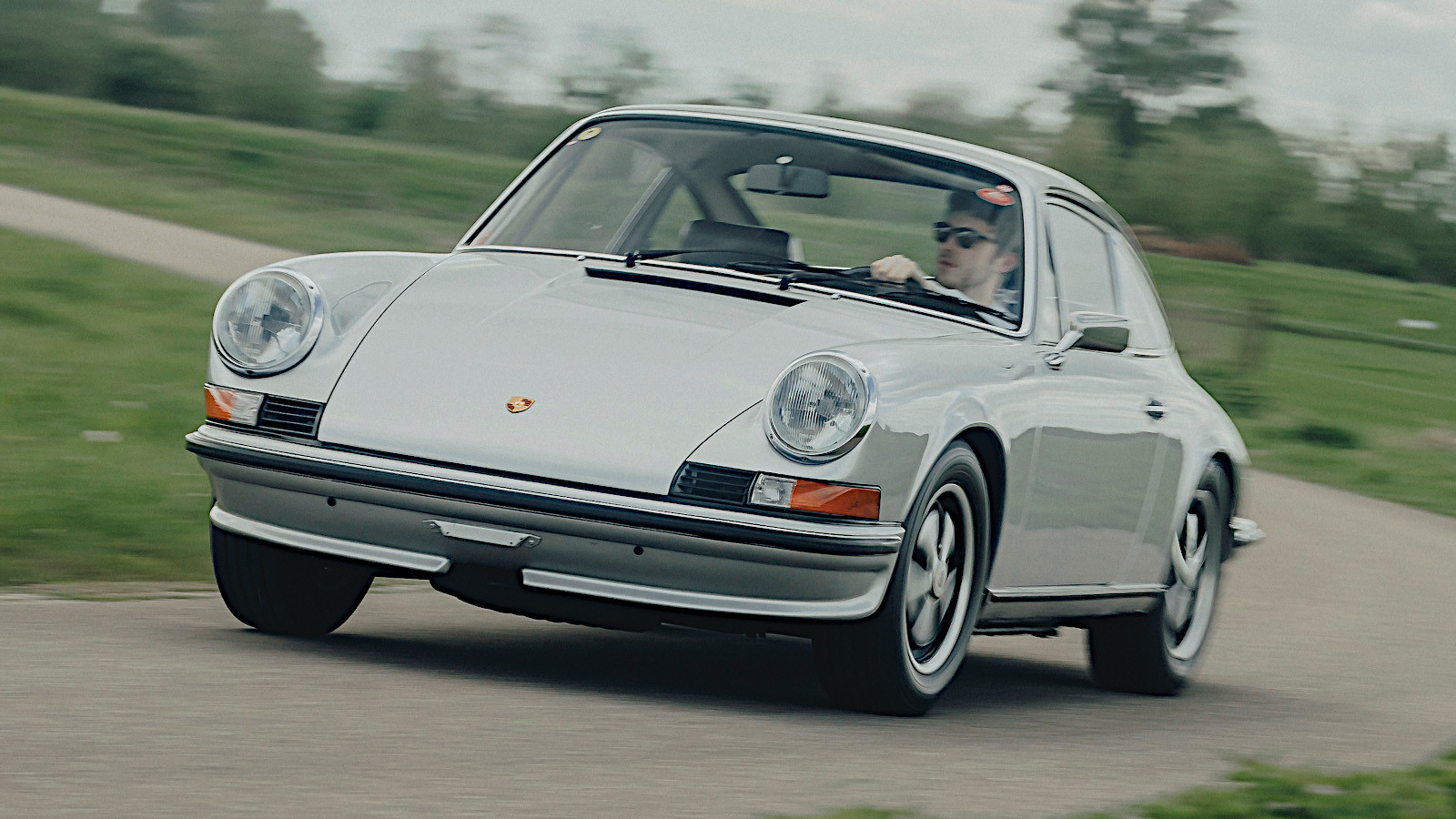
The second was the 911 (or 901 as it was originally called before Peugeot raised objections), which made its debut at the 1963 Frankfurt motor show and went on sale the following year.
Famously, it was rear-engined, too, though in this case power came from a flat-six rather than the 356’s flat-four.
Porsche has not introduced a mainstream model with the engine behind the rear wheels since, opting instead for front- and mid-engined cars (starting with the 924 and 914 respectively).
The 911, however, has remained the company’s most celebrated model, being produced in many generations for more than 60 years, and always with the engine in the same place as it was in 1963.
18. Renault 8
In retrospect, it may seem strange that Renault would follow its first front-wheel-drive car, the 4 of 1961, with a rear-engined model just a year later, but this helps to demonstrate how popular the layout was among European manufacturers in the 1960s.
There had already been post-war, front-engined Renaults, namely the Frégate, the Colorale and the little Estafette van, but for its smaller passenger cars the marque had favoured putting the engine in the back ever since the 4CV entered production in 1947.
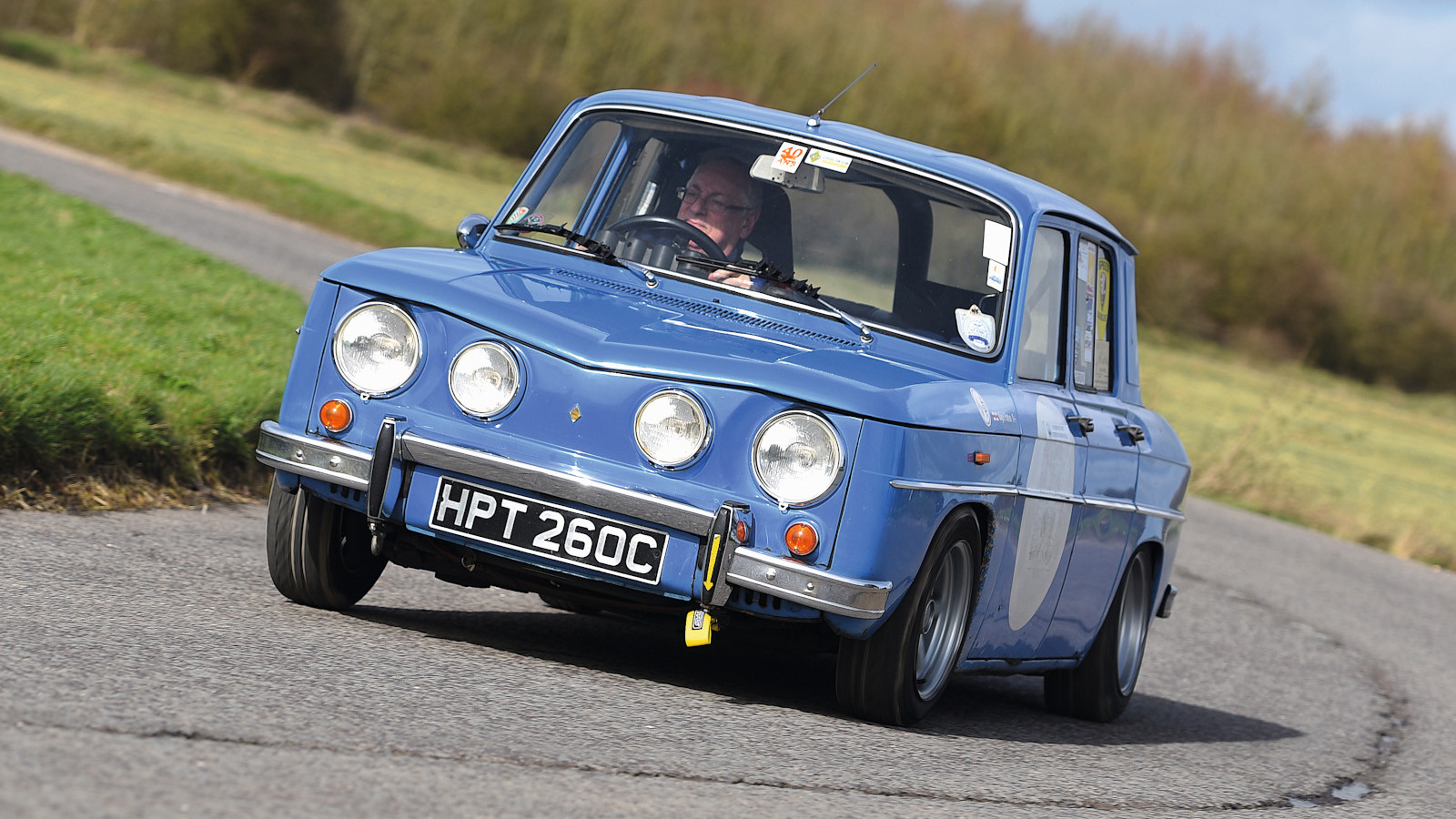
It did so again with the 8, but in this case the engine wasn’t the well-established Billancourt but the brand-new Cléon-Fonte, which was retrospectively applied to the Estafette and the Caravelle sports car, and would later feature in many Renaults, along with Alpines, Dafs, Dacias, Volvos and others, for 42 years.
As used in the R8, it initially measured 956cc, but for the updated Gordini launched in 1966 (earlier 1108cc version pictured) it grew to 1255cc, had a power output of more than 100bhp and, very unusually for the period, drove through a five-speed gearbox.
19. Renault 10
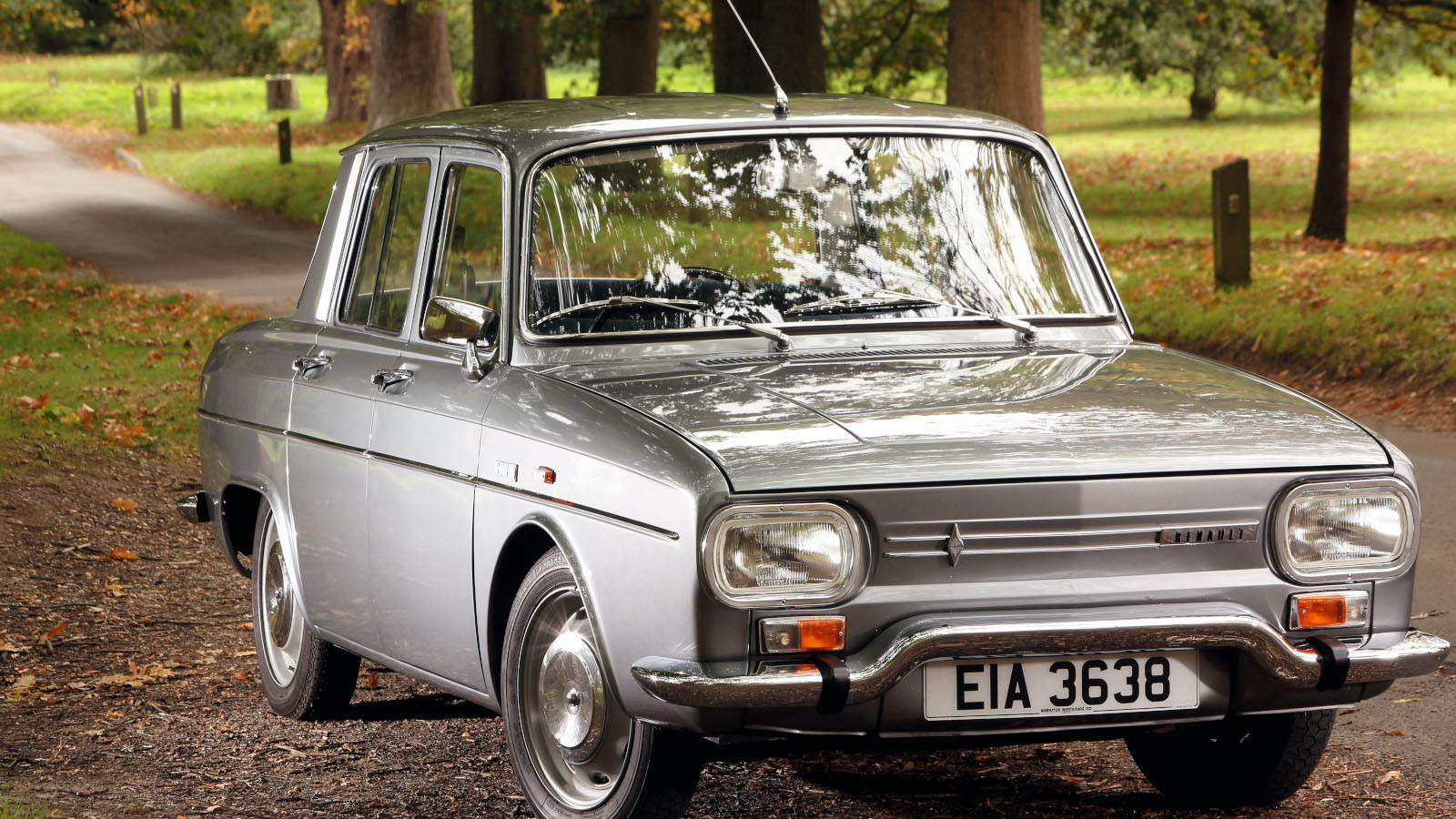
Renault’s last fully rear-engined car (the much later Spider and third-generation Twingo had their engines mounted transversely across the back axle, and the car sold in the UK as the Renault GTA was really an Alpine) was essentially an 8 with longer overhangs at each end.
The centre section was identical in each case, but apart from that the 10 looked quite different from the 8, and in fact it would be fair to say that it looked different twice.
Apart from some minor details, every 8 appeared more or less like every other 8, but the 10 was facelifted early in its run.
As launched in 1965, it had round headlights with the indicators and side lights mounted alongside, but in 1967 Renault gave it the front-end treatment pictured here, and also revised the rear lights.
20. Seat 850
In the early part of this Spanish car maker’s history, almost every Seat was a direct counterpart of a model designed and built by Fiat.
This was largely true of the Seat 850 which, like the corresponding Fiat, was available as a two-door saloon, a coupé and a spider, though not as a van or a Familiare.
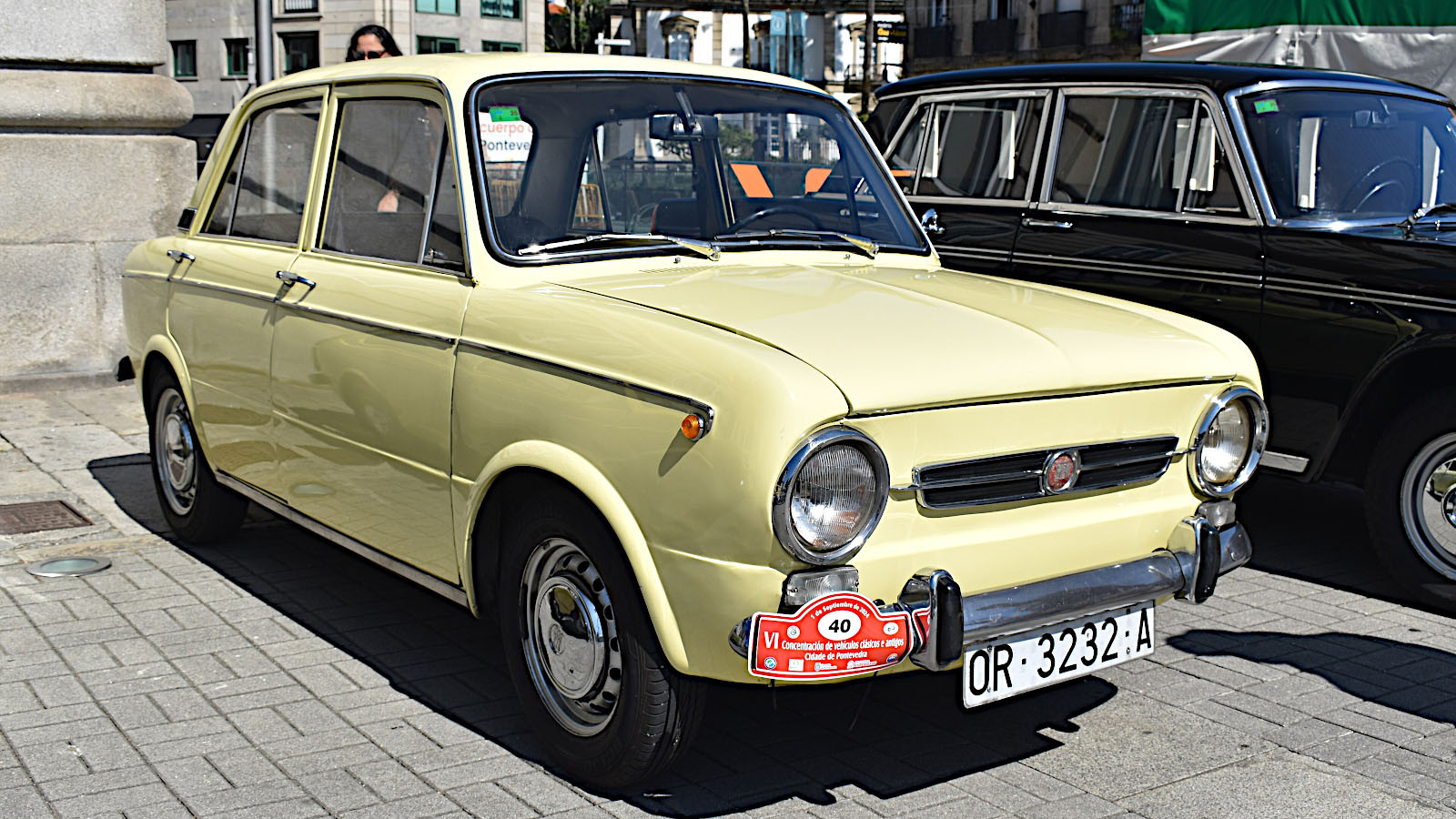
Seat went its own way, however, by producing two four-door saloons, one of them based on the two-door body and sold in very small numbers in 1964.
Four years later, Seat collaborated with coachbuilder Costa to produce another four-door (pictured) which had a 15cm (5.9in) longer wheelbase, a more pronounced boot and a closer-to-vertical rear window.
21. Simca 1000
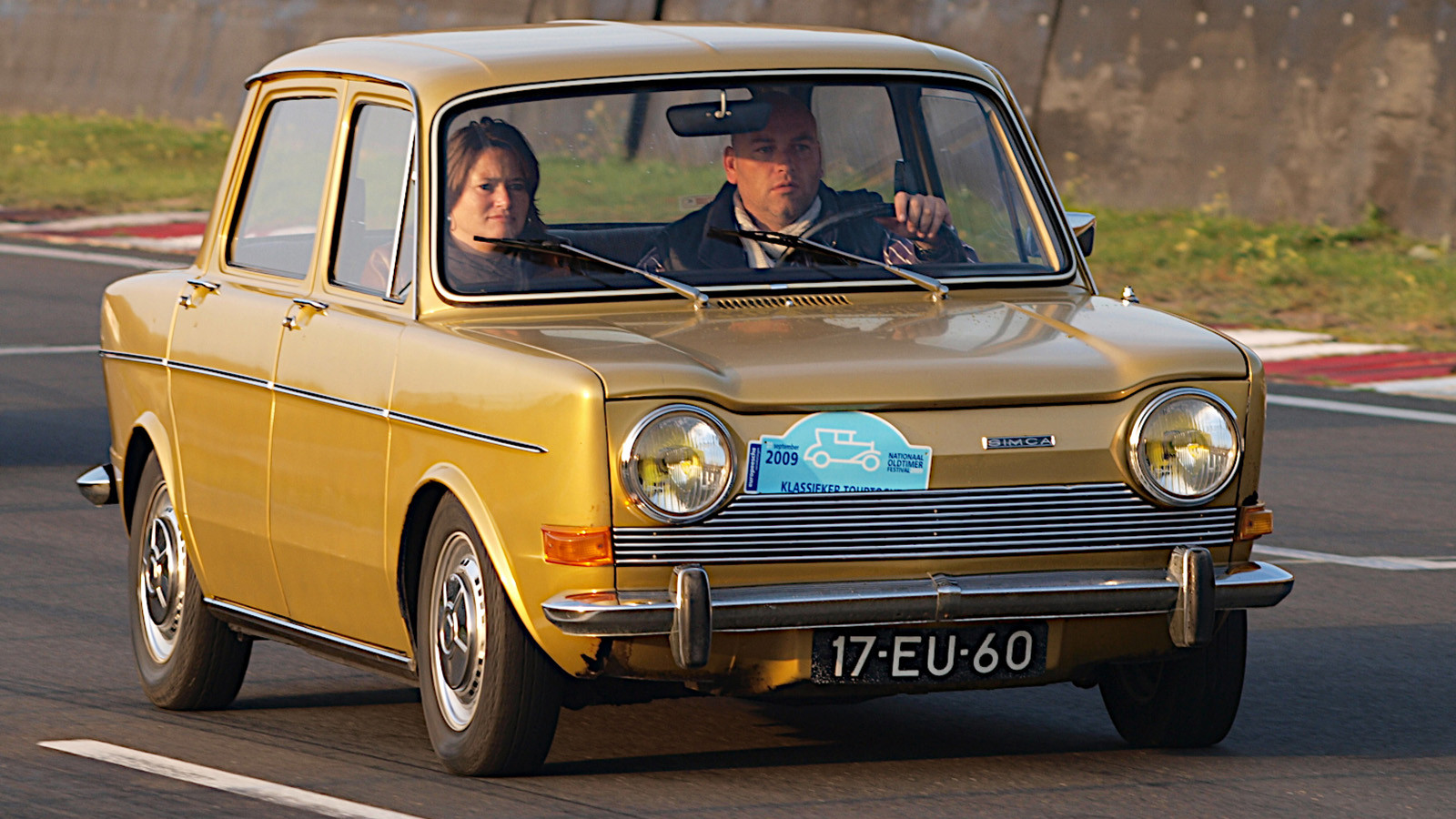
Founded in the 1930s, Simca joined the rear-engine bandwagon in 1961 with the 1000, which was similar in concept, and to some extent appearance, to the following year’s Renault 8.
It was also the first car powered by Simca’s Poissy engine (named after a factory in northern France established by Ford and now part of the Stellantis empire) which was available in several capacities around 1 litre and would go on to have nearly as long a life as the Renault Cléon-Fonte unit.
The Simca 1000 was mostly produced as a three-box, four-door saloon, but from 1962 there was also a coupé variant which looked similar to the later Fiat and Seat 850 coupés.
Particularly in saloon form, the 1000 was a big success, and remained in production until the late 1970s, but after the launch of the coupé Simca would never again design a rear-engined car.
22. Škoda 1000 MB
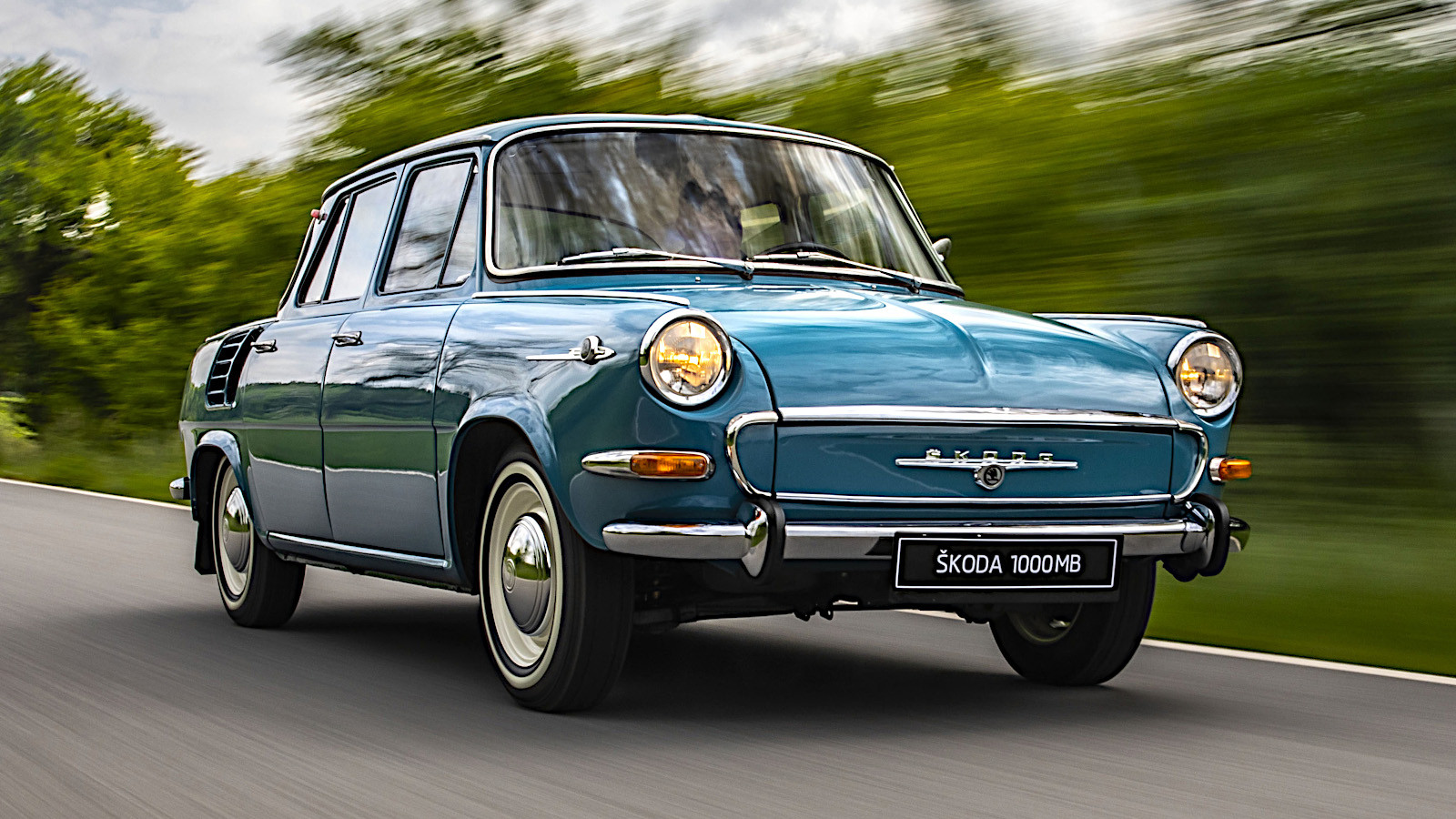
In 1964, Škoda replaced its rather old-fashioned Octavia with a very much more modern car.
The 1000 MB (so named because it had a 1-litre engine and was built in Mladá Boleslav) was the first rear-engined Škoda, and would become the 1100 MB when the capacity of the engine was increased.
The MB models were four-door saloons, but there were also two-door versions called 1000 MBX and 1100 MBX.
Only 2517 MBXs were built, but Škoda manufactured 440,639 MBs up to 1969, and sold more than half of them to export markets.
Škoda would continue to design rear-engined models for many more years, moving away from the layout only when it introduced the front-wheel-drive Favorit in 1987.
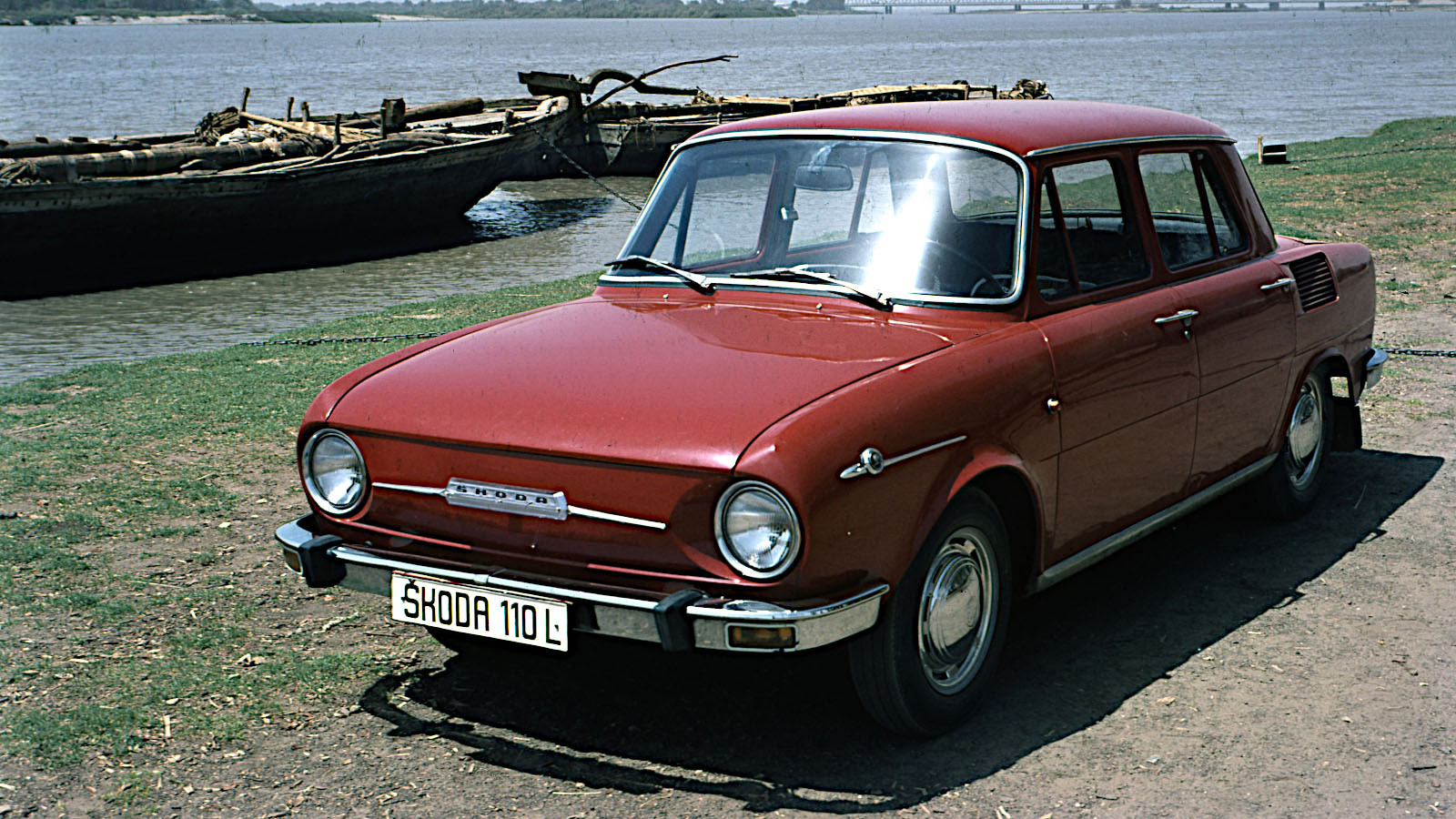
23. Škoda 100/110
The 100 and 110 – which, like the 1000 MB and 1100 MB that they replaced, were the same car with slightly different engine sizes – just qualify for our list because they were launched in 1969.
More power was available in models during the 1970s, the most dramatic being without question the 130 RS which performed extremely well in its class in international motorsport events.
While the MB cars were undoubtedly successful, achieving more than 440,000 sales in five years, the 100/110 series was even more so.
Produced until 1977, it was Škoda’s first million-seller, the exact figure for all versions put together being 1,079,708.
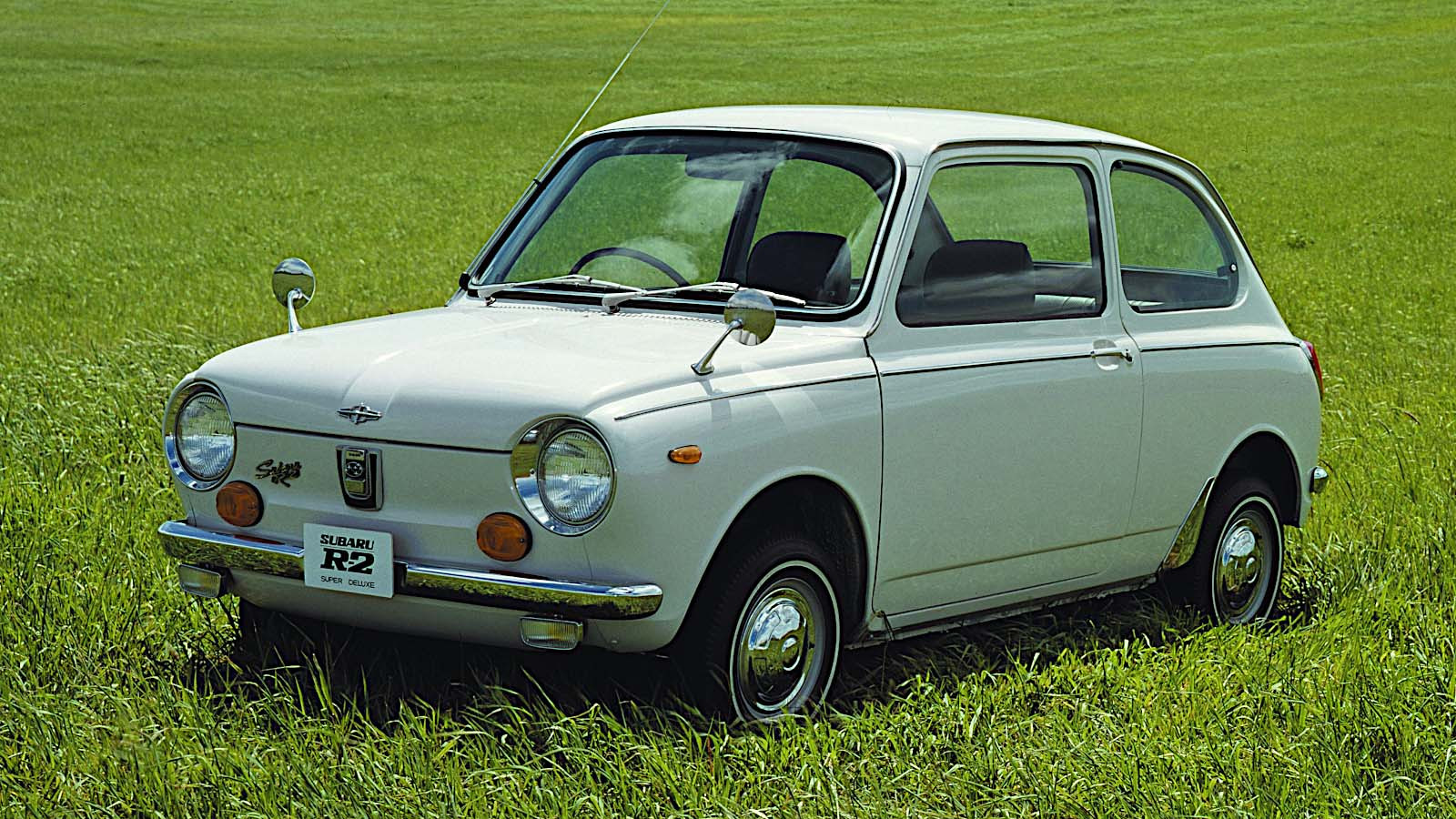
24. Subaru R-2
Throughout the 1960s, it was possible to buy a Subaru 360, a kei car introduced late in the previous decade which sold very well in Japan but bombed in the USA, where it just wasn’t suited to local driving conditions.
The only Subaru kei model first sold in the ’60s, the R-2 of 1969, had a much more modern appearance, but like its predecessor it had a 356cc, air-cooled, two-stroke twin mounted behind the back axle.
Both cars were still available (the R-2 as a two-door saloon or a three-door estate) in 1971, the year that production of the long-lived 360 came to an end.
The R-2 had a much shorter career, being discontinued in 1972 and replaced by Subaru’s final rear-engined passenger car, the first-generation Rex.
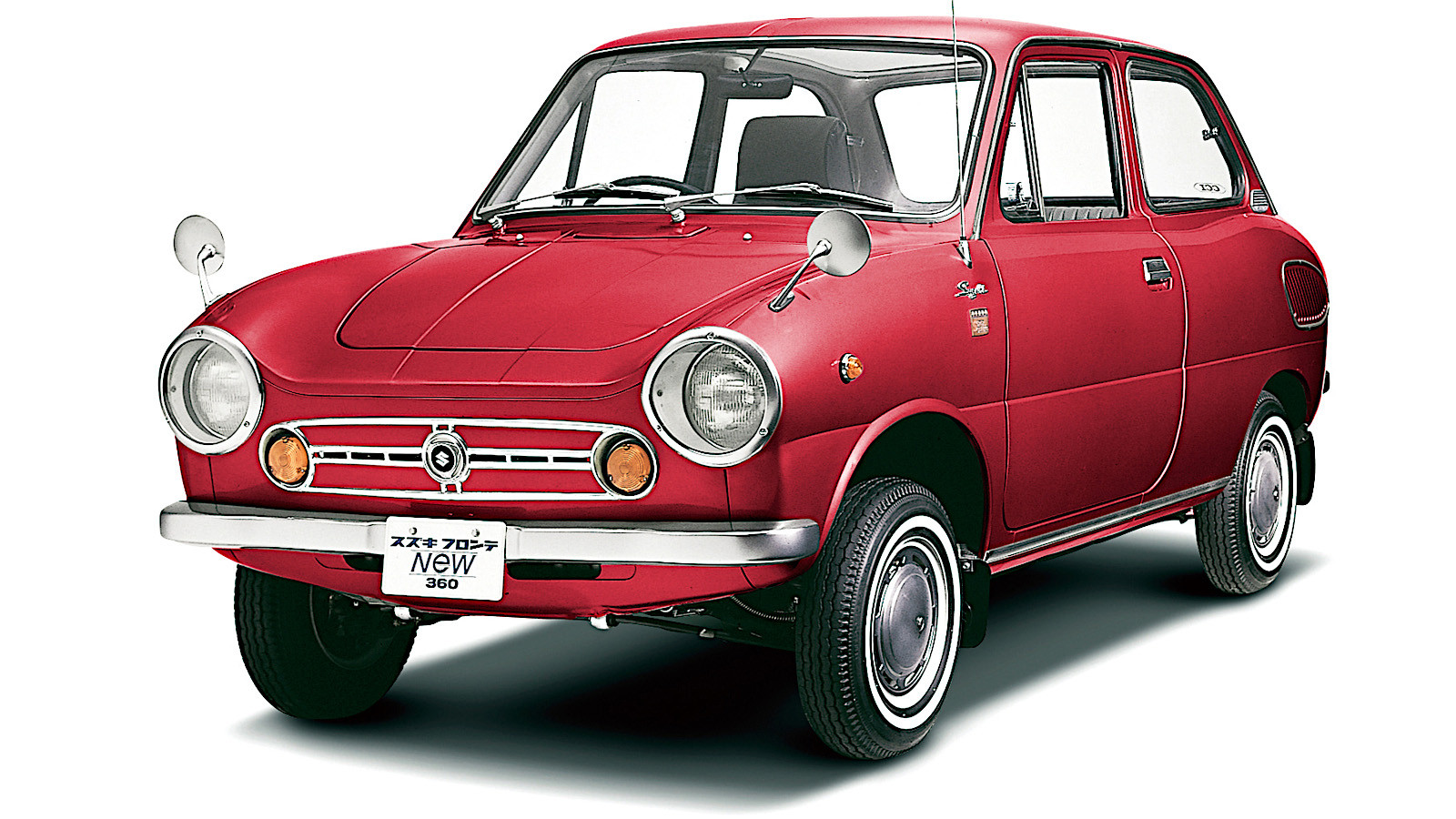
25. Suzuki Fronte 360
Back when its cars were branded as Suzulights, Suzuki used the Fronte name to emphasise the fact that the kei car it launched in 1962 had front-wheel drive.
By the time the original Fronte was discontinued in 1967, the name had become very familiar among Japanese motorists, so Suzuki retained it even though the replacement model was as far from being front-wheel drive as technically possible, with a rear-mounted engine driving the back wheels.
The engine was a 356cc, air-cooled, three-cylinder unit (expanded to 475cc for export markets) which usually produced 24bhp, but was uprated for use in the SS 360.
Suzuki demonstrated the performance of the SS 360 by employing Stirling Moss and Mitsuo Ito, Grand Prix competitors in cars and on motorcycles respectively, to drive two examples flat out on public roads from Milan to Naples, which they did at an average speed of more than 75mph.
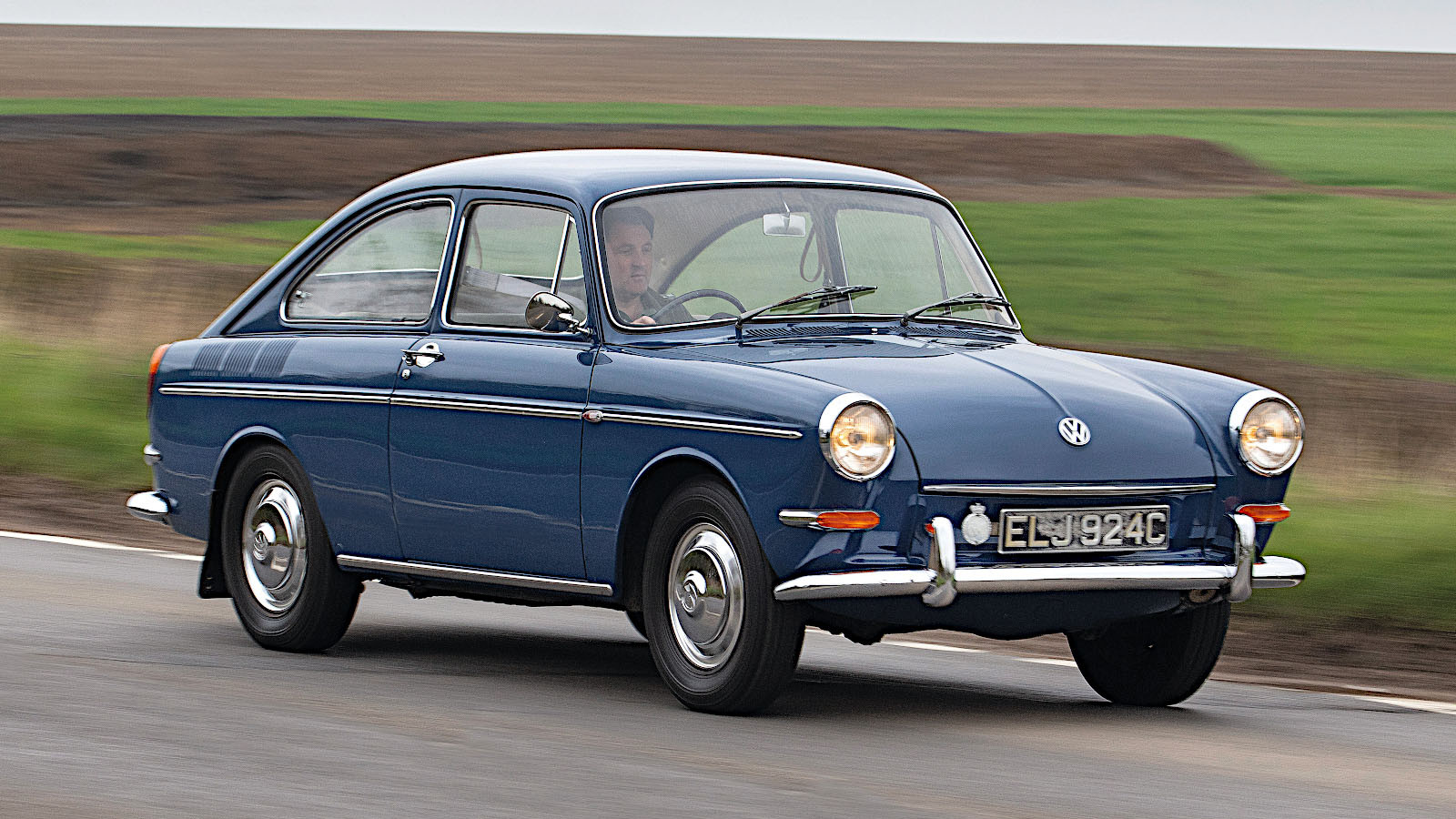
26. Volkswagen Type 3
When Volkswagen decided to produce its largest passenger car to date, it did so relatively cautiously, persevering with the idea of a rear-mounted, air-cooled, flat-four motor which it had also used for every previous model.
Type 3 was an internal code name – the car was actually sold as either a 1500 or a 1600, depending on the capacity of its engine.
The only body style available at launch in 1961 was a three-box saloon, but an estate was added to the range late the following year, a fastback completing the set in 1965.
According to Volkswagen, around 2.6 million Type 3s were built until July 1973, just under half of them being estates.
27. Volkswagen Karmann Ghia
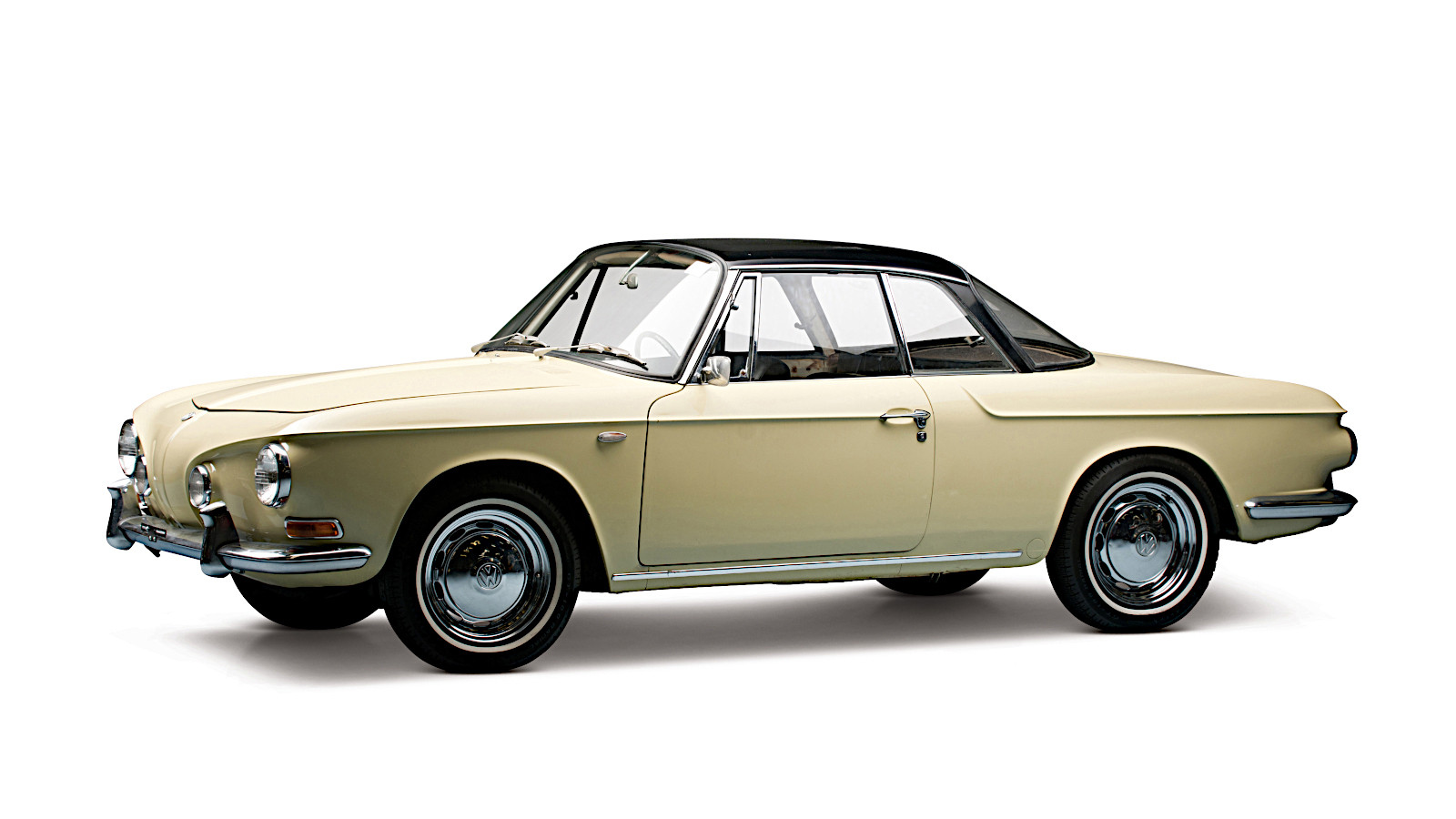
There was no point during the 1960s when the Karmann Ghia (so named because Ghia styled the body and Karmann built it) was not on sale, because it was produced from 1955 to 1975.
At first sight, that early launch date disqualifies the car from our list, but we’ve been talking so far about the Type 14, which was one of two Karmann Ghias, and admittedly by far the more famous.
There was also a Type 34, based not on the VW Type 1 (best known as the Beetle) but on the larger Type 3 mentioned previously.
Fast, stylish, expensive and luxurious by VW’s standards of the period, the Type 34 sold in smaller numbers than the Type 14, and had a shorter production life, from 1961 to 1969.
28. Volkswagen 411
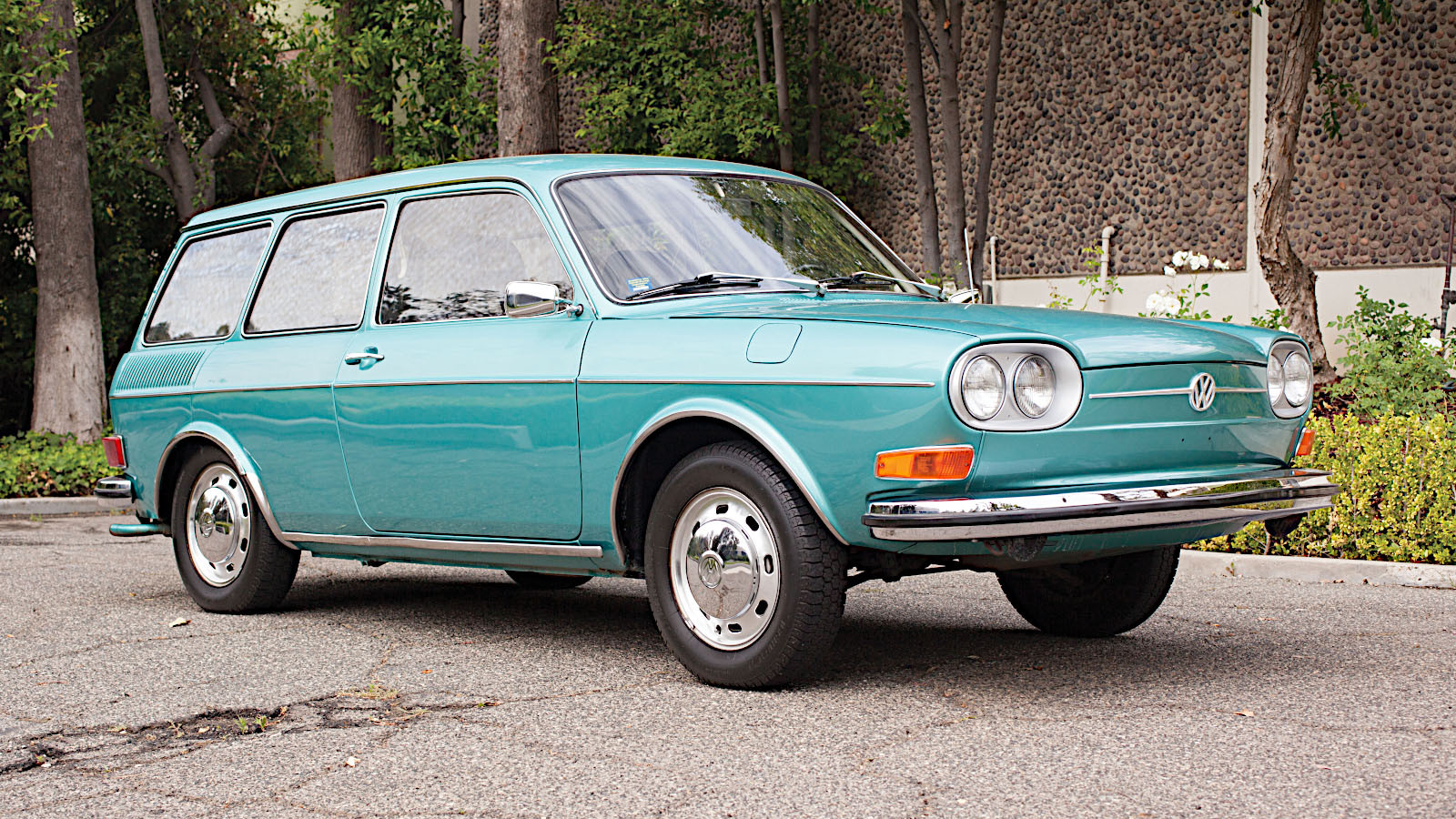
Seven years after the introduction of the Type 3, Volkswagen went further upmarket with the first of its Type 4 models.
Yet again, though for the last time, the unprecedentedly roomy 411 followed early VW practice by having a flat-four engine mounted at the rear and cooled by air.
The engine was the largest of its type, with a capacity of 1679cc and produced 67bhp with two carburettors, or 79bhp with the Bosch fuel-injection system which became available in 1969.
Available both as a saloon and an estate, the latter known as the Variant (pictured), the 411 was produced from 1968 to 1972, before being facelifted and given the name 412.
29. ZAZ 965
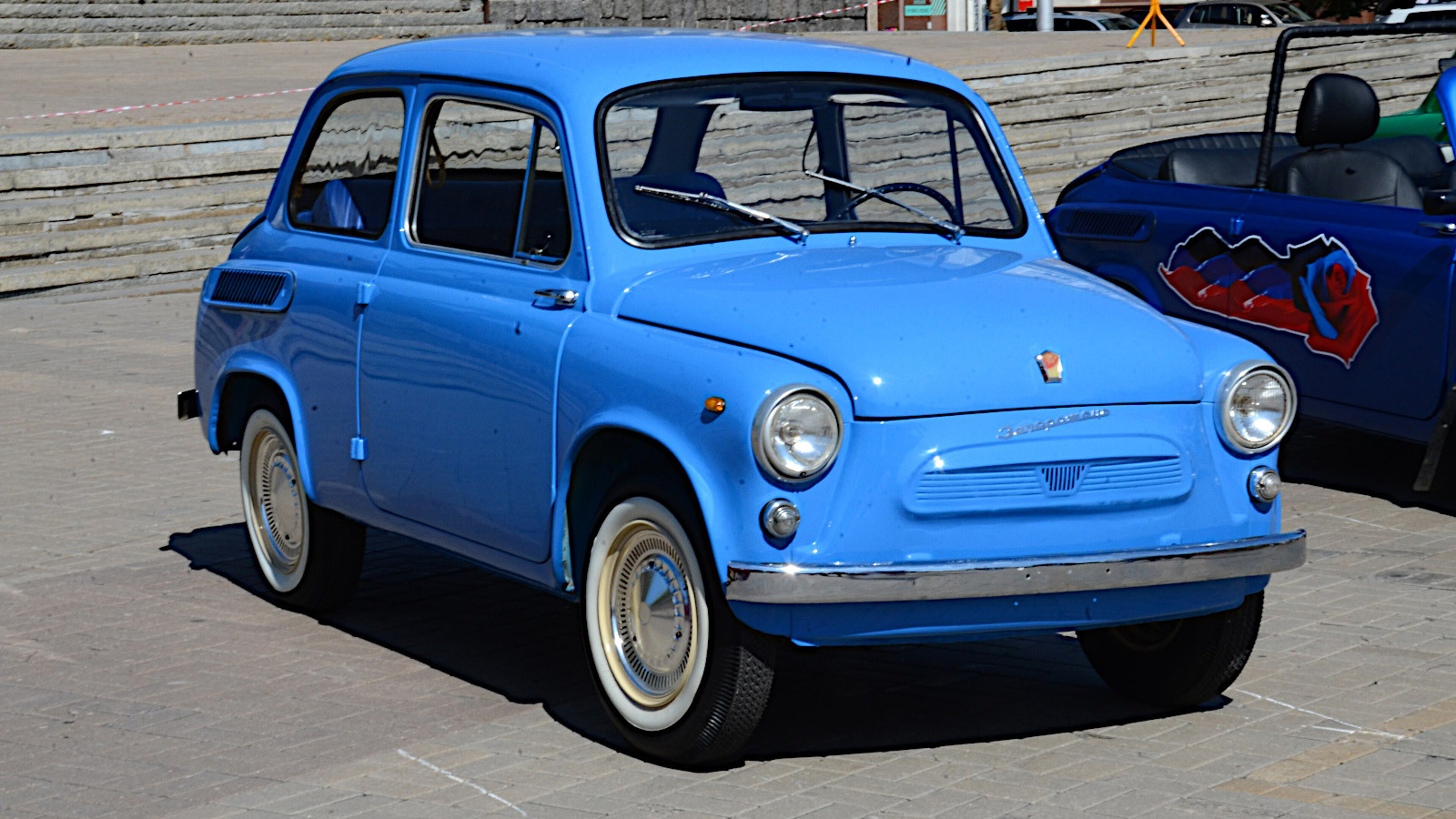
The first passenger car produced in Ukraine (then part of the Soviet Union) was also the first of two rear-engined models collectively known as Zaporozhets.
Introduced in 1960, the ZAZ 965 – or ‘humpback’, to use one of several nicknames applied to it – was designed by a team clearly familiar with the Fiat 600, which had by then been on the market for five years.
However, the engine, apart from being located in the same place, had no connection with the Fiat unit, being an air-cooled, 746cc V4.
Its capacity was increased to 887cc for the ZAZ 965A which was introduced in 1962 and built concurrently with its successor until the end of the decade.
30. ZAZ 966
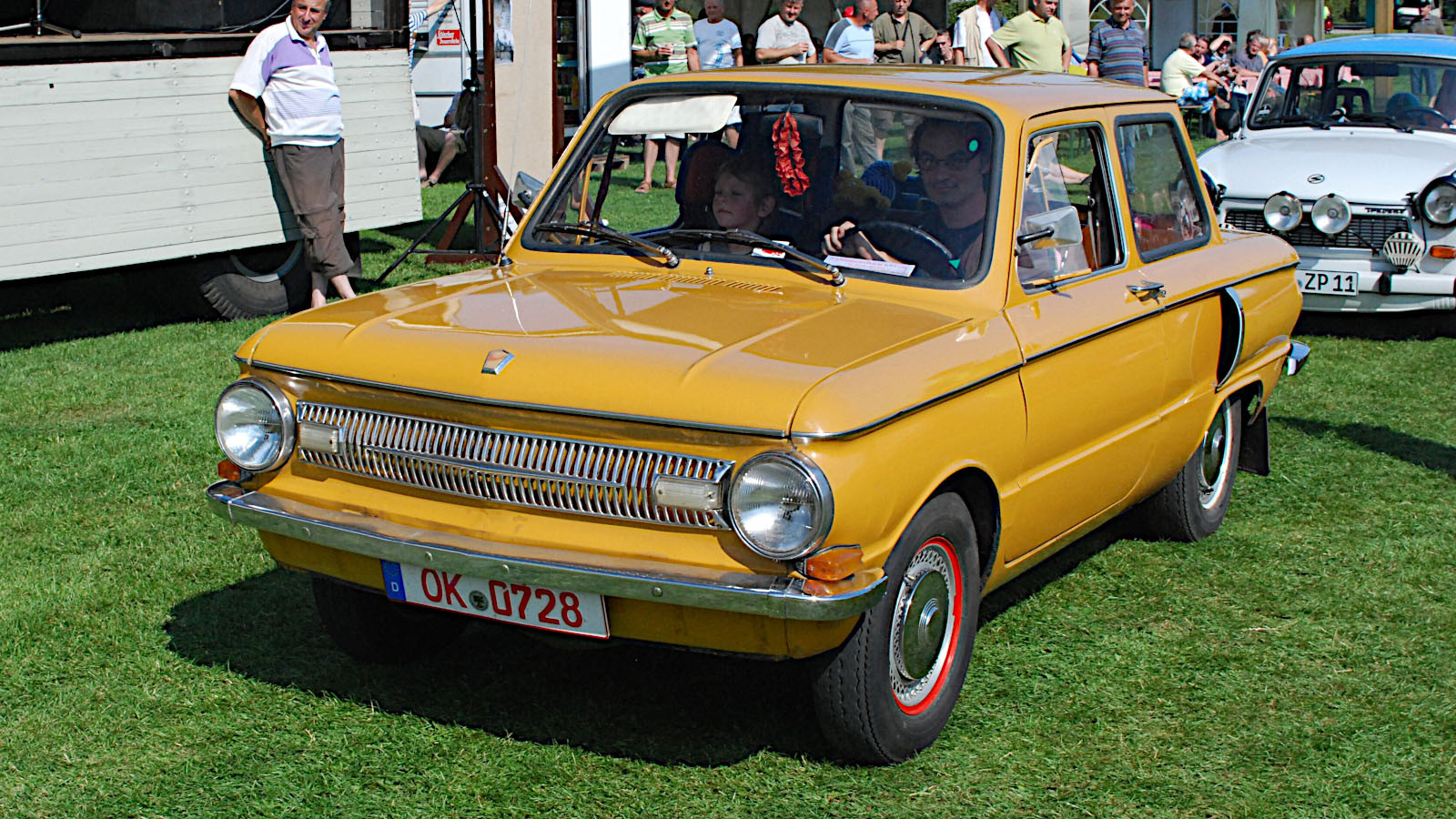
The second Zaporozhets, which made its debut in 1966, bore an even closer resemblance to the NSU Prinz 4 than the first had to the Fiat 600.
Though significantly larger than the 965, the 966 started out with the same V4 engine (in its later 887cc form), though the unit would subsequently be enlarged to 1.2 litres for use in the 968.
The 968 didn’t arrive until the 1970s, which puts it out of the scope of this article, but this was still an early point in Zaporozhets history.
According to the ZAZ company, 3,422,444 examples (starting with the first 965) were built in total, the last of them leaving the factory in 1994.