Ford Bronco family: bucking the trend

| 2 Mar 2026
Classic & Sports Car – Ford Bronco family: wild horses

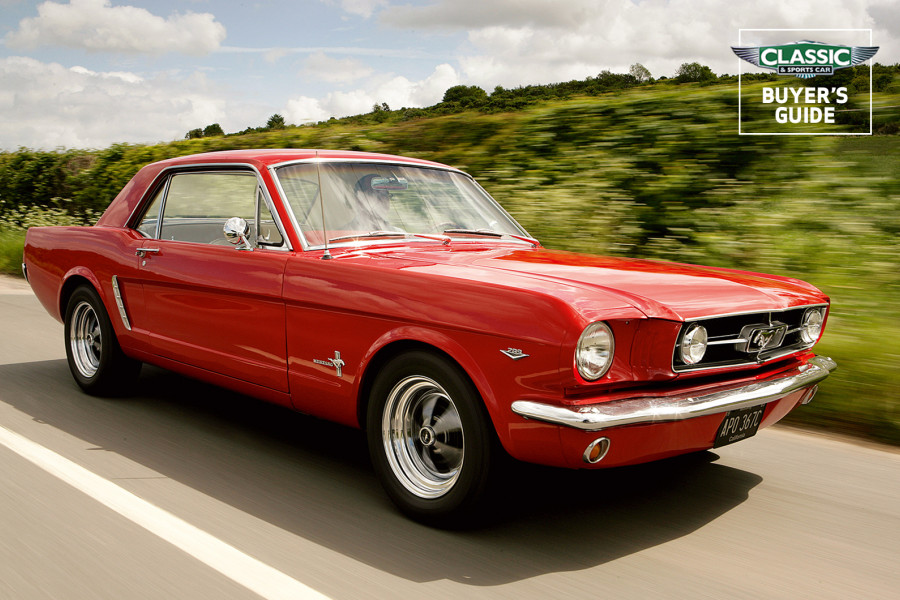
The seismic impact of the Ford Mustang on the American automobile-buying public in the mid-ʼ60s has been very well documented: its launch kick-started a stampede that culminated in an all-out, pony-car war between the motor industryʼs big four.

But another vehicle launched by the same car manufacturer two years later, in 1966, would have a much more lasting effect on US consumers.

And, like the Mustang, it had equine connotations.

Initially regarded as a Johnny-come-lately in the small off-roader market, the Ford Bronco turned out to be at the forefront of a new genre – the sports-utility vehicle.
Classic & Sports Car – Ford Bronco family: wild horses

In 1966, the Ford Bronco helped to kick-start the sports-utility vehicle class

Before the Bronco, these vehicles were used solely by macho military types or rugged Marlboro Men, with hard hats and Stetsons a specialty.

In the world of all-terrain, the Jeep reigned supreme.

Boxy, underpowered and with a bone-annihilating ride on proper roads, 600,000 CJs were sold from 1955 to ʼ83.

The Land-Rover fared slightly better where style was concerned, but speed still wasnʼt on the list of options.

Doing a better job than both of them was Toyotaʼs iconic FJ40 Land Cruiser, the Japanese firmʼs first serious foray into the export market.
All three, though, were uncompromising, utilitarian trucks where extras such as air conditioning meant opening the windows – if indeed they had any.

Classic & Sports Car – Ford Bronco family: wild horses

The Ford Bronco proved that rugged off-roaders could also be usable daily drivers

By the early ʼ60s, off-roading was a growing hobby in the USA.

With acres to play in, charging around deserts or up rock faces in small, modified 4x4s had begun to capture the public imagination.

At the dawn of the recreational truck, only farm-equipment brand International Harvester had a vehicle that owners could drive to the wilderness, take off-road and come home again in relative civility.

Launched in 1961 and finished in moderately brighter colors, the Scout was box-like in shape with a high fender line but, like its forefathers, was initially powered by a weedy four-cylinder 86hp motor.

Classic & Sports Car – Ford Bronco family: wild horses

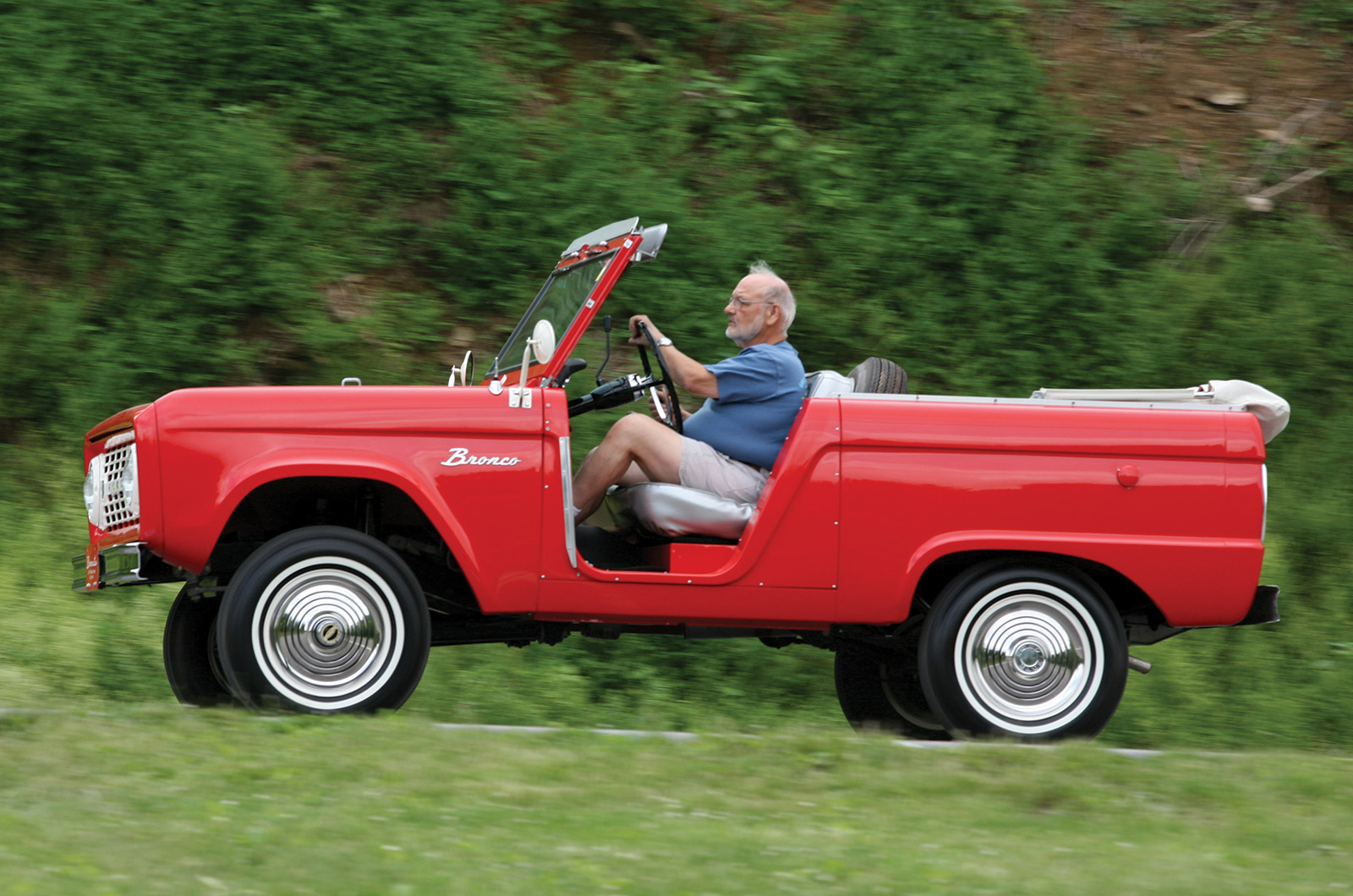
The roadster-style Ford Bronco U13 is the rarest – it was only offered for three years

International, whether due to a lack of marketing confidence or simply because it didnʼt have the showroom infrastructure, never lit up the cash registers.

Ford, on the other hand, had more self-belief and dealerships than you could shake a stick at.

As the ad campaign said, ʻFord has a better ideaʼ – even if it wasnʼt totally original.

It also must be remembered that, at the time, the Dearborn colossus was hot.

Achievements on the track led to huge sales on the street and it had outpaced the opposition in most areas, particularly the youth market, so a funky 4x4 that would appeal to cowboys and surfers alike was pretty much a sure-fire hit.

Classic & Sports Car – Ford Bronco family: wild horses

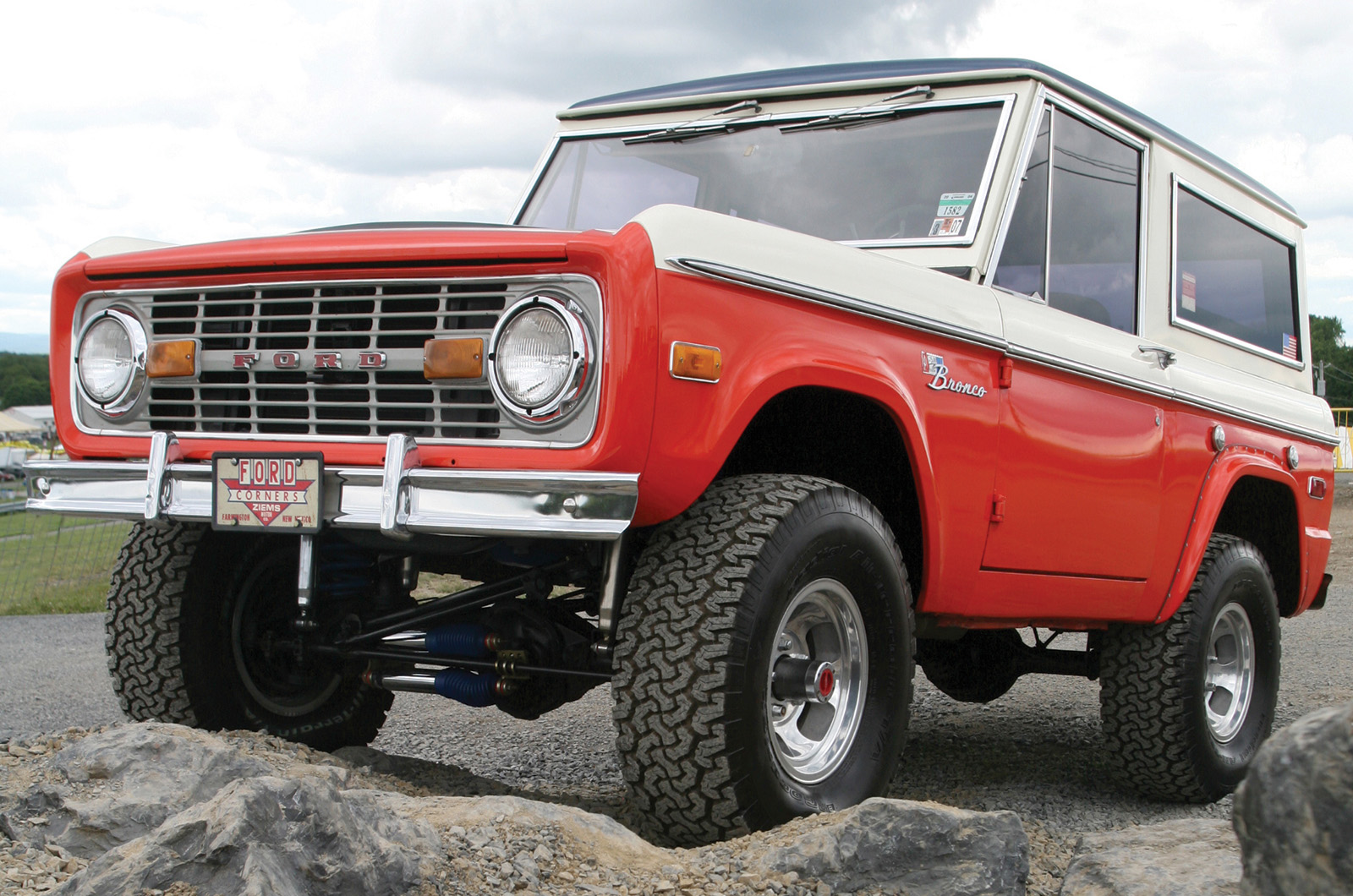
Ford brought bold colors to the rough-terrain genre: ‘Since when were cattle rounded up with a fire-engine red off-roader?’

The auto maker had experience of off-roaders, having done more than its share for the war effort by producing, among an array of vehicles, its own version of the American Bantam-designed Jeep.

Ironically, the other manufacturer involved in the Jeep, Willys-Overland, launched a more civilian-friendly car in the ʼ50s – the Jeepster – that in hindsight could also be seen as a prototype to the Bronco concept.

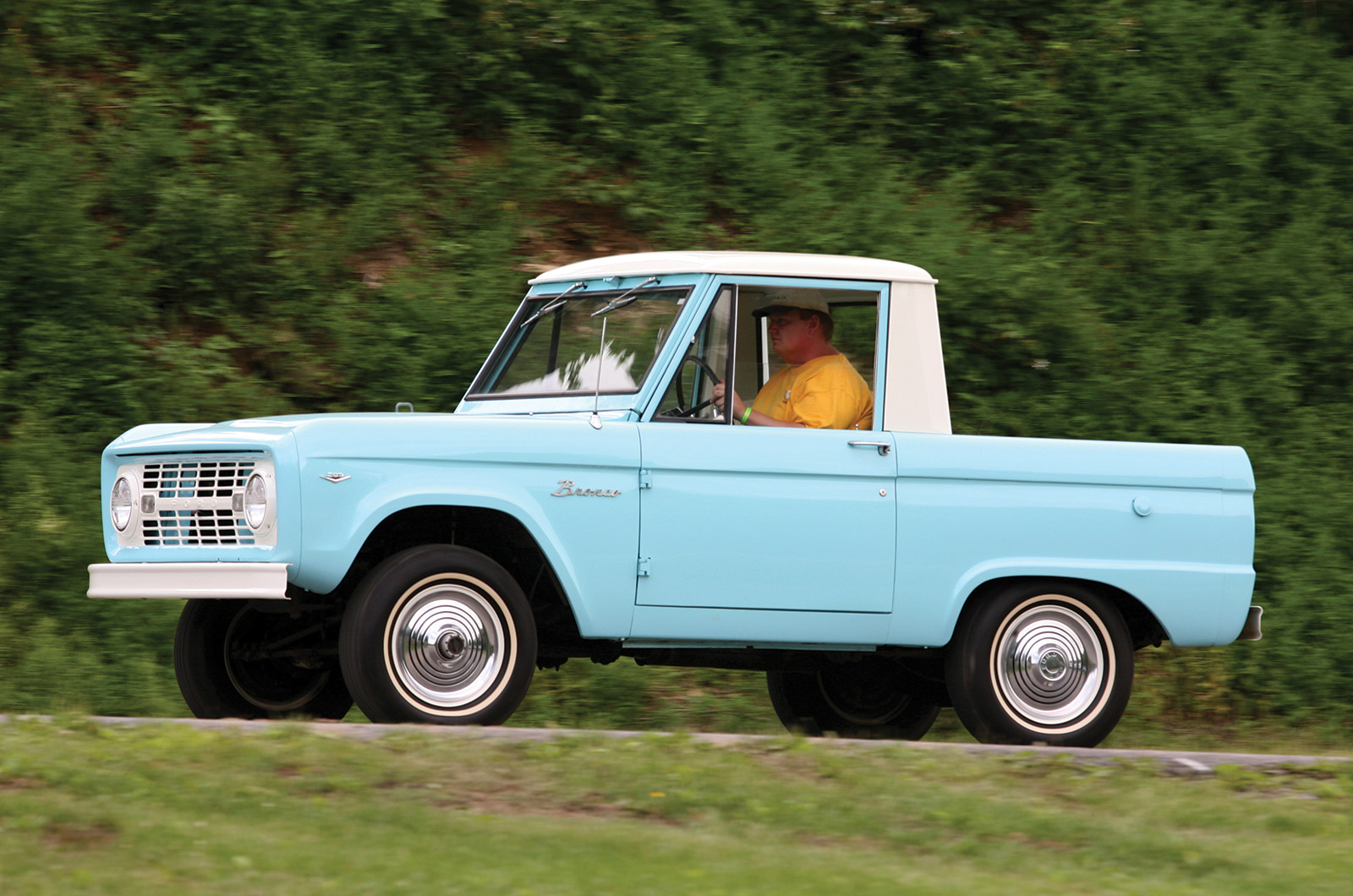
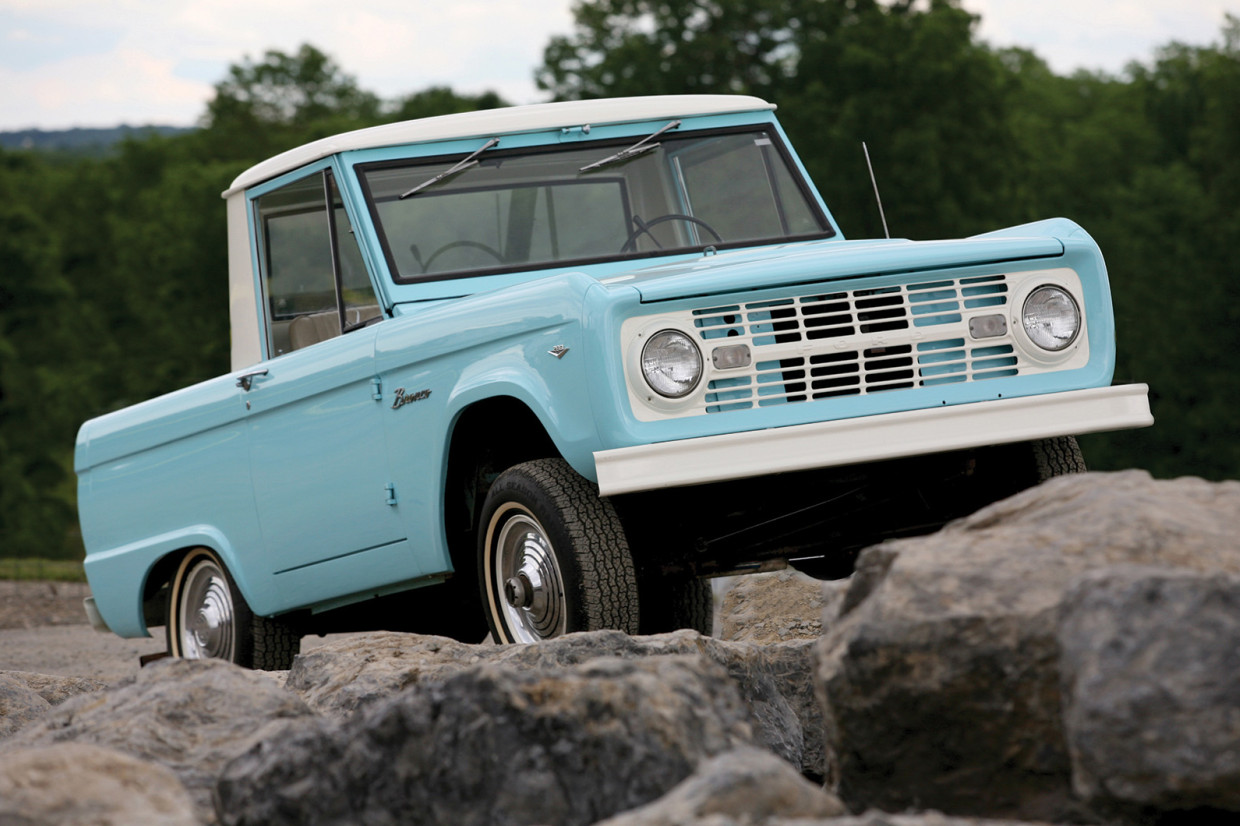
Unveiled in fall 1965, the Ford Bronco came in three body styles, designated by the factory as U13, U14 and U15 but more recognizable as a roadster, a half-cab pick-up and a full-length hardtop.

Classic & Sports Car – Ford Bronco family: wild horses

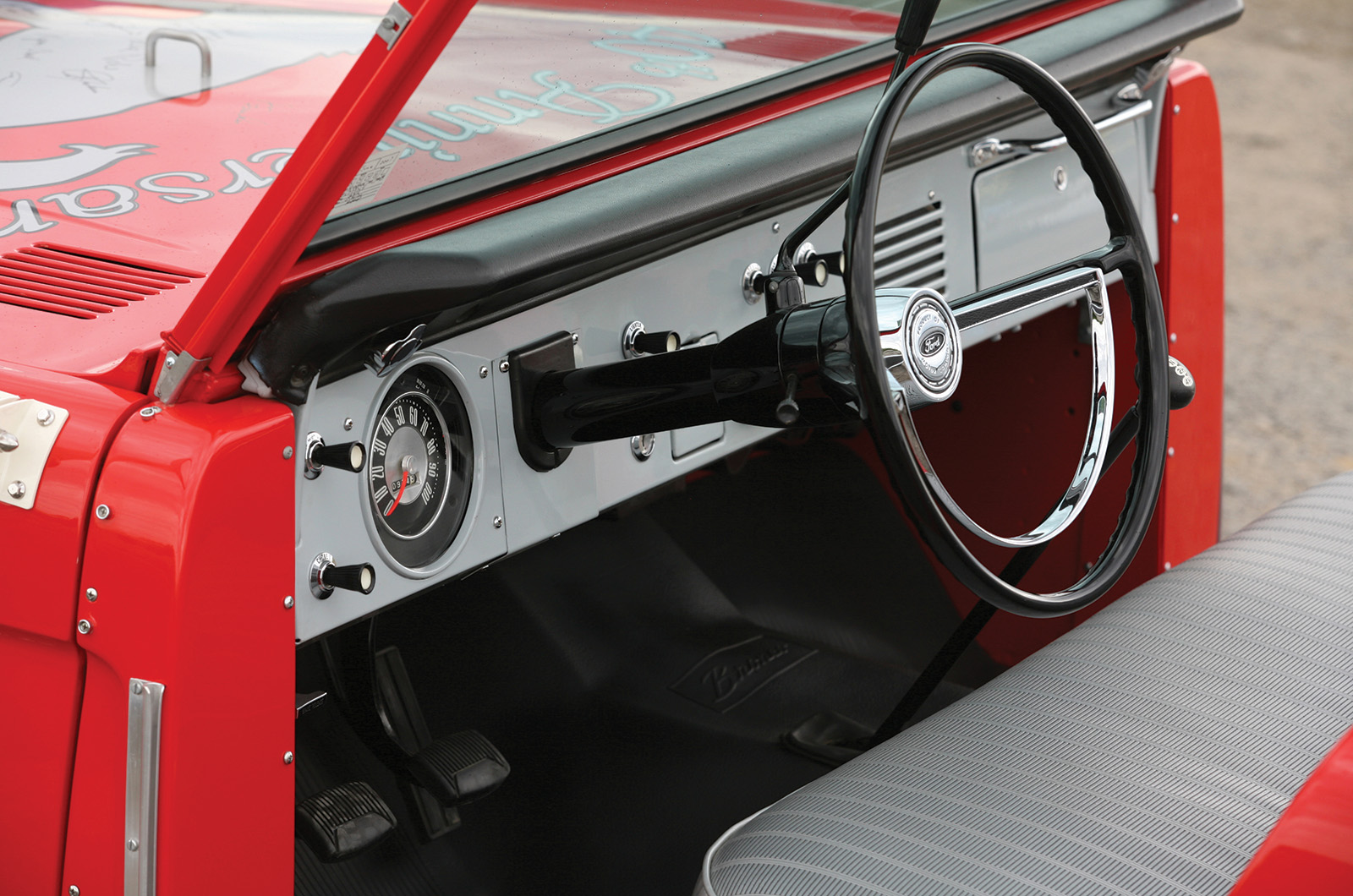
The Ford Bronco’s simple dashboard has just one dial

Their square-line looks gave more than a passing nod to the Scout but, because of the Ford Broncoʼs smaller size and lower beltline, they appeared more approachable, even cute – particularly when finished in the same array of colors reserved for the Mustang.

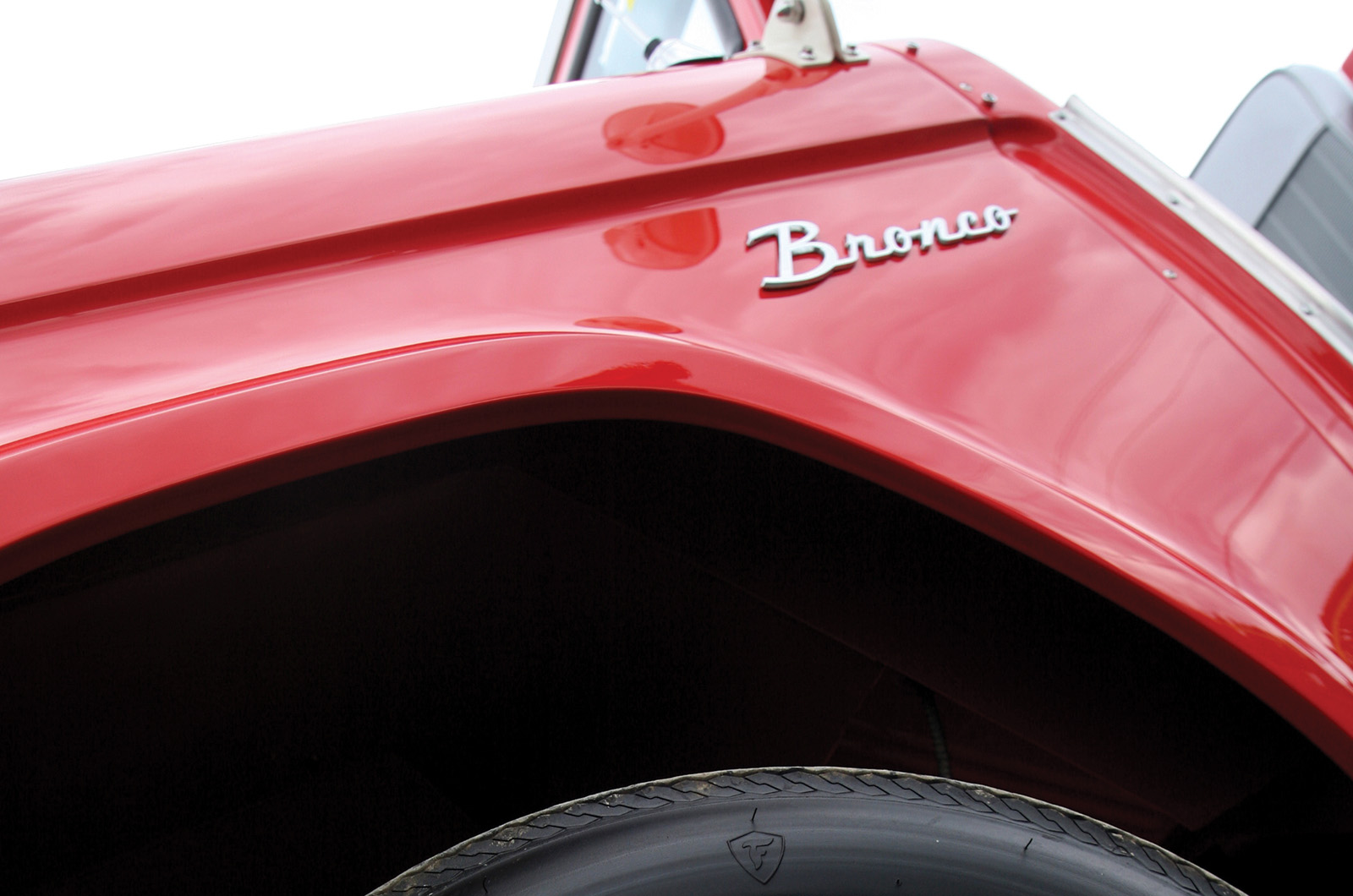
Since when were cattle rounded up with a fire-engine red off-roader?

Underneath was a welded box-section chassis providing a neat 92in (2337mm) wheelbase and 68.8in (1748mm) width, which by all accounts gave it more stability than the venerable CJ.

Suspended from this frame were two live axles, the front by coils, the rear by semi-elliptic leaf springs.

Classic & Sports Car – Ford Bronco family: wild horses

The Ford Bronco U14 was a handy pick-up

Drive was normally via the rear, but a two-speed Dana transfer case enabled the would-be adventurer to use all four wheels once the front hubs were engaged.

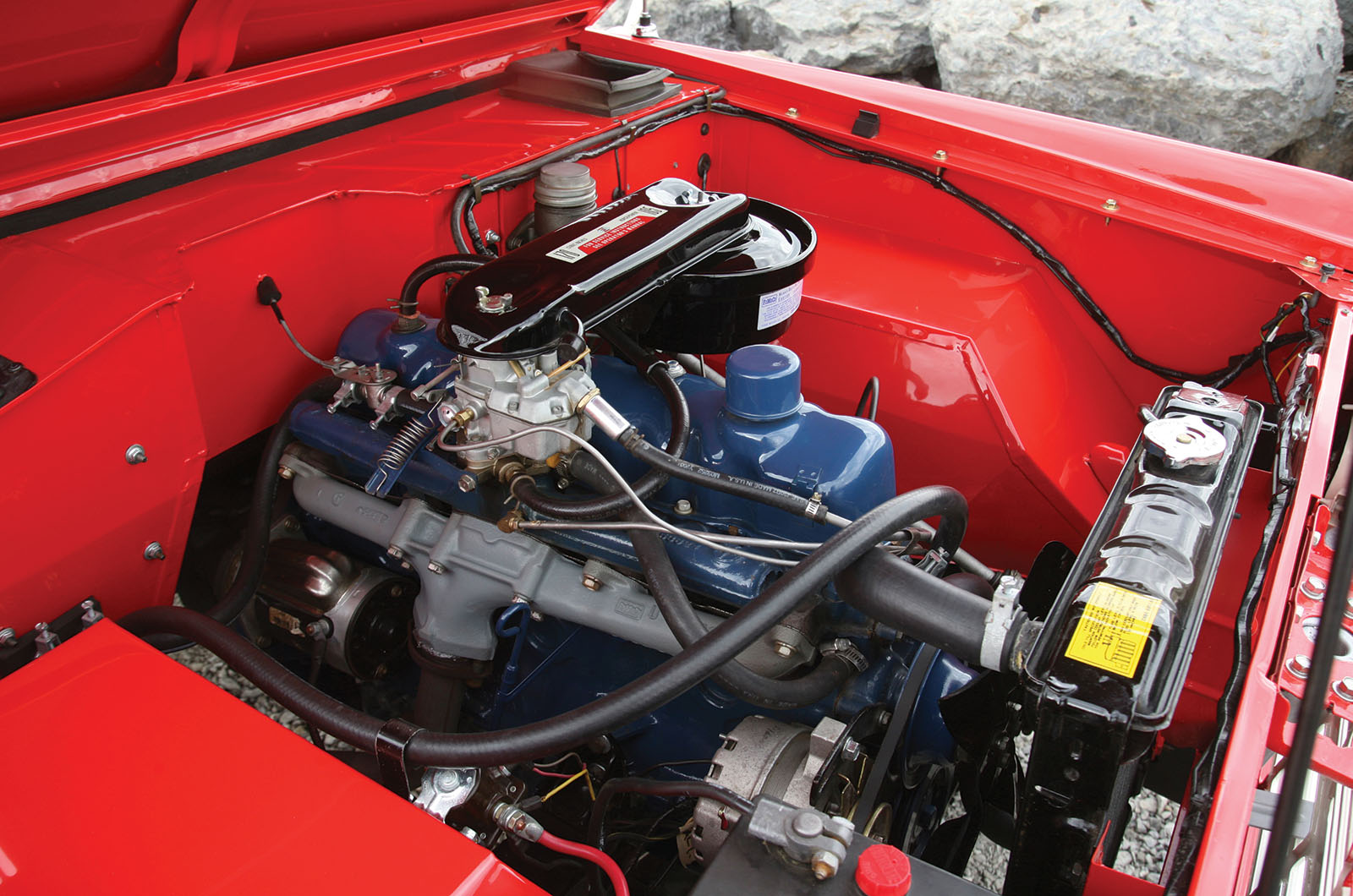
The Ford Bronco was powered by the base six-cylinder 170cu in motor used in the Falcon, mated to a three-speed manual gearbox, but by March 1966 the infamous 289cu in V8 was also available.

This 4.7-liter engine gave the car a good turn of speed for its class, which, coupled with nimble handling, earned the Bronco encouraging praise.

Motor Trend reckoned: ʻThe chassis design deserves credit; it provides an acceptable degree of creature comfort without any sacrifice in ruggedness.ʼ

Classic & Sports Car – Ford Bronco family: wild horses

The Ford Bronco U15 has a full-length hardtop

Car Life simply proclaimed: ʻEven a dude will holler Eeeeeaaaayyyhhooo!ʼ

Pricing was competitive, too, with base models starting at $2355 for the roadster to $2570 for the wagon.

Though not quite the runaway sales success of the Mustang, the Broncoʼs debut was more than satisfactory for Ford management – not least because once again it had caught General Motors napping.

Its fiercest rival took three years to catch up, with the Chevrolet Blazer.

Of the three Ford Bronco models, the roadster is now the rarest.

The body style, discontinued after just three years, features a shallow fiberglass insert where the door should be, a fold-flat windshield and a drop-down tailgate.

Classic & Sports Car – Ford Bronco family: wild horses

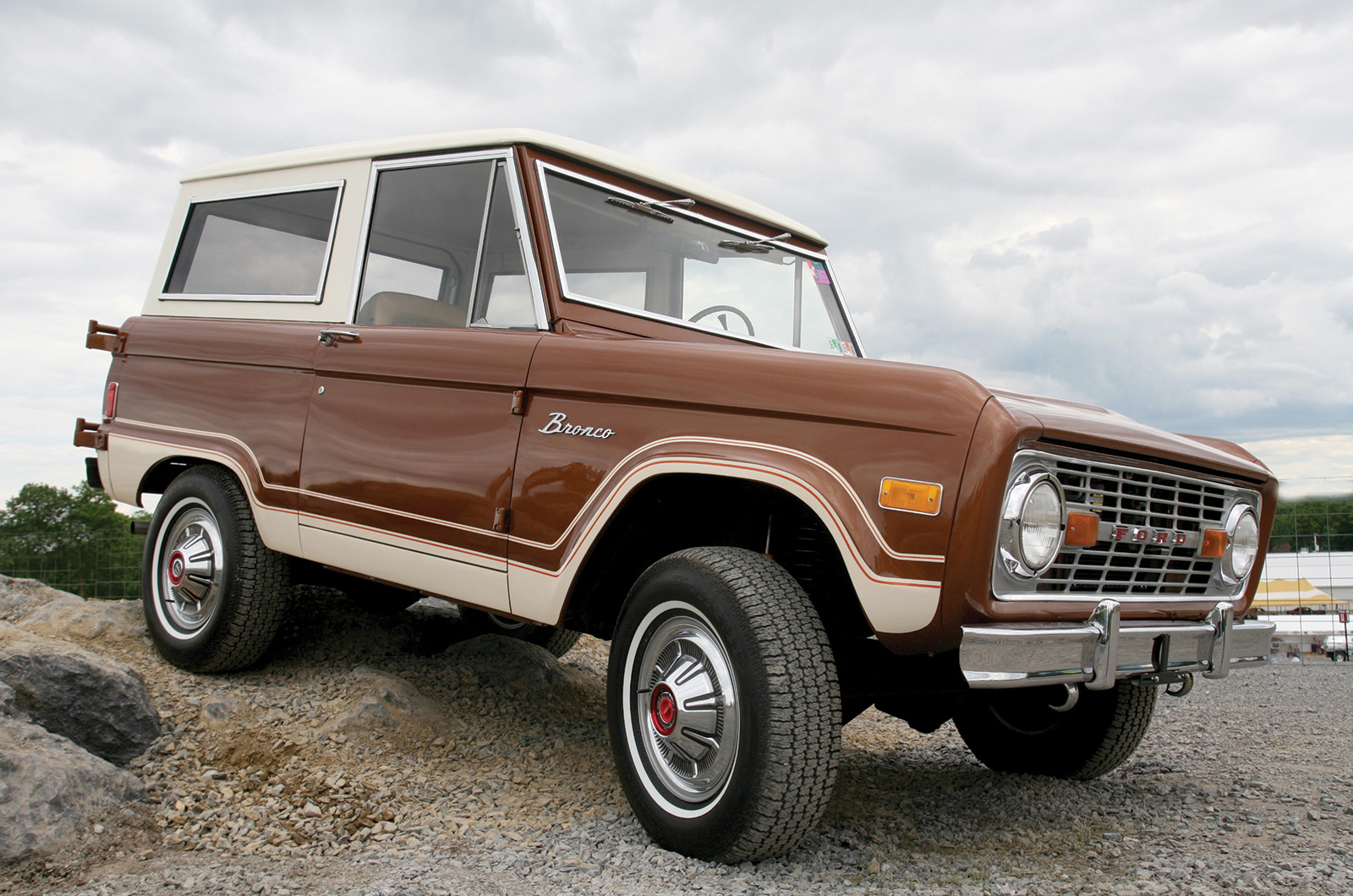
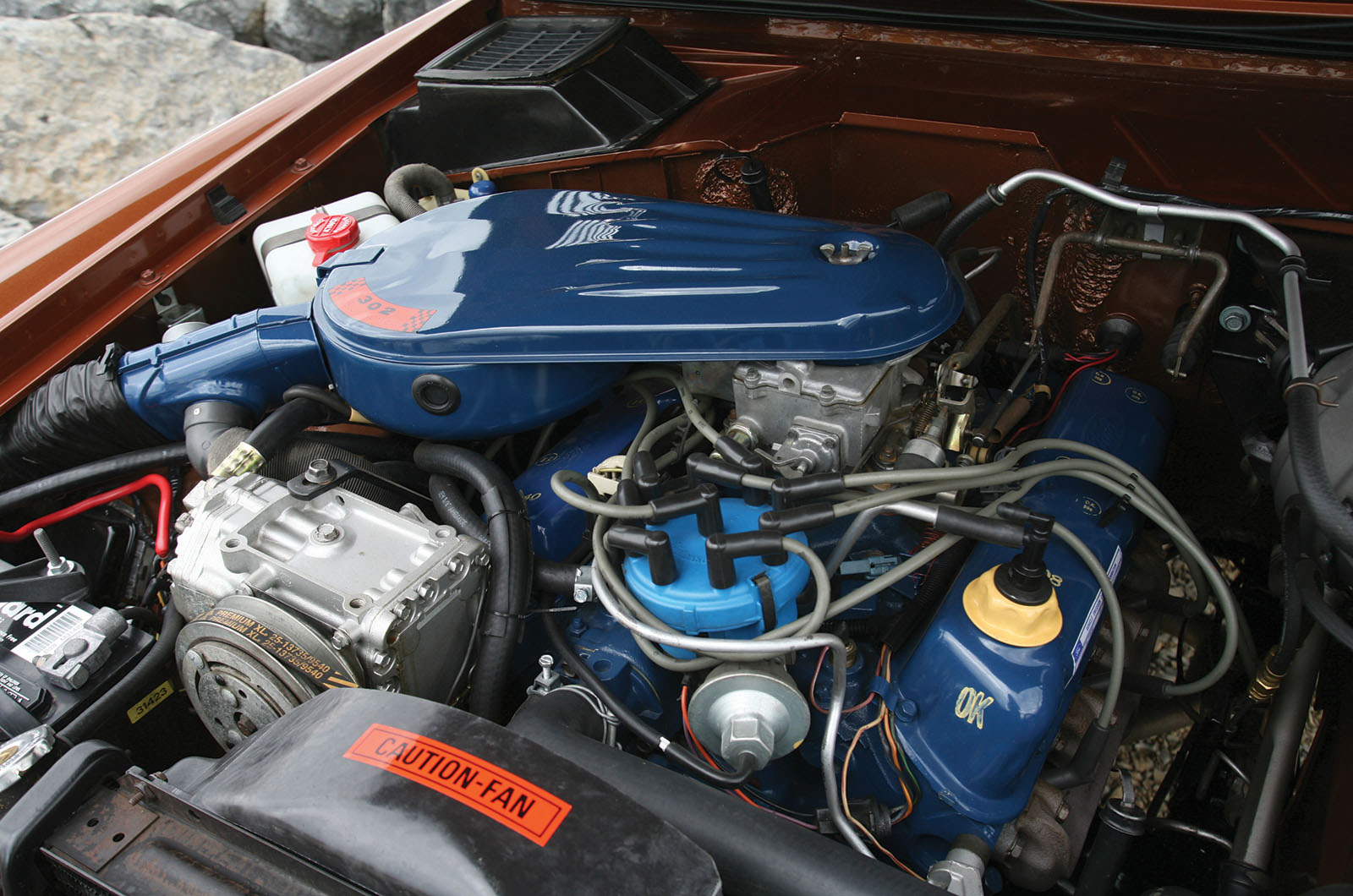
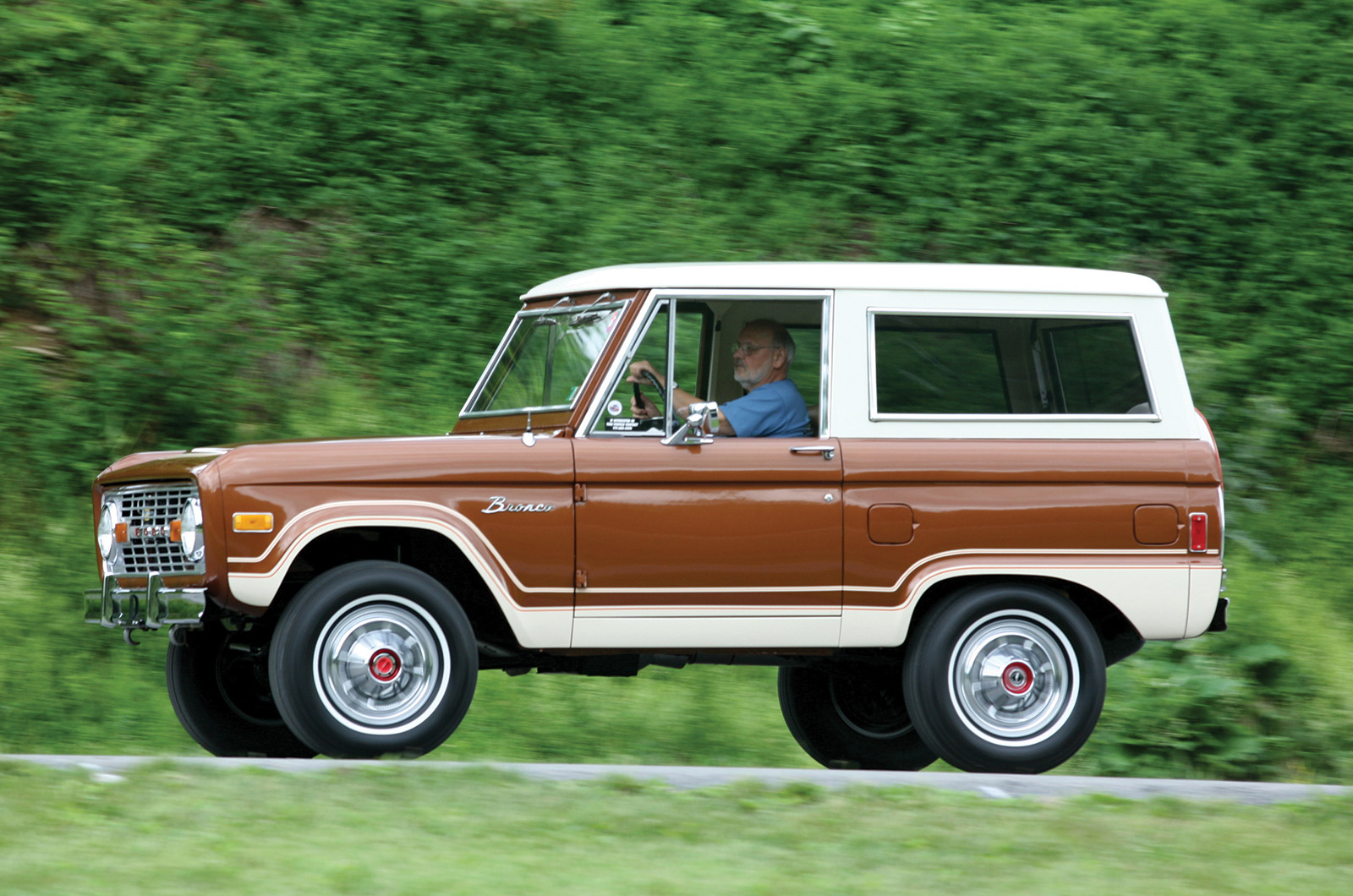
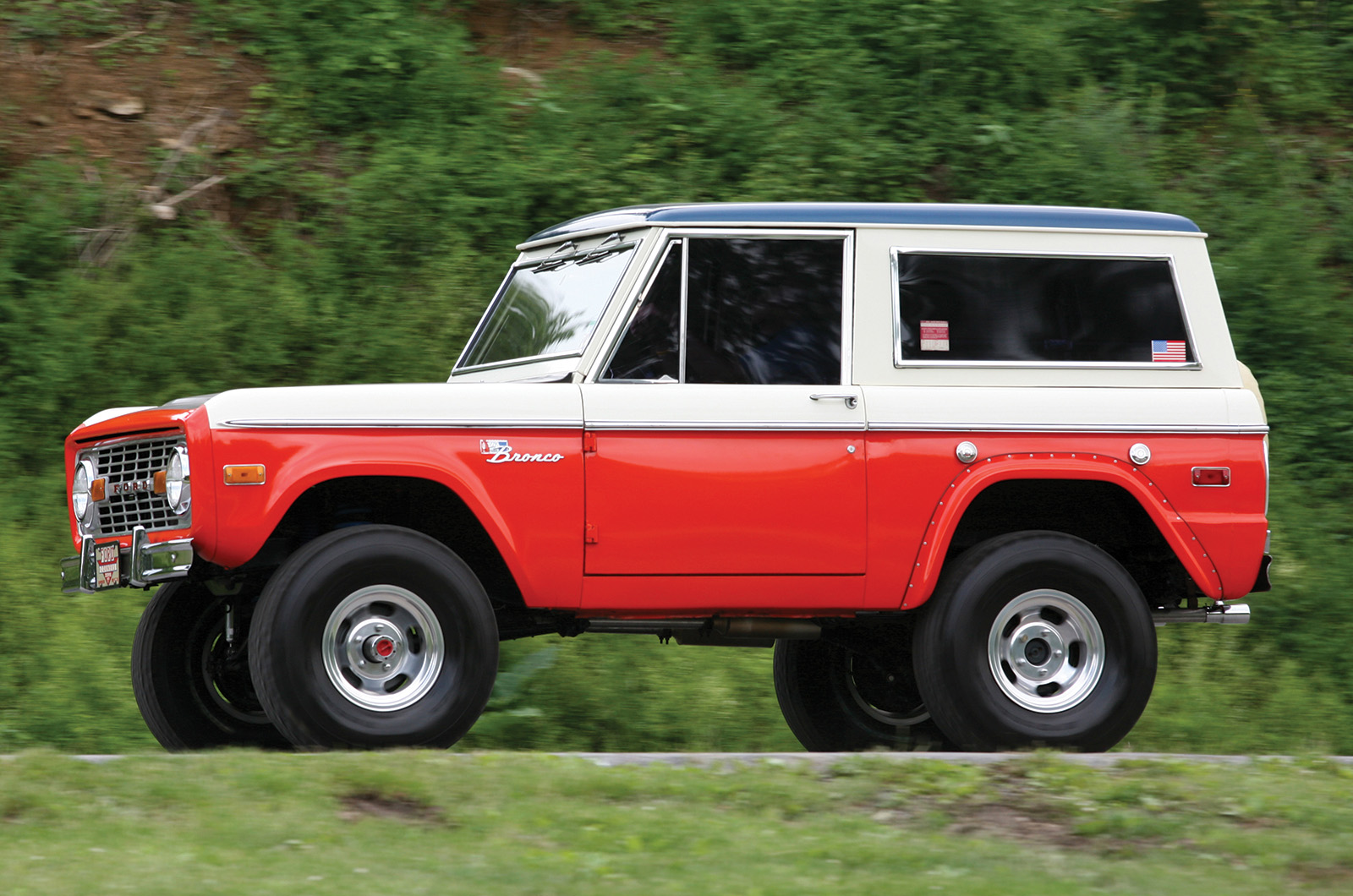
This 1973 Ford Bronco has a 302cu in V8 engine

The Ford Bronco’s roof is detachable from the wagon and the pick-up, revealing the same features with the obvious exception of doors and a rear bulkhead on the latter.

The dashboard is simplicity itself, with a full-width flat panel painted the vehicle’s body color, interrupted by a single, large dial and, like the steering wheel, the switchgear would be familiar to Ford Falcon owners.

With standard gearing of 4.11:1, highway cruising is sensible at about 55mph.

Any prolonged outings in excess of the speed limit will mean either headphones or an engine rebuild. So perfect for use around town, then?

Classic & Sports Car – Ford Bronco family: wild horses

Ford Broncos are compact compared to modern off-roaders, but handle well on their compact wheelbase

Itʼs sad, but a short amount of time in the company of an early Ford Bronco and that unsavoury notion becomes even more appealing.

Thereʼs nothing to steal, it will fit into the same gaps as a Ford Focus, the turning circle is a best-in-class 34ft (10.4m) – and it would hold its own in any fender-bending competition.

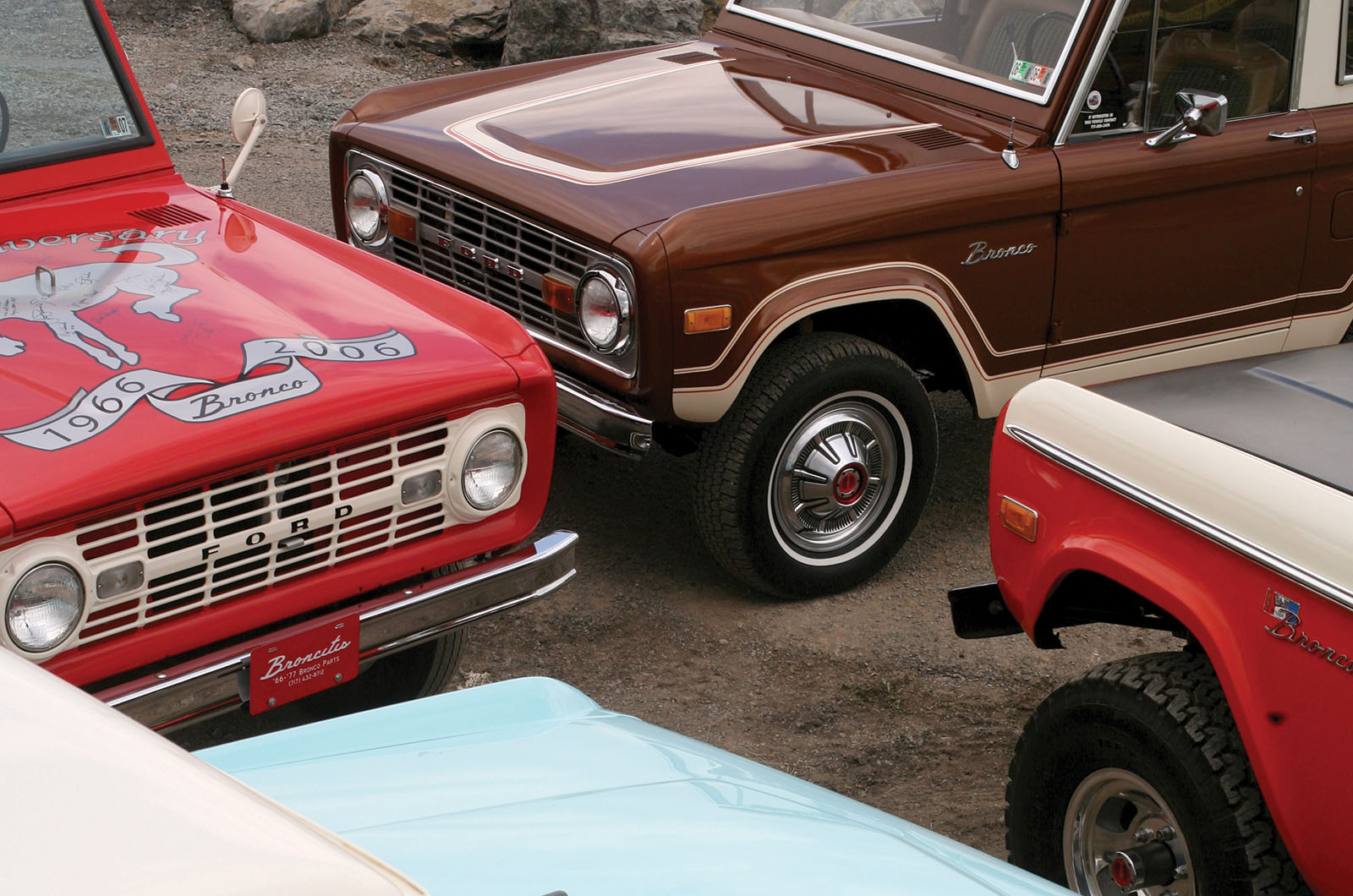
The later, metallic brown ʼ73 wagon, photographed here with its seats upholstered in a rather groovy, checked fabric and with its 302cu in motor, would be the envy of the more fashion-conscious people of London’s Kensington and Chelsea.

Ford Bronco enthusiasts would rightfully pour scorn on such thoughts.

Classic & Sports Car – Ford Bronco family: wild horses

Engineer Bill Stroppe created Baja-winning Broncos; Ford celebrated with a run of special-edition models

Fans such as grizzled rocker Ted Nugent, who bought his first Bronco in ʼ71 and has owned about 10, like nothing better than to get off the beaten track with their little ponies.

All the owners we encountered seemed to mutter a universal mantra: “Wanna climb the mountain?”

As a result, originality and beauty pageants arenʼt really their thing.

CB radios, gun racks, huge floodlights, great big wheels and tires – now youʼre talking.

The first generation of Ford Broncos lasted 11 years, in which time it had been instrumental in showing Americans parts of their country they didnʼt know even existed, as well as forging the nationʼs trend for SUVs.

Classic & Sports Car – Ford Bronco family: wild horses

The Ford Baja Bronco got a hot 302cu in motor, with a four-barrel carburetor

Had they remained nimble ponies and not bloated into gas-guzzling carthorses, the sports-utility idea might be looked upon more favorably today.

As a footnote, two interesting items emerged while delving into the world of Ford Broncos.

The first was Fordʼs third-time-unlucky attempt to repeat its success of marrying a horsey name in the hopes of repelling the invasion of foreign imports at the end of the ʼ60s with the less-than-spectacular Pinto.

And secondly, the amazingly astute Car and Driver magazine, which summed up its fledgling SUV group test of 1967 with the line: ʻMuch of the recent demand for off-the-road vehicles comes from people who donʼt really need them.ʼ

More than 50 years later and thereʼs not been an iota of change.

Images: James Mann

Thanks to: the Mid-Atlantic Chapter of the ’66-’77 Ford Bronco Enthusiasts

This was first in our December 2006 magazine; all information was correct at the date of original publication


Factfile

Classic & Sports Car – Ford Bronco family: wild horses

Ford Bronco

  • Sold/number built 1966-’77/225,585
  • Construction ladder-type steel box-section chassis, with pressed-steel body
  • Engine all-iron, ohv 2781cc (170cu in) straight-six, single Autolite carburetor
  • Max power 105bhp @ 4400rpm
  • Max torque 158lb ft @ 2400rpm
  • Transmission three-speed manual, 4WD
  • Suspension: front tubular beam axle, leading radius arms, track bar, coil springs rear live axle, twin longitudinal leaf springs; telescopic shock absorbers f/r
  • Steering worm and roller
  • Brakes drums
  • Length 12ft 8in (3861mm)
  • Width 5ft 9in (1753mm)
  • Height 5ft 11½in (1816mm)
  • Wheelbase 7ft 8in (2337mm)
  • Weight 3670lb (1664kg)
  • Mpg 14.5
  • 0-60mph 22.6 secs
  • Top speed 74mph
  • Price new $2351 (1966)

We hope you enjoyed reading. Please click the ‘Follow’ button for more super stories from Classic & Sports Car.