Were these rare Triumph Stags missed opportunities?

| 3 Jun 2026
Classic & Sports Car – Triumph Stag saloon and estate: when two become one

You can imagine the quizzical looks back and forth as Del Lines’ eyes flitted from the engine bay of the Triumph 2000 from which he had just removed a straight-six motor to that of the newly released Triumph Stag he had in his workshop.

The front chassis legs were the same… and that triggered an idea: Lines was going to make the car Triumph wouldn’t.

Ian ‘Del’ Lines’ brother had bought a garage in Weston-super-Mare, in the south-west of England, earlier in 1970, and the pair specialized in Triumphs.

Atlantic Garage developed a reputation for sorting out the troublesome Lucas injection fitted to the TR6 and 2.5 PI, and, as a keen clubman rally driver, Del learnt how to improve the chassis.

Classic & Sports Car – Triumph Stag saloon and estate: when two become one

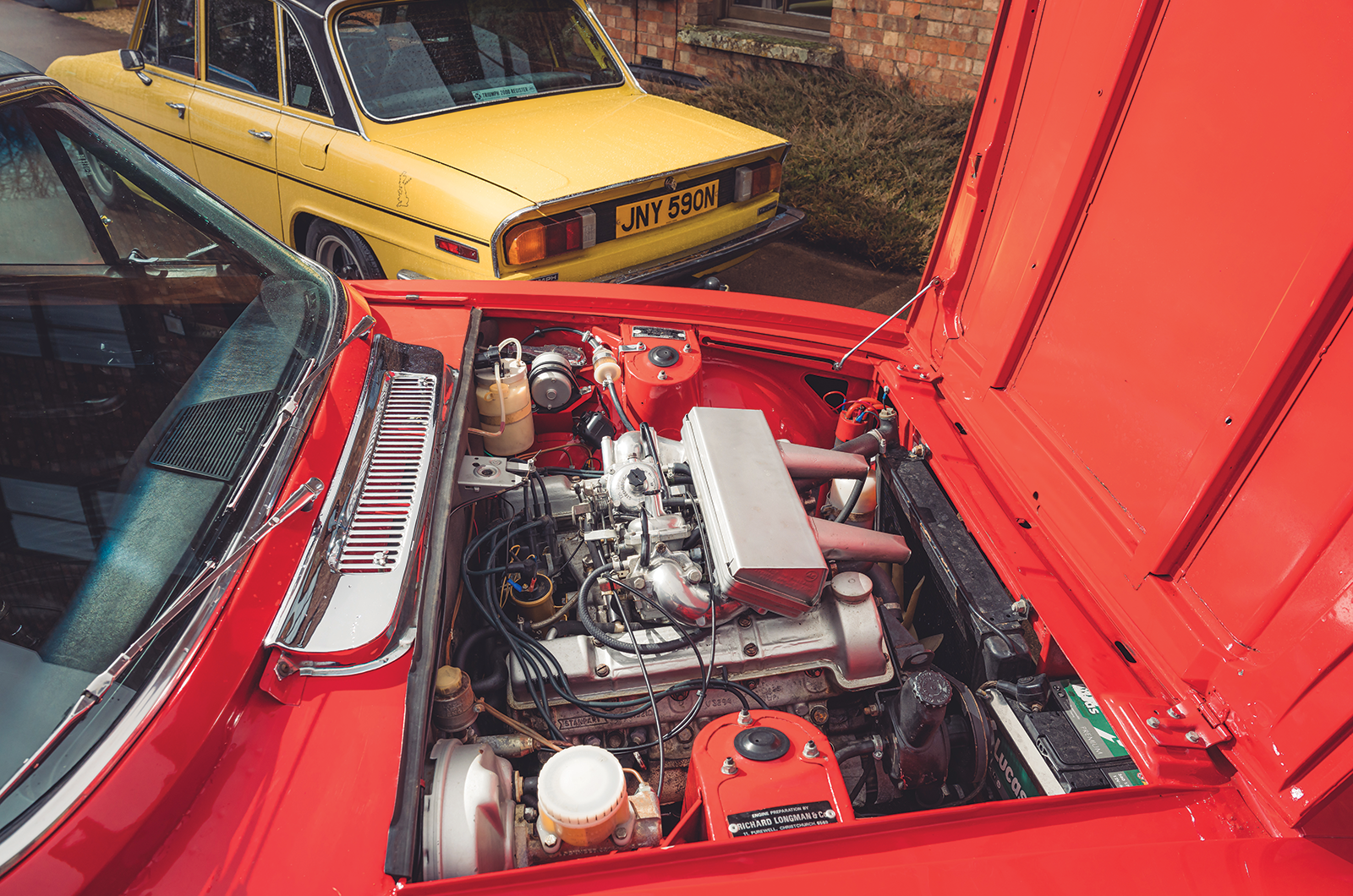
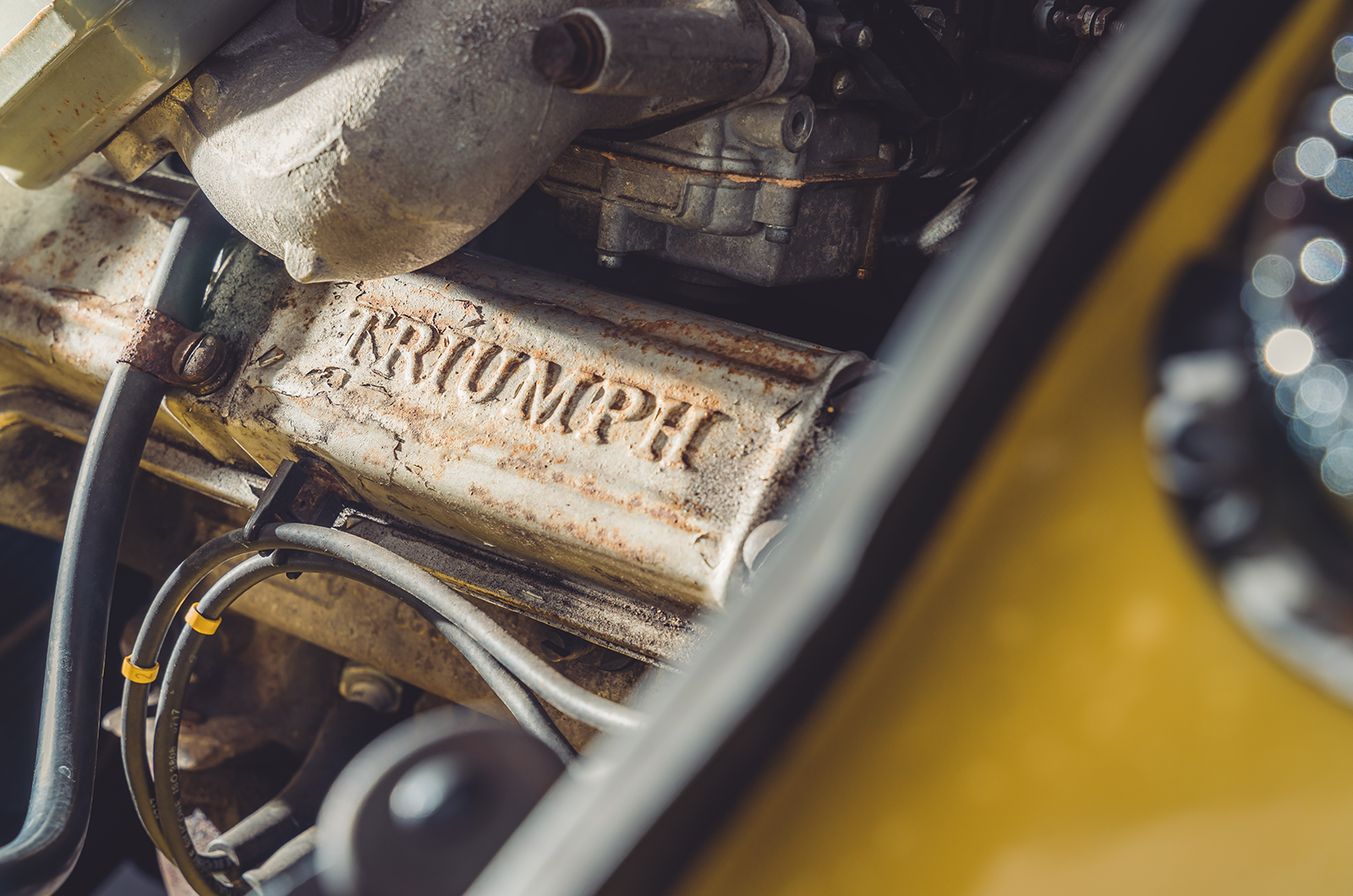
The Triumph V8 is a relatively simple swap, but the Stag radiator and battery box must tag along

This enthusiastic, grassroots rallying required a tow vehicle, for which Del employed a 1966 Triumph 2000 Estate (as station wagons are called in the UK).

It was this well-worn car, which was suffering from an ailing engine, that Lines was busy disassembling while the Stag, heavily accident-damaged after just a mere 500 miles from new, and having only been released in June 1970, was sitting alongside it in his workshop.

Because of this poor nearly new Stag owner’s deep misfortune, Lines was one of the first people outside the world of British Leyland to realize that the new Triumph V8 motor would, in fact, be an easy fit into the 2000/2500.

Classic & Sports Car – Triumph Stag saloon and estate: when two become one

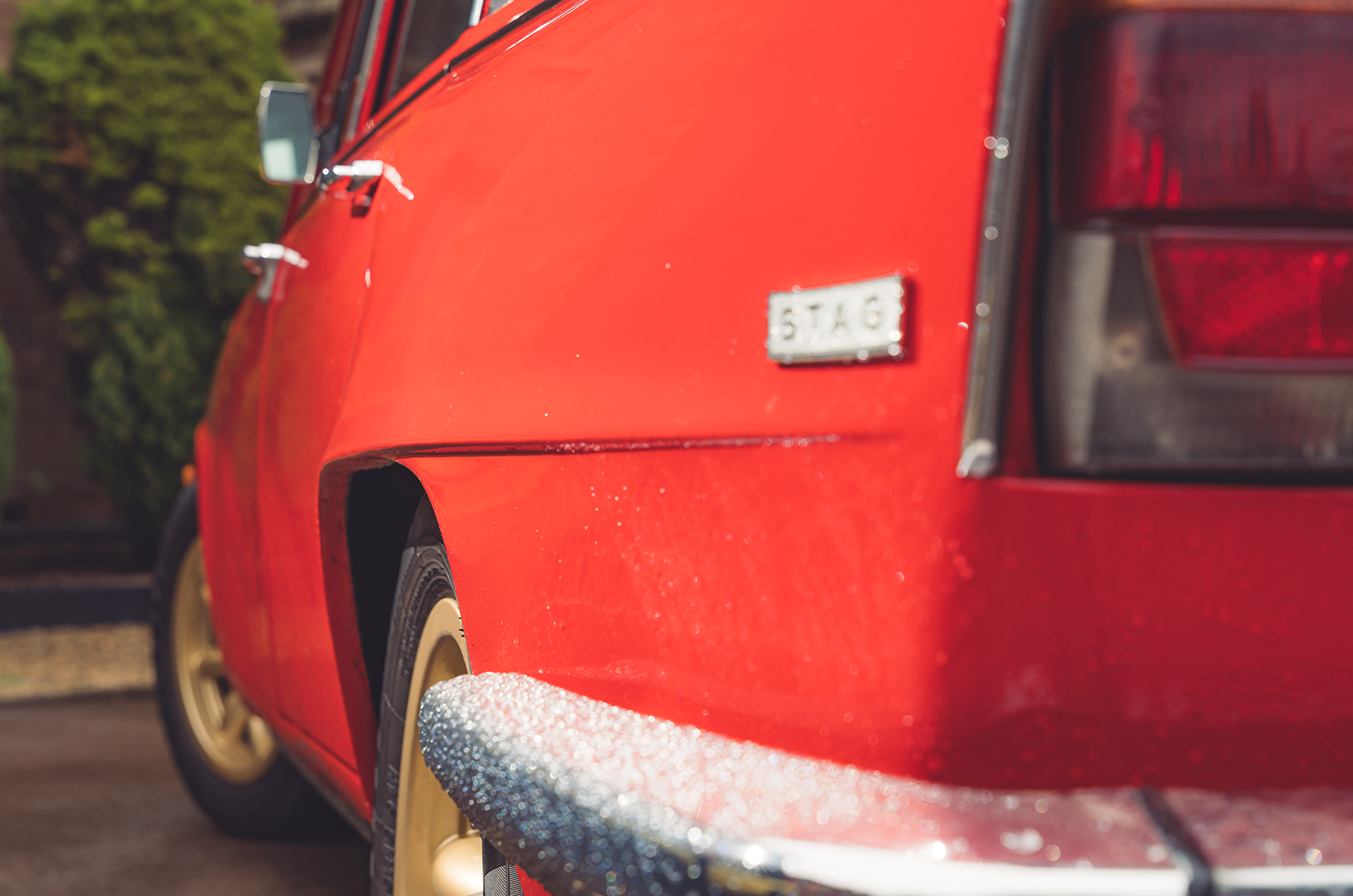
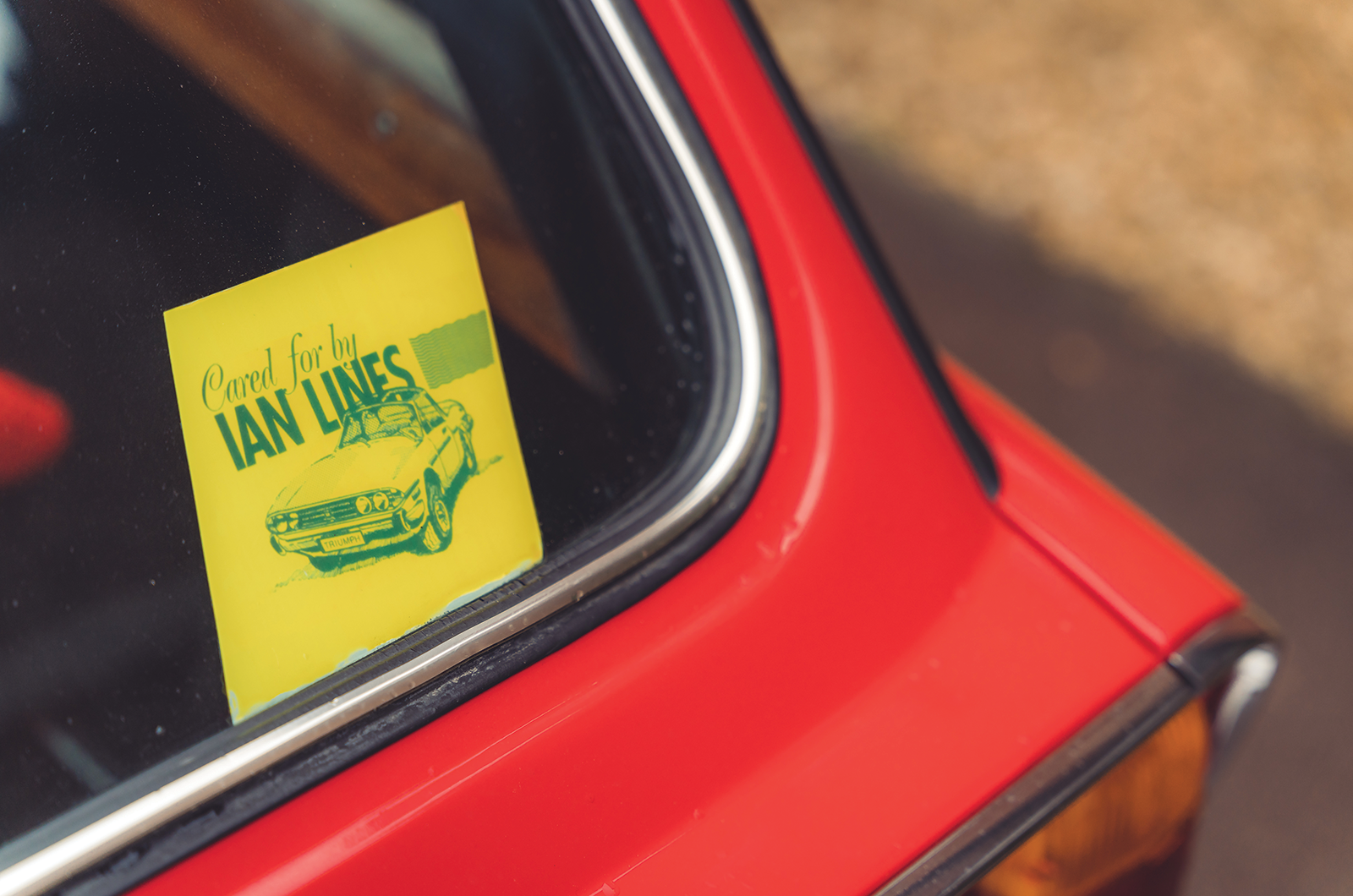
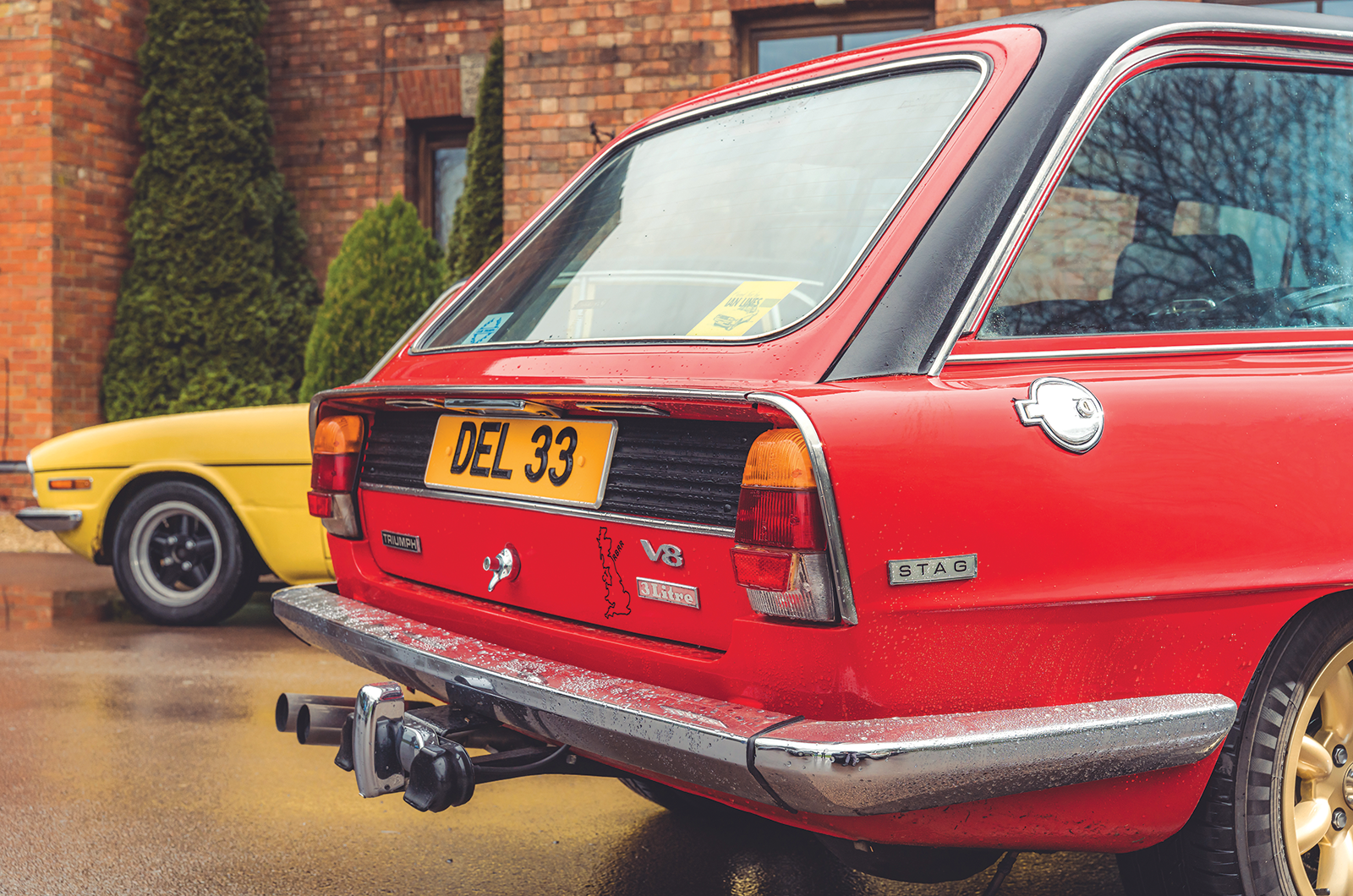
Ian ‘Del’ Lines added ‘3-Litre V8’ and ‘Stag’ badging to his converted Triumphs

Early Stag prototypes had been powered by Triumph’s overhead-valve, straight-six engine, with the car conceived as a drop-top conversion of the sedan.

Aspirations to sell the car in America prompted the move to a V8 derived from the marque’s new overhead-cam slant-four, but, even then, Triumph’s pre-BL ambition was to move all models to this engine family, whether in-line ‘four’, V6 or V8.

So interchangeability was high on the agenda.

A swap of the engine mounts, gearbox and battery box allowed the fitting of the V8, while Lines added badging that labeled the car ‘3-Litre V8’ (using the British spelling) on the back and ‘Stag’ on the sides.

Classic & Sports Car – Triumph Stag saloon and estate: when two become one

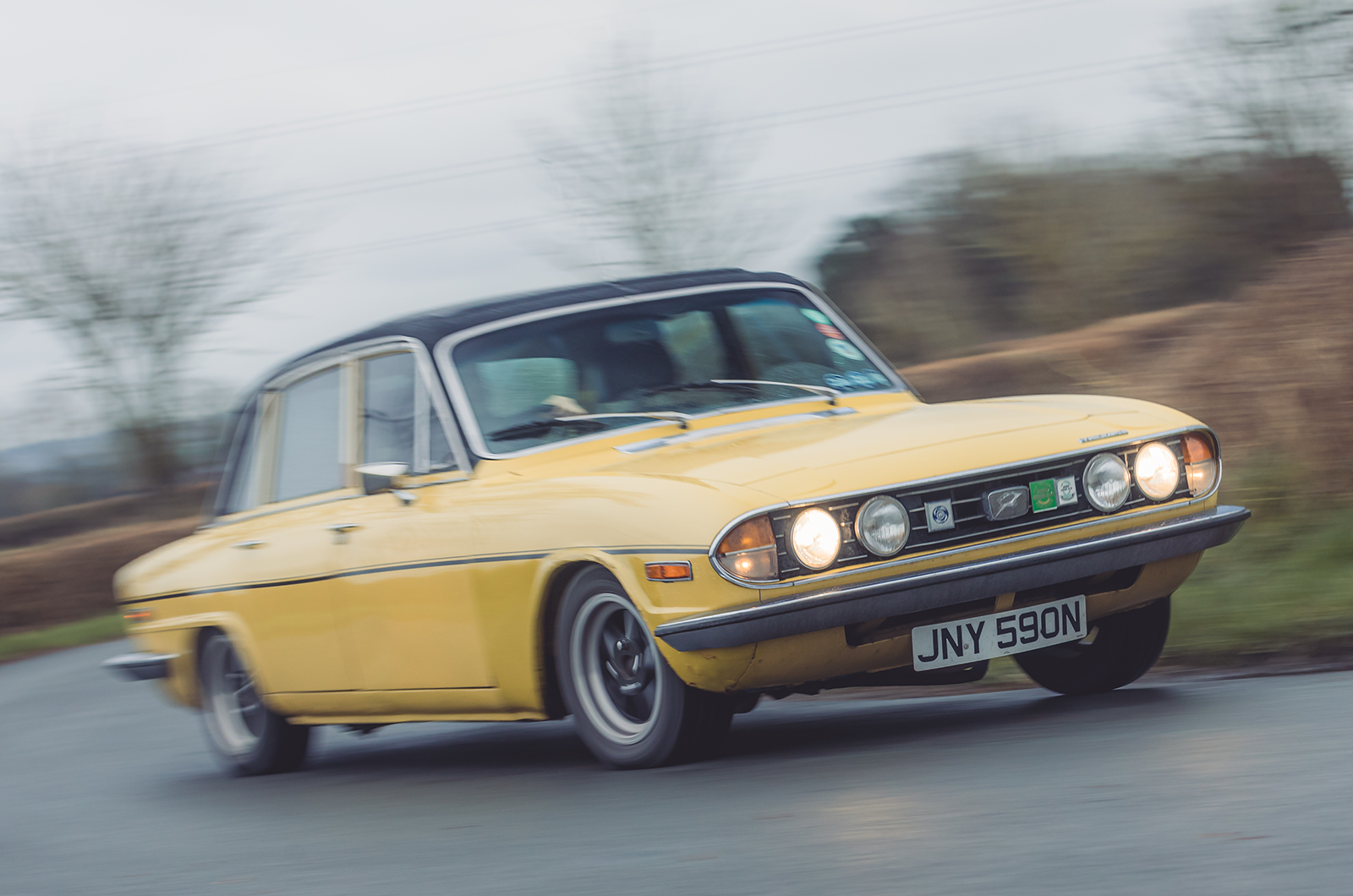
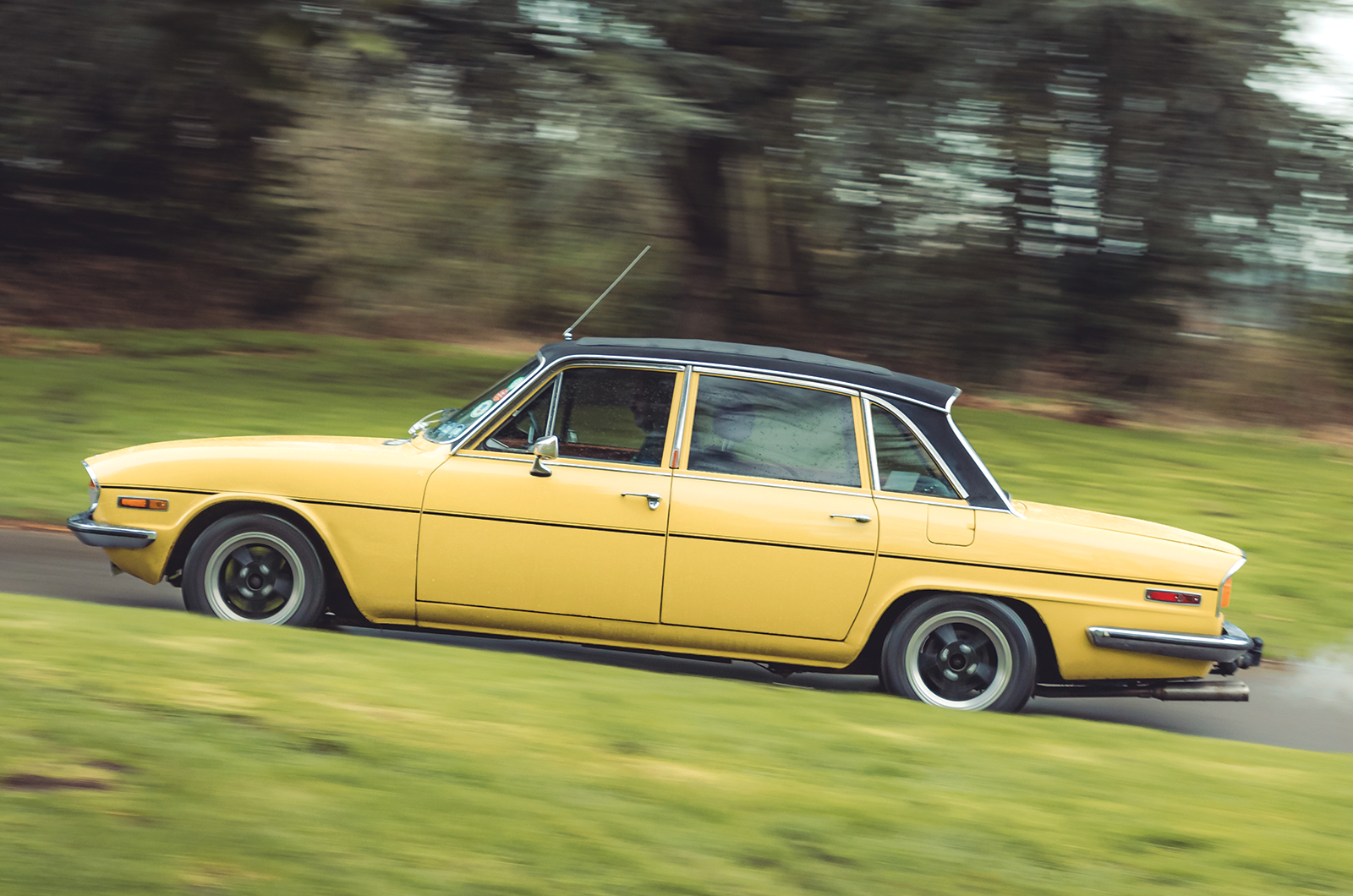
The Triumph Stag sedan is a sporty drive

The 2000 V8 remained his tow car and covered 120,000 miles over the following four years, and it wasn’t long before others began asking Lines to carry out the same conversion for them.

That first car – now sadly lost – was really just a Mk1 2000 Estate with a Stag engine and gearbox transplant.

Lines decided that if he was going to build similar cars for customers, they needed to be more thoroughly improved and built from the new Mk2 shell.

Although the updated 2000/2500 had been launched eight months before the Stag in 1969, its styling had been taken directly from the open car while in development.

Classic & Sports Car – Triumph Stag saloon and estate: when two become one

‘Our’ Triumph Stag sedan and station wagon have lost the Recaro seats originally fitted by Atlantic Garage

A ‘Stag Estate’ based on a Mk2 would look the part in a way his Mk1 hadn’t.

Lines started with a 1972 2.5 PI wagon shell, which itself was already one of the fastest wagons on the market at that time.

The segment barely existed in the early ’70s beyond coachbuilt specials – the Reliant Scimitar was another early foray, albeit down by a pair of doors.

This time, Lines transferred every part of the Stag he could into the wagon bodyshell, including the suspension, rear axle and brakes, along with the V8.

The upgrades weren’t limited to Stag bits, however: three years of fixing and competing the cars had taught him how to improve on the Triumph original.

Classic & Sports Car – Triumph Stag saloon and estate: when two become one

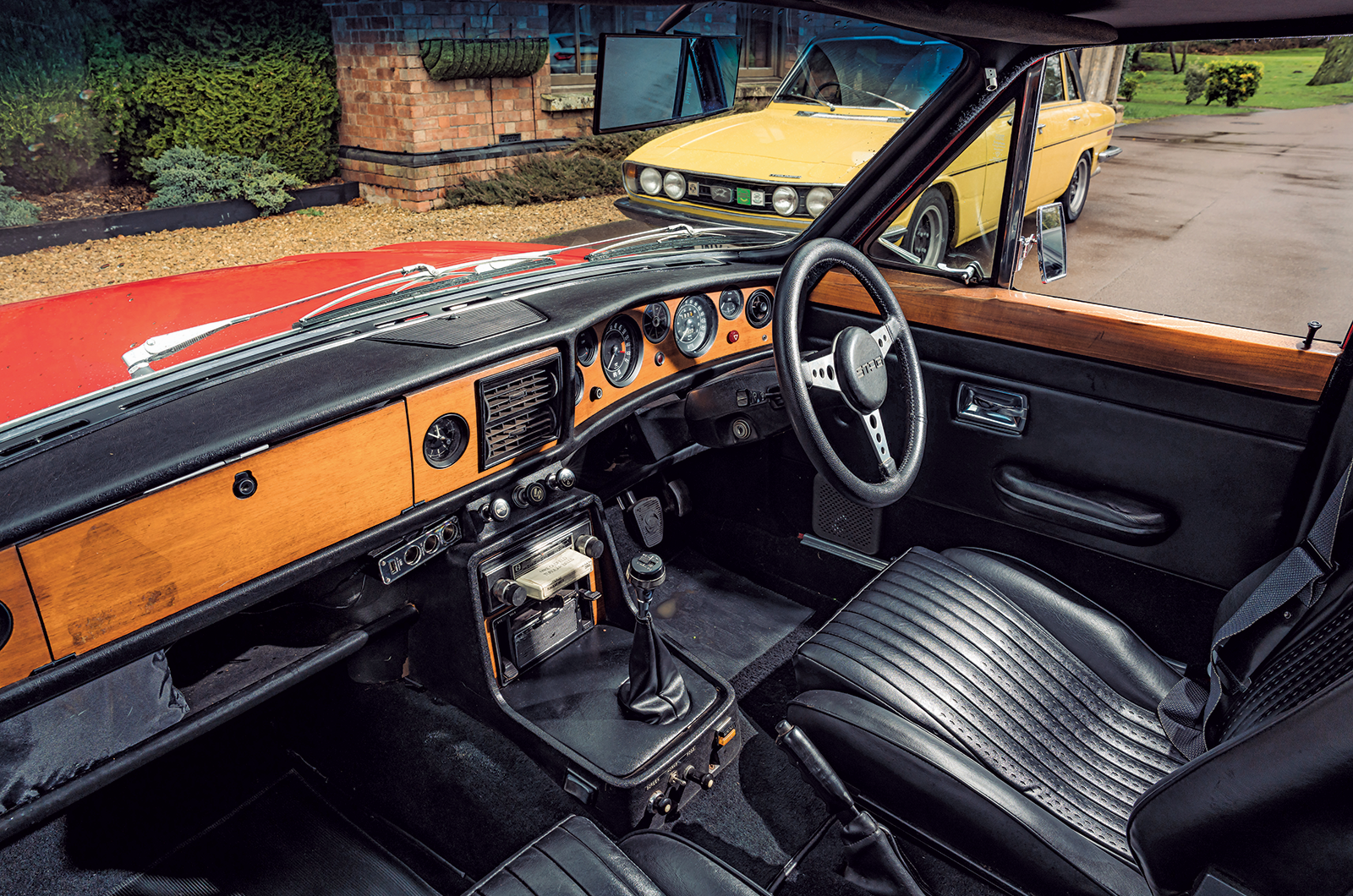
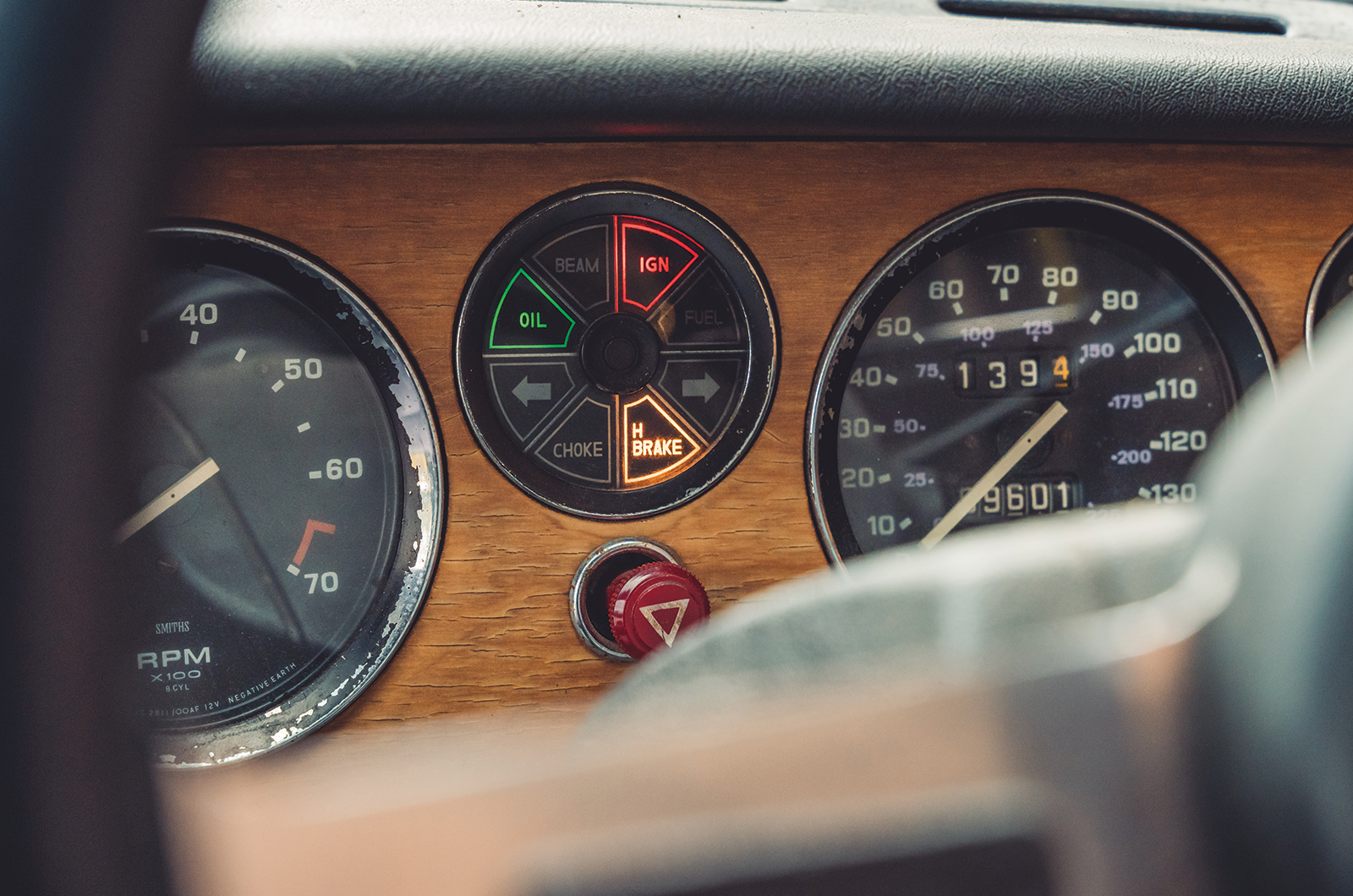
The Triumph Stag wagon’s smart dashboard

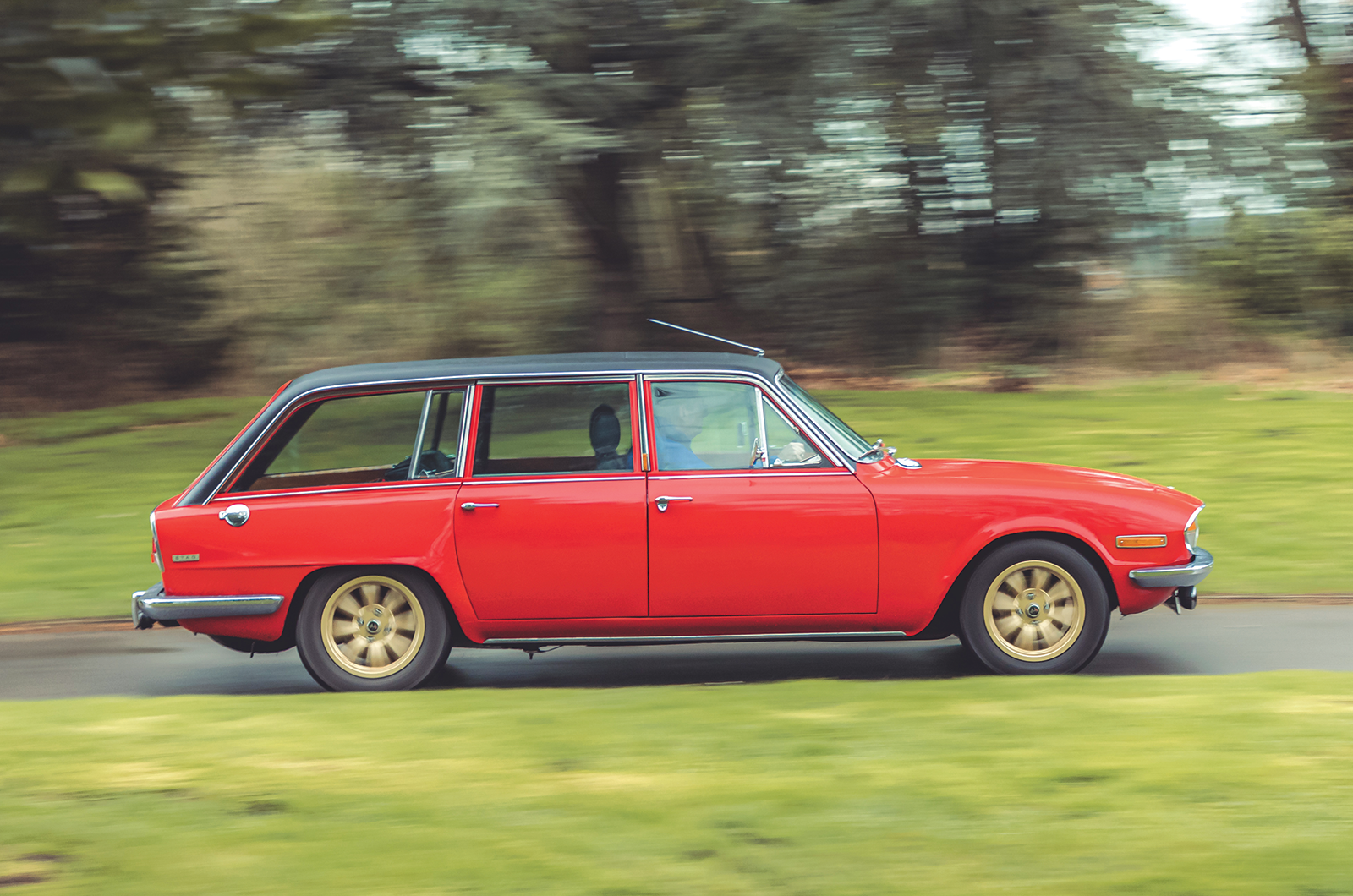
The rear wheelarches were pulled out to allow the fitment of wider, 7.5in wheels, while heavy-duty Armstrong dampers were installed at the back to deal with the extra weight of a full luggage bay.

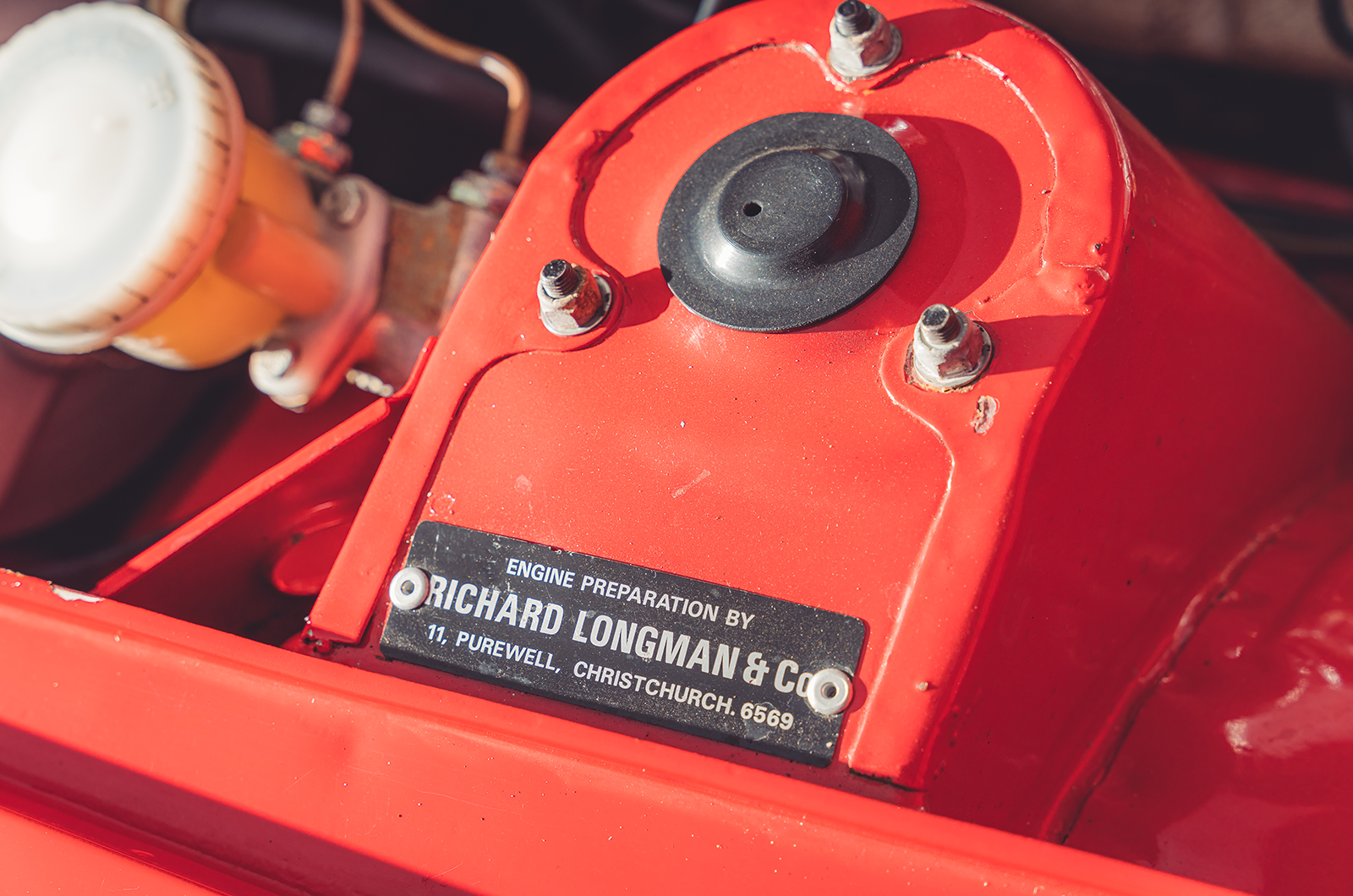
The V8 engine – Lines liked the unit, and blamed its poor reputation on poorly trained Triumph mechanics – was built by Richard Longman and had gas-flowed heads.

A limited-slip differential, a Hollandia electric sunroof, Recaro front seats, Minilite alloy wheels, electric windows, Sundym window glass and a Stereo 8 sound system completed the spec list.

Lines had built a demonstrator in which buyers could try everything on offer and take their pick.

Classic & Sports Car – Triumph Stag saloon and estate: when two become one

This Triumph Stag station wagon’s 15in rims replaced the original 13in Minilites

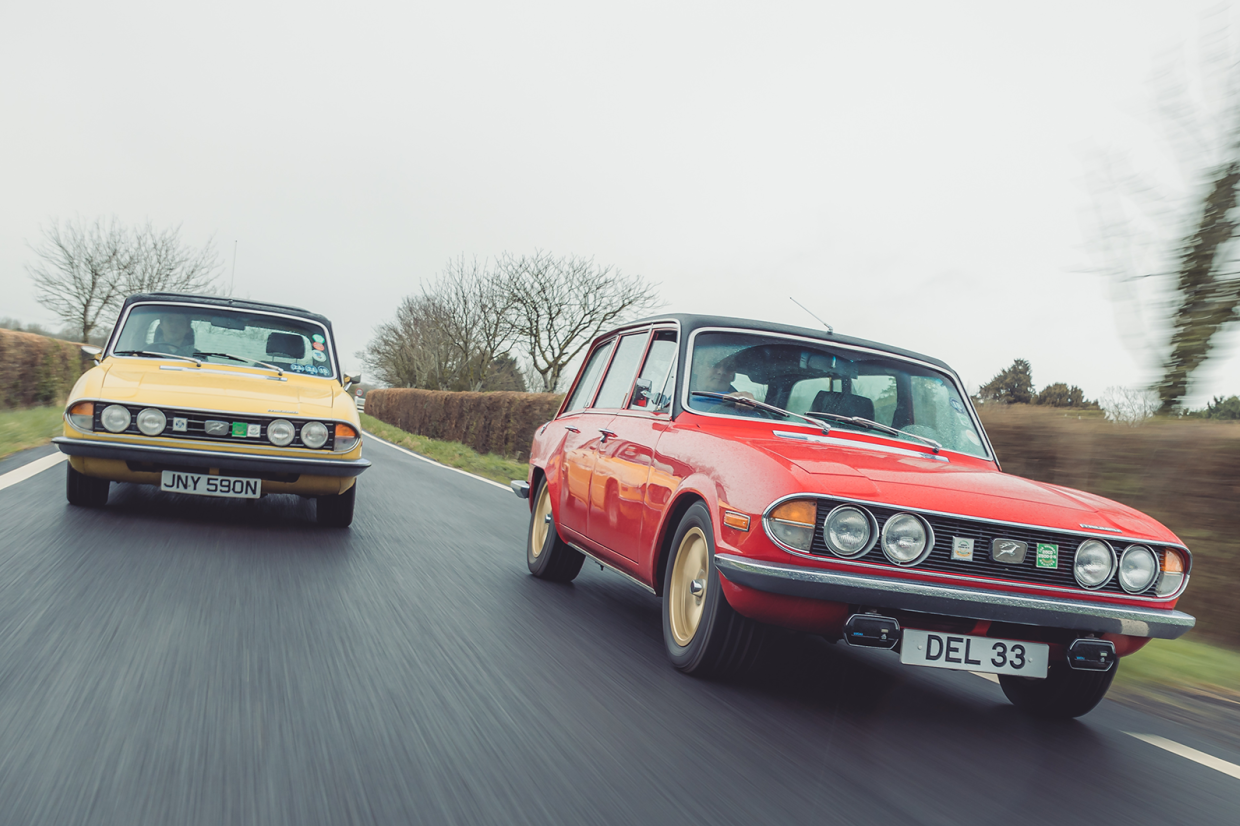
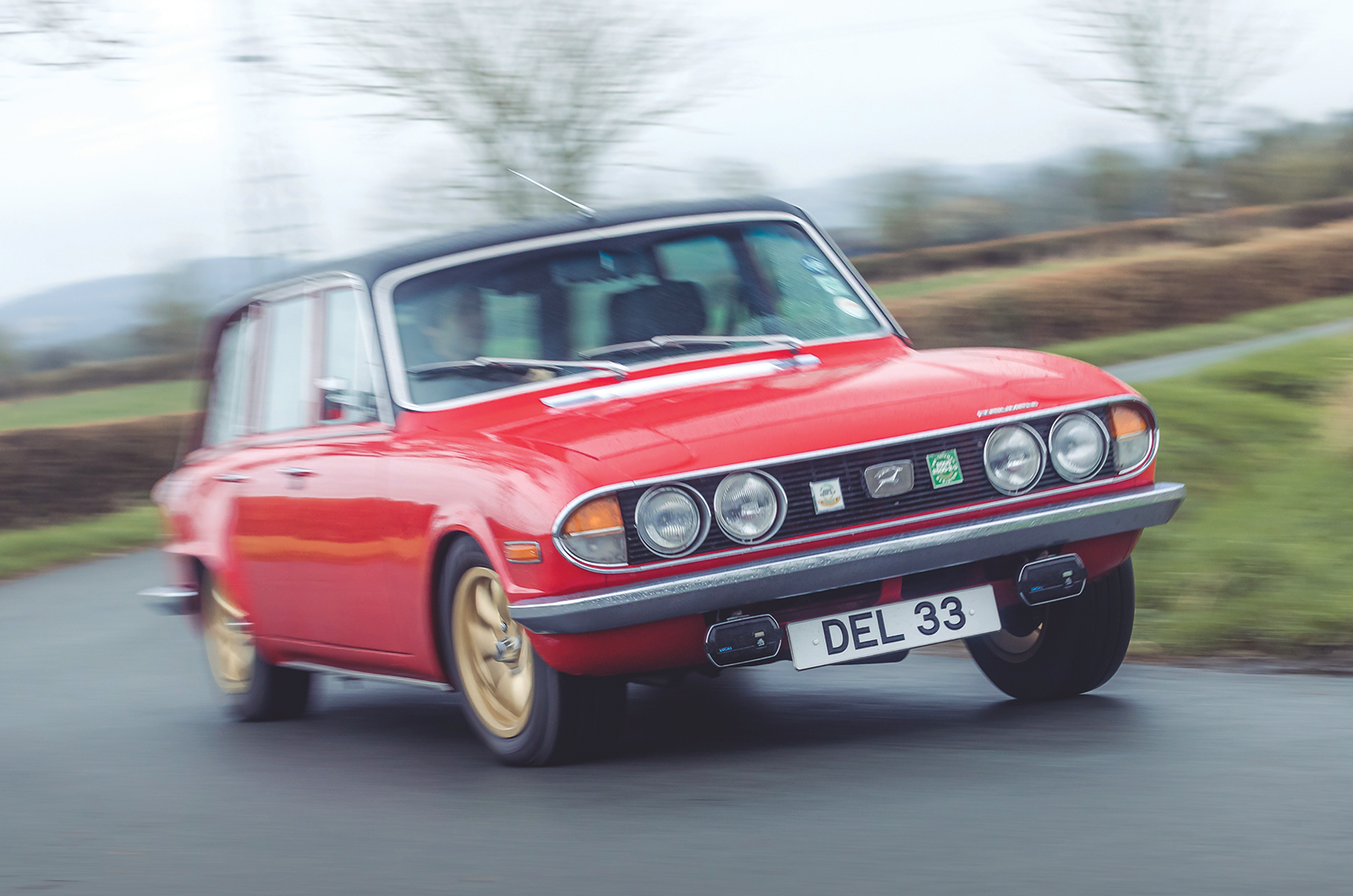
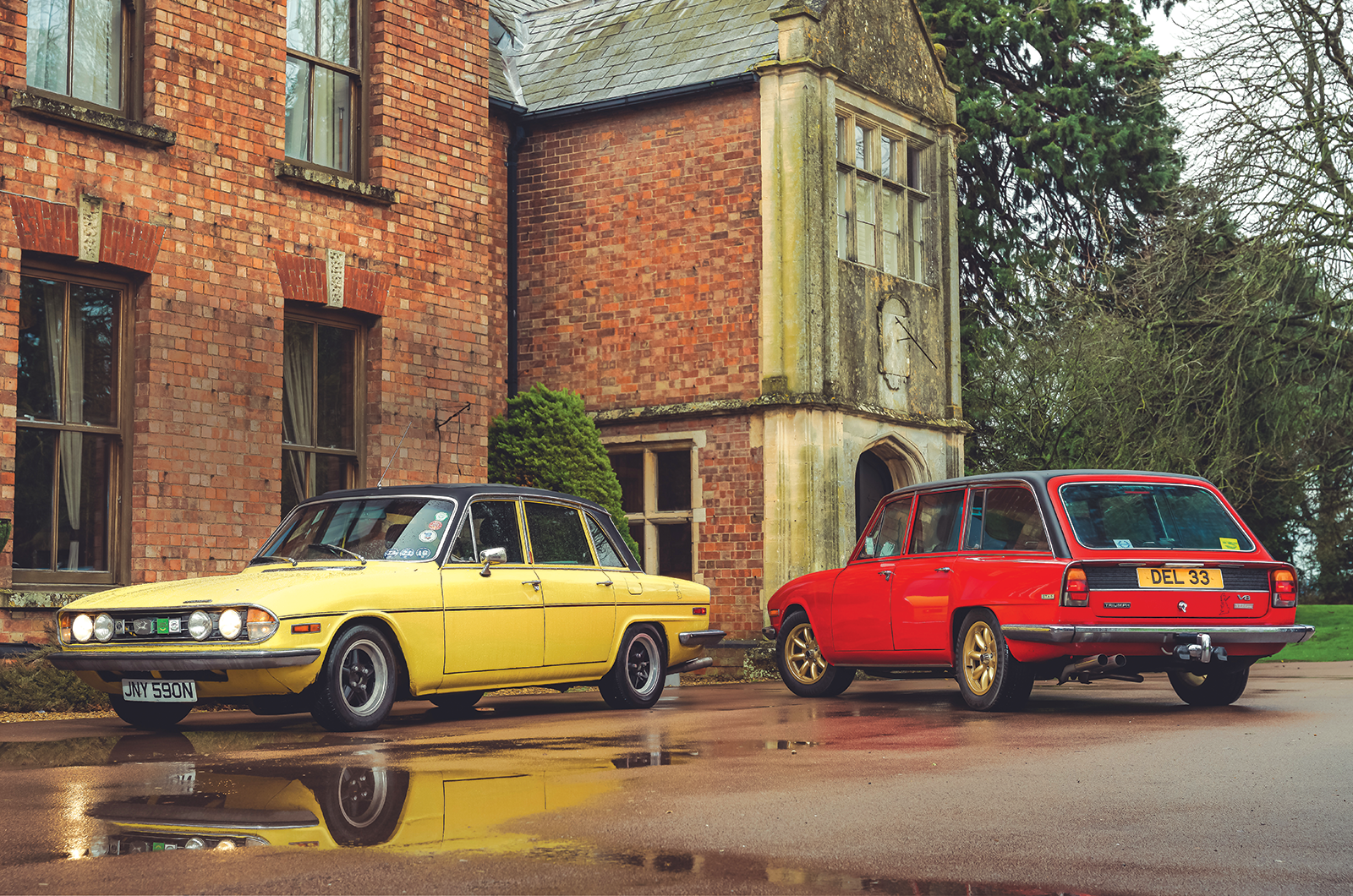
But this Stag was still his own car, too, painted BMC/BL Tartan Red and bearing his personal registration number, DEL 33.

Today, it is one of the four known survivors of Atlantic Garage’s Triumph Stag station wagon and sedan conversions.

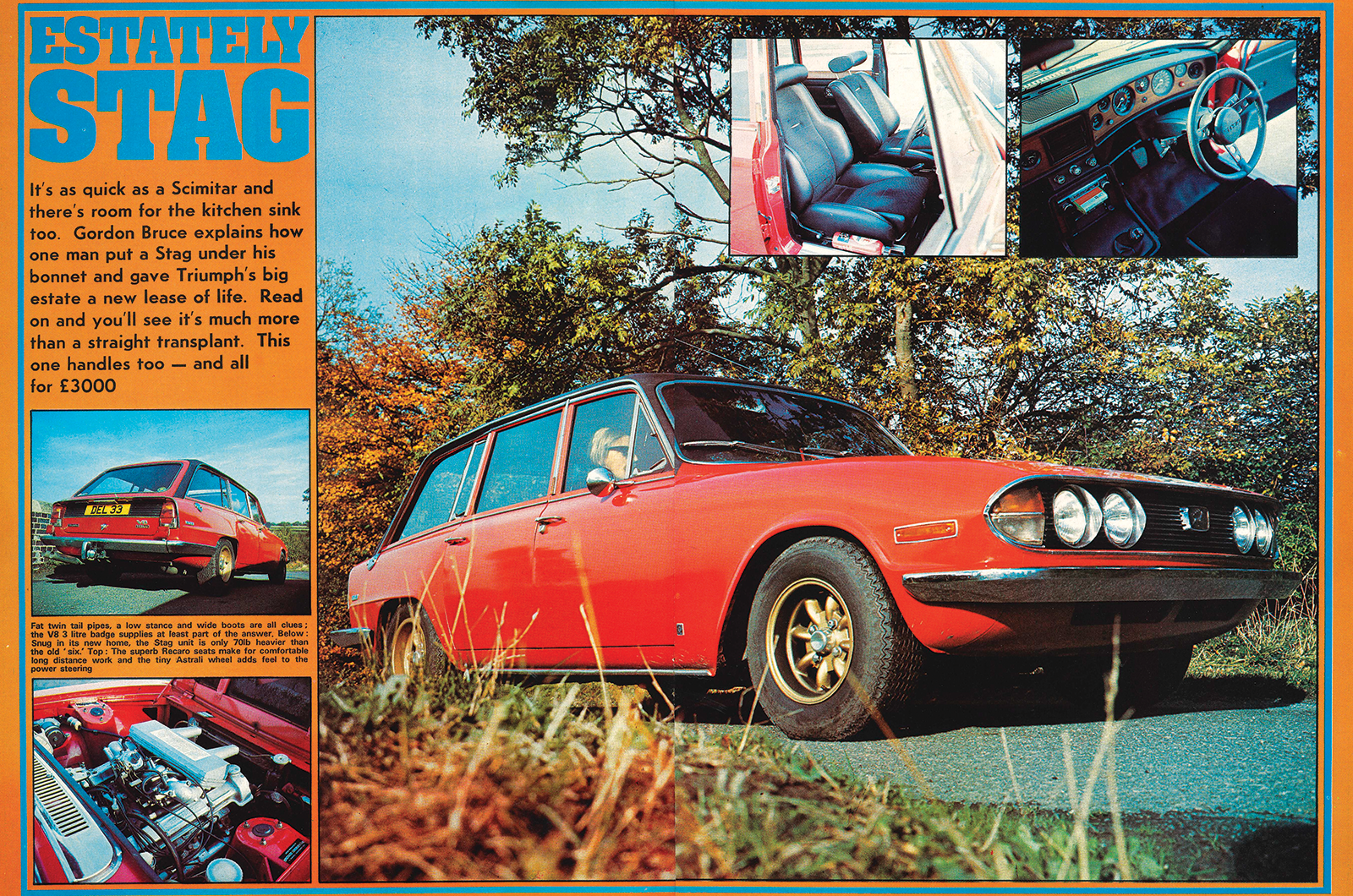
By November 1973, Lines was being featured in Motor magazine, offering Stag Estates built from the ground up using box-fresh shells for around £3000 depending on options – a reasonable figure, it seems, when the standard 2.5 PI cost £2505.

Triumph was increasingly irritated, however, especially because Lines insisted on calling the cars Stags and badging them as such.

Classic & Sports Car – Triumph Stag saloon and estate: when two become one

Triumph Stag sedans and wagons were developed at Atlantic Garage in Weston-super-Mare, Somerset

Denied a loan to expand Atlantic Garage for the project by both a bank and his father, Lines was left producing “one a month rather than one a week”, as he told Classic & Sports Car in 1998.

Then, in 1976, BL refused to supply him any more bodyshells.

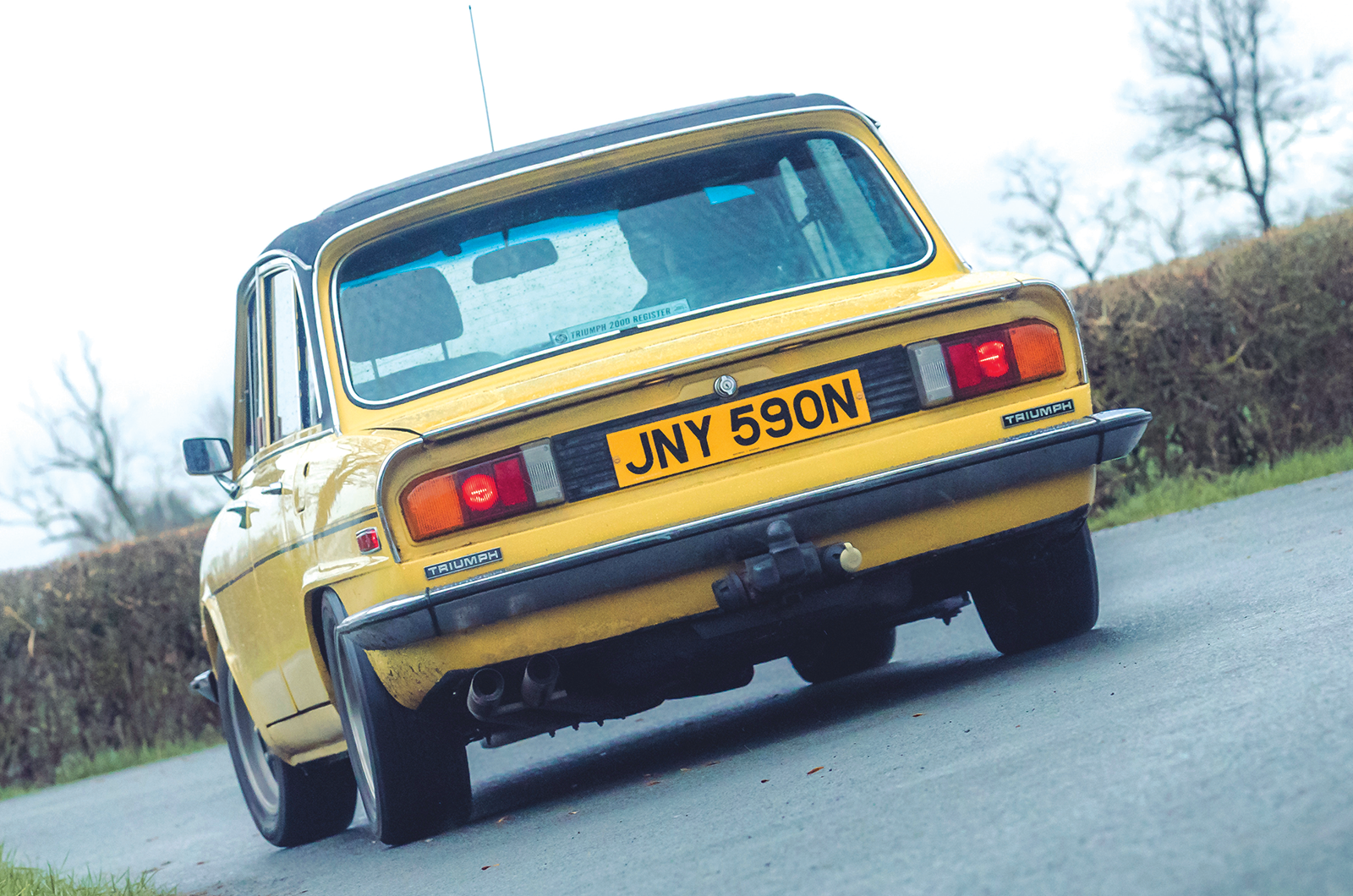
At that point he had built 25 cars, which included three sedans – one of them being a yellow 1975 example, built for Lines’ rally navigator, Mike Hooper, and today the only surviving four-door.

After that, Atlantic Garage could only offer the package as a transplant on existing cars, converting another 26 before attention moved to the new Triumph TR7.

Classic & Sports Car – Triumph Stag saloon and estate: when two become one

All of the cars built from new shells were renamed ‘Stag Estate’ or ‘Stag Saloon’ in their logbooks

Once again, Lines got under BL’s skin by creating Dolomite Sprint- and V8-powered TRs, before giving up working on cars professionally to manage a van-hire business in 1985.

Atlantic Garage closed eight years later, and Lines died in September 2023.

The legend of the Atlantic Garage Stag wagons grew over time, though, and they now represent the pinnacle of the Triumph 2000/2500/2.5 line to many model aficionados.

The Tartan Red Stag wagon didn’t remain in Lines’ hands for long.

A year after he finished building it, this demonstrator had been sold – on a new registration number – to a Scottish buyer who swapped its manual gearbox for an automatic.

Classic & Sports Car – Triumph Stag saloon and estate: when two become one

The Triumph Stag V8 provides easy rather than overtly muscular performance

It had blown a head gasket back in 1979, and then the car was put away in a garage in Perth where it remained, and deteriorated, until 2000, when the owner died.

The car’s next keeper tracked down Lines, who was by then living out in Spain, and hired him to restore the classic Triumph, but was later forced to carry out an overnight rescue with a trailer to save it from creditors who were pursuing Lines.

Finally, salvation came in 2009, when Alan Chatterton bought the Triumph and committed to a full restoration.

It was missing its engine, gearbox, wheels and exhaust – all lost during the repossession.

Classic & Sports Car – Triumph Stag saloon and estate: when two become one

This Triumph Stag station wagon uses a pre-facelift 2.5 PI grille

 But, over the course of five years, it was slowly returned to Lines’ initial specification.

And, as a bonus, Alan eventually discovered the wagon’s original and distinctive registration for sale, and was able to purchase it and then reunite it with the car.

Meanwhile, the Mimosa Yellow sedan built for Mike Hooper has led a very different life, having had just two custodians who between them managed to enjoy more than 200,000 miles of use.

Hooper owned JNY 590N for 11 years, using the car as a simple grocery-getter in its later years with him.

It was then picked up by current keeper Andy Roberts.

Classic & Sports Car – Triumph Stag saloon and estate: when two become one

A 1973 Motor magazine feature kick-started demand for Atlantic Garage’s modified Triumph Stag wagons

Used every day before and since a restoration undertaken in 1991, the sedan has completed an excellent eight Club Triumph Round Britain Reliability Runs and wears plenty of evidence of its extensive use on its eye-catching bodywork.

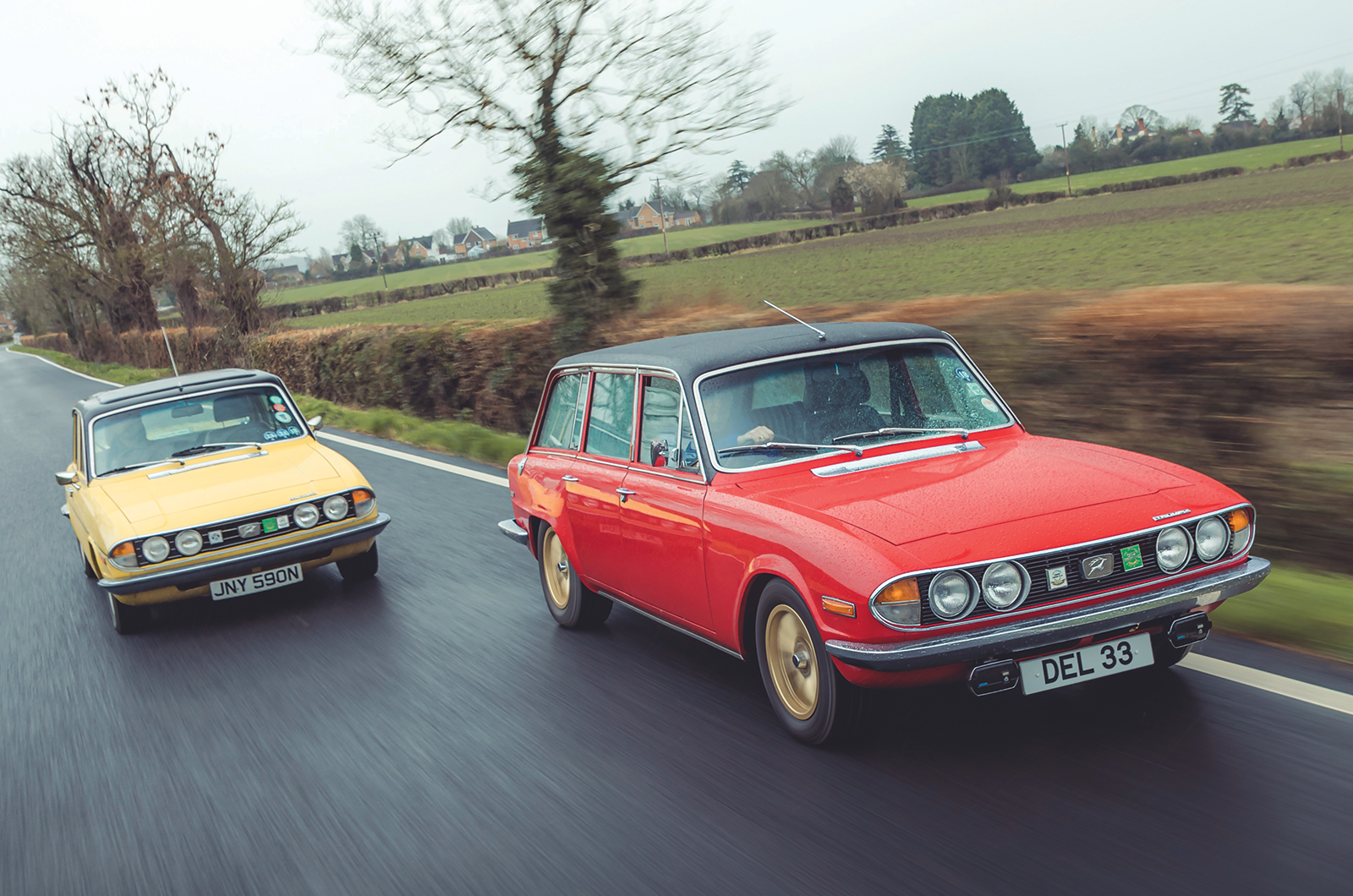
As a result of these contrasting stories, today these two classic Triumphs drive surprisingly differently.

Even on start-up there’s a distinct and distinctly different character to their exhaust notes: both burbling V8s, but louder and deeper in the case of the sedan; the wagon’s sound, meanwhile, is quieter and a bit more metallic.

It’s even more noticeable at speed.

Classic & Sports Car – Triumph Stag saloon and estate: when two become one

Both these modified Triumph classic cars are rare survivors

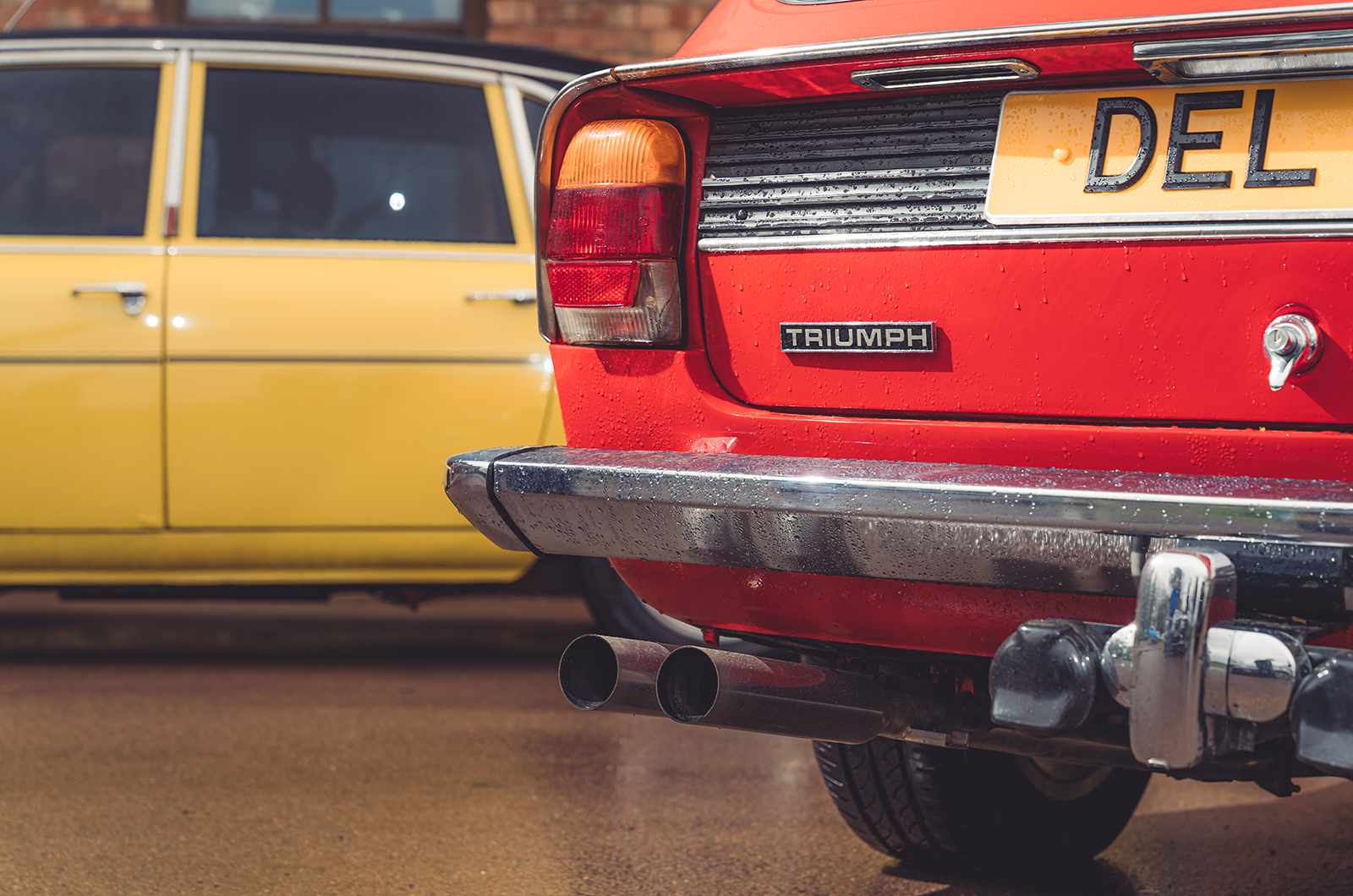
These two classic cars employ almost identical exhaust set-ups: a Triumph Stag system lengthened by 6in (152mm), with the floorpan appropriately modified to accommodate dual tailpipes.

Andy confesses, however, that the much older system on his sedan has probably lost most of its internal baffles over time.

Similarly, the rebuilt gearbox of the wagon is much tighter than the pleasantly worn-in shift of the sedan, while the latter runs longer gearing, too.

In addition, Andy’s high-mileage four-door has lost its original 3.7:1 Stag differential and now uses a longer 3.45:1 sedan back axle.

Classic & Sports Car – Triumph Stag saloon and estate: when two become one

‘The Triumph Stag sedan is a genuine rival to the faster BMW 5 Series models coming out of Munich throughout the 1970s’

Neither of these cars is groundbreakingly faster than Triumph’s 2.5 PI: a horsepower advantage of about 15bhp saves a Stag wagon about a second on a standard example’s 0-60mph time.

But the V8 engine is very much happier to spin, smoother and more sonorous, and there is extra power to be found in the upper reaches of its rev range than is available from the old overhead-valve ‘six’.

Yet it’s the handling that impresses most.

A 2.5 PI is a good starting point, but Lines’ suspension upgrades provide the driver with an extra assuredness and bring out the best from the Triumph’s stellar steering.

Classic & Sports Car – Triumph Stag saloon and estate: when two become one

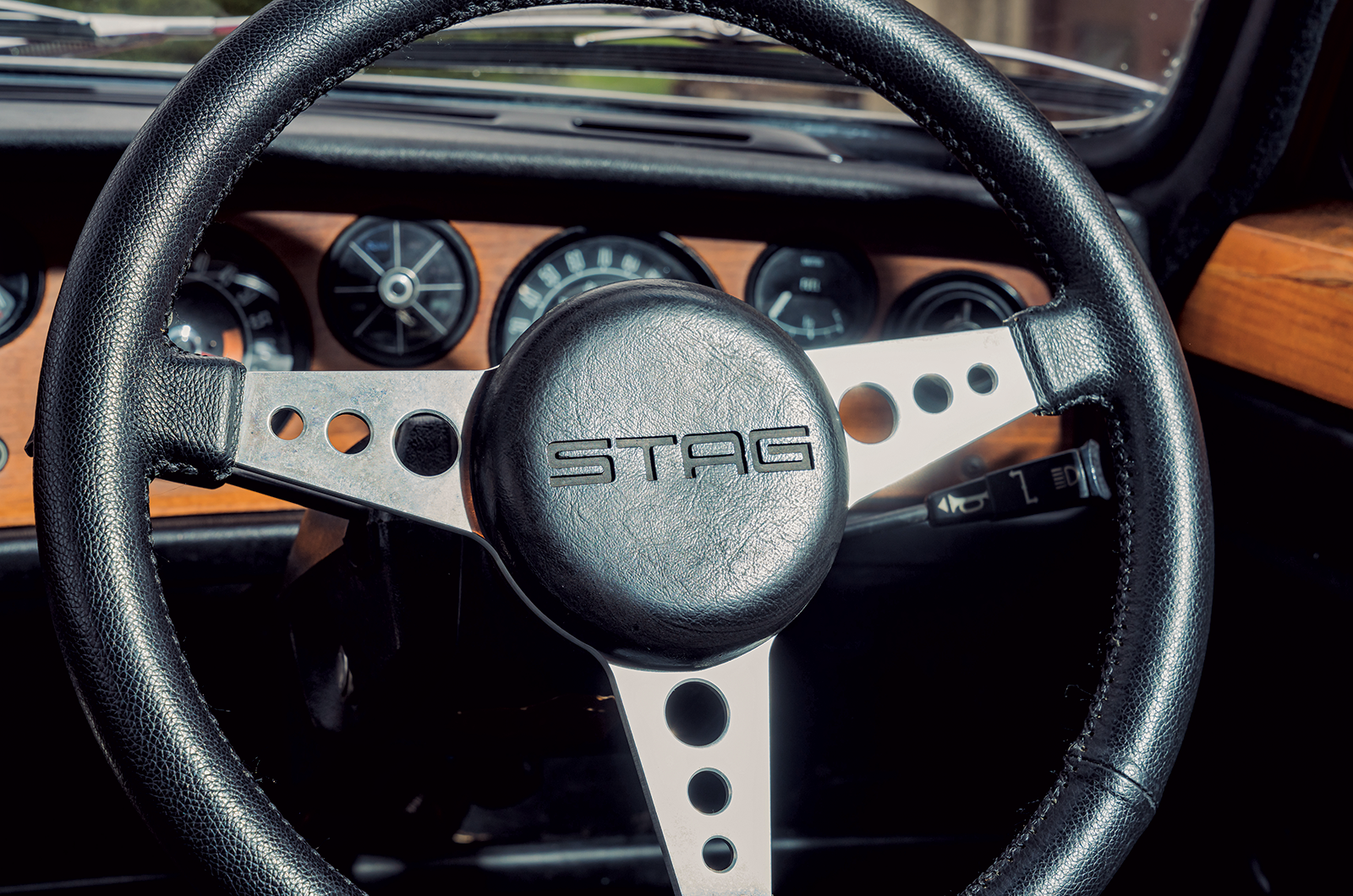
Triumph Stag steering wheel in the modified wagon

The small steering wheel with its well-judged power assistance provides fantastic feedback for the driver, for a car of this size.

Body roll is a little bit more noticeable in the wagon version, as you might anticipate, but both of these classic Triumphs attack a corner with an enthusiasm that few contemporaries could match.

The lower and lighter sedan in particular clings on in bends with real verve and tenacity.

That’s not to say that the V8 motor is wasted here. Not at all. The Stag unit’s flexibility combines with the grippy handling to provide an easy fluidity that the 2.5 PI can’t quite match.

Classic & Sports Car – Triumph Stag saloon and estate: when two become one

The V8 engines in Del Lines’ Triumph Stag sedans and station wagons were built by Richard Longman

Lines reckoned that Triumph could have sold 10,000 of the cars if it had become a proper model, and on this evidence it’s hard to disagree.

Not until the Mercedes-Benz 280TE arrived in 1977 did any wagon come close to doing what this Stag could do, and the S123 quickly became one of the German marque’s most famous models.

The real unsung hero of this story, however, might just be the Stag sedan.

Having built just three of them in his truncated production run of 25 cars (the wagon/sedan breakdown of the later conversions is unknown), and never having one himself, you get the feeling Lines’ heart was more in the station-wagon models.

Classic & Sports Car – Triumph Stag saloon and estate: when two become one

Perhaps Triumph missed a trick by not building Stag sedans and wagons itself?

Certainly in the decades since they were constructed, it is the Stag wagons that have become the real legends among Triumph enthusiasts.

Yet with its lighter weight, lower profile and quieter interior, the Stag sedan is an incredibly compelling machine.

Less novel undoubtedly, because BL already had a V8-powered sedan in its stable in the form of the Rover P6 – and there would have been overlap with Jaguar, too.

But this is a truly sporting sedan, lighter and more agile than any Rover or Jaguar, and a genuine rival to the faster BMW 5 Series models coming out of Munich throughout the 1970s.

Classic & Sports Car – Triumph Stag saloon and estate: when two become one

The Triumph Stag sedans and station wagons now represent the pinnacle of the Triumph 2000/2500/2.5 line to some model aficionados

It’s a real shame Triumph never built either model, but it’s brilliant that at least a couple of the originals survive.

Two further station wagons are known to exist: one in The Netherlands, the other having previously been in Andy’s stable for a decade – at which point he owned 50% of the remaining Atlantic Garage cars.

Naturally, The Triumph 2000/2500/2.5 Register pursues any potential lead to another survivor with vigor, and encourages anyone with an old Triumph sedan hanging around to check the chassis number for the distinctive ‘AG’ (Atlantic Garage) prefix.

Spot it, and you’ll have a real collector’s piece on your hands.

Images: Max Edleston

Thanks to: Mike Menhenitt, The Triumph 2000/2500/2.5 Register; Hatherley Manor Hotel & Spa


Factfile

Classic & Sports Car – Triumph Stag saloon and estate: when two become one

Triumph Stag sedan/wagon

  • Sold/number built 1970-’76/25 (plus 26 later conversions on existing cars)
  • Construction steel monocoque
  • Engine iron-block, alloy-heads, sohc-per-bank 2997cc 90° V8, twin Zenith-Stromberg carburetors
  • Max power 145bhp @ 5500rpm (standard)
  • Max torque 170lb ft @ 3500rpm
  • Transmission four-speed manual with overdrive, RWD
  • Suspension independent, at front by MacPherson struts, anti-roll bar rear semi-trailing arms; coil springs, telescopic dampers f/r
  • Steering power-assisted rack and pinion
  • Brakes discs front, drums rear, with servo
  • Length 14ft 7in (4445mm)
  • Width 5ft 5in (1651mm)
  • Height 4ft 8in (1422mm)
  • Wheelbase 8ft 10in (2692mm)
  • Weight 2757lb (1250kg)
  • Mpg 19
  • 0-60mph 8.9 secs
  • Top speed 121mph
  • Price new £3000 (1973)

We hope you enjoyed reading. Please click the ‘Follow’ button for more super stories from Classic & Sports Car.