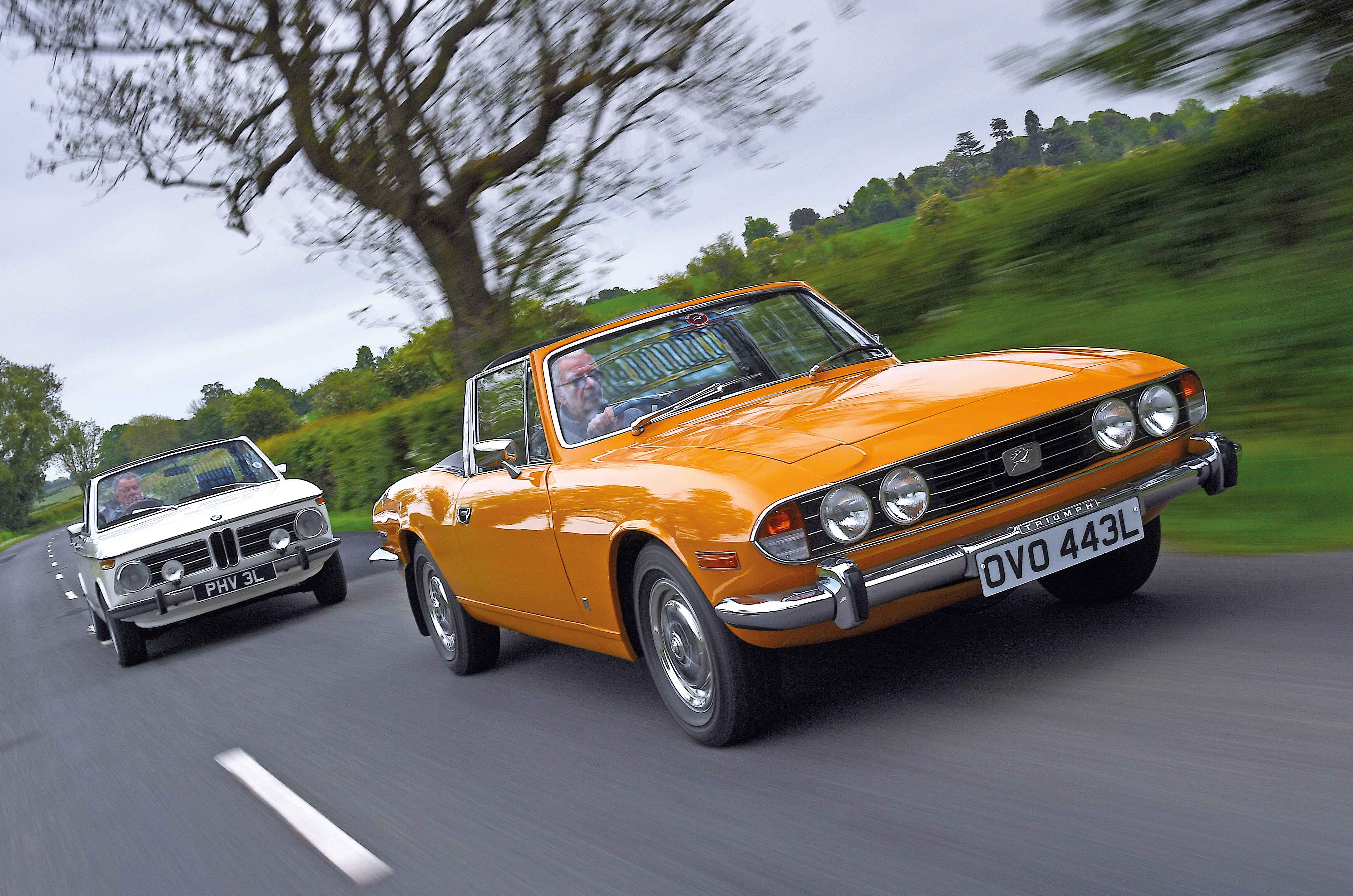
Triumph Stag vs BMW 2002 Cabriolet: open for the family

| 27 Mar 2026
Classic & Sports Car – Triumph Stag vs BMW 2002 Cabriolet: open for the family

Feeling stressed? Forget the yoga and the pilates and get yourself a Triumph Stag.

It’s the burble that does it: obviously V8 in its alternating beat, but somehow a sound very particular to this often unfairly maligned but much-loved 2+2, it strikes a note of cultivated machismo that suits the Stag’s laid-back personality perfectly.

This is a car to suppress the most aggressive tendencies in any driver.

Yes, a Stag goes quite well when roused – it is, after all, a 3-litre, near-120mph grand tourer – but rarely are these cars driven anything other than sedately.

Classic & Sports Car – Triumph Stag vs BMW 2002 Cabriolet: open for the family
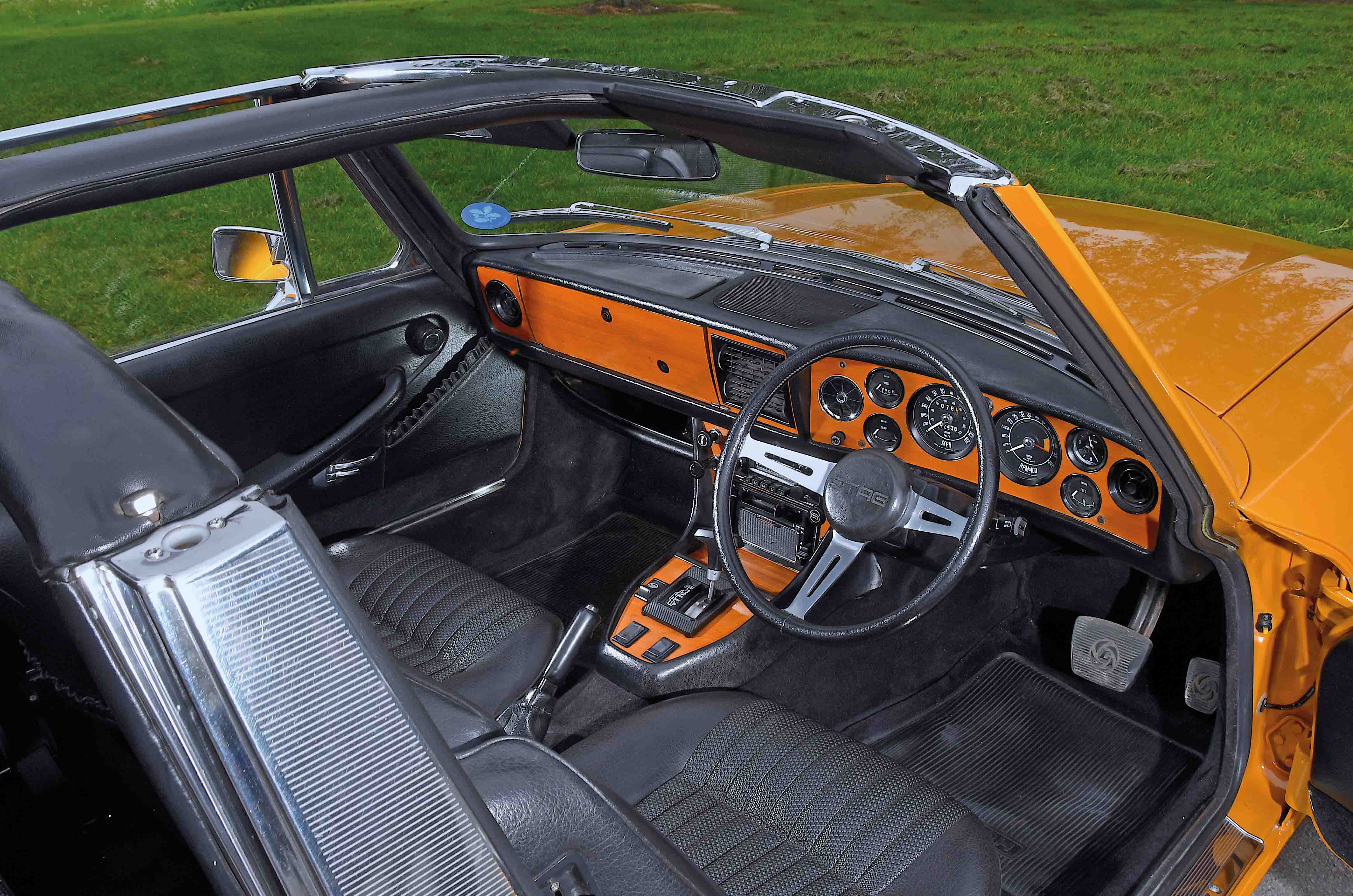
The Triumph Stag’s comfortable cabin

That observation says a lot about the car, for this is not a vehicle to ignite competitive instincts.

You just waft, emanating a sense of wellbeing that would probably come across as smug in any one of the Triumph Stag’s many modern ‘lifestyle’ drophead successors.

The difference, back at the dawn of the 1970s, was that the Stag didn’t have many rivals if you were looking for a four-place open car with V8 power, suave Italian looks and winter headgear substantial enough to transform it into a cosy GT when the nights began to draw in.

For just over £2000 in late 1970 there was nothing like it.

The ageing Mercedes-Benz 280SL cost more than twice as much (and didn’t even pretend to have rear seats), while more comparably priced closed-roof supposed rivals such as the Alfa Romeo 1750 GTV and Lotus Elan +2S had nothing like the Triumph’s versatility.

Classic & Sports Car – Triumph Stag vs BMW 2002 Cabriolet: open for the family
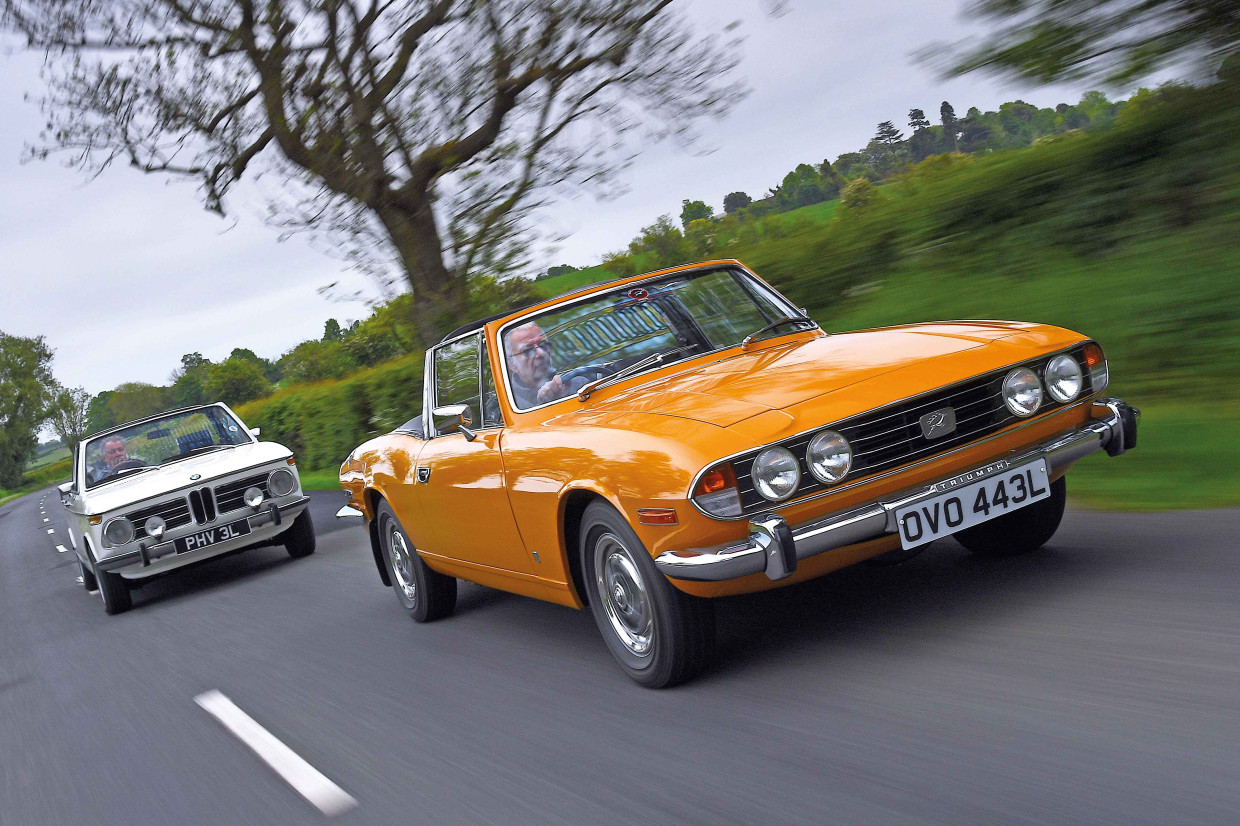
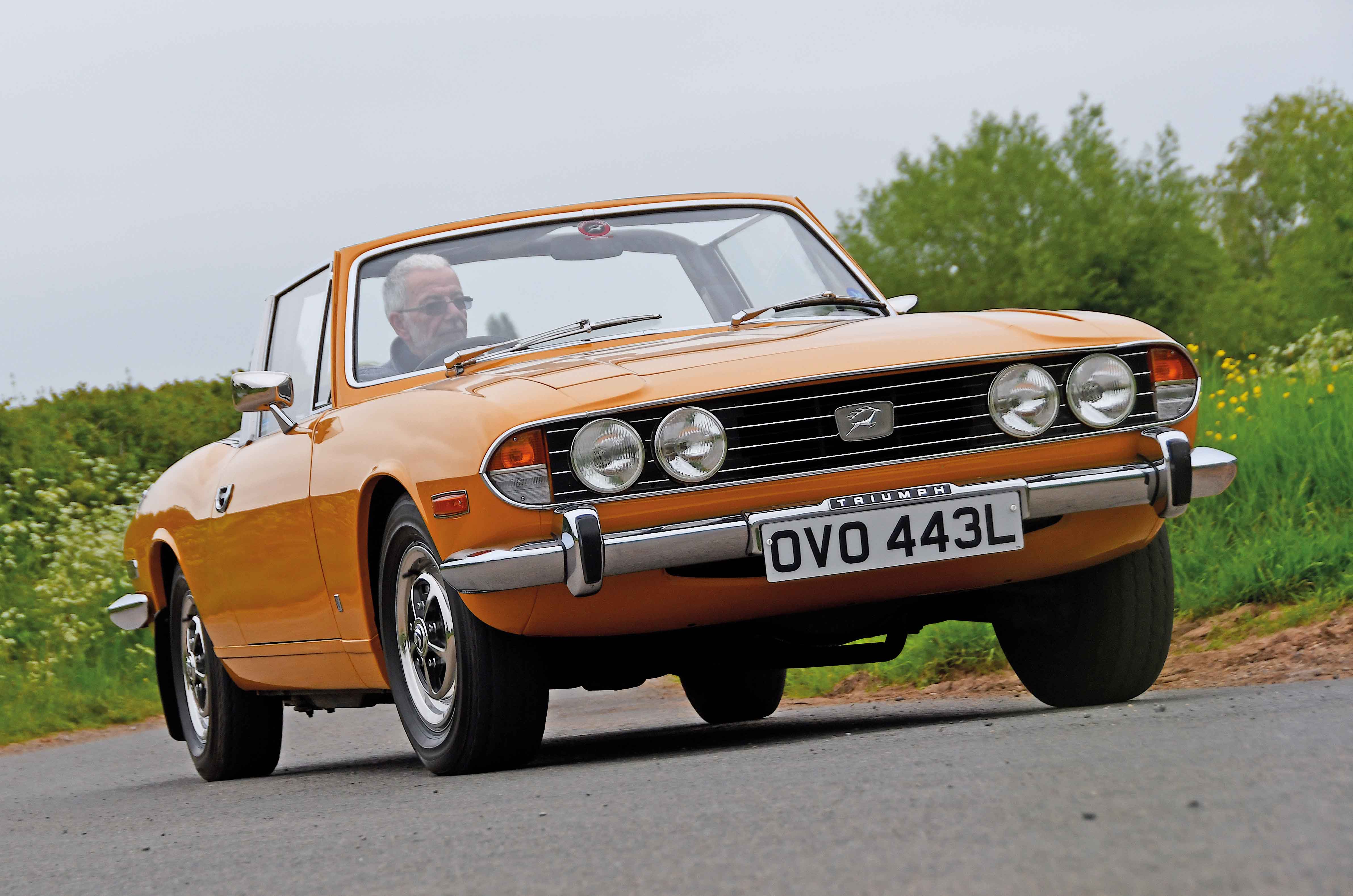
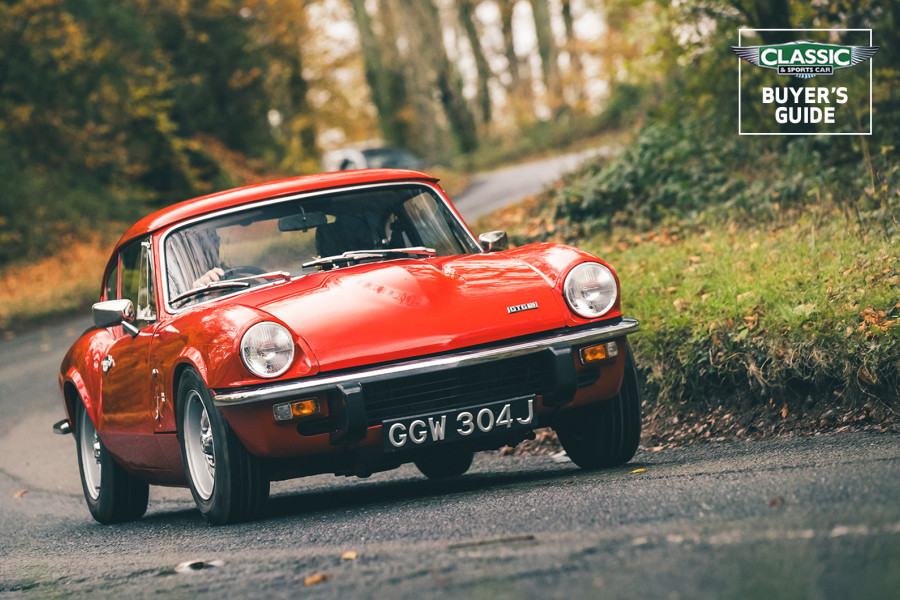
The Triumph Stag’s Michelotti shape was a chic take on the British marque’s family look

The story of the Stag is, of course, a well-known tale of woe.

Conceived in the mid-’60s on the say-so of Canley engineering boss Harry Webster, it sold to the tune of just under 26,000 cars through to 1977.

Underdeveloped mechanically, it fell victim to the boardroom wrangling and associated distractions of the newly formed British Leyland.

When Webster moved to the Austin Morris division to oversee development of the Marina, the fate of his creation was sealed: as an expensive and troublesome curiosity in the BL range the Stag was doomed, particularly once the infamous overheating problems associated with the high-mounted, gear-driven water pump became common knowledge.

Thus tainted, the car had no future in the North American market for which it was intended and so obviously suited, and most Stags stayed in the UK.

Classic & Sports Car – Triumph Stag vs BMW 2002 Cabriolet: open for the family
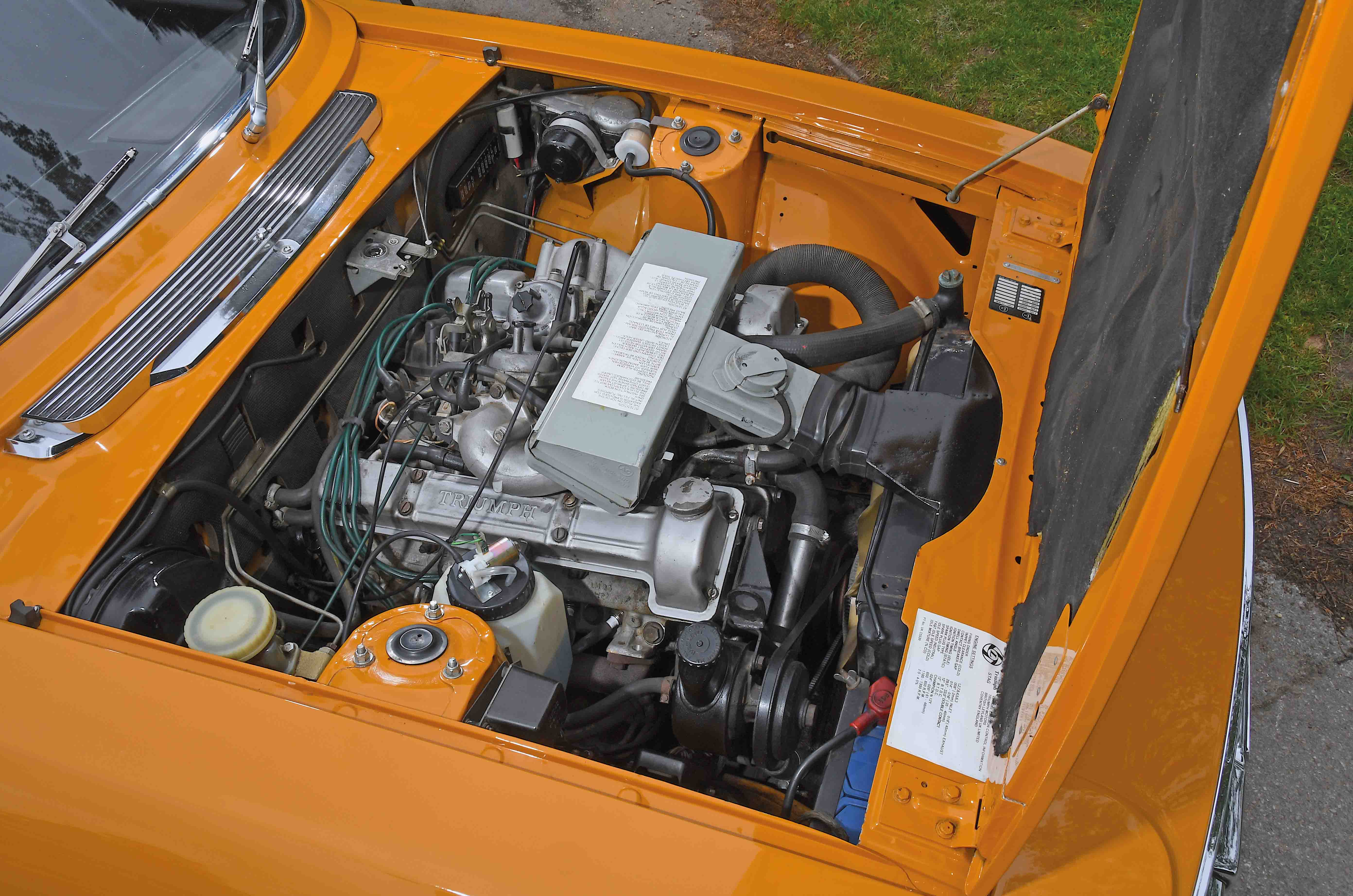
The Triumph Stag’s 3-litre V8

Here it has always had a healthy fanbase, however, and remains the most ‘club-able’ of cars that even once held the honour of being the UK’s most stolen classic.

Obsessed with the success of the Mercedes Pagoda SL, Webster sold the idea of a larger, more luxurious open Triumph to his boardroom superiors on the basis that it would be cheap to develop – essentially a reskinned 2000, using the same running gear and suspension on a shortened version of the same floorpan.

The initial plan was to use the saloon’s 2.5-litre injected straight-six, too, but the Stag came to be defined by a new V8, the senior member of a series of modular four-, six- and eight-cylinder overhead-cam engines that were already too far down the pipeline when the Leyland merger happened.

The first specification was for a 2.5-litre V8 with fuel injection, but given its troubled history it is perhaps just as well that it emerged as a very oversquare 3-litre on a pair of Strombergs, good for a rather conservative 145bhp.

Classic & Sports Car – Triumph Stag vs BMW 2002 Cabriolet: open for the family

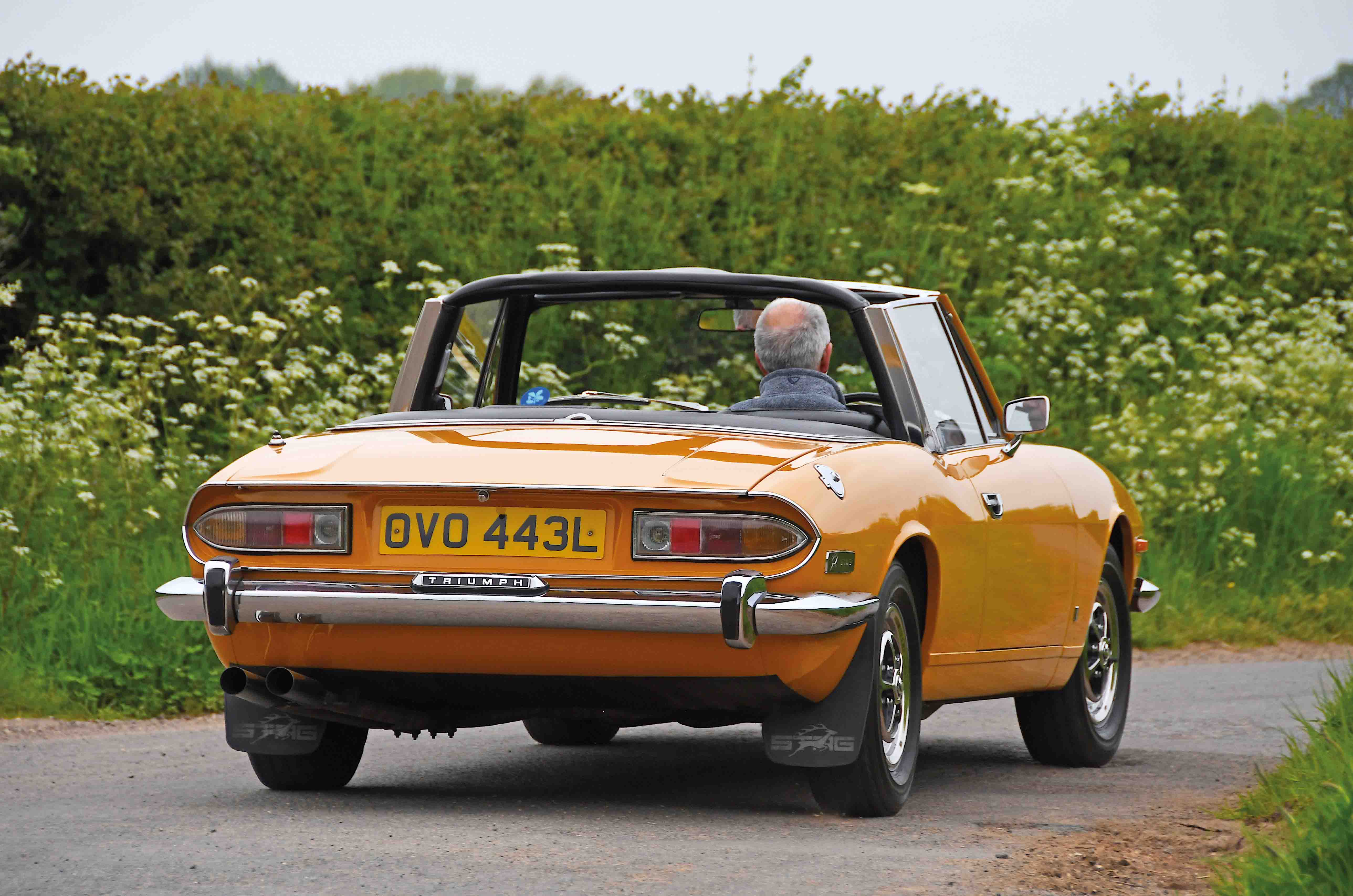
The Triumph Stag’s twin tailpipes emit a cultured burble

As the author of every Triumph body since the Herald, Giovanni Michelotti was naturally engaged to do the shape: a handsome 2+2 with curved hips that came together quite quickly once ideas of hidden headlights and a powered hood had been discarded. 

A stylish launch campaign pushed the Stag’s credentials as a sophisticated grand tourer with international appeal – and understandably said nothing about the problems Triumph engineers had faced in getting the V8 to fit where it didn’t want to go, while negotiating ever-changing Federal rules on crash safety and emissions.

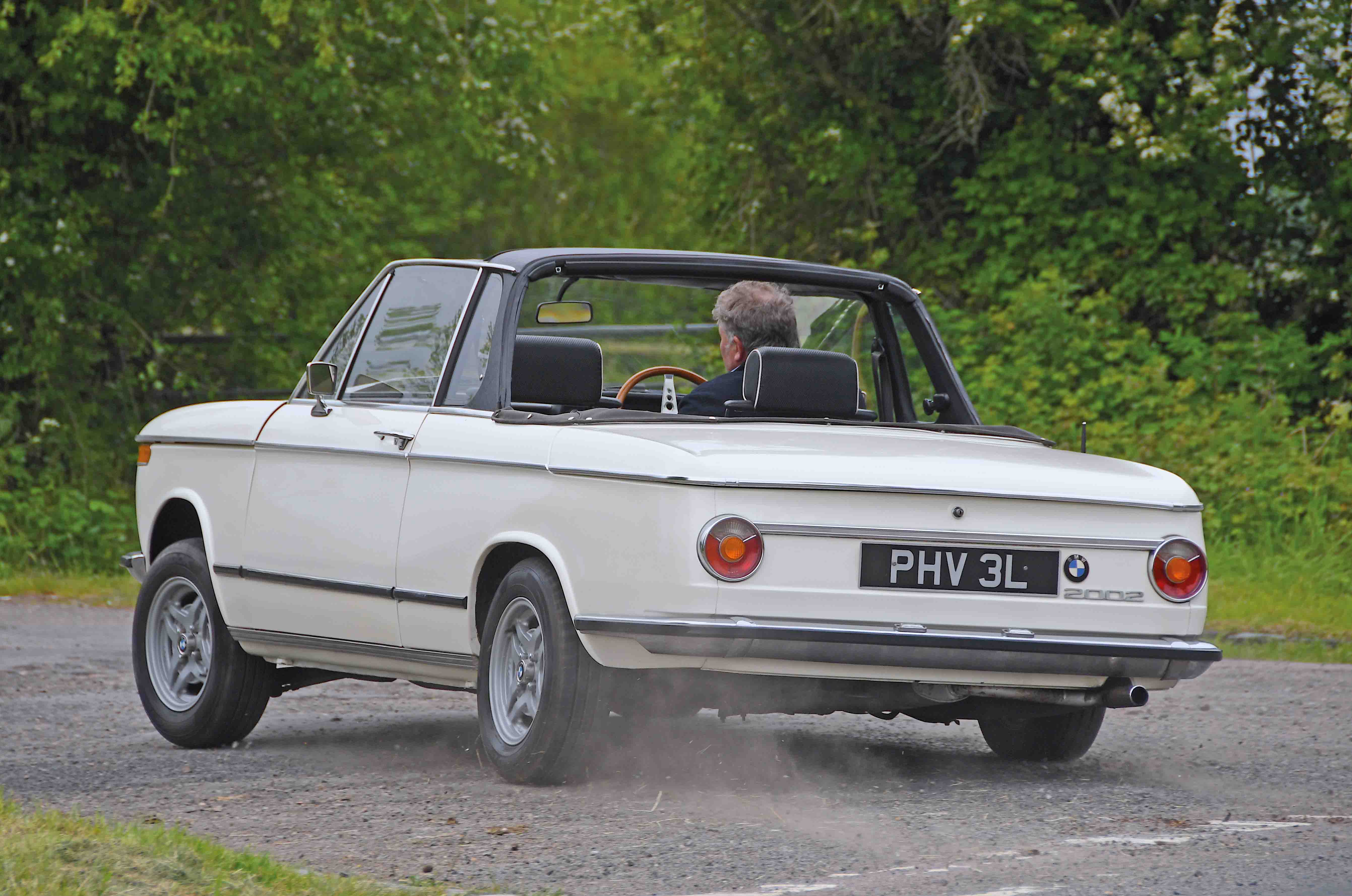
From a distance, it looked as effortless as the BMW 2002 Cabriolet (which was launched the following year) appeared clunky and contrived.

Announced originally as the fully open Baur 1600 Cabriolet in 1967, it re-emerged in 2-litre form in 1971 – complete with a targa-style roof that added 110lb to the weight and £1000 to the price when the first of the 354 right-hookers arrived in the UK in February 1973.

Classic & Sports Car – Triumph Stag vs BMW 2002 Cabriolet: open for the family

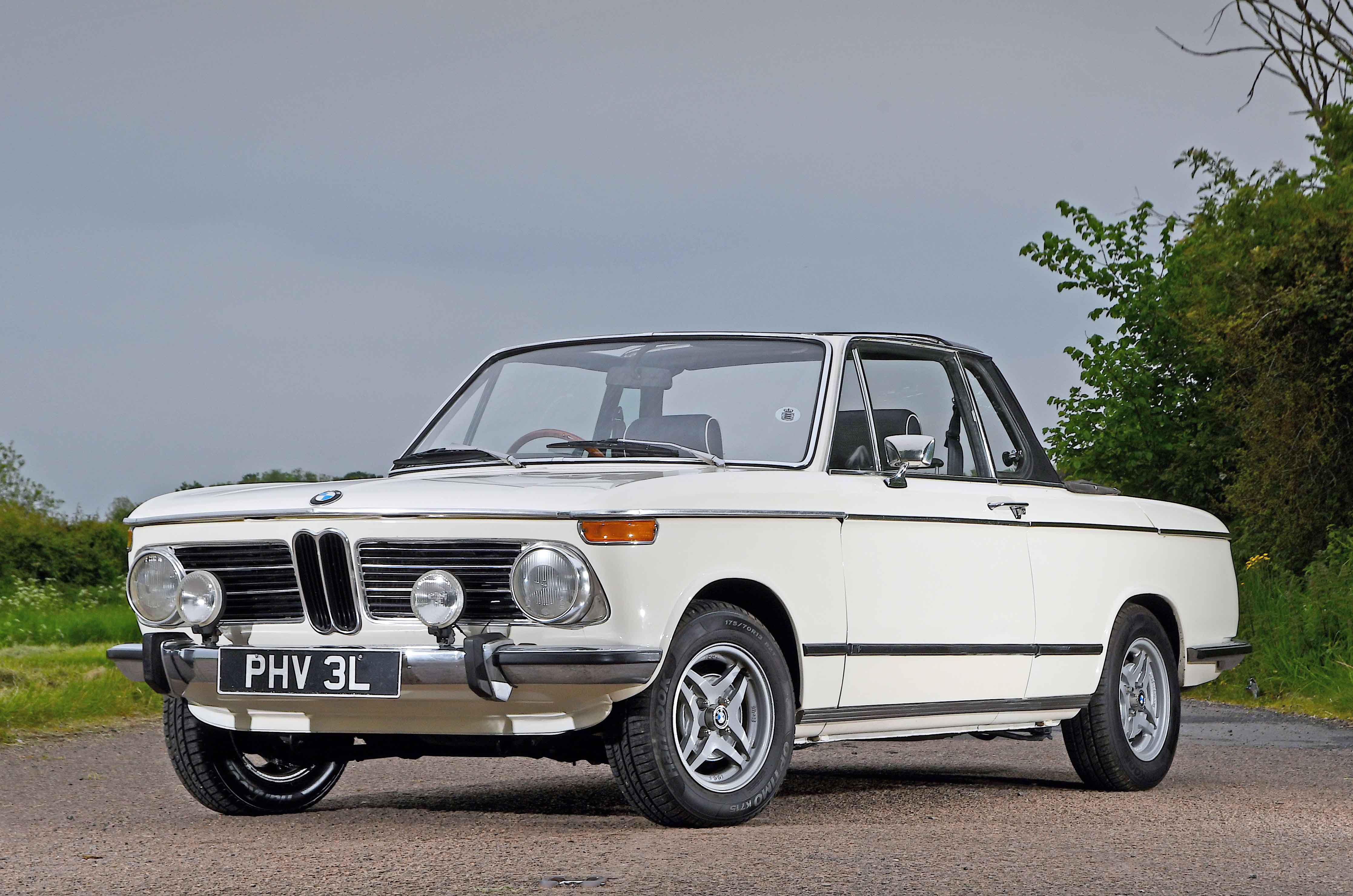
The BMW 2002 Cabriolet’s four-spoke alloy wheels were reserved for UK buyers

In fact, at £3499 including taxes, the 2002 Cabriolet was the most expensive of the small two-door BMW family other than the turbo, and it cost nearly £900 more than the Stag.

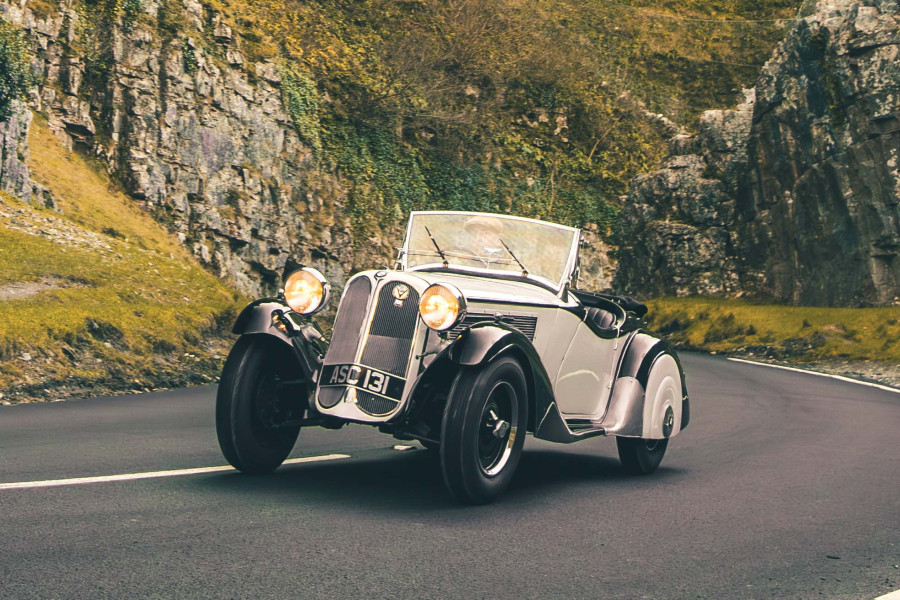
It was a car in a tradition of Baur-built open four-seater BMWs going back to the 320 and 326 cabriolets of the ’30s.

Formed in 1910 in Stuttgart, Baur also did open versions of the 501/502 (and made the M1 bodies), but it wasn’t until the 700 Cabriolet that the firm got into a volume relationship with BMW that lasted until the 1980s and the E30 3-Series Topcabriolet.

The 2002s were produced at the rate of 500 a year, using parts supplied by BMW, and offered through to June 1975, but only in 2-litre, 98bhp single-carburettor form.

The most significant option was a ZF automatic transmission, but UK buyers got locally made four-spoke alloys to sweeten the deal.

Classic & Sports Car – Triumph Stag vs BMW 2002 Cabriolet: open for the family

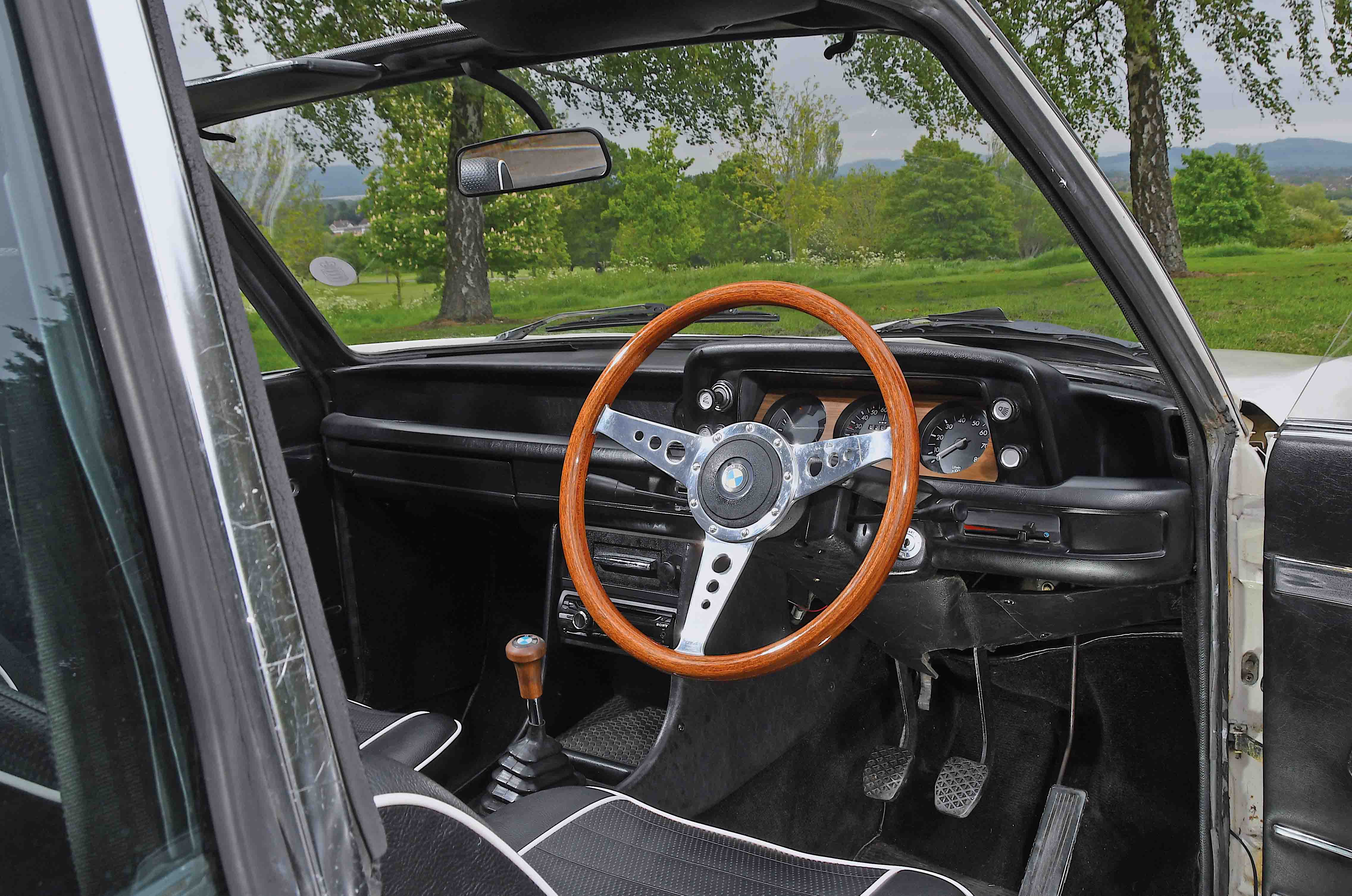
The BMW 2002 Cabriolet’s aftermarket steering wheel and piped seats

It was never BMW’s intention to take on the world with these cars, but by farming out the work, it could satisfy the limited appetite for an open car without upsetting the flow of its regular production line.

Total Baur ’02 output was 4210, of which 1682 were the original (and allegedly not very rigid) fully open model of 1967-’71.

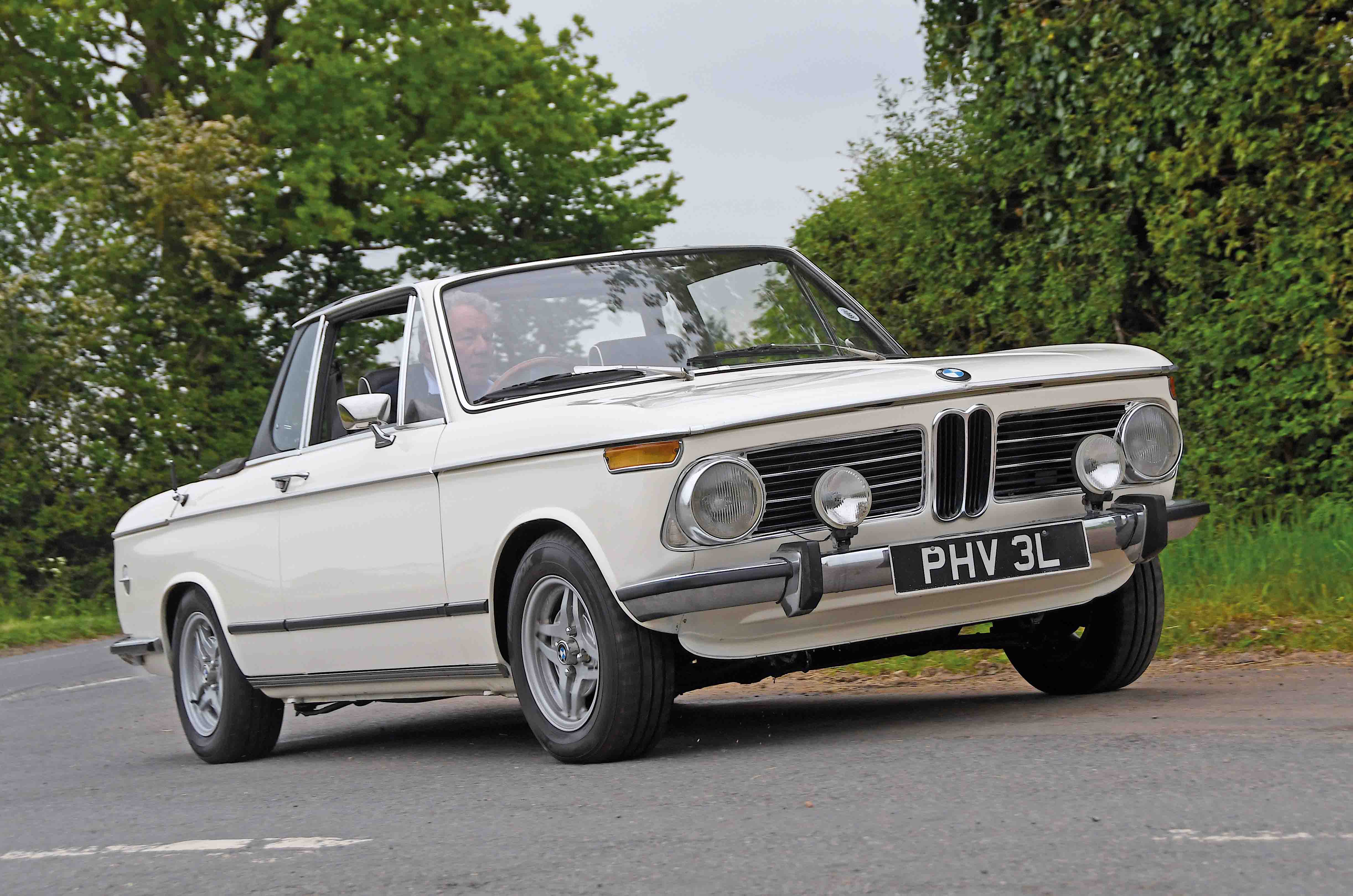
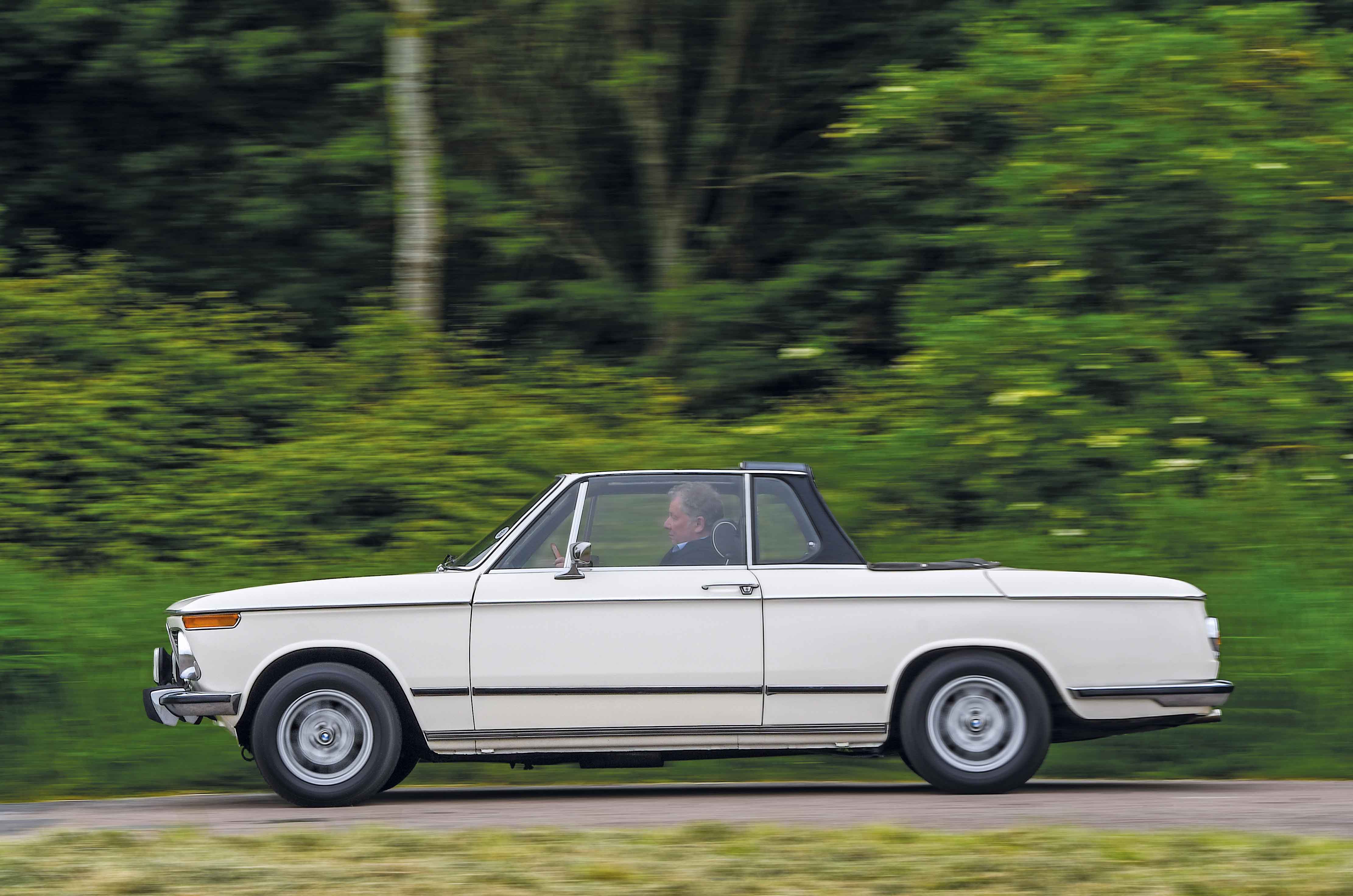
The standard tin-top has a purposefully boxy, tenacious look, but the 2002 Cabriolet appears to have too much back end and not enough glass. It is one of those rare things: a drop-top that is more handsome with its roof in place.

This 1973 ‘round light’ car is owned by Tim Callaghan, who has had the engine rebuilt and fitted a new bonnet.

It is telling, perhaps, that Tim is the 15th owner. He is fond of the Baur and uses it regularly, but freely admits that he prefers his 3.0 CSi.

Classic & Sports Car – Triumph Stag vs BMW 2002 Cabriolet: open for the family

‘Even in Cabriolet form the BMW 2002 feels feisty; it begs to be thrown about’

“My wife hates the car,” he says. “But it’s very reliable; I can leave it for months and it always starts straight away.”

Like the Triumph’s, its rear seats are of the generous ‘+2’ variety rather than promising long-distance comfort for anybody older than 10 years.

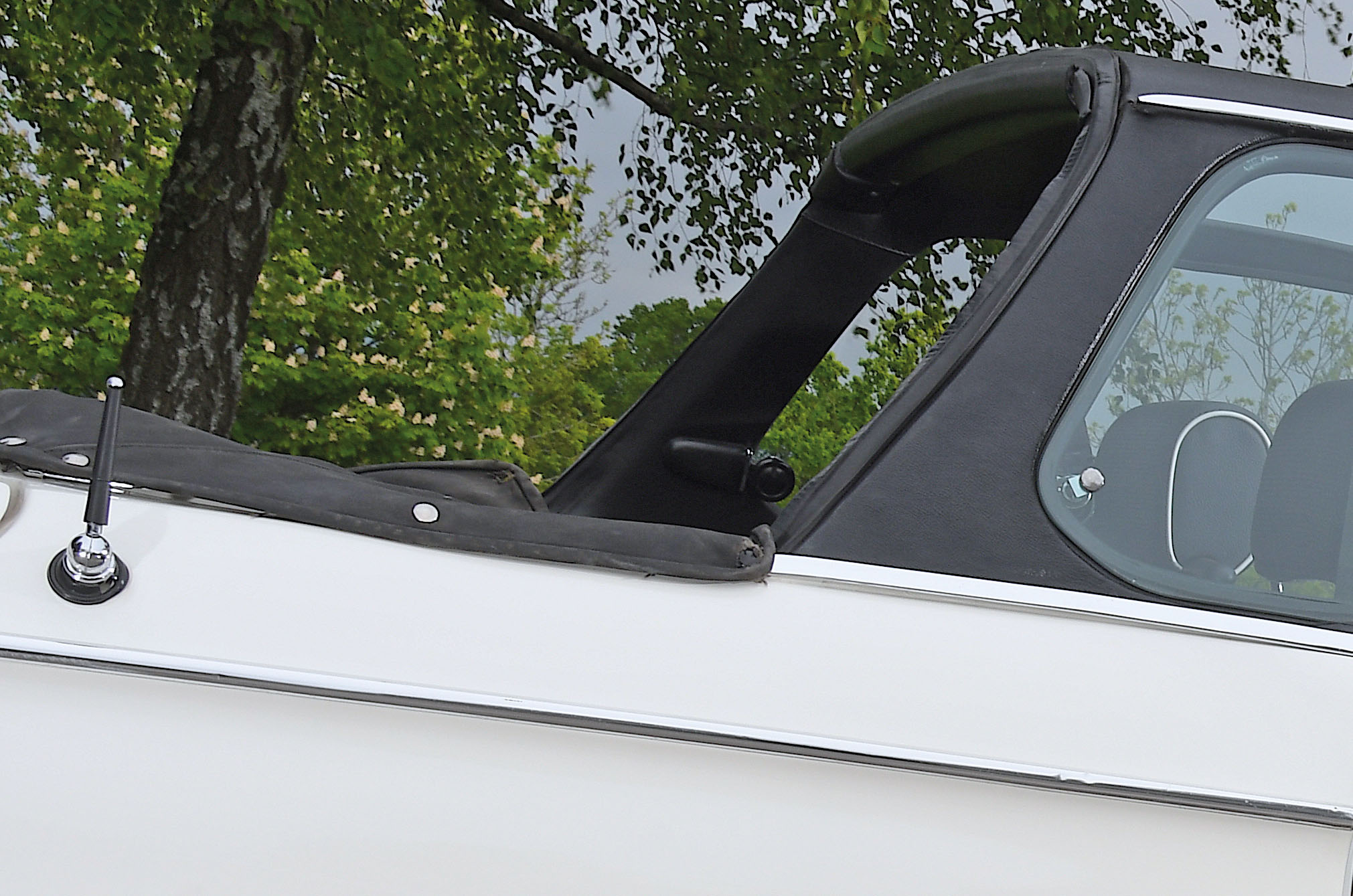
You can run it as a ‘coupé de ville’ with the roof panel stored on special clips in the boot, or all open with the rear section folded flush into the bodyshell.

The door glasses are frameless, but the rollbar is afforded additional support by rails that link it to the windscreen frame, which is good for structural rigidity if not for the overall aesthetic.

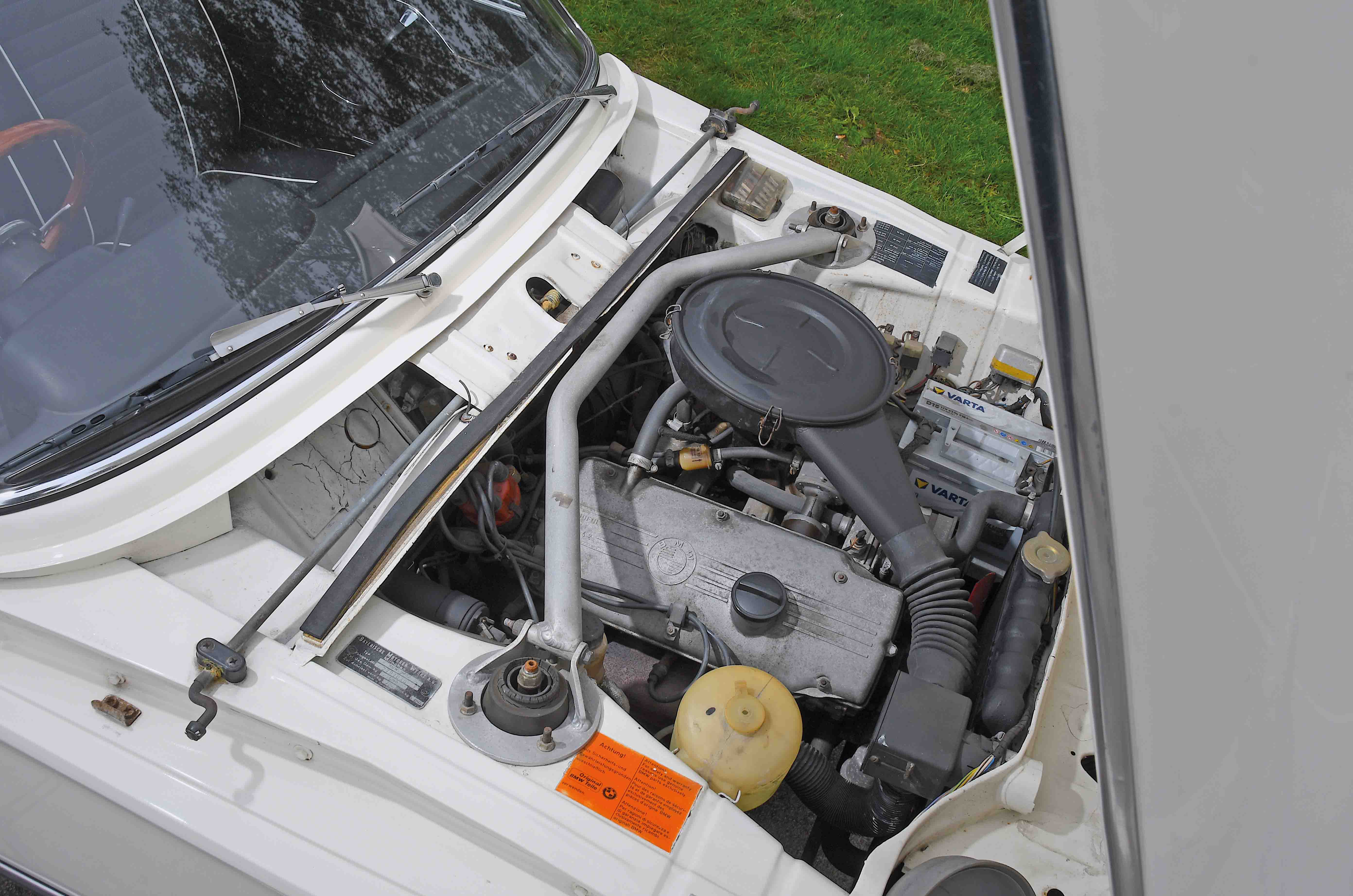
The hefty clamshell bonnet is front-hinged and opens to reveal an aftermarket strut brace, dual ATE brake servos and the canted-over in-line ‘four’ that was one of the cornerstones of BMW’s post-war success.

Classic & Sports Car – Triumph Stag vs BMW 2002 Cabriolet: open for the family

BMW’s carburettor-fed, 2-litre ‘four’ was the only option for the 2002 Cabriolet

Compact and efficient, refined yet responsive, even in this modest single-Solex-equipped form it gives gutsy performance to match the 3-litre Stag if you are willing to stir its manual gearbox enthusiastically enough.

But first get comfy behind the three-dial instrument pod, fumble with the heater slide controls on each side of the steering column (for warm feet in top-down mode) and remind yourself that BMW built its reputation for producing cars that pleased their drivers by thinking long and hard about seat, steering-wheel and pedal positions, and their solid, evenly weighted actions.

A distinctively wheezy starter motor gives life to an engine that idles smoothly and near silently, but will rev to 6000rpm-plus with a well-bred whine of its camshaft chain.

With virtually 100bhp per ton in saloon form, the 2002 was a revelation in 1968 and one of the great driver’s cars of the decade.

Classic & Sports Car – Triumph Stag vs BMW 2002 Cabriolet: open for the family

The drop-top BMW 2002 was offered from 1971 to 1974

You can conduct it sedately with great pleasure thanks to a flat torque curve and accurate manual steering that gives a good lock and only feels heavy at low speeds if you are more used to pedalling modern cars.

Even in Cabriolet form it feels a feisty entity when extended.

The short, smooth action of the lever and progressive, positive clutch bite allow you to revel in changing gear, blessing the close stacking of the ratios as you gun this wholesome, enthusiastic little car along.

It begs to be thrown about just like any other 2002, and feels entirely rigid and confidence-inspiring.

It’s stable in corners – but not so much that it doesn’t respond – and with a sense that you know exactly what all four wheels are doing through your hands and backside.

Classic & Sports Car – Triumph Stag vs BMW 2002 Cabriolet: open for the family

The BMW 2002 Cabriolet’s substantial roll hoop incorporates the windows

The brakes are superb, with a lovely firm pedal that makes a nice fulcrum for heel-and-toeing, and as long as the squeaky roof panel is removed there are no appreciable creaks or rattles on suspension that is resilient yet supple.

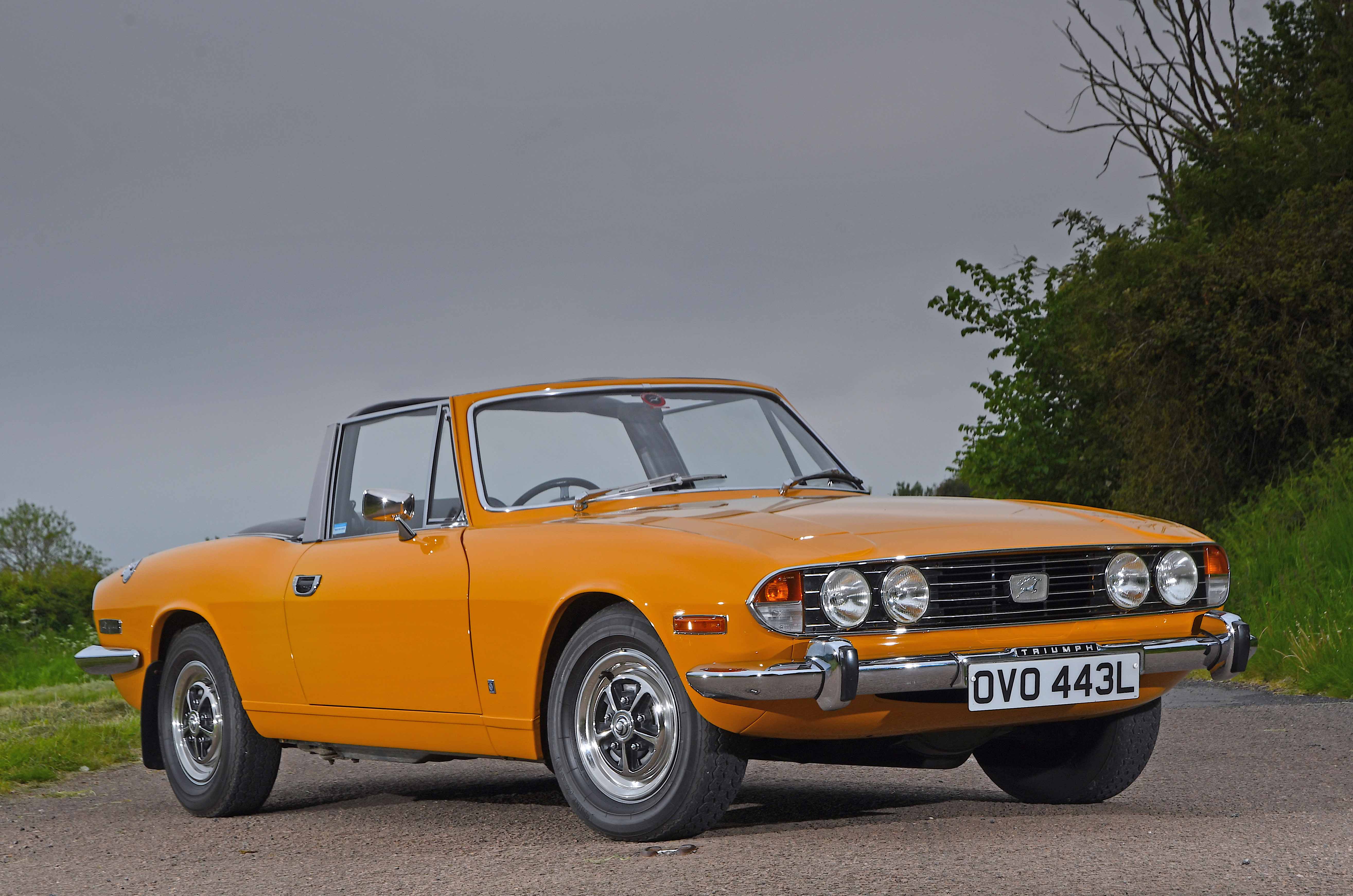
Superficially, Paul Catterall’s Mk1 Triumph Stag automatic is a more appealing car than the BMW, particularly in the Saffron yellow redolent of the Triumph’s fleeting appearance in the Bond outing Diamonds are Forever.

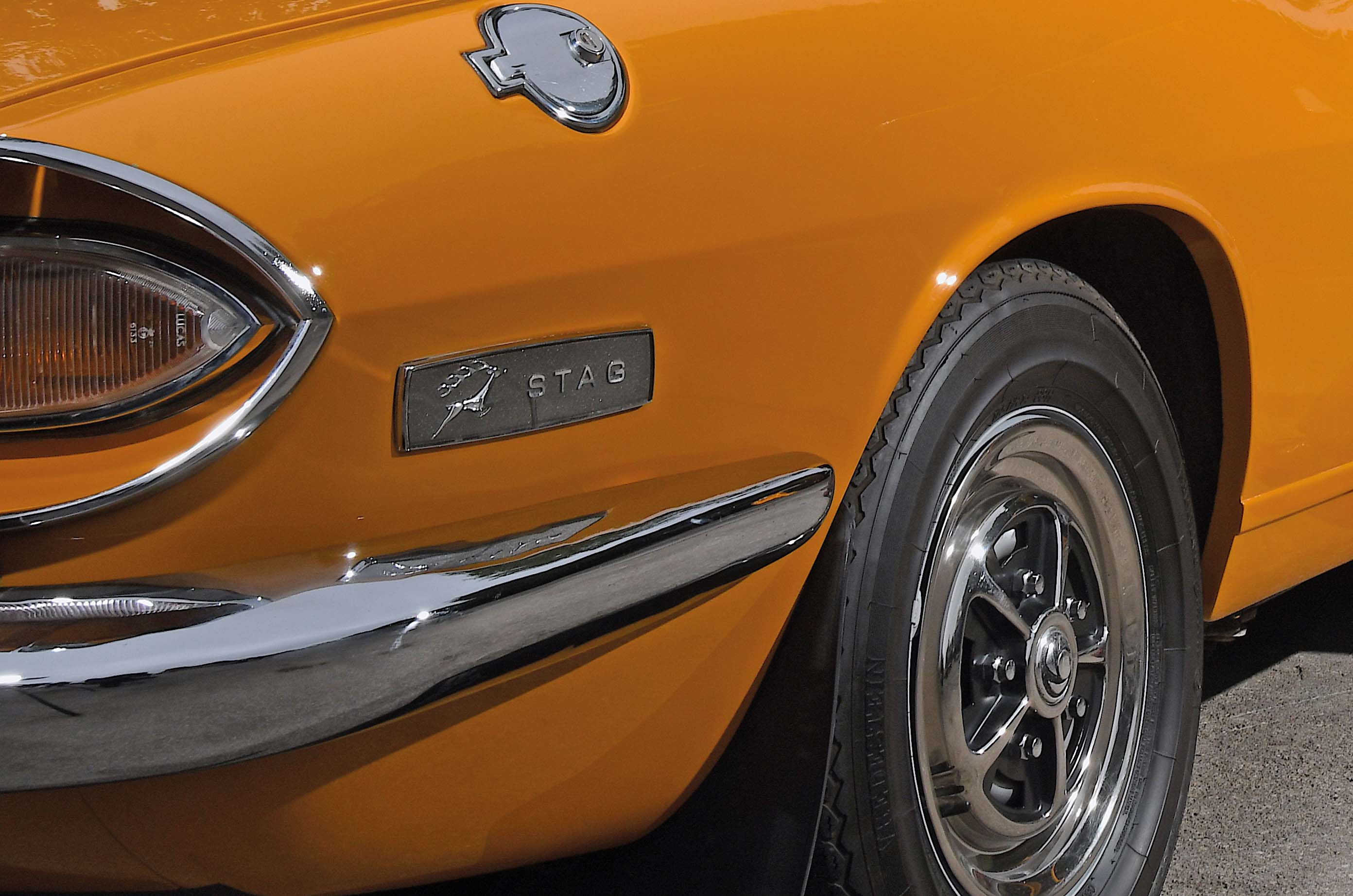
It has the early wheeltrims and BL badges on the front wings, and it is bereft of the headrests and body stripes that were Mk2 features.

This beautiful, one-previous-owner car is correct in all its details, right down to the radio.

“I bought the Stag to replace a Morris Minor Convertible – having measured the garage first – in 2004,” says Paul. “It’s totally standard with no upgrades – not even a larger radiator.”

Classic & Sports Car – Triumph Stag vs BMW 2002 Cabriolet: open for the family

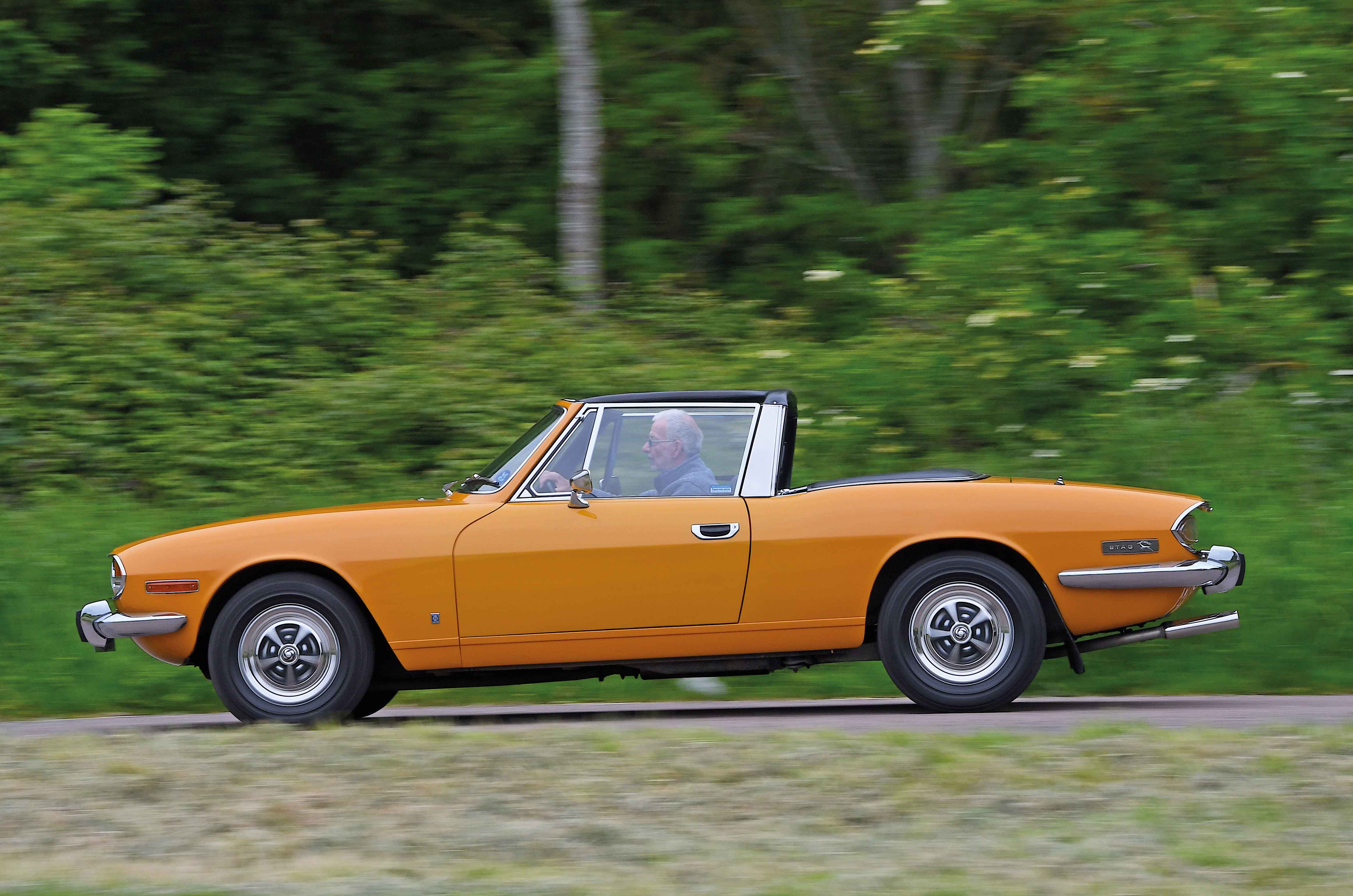
The Triumph Stag’s handling is on the soft side of sporting

With its central T-bar design, the Triumph has probably the most stylishly resolved roll-hoop of any car you will find, plus a great-looking rear end with those big, aggressively angled double-barrel tailpipes.

The Triumph is narrow for its length and feels no more roomy than the shorter BMW. It also has a much smaller boot.

In fact, it feels as if you sit on the Stag rather than in it, with its shallow footwells.

Still, the vinyl seats are more comfortable than the BMW’s hard chairs, and the controls are rather more comprehensive – Triumph led the way in the early ’70s in its use of fingertip stalks and warning lights.

Nothing is quite as pleasing to the eye – or the touch – as in the Minimalist German, though, even if you do get electric windows, an adjustable steering column and a tilting seat mechanism, items not even available as options in the austere BMW.

Classic & Sports Car – Triumph Stag vs BMW 2002 Cabriolet: open for the family

The 145bhp Triumph Stag is more a relaxed grand tourer than an out-and-out sports car

Put the dinky ‘T’ selector into Drive and the Stag rumbles away amiably, with automatic gearchanges that are smooth enough but delayed sufficiently that you can’t help but try to anticipate them in the change of engine note.

Being an auto, it is low-geared overall for modern motorway cruising, but it has acceleration not dissimilar to the manual version.

A responsive mid-range kickdown gives the Stag a reasonably lively character.

For many, the benefits of light steering at parking speeds will outweigh concerns about lack of feel or feedback.

True, the Stag rolls somewhat when pressed, but it has ample grip, does not wallow, float or pitch and can be urged through bends with satisfaction as long as you don’t ask it to carry too much speed around the bumpy corners in which the BMW excels.

Classic & Sports Car – Triumph Stag vs BMW 2002 Cabriolet: open for the family

The BMW 2002 Cabriolet’s elongated tail in profile

The shell feels every bit as stiff as the 2002’s, the ride very acceptable.

But as a car to drive quickly and well, the Triumph can’t offer the rewards of the BMW because it does not engage with the driver in the same manner – ways that are easy to feel but hard to define.

In fairness, it was never intended to be that sort of car, and had its creators got the engine right most buyers would have been more than willing to overlook minor shortcomings in the finer points of its handling.

Had it sold in sufficient numbers, doubtless Triumph would have seen the benefits in sorting the rest of the car, the basics of which were sound.

At a time when Europe’s motor industry was second-guessing US legislators on the future of convertibles, the Stag looked like a brave project, although given Triumph’s success selling TRs and Spitfires to Americans it was likely seen as risk worth taking.

Classic & Sports Car – Triumph Stag vs BMW 2002 Cabriolet: open for the family

Has the Triumph Stag come of age?

The tragedy of the Stag is that it was a clever, attractively packaged concept that should have cleaned up against the overpriced German opposition.

As nice as it is to drive, the 2002 is hard to warm to visually, an oddity and a curiosity compared with the glamorous Triumph.

I don’t love Stags and will never own one, but I’m happy they exist.

There is something slightly louche about them, and the passage of time has made their problems seem more like legend than hard fact.

That you still see so many of them says a lot for the enduring appeal of a car that makes a much better classic than it did a current model.

In short, it is a car with a feelgood factor that transcends its shortcomings, real or perceived.

Images: John Bradshaw

Thanks to: the Stag Owners Club; Richard Stern of the BMW Car Club GB’s 02 Register

This was first in our July 2019 magazine; all information was correct at the date of original publication


Factfiles

Classic & Sports Car – Triumph Stag vs BMW 2002 Cabriolet: open for the family

Triumph Stag

  • Sold/number built 1970-’77/25,939
  • Construction steel monocoque
  • Engine all-alloy, sohc-per-bank 2997cc V8, twin Zenith-Stromberg carburettors
  • Max power 145bhp @ 5500rpm
  • Max torque 170lb ft @ 3500rpm
  • Transmission four-speed manual with overdrive, or three-speed automatic, RWD
  • Suspension independent, at front by MacPherson struts, anti-roll bar rear semi-trailing arms, coil springs, telescopic dampers
  • Steering power-assisted rack and pinion
  • Brakes discs front, drums rear, with servo
  • Length 14ft 6in (4420mm)
  • Width 5ft 4in (1626mm)
  • Height 4ft 2in (1270mm)
  • Wheelbase 8ft 4in (2540mm)
  • Weight 2807lb (1273kg)
  • 0-60mph 9.5 secs
  • Top speed 118mph
  • Mpg 20
  • Price new £2616 (1973)


BMW 2002 Cabriolet

  • Sold/number built 1971-’74/2713
  • Construction steel monocoque
  • Engine iron-block, alloy-head, sohc 1990cc ‘four’, single Solex 40PDSI carburettor
  • Max power 98bhp @ 5500rpm
  • Max torque 116lb ft @ 3000rpm
  • Transmission four-speed manual, RWD
  • Suspension independent, at front by MacPherson struts, anti-roll bar rear semi-trailing arms, coil springs, telescopic dampers
  • Steering ZF worm and roller
  • Brakes discs front, drums rear, twin servos
  • Length 14ft 2in (4318mm)
  • Width 5ft 2½in (1588mm)
  • Height 4ft 5½in (1359mm)
  • Wheelbase 8ft 2½in (2500mm)
  • Weight 2337lb (1060kg)
  • 0-60mph 10.8 secs
  • Top speed 106mph
  • Mpg 28
  • Price new £3499 (1973) 

Enjoy more of the world’s best classic car content every month when you subscribe to C&SC – get our latest deals here


READ MORE

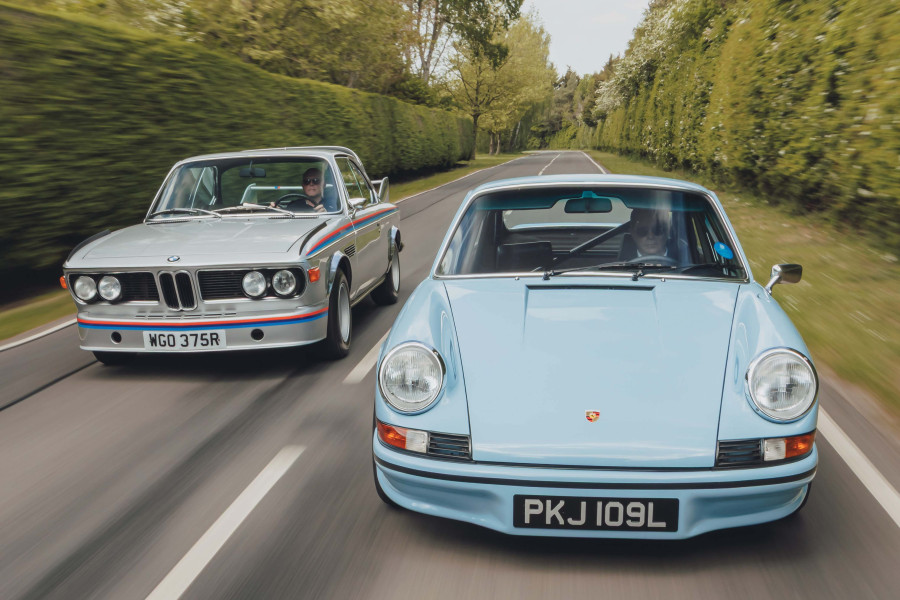
Putting Munich on the map: BMW 2002 and 3.0 CSL

MGB GT V8 vs Triumph Stag: in-house rivals

BMW 325i Convertible vs Saab 900 Turbo S vs Audi 2.8 Cabriolet: coupés lose their heads