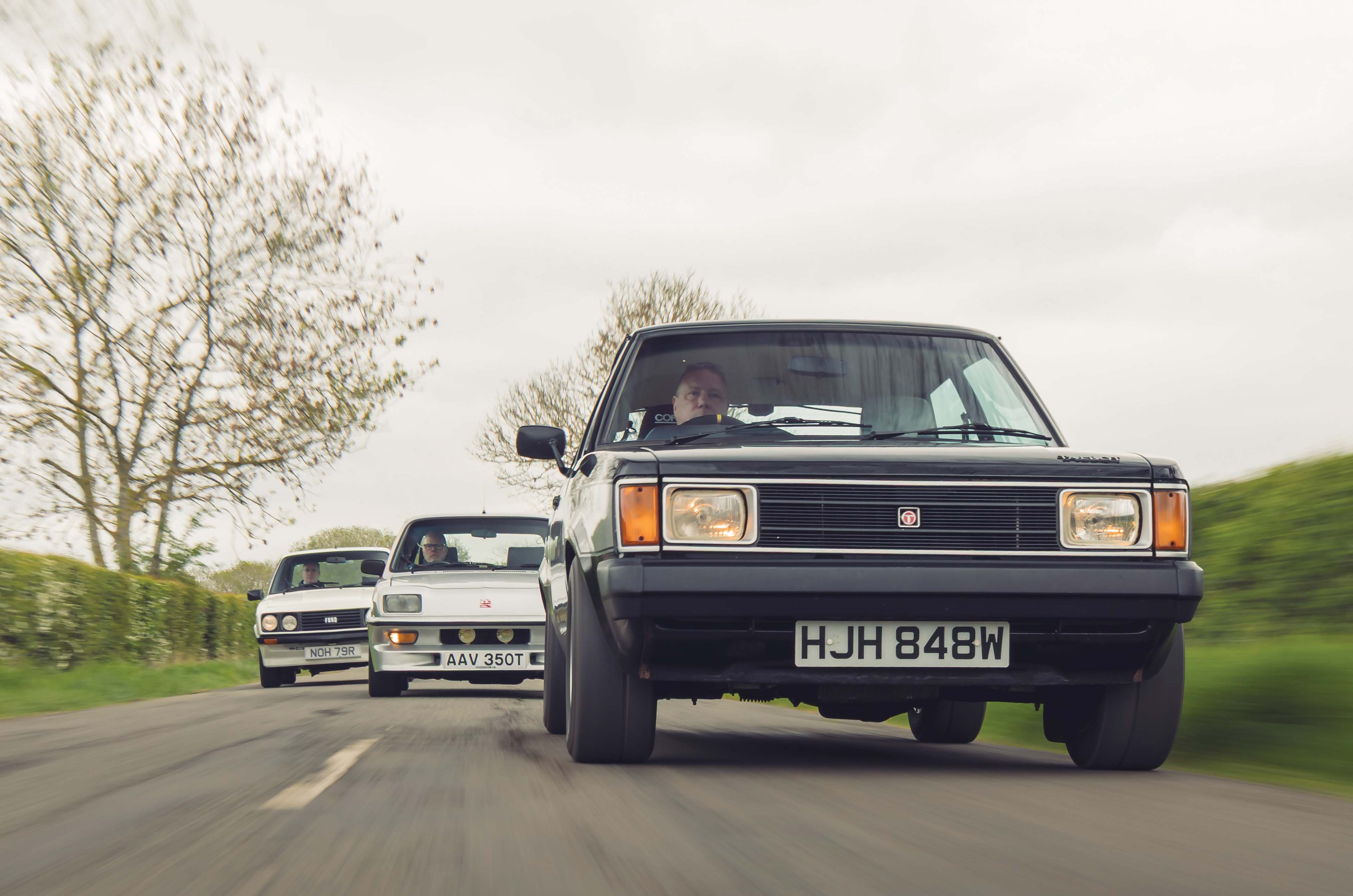
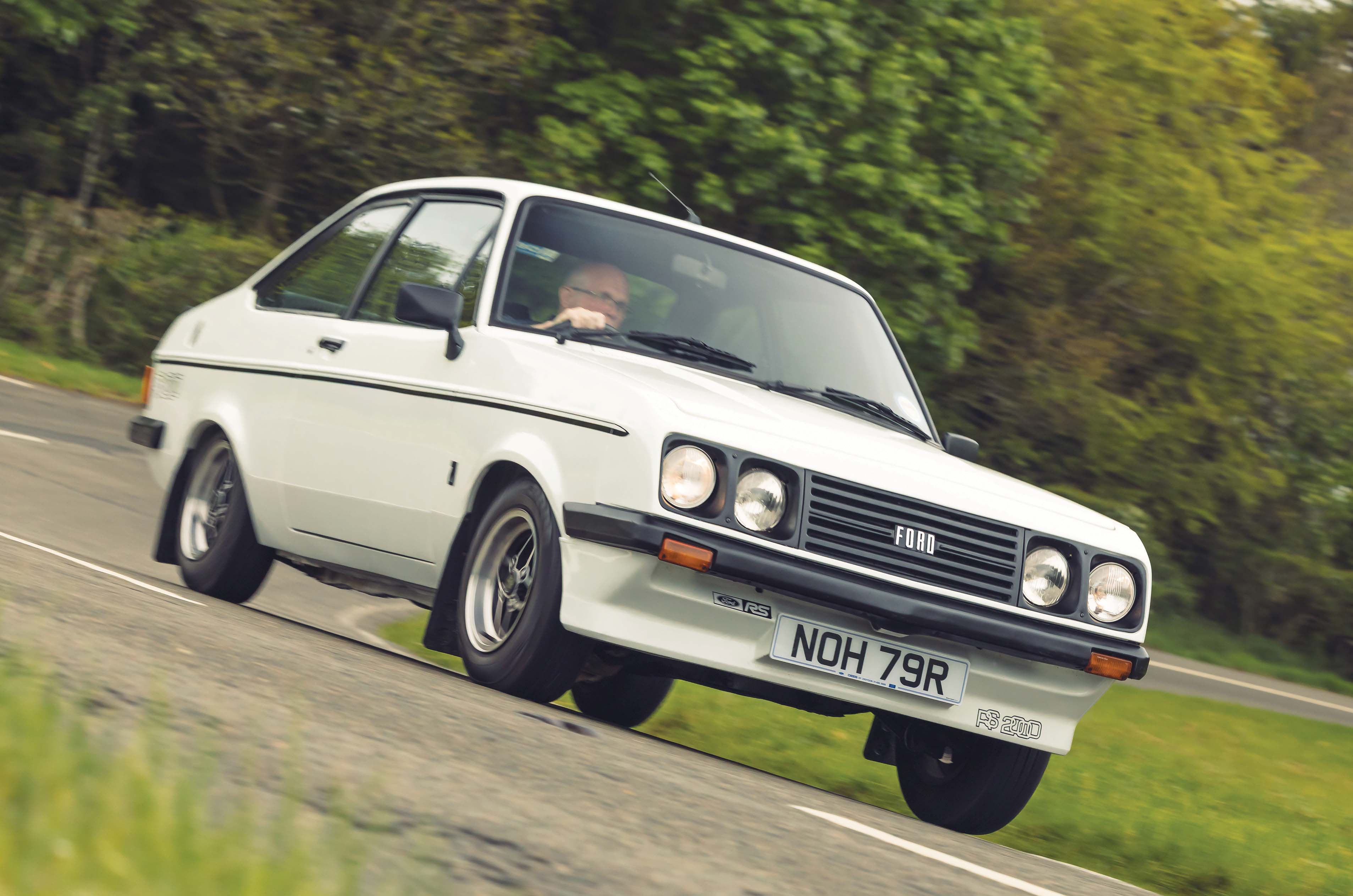
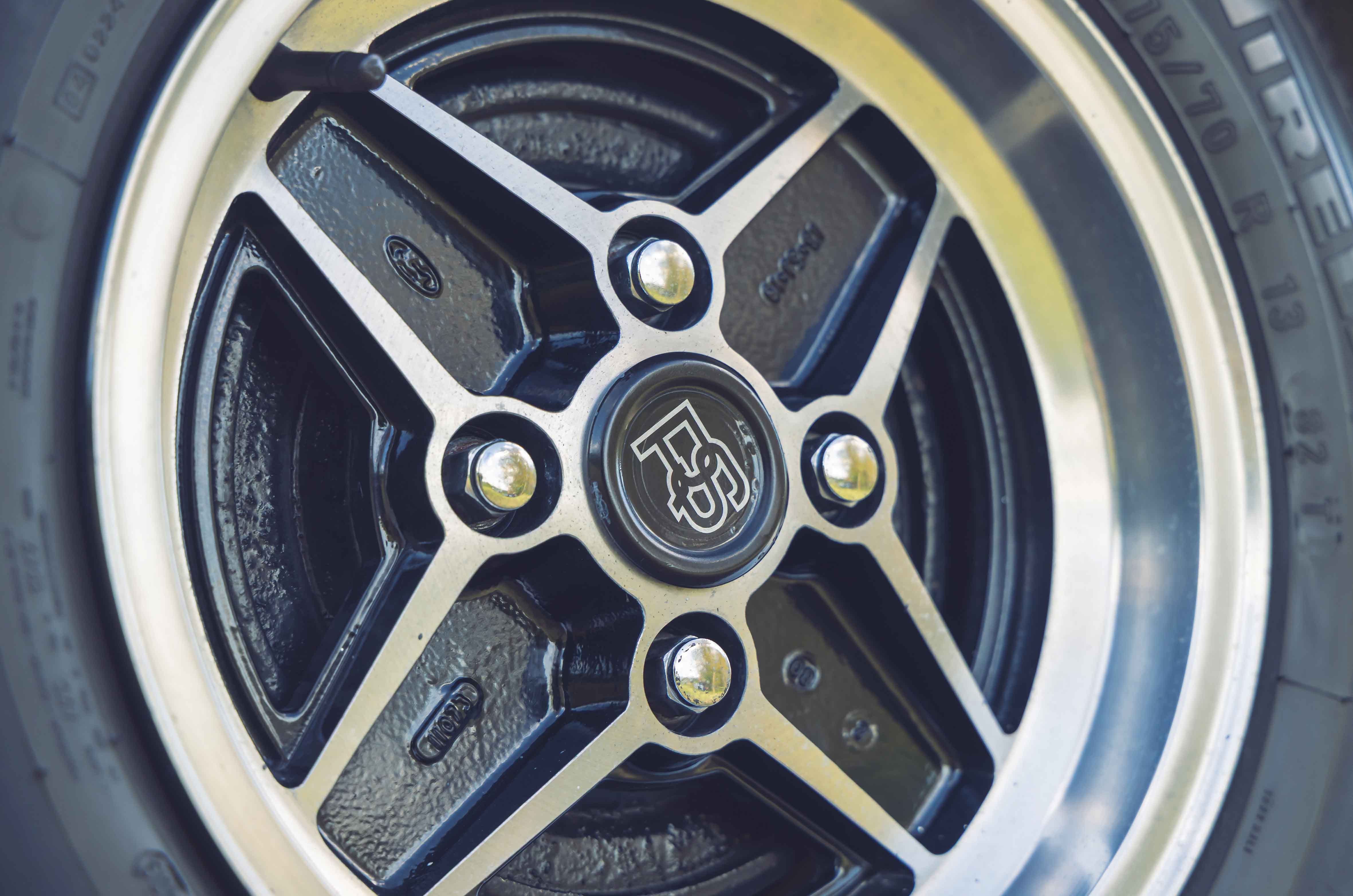
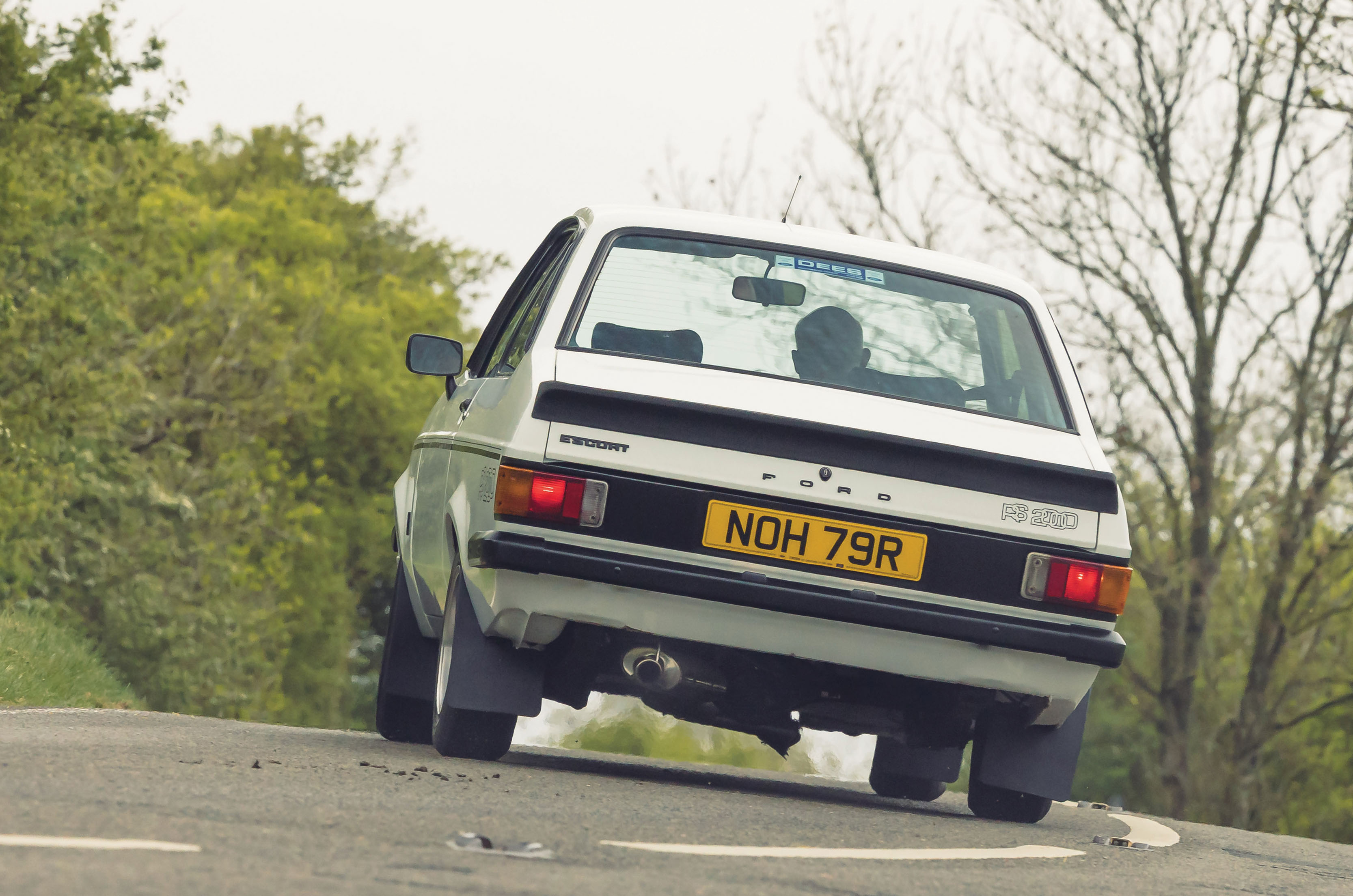
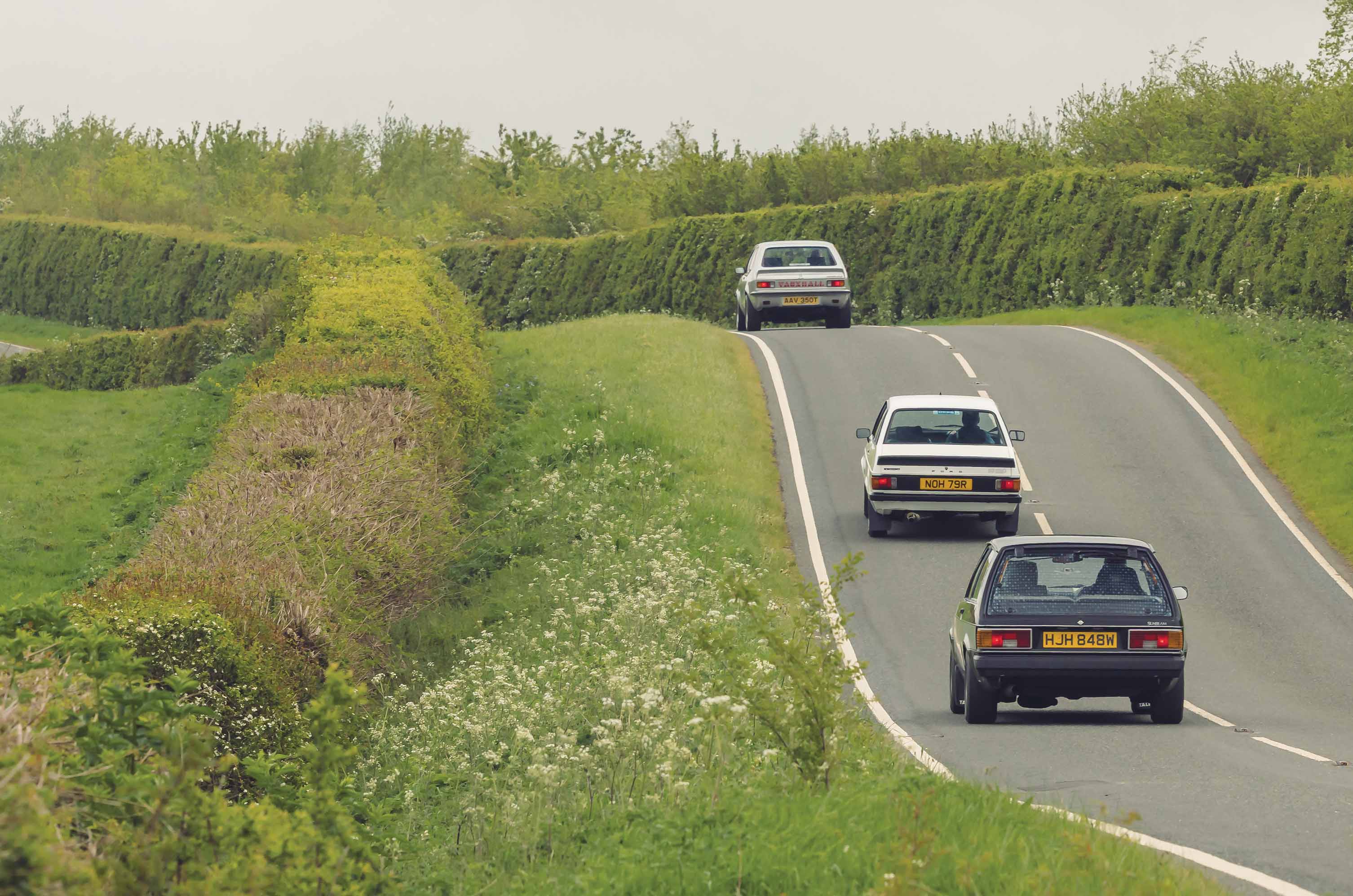
Phil is a serial Ford owner, but NOH 79R is his first RS 2000 and was only bought a year ago.
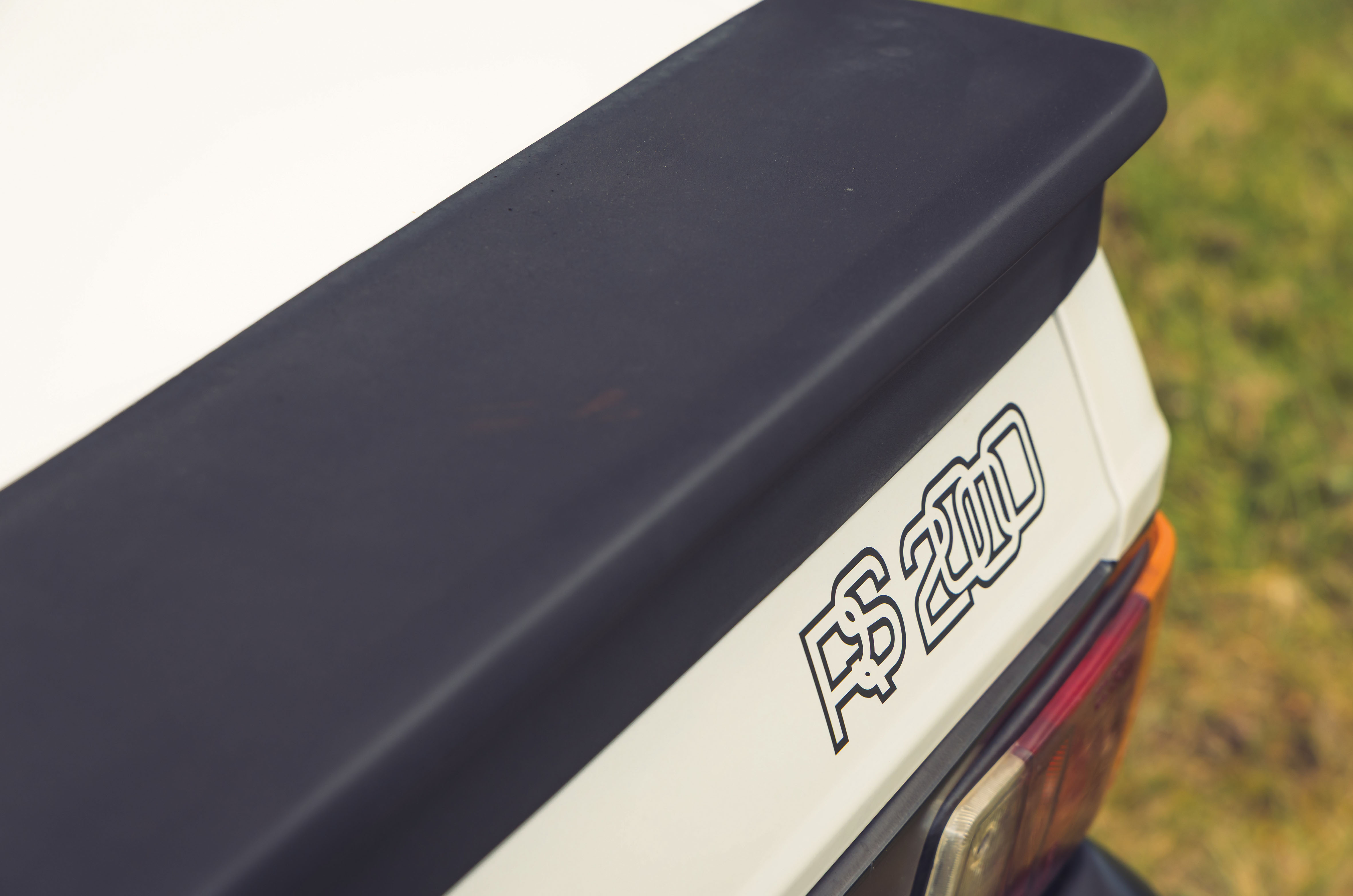
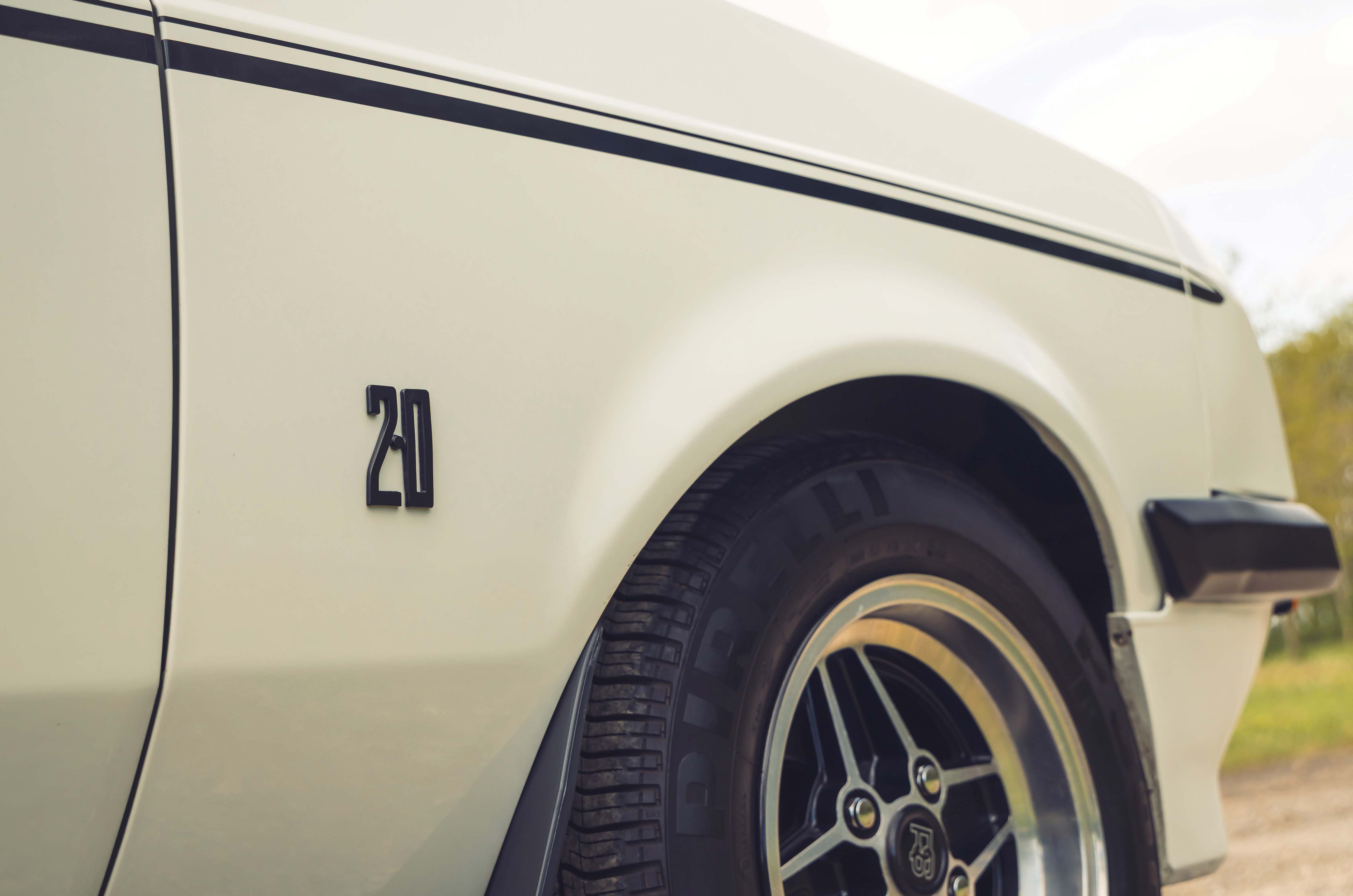
The Ford Escort RS 2000’s gently flared wheelarches
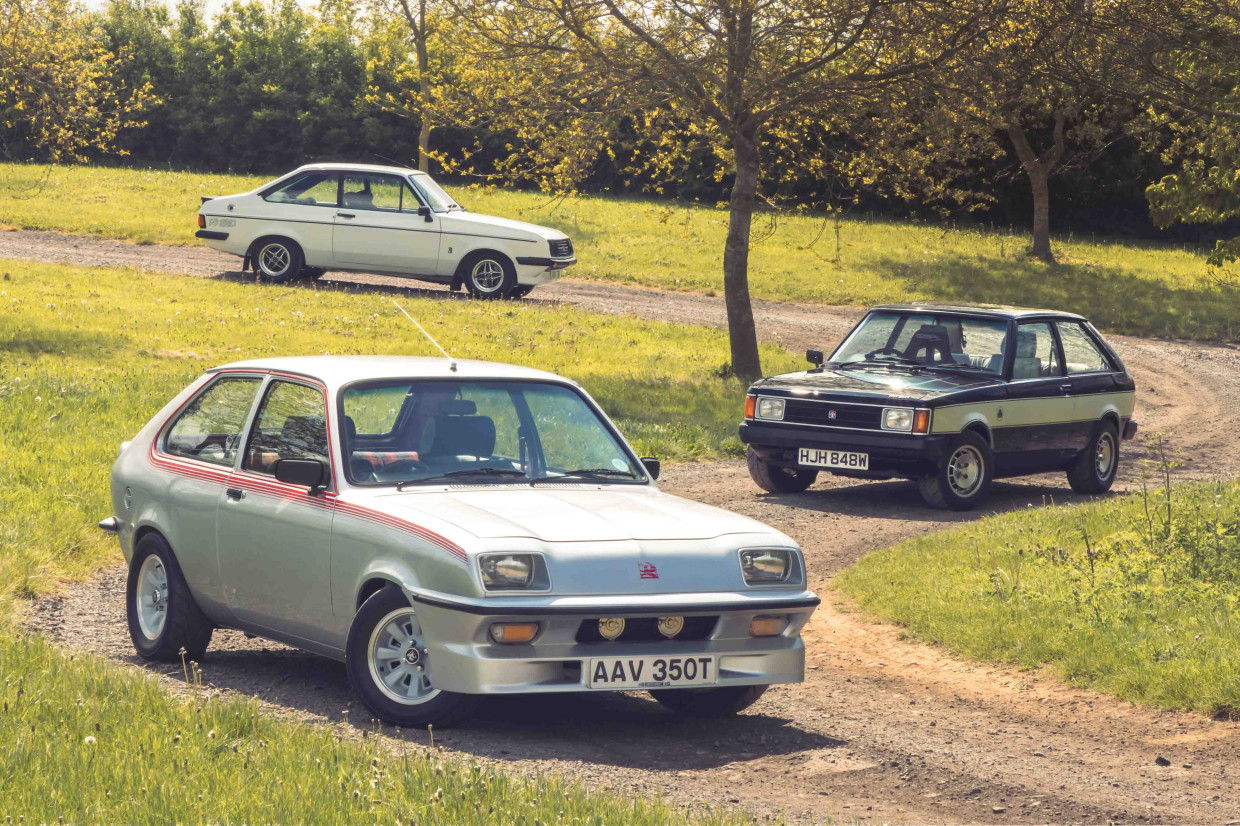
Subjectively, I think it’s the best looking of the three: in any other guise, a Mk2 Escort is pure magnolia to look at, but all of the Rallye Sport addenda transforms it into something far more svelte and purposeful.
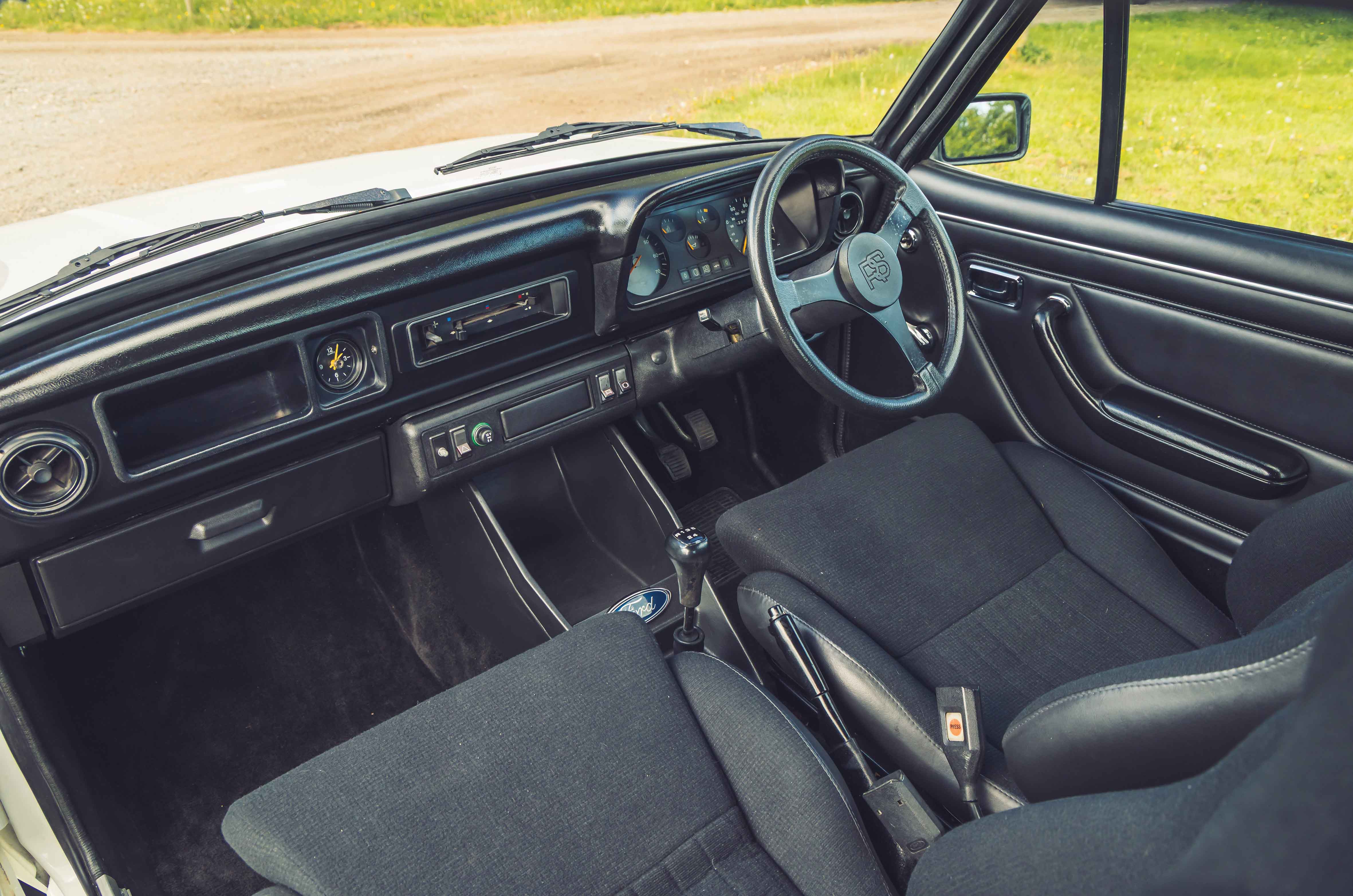
Inside, typically well-resolved ergonomics have you sitting comfortably in its ordered cabin, facing a smart, three-spoke RS wheel, but there’s little else of sporting intent.
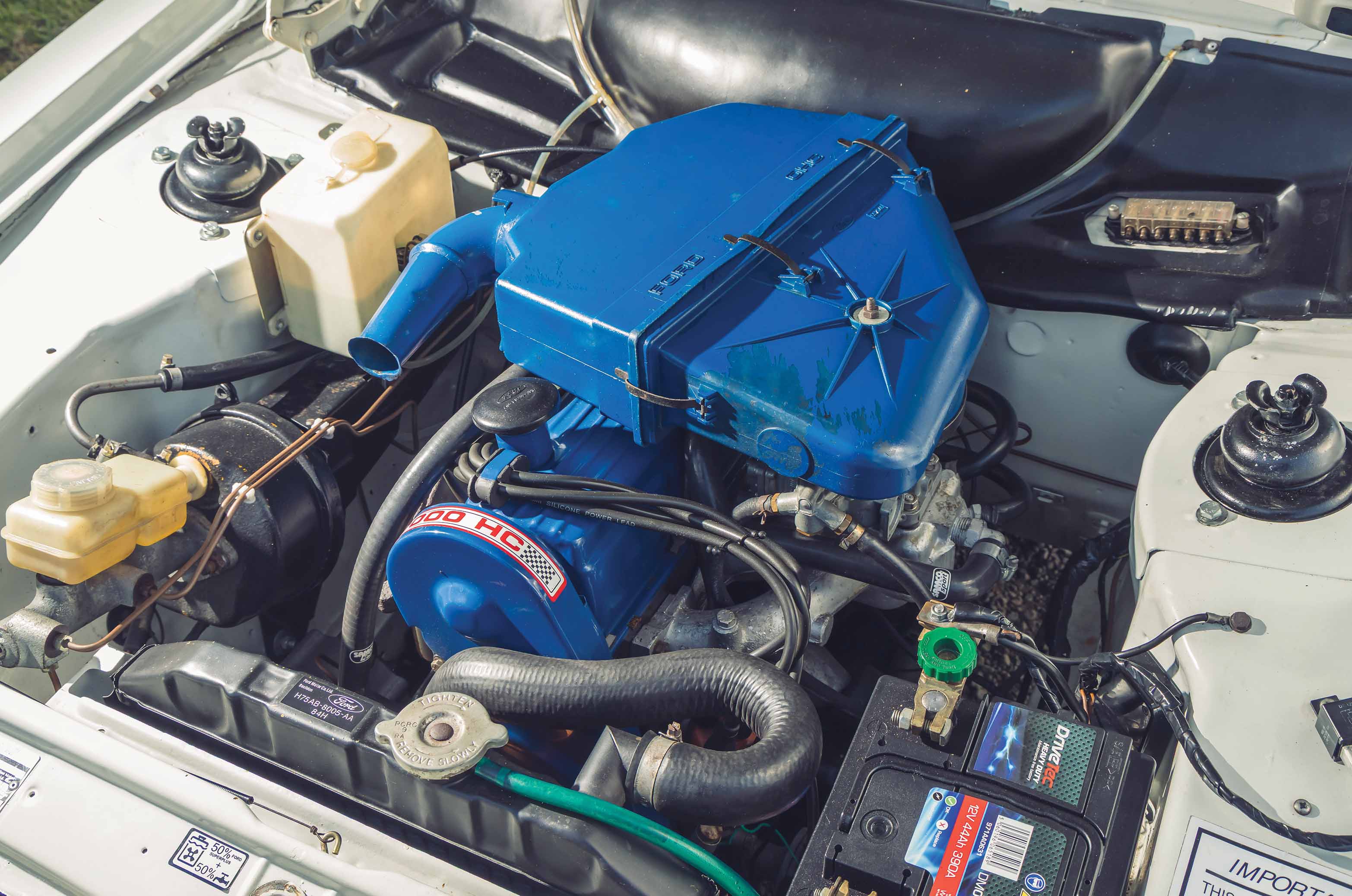
Start the engine and all remains civilised, with only a murmur from the Pinto as you pull away.
The longish-throw gearbox is notchy, but a big improvement over the Vauxhall’s Getrag, and the gearing in top is much taller – even when driven with brio, the Escort is by far the most refined here.
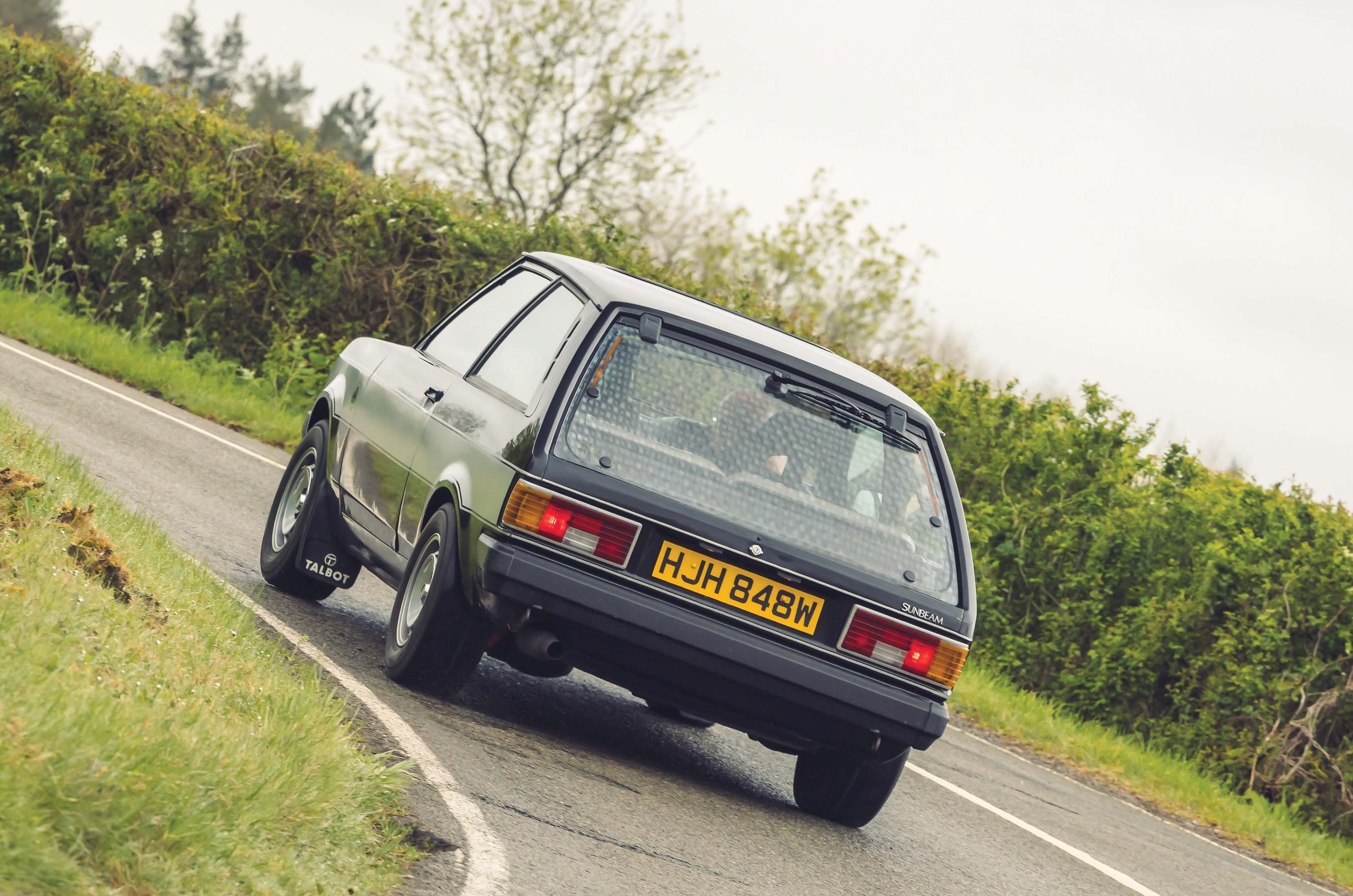
Lotus went to town with the modest Talbot Sunbeam
The steering is lighter and lower-geared than in the Talbot or Vauxhall but, in general, Ford’s Escort RS 2000 feels poised and nimble as we thread our way along twisty Leicestershire B-roads.
Despite its performance data almost matching the others, the Escort never feels as quite fast, maybe because of its engine’s civility.
But its handling is safe and predictable, with some body roll, excellent grip and initial understeer that transitions to easily catchable oversteer (usually tempered by a spinning inside rear wheel).
Only braking feel, which lacks bite and progression, saps confidence when driving at higher speeds.
This Talbot Sunbeam Lotus has a non-standard, power-assisted rack, making it feel even more agile
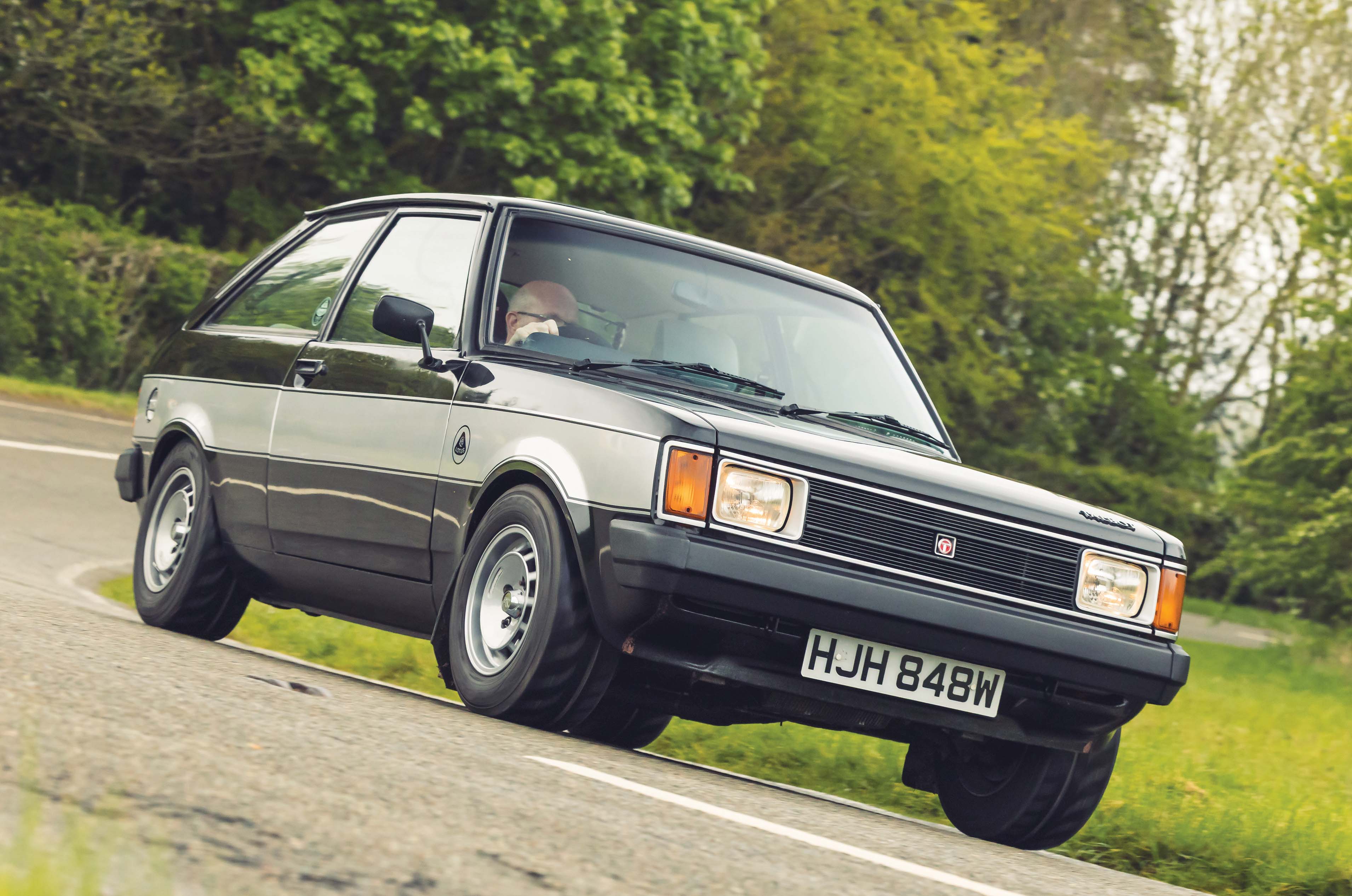
If you want the starkest contrast between ‘our’ three cars, you only have to step out of the Ford and into Stephen Crothers’ Sunbeam Lotus.
Chrysler, née Rootes Group, launched the Sunbeam range in 1977 to replace the long-serving Imp.
Its European business had been kept alive thanks to massive UK government support, which demanded a commitment to the Linwood factory in Scotland where the Sunbeam was to be built.
Based on the Hillman Avenger platform, the Roy Axe-designed three-door hatchback enjoyed a positive reception and soon got a performance lift with the Sunbeam 1600Ti.
But that was just a teaser for what was to come.
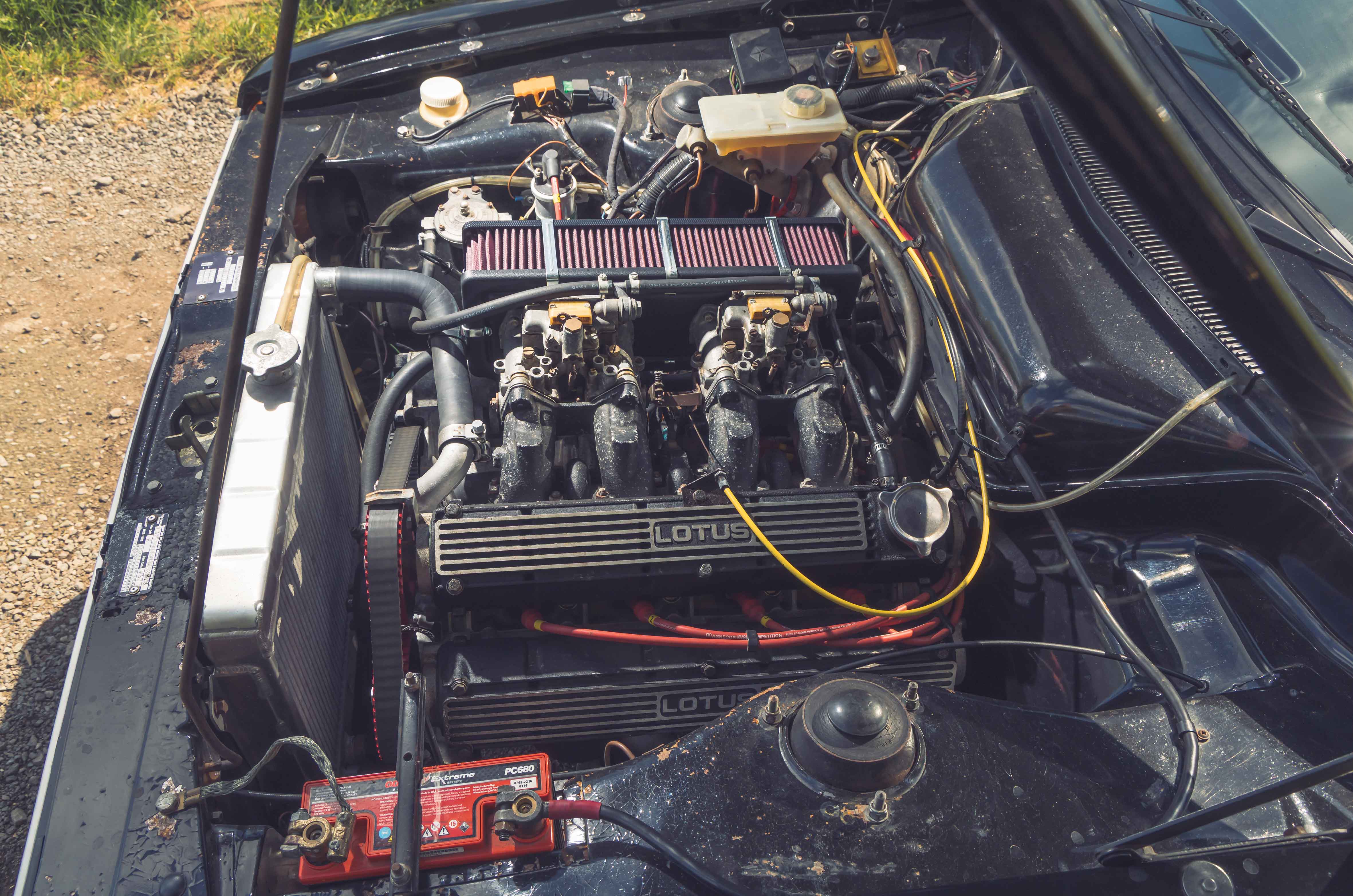
The Talbot Sunbeam Lotus is powered by a 220bhp Twin Cam motor
Chrysler Competition Department’s Des O’Dell had seen first Ford then Vauxhall achieving success in the WRC with, respectively, the Escort RS 1800 and Chevette HS; he wanted a piece of the action and commissioned Lotus to achieve it.
Hethel’s solution was to take its 16-valve, 2-litre Type 907 slant-four motor and develop it into something more gutsy.
With capacity boosted to 2172cc, the engine was re-coded Type 911 and, mated to a five-speed ZF gearbox, crammed into the Sunbeam.
Outputs of 150bhp at 5600rpm and 150lb ft at 3800rpm were enough for some pretty serious performance from the 960kg (2116lb) hatchback: 0-60mph took 7.8 secs, while a top speed of 122mph beat both our rivals shown here.
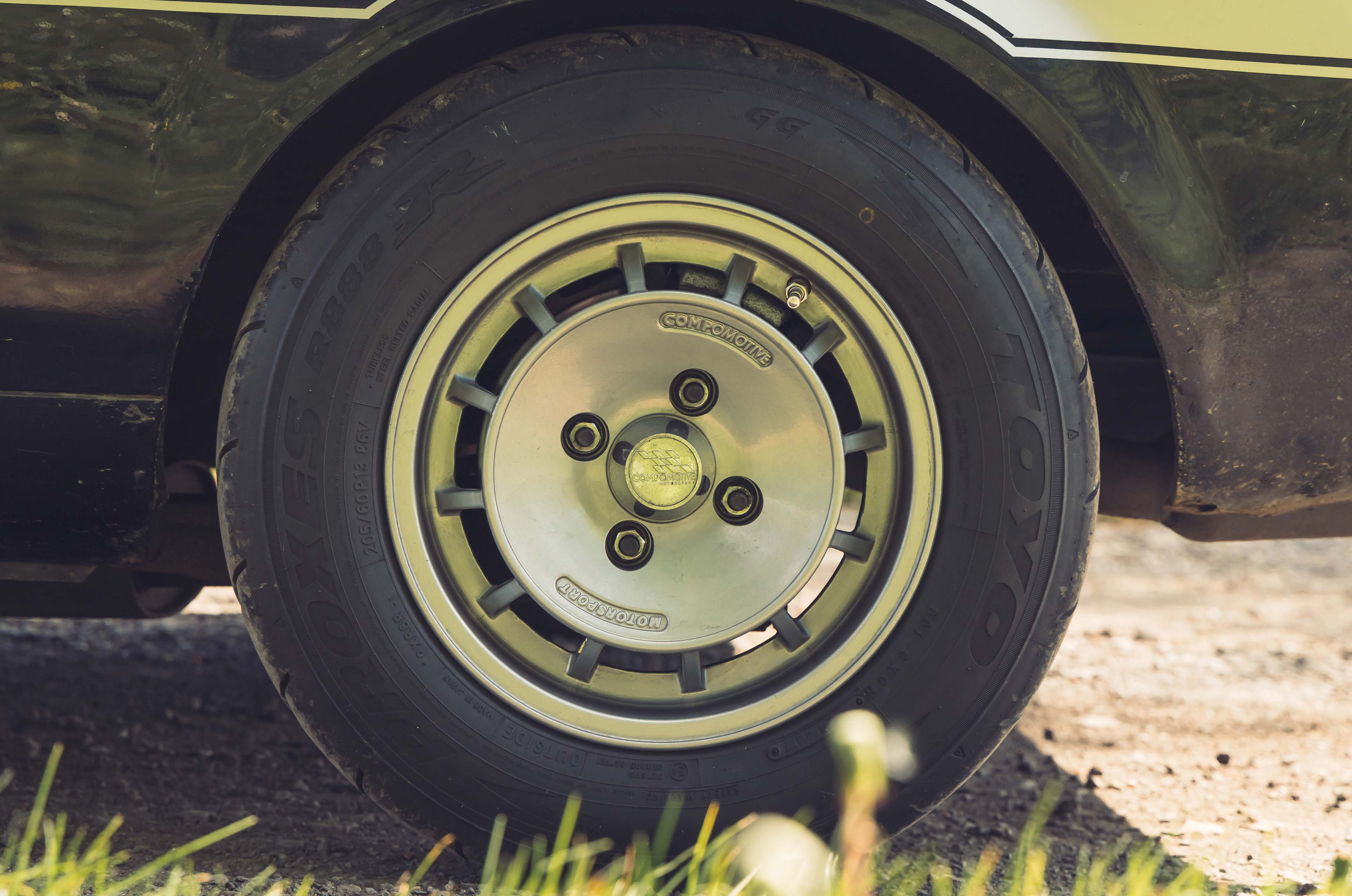
This Talbot Sunbeam Lotus sits on non-standard Compomotive wheels
To accommodate a near doubling of output versus the 1.6 GLS on which the Lotus was based, the suspension was lowered and stiffened, with the work carried out at Ludham Airfield in Norfolk, near the Lotus headquarters.
Revealed at the Geneva motor show in 1979, shortly before Chrysler Europe was bought by PSA, which renamed the business Talbot, the Sunbeam Lotus may have been late to the homologation party, but by 1980 the works rally cars were fulfilling O’Dell’s expectations.
Henri Toivonen and co-driver Paul White won the RAC Rally that year, and by the end of 1981 Talbot had secured the manufacturers’ title.
The Talbot Sunbeam Lotus has a firm ride but little body roll
Meanwhile, the roadgoing model was cosmetically refreshed in line with the rest of the Sunbeam range, gaining larger headlights as well as a new grille.
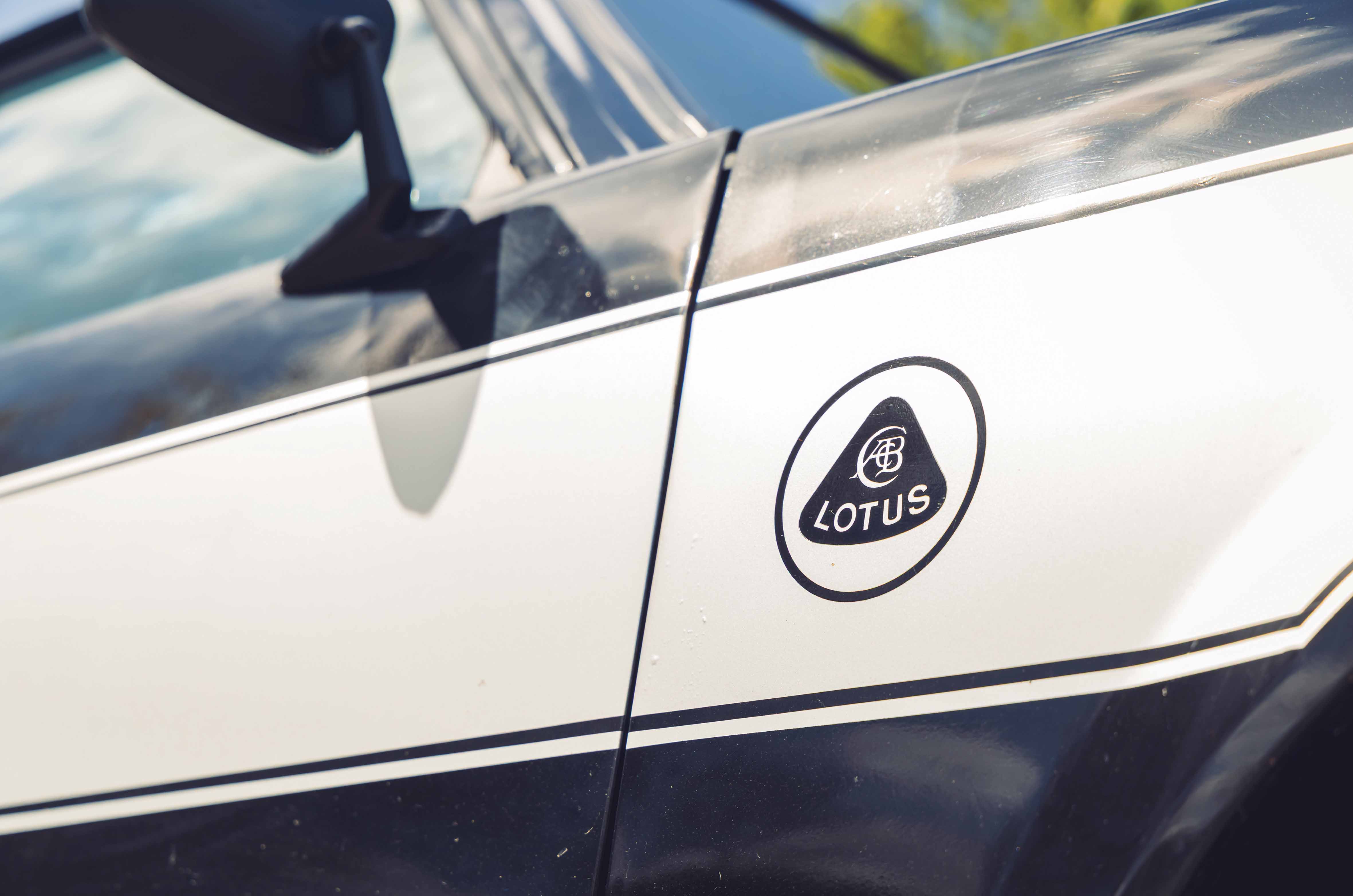
The Lotus version was fitted with snazzy Marchal spotlamps above the front bumper, and it was available with the option of Moonstone Blue paint accompanied by silver stripes in addition to the series one’s default black-with-silver livery.
A few caveats are needed before describing how Stephen’s Sunbeam performs.
Its Lotus Type 911 is running bigger valves, high-lift cams and high-compression pistons, which, he estimates, is yielding around 220bhp.
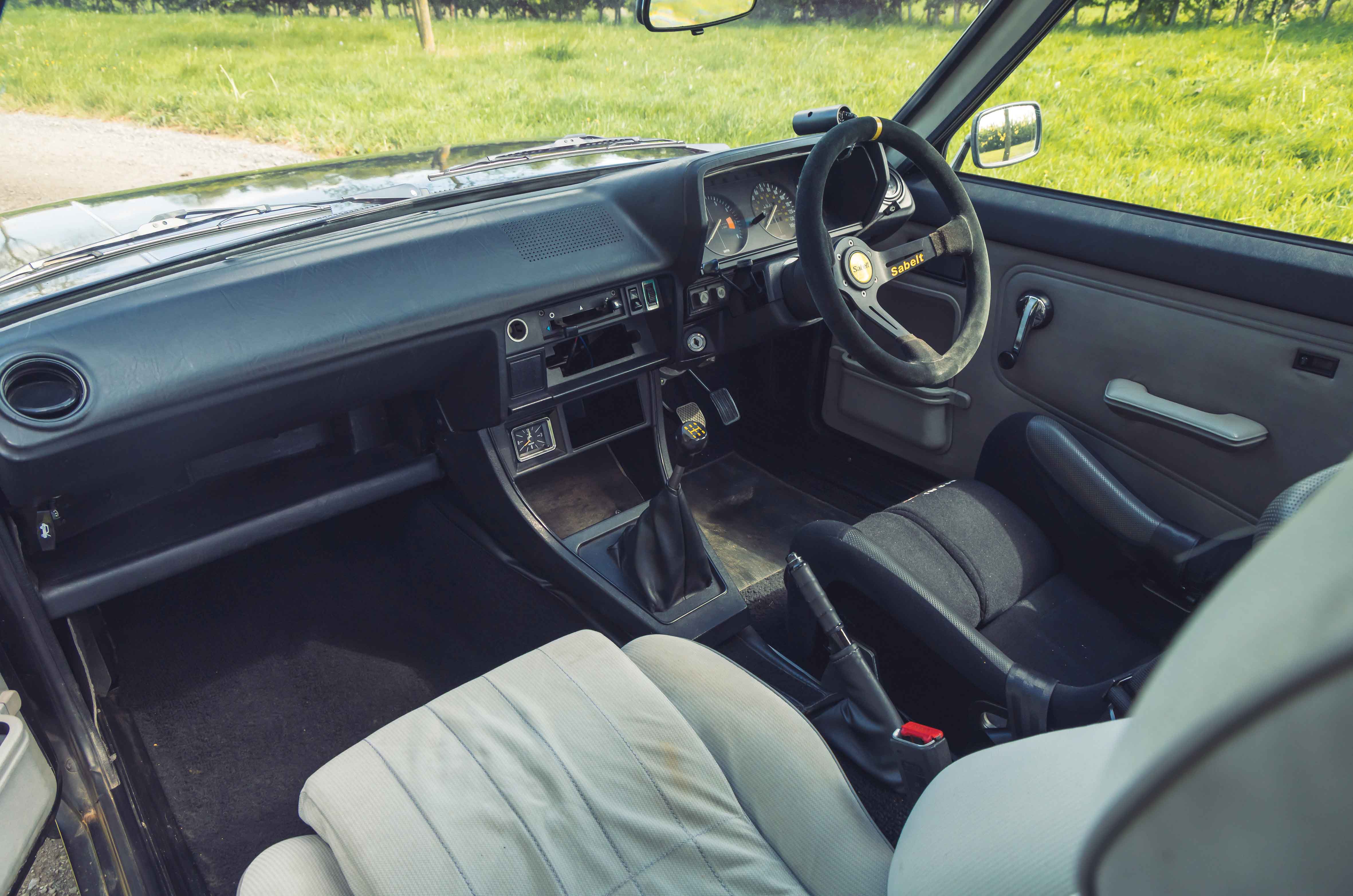
The Talbot Sunbeam Lotus has a simple cabin; this one has a non-standard driver’s seat
The gearbox has also been rebuilt to works specification, and the steering rack has been swapped for an electrically power-assisted item from, of all things, a Vauxhall Corsa B.
There are also AP Racing brake calipers and pads, and discs instead of drums at the rear.
Which all makes perfect sense, because Stephen had planned to do some hillclimbing with the car, but with Sunbeam Lotus values rising, he’s now having second thoughts.
Either way, these tweaks make for an intense driving experience.
Setting aside the non-standard steering, the Sunbeam is far and away the tightest-handling of our trio.
The Talbot Sunbeam was a mundane base for a potent rally star
Its granite-like body control goads you into ever-more ambitious cornering speeds, reinforced by the tenacious grip of modern rubber (although it’s the only car here with a limited-slip diff, so you need to be quick to catch the rear when it breaks free).
The brakes feel dead until worked hard, then they comfortably outperform the Vauxhall’s.
The ZF five-speed changes with a lovely mechanical precision, while 24mph per 1000rpm in top gives a sensible cruising gait.
Not that you’d use it often: the ferocious bark from the Lotus Twin Cam turns into a full-blooded, Dell’Orto-fuelled bellow as you pitch for the redline, and it soon becomes addictive.
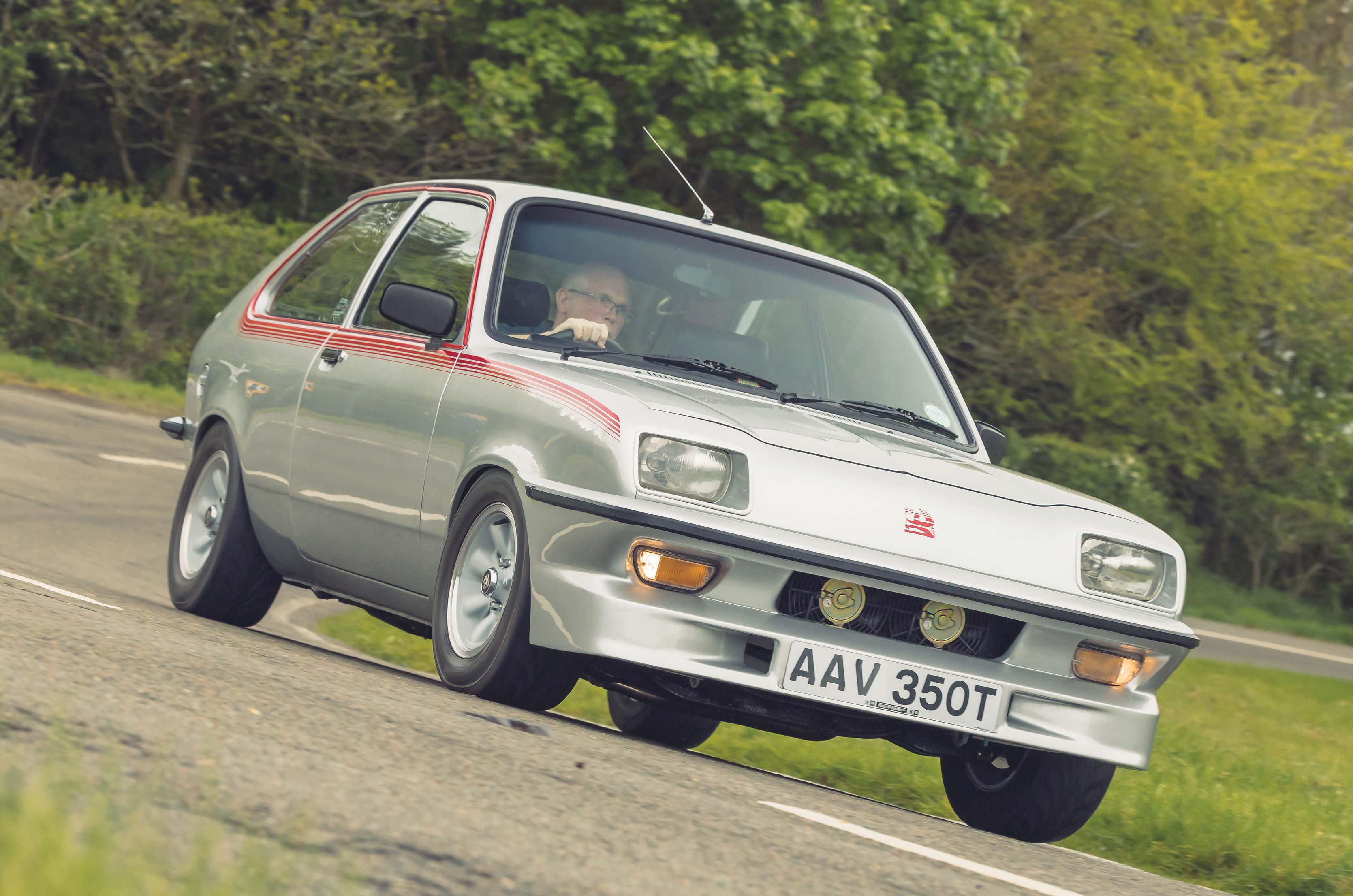
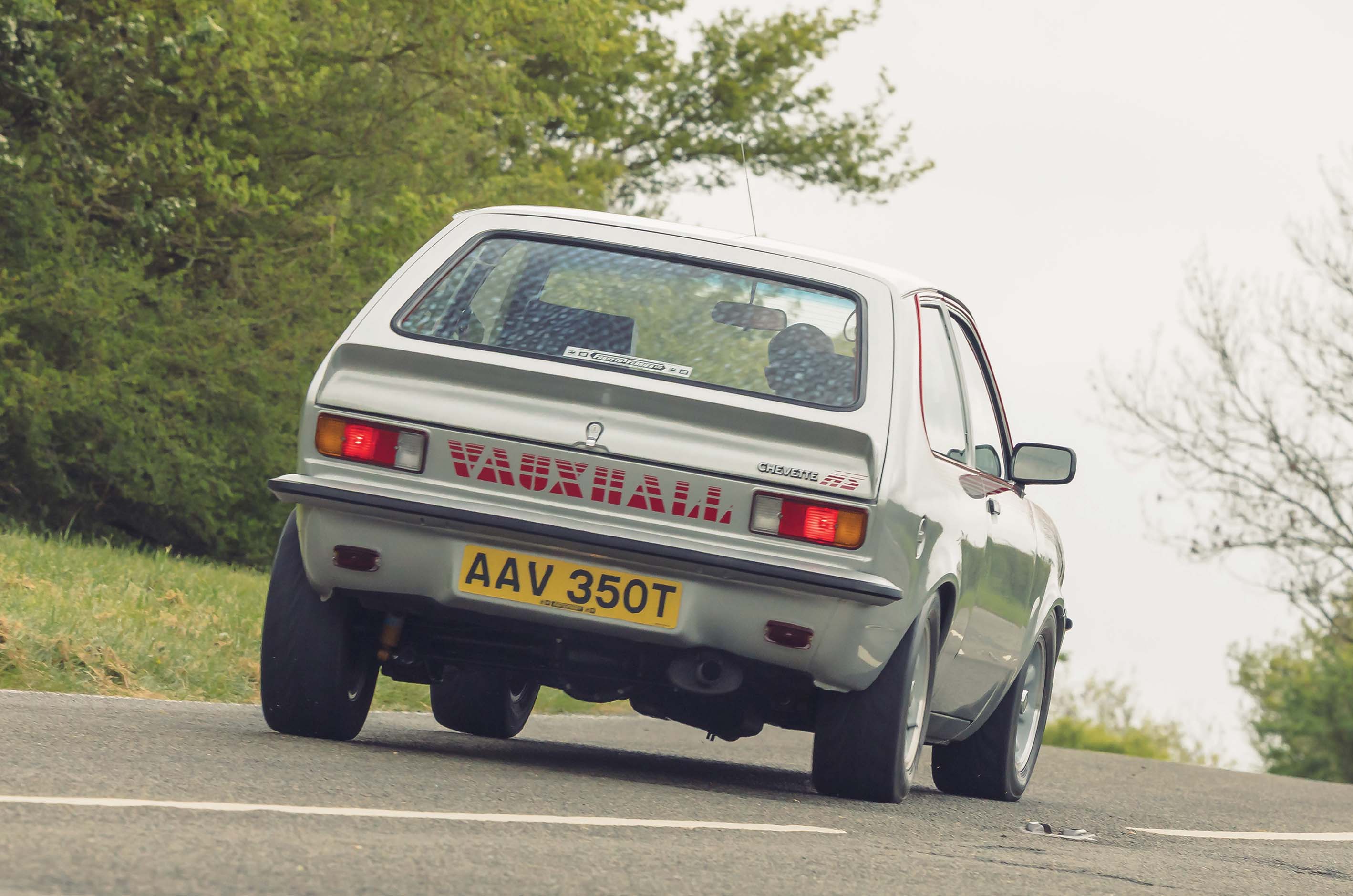
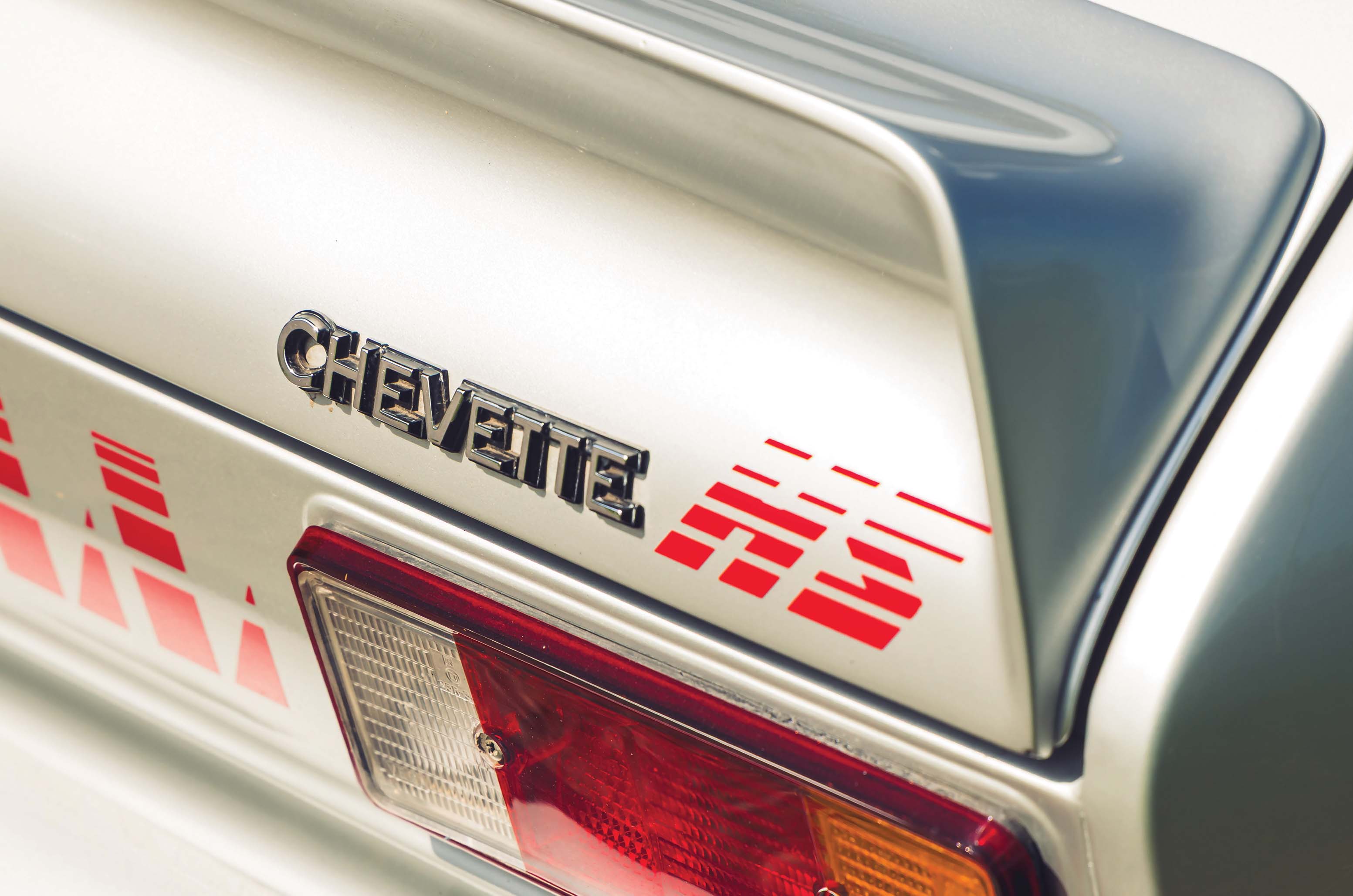
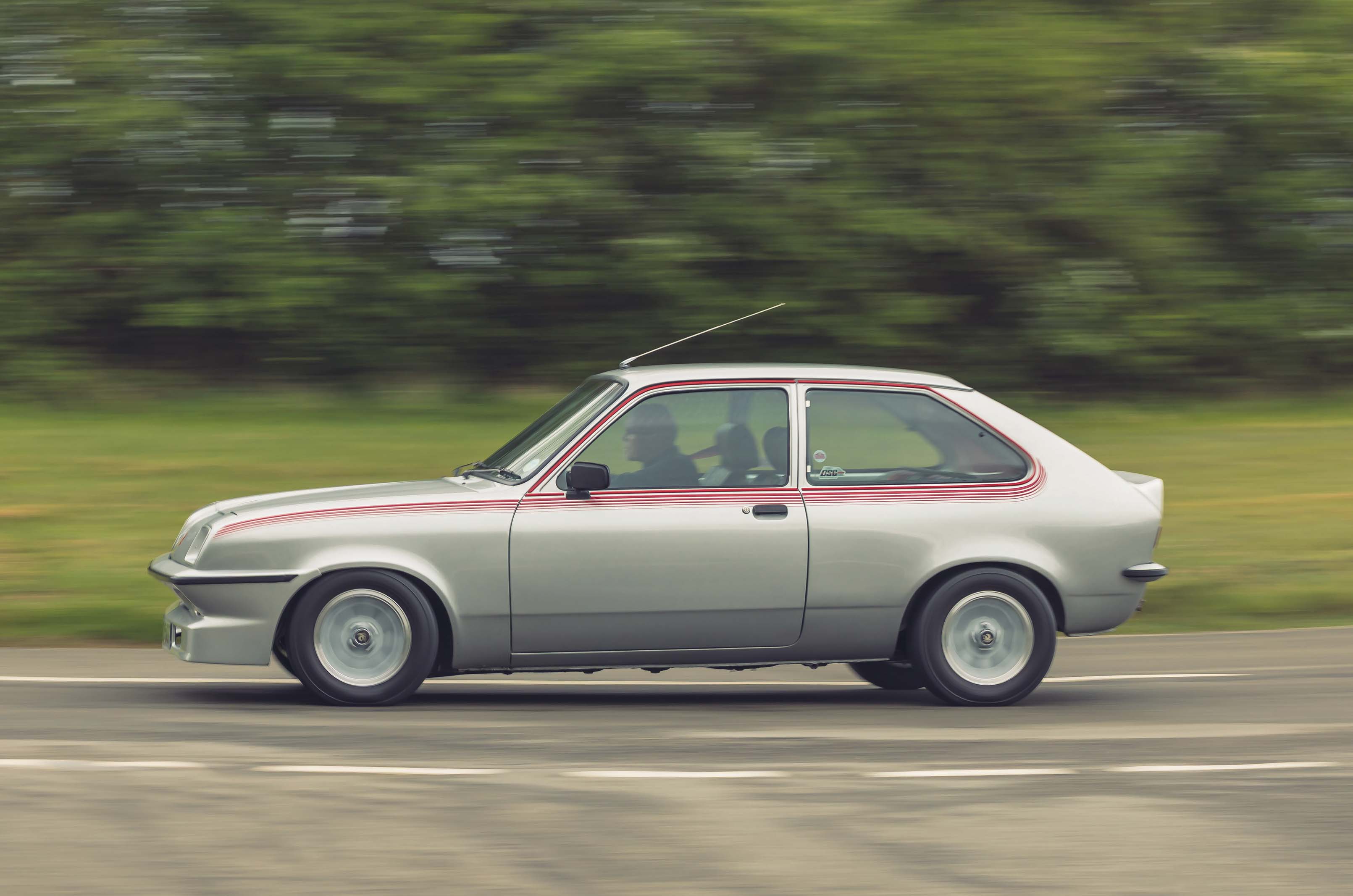
The Vauxhall Chevette HS has a scruff-of-the-neck feel
As a point-to-point B-road blaster of a classic car, it has the other two well and truly licked – it just does the job better.
Is there an obvious winner, though?
The Talbot Sunbeam Lotus feels marginally sharper than the Vauxhall Chevette HS, but it demands more concentration from the driver to exploit its finely honed dynamics.
Ford’s Escort RS 2000 stands alone thanks to its milder manners, but in the real world its absolute performance almost matches the others – it just sounds and feels as if it doesn’t.
Which, we think, leaves the HS as the perfect bridge between the ballsy, knife-edge Talbot and the ultra-composed Ford.
Images: Max Edleston
Thanks to: Perry C Antoniou at the Sunbeam Lotus Owners’ Club; Lee Smith at CLS Cars; the Droop Snoot Group; Sam Grange-Bailey
Factfiles
Ford Escort RS 2000
- Sold/number built 1975-’80/c10,000
- Construction steel monocoque
- Engine all-iron, sohc 1993cc ‘four’, single Weber 32/36 DGAV downdraught carburettor
- Max power 110bhp @ 5500rpm
- Max torque 119lb ft @ 4000rpm
- Transmission four-speed manual, RWD
- Suspension: front independent, by MacPherson struts, anti-roll bar rear live axle, radius arms, leaf springs, telescopic dampers
- Steering rack and pinion
- Brakes discs front, drums rear, with servo
- Length 13ft 7in (4142mm)
- Width 5ft ½in (1536mm)
- Height 4ft 7½in (1409mm)
- Wheelbase 7ft 10½in (2400mm)
- Weight 2075lb (941kg)
- 0-60mph 8.6 secs
- Top speed 110mph
- Mpg 24.7
- Price new £4762 (1980)
Talbot Sunbeam Lotus
- Sold/number built 1979-’81/2308
- Construction steel monocoque
- Engine all-alloy, dohc 2172cc slant-four, twin Dell’Orto DHLA 45E twin-choke carburettors
- Max power 150bhp @ 5600rpm
- Max torque 150lb ft @ 3800rpm
- Transmission five-speed manual, RWD
- Suspension: front independent, by MacPherson struts, anti-roll bar rear live axle, trailing arms, coil springs, telescopic dampers
- Steering rack and pinion
- Brakes discs front, drums rear, with servo
- Length 12ft 5in (3830mm)
- Width 5ft 2¼in (1603mm)
- Height 4ft 6in (1405mm)
- Wheelbase 7ft 9in (2413mm)
- Weight 2116lb (960kg)
- 0-60mph 7.8 secs
- Top speed 122mph
- Mpg 17
- Price new £6995 (1980)
Vauxhall Chevette HS
- Sold/number built 1978-’80/c400
- Construction steel monocoque
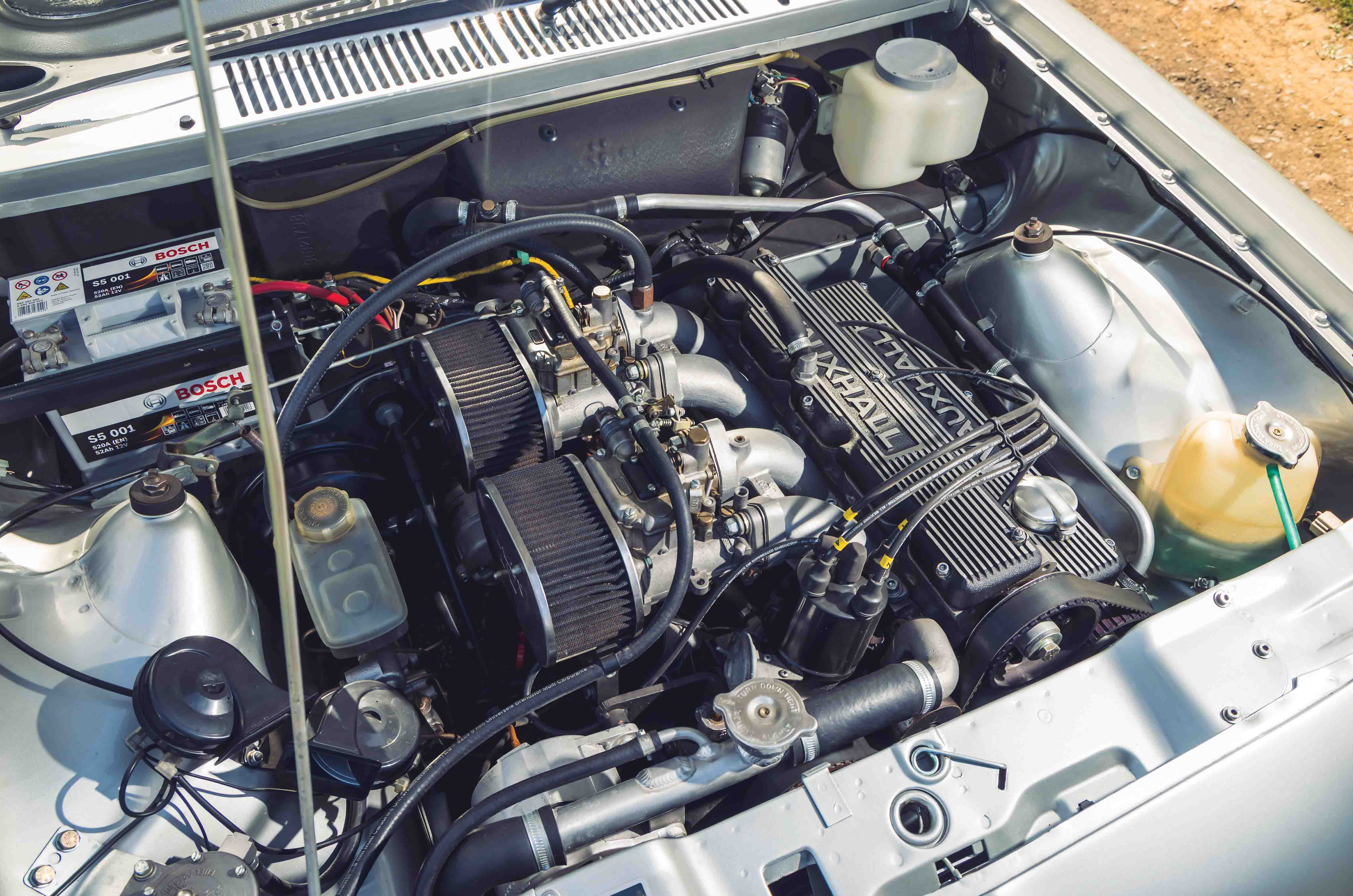
- Engine iron-block, alloy-head, dohc 2279cc slant-four, twin Stromberg 175CD-2SE carburettors
- Max power 135bhp @ 5500rpm
- Max torque 134lb ft @ 4500rpm
- Transmission five-speed manual, RWD
- Suspension: front independent, by unequal-length wishbones rear live axle, trailing arms, Panhard rod; coil springs, gas-filled dampers, anti-roll bar f/r
- Steering rack and pinion
- Brakes discs front, drums rear, with servo
- Length 13ft 1¼in (3992mm)
- Width 5ft 2¼in (1579mm)
- Height 4ft 6in (1371mm)
- Wheelbase 7ft 10in (2387mm)
- Weight 2235lb (1016kg)
- 0-60mph 8.5 secs
- Top speed 115mph
- Mpg 21.3
- Price new £5939 (1980)
We hope you enjoyed reading. Please click the ‘Follow’ button for more super stories from Classic & Sports Car.
Simon Hucknall
Simon Hucknall is a senior contributor to Classic & Sports Car