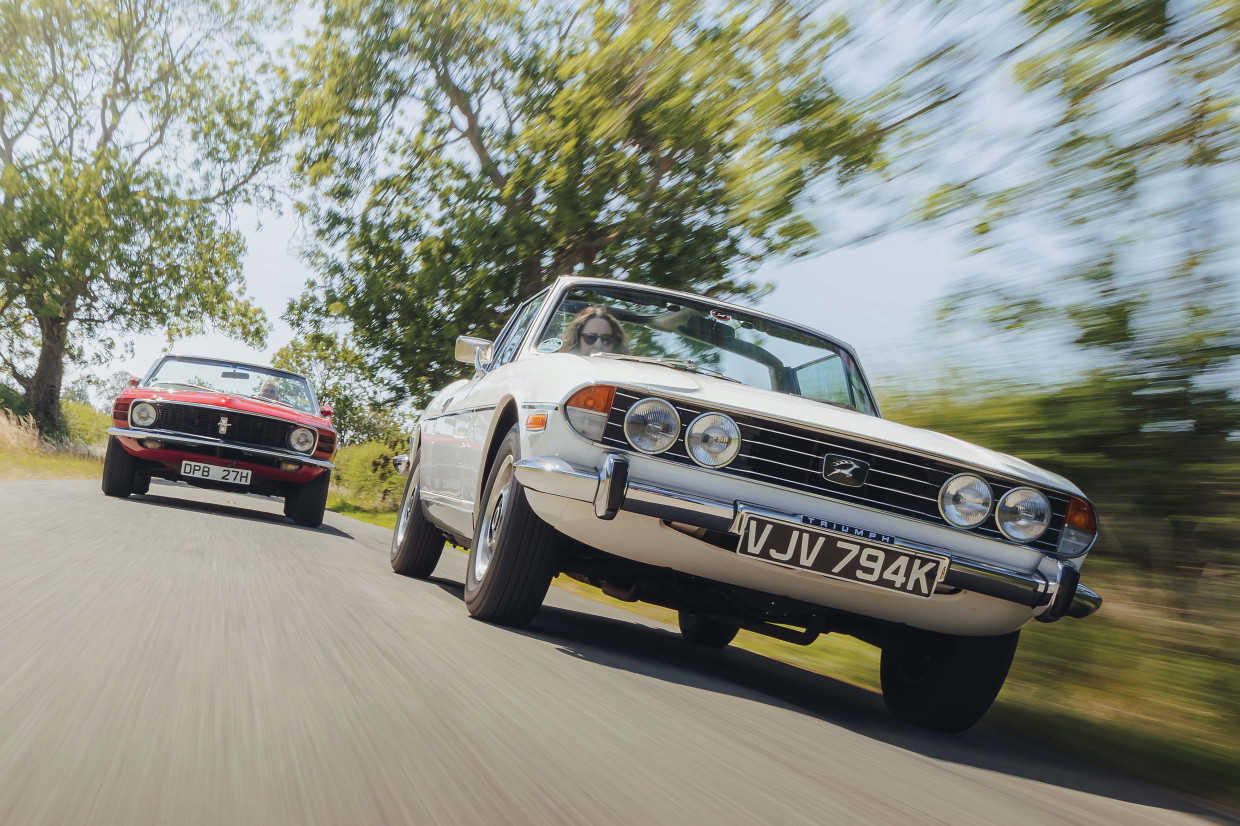
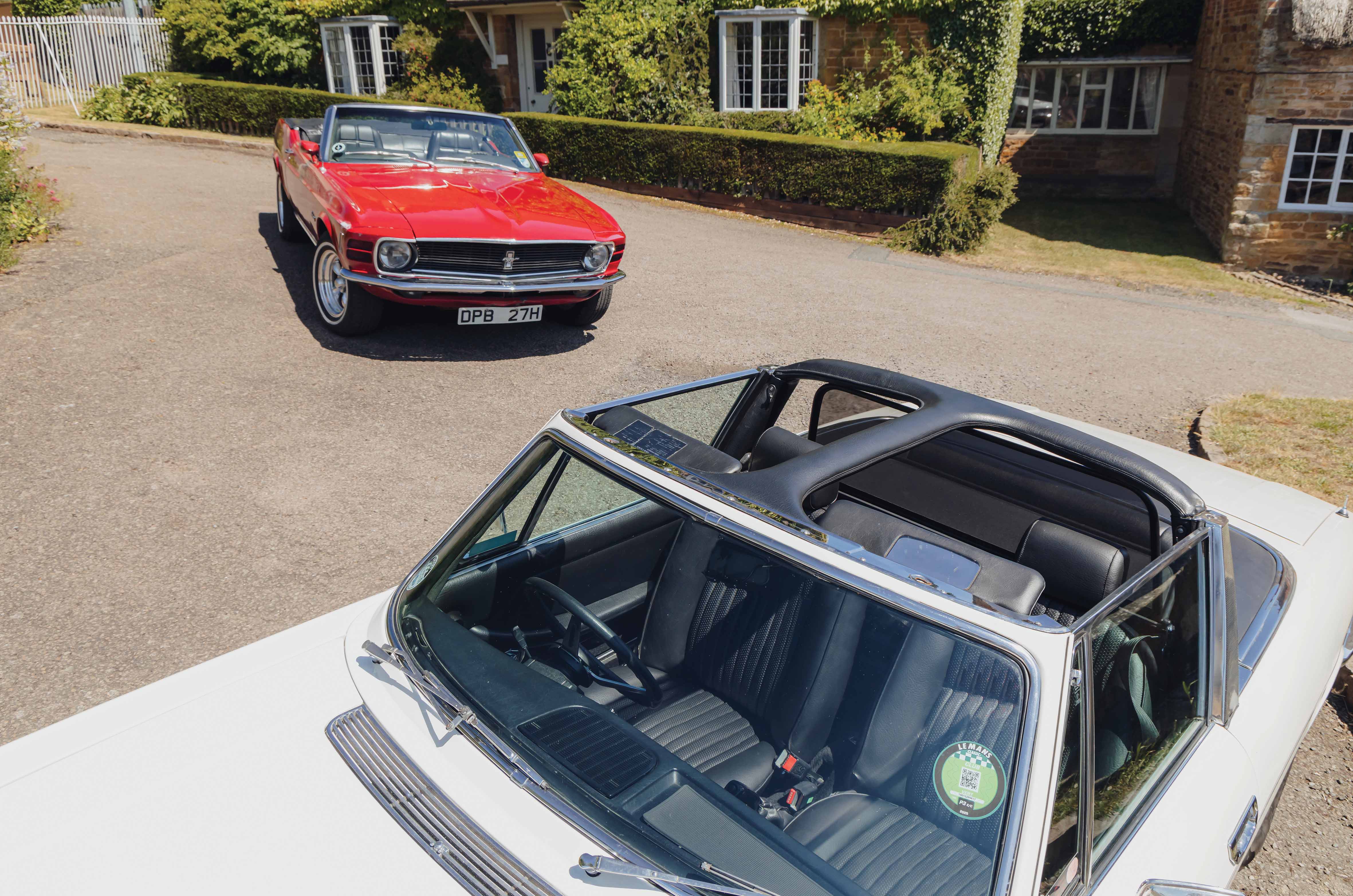
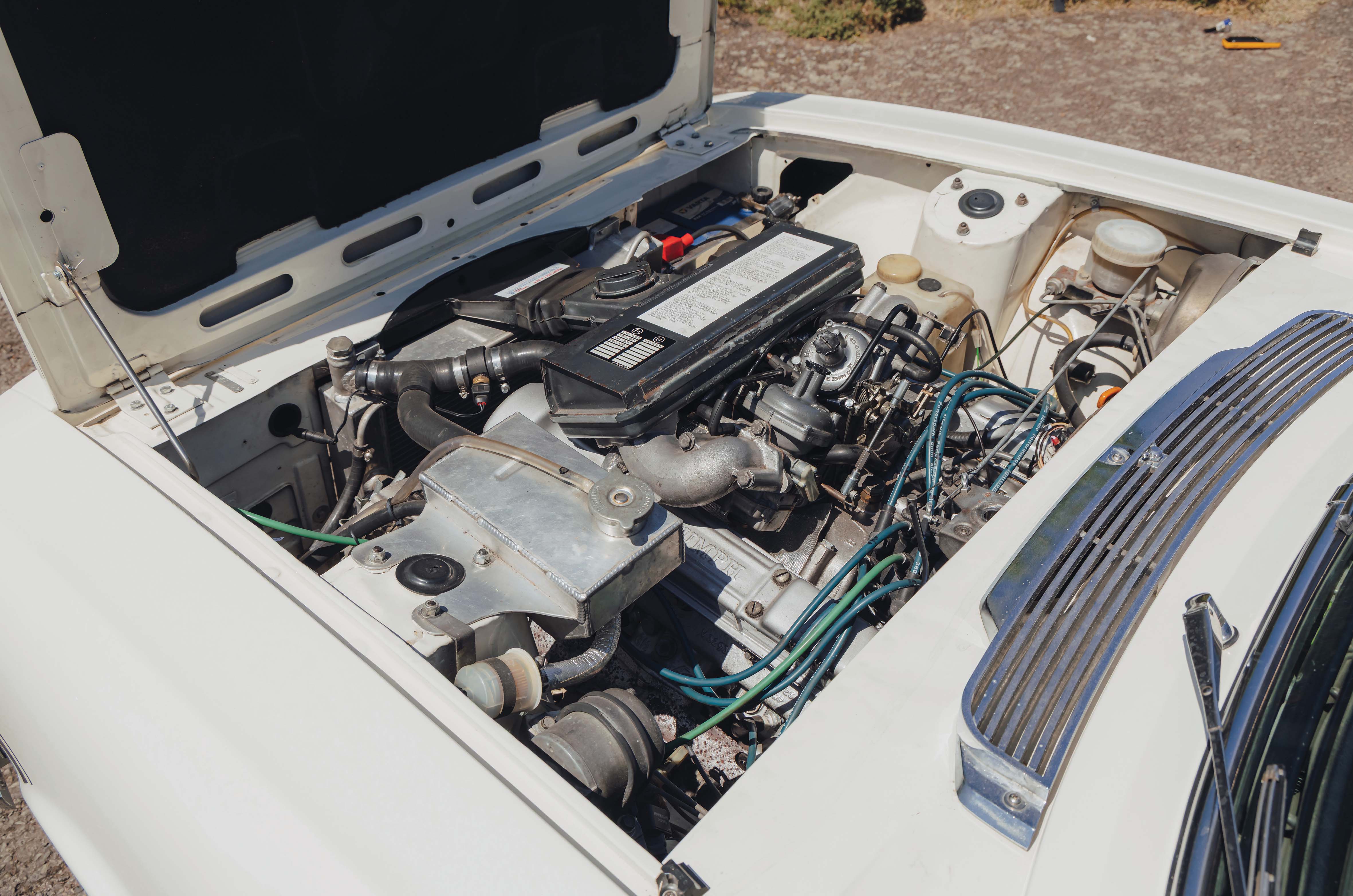
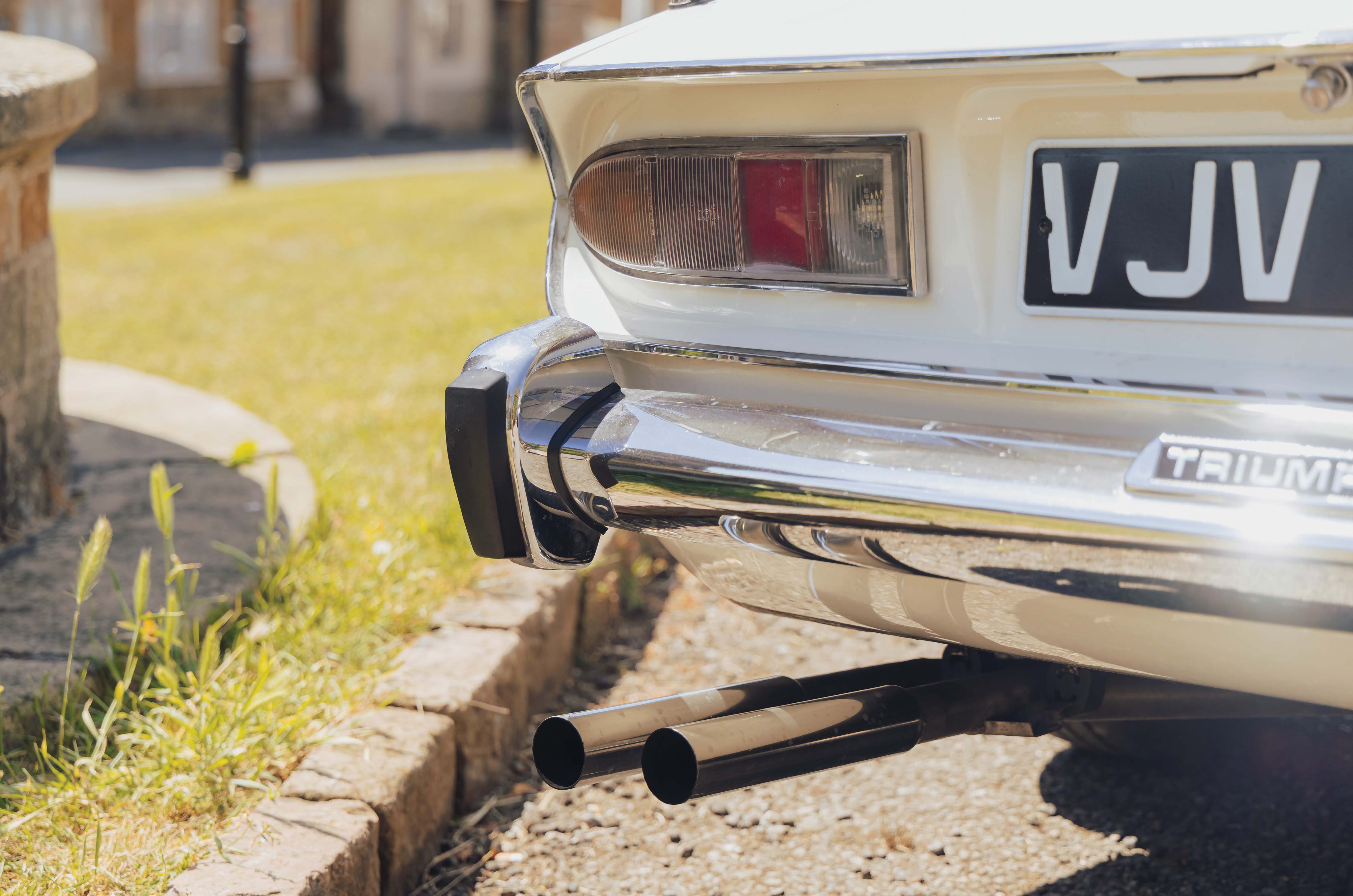
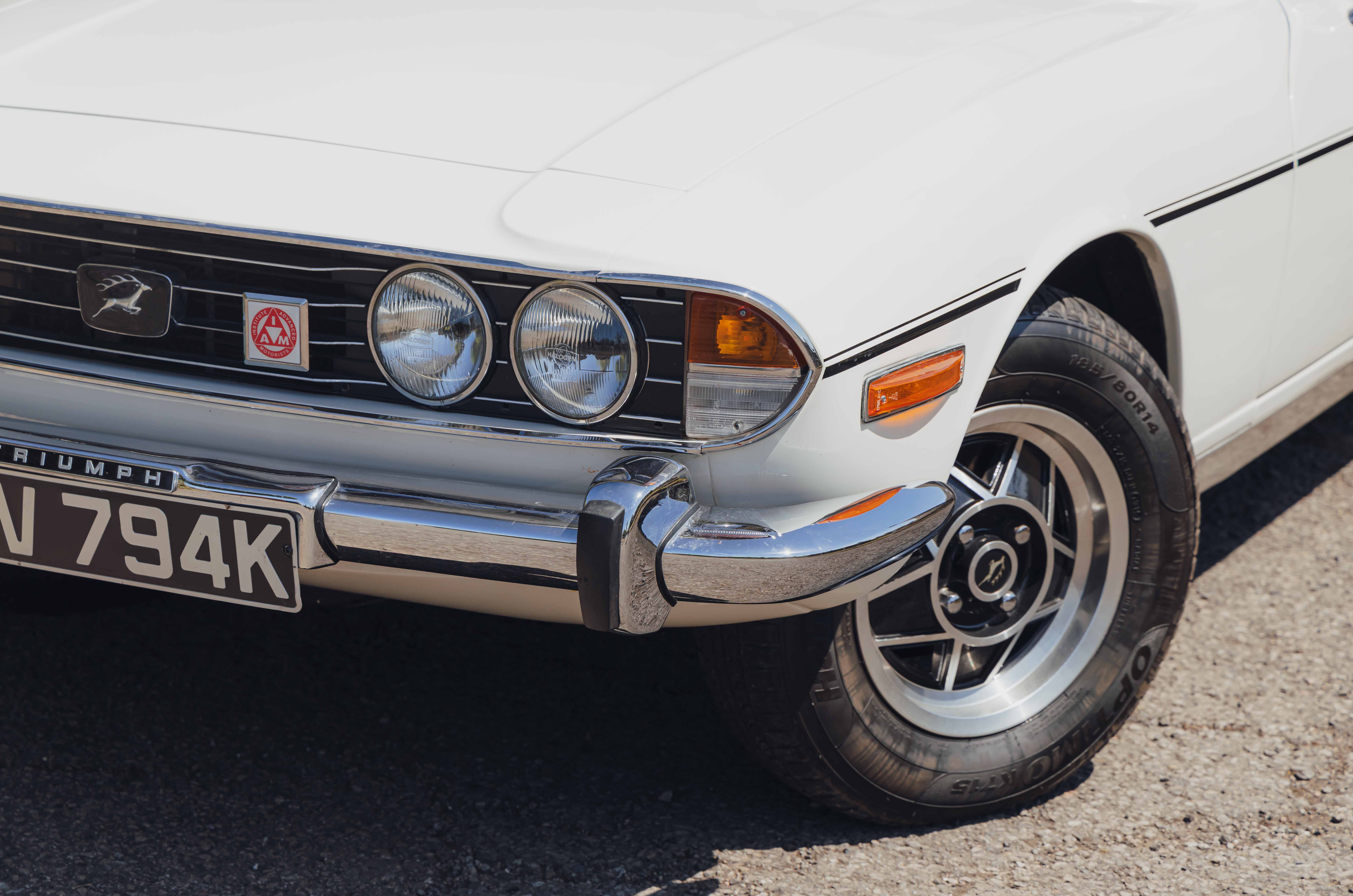
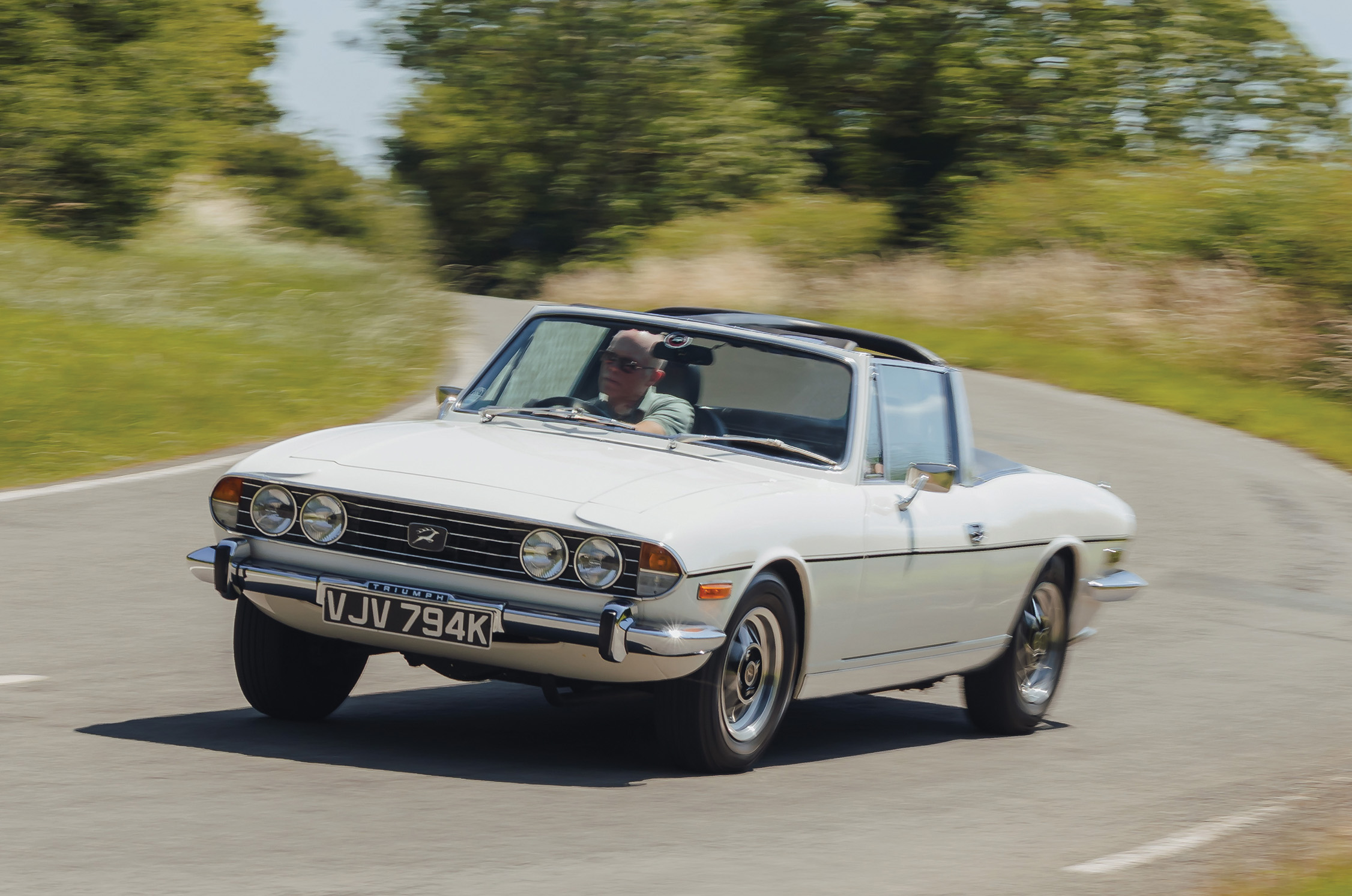
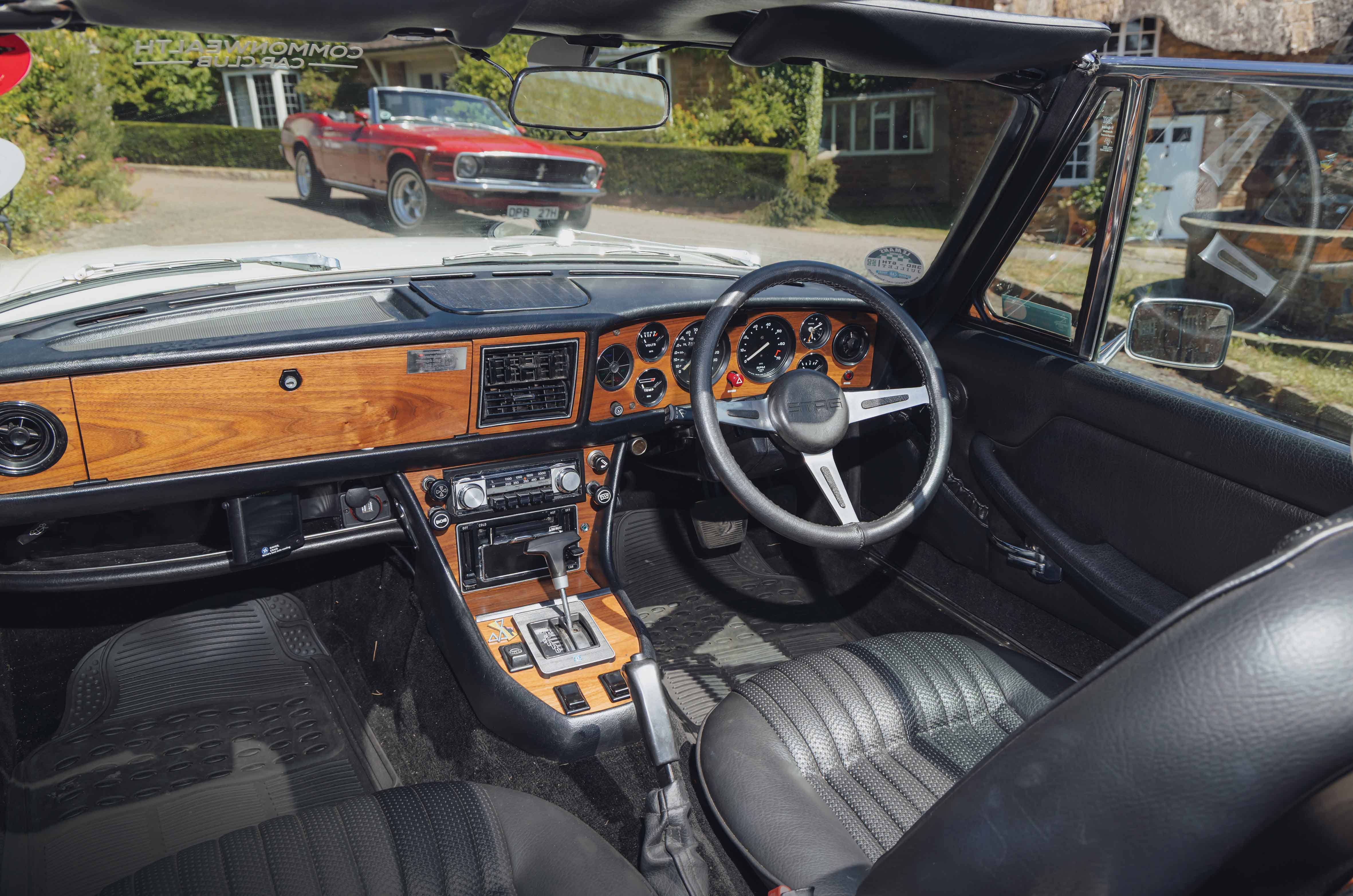
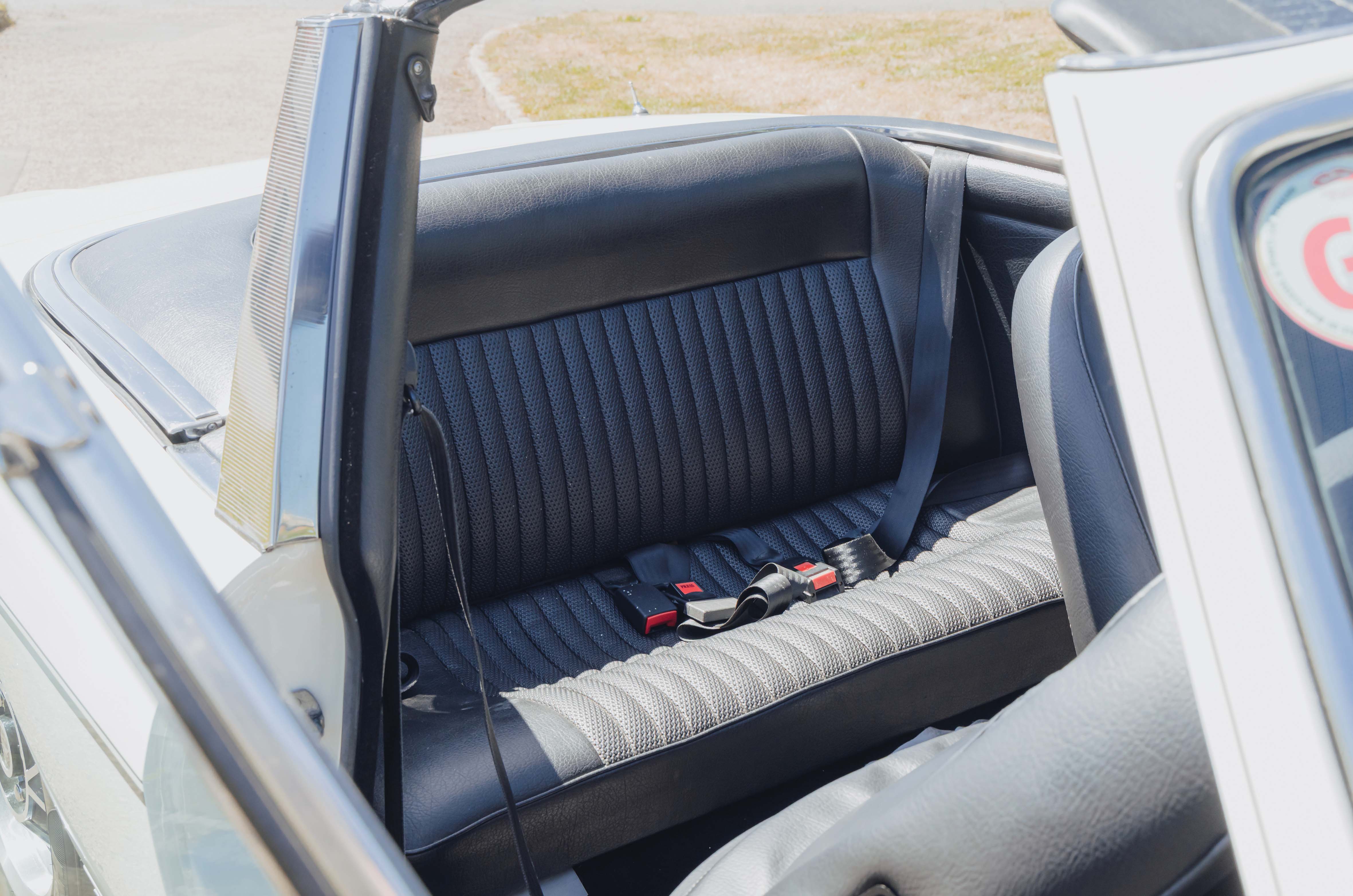
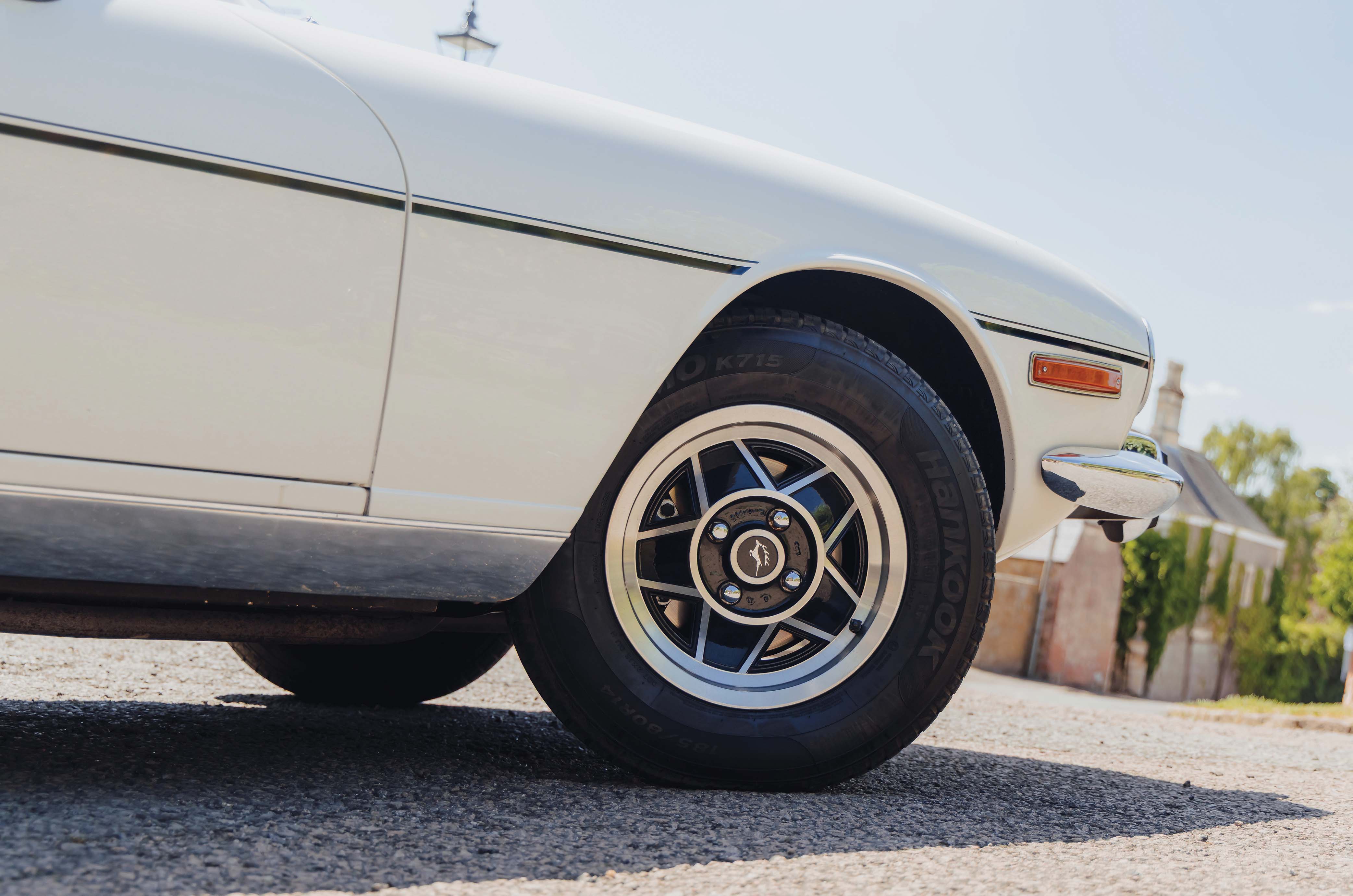
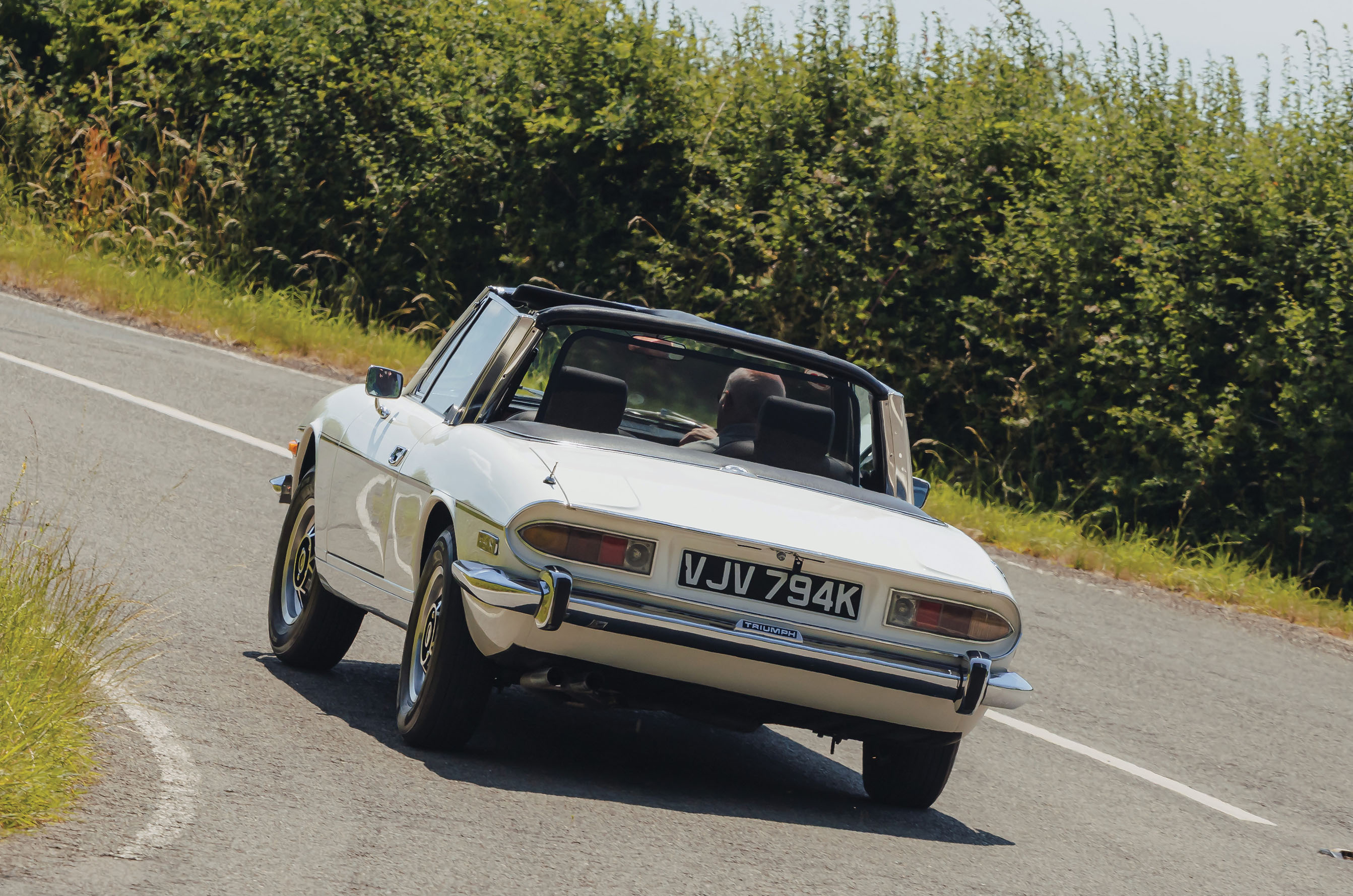
It is, though, a fine and practical conveyance, powered by a V8 that you won’t find in any other production car. As a first-time Stag driver, you can’t help but be impressed.
The Ford Mustang Convertible’s ability to ‘haul’ sets it apart from the Triumph Stag
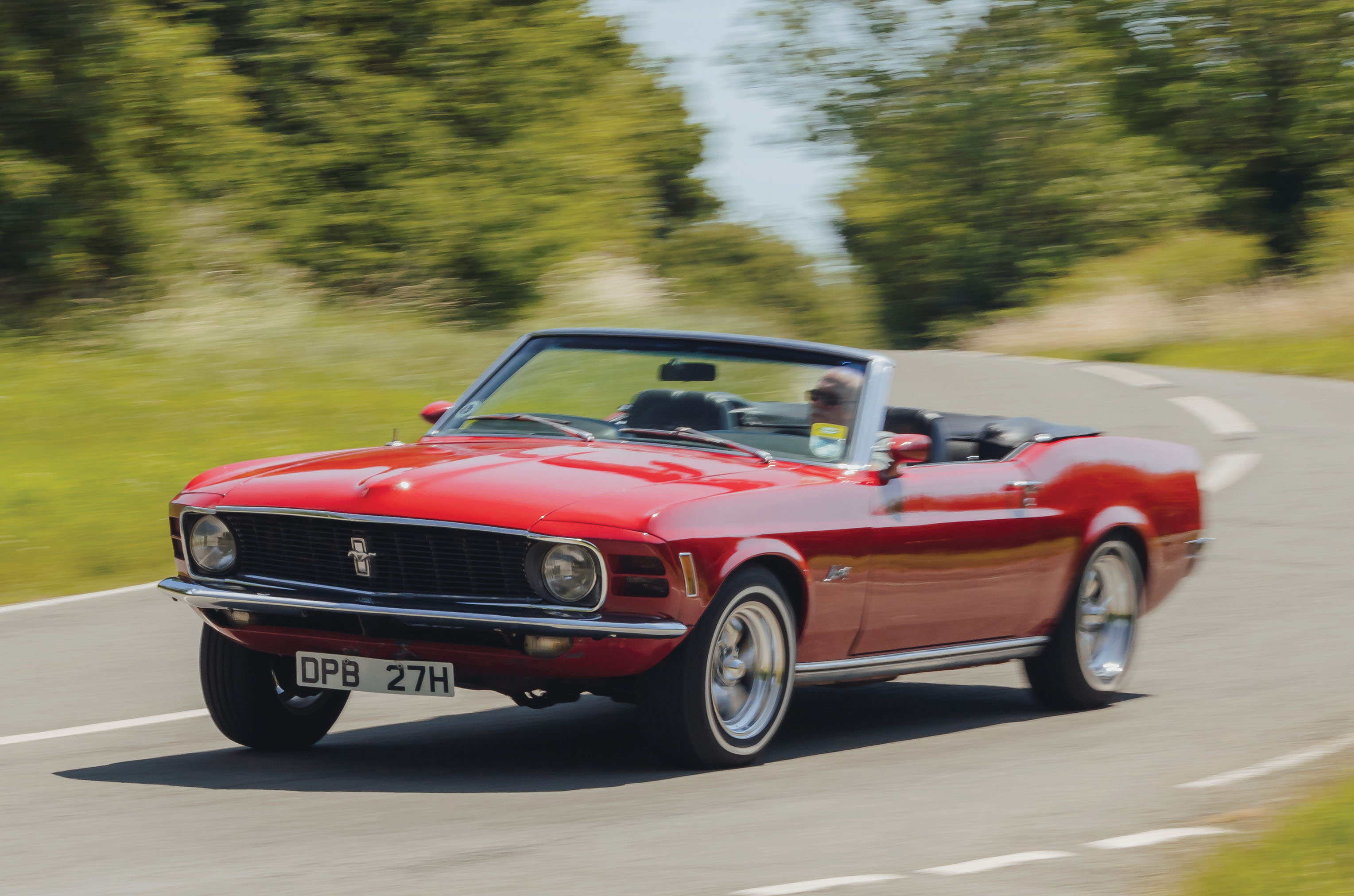
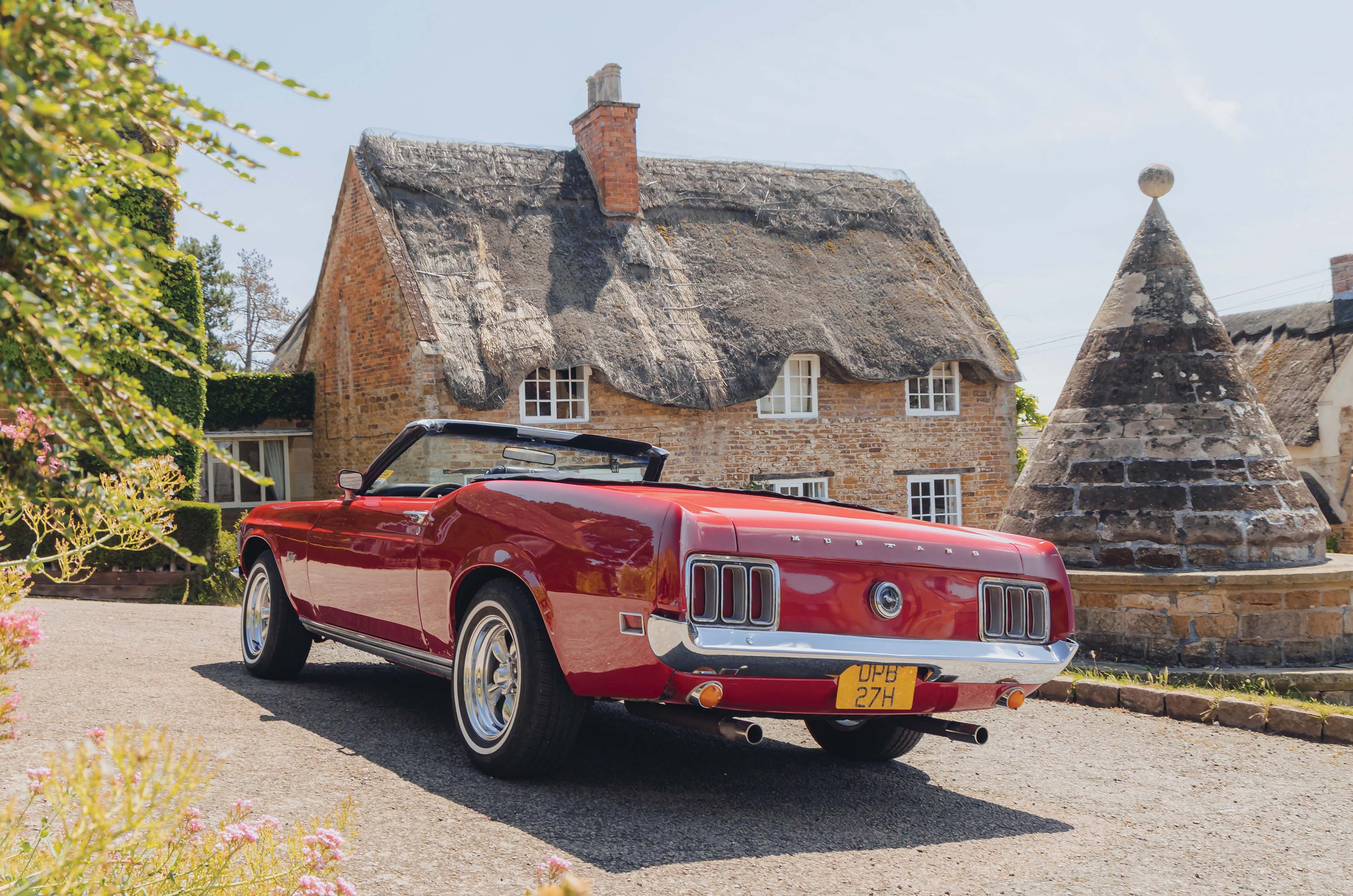
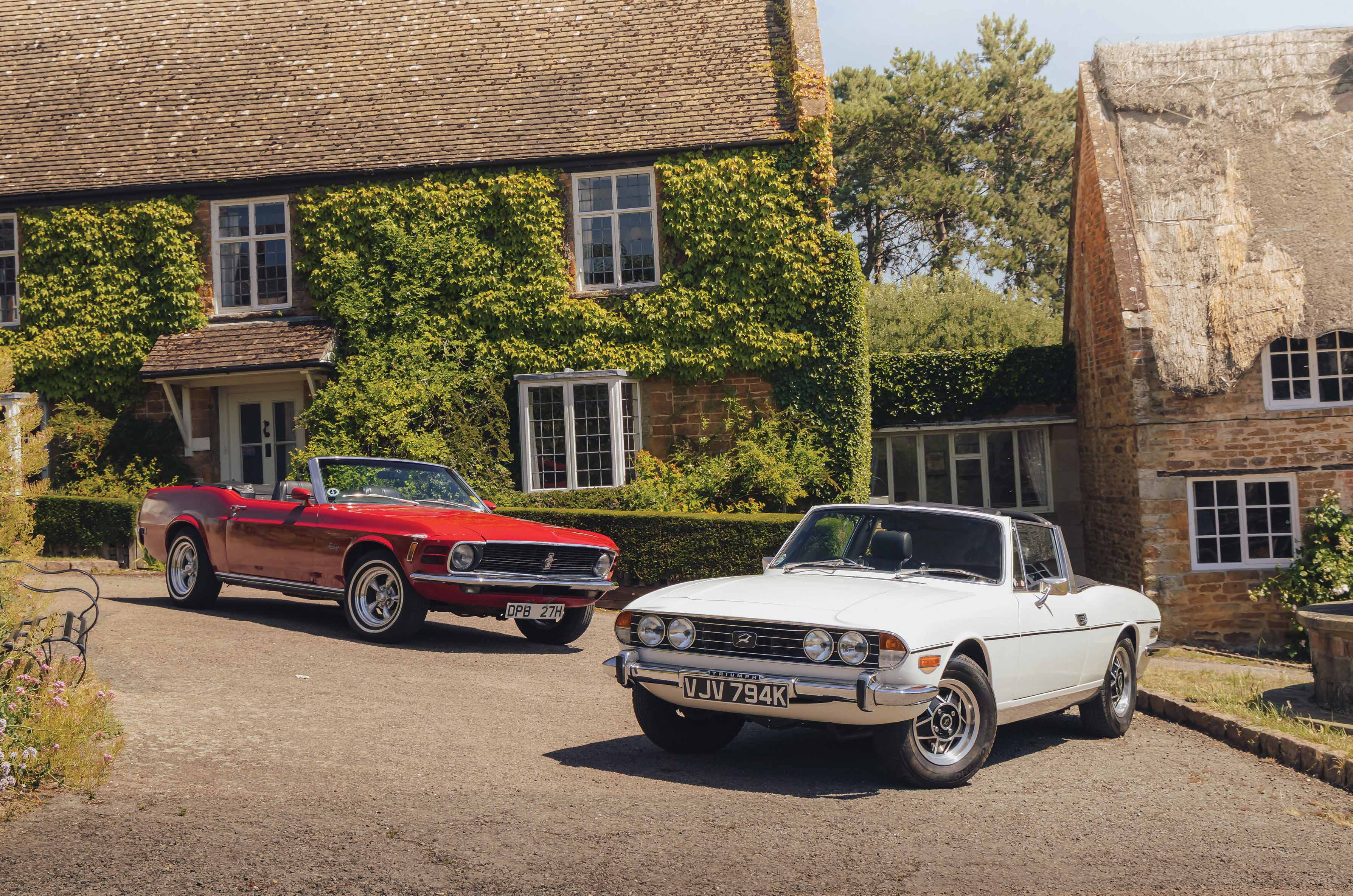
The observant among you will note that Dave Dunmore’s 1970 Ford Mustang Convertible, looking delightfully incongruous in this bucolic village scene, harks from the previous model year to the one officially sold in the UK from October 1970.
While both of these variants fell under the ‘Mustang I’ banner, we chose this car because it is perceived as being the sweeter of the two, with less bulk and smaller dimensions, and still broadly aligns with the Stag’s chronology.
Even so, the Mustang I’s first 1964 iteration had been still lighter and more compact.
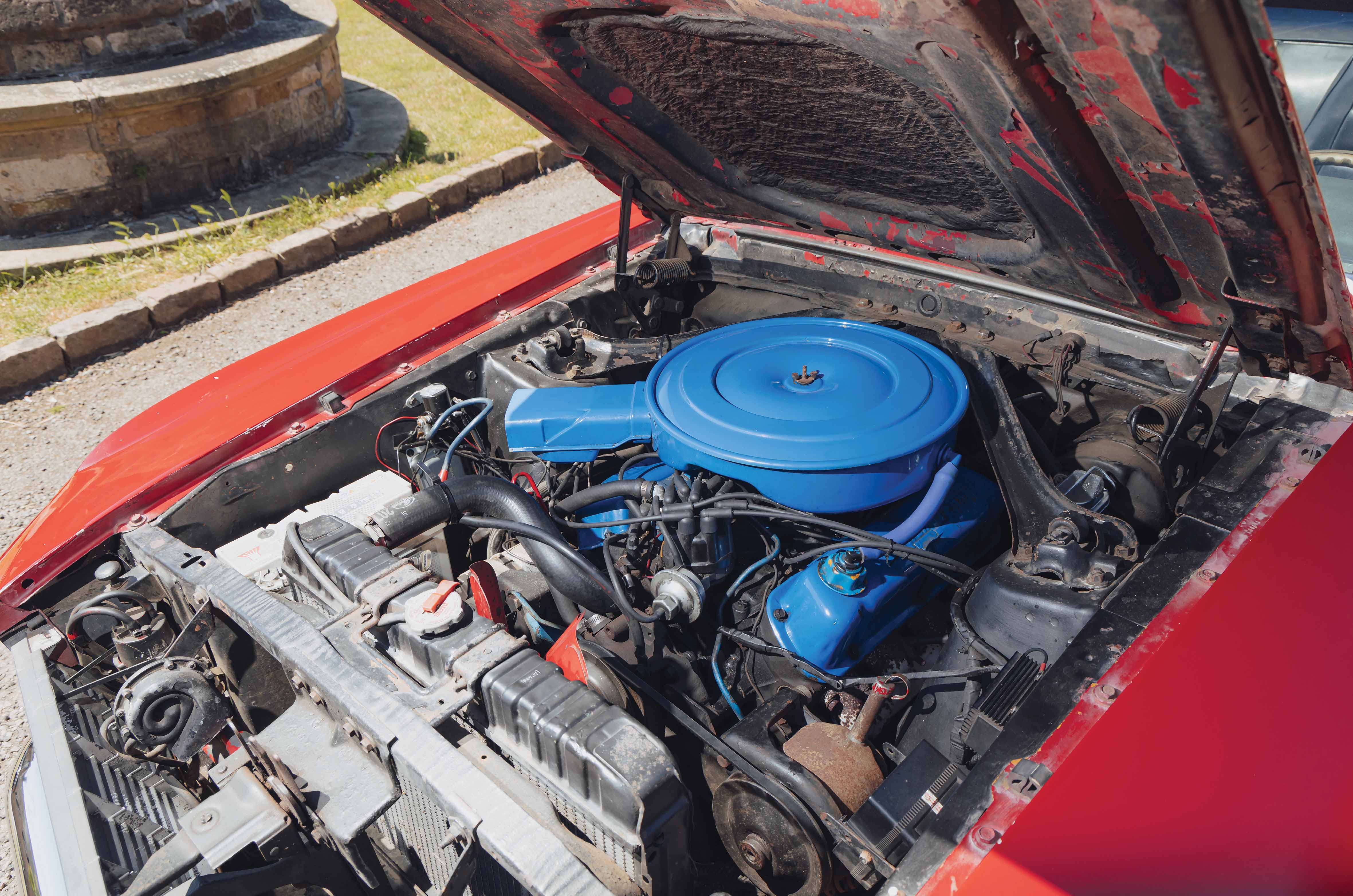
Ford’s 302cu in unit took over from the legendary 289 as the Mustang’s entry-level V8 engine
Ford’s general manager, Lee Iacocca, wanted a car measuring less than 180in long and weighing sub-2500lb.
It had to appeal to women, who were becoming more influential in the car-buying process, yet still capture male audiences.
Cannily, the humble Falcon/Fairlane underpinnings were artfully disguised by Ford designers Joe Oros and L David Ash, who injected a useful dose of European flair into its styling, without detracting from its homegrown character.
Relatively lithe and manageable the Mustang might have been, but even as its launch party was under way, Ford was plotting a larger and heavier incarnation of the ‘pony car’.
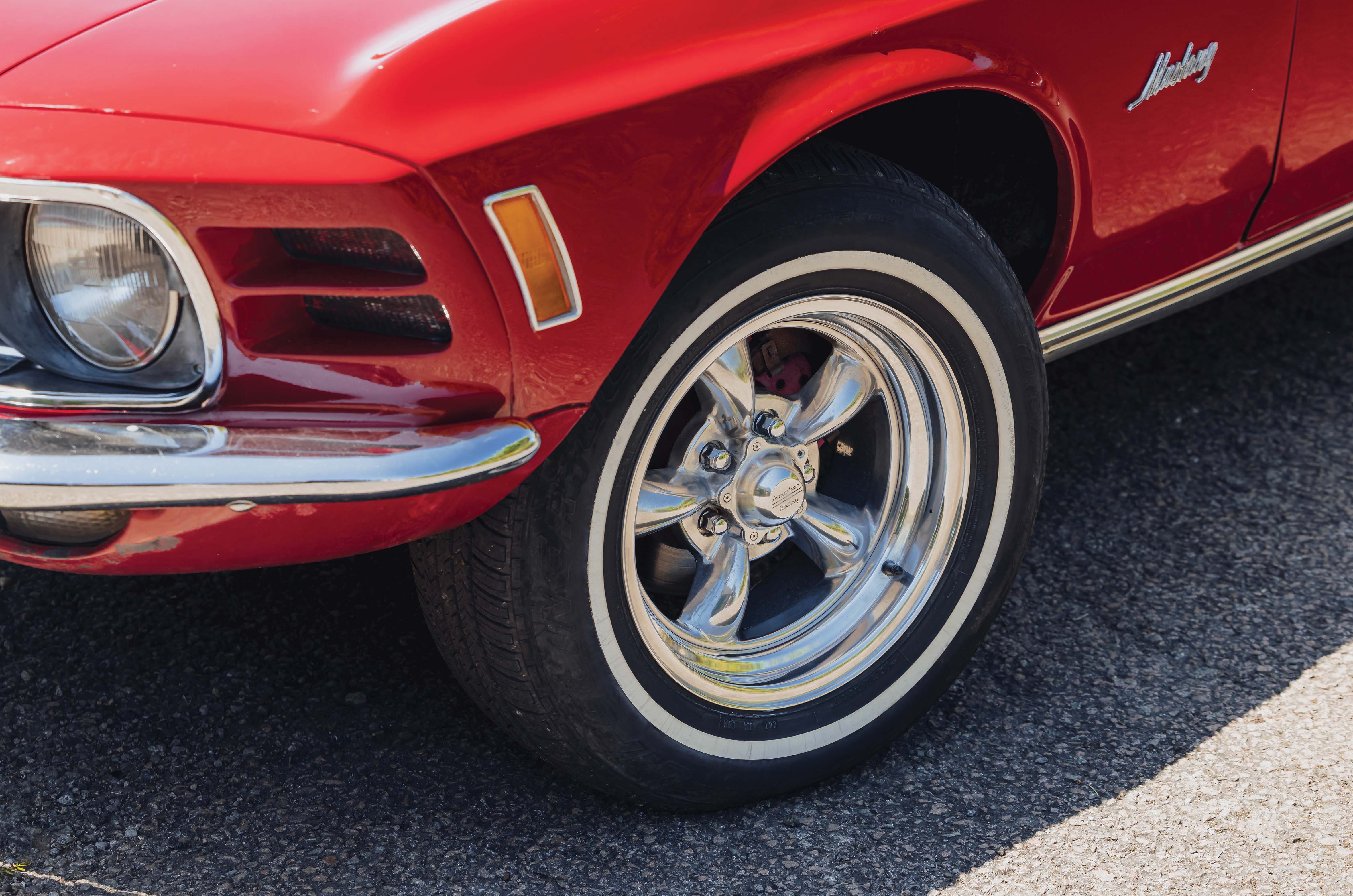
Five-spokes are a popular upgrade for the Ford Mustang
That version, styled by Gale Halderman, arrived in 1967, with a further 3.8in added to its length for the 1969 model year (though it retained the 108in wheelbase), plus a half-inch to its width and around 200lb to its weight.
Inevitably, with more mass came additional power and more extreme derivatives, including the Mach 1 and Boss 302, the outrageous Boss 429 and luxury Grande.
By 1970, Ford was concerned it had gone too far, following a dip in overall sales.
Which brings us neatly to Dave’s car, which was subjected to some of the ‘de-contenting’ that took place that year.
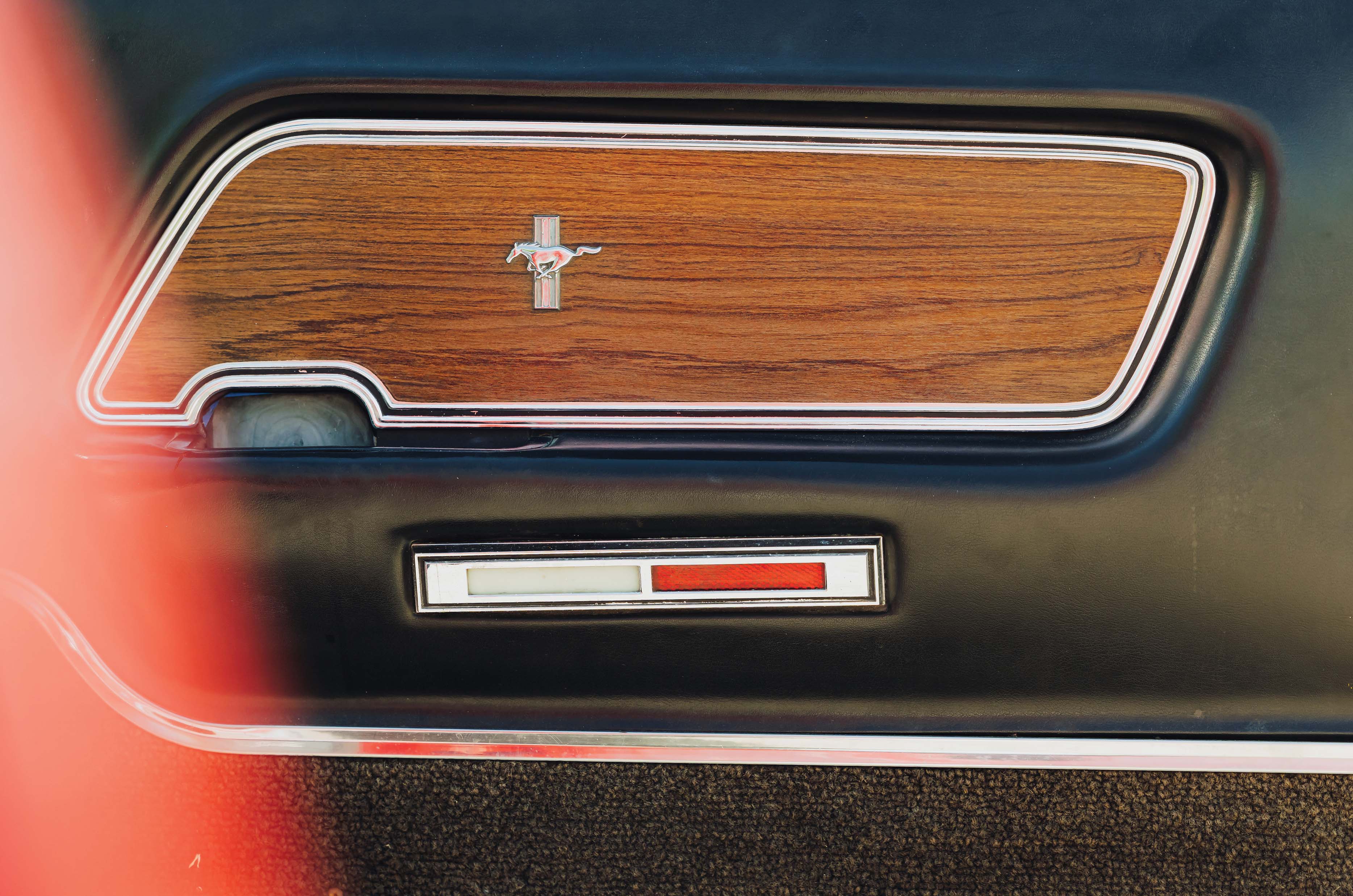
The Ford Mustang Convertible’s neatly detailed door panels
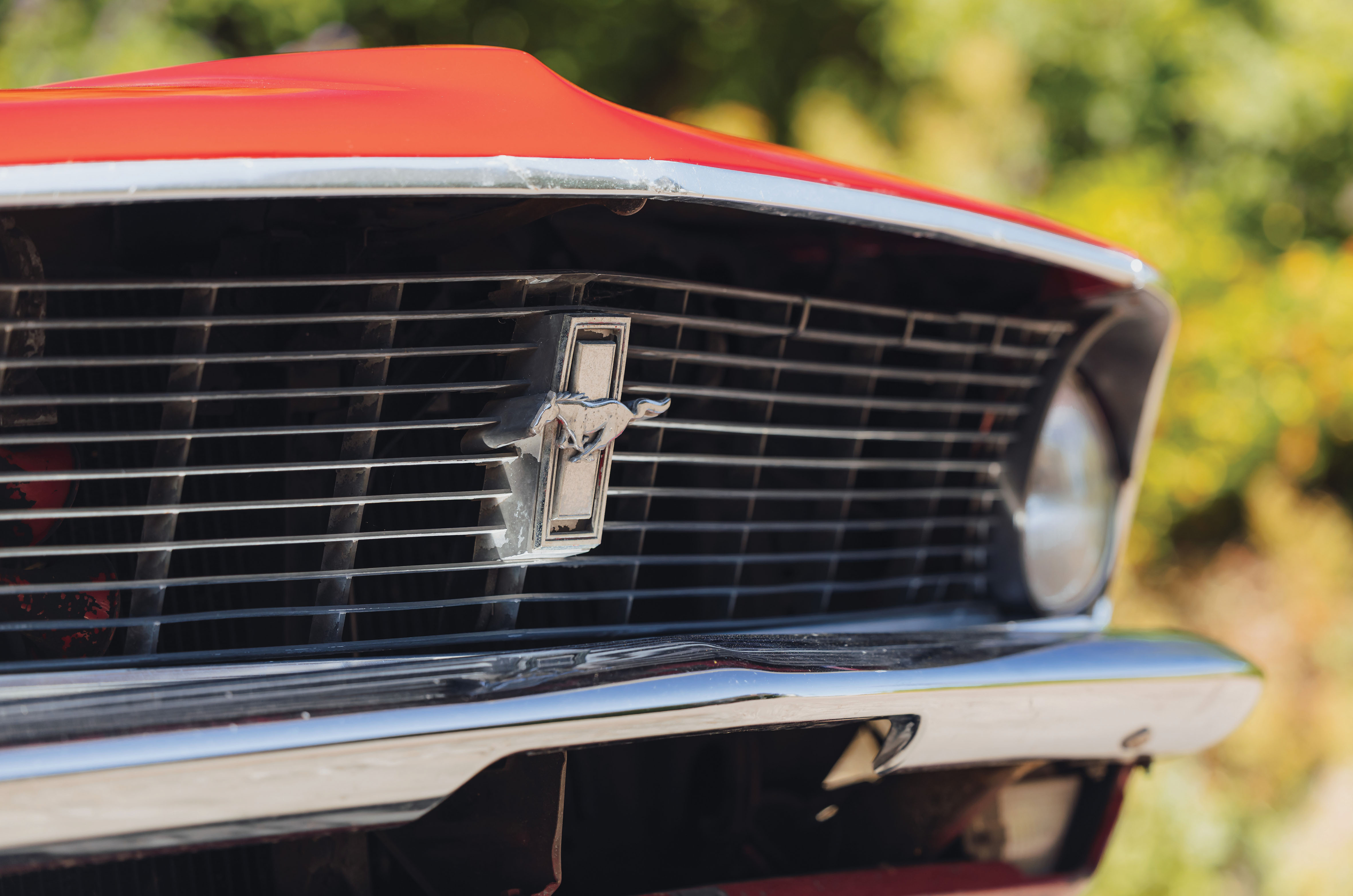
The previous twin-headlight arrangement, with an extra pair set into the grille, was seen as too aggressive, so for 1970 only the outer lamps remained, with small gills on the outer grille sides.
Likewise, the air scoops in the rear wings were dropped and the tail-light panel was flat rather than concave.
Mechanically, Dave’s car uses the most popular of all the Mustang V8s: the 302cu in (4.9-litre) small-block.
For 1970, the all-iron, overhead-valve unit produced slightly less power than previously, with 210bhp, but a solid 300lb ft of maximum torque at just 2600rpm.
The Ford Mustang Convertible’s dimensions had grown since launch, but the original’s style survives
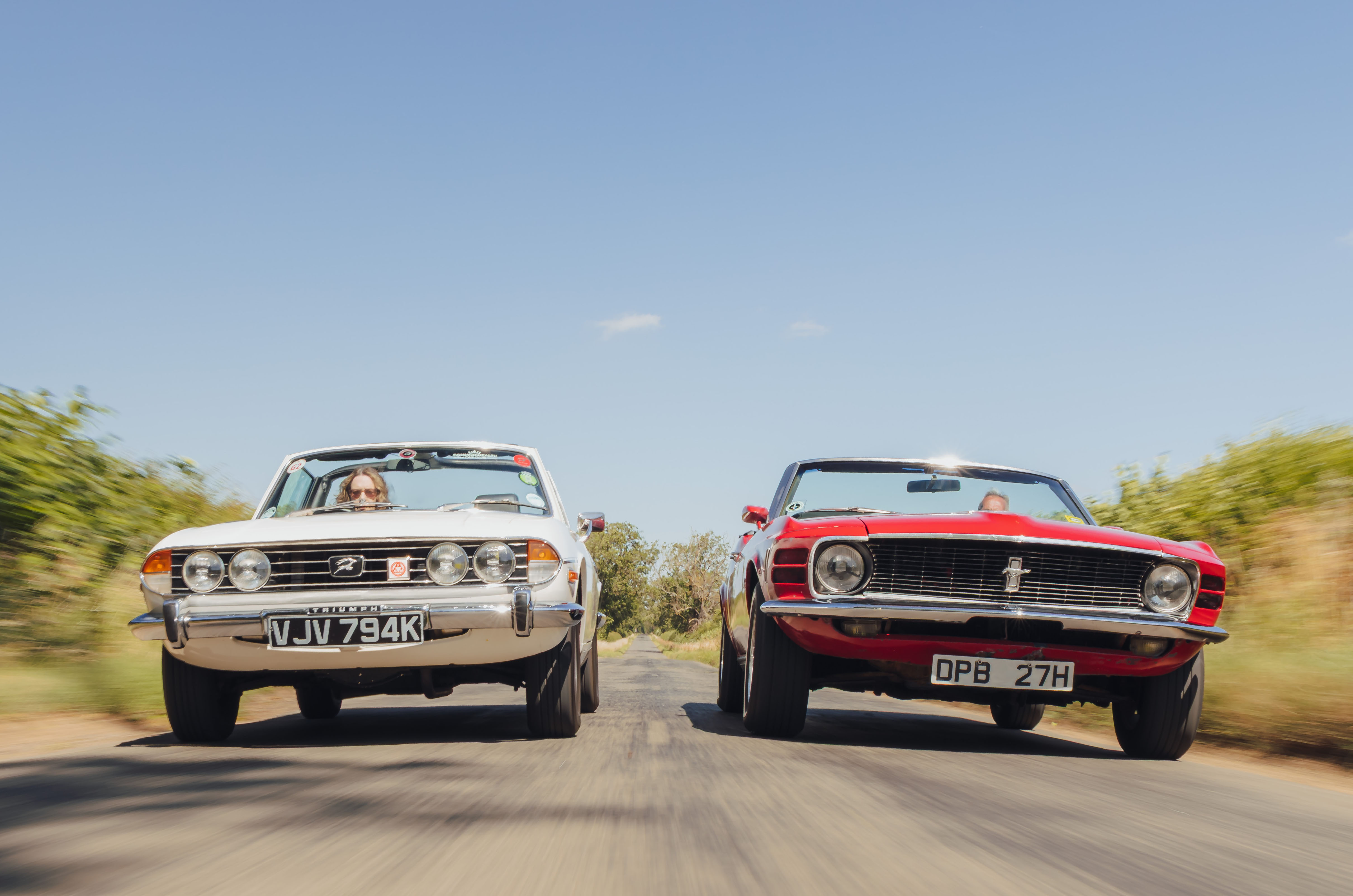
At nearly 4.7m and just over 1.8m, it’s 254mm longer and 195mm wider than the Triumph – although in the metal its imposing presence makes you believe that the difference is greater.
Dave has owned this car for 20 years and, other than the aftermarket wheels, it is factory-standard.
He fitted a new crate 302 engine soon after buying it, and last year replaced the fabric on the Mustang’s powered roof, but other than regular servicing the car has been a pleasure to own.
“Parts availability is excellent,” Dave confirms. “There’s even a stockist near my home, and the prices are reasonable.”
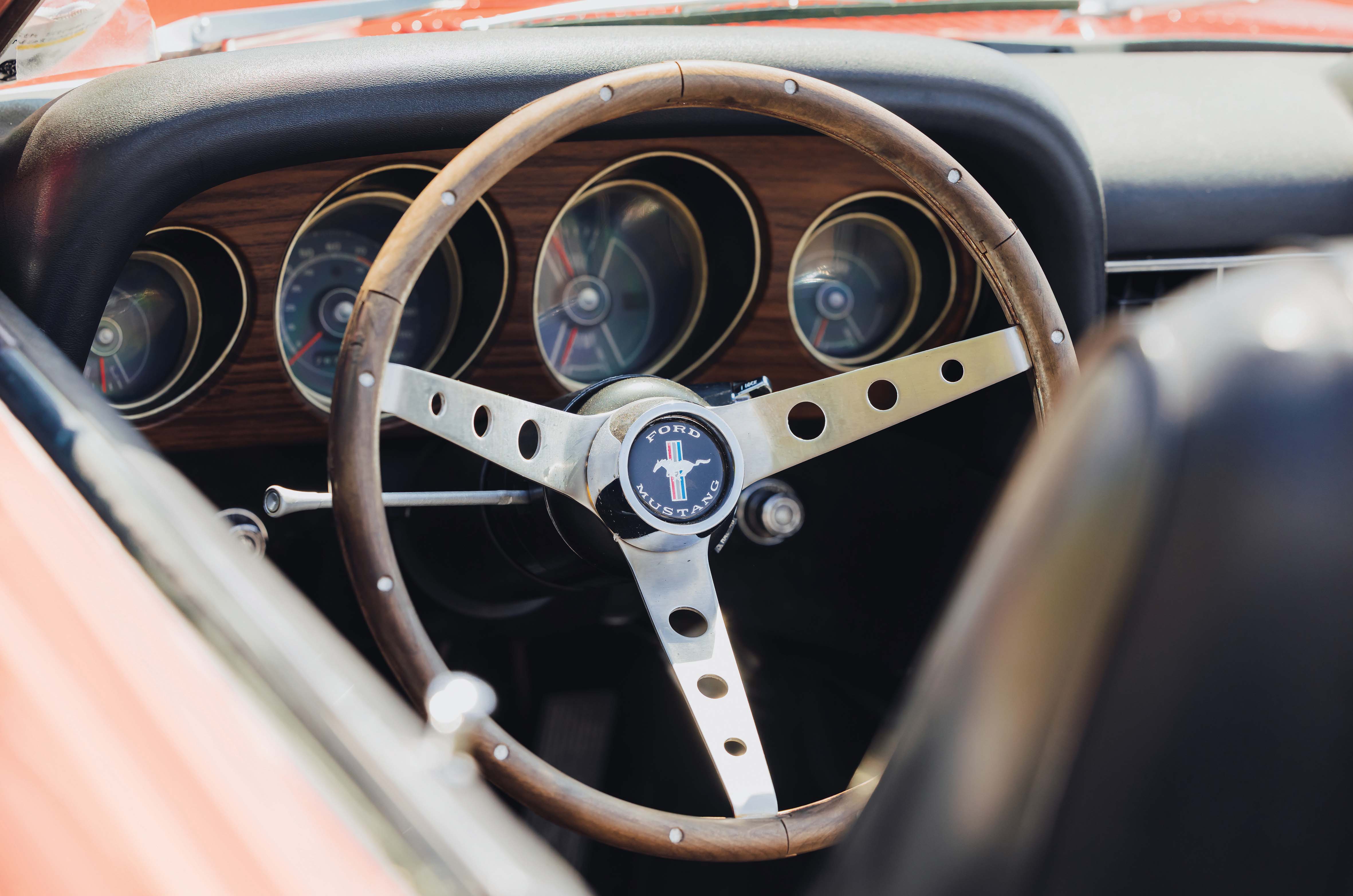
This Ford Mustang Convertible’s stylish dashboard is fronted by a non-standard steering wheel
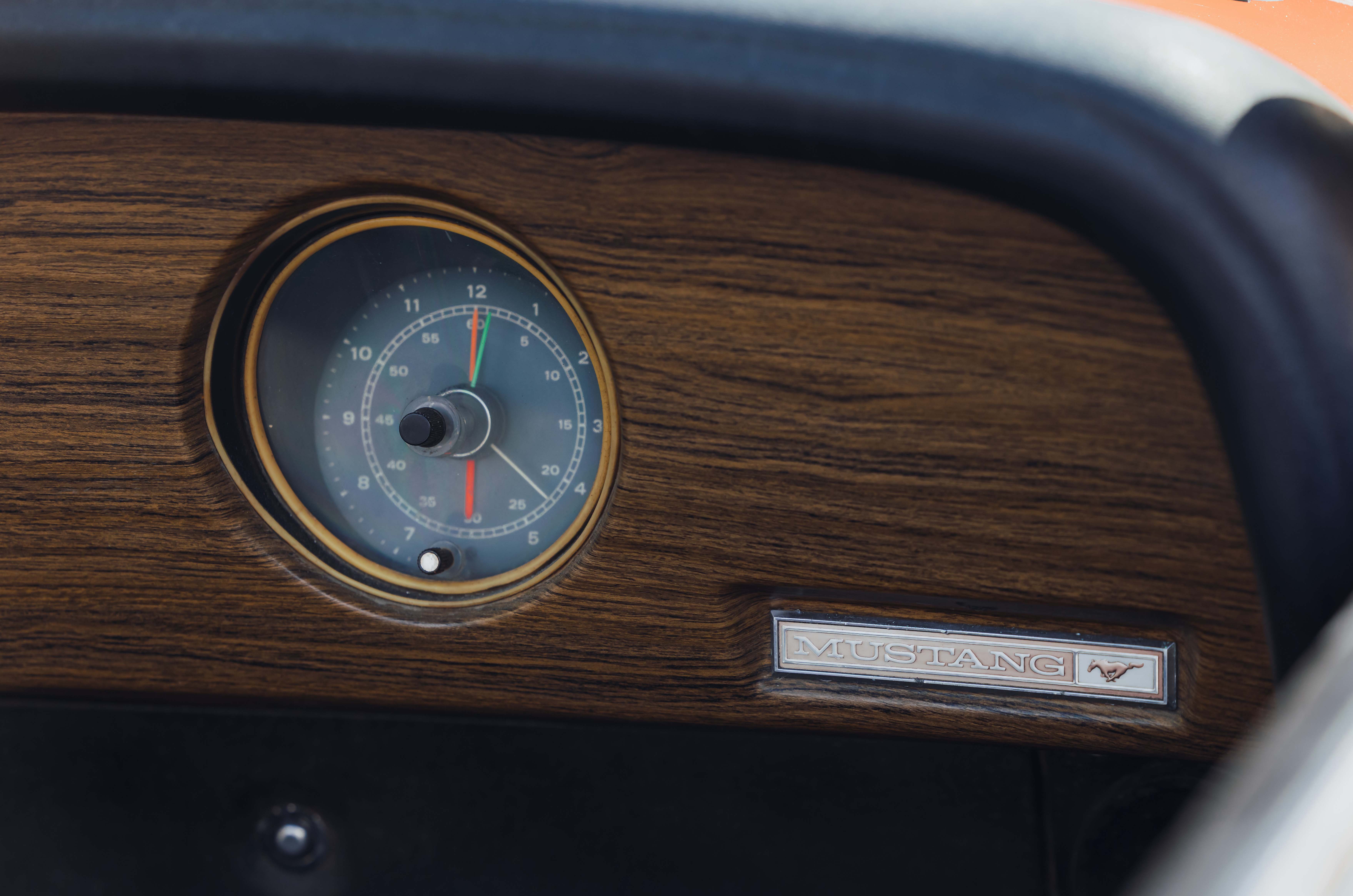
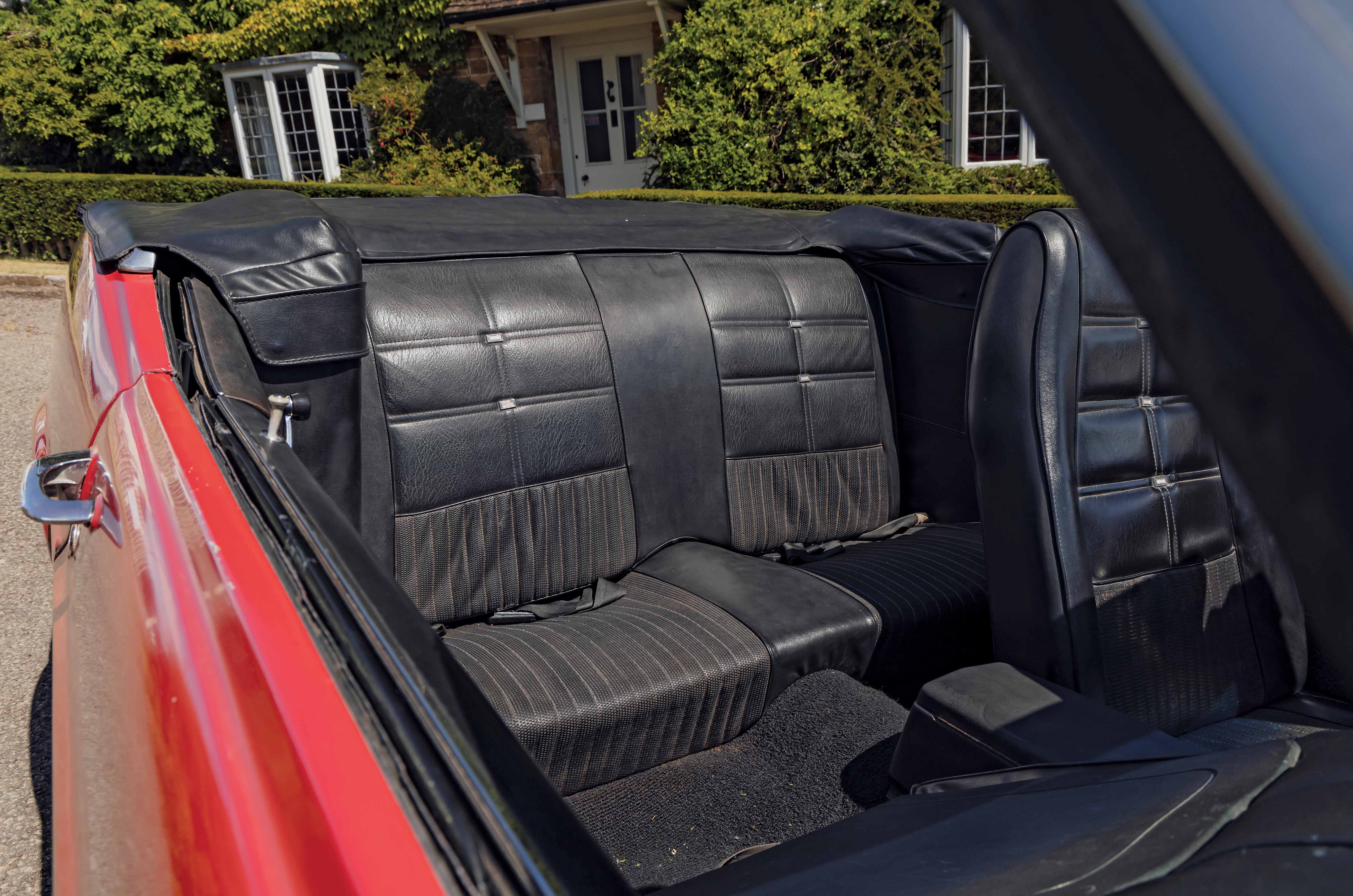
Sink into the broad, vinyl-trimmed seat and you face a typical Ford twin-binnacle sloping dash with a quartet of dials behind the (non-standard) steering wheel, and a large clock facing your passenger; the rear seats, like the Triumph’s, are better suited to small people.
Dave’s Mustang hasn’t been restored, but even though the quality of its fixtures would never have stood comparison with the Stag’s when new, everything remains complete and fully functioning.
Fire up the small-block and, even at idle, its vocal, ‘rugga-rugga’ soundtrack attracts stares.
Pull the self-shifter’s T-bar back to Drive, prod the long-travel throttle and, well… relax.
The Ford Mustang Convertible’s passenger-side clock
Despite acres of bonnet before you, it’s easy to place, helped by steering that, while light, low-geared and heavily assisted, is accurate and even endowed with a little feel.
The biggest contrast with the Stag is the body’s overall lack of rigidity, with anything less than perfect surfaces causing it to shake and rattle.
On the plus side, the ride is sumptuous (as expected) and, more surprisingly, the Mustang grips strongly and handles assuredly.
Despite the rip-roaring exhaust noise, the three-speed slushbox puts paid to any meaningful performance – as its owner freely admits, this is no sports car – but barrelling along at double-nickel speeds, you’ll never feel short-changed.
The Ford Mustang Convertible has slightly more rear space than the Triumph Stag
Is there a winner? Potential buyers for each car will sit in well-defined camps, despite their basic templates looking quite similar.
But while I can see the appeal of wafting along British lanes in a compact land-yacht with a NASCAR soundtrack, the Mustang’s lack of any real sporting intent would get to me in the end.
A first acquaintance with the Stag was enough to be smitten by the Coventry machine, all the more so knowing that in 2026 it can now be the car Triumph once intended it to be.
Images: Max Edleston
Thanks to: Dave Dunmore; Ian Collier; Mick and Trina Ward at EJ Ward
Factfiles
Triumph Stag
- Sold/number built 1970-’77/25,939
- Construction steel monocoque
- Engine iron-block, alloy-heads, sohc-per-bank 2997cc V8, twin Zenith-Stromberg carburettors
- Max power 145bhp @ 4500rpm
- Max torque 170lb ft @ 3500rpm
- Transmission three-speed automatic, RWD
- Suspension independent, at front by MacPherson struts, anti-roll bar rear semi-trailing arms, coil springs, telescopic dampers
- Steering power-assisted rack and pinion
- Brakes discs front, drums rear, with servo
- Length 14ft 6in (4420mm)
- Width 5ft 4in (1626mm)
- Height 4ft 2in (1270mm)
- Wheelbase 14ft 6in (2540mm)
- Weight 2807lb (1273kg)
- 0-60mph 9.5 secs
- Top speed 118mph
- Mpg 20
- Price new £2260
- Price now £15-28,000*
Ford Mustang Convertible
- Sold/number built 1969-‘70/490,551 (all)
- Construction steel monocoque
- Engine all-iron, ohv 302cu in (4949cc) 90° V8, single two-barrel carburettor
- Max power 210bhp @ 4600rpm
- Max torque 300lb ft @ 2600rpm
- Transmission three-speed automatic, RWD
- Suspension: front independent, by upper wishbones, single lower arms, coil springs, anti-roll bar rear live axle, semi-elliptic leaf springs; telescopic dampers f/r
- Steering power-assisted recirculating ball
- Brakes discs front, drums rear, with servo
- Length 15ft 7½in (4674mm)
- Width 5ft 11¾in (1821mm)
- Height n/a
- Wheelbase 9ft (2743mm)
- Weight 3190lb (1447kg)
- 0-60mph 8.1 secs
- Top speed 112mph
- Mpg n/a
- Price new n/a
- Price now £20-30,000*
*Prices correct at date of original publication
Enjoy more of the world’s best classic car content every month when you subscribe to C&SC – get our latest deals here
READ MORE
Triumph Stag saloon and estate: missed opportunities?
Ford Mustang at 60: Route 66 in the original pony car
Triumph Stag vs BMW 2002 Cabriolet: open for the family
Simon Hucknall
Simon Hucknall is a senior contributor to Classic & Sports Car