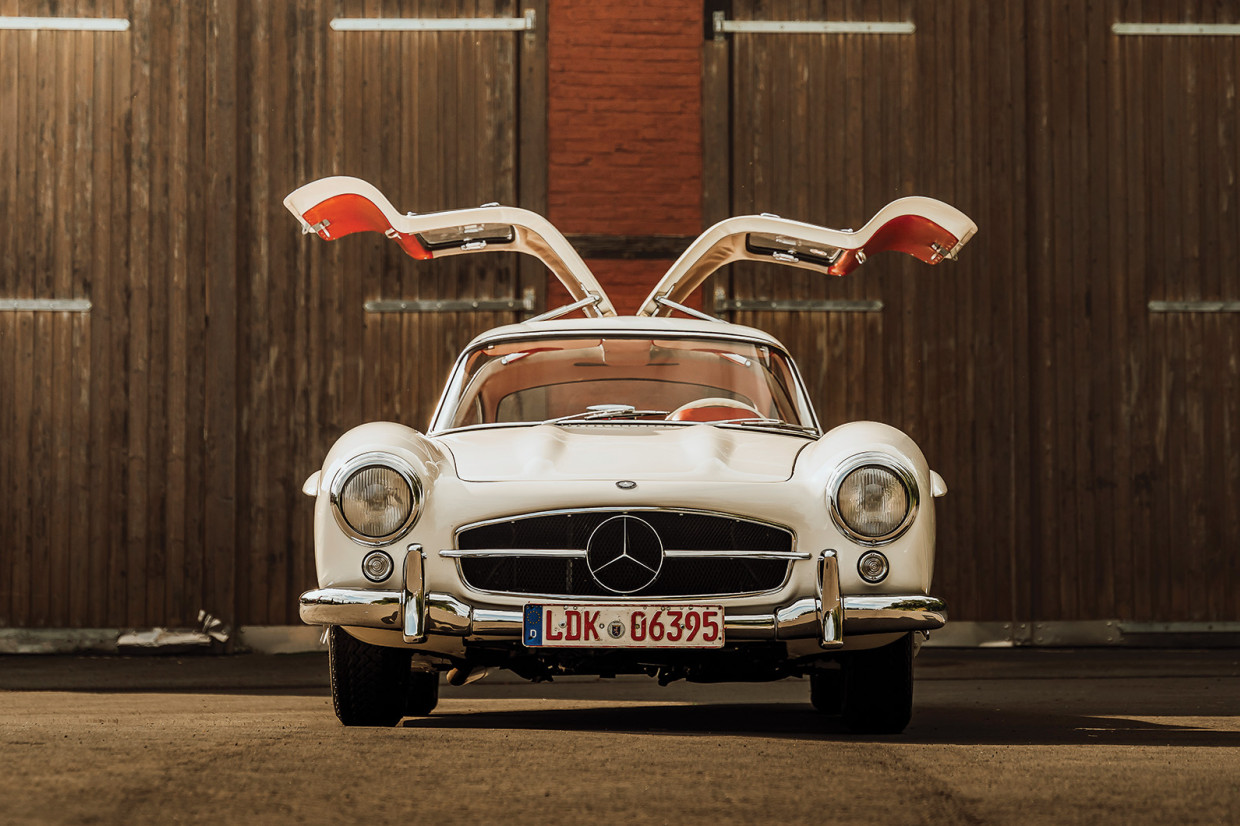
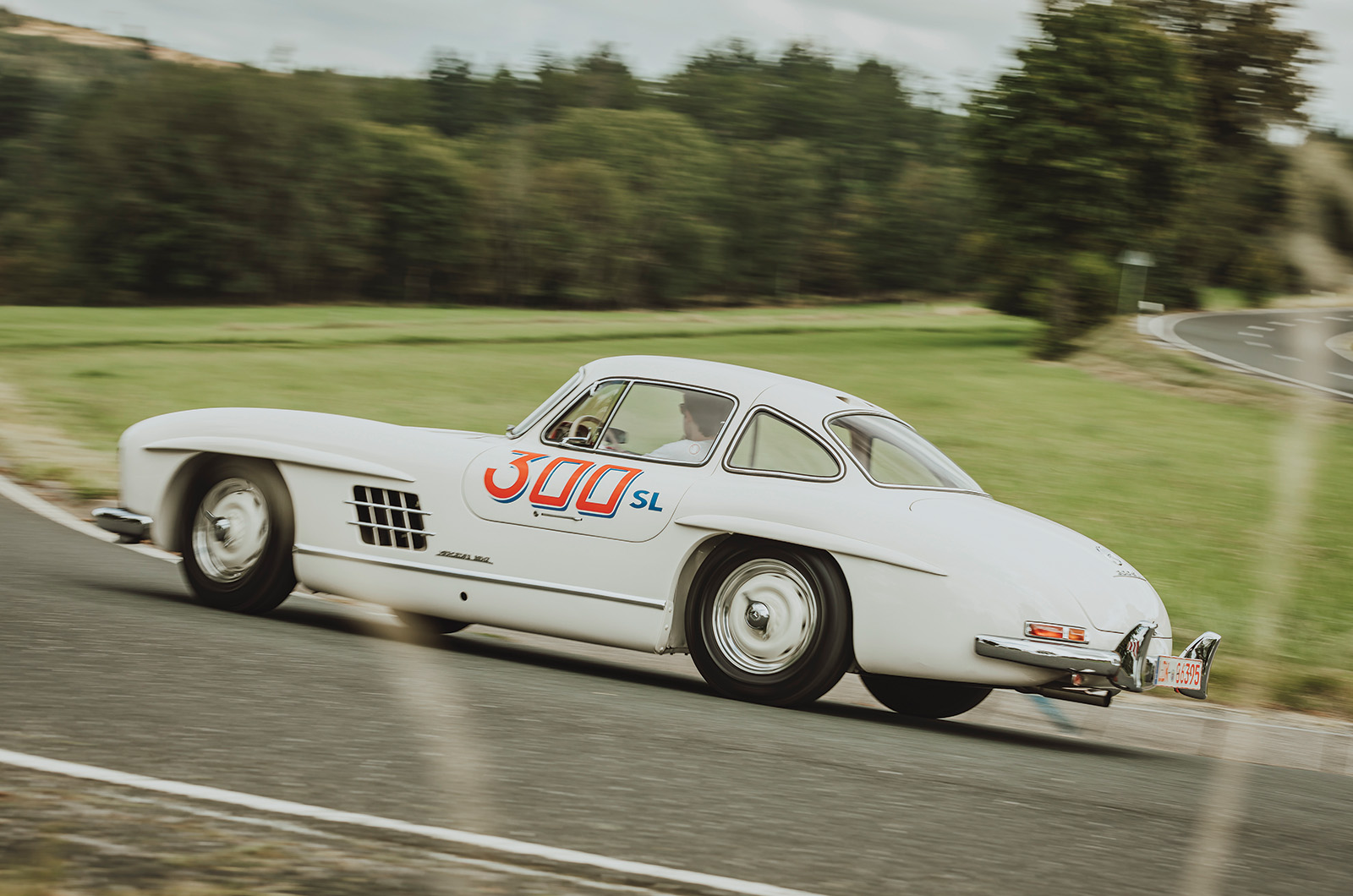
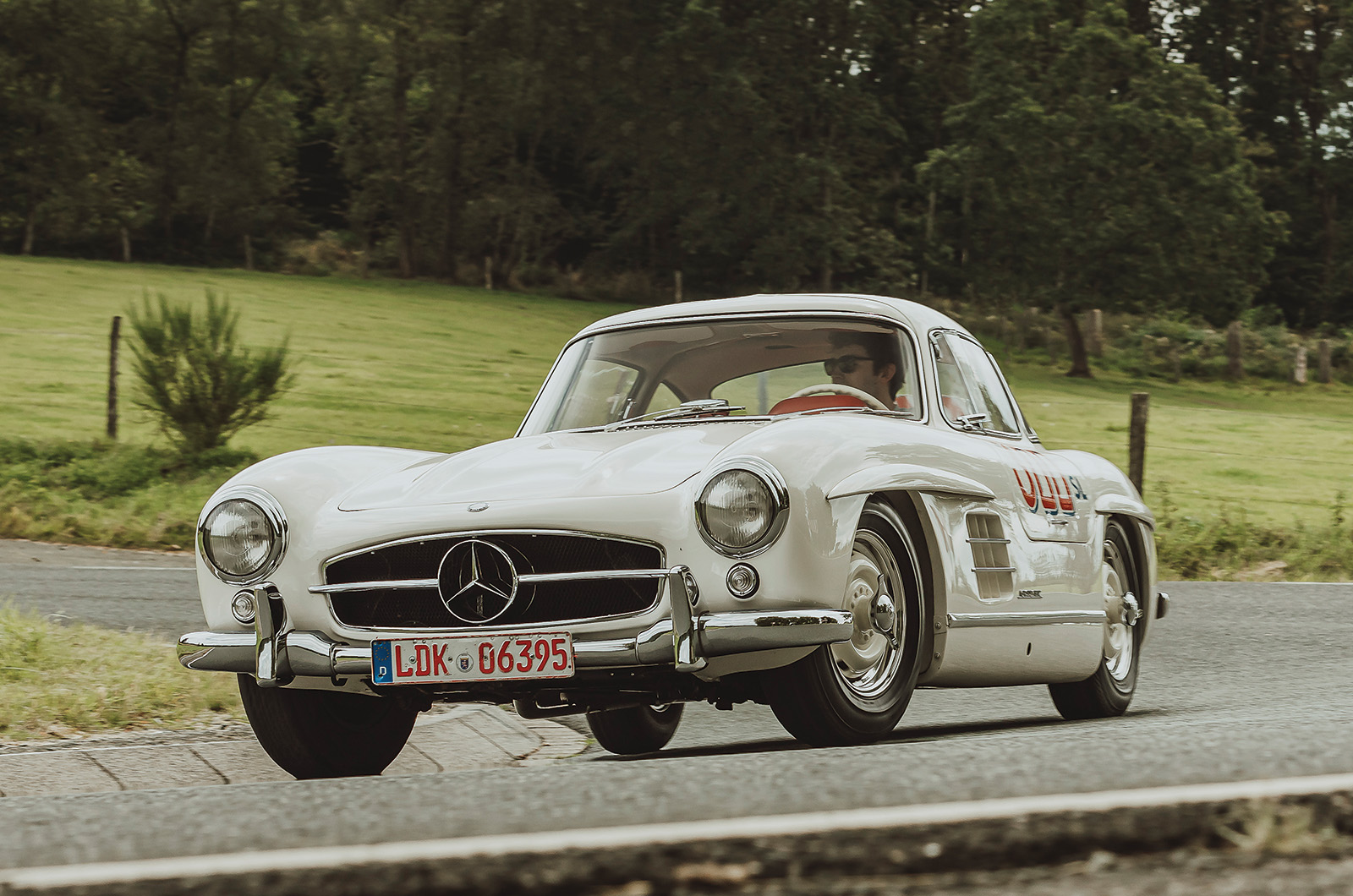
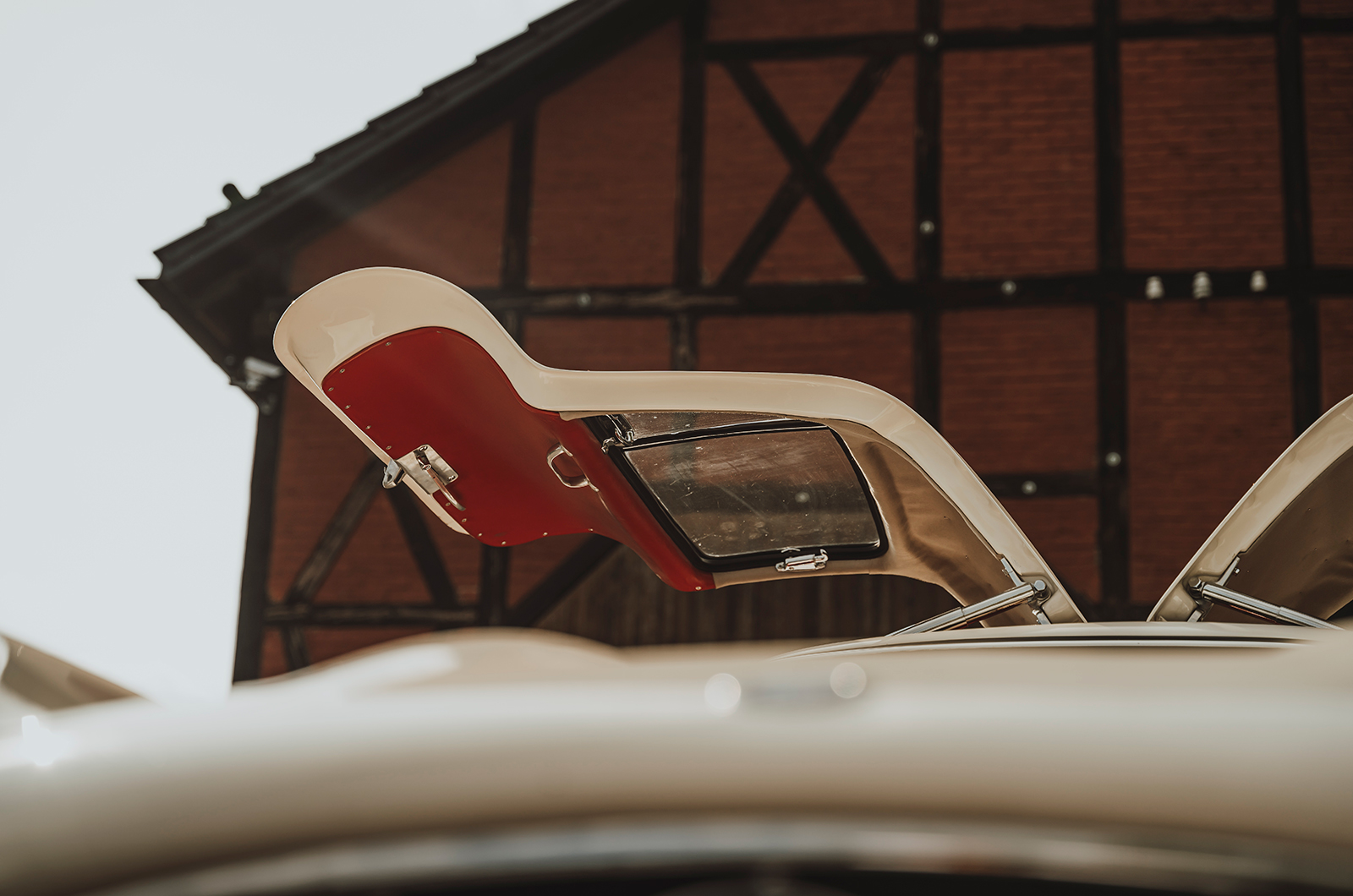
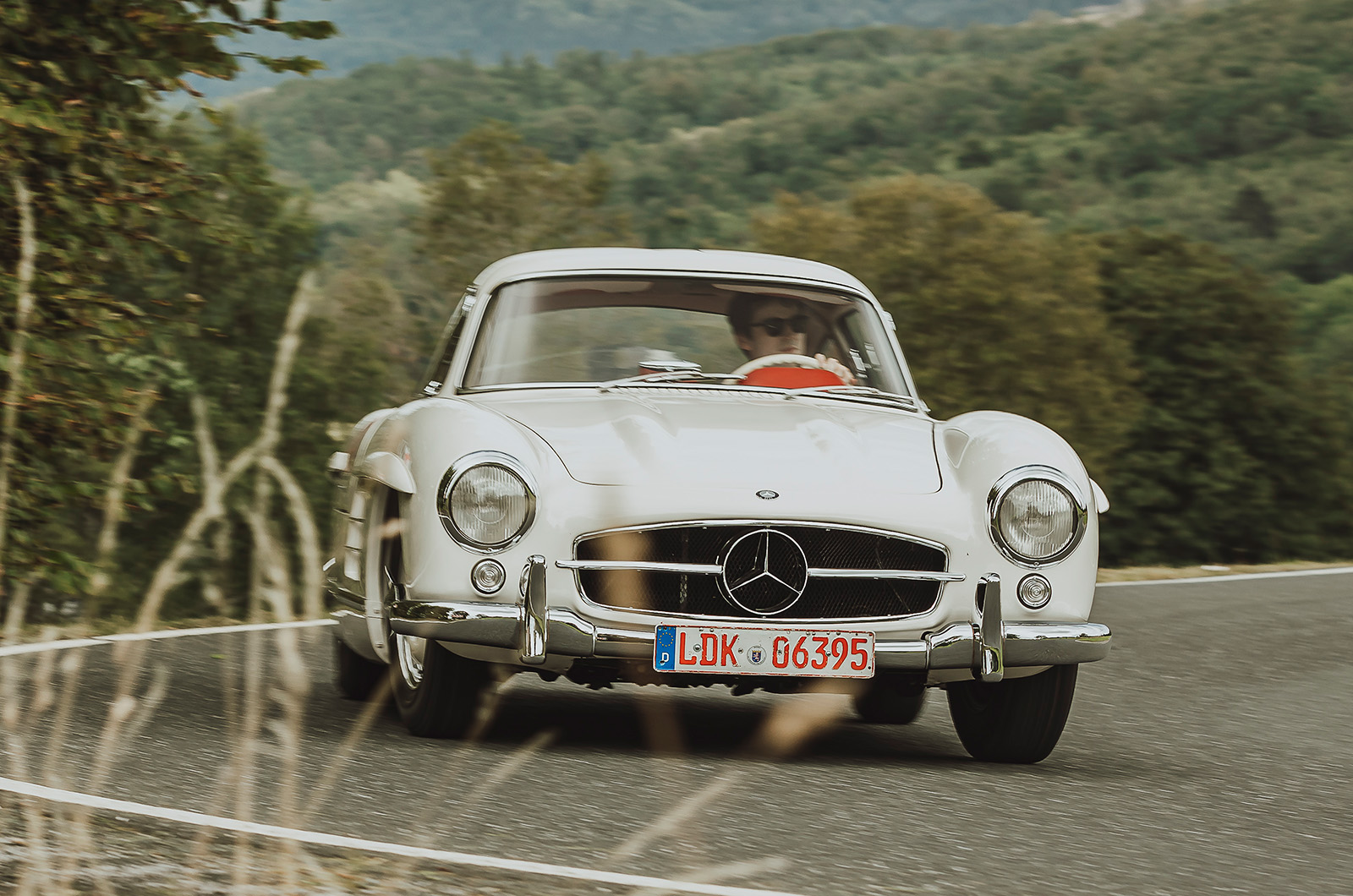
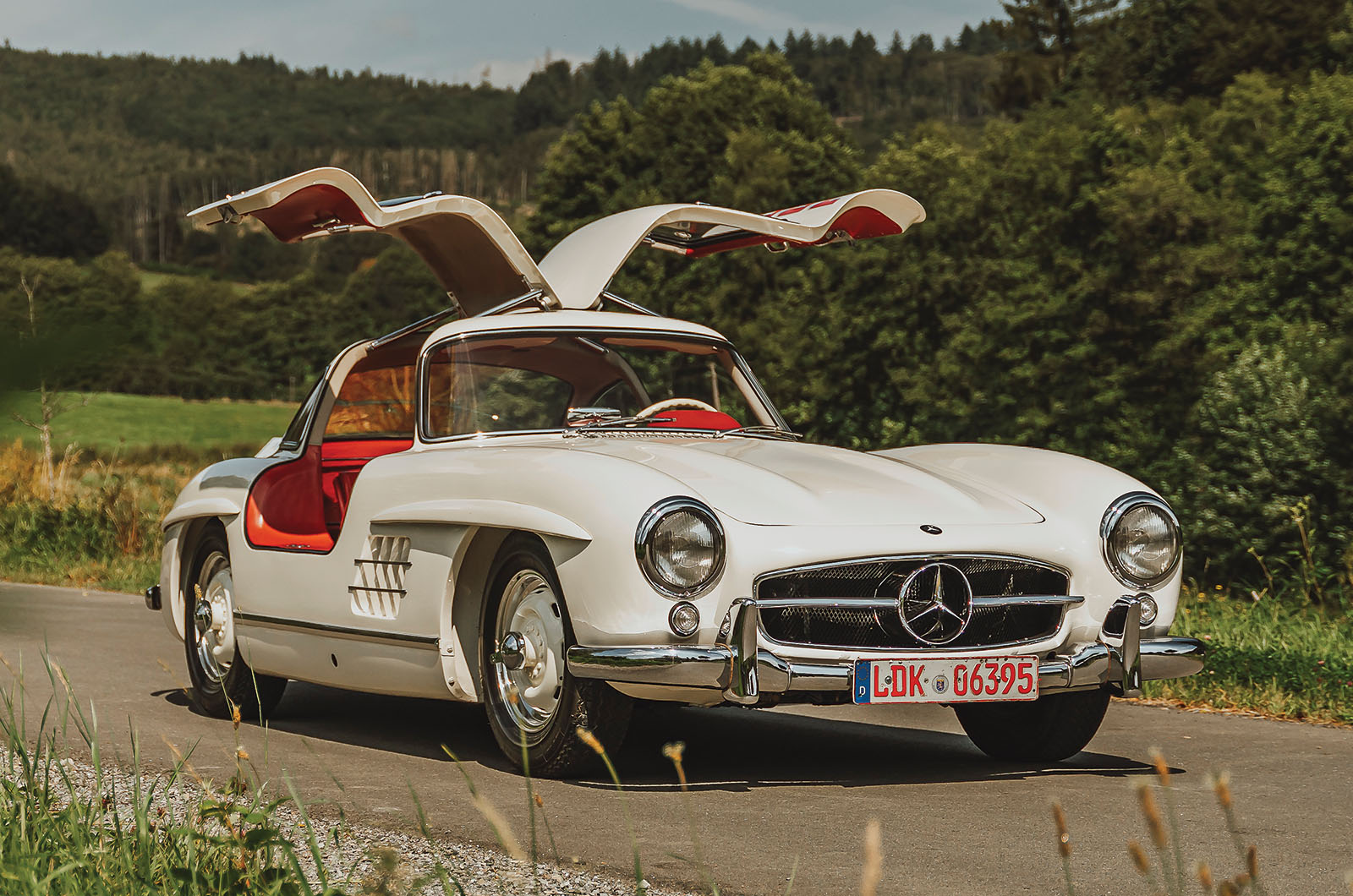
Contemporaries commented that it looked like a UFO on the road from the outside, and it certainly gives that impression from behind the wheel.
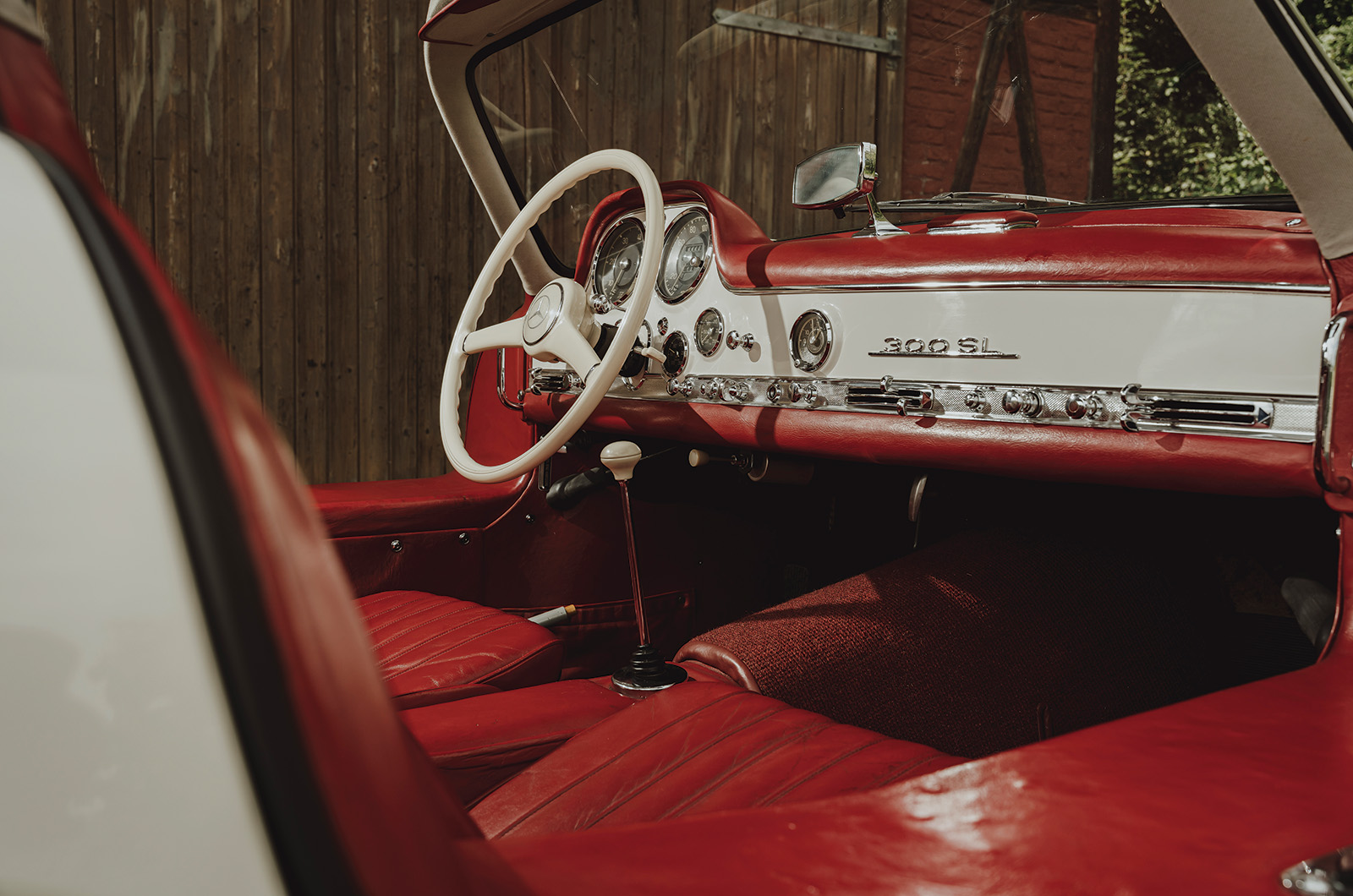
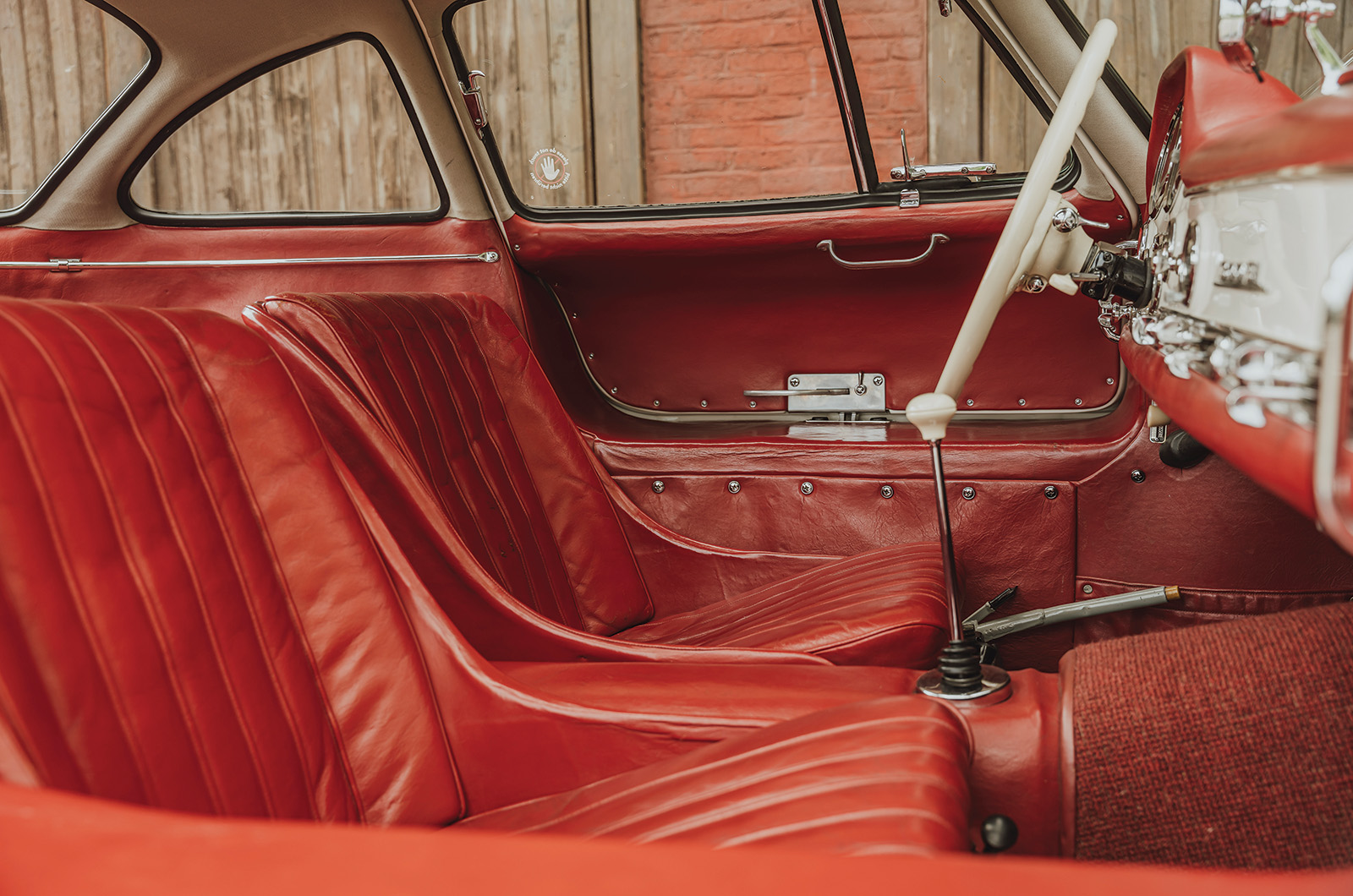
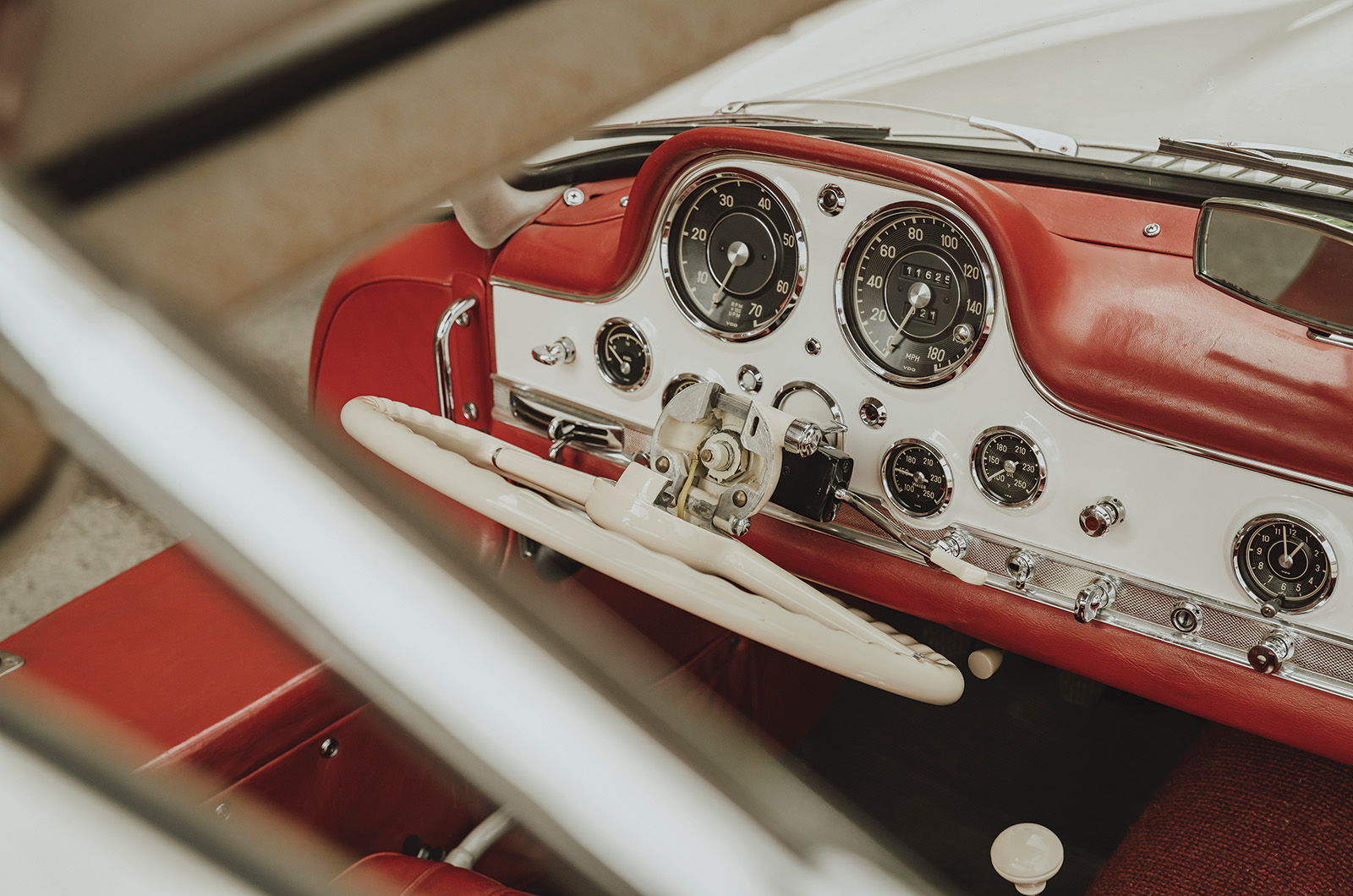
It’s a spaceship, but a 1950s spaceship with red leather and bevelled chrome on the dash.
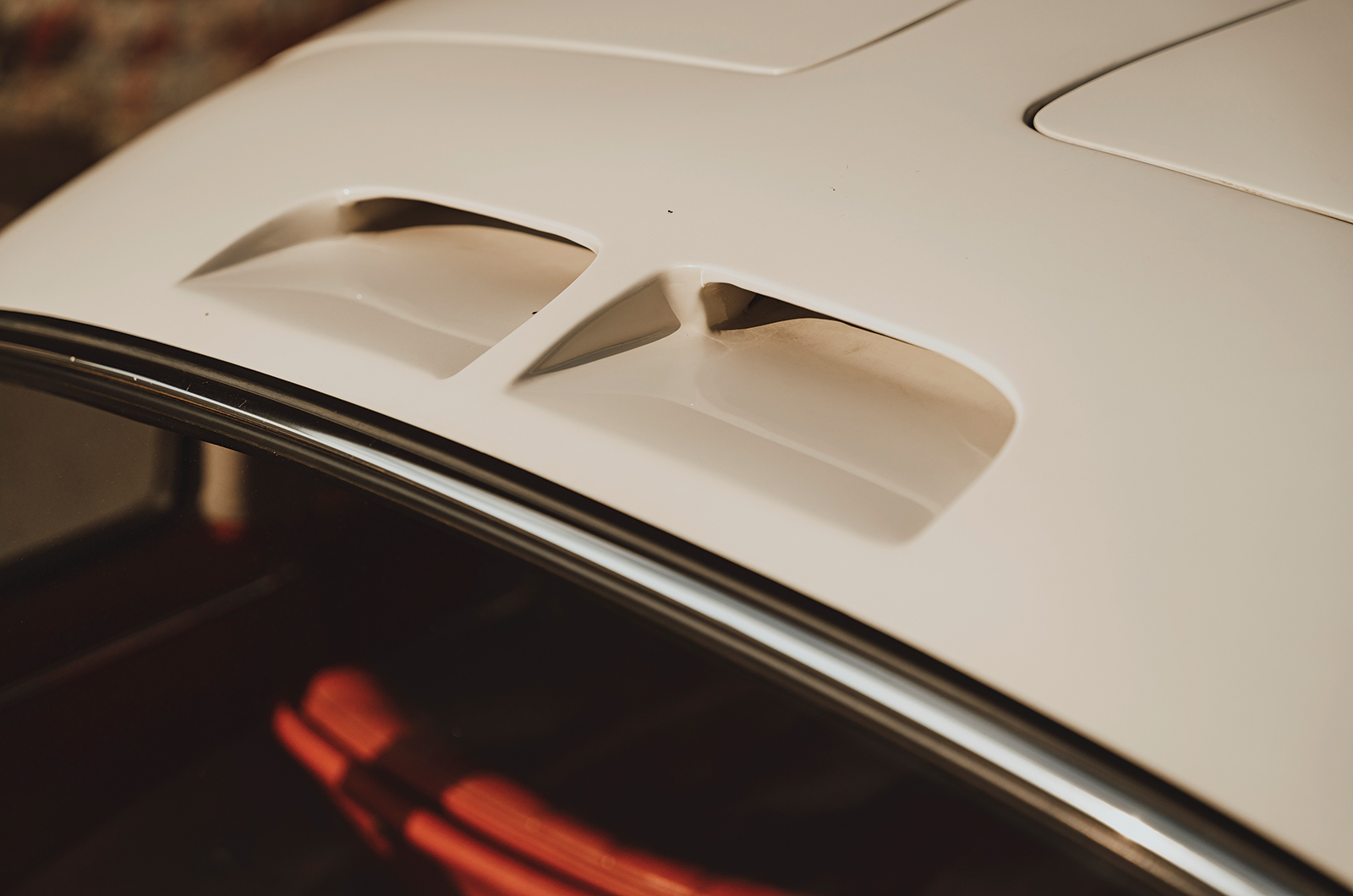
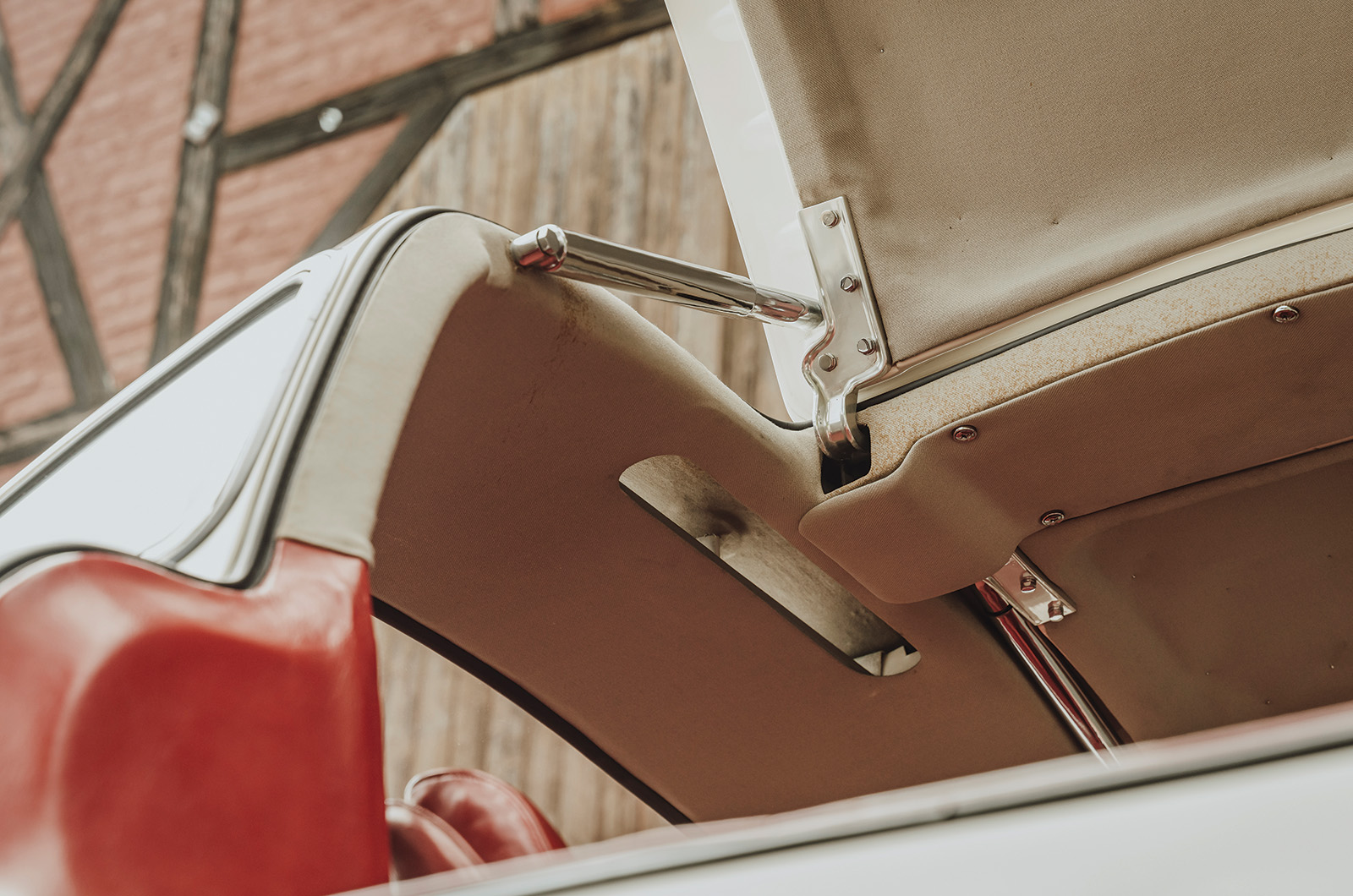
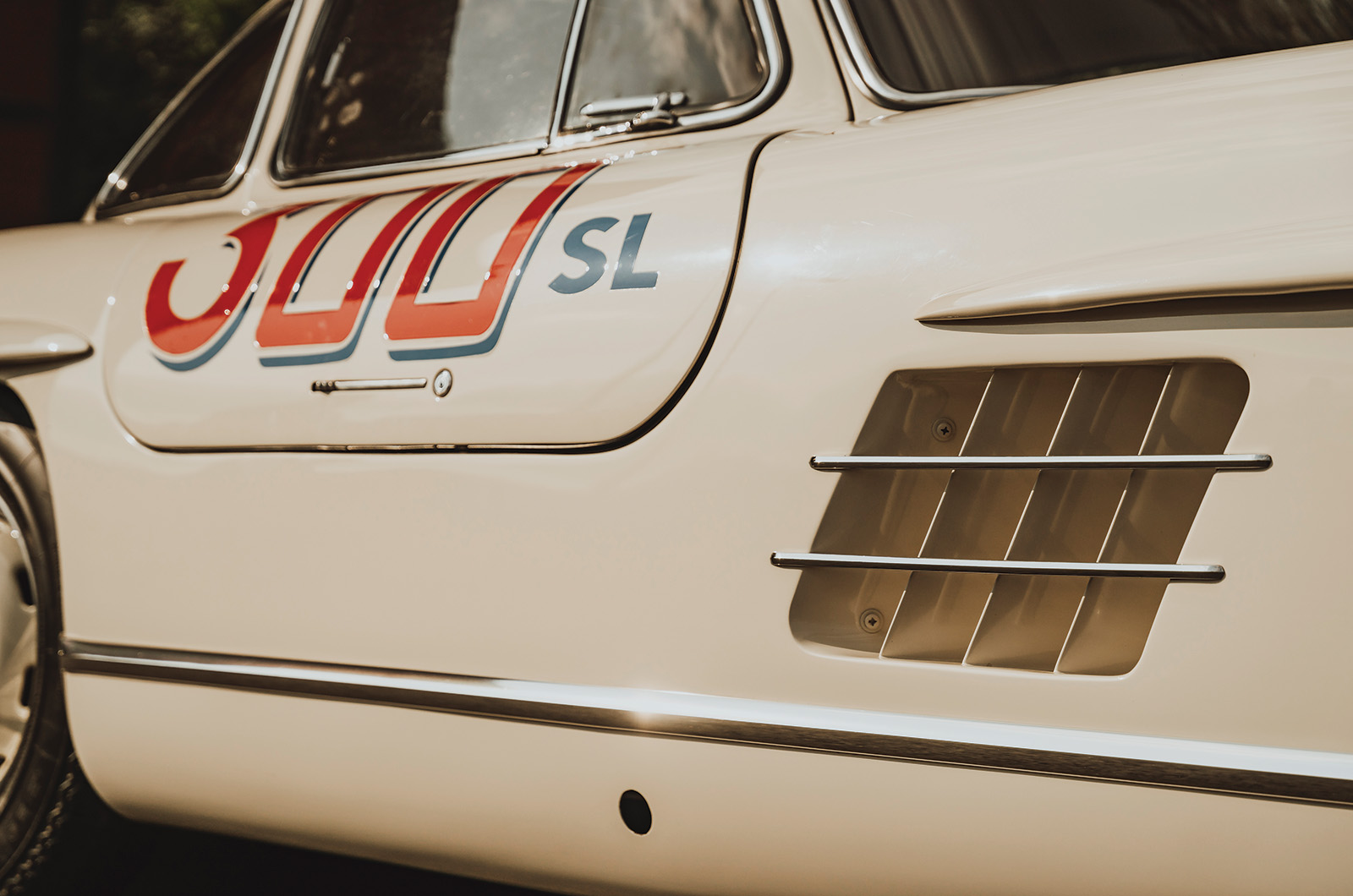
‘An aluminium body saved 85kg over its steel counterpart, further helped by Plexiglas for all but the windscreen’
Your first few gentle miles in this Mercedes-Benz reveal a remarkably ‘normal’ car to drive.
It rattles and shakes over bumps more than a contemporary 300 Adenauer, but it otherwise feels like a torquey, sensible saloon around town, with a civilised idle and synchromesh on all of its gears.
That low-speed refinement, in the face of the performance you know the car is capable of, really sets the 300SL apart from its contemporaries from Modena.
It’s towards the faster end of the Gullwing’s capabilities where this alloy-bodied 300SL’s special talents lie, however.
The alloy-bodied Mercedes-Benz 300SL enhances the feeling of relentless acceleration
Although surely slightly quicker from 0-60mph than the 8.8 secs of a standard steel car, it’s not the ferocity of the acceleration that impresses particularly, but its persistence.
Mercedes’ ‘six’ just keeps pulling, even at higher speeds, in a brilliantly linear, unfussed way.
It’s so far from the drama of a Colombo V12 – that’s not to say the Merc doesn’t make a nice noise, because it does, but it’s the ease of speed that feels so beyond its 1955 vintage.
Mercedes-Benz ditched the aluminium-bodied 300SL Lightweight after just one year
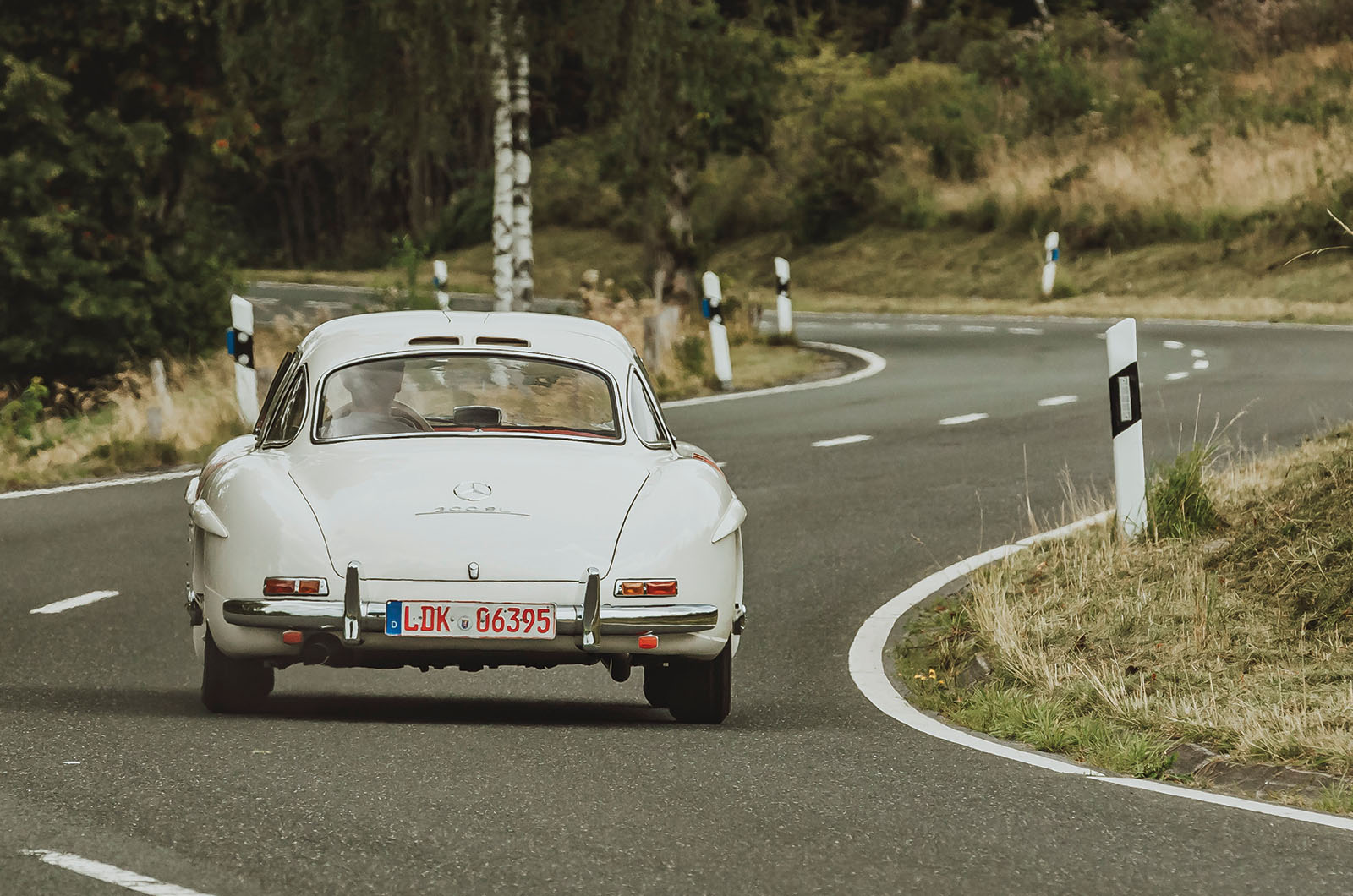
This car, though, is at its most special in the corners.
Being lower, firmer and lighter, it gets through the flowing bends in the foothills of the Rothaar Mountains with a rare composure.
Only once do I detect a slight tuck from that swing-axle rear, which can make the normal Mercedes 300SL prickly to drive.
A more committed pilot on a track could draw out that behaviour, but this car simply resists it that much further.
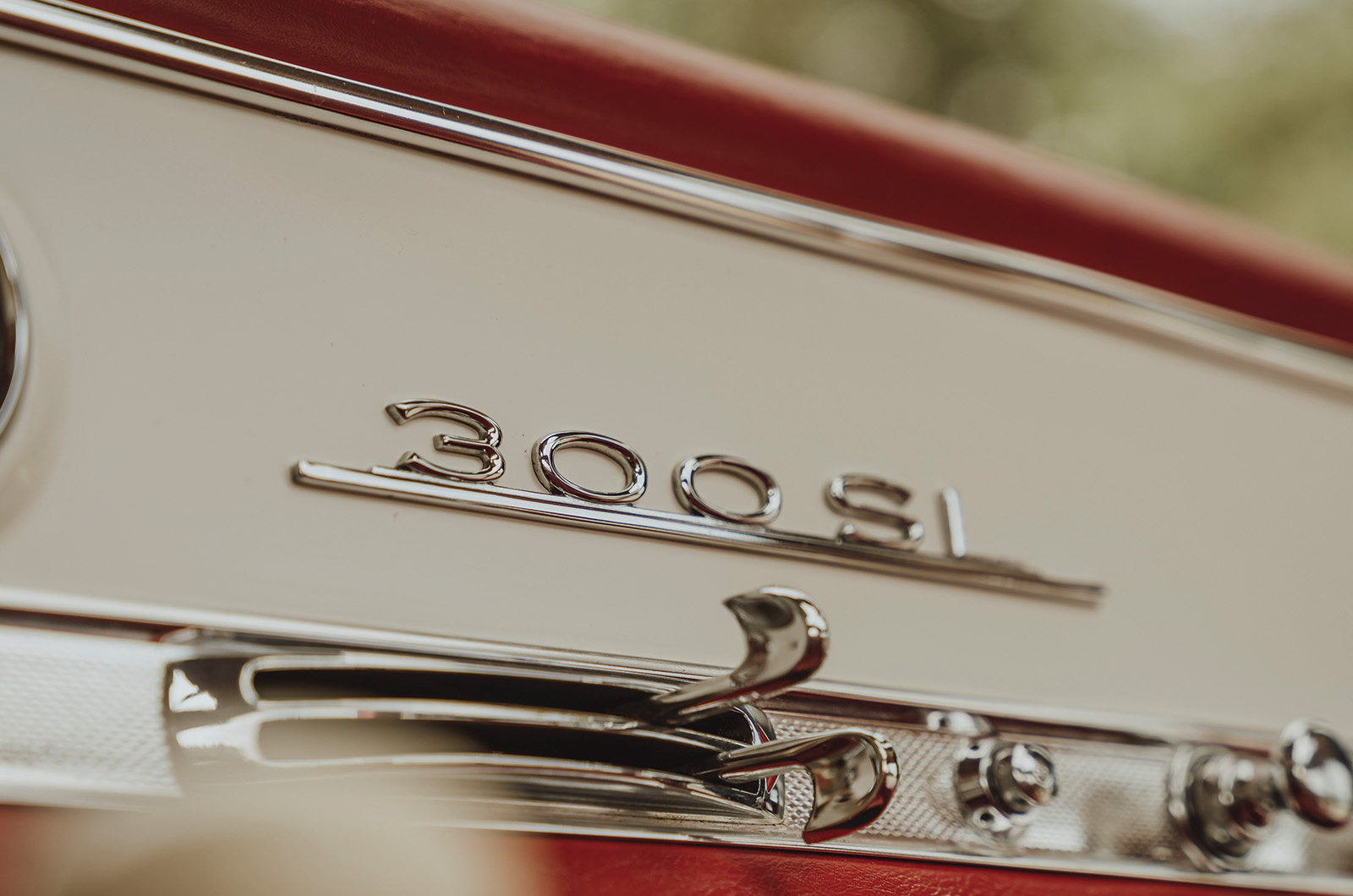
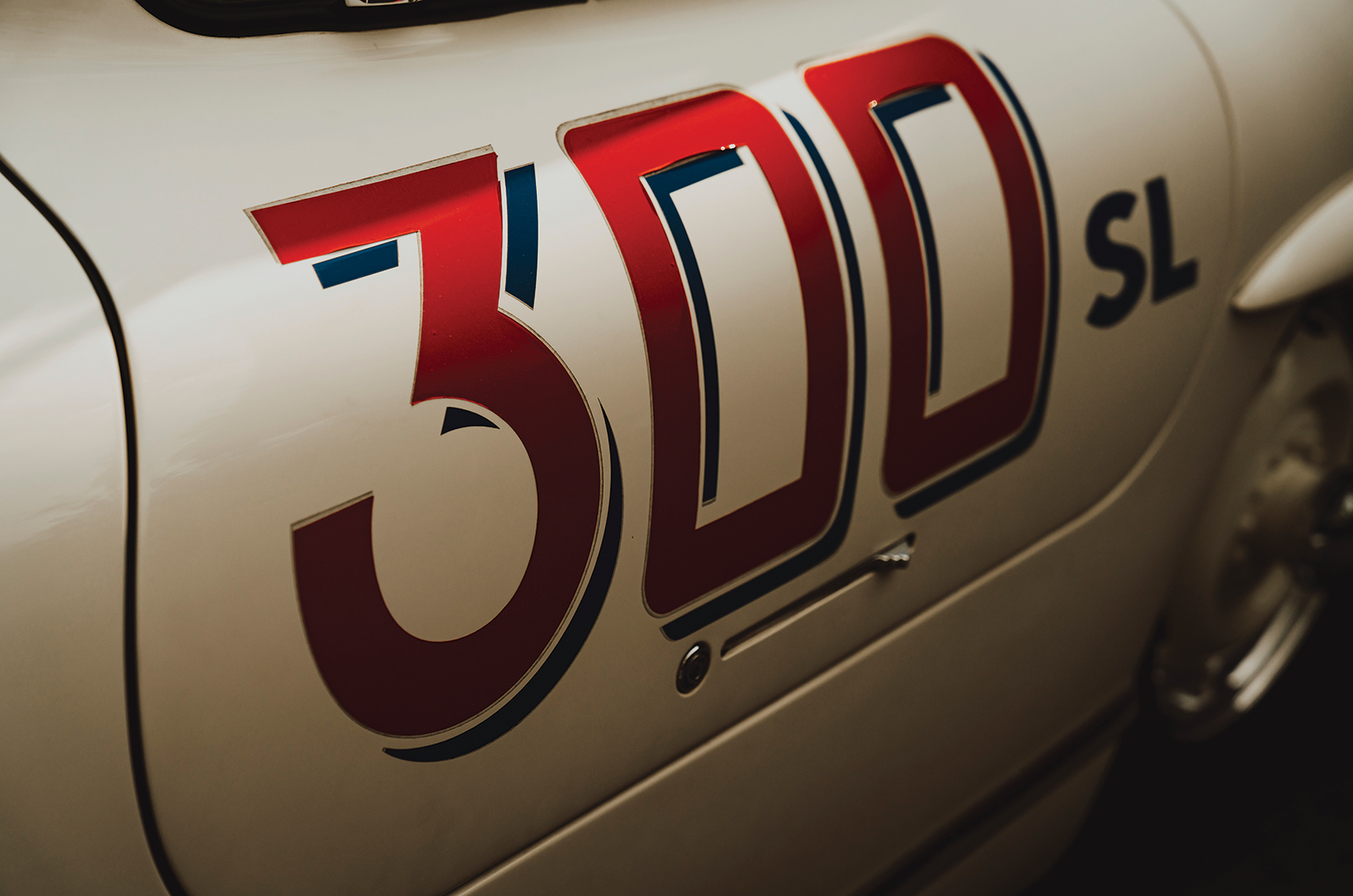
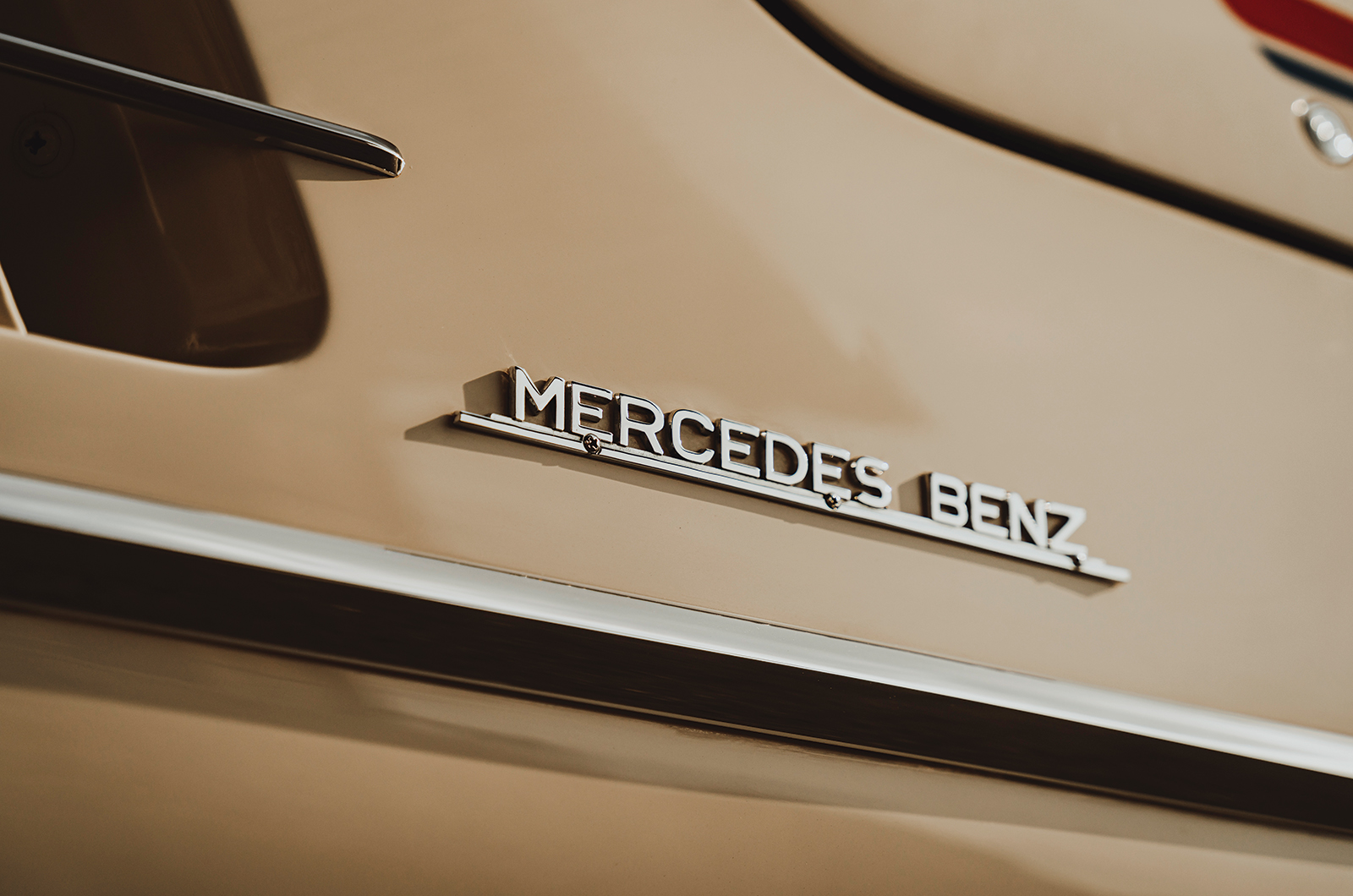
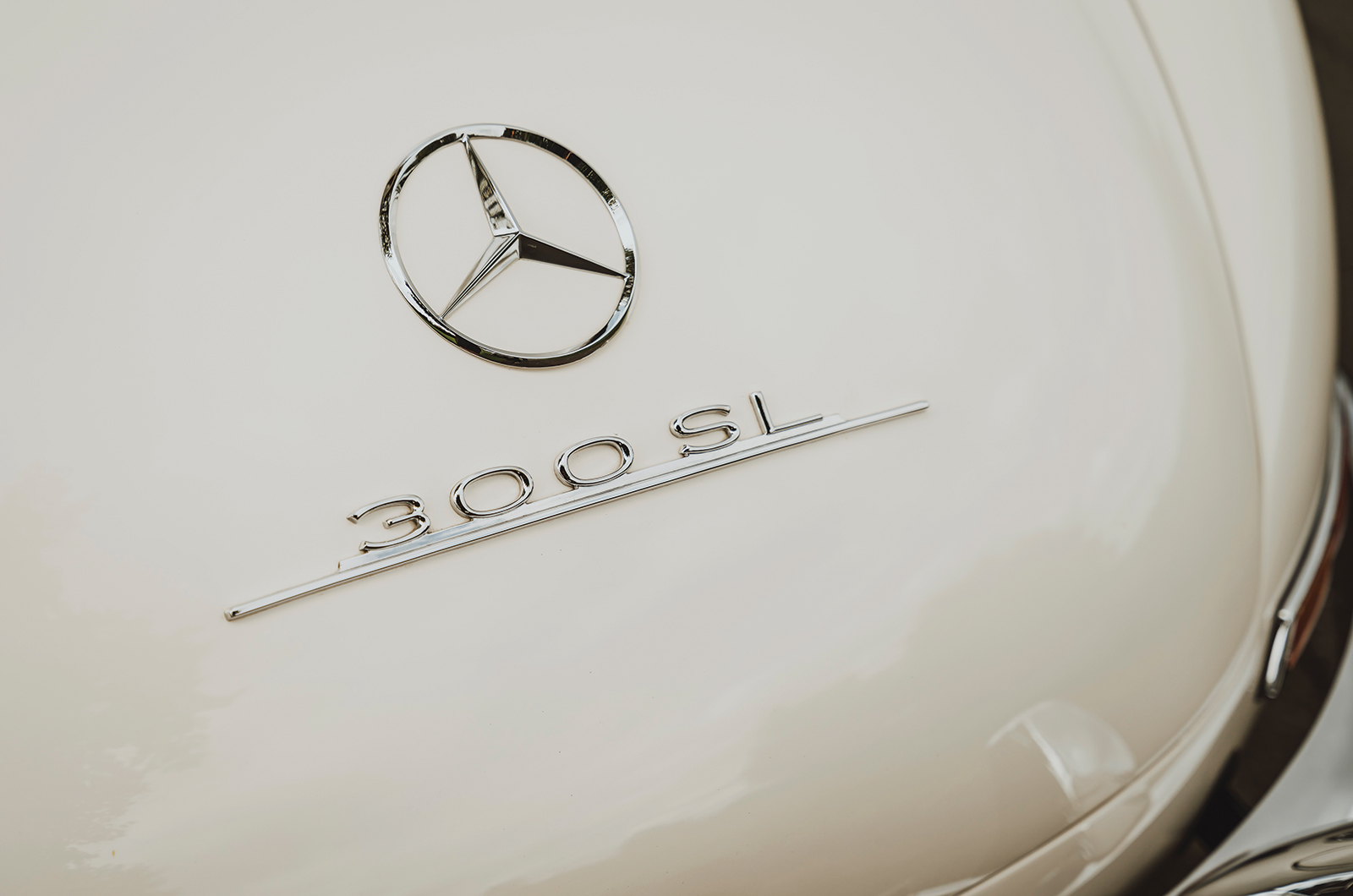
The Mercedes-Benz 300SL Lightweight’s badge doesn’t betray its racy spec
The unusually thick-rimmed plastic steering wheel is remarkably free from interference and judder, while the gearshift is uncommonly easy for a car of this age and performance.
The lightweight coachwork of the 29 aluminium Mercedes-Benz 300SLs might have proved to be a blind alley, but perhaps the headline-grabbing bodyshell is something of a red herring when understanding the significance of these rare Gullwings.
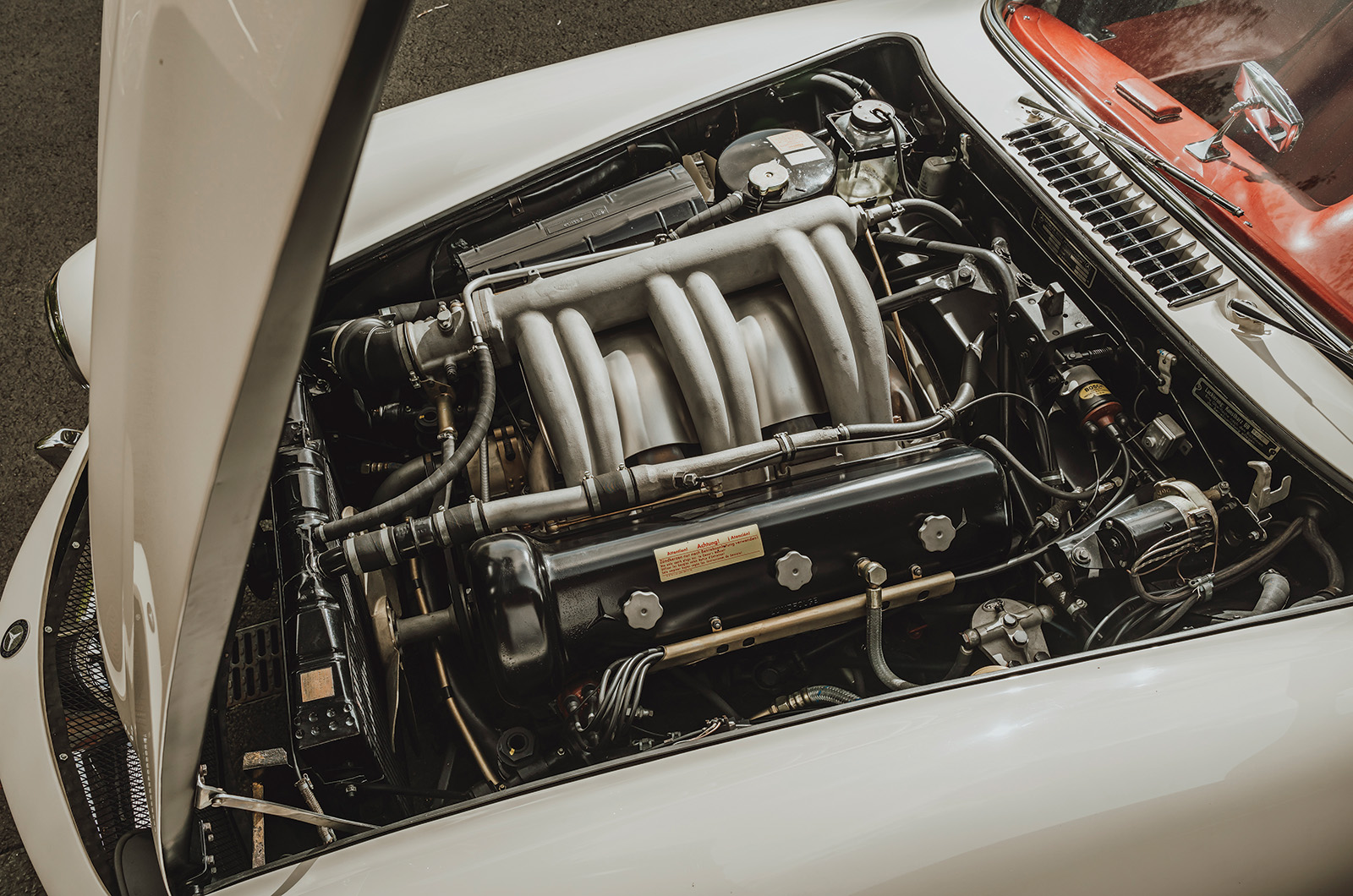
The best parts of this privateer package are actually its tuned engine, stiffer suspension and upgraded front brakes.
‘An extra 15bhp levelled the output of the Mercedes-Benz 300SL’s sturdy single-camshaft motor with a Ferrari 250GT Berlinetta’s lively V12’
Mostly these were bits taken from the W194 300SL race cars and the Hobel prototype, but here they were as a package on a road car that customers could actually buy.
The four steel-bodied works Mercedes-Benz 300SL rally cars – with which Stirling Moss won the Tour de France Automobile, among other honours – all followed an almost identical specification, such was the efficacy of these special parts.
So, does this car represent the ultimate version of the W198 Gullwing?
Yes, but the alloy body that identifies it might just be the least important part.
Images: Max Edleston
Thanks to: Nationales Automuseum, The Loh Collection
Factfile
Mercedes-Benz 300SL Lightweight
- Sold/number built 1955-’56/29
- Construction tubular steel spaceframe chassis, aluminium body
- Engine iron-block, alloy-head, sohc 2996cc 45° slant-six, Bosch mechanical fuel injection
- Max power 237bhp @ 6100rpm
- Max torque 217lb ft @ 4800rpm
- Transmission four-speed manual, RWD
- Suspension independent, at front by double wishbones, anti-roll bar rear swing axles; coil springs, telescopic dampers f/r
- Steering recirculating ball
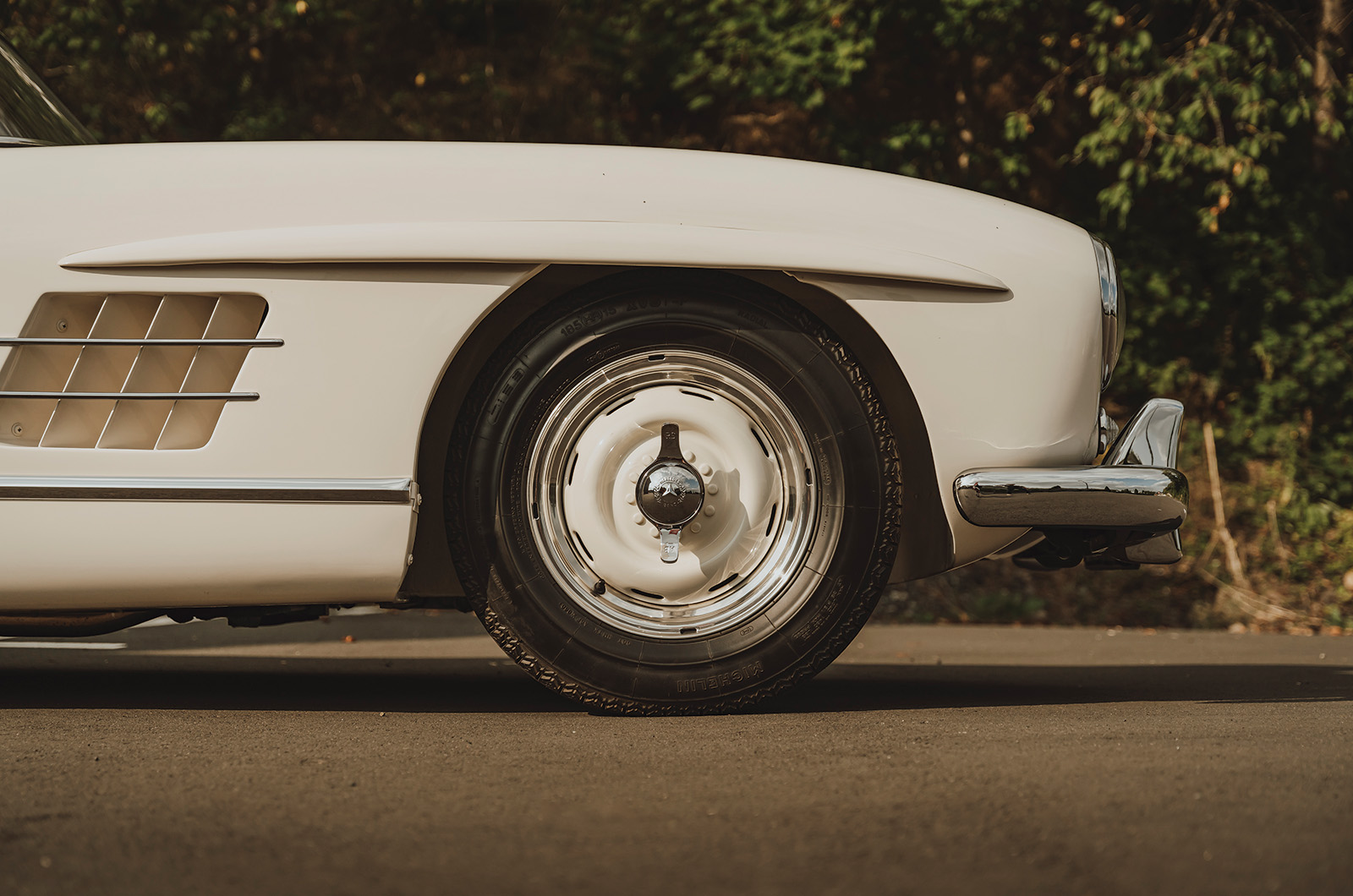
- Brakes Alfin drums, with servo
- Length 15ft (4572mm)
- Width 5ft 10½in (1791mm)
- Height 4ft 3¼in (1302mm)
- Wheelbase 7ft 10½in (2400mm)
- Weight 2500lb (1134kg)
- Mpg 21
- 0-60mph 8.8 secs (standard 300SL)
- Top speed 155mph (depending on axle ratio)
- Price new £3075
- Price now £5-10m*
*Price correct at date of original publication
We hope you enjoyed reading. Please click the ‘Follow’ button for more super stories from Classic & Sports Car.
Charlie Calderwood
Charlie Calderwood is Classic & Sports Car’s Features Editor