The Ford Transit is 60!

| 17 Nov 2025
Classic & Sports Car – Ford Transit at 60: celebrating Britain’s workhorse

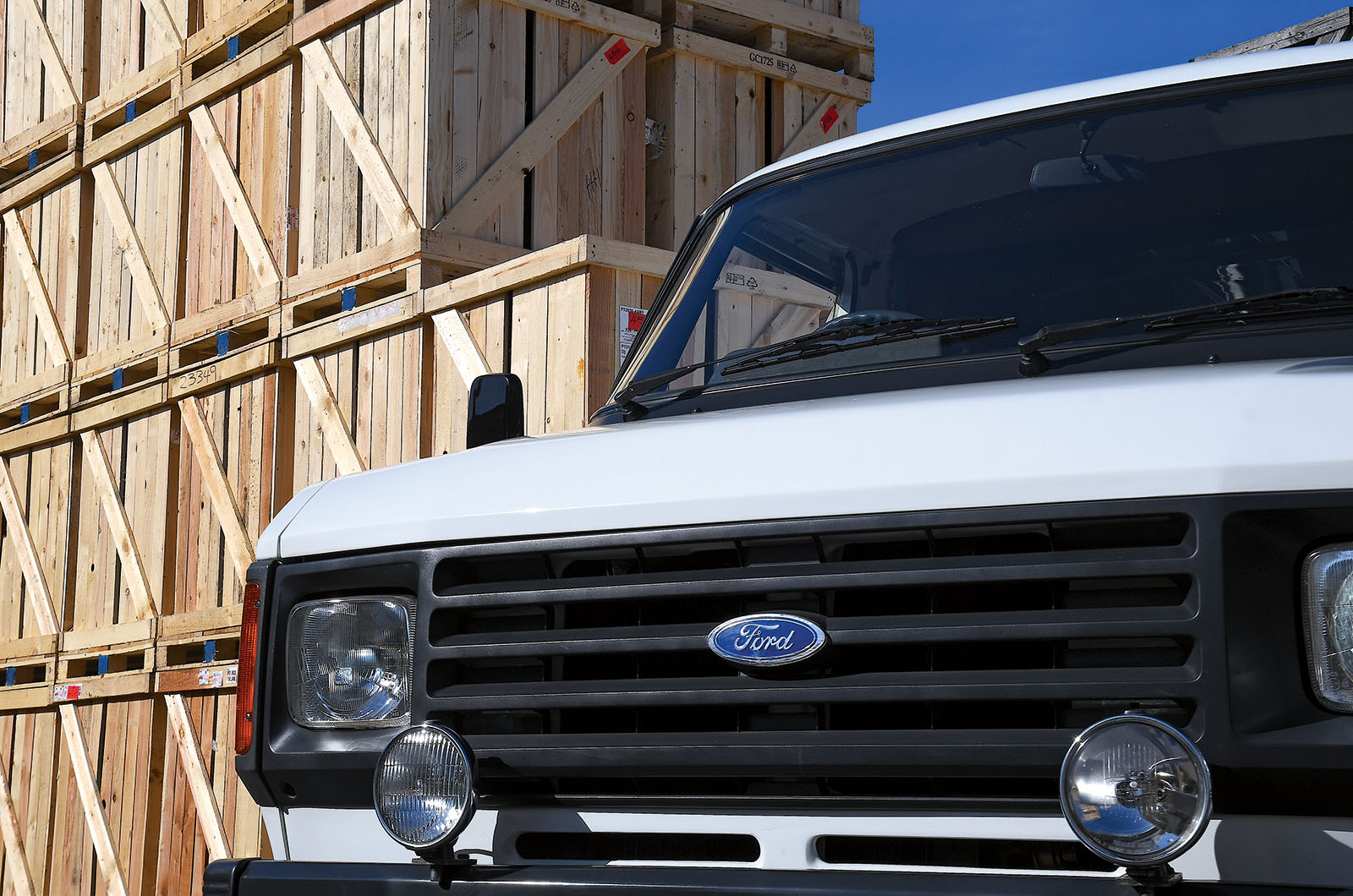
Picture the vehicle of choice for your stereotypical ‘white van man’, and most likely its grille or bonnet will be adorned with the Blue Oval.

Across the model’s 60-year history, the Ford Transit has made an unprecedented impact on not only the commercial-vehicle industry, but also the fabric of Britain.

This humble van has become entwined with British culture in a way few products, let alone vehicles, have managed. 

From the off, Ford was on to a winner when it released the first-generation Transit in 1965.

Classic & Sports Car – Ford Transit at 60: celebrating Britain’s workhorse

The Ford Transit Mk1 changed the game in light commercial vehicles

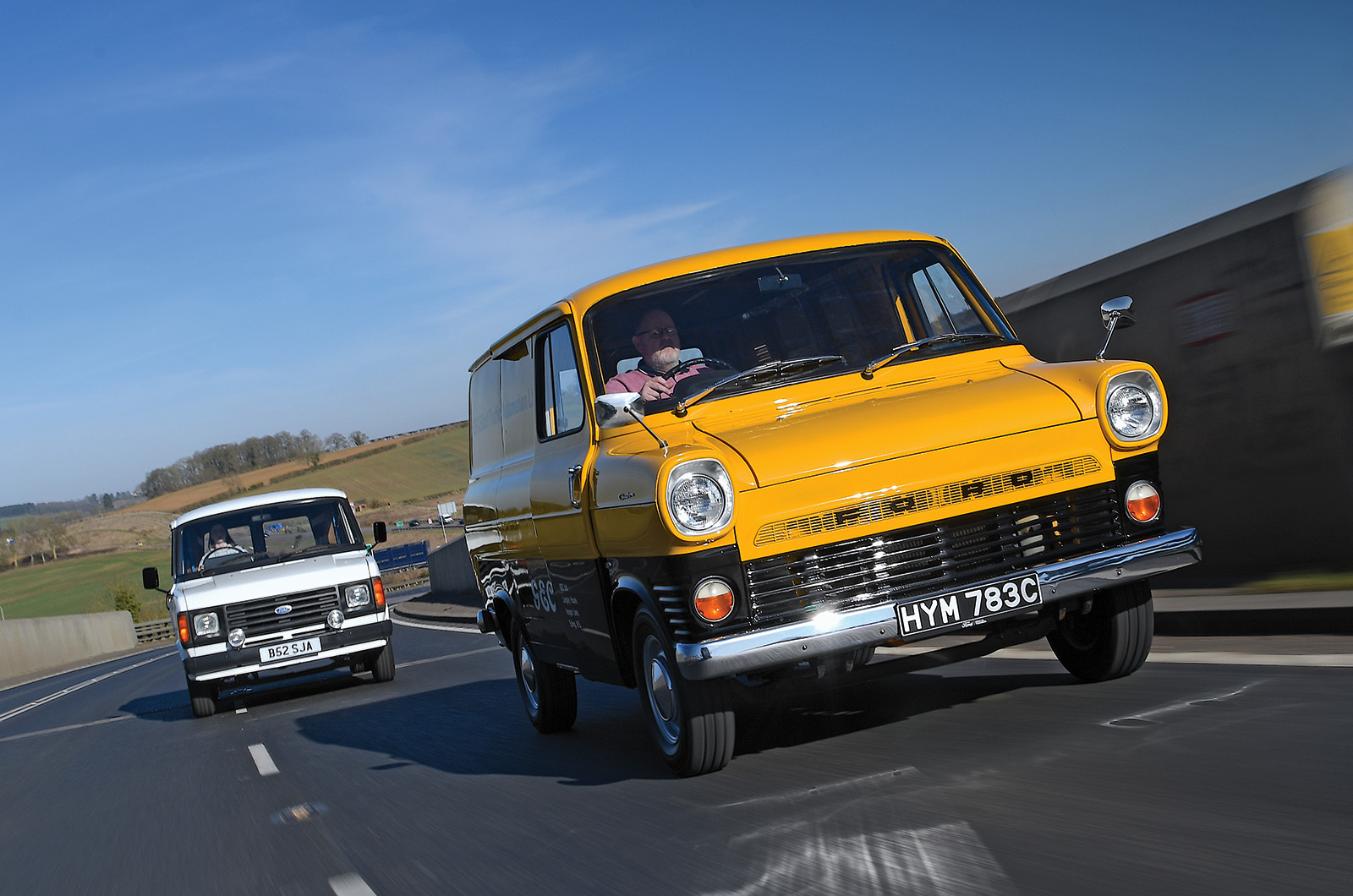
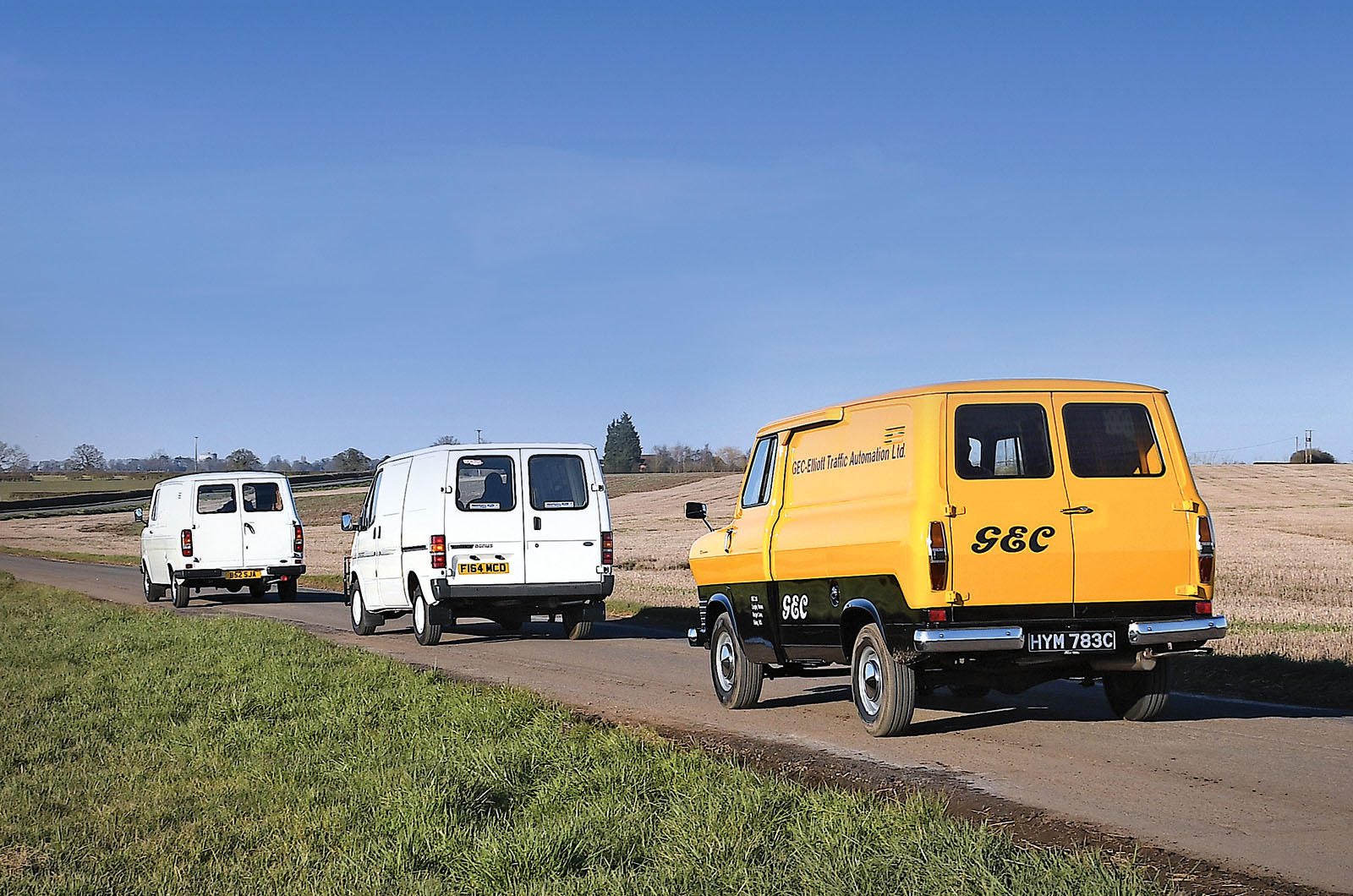
To better appreciate the significance of the Ford Transit’s beginnings, we’ve assembled first-, second- and third-generation examples to indulge in a nostalgic delivery run back in time.

These earlier iterations of Transit set the pace for the ubiquitous van to become an essential part of both business and personal life.

Developed under the codename Project Redcap, the original intention had been to christen the model the V-series.

While this would be an obvious ‘does what it says on the tin’ name, a last-minute change landed the new van with the Transit moniker from the earlier Taunus Transit, a German-built model that first appeared in 1953.

Classic & Sports Car – Ford Transit at 60: celebrating Britain’s workhorse

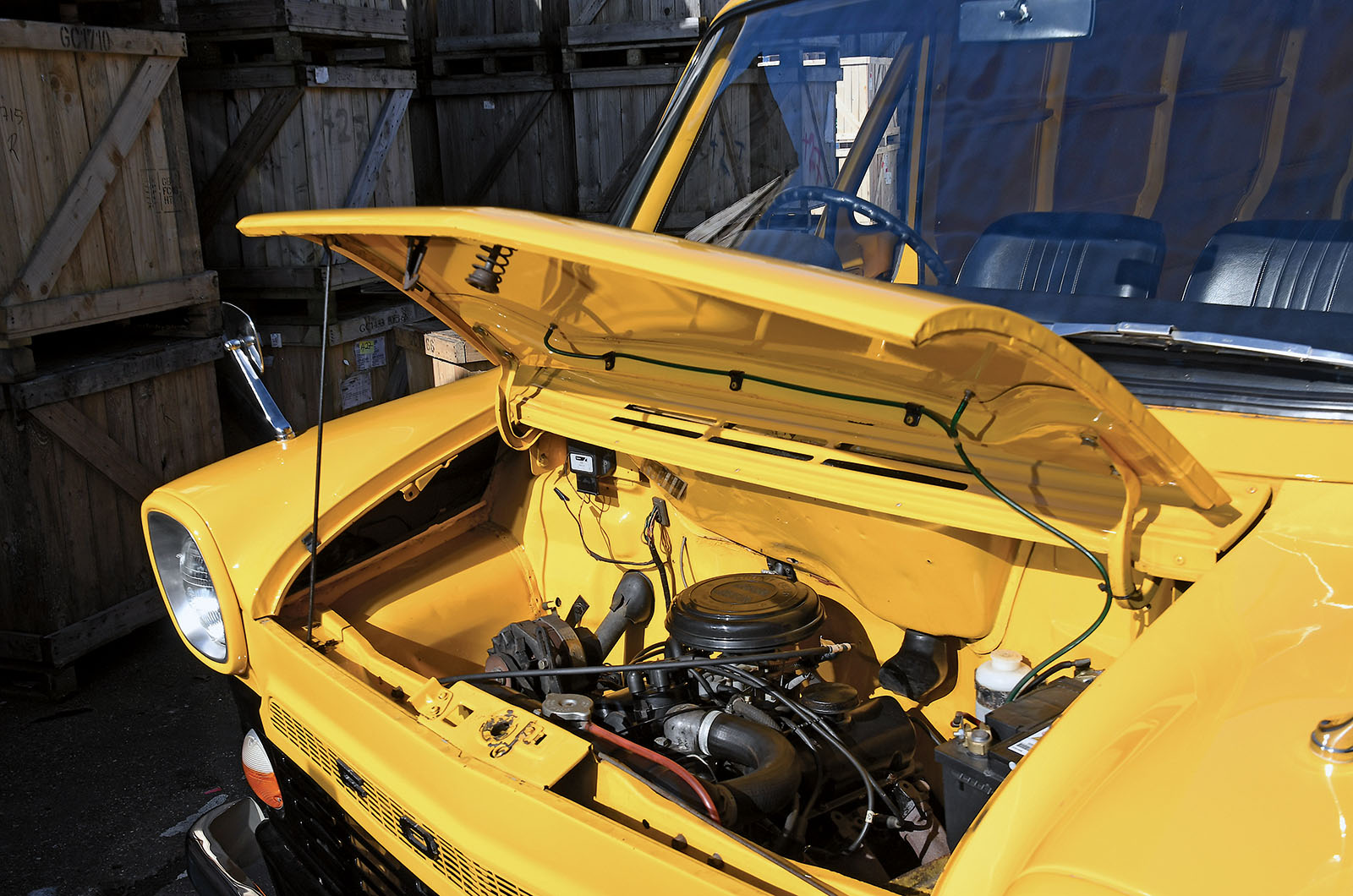
Ford’s short, wide, 1663cc V4 powers this Transit Mk1

Since its purpose was to carry goods and people from A to B, it couldn’t have been matched with a more apt label. 

Peter Lee, founder of the Transit Van Club, says: “Within months of the Transit being revealed, Ford had orders worth £33million.

Bedford actually cancelled a project it was working on because the Transit just changed everything.

“It made other vans on the market look old-fashioned, slow and unusable.”

Classic & Sports Car – Ford Transit at 60: celebrating Britain’s workhorse

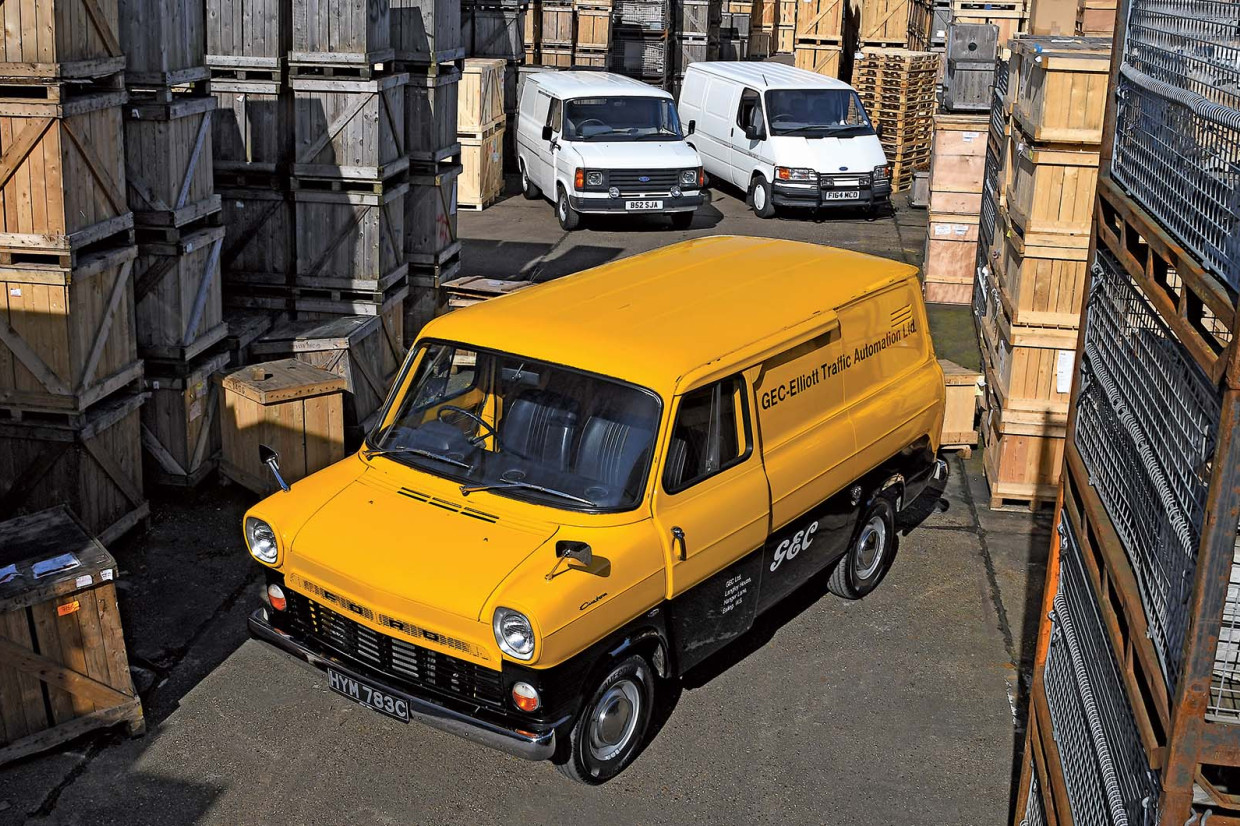
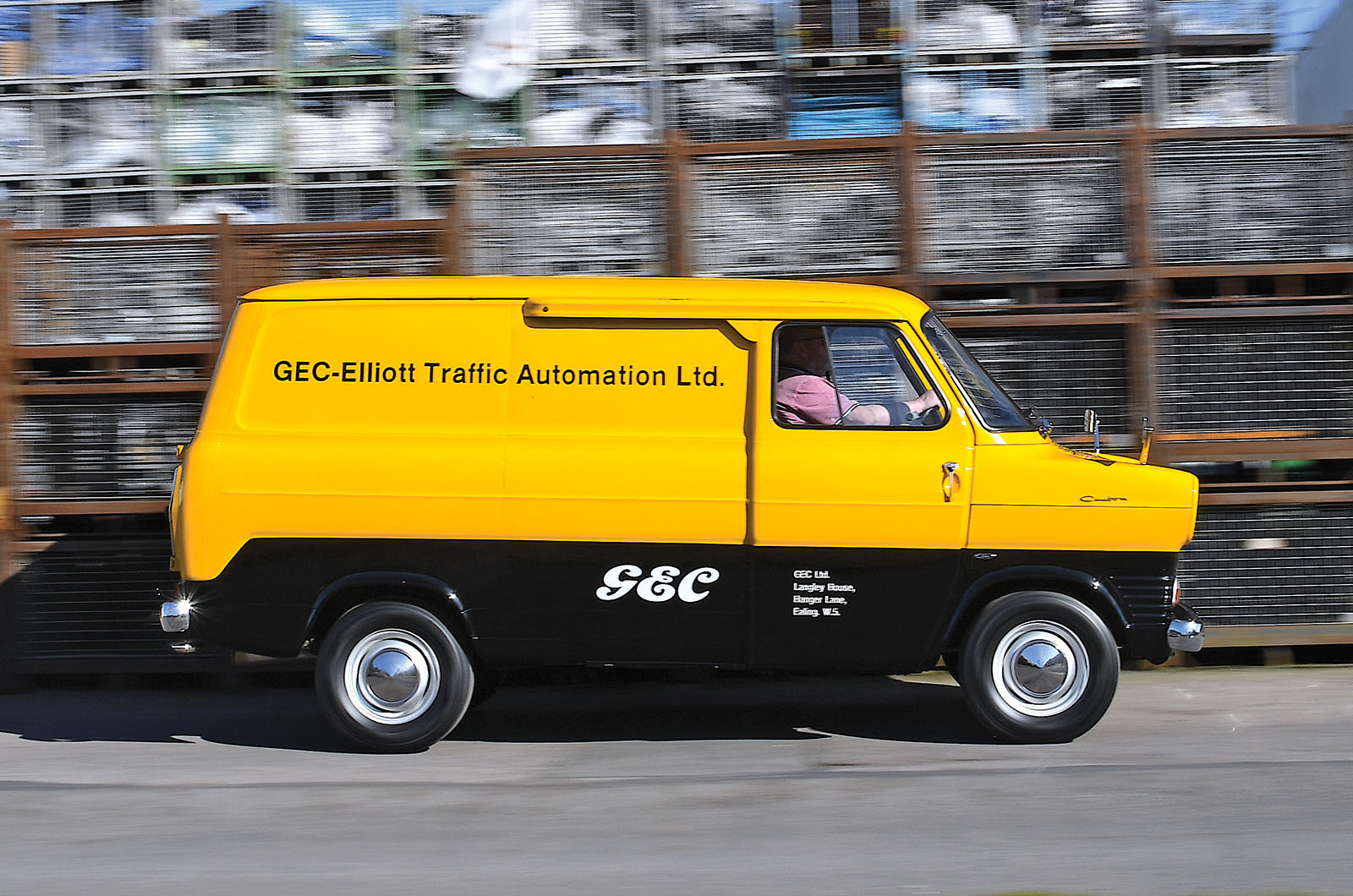
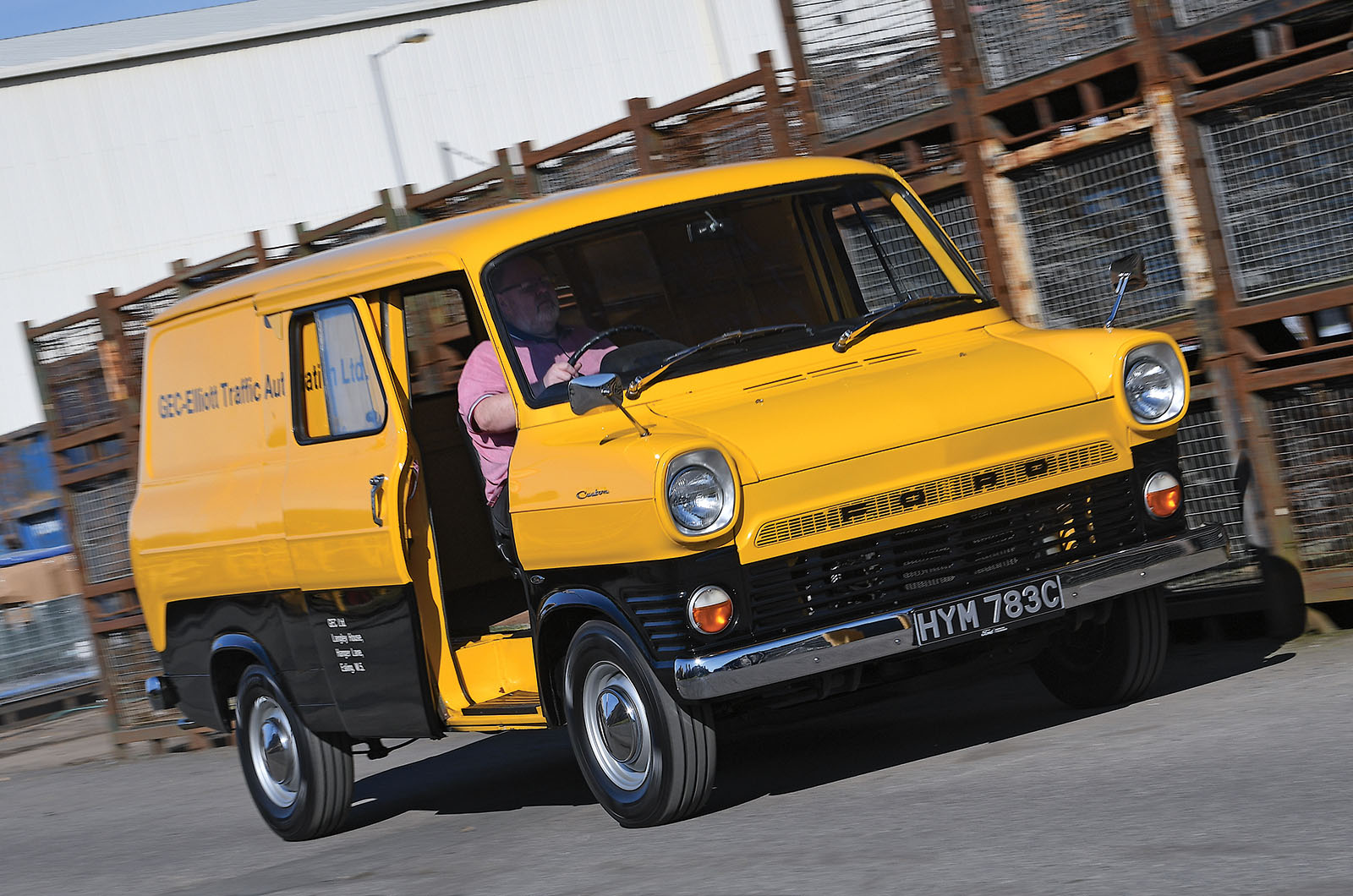
The Ford Transit Mk1 was ubiquitous in the General Electric Company livery

The attention garnered by this new model was impressive considering the entry-level, short-wheelbase van with a 610kg payload and petrol engine cost just £542.

At the other end of the scale, the most expensive option was a £997, 15-seater minibus model, which carried an extra £159 in Purchase Tax.

“The Mk1 revolutionised everything because prior to that, van engines were between the seats,” continues Peter.

“It used to get hot inside because you had the engine in there with you – people would burn their legs on the cowlings covering the engines.”

Classic & Sports Car – Ford Transit at 60: celebrating Britain’s workhorse

‘The Ford Transit has made an unprecedented impact on not only the commercial-vehicle industry, but also the fabric of Britain’

“Ford came up with the V4 engine, which was short enough to be housed in the front engine bay,” he explains.

“The revolutionary thing was that you could service it without taking the seats out. It was quite amazing.”

Its groundbreaking mechanicals were just the start: the Ford Transit was wider and more car-like to drive than the opposition, and seated three abreast up front with ease.

It was capable of some impressive feats, too: in standard terms, the cargo bed could fit two pallets, but in more imaginative metrics, 48 students from Barking College squashed into a minibus, while London Zoo used its Transit to transport two baby elephants.

Classic & Sports Car – Ford Transit at 60: celebrating Britain’s workhorse

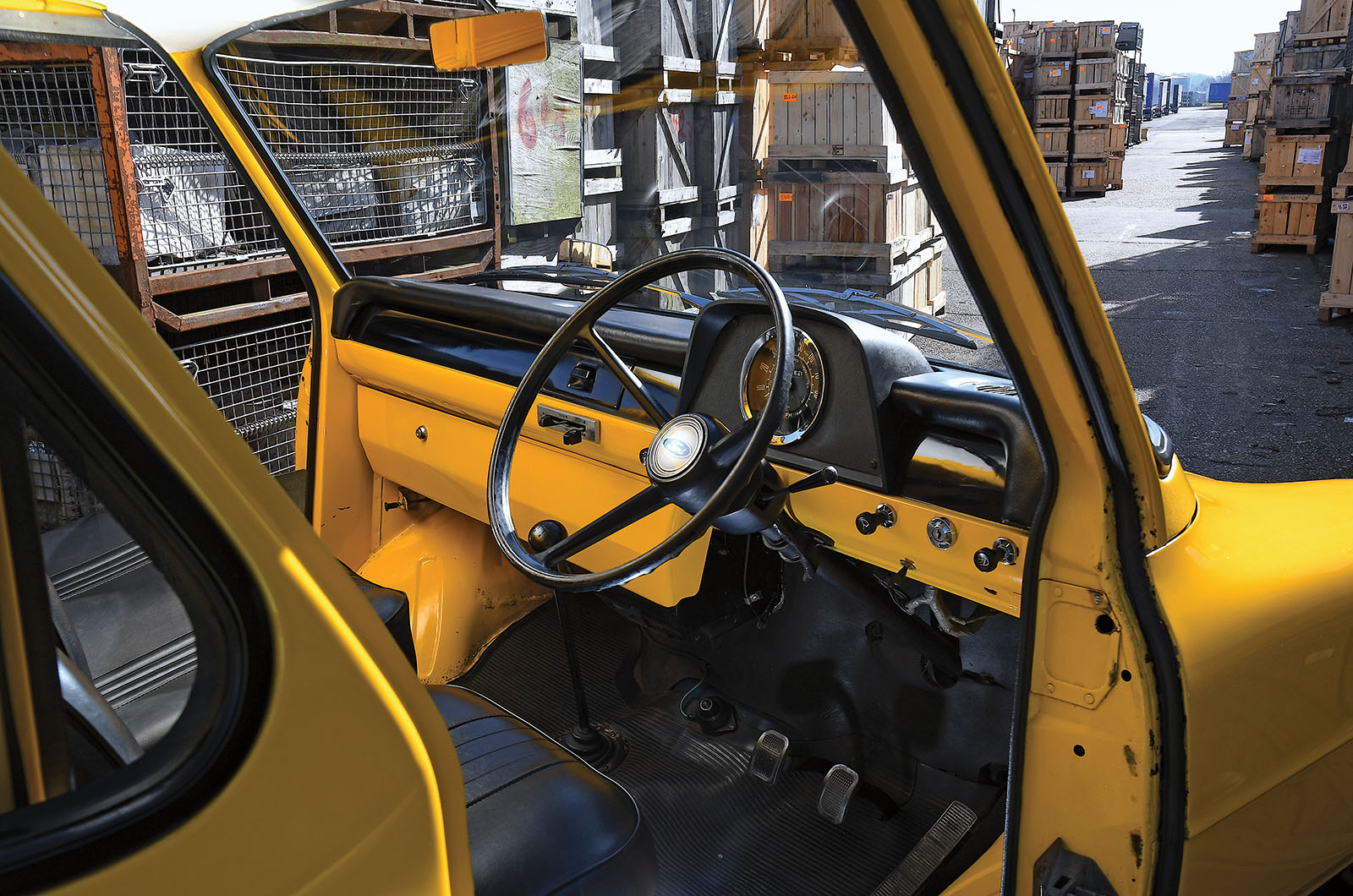
The Ford Transit Mk1’s huge steering wheel and lone speedo

Although two trunks poking out of the side windows certainly would have been memorable, a more common sight during the ’60s was the General Electric Company-branded Ford Transit.

“The majority of the vans in ’65 weren’t sold in white,” Peter explains, “black and yellow were the GEC colours.”

The Fords were sold to GEC in a grey primer before the engineering firm liveried them with its logo and company colours.

Due to their eye-catching look and prevalence on the road, GEC vans swiftly became associated with the early Transit and have since been immortalised as die-cast toys.

Classic & Sports Car – Ford Transit at 60: celebrating Britain’s workhorse

The Ford Transit Mk1’s sliding door set the template, but could be on the draughty side

Driving this 1965 model today gives a clue to just how poor the rest of the vans on the market must have been at the time.

The steering is vague at best and requires near-constant adjustment to give you any hope of remaining on your intended path.

There is, however, an inherent robustness and sense of dependability that every other interaction with the vehicle inspires.

The clutch bites a little high and braking needs a fair amount of forward planning, but it all feels hugely sturdy and built to last.

The beautifully mechanical sensation to the gearlever gives a charming dose of character, too.

Classic & Sports Car – Ford Transit at 60: celebrating Britain’s workhorse

The facelifted Ford Transit Mk2 sported a considerably more modern front end

Because you can feel every creak of the bodywork and a decent amount of breeze brushing your face, whether or not the sliding door is open, it feels much quicker than it is.

While it’s painfully slow by today’s standards, in 1972 it struck the balance between speed and practicality almost too well – so much so that the Metropolitan Police named it ‘Britain’s most wanted van’.

A spokesman for Scotland Yard said at the time: “Transits are used in 95% of bank raids. With the performance of a car and space for 1.75 tonnes of loot, the Transit is proving to be the perfect getaway vehicle.”

Ford never intended it to be used in that way, of course, but you can’t buy publicity like that.

Classic & Sports Car – Ford Transit at 60: celebrating Britain’s workhorse

The Ford Transit Mk2 offered more creature comforts

Although the majority of the Ford Transit’s responsibilities were intended to be labour-related, Ford leant into its size and adaptability to launch minibus, campervan, kombi and chassis-cab versions, in short- and long-wheelbase forms.

Thousands of configurations from pick-up to Luton box van helped the Transit become the de facto tool for both work and play.

Instead of sticking to one lane and becoming known for campers, the strength of both the leisure and commercial markets cemented the model’s staying power.

Classic & Sports Car – Ford Transit at 60: celebrating Britain’s workhorse

The Ford Transit Mk2 shares its wheelbase with its predecessor

The Ford Transit’s ability to transcend age and social class has been monumental.

Just like the Hoover, Tarmac and Tupperware brand names, each of which has become common parlance for the products in which they specialise, today ‘Transit’ has become the universal term for a four-wheeled workhorse that is compact on the outside and huge on the inside.

Away from the construction site, the Transit has been a loyal companion to countless celebrities, with Brian Poole and the Tremeloes notably among the first to have a ’65 Transit to accompany them on tour.

Boxer Sir Henry Cooper’s family greengrocer business relied on a Transit, and in 1969 popular wrestler Mick McManus even featured in a Transit advert.

Classic & Sports Car – Ford Transit at 60: celebrating Britain’s workhorse

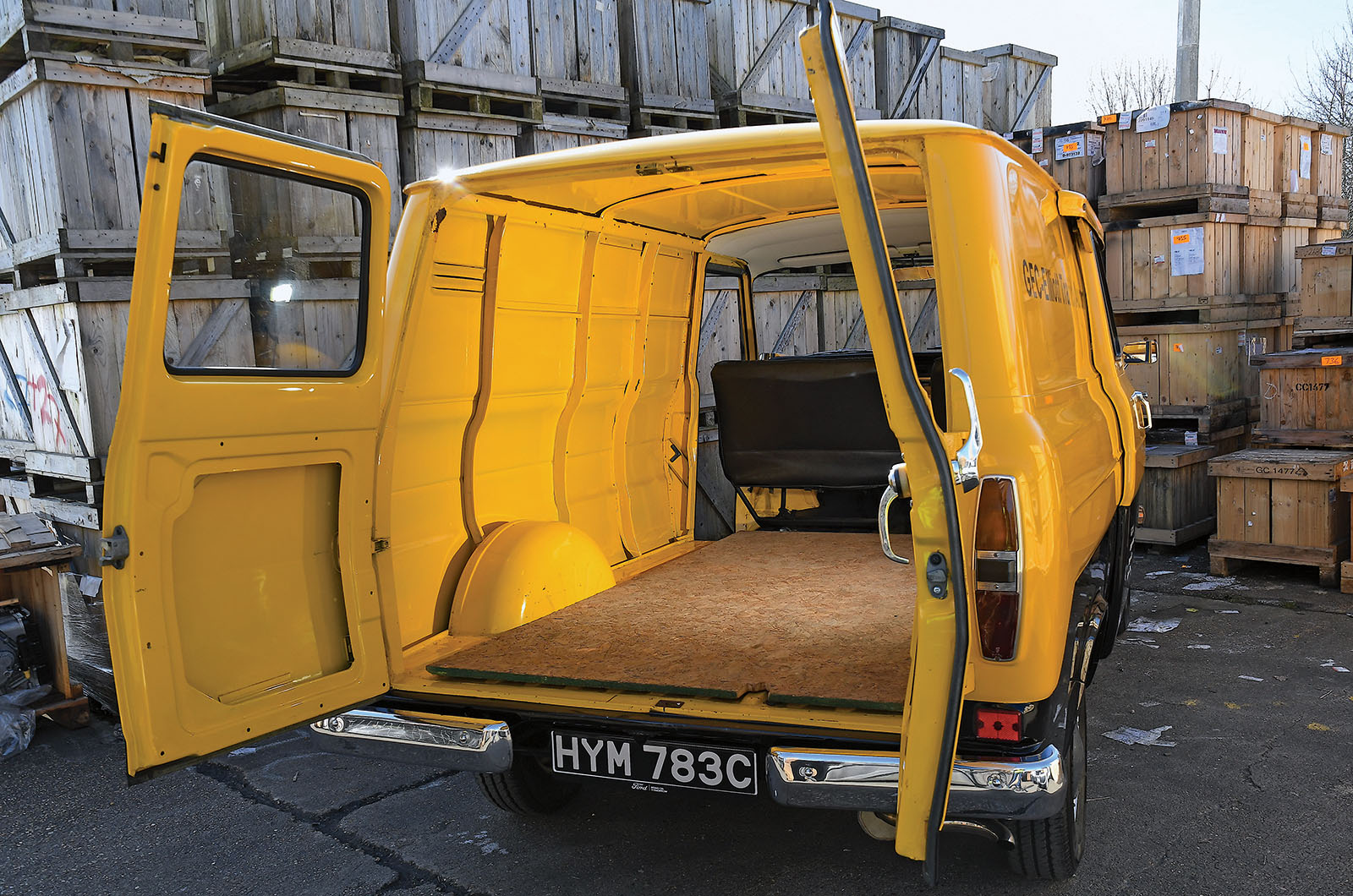
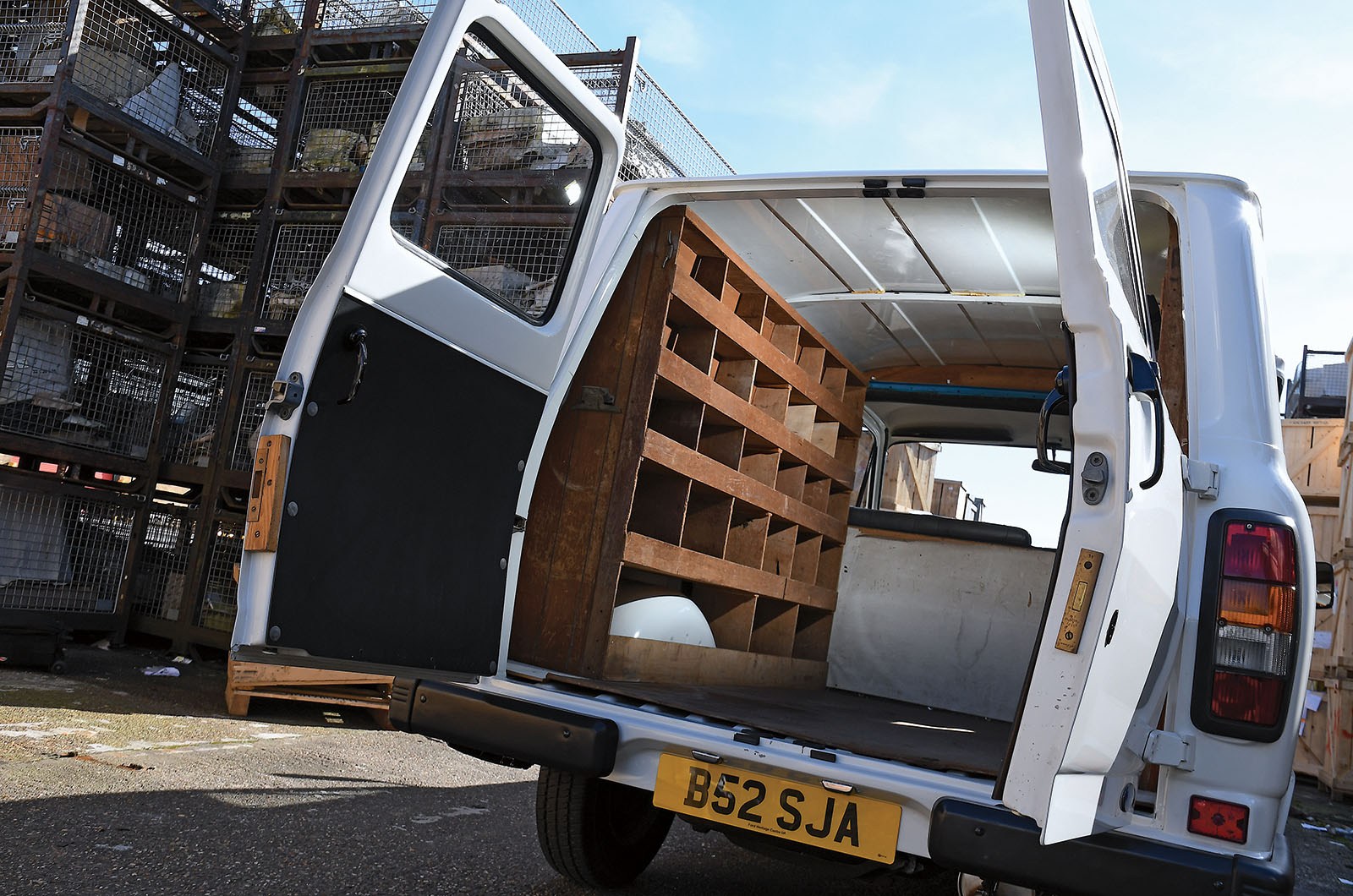
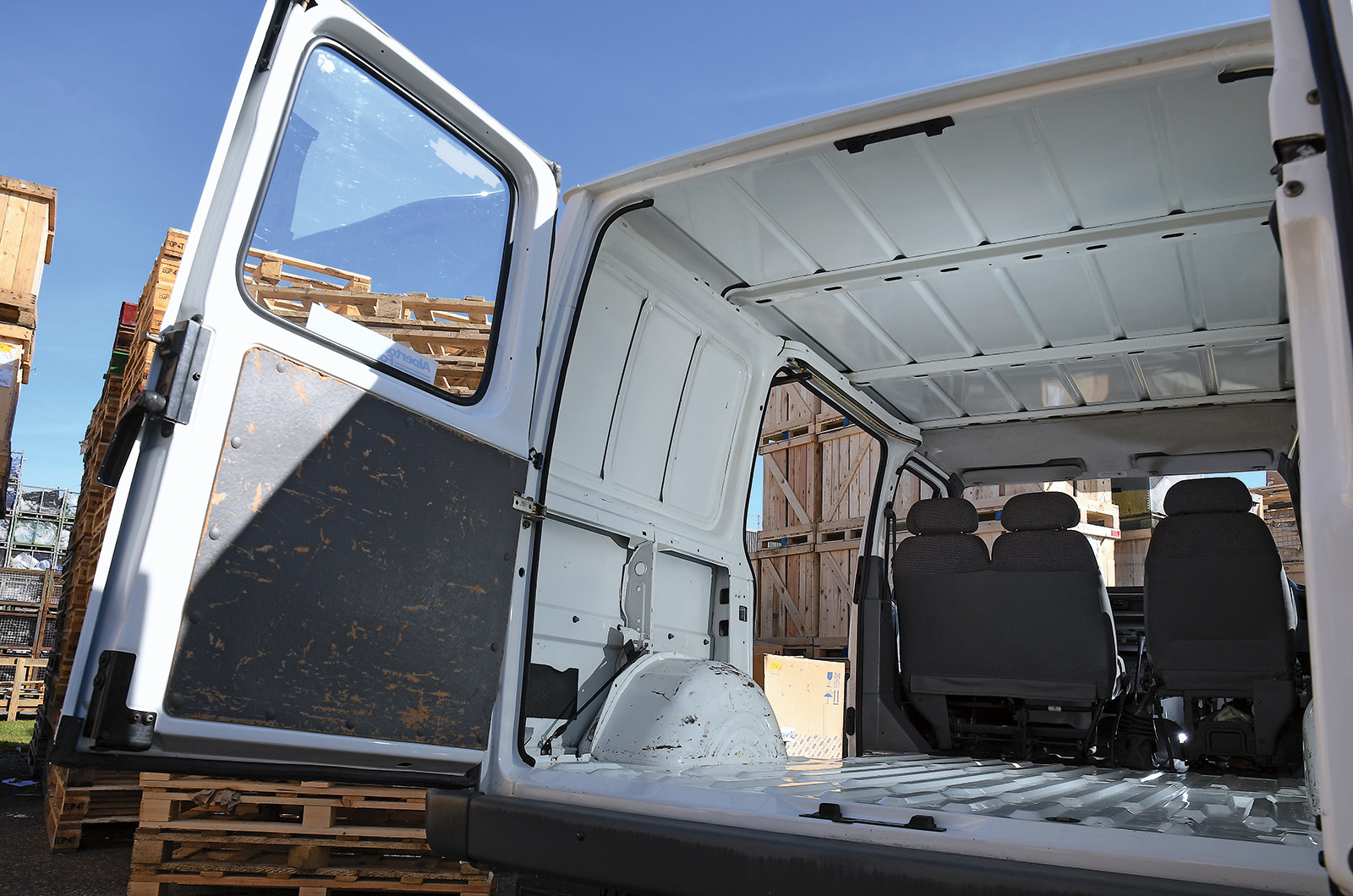
The Ford Transit Mk2’s load bay was the same shape and size as the Mk1’s

In 1976 the model reached its one-millionth milestone, and two years later Ford introduced the Mk2.

“By 1978 garages had spent 13 years working on the Mk1, so they were aware of all the components and could service them really quickly because they were so simple to work on,” explains Peter.

“Behind the seats, the Mk2 was built exactly the same as the Mk1, so shelves and interior racking from the original model would fit in the back of a Mk2.” 

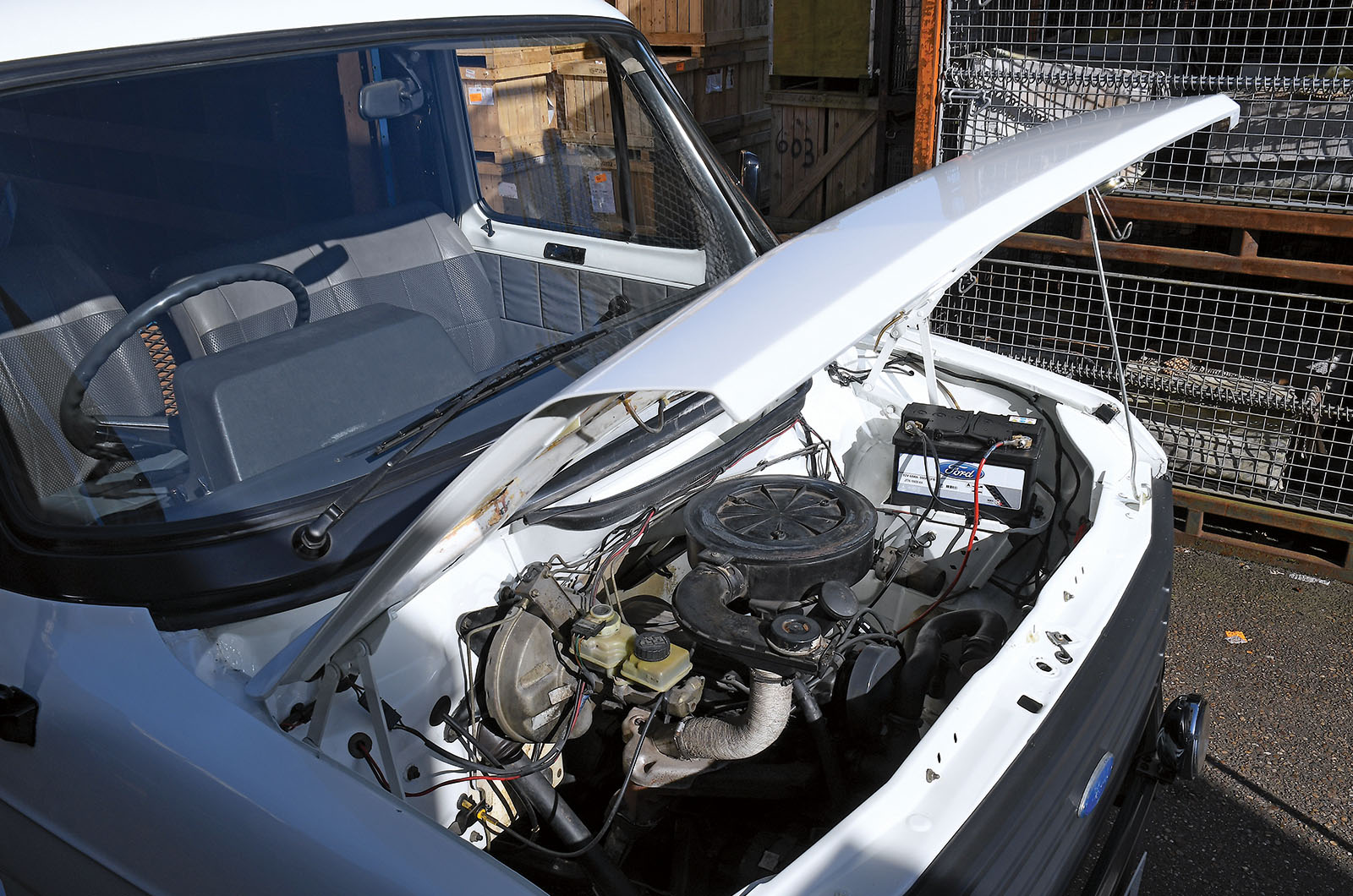
Mechanical changes included the arrival of the more modern, overhead-cam Pinto engines in 1.6- or 2-litre forms, as used in Ford’s passenger cars, adopted in an effort to improve reliability over the previous V4.

Classic & Sports Car – Ford Transit at 60: celebrating Britain’s workhorse

The Ford Transit Mk2’s 1.6-litre Pinto ‘four’

The cabin was also updated, now featuring more than just a single dial on the dashboard.

Peter notes that the idea was to make it feel more car-like – a strategy Ford still employs today.

It may be a placebo effect, but the Mk2 Transit feels a little more communicative than the Mk1.

At slow speeds, it’s an inevitable workout to pull the wheel around and manoeuvre the vehicle into a parking space.

With a huge steering wheel that’s more horizontal than vertical, it almost feels as if you’re at the wheel of a truck.

Classic & Sports Car – Ford Transit at 60: celebrating Britain’s workhorse

‘Ford leaned into its adaptability: thousands of configurations made the Transit become the de facto tool for both work and play’

While the Mk1’s pedals spring up from the floor, the Mk2’s are suspended from beneath the dashboard.

This means they need to be pressed directly out in front of you rather than down into the floor, making it slightly awkward to move the gearlever at the same time, unless you have unusually long arms.

Thankfully, across the ensuing generations the Transit’s ergonomics have improved to suit more body types than just burly men of 6ft-plus.

Classic & Sports Car – Ford Transit at 60: celebrating Britain’s workhorse

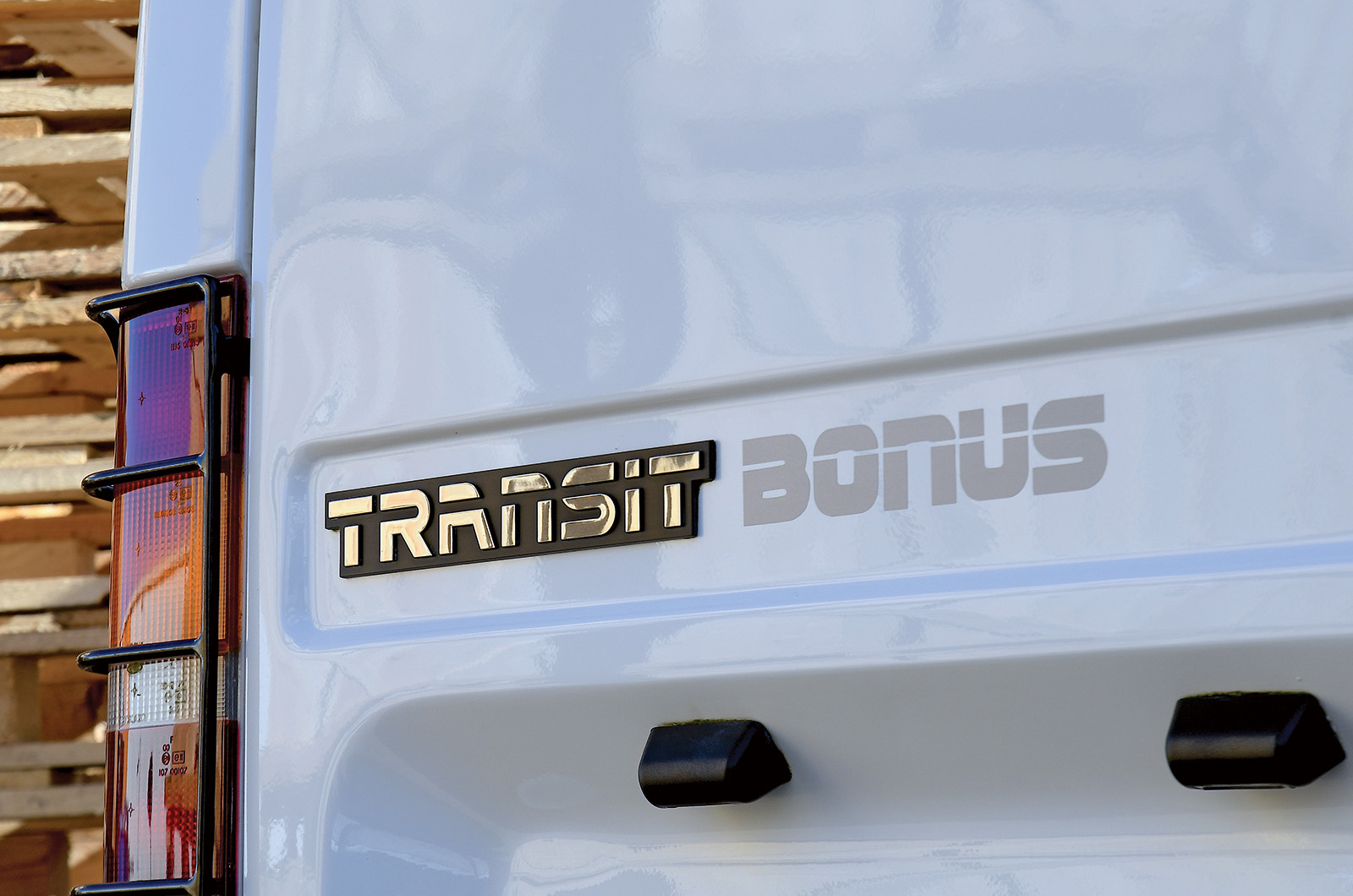
The Ford Transit Bonus was a limited-edition model that came with various options as standard

The philosophy for the Mk2 appeared to be ‘if it ain’t broke, don’t fix it’.

Ford had found its groove with its commercial-vehicle offering: the Mk2 was an enhancement rather than a complete – and premature – overhaul.

Two decades after the model’s launch, though, it was time for a much-needed modernisation. 

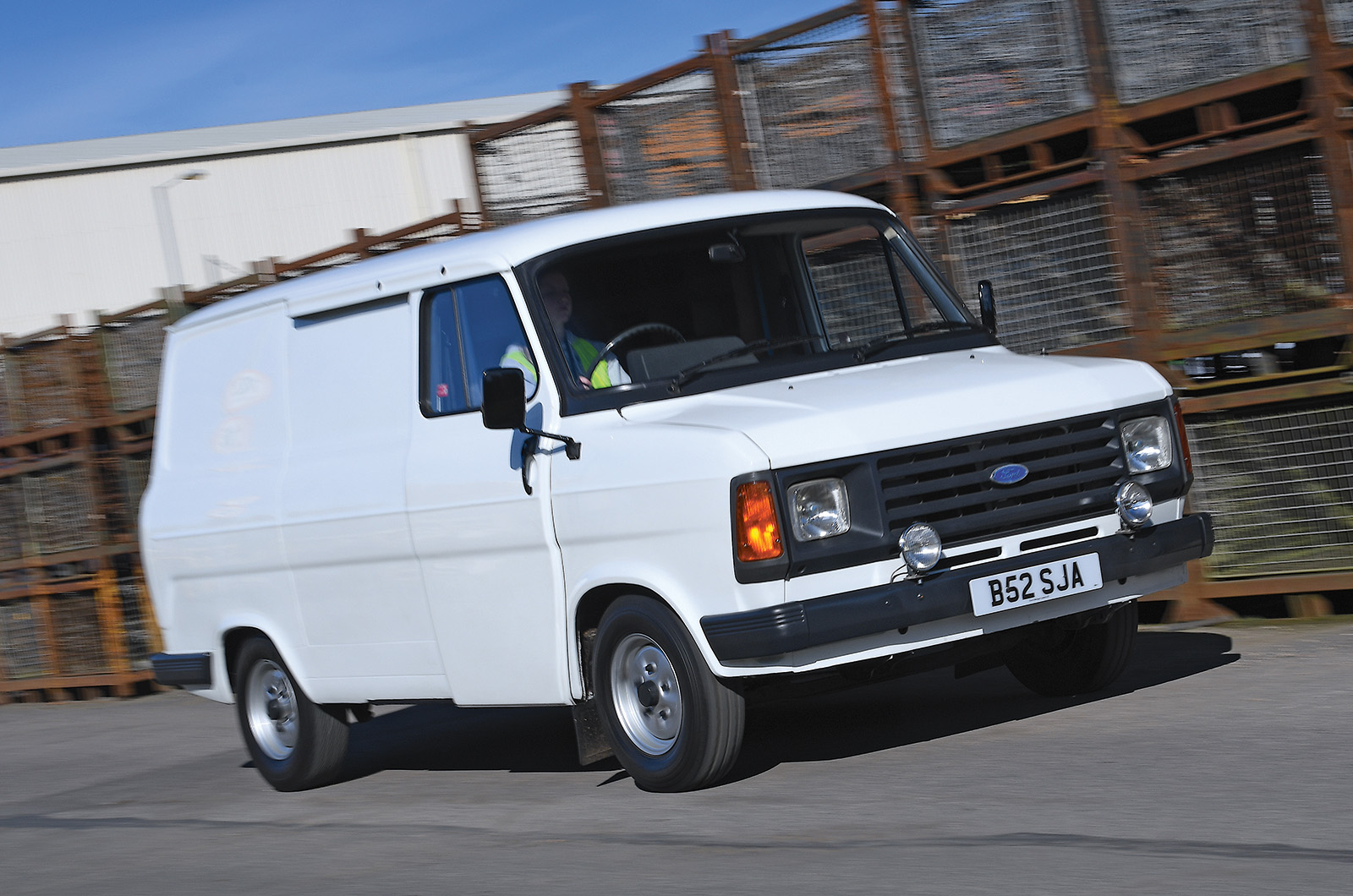
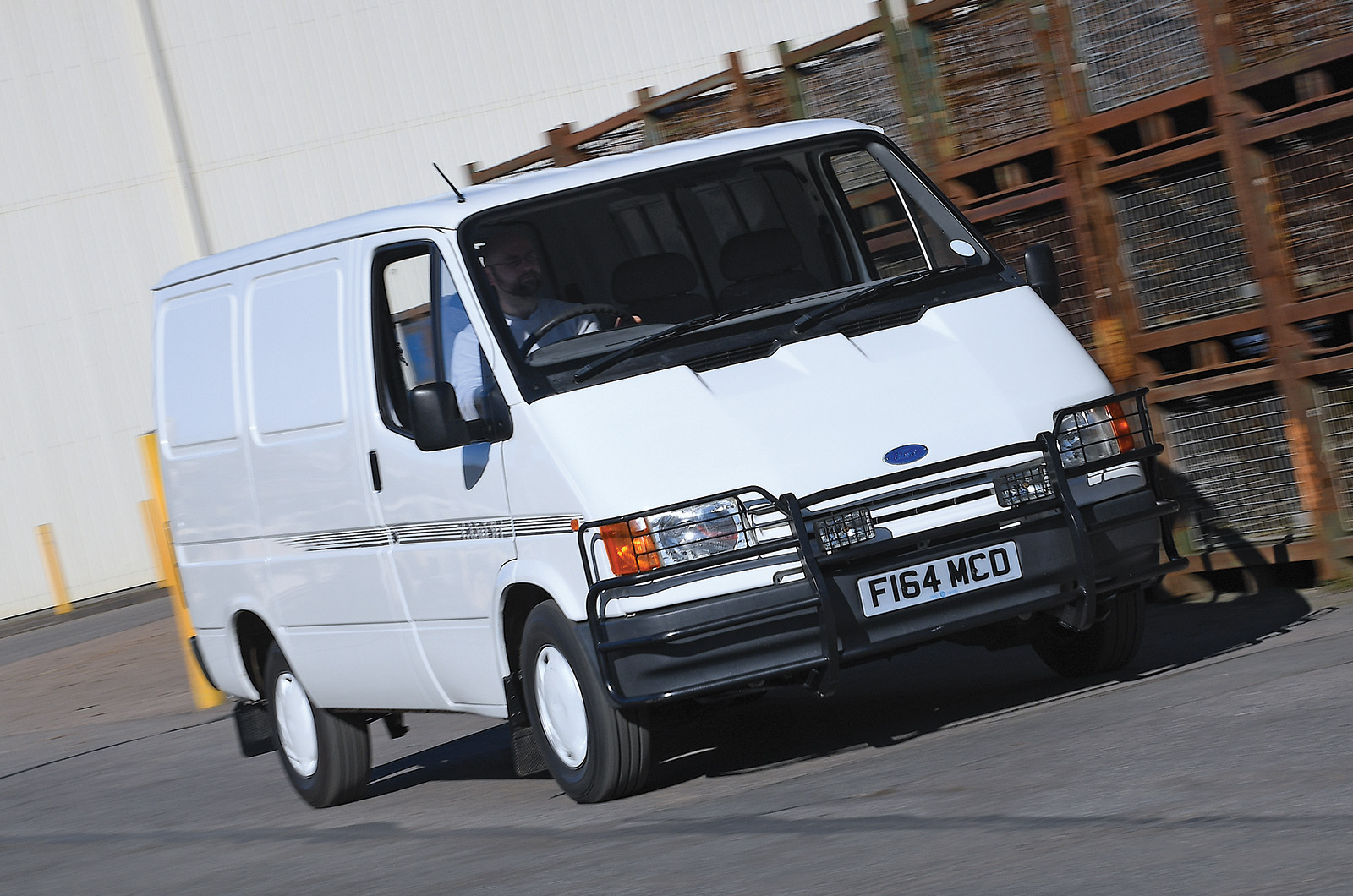
When the third-generation Ford Transit broke cover in 1986, sitting on the all-new VE6 platform, it was a major shift away from the van’s traditional styling.

Classic & Sports Car – Ford Transit at 60: celebrating Britain’s workhorse

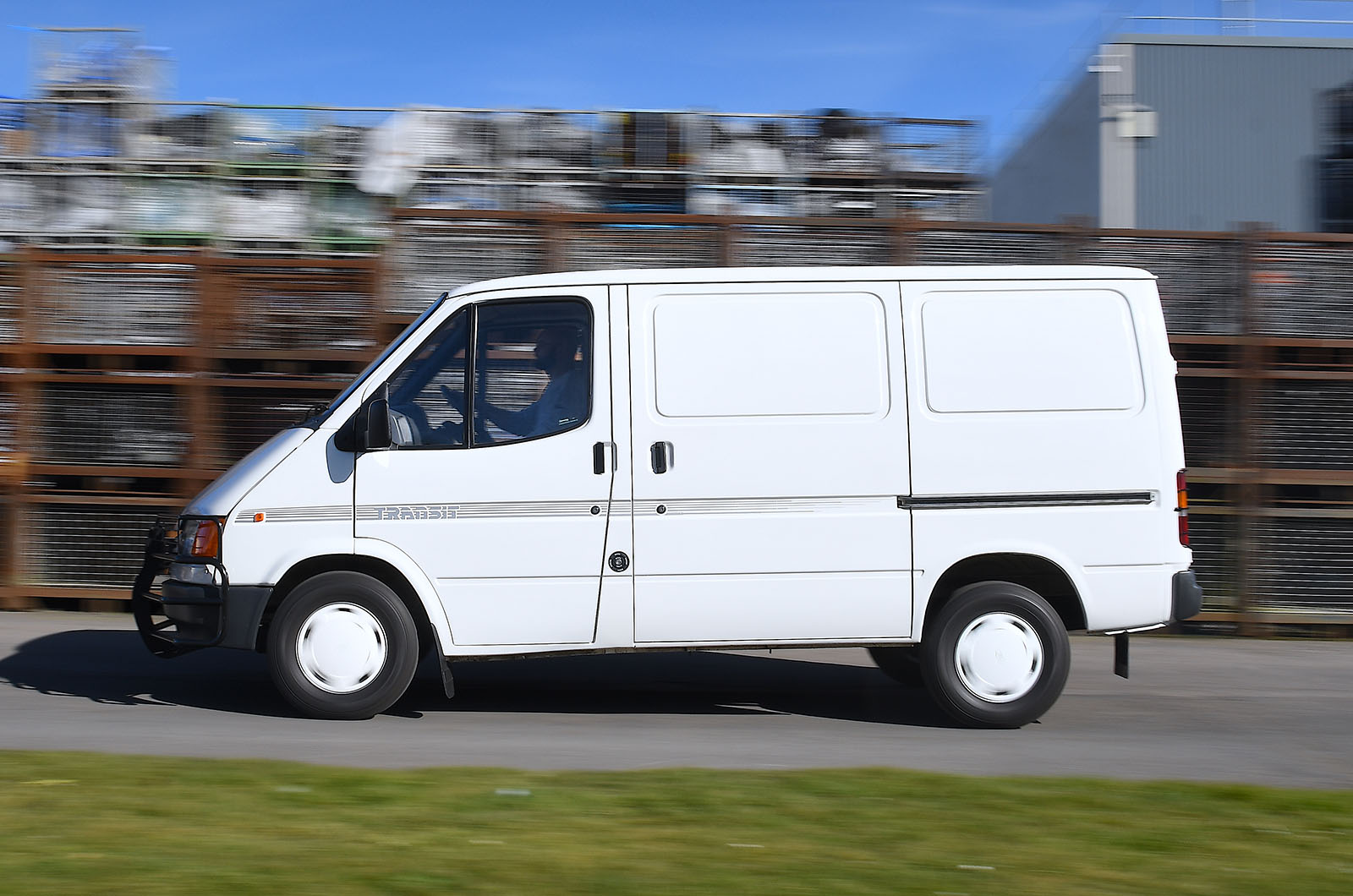
The side door popularised by the Ford Transit Mk3 was a boon for city deliveries

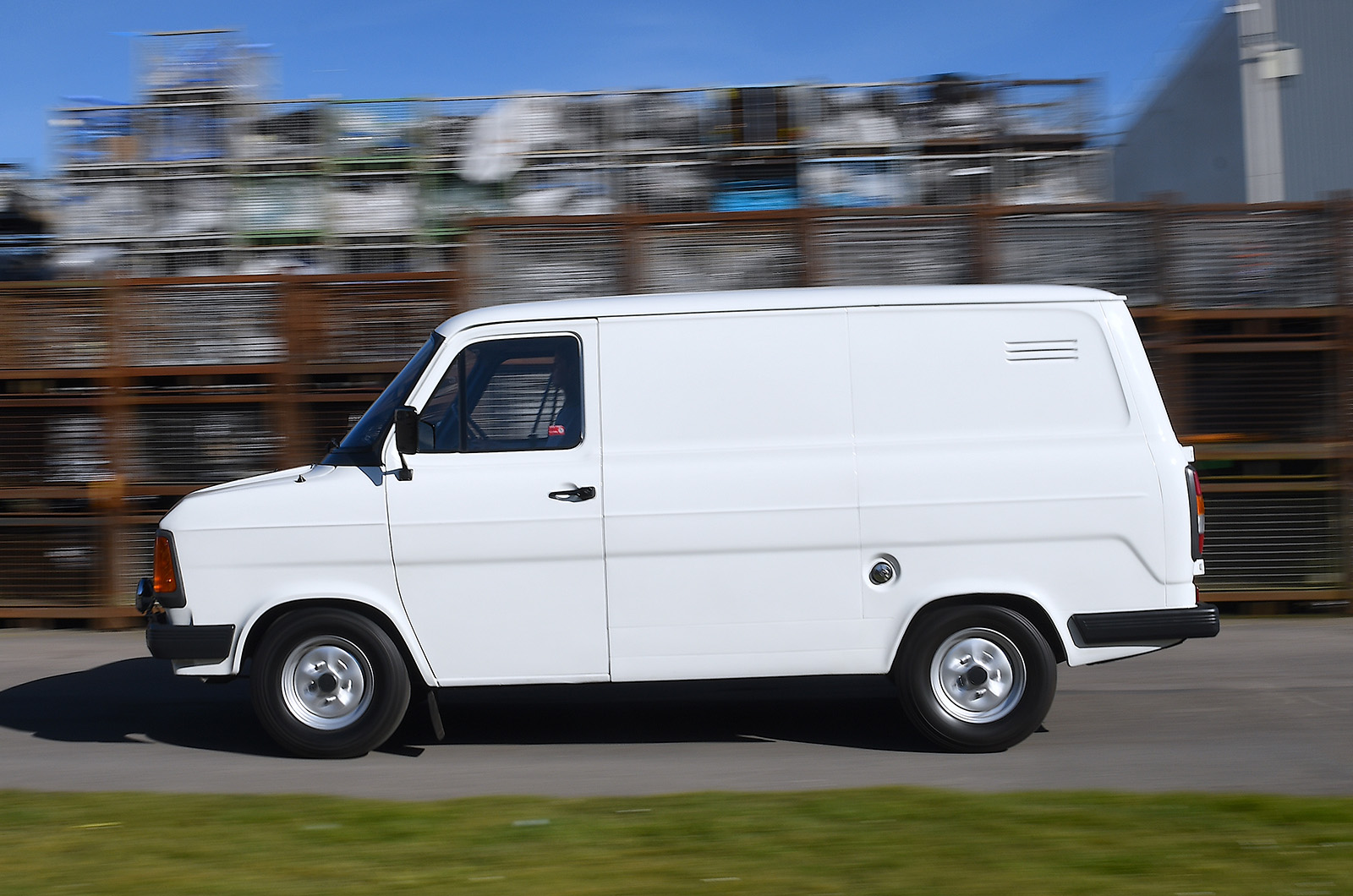
The boxy nose was ditched in favour of a sloping, integrated front end for improved aerodynamics.

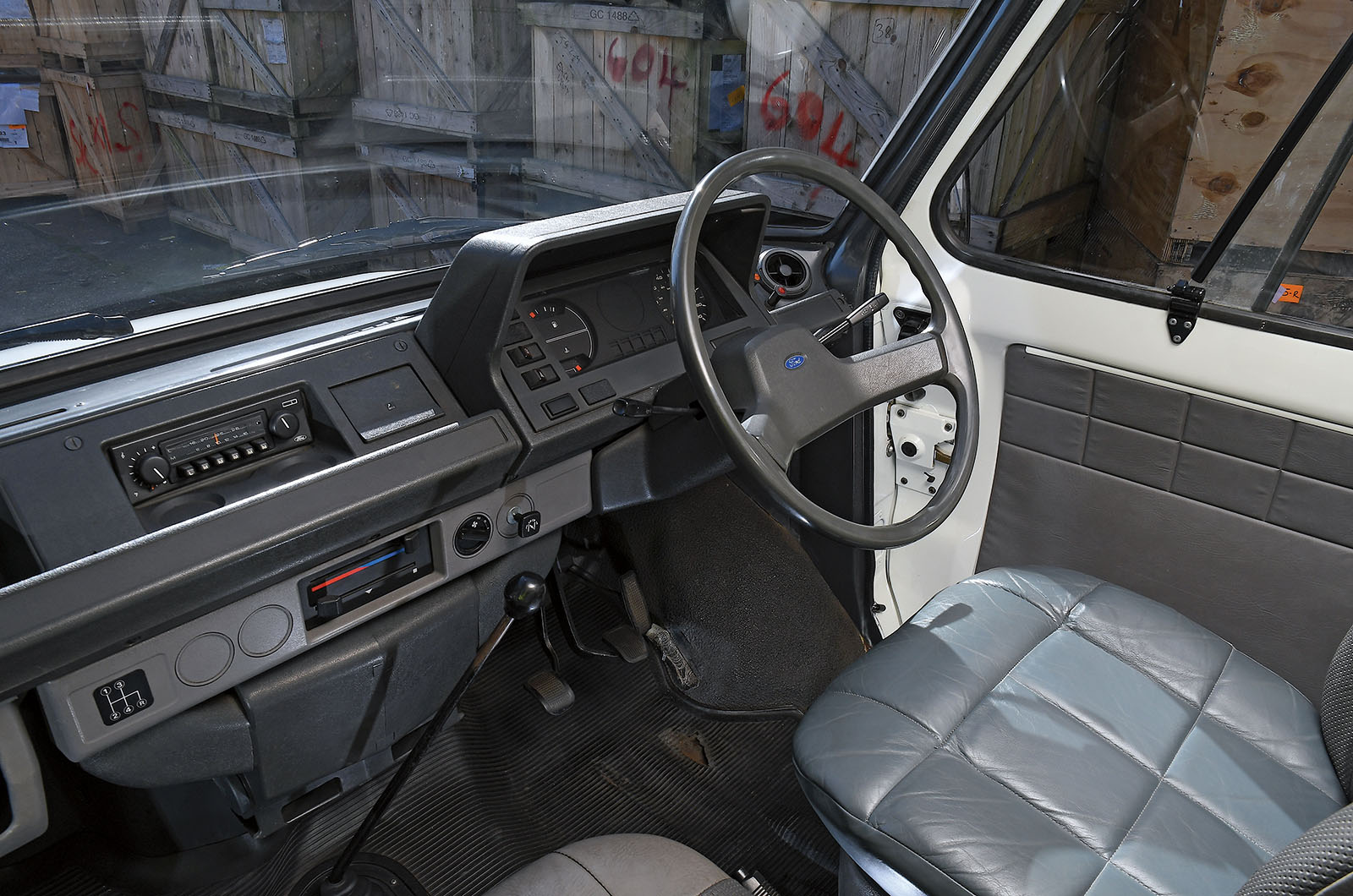
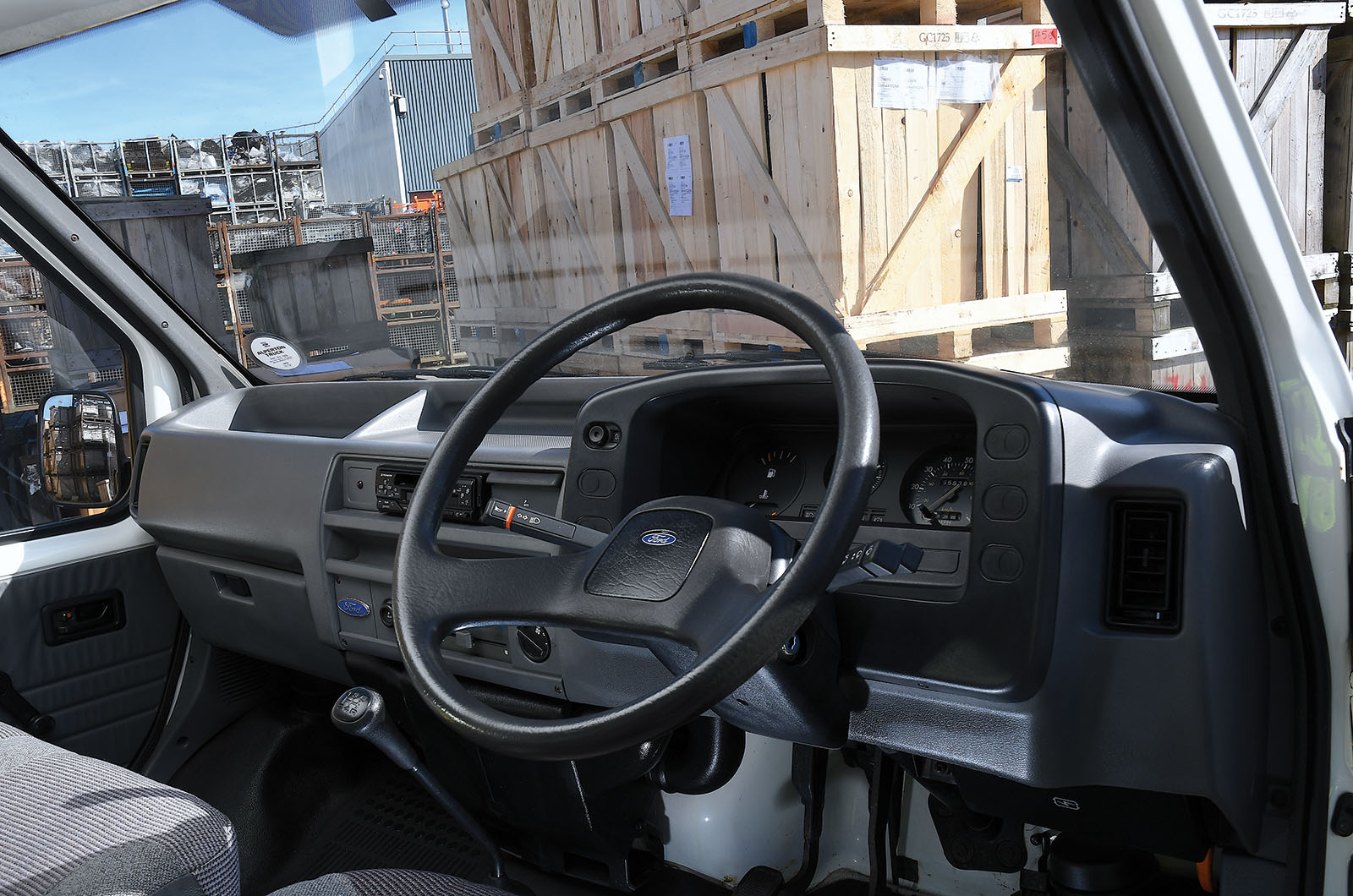
The interior was brought more closely in line with those of Ford’s cars of the period, and the noisy cabin was now better insulated and substantially quieter than both previous generations.

By this point the British public was well acquainted with ‘white van man’ in his Transit.

While the third generation was noticeably narrower and easier to handle than its previous iterations, it was still rear-drive and retained an impressive amount of load space.

Classic & Sports Car – Ford Transit at 60: celebrating Britain’s workhorse

The one-box Ford Transit Mk3 cut a dash with its windcheating bonnet line

Even though a sliding door was optional from the start of the Ford Transit’s run, it was now commonplace to see the van sporting an easy-access side door.

“People really appreciated that, especially in London, that you could park and unload the van from the pavement without stepping into the road,” says Peter.

“If you only have the back doors, you need a couple of metres to unload.”

Classic & Sports Car – Ford Transit at 60: celebrating Britain’s workhorse

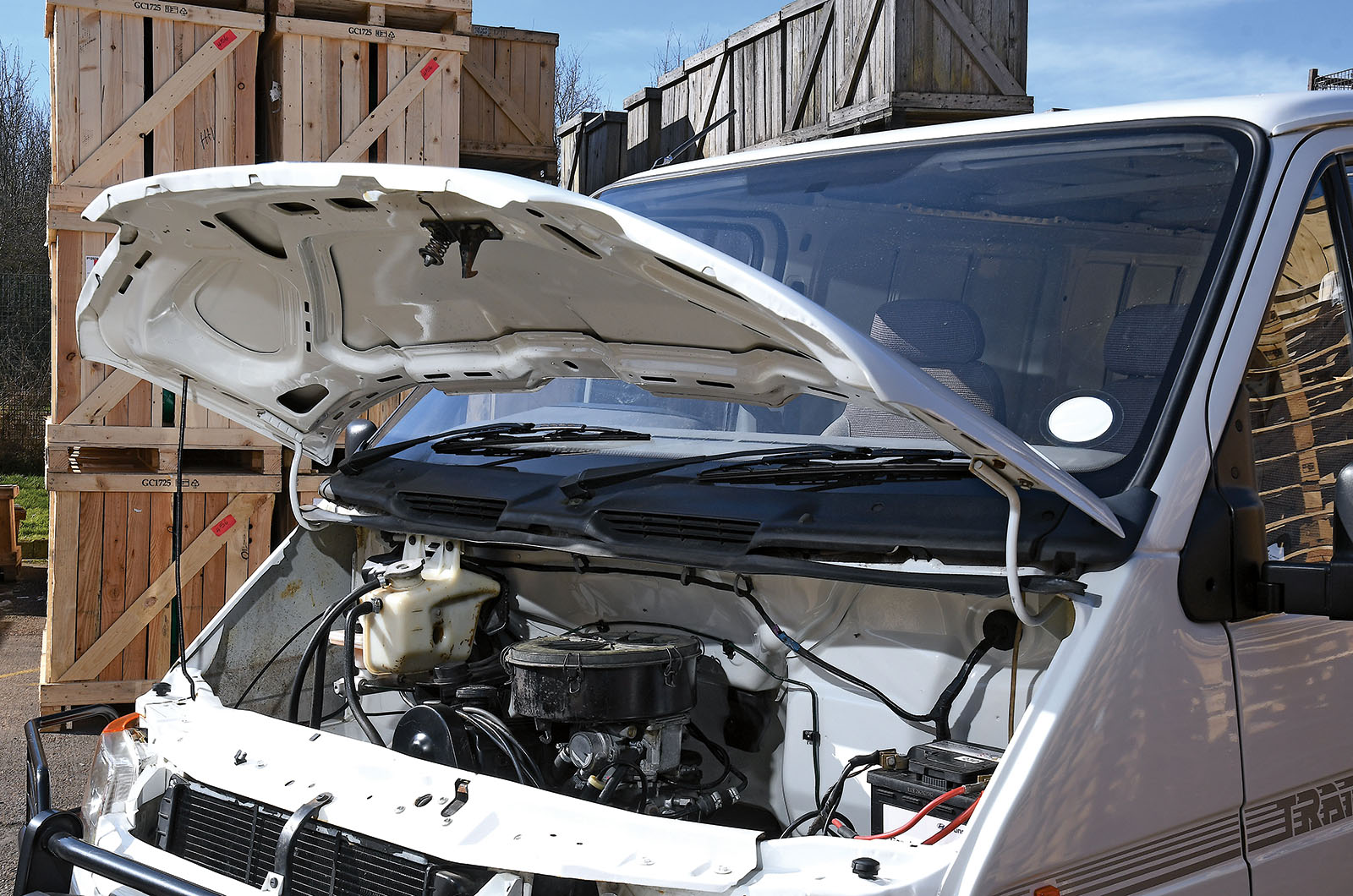
This Ford Transit Mk3 employs a 77bhp, 2-litre engine

Few classics, save racers, are ragged around quite as much as vans.

Classic Transit owners take great pride in their machines, but once a working vehicle has retired from a long, hard life of servitude, the mechanicals underneath have often seen better days.

A worn clutch and non-existent brake feel become par for the course, but such foibles give an endearing insight into the vehicle’s history.

Classic & Sports Car – Ford Transit at 60: celebrating Britain’s workhorse

The Ford Transit Mk3’s cabin is the most car-like

‘Our’ 1989 Mk3 Ford Transit is a limited-edition Bonus model, the name denoting a top-value specification including interior features that would normally only be offered as optional extras.

The owner of this example has fitted a front bullbar and had the van repainted in 2019, but was mindful to preserve its Bonus decals.

The Mk3 received a facelift in 1994, at the same time adding electric windows, airbags, central locking and air conditioning.

Front-end styling was slightly softened, with rounded headlights, and this would influence the design of the Transit as it entered the 21st century.

Classic & Sports Car – Ford Transit at 60: celebrating Britain’s workhorse

By the time of the Ford Transit Mk3, the ‘white van man’ was part of British culture

“It was the first van to feature independent suspension,” explains Peter, “and the first with an automatic transmission.

“To choose a model or one particular thing that has made it stand out more than the rest is impossible, because it always seemed to be at the forefront.

“The first vans that came out were wheelbarrows, but the latest ones are spaceships. The Transit has moved with the times.”

Classic & Sports Car – Ford Transit at 60: celebrating Britain’s workhorse

More than just a workhorse, the Ford Transit has become part of the street furniture of Britain

With further iterations landing in 2000 and 2014, keeping ahead of the competition has been a strong thread throughout the Ford Transit’s history.

The latest models emphasise how the van has transformed into a mobile office that doubles as a weekend adventurer.

Forget your overpriced luxury SUVs: no vehicle can handle tools, luggage, bikes, camping gear and the whole family quite like the Ford Transit.

Images: John Bradshaw

Thanks to: Ford Motor Company UKTransit Van Club


Ford’s fastest Transits: the evolution of the Supervan

Classic & Sports Car – Ford Transit at 60: celebrating Britain’s workhorse

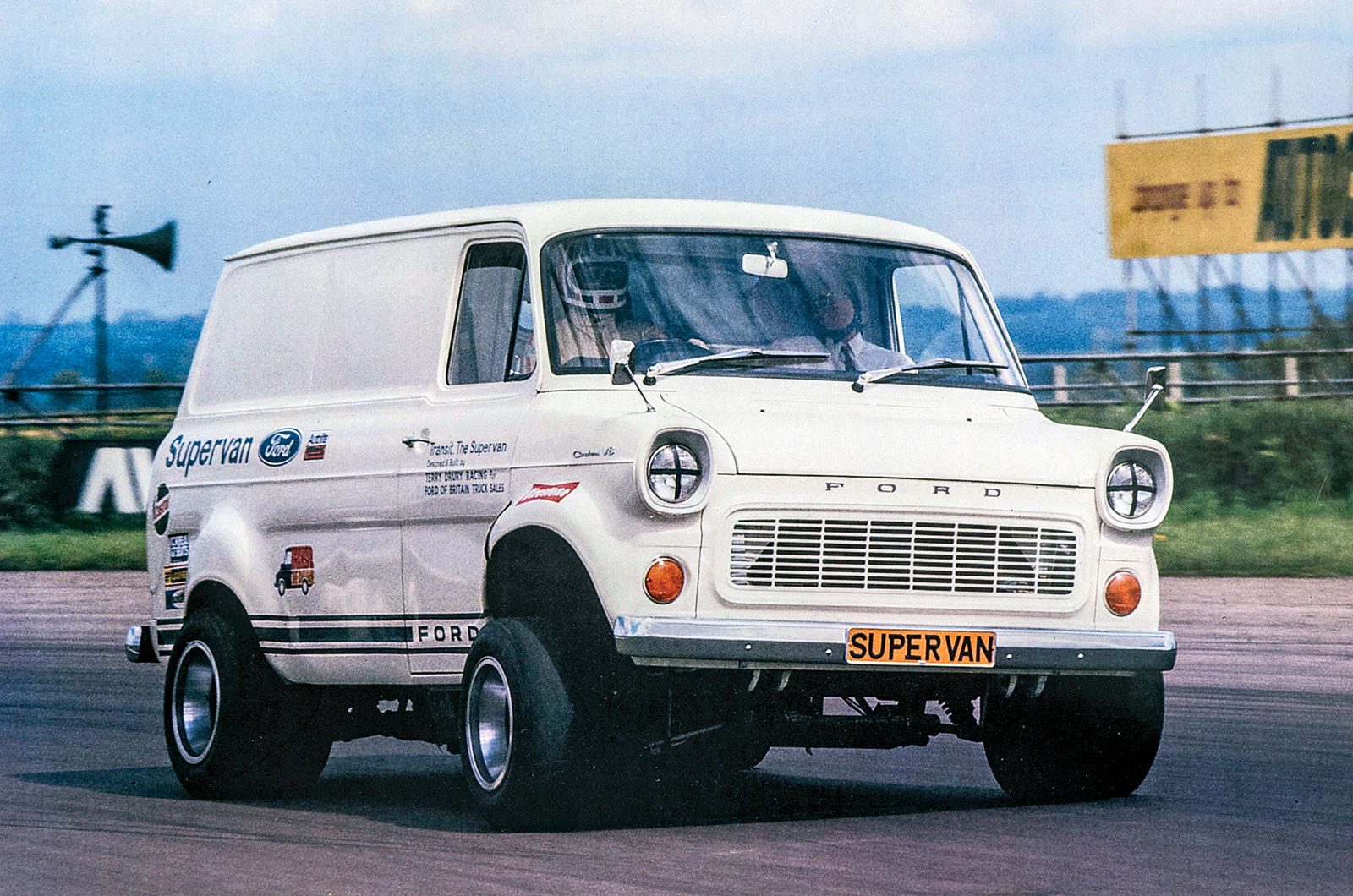
The Ford GT40-powered Supervan 1

Supervan 1

The Transit became best-known for its on-road pursuits, but in 1971 Ford engineer Terry Drury had the inspired idea to create the ultimate marketing tool from it.

When the Supervan first graced the track at Brands Hatch, aside from its chunky race tyres, it looked like the familiar panel van.

Underneath, however, was a Ford GT40 powertrain, with the racing car’s 4.7-litre V8 engine mounted in the back.

Due to Drury’s inclusion of GT40 parts, it was commonly thought the Supervan was built on a GT40 chassis, but two-time Supervan owner Andy Browne confirmed it was actually made on the widened frame from a Cooper Monaco racer.

Supervan 1 was good for 149mph, spent most of its time on track on three wheels and even lapped the Nürburgring Nordschleife at the 1971 German Grand Prix weekend.

Classic & Sports Car – Ford Transit at 60: celebrating Britain’s workhorse

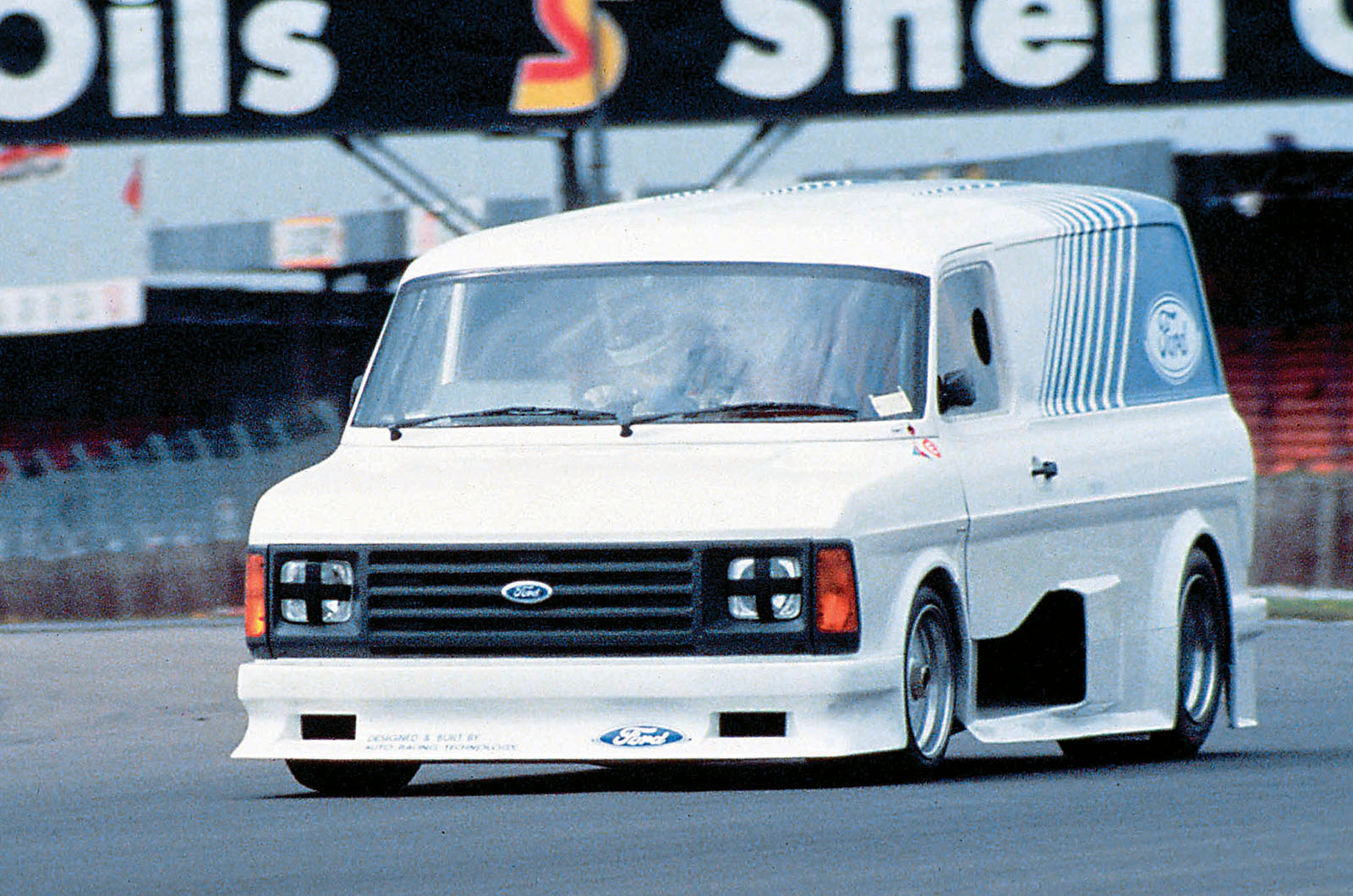
An abandoned Le Mans car provided the basis for Supervan 2

Supervan 2

In 1985 Ford had another crack at the Supervan, this time mounting a Mk2 body on the C100 ex-Le Mans car.

Supervan 2 was powered by a 590bhp DFY Cosworth V8 engine that propelled the vehicle to a recorded 174mph at Silverstone.

Classic & Sports Car – Ford Transit at 60: celebrating Britain’s workhorse

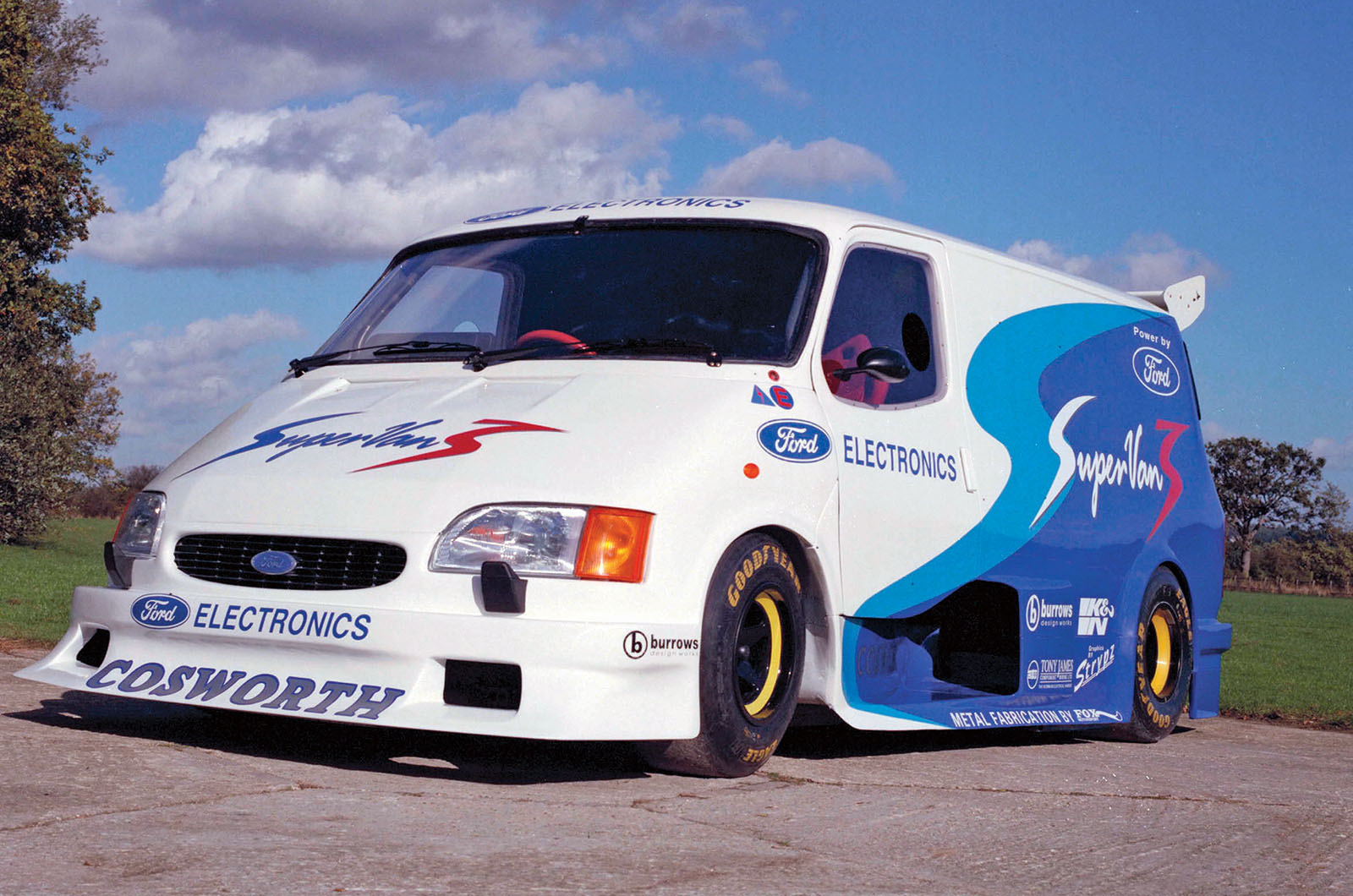
Ford’s Supervan projects got more ambitious every time

Supervan 3

A decade later, Supervan 3 emerged, but by 1995 Ford had got so carried away with its racing ambitions that it needed a Formula One team just to get it going.

Originally the van was fitted with a 650bhp, 3.5-litre engine, but that was later replaced with a 2.9-litre Cosworth powerplant.

Classic & Sports Car – Ford Transit at 60: celebrating Britain’s workhorse

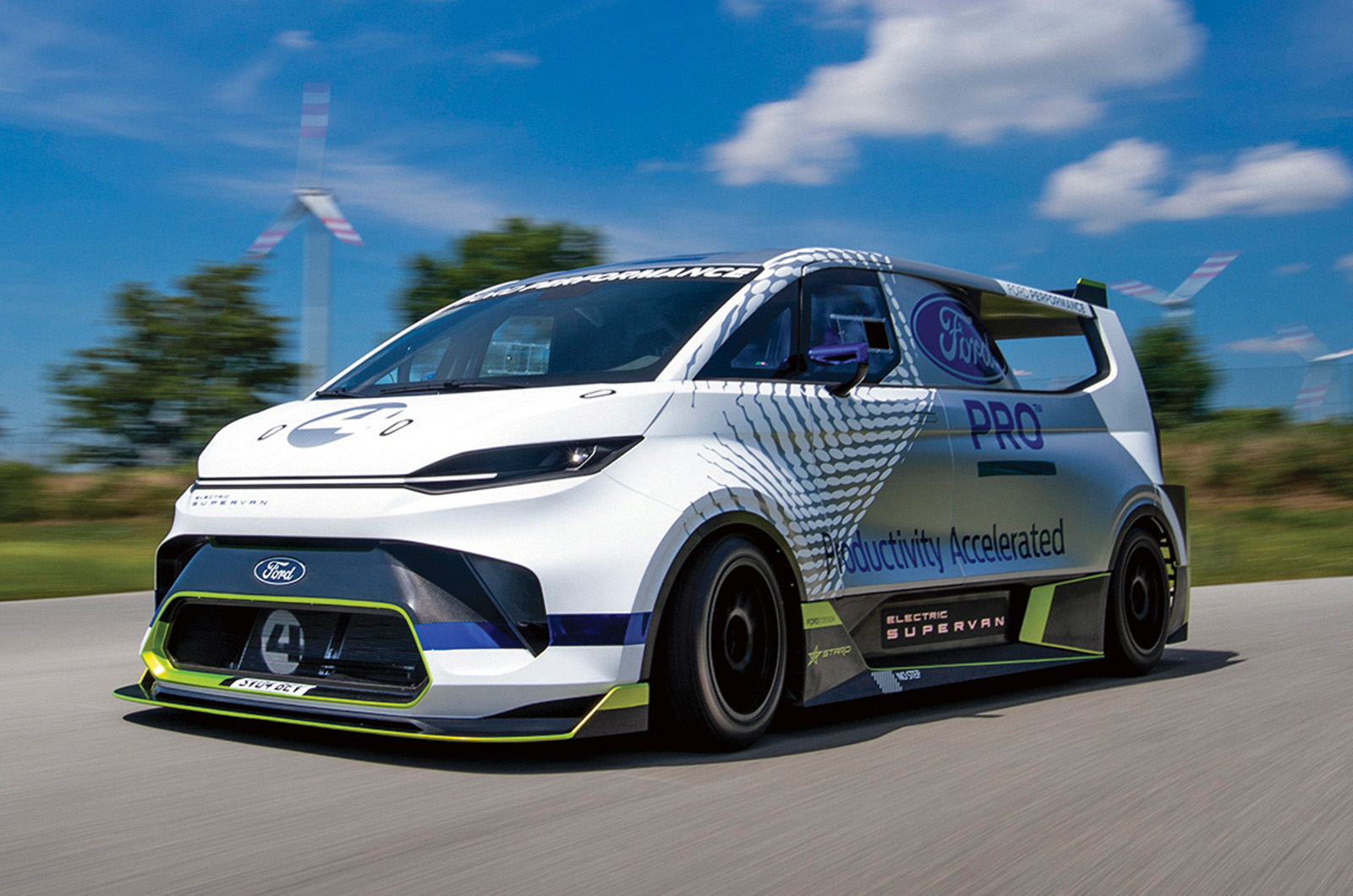
The latest Supervan is an all-electric one-off with 2000bhp

Supervan 4/4.2

Supervan lives on today with an electric powertrain capable of 2000bhp.

It made its debut at the 2022 Goodwood Festival of Speed, then Supervan 4 was tweaked to create the Pikes Peak-worthy version 4.2.

In this form it also tackled Australia’s Mount Panorama and won the 2024 timed shootout on Goodwood’s hillclimb.


Factfiles

Classic & Sports Car – Ford Transit at 60: celebrating Britain’s workhorse

Ford Transit Mk1 

  • Sold/number built 1965-’77/422,766
  • Construction steel unitary
  • Engine all-iron, ohv 1663cc V4, single carburettor
  • Max power 73bhp @ 4750rpm
  • Max torque 91lb ft @ 3000rpm
  • Transmission four-speed manual, RWD
  • Suspension: front beam axle rear live axle; semi-elliptic leaf springs, telescopic dampers f/r
  • Steering recirculating ball
  • Brakes Lockheed drums
  • Length 14ft 6in (4425mm) 
  • Width 6ft 4in (1934mm) 
  • Height 6ft 6in (1973mm)
  • Wheelbase 8ft 10in (2692mm)
  • Weight/Payload 2613lb (1185kg)/1907lb (865kg)
  • 0-50mph 32.5 secs
  • Top speed 81mph
  • Mpg 17-25
  • Price new £542 (1965)


Ford Transit Mk2

  • Sold/number built 1978-’85/341,942
  • Construction steel unitary
  • Engine all-iron, ohc 1593cc ‘four’, single carburettor
  • Max power 63bhp @ 5000rpm
  • Max torque 88lb ft @ 2500rpm
  • Transmission four-speed manual, RWD
  • Suspension: front beam axle rear live axle; semi-elliptic leaf springs, telescopic dampers f/r
  • Steering rack and pinion
  • Brakes discs front, drums rear, with servo 
  • Length 14ft 11in (4550mm)  
  • Width 6ft 1in (1855mm) 
  • Height 6ft 5in (1965mm)
  • Wheelbase 8ft 10in (2690mm)
  • Weight/Payload 2734lb (1260kg)/2513lb (1140kg)
  • 0-60mph n/a
  • Top speed n/a
  • Mpg 20-25
  • Price new £3966 (1980) 


Ford Transit Mk3

  • Sold/number built 1986-’94/467,395
  • Construction steel unitary
  • Engine all-iron, ohc 1993cc ‘four’, single carburettor
  • Max power 77bhp @ 5200rpm
  • Max torque 108lb ft @ 3000rpm
  • Transmission five-speed manual, RWD
  • Suspension: front independent, by MacPherson struts rear live axle, semi-elliptic leaf springs, telescopic dampers
  • Steering rack and pinion
  • Brakes discs front, drums rear, with servo (plus ABS on some models)
  • Length 15ft 1in (4606mm) 
  • Width 6ft 4in (1938mm) 
  • Height 6ft 5in (1967mm)
  • Wheelbase 9ft 3in (2815mm)
  • Weight/Payload 3410lb (1547kg)/n/a
  • 0-60mph 18 secs 
  • Top speed 90mph
  • Mpg n/a
  • Price new £6000 (1986)

We hope you enjoyed reading. Please click the ‘Follow’ button for more super stories from Classic & Sports Car.