He therefore gave engineer Helmuth Bott the green light to go to town on the Porsche 911.
Porsche gave a hint of things to come at Frankfurt in 1981 with a one-off, all-wheel-drive 911, but at the same show two years later it unveiled a far more advanced concept: the ʻGruppe Bʼ.
As the name suggests, the car was aimed at the Group B category of rallying and racing, featuring four-wheel drive, a six-speed gearbox, double-wishbone suspension all round and a 2.8-litre twin-turbo flat-six.
Turning the Gruppe B into the 959, however, was not the work of a moment.
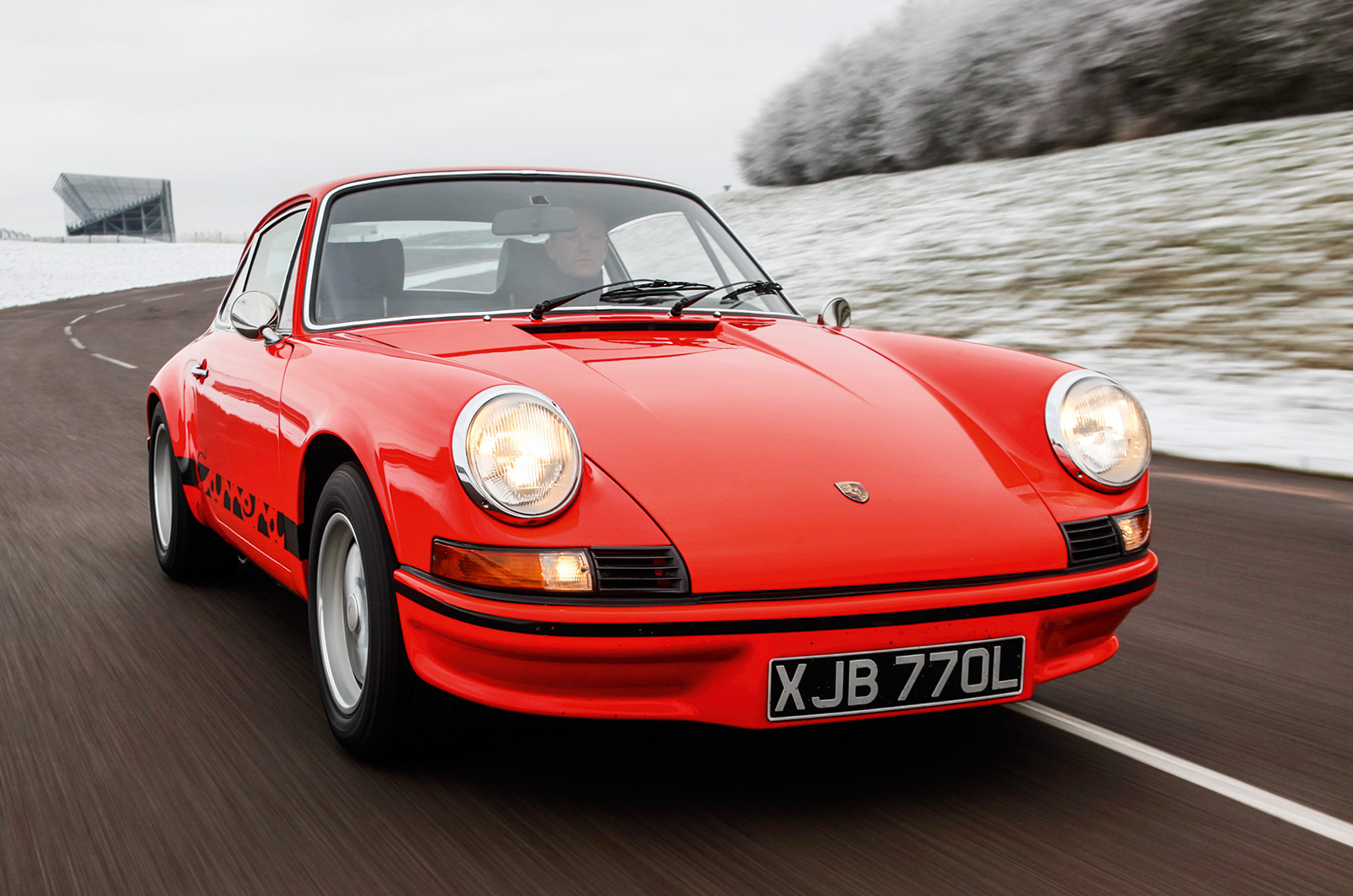
The four-wheel-drive Porsche 959 generates plenty of grip
In 1983, Porsche decided that all future engines should be able to meet American emissions legislation.
Fair enough – the US market accounted for half of the firmʼs sales – but it held up the 959 for a year.
The focus on all things Stateside would also prove to be a waste of time, as we shall see.
Early in development, Porsche moved away from a World Rally Championship campaign in favour of long-distance events such as the Paris-Dakar, which would become an invaluable proving ground.
In 1984, René Metge and Dominique Lemoyne won in the 953, a much-modified Porsche 911 that featured a version of the four-wheel-drive system.
The following year, Porsche entered models with, in effect, the 959ʼs transmission but a Carrera 3.2 engine.
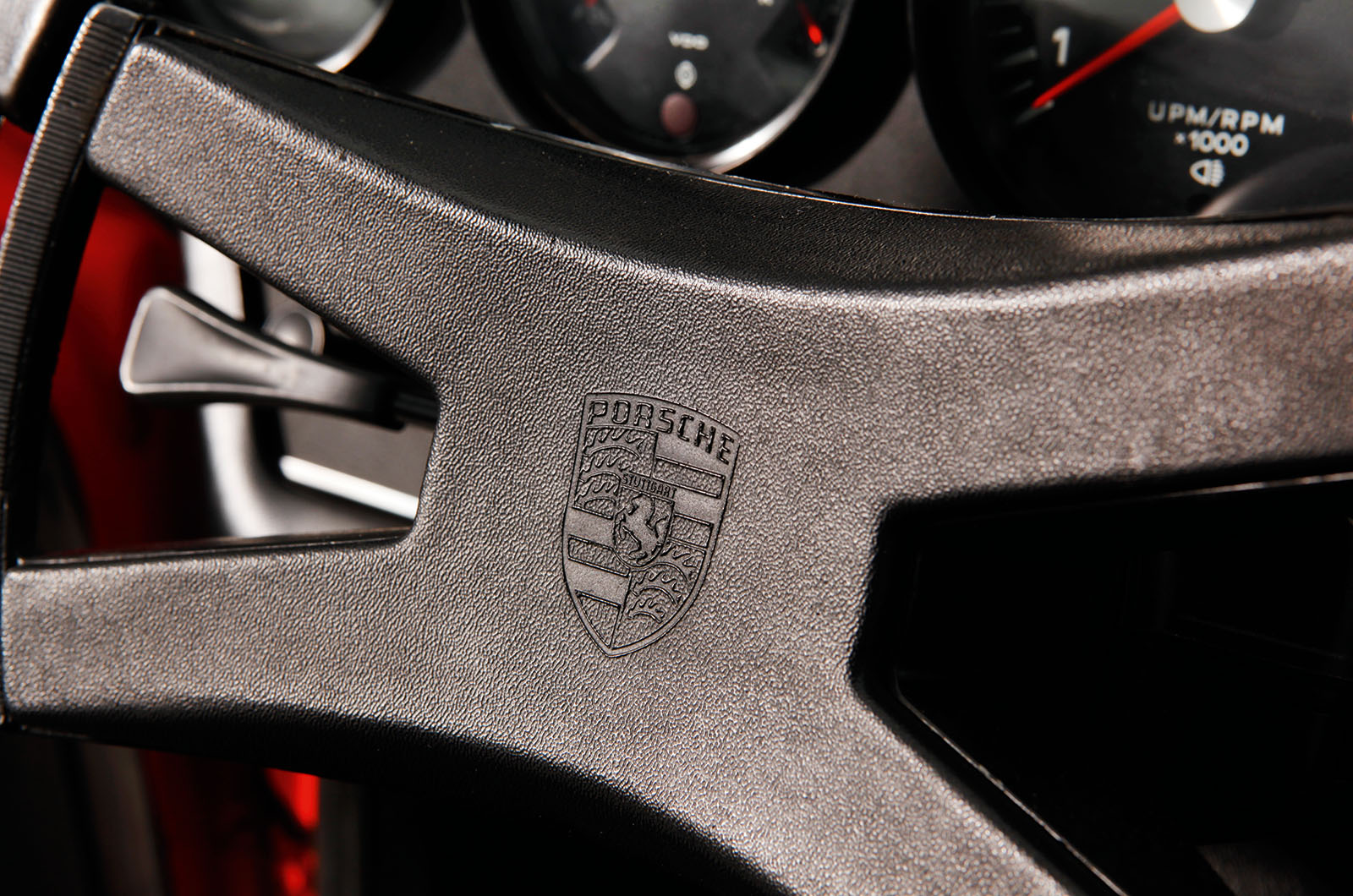
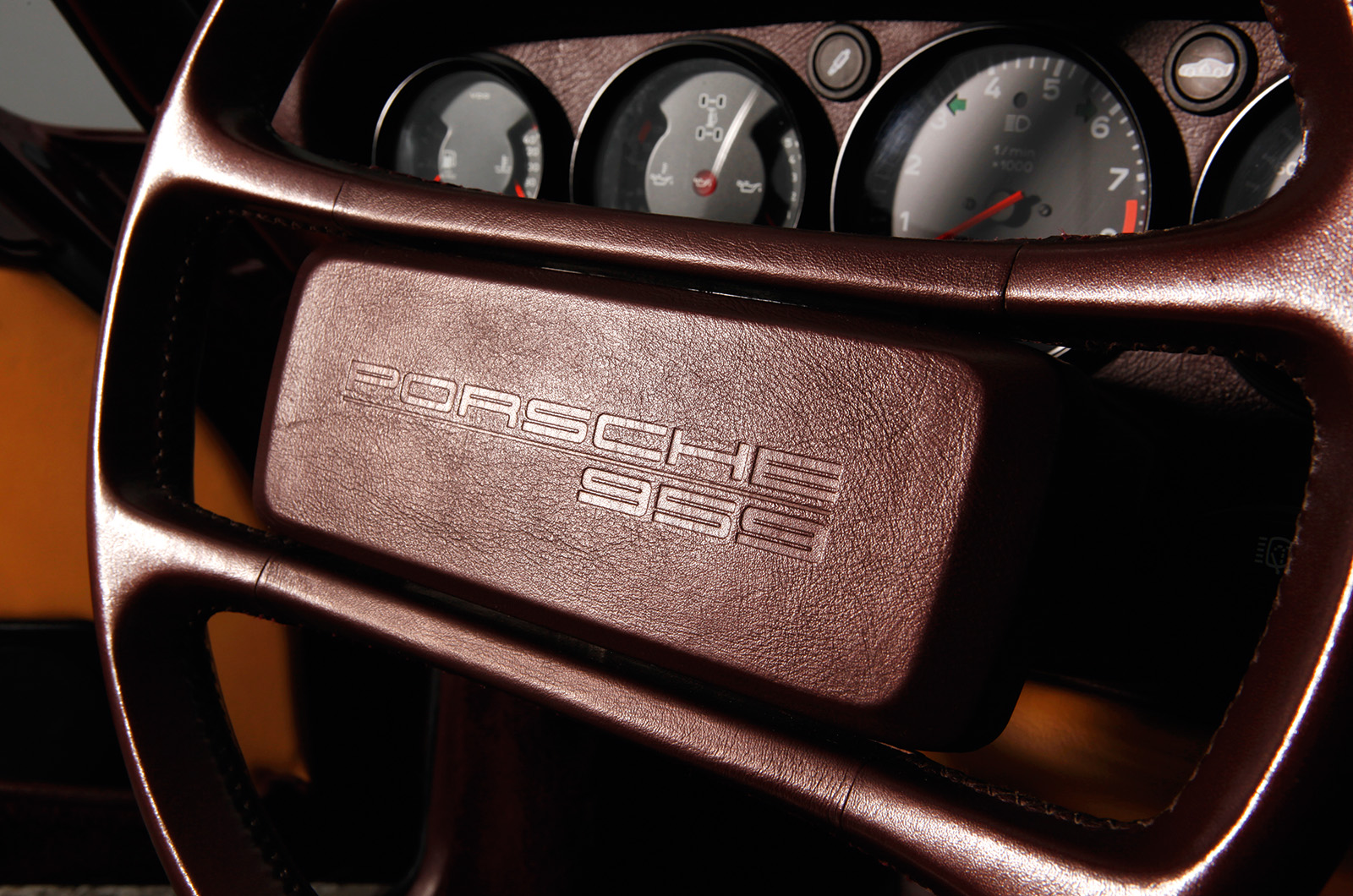
The Porsche 959’s embossed steering wheel
By 1986, the factory had arrived at almost the final spec, via the addition of the twin-turbo unit, and the Metge/Lemoyne crew was again victorious.
By then, road-car production was on the horizon. Potential buyers had been patiently waiting since the 959ʼs unveiling at Frankfurt in 1985, but not until early 1987 would deliveries begin.
In the meantime, Federal emissions and safety regulations had grown ever more stringent, and it was eventually decided to withdraw the car from that market.
It would be 2001-ʼ02 before legislation allowed 959s to be driven legally in America.
What the rest of the world got was a technological showcase that featured every gadget and gizmo that Porsche had in its arsenal.
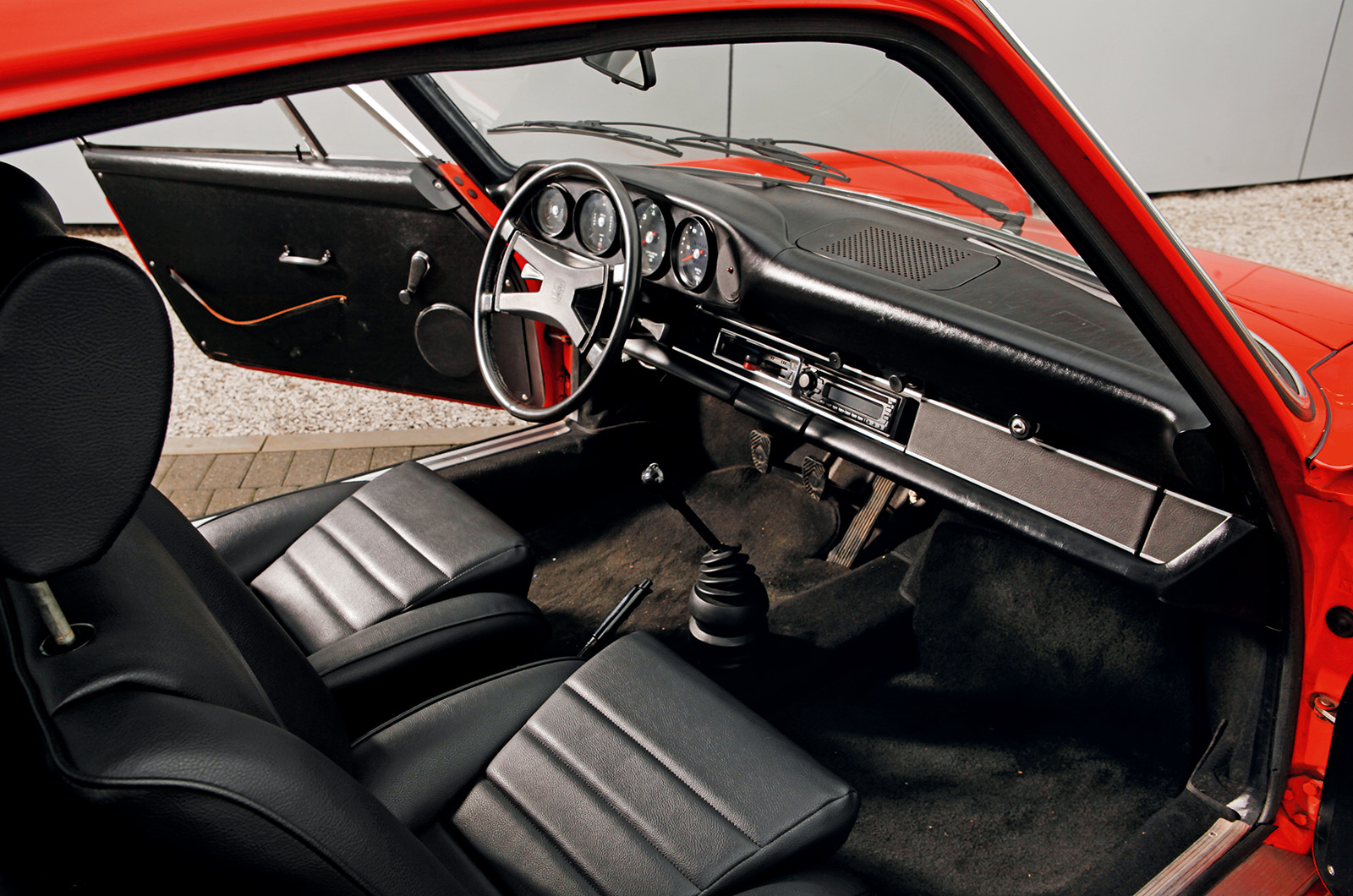
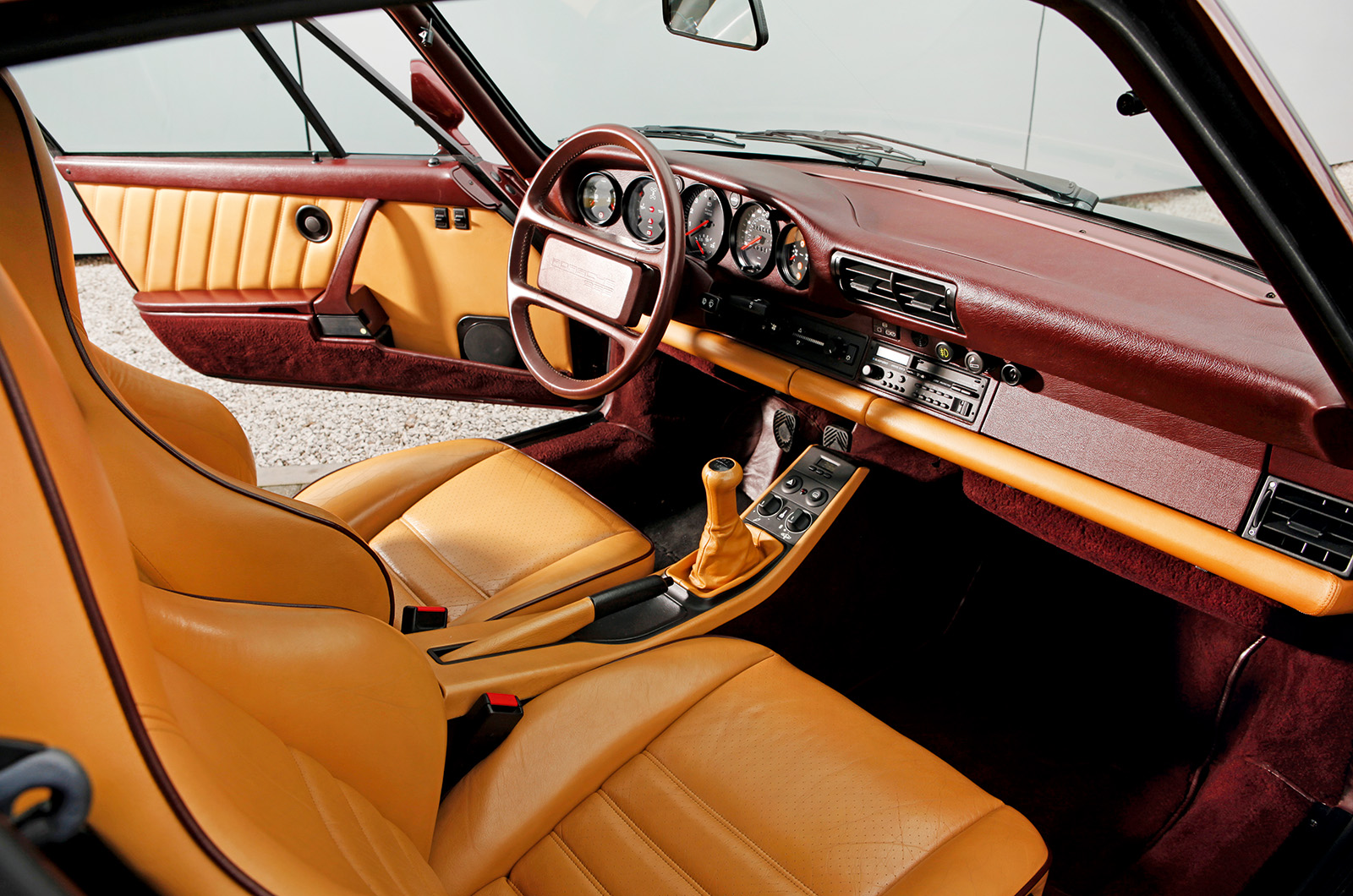
The Porsche 959’s interior is much the same as the standard 911’s
The galvanised monocoque was derived from the Porsche 911 turbo shell, albeit heavily modified.
It was clothed in a mixture of composite and aluminium panels in an attempt to keep the weight down, and whereas the 911 created lift and a relatively high amount of drag, wind-tunnel development meant that the 959 was planted far more firmly to the road and produced a Cd of only 0.31.
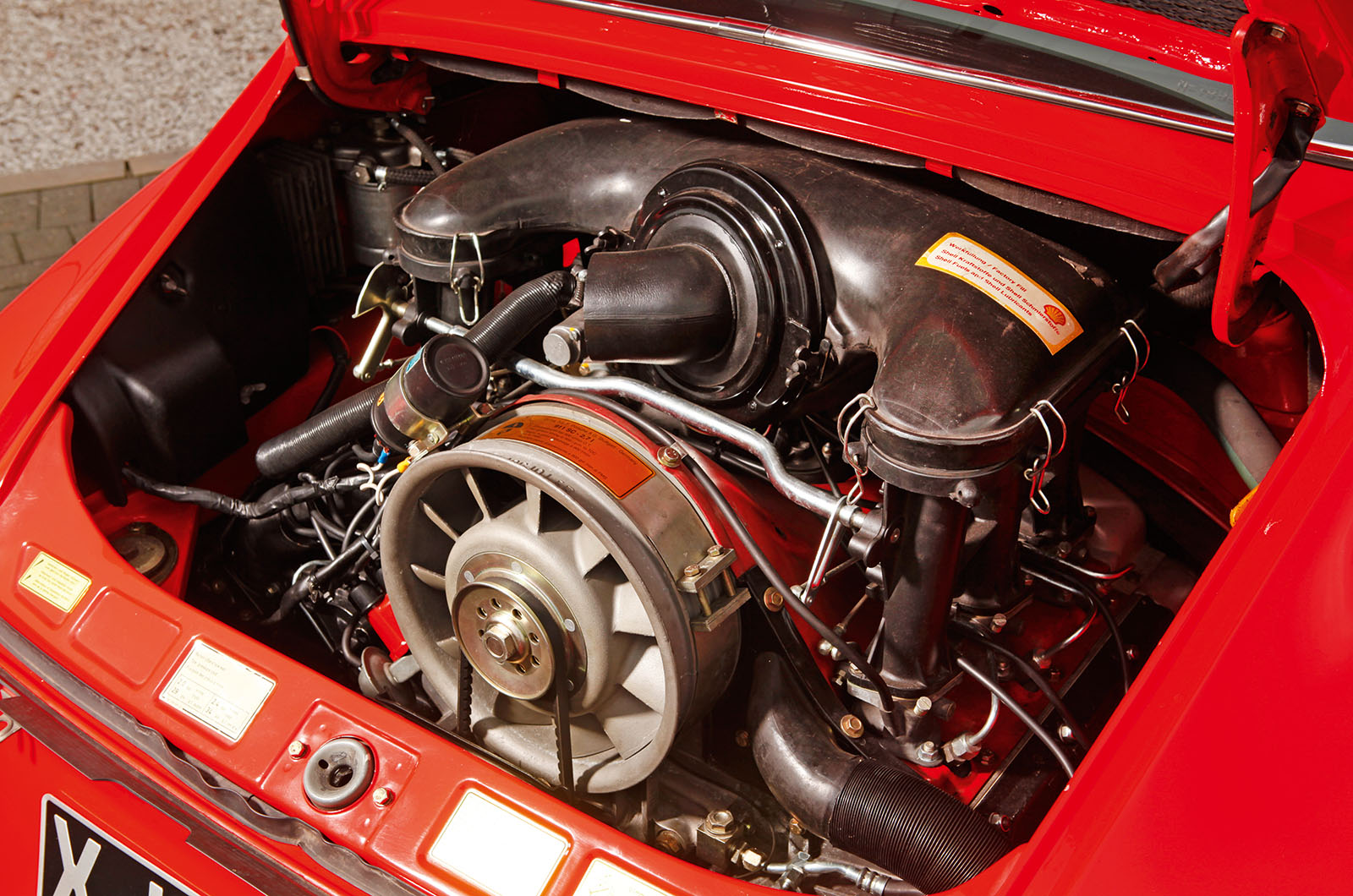
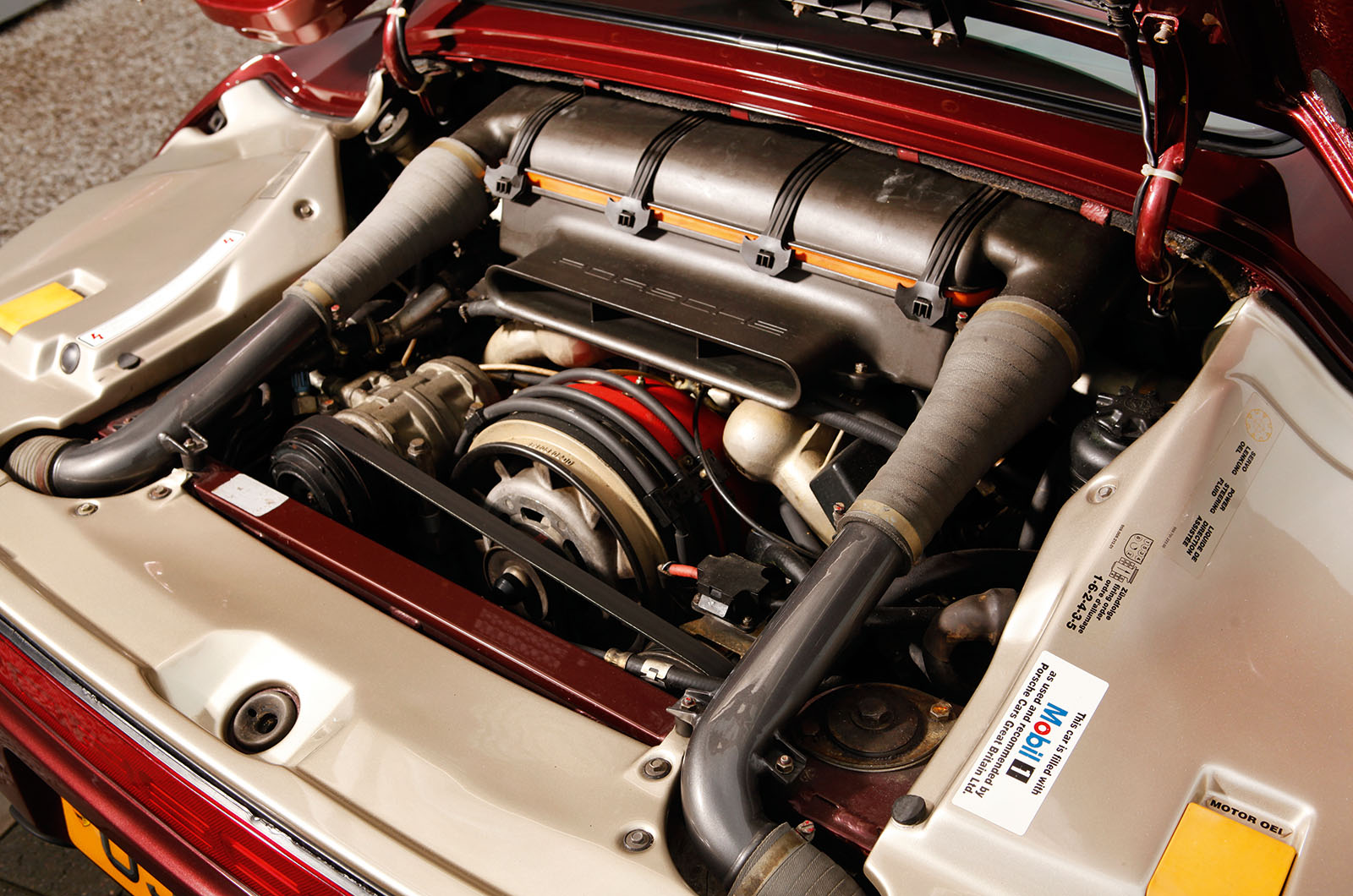
The 2850cc flat-six is, as in its sibling, at the rear. While the block is air-cooled, however, the cylinder heads have water coursing through them.
Two KKK turbochargers are fitted, working not in parallel – which would lead to interminable lag – but in series, and the six-speed gearbox is hooked up to a sophisticated, computer-controlled four-wheel-drive set-up.
You can choose between Dry, Wet, Snow and Off-Road settings, and the system continuously measures the yaw rate and inputs from throttle, steering and brake, plus data from the ABS sensors, in order to provide the best traction.
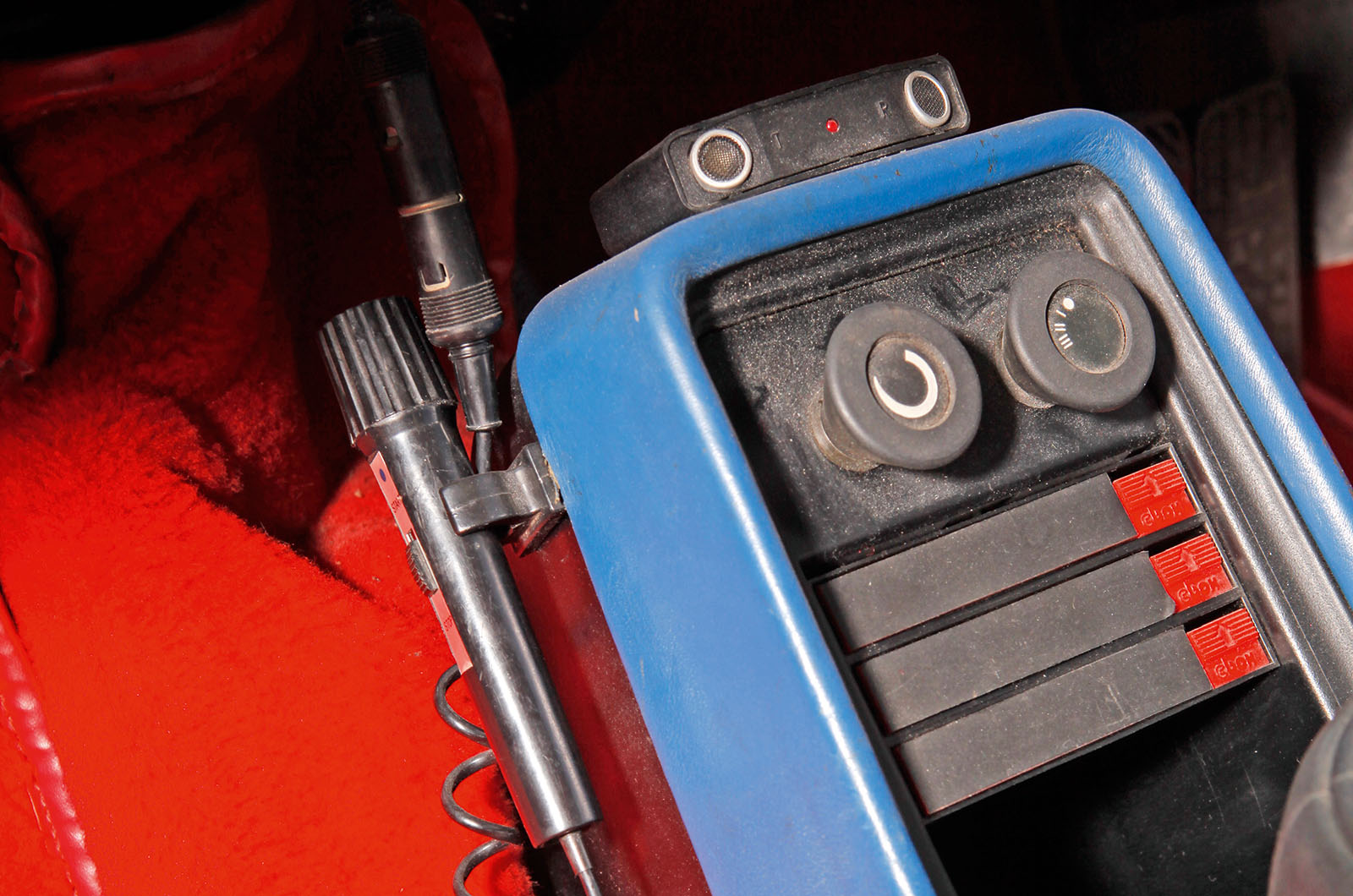
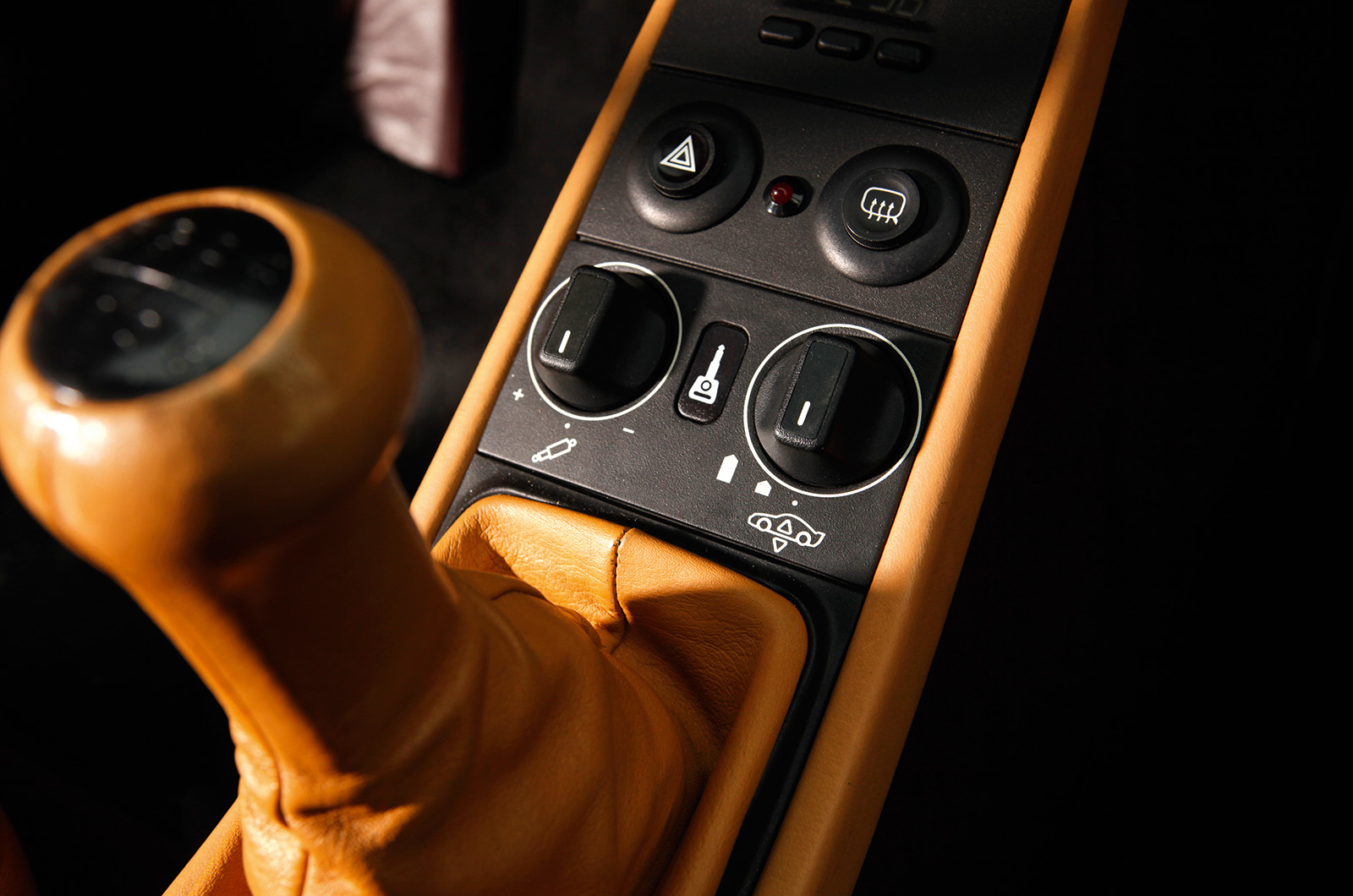
The Porsche 959’s ride and damper controls
The ride height and dampers (two at each corner) are adjustable via knobs in the centre console, although the 959 automatically hunkers down at speed anyway in order to reduce lift.
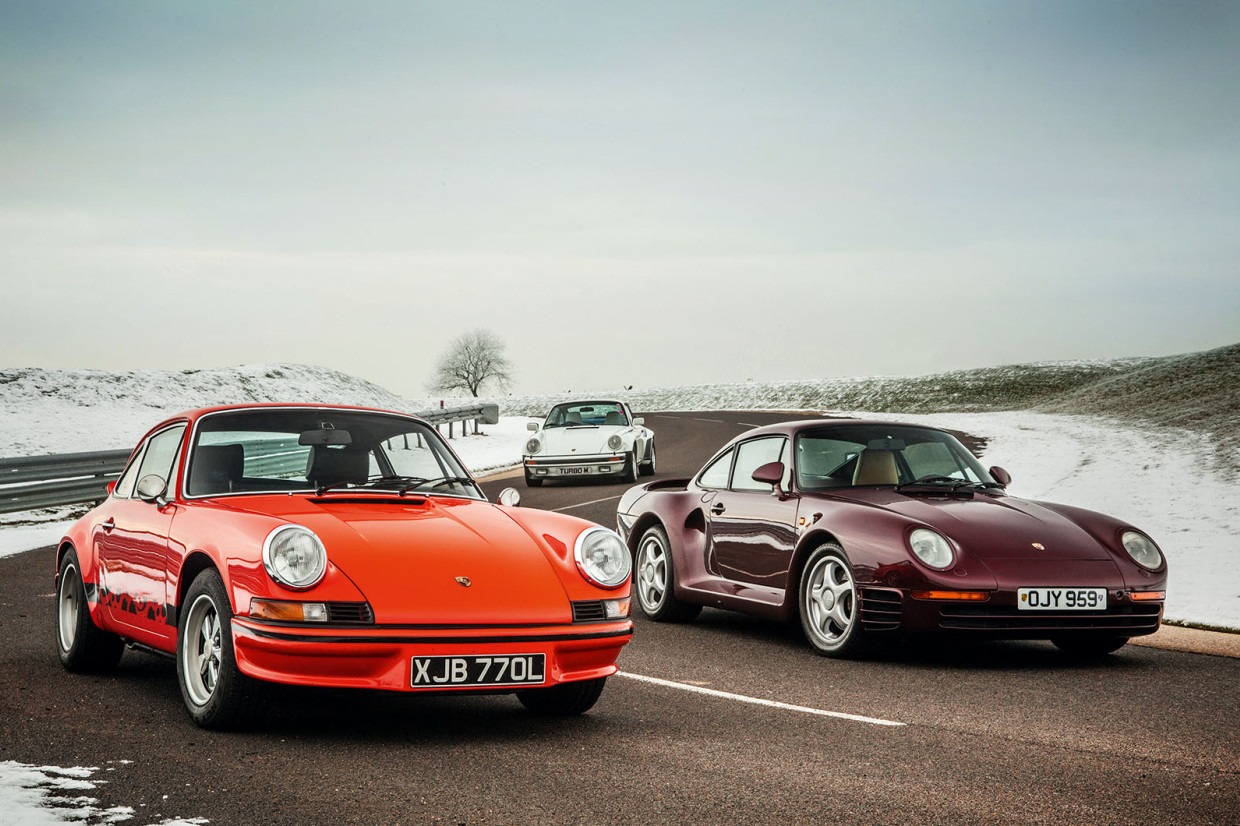
Our featured car looks particularly good in its special-order metallic Weinrot paint and tan leather.
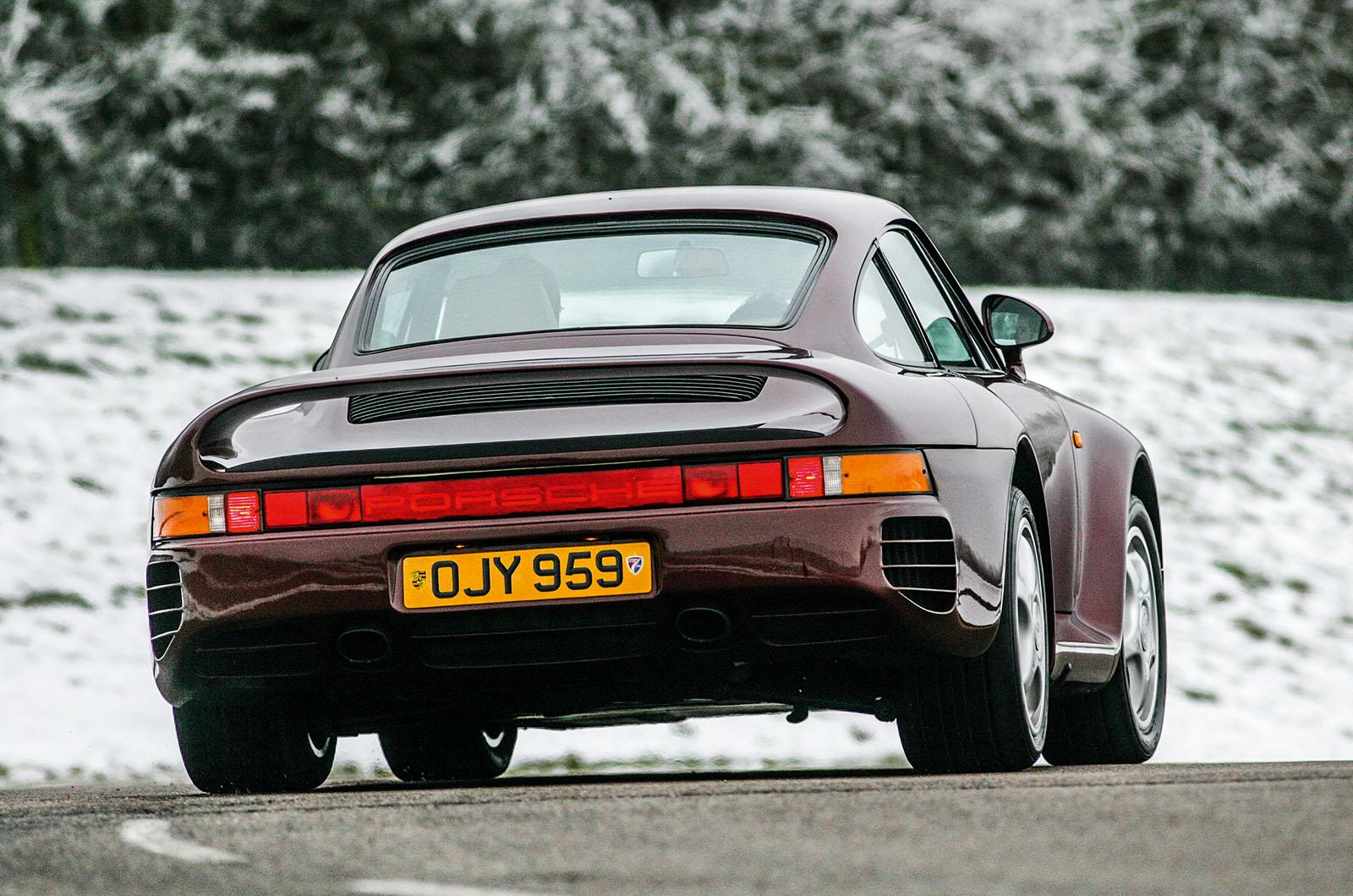
While it appears almost innocuous from the front, once you get beyond the B-pillar there is hardly a flat or plain surface.
Itʼs all sweeps and curves back to the wide, muscular rear end, giving the 959 an aggressive stance that makes it looks as if it would be all but impossible to unstick.
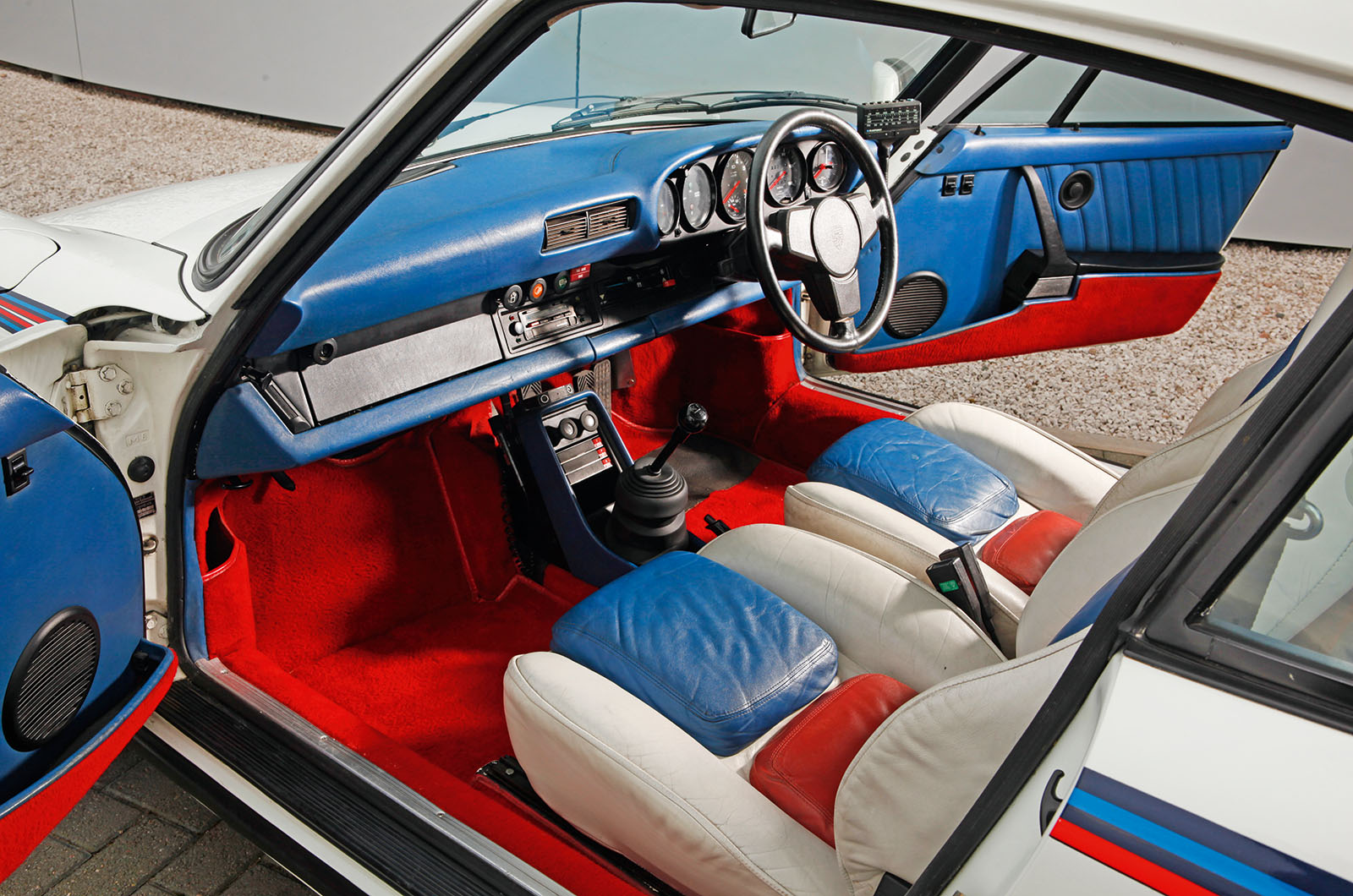
The interior, while sumptuous and supremely comfortable, doesn’t exactly go out of its way to distance itself from a standard Porsche 911.
There are those controls for the electronic wizardry and a dial showing how drive is being distributed, but otherwise the central rev counter is the same, as are the floor-hinged pedals.
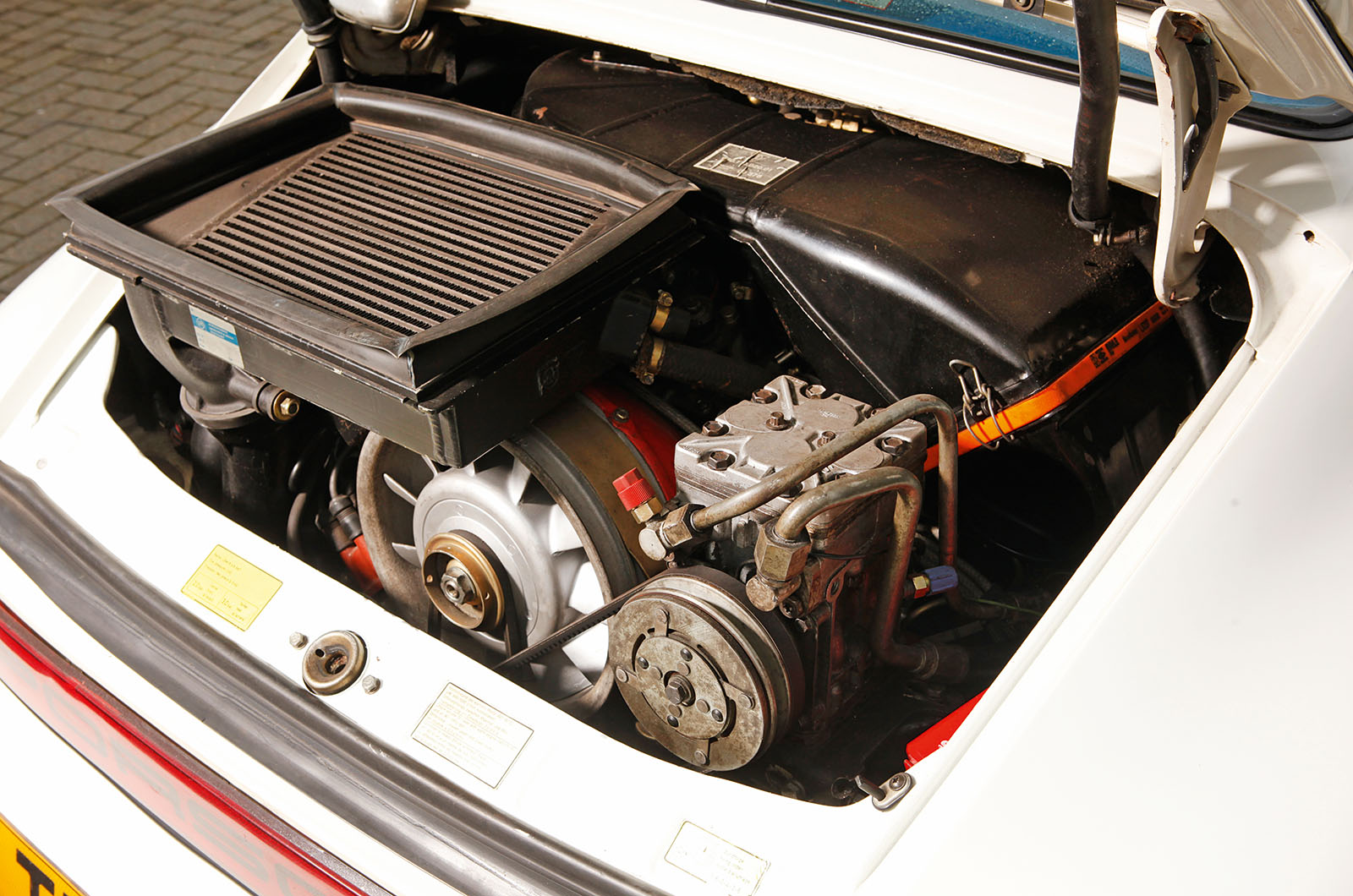
The Porsche 959’s two turbos run in sequence
There are no histrionics involved in firing it up or pulling away. The engine is subdued at idle and the clutch surprisingly light.
A little body roll is noticeable through the first few corners of the circuit, but the exceptional seats hold you firmly in place.
Itʼs all very agreeable – almost soft – and you begin to forget that this is a car capable of just shy of 200mph.
Then you wind the engine out to more than 4500rpm and it comes flooding back.
The acceleration is savage yet, at the same time, efficient.
Period tests recorded 0-60mph in 3.7 secs, with 100mph coming up in 8.3 but, despite that sort of pace, there is no ʻhold your breath and hang onʼ moment – the second turbo kicks in and any straight worthy of the name is simply dispatched.
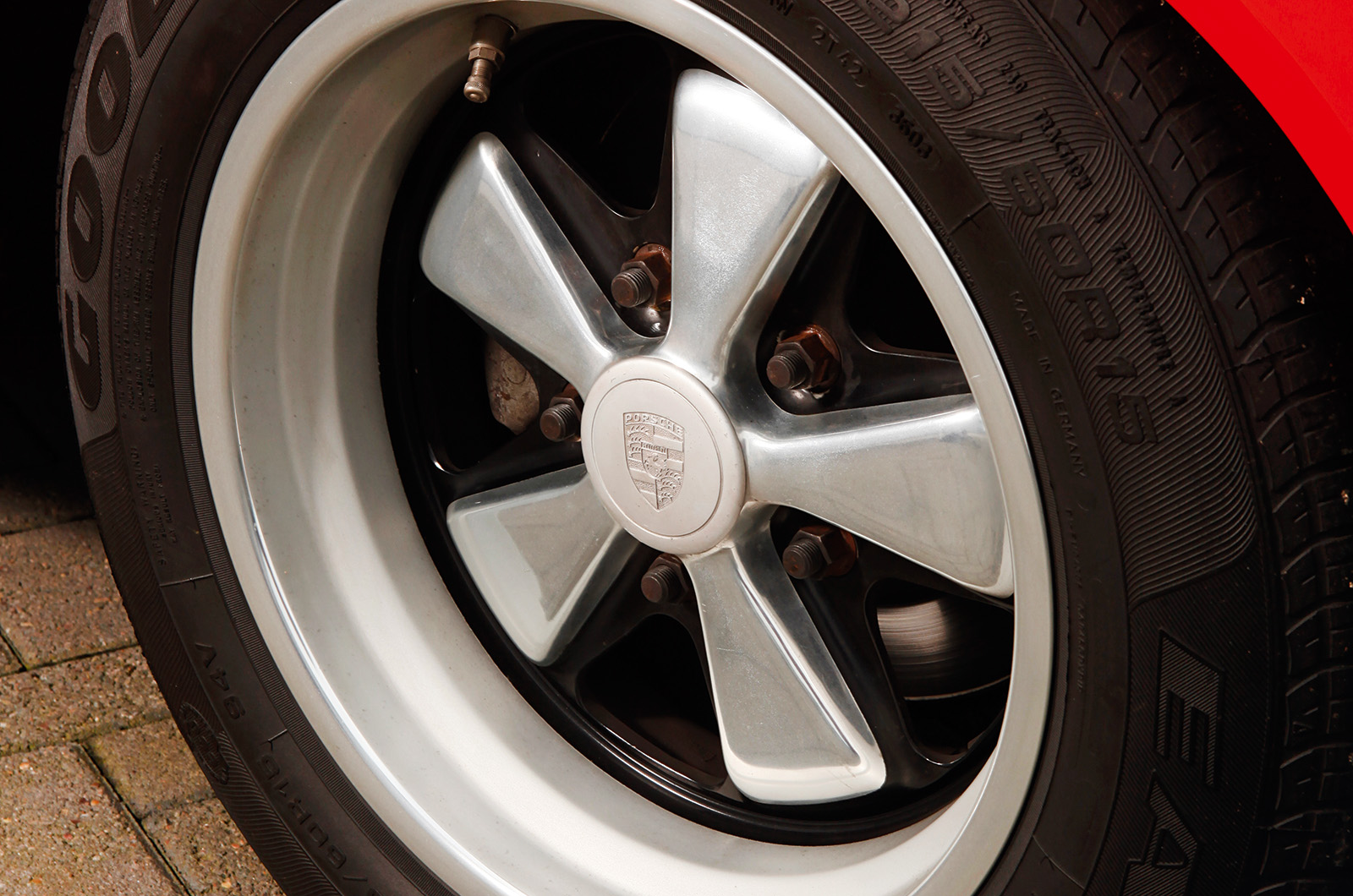
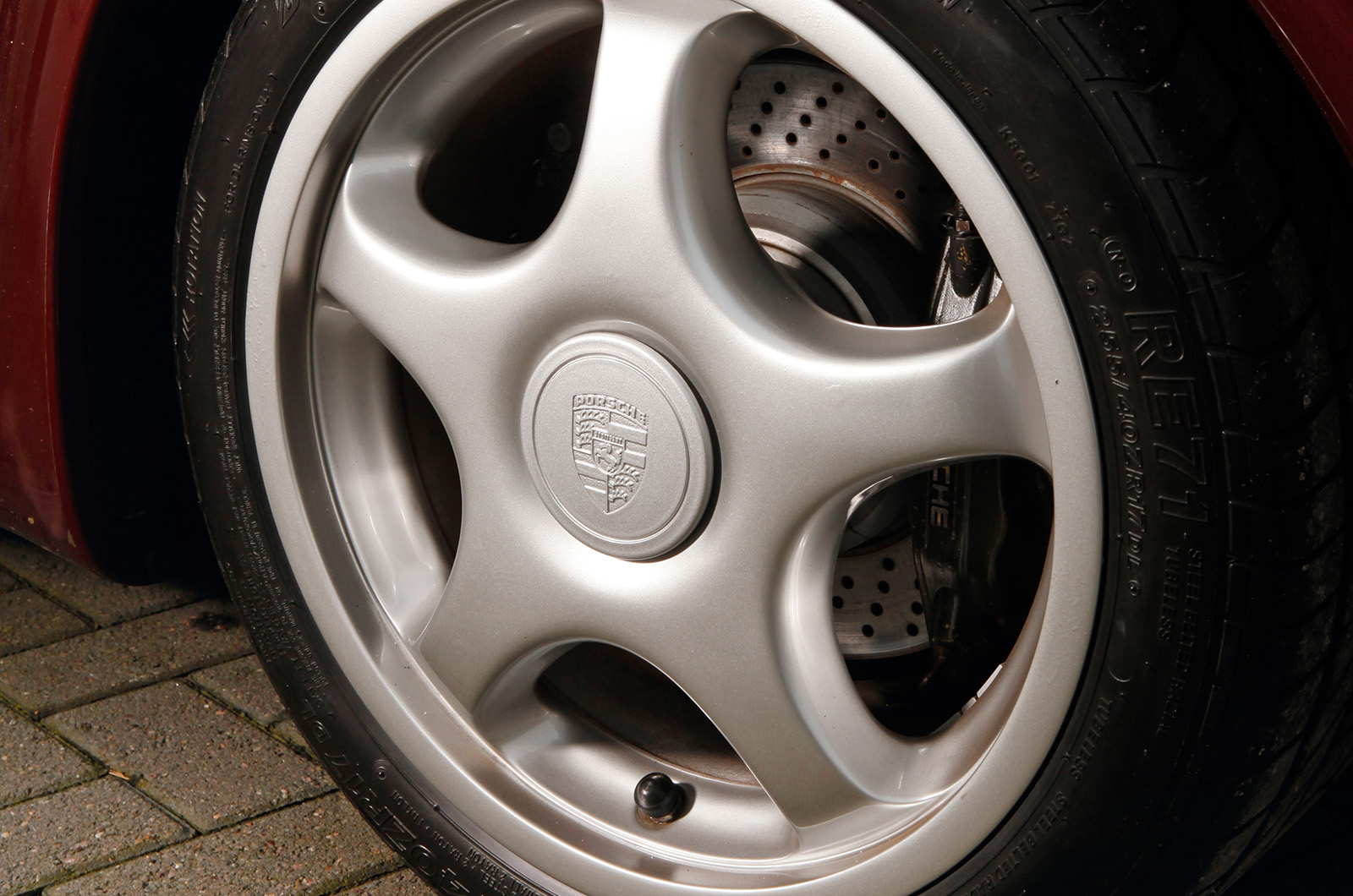
The Porsche 959’s alloy wheels have hollow spokes
Nor does it ever feels as if itʼs going to bite. It turns in well, and from there it just grips and grips.
Itʼs hard to think of any other supercar thatʼs as easy to drive. Even on a cold, slippery circuit, the 959 is not in the least intimidating.
It didnʼt make much business sense, though. Each car reputedly cost Porsche at least twice the list price to build, but that wasnʼt really the point.
ʻItʼs a technical showcase as much as anything,ʼ wrote Autocar, ʻa laboratory for a host of developments that will find their way into the 911 range in years to come.
‘You really canʼt help wondering what the 911 will be like as it rolls off the production line in 1999!ʼ
Bigger and uglier would be the glib answer, but, to be fair, the turbo version of the 996 didnʼt arrive until late 2000.
The previous generation – the prettier and still air-cooled 993 – did indeed inherit four-wheel drive and a six-speed gearbox.
But the 959 shouldnʼt be judged purely on what it did for subsequent 911s. Instead, itʼs a glorious showcase for Porscheʼs talents and a brilliant supercar in its own right.
After all this time, it still makes a compelling case for itself as the ultimate Porsche 911.
Images: Tony Baker
Thanks to: Simon Garnham and Howard Watts; Nick Perry at Porsche GB; Porsche Experience Centre
This was first in our December 2013 magazine; all information was correct at the date of original publication
Factfiles
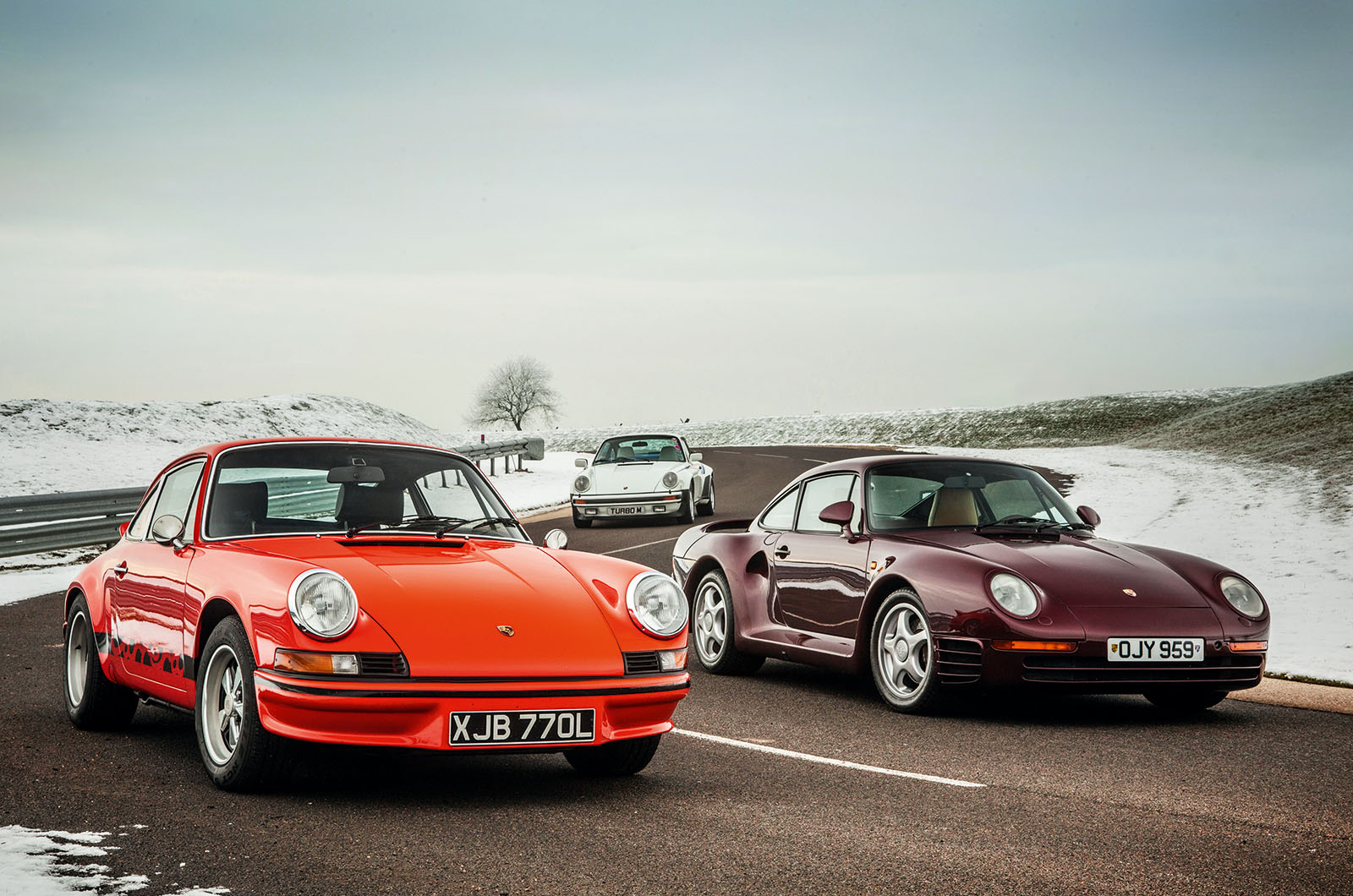
Porsche 911 Carrera RS 2.7
- Sold/number built 1973/1308 (Touring)
- Construction steel monocoque, with glassfibre engine lid
- Engine all-aluminium, sohc-per-bank, air-cooled 2687cc flat-six, Bosch fuel injection
- Max power 210bhp @ 6300rpm
- Max torque 188lb ft @ 5100rpm
- Transmission five-speed manual, RWD
- Suspension independent, at front by struts, lower wishbones rear semi-trailing arms; torsion bars, telescopic dampers, anti-roll bar f/r
- Steering rack and pinion
- Brakes ventilated discs
- Length 13ft 8in (4165mm)
- Width 5ft 3½in (1613mm)
- Height 4ft 4in (1320mm)
- Wheelbase 7ft 5in (2260mm)
- Weight 2398lb (1088kg)
- 0-60mph 5.5 secs
- Top speed 149mph Mpg 16.7
- Price new £7232
Porsche 911 (930) turbo
- Sold/number built 1974-’89/21,589 (all)
- Construction steel monocoque
- Engine all-aluminium, sohc-per bank, air-cooled 3299cc flat-six, Bosch K-Jetronic fuel injection
- Max power 300bhp @ 5500rpm
- Max torque 304lb ft @ 4000rpm
- Transmission four-speed manual, RWD
- Suspension independent, at front by struts, lower wishbones, torsion bars rear semi-trailing arms, transverse torsion bars; telescopic dampers, anti-roll bar f/r
- Steering rack and pinion
- Brakes ventilated and drilled discs
- Length 14ft 1in (4291mm)
- Width 5ft 9in (1775mm)
- Height 4ft 3in (1310mm)
- Wheelbase 7ft 5in (2272mm)
- Weight 2866lb (1300kg)
- 0-60mph 5.4 secs
- Top speed 161mph
- Mpg 20
- Price new £24,499
Porsche 959
- Sold/number built 1987-’88/283
- Construction steel monocoque with composite bodyshell, aluminium and polyurethane panels
- Engine all-alloy, dohc-per-bank, air- and liquid-cooled 2849cc flat-six, twin KKK turbochargers, Bosch fuel injection
- Max power 450bhp @ 6500rpm
- Max torque 369lb ft @ 5000rpm
- Transmission six-speed manual, computer-controlled 4WD
- Suspension independent, by double wishbones, coil springs, dual telescopic dampers, anti-roll bar f/r
- Steering power-assisted rack and pinion
- Brakes ventilated, cross-drilled discs, with servo and ABS
- Length 13ft 11in (4249mm)
- Width 6ft (1829mm)
- Height 4ft 2in (1270mm)
- Wheelbase 7ft 6in (2300mm)
- Weight 2980lb (1351kg)
- 0-60mph 3.7 secs
- Top speed 197mph
- Mpg 16
- Price new £140,000
Enjoy more of the world’s best classic car content every month when you subscribe to C&SC – get our latest deals here
READ MORE
Porsche 911 turbo at 50: icons of the air-cooled era
Porsche 911 Carrera RSR ‘R7’: the full works
Also in my garage: Porsche 911 engine lids
James Page
James Page is a regular contributor to – and former Editor of – Classic & Sports Car