Sunbeam Alpine vs Renault Floride: battling for your buck

| 23 Apr 2026
Classic & Sports Car – Sunbeam Alpine vs Renault Floride: the battle for your buck

Differences in the approach to car design have long polarised the products of Britain and France. 

Picture the otherworldly Citroën DS parked alongside the walnut-lined and leather-trimmed Jaguar Mk1.

Or imagine getting behind the wheel of a Renault 4CV after a stint in a Morris Minor

The contrast will be up there with sampling a glass of Merlot over a plate of steak tartare after washing down a hearty shepherd’s pie with a pint of London Pride.

Classic & Sports Car – Sunbeam Alpine vs Renault Floride: the battle for your buck

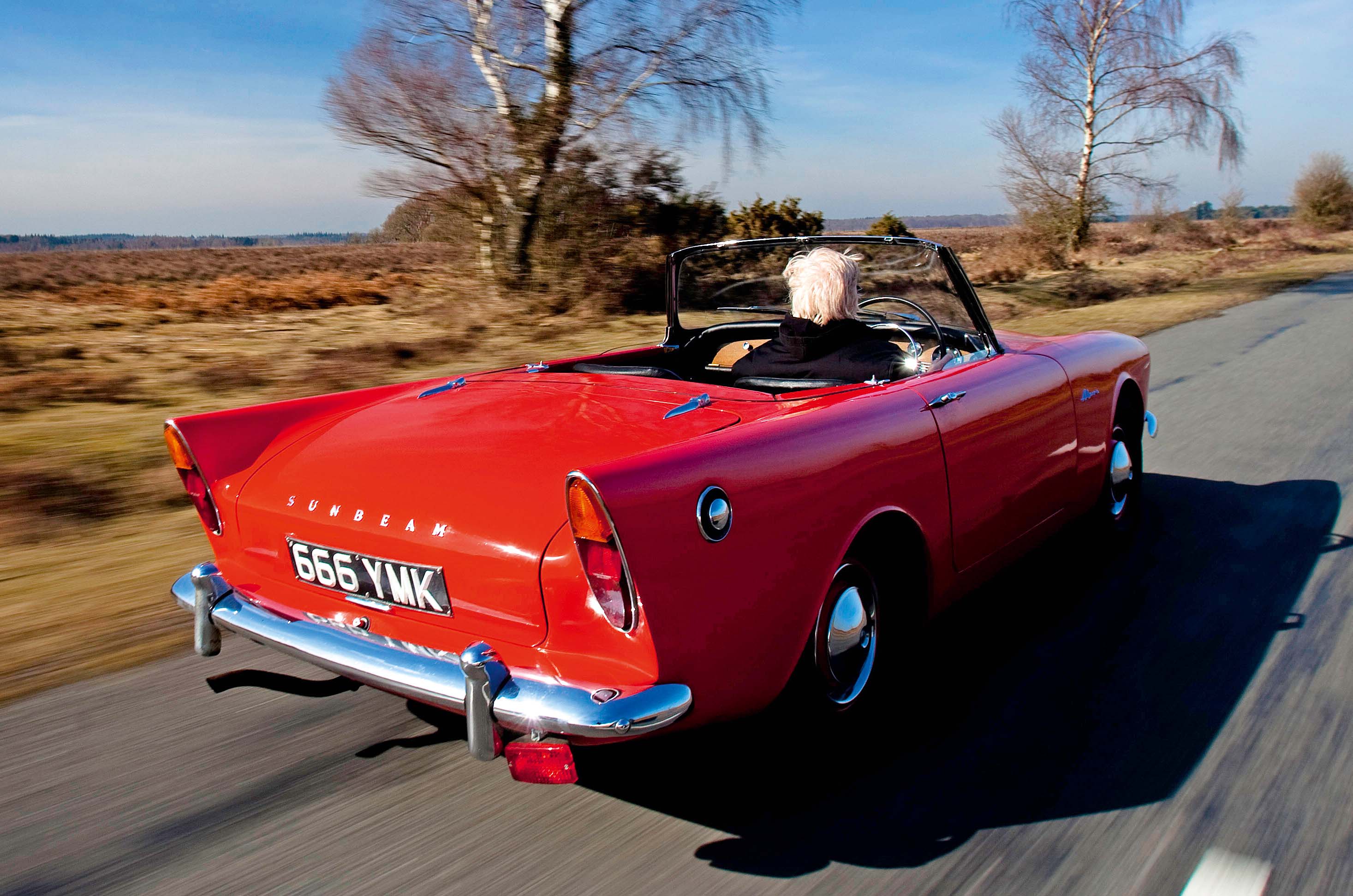
The Sunbeam Alpine’s curvaceous lines incorporate subtle nods to American style

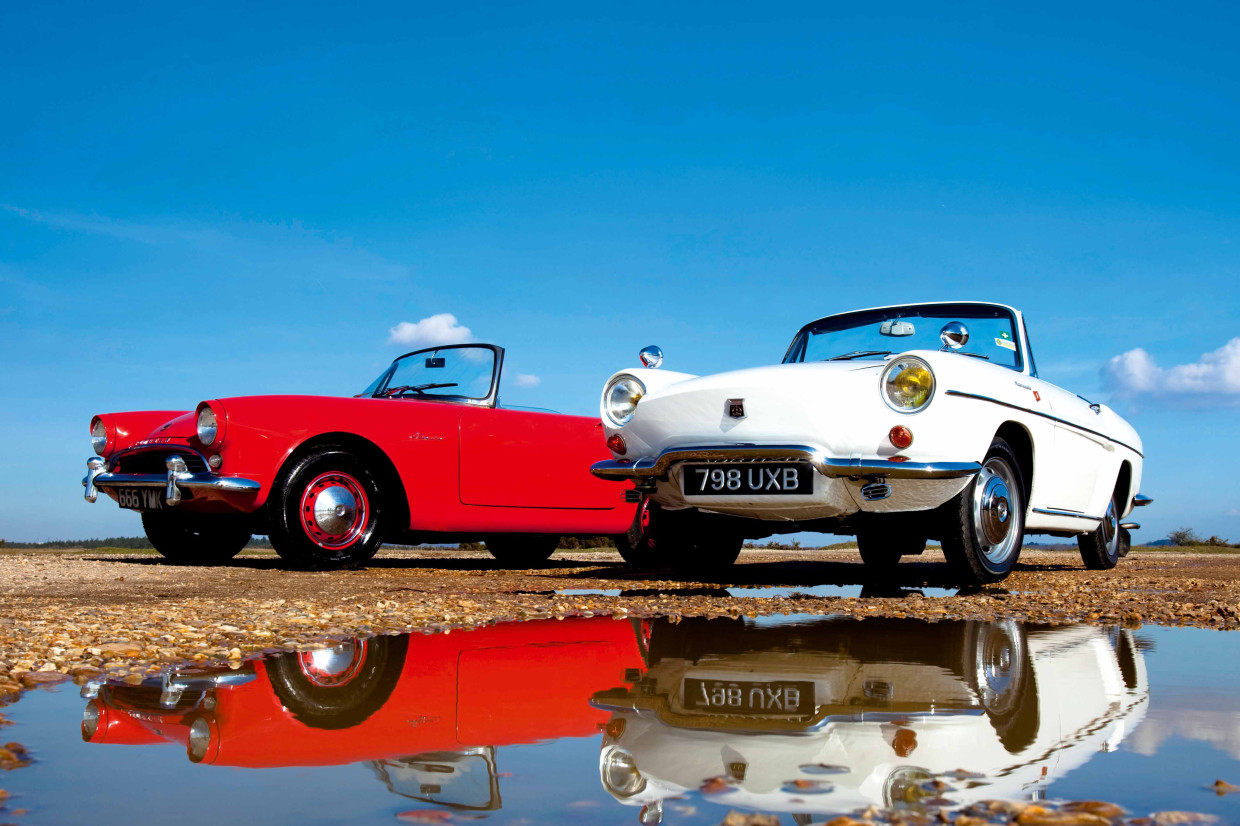
The same could be said for these two rival sports cars, both of which made their debuts on opposite sides of the Channel in the late 1950s. 

The Sunbeam Alpine and Renault Floride boasted polarised mechanical layouts, but both were a response to rising economic prosperity in Europe and across the water.

On the other side of the Atlantic things were looking prosperous, too, with America in the midst of an automotive boom.

After the success of the ‘export or die’ years, which had helped to pull British car manufacturers back from the brink, England was finally shaking off its post-war austerity.

Fuel rationing, introduced following the Suez Crisis, was over, the nation had opened its first motorway and British manufacturers fancied a slice of the action in the United States.

Their attack was spearheaded by new sports models, developed to stand out from their mundane saloon siblings.

Classic & Sports Car – Sunbeam Alpine vs Renault Floride: the battle for your buck

‘Speed was never a priority for Renault Floride buyers: this was a car for being seen in’

Like Vauxhall’s Cresta and the Ford Zodiac, Rootes’ Sunbeam Alpine was inspired by the American love for fins and chrome, and took its lead from one of the country’s most popular models: Ford’s Thunderbird. 

That comes as no surprise when you learn that one of the Alpine’s designers, Ken Howes, worked for Ford before joining Rootes.

Fin excess might have been reaching rocket-ship proportions – just picture the rear end of a 1959 Caddy – but, in typically British fashion, the concept was suitably watered down when Rootes chose to apply it to its revived Alpine sports model.

It was still a striking design, though, and a futuristic one compared with the curvaceous lines of rivals such as the Austin-Healey 100 and MGA.

It also boasted modern unitary construction, made possible by corporate parts-bin digging that provided a Hillman Husky platform and Rapier/Minx running gear.

Classic & Sports Car – Sunbeam Alpine vs Renault Floride: the battle for your buck

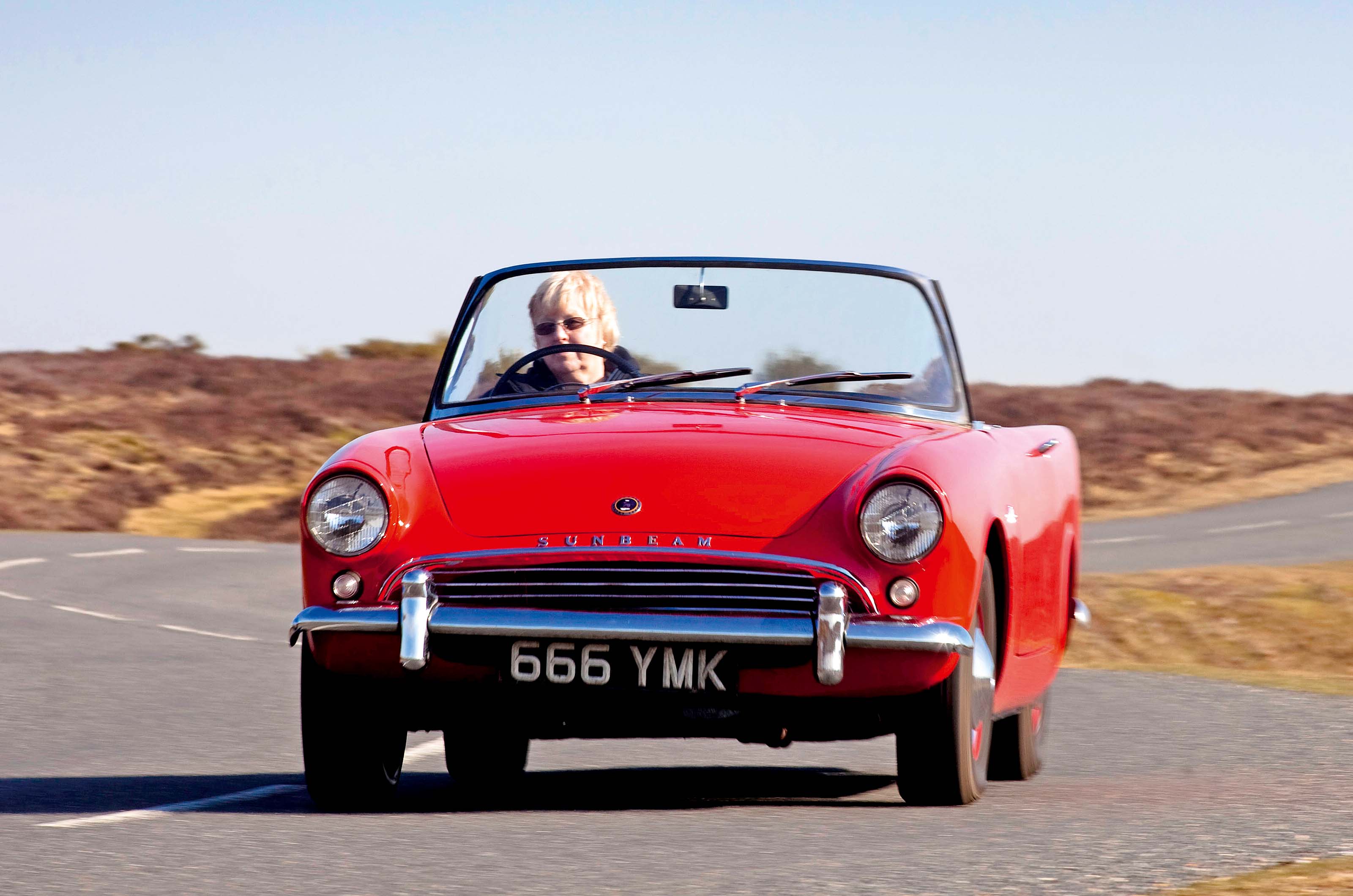
The Sunbeam Alpine has an appetite for bends

With an overhead-valve engine, four-speed ’box (with optional overdrive) and leaf-sprung rear end, the Alpine was conventionally British under the skin.

There were simple, reliable mechanicals and a comfortable cabin, with decent, easy-to-use weather gear, a heater as standard and an optional hardtop that added to its T-bird looks.

Across the Channel, state-owned Renault’s approach couldn’t have been more different.

Keen to maximise economies of scale, La Régie took its popular, rear-engined Dauphine and looked to an Italian styling house for inspiration for a product that would appeal not just in the USA, but also around the globe.

Quite who was responsible for the chic result is mired in controversy – both Ghia and Frua have been in the frame, plus the involvement of General Motors designer Virgil Exel’s son – but the result is generally accredited to Frua.

Classic & Sports Car – Sunbeam Alpine vs Renault Floride: the battle for your buck

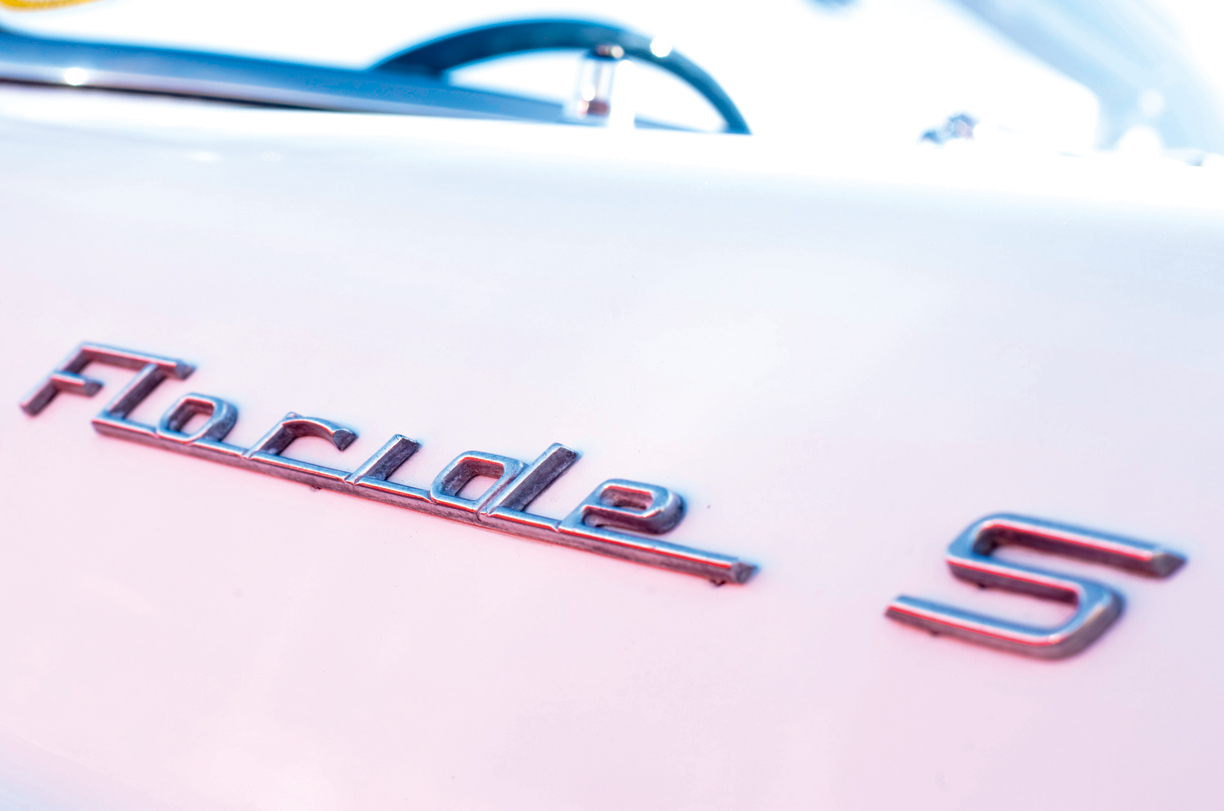
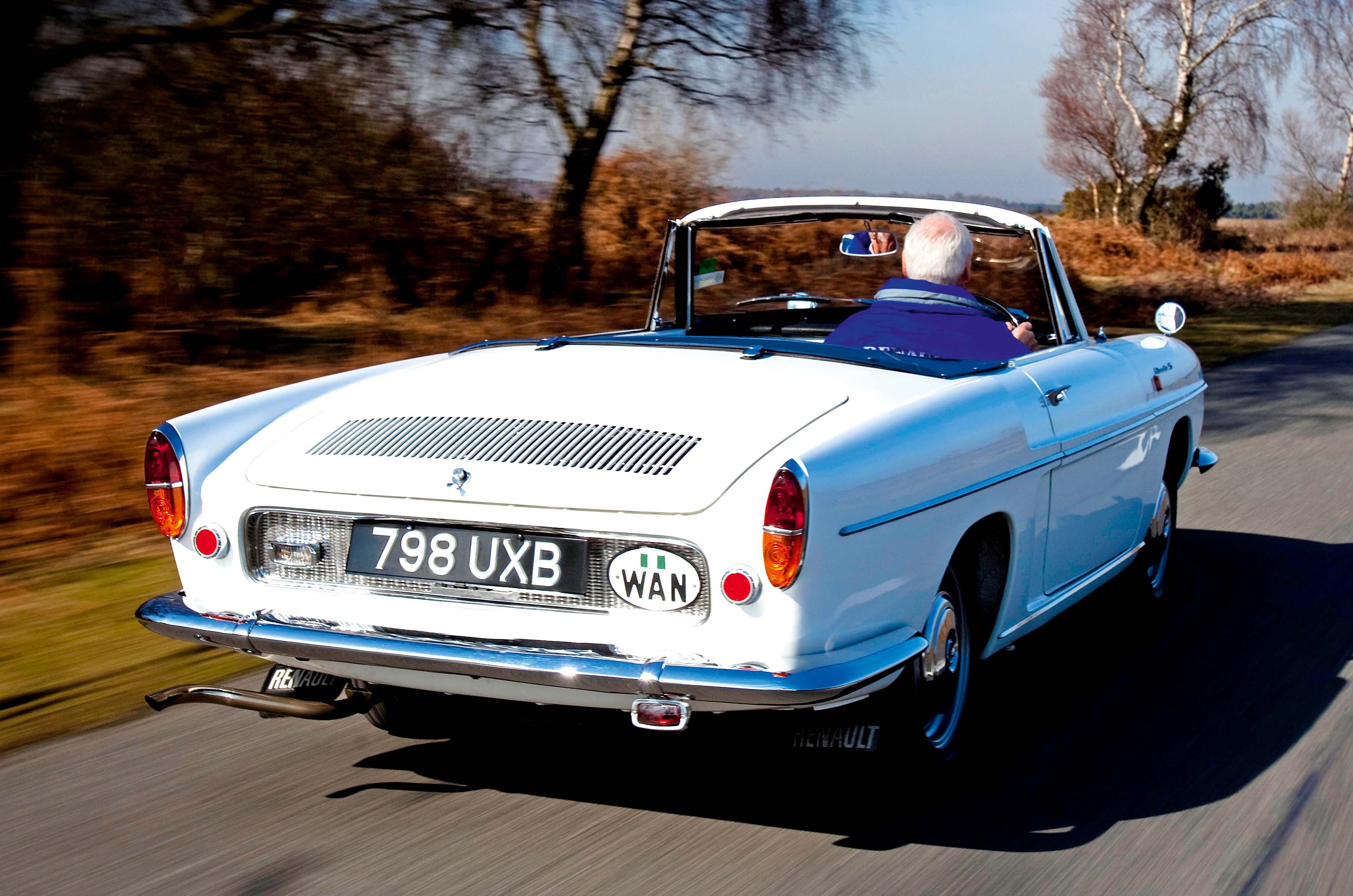
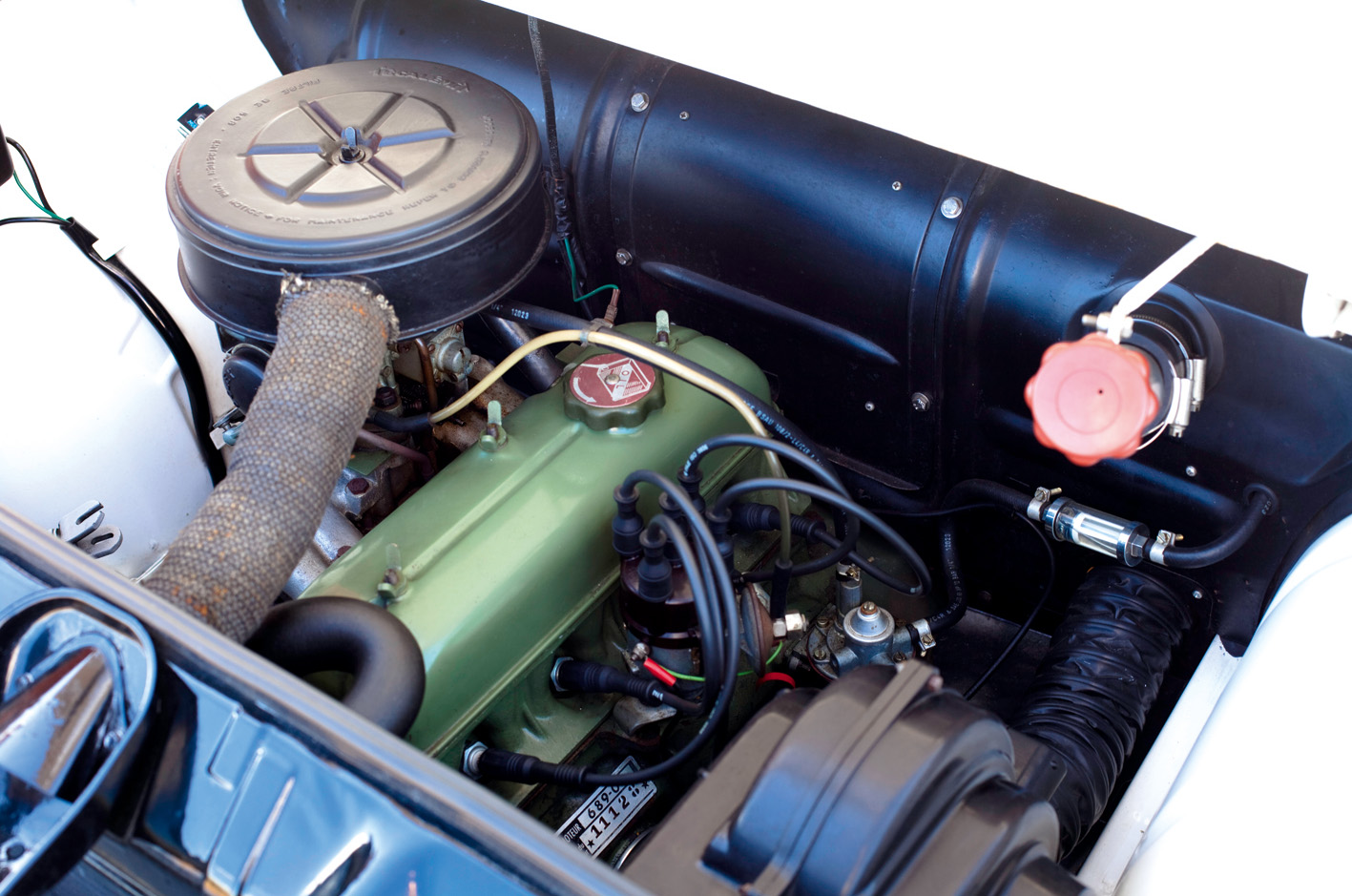
The Renault Floride Spéciale’s 45bhp engine is mounted in the rear, with the radiator right at the back of the car

Whoever did it, the Floride offered the perfect mix of French panache and crisp modernity to rival Volkswagen’s stylish Karmann Ghia.

Renault’s new baby was offered as an open two-seater or a hardtop and unveiled in prototype form at the 1958 Paris Salon.

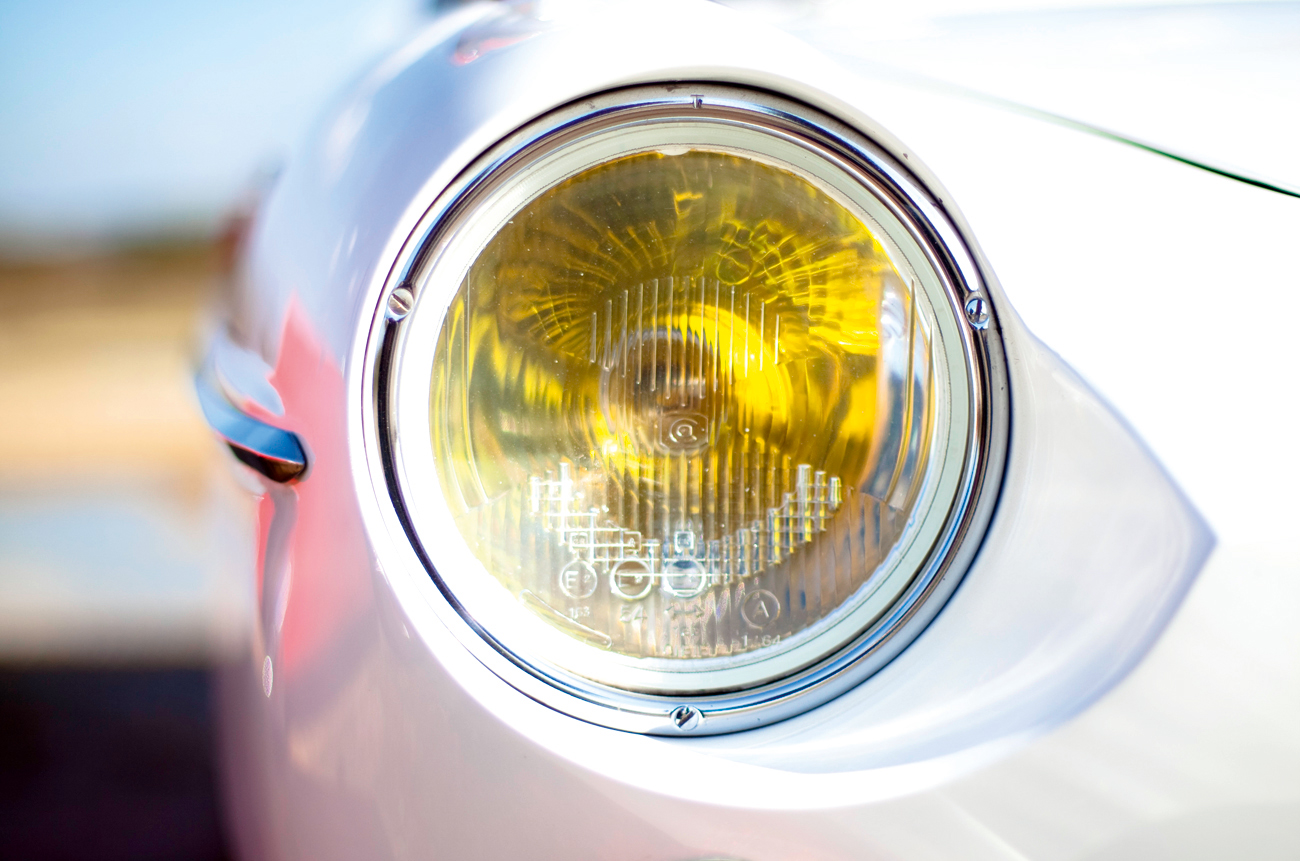
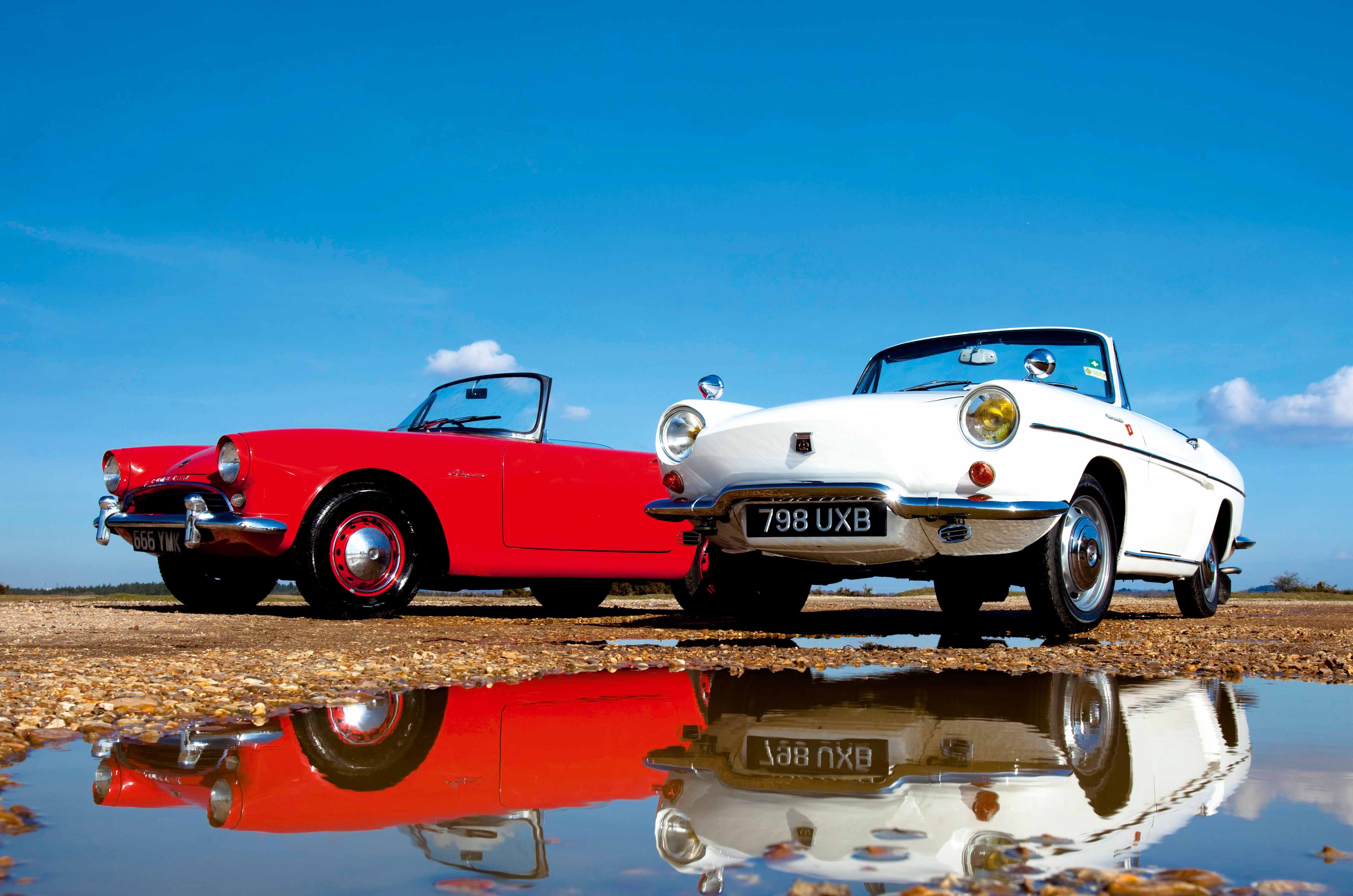
The trademark scalloped headlight treatment would later inspire another popular model, with Renault claiming that Abingdon had stolen its design for the MGB after seeing the Floride as a taste of the future.

Park the two together and you could hardly disagree, but that stylistic detail is where the similarities would both start and end.

The biggest difference between the Floride and its UK counterparts was its rear-mounted engine.

Ever since the 4CV (Quatre Chevaux) in 1947, Renault had persevered with an engine in the derrière in the interests of freeing up cabin space and reducing the impact of engine noise.

Classic & Sports Car – Sunbeam Alpine vs Renault Floride: the battle for your buck

The Renault’s headlight design is said to have inspired the MGB’s front lamps

Power came from the Dauphine’s wet-liner ‘four’ and suspension was via the same simple – and cheap – swing-arm set-up.

Keeping the modest 35bhp engine in check were drum brakes all round, although they were replaced by discs when power output was boosted by the arrival of a 45bhp, five-bearing engine (destined for the new R8) for the Floride S – for Spéciale – from 1962.

The larger engine, and the provision of a small, fold-down rear seat, meant that the radiator had to be moved to the back of the engine rather than ahead of it against the bulkhead, and as a result the Spéciale lost the gorgeous air intakes in the flanks ahead of the rear wheels.

From the start, the Floride was available with a superbly finished hardtop – an option that gave the car appeal in all climes.

And Renault was clearly keen to push the car’s exotic intent, given the naming of the various colour options: Trinidad Red, Camargue Gold and Mississippi Green were just some of the geographically inspired finishes.

Classic & Sports Car – Sunbeam Alpine vs Renault Floride: the battle for your buck

The Renault Floride Spéciale’s hotter iron-block ‘four’ is willing, but pace is steady rather than scintillating

From 1963 the Floride was renamed Caravelle, with the 956cc engine from the Spéciale (later boosted further to 1108cc and 51bhp) and all-disc brakes.

Rootes, meanwhile, was doing its best to ensure the Alpine kept up with the burgeoning demand for British sports cars in the United States.

First was an increase in capacity to 1592cc (giving 80bhp) a year after its 1959 launch.

By that time production, which had originally been outsourced to Armstrong Siddeley, had moved to Rootes’ new Ryton-on-Dunsmore plant. 

The option of a Harrington fastback followed in 1961, then three years later the Alpine lost its fins but gained a 92.5bhp, 1725cc, five-bearing engine and an all-synchro gearbox in MkIV form, with a three-speed automatic option.

An alternator and oil cooler were added from 1965.

Classic & Sports Car – Sunbeam Alpine vs Renault Floride: the battle for your buck

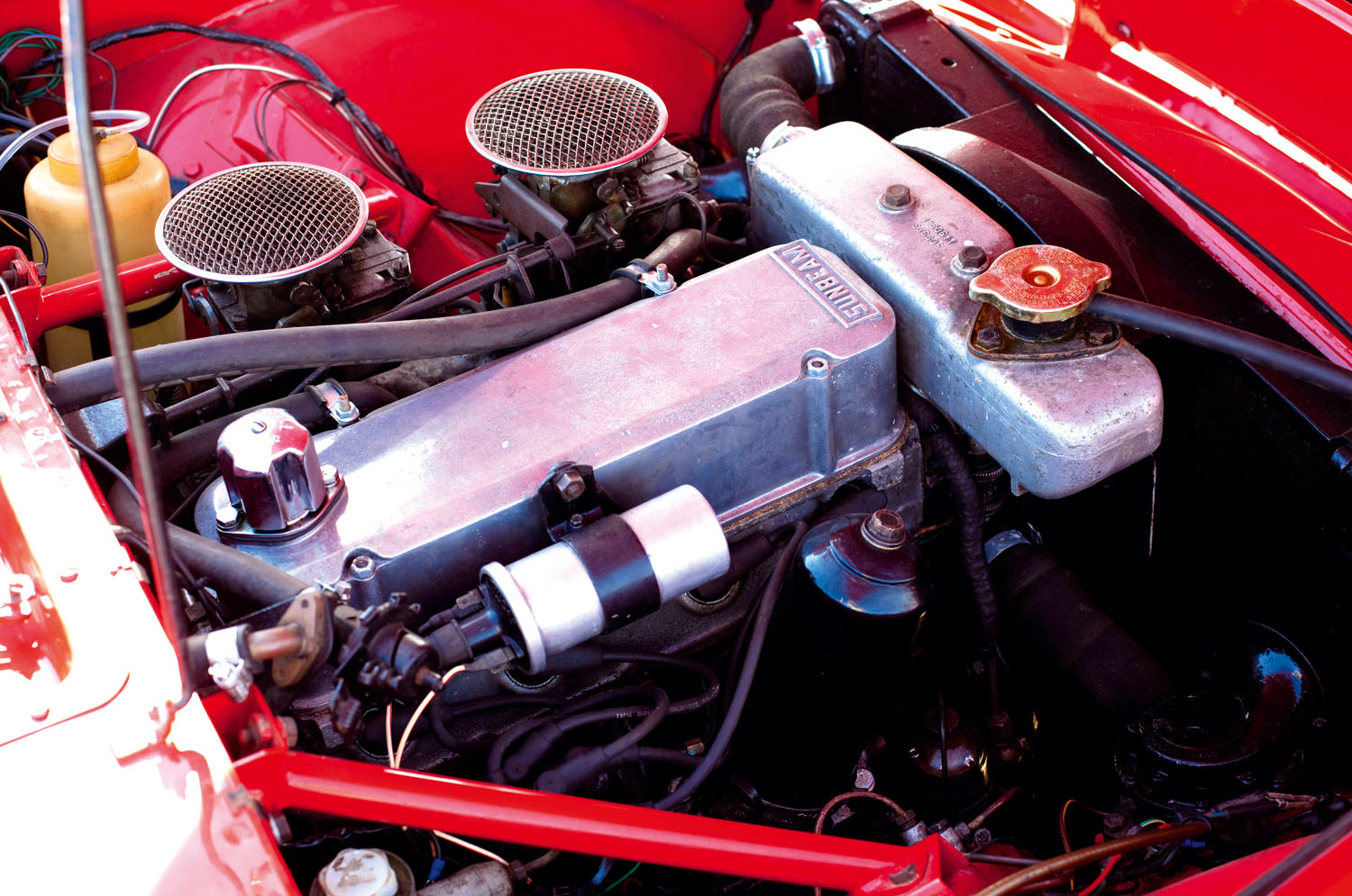
The Sunbeam Alpine Mk1’s twin-Zenith-equipped 1494cc ‘four’ gives nearly 80bhp and lively performance

Having two smart examples – a 1959 Alpine and a ’62 Floride S – side-by-side here offers the chance to admire their respective qualities all these decades on.

While Rootes had a reputation for sturdy, well-made products, the fit and finish of the Alpine are no match for the Renault.

French cars are often considered fragile, yet the Floride’s fittings and aluminium accessories are superbly detailed, with a simple tactility that’s a pleasure to experience.

The doors open and close with a gentle ‘click’ and the vinyl seats are delightfully crafted.

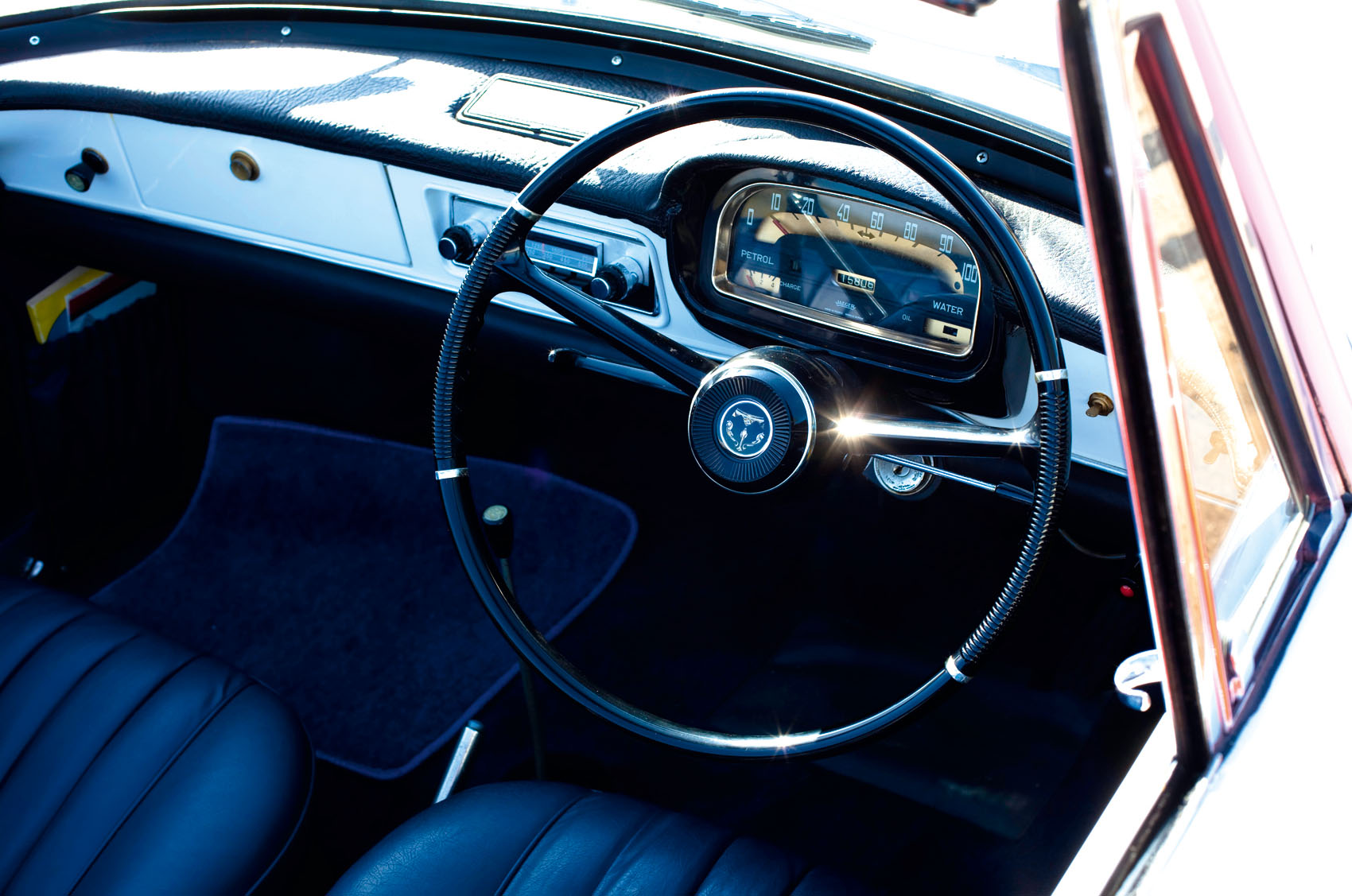
The dashboard has a distinctly Gallic feel, with the large central Jaeger speedometer and switches that work decisively on demand.

The Alpine, in contrast, feels more like a sports car from the moment you clap eyes on it.

The styling is less fussy, while the dashboard is well stocked and fronted by a wood-rimmed wheel as standard.

Classic & Sports Car – Sunbeam Alpine vs Renault Floride: the battle for your buck

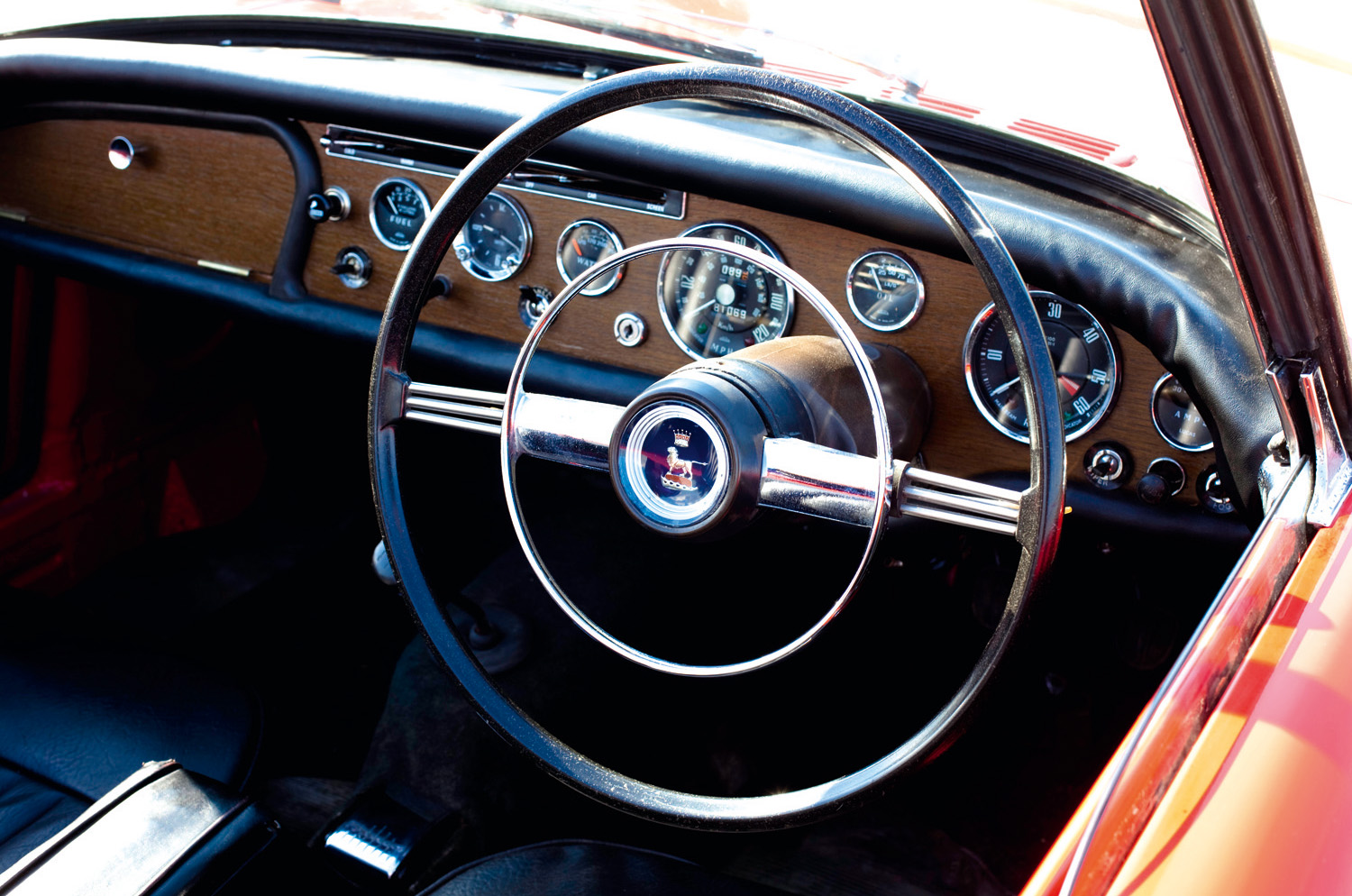
The Sunbeam Alpine’s interior has a glitzy Stateside style, but the later wood dashboard gives a British twist

This car has a traditionally English walnut-veneered finish, which wasn’t offered by the factory until 1961.

Both cars’ striking looks led to roles on the big – and small – screen.

In the 1962 Bond movie Dr No, Sean Connery drives a Lake Blue Alpine (reportedly borrowed from a local resident) under a truck, and in the gritty 1971 film Get Carter, Michael Caine is rescued by a femme fatale behind the wheel of a white example, which is later sent to a watery grave in the dock with its owner still locked in the boot.

As you might expect, the Floride enjoyed more glamorous appearances, such as being chased along the twisty roads above Monaco by Tony Curtis in a Dino 246GT for ’70s crime-fighting series The Persuaders.

In typical television fashion, the lowly Renault comfortably outguns the baby Ferrari.

There’s little chance of the Floride – even in S form – outrunning its rival today.

Classic & Sports Car – Sunbeam Alpine vs Renault Floride: the battle for your buck

The Renault Floride’s sparse interior with simple instruments

The Alpine’s 33bhp advantage means a four-second gap when you’re aiming for 60mph on the dial. 

But what the Floride lacks in off-the-mark ability, it more than compensates for in the driving experience.

It might only pack 956cc, but the combination of bantam weight – just 1645lb (746kg) – skinny 135 R15 tyres and rack-and-pinion steering gives it a delightfully crisp feel on the road.

That steering lightness is aided by the car’s 60.5% rearward weight bias, but the modest power means that it hardly translates into 911-like scariness on the limit.

Where it does become a handful, however, is over bumpy terrain, with the soft springing and damping rates generating some alarming wallow, especially under braking.

It’s not helped by the swing-arm suspension, which can allow the rear wheels to tuck under if provoked: many a Floride owner added a few crinkles to their car’s bodywork after getting over-exuberant behind the wheel.

Classic & Sports Car – Sunbeam Alpine vs Renault Floride: the battle for your buck

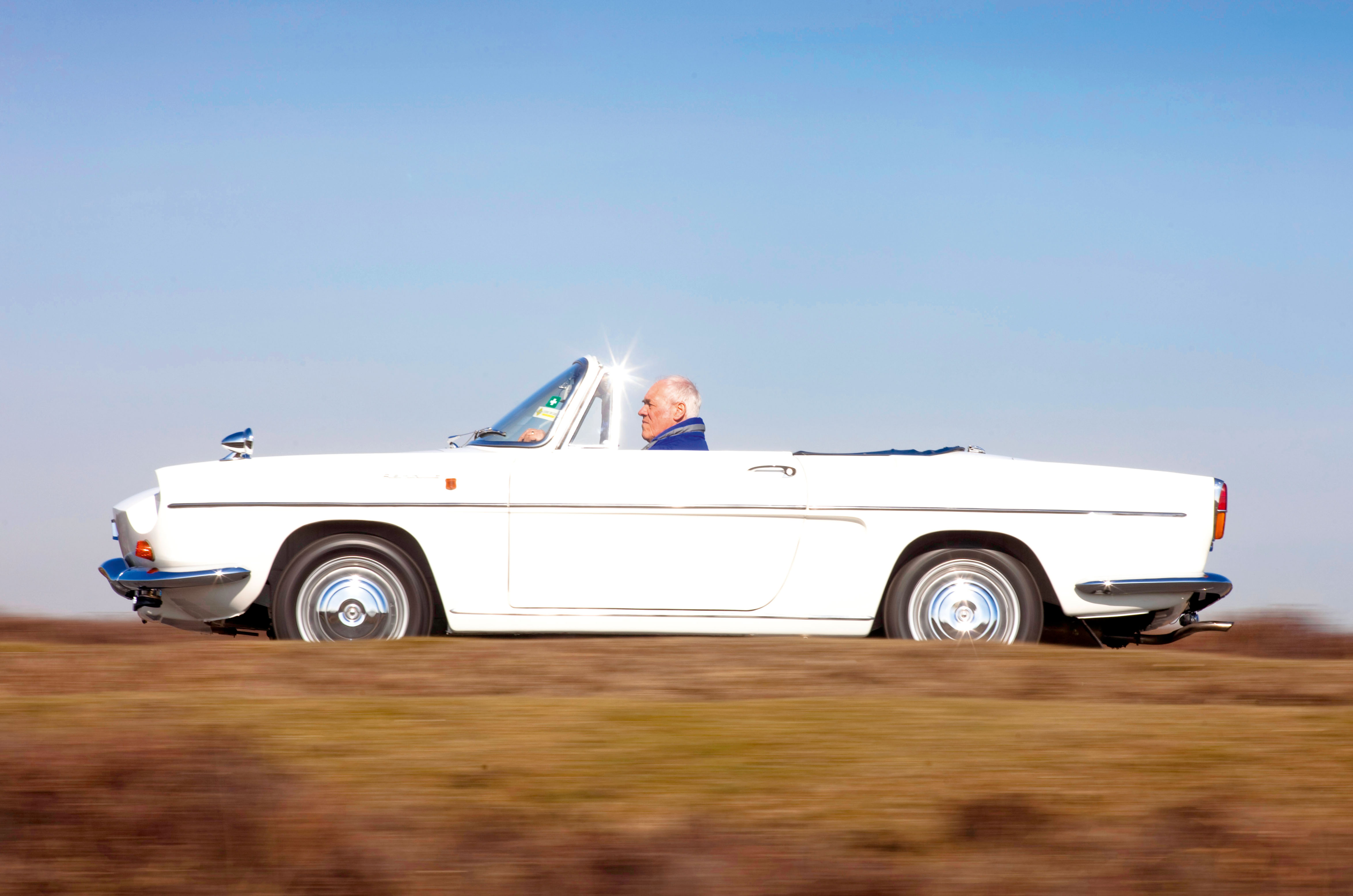
The Renault Floride Spéciale is a car for cruising

The delicacy of the Renault’s helm is matched by the rest of the controls: the gearlever feels more like a knitting needle mounted in a ball of wool and needs barely an inch of travel to engage a ratio.

The movement is so slight that you have to remember which cog you’ve selected because its position doesn’t appear to change.

Braking is strong with only moderate pressure on the pedal, but they are rarely called on with any urgency because the Floride’s featherweight feel encourages a pedestrian pace.

This isn’t a sports car that asks to be thrashed, more one to be savoured for the way it responds to gentle inputs.

The Alpine, however, is far more of a grab-it-by-the-scruff-of-the-neck number and feels altogether more robust and heavier to control.

Settle into the flat seat and it feels more conventional, too: there’s more legroom than in the Floride and the wheel is a decent arm’s length away.

Classic & Sports Car – Sunbeam Alpine vs Renault Floride: the battle for your buck

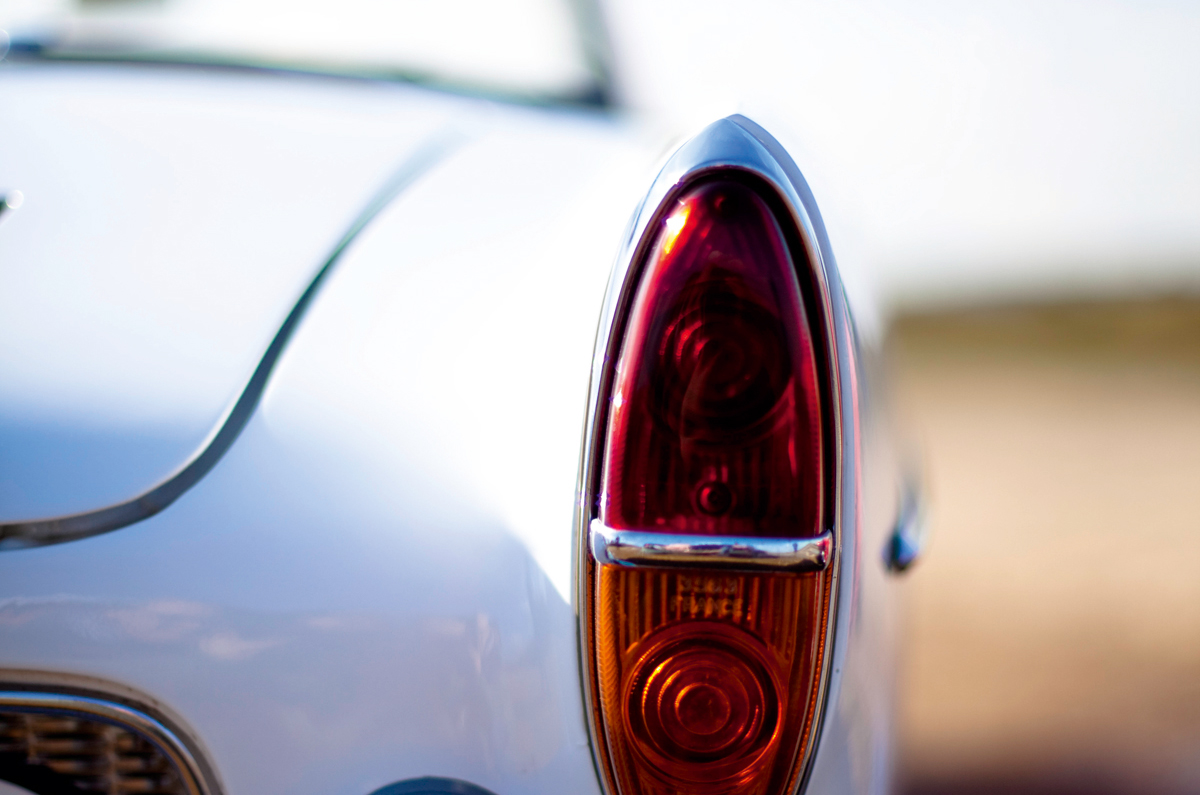
The Renault Floride Spéciale’s tailfins are similar to the Sunbeam Alpine’s

The recirculating-ball steering has a meatier feel – although it’s less precise than rack and pinion – as does the gearbox, with its direct lever unhindered by any long, cumbersome linkages.

There’s decidedly more weight up front – and an extra 491lb in total – so the Sunbeam is naturally more planted on the Tarmac.

The suspension is stiffer, meaning much less body roll, and the skittish road manners generated by its live-axle back end are more predictable and typical of the era.

With just 90lb ft of torque, the engine needs plenty of revs to deliver any convincing pace, but the Sunbeam is happy to be driven hard, with the overdrive a worthwhile option that makes motorways a lot less frantic.

Not that top speed was ever the Alpine’s forte, because for those Rootes fans who wanted more oomph there was the option of the Ford V8-engined Tiger in the same stable, introduced in an attempt to compete with the AC Cobra’s sales.

Unsurprisingly, however, the urge from the 260cu in V8 rather overpowered the Alpine’s chassis, and the added weight made the Tiger prone to understeer.

Classic & Sports Car – Sunbeam Alpine vs Renault Floride: the battle for your buck

‘The Renault is a pleasure to drive, but the Sunbeam [above] is more of a sports car’

The Alpine, even in 98.5bhp Series V form, is a better match for the Husky-derived underpinnings.

Renault had a more modest performance alternative in its product line with the Dauphine Gordini (for those who were happy to have a roof over their heads), but then speed was never really a priority for the Floride’s customers.

This was very much a car for being seen in and a stylish statement of fashion that would more likely be found winding its way through the Côte d’Azur or gracing a driveway in Beverly Hills than taking your partner away for a wet weekend in the Cotswolds.

Those exotic ambitions were reflected in the Renault’s UK price-tag: in 1962 the Floride Spéciale pictured here cost £1168 – more than £200 more expensive than the £957 Alpine, whose price had dropped since its launch.

With that in mind, it’s surprising that Renault produced some 120,000 Florides and Caravelles over a decade-long run – not quite up there with its MGB rival’s half a million, but still impressive.

Classic & Sports Car – Sunbeam Alpine vs Renault Floride: the battle for your buck

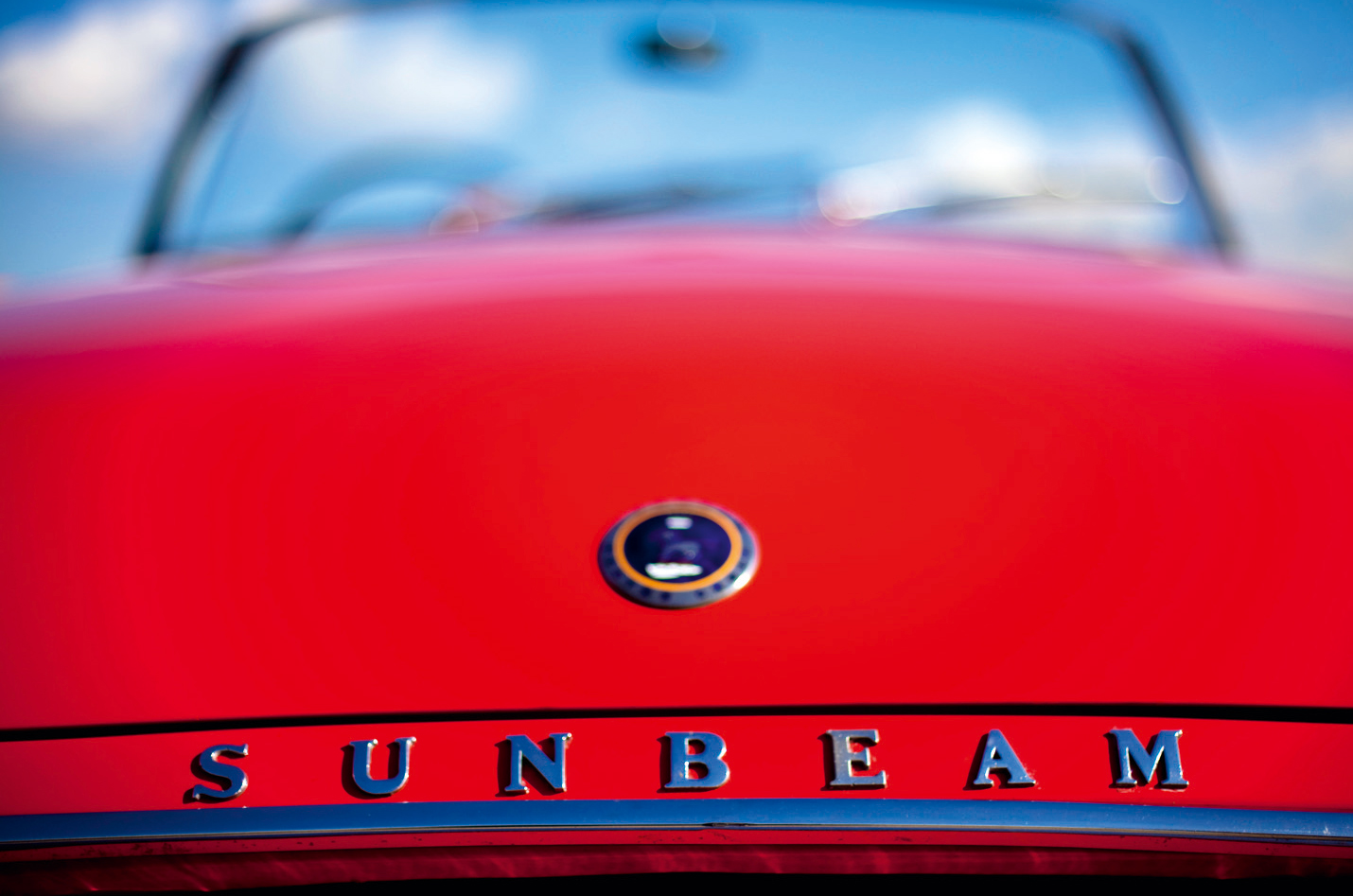
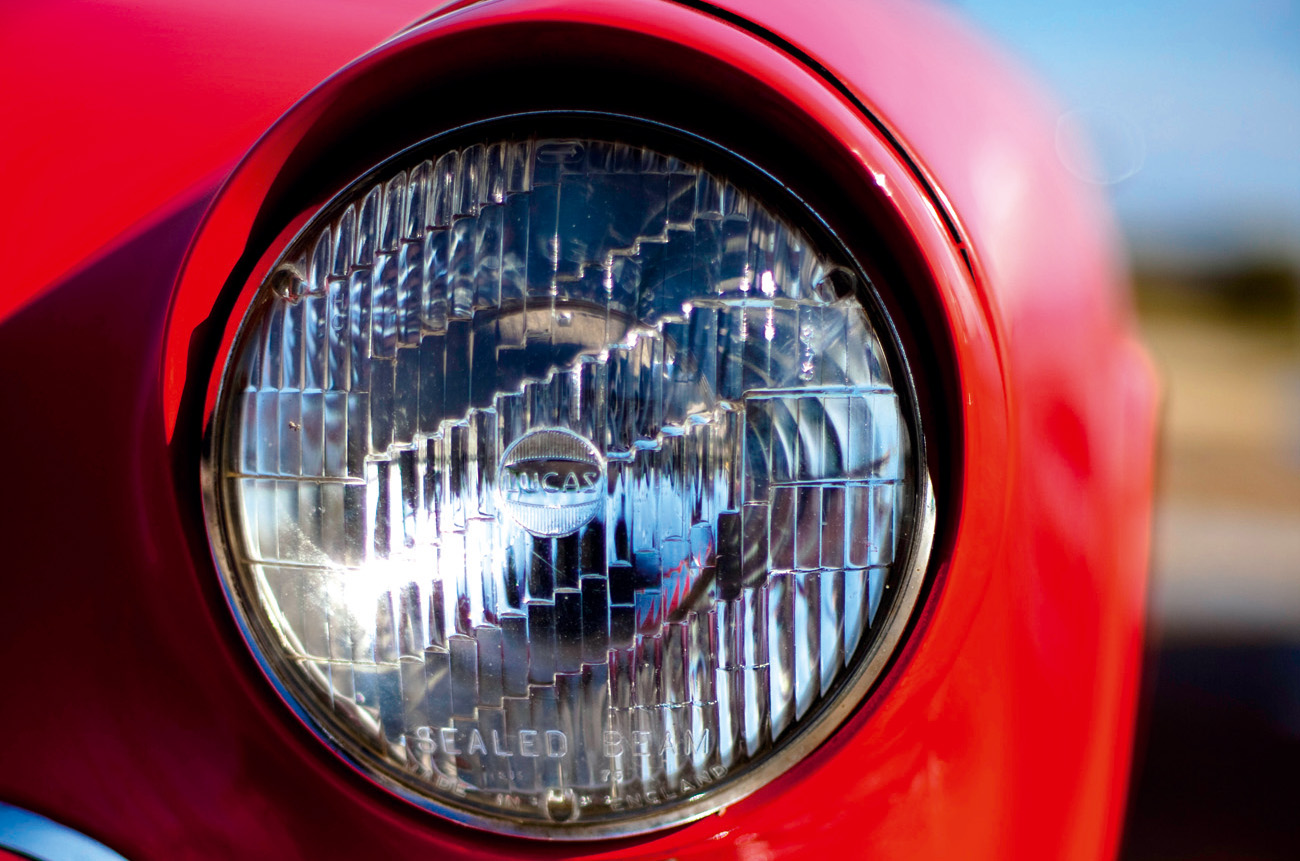
The Sunbeam Alpine’s hooded lights were an American design trend

The Rootes Group only managed to churn out little more than 70,000 Alpines before Chrysler’s buyout in 1968 spelled the end of the entry-level sports car.

That same year, Renault dropped its last true convertible to focus on models such as the front-wheel-drive R16.

Today, each of these cars offers stylish yet affordable motoring, with decent examples of either machine remaining within reach of a modest budget – although a Floride or Caravelle will inevitably be harder to come by than the Alpine on UK shores.

Which is better? That all depends on whether you fancy a traditional British sports car or rather something rarer that exudes a more sophisticated image.

Images: Malcolm Griffiths

Thanks to: the Renault Classic Car Club; Sunbeam Alpine Owners’ Club

This was first in our July 2010 magazine; all information was correct at the date of original publication


Factfiles

Classic & Sports Car – Sunbeam Alpine vs Renault Floride: the battle for your buck

Sunbeam Alpine Mk1

  • Sold/number built 1959-’60/11,904 (plus 57,347 MkII-V models to 1968)
  • Construction steel monocoque
  • Engine all-iron, ohv 1494cc ‘four’, with twin Zenith carburettors
  • Max power 78bhp @ 5300rpm
  • Max torque 90lb ft @ 3400rpm
  • Transmission four-speed manual with optional overdrive, RWD
  • Suspension at front independent by coil springs, wishbones, telescopic dampers, anti-roll bar rear live axle, semi-elliptic leaf springs, lever-arm dampers
  • Steering recirculating ball
  • Brakes discs front, drums rear
  • Length 12ft 11in (3943mm)
  • Width 5ft 6in (1537mm)
  • Height 4ft 3in (1308mm)
  • Wheelbase 7ft 2in (2184mm)
  • Weight 2136lb (968kg)
  • 0-60mph 14 secs
  • Top speed 98mph
  • Mpg 26
  • Price new £972


Renault Floride Spéciale

  • Sold/number built 1959-’68/117,113 (including Caravelle)
  • Construction steel monocoque
  • Engine iron-block, alloy-head, ohv 956cc ‘four’, with single Solex carburettor
  • Max power 45bhp @ 5500rpm
  • Max torque 48lb ft @ 3300rpm
  • Transmission four-speed manual, RWD
  • Suspension independent, at front by double wishbones, anti-roll bar rear swinging half axles, radius arms; coil springs, auxiliary rubber springs f/r
  • Steering rack and pinion
  • Brakes discs
  • Length 14ft (4260mm)
  • Width 5ft 2in (1570mm)
  • Height 4ft 4in (1310mm)
  • Wheelbase 7ft 5½in (2267mm)
  • Weight 1645lb (746kg)
  • 0-60mph 17.6 secs
  • Top speed 89mph
  • Mpg 45
  • Price new £1168

Enjoy more of the world’s best classic car content every month when you subscribe to C&SC – get our latest deals here


READ MORE

Sunbeam Alpine: driving the original James Bond car

Chic to chic: Volkswagen Karmann Ghia vs Renault Floride

Your classic: Sunbeam Tiger