Williams F1’s Heritage collection: a Grand Prix dynasty

| 27 May 2025
Classic & Sports Car – Inside Williams F1’s Heritage collection: a Grand Prix dynasty
Deep inside the Williams F1 headquarters in Grove, Oxfordshire, lies an inner sanctum that should be avoided if you have any pressing engagements to keep elsewhere.

Williams Heritage houses one of the world’s most important collections of Formula One cars, with around 100 on display, and it is a reminder of the late Frank Williams’ immense contribution to the sport over the past five decades, along with legendary engineer and co-founder Patrick Head.

It also has the capability to run some of Williams’ best-loved cars at motorsport events around the globe.

Classic & Sports Car – Inside Williams F1’s Heritage collection: a Grand Prix dynasty
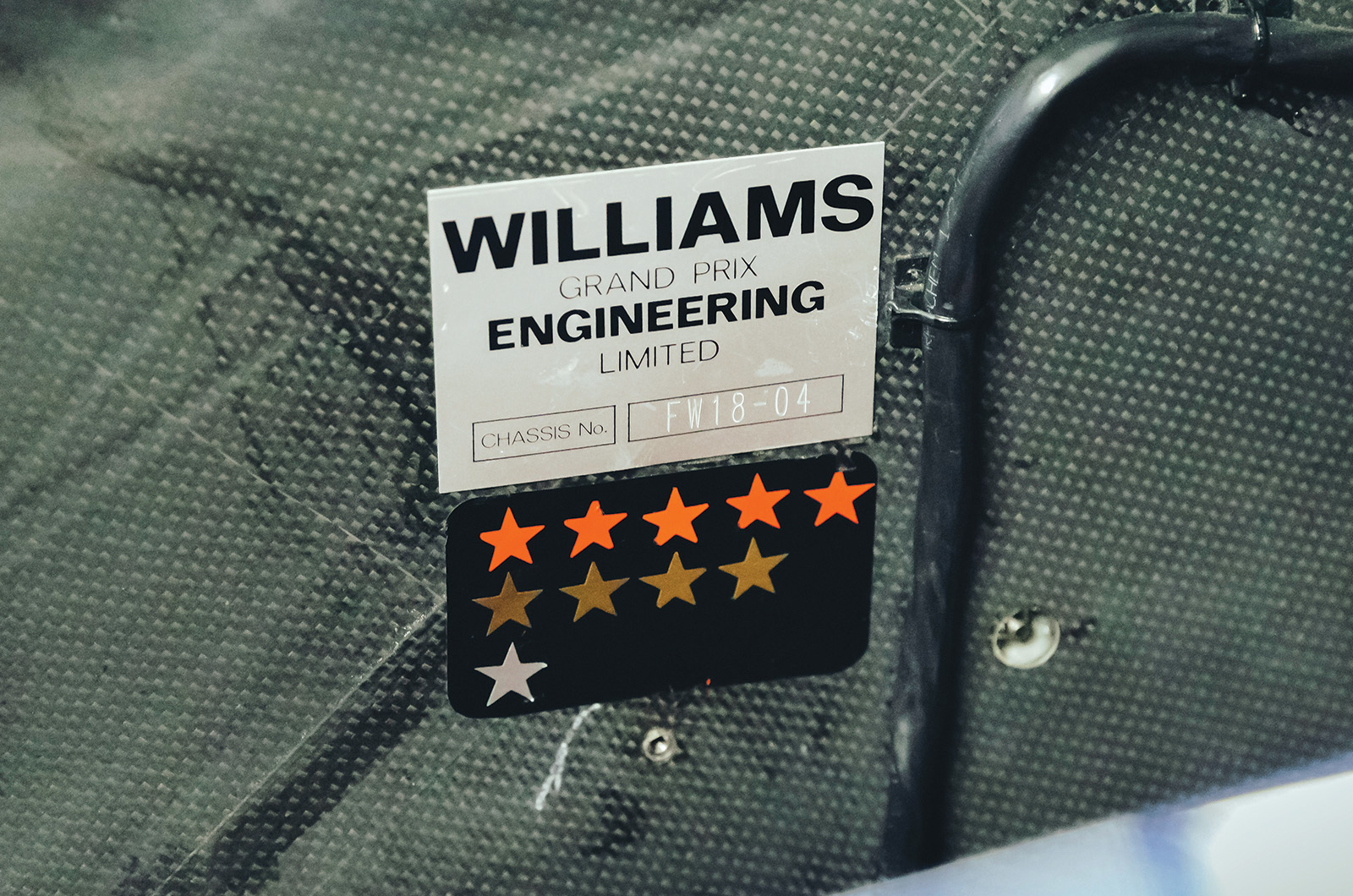
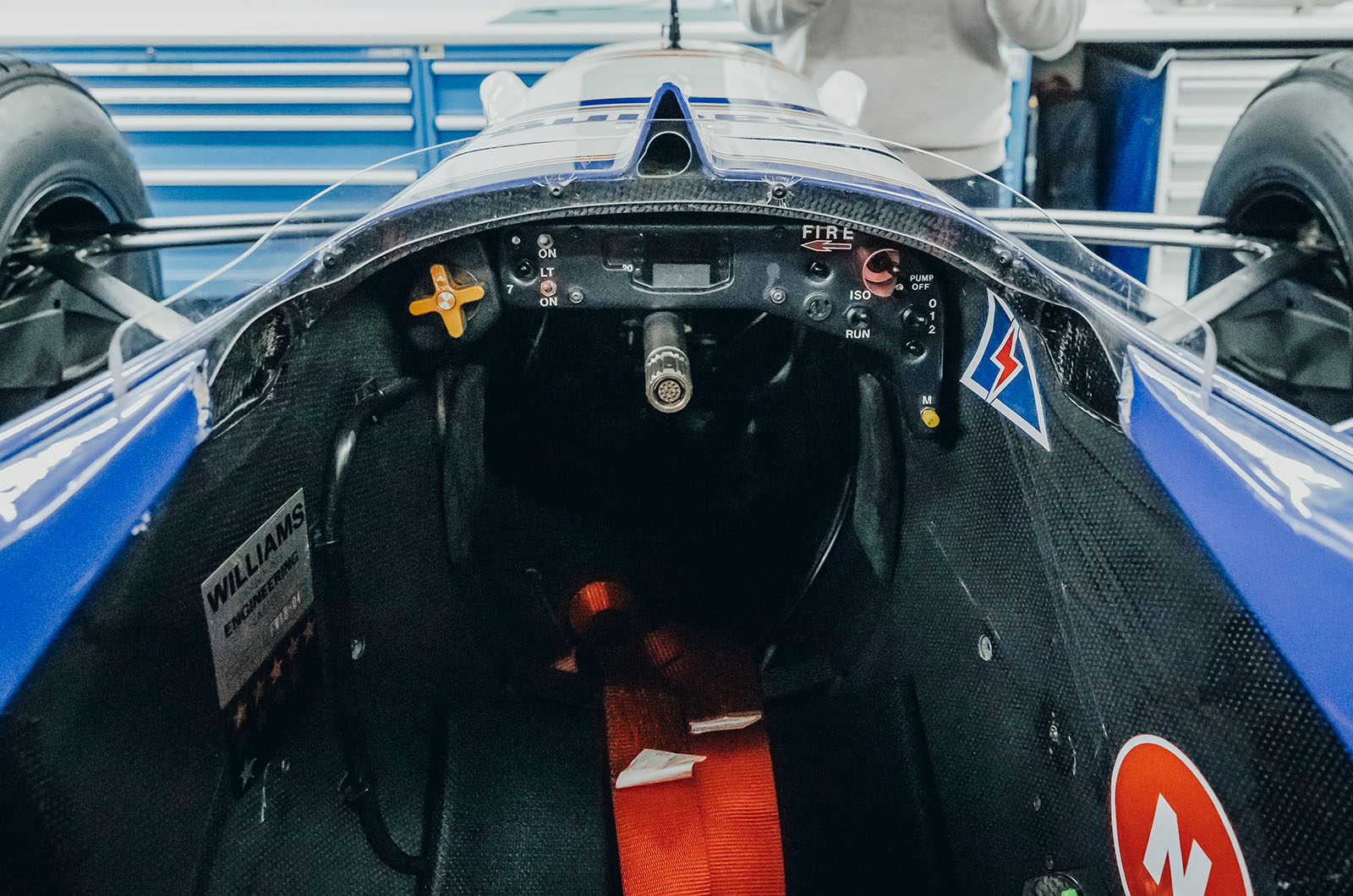
Inside the Williams FW18’s cockpit; the stars signify poles and podium places

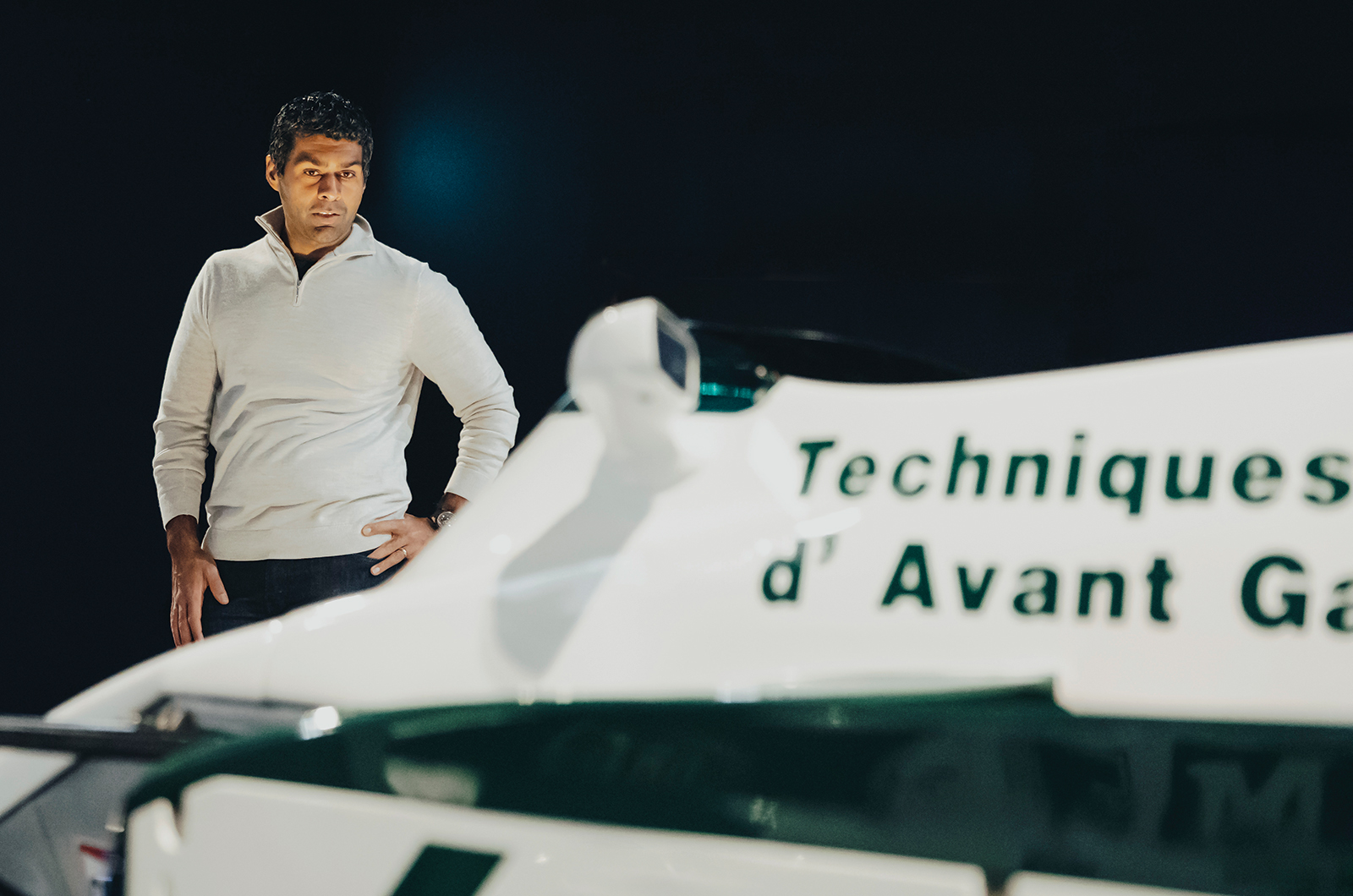
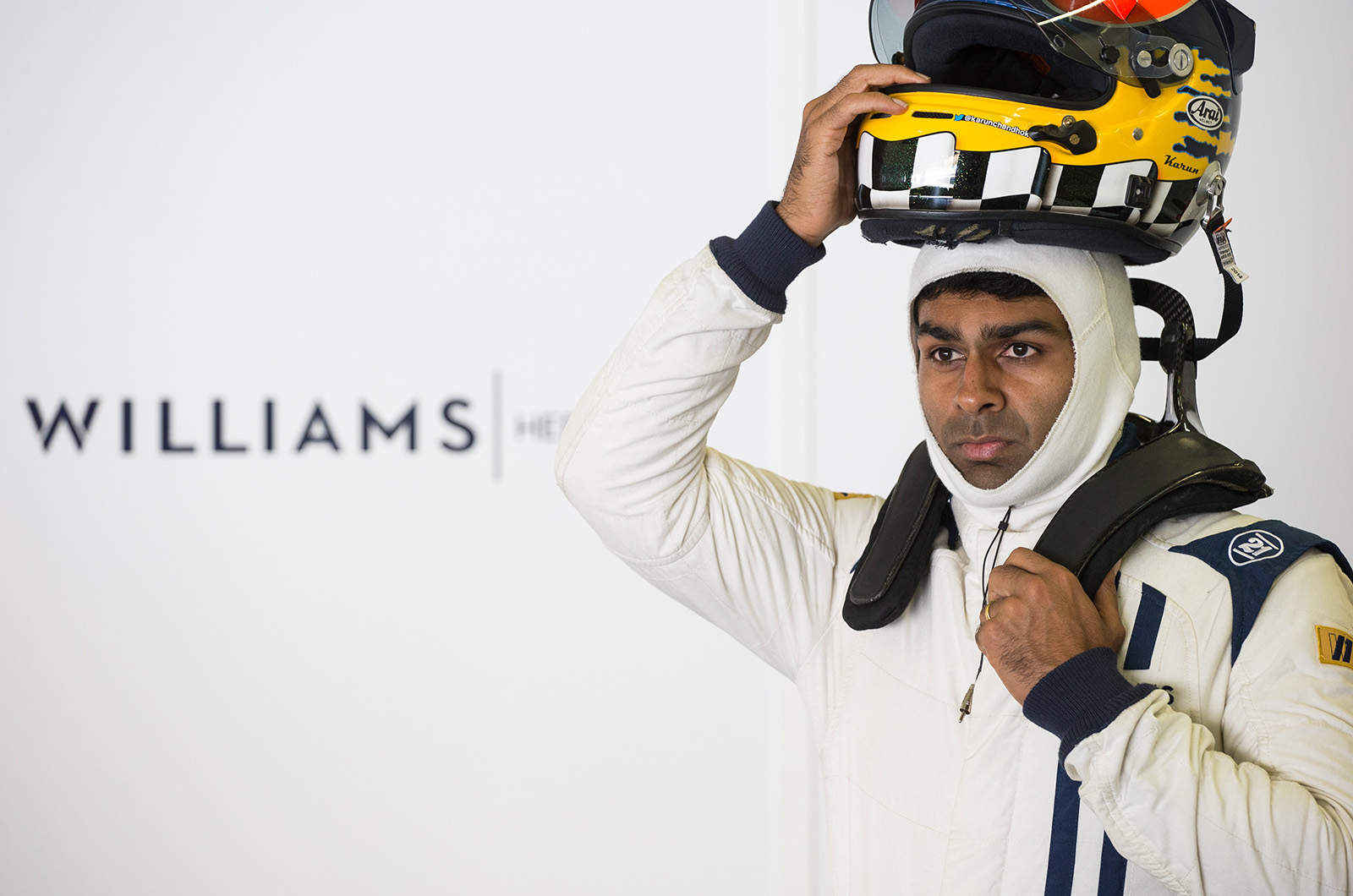
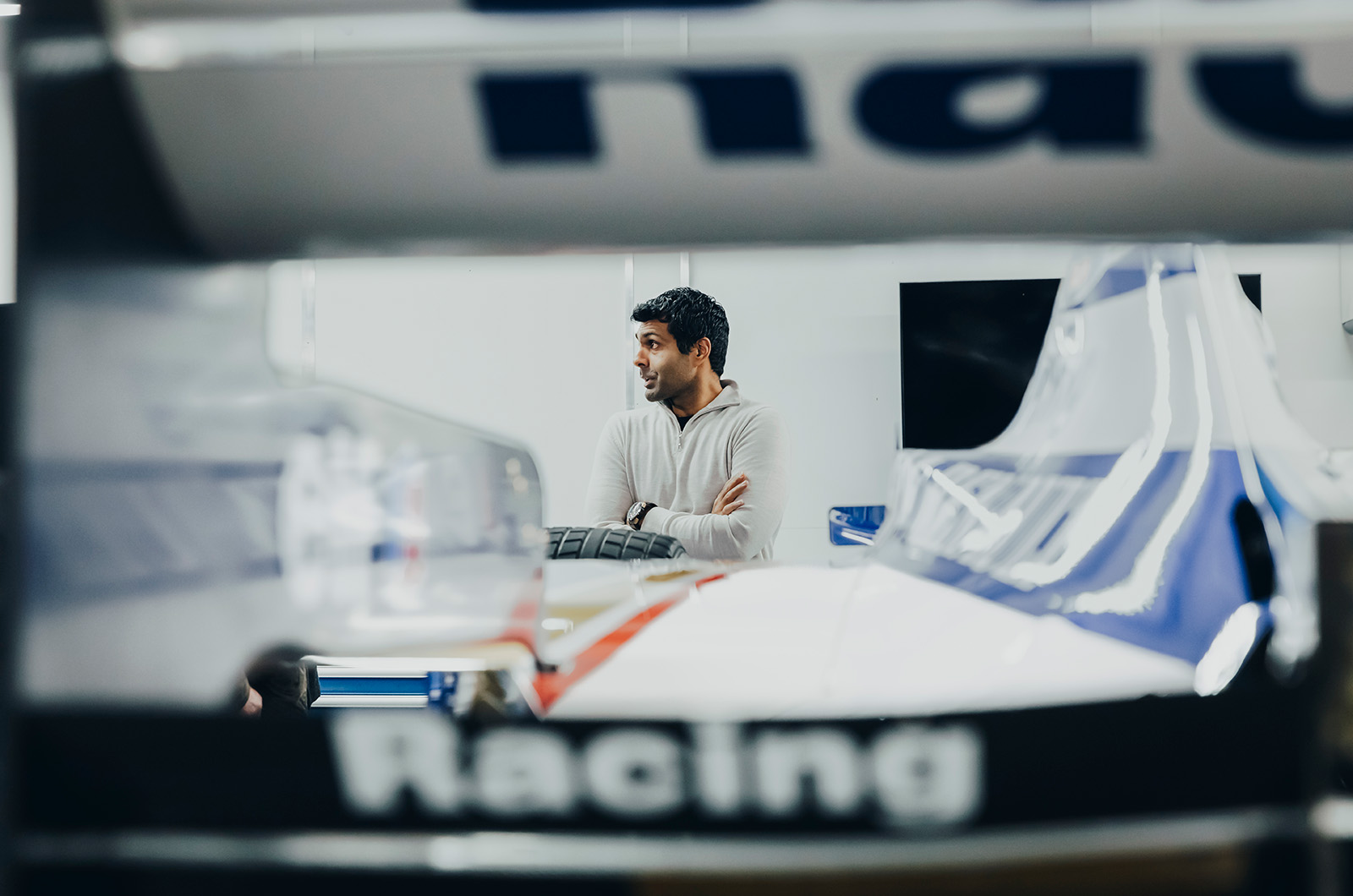
Our host today, F1 driver turned broadcaster Karun Chandhok, is the perfect ambassador for the collection.

“About 10 years ago Jonathan Williams, Frank’s son, wanted to create a Williams Heritage brand and structure the whole thing so he could run cars for clients,” Karun explains.

“He also wanted to choose certain halo cars to show off and do demos in.” 

Karun’s passion for motorsport is palpable from the off, but his path to becoming only the second Indian driver to compete in F1, when he joined HRT (Hispania Racing Team) in 2010, was far from conventional.

Classic & Sports Car – Inside Williams F1’s Heritage collection: a Grand Prix dynasty
At the Williams Heritage collection, keeping the cars running is as important as protecting their legacy, says Karun Chandhok

“I never did a go-kart race in my life,” Karun laughs. “In India we had no karting – we didn’t even have F1 on TV until the 1993 Spanish Grand Prix; I had to get VHS tapes of the races sent to me by a friend of my dad’s.

“But I grew up in a motorsport family. Dad [Vicky Chandhok] won rallies, and my grandfather was part of a group that built India’s first race track.

“I started racing in 2000 in a local single-seater series.

“I did Formula Asia in 2001, then I did two years in F3 and three years in GP2, before starting in F1.”

Classic & Sports Car – Inside Williams F1’s Heritage collection: a Grand Prix dynasty
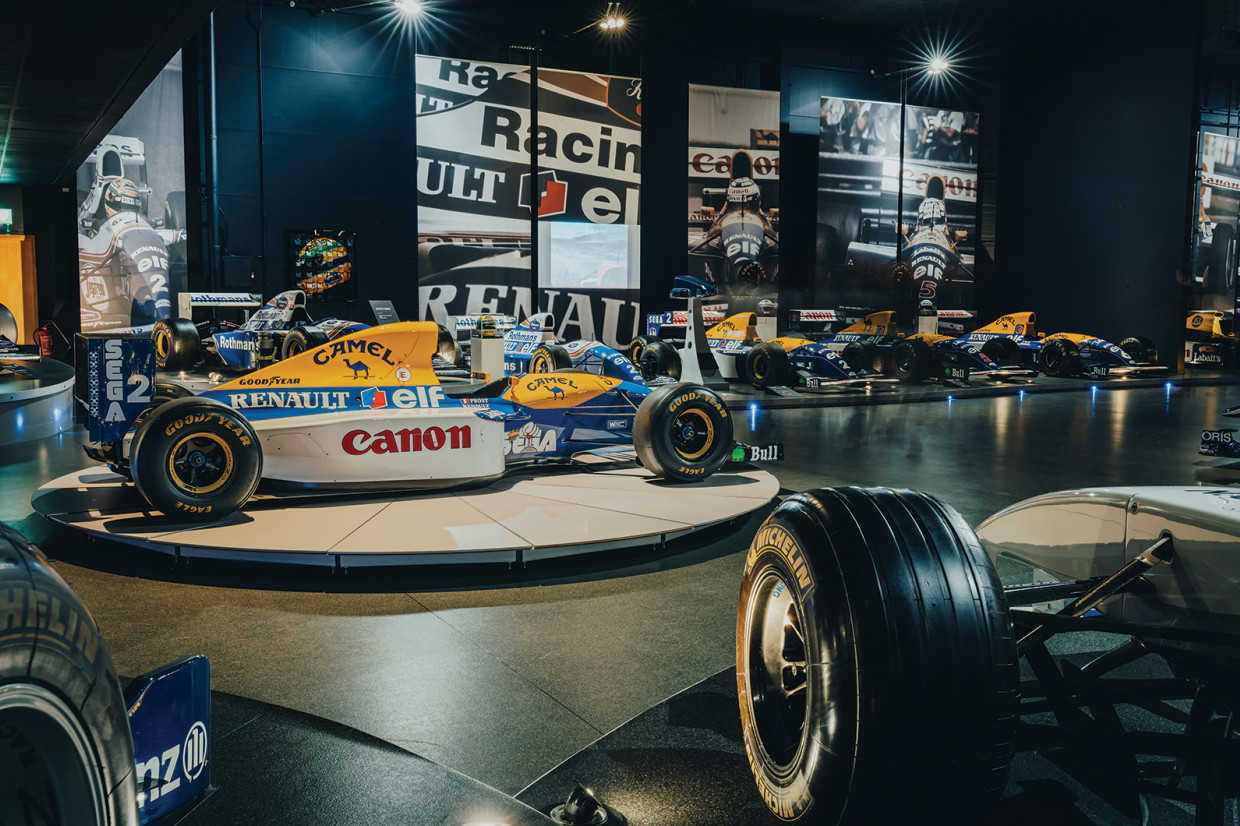
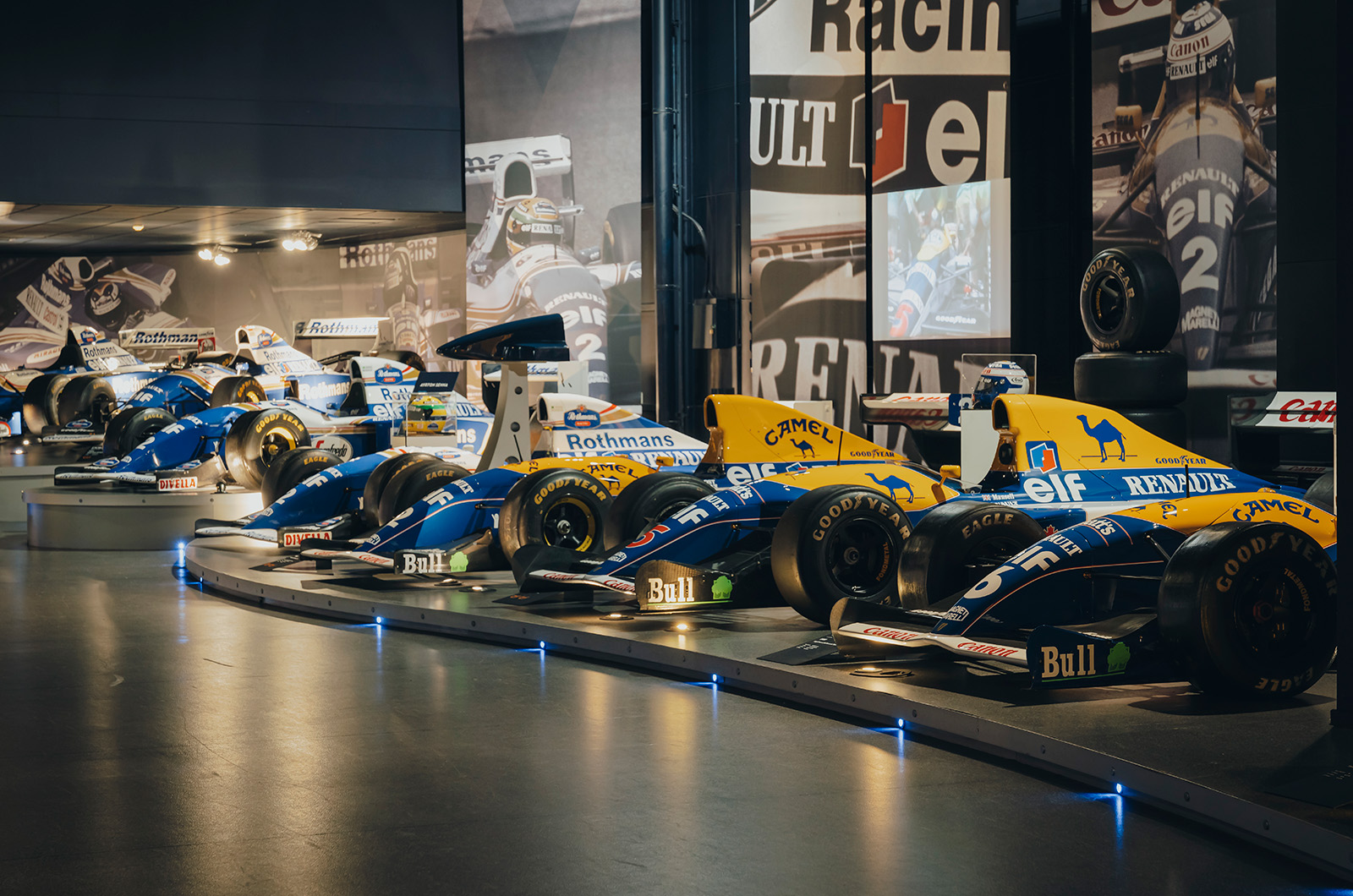
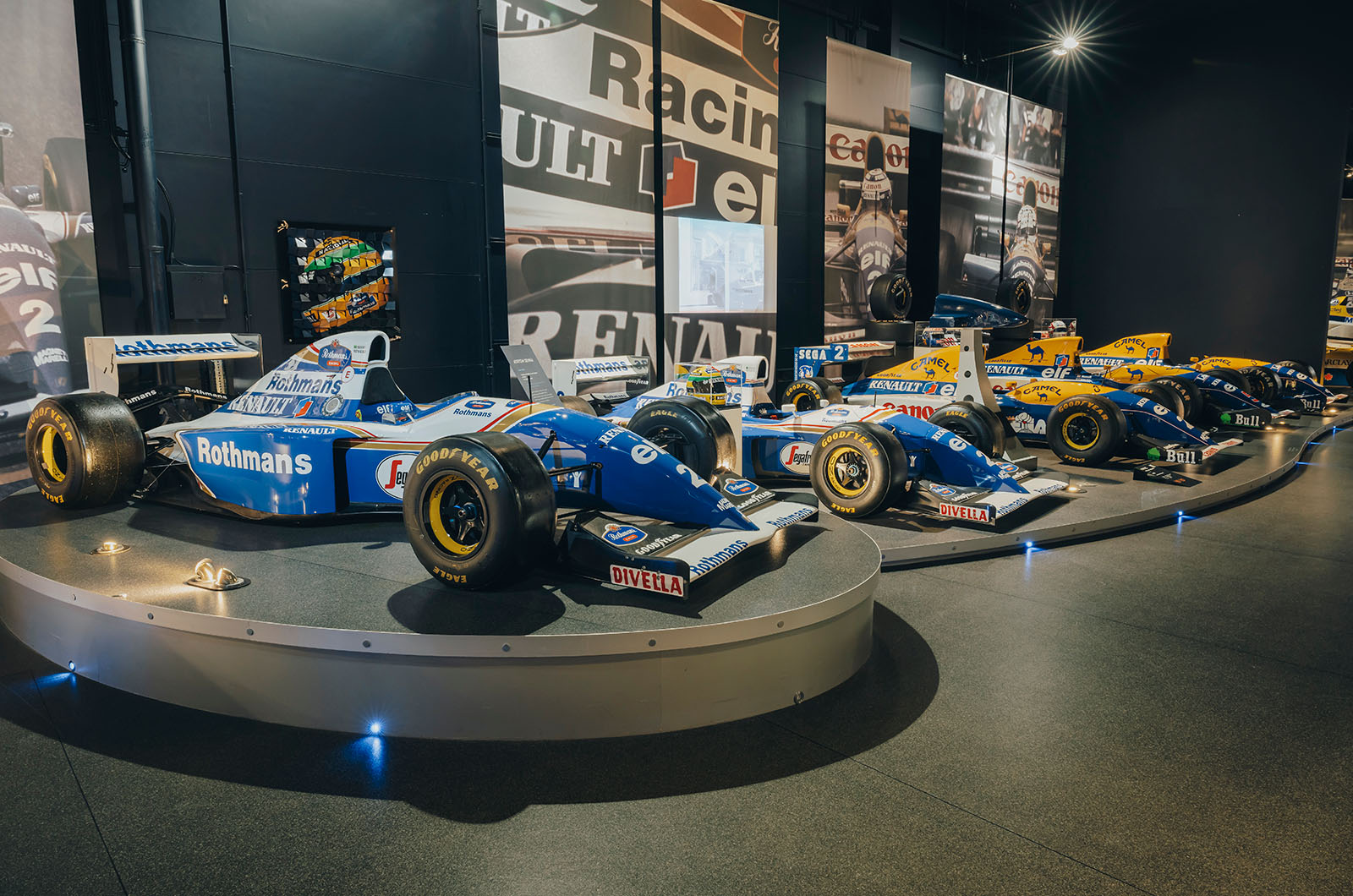
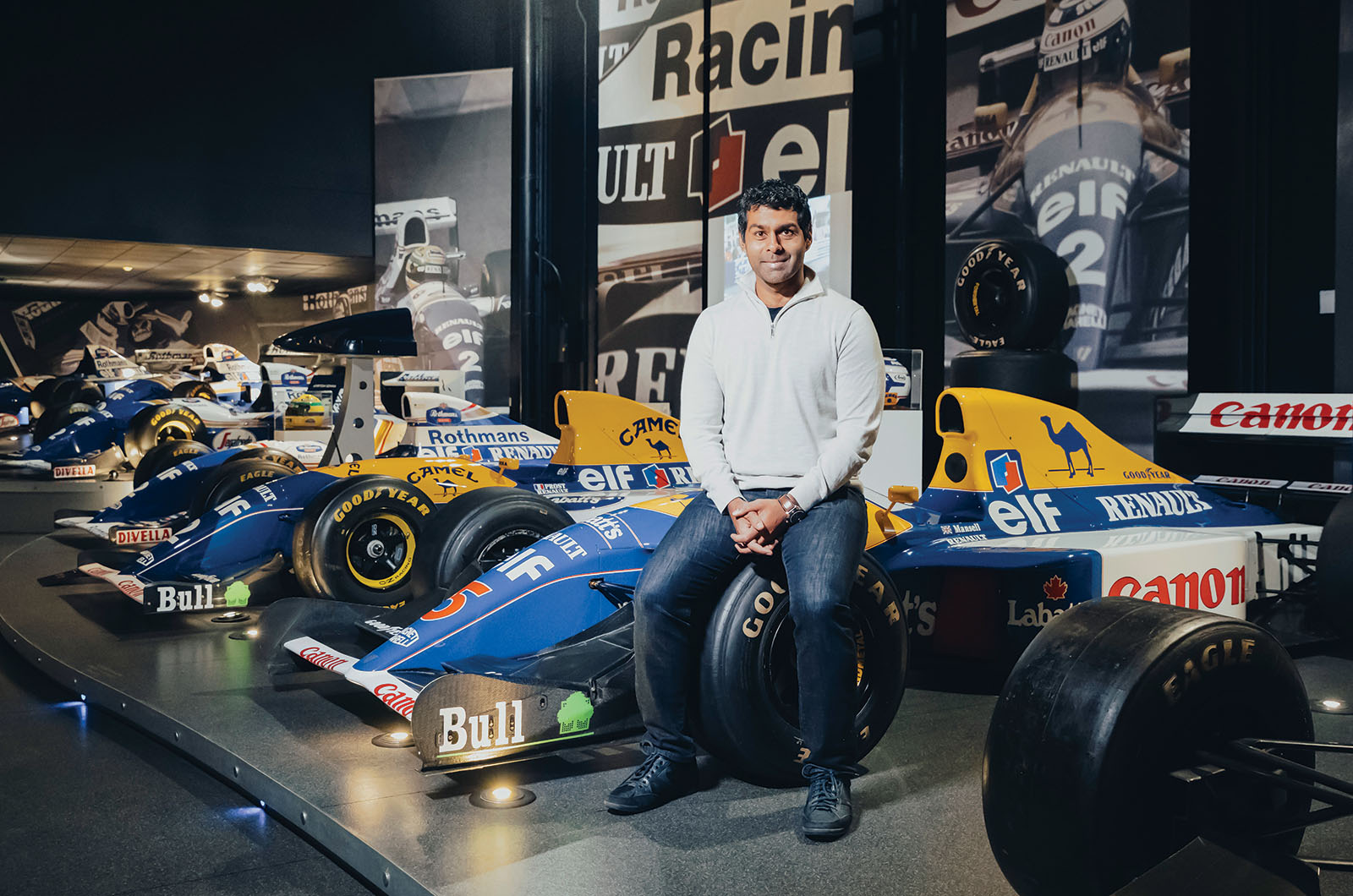
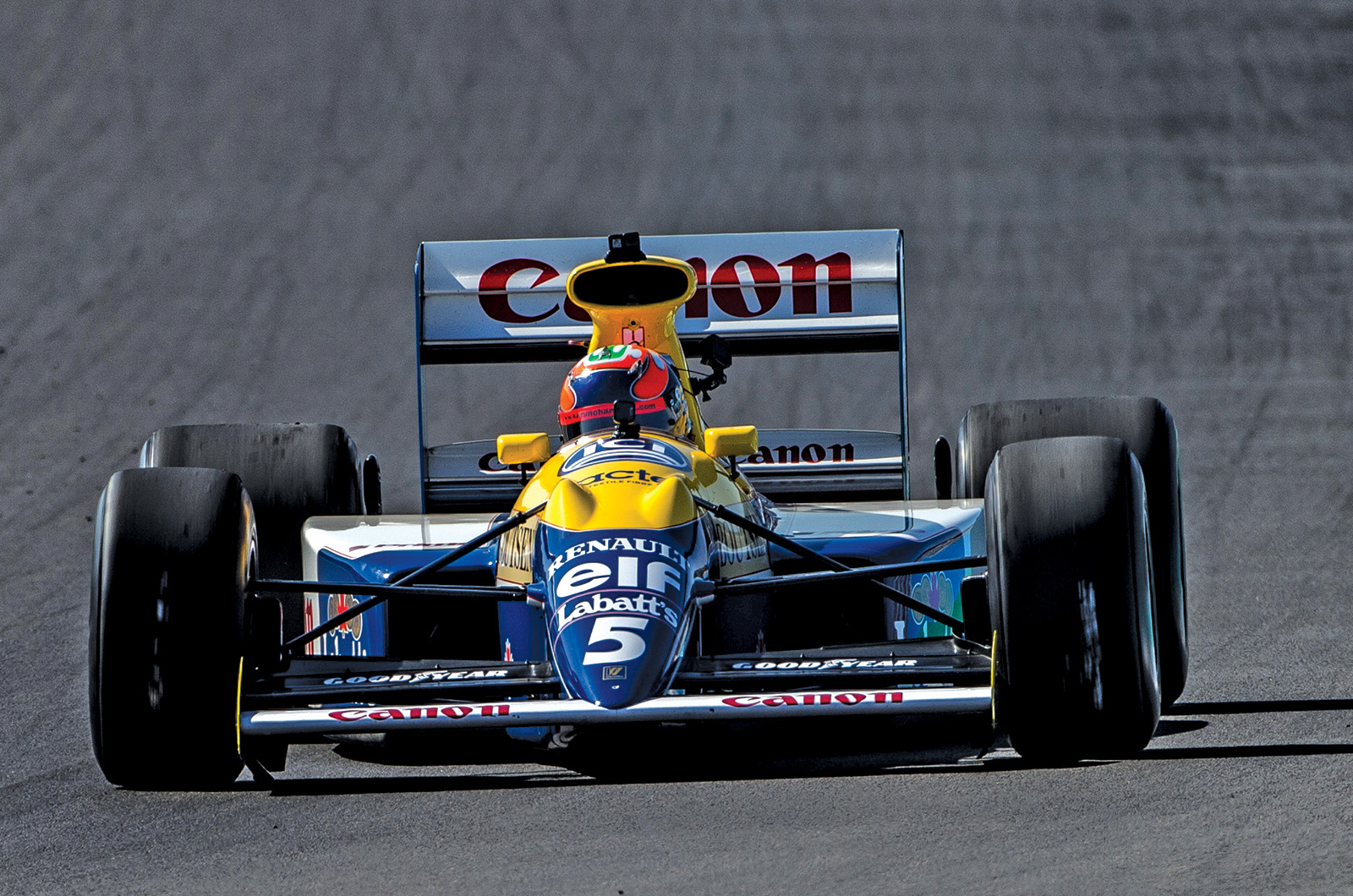
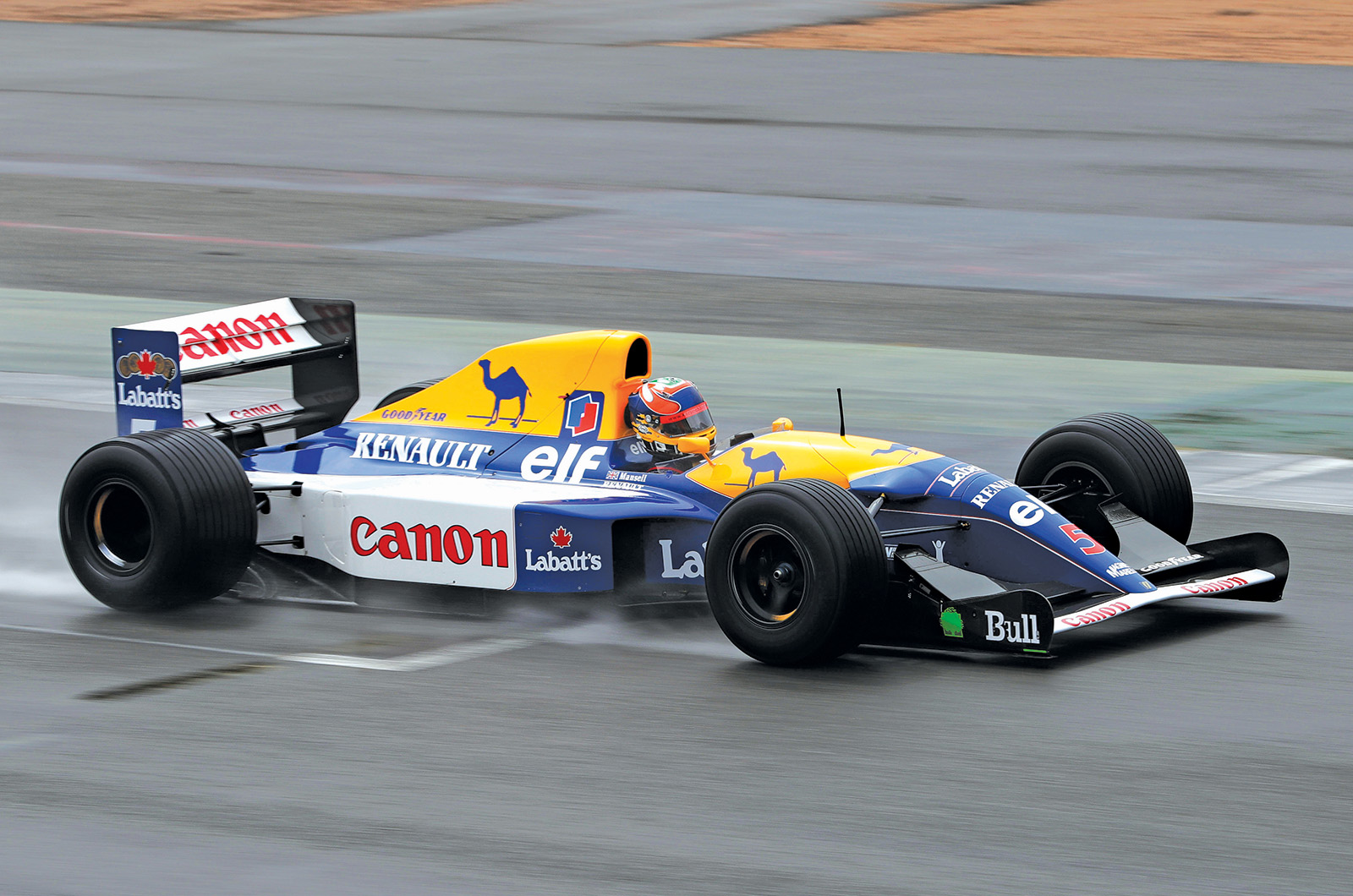
The blue-and-yellow, Camel-liveried Williams F1 cars represent a high point for the Oxfordshire-based team

So, did he ever try karting, like most of his F1 peers?

“I bought my first kart when I started in F1,” he smiles. “There was no testing, so I needed to keep sharp.

“I would cycle 30 miles to Whilton Mill [a Northamptonshire kart circuit] from home, do two hours on the track, then cycle back. I did 10,000km on my bike that year – more than I did in my road car!”

Classic & Sports Car – Inside Williams F1’s Heritage collection: a Grand Prix dynasty
‘Williams F1’s Heritage collection is an awe-inspiring sight. Even the group of schoolkids that has just arrived is temporarily stunned into silence’

As Karun starts our tour, I’m still trying to figure out which aren’t halo cars.

The exhibits (more of which are in storage elsewhere) are all beautifully presented on low plinths in a broadly chronological sweep that takes us through the low-ceilinged halls, with each car accompanied by a small panel giving its year, drivers and the number of poles and podium places it achieved.

It is a truly awe-inspiring sight, and even the group of teenage schoolkids that has just arrived (the collection is not public-facing, but Williams Heritage supports STEM learning and frequently hosts school groups) is temporarily stunned into silence.

Classic & Sports Car – Inside Williams F1’s Heritage collection: a Grand Prix dynasty
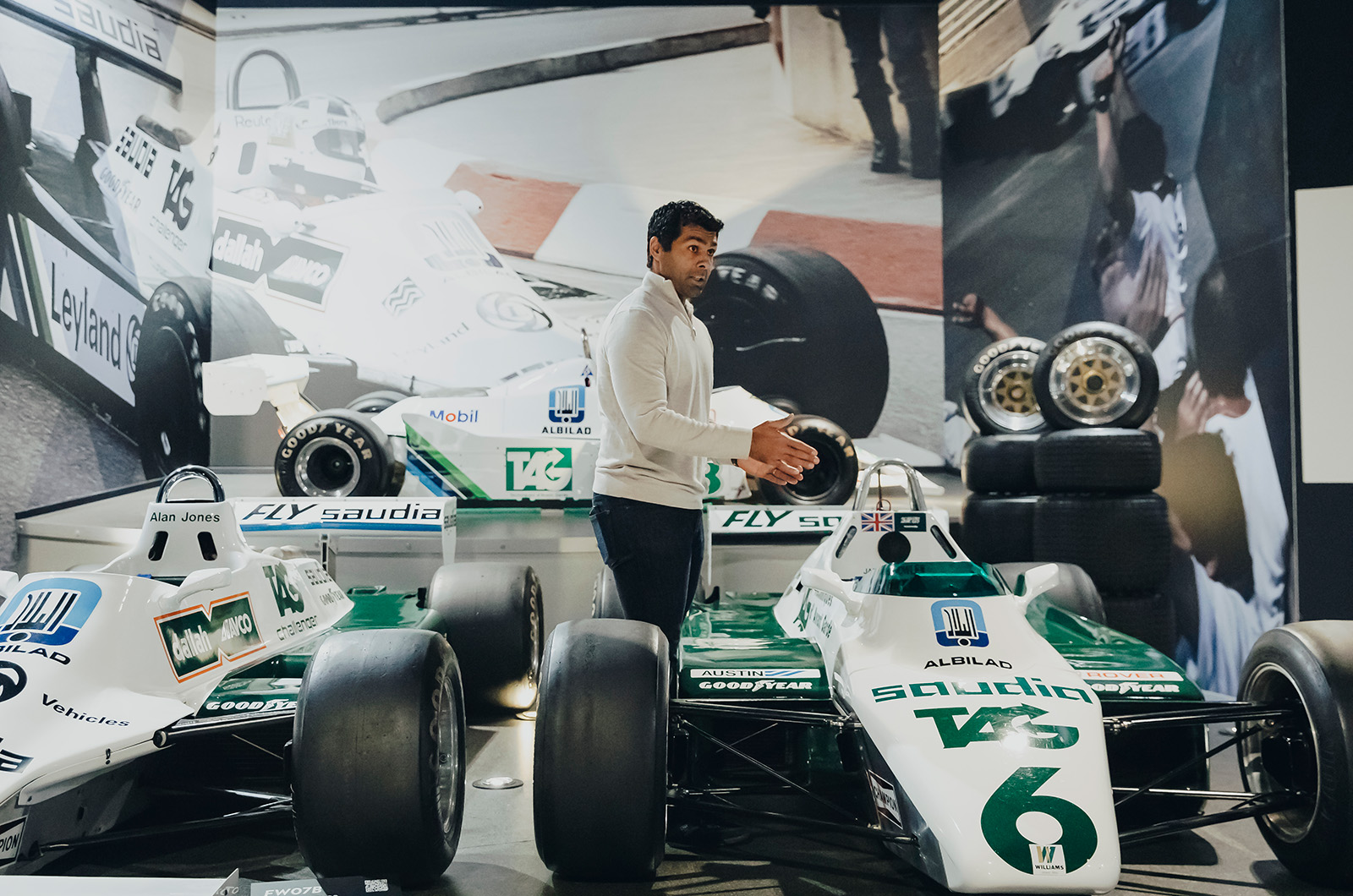
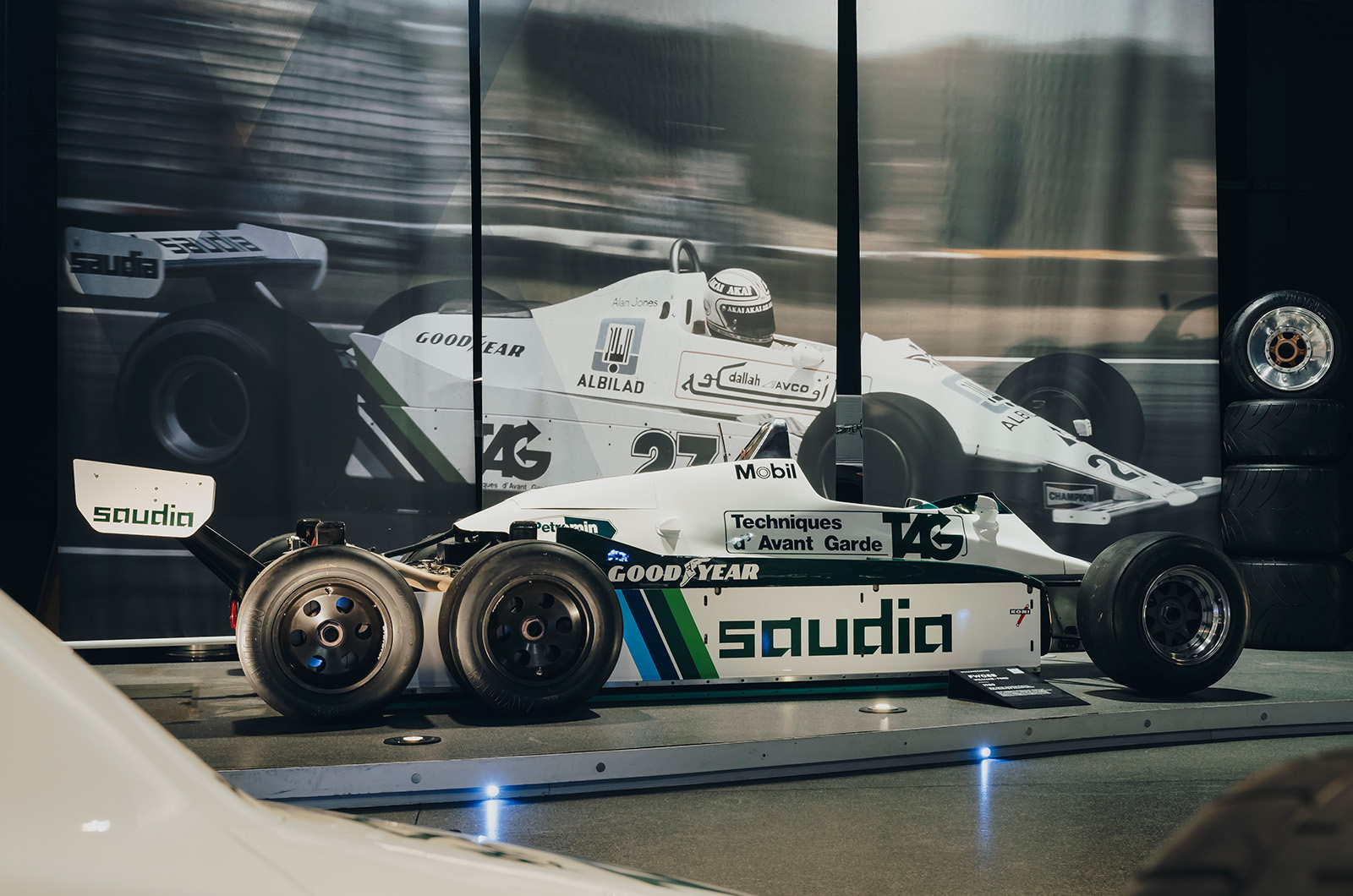
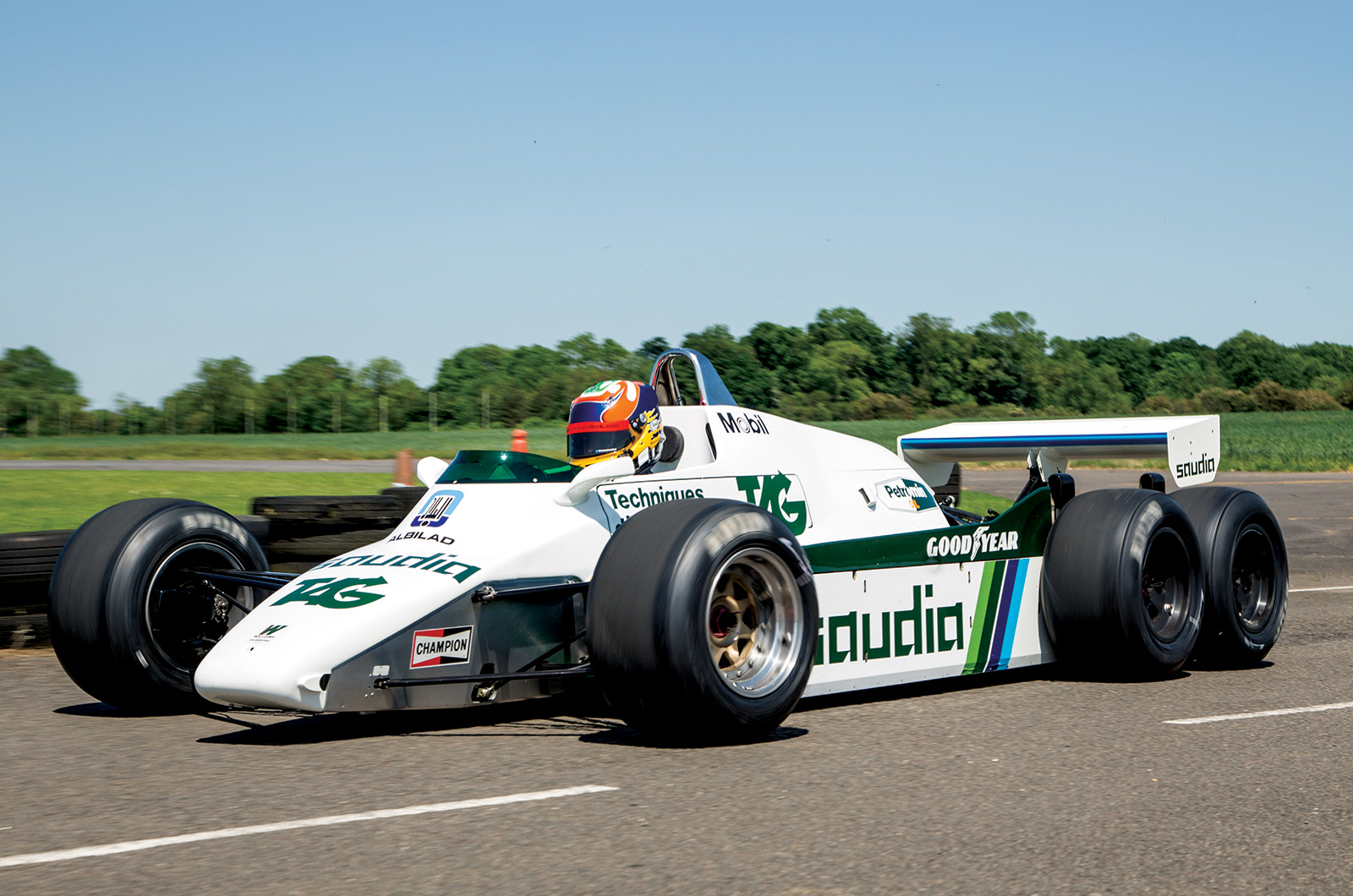
The 1982 Williams FW08B six-wheeler was a fascinating concept that was quickly banned

Frank Williams was heavily involved with the curation of the museum, as Karun explains: “The collection needed to reflect what Frank believed was the true beginning of Williams, which was the Patrick Head era.

“So he wanted the set to start with the FW06, which was the first of Patrick’s cars [and is the oldest exhibit here].

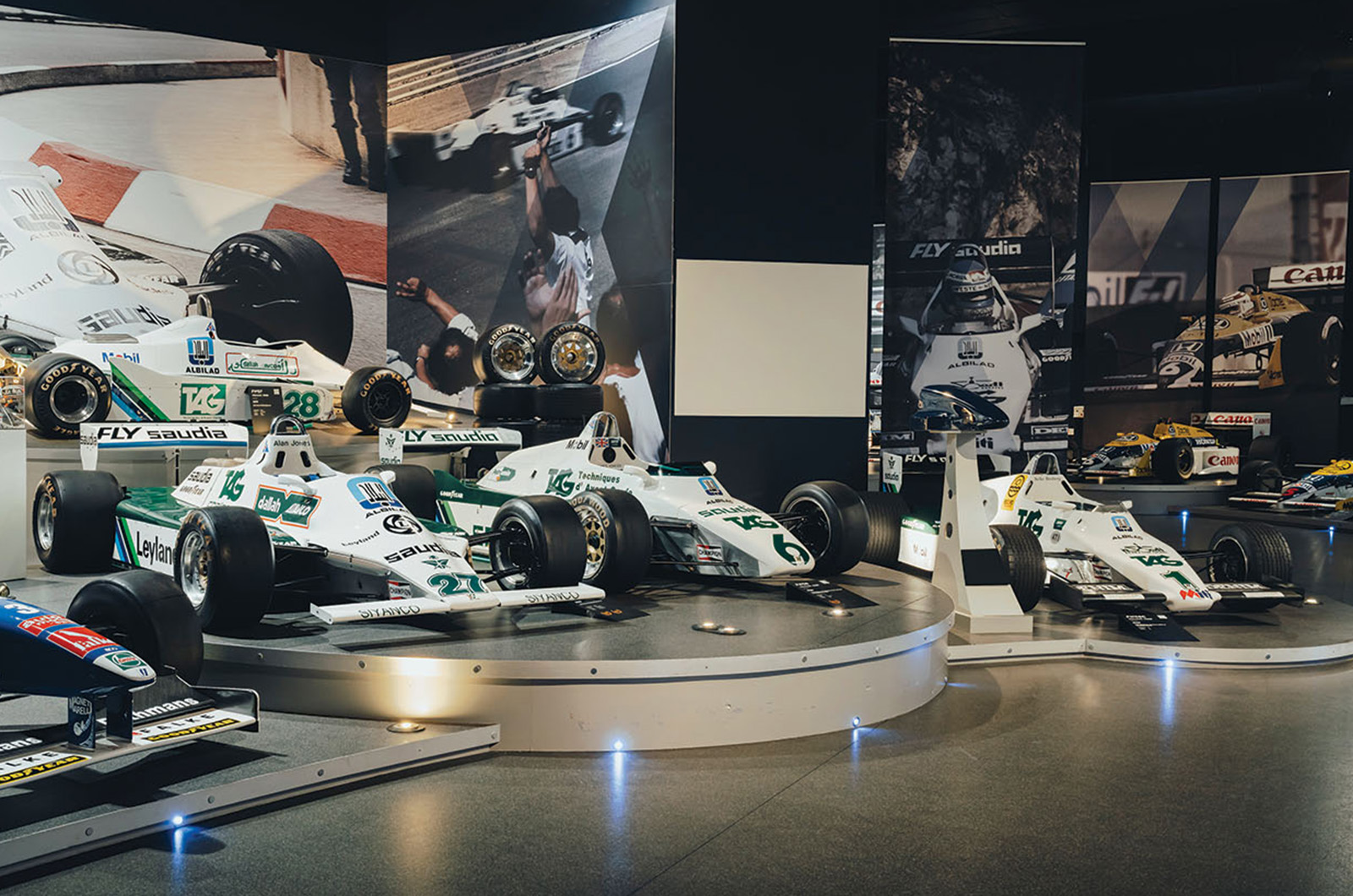
“From there, we go into the first race-winner, the FW07, and then the first two Championship winners – Alan Jones’ 1980 FW07B for drivers’ and constructors’, and the 1981 FW07C for the constructors’ title.”

Classic & Sports Car – Inside Williams F1’s Heritage collection: a Grand Prix dynasty
Karun Chandhok explains the evolution of Williams F1 team’s early contenders

First to grab our attention is the six-wheel 1982 FW08B, which dwarfs the others around it with its super-sized length and four driven rear wheels.

“It was quick,” says Karun. “With less drag [from smaller rear wheels] and a longer floor, you got more downforce from the skirts… Then there was the four-wheel drive.”

But the project was short-lived. “Frank went to see Bernie [Ecclestone],” he continues.

“They did a deal and Bernie got it banned. Patrick was livid. But on reflection, it was probably the right thing for the sport – costs would have spiralled.”

Classic & Sports Car – Inside Williams F1’s Heritage collection: a Grand Prix dynasty
Williams F1 team’s first race-winner, the FW07 (left), alongside the FW08 (middle) and FW08C

Nonetheless, Karun cites the FW08B as one of his favourites.

“Innovation is at the core of F1,” he says. “Mavericks such as Chapman, Patrick and Frank just thought outside of the box.”

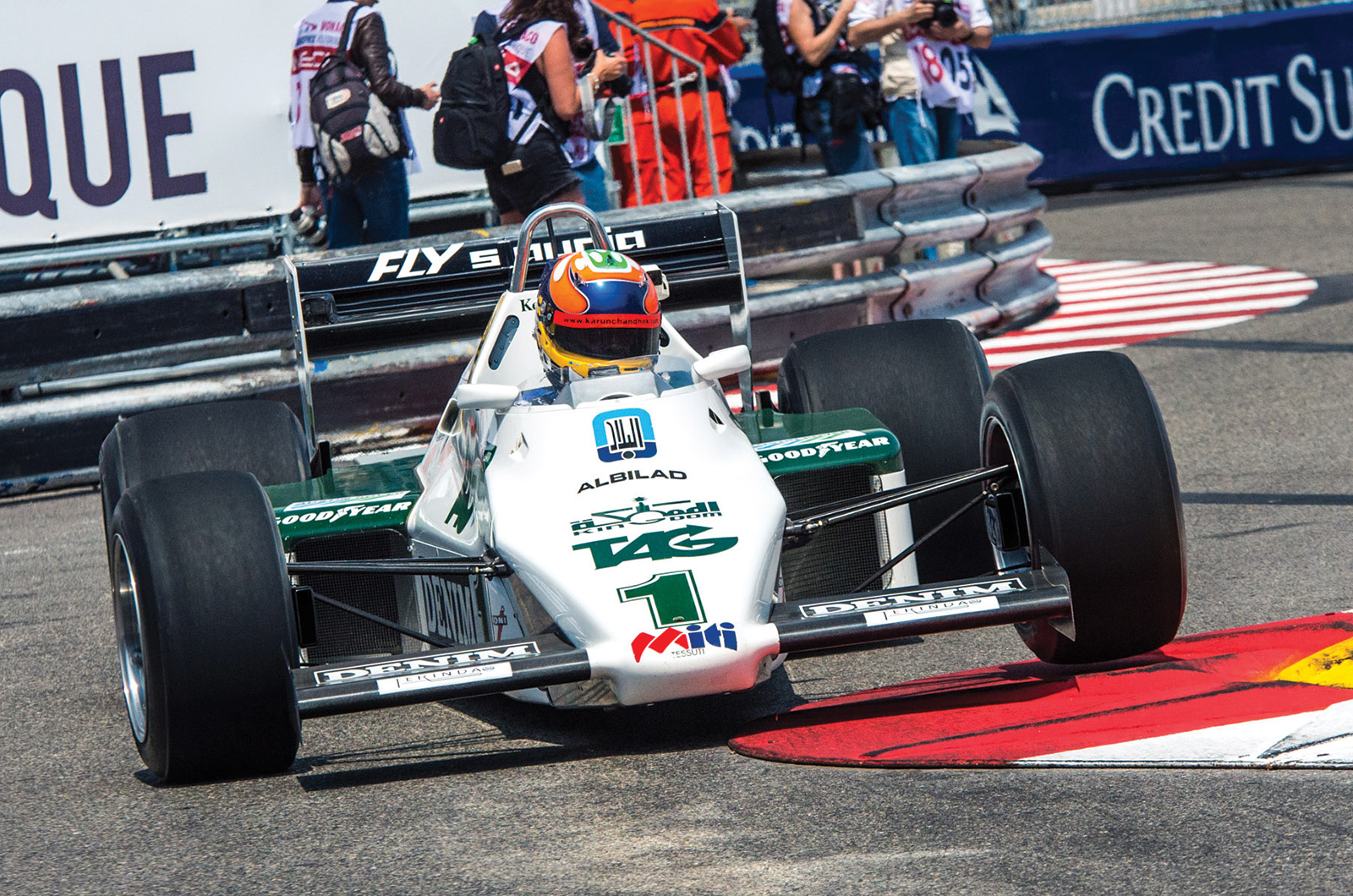
Across the aisle from the six-wheeler is the FW07, a car Karun refers to as the gold standard: “In ’79 they put skirts on it and took it to the wind tunnel.”

Classic & Sports Car – Inside Williams F1’s Heritage collection: a Grand Prix dynasty
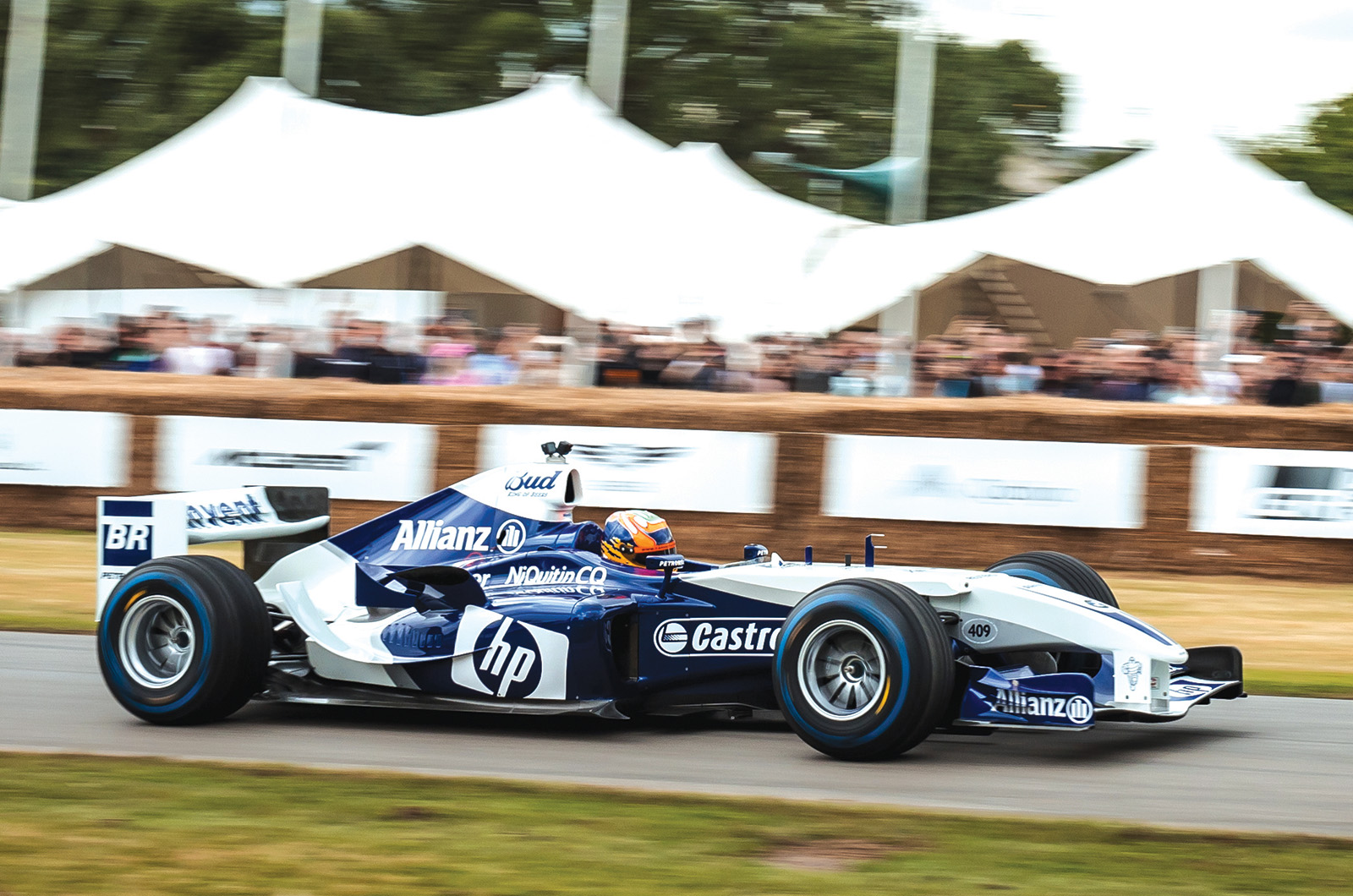
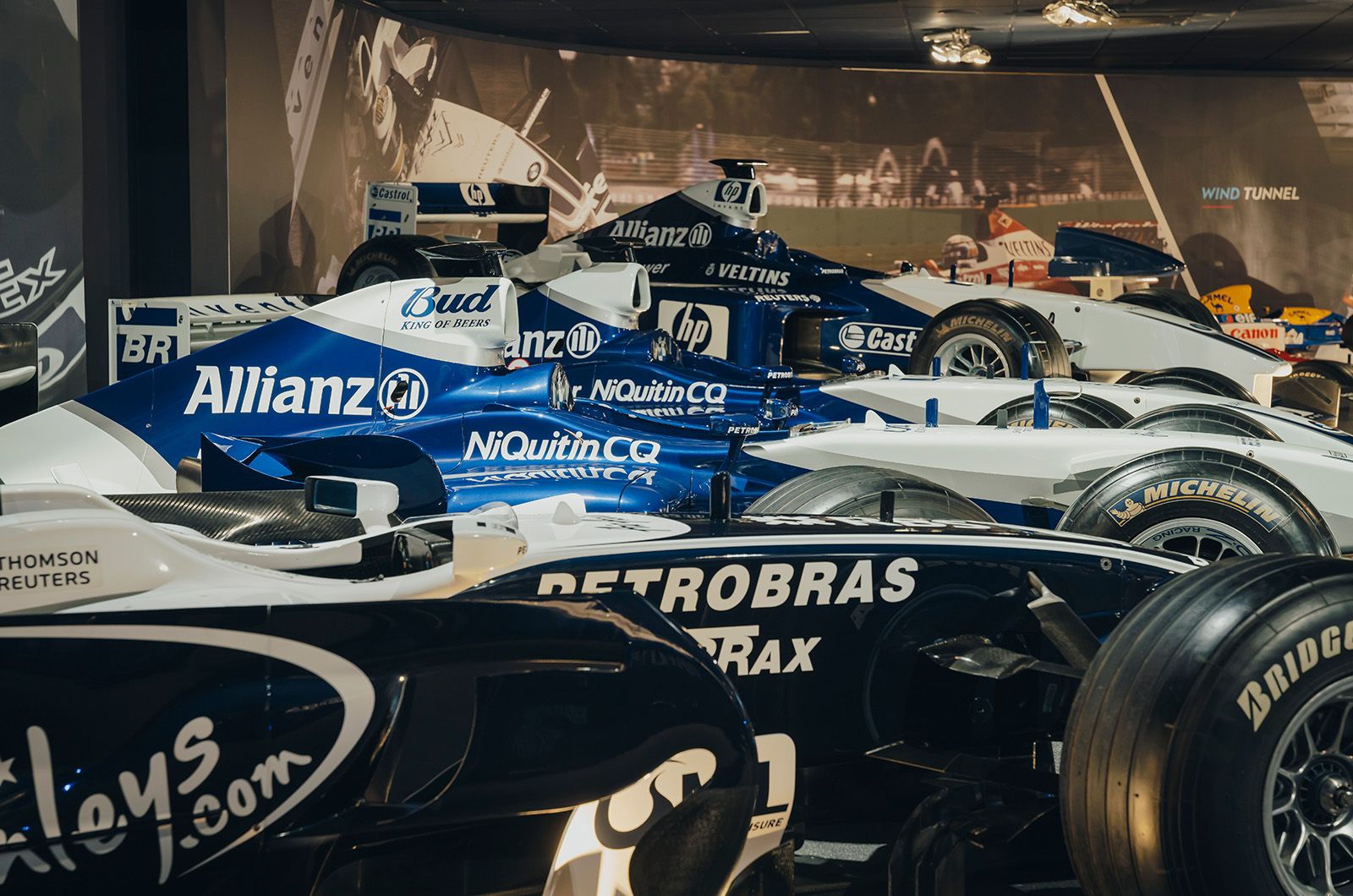
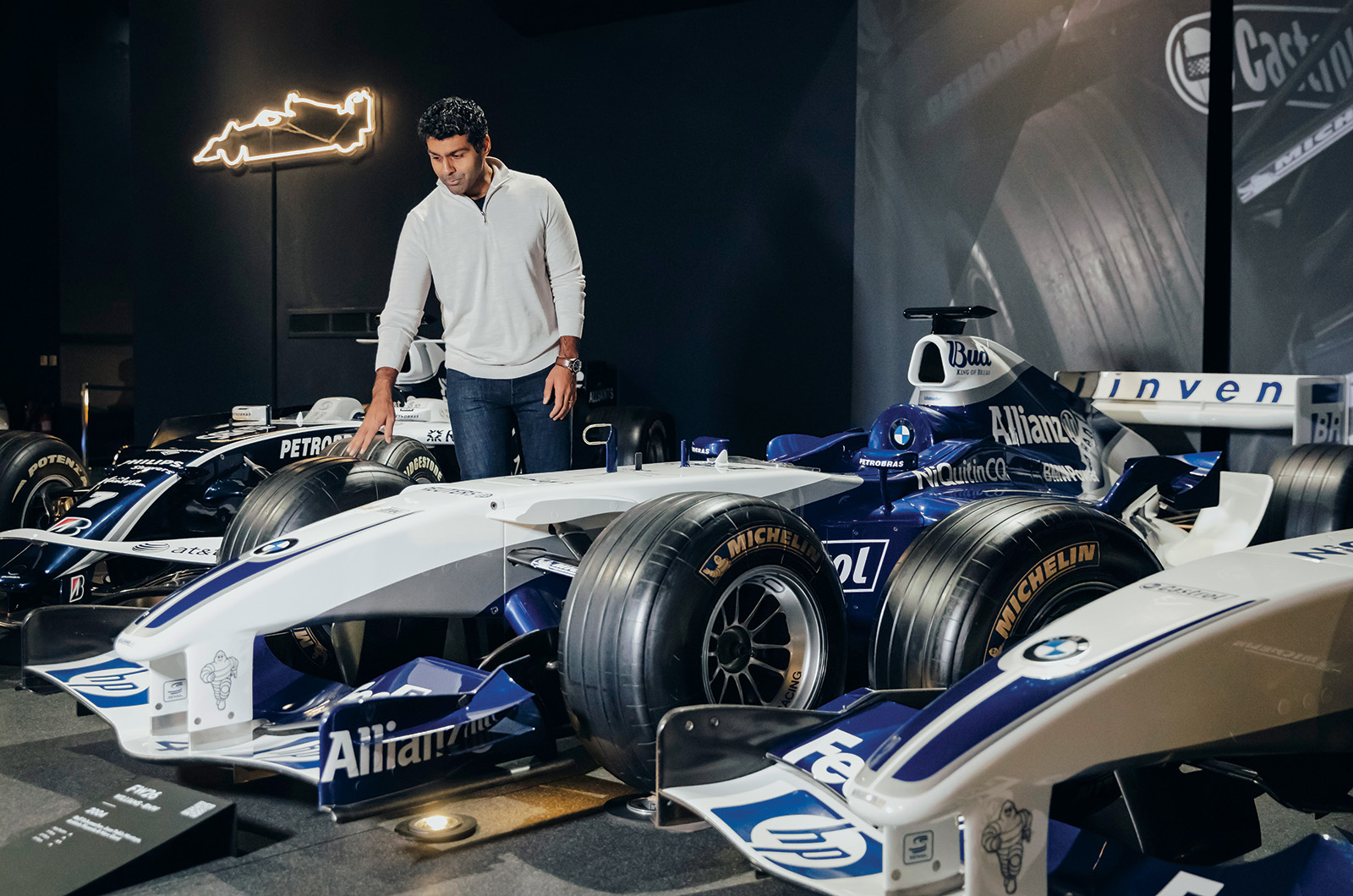
Allianz and HP were among the Williams F1 team’s big-name sponsors in the early 2000s

“The next race at Silverstone, they dominated,” continues Karun.

“They won the title comfortably the following year and should have won in ’81, with a bit more luck and reliability.

“Alan Jones could have been a four-time champion if he’d stayed through 1982, but I think he’d had enough.”

Classic & Sports Car – Inside Williams F1’s Heritage collection: a Grand Prix dynasty

Karun Chandhok perches on Nigel Mansell’s Williams FW14B, a technological tour de force of high-revving V10 and active suspension that reshaped F1

Karun is a fan of the Ford DFV V8s that powered these early cars.

He says: “There’s not a lot of electronics on those, so they are quite easy compared with a FW14B.

“But… we’ve got all the drawings, we’ve got the intellectual property, so we can make anything for them.

“We also know how to run them properly; we can call Patrick or Frank [Dernie, the ex-Williams chief designer] and ask about the set-up.”

Classic & Sports Car – Inside Williams F1’s Heritage collection: a Grand Prix dynasty

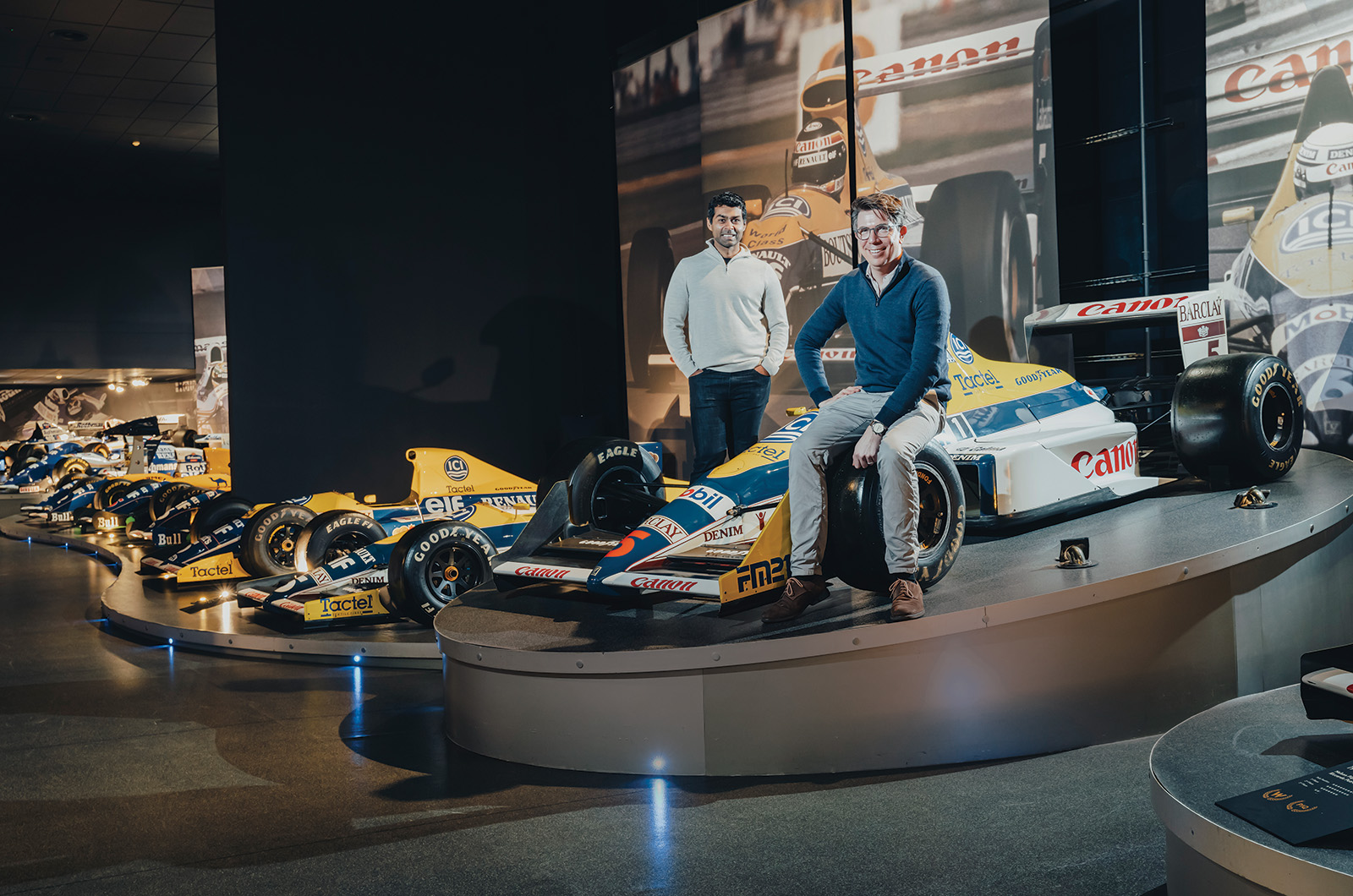
Karun and Williams Heritage manager and former test driver Jonathan Kennard, with Nigel Mansell’s 1988 FW12

This is where Jonathan Kennard, who now oversees the running of the collection, comes in.

Last year the former Williams test driver was tasked with realising more of the collection’s potential.

“The problem,” says Jonathan, “was that we were selling cars and never seeing them again.

“Now if we sell a car, we make sure it’s to someone who’s going to use it, and use Williams Heritage to run it. The recurring revenue from that will build up something serious for the long term.”

Classic & Sports Car – Inside Williams F1’s Heritage collection: a Grand Prix dynasty

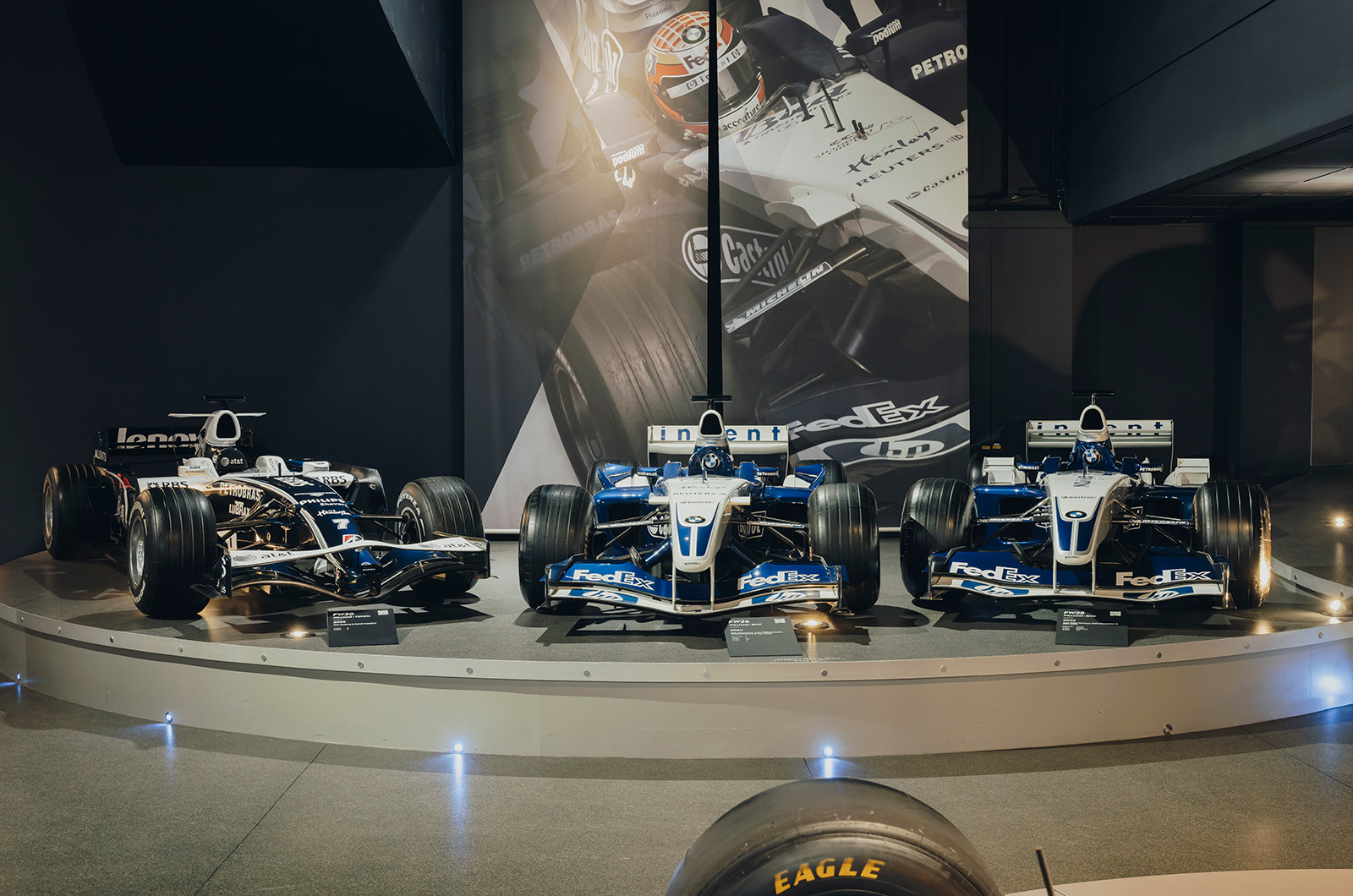
The Williams FW30 (left), FW26 (middle) and FW25 represent some of the team’s 2000s challengers

“Which, by the way,” adds Karun, “is the Ferrari model.

“If you buy a car from Ferrari, they won’t let you take it away. If you want it in your living room, you pay a premium.”

Jonathan continues: “I want to model what we’re doing for the racer rather than the collector.

“We want people to enjoy the car, chip away at their lap times, make the ownership experience mega – the best club in the world.”

Classic & Sports Car – Inside Williams F1’s Heritage collection: a Grand Prix dynasty

Staring down the cockpit of the Williams FW18 F1 car

Karun’s role as a driver coach dovetails neatly with this.

He says: “When we started selling to private clients, they had never driven race cars of this power or downforce.

“I created a test programme with F3 cars and we would go to Pembrey or Silverstone to get them used to a high-downforce single-seater.

“Then we’d go to a test day and I’d coach them [in their own car].”

Classic & Sports Car – Inside Williams F1’s Heritage collection: a Grand Prix dynasty

Karun Chandhok has driven many of the cars in Williams F1’s Heritage fleet

We’re moving along a line of 1980s chassis and Karun points out a key difference in their designs, versus the later cars, with drivers’ feet positioned ahead of the front axle.

“It’s why so many drivers [from those years] are limping,” he says.

Changes in regulations in around 1986 mandated that pedals were put behind the axle line, which improved safety immeasurably.

Classic & Sports Car – Inside Williams F1’s Heritage collection: a Grand Prix dynasty

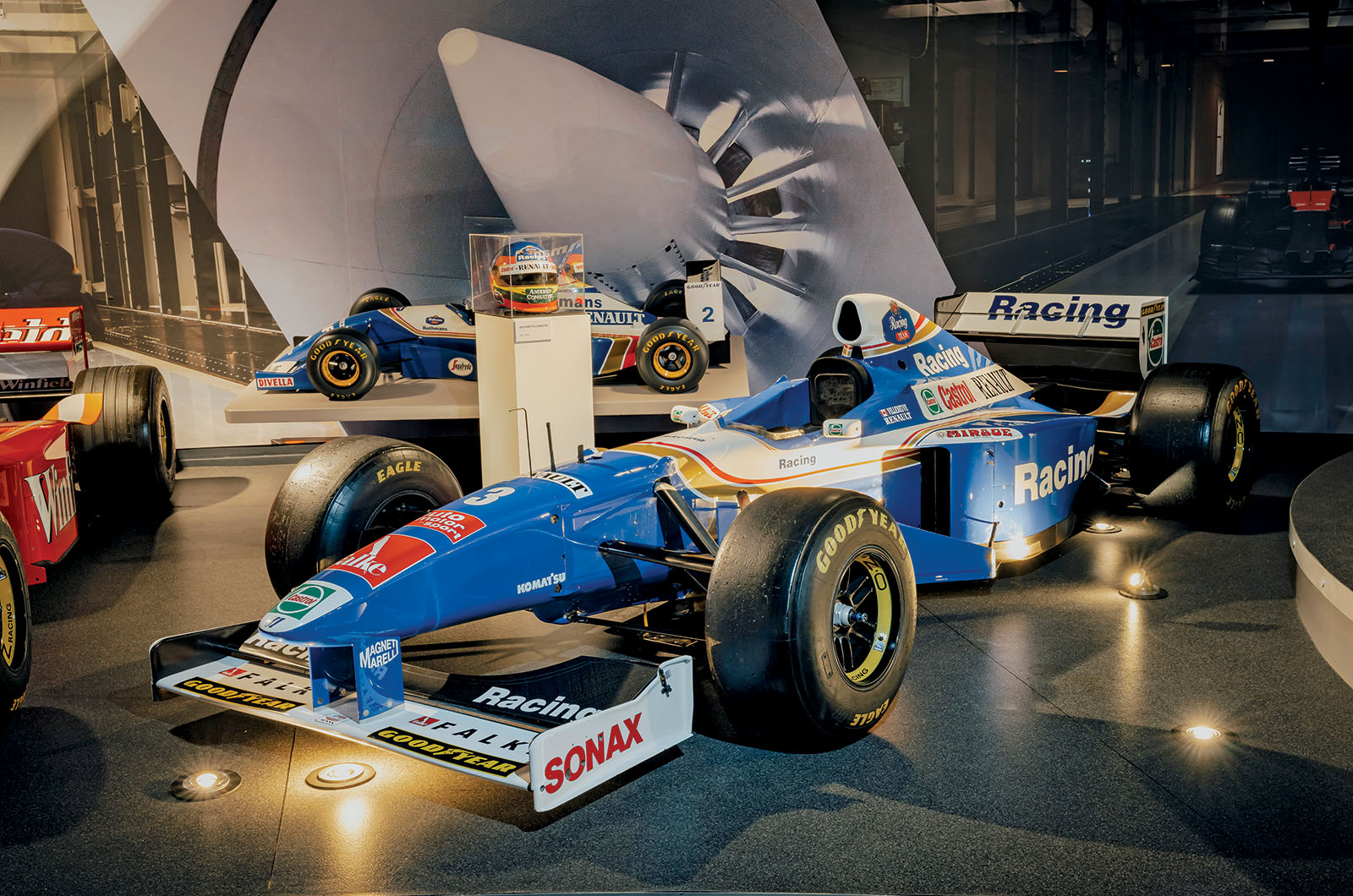
Jacques Villeneuve’s 1997 Championship-winning Williams FW19

That was an important year at Williams for other reasons, with founder Frank suffering life-changing injuries in a road-car crash that confined him to a wheelchair for the rest of his life.

But earlier in ’86 Williams had been on a roll. “It started the season with the best car on the grid [the Honda-powered FW11],” says Karun. “And it’s the year they got Piquet, the first World Champion who came to Williams.

“The FW11B is the one I’d love to drive. The first race I ever watched was the 1987 British GP: Mansell won, driving this car.

“We hope to have it running in the next two years.”

Classic & Sports Car – Inside Williams F1’s Heritage collection: a Grand Prix dynasty

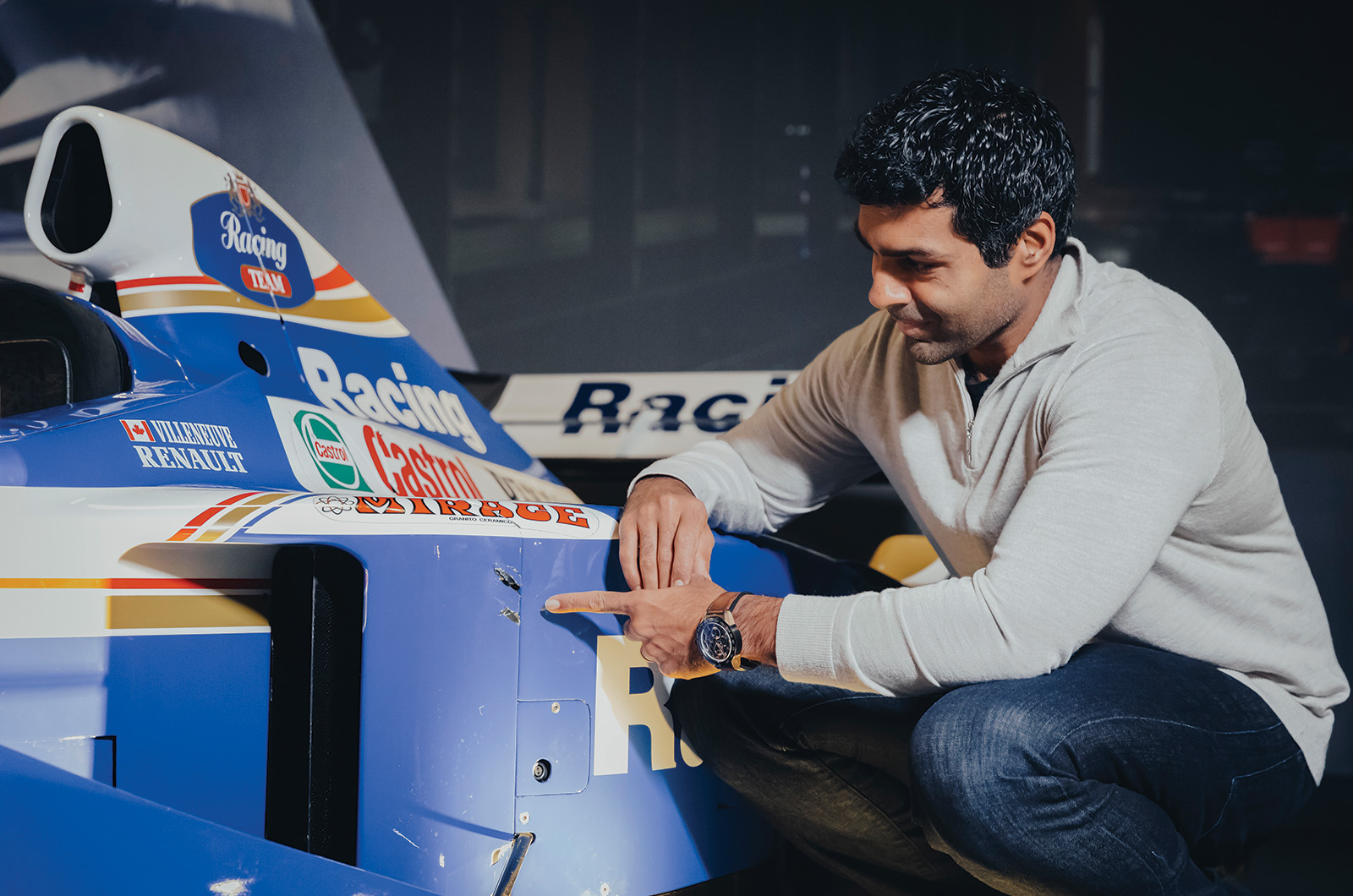
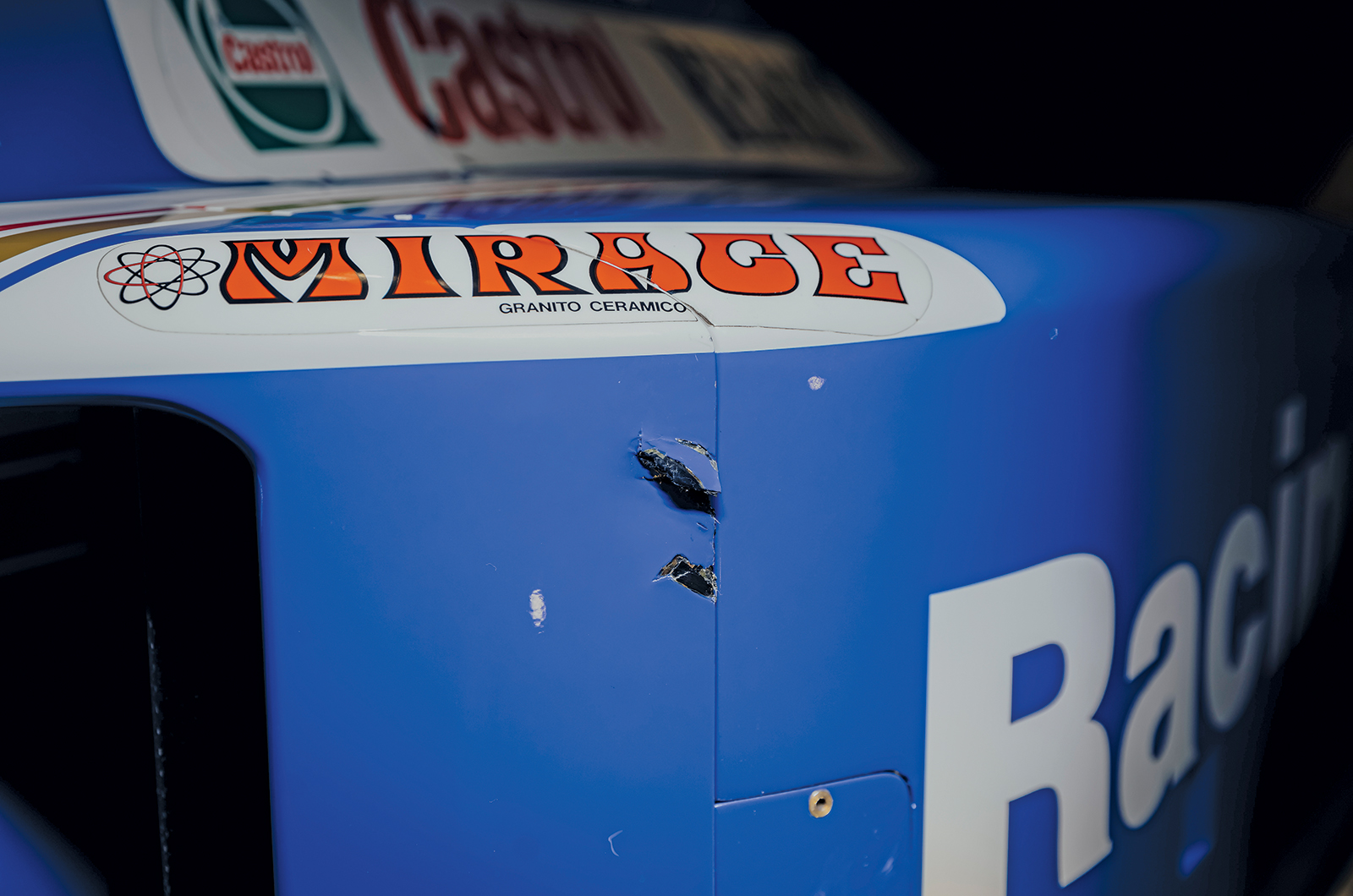
Karun Chandhok points to the Williams FW19’s battle scars

Staying with Williams’ most notable drivers, we stop in front of Mansell’s 1992 FW14B and Karun points to the ultra-small steering wheel, measuring an inch in diameter less than those in the other cars.

“Nigel had brutal upper-body strength,” Karun says. “He liked to dominate a car. The steering is so heavy and gets heavier with speed because of the downforce.”

And then something unique in this collection: a damaged car.

It’s Jacques Villeneuve’s FW19, in which he claimed the 1997 World Drivers’ Championship after a year-long duel with Michael Schumacher that went down to the wire at the final European GP in Spain.

Classic & Sports Car – Inside Williams F1’s Heritage collection: a Grand Prix dynasty

The result of the famed, title-deciding block-and-parry with the Ferrari F310 of Michael Schumacher

During an overtake by Villeneuve, Schumacher turned in on the Williams, gifting the Canadian victory but scarring his car.

“Bizarrely,” says Karun, “Michael came into the Williams truck, had a glass of Champagne and a chat – then it all imploded after that, because Michael went to the papers saying they were old friends, which wasn’t true.

“Jacques was pretty chilled about it, but it could have gone belly-up.”

Classic & Sports Car – Inside Williams F1’s Heritage collection: a Grand Prix dynasty

The Williams Heritage collection is a reminder of the late Frank Williams’ immense contribution to F1 over the past five decades, along with legendary engineer and co-founder Patrick Head

We pass a replica of Ayrton Senna’s FW16, in which the three-time champion’s life was cut short at the San Marino Grand Prix in 1994.

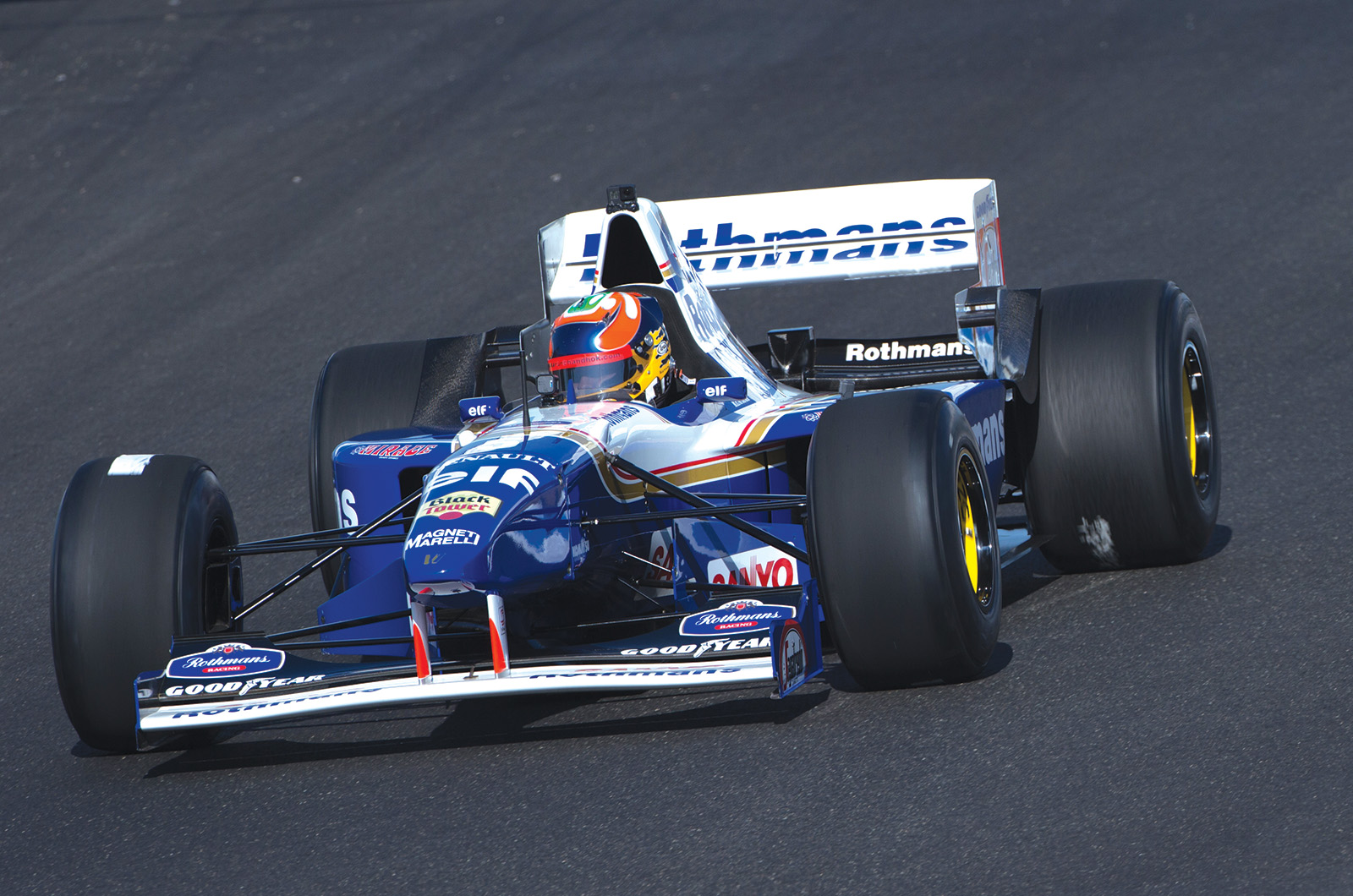
Karun stops at Damon Hill’s 1995 FW17 nearby and points to the superior head protection introduced after Senna’s tragic crash.

Hill was Williams’ golden boy in the mid-’90s, joining the team in 1993 and, in the FW18, taking the 1996 Drivers’ Championship and helping Williams clinch the constructors’ title.

The end of Williams’ glory days? Not quite. The new century beckoned with a new engine partner, BMW, and its awe-inspiring V10, which revved to 20,000rpm.

Classic & Sports Car – Inside Williams F1’s Heritage collection: a Grand Prix dynasty

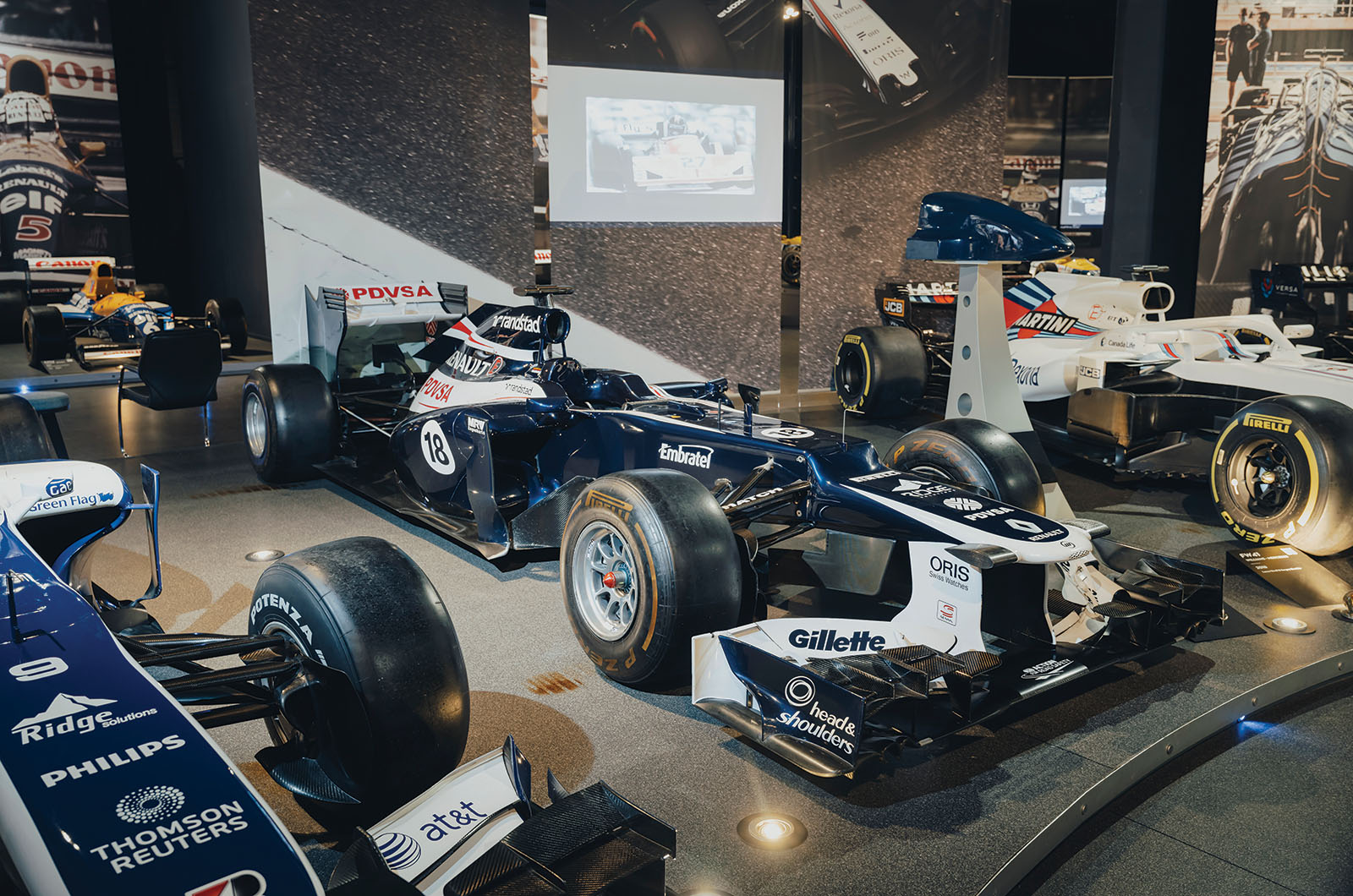
Pastor Maldonado’s Williams FW34 took the team’s most recent win, in 2012

We’re standing by the FW25 now, as we near the end of our tour.

“The 2003 cars were the last ones when Williams was a title contender,” laments Karun. “This car [Juan Pablo Montoya’s] won at Monaco, Japan, Austria and Hockenheim, then Ralf [Schumacher] won at Malaysia and Magny-Cours.”

But following differences with BMW from 2004 – when Williams achieved just one win – the team went into decline.

To date, it has only racked up a single victory since, with Pastor Maldonado winning the 2012 Spanish GP in the Renault-engined FW34.

Classic & Sports Car – Inside Williams F1’s Heritage collection: a Grand Prix dynasty

The BMW-powered 2004 FW26 of Juan Pablo Montoya marked the end of Williams’ run as a big-budget F1 contender

“It has been Williams’ only race winner in the past 20 years,” rues Karun. “When manufacturer money goes, so too do the sponsors, such as HP and Allianz.”

But who knows? With Carlos Sainz Jnr joining Alex Albon this season in the FW47, perhaps we’ll see a reversal of fortune.

Either way, Karun and Jonathan, along with the 18-strong Heritage team, will make sure that the cars will be preserved for posterity.

Images: Max Edleston

Thanks to: Jonathan Kennard and Williams Heritage


Karun Chandhok: a view from the driver’s seat

Classic & Sports Car – Inside Williams F1’s Heritage collection: a Grand Prix dynasty

1982 Williams-Ford FW08B

“We have to be really careful,” says Karun of driving the iconic six-wheeler, “because there are no spares – there’s only one car, and all the bits to run it are on that car, so when we go testing it’s a case of pulling away as gently as possible.

“It understeers, mainly because it carries so much weight at the back.”

Classic & Sports Car – Inside Williams F1’s Heritage collection: a Grand Prix dynasty

1983 Williams-Ford FW08C

“I would say that the FW08C is the car I’ve driven the most. It has the sliding skirts, and it just sucks itself to the ground.

“Mario Andretti had a great phrase: ‘It’s like it’s painted to the road.’ It was a [Colin] Chapman innovation, but it was Williams’ aero team that took it to another level.”

Classic & Sports Car – Inside Williams F1’s Heritage collection: a Grand Prix dynasty

1990 Williams-Renault FW13B

“The FW13B has the last manual gearbox with a six-speed H-shift.

“The following season brought the first paddle-shift car [the FW14], but it still had three pedals – as did the ’92 FW14B.

“Damon [Hill] was still using three pedals as late as 1996. But from 1997, they all have two pedals.”

Classic & Sports Car – Inside Williams F1’s Heritage collection: a Grand Prix dynasty

1992 Williams-Renault FW14B

“I loved this car: with active suspension and traction control, it’s the most dominant Williams in terms of absolute performance.

“It won 10 of 16 races in ’92, and Nigel won the title in it.

“The V10 revs to 15,000rpm, but we take a bit off now. These ‘active’ cars are really ride-height critical.”

Classic & Sports Car – Inside Williams F1’s Heritage collection: a Grand Prix dynasty

1995 Williams-Renault FW17/17B

“The FW17 is the first F1 car in the collection that feels similar to [a car from] today.

“You really sit in it, whereas in everything else [pre-Senna’s accident in ’94] your shoulders were exposed.

“There was also more emphasis on driver comfort that started to be mandated by the FIA.”

Classic & Sports Car – Inside Williams F1’s Heritage collection: a Grand Prix dynasty

2004 Williams-BMW FW26

“This was the final year of sticky tyres and 20,000rpm V10s.

“The FW26 makes 956bhp but weighs 605kg; a modern F1 car is 1000kg and has 800bhp. The power-to-weight is off the scale.

“This car won the last race of the season, with Montoya at Interlagos.”

Images: James Bearne/Williams Heritage


Enjoy more of the world’s best classic car content every month when you subscribe to C&SC – get our latest deals here


READ MORE

How Renault turbocharged F1

Remembering F1’s wild V10 era

Andy Wallace: Le Mans, F1 and becoming a record-breaker