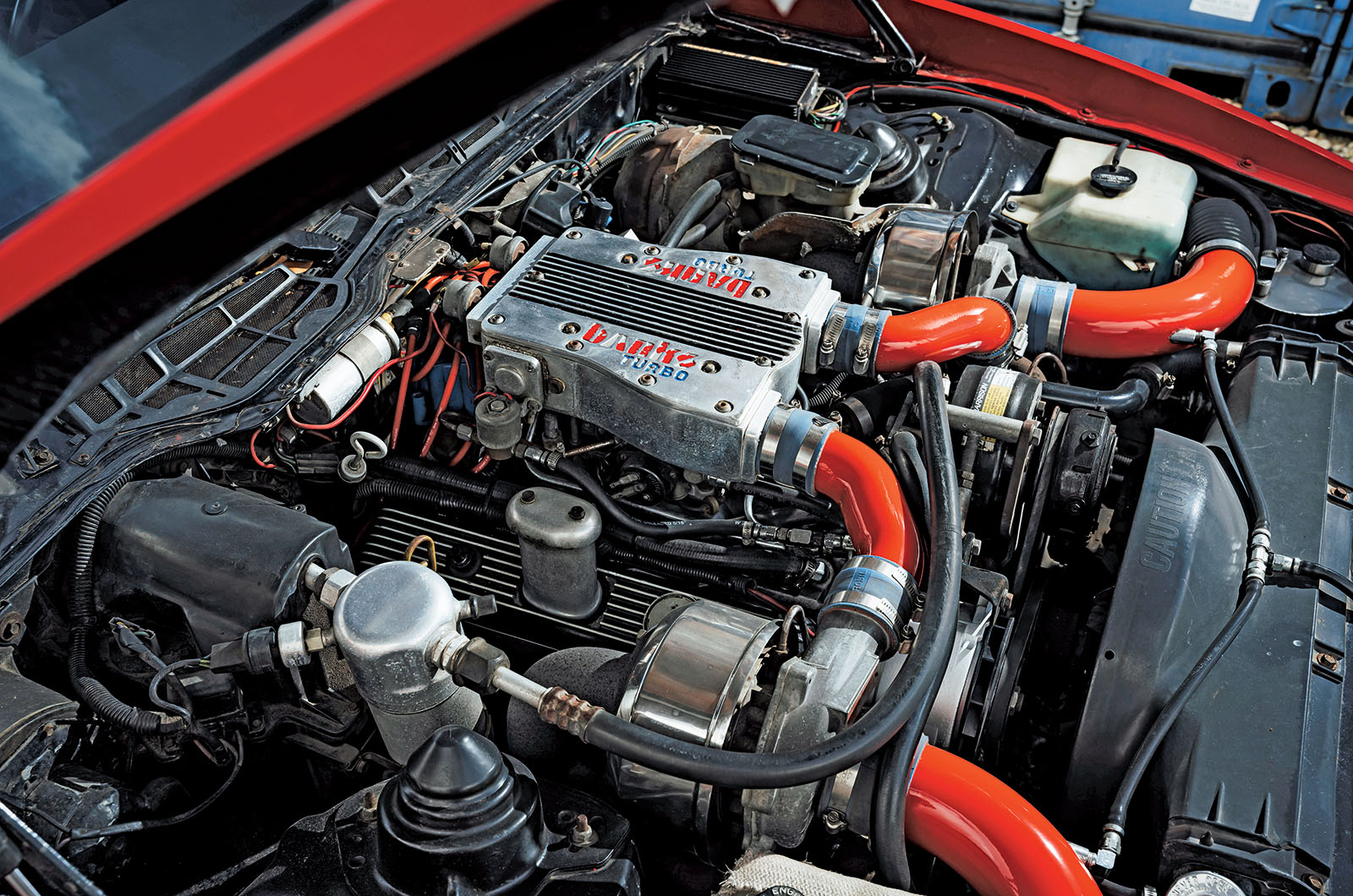
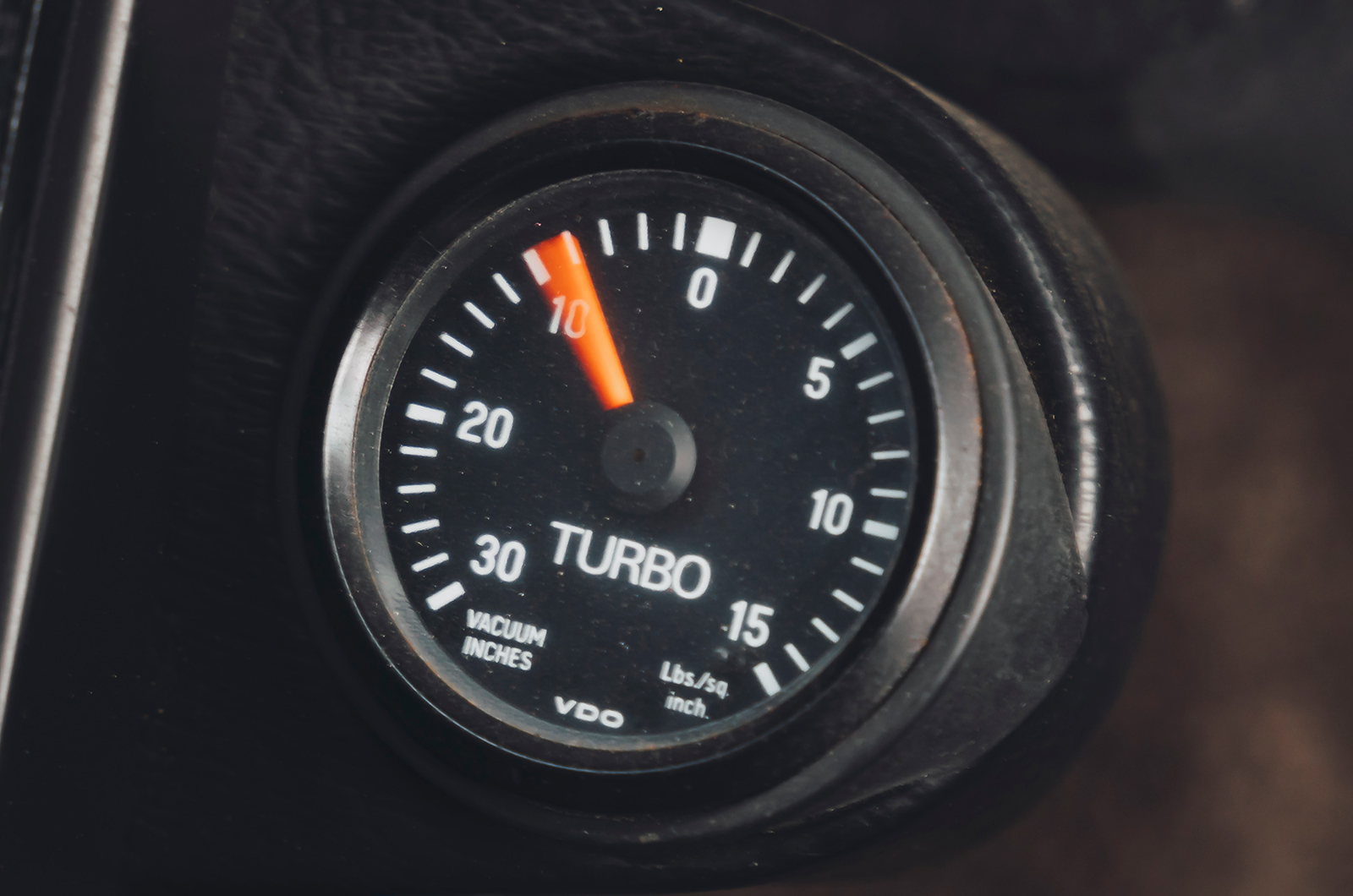
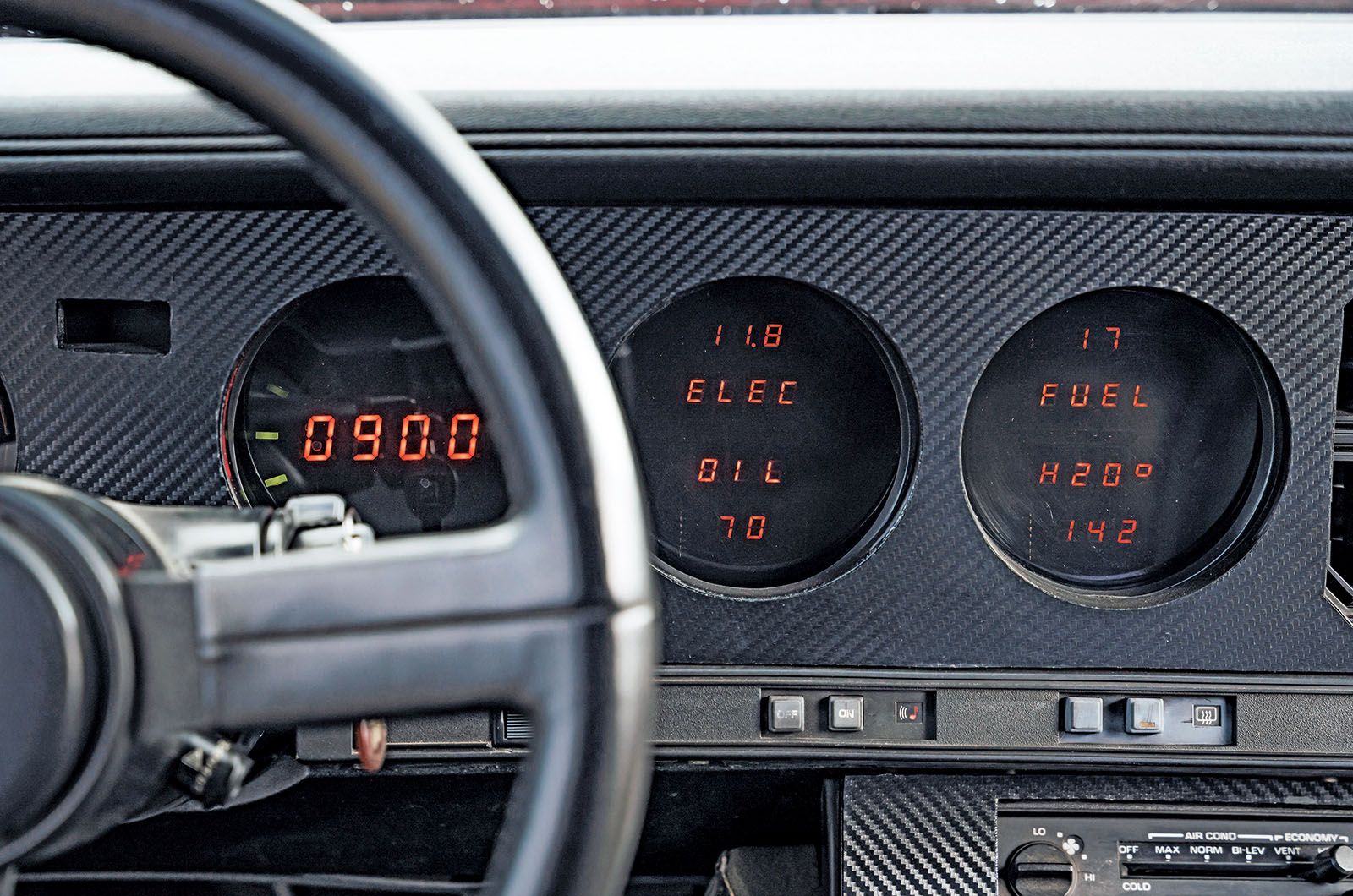
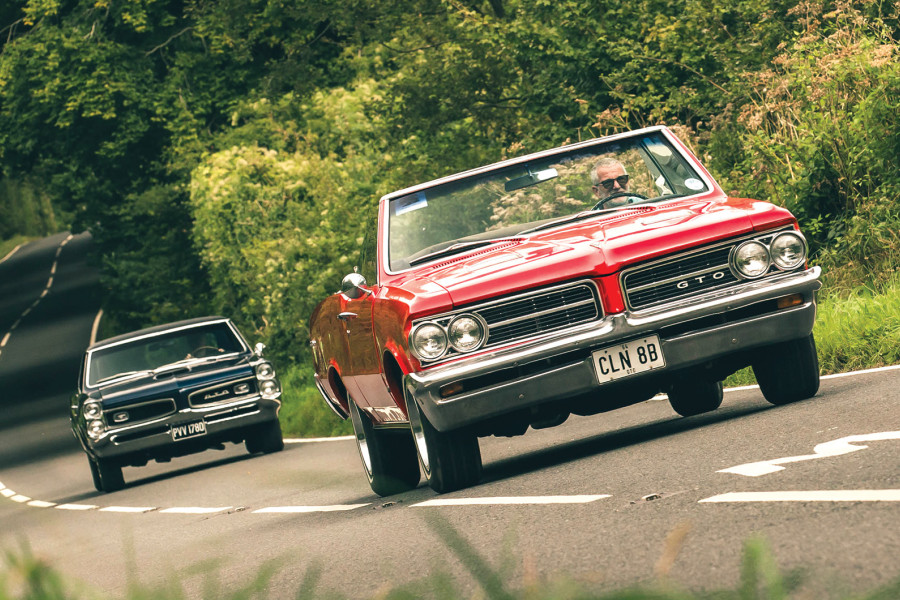
It’s still quick, but it’s not 800bhp fast – not even half that – and what boost there is shows just how long these large turbochargers take to spool up.
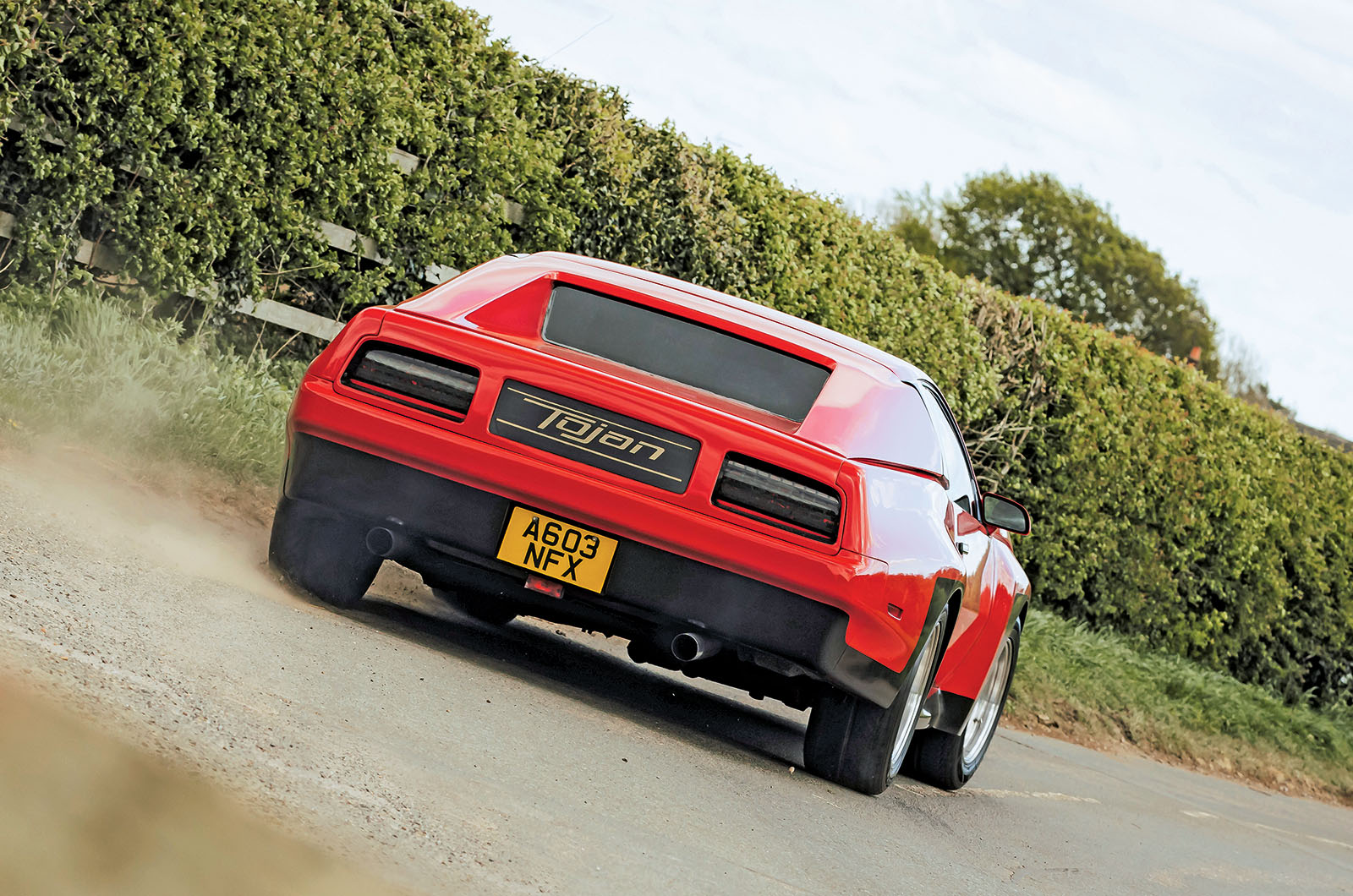
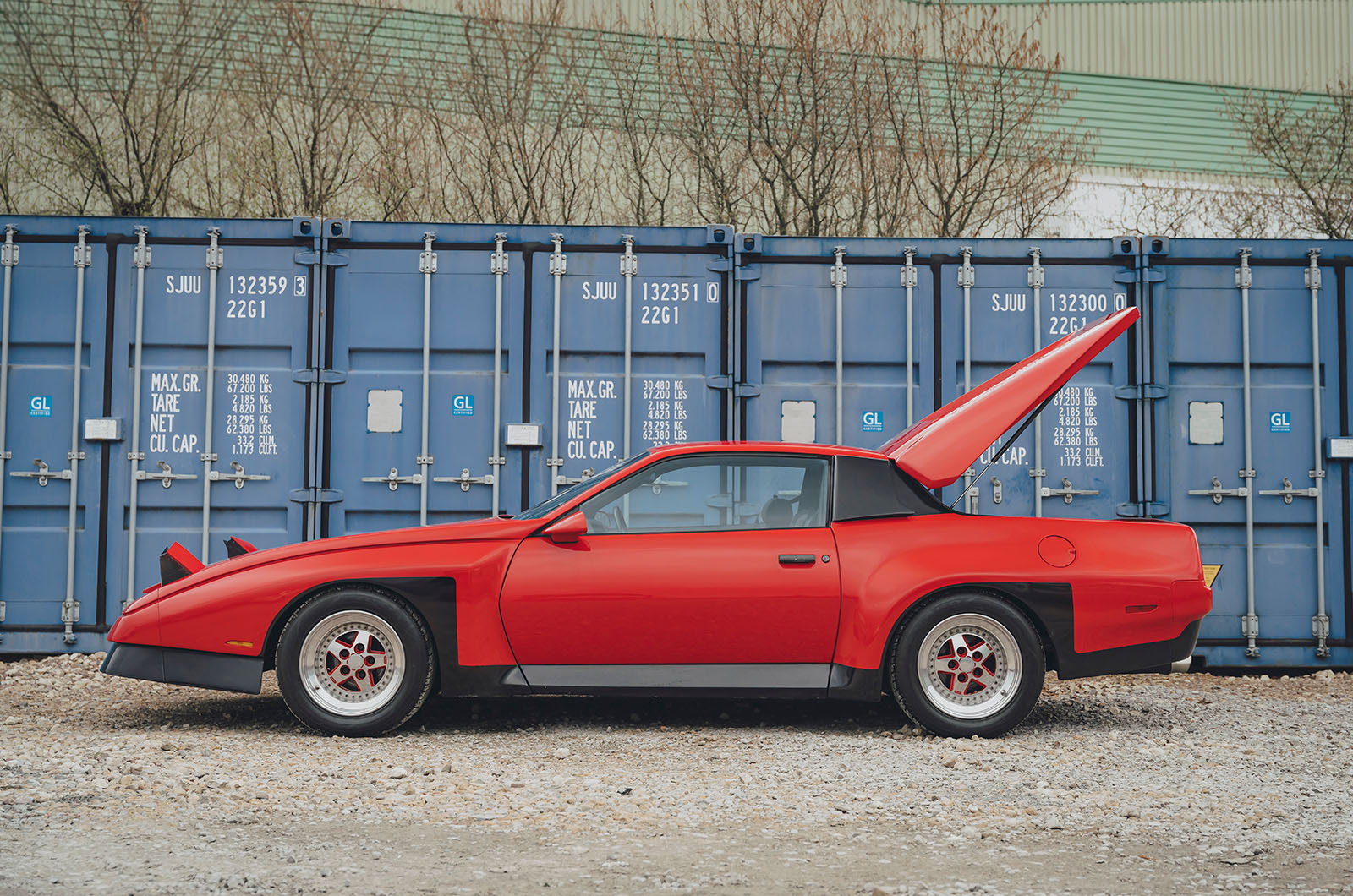
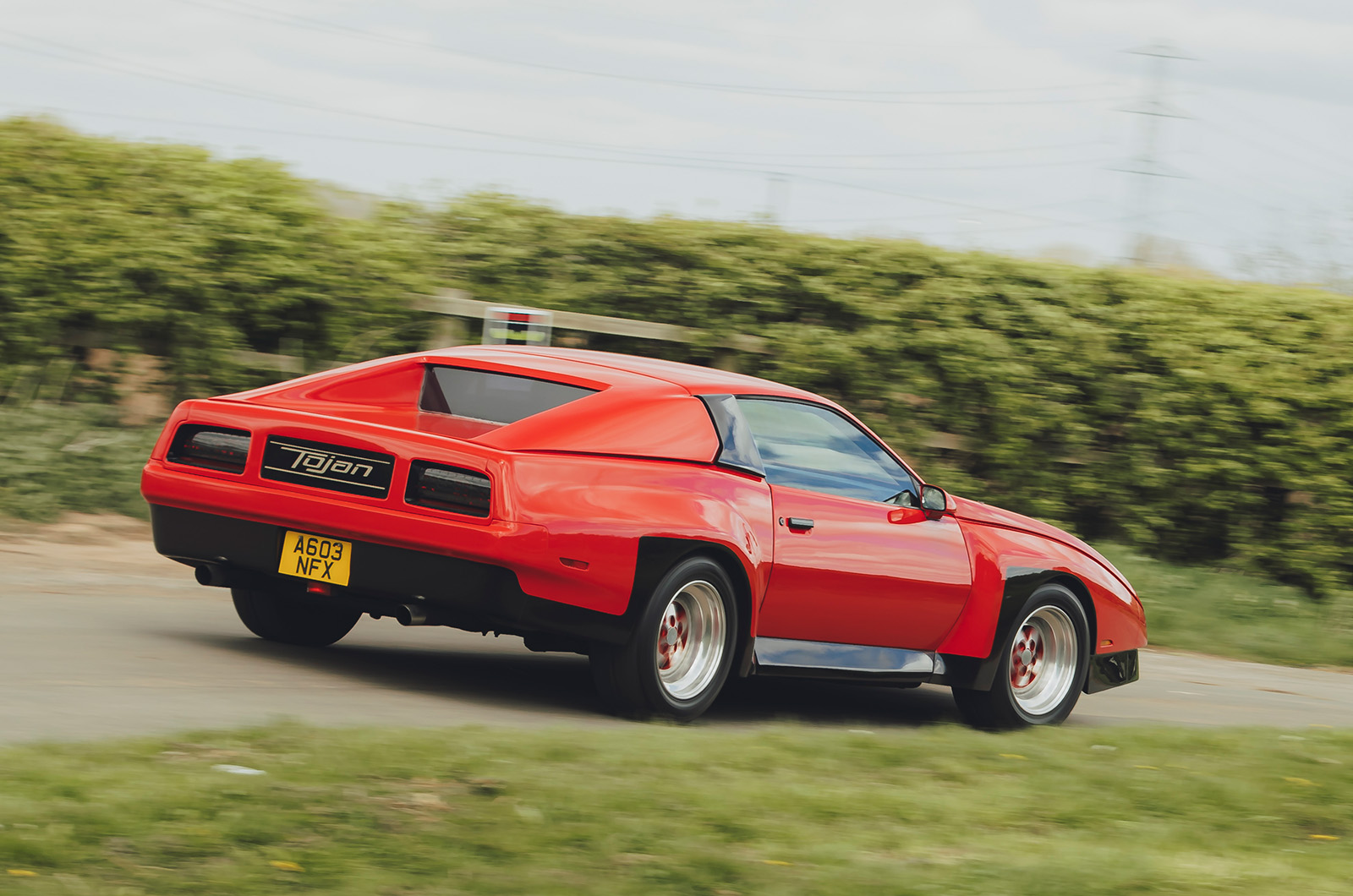
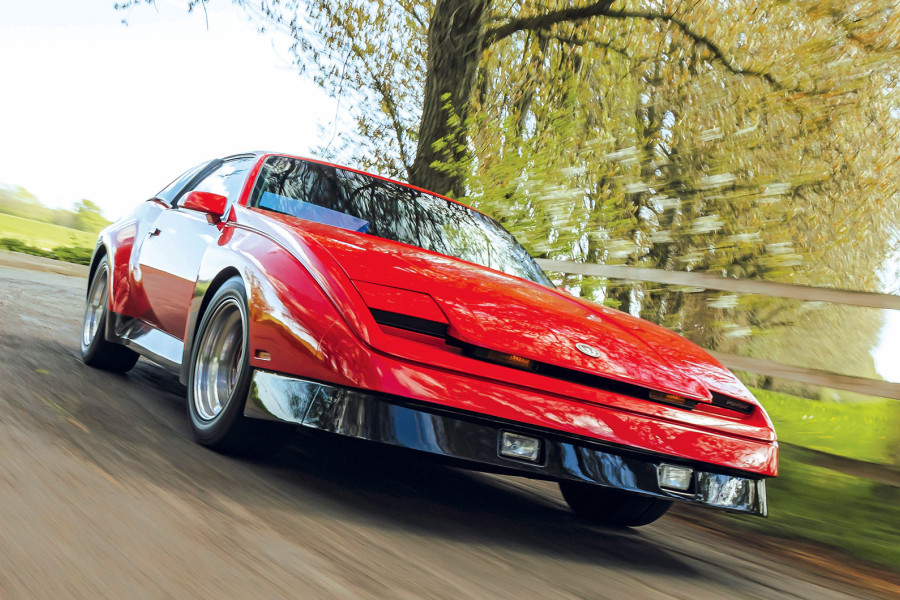
The Pontiac Tojan features stiffer suspension, wider tracks, revised front-end geometry and thicker anti-roll bars
In its pomp, the boost of the Banks engine must have hit like a wrecking ball after a long wait climbing the rev range.
Powerboat engines tend to spend most of their time at high revs, so lag is not such a problem.
“I’d love to get it back to its former glory,” says Paul, “but God knows what that’s going to cost.”
For now, that might be for the best. Knudsen chose not to upgrade the brakes beyond the Trans Am’s optional four-wheel-disc set-up, and they would feel woefully inadequate at 200mph.
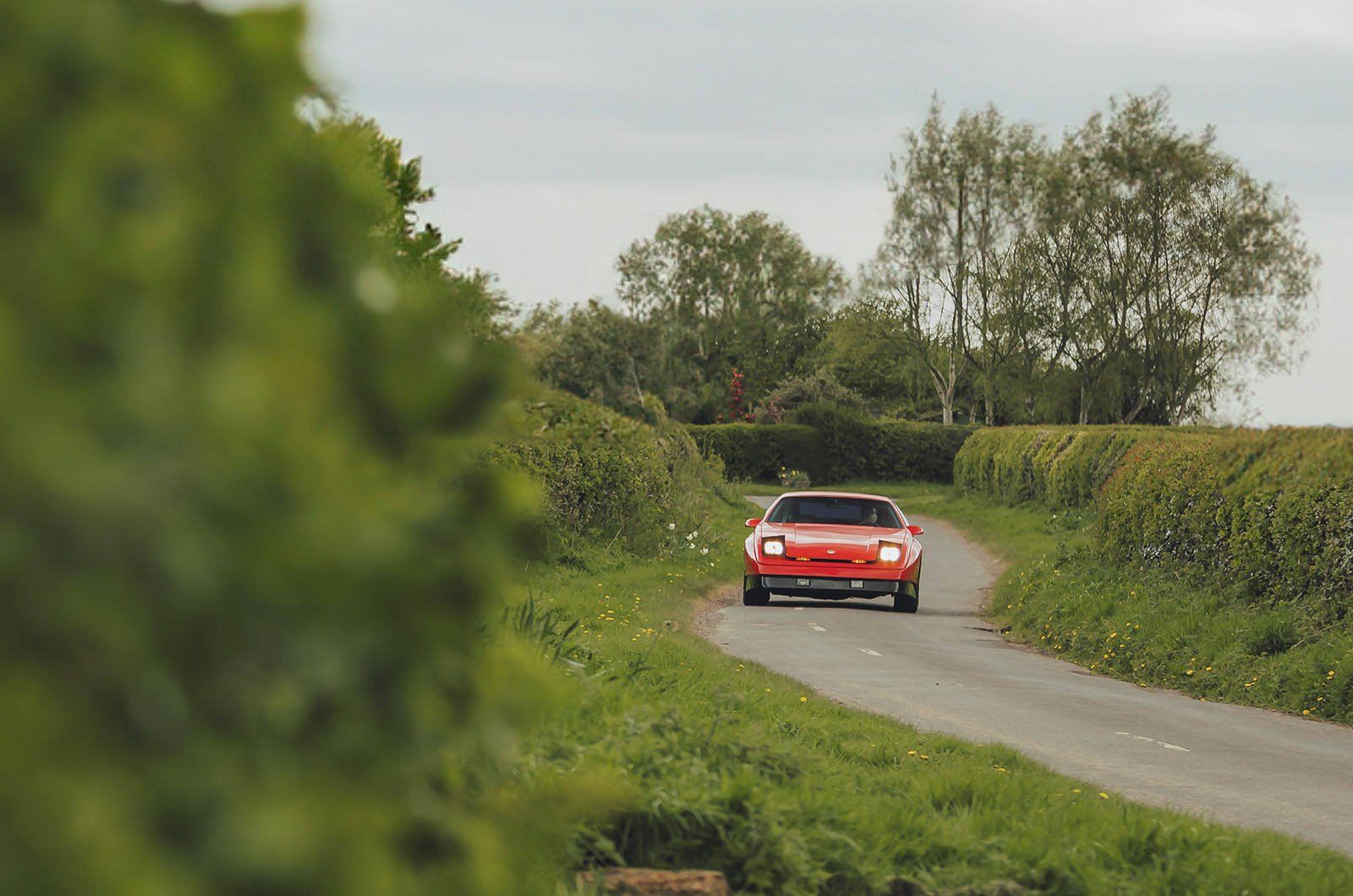
With its current power level, however, similar to how most Tojans were actually made, it hustles along a British back-road pretty well.
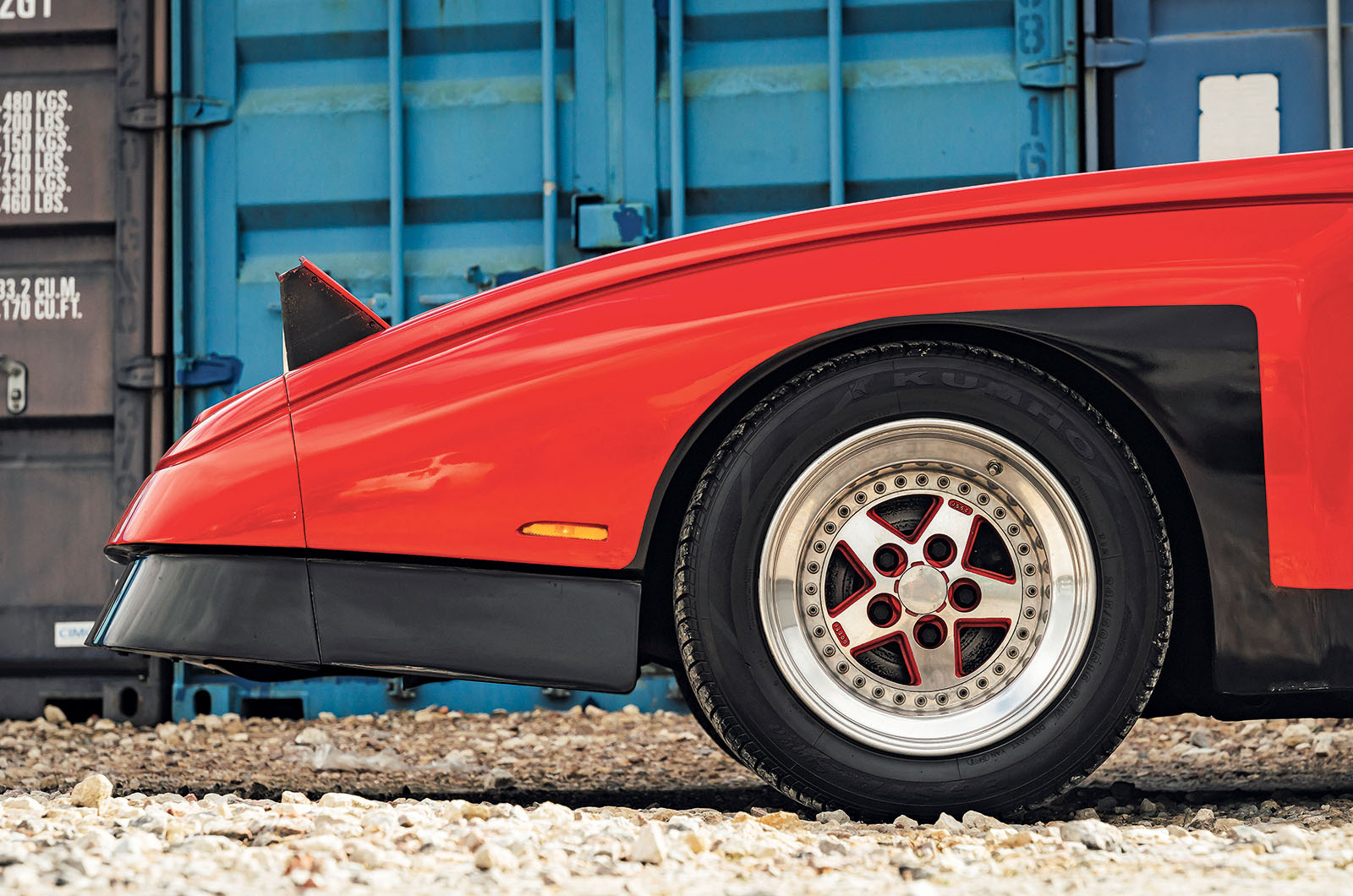
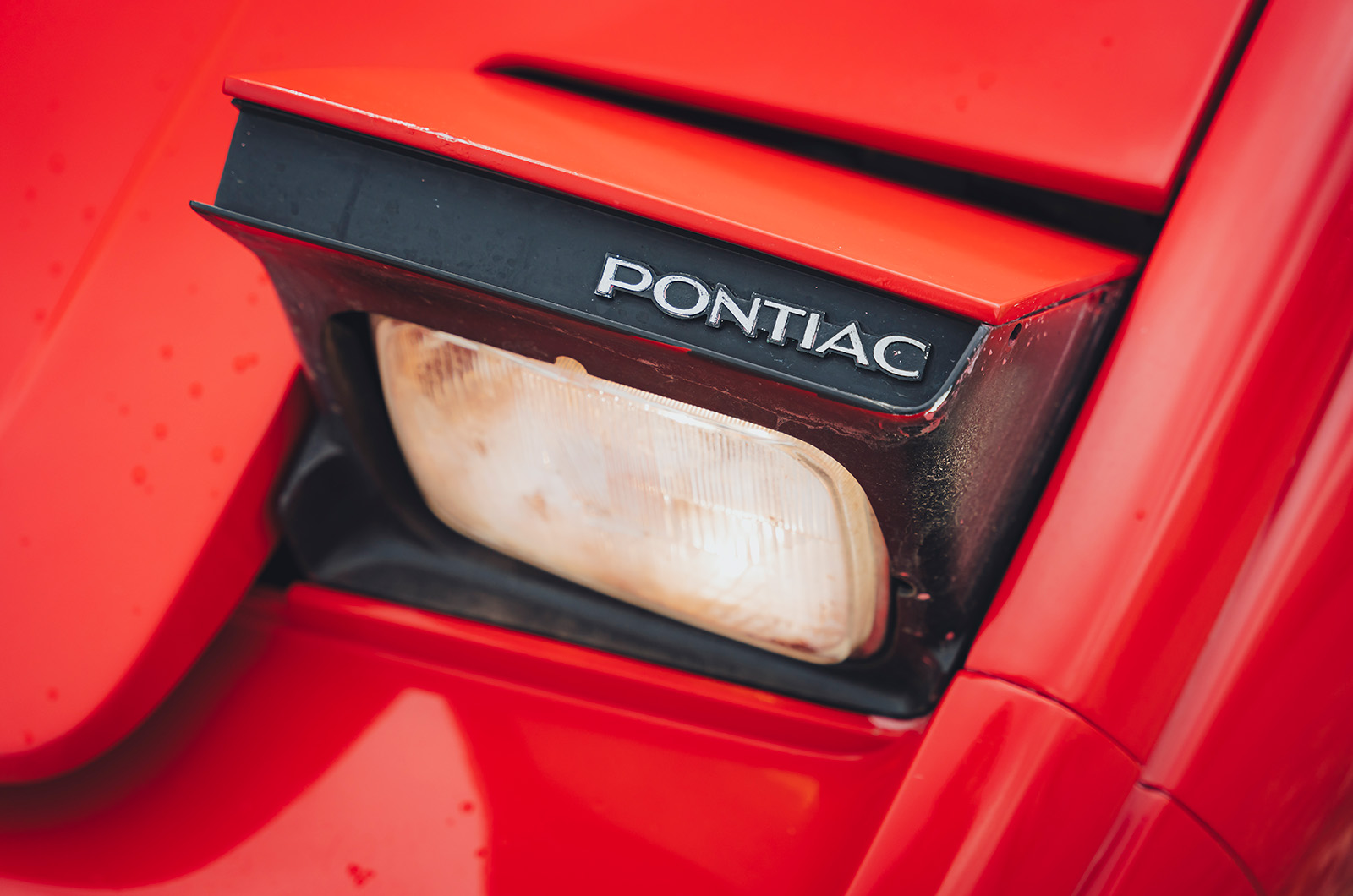
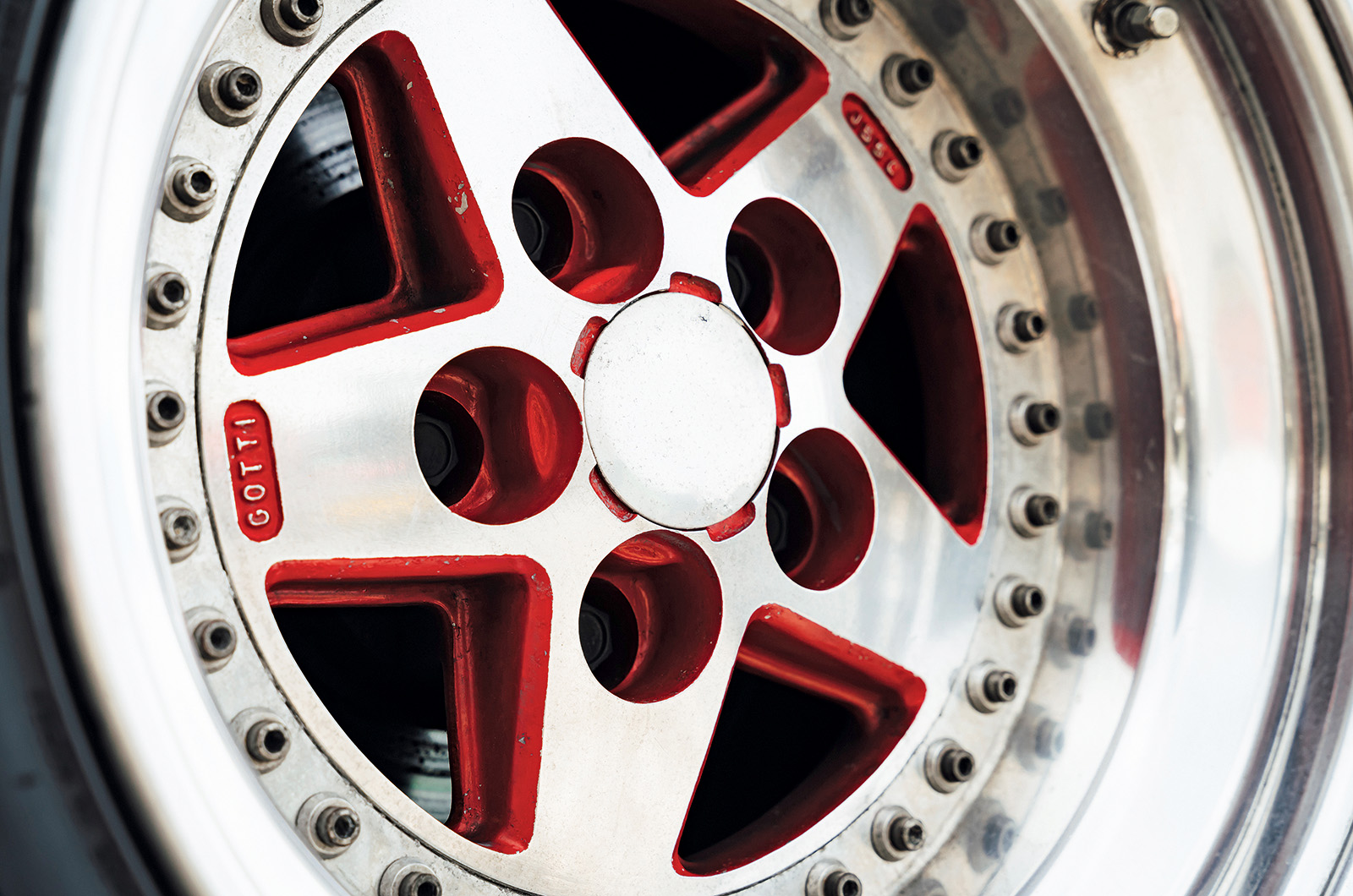
The Pontiac Tojan’s optional Gotti wheels
“It just drives like a very nicely sorted Trans Am,” considers Paul. “It’s probably the best suspension set-up I’ve ever driven on one.”
It’s not an uncomfortable car, despite the stiffer springs, and the steering is good, far from the stereotype of American muscle cars.
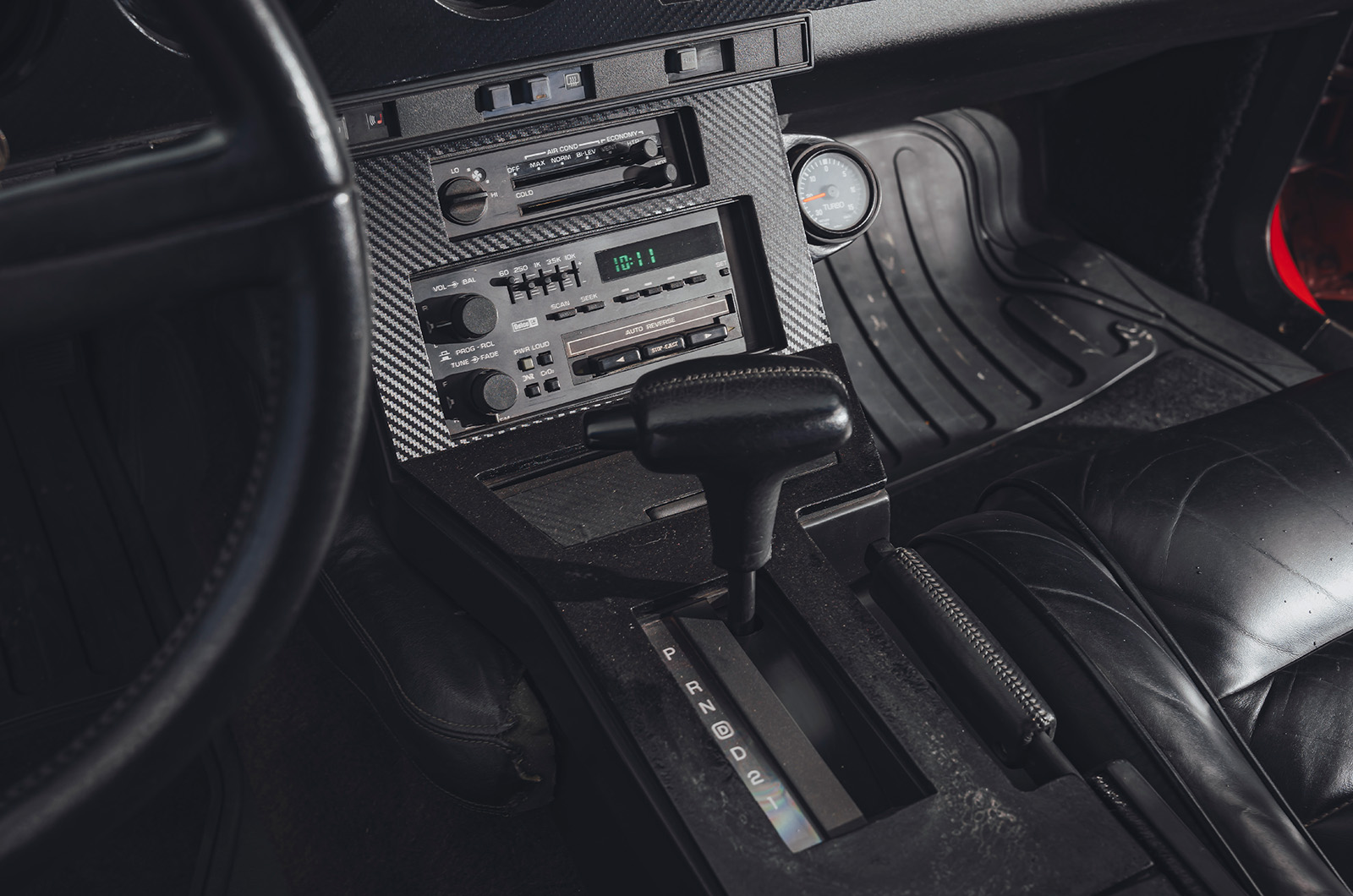
The Tojan reveals further evidence of its high-speed capability every time you shift into drive or reverse: an automatic transmission uprated for high torque loads grabs the drivetrain quite suddenly and strains the car against the brakes like a young dog pulling at the leash.
It’s entirely believable that the car could have done 206mph in 1984.
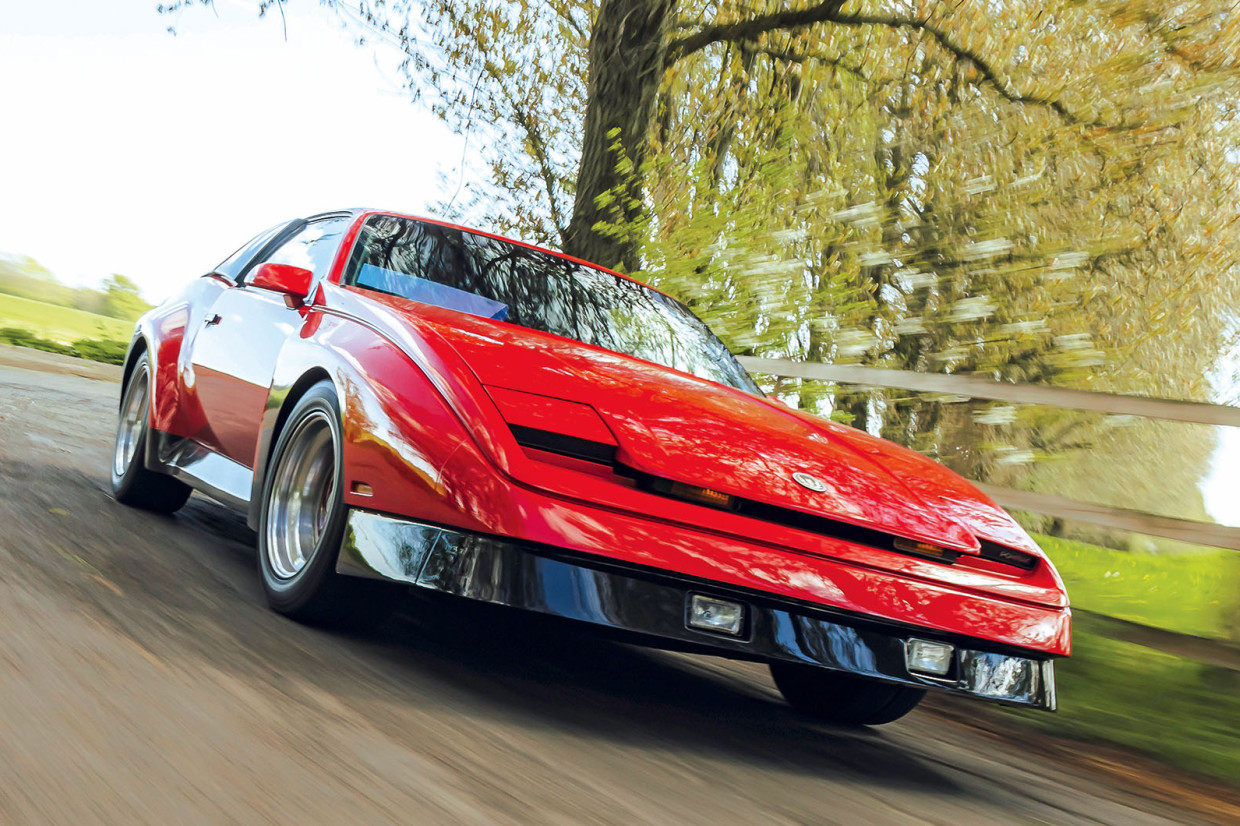
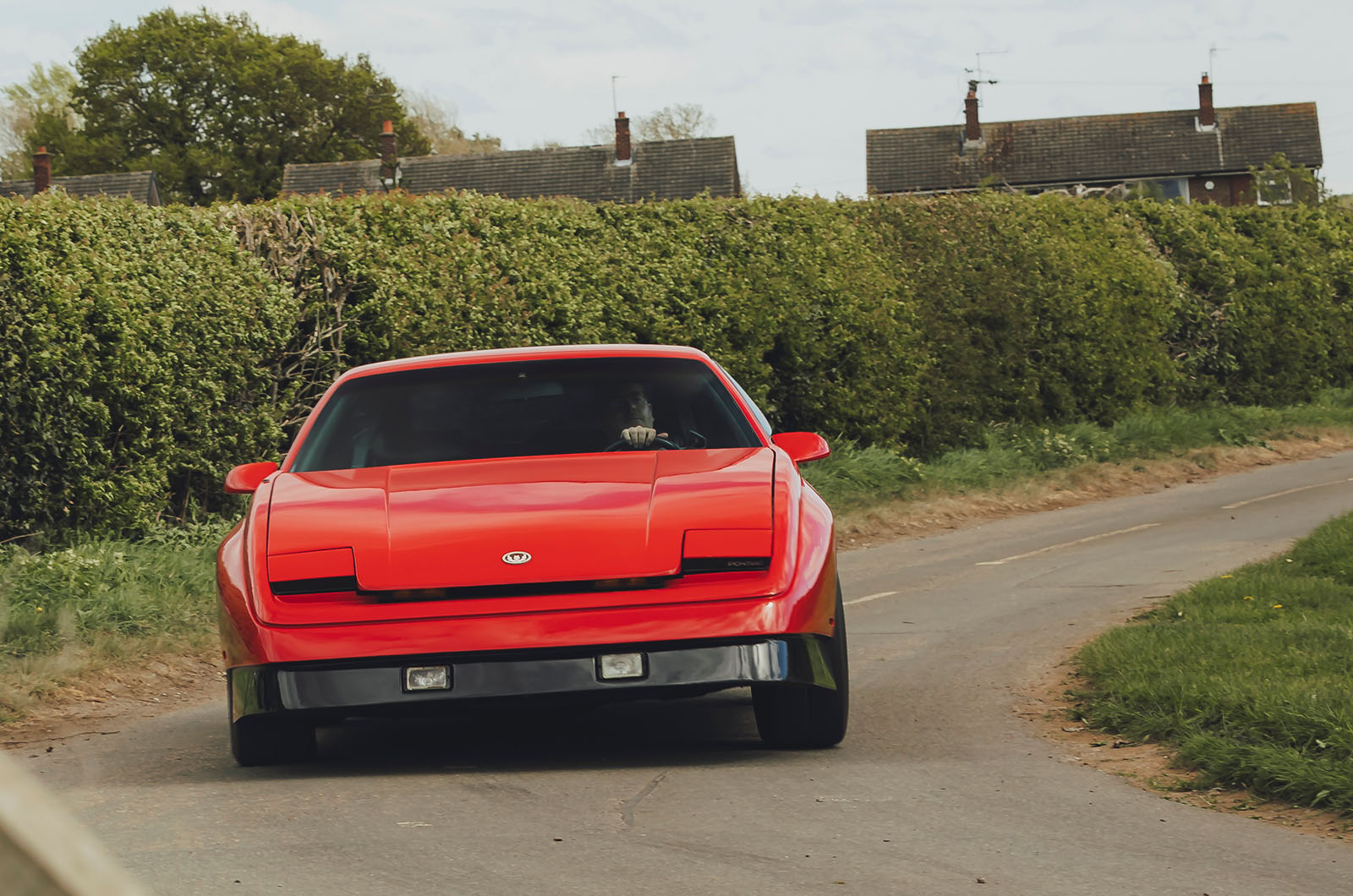
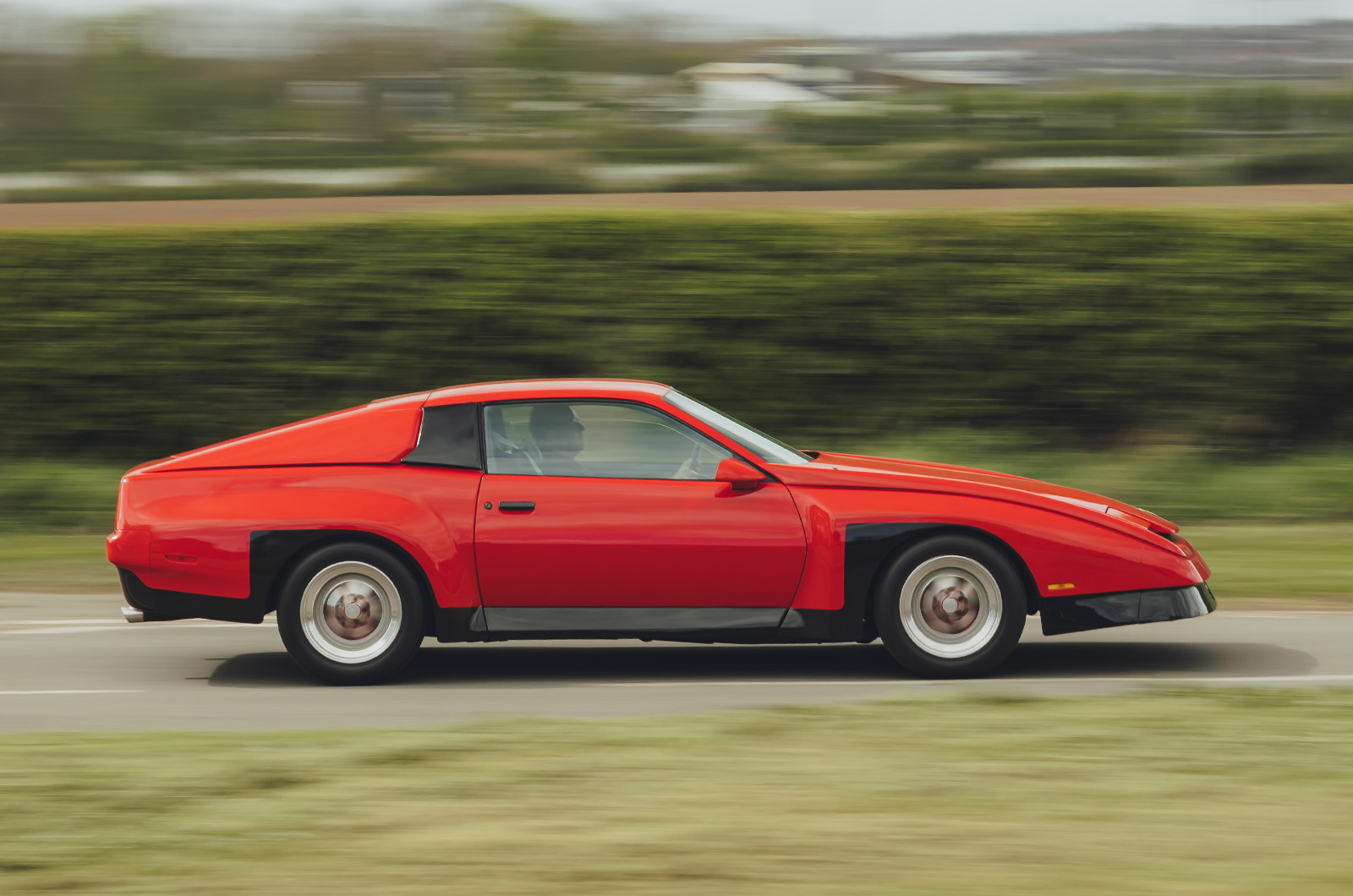
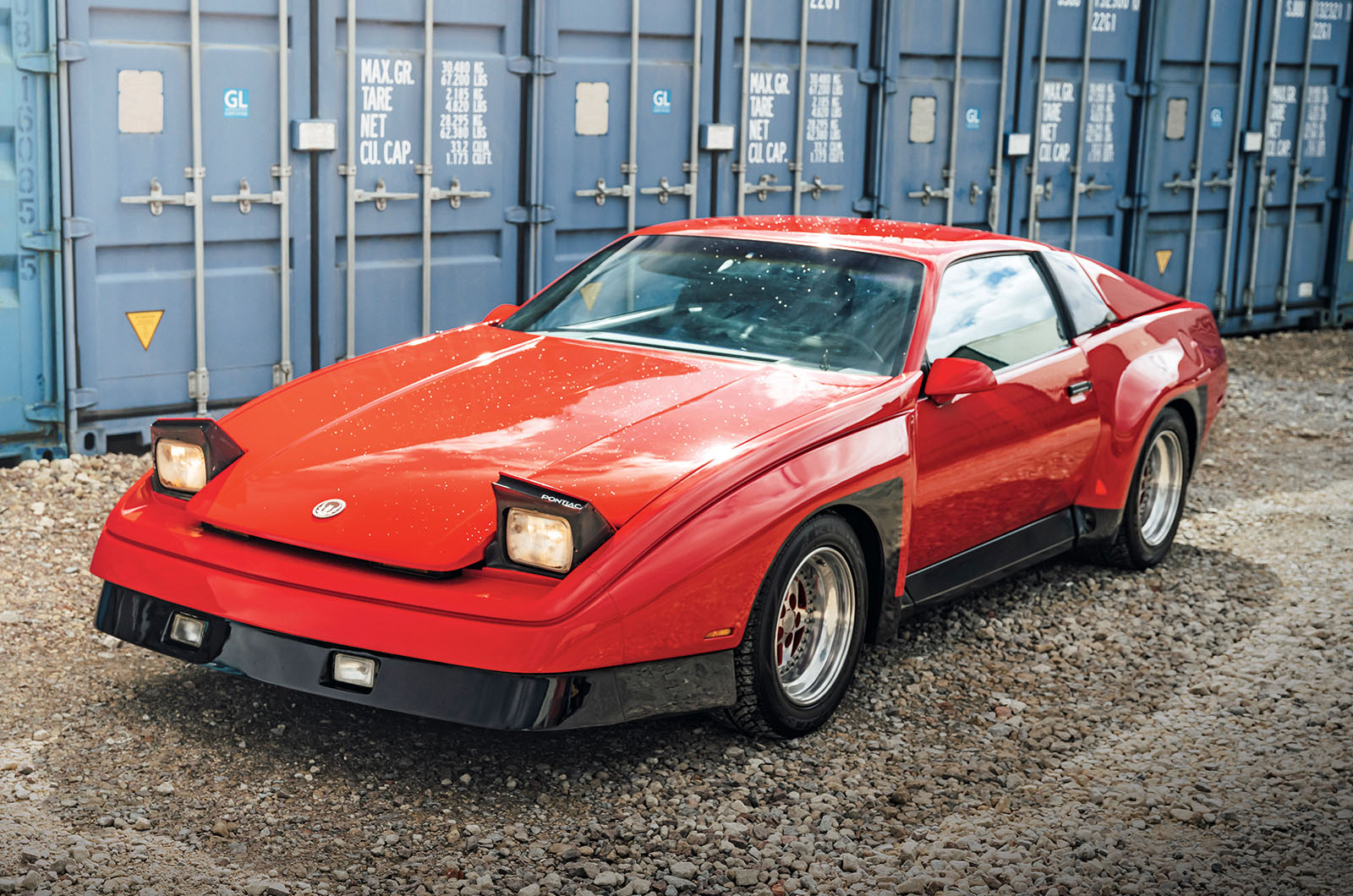
The Pontiac Tojan’s striking looks befit its 200mph supercar status
Paul is convinced, and the size of the turbos bolted to the V8, along with Banks’ expertise, are enough for me, too.
But can you really call the Pontiac Tojan a production car? Did it really beat the Ferrari F40 to that crown by a huge three years?
A handful of Tojan buyers did opt for less extreme forced-induction options, including at least one single-turbo and one supercharged variant, but I struggle to label what is in effect a one-off as a true production car.
What is beyond argument, though, is that the prototype Tojan attracted enough attention that a further 135 were built from 1985-’91, along with 96 Camaro Carallos – a mechanically identical car also built by Knudsen (the Tojan is, to me, the better looking of the pair), this time from the Firebird’s Chevrolet sibling.
Neutered performance makes this Pontiac Tojan quite manageable on a B-road
While these are hardly huge numbers, it was roughly to its maker’s expectations, and the firm has survived to this day.
“I think it was one of the better designs back in that time, when other people were rebodying stuff,” reflects Russell today, 40 years on.
“We were selling a lot more, and it seemed to attract attention.”
After decades of European ‘hybrids’ putting muscle-car engines in low-volume GT bodies, America got a homegrown exotic; like a De Tomaso, but from Nebraska, not Modena.
Images: Max Edleston
Factfile
Pontiac Tojan
[twin-turbo version]
- Sold/number built 1985-’91/136
- Construction glassfibre upper bodywork over steel monocoque
- Engine all-iron, ohv, 16v 5001cc V8, electronic fuel injection [5733cc, twin parallel Garrett turbochargers]
- Max power 189bhp @ 4800rpm [800bhp]
- Max torque 239lb ft @ 3200rpm
- Transmission four-speed automatic or five-speed manual, RWD via LSD
- Suspension: front independent, by MacPherson struts rear live axle, trailing arms, Panhard rod, coil springs, telescopic dampers; anti-roll bar f/r
- Steering power-assisted rack and pinion
- Brakes ventilated discs, with servo
- Length n/a
- Width n/a
- Height 4ft 1¾in (1839mm)
- Wheelbase 8ft 5in (1839mm)
- Weight n/a (standard Firebird Trans Am 3330lb/1510kg)
- 0-60mph 7.3 secs
- Top speed 132mph [206mph]
- Mpg 25
- Price new $22,000 (1984) [$62,000]
We hope you enjoyed reading. Please click the ‘Follow’ button for more super stories from Classic & Sports Car.
Charlie Calderwood
Charlie Calderwood is Classic & Sports Car’s Features Editor