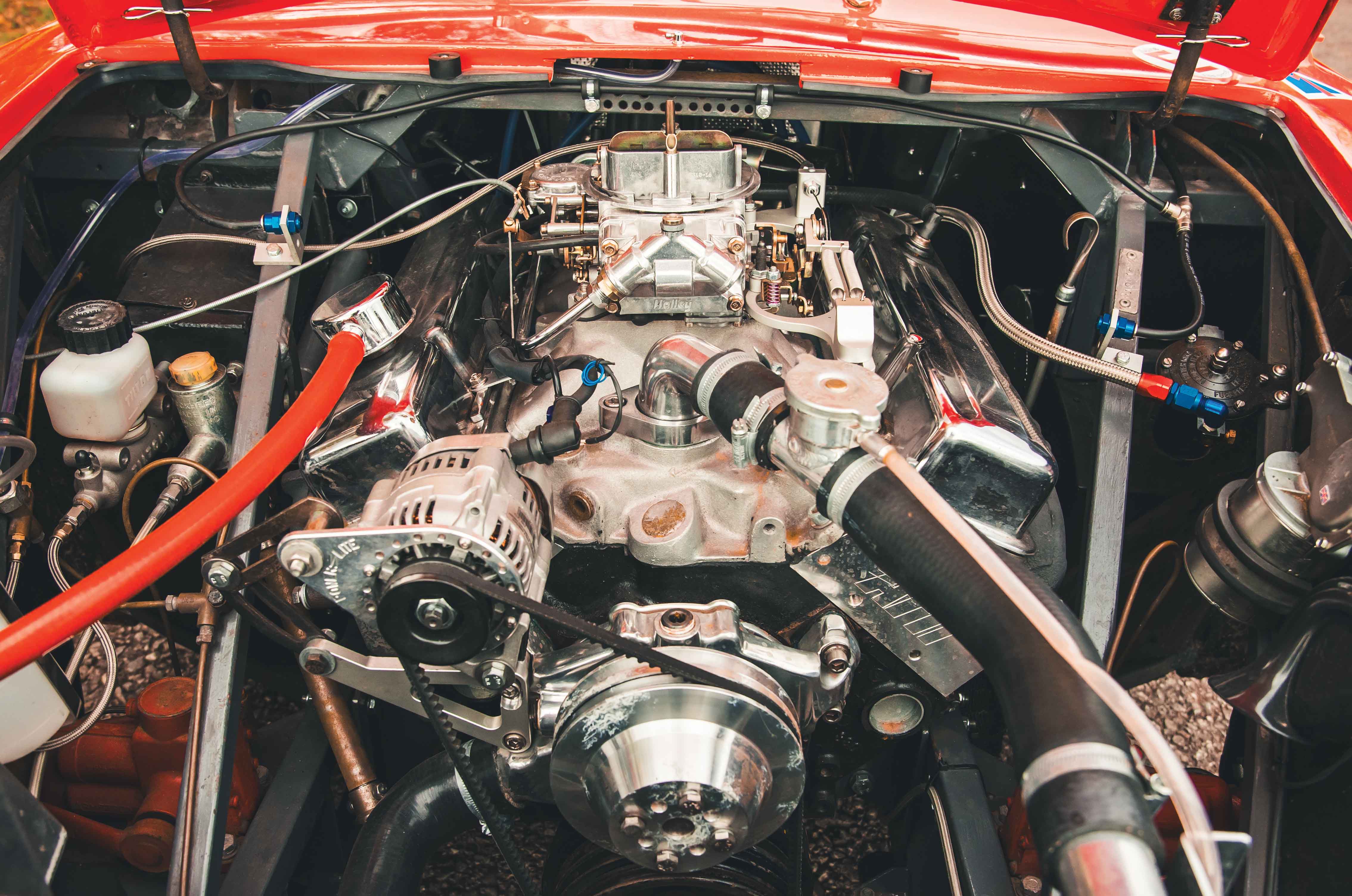
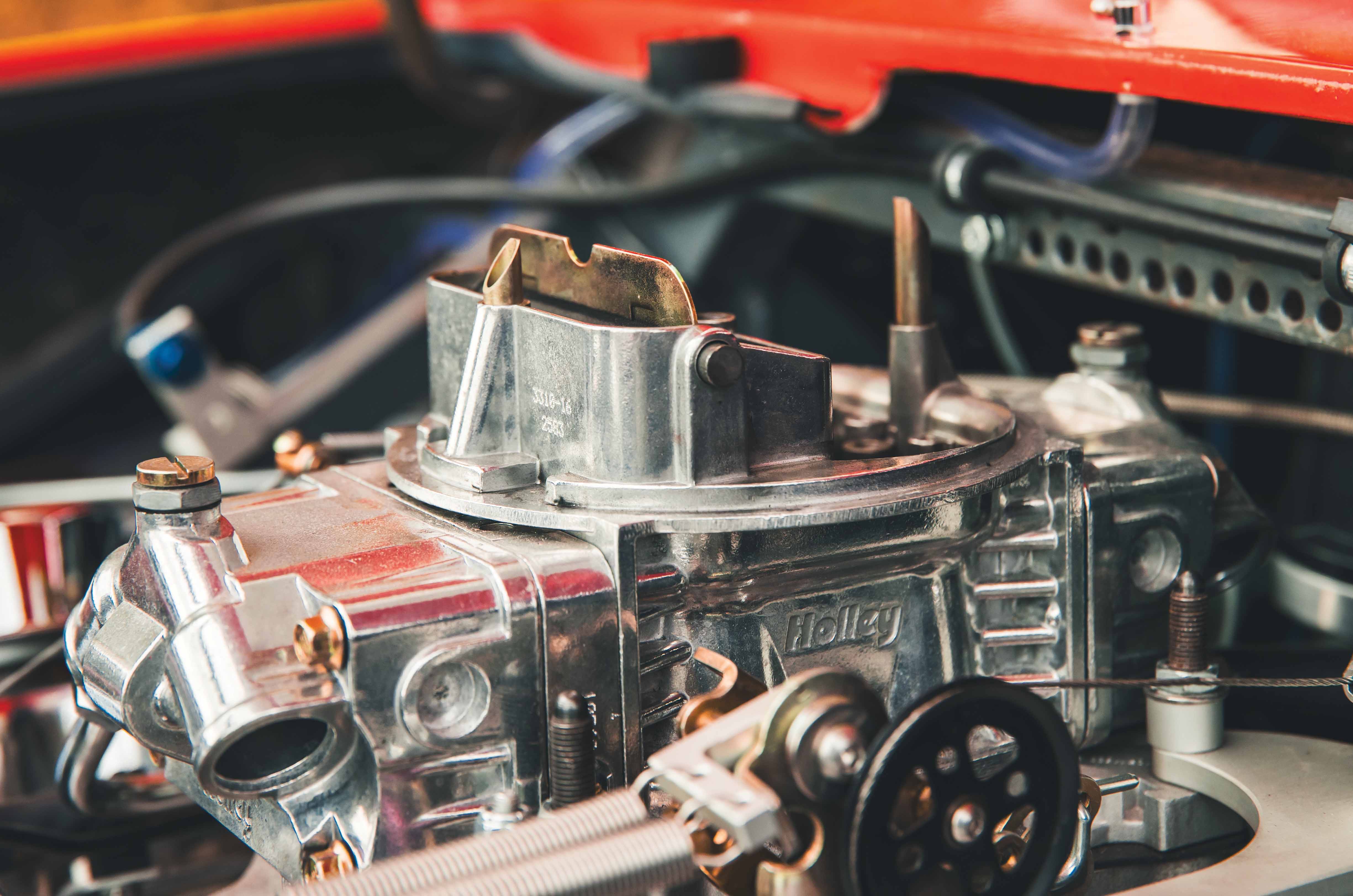
Mike has had it dyno’d at 420bhp at the flywheel, or around 350bhp at the rear wheels.
A four-speed Jaguar gearbox and competition clutch have been fitted to deal with the prodigious torque, and while Mike admits some set-up work is still needed, the Gilbern is essentially ready to race.
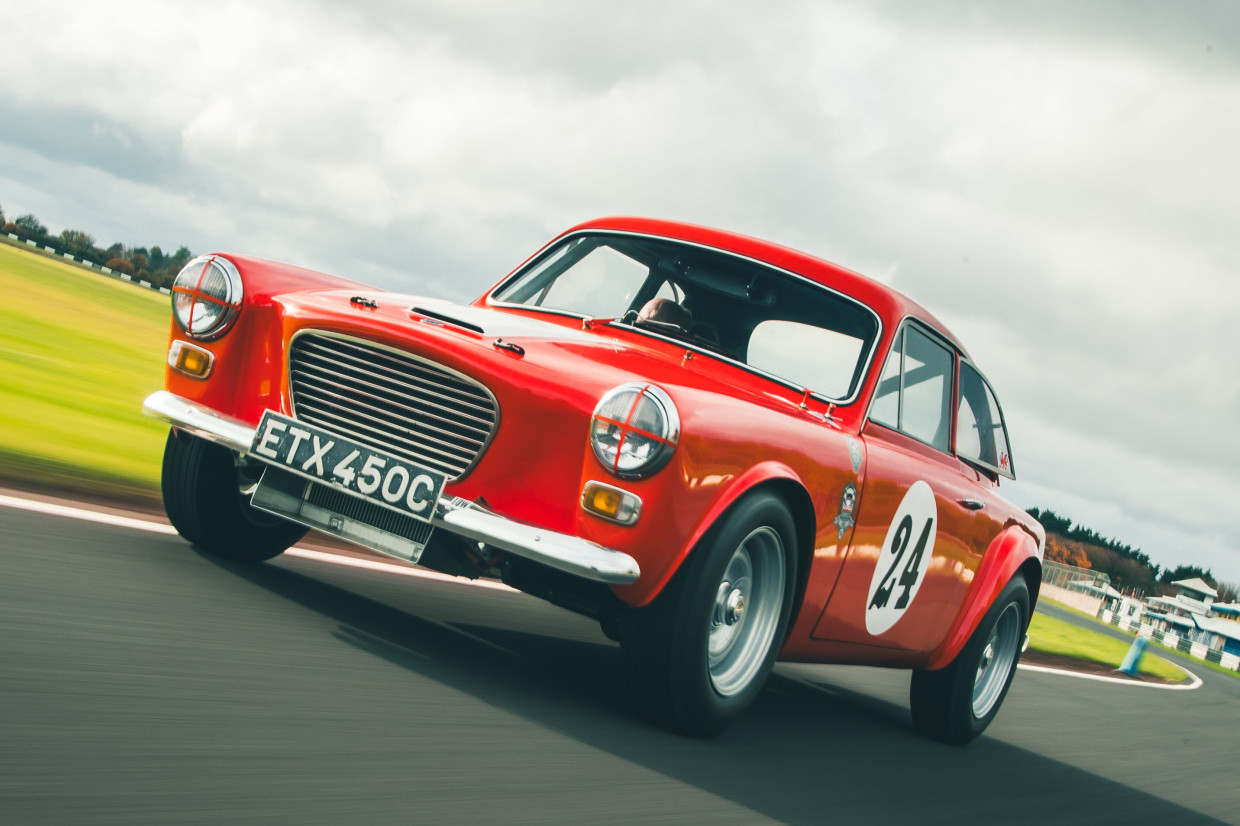
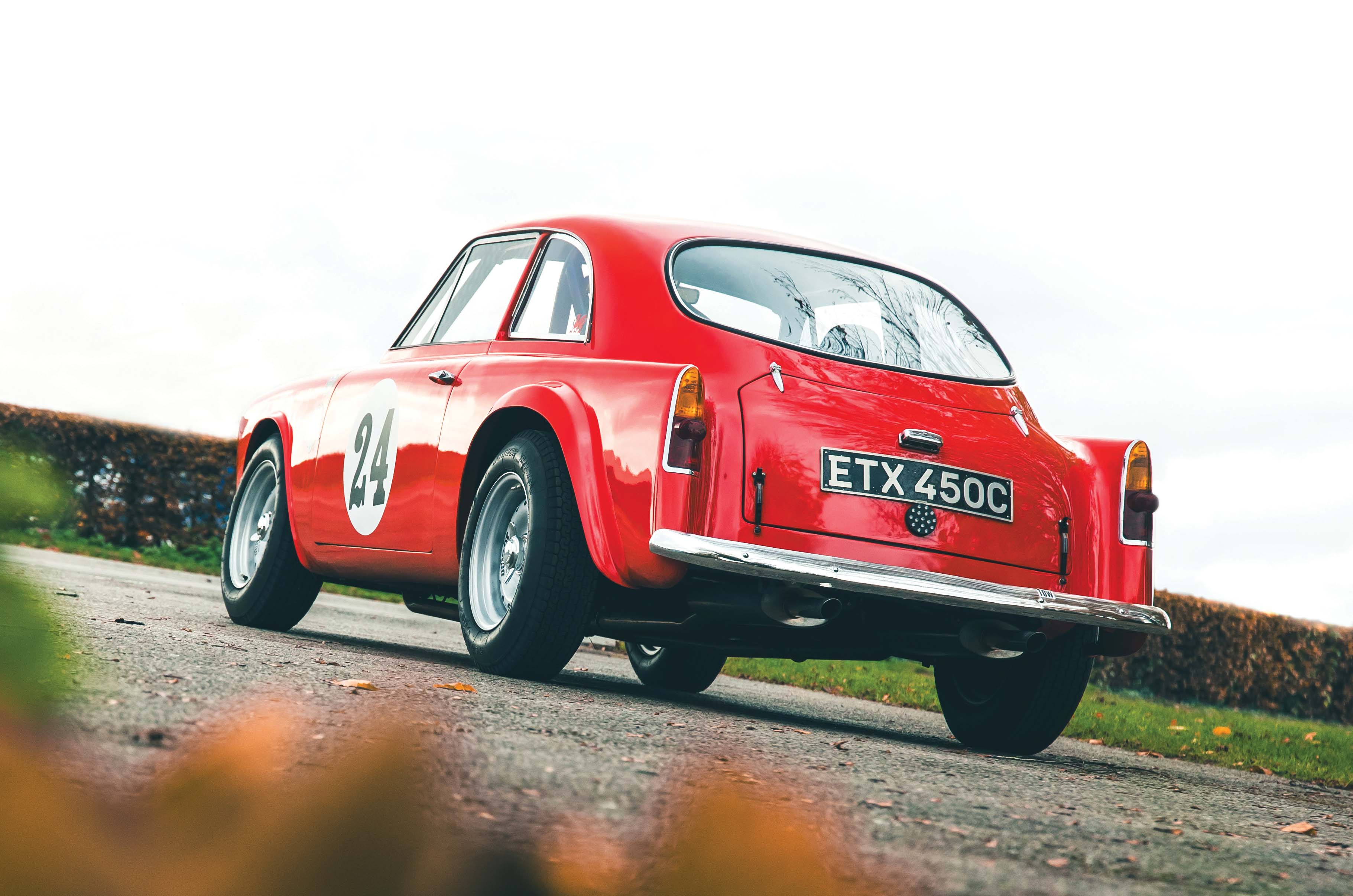
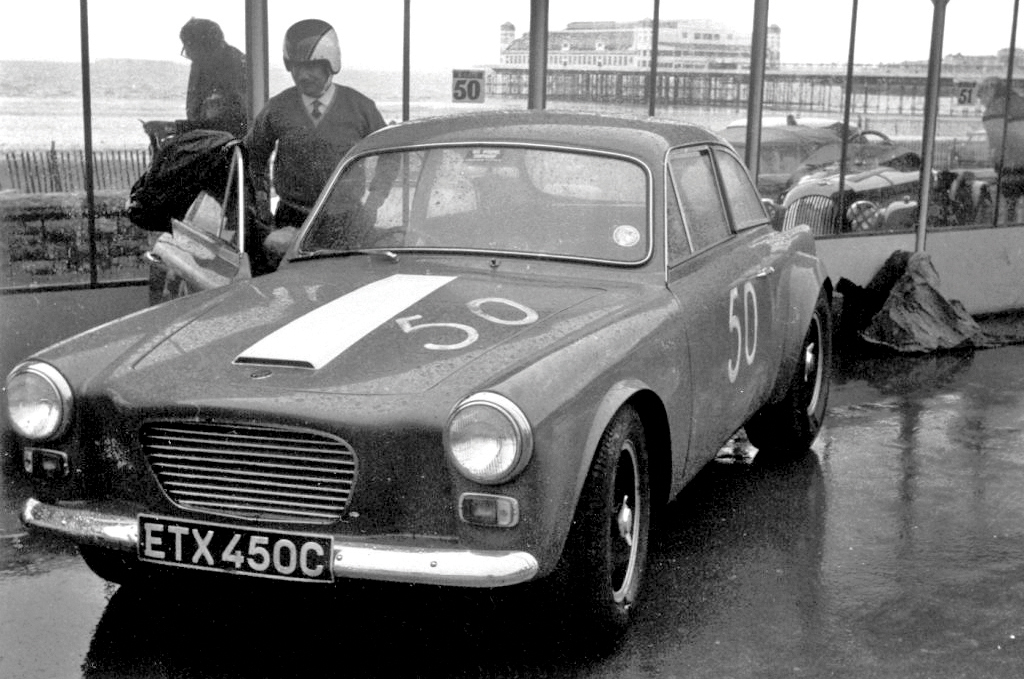
So having Castle Combe circuit at our disposal, where 60 years ago Messrs Wilson and Cottrell would have been finding their feet with this über-Gilbern, couldn’t be more appropriate.
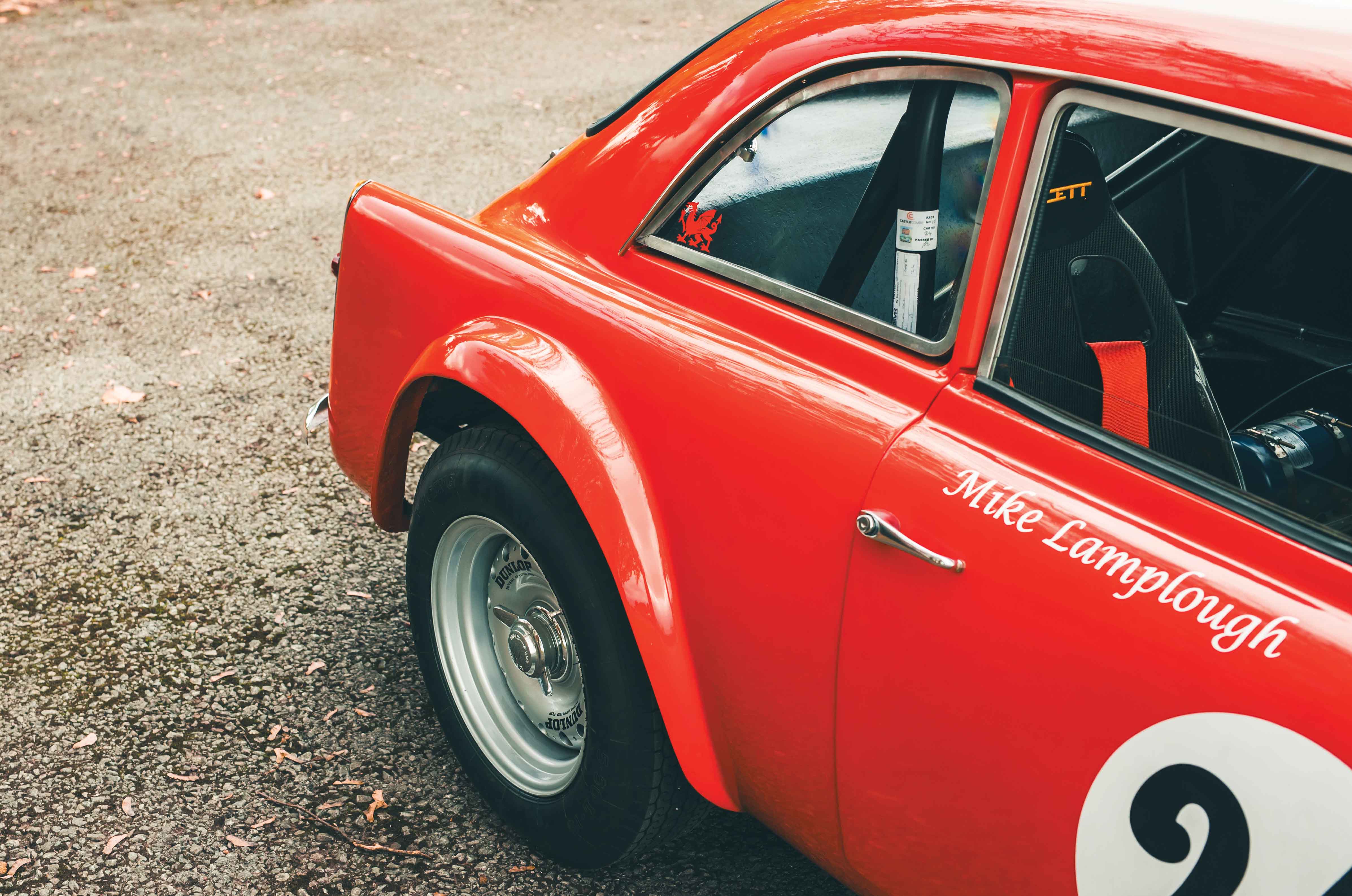
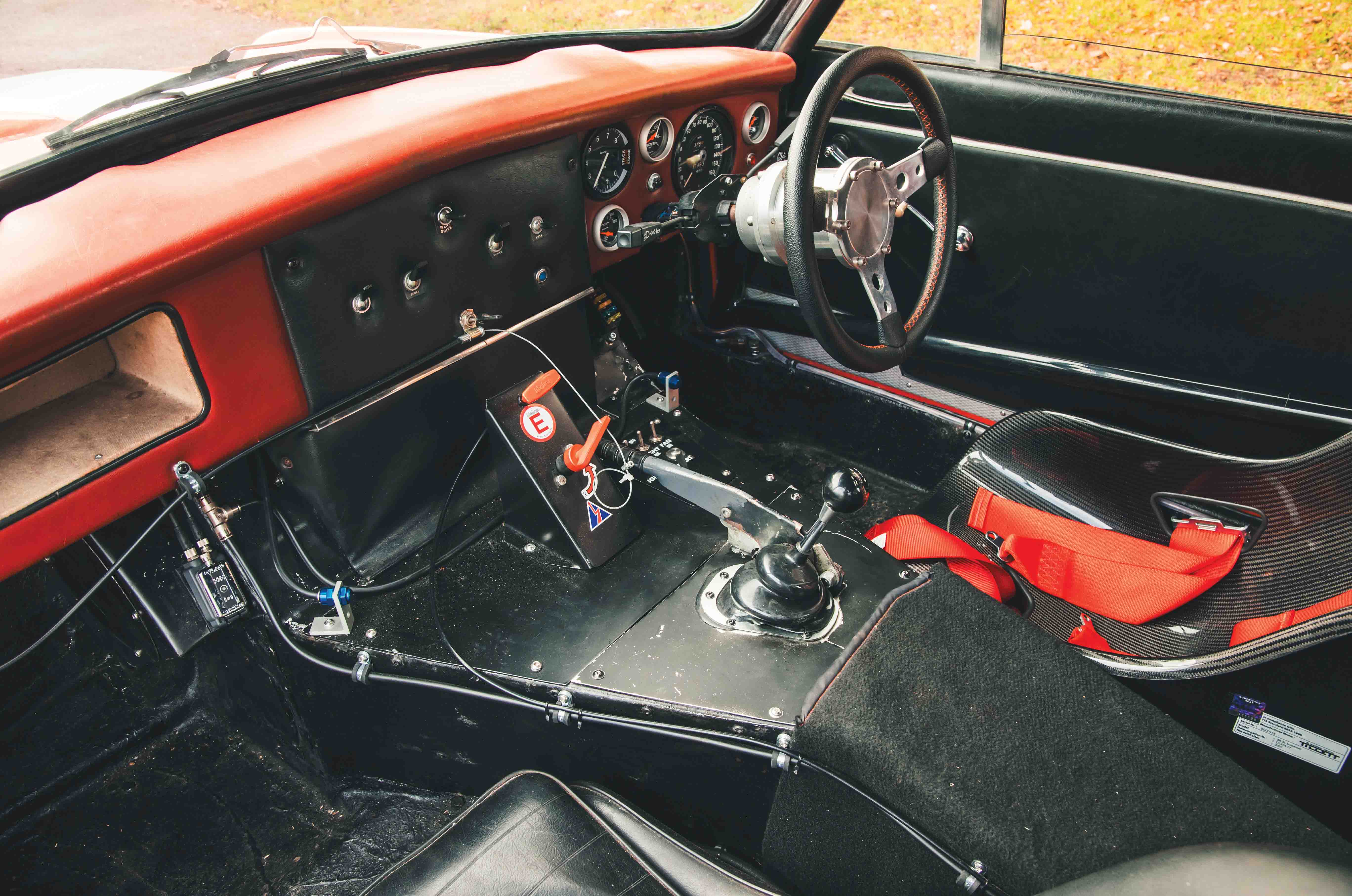
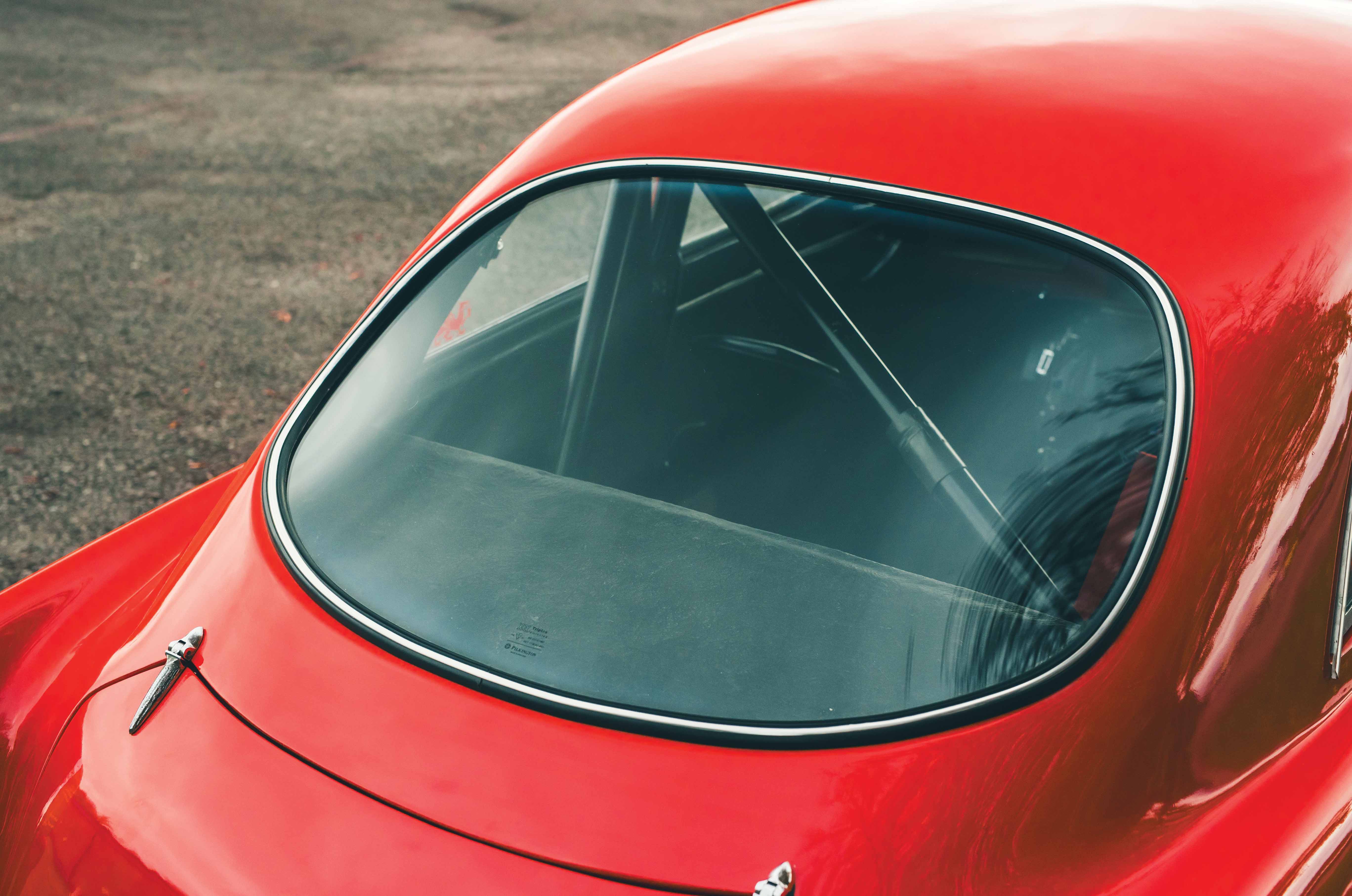
Climb through the rollcage, drop into the thinly padded Tillett and your legs are skewed to the right, the broad metal shroud encasing the back of the V8 and transmission encroaching into each footwell (the upside of this mid-front location becomes clear when we’re up to speed on the track).
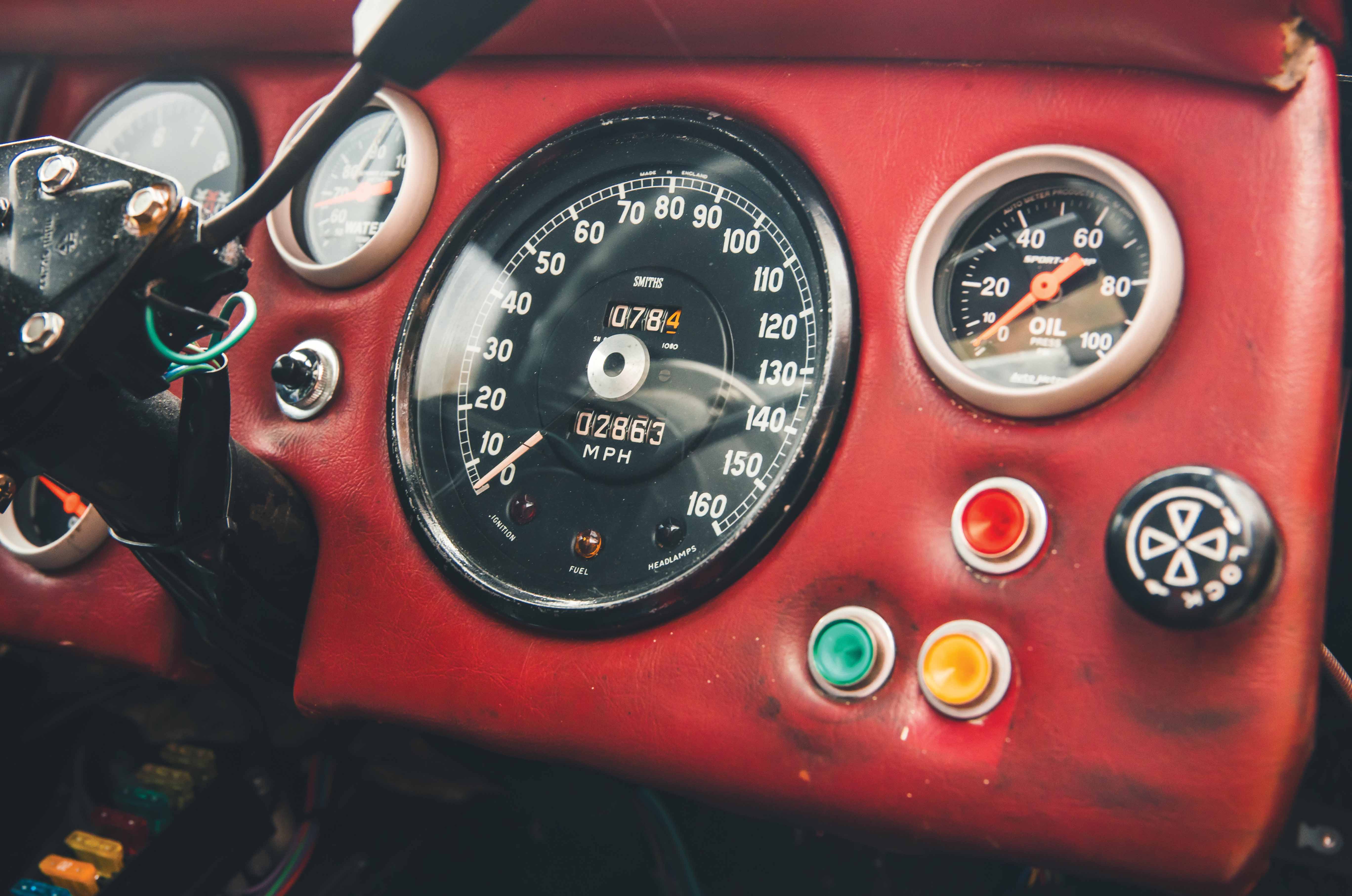
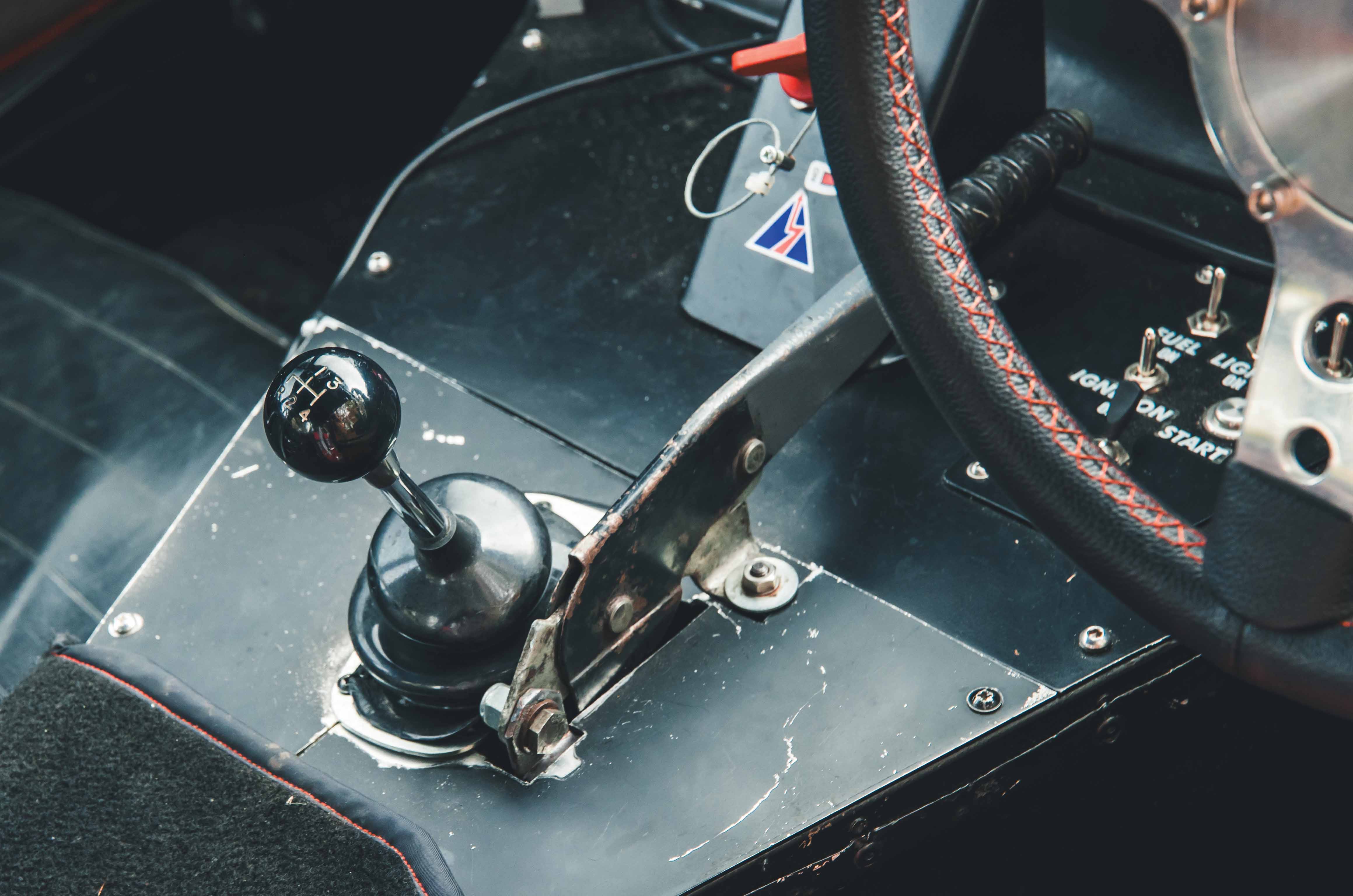
The Gilbern-Chevrolet GT’s simple dashboard
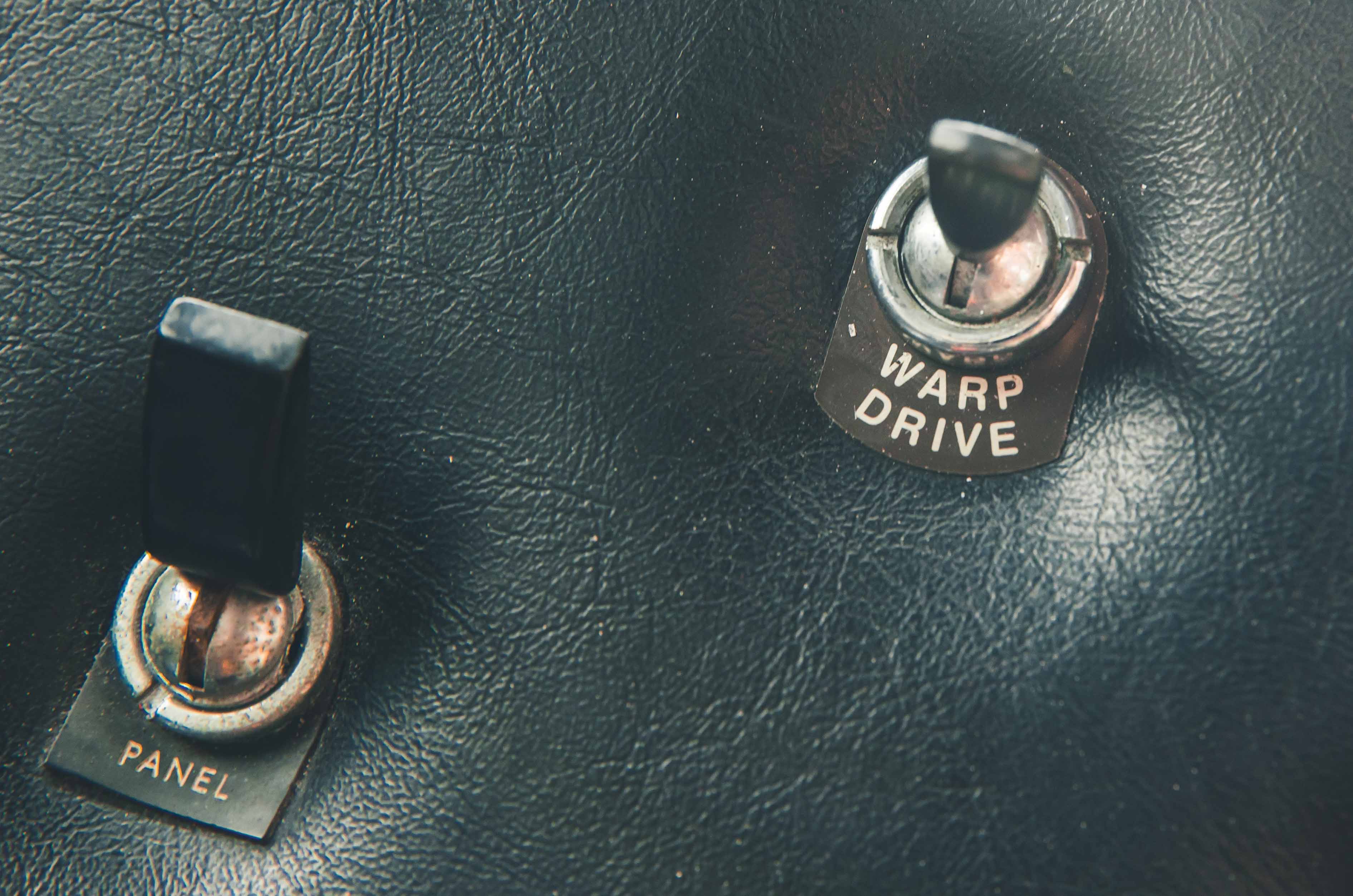
A fairly short gearlever and handbrake sprout from the untrimmed casing, along with a metal plate housing switches for the fuel pump, engine fan and ignition, plus the start button.
Pull away and, even though its column has been extended and I have a cushion behind me, I’m reaching slightly for the small wheel.
The gear linkage still needs tweaking, but the generous torque means we only need third and fourth on track, with the long-throw lever sitting next to your buttock in top. And then there’s the noise – and heat!
The Chevy’s deep-chested roar is gloriously unfiltered, and only our respect for Castle Combe’s mid-week sound limits keeps us from extending the modern Stack tachometer’s needle past 4000rpm.
The Gilbern-Chevrolet GT’s stubby gearlever is linked to a Jaguar ’box
Even so, it hurts your ears after a few laps (more fool me for not wearing earplugs or a lid).
The cabin rapidly reaches sub-tropical temperatures, too, with only basic metalwork between you and Detroit’s finest. But none of this matters.
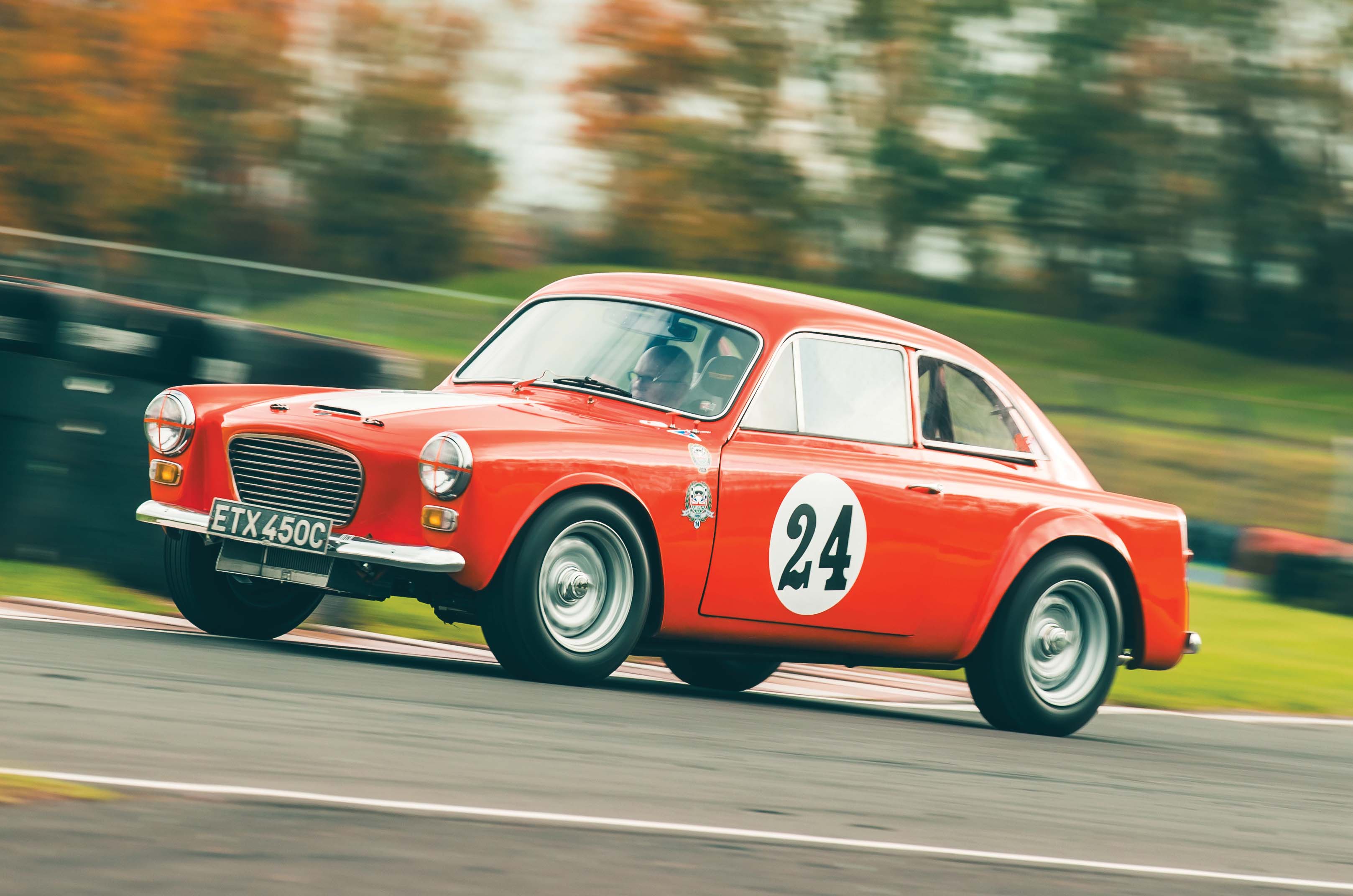
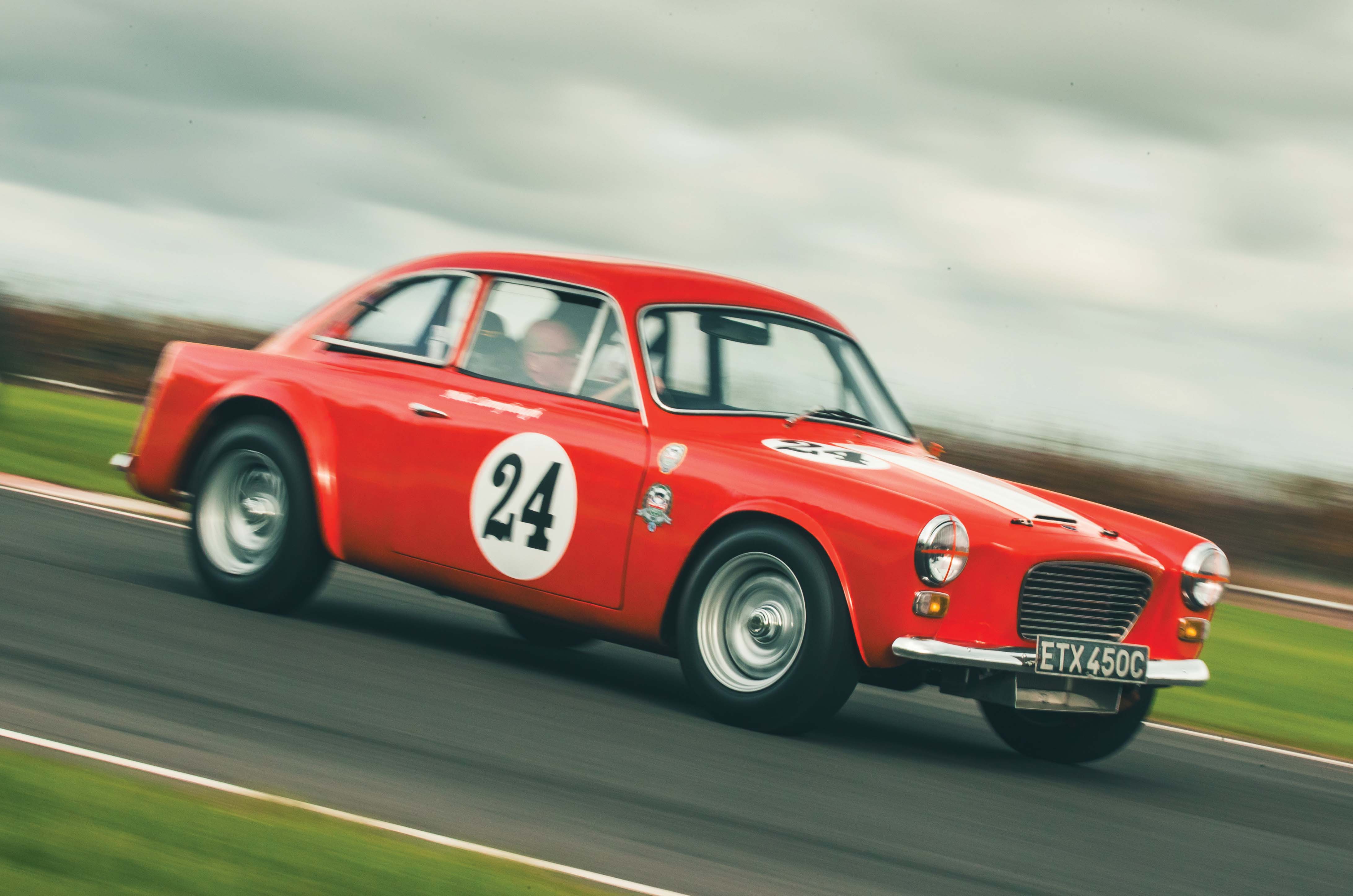
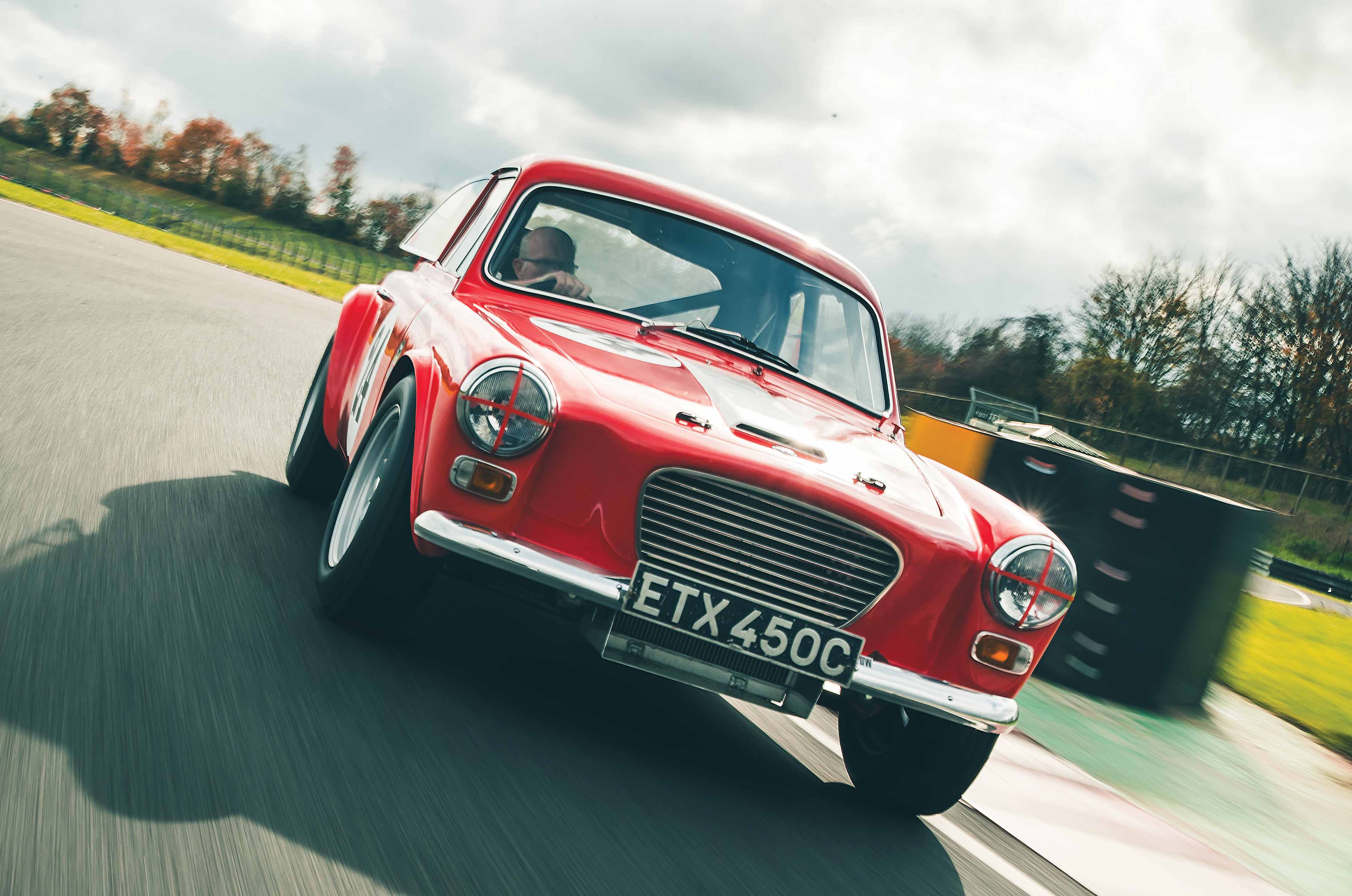
Even at half-chat, the Gilbern GT is devastatingly quick, fast enough to need every inch of circuit.
Understeer is minimal, with a fine balance allowing the rear to help steer through Combe’s tighter bends, while on the faster corners, other than moderate roll, the GT is stable and secure.
There’s no doubt it would bite if you took liberties, but it has the potential to be an omnipotent track tool in the right hands.
It’s a shame this one-off Gilbern-Chevrolet never got the development it needed to turn it into a winner 60 years ago.
Maybe its second lease of life will put it on the podium.
Images: Jack Harrison
Thanks to: Mike Lamplough; Castle Combe Circuit
Factfile
Gilbern-Chevrolet GT
(data for original specification)
- Sold/number built 1965/one
- Construction glassfibre bodyshell riveted to tubular steel chassis
- Engine all-iron, ohv 4638cc V8, two twin-choke Stromberg carburettors
- Max power 300bhp (est)
- Max torque n/a
- Transmission four-speed manual, RWD
- Suspension: front independent, by wishbones, coil springs, lever-arm dampers, anti-roll bar rear live axle, trailing arms, coil spring/damper units
- Steering rack and pinion
- Brakes discs front, drums rear
- Length 12ft 9in (3900mm)
- Width 4ft 11in (1500mm)
- Height 4ft 3in (1300mm)
- Wheelbase 7ft 10in (2400mm)
- Weight 2425lb (1100kg)
- 0-60mph 6.5 secs (est)
- Top speed 150mph (est)
- Mpg n/a
- Price new £995 (kit, 1965)
- Price now £60-70,000*
*Price correct at date of original publication
Enjoy more of the world’s best classic car content every month when you subscribe to C&SC – get our latest deals here
READ MORE
Aston Martin DBS V8 vs Jensen Interceptor SP vs Gordon-Keeble GK1: British beef
30 uses of Chevrolet’s smallblock V8
Bristol 410 vs Jensen C-V8: revolutionary rebels
Simon Hucknall
Simon Hucknall is a senior contributor to Classic & Sports Car