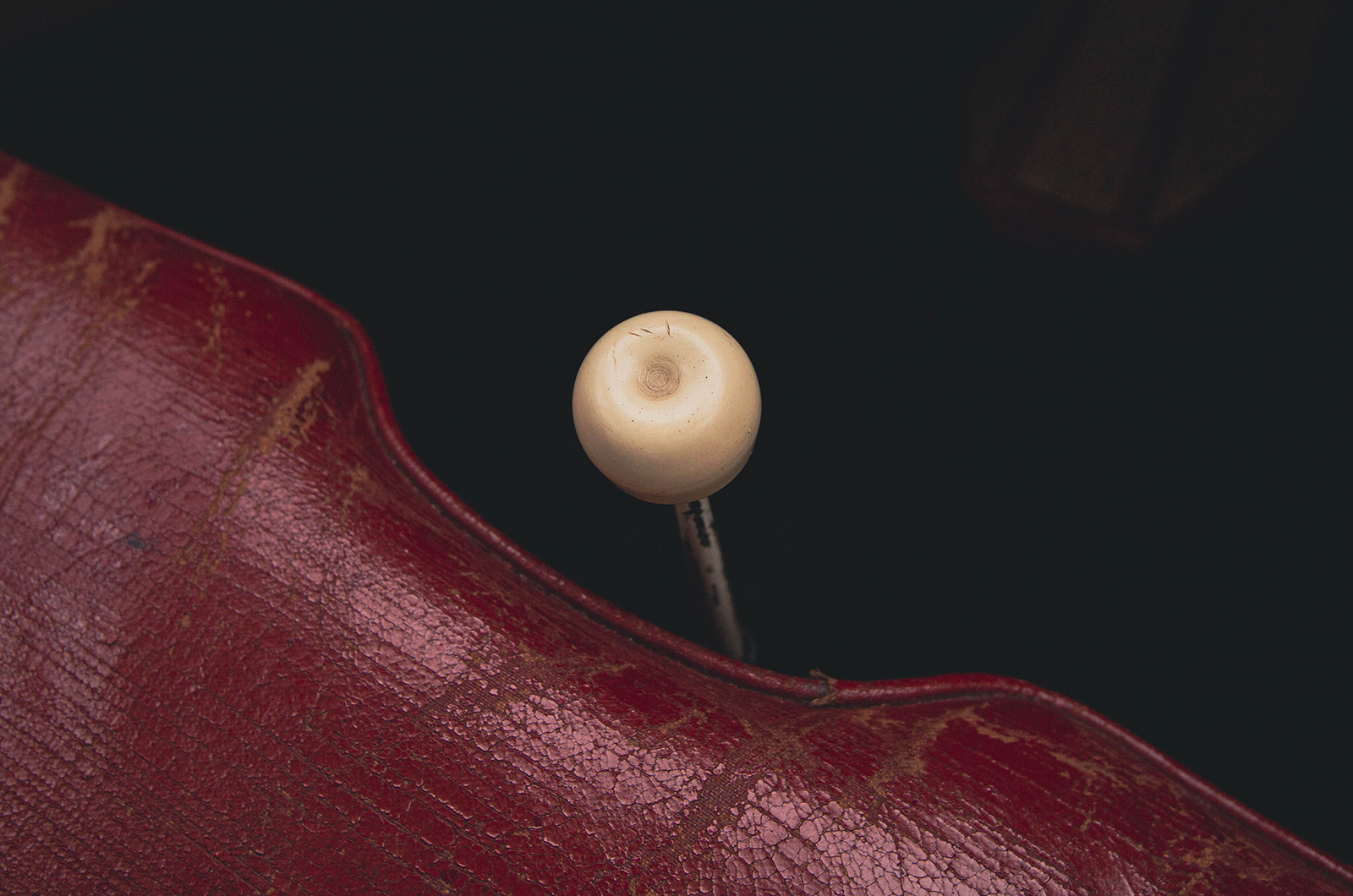
People say the gearshift quality is poor, including The Autocar after its 1951 test drive, when it was reported that the gearbox was ‘not by any means quiet, nor is it a very easy one to change gear’.
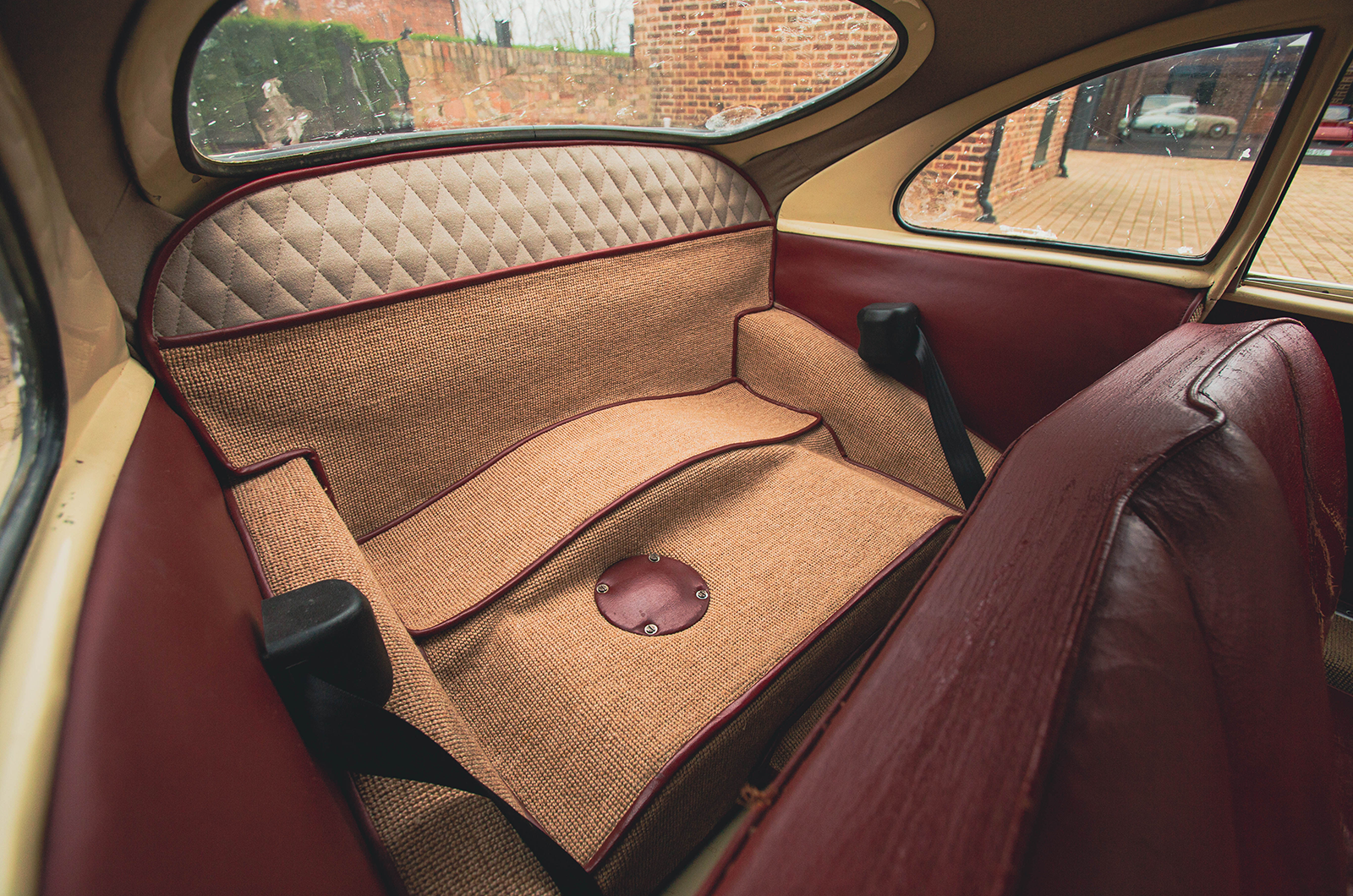
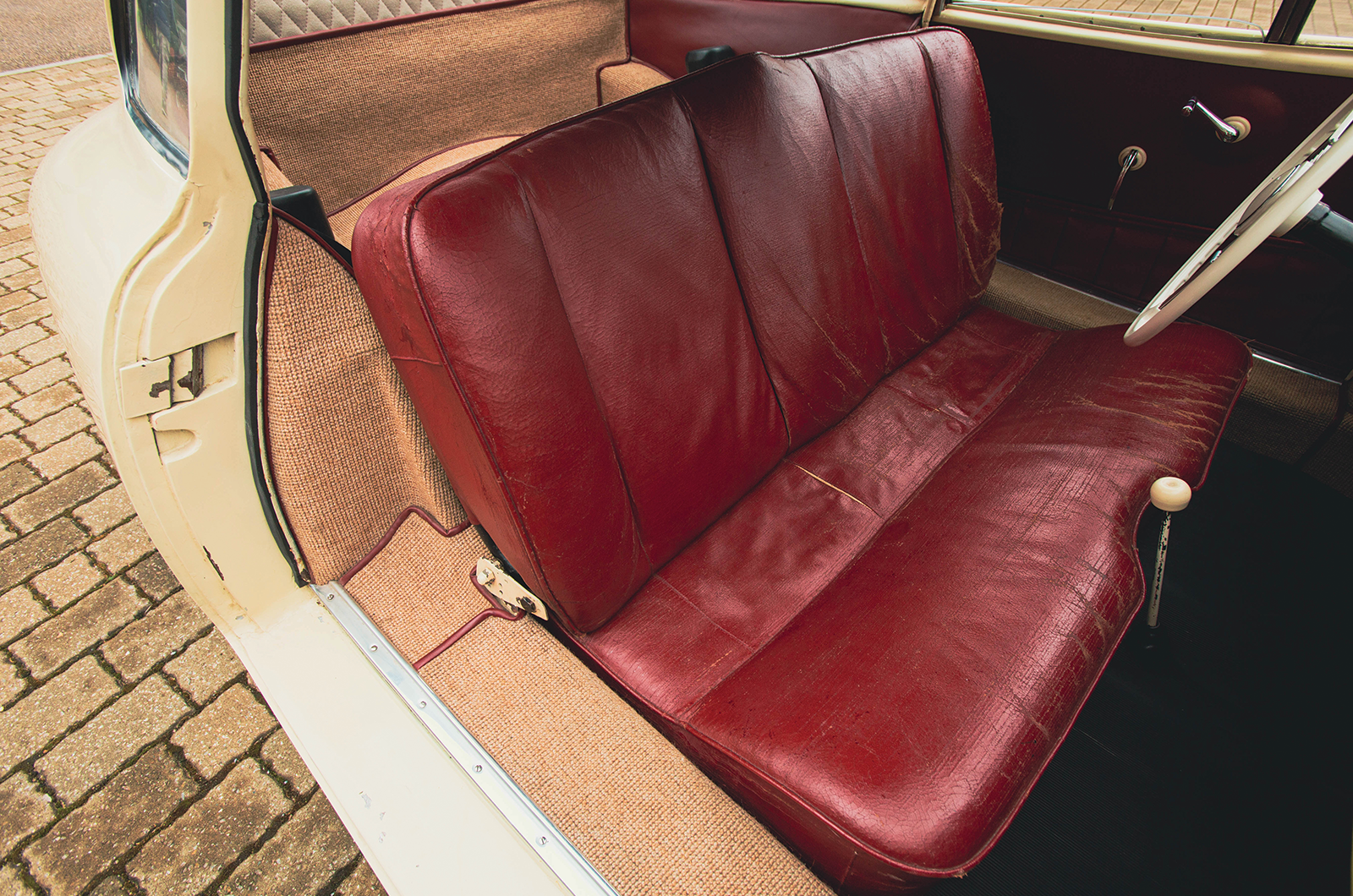
Porsche’s mid-engined prototype gave way to the rear-engined 356/2, which got a decent amount of luggage space behind the front bench
This car has no synchromesh on first and second, so the gears demand careful selection and double-declutching, but otherwise it feels fine to me; it’s certainly more precise than the gearbox in my 1973 Volkswagen Beetle.
The throttle weighting is positive, the pedal spacing broad and the brake pedal long but, eventually, effective.
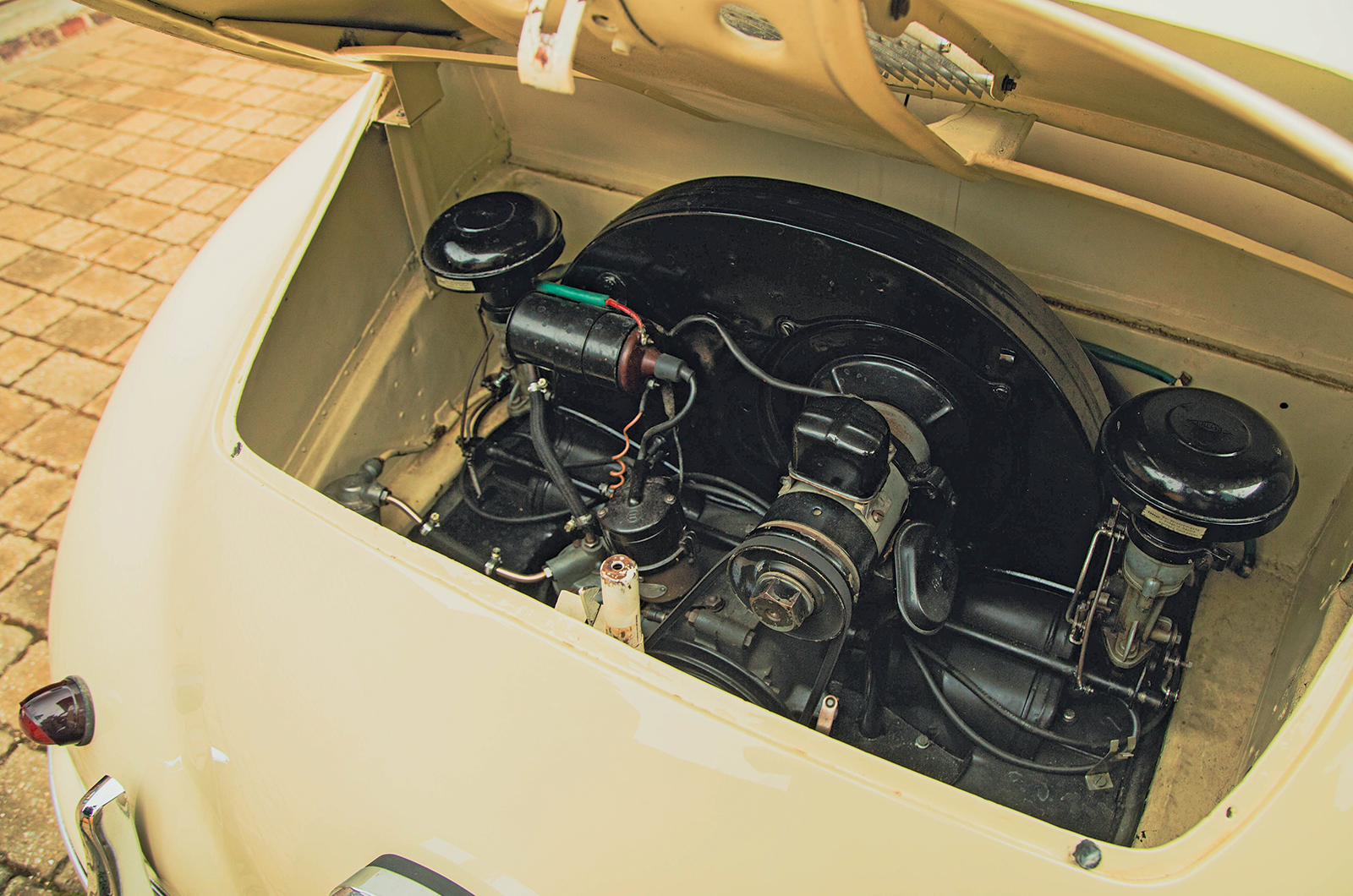
Gratifyingly, I don’t stall it, nor do I manage to mis-select a gear, and the flat-four engine, which makes its peak output at a mere 4000rpm, has a broad spread of what could loosely be termed as power.
As in, the car doesn’t make a lot of it, but it’s consistent around the rev band.
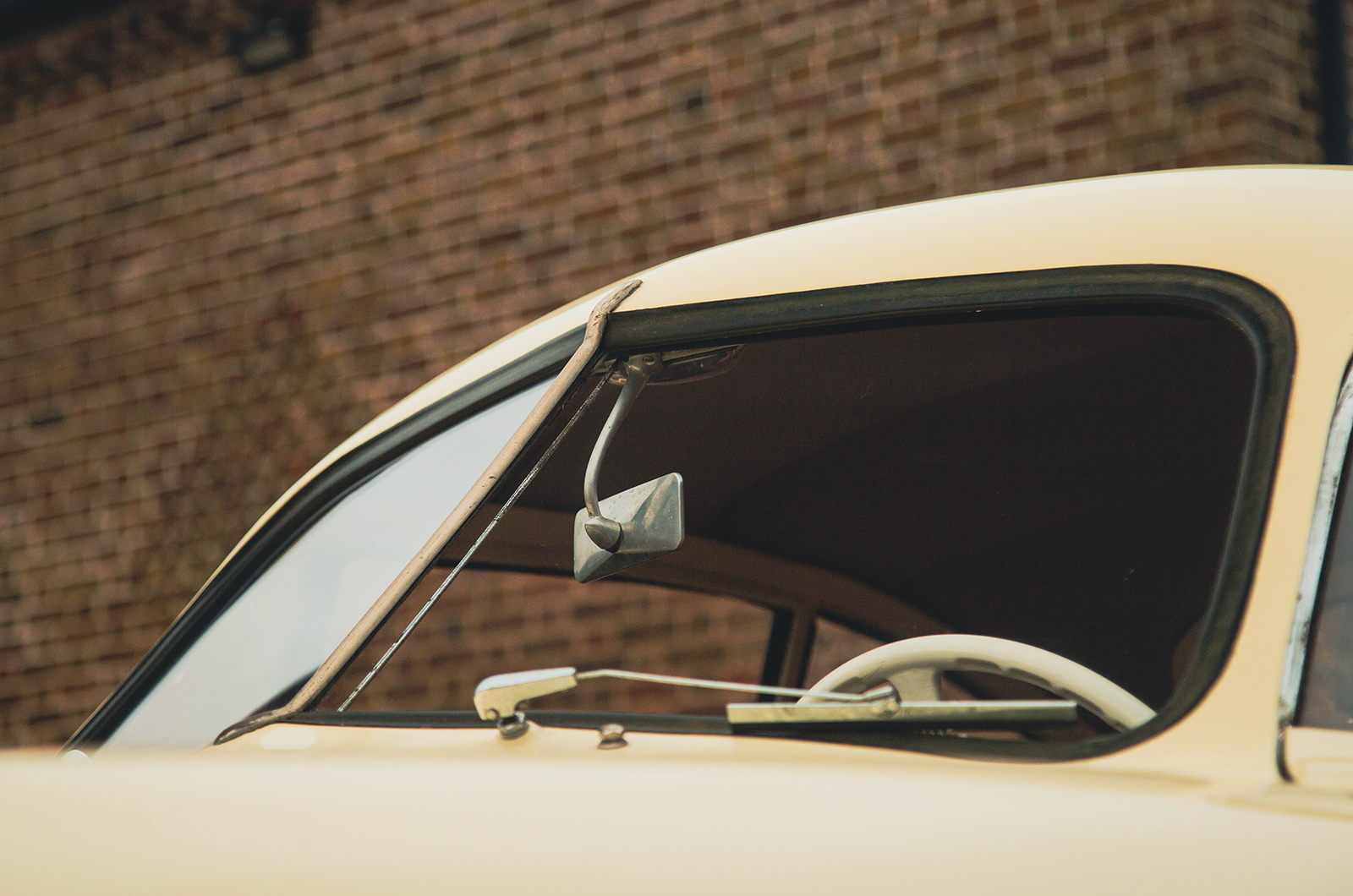
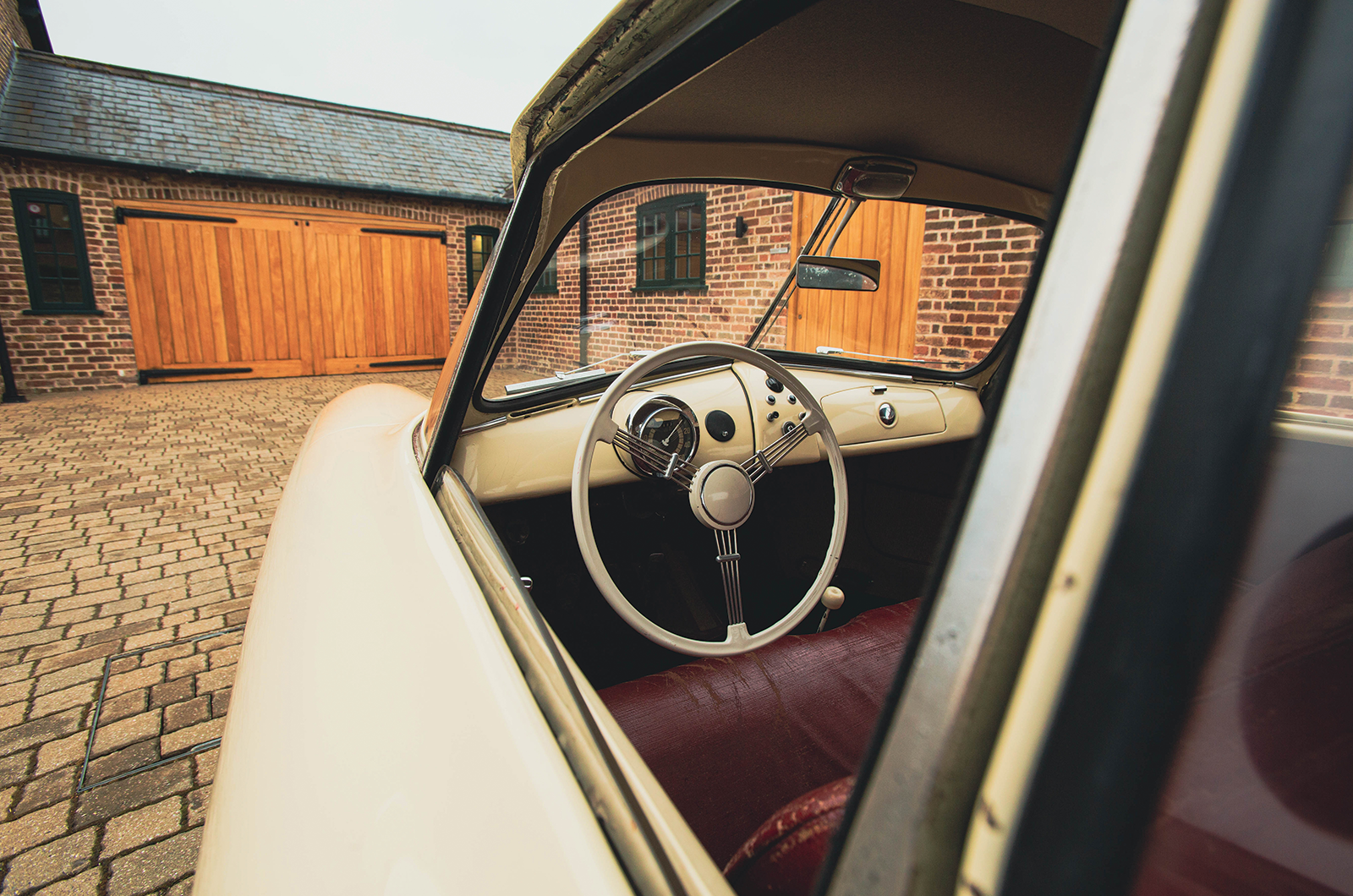
This Porsche 356/2’s cabin is highly original
Fourth gear is long, so the engine settles easily and flexibly into a cruise.
If the ratios of this car are the same as those of the Stuttgart-built example that followed, the numbers are 3.54, 5.54, 9.17 and then 15.95 to one.
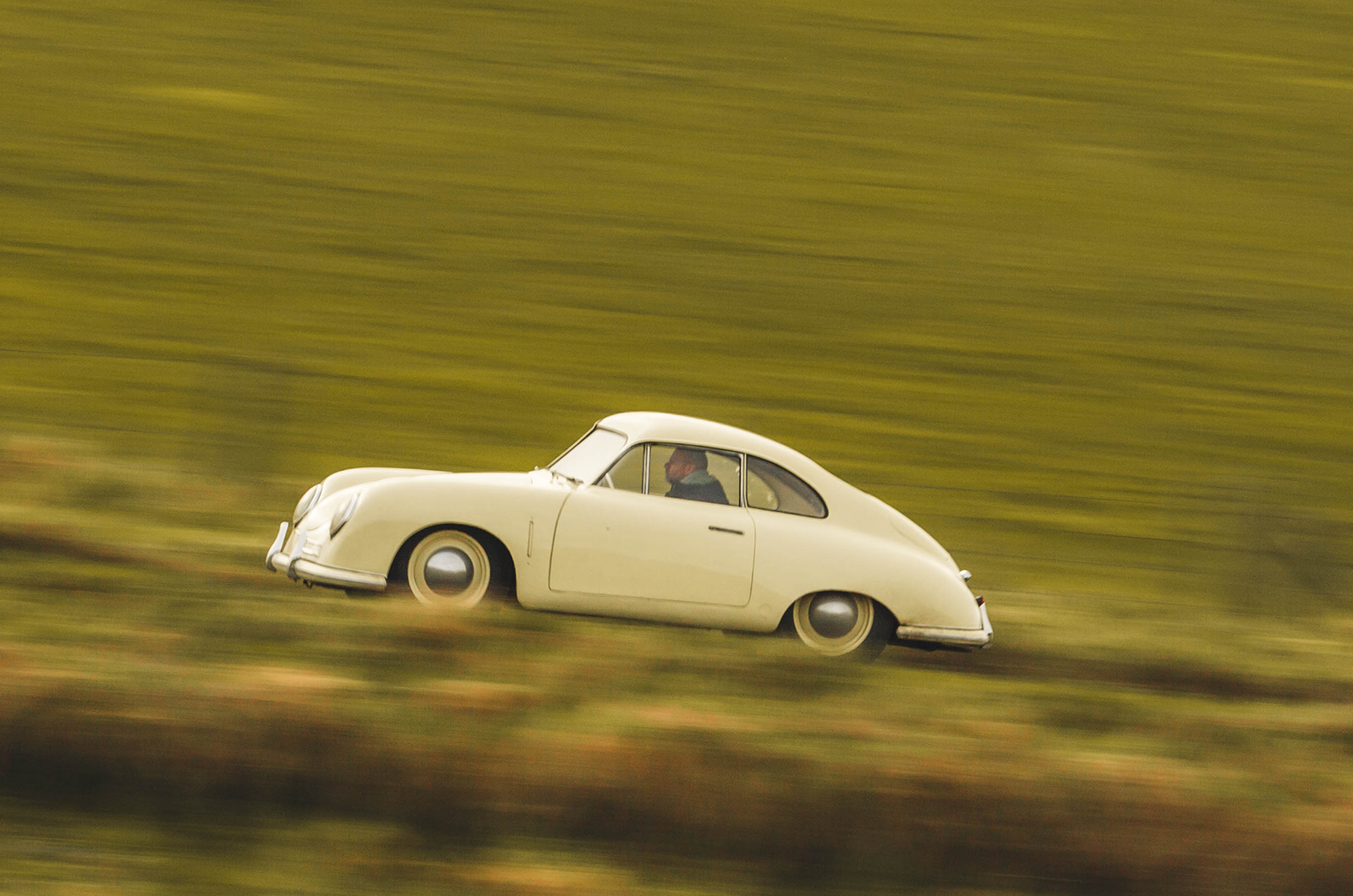
Top speed was said to be 85mph, although Lord knows it would take a long time to get there, and with its slow, worm-geared steering you’d be a brave soul to try it.
Certainly, our Berkshire test route isn’t big enough for the task and, largely for reasons of value, neither do I have a crack at establishing whether this Porsche 356 retains the infamous traits that a combination of a rear engine, swing-axles and a short wheelbase give – ie, pronounced oversteer.
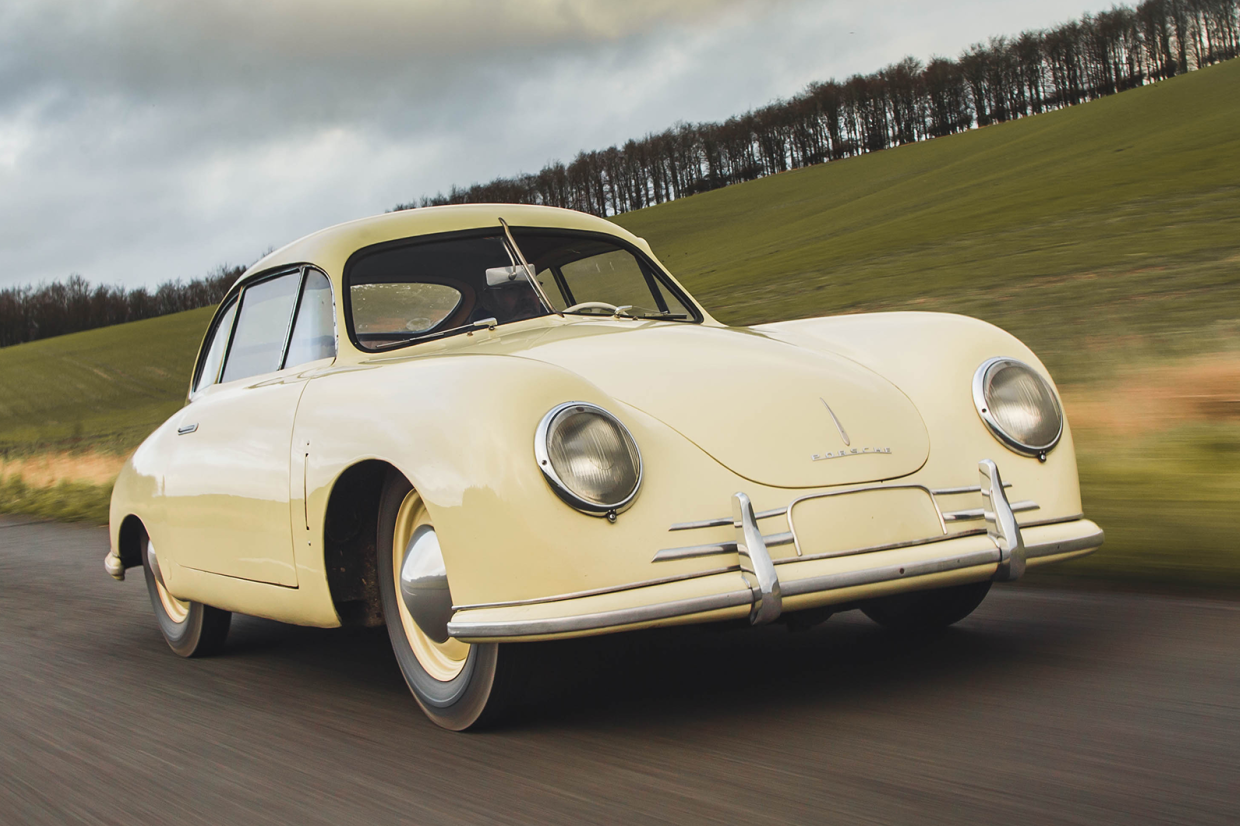
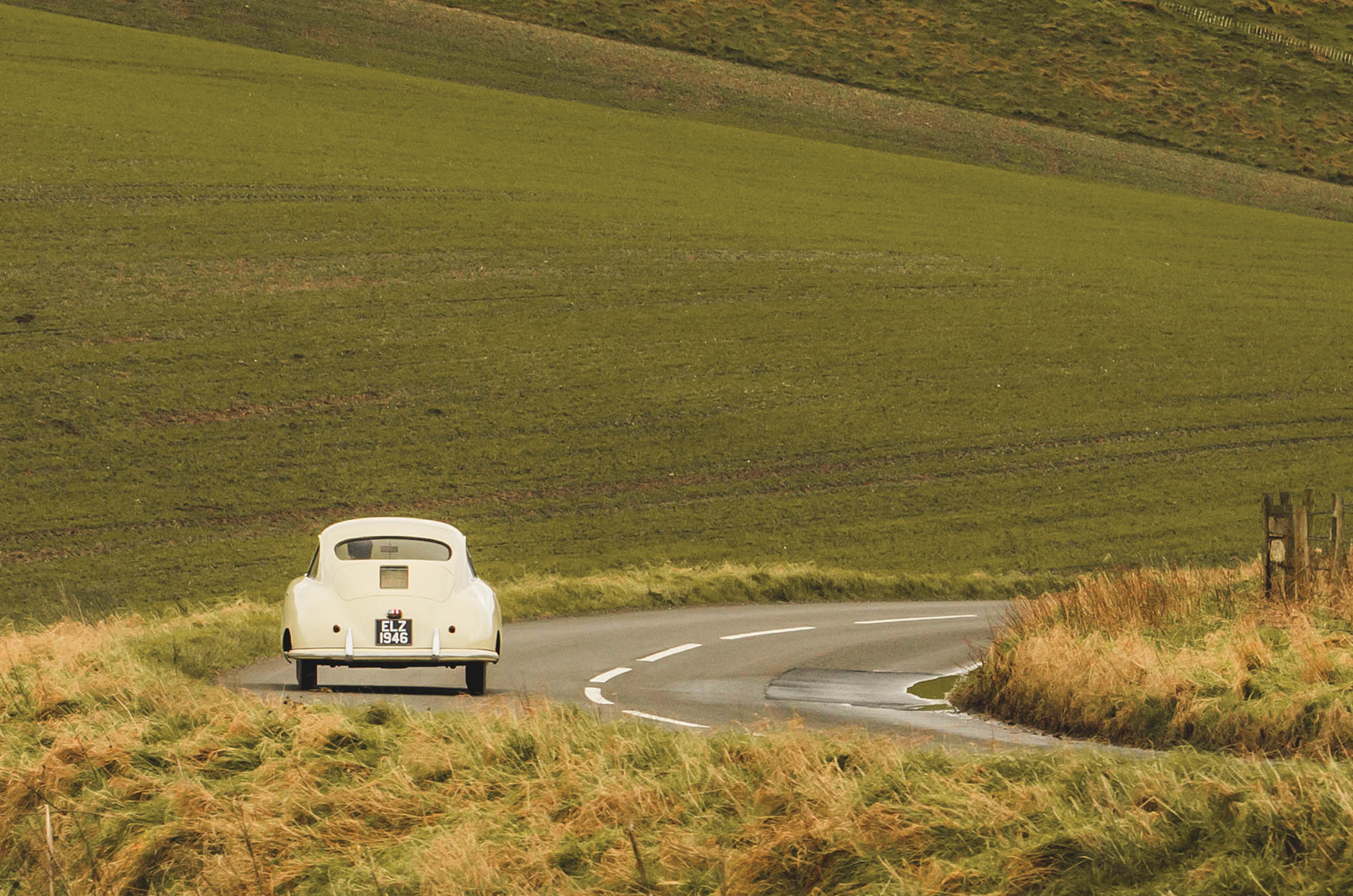
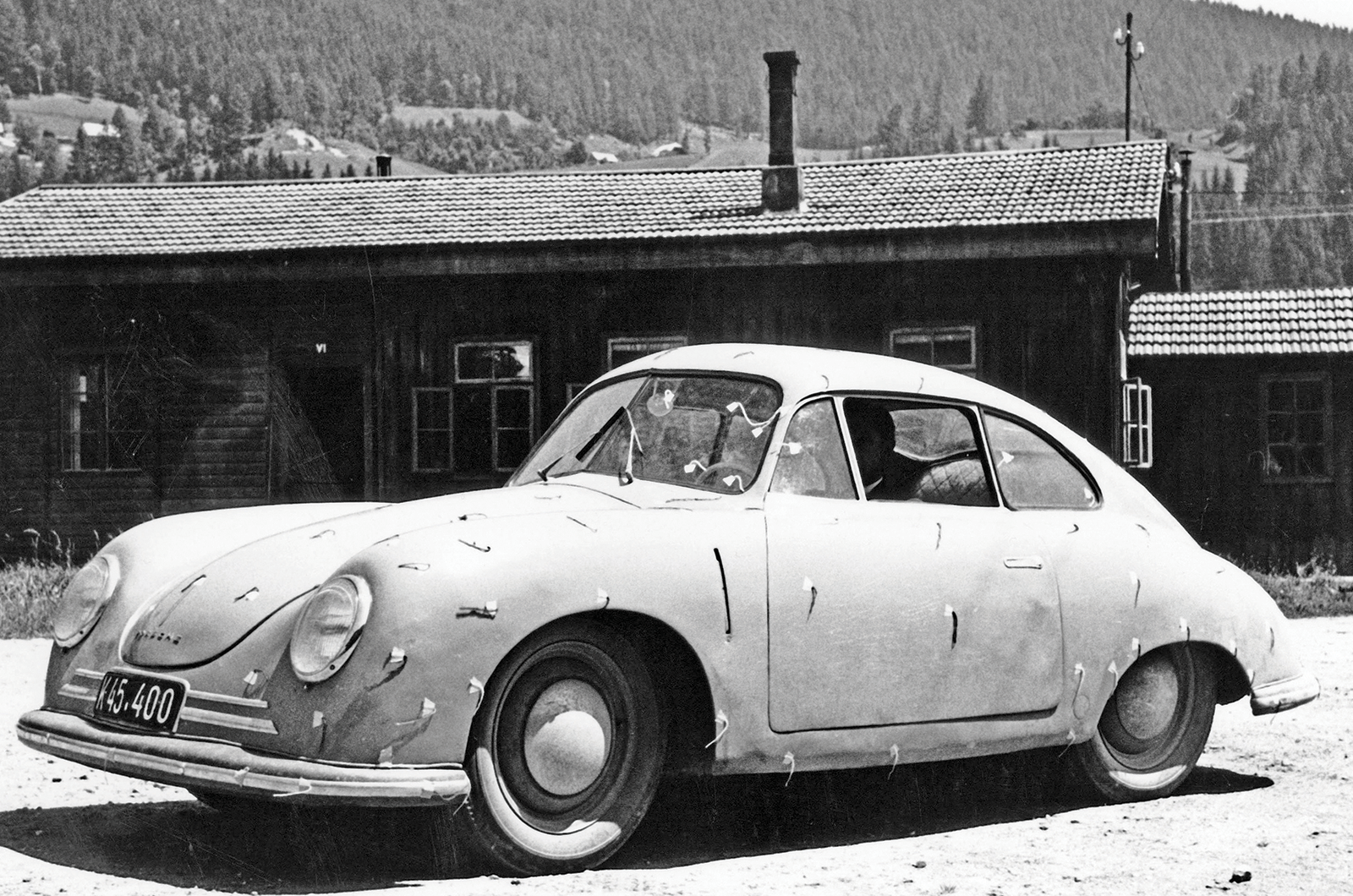
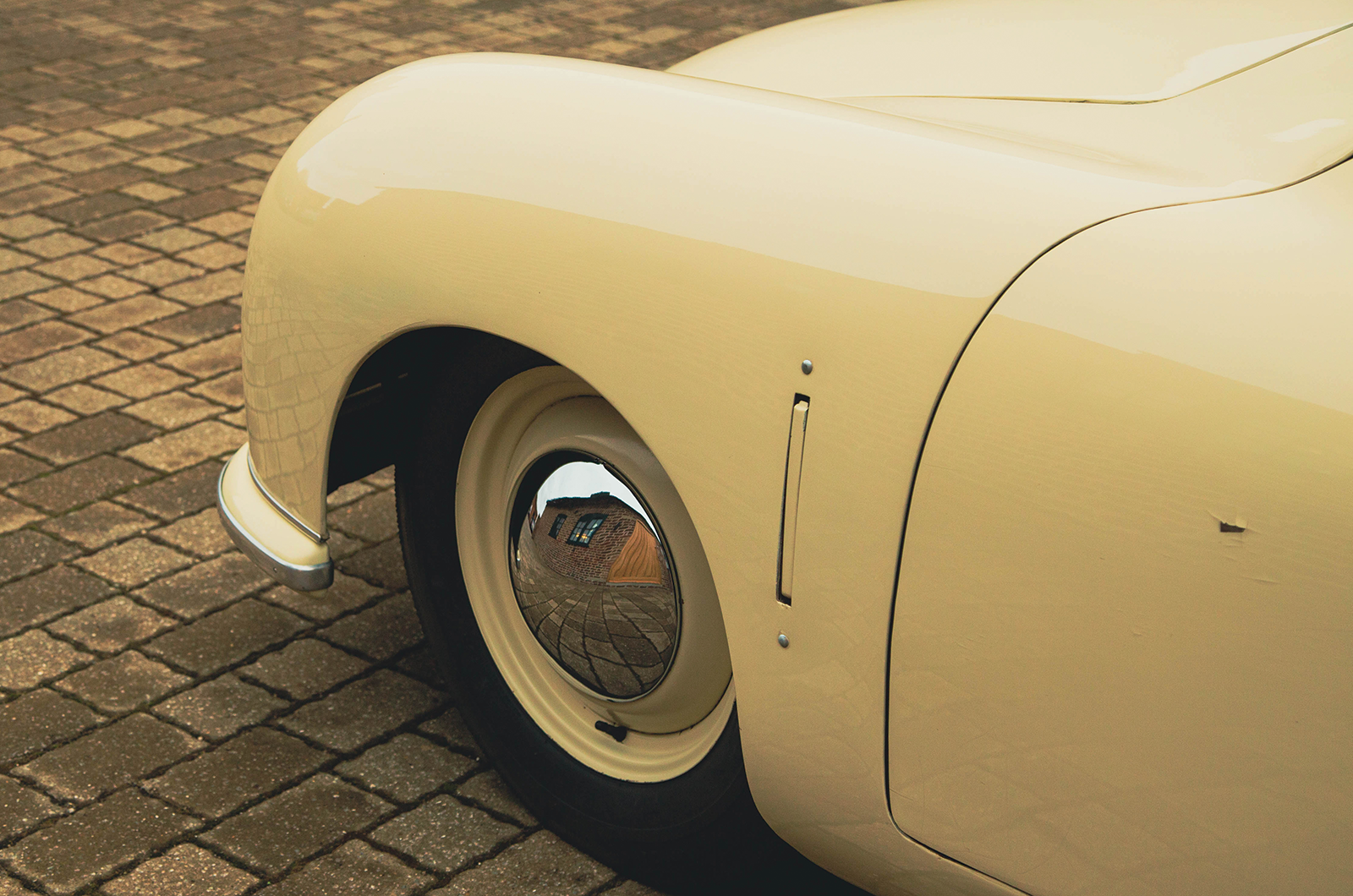
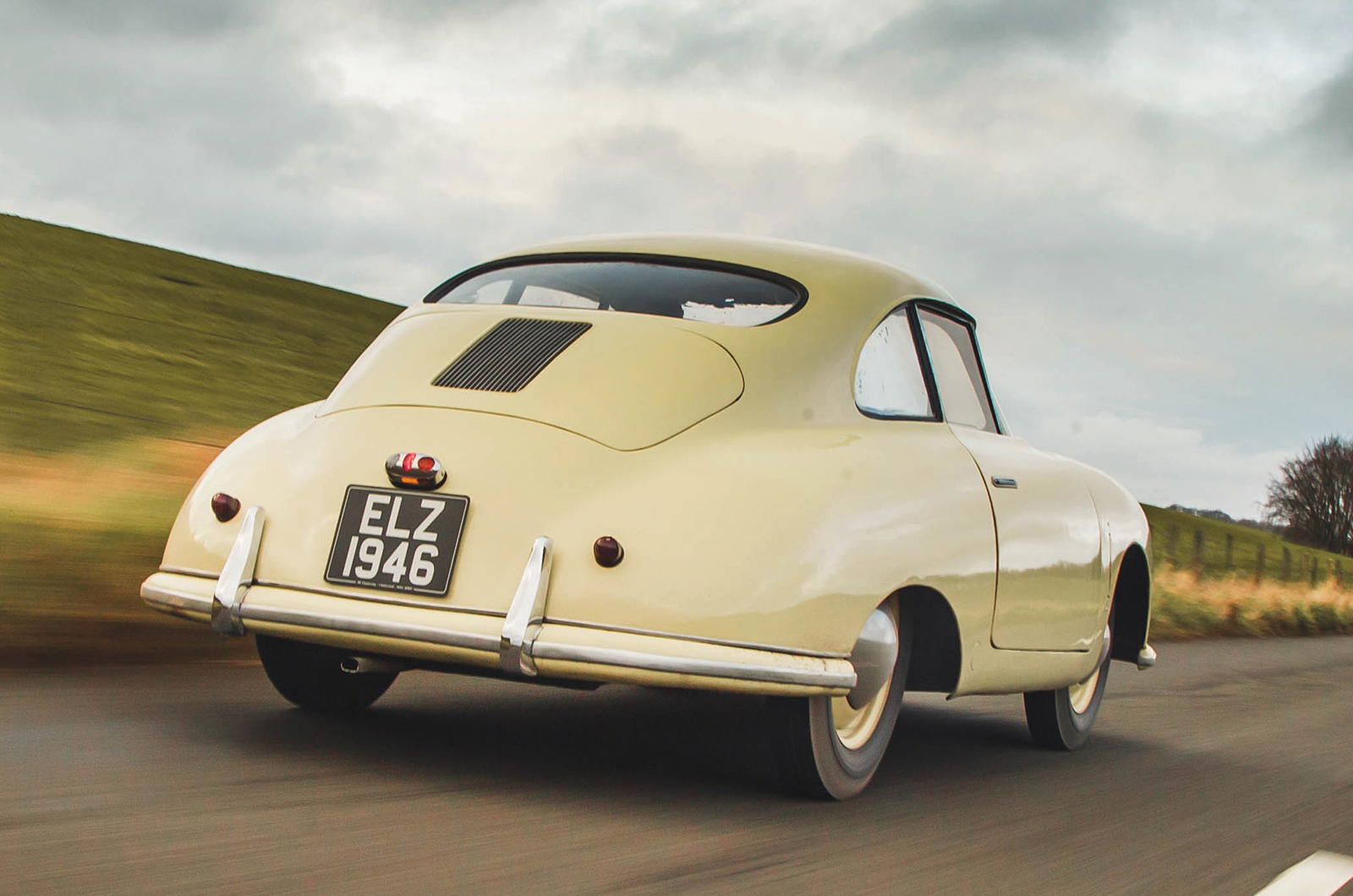
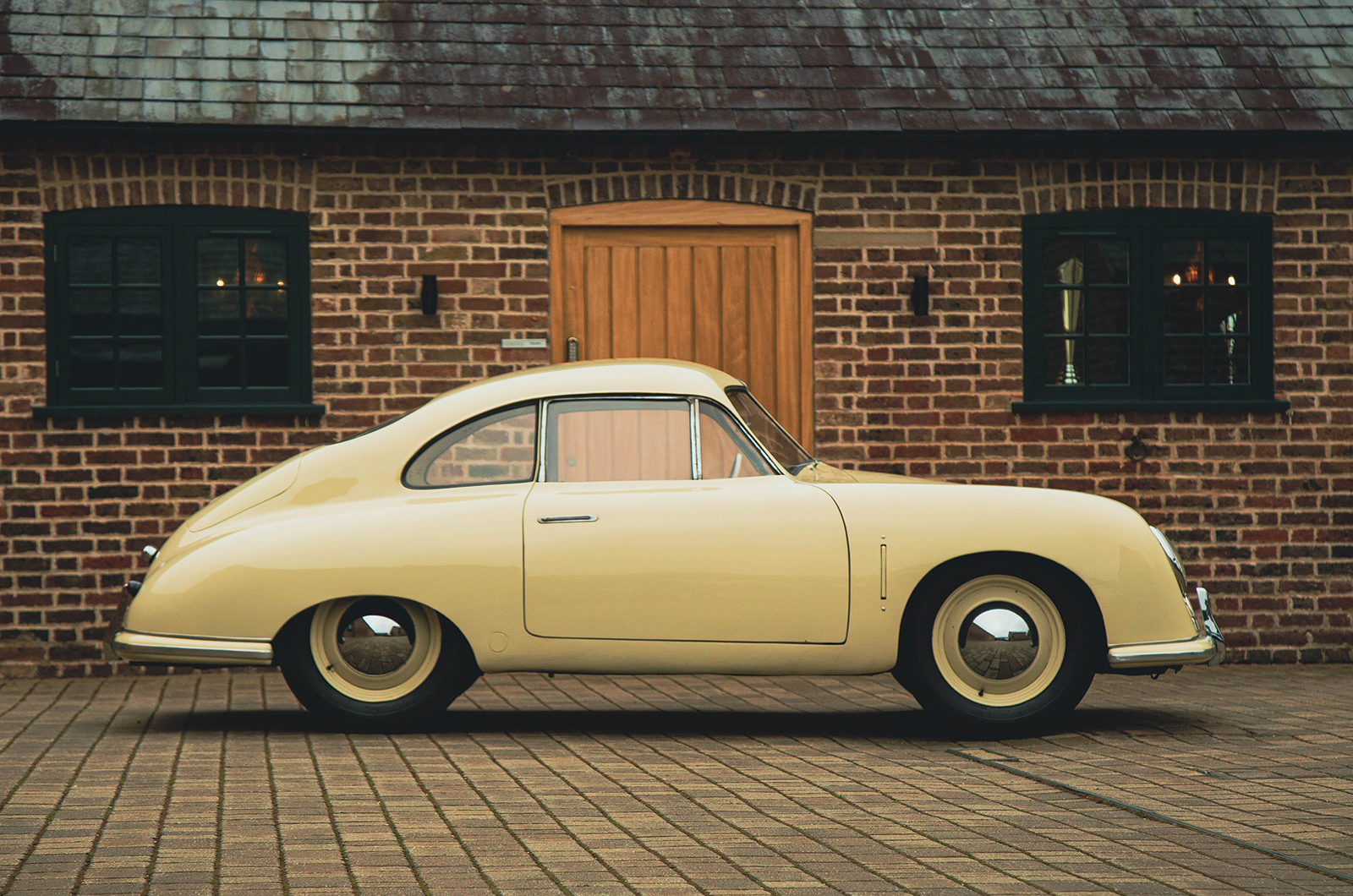
Just 52 Porsche 356/2 Gmünds were built before production moved to Stuttgart in Germany
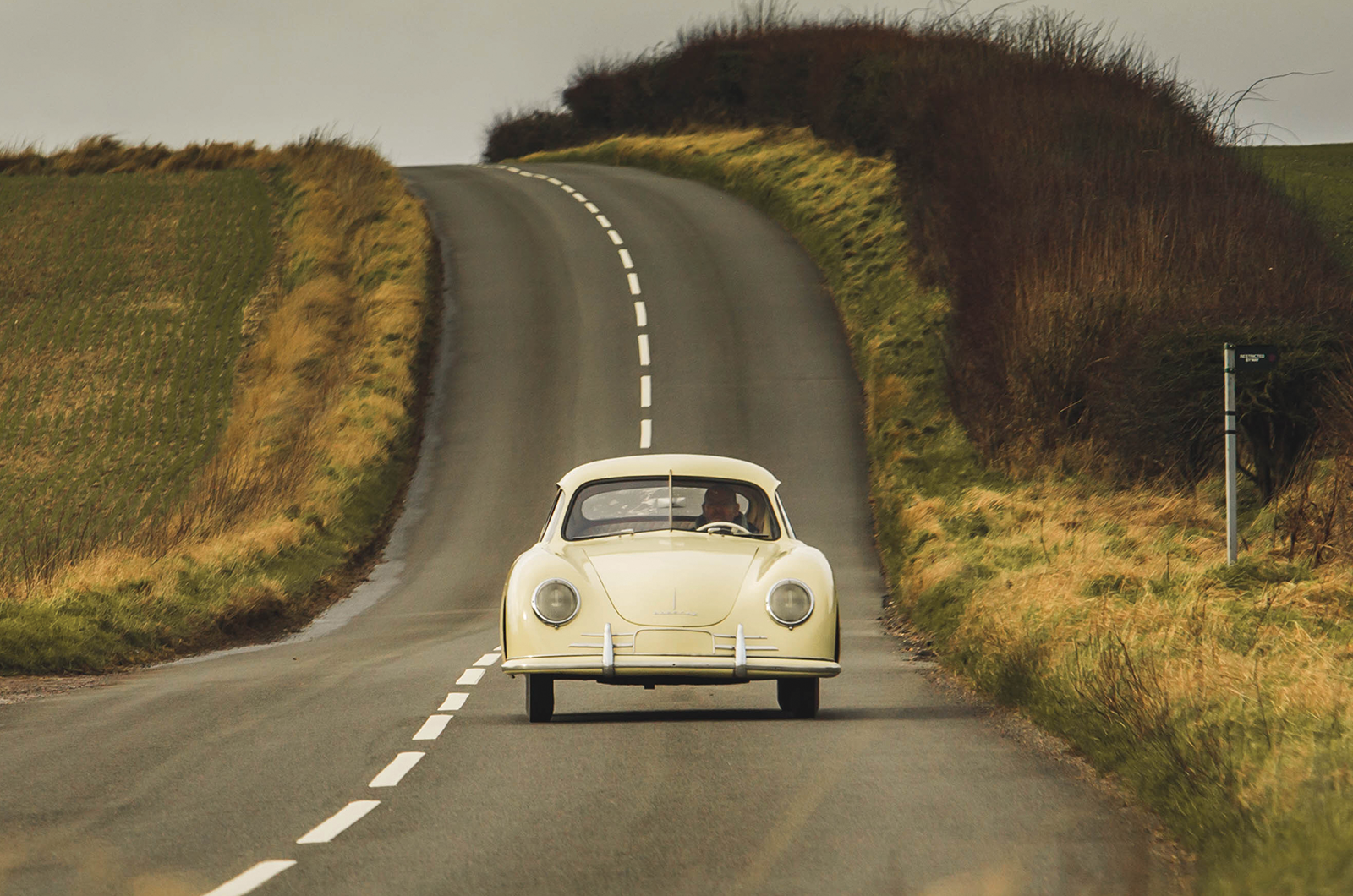
But I can tell you it rides well, deftly and softly, because on tall, skinny tyres and weighing around 700kg (c1543lb – it’s difficult to discern the precise figure from historical records), it doesn’t need to be overly stiff.
Besides, nobody thought to make hard-riding cars at the time.
The steering, given some flex in the chassis, its slow, unassisted gearing and the vagaries of time, takes a moment to pick up weight and start deflecting the car from the straight-ahead.
It feels a bit nervous – or at least I do – as a car with a short wheelbase and a track so inward of the body might well do.
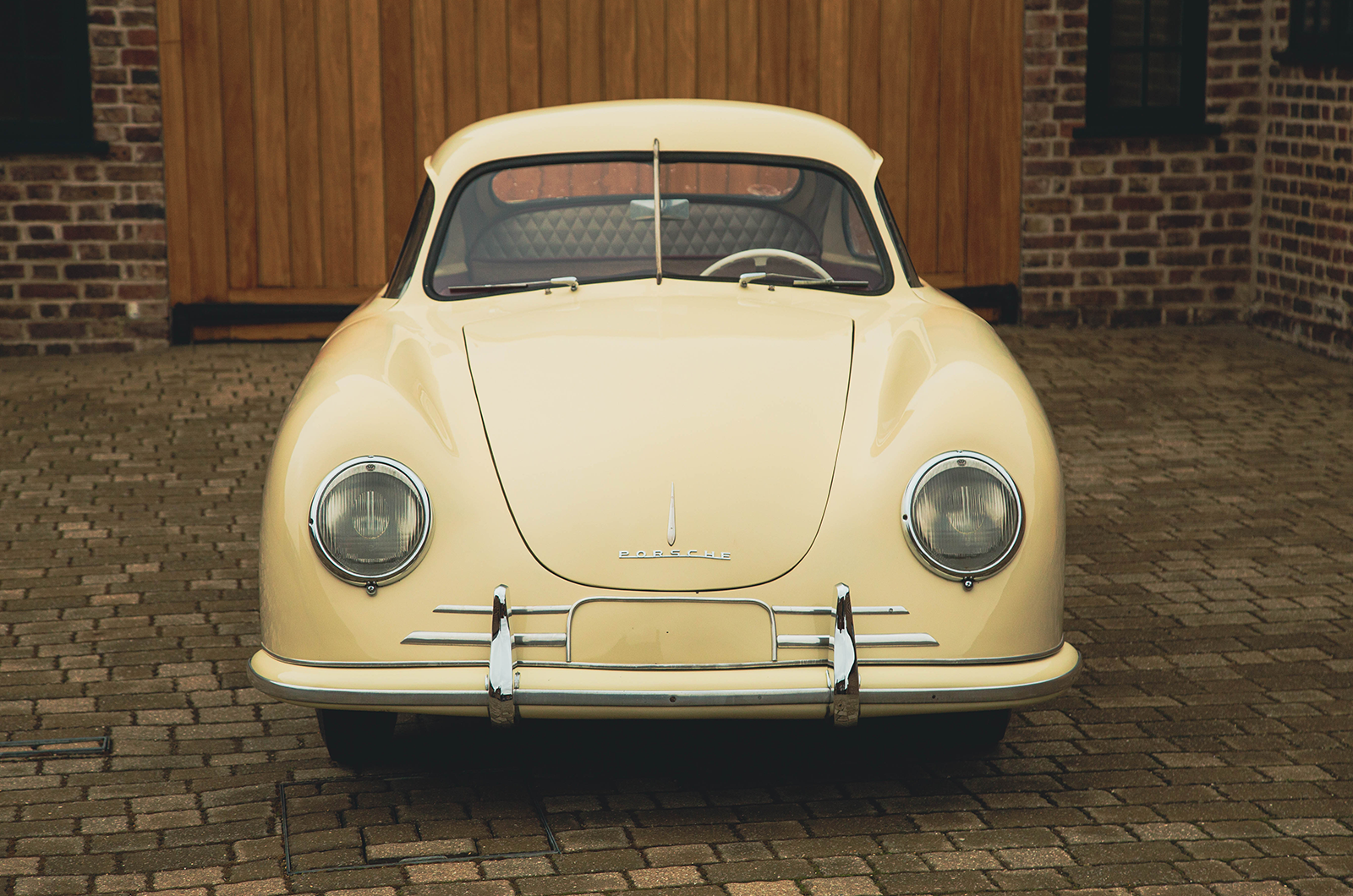
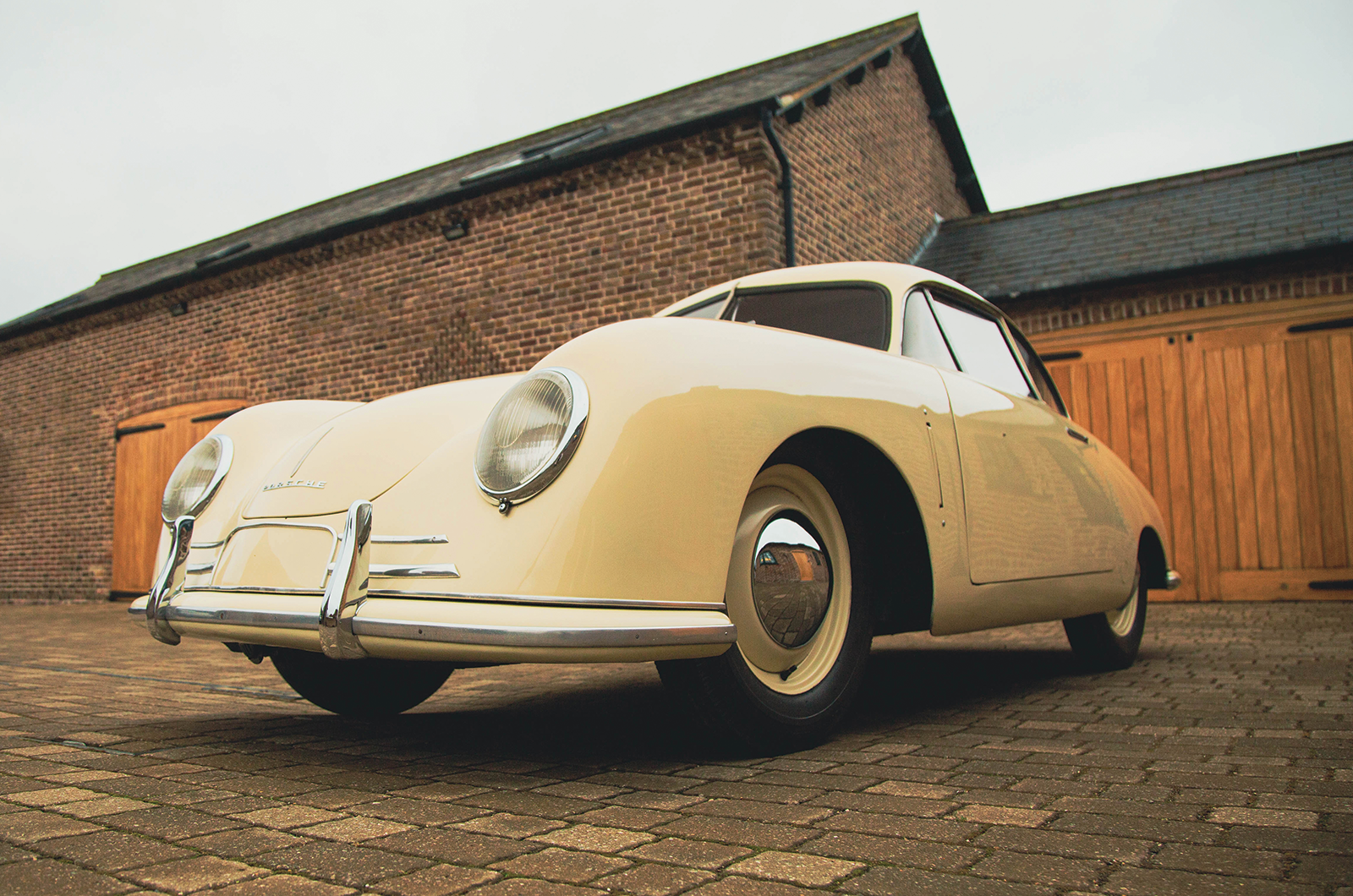
The Porsche 356/2’s bathtub-like shape was later found to have a drag coefficient of less than 0.30Cd
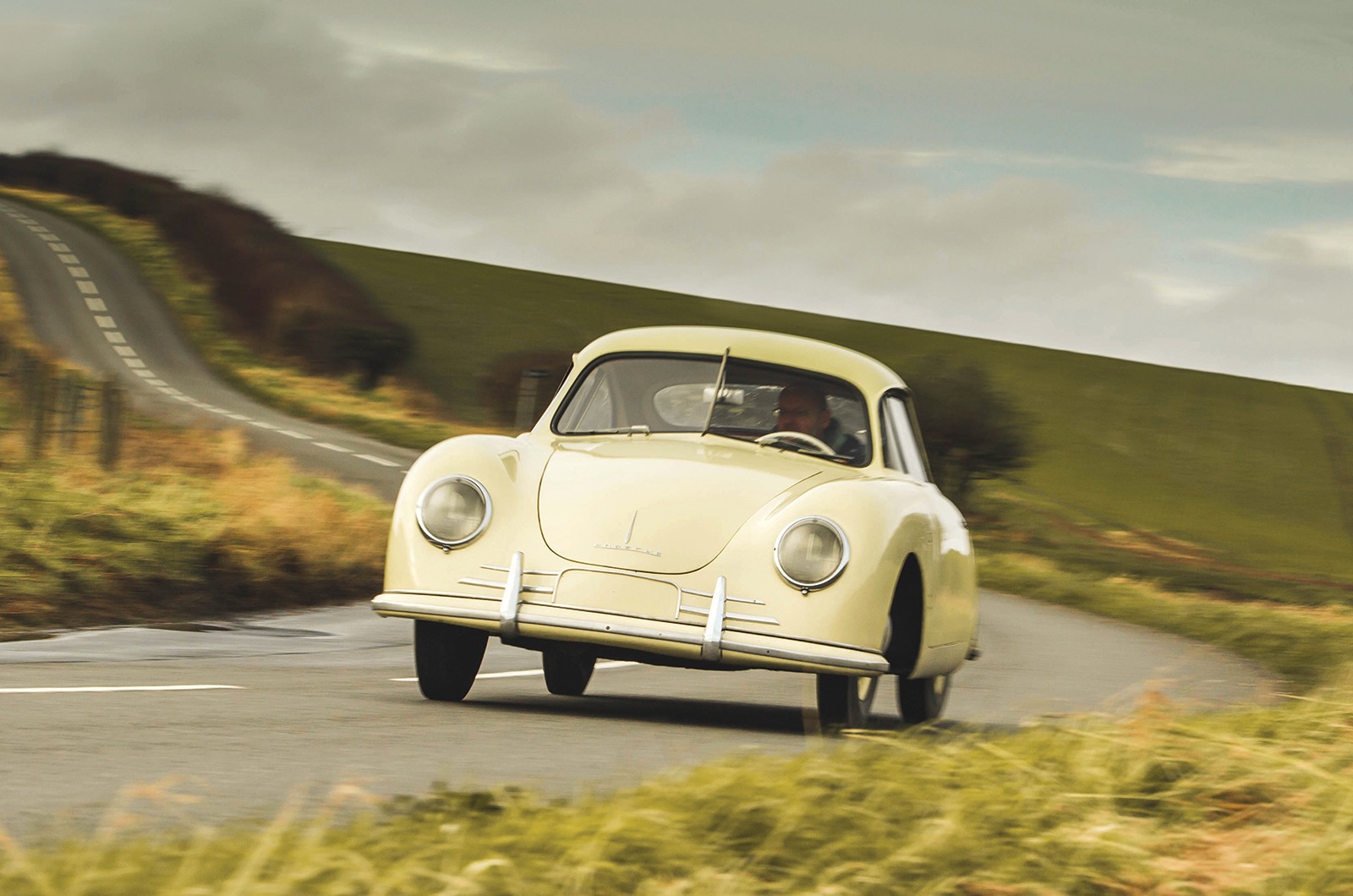
But, even in top gear, the Porsche 356 gathers momentum in a way you don’t expect from a lowly 40bhp.
It’s no wonder that, at Le Mans in 1951, a modified Gmünd-built coupé achieved 100mph and finished in first place in the 751-1100cc class, despite putting out only 46bhp.
This car feels special, and I know that it’s precious.
But never, though, does the Porsche 356 feel very exotic.
There is, I suppose, no getting away from its humdrum mechanicals.
This isn’t a race-winning, V12-powered Ferrari; the Porsche’s estimated value is very much a subject of its rarity, its status and its originality.
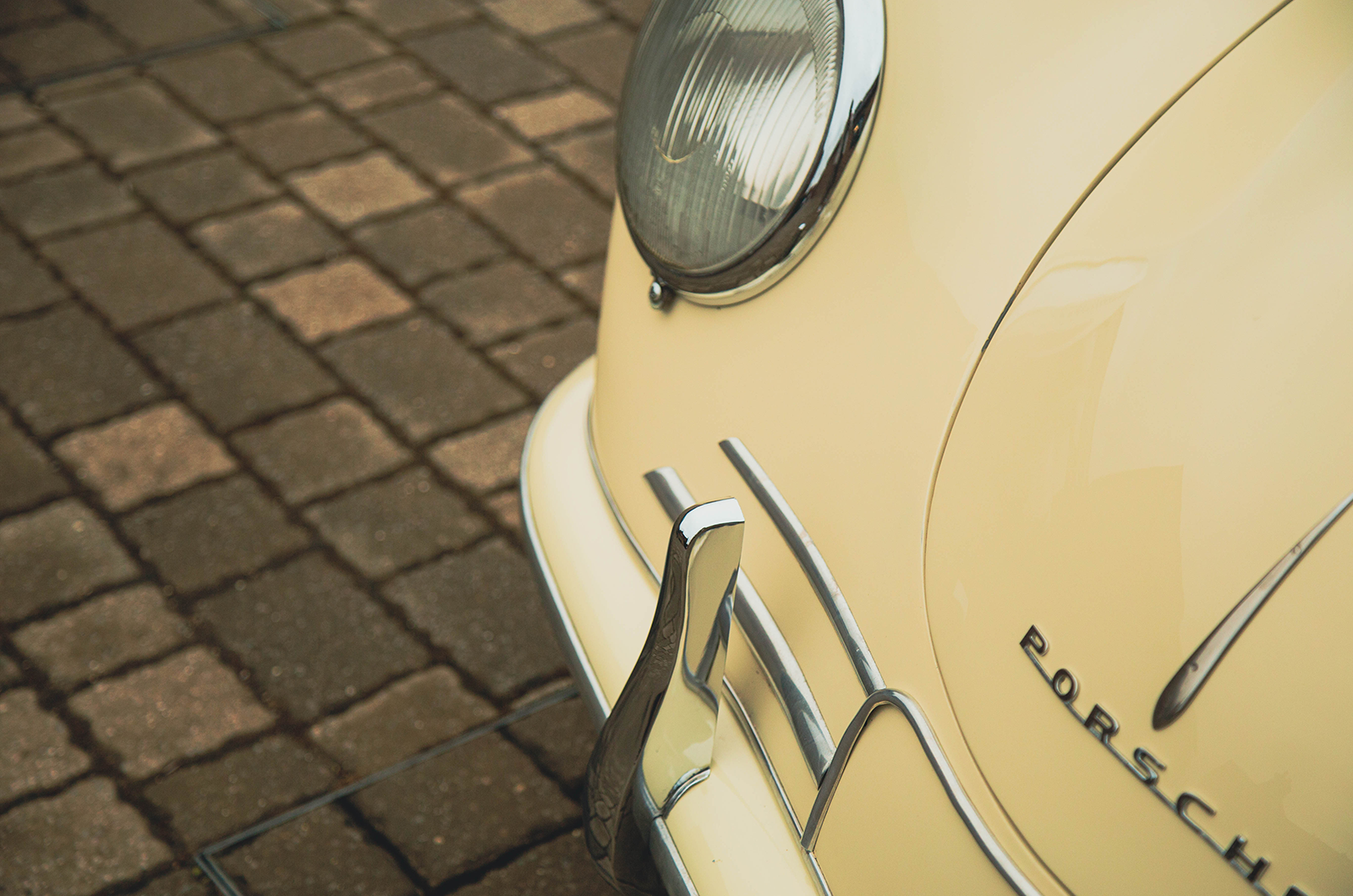
Its history makes this Porsche 356/2, the 32nd built, very special
“It’s one of the most original 356s,” James tells me.
It’s the sort of car that will, perhaps inevitably as a result of its price-tag, go into an existing, significant Porsche collection.
“Like all great cars, it’s a rarefied atmosphere,” he adds. “There probably aren’t tens of buyers, but the term ‘bookend’ comes from somewhere.”
Ultimately, that’s what this Porsche 356 represents: it’s a lovely, usable example of an original car, the one that kick-started the greatest sports-car lineage of all.
I could love it for the way it looks and the way it feels. But that’s nothing compared to what it represents.
Images: Jack Harrison
Thanks to: DK Engineering
Factfile
Porsche 356/2
- Sold/number built 1948-’51/52
- Construction pressed and welded steel frame, aluminium panels
- Engine all-alloy, ohv 1086cc flat-four, twin Solex 26 VDI downdraught carburettors
- Max power 40bhp @ 4000rpm
- Max torque 52lb ft @ 2800rpm
- Transmission four-speed manual, RWD
- Suspension independent, at front by trailing arms rear swing axles; transverse torsion bars, telescopic dampers f/r
- Steering worm and sector
- Brakes drums
- Length 12ft 8¼in (3870mm)
- Width 5ft 5¾in (1669mm)
- Height 4ft 3¼in (1300mm)
- Wheelbase 6ft 10½in (2100mm)
- Weight 1543lb (700kg)
- Mpg 37
- 0-60mph 23.5 secs
- Top speed 85mph
- Price new £850 (1949)
We hope you enjoyed reading. Please click the ‘Follow’ button for more super stories from Classic & Sports Car.
Matt Prior
Matt Prior is a contributor to Classic & Sports Car, a Hillman Imp owner and also writes for sister magazine Autocar