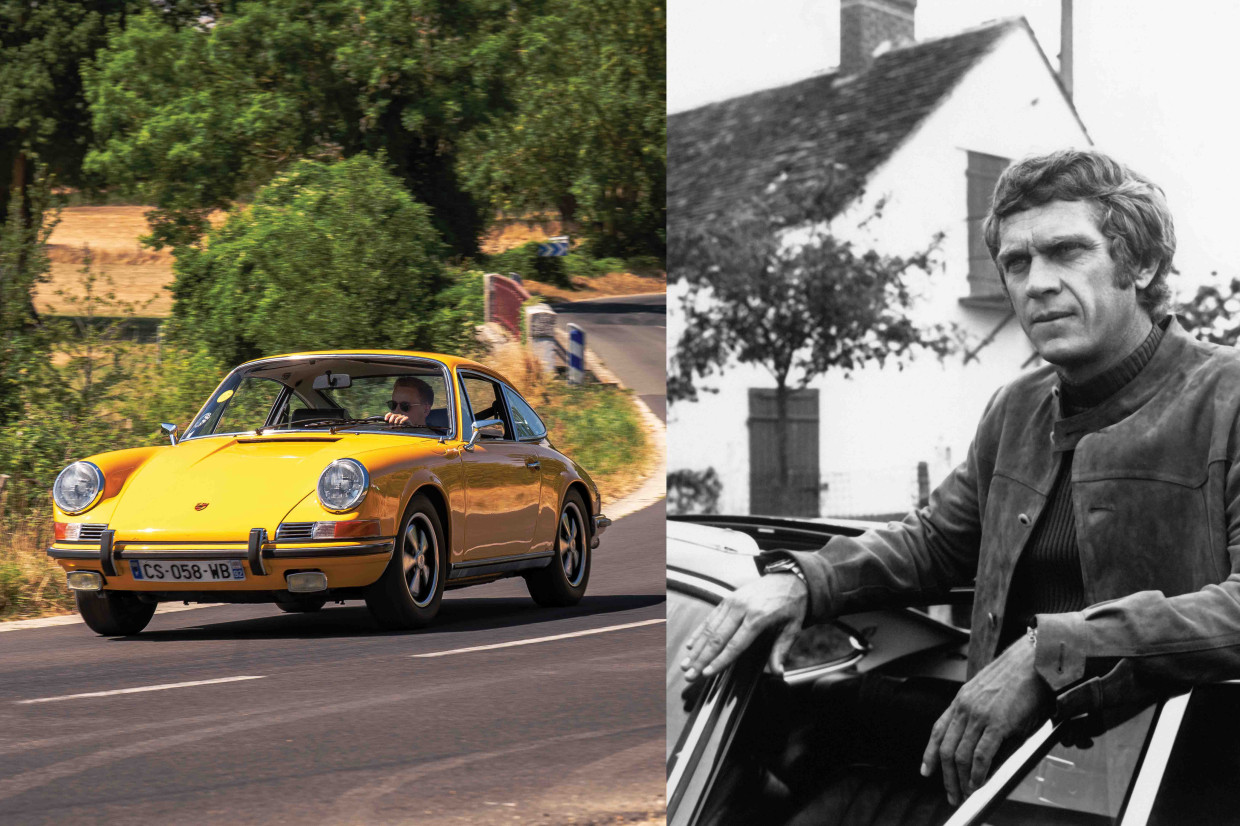
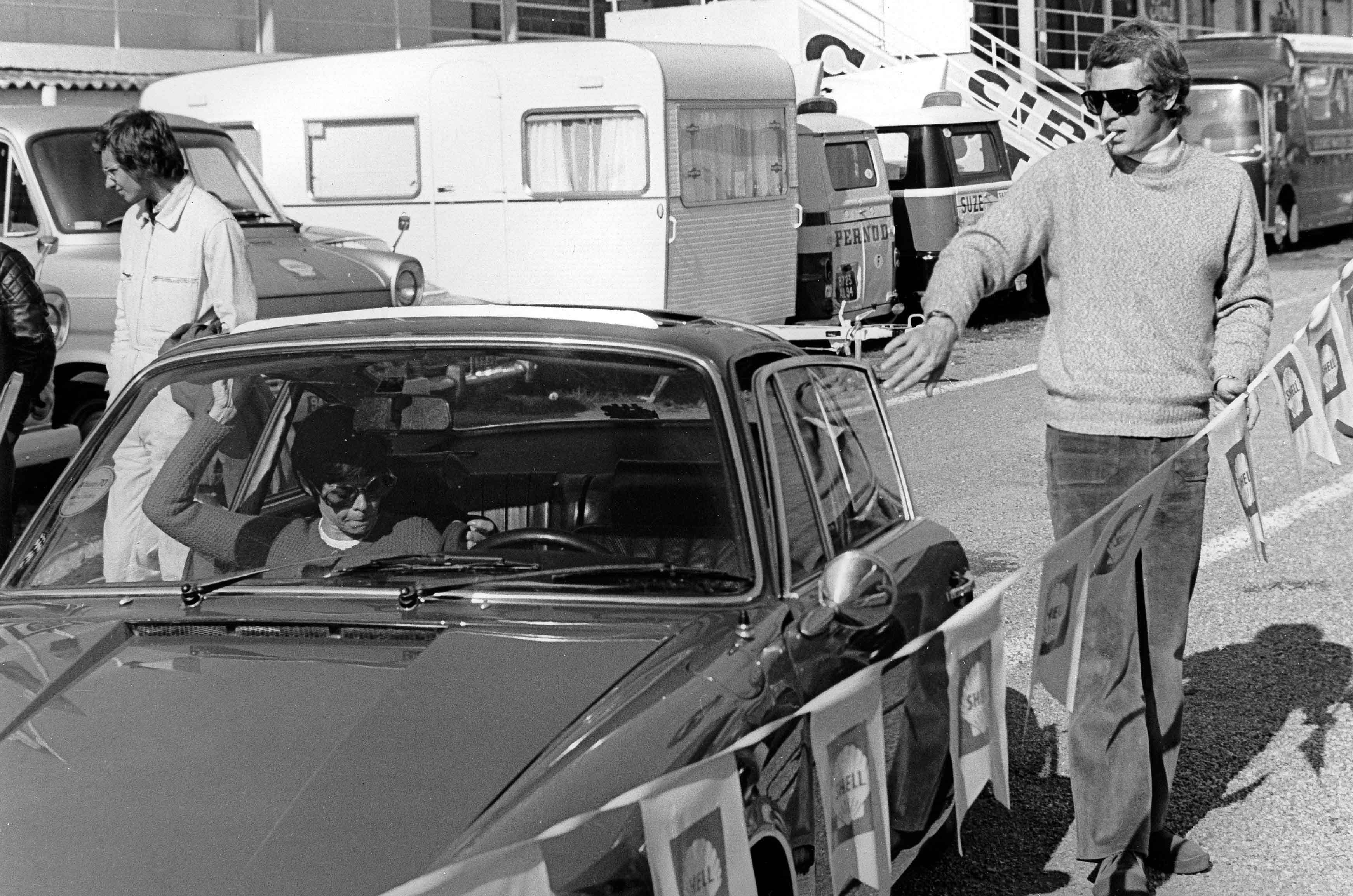
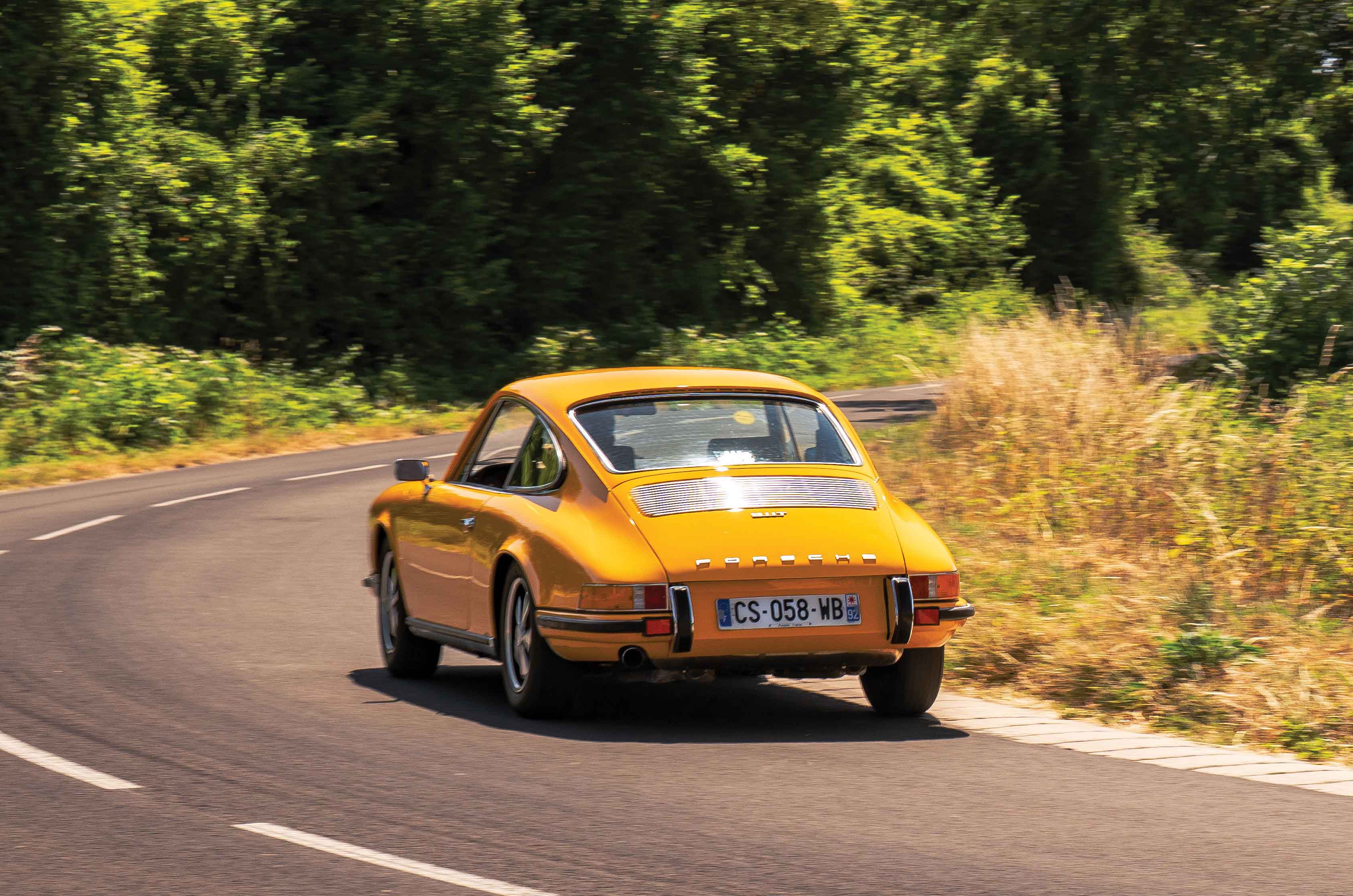
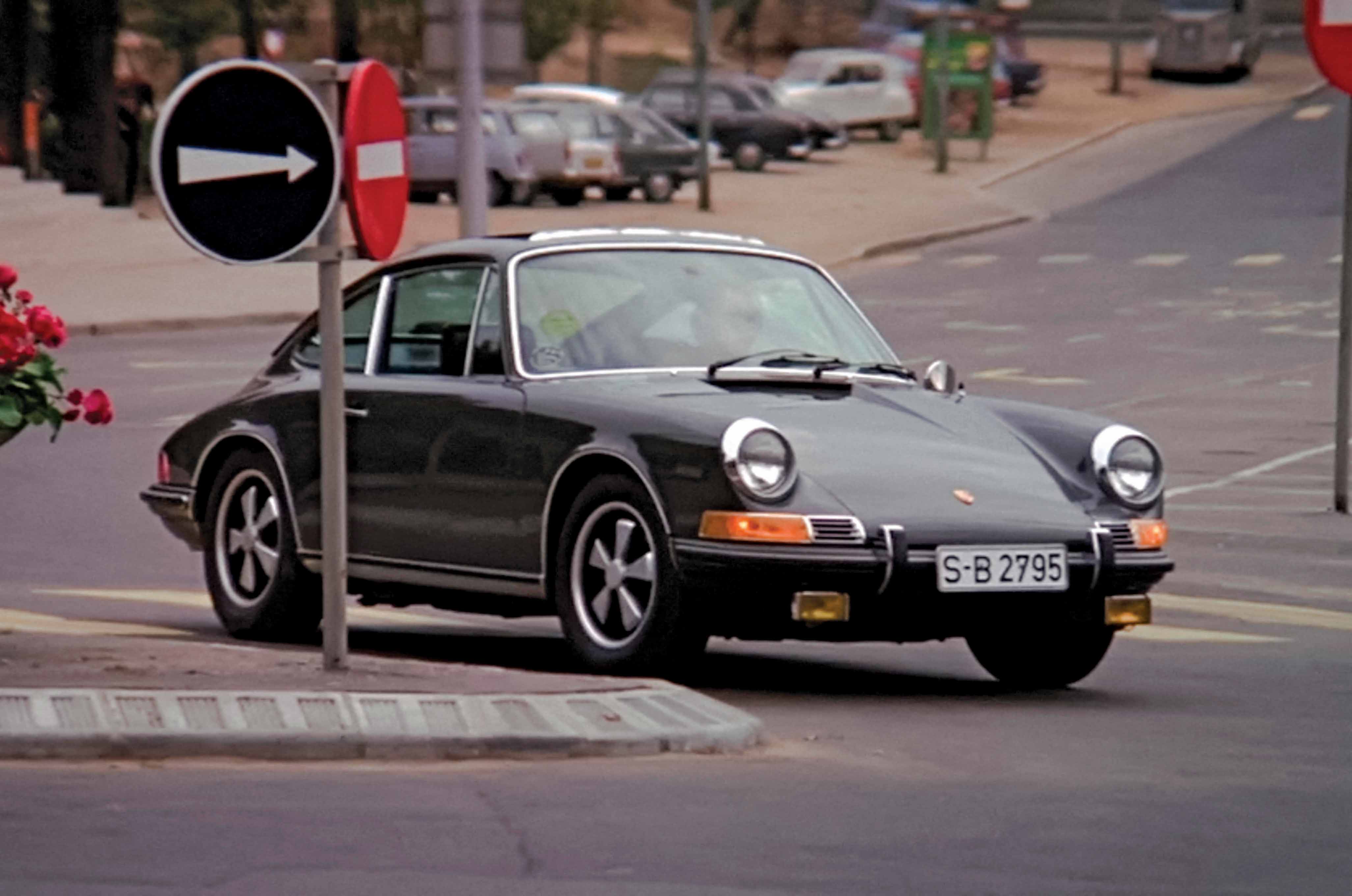
Another local we talk to remembers seeing McQueen drive past, and recalls how the whole region was buzzing at the presence of the Hollywood star.
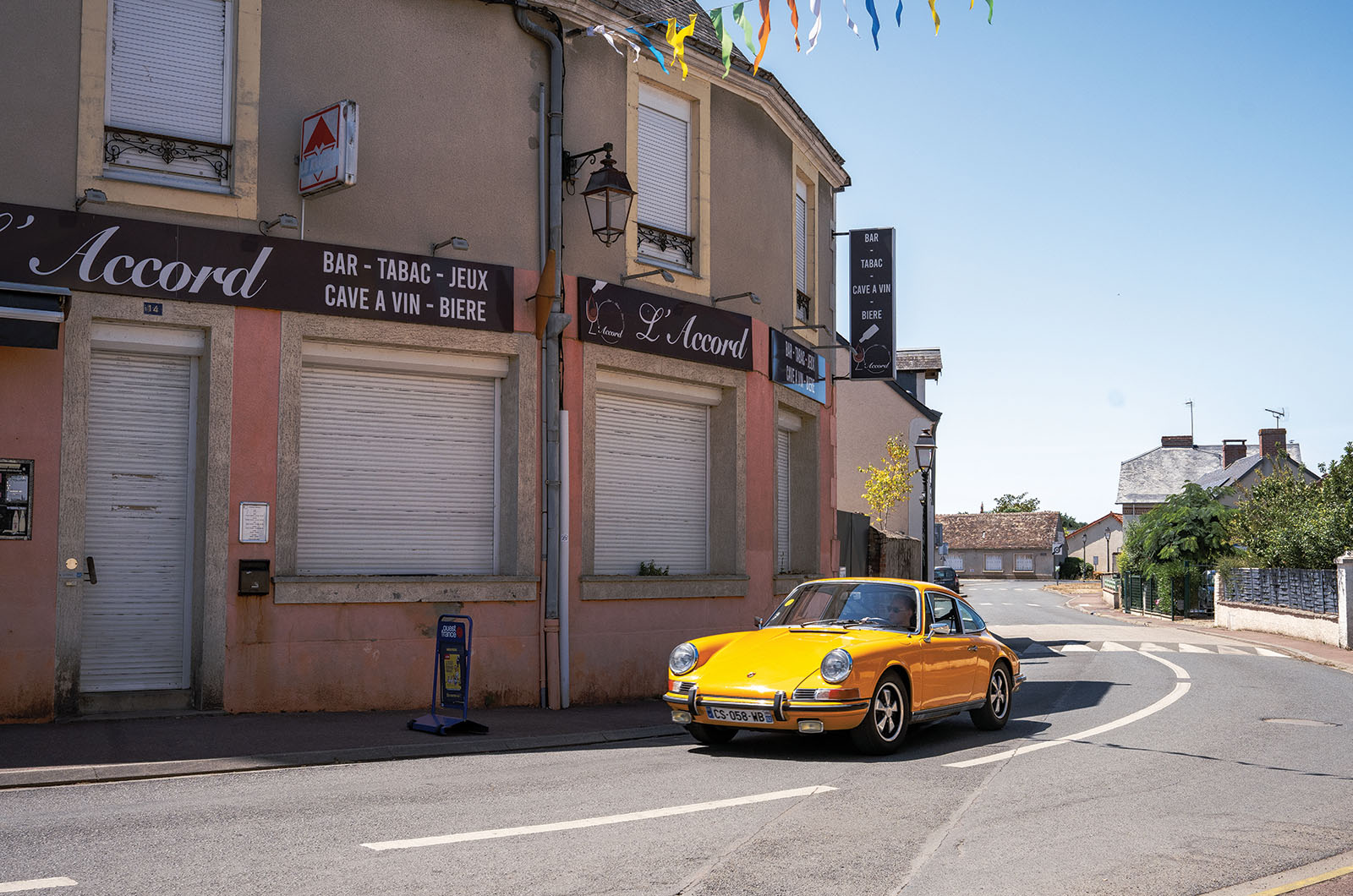
This bar, L’Accord, in Fillé centre was a restaurant back in 1970
We follow the D35 southward to Chantenay-Villedieu then take the D79 to Fercé-sur-Sarthe, across the Sarthe river and into the town of La Suze-sur-Sarthe, significantly larger than the village of 56 years ago.
While the roads are little changed, the rural population has increased by 40% and relatively relaxed planning rules mean urban eras have grown substantially.
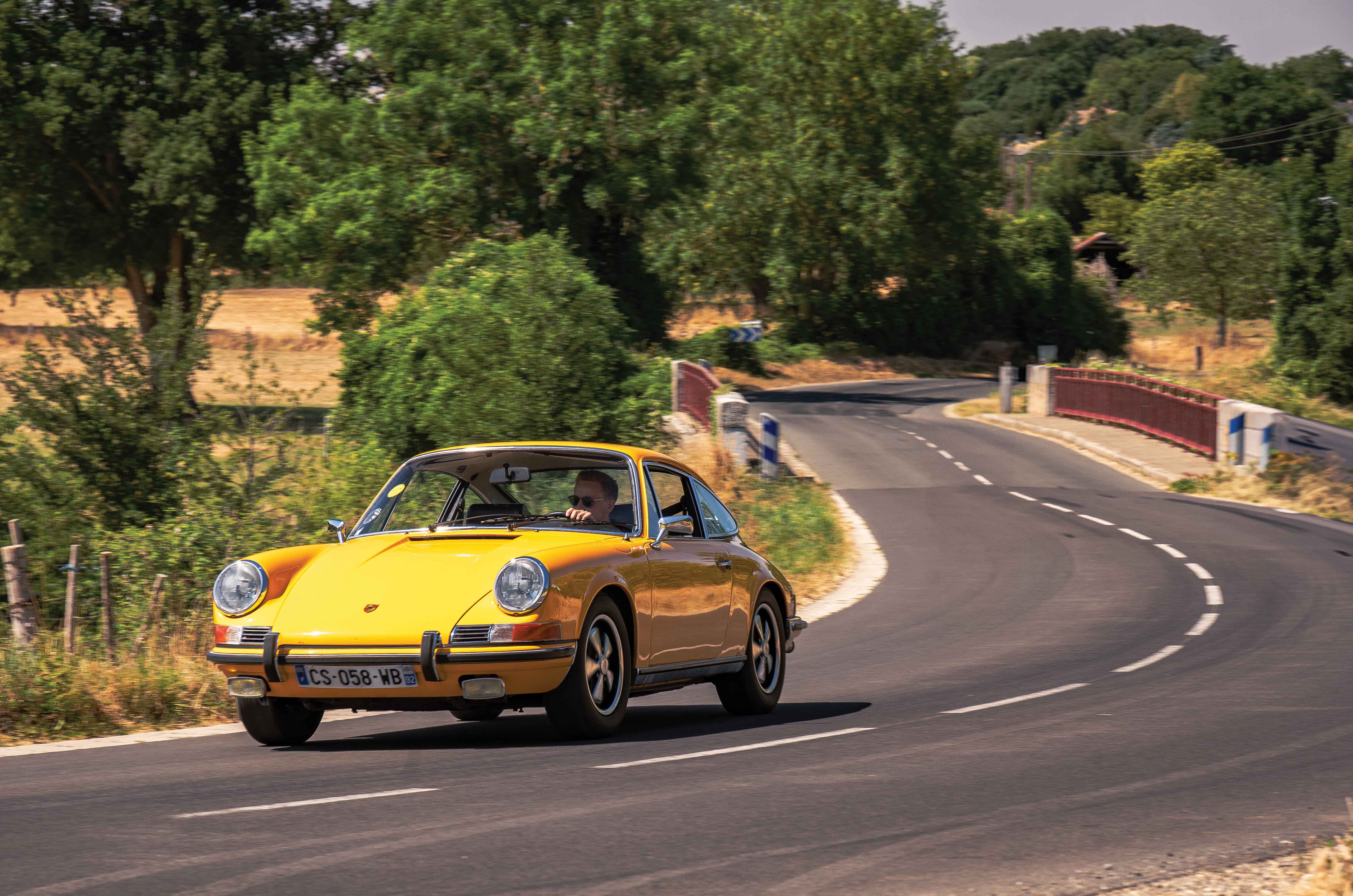
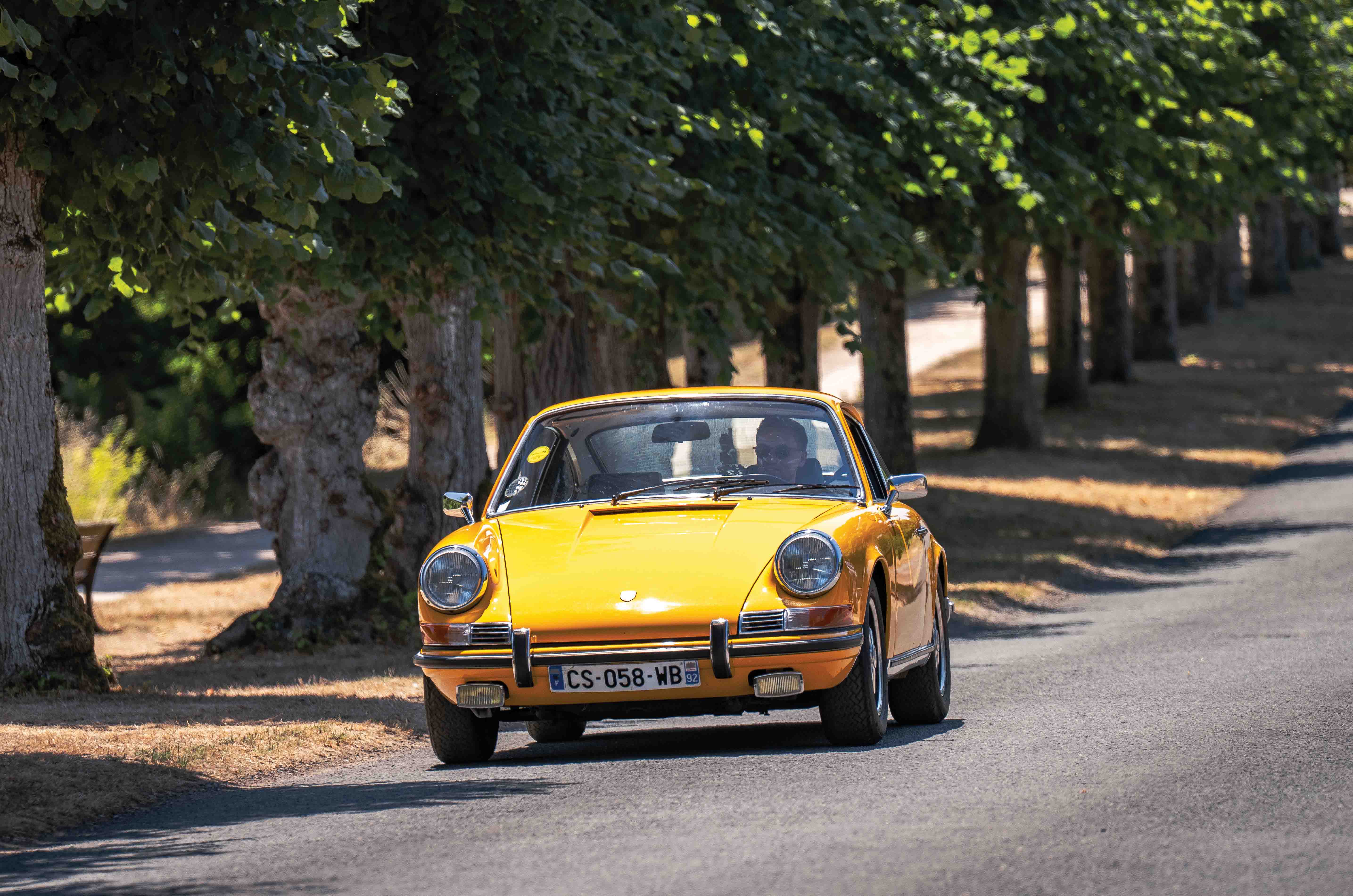
Heading east, Delaney skirts along the edge of the canal that straightens a series of bends in the river, following a tree-lined road that looks to all intents and purposes like any main route départementale, but is recognisable from the movie as the road into Fillé, with only the pollarded trees on one side remaining.
We get a view across a wide river, beyond a weir the church and bridge across the Sarthe with Delaney driving from right to left, coming back towards the canal scene then passing a restaurant.
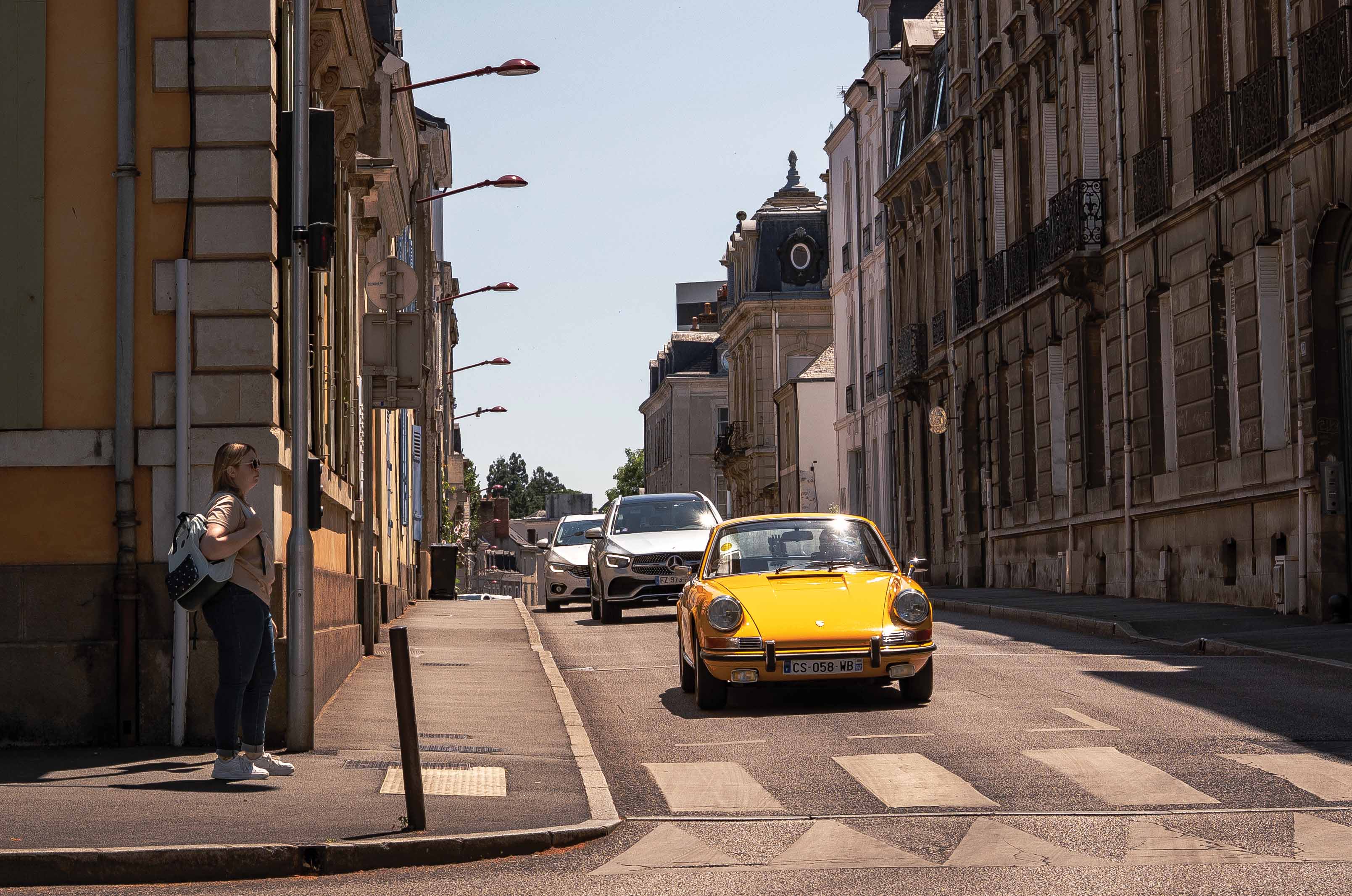
The Porsche 911 enters Le Mans city centre
Pausing in the same spot today, a man in his 20s sitting in the shade of what’s now the bar L’Accord asks me what’s going on – he’s never even heard of Steve McQueen.
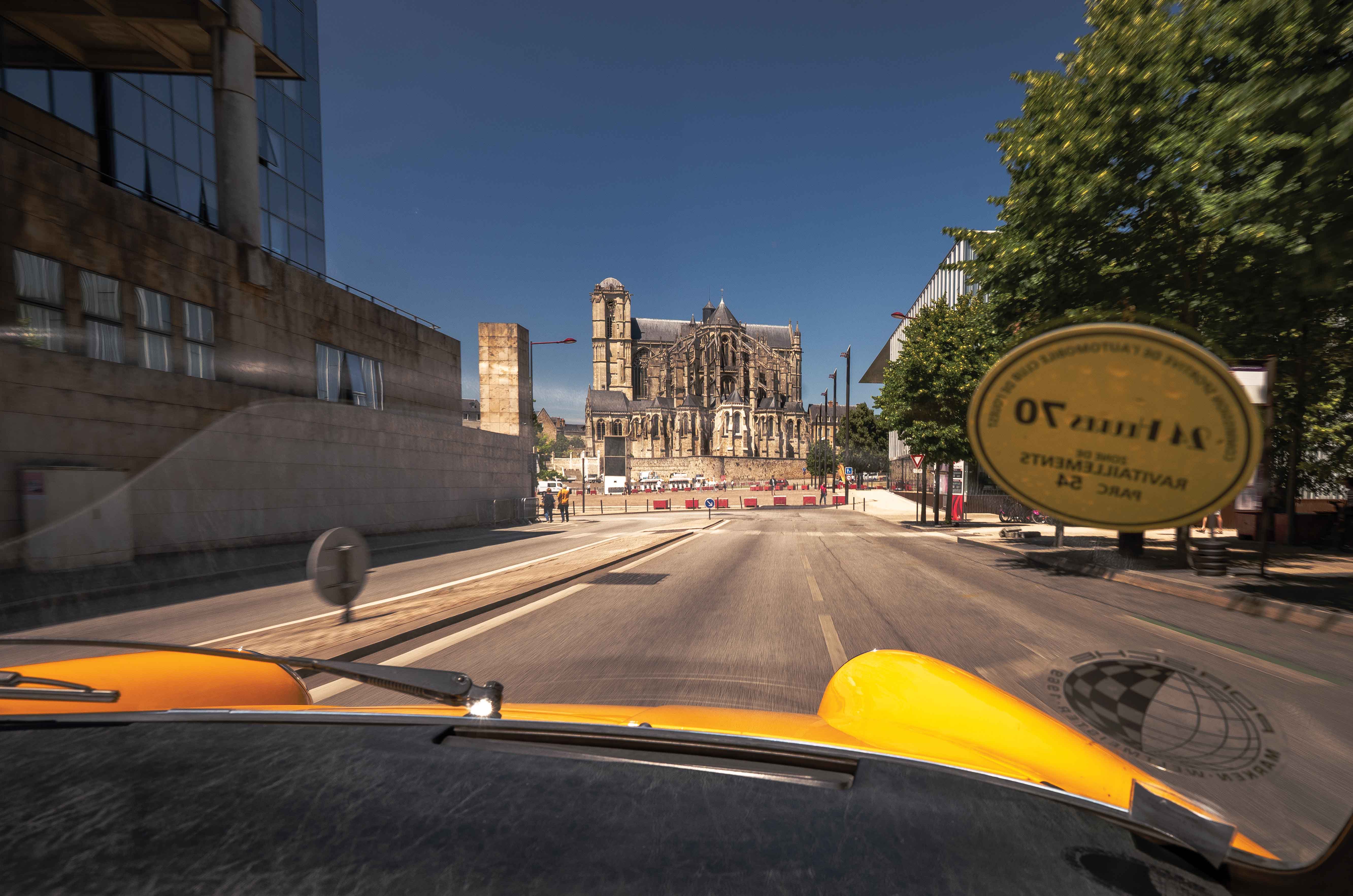
Back on celluloid, Delaney drives into the Place des Jacobins in the centre of Le Mans, until recently a large car park, overlooked by the Catholic Cathédrale St-Julien du Mans.
Completed in the 15th century, this Gothic masterpiece is part of the old city, one of the finest and most unspoilt medieval quarters in France.
Here, leading lady and love interest Lisa Belgetti, played by German actress Elga Andersen, is buying flowers in the market below the cathedral.
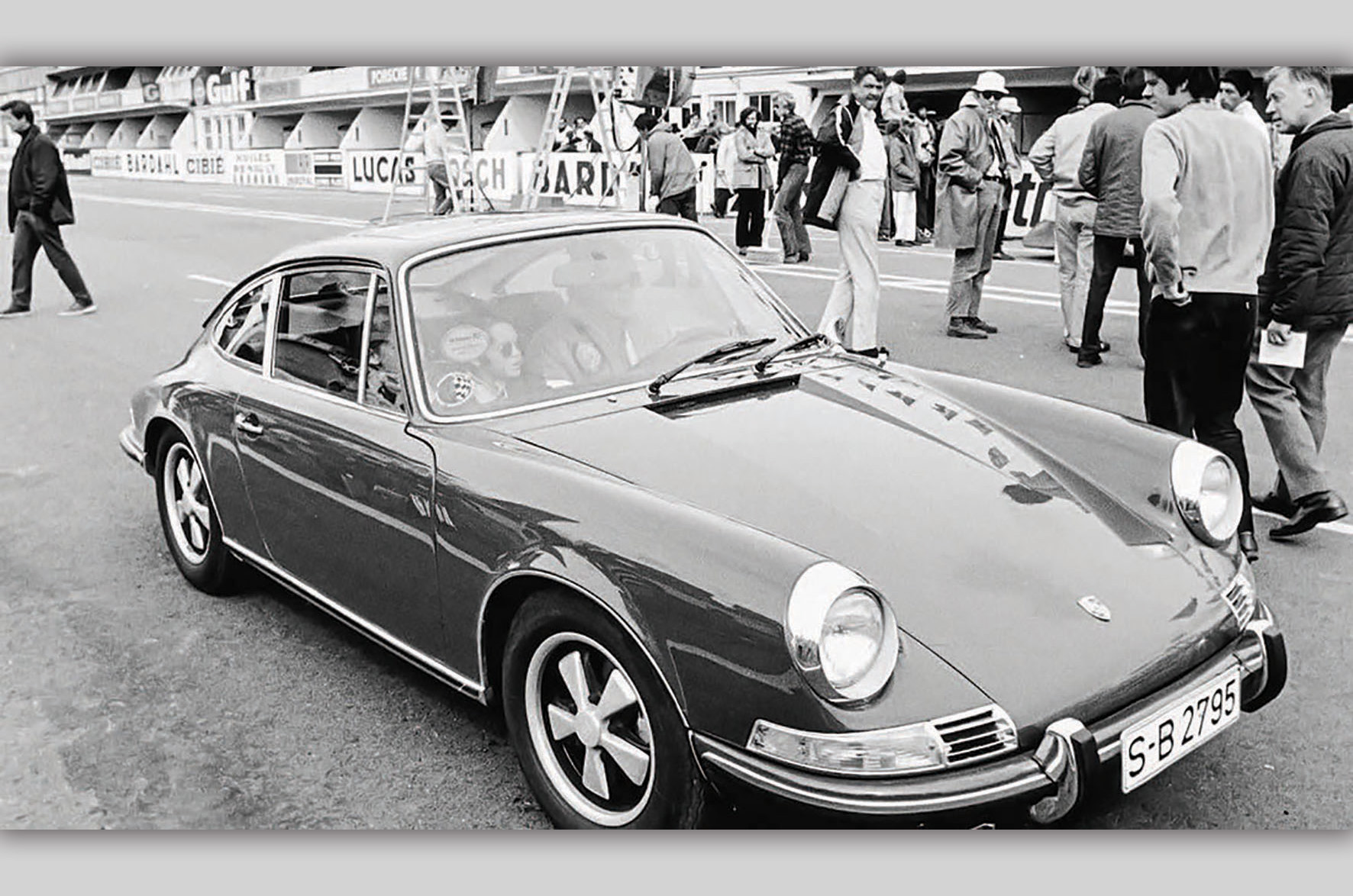
Steve McQueen’s Porsche 911 in one of the opening scenes of Le Mans © Alamy
Today, the Place des Jacobins has recently been pedestrianised, an empty sea of grey concrete; stuck in a traffic jam, and with the road McQueen followed across the square now gone, we escape the city centre to head back to the track for the final scenes.
Everything has changed here, too, not least the circuit itself.
It used to follow the public road through Maison Blanche in an almost straight line on to the pit straight, but after John Woolfe’s crash in 1969, and with the speeds of cars ever increasing, the track was redirected to the right between Arnage corner and Maison Blanche into the challenging Porsche Curves, before a short straight leads into a left kink and the Ford Chicane then up between the grandstands.
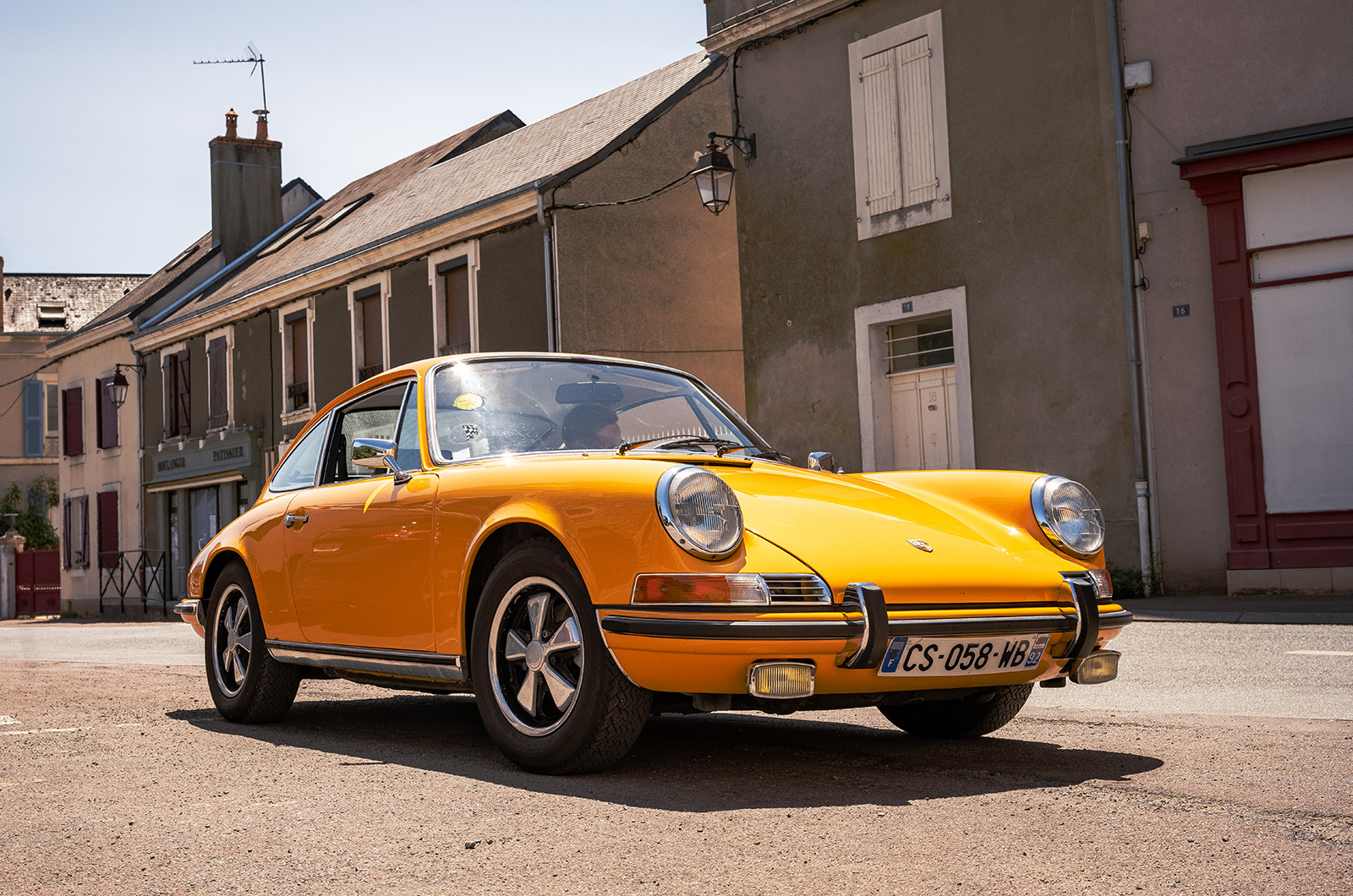
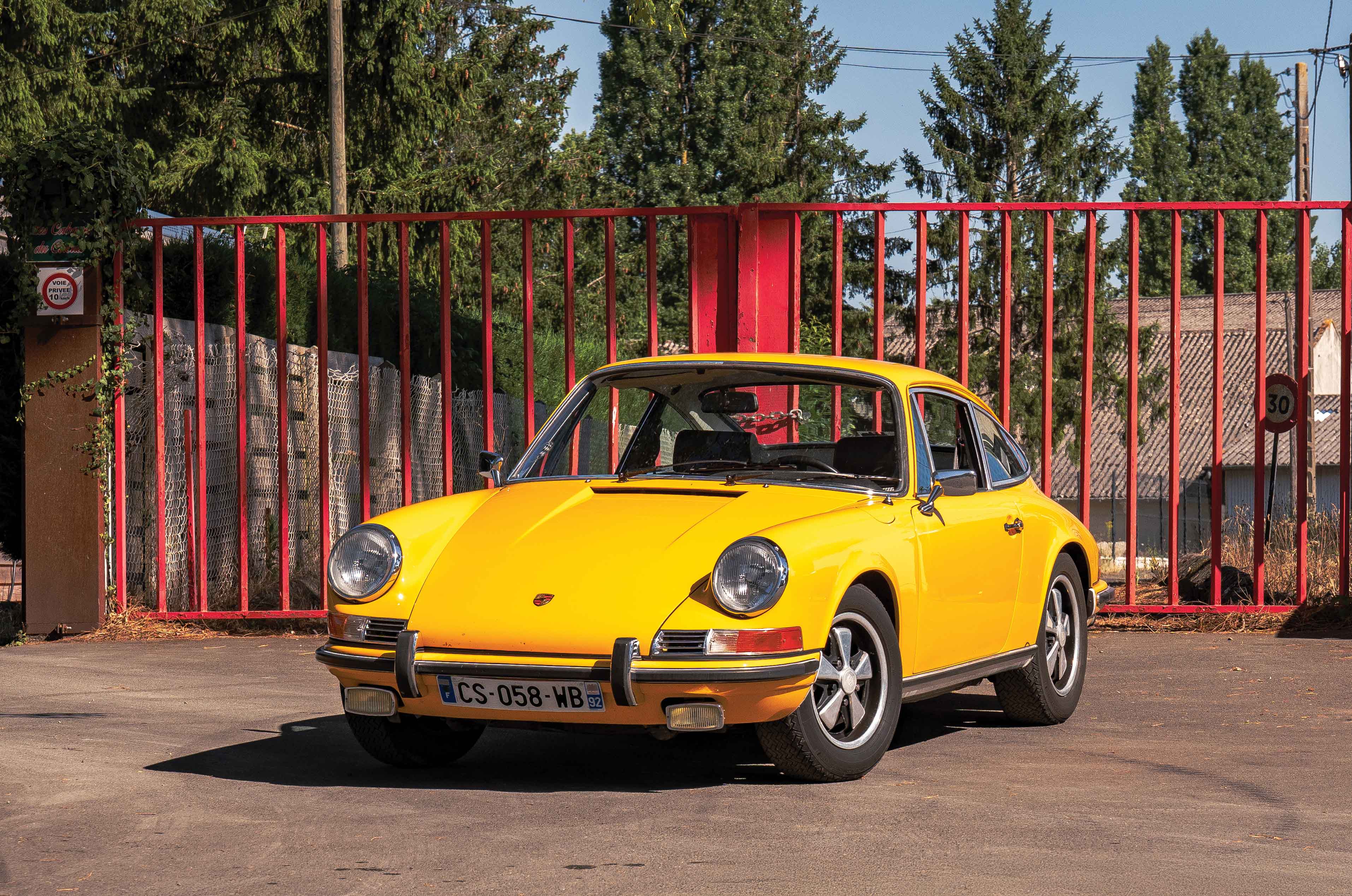
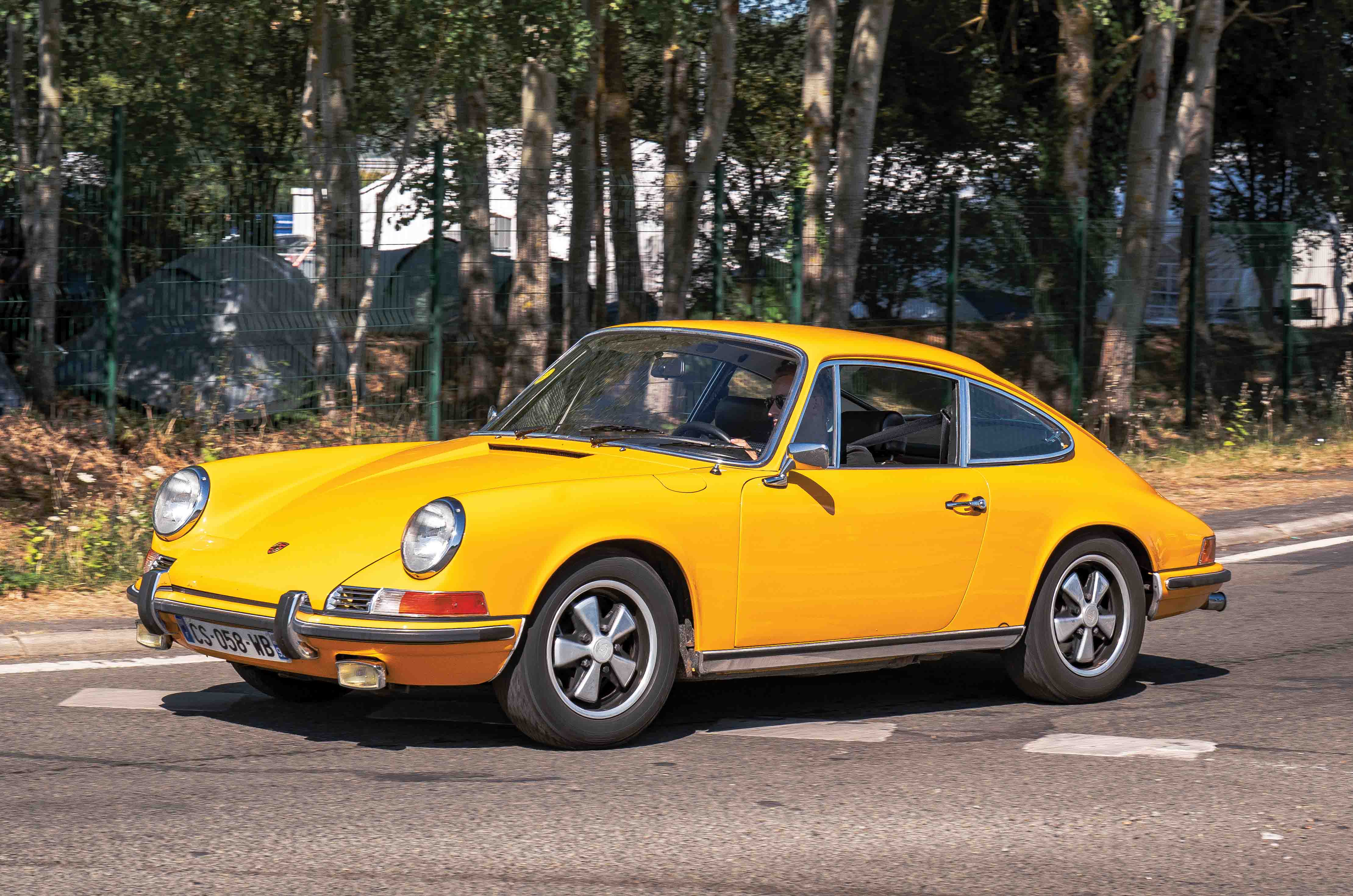
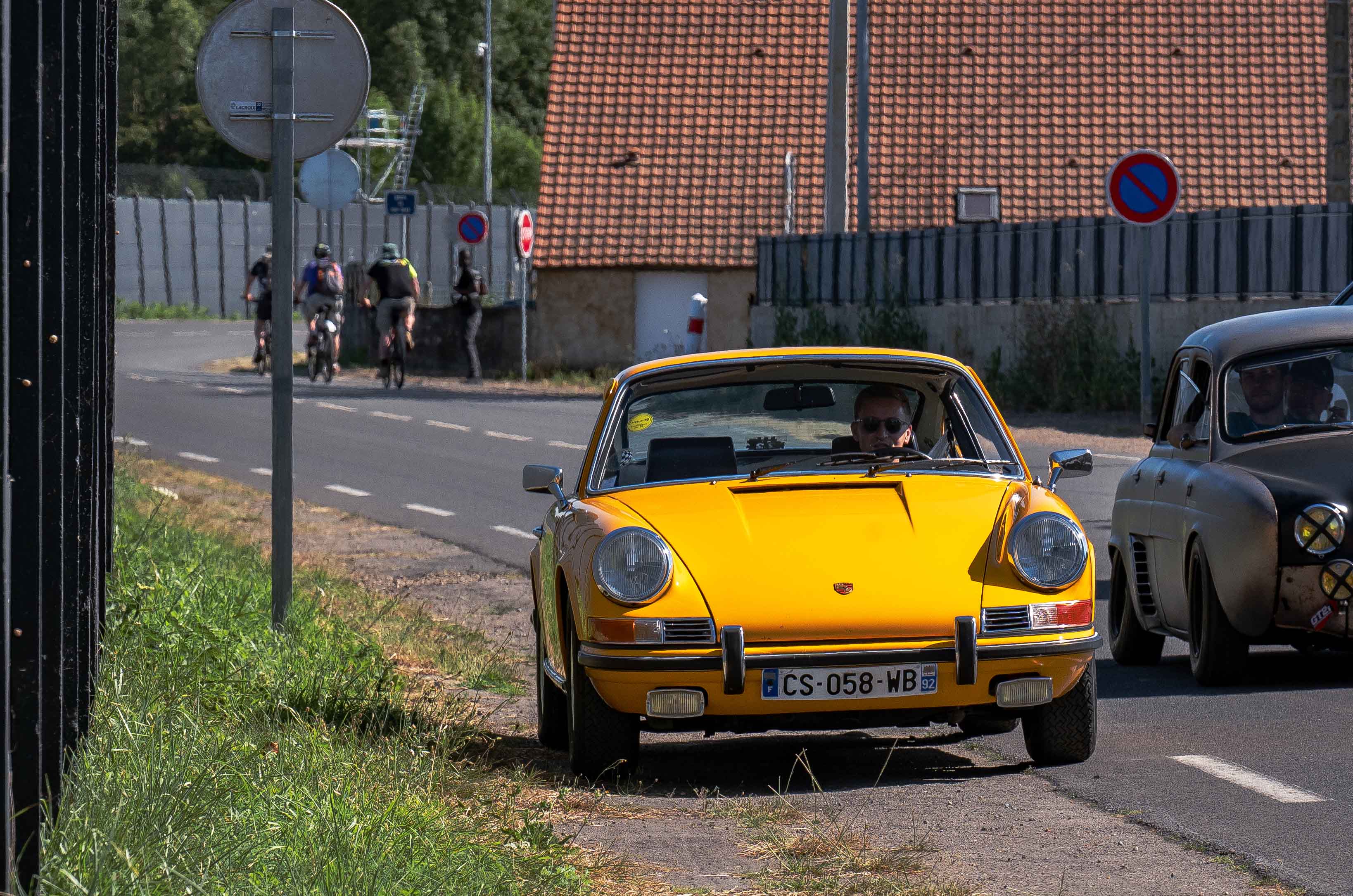
‘Our’ Porsche 911 at Arnage junction
Delaney drives between nothing but fields and trees to turn right and join the circuit at the crossroads towards Maison Blanche, but now there are no signs left of its agricultural past.
The crossroads has also gone, replaced by a roundabout. The tree line in the background remains, but how long will it be until that, too, is supplanted by campsites and parking?
Maison Blanche, the white house, is still there, with the road – and old track – wrapping around it, but it’s not white any more and no longer has ‘MARTINI’ writ large on its roof tiles.
Approaching Cathédrale St-Julien du Mans and Place des Jacobins in Le Mans
Delaney stopped here, outside a house on the other side of the track, to look at some freshly replaced Armco, indicating where a car has crashed – though not where David Piper went off in a 917 during filming, which was before he reached the corner itself.
McQueen had visited the race in 1969, and the combination of the close Ford vs Porsche finish (dramatised as Ferrari vs Porsche) and Woolfe’s accident provided the film’s sole plot elements.
The house now lies behind another massive fence, erected some years ago to secure the Maison Blanche campsite from people hopping the old railing to access the track without paying.
The Porsche 911 with Maison Blanche in the background
Could McQueen really have driven from Viré-en-Champagne to Le Mans in 15 minutes? Even in the middle of the night and with significantly fewer houses, no speed limits and other traffic, it seems highly unlikely.
Would he have tried anyway? At least one 911 driven by the star went back to Porsche for repair, while another had to be rescued from a ditch by members of the crew.
In her autobiography, his then wife Neile McQueen mentions: “As soon as Steve pulled out of the driveway, it was clear that this was an accident waiting to happen.”
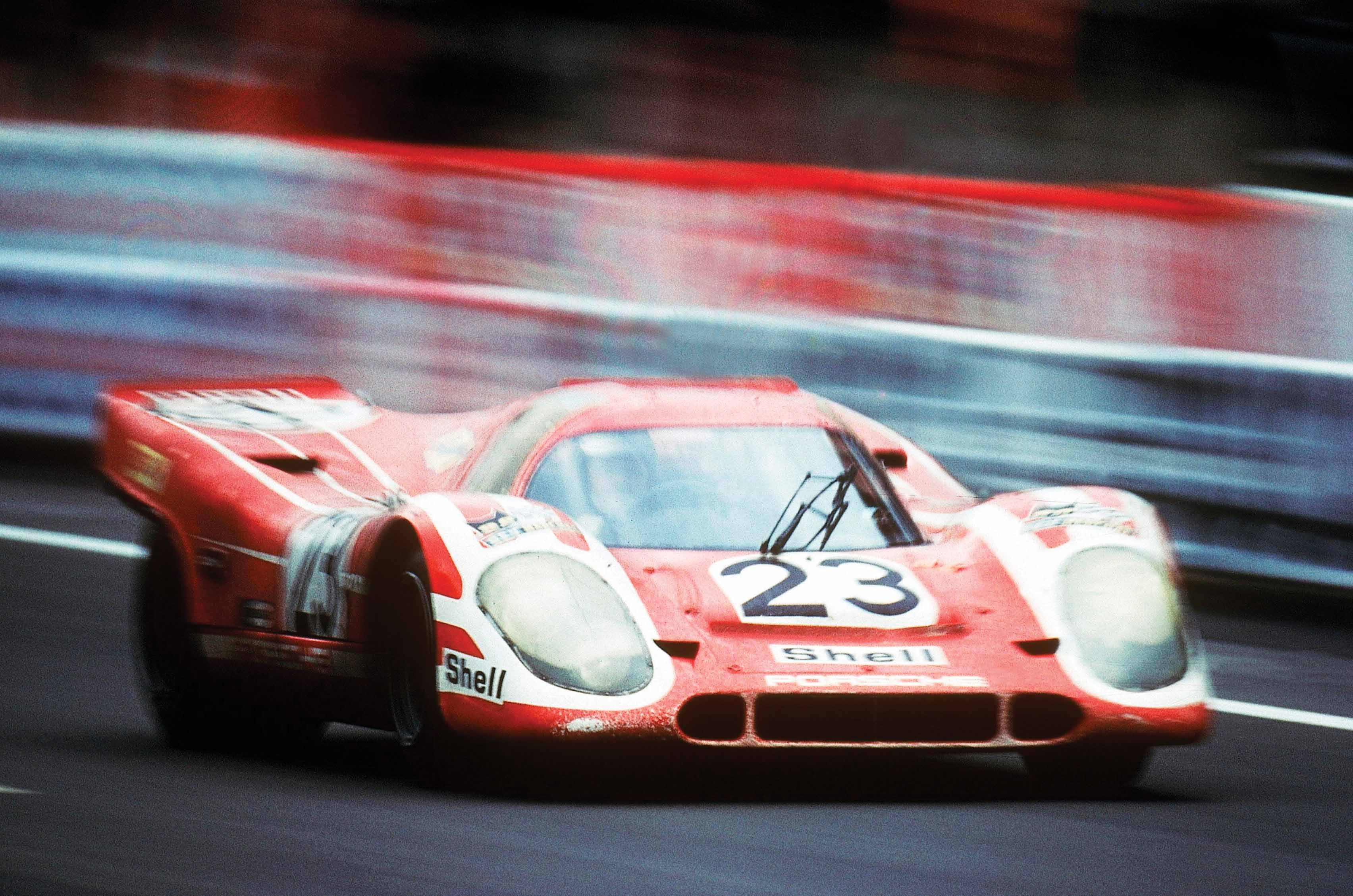
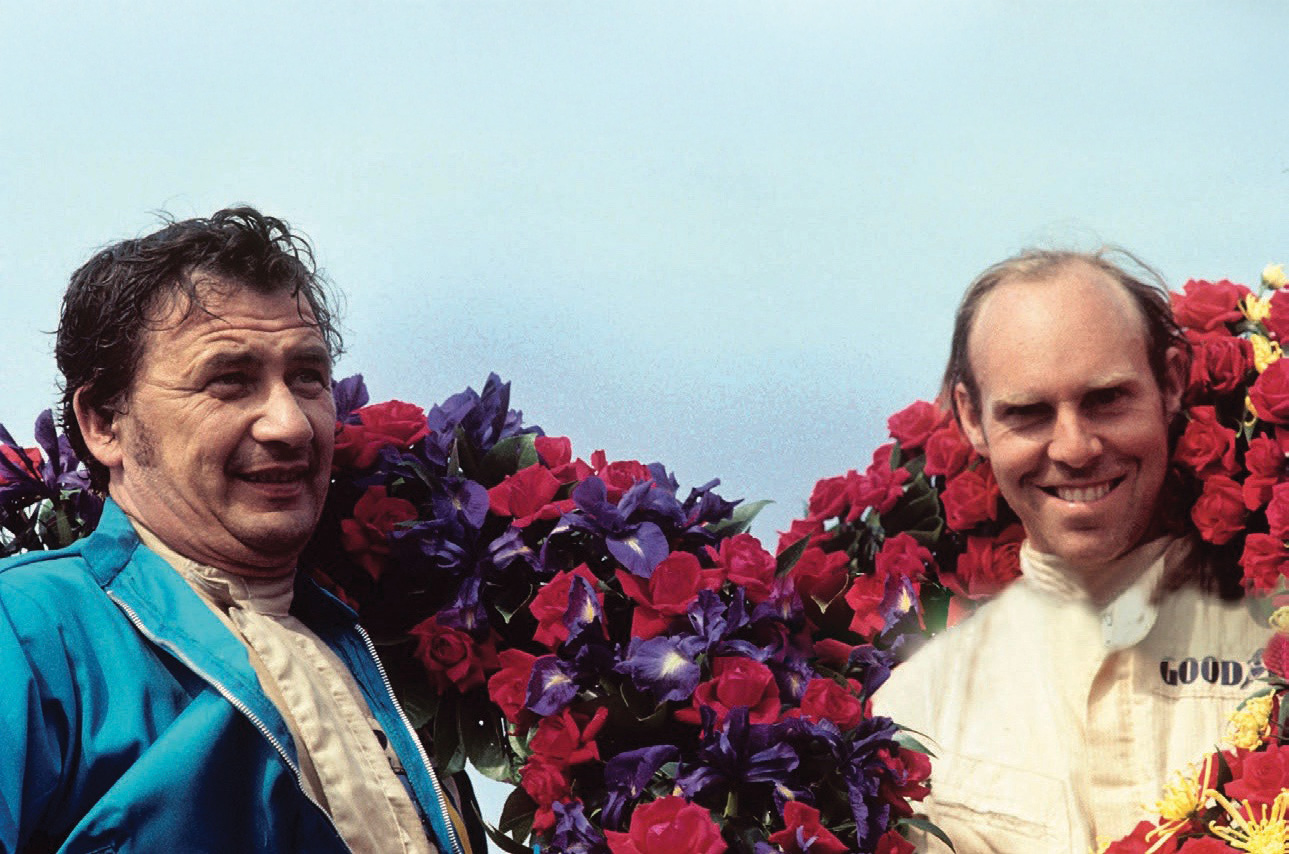
Hans Herrmann (left) and Richard Attwood after their 1970 Le Mans win © Porsche
The 1970 race was won by Richard Attwood and Hans Herrmann in their 917, and Porsche secured every class and performance trophy that year.
It marked a comprehensive power shift in sports-car racing, with Stuttgart in the ascendancy after that first victory: only Ferrari (six) and Ford (four) had won in the 1960s, but Ford hasn’t entered a car in the top category since, and Ferrari didn’t win again until 2023.
McQueen had never wanted Delaney to win, however, he was always destined to lose: the film could only be about racing and the drivers who risked – and lost – everything for their sport.
And in the end McQueen really had lost everything.
‘With the road McQueen followed across the square now gone, we escape the city centre to head back to the track’
He’d been banned from competing in the 1970 race in a 917 (he never raced a car again); his marriage and his production company had fallen victim to his determination to make the perfect motorsport film; and both his control over the movie and his wage for it had been taken away in a deal to get it finished.
As his dream project began to slip from his fingers, the only thing over which McQueen had complete control was the time he spent on his own, commuting in his 911.
And the only thing he took away from the production was his co-star in the opening scenes and his one true constant, as the Slate Gray Porsche 911 was shipped home to California.
Images: Simon Fox
Thanks to: Jean-Eric Raoul, Mathieu Bruyere, Jason Williams and Jens Torner
Porsche 908/02: the world’s fastest camera car
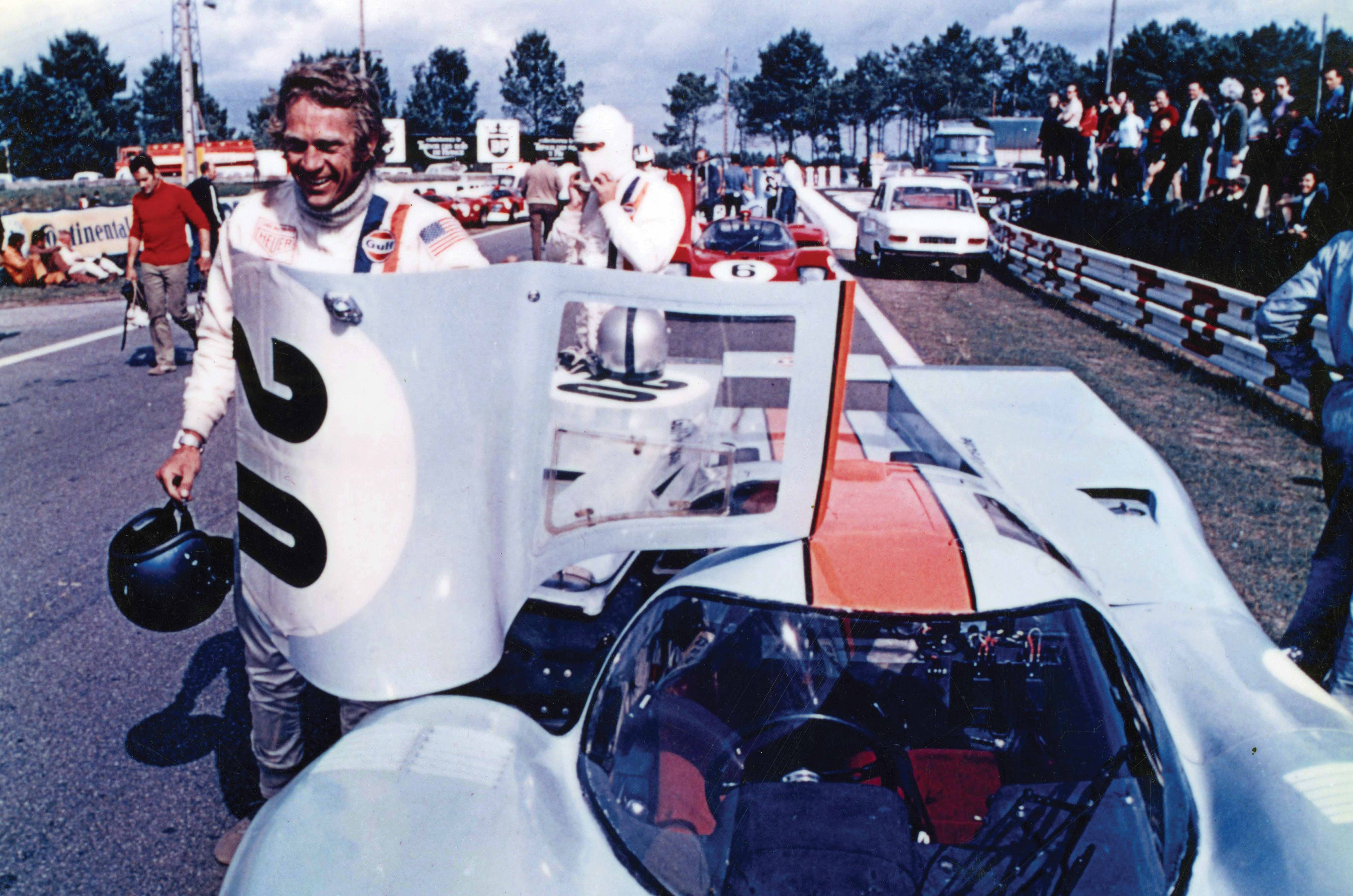
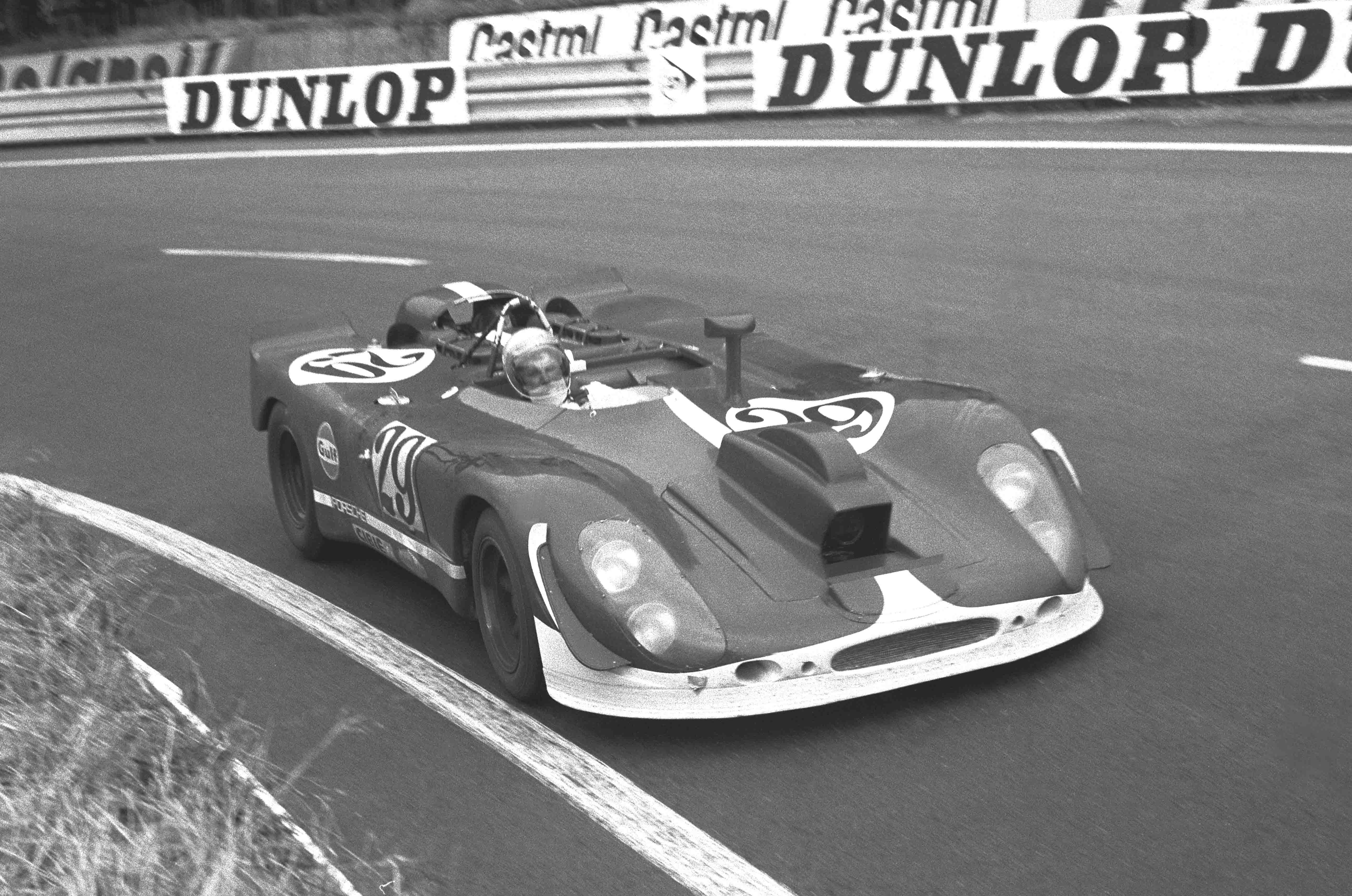
The Solar Productions Porsche 908/02 during Le Mans © Getty
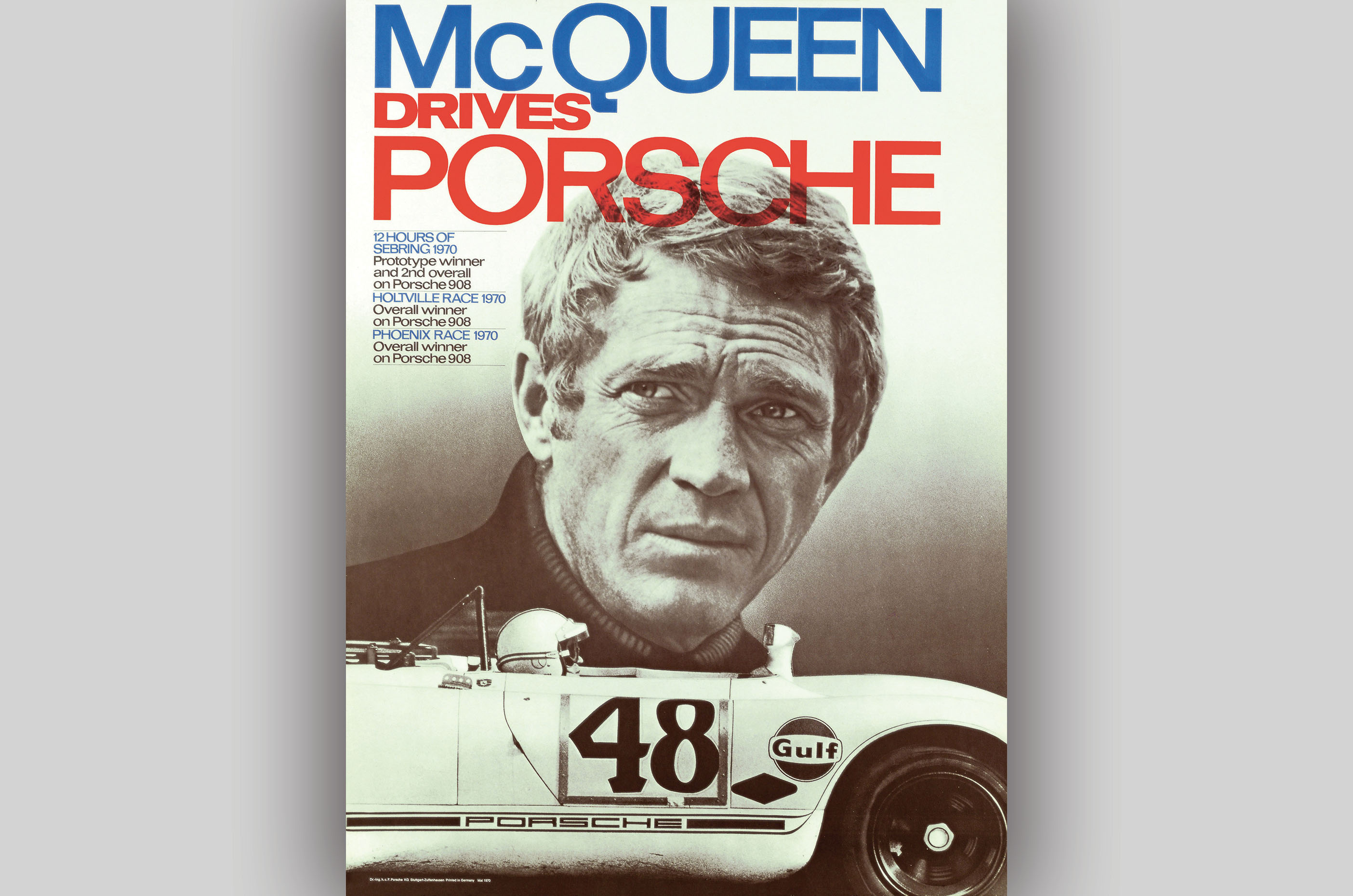
Steve McQueen met Rico Steinemann, Porsche’s motorsport director, on his scouting mission at Le Mans in 1969.
McQueen wanted his character to race a Porsche, and Steinemann could see the marketing potential.
Porsche agreed to sell Solar Productions a 3-litre 908/02 – probably seen as more forgiving than a 917.
Chassis 022 had started its racing life in February 1969 at Daytona as a Langheck coupé, but was converted to lighter Flunder spider bodywork.
McQueen won three races in 1970 and blew a gearbox in the fourth.
“I needed to familiarise myself with a car like the 908 in order to drive [at Le Mans] with any kind of authentic feel,” he said. “If I can’t cut it in the 908, there’s no point in making the film.”
He also needed to qualify for an international licence.
Car and driver were entered in the Sebring 12 Hours, but two weeks before the race he broke his foot in a motocross event, and he arrived with a leather boot fitted over his plaster cast.
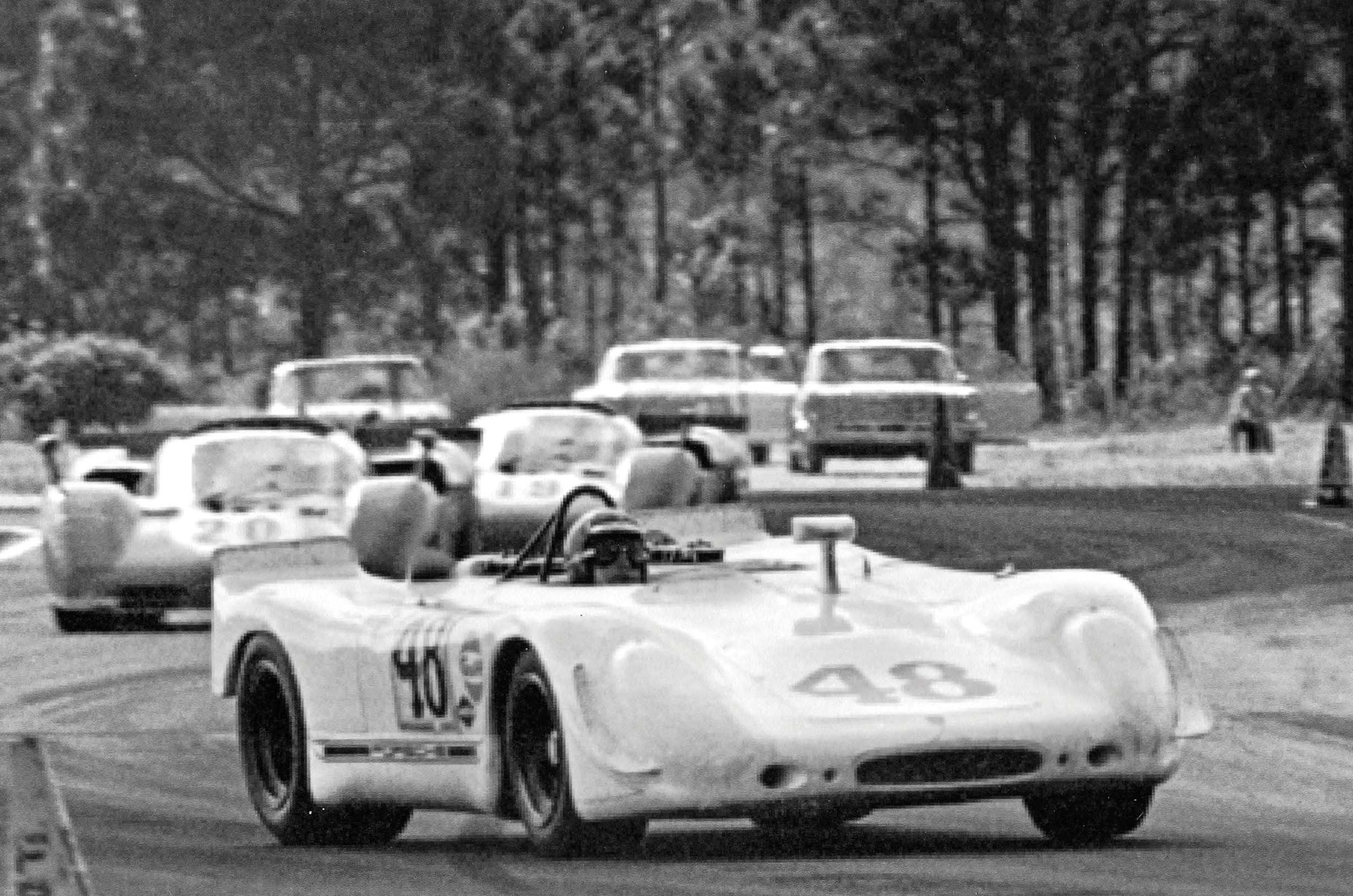
Steve McQueen racing the 908/02 at Sebring © Porsche
Sebring was a perfect opportunity for McQueen to test himself against the top aces.
To that end, he hired as his co-driver professional racer (and Revlon cosmetics heir) Peter Revson, who lapped the Solar 908 2-3 secs faster than McQueen.
As rivals dropped out, McQueen found himself first in class and second overall, but in intense pain.
Revson took over and led the race as first Andretti’s Ferrari 512S and then the Rodríguez/Siffert 917 hit trouble.
Ferrari called in the third-placed 512S, dropped in Andretti and told him to drive like crazy.
He overtook Revson on the final lap to win: the closest finish in Sebring history and the peak of the star’s racing career.
“McQueen had a lot of talent, and he was ambitious, practically obsessed,” recalled Kurt Ahrens, who drove a works Porsche 917 in the race. “And he was fast – if not quite as fast as Revson.”
The plan was for McQueen to drive the 908 at the Le Mans practice day, then a John Wyer team 917 in the race. But backer Cinema Center Films found out and pulled the plug: he was simply too valuable to be allowed to compete.
Porsche realised the marketing potential in its relationship with Steve McQueen © Porsche
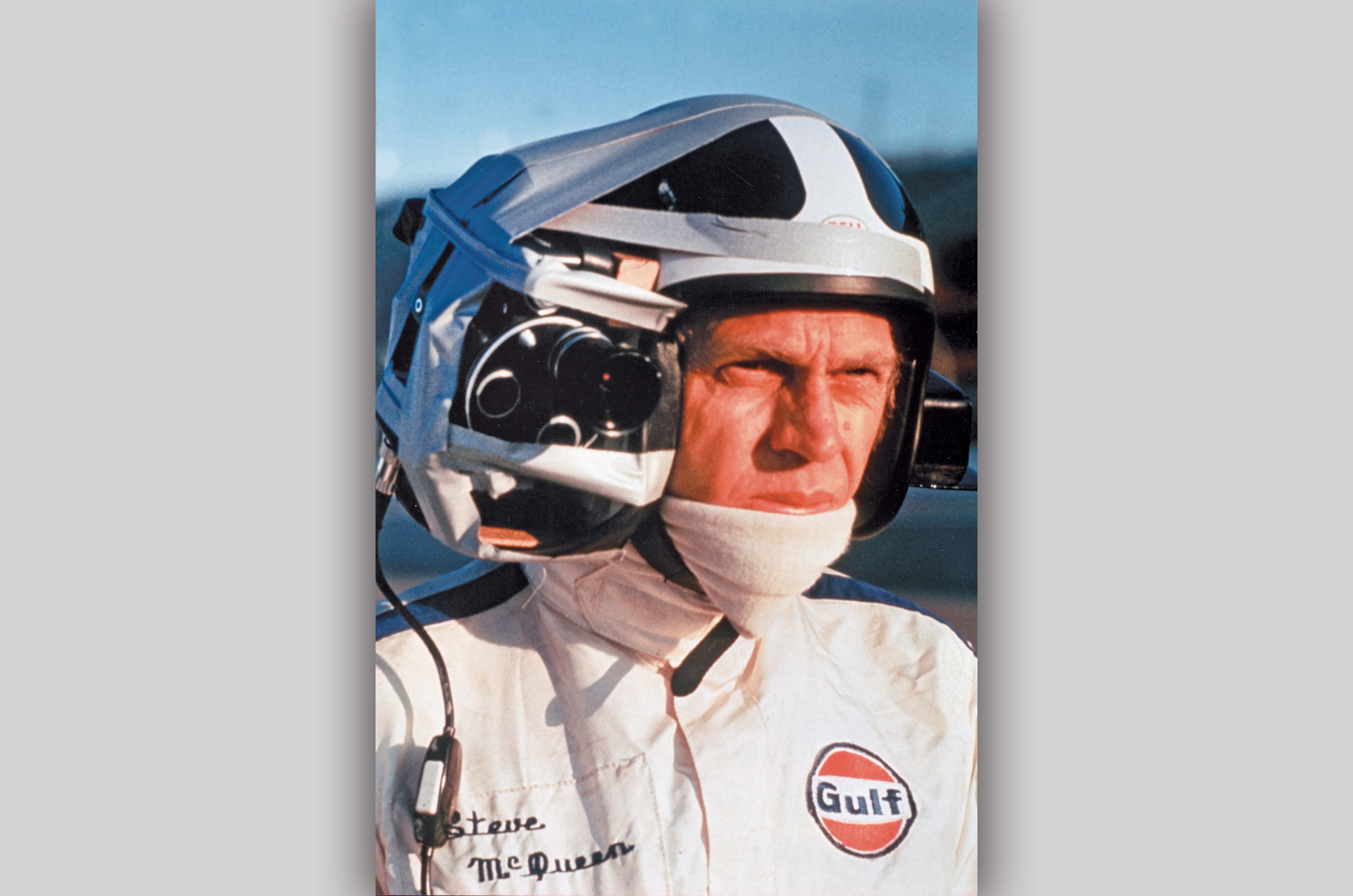
Herbert Linge and Jonathan Williams were employed to drive the 908, fitted with a trio of Arriflex cameras.
Linge recalled: “The additional attachments, which were integrated very skilfully, added an extra 40kg, which barely affected the balance and speed of the car – there was a lot of nonsense written about this.”
Director Sturges wanted the start filmed from all three.
Said Williams: “Herbert, chosen to start by virtue of [having] a cooler head than I, was told to activate the front camera 30 secs before the drop of the flag, and the rear one just prior to engine start, to record a maximum of mayhem… After that, filming would be selective and at the driver’s discretion.”
The car had to make extra pitstops – Solar found it quicker to swap the whole camera for one with a fresh canister – and had just one unscripted delay, when the starter motor overheated.
By the finish it was nominally in eighth, but was disqualified for a minor infraction and, due to all those stops, didn’t run the minimum distance to be classified.
Yet Porsche would take its first overall victory, with the Hermann/Attwood 917 completing 61 more laps than the 908.
The camera car was sold and competed at Le Mans three further times, its best result being seventh overall in 1973.
Steve McQueen and Heuer: keeping an eye on the time
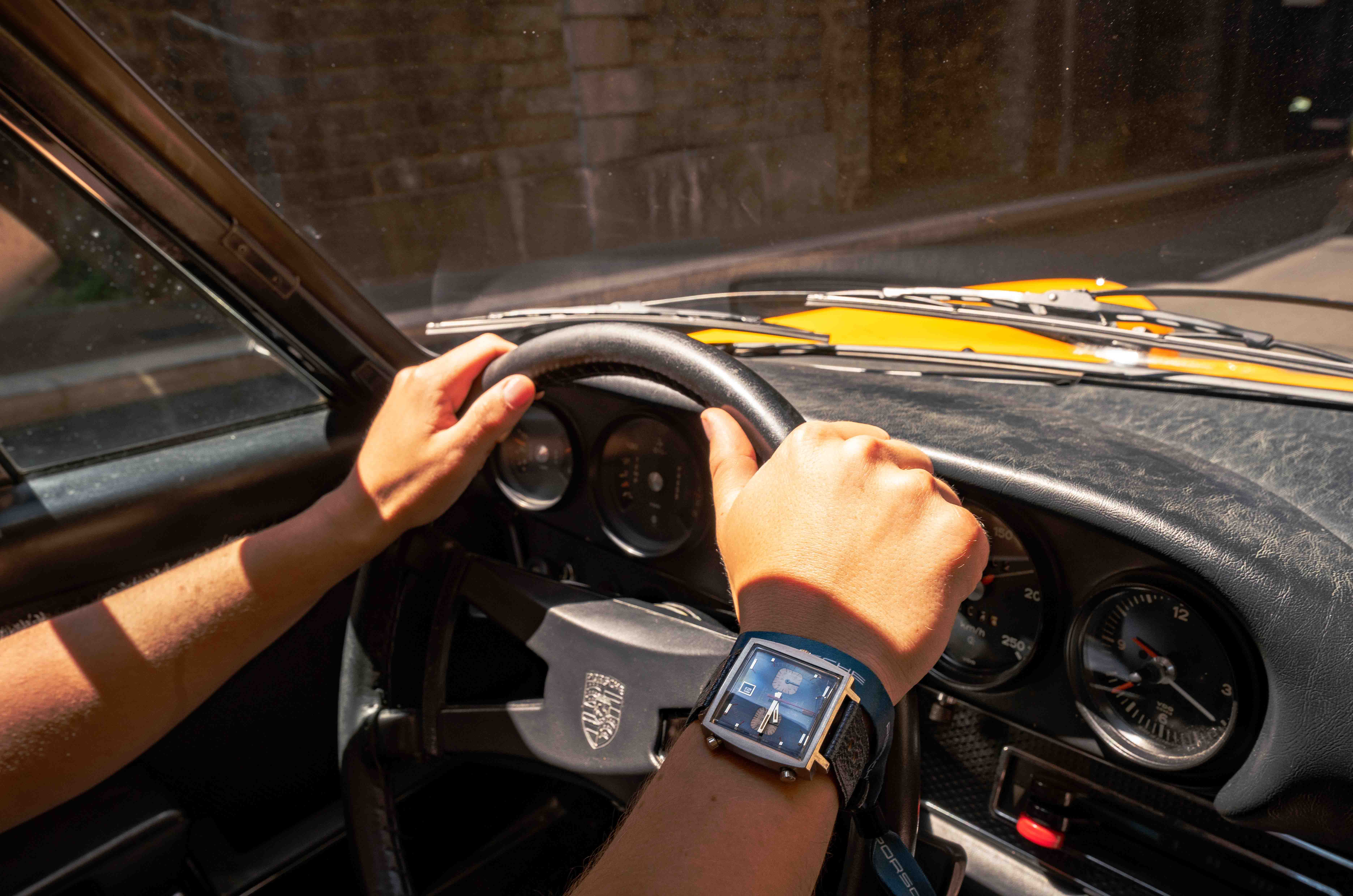
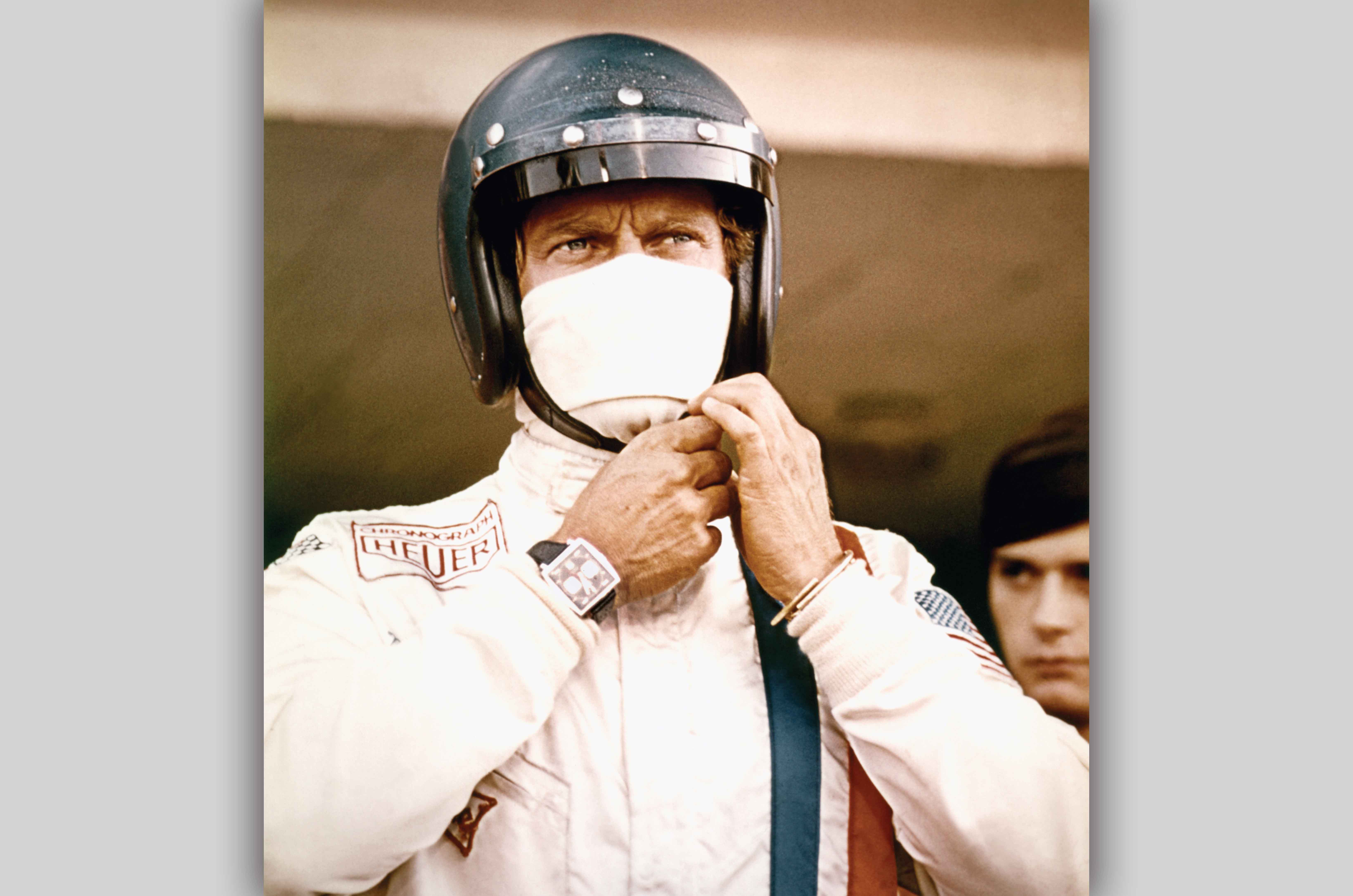
McQueen’s Heuer Monaco was prominent on screen © Getty
By the late 1960s, the Heuer watch company was expanding rapidly, with its Autavia and Carrera manual chronographs already on the wrists of racing drivers such as Jochen Rindt and Mario Andretti.
Battery-powered watches were by then threatening the market, however, and Heuer saw the automatic chronograph as the answer.
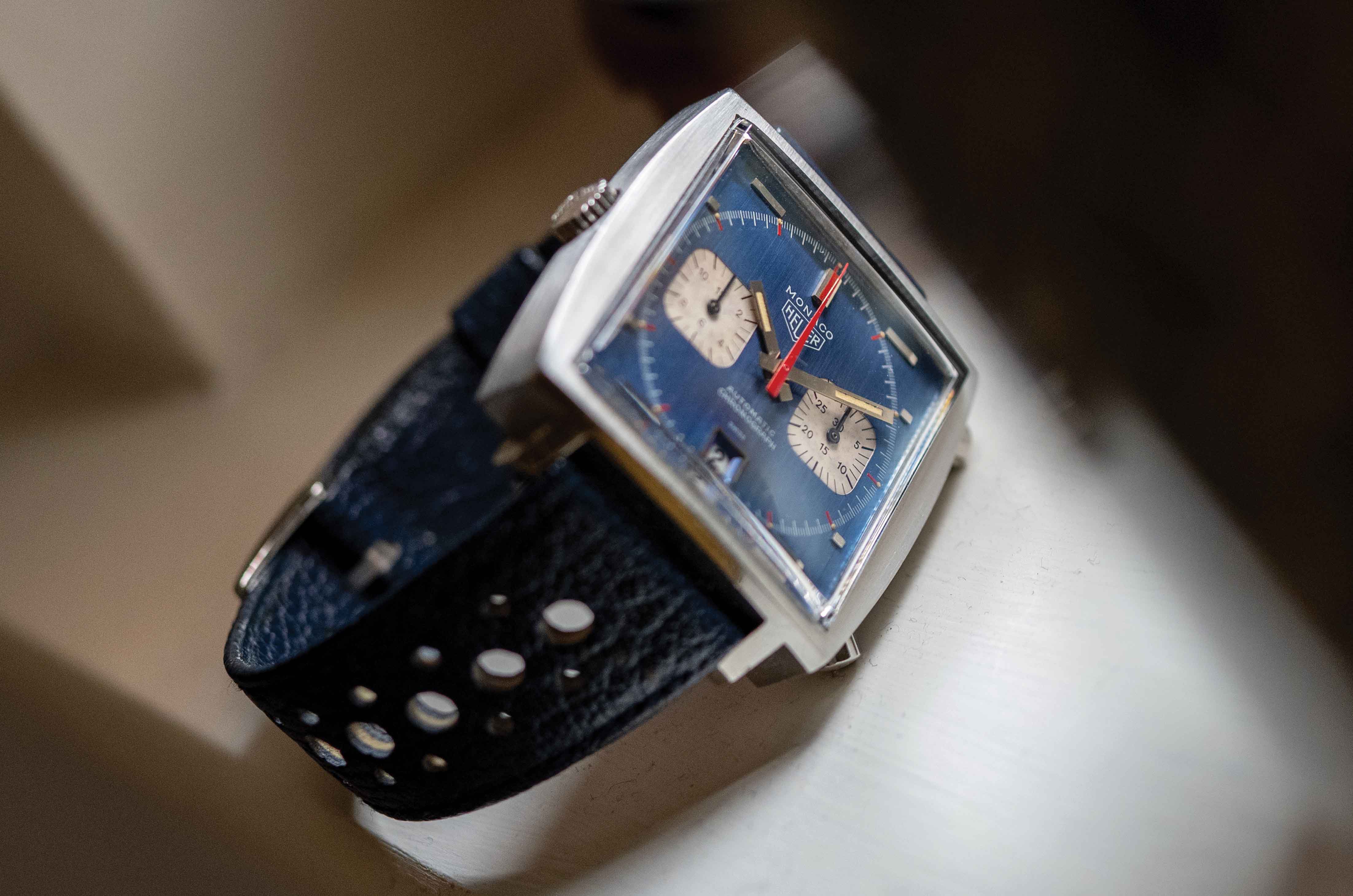
Still a relatively small firm, Heuer joined forces with Breitling, Hamilton, Buren and Dubois-Dépraz to share development costs, and in March 1969 the new movement was launched, with Heuer choosing to show this new technology in an equally radical, square-cased watch: the Monaco.
By chance, Jack Heuer was introduced at his local golf club to a successful young hotshoe called Jo Siffert.
They agreed a sponsorship deal where Siffert would, in exchange for CHF25,000 (about the cost of a new 911T) sport Heuer patches on his overalls, wear its watches while he raced, and become an agent to sell Heuers to fellow drivers.
As a Porsche dealer, Siffert also convinced Heuer he needed to be seen driving something more sporting and sold him a 911.
Steve McQueen was an admirer of Siffert, and the Swiss ace would go on to rent 10 cars to McQueen’s Solar Productions for Le Mans.
A beautiful and rare 1970 blue-dial Heuer Monaco, just like Steve McQueen’s in film Le Mans
What Jack Heuer couldn’t have foreseen, however, was how important that sponsorship patch on Siffert’s race suit would prove.
Don Nunley was property master for Le Mans in charge of sourcing clothing, accessories and set dressing.
He saw the importance of McQueen’s look to the actor, and chose his wardrobe with care.
Nunley laid out the race suits of the top six drivers for McQueen to look at and he immediately chose Siffert’s, so a replica was made for him, complete with a Heuer patch.
Then McQueen was shown a table of watches from Omega, Heuer, Rolex, Bulova and Tissot.
He picked up an Omega but, on being told the Speedmaster was associated with NASA, he chose the Monaco.
Like the movie, initially the Monaco wasn’t a success, perhaps due to the radical shape of the case.
As Jonathan Williams, the only driver employed full-time by Solar, said: “All us drivers at the time thought they were incredibly naff.” Only later did it become an icon, thanks to its starring role on McQueen’s wrist.
TAG Heuer relaunched the blue-dial Monaco in 1998 – using an image from Le Mans modified to show McQueen wearing the new watch – and variations have been on sale ever since.
The value of the McQueen association is huge, and in 2020 one of the six blue-dial 1163B Monacos supplied to Solar – and later given by McQueen to his mechanic, Haig Altounian – sold at auction for $2.2m.
Enjoy more of the world’s best classic car content every month when you subscribe to C&SC – get our latest deals here
READ MORE
Porsche 917K: thunder and lightening
Bullitt Mustangs: Ford’s silver-screen icons
Greatest movie cars: a celebration of classics on camera