AC MA 200: missed opportunity

| 4 Jul 2025
Classic & Sports Car – AC MA 200: missed opportunity
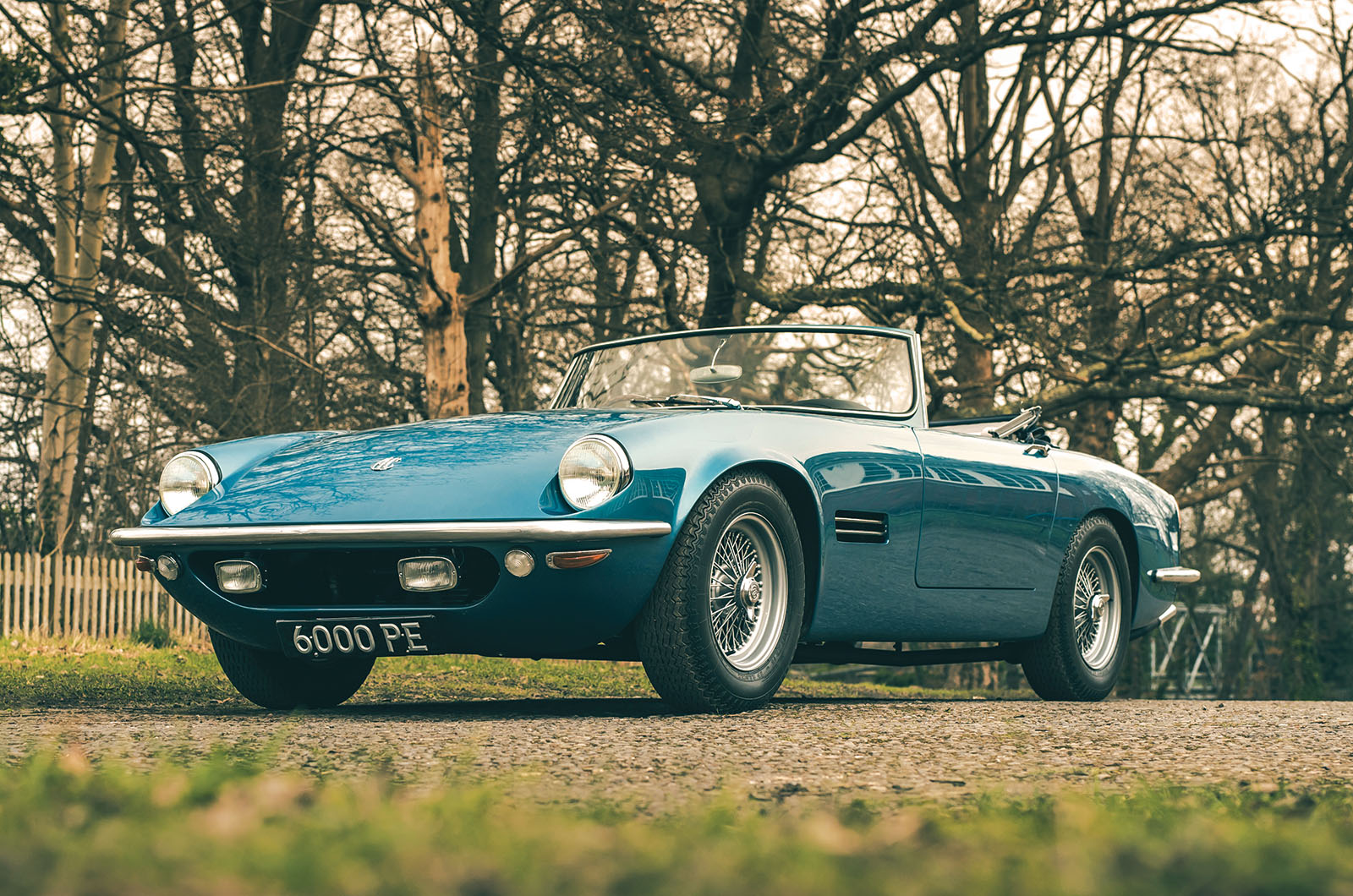
There is no real mystery about AC’s MA 200.

This car was a completely rational response to the predicament in which AC Cars Ltd of Thames Ditton found itself as a small firm producing a successful – but ageing – range of handbuilt sports cars.

The pretty Ace was nearly a decade old by the early 1960s, and was about to lose its most desirable engine option (the Bristol 2-litre straight-six) as it struggled to square up to the faster, more modern – and often cheaper – open two-seater opposition.

At just £2000, the new Jaguar E-type was a car that might easily have finished off AC’s business model.

Classic & Sports Car – AC MA 200: missed opportunity
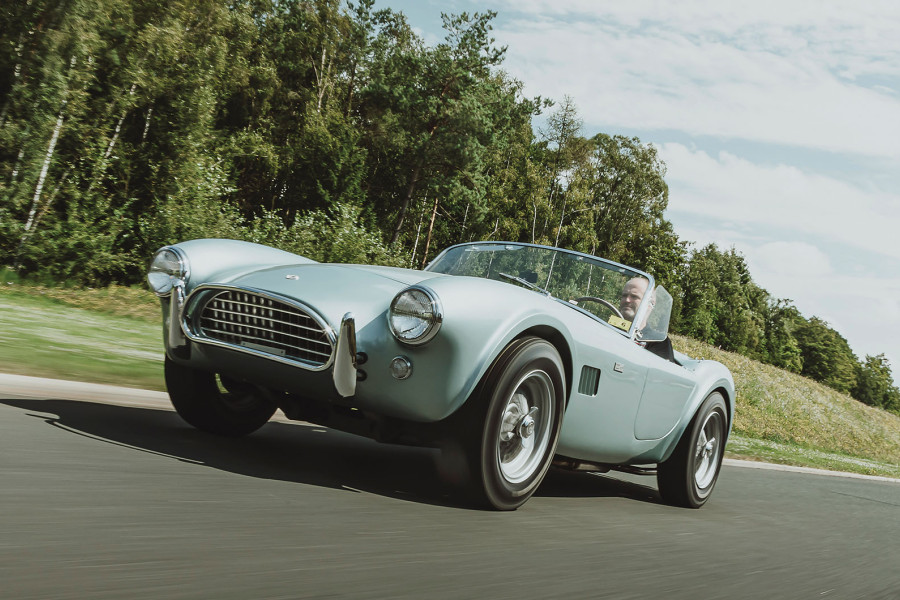
The unique AC MA 200 prototype exhibits production-level detailing

The firm was arguably building too many variants on limited resources, with no way of knowing how long or successful its association with Carroll Shelby and the AC Cobra might be.

While the pretty Aceca had proved that there was an appetite for a fixed-roof version of the Ace, the Greyhound’s failure to capture the imaginations of 2+2 coupé buyers was a neat illustration of the disappointment that awaited specialist manufacturers when they tried to build cars with wider appeal.

Although the Invacar, along with other general engineering projects, kept AC solvent, the Greyhound saga was a mistake the firm could ill afford.

Classic & Sports Car – AC MA 200: missed opportunity
AC Cobra-style seats in the MA 200’s roomy cabin

MA 200 is an oddity among prototypes, in that it looks like a far more polished and sorted effort than many cars that did make the final cut.

It was a serious project that generated some 250 factory drawings, but only resulted in a single working vehicle.

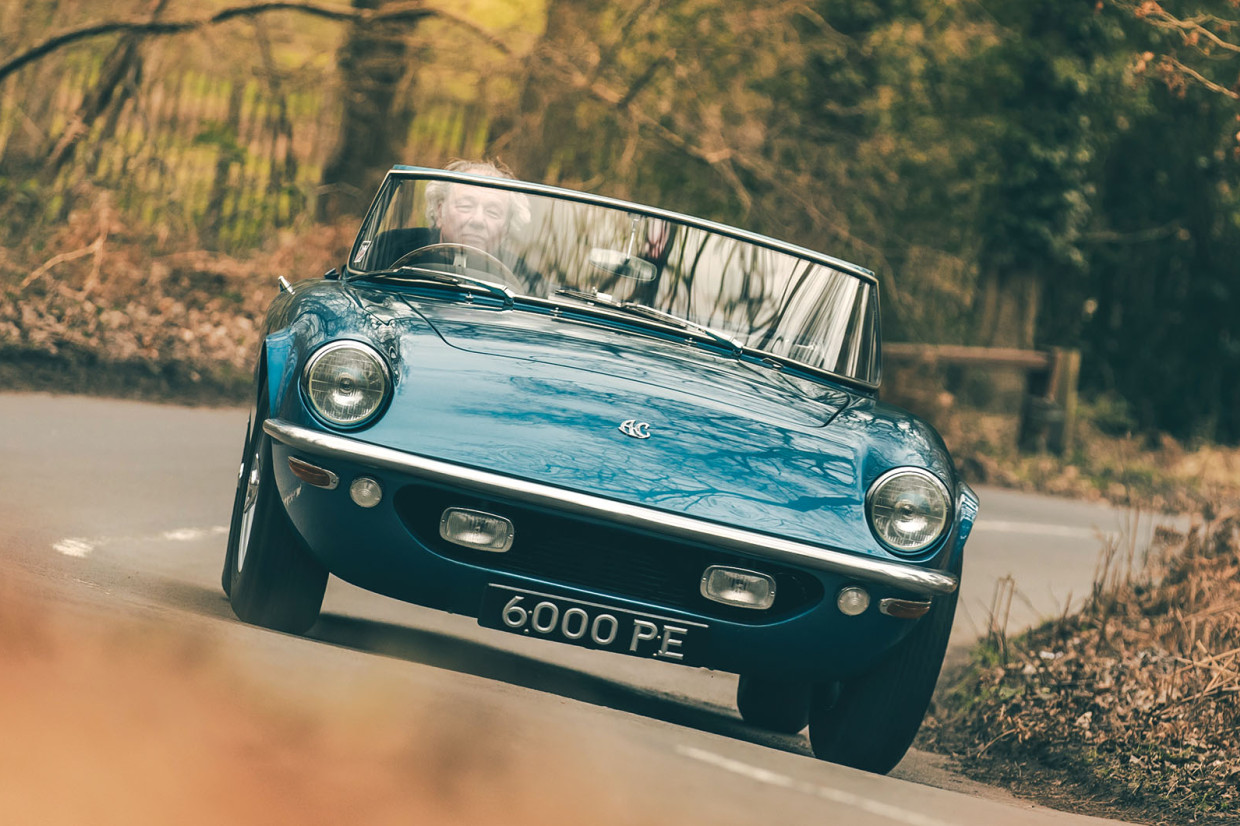
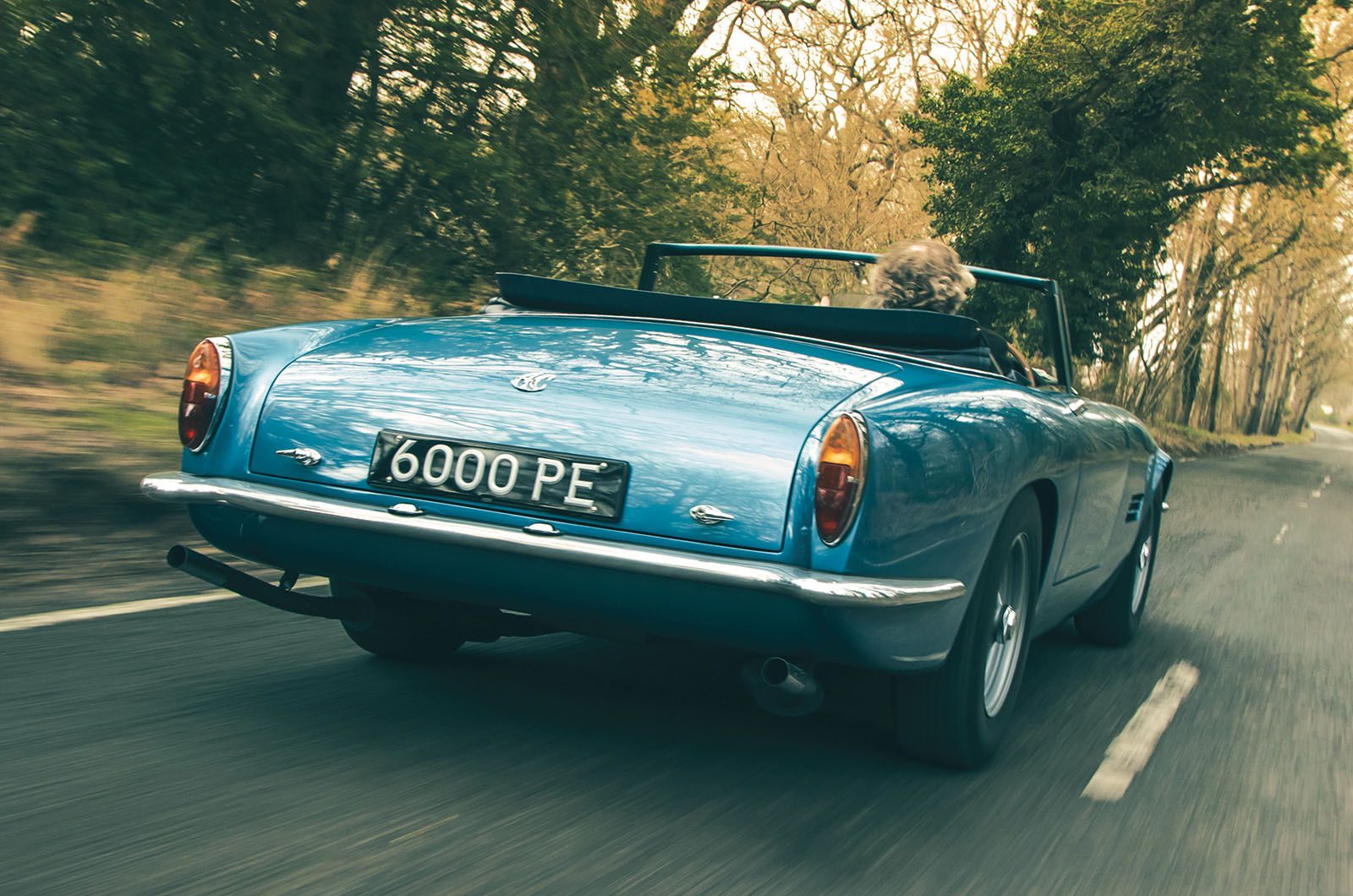
Registered for road use on 19 November 1963, the blue two-seater, wearing the number 6000 PE, was AC boss Derek Hurlock’s personal road car until 1968; he often used it to take his daughter to school.

When Road & Track published a picture of the car parked in the paddock at Silverstone in 1964, this further fuelled rumours that AC had a ‘new Cobra’ waiting in the wings.

Classic & Sports Car – AC MA 200: missed opportunity
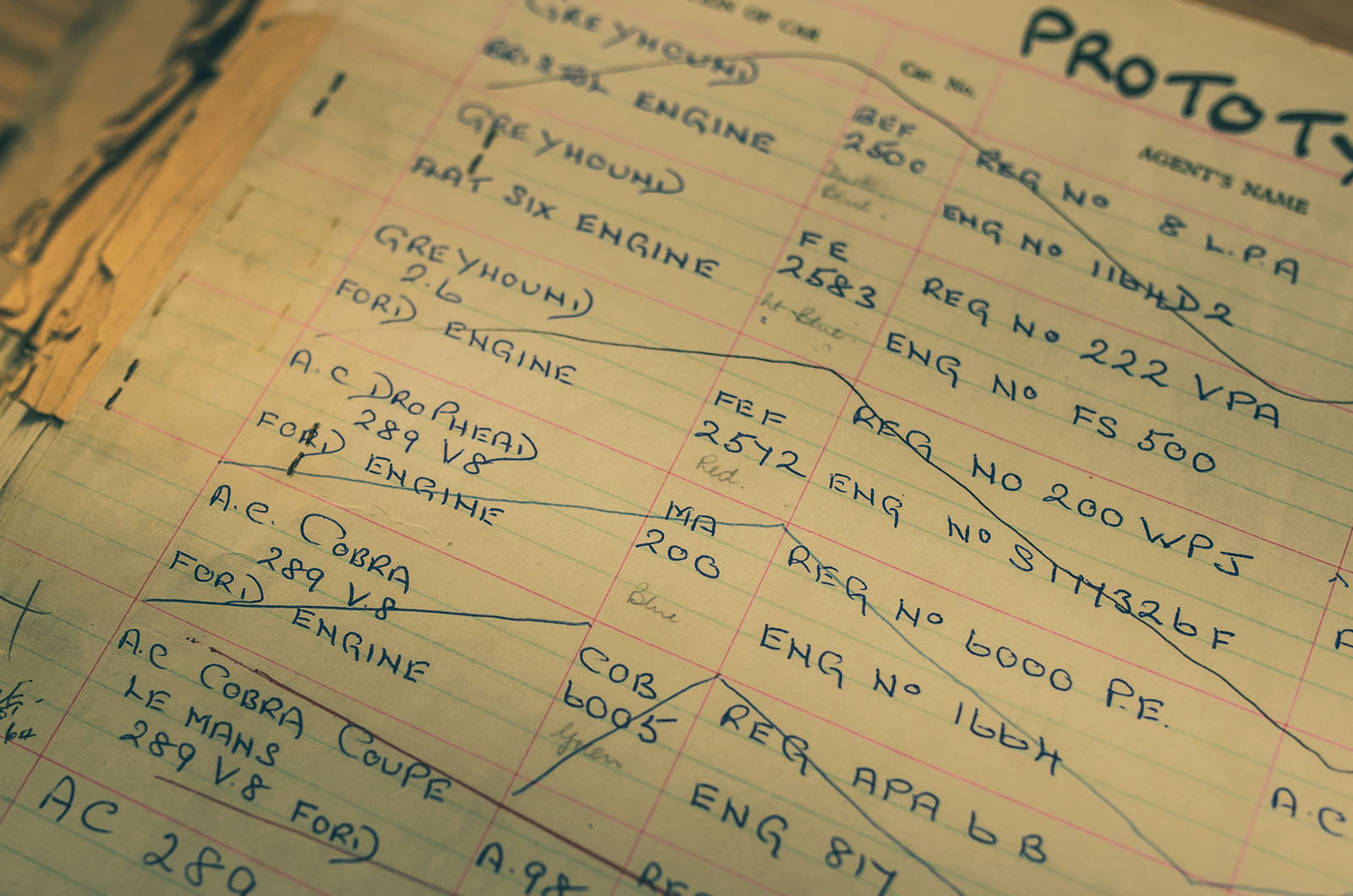
A Thames Ditton factory ledger records MA 200 as ‘AC Drophead’

The design had curious origins in AC Cars’ quest to build its own range of horizontally opposed engines.

Between 1946 and 1964, a Polish former Bomber Command pilot called Zdzislaw Marczewski, inspired by Lycoming aircraft engines, worked for AC on a range of two-, four- and six-cylinder ‘flat’ power units, with both water- and air-cooled versions, and variously pushrod overhead-valve, inlet-over-exhaust and overhead-camshaft designs. 

The smallest was a 500cc twin, the largest a 2.4-litre, all-aluminium, wet-liner ‘six’ good for 165bhp.

A 2-litre flat-four was earmarked for a planned big AC saloon in the mid-1950s, but the ‘six’ was deemed a promising enough replacement for the firm’s own ancient 2-litre, overhead-camshaft straight-six that parts for 100 examples were ordered up.

Classic & Sports Car – AC MA 200: missed opportunity

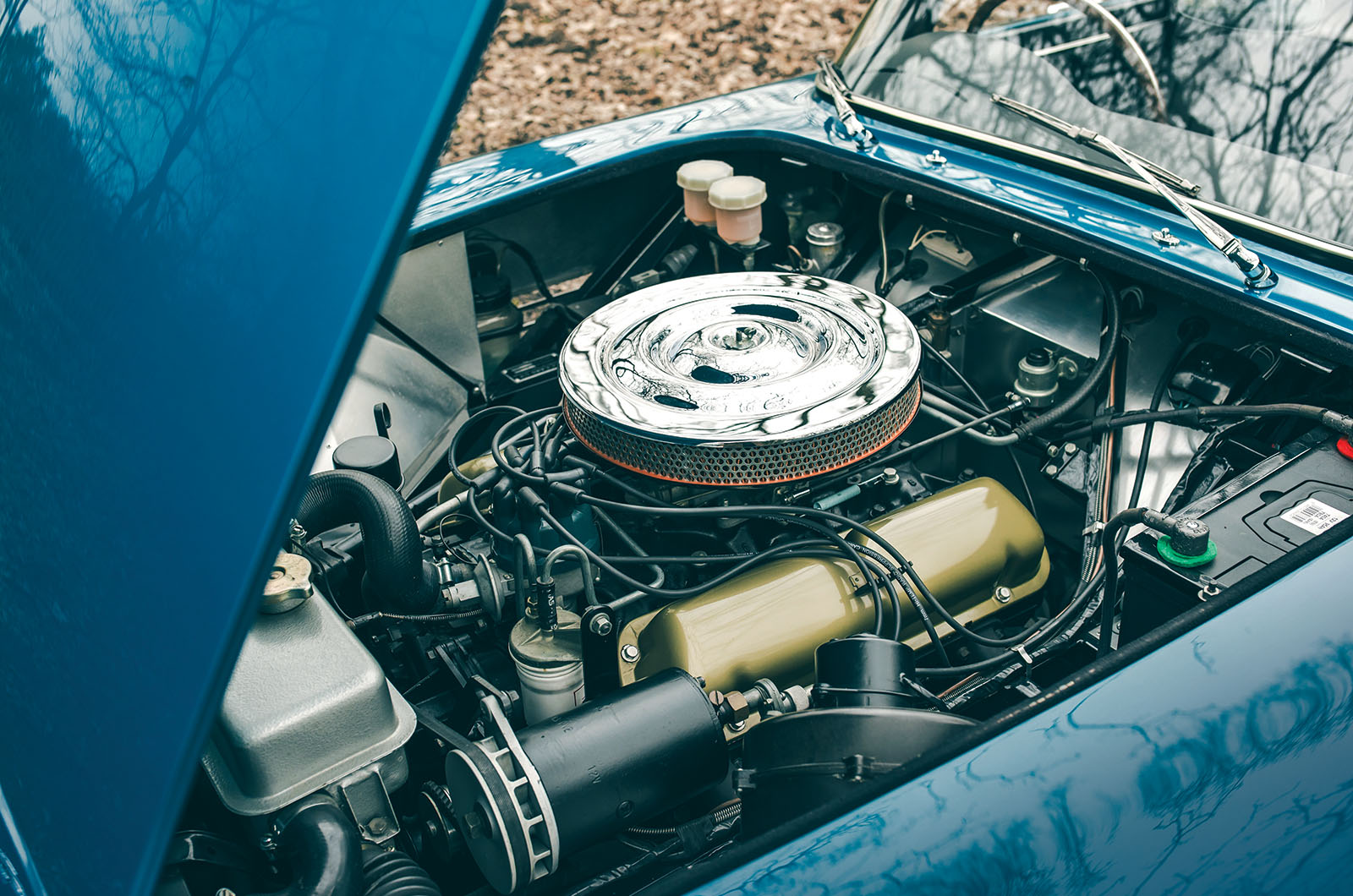
The AC MA 200’s original ‘Hi-Po’ Ford 289 V8 was replaced by a GT40 development engine, but a correct-spec unit has since been reinstated

Meanwhile, Marczewski – who’d previously worked at the General Aircraft company of Feltham, and was described in some quarters as a former designer of MiG aircraft – spent most of his time developing the Invacar (an unfortunate contraction of ‘invalid carriage’) three-wheeler for AC’s Ministry of Health contract.

But while his MA 200 (‘MA’ reportedly came from the first two letters of his surname) was probably inspired by the flat-six project, there is some doubt as to whether any such engine was ever fitted to the car itself. 

At one stage, AC Cars was in discussions with Jaguar about supplies of the Edward Turner-designed Daimler V8.

But by the time the prototype was being built up in 1962, AC had access to the small-block 289cu in Ford motor, which came in a crate from Dearborn for £250 and made 100bhp more than the 2.4-litre flat-six, which had to be hand-assembled at a cost of £2000 and was, reportedly, neither very smooth nor particularly dependable.

Classic & Sports Car – AC MA 200: missed opportunity

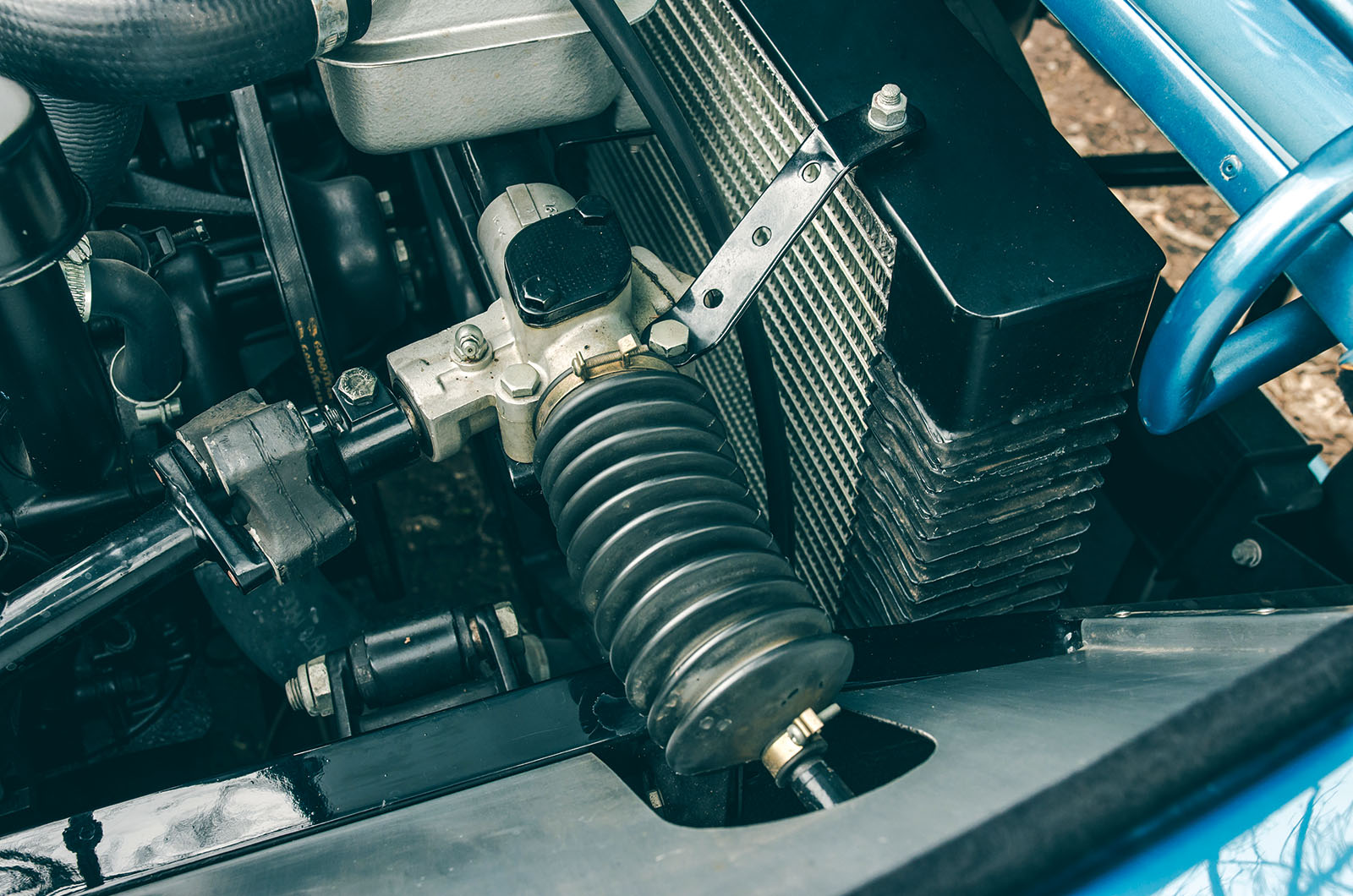
The AC MA 200’s high-mounted steering rack

Interviewed 30 years ago, the Polish engineer was adamant that at least one MA 200 coupé was built with his boxer unit, and that he was working on a design of a mid-engined version.

Despite modern thin-wall casting techniques, Marczewski considered the Ford V8 a “lorry engine” that was nearly twice the weight of his beloved all-aluminium, horizontally opposed design.

One flat-six was thought to have been tried experimentally in a Greyhound by AC’s chief designer, Alan Turner, a personality who apparently clashed with Marczewski.

As a face-saving exercise, Marczewski was permitted to design the front underpinnings of MA 200 in such a way that the flat-six could potentially have been accommodated.

Classic & Sports Car – AC MA 200: missed opportunity

The AC MA 200 is very well finished for a prototype vehicle

Thus, underneath, the AC MA 200 was much more than a rehash of Ace thinking.

Out went the old twin-tube chassis and in came a square-section spaceframe construction with suspension that was unique to it: coil-sprung struts at the back, and wishbones at the front with curved, cantilevered upper members to work on inboard-mounted spring/damper units.

The Jaguar-style Salisbury differential had inboard disc brakes, and needle-roller bearings were used on most of the pivot points as a further refinement.

Charlie Gray of AC Heritage, which is currently looking after MA 200 ahead of its sale, feels that the car would have proved too complicated to make a profit, and that the gauge of the aluminium panels was on the thin side for long-term durability.

Classic & Sports Car – AC MA 200: missed opportunity

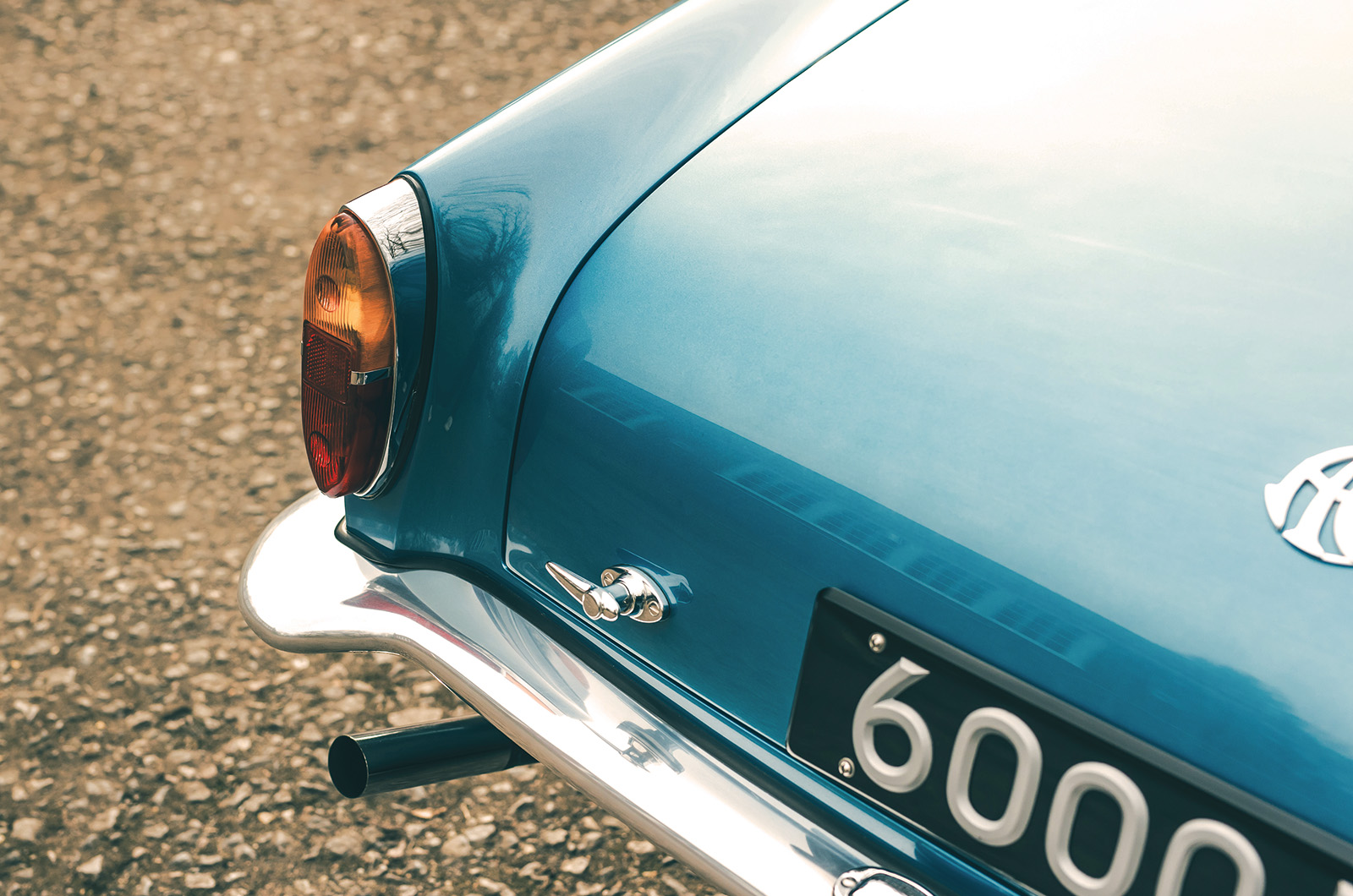
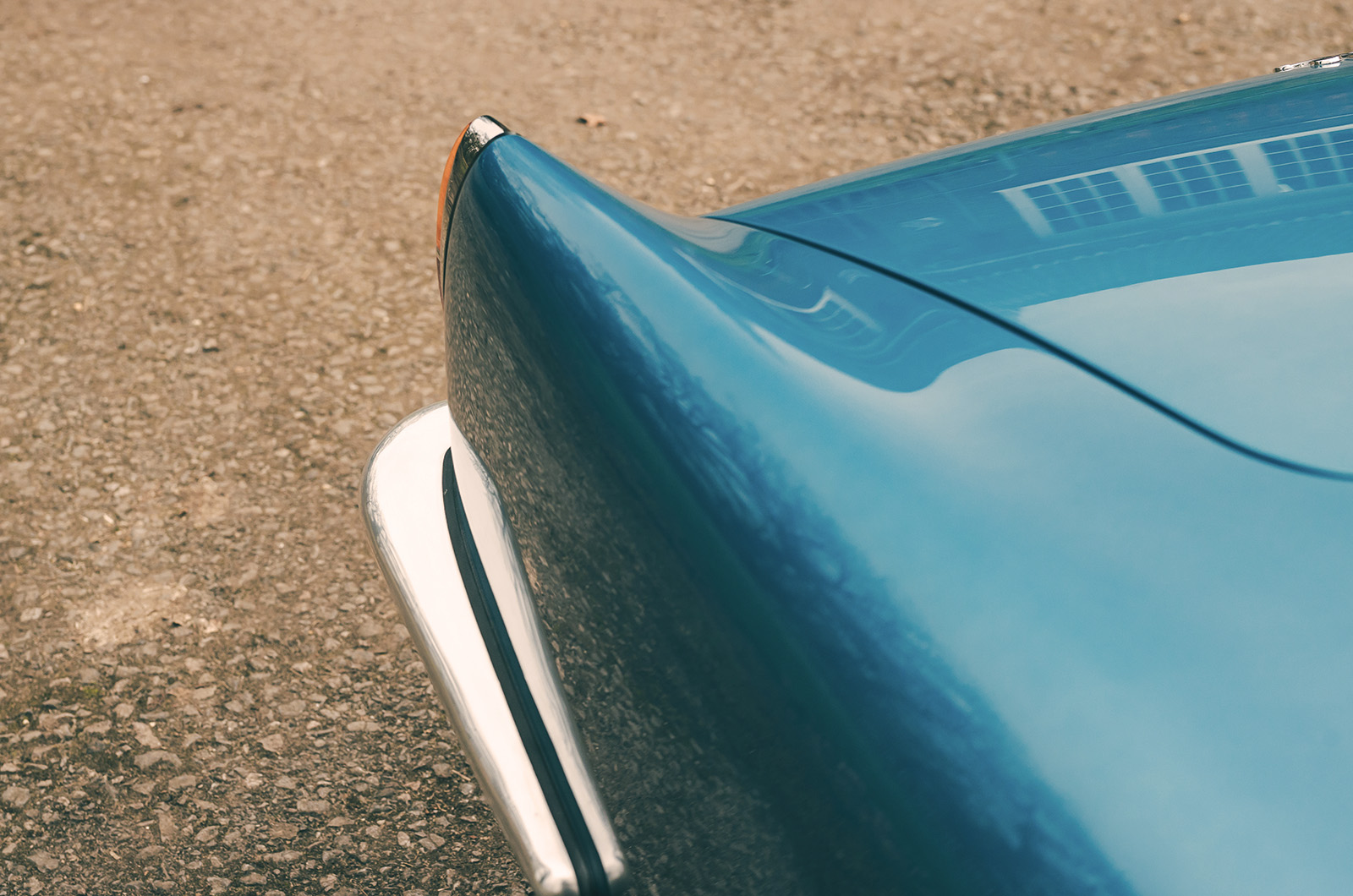
The AC MA 200’s Ford Taunus-sourced tail-lights

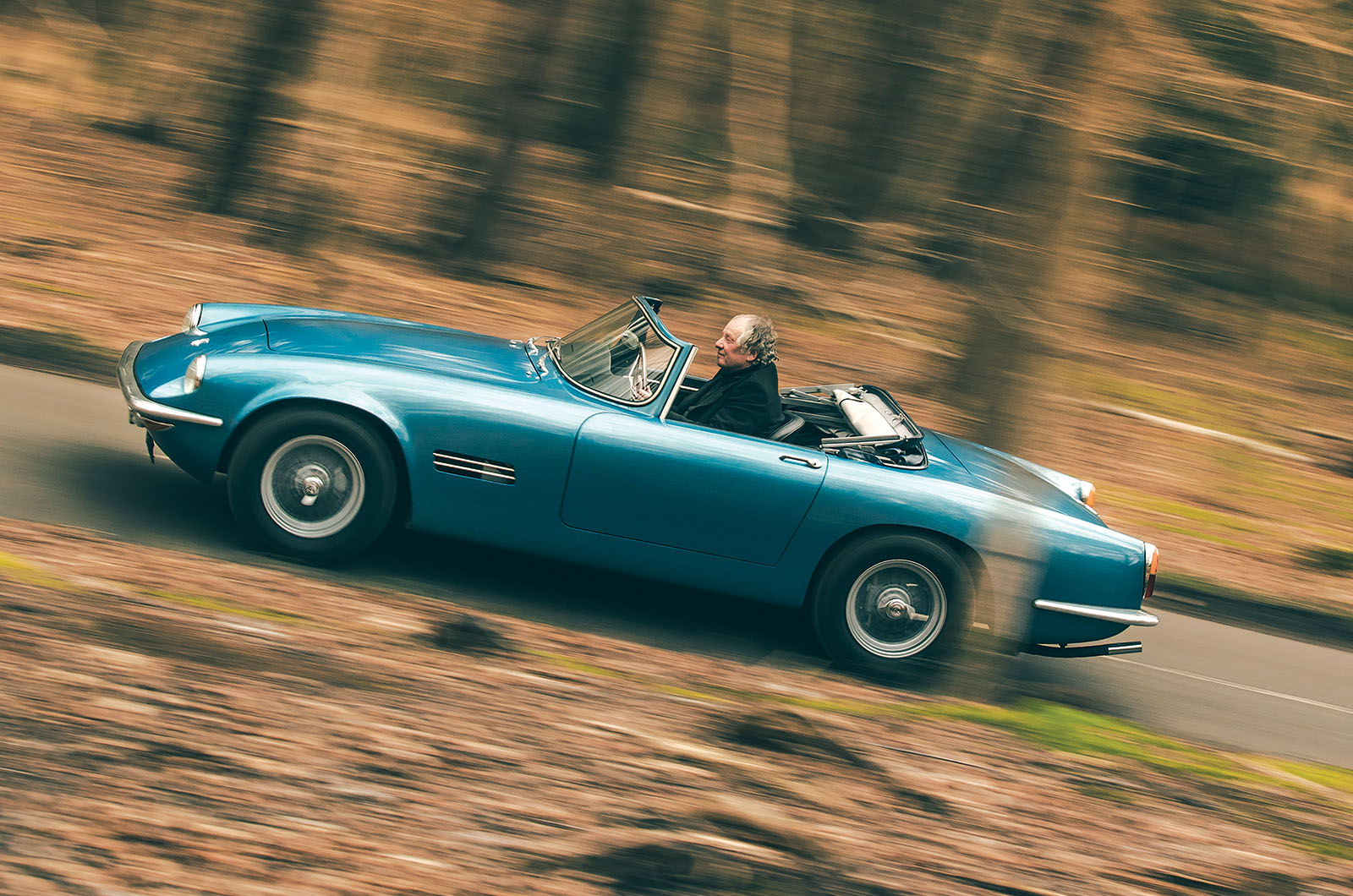
At 170in long, 68in wide and riding on a 96in wheelbase, the AC MA 200 is quite a substantial car in the metal, and even before you enter the low, wide cockpit you can see that it is a much roomier sports car than the snug Ace.

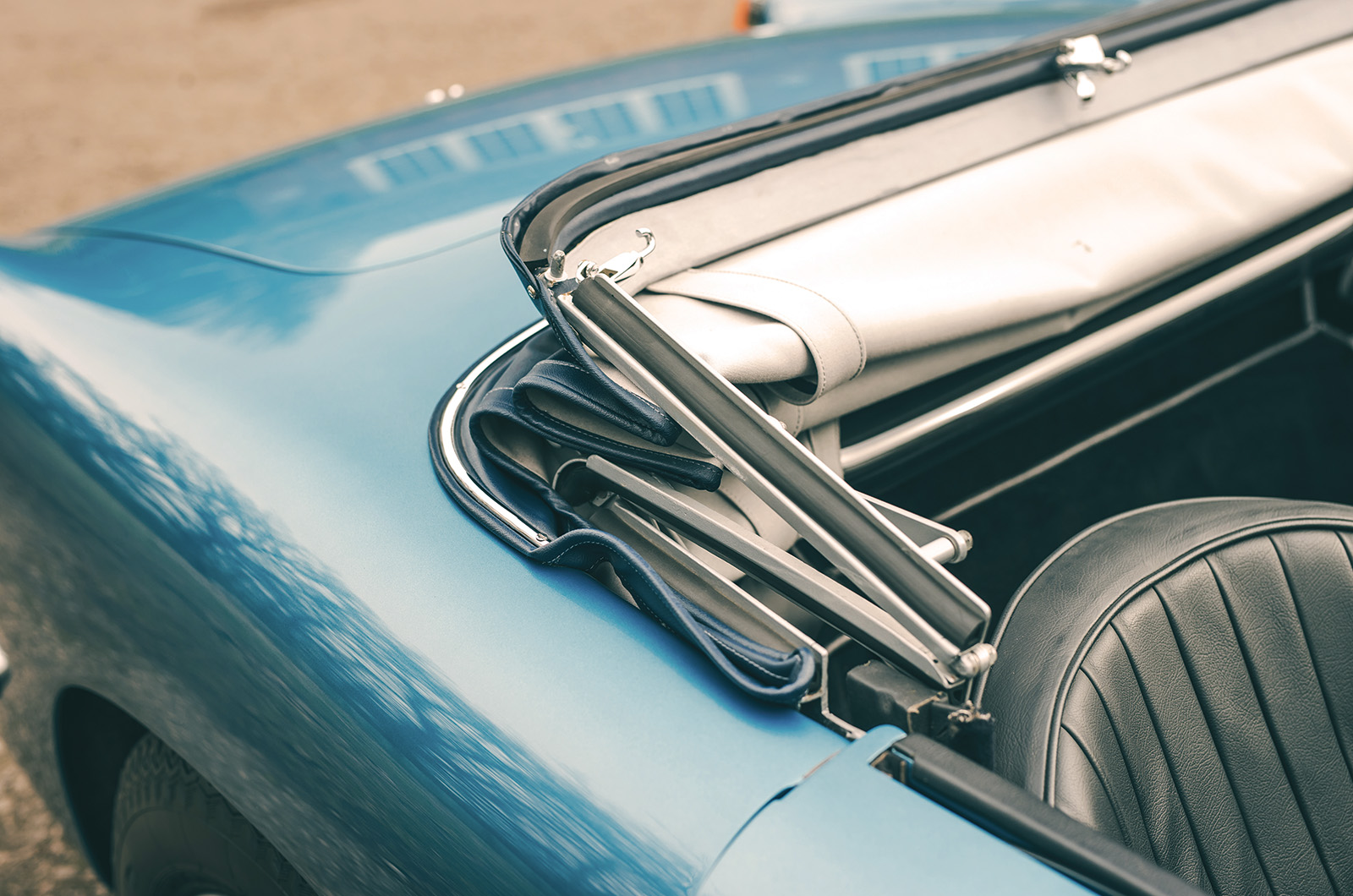
It looks handsome hood up or down (the top raises and lowers with one-handed operation, like an Alfa Romeo Spider, and sits well out of sight), and there is a touch of the Aston Martin DB4 and DB5 Convertible about the rear treatment, with Ford Taunus Coupé tail-lights.

If there is something cheeky about the pinch-waisted Ace, the rear view of MA 200 is almost dignified.

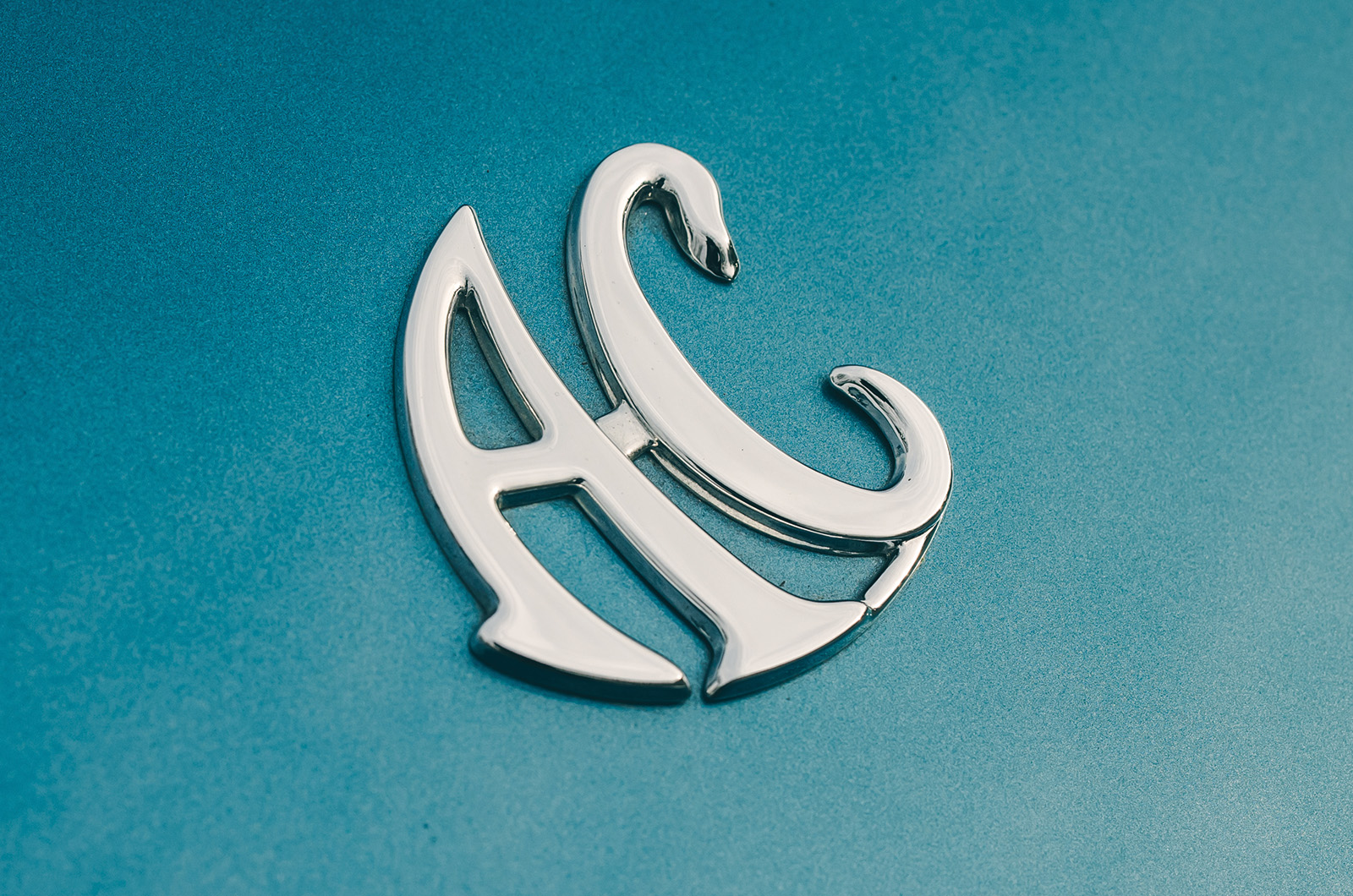
With its simple AC roundel badge and twin catches, the bootlid raises to give access to the fuel filler (something that would have been changed on production cars, presumably), with a luggage area that is mostly taken up by the spare wheel.

Classic & Sports Car – AC MA 200: missed opportunity

The AC MA 200’s simple soft-top is easy to fold away

A broad, front-hinged bonnet flows up to what I’m guessing is an E-type Jaguar windscreen.

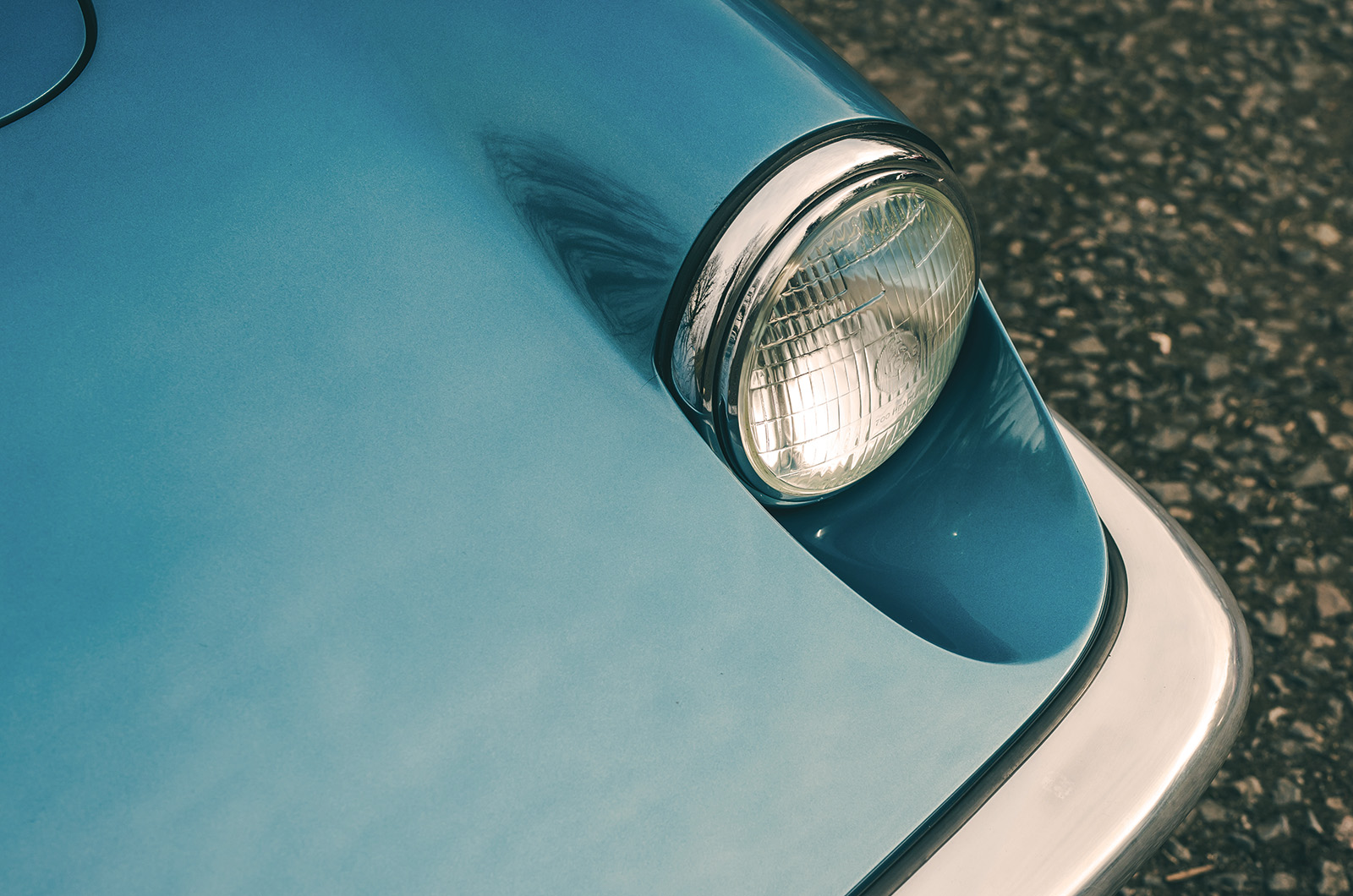
The slim, specially made front bumper emphasises the car’s width, but leaves an impression of slight blandness in the front elevation, like an early attempt at a Jensen-Healey.

The square foglights in the grille are from a Porsche 356 – and rare, apparently. 

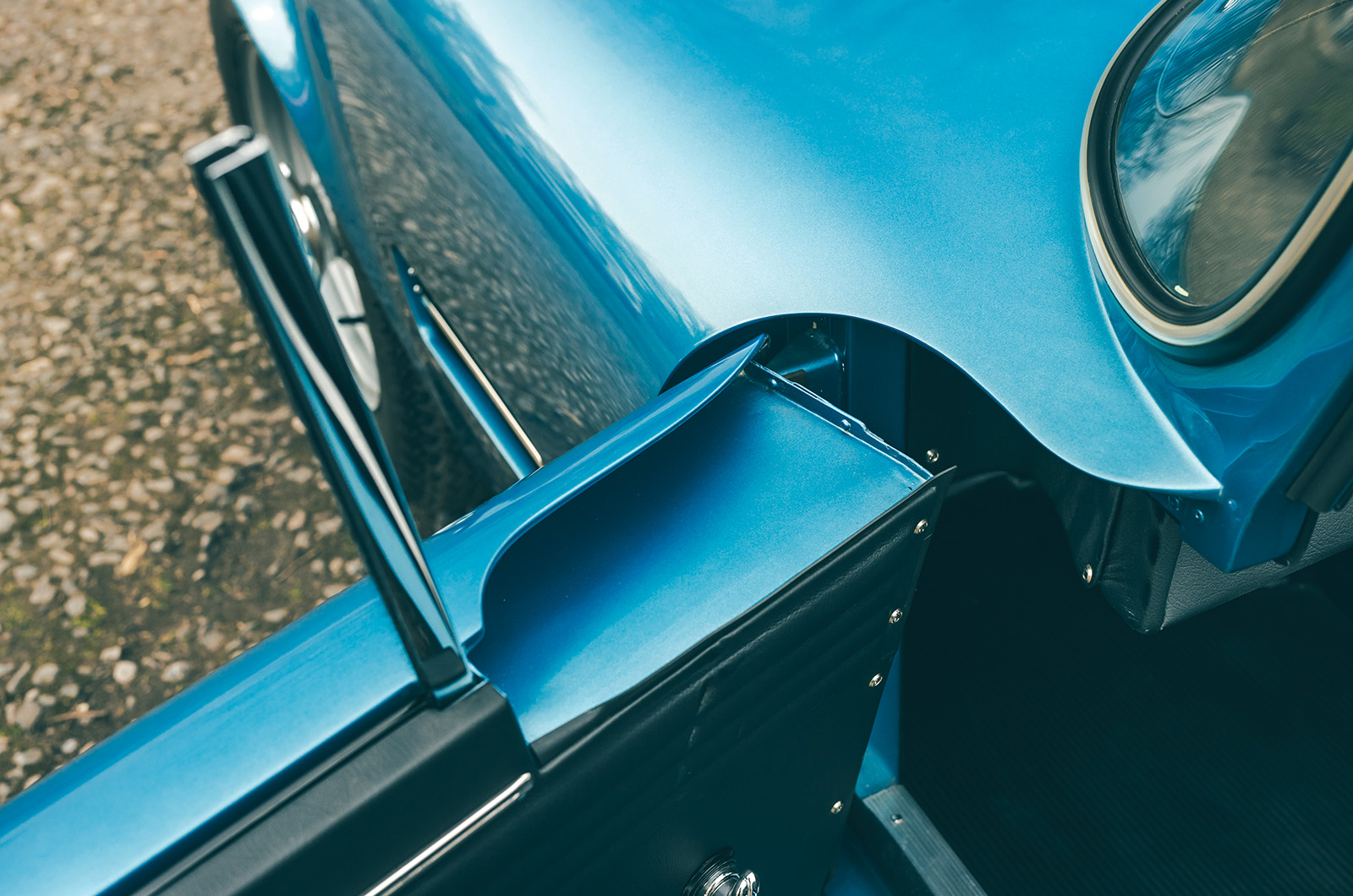
With its gold rocker covers and chromed pancake air filter, the all-iron 4736cc V8 is mounted well back in the bay, with vents in the wings to control underbonnet temperatures.

Classic & Sports Car – AC MA 200: missed opportunity

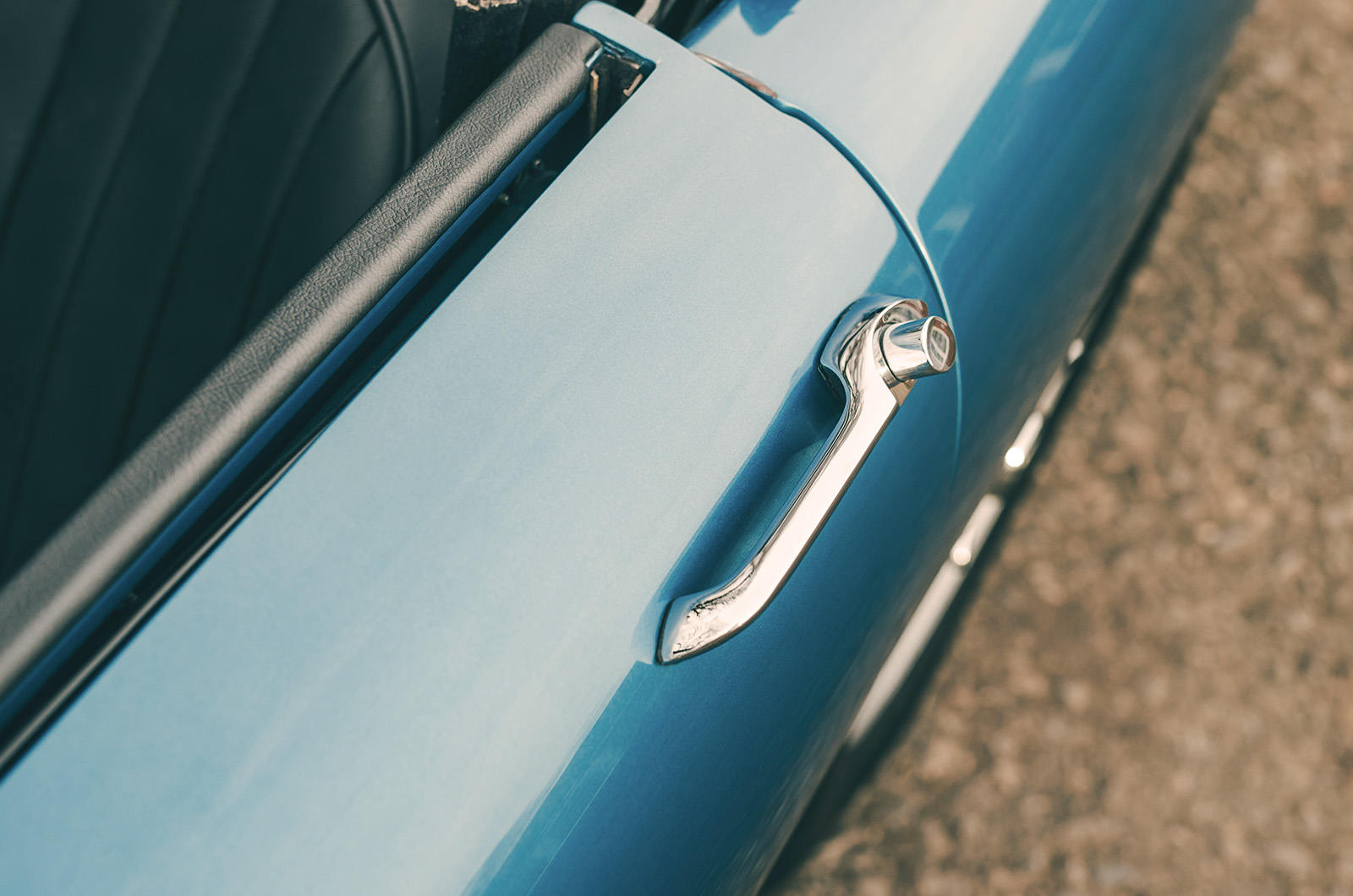
The AC MA 200’s delicate doorhandles

There’s an early E-type radiator and a dynamo, at a time when alternators were becoming a feature of most American engines.

You can just spot the high-mounted rack-and-pinion steering under the coolant expansion tank.

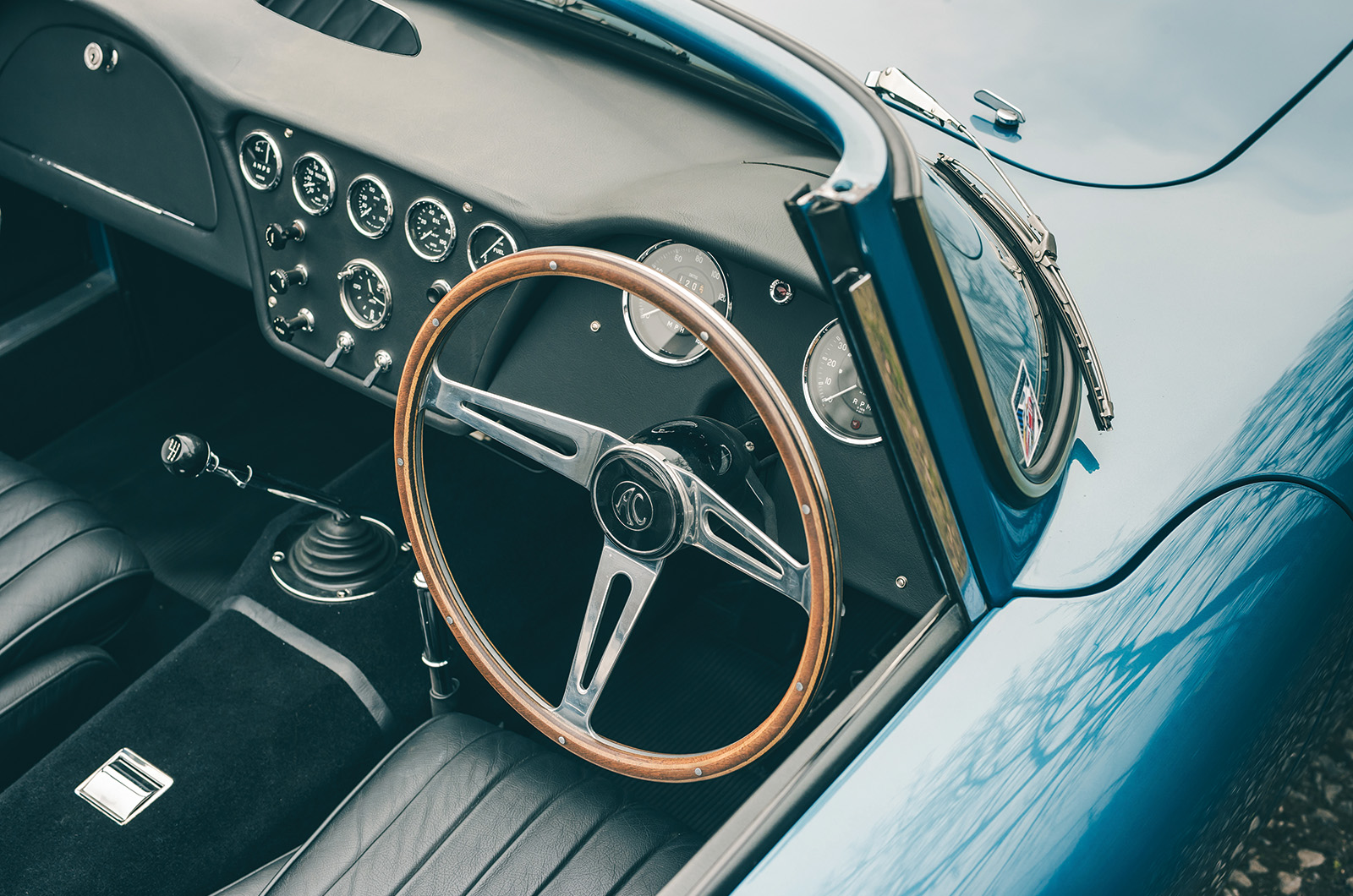
The sills are deep, but the doors are long and the Cobra-like bucket seats hold you in place nicely, with plenty of leg and elbow room thanks to the wide central tunnel with its fly-off handbrake.

There is something pleasingly vintage about the cast-aluminium, AC-branded clutch, brake and throttle pedals but, other than the slight remoteness of the gearlever in relation to the handsome Cobra MkII steering wheel, the driving position is well thought through.

Classic & Sports Car – AC MA 200: missed opportunity

The AC MA 200’s tail has hints of an Aston Martin DB4

The unpretentious black-leathercloth dash, reminiscent of the AC 428’s, forms twin nacelles that would have easily been adapted to right- or left-hand drive.

There are six minor gauges in the centre, with a central 160mph speedo and 10,000rpm rev counter that are not easily obscured by the wood-rimmed wheel. 

A touch of throttle and a flick of the tiny ignition key brings the 289 V8 to life instantly.

The original engine was one of five ‘Hi-Po’ units presented to AC after Le Mans in 1963, but was replaced by a 302cu in GT40 development engine while MA 200 was in the hands of its second owner, Dr Roger Field of Kent.

Classic & Sports Car – AC MA 200: missed opportunity

‘The slim, specially made front bumper emphasises the car’s width, like an early attempt at a Jensen-Healey’

The car acquired a host of non-original parts during its life as a misunderstood secondhand sports car, later with Dr Peter Hague of Chichester.

During a forensic, 36-month restoration on behalf of its third owner (from 2006), Florida attorney Mark Gold, an original Hi-Po 289 was located with a block number that suggests it was cast the same day as the original.

In 2010 the rejuvenated AC won its class at The Amelia concours, returning to the UK in 2021.

Classic & Sports Car – AC MA 200: missed opportunity

The AC MA 200 prototype was an early attempt to replace the Ace

MA 200 is easy to drive, and either thrilling or flexible according to your mood.

The large gearlever movements suggest the shift might be sloppy, but it hits home beautifully every time, with smooth, positive bite from a middle-weight clutch.

This transmission, only used in a handful of 1962 Ford Fairlanes, is quiet and easily negotiated.

There is an abundance of silky torque that makes the AC very driveable at low speeds and with no overheating issues.

Such is the torque, gear ratios are almost irrelevant and at 2600lb this alloy-bodied two-seater is a relative lightweight for its size.

Classic & Sports Car – AC MA 200: missed opportunity

The AC MA 200’s handmade aluminium body

With the taps fully open, and despite a long first gear, the acceleration borders on the alarming, with a second cog that will take you into licence-losing territory should you indulge in the permitted 6000rpm, and an intoxicating third that levels hills and flings you at the horizon in a blur of pulsing harmonics from the twin tailpipes.

Even in top, the rate of pick-up never seems to slow, yet you can delicately negotiate roundabouts in this ratio with equal aplomb, wafting from 10 to 110mph without opening the second set of chokes on the four-barrel carb or abusing the clutch.

The crashy front suspension is jarring on some surfaces, but MA 200 generates an abundance of cornering power in the dry, with a neutrality in its steering feel and a lack of roll that builds confidence quickly.

There is no squat or dive and the brakes pull the car up strong, square and in short order.

Classic & Sports Car – AC MA 200: missed opportunity

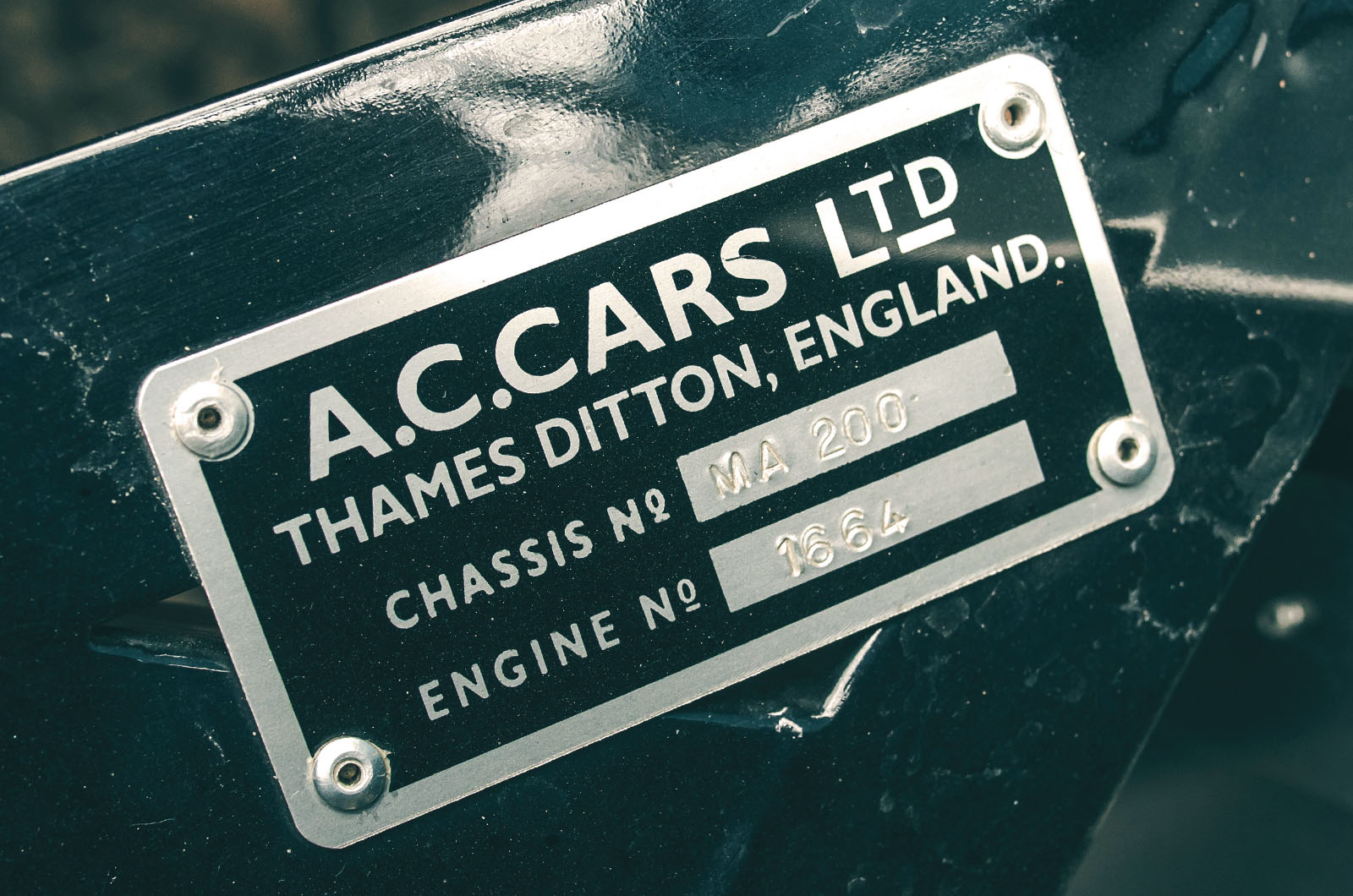
The AC MA 200’s chassis plate reveals its identity

The steering is neither featherweight nor really hefty, and while the lock is not in the Triumph Herald/FX4 taxi class, you can manoeuvre the AC prototype without anxiety while feeling certain of what the front wheels are doing at all times.

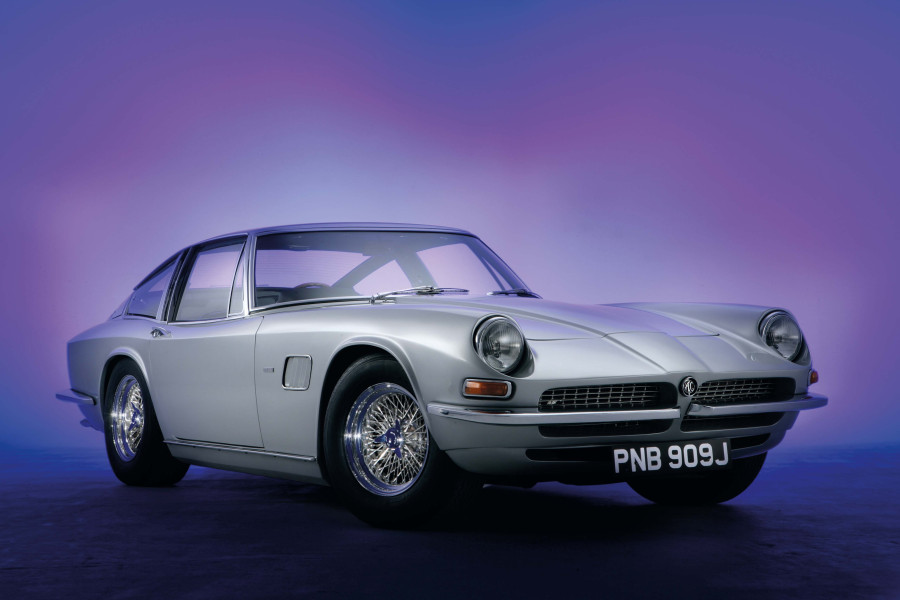
Predating the contract to build 12 Cobras a week for Shelby, and much more than merely a missing link between the Cobra and the Pietro Frua-styled AC 428, MA 200 was an honest attempt to build a replacement for the Ace.

This was a completely in-house production – intended to be more modern to look at, roomier and more comfortable – that could easily have taken AC into the 1970s.

Images: Jack Harrison

Thanks to: AC Heritage


Factfile

Classic & Sports Car – AC MA 200: missed opportunity

AC MA 200

  • Sold/number built 1963/one
  • Construction steel spaceframe chassis, aluminium body
  • Engine all-iron, ohv 4736cc V8, single Autolite four-barrel carburettor
  • Max power 271bhp @ 6000rpm
  • Max torque 312lb ft @ 3400rpm
  • Transmission four-speed manual, RWD
  • Suspension independent, at front by upper links, lower wishbones, inboard coilovers rear lower wishbones, spring/damper struts; anti-roll bar f/r
  • Steering rack and pinion
  • Brakes discs, inboard at rear
  • Length 14ft 2in (4318mm)
  • Width 6ft 8in (1727mm)
  • Height n/a
  • Wheelbase 8ft (2438mm)
  • Weight 2670lb (1211kg)
  • 0-60mph n/a
  • Top speed n/a
  • Mpg n/a
  • Price new n/a
  • Price now £4-600,000*

*Prices correct at date of original publication


Enjoy more of the world’s best classic car content every month when you subscribe to C&SC – get our latest deals here


READ MORE

Cobra: the beat goes on

AC 428: a Cobra for the jet set

Grand tourer supertest: AC Aceca vs Aston Martin DB2 Vantage vs Bristol 404 vs Lancia Aurelia B20 GT