Inside Pirelli’s archive: the tyre maker’s gripping history

| 23 Oct 2026
Classic & Sports Car – Inside Pirelli’s archive: the tyre maker’s gripping history

For something that forms the only physical link between vehicle and road, tyres garner remarkably little respect.

We have all seen performance cars on bargain-basement rubber, classics on tyres that belong in a museum and tread worn past the legal minimum. Awareness very often arrives only after something goes wrong.

Pirelli’s story extends well beyond tyres. It mirrors Italy’s industrial rise, while reflecting wider cultural and artistic shifts at home and abroad.
Classic & Sports Car – Inside Pirelli’s archive: the tyre maker’s gripping history

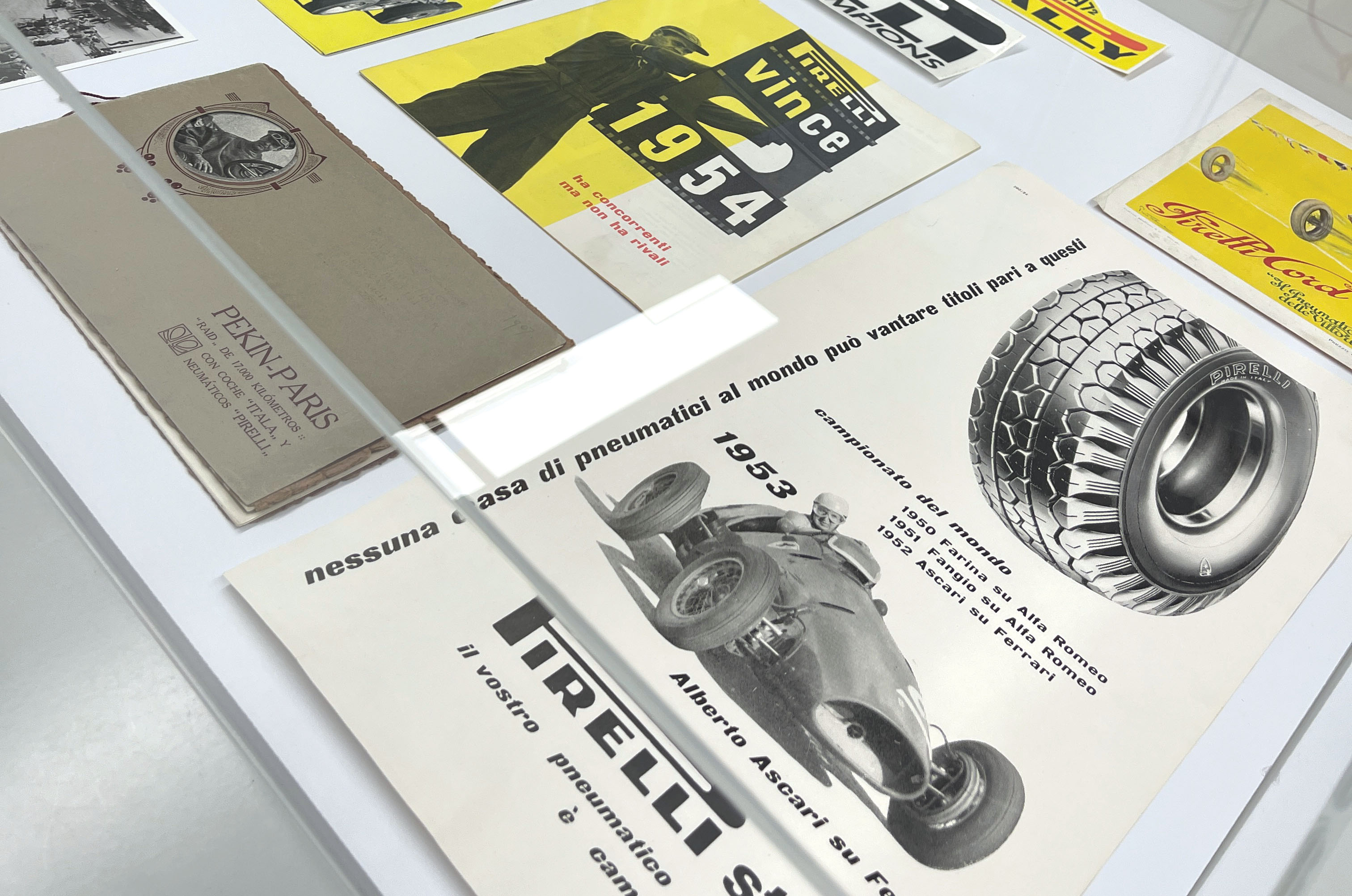
Pirelli has a long history in motorsport, reflected in the archive’s photographs and promotional material

Established in 2008 by the Pirelli Group and the Pirelli family, the Fondazione Pirelli is a not-for-profit institution that not only safeguards the firm’s archive, dating back to 1872, but also acts as a centre for research and debate around design and visual culture.

From the outside, Pirelli’s corporate HQ in Milan’s Bicocca district appears much like any other contemporary office complex: lots of glass, very clean and very modern.

But that’s soon forgotten when your eyes sweep up to see the cooling tower rising through the centre to the top of the building.
Classic & Sports Car – Inside Pirelli’s archive: the tyre maker’s gripping history

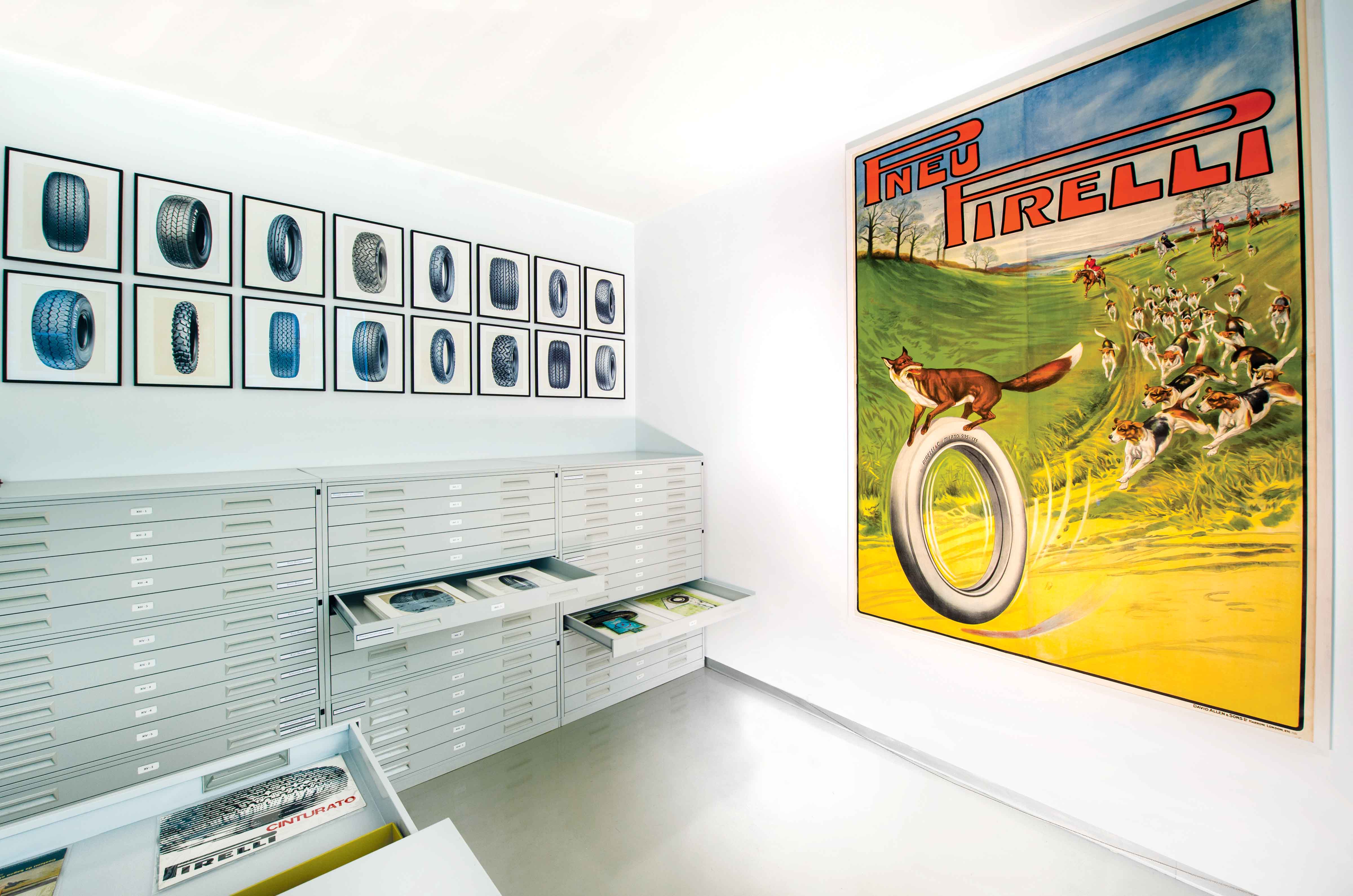
Exploring Fondazione Pirelli’s fascinating collection
Originally part of an autonomous thermoelectric plant, designed to guarantee uninterrupted supply, the tower has been repurposed as office and events space.

The surrounding grounds hold deeper historical layers. The district itself takes its name from the Bicocca degli Arcimboldi, a noble villa built in the 15th century by the Arcimboldi family.

Now included within the headquarters complex, the villa has been part of Pirelli’s portfolio since 1918, and since 1953 it has served as its ‘home’.

Classic & Sports Car – Inside Pirelli’s archive: the tyre maker’s gripping history

Bold, simple graphic elements combine with accurately rendered technical detail in this tyre advertisement

The Fondazione Pirelli is headquartered in ‘Fabbricato 134’, now known as the Stella Bianca building.

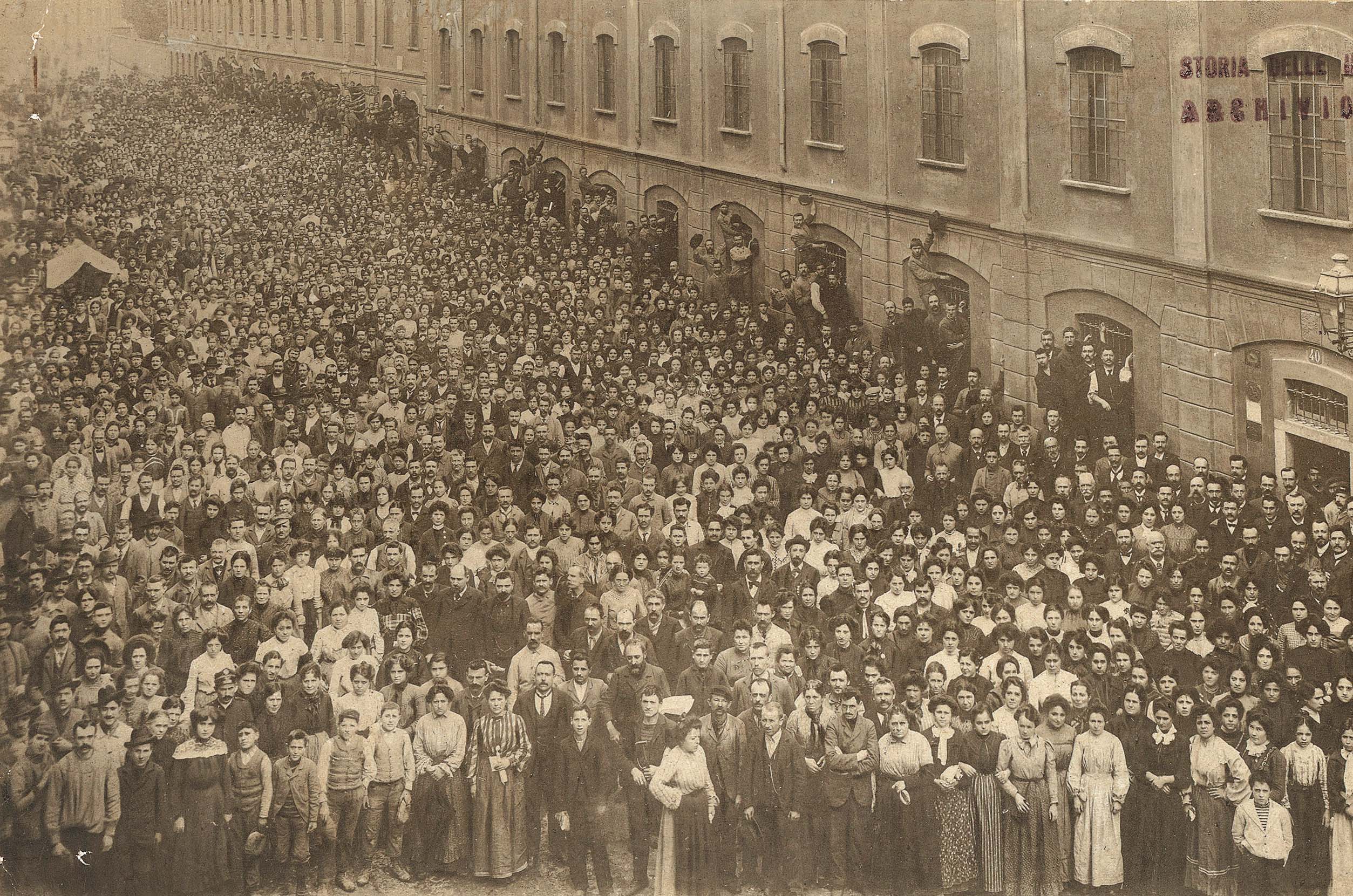
Stepping inside brings you face to face with two parallel strands of Pirelli’s history. The first is a photograph: Workers Leaving the Pirelli Factory in Via Ponte Seveso. 

Founded in 1872 by Giovanni Battista Pirelli with a workforce of 45, the company had grown to around 3000 employees by 1905.

Women were recruited partially due to the production of waterproof garments, which required sewing skills, while young people were present because youth labour was still legal at the time.

Classic & Sports Car – Inside Pirelli’s archive: the tyre maker’s gripping history

This photograph by Luca Comerio shows the Pirelli workforce in 1905; the factory was destroyed during WW2, and the new Pirelli Tower was built on the site in 1960

This is just one image from a collection of thousands, with negatives on glass, film, paper and slides depicting the hustle and bustle of industrial life: factories, products, exhibitions, trade fairs, fashion shoots, and car and bicycle racing, with work by photographers such as Aldo Ballo, Annie Leibovitz, Gabriele Basilico, Fulvio Roiter and Albert Watson.

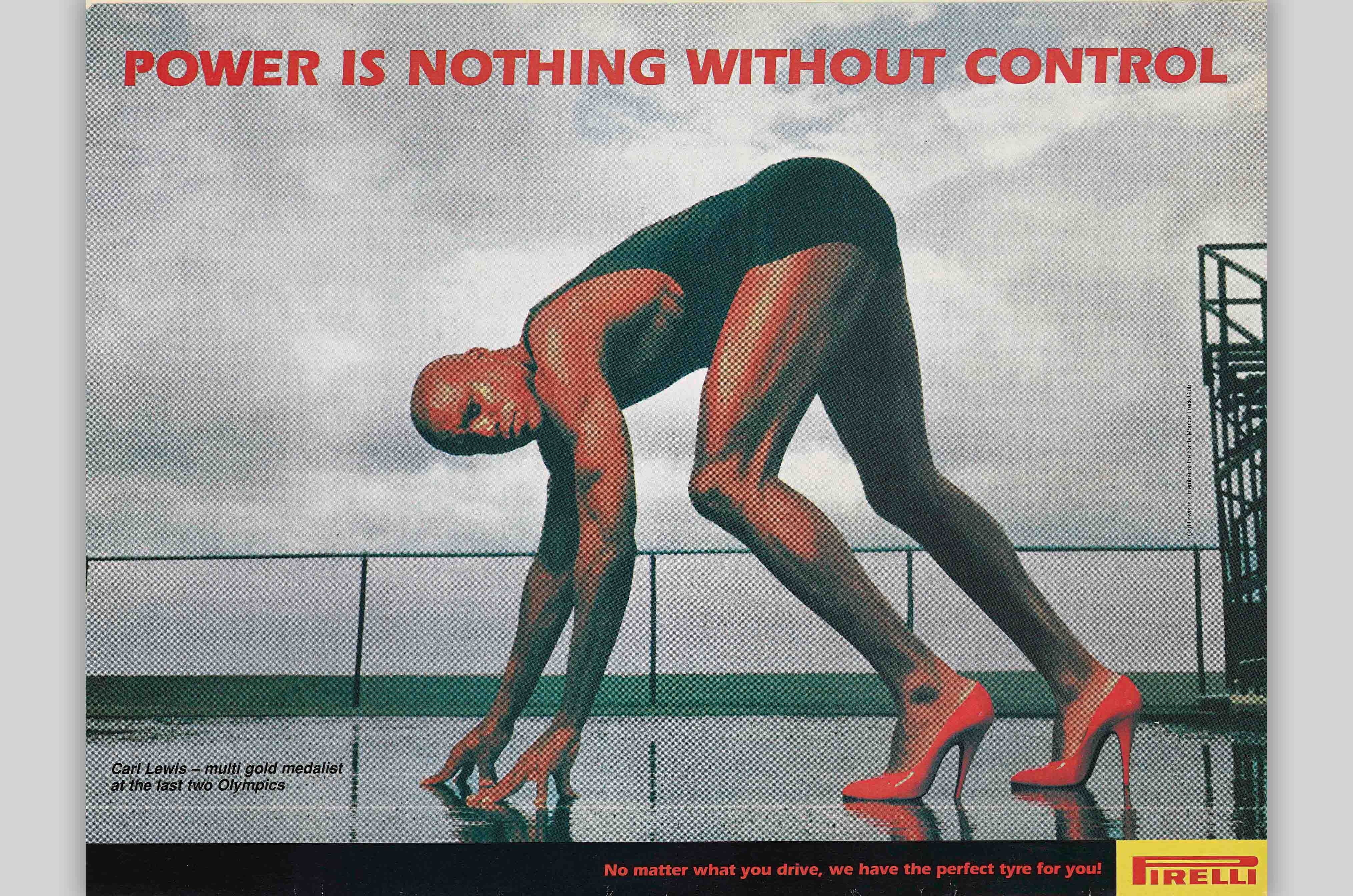
Then there is the advertising itself – and perhaps Pirelli’s most recognisable campaign is highlighted almost immediately: the Power Is Nothing Without Control poster starring famed sprinter Carl Lewis in red high-heeled shoes.

It was shot by Leibovitz in Texas in 1994 for the Young & Rubicam Agency, and the very shoes Lewis wore are proudly on display.

Classic & Sports Car – Inside Pirelli’s archive: the tyre maker’s gripping history

Annie Leibovitz captured famed Olympic sprinter Carl Lewis for this campaign; the high heels are now on permanent display in the museum

It’s one of many examples of Pirelli pushing the boundaries in terms of visual style.

This goes back far beyond automotive tyres: its early years were focused on belts, hoses, gaskets, waterproof fabrics, electrical insulation and undersea cabling.

Pirelli began producing tyres in 1890, first for bicycles and then, from 1901, for cars.

The switch to automotive tyres came with new factories in Spain and the UK, along with investment in rubber plantations in south-east Asia, Argentina and Brazil.

Classic & Sports Car – Inside Pirelli’s archive: the tyre maker’s gripping history

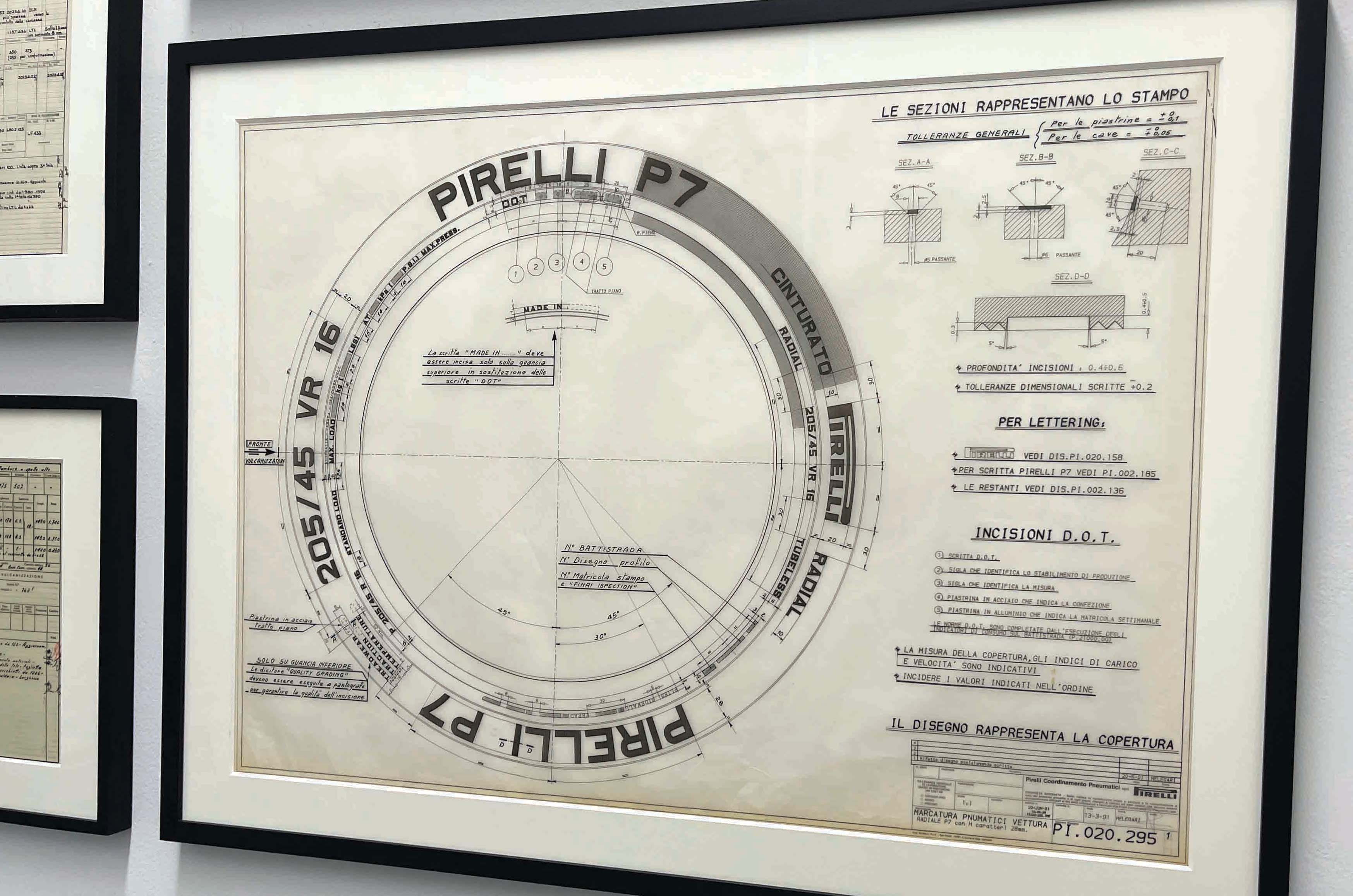
Technical drawing for the pioneering, low-profile Pirelli P7 tyre

The Fondazione holds the scientific research that made all of this possible. The reams of documentation show how tyre technology has evolved, and it’s still examined by students today.

Since the company’s early forays into automotive tyres, however, motorsport has played a huge part.

In 1907 Pirelli opened its Bicocca plant for more modern production, with integrated processes for compounding, curing and testing rubber products – and what better way to demonstrate the robustness of your tyres than the Peking-Paris race?

Classic & Sports Car – Inside Pirelli’s archive: the tyre maker’s gripping history

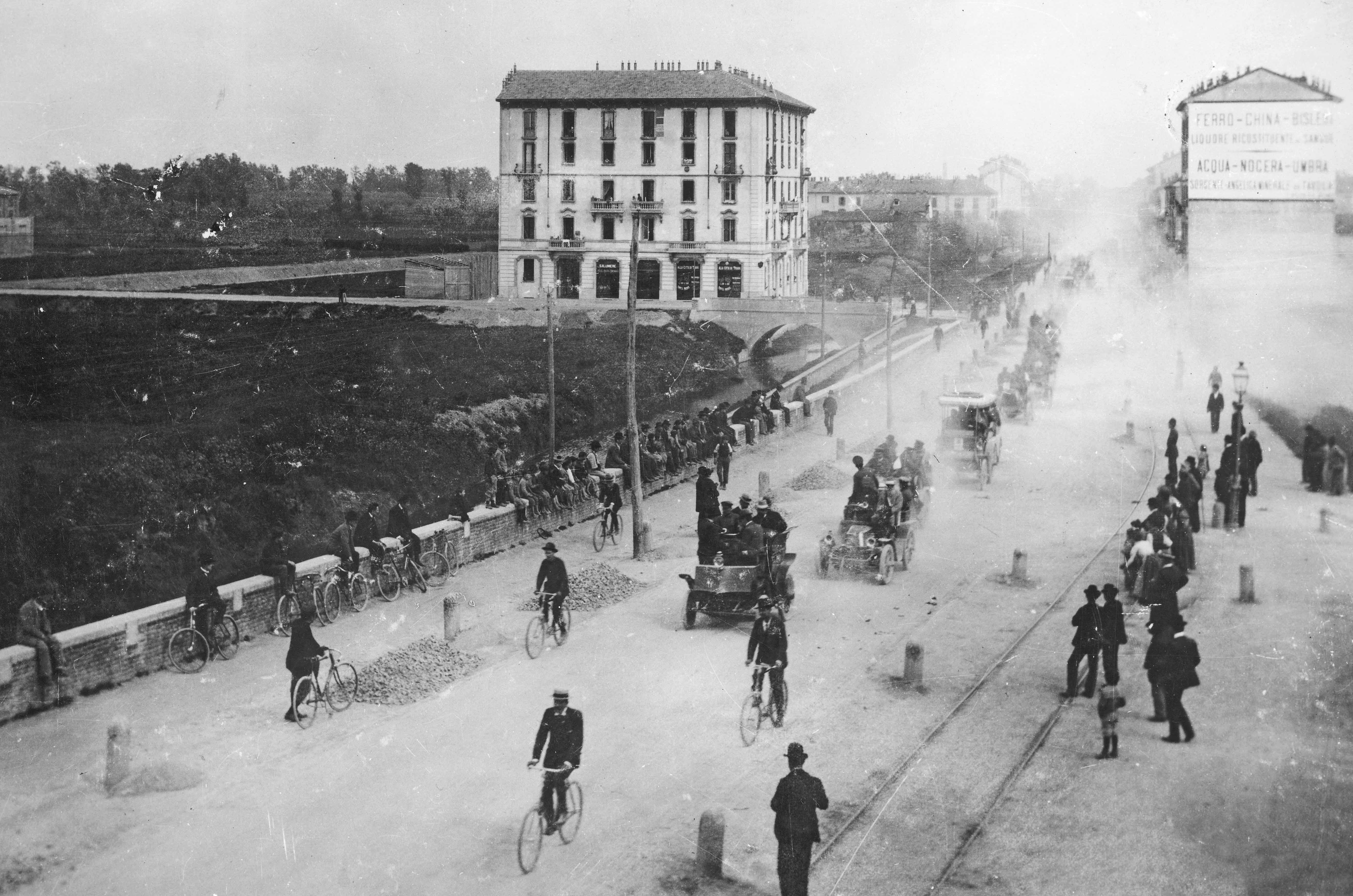
Held over 16 stages in spring 1901, the first Giro d’Italia Automobilistico drew aristocrats and industrialists to do battle in one of the first motorsport events. It was won by Felice Nazzaro on a Fiat 8hp

The route covered around 10,000 miles, from China to France, across deserts, mountains and largely unmapped roads, and Italy entered with one car: a 45hp Itala on Pirelli tyres, driven by Prince Scipione Borghese and his mechanic Ettore Guizzardi, accompanied by journalist Luigi Barzini.

The Itala won – emphatically so, finishing 20 days ahead of its nearest rival – and the result was widely credited to the durability and adaptability of its tyres across extreme and largely uncharted terrain.

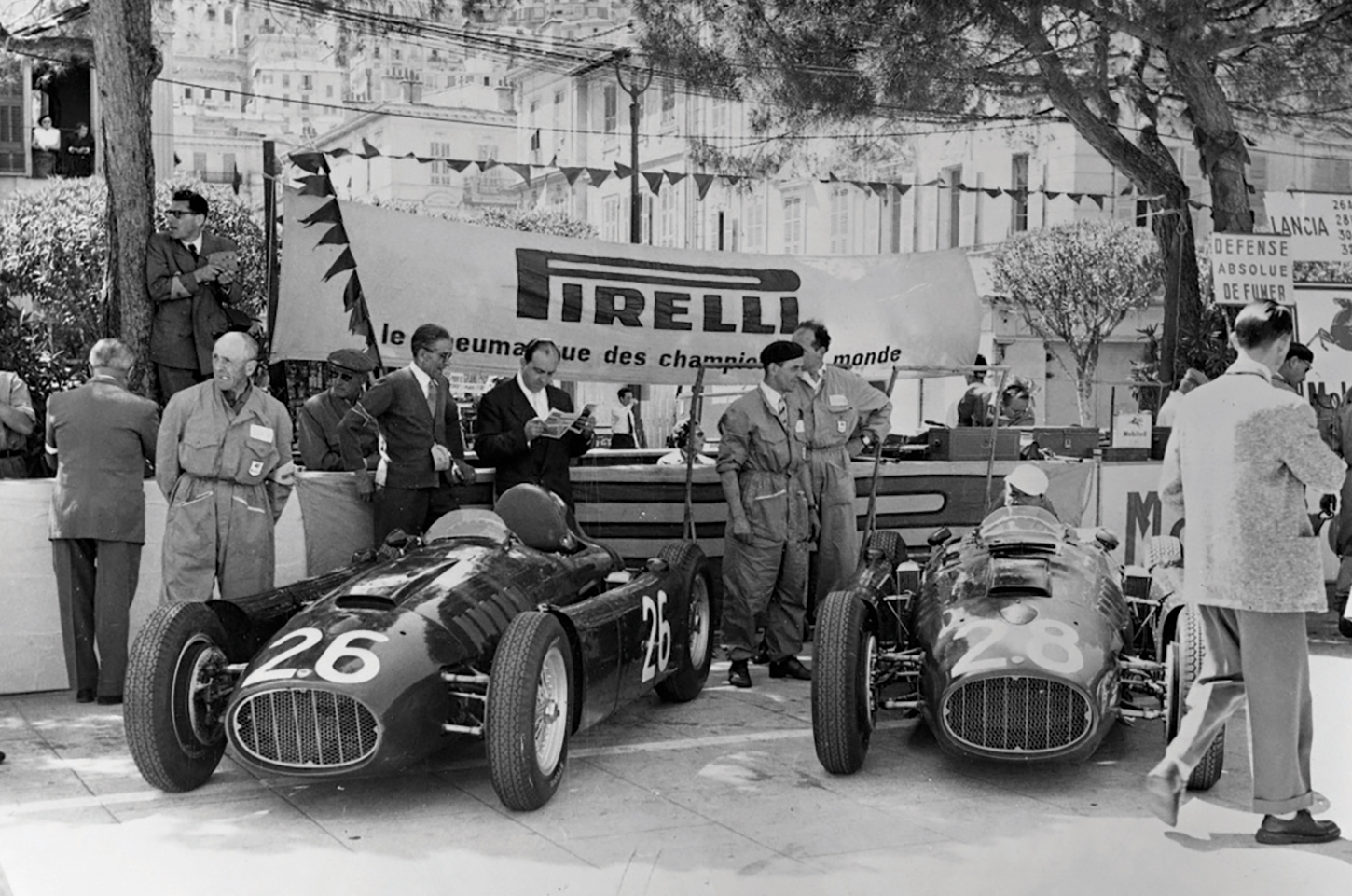
This commitment to motorsport continues into Formula One today, and the collection contains reams of historical photos, from circuit racing to rallying, with competition seen as the way to advance road tyres.

Classic & Sports Car – Inside Pirelli’s archive: the tyre maker’s gripping history

Lancia-Ferrari D50s of Alberto Ascari (26) and Luigi Villoresi (28) at the 1955 Monaco Grand Prix

As such, there’s a wealth of archive photography from the very earliest disciplines through to the first F1 days and right up to the modern era.

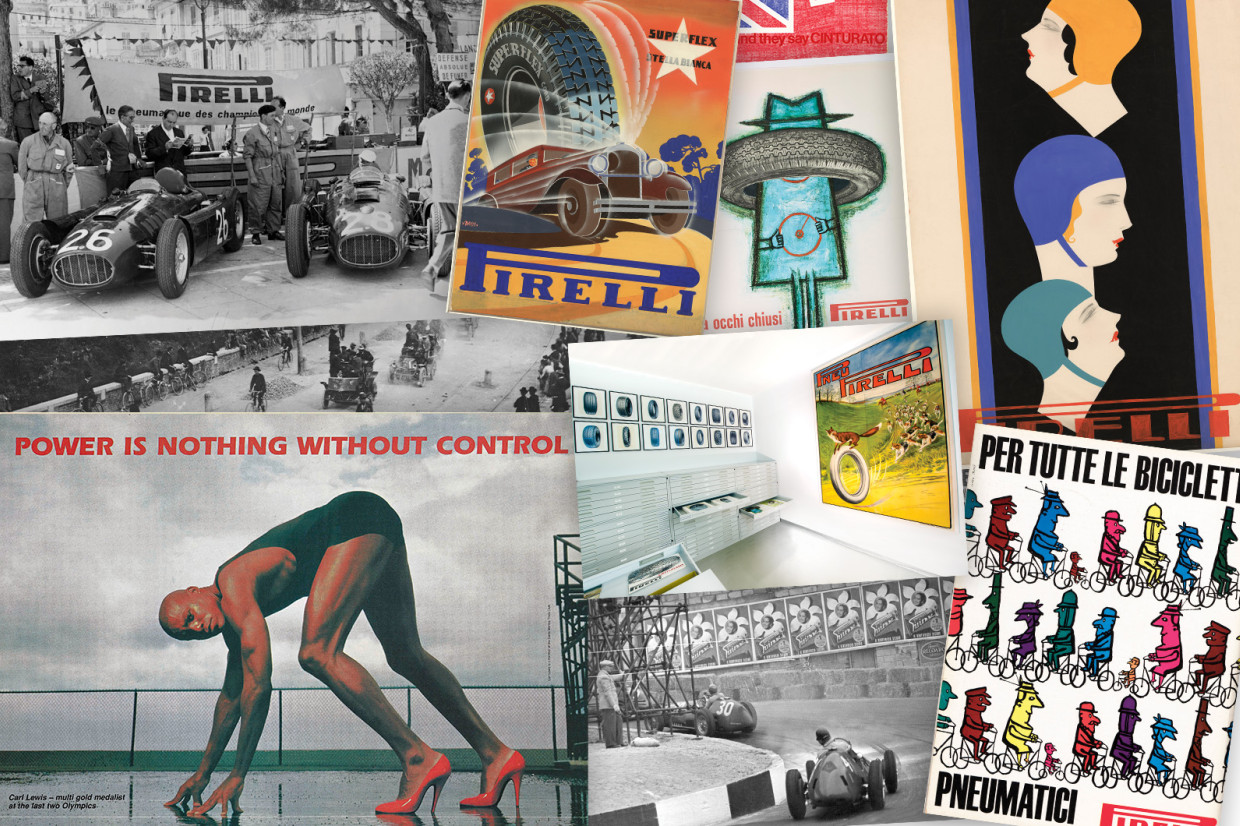
Motorsport is only part of the story, though. Equally compelling is how Pirelli’s advertising charts the evolution of graphic design and visual culture across the 20th century.

From its beginnings, Pirelli treated advertising not merely as promotion, but as a form of cultural production and signposting.

Its earliest posters, promoting rubber heels and domestic goods, drew on the emerging language of Italian affiche design, favouring bold symbols and immediate legibility.

Classic & Sports Car – Inside Pirelli’s archive: the tyre maker’s gripping history

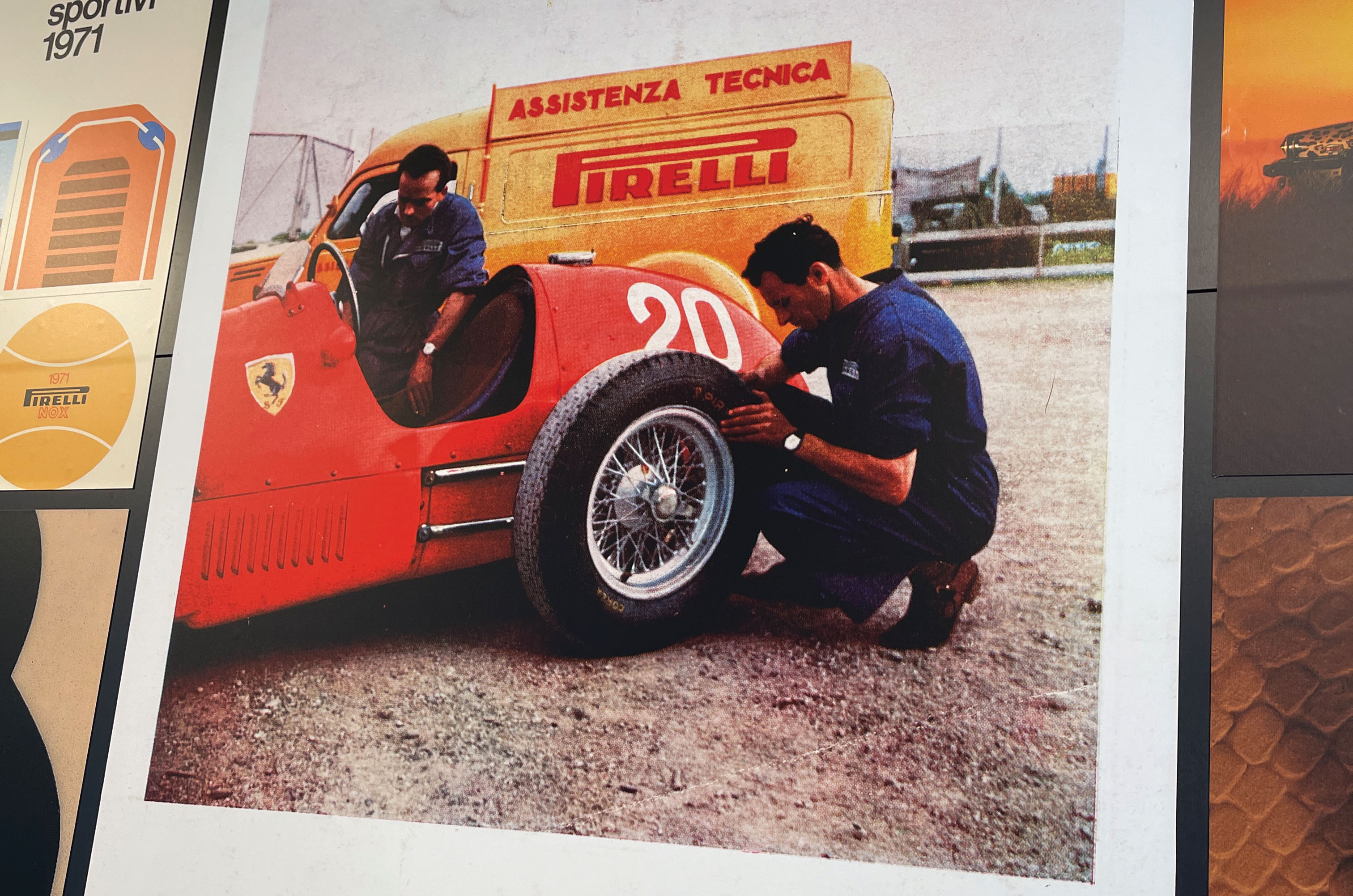
Ferrari and Pirelli’s partnership began in the 1950s

During the inter-war years, the company’s visual identity became closely associated with the work of artists Gino Boccasile, Nino Nanni, Renzo Bassi and not least Giorgio Muggiani, whose elegant, idealised figures brought glamour and aspiration to everyday rubber products such as gloves and rainwear.

In the 1950s, a new language of creative communication emerged.

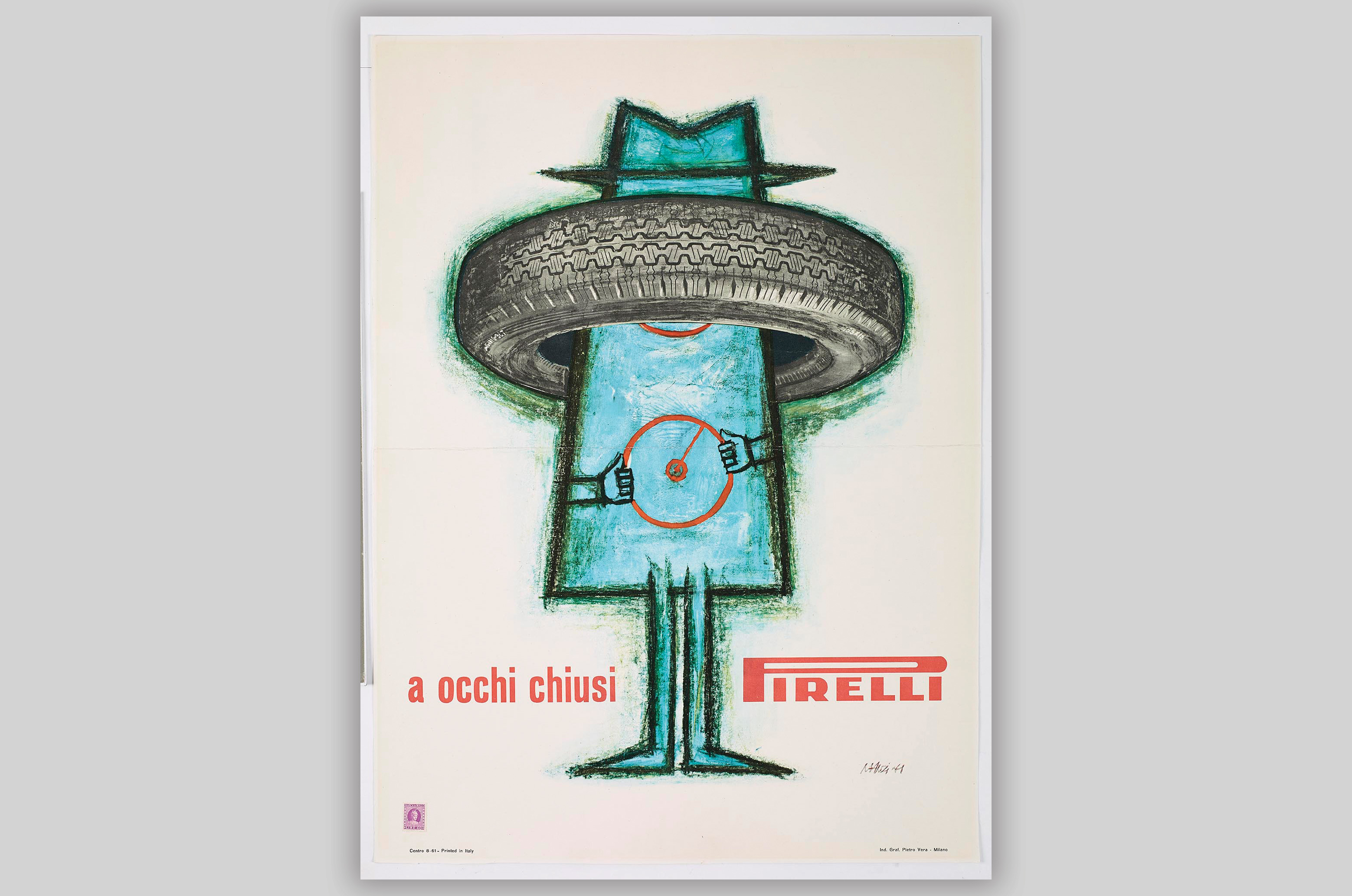
With artists such as Armando Testa, advertising shifted away from literal representation and towards metaphor, using animals, simplified forms and visual analogy to communicate safety, insulation and performance in industrial products.

Classic & Sports Car – Inside Pirelli’s archive: the tyre maker’s gripping history

This advertisement for the groundbreaking Pirelli Cinturato radial tyre is one of designer Riccardo Manzi’s most famous

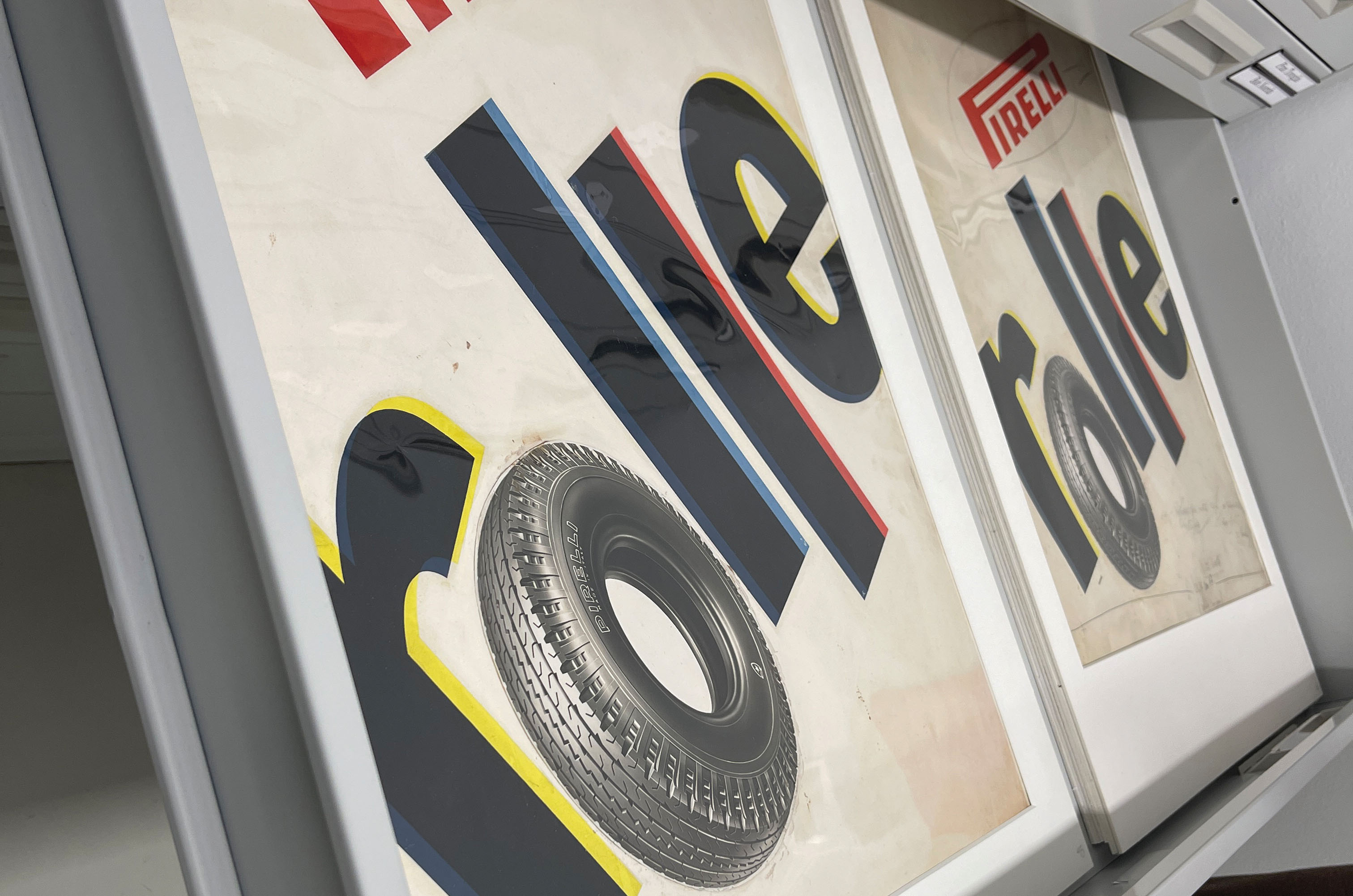
After the Second World War, this evolution accelerated. Tyres were increasingly depicted as engineered objects, and their tread patterns and structures were rendered with graphic clarity.

By the 1960s, under the influence of Bob Noorda and the broader Milanese Modernist movement, Pirelli advertising embraced full abstraction.

Tyres became rhythmic, almost architectural forms, reduced to stripes, bands and systems of repetition.

There is plenty more to take in here: there are around two and a half miles of archive material, including the fascinating in-house Pirelli magazines and, of course, the infamous Pirelli calendars.

Because this is a family publication, perhaps that particular chapter is best explored in person…

Images: Pirelli SpA

If our highlights have whetted your appetite, the Fondazione Pirelli is open to the public by appointment for guided tours, and those wishing to explore the archives can arrange a visit via fondazionepirelli.org


Enjoy more of the world’s best classic car content every month when you subscribe to C&SC – get our latest deals here


READ MORE

Maybach Exelero: the 200mph supercoupé built to test a tyre

Classic shrine: Ford Heritage Collection

History of turbocharging: the force awakens