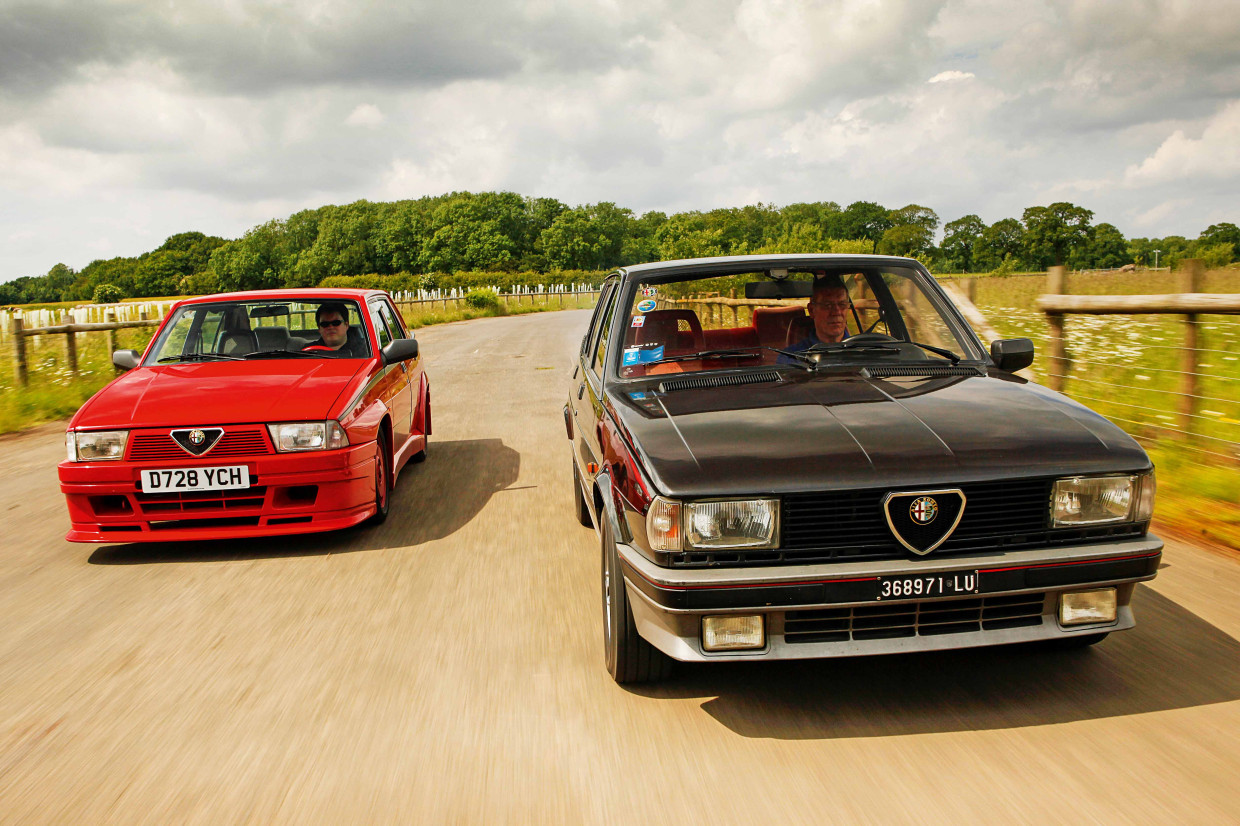
Two contrasting themes run through the eventful story of Alfa Romeo.
The celebrated highlights make for familiar reading, while the others – Alfa’s underachievers – are left languishing in the cold, rapidly receding from the collective memory.
Some could have – no, should have – been great successes, but the familiar heartbreaking cocktail of production quality problems, workforce issues, state interference, fuel crises, flaky Soviet steel, increased competition and empty coffers all took their toll on the famous Italian marque’s vigour and prestige.
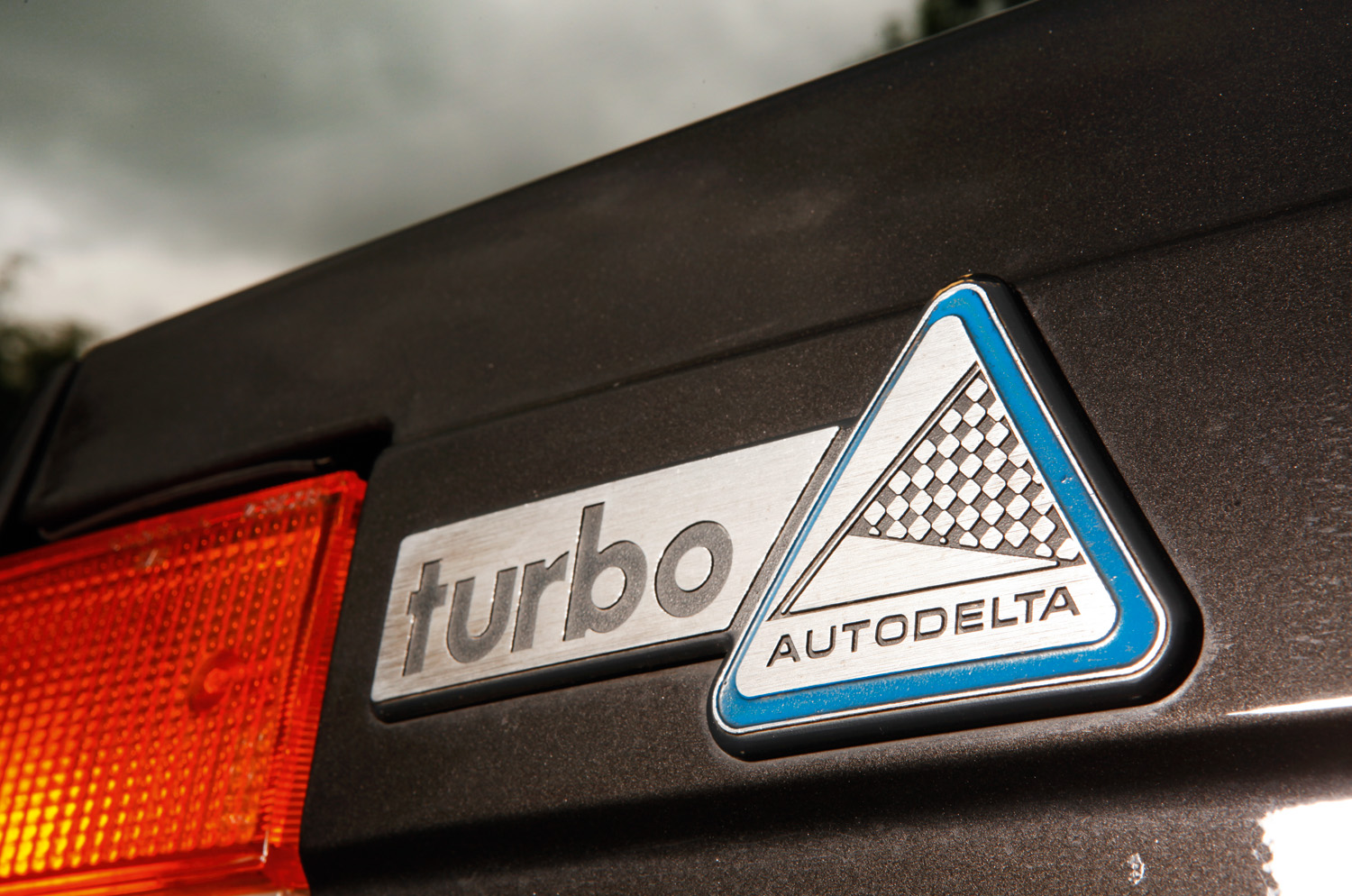
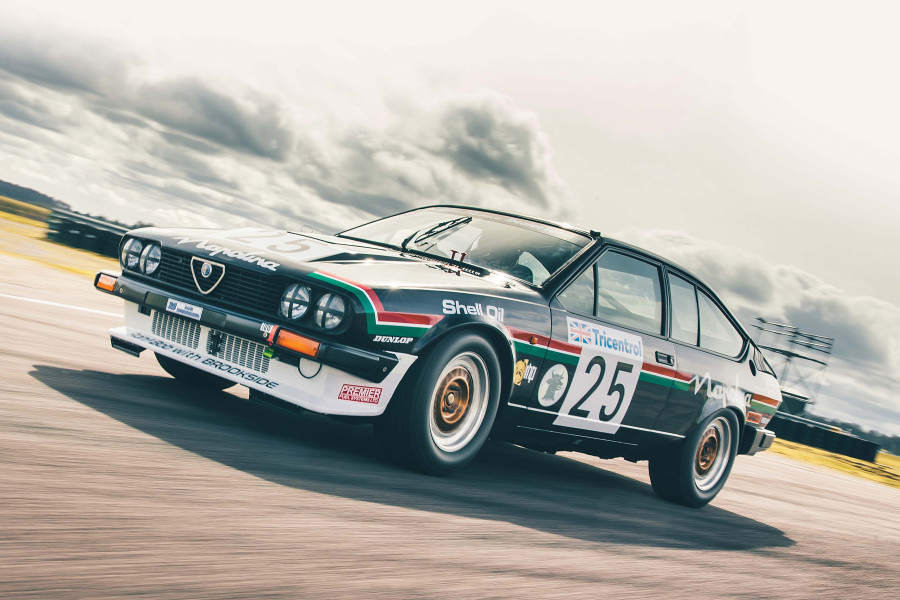
Alfa Romeo’s quality might have dipped in the 1980s, but Autodelta injected plenty of thrills
Even during those dark ages, however, Alfa Romeo managed to produce some fascinating yet scarcely mentioned machines.
While homologation special editions such as the Giulia Super TI, Sprint GTA and even the Fiat Tipo-based 155 Twin Spark Silverstone (or Formula) will be familiar, the turbocharged omologati, the ‘in-betweeners’ won’t.
Convenient though it would be to claim that the Tipo 116A1B Giulietta Turbodelta was the first blown 116 to be engineered by Autodelta, it wasn’t – that honour went to the Alfetta 2000GTV Turbodelta.
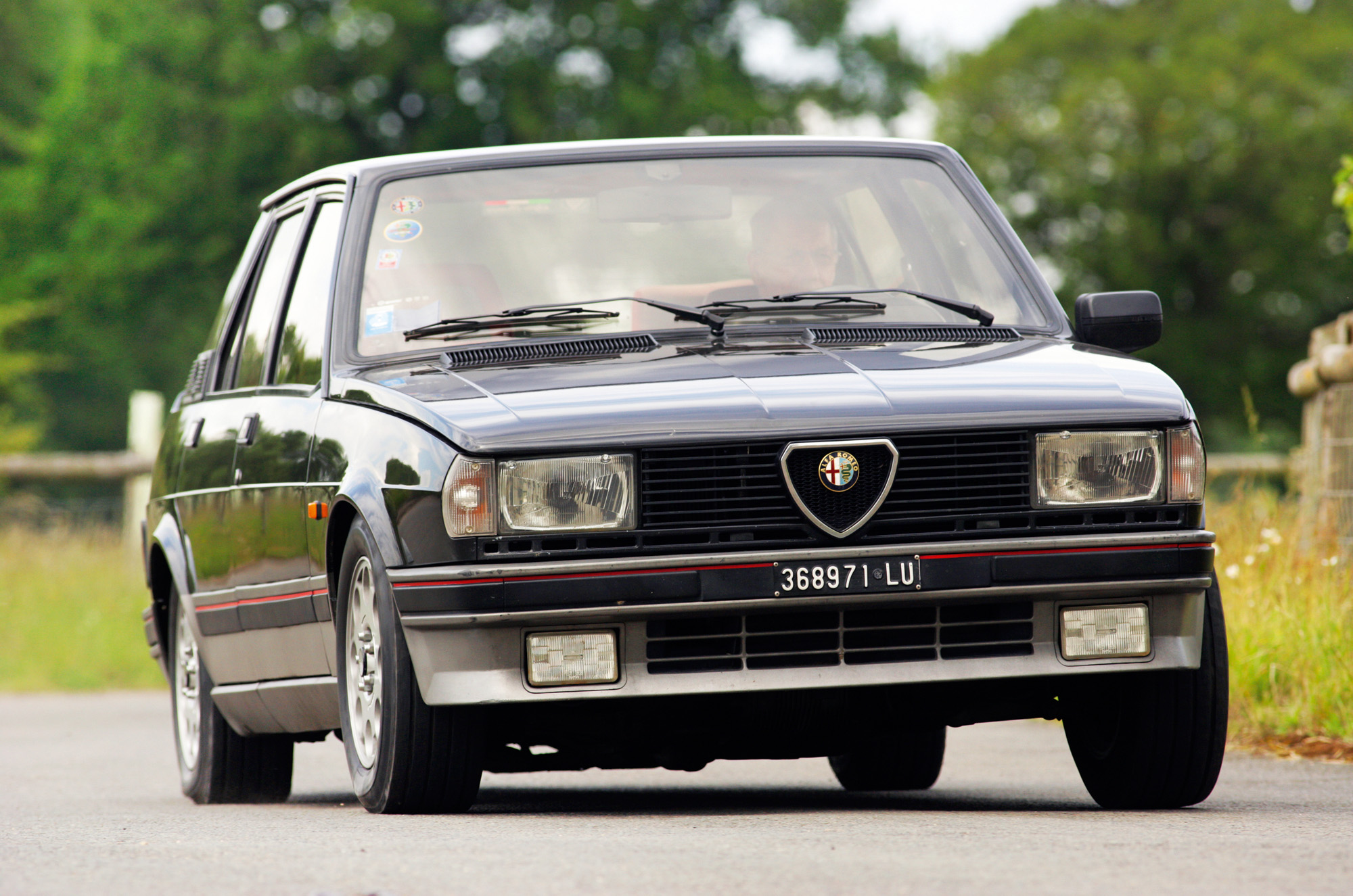
The Alfa Romeo Giulietta 2.0 Turbodelta is a well-balanced classic car
From 1985, the Alfetta GTV6, which had enjoyed some success in the European Touring Car Championship, would no longer be eligible to compete in the series and a successor was needed.
Autodelta therefore turned its attention to Alfa Romeo’s latest suitable model, 1977’s nuova Giulietta.
Just 361 Tipo 116A1B Turbodeltas – initially badged the Giulietta 2.0 Turbo-Autodelta at its 1982 launch – were built between May 1983 and 1984.
That’s some way short of the stated 500 cars demanded by homologation regulations, but peer at the slam panel of Dave Atkin’s 66,000km car – number 103, and thought to be the only example in the UK – and there it is: homologation number DGM16935OM.
The Alfa Romeo Giulietta Turbodelta’s exterior is discreet, unlike its cabin
The nuova Giulietta can be a divisive car. Described by Autocar as ‘a hard-edged lash-up… whose main achievement was to show how far Alfa Romeo had fallen in 20 years’, it was nonetheless held in high esteem by the late (and much-respected) LJK Setright.
Comparing the Giulietta with his experience of its big sibling, the Alfetta, he wrote: ‘Everything is so right, so much beyond criticism, that it is hard to credit a team of mere mortal engineers with the achievement, especially after experiencing some of the things they have done before. The Giulietta is so good that they must have been lucky.’
Drawing on the experience gained with the Alfetta 2000GTV Turbodelta, the Giulietta Turbodelta used the GTV6’s uprated suspension and drivetrain, rather than making do with 2000GTV components (particularly its softer suspension settings).
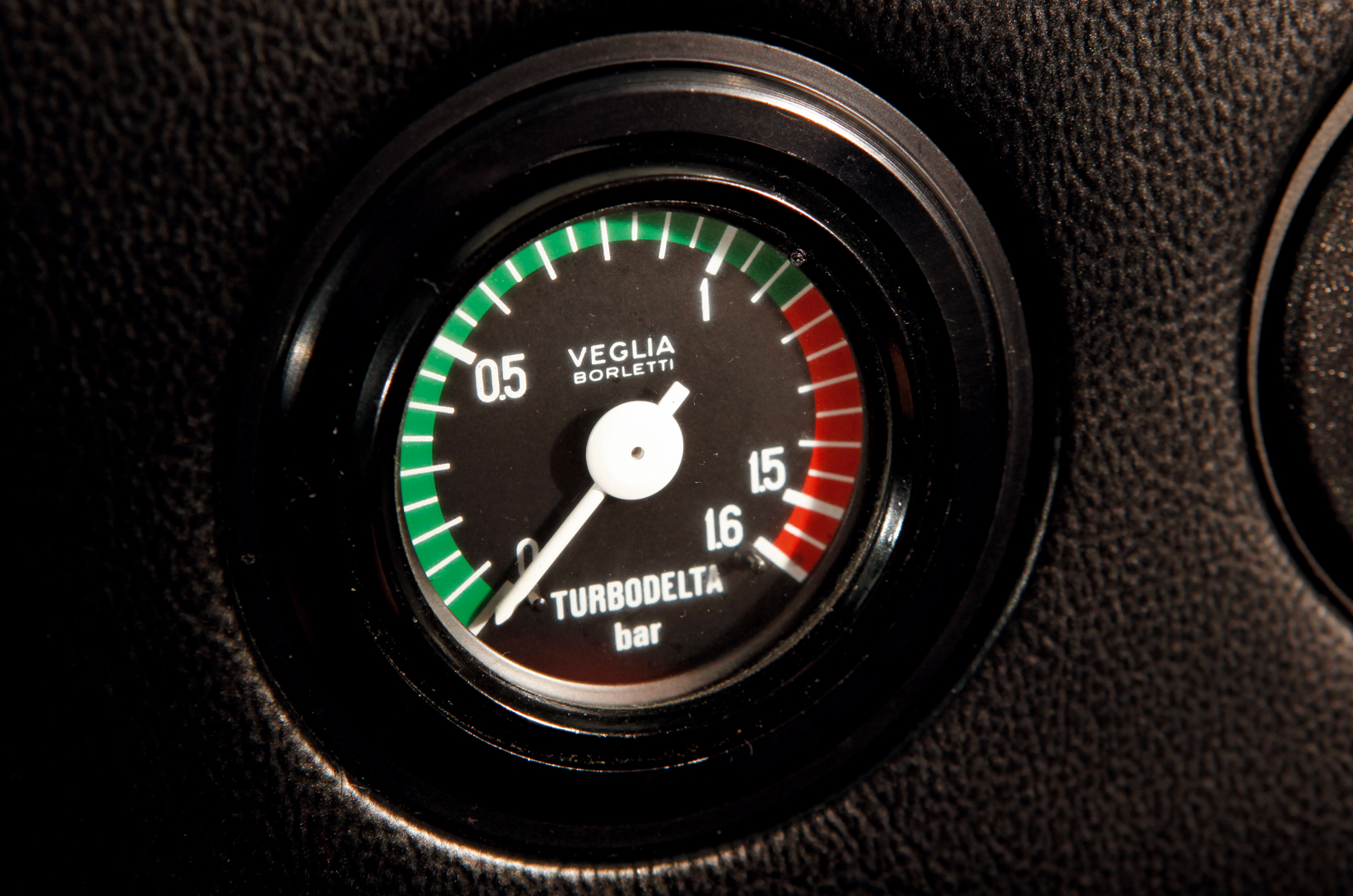
The Alfa Romeo Giulietta Turbodelta’s telltale boost gauge
The 1962cc twin-cam engine was again fed by a pair of twin-choke 40mm carburettors, but this time around the performance boost – to 168bhp, with some 212lb ft of torque – came not from KKK but an Alfa Romeo Avio turbocharger.
Other mechanical upgrades included an oil cooler and a novel braking system by AP Racing, featuring two calipers per front disc.
The Giulietta is a more sophisticated-looking device than its bestriped GTV predecessor, differentiating itself with a suave (and non-negotiable) two-tone colour scheme embellished by attractive alloy wheels, red bumper inserts and a boot badge.
All of which gives its dress sense far greater style and maturity than the GTV, with its garish stickers that resemble an aged hippy’s braces.
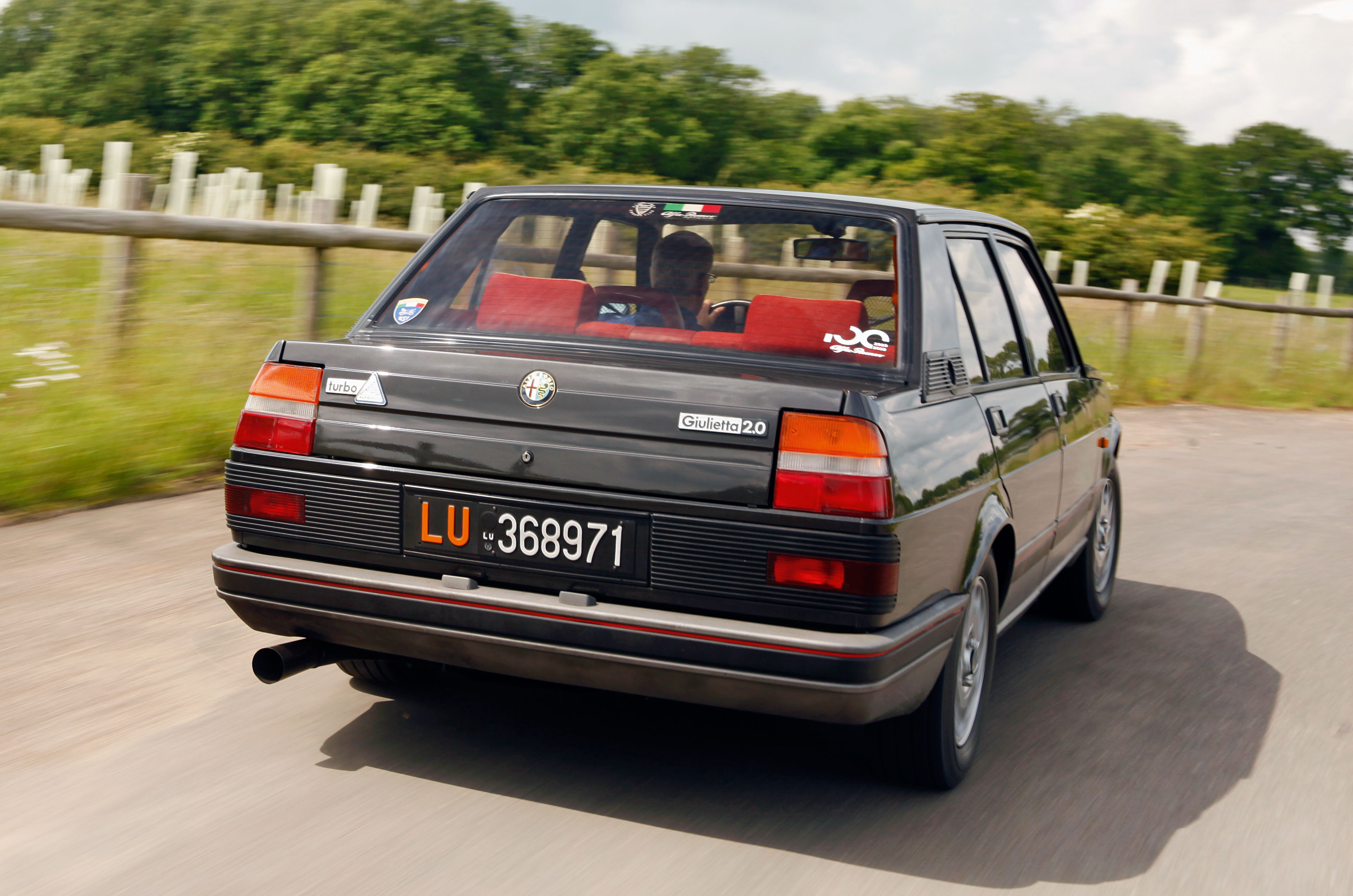
The Alfa Romeo Giulietta Turbodelta’s large tailpipe and discreet badging are among the few clues to its potency
Alas, the Giulietta Turbodelta’s potential went unrealised. Although two cars were supposedly retained by Autodelta for competition, and the rest sold as pre-owned with zero mileage, it was clearly somewhat pointless to campaign a model when its successor was already up and running...
The Alfa Romeo 75, as per the Giulietta, was designed in-house at Centro Stile – another product of the firm’s razor-edged la linea aesthetic – under Ermanno Cressoni, its Tipo 162B designation concealing the fact that it shared much of its engineering with its transaxle kin.
Launched in 1985, the 75 was the last of its line: Fiat would take control in 1986, and Alfa would move away from building rear-wheel-drive berlinas.
Engineered to take over circuit duties from the GTV6, which won the European Touring Car Championship manufacturers’ title in 1982, ’83 and ’84, the 1987 Alfa Romeo 75 Turbo Evoluzione was constructed by ALFA Corse – as Autodelta had become in 1985 – and homologated to Group A specification.
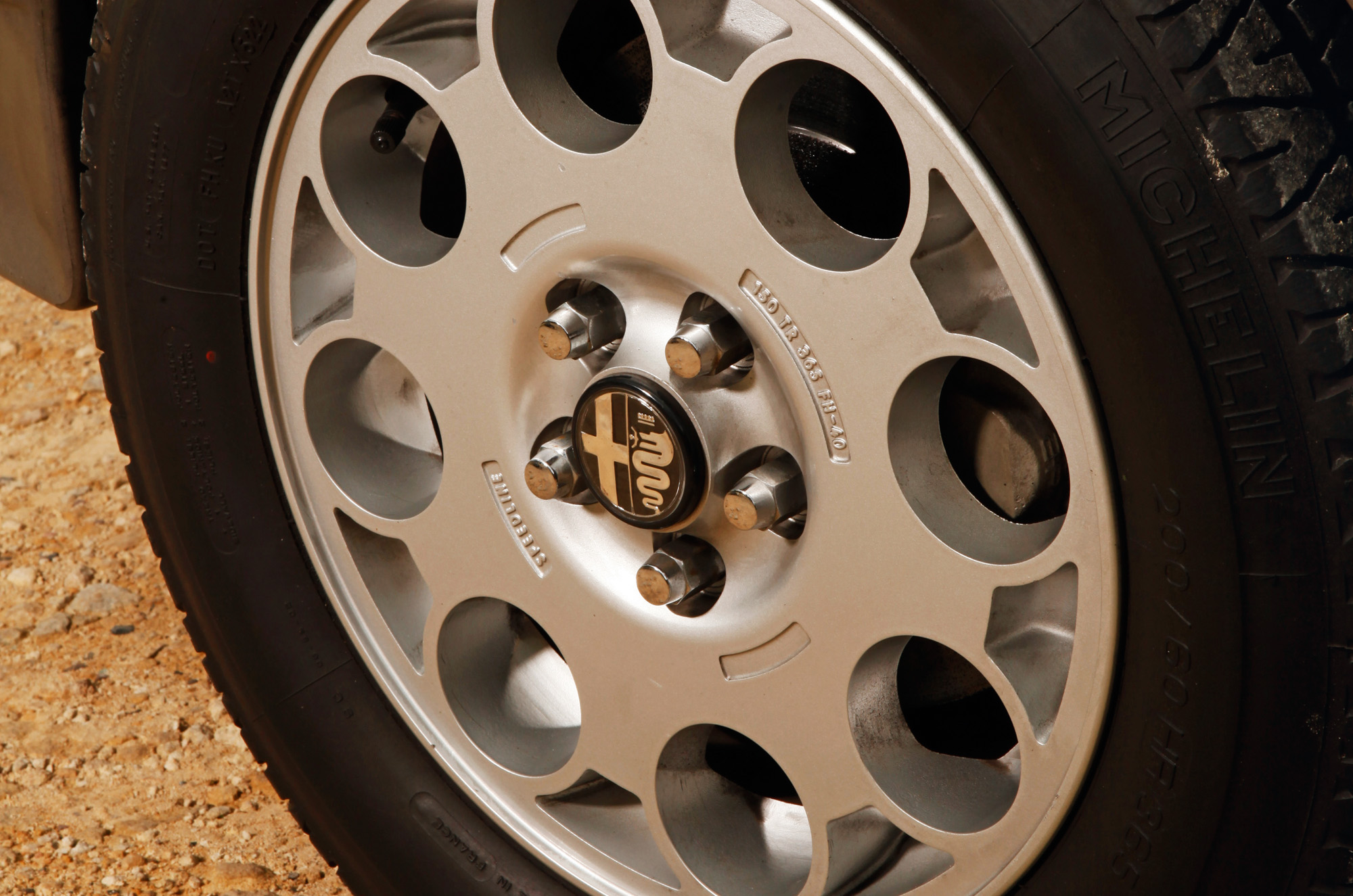
The Alfa Romeo Giulietta Turbodelta’s wheels are shared with hot Alfasuds
After spending the day with this very red Evoluzione, I can’t be harsh about its looks – but then I am a child of the 1980s, and therefore rather partial to vehicles of a visually violent disposition.
Graphics had made a comeback – along the lower flanks and on the spoiler’s lip – and the glassfibre bodykit allowed a wider track.
Yet, although the equally red 6Jx15in GTV6 Campagnolo alloys were larger than the standard 1.8i Turbo’s 14in rims – and sitting on five-stud hubs with uprated wheel bearings – the Evoluzione’s stance still looks a touch inadequate, almost timid and knock-kneed.
The more aerodynamic bodykit and neat boot spoiler would, however, live to see another day on later 75 incarnations.
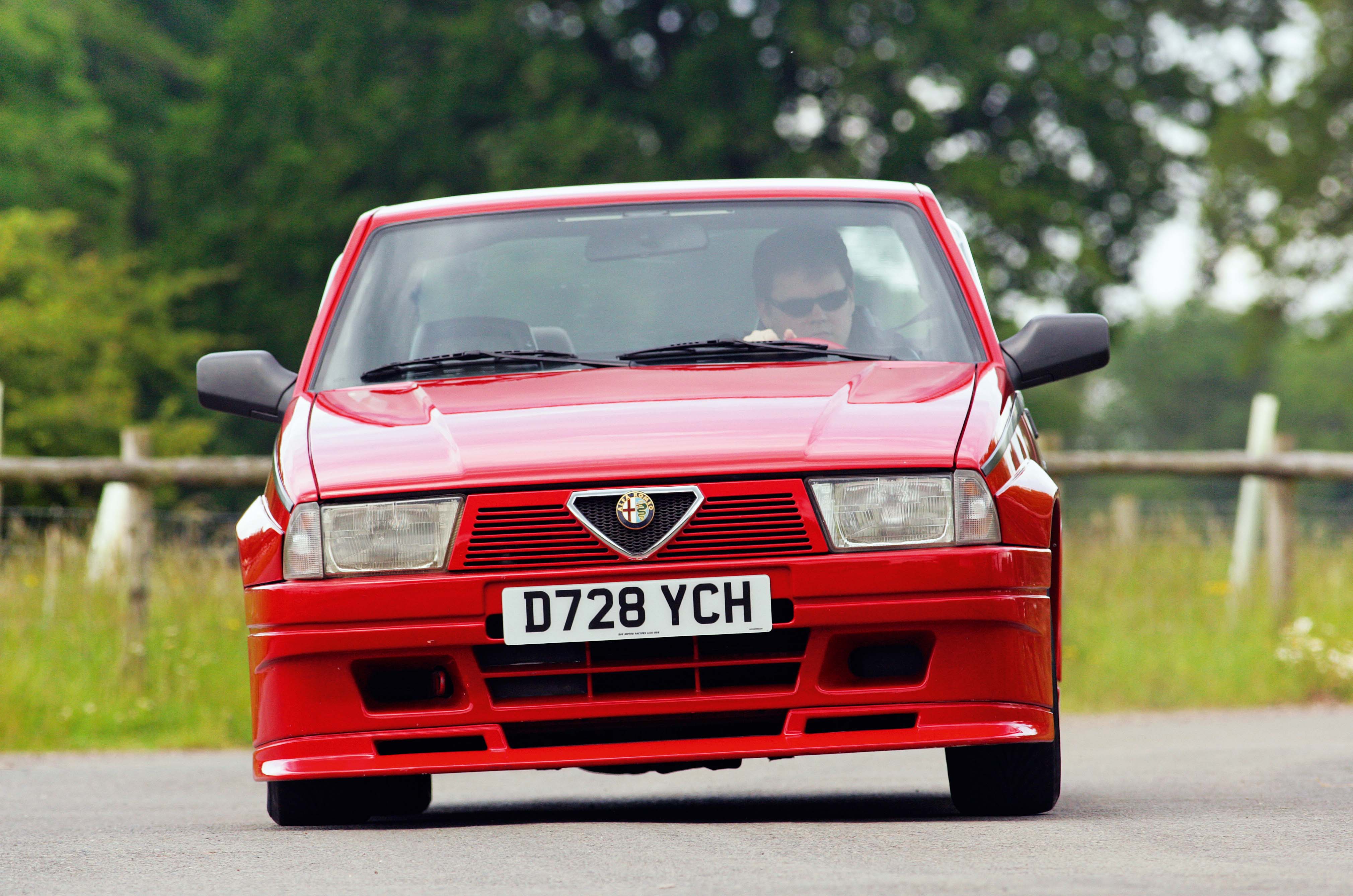
The Alfa Romeo 75 1.8i Turbo Evoluzione is firmly sprung
Mechanically, there was a limited-slip differential, uprated suspension with revised front geometry and a larger-diameter anti-roll bar.
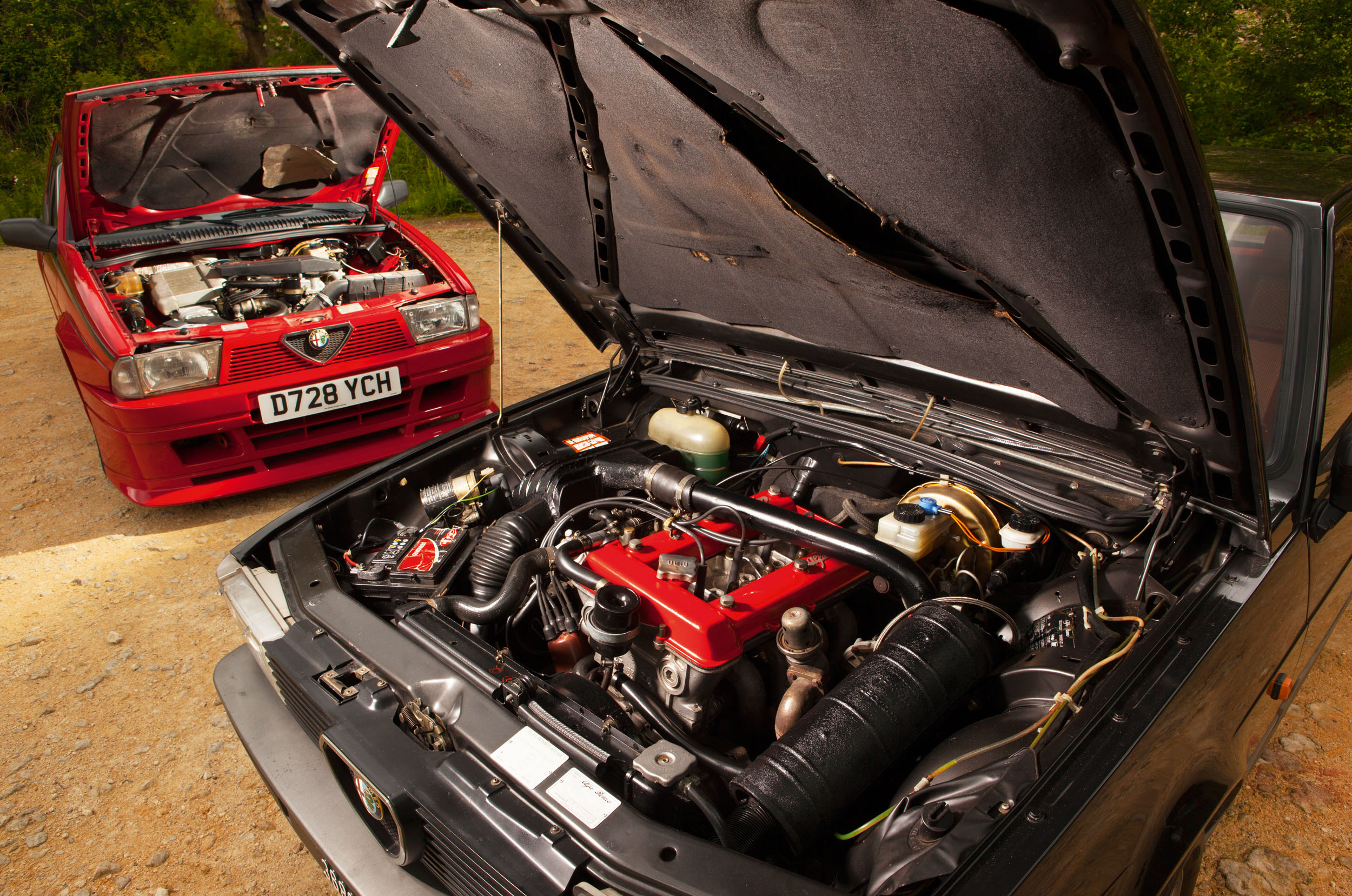
Under the bonnet, the twin-cam ‘four’ was similar to that of the 75 1.8i Turbo, but tweaked to satisfy Group A regulations: the pistons were 0.4mm smaller, reducing capacity from 1779cc to 1762cc; the intercooled Garrett T3 turbocharger was modified; and the cylinder block was strengthened, along with the main bearings and the cylinder head.
According to Alfa Romeo, 500 were built and this time there were no doubts over whether the Evoluzione was homologated.
Inside, it is largely run-of-the-mill 75 – which means a plasticky ambience of cost-cutting, as Alfa’s development funds ran dry. The only notable differences are a deleted radio/cassette deck and more supportive seats, trimmed to match the doors in monochrome houndstooth.
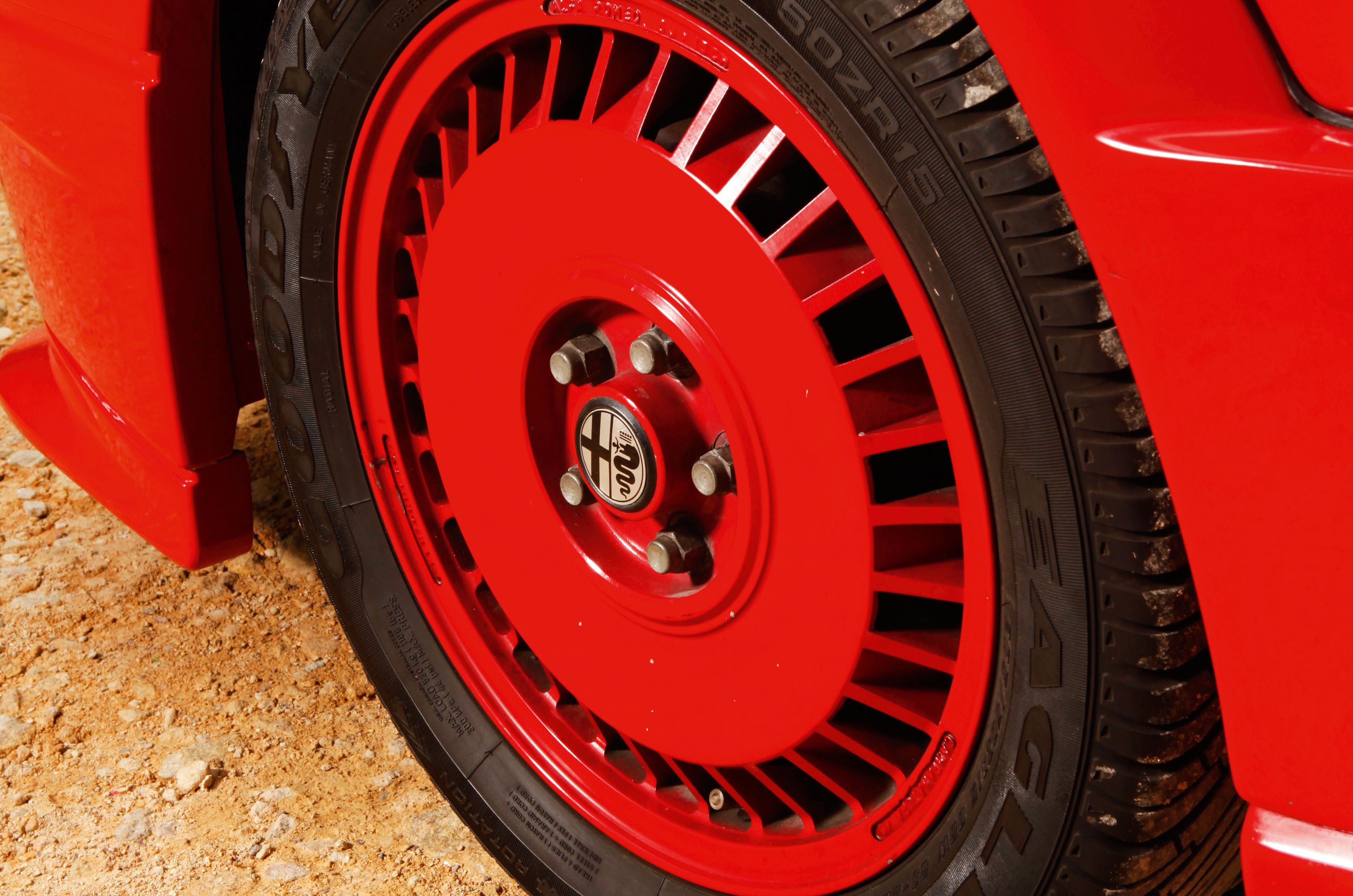
This Alfa Romeo 75 Turbo Evoluzione’s bright-red, 15in Campagnolo alloy wheels
This 46,500km car, number 378 and believed to be ex-ALFA Corse, also sports a leather Momo steering wheel and gearknob – contrary to the Evoluzione brochure, which shows boringly stock 75 parts.
At least the boost gauge has taken up residence with the rest of its Veglia-Borletti chums in the binnacle – unlike in the Turbodelta, where it replaces an air vent on the centre console.
Although the 280bhp Evoluzione did do battle in the World Touring Car Championship, it would only serve briefly.
The tasty driver line-up included Michael Andretti, Jean-Louis Schlesser, Nicola Larini, Alessandro Nannini and Jacques Laffite, but ALFA Corse’s efforts came to nothing and the team withdrew from the series before the overseas races began.
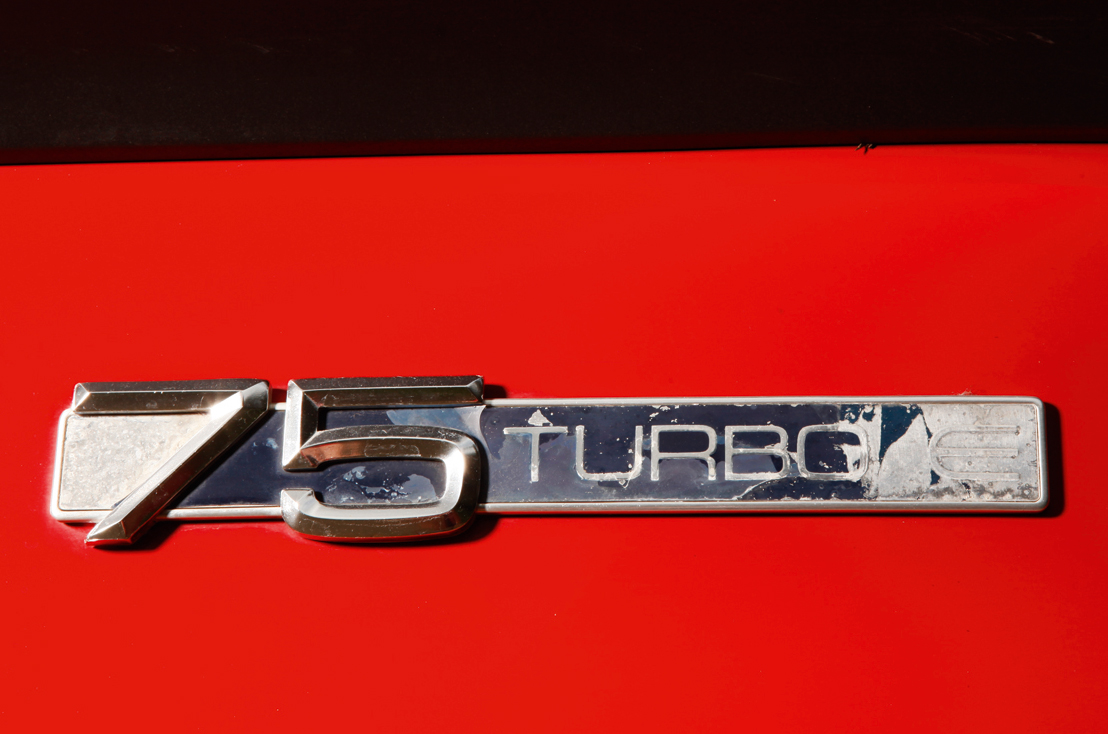
The Alfa Romeo 75 Turbo Evoluzione’s subtle badge
Away from the WTCC, the 75 would partially redeem itself by powering Gianfranco Brancatelli to the 1988 Italian Superturismo Championship drivers’ title; followed in 1991 by Giorgio Francia taking the runner-up slot.
Given that neither of these omologati were available in Britain, these two fantastically original specimens adhere to the Napoleonic highway code – and are all the better for it.
Yes, the pedals are still too close, but at least they are in line with the seat, whereas right-hand-drive models can feel like the Spanish Inquisition’s waiting room.
Even the other source of penance for the Tipo 116 driver, the remote gearchange, comes across as fluid, confident and swift, so there isn’t any danger of giving your front passenger a dead leg while pleading for a gear, any gear, to engage.
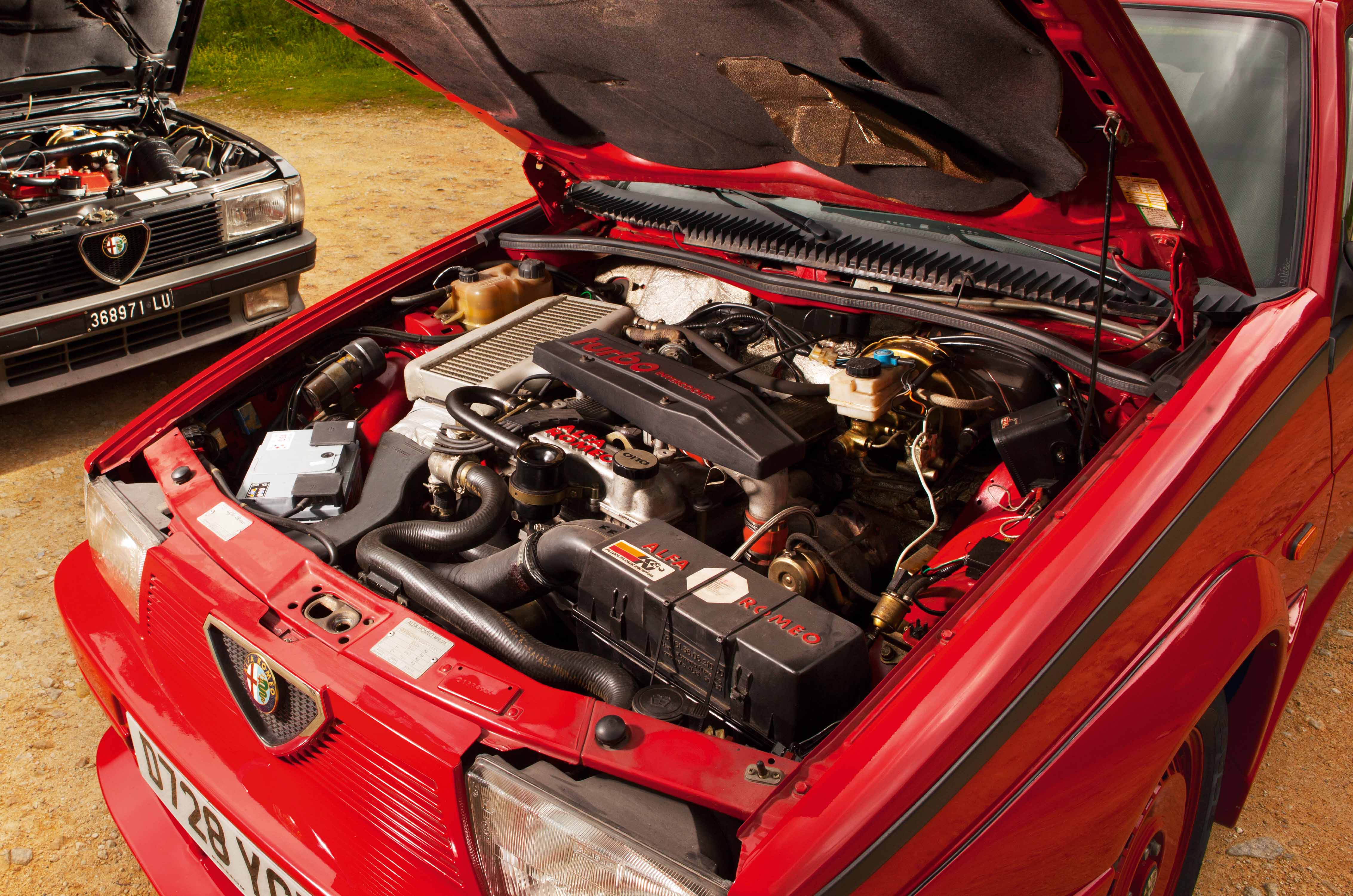
Lifting the Alfa Romeo 75 Turbo Evoluzione’s bonnet reveals a prominent intercooler for the Garrett T3 turbo
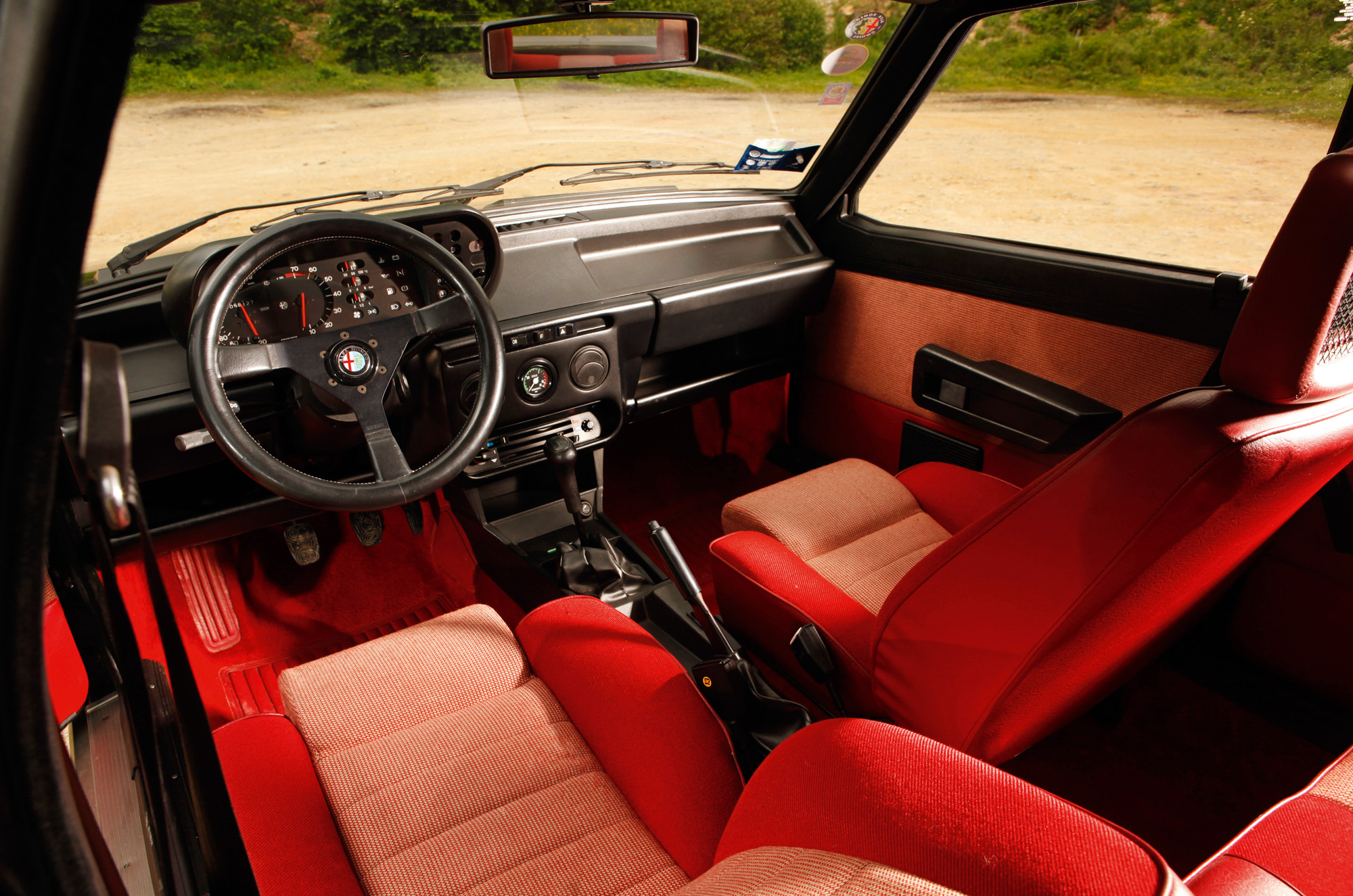
The Turbodelta then counters with an interior that isn’t merely quirkier, brighter and more colourful than the Evoluzione’s, it almost comes across as a chic 1980s Rodeo Drive boutique.
As soon as your buttocks have touched down, you find yourself gazing around in amazement at the red trim with houndstooth panels and that David Bache-style instrument pod.
Peer closer and you’ll notice the mirrored clockwise/anti-clockwise action of the main dials and a trio of horizontal spinning-drum auxiliary instruments, making you ponder how, when and why car interiors stopped being so cheery and eccentric.
On the move, the Turbodelta has a more progressive power delivery.
Both Alfas deliver 1.5bar of boost, but the Turbodelta’s Avio does so 500rpm lower than the Evoluzione’s T3 at 3000rpm.
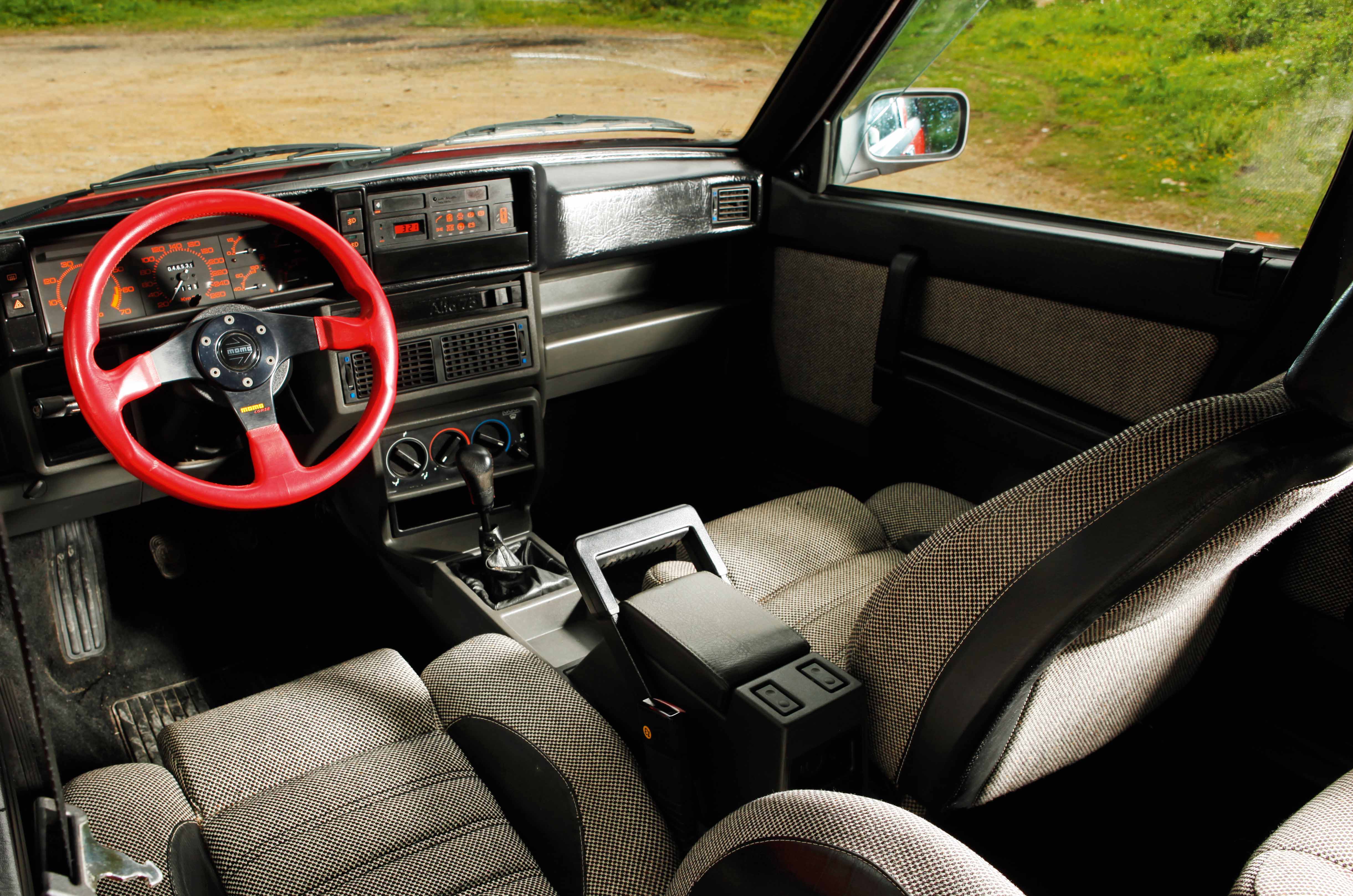
This Alfa Romeo 75 Turbo Evoluzione’s non-standard Momo steering wheel lifts they grey cabin
Fuelling must also enter the equation, with the older car’s Dell’Orto DHLA 40H carbs offering more responsive pick-up than the 75’s Bosch L-Jetronic injection.
Accelerate hard and the Turbodelta continues to woo. The engine note is just far more raspy, excitable and, well, ‘Alfa’ than the 75’s, which is almost insipid; it’s dominated by a spinning turbo overlaid with the timing chain’s sotto voce.
Over poor surfaces and through corners, the Giulietta is more approachable, more convivial.
There is more roll, but the steering is light, sweet and responsive, and less susceptible to camber changes.
Turn in, it quickly settles, then enjoy its balance, wallop and bravado; it positively slices through corners with gleeful abandon.
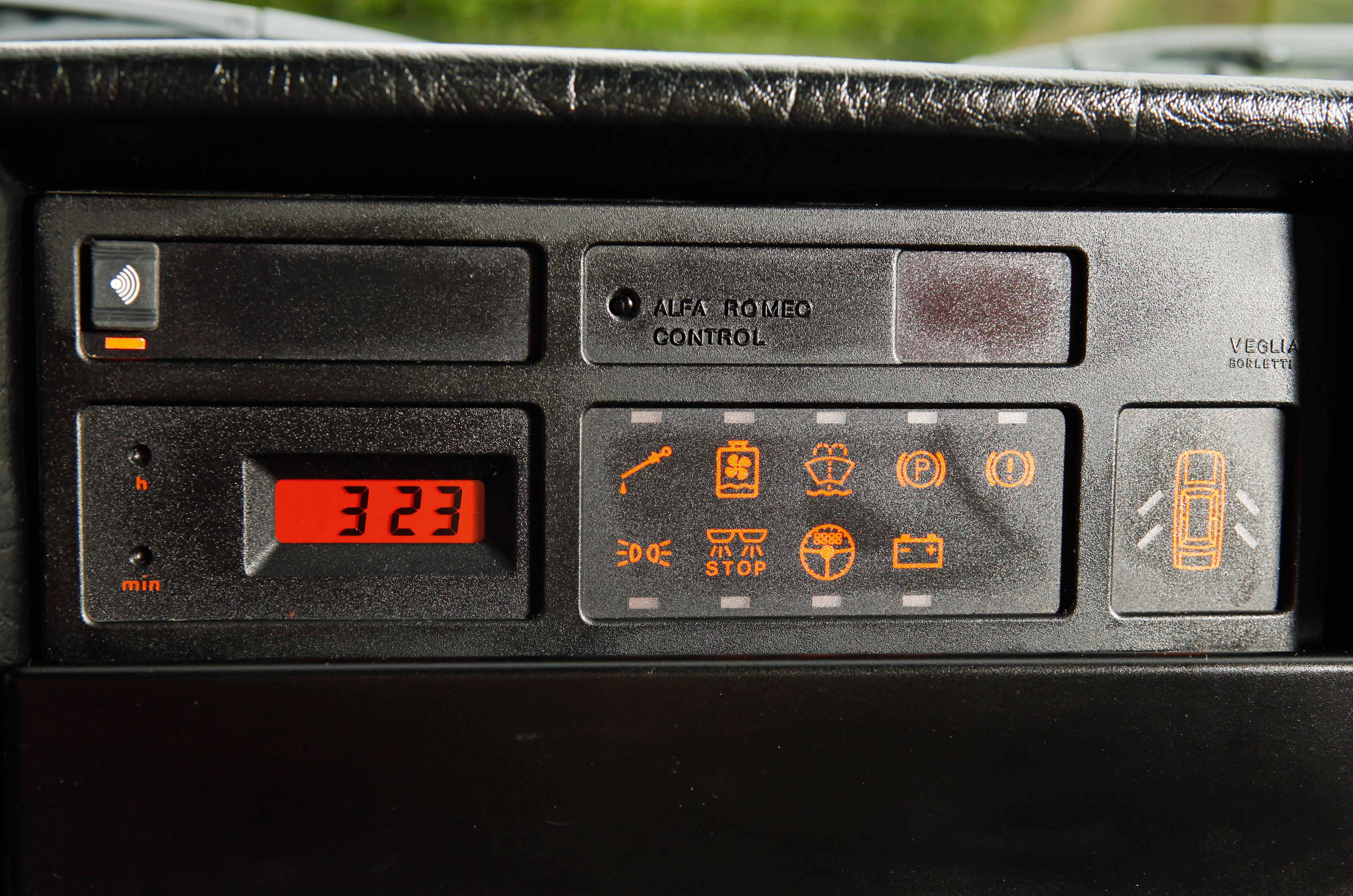
The Alfa Romeo 75 Turbo Evoluzione’s ‘Control’ panel is of its time
In both cars, though, the brakes require a level of anticipation, especially given that on these models there is a hot and bothered turbo squatting beneath the servo.
The larger wheels, firmer spring rates, altered geometry and beefier anti-roll bar, plus that low underbonnet mass, all contribute to the Evoluzione’s crotchetiness along gnarly country lanes.
The bonnet pitches over bumps and the steering wheel fidgets and weaves under boost, as you experience the downside of a machine out of its natural habitat.
On fast, smooth roads, however, it is a joy: quick, nimble, poised and with a flowing chassis.
The steering becomes mouthwatering, the whole entity being as enjoyable, uncompromised, unfiltered and intoxicating as a pint of RON-rated scrumpy.
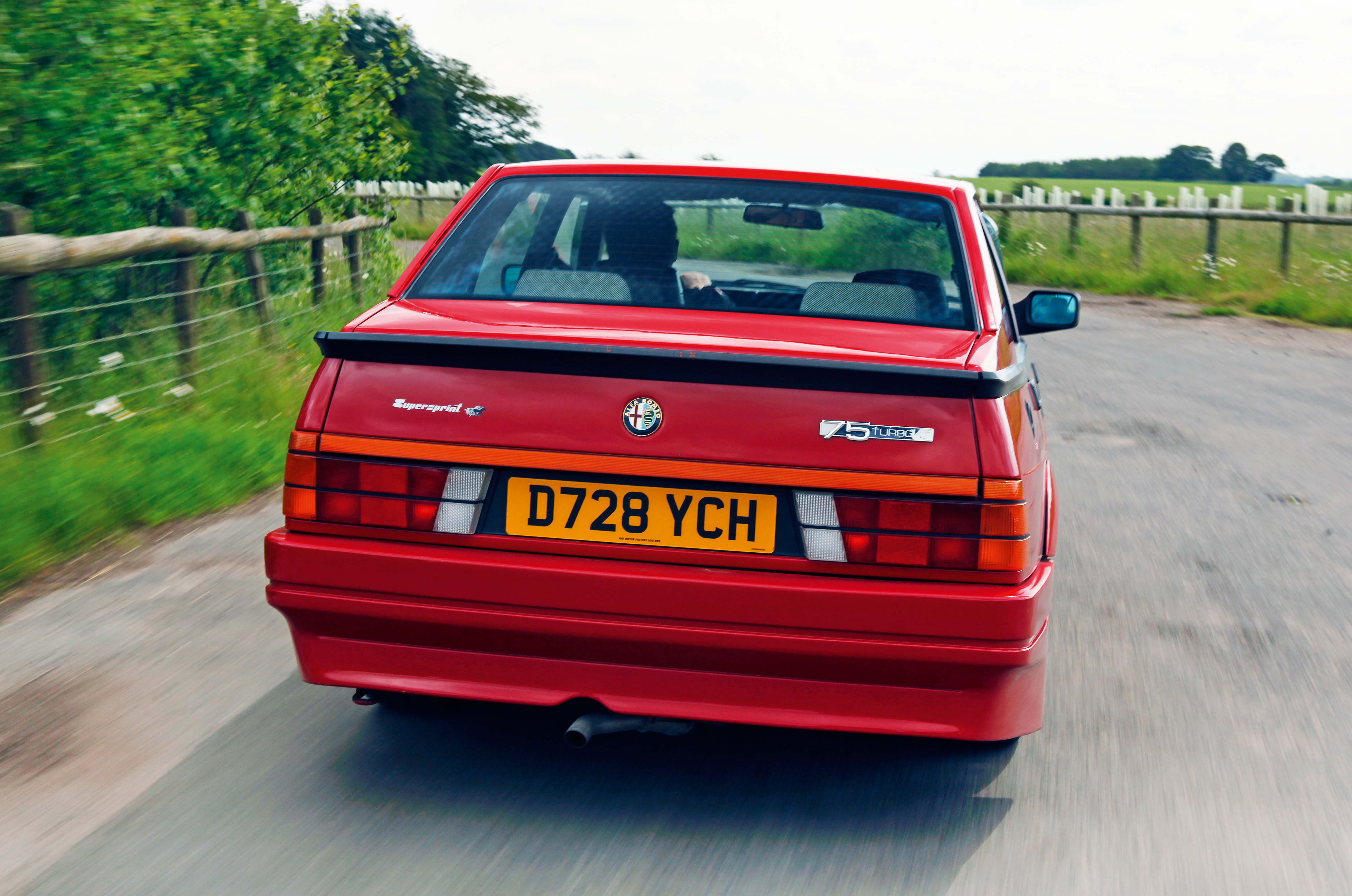
The Alfa Romeo 75 Turbo Evoluzione’s lairy style is an acquired taste
Weary and dishevelled as the day draws to a close, I find it hard to name a winner because both cars make such strong cases for themselves – be it as a track treat or as something more leftfield for a yuppy with a bit of imagination.
Of all Alfa Romeos, these later, less romantic 116s are arguably the easiest to approach with a modicum of objectivity.
Your eyeballs are not immediately serenaded by unforgettable lines, elegant detailing and impeccable proportions, so there is less of a risk of exhausting the thesaurus’ supply of soulful synonyms.
Yet these omologati have deeper, less obvious charms, talents and abilities.
Call them what you will, they are exuberant products of considered engineering: low unsprung mass, superior wheel location, better traction, even weight distribution and a high polar moment of inertia.
Certainly, neither can be described as conventionally beautiful, but delve beyond superficial aesthetics and you’ll be treated to an invigorating driving experience that quickly connects with your inner enthusiast.
Images: Tony Baker
Thanks to: Legends Automotive for the Alfa 75 Turbo Evoluzione
This was first in our October 2012 magazine; all information was correct at the date of original publication
Factfiles
Alfa Romeo Giulietta 2.0 Turbodelta
- Sold/number built 1983-’84/361
- Construction steel monocoque
- Engine all-alloy, dohc 1962cc ‘four’, Alfa Romeo Avio turbo, twin Dell’Orto carburettors
- Max power 168bhp @ 5000rpm
- Max torque 212lb ft @ 5500rpm
- Transmission five-speed manual, RWD via a limited-slip differential
- Suspension: front independent, by double wishbones, torsion bars rear de Dion axle, trailing arms, Watt linkage; coil springs, anti-roll bar, telescopic dampers f/r
- Steering rack and pinion
- Brakes discs, inboard at rear, with servo
- Length 13ft 8in (4210mm)
- Width 5ft 4in (1650mm)
- Height 4ft 6in (1400mm)
- Wheelbase 8ft 2in (2510mm)
- Weight 2513lb (1140kg)
- 0-60mph 7.5 secs
- Top speed 126mph
- Mpg 22
- Price new Lire26,940,000
Alfa Romeo 75 1.8i Turbo Evoluzione
- Sold/number built 1987-’88/500
- Construction steel monocoque
- Engine all-alloy, dohc 1762cc ‘four’, intercooled Garrett T3 turbocharger, Bosch Jetronic electronic fuel injection
- Max power 153bhp @ 5800rpm
- Max torque 170lb ft @ 2600rpm
- Transmission five-speed manual, RWD via a limited-slip differential
- Suspension: front independent, by double wishbones, torsion bars rear de Dion axle, trailing arms, Watt linkage, coil springs; anti-roll bar, telescopic dampers f/r
- Steering power-assisted rack and pinion
- Brakes discs, inboard at rear, with servo
- Length 14ft 4in (4360mm)
- Width 5ft 4in (1631mm)
- Height 4ft 6in (1400mm)
- Wheelbase 8ft 2in (2510mm)
- Weight 2535lb (1150kg)
- 0-60mph 7.5 secs
- Top speed 133mph
- Mpg n/a
- Price new Lire30,379,000
Enjoy more of the world’s best classic car content every month when you subscribe to C&SC – get our latest deals here
READ MORE
Alfa Romeo 164, Saab 9000, Lancia Thema and Fiat Croma: four of a kind