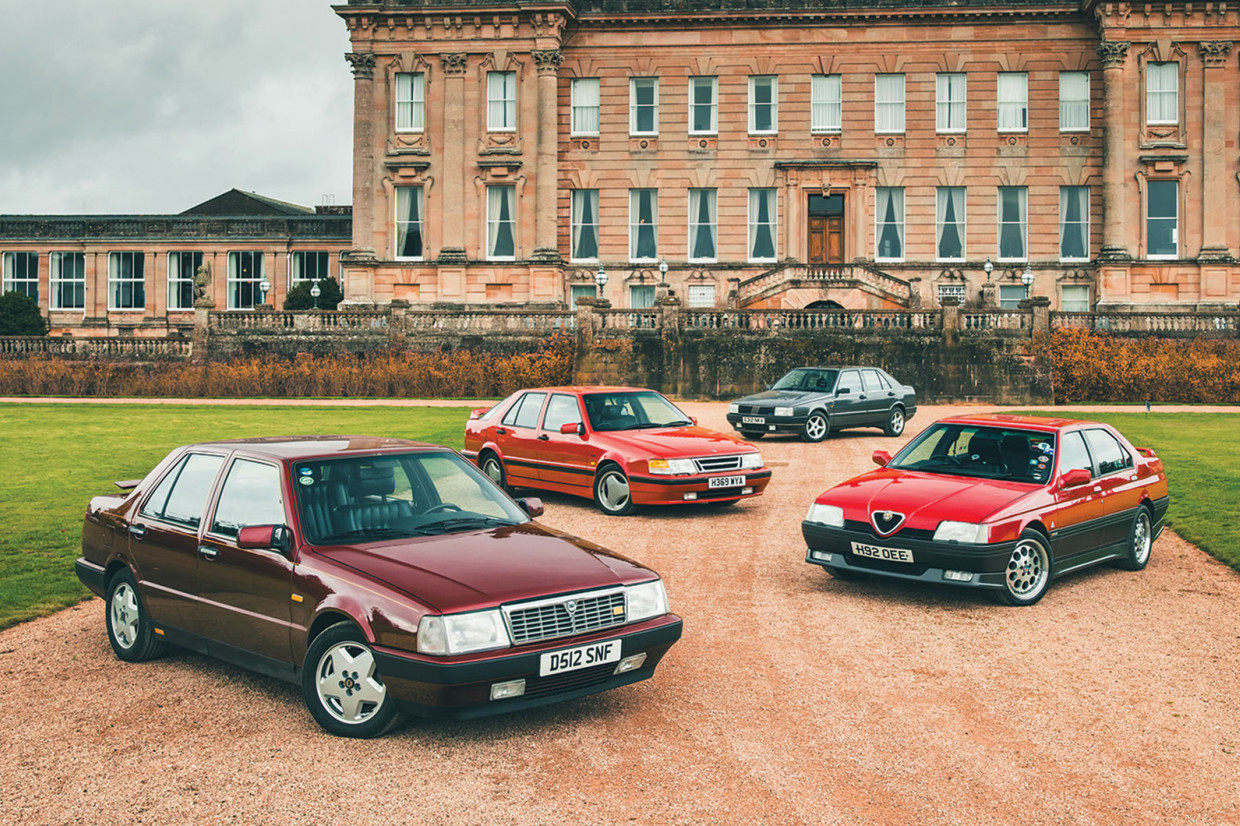
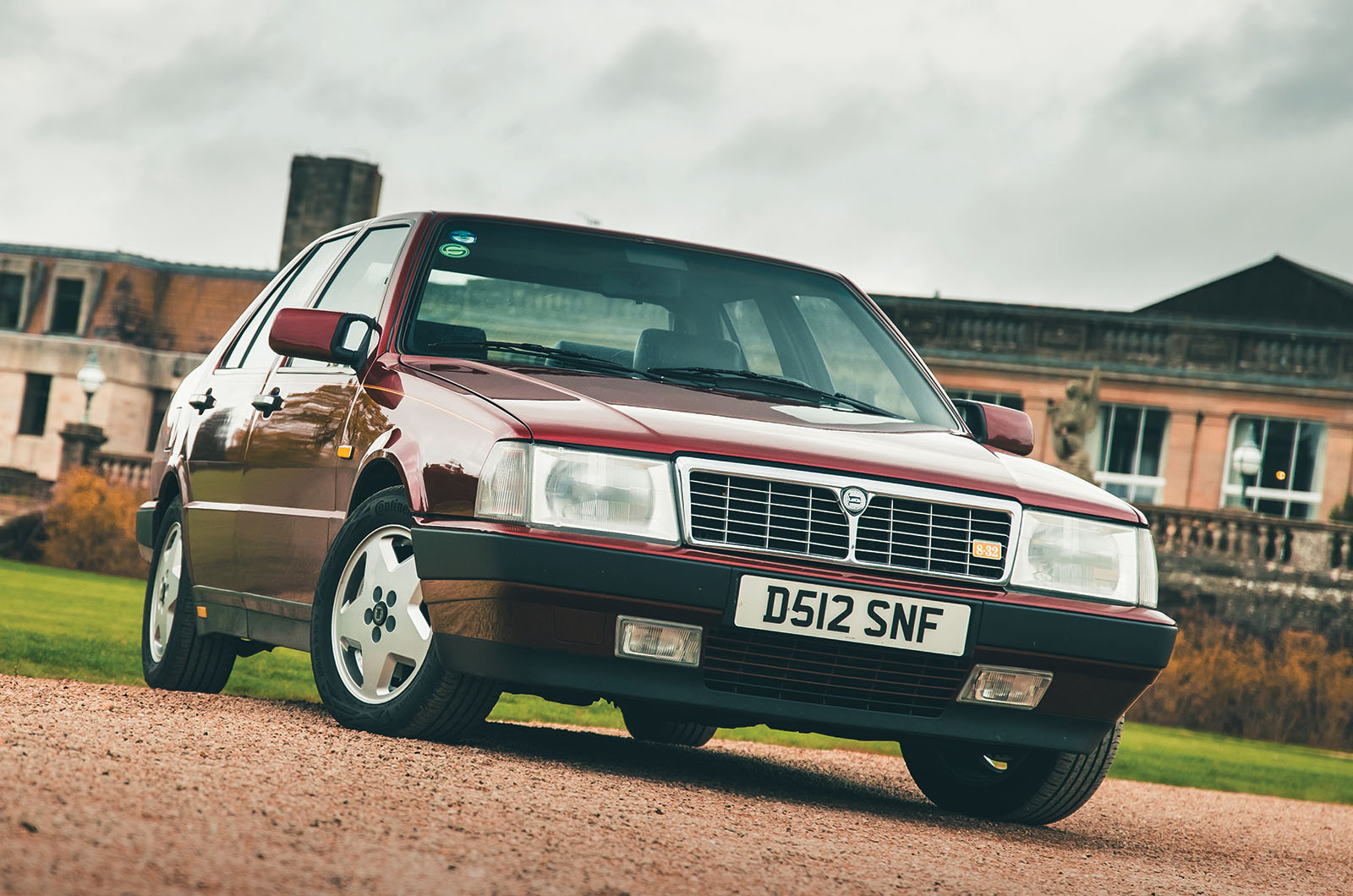
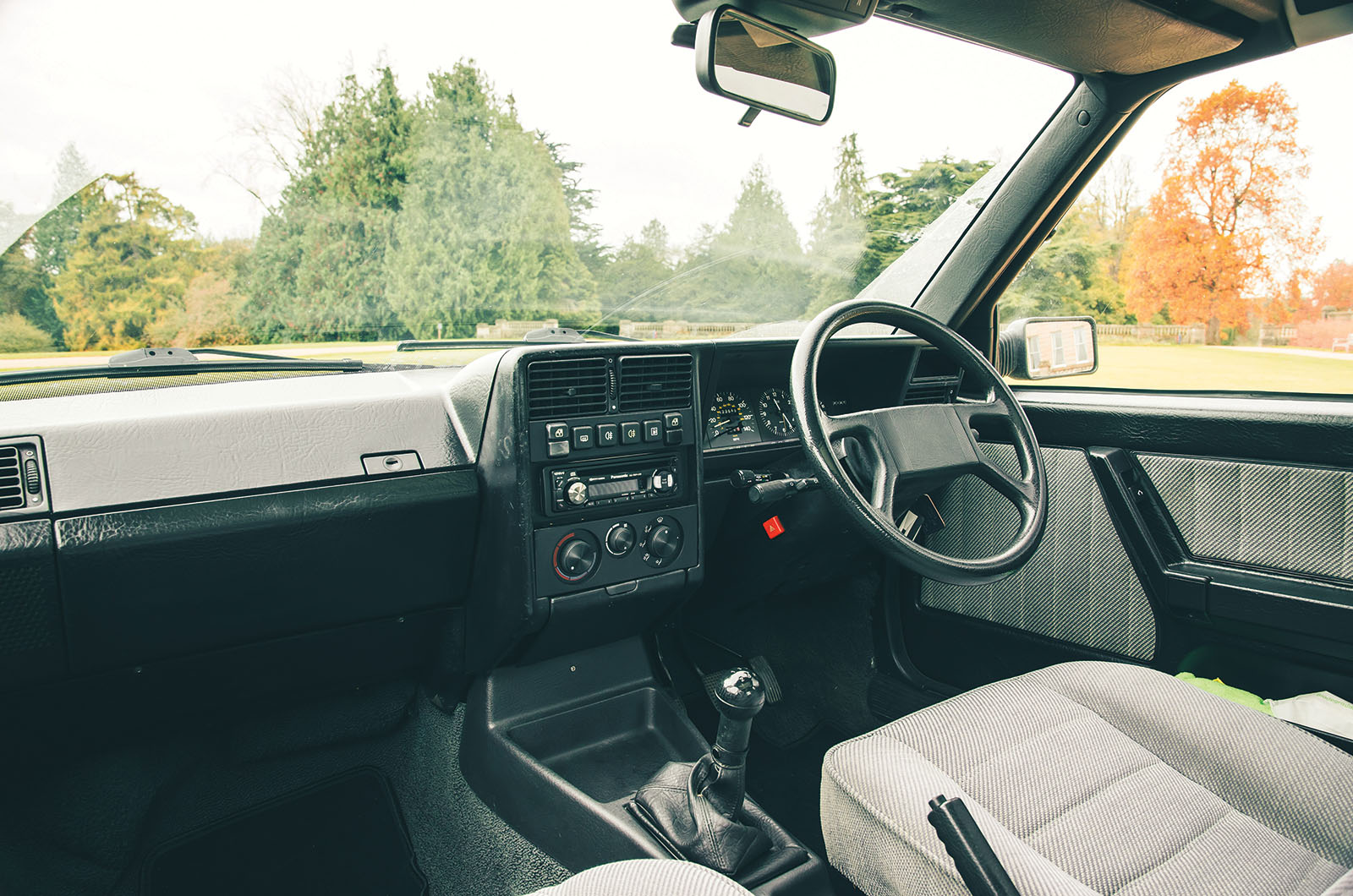
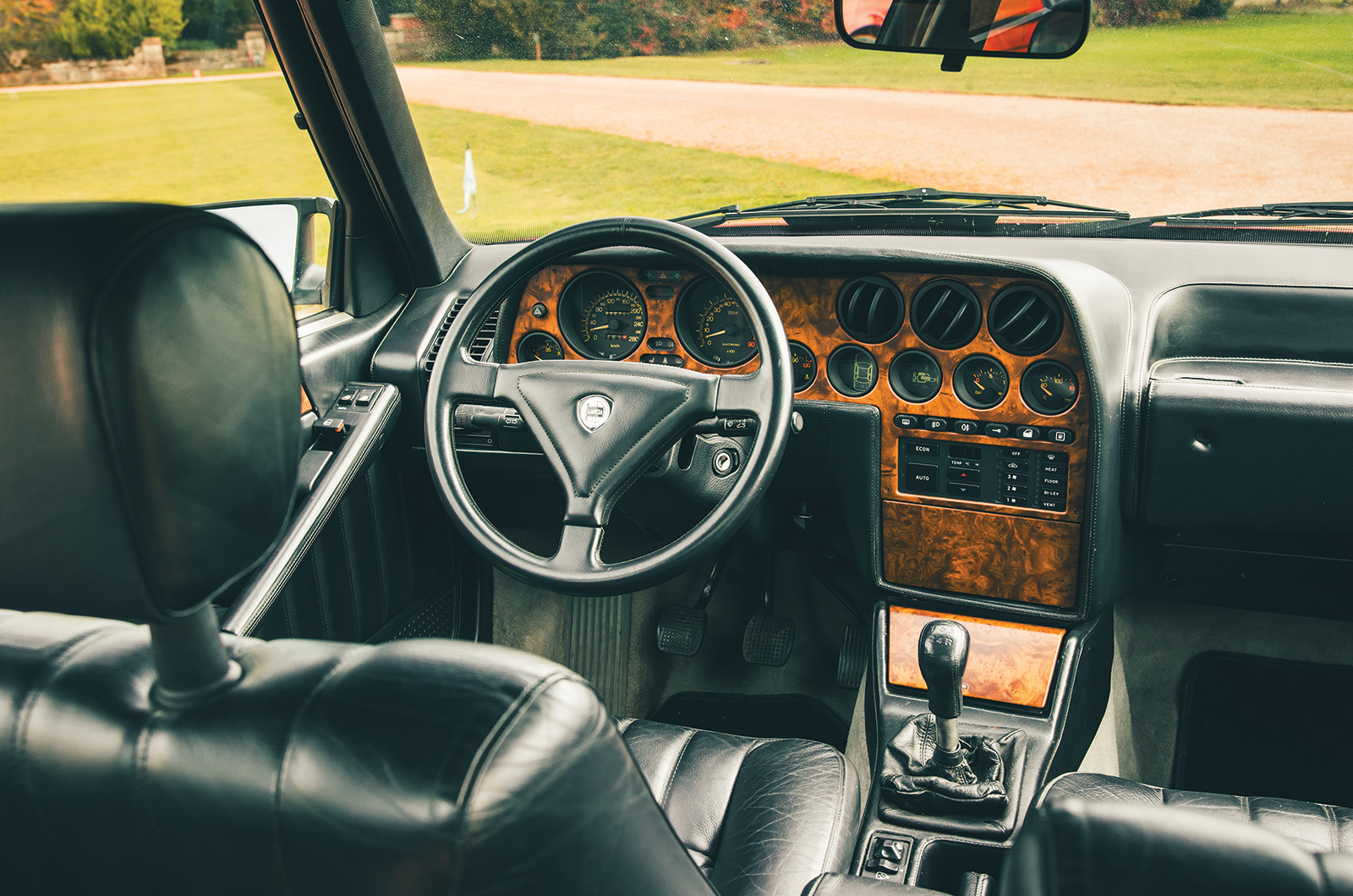
There’s a softer tone to the Lancia Thema’s door opening, but it’s still a way off the weight of a contemporary BMW or Mercedes-Benz, and although there is an instant wow-factor to the lavishly leather-lined and wood-trimmed cabin, there’s the faint whiff of hollow plastics underneath, instead of the curiously absent aroma of hide.
Look away from the eye-catching recessed dials and there are some ugly inconsistencies in the switchgear, too, although there’s no doubting the sophistication of the Saab-Lancia climate control.
At first, this all appears problematic for the £37,500 8.32.
The composed Lancia resists torquesteer
Rational comparisons to the £34,850 BMW M5 are as damning as measuring this 212bhp ‘powered by Ferrari’ flagship within its own range: the new-for-1988, 185bhp Thema Turbo matched the 8.32’s 140mph top speed and was marginally quicker to 60mph – for £15k less.
Yet this is to wrongly assume the function of Lancia’s flagship; intended not as the fastest or even finest, this was something special from ambitious engineers feeding the dreams of its still fiercely loyal fans.
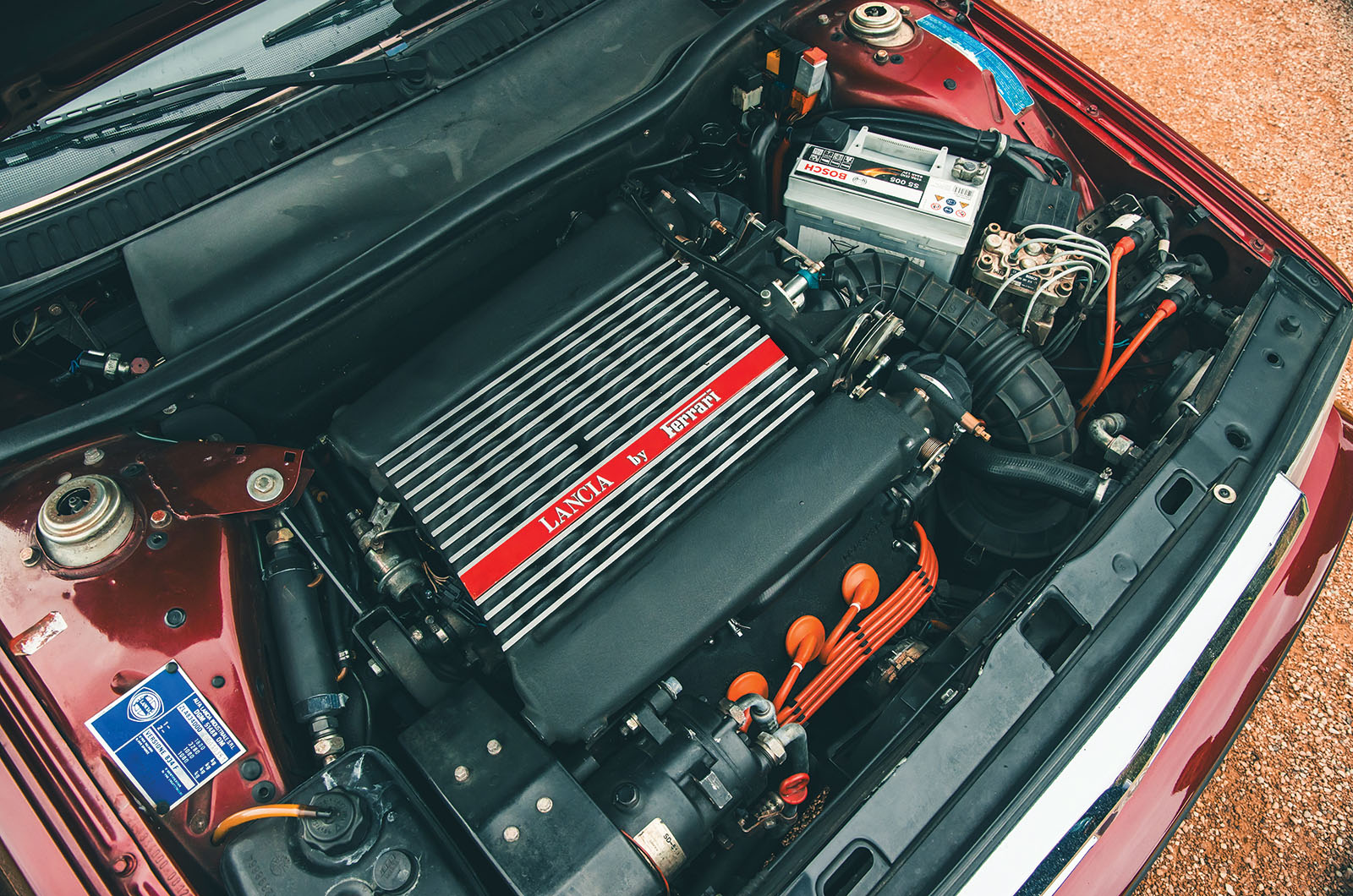
How else would the idea germinate to fit the 32-valve V8 from a Ferrari into the nose of a mid-sized luxury car?
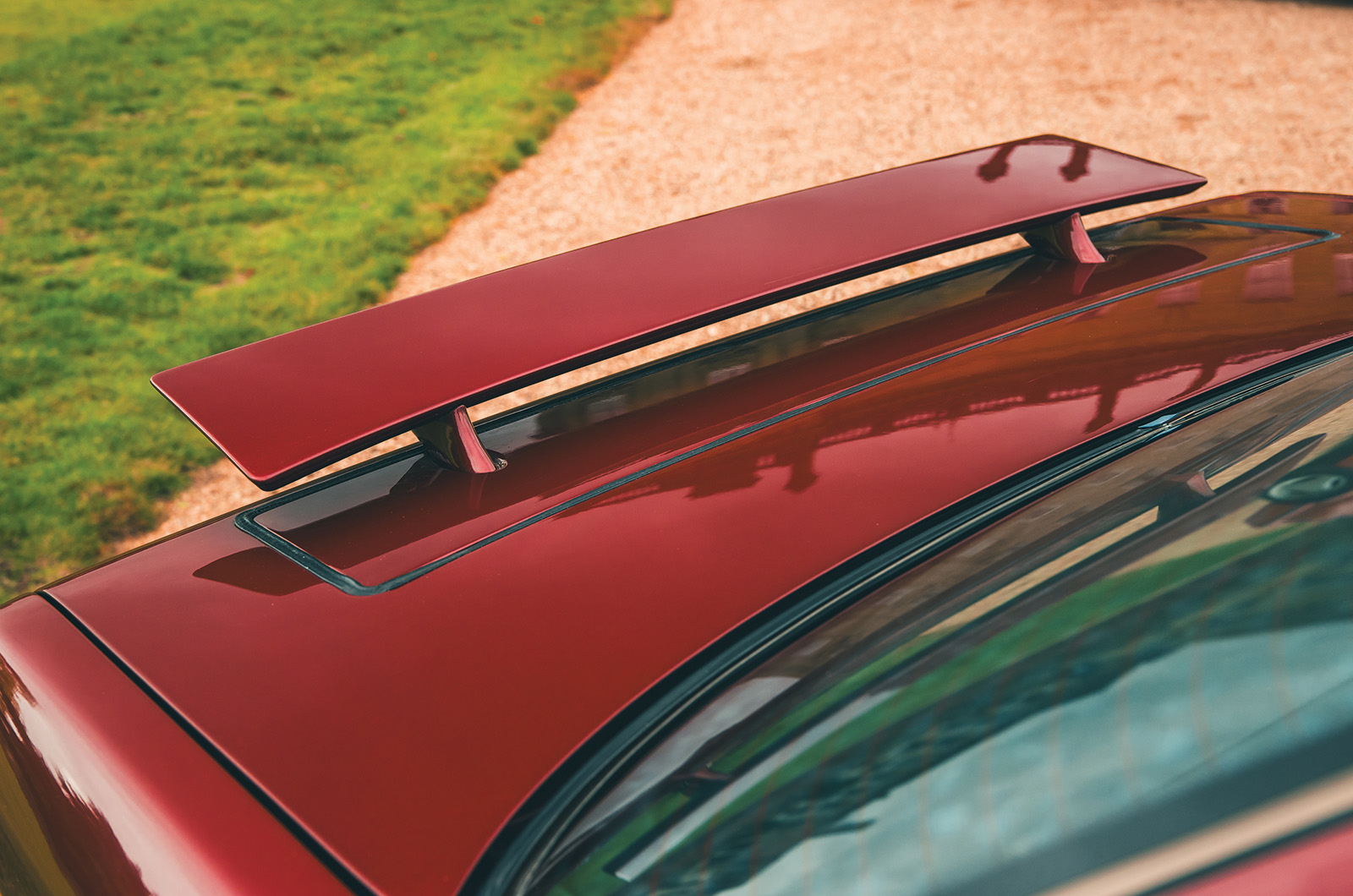
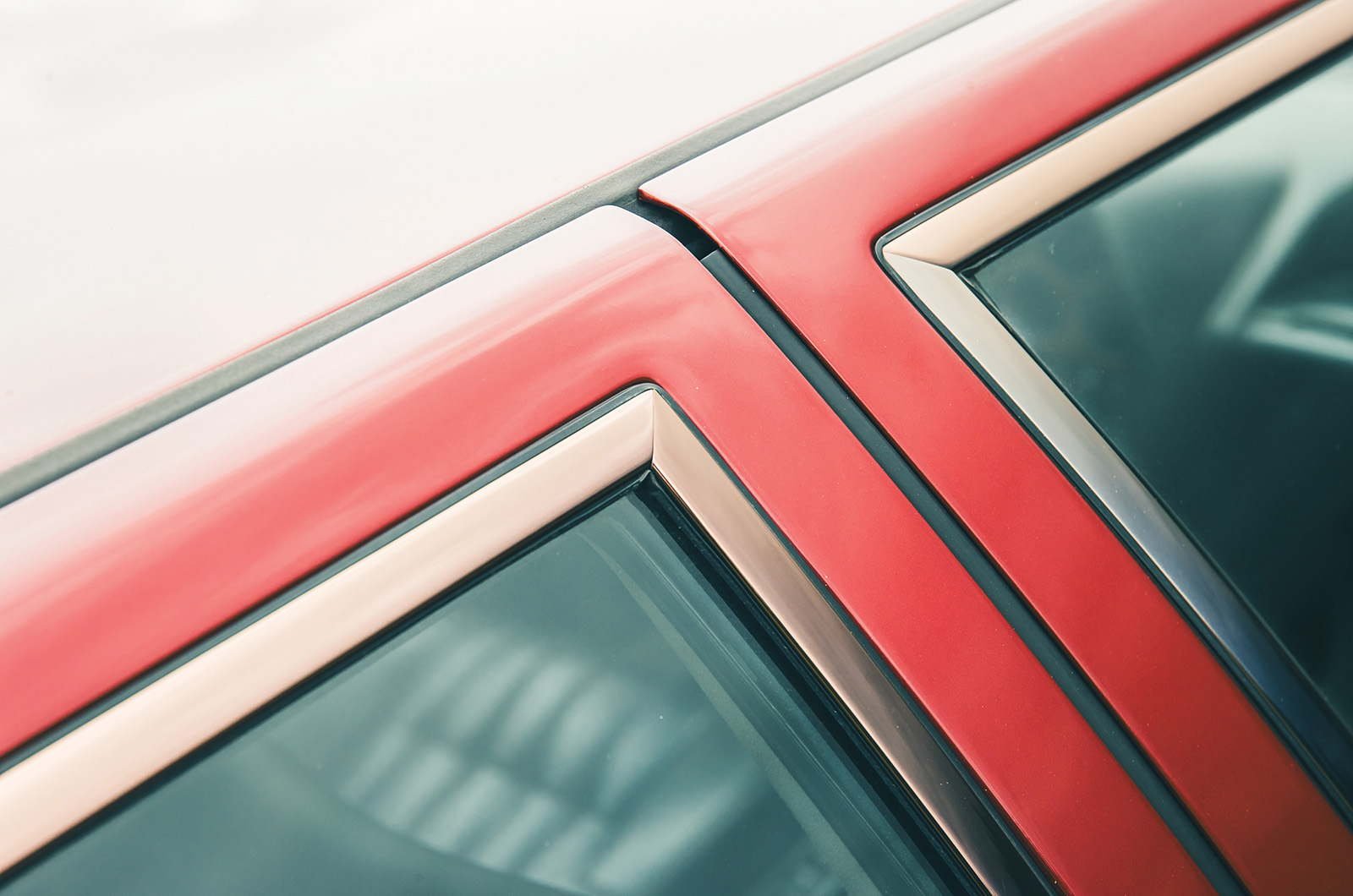
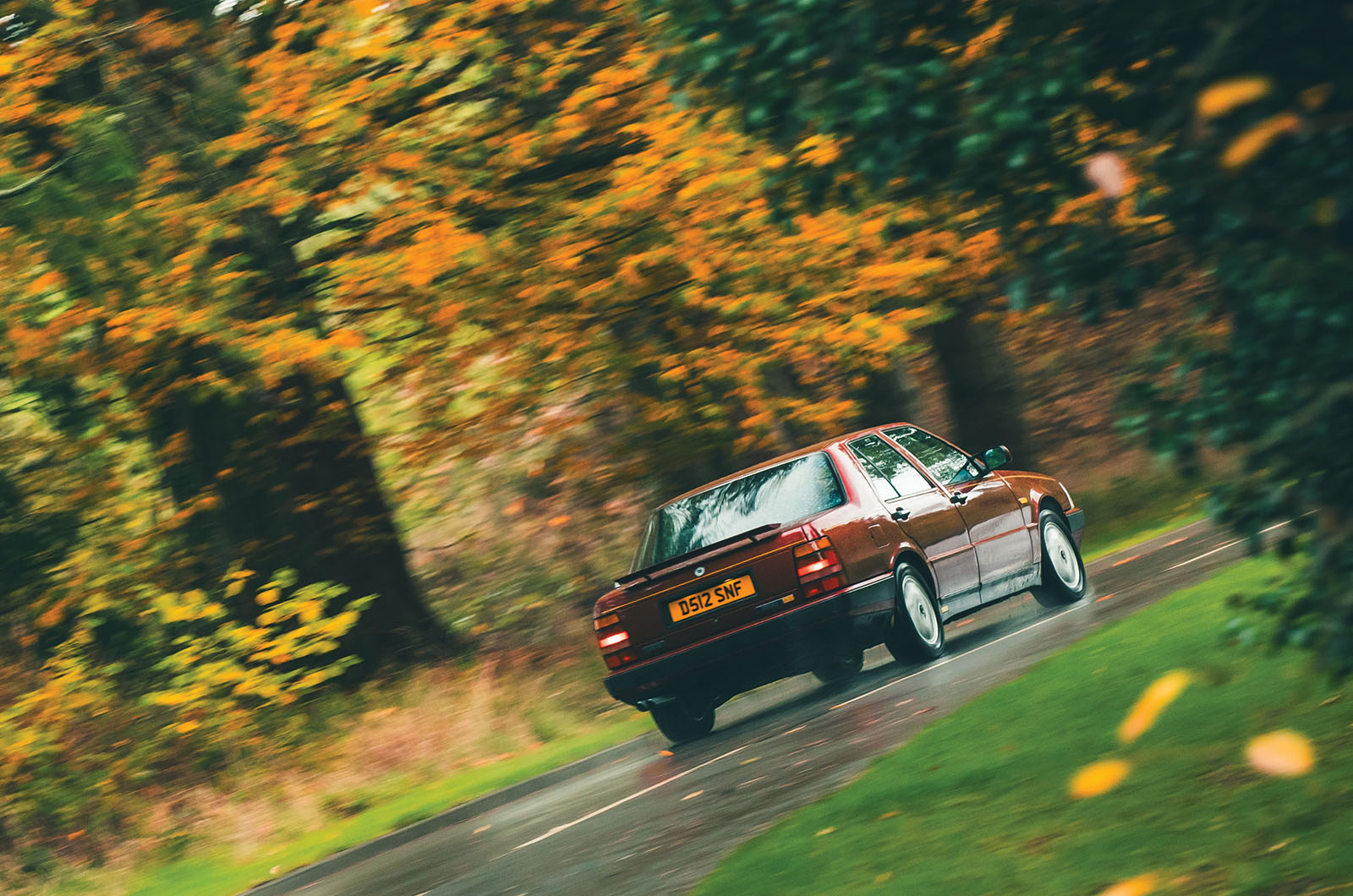
The Lancia Thema 8.32’s wraparound doors and copper-look trim
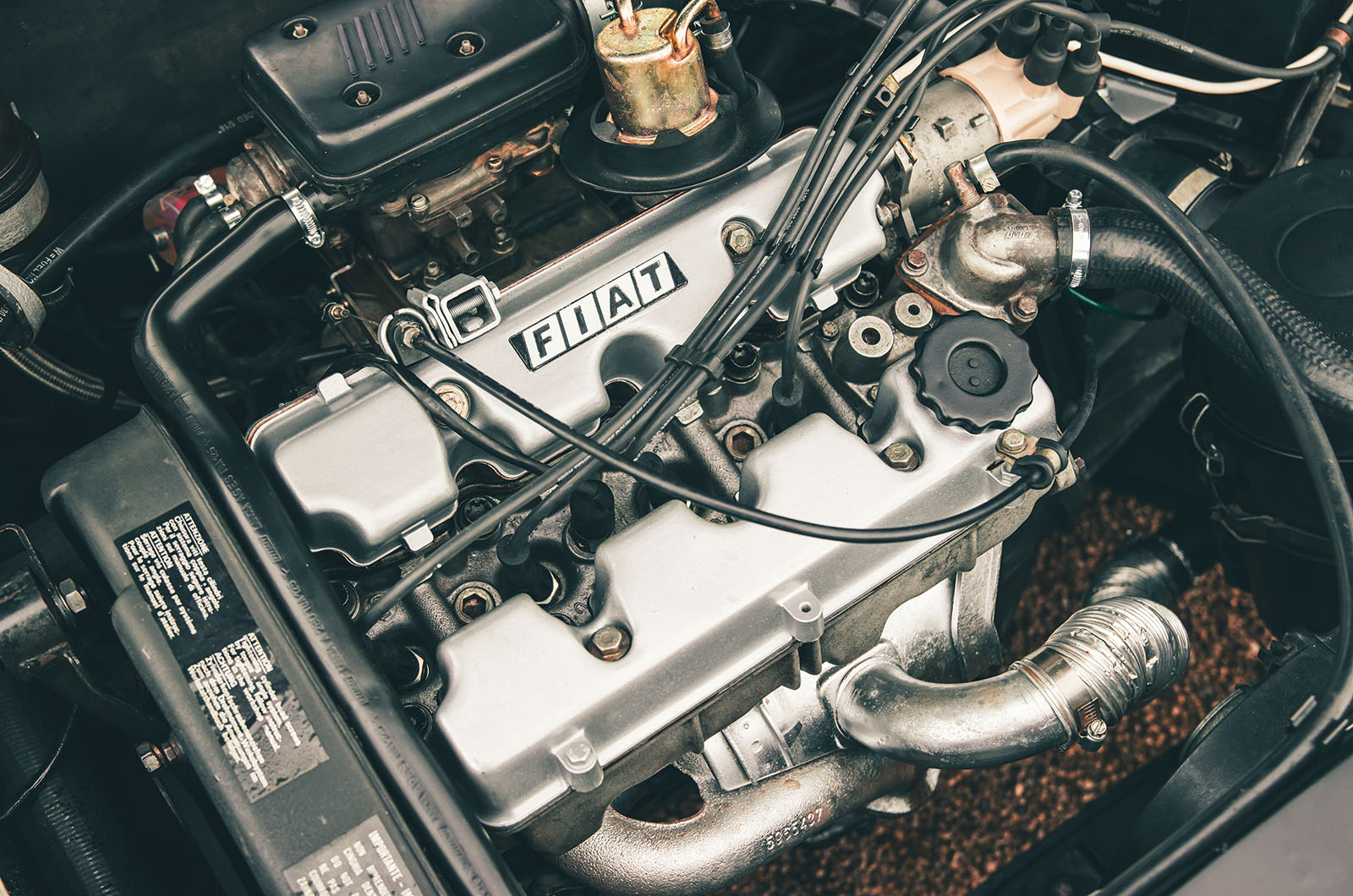
It is extraordinarily snug, sitting on its bespoke subframe slightly ahead of the front axle.
The F105L version of Ferrari’s 90°, Dino-derived V8 runs a cross- rather than flat-plane crankshaft and is down from 3185cc to 2927cc, with low-down torque its priority.
The block was still cast at Maranello, but main assembly was contracted out to Ducati before it reached special 8.32 lines at Lancia’s San Paolo plant.
There is a luxurious thrum to the ultimate Thema that immediately dispels any worries of temperament as it oozes forward on a few hundred revs.
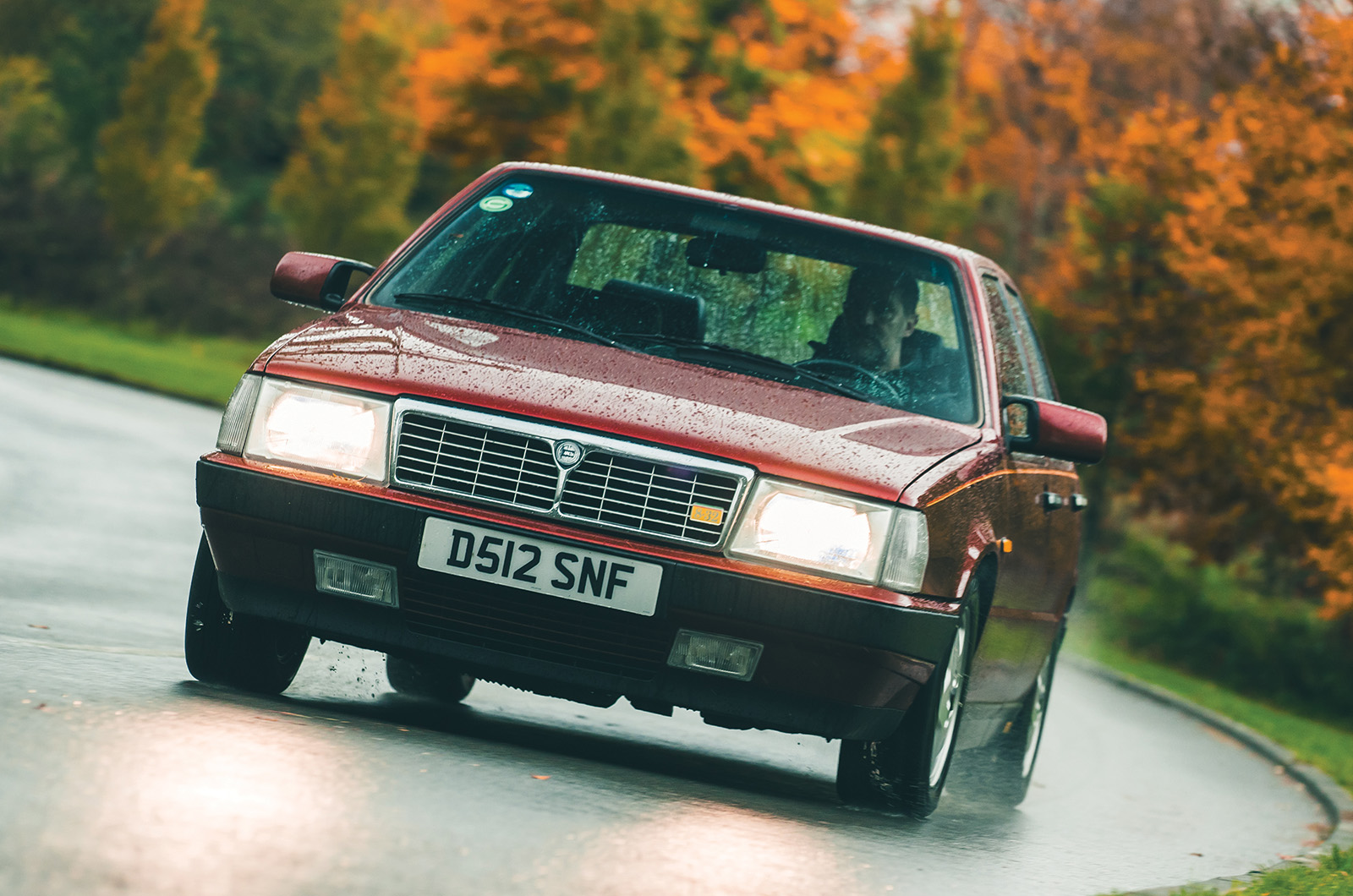
The clutch is light, the throttle long, while the ZF powered steering is BMW slick and the ride betrays a purpose well above the Croma’s, but couldn’t be described as firm.
The Lancia’s Ferrari-derived V8 is uniquely tuned
Its gearing is actually shorter than the cruising Fiat’s, but there is so much shove from low revs – already at 200lb ft by 2500rpm – and the prospect of the full fireworks at the 7000rpm limiter that the ratios seem to last longer.
It gains real urgency from 3000rpm, with a subtle squirm from its specially designed 205/55 Goodyears as the V8 spins its cams into a howling roar, slightly muffled from behind the double-skinned bulkhead.
Ever smoother, this beautifully balanced engine feels almost short-changed by the tachometer indicating a gearchange, but even third will take you to 100mph.
On long, open intermediate roads, the ease with which the 8.32 accelerates and the way its adaptive dampers smother road imperfections encourage a rapid pace.
The Lancia Thema 8.32’s opulent dashboard is trimmed in leather and satin walnut
There is little joy in the controls beyond harnessing its jewel of an engine, and the heavy nose is noticeable when pushing through tighter corners; there is a sense of composure and accuracy until you ask for everything and it falls away in rolling understeer.
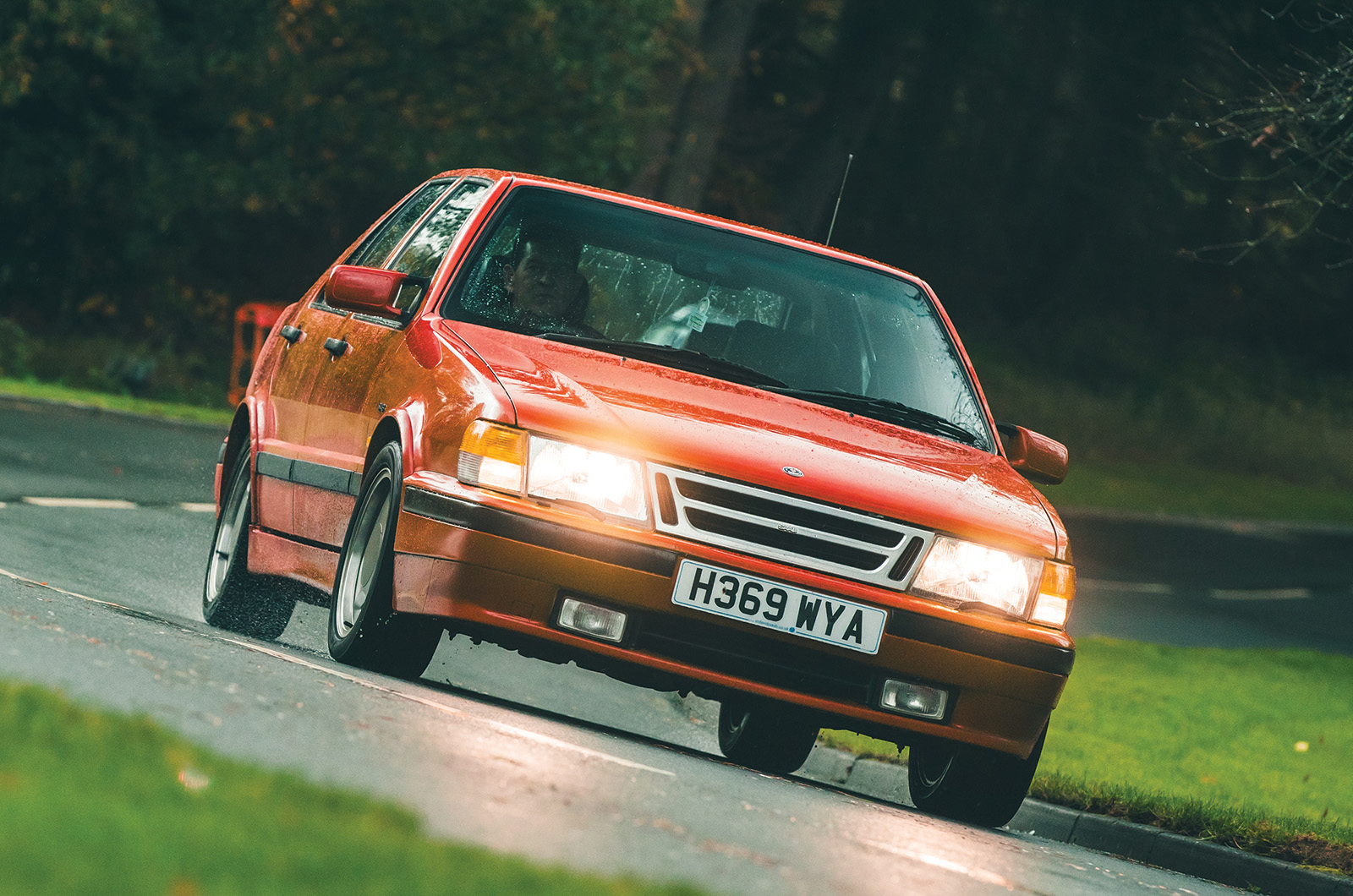
The Saab is slightly quicker but requires more work, managing boost and the largest, most aggressive footprint of the quartet.
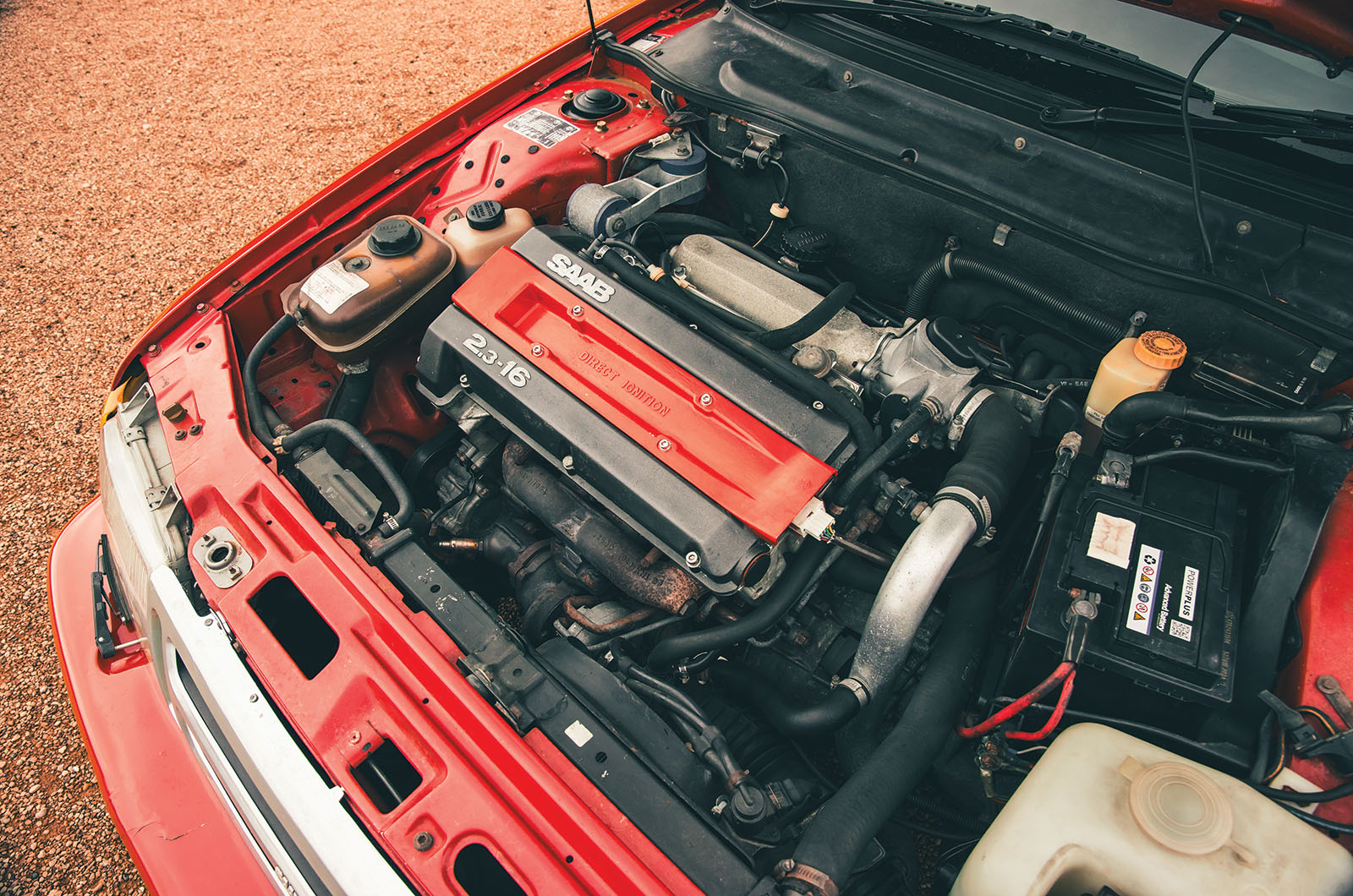
The 2.3-litre B234 turbo arrived in 1991, bringing power for the top 9000 to 200bhp.
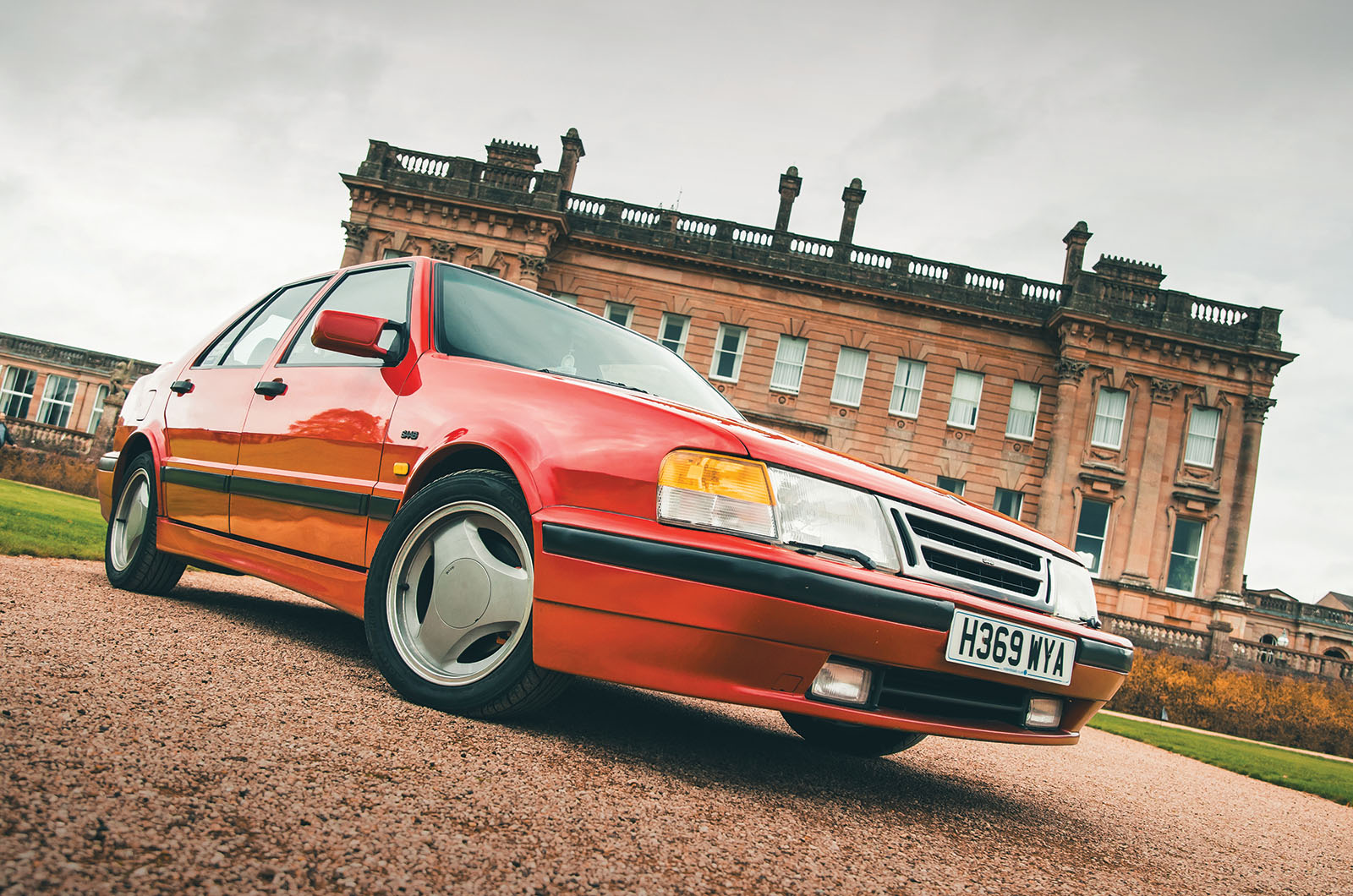
‘Our’ later Carlsson gains the benefit of direct ignition, a ‘slant-nose’ front end and other detail improvements accumulated before the more obviously overhauled 9000CS arrived in 1992.
The firm-riding Saab 9000 Carlsson has on-off power delivery
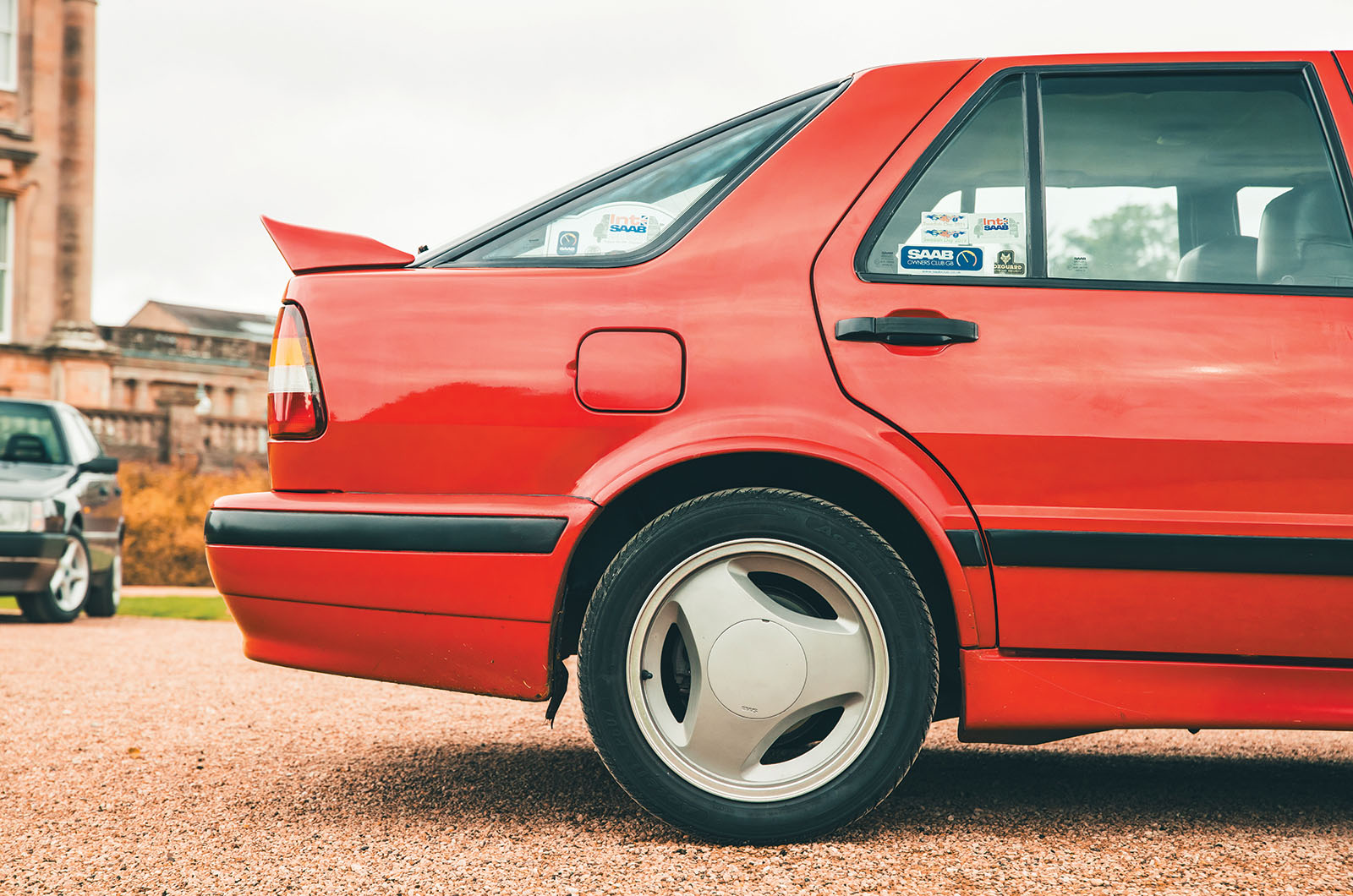
For another £1000 on top of the already pricey £27k Turbo SE, the Carlsson pack includes a power bump to 220bhp, a boy-racer bodykit, 6.5x16in Rial three-spoke alloys and, overruling Erik Carlsson’s insistence for the earlier cars, shorter-travel, stiffer suspension.
It is certainly the firmest-riding of the set, and the heaviest to steer.
This all makes sense when you plant the throttle and a rush of turbocharged energy hurls the Saab forward.
Despite the frantic efforts of the traction-control system, a tight grip is needed on the wheel to manage the rampant 205/60 Pirelli P700s as they try to pour 246lb ft of torque into the Tarmac.
The Saab 9000’s bodykit was part of the Carlsson package of upgrades
The brakes – big, ventilated discs matched only by the Thema’s – offer prodigious stopping power before surprisingly keen turn-in with noticeably less roll than the others, and with firm reaction from the controls it feels easier to pitch the Carlsson into different attitudes mid-corner.
But the engine remains slow in response and dramatic with its delivery, despite all of Saab’s efforts with Automatic Pressure Control, an 8.8:1 compression ratio and the same LH-Motronic computer-controlled injection as the Lancia.
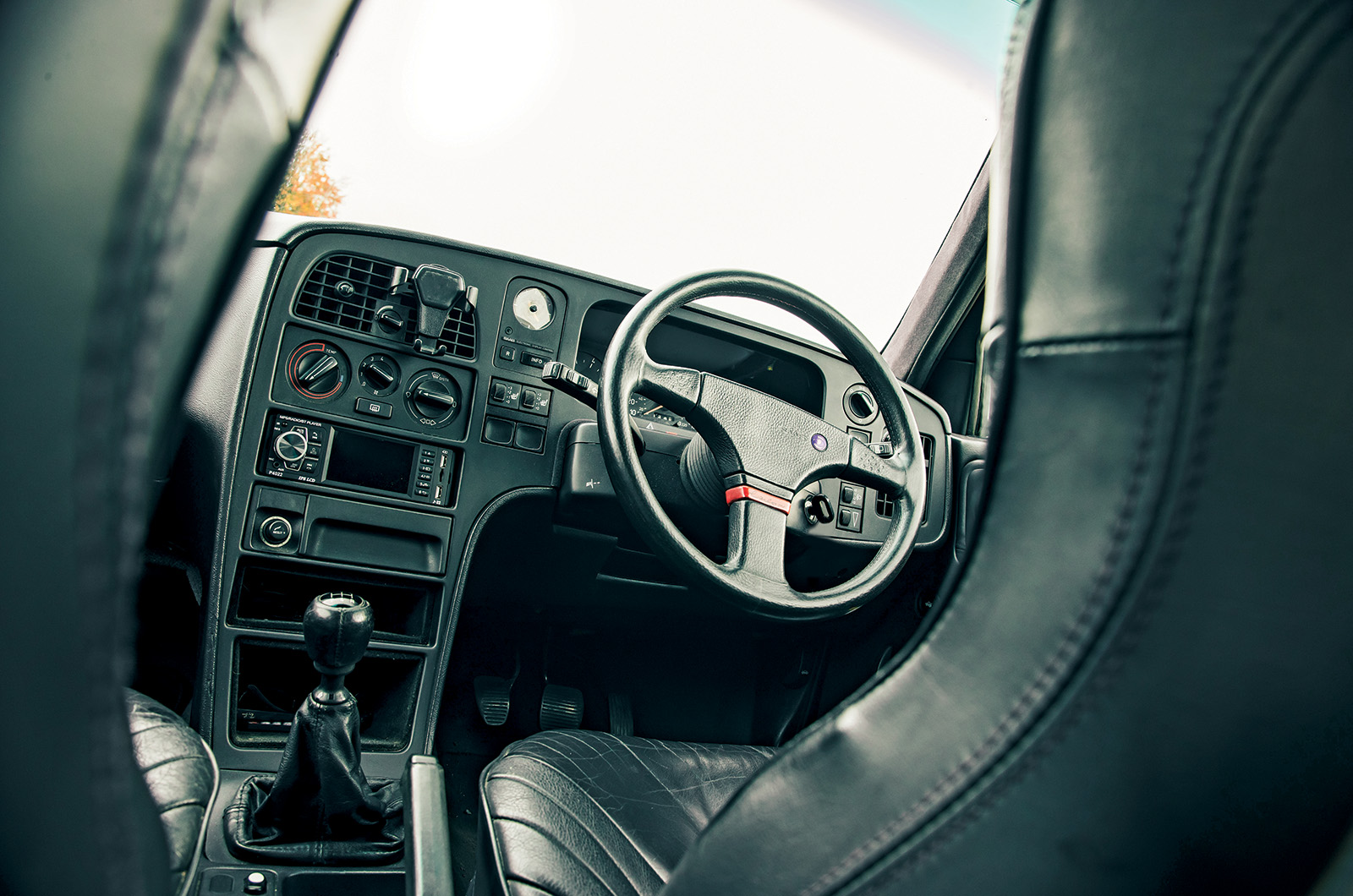
With its upright, L-shaped dashboard, the 9000 has a more enclosed feel than the others, although the bucket seats (from a later 9000CS Aero) aren’t as enveloping as they look.
The modular radio, heater and ashtray units in the Saab’s L-shaped dashboard can be switched around
Thick door panels, rich carpeting and chunky switchgear give the Saab a sense of quality – even the carry-over 900 heater dials have a pleasing weight – but the acres of black vinyl trim make it feel gloomy and hemmed-in.
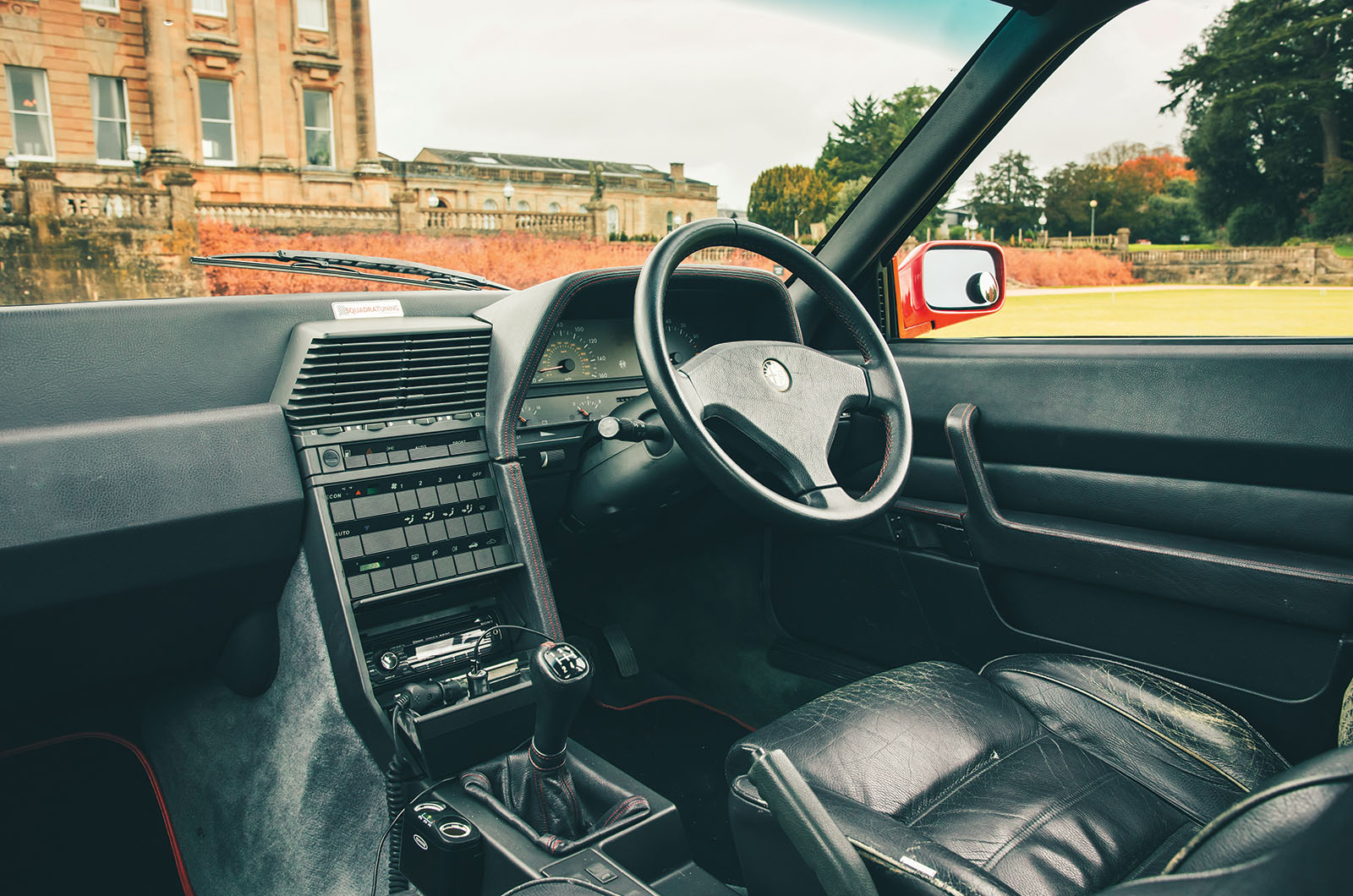
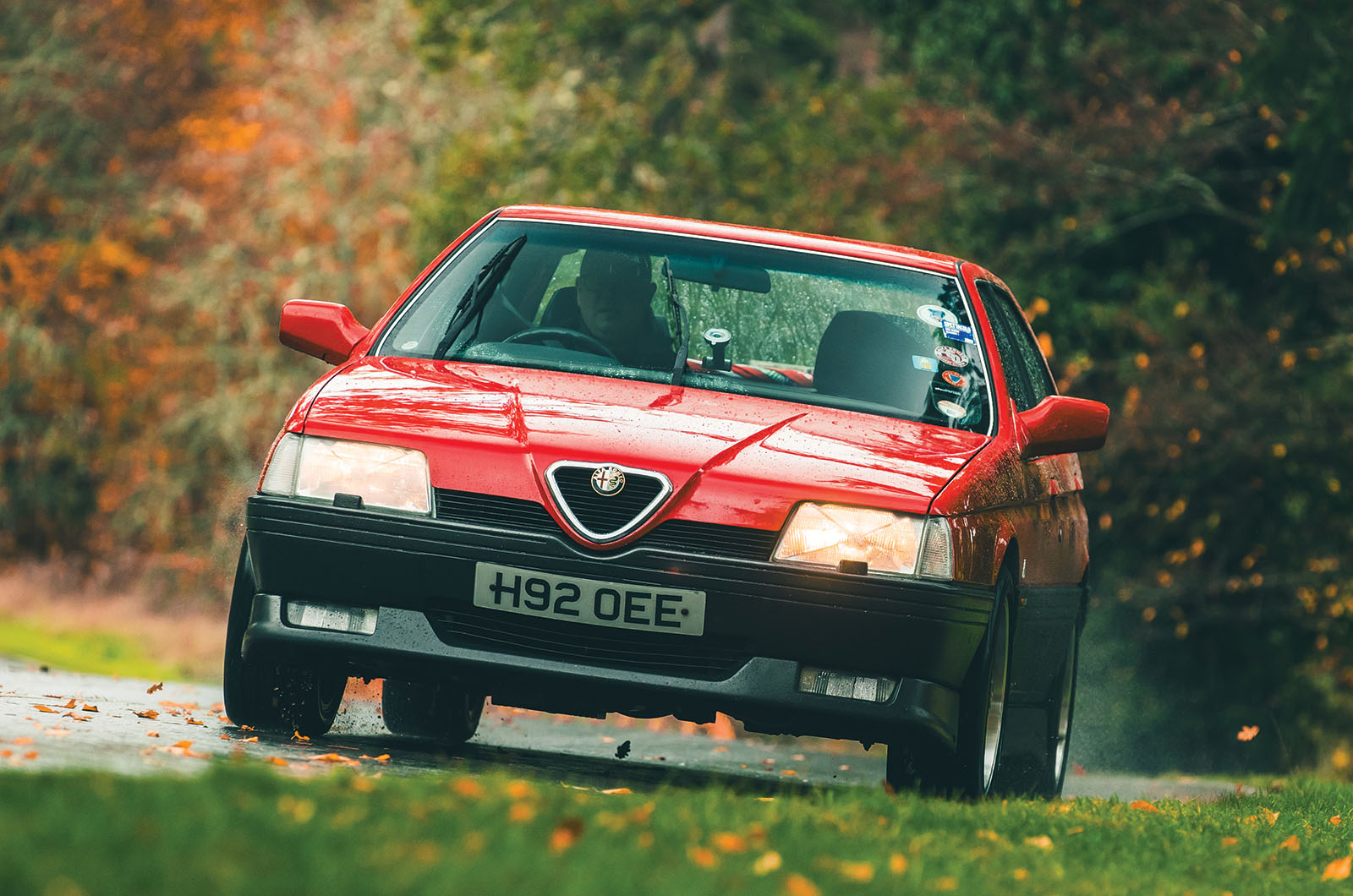
The Alfa Romeo, in contrast, is an infectious work of aesthetic harmony, luring you with its crisp lines to an interior that blends intriguing contours with orderly switchgear.
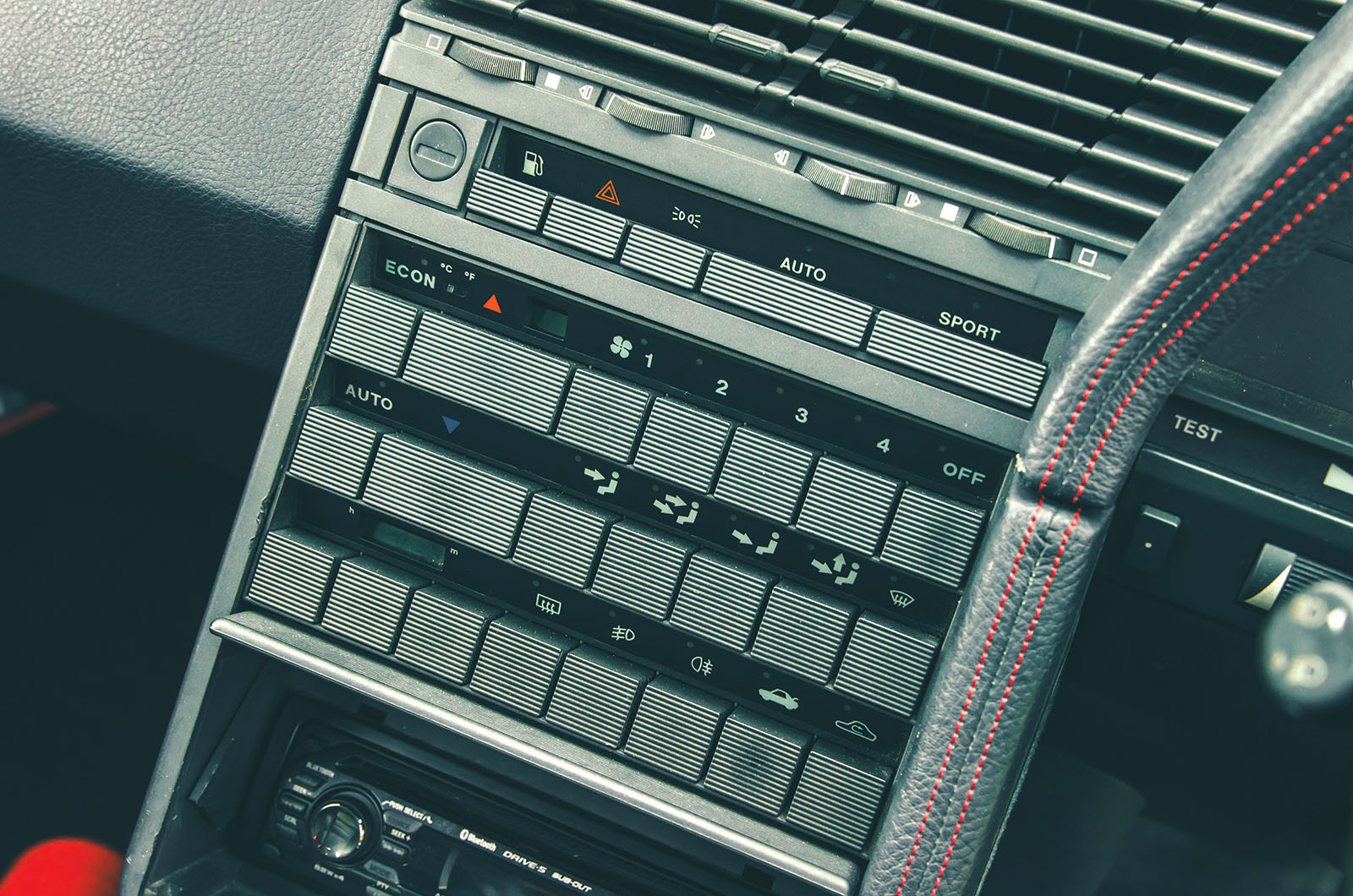
The same hi-fi-quality click and multi-line texture of the oddly uniform heater controls is matched to everything else in here, all the way back to the buttons for the rear reading lights.
The extra time invested in this car is obvious.
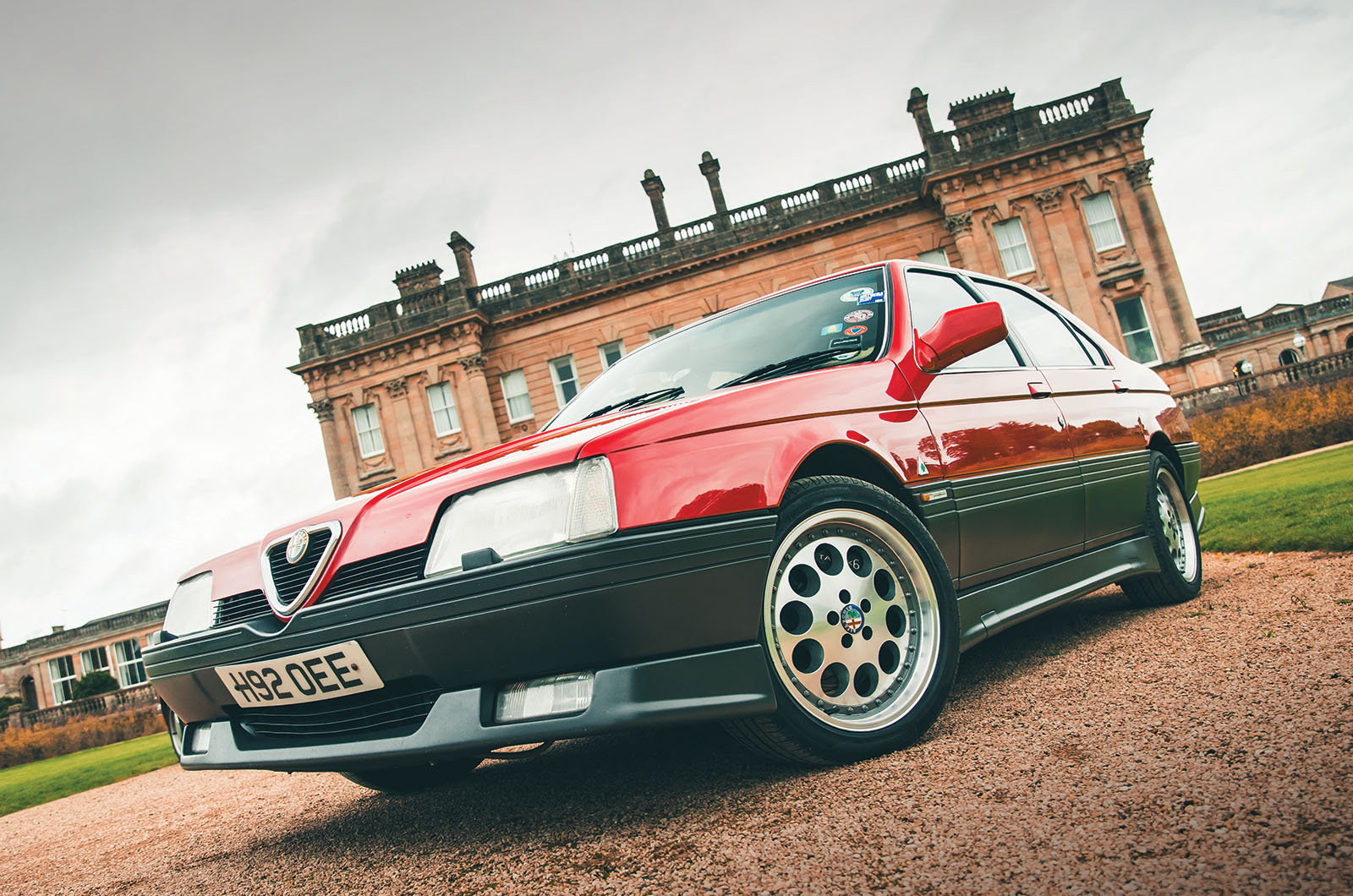
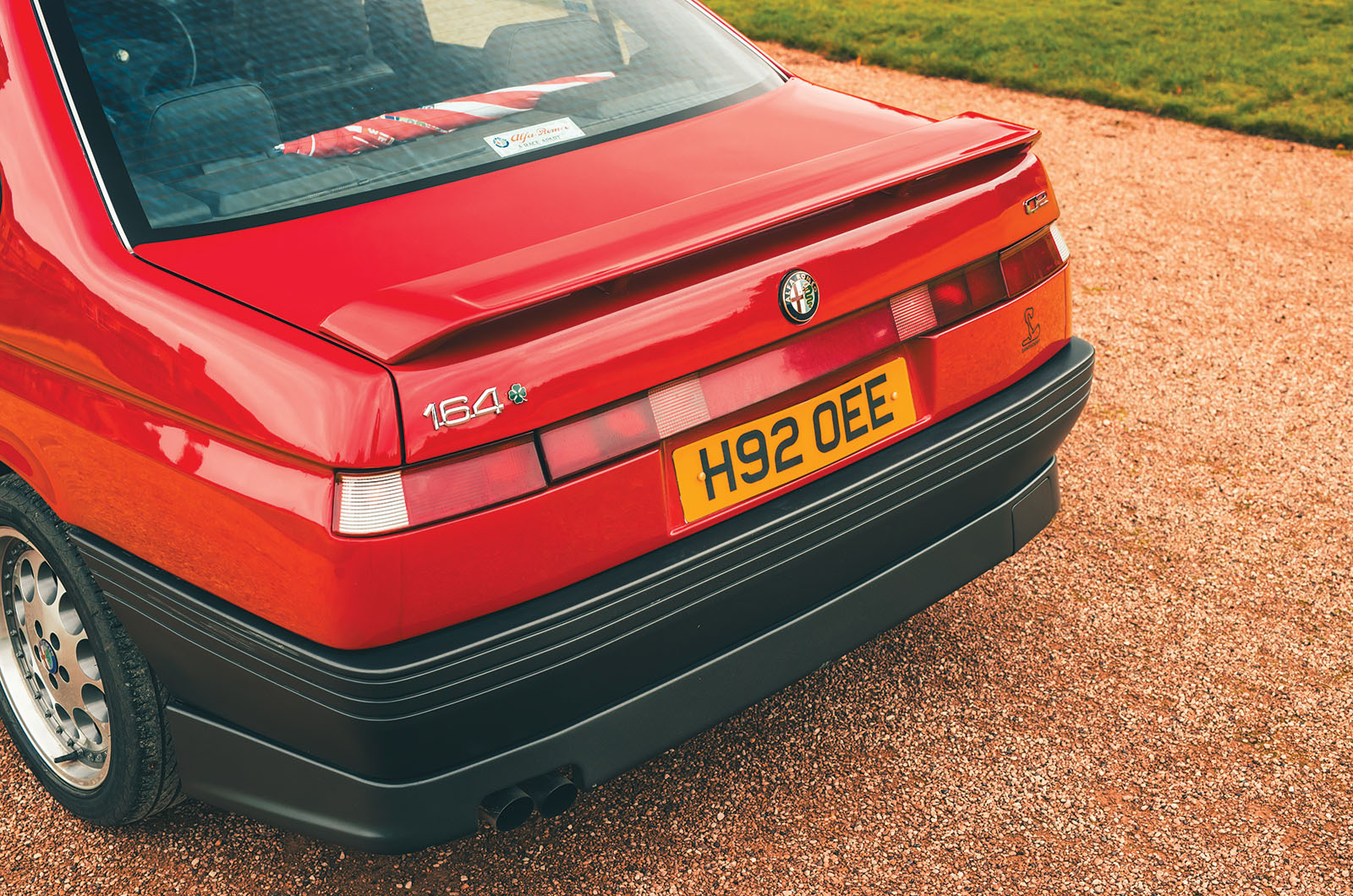
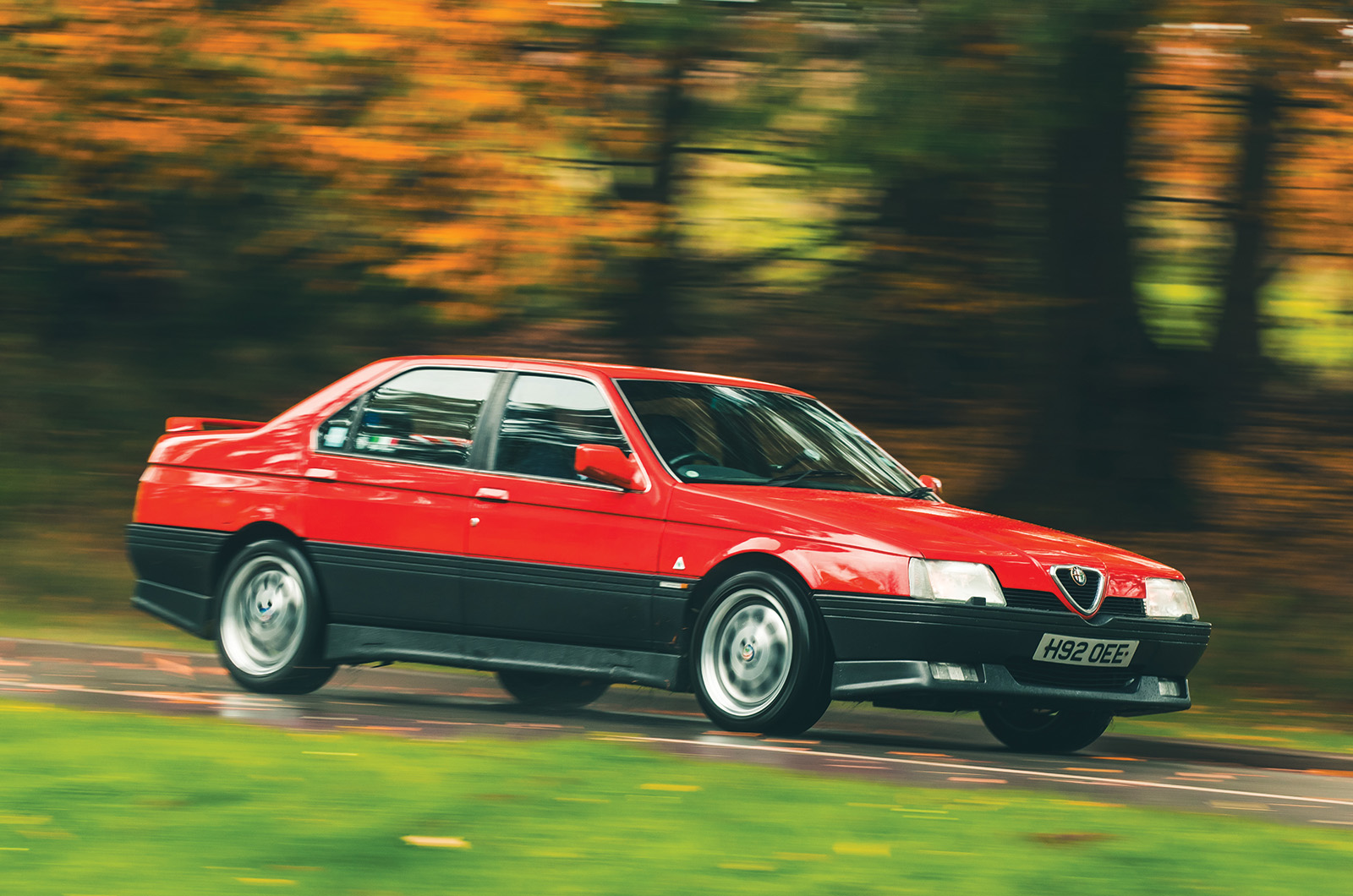
This Alfa Romeo 164 Cloverleaf rides on period-look 17in alloy wheels
From the turn of the key to the suppression of road noise at speed, the additional insulation makes the 164 feel like a newer generation of car. At 1444kg, it’s also the heaviest here.
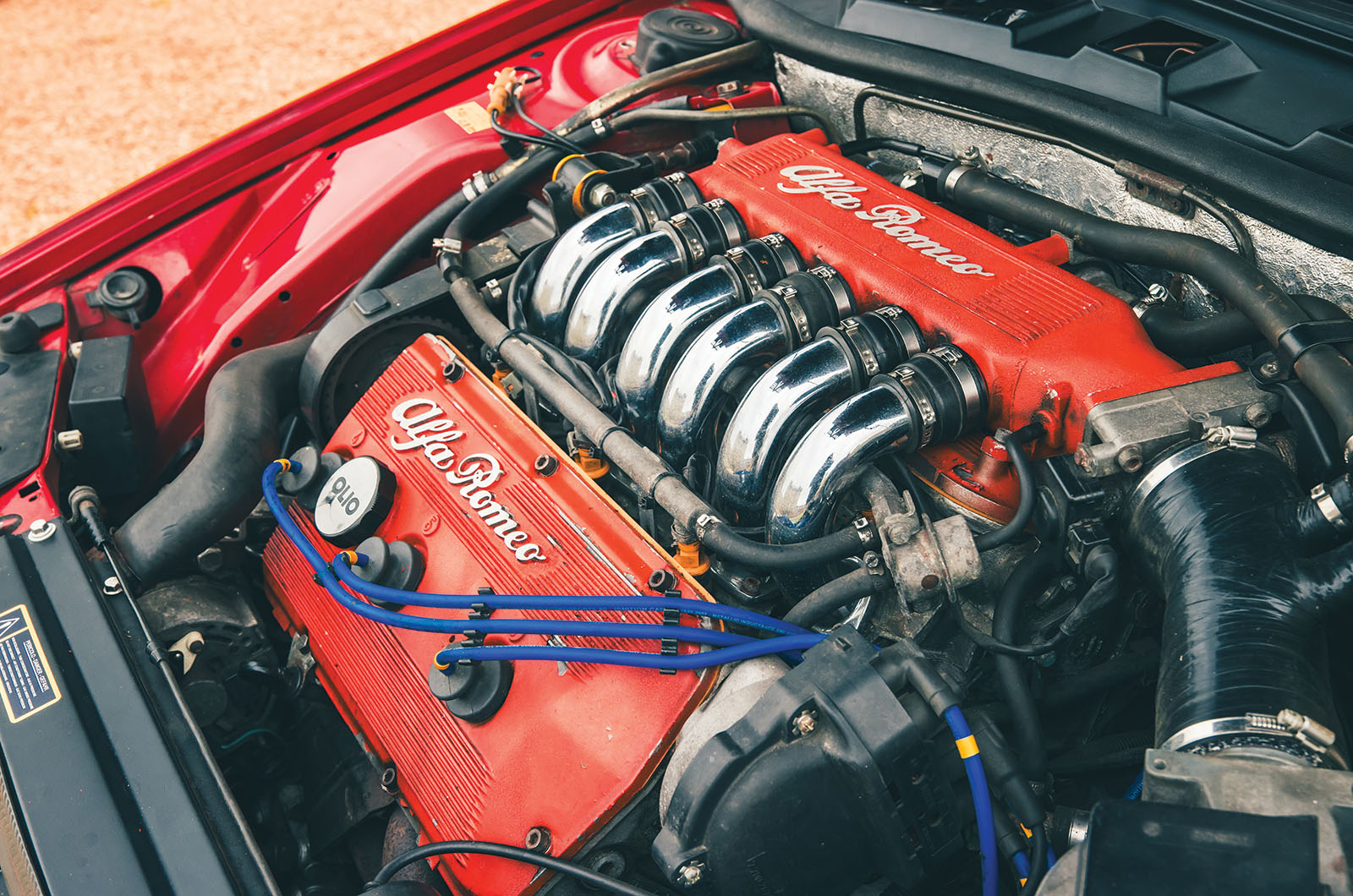
In this early, 12-valve Cloverleaf form, the 3-litre V6 is raised to 200bhp and 195lb ft by SZ-derived cams and a 10:1 compression ratio, while the suspension gets adaptive dampers as standard and a 1in-lower ride height.
The owner of this car has fitted a 147GTA limited-slip diff and larger brakes behind period-look 17in rims.
The Giuseppe Busso-designed V6 gives instant response from its light, highly sprung throttle, urging the 164 forward with lusty enthusiasm.
Appealing cabin architecture lives up to the Alfa Romeo’s external promise
Third in the Cloverleaf’s shorter-ratio ’box is quickly consumed in a range of baritone reverberations, with a noticeable step up after 4000rpm.
The gearchange is sweeter than the others, feeling more accurately bushed, and the whole car feels more solid as it deals with your inputs, although there is something detached about the steering.
Torquesteer blights the 164 beyond the subtle corruptions of its Type Four relations, despite Alfa’s attempts to quell it – the Cloverleaf introduced new front suspension geometry and lowered the engine by 30mm – and the aggressive Q2 diff only half solves the problem.
Yet turn-in is better even than the determined Saab, and the adaptive damping is a step ahead in controlling its mass.
The Alfa Romeo 164 Cloverleaf’s bewildering array of buttons gives a distinctly 1980s look
The 164 corners flat, neutral and with the appetite of a hot hatch, while retaining a remarkably fine ride.
Beloved by all who drove it, this was the perfect spearhead for a campaign of new Alfas that followed.
At £25,100, the facelifted 24-valve V6 Super of 1993 reached price parity with BMW’s formidable 525i SE, and was seen as entirely worthy.
The early 1990s hadn’t been kind to anyone’s bottom line, but the marque’s revival over the following decade could stand on solid ground, even if the convertible and coupé never arrived, and the expensive four-wheel-drive Q4 remained a niche offering only for the Continental market.
The Alfa Romeo 164 Cloverleaf has hot-hatch-keen turn-in
It’s a shame the 166 was such a quiet second act in 1996; instead, all eyes were on the smaller 156 that stepped into the exploding compact-executive market.
Just as Alfa was taking its leap of faith, Fiat and Lancia felt the big-car ground fall from beneath them.
Suddenly the Croma and Thema looked desperately dated, despite a rash of facelifts. The Thema estate, not sold in the UK, failed to inspire much interest.
In Britain, the Croma was discontinued in ’93, on the back of falling sales and crushing depreciation.
Even with few on the market, year-old Themas were losing 50% of their value in 1994, the year the marque abandoned the UK market for good.
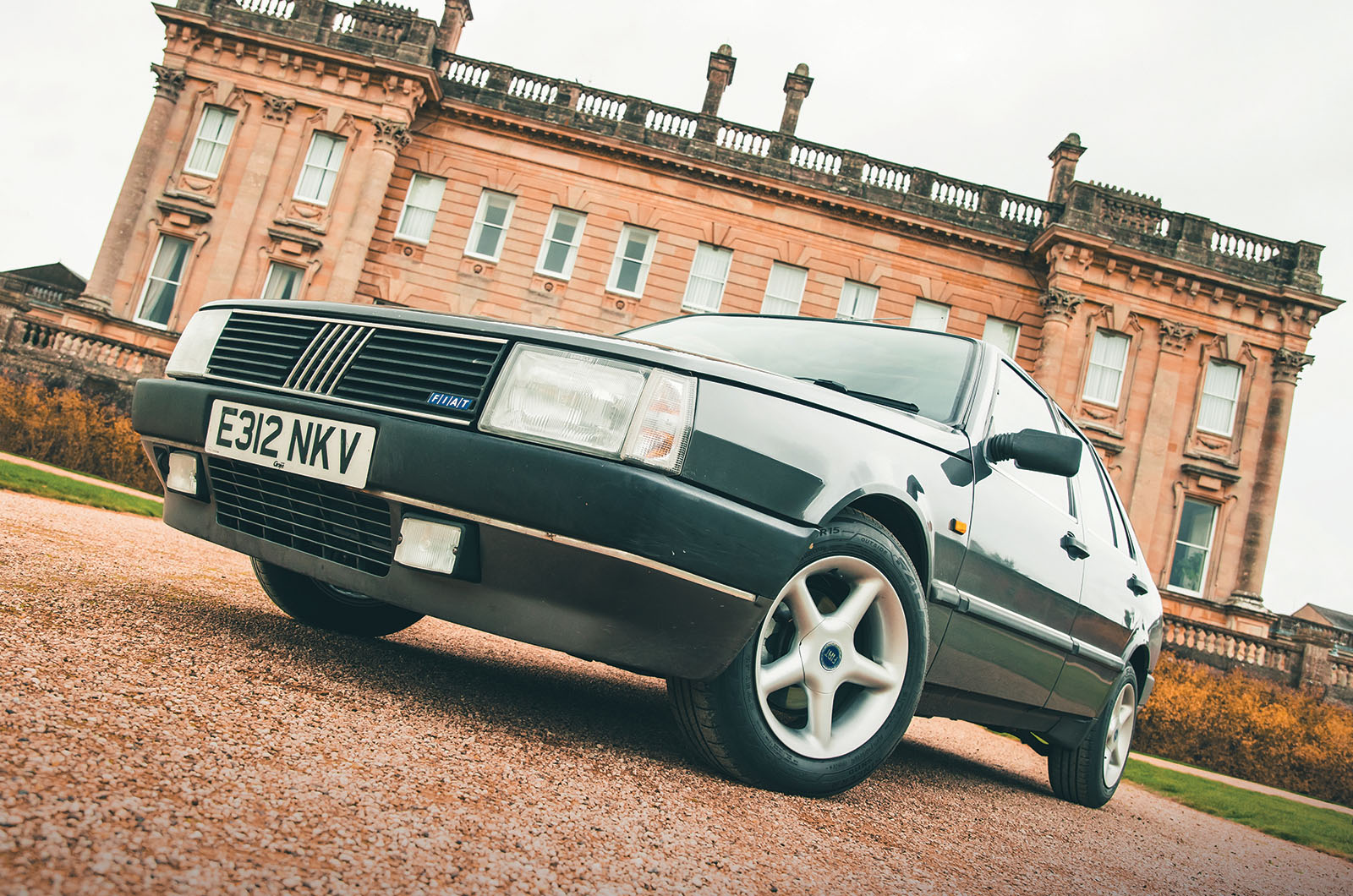
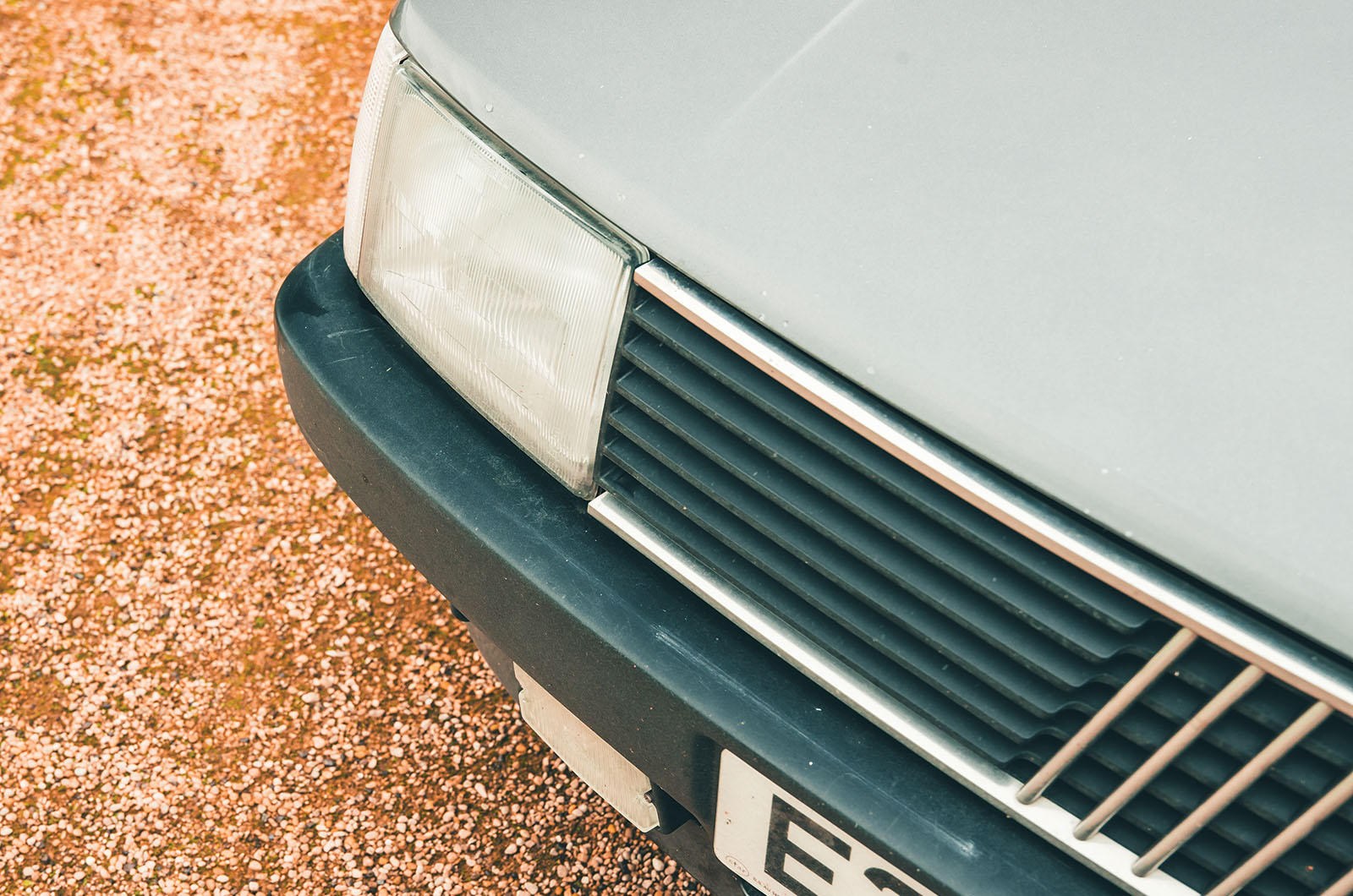
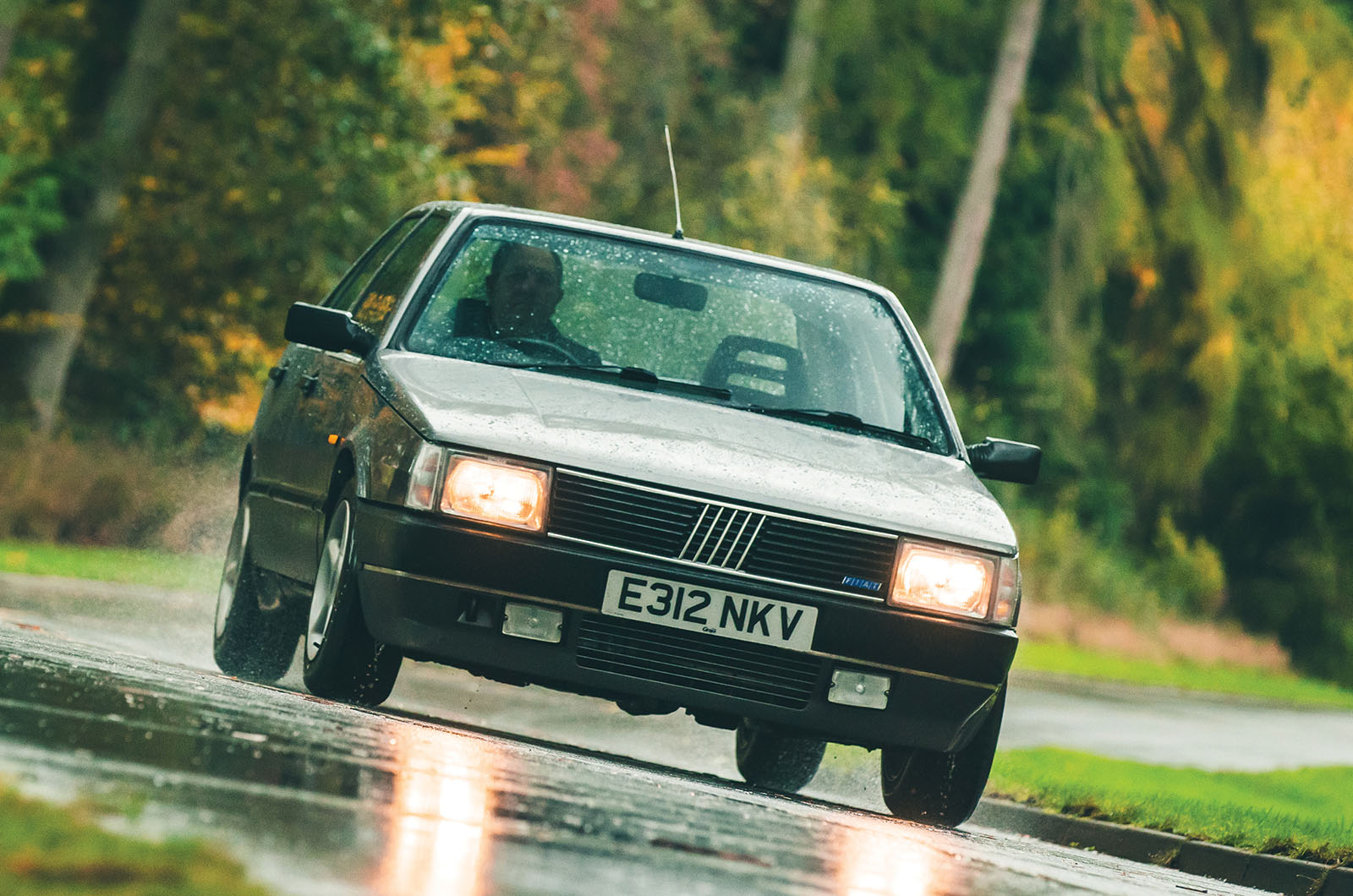
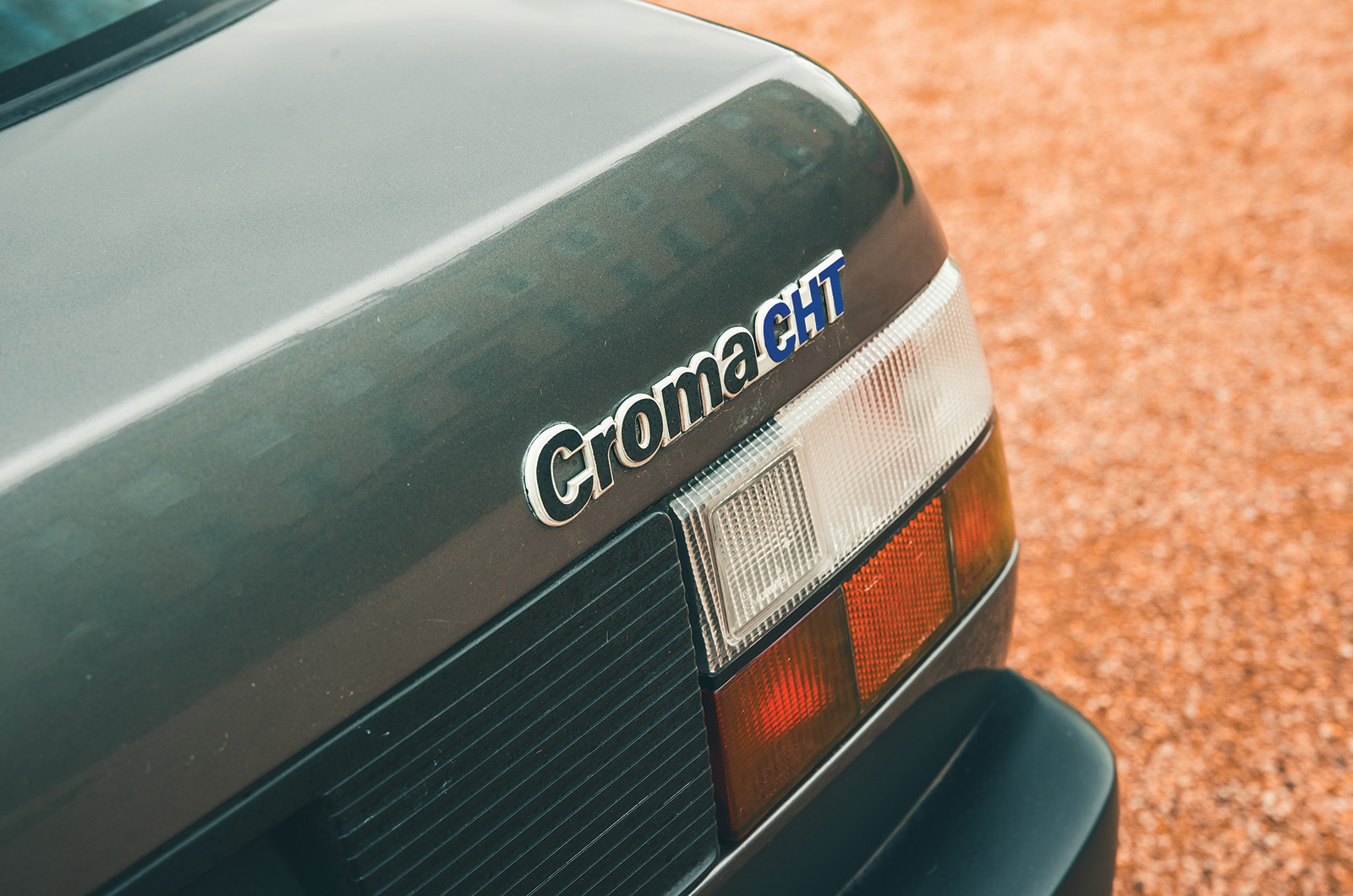
The eco-focused Fiat Croma CHT was the volume seller
While Fiat refocused on small cars, Lancia never recovered, swaying from the strikingly bland Kappa to the superficial quirkiness of the Thesis as flagships of a fading spirit.
While Alfa fell flat in the North American market, Saab built on its early successes there such that, by the ’90s, half its cars crossed the Atlantic.
In 1994, annual production of 45,000 9000s eclipsed Lancia’s global sales of 32,770.
Then Saab, too, was blessed (or cursed) with the funding of a giant, General Motors, for a great expansion of its model range that led to a brief golden era.
When the 9000 bowed out in 1998, loyalists mourned the last ‘true Saab’ as a relic of the firm’s lost independence.
Lancia left the UK in 1994
Times were changing.
Shared engineering was just the start of a new era of pressure on balance sheets, where conglomerates swallowed up greater parts of industries and everything was tracked by the computers that gave offices a new, glowing ambience.
The cars advanced just as quickly, growing in ability and sophistication, leaving behind the spirits of marques increasingly mired in marketing.
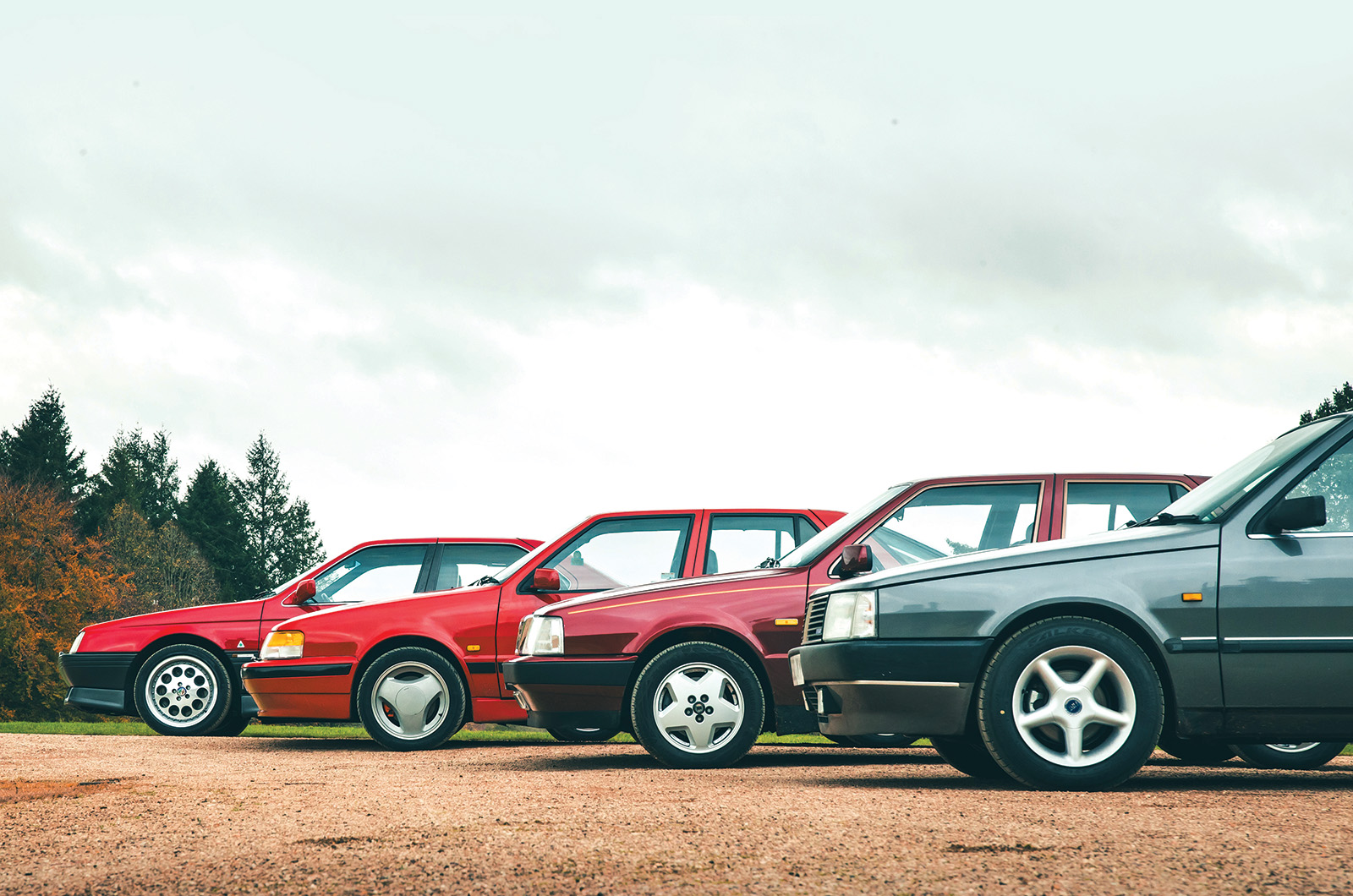
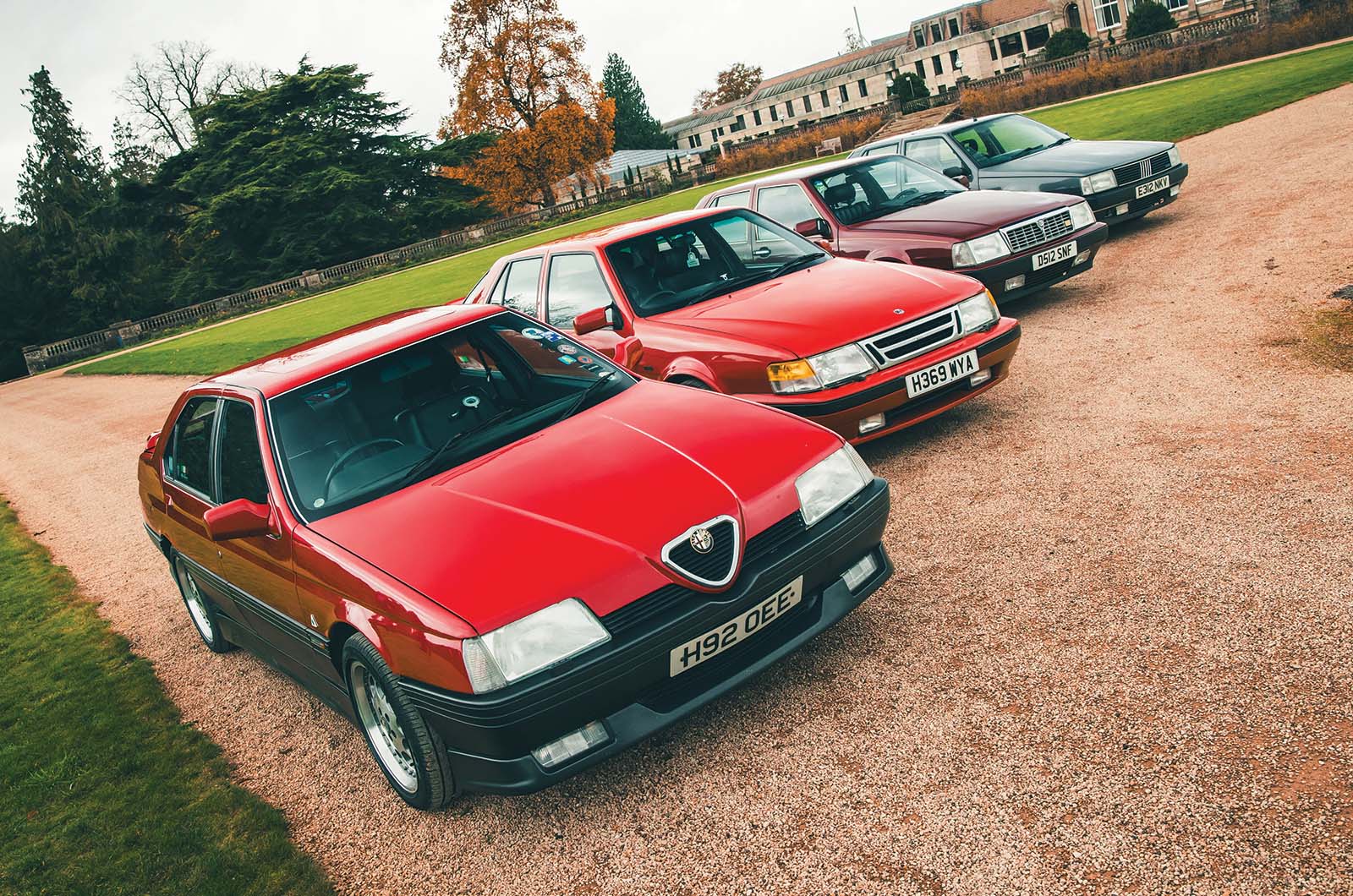
As the Type Fours have turned from visions of the future to bridges to the past, we can be thankful that they aren’t all one and the same.
Images: Jack Harrison
Thanks to: Heythrop Park, Reserve by Warner Hotels; Saab Owners’ Club of GB; Alfa Romeo Owners’ Club UK; Anglia Car Auctions; McGrath Maserati
Factfiles
Alfa Romeo 164 Cloverleaf
- Sold/number built 1987-’98/273,857 (all)
- Construction steel monocoque
- Engine all-alloy, sohc-per-bank 2959cc V6, Motronic fuel injection
- Max power 200bhp @ 5800rpm
- Max torque 198lb ft @ 4400rpm
- Transmission five-speed manual, FWD
- Suspension independent, at front by MacPherson struts rear struts, transverse and trailing links; anti-roll bar f/r
- Steering power-assisted rack and pinion
- Brakes vented front, solid rear discs, with servo and anti-lock
- Length 14ft 11⅓in (4555mm)
- Width 5ft 9⅓in (1760mm)
- Height 4ft 7in (1400mm)
- Wheelbase 8ft 8¾in (2660mm)
- Weight 3183lb (1444kg)
- 0-60mph 7.8 secs
- Top speed 143mph
- Mpg 21.4
- Price new £25,965 (1991)
- Price now £10-15,000*
Saab 9000 Carlsson
- Sold/number built 1984-’98/503,087 (all)
- Construction steel monocoque
- Engine iron-block, alloy-head, dohc 2290cc ‘four’, Mitsubishi TD04 turbocharger, Bosch LH-Motronic fuel injection
- Max power 220bhp @ 6500rpm
- Max torque 246lb ft @ 2000rpm
- Transmission five-speed manual, FWD
- Suspension: front independent, by MacPherson struts rear beam axle, trailing links, Panhard rod, coil springs, telescopic dampers; anti-roll bar f/r
- Steering power-assisted rack and pinion
- Brakes vented discs, servo and anti-lock
- Length 15ft 8¼in (4780mm)
- Width 5ft 9½in (1764mm)
- Height 4ft 8in (1420mm)
- Wheelbase 8ft 9¼in (2672mm)
- Weight 3053lb (1385kg)
- 0-60mph 7.4 secs
- Top speed 145mph
- Mpg 20.7
- Price new £28,595 (1991)
- Price now £5-10,000*
Lancia Thema 8.32
- Sold/number built 1984-’94/c336,000 (all)
- Construction steel monocoque
- Engine all-alloy, dohc-per-bank 2927cc V8, Bosch KE3-Jetronic fuel injection
- Max power 212bhp @ 6750rpm
- Max torque 210lb ft @ 4500rpm
- Transmission five-speed manual, FWD
- Suspension independent, at front by MacPherson struts rear struts, transverse and trailing links; anti-roll bar f/r
- Steering power-assisted rack and pinion
- Brakes vented front, solid rear discs, with servo and anti-lock
- Length 15ft ¾in (4590mm)
- Width 5ft 8¼in (1733mm)
- Height 4ft 8½in (1433mm)
- Wheelbase 8ft 8¾in (2660mm)
- Weight 3137lb (1423kg)
- 0-60mph 7.2 secs
- Top speed 139mph
- Mpg 15.6
- Price new £37,500 (1988)
- Price now £20-35,000*
Fiat Croma CHT
- Sold/number built 1985-’96/c438,000 (all)
- Construction steel monocoque
- Engine iron-block, alloy-head, dohc 1995cc ‘four’, single Weber 34DAT 54/350 carburettor
- Max power 90bhp @ 5500rpm
- Max torque 124lb ft @ 2800rpm
- Transmission five-speed manual, FWD
- Suspension independent, at front by MacPherson struts rear struts, transverse and trailing links; anti-roll bar f/r
- Steering power-assisted rack and pinion
- Brakes discs, with servo
- Length 14ft 9in (4495mm)
- Width 5ft 9⅓in (1760mm)
- Height 4ft 8½in (1433mm)
- Wheelbase 8ft 8¾in (2660mm)
- Weight 2390lb (1084kg)
- 0-60mph 12.1 secs
- Top speed 113mph
- Mpg 31.1
- Price new £9364.93 (1987)
- Price now £3-6000*
*Prices correct at date of original publication
Enjoy more of the world’s best classic car content every month when you subscribe to C&SC – get our latest deals here
READ MORE
Supersaloon showdown: BMW M5 vs Jaguar S-type R vs Maserati Quattroporte vs Mercedes-Benz E55 AMG
Buyer’s guide: Alfa Romeo 156 GTA
Ferrari 328GTS vs Lotus Esprit Turbo vs Lamborghini Jalpa: junior supercar showdown
Aaron McKay
Aaron is Classic & Sports Car’s Deputy Editor