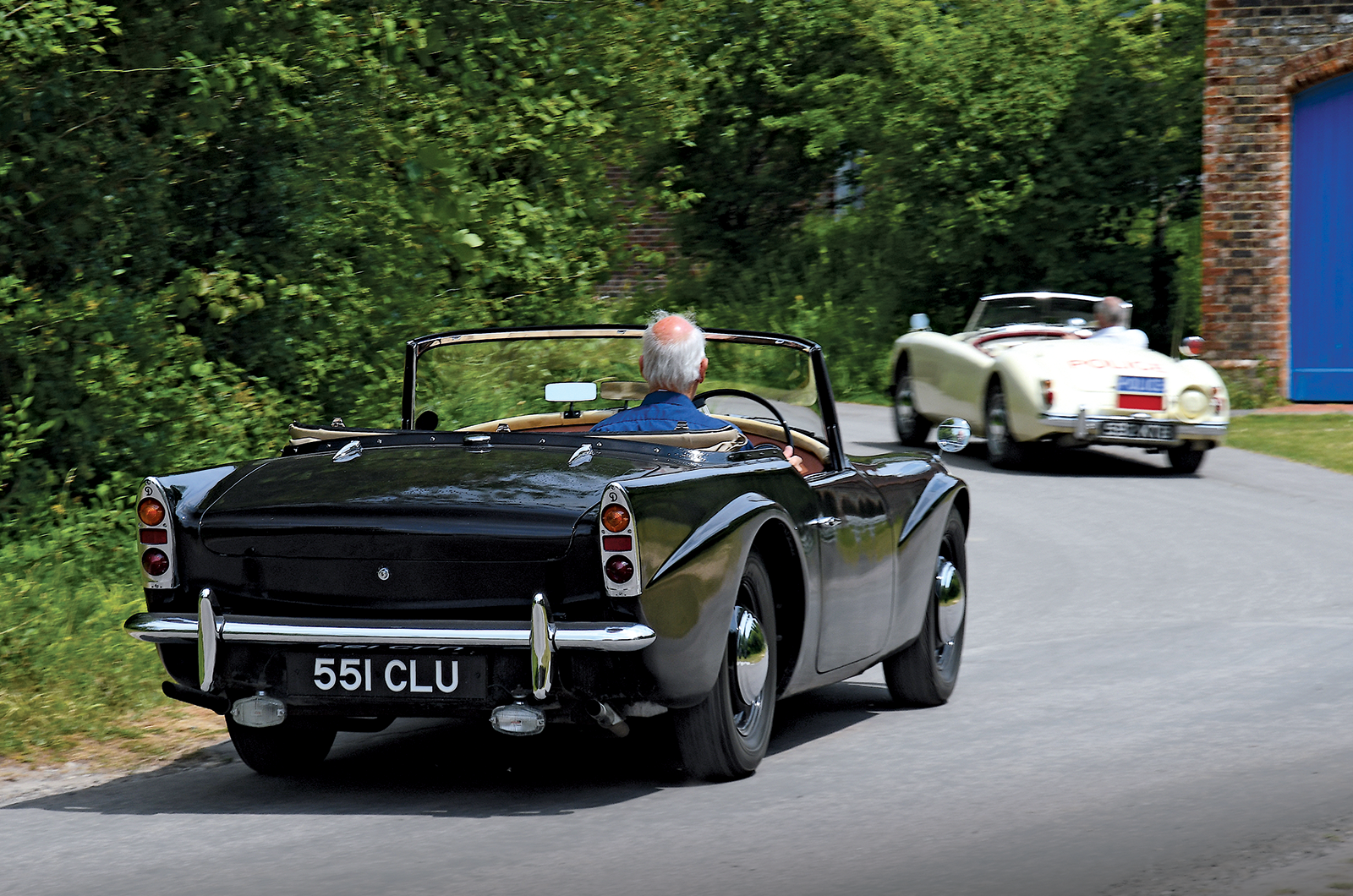
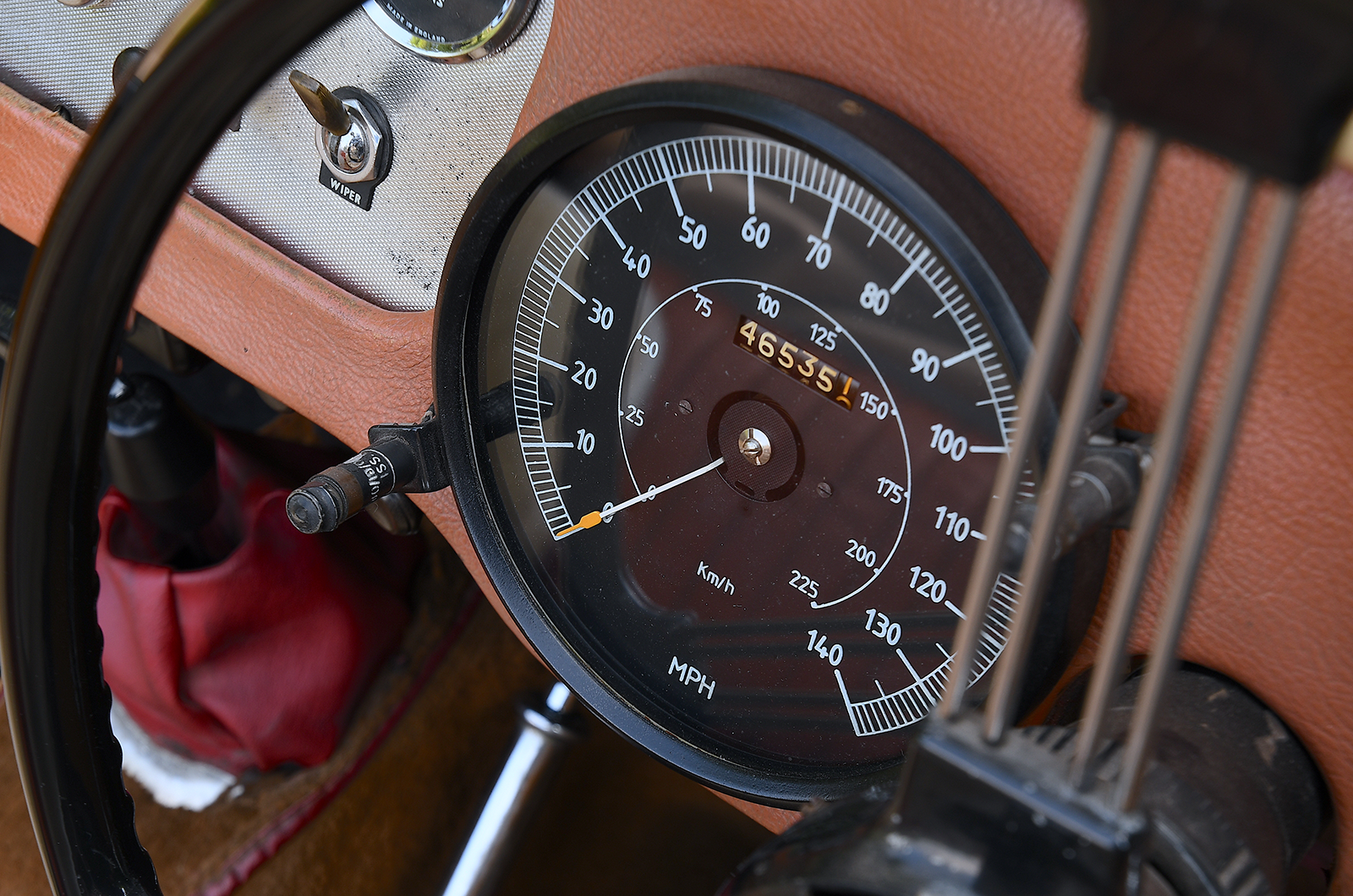
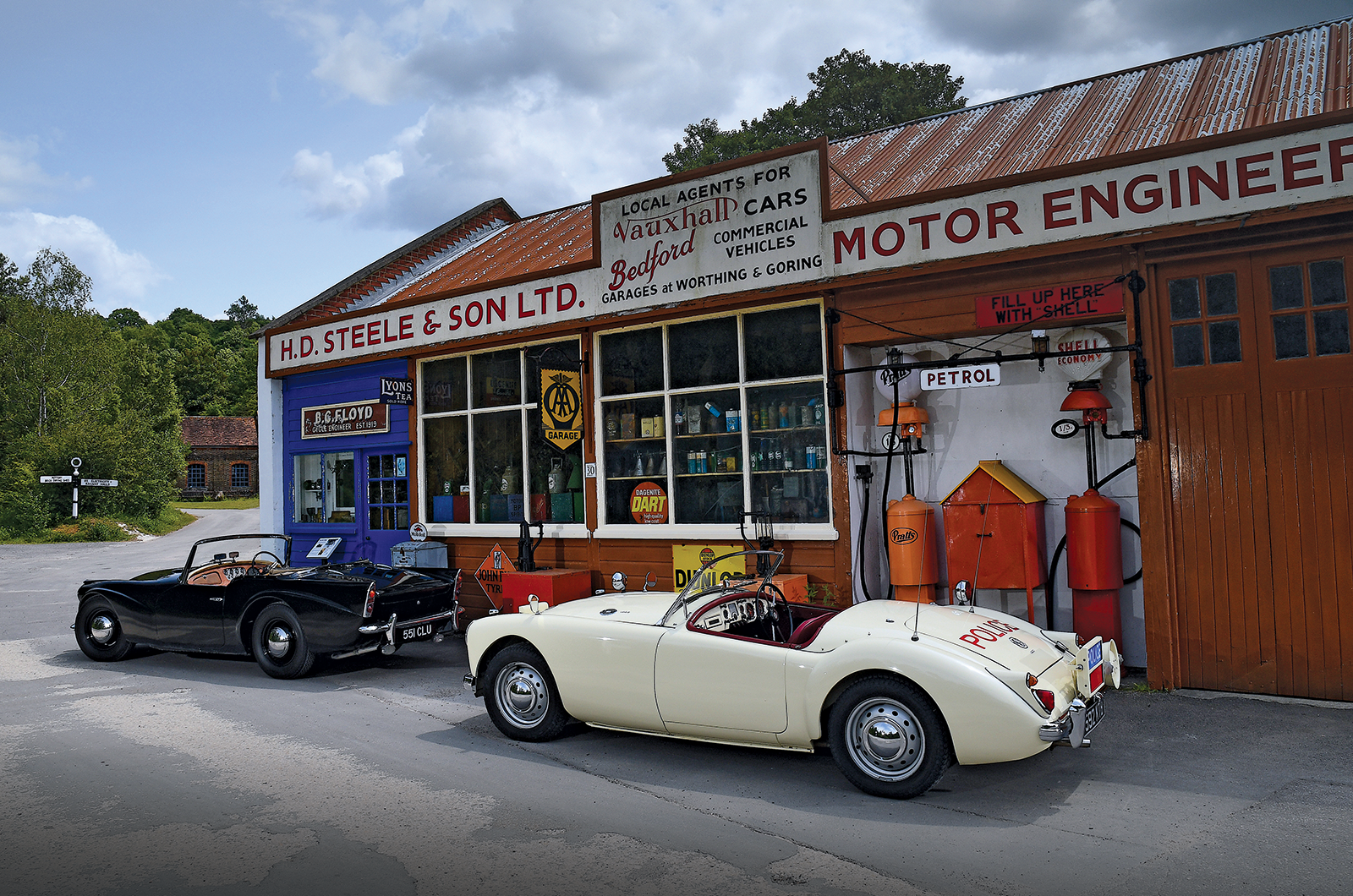
“My car was then based at Thornton Heath [near Croydon in south London] and was finally decommissioned in late 1965,” Jon adds.
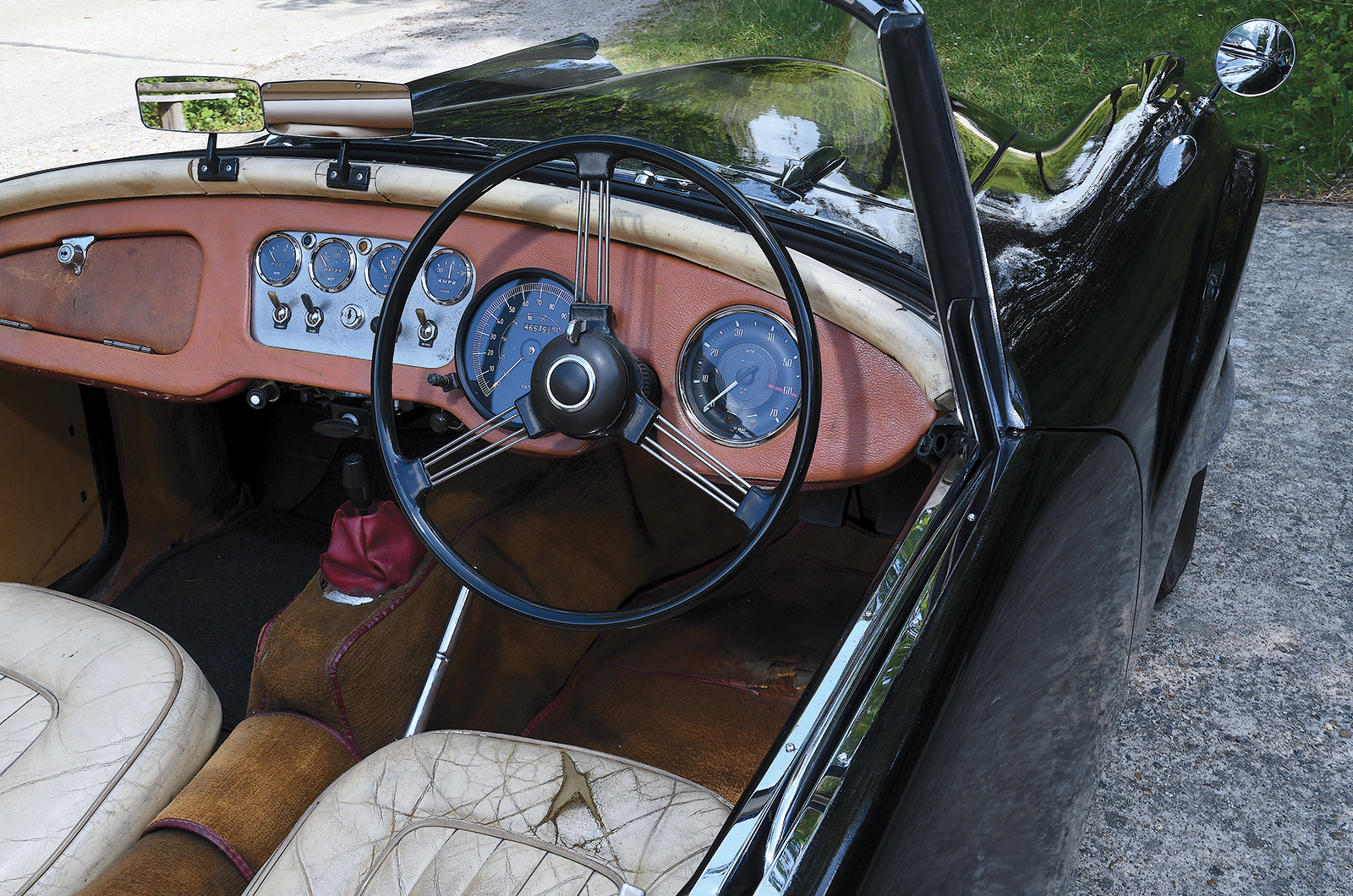
The Daimler SP250 police car’s cabin carries the patina of its many years in service
“I bought it in 2014 when its previous owner became too old to drive it; the car had been stored for 15 years,” he continues.
“Apart from a rebuilt differential, I haven’t touched it since.”
Compared with the MG, the Daimler seems more genteel, with its winding windows and external doorhandles.
It is also more spacious, although the vestigial rear seat was not entirely suited to hosting even a reluctant passenger.
Jon notes: “I have heard of a Daimler carrying a police cadet behind the driver, but it would have been a tight squeeze.”
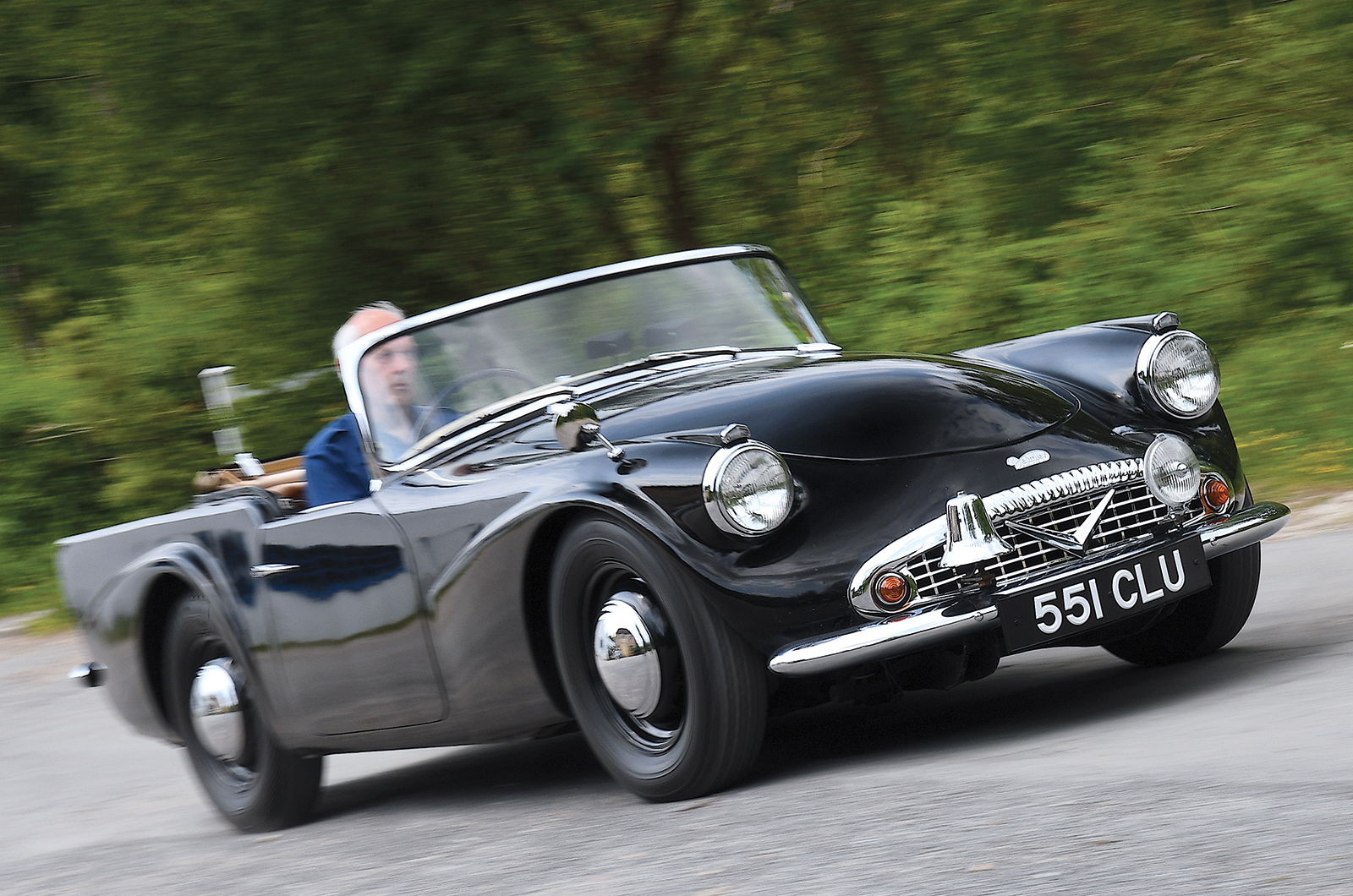
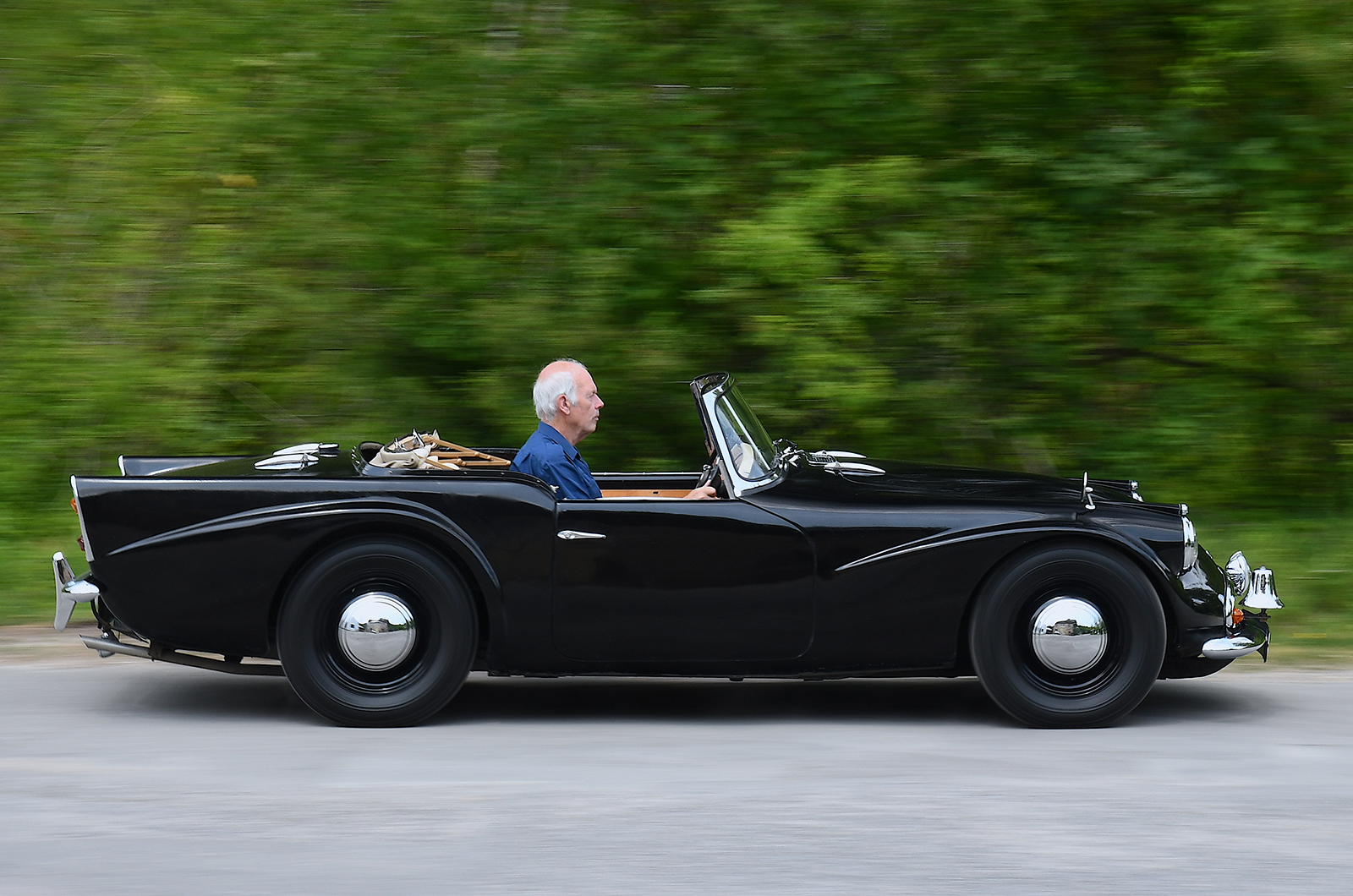
In terms of looks, the SP250’s glassfibre bodywork is best described as a blend of the dramatic, with its fins, and the sober, due to its livery.
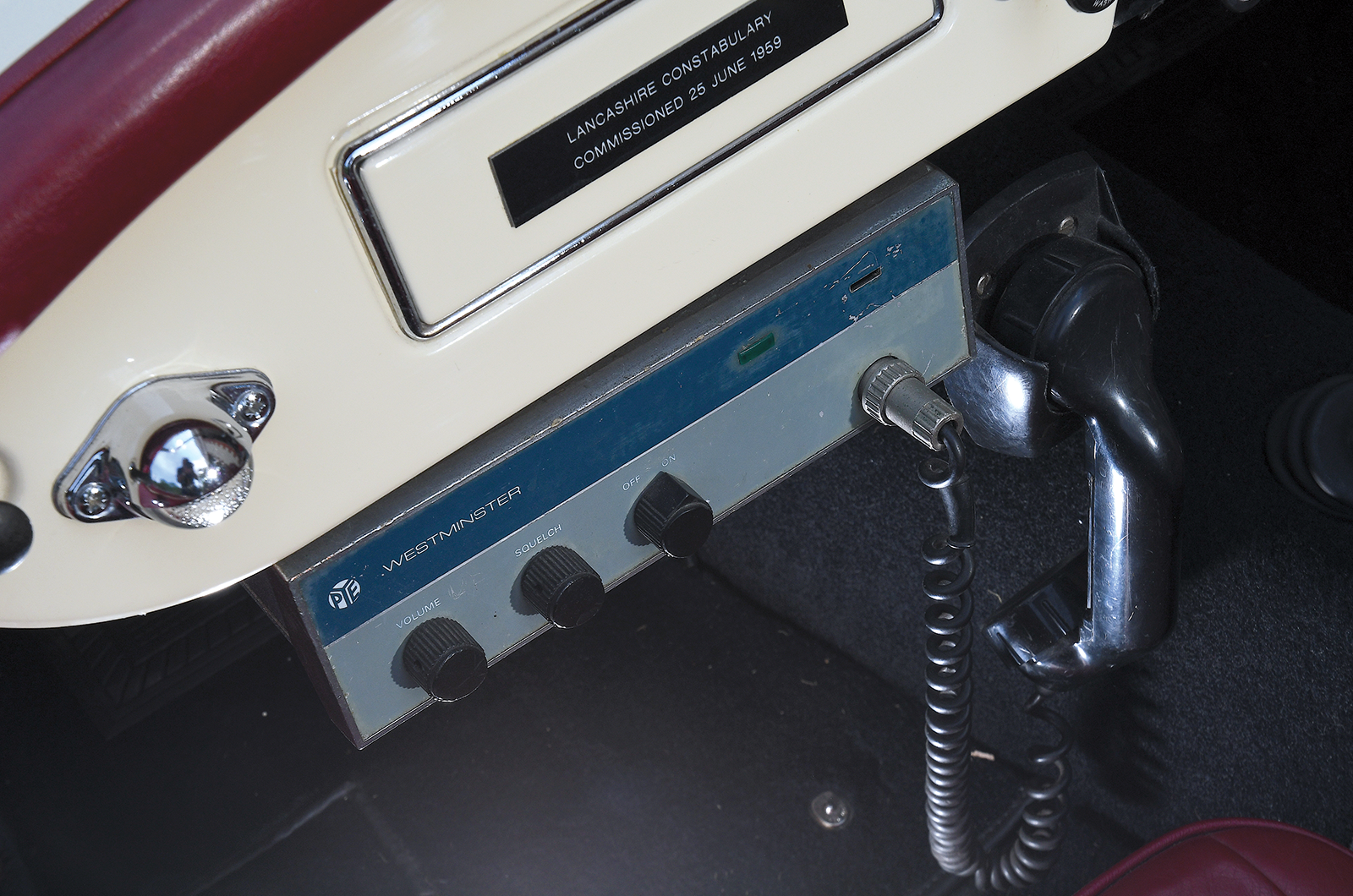
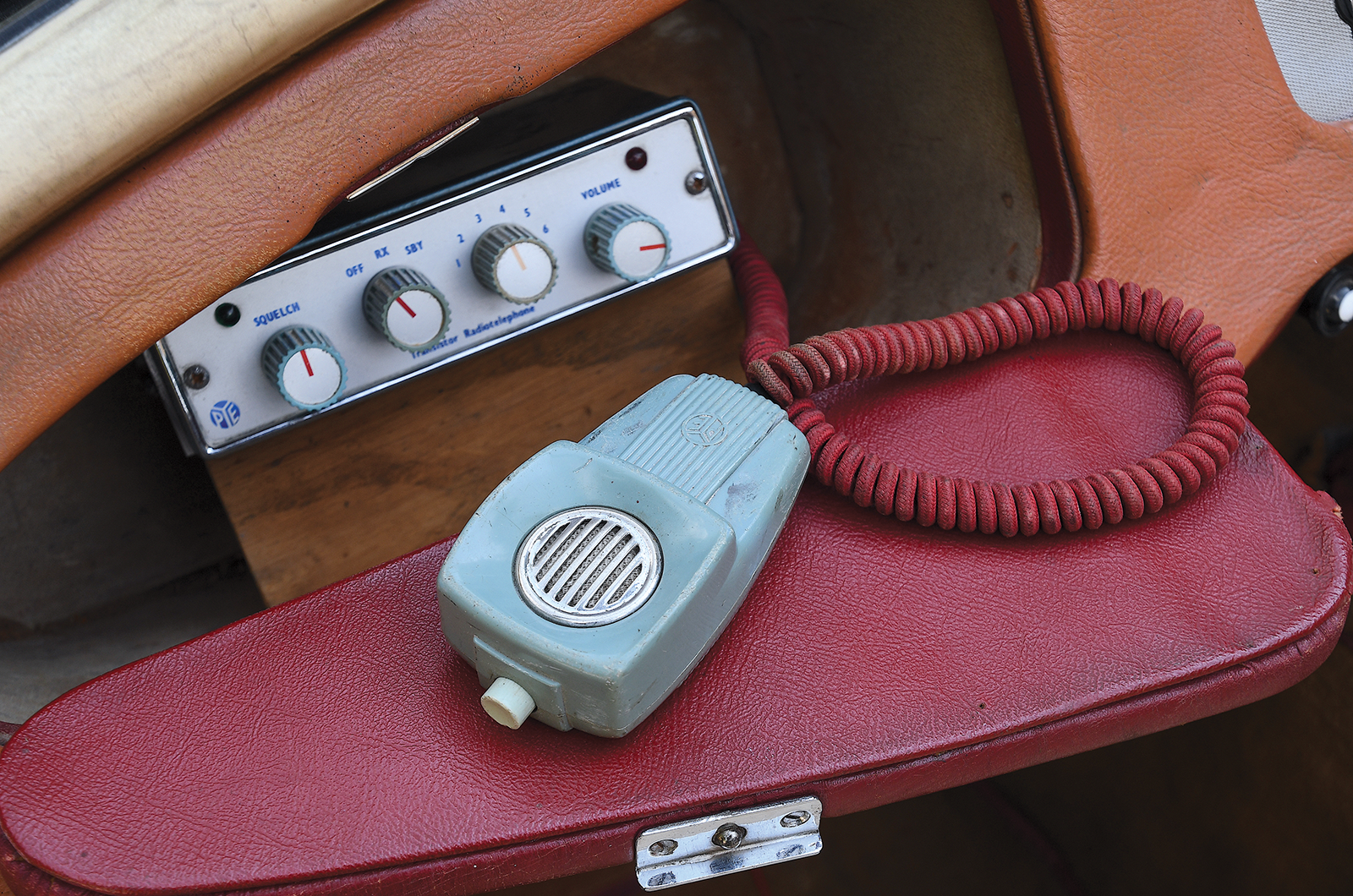
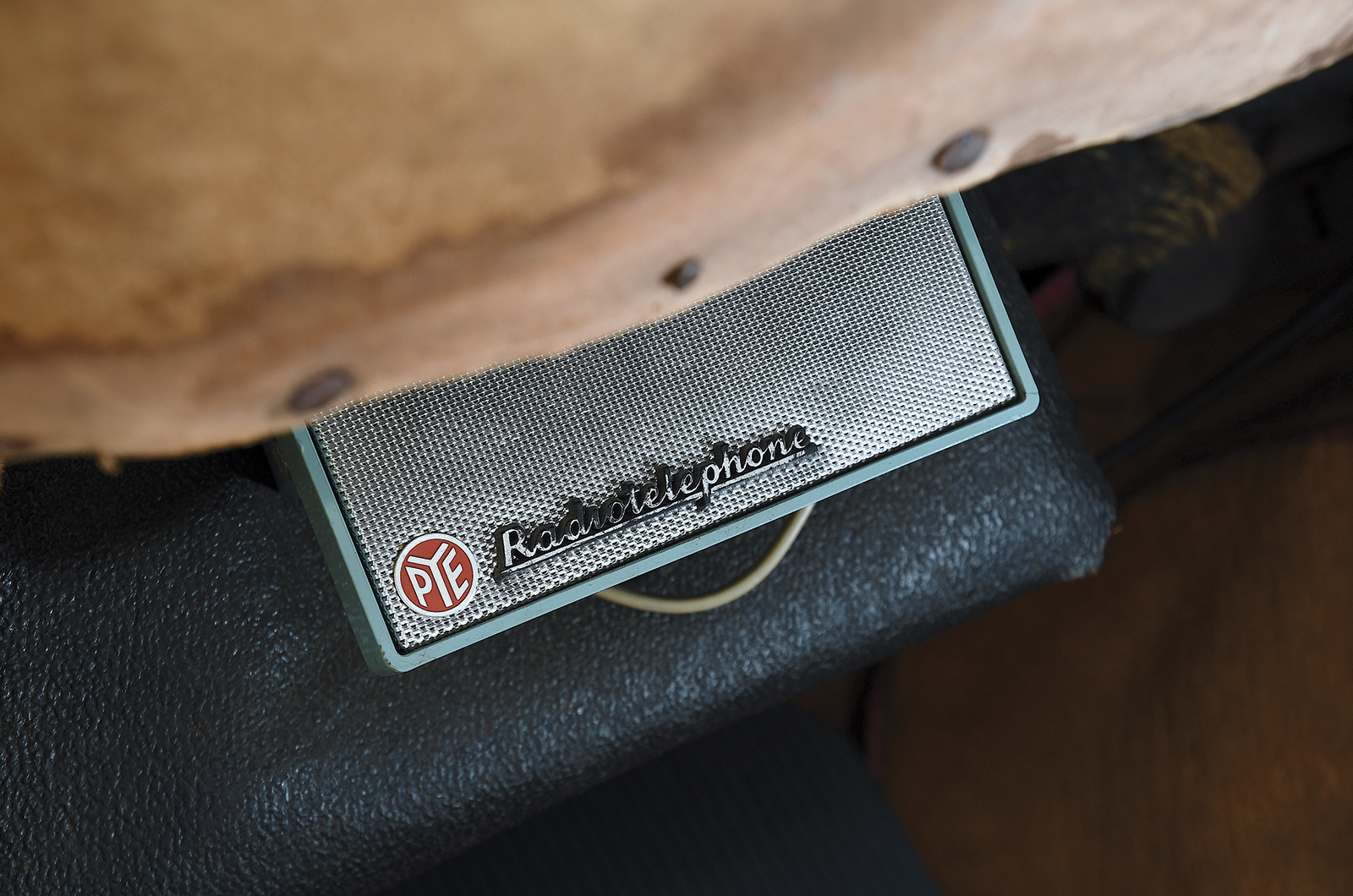
The Daimler SP250’s Pye radio gave the police an extra advantage
Jon adds: “Black was the colour of choice for London police cars at that time.
“It looked imposing and was probably cheaper than other shades. The Tigers were the Met’s first white traffic cars.”
Simon describes his MG as light and precise on the move: “Compared with the A, the B feels a lot heavier.
“On the move, you feel every kind of bump and contour of the road. My car isn’t fitted with overdrive, and at times you miss a five-speed ’box.
“The gearing is perfect up to 60mph, but above that speed it’s not happy.
“Despite its possible history, the A is also a car that was clearly designed in the pre-motorway age.”
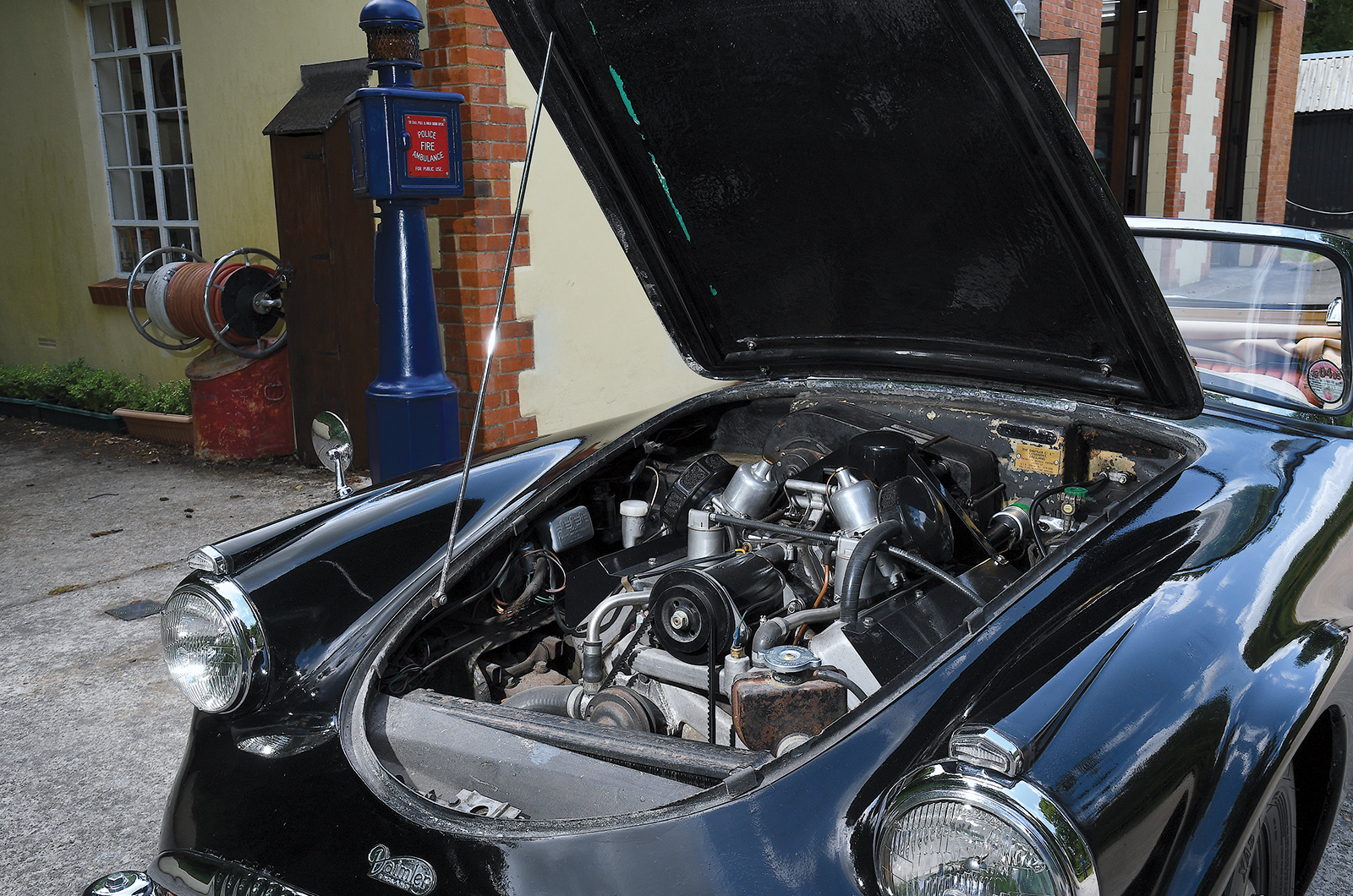
This Daimler SP250 police car has some subtle modifications
“Another challenge is the narrow doors,” he explains, “you develop a system of swivelling on the seat to make a reasonably elegant entry and exit.
“Once you are in place, the cockpit feels fine.”
The SP250’s cabin is more opulent than the MG’s, and Jon finds it a pleasant car to drive.
“That said, you cannot afford a lapse in your concentration,” he adds.
“This is a lightweight and highly responsive sports car that is ready for anything, not a comfortable cruiser.”
As with all Met SP250s, 551 CLU has the automatic Borg-Warner gearbox that became an option on home-market B-spec models; the force believed it was best-suited to urban roads.
The Daimler SP250 traffic car trumped the Met’s Wolseley 6/99 patrol cars for rapid response
Jon also points out the intermediate hold, allowing him to retain up to 100mph in second gear.
“You pull on the lever pretty hard, and the response is incredible,” he says.
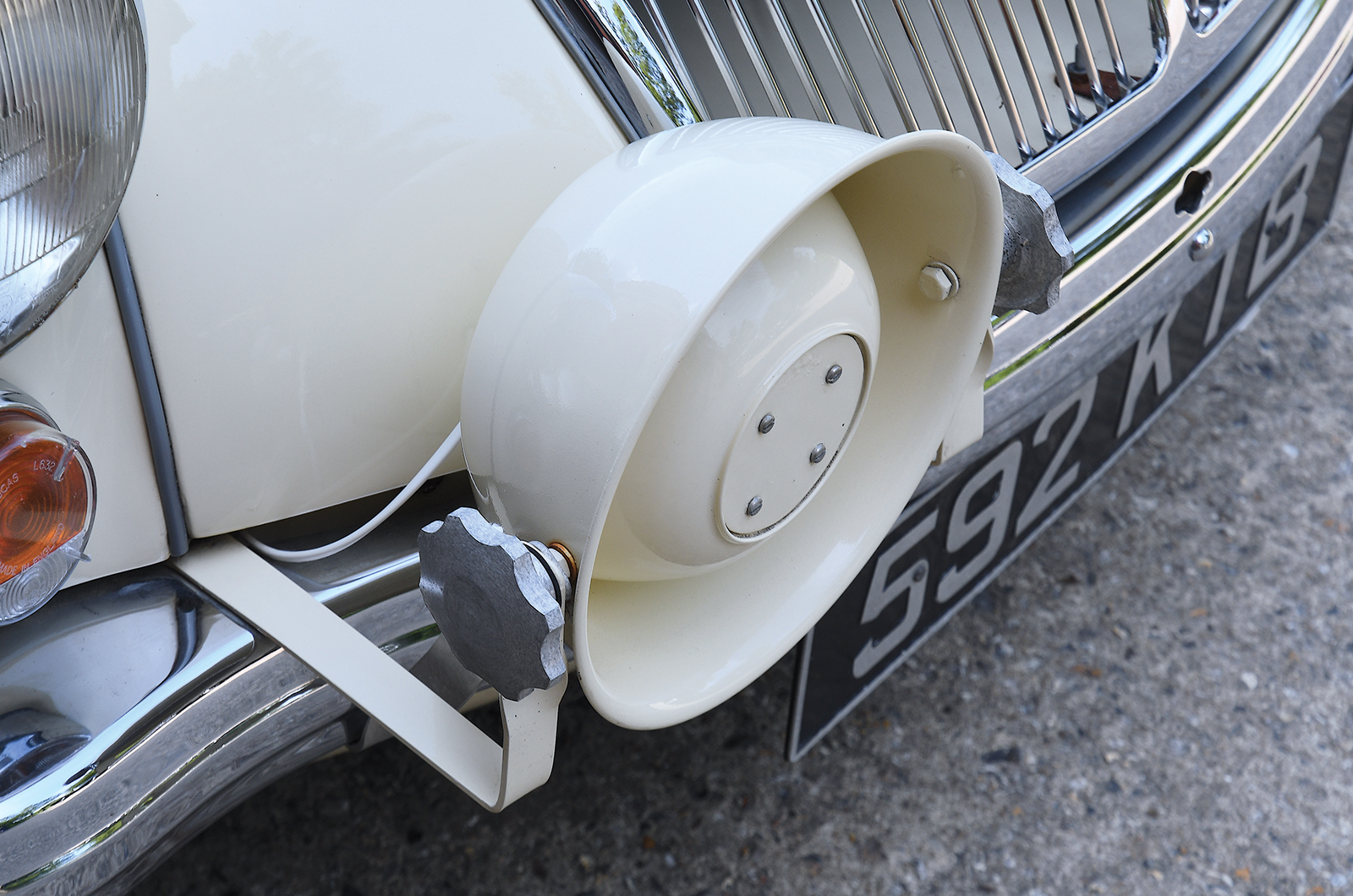
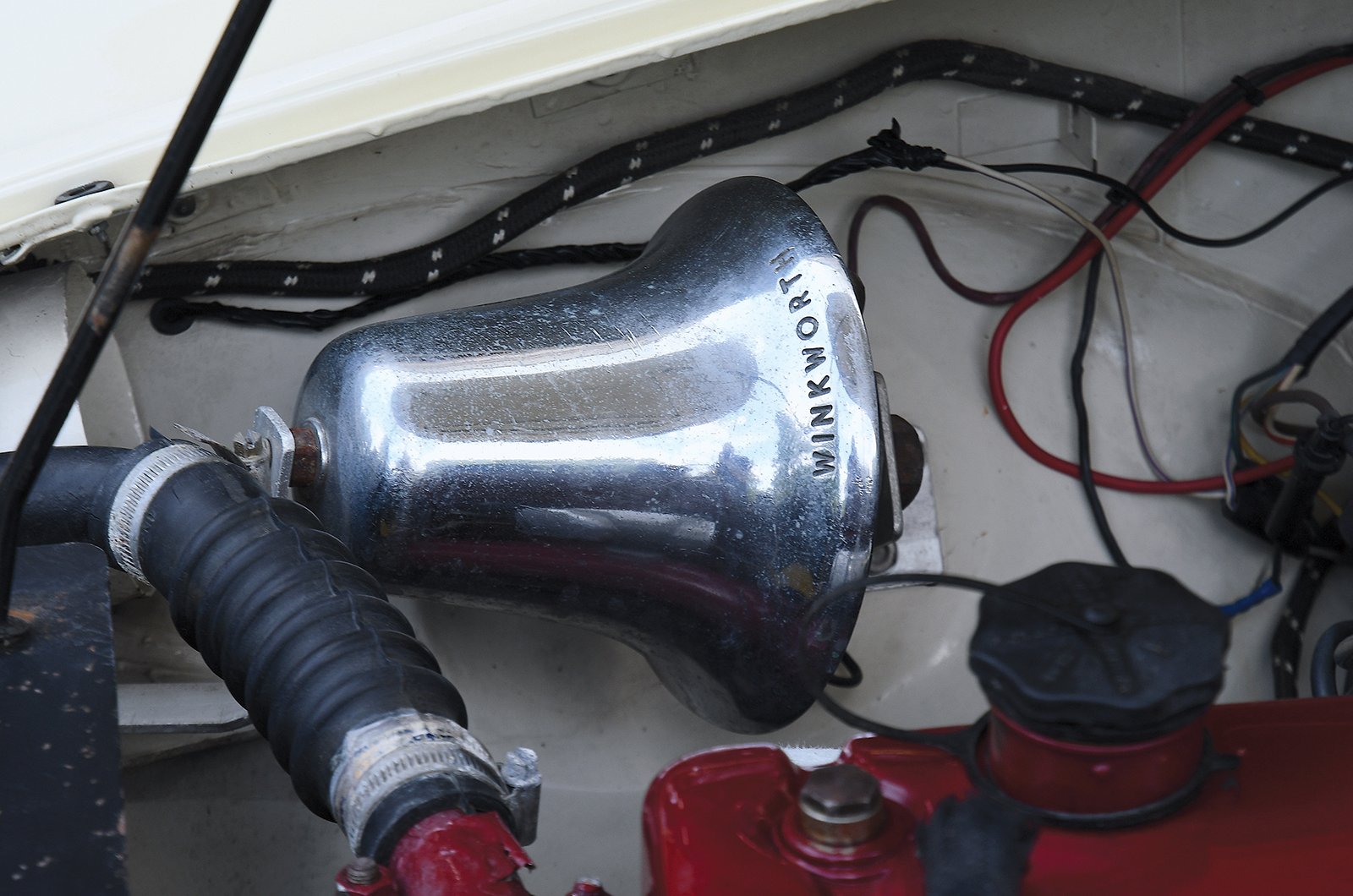
As a result, the Daimler SP250 was able to pursue determined youths on their Norton-Villiers motorbikes, the sound of its Winkworth bell blending with the V8’s engine note.
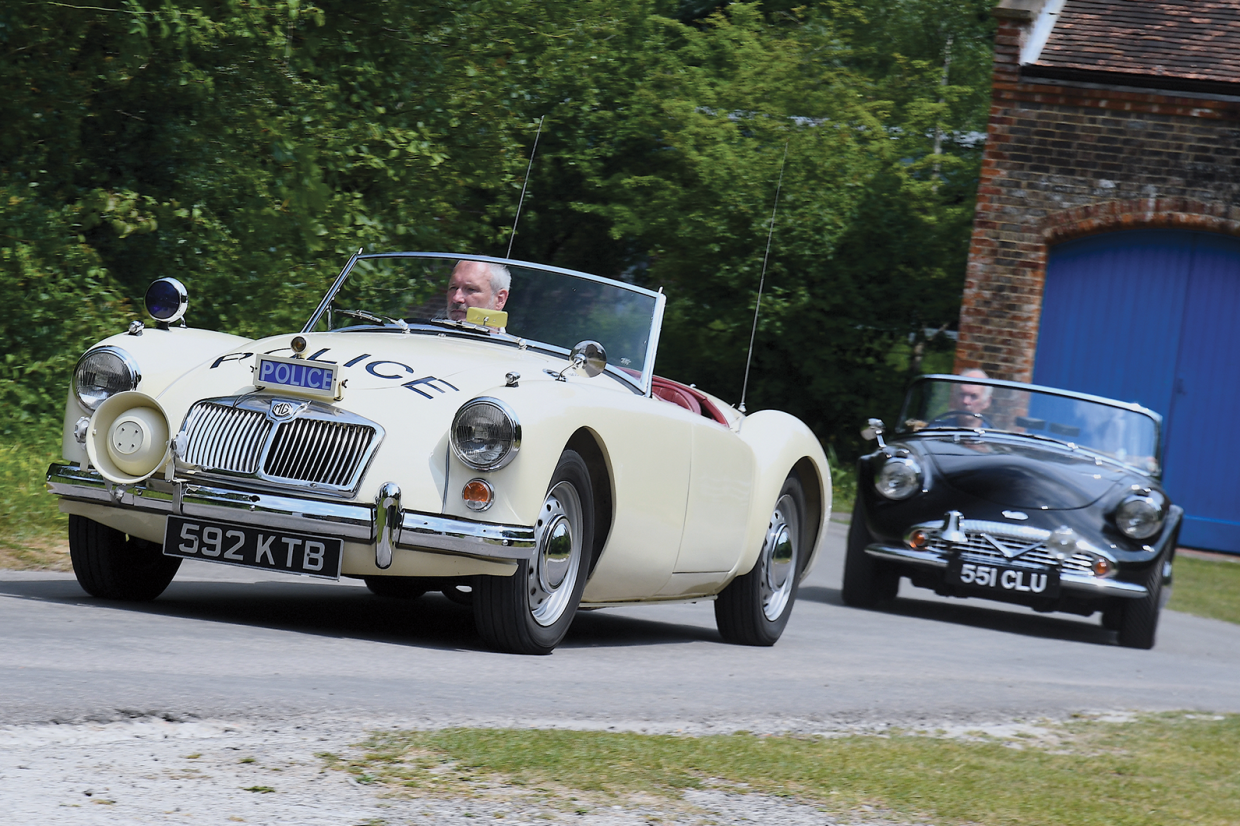
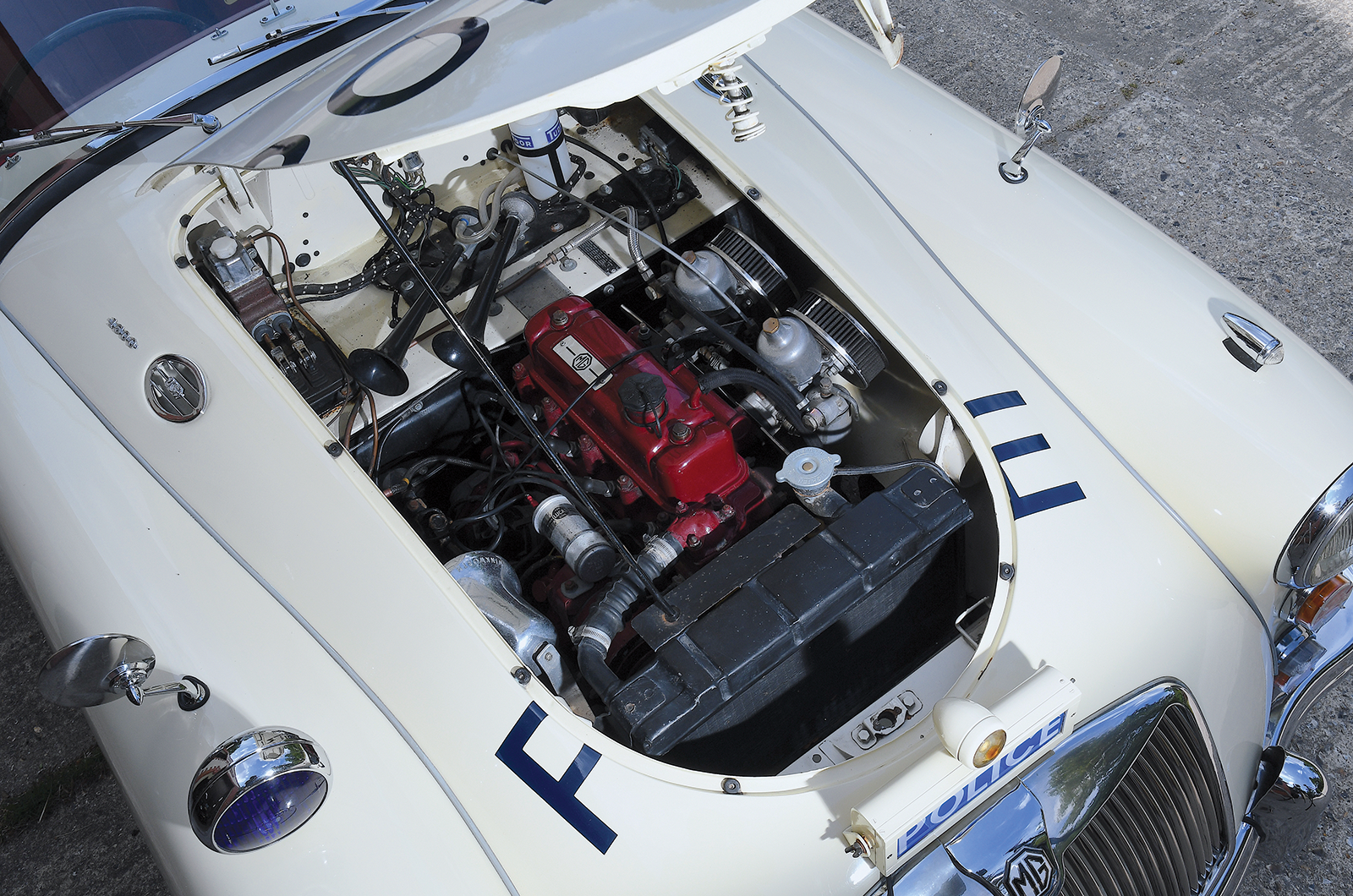
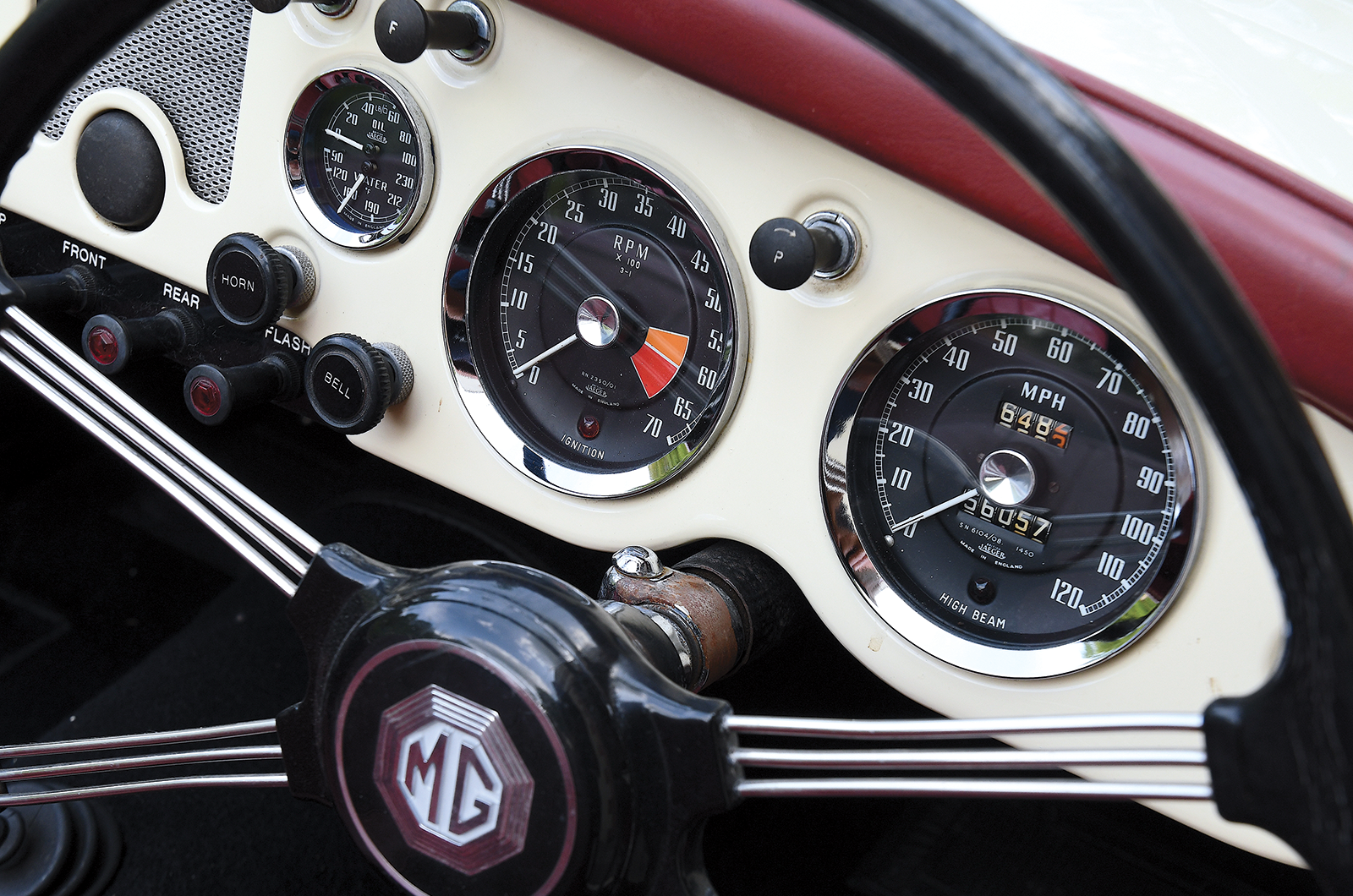
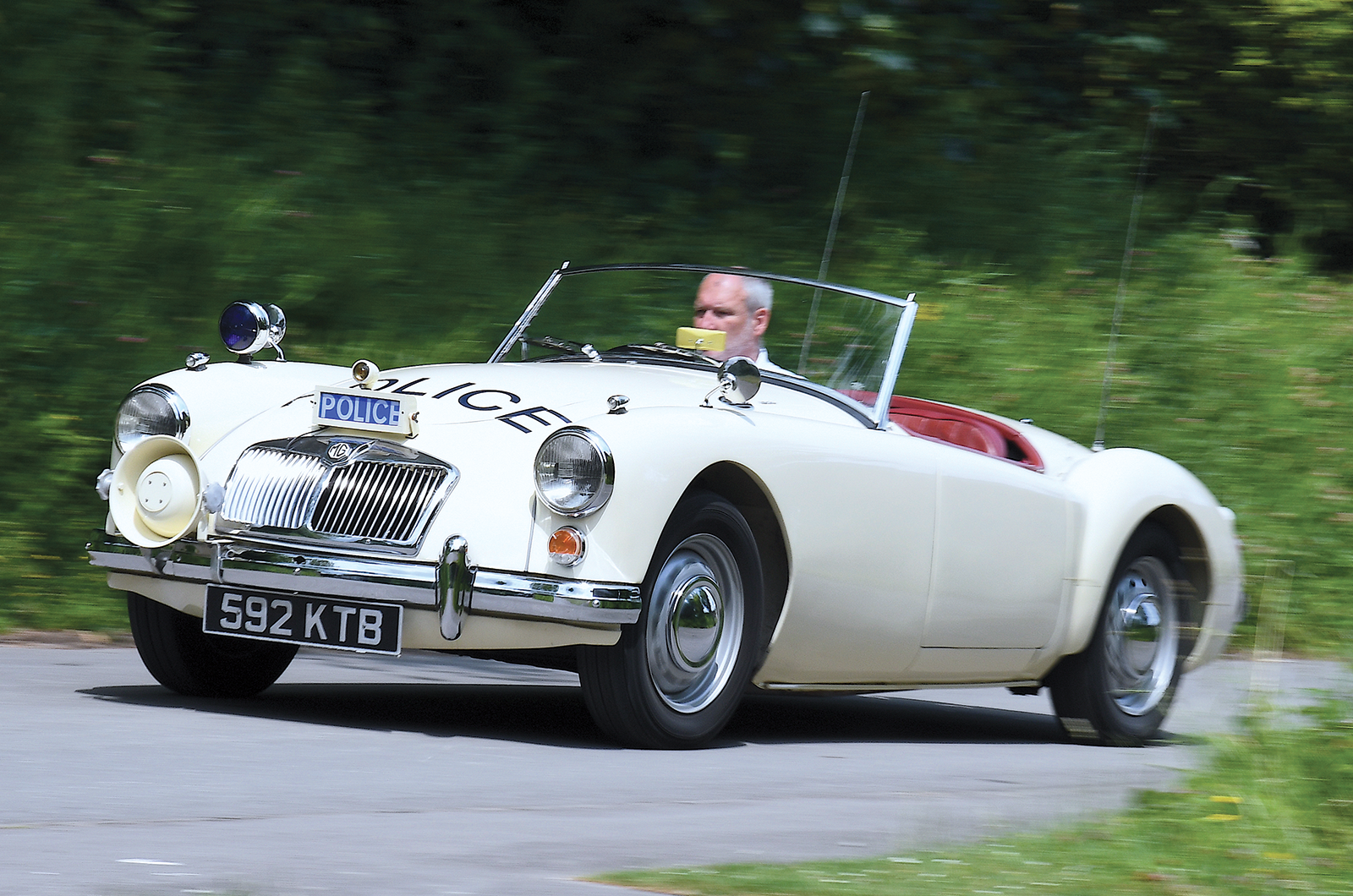
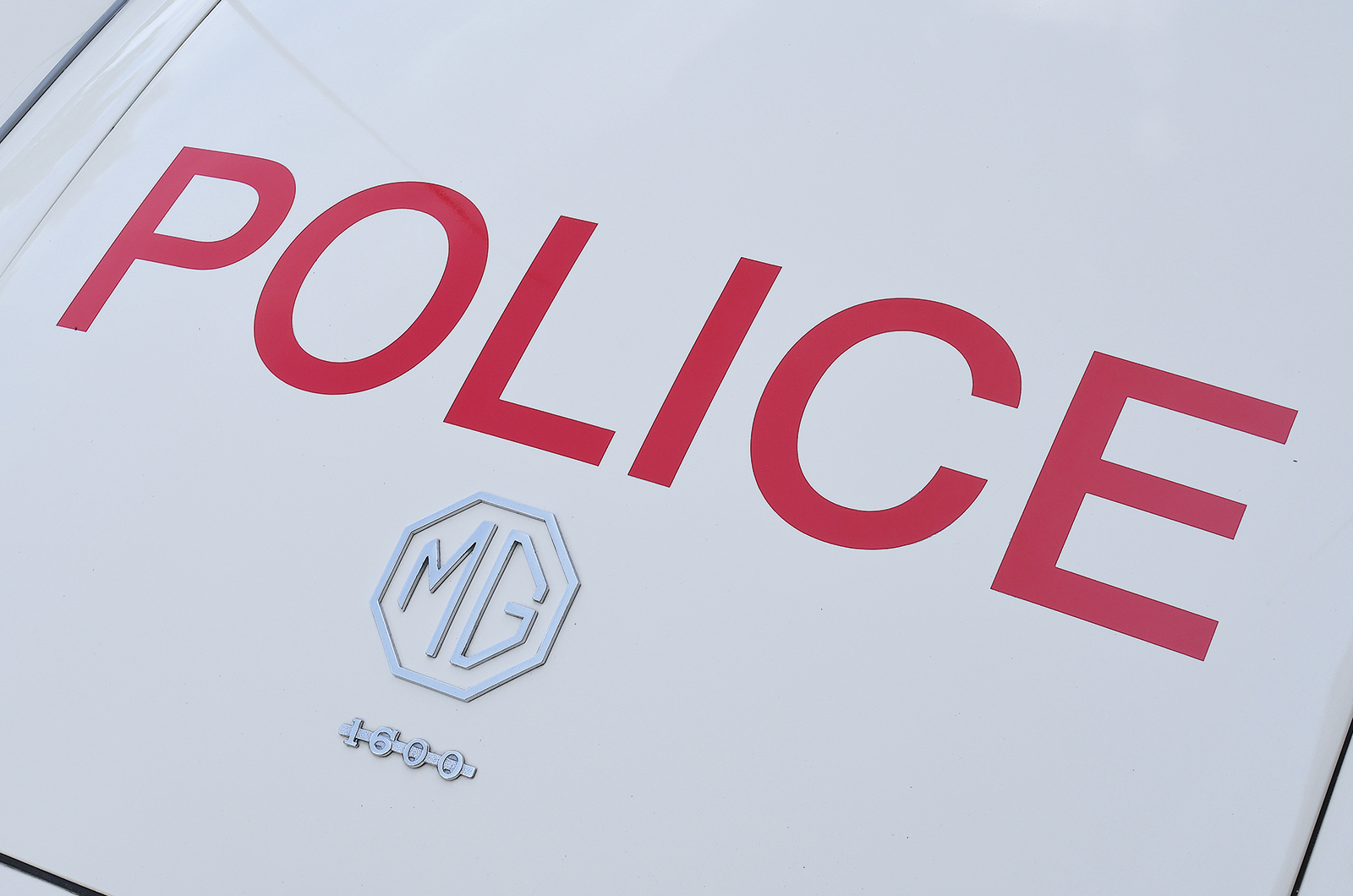
Of our two classic patrol cars photographed here, the MGA is an example of a police force adapting a familiar form of transport to new circumstances.
Lancashire had a long tradition of MG usage, and this one represented a fresh chapter in its traffic patrols.
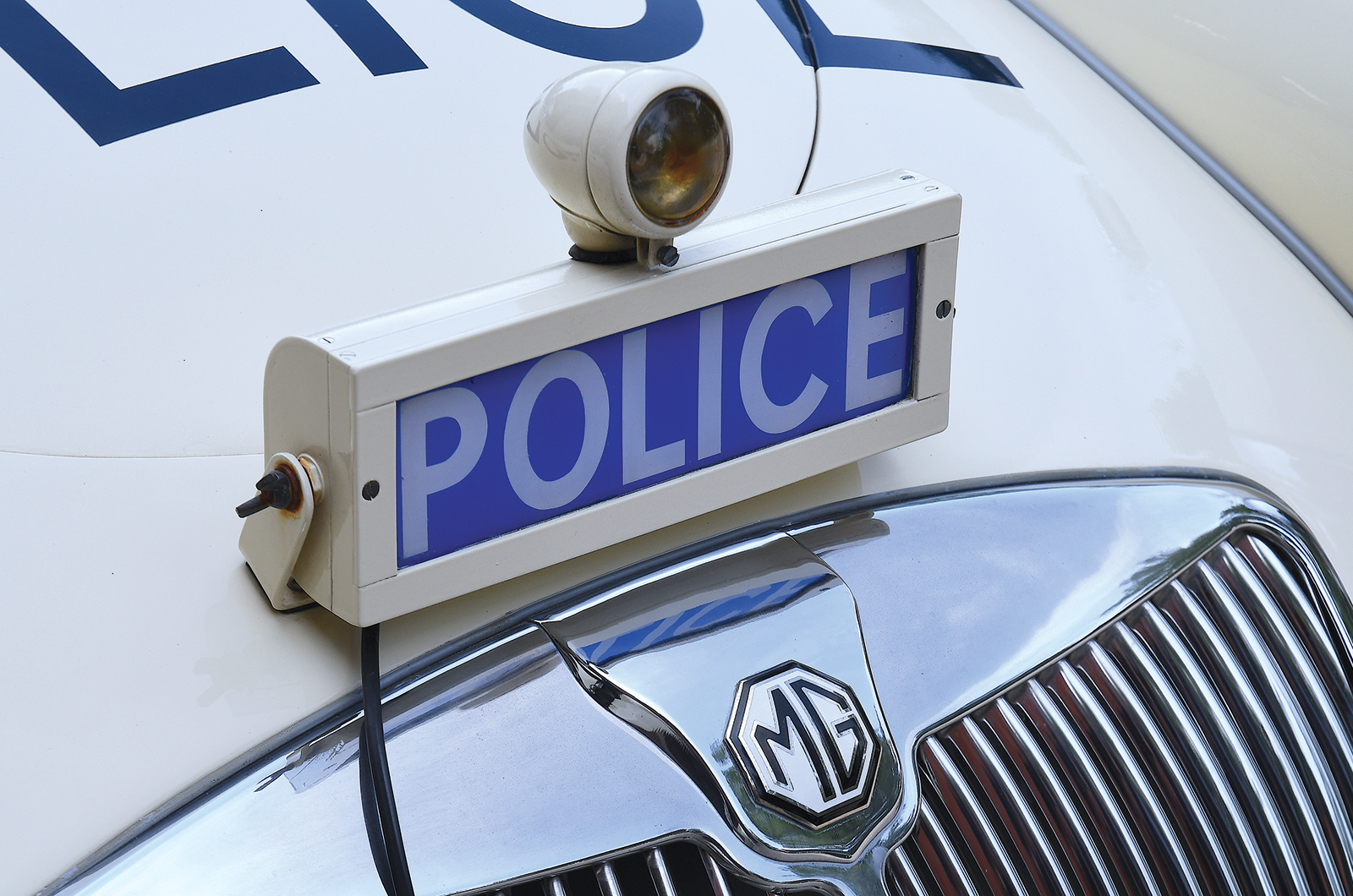
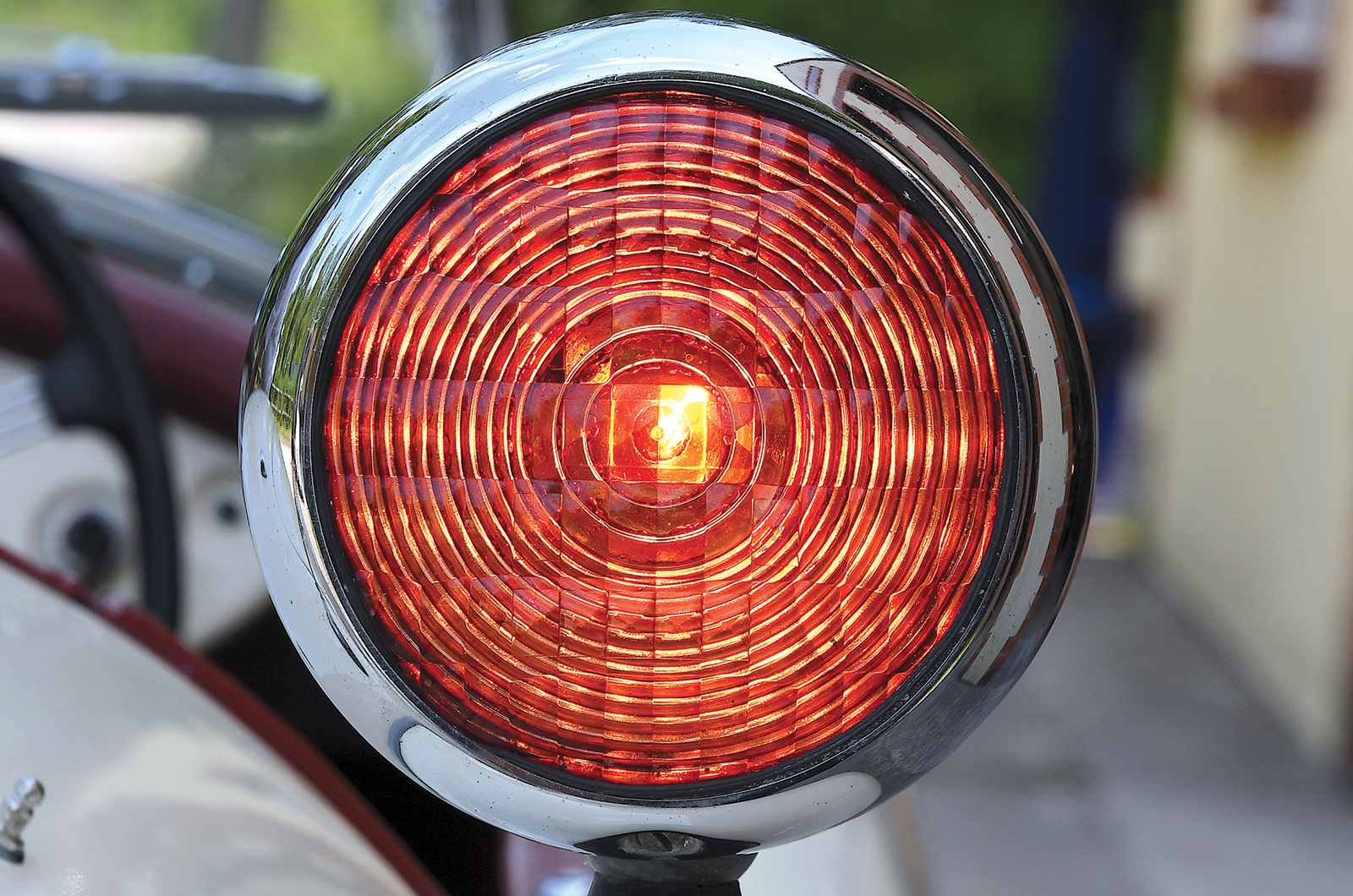
The white livery and flashing beacons reflected not only increased private car ownership, but also the coming of the motorway age.
Some of the MGA’s detailing, such as the detachable sidescreens, dated from the 1930s, but it was a machine that anticipated the policing challenges of the 1960s.
The Daimler SP250 needs focus to get the best from it
As for the Daimler, Jon thinks it must have felt like a Formula One car for any police driver transferring from a staid Wolseley.
“The SP250 represented a new form of preventative traffic policing in London,” he says.
“The 6/99 ‘Big Farina’ patrol cars entered service not long before the Daimlers, but they seemed to hail from another world; upholding a solid authority rather than being able to rapidly respond to an incident.
“The Met SP250s more than deserve the unofficial name ‘Dart’.”
Above all, both the MG and Daimler were responsible for saving countless lives, and for that they deserve to be celebrated.
Images: John Bradshaw
Thanks to: Steve Woodward, Police Car UK; Amberley Museum
Factfiles
MGA 1600 MkI
- Sold/number built 1950-’60/31,501
- Construction steel chassis, steel and aluminium panels
- Engine all-iron, ohv 1588cc ‘four’, twin SU carburettors
- Max power 79bhp @ 5600rpm
- Max torque 78lb ft @ 5500rpm
- Transmission four-speed manual, RWD
- Suspension: front independent, by coil springs, wishbones rear live axle, semi-elliptic leaf springs; lever-arm dampers f/r
- Steering rack and pinion
- Brakes discs front, drums rear
- Length 13ft (3962mm)
- Width 4ft 10in (1473mm)
- Height 4ft 2in (1270mm)
- Wheelbase 7ft 10in (2388mm)
- Weight 2044Ib (927kg)
- Mpg 29.7
- 0-60mph 13.3 secs
- Top speed 96mph
- Price new £940
Daimler SP250
- Sold/number built 1959-’64/2654
- Construction steel ladder chassis, glassfibre body
- Engine iron-block, alloy-heads, ohv 2547cc V8, twin SU carburettors
- Max power 140bhp @ 5800rpm
- Max torque 155lb ft @ 3600rpm
- Transmission Borg-Warner three-speed automatic, RWD
- Suspension: front independent, by wishbones, coil springs rear live axle, semi-elliptic leaf springs; telescopic dampers f/r
- Steering cam and peg
- Brakes discs
- Length 13ft 4½in (4077mm)
- Width 5ft ½in (1537mm)
- Height 4ft 2¼in (1276mm)
- Wheelbase 7ft 8in (2337mm)
- Weight 2218lb (1006kg)
- Mpg 29
- 0-60mph 10.2 secs
- Top speed 125mph
- Price new £1539
We hope you enjoyed reading. Please click the ‘Follow’ button for more super stories from Classic & Sports Car.
Andrew Roberts
Andrew is a long-time contributor to Classic & Sports Car