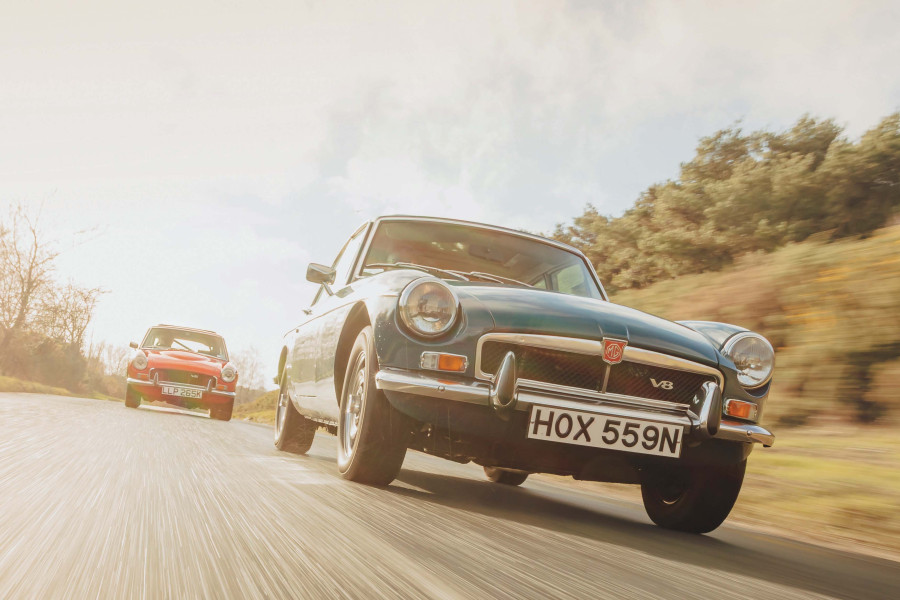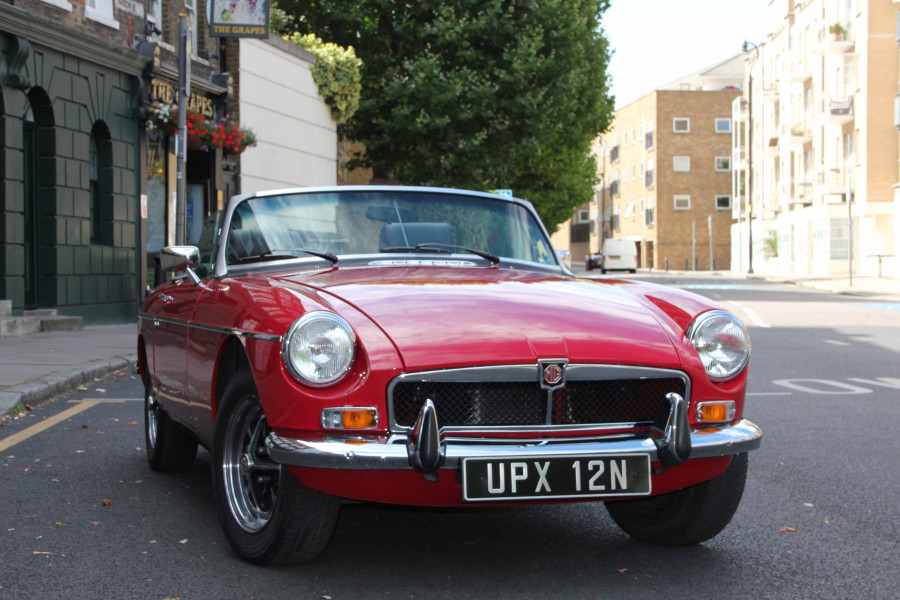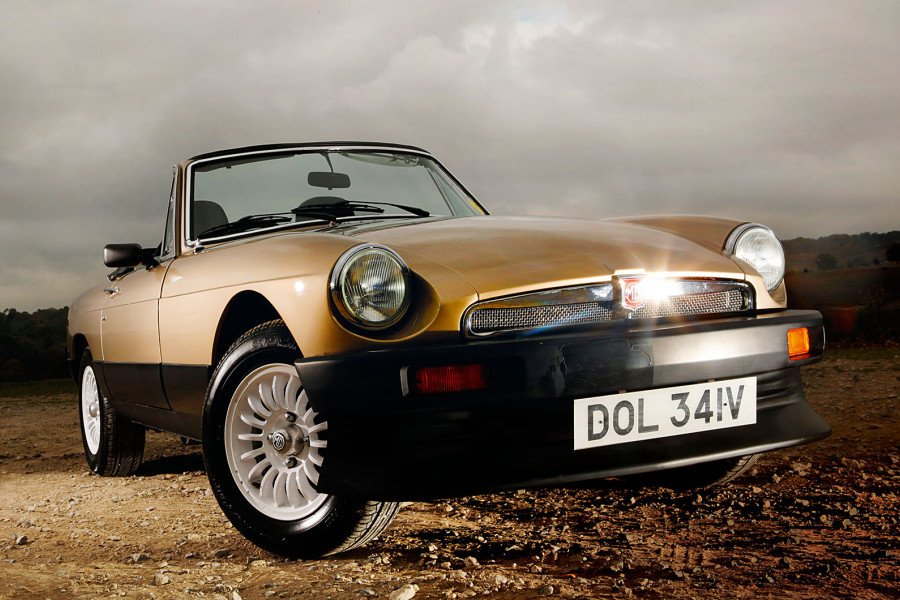
For the MG purist first is best, and any progress serves only to dilute the appeal of the original.
The more practical enthusiast might suggest that, over time, a model evolves, develops and, most important, improves.
Both camps have a point, and no case study better illustrates their arguments than the little Midget – the first foray for many into classic sports car ownership.
To drive each generation of Midget is to trace the evolution of MG’s sporty little cherub that brings out the devil in you
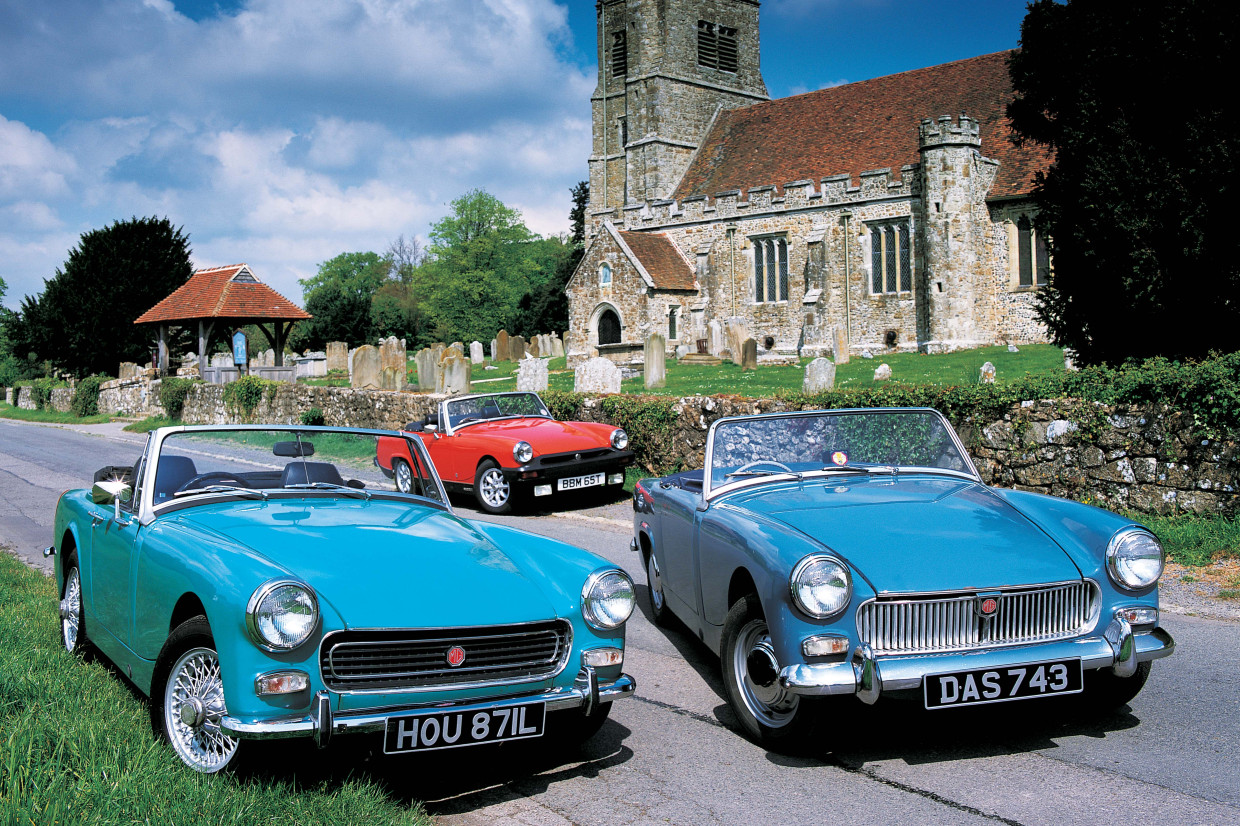
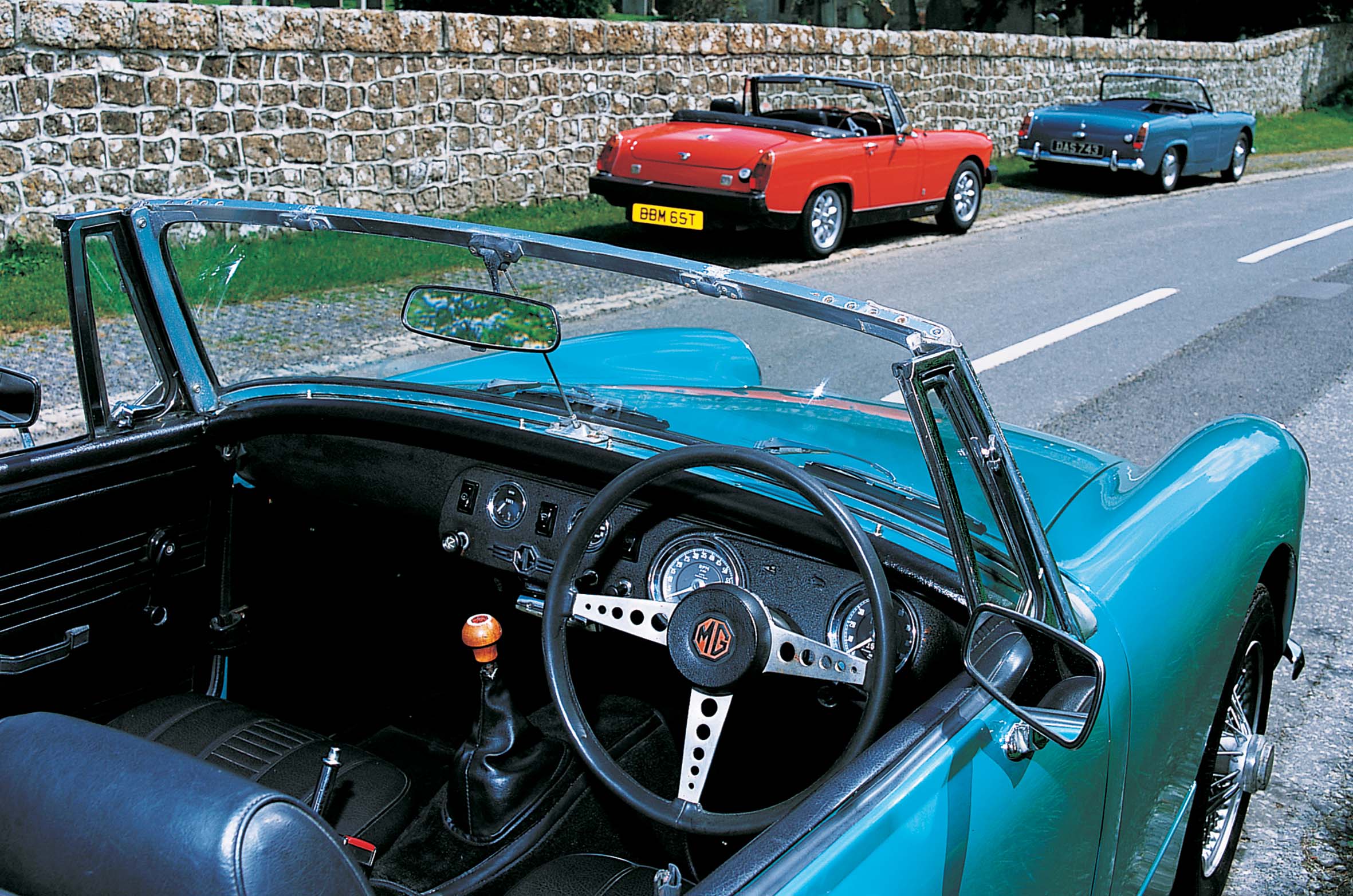
But the only way to judge properly is to pit first against last: drum-braked MkI chrome cutie against Federalised run-out model, complete with despised ‘rubber’ parking pillows at each end.
And, just to make things a little more interesting, there’s a spoiler in the group: the ‘round-arch’ 1275cc MkIII, representing the mid-point of Midget evolution.
It is easy to imagine the Midget as a baby MGB – the pair’s little-and-large styling evolved almost in tandem – yet it would be fairer to think of the B as a giant Midget, the smaller car having pipped the B into production by a year when it was launched in May 1961.
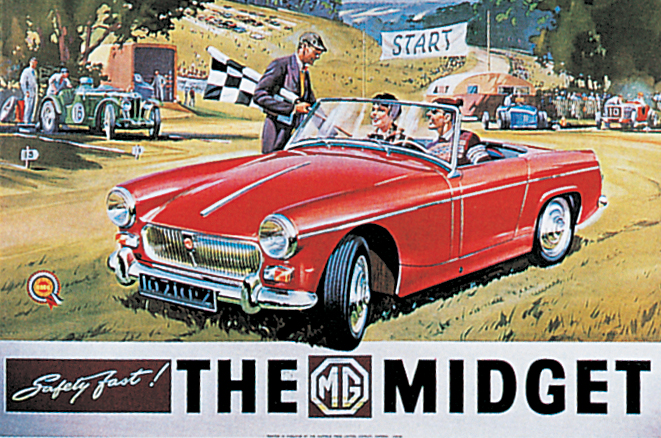
The MG Midget MkI turned humble mechanicals into a swift little sports car
When MG needed a smaller, cheaper model to sell alongside its pretty A, it was lucky enough to have an ideal donor readily available within the BMC empire in the shape of Austin-Healey’s charming ‘Frogeye’ Sprite.
When the Sprite was revised for MkII specification, an MG version was also produced.
Both were based on Austin A35 mechanicals, including the little saloon’s 948cc A-series engine, tuned to produce 42bhp.
The Midget tag revived a classic Abingdon name first used for the M-type of 1928, but not seen since the 1955 demise of the TF.
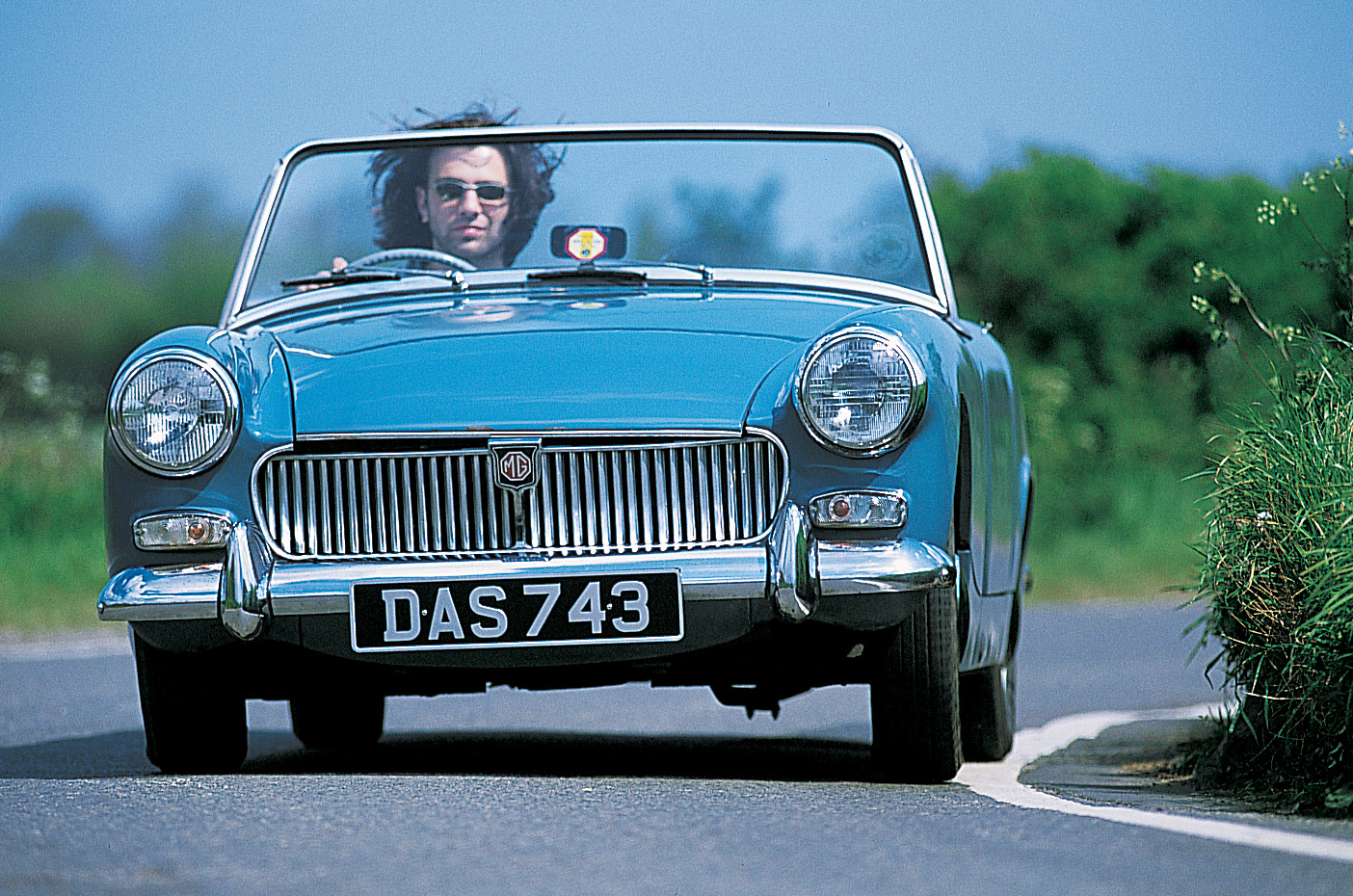
The MG Midget MkI has lovely direct steering
A few minutes with a MkI Midget is enough to put you with the purists – the early car has a beauty through simplicity that makes its successors appear lavish.
Sitting on plain, perforated disc wheels, the Midget sports a slender Frogeye windscreen and, though time-consuming to dismantle, the removable sidescreens and hood leave behind uncluttered lines, spoiled by the restyles for the MkII’s wind-up windows and the MkIII’s fixed hood.
That stark simplicity continues in the cockpit, with the lack of windows allowing elegant rolled tops for the doors, while in front an attractive, vinyl-clad dashboard features the impressive array of dials you might expect from this proper – if junior – sports car.
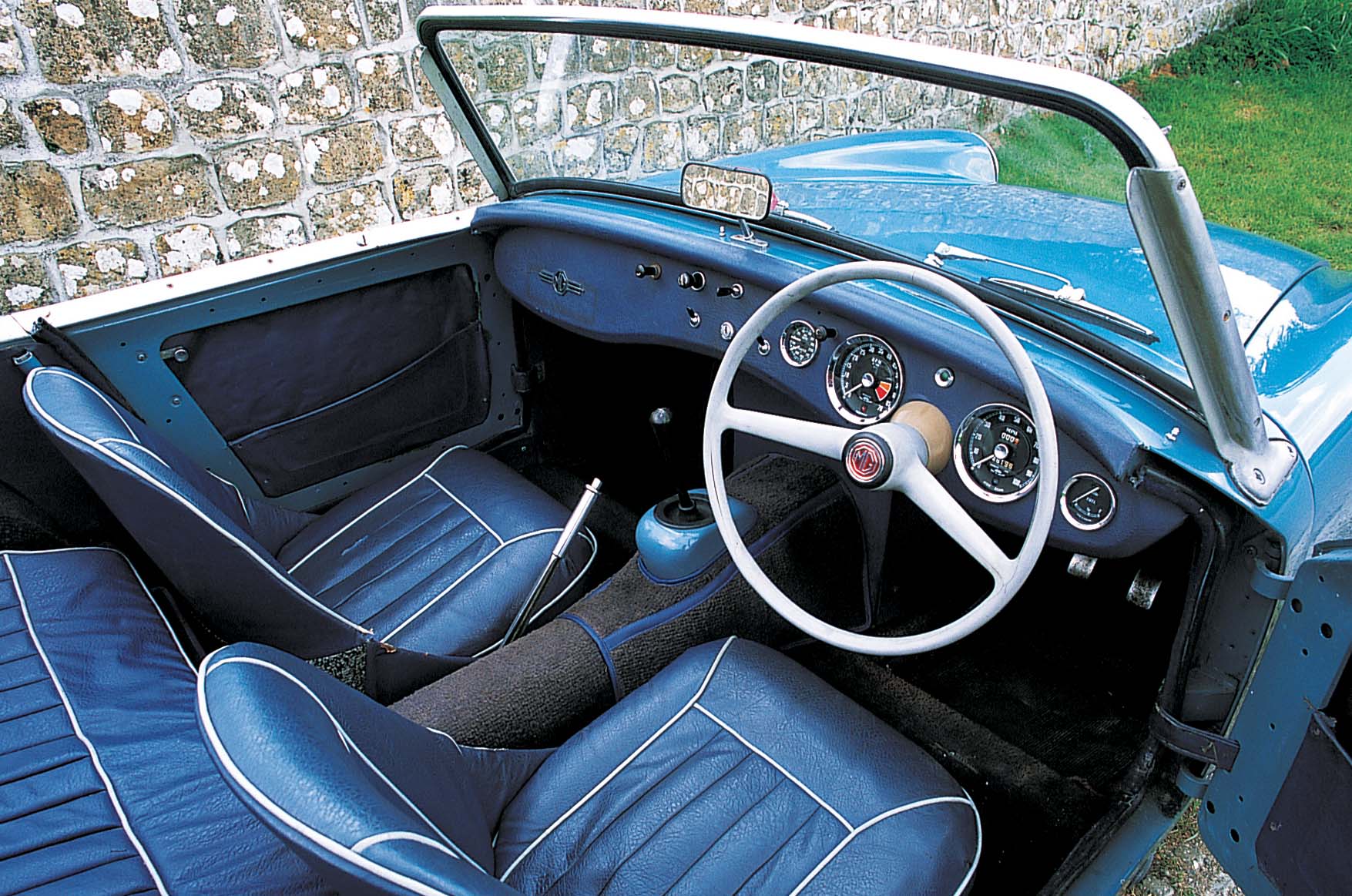
The MG Midget MkI’s elegant cabin features piped seats
The neat packaging means that there is even a token rear seat: the Midget is pretty roomy considering its Lilliputian dimensions, and more accommodating than its rival, the slightly bigger Triumph Spitfire.
Pull the starter and the A-series’ rorty engine note makes it hard to believe this is the stuff of Morris Minors and Austin A35s.
It is a sprightly performer, with a snappy close-ratio BMC gearbox giving extra sporty appeal via the stubby lever and short shift.
There is no synchromesh on first, so you avoid selecting it on the move, but in all other gears changes are quick, positive and surprisingly slick.
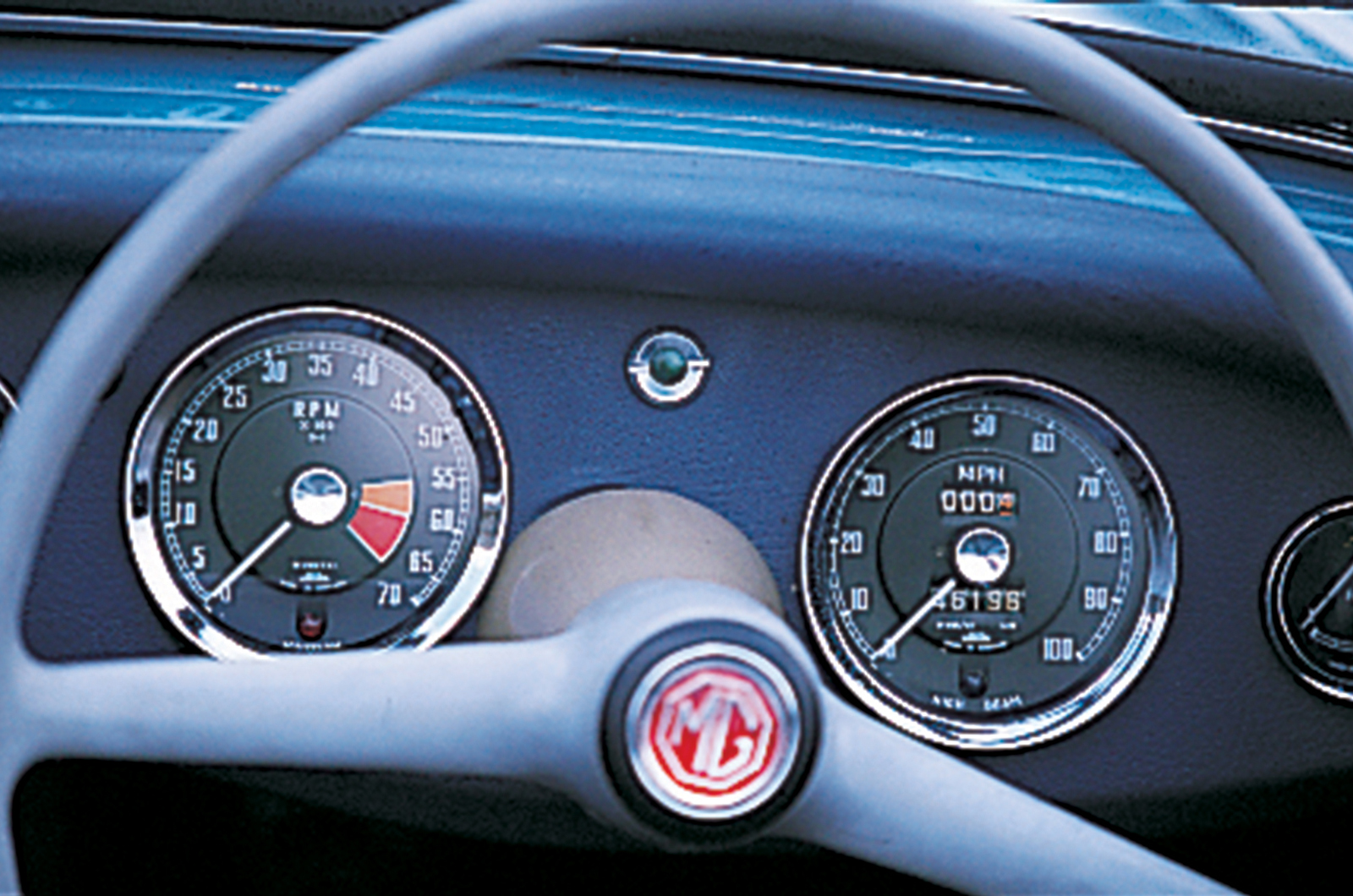
The MG Midget MkI’s Bakelite steering wheel
Compared with the later incarnations, the MkI Midget feels more raw and chuckable, largely thanks to its superbly light and direct Morris Minor-derived rack-and-pinion steering, operated by a huge, spindly Bakelite wheel.
Even all-round drum brakes provide enough stopping power to cope with the Midget’s near 14cwt, and the pedal is firm.
Where the MkI does show its age, though, is the bumpy ride, as the back hops around with all the composure of a rollerblader on cobbles.
This bone-rattling, though, is a result of the early cars’ quarter-elliptic rear springing, not the stiff unitary body and box-section chassis, whose rigidity all but eliminates scuttle shake.
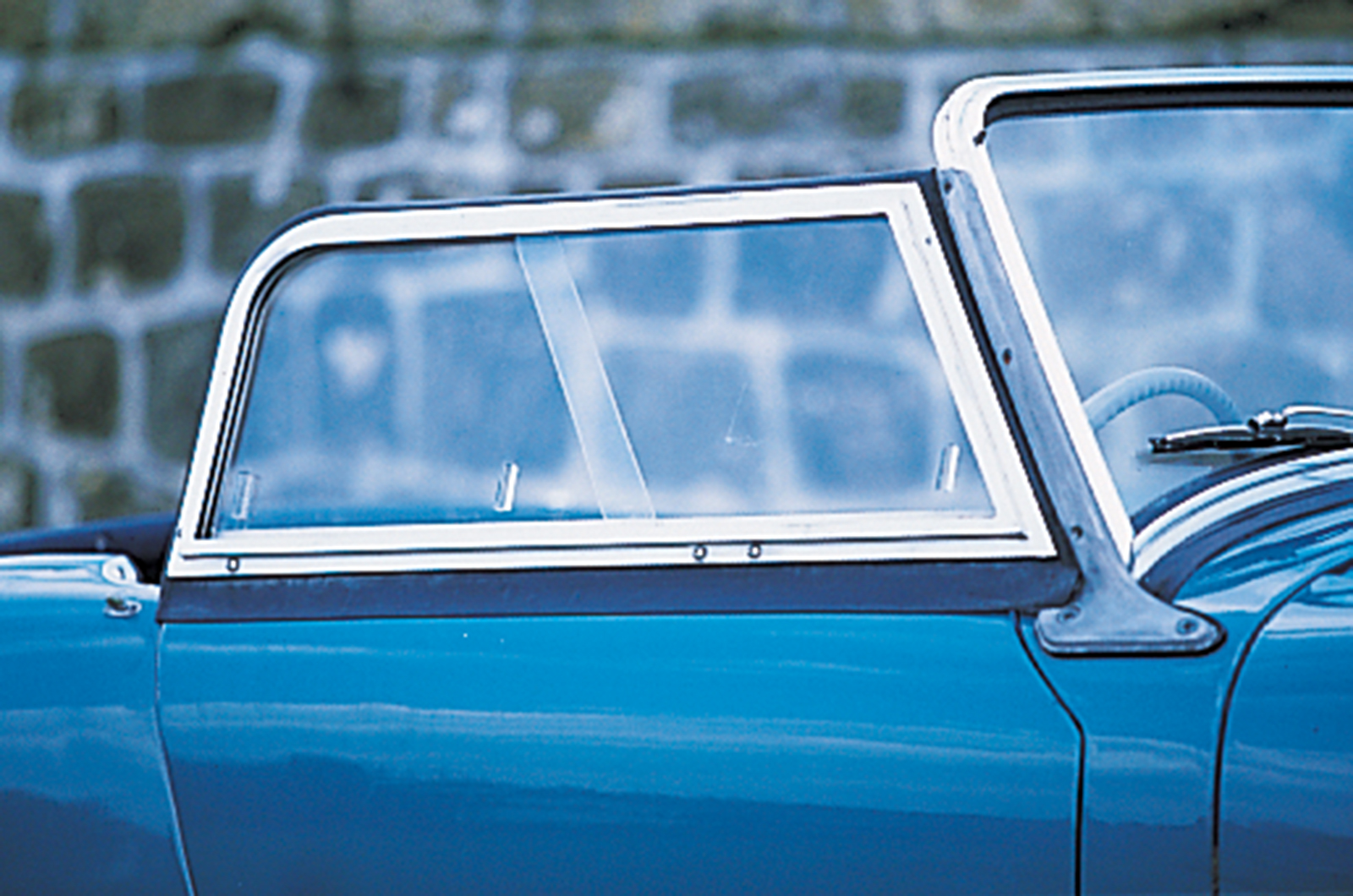
The MG Midget MkI has rolled-top doors and slot-in sidescreens
To answer the criticisms of the first car’s outdated brakes and lack of pace, MG added Lockheed front discs and increased capacity to 1098cc for 1962, with the more powerful and much-revised MkII following two years later.
Yet the engine that really brought the Midget to life was the 1275cc A-series, which arrived for the MkIII in 1966, complete with a new, easier-to-use fixed hood.
After the British Leyland takeover of BMC, in 1968, came the first real restyle of the then-ageing shape.
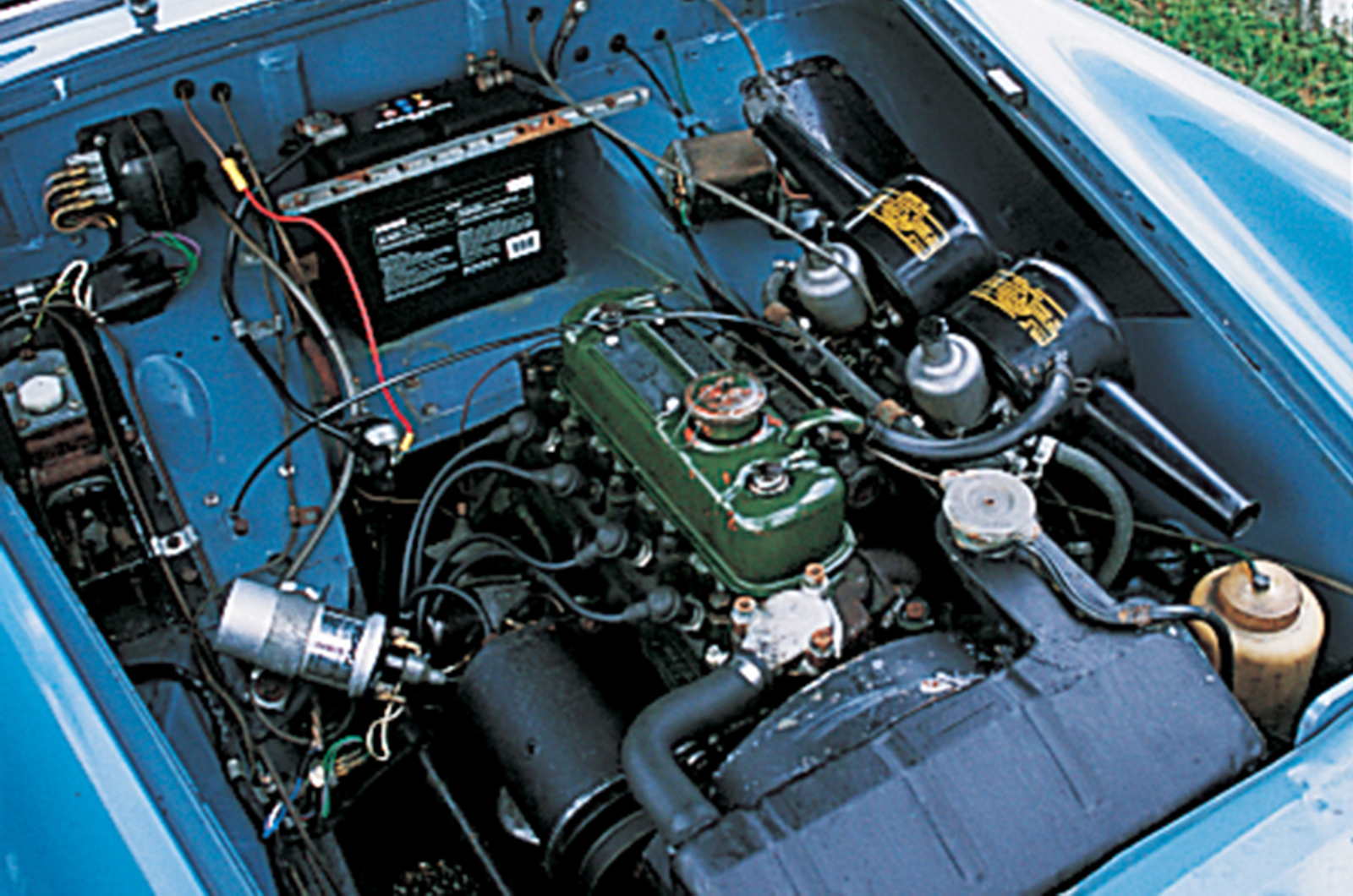
The MG Midget MkI’s peppy 948cc engine feels quicker than its figures suggest
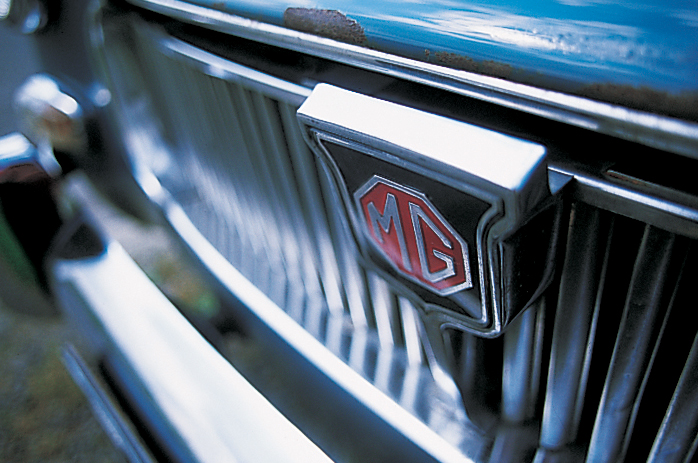
Following the lead of the MkII MGB, the 1275 was modernised for ’69 with matt-black sills and grille, RoStyle wheels – though still with the option of wires, as on this car – and neat skinny bumpers, split at the rear to accommodate a central numberplate.
Gone was the chrome and old-world interior, to be replaced by black vinyl and rocker switches – de rigueur for the ’70s.
For 1972 came the most radical revision and, for many, the most desirable Midget of all, when the flattened rear wheelarches were rounded to match the fronts.
Though handsome, the ‘round arch’ car doesn’t look quite right alongside the other two, with the gap from the top of the arch to the top of the wing a little too thin.
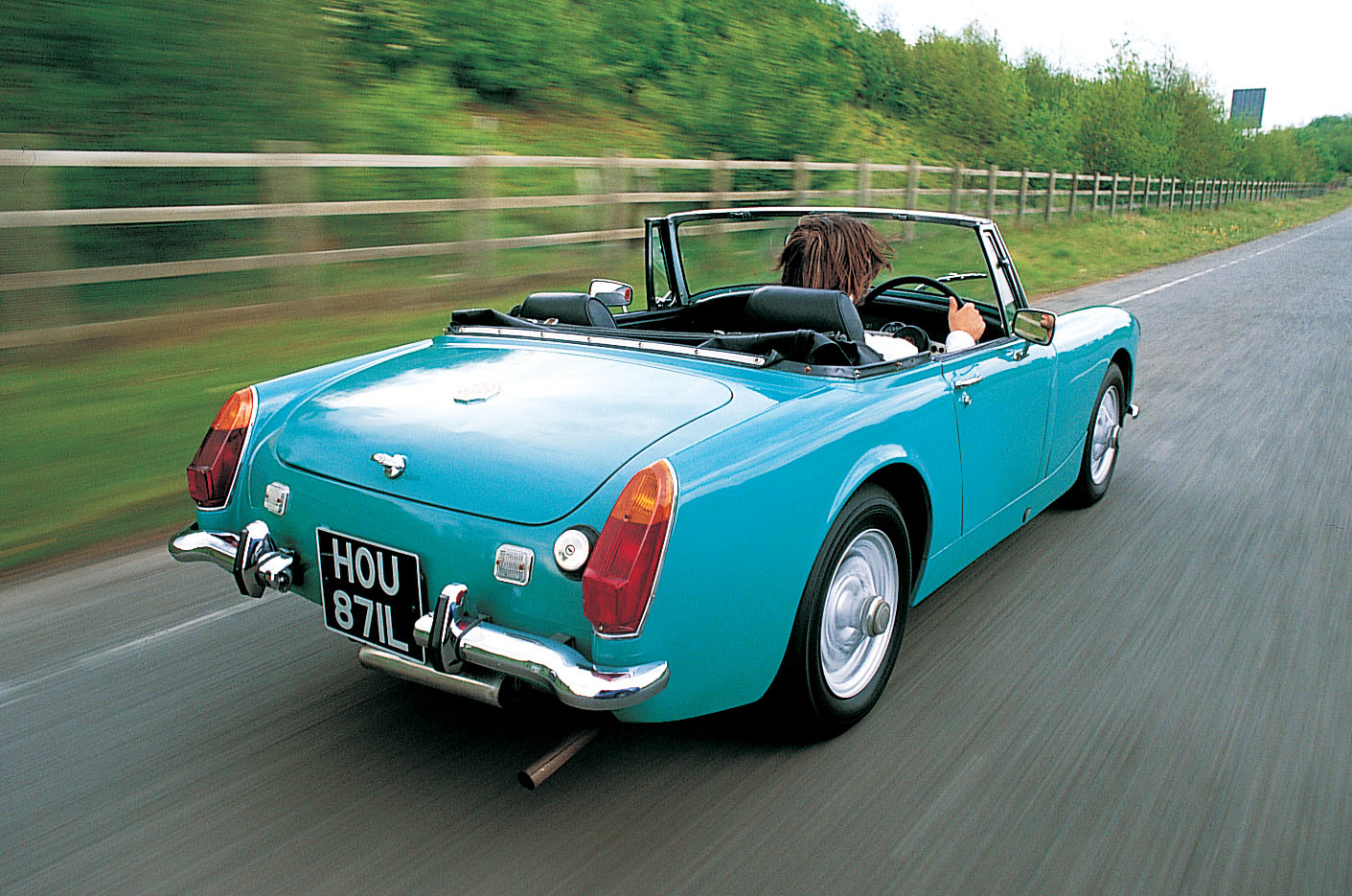
This MG Midget MkIII’s wire wheels were a period option
The chrome grin of the early car has gone, but the matt-black trim gives a more purposeful and sporty look to the later car – a bit more road presence.
Like later Big Healeys, the rear lip of the MkIII’s cockpit was raised for mounting the new folding hood, which stows beneath a neat but fiddly cover.
With the taller windscreen, you sit much deeper in the 1275, avoiding the sense of being perched on top of the MkI.
It also feels more intimate, because the space behind the rear seats is for hood storage and the cabin is narrower thanks to thicker doors, with proper handles and wind-up windows.
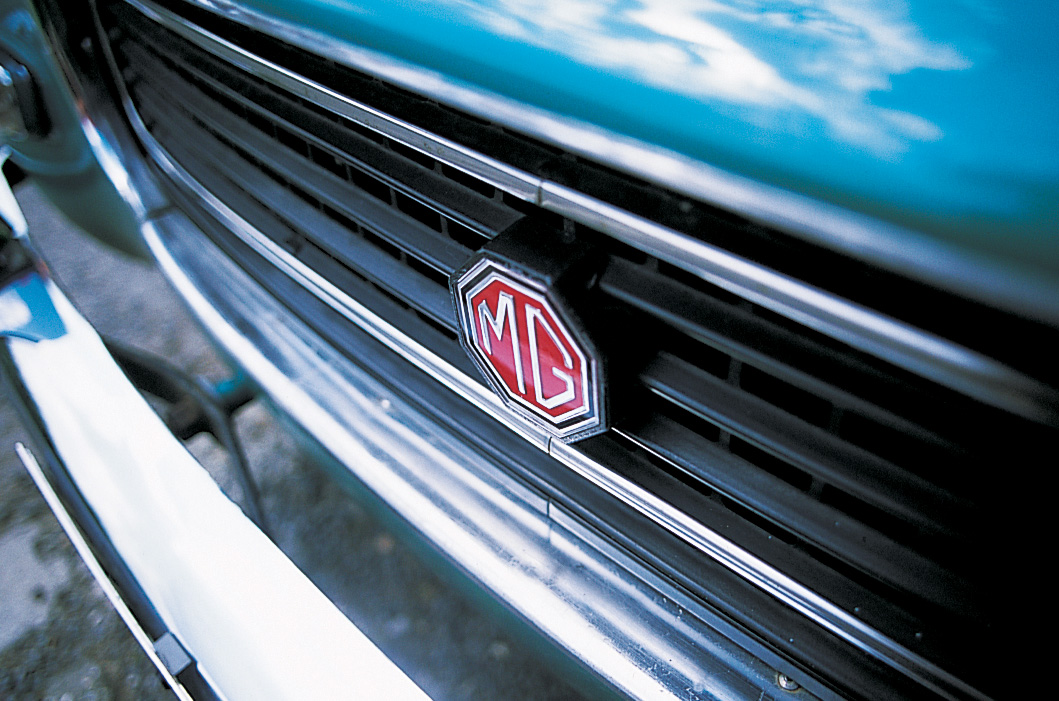
The 1275cc-engined MG Midget MkIII swapped chrome for matt-black trim
There is a separate instrument binnacle and a logically designed dashboard, with Smiths dials borrowed from the contemporary MGB and the ignition moved to the steering column from pride of place in the centre.
The larger vinyl seats are comfortable and the lower driving position is near-perfect for a sports car – with the little gearlever ideally placed and a big, upright steering wheel straight ahead.
On the road the MkIII feels instantly familiar after the 948cc car, but better in almost every way.
The 1275cc ‘four’ is redlined at 5500rpm but feels really keen, the sporty little unit ideally suiting the Midget’s naughty schoolkid character.
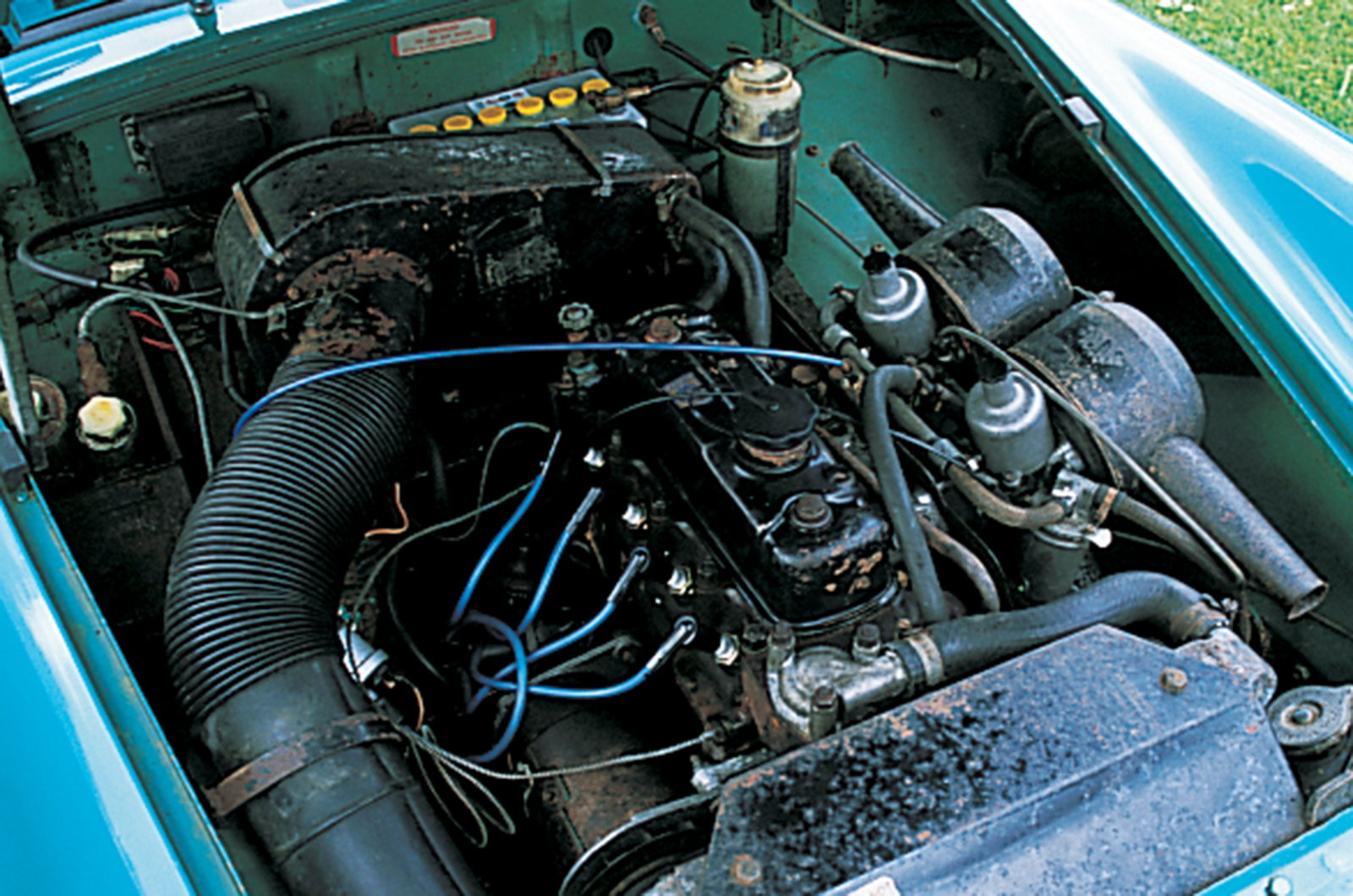
The MG Midget MkIII’s 1275cc ‘four’ brought a near-20bhp boost compared to early 948cc models
The extra power doesn’t alter the performance dramatically, but clever spacing of the gear ratios blends with that lovely snappy gearbox carried over from the MkI to give the feeling of lots of power in every gear.
The Midget becomes everything you expect of a British sports car on a twisty lane.
The steering is still lovely and sharp, if not quite as light thanks to beefier tyres, and the handling is a joy.
Semi-elliptic leaf springs at the back improve the ride, but also make the rear-drive behaviour even more predictable: the 1275 is always squatting over its rear wheels, ready for gentle oversteer as you power through corners.
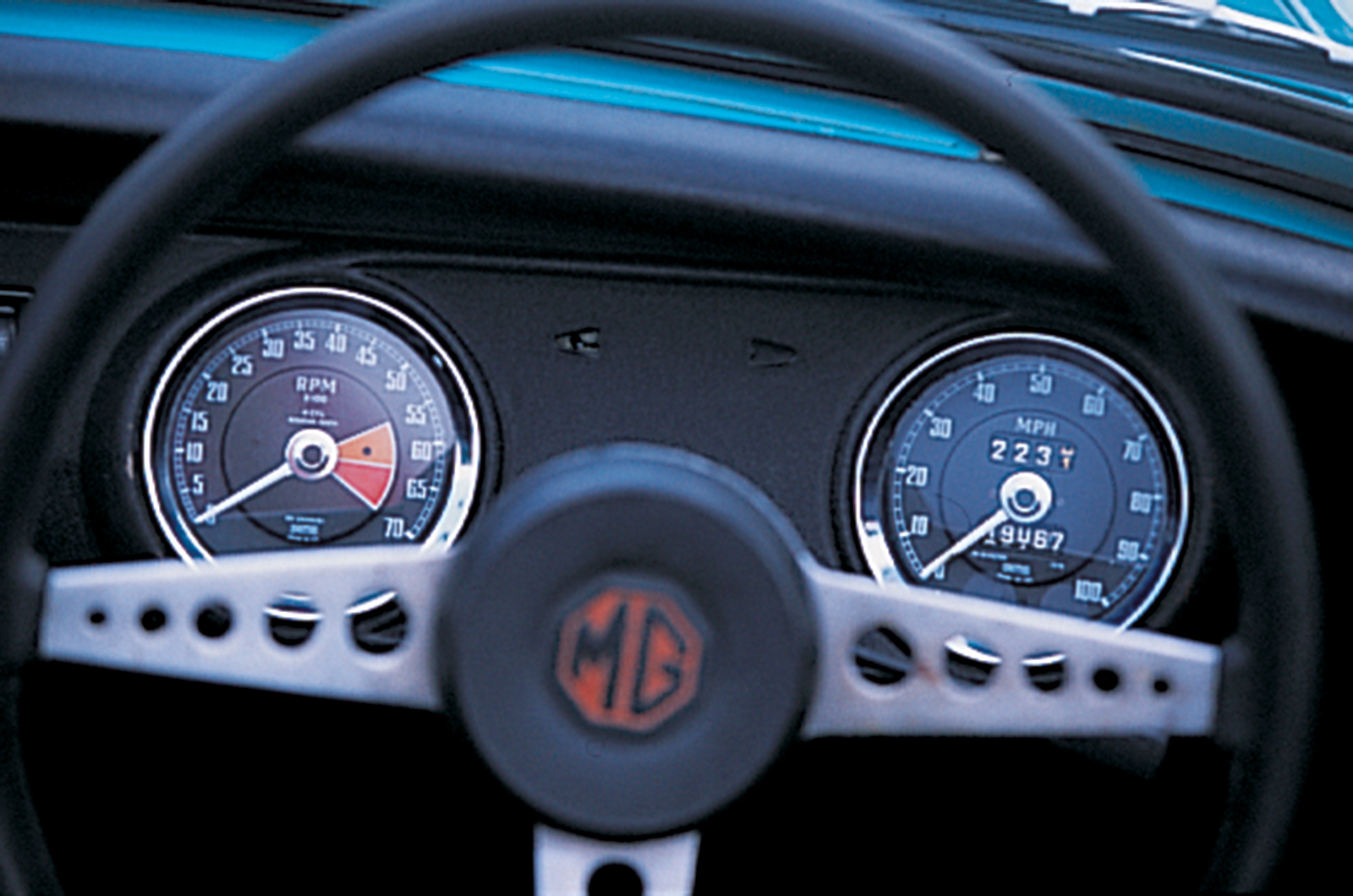
The MG Midget MkIII’s handling is sharp, but the steering is slightly heavier than in the MkI
With the arrival of discs, the clutch and brake master cylinders were separated and given individual reservoirs, and the anchors are – just about – good enough.
And the MkIII Midget makes a brilliant town car with its compact dimensions, nippy power unit and delightful gearbox.
If you’re into British sports cars of the ’60s and ’70s, chances are you’re either a fan of Triumph or MG, and never the twain shall meet.
So Leyland’s 1974 adoption of a Spitfire engine for the baby Abingdon roadster was like breaking one of the Ten Commandments.
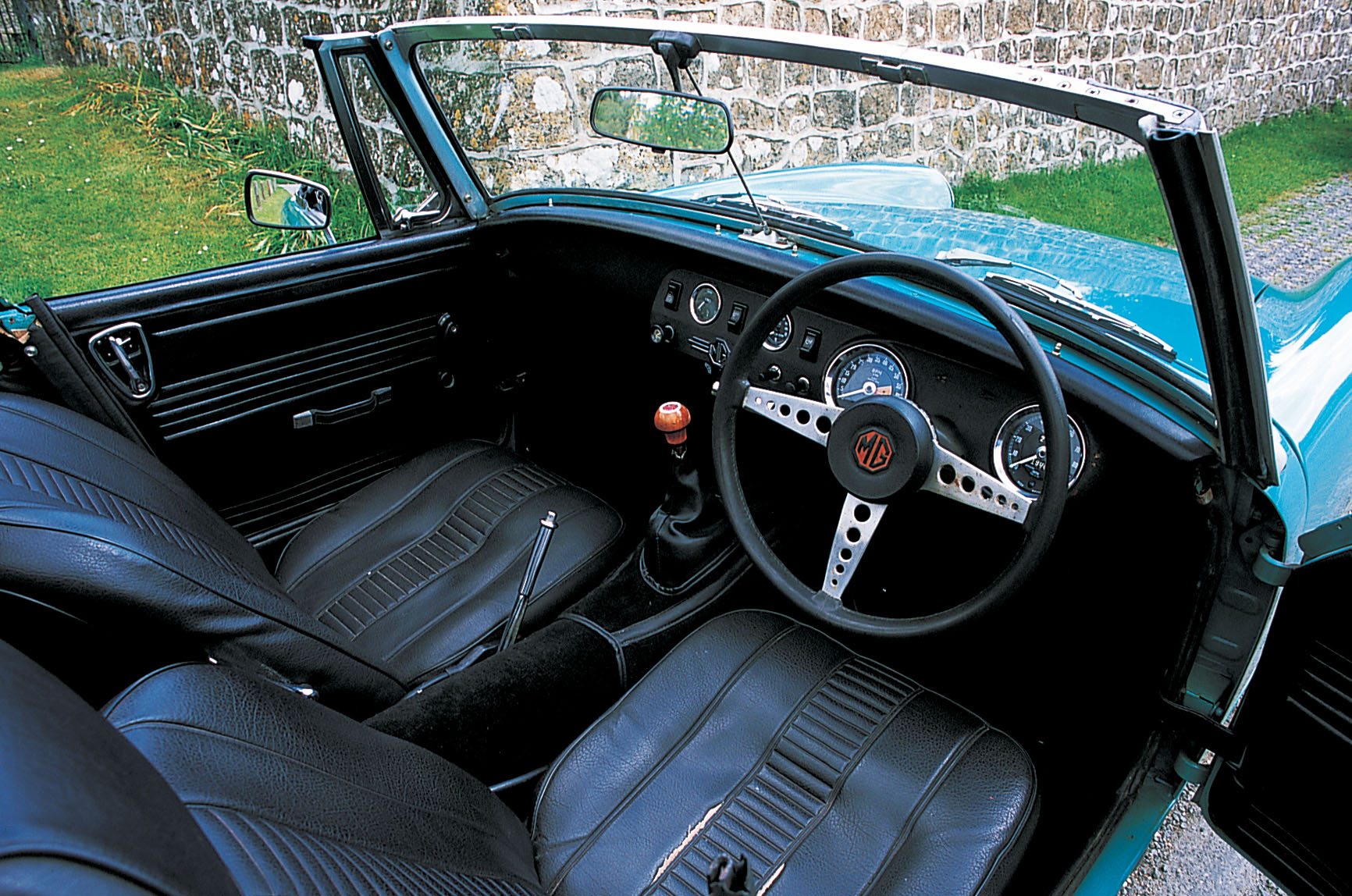
It’s a festival of black vinyl in the MG Midget MkIII
It wasn’t even one of Triumph’s better units, but its questionable 1500 – with an unenviable reputation for poor reliability.
It is interesting to note that it took the efforts of three English manufacturers to truly satisfy the Americans: Austin-Healey design, an MG badge and image, and a Triumph engine.
The new, more powerful unit, mated to a Morris Marina four-speed ’box, was needed because of the extra weight piled on to satisfy crash regulations, which also meant the return of the stronger, square rear arches.
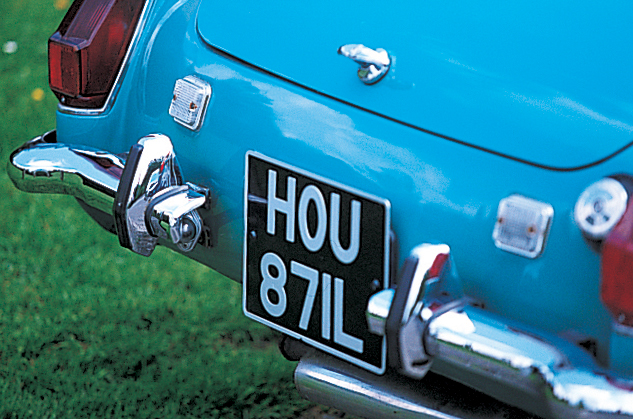
The MG Midget MkIII’s neat rear treatment
The ride height was increased by 1.5in to bring the new impact bumpers up to the correct level.
And it was these fenders that made the biggest change: they looked even more ungainly on the Midget than the bigger MGB, as if it had been to the seaside and forgotten to take off its rubber ring.
But, despite the outcries, the Midget continued to sell: the 1500 ran until the model’s ’79 demise, once again pipping its older sibling by a year.
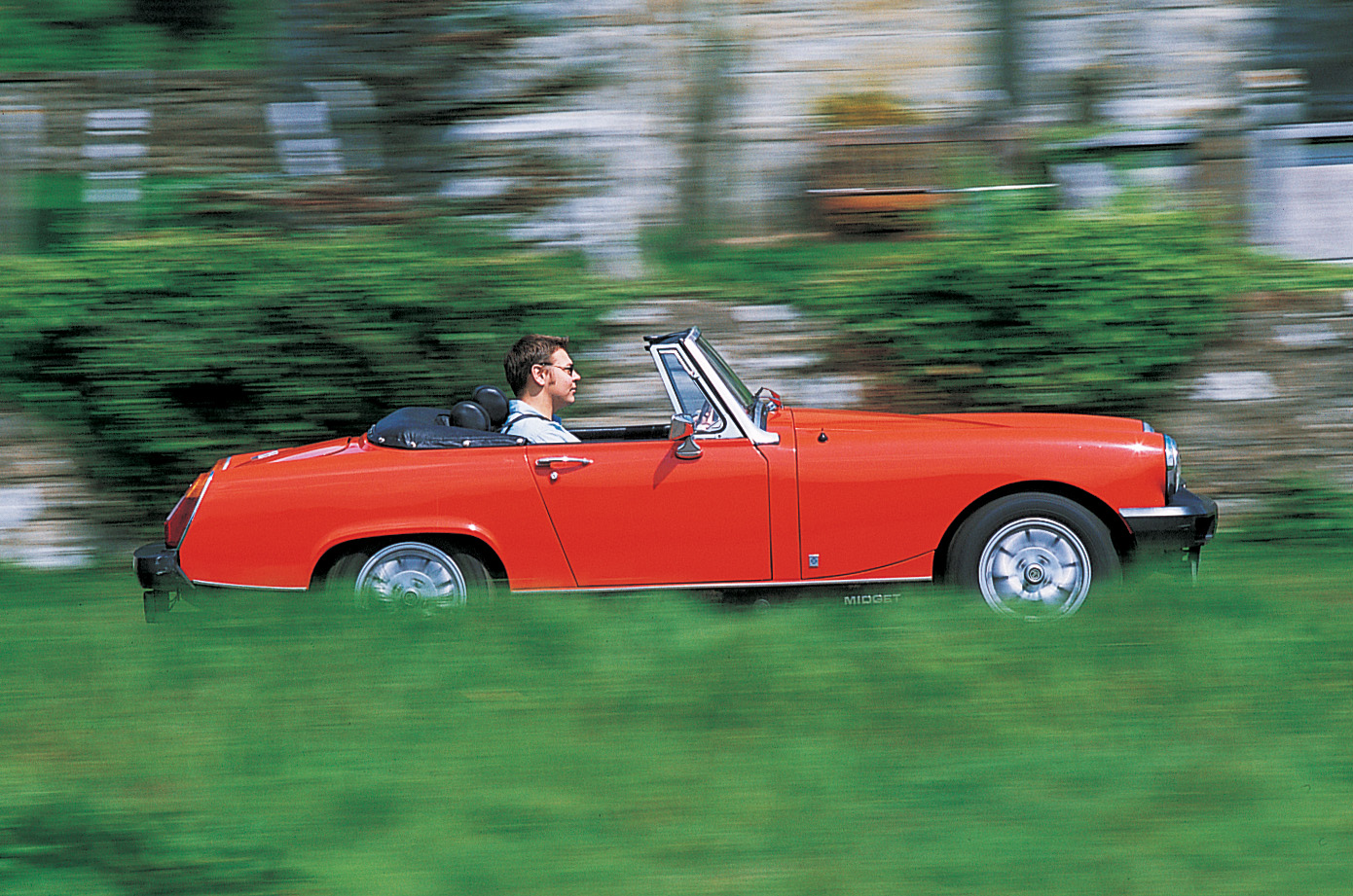
The MG Midget 1500’s handling is not as sharp as earlier cars’
Inside, the dashboard wears Triumph dials to further rub salt into the wound, but otherwise the interior is much like that of the 1275.
An even wider centre console steals legroom and the addition of Federal sunvisors distance the car still further from the spartan cockpit of the original.
Yet, once inside and on the move, the 1500 reveals that it remains a Midget at heart, and in some ways it’s the best to drive, with willing acceleration and genuine 100mph performance, plus an all-synchromesh gearbox.
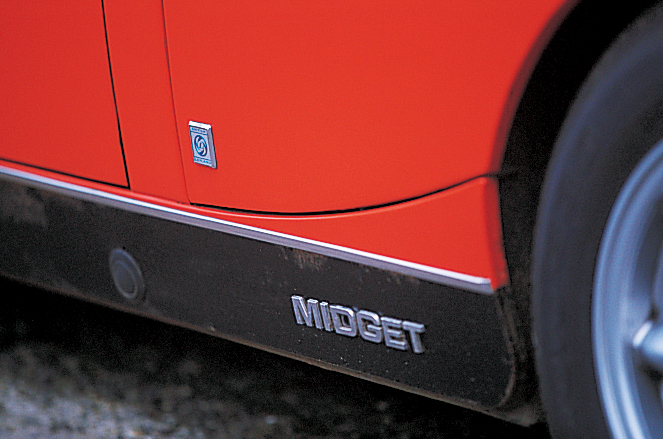
‘It took three English manufacturers to satisfy the Americans: Austin-Healey design, MG image and Triumph engine’
There is a decent amount of torque, too, meaning it picks up better from lower revs, although, despite the 6000rpm redline, the engine is reluctant to go past 5000rpm.
The additional weight over the front wheels blunts the steering slightly, but the 1500 is still great fun and let down only by an uninspiring engine note and inferior handling.
The softer front end signals more inclination to understeer in the dry, although the 1500 is the only car of the group with enough power to easily induce oversteer once into a corner – and in the wet it is the prevalent attitude.
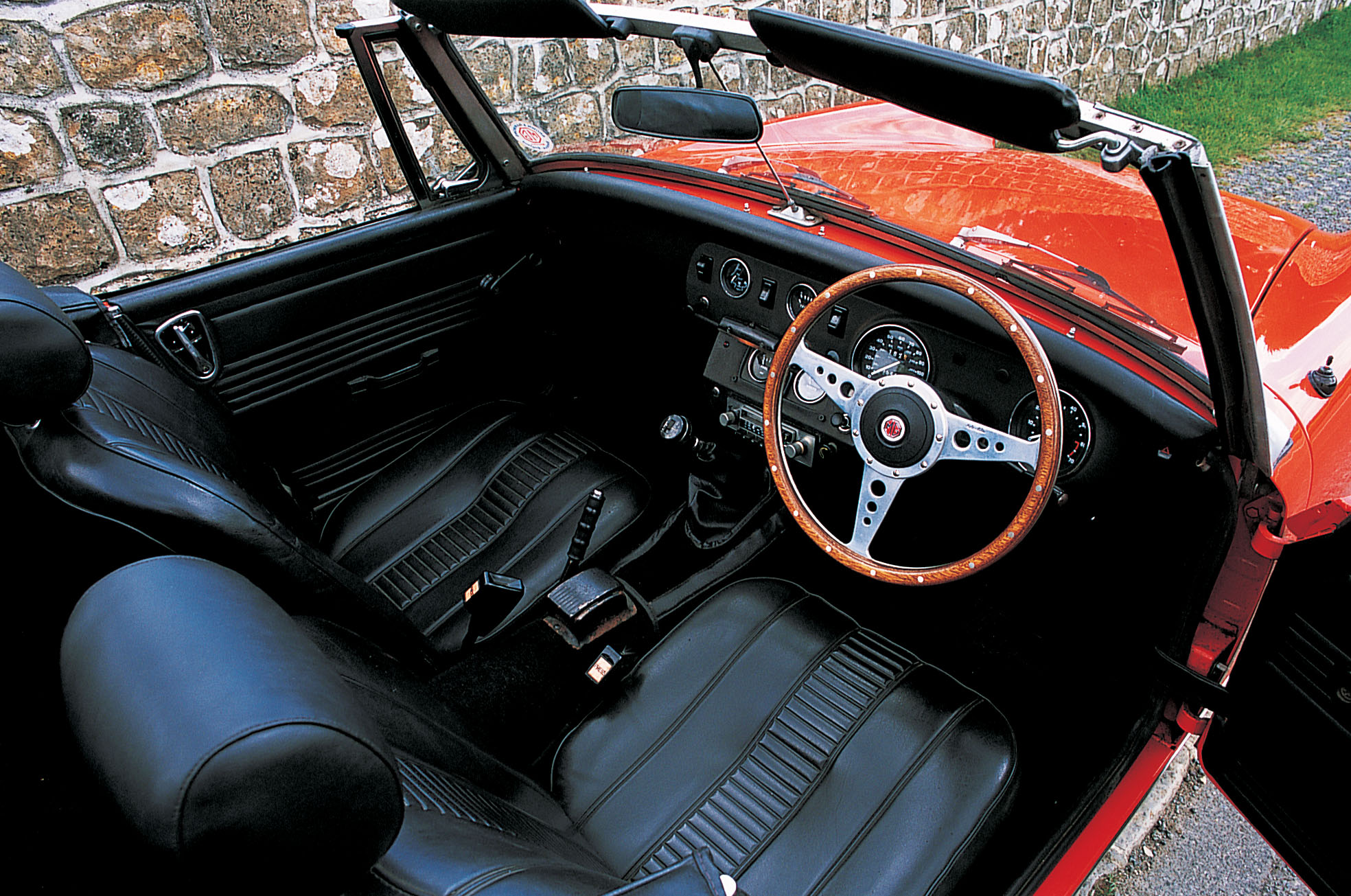
This MG Midget 1500 has an aftermarket Moto-Lita steering wheel
With the extra weight and power, the brakes were becoming inadequate, but the new suspension settings offered decent ride quality.
This final set-up is both comfortable and refined by Midget standards, particularly in this example with the relatively easy addition of a Spitfire overdrive gearbox for more comfortable cruising – one advantage of the 1500.
The bargain buy of this trio has to be the 1500. It’s not pretty but, like an over-baked Alaska, the core appeal remains the same, if a little softer.
Get past those ungainly bumpers and you find a car that has classic Midget character, with a welcome boost in power.
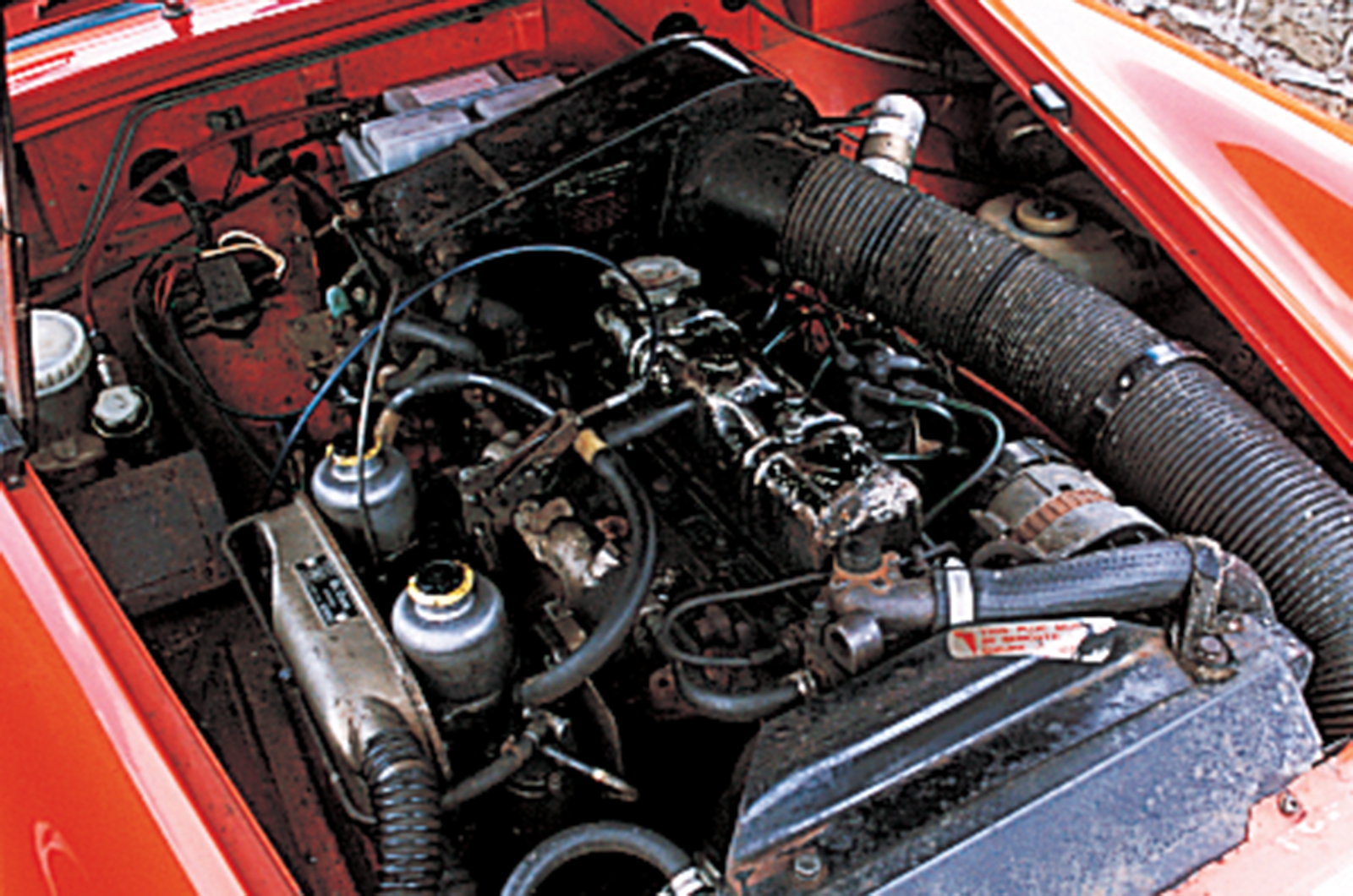
The MG Midget 1500’s Triumph engine gives 100mph pace and more relaxed cruising
The MkI is undoubtedly the purest and prettiest incarnation, and for that alone it will always be desirable, yet it also surprises by proving nippy and fun to drive even alongside its younger siblings.
Development did improve the Midget, though it was simply over-development that spoiled it when British Leyland refused to quit while it was still ahead.
Today’s disposable designs rarely last more than a few years – perhaps 10 at most – yet the Midget persevered for nearly two decades.
The MG Midget classic car evolved, but stayed true to its principles
But the pick of the bunch has to be the 1275, offering a fantastic compromise between the comfort and extra grunt of the 1500 and the cheeky, chrome-clad looks and sporty appeal of the earlier cars, with an engine and gearbox that perfectly suit the Midget’s character.
Whether it is worth the premium for the MG snobs’ desirable round rear wheelarches is less cut and dried.
It seems odd that this style is favoured when it was unique to just two years of production and not a true Midget attribute.
So perhaps the ultimate bargains are the early, pre-British Leyland 1275s, which combined the larger engine with all of the chrome and charm of the first cars.
Images: Tony Baker
Thanks to: Percival Motor Company; The Vintage & Sports Car Garage; MG Midget 1500 owner Steve Smith
This was first in our July 2002 magazine; all information was correct at the date of original publication
Factfiles
MG Midget MkI
- Sold/number built 1961-’66/52,282 (MkI/II)
- Construction steel unitary
- Engine all-iron, ohv 948cc ‘four’, twin SU HS2 carburettors
- Max power 42bhp @ 5500rpm
- Max torque 53lb ft @ 3000rpm
- Transmission four-speed manual, with synchromesh on second, third and top, RWD
- Suspension: front independent, by double wishbones, coil springs, optional anti-roll bar rear live axle, trailing quarter-elliptic leaf springs, radius arms; lever-arm dampers f/r
- Steering rack and pinion
- Brakes drums
- Length 11ft 4¼in (3461mm)
- Width 4ft 5in (1346mm)
- Height 4ft 1¾in (1264mm)
- Wheelbase 6ft 8in (2032mm)
- Weight 1554lb (705kg)
- 0-60mph 20.2 secs
- Top speed 84.7mph
- Mpg 33.4
- Price new £689 11s 5d (1961)
MG Midget MkIII
- Sold/number built 1966-’74/100,345
- Construction steel unitary
- Engine all-iron, ohv 1275cc ‘four’, twin SU HS2 carburettors
- Max power 64bhp @ 5800rpm
- Max torque 72lb ft @ 3000rpm
- Transmission four-speed manual, with synchromesh on second, third and top, RWD
- Suspension: front independent, by double wishbones, coil springs, optional anti-roll bar rear live axle, semi-elliptic leaf springs; lever-arm dampers f/r
- Steering rack and pinion
- Brakes discs front, drums rear
- Length 11ft 5⅖in (3490mm)
- Width 4ft 7in (1397mm)
- Height 4ft ⅗in (1234mm)
- Wheelbase 6ft 8in (2032mm)
- Weight 1546lb (701kg)
- 0-60mph 14.1 secs
- Top speed 94mph
- Mpg 30
- Price new £915 14s 9d (1971)
MG Midget 1500
- Sold/number built 1974-’79/73,899
- Construction steel unitary
- Engine all-iron, ohv 1493cc ‘four’, twin SU HS4 carburettors
- Max power 66bhp @ 5500rpm
- Max torque 77lb ft @ 3000rpm
- Transmission four-speed manual, all-synchromesh
- Suspension: front independent, by double wishbones, coil springs, anti-roll bar rear live axle, semi-elliptic leaf springs; lever-arm dampers f/r
- Steering rack and pinion
- Brakes discs front, drums rear
- Length 11ft 9in (3581mm)
- Width 4ft 7in (1397mm)
- Height 4ft ⅗in (1234mm)
- Wheelbase 6ft 8in (2032mm)
- Weight 1720lb (780kg)
- 0-60mph 12.3 secs
- Top speed 101mph
- Mpg 27.9
- Price new £1559.61 (1975)
Enjoy more of the world’s best classic car content every month when you subscribe to C&SC – get our latest deals here
READ MORE
Buyer’s guide: MG Midget & Austin-Healey Sprite
Austin-Healey Sprite and MG Midget: affordable fun
Shared heart: MG Midget 1500 vs Triumph Spitfire 1500

Alastair is Editor in Chief of Classic & Sports Car and has been associated with the brand for more than 20 years