Alfa Romeo Alfasud vs Citroën GS: leading from the front

| 6 Oct 2026
Classic & Sports Car – Alfa Romeo Alfasud vs Citroën GS: leading from the front

While the likes of Ford and General Motors were happy to churn out unadventurous family saloons for the great unwashed in the early ’70s, the French and Italians had different ideas.

Along remarkably similar lines, as it goes, and within about 12 months of each other.

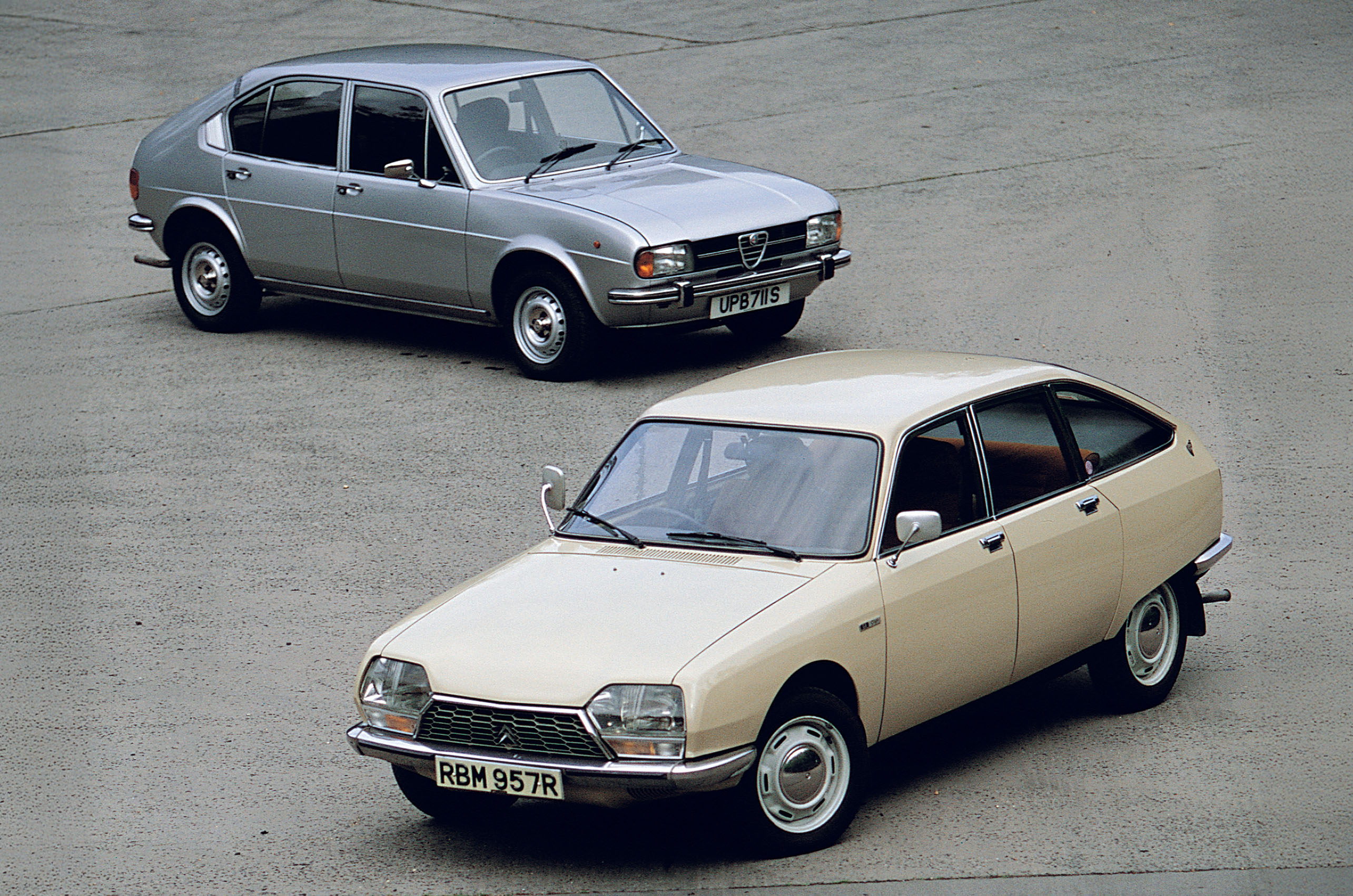
Citroën stole the show with the GS at the Paris Salon in October 1970, then Alfa Romeo followed suit on the Alfasud’s debut at Turin the following November. 

Both were compact, front-wheel-drive saloons with overhead-cam flat-four engines that could easily top 90mph on about two-thirds of the capacity of their cart-like contemporaries.

Both had disc brakes all round, inboard at the front. They even looked alike.
Classic & Sports Car – Alfa Romeo Alfasud vs Citroën GS: leading from the front

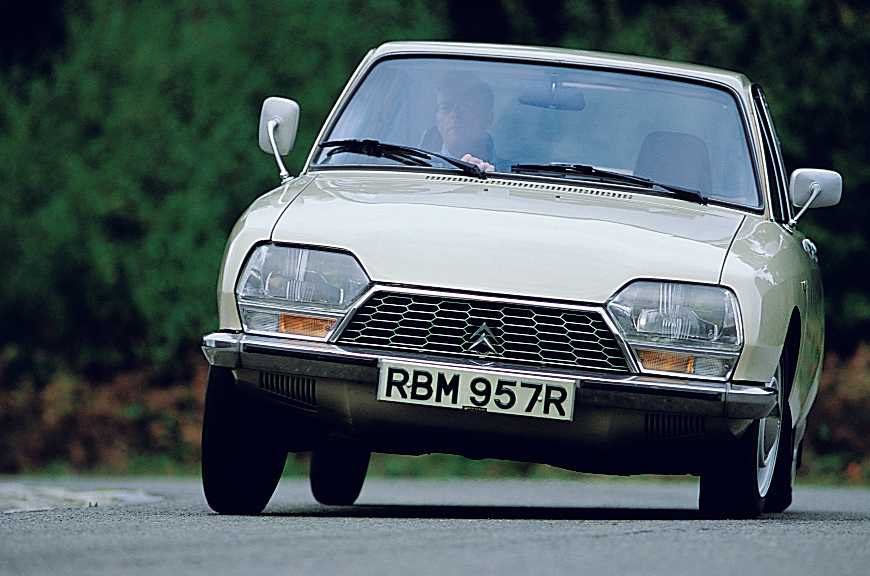
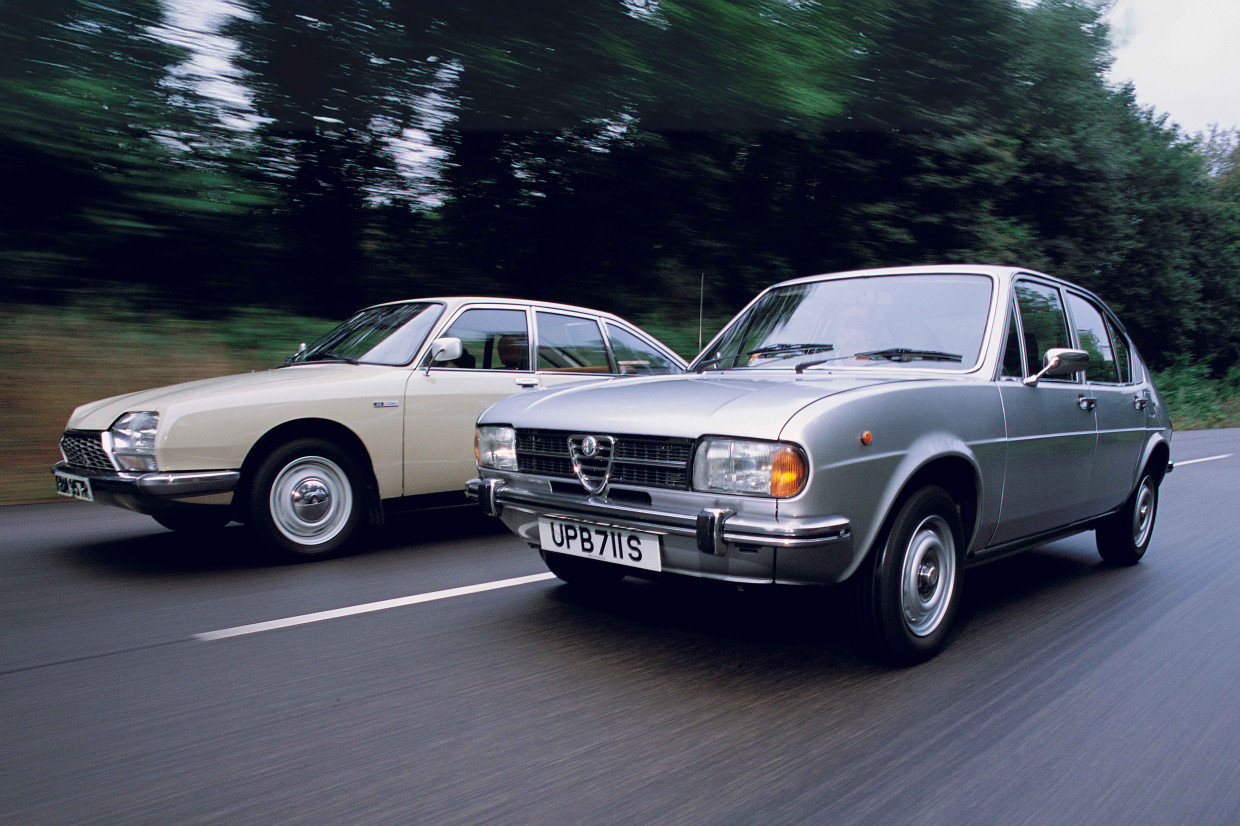
There was nothing like the sensational Citroën GS (closest) and Alfasud when they came out – and there still isn’t

Yet for all their similarities on paper, they couldn’t feel more different on the road. From the off, the Alfasud feels like a sports car.

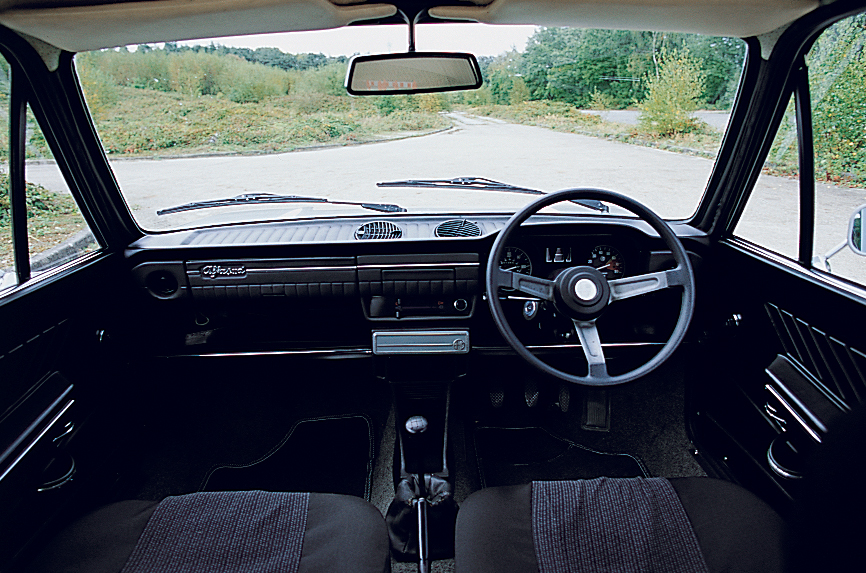
You sit low, with the rev counter straight ahead – one of just two main dials, although there are warning lights for water temperature, charging and oil pressure set into the speedometer, and the three-spoke steering wheel adjusts for height.
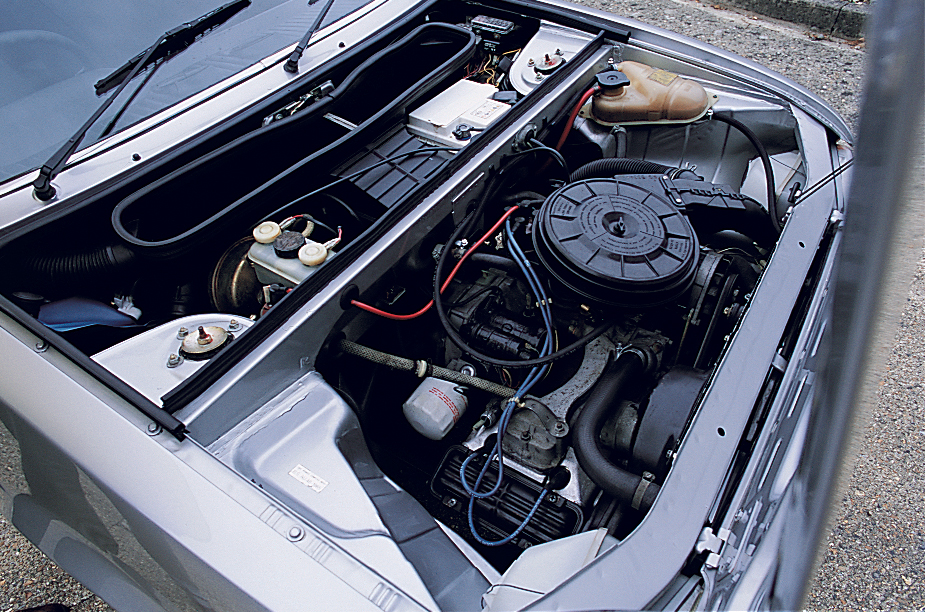
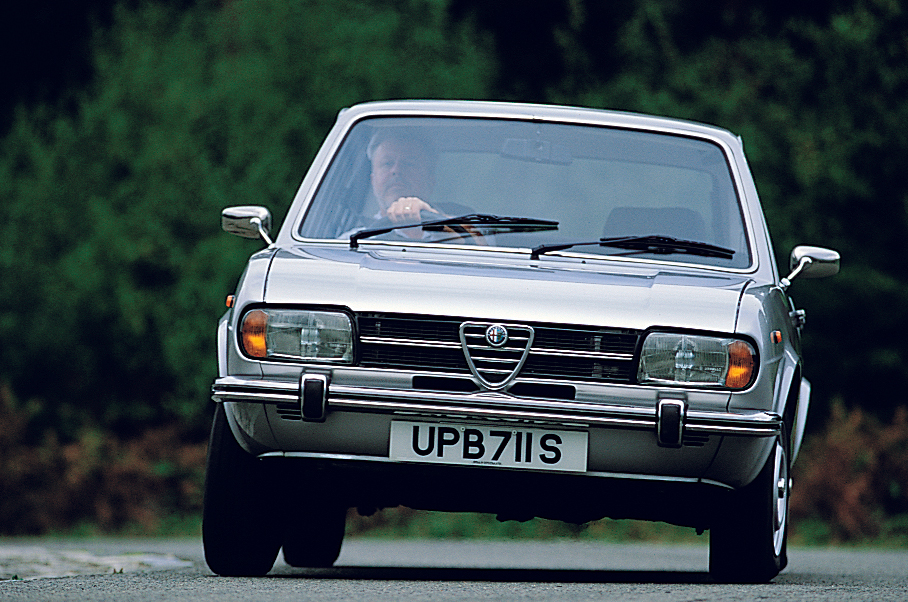
The eager flat-four fires instantly on the key, signalling its intentions with a fruity rasp from the exhaust pipe.

It’s massively oversquare – 80mm bore by 59mm stroke – and was designed to rev, with a light clutch mated to a slick five-speed gearbox to help you exploit its enthusiasm.

Through an awkward series of twists and switchbacks, its irrepressible character goads you into going faster.

The more you push it, the more settled it feels – no understeer, oversteer or torquesteer: just grip, with cheeky spits and pops on the overrun.

The light, responsive, rack-and-pinion steering doesn’t load up and you never feel as if you are close to the limits of the 165/70x13 tyres: it was one of the first mainstream models to be offered with low-profile rubber.

Classic & Sports Car – Alfa Romeo Alfasud vs Citroën GS: leading from the front

The Alfa Romeo Alfasud’s free-revving flat-four engine has plenty of torque, while two bulkheads increased refinement

Motor was impressed, too, in its first road test in September 1973, although obviously trying quite hard: ‘All this adds up to a car with delightfully neutral handling that impresses also for its tenacious grip and lack of roll. There is also a useful touch of lift-off tuck-in to help tighten the line when a corner has been taken too fast.’

Quite: it feels much like a grown-up Mini, only one with an excellent ride, and it’s easily the measure of that other front-drive icon, the Volkswagen Golf GTI.

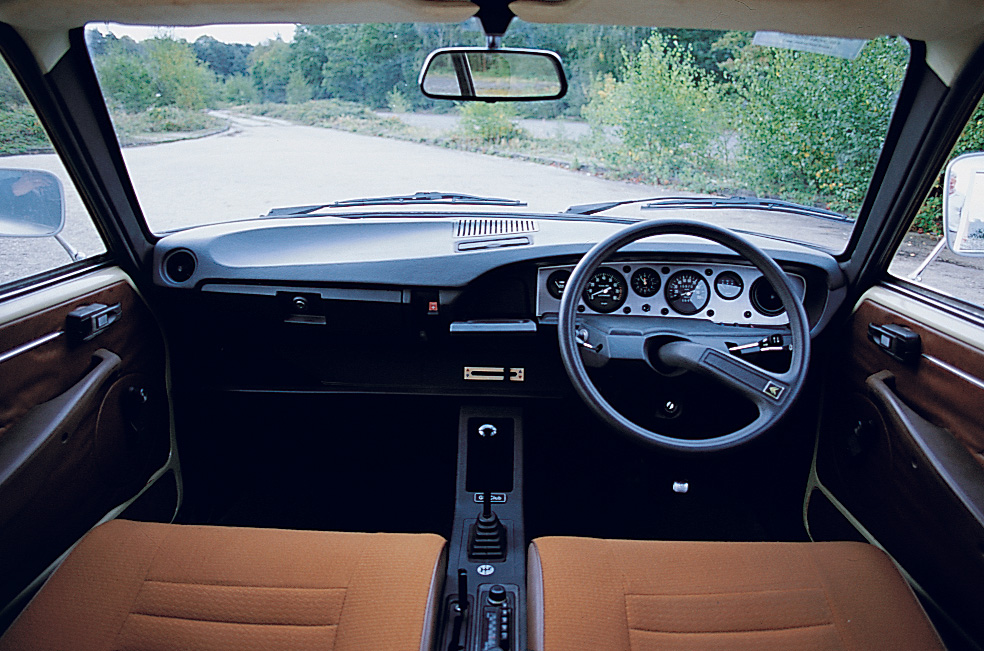
As you drop into its comfy, high-backed seats, trimmed in a marvellous shade of ’70s burnt-orange jersey nylon, the GS feels like an altogether softer proposition.

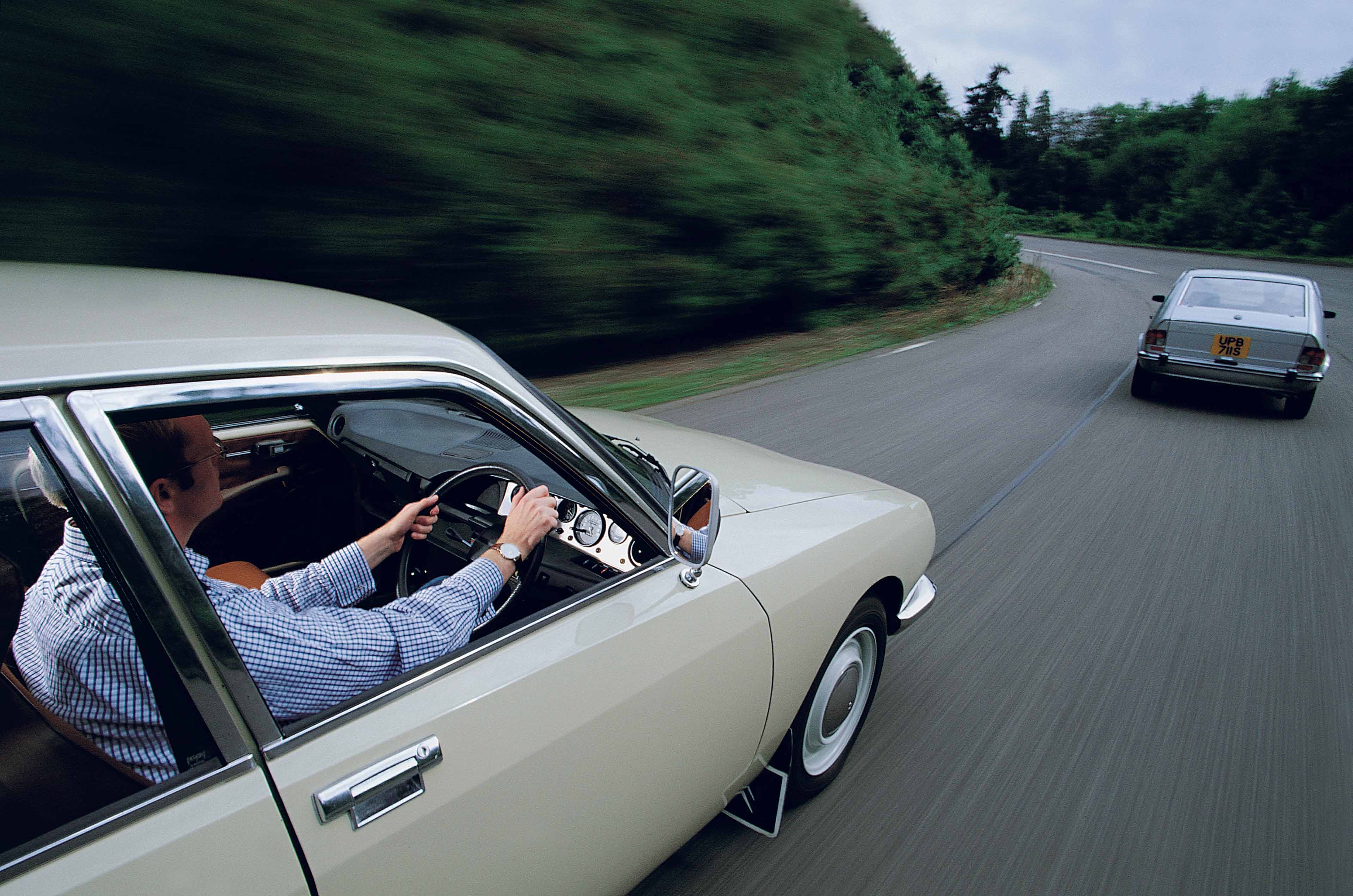
There’s a clear view of the elegant Veglia instruments through the trademark single-spoke wheel – larger than the Sud’s sporty number and at a flatter angle.

Start up and, after a few intriguing ticks and sucks from the hydropneumatic suspension, it pops up to its normal height.

The GS initially feels sluggish after the feisty Sud, until you realise that it wants to be driven like a 2CV: spank it past 4000rpm and the off-beat thrum gives way to an uncanny smoothness the harder the flat-four revs.

You hear the engine working under load, mainly because there’s hardly any other noise, but it’s never strained.

Classic & Sports Car – Alfa Romeo Alfasud vs Citroën GS: leading from the front

The Alfasud remains composed when the going gets twisty

It feels about as quick as the Alfa Romeo, yet it is somehow more relaxed when cruising, perhaps a function of its 2in-bigger wheels, even though it’s revving harder at the same speed in top: 4600rpm at 70mph, about 500rpm faster than the Sud.

The four-speed floor gearchange – a last-minute concession to conformity – is light if a little vague, although it probably wouldn’t be if it had sprouted out of the dash as per the original design.

Okay, in corners it leans more than a party election broadcast – it’s a proper Citroën, it’s meant to – yet the amazingly compliant set-up never loses its poise.

The more pressure the nitrogen is under inside the suspension spheres, the better it works as a spring.

The GS wants to plough on through bends more than the Alfasud, although it’s brought back on line with a little more steering lock: where the Alfa feels sharp and direct, the Citroën is measured and precise, gripping just as tenaciously on its narrower, taller 145x15 tyres.

Both have brilliant brakes: with just 830kg at the kerb for the Alfa plus another 25kg on top of that for the Citroën, and disc brakes all round, neither takes much stopping.

The Sud’s servoed set-up is nicely progressive and the pedals look ideal for heel-and-toeing, while the powered set-up of the GS is awesome, but not over-sensitive as in most moderns.

Classic & Sports Car – Alfa Romeo Alfasud vs Citroën GS: leading from the front

The Citroën GS leans more than Alfa’s Sud

When they were launched, these two cars broke new ground for their makers: one was a radical entry-level model for Alfa Romeo, the other a way for Citroën to plug a gaping hole between its flat-twin ranges and the DS/ID.

Each was masterminded by one man.

After eight years at Simca in France, brilliant Austrian engineer Rudolf Hruska, whose CV included working on the Tiger tank during WW2 and various Alfa Romeo projects post-war, was back in 1967 to design the Alfa from the South (hence its name).

The car was to be built in the firm’s former aero-engine plant, refurbished with help from the Italian government, at Pomigliano d’Arco in the suburbs of Naples.

Its French alter ego was styled by the pragmatic Robert Opron – the first car under his sole direction after he had taken over as Citroën’s head of design from Flaminio Bertoni.

Aerodynamics were key to its efficiency: with a Cd of 0.36, helped by the neat Kamm tail, the original 1015cc GS could cruise at 75mph on 60% of its available 50bhp. It took just two years to get from the drawing board to the production line and was voted Car of the Year in 1971.

CAR scribe LJK Setright, never one to understate his case, wrote: ‘Without surrendering their aristocracy, Citroën has found the common touch, and motoring will never be quite the same again.’

Classic & Sports Car – Alfa Romeo Alfasud vs Citroën GS: leading from the front

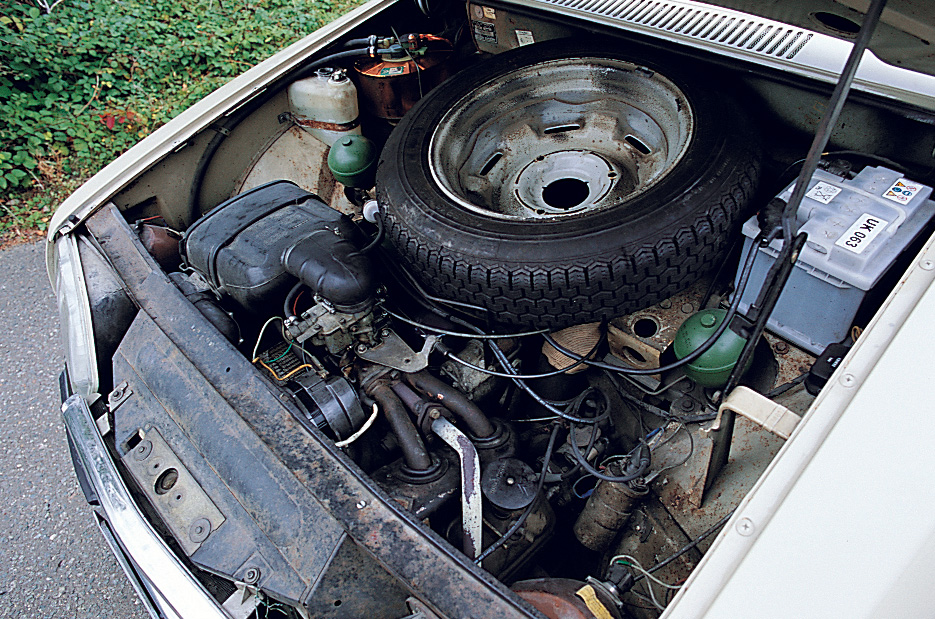
The Citroën GS has an air-cooled boxer engine which thrives on revs

Hruska had boxer engines sussed, from his days before WW2 in Prof Porsche’s team developing the people’s car.

It also made sense for the Sud, because it enabled a low centre of gravity and bonnet line – albeit water-cooled and the right way round compared with the Volkswagen, driving the front wheels.

Light construction gave the car a power-to-weight ratio of 76bhp per tonne.

And what did Hruska do for suspension? He in effect set the template for the best-handling front-drive cars that followed, with MacPherson struts up front and a beam axle on coil springs at the back, cleverly located by a long Panhard rod, plus two Watt linkages that applied a torsional load as the car leaned, so it didn’t need a rear anti-roll bar.

Citroën voted for horizontal opposition, too, with an air-cooled four-pot built using similar methods to its flat-twin – but all-alloy and set low – ahead of the front-axle line, with the gearbox behind it and angled downwards to reduce the centre of gravity.

In the GS, its self-levelling hydropneumatic set-up used double wishbones at the front and trailing arms at the back, interconnected front to rear, but fine-tuned with better damping and relocated bump-stops to reduce the pitching and floating that afflicted the bigger DS.

Classic & Sports Car – Alfa Romeo Alfasud vs Citroën GS: leading from the front

This UK-spec Citroën GS features a set of Veglia dials instead of the more unusual home-market dashboard, with rotating-drum speedometer

Both Opron and Alfasud stylist Giorgetto Giugiaro went for the understated look, with little brightwork to interfere with the purity of their two-box shapes – just simple highlights around the windows and to accentuate the shape of the rump in both cases, plus a sill strip on the Alfa.

Perfect form contained supremely effective function: without any rear-drive gubbins, both saloons could seat four in comfort while swallowing their luggage in massive boots.

Neither has a high load sill to contend with, although the Citroën had the edge because its bootlid took the bumper with it and opened to floor level, while the spare wheel lived under the bonnet.

Moreover, both came as cavernous estates – although the baby breadvan-style, three-door Alfasud Giardinetta was never sold in the UK.

Giugiaro also styled the pretty Sprint coupé that outlived the saloon by five years.

Attempting to keep up with the times had mixed results: both cars gained power – up to a frisky 105bhp on Webers in the 1490cc Alfa Green Cloverleaf and a torquier 65bhp 1299cc for the Citroën – and eventually hatchbacks, losing their low sills in the process.

It was at the expense of their looks, the purity of which disappeared under bigger impact bumpers, wheelarch trims and rubbing strips. Yet they were still ahead of the game for refinement when they were replaced by the 33 and BX.

Classic & Sports Car – Alfa Romeo Alfasud vs Citroën GS: leading from the front

The Alfasud’s understated cabin has just two main gauges and an adjustable steering column

Sadly, the Alfasud never matched its technical promise with commercial success: at 723,000 saloons all-in, production was barely half the projected output, thanks to a combination of lax quality control, high unit cost and poor industrial relations.

But with a total of nearly 2.5 million, including the facelifted GSA, the GS was second only to the Deux Chevaux – although much of the good work was undone by the costly, rotary-engined Birotor debacle.

Driving these two landmark designs back to back, and watching them head home amid today’s amorphous blobs, you realise just how advanced they were.

Save rot protection, the lack of which did for the Alfa Romeo virtually off the production line (extensive use of reclaimed steel didn’t help) and the Citroën not long after, its Formula One-style flat undertray hiding rust-traps.

That aside, all small saloons have done over the intervening years is to grow bigger, heavier and uglier.

Given a deft, colour-coded nip and tuck here and there, this groundbreaking duo would still look fresh. 

If you could combine the Alfasud’s handling with the Citroën’s supple ride and composure, there would be nothing to touch it. Lightweight cars on skinny tyres: it’s the way forward.

Images: Tony Baker

Thanks to: Steve Butler, Shaun Lilley, Alfa Romeo Owners’ Club UK; Citroën Car Club

This was first in our December 2004 magazine; all information was correct at the date of original publication


Factfiles

Classic & Sports Car – Alfa Romeo Alfasud vs Citroën GS: leading from the front

Citroën GS/GSA

  • Sold/number built 1970-’86/2,439,763
  • Construction steel monocoque
  • Engine all-alloy, sohc-per-bank 1015-1299cc flat-four, twin-choke Solex carburettor
  • Max power 60bhp @ 6500rpm (1220cc)
  • Max torque 64lb ft @ 3250rpm
  • Transmission four-speed manual, FWD
  • Suspension independent, at front by double wishbones rear trailing arms; interconnected hydropneumatic spheres, self-levelling f/r
  • Steering rack and pinion
  • Brakes powered inboard discs
  • Length 13ft 6¼in (4121mm)
  • Width 5ft 3¼in (1607mm)
  • Height 4ft 5in (1651mm)
  • Wheelbase 8ft 4½in (2553mm)
  • Weight 1885lb (855kg)
  • 0-60mph 14.9 secs
  • Top speed 94mph
  • Mpg 27-36
  • Price new £1347 (Club, 1973)


Alfa Romeo Alfasud

  • Sold/number built 1972-’83/723,094
  • Construction steel monocoque
  • Engine iron-block, alloy-head, sohc-per-bank 1186-1490cc flat-four, single/twin Solex or Weber carburettors
  • Max power 63bhp @ 6000rpm (1186cc)
  • Max torque 61lb ft @ 3500rpm
  • Transmission four/five-speed manual, FWD
  • Suspension: front independent, by MacPherson struts, anti-roll bar rear beam axle, twin Watt linkages, Panhard rod, coil springs, telescopic dampers
  • Steering rack and pinion
  • Brakes discs, inboard at front, with servo
  • Length 12ft 10in (3912mm)
  • Width 5ft 3in (1600mm)
  • Height 4ft 6in (1372mm)
  • Wheelbase 8ft ½in (mm)
  • Weight 2451lb (830kg)
  • 0-60mph 14.1 secs
  • Top speed 92mph
  • Mpg 27-34
  • Price new £1399 (1973)

Enjoy more of the world’s best classic car content every month when you subscribe to C&SC – get our latest deals here


READ MORE

Citroën GS Pallas vs Vanden Plas 1.7: avant-garde for the masses

Buyer’s guide: Alfa Romeo Alfasud

Citroën Ami 6: baroque and roll