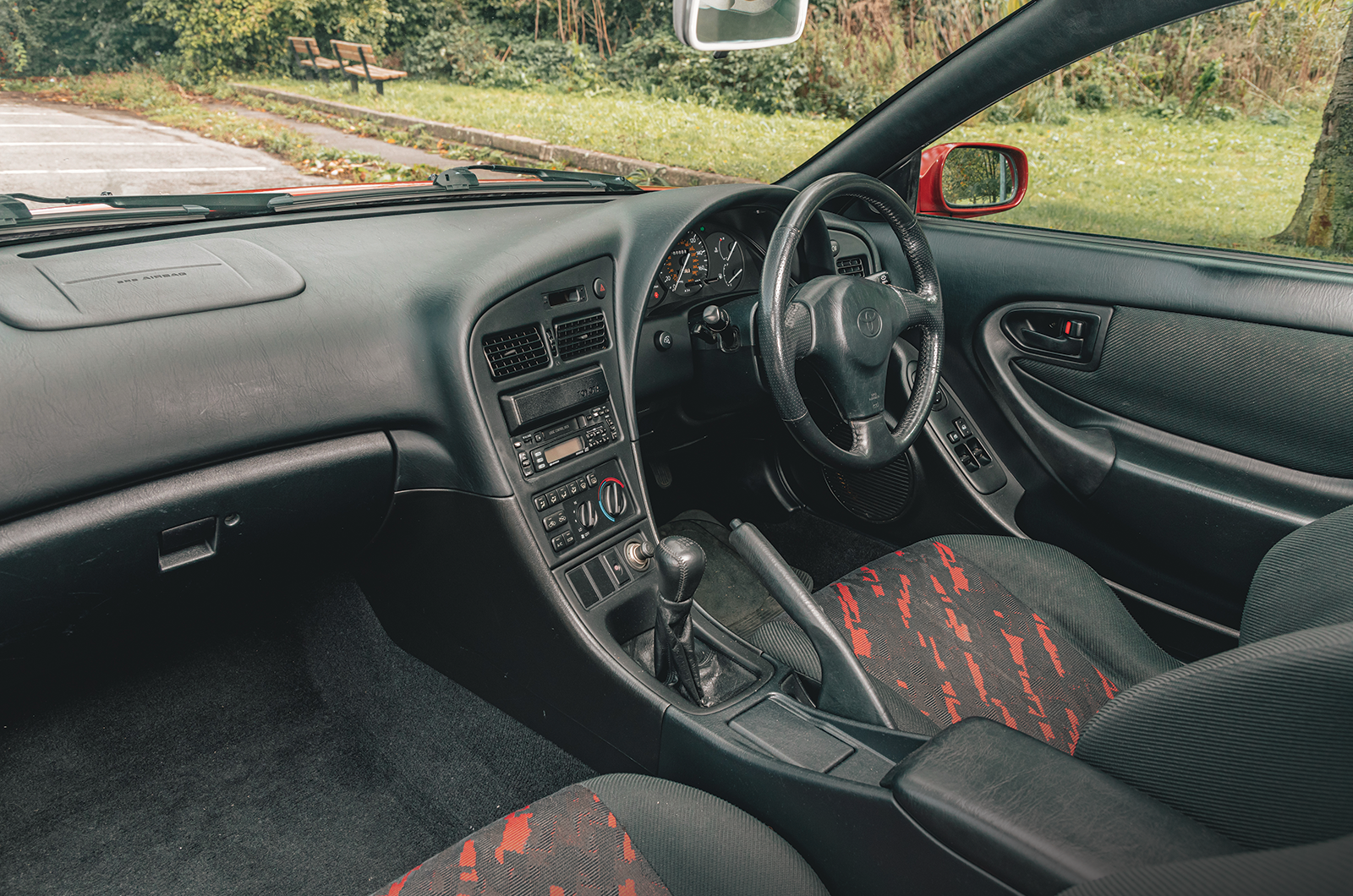
Fantastic vision gives the driver the confidence to make the best use of the chassis’ abilities, too.
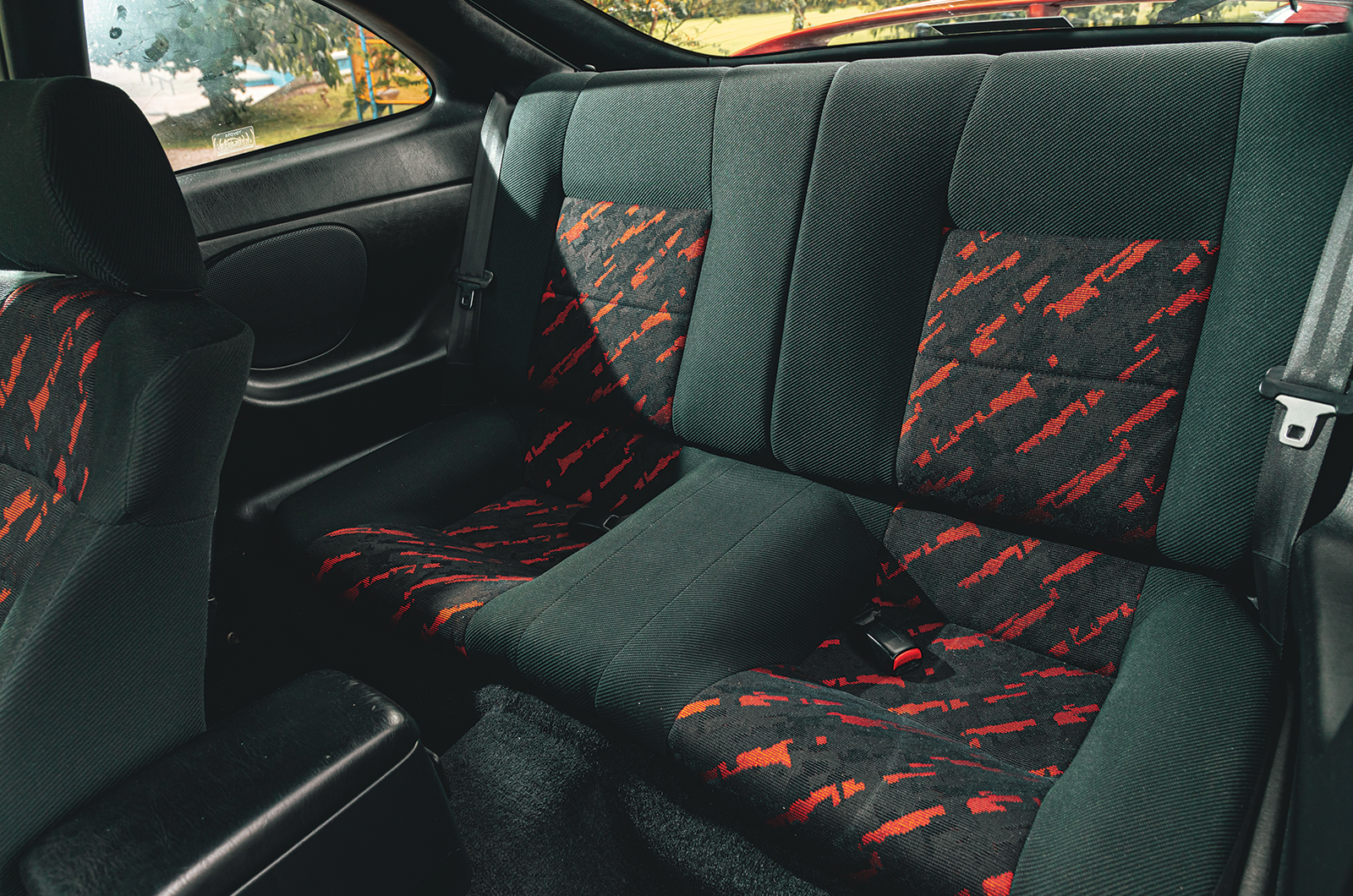
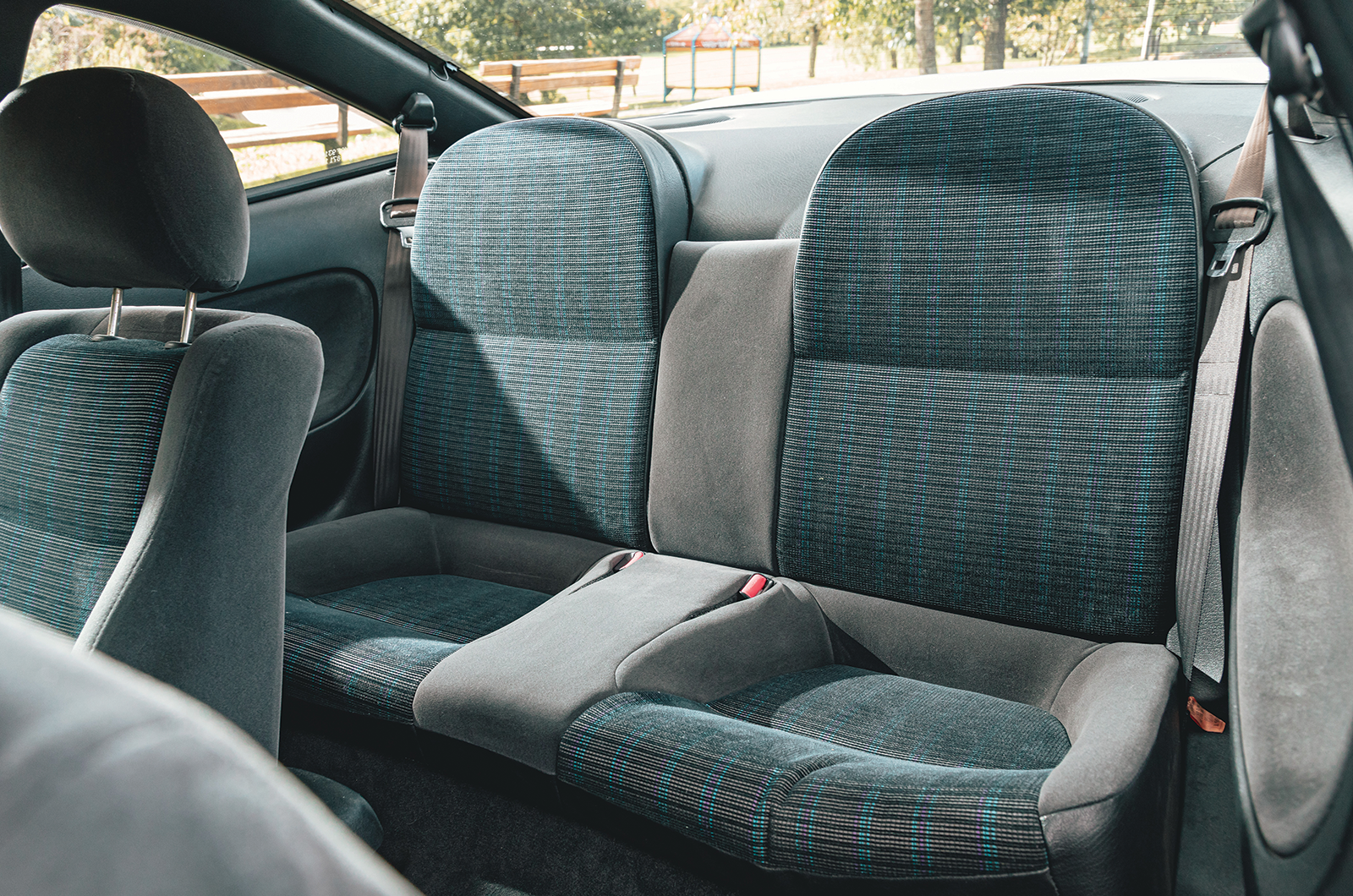
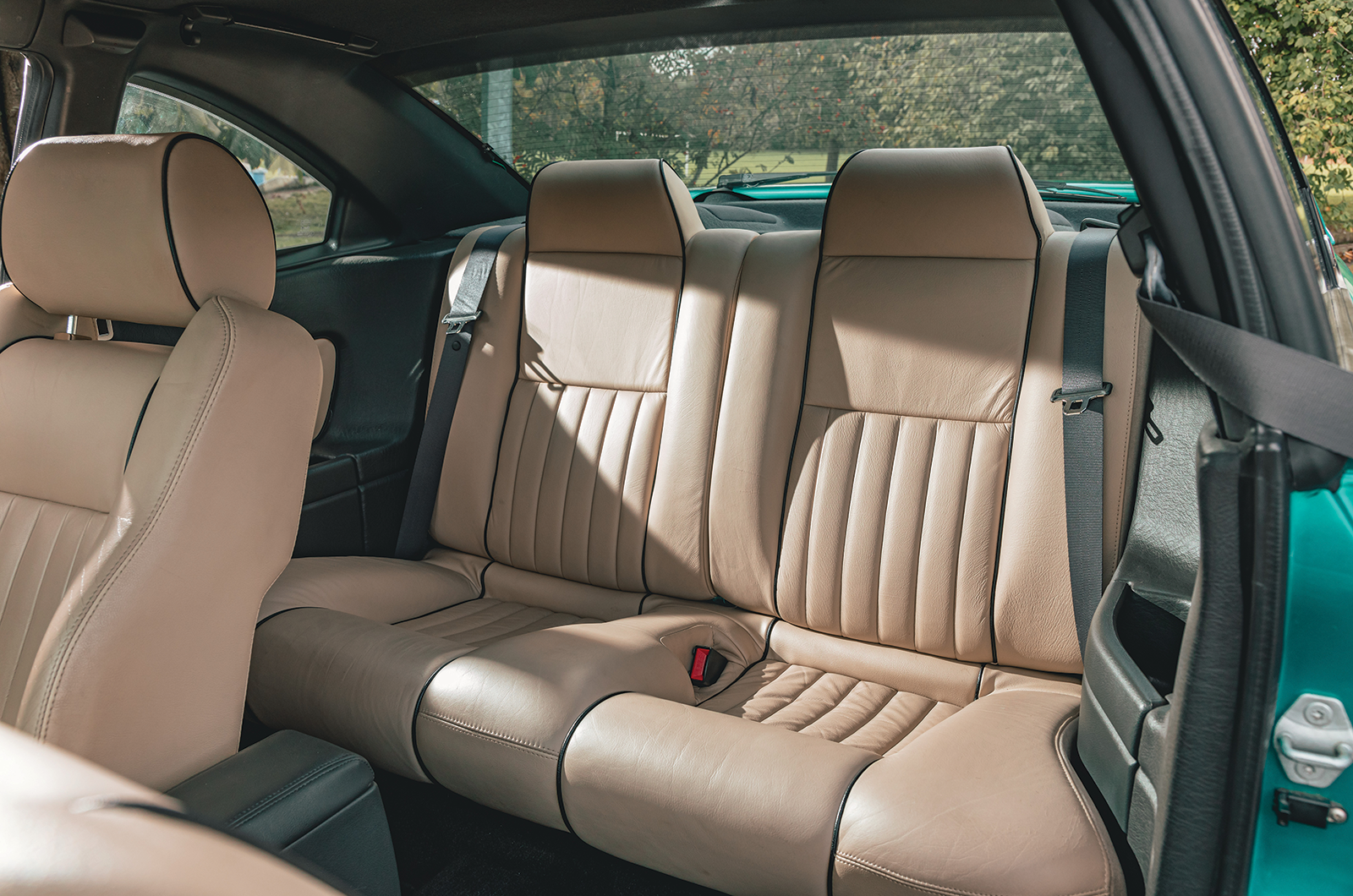
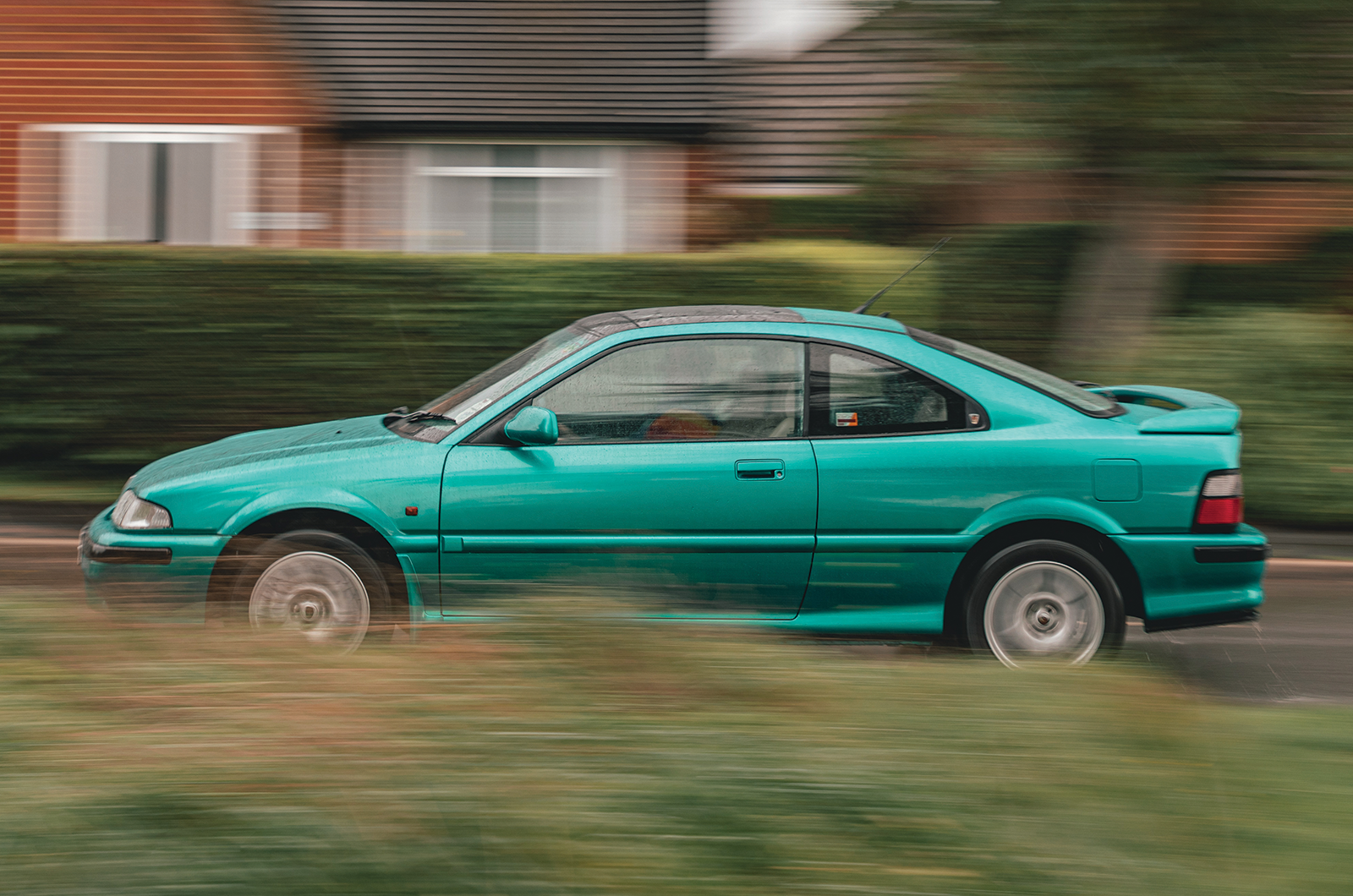
The Rover feels light and bright thanks to its large glasshouse – except for the back seats, where the relatively thick C-pillars darken things somewhat.
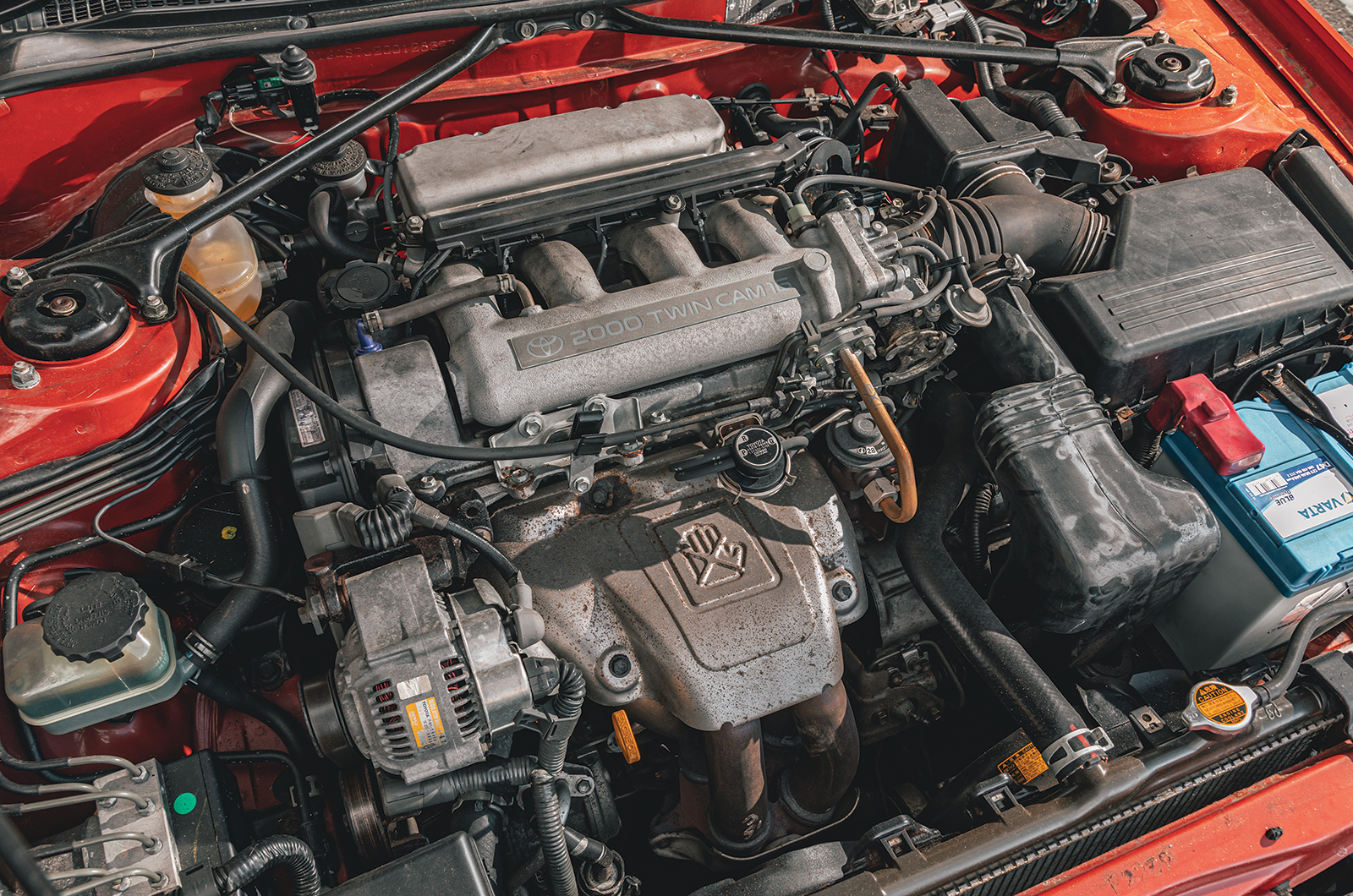
Toyota’s trick 3S-GE ‘four’ has variable intake and forged internals
This playful, lightweight and lively chassis is brilliant fun in the lesser 216i and naturally aspirated 220 versions of the Rover coupé, but is a bit overwhelmed by the performance of the turbocharged T-series.
The brakes don’t feel quite strong enough in this application and there’s that hefty dose of torquesteer, which the Zexel-Gleason Torsen differential can’t fully control.
All power-assisted Rover 200s have slightly odd steering, with a vagueness both at dead-ahead, at high speed, and when under load, mid-corner.
Not so unnerving when you’re playfully throwing around a 111bhp 216, but more of a concern here.
The Rover 220 turbo has lots of torquesteer despite its trick differential
The Torsen differential interferes even further, with the steering wheel desperate to self-centre whenever the weight comes off the front wheels over a mid-corner undulation.
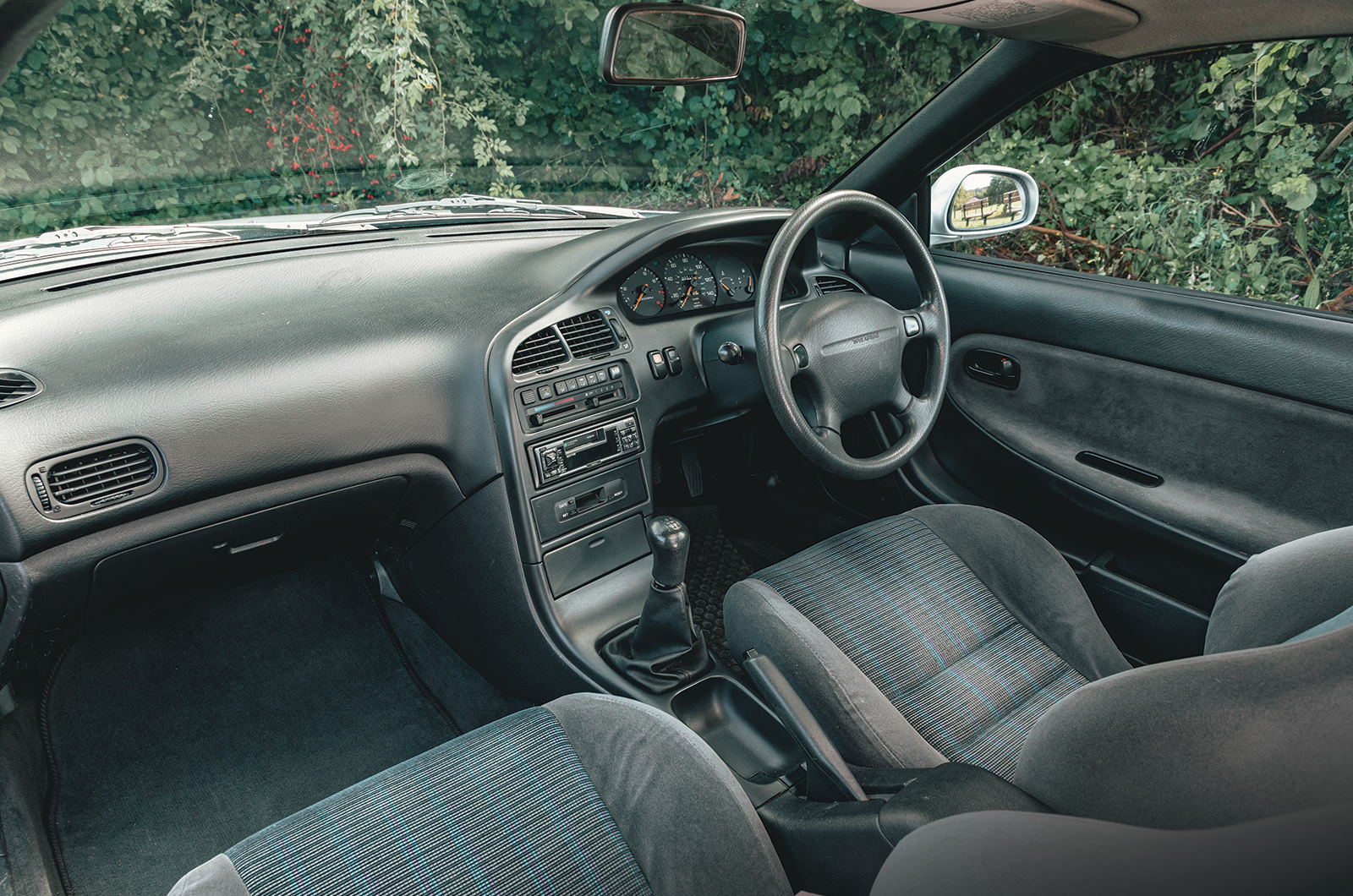
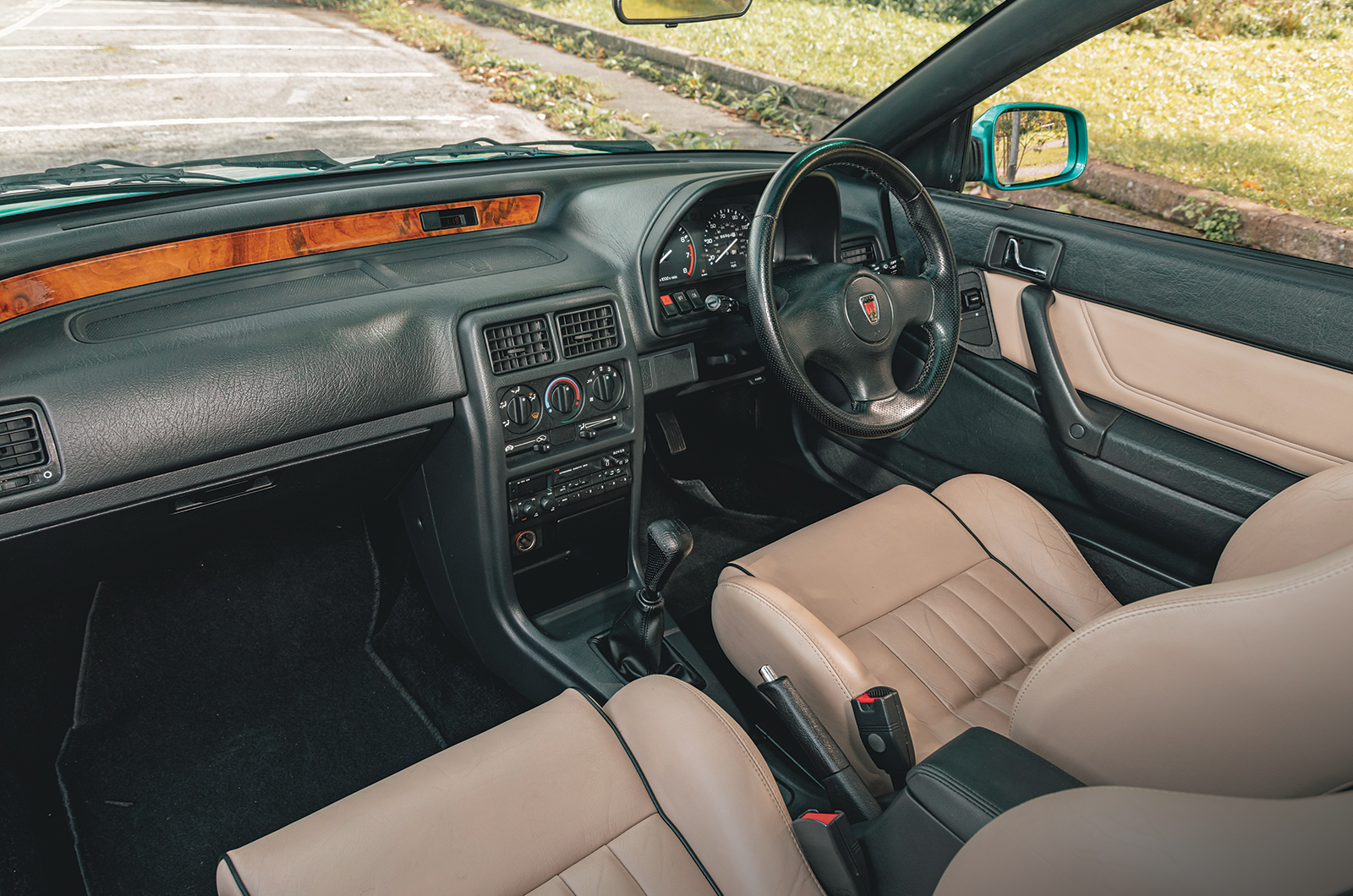
It’s firm over those bumps, too, but while the T-bar roof does encourage a few rattles, there is a feeling of quality inside the Rover that’s missing in the Toyota.
The dash top, steering wheel and doorcards are made of soft, plush-feeling plastics.
But, as on its exterior, the 220’s interior has a split personality.
The centre stack, a flimsy-looking thing designed by Honda (and which it had stopped making in Japan by 1992), drags down the ambience.
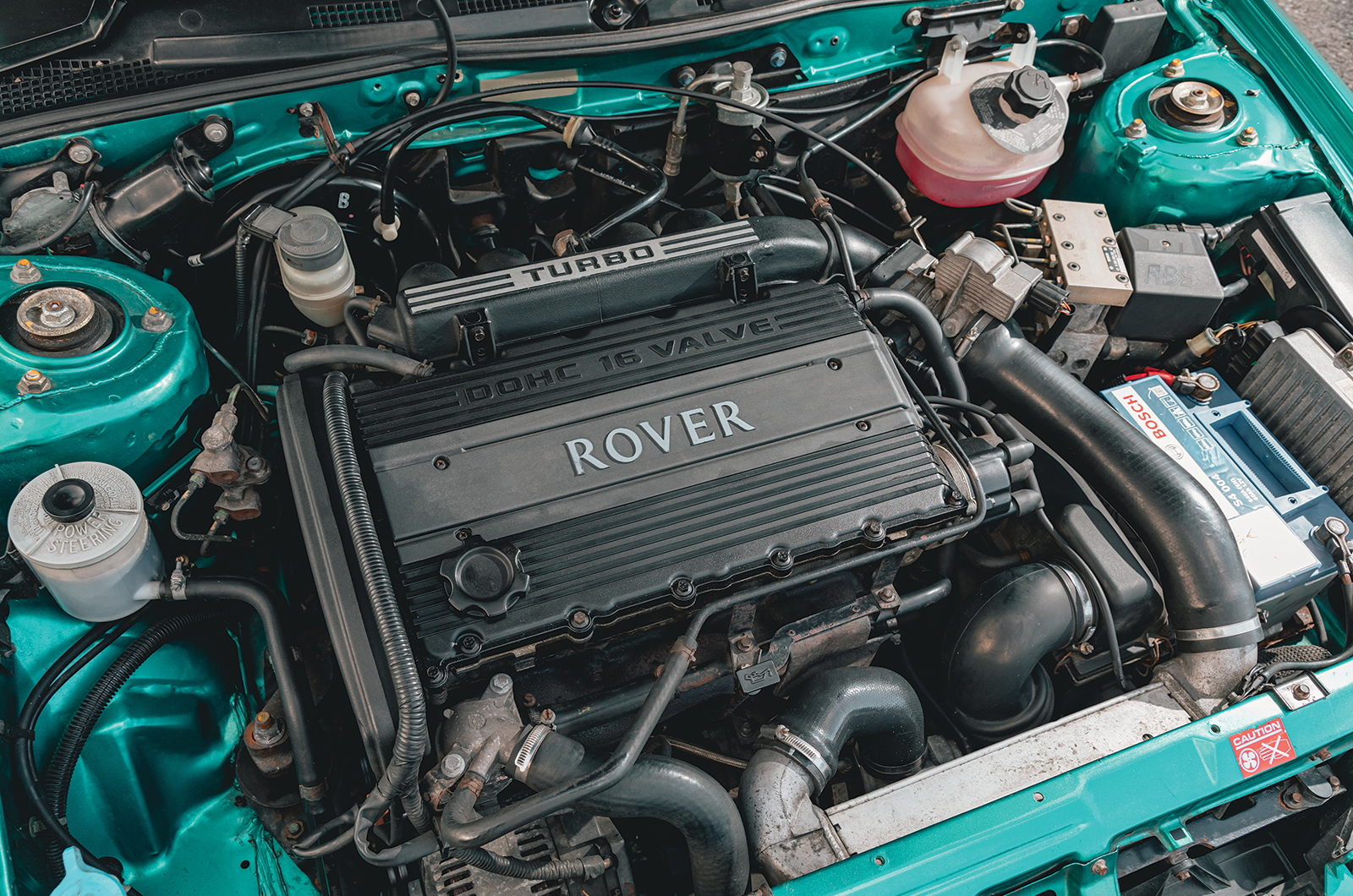
The Rover’s turbocharged T-series engine has plenty of low-end grunt, with 174lb ft of torque available at 2100rpm
It’s a bit of an old-school, hot-hatch experience then, the Rover.
You cling on tight to the steering wheel, aware that the engine clearly has more power than the chassis was ever constructed for, and do your best to hustle it down the road.
It never feels sophisticated, but it is, nonetheless, a thrilling challenge for the enthusiastic driver.
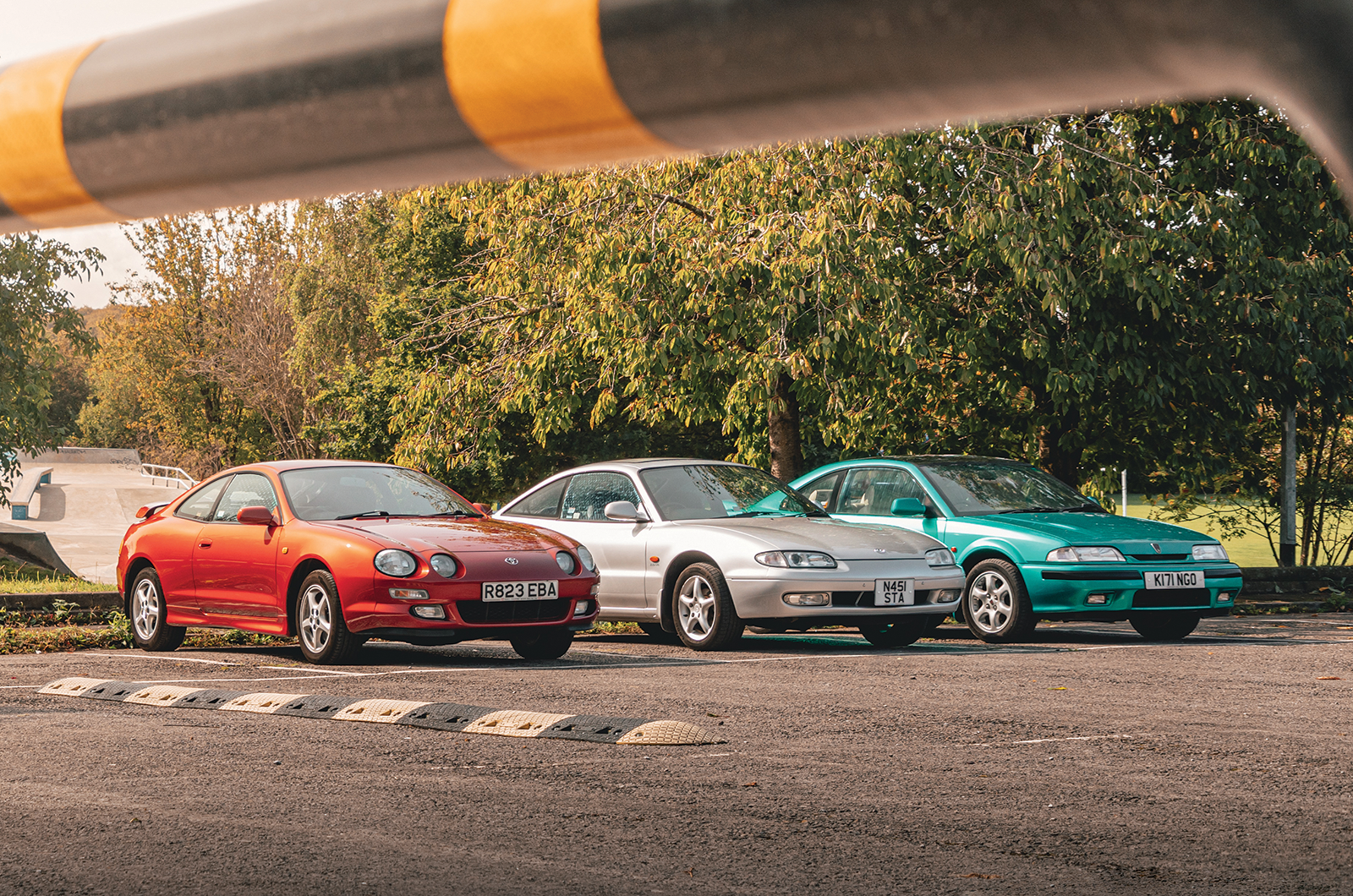
Stepping into the Mazda MX-6 from either of the other two cars here is to feel as if you’re going into a much more mature offering.
Its springing is that bit softer, which means it copes with bumps in the road far better, yet it isn’t roly-poly as a result.
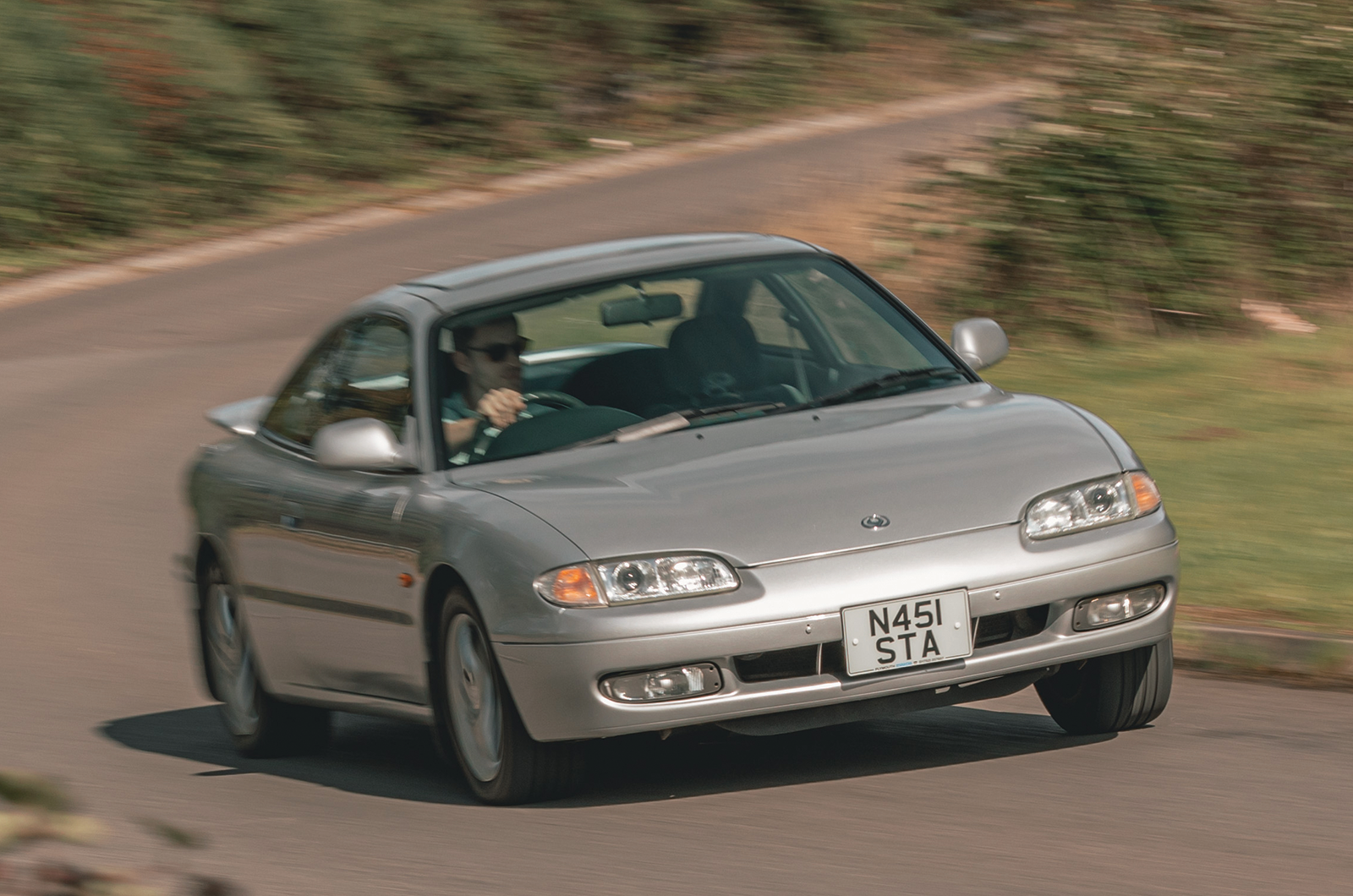
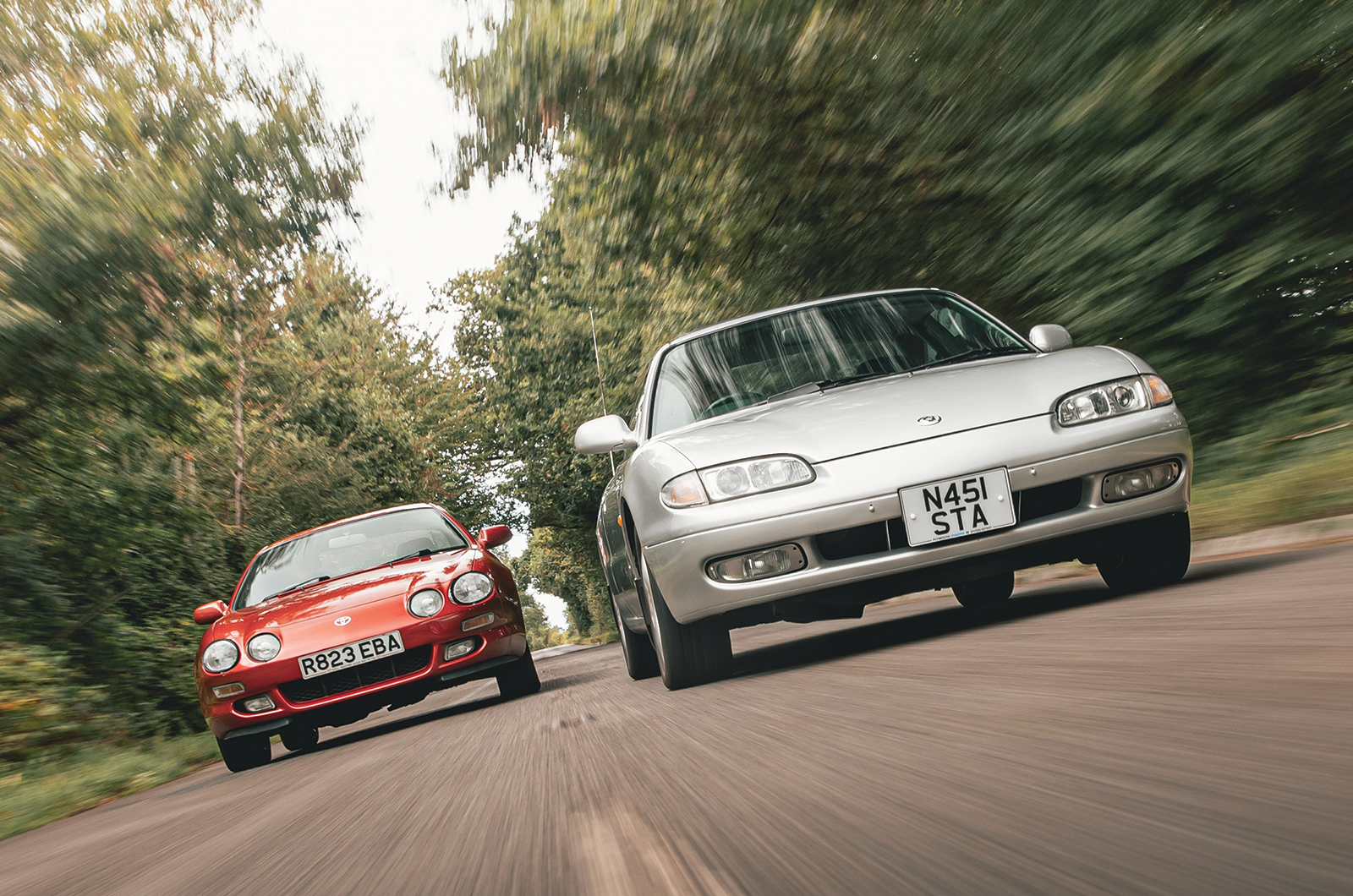
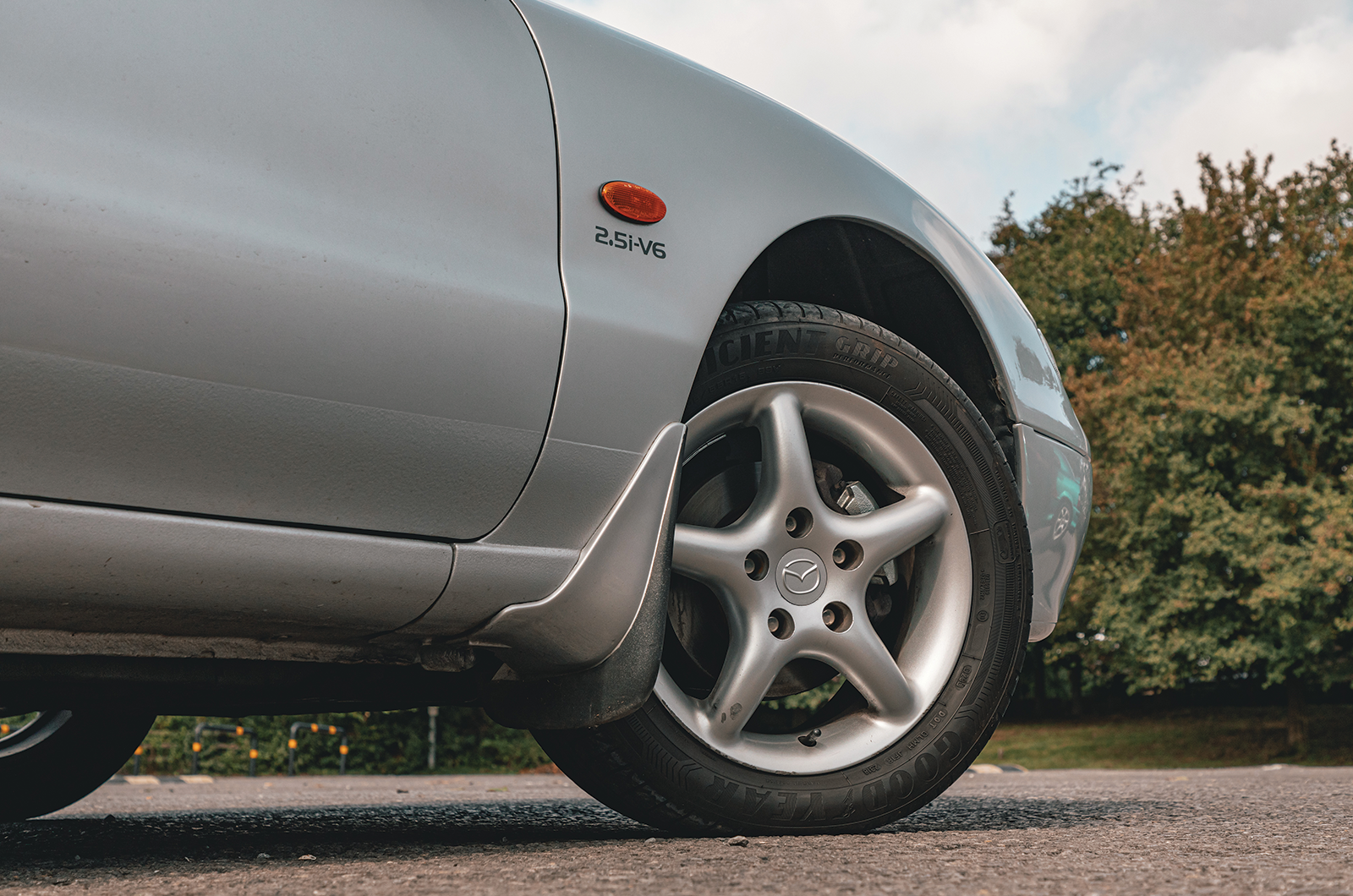
This Mazda MX-6 sports dealer-fitted MX-5 alloy wheels
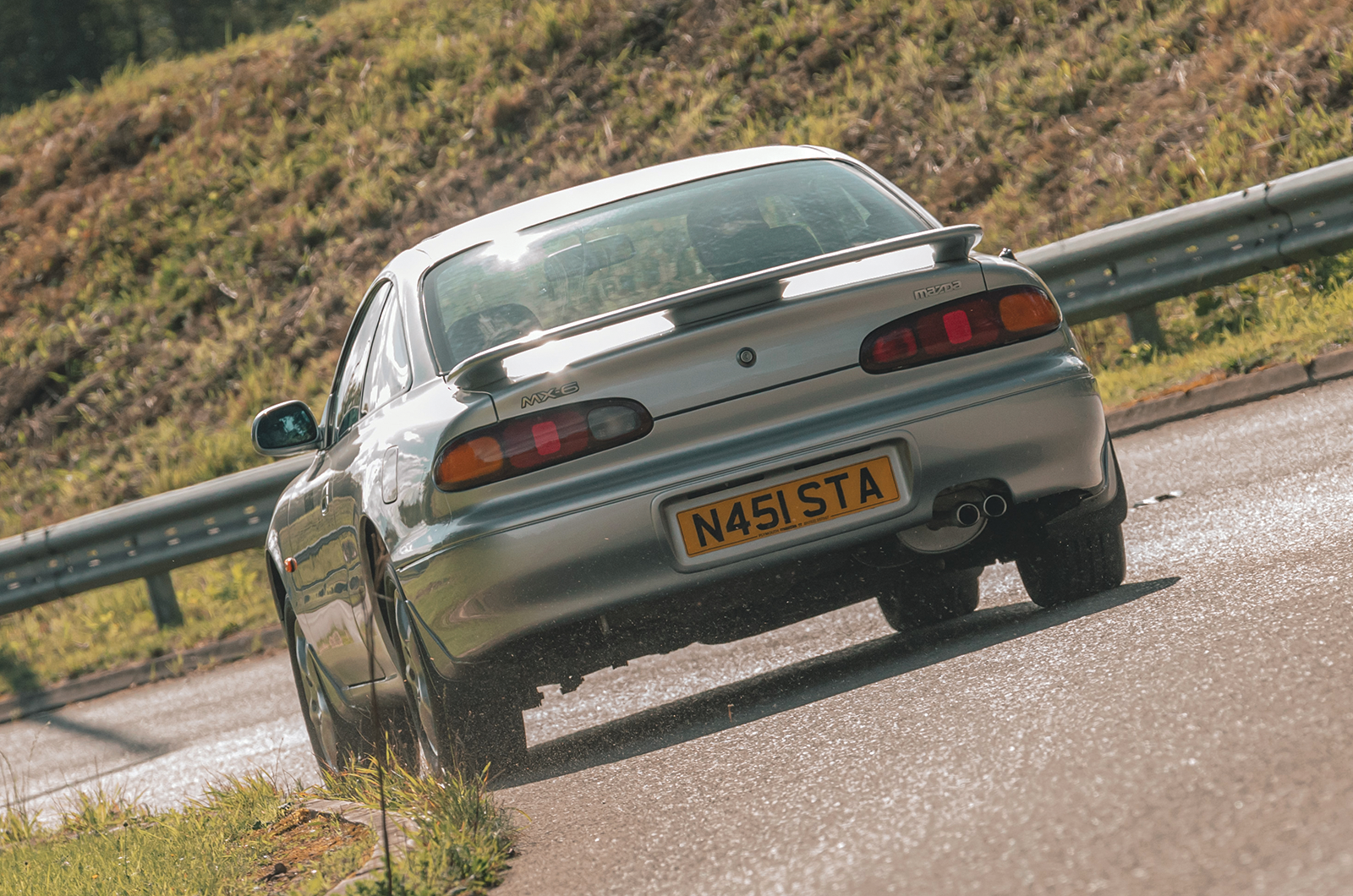
The low centre of gravity provided by the Mazda’s squat V6 engine and sleek glasshouse is noticeable, allowing the car to corner with real composure and grace.
Its rear axle never bounces around a corner as the Rover and Toyota are prone to do, despite the 220 having the most advanced rear suspension on paper.
With its supple ride, mini V6, as well as the extra length in its body, it’s clear Mazda was pitching the MX-6 as much as a budget GT car as a sports coupé.
It’s never as chuckable as the Rover, while its steering isn’t quite as precise as the Celica’s, but it possesses the most confidence-inspiring chassis.
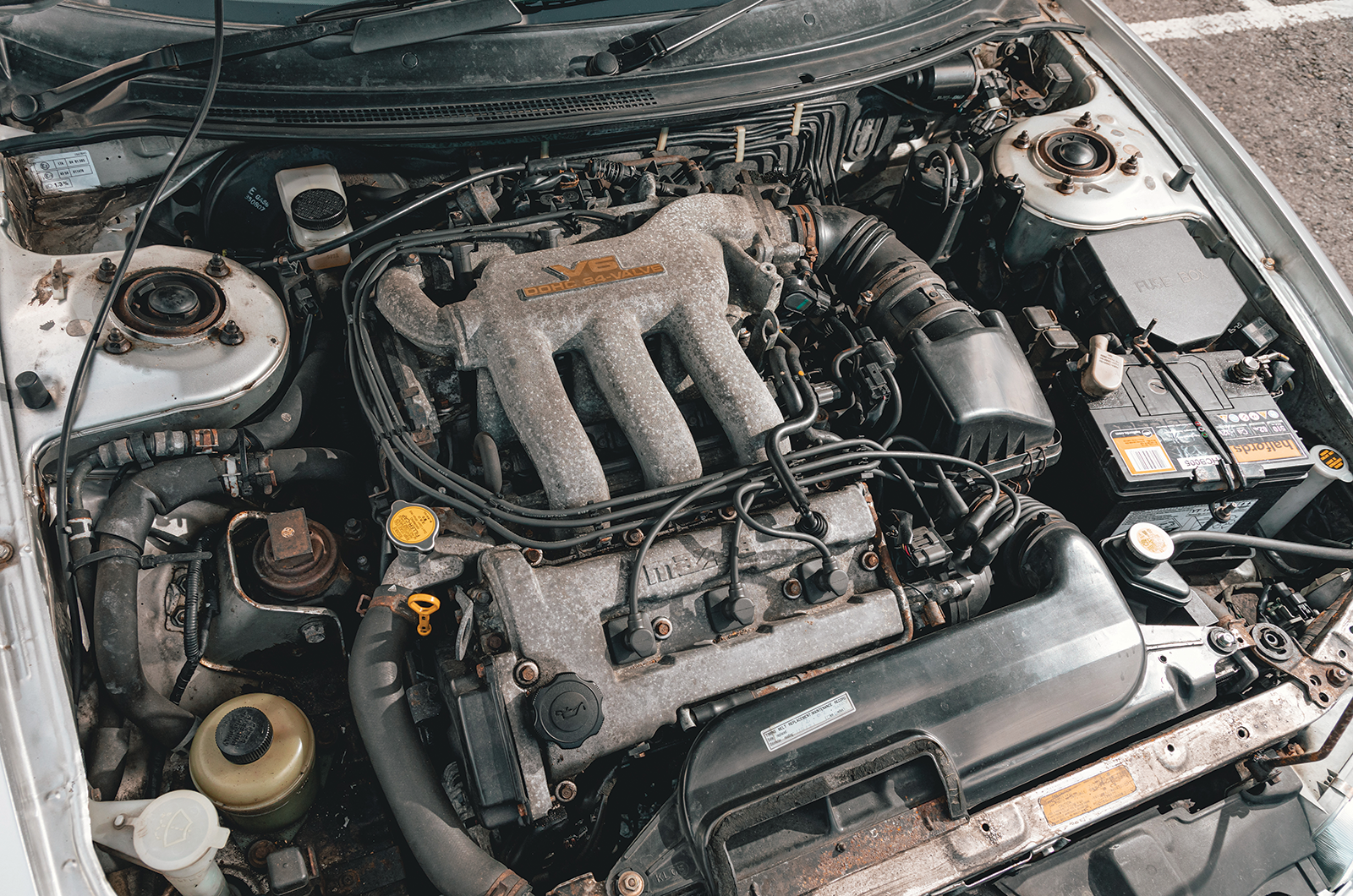
Mazda’s all-alloy V6 engine weighs little more than its ‘four’
The Mazda is the only car of this set that feels truly sorted.
The Rover is quicker from point-to-point, for sure, but it requires bravery where the MX-6 provides easy pace.
Similarly, it’s the only automobile here that has an interior that implies any luxury.
Though the plastics aren’t quite as nice as some of the Rover’s, nor is its dash quite as swooping as the Celica’s, it doesn’t rattle over bumps, road noise is hushed and every piece of the cabin fits together with real precision.
It might look plain by modern standards, but it feels a cut above, and its low beltline provides brilliant vision, too.
‘With its supple ride, mini V6 and the extra length in its body, the Mazda MX-6 is as much a budget GT car as a sports coupé’
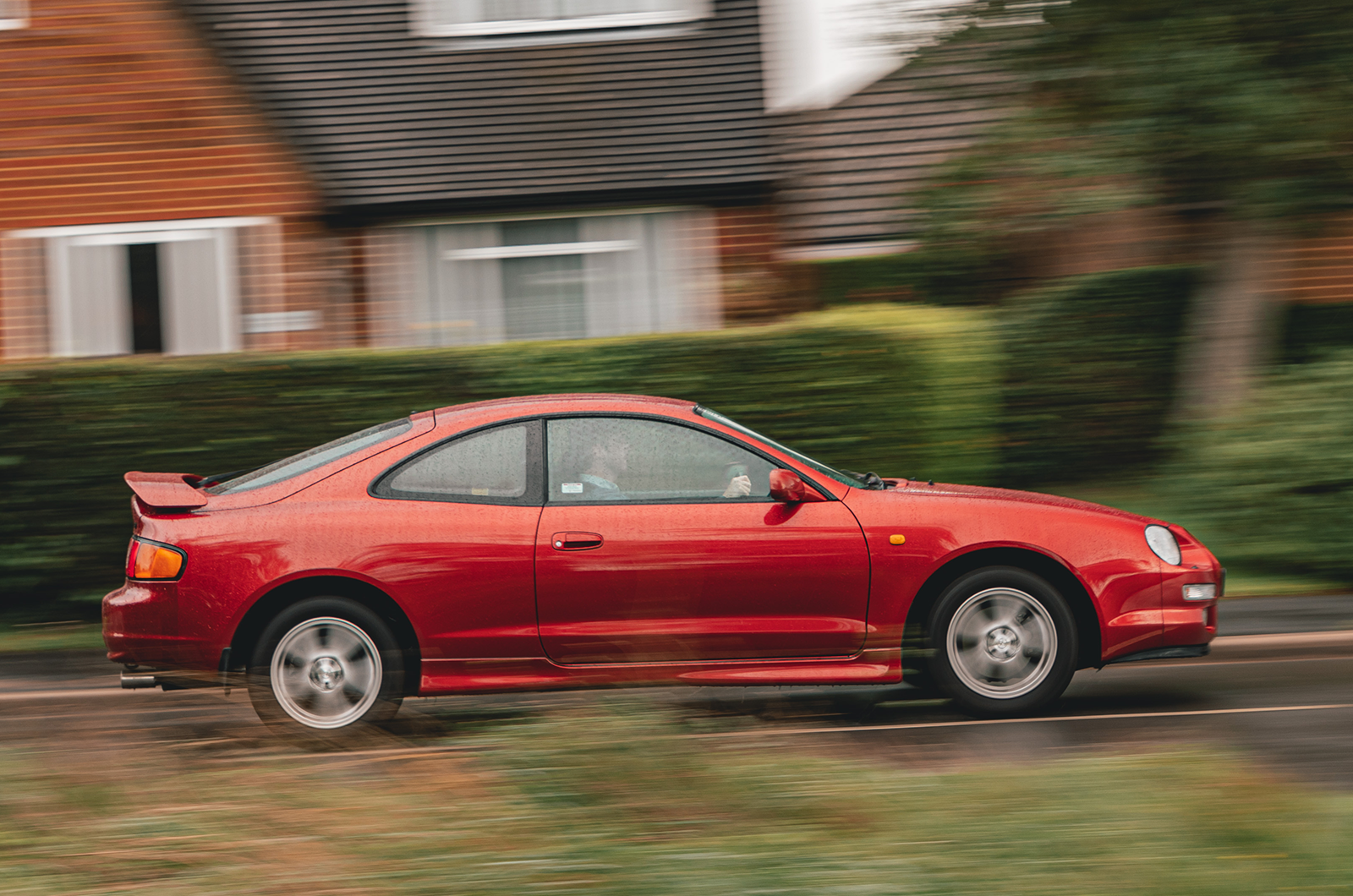
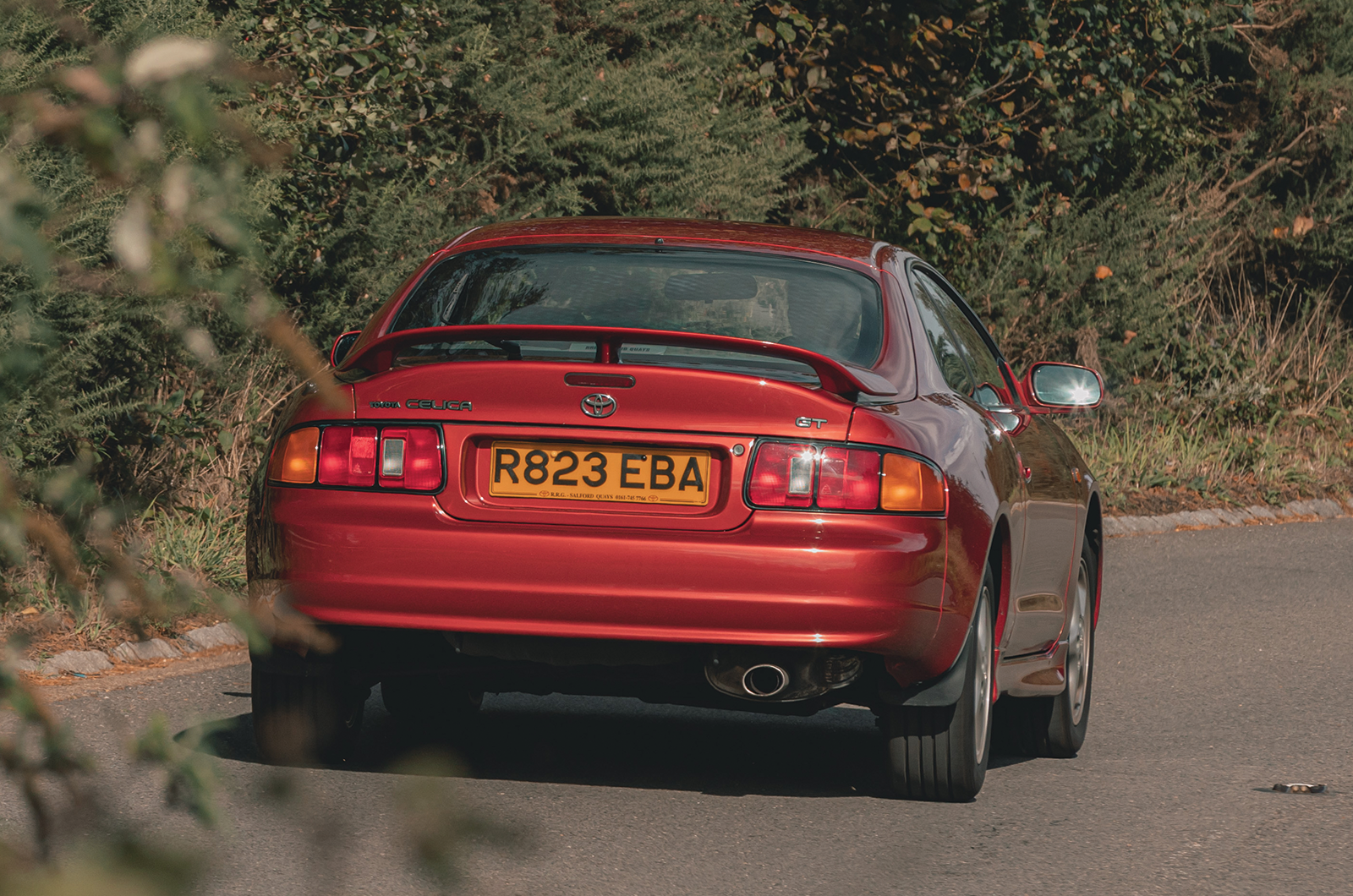
Today, relative ubiquity has made the Toyota Celica the bargain buy of this trio.
In fact, some examples are only just falling out of mainstream use, which is quite some testimony to their reliability and practicality – and, also, proof that parts are still available to keep them on the road.
It’s the car that is the all-rounder of this group, however it lacks that bit of spark for all its sensibility.
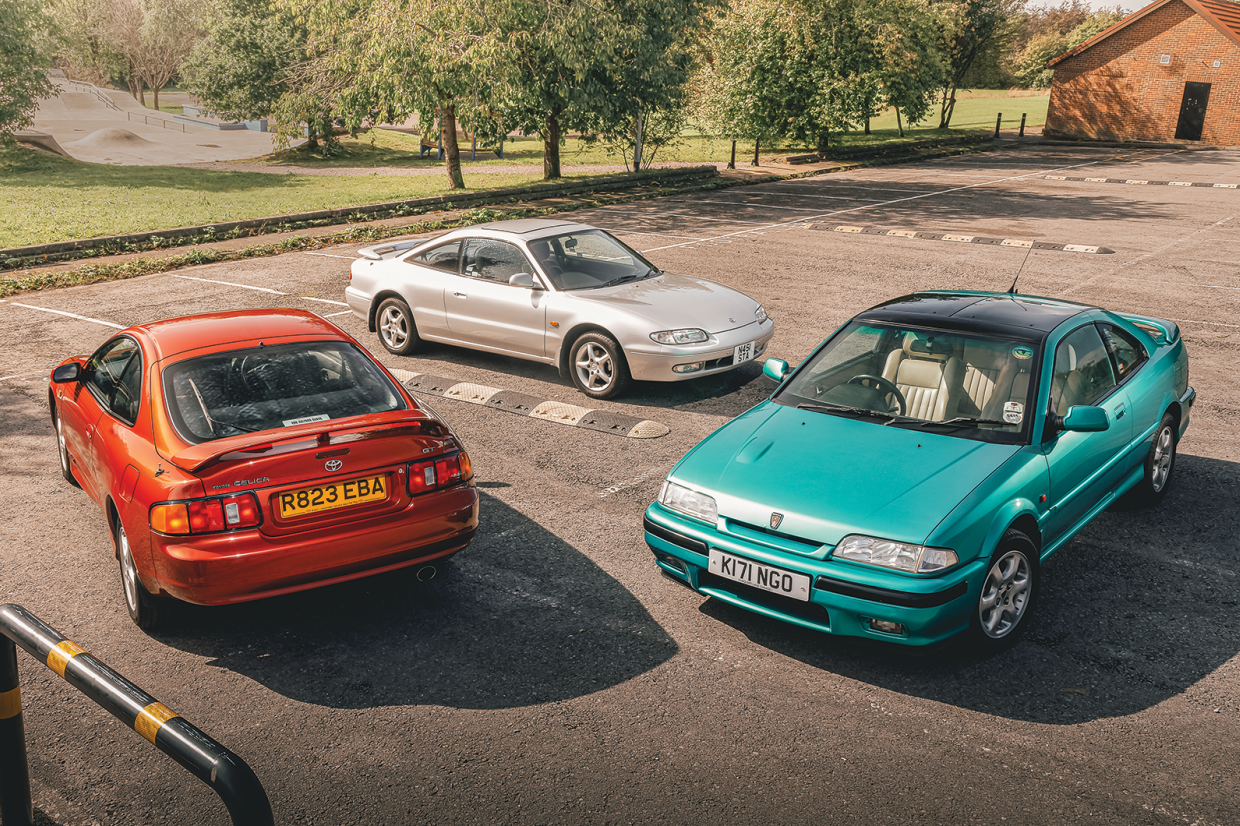
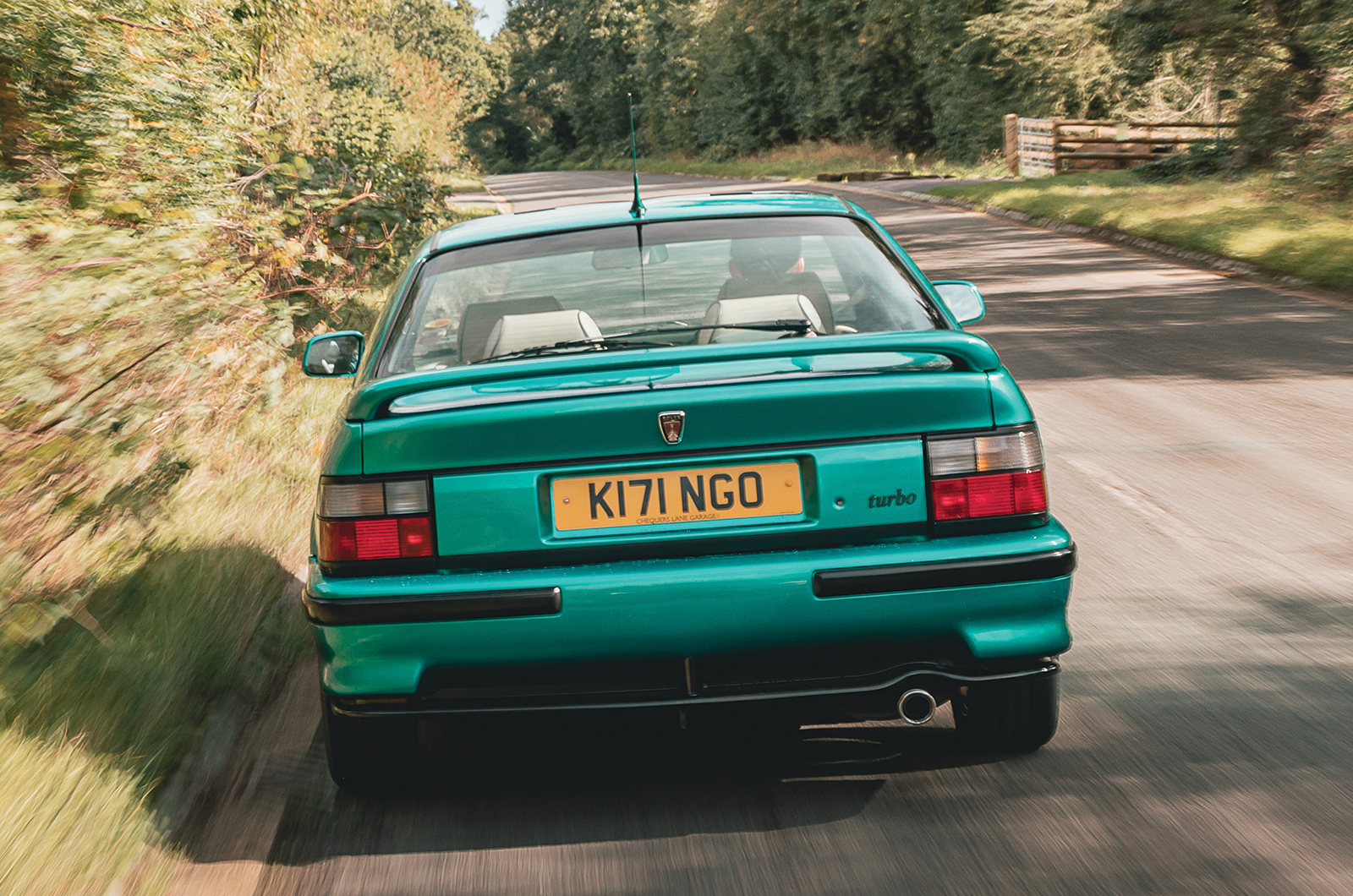
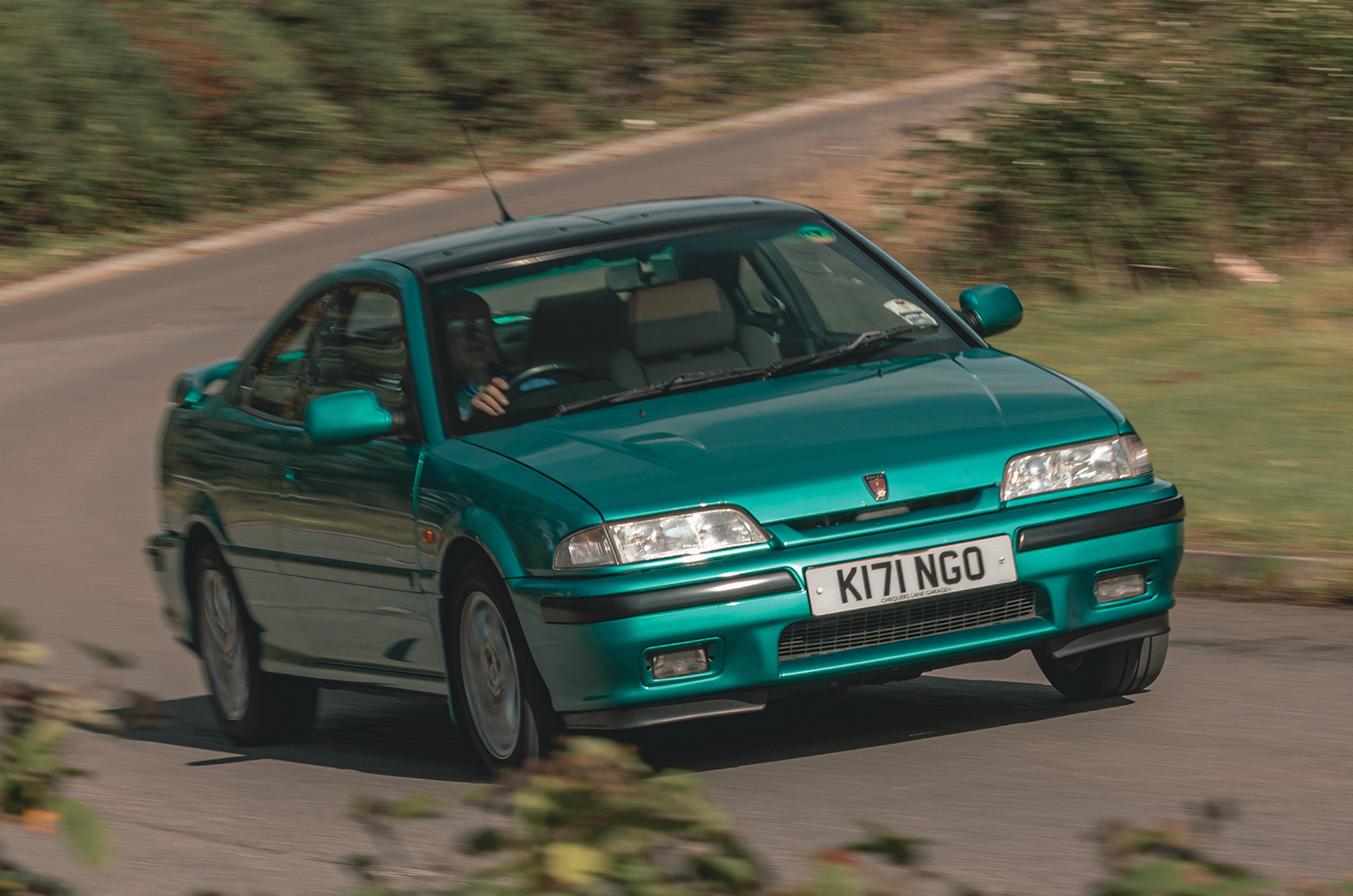
The Rover 220 turbo coupé is the hooligan here, something you would never have said of anything from this car manufacturer 20 years before – or a decade after.
It’s not refined, or serious, but it’s great fun.
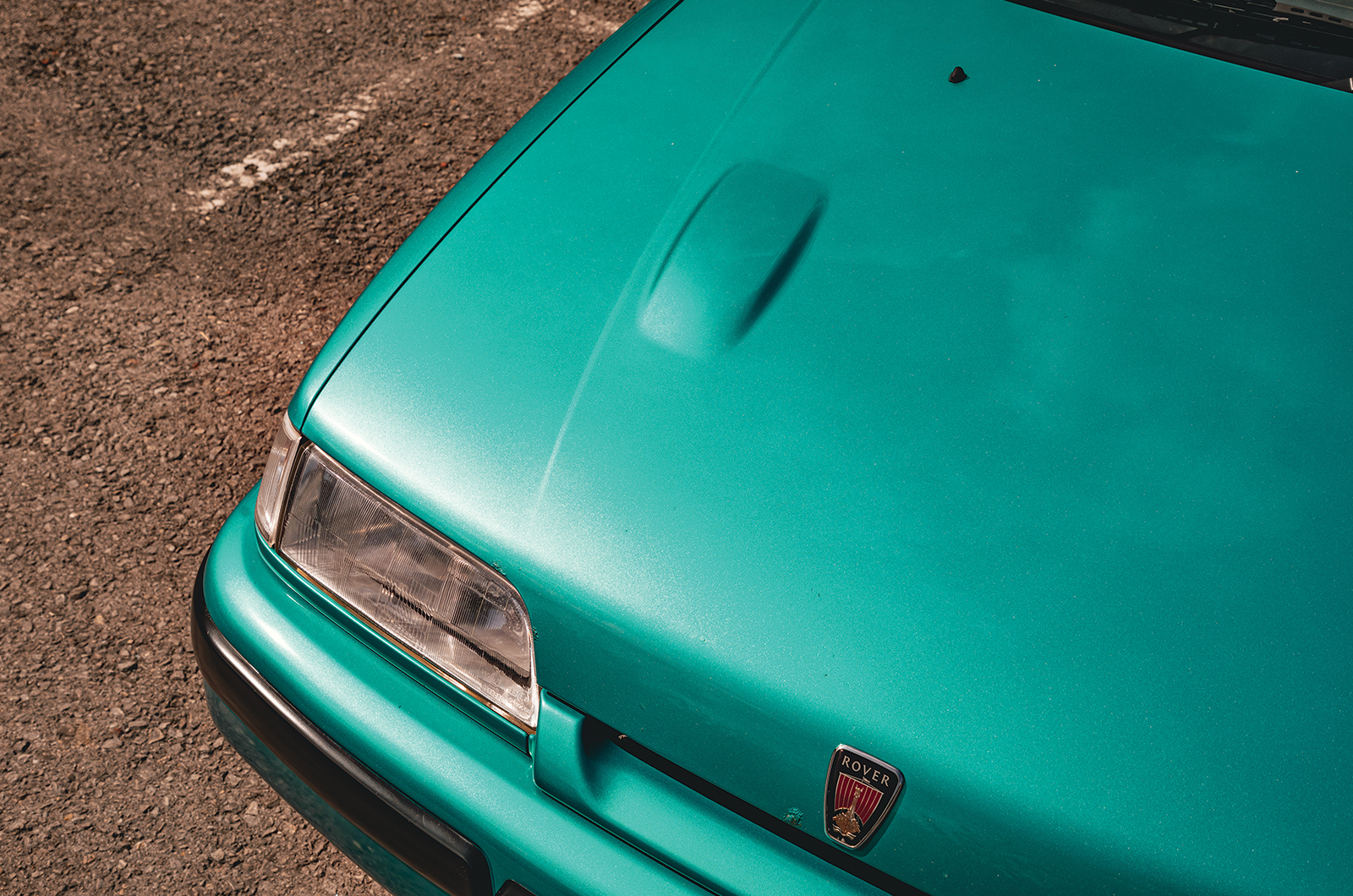
The Rover 220 turbo’s swooping roofline is at odds with its blocky base
If you were to take just one of these classic cars for a blast down a back-road to put a smile on your face, you’d pick the Rover Tomcat.
And yet, from its silky-smooth engine, through ahead-of-its-time styling, to its super-refined chassis, it’s the Mazda MX-6 that really impresses.
Unlike the other two choices here today, it’s a vehicle from a manufacturer with a point to prove and the money to back it up.
Mazda’s present-day image, compared to that before the 1990s – admittedly with the help of the MX-5, the 323F and the RX-7 – suggests this range-topper worked.
And the MX-6 is great fun to drive.
Images: Max Edleston
Thanks to: 7 Star Car Sales; Rover Coupé Owners’ Club; Paul Charlesworth; Kevin Willis
Factfiles
Toyota Celica GT
- Sold/number built 1993-’99/17,779 (total UK sales)
- Construction steel monocoque
- Engine iron-block, alloy-head, dohc 1998cc 16v ‘four’, fuel injection
- Max power 173bhp @ 7000rpm
- Max torque 137lb ft @ 4800rpm
- Transmission five-speed manual, FWD
- Suspension independent, by MacPherson struts, anti-roll bar f/r
- Steering power-assisted rack and pinion
- Brakes vented front, solid rear discs, with servo and ABS
- Length 14ft 6in (4420mm)
- Width 5ft 9in (1750mm)
- Height 4ft 3in (1300mm)
- Wheelbase 8ft 4in (2540mm)
- Weight 2645lb (1199kg)
- Mpg 32
- 0-60mph 8.3 secs
- Top speed 137mph
- Price new £19,230 (1993)
Mazda MX-6
- Sold/number built 1991-’97/537,748 (including related Ford Probe)
- Construction steel monocoque
- Engine all-alloy, dohc-per-bank 2497cc 24v V6, fuel injection
- Max power 165bhp @ 5600rpm
- Max torque 163lb ft @ 4800rpm
- Transmission five-speed manual, FWD
- Suspension independent, by MacPherson struts, anti-roll bar f/r
- Steering power-assisted rack and pinion
- Brakes vented front, solid rear discs, with servo and ABS
- Length 15ft 2in (4615mm)
- Width 5ft 9in (1750mm)
- Height 4ft 4in (1310mm)
- Wheelbase 8ft 7in (2610mm)
- Weight 2712lb (1230kg)
- Mpg 28
- 0-60mph 7.5 secs
- Top speed 134mph
- Price new £19,245 (1993)
Rover 220 turbo coupé
- Sold/number built 1992-’95/708,003 (all R8-generation 200s)
- Construction steel monocoque
- Engine iron-block, alloy-head, dohc 1994cc 16v ‘four’, turbocharger and fuel injection
- Max power 197bhp @ 6000rpm
- Max torque 174lb ft @ 2100rpm
- Transmission five-speed manual, FWD
- Suspension independent, at front by MacPherson struts rear multi-link, coil springs, telescopic dampers; anti-roll bar f/r
- Steering power-assisted rack and pinion
- Brakes vented front, solid rear discs, with servo and ABS
- Length 14ft (4270mm)
- Width 5ft 6in (1680mm)
- Height 4ft 6in (1370mm)
- Wheelbase 8ft 4in (2550mm)
- Weight 2612lb (1185kg)
- Mpg 30
- 0-60mph 6.2 secs
- Top speed 150mph
- Price new £18,790 (1993)
We hope you enjoyed reading. Please click the ‘Follow’ button for more super stories from Classic & Sports Car.
Charlie Calderwood
Charlie Calderwood is Classic & Sports Car’s Features Editor