Mazda R100 Coupé: quiet revolutionary

| 6 Feb 2026
Classic & Sports Car – Mazda R100 Coupé: quiet revolutionary
There is much to be said for starting from scratch in the car-making game.

You can approach matters with fresh eyes, avoiding past mistakes and the manacles of tradition, and all while assessing the commercial landscape with a dispassionate rationalism.

Thus it was with the Japanese motor industry as it blossomed in the late 1960s and early ’70s.

Classic & Sports Car – Mazda R100 Coupé: quiet revolutionary
It’s time for the Mazda R100 Coupé to step out of the Cosmo’s shadow

It was not merely a case of newcomers learning not to run before they could walk.

The Japanese, with no real tradition of automobile manufacture, enjoyed the luxury of being able to sit back and see what worked – and what didn’t – from both product and industrial points of view.

Simple, dependable and well-made cars appeared to be the message, built to serve the end user rather than satisfy engineers’ egos.

Characterless, tinny and gruesomely styled in some instances, for sure, but customers would prove more than willing to overlook these shortcomings if the price was right and the product was dependable.

Classic & Sports Car – Mazda R100 Coupé: quiet revolutionary
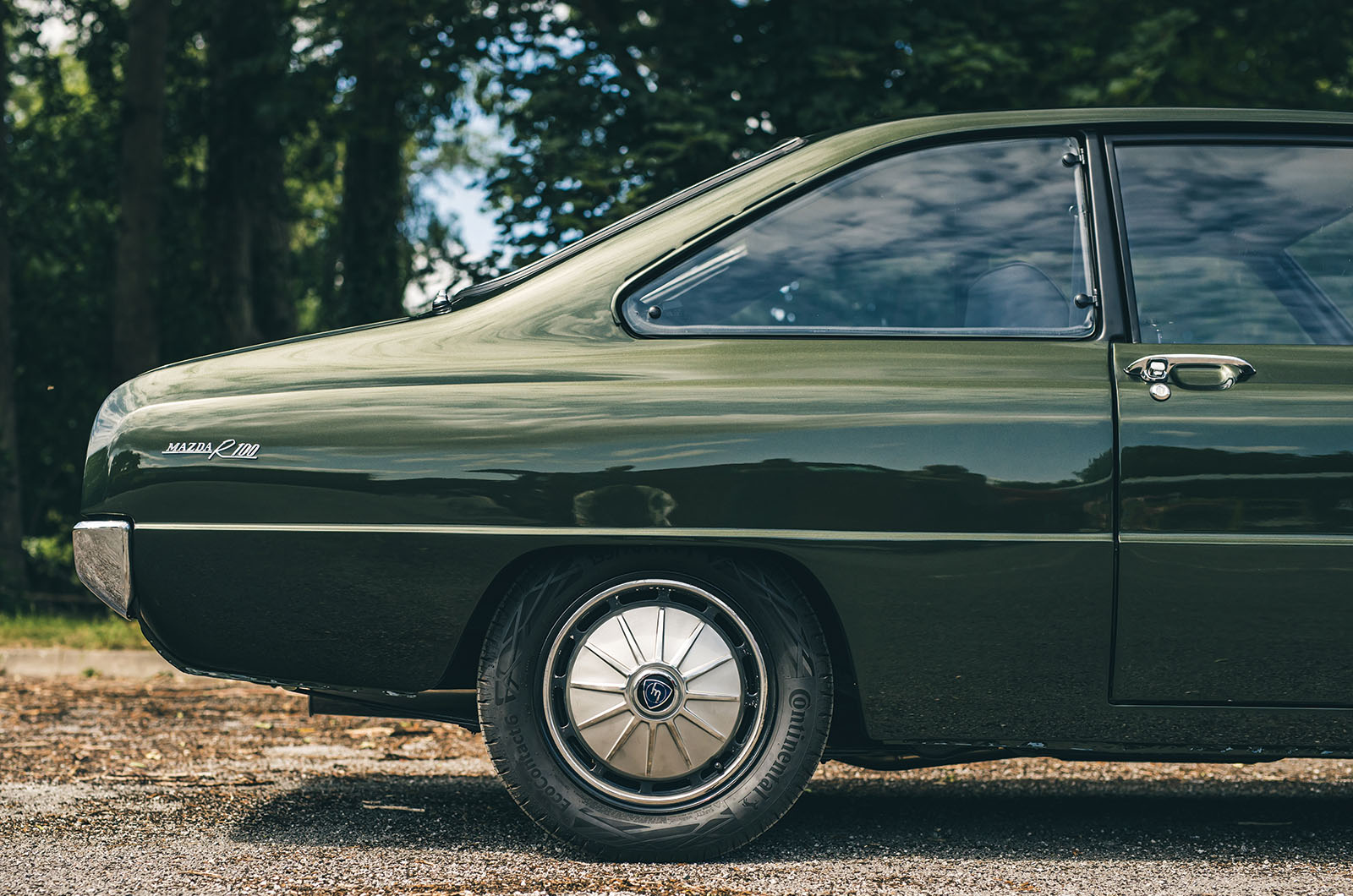
The Mazda R100 Coupé’s hubcaps are a rare commodity

It was the birth of the car as a consumer durable – ‘white goods’ – and when individualism was engineered out in favour of a merciless banality.

The formula worked. Build them simple and build them bland, but build them well.

Most of all, build lots and lots and lots of them, so when supplies from rival firms dry up (probably due to strikes), you can step in with immediate delivery in a full choice of colours.

From its first, faltering steps barely a decade earlier, Japan was becoming a threat on all fronts, shaping up to dominate a landscape that, largely through its own arrogance and complacency, was ready for the taking.

Classic & Sports Car – Mazda R100 Coupé: quiet revolutionary
The compact and neatly proportioned Mazda R100 has room for four in a cosy cabin

As with its cameras, motorcycles and transistor radios, its once clumsy and unappealing automobiles were becoming distressingly acceptable by the turn of the decade, even desirable in some terms.

What they might still have lacked in certain areas of styling and technical finesse, they more than made up for in terms of finish, high standards of equipment and value for money.

The world was ready for them, which was just as well because most of the two million cars its industry built (increasing by 30% annually) were for export rather than for the domestic market, where there were still barely the roads fit to drive automobiles on.

Classic & Sports Car – Mazda R100 Coupé: quiet revolutionary
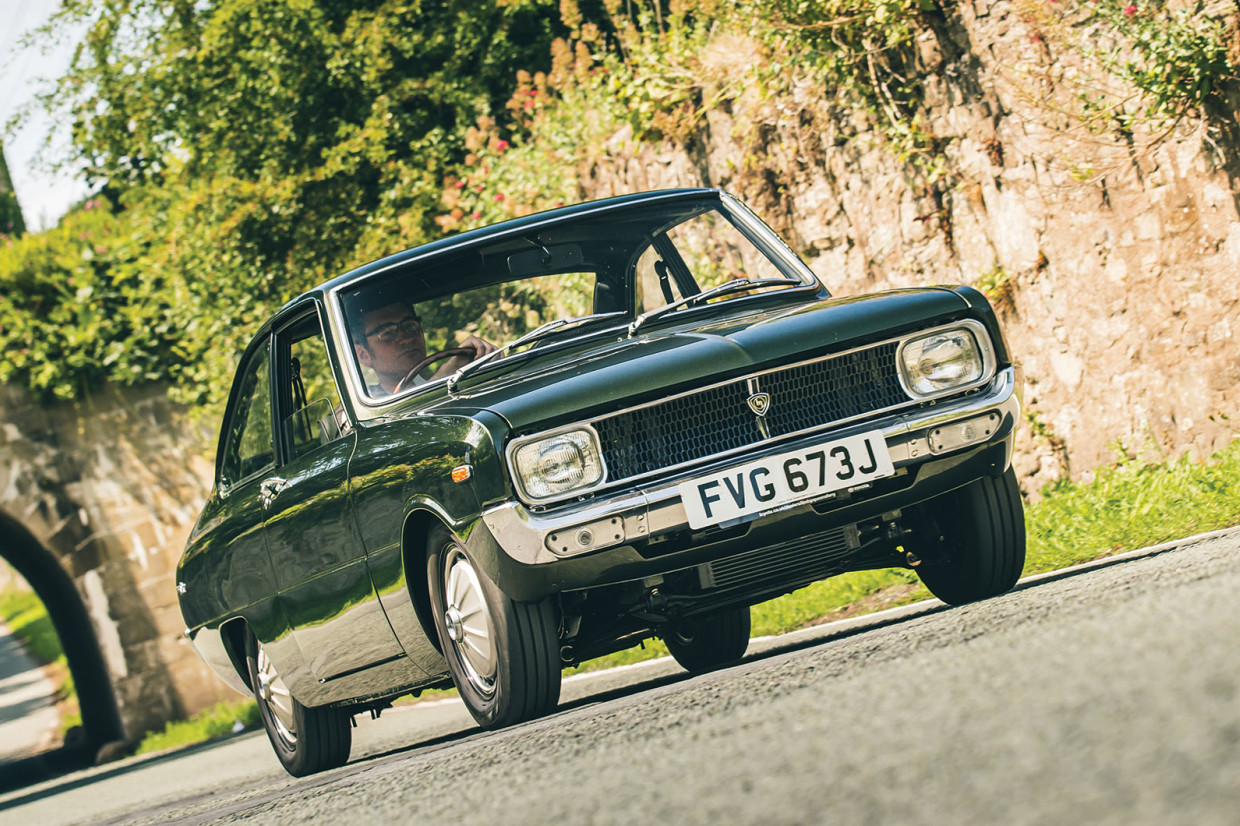
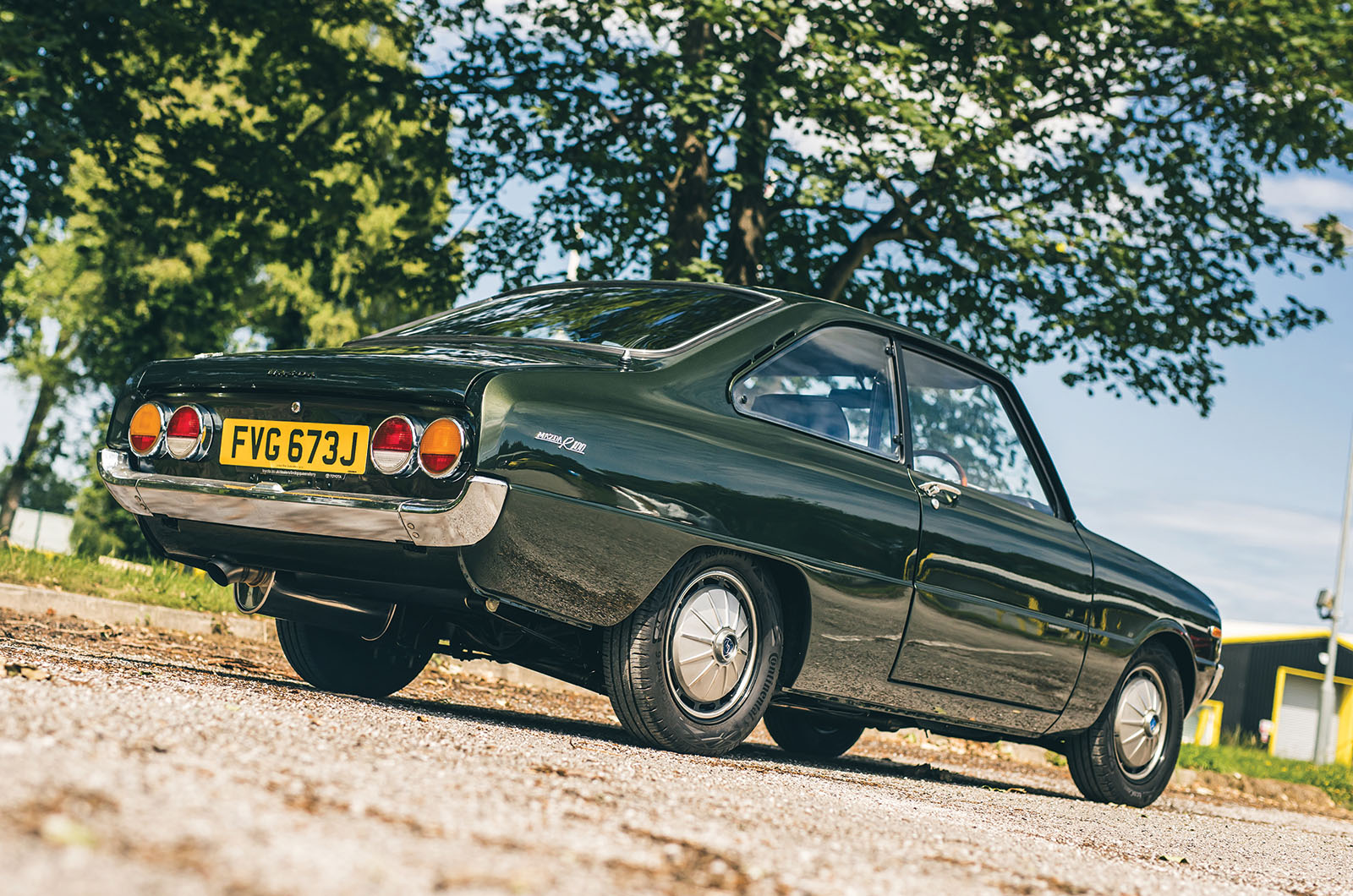
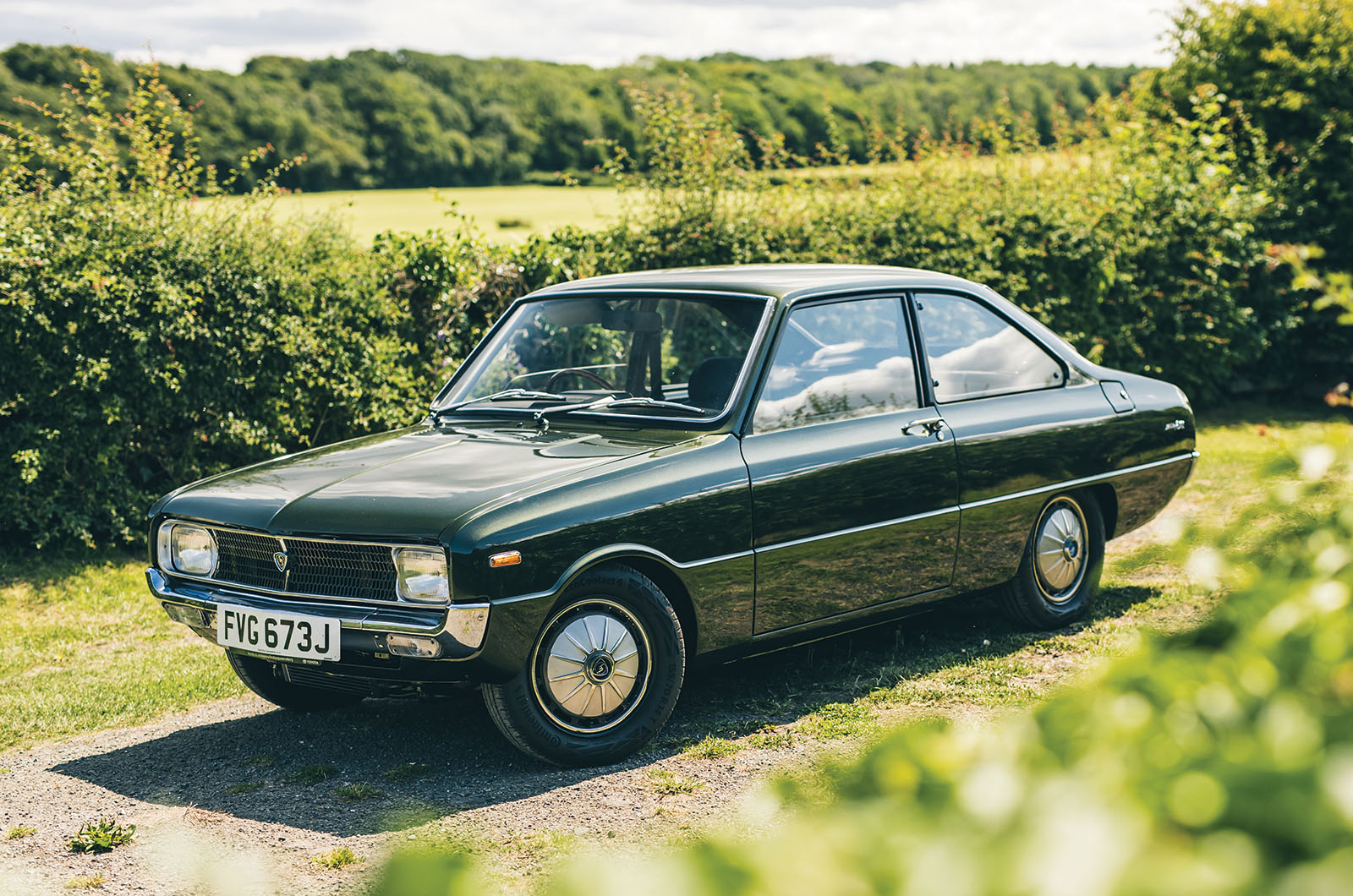
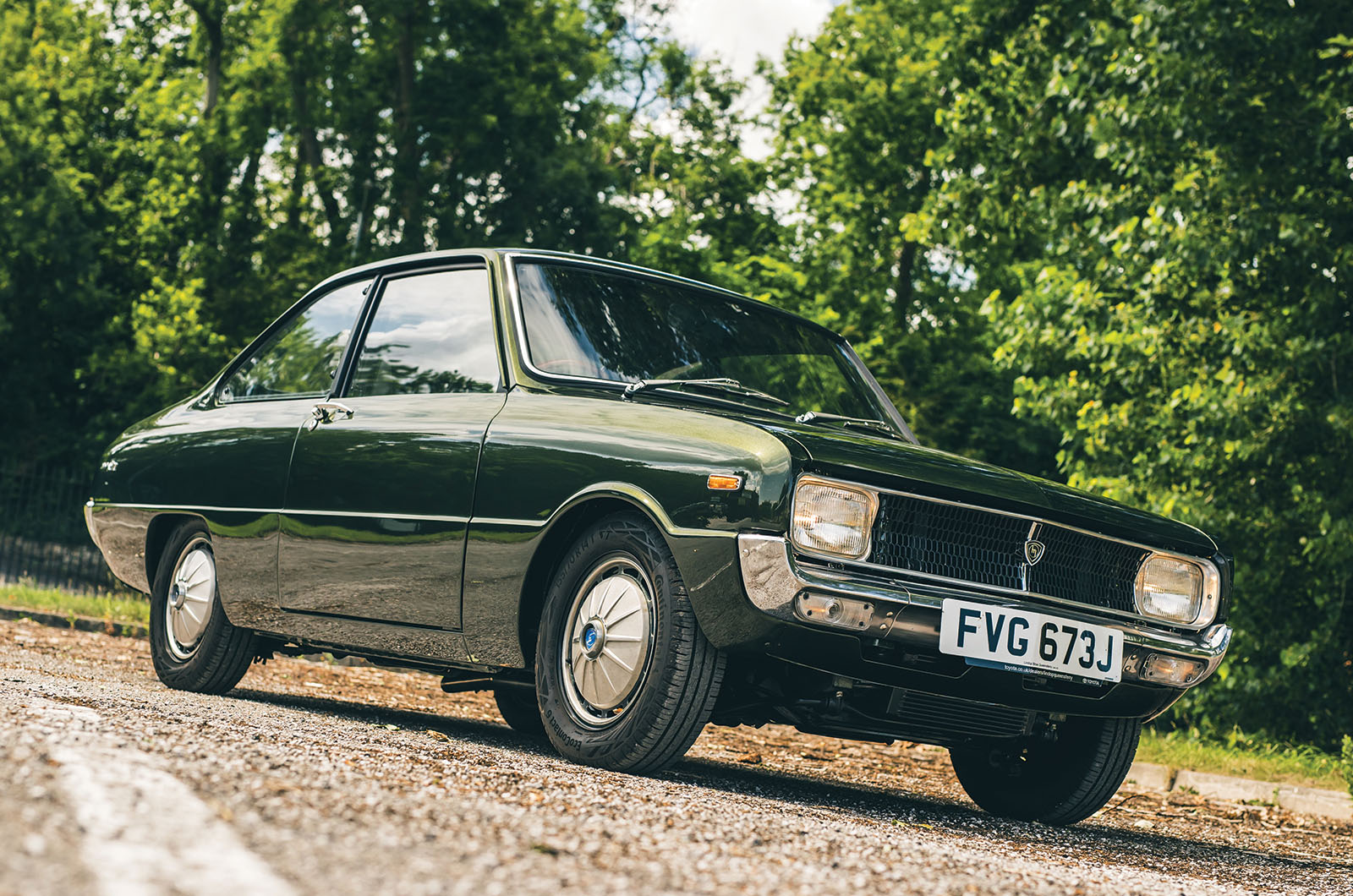
This classic Mazda looks great in this Lexus metallic hue

Where the likes of Nissan and Toyota shied away from high-tech solutions, Toyo Kogyo, the company that marketed Mazda cars, did things slightly differently.

It was far from the biggest operator, but, having thrown in its lot with the rotary engine, punched above its weight with its large waterfront factories in Hiroshima.

Toyo Kogyo bought the rights to build the Wankel engine from NSU in 1961 and was soon outflanking the Germans.

Its engineers made a working prototype before the first units had even arrived from Neckarsulm.

Classic & Sports Car – Mazda R100 Coupé: quiet revolutionary
‘The pulsing, two-stroke throb at tickover softens into a turbine hum as the revs rise’

Its production motors were, arguably, more dependable, less thirsty and more powerful than the originals.

If Datsun and Toyota could capture the minds and wallets of customers incentivised purely by value for money, Mazda hoped to command the attention and respect of the connoisseurs and taste-makers of automotive culture.

If it hedged its bets by continuing to produce, concurrently, utterly unremarkable piston-engined cars (such as the Mazda 1000 and the pretty, Bertone-styled 1500/1800 saloon), it unmistakably set the tone of its ambition straight out of the gate with the futuristic 110S Cosmo, a rotary-engined sports-car flagship that drove as well as it looked but, being largely handbuilt, was not cheap.

Classic & Sports Car – Mazda R100 Coupé: quiet revolutionary
This Mazda R100 Coupé isn’t a restomod, but it’s been subtly enhanced by the team at Silver Fern Performance

What was required was a means of spreading the Wankel fairy dust in the form of a more affordable, more exportable car based on the established, piston-engined platforms.

Enter the 1968-’73 R100.

Unremarkable in all things other than its engine, it was based on Mazda’s second-generation Familia, the car that, from 1963 in first-generation form, had brought the company out of the kei-car class (with the R360 and Carol) into the small family saloon market.

The car we know as the R100 Coupé was shown as a prototype alongside the Cosmo at the 1967 Tokyo motor show, based on the new Familia 1200 Coupé and badged RX-85.

Classic & Sports Car – Mazda R100 Coupé: quiet revolutionary
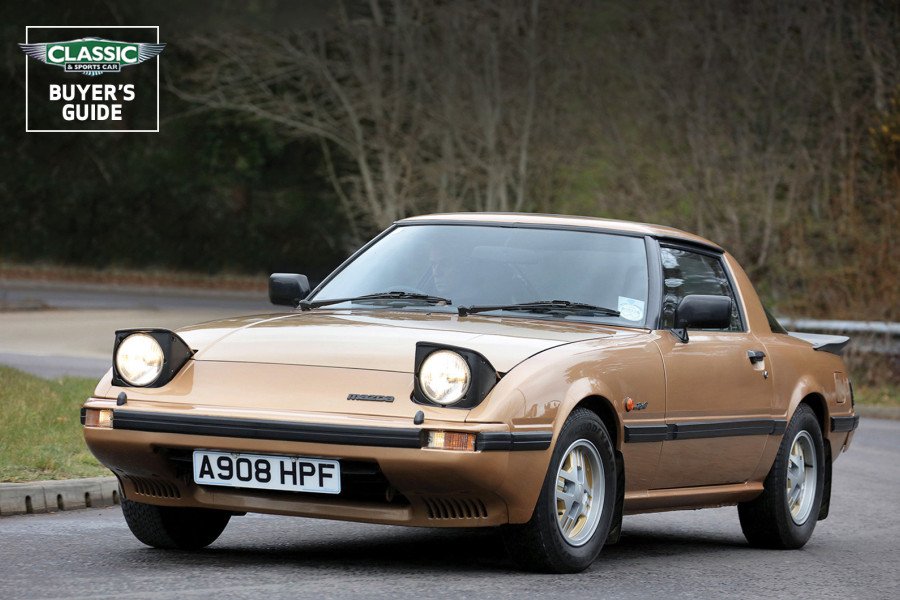
Mazda R100 Coupés for the North American market were fitted with circular headlamps

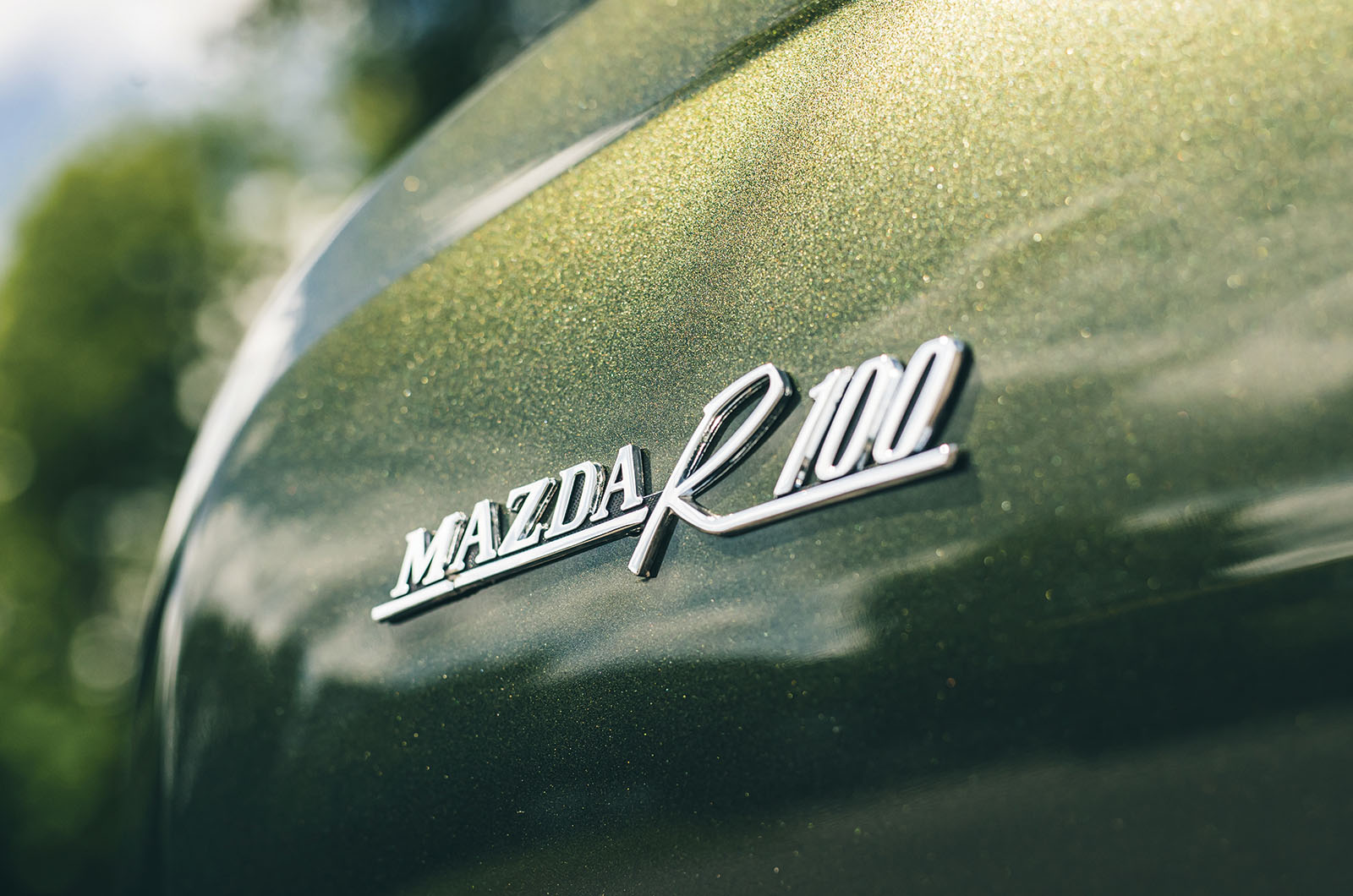
It was introduced in its home market as the Familia Rotary Coupé in July 1968 (but badged R100 – less of a mouthful – for export) and differentiated itself from the piston-engined models by way of a more prominent bonnet, grille and bumper shape, along with circular rear lights and appropriate badging.

The R100 was an interim product between the exotic Cosmo and the mass-produced RX-2/RX-3/RX-4, 725,000 examples of which were built between 1970 and ’78. These cars paved the way for the success of the RX-7.

The R100 was also produced for its home market in four-door form as the SS Rotary Sedan.

In both cases it ran bigger, 14in wheels, disc front brakes and a larger, 13-gallon fuel tank to accommodate an 18-23mpg thirst.

Classic & Sports Car – Mazda R100 Coupé: quiet revolutionary

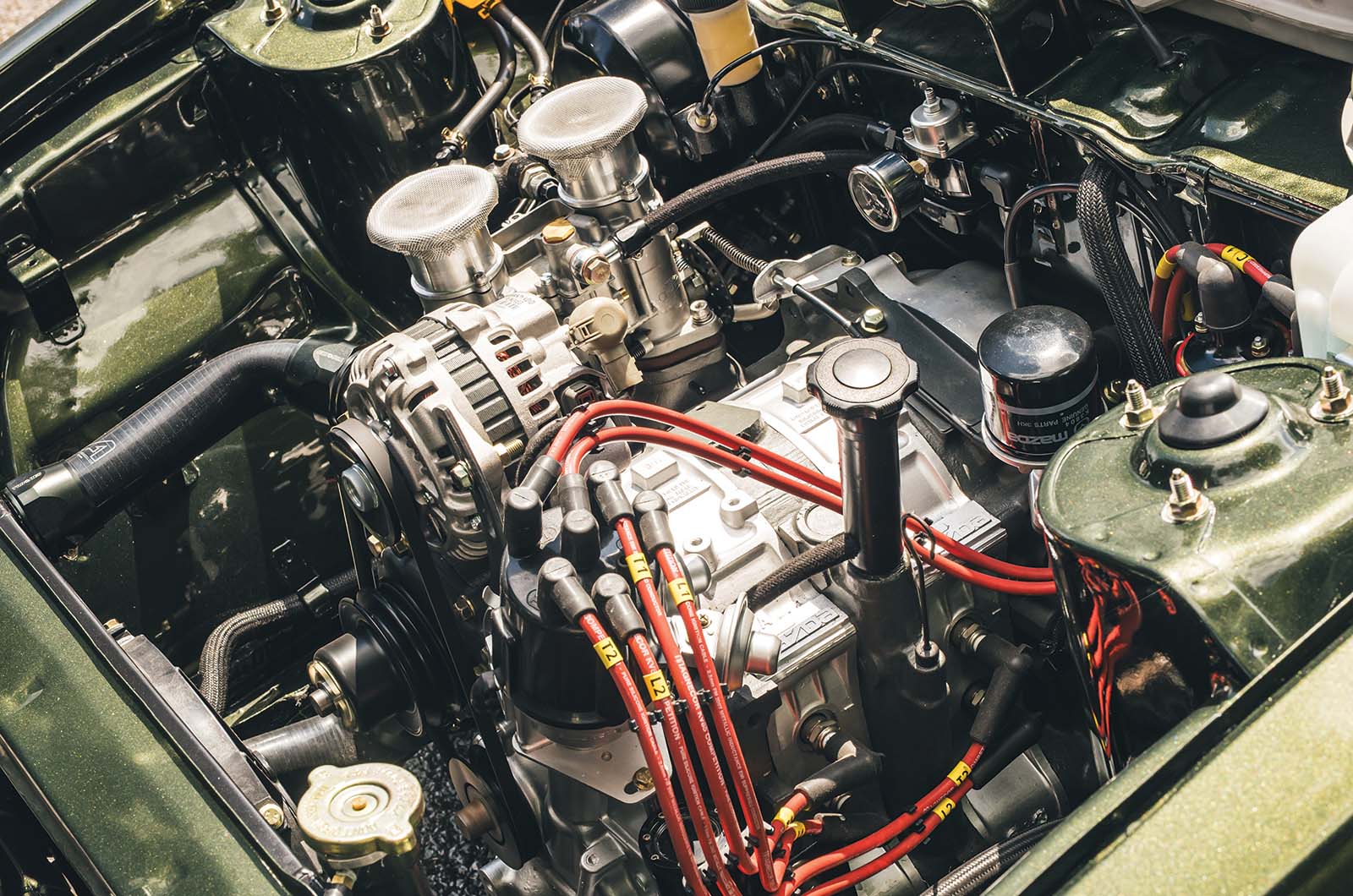
This Mazda has a highly modified 12A engine making 200bhp

 In Japan, this greediness was somewhat offset by the cheaper, under-1-litre road-tax bracket applied to the R100.

Its 0820 Type 10A, twin-rotor, 100bhp engine – 491cc per rotor – was less highly tuned than the Cosmo’s but could be built at the rate of 4000 a month, at a time when NSU was only making 750 Ro80 engines a month.

It featured cast-iron rather than alloy side plates, cast-iron rotors, side inlet porting and two spark plugs per cylinder.

Its twin distributors helped slightly staggered ignition timing, and carbon apex-seals were used for their longevity and self-lubricating qualities.

Classic & Sports Car – Mazda R100 Coupé: quiet revolutionary

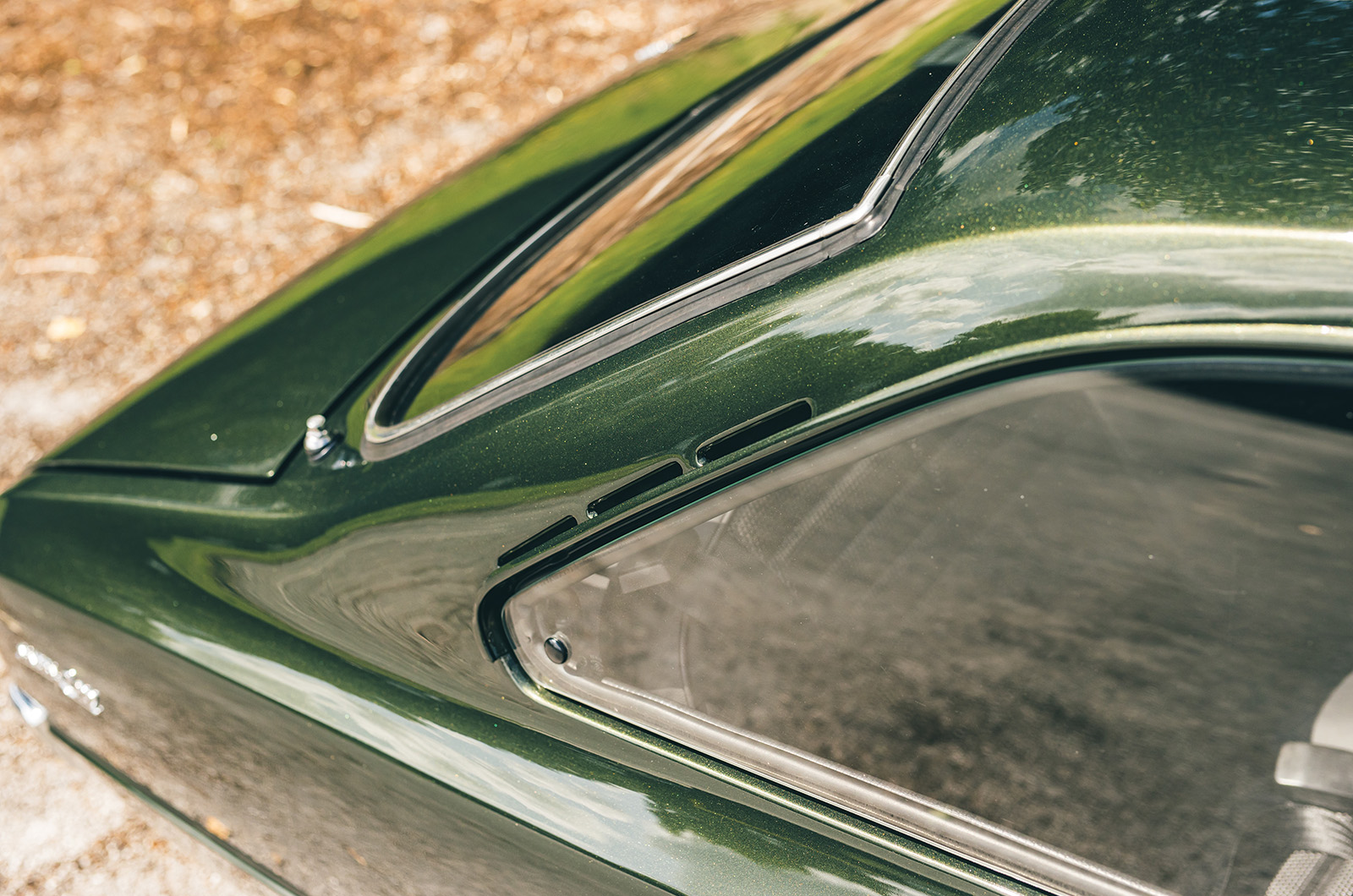
The Mazda R100 Coupé has discreet vents in its neat C-pillar

Within a few years, Mazda would prove the compact, smooth and powerful rotary unit was a feasible everyday technology.

The R100’s case was helped by notable success in endurance events: in 1969, R100s won the Grand Prix of Singapore and Suzuka All-Japan Grand Cup, scored fifth and sixth at the Spa 24 Hours, and took fifth in the Marathon de la Route at the Nürburgring.

The architecture of the car, a dinky fastback of unmistakably Japanese origin, was identical to that of its piston-engined sibling: a steel monocoque-bodied, close-coupled four-seater with front MacPherson struts and a leaf-sprung live rear axle.

Standard equipment included a toolkit, a neat plug-in inspection light and a 6800rpm warning buzzer that, in unison with a device that shut down the Hitachi carburettor’s second choke, protected the engine from over-revving.

Classic & Sports Car – Mazda R100 Coupé: quiet revolutionary

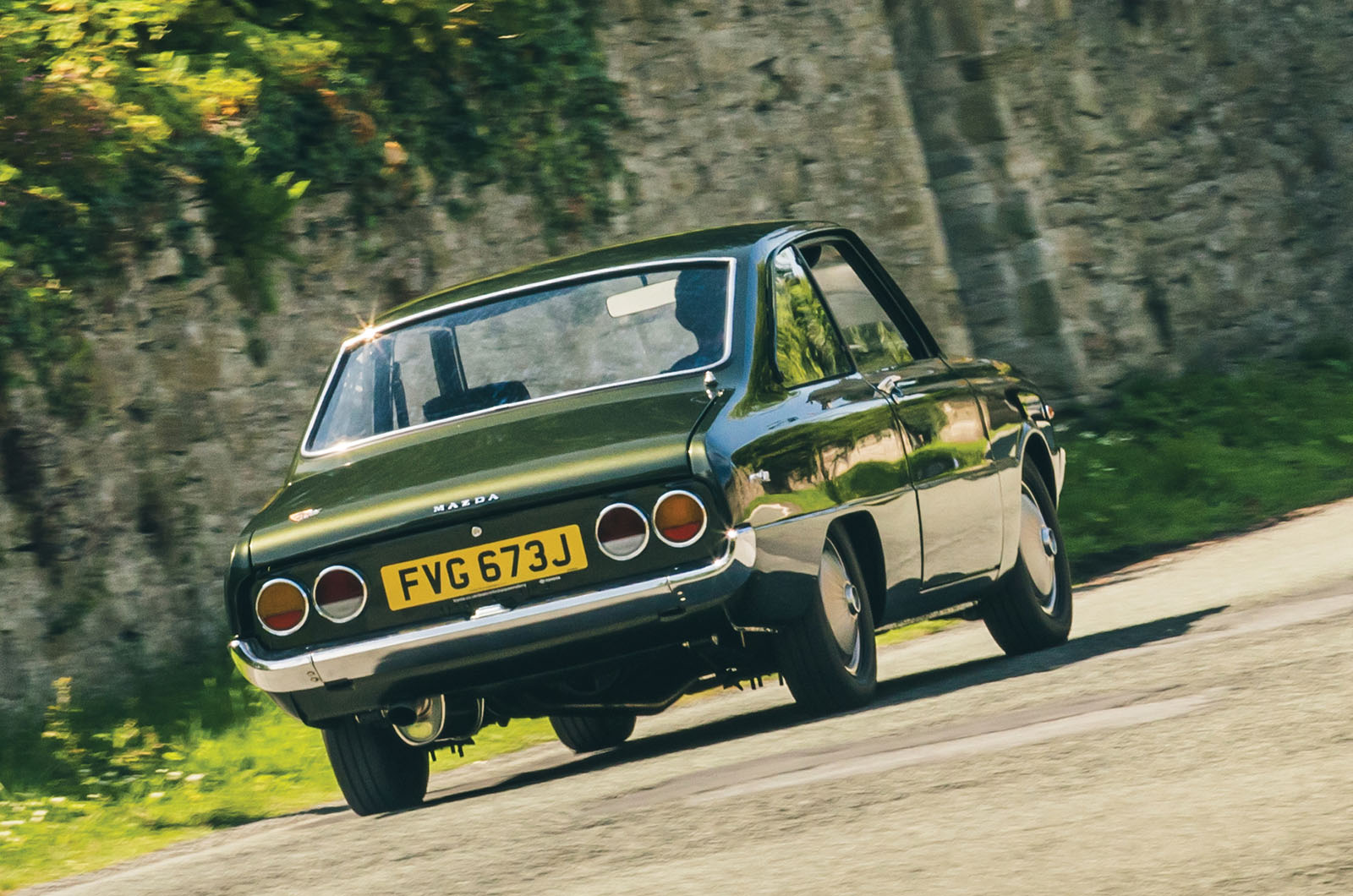
The Mazda R100 Coupé’s circular rear lights are another nod to rotary power

In original, four-speed form the R100, usefully lighter than the Cosmo, would do 60mph in second, 80 in third and anything between 108 and 112mph flat-out, depending on who you believed.

At a relaxed 100mph cruise, it was pulling 5250rpm (it was fairly high-geared), but only doing about 14mpg.

FVG 673J was shown at Race Retro in 2025, having emerged from an exhaustive rebuild at Silver Fern Performance.

Its restoration is the product of devoted collaboration between owner Ryan Theodore and Dwayne Aislabie of Silver Fern.

Classic & Sports Car – Mazda R100 Coupé: quiet revolutionary

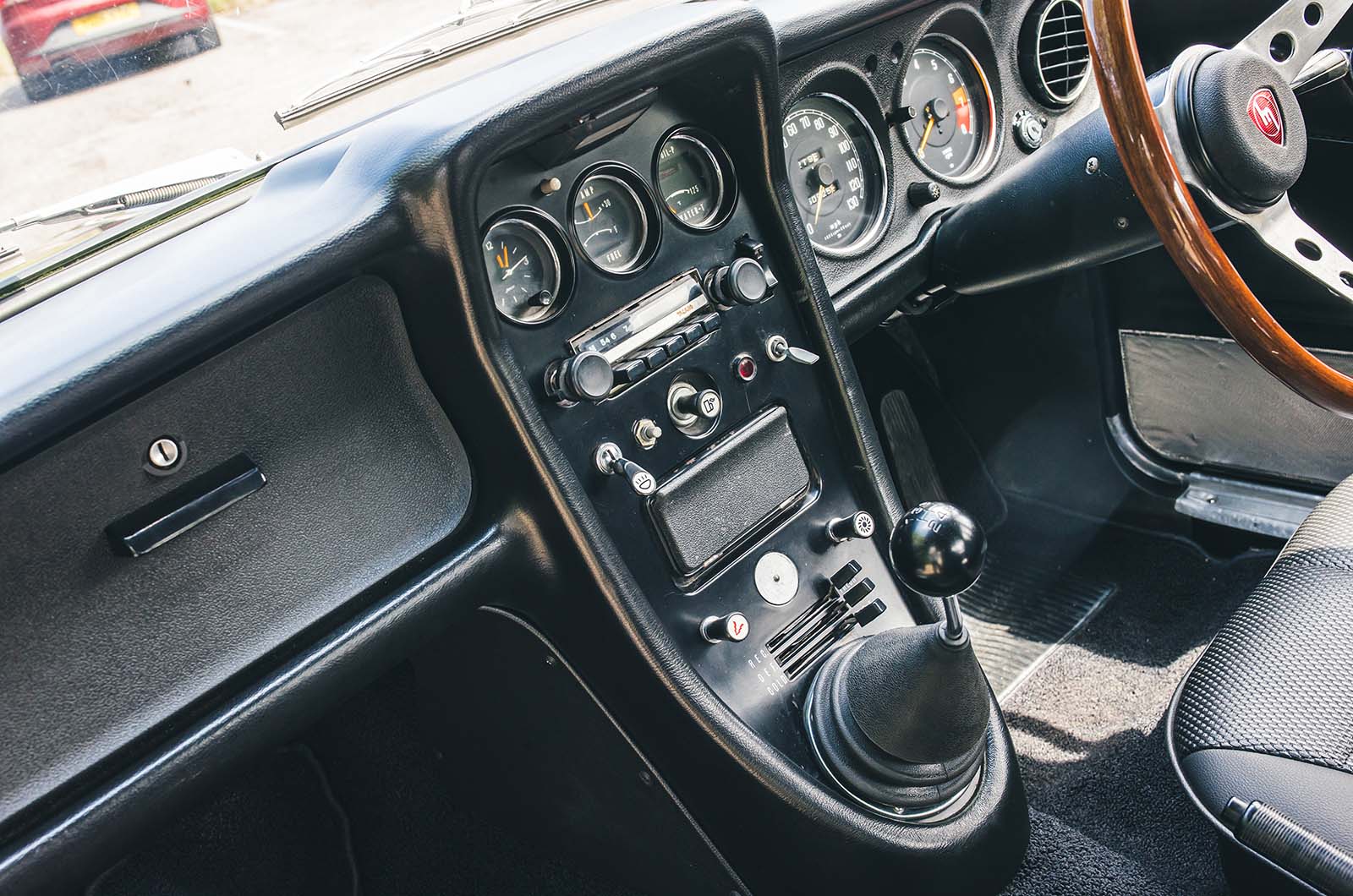
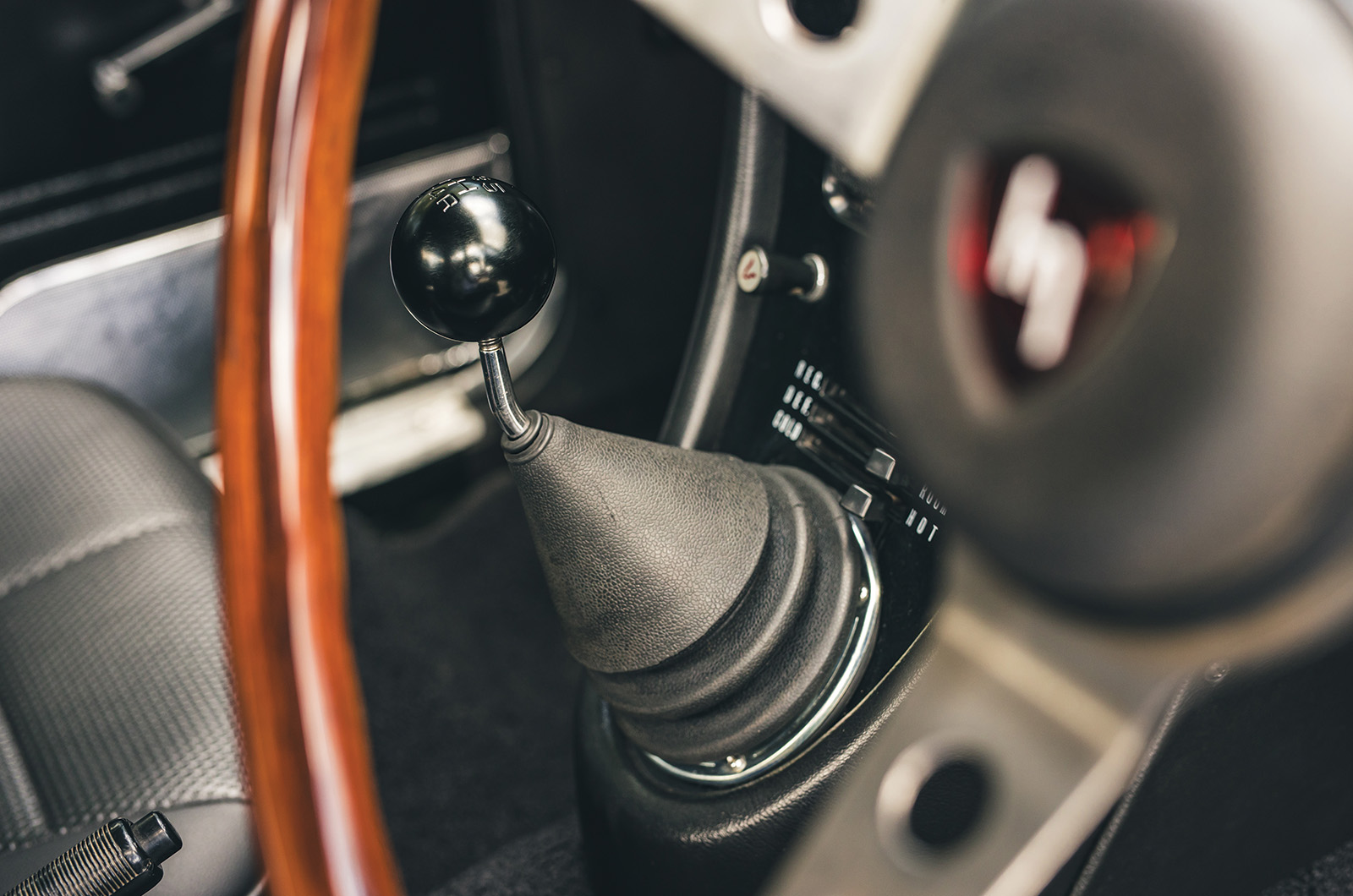
This modified Mazda R100 Coupé has a five-speed gearbox, but the original lever was retained

Most of the decision-making took place over WhatsApp, with Ryan living between his home in Sydney, Australia, and work projects in Qatar.

The beautiful, dark-green paint is a Lexus colour, courtesy of Colin Williams of Bayside Services, who invested 400 hours into the fully rustproofed and seam-sealed bodyshell, in which the owner was keen to engineer-out as many rattles as possible.

“It is not a fully-fledged restomod that overwhelms the original chassis,” says Ryan, an enthusiastic collector of rotary Mazdas, “more of an ‘OEM-plus’ restoration that respects the original concept while incorporating subtle enhancements.

“It’s a pure road car that will not see a track day, never mind a race. The original character of the car has not been compromised; it’s what Mazda might have produced if it had continued making the R100.”

Classic & Sports Car – Mazda R100 Coupé: quiet revolutionary

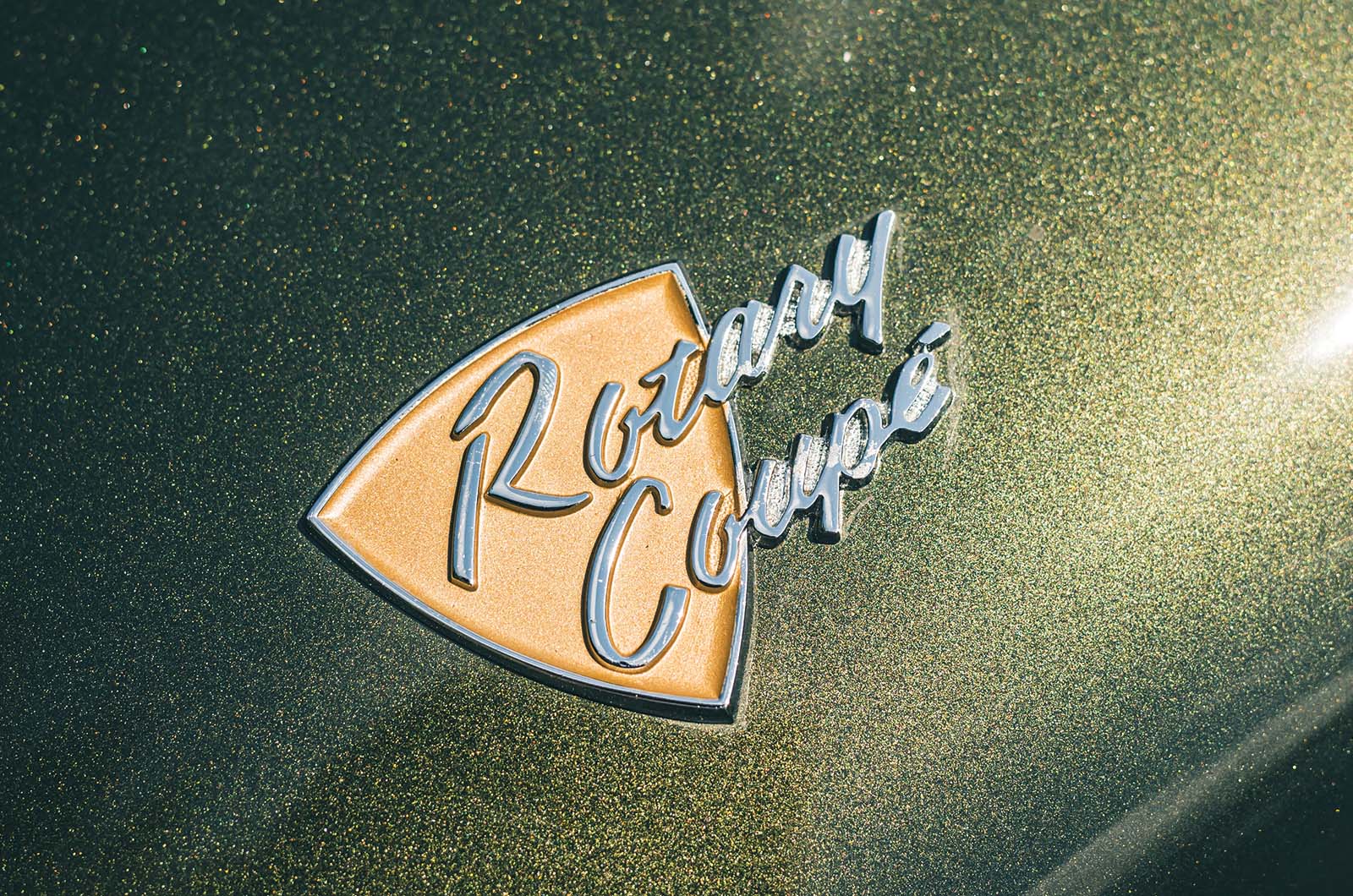
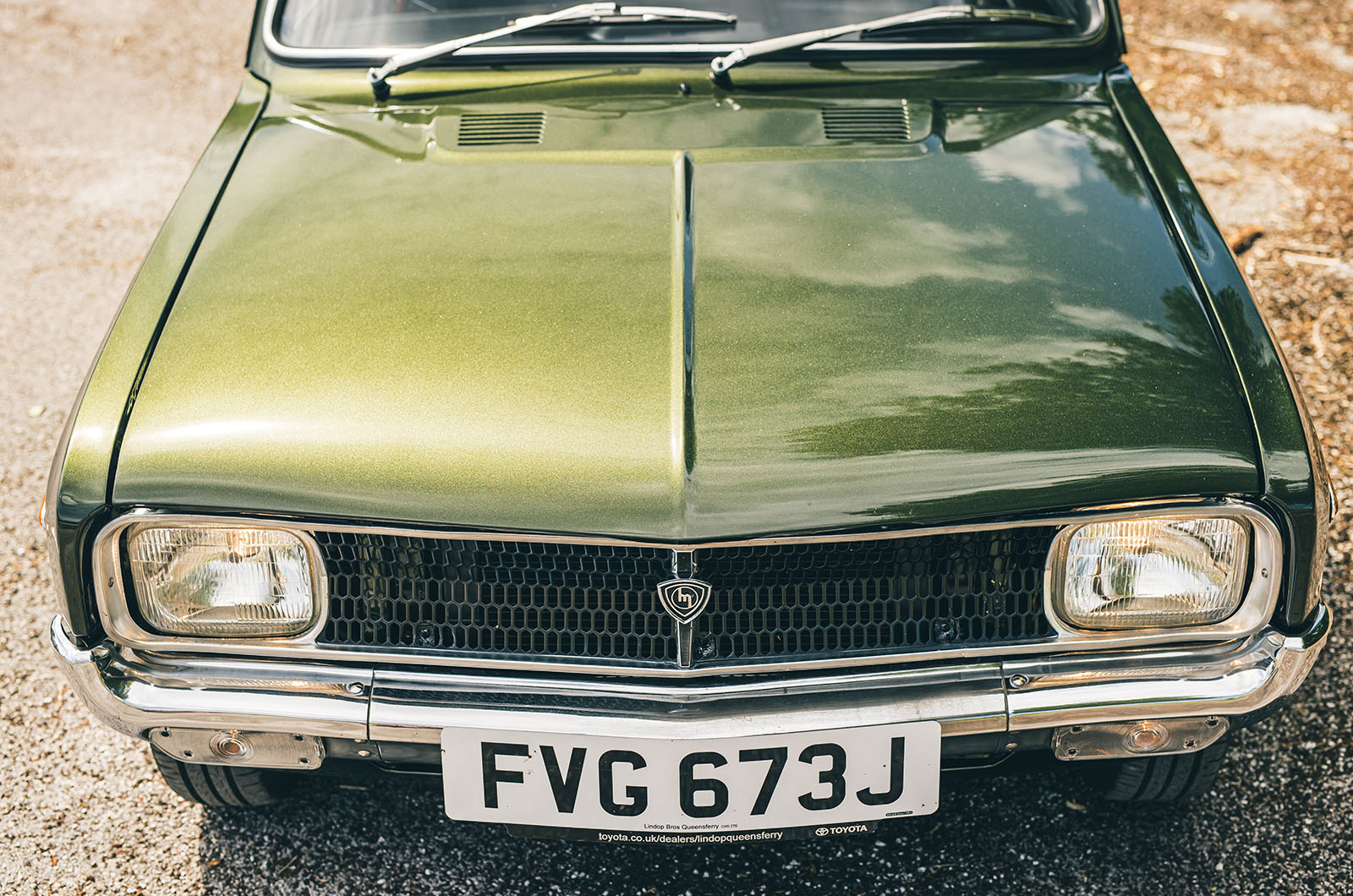
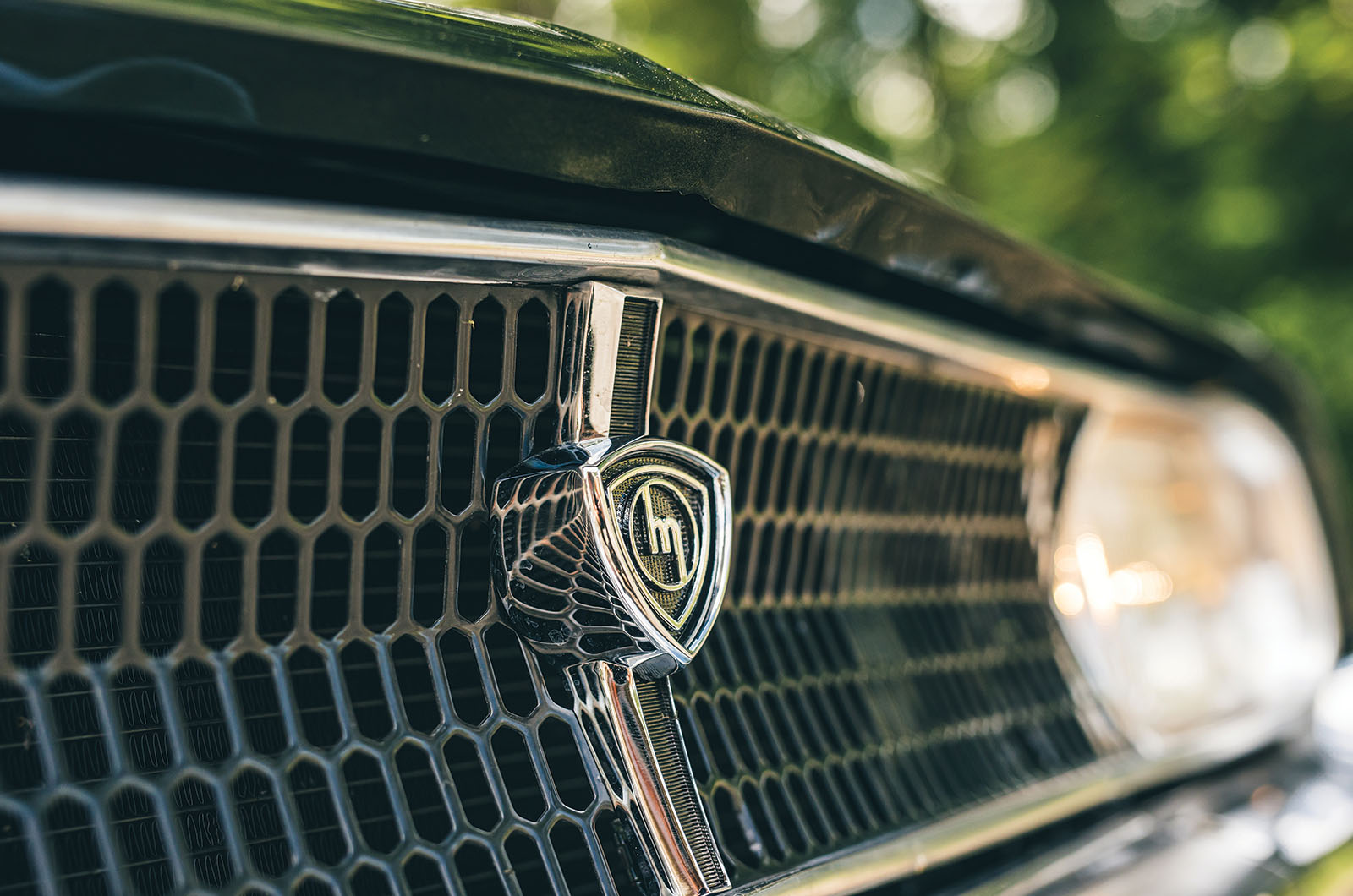
The Wankel engine’s Reuleaux triangle outline appears on the Mazda R100’s grille badge

Beautifully presented in the surgically clean engine bay, the compact rotary unit is now a bridge-ported 12A with Series 1/2 RX-7 housings, modified exhaust ports and enlarged inlet tracts, and with the front plate modified to allow for side-mounting of the engine, as the 10A was originally installed in the R100.

The rotors, lightened and balanced, are of RX-7 S2/3 origin; likewise the ignition system, five-speed gearbox, rear axle and rear discs.

The front discs are standard R100, but the boot-mounted servo is a modern, electronic job.

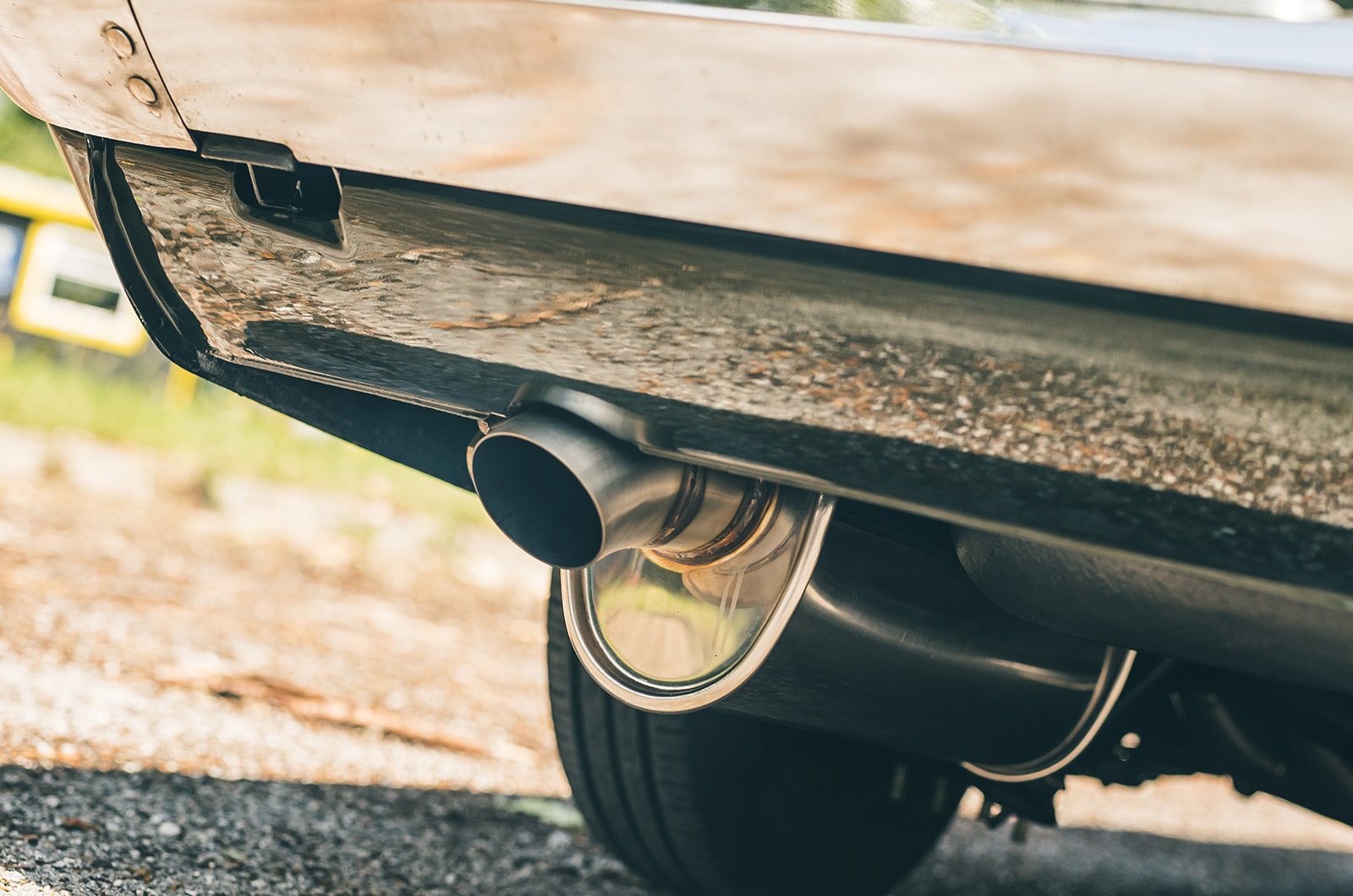
The high-output oil pump, stainless-steel exhaust (with twin silencers and 3in ‘dump’ pipe) and large-capacity radiator are custom items, as are the limited-slip diff and high-output coils.

There’s an oil cooler and a modern alternator, and the battery has been moved to the boot.

Classic & Sports Car – Mazda R100 Coupé: quiet revolutionary

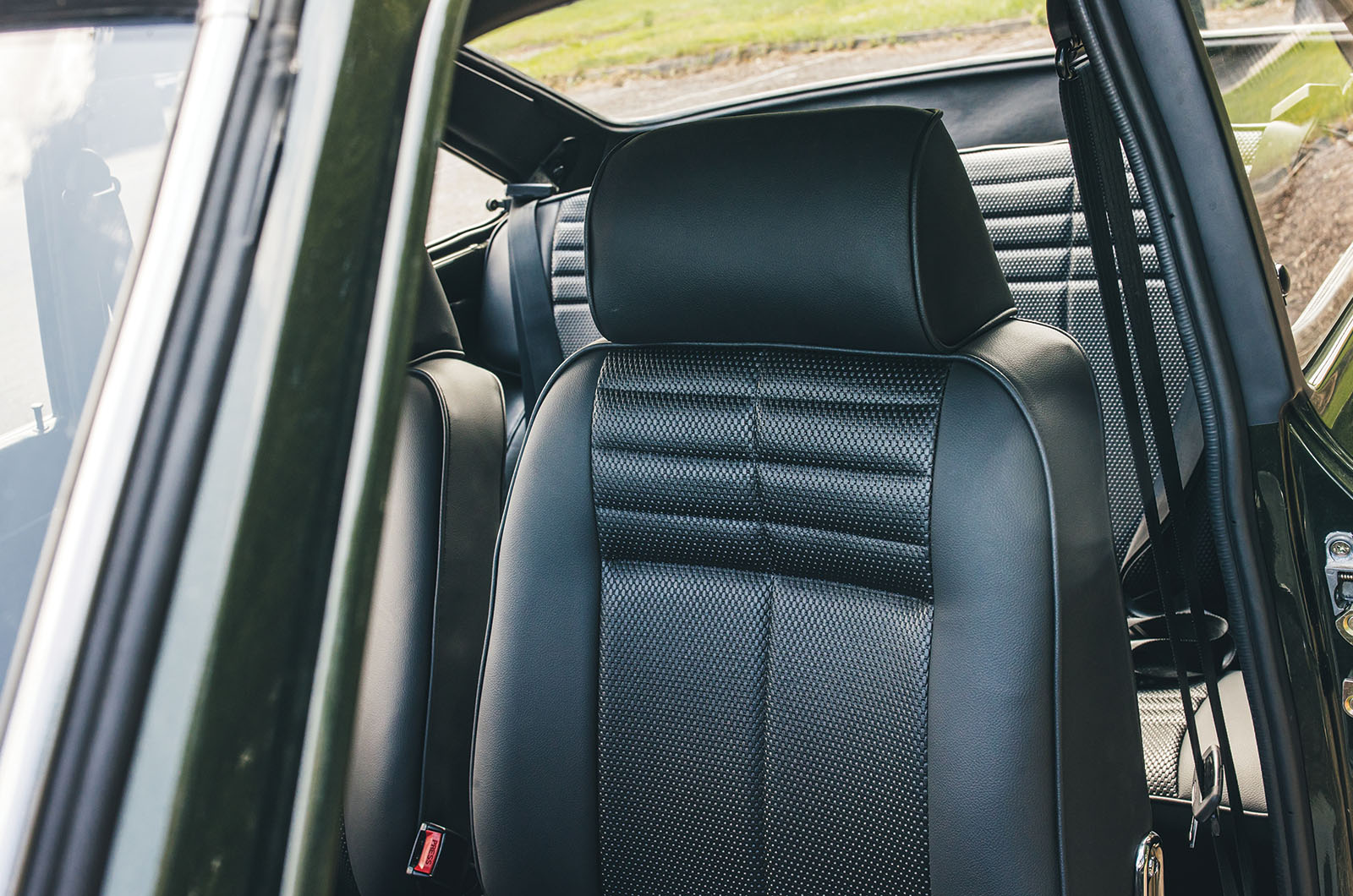
These seats were unique to rotary-engined Mazda R100s

I had forgotten how small these early Mazdas were: at 4ft 10in wide, this pretty little car is also narrow for its length and looks almost freakishly tiny among obese moderns.

It sits a little lower than the original, but does not look slammed – the sad fate of too many ’70s classics these days.

The wheels are standard R100 steels, and if I told you how much the hubcaps are worth you wouldn’t believe me.

Shoulder room inside is at a premium for two slightly above-averagely built males.

With the seats right back, there is no legroom in the rear and not much headroom.

Classic & Sports Car – Mazda R100 Coupé: quiet revolutionary

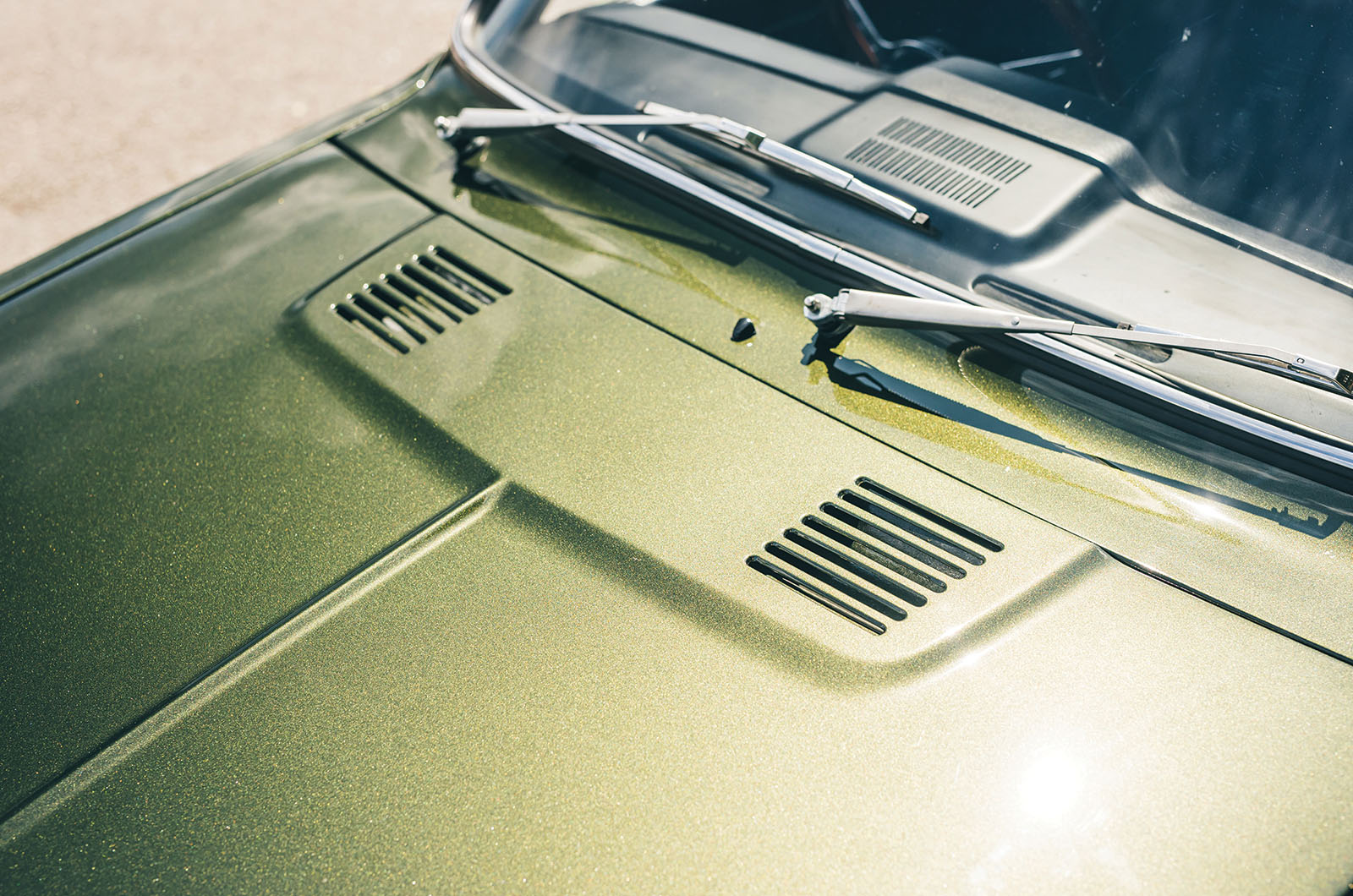
The rotary-powered Mazda R100 Coupé’s bonnet, grille and bumper differ from the piston-engined model

The thinly padded seats recline, have built-in headrests and, like the dash, were unique to the rotary-engined versions of these Mazdas in export markets; in Japan, some top-spec, piston-engined Familia models had the same dashboard.

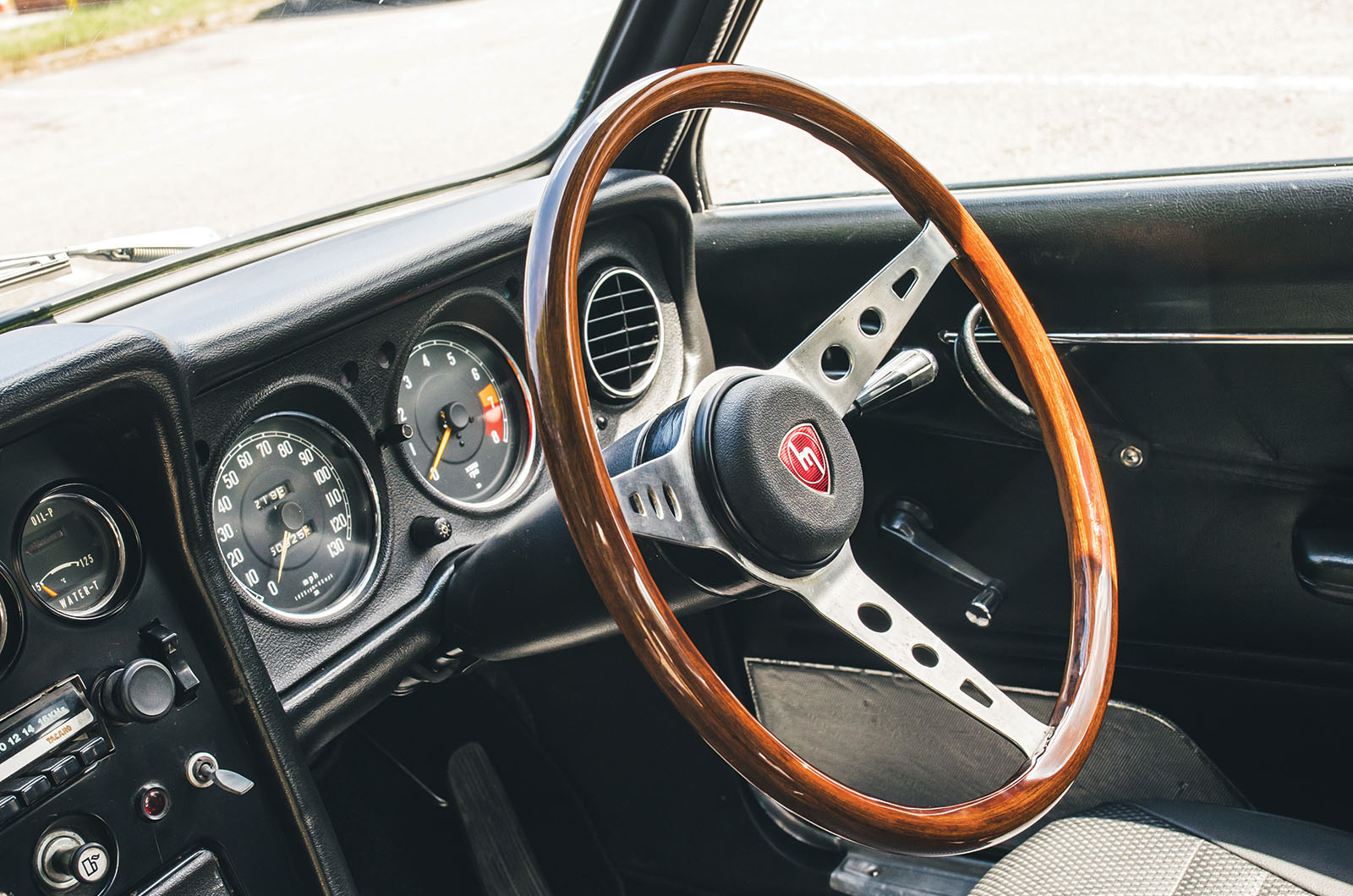
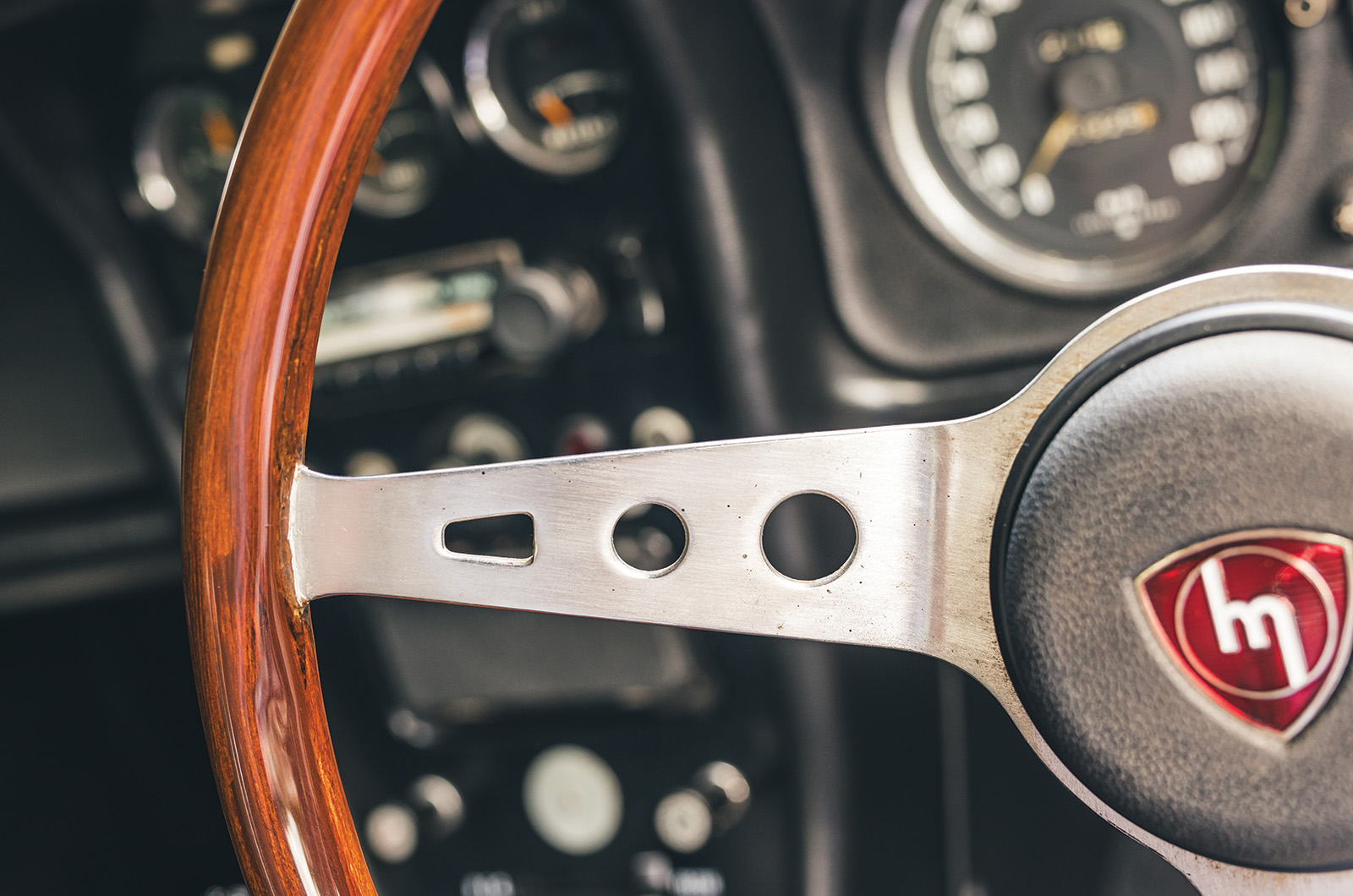
With its central stack of instruments, it evokes the look of the Cosmo fascia, with a hint of Alfa Romeo or Lotus, complete with (real) wood-rimmed steering wheel, a map light, and separate ammeter and oil-pressure gauges.

Dwayne managed to retain the original four-speed gearlever, which exits at a pleasing angle from the base of the console.

Classic & Sports Car – Mazda R100 Coupé: quiet revolutionary

The Mazda R100 Coupé’s busy centre stack in the compact cabin

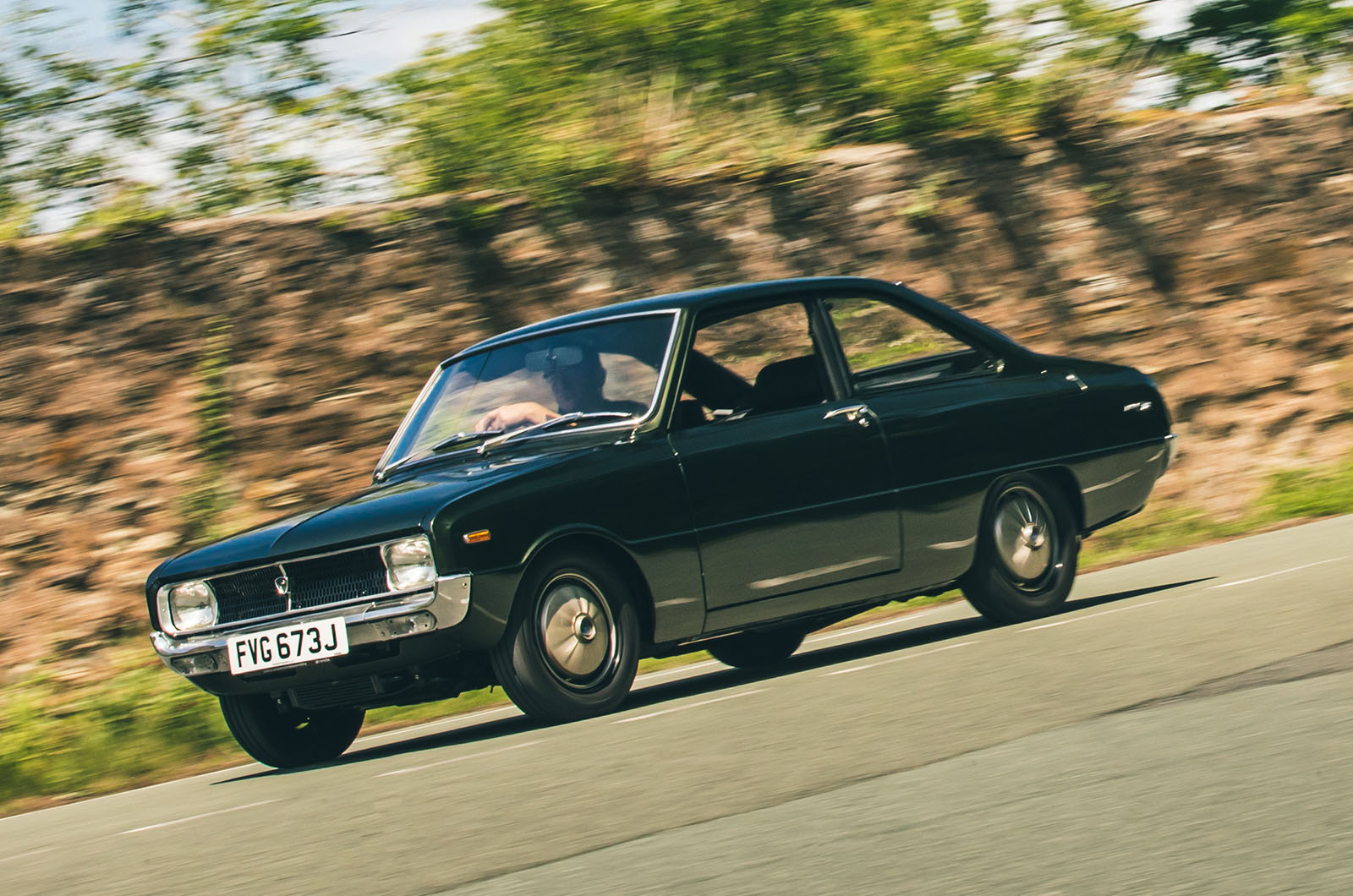
With double the amount of power it had when it was born, you can take it as read that this R100 goes down the road in a pretty nifty fashion, without being a crazy hot rod.

It certainly goes about its business far more assertively than its apologetic looks suggest.

The pulsing, two-stroke throb at tickover softens into a turbine hum as the revs rise.

Pull away, and the clutch is light and smooth, while steering that initially seems vague around the straight-ahead improves as the speeds rise.

Classic & Sports Car – Mazda R100 Coupé: quiet revolutionary

The Mazda R100 was also offered as a four-door saloon in the Japanese market

Dwayne has engineered-out the original soft damping and tendency for the rear axle to hop sideways, and made the handling flat and neutral up to high cornering forces.

The R100’s slender build adds to its nimble feel, and the brakes are magnificent in both power and balance.

Like most Japanese gearboxes, this one has a sweet, light and precise action.

With that extra ratio, the main limit on top speed must be the ability to keep the front wheels on the deck.

Classic & Sports Car – Mazda R100 Coupé: quiet revolutionary

This classic Mazda’s real wood-rimmed steering wheel

Hold it in second or third and the power just keeps coming, getting smoother.

I instinctively change up early, but there always seems to be power to spare. There is also plenty of low-speed urge, with no feeling of snatch.

Rare though it is today, the R100 was not especially uncommon in its period: total production through to 1973 was 95,800 units. 

It spearheaded Mazda’s assault on the North American market (US models had circular headlamps) in 1971-’72, and about 1500-2000 went to Australia, where its performance and $2790 price-tag put it in the same class as a variety of big Fords and Holdens.

Classic & Sports Car – Mazda R100 Coupé: quiet revolutionary

‘With that extra ratio, the main limit on top speed must now be the ability to keep the front wheels on the deck’

Its impact in the UK was minimal, though: certainly, very few made it here.

There were still only 30 Mazda dealers in 1970, and at £1649 the R100 was too much of an oddity to gain much traction against the likes of Ford’s cheaper, faster 3-litre Capri, the nifty Opel Rekord Sprint and a variety of Alfa, Lancia and Fiat coupés.

Any pre-RX-7 rotary Mazda is a rare sight today, but with only three or four known to be in the UK (out of an unknown total imported), the R100 has a semi-mythical status second only to the original Cosmo.

Images: Jack Harrison

Thanks to: Silver Fern Performance


Factfile

Classic & Sports Car – Mazda R100 Coupé: quiet revolutionary

Mazda R100
(specifications for standard car) 

  • Sold/number built 1968-’73/95,800
  • Construction steel monocoque
  • Engine alloy/iron 982cc twin-rotor Wankel, Hitachi twin-choke carburettor
  • Max power 100bhp @ 7000rpm
  • Max torque 98lb ft @ 3500rpm
  • Transmission four-speed manual, RWD
  • Suspension: front independent, by MacPherson struts, anti-roll bar rear live axle, leaf springs, telescopic dampers
  • Steering recirculating ball
  • Brakes discs front, drums rear, servo
  • Length 12ft 7¾in (3854mm)
  • Width 4ft 10¼in (1480mm)
  • Height 4ft 5in (1346mm)
  • Wheelbase 7ft 5½in (2273mm)
  • Weight 1770lb (803kg)
  • 0-60mph 10.9 secs
  • Top speed 108mph
  • Mpg 18-21
  • Price new £1650
  • Price now £50,000*

*Price correct at date of original publication


Enjoy more of the world’s best classic car content every month when you subscribe to C&SC – get our latest deals here


READ MORE

Rotary club: Mazda Cosmo, NSU & Citroën

24 rotary-engined classic cars

Mazda RX-7: Land’s End to John O’Groats on sustainable fuel