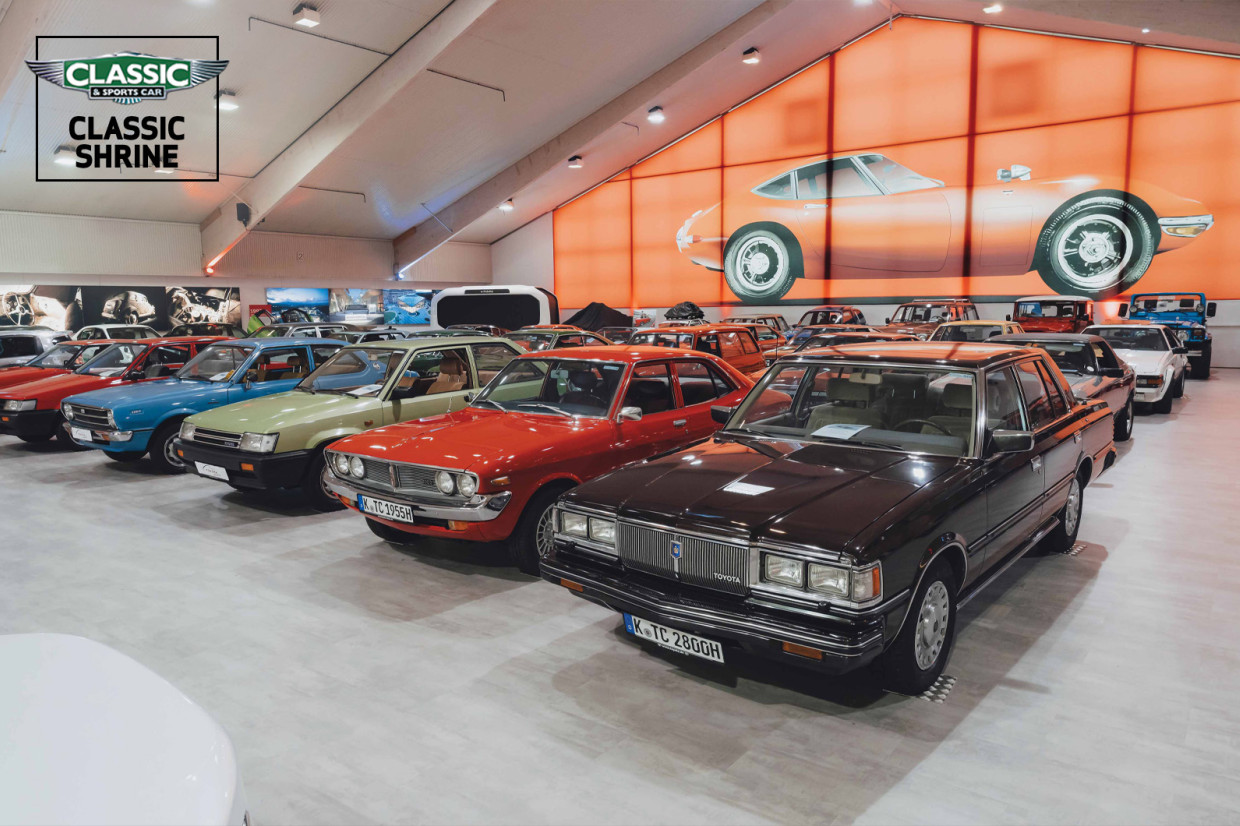
An early Toyota Corolla under spotlights is a far more surprising sight today than a handbuilt exotic, such as a pre-war Bugatti or Ferrari 250 – at least in a European car museum.
With the enthusiast of 2026 more commonly clamouring for Supras than Siatas, however, Toyota Deutschland has opened its 75-car heritage collection to the public.
Mirroring the Mazda Classic Automobile Museum Frey in Augsburg, the Toyota Collection Cologne began with a car dealer turned hoarder.
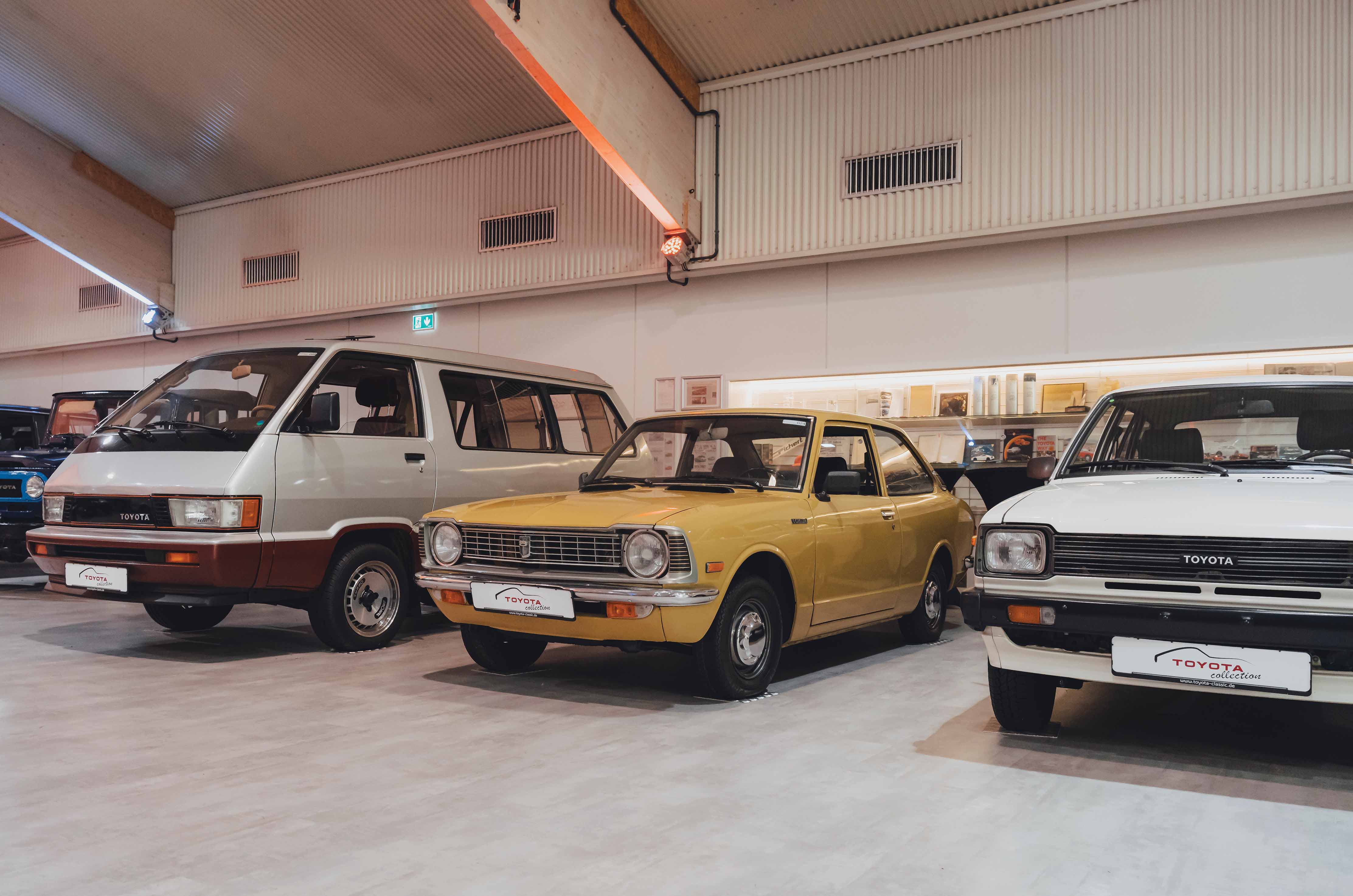
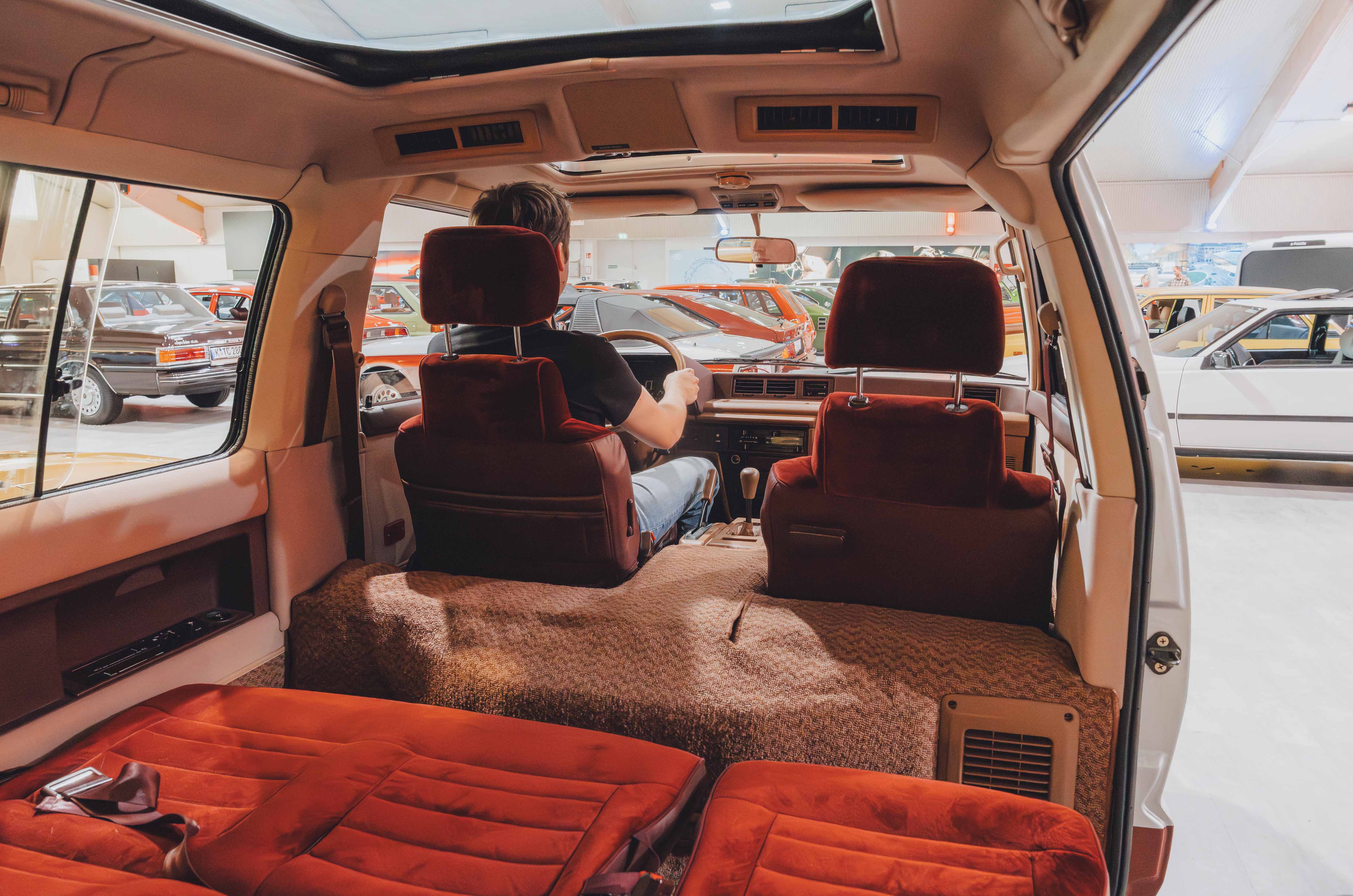
A Toyota SpaceCruiser people-carrier (left), Corolla E20 (middle) and KP60 Starlet in the Toyota Collection Cologne
Peter Pichert, one of Germany’s first Toyota franchisees, amassed his collection over decades.
He set up a museum in Bavaria, then the family handed the cars to Toyota after Peter’s death in 2016.
Today, they fill a hall that once housed tennis courts for employees at Toyota’s German HQ.
Starting out with austere Corollas and rugged Land Cruisers in the early ’70s, Pichert’s career oversaw the Japanese company’s rise from relative minnow to multiple decades spent as the world’s largest car maker, and the collection reflects that journey.
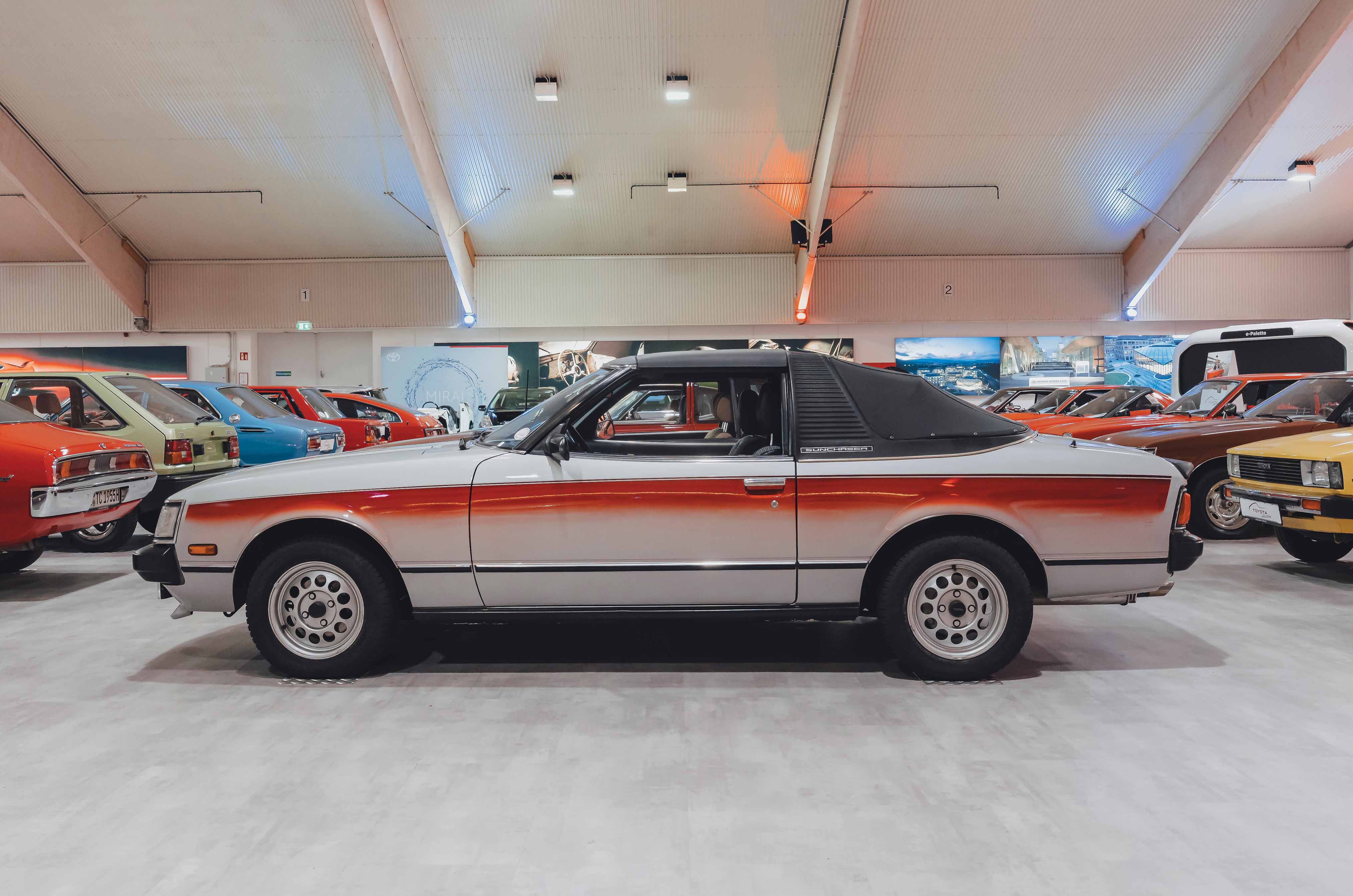
A special-edition Toyota Celica GT Sunchaser Cabriolet
European-market Coronas and Cressidas – which are now rarer than most 1970s sports cars – are here in force, while Tercels and Starlets join the fray from the ’80s onwards and all are in exceptionally good condition, some plucked straight from the showroom floor many decades ago.
Every Toyota sold in Europe in the 1970s and ’80s is represented here in some way, and while it’s typically just one variant of each, some of those are quite rare specifications.
A ’77 Corolla Liftback, ’81 Celica GT Sunchaser Cabriolet and ’82 Starlet Kombi represent just a handful of each left in the country.
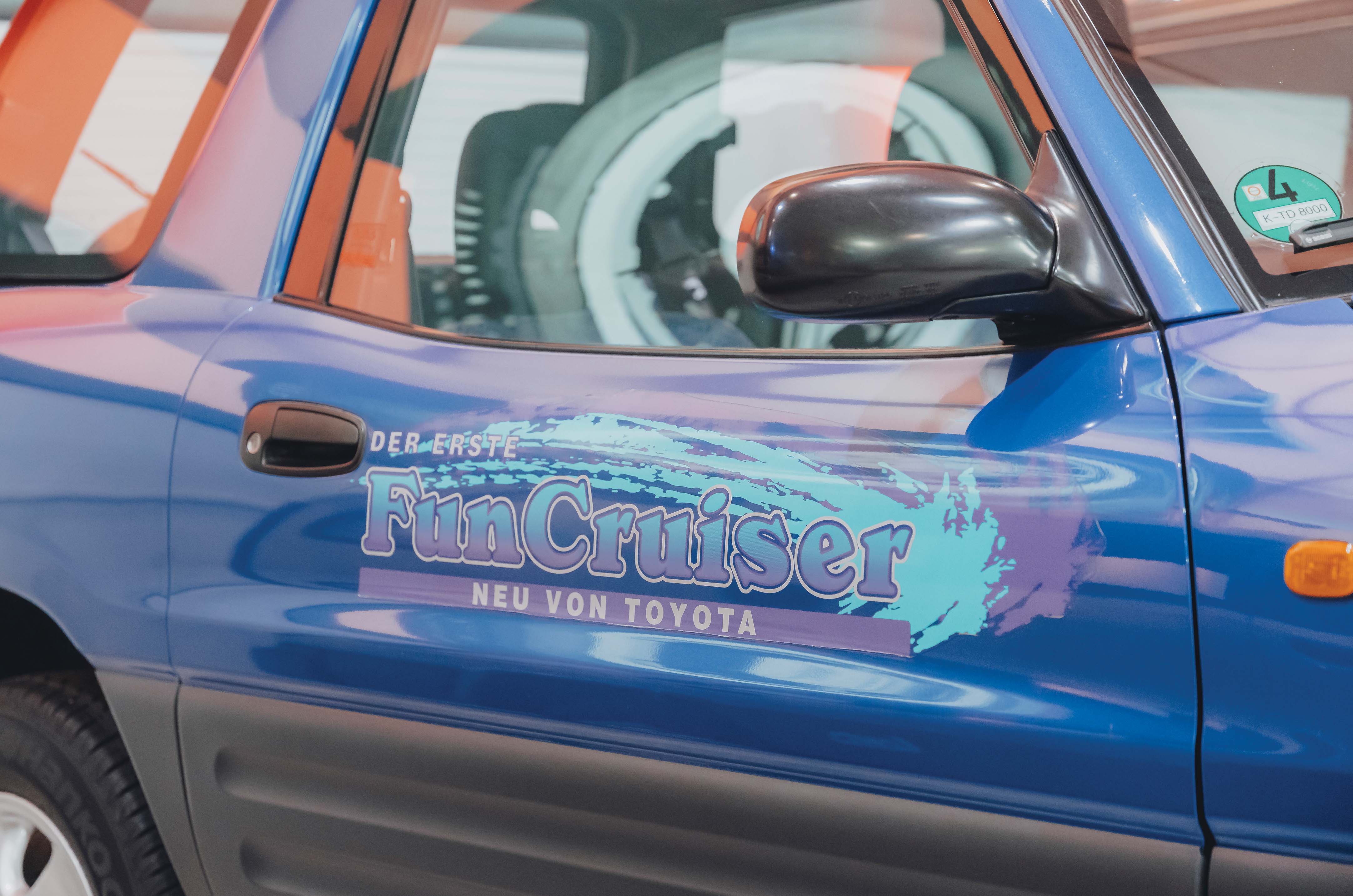
The launch-spec Toyota RAV4 soft-roader is decorated with a ‘FunCruiser’ decal
Chronologically, the collection continues until close to the present day, although more sporadically – focusing on highlights such as the Mk4 Supra and a very early, launch-spec RAV4, complete with its showroom decals announcing ‘Der erste FunCruiser’.
There are particularly special Toyotas that were never sold in Europe here, too, including a 2000GT – probably the best-looking Japanese car of all time – a Sera and an AE86 Corolla Levin.
Another positive to the presentation of this museum is that, with the exception of the 2000GT and a few motorsport heroes, there are no barriers or ‘Do not touch’ signs to be found here.
Visitors to the Toyota Collection Cologne are encouraged to explore the exhibits
The cars’ doors are all unlocked and visitors are encouraged to get in and experience them.
That alone makes it one of the most engaging car collections anywhere.
Ever wondered what it was like to be a chauffeured CEO in Tokyo in the 1990s?
Here you can sit in the overstuffed, ruched-leather rear seats of a V12 Century.
Or if ’80s nostalgia is more your bag, sample the tweed-effect upholstery of a Tercel 4WD.
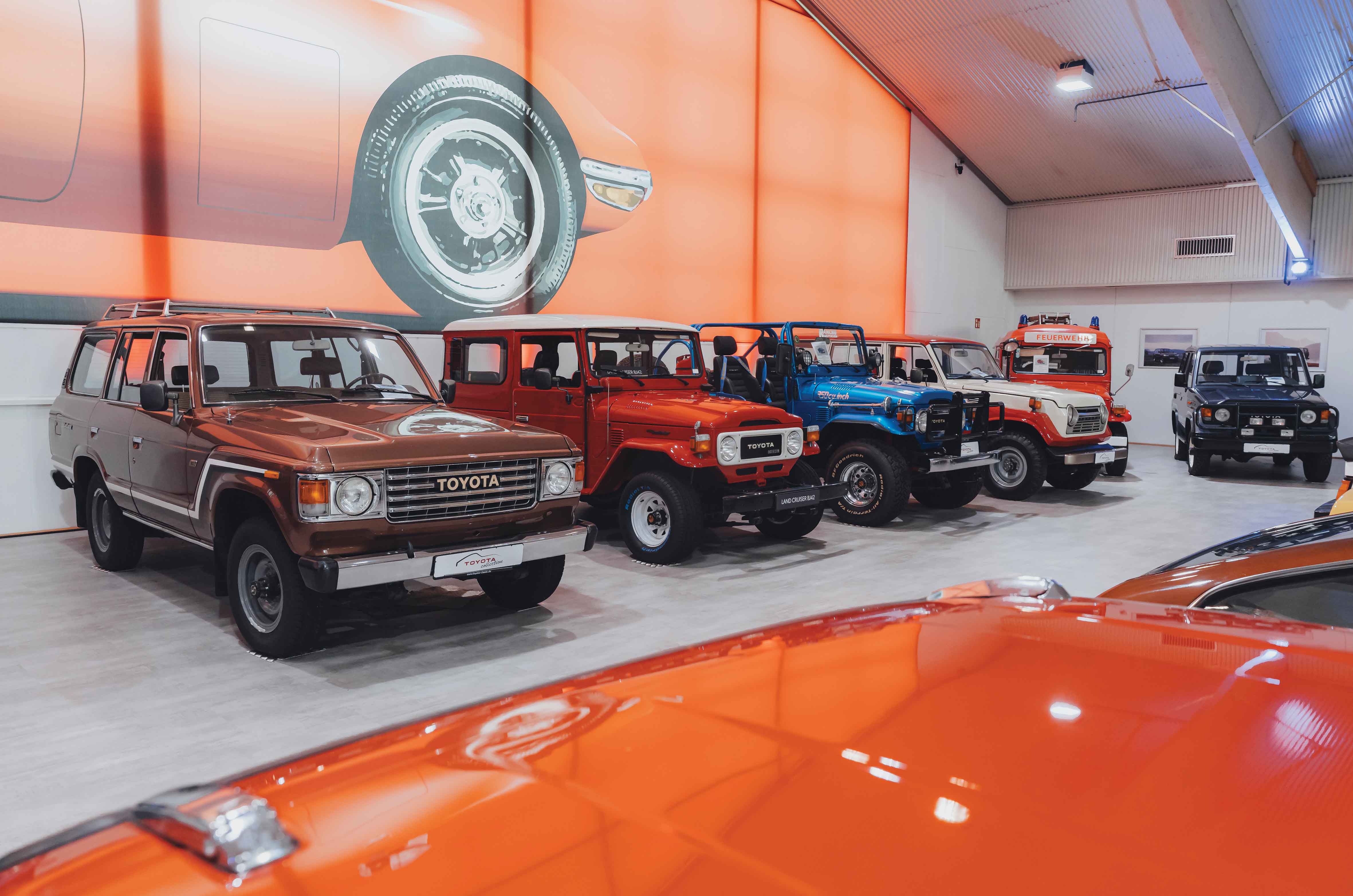
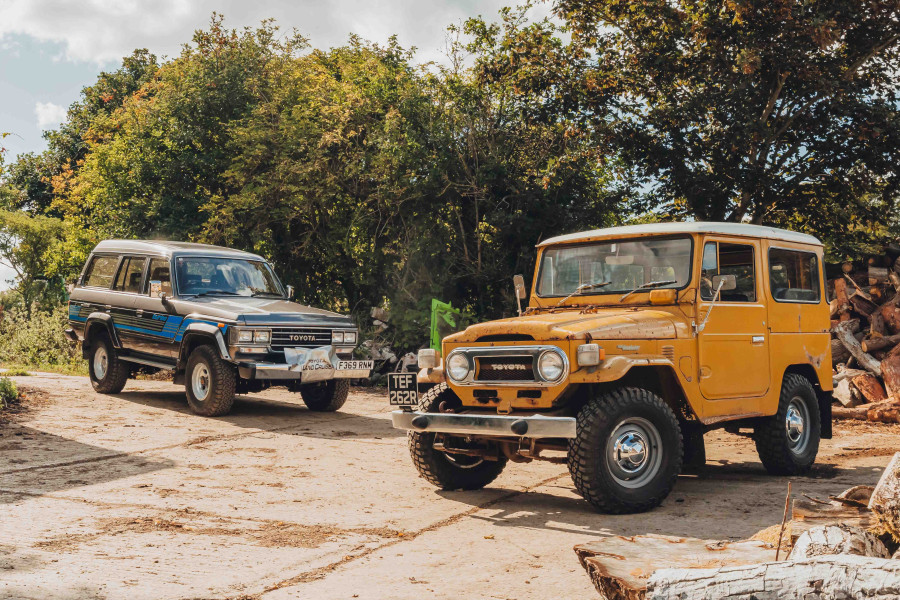
An FJ60 heads the display of Toyota Land Cruisers
Alongside the showroom-quality examples are a few more idiosyncratic cars.
An FJ60 Land Cruiser that was once owned by Roger Moore sits among a timeline of the iconic off-roaders, while at the opposite side of the room there is a Lexus LS400 that has covered 1,000,000km on its original V8 engine and transmission.
The prototype FT-86 Open (a convertible version of the GT-86) is here, too, following its unveiling at the Geneva Salon in 2013.
At the edge of the hall, behind one of the few cordons, is a handful of Toyota race and rally heroes: a Formula One single-seater sits beside a couple of WRC cars of various ages, but this is just a taster for another part of the collection.
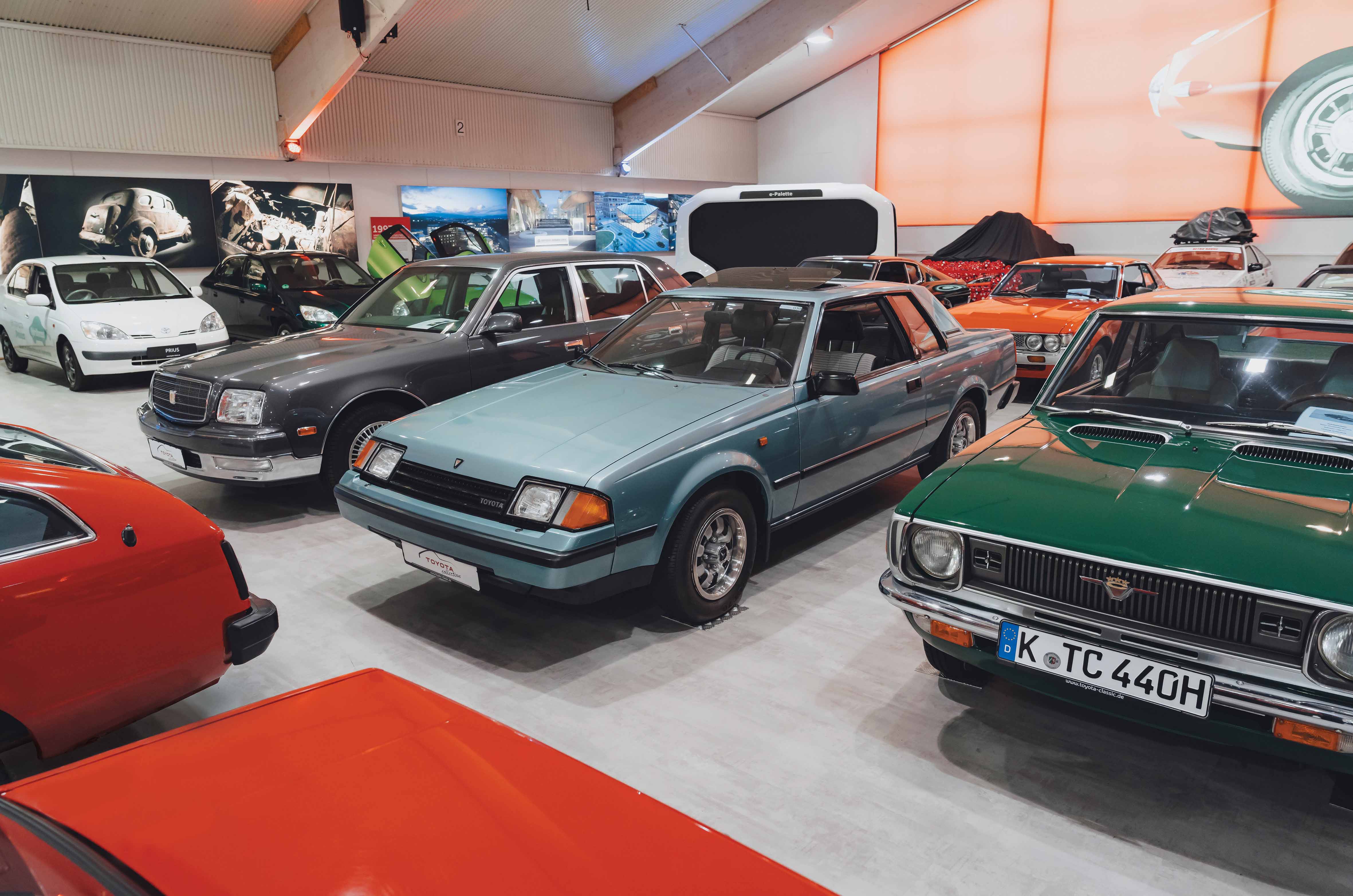
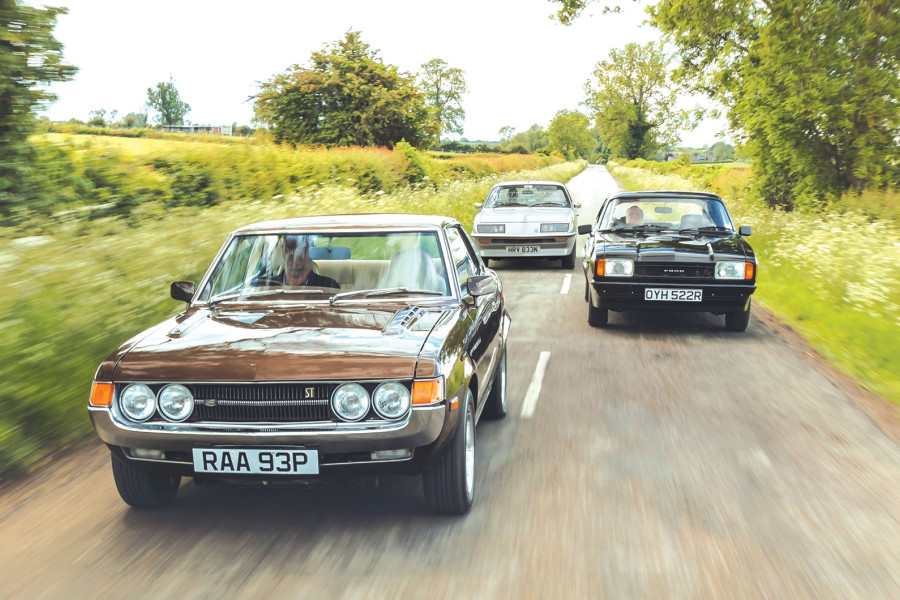
A third-generation Toyota Celica Coupé sits between a V12 Century limo (on left) and 1971 Corolla Sprinter Coupé
Across the street is the headquarters of Toyota Gazoo Racing Europe, and deep in the bowels of the building – underneath the wind tunnel – are the real gems, accessible only via a guided tour on the main collection’s open days.
Toyota has dipped in and out of different disciplines of European motorsport, but this museum reveals a constant effort to prove itself at the top level, whether in rallying, sports cars or Formula One.
The story starts on the rough stuff, with an E20 Corolla prepared by Swedish rally driver Ove Andersson.
He quickly followed that with a TA22 Celica that was the first car to be rallied under the name Toyota Team Europe.
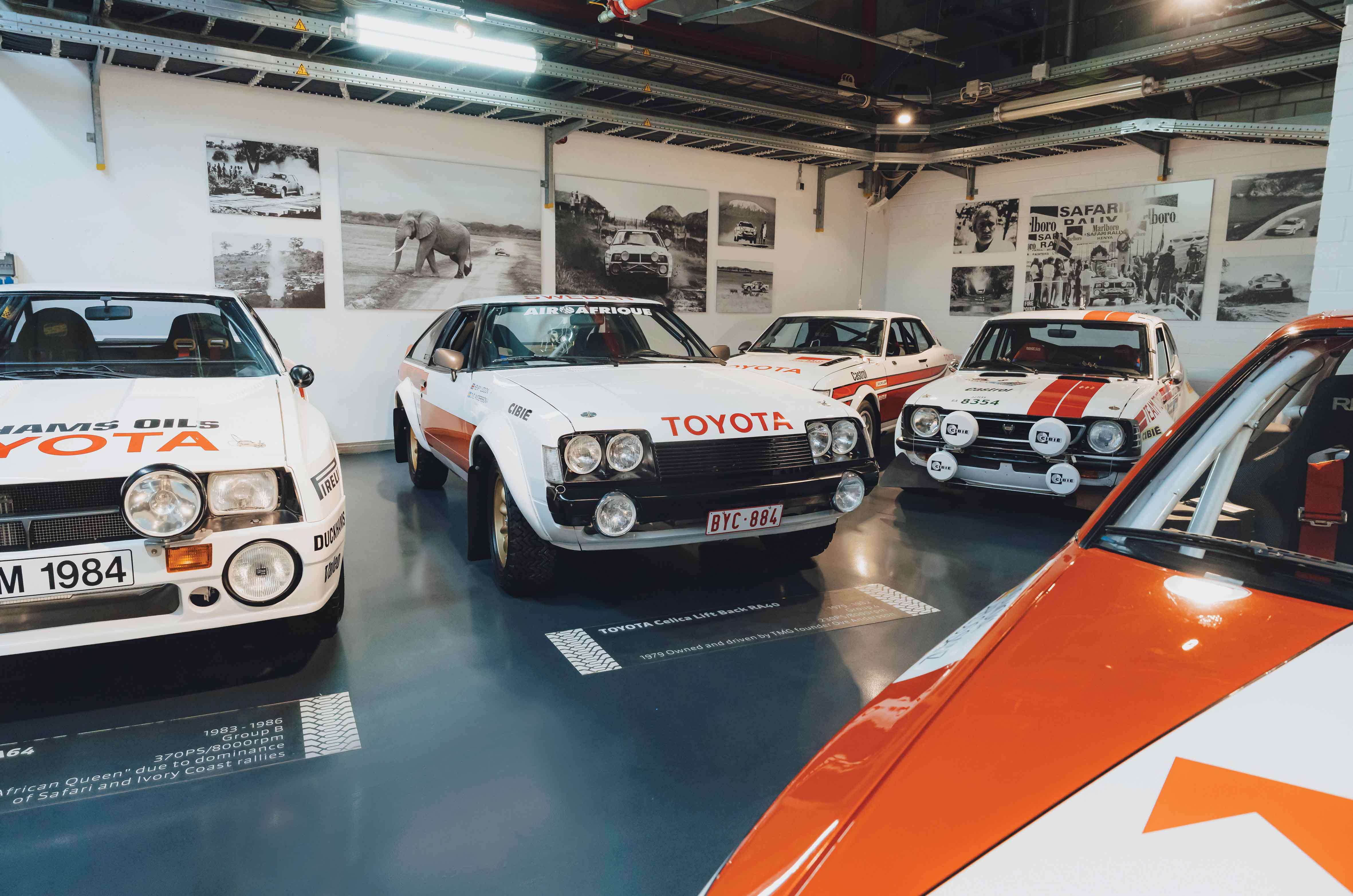
Toyota’s rally-car heritage is well represented in Gazoo Racing Europe’s headquarters, across the street from the Toyota Collection Cologne
Although founded in Sweden, Andersson’s outfit integrated with Toyota throughout the 1970s, before moving to its European headquarters in Brussels in 1975, then to its present Cologne base in ’79.
The crowning glory among the older rally cars here is a 1983 Celica TA64, known as the ‘African Queen’.
The turbocharged, twin-cam Toyotas proved top dogs on long-distance, endurance-focused events, winning three Côte d’Ivoires and three East African Safaris from 1983-’86.
“It’s quite simple, but really strong,” says John Day, the expat Brit who looks after most of the cars in the motorsport collection, after decades working on Toyota rally cars. “And the drivers we had, Björn [Waldegård] especially, were really good at these events.”
The Toyota Celica GT-Four was the marque’s most successful rally car
Championship success came for the Celica in its fifth iteration, with Carlos Sainz winning a drivers’ title in 1992.
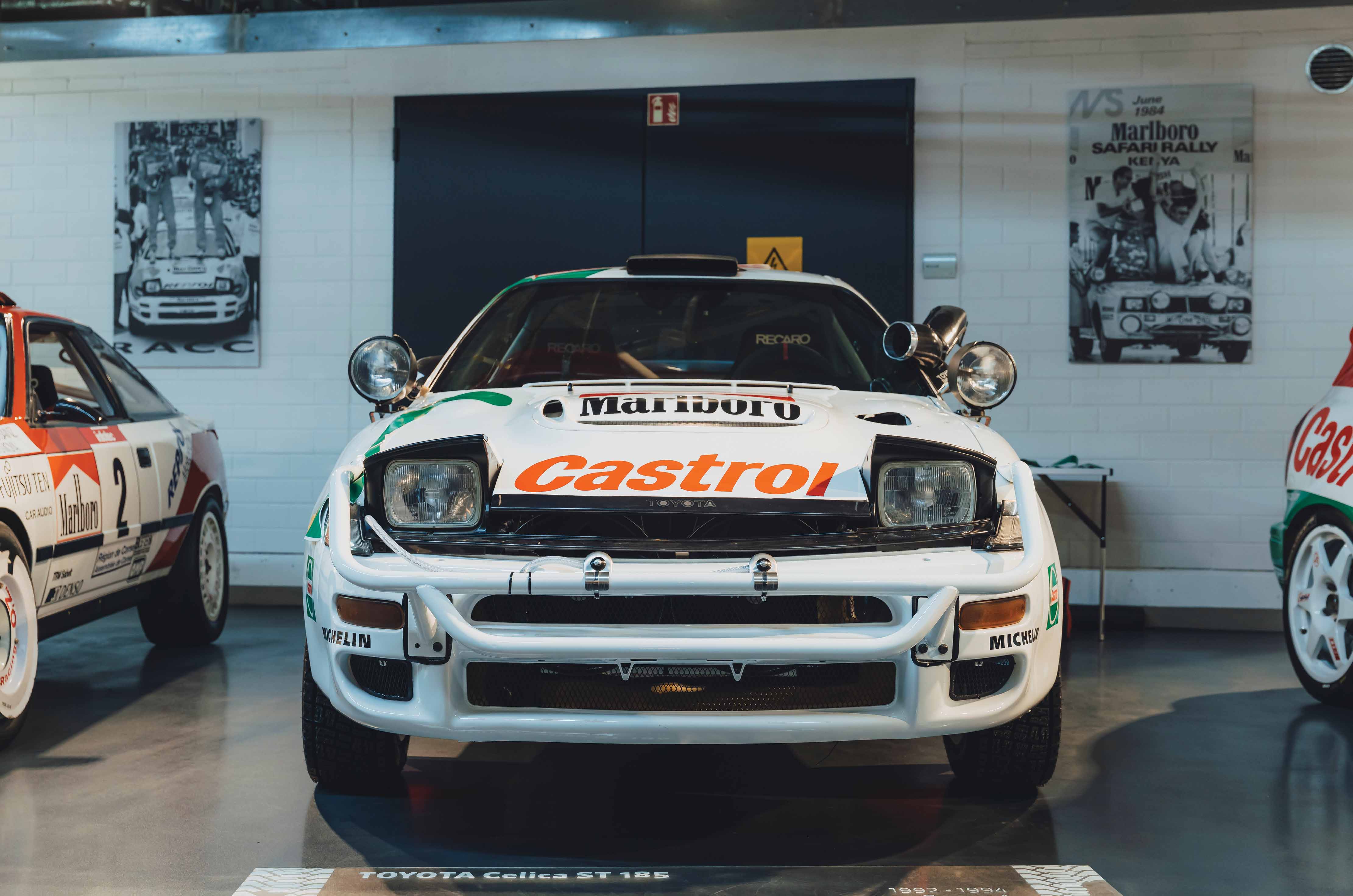
That was followed by a pair of constructors’ championships in 1993 and ’94 (along with further drivers’ wins), making the ST185 Celica GT-Four the most successful model in the marque’s extensive rallying history.
Every generation of WRC entrant is here, including the more prosaic-looking, 1999 title-winning Corolla AE111, and the Yaris and GR Yaris that have dominated the 2020s to make Toyota the most successful manufacturer in the WRC by total wins.
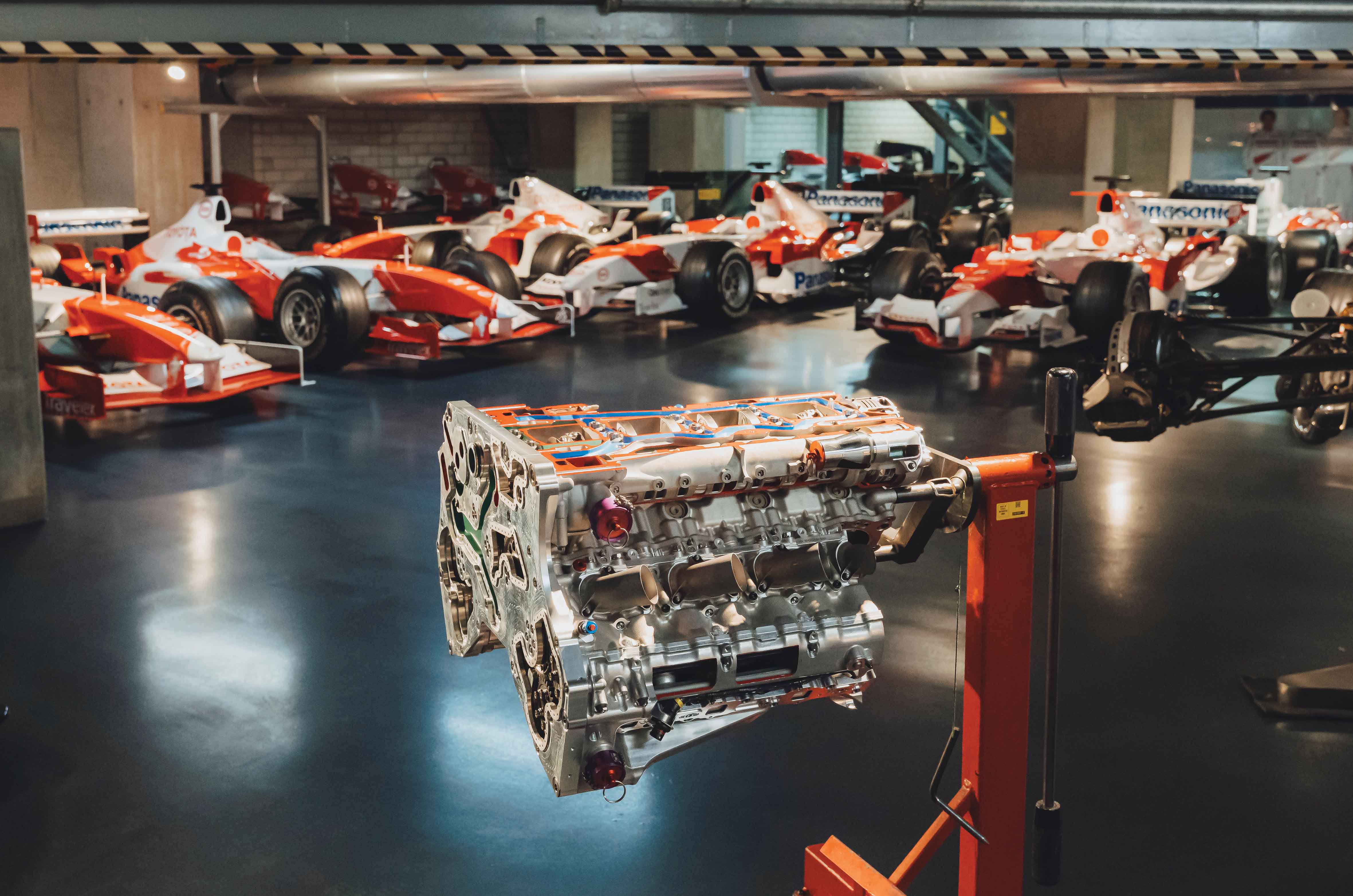
Toyota’s F1 cars and engines were all produced in Cologne
The gap in the rally cars, reflecting Toyota’s withdrawal from the sport from 2000 to 2017, speaks to seven years in F1, from 2002-’09.
All built entirely in Cologne, including the engines, every year of Toyota’s F1 efforts is represented in the collection, along with the unseen development cars.
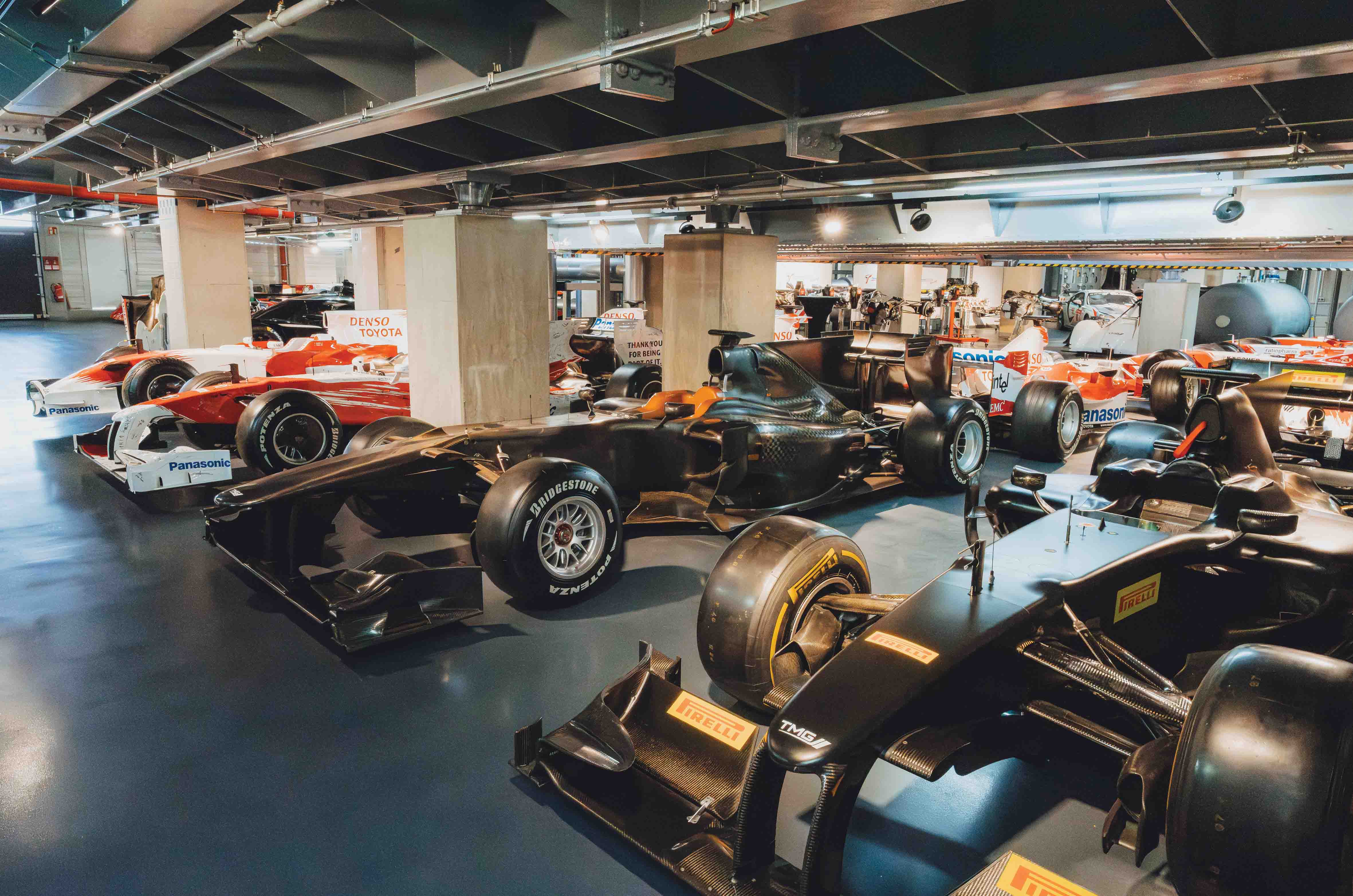
The 2001 test car that never raced, but which was Toyota’s first-ever F1 chassis, sits directly underneath the ducting of the wind tunnel that was used to create its shape, while two 2010 cars that never drove in anger – or even gained their race livery – offer a glimpse of an alternative timeline.
Toyota pulled out of F1 before this unadorned pair ever raced
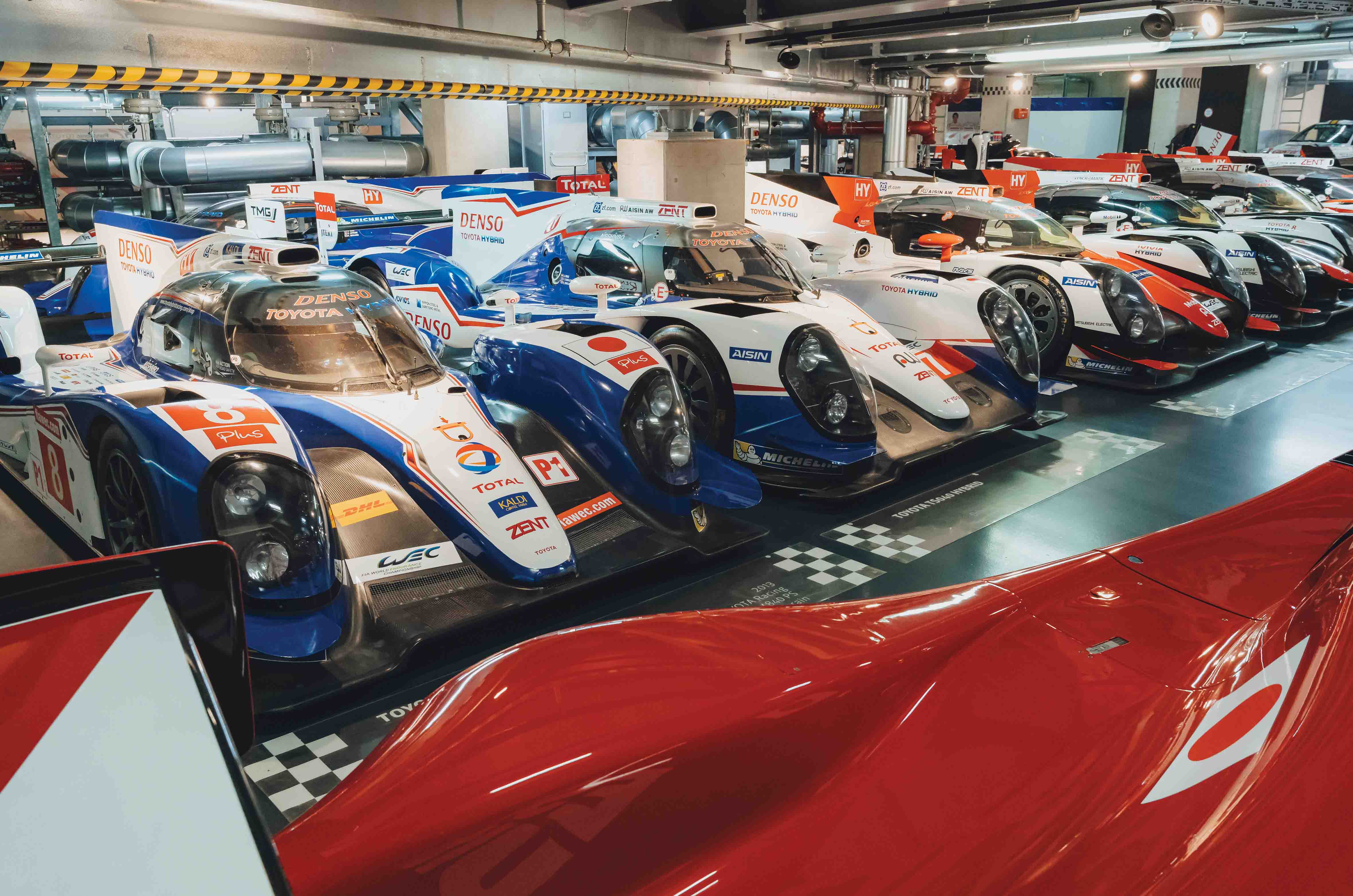
Either side of the F1 effort, Toyota also took to endurance racing.
As a result, the collection is home to two works-spec GT-Ones, which epitomise the creative reading of the rulebook for which Toyota’s European racing team became infamous in both rallying and circuit racing.
A tiny windscreen wiper just a few centimetres long is fitted to the GT-Ones – a set-up for fast qualification laps in dry weather, taking advantage of the rulebook’s requirement for a wiper, but without mentioning its size.
Similarly, GT-Ones skirted around the rules’ requirement for a cargo space that could house a suitcase by featuring a fuel tank that was specifically shaped to – theoretically – fit the regulation luggage.
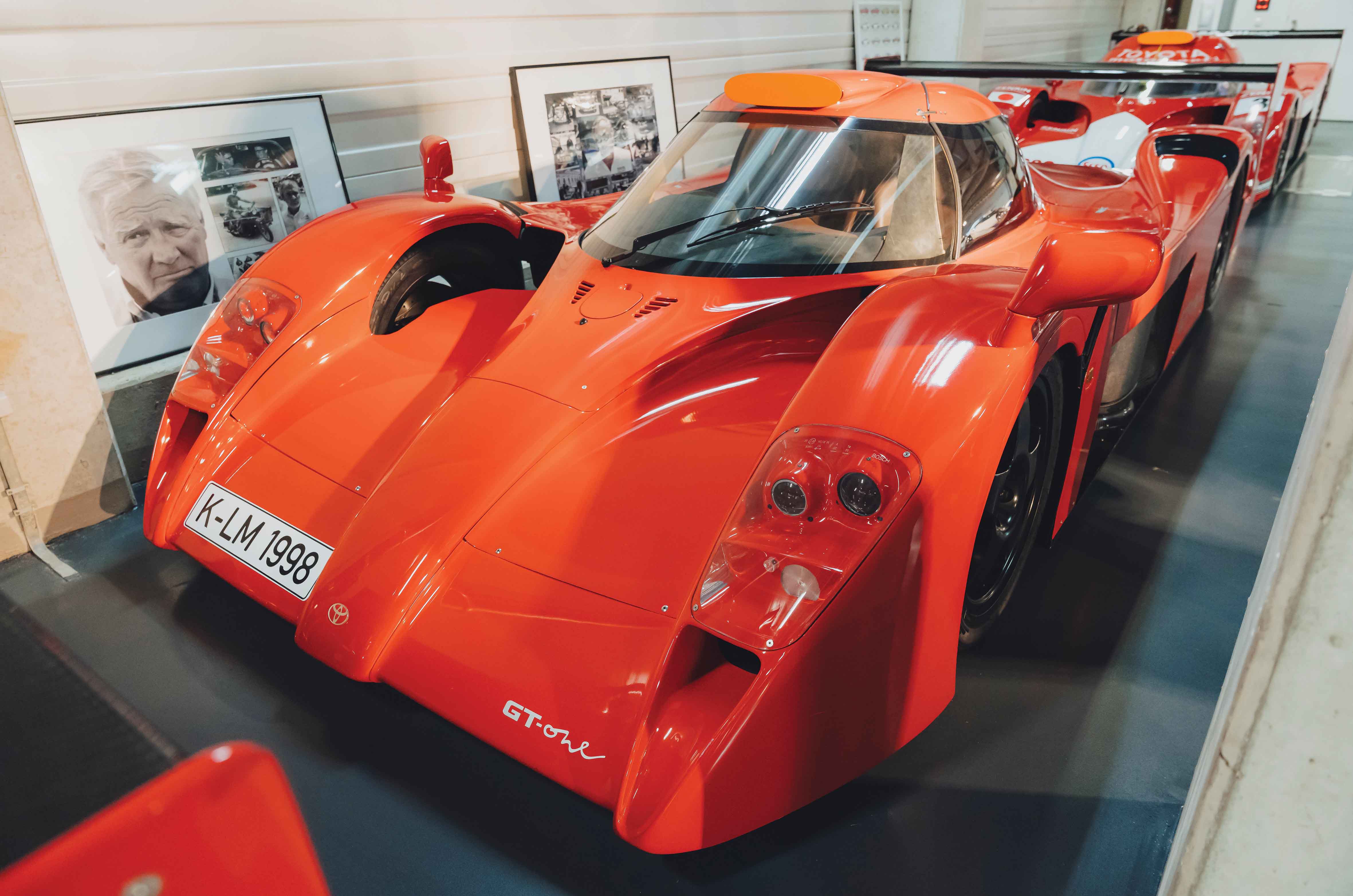
The only example built of the roadgoing GT-One is maintained at Toyota Gazoo Racing Europe’s HQ
The GT-One competed at Le Mans for just two years before the firm’s focus shifted to F1; through bad luck and unreliability it achieved only second place in 1999, despite looking like the fastest car.
In between the two Le Mans racers is the sole roadgoing homologation edition of the GT-One.
Probably the only ‘production’ Toyota of which just one example was ever made, the GT-One took its dashboard from a first-generation Ford Ka and remains road-legal to this day.
Like the racing variants, it sits in storage with a foam bung in its roof-mounted air intake – which, for all the budget of the world’s largest motor company, has a tennis ball on a string hanging from it to prevent the driver from racing off without first removing the dust protector.
The TS030 Hybrid (on left) reignited Toyota’s WEC campaign
Every year of Toyota’s much more successful second stab at endurance racing, from 2012 onwards, is represented here, too, including the 2018 TS050 with which Toyota finally won at Le Mans with Fernando Alonso, Sébastien Buemi and Kazuki Nakajima behind the wheel.
These two Colognian Toyota museums have opposing characters.
One entirely motorsport-themed and in which, when presenting a modern-day car with its engine cover removed, photography isn’t allowed.
That couldn’t be much more different from the open feel of the main collection over the road.
But be it a storied rally car or a scarce 1980 Cressida Coupé, both venues offer access to vehicles that are simply not to be found on public display anywhere else in Europe.
Images: Max Edleston
The knowledge
- Name Toyota Collection Cologne and Toyota Gazoo Racing Europe Museum
- Address Toyota-Allee 2, 50858 Köln, Germany
- How much? Free (GR tour €30)
- Opening hours 10am-2pm, first Saturday of the month
- Tel 0049 2234 1020
- Web toyota-collection.de
Enjoy more of the world’s best classic car content every month when you subscribe to C&SC – get our latest deals here
READ MORE
Toyota Supra vs Nissan Skyline GT-R vs Honda S2000: fast, furious and fantastic