Austin-Healey Sprite vs Toyota Sports 800 vs Fiat 850 Sport Spider: the little league

| 13 Aug 2025
Classic & Sports Car – Austin-Healey Sprite vs Toyota Sports 800 vs Fiat 850 Sport Spider: the little league
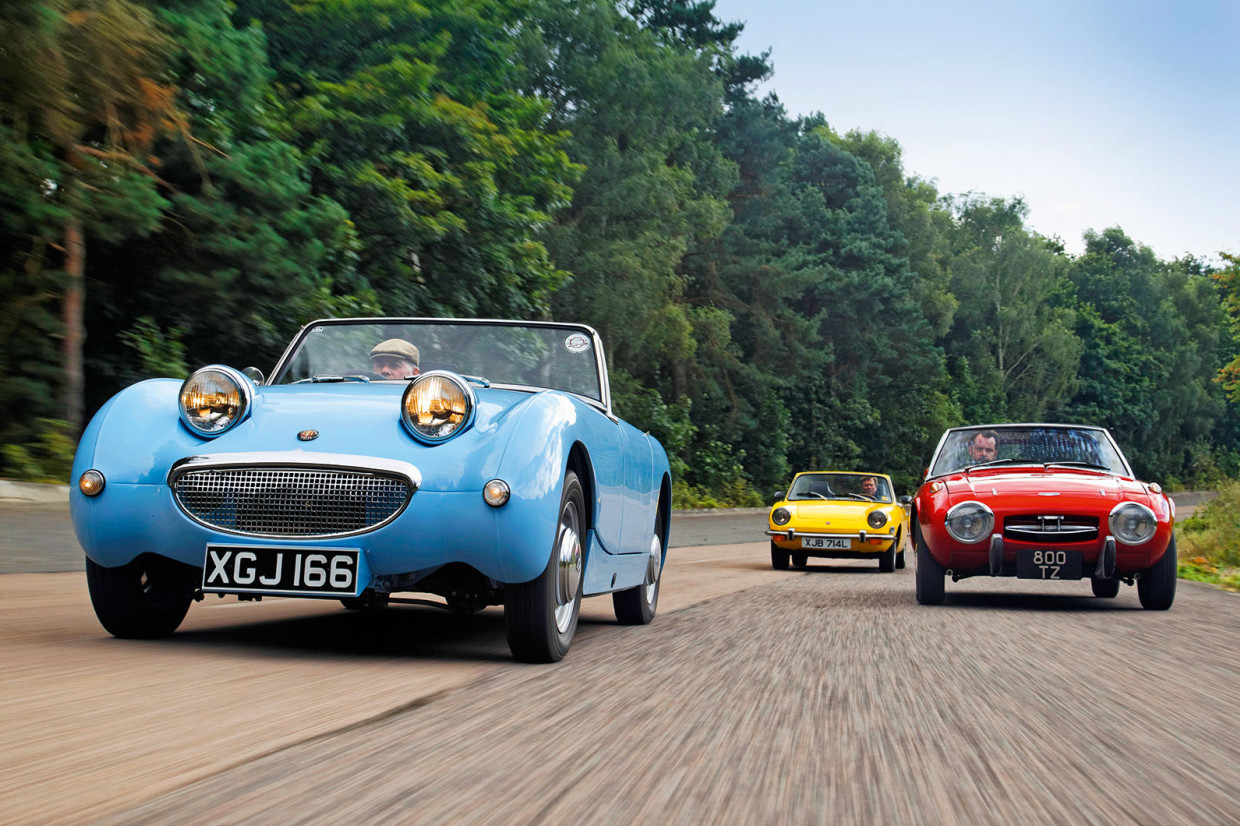
There’s a purity about small, no-frills sports cars that can sometimes be lost when weight and cubic capacity start to increase.

They may not win many traffic-light drag-races, but over twisting roads the best examples offer more excitement at 50mph than most other models will do at almost twice that speed.

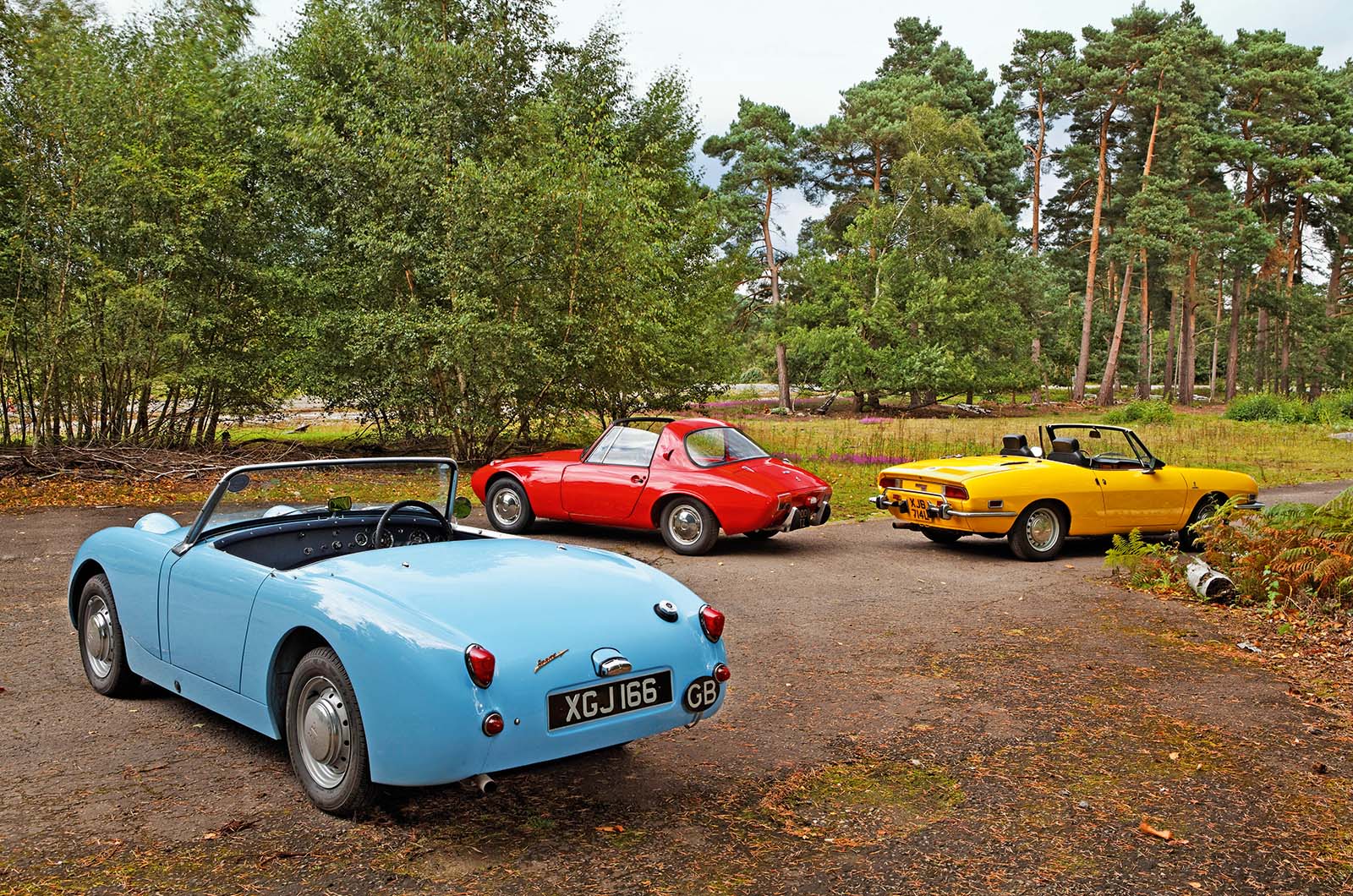
Two of the three cars here – the Austin-Healey Sprite and the Fiat 850 Sport Spider – make extensive use of components from far more humble stablemates; the other, Toyota’s Sports 800, takes a somewhat left-field approach.

All prove that less can often be more.

Classic & Sports Car – Austin-Healey Sprite vs Toyota Sports 800 vs Fiat 850 Sport Spider: the little league
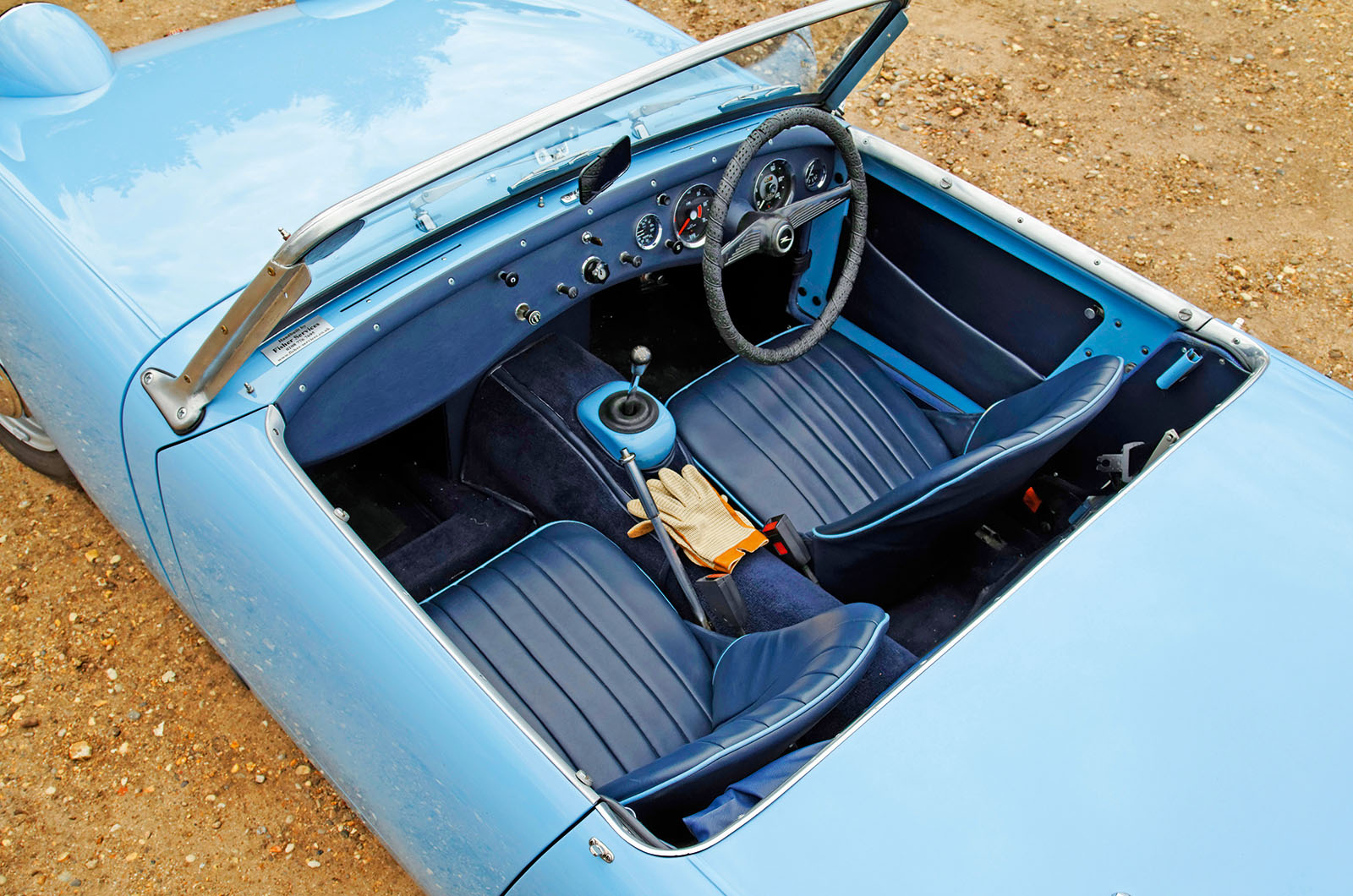
The Austin-Healey ‘Frogeye’ Sprite’s functional cabin lacks wind-up windows

The partnership between Austin and the Healey Motor Co began with the 100 in 1952, and, as the decade progressed, their overlords at BMC realised that there was an opportunity to create a small sports car to fill the gap in the firm’s line-up beneath the 100/6 and the MGA.

Donald Healey’s son Geoff took charge of the new model, which was to rely on the running gear from the Austin A35 to keep costs down.

The A35’s steering box was binned in favour of the Morris Minor’s rack-and-pinion system, and the 948cc A-series engine gained a pair of SU carburettors rather than the standard single Zenith.

Classic & Sports Car – Austin-Healey Sprite vs Toyota Sports 800 vs Fiat 850 Sport Spider: the little league
‘The Austin-Healey Sprite’s appeal is the same today as it has always been: back-to-basics fun’

There were other modifications, too: at the back, quarter-elliptic springs replaced the saloon’s semi-elliptics, and the layout for the rear brakes was altered so each had its own slave cylinder.

On the A35, one slave cylinder operated both via a mechanical linkage.

It was all well incorporated into Gerry Coker’s design, which itself is a masterpiece of simplicity: there is not a single extraneous detail to be seen.

There aren’t even any doorhandles – you have to reach inside for the release.

Classic & Sports Car – Austin-Healey Sprite vs Toyota Sports 800 vs Fiat 850 Sport Spider: the little league

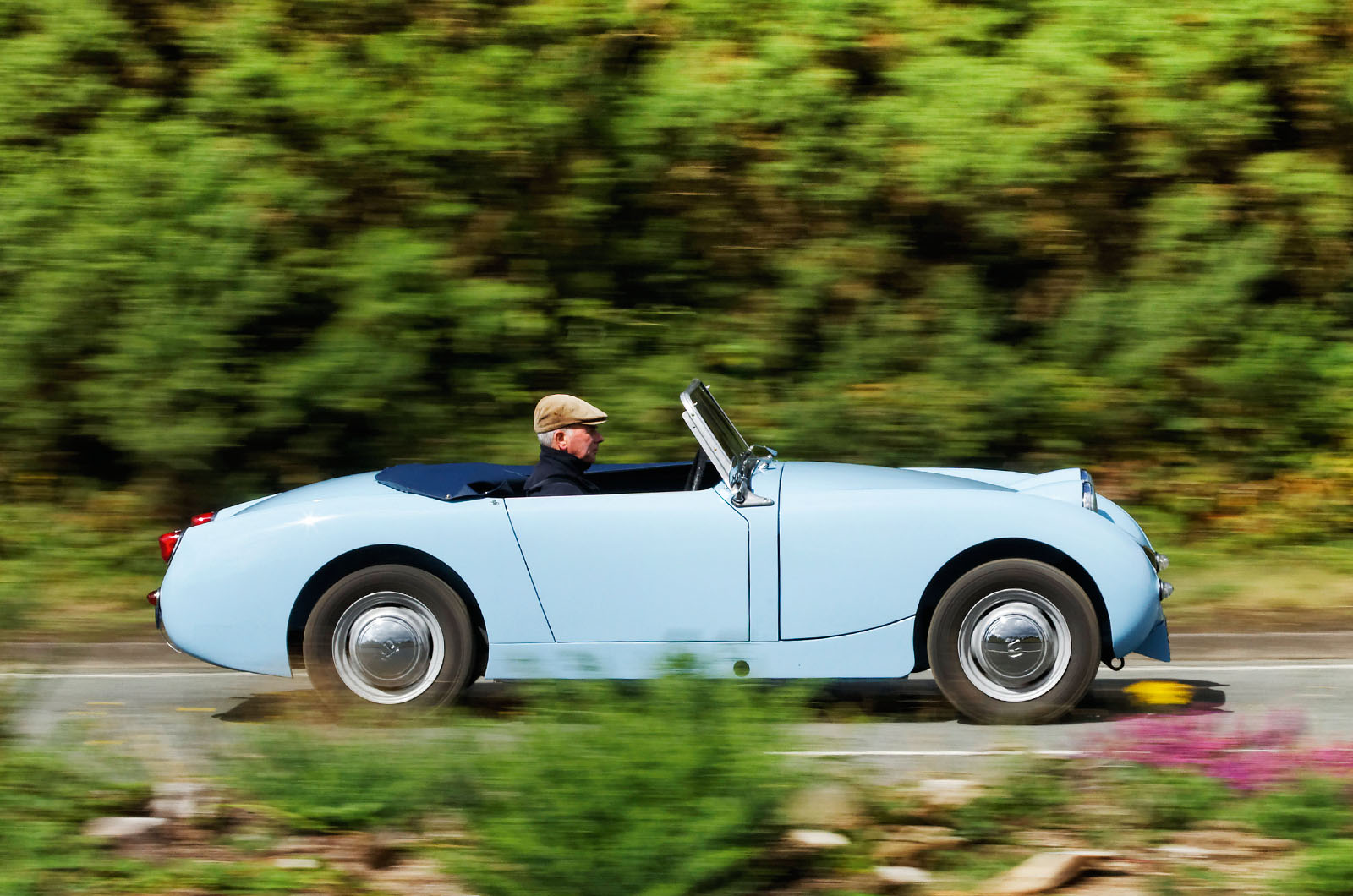
The Austin-Healey Sprite handles smartly and boasts the sharpest responses of our trio

If you want access to the boot, you have to dive in head-first behind the seats because there’s no bootlid.

It would have been even sleeker had cost concerns not ruled out the intended pop-up headlights.

Instead, they were fixed, a decision that gave the car its instantly recognisable face.

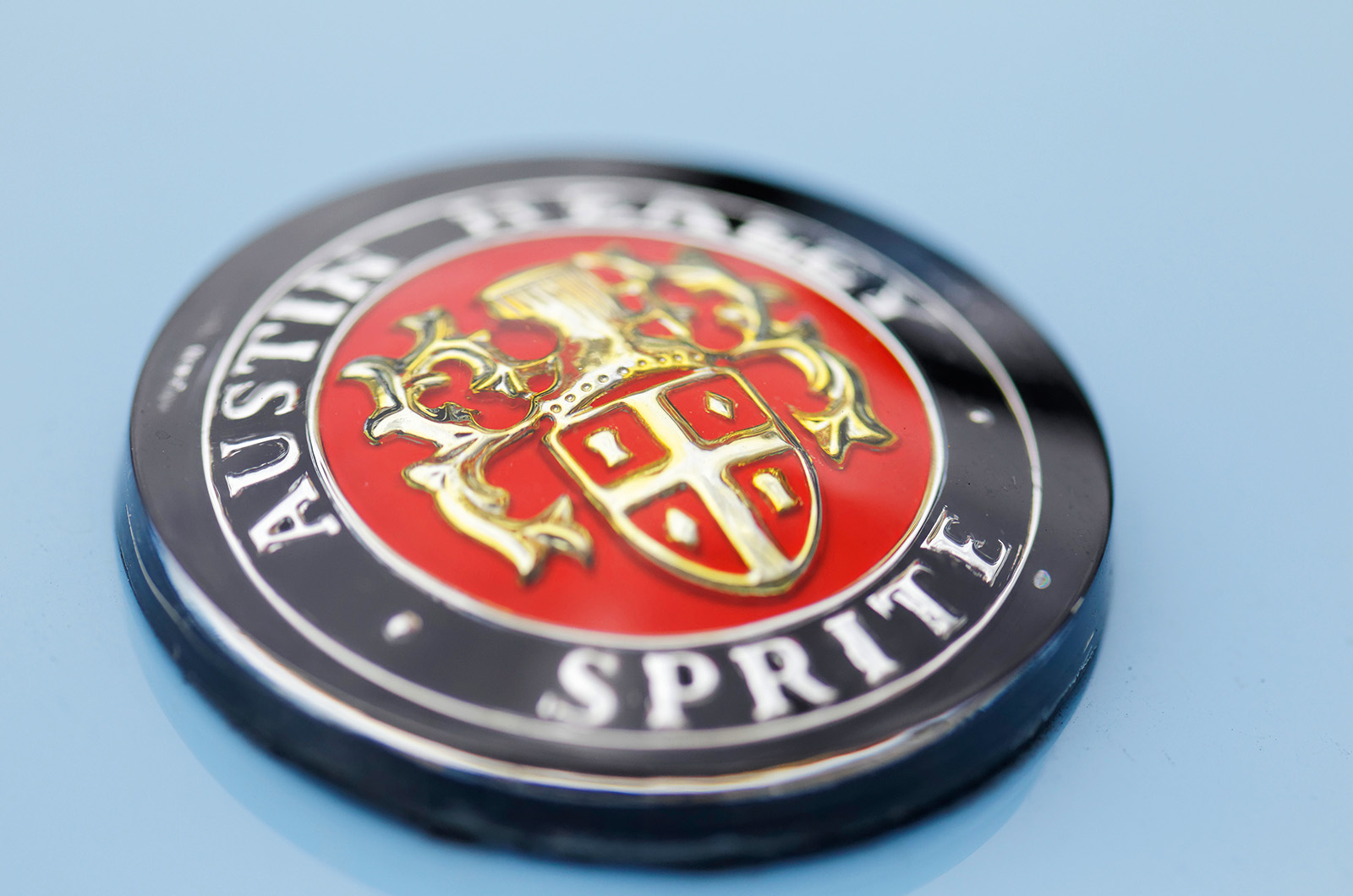
Having received permission from Daimler, which had acquired the rights to the name from Riley, Austin was able to call its new baby the Sprite, but everyone was soon referring to it as the ‘Frogeye’.

Classic & Sports Car – Austin-Healey Sprite vs Toyota Sports 800 vs Fiat 850 Sport Spider: the little league
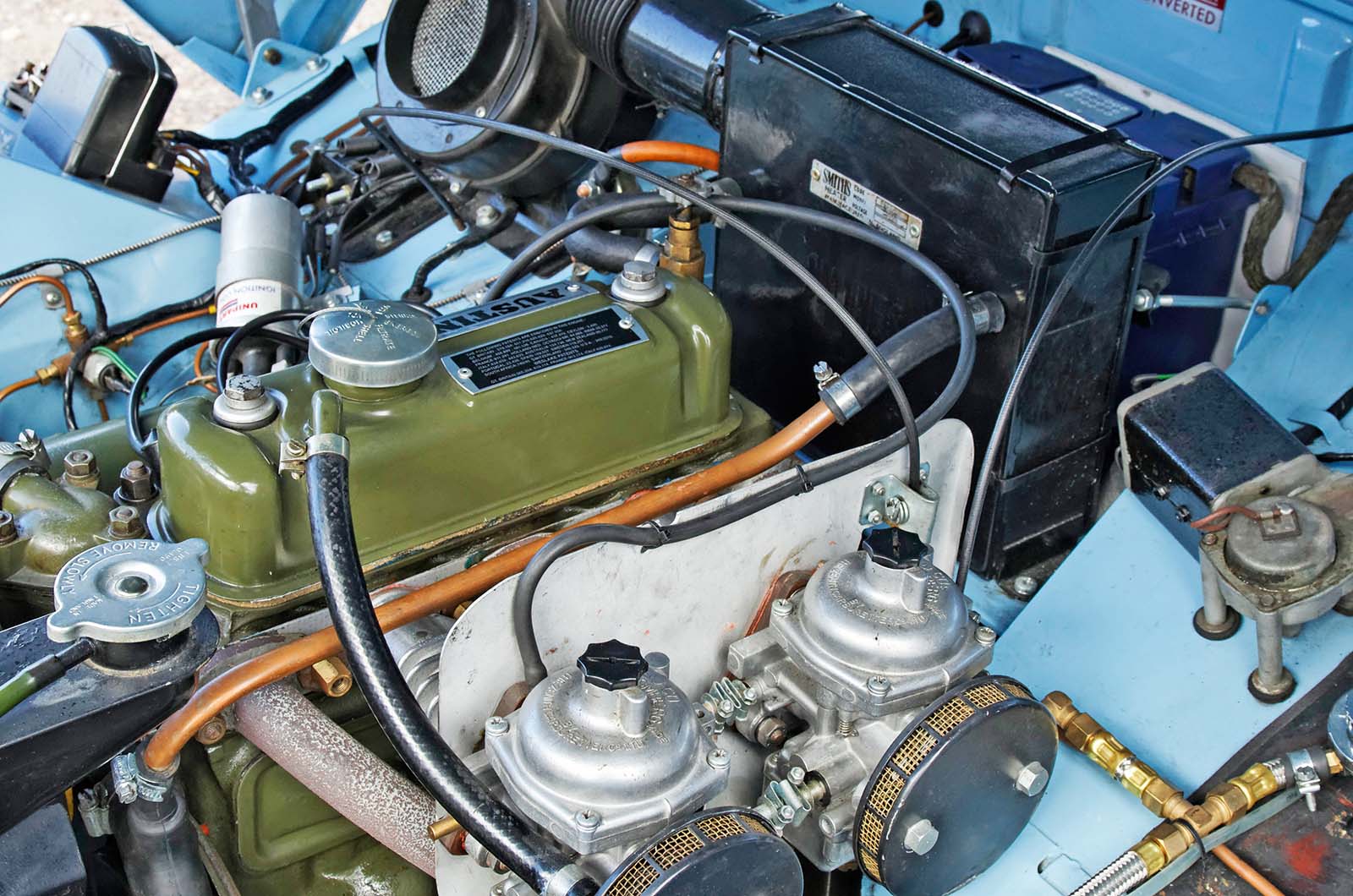
This Austin-Healey Sprite’s A-series engine features period Alexander upgrades

The diminutive sports car received a warm welcome when it was launched in Monte Carlo in May 1958, and not just because BMC had whisked everyone off to the Principality at the time of that year’s Grand Prix.

The key to the Sprite’s appeal is the same today as it has always been: back-to-basics fun and character by the bucket-load.

Inside, there is a big two-spoke steering wheel and a simple dashboard.

With no winding windows to incorporate (there are detachable sidescreens instead), the doors feature generous storage pockets.

Classic & Sports Car – Austin-Healey Sprite vs Toyota Sports 800 vs Fiat 850 Sport Spider: the little league
The Austin-Healey Sprite’s front end gave the car its enduring nickname: ‘Frogeye’

Although you sit close to the ground, the driving position is quite upright, which, combined with that sizeable wheel, leaves you in no doubt about this model’s 1950s origins.

There is absolutely nothing dated about the way a good Austin-Healey Sprite drives, however.

Turn the key, pull the starter and the A-series fires up with that signature fruity rasp.

Many tuning companies offered upgrades for BMC’s ubiquitous entry-level powerplant, and this example boasts a number of period modifications from Alexander, including cylinder-head improvements and Stromberg carbs in place of SUs.

It’s a willing little engine as standard, but this fine-tuning makes it an even more responsive and eager unit.

Classic & Sports Car – Austin-Healey Sprite vs Toyota Sports 800 vs Fiat 850 Sport Spider: the little league
‘Our’ Austin-Healey Sprite is on 12in wheels

The handling is superb. With barely any mass to speak of, the car responds instantly to the slightest input.

That’s accompanied by a little initial body roll, but it’s well controlled by the lever-arm dampers, and the pay-off is that the ride remains comfortable despite the Healey’s sporting nature.

While the Sprite is a stalwart of the classic scene, you are unlikely to find yourself parked next to a Toyota Sports 800 at your local car show.

It went on sale in April 1965, following the enthusiasm generated by the Publica Sports prototype that was shown at the 1962 Tokyo motor show.

Classic & Sports Car – Austin-Healey Sprite vs Toyota Sports 800 vs Fiat 850 Sport Spider: the little league
Just 3131 examples of the Toyota Sports 800 were built between 1965 and 1969

The majority were built for the Japanese market, with exports stretching only as far as US-governed Okinawa.

The production car was altogether more practical than that first incarnation – it had doors, for a start – but it still looked like something out of The Jetsons.

Designed by Shozo Sato, the Toyota Sports 800 is cute and well-proportioned.

Classic & Sports Car – Austin-Healey Sprite vs Toyota Sports 800 vs Fiat 850 Sport Spider: the little league

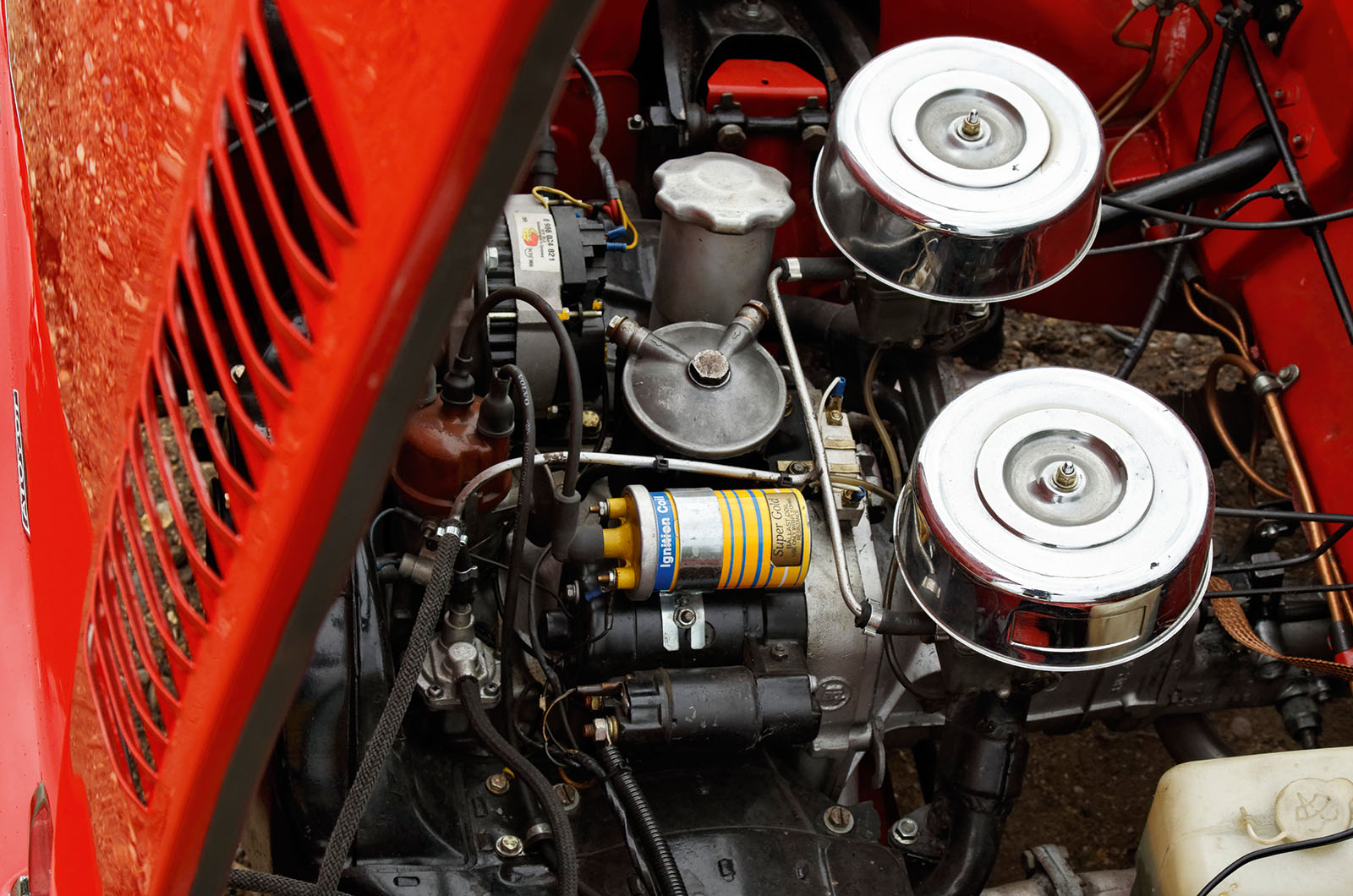
The Toyota Sports 800’s air-cooled flat-twin is more fun than it sounds

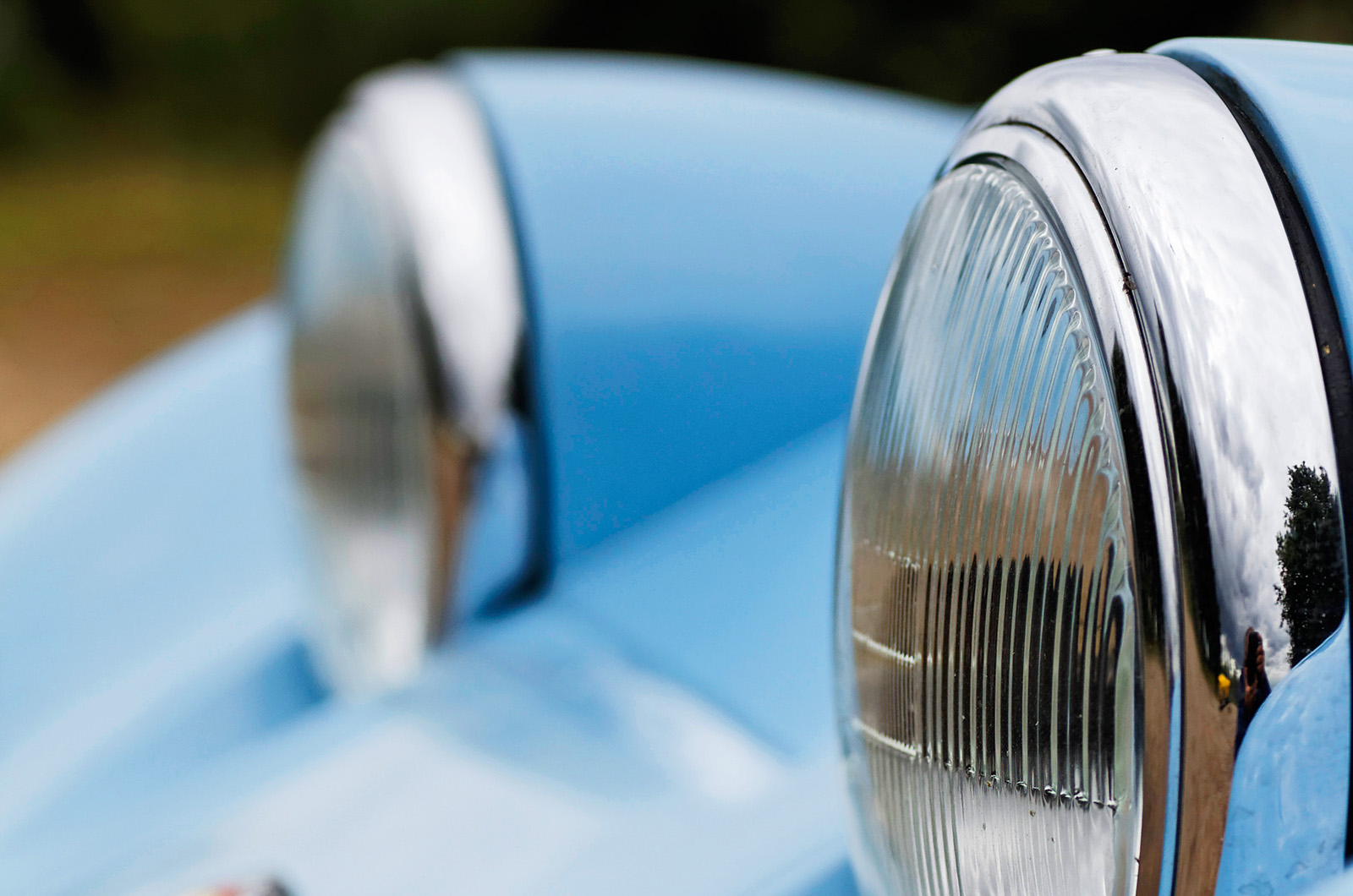
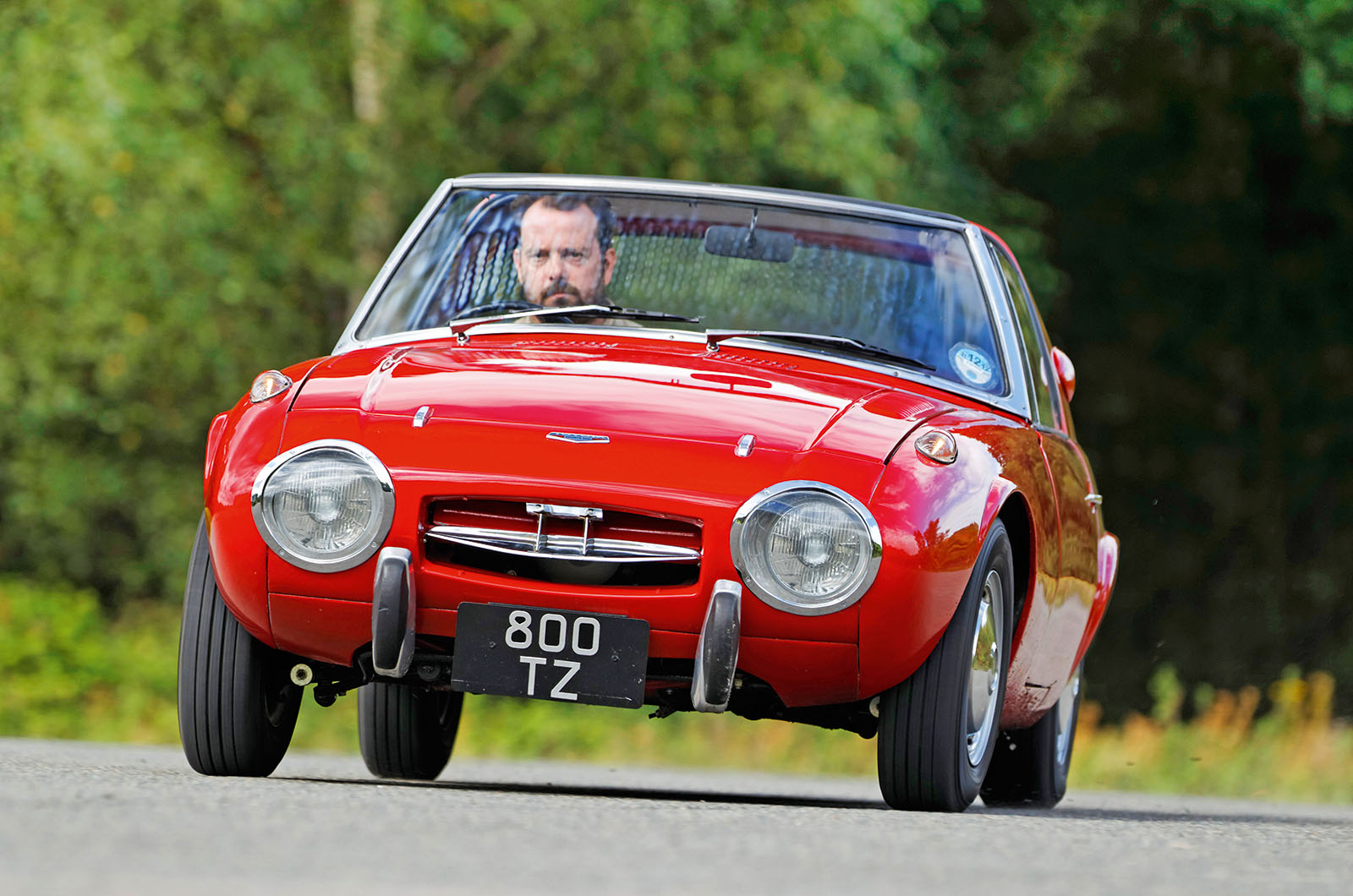
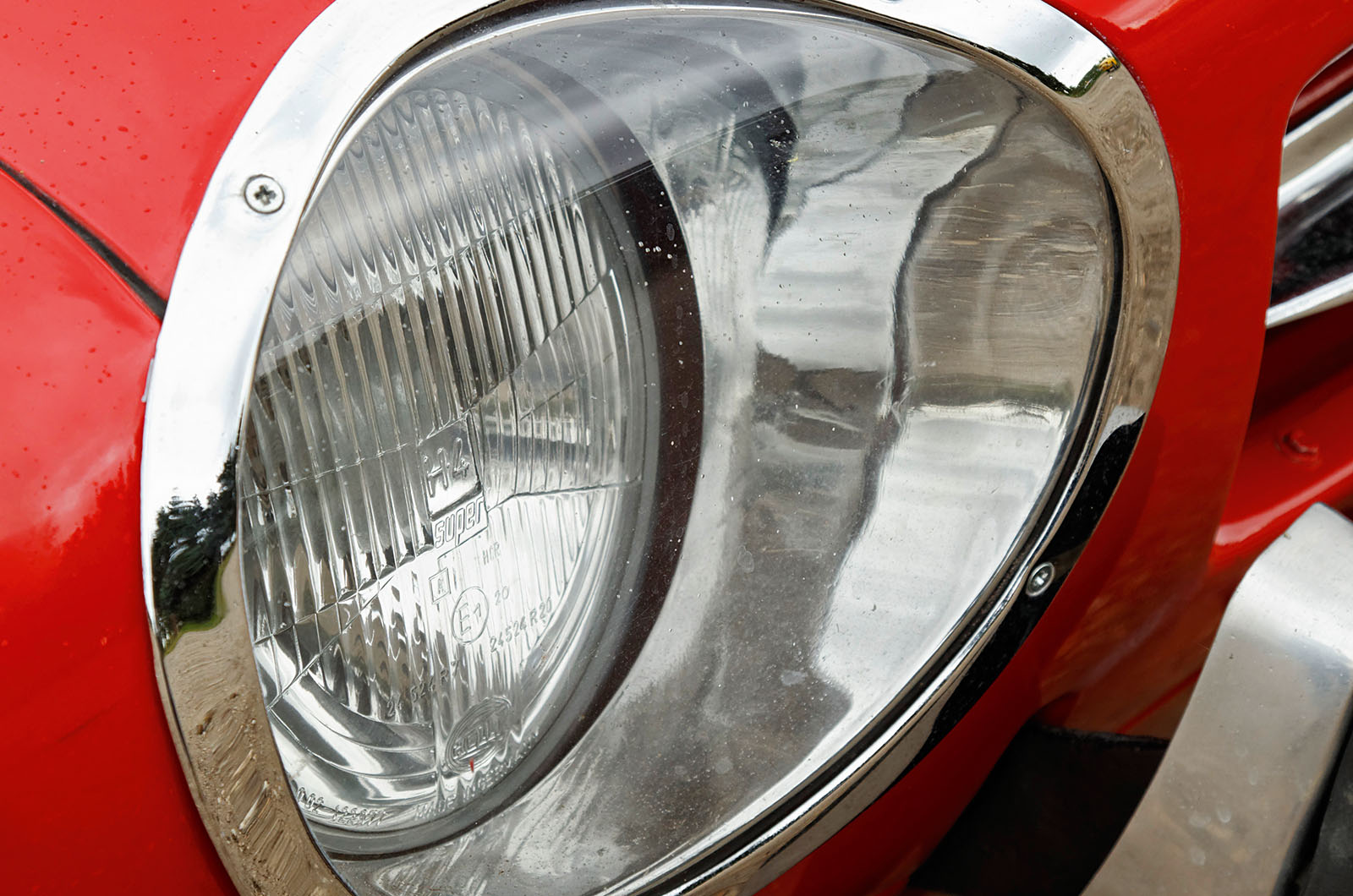
Those huge headlights link it to its slightly later big brother, the Toyota 2000GT, and give the front a sad, sorrowful look.

They are set close together, too, which means that the car appears narrower than it actually is; in reality, it’s a full 5in wider than the Sprite, aided by the discreetly flared arches.

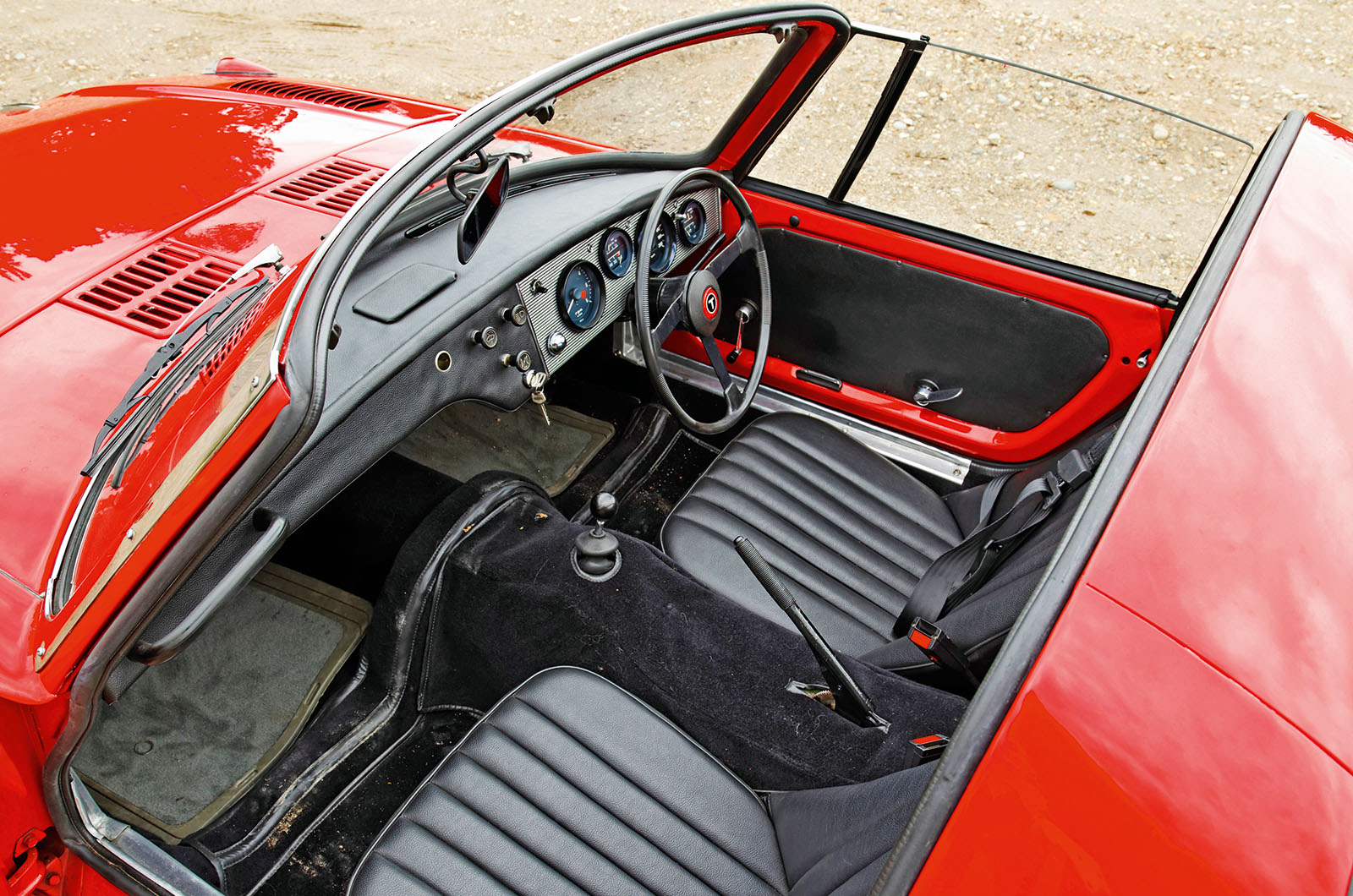
The doors are operated via a delicate-looking handle, and inside all is black apart from the silver dashboard insert.

Where the British challenger was austere in its approach, the Toyota is positively luxurious: there are two-speed wipers, electric washers, a cigarette lighter and a map light.

Classic & Sports Car – Austin-Healey Sprite vs Toyota Sports 800 vs Fiat 850 Sport Spider: the little league

The Toyota Sports 800’s large steering wheel contrasts with the tiny gearlever

When the roof panel is in place, ventilation comes from an adjustable grille and small flaps in the rear quarter panels.

A zip in the fabric cover behind the seats, meanwhile, provides access to the boot without having to get out of the car.

It is all very well thought-out, except there appears to be no place to store that roof: it’s marginally too big to go in what should be the obvious place behind the front seats, and it won’t quite slide into the boot.

Maybe we were missing something obvious when we tried.

Classic & Sports Car – Austin-Healey Sprite vs Toyota Sports 800 vs Fiat 850 Sport Spider: the little league

The Toyota Sports 800 grips well, with incredibly light steering that needs only gentle inputs

Despite the oddball styling, in some respects the Toyota Sports 800 is entirely conventional.

It boasts monocoque construction with independent front suspension and a live rear axle on semi-elliptic springs.

Under the bonnet, however, lies an unusual choice of engine for a sports car: an air-cooled 790cc flat-twin.

Running on two carburettors, it gives 49bhp – enough for this 585kg machine to be surprisingly nippy.

Classic & Sports Car – Austin-Healey Sprite vs Toyota Sports 800 vs Fiat 850 Sport Spider: the little league

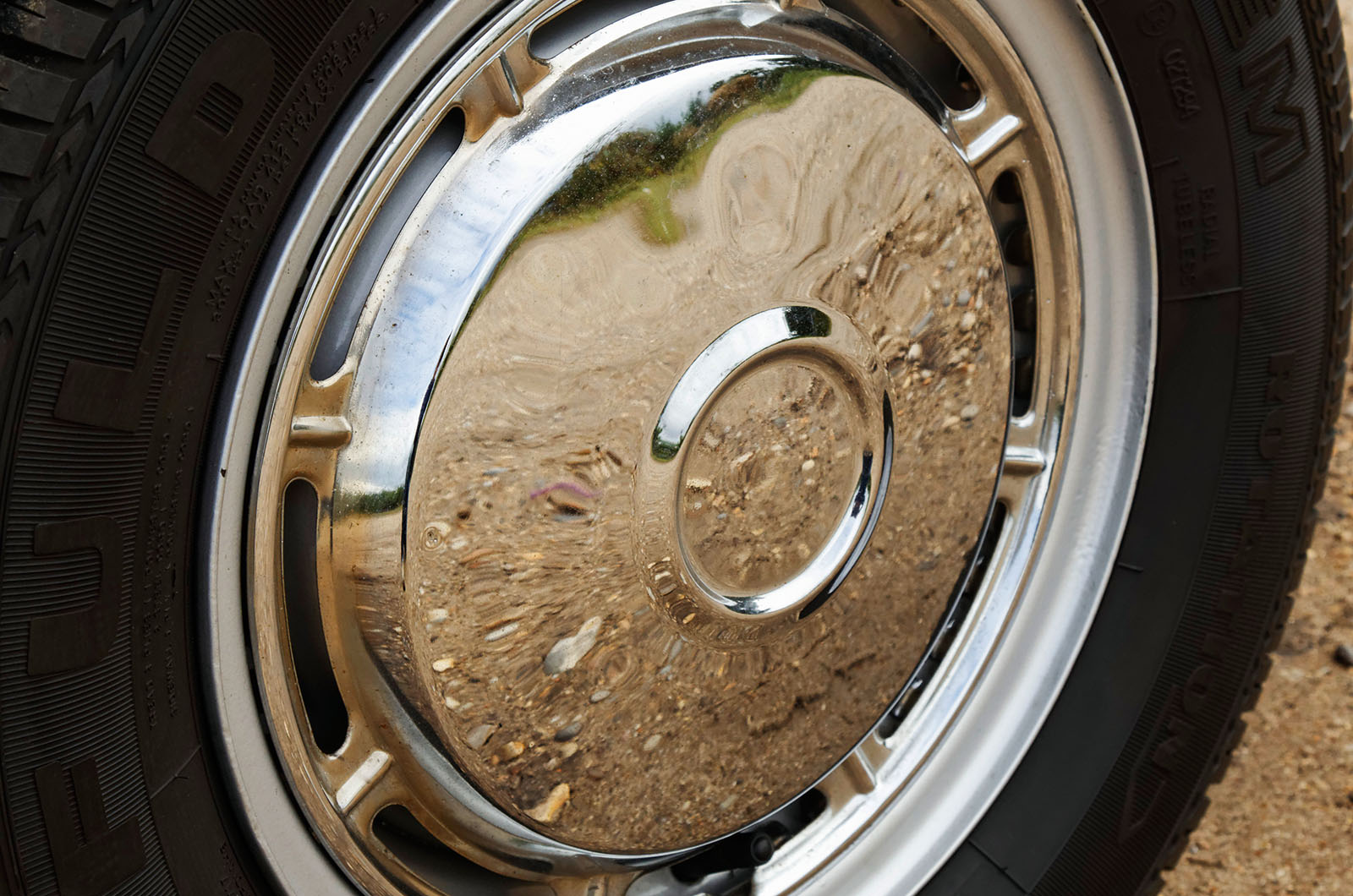
The Toyota Sports 800’s 13in wheels

I am not sure where Toyota found a long enough downslope to achieve its quoted maximum of 97mph, but the fact that it feels the slowest of our trio is more a reflection of the Frogeye’s period upgrades and the Fiat’s relative youth than it is of the Japanese car’s lack of pace.

The lumpy thrum from the engine isn’t the smoothest of noises, but this is an exceptionally flexible powerplant that is happy to pull from low speeds in the higher gears.

It revs keenly, too, which is just as well because you need to press it quite hard to make spirited progress.

Classic & Sports Car – Austin-Healey Sprite vs Toyota Sports 800 vs Fiat 850 Sport Spider: the little league

The Toyota Sports 800’s headlights provide a family link to the bigger 2000GT

The stubby gearlever offers a short throw between each ratio and the steering, while unbelievably light, feeds back just enough detail from the front tyres.

The Toyota Sports 800 rides comfortably and offers impressive grip, too.

Even in Japan the Toyota was relatively rare, but the Fiat 850 was made in huge numbers.

More than two million were sold following its introduction in May 1964, but rampant corrosion has ensured a woeful survival rate.

Classic & Sports Car – Austin-Healey Sprite vs Toyota Sports 800 vs Fiat 850 Sport Spider: the little league

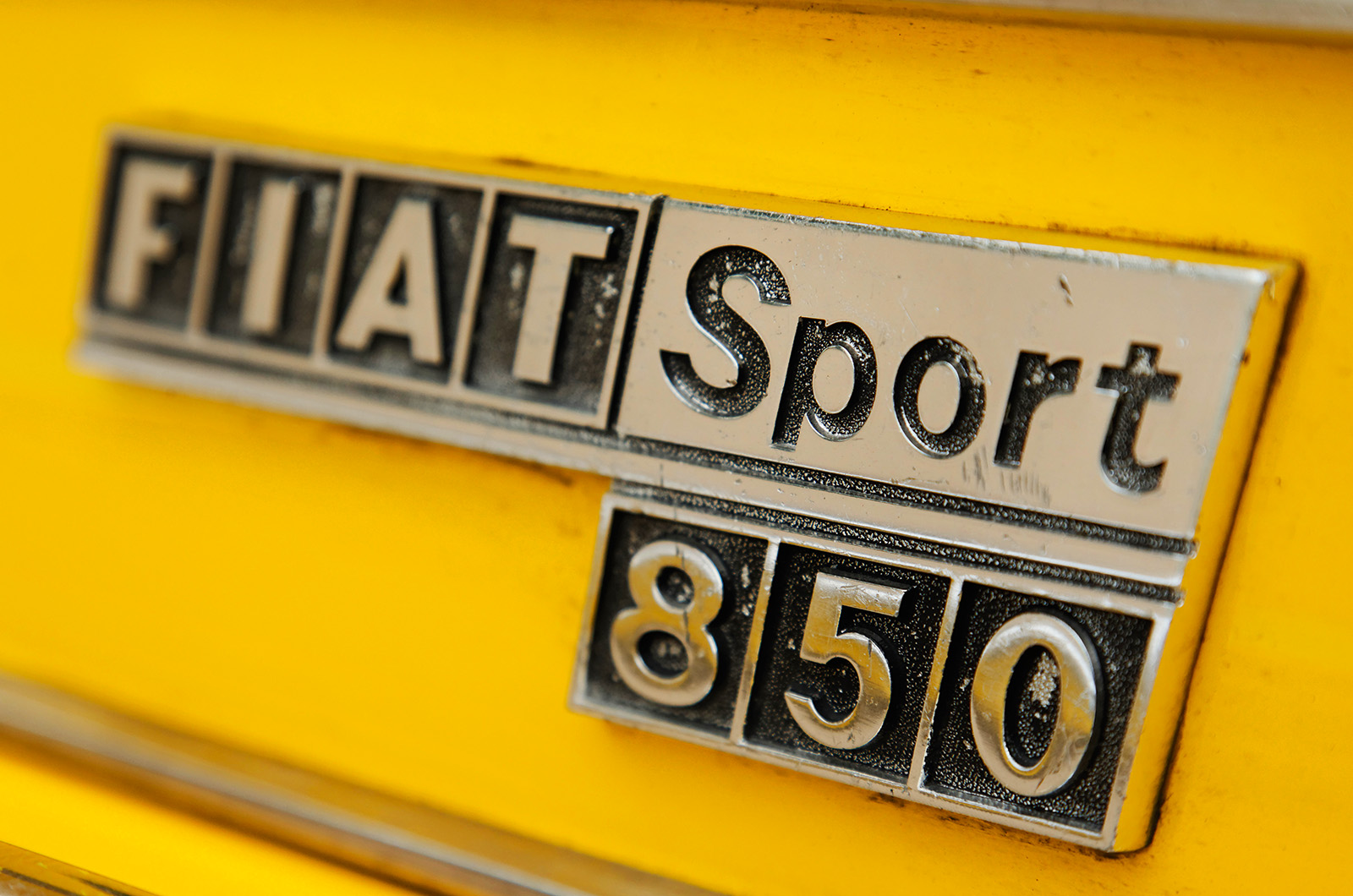
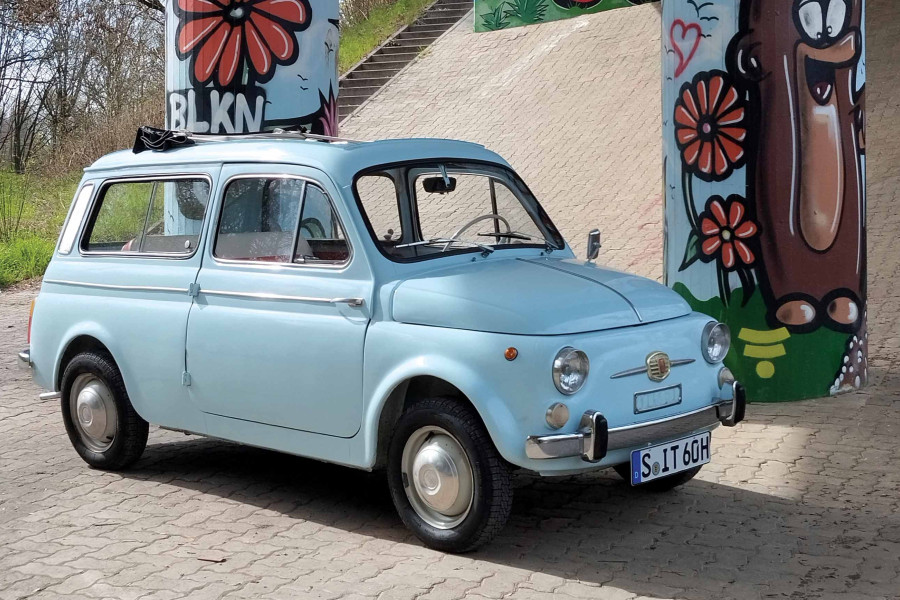
The Fiat 850 Sport Spider feels like the most grown-up car here

Developed from the Fiat 600, the 850 was initially offered as a two-door, four-seater Berlina.

Despite its monocoque construction, all-independent suspension and overhead-valve, rear-mounted engine, it was basic motoring for the masses that came with rubber mats, plain vinyl seats and no headlining.

From those humble 34bhp beginnings, however, Fiat expanded the 850 range in all sorts of different directions, including the Familiare station wagon, the Coupé and the Bertone-built Spider.

Styled by Marcello Gandini while he was at the Torinese design house, it was first shown at the 1965 Geneva Salon and came with a high-compression version of the 843cc engine, complete with twin-choke Weber.

Classic & Sports Car – Austin-Healey Sprite vs Toyota Sports 800 vs Fiat 850 Sport Spider: the little league

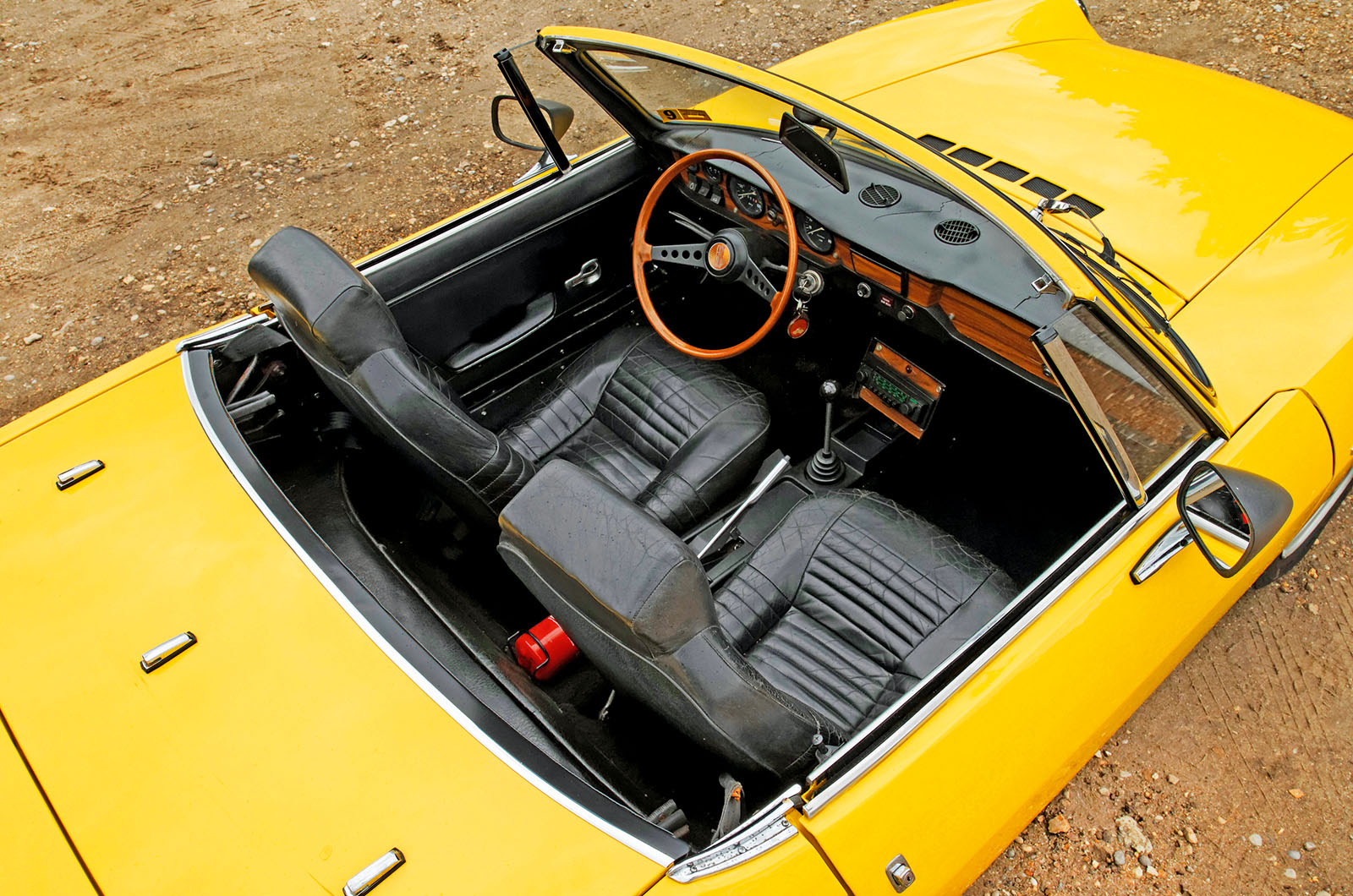
The Fiat 850 Sport Spider has the most plush interior and comfortable seats

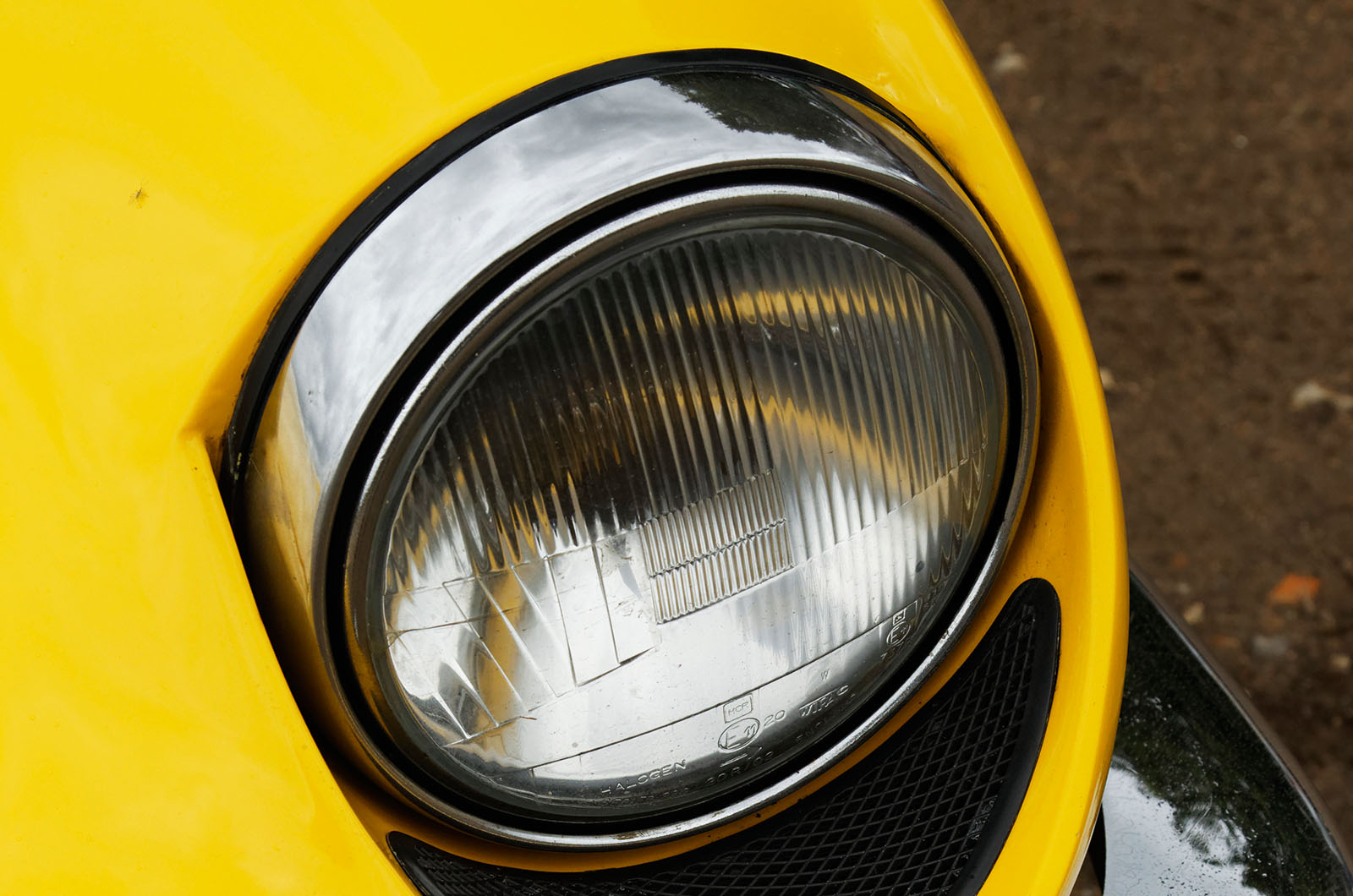
In 1968, the Spider was facelifted and renamed the Sport Spider, gaining vertical headlights in place of the earlier model’s sleek enclosed items.

We can thank American safety legislation for that.

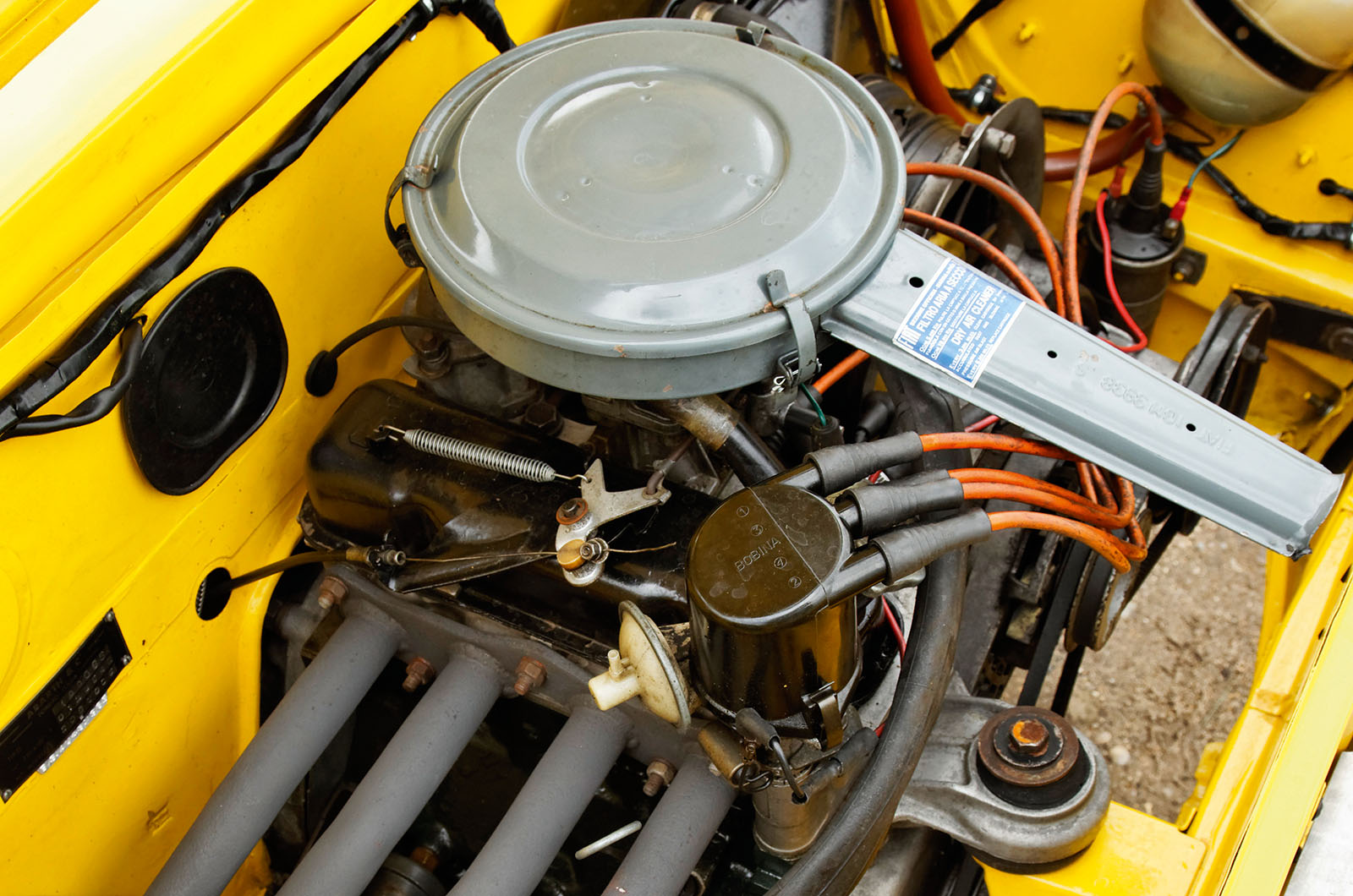
The updated model did, however, receive a larger 903cc engine that increased power to 52bhp.

And what a cracking little unit it is, spinning freely throughout its expansive rev range and providing impressive acceleration.

Classic & Sports Car – Austin-Healey Sprite vs Toyota Sports 800 vs Fiat 850 Sport Spider: the little league

The Fiat 850 Sport Spider has a sweet balance

Like many rear-mounted engines, it’s also easily removed should you feel the need.

The rear panel can be unbolted, enabling you to slide the whole thing straight out.

In comparison with the other two, there is a slightly spongy feel to the Fiat’s controls, especially the gearchange.

The steering, too, lacks the direct nature of the Sprite’s rack, although it gives a lot more feel than the Toyota.

Classic & Sports Car – Austin-Healey Sprite vs Toyota Sports 800 vs Fiat 850 Sport Spider: the little league

This Fiat 850 Sport Spider has upright headlights in place of the earlier car’s flush items

The pedals are severely offset to the right (all Spiders were left-hand drive) but it’s otherwise very comfortable.

The number of gauges and switches in this late example – plus the fake-wood dash insert – stands in stark contrast to the spartan nature of the early Berlina.

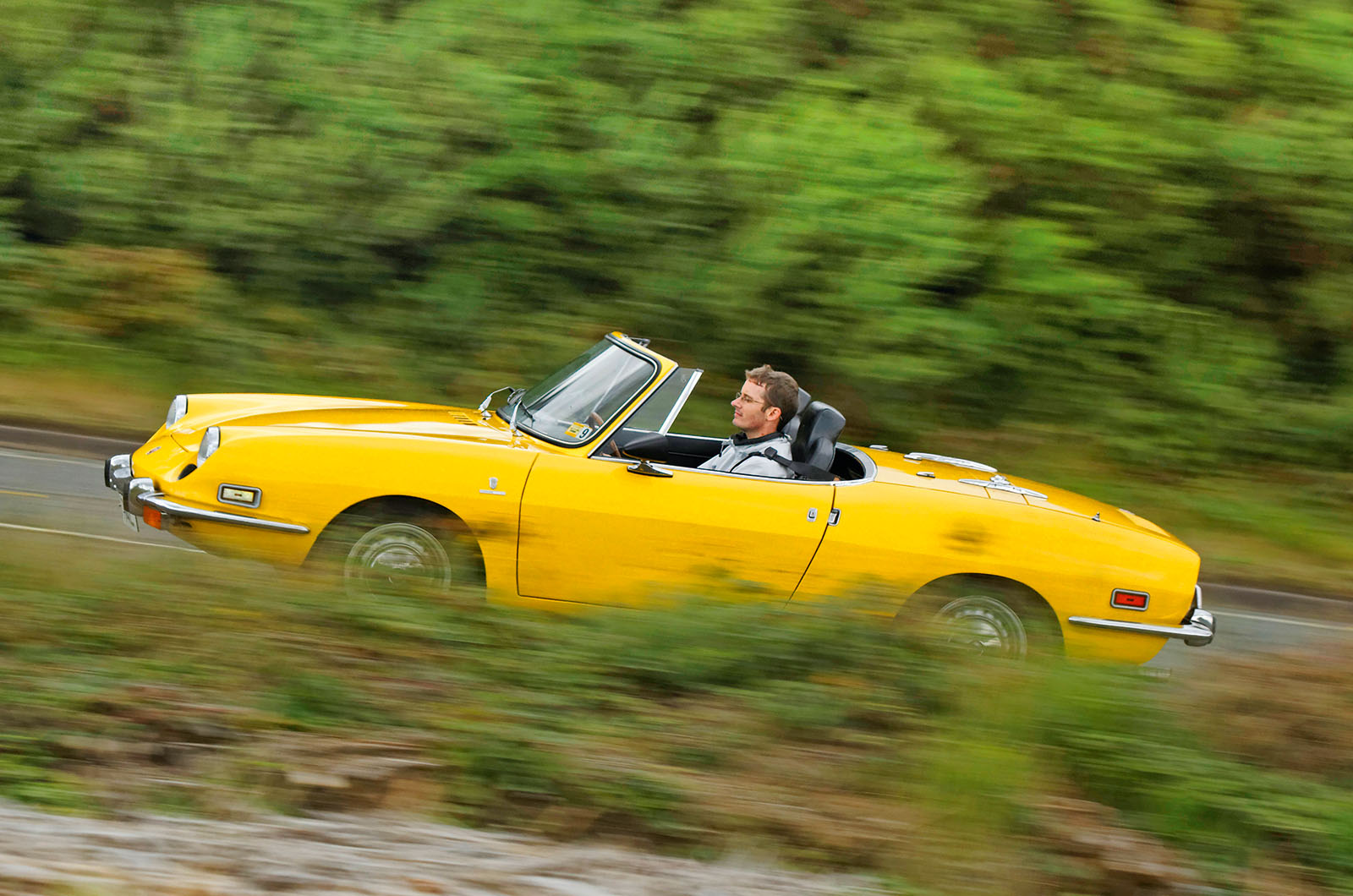
The Sport Spider is still a very good-looking car, despite the changes made to the front end.

It is noticeably bigger than the Sprite and the Toyota, its length accentuated by the sweeping deck that feeds down to a shallow rear end.

That deck covers the hood, the stowing of which is not the work of a moment.

Classic & Sports Car – Austin-Healey Sprite vs Toyota Sports 800 vs Fiat 850 Sport Spider: the little league

The Fiat 850’s engine was up to 903cc and 52bhp for the Sport Spider

The Toyota’s roof panel can be removed in a few seconds via six J-shaped bolts to leave a Surrey-style arrangement that will be familiar to Triumph TR4/5 owners.

The Sprite’s hood is folded back, and the frame is then lifted out and stowed behind the seats.

On the Fiat, though, you have to fold the hood together from the front and the back, before releasing the deck panel and tucking the soft-top away underneath.

The resultant clean lines of the Spider are well worth the effort, though.

Classic & Sports Car – Austin-Healey Sprite vs Toyota Sports 800 vs Fiat 850 Sport Spider: the little league

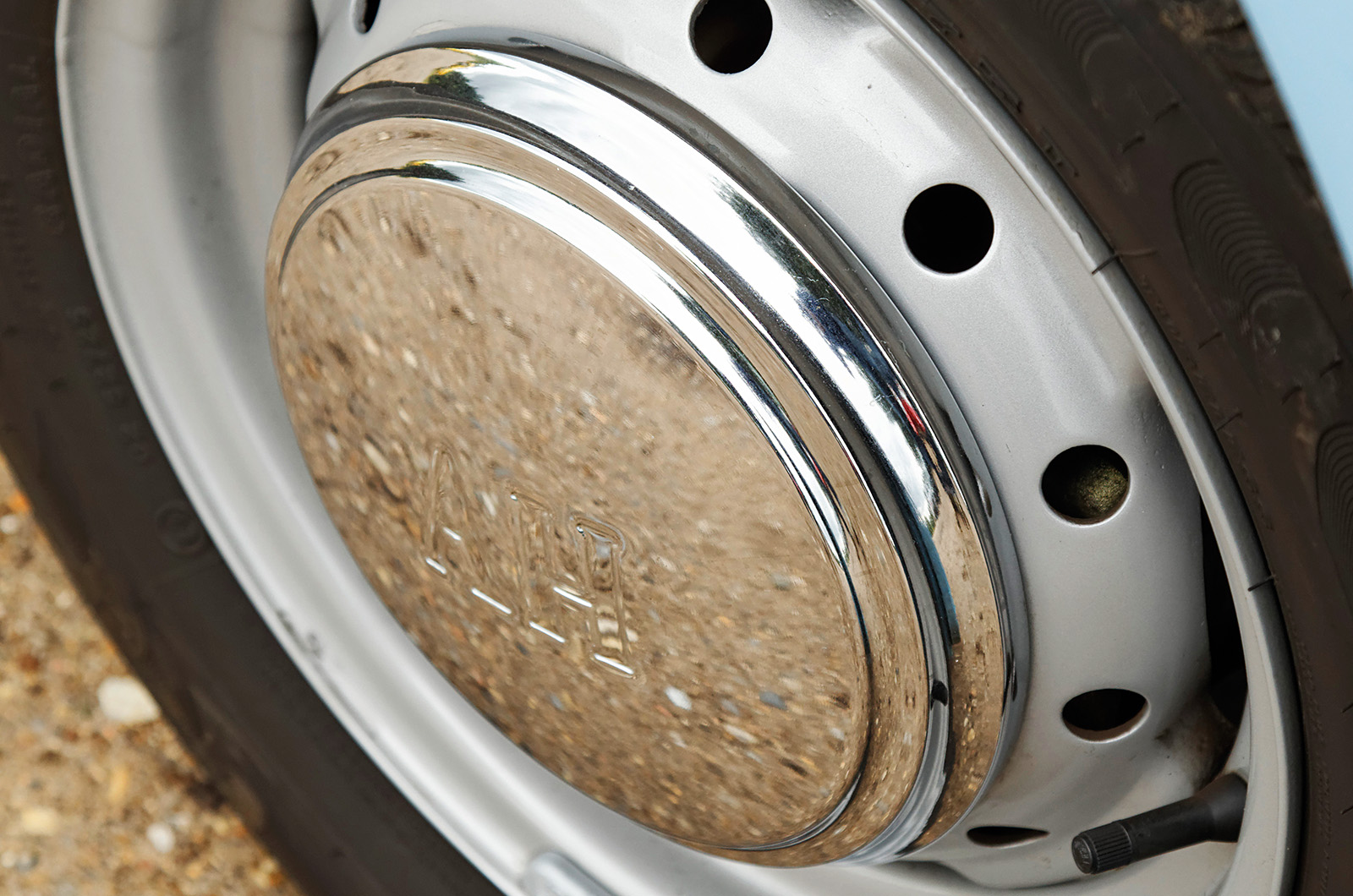
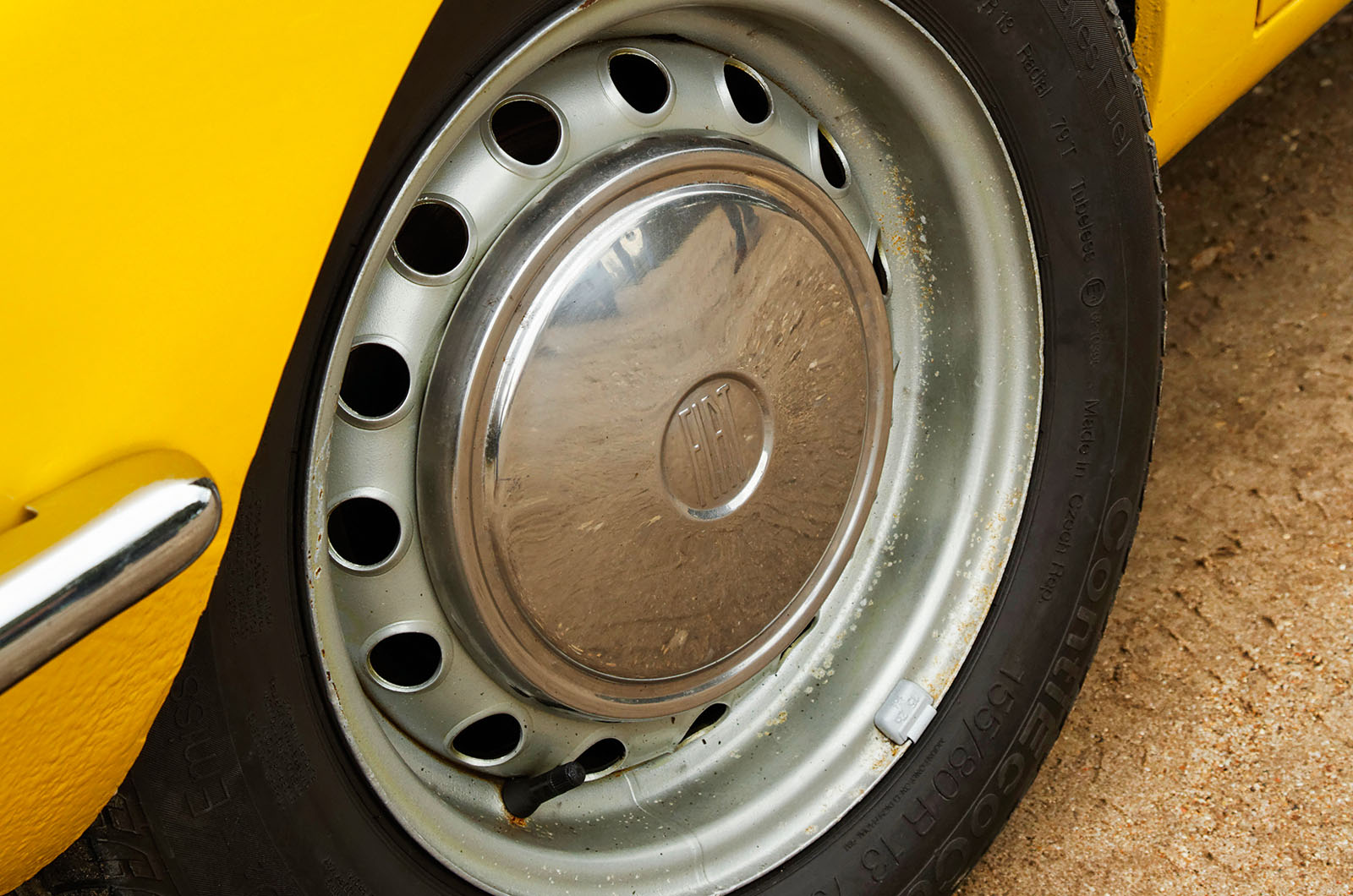
The Fiat 850 Sport Spider’s simple steel wheels

The Fiat 850 Sport Spider feels the most grown-up of our trio, making it the one you’d use if you needed to cover large distances.

It’s stylish and that engine is a treat.

Don’t be fooled by the Toyota’s somewhat comical exterior: it is a very capable little sports car.

The flat-twin engine may seem a bit eccentric at first, but it is an essential part of the Sports 800’s character.

And the Austin-Healey Sprite? Even more than 60 years after its launch, it still perfectly encapsulates everything that you’d ever want from a no-frills, small-engined sports car.

Images: David Shepherd

Thanks to: Jane Weitzmann; Fiat Motor Club GB; Midget & Sprite Club; Tim Milnes; Alan Anstead; John Hoffer; Spike Hughes; Ron Edwards

This was first in our November 2012 magazine; all information was correct at the date of original publication


Factfiles

Classic & Sports Car – Austin-Healey Sprite vs Toyota Sports 800 vs Fiat 850 Sport Spider: the little league

Austin-Healey Sprite

  • Sold/no built 1958-’61/48,987
  • Construction steel monocoque
  • Engine all-iron, ohv 948cc ‘four’, twin SU carburettors
  • Max power 42.5bhp @ 5200rpm
  • Max torque 52lb ft @ 3300rpm
  • Transmission four-speed manual, no synchromesh on first, RWD
  • Suspension: front independent, by lower wishbones, upper links, coil springs rear live axle, quarter-elliptic leaf springs; lever-arm dampers
  • Steering rack and pinion
  • Brakes drums
  • Length 11ft 5in (3480mm)
  • Width 4ft 5in (1346mm)
  • Height 3ft 11in (1200mm)
  • Wheelbase 6ft 8in (2032mm)
  • Weight 1464lb (664kg)
  • Mpg 43
  • 0-60mph 20.5 secs
  • Top speed 83mph
  • Price new £678


Toyota Sports 800

  • Sold/no built 1965-’69/3131
  • Construction steel monocoque, aluminium bonnet, bootlid and roof panel
  • Engine all-alloy, air-cooled 790cc horizontally opposed twin, two Aisan carburettors
  • Max power 49bhp @ 5400rpm
  • Max torque 53lb ft @ 3800rpm
  • Transmission all-synchromesh four-speed manual, RWD
  • Suspension: front independent, by double wishbones, torsion bars, anti-roll bar rear live axle, semi-elliptic leaf springs
  • Steering worm and roller
  • Brakes drums
  • Length 11ft 9in (3581mm)
  • Width 4ft 10in (1473mm)
  • Height 3ft 10in (1168mm)
  • Wheelbase 6ft 6¾in (2000mm)
  • Weight 1289lb (585kg)
  • Mpg n/a
  • 0-60mph n/a
  • Top speed 97mph
  • Price new ¥595,000


Fiat 850 Sport Spider

  • Sold/no built 1965-’73/140,000 (all Spiders)
  • Construction steel monocoque
  • Engine iron-block, alloy-head, ohc 903cc ‘four’, twin-choke Weber carburettor
  • Max power 52bhp @ 6200rpm
  • Max torque 48lb ft @ 4000rpm
  • Transmission all-synchromesh four-speed manual, RWD
  • Suspension independent, at front by upper wishbones, transverse leaf spring rear semi-trailing arms, coil springs; telescopic dampers, anti-roll bar f/r
  • Steering worm and sector
  • Brakes discs front, drums rear
  • Length 12ft 6½in (3824mm)
  • Width 4ft 11in (1498mm)
  • Height 4ft (1220mm)
  • Wheelbase 6ft 7¾in (2027mm)
  • Weight 1554lb (705kg)
  • Mpg 38.5
  • 0-60mph 15.6 secs
  • Top speed 93mph
  • Price new Lire1,080,000

Enjoy more of the world’s best classic car content every month when you subscribe to C&SC – get our latest deals here


READ MORE

Austin-Healey Sprite and MG Midget: affordable fun

Toyota 2000GT: challenging the status quo

Fiat 850 family: the people’s choice