Coombs’ hot Jaguars: rare E-type, Mk1 and Mk2 reveal their secrets

| 9 Dec 2025
Classic & Sports Car – Jaguar E-type, Mk1 and Mk2: John Coombs’ modified Big Cats
Coombs & Son (Guildford) Ltd was among the very first Jaguar dealers, taking on the franchise in 1936 alongside a well-established Rover distributorship.

The business had its origins in 19th-century wheelwrighting, but upon taking over old man Coombs’ garage (founded in the 1920s) in 1947, the fastidious and demanding John ‘Noddy’ Coombs went on to build a motor-trading empire and a motorsport legend in the fertile gin-and-Jaguar lands of 1960s stockbroker-belt Surrey.

That the name still sets hearts aflutter today, decades after it disappeared as a commercial entity, is all down to one near-mythical breed of car: the Coombs-modified Jaguar saloons.

Classic & Sports Car – Jaguar E-type, Mk1 and Mk2: John Coombs’ modified Big Cats
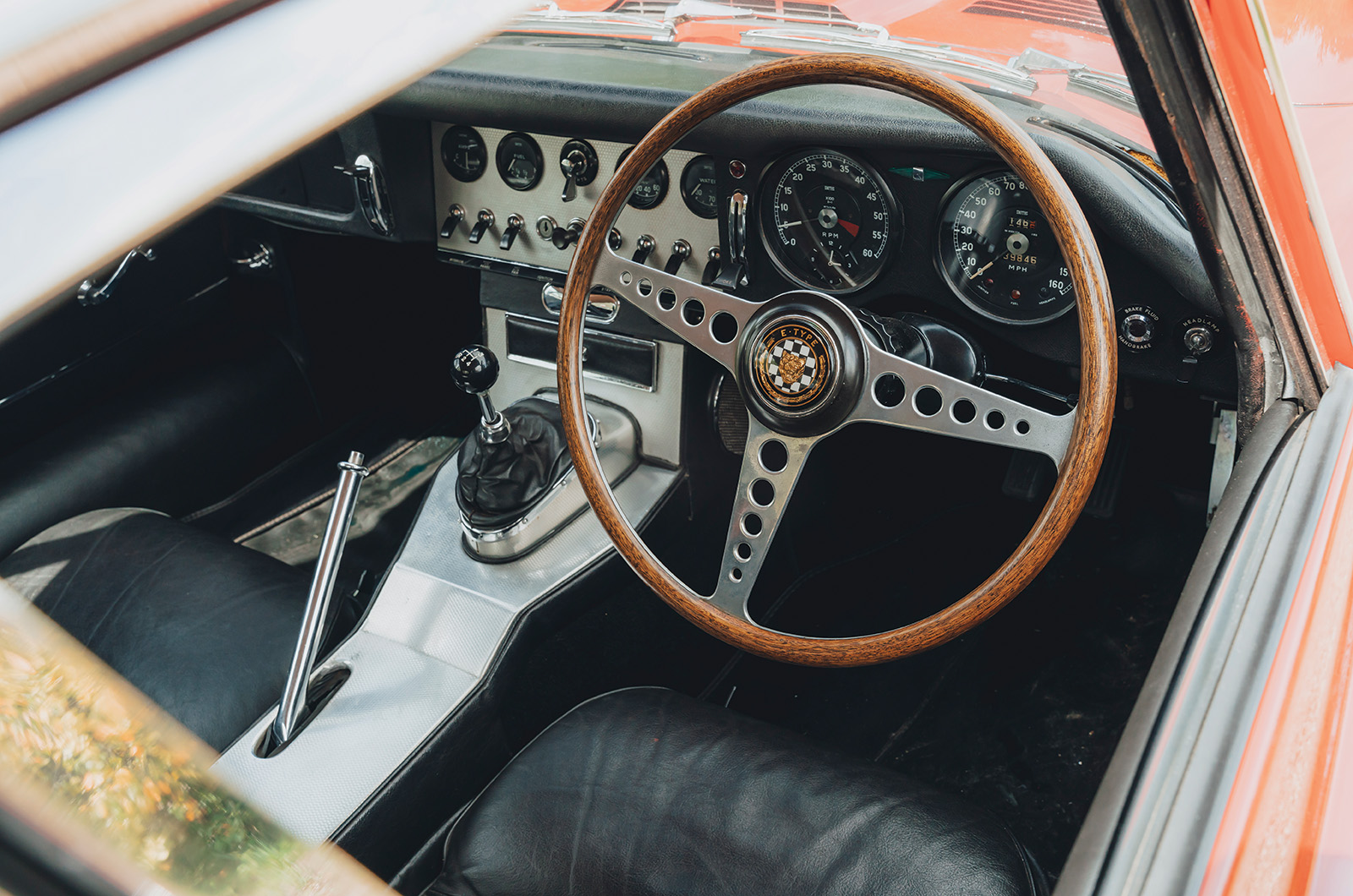
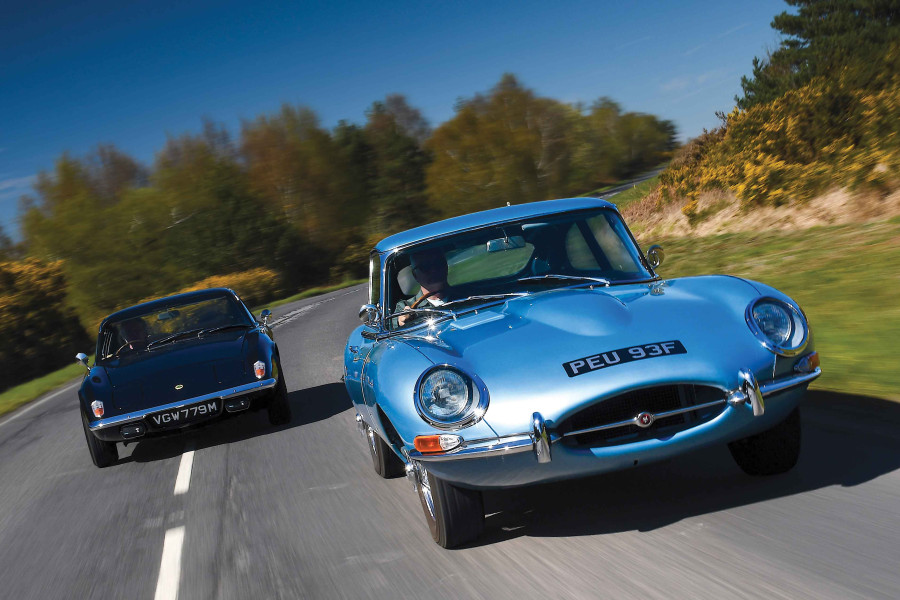
Coombs removed the Jaguar E-type’s intake badge bar to aid airflow to the tuned ‘six’

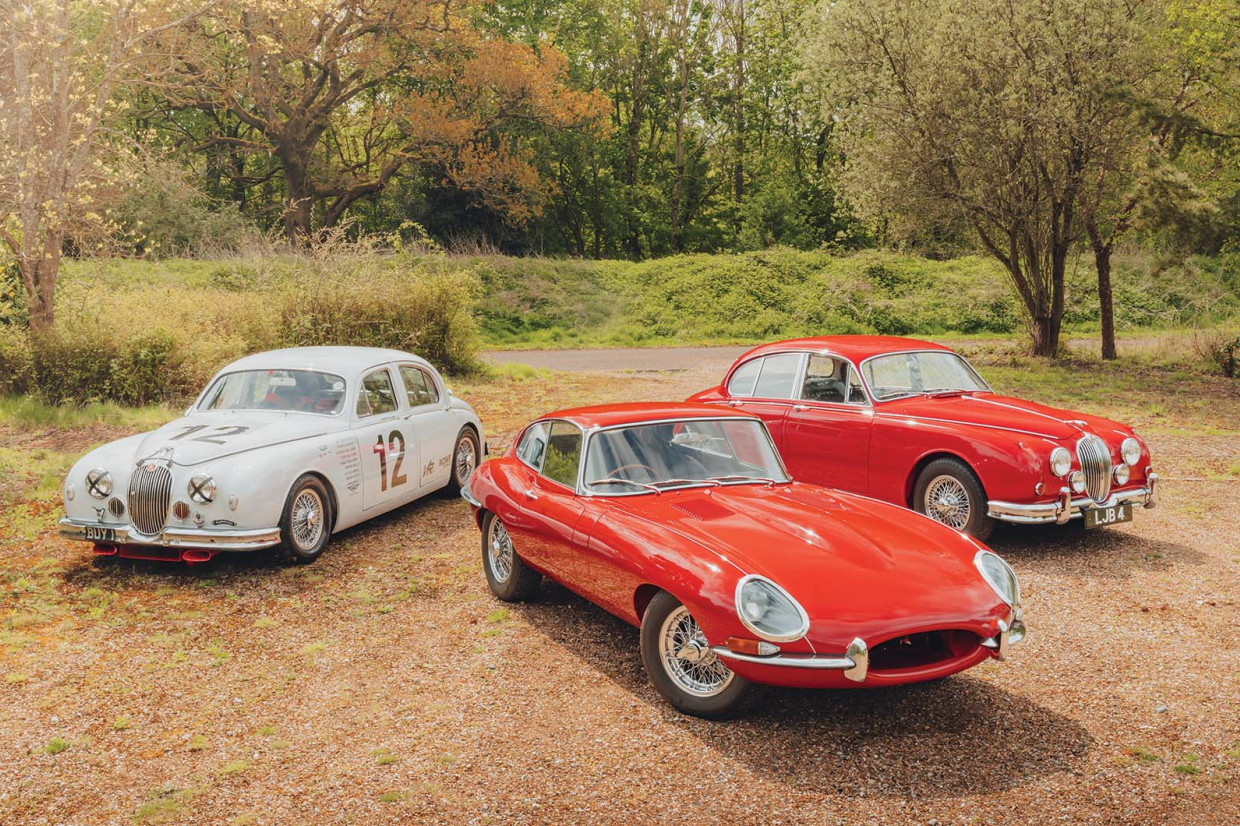
In late 1958, Jaguar decided to sell three modified 3.4-litre saloons to Tommy Sopwith, Briggs Cunningham and John Coombs, to field in the 1959 production British Saloon Car Championship.

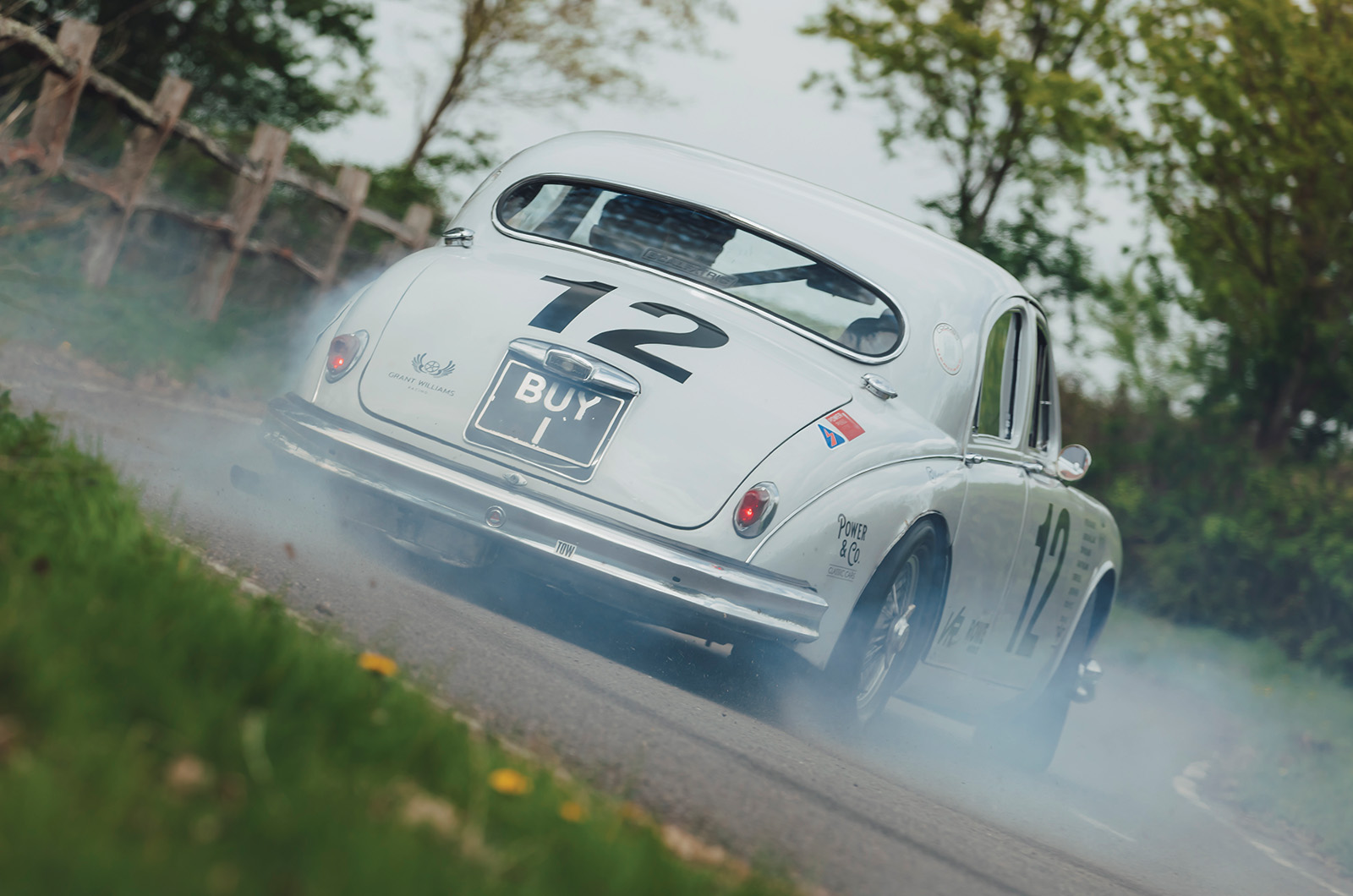
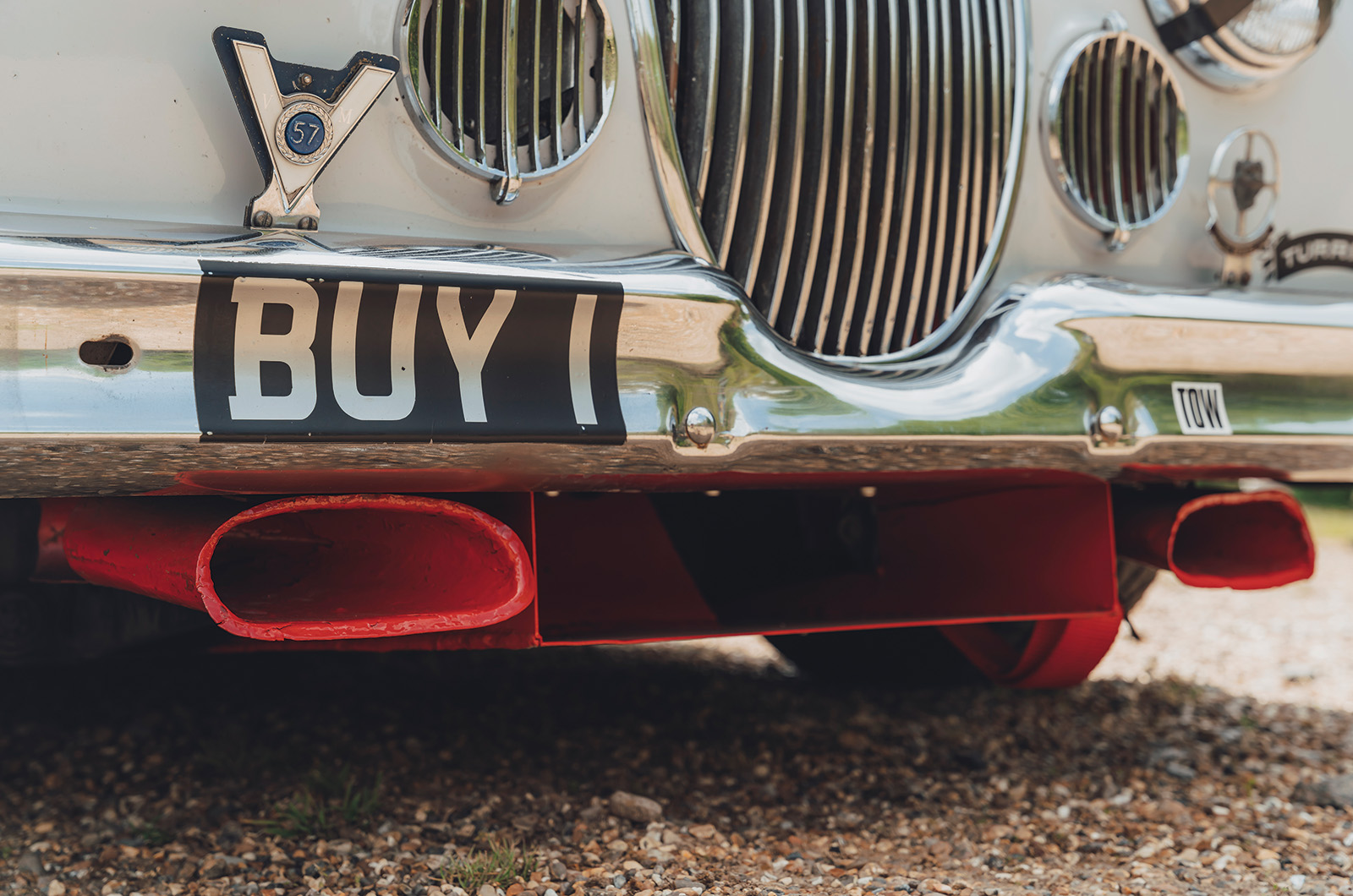
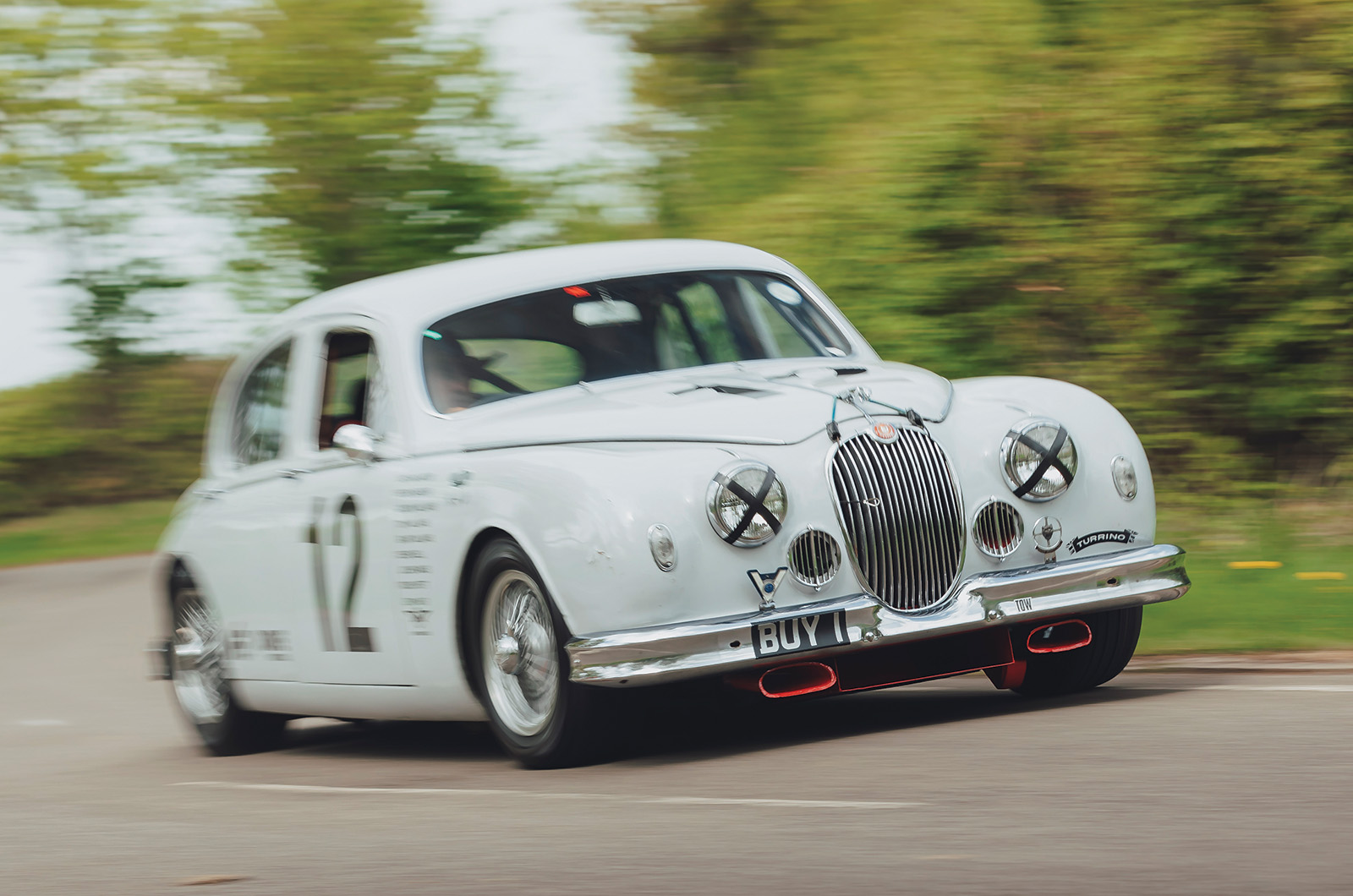
Originally registered 287 JPK in the spring of 1959, but later to wear the iconic ‘BUY 1’ plates, the Pearlescent Grey Coombs car is the only one of the three still in existence.

Today it is still regularly fielded by Grant Williams, the grandson of the car’s third owner, to spectacular effect at the Goodwood Revival and other historic events.

Classic & Sports Car – Jaguar E-type, Mk1 and Mk2: John Coombs’ modified Big Cats
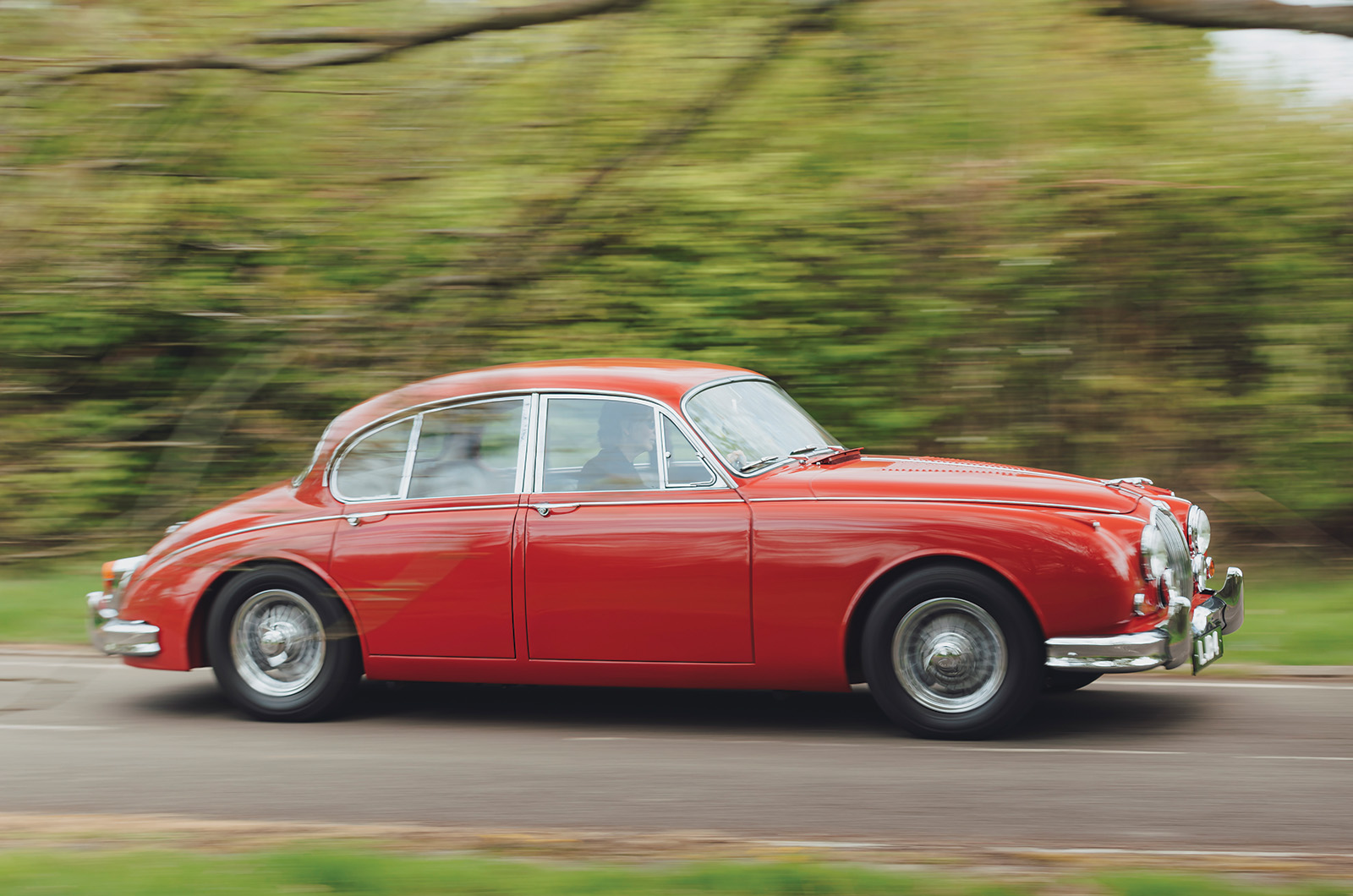
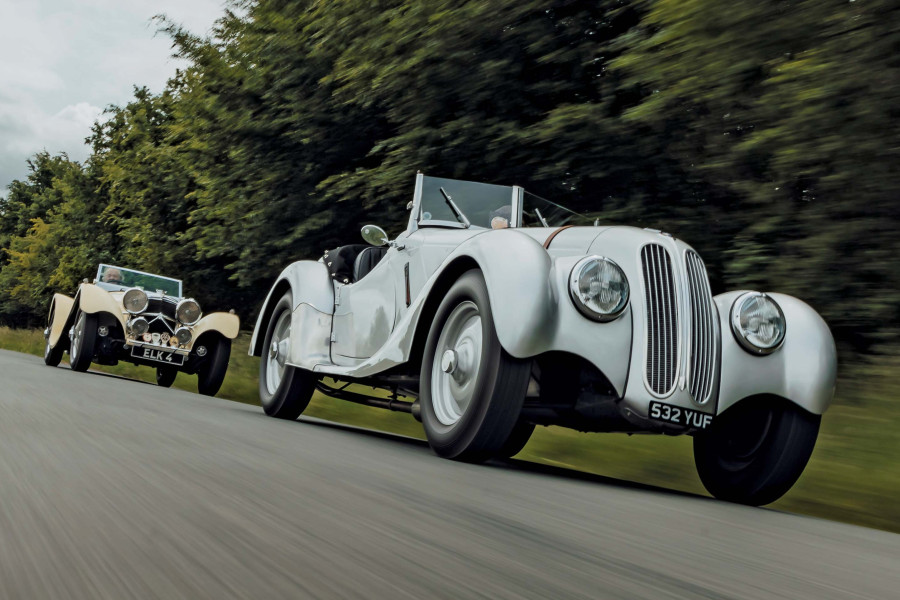
The ‘Coombs’ Jaguar Mk1’s tweaked rear axle and two-leaf springs give a squat stance, and the potent XK ‘six’ means Grant Williams can powerslide at will

As delivered to Coombs the Mk1 had long-range fuel tanks, bucket seats, aluminium doors and bonnet, and the engine was fitted with a straight-port head with 10:1 compression and triple 2in SU carburettors.

The gearbox was mated to a race clutch and the overdrive was locked out.

Further weight-saving measures developed by Coombs included removing the dashboard wood trim, headliner, 40lb of underseal and three out of four window-winder mechanisms; in the end, they were actually under the regulation weight at one stage and had to have lead plates added in the footwells, which at least had the advantage of getting the mass low in the car.

They ran with two-leaf springs on either side on the rear axle, which was bent slightly to get more toe-in.

Classic & Sports Car – Jaguar E-type, Mk1 and Mk2: John Coombs’ modified Big Cats
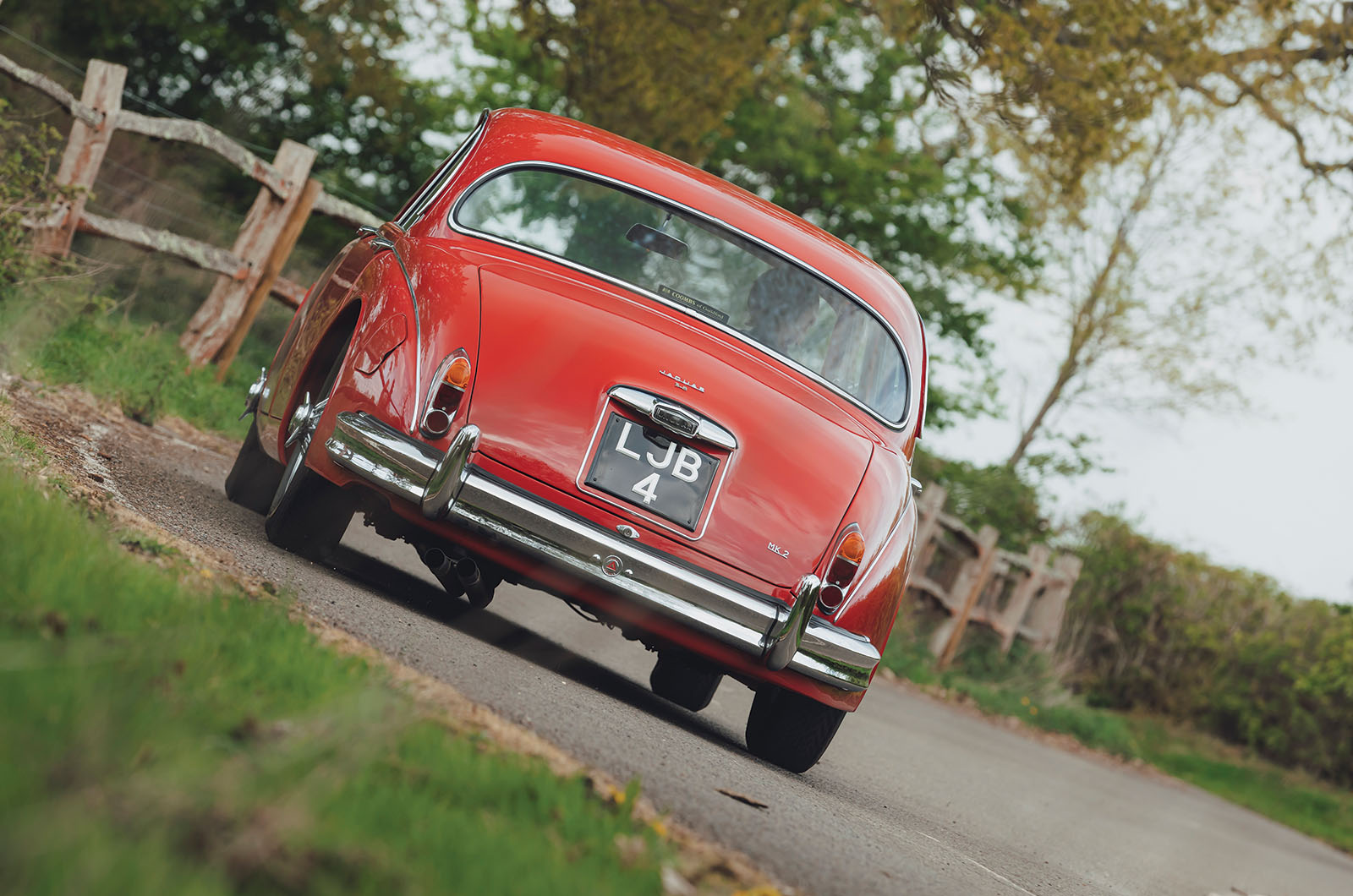
It takes an expert eye to spot a Coombs Jaguar Mk2, not least because no two are identical

The Coombs Mk1 was first seen at the 1959 Goodwood Easter Meeting, driven by Roy Salvadori, where it came second to Ivor Bueb in Equipe Endeavour’s 3.4.

The car posted various first and second placings throughout the year but, with the Mk2 about to appear, was sold on at the end of the season to a Mr Le Fort, and driven by Peter Sargent in national and club events in 1960 and ’61.

BUY 1 was road tested in Autosport in May 1962 and sold a month later to a Mr Williams of Risca Garages. Club-raced for the following decade, it subsequently went into storage for 26 years before being revived in the late ’90s in anticipation of an invitation to race at the reopened Goodwood circuit.

Classic & Sports Car – Jaguar E-type, Mk1 and Mk2: John Coombs’ modified Big Cats
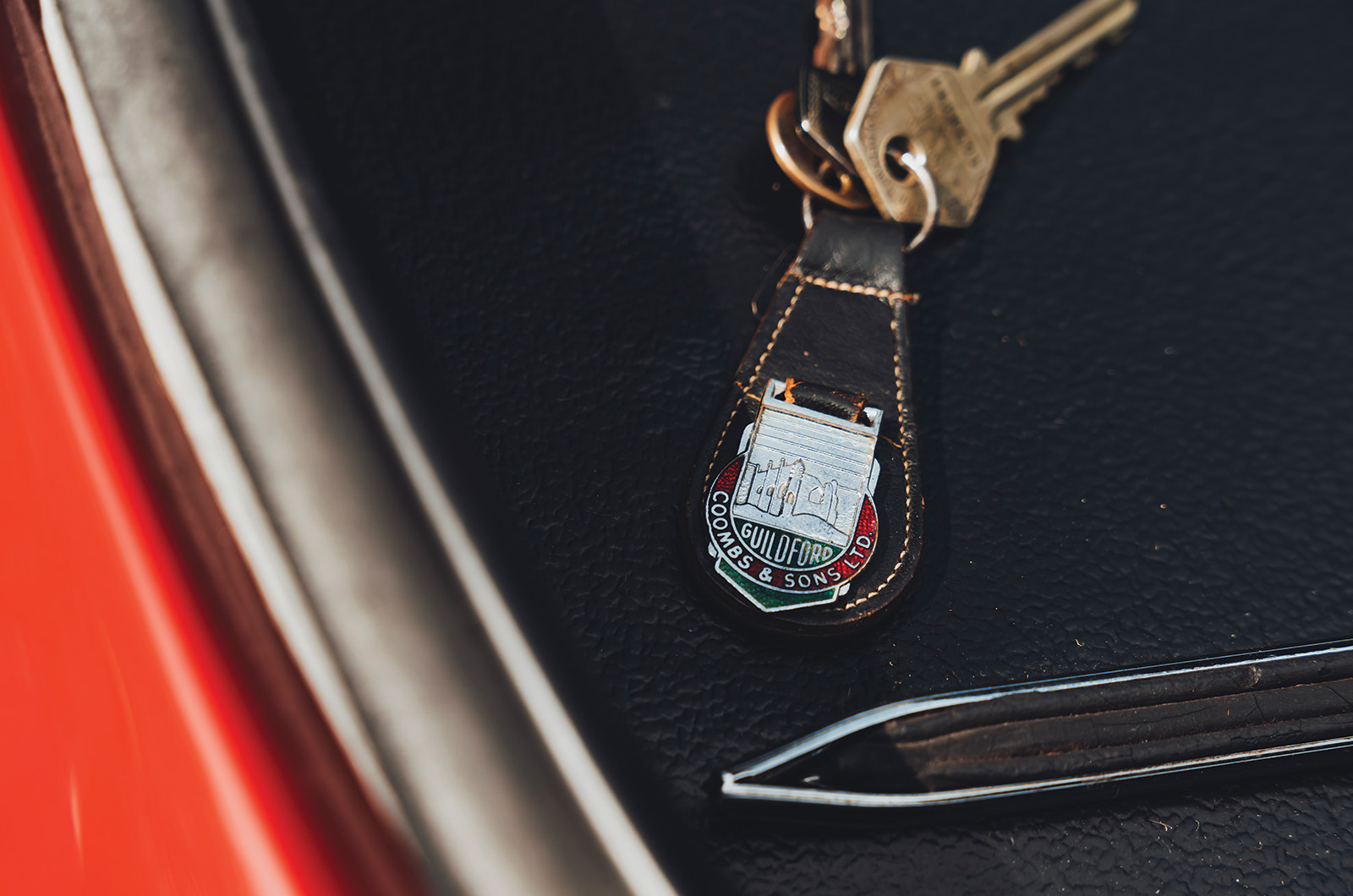
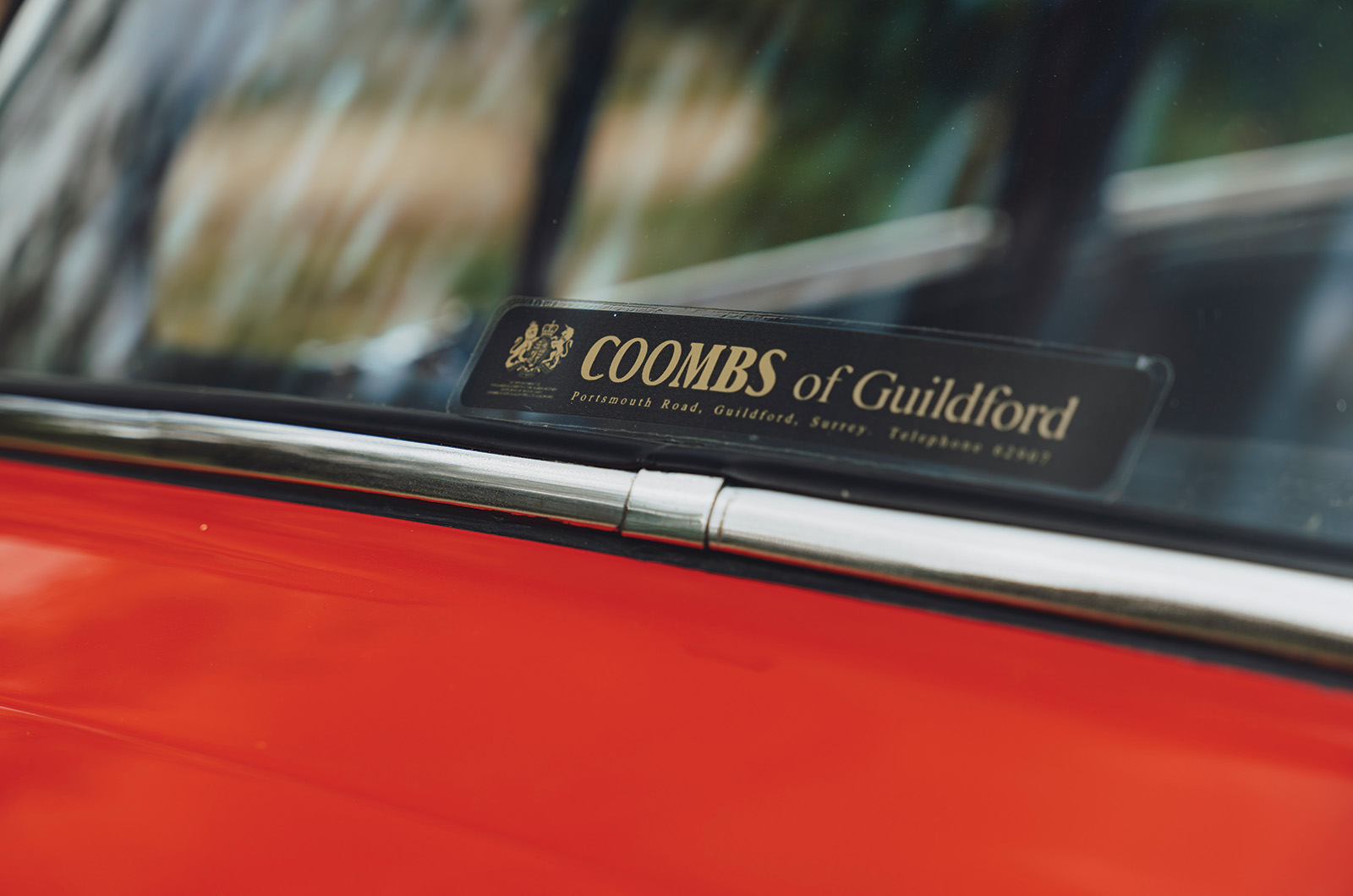
Coombs keyfob hints at this Jaguar’s rare status

The compact saloons were further developed following the launch of the 3.8-litre Mk2, and in this form the Jaguars of Coombs (and those of arch-rival Tommy Sopwith’s Equipe Endeavour) became the tin-tops to beat.

Only the arrival of the Ford Galaxie, Chevy II and Lotus Cortina in ’63 broke the Coventry car’s winning streak.

Sporting the legendary BUY 1, BUY 12 and TRY 1 numberplates, the Coombs saloons were driven to tyre-smoking, crowd-pleasing effect at events from Silverstone to Snetterton, piloted by top-ranking Coombs hires such as Graham Hill, Mike Salmon and Salvadori – and in one instance Lotus founder Colin Chapman, who won a race in a Coombs-prepared car at Silverstone in July 1960.

Chapman bought a 3.8-litre Mk2 for his own use soon after.

Classic & Sports Car – Jaguar E-type, Mk1 and Mk2: John Coombs’ modified Big Cats
This Coombs Mk1’s famous numberplate sits above the front intakes

Race results are one thing, but fact is more difficult to separate from fiction when it comes to the cars that were sold to the public as tuned and otherwise modified ‘Coombs’ Mk2s.

The truth is that, while the firm sold hundreds of standard Jaguar Mk2s (of all types), there were likely fewer than 40 true Coombs cars built for private road use worthy of being described as ‘extensively modified’ examples. 

How many exactly? I’ve seen figures as low as 28 and as has high as 38 quoted, and most things in between.

Classic & Sports Car – Jaguar E-type, Mk1 and Mk2: John Coombs’ modified Big Cats
The Coombs catalogue offered various mechanical and style modifications for Jaguar E-types, Mk1s and Mk2s

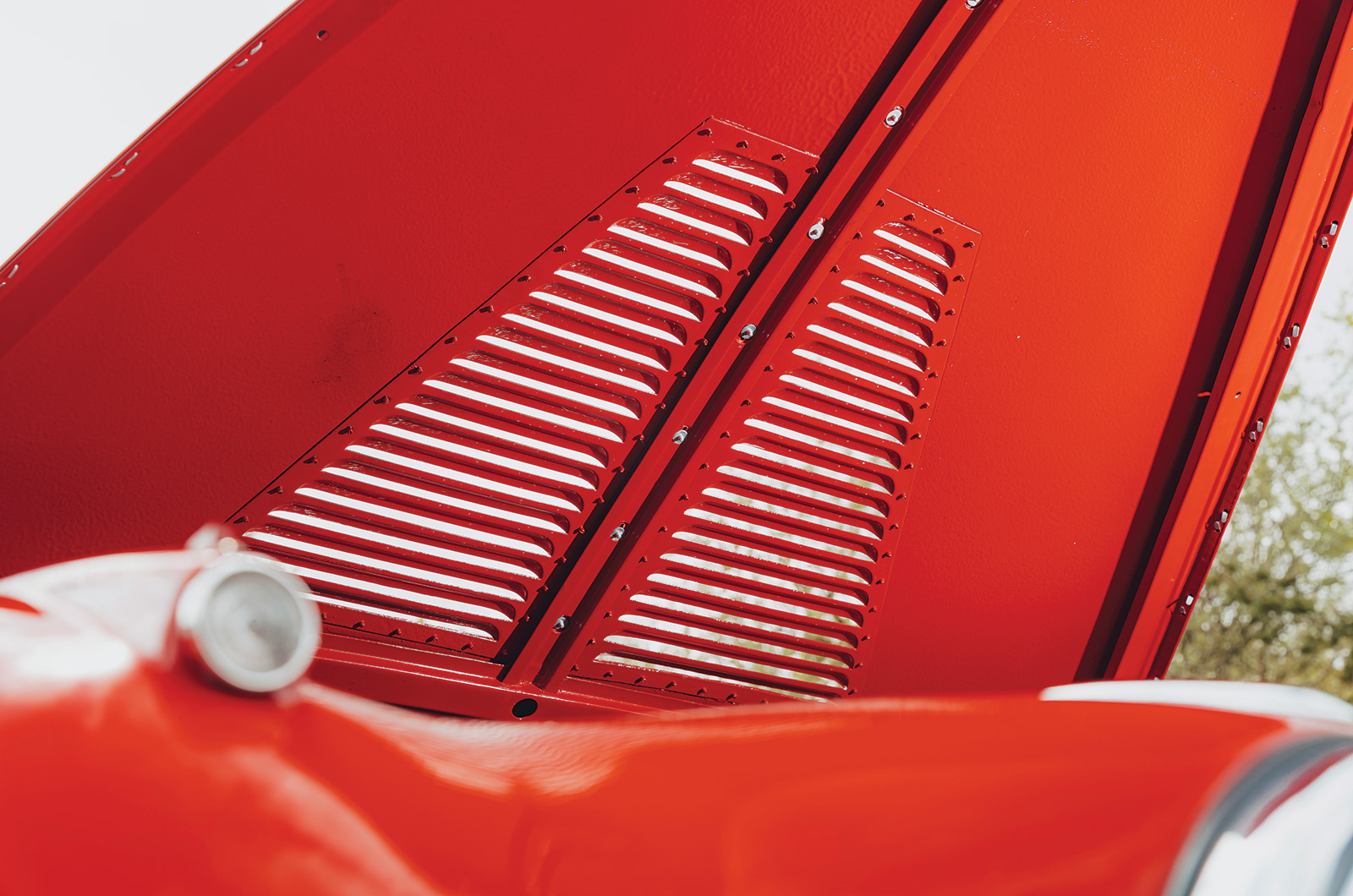
And that is before you make allowances for the fact that by no means all of the Coombs Mk2s had the full £600 treatment with the 2in SU HD8 carburettors (perhaps 10 cars), and maybe as few as two each had the bucket seats and those famous bonnet vents, allegedly fashioned from the doors of old War Department clothes lockers.

That some were based on secondhand rather than showroom-fresh Mk2s further muddies the waters.

Hard-nosed as he was, Coombs was not all about the bottom line and shifting metal.

Enthralled to the world of motorsport by childhood outings to nearby Brooklands, he was always destined to go racing, as a driver (which he did, briefly, with Connaught before retiring in 1955) or a highly organised and effective team manager, fielding cars from his own workshops.

Classic & Sports Car – Jaguar E-type, Mk1 and Mk2: John Coombs’ modified Big Cats
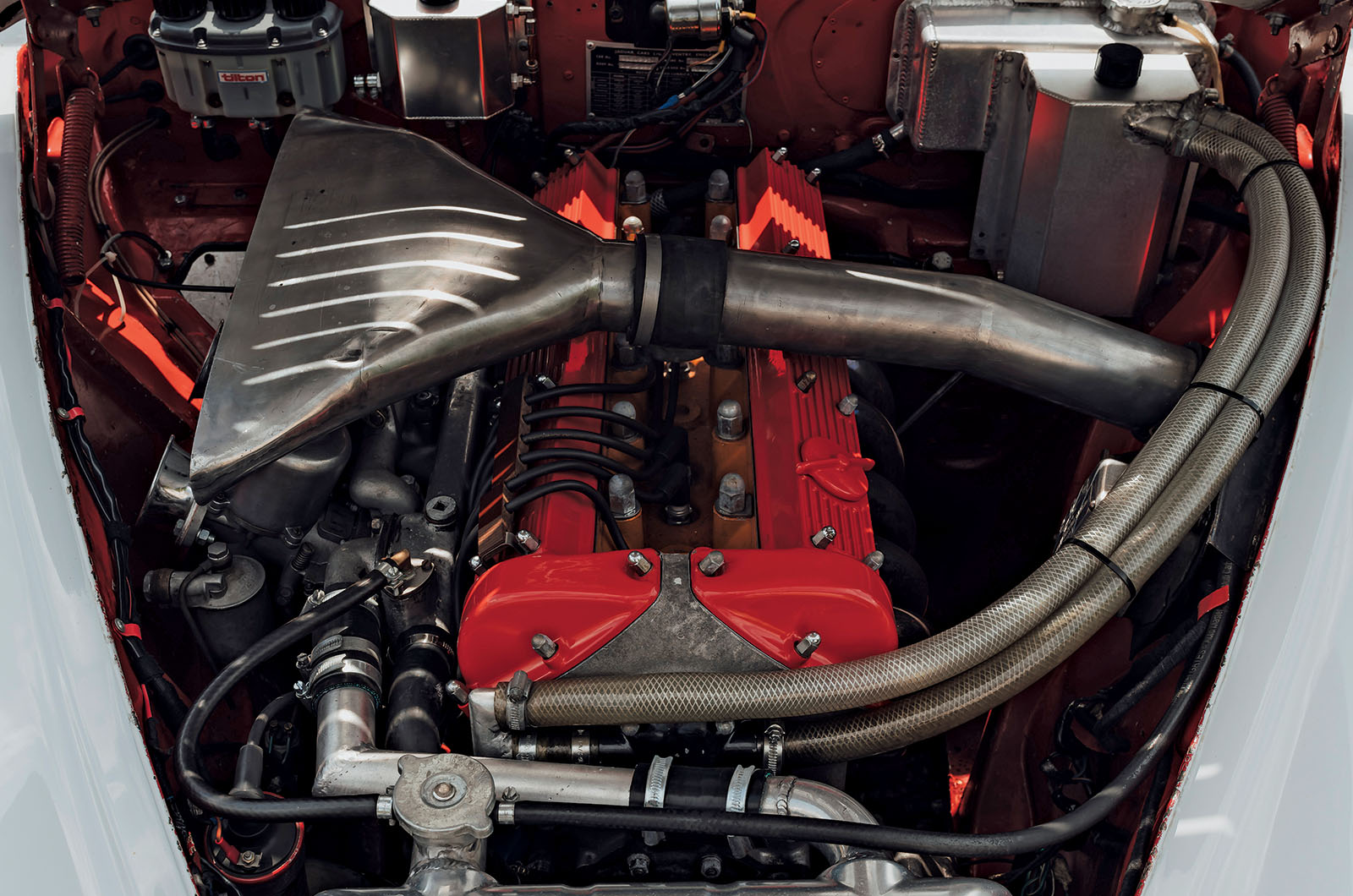
The Coombs Jaguar Mk1’s engine bay shows remnants of the original red paint

Deeply embedded in the competition community of the 1950s and ’60s, Coombs was well connected, both socially and with the Jaguar works.

He was a formidable motor dealer, not above nailing Sir William Lyons to the floor to capture a deal, and enjoyed a close if sometimes strained relationship with former team boss ‘Lofty’ England: this put Coombs in a favourable position when Jaguar, officially out of racing after the 1955 Le Mans disaster, was looking for privateers to field the 3.4- and, later, 3.8-litre Mk1/2s in British production-saloon events.

Coombs also had a pivotal role in the creation of the factory Lightweight E-types, but that particular adventure is a story for another time.

Classic & Sports Car – Jaguar E-type, Mk1 and Mk2: John Coombs’ modified Big Cats
‘Enthralled to the world of motorsport by childhood outings to Brooklands, Coombs was destined to go racing’

The main Coombs showroom was located on the Portsmouth road and the boss lived ‘above the shop’.

There was a building at the back where the competition cars were prepared, plus a second site for commercial vehicles: this had been formed post-WW2 to sell war surplus Canadian Army Dodge trucks.

At various times, Coombs & Son (Guildford) held franchises for Ford (dropped in 1969), Bristol, Borgward and Citroën, among others, but during the 1950s and ’60s Jaguar was always at the heart of what Coombs was about, priding itself on well-prepared retail stock and good customer service.

Full-page advertisements in The Autocar proclaimed: ‘Jaguars are our speciality… we breathe, talk and live Jaguars at Coombs.’

Classic & Sports Car – Jaguar E-type, Mk1 and Mk2: John Coombs’ modified Big Cats
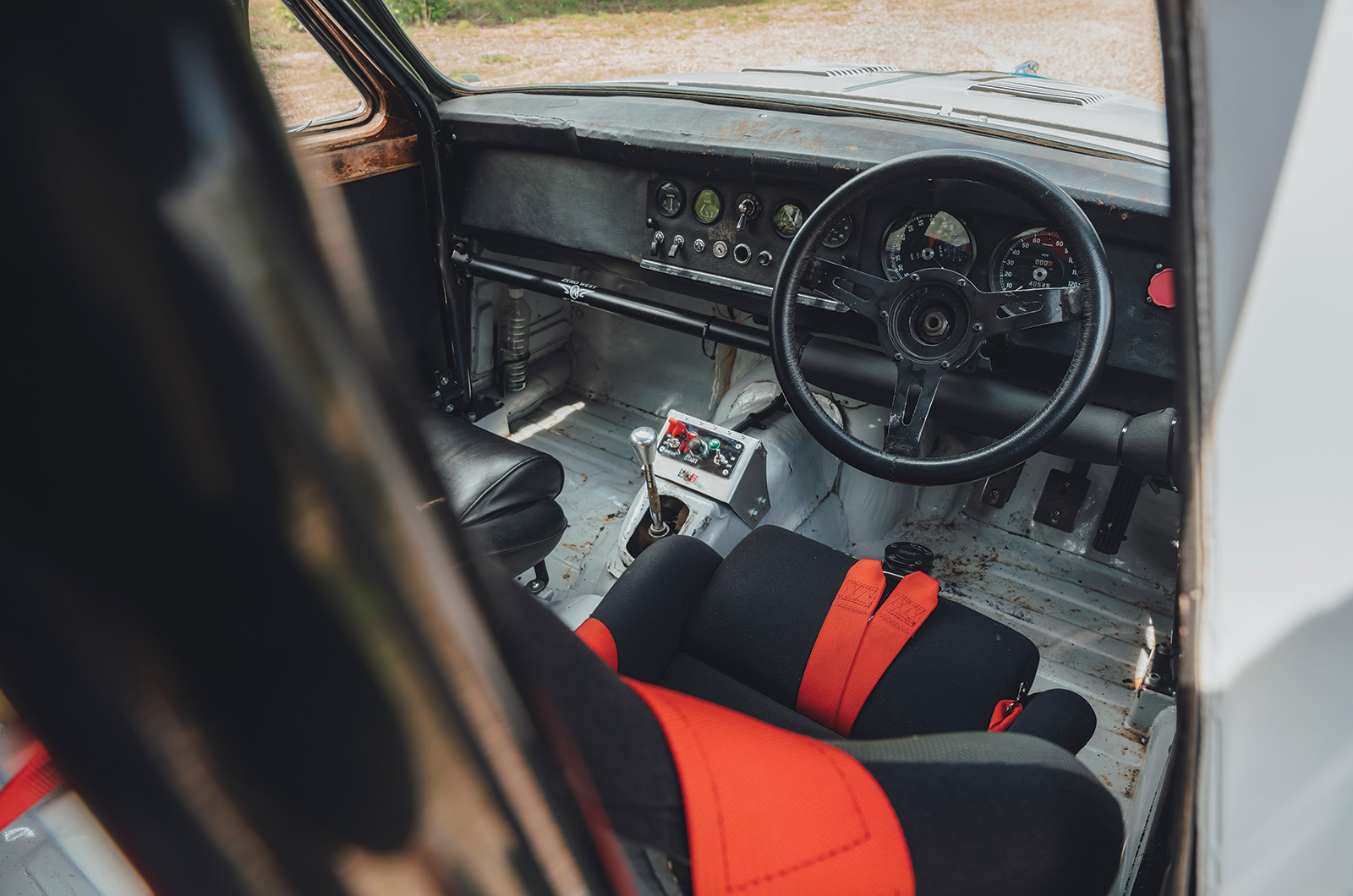
The Coombs Jaguar Mk1’s stripped-out interior is all about purpose

Apart from the head-skimming, all of the visual and mechanical upgrades were undertaken in-house.

For instance, the famously modified Mk2 wheelarches, to cover wider rubber, were achieved by means of copper piping and lead-loading to get the final shape.

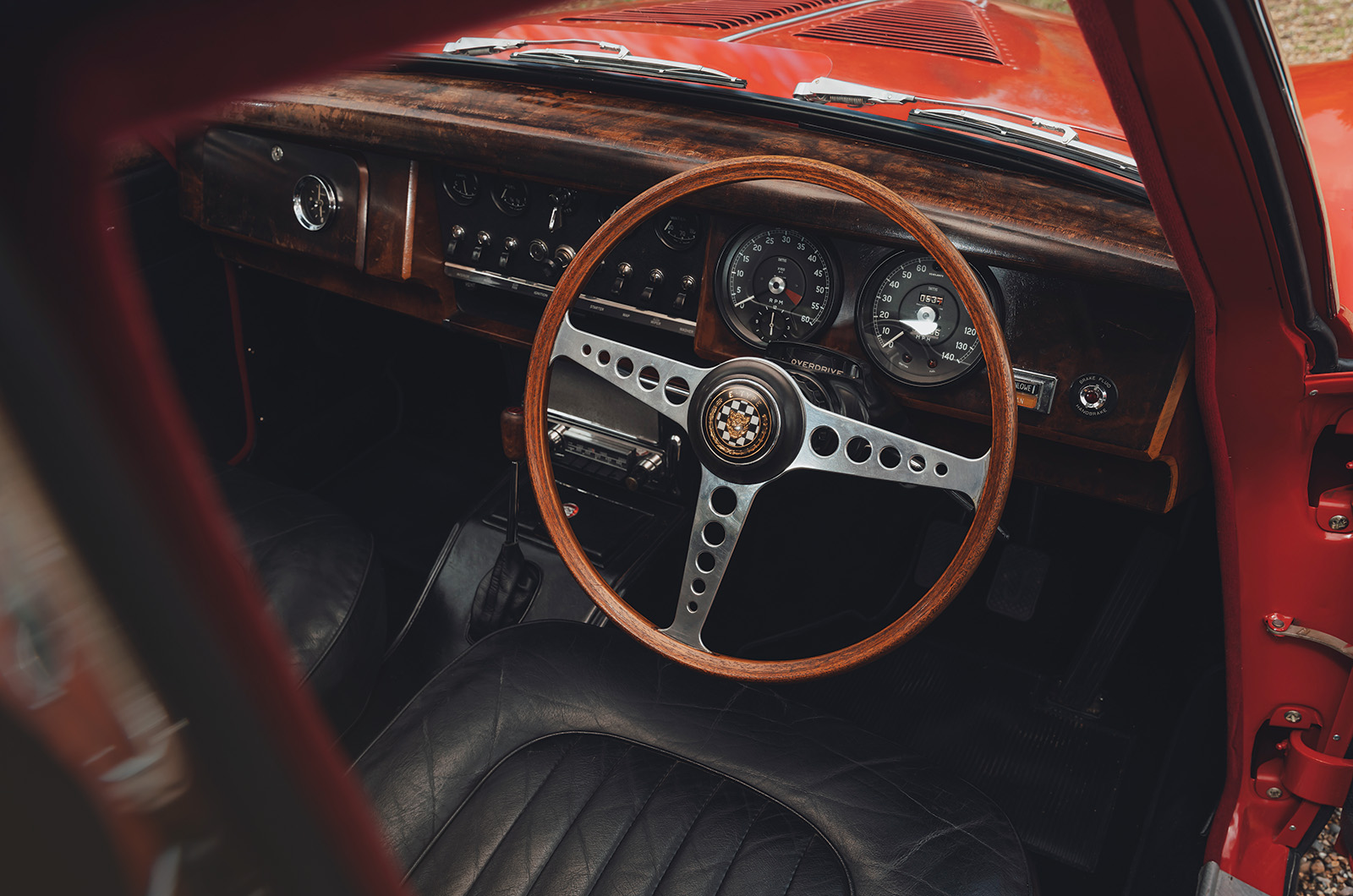
Most of the cars had an E-type steering wheel (an extra £15), but also available as ‘Further specialist items’ were wire wheels (which, again, most of the ‘proper’ conversions had) and even accessory-shop knick-knacks such as a vinyl roof or a chromed boot-rack.

Classic & Sports Car – Jaguar E-type, Mk1 and Mk2: John Coombs’ modified Big Cats
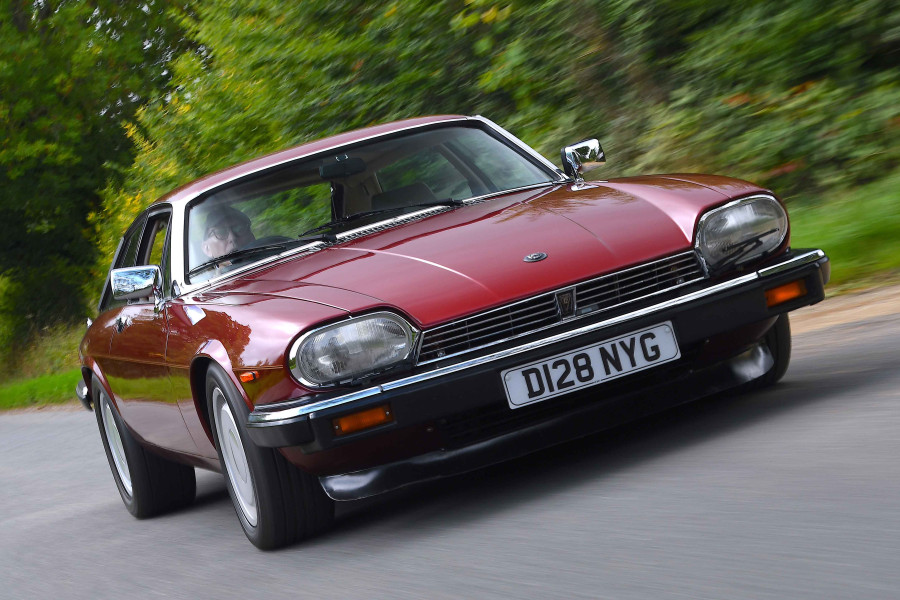
The Coombs Jaguar Mk2 handles well on beefed-up springs

The basic engine conversion, with a choice of exhaust system and adjustable Koni dampers all round, came in at £285.

Under the heading ‘Further items for competition motorists’ you could choose from a yet-higher compression ratio, the 2in SUs and about £35-worth of suspension modifications, including beefed-up rear spring mounts, high-rate front coils and a modified front anti-roll bar (reputedly adapted from a standard item), putting the total invoice well into E-type/MkX territory.

But for that you got a four/five seater with a genuine 265-300bhp that would get to 100mph a full 12 secs faster than the not notably tardy standard Mk2: a family saloon that could easily hold a 3.8-litre E-type through the gears up to 70mph.

Classic & Sports Car – Jaguar E-type, Mk1 and Mk2: John Coombs’ modified Big Cats
‘According to Coombs’ figures it was the fastest-accelerating four-door available, and could hold a 3.8 E-type to 70mph’

Indeed, according to Coombs’ own figures it was the fastest-accelerating four-door then available.

Tellingly, not until Mercedes introduced the 300SEL 6.3 in 1968 were these numbers approached by a saloon car. 

There appeared to be no great penalty in refinement or tractability, either.

If anything, the Coombs ‘six’ – fully balanced, gas-flowed and with a high-compression 9:1 or 9.5:1 head – was reputedly smoother than the standard XK unit.

Classic & Sports Car – Jaguar E-type, Mk1 and Mk2: John Coombs’ modified Big Cats
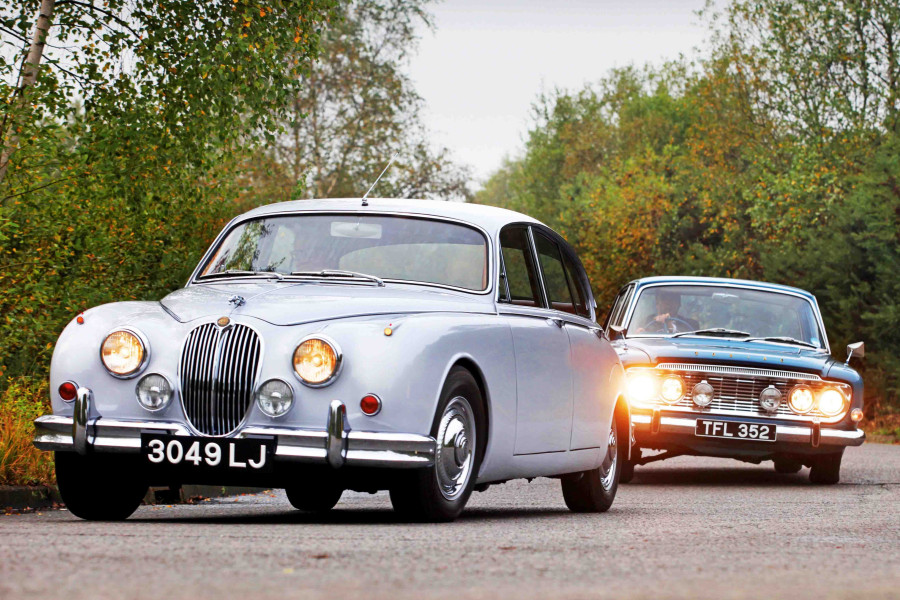
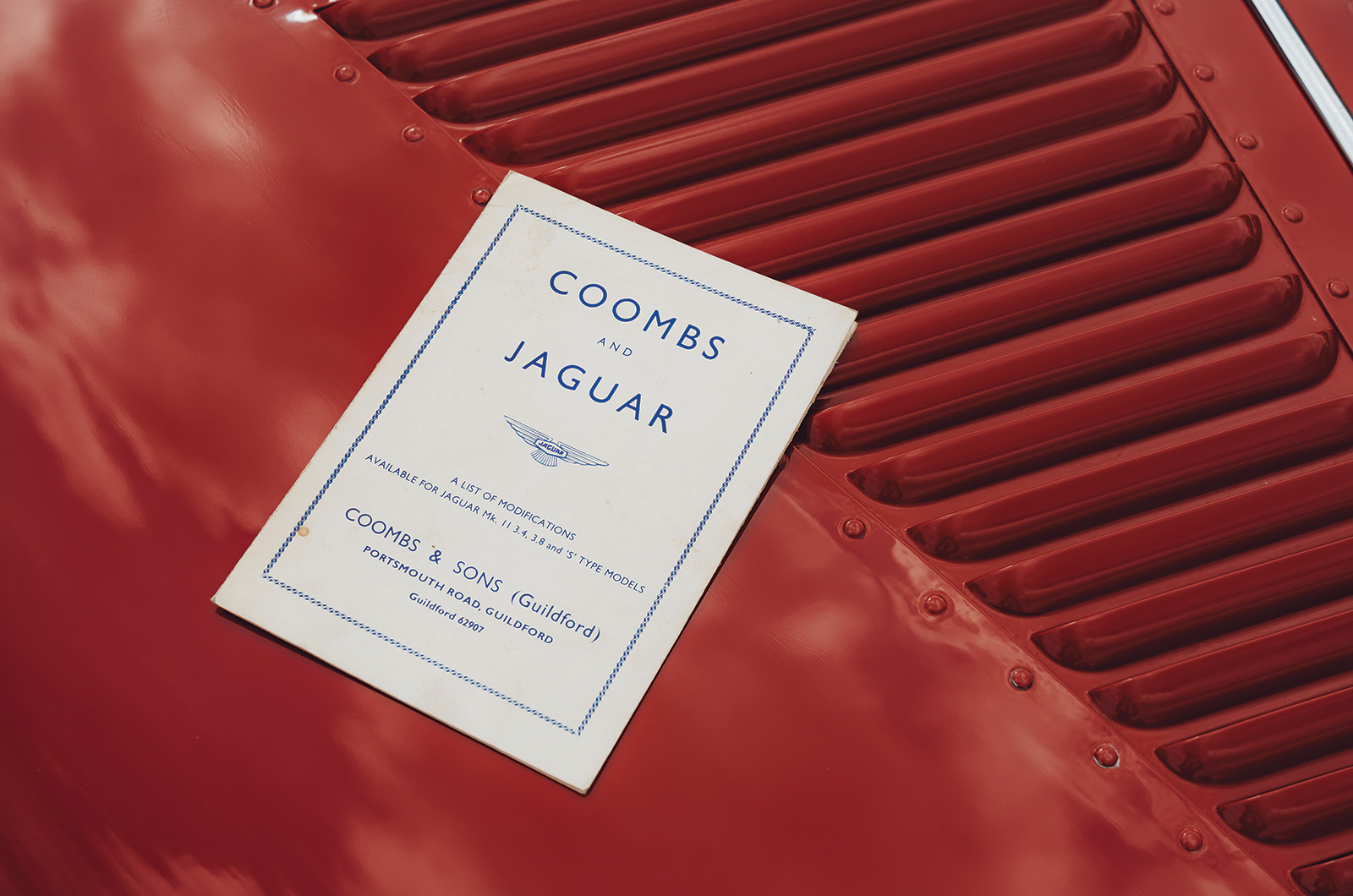
The Coombs Jaguar Mk2’s signature louvres were reportedly from old clothes locker doors

Fuel consumption in the order of 14-15mpg (about the same as a Mk2 3.8 automatic) was a small price to pay for those customers who wanted the ultimate.

Coombs’ answer to buyers who needed more fuel range was to offer an additional 9.4-gallon tank, mounted up against the rear firewall.

No official records of the cars were kept, and serious attempts to market the conversions did not extend beyond a single sales pamphlet (published in 1962) and a Cotswold Blue demonstrator, registered 7 YPG.

However, today we can thank Coombs employee (and famed Jaguar specialist) Ken Bell for his contemporary notes.

Classic & Sports Car – Jaguar E-type, Mk1 and Mk2: John Coombs’ modified Big Cats
The E-type steering wheel looks at home in this modified Mk2

These reveal that a fair few of the Coombs cars were written off in period, that even more were owned by Coombs employees and – unsurprisingly – that most of the Mk2 conversions (but not all of them) were based on the 3.8-litre cars.

“The brochure was produced about two years after we started,” recalls Ken, “and we modified 30 cars for road use.

“Actually, there are more than 30 on my list, but what makes it complicated is that none of them had everything.

“It was all down to individual owners and what they wanted. But let’s say there were 30 cars with ‘substantial’ mods.”

Classic & Sports Car – Jaguar E-type, Mk1 and Mk2: John Coombs’ modified Big Cats

The Coombs Jaguar Mk2’s big carburettors and high compression give more punch

Ken got hooked into the Mk2s straight away: “I worked on the very first one that came in, in around October or November 1959.

“I clearly remember the car – I did the pre-delivery on it. We didn’t get another until 1960.”

Paul Sweeney has owned his 1961 Coombs Mk2 for four years. It shares garage space with a replica of Mike Hawthorn’s Mk1 3.4.

“I had a Mk2 years ago,” he says. “I never really got on with E-types, although I have mates who have them. I liked that this one was low ownership and in Carmen Red: they only did two.”

Classic & Sports Car – Jaguar E-type, Mk1 and Mk2: John Coombs’ modified Big Cats

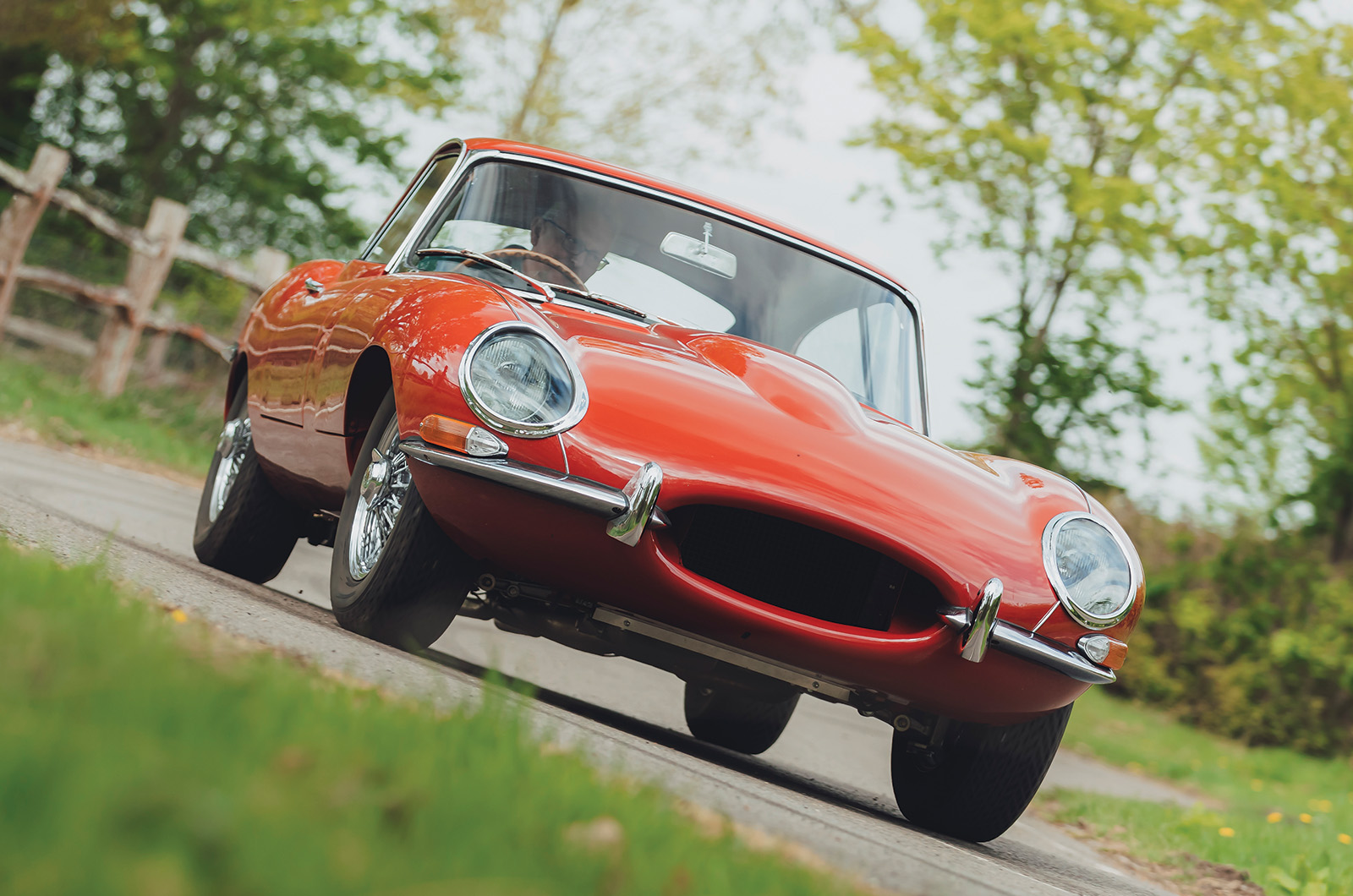
This beautifully restored Jaguar Coombs E-type could be the sole survivor

Paul believes that the modifications were rarely done in one hit on a new car: “It was the second owner, from 1963, who had the Coombs tweaks done that summer; he had almost everything bar the long-range fuel tank and the boot-rack.”

Inside, there are some extra switches and a clock in the glovebox lid.

Keen to preserve the original front seats, Paul spent months looking for a stand-in pair and ended up with a set that had come out of the car that John Coombs was having restored for himself in the ’80s: “It’s got all the engine upgrades, and it goes really well – particularly between 60 and 100mph – but you have to remember it has 1960s brakes.

“It’s got the usual heat-soak problems, but I rarely miss the power steering and I still run the engine on points rather than electronic ignition.”

Classic & Sports Car – Jaguar E-type, Mk1 and Mk2: John Coombs’ modified Big Cats

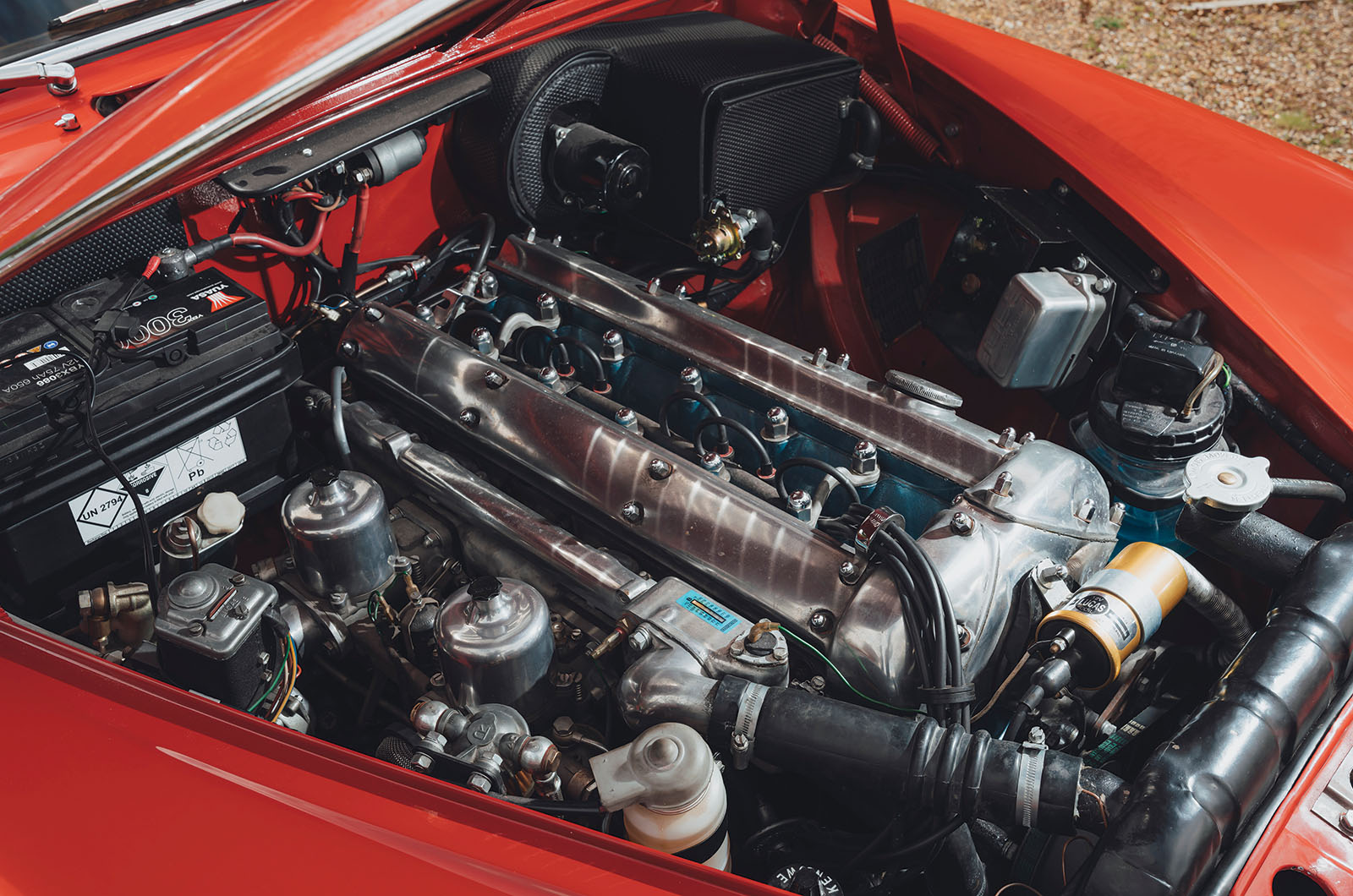
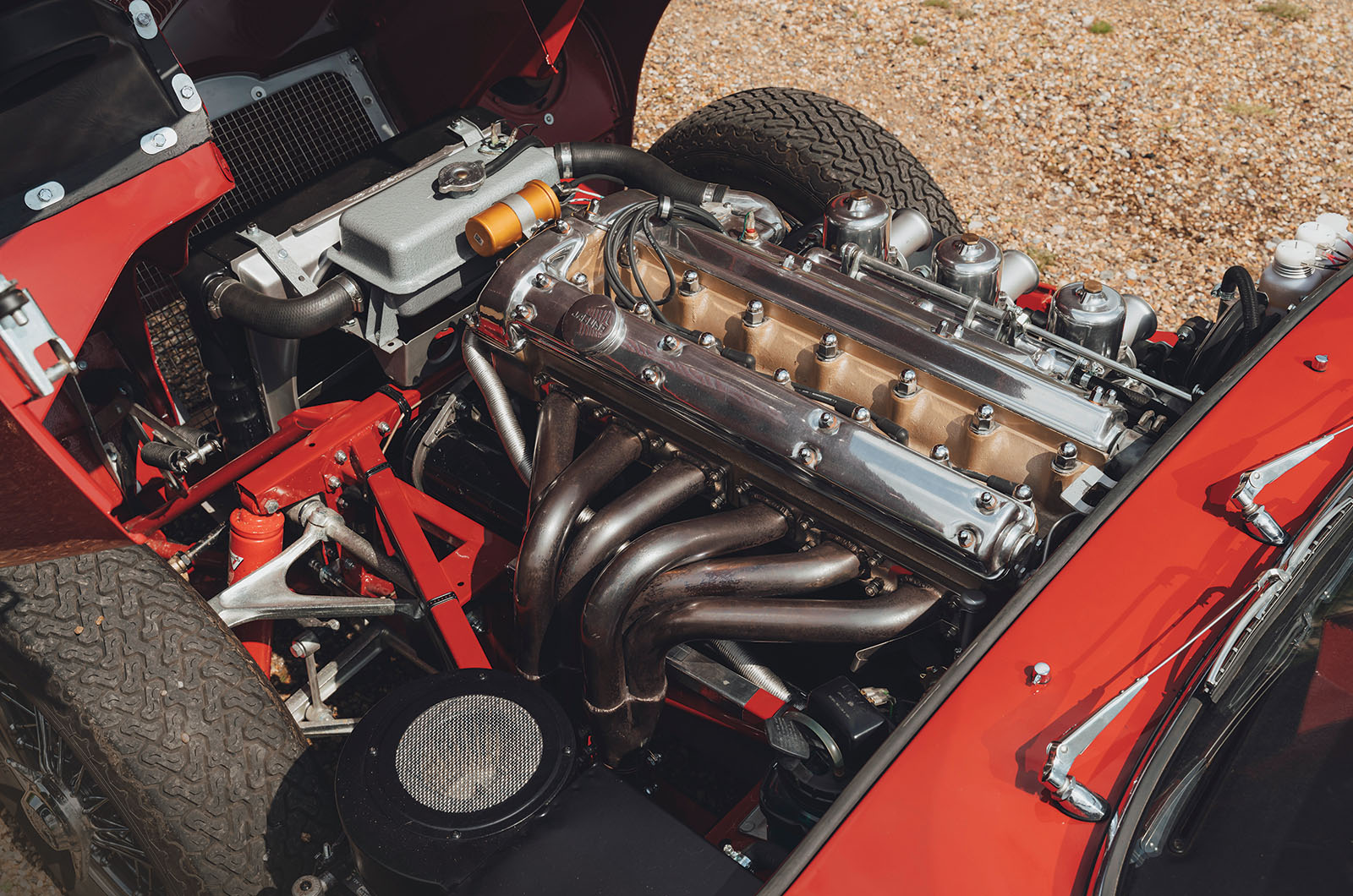
The Coombs Jaguar E-type’s engine modifications give the ‘six’ extra potency

It is the lesser-known details, such as the Coombs anti-roll bar, that Paul particularly likes: “They are the things that the replicas tend not to have.

“It’s got the bonnet louvres, but they may have been added later because there is no receipt for them, and hardly any cars had them in period anyway.”

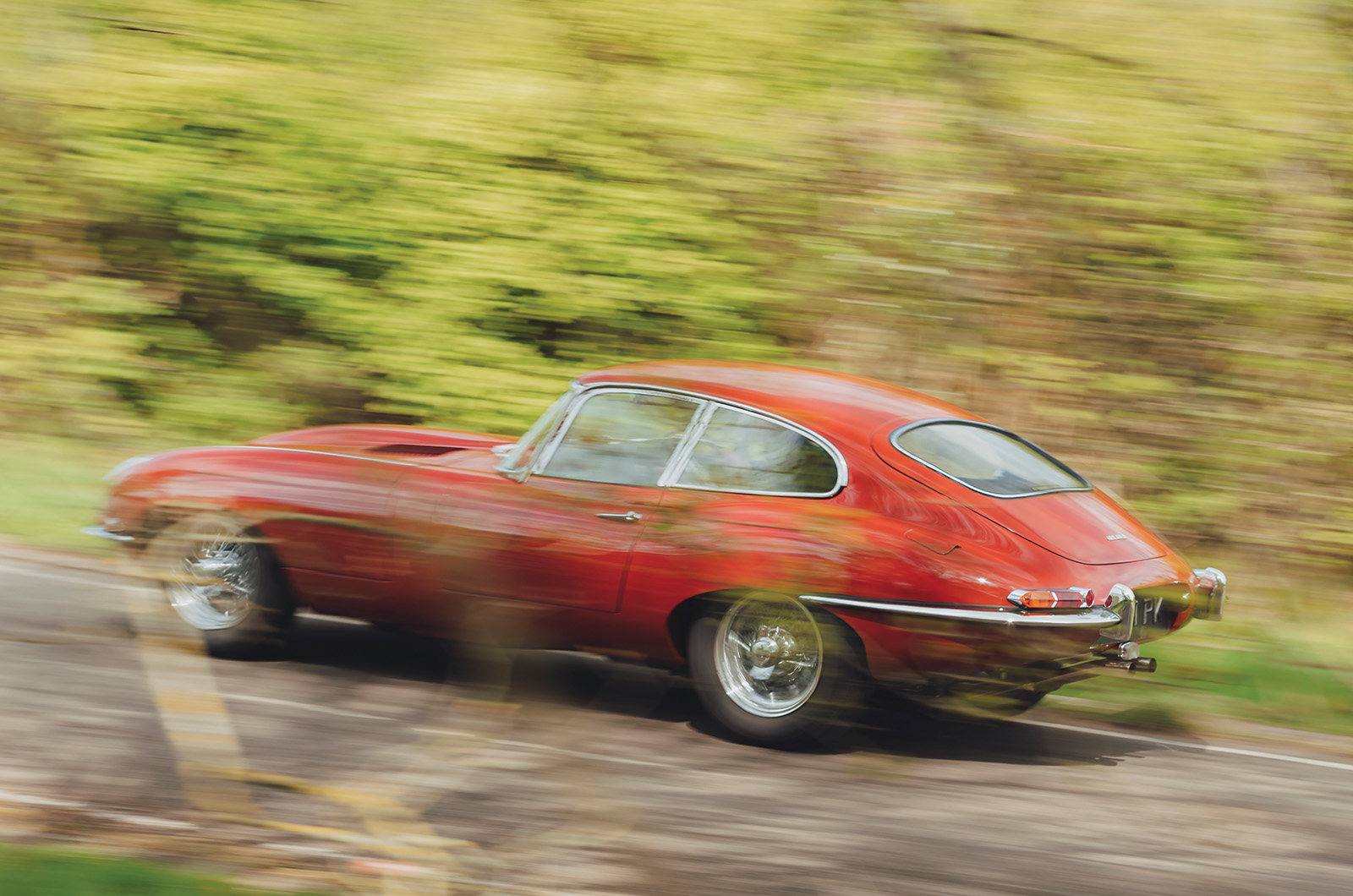
Ken reckons Coombs did about three E-types – he personally worked on a dark-green fixed-head coupé 4.2 in 1965 – so the car pictured may well be the only genuine Coombs ‘E’ in existence.

Classic & Sports Car – Jaguar E-type, Mk1 and Mk2: John Coombs’ modified Big Cats

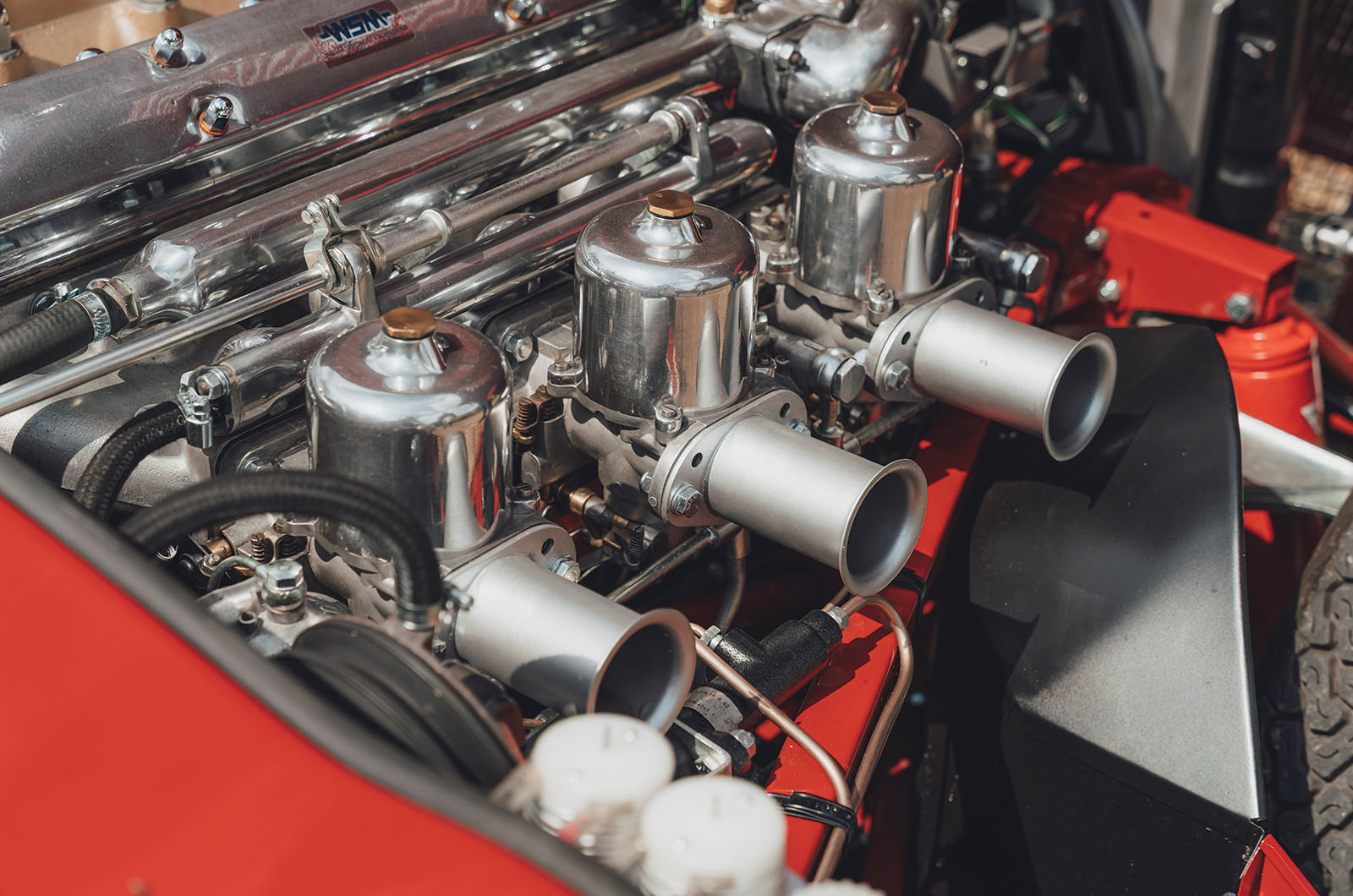
The Coombs Jaguar E-type’s open carburettors and free-breathing exhaust allow the twin-cam engine to really sing

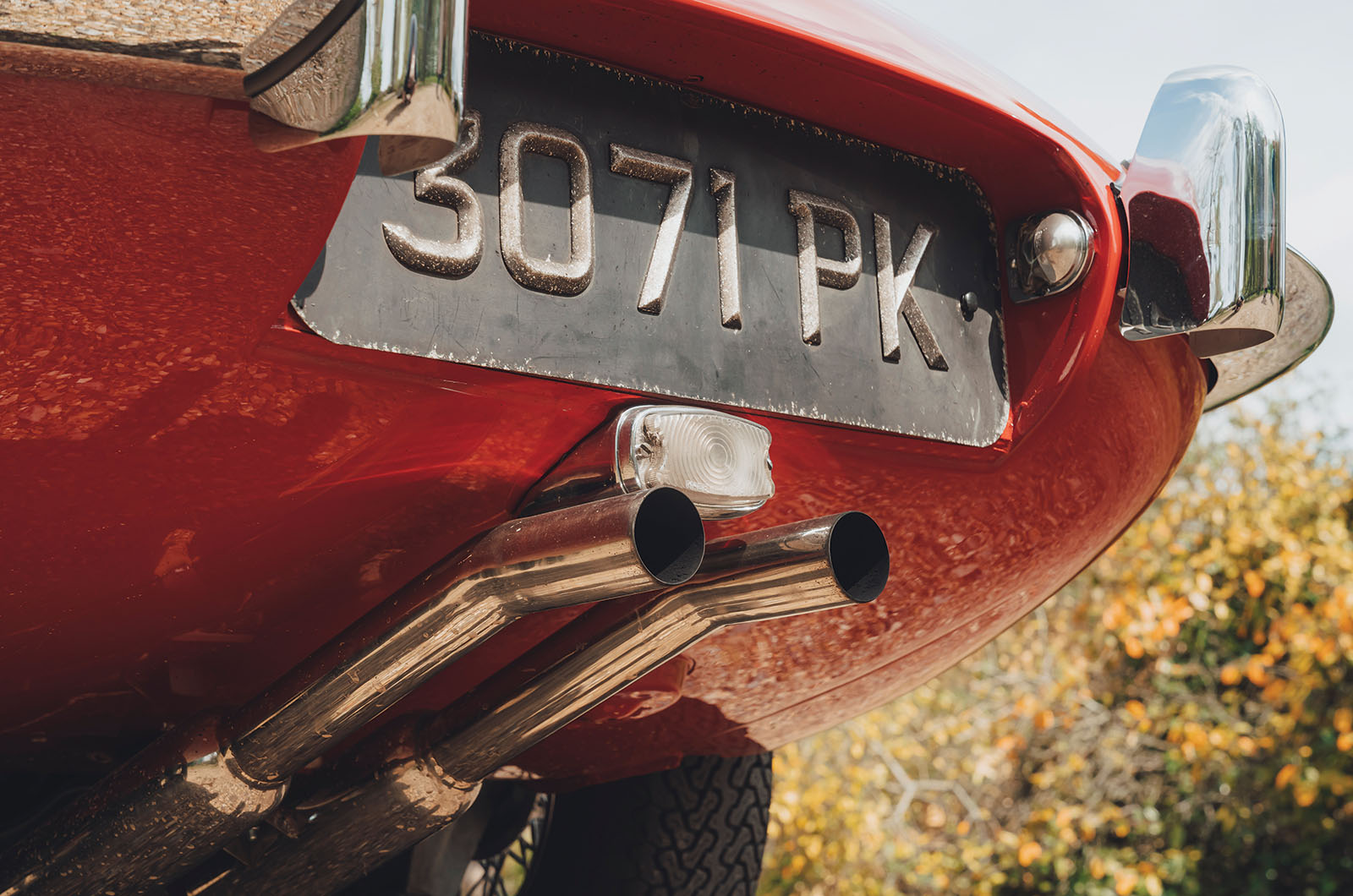
Jointly owned by Gareth Richardson and Tony Morris since 2019, 3071 PK recently emerged from a superb restoration by marque expert WinSpeed Motorsport and its history has been researched fastidiously.

Unused for years, it was in a poor state but very original. 

“It was sold new by Coombs to a businessman called Harold Samuels in 1962,” says Gareth, “with all the usual engine modifications – a high-compression head, ‘open’ carburettors and so on – plus a throaty, ‘over-the-frame’ exhaust system and the triple-laced wire wheels.

“Samuels then chopped it in against a Ferrari 500 Superfast in 1965.”

Classic & Sports Car – Jaguar E-type, Mk1 and Mk2: John Coombs’ modified Big Cats

The Coombs Jaguar E-type’s original numberplate wears a lovely patina that has been preserved

Second owner Peter Vose put upwards of 40,000 miles on the E-type, taking long-distance trips across Europe and cruising at 110mph with his children asleep on the luggage shelf.

It was also used as a shopping car, as Vose revealed in a letter to Motor Sport in 1967: the general tenor of the missive was that the car was excellent in most respects, all the better for the Coombs modifications, and thoroughly practical.

The fact that it had acquired a later, all-synchromesh gearbox from a 4.2-litre E-type, apparently as a special favour from the factory, doubtless added to its charms.

Classic & Sports Car – Jaguar E-type, Mk1 and Mk2: John Coombs’ modified Big Cats

‘In a letter to Motor Sport, Vose revealed that the car was excellent, and all the better for the Coombs modifications’

Coombs’ attentions were not restricted to Mk2s and E-types, as Ken recalls: “I think three, maybe four, Coombs S-types were converted.

“The one that stood out was a dark blue metallic car I did for Tony Vandervell of Vanwall: when it came in for its first service, all of the wire wheels were breaking – it was then that Dunlop modified the wheels from a curly hub to a straight, conical hub, which was stronger.

“On the Mk2 they were able to cope with the extra power, but because of the additional weight of the S-type, they broke up.”

Classic & Sports Car – Jaguar E-type, Mk1 and Mk2: John Coombs’ modified Big Cats

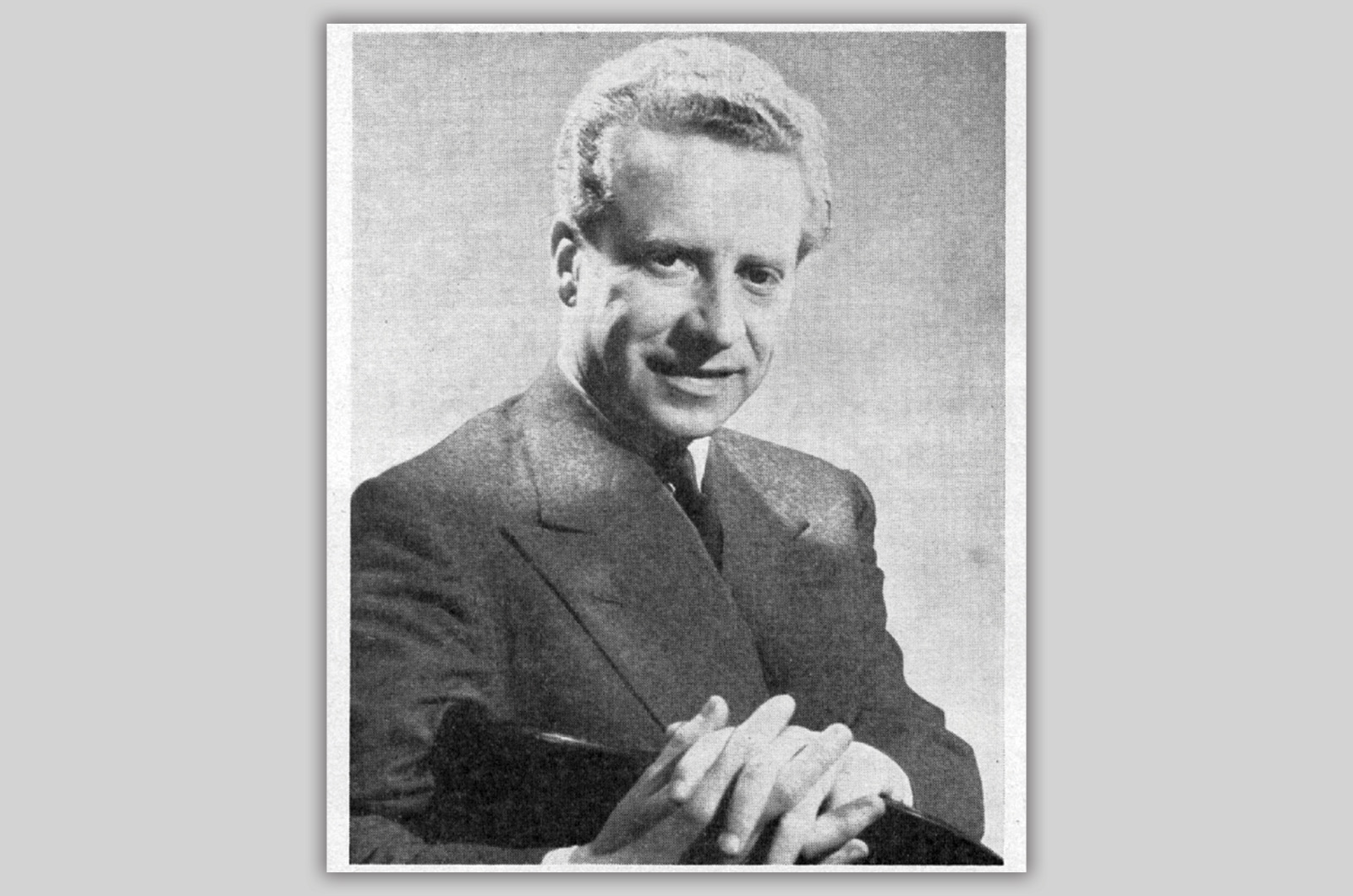
When John Coombs (pictured) brought his competition expertise to the road, it resulted in some of the most exclusive Jaguars of the 1960s

Ken believes that about 20 ‘real’ Coombs Mk2s survive, and he considers only two to be truly original. “Most of them have been got at,” he laments.

“For instance, Ken McAlpine was a friend of John’s from his Connaught days, and his Coombs Mk2 was BRG. I had that car in for a rebuild in the ’90s and it was dark blue.”

By the early ’80s, unable to endure the chaos of the British Leyland regime that came hand in hand with selling Jags, Coombs switched his allegiance to BMW.

He later sold up to a rival and retired to Monaco, presumably bemused by the amount of attention the hot saloons that bore his stamp were beginning to attract from collectors and fake-makers alike.

Images: Max Edleston

Thanks to: Peter Hugo, WinSpeed Motorsport


A Coombs congregation: friends reunited

Classic & Sports Car – Jaguar E-type, Mk1 and Mk2: John Coombs’ modified Big Cats

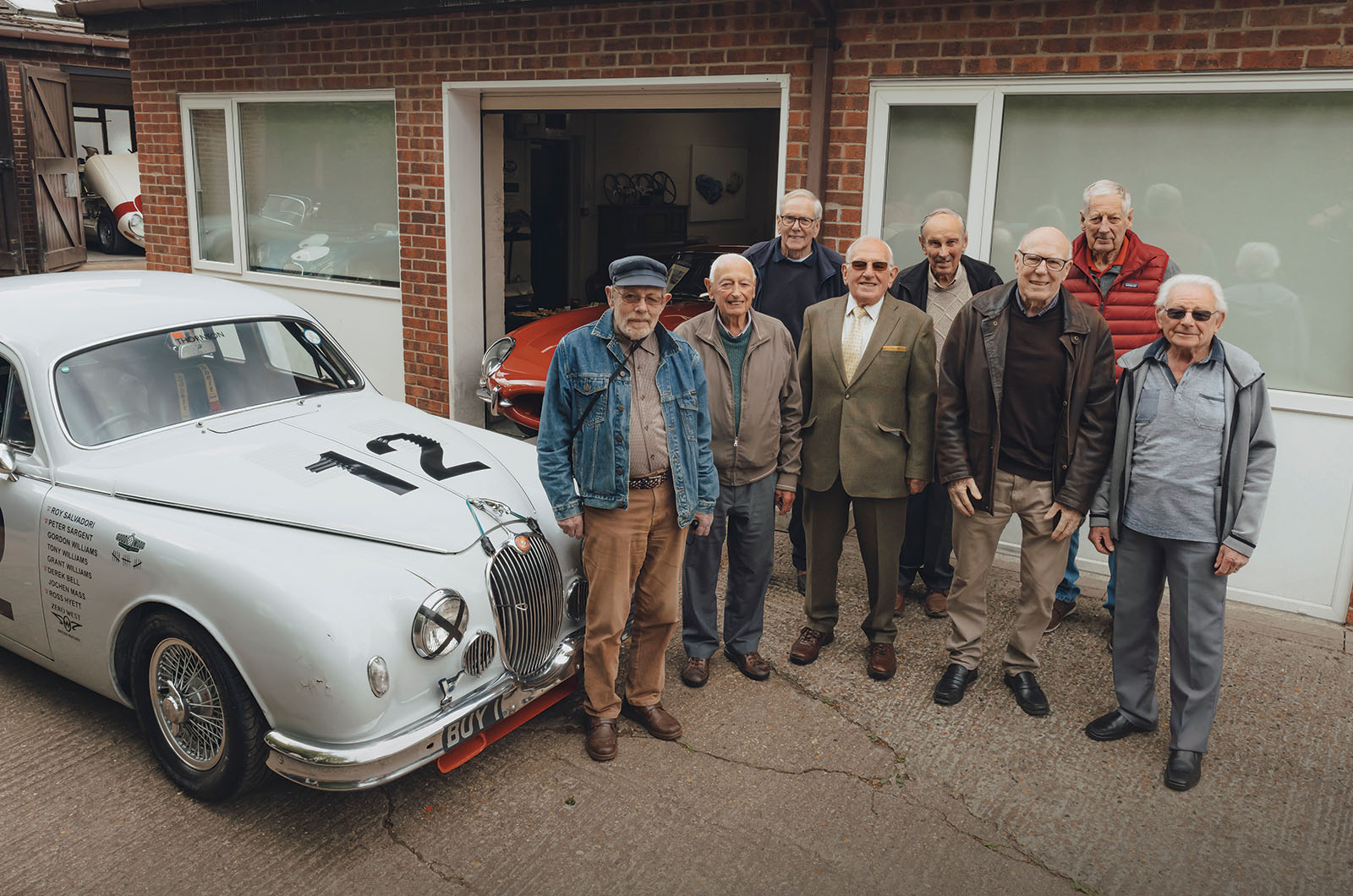
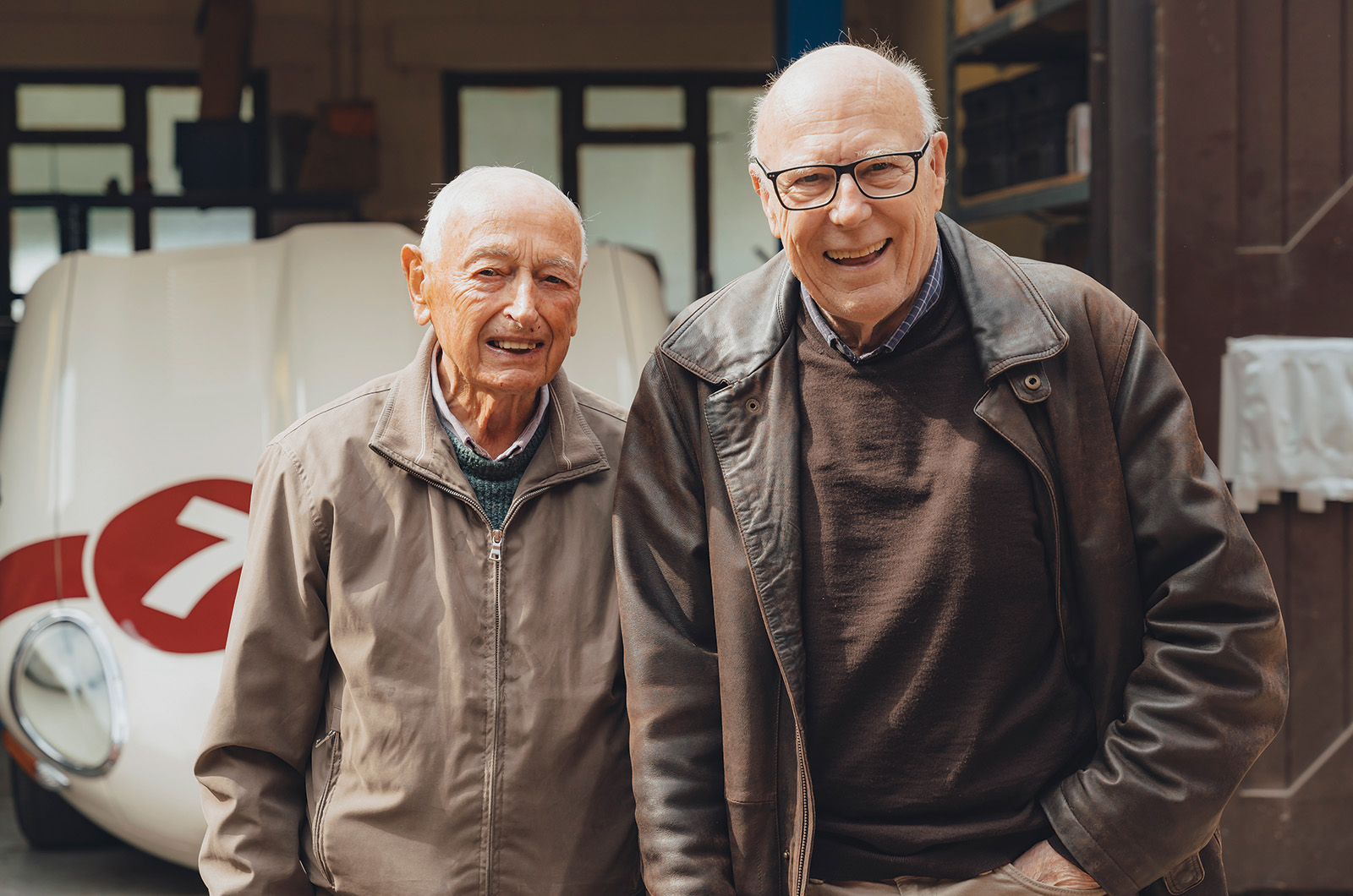
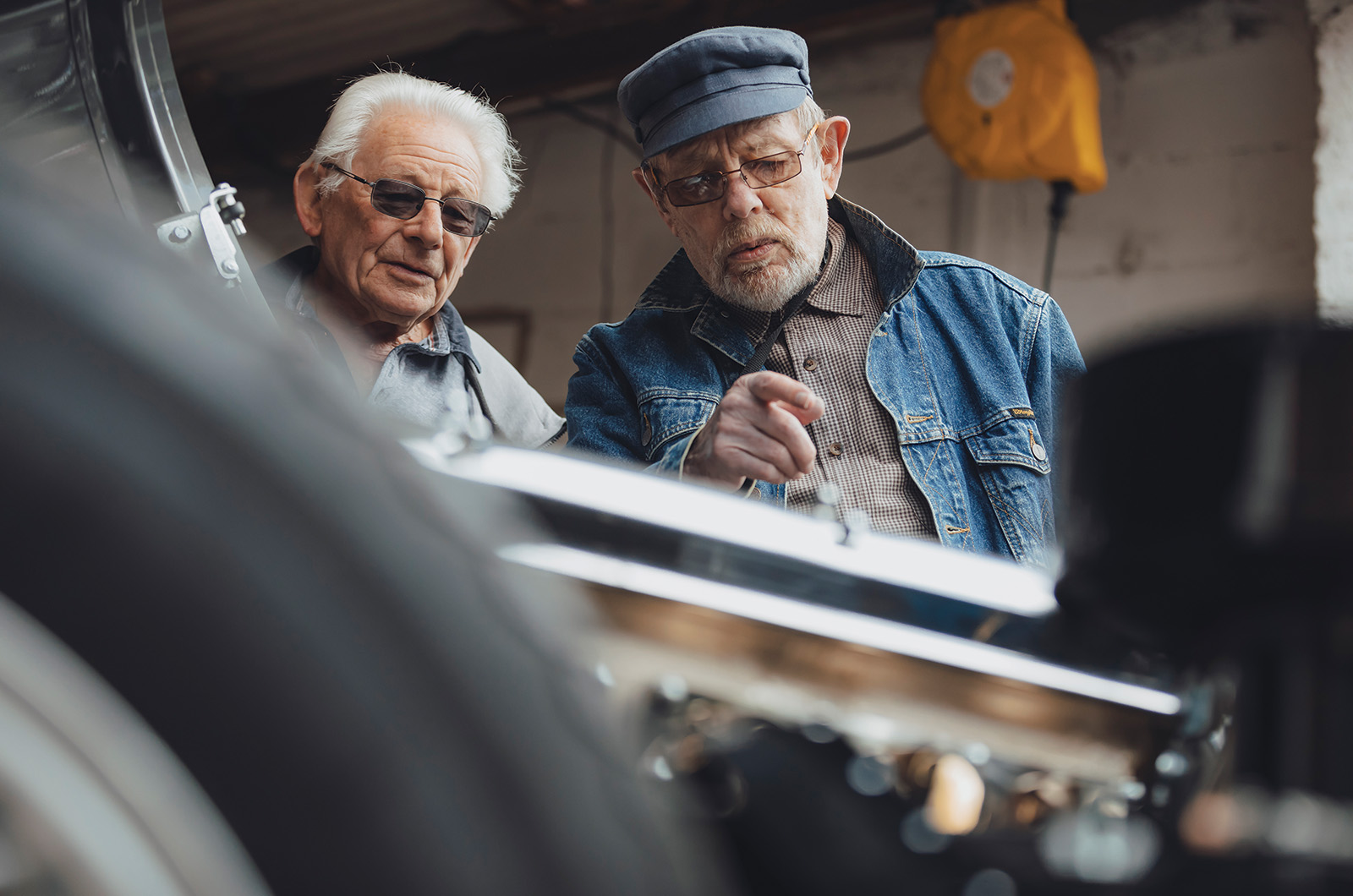
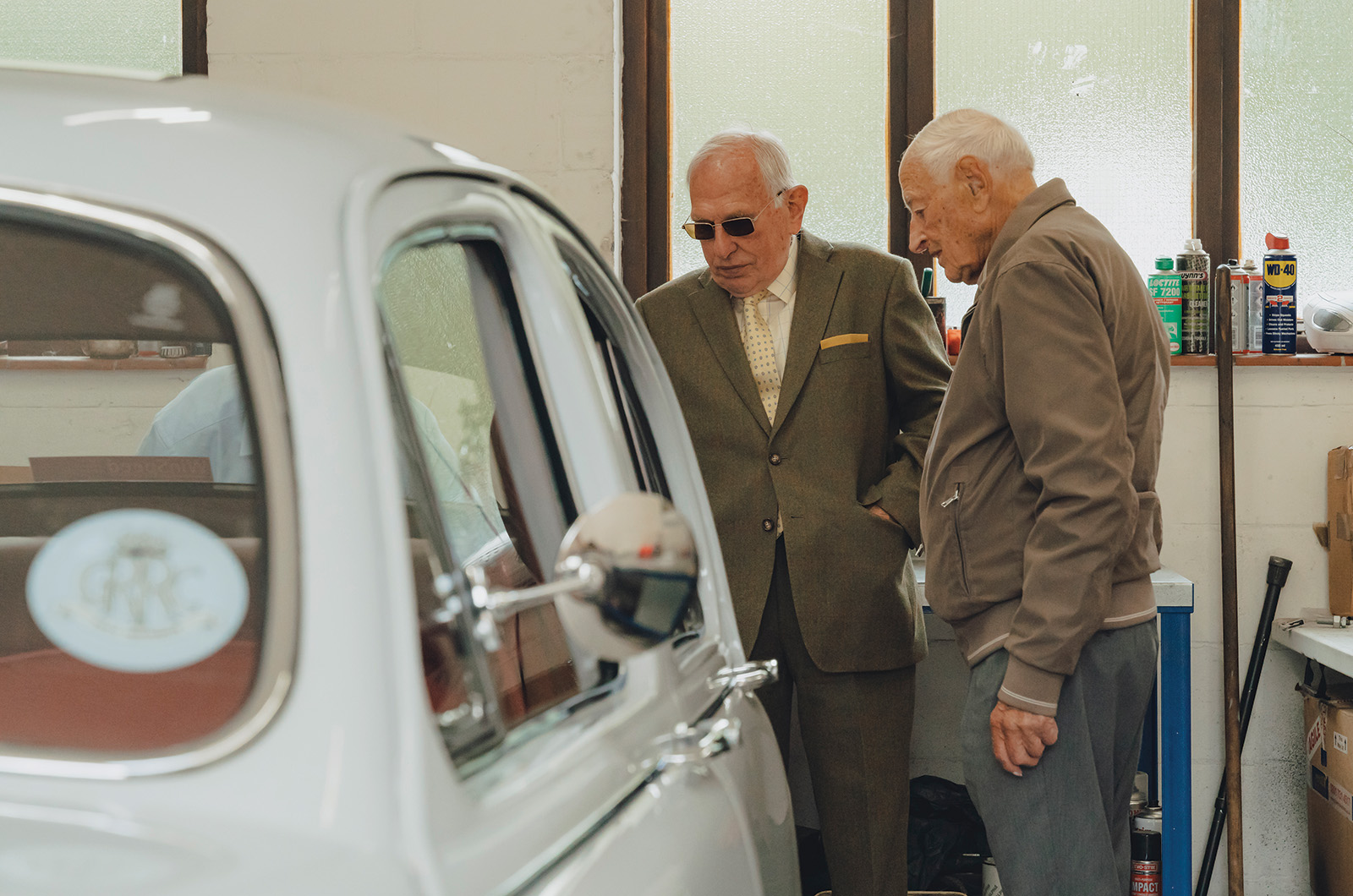
Former Coombs team mechanics, from left-right: Mick Mortimer, Eddie Best, Gordon Lambly, Dave Turner, Ken Bell, Richard Grimmond, Mike Reach and ‘Kipper’ Haskell

Thanks to Peter Hugo at WinSpeed Motorsport, we were honoured to meet the surviving Coombs & Sons mechanics during our photoshoot. 

Ken Bell started as an apprentice in 1958. Mike Reach worked on the Coombs E-type in period, having begun his career with Rob Walker, while Richard Grimmond and Dave Turner both started their careers at Coombs. 

“‘Handsome’ Jack Chandler was the foreman,” recalls fellow Coombs alumnus Gordon Lambly. “The first thing he told me was: ‘If you see a ginger man coming, make sure you are doing something.’”

Classic & Sports Car – Jaguar E-type, Mk1 and Mk2: John Coombs’ modified Big Cats

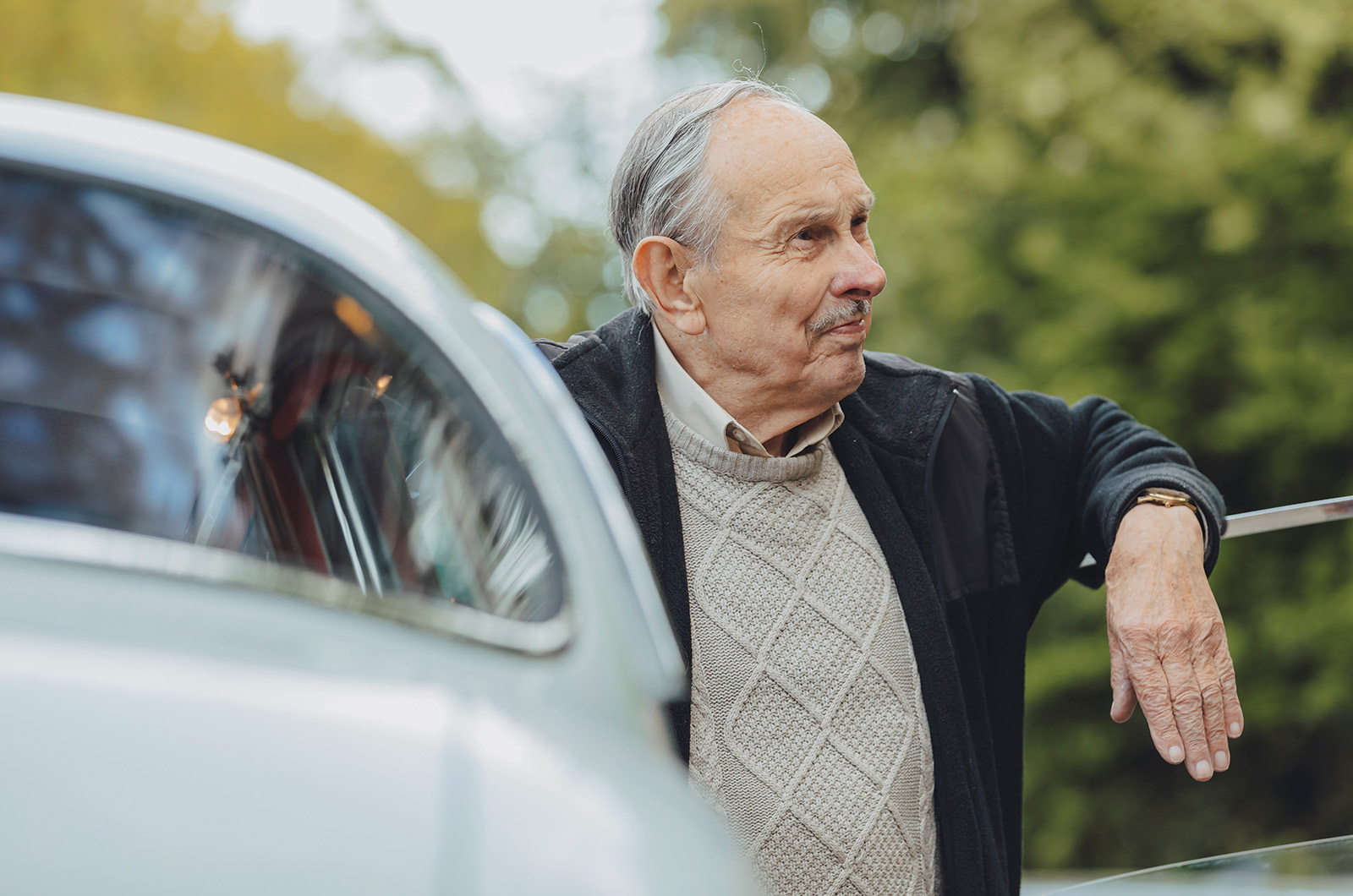
Ken Bell (above) joined Coombs & Sons in 1958; he kept notes about the cars that came through the works

The red-haired man in question was the boss, the famously irascible Coombs: “If you were, say, waiting at the stores and Coombs saw you, he would say, ‘What are you doing, boy? Come with me…’

“You would follow him right through the whole building, through the showrooms and everything, then he’d turn round again and say, ‘What are you doing, boy?’!”

“One day,” recalls Mick Mortimer, “I cut myself while stripping out a damaged car. Jack was first aid, so I went to see him at reception and asked for a plaster.

“‘What have you done there, then?’ he asked. I wasn’t watching what he was doing, but he just reached behind him then whacked me across the finger with a screwdriver and said, ‘You won’t do it again now will you?’”

Classic & Sports Car – Jaguar E-type, Mk1 and Mk2: John Coombs’ modified Big Cats

Eddie Best (left) and Richard Grimmond recall stories about their time at Coombs & Sons

Gordon recalls a MkIX Jaguar coming into the Coombs bodyshop: “We had to respray it in two-tone black, with a gloss lower half and a matt upper half.

“We were under strict instructions not to put greasy hands on the matt finish. Later, another garage mistakenly polished it, so it had to all be done again!”

Another staff member reportedly lost his finger in a bizarre incident with a Rolls-Royce bonnet that hinged in the middle, while it was being lowered down from the stores.

“A man we called ‘Uncle Tom’ worked underneath on Rovers,” says Gordon. “After things had calmed down, he quietly said: ‘If anybody’s interested, Jim’s finger is in an envelope in the office.’”

Classic & Sports Car – Jaguar E-type, Mk1 and Mk2: John Coombs’ modified Big Cats

‘Kipper’ Haskell (left) remembers driving the boss’ Jaguar D-type; Mick Mortimer (right) found out about Coombs & Sons’ dubious first-aid procedures the hard way

“All the guys at Coombs were real enthusiasts,” continues Mick. “There was something about the place. We always felt that it was a privilege to work there. We looked down on all the other garages.

“When a car came in for service, we were always told to take it out and make sure it would do its maximum speed. So it was straight into an E-type to do 150mph!

“A few people ditched them, mind. One of the foremen, Alf Moore, was killed when he was driving a Mercedes and hit a bridge at such a speed it came off the floor and the suspension flipped it.”

Classic & Sports Car – Jaguar E-type, Mk1 and Mk2: John Coombs’ modified Big Cats

Dave Turner (left) and Eddie Best were reunited with their former colleagues

‘Kipper’ Haskell has fond memories of the harsh-but-fair taskmaster Coombs: “We were sent down to work on his boat in Chichester harbour and managed to find the bar… Another time I was given the job of giving his D-type a blast up the road to clear the plugs.

“He was not always the easiest of men to get on with – I remember a load of us walked out for four days once, after a big row – but he looked after us. He even loaned me the money to buy my first house.”


Enjoy more of the world’s best classic car content every month when you subscribe to C&SC – get our latest deals here


READ MORE

Jaguar E-type by Frua: if it ain’t broke…

Jaguar Mk2 2.4 vs BMW 1800 vs Alfa Romeo 1300 TI: Continental challenge

Egal E-type: thunder cat