“But when Dragoni heard that Gianni Agnelli would be watching the race, he decided my co-driver Scarfiotti [who was related to Agnelli] would drive from the start,” he said.
“I reminded him that I was faster, but Dragoni was immovable. I jumped into my 330 and drove flat-out, there and then, to Maranello, and went in to see The Old Man.
“I told him I’d joined Ferrari to win races, not get involved in politics. That was our divorce.”
While Surtees returned to England, Fords finished 1-2-3-4 at Le Mans, leaving the Italians in their wake.
‘Who knows, maybe this Ferrari 330GT was even signed off by The Old Man himself, before his star driver received the keys’
Precisely when Surtees sold the car is not known, but it was soon after he returned home, possibly in 1967.
It was bought by someone based in Switzerland and then involved in a road accident, with repairs made soon afterwards.
Chassis 6981GT then spent the next 45 years in the USA, first received by Ferrari’s East Coast importer, Luigi Chinetti Motors, in around 1970.
After being purchased by William A Chisholm, it went to California, and at some point it was registered 093 AGT.
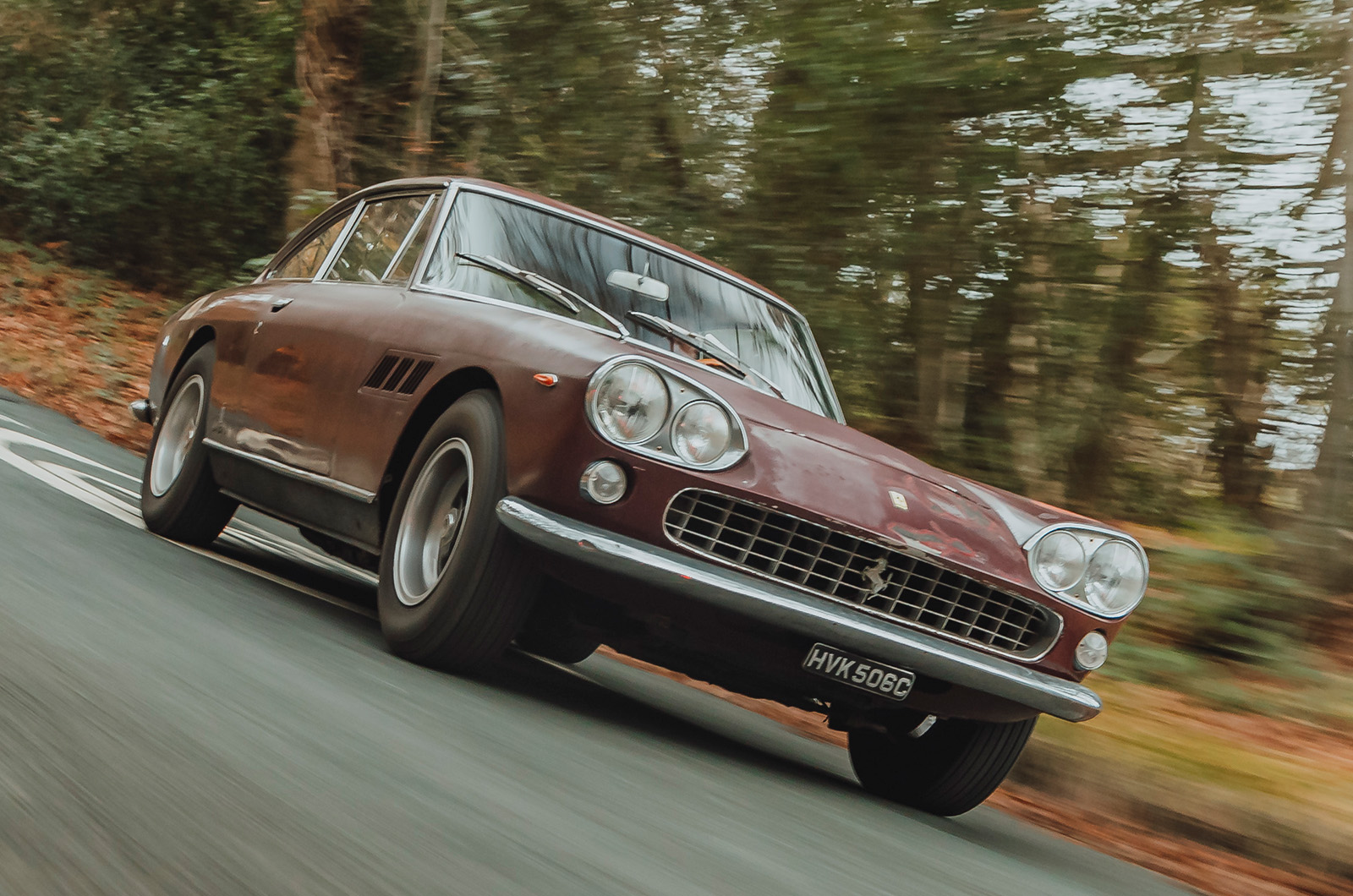
The Ferrari 330GT’s steering provides generous feedback at speed
There is no record of when or why, but by the time it reached its second Californian owner, Garry Roberts of Costa Mesa, in June 2000, only the engine block remained of its drivetrain, and the car was presented as a project.
Around a year later, 6981GT changed hands once more, with Richard McClure its new keeper.
Roberts had retained the block, and from then until current custodian Alan Catterall found the car in Bethany, Missouri, after it had passed through three more US keepers, the whole drivetrain was absent.
After bringing 6981GT back to the UK, Alan sourced a correct Tipo 209 engine and later, single-mount gearbox, which was fitted by Bill Goodall at Newland Motors in 2017.
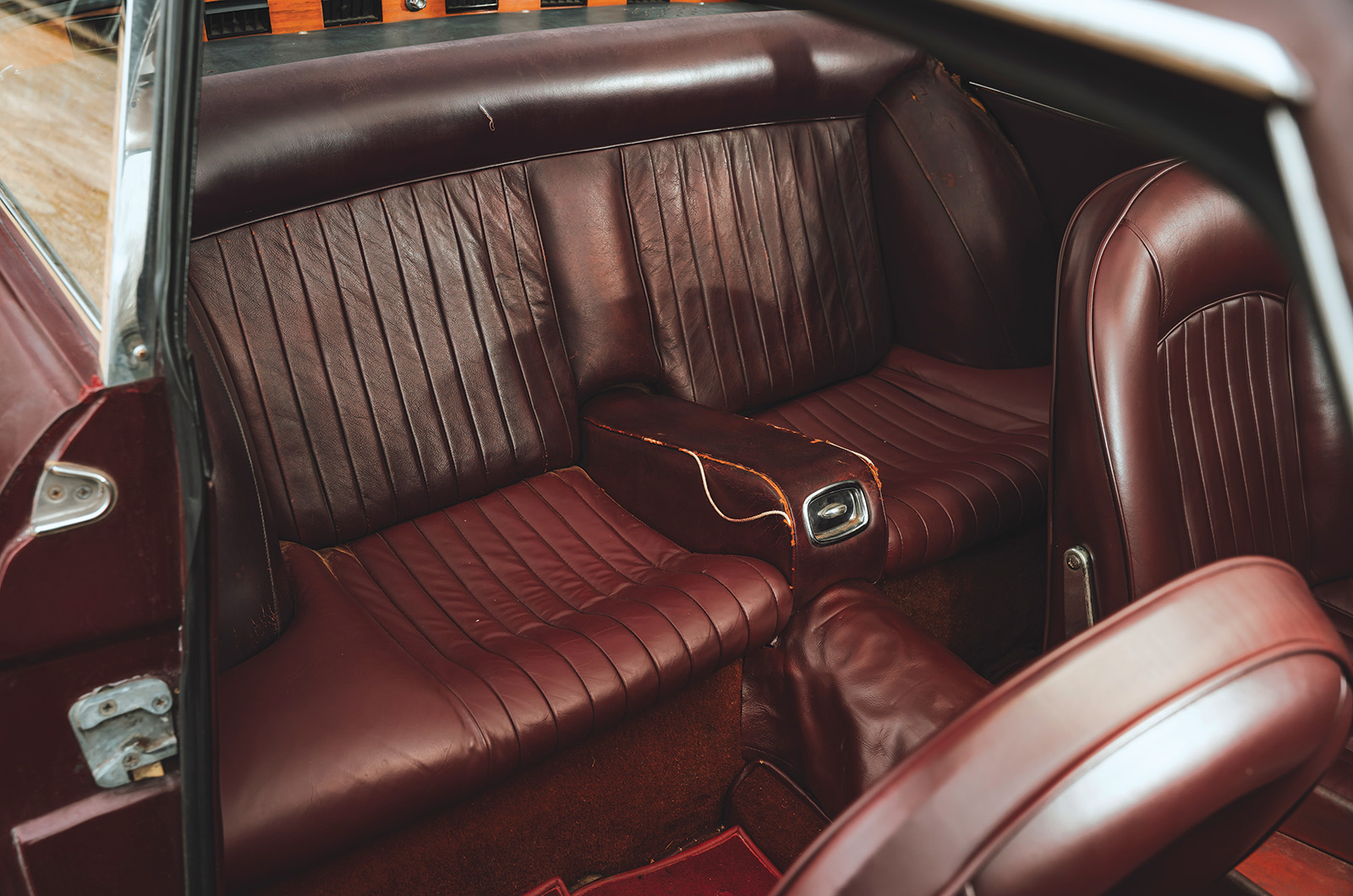
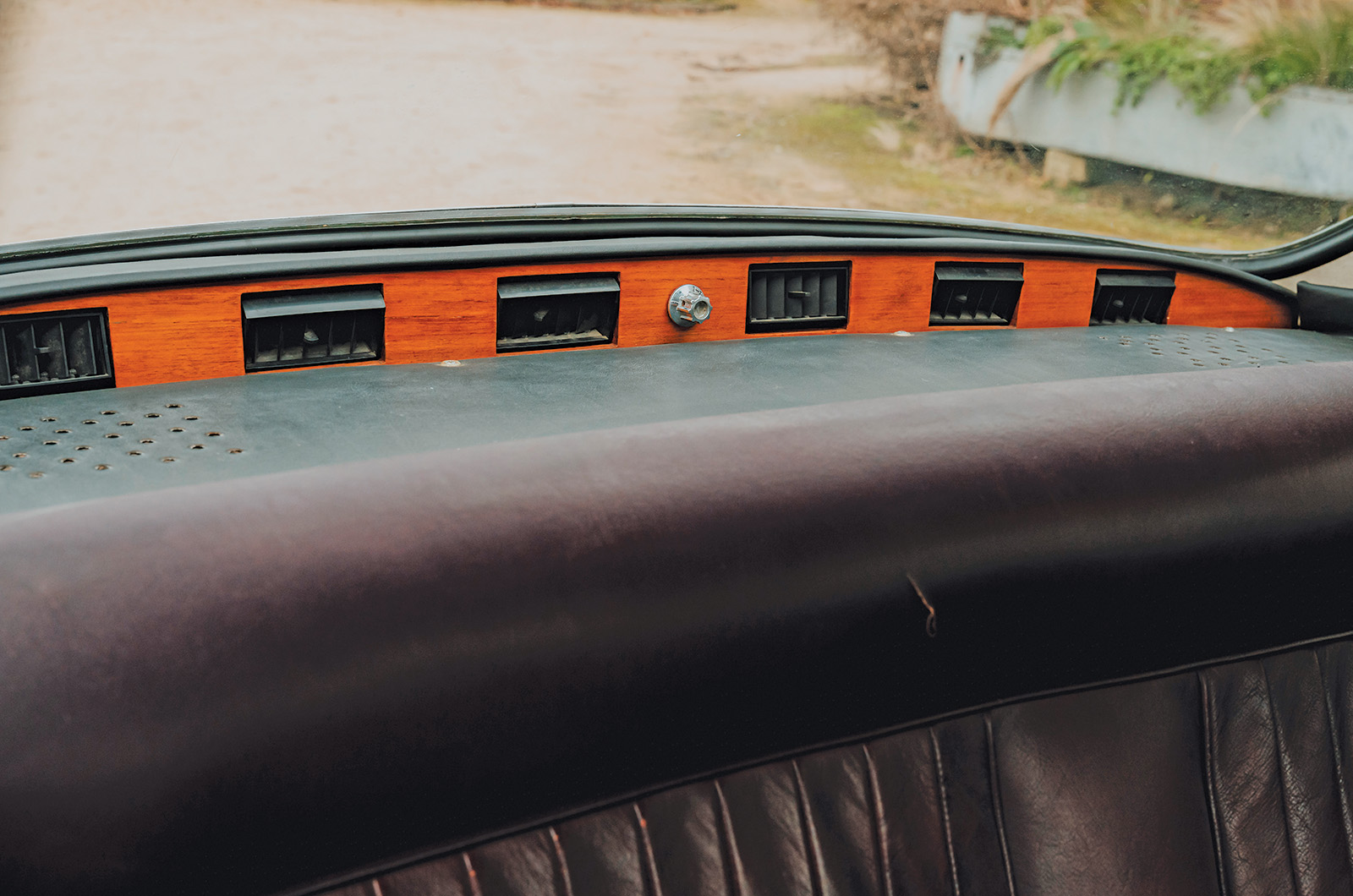
The Ferrari 330GT’s aftermarket air-con uses vents under the rear ’screen
After some teething problems, cured at SMG Engineering by replacing the gearbox with an age-appropriate two-mount unit and rebuilding the engine’s top end, the Ferrari 330GT was at last representative of how it would have been during Surtees’ ownership.
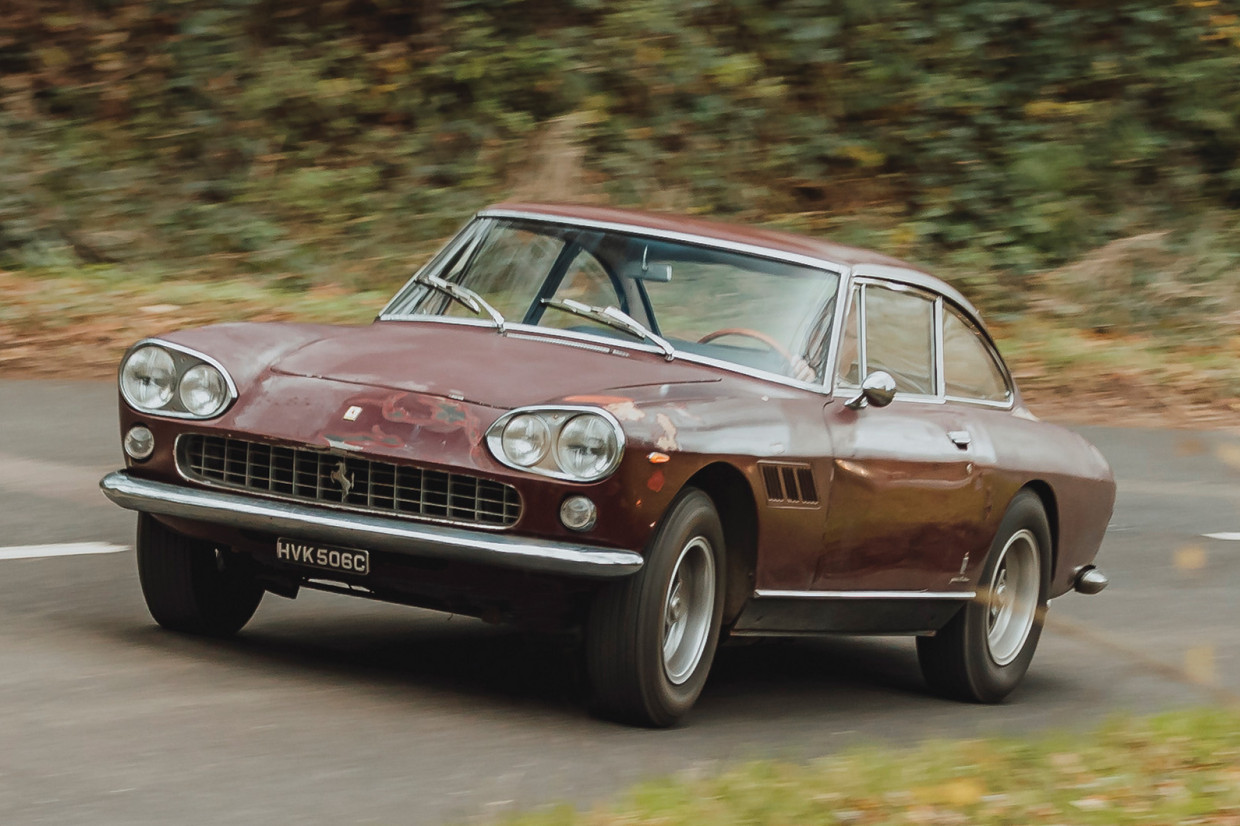
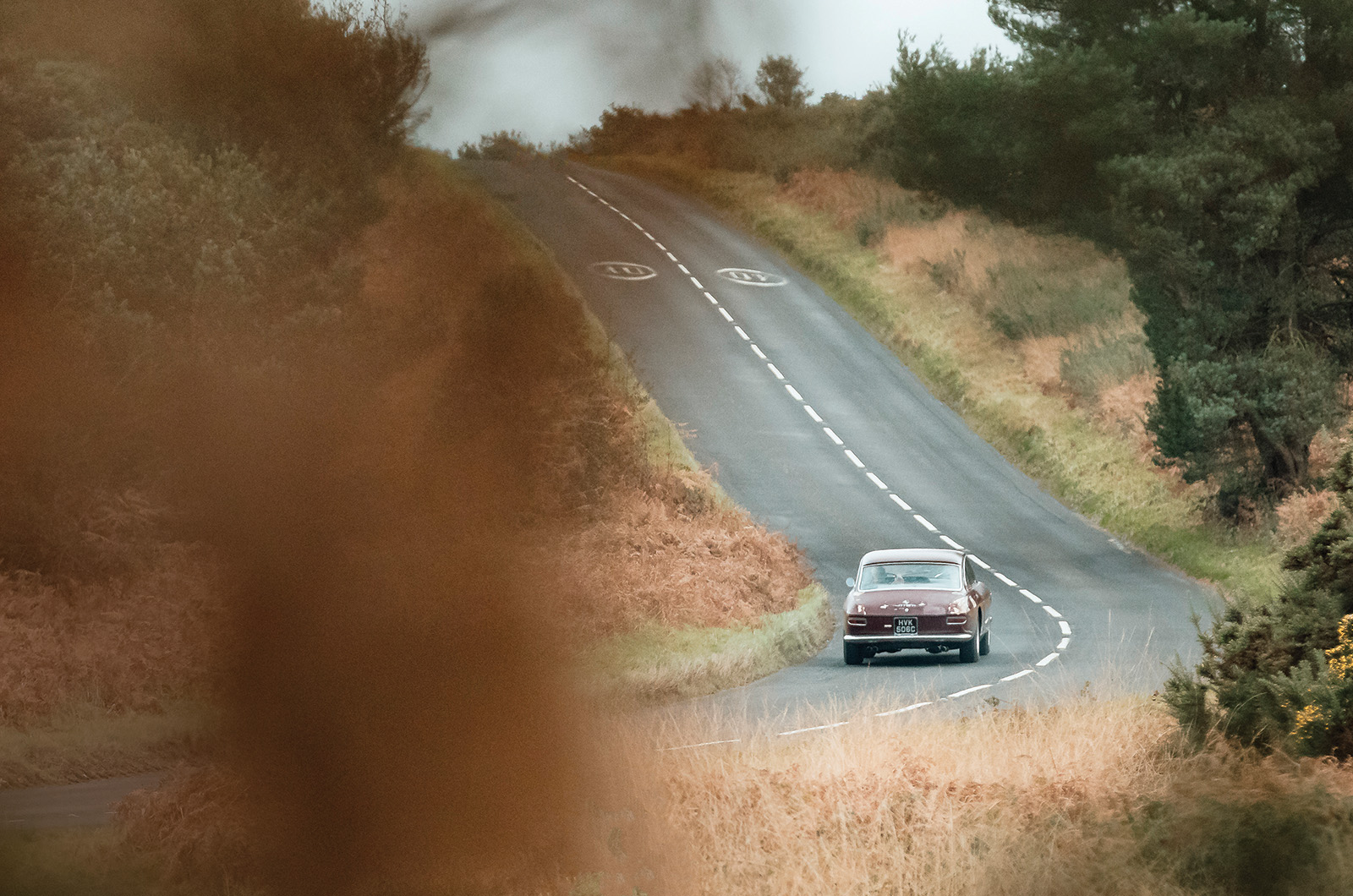
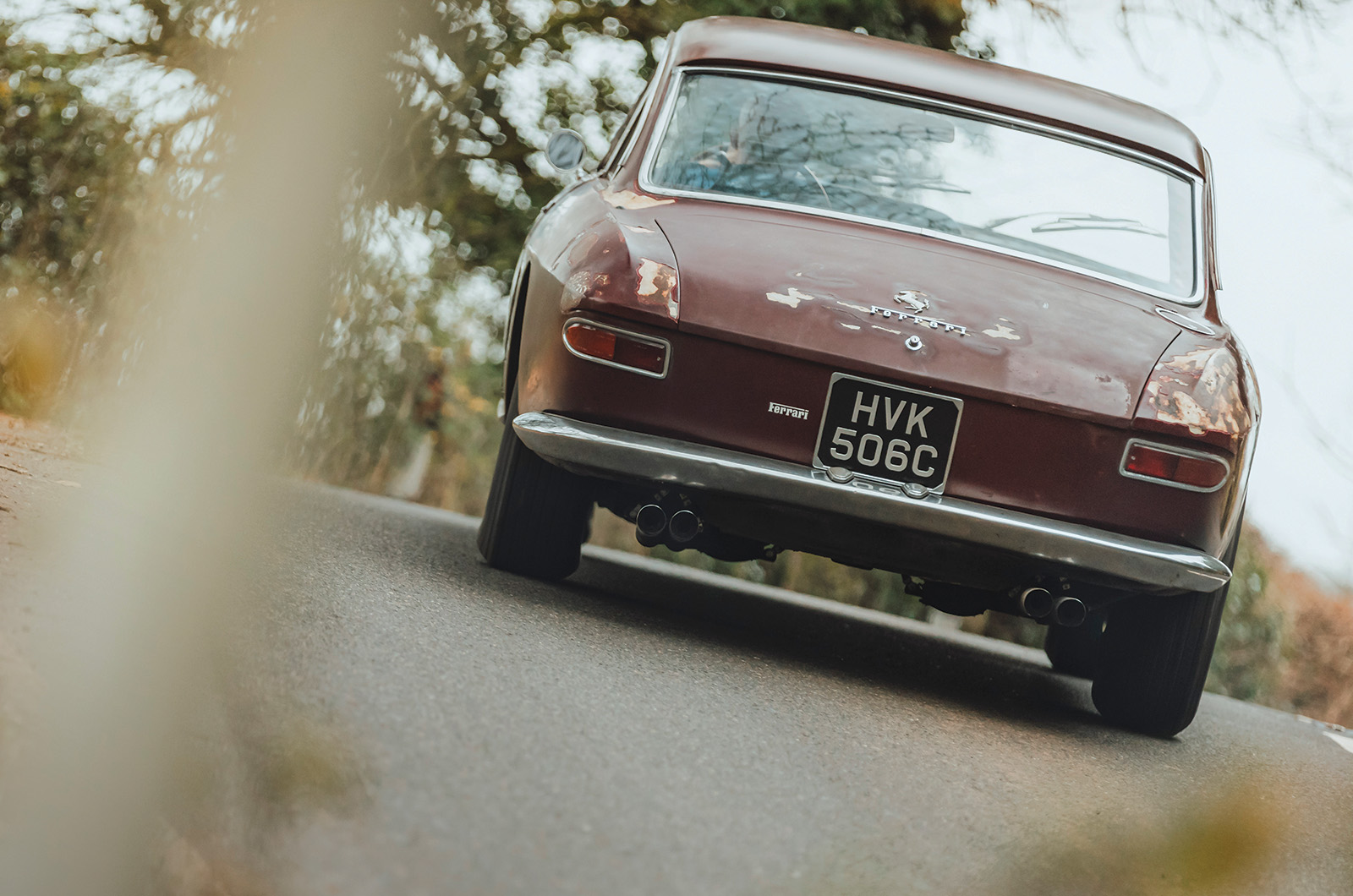
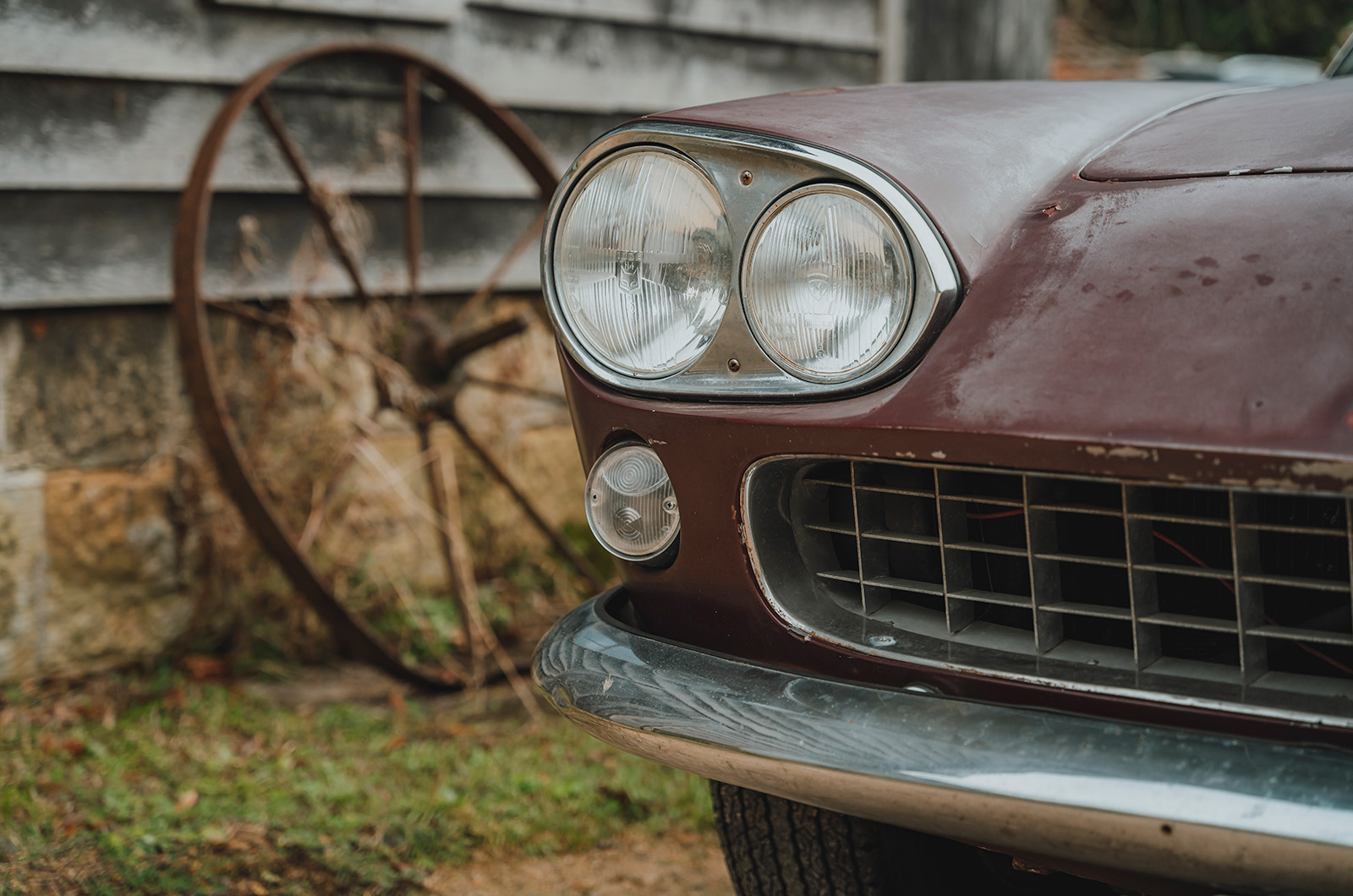
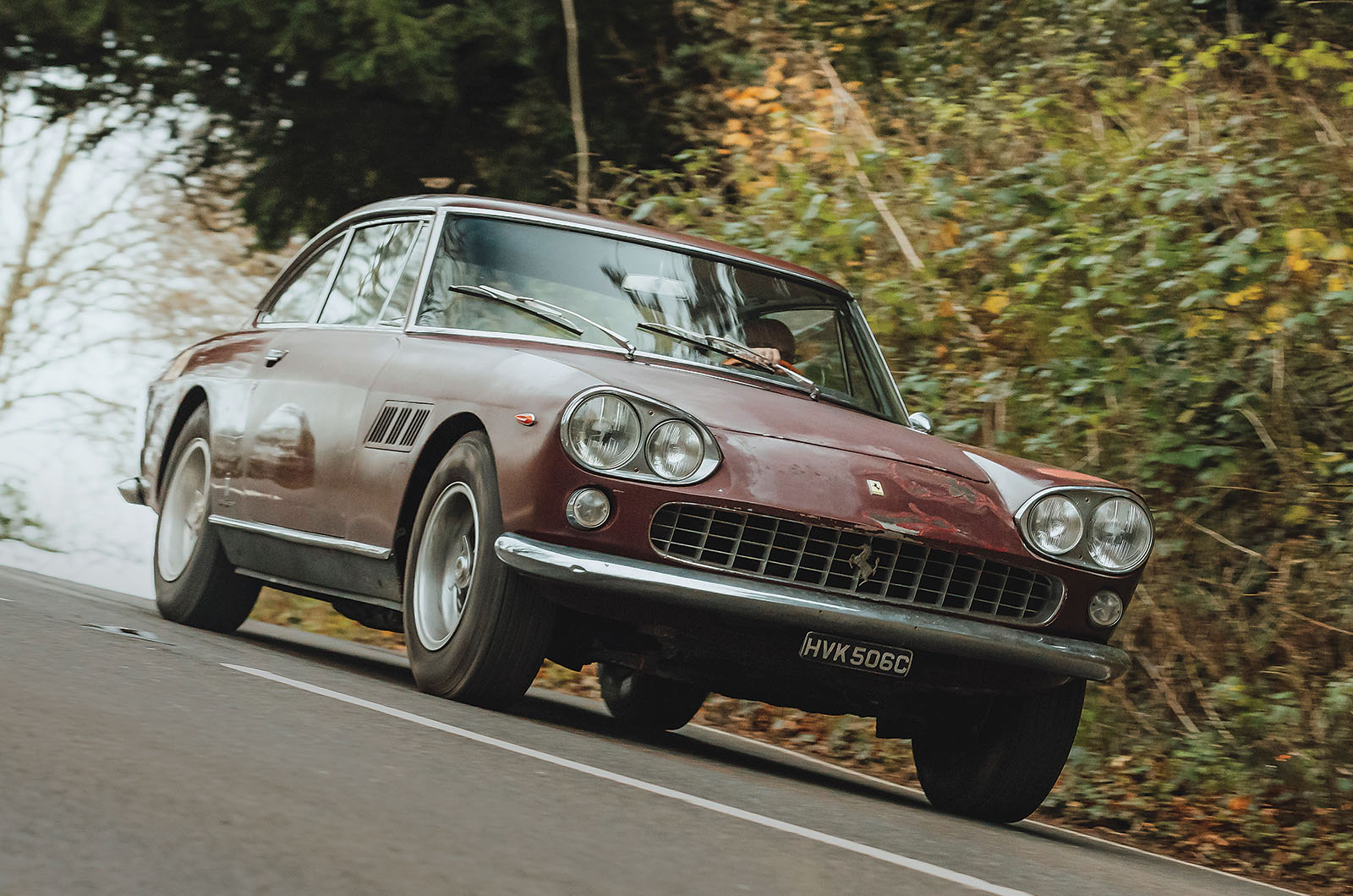
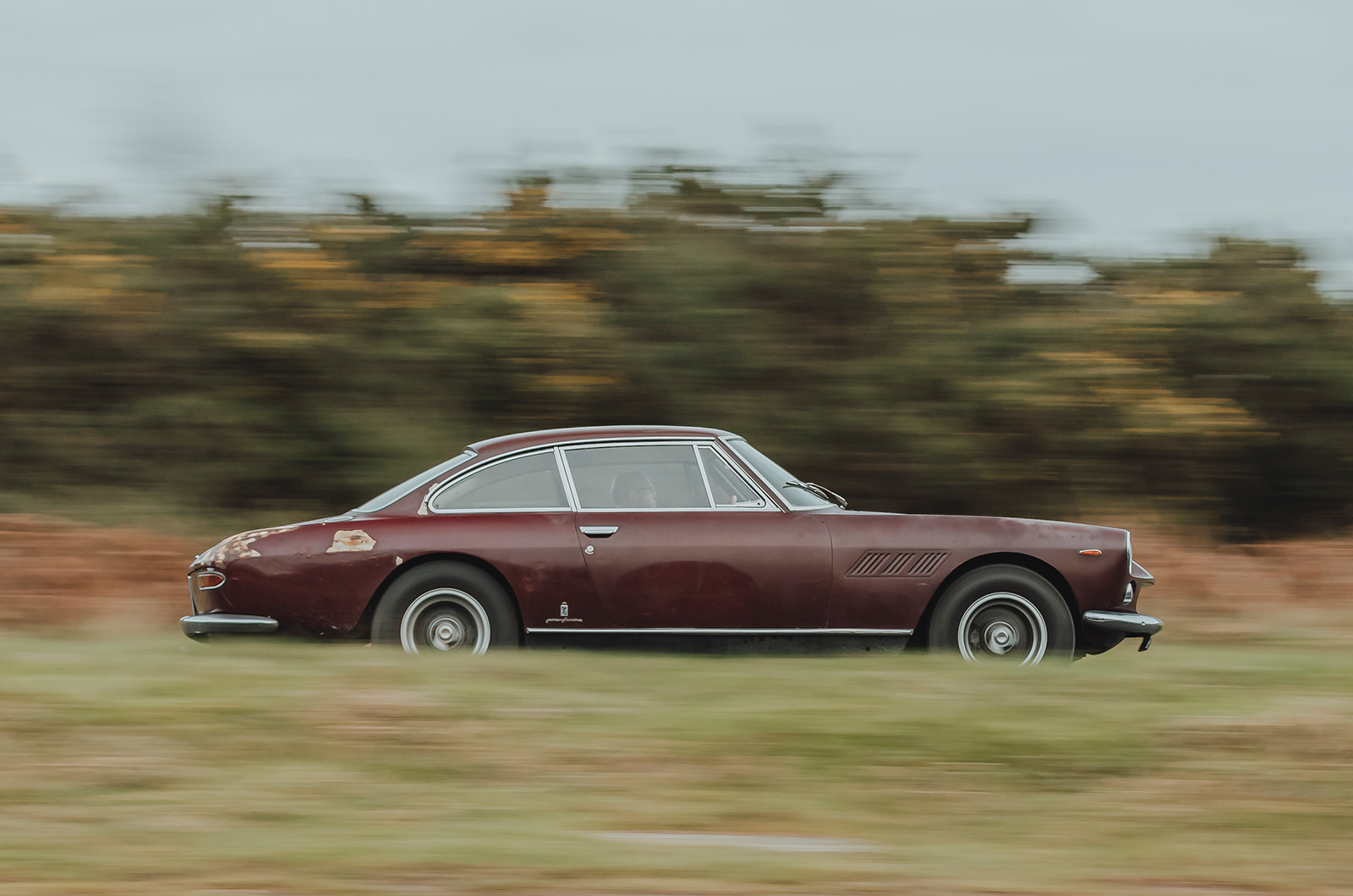
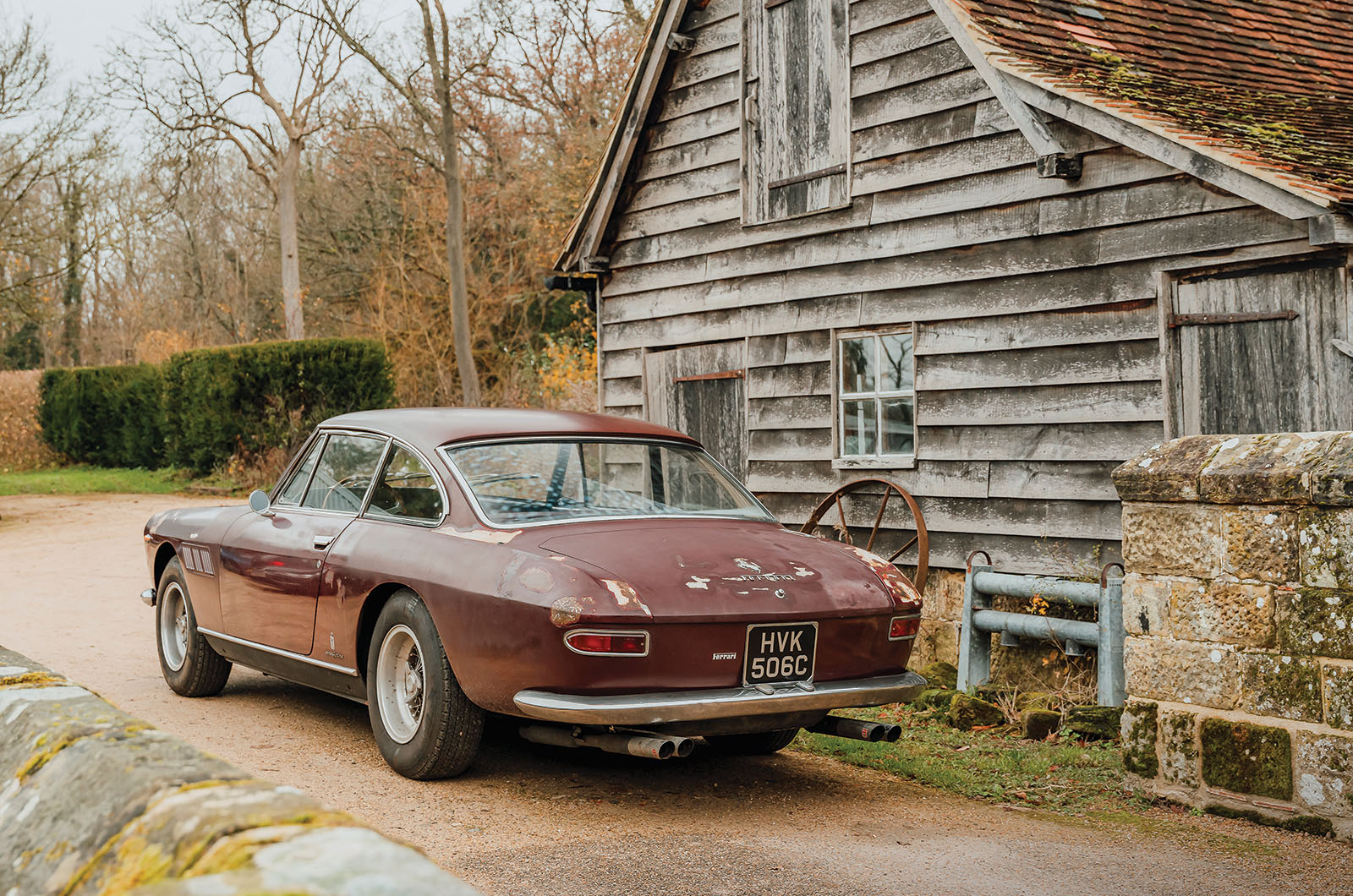
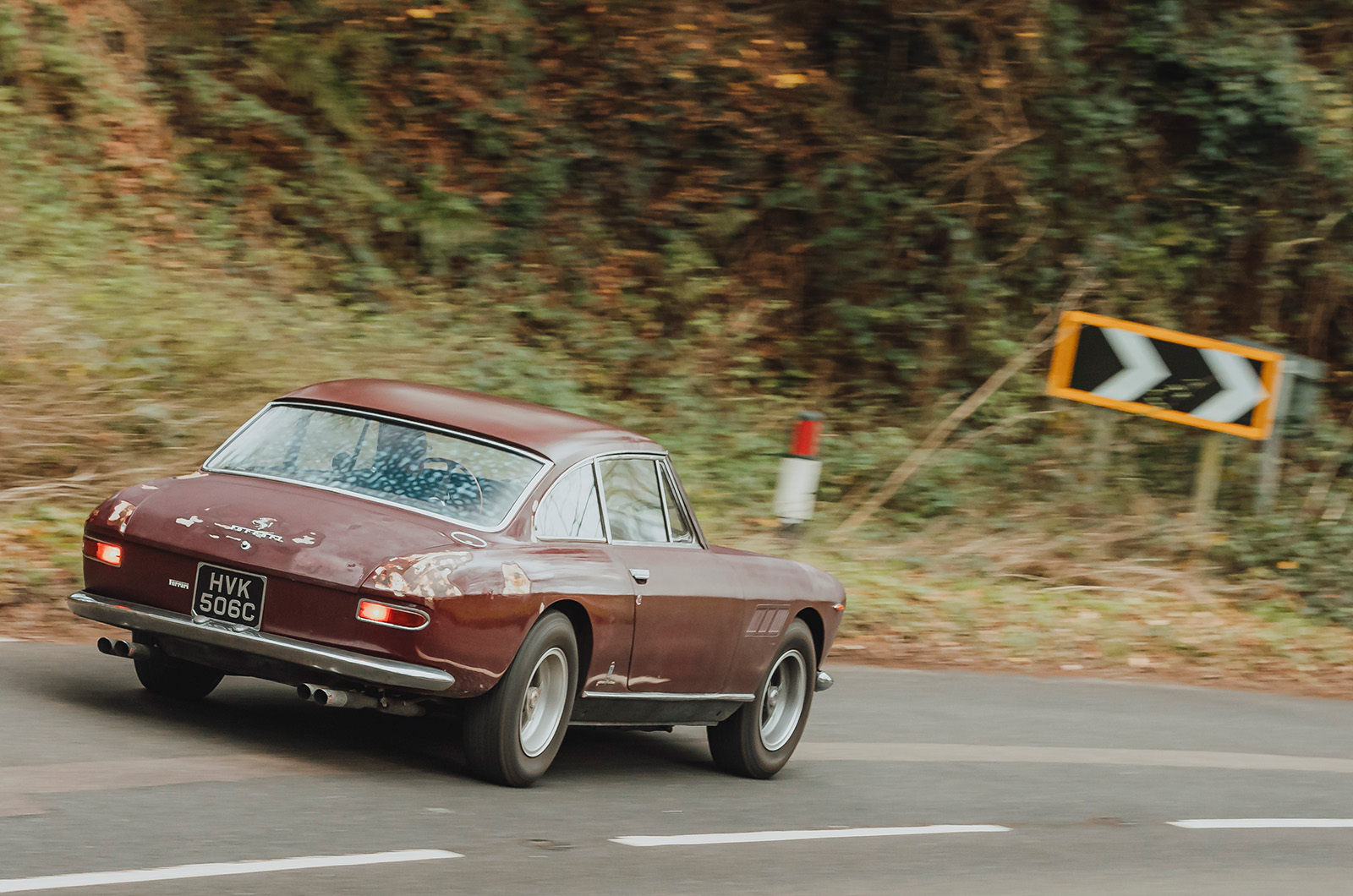
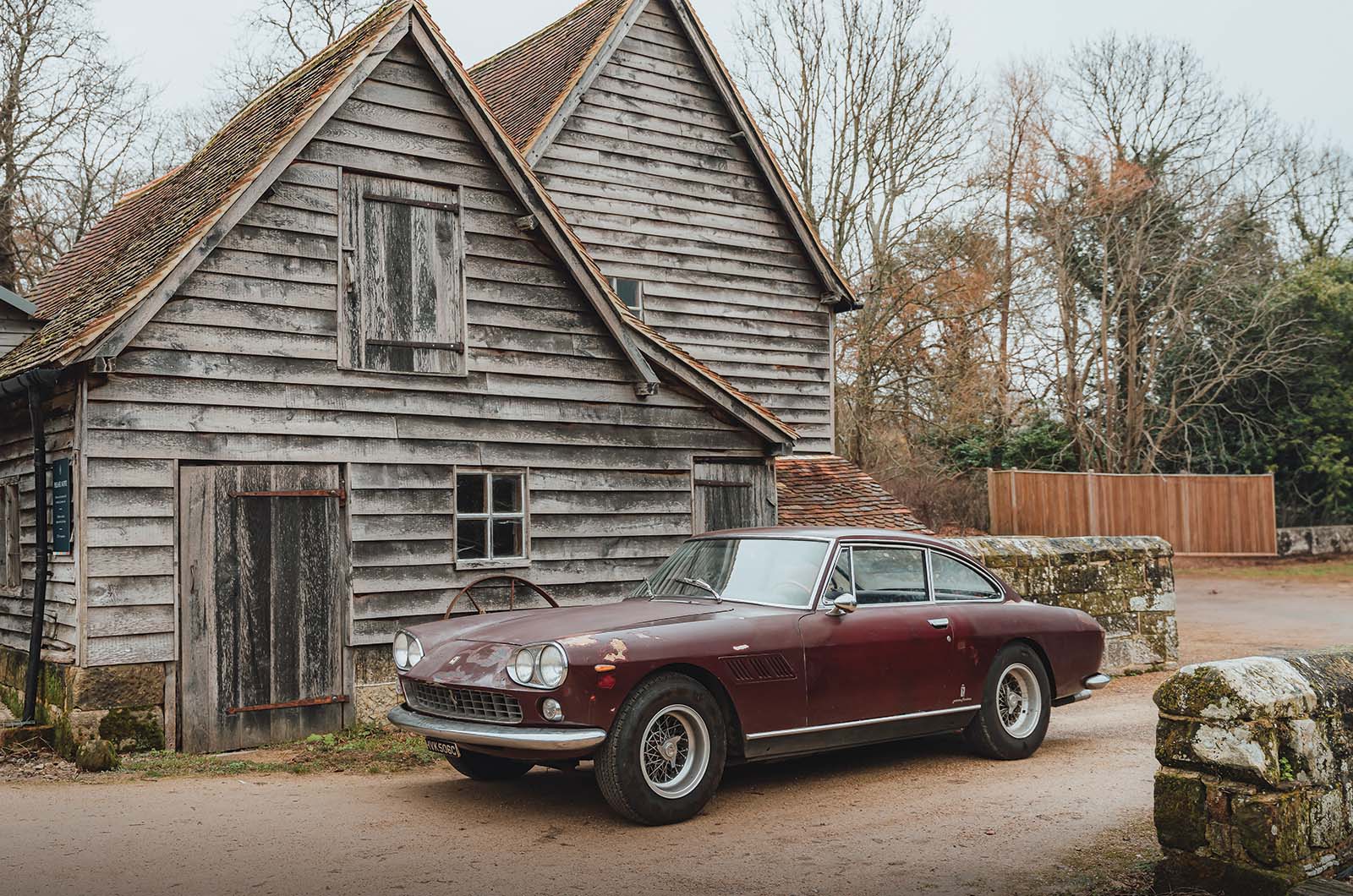
Today, 6981GT – wearing the period-correct UK registration HVK 506C – is a joyously battle-scarred and impressively authentic time capsule.
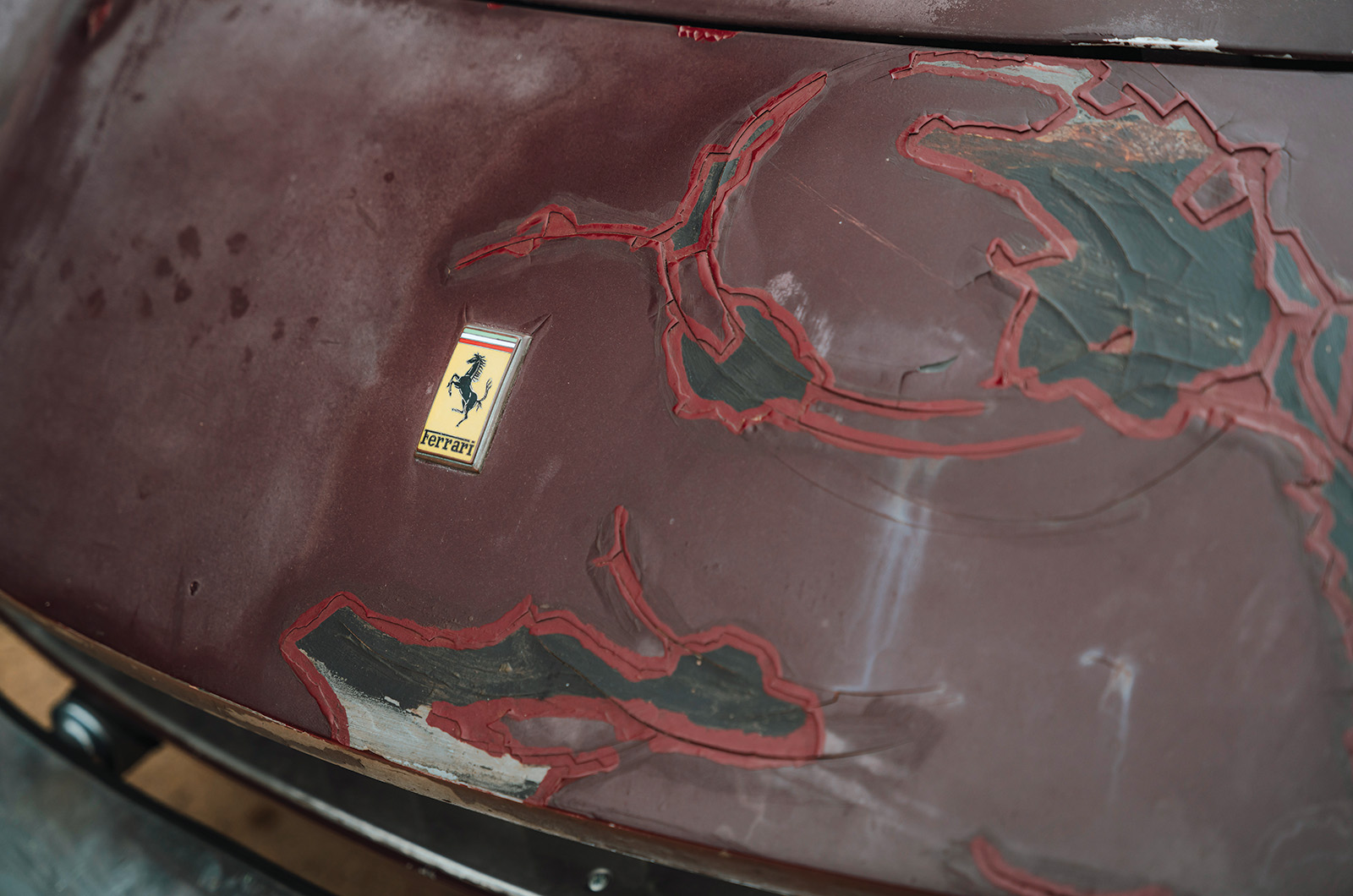
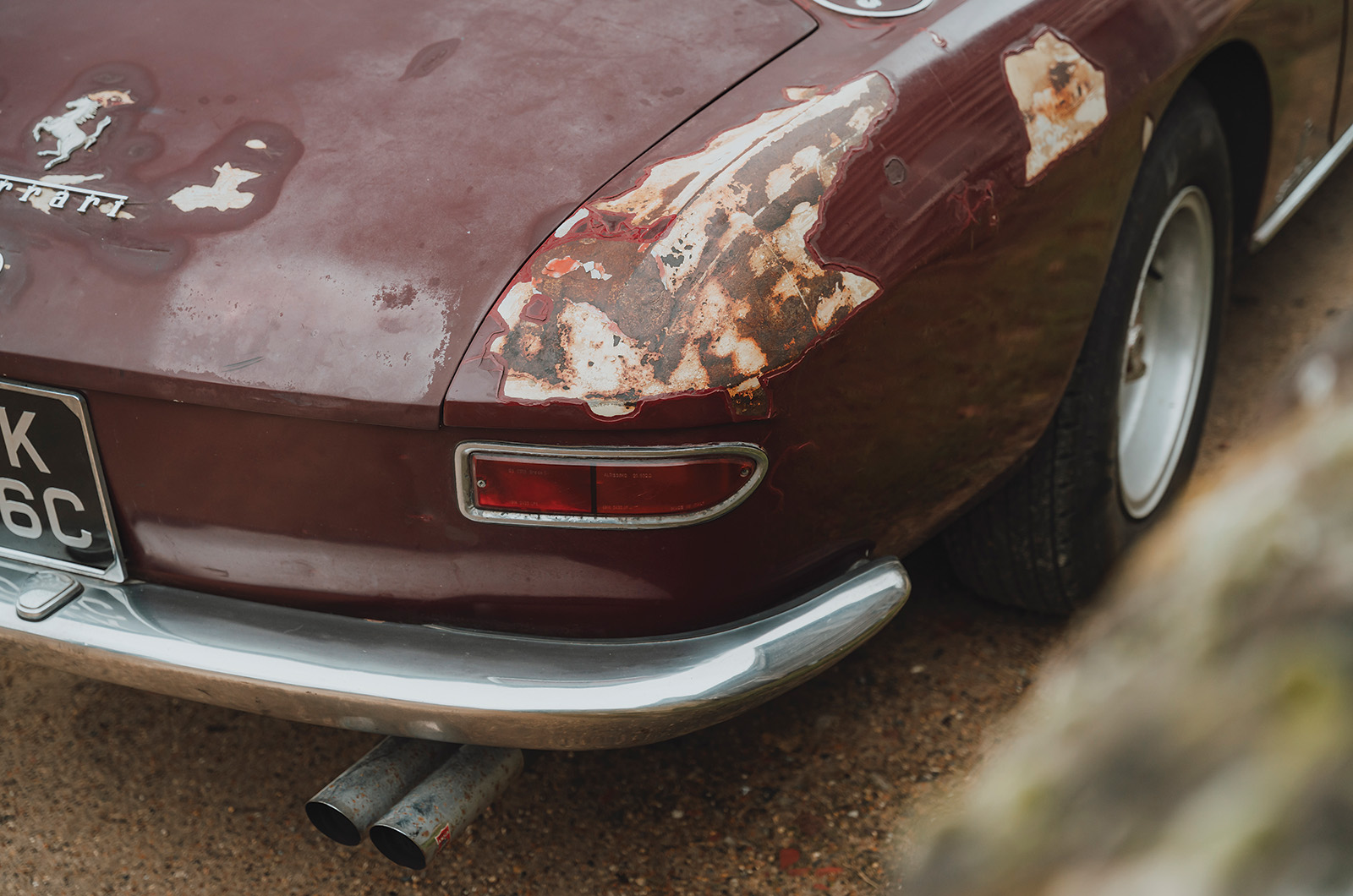
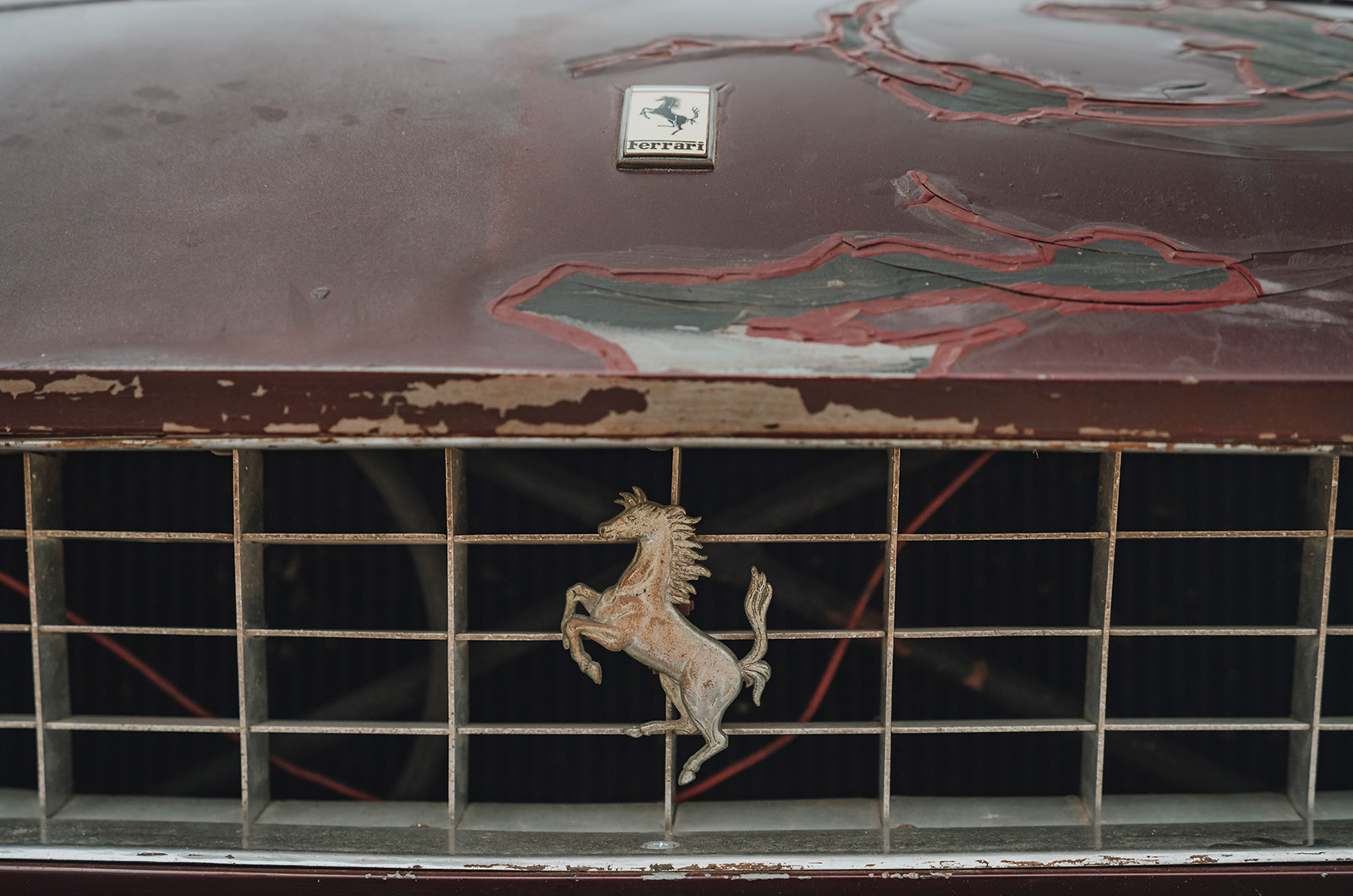
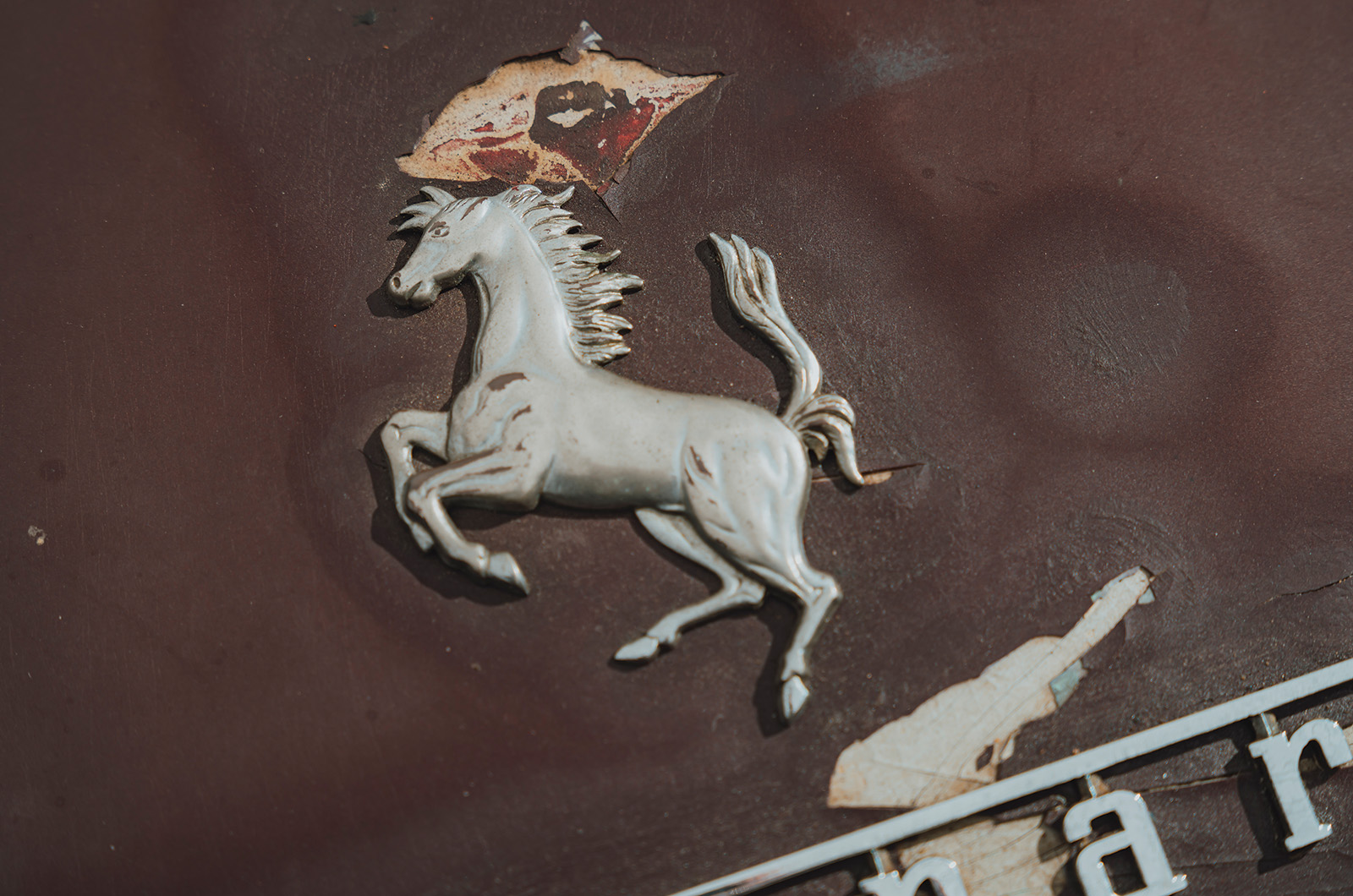
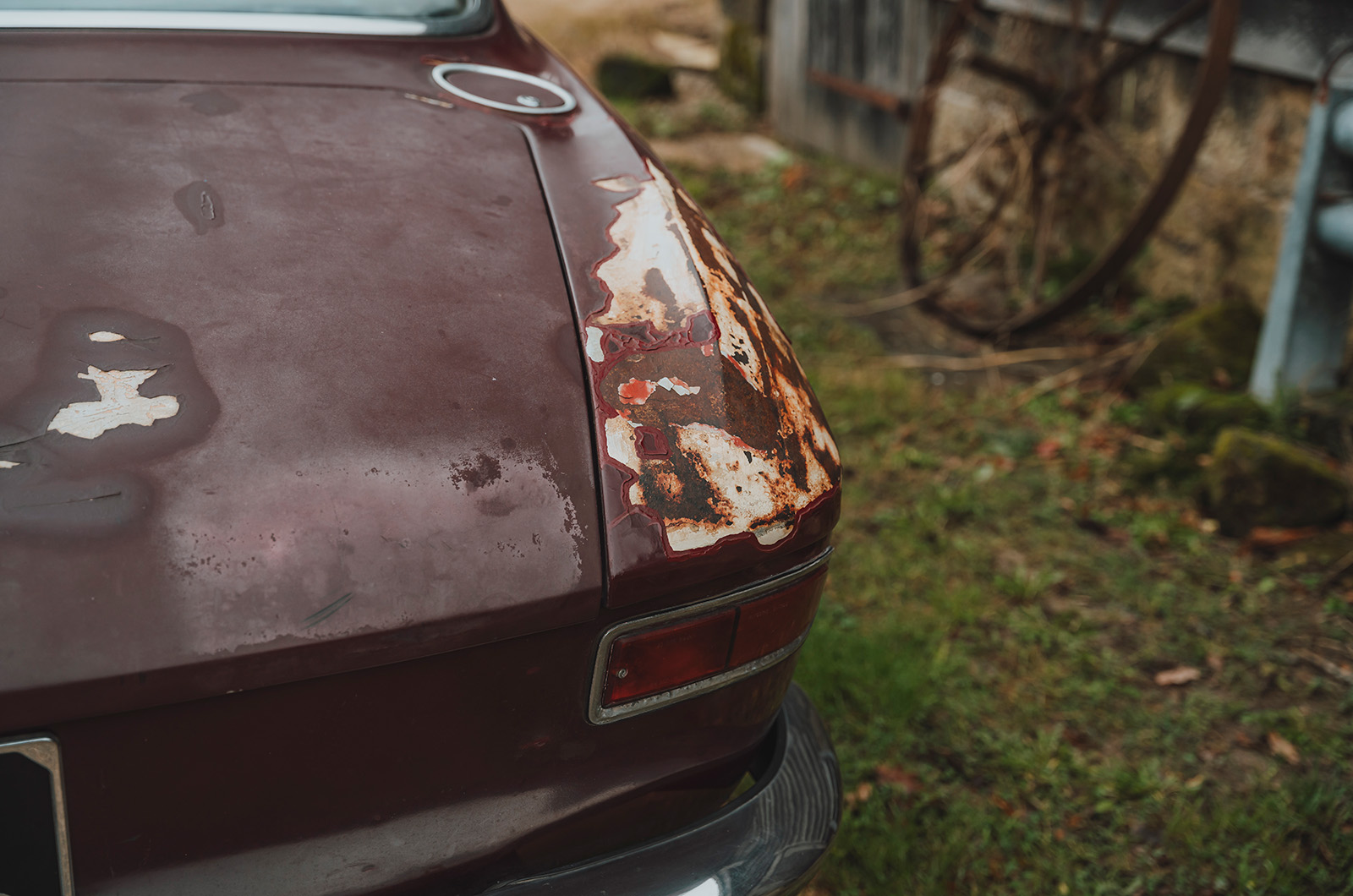
That its original paint, coachwork and most of its interior are unmolested and have been left to age gracefully means that each owner’s indelible marks – including those of John Surtees – are literally and metaphorically etched into the car’s fabric.
The Ferrari 330GT’s original Amaranto paintwork remains
Who knows, maybe this car was even signed off by The Old Man himself, before his star driver received the keys.
For me, the 330GT 2+2 remains one of the most handsome Ferraris of the 1960s.
Less blocky than the 250GTE it succeeded and far sleeker in profile than the technically more sophisticated 275GTB, even this interim model’s quad-headlight arrangement – a sop to North American tastes – lends it an imposing quality somehow lost with the later, twin-light model.
Alan’s efforts to preserve the Ferrari’s patina, including coating the body with a thin layer of Waxoyl, are laudable.
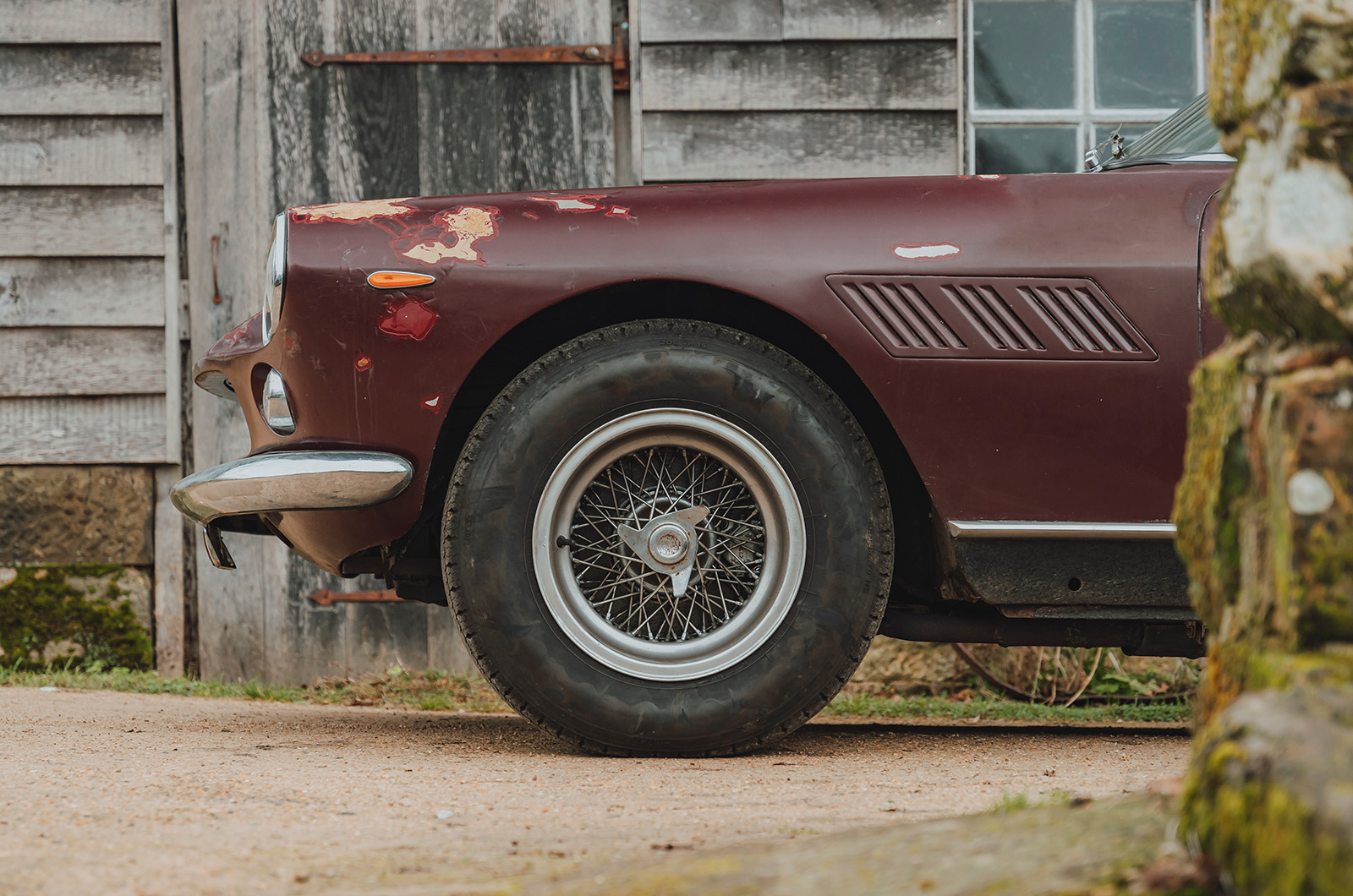
Period-correct Borranis replace the Ferrari 330GT’s one-off alloy wheels fitted by Surtees
It’s a shame that Surtees’ special alloy wheels have been lost in the mists of time, but at least the Borrani wires, correctly shod with 205-section, 15in Pirelli Cinturato rubber, are what it would have worn when it rolled out of the factory.
What stands out with this car, however, is the overall build quality, which presumably is unchanged from new.
Believe the hype and you would otherwise perceive Ferraris from this era to be thrown together around a magnificent engine.
However, everything about this car – panel gaps, the way in which doors open and close, the quality of the switchgear – suggests over-engineering rather than corner-cutting; it’s perhaps not up to Mercedes-Benz standards, but in its ballpark.
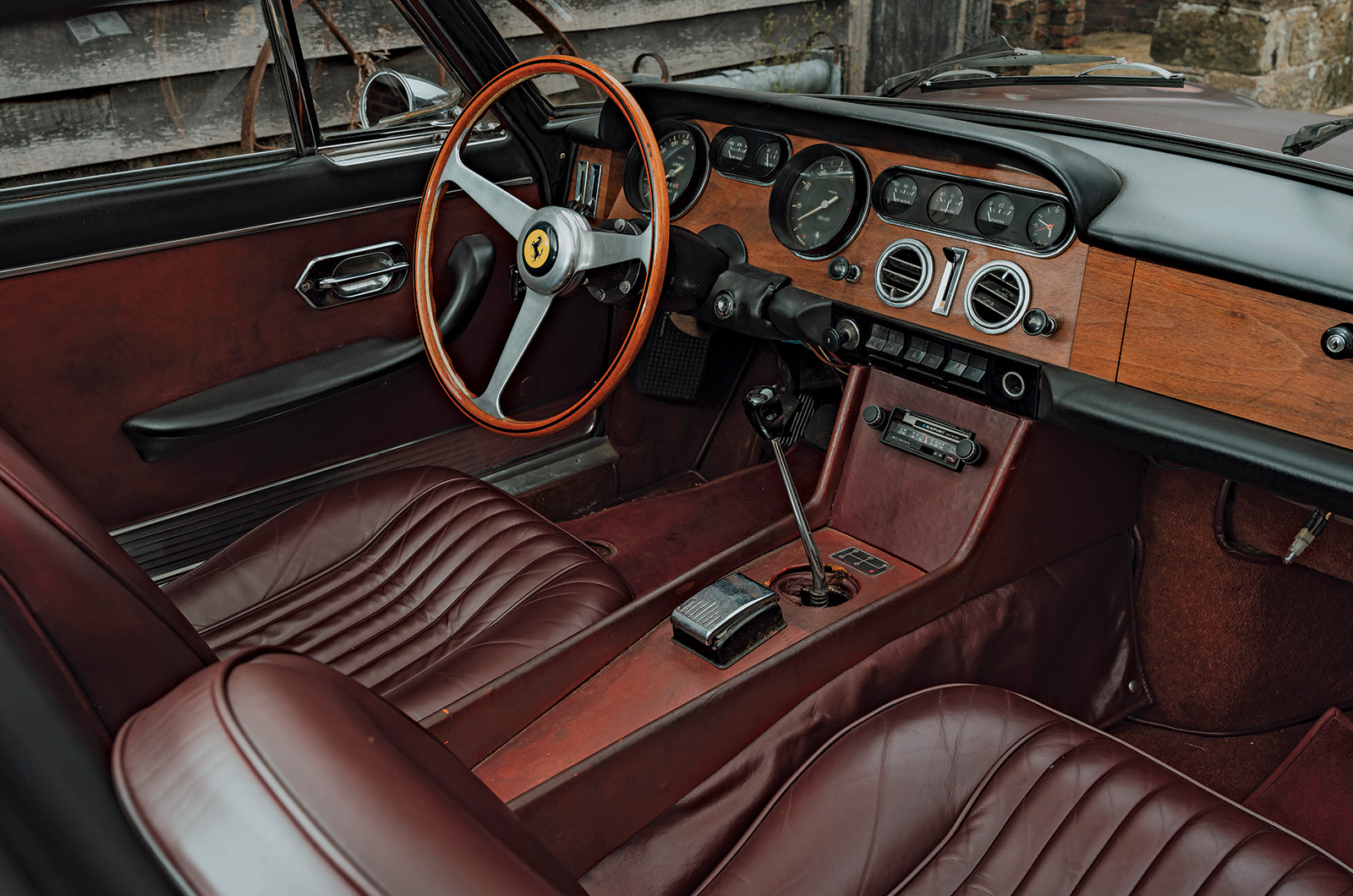
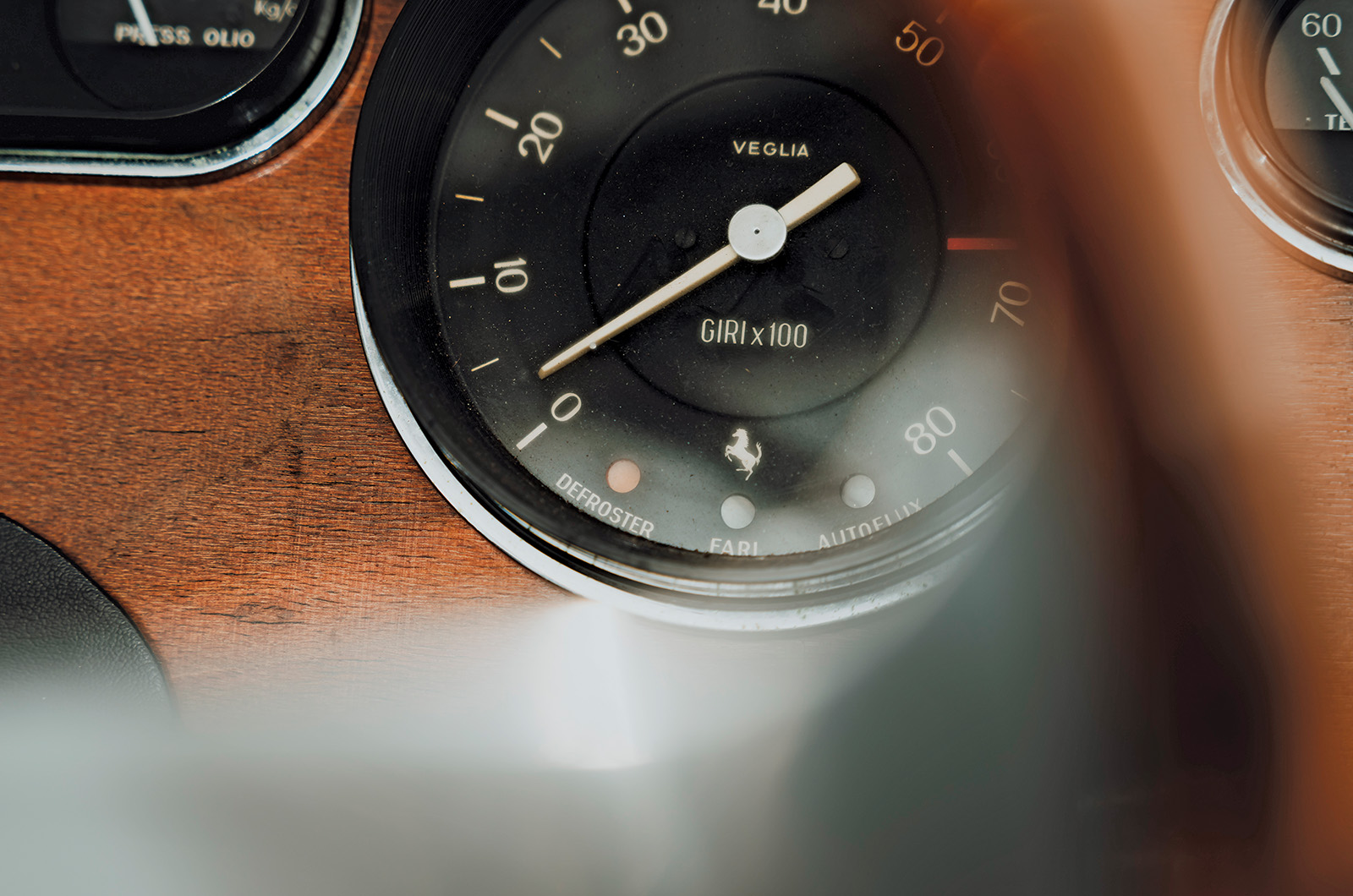
‘The bank of Veglia clocks before you is the very view Surtees would have observed during his feverish drive from Le Mans to give Enzo a piece of his mind’
Alas, the car’s Nardi steering wheel must have been replaced at some point, because the original had cut-outs in each of its aluminium spokes; Alan has also fitted 250GTE front seats while the 330’s are being retrimmed.
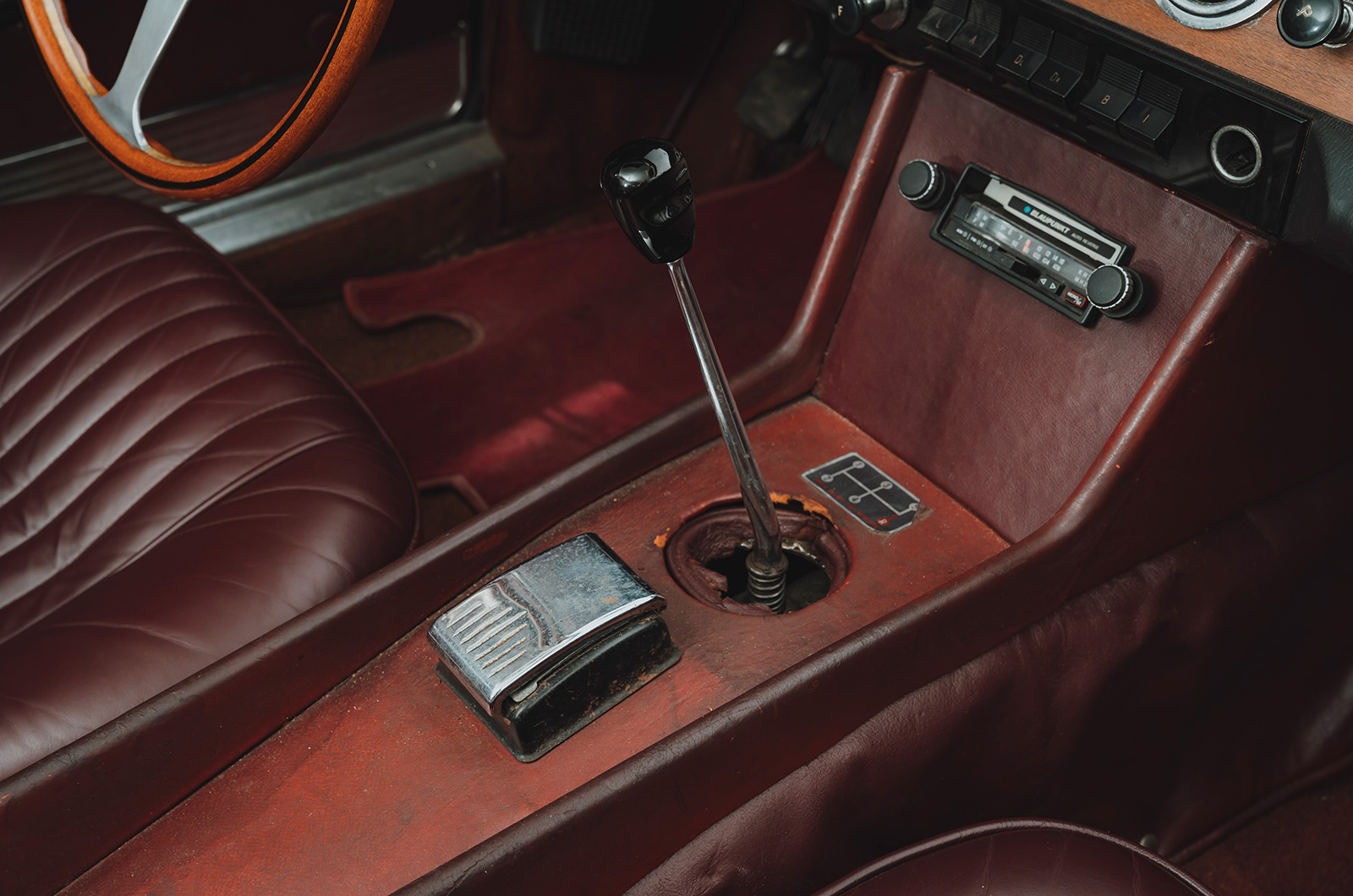
But the bank of Veglia clocks before you, including a 300kph speedo and tacho redlined at 6600rpm, is the very view Surtees would have observed during his feverish drive from Le Mans to give Enzo a piece of his mind.
We’re certainly not bending the needles on either of those dials today, but nevertheless 6981GT is in fine mechanical fettle and, as a whole, it feels in rude health.
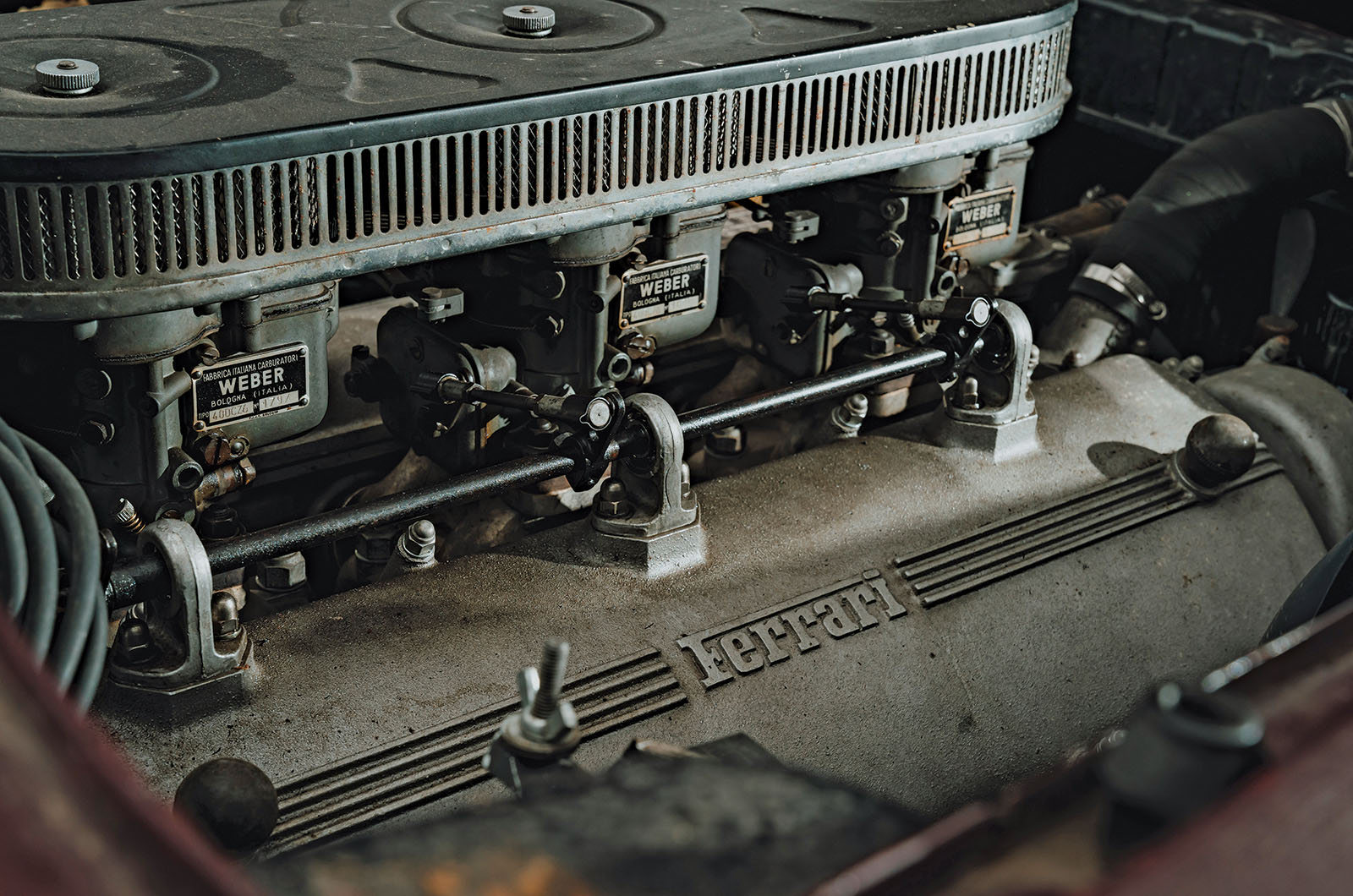
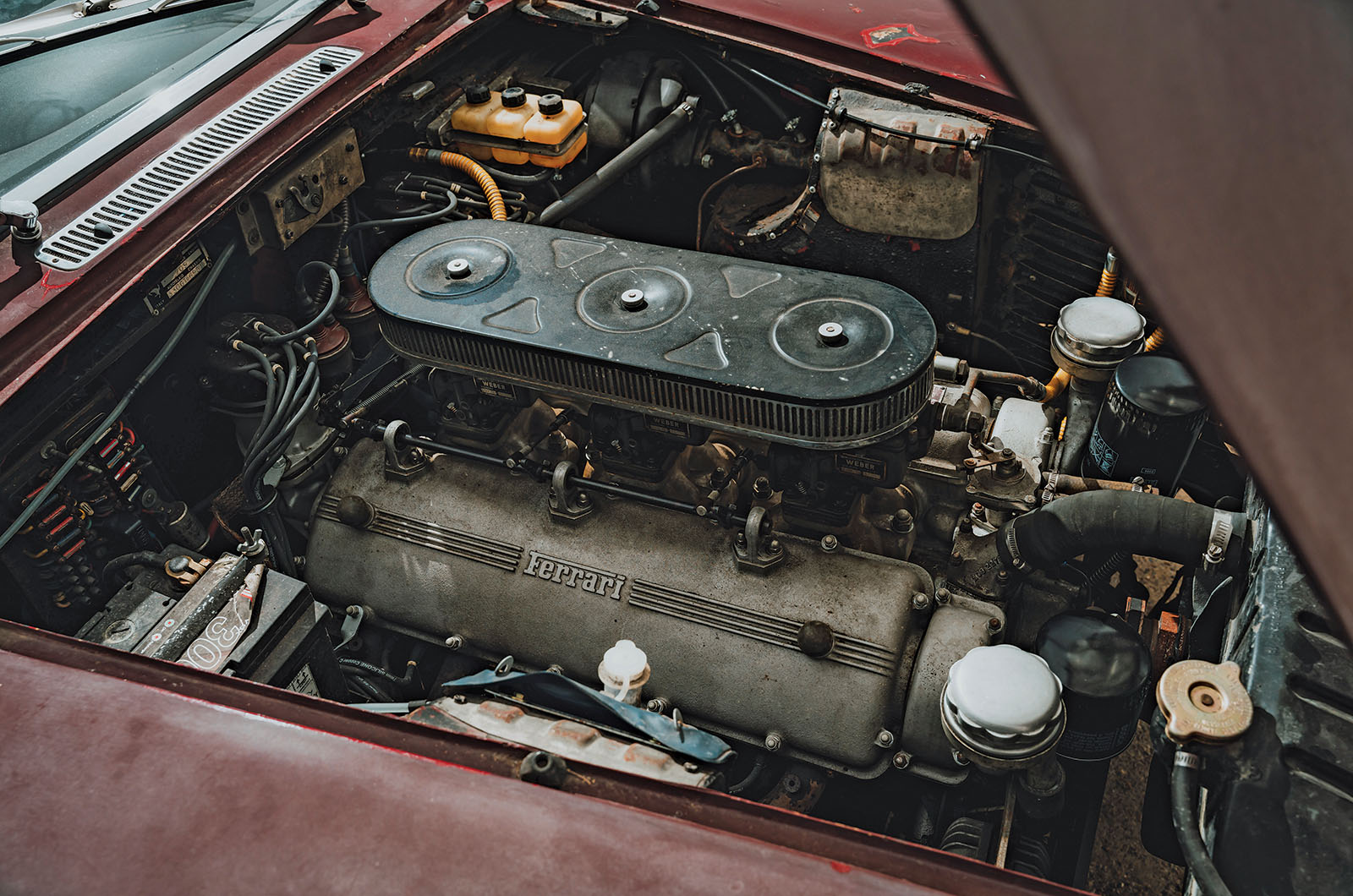
The V12 is untemperamental and starts quickly on the key, after which you savour the subtle warble of the triple Weber 40 DCZ/6s as you pull away.
The Ferrari 330GT’s Colombo-designed V12 with triple Weber carburettors
No exposed gate for the five-speed shift, which is currently in need of a retrimmed gaiter.
A positive action is required to select each gear, but the clutch only takes medium effort, and heel-and-toe changes are easy with the nicely positioned pedals.
The steering is heavy – very heavy – at low speeds, but it truly comes alive as speeds increase, with generous feedback and relatively high gearing that are a boon along our twisty Sussex test route.
In general, the Ferrari 330GT 2+2 has a relaxed gait as it goes about its business, true to its grande routière brief.
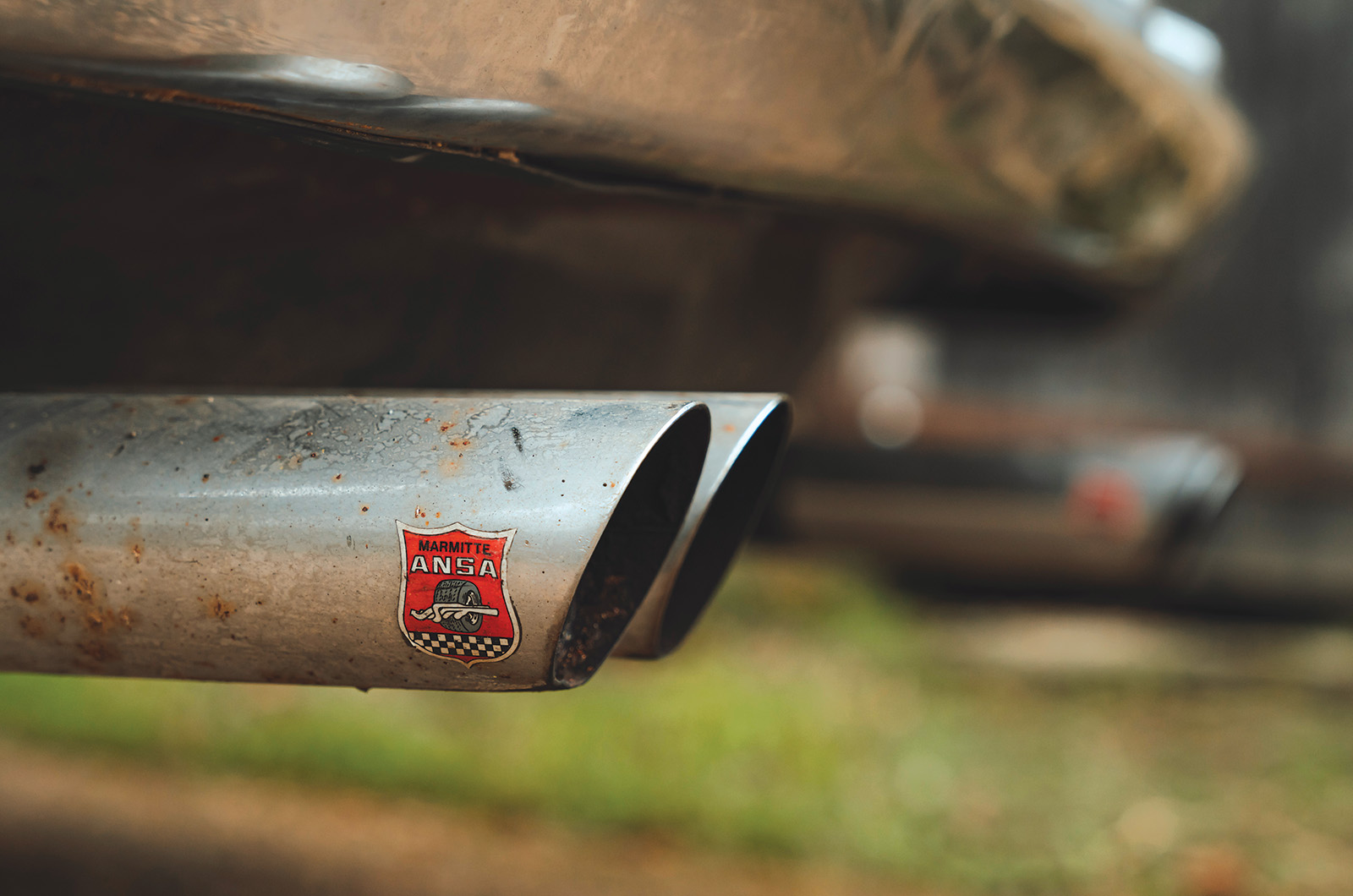
The current owner has worked hard to preserve the ex-John Surtees Ferrari 330GT’s originality
Gioacchino Colombo’s 4-litre V12 is the perfect partner, here being tractable in its lower reaches yet Herculean as you journey towards the redline, all accompanied by a slightly muted – although nonetheless glorious – soundtrack.
It perhaps doesn’t leave your neck hairs prickling like a Ferrari 275GTB’s does, but the distinctive timbre would still keep you engaged on an epic schlep across Continental Europe.
As it clearly did with Surtees. “I have fond memories of the 330GTs, because I love 12-cylinder engines,” he remarked.
And I’m sure there was more than a pang of regret when he parted with 6981GT after quitting Ferrari.
That said, the spectre of the ’66 Le Mans debacle would have weighed heavier in his mind – enough to banish any thoughts of keeping the car for any longer than he had to.
Images: Max Edleston
Thanks to: Mark Pollard at the Ferrari Owners’ Club of Great Britain; Falconhurst Farm Shop
Factfile
Ferrari 330GT
- Sold/number built 1964-’67/1075
- Construction tubular steel chassis, steel body
- Engine all-alloy, sohc-per-bank 3967cc 60° V12, three twin-choke Weber 40DCZ/6 carburettors
- Max power 300bhp @ 6600rpm
- Max torque 288lb ft @ 5000rpm
- Transmission four-speed manual with overdrive (five-speed from 1965), RWD
- Suspension: front independent, by double wishbones, coil springs, anti-roll bar rear live axle, radius rods, semi-elliptic leaf springs, auxiliary coil springs; telescopic dampers f/r
- Steering ZF worm and roller (optional power assistance on later cars)
- Brakes Dunlop discs, with twin servos
- Length 15ft 9½in (4840mm)
- Width 5ft 7½in (1715mm)
- Height 4ft 5½in (1365mm)
- Wheelbase 8ft 8¼in (2650mm)
- Weight 3040lb (1380kg)
- Mpg 15
- 0-60mph 7.4 secs
- Top speed 152mph
- Price new £6217 (1964)
- Price now £170-280,000*
*Price correct at date of original publication
Enjoy more of the world’s best classic car content every month when you subscribe to C&SC – get our latest deals here
READ MORE
Driving John Surtees’ BMW 503 Cabriolet
Ferrari 250GTE: Enzo’s roadgoing winner
Mercedes-Benz 300SL Lightweight: back to the start
Simon Hucknall
Simon Hucknall is a senior contributor to Classic & Sports Car