Ferrari 308GTB racer: life on the limit

| 1 May 2026
Classic & Sports Car – Ferrari 308GTB racer: a life on track
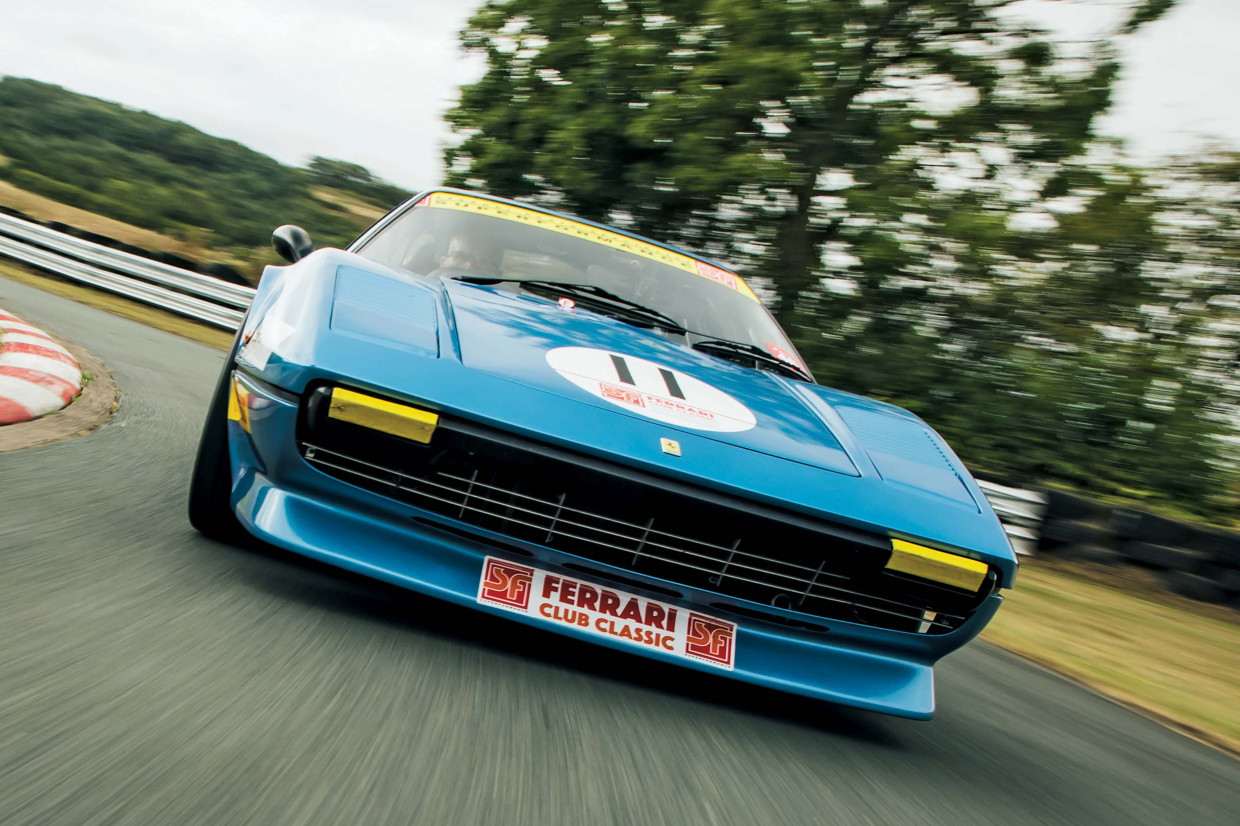
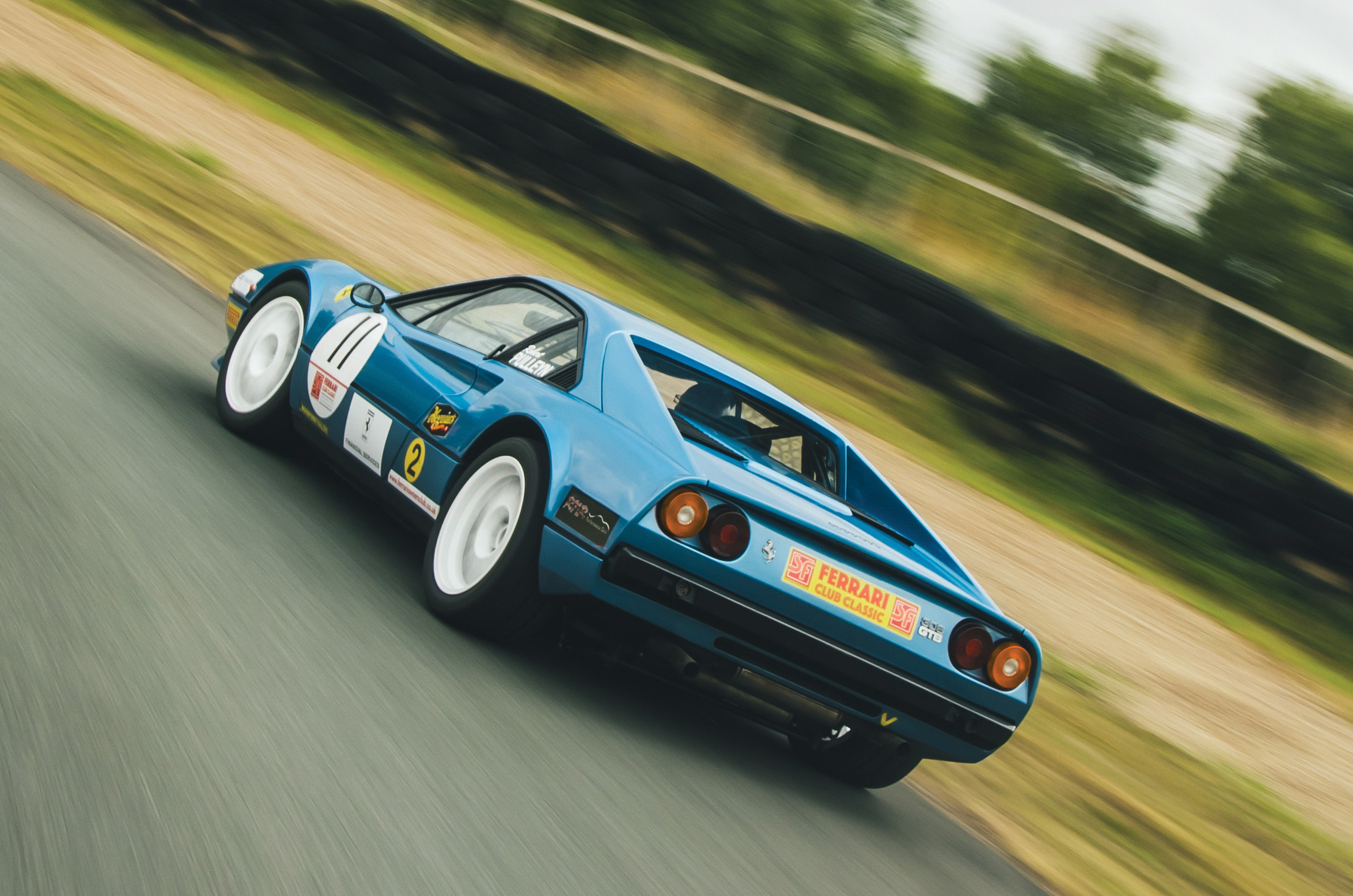
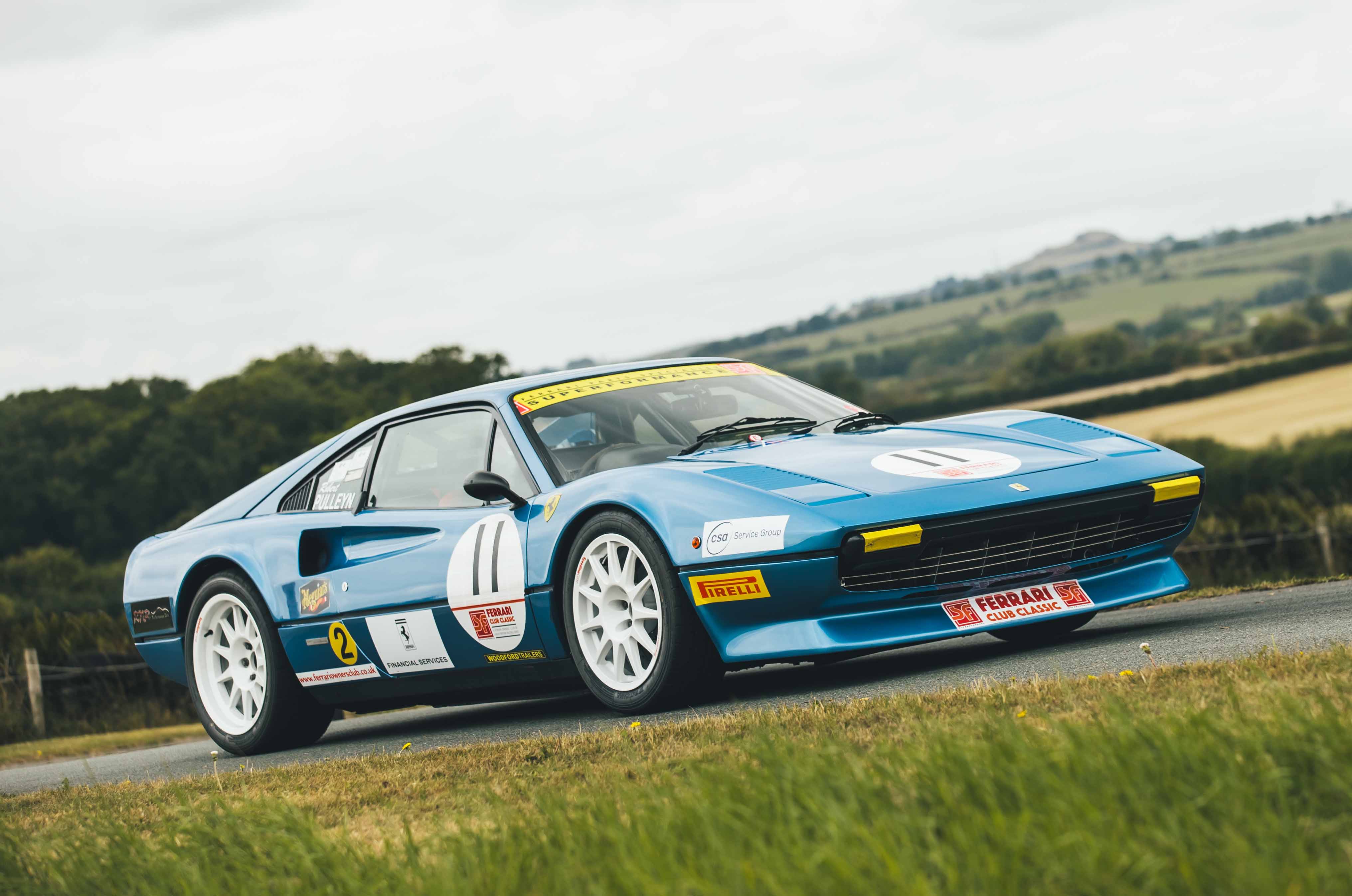
Beneath the roundels and sponsor stickers of Robert Pulleyn’s 308GTB racer, there actually exists a road-registered Ferrari

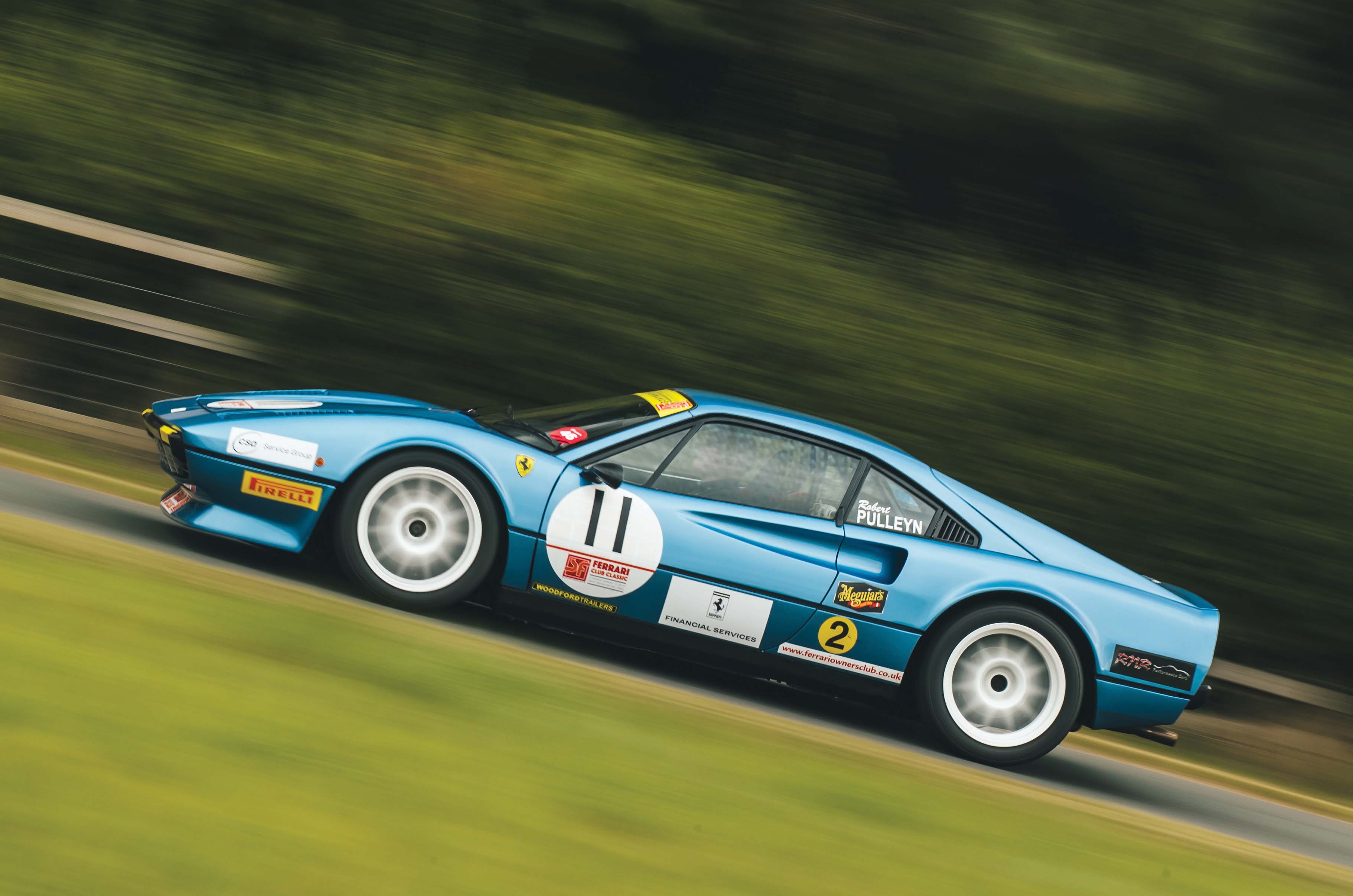
It looks completely at home parked here at the top of Harewood’s atmospheric hillclimb track, which plummets down deep into the North Yorkshire valley below us.

But, if you keep in mind this Ferrari’s road-ready status, three facts about it defy any casual assumptions you might make.

First, this near-50-year-old Ferrari’s odometer is within a European tour of hitting 100,000 miles, yet it retains most of its original mechanicals; second, despite being street-legal, it is reputed to be the most-raced Ferrari in the world, with 37 years of continuous competition history on circuits and hillclimb courses in the UK and Europe; and last, it is one of just 157 right-hand-drive 308GTBs that left the Carrozzeria Scaglietti works wearing glassfibre bodywork.

Classic & Sports Car – Ferrari 308GTB racer: a life on track
This Ferrari 308GTB is proof that the glassfibre-bodied Prancing Horse has a heart of steel

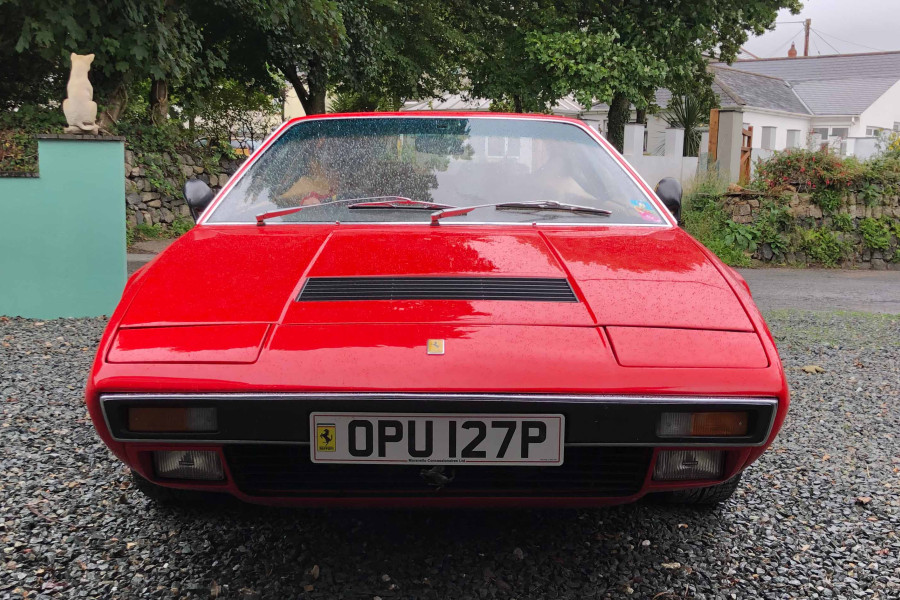
Far from being conceived for competition, though, these examples clothed in glassfibre (or vetroresina in Italian) were merely the genesis of 308GTB production.

When it was launched at the Paris Salon in 1975, this was the first – and, as it turned out, the only – Ferrari production car ever to wear this type of composite bodywork, with only its front lid panel made from aluminium.

Quick to productionise, another immediate and highly marketable benefit of the material was lightness.

Ferrari claimed a 1090kg dry weight that, while still in excess of 200kg heavier than the then recently launched Lotus Esprit, was impressive given that a V8 was mounted within the tubular steel frame.

Classic & Sports Car – Ferrari 308GTB racer: a life on track
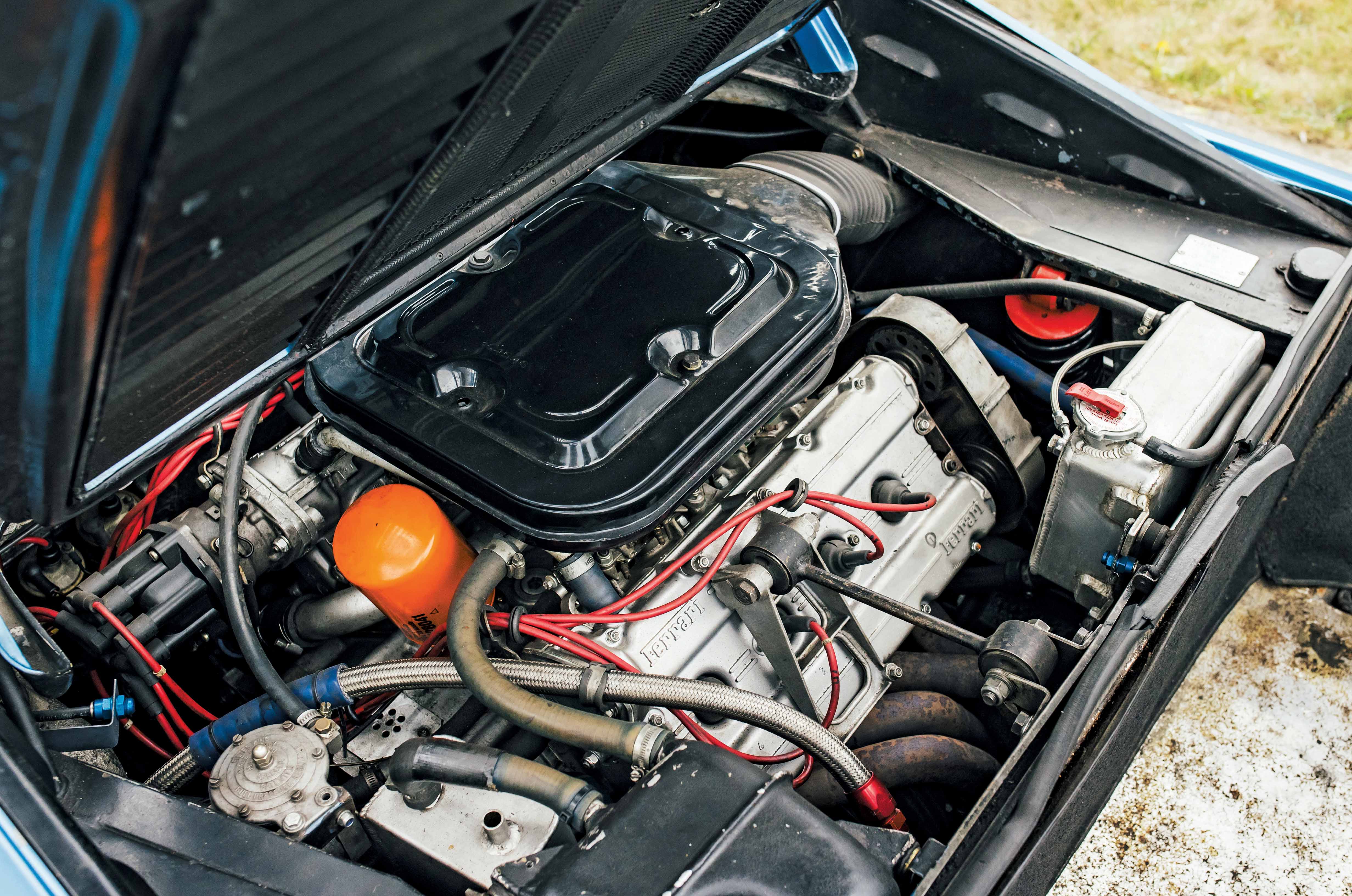
The Ferrari 308GTB Vetroresina’s V8 sits low in the tubular frame

In its earliest form, that 308 engine was at its most virile.

The 2926cc quad-cam V8 inherited from the 308GT4 2+2 retained its (European-spec) 255bhp output at a wondrous 7700rpm, with a punchy 209lb ft at 5000rpm.

Having four Weber 40DCNF carburettors buried in the 90° vee of its cylinder banks helped and, perhaps recognising that GTBs would be driven harder than the GT4s, dry-sump lubrication was standardised – again, just for European cars.

This allowed the 308’s engine to sit lower down in its tubular frame, with the inevitable benefits to handling and high-speed composure.

Classic & Sports Car – Ferrari 308GTB racer: a life on track
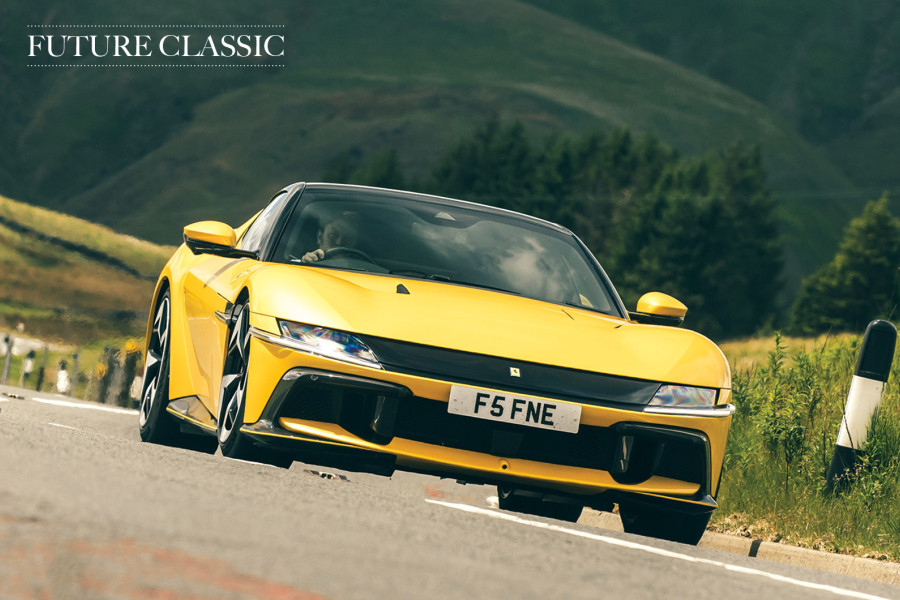
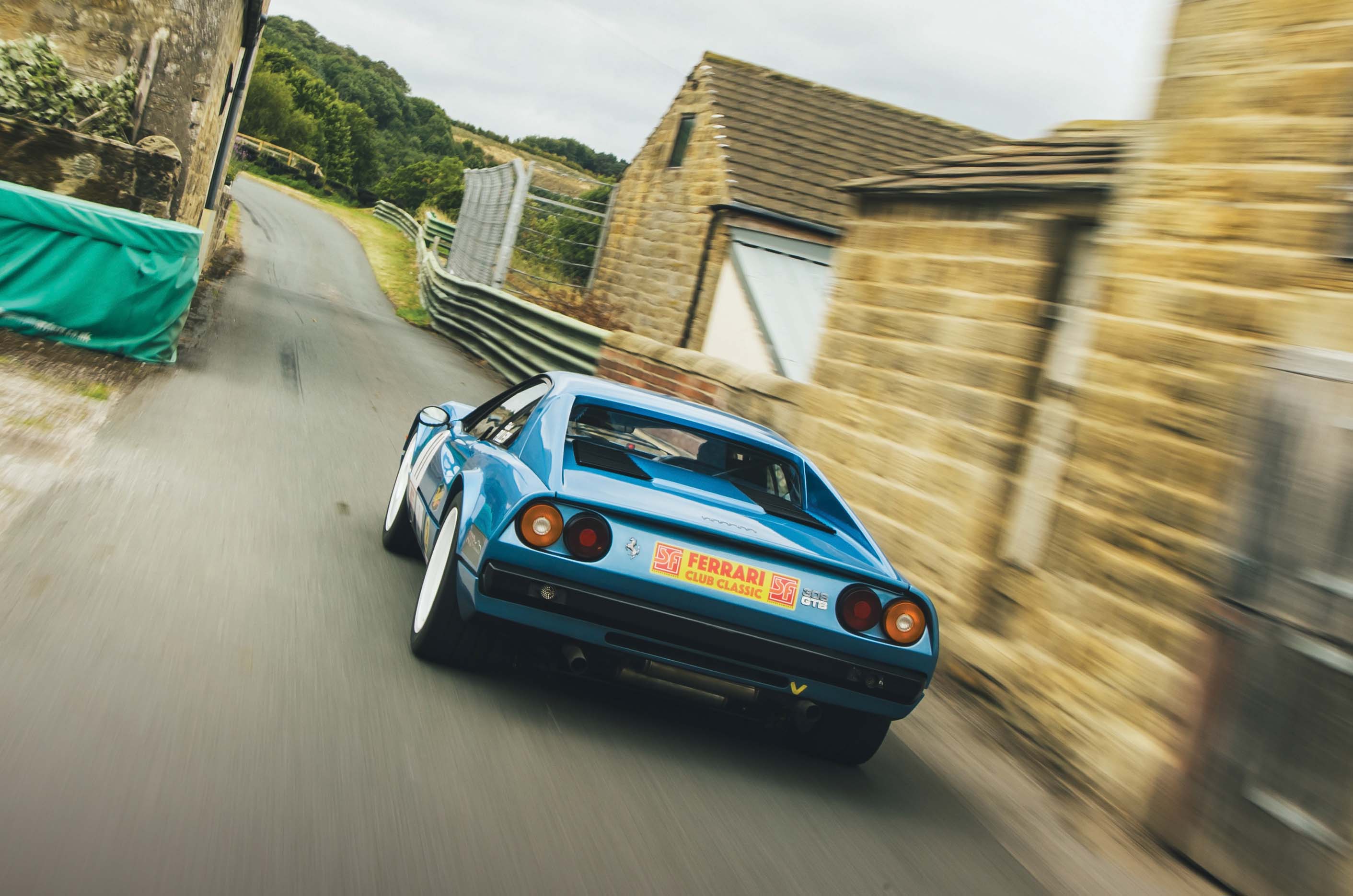
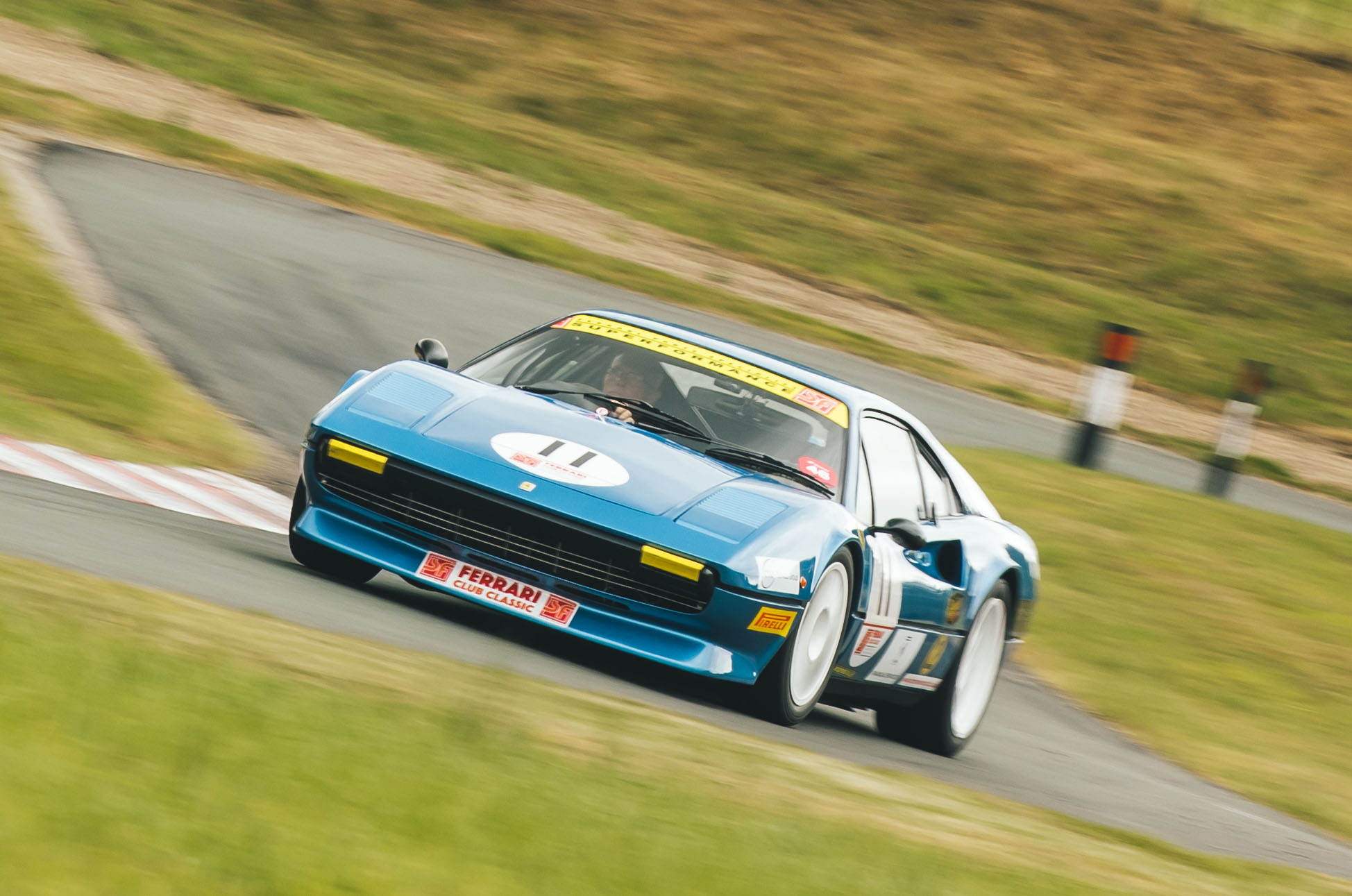
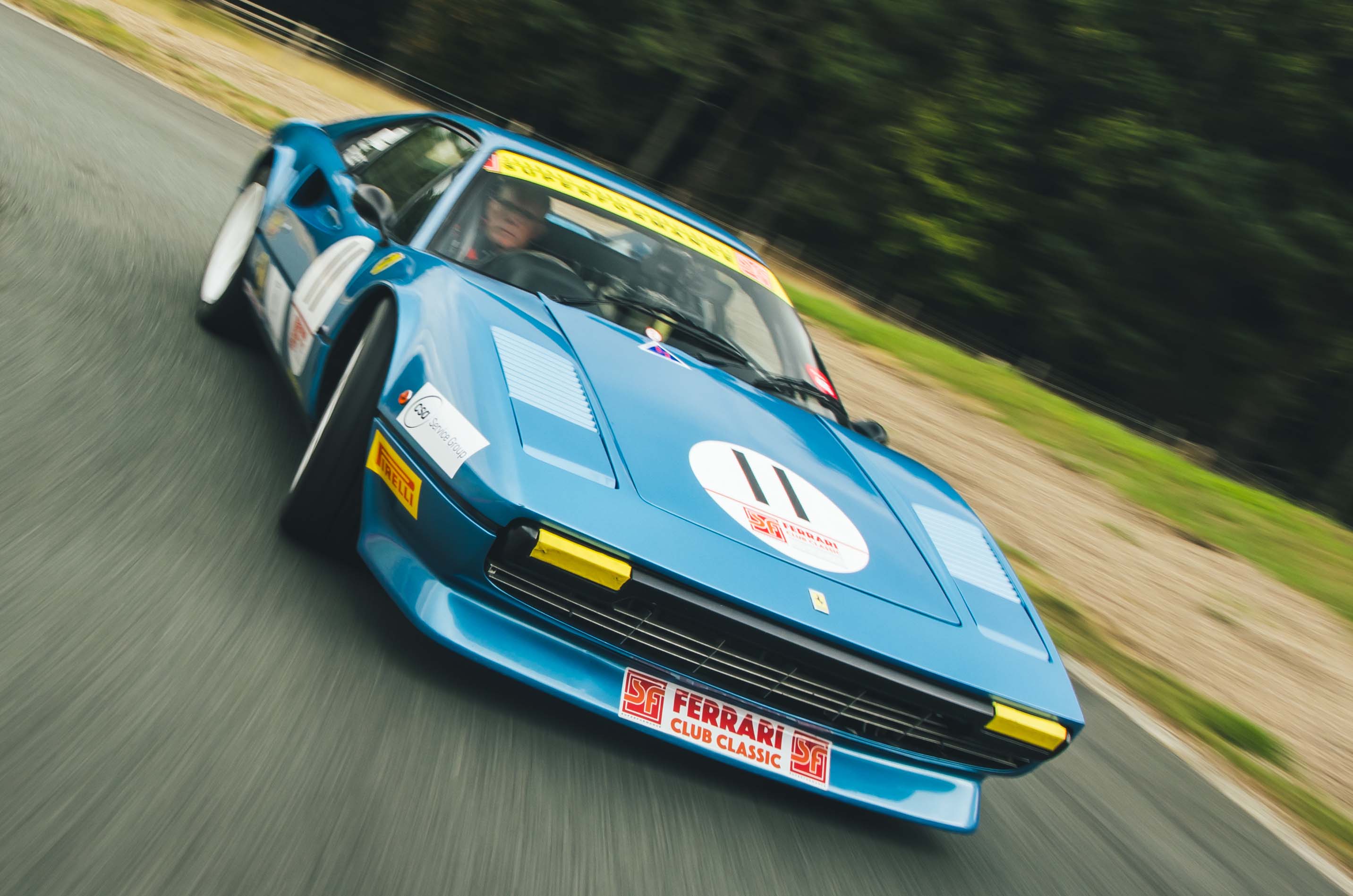
The Ferrari 308GTB dashes through Harewood hillclimb’s unique canyon-run dash between farm buildings

This layout continued until 1981, after which all 308GTBs switched to wet-sump lubrication when Bosch K-Jetronic fuel injection replaced the carburettors.

But the most potent combination is still represented by the first run of 808 (or 712 – sources disagree) European-spec Vetroresina cars.

Only ever made as the hardtop GTB, there’s little to distinguish a plastic-bodied 308 from the largely steel-panelled model that replaced it in mid-1977 (some markets, such as the USA, had steel cars from late ’76).

Externally, only a panel join at the top of each A-pillar where it meets the roof reveals a Vetroresina.

Classic & Sports Car – Ferrari 308GTB racer: a life on track

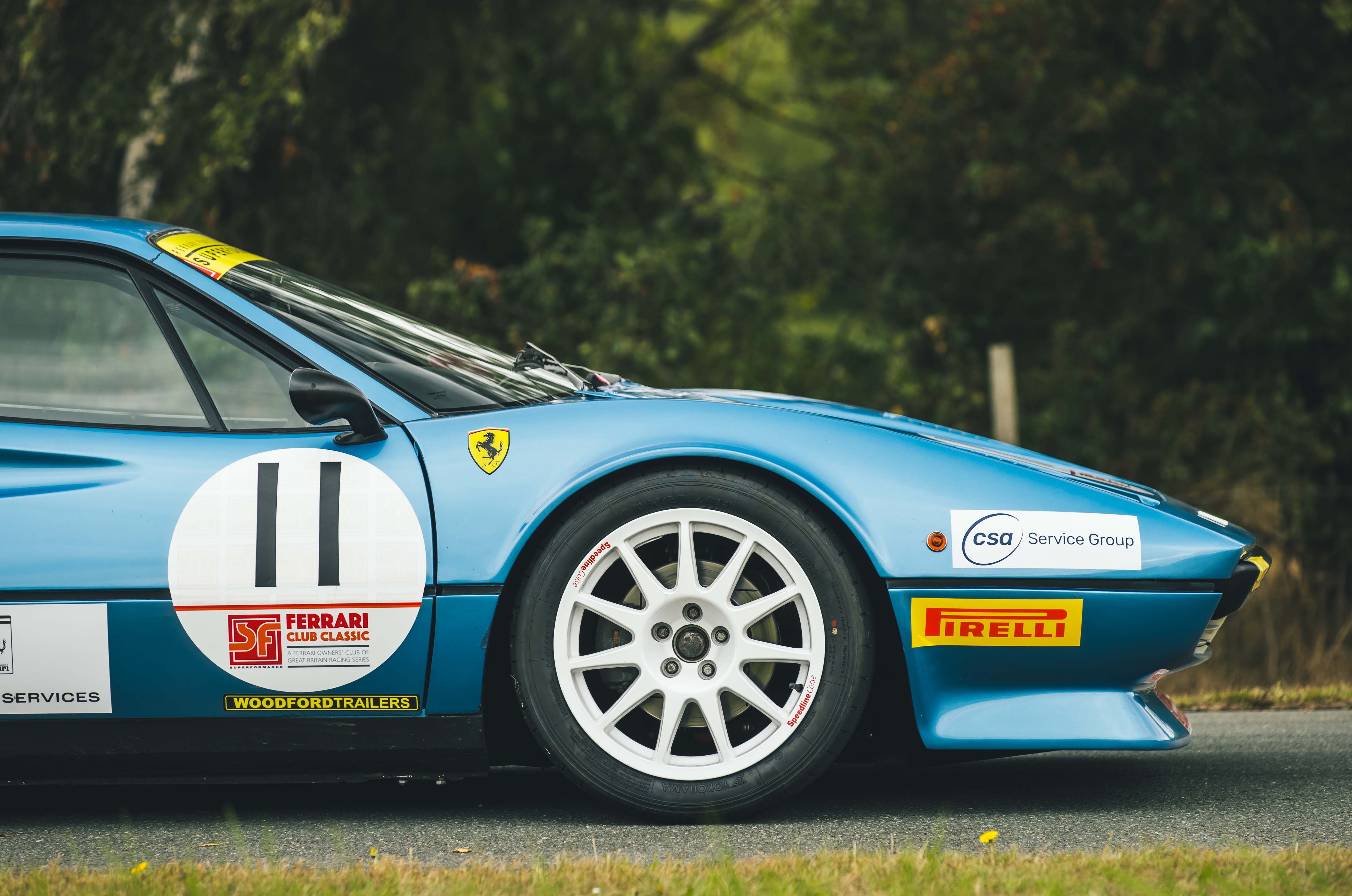
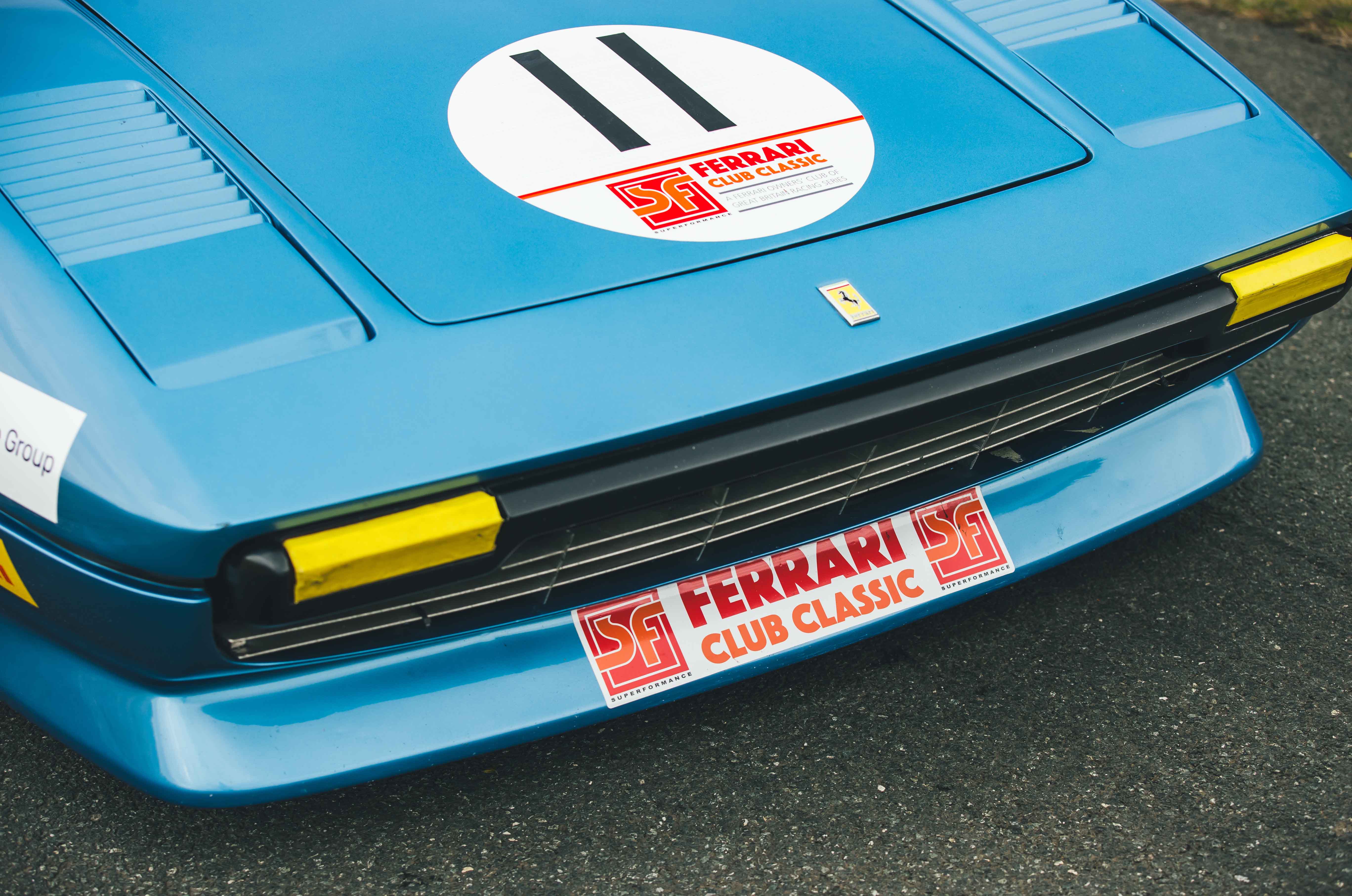
This Ferrari 308GTB has always competed with the number 11

Contemporary road tests commented on the lack of resin odour, with Autocar adding: ‘The standard of finish is superb, with little or no hint that the material used is out of the ordinary.’

In every other way, the Vetroresina’s construction mirrored that of later cars, using a classic tubular steel frame, riveted-aluminium floorpan and welded sheet-steel rear bulkhead.

The suspension, brakes and steering were also unchanged after the adoption of steel bodies.

Classic & Sports Car – Ferrari 308GTB racer: a life on track

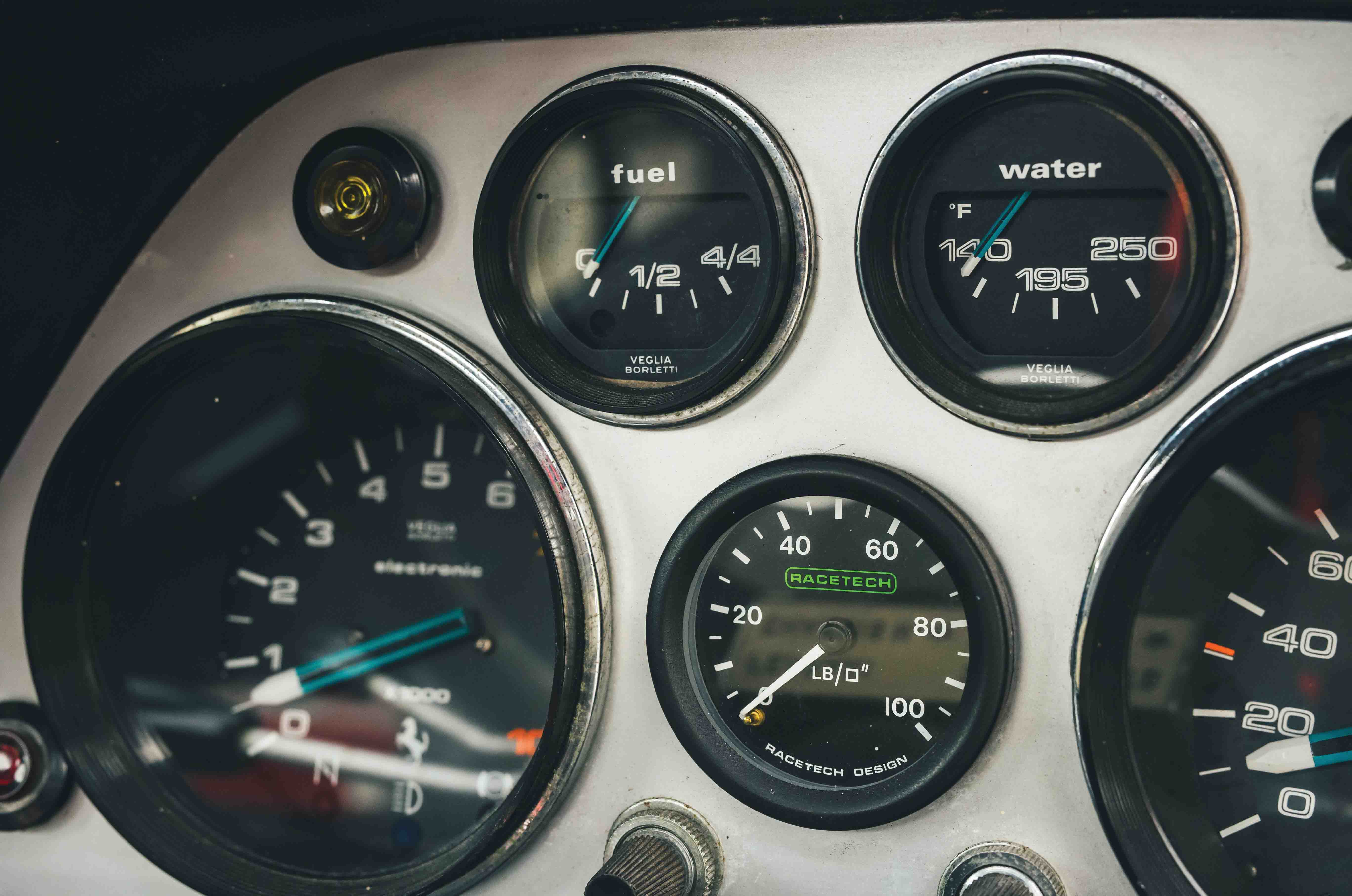
The classic Ferrari’s instrument binnacle, with later oil-pressure gauge

While Ferrari gave no official explanation for ditching the lighter glassfibre body in favour of steel (although the material was still used for its lower panels), it is true that unprecedented demand for the 308GTB would have forced Maranello to reassess its sales projections and, in turn, the rate at which Scaglietti was delivering panels to Ferrari for final assembly at the factory; construction of glassfibre bodies being more time-consuming and labour-intensive would have hindered the growing need for an increase in production.

Various sources have also suggested that, while initial paint quality on Vetroresina cars met Ferrari’s high standards, its overall durability was unproven in the longer term.

Finally, no matter the overall quality of the final product, there was still something of a stigma attached to a glassfibre Ferrari in some quarters, which may partly explain why Maranello has never since returned to the material for its production cars.

Classic & Sports Car – Ferrari 308GTB racer: a life on track

‘Robert’s car defies the notion that Ferraris of this era are fragile, temperamental beasts that exist only to empty your bank account’

Back to the here and now, and setting aside Robert’s car’s immense competition record, which we’ll touch on shortly, what is equally impressive is its durability over a such a long period.

This is one of two early 308s I’ve met recently which defy the notion that Ferraris of this era are fragile, temperamental beasts that exist only to empty your bank account.

However, Steve Cropley, Autocar’s editor-in-chief and a former Vetroresina owner, recalls a slightly less glowing experience with the “beguiling and beautiful little car” he bought in 1986: “I have no memory of it being faster than steel 308s, and when the owner after me pranged it, we learnt there could still be a fair amount of corroded steel in the lower chassis, shrouded by plastic.”

Classic & Sports Car – Ferrari 308GTB racer: a life on track

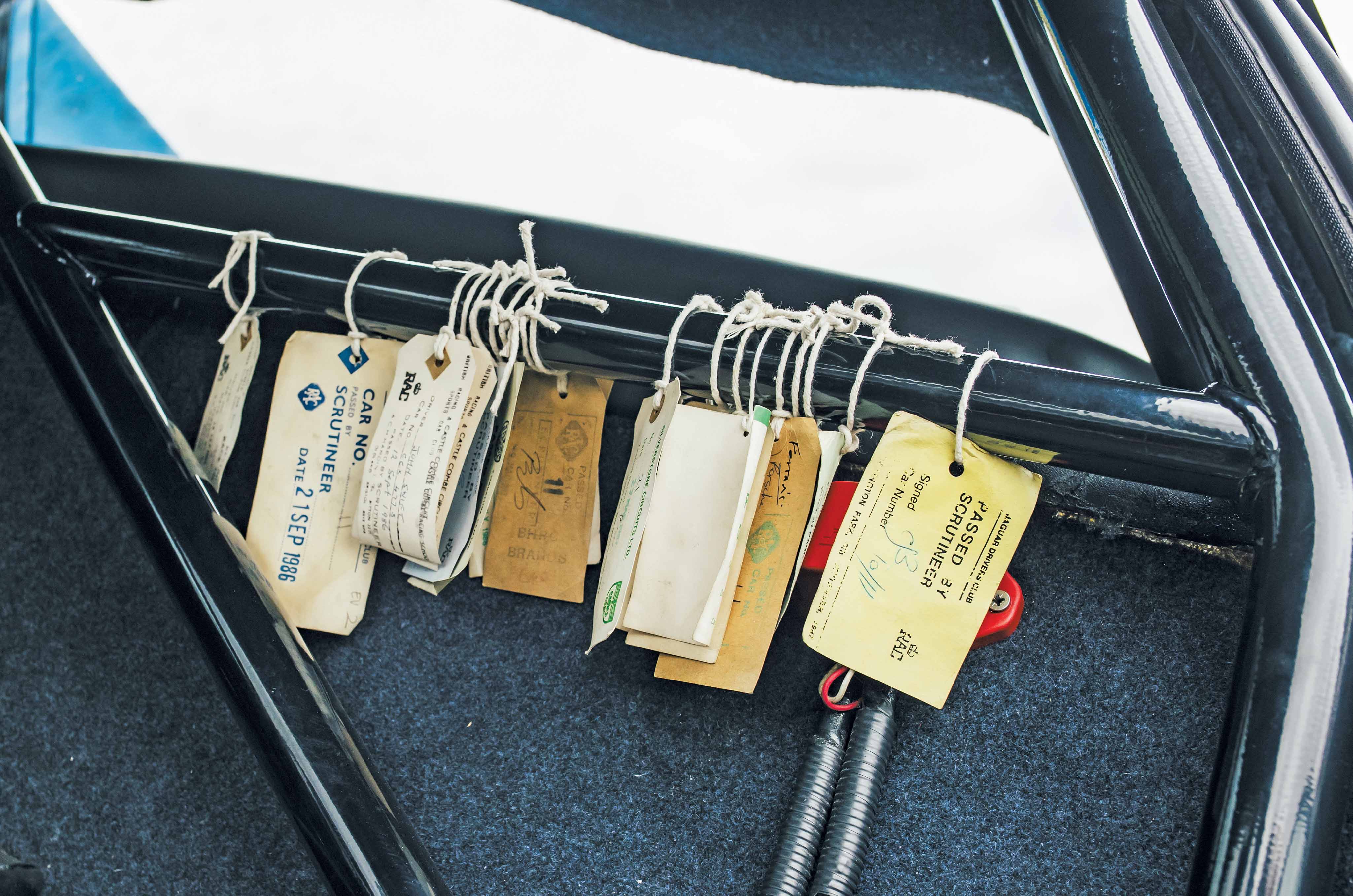
The Ferrari 308GTB’s on-board scrutineer-tag archive

“It was a beautiful car, still one of the best-looking Ferraris, and reasonably practical, although no faster in real terms than a Volkswagen Golf GTI,” adds Steve.

“I drove it all over Europe and enjoyed it, and I am delighted to have owned it.

“But when it gave way to a 3.2-litre Porsche 911, which was 12 years younger, that felt like progress.”

Unlike Steve’s old car, Robert’s 308GTB, reinforcing its bold competition claim, has an extensive racing history.

Registered CCX 477S when new in 1977, it was sold to John ‘Swifty’ Swift in July 1980.

Classic & Sports Car – Ferrari 308GTB racer: a life on track

Chassis tweaks and engine upgrades keep the Ferrari 308GTB competitive, but mechanical sympathy and meticulous maintenance ensure reliability

He immediately prepared the Ferrari for club racing, which at the time required little more than the fitment of a fire extinguisher and partial rollcage.

Over the next 37 years, John campaigned the car continuously and became a driving force behind various Ferrari Owners’ Club GB racing programmes, including the Maranello Ferrari Challenge and, as the car assumed more of a classic status, the Ferrari Formula Classic Championship.

As well as competing in the ‘Old Blue Thing’ – or ‘OBT’, as it became known – at every circuit in the UK, John also took the car into Europe, racing at Spa, Zolder and Zandvoort in the early 2000s.

Classic & Sports Car – Ferrari 308GTB racer: a life on track

‘The Ferrari’s front-end grip is prodigious and, once your biceps are accustomed to the workout, the car is remarkably agile’

Always wearing race number 11 throughout its track career (a tradition that Robert has continued), the Ferrari’s remarkable survival was certainly because of John’s skill and mechanical sympathy, as he summarised in a 2004 edition of Ferrari Competition News: ‘I am not a driver who immediately goes out to set a time.

‘I prefer to get everything up to working temperature, get lots of heat into the tyres and find a place in the traffic before I give it my best shot.’ 

John sold Old Blue Thing to Robert in 2019, but continued hillclimbing in his F355 until his death in 2022.

Classic & Sports Car – Ferrari 308GTB racer: a life on track

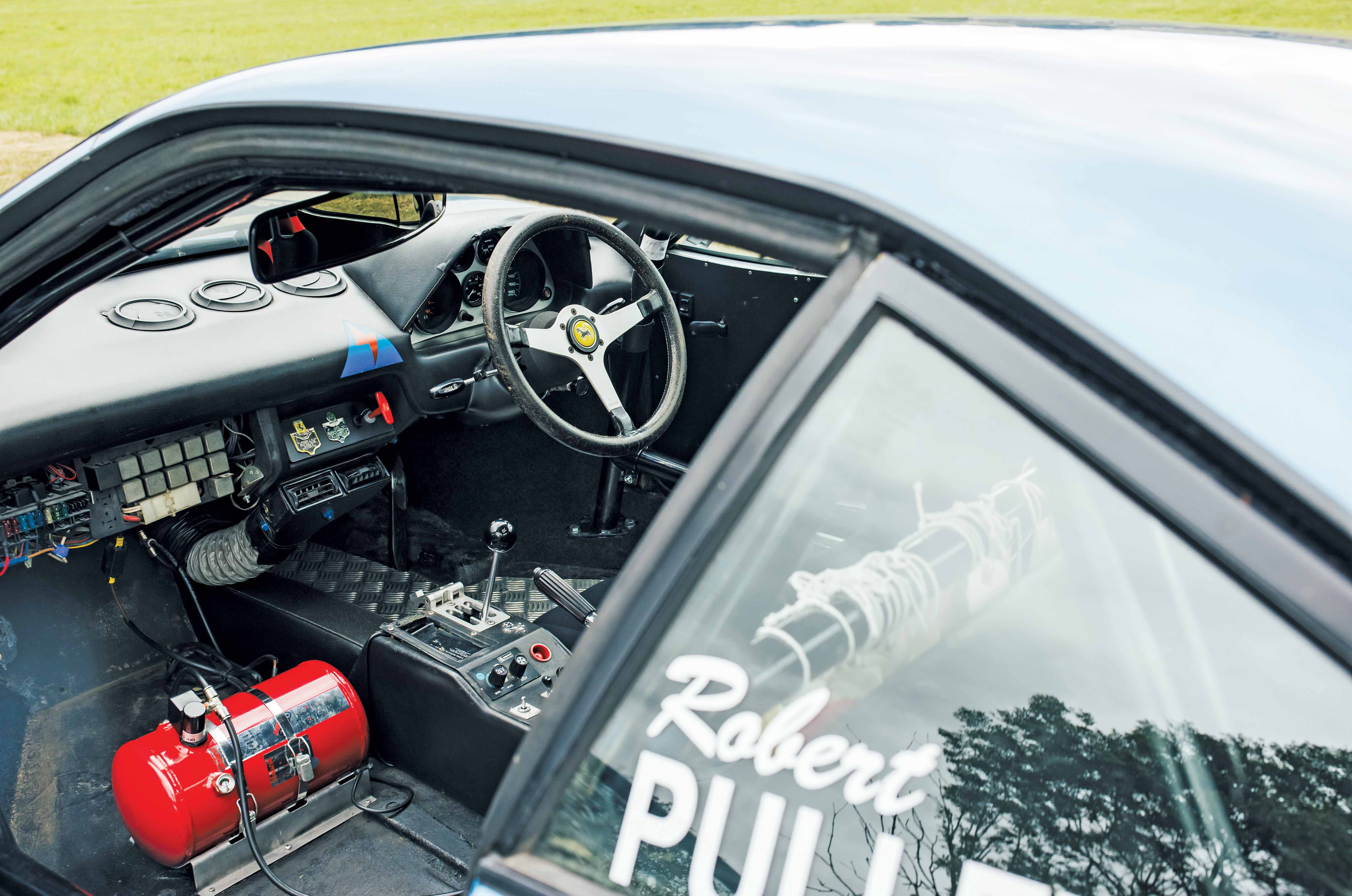
The Ferrari’s race-ready cockpit

Since Robert has owned the 308, which now shares space with his impressive collection of other classic Ferraris, he has gone through the car to make sure it is performing optimally. 

The suspension has been stripped back, then the wishbones were powder-coated and the shock absorbers recalibrated.

Running in the sub-3-litre Modified class of Ferrari Formula Classic, upgrades such as solid engine mounts and bronze suspension bushes with grease nipples are permitted, as is what Robert believes to be a rear anti-roll bar sourced from an MG Metro 6R4.

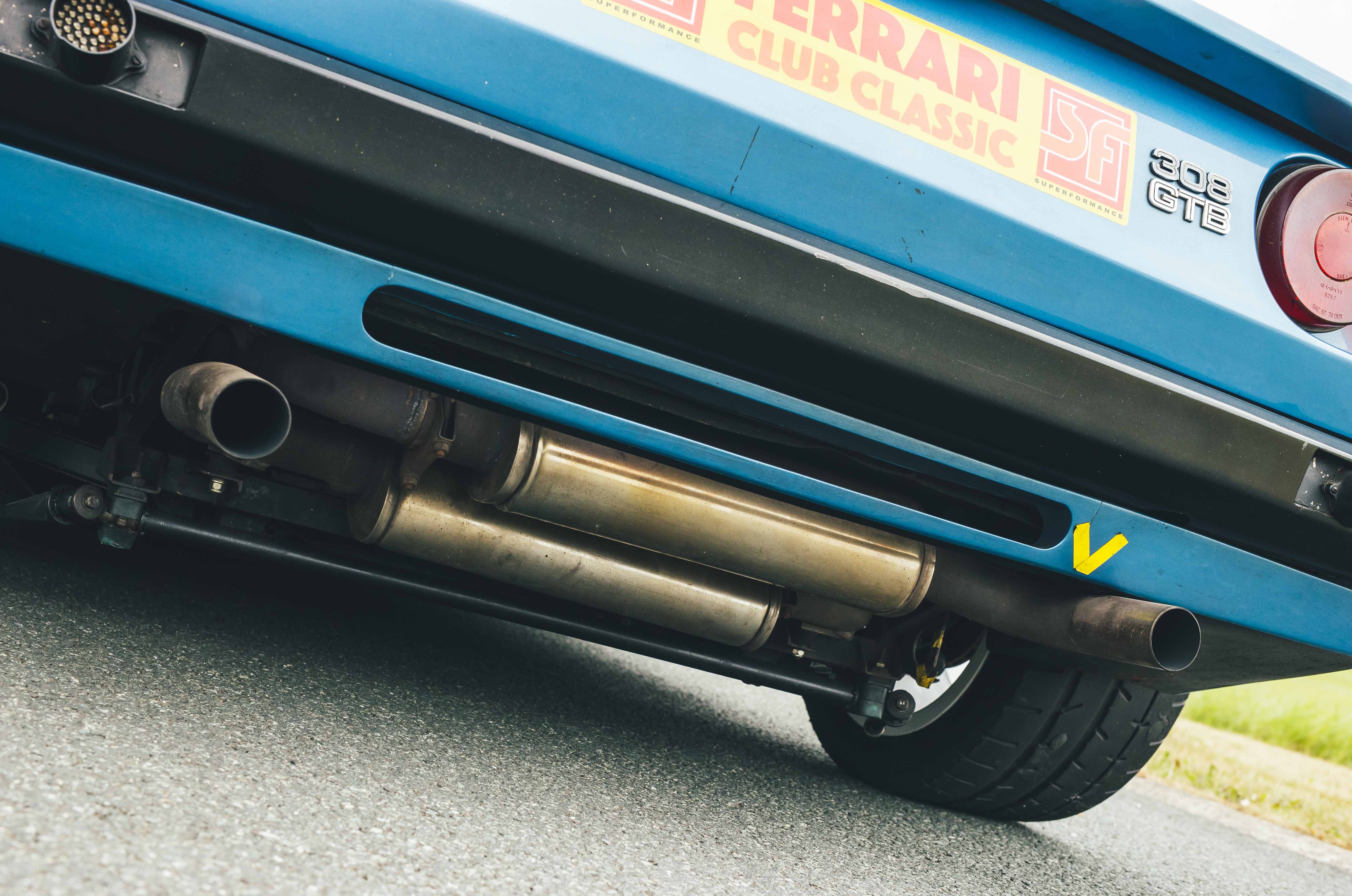
The five-speed transmission and limited-slip differential are standard, but the V8 has been upgraded with a compression ratio lifted from 8.8:1 to 11.0:1 and a sports exhaust, giving an estimated 300bhp-plus.

Classic & Sports Car – Ferrari 308GTB racer: a life on track

The Ferrari 308GTB racer’s sports exhaust helps to liberate 300bhp-plus from the 2926cc, quad-cam V8

The brakes use harder pads, and while the disc diameters are the same, the fronts are grooved and ventilated.

Completing the package is a set of 17in Speedline Corse wheels with sticky but road-legal Yokohama Advans.

I’m guessing this 308GTB hasn’t worn its 14x7½in Cromodoras with 70-profile XWXs since the 1970s.

Feed yourself in through the 308’s now full rollcage and into the single Sparco seat (there’s no passenger chair), and you scan the vestiges of the Ferrari’s original interior fittings, including the centre console’s factory air-con controls.

Classic & Sports Car – Ferrari 308GTB racer: a life on track

The Ferrari 308GTB racer is agile and approachable

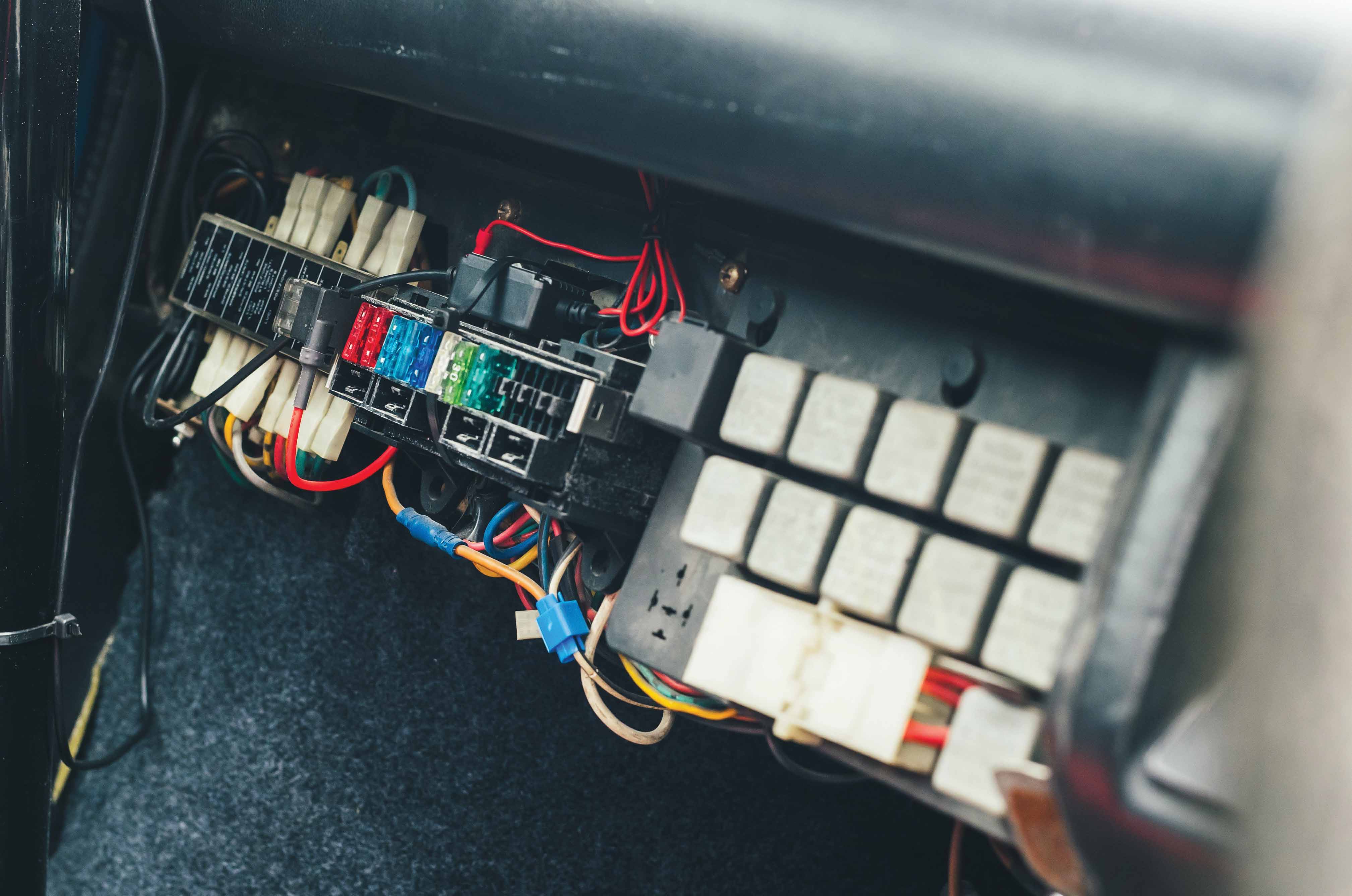
The fuses are now exposed under the passenger-side dashboard, while a plumbed-in fire extinguisher sits on the floor.

The standard instrument pod has an updated oil-pressure gauge at its centre, and the 308GTB’s original three-spoke Momo steering wheel is now well patinated.

Robert asks me to wait until the oil pressure hits 70psi before I touch the throttle after start-up; while the pistons and rods have been replaced, the block and cylinder heads are original and – like John before him – Robert is at pains to preserve them.

Classic & Sports Car – Ferrari 308GTB racer: a life on track

Exposed fuses in the stripped-out Ferrari 308GTB’s cabin

I haven’t driven at Harewood for 40 years – the last time in a slick-shod Škoda Estelle – and I’d forgotten quite how vertiginous the 1440m-long course is.

But from the off, this Ferrari is not at all intimidating, and after a couple of sighting runs, it’s downright enthralling.

You start pointing downhill, and even just clipping 4000rpm on the first straight means you’re making full use of the brakes – which are strong, with plenty of feel – into a sharp right-hander, leading to a tight but level complex of turns.

Classic & Sports Car – Ferrari 308GTB racer: a life on track

Who says Ferraris are fragile? This early 308GTB Vetroresina has lived its whole life on the track

The unassisted steering is fairly heavy and high-geared, but front-end grip is mighty and, once your biceps are accustomed to the workout, the car feels remarkably agile on this twisting course.

The engine gets top billing, though: throttle response is immediate and linear, and few V8s sound as cultured yet spine-tingling as this as it approaches its 7000rpm redline.

But what really impresses is the deep well of low-down torque, making it superbly tractable.

Driven in anger on a course like this, it would be a formidable weapon – much like it has been for the past four decades.

Images: Jack Harrison

Thanks to: Richard Dredge, Richard Preece, Ferrari Owners’ Club GB; Harewood Speed Hillclimb


200,000-mile Ferrari 308GTB dispels myths

Classic & Sports Car – Ferrari 308GTB racer: a life on track

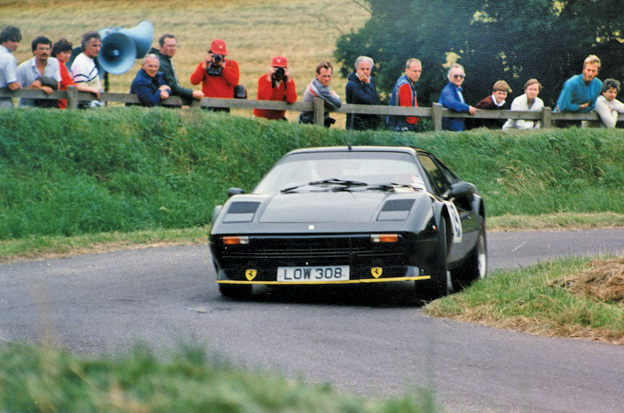
Sheridan Williams’ Ferrari 308GTB in action at Gurston Down

Sheridan Williams bought his Ferrari 308GTB Vetroresina 44 years ago, in February 1981, and he still owns the car today.

Sheridan believes that chassis number 19455 was only the second right-hand-drive 308GTB imported to the UK, arriving here in December 1975.

When he took it on, it had already covered 45,000 miles – a relatively high mileage for a newish Ferrari – but today that figure has more than quadrupled to beyond 200,000 miles.

“I could only afford one car,” Sheridan explains, “so I had to use it for commuting from Milton Keynes to Hendon – an 80-mile round trip – every day for two years.”

Classic & Sports Car – Ferrari 308GTB racer: a life on track

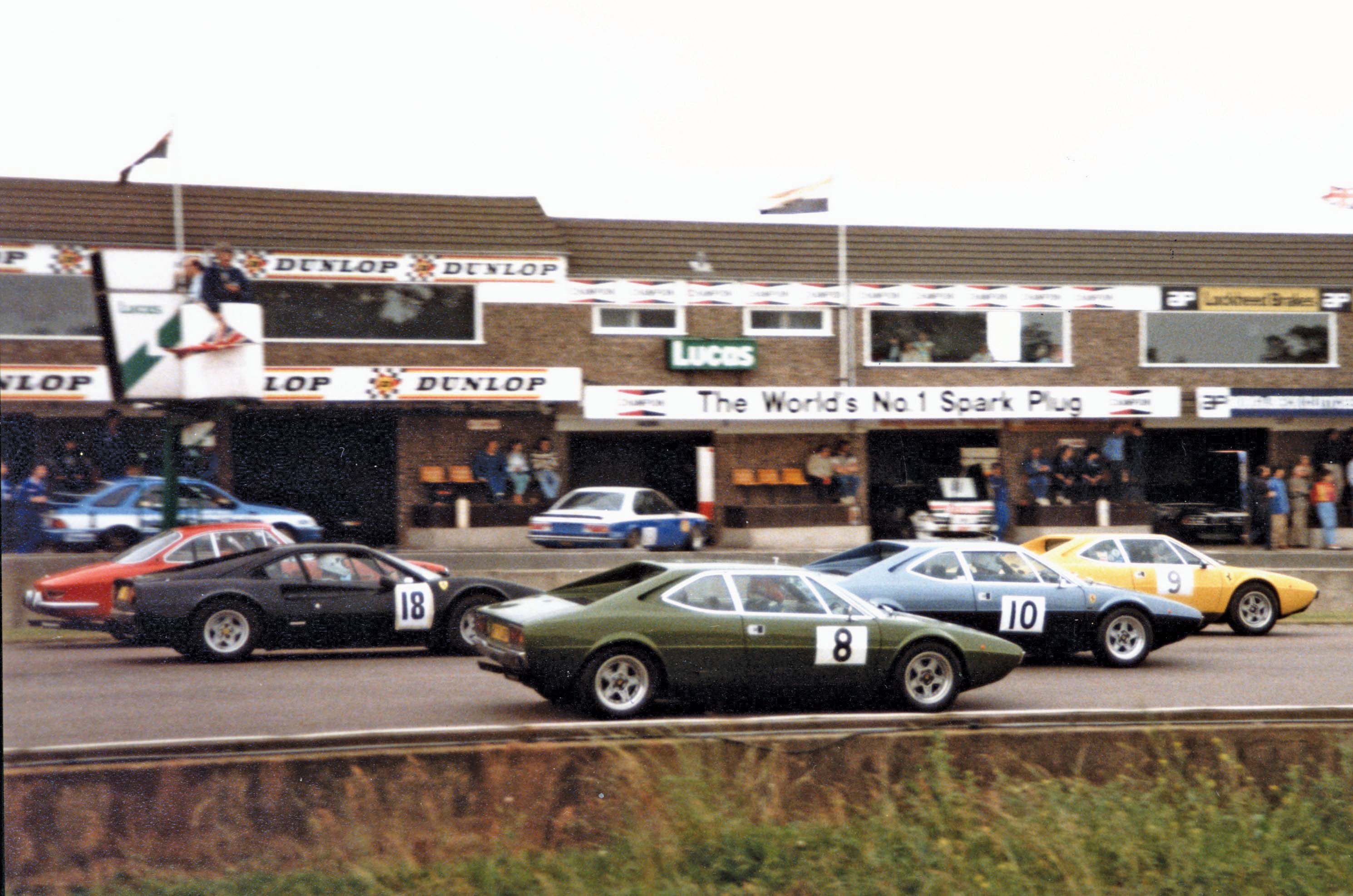
Sheridan’s Ferrari 308GTB races a trio of Dino 308GT4s and a 330GTC off the line at Donington Park

More impressive still was Sheridan’s six-year motorsport career with the 308, which began in 1983.

Terry Hoyle Engineering carried out some engine modifications beforehand, and two years later Sheridan had taken a new class record at a Gurston Down hillclimb in the Ferrari Challenge series.

After a total overhaul and rebuild by Bell Sport & Classic at 195,000 miles, Sheridan still uses his 308 at least once a week, come rain or shine, all year round.

“Only twice has the car let me down,” he says. “Once with a broken rotor arm and the other time with a broken front wishbone.”


Enjoy more of the world’s best classic car content every month when you subscribe to C&SC – get our latest deals here


READ MORE

Ferrari 308GTS at 50: on top of the world

John Surtees’ Ferrari 330GT: toeing the company line

Buyer’s guide: Ferrari 308GTB/GTS