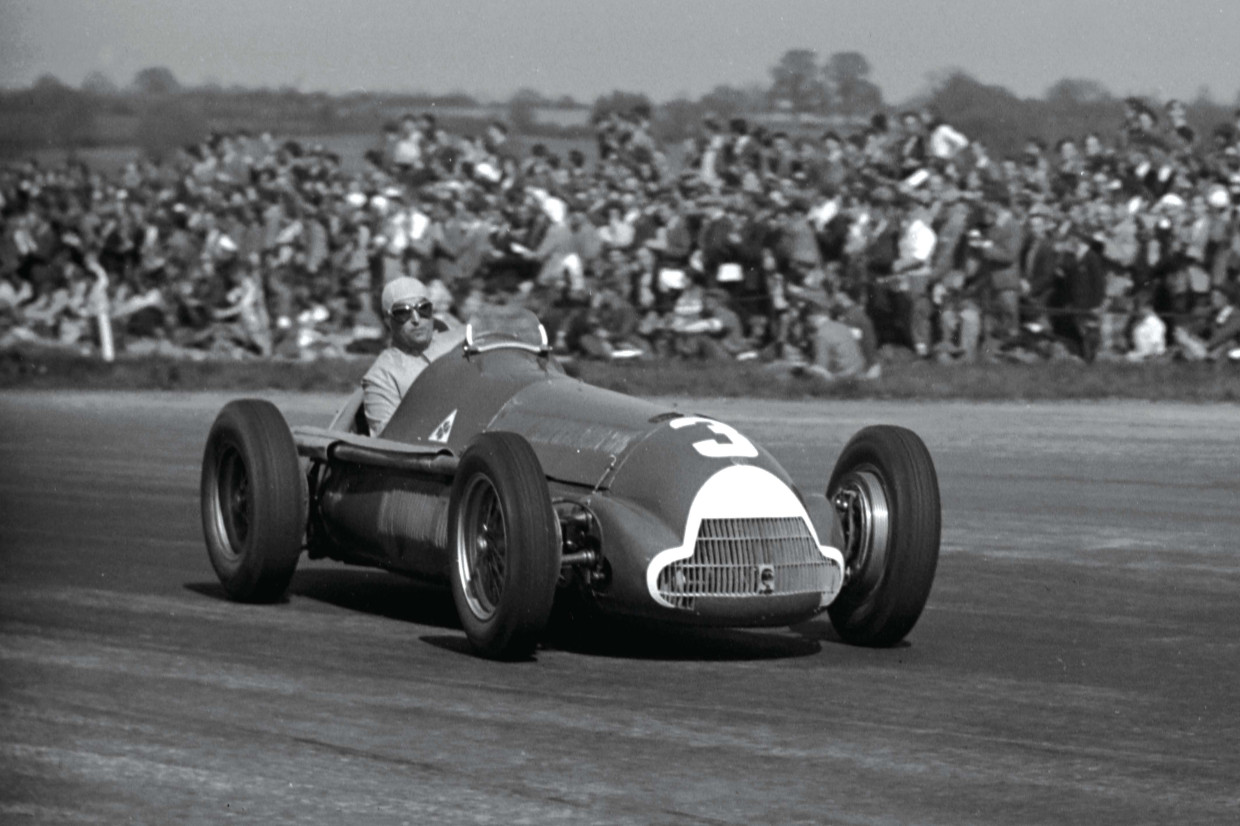
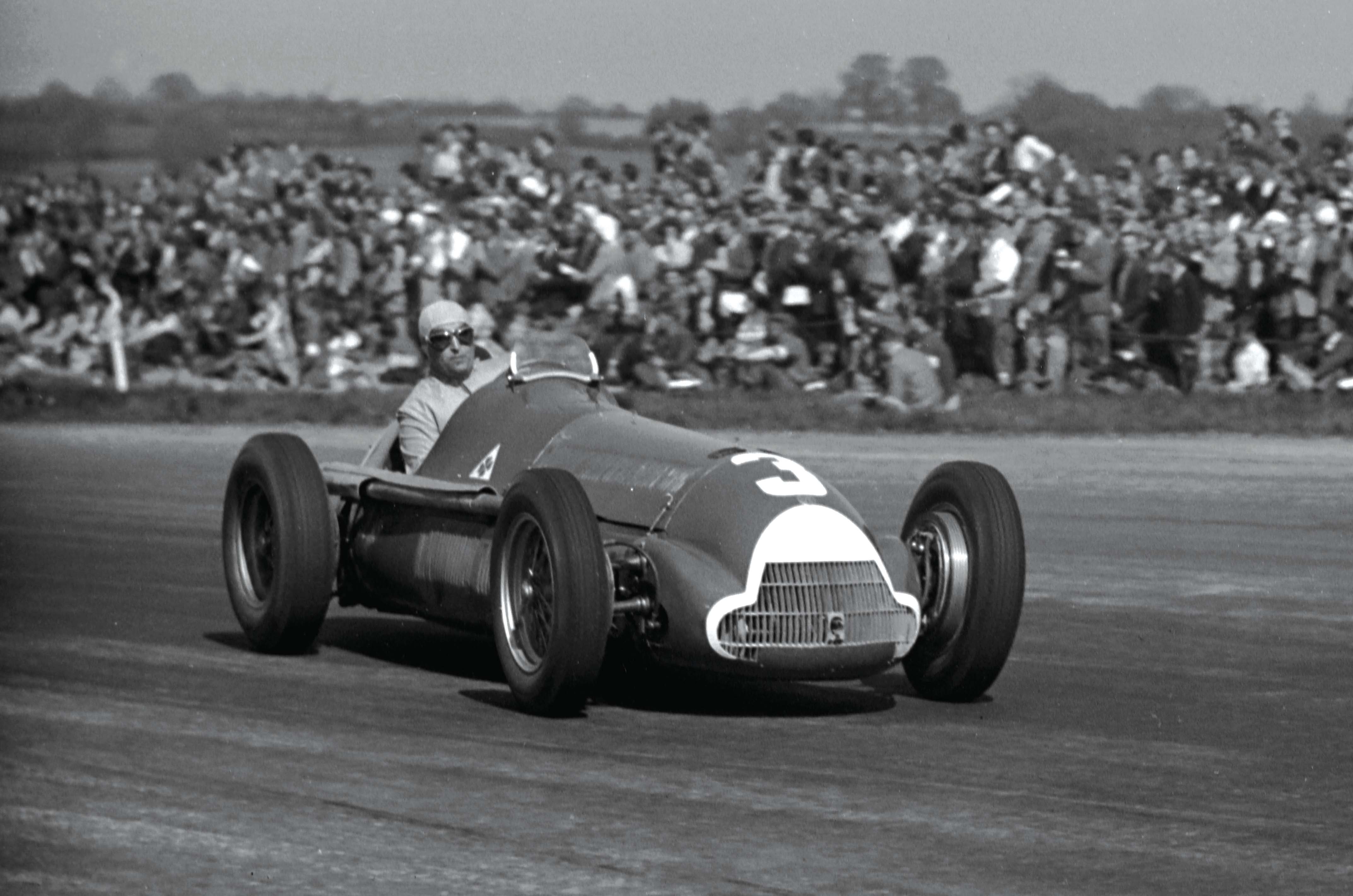
Yet he was still fast enough to stay in the mix, occasionally leading briefly during the rounds of pitstops for this thirsty car, and he finished a close second to Farina at the British and Swiss GPs (when Fagioli’s earlier self might have had a cheeky nibble), and to Fangio in Belgium and France.
Time, ultimately, was against him, of course.
Upstaged by a worrying margin by chief test driver Consalvo Sanesi in practice for the Italian Grand Prix showdown, Fagioli – despite having scored a second consecutive Mille Miglia top-10 finish and class win for Osca – found himself sidelined by Alfa Romeo in 1951 until July’s French Grand Prix.
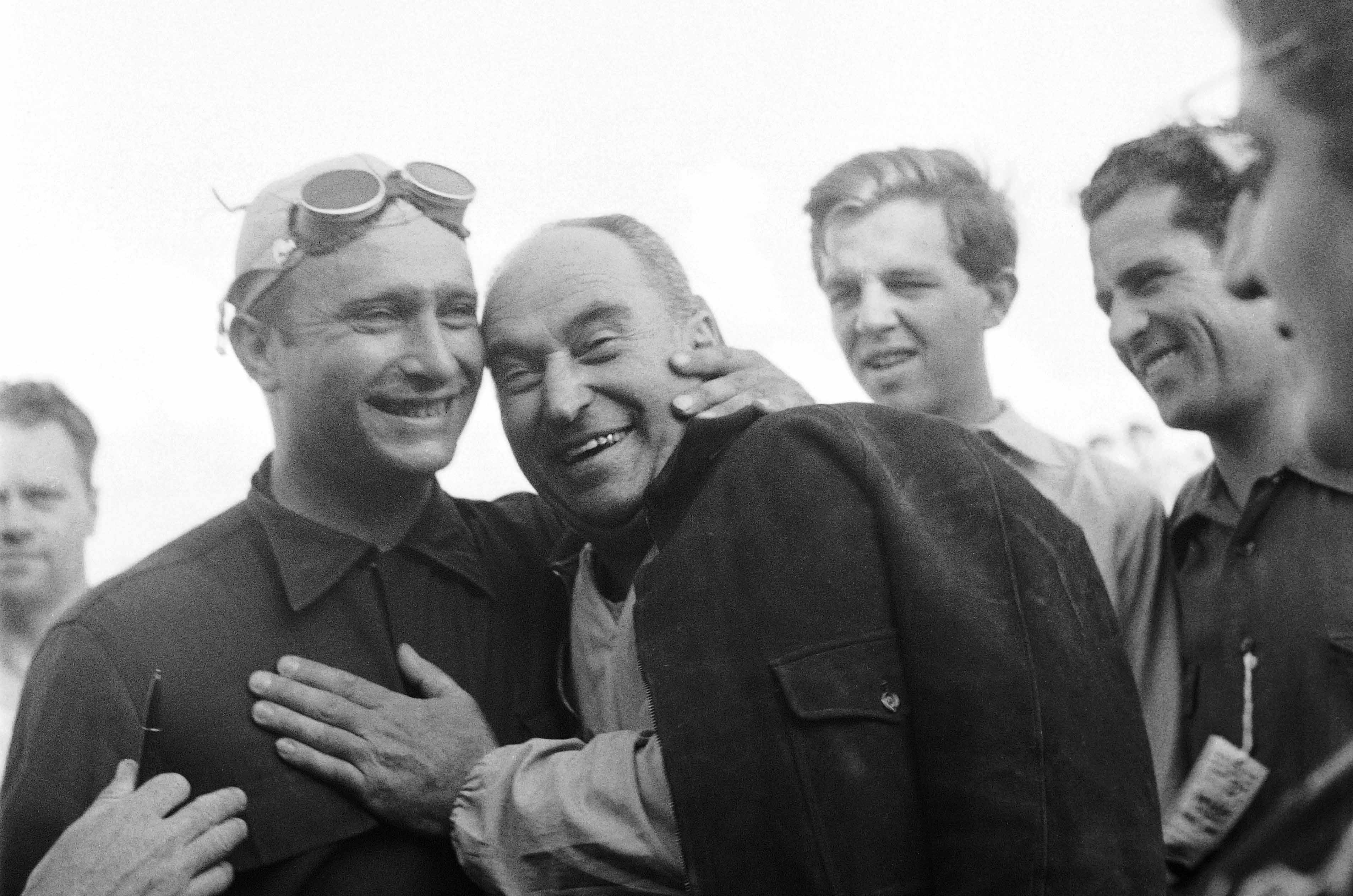
Once again outpaced by Sanesi over a single lap, he started seventh and was running third after 20 tours when he was told to cede his car to Fangio.
They shook hands as they did so – and would share the victory – but Fagioli saw no need to hide his disappointment.
He hung around glumly while mechanics replaced the faulty magneto on Fangio’s abandoned car, and he brought it home a very distant 11th.
The oldest World Championship Grand Prix winner – at 53 years, 22 days – vowed to concentrate on sports cars from thereon.
His remarkable performance at the 1952 Mille Miglia in a Lancia Aurelia B20 – third overall and first in the 2-litre GT class – had a bonus: Caracciola’s Mercedes-Benz W194 Gullwing was more than 8 mins behind in fourth.
They were contesting the Prix de Berne at Bremgarten a fortnight later in May when a crash broke the latter’s left leg, ending his career. He was 51.
Nuvolari was forced into unscheduled retirement because of ill health in 1950. He would suffer the first of his two major strokes in 1952 and die, aged 60, because of the second the following year.
An era was coming to a close – and was about to slam shut.
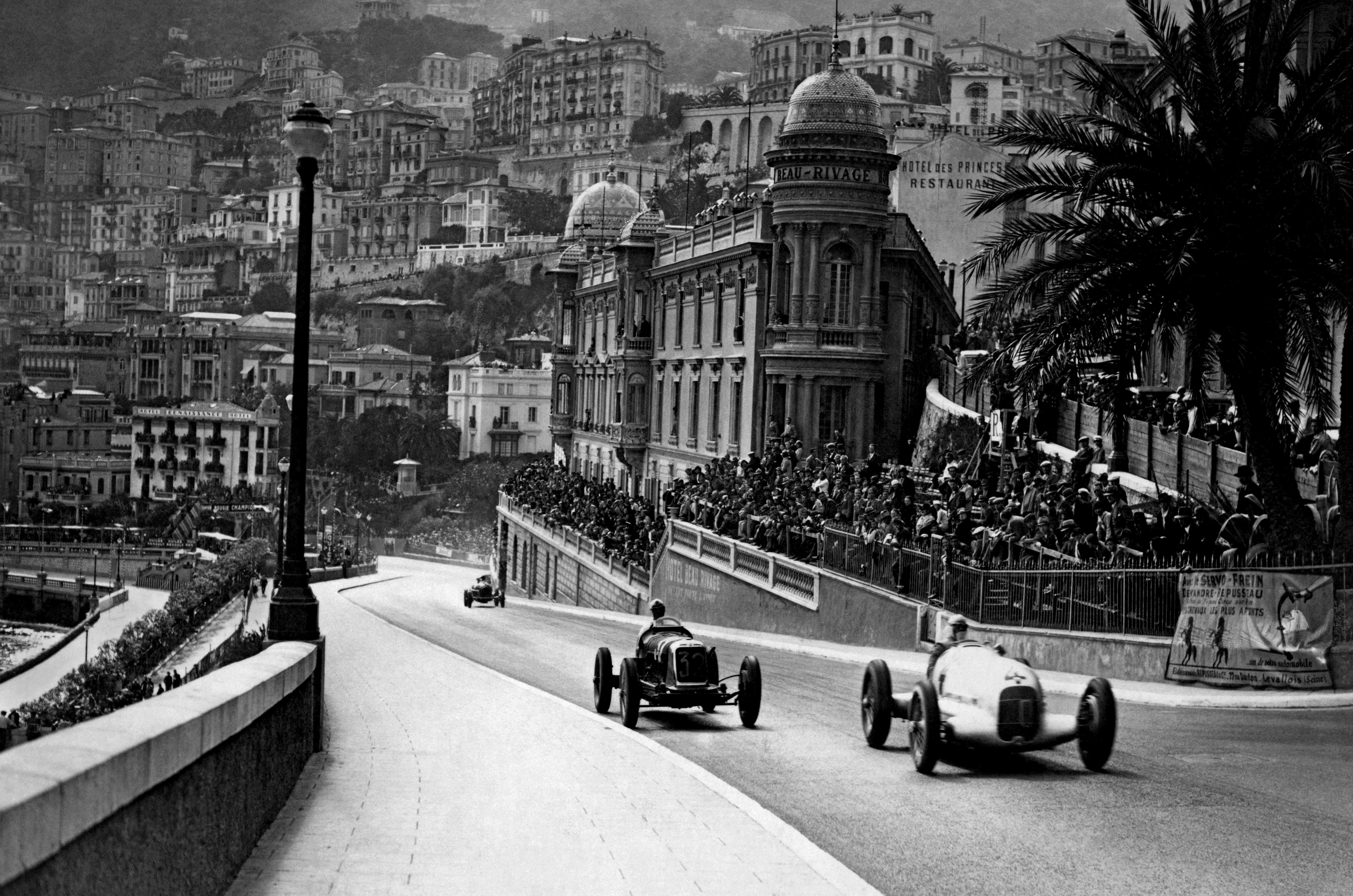
No reason was given for Fagioli’s accident exiting the tunnel during practice for the 1952 Prix de Monaco – the 2-litre support race to a Monaco Grand Prix run uniquely for sports cars.
The news was hopeful, though: serious but stable. A newfangled crash helmet had saved his life – he was in a coma for four days – and doctors were predicting a complete albeit slow recovery: eight to nine months for a mangled left knee.
He celebrated his 54th birthday – on 9 June – still in hospital, and photographs were published of him reading newspapers while sat up in bed.
No doubt he paid close attention to reports of Lang’s leading role in the Mercedes-Benz 1-2 finish at the Le Mans 24 Hours on 14-15 June – and assuredly wondered what might have been.
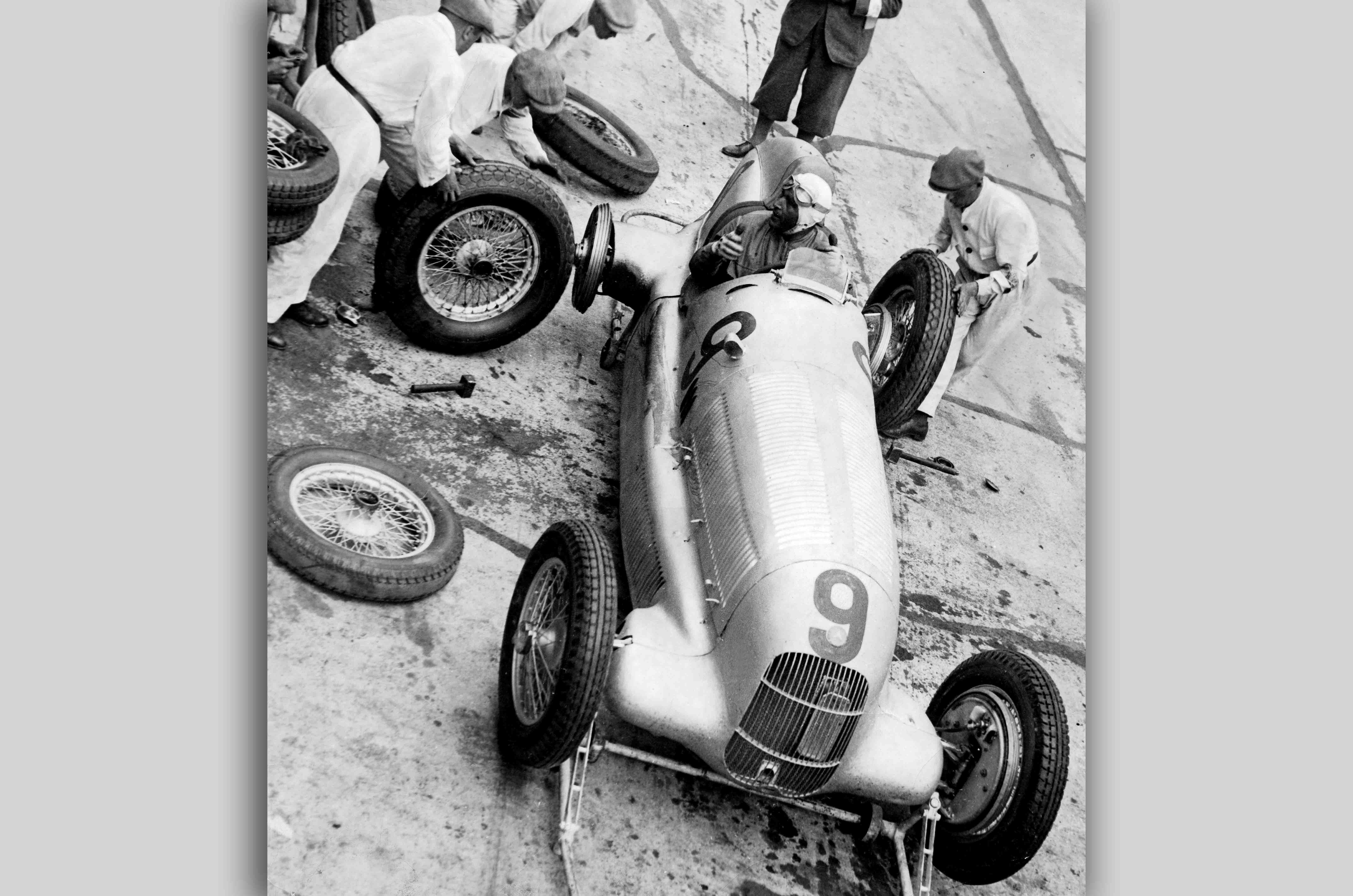
Because Neubauer, in need of Fagioli again due to Caracciola’s absence, had buried the hatchet – or perhaps the hammer.
The following Friday, three weeks after his accident, Fagioli went under the knife. He never regained consciousness.
Images: Getty/Alamy
Enjoy more of the world’s best classic car content every month when you subscribe to C&SC – get our latest deals here
READ MORE
Celebrating 120 years of Grand Prix racing
Maserati 300S: in Fangio’s footsteps
Mercedes-Benz SSKL: recreating the first Silver Arrow