Maserati Ghibli Cup: last of the line

| 3 Oct 2025
Classic & Sports Car – Maserati Ghibli Cup: last of the line

When ailing Maserati launched its 3200GT at the 1997 Frankfurt auto show, the firm’s pre-programmed PR folks droned on about reviving ‘core brand values’ and the importance of re-entering the American market.

They were less keen to talk about the model that forced them to vacate the world’s largest consumer market in the first place: the Biturbo.

Here was a car that, had it been implemented with any degree of technical skill or attention to detail, might now be revered.
Classic & Sports Car – Maserati Ghibli Cup: last of the line

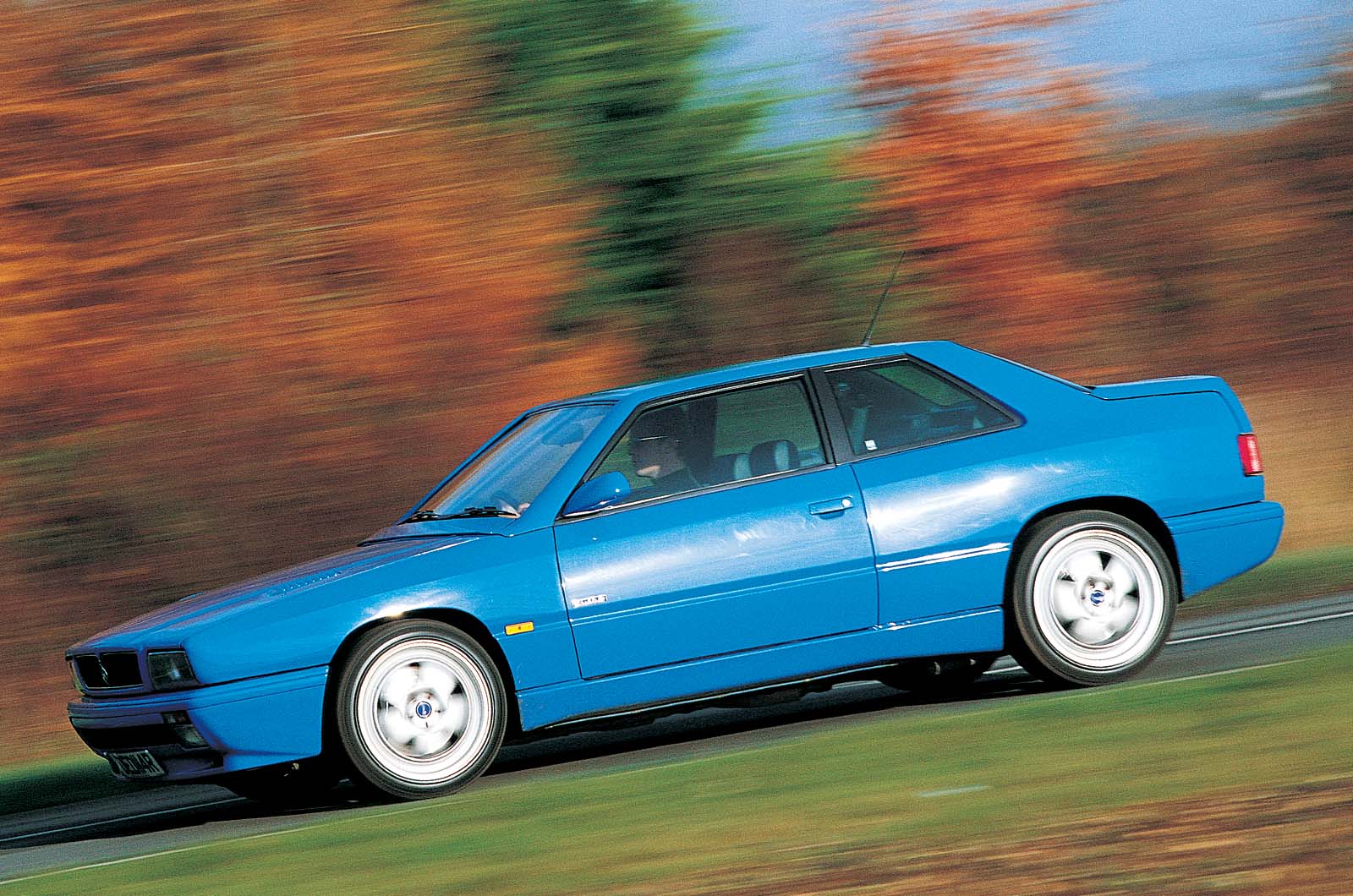
Around 100 Maserati Ghibli Cups were built, including 26 officially imported into the UK

Unfortunately, through a mixture of abysmal build quality, oversupply and high list prices, it nearly sank the marque.

Ferrari’s – sorry, Fiat’s – occupation of the Maserati factory since the mid-’90s even resulted in a historical rewrite to eliminate the previous decade: ‘Biturbo’ is a dirty word.

Yet among the casualties of this propaganda is a car that remains an anomaly, an enigma and a revelation: the Ghibli Cup.

Introduced just a year before the 3200GT, this was the car the Biturbo always should have been.
The basis for the Ghibli Cup was the Ghibli coupé, which was launched in 1992 and was essentially an update of the Biturbo, with an all-new yet similar-looking body.

Power came from either a 2-litre quad-cam V6 (for the home market) or a 2.8-litre unit, with the underpinnings getting a timely revision that included fettled suspension and a new ZF five-speed gearbox with a normal shift pattern.

But it was in 1995, when Fiat was bankrolling Maserati back into consciousness, that things got really exciting.

With one eye on the forthcoming 3200, Maserati needed a stopgap model.

Classic & Sports Car – Maserati Ghibli Cup: last of the line

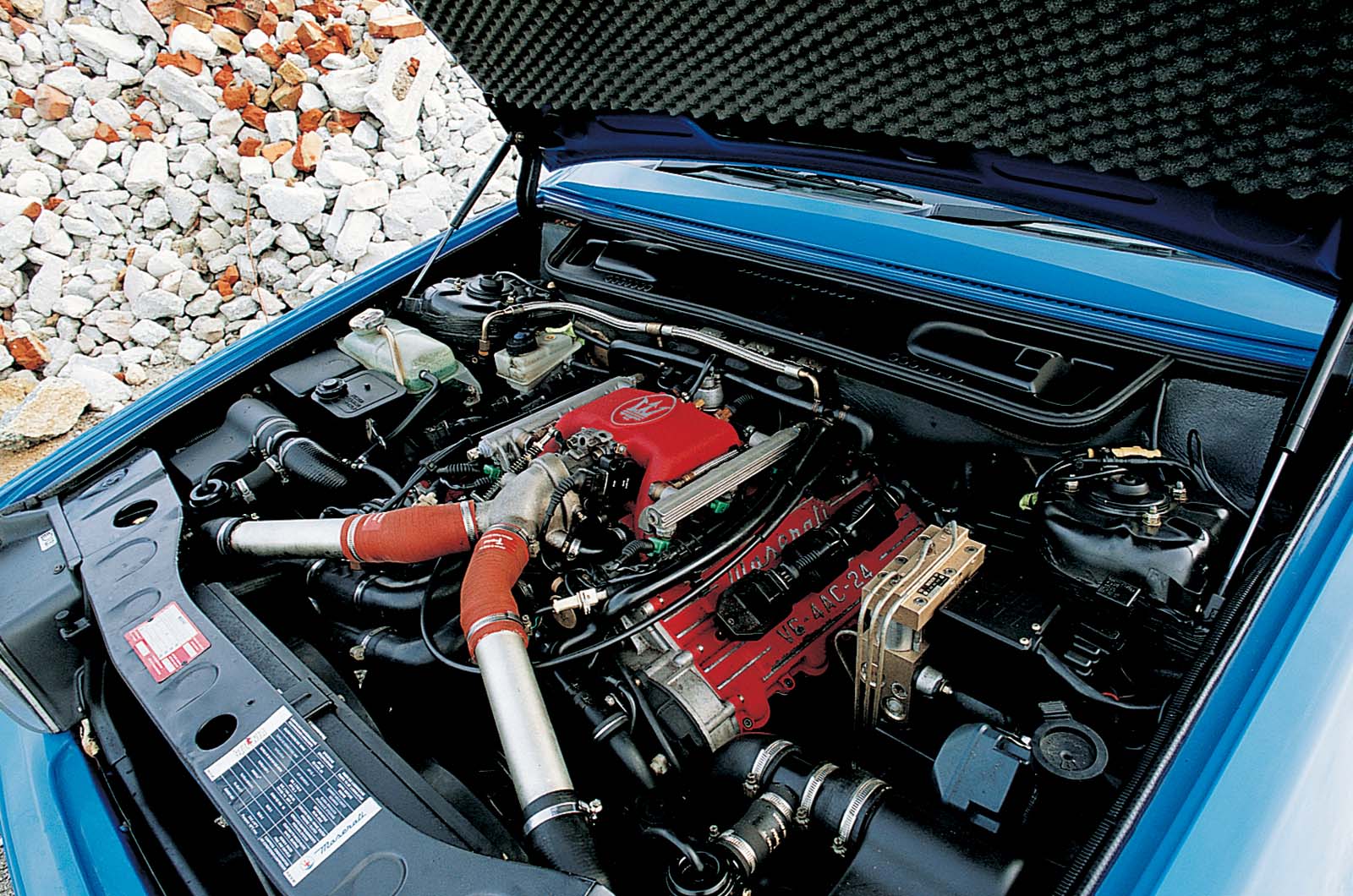
The Maserati Ghibli Cup’s twin-turbo V6 makes 330bhp

A new Ghibli, the GT, was developed alongside the Series IV Quattroporte, sharing its rear axle and suspension (lifted from the Ferrari 456GT), and its Getrag six-speed ’box.

In an effort to publicise the model, a new pan-European one-make series was launched: the Selenia Ghibli Open Cup.

It was modestly successful, and proved popular with gentleman drivers in 1995 before being canned just two races into the following season. Of greater significance was the road car it spawned.

The Ghibli Cup featured all the GT upgrades, but was only offered with the 2-litre engine – even in right-hand drive.

This unit features IHI turbochargers (with roller bearings, unlike its lesser brethren), revised engine-management mapping and a freer-flowing exhaust system.

The result is a colossal 330bhp – or, more impressively – 165bhp per litre, with 280lb ft at 4000rpm. By way of comparison, a Bugatti EB110 and Jaguar XJ220 manage 157 and 155bhp respectively.

No surprise, then, that it could hit 60mph from rest in 5.6 secs, 100mph 7 secs after that and 165mph flat-out.

It never stood a chance, sadly. Like the GT, the Cup was killed off in 1998 when Maserati’s Modena factory was closed for refurbishment and the installation of the 3200GT production line; a further 250 GTs were made from spares when the plant reopened in early ’99.

Classic & Sports Car – Maserati Ghibli Cup: last of the line

The wild Maserati Ghibli Cup ensured the Biturbo went out with a bang

Worse news for some customers was that all official interest in the Ghibli evaporated at this point, with many dealers discounting cars to clear showrooms in anticipation of the Maserati 3200GT.

You could have bought a GT from an authorised outlet for around £28,000, when only a year earlier the figure would have been nearer to £43k.

The effect on the secondhand market was catastrophic, and the Cup was among the casualties.

Specialist dealers became shy of stocking Ghiblis because of the uncertainty around being able to shift them at a profit.

A low-mileage example could soon be bought for the price of a loaded Vauxhall Vectra, and that surely made it the performance bargain of the decade.

That’s if you could find one: just 26 Cups were officially imported into the UK – two of which were subsequently written off – so its isolated status looks set to remain intact.

Should you be tempted, there’s no denying that this is an idiosyncratic choice.

As with most Maseratis built over the 1970s, ’80s and ’90s, this race-bred coupé isn’t altogether happy-looking and only deserves to be whispered in the same breath as its ’60s namesake.

Classic & Sports Car – Maserati Ghibli Cup: last of the line

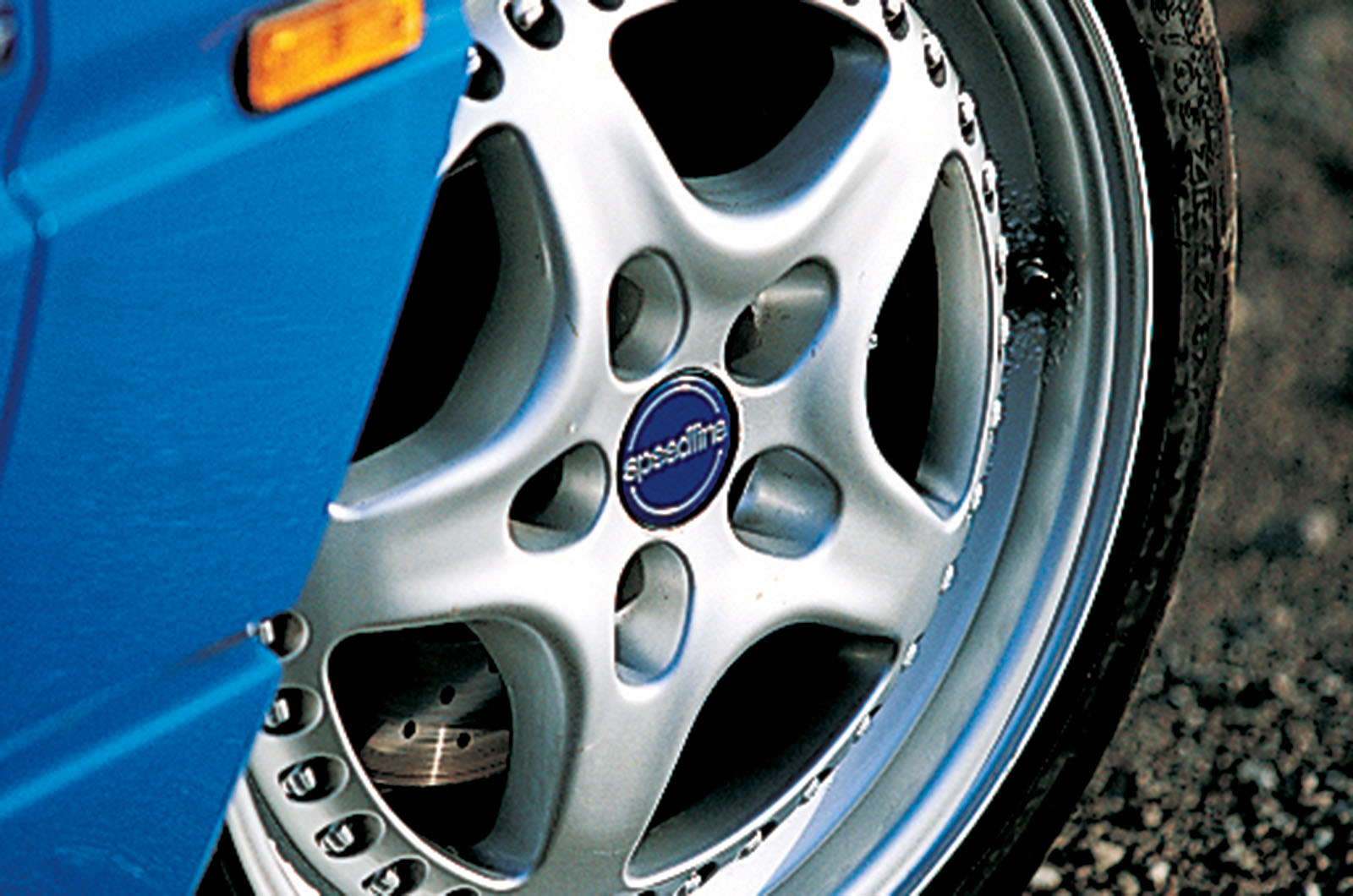
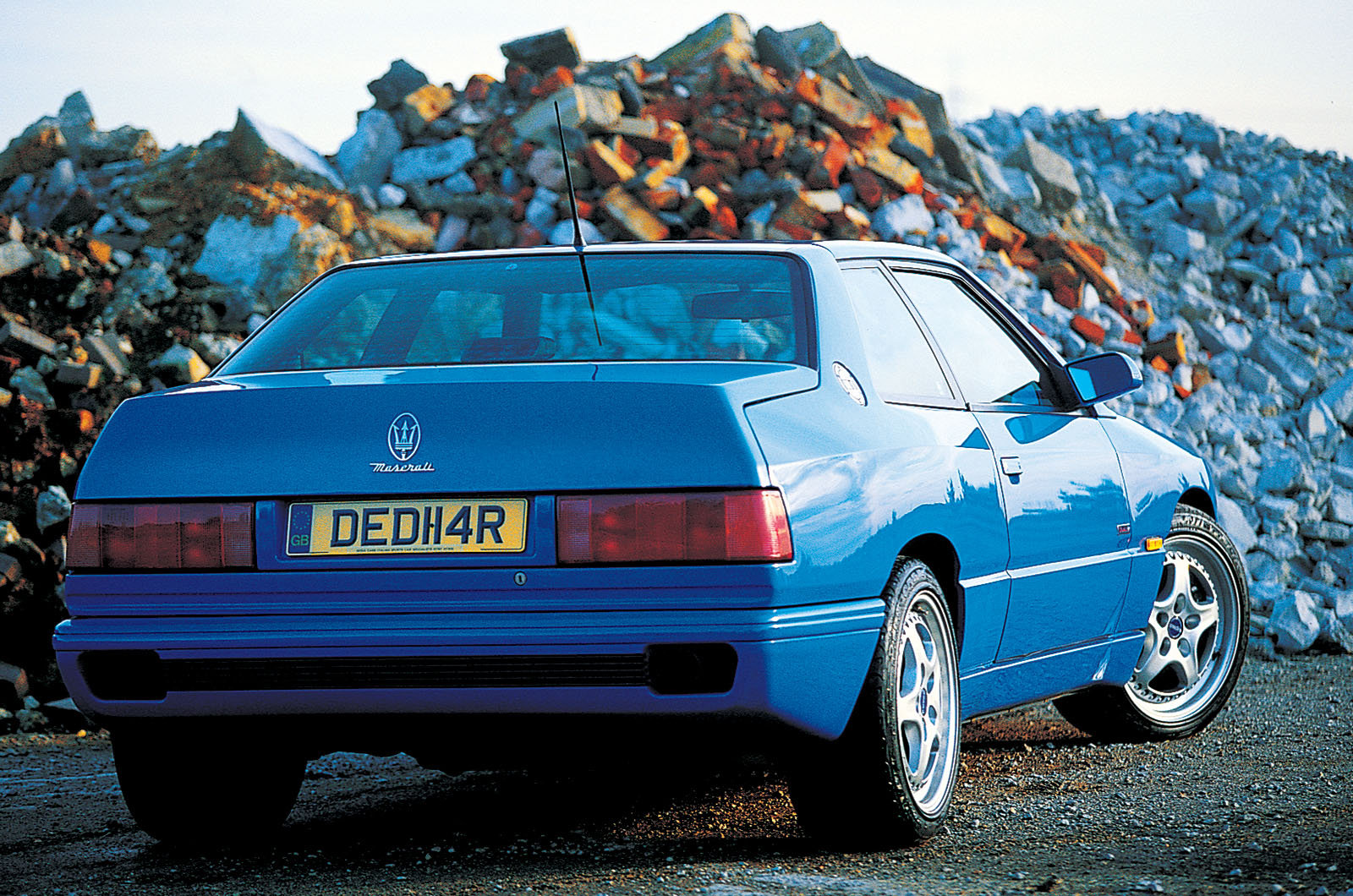
This Maserati’s three-piece 17in Speedline Allesio alloys are peculiar to the Ghibli Cup

While it may not share a single outer panel with the Biturbo, the Ghibli retains its sibling’s outline, albeit more exaggerated than that of its predecessors, having been tweaked, pushed and pulled with haphazard élan.

But, thanks to those bulging flanks and a square-cut roofline, it oozes attitude.

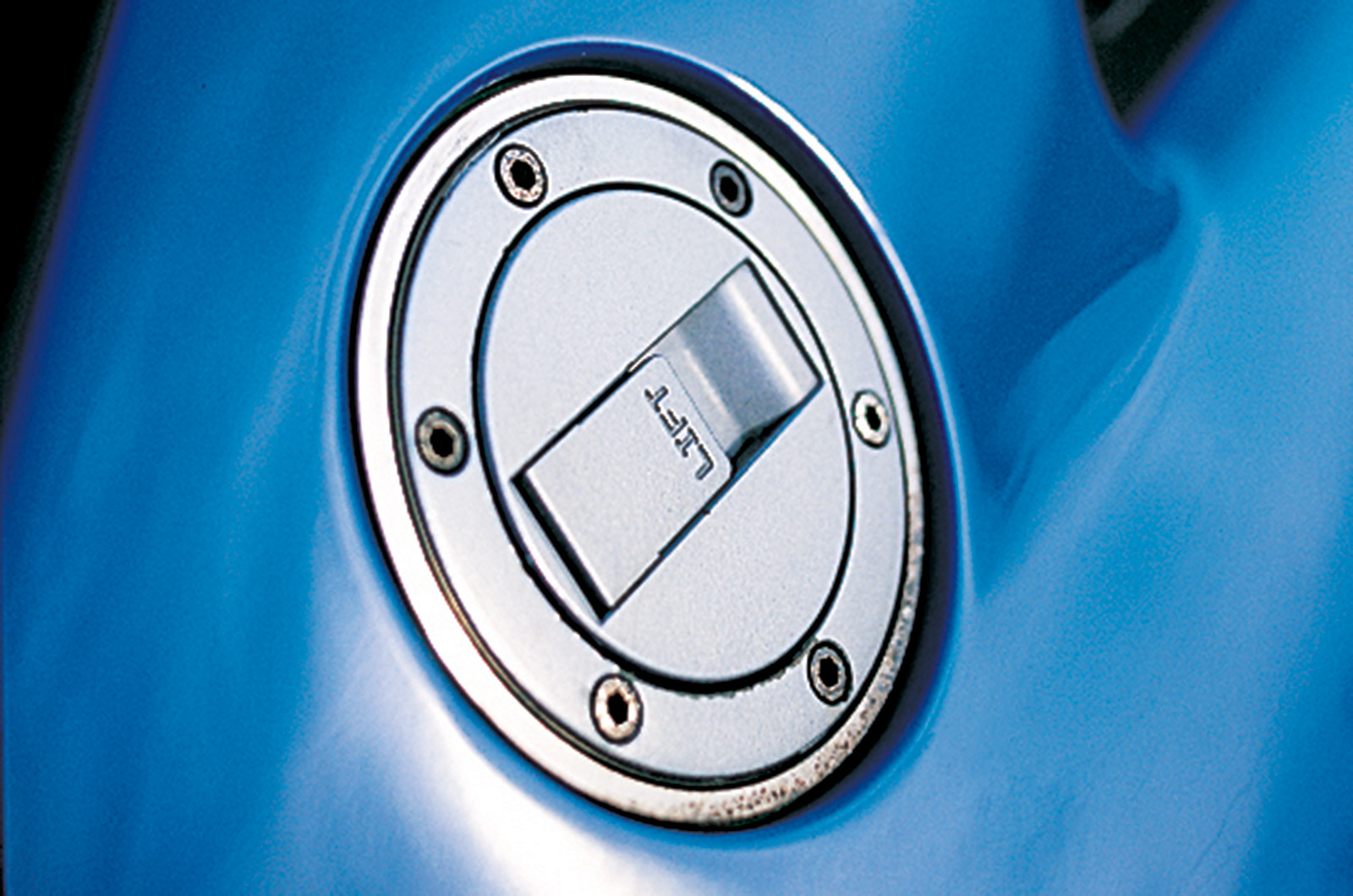
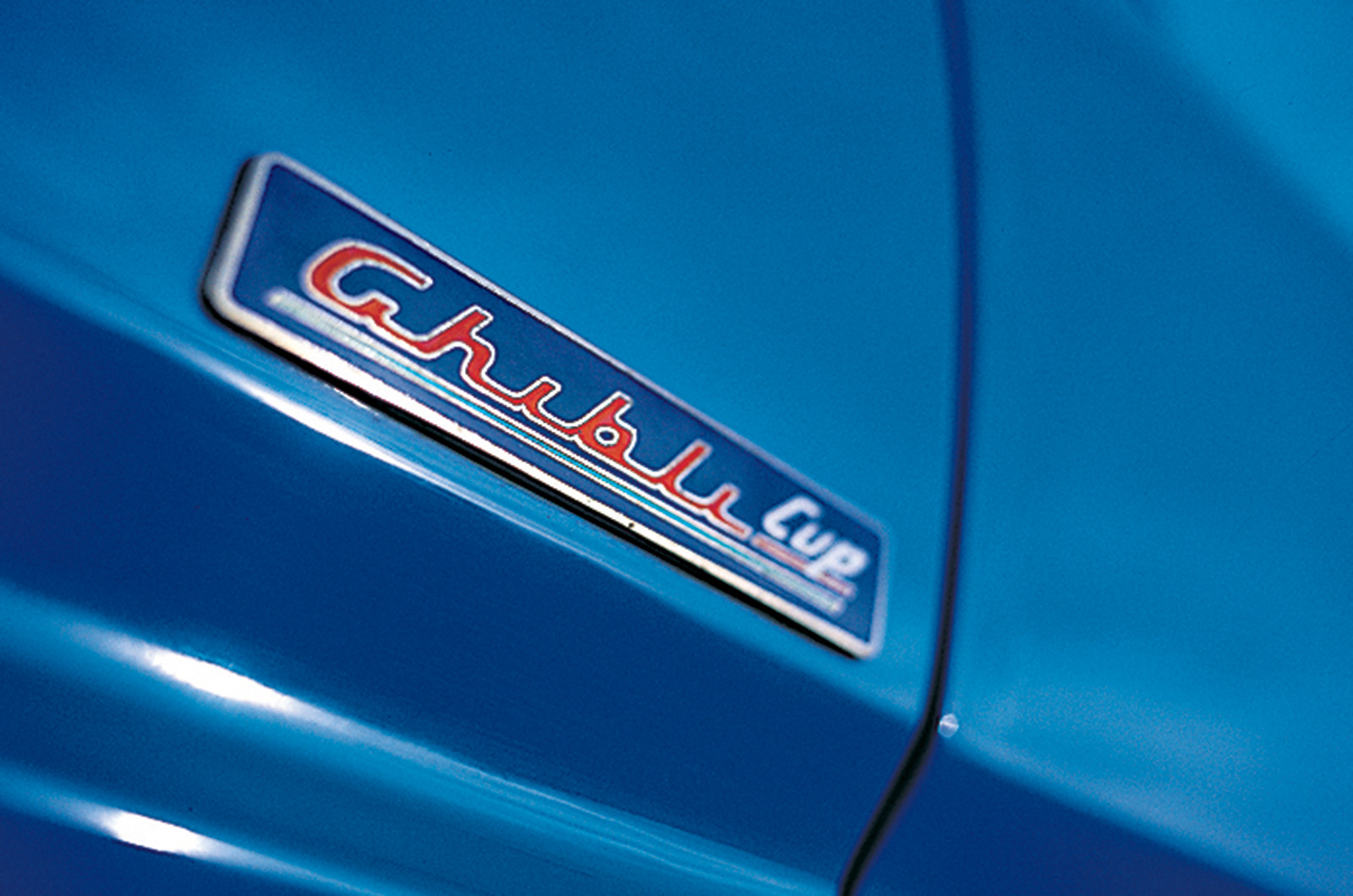
It’s distinguishable from other Ghiblis by way of its three-piece Speedline Allesio alloy wheels and single-outlet exhaust pipes (as opposed to twin tailpipes per side on other models), badging on the door bottoms proclaiming Open Cup and the racing-style, aluminium, fuel-filler cap. 

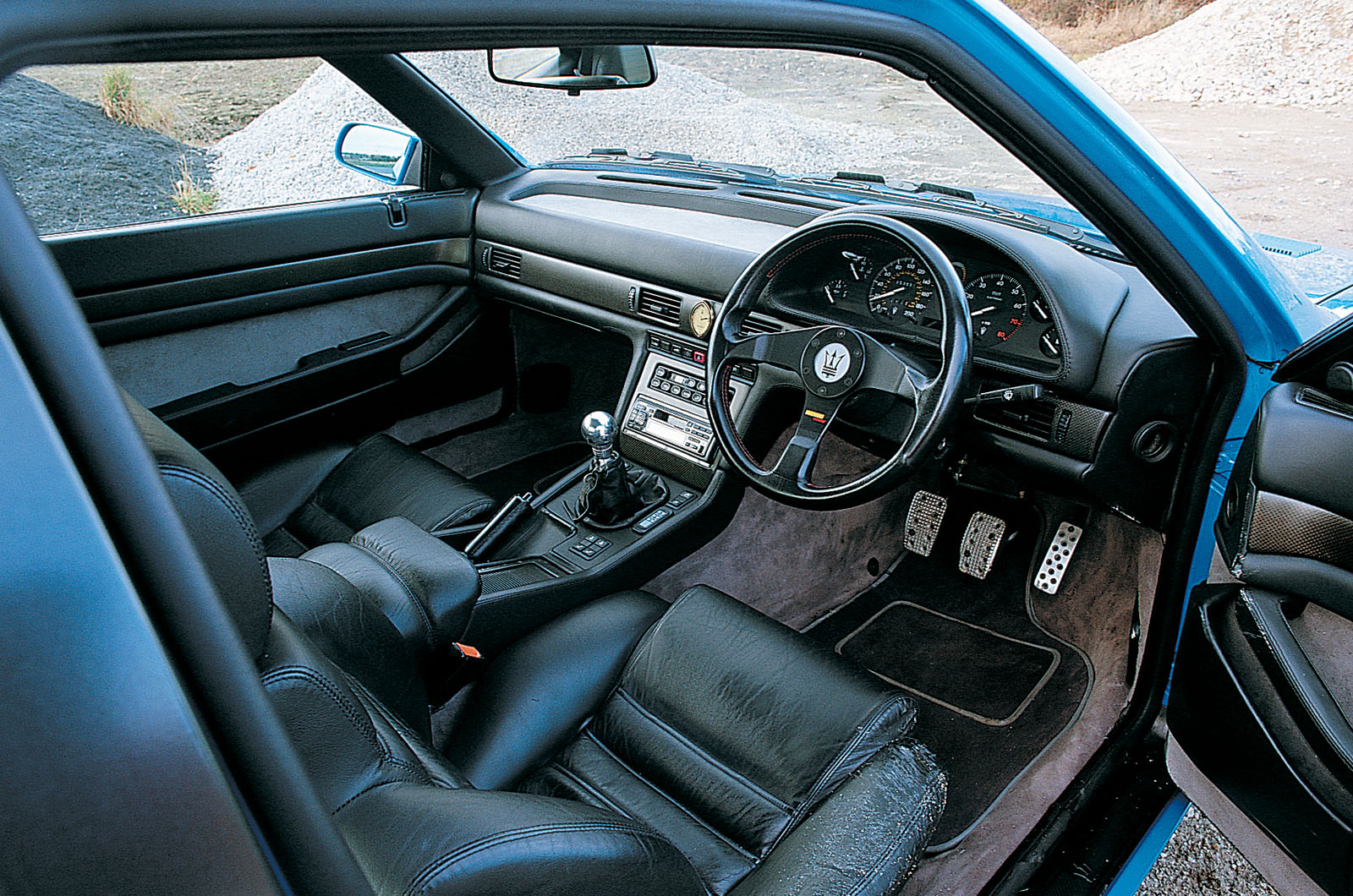
The cabin, too, is highly distinctive, with its combination of black leather, grey Alcantara and carbonfibre-effect appliqué trim, complemented by drilled aluminium pedals and a delicious Momo Corse steering wheel.

Unfortunately, the driving position is the car’s worst feature. Despite multiple adjustments, the wheel cannot be brought near enough to the rest of the controls.

Equally, the pedals are positioned too high in the footwell and the front seats are sorely lacking in lumbar and lateral support.

This is a pity because it looks the part and is surprisingly practical, being one of few coupés with a decent amount of room in the back – as long as you’re willing to accept the struggle to get there.

Behind the rear seats, there’s a 420-litre boot that’s as spacious as any medium-size saloon’s.

Classic & Sports Car – Maserati Ghibli Cup: last of the line

The Cup’s aluminium fuel-filler cap sets it apart from other models in the Maserati Ghibli line-up

It’s well equipped, too, with air-con, electric seats and CD autochanger.

And, being a Maserati, the trademark elliptical clock is there, though its gold bezel looks incongruous in the centre of the dash.

It’s only when you drive the car that the Ghibli Cup restores the faith: it’s a return to form and irrefutable proof that Maserati hadn’t altogether forgotten how to make good cars.

This is largely down to the engine. Aside from its lovely architecture, the 1996cc 90° V6 is an aural delight and smooth with it, at least in the higher reaches of the rev band.

Below 3000rpm it isn’t entirely happy, grinding and graunching if the throttle is opened too wide.

The Maserati Ghibli Cup requires a long prod of the throttle in a low gear to wake the turbochargers from their slumber, but power sweeps in more conspicuously at around 4000rpm with a gorgeously affecting uproar and piles it on ever stronger up to the 7000rpm redline.

Whereas the old Biturbo’s non-linear throttle response often provided unwanted entertainment, there are no such worries here because boost is evenly regulated.

The twin turbochargers’ boost gauge, however, proves to be a near hypnotic distraction.

Classic & Sports Car – Maserati Ghibli Cup: last of the line

The Maserati Ghibli Cup has an extravagant cabin, but an awkward driving position

That this engine features the highest specific output of any contemporary road car is eclipsed only by the knowledge that the chassis is well behaved.

Changes in the six-speed gearbox aren’t as accurate or as light as you would like, however, and the Cup sometimes struggles to put its ferocious 330bhp down neatly off the line.

But it comes into its own from 30-70mph and screams away this increment in an adrenalin-charged 4.8 secs.

Third-gear acceleration is awe-inspiring and easily capable of humbling Subaru Imprezas and BMW M3s before starting on the exotic stuff.

Fortunately, the Brembo all-round ventilated disc brakes haul down its 1424kg kerbweight from high speeds with a strength and precision that’s beyond criticism.

The Cup feels skittish on damp roads – that is hardly surprising considering the power – and requires much persuasion to stop it from swapping ends.

In the dry it’s a different story. The car’s suspension – comprising MacPherson struts at the front and a multi-link set-up at the rear, with an anti-roll bar at each end – is remarkably composed.

Turn in and the front end tends to wash out a touch, leading to oversteer on exit, but it remains fun rather than fearful.

Classic & Sports Car – Maserati Ghibli Cup: last of the line

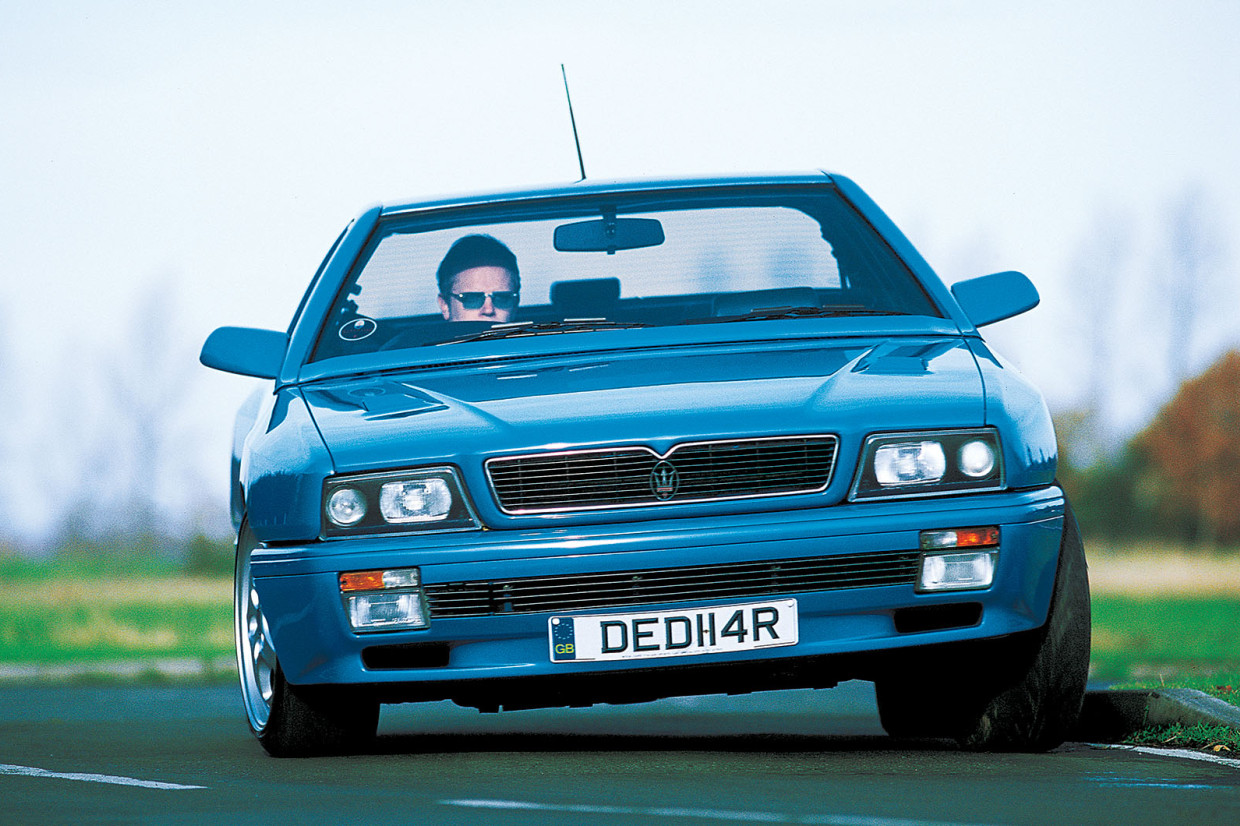
This Maserati Ghibli Cup is unique in factory Paris Blue

Yet what really distinguishes the Cup from its period rivals is the fluid power steering, which is consistently involving.

Despite the trade-off kickback over really rough surfaces, it’s worth the sacrifice: you’ll rarely find a more communicative set-up.

Unlike so many other recent Maseratis, its ride quality varies between comfortable and unyielding – depending on which setting is dialled into the electronic dampers.

It’s a shame, then, that there isn’t a happy medium for body control.

On smooth roads that isn’t a problem because the suspension is rarely taxed, but on typically rutted B-roads you often find the nose hammering into the floor.

That said, this is a car that can be forgiven almost anything.

Despite the inhumane driving position, and the occasional squeak and rattle, the fundamentals are so desirable that these glitches don’t blight the overall picture.

You become engaged with the Maserati on every level. The Ghibli Cup possesses sufficient soul and character – enough of the right stuff – that even the most cynical non-believer will be forced to readjust their prejudices.

It might not have attained commercial success, but its charisma remains beyond price.

Images: Tony Baker

Thanks to: James Pumo

This was first in our June 2002 magazine; all information was correct at the date of original publication


Factfile

Classic & Sports Car – Maserati Ghibli Cup: last of the line

Maserati Ghibli Cup

  • Sold/number built 1996-’97/c100
  • Construction steel monocoque
  • Engine all-alloy, dohc-per-bank 1996cc V6, Weber-Marelli multi-point fuel injection and two IHI turbochargers 
  • Max power 330bhp @ 6800rpm 
  • Max torque 280lb ft @ 4000rpm
  • Transmission Getrag six-speed manual, RWD
  • Suspension independent, at front by MacPherson struts rear multi-link, coil springs; electronic dampers, anti-roll bar f/r 
  • Steering power-assisted rack and pinion 
  • Brakes vented discs, with servo and ABS
  • Length 14ft 10¼in (4223mm)
  • Width 15ft 9¾in (1775mm)
  • Height 4ft 3½in (1310mm)
  • Wheelbase 8ft 4in (2540mm)
  • Weight 3139lb (1424kg) 
  • 0-60mph 5.6 secs
  • Top speed 165mph
  • Mpg 19
  • Price new £47,000

*Price correct at date of original publication


Enjoy more of the world’s best classic car content every month when you subscribe to C&SC – get our latest deals here


READ MORE

Maserati 300S: in Fangio’s footsteps

Maserati Shamal: the best of the biturbos

Maserati Khamsin: Marcello Gandini’s forgotten jewel