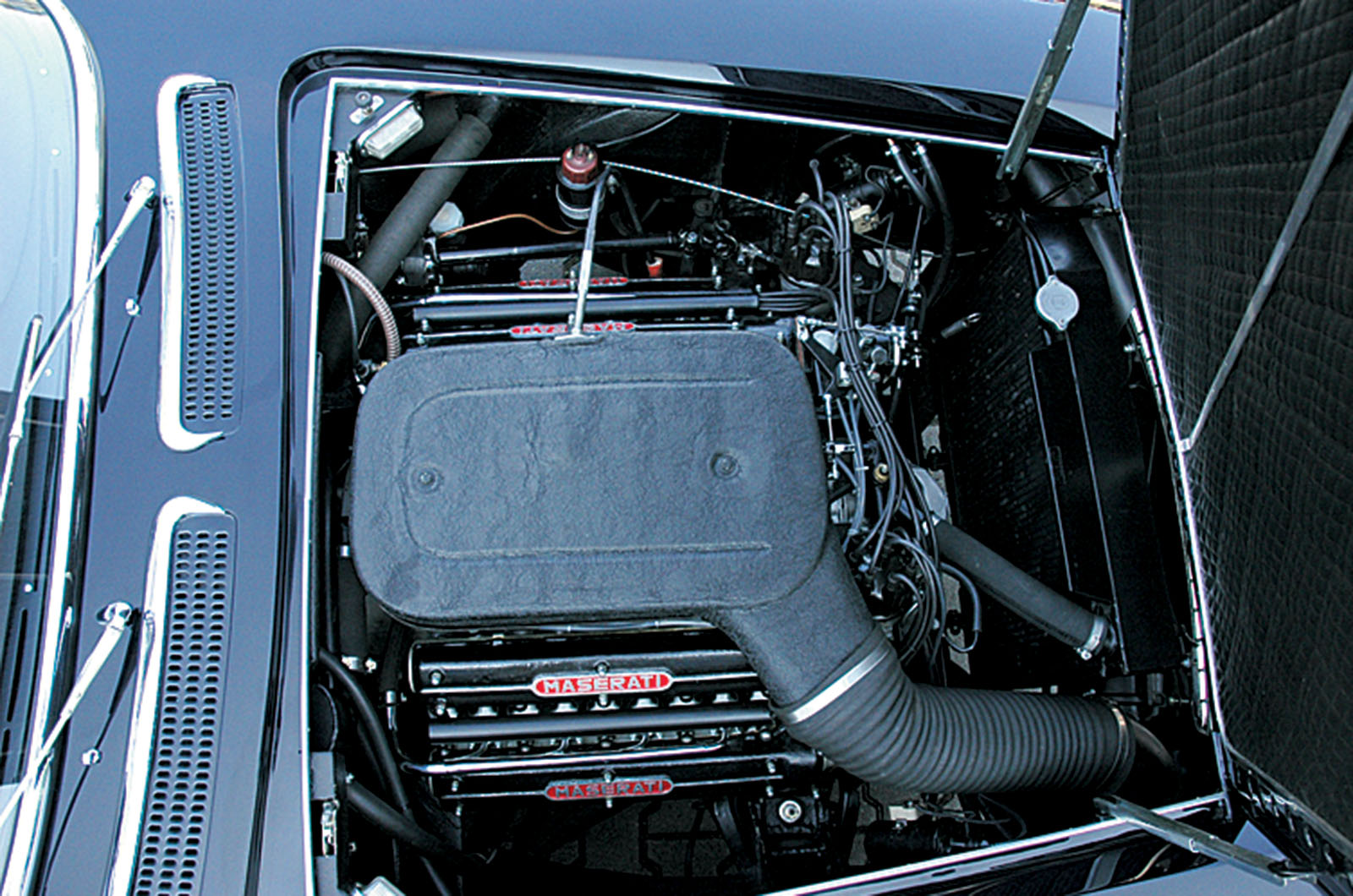
Once they were assembled, Robertino turned to the injection: “The Lucas system is effective, but the Italians didn’t really understand it and used a mixture adjustment linked to oil pressure and air density – a real headache. We simplified it.”
Key to this refinement was Lee Muir, an ex-McLaren Can-Am engineer with vast experience of the Lucas system.
Once the indirect injection was refined, the V8’s character was transformed with smooth power and gutsy low-down torque.
With the 5000GT’s potential unleashed, Robertino’s team set about making the car safe enough for such performance to be used.
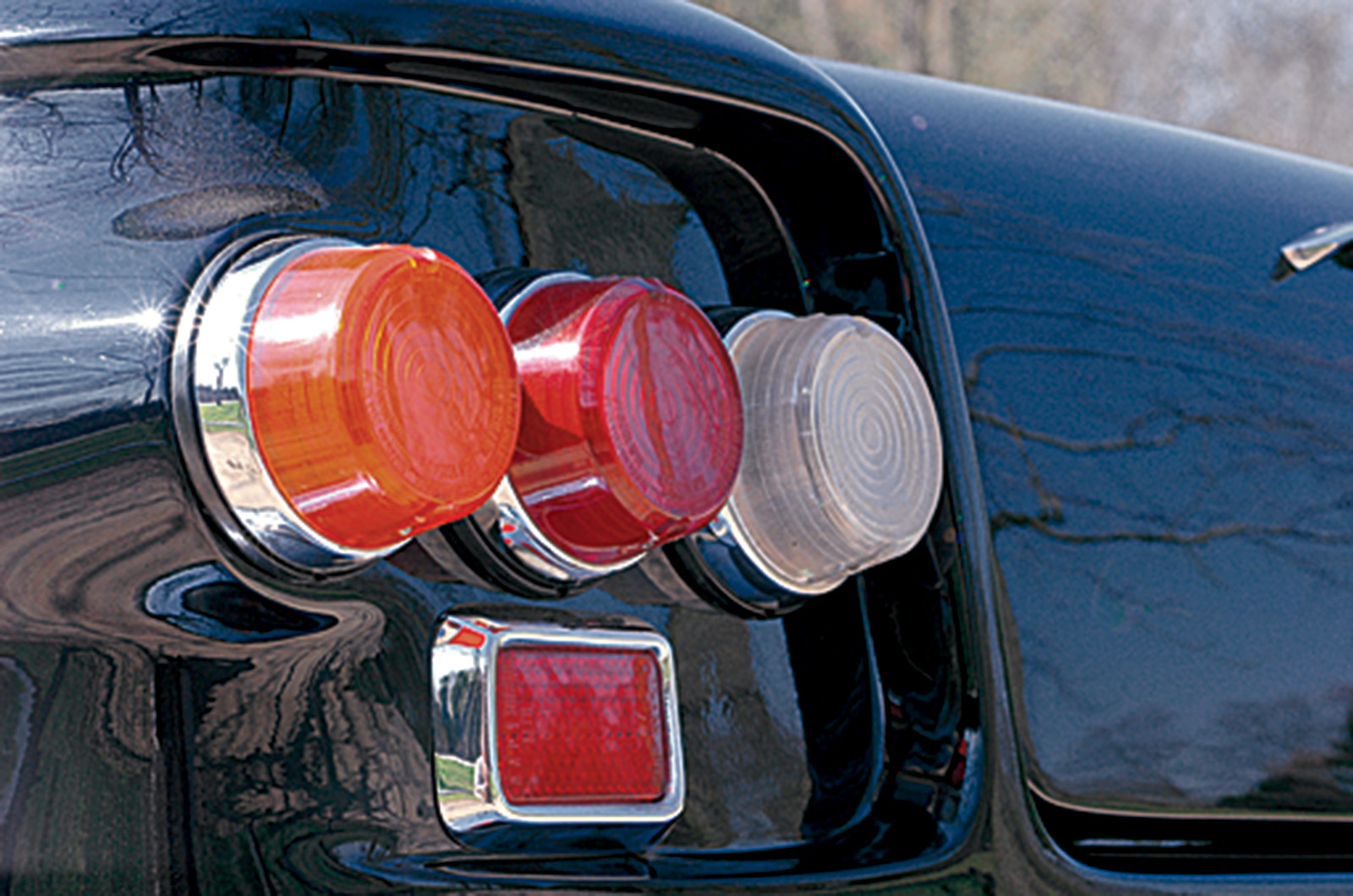
The Maserati 5000GT’s rear-light cluster
“We stiffened up the front end with recalibrated dampers, but we’re still not happy with the steering,” he says.
“The chassis is essentially the same as the 3500GT’s, but with extra reinforcement. Maserati was concerned about the extra weight of the V8, so adjusted the steering box ratios to lighten the load.
“As a result it’s not direct enough for the performance.”
Ever the perfectionist, Robertino is keen not to change the character of the car.
Time to try the sorted Maserati 5000GT.
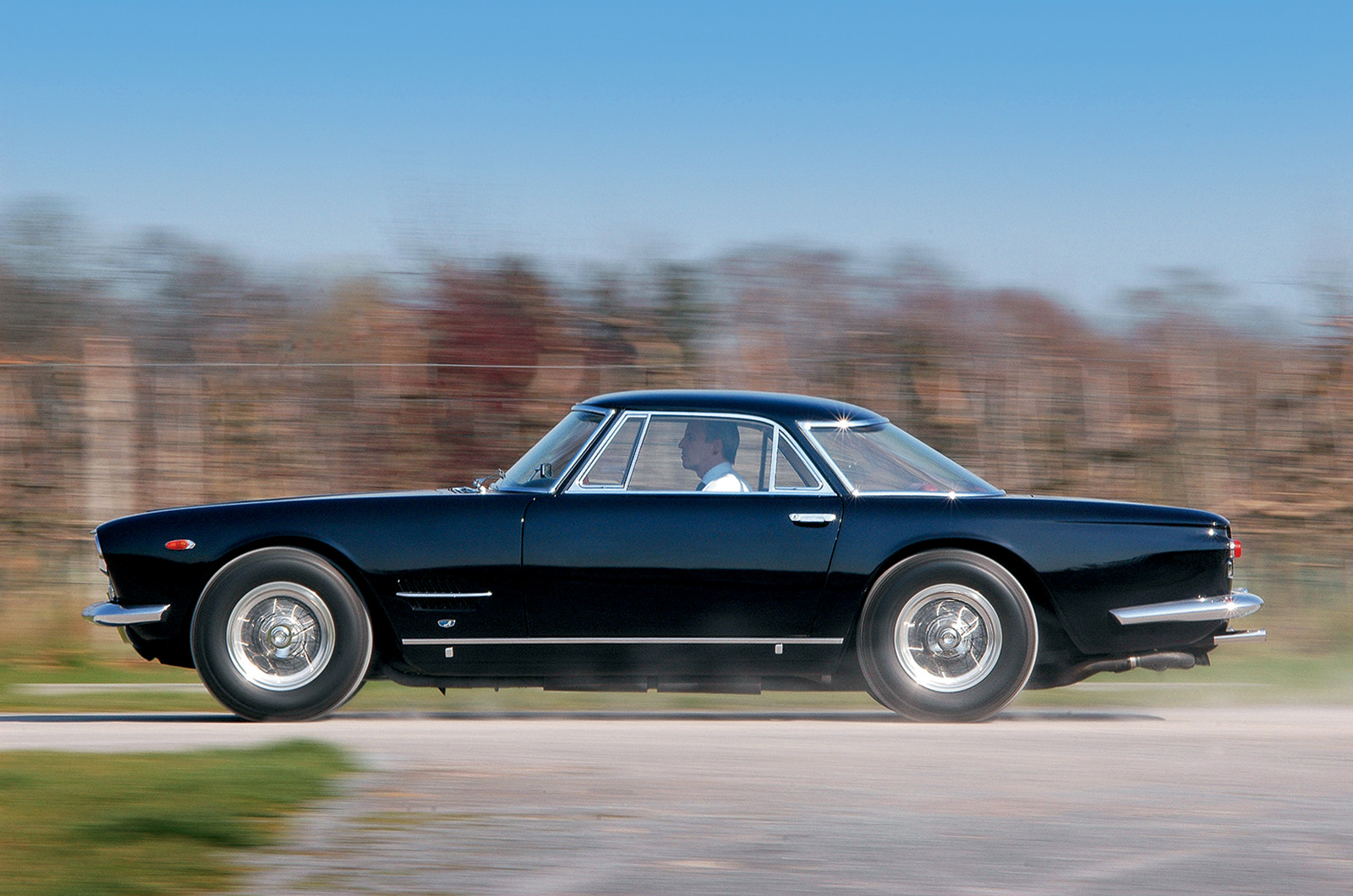
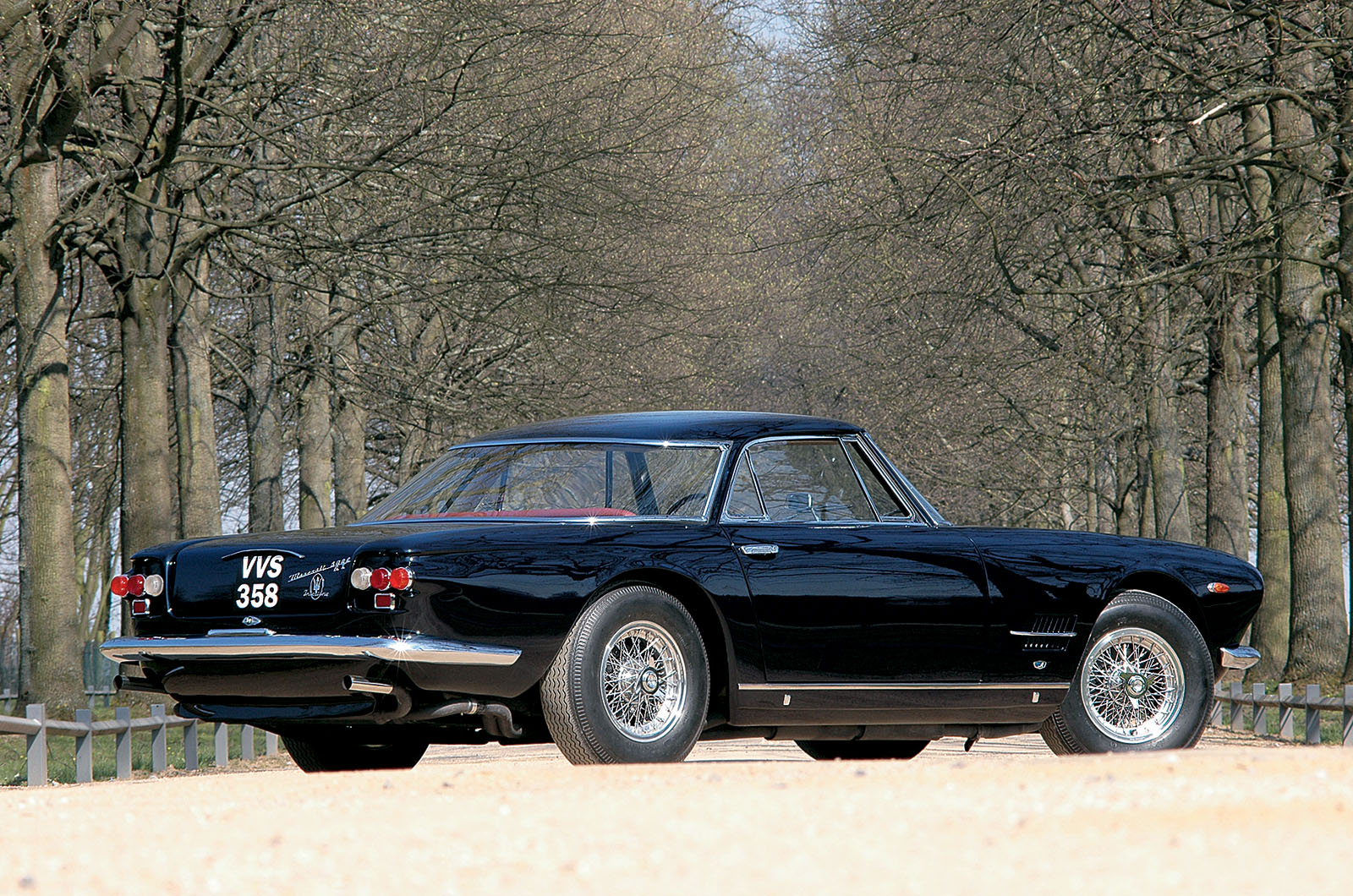
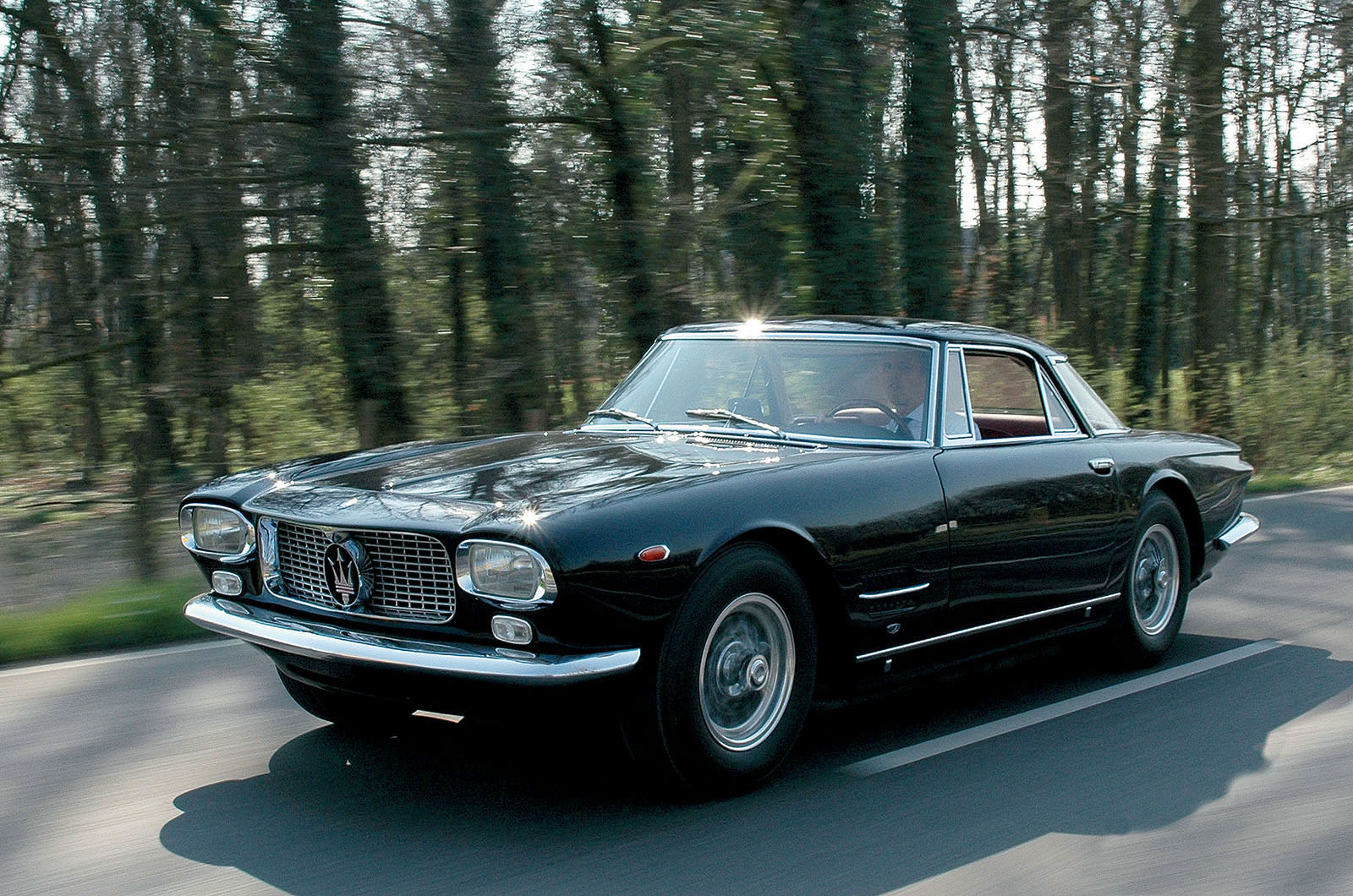
Of all the bodies, Allemano’s is most common, with 22 built, but it is also the most alluring. Its long, sleek flanks and wraparound glass top with slim pillars accentuate the bonnet length.
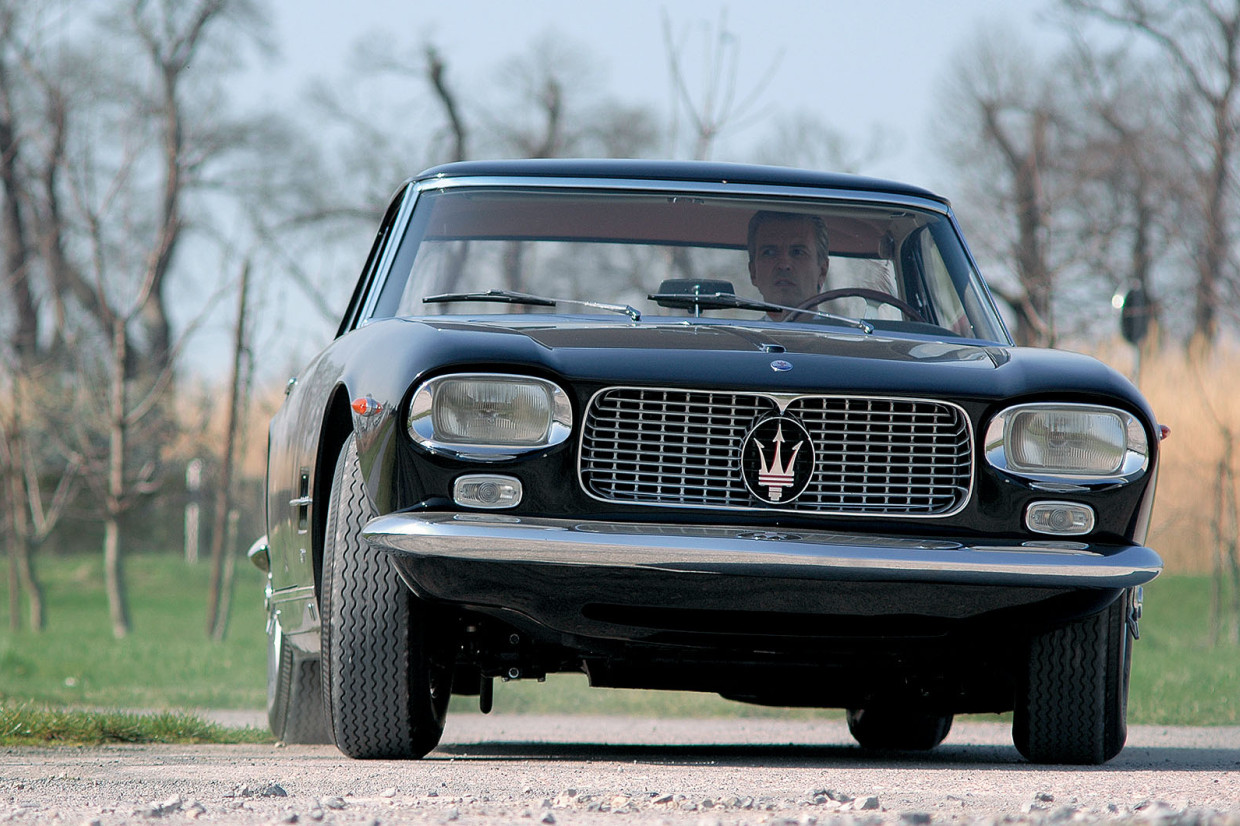
The Studebaker-style panoramic rear window is steeply raked, and only the rectangular headlights spoil its handsome lines.
Riding on expensive Borrani wire wheels, it looks unmistakably Maserati.
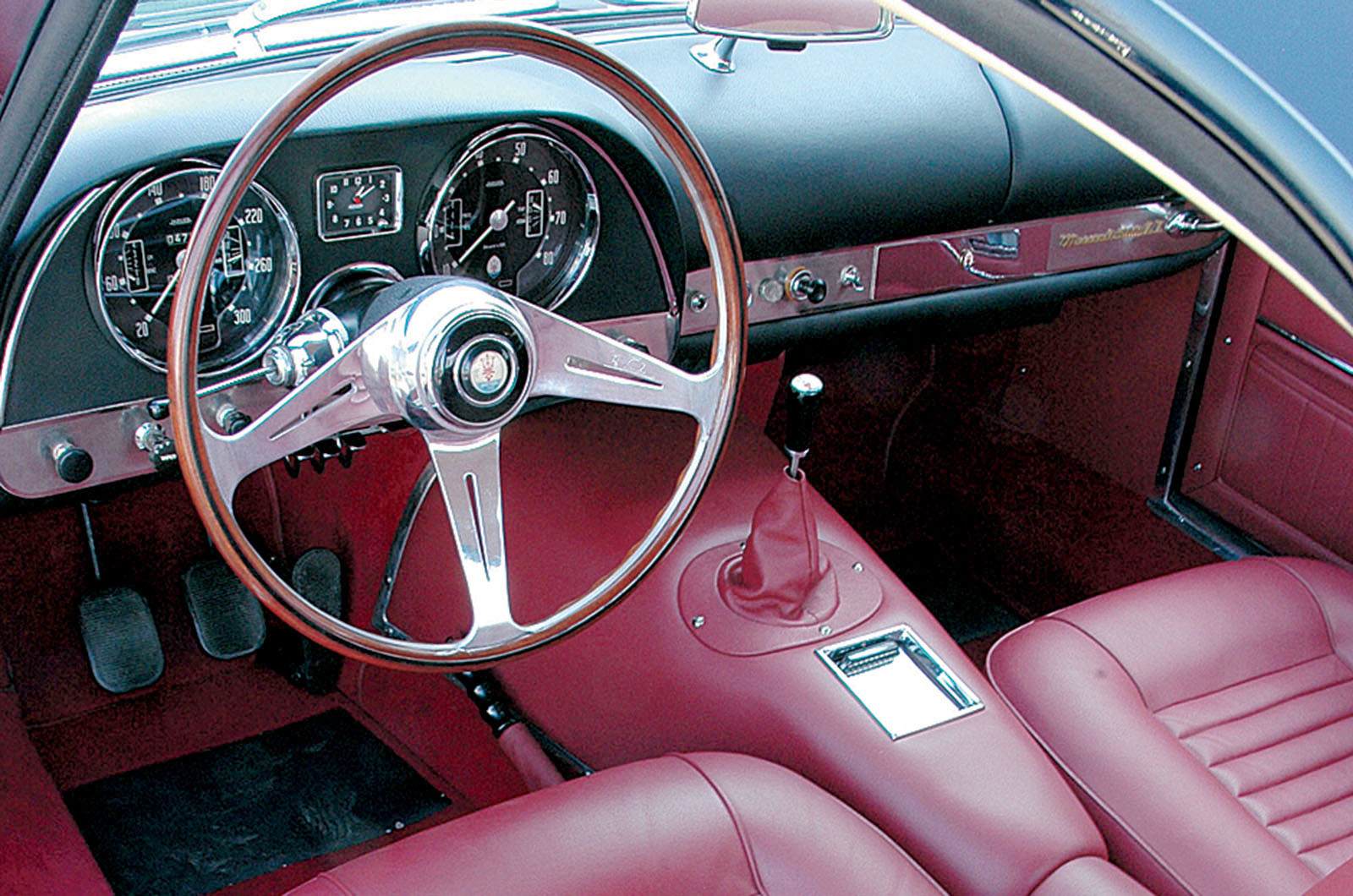
Inside the bright, glassy cockpit there’s nothing flash about the fittings: quality leather and brushed stainless trim, bold Jaeger dials, and a broad Nardi steering wheel with angled spokes so the pilot can clearly see the speedometer and rev counter.
When I take over the wheel, the muscular 5-litre is already warm, so Robertino insists I use all the revs up to 6000rpm.
Frustratingly, we’re not heading for the autobahn but some clear country roads, yet through the town the 5000GT is easy to drive with its silky, low-geared steering.
Rush the ZF gearchange and it will grate, but once you are in tune with its timing, the action is precise.
The clutch is heavy and requires a hefty push, but, with so much torque in reserve, the car will cruise easily even if you wrong-slot it.
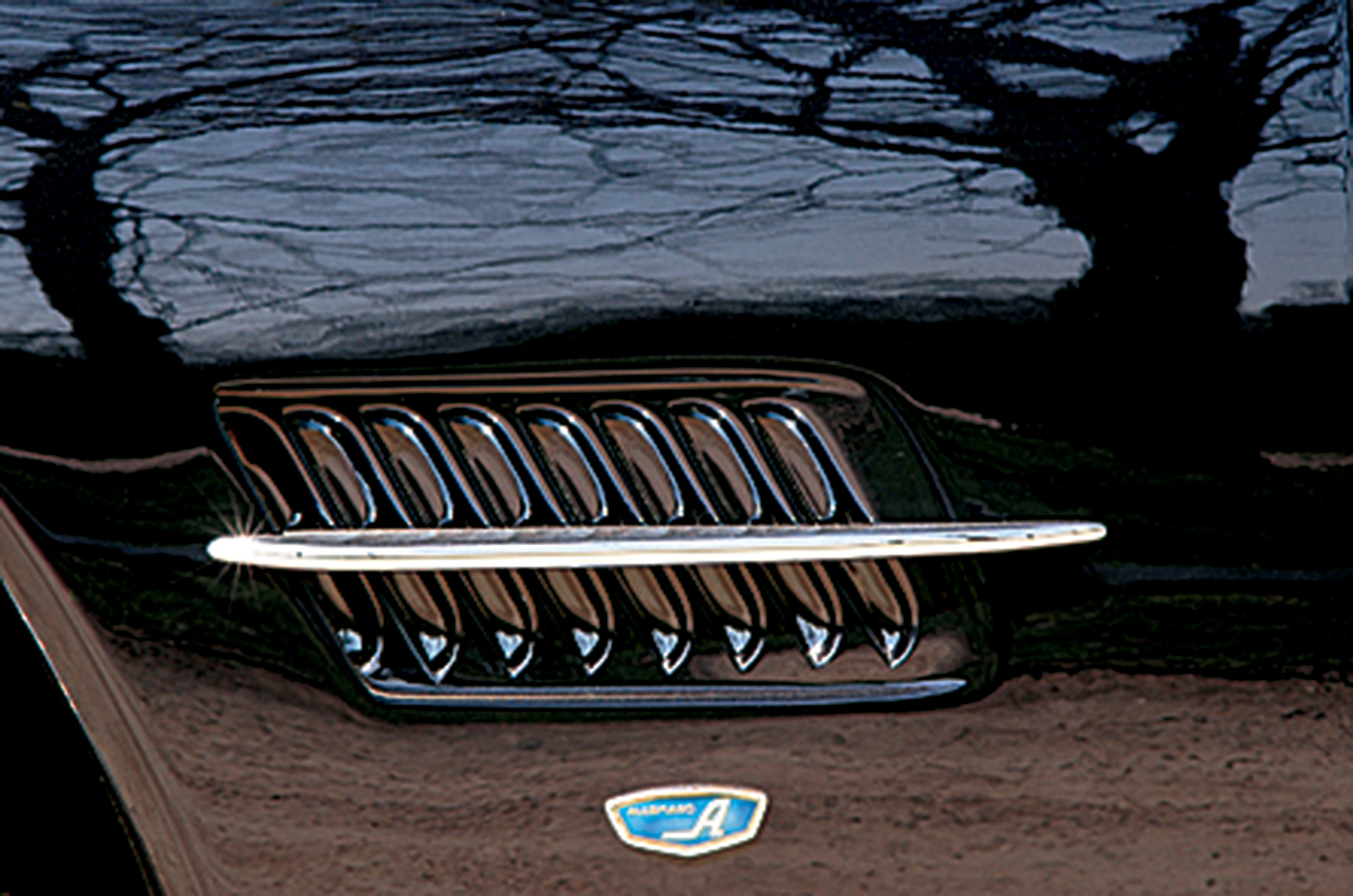
Side vents help cool the Maserati 5000GT’s 325bhp V8
The brakes lack feel, but I’m assured that when you really push they transform and bite hard.
First impressions are of a superb ride (even over pavé), a taut chassis and minimal steering kickback.
Once out on the open road, I finally get the chance to unleash the engine’s glorious power.
From an edgy rumble as we slow for a clear stretch, I bury the throttle and the car lets rip a Wagneresque exhaust crescendo.
The 5000GT lunges forward with a glorious yowl exclusive to exotic V8s.
The engine seems to have a triple range when gunned hard: deep burble builds to vibrant growl before a resounding roar as the power peaks.
The sensational acceleration rapidly reels in the next junction just as I change into third at 100mph.
Even so, it feels as if there’s much more in reserve, and it’s easy to believe that 170mph is within the 5000GT’s grasp.
Irritiating as the myriad junctions are, you do get to play Behra in a 450S at every stop, thanks to that ferocious power punch and blood-curdling exhaust note.
All my cynicism over Hans Tanner’s 1959 figures is blasted away each time the 5000GT roars away.
All that’s needed now is a Ferrari 500 Superfast for the ultimate supercoupé shootout.
Agnelli had both, fitted with near-identical Pininfarina bodywork, but it’s not recorded which of them he enjoyed the most.
After this spectacular workout, we cut back on a twisty route to Capricorn’s workshops.
Through the turns the long nose understeers when you enter too quickly, and the steering starts to feel sleepy.
The short, flat seats also offer limited support through tight corners, but these are truly minor quibbles.
Like so many Maseratis, this is a bargain compared with rival Ferraris, even after a hefty bill for sorting that wild motor.
The king of super-exotic GT cars? No question.
Images: Mick Walsh
This was first in our August 2007 magazine; all information was correct at the date of original publication
Factfile
Maserati 5000GT
- Sold/number built 1959-’64/34 (S1: 2, S2: 32)
- Construction steel ladder-frame chassis, steel or aluminium body by various coachbuilders
- Engine all-alloy, dohc-per-bank 4935/4941cc 90° V8, with two valves per cylinder and four Weber IDM 45 carburettors (S1) or Lucas injection (S2)
- Max power 325bhp @ 5500rpm
- Max torque 326lb ft @ 3600rpm
- Transmission four/five-speed ZF manual, RWD
- Suspension: front independent, by double wishbones, coil springs rear live axle, leaf springs; telescopic dampers, anti-roll bar f/r
- Steering recirculating ball
- Brakes Girling discs/drums (S1) or all discs (S2)
- Length 15ft 7in (4760mm)
- Width 5ft 7in (1700mm)
- Height 4ft 4in (1320mm)
- Wheelbase 8ft 6in (2600mm)
- Weight 3642lb (1652kg)
- 0-60mph 6.5 secs
- Top speed 172mph
- Mpg 15
- Price new $12,900 (1959)
Enjoy more of the world’s best classic car content every month when you subscribe to C&SC – get our latest deals here
READ MORE
Ferrari 500 Superfast: the last temptation
Maserati 300S: in Fangio’s footsteps
Maserati Khamsin: Marcello Gandini’s forgotten jewel
Mick Walsh
Mick Walsh is Classic & Sports Car’s International Editor