
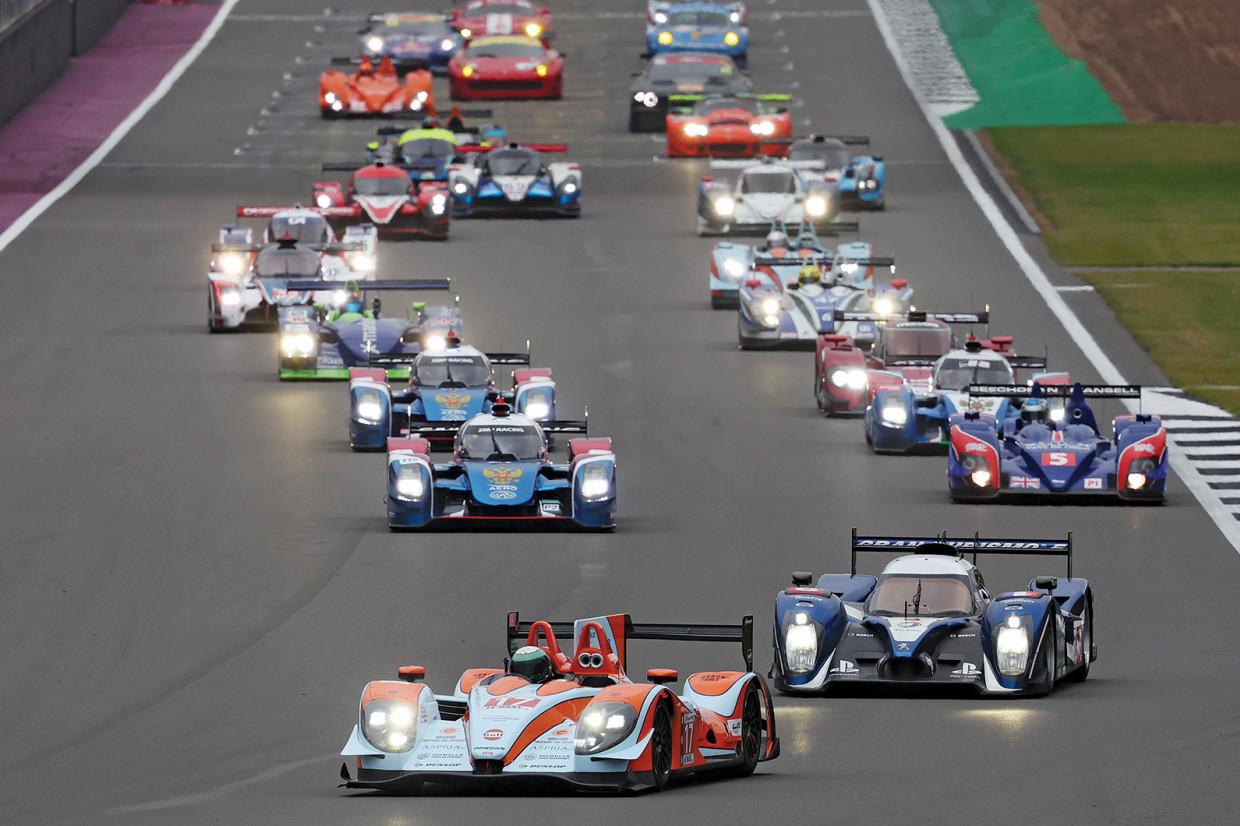
What do we define as a historic or classic racing car?
Thatʼs the question challenging traditional perceptions with increasing regularity in competition circles, as younger generations of cars you might consider as ʻmodernʼ become newly and officially ʻoldʼ.
The advent of race series such as Masters Endurance Legends for Le Mans-type sports-prototypes and GTs dated from 2005 to as recent as 2016 reflects a natural shift matched to the inexorable passing of time.
This year another promoter, Motor Racing Legends (MRL), will launch a new series for early GT3 generations recently made obsolete from the modern racing arena.
Such cars are now, logically and accurately, ʻhistoricʼ.
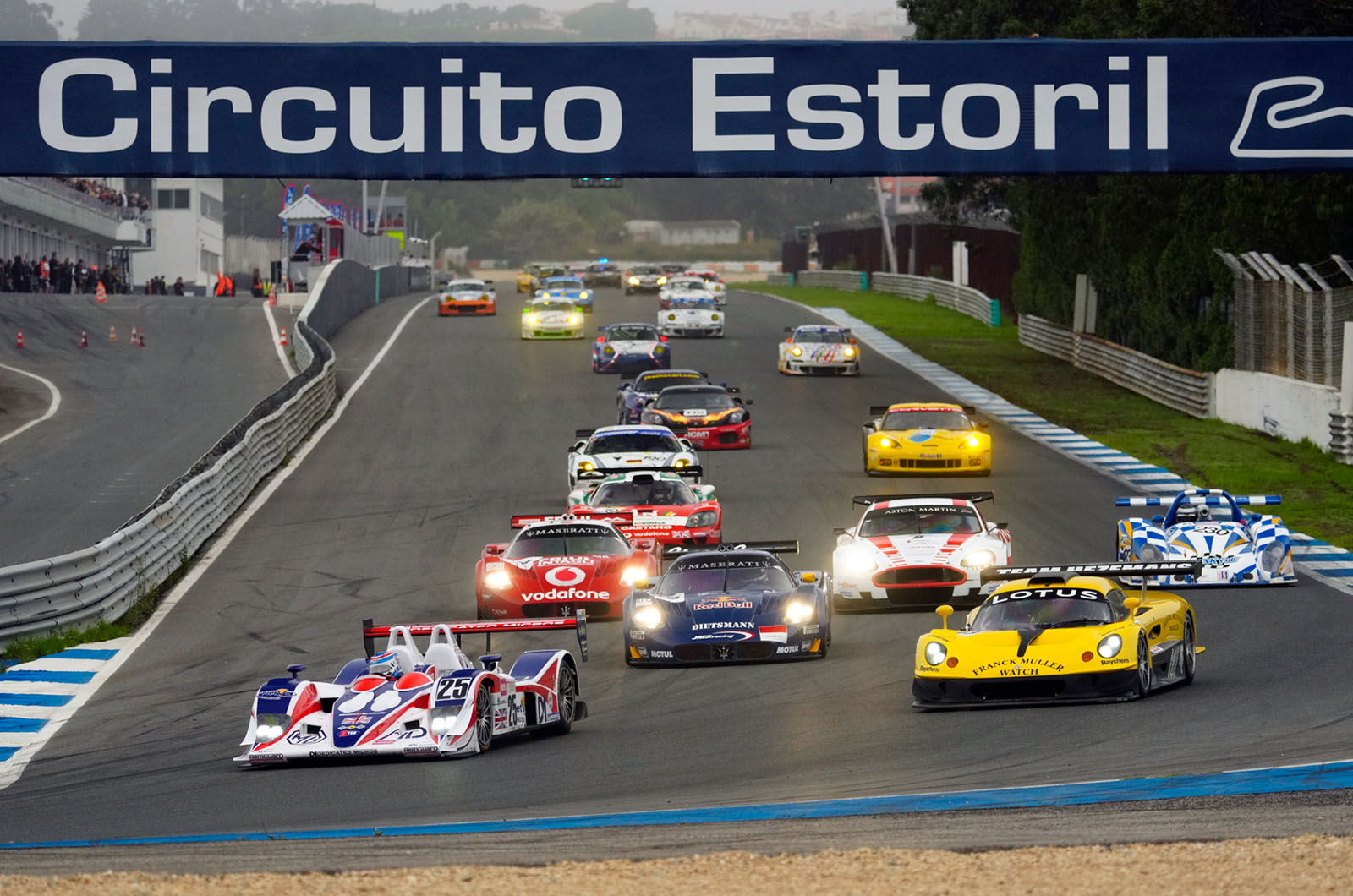
Peter Auto, shown at October’s Estoril Classics, has Endurance Racing Legends, a 2005 Lola-MG EX264 (25) leading here © PhotoClassicRacing. Top: the Silverstone Festival has already embraced grids of younger sports-prototypes © Jakob Ebrey Photography
This organic process of generational shift has gained further legitimacy by a recent official reframing of what we should consider old by the worldʼs motorsport governing body, the FIA (Fédération Internationale de lʼAutomobile).
Its Appendix K regulations, by which it awards Historic Technical Passports (HTPs) to rubber-stamp eligibility, have been upgraded as of 2025 to accept, for the first time, a range of race and rally cars dating from 1991 to 2000.
ʻThis update will bring many of the worldʼs most iconic race and rally cars back into the crucible of motorsport, allowing fans and enthusiasts to enjoy the sights and sounds of what was a remarkable decade of technological advancement,ʼ as the FIA puts it.
But just how much difference will official FIA recognition for 1990s race and rally cars make, especially when UK promoters such as Masters and MRL – plus Europeʼs biggest historic racing organiser, Peter Auto – have already shifted past that particular curve to progress much further up the road to cars from more recent decades?
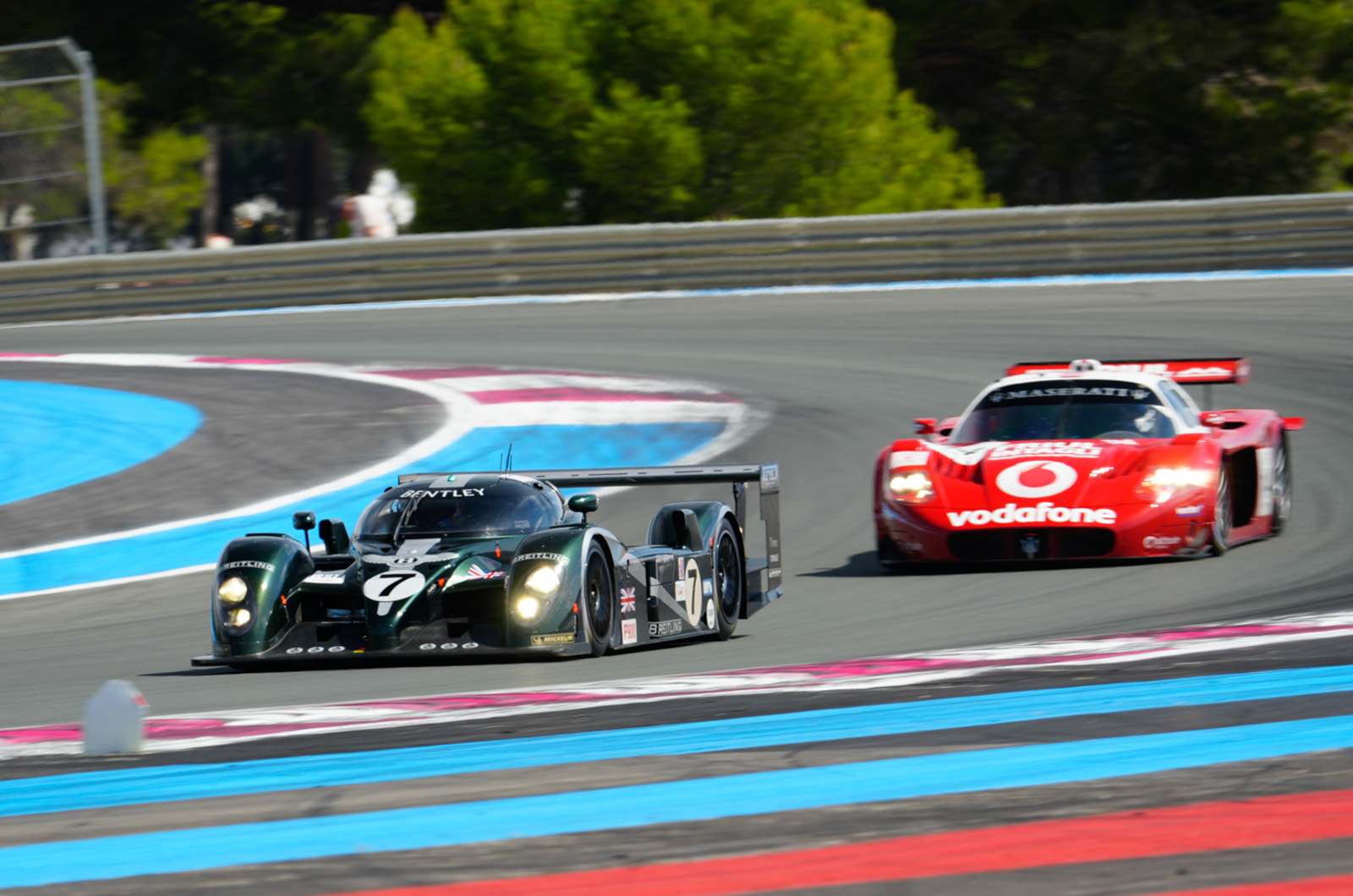
Shaun and Maxwell Lynn took this 2003 Bentley Speed 8 to victory in Peter Auto’s Dix Mille Tours Endurance Racing Legends 1 last August © PhotoClassicRacing
The short answer is opaque, and also depends on the code of motorsport in question.
In Formula One terms, donʼt expect 3.5-litre, normally aspirated cars of the late 1980s and early ʼ90s suddenly to line up on historic racing grids.
“We will run some demos for 1990s cars, but I donʼt think thereʼs an appetite to start a race series for that era at the moment,” says Rachel Bailey of the Masters organisation, whose Racing Legends series for F1 cars from 1966-ʼ85 isnʼt about to widen its catchment. “There seems to be quite a few cars out there, but they are not necessarily with people who want to race them.”
Nevertheless, Rachel says that the Appendix K update is “good news”, even if it remains to be seen just how much it will affect her grids.
“For us as an organiser, HTP papers are confirmation that an external party at FIA level has signed off that a given car conforms to period specification,” she says.
“That takes the pressure away from us. They are a great way for us to process that a car is correct, and when it comes to one of our events you can look at the pictures on an HTP paper.
“You have something to check against, rather than our guys sifting through data to check that, for example, a [late-era] Group C carʼs performance is as it ran in 1992.”
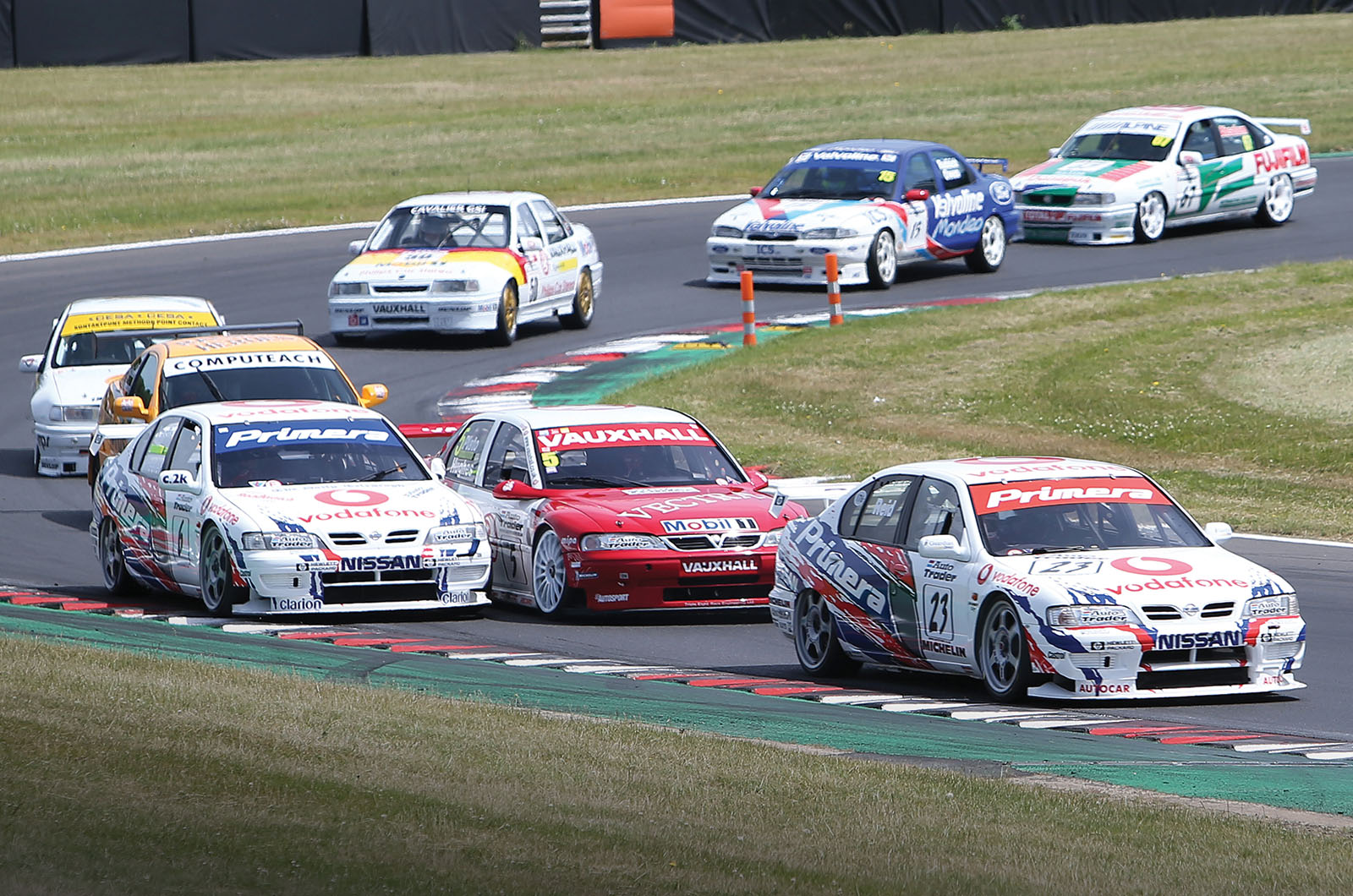
The 1990s Super Touring era is popular with fans, but there are limited cars ready to race © PSP Images
The promoter of Britainʼs biggest historic racing event concurs with this.
Nick Wigley, who runs the Silverstone Festival, recognises the value of the FIAʼs HTP system, but had embraced stretching his eventʼs traditional remit to more recent eras some years ago.
“I have always wanted the biggest spread of age of car so that we have the widest-possible appeal, from youngsters right up to the more elderly, traditional supporter and enthusiast,” he says.
“We already run cars from the past decade, so unless it opens up a completely new grid I am not sure it is going to have a massive effect on us.
“Then again, anything that makes the grid organisersʼ lives easier, so we get the best competition, is a good thing.”
In its statement, the FIA namechecked both 1990s Formula 3000 cars – single-seater racingʼs period second division – and Super Touring machinery (as seen in the halcyon British Touring Car Championship) as beneficiaries of the shift.
But are there really enough of those cars out there fit for racing? And will owners be willing to invest what is required to make them so, via HTPs?
On Super Touring, Nick has past experience. “We thought we were being very bold when we first did the David Leslie Trophy for 1990s Super Touring years ago,” he points out.
“We wondered if that was a bit outrageous because everybody was steeped in the traditionally ʻhistoricʼ cars. And it went down a storm. Unfortunately there are not enough of them around to make up a full grid to have them back again.”
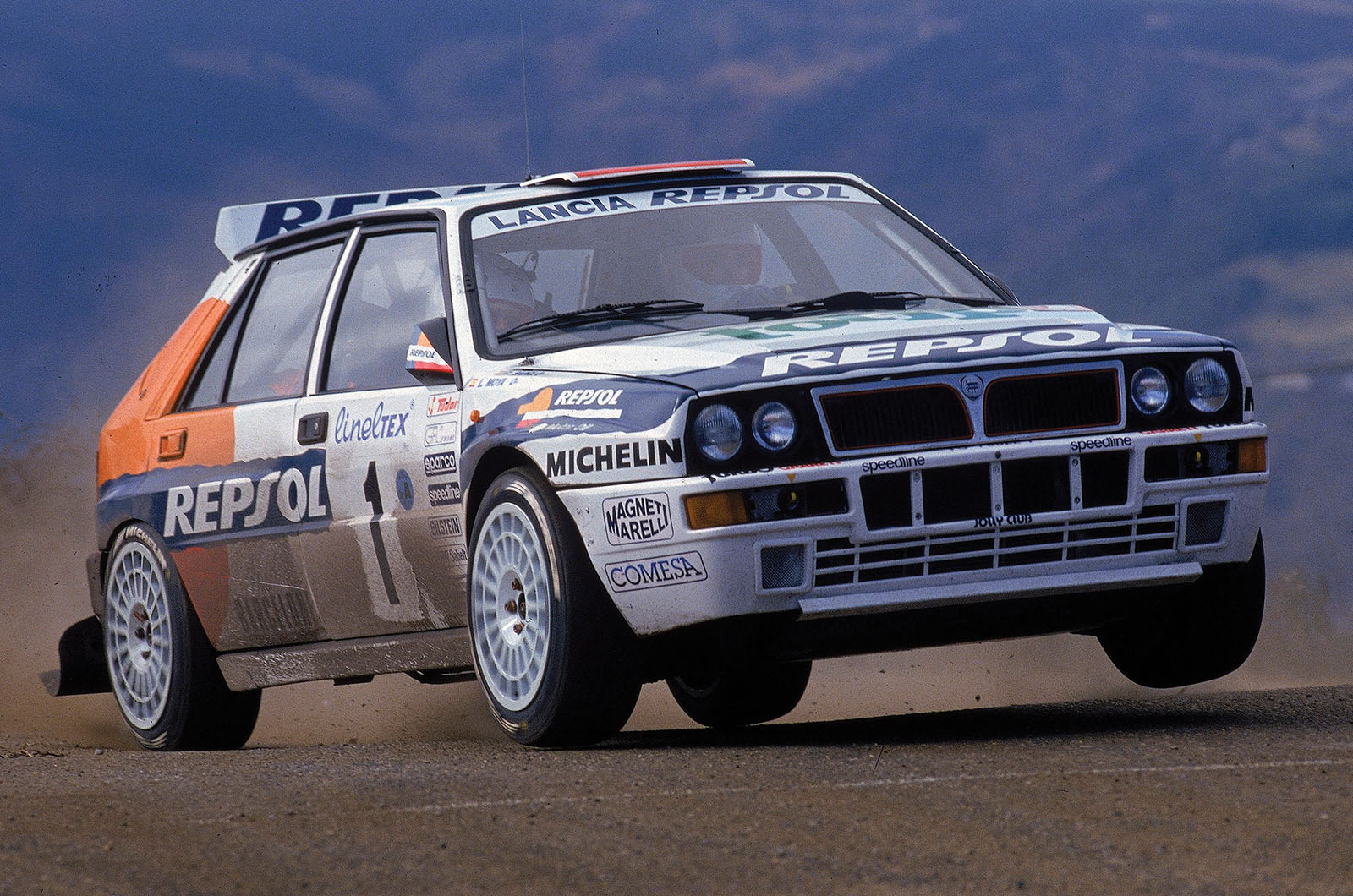
The inclusion of turbocharged, four-wheel-drive cars such as the Lancia Delta HF Integrale in historic rallying is now possible under the latest rule change © Getty Images
Perhaps it will be a different story on the rally stages.
On the back of the Appendix K update and its ratification by Motorsport UK, the Pirelli Welsh Rally Championship will welcome 1990s Category 5 classes for 2025, potentially ushering in late-era Group A four-wheel-drive and turbocharged favourites, but not including post-1997 WRC cars.
The championshipʼs new co-ordinator, Bryn Pierce, has no concerns that such machinery might turn off entrants with traditional and older two-wheel-drive cars.
“How we viewed it is we had an Appendix K Mk2 Ford Escort driven by Rudi Lancaster running second in the main championship for most of 2024, only beaten by a modern R5 Škoda Fabia,” he says.
“If you look at the European historic rallying scene, Escorts are still beating 4WD cars, so that element of fear has dissipated.
“Also, I am 46 and a Mk2 Escort isnʼt necessarily relevant to someone of my age, and certainly not to someone who is 30.
“Circuit racing has already embraced stuff from 15 or even 10 years ago. Itʼs about trying to drag rallying into that mindset. These cars are 25 years old now, after all.”
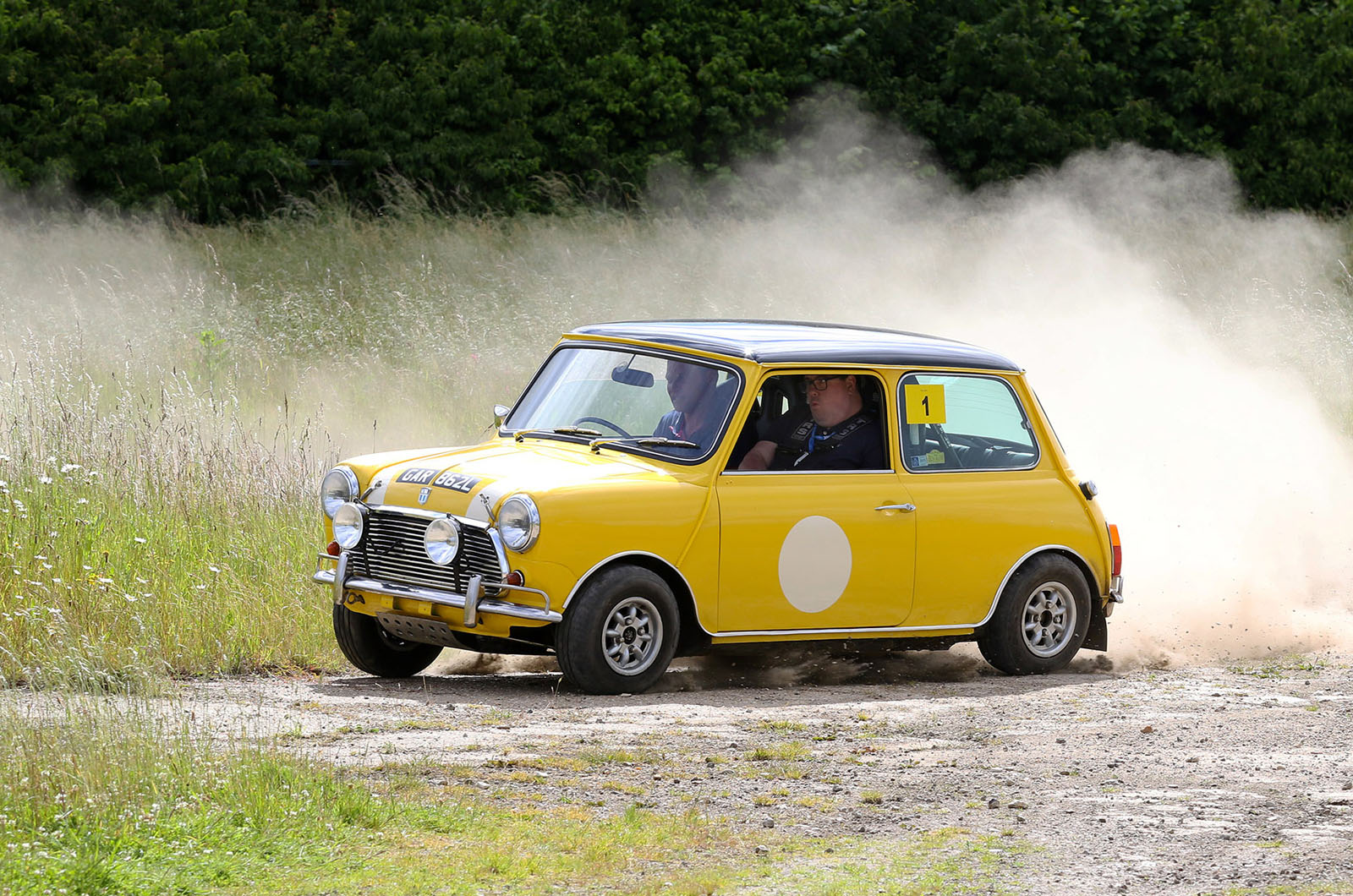
We will see traditional classic cars competing alongside more modern machinery © Andy Manston/M&H Photography
But Bryn is more cautious when it comes to putting a number on how many Category 5 entries he can expect for the forthcoming season, even though he reckons there are “10 to 15 cars that with a little bit of TLC could be out there and are eminently eligible”.
Costs for HTP upgrades are a factor, as Bryn knows from first-hand experience: “I built a Peugeot 309 GTI for historics and we went the full HTP route, at a cost of £1500-2000.
“Does it add to the carʼs value? Thatʼs questionable in rallying, but it certainly does in circuit racing.”
An HTP isnʼt always a prerequisite to gaining an entry in some classes in UK rallying.
“It does add a barrier to entry,” says Bryn. “Certainly when Category 4 was recognised, which is for cars up to the end of 1990, it should have opened the floodgates to Novas, 205 GTIs, 309s, Astras – the more clubmans end, rather than Sierra RS Cosworths and Lancia Deltas.
“But it didnʼt, because are you really going to spend £2000 on a set of papers for a car thatʼs probably worth £15k? Not really. At the same time, I totally understand why HTPs are there.”
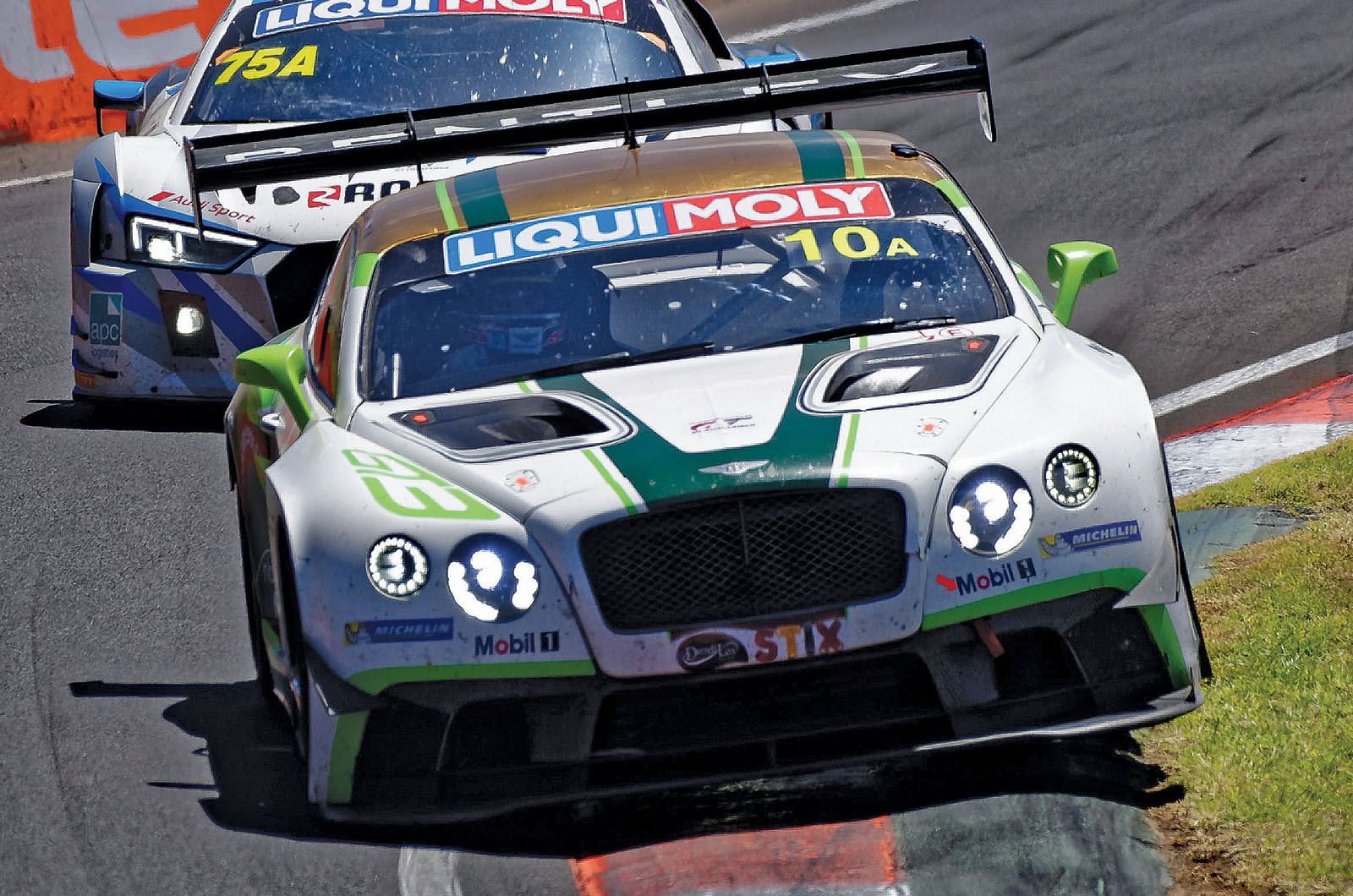
GT3 cars – such as this Bentley Continental, here leading an Audi R8 LMS – could line up on the Motor Racing Legends grid © Getty Images
Back on the circuits, Henry Mann – son of the late, great Alan, and who keeps his fatherʼs flame alive running touring and sports cars from ʻtraditionalʼ eras – voices some concerns about the health of historic racing away from the limelight of the major events at Goodwood and Silverstone.
“HTP papers are a complete headache,” he says, “but they are indispensable in terms of having a car on the market.
“HTPs and Appendix K in principle are very clear as a good set of regulations, but the system can be gamed and organisers do not always check.”
That said, he acknowledges that major historic racing promoters have recognised a need to work together to ensure cars across all classes are genuinely eligible to curb “uncontrolled development and an arms race”.
Henry also adds that he would not rule out a move away from the historic racing heartland to embrace these more recent eras.
“I think they may well be,” he answers when asked if newly old racing cars are the future.
“People donʼt remember the 1950s and ʼ60s as much as they used to. And some of the skills are going away. A lot of the specialists we used even 10 years ago are not around any more, and those who have taken over their mantle are not cut from the same cloth and donʼt produce the same quality of work.
“But my caveat is that I donʼt think modern cars are as fun. They are much better, much faster and more reliable, but there is something about a ʼ60s saloon or sports car, sliding it and having to be mechanically sympathetic, that is really rewarding.”
That final aspect alone should sustain what we know now as traditional historic racing far beyond the lifespans of those who witnessed such eras the first time around.
Yet the Appendix K update only confirms what we already know: a shift in our definition of a ʻclassicʼ car is inevitable.
Enjoy more of the world’s best classic car content every month when you subscribe to C&SC – get our latest deals here
READ MORE
50 years of the Ford Escort Mk2
Toyota Celica GT vs Mazda MX-6 vs Rover 220 turbo: ’90s hits