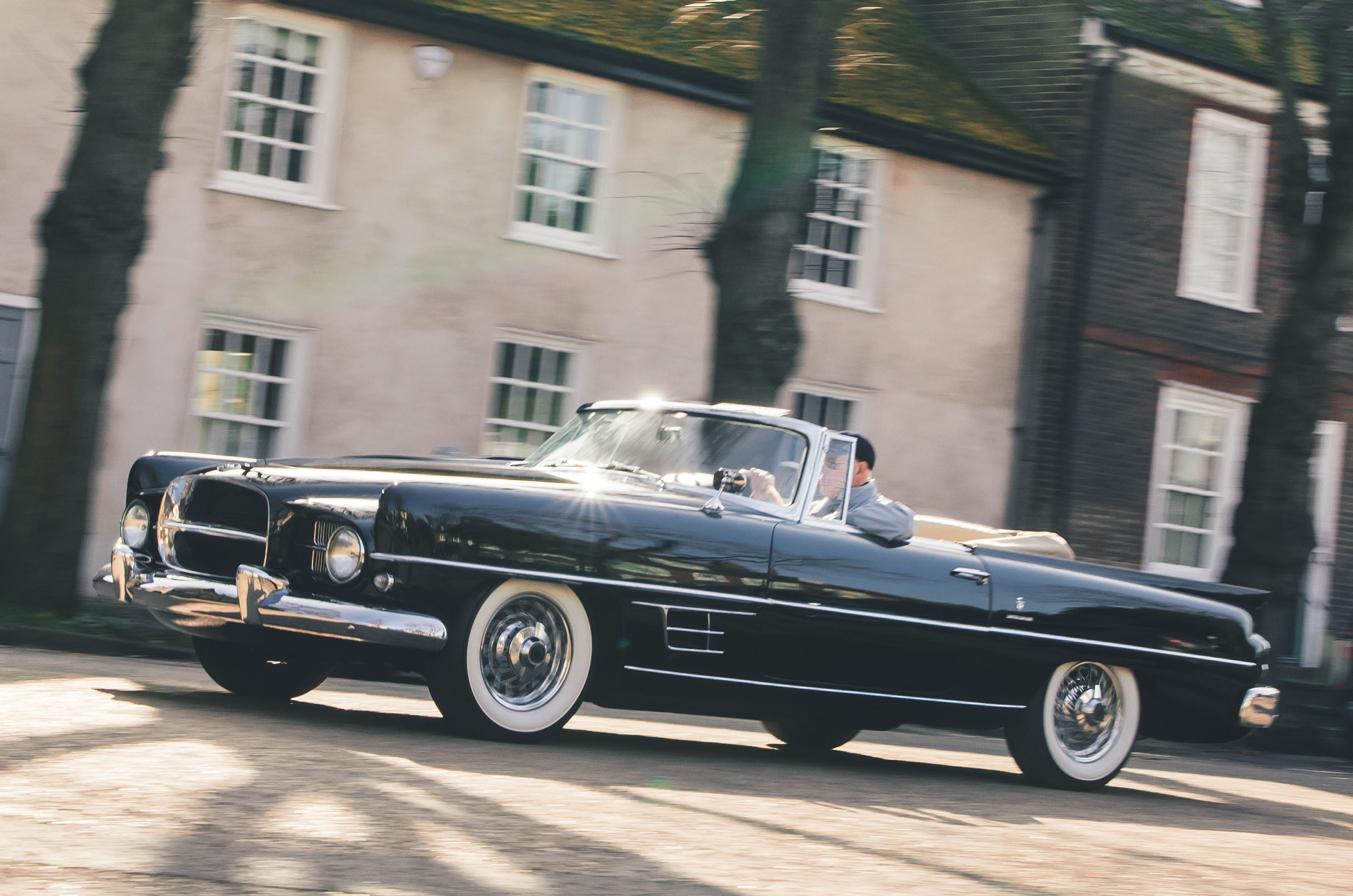
If you’re the same age as me, you’ll have been introduced to the name Ghia by UK toy maker Corgi, long before the Ford Motor Company was involved.
As a brand, Ghia was pretty obscure (the nomenclature was more associated with the Italian coachbuilder), but the British firm’s model of the elegant coupé – with corgi dog languishing on the rear parcel shelf – actually marked the last hurrah of a brief marriage between the styling house and an obscure American manufacturer.
It was christened the Ghia L6.4 and only 27 examples were built – and they were rarely seen outside of Beverly Hills, let alone on English roads – yet for a certain generation it was another illuminating lesson in our automotive education.
What we didn’t learn was that the story had actually begun 10 years earlier.
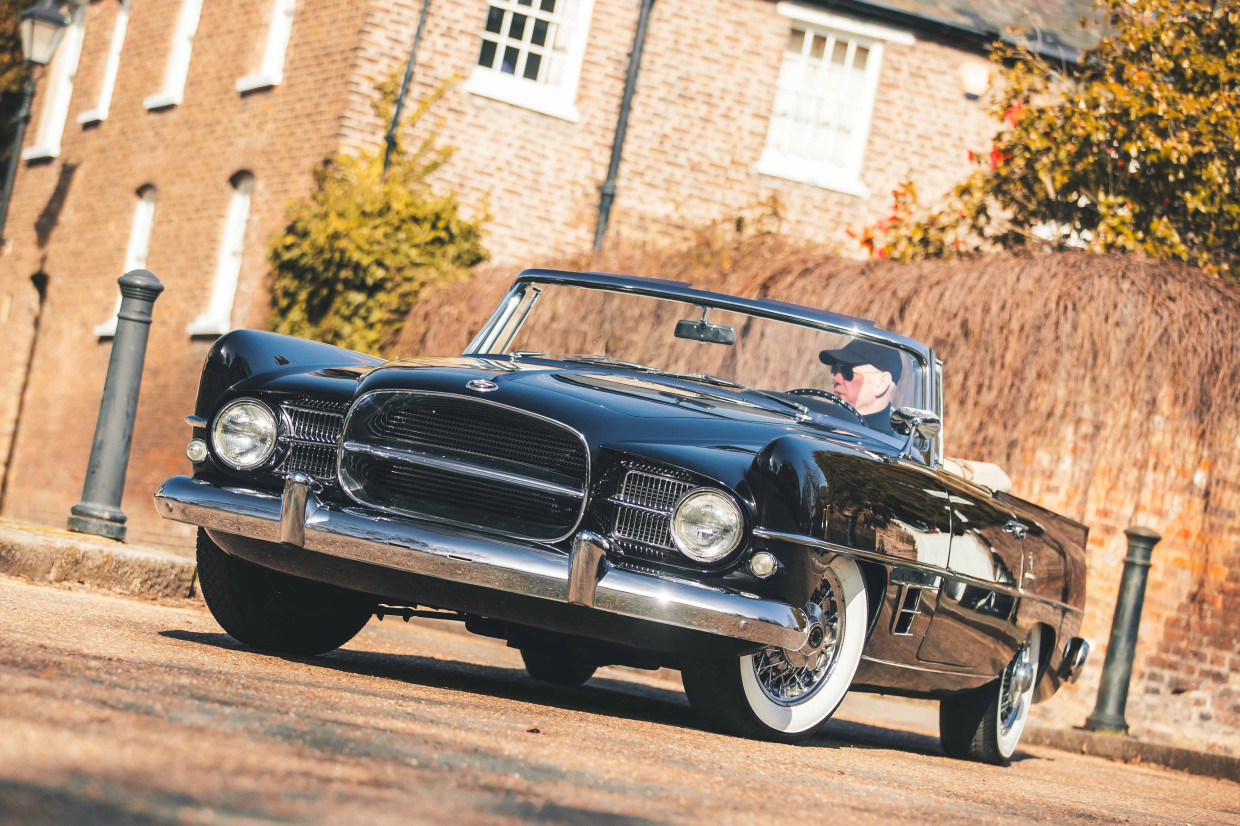
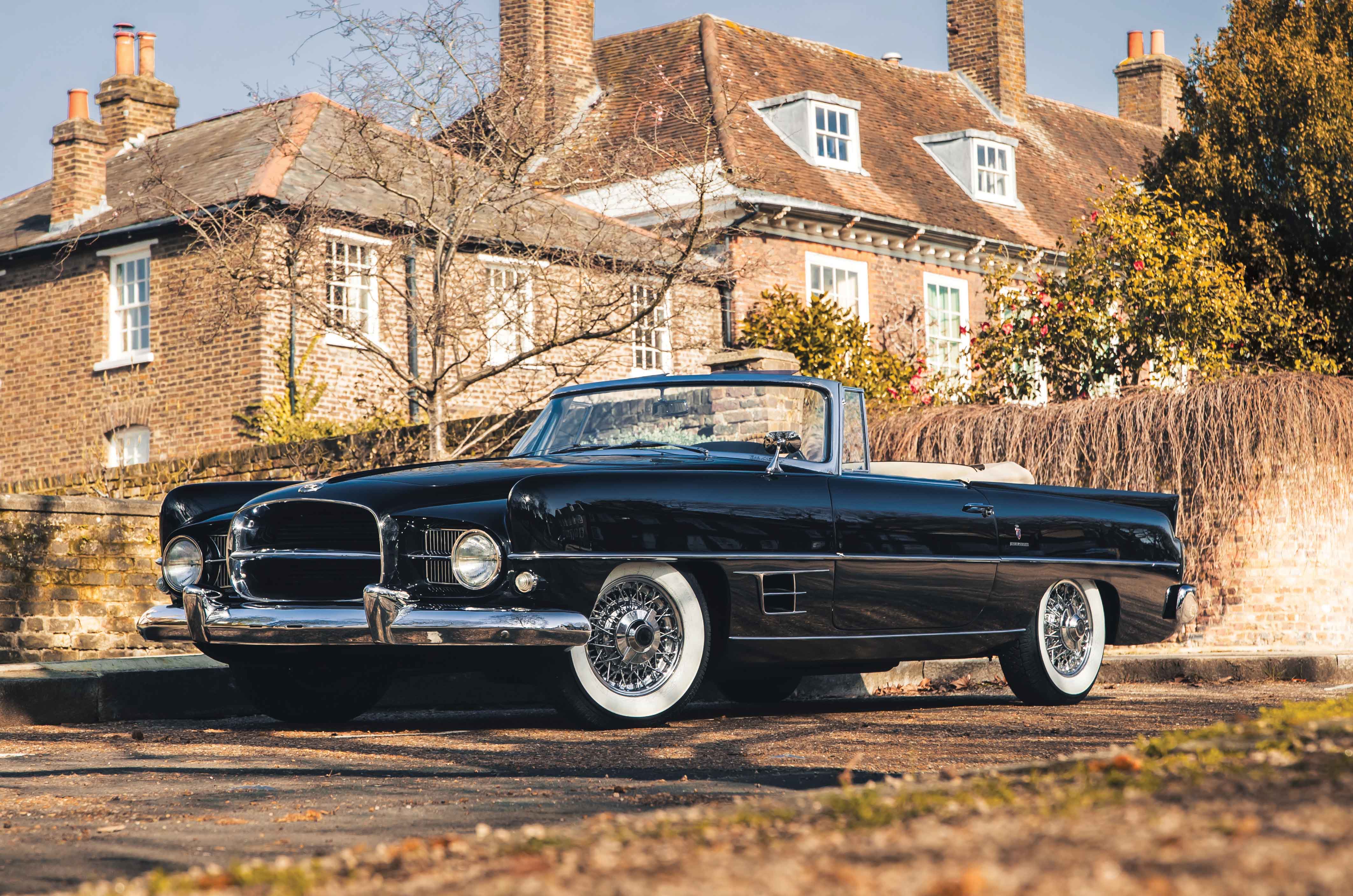
The Dual-Ghia is an Italian/American production
Italian-American Eugene A Casaroll operated a company in Detroit called Automobile Shippers that trucked new cars for Chrysler all over the United States.
In modern parlance he was a petrolhead, owning at least two Kurtis sports cars and sponsoring Indy 500 entries – the Auto Shippers Specials – from 1946-’54.
During the Second World War he created a company to build trucks for the US Army and Allied forces.
They featured twin engines, hence the firm being christened the Dual Motors Corporation.
The Dual-Ghia classic car shone brightly, if very briefly
With his strong links to Chrysler, the wealthy Casaroll was no stranger to the manufacturer’s ‘idea cars’ – the dramatic prototypes and styling exercises assembled by Carrozzeria Ghia in Turin.
The Italian coachbuilder turned the majority of design chief Virgil Exner’s space-age dreams into reality, and between them the two operations fostered an extremely successful relationship.
The quality was undeniable and the pricing even more attractive.
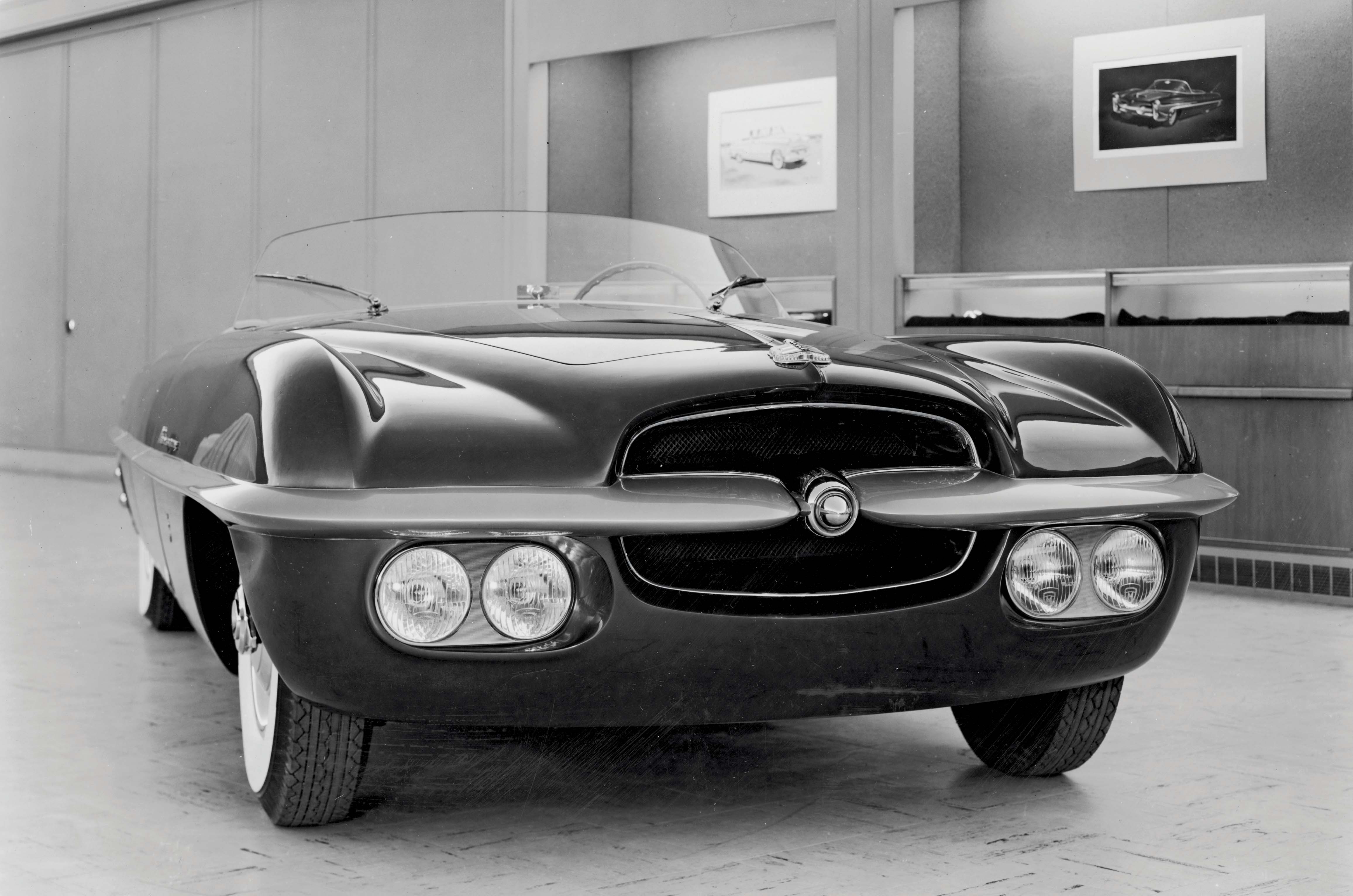
Occasionally the Ghia team would pitch ideas of its own, and so it was in early 1953 that the Advanced Styling Studio in Detroit’s Highland Park received a bodywork mock-up of a two-seater roadster from Turin and promptly named it Firearrow.
The 1953 Chrysler Firearrow show car © Getty
After a rapturous reception touring US auto shows, Exner and his crew decided to turn the concept into a drivable car using a Dodge chassis and running gear.
Over the following year the sleek drop-top would go through three further incarnations, the last dubbed the Firearrow IV.
Rumours were bandied around Detroit that Chrysler was going to sanction a limited production run of this final version, as a four-seater convertible, but it never did.
Instead, Casaroll, with his affinity to Mopar, approached Dodge division general manager William Newberg with the view to acquiring the manufacturing rights for the model as a product of his own Dual concern.
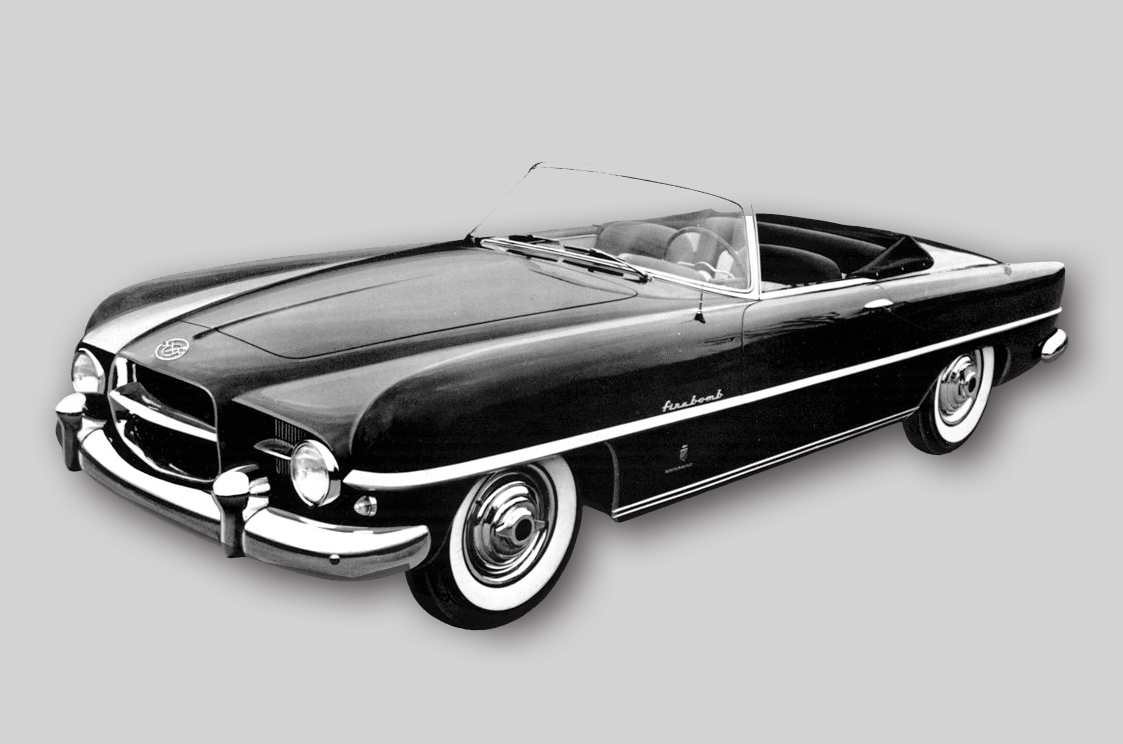
The Dual-Ghia prototype was revealed at Geneva in 1955 as the Firebomb © Getty
At the same time, ‘Gene’ secured a supply of mechanical components for his new enterprise.
To re-engineer the project for serious production, Casaroll called on his good friend Paul Farago, a talented mechanic and builder of Midget racers before moving into sports cars.
He had rebodied a Fiat 1100 in 1948 as a coupé and competed at Watkins Glen before taking it on to a class victory in the 12 Hours of Sebring.
Safe to say that, from his Detroit workshop east of Woodward Avenue, Farago proved to be a hugely valuable asset to the project, not least because he was also the Italian coachbuilder’s US representative – a factor that would greatly aid the marriage of Dual and Ghia.
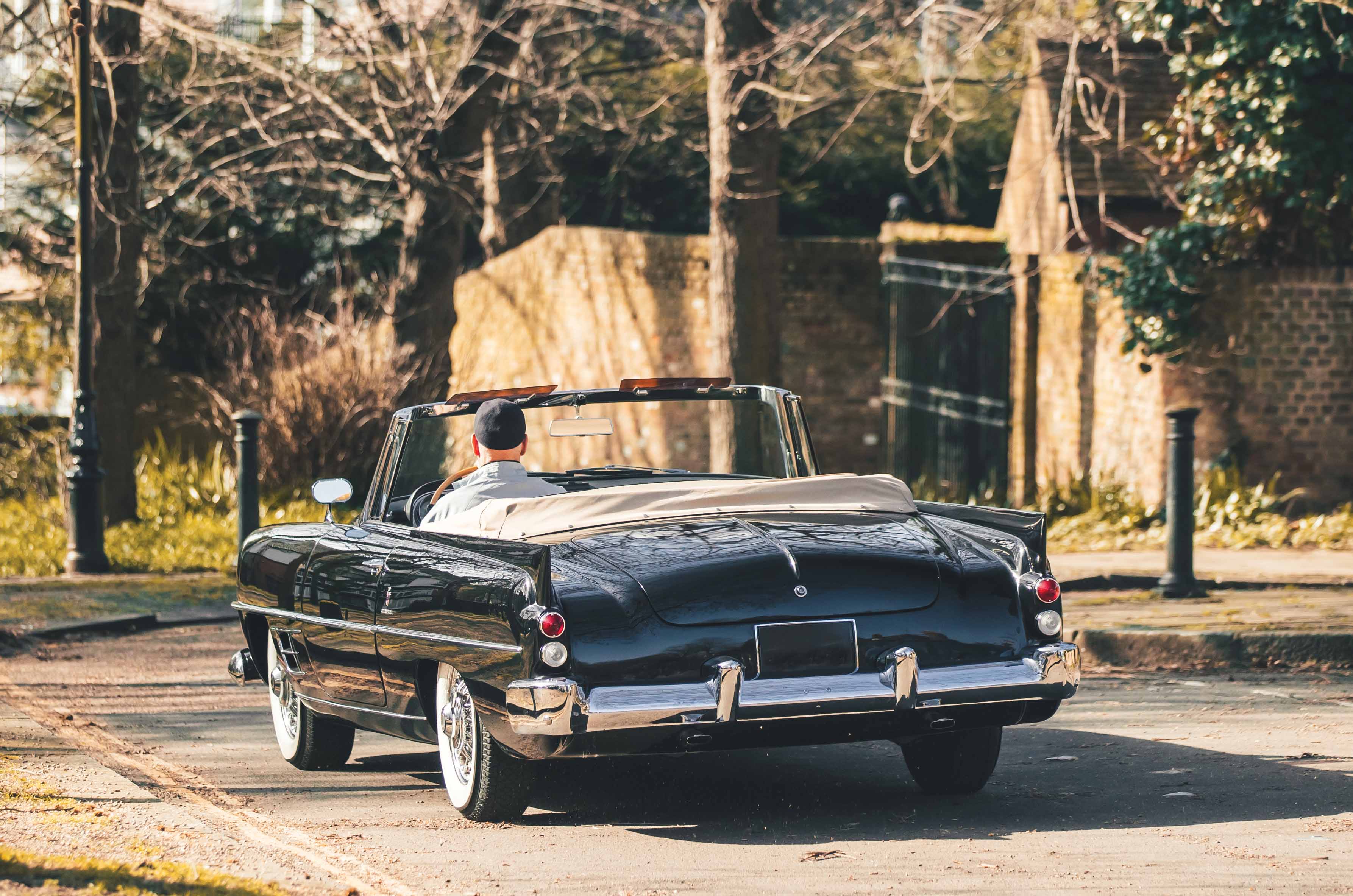
The Dual-Ghia’s body was widened before production after the prototype was deemed too narrow
Virgil Exner’s son, Junior, was quoted as saying of Farago: “He just had a natural ability to do sheet metal and all kinds of mechanical work.
“He could take apart a Ferrari and put it back together better than Ferrari.”
Ghia was initially left to its own devices to come up with a pre-production prototype for Casaroll to reveal at the 1955 Geneva motor show, and the handbuilt convertible was announced with the unlikely name of the Dual Motors Firebomb.
Concessions had been made for life on US roads, such as the addition of bumpers and a usable boot, but the car was deemed unsuccessful for a number of reasons.
The Dual-Ghia’s discreet gauges
By substituting a platform in the centre section of the standard Dodge chassis, Ghia had inadvertently reduced both headroom and the Firebomb’s structural rigidity.
Farago is reported to have said: “It was too narrow… wiggly all over the place. The doors wouldn’t even close.”
A disappointed Casaroll told him the car would not be built unless he went to Italy and resolved the problems.
In the process, the engineer took on the title of Dual Motors vice president before heading off to Europe.
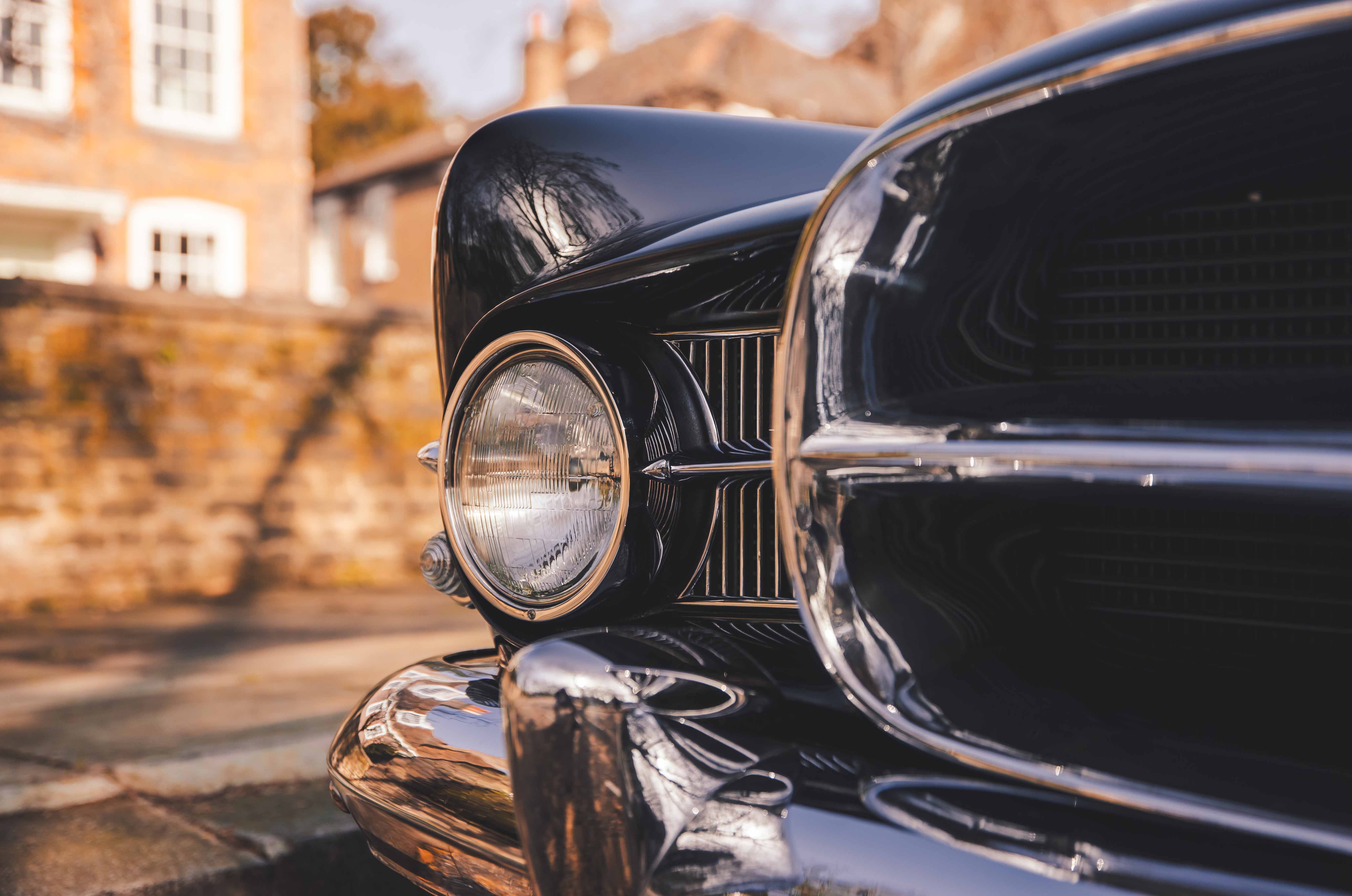
The Dual-Ghia sports Dodge parts-bin bumpers that were modified to fit
Working with Ghia, Farago came up with a number of inspired solutions.
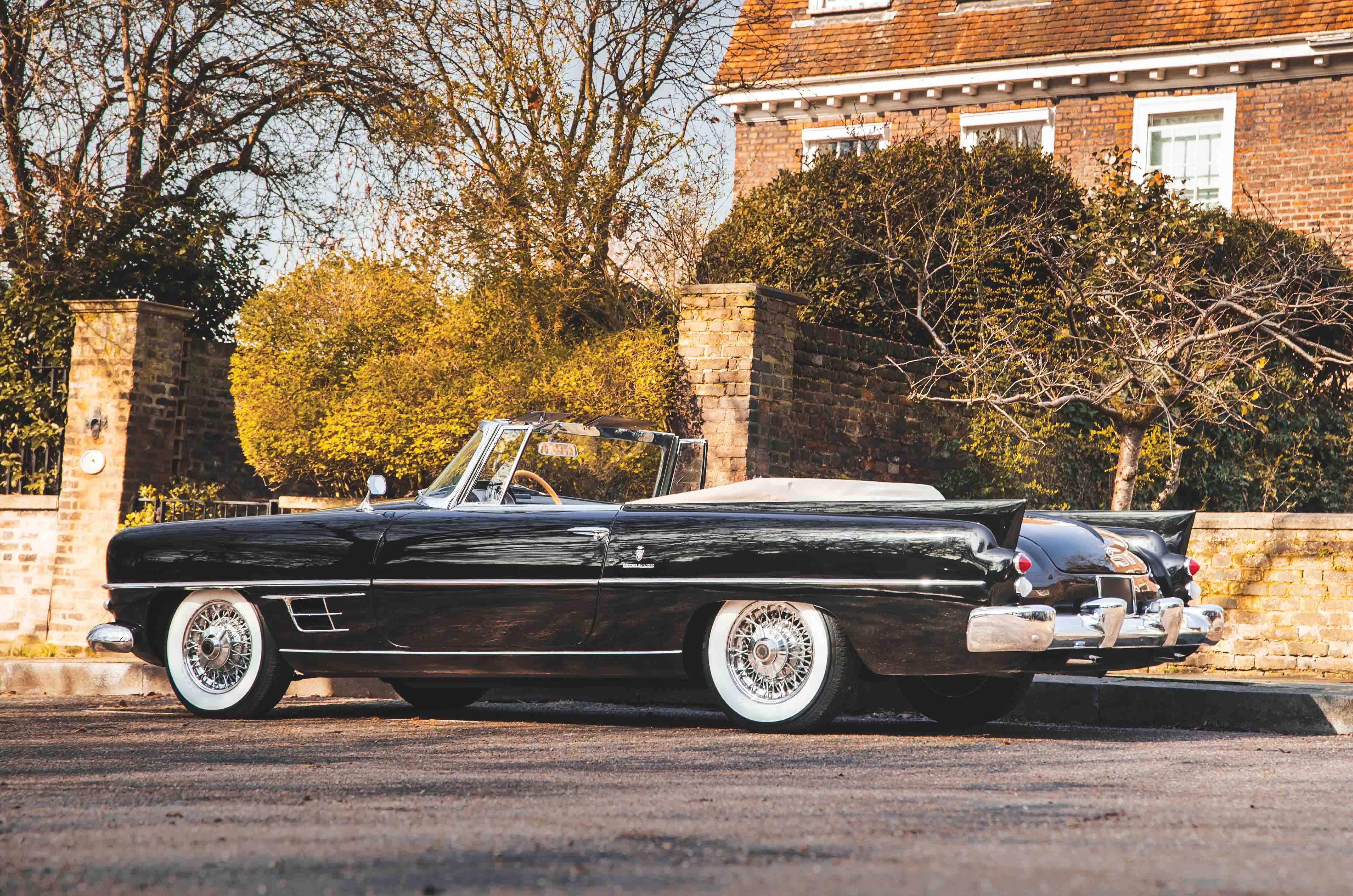
By widening the body slightly, they were able to use the standard windscreen from the 1955-’56 Dodge range, and in doing so they not only reduced tooling expense, but also met North American safety regulations.
Bumpers, too, were culled from the Dodge parts bin, although the rears were sectioned by four inches.
More importantly, Farago resolved the lack-of-rigidity issue by redesigning the floor and sills, so once welded to the body the structure was both lighter and stronger.
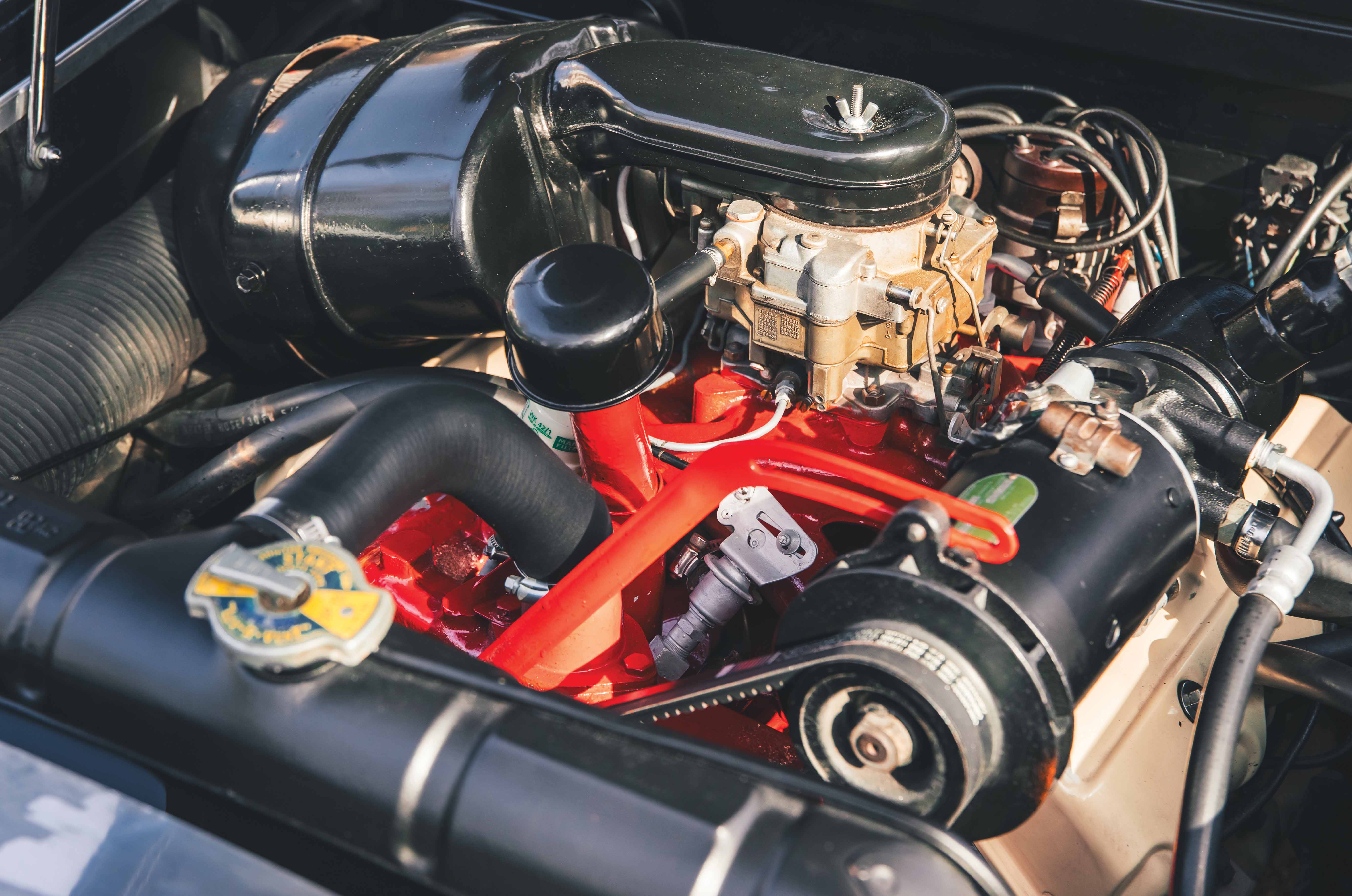
The Dual-Ghia’s 5.2-litre V8 is paired with a two-speed automatic gearbox
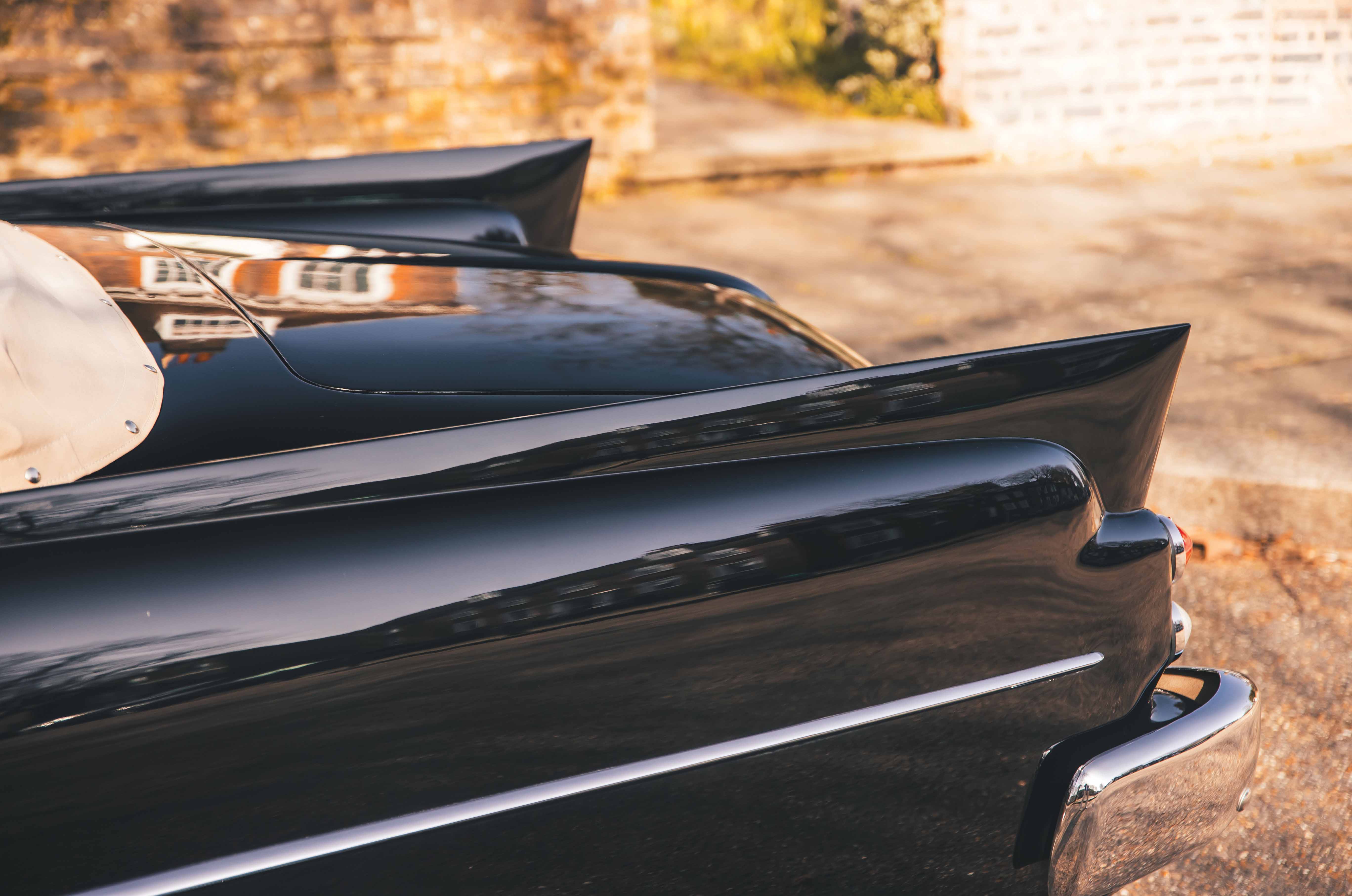
One addition with which he wasn’t so pleased was at the insistence of Casaroll: before production of the renamed Dual-Ghia could commence, a pair of fashionable fins was added to the tops of the rear wings.
Under the bonnet of the final car was the 230bhp version of the Dodge 315cu in V8, although nearly half of buyers signed up for the racier, 260bhp D-500 edition with solid lifters.
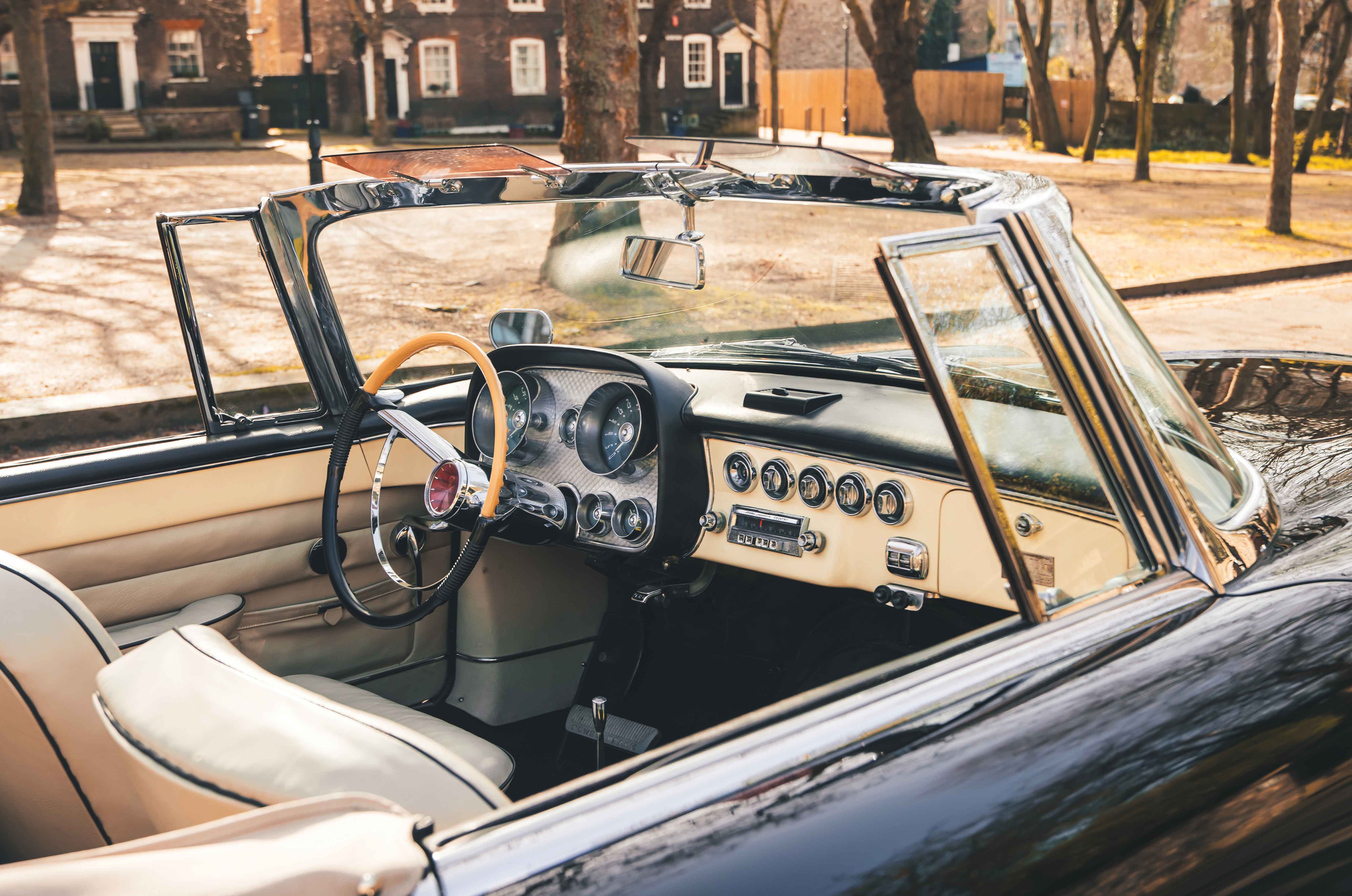
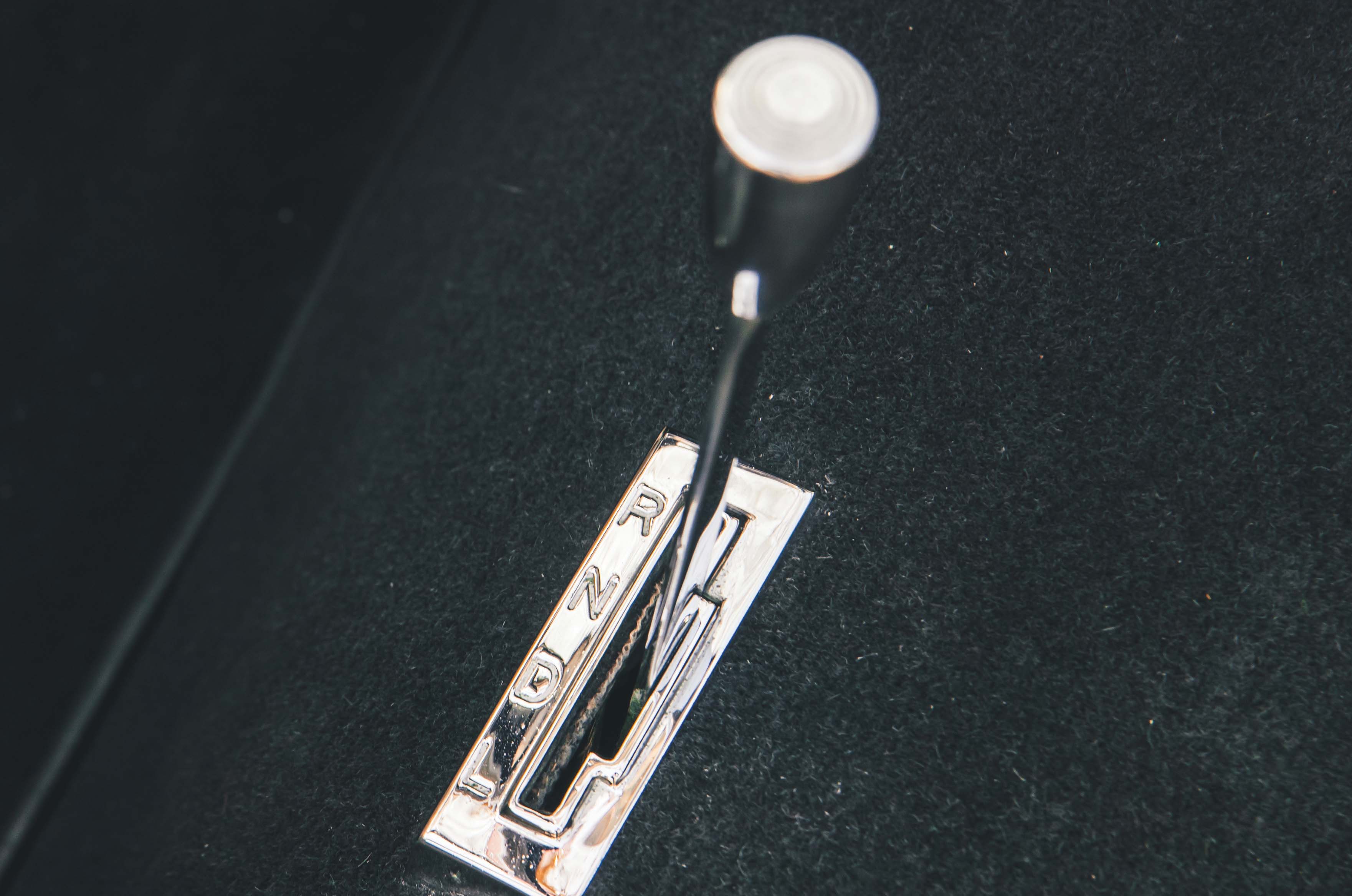
The only available transmission was Chrysler’s two-speed PowerFlite auto, but, instead of the gimmicky pushbutton arrangement found on Mopar products, the Dual-Ghia wore a slim, tunnel-mounted wand more in the tradition of a European sports car.
Infamously, this automatic gearbox lacked a Park position, and it was possible to start the vehicle in gear.
Dual founder Eugene A Casaroll insisted on tailfins, but engineer Paul Farago wasn’t keen
The intention had always been to keep the model’s production limited.
In 1955, when the Firebomb was announced, numbers were to be only 150 a year, but even that turned out to be optimistic once the car came to market.
Selling at a whopping $7646 (a Cadillac Eldorado in 1956 was just under $5000), it isn’t truly known what the exact number of sales were, but one source says that between 1955 and 1958 only 117 were constructed, 13 of which were prototypes and another two coupes.
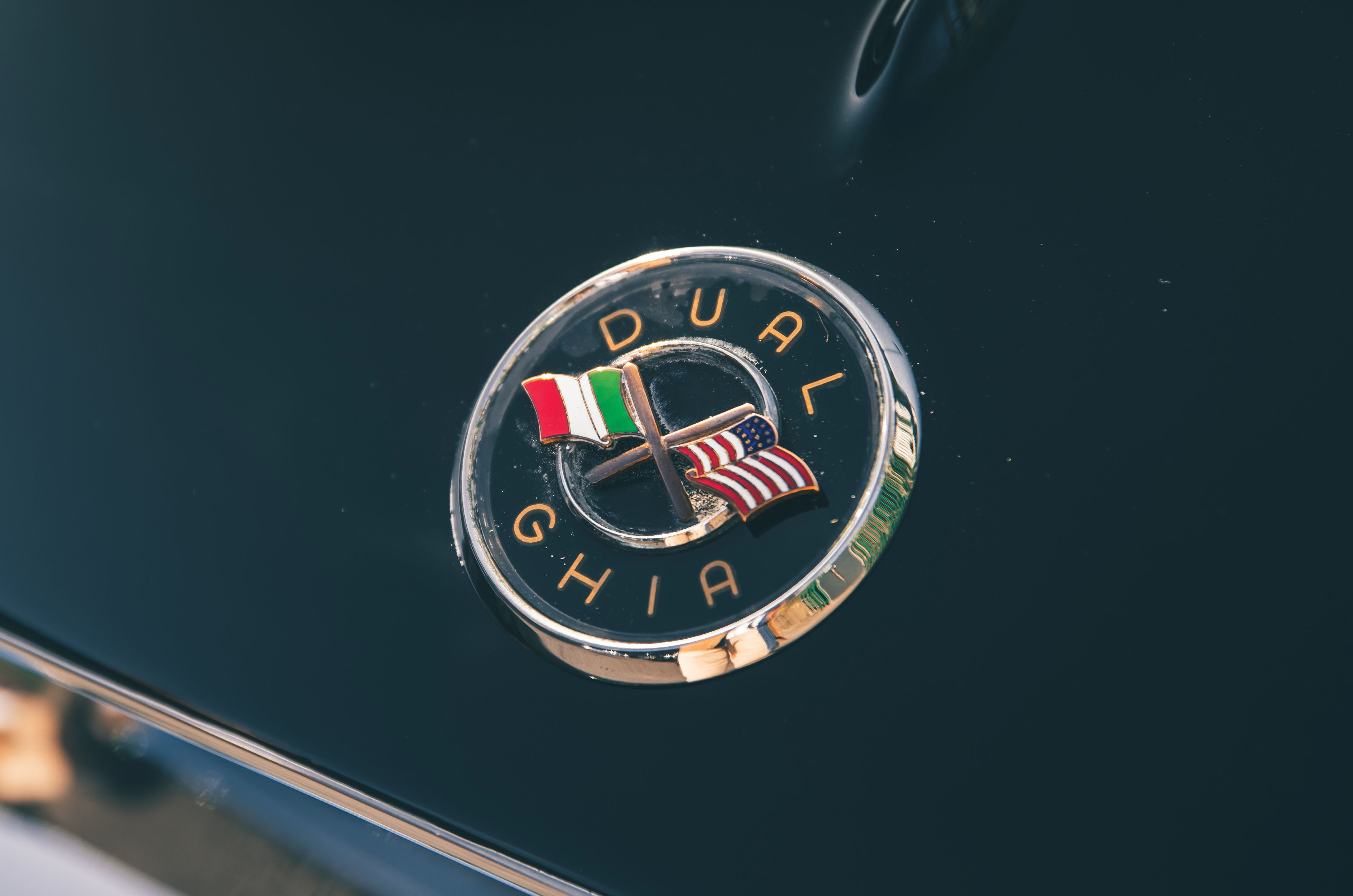
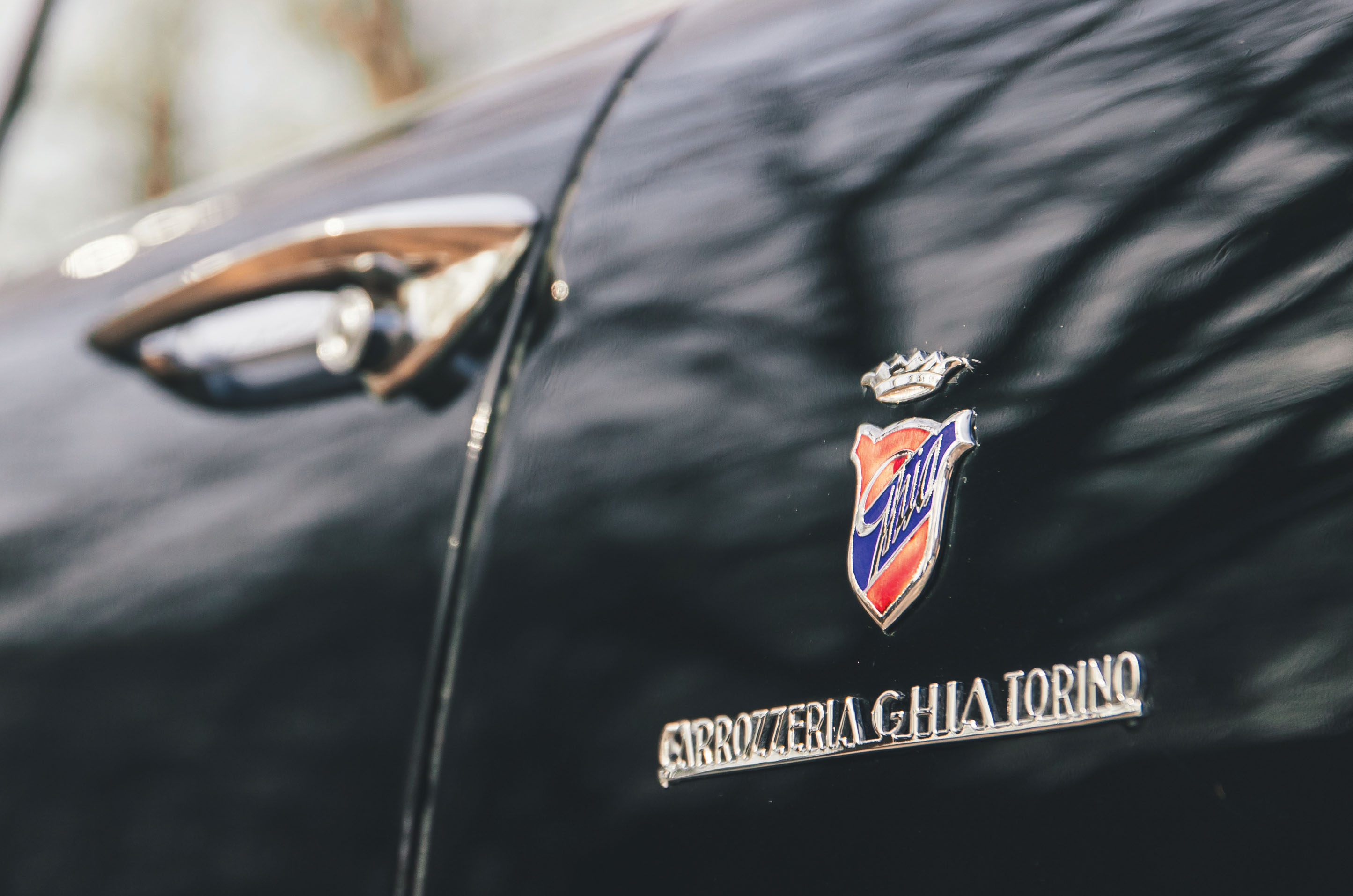
Coachbuilder Ghia’s crest
Supposedly Casaroll, in his desire to keep the car as exclusive as possible, vetted all would-be buyers, but by all accounts it was Farago who actively sold the Dual-Ghia to the likes of the Rat Pack, especially Dean Martin, Eddie Fisher and Peter Lawford, whose own car appeared in his TV series, The Thin Man.
Frank Sinatra also owned one, as did Lucille Ball and Debbie Reynolds.
One actress, Natalie Trundy, allegedly left her husband when he failed to hand over the keys to their Ghia.
All of which didn’t go unnoticed by the Hollywood gossip columnists, one of whom, Dorothy Kilgallen, claimed that a Rolls-Royce was a movieland status symbol for those who couldn’t acquire a Dual-Ghia.
Hollywood A-listers loved the Dual-Ghia
Yet despite such praise, the car’s notoriety struggled to find appreciation among the general public, and it was destined to become one of the more obscure cards among the pack of US Top Trumps.
Indeed, the car had ceased production by the time the December 1958 issue of Life magazine hit the newsstands containing pictures of Ol’ Blue Eyes with his Dual-Ghia.
Although the recognition suddenly spread countrywide, it was too late.
Three years earlier, Don MacDonald’s review in Motor Trend magazine had opened with the classic line: ‘“Hey Mac, what is that car?”
‘It’s a question asked 1293 times during the seven days that we revelled in temporary possession of this obviously foreign convertible.’
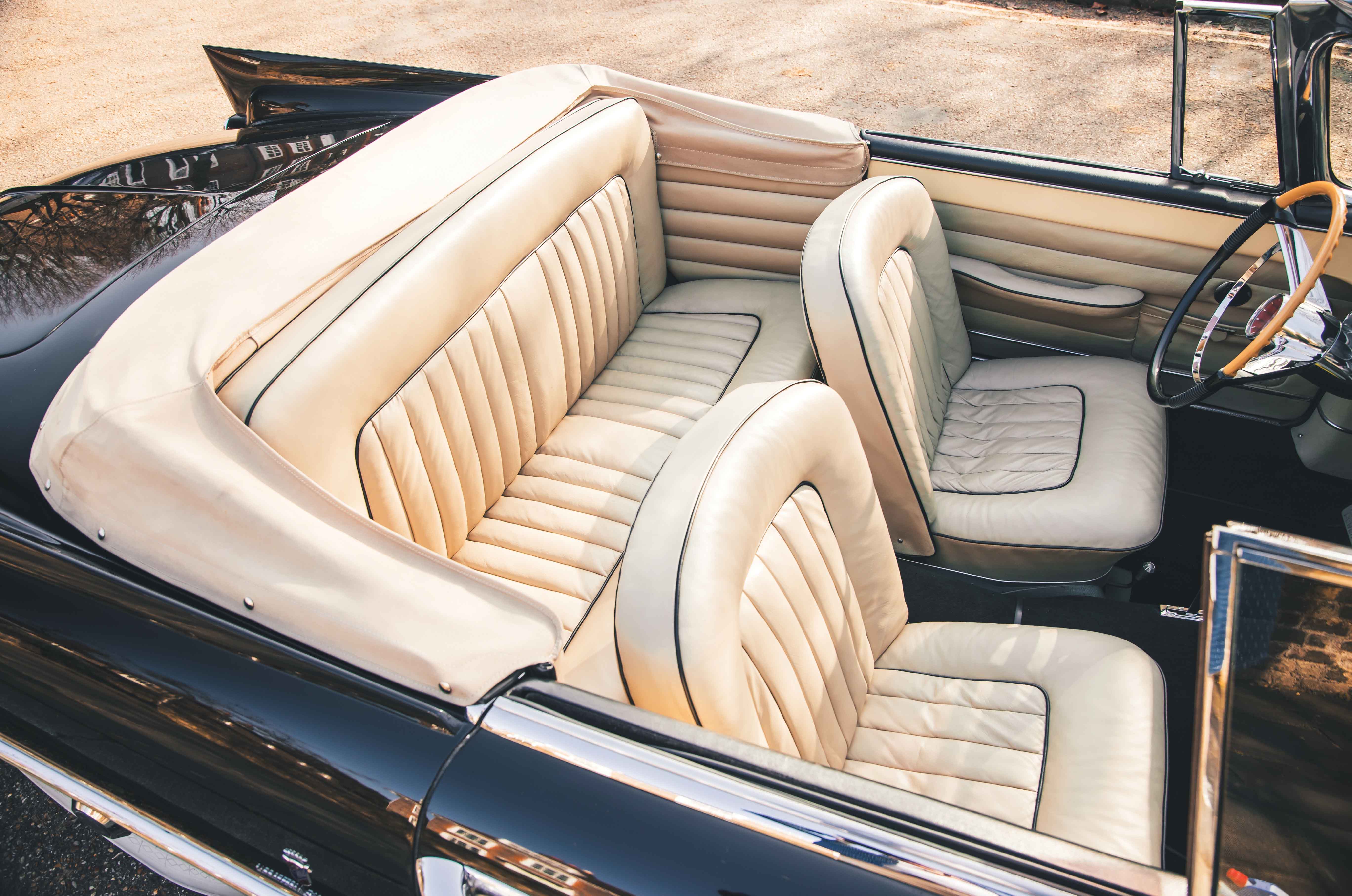
The Dual-Ghia’s two-tone cabin is low-key luxurious rather than overtly ostentatious
The reviewer went on to praise the artistry in the Italian coachwork, as well as the simplicity and wide availability of the American mechanical components, claiming the moving parts provided by Dodge: ‘Offer performance and roadability that we will stack against the best the world of Gina Lollobrigida has to offer.’
Certainly where the former is concerned the Dual-Ghia wasn’t lacking.
Weighing in at 1633kg, 90kg less than a regular Dodge 500, the Ghia’s power-to-weight ratio aided a very respectable 0-60mph time of 8.2 secs, and it topped out at 124mph.
Not that pace was the idea. As Farago said: “We didn’t make a hot rod and didn’t want people to go racing in it.”
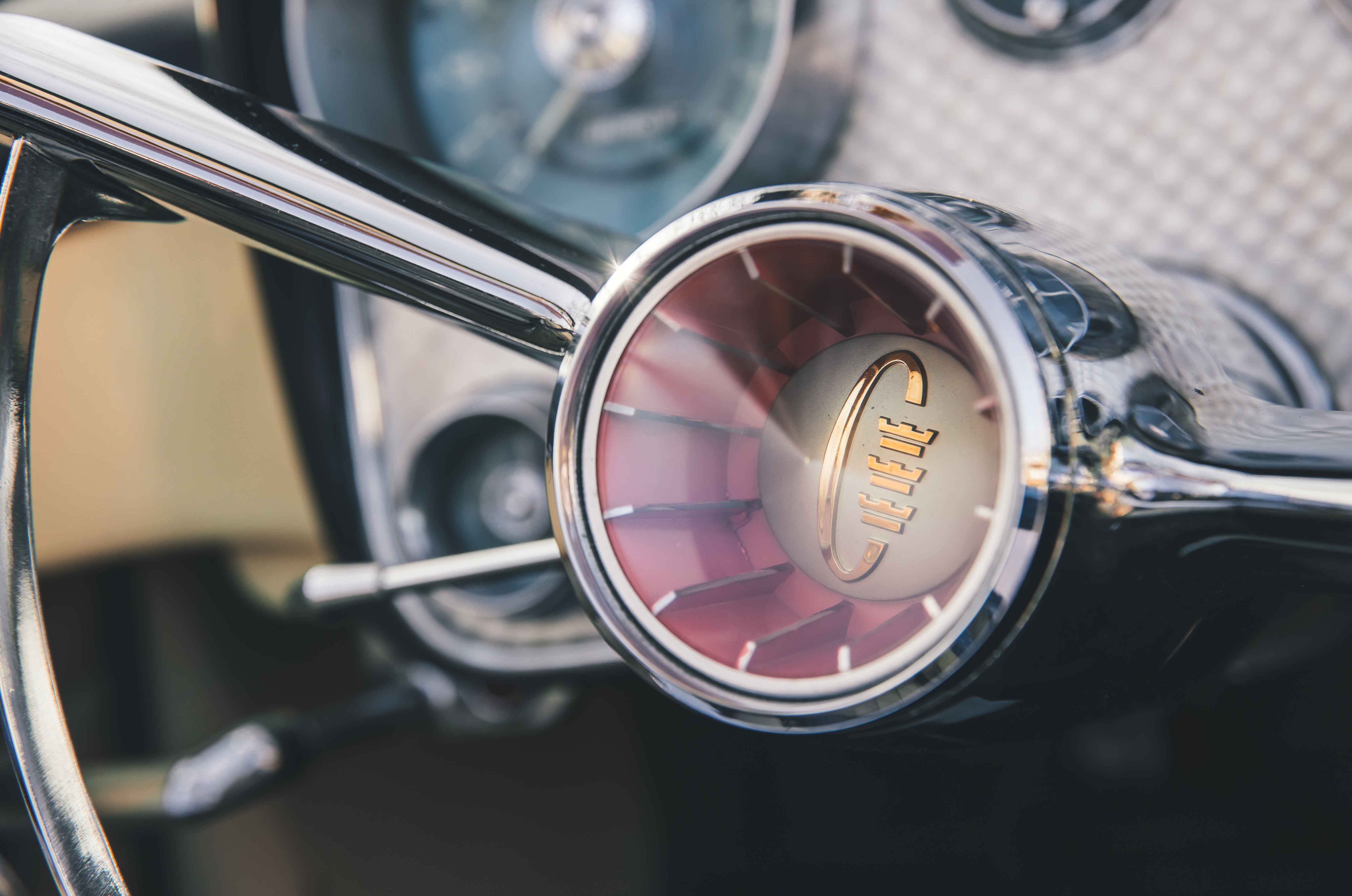
The stacked-crown Chrysler emblem in the Dual-Ghia’s steering-wheel boss
What appears to be the main objective of the manufacturer is to make the driver and his or her passengers feel special, and on that level it certainly succeeds.
Opening the door, the recess above the sill and up the B-post is capped with a chrome finishing strip that only the occupants will ever appreciate, and yet it is indicative of the maker’s attention to detail.
Under the bonnet, further chrome accents trim the recess for the locating hook, and the whole of the centre bar inside the grille and mouth is triple-plated with more chrome.
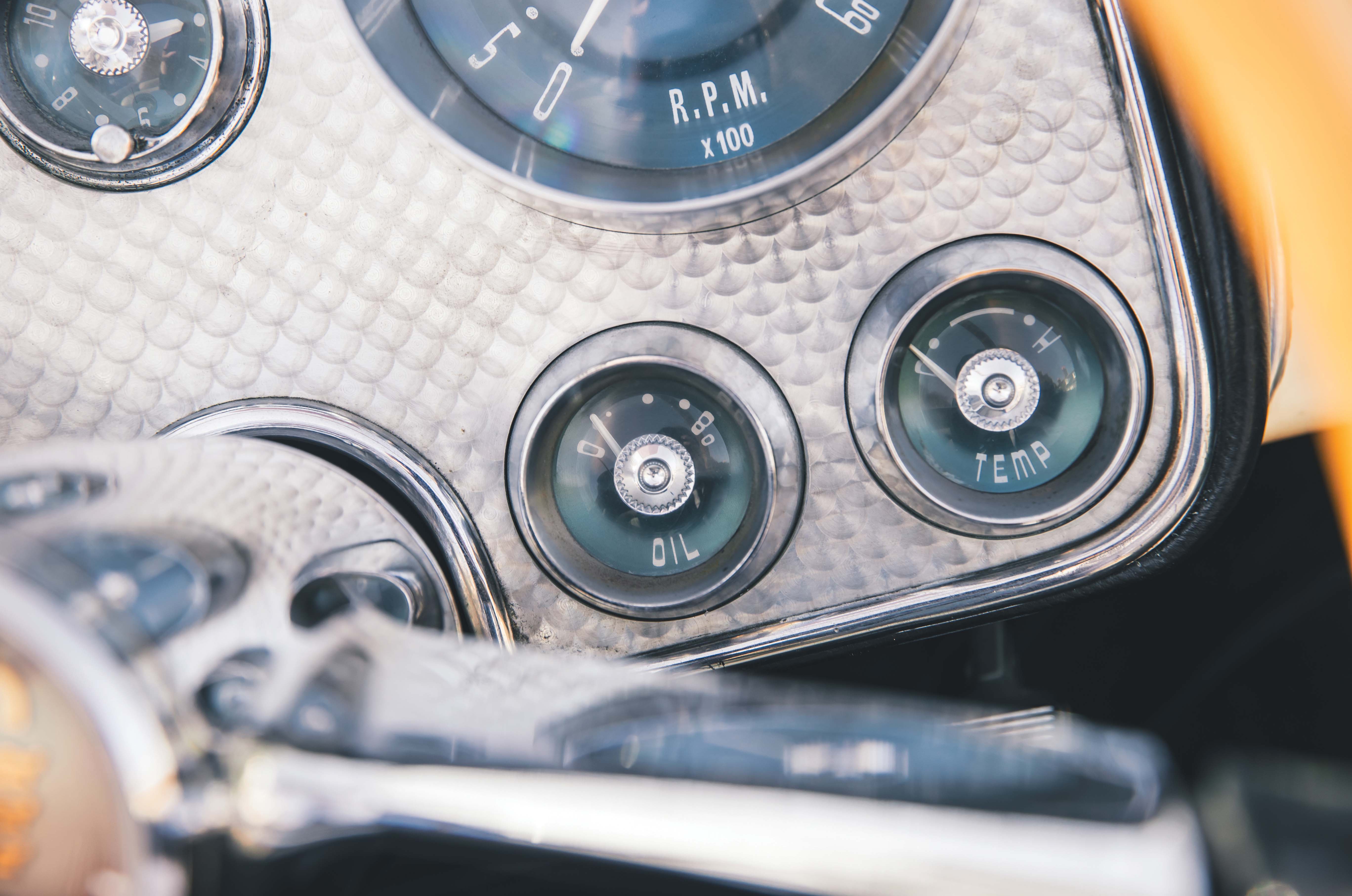
The plush, two-tone interior is American in its generosity and, although in front of the driver is a selection of regular Mopar instruments and switchgear, it is contained within a glamorous, turned-metal dashboard that looks like a diner crafted by Tiffany.
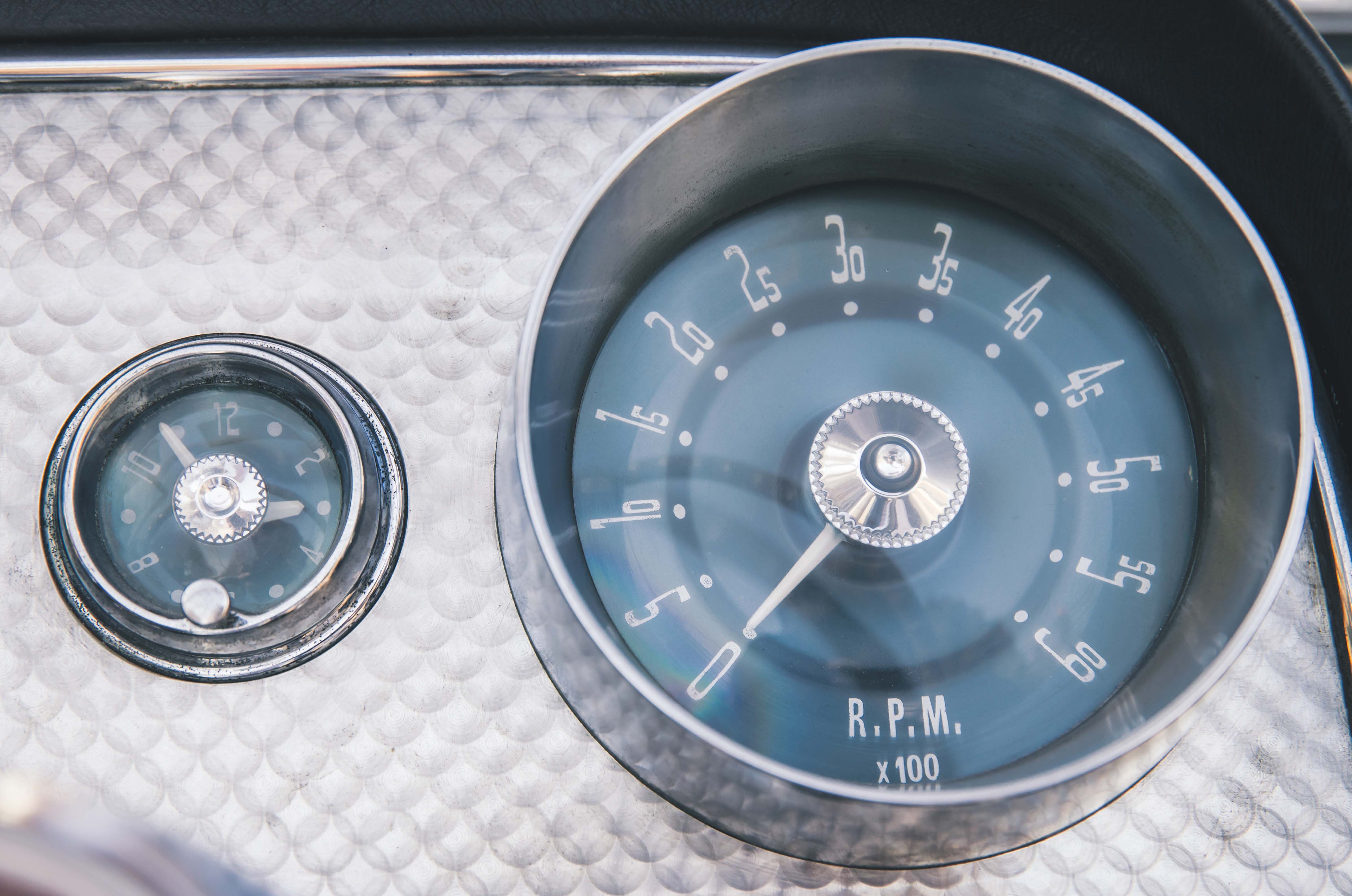
The Dual-Ghia’s bespoke rev counter sits in a turned-metal dashboard
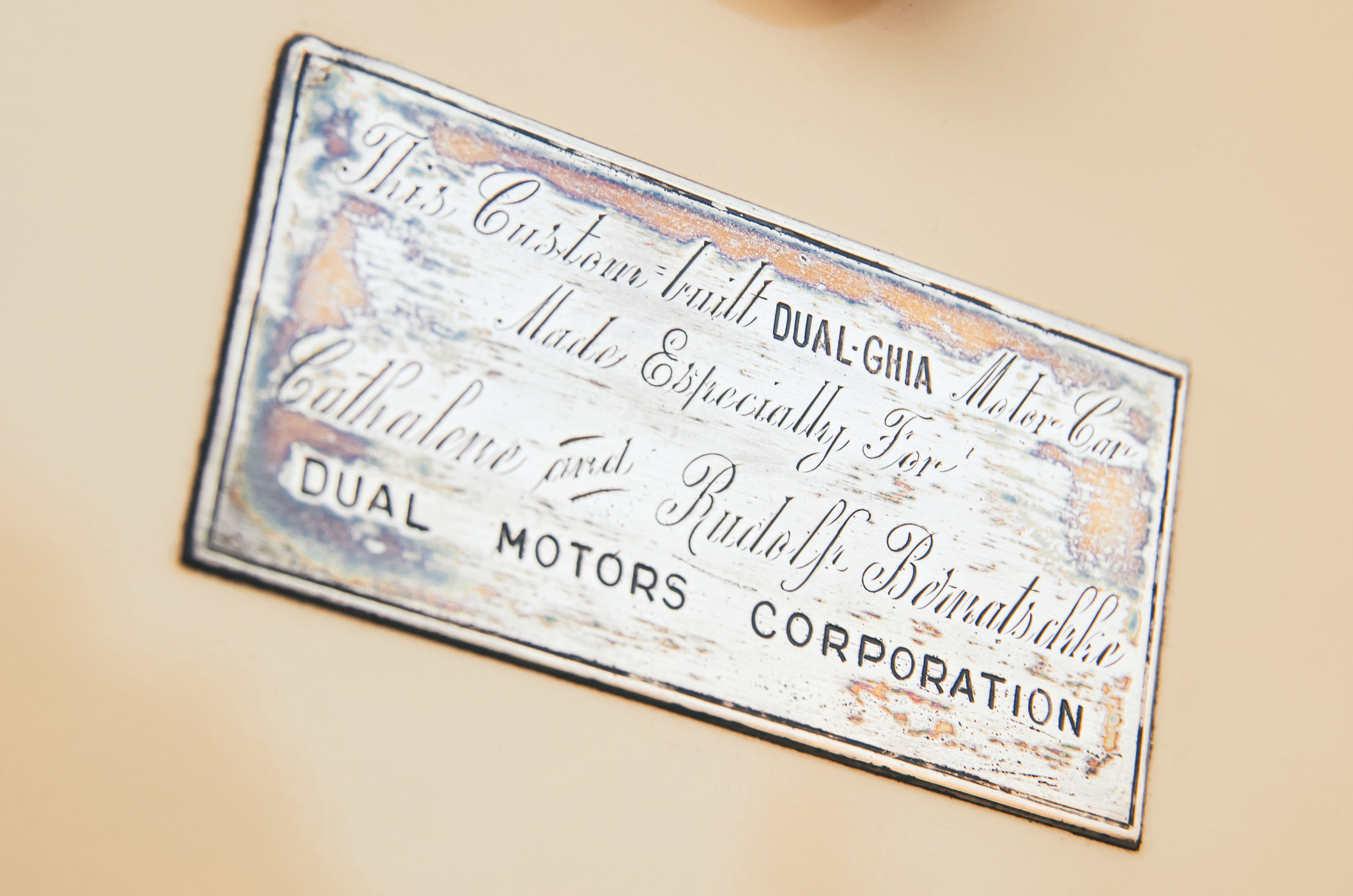
Other nice touches inside the car are the bespoke rev counter made to match the speedometer (Chrysler didn’t produce one) and a small plaque mounted on the glovebox door announcing the identity of the first owner.
Various magazine reviews criticised the window-winding mechanisms, so Casaroll, in his pursuit of perfection, had the cars recalled and fitted with electric motors.
From behind the steering wheel (another regular Dodge component) it certainly feels perky enough, but there is little in the way of aural drama.
The Dual-Ghia is a large car, but the rear bench is quite cramped
The V8 purrs away up front with no fuss and gears change smoothly, although when shifting into forward ratios or engaging reverse when stationary, the ’box can be a little clunky.
The power-assisted steering is, as you would suspect, super-light, but unlike a lot of American cars of this era it isn’t totally devoid of feel.
Lock, on the other hand, isn’t great and not aided by the low line of the wheelarch tops.
Braking is much better than expected: the substantial, 12in drum brakes feel surprisingly modern and pull the car up straight and relatively swiftly with minimal effort.
The Dual-Ghia’s original owner was immortalised in the glovebox plaque
Although it is hardly the point, I’d wager the Dual-Ghia handles better than most US cars of the period, too.
This is not least because the engine is 6in further back than it would be in a Dodge’s engine bay, the first third of which here is taken up by shrouding to direct air into the radiator.
With such good weight distribution, our man at Motor Trend was moved to write that it ‘makes you want to drive, drive, drive’.
Within minutes of cruising around outer London, Casaroll’s goal is achieved: nobody can take their eyes off the convertible (its light manual top, by the way, can easily be erected by one person), and the idea of performing in Vegas isn’t out of the question.
The Dual-Ghia’s two-speed PowerFlite automatic has an elegant lever, but no Park position
By the middle of 1958, the initial stock of parts from Chrysler had been exhausted.
But with a bad sales year for Detroit in general and a pending redesign of the Mopar chassis, coupled with union issues in his shipping business and failing health, Casaroll lost his appetite for making automobiles for the rich and famous.
Farago would go on to develop the L6.4 with Ghia, and although the prototype made its 1960 debut in Paris with a Dual-Ghia badge, ‘Dual’ was dropped from the title before it entered limited production after Casaroll sold the rights to his Italian partner.
For a brief moment, though, the Dual-Ghia was a showbiz phenomenon.
Were reality TV shows made back in 1956, the car would no doubt have featured heavily, with viewers inevitably asking: “What is that car?”
Images: Jack Harrison
Thanks to: DD Classics
Factfile
Dual-Ghia
- Sold/number built 1955-’58/117 (est)
- Construction steel unitary
- Engine all-iron, ohv 315cu in (5162cc) V8, four-barrel carburettor
- Max power 230bhp @ 4400rpm
- Max torque 316lb ft @ 2400rpm
- Transmission two-speed automatic, RWD
- Suspension: front independent, by unequal-length wishbones, coil springs, anti-roll bar rear live axle, semi-elliptic leaf springs; telescopic dampers f/r
- Steering power-assisted recirculating ball
- Brakes drums, with servo
- Length 16ft 10in (5169mm)
- Width 6ft 1½in (1875mm)
- Height 4ft 3in (1320mm)
- Wheelbase 9ft 6in (2920mm)
- Weight 3600lb (1633kg)
- 0-60mph 8.2 secs
- Top speed 124mph
- Mpg 15
- Price new $7646
- Price now $3-400,000*
*Price correct at date of original publication
Enjoy more of the world’s best classic car content every month when you subscribe to C&SC – get our latest deals here
READ MORE
Cadillac Eldorado Brougham: all-American halo
23 remarkable classic cars by Ghia
Rolls-Royce Silver Shadow II vs Cadillac Seville vs Jaguar XJ12 LWB: game of thrones