Buyer’s guide: TVR Cerbera

| 9 Jul 2025
Classic & Sports Car – Buyer’s guide: TVR Cerbera

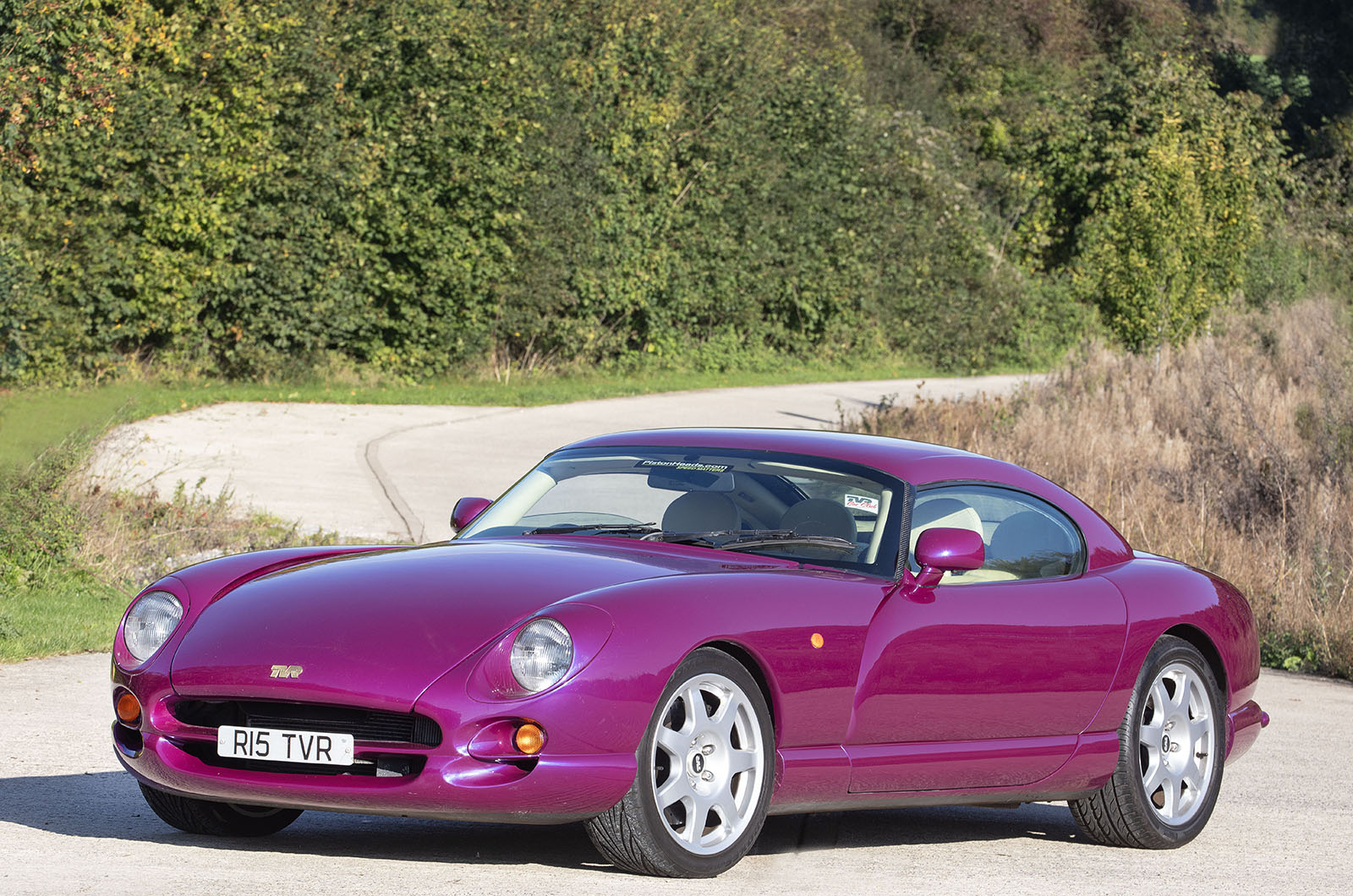
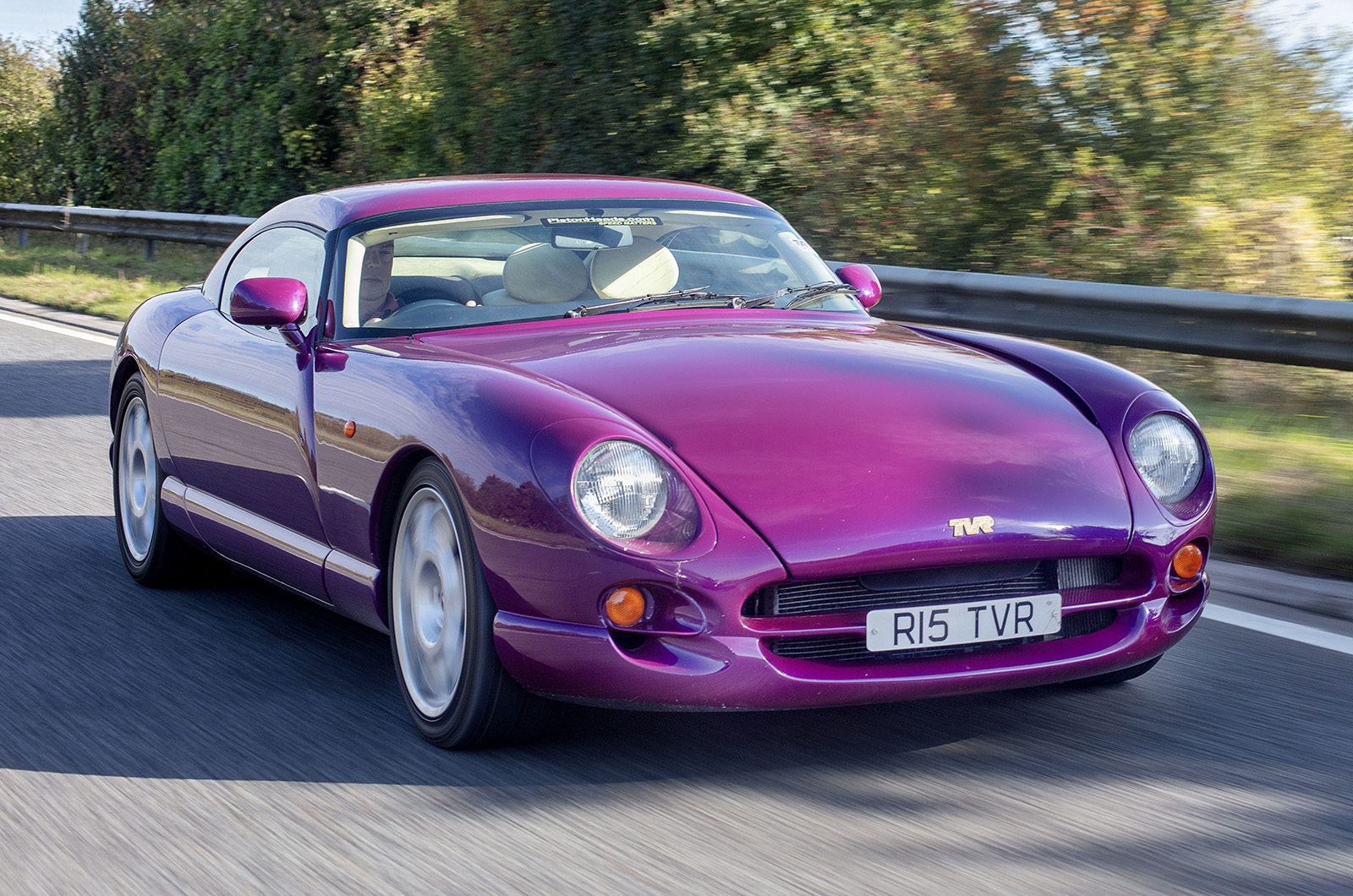
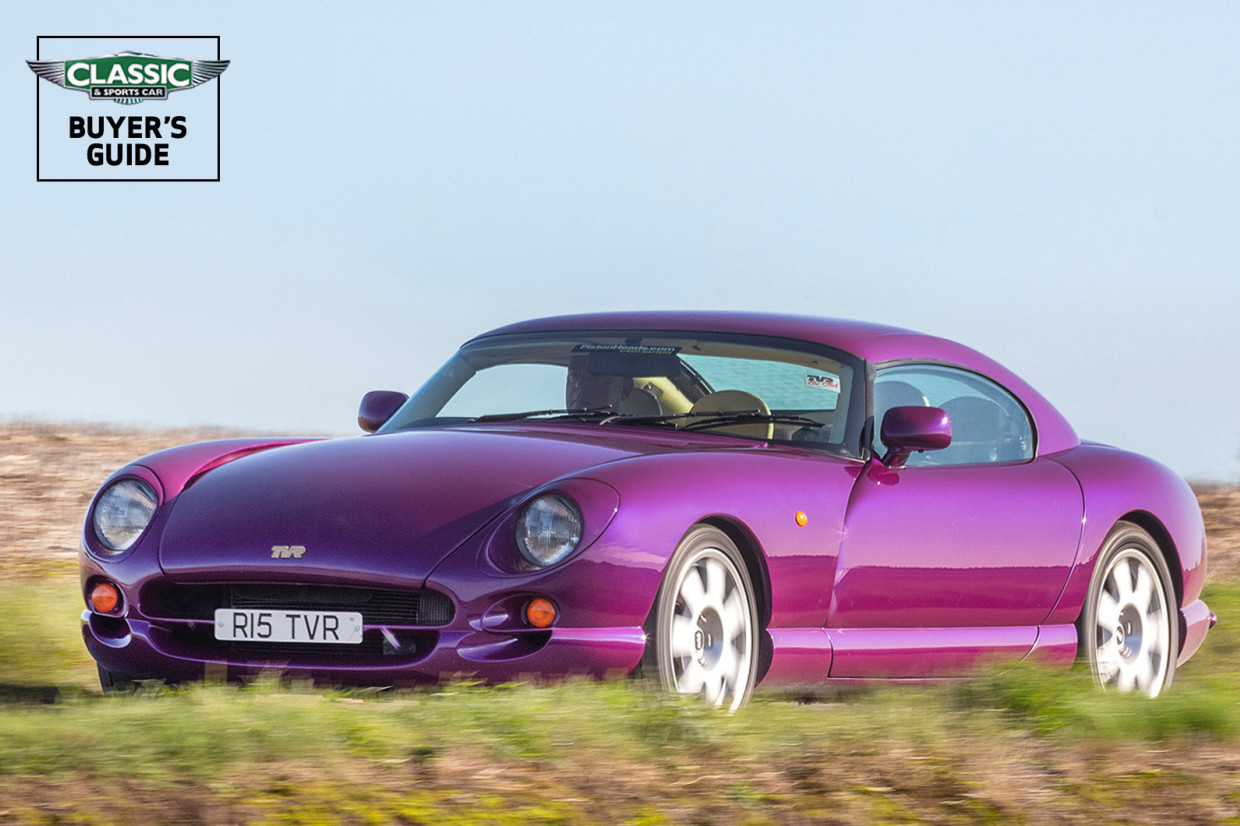
Why you’d want a TVR Cerbera

When the TVR Cerbera was launched, its pace blew road testers away, with Autocar eulogising that to go quicker you would need a Ferrari F40 or a McLaren F1.

Peter Wheeler had turned TVR around with the Griffith and Chimaera, and wanted to go a step further with a 2+2 that would help retain TVR customers as their lives moved on. There were even purpose-built baby seats for the Cerbera, which sold well.

But with the old V8ʼs days numbered after BMW bought Rover, a new engine was key.

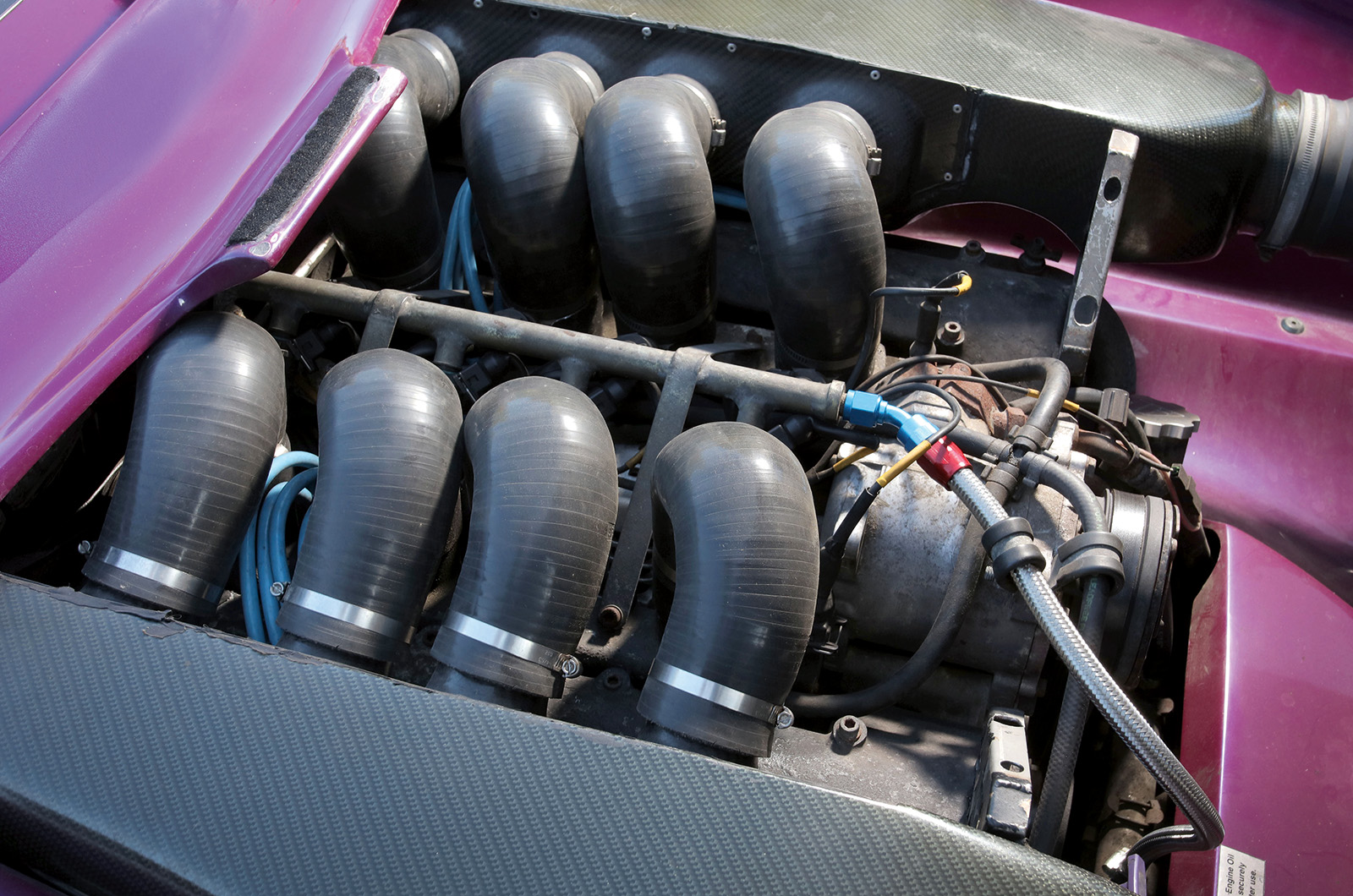
Wheeler took the brave decision to create his own unit, commissioning Al Melling and John Ravenscroft to help design the AJP8 flat-plane-crank V8.

Tested first in the Tuscan racers, the engine was light (121kg dry), compact and hugely powerful – it put TVR at the front of the supercar league, at a fraction of the cost.

Testers loved it, and most owners forgave development foibles resulting from productionising a race-derived engine.
Classic & Sports Car – Buyer’s guide: TVR Cerbera

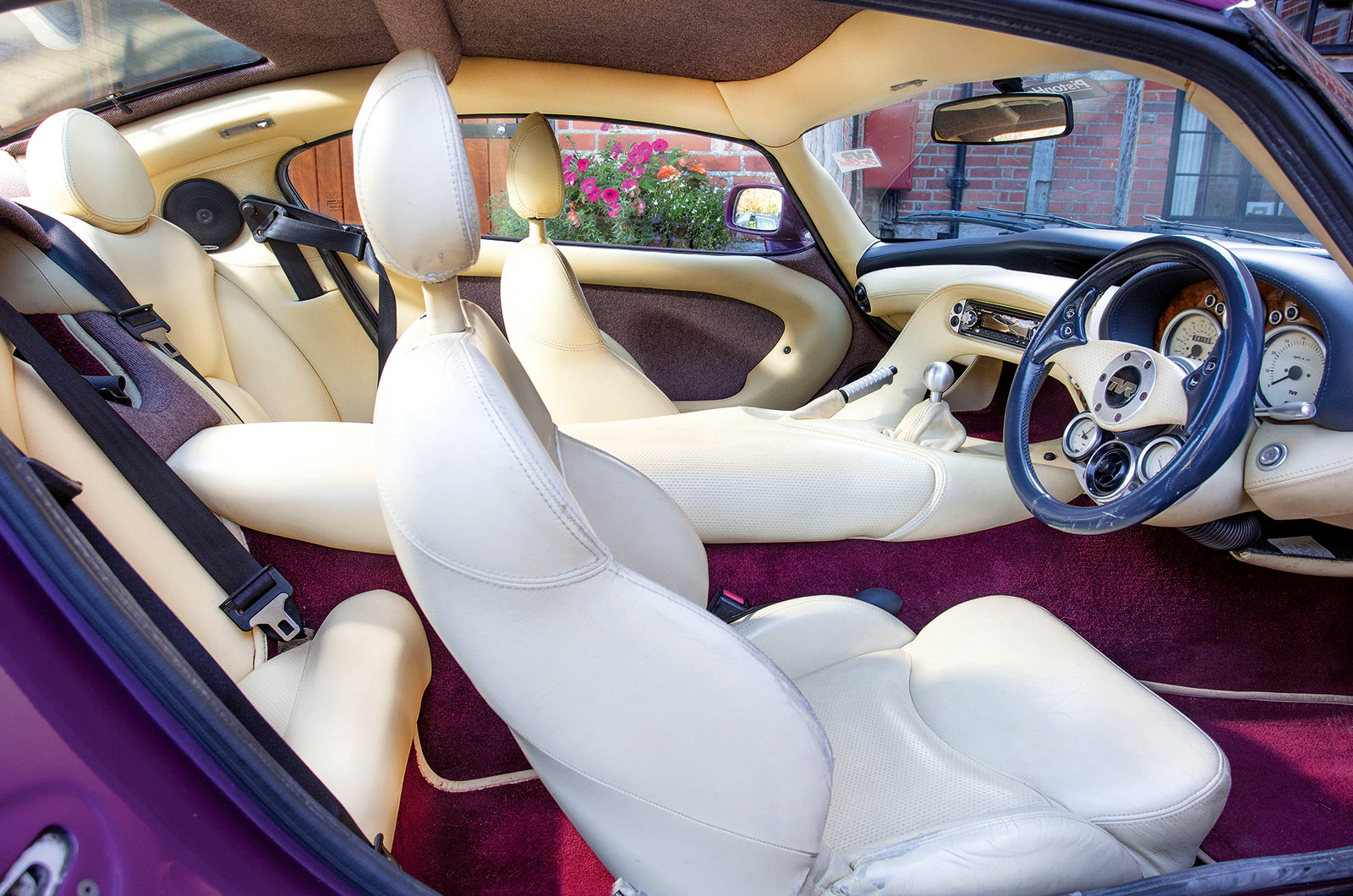
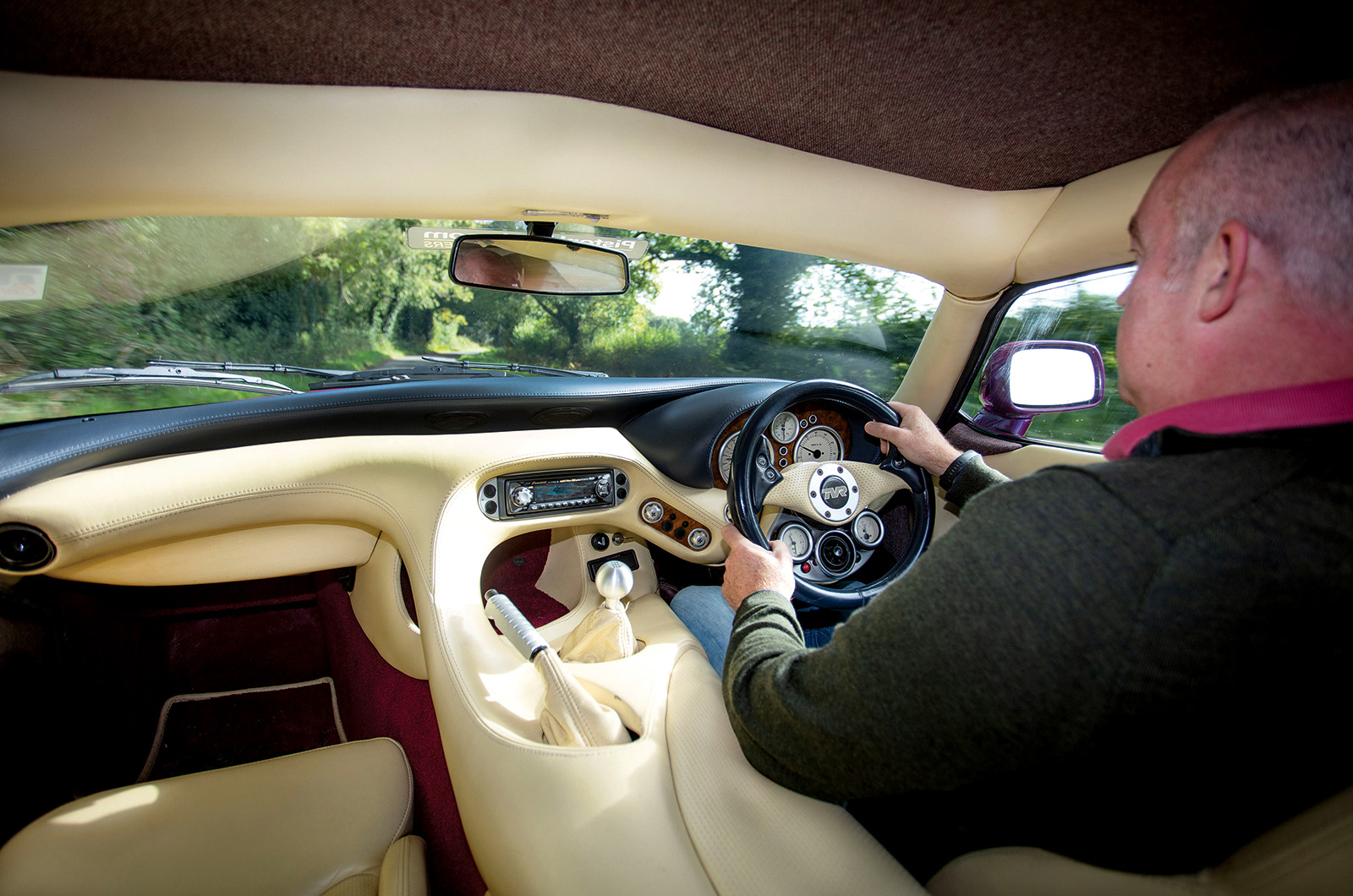
The dramatic interior was designed by Nick Coughlan: immensely stylish, with swoops of leather in all directions, it was also practical.

The unconventional layout, with lesser dials below the steering wheel, is rarely criticised.
F1-style steering-wheel buttons control wipers, horn and main beam, and the passenger seat slides further forward than the driverʼs, to give a bit more space in the back seat on that side.

Sold without driver aids to people who took pride in being able to drive, the TVR Cerbera never had ABS or traction control.

One simple but clever feature was the very long throttle travel, allowing more precise control when applying power – and a quick steering rack with just two turns from lock to lock on V8s, 2.4 on ʻsixesʼ.

The Speed Six had the same power as the 4.2 V8, with fractionally more torque – it wasnʼt as quick on paper, but on the road its flexibility made it just as fast and it was set up a little softer.

A V12 model was built for racing and considered for road use as the Cerbera Speed 12, with a 7.7-litre V12 and 900bhp-plus, giving 0-60mph in 2.9 secs and 240mph. Wheeler deemed it too powerful, and only one was built.

Engines were the biggest worry when new, but most have been rebuilt to be more durable. Chassis rot is the next concern, because it usually means body removal to repair properly.

Images: James Mann


TVR Cerbera: what to look for

Classic & Sports Car – Buyer’s guide: TVR Cerbera

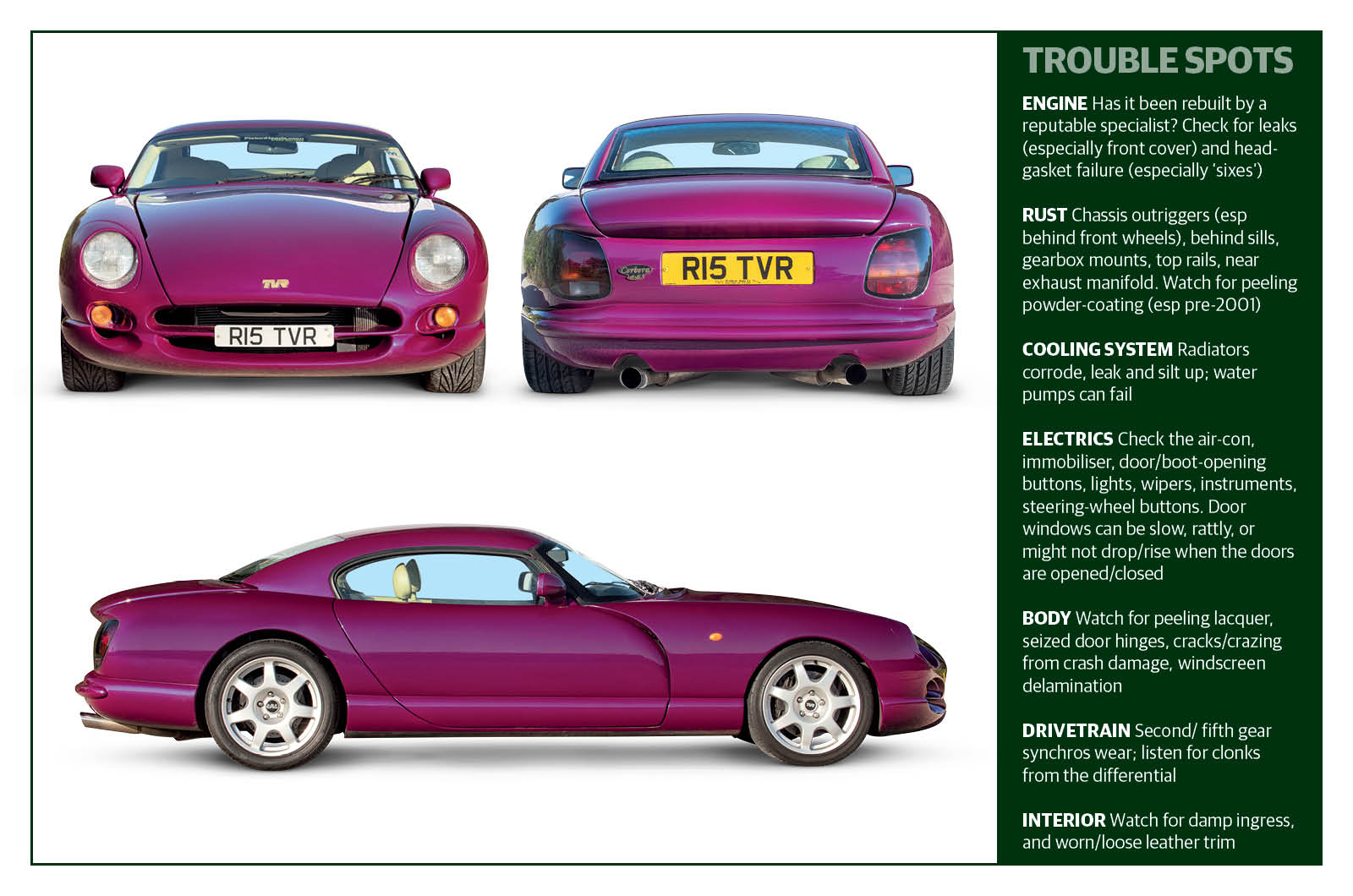
Trouble spots

Please see above for what to check for when looking at TVR Cerbera classic cars for sale.

Classic & Sports Car – Buyer’s guide: TVR Cerbera

Engine

With specialist attention, the TVR V8 and straight-six are maturing into the reliable, dependable units that bigger development budgets could have made them in the first place.

The flat-plane crank gives the V8 its own distinctive snarl, but dynos reveal that the 4.5 in particular wasn’t quite as powerful as TVR claimed it to be.

Classic & Sports Car – Buyer’s guide: TVR Cerbera

Interior

Check for wear and damage to the leather, water ingress to the interior and carpets, and functionality of all electrics and the vital air conditioning.

Classic & Sports Car – Buyer’s guide: TVR Cerbera

Wheels and tyres

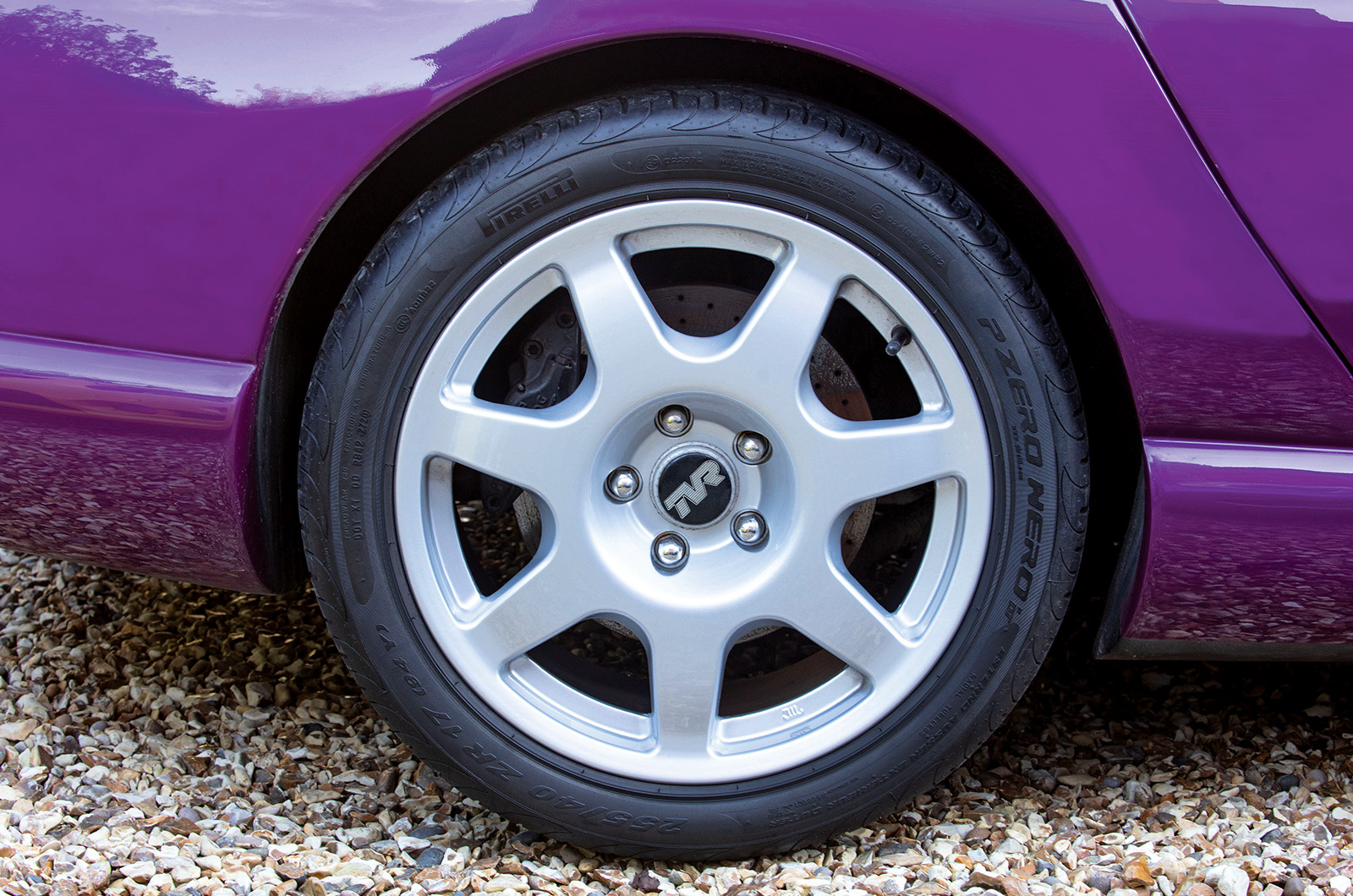
Rear tyres of TVR Cerberas wear quickly: check their age and quality.

Differential and suspension clunks warn of work needed; polybushes are often too hard.

Check for damper leaks.

Classic & Sports Car – Buyer’s guide: TVR Cerbera

Gearbox

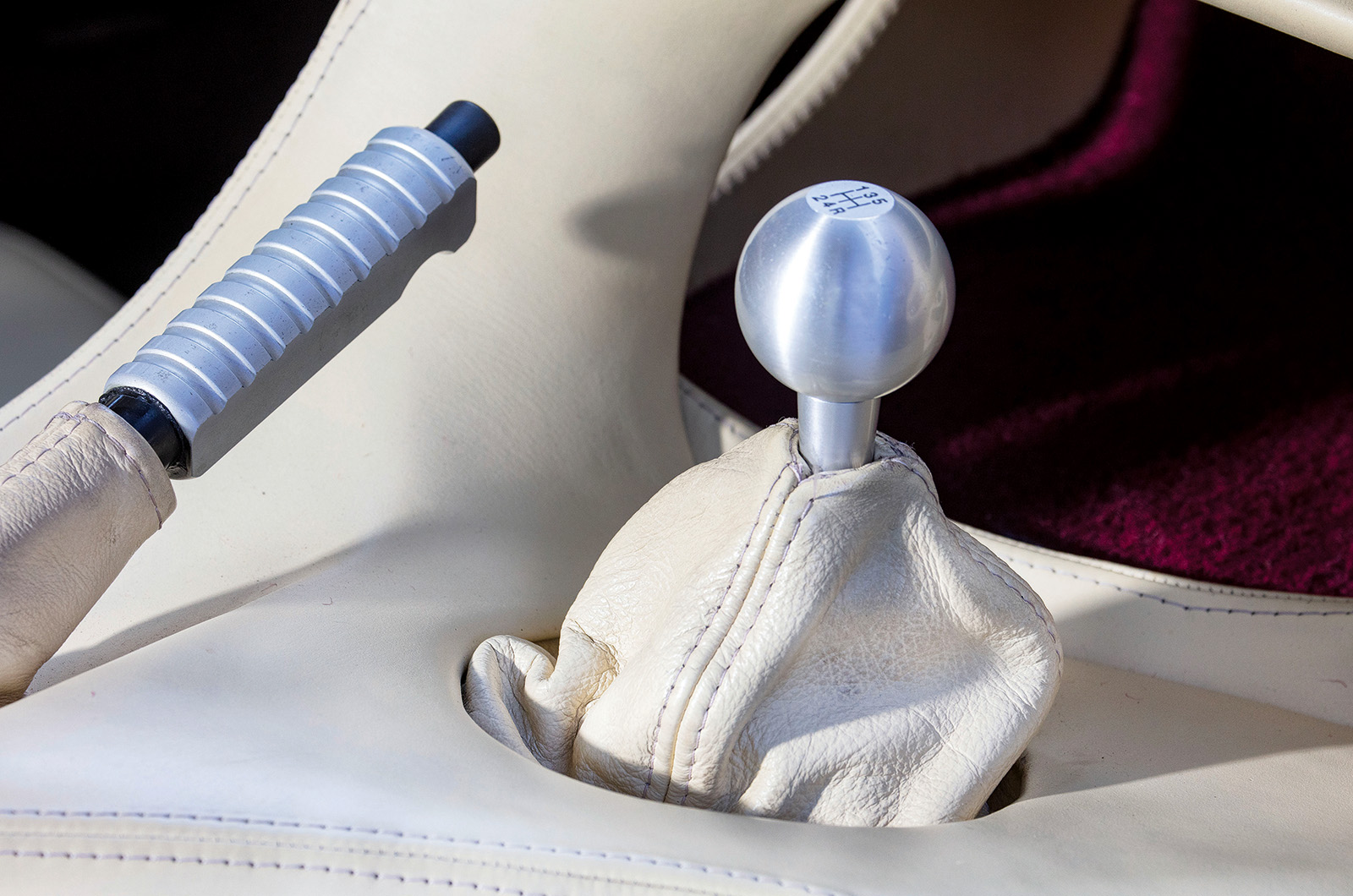
The Borg-Warner T5 gearbox is tough but the clutch is not, with diaphragm-spring failure (leading to a very heavy clutch) often preceding plate wear.

Classic & Sports Car – Buyer’s guide: TVR Cerbera

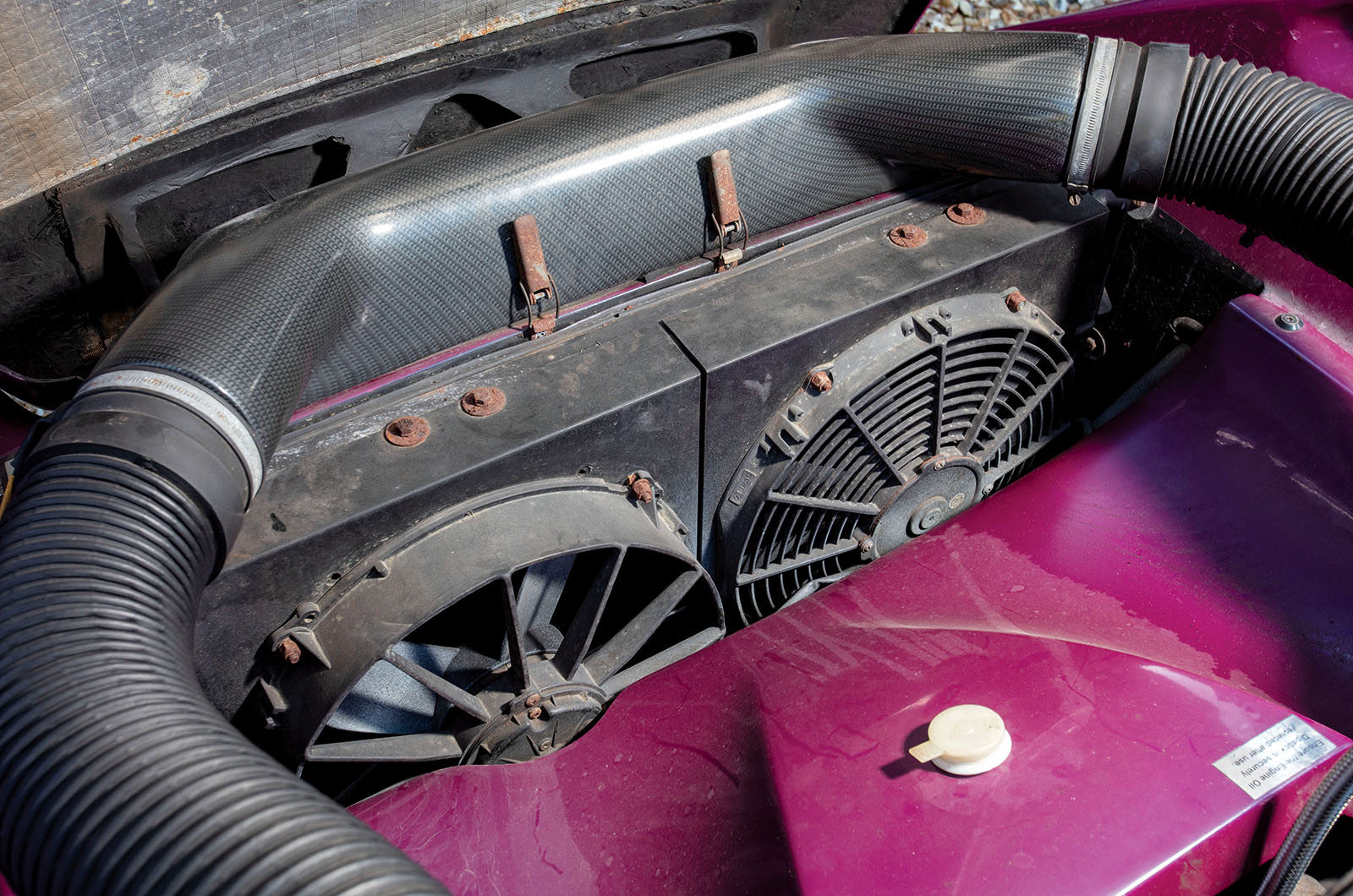
Radiator

Inspect the radiator and coolant hoses for their age and condition – they don’t last for ever, and if they are old it’s best to replace them before they fail.


TVR Cerbera: before you buy

Classic & Sports Car – Buyer’s guide: TVR Cerbera

The AJP engines were very new and many had early problems: almost all 4.2s and ‘sixes’ will have been rebuilt by now and, if the work was done by a reputable specialist, should last a great deal longer.

The 4.2 V8s suffered from crank flex and even breakage due to small main bearings that are usually replaced with the 4.5’s larger bearings. The Red Rose has a button on the dash to alter the mapping for normal unleaded.

The dry sump on the Speed Six means oil can be slow to reach the bearings on start-up. Cams/valves should be reshimmed every 12k miles on ‘sixes’, 24k on V8s.

Setting up the throttles is a specialist task: overfuelling occurs when throttle potentiometers fail, and can destroy the catalytic converters – if they are still there.

Many cars have been de-catted, which can cause issues at MoT time (emissions) and at track days (noise limits).

Reluctant hot starting is often fixed by a high-torque starter.

Classic & Sports Car – Buyer’s guide: TVR Cerbera

The T5 transmission is tough, with synchro wear rarely showing up before 80,000 miles.

Clutches need to be replaced on average every 25,000 miles; watch out for clutch hydraulic leaks, too.

Clutch-plate fingers can snap before the plate wears out, so if the clutch is very heavy, budget for replacement.

Look out for power-steering leaks and deteriorating rear anti-roll-bar mounts.

Diff oil should be changed even though it’s not an official service item – look for signs such as this of a well-cared-for car that is less likely to bite back when you start enjoying it.


TVR Cerbera price guide

Restoration/average/show*

  • 4.2, Speed Six: £12,000/22,500/30,000
  • 4.5: £15,000/26,000/37,500
  • Red Rose: £17,000/28,000/40,000


*Late cars worth c20% more than early

Prices correct at date of original publication


TVR Cerbera history

1992 AJP V8 shown at British Motor Show

1993 Cerbera revealed at London Motorfair

1995 First AJP V8-engined Cerbera shown at Goodwood Festival of Speed

1996 Production 360bhp 4.2 goes on sale

1997 4.5 added: 420bhp, 190mph, standard Hydratrak diff

1999 350bhp Speed Six arrives

2000 Mk2: twin-pocket headlights, Spider wheels replace Saturns, Tuscan front seats, sunvisors/rear headrests deleted, slimmer front roll-over bar; optional lightweight panels and interior on 4.5

2002 Headlights built into wings, HBE gas dampers fitted; 440bhp 4.5 Red Rose with uprated brakes and suspension

2004 Production ends (last car sold in ’06)


The owner’s view

Classic & Sports Car – Buyer’s guide: TVR Cerbera

Adam Banks has owned his 1997 TVR Cerbera 4.5 for 25 years.

“Both my kids grew up in it and both of them want to have it after me,” he smiles. “This car was the 10th 4.5 built and the engine has never been rebuilt.

“I still have the original TVR baby seat, in full leather! It’s surprisingly practical: you can get a pram in the boot, and I commuted in it between Denmark and the UK.

“It has a shocking turning circle, so I usually end up rear-wheel steering with it, by kicking the tail out. You soon get used to the flexible relationship between having traction and no traction – the eight or nine inches of throttle travel make it very controllable.

“I also fly helicopters, and love to be driving something where you have to be on it, with no driver aids.

“APM Automotive has maintained it for 23 years with an annual service, and will overhaul the gearbox and diff this winter.”


Also consider

Classic & Sports Car – Buyer’s guide: TVR Cerbera

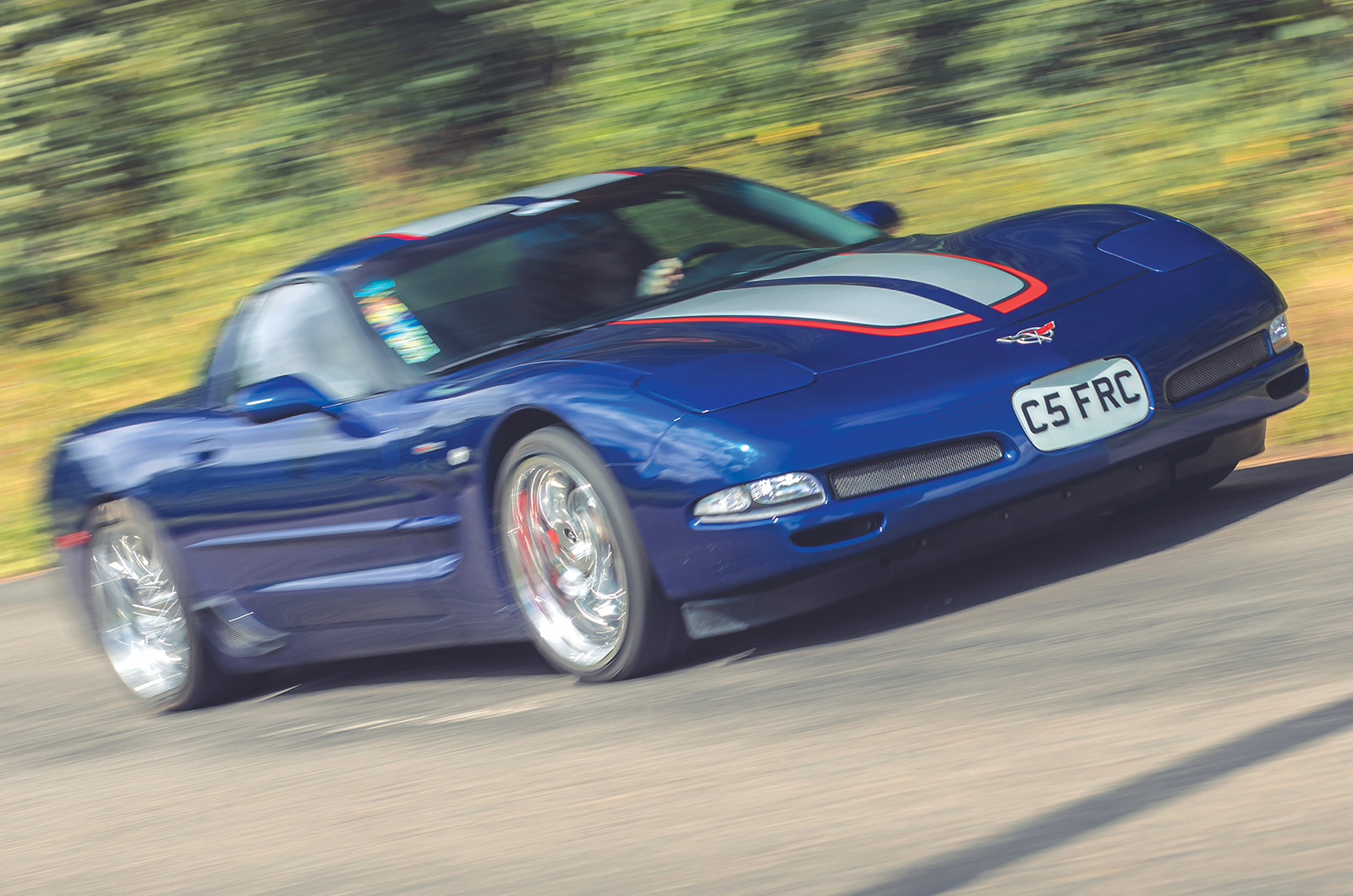
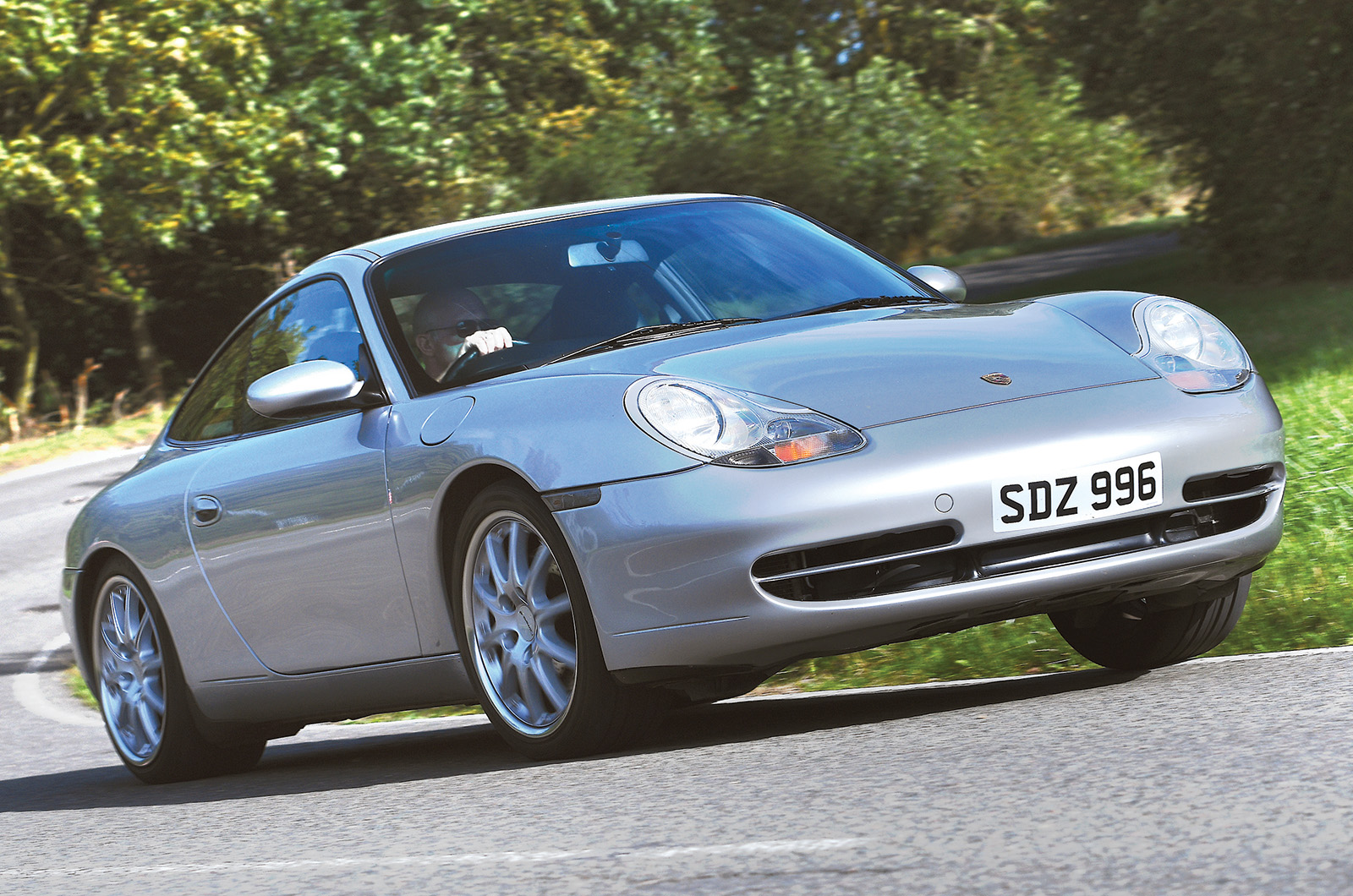
The C5 Chevrolet Corvette (left) and 996-generation Porsche 911 are alternative buys

CHEVROLET CORVETTE (C5)

Well balanced with a rear transaxle and hydroformed box chassis under a glassfibre body, the 345bhp 5.7 V8 did 0-60mph in 4.5 secs and 165mph.

Sold 1997-2004 • No. built 248,715 • Price now £10-28,000*


PORSCHE 911 (996)

The first water-cooled Porsche 911 was nearly all new, light (1300kg), slippery and fast, oozing quality. Cheap, but only the 414bhp turbo matches a Cerbera.

Sold 1999-2006 • No. built 175,262 • Price now £10-50,000*

*Prices correct at date of original publication


TVR Cerbera: the Classic & Sports Car verdict

Classic & Sports Car – Buyer’s guide: TVR Cerbera

Still fair value for the performance, presence, soundtrack and sheer style it exudes, the Cerbera is not for the faint-hearted – but a good one is more practical than most other TVRs.

Buy from a dedicated owner who has used the right specialists and look after it, and there is no reason why you shouldn’t have many years of reliable, unforgettably fun motoring.

Be sure to buy on condition and history, not model or mileage.


FOR 

  • Great specialist and club support for such a rare car
  • Parts prices mostly reasonable
  • There are a wealth of improvements available


AGAINST

  • Not for the non-enthusiast: the Cerbera demands driver focus and commitment – plus some tolerance of its occasional foibles and low-volume character

TVR Cerbera specifications

  • Sold/number built 1996-2006/1490
  • Construction steel tubular backbone chassis, glassfibre body
  • Engine all-alloy, sohc-per-bank, 16v 4185/4475cc V8, or dohc, 24v 3996cc ‘six’, sequential multi-point fuel injection
  • Max power 350bhp @ 6500rpm to 440bhp @ 6750rpm
  • Max torque 320lb ft @ 4500rpm to 402lb ft @ 5500rpm
  • Transmission five-speed manual, RWD via LSD (optional Hydratrak viscous coupling)
  • Suspension double wishbones, coil springs, telescopic dampers, anti-roll bar f/r
  • Steering power-assisted rack and pinion
  • Brakes vented discs
  • Length 14ft ½in (4280mm)
  • Width 6ft 1½in (1865mm)
  • Height 4ft (1220mm)
  • Wheelbase 8ft 5in (2566mm)
  • Weight 2559-2592lb (1163-1178kg)
  • 0-60mph 4.4-3.9 secs
  • Top speed 180-193mph
  • Mpg 13-26
  • Price new £41,100-46,500 (2000)

READ MORE

All Classic & Sports Car buyer’s guides

Brave new world: TVR Cerbera vs Lotus Esprit

10 unique TVRs