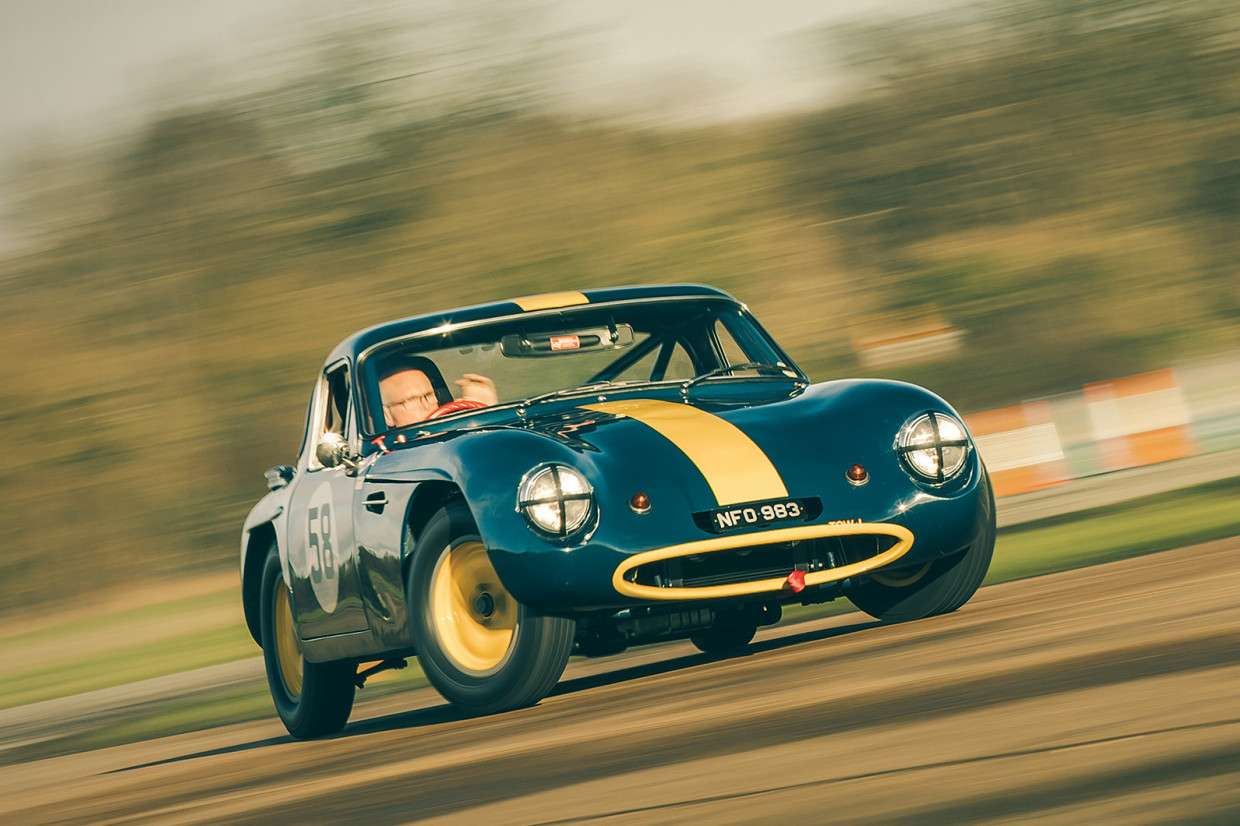
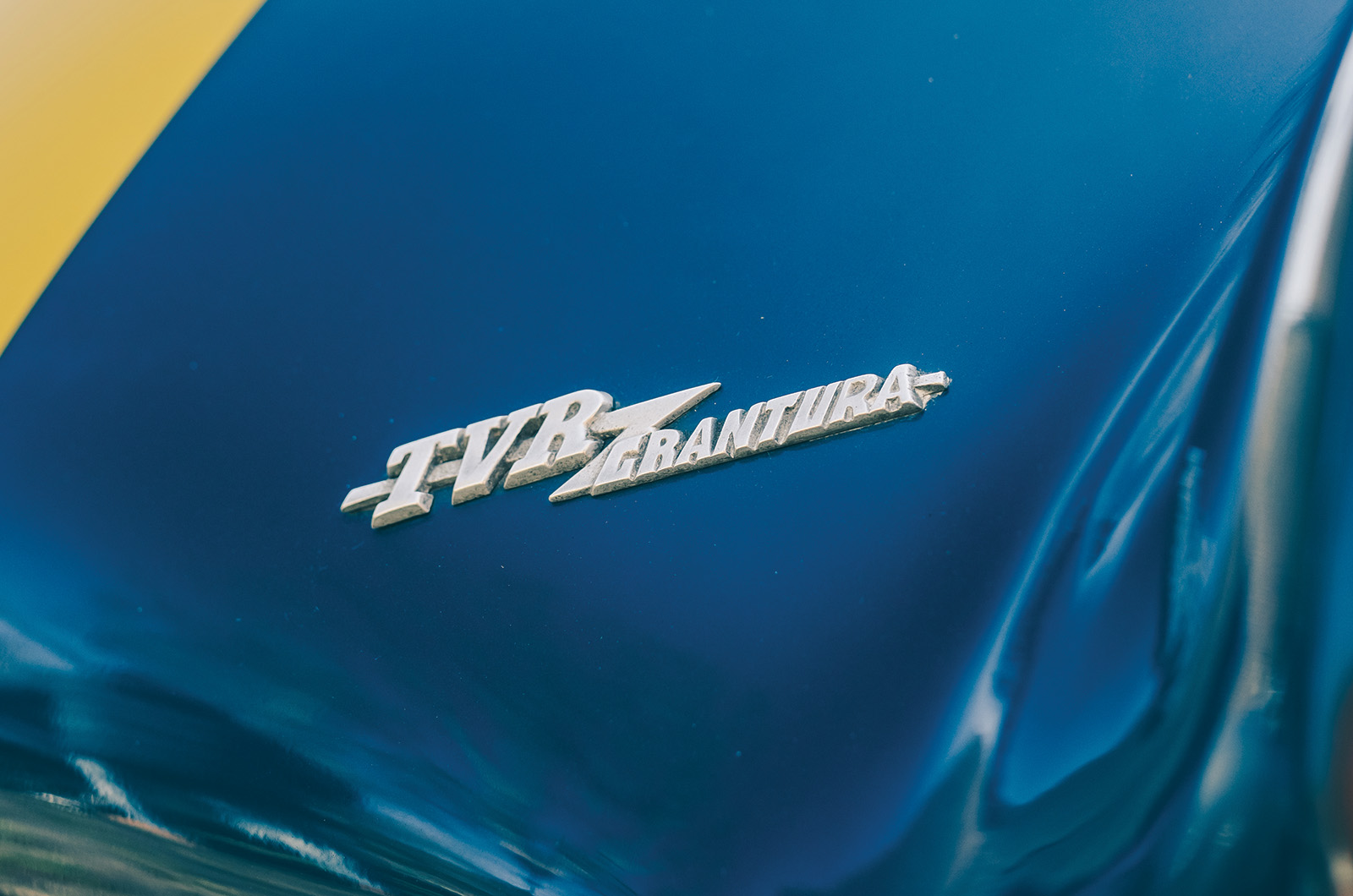
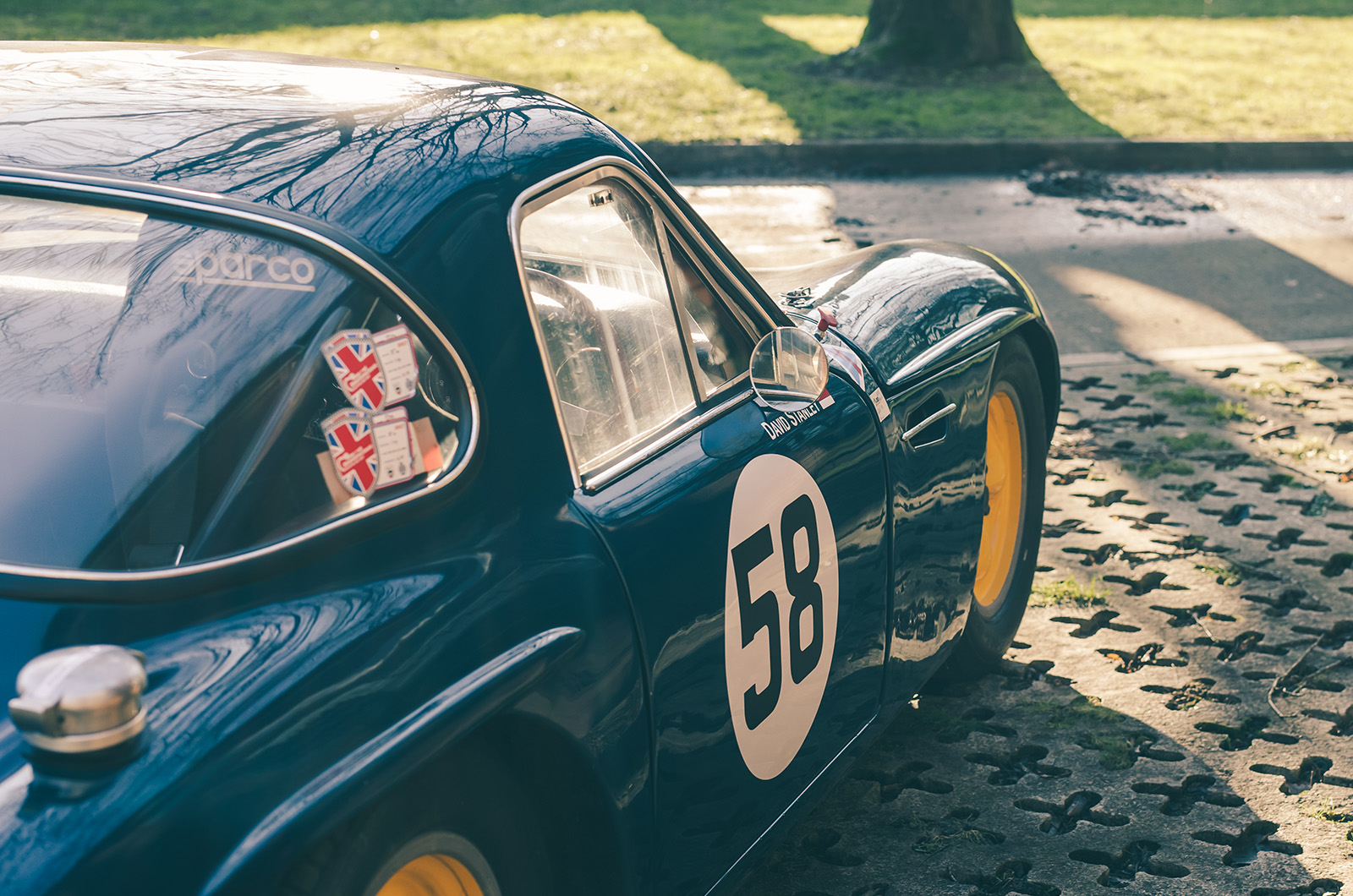
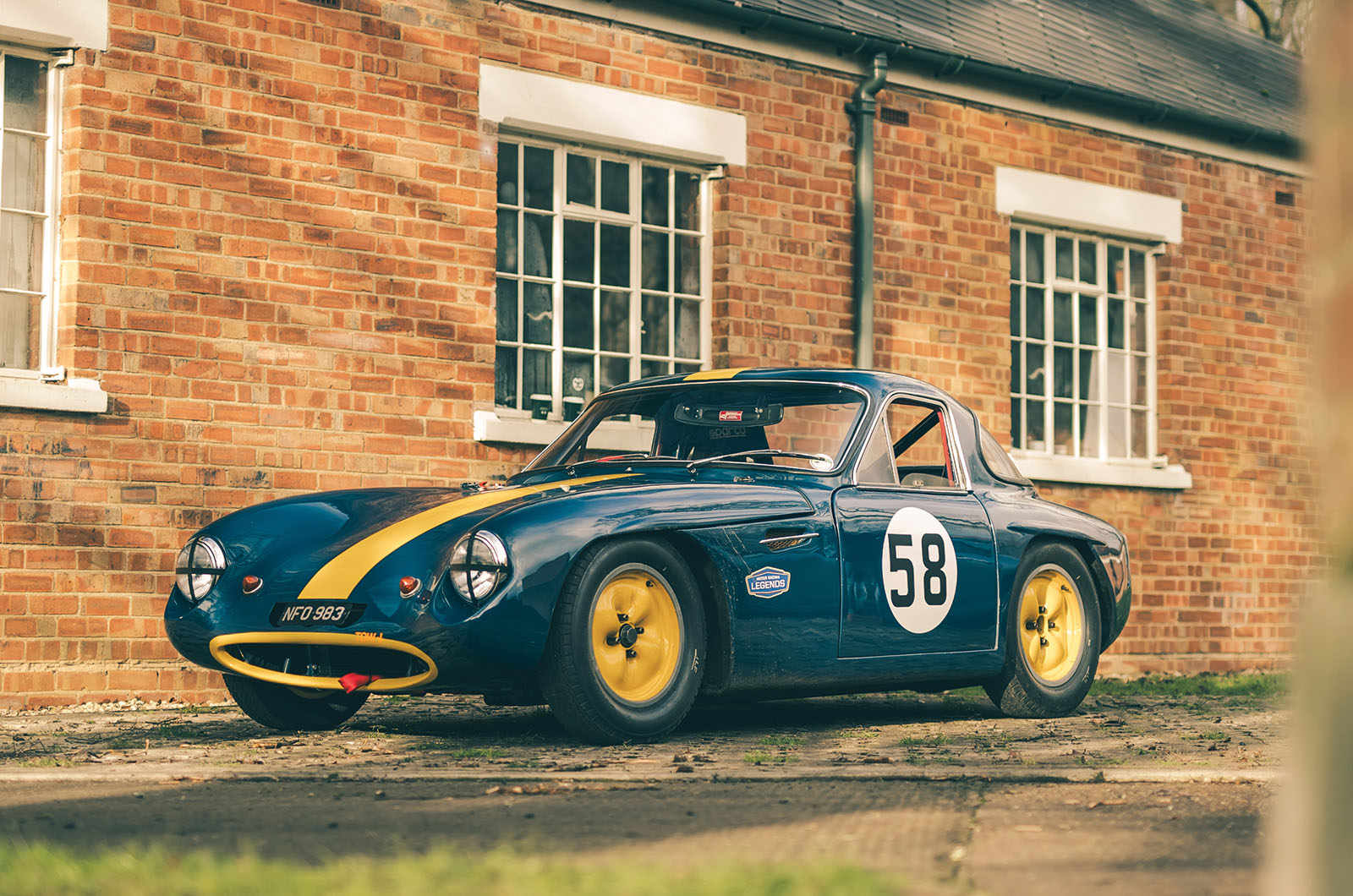
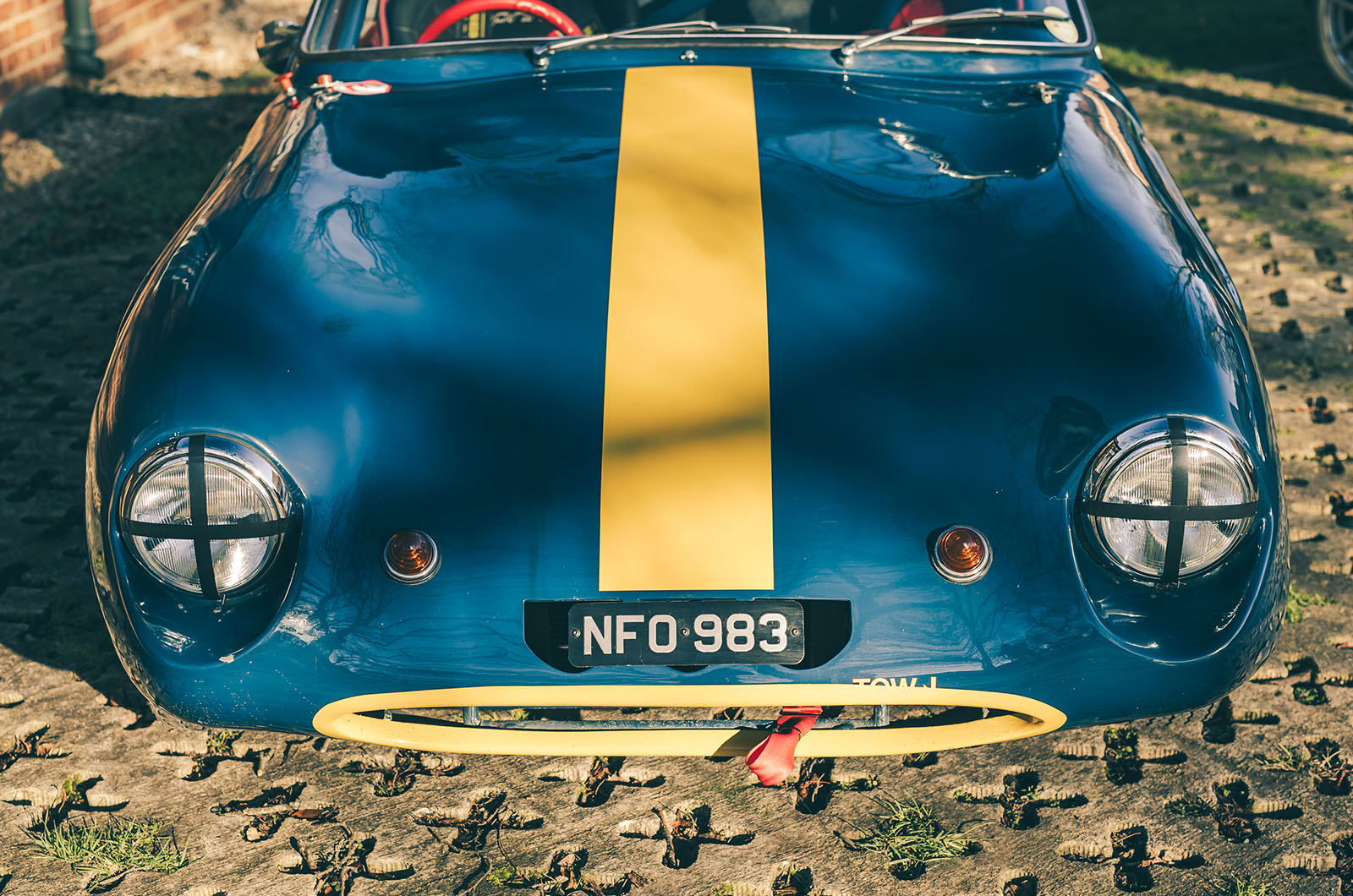
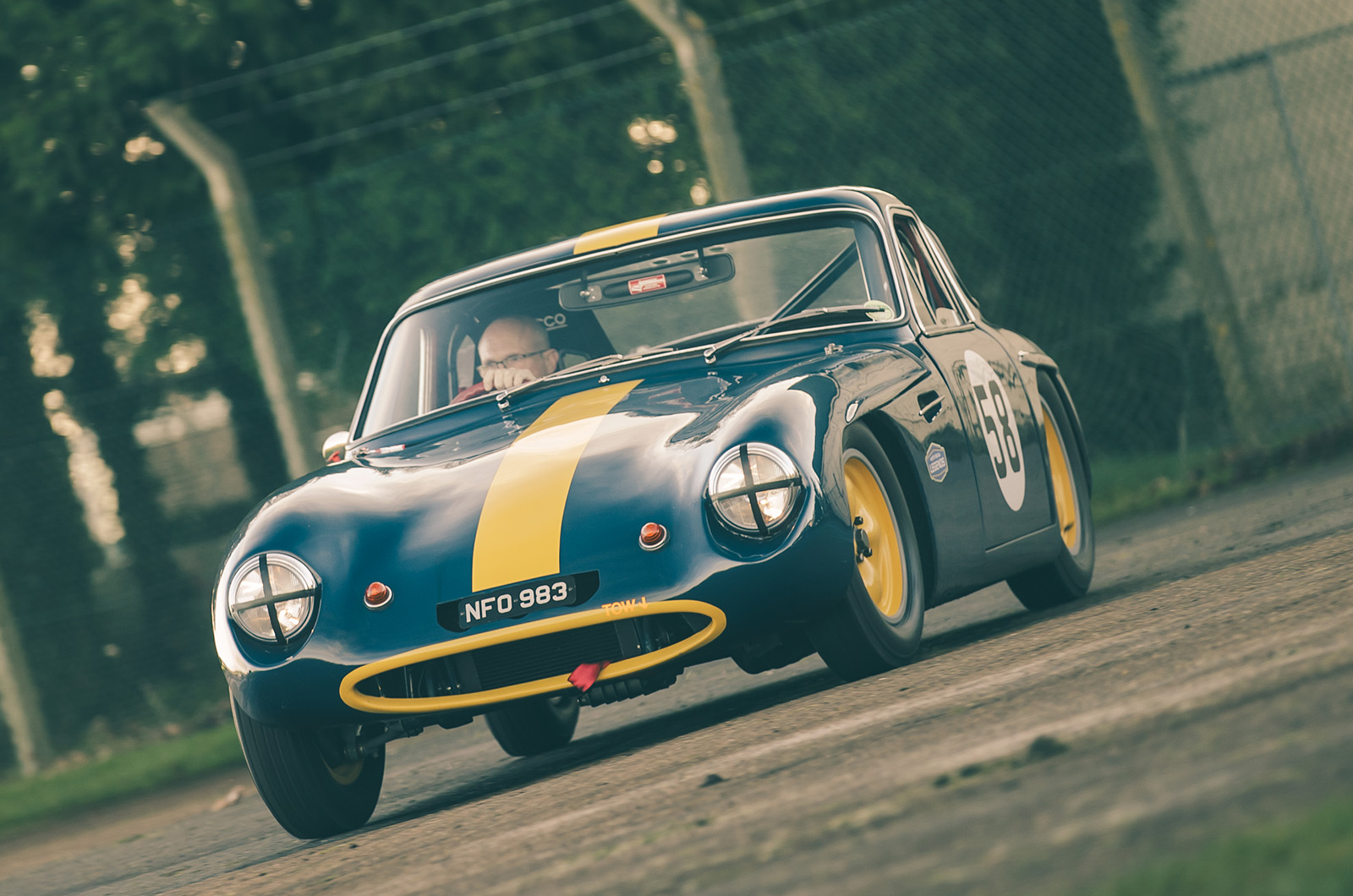
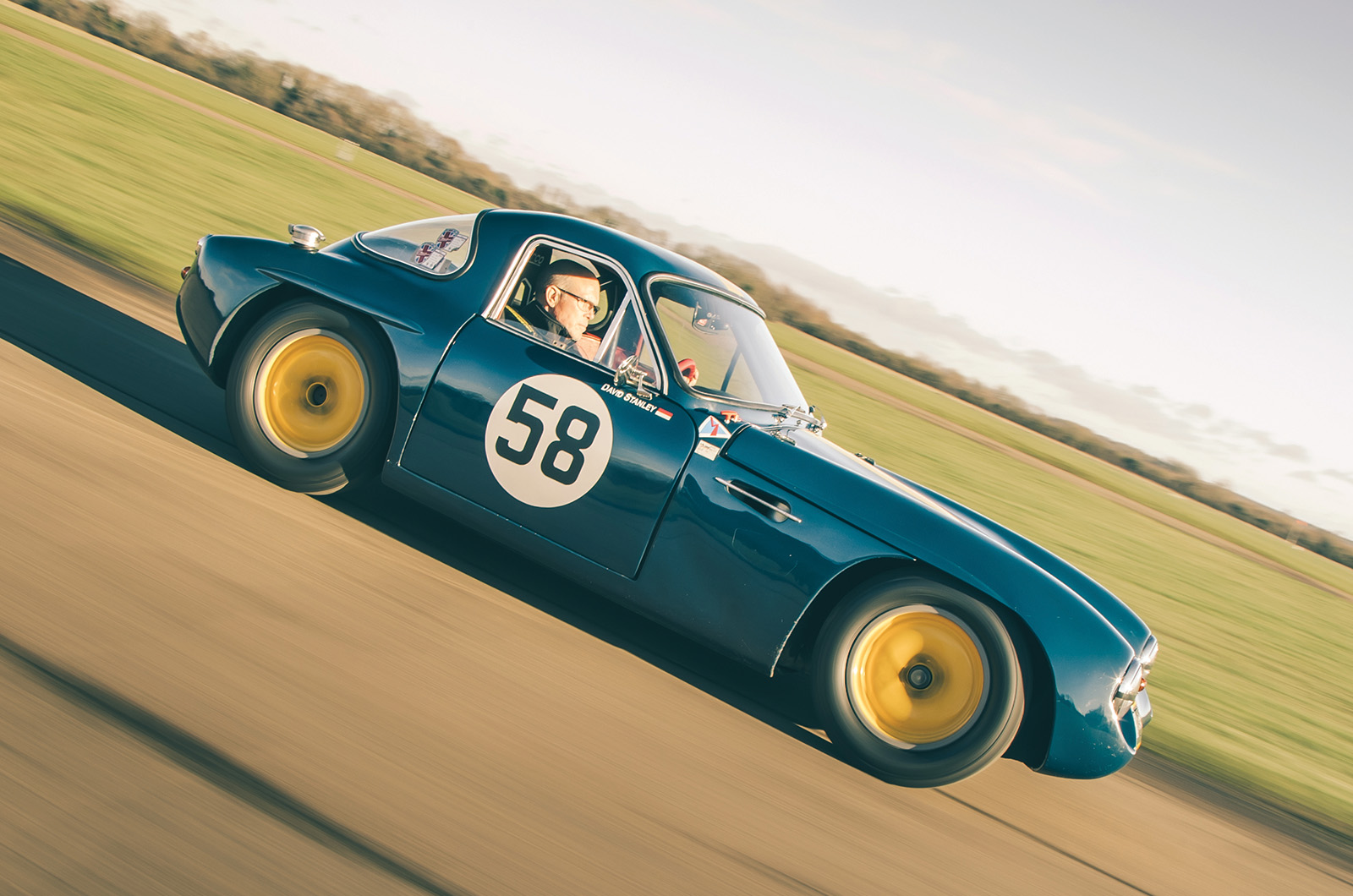
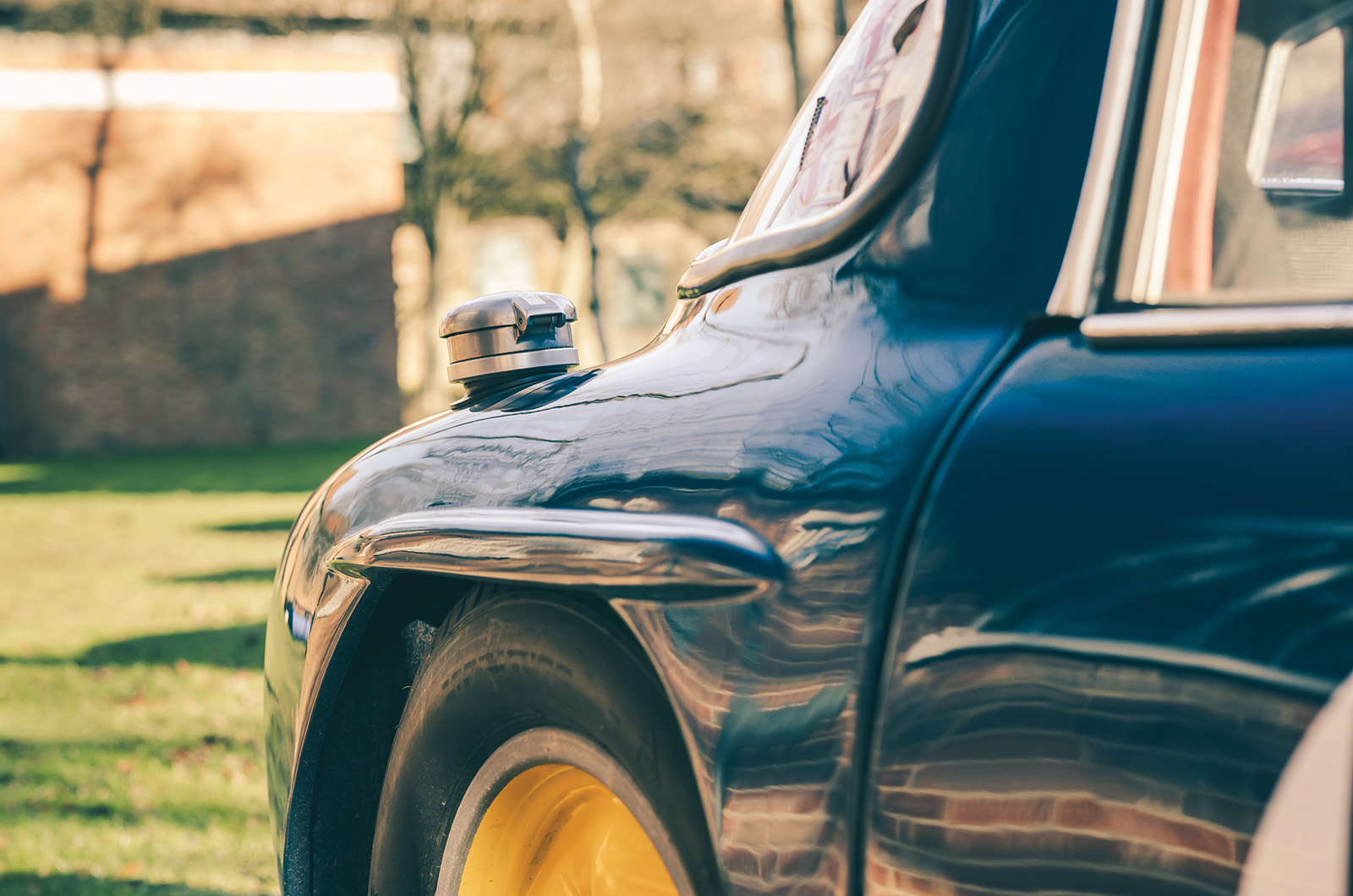
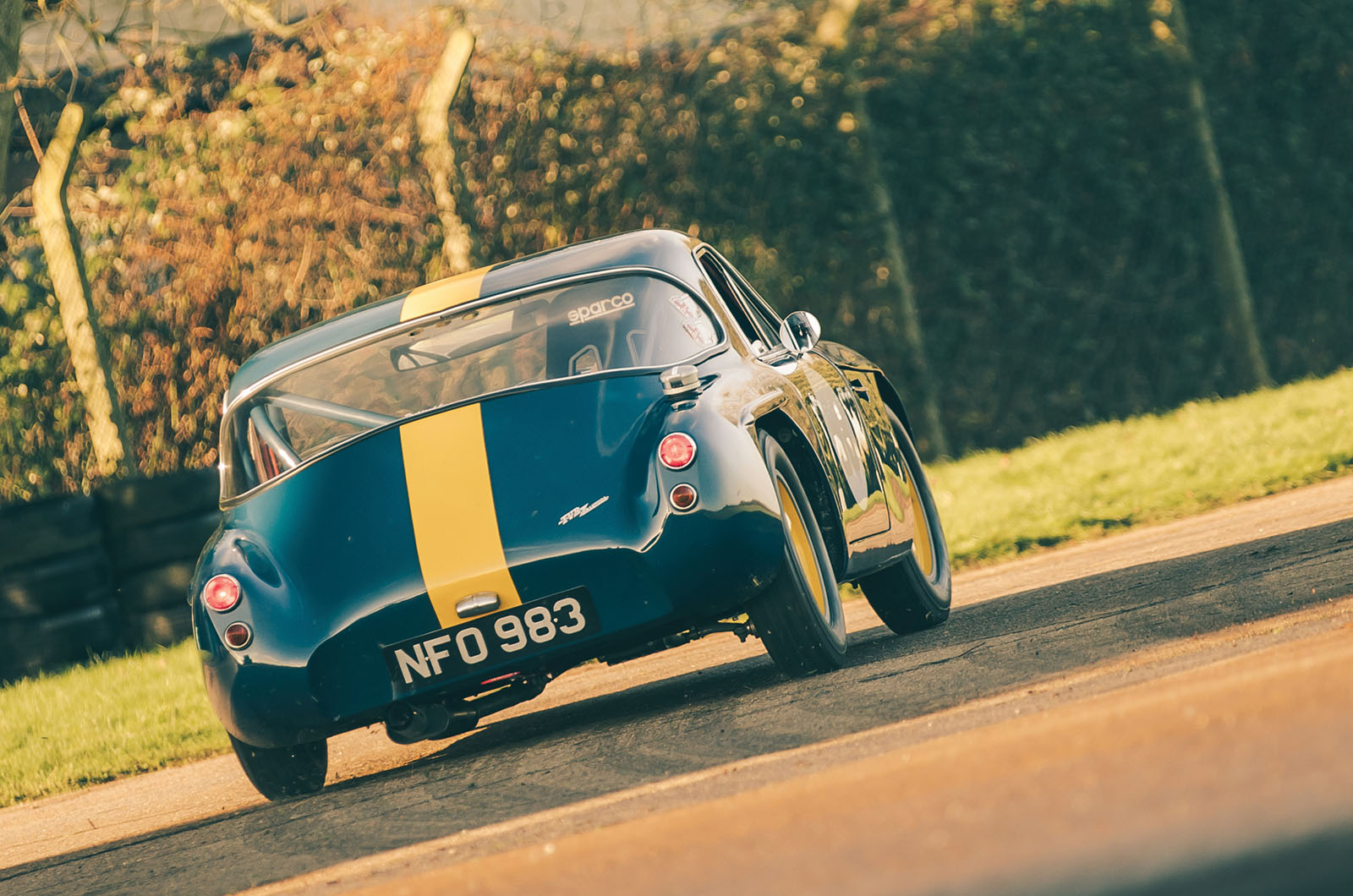
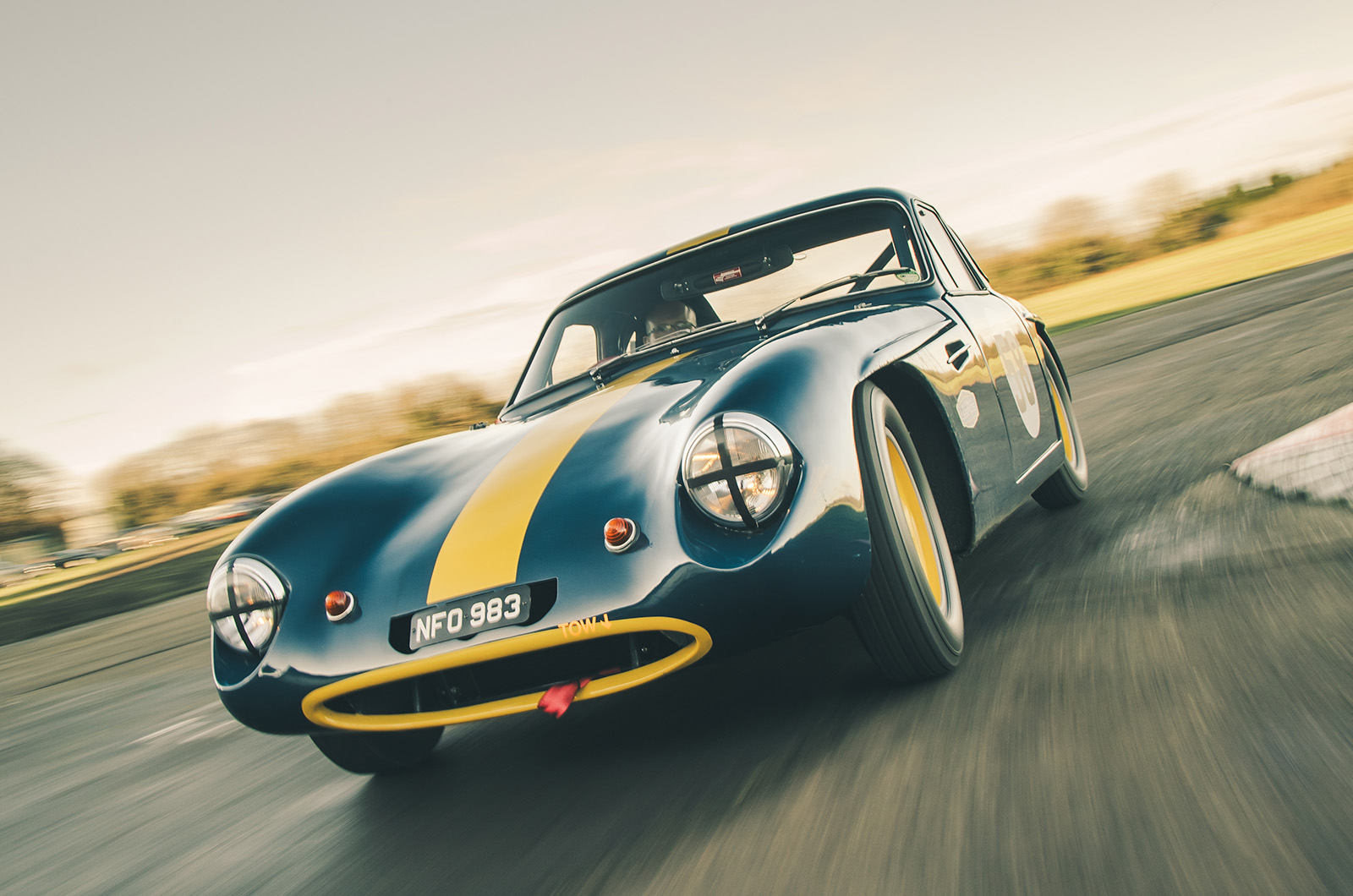
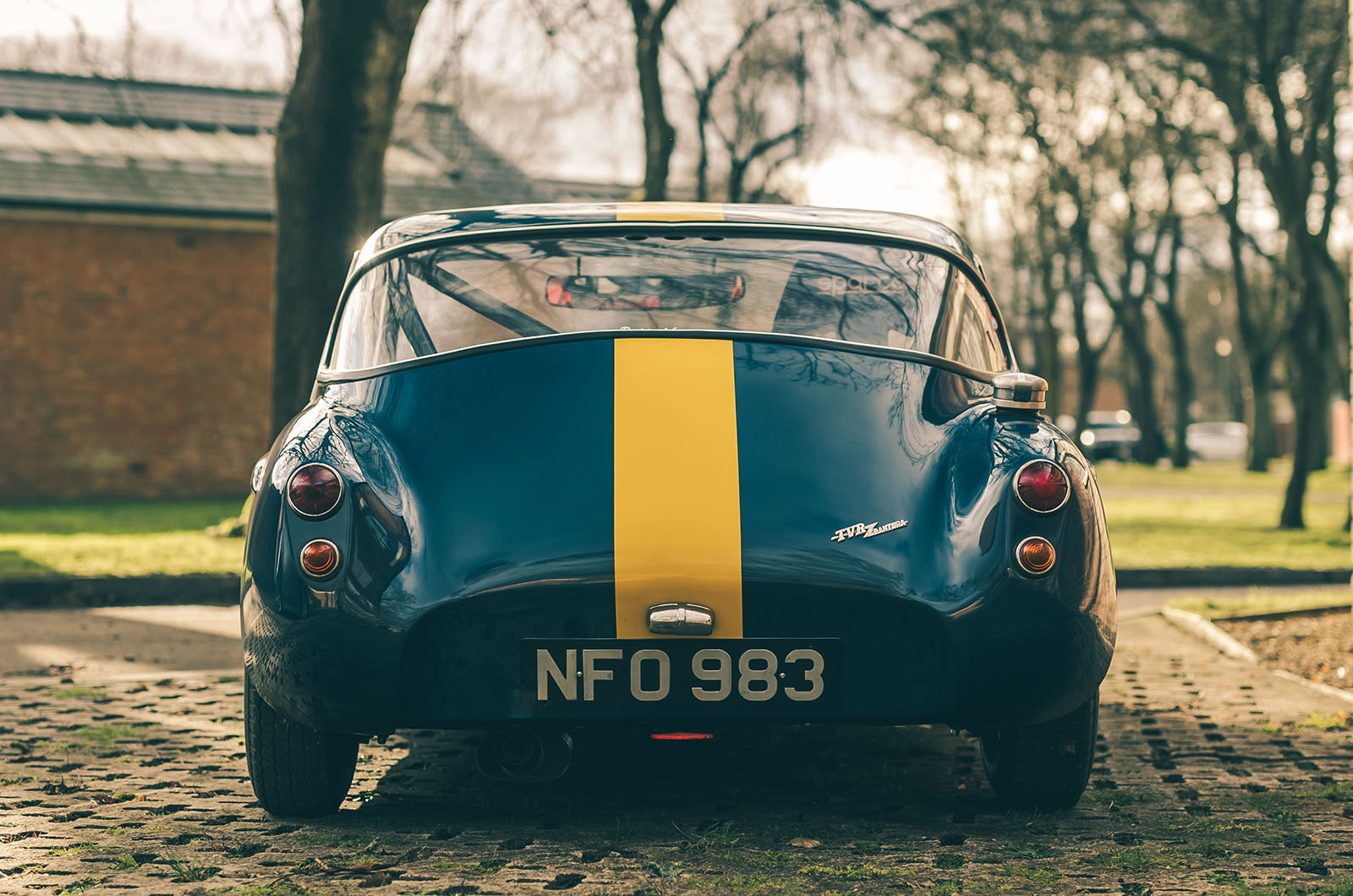
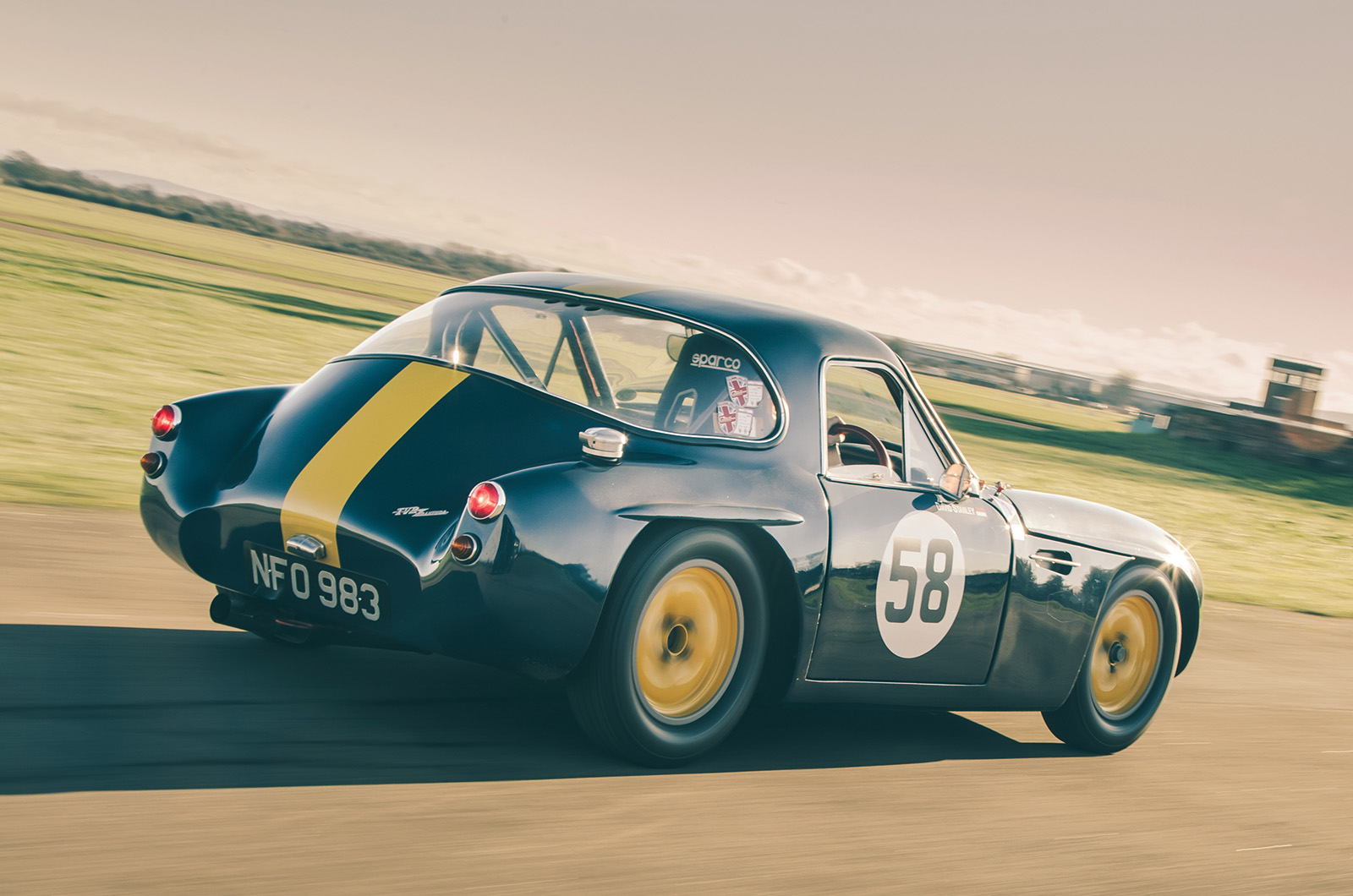
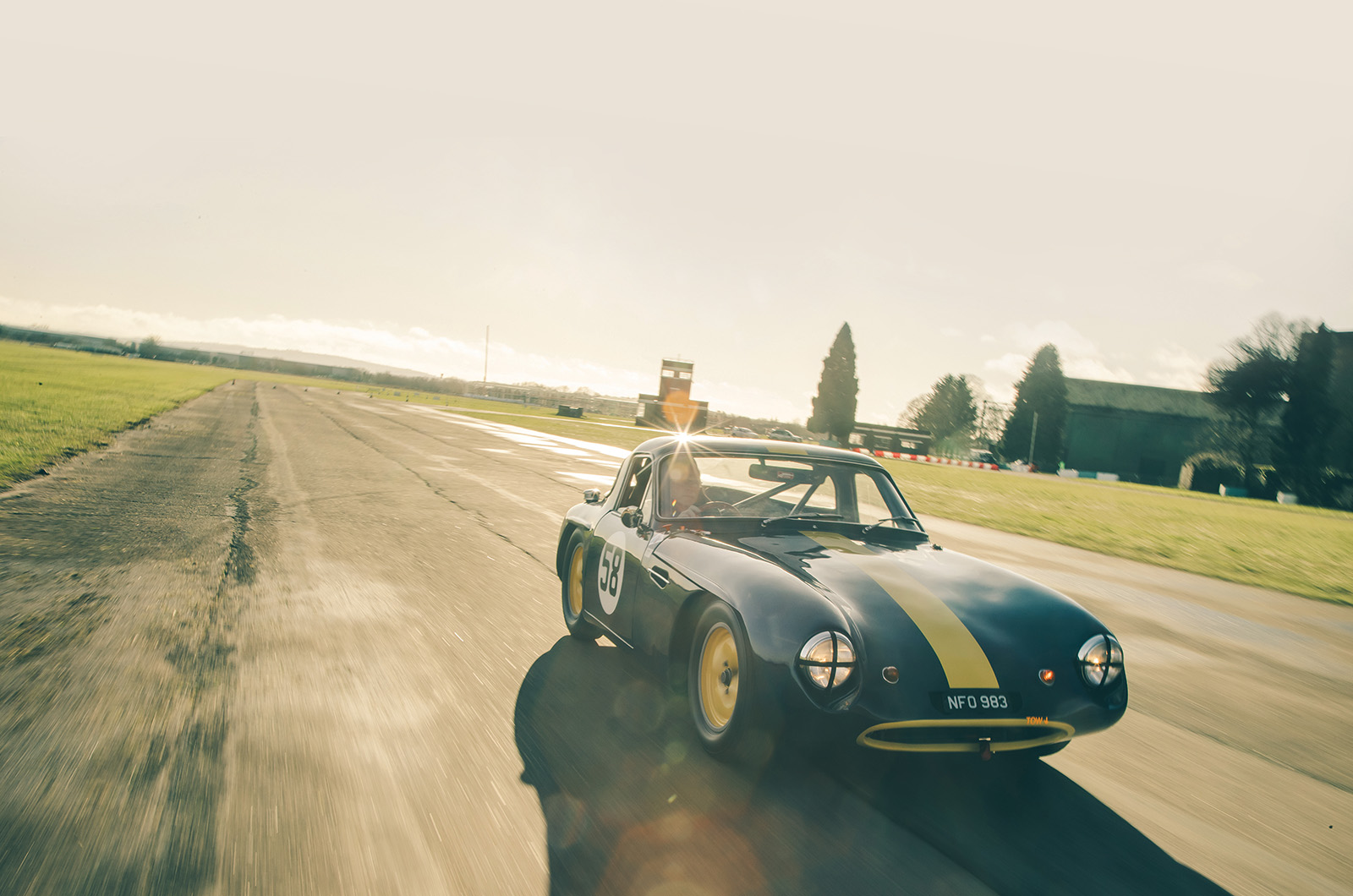
Zero overhangs front and rear, a subtly domed roof and the stubby rear wings, which carry the tail-lights and the pronounced alloy fuel filler, all create a highly functional whole, with the Jensen 541-like strakes over the rear wheelarch tops perhaps the only concession to styling.
The TVR Grantura is raucous and a little unrefined, but unrelenting fun to drive on a circuit
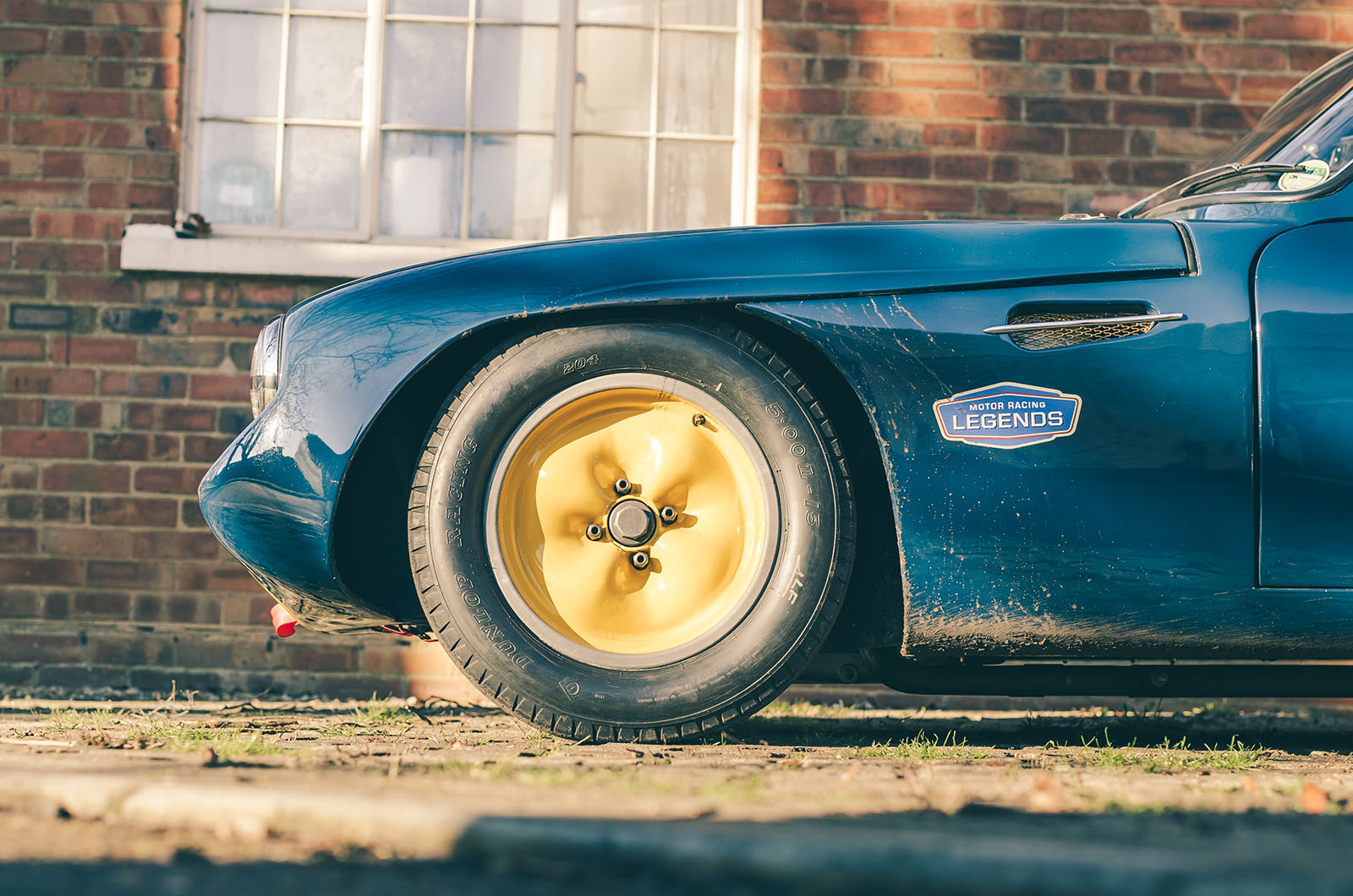
The lightweight ‘wobbly web’ wheels are shod with Dunlop Racing tyres, the sight of which, on this sharp, damp winter’s morning, fills me with some trepidation.
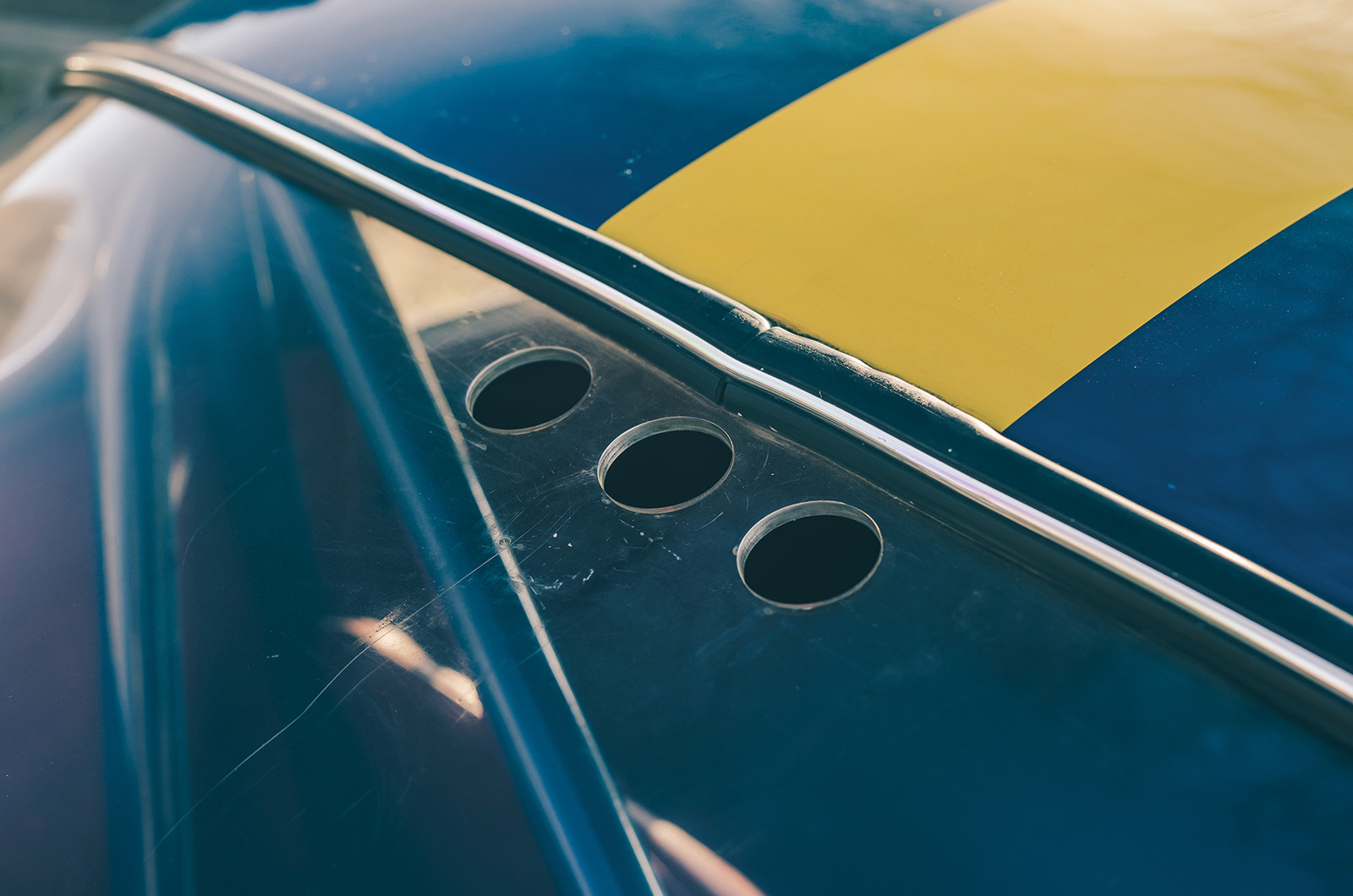
It is believed that Michael Sargeant, the car’s second owner, added the yellow stripe over the dark blue coachwork, but either way its appearance – right down to the Perspex rear ’screen with its three vent holes – is just as it would have been in late 1961/early ’62.
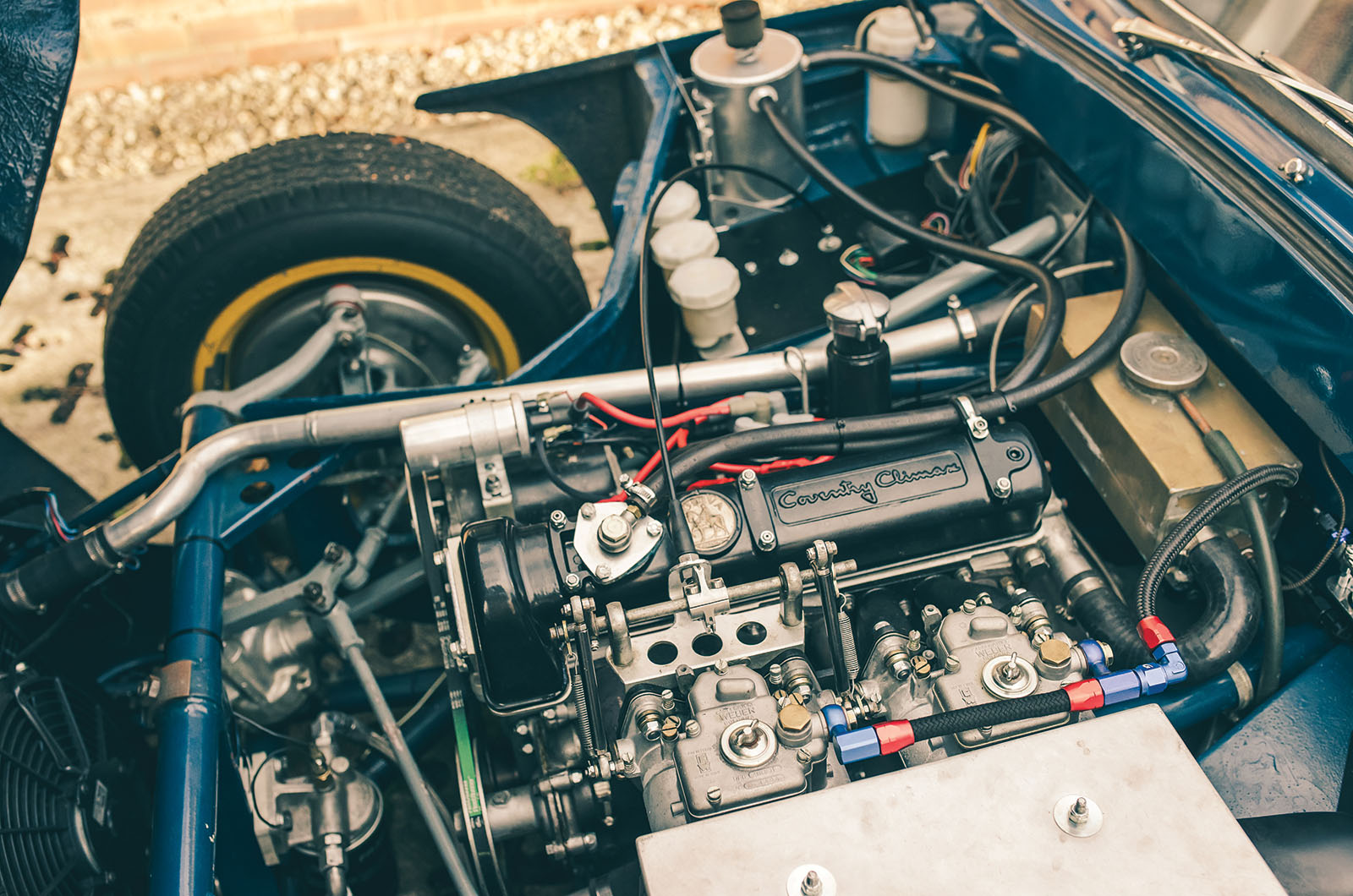
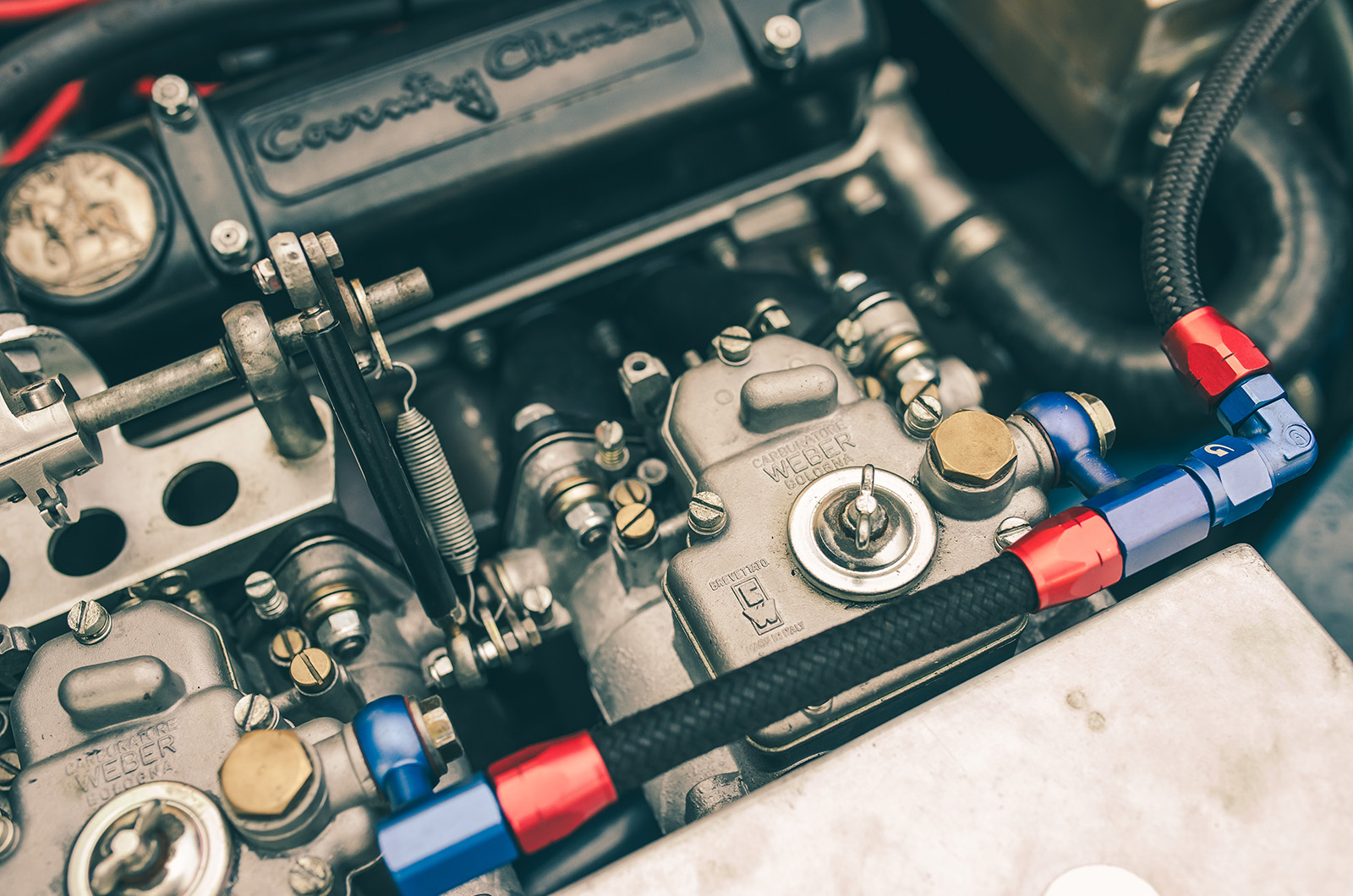
Lift the front section to expose the Grantura’s chassis, suspension and mechanicals, and its Climax FWE engine still appears tiny, even in such a small car, and slightly dwarfed by the generous twin Weber 40 DCOEs hanging off the side of it.
But the motor sits nice and low in the chassis, and is Triumph Herald-like in terms of accessibility.
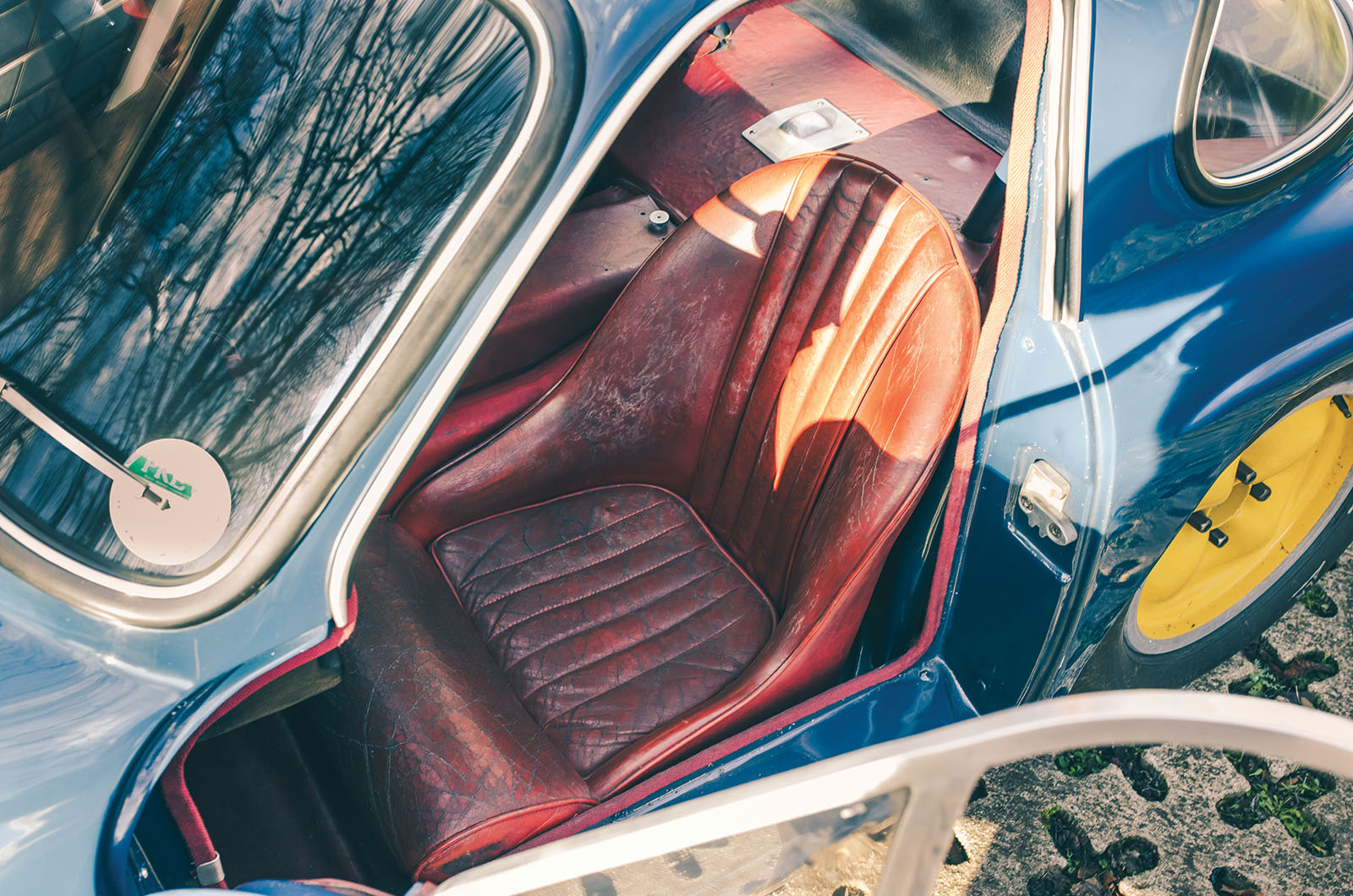
This TVR Grantura still has its original passenger seat
You enter the car by pulling down the driver’s-side window from the outside (a little block attached to it enables this) and reaching inside for the tiny chain in the door casing.
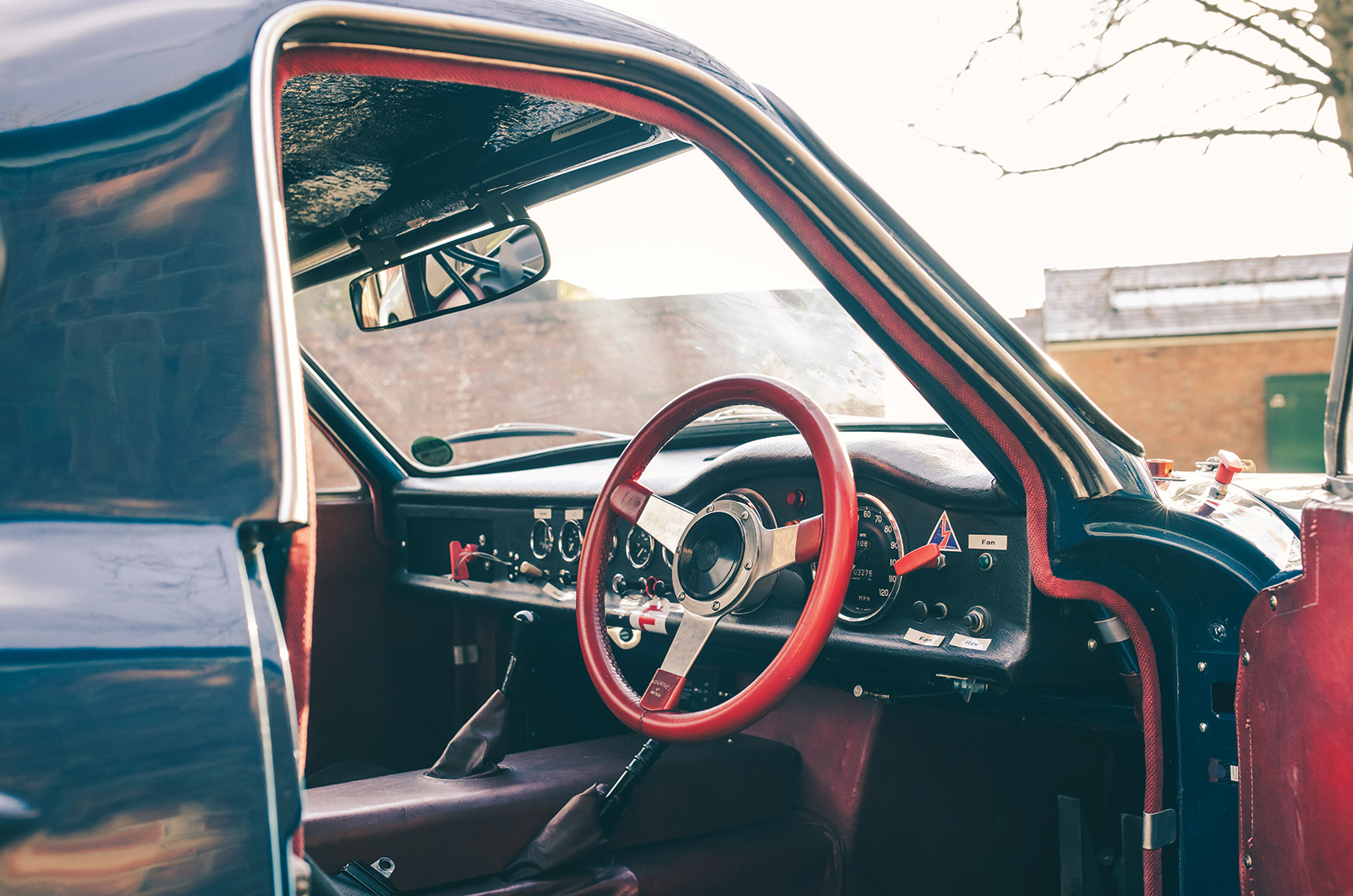
As always, being small aids entry into older sports cars, but even so, prising my 5ft 7in frame into the Grantura’s necessarily modern Sparco race seat (the nicely patinated original passenger bucket has been retained) and between the bars of its full rollcage requires more agility than expected.
Once you are strapped in with the Schroth six-point harness, you feel cocooned but comfortable.
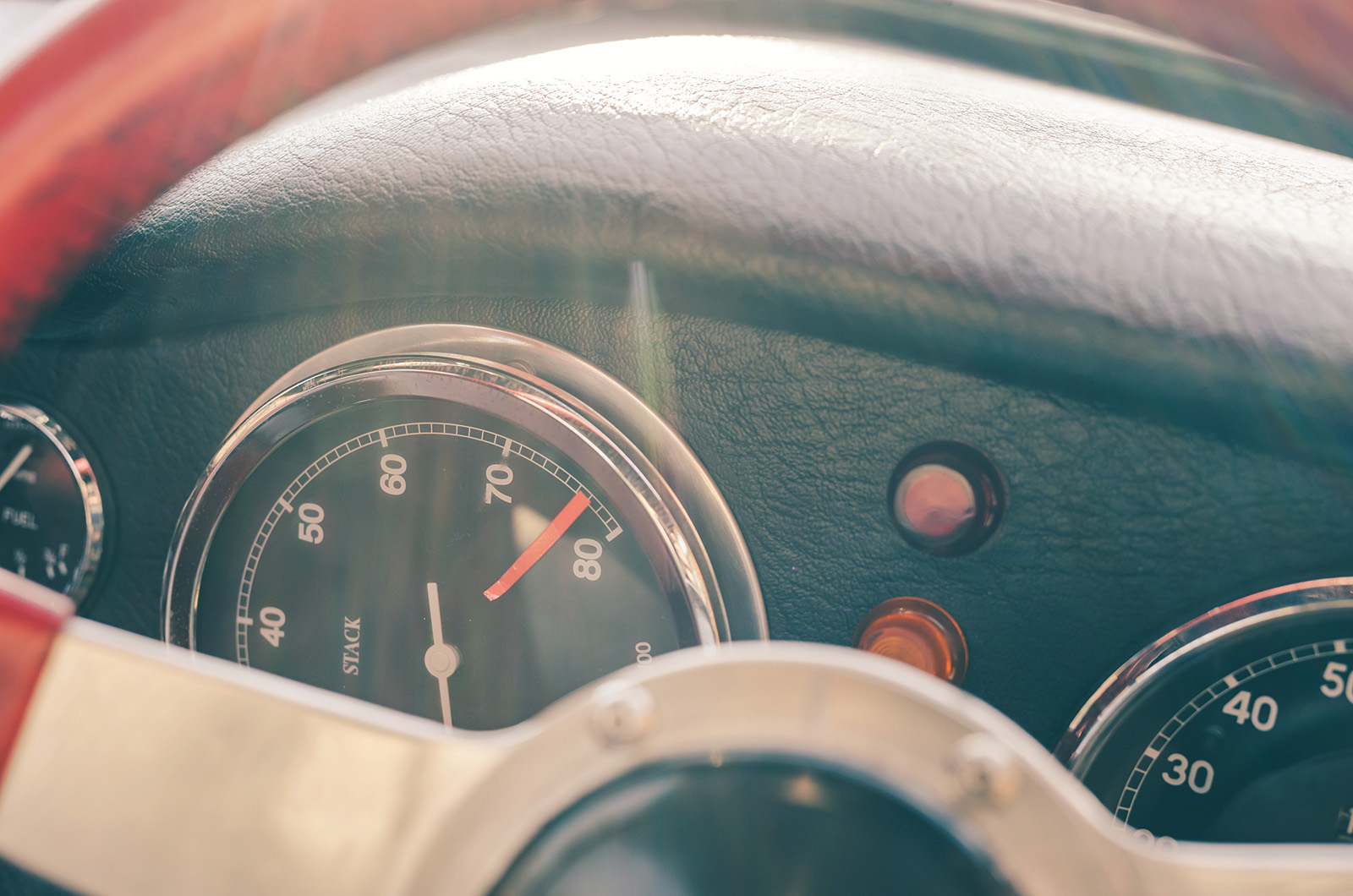
The TVR Grantura’s rev counter, with its 7800rpm redline
The small, three-spoke Mountney wheel facing you is curiously canted slightly to the side; behind it are a tachometer, redlined at 7800rpm, and a 120mph speedo.
Five smaller dials form a neat row to the left, along with a haphazard line of push/pull knobs.
Having never driven a Grantura, I was a bit wary of its VW Beetle-derived suspension, ultra-short wheelbase and the Climax engine’s appetite for revs. I needn’t have been.
As soon as you fire up and pull away – noting the clutch’s high biting point and the notchy but precise gearshift – you can tell that it’s going to be an absolute riot before you even reach the track.
The TVR Grantura’s compact wheelbase and VW Beetle-derived suspension are, surprisingly, not at all to be feared
After a few warm-up laps on a – thankfully – drying circuit, you know for sure.
This TVR Grantura’s Climax, with its race cam, loves revs and is at its best over 4000rpm; keep it percolating above that and the car pings out of corners with real verve, but racing through ratios elicits crunches from the gearbox.
It’s not the sweetest-sounding motor, nor particularly refined, but its rumbustious nature suits the TVR to a tee. As does the handling.
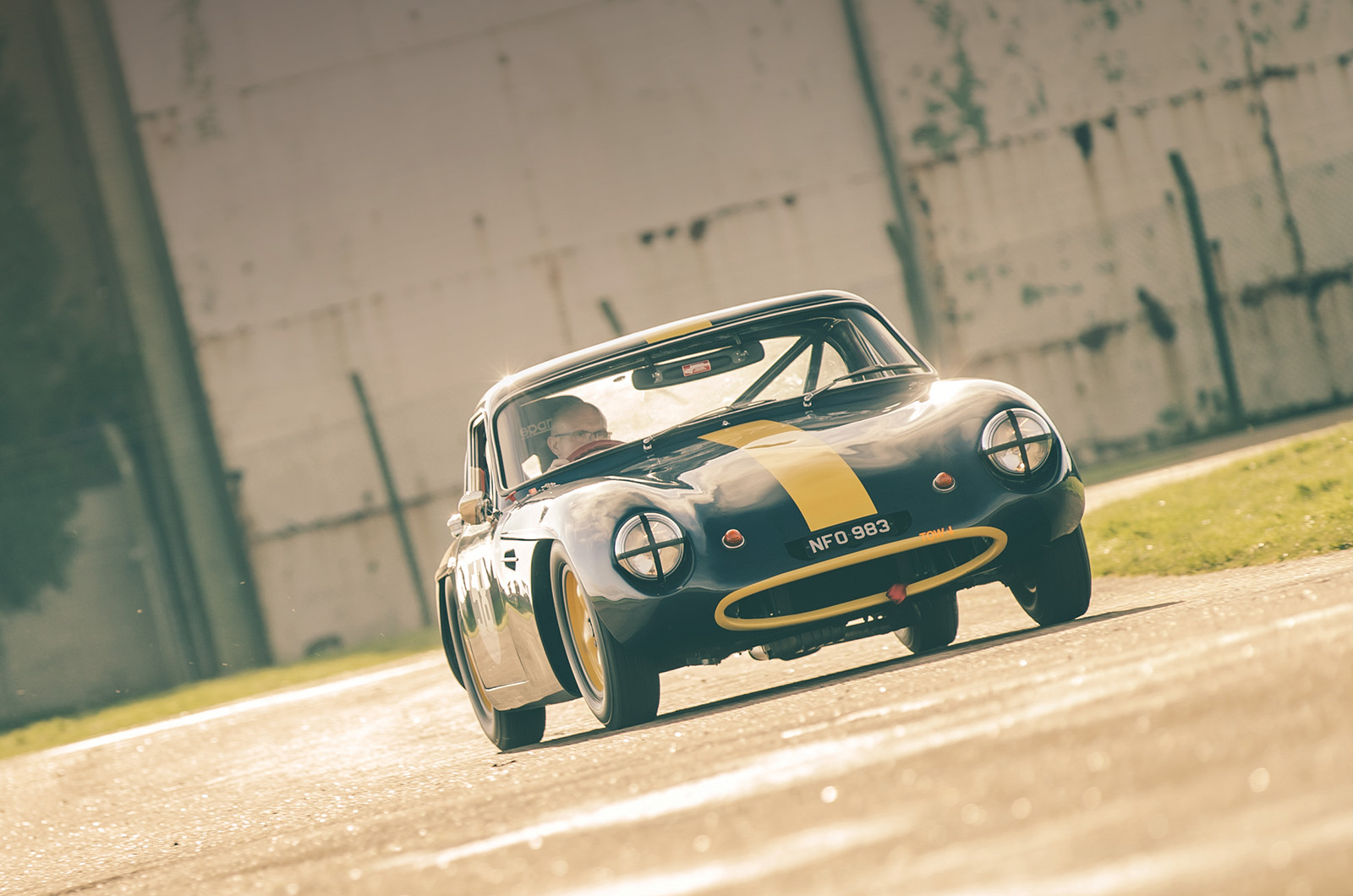
The TVR Grantura’s minimal overhangs exacerbate its low-slung stance
Weighing less than 1400lb in this spec, you’d expect the Grantura to feel light at the helm, and it does.
But there’s also a lovely transparency to the steering feedback, mixed with a high-ish ratio that doesn’t leave you on tenterhooks every time you apply lock.
When you do, though, the car feels nicely balanced, rotating from the rear so progressively and controllably that it goads you into unnecessary hoonery, just for the hell of it.
Drive for speed, not drama, however, and this TVR Grantura is neat and rewarding.
‘There’s a lovely transparency to the feedback, and the car is nicely balanced, rotating from the rear progressively and controllably’
Its limited-slip diff is quite severe, so a firm hand and a positive throttle input through bends are always needed, but overall the car inspires confidence, and you can see why in recent years it has been such an accomplished racer.
It’s just a shame that, like so many other low-volume sports-car makers at the time, TVR was so poorly resourced that it could never take full advantage of the Grantura’s competition prowess.
The factory did, in ’62, enter Le Mans, but the car retired after just three laps.
It would be another 41 years before a TVR blasted down the Mulsanne Straight once again.
Images: Jack Harrison
Thanks to: Pendine Historic Cars; Jim Lowry; Rob Pennington
Factfile
TVR Grantura Mk2
(spec for standard production car)
- Sold/number built 1960-’61/c400 (Mk2 & Mk2A)
- Construction glassfibre body bonded to tubular backbone chassis
- Engine all-alloy, sohc 1216cc ‘four’, twin Weber 40 DCOE carburettors
- Max power 95bhp @ 7000rpm
- Max torque n/a
- Transmission four-speed manual, RWD
- Suspension independent, by trailing arms, laminated transverse torsion bars, telescopic dampers f/r; front anti-roll bar
- Steering worm and peg
- Brakes Girling drums
- Length 11ft 6in (3505mm)
- Width 5ft 4in (1625mm)
- Height 4ft (1219mm)
- Wheelbase 7ft (2133mm)
- Weight 1456lb (660kg)
- 0-60mph 10.8 secs (est)
- Top speed 101mph (est)
- Mpg n/a
- Price new £1045 (kit)
- Price now £35-45,000*
*Price correct at date of original publication
Enjoy more of the world’s best classic car content every month when you subscribe to C&SC – get our latest deals here
READ MORE
Buyer’s guide: TVR S-Series
Classic shrine: 24 Hours of Le Mans Museum
Great eight: Morgan Plus 8 vs MGB GT V8 vs Triumph TR8 vs TVR 350i vs Marcos Mantula
Simon Hucknall
Simon Hucknall is a senior contributor to Classic & Sports Car