Morris Oxford vs Hillman Minx vs Austin A40 Somerset: success stories

| 17 Feb 2025
Classic & Sports Car – Morris Oxford vs Hillman Minx vs Austin Somerset: post-war Brits
These were the bread-and-butter of mid-century British motoring.

The cruel would say that these three saloons are so stodgy that the word ‘porridge’ might be more appropriate.

But before you sneer, each one of them was a mainstay for their manufacturer, keeping factories turning, bringing in valuable foreign exchange, and providing hundreds of thousands of motorists with no-nonsense family transport.

The Hillman Minx, Morris Oxford Series MO and Austin A40 Somerset between them accounted for more than 700,000 cars, and that’s a figure at which one should not sneeze.

Classic & Sports Car – Morris Oxford vs Hillman Minx vs Austin Somerset: post-war Brits
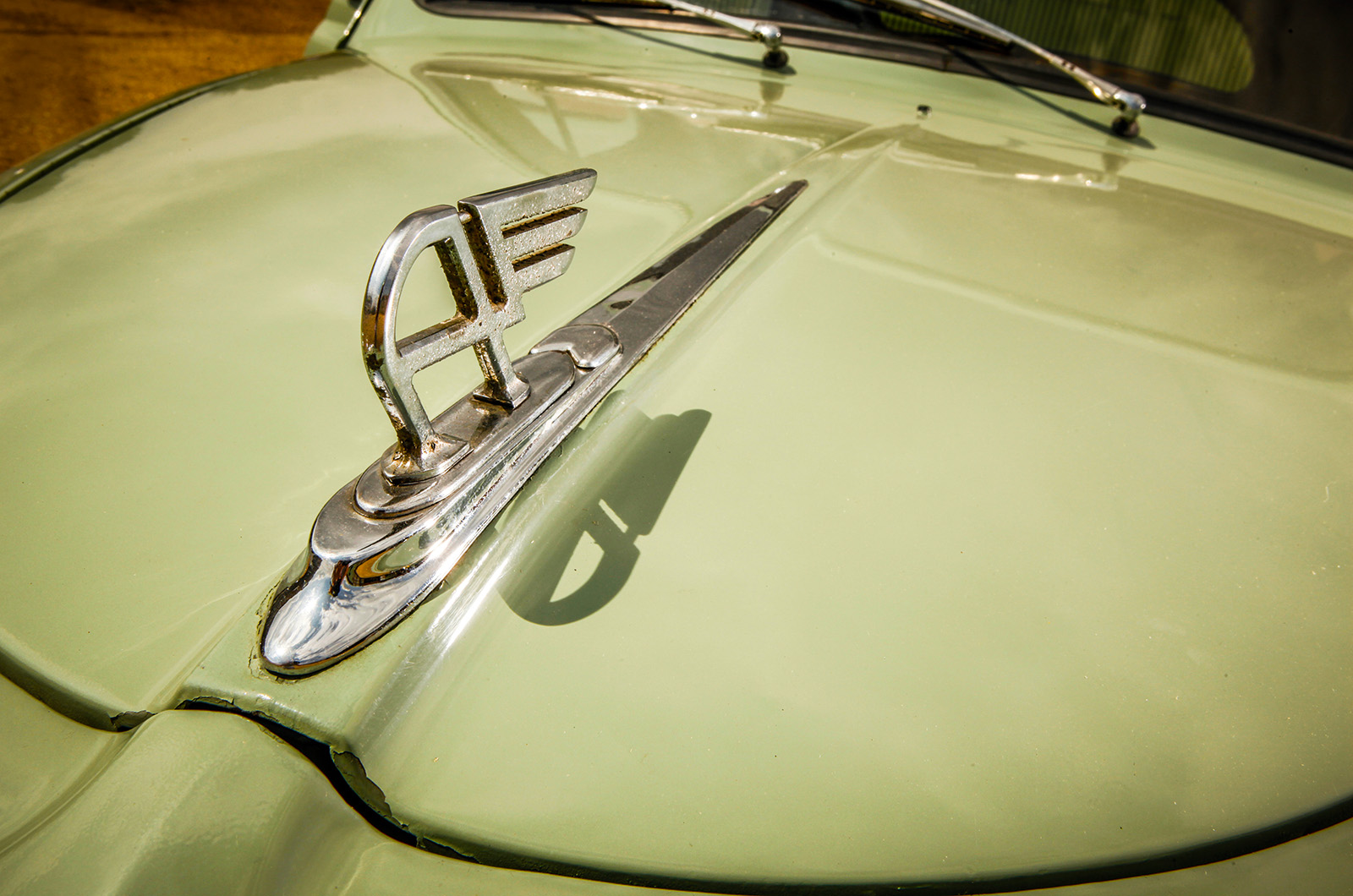
The Austin A40 Somerset’s Flying A mascot opens the bonnet

The three cars were similar in price when new – about £700 including Purchase Tax in ’52 – and they are closely matched in terms of accommodation and performance.

Unsurprisingly, in an era when conventional engineering was king, at least as far as Britain was concerned, the mechanical configuration is also broadly the same: independent front suspension, a leaf-sprung live back axle and hydraulic drum brakes.

Only the Morris has rack steering, and it also has torsion-bar front suspension, rather than the coils of the Hillman and the Austin.

Dampers are old-fashioned lever-arms all-round on the Somerset and the Minx, while the Oxford has lever-arms at the front and telescopics at the rear.

As for construction, the Austin is built on a separate cruciform chassis while the other two have a unitary shell.

Classic & Sports Car – Morris Oxford vs Hillman Minx vs Austin Somerset: post-war Brits

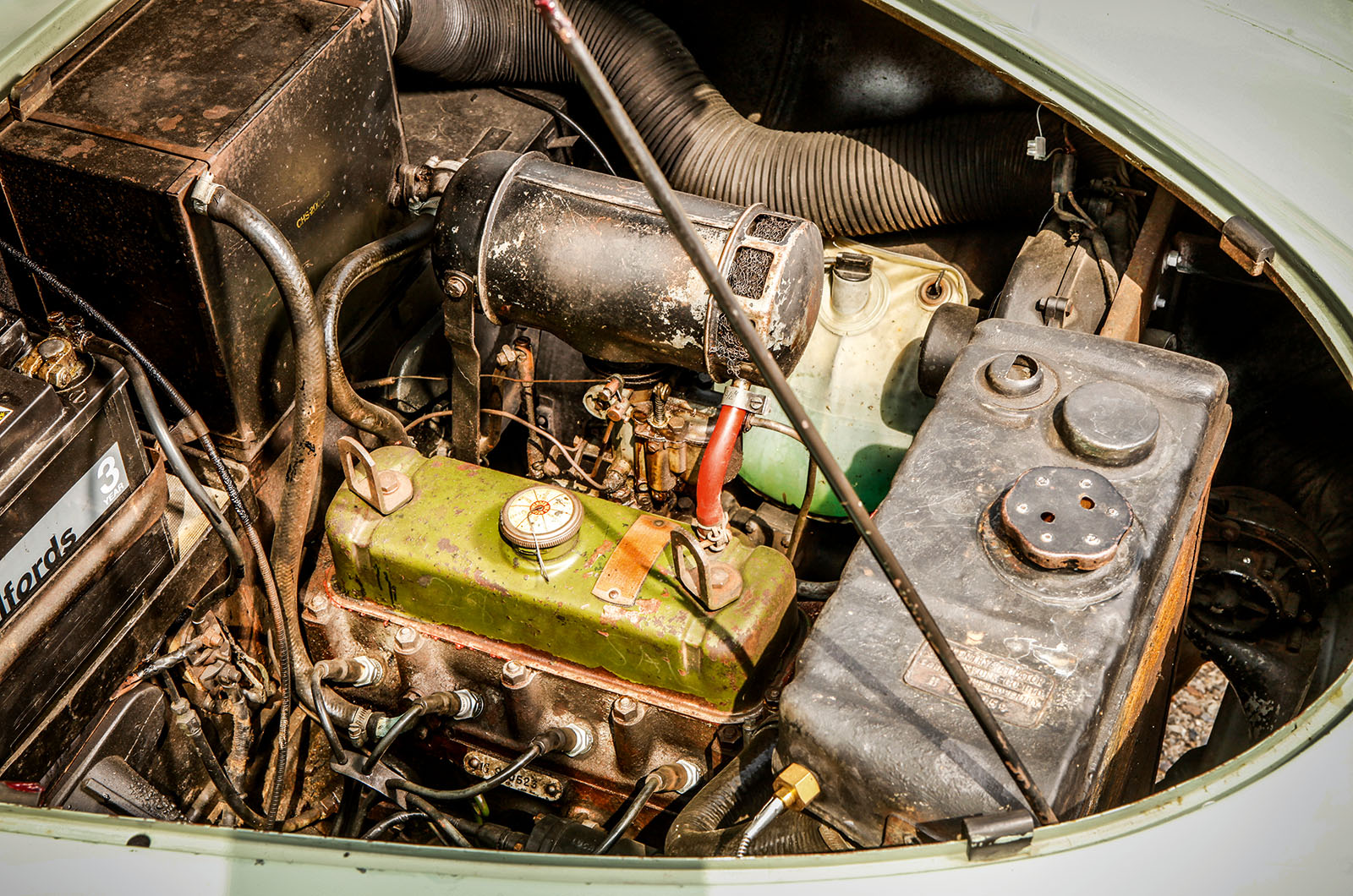
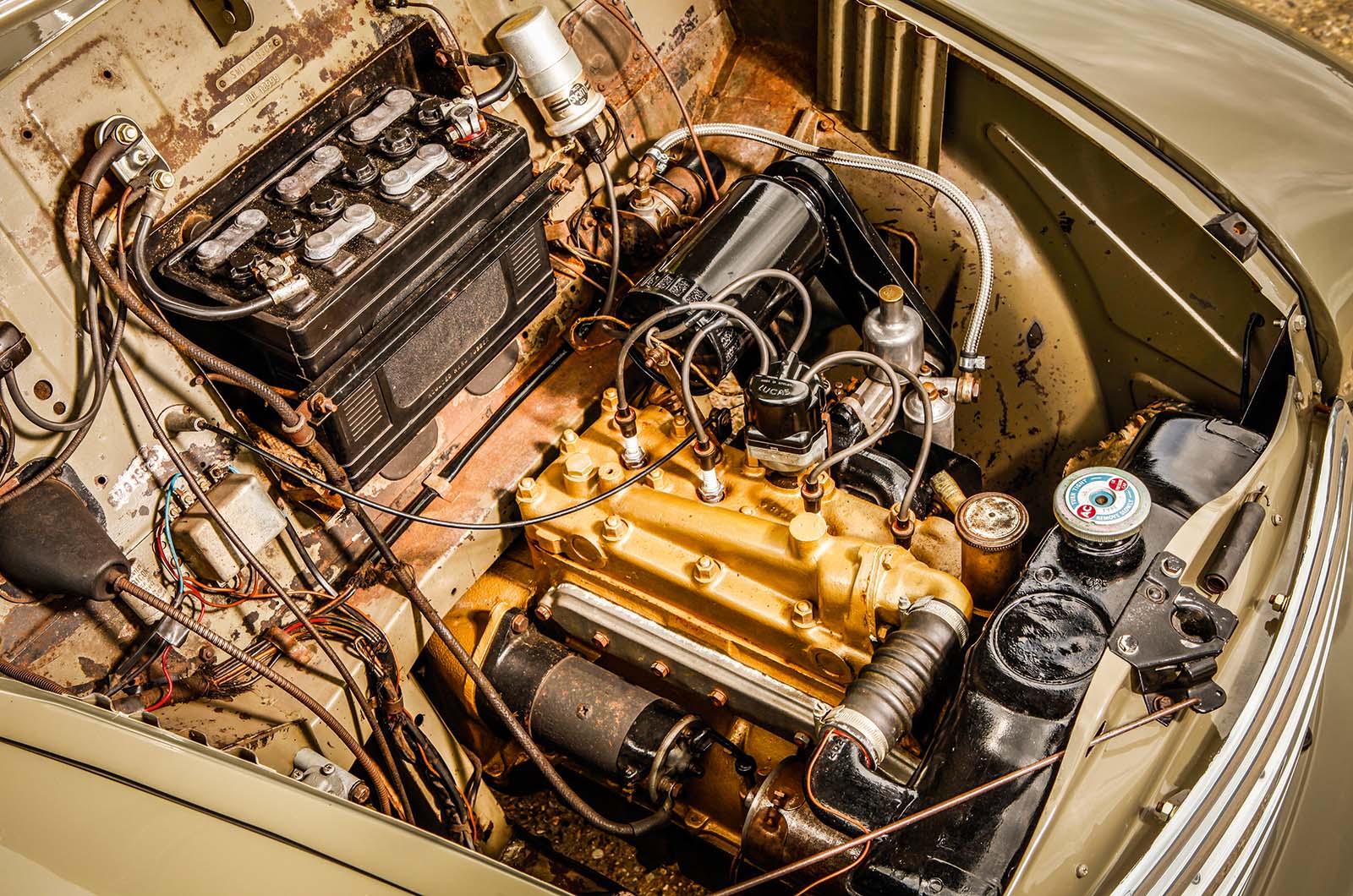
This Austin A40 Somerset’s 1200cc engine has a Sports head, but with larger inlet valves

Turn to the engines, and an eyebrow might be raised at this comparison.

The Hillman has a seemingly weedy 1265cc sidevalve unit that can be traced back to the first Minx of 1931, the Oxford has a rather bigger flathead of 1476cc, and in the middle sits the only car with a halfway modern engine, the Somerset with its 1200cc pushrod unit.

The Minx might only dispose of 37½bhp, but its kerbweight of 2117lb makes it a full 560lb lighter than the 42bhp Somerset.

The Oxford’s plodding sidevalve, however, supposedly insisted upon by an ageing and conservative Lord Nuffield, musters a slender 41¾bhp, but has to haul along a less porky 2386lb of motor car.

The bottom line is that the Minx – marginally the shortest, narrowest and lowest of the lot – has the best power-to-weight ratio.

Don’t get too excited, though: none of these cars could quite hit 70mph when tested in period, and their 0-60mph times were hardly bodice-ripping.

Classic & Sports Car – Morris Oxford vs Hillman Minx vs Austin Somerset: post-war Brits

The Hillman Minx Phase V’s only anti-roll bar is on the rear axle – it moved to the front for the Phase VIII

The Minx and the Oxford were both 1948 Motor Show debutantes.

The Hillman began life with its predecessor’s 1185cc unit, along with its four-speed column-change gearbox, but was otherwise all-new, with a transatlantic-tinged body designed with input from Loewy Associates – hence its vague hints of Studebaker.

This Phase III Minx became the Phase IV when the 1265cc engine arrived for 1950. It evolved up to Phase VIIIA, before being deleted in mid-1956. 

Key changes from ’53 to ’56 were a new grille and lower bonnet line, an enlarged rear window, a 1390cc overhead-valve engine for the Phase VIII (estate and low-rent Special excepted), and ‘Gay Look’ duotones (along with standardisation of the pushrod engine) for the Phase VIIIA.

There was a Carbodies-built drophead and, from the Phase VI onwards, a hardtop coupé called the Californian. Over eight seasons, a healthy 378,705 Minxes left the Rootes factory in Ryton.

Classic & Sports Car – Morris Oxford vs Hillman Minx vs Austin Somerset: post-war Brits

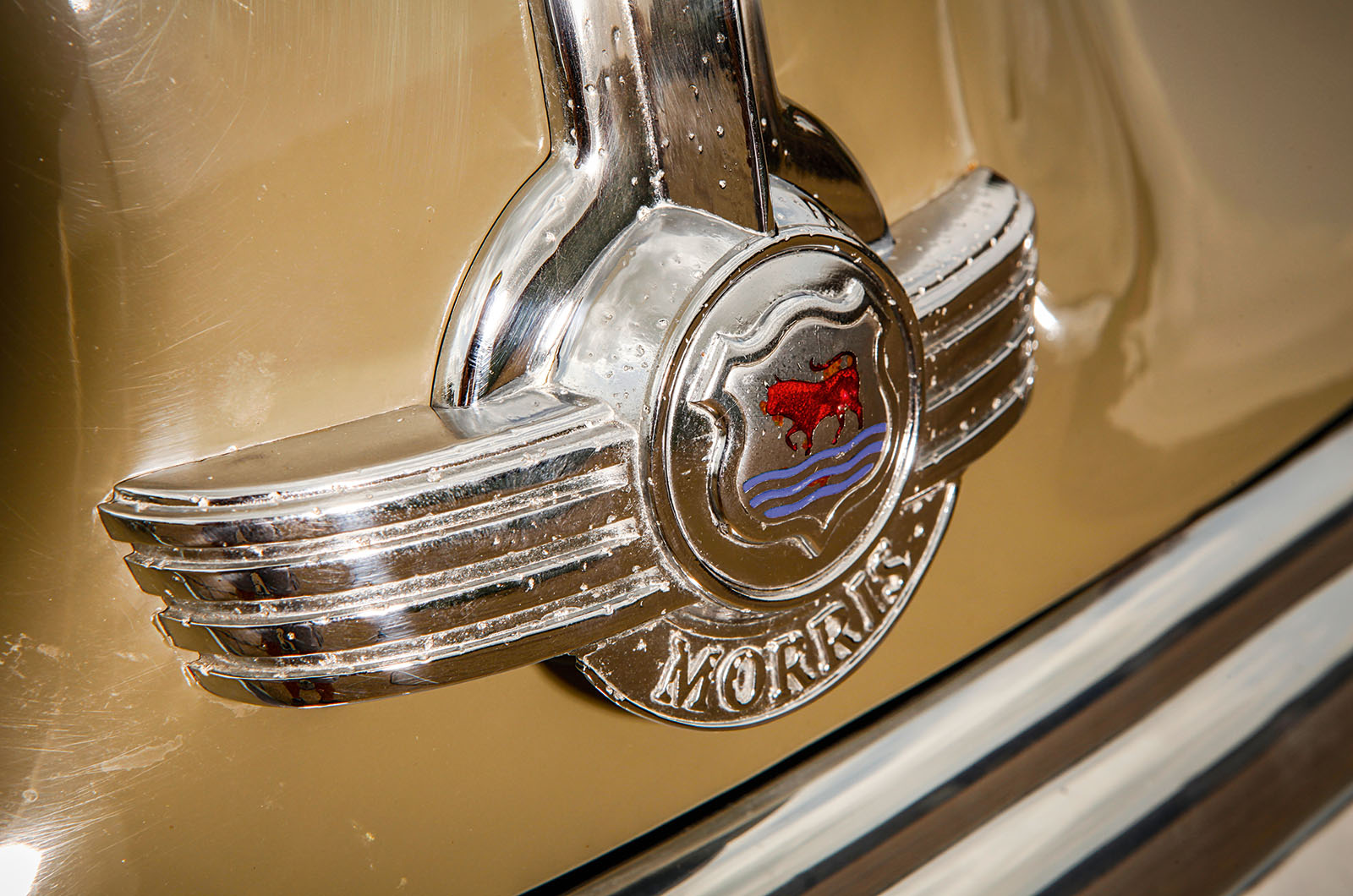
The Morris Oxford Series MO’s badge doubles as a bonnet release

The Oxford, meanwhile, was a big sibling to the Issigonis Minor, and was virtually a pantograph enlargement of the smaller Morris.

Originally intended to have a flat-four, as was the Minor, it was hastily given a sidevalve engine extrapolated from the overhead-cam unit of its Wolseley 4/50 stablemate.

There was much agonising about the Oxford in the higher reaches of the Nuffield Organisation, because it was felt that in going up a size from the preceding Ten the firm would hand the key ‘Ten-Horse’ market to the opposition.

In fact, the MO acquitted itself adequately, with 160,482 made over roughly five calendar years – plus 43,600 vans and pick-ups.

The only body style other than the four-door saloon and the commercials was the timber-framed Traveller, introduced in October ’52.

Replaced in January 1954 by the Austin-powered Series II Oxford, the MO was barely modified during its life, other than receiving a bolder grille for 1953.

Classic & Sports Car – Morris Oxford vs Hillman Minx vs Austin Somerset: post-war Brits

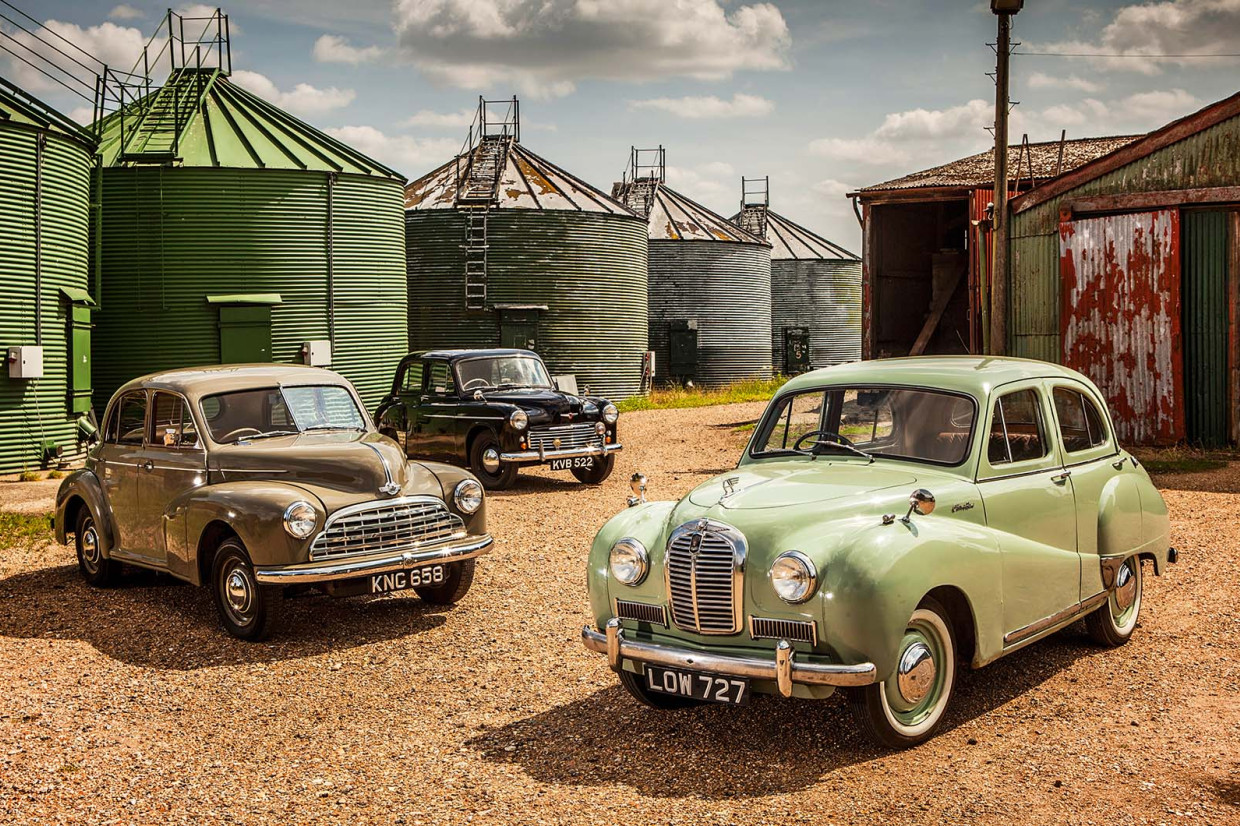
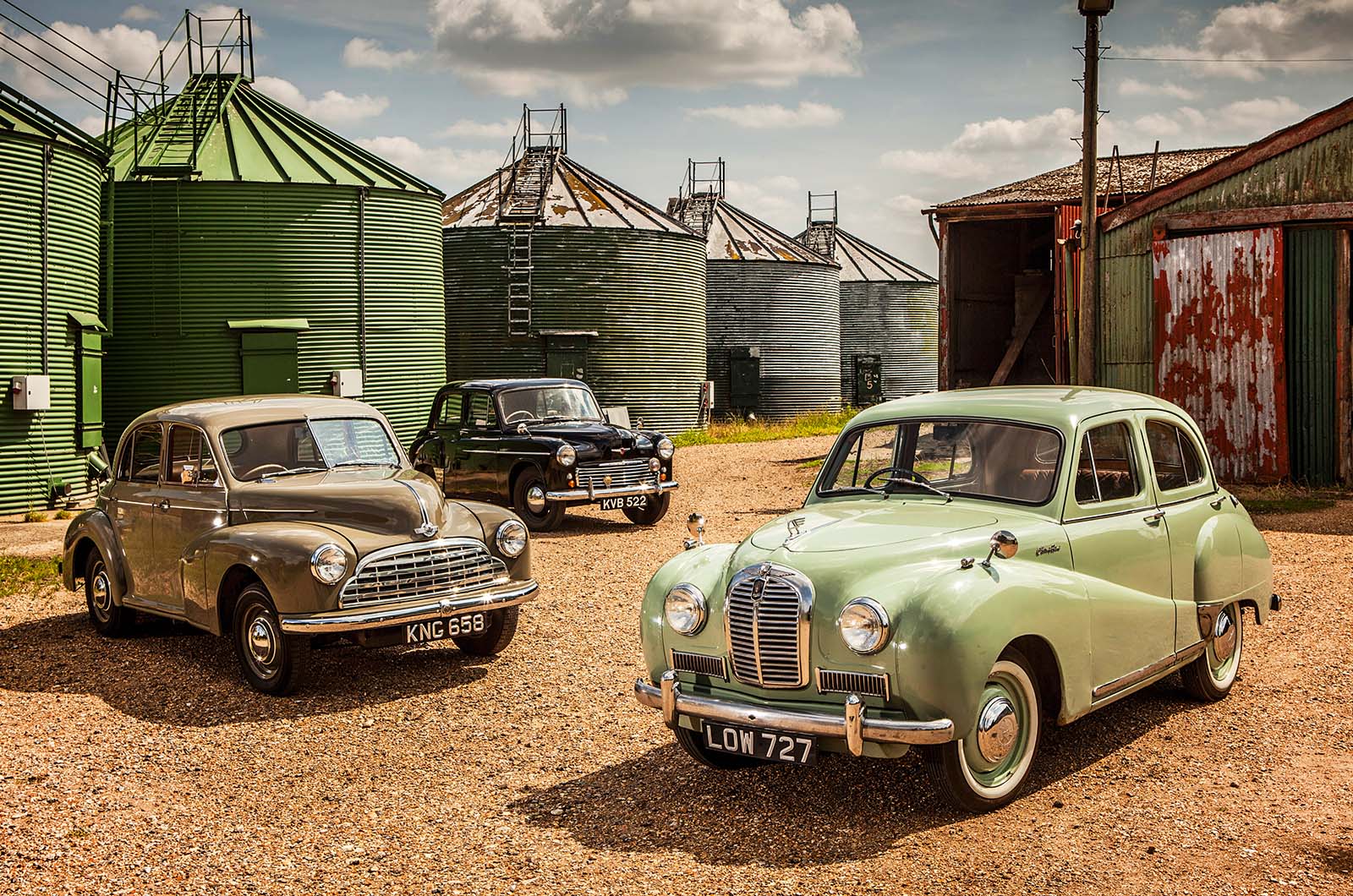
The Morris Oxford (left) is every inch the overgrown Minor; the Hillman Minx (middle) has Studebaker touches, thanks to Loewy input; the Austin Somerset shares its doors with the larger Hereford

As for the Somerset, it was basically a rebodying of the A40 Devon that had been launched in ’47.

A whisker over 6in longer than its predecessor, and 2in wider, it shared its doors with the bigger A70 Hereford.

Roomier than the Devon, it was about 110lb heavier, but its two extra body mounts were said to contribute to a 50% increase in torsional rigidity.

Current from February ’52 to October ’54, 173,306 Somersets were made.

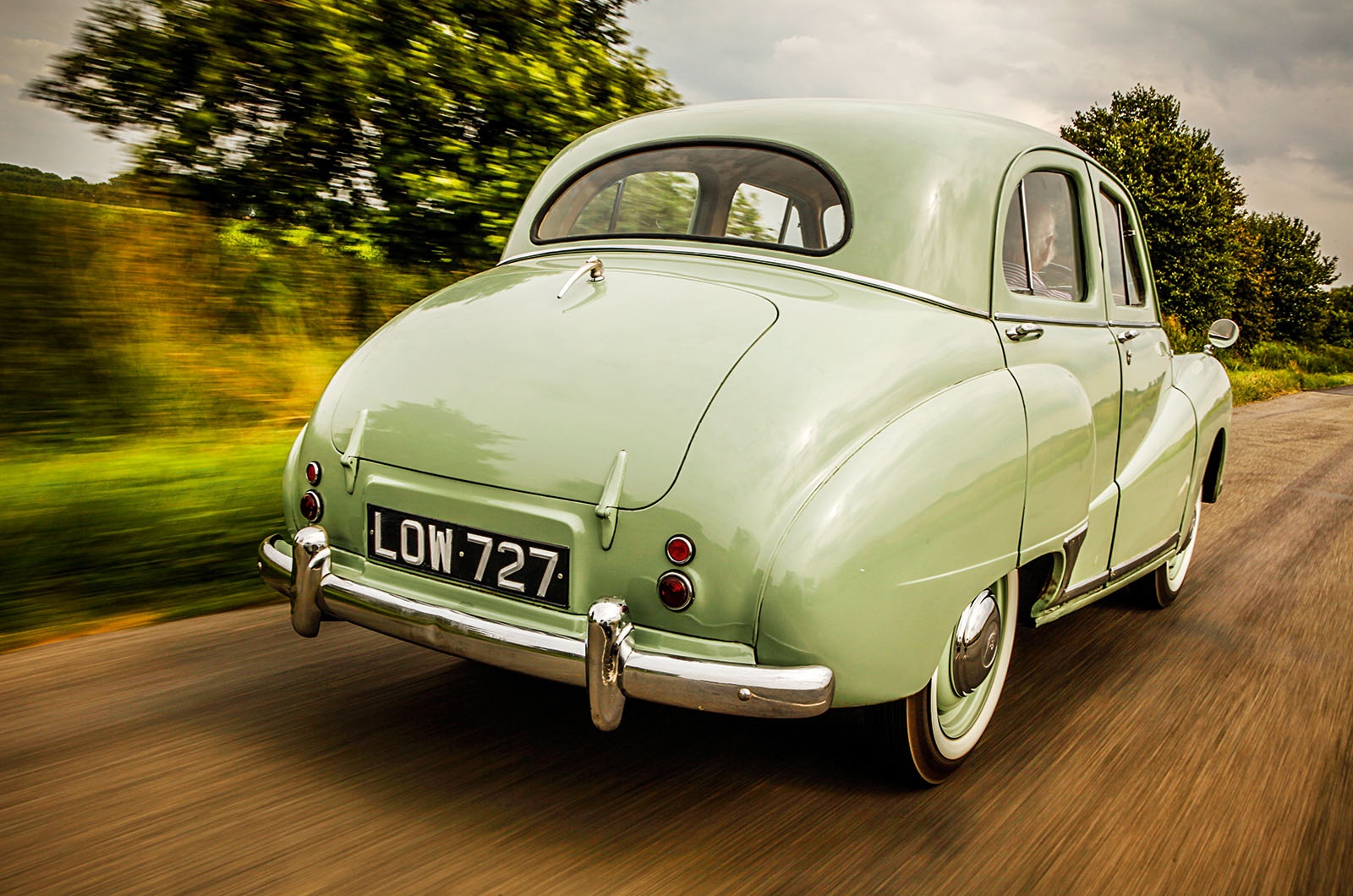
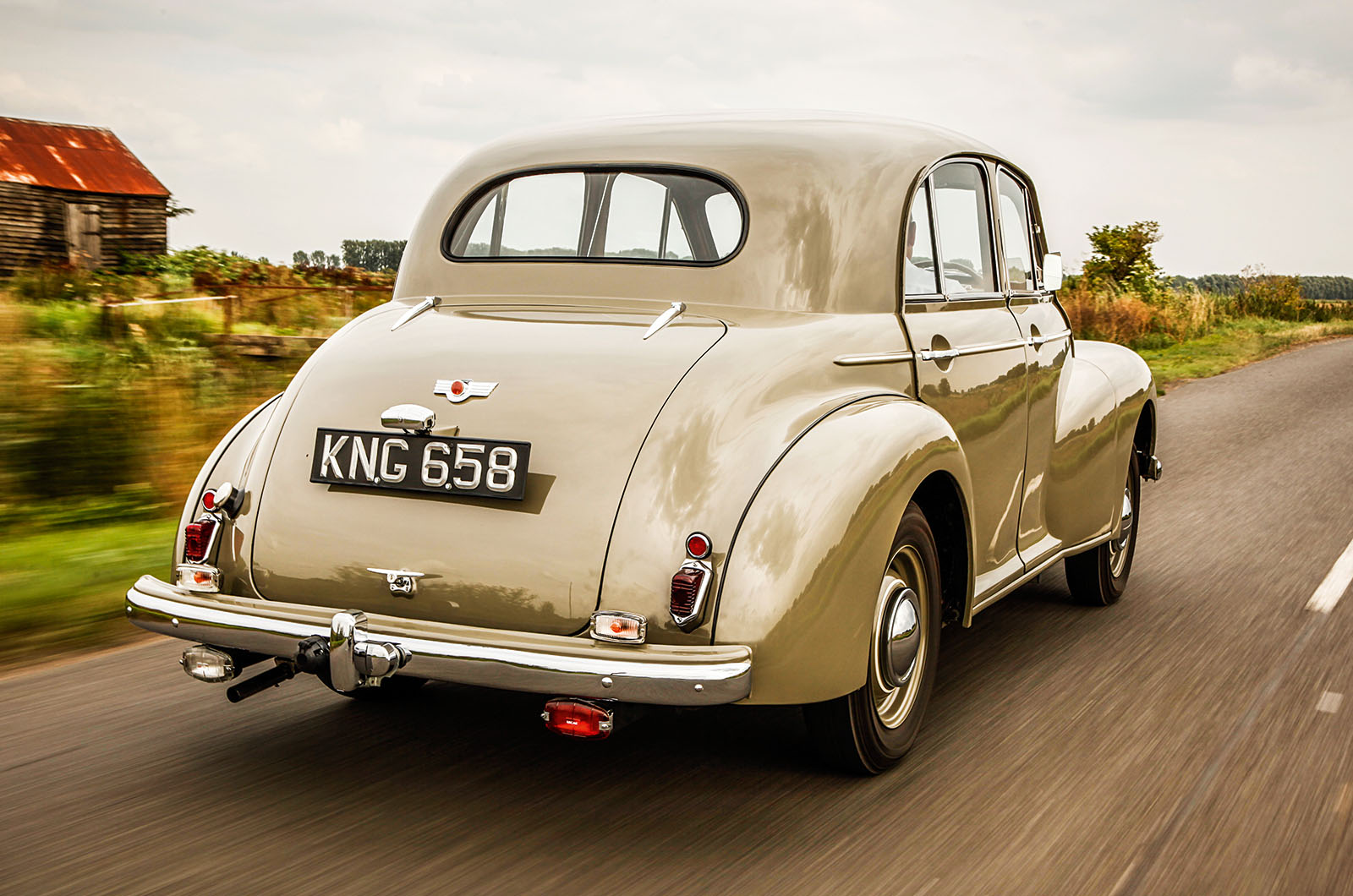
Finished in a perky pale green and sitting on whitewall tyres, Denis Young’s Somerset is arguably the most striking of the cars, thanks to its exaggerated roly-poly profile that is almost baroquely rotund, an effect compounded by the brio of that ocean-wave wingline.

Classic & Sports Car – Morris Oxford vs Hillman Minx vs Austin Somerset: post-war Brits

The Austin A40 Somerset’s performance is fair, but the ride is a bit lively

Dumpy it might be, but with its broad-bottomed rear it also appears to be the biggest of the three; it’s not, the Morris being 7½in longer and 2in wider. 

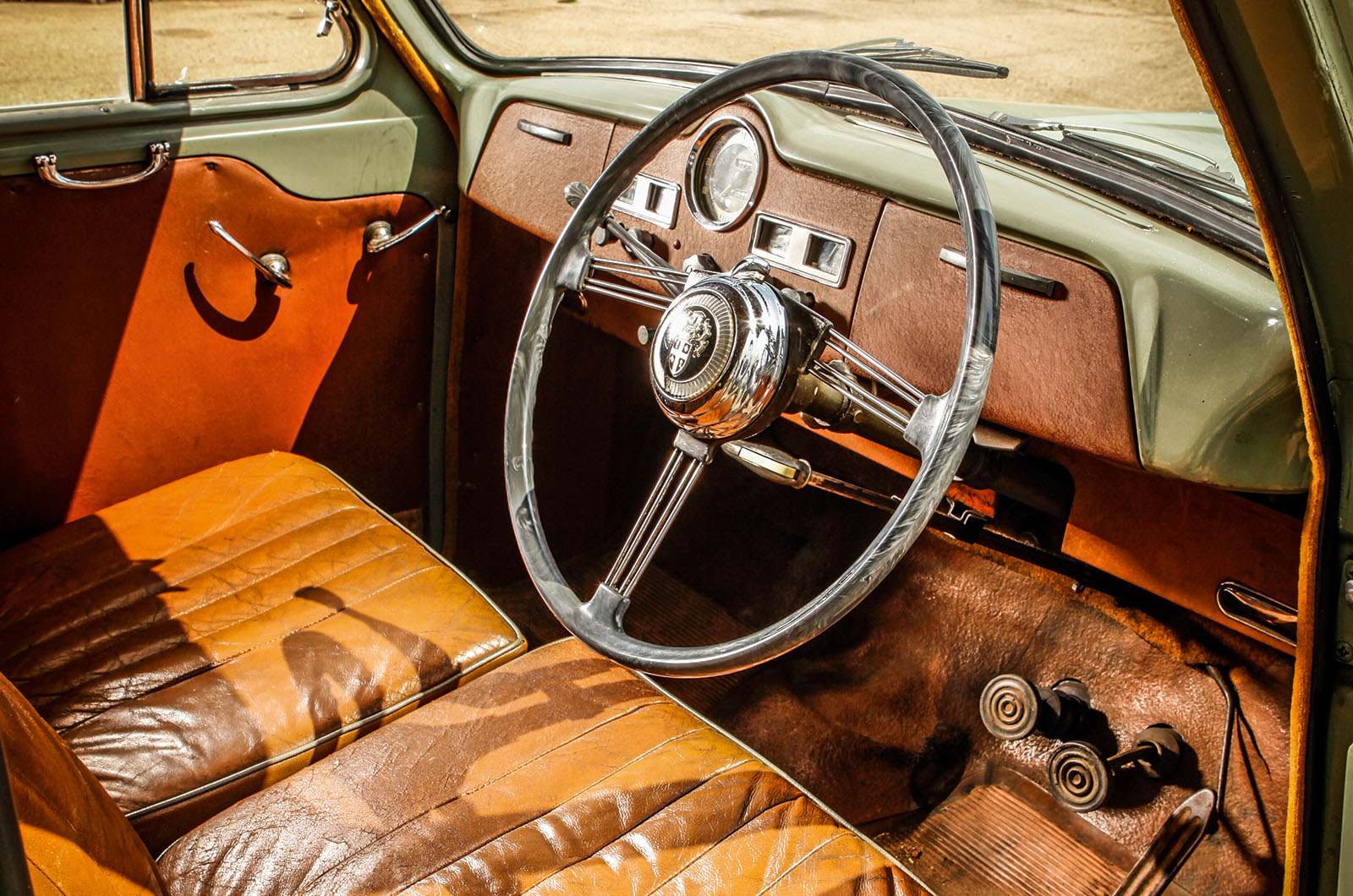
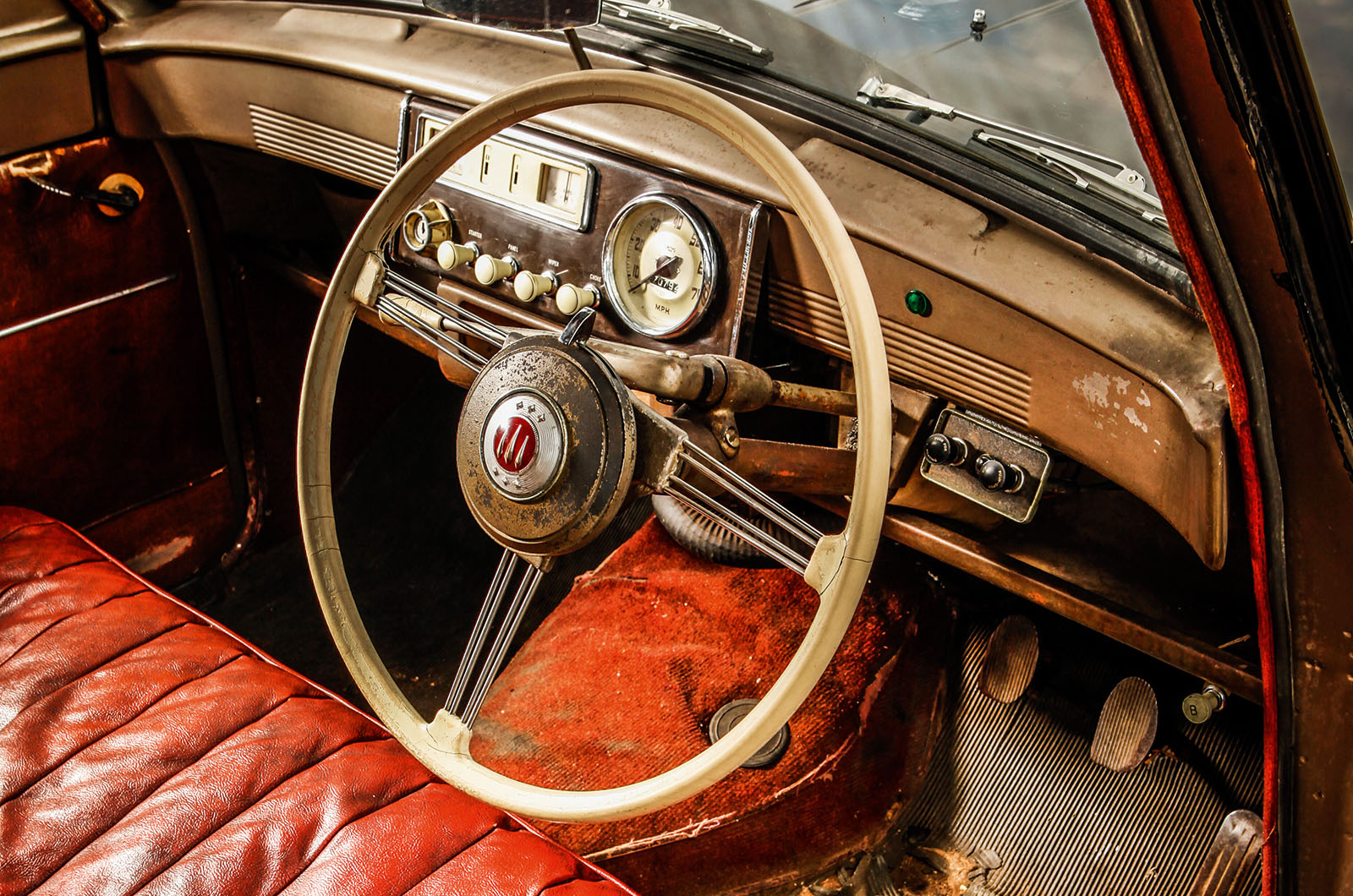
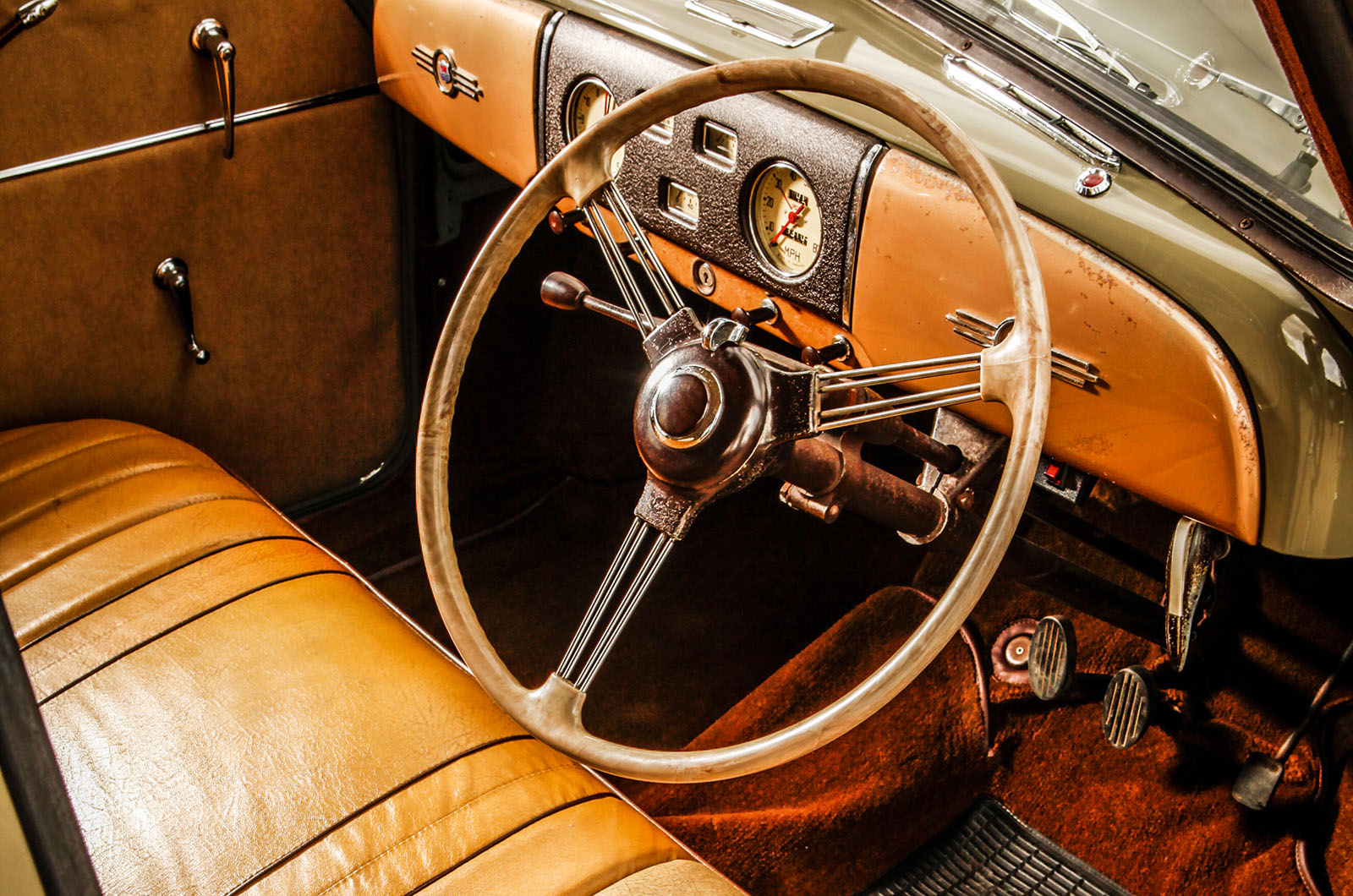
The interior couldn’t be considered inspiring. There’s a brown crackle-painted dash with a full set of gauges, plain door trims with carpeted bottoms, and two individual front seats set against each other to form a bench.

Upholstery is in coarse leathercloth with contrasting piping, while there is rubber matting to the front and carpet to the rear.

More importantly, the rear doors open wide to reveal ample legroom; a nice ‘Olde Worlde’ Austin touch is that the backs of the front seats are cut away, and in each recess there lurks a footrest.

You sit high, behind a predictably big wheel, a nautical position that seems eminently appropriate when you start driving, as the Somerset rolls and bobs like a ship in a swell.

Classic & Sports Car – Morris Oxford vs Hillman Minx vs Austin Somerset: post-war Brits

The Austin A40 Somerset’s sprung wheel and simple dashboard with two gloveboxes

The cam-and-peg steering is a plus, however, being quick, at 2½ turns lock-to-lock, and with no play or untoward stickiness.

The column gearchange is okay, if stiff and lacking precision. Likewise, the brakes are firm, short-travel and effective, even if they need a lean for ultimate stopping. 

At 50mph the Austin is happy enough – not that refined, but not rough, and with sufficient vim to the acceleration.

This is helped by the low gearing, as was then the norm: the first three ratios seem particularly short, and you can pull away in second.

Change down for a bend, and you feel a jolt if you’re casual about smoothing your way through the ’box.

Classic & Sports Car – Morris Oxford vs Hillman Minx vs Austin Somerset: post-war Brits

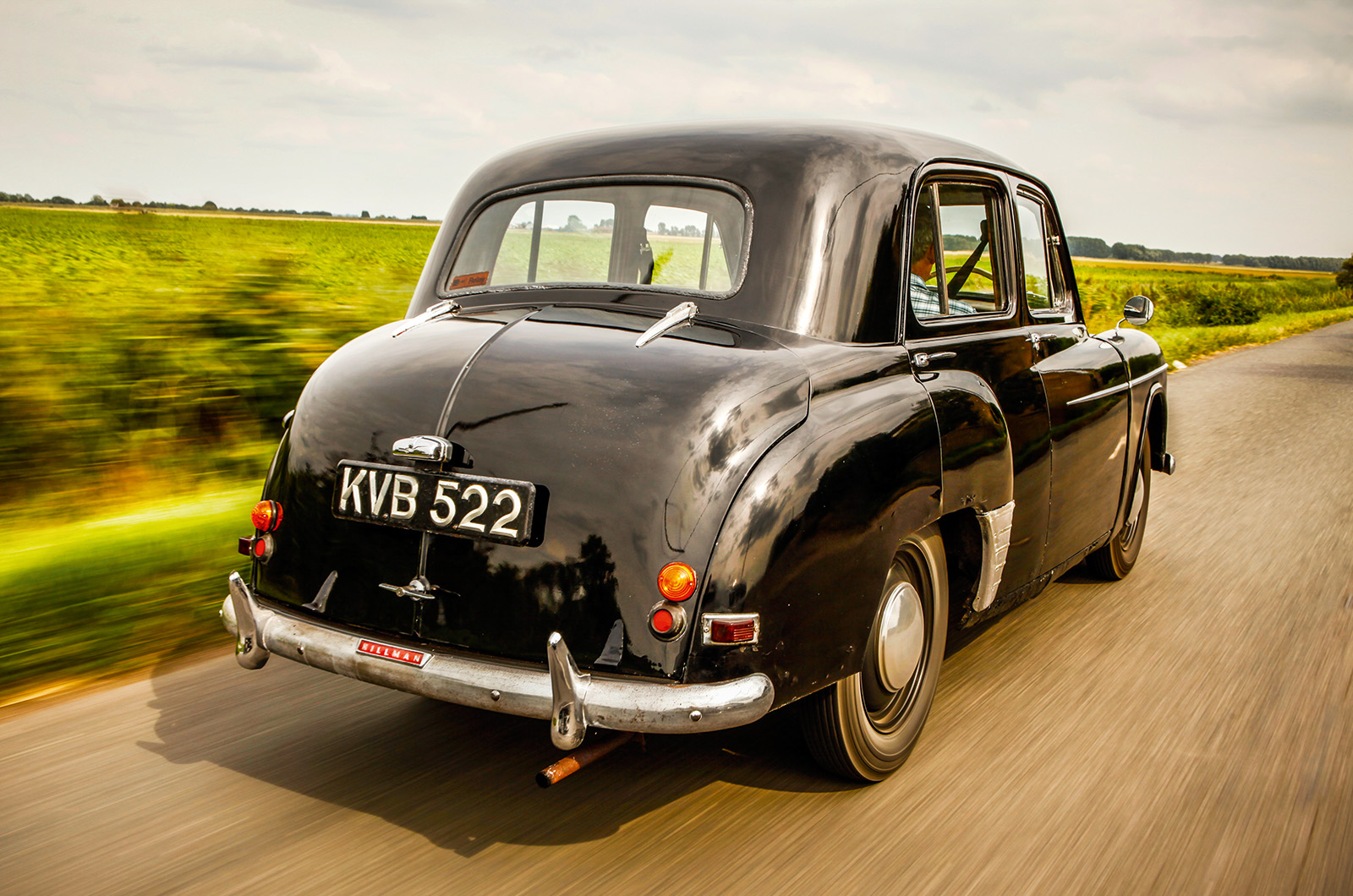
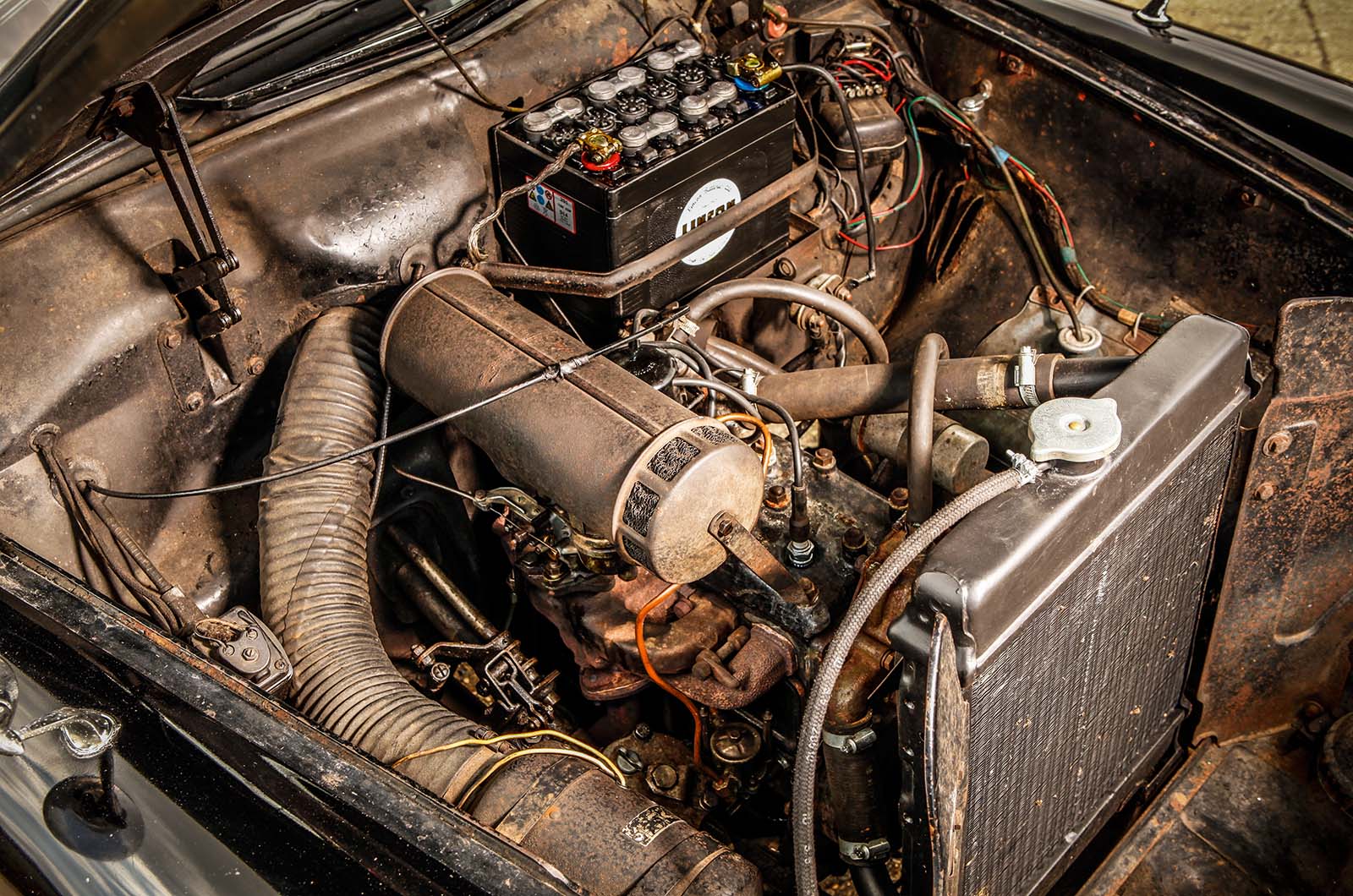
The Hillman Minx Phase V’s engine is an improved pre-war sidevalve unit

In all this, however, one should issue a caveat.

Bought from eBay, this Austin Somerset has been refurbished rather than ever having been fully rebuilt – all Young has done is to overhaul the brakes – so a freshly spannered example might feel crisper.

That said, these Austins all suffer from over-soft front suspension.

Mike Redrup’s Phase V Minx has been in his family from ’52, when his father bought the Hillman new – having ordered it in 1946, several iterations of the model before.

Redrup learnt to drive in the car, which had a respray back in the ’70s and an engine rebuild about five years ago but has never been restored.

Classic & Sports Car – Morris Oxford vs Hillman Minx vs Austin Somerset: post-war Brits

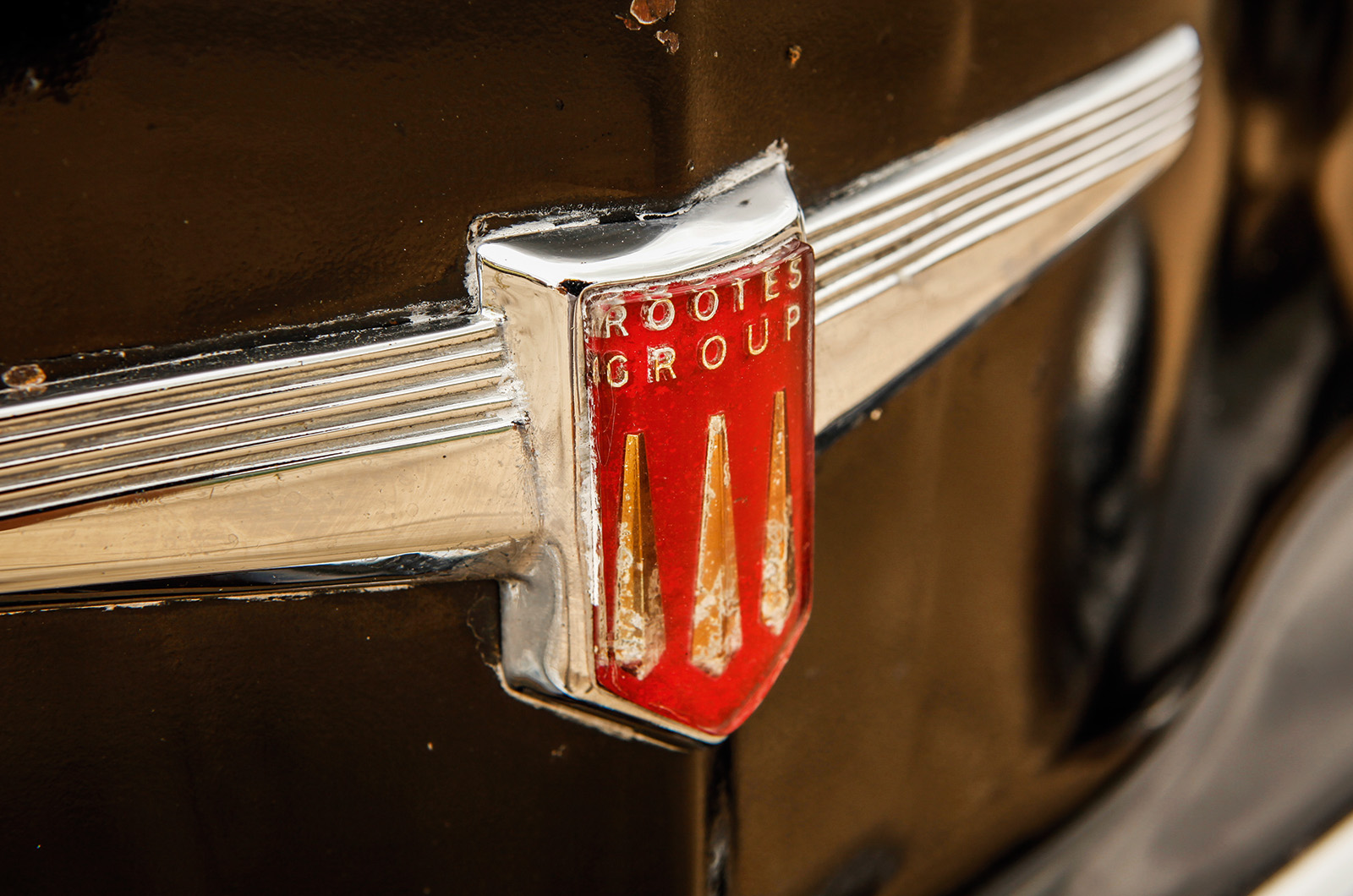
The Hillman Minx’s badge shows three spires of Coventry, UK

The Minx loses out in the style war – strangely, given the input of top designer Loewy. It simply looks dull and frumpy, with no delight to any of its details.

The cabin, alas, is no more tempting, with lots of exposed metallic beige paint, not least on the deep embossed door cappings.

Nor does the dash warm one’s cockles, with its sparse instrumentation and two open trays.

Upholstery is again plain leathercloth, but you slump lower on the seats and lean back more.

Access to the rear is tighter – you winkle yourself in – but you sit upright enough to have reasonable legroom.

Classic & Sports Car – Morris Oxford vs Hillman Minx vs Austin Somerset: post-war Brits

The Hillman Minx is the only car here with a pull-up handbrake

In fairness, some of these criticisms would be addressed by later models, which had extra chrome and brighter colour schemes.

More significantly, the Minx acquits itself well on the road, making a better fist of things than the Austin.

The long-stroke engine puts out 58.3lb ft of torque at 2200rpm and is peppy, and about as refined as the Somerset’s pushrod unit.

Again the first three gears are low, but fourth is quite high, making for relaxed 50mph cruising.

The column change is well oiled but loose and responds best to a delicate touch.

Feel your way into the first-second plane, though, and thereafter your passage through the ’box is undemanding.

Classic & Sports Car – Morris Oxford vs Hillman Minx vs Austin Somerset: post-war Brits

The Morris Oxford outshines the Hillman and Austin on the road

The suspension is soft at the front, possibly because the only anti-roll bar is on the rear axle (it migrated to the front on the Phase VIII); as a result the Minx bobs about on poor roads, but not as much as the Somerset.

As for the worm-and-nut steering, that’s free of slack and smoother in action than the Austin’s set-up.

The brakes are board-firm, but work well enough, while the Minx is the only car of the three with a pull-up handbrake. 

Nigel Anderson’s Oxford starts off with an advantage: it has only 33,000 miles on the clock and was rebuilt in the ’90s, after being in the family since 1956.

So any observations on how it drives must be tempered by the fact that it is being compared with two unrestored cars that have loosened up over their greater mileages.

Classic & Sports Car – Morris Oxford vs Hillman Minx vs Austin Somerset: post-war Brits

The Morris Oxford’s sidevalve unit is dependable but lacks zip

To my eyes at least, the Morris starts out with the major plus of being the most attractive of our trio.

There might be bits of 1940s Chevrolet and Packard in its make-up, but the lines are neat and harmonious, lifted by the vee ’screen and the brightwork.

Longer and wider-tracked than the Minx and Somerset, the Oxford looks more planted.

There are also lots of attractive details: pull handles for the doors, a flip-up cover for the starting handle, a painted coachline on the colour-coded wheels.

Particularly delightful are the little running boards, with their kickplates, that are exposed when the front doors are opened.

Classic & Sports Car – Morris Oxford vs Hillman Minx vs Austin Somerset: post-war Brits

The Morris Oxford’s well-designed cabin

Inside, the brown-crackle instrument panel and gold-painted dash are more obviously styled, right down to the concealed glovebox release.

The front bench means a cosier rear, but there’s plenty of legroom, with overall space being similar to the Somerset.

As a standard model rather than a De Luxe, the seating is in leathercloth rather than hide – just as there are no bumper overriders, nor a heater and only one sunvisor.

Start driving the MO and the first thing to hit you is that here, at last, is a car with steering that is genuinely good.

The Oxford’s rack is needle-sharp, accurate and not at all heavy; it’s delicious.

Building on this, the Morris feels more poised over pockmarked Fenland roads with a shifting camber and the poor surface doesn’t throw the car about as it does the other two.

Classic & Sports Car – Morris Oxford vs Hillman Minx vs Austin Somerset: post-war Brits

The Morris Oxford, Hillman Minx and Austin Somerset delivered no-nonsense family transport for thousands in the post-war years

The MO has firmer responses, and that extends to brakes that are more progressive plus a crisp column shift.

The sidevalve engine could reasonably be expected to be the deal-breaker, but bear in mind that it is the biggest of the three power units, and delivers its 65lb ft of torque – 3lb ft more than the Austin – at just 2000rpm, against the Somerset’s 2500rpm.

Despite the usual low gearing, acceleration is not good in third, but the Morris cruises happily at 50-60mph, the engine never becoming coarse.

You can also keep the car on the boil by driving it in a more spirited manner than its rivals, taking advantage of its secure handling to keep speed up through the corners.

The Oxford is in fact the only car of the three that feels to be the work of people who wanted you to enjoy driving. For that reason it stands as the easy winner of this comparison.

The Hillman, meanwhile, is a thoroughly acceptable if unemotional transportation device – a sweet, easy car, with decent performance.

As for the Austin, its cuddly looks will probably win over more hearts than its less-flamboyant rivals. It does the job – compromised by its suspension – with perfect adequacy, but nothing more.

The advantage, sidevalve engine notwithstanding, goes to Cowley.

Images: Tony Baker

Thanks to: Austin Counties Car Club; 6/80 and MO Club; Hillman Owners’ Club; and Tom Clarke

This was first in our May 2015 magazine; all information was correct at the date of original publication


Enjoy more of the world’s best classic car content every month when you subscribe to C&SC – get our latest deals here


READ MORE

1948’s game changers: Morris Minor

Future focused: Austin A40 vs Ford Anglia vs Triumph Herald

Keeping up appearances: Ford vs Vauxhall vs Hillman vs Singer vs Humber vs Riley