The 1959 motorist who regarded themselves as the suburban answer to Jack Kerouac had a limited choice of cars that offered front-wheel drive and four doors.
The Slough-built Citroën 2CV was too spartan by some margin, while its ID19 sibling was too expensive.
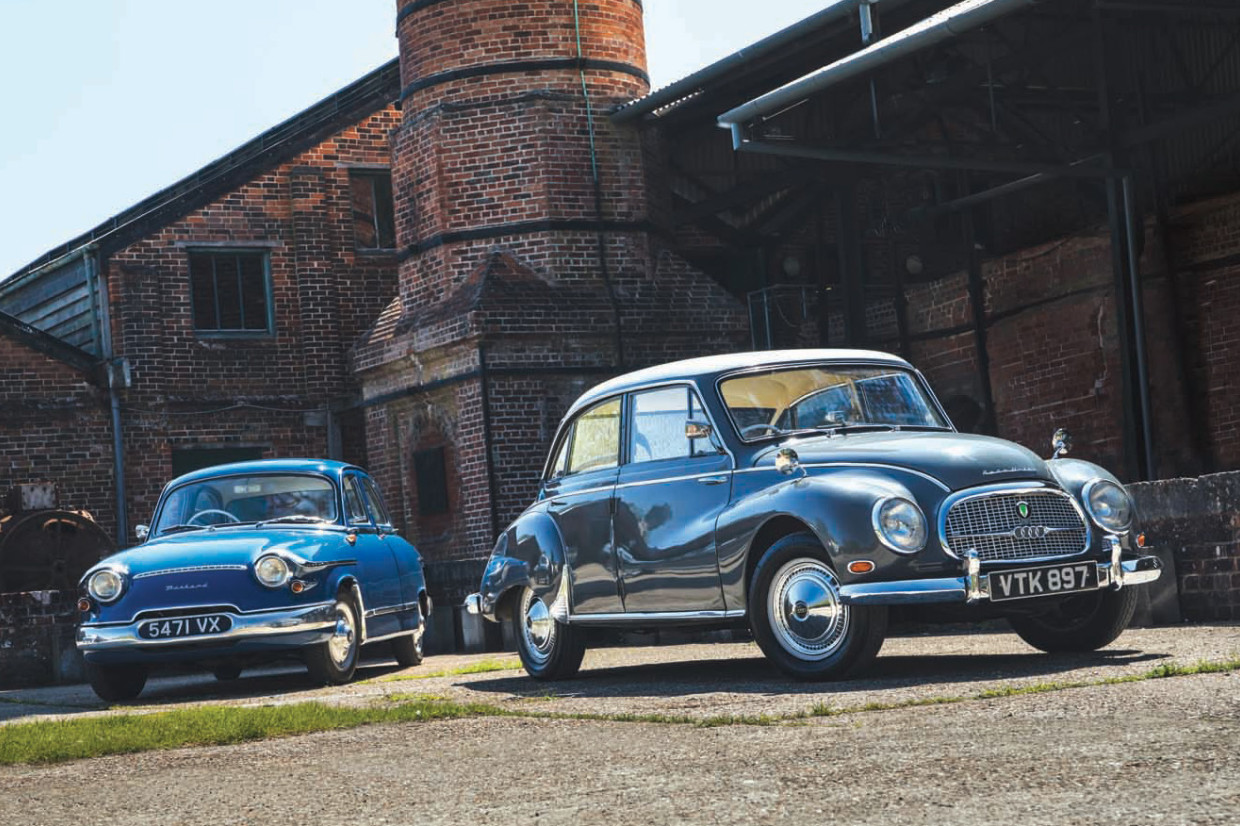
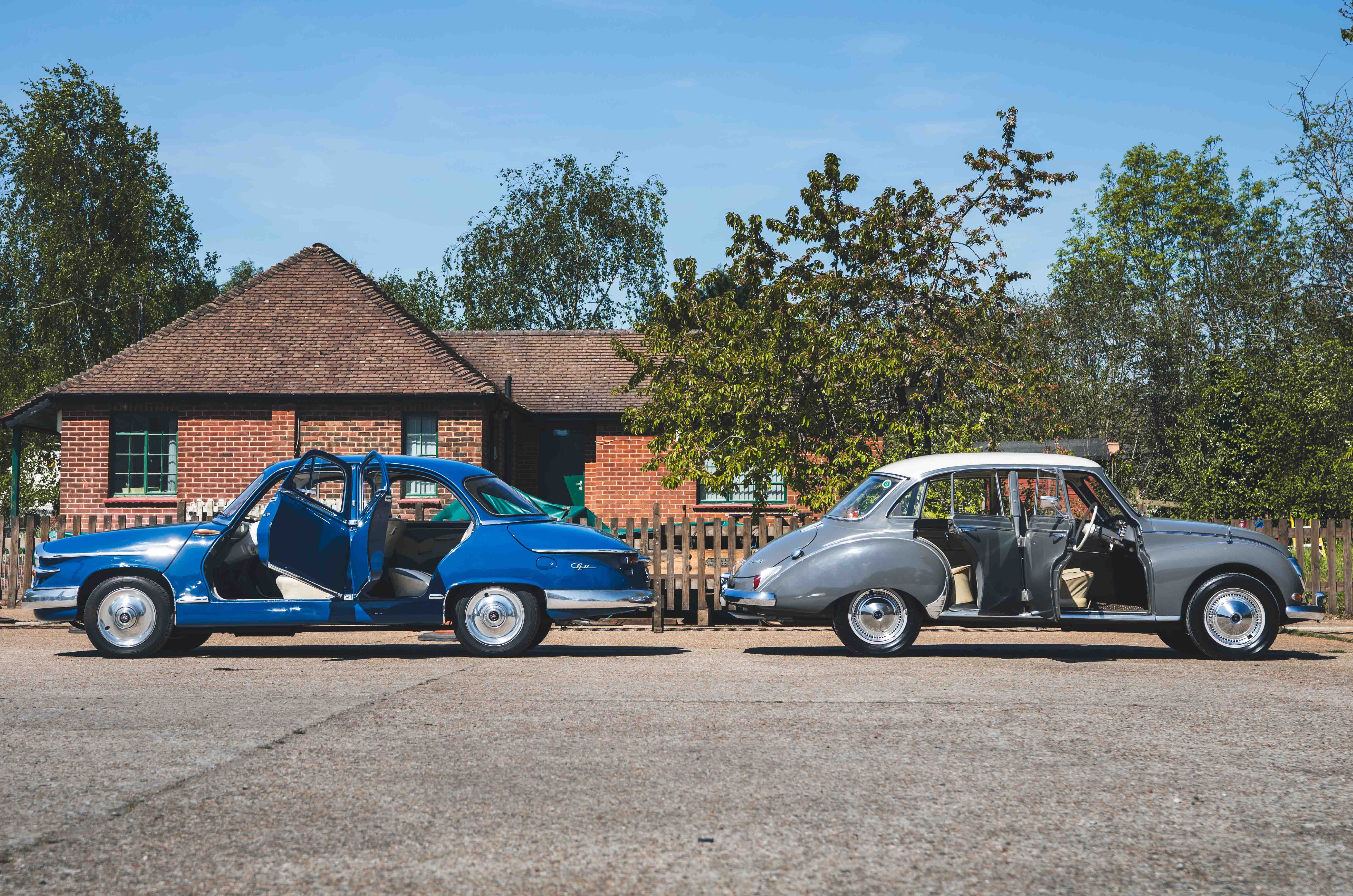
Eventually there were only two names on the shortlist: the Panhard PL17 and the Auto Union 1000S.
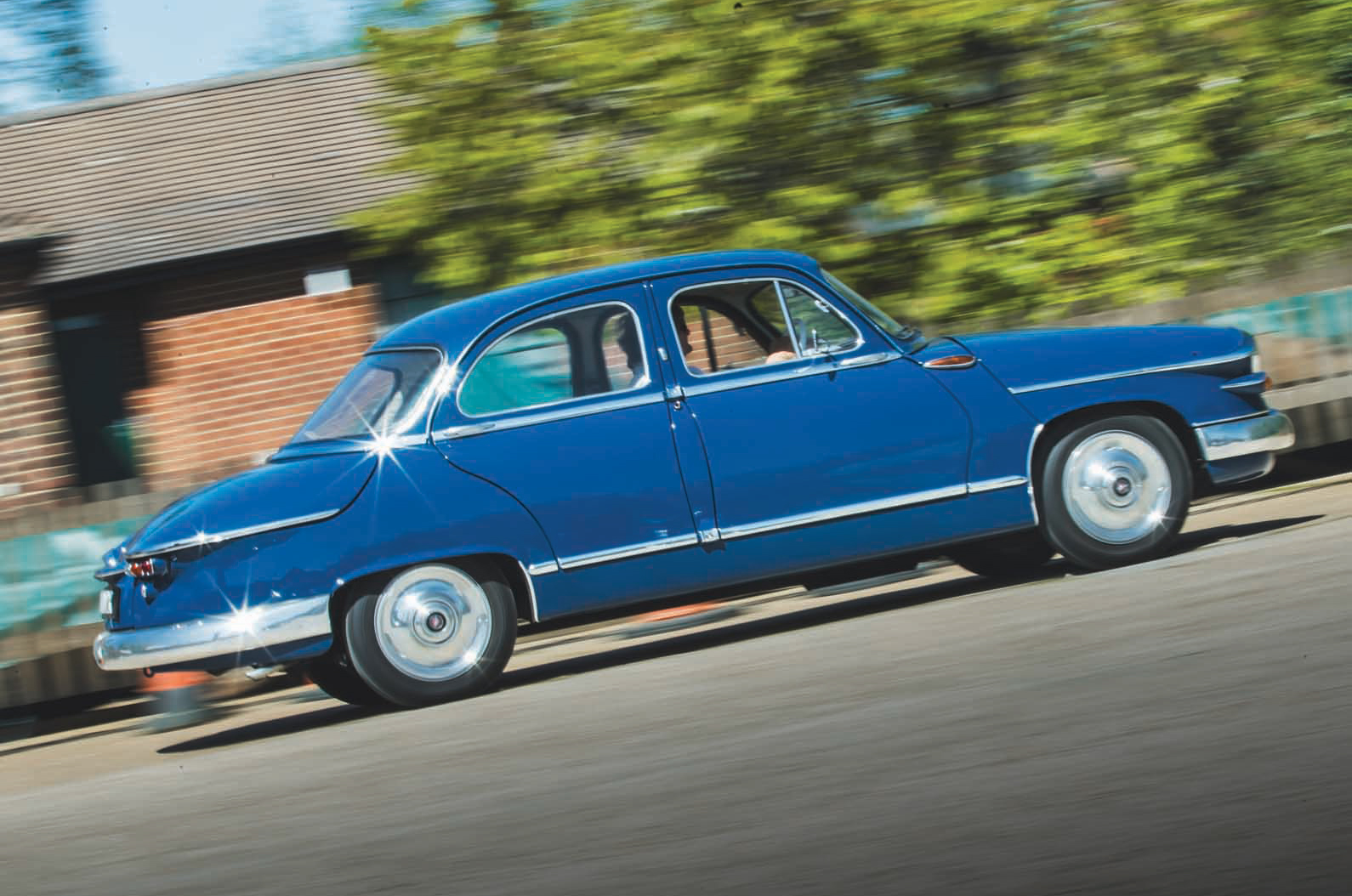
The Panhard PL17 makes easy progress thanks to its flat-twin’s generous torque
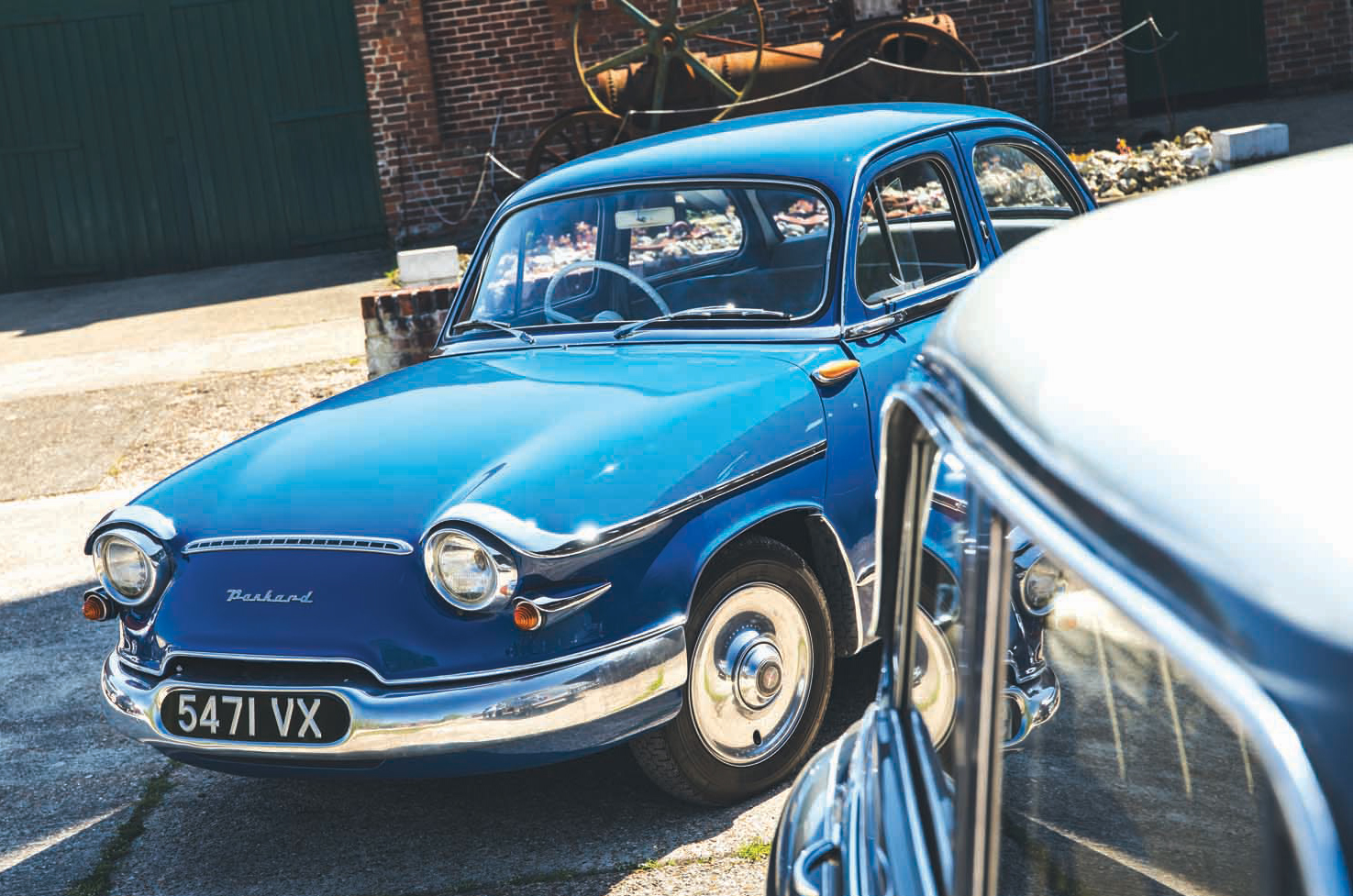
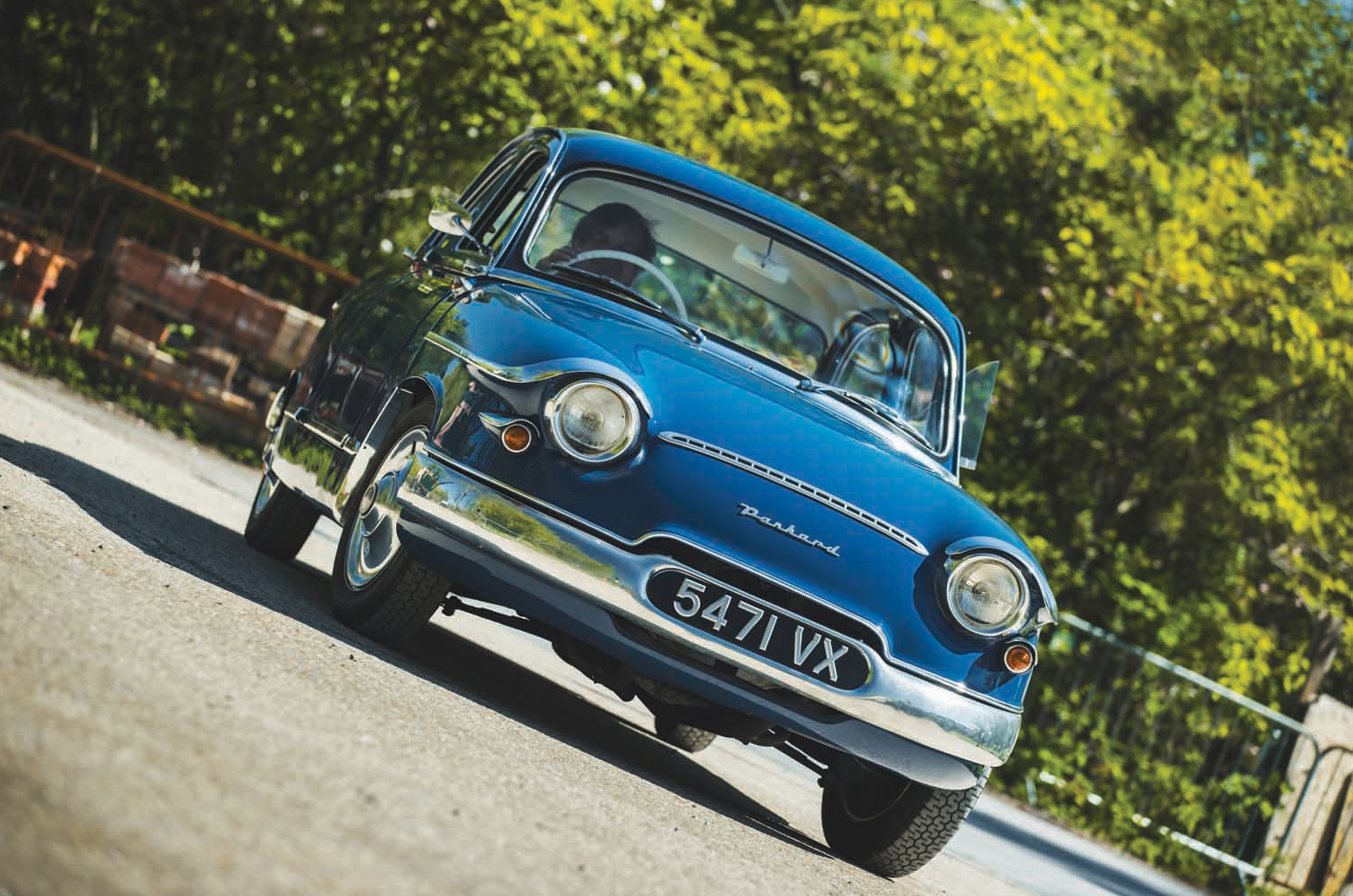
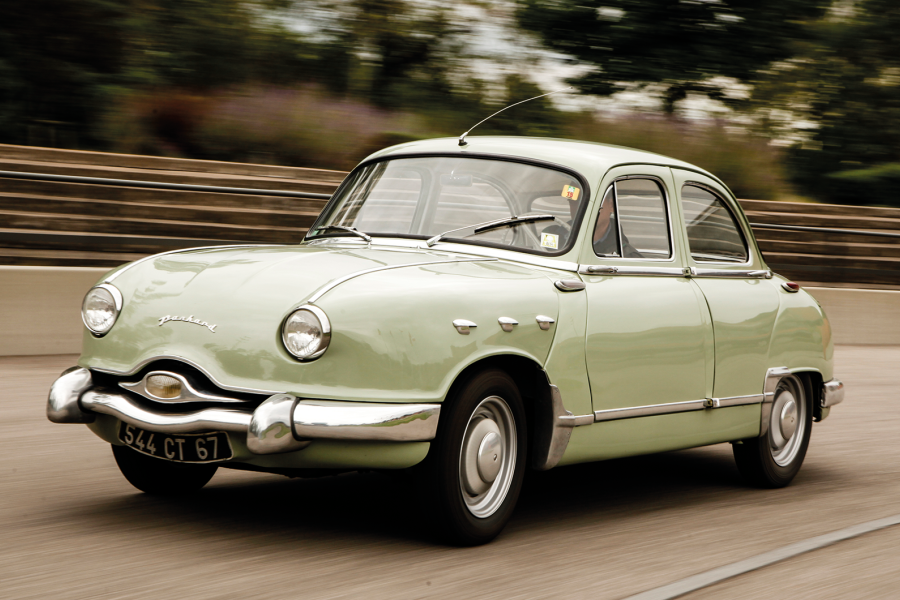
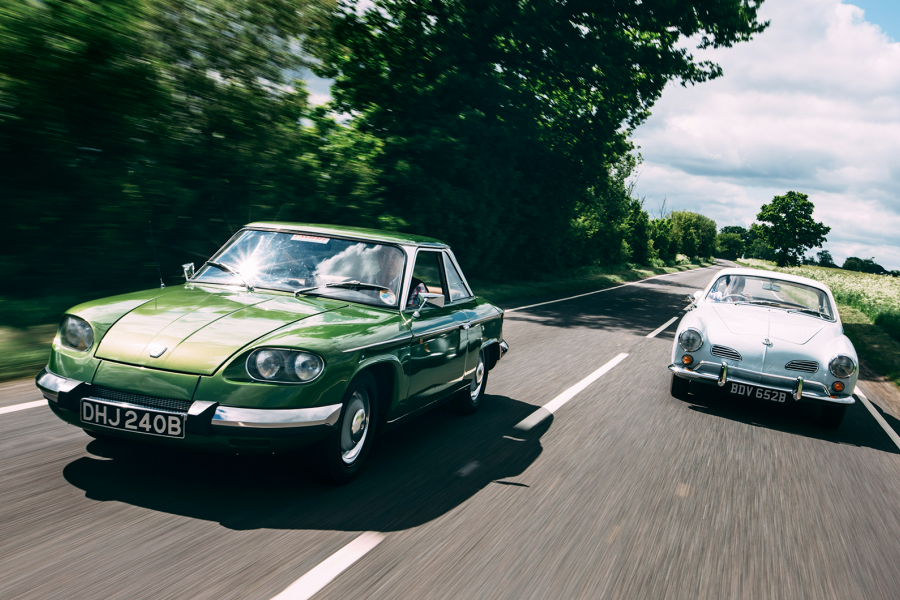
If you wish to create a stir along the coast of Hampshire, one option is to re-enact great scenes from Howards’ Way at the Locks Heath Shopping Village; a more agreeable alternative is to arrive at our location of The Brickworks Museum, Swanwick, in a 1960 Panhard PL17.
The clatter of its two-cylinder engine sounds like a nest of Benzedrine-crazed wasps, while its bodywork is reminiscent of a spaceship encountered in The Quatermass Experiment.
Jim Baumann’s PL17 is also one of the very few right-hand-drive, UK-market examples.
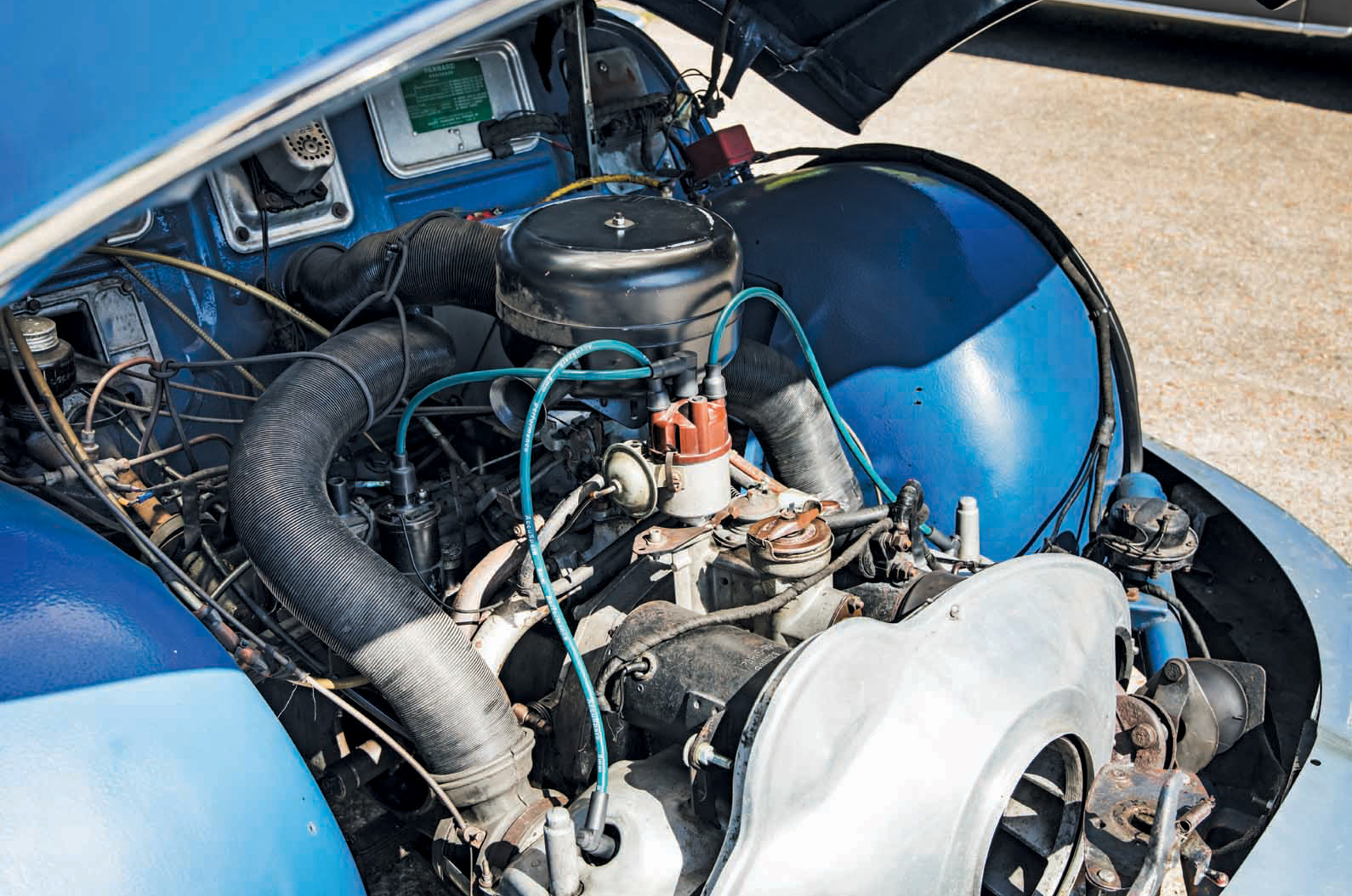
“The initial response from people on seeing the car is one of incredulity,” he notes. “A closer observation brings forth positive comments on the otherworldly air-cooled motive power, along with the front engine mounts attached to the exhaust manifolds, and ball-type main and roller big-end bearings. There is also the space and airiness of the interior.”
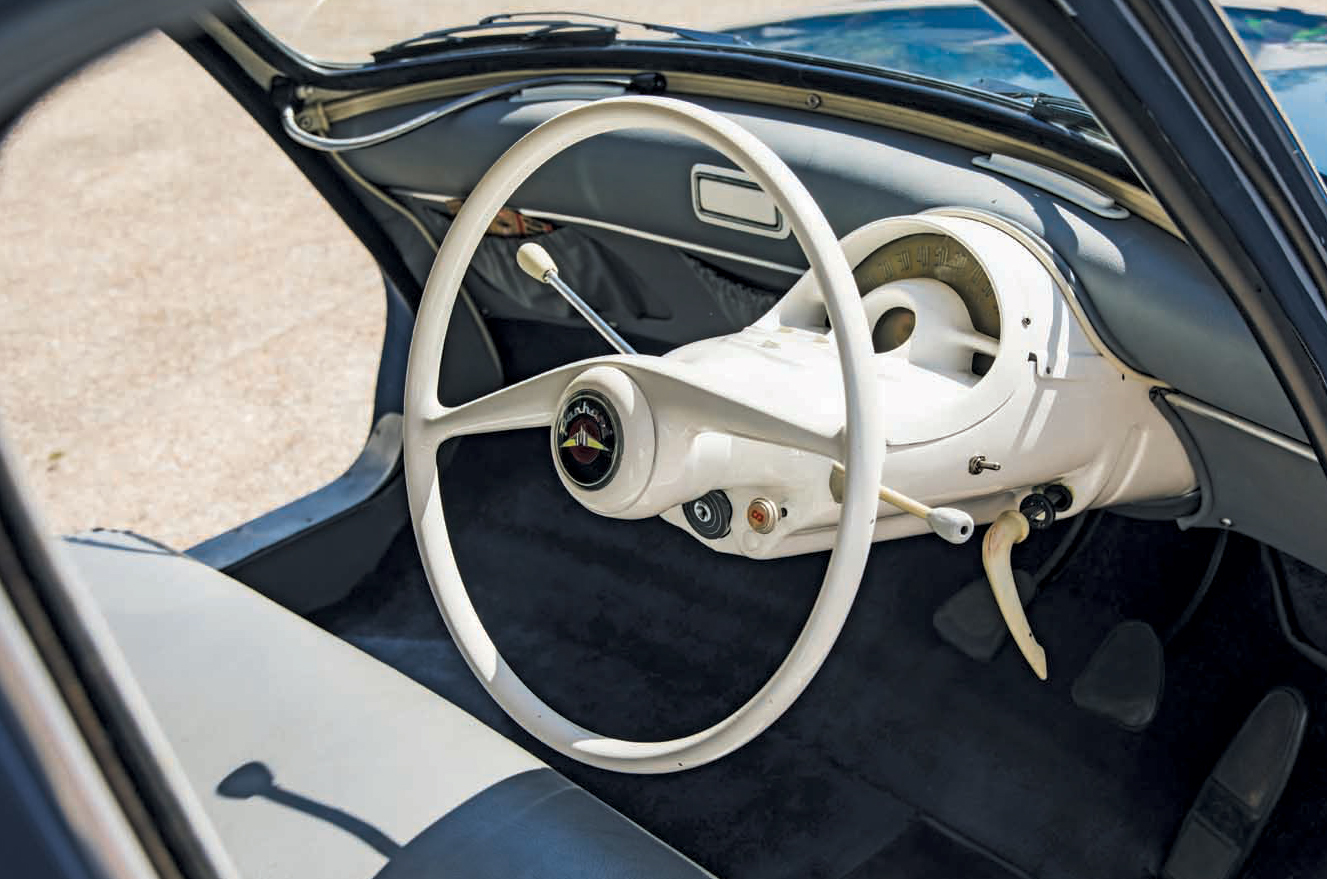
The Panhard PL17’s light cabin, with column gearchange and bench seat
The PL17’s origins date from 1950, when Panhard commenced work on Project VLL.
When the Dyna Z made its debut on 17 June 1953 at Les Ambassadeurs restaurant in Paris, it more than fulfilled its design brief.
Here was a motor car capable of carrying six occupants and their luggage, yet it was so lightweight that it needed only an 851cc flat-twin engine.
Moreover, it resembled no other French car because its bodywork, devised by Louis Bionier, was made from Duralinox, an alloy of aluminium, copper and magnesium.
If that were not sufficiently remarkable, your friendly local Panhard dealer might also tell you that the Dyna Z had a drag coefficient of 0.27, and was the first production car to be tested in a wind tunnel.
The Panhard PL17’s flowing lines give it an aerodynamic shape
Unfortunately, the body was expensive to produce, and in 1955 the Z combined steel construction with Duralinox doors.
In August 1956, Panhard introduced an all-steel body; two months later came the press announcement that Panhard would combine its sales network with Citroën, which had taken a 25% share in the firm the previous year.
Meanwhile, Panhard enthusiasts bemoaned that, while the marque had benefitted from an expanded dealer network, Citroën had acquired Panhard to grow its 2CV production capacity.
Nor did there appear to be any investment to create a Dyna Z replacement and, instead, the facelifted PL17 took a bow on 29 June 1959.
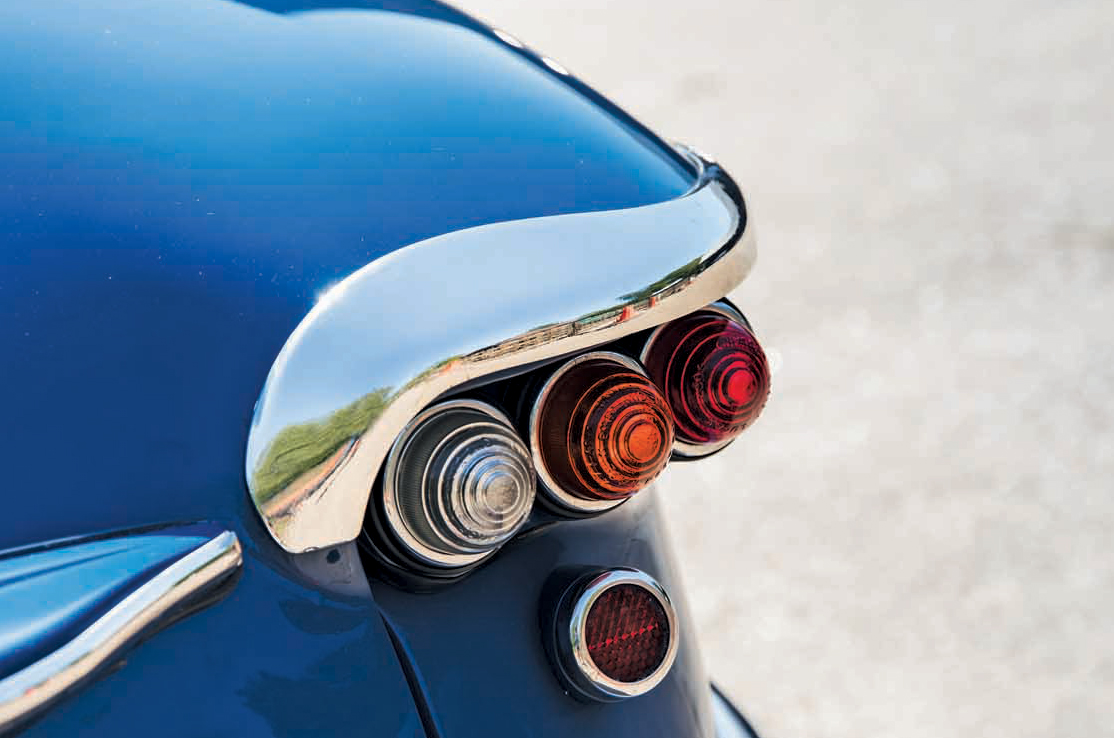
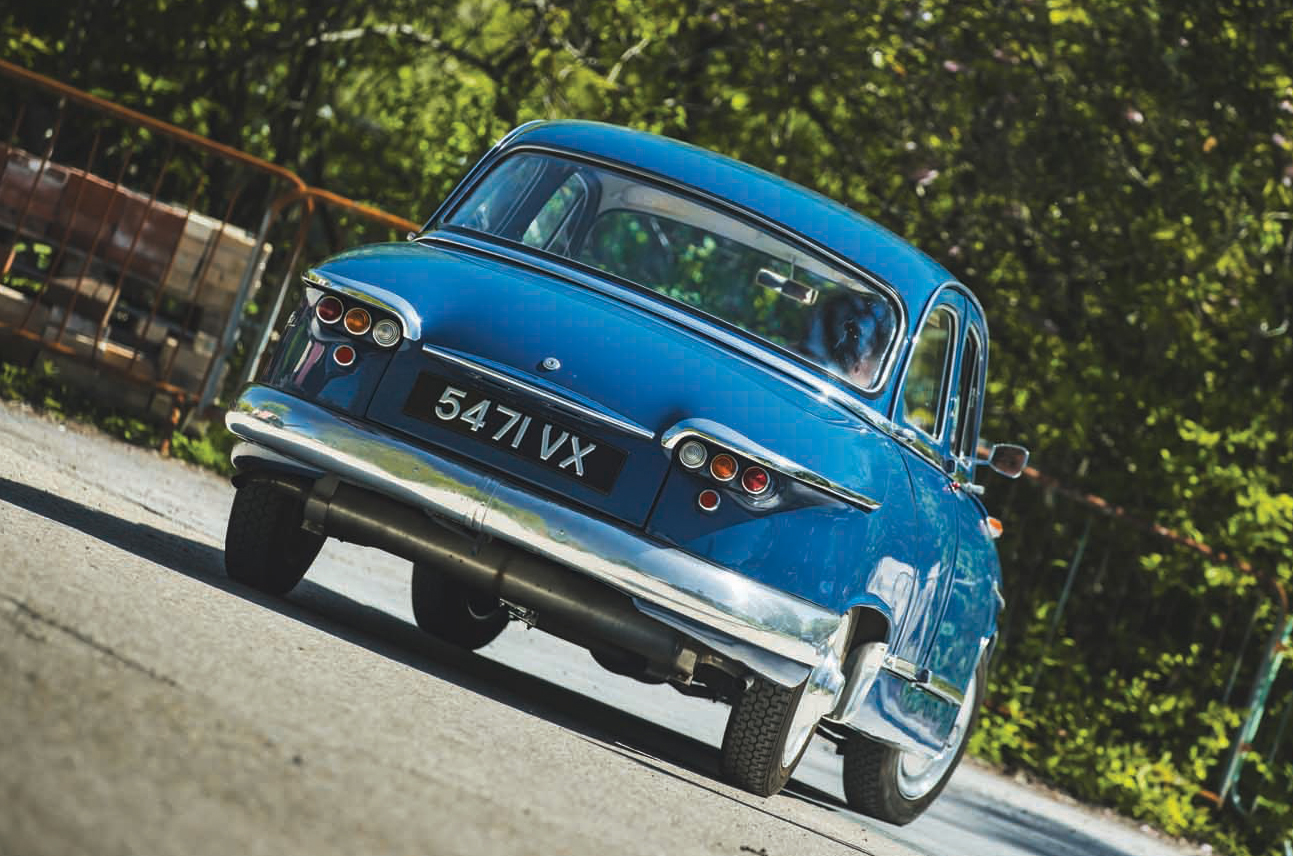
Elegantly arcing chrome trim shrouds the Panhard PL17’s rear lights
The name was derived from ‘P’ for Panhard and ‘L’ for Levassor, with ‘17’ representing 5CV plus six seats and its fuel economy of six litres/100km (around 40mpg).
The PL17’s engine initially remained at 851cc, but the Dyna Z’s central hull was now combined with a redesigned bonnet and boot.
Panhard hoped the PL17 would arrest falling sales, and the brochure promised ‘Beauty [and] purity of line’.
It gained further publicity in 1961 when the Panhard of Maurice Martin and Roger Bateau won the Rallye Monte-Carlo, and the range expanded to include an estate, a van and an exquisite cabriolet.
The Panhard PL17 gets ‘eyebrows’ for both headlights and indicators
Sadly, too many bourgeois French drivers still preferred the safer waters of the Peugeot 403 and the Simca Aronde.
In 1963, Panhard launched the 24 coupé and aimed to build a four-door version to replace the PL17, but this plan never reached fruition.
Citroën took full control in 1965, and in May of that year PL17 sales ended. On 24 July 1967, Panhard ceased building cars.
Few PL17s leaving the Avenue d’Ivry factory were destined for the UK.
In 1958, Citroën GB advertised the Dyna Z as ‘Now with right-hand drive’, although there seemed little prospect of Slough assembly.
The Panhard PL17’s 851cc flat-twin makes 42bhp at 5300rpm
Production of right-hooker PL17s began in autumn 1959, and The Autocar thought it was ‘still as French as the Rover, say, is English’.
To see Jim’s Panhard basking in the sun is to appreciate how the PL17 resembled a typical British family saloon as much as Juliette Gréco resembled Tony Hancock.
And such Gallic individuality did not come cheap, at £999 17s 6d when a Wolseley 15/60 cost £936 and a Ford Zodiac MkII was £957.
At that price, the average British motorist expected either a hide-and-timber cabin or at least the interior of a car with American pretensions.
What they did not expect was a fascia so deliberately spartan that two simple pockets, instead of a glovebox, faced the front passenger.
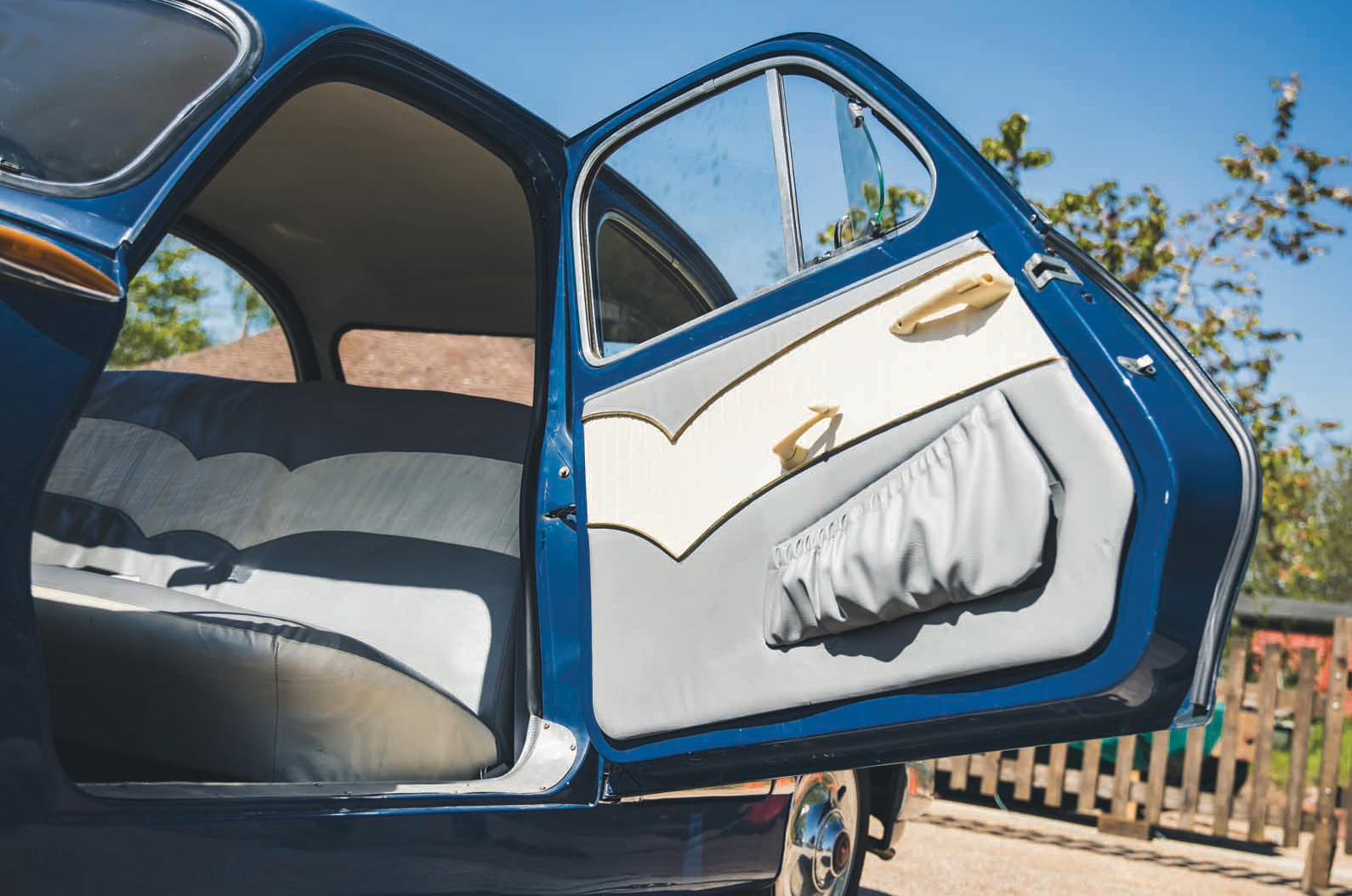
Early Panhard PL17s have rear-hinged front doors
The emphasis is on practicality, rather than recreating a private members’ club ambience, with the seats upholstered in an exuberant plastic material.
Remarkably, the decor is mild compared with the more potent PL17 Tigre, with its mock-tigerskin seats.
“The initial attraction to the Panhard PL17 was not engineering-based in any way,” recalls Jim. “The enticement to ownership for me was solely about the flowing curves, the suicide doors and, above all, the deliciously excessive amounts of polished-aluminium brightwork.
“In particular, there are the eyebrows over the headlights and the miniaturised but perfectly matching eyebrows over the front indicator nacelles.”
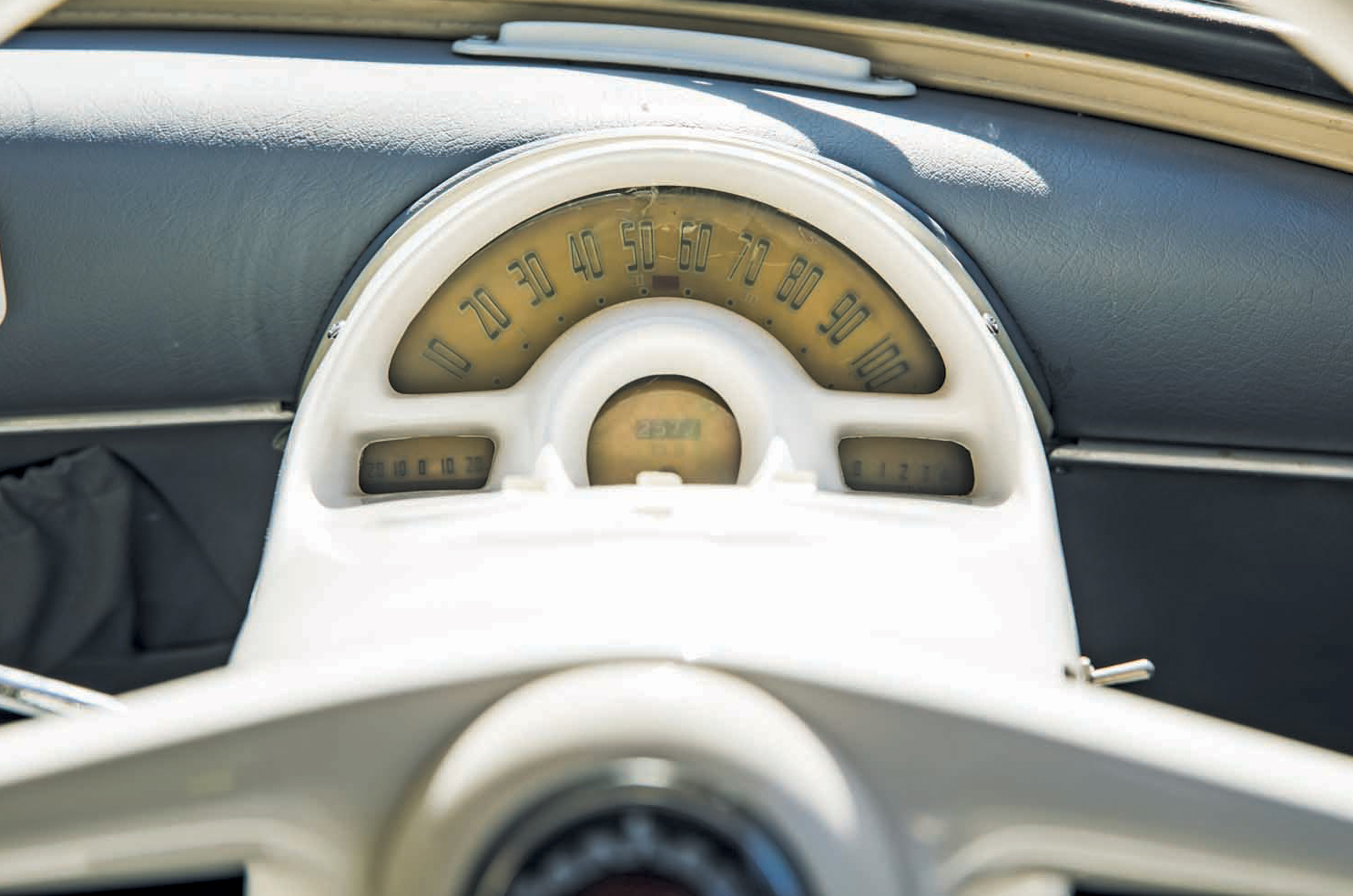
The Panhard PL17’s compact instruments
Alas, later iterations of the PL17 reflected the changing tastes of the era, and the flashy embellishment was mostly curtailed.
Rear-hinged front doors were seen only on very early PL17s.
They were a short-lived legacy of its predecessor: French legislation soon demanded that new cars had forward-hinged openings.
The Autocar complained that this set-up made it ‘difficult for women to enter and leave the car elegantly’.
However, the true PL17 devotee regarded such idiosyncrasies as typical of their beloved manufacturer, just as they perceived Ford Zodiac drivers not so much square as utterly rhomboid.
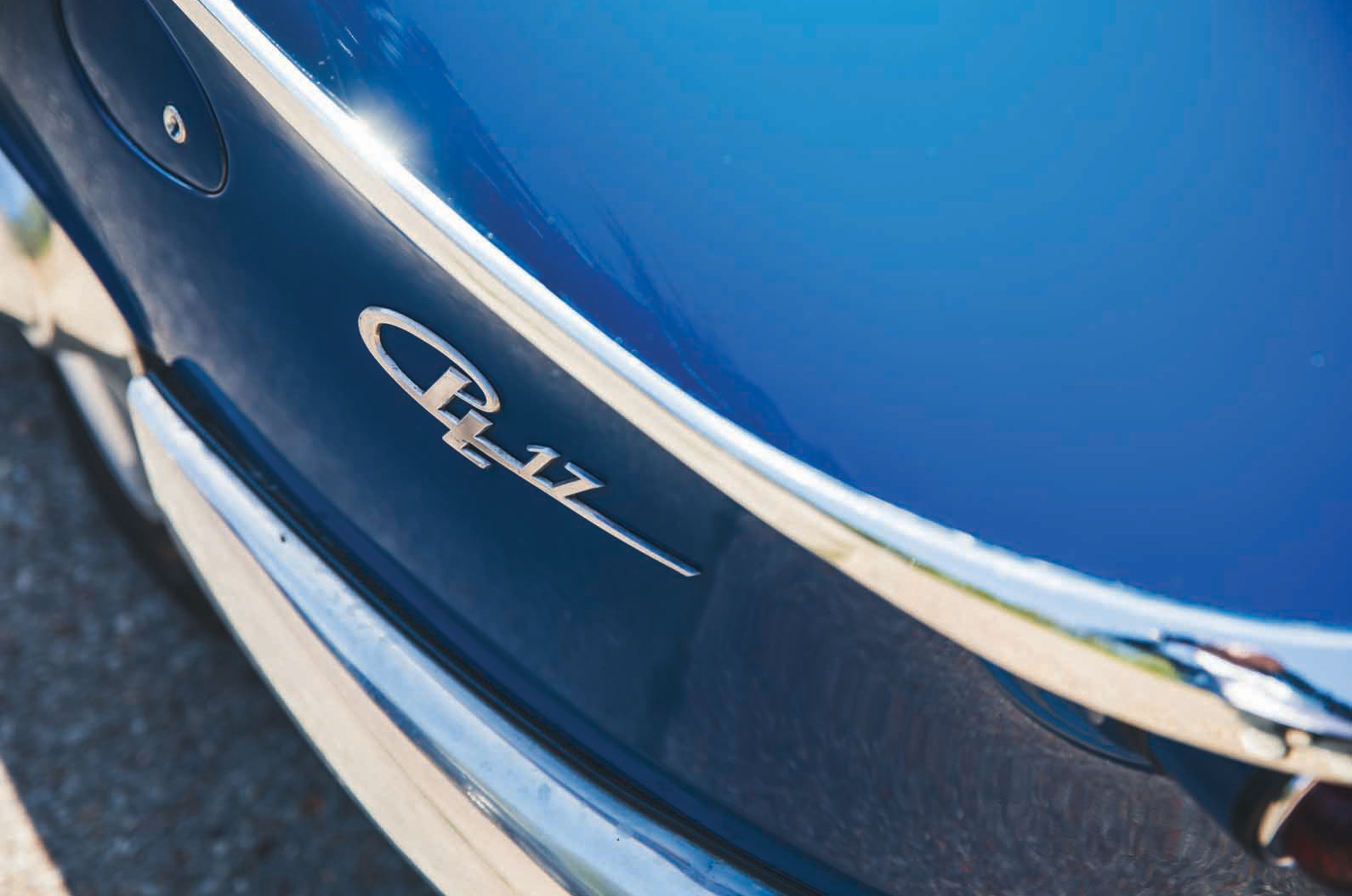
The Panhard PL17’s ornate badge matches the car’s stylish lines
In terms of accommodation, the PL17 is quite a sizeable vehicle. It is two inches longer than a Wolseley 15/60, but Panhard’s six-seater claim only works if all of the occupants are very close friends.
The steering-column-mounted gearchange combined with a flat floor results in a spacious front compartment, but the seat material laughs at the idea of lateral support.
The instrument display is particularly entertaining and the driver must reach through the wheel to access some controls.
Standard equipment is best described as limited: there’s a rear ashtray for the passengers’ Gauloises, reversing lights, a folding rear-seat backrest and heating via pipes from the cylinders.
The Panhard PL17’s brightwork was dialled down for later cars
Jim finds the most enjoyable aspect of PL17 motoring to be making good and swift progress in a full-size car, and keeping up with traffic on a mere two cylinders of 425cc each.
Yet it feels relatively effortless thanks to the surprising amount of torque even at low engine speeds.
The drum brakes are very positive, and while the column gearlever sometimes confounds those used to a floor change, it is a very easy, tactile system.
The third and fourth plane is like the proverbial knife through butter.
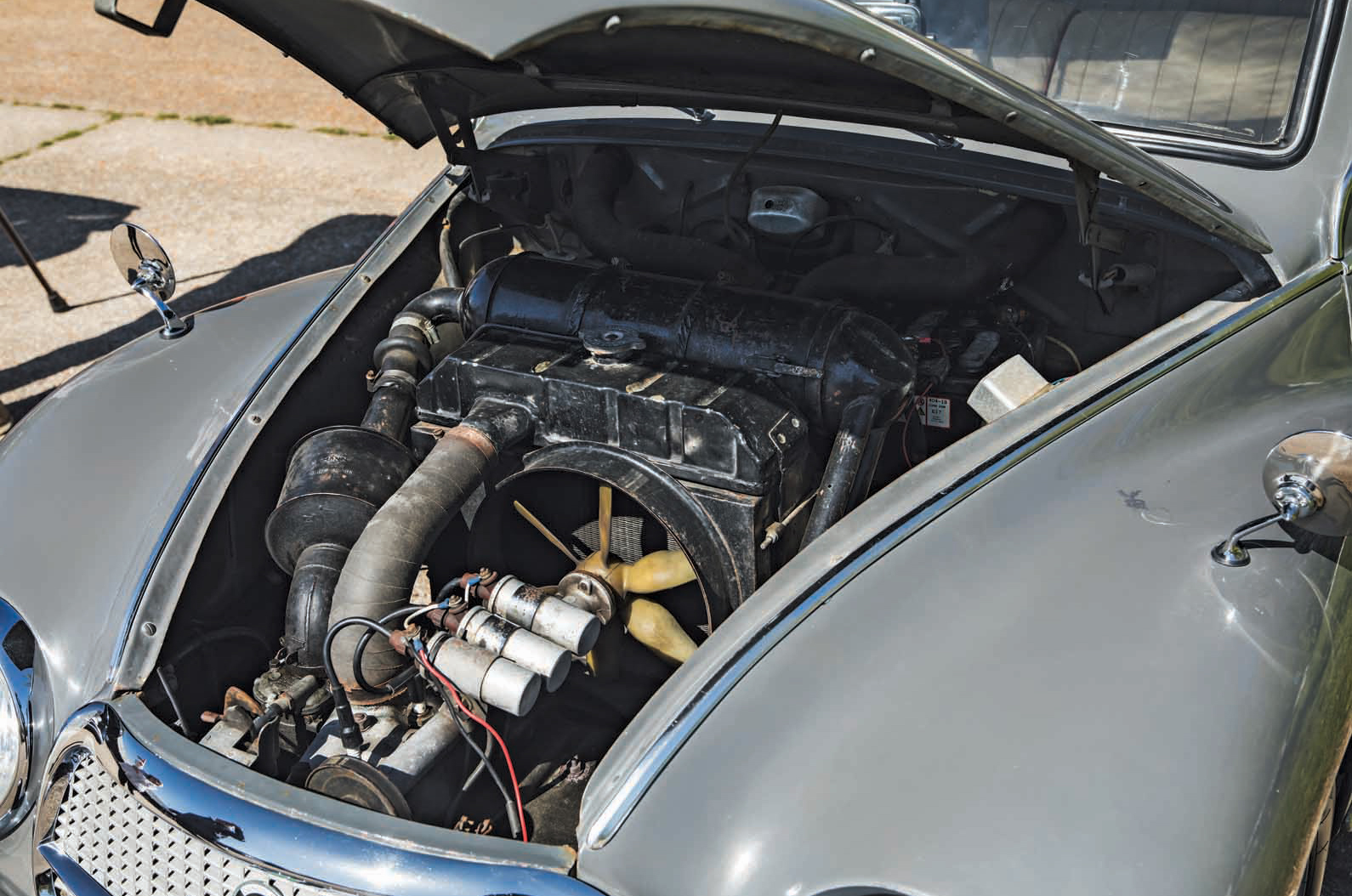
The Auto Union 1000S has a characterful two-stroke engine, which announces itself with its sound and smell
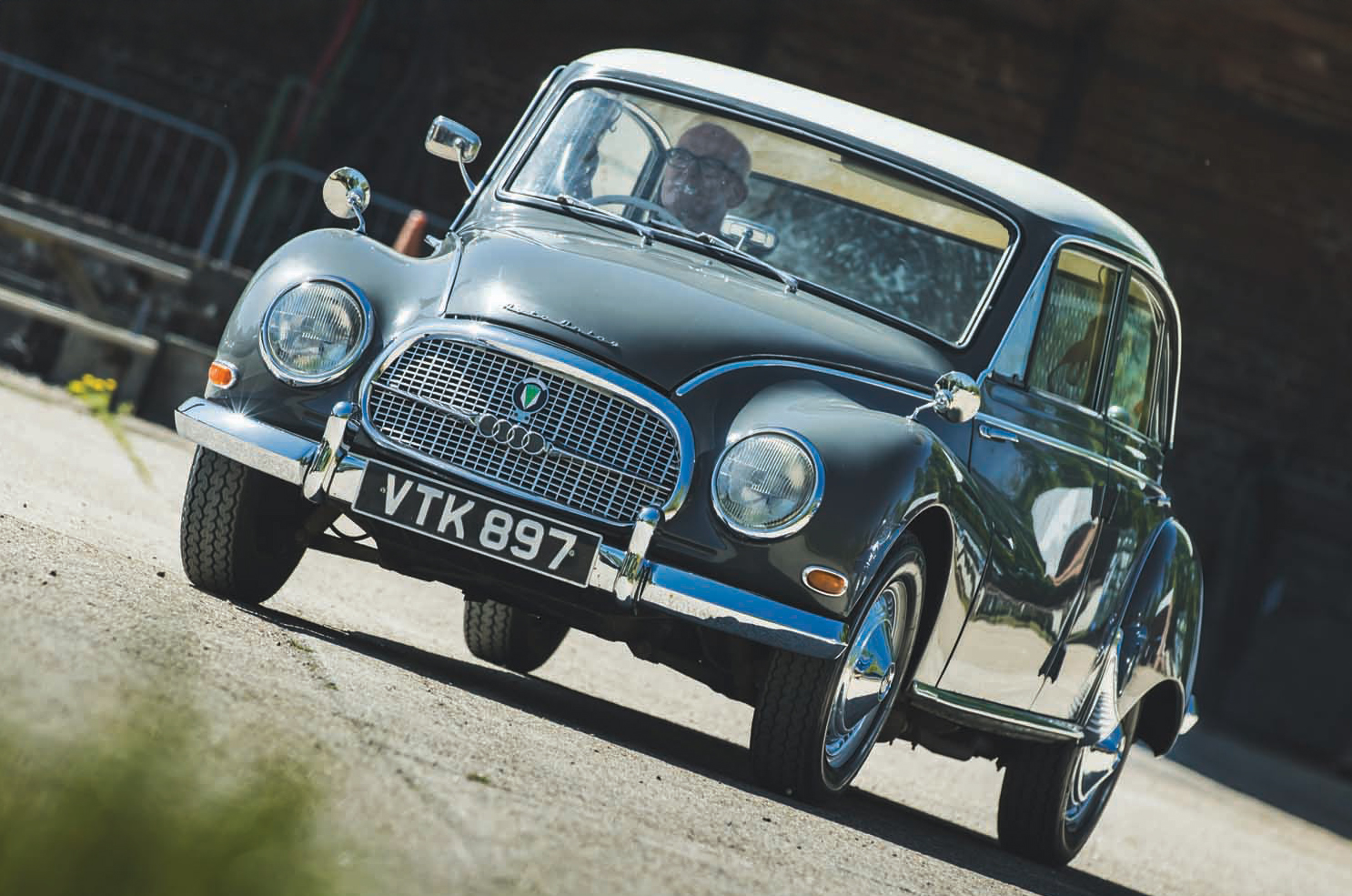
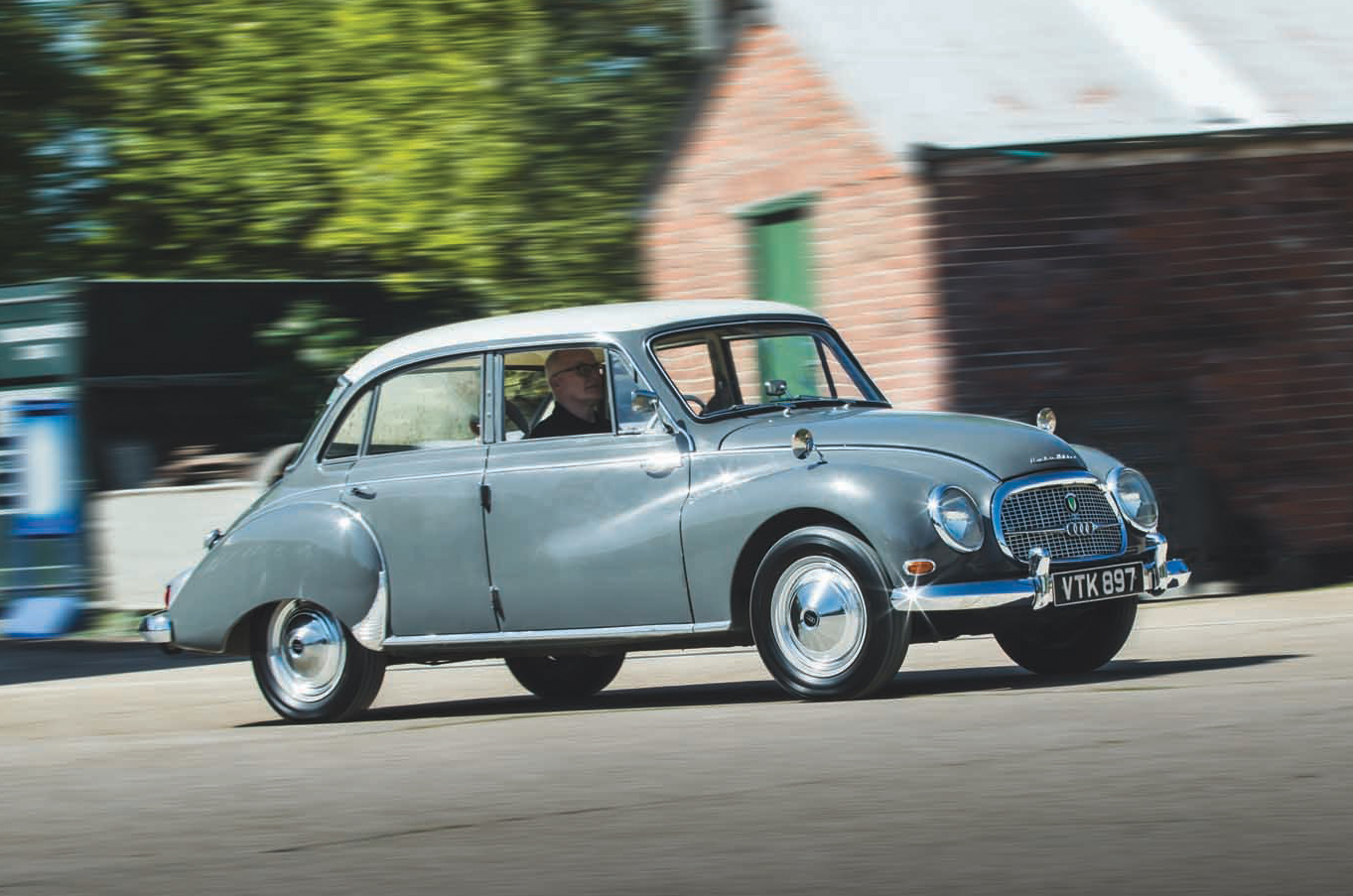
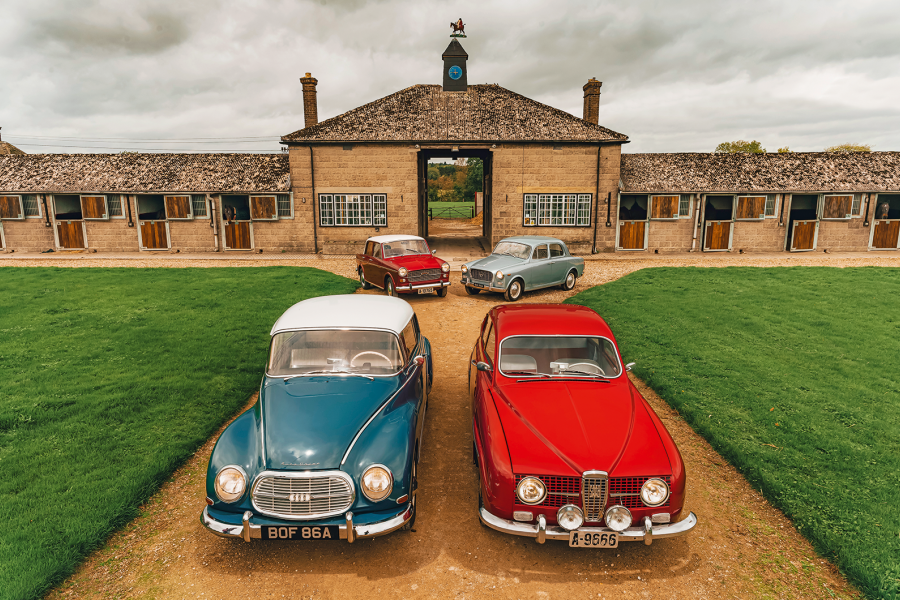
Meanwhile, for the discerning motorist of 1959, the only real alternative to the PL17 was the Auto Union 1000, aka the DKW. This 1962 1000S is owned by Nick Paterson.
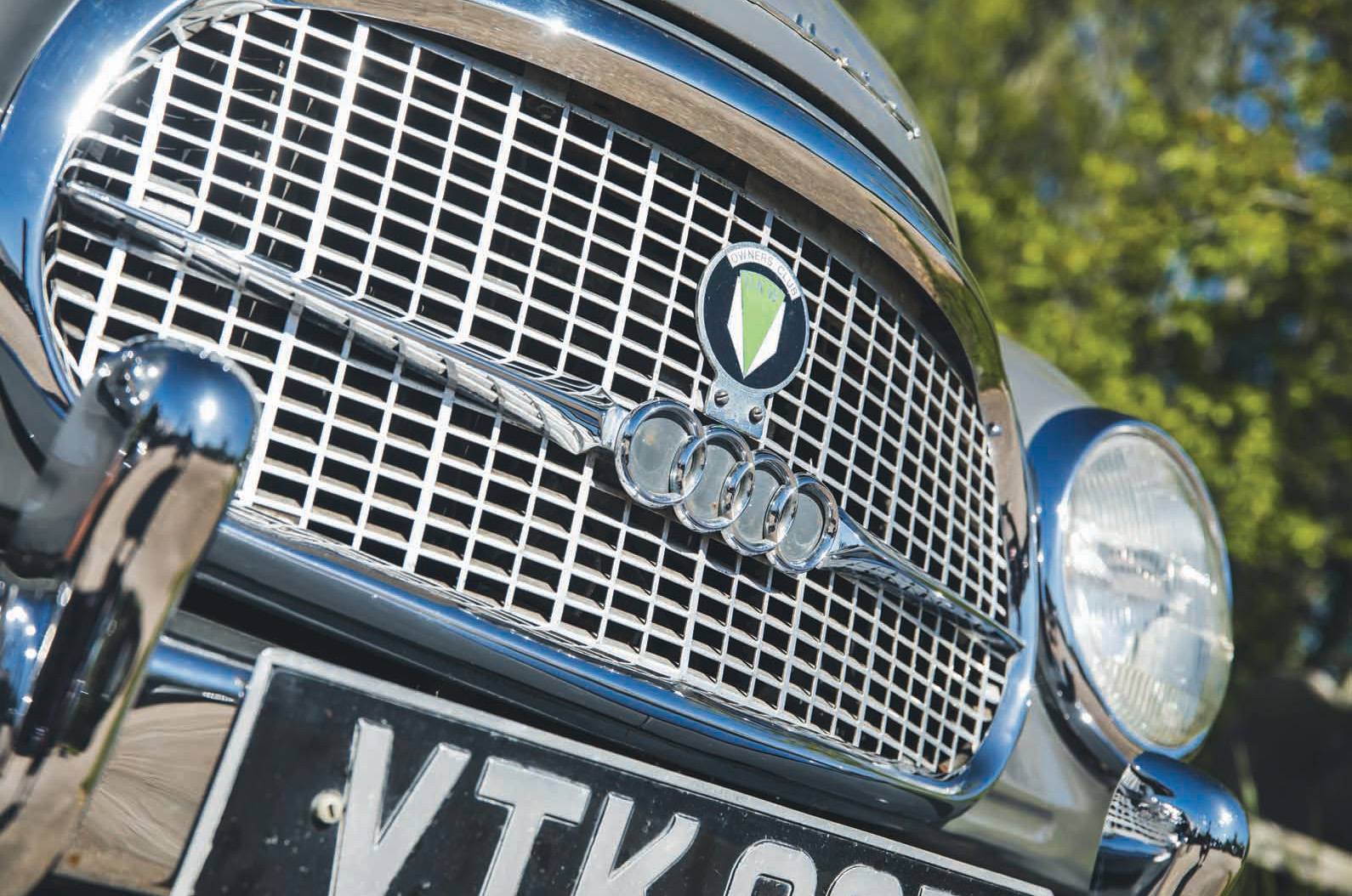
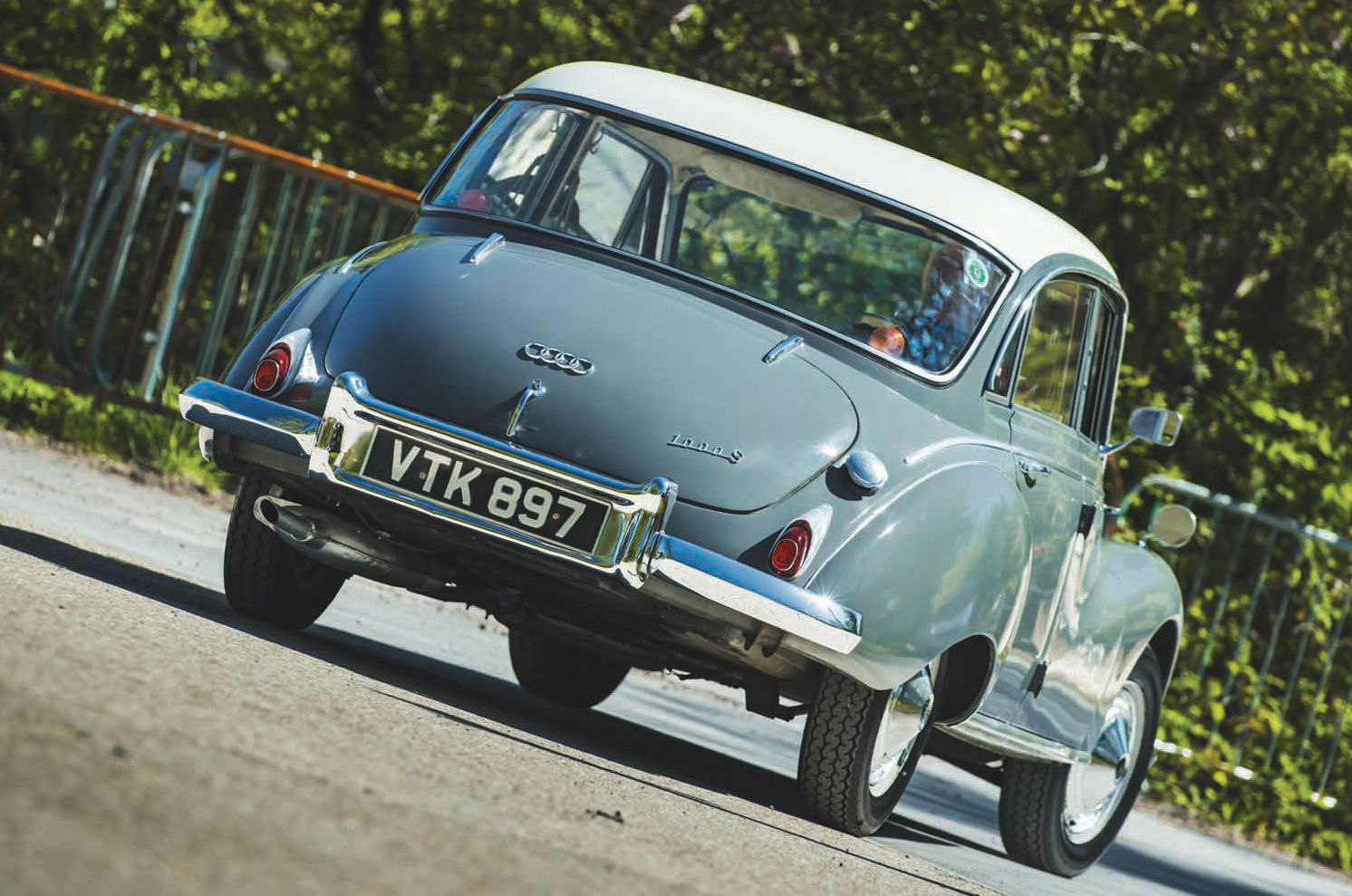
“Not many people recognise it and always think it is an Audi,” he notes. “The four-ringed badge throws them.”
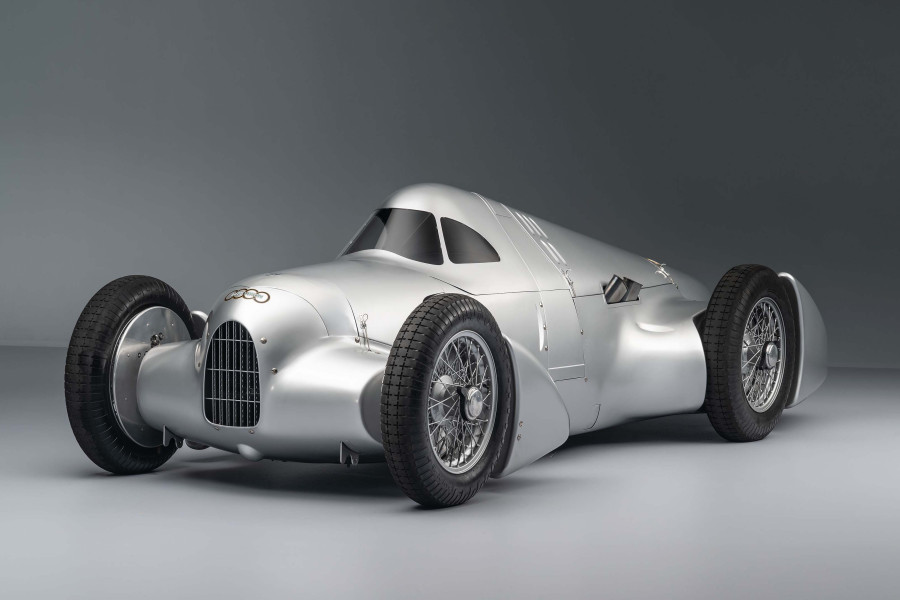
The logo represents the constituent companies of Auto Union: Audi, DKW, Horch and Wanderer.
Auto Union GmbH was formed in 1949 and resumed car production solely under the DKW name in 1950.
The Auto Union’s four-ringed badge tends to confuse onlookers
By 1953, the F91 Sonderklasse had an 896cc, two-stroke, three-cylinder engine and was Auto Union’s alternative to the Volkswagen Beetle.
Two years later, the facelifted F9 3=6 was introduced, with a four-door version joining the range in 1956.
The 980cc 1000 was launched in 1958, which Auto Union marketed under its corporate name rather than as a DKW, to lend it a more upmarket image.
The 1000 received a wraparound windscreen in 1959, for a more contemporary appearance, but the German Wirtschaftswunder (economic miracle) meant fewer motorists wanted two-stroke engines.
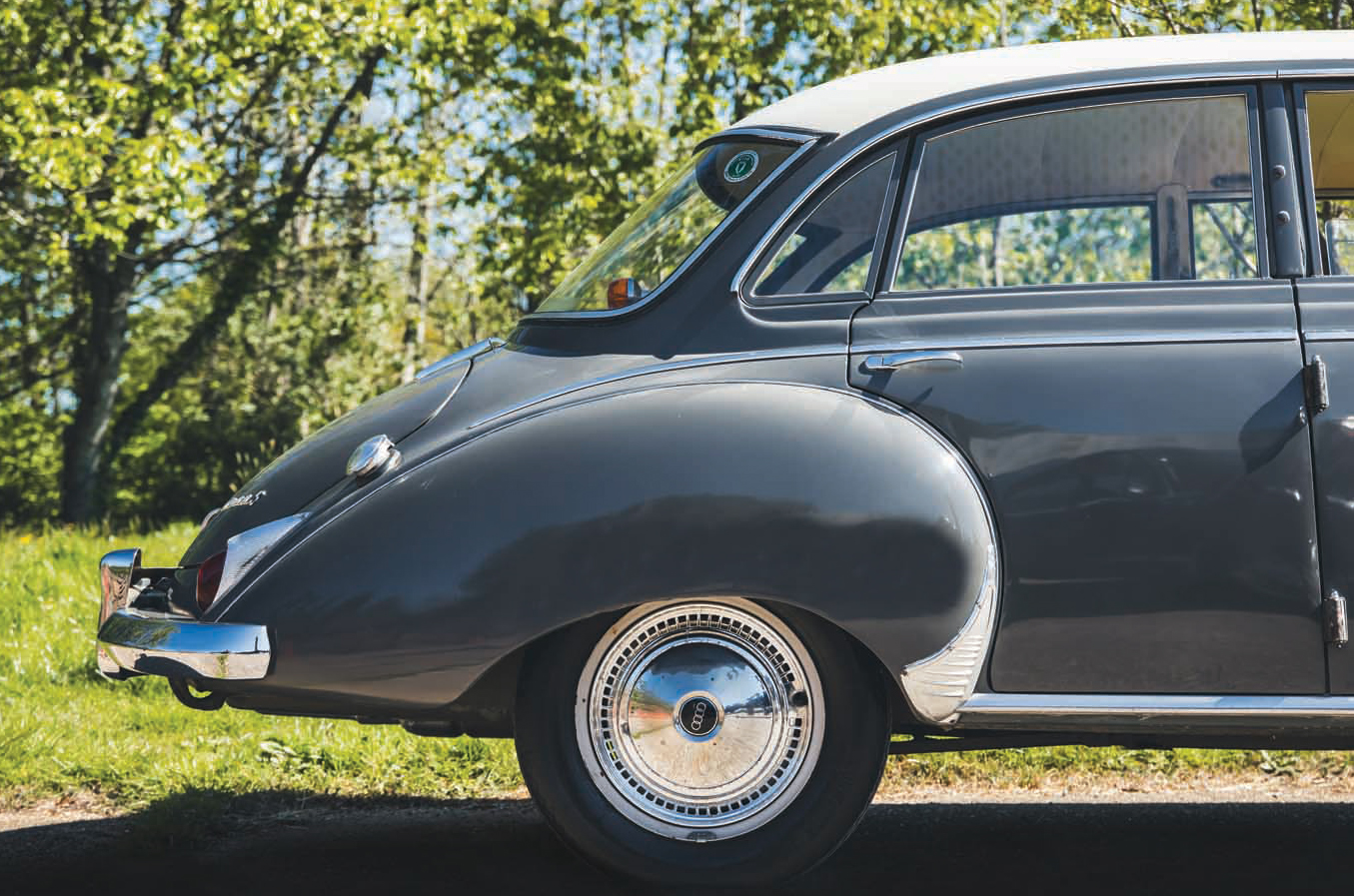
The Auto Union 1000S has shapely rear haunches
The 1000 model also made its debut against a background of corporate upheaval, for by 1958 Auto Union was part of the Daimler-Benz empire.
Its CEO, Walter Hitzinger, told Der Spiegel in 1961 that the ambitious 1000 driver ‘might switch to the Mercedes 180 or 190’.
The reality was that, when production ended in ’63, Auto Union had nearly 30,000 unsold cars in storage.
The DKW F102 replacement was its last two-stroke vehicle, and on 1 January 1965, VW acquired a majority share in Auto Union after Daimler-Benz sold its concern.
In September, the four-stroke F103 marked a new chapter. In a further break with tradition it was sold as an Audi, and the DKW name was no more.
Three coils atop the Auto Union’s two-stroke triple
As for the British market, AFN of Isleworth became the marque’s sole concessionaire here and it urged motorists to ‘See and Try the Intriguing DKW’.
Eric Cecil and Tony Vickers’ win on the East African 1956 Coronation Safari Rally in a 3=6 enhanced the brand’s image among press-on motorists, and Auto Union made the claim that the elegance and comfort of the 1000 would ‘attract the attention of the connoisseur’.
AFN made a point of highlighting the transmission freewheel, which allowed for rapid clutchless downchanges, and the automatic fuel/oil mixer under the petrol cap.
The Auto Union 1000S has a large grille on its crowd-pleasing, friendly face
However, any prospective owner who called Isleworth 5341 to arrange a test drive had to be fairly well-heeled.
In 1962, the 1000 four-door was £1179, compared with £1044 for a Vauxhall Cresta PA.
Even the Panhard PL17 De Luxe was cheaper, at £1037, although a true Auto Union devotee believed there were no true rivals.
As a result, you were more likely to see a 1000 saloon in the newsreels of West Germany than outside Victor Value supermarkets.
Nick believes that his example is the only UK-market, right-hand-drive four-door in the country.
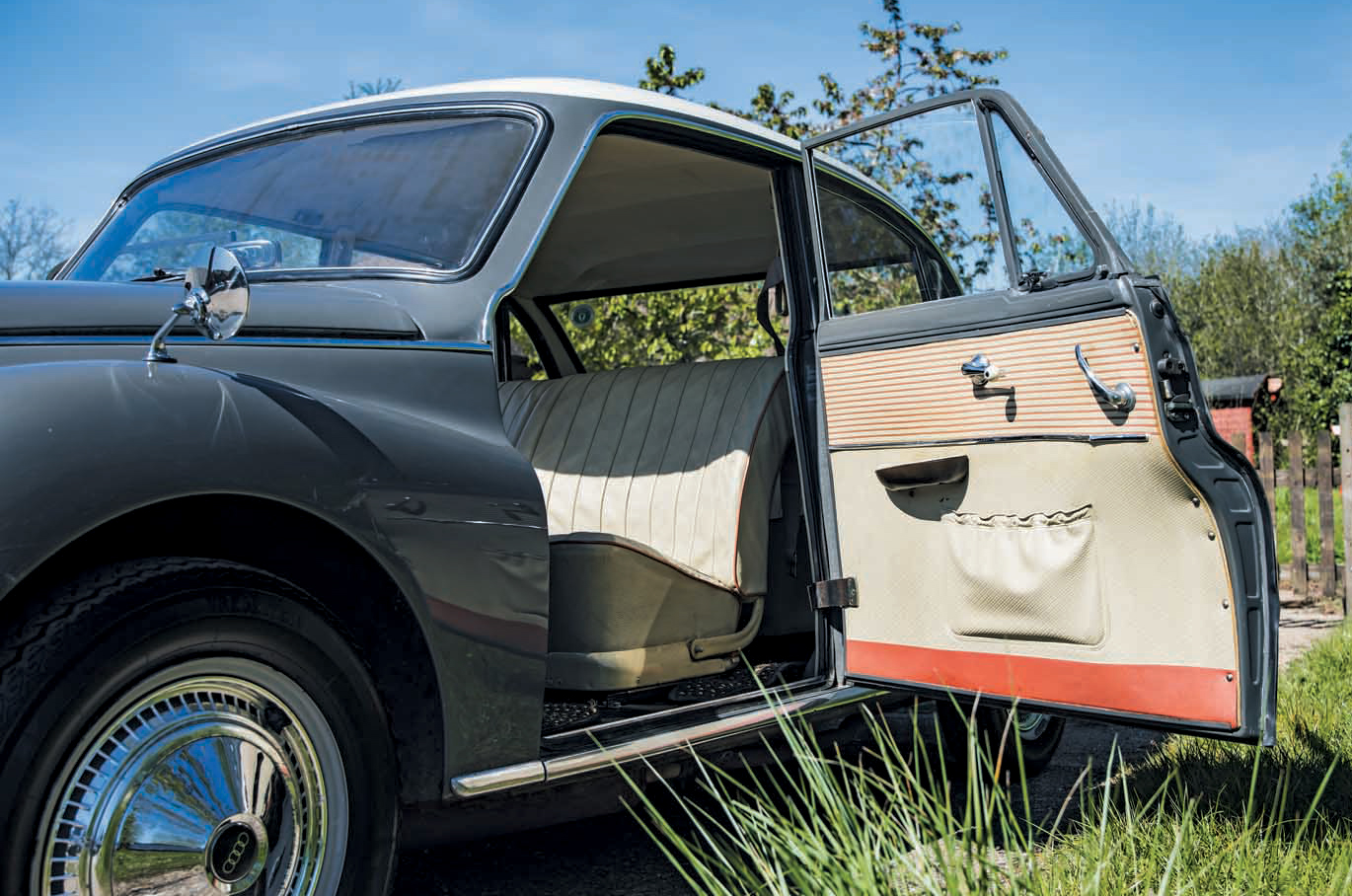
The Auto Union 1000S has rear-hinged doors, similar to the Panhard
Nick is a long-standing DKW enthusiast.
“My first had been sitting in a barn for 40 years,” he says. “I actually went there to look at a Morris Minor for parts, but saw this 1957 DKW sitting there. The shape and the lines just hit me, and I instantly said, ‘I must have it!’”
He acquired this 1962 model last year, and its first owner hailed from Bridport.
Nick adds: “I know that it was restored in 1994 and that it has been in the DKW Owners’ Club GB for a while.”
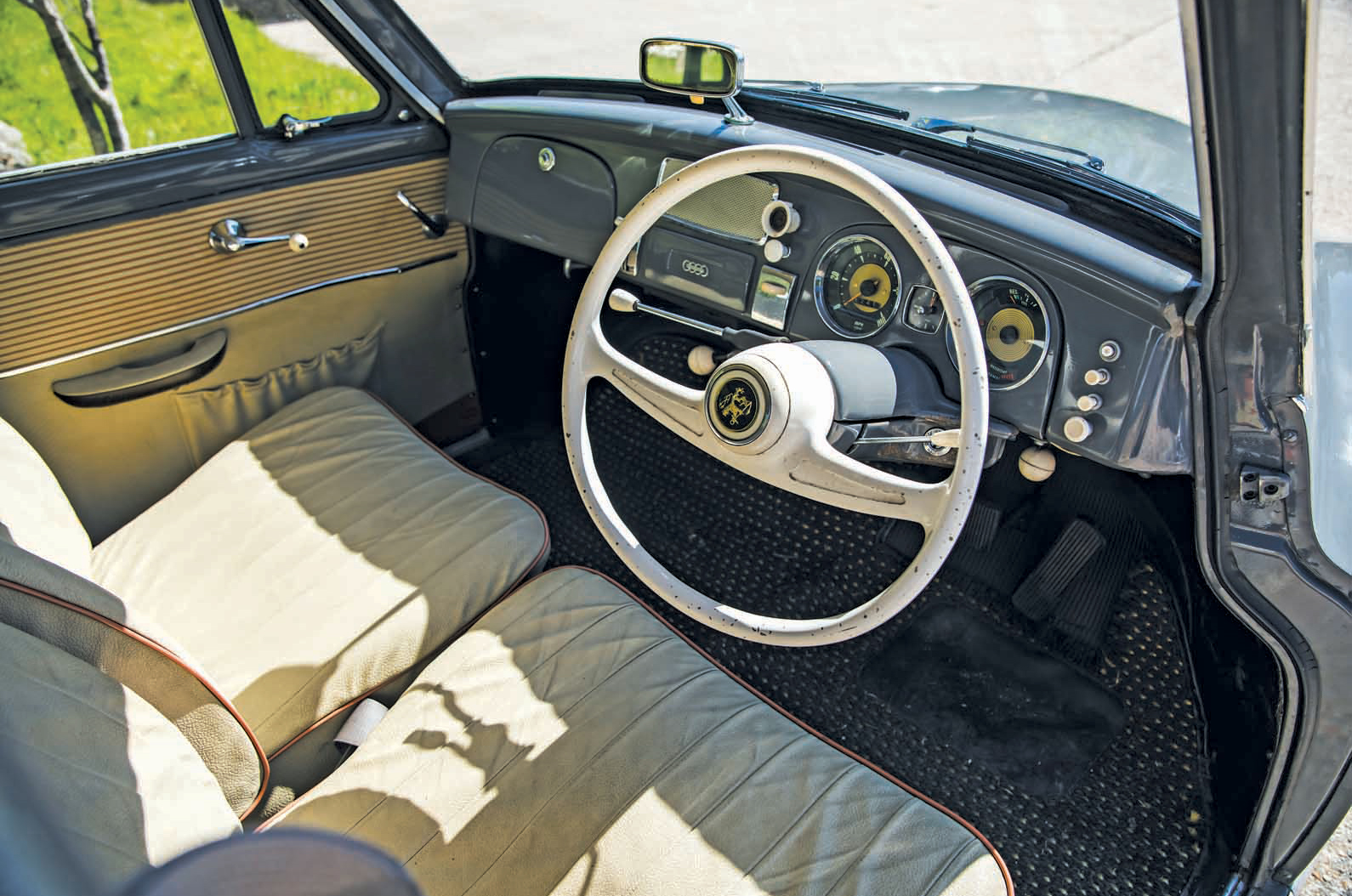
As with the Panhard, the Auto Union has rear-hinged front doors and a cabin that is a riot of plastics.
This may be the UK’s only right-hand-drive Auto Union 1000S
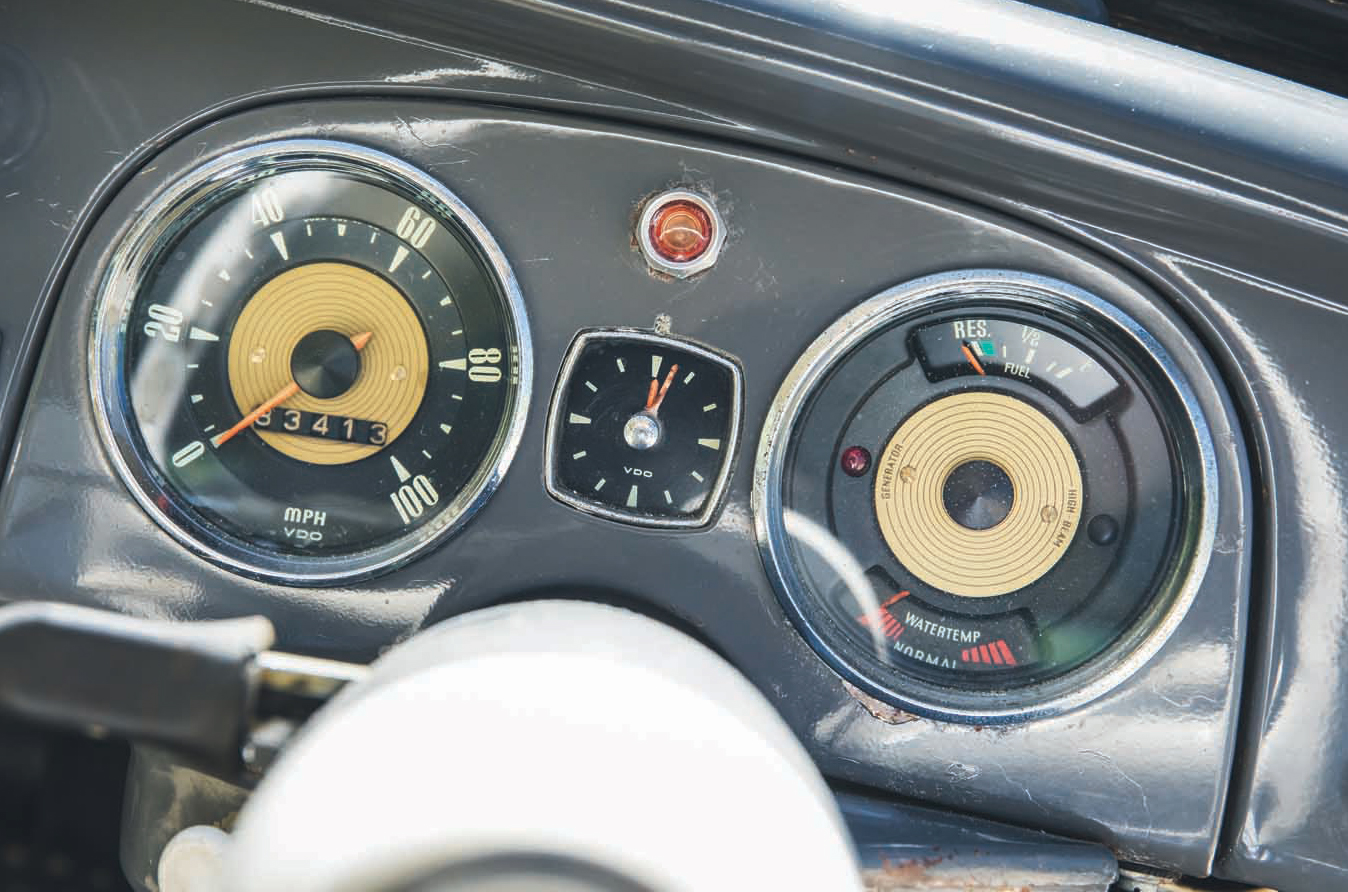
A column-mounted gearlever operates the all-synchromesh four-speed transmission, and, unlike the earlier DKWs, it features conventional dials instead of the vertical speedometer.
The standard equipment includes windscreen washers – ‘A warranty for unrestricted vision’, according to the brochure – and a steering-column lock.
There is also a cigarette lighter with a hot plastic surround that acts as an anti-smoking deterrent, and an ‘astonishingly large parcel shelf’.
People were apparently easier to astonish in the early ’60s.
The Auto Union 1000S has an Art Deco-style dashboard with wide-eyed instruments
When taking his 1000S out on the road, Nick observes: “Driving this quirky little car brings a smile to your face.
“I just enjoy the experience, the two-stroke smell, the feeling of driving a piece of history and, of course, the way it turns heads.
“It has been converted to electronic ignition and now has an electric fuel pump, which makes a huge difference.”
Nick finds that his 1000S is a joy to others, while Jim notices similar reactions to his Panhard, particularly among those of a certain age: “They compare its smiling frontal aspect with the Cadbury’s Smash martians!”
The Auto Union 1000S is a joyful drive
Both are cars for the genuine – as opposed to the affected – individualist, because the Panhard and the Auto Union eschew orthodoxy.
The gulf between them and the saloons hailing from Cowley, Longbridge, Dagenham, Ryton and Luton is not so much vast as Grand Canyon-like in its scope.
Each has a distinct appeal: the PL17 belongs to a world of Left Bank existentialists in their best black rollneck pullovers, while the 1000’s ‘ring-a-ding-ding’ two-stroke engine note conveys an image of the Cold War.
Thus the PL17 and the Auto Union 1000S are equally remarkable vehicles – ‘No Matter How You Look At It,’ to requisition a Panhard sales slogan from 1960.
Images: Jack Harrison
Thanks to: DKW Owners’ Club GB; Panhard et Levassor Club GB; The Brickworks Museum
Factfiles
Panhard PL17
- Sold/number built 1959-’65/166,000
- Construction steel monocoque
- Engine all-alloy, ohv 851cc flat-twin, single carburettor
- Max power 42bhp @ 5300rpm
- Max torque 51lb ft @ 2500rpm
- Transmission four-speed manual, FWD
- Suspension: front independent, by upper and lower transverse springs rear rigid axle, trailing arms, transverse torsion bars
- Steering rack and pinion
- Brakes drums f/r
- Length 15ft (4572mm)
- Width 5ft 5½in (1689mm)
- Height 4ft 9½in (1461mm)
- Wheelbase 8ft 10⅓in (2447mm)
- Weight 1848lb (838kg)
- 0-60mph 28.6 secs
- Top speed 79mph
- Mpg 32
- Price new £999 17s 6d
- Price now £5-20,000*
Auto Union 1000S
- Sold/number built 1958-’65/171,008
- Construction steel monocoque
- Engine iron-block, alloy-head, two-stroke 980cc triple, single carburettor
- Max power 43bhp @ 4500rpm
- Max torque 62lb ft @ 2250rpm
- Transmission four-speed manual, FWD
- Suspension: front independent, by lower wishbones rear rigid axle; transverse leaf spring, telescopic dampers f/r
- Steering rack and pinion
- Brakes drums f/r
- Length 13ft 10½in (4229mm)
- Width 5ft 6¾in (1689mm)
- Height 4ft 9¾in (1416mm)
- Wheelbase 7ft 8½in (2350mm)
- Weight 1974lb (895kg)
- 0-60mph 23 secs
- Top speed 80mph
- Mpg 26.4
- Price new £1179
- Price now £5-12,000*
*Prices correct at date of original publication
Enjoy more of the world’s best classic car content every month when you subscribe to C&SC – get our latest deals here
READ MORE
Simca Aronde Plein Ciel: the sky is the limit