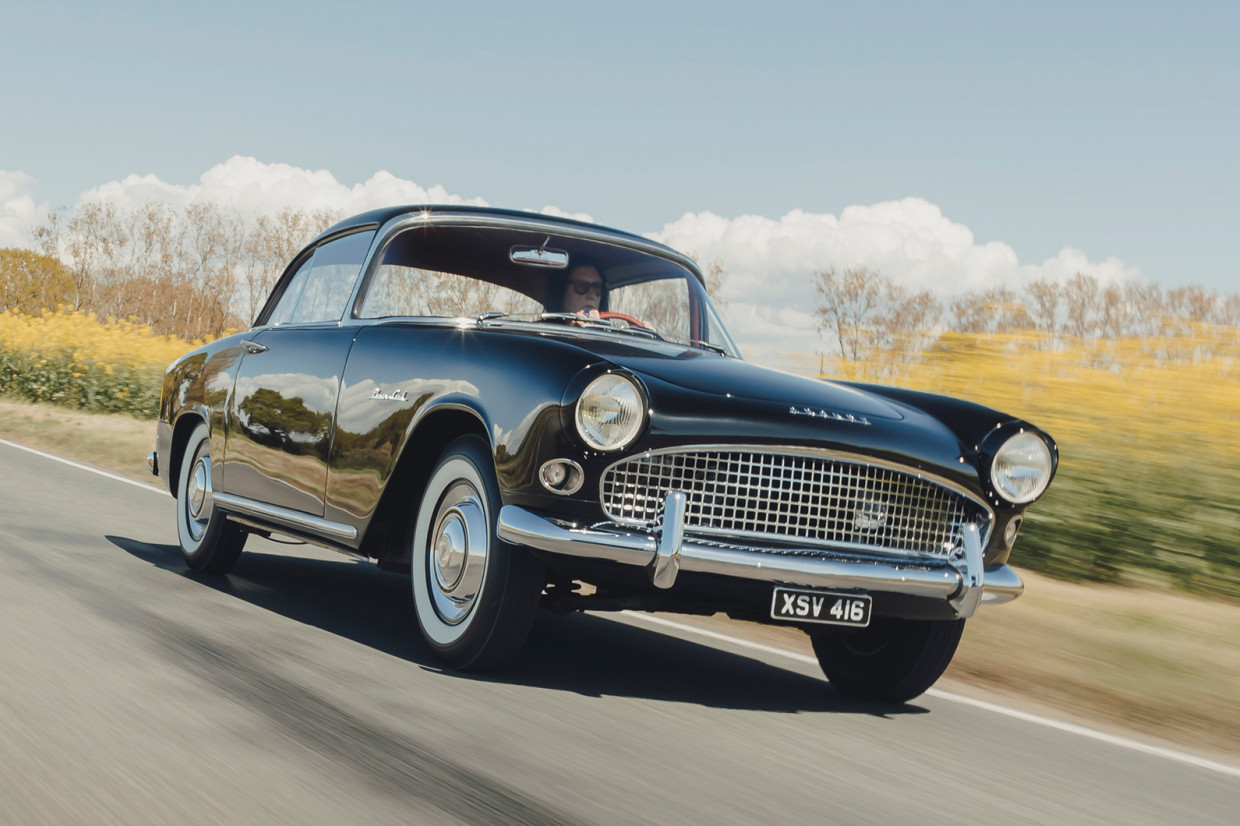
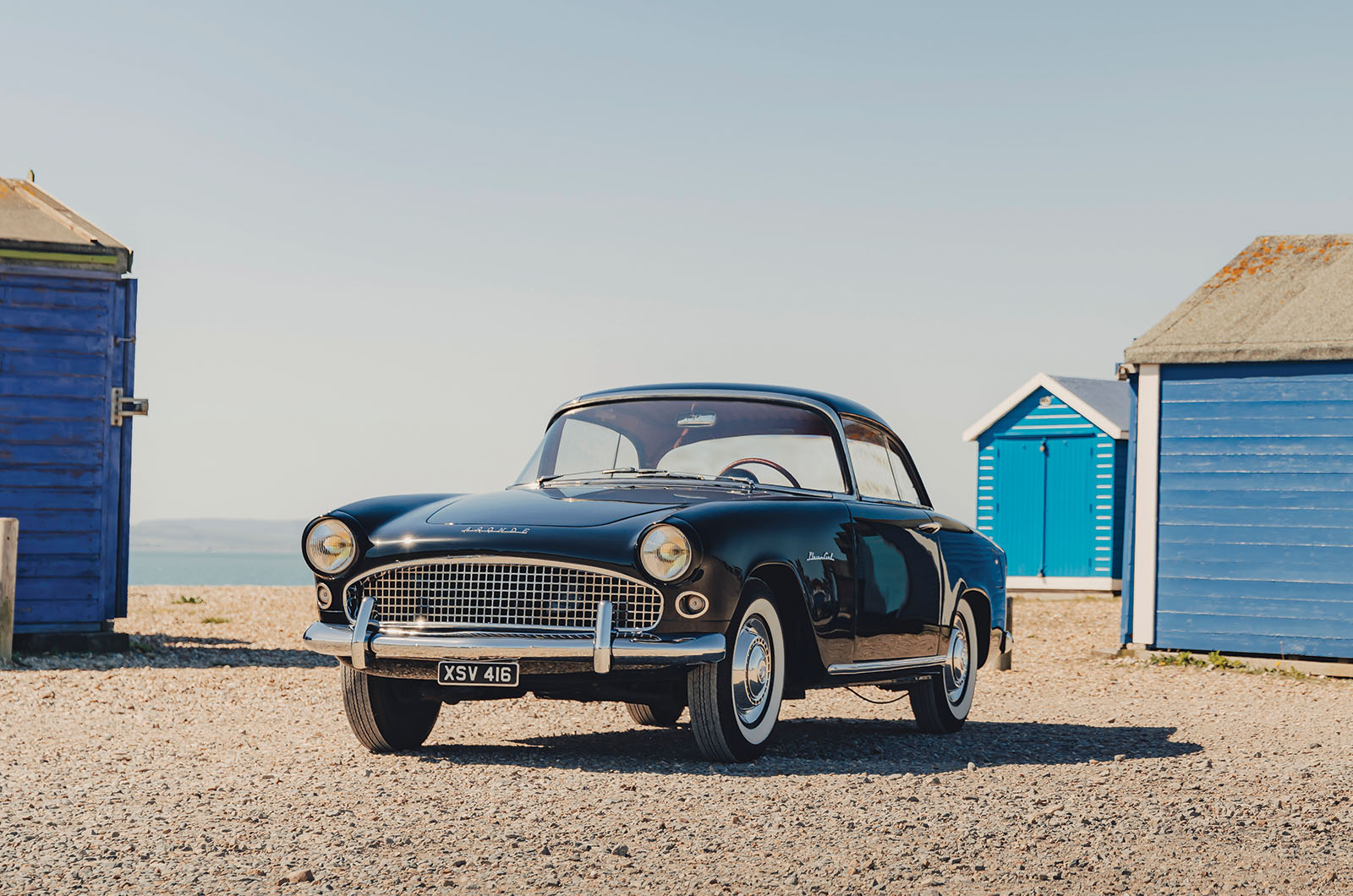
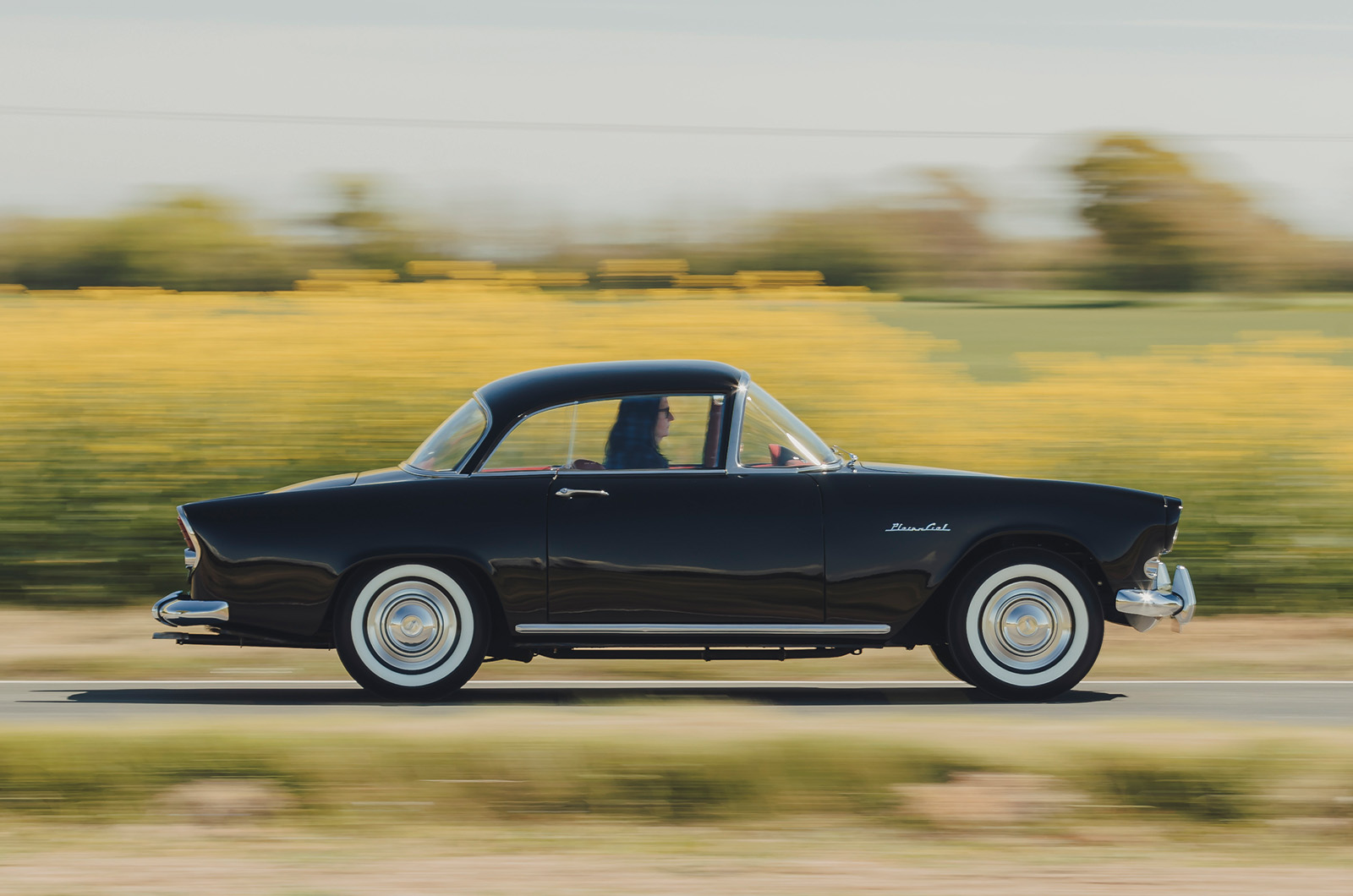
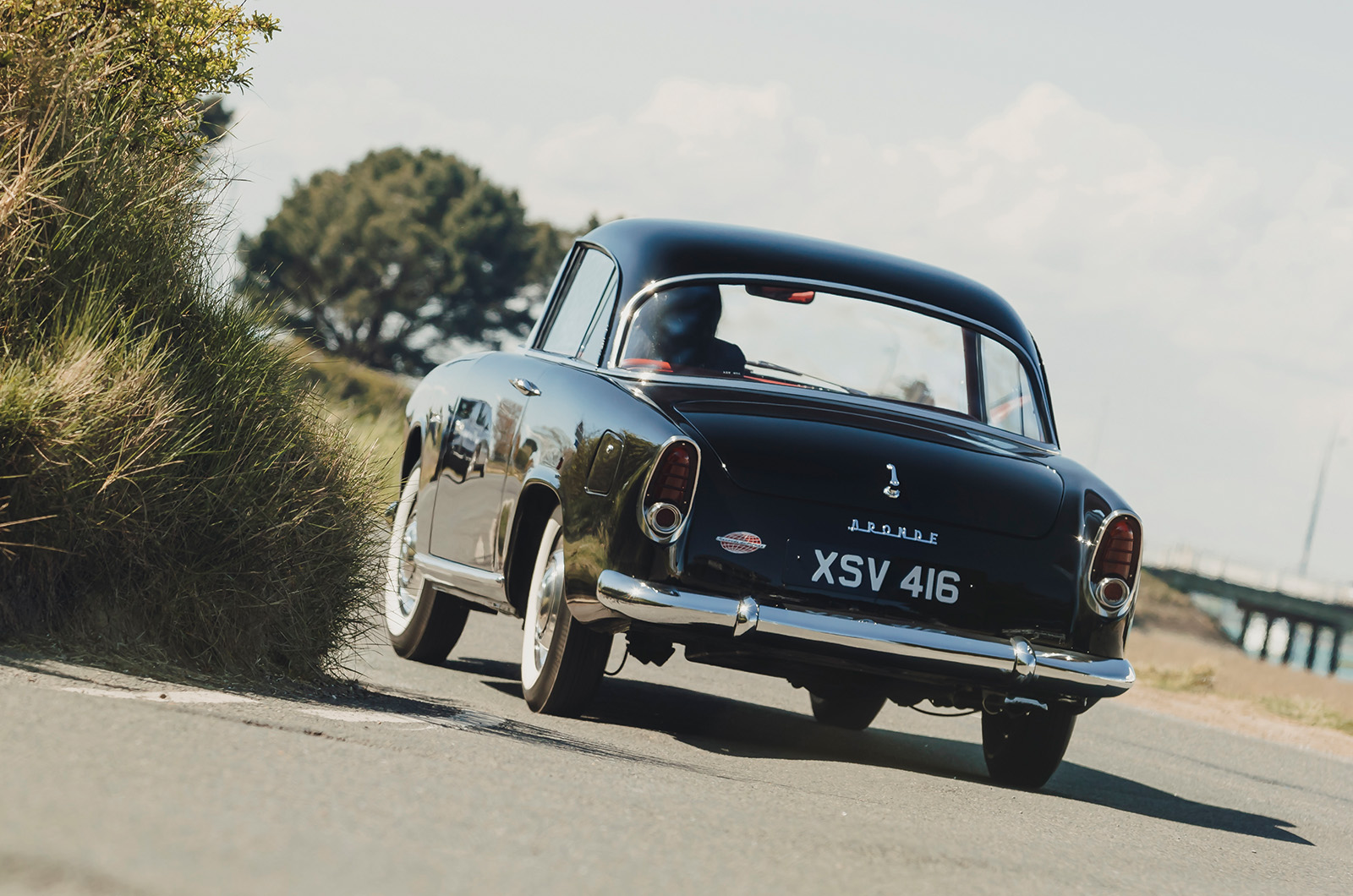
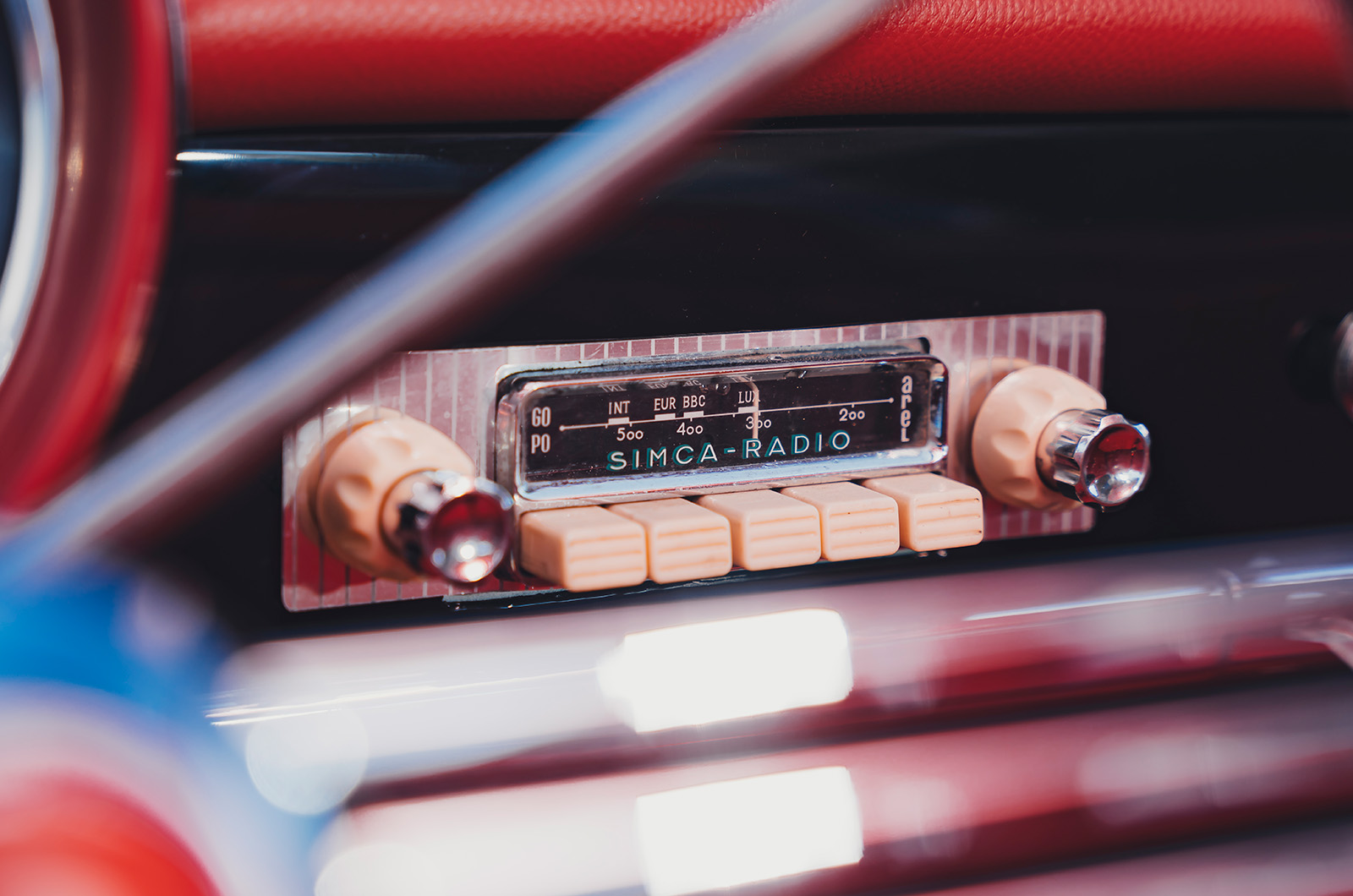
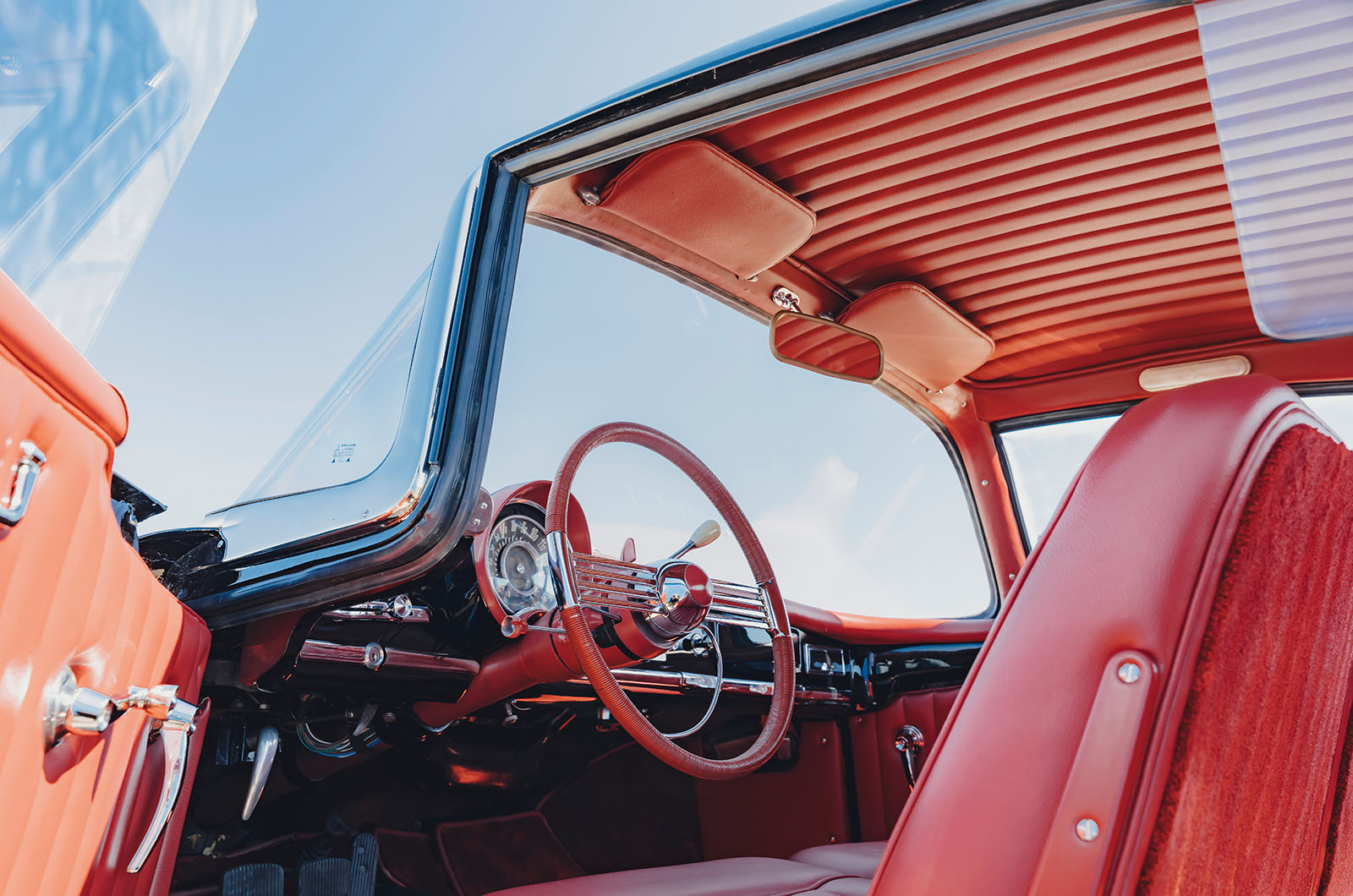
The domed canopy is almost all glass, so you can see the reasoning behind the ‘Open Sky’ nomenclature.
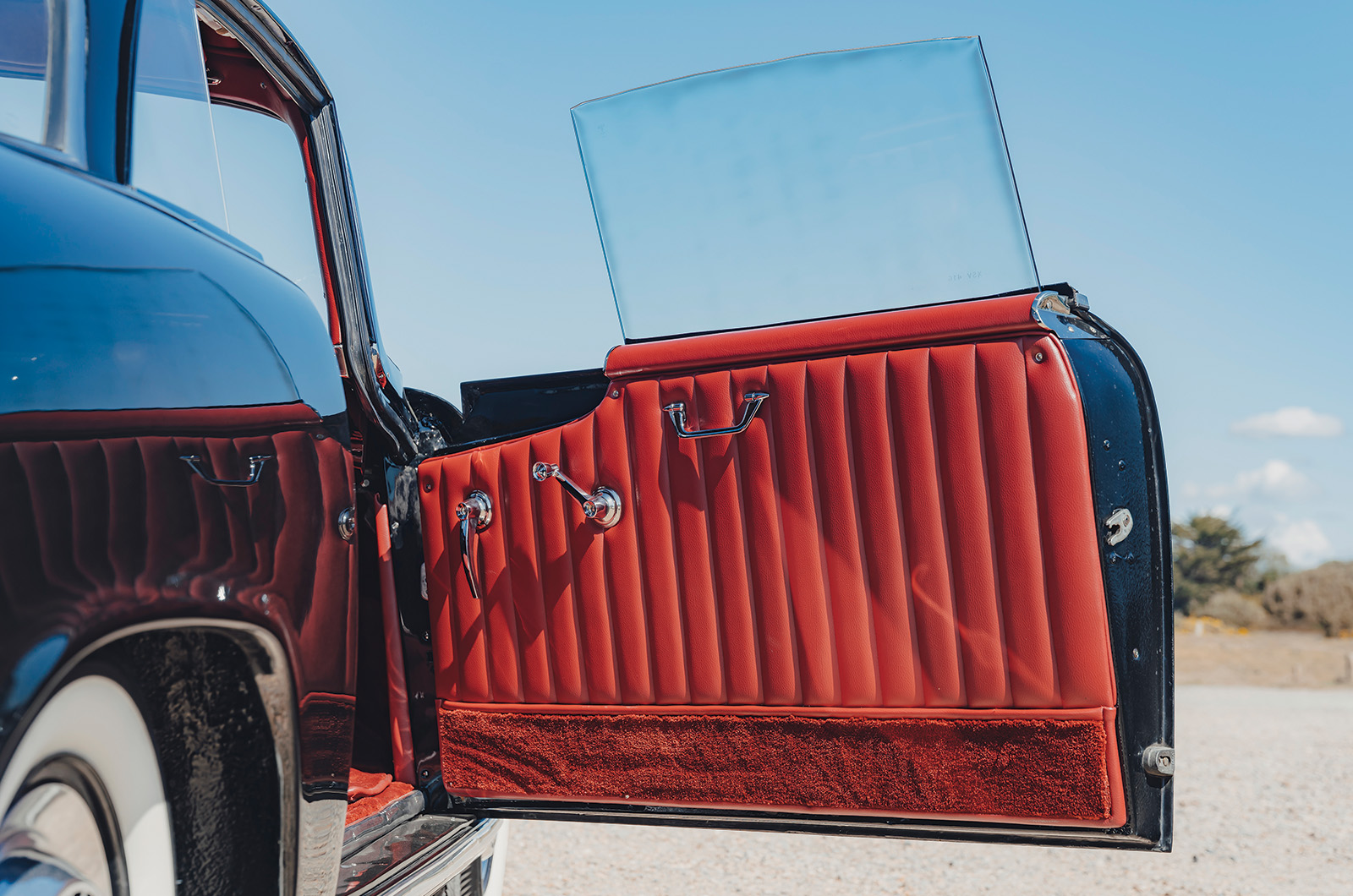
The dog-leg wraparound on the ’screen looks perfect for a knee-capping, but you have to be even more careful not to slam the doors because there is no rubber buffer between the door and three-quarter window glass.
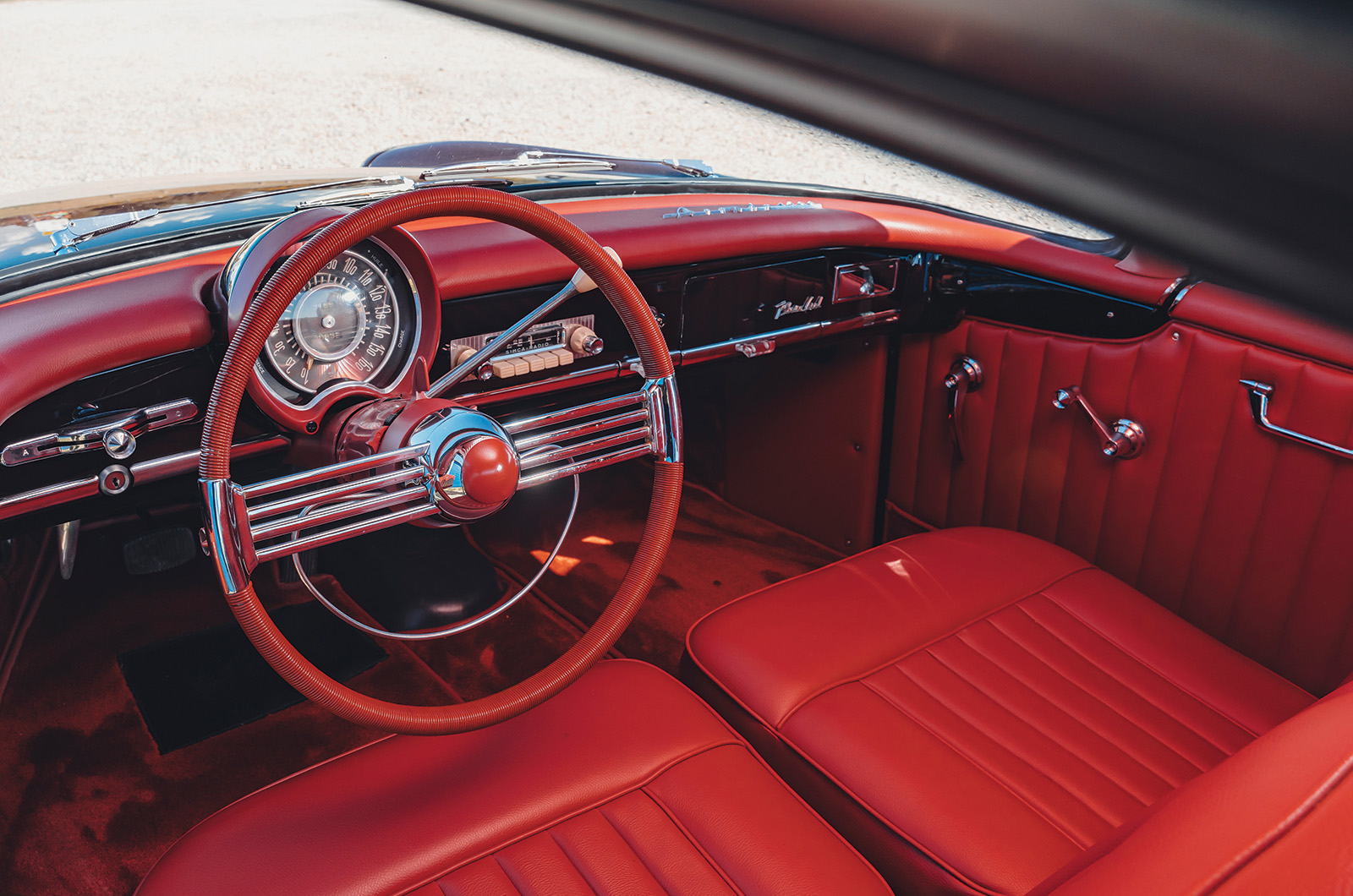
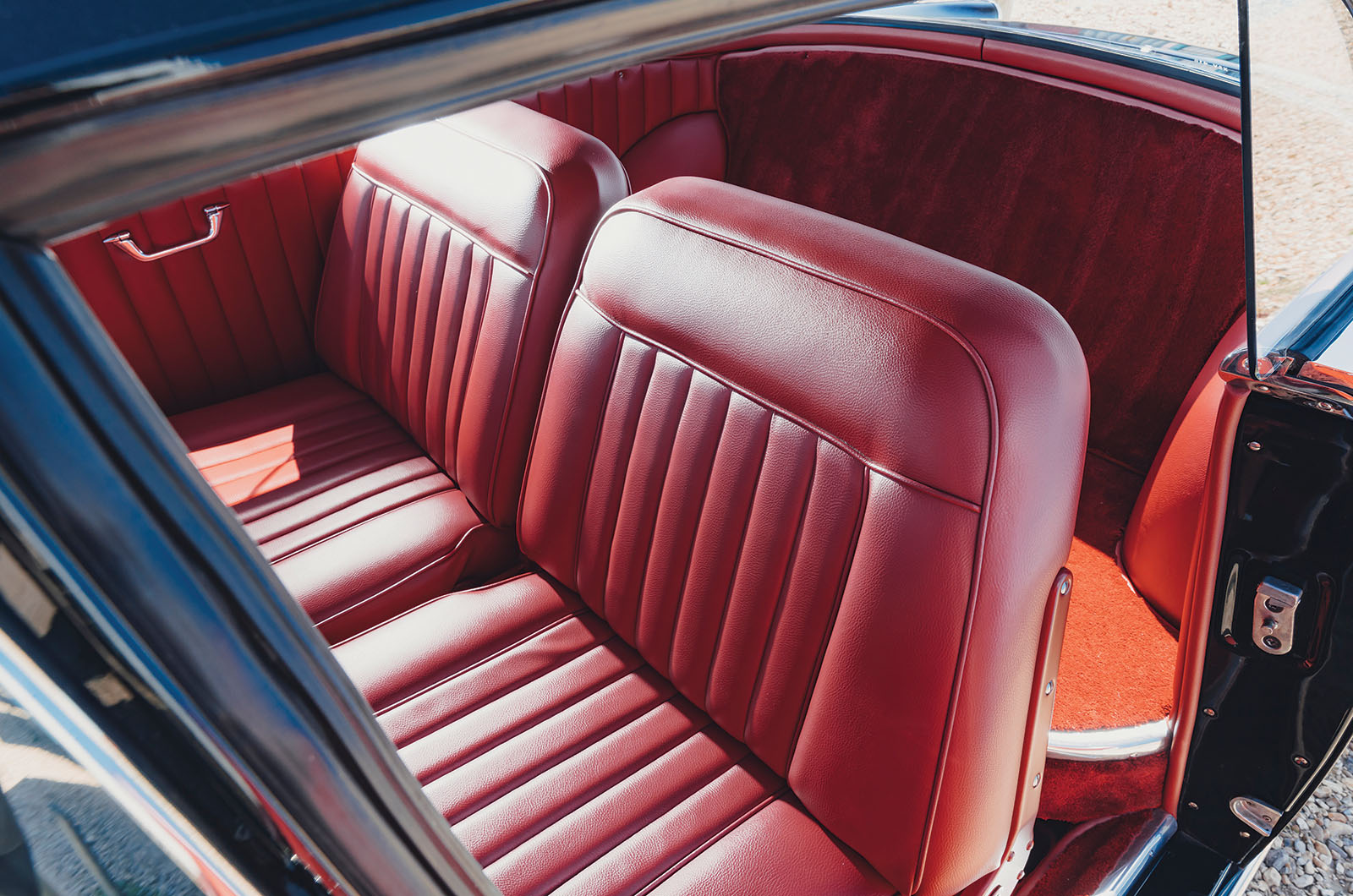
The seats are quite substantial, almost like something out of a Rover of the period, and have backrest adjustment – a rare thing even on many more expensive cars at the time.
The Simca Aronde Plein Ciel’s drum brakes provide excellent stopping power
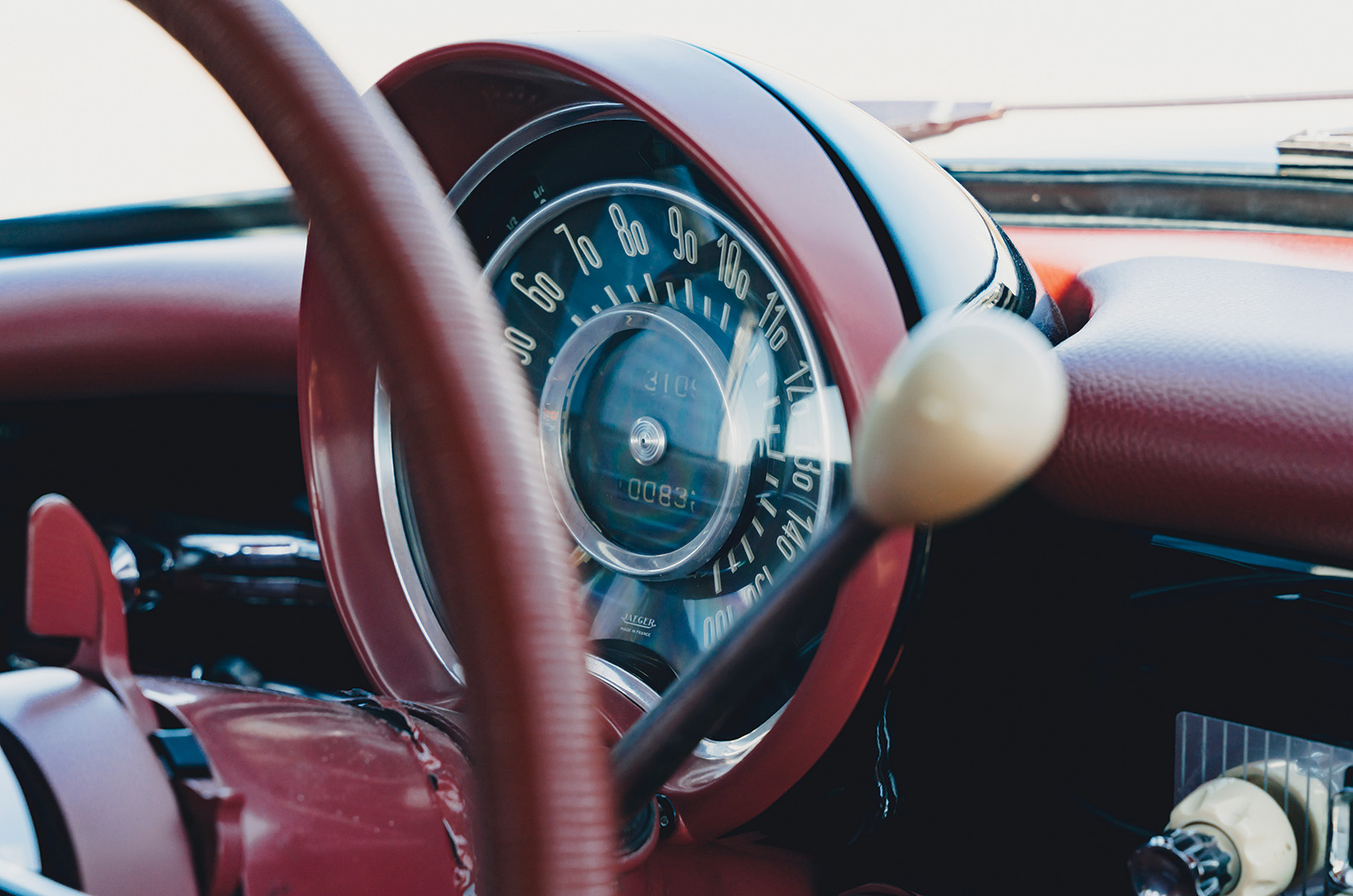
The highly styled dashboard sweeps in a long curve between the doors with just a solitary circular speedometer housing the various main-beam/charging lights, and fuel and temperature gauges.
It is simple yet manages not to look austere.
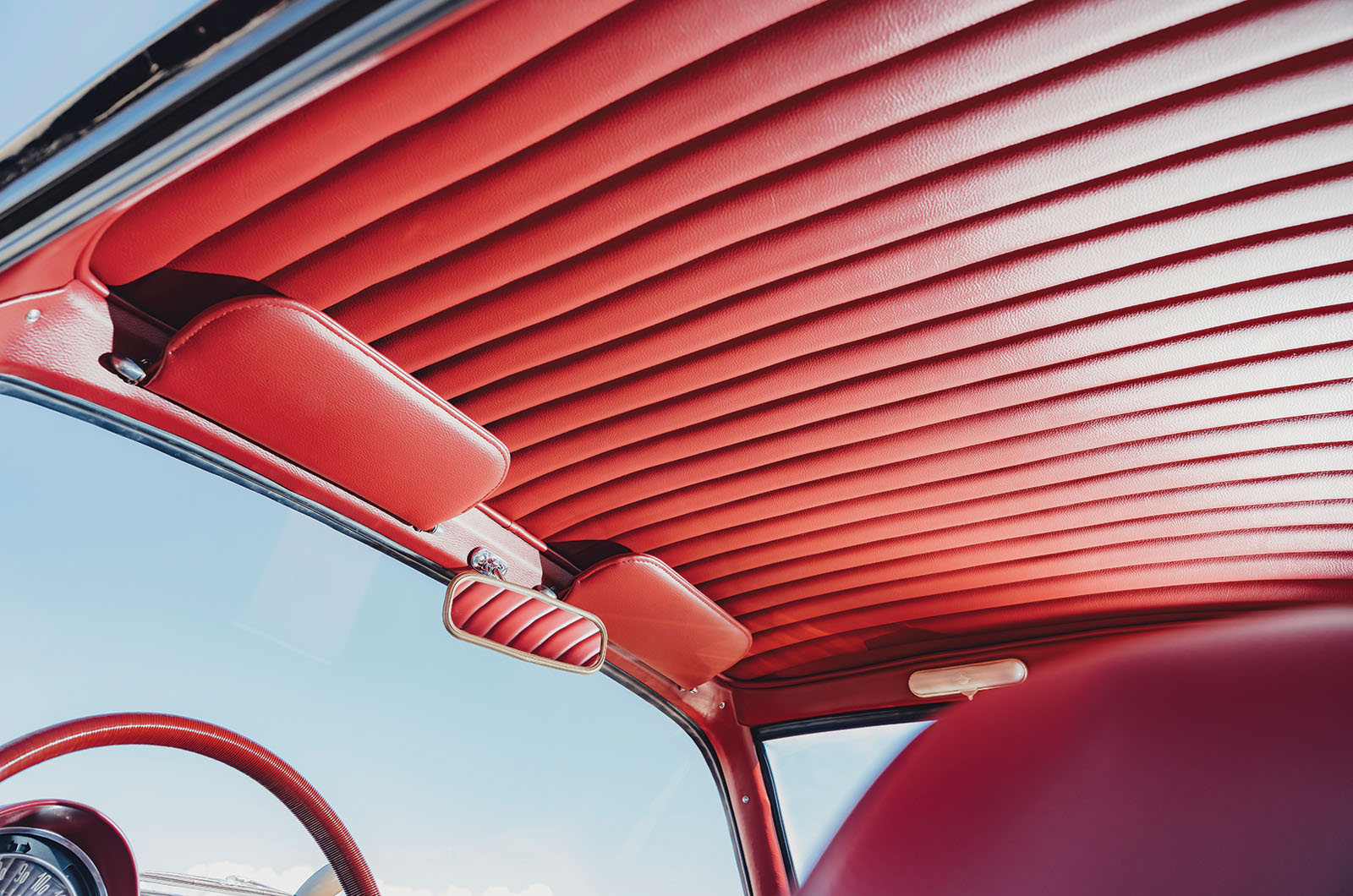
The large steering wheel has a vulnerable-looking half-ring horn (town and country horns were standard), along with chromed spokes and a red rim to match the interior trim.
Most of the important electrical functions are on column switches.
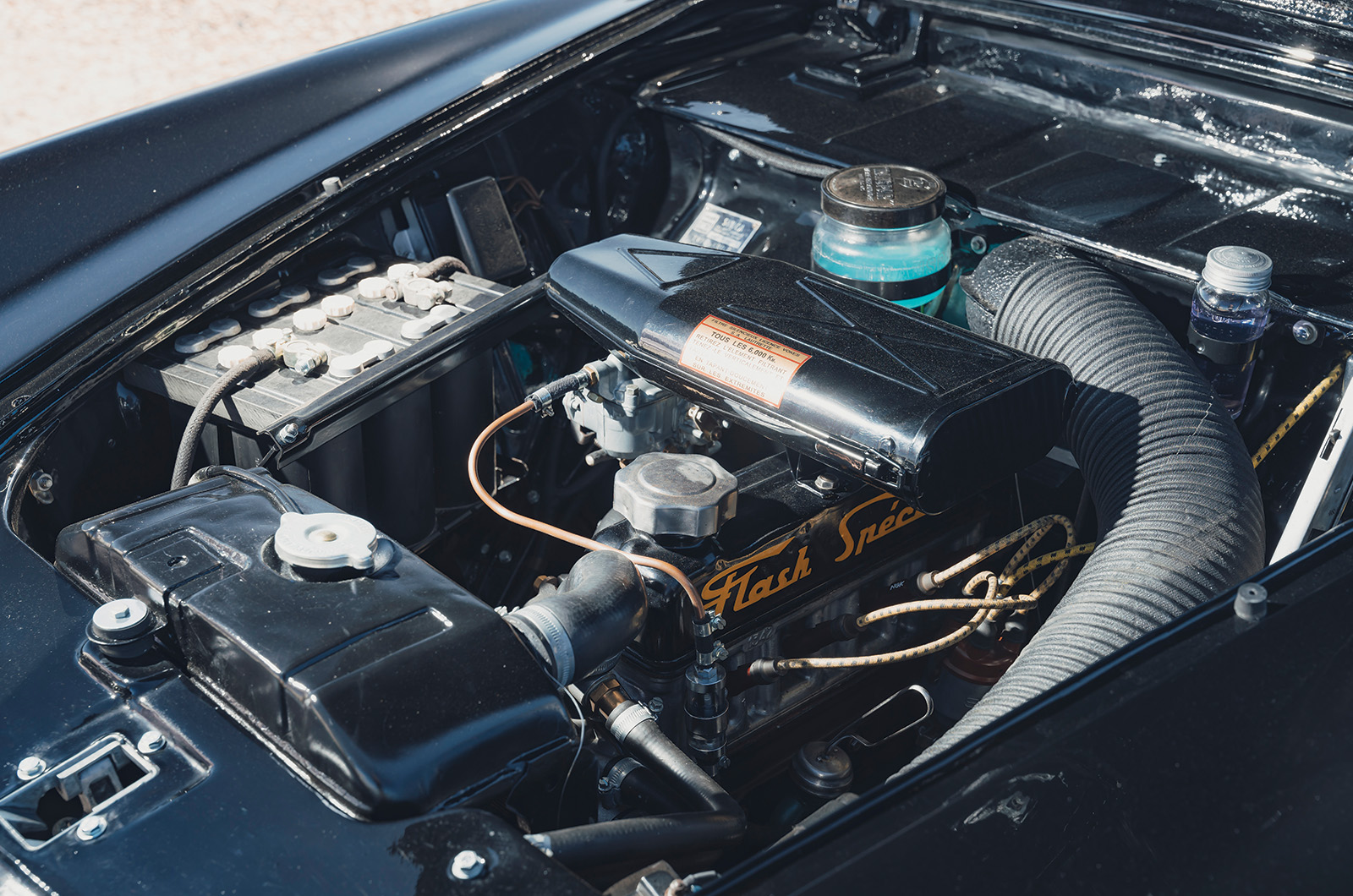
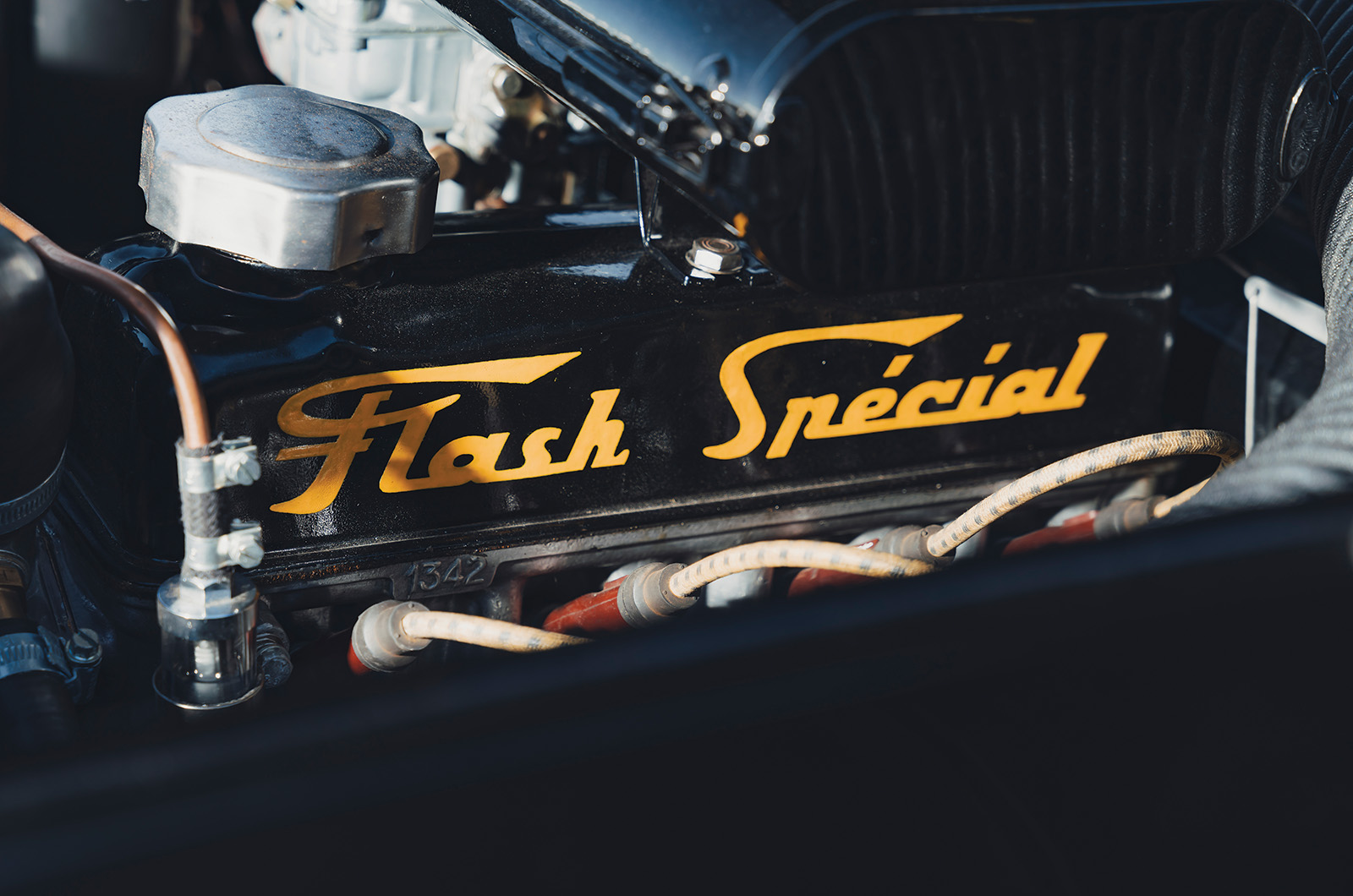
This Simca Aronde Plein Ciel’s engine has had new pistons
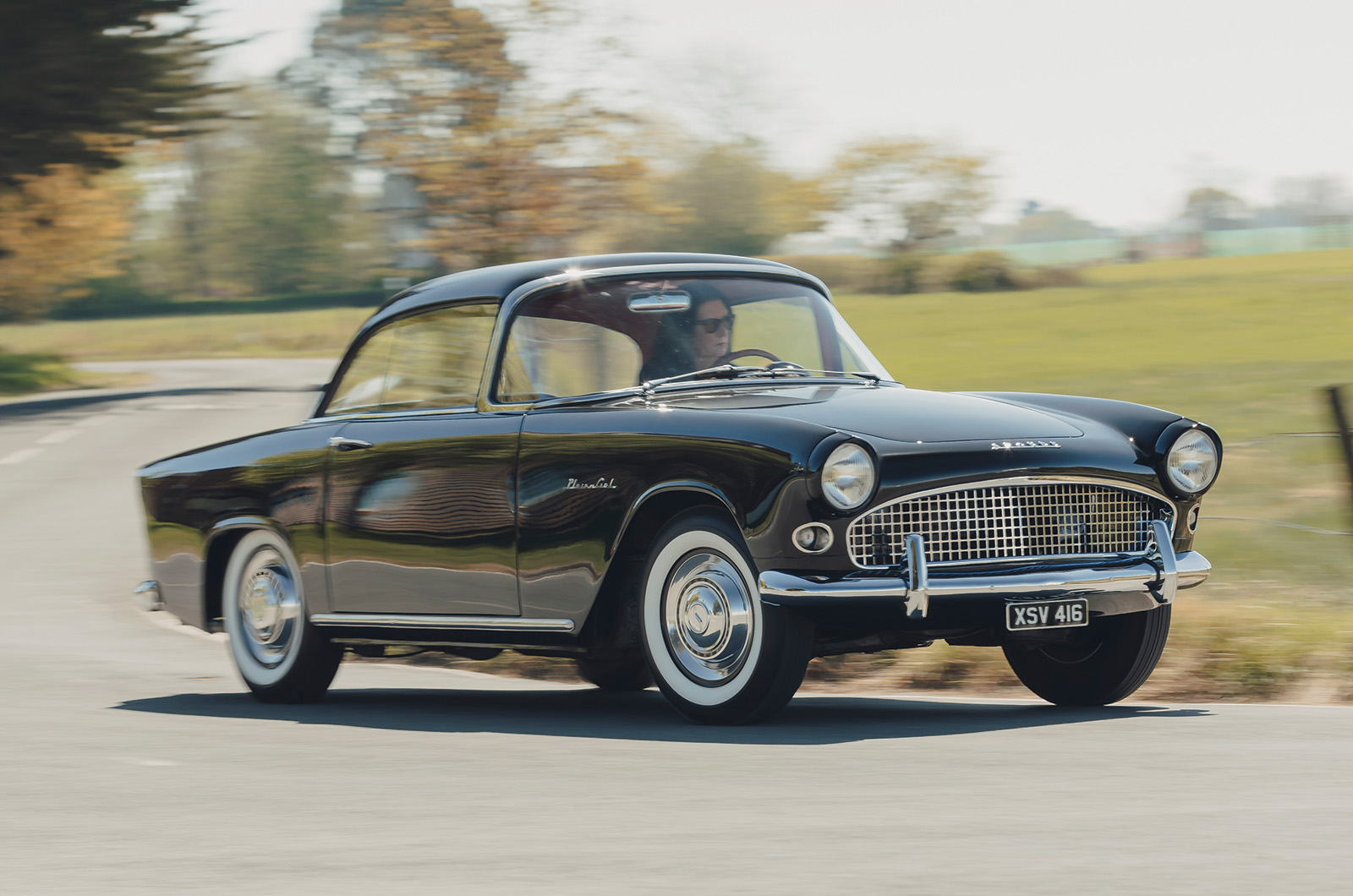
At normal speeds, the steering is not heavy and it feels firmly accurate without being nervous, only really loading up on tight, slow corners.
Even on its crossply tyres you are not conscious of having to keep the Simca on the straight and narrow, but Julie is thinking in terms of period radials at some point.
The engine is quiet at low speeds, but you can sense that it only has four cylinders once it is pulling freely in the well-plotted ratios via the column shift.
First is low and ‘crash’, but the rest are silent in a wide, slightly stiff gate to which it is easy to attune.
The Simca Aronde Plein Ciel’s lavish headlining
The clutch is forgivingly soft and, like all the other pedals, comfortably placed.
The generously sized drum brakes are excellent in response and balance, and there is something very un-French about the Simca’s firm springs and resilient damping – yet, somehow, it doesn’t ride uncomfortably.
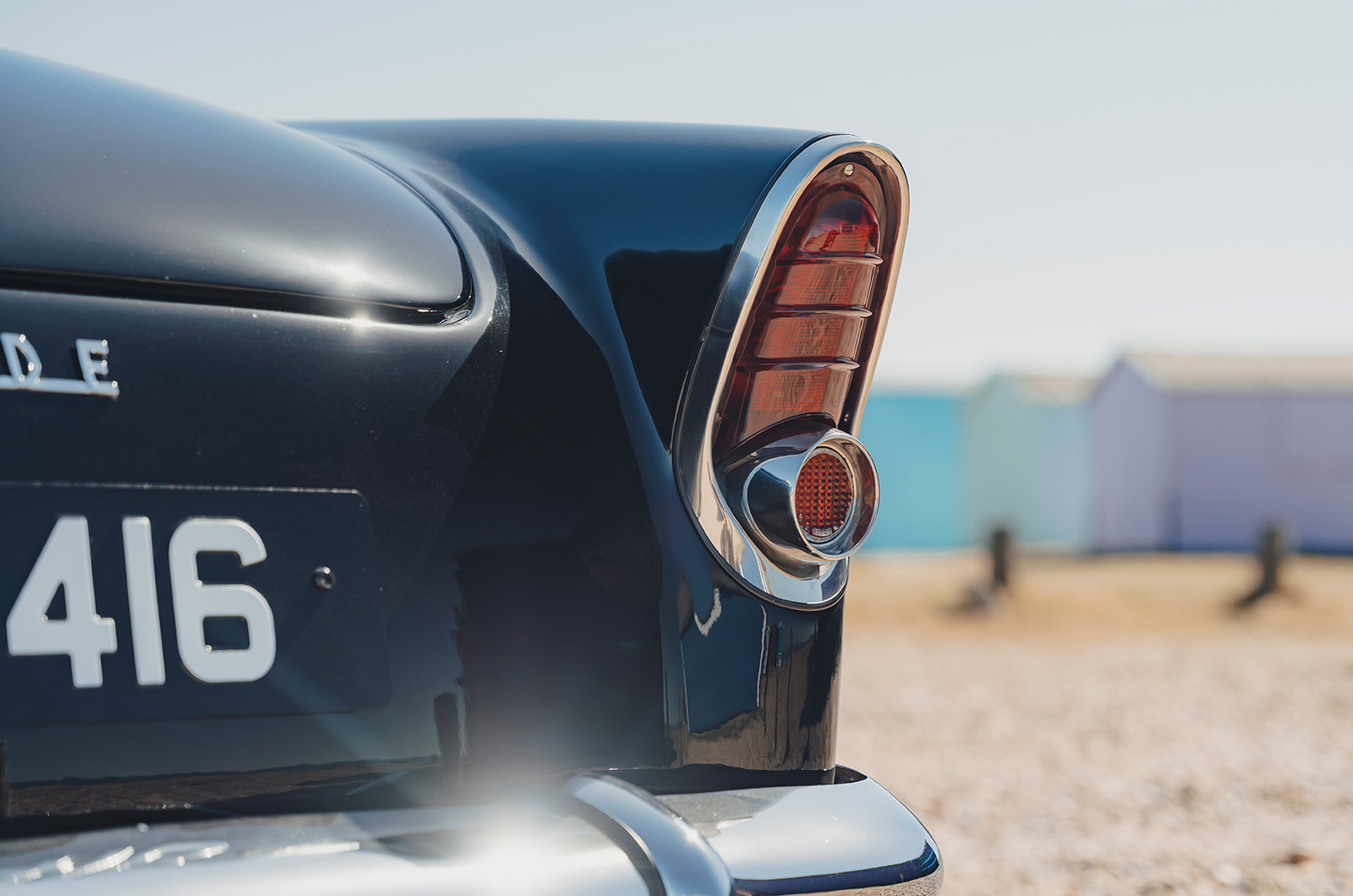
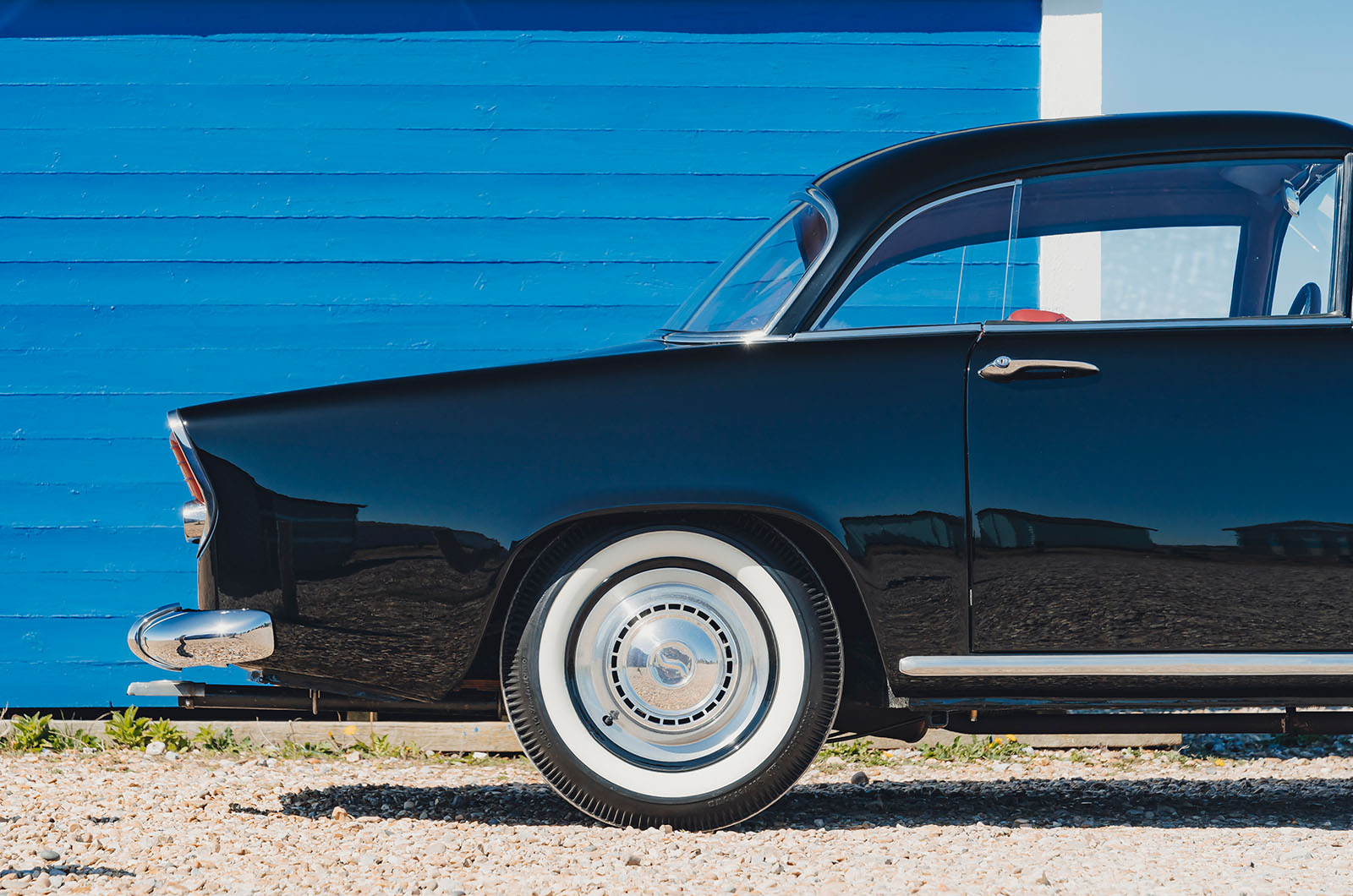
Given that even the tail-lights are special to the car, what about parts? “I keep meaning to join the Facel club,” says Julie, “but Dick Husband is still about in the UK, supplying Simca parts, and I was lucky that everything on the car was right when I bought it.”
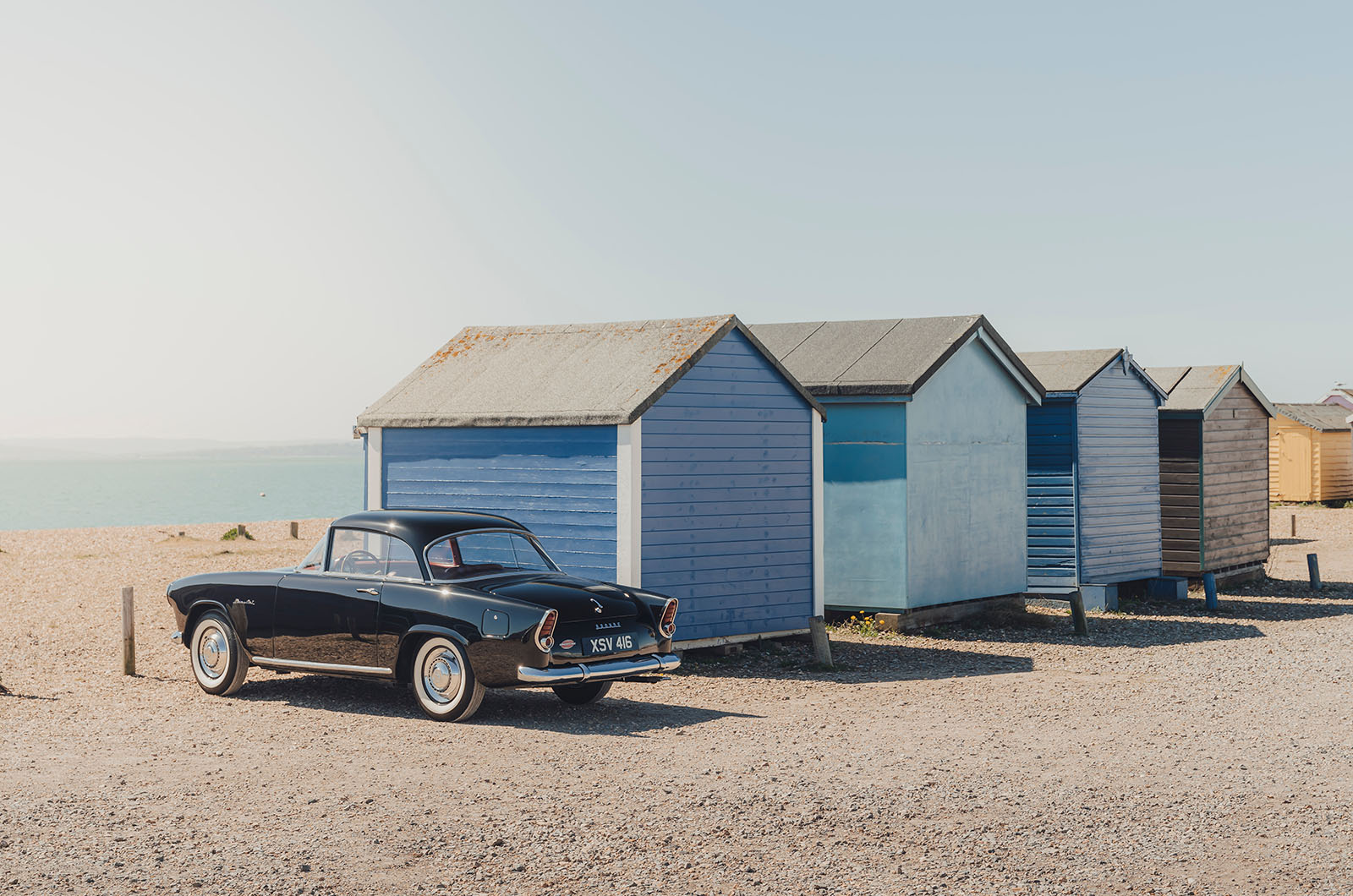
No classic was ever doted on like this Simca. “It is always garaged, it never goes out in the rain, and I hardly ever let her out of my sight,” Julie admits.
“I’m thinking of going to France on an event, but I don’t want to leave the car unattended in the car park!”
Images: Max Edleston
Jean Daninos on Henri Pigozzi
French designer Jean Daninos and Simca’s Henri Pigozzi joined forces to create the Simca Aronde Plein Ciel
Jean Daninos of Facel, later to find fame as the creator of Facel Vega, once described Pigozzi thus: “Very dynamic and very authoritarian, with plenty of talent.
“Chairs used to fly about in his office! We got on very well together. I was on good terms with Gianni Agnelli also, but Pigozzi was the man in France: he was intelligent and with a clear vision, very clear.”
Daninos found Pigozzi to be “a difficult guy” at times, but rated him as “fast, and a good manager”.
It was Agnelli, one of the clients for the Cresta (the Facel-bodied MkVI Bentleys), that brought Facel and Simca together. Daninos recalled: “He called me and said why didn’t I make this sports Simca with Pigozzi? So I said ‘all right’.
“Sometime later I was in the yard at the factory at Colombes when Pigozzi arrived and said, ‘I understand Gianni told you I was coming.’ I said: ‘Yes – I’ve been expecting you for about three months!’
“Sometimes we would meet up in a nightclub,” Daninos went on. “He was always out on the town with young girls.
“He was difficult, Pigozzi, but nice. We used to go skiing together in St Moritz.”
The financial relationship between the two firms was not always smooth, either: “We had a lot of trouble getting paid by Simca. Pigozzi didn’t want to pay his bills.”
Factfile
Simca Aronde Plein Ciel
- Sold/number built 1957-’62/11,560
- Construction steel monocoque
- Engine iron-block, alloy-head, ohv 1288cc ‘four’, single Solex carburettor
- Max power 57bhp @ 4800rpm
- Max torque n/a
- Transmission four-speed manual, RWD
- Suspension: front independent, by wishbones, coil springs rear live axle, semi-elliptic leaf springs, coil springs; telescopic dampers f/r
- Steering worm and roller
- Brakes drums
- Length 13ft 8in (41660mm)
- Width 5ft 2in (1575mm)
- Height 4ft 5in (1346mm)
- Wheelbase 8ft ¼in (2445mm)
- Weight 2425lb (1100kg)
- 0-60mph 20 secs
- Top speed 87mph
- Mpg 27
- Price new £1500
- Price now £25,000+*
*Price correct at date of original publication
Enjoy more of the world’s best classic car content every month when you subscribe to C&SC – get our latest deals here
READ MORE
Falling in love again with the Facel Vega Facel II
34 little-known French car makers
Bentley S2 Continental Mulliner coupé restoration: a class of its own
Martin Buckley
Senior Contributor, Classic & Sports Car