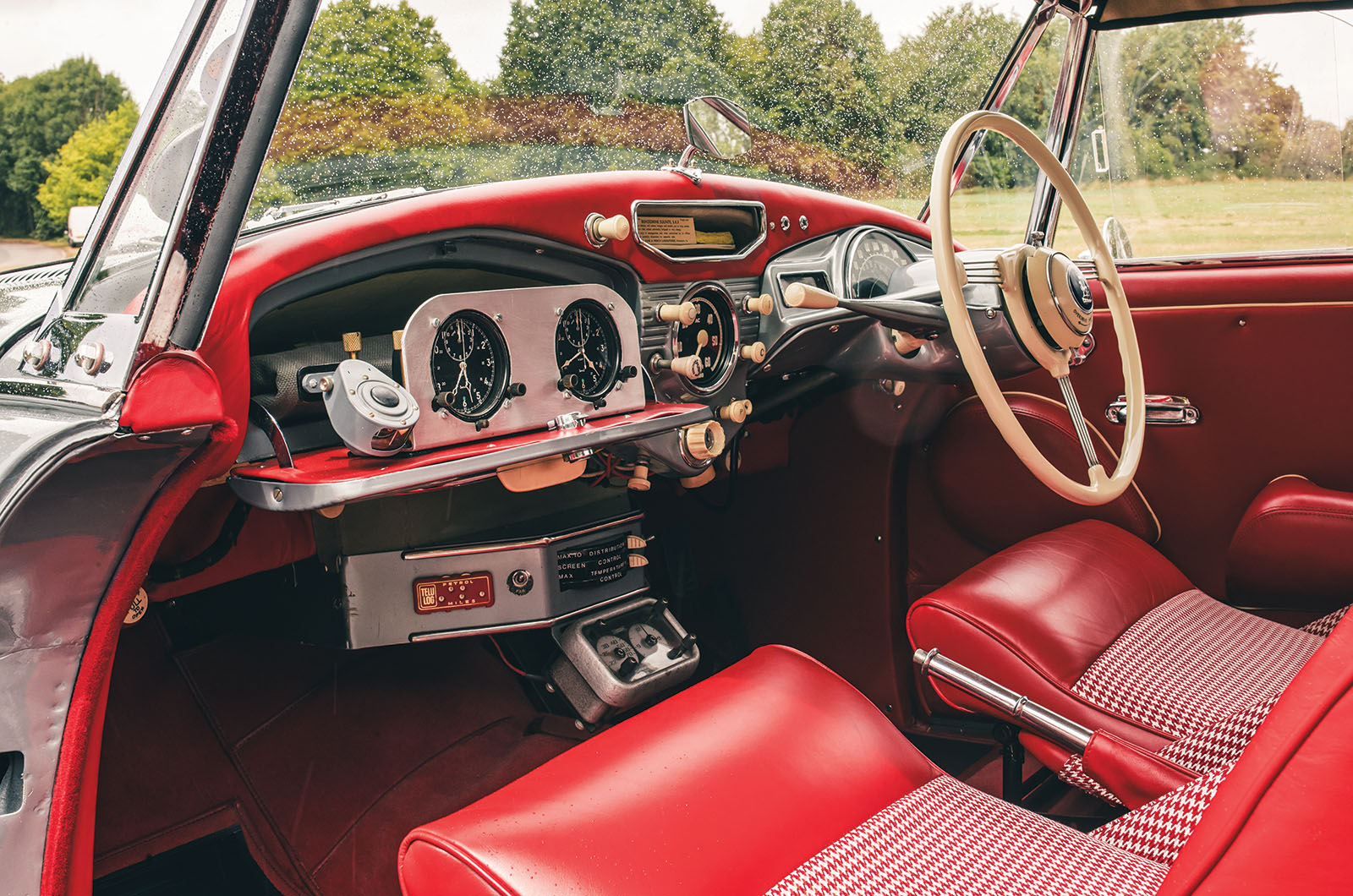
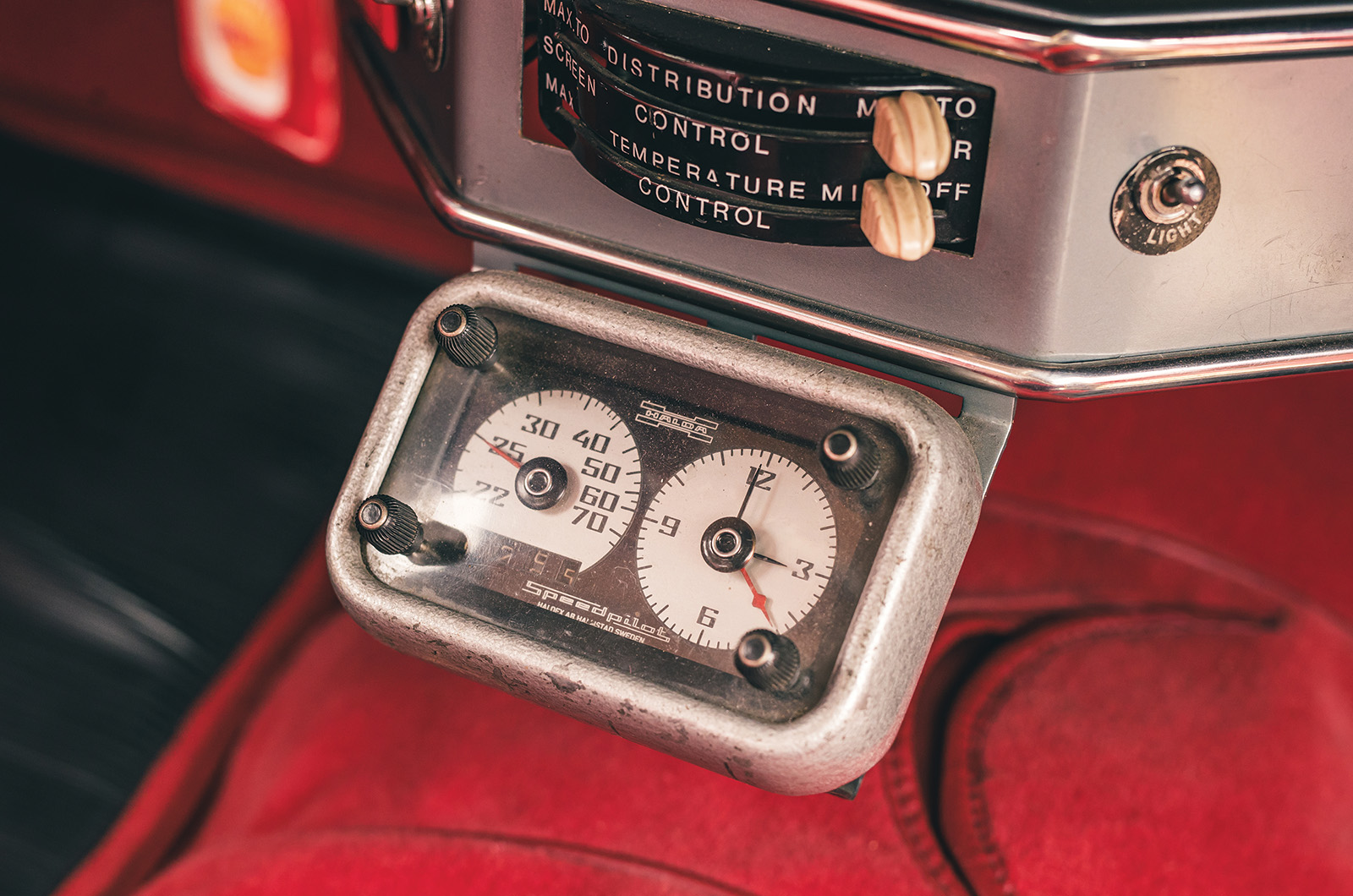
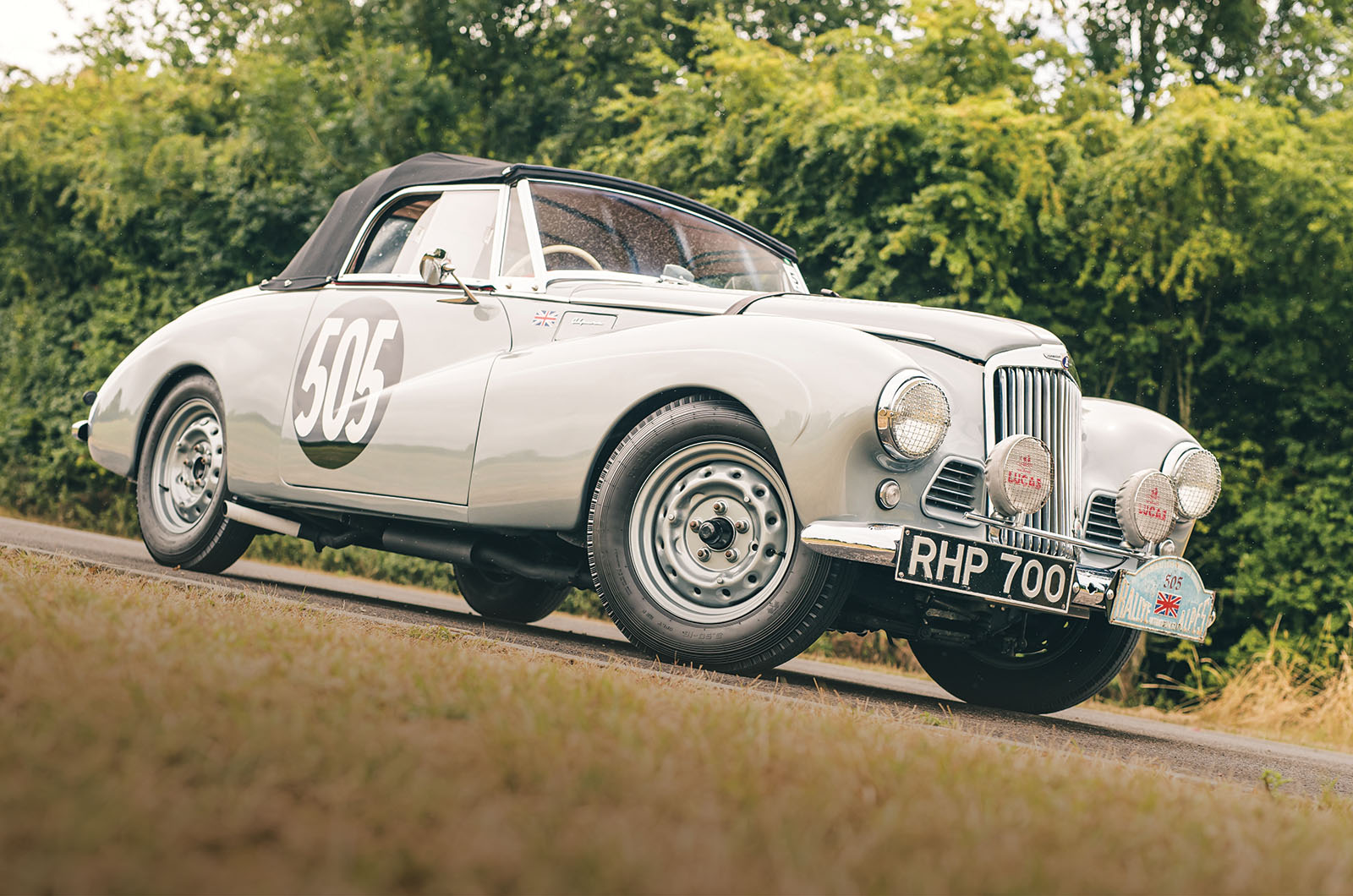
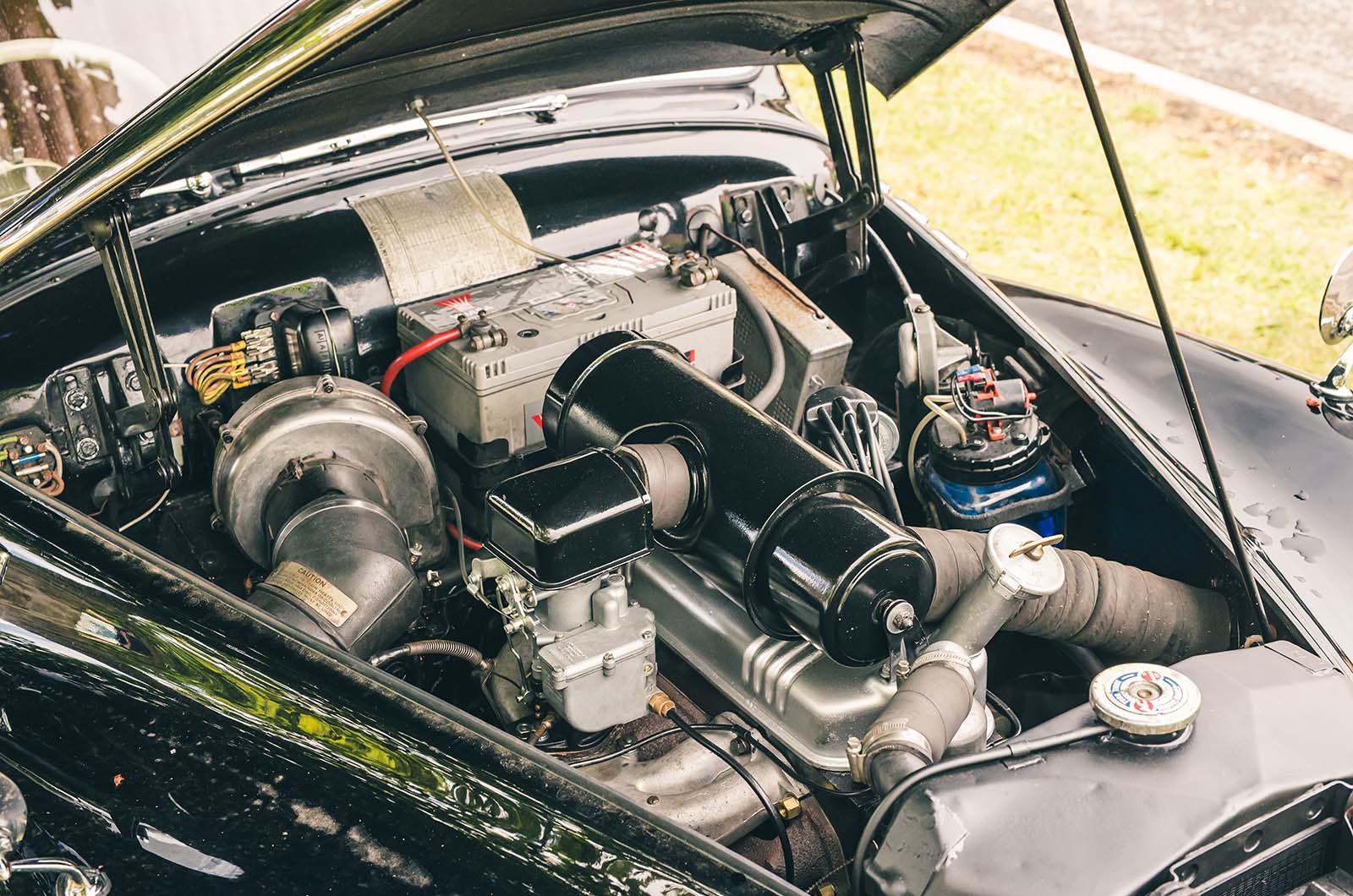
With the hood raised, the co-driver can operate most of the controls, which include an advance/retard ignition lever for high altitudes, Les Leston trip-timer clocks (Lancaster bomber war surplus) atop the open glovebox lid and a Halda tripmeter under the huge heater unit.
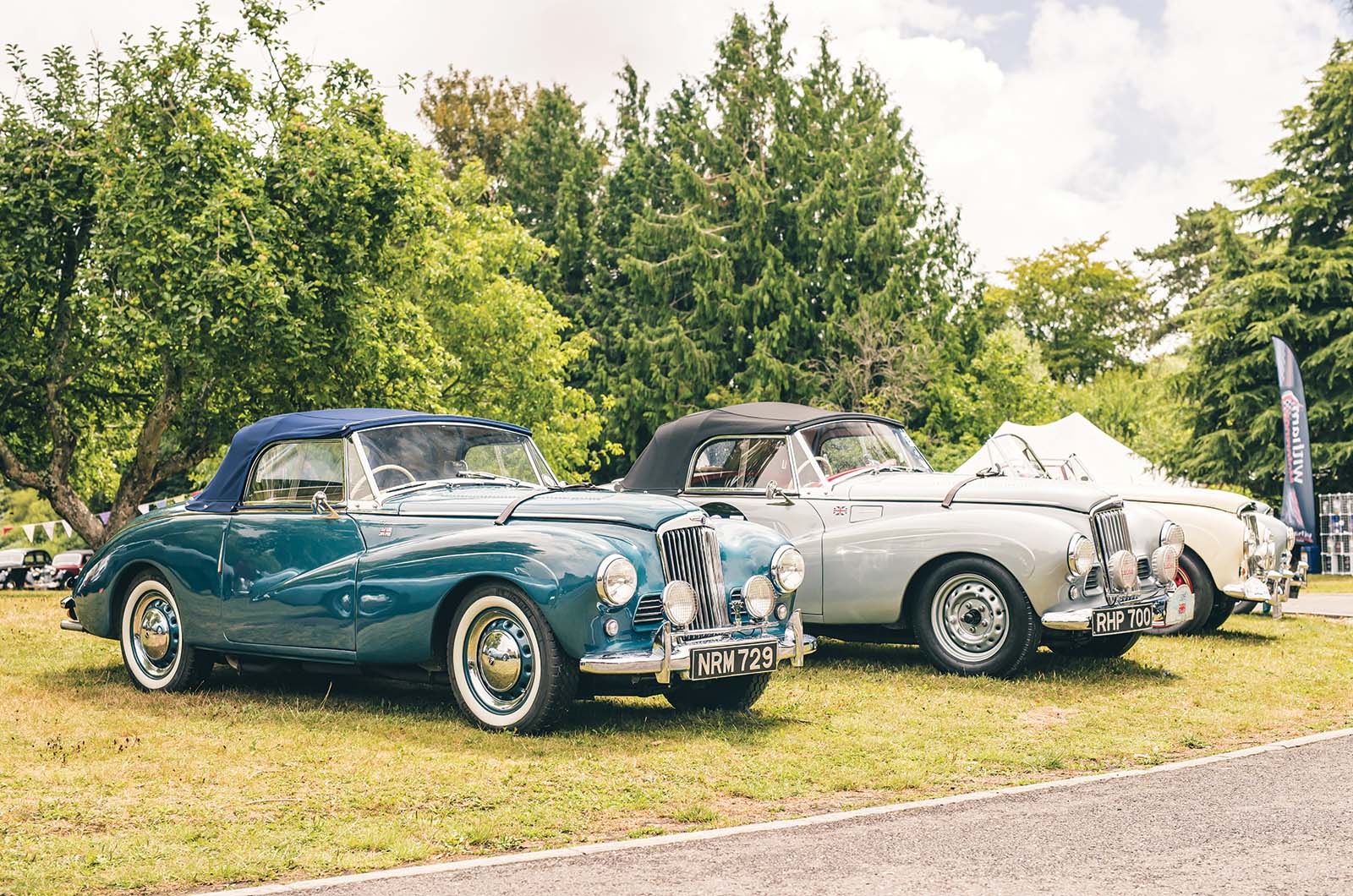
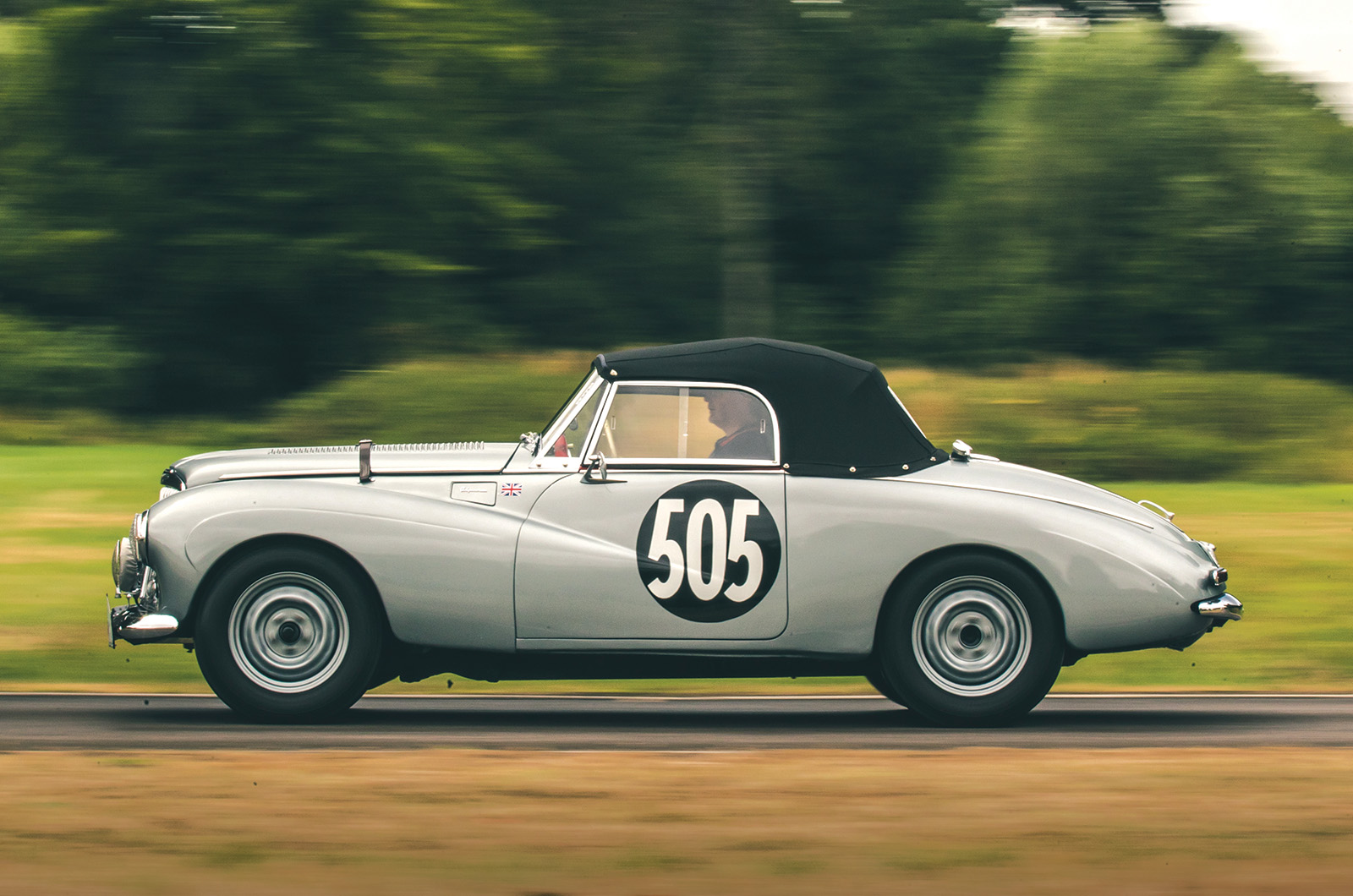
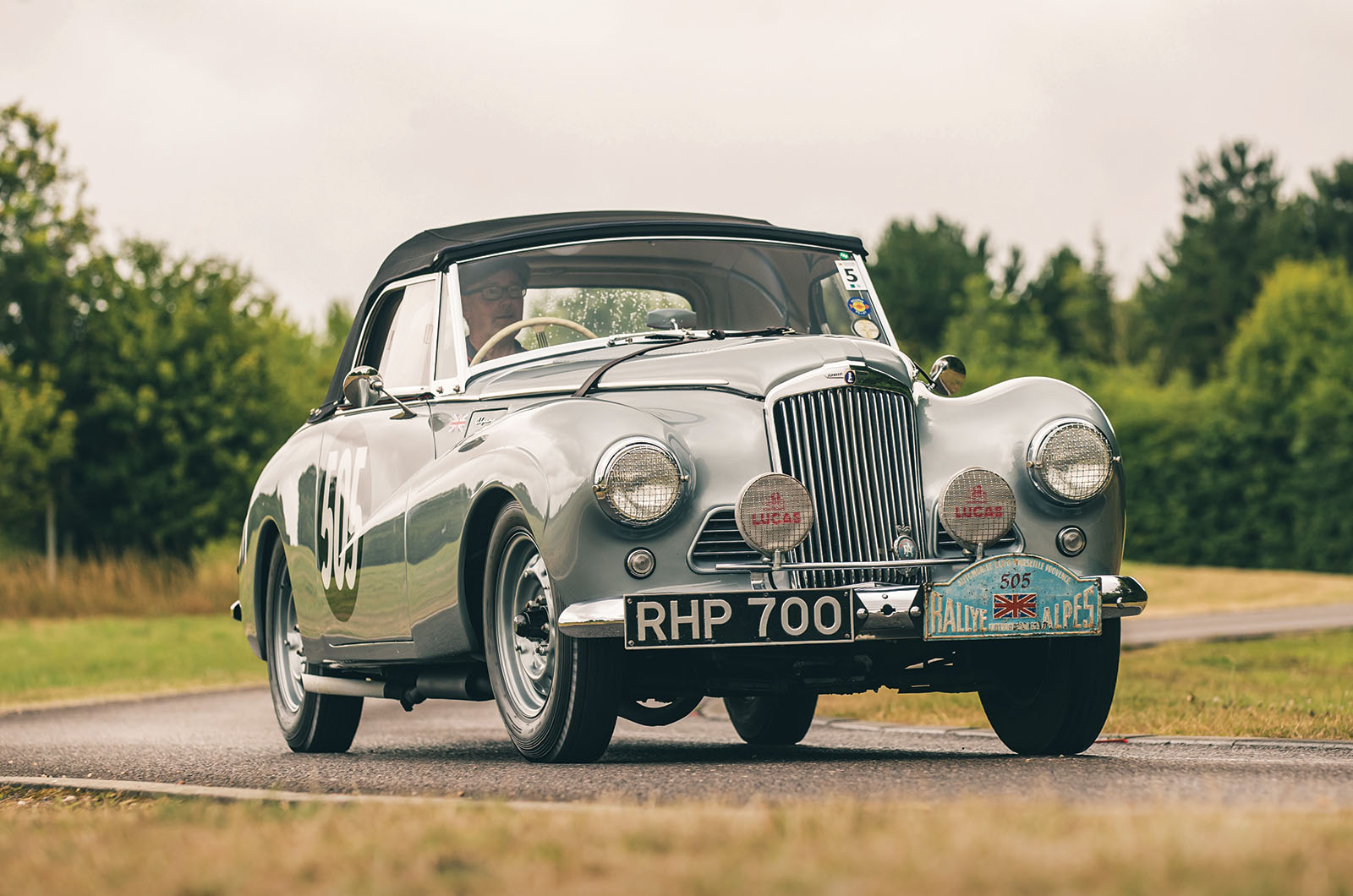
The bonnet is quite imposingly long, while the tapering tail disappears abruptly through the slot-like rear window of the hood.
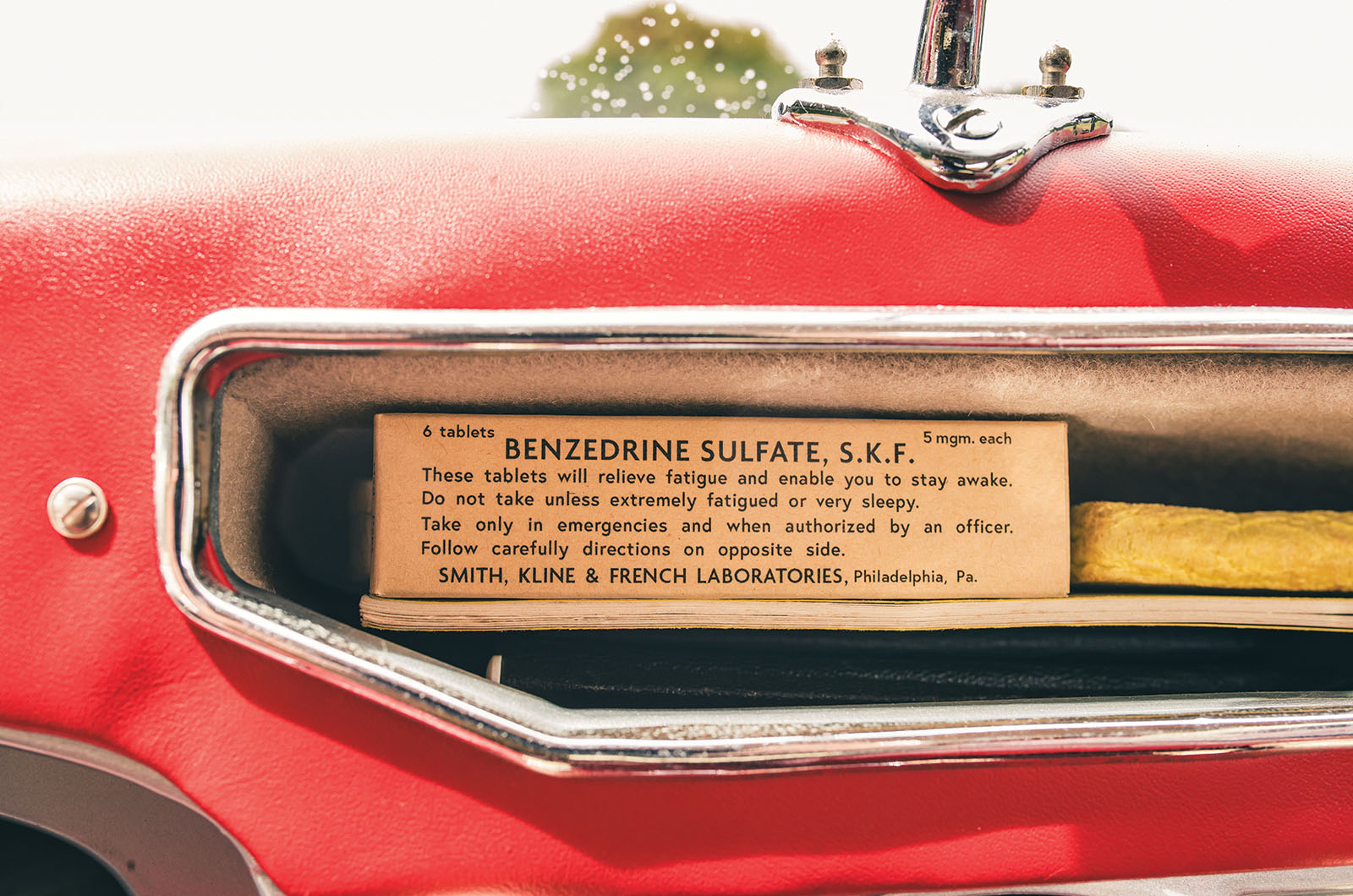
‘Wakey Wakey’ pills helped ‘RHP’ team drivers stay awake during tough competitions
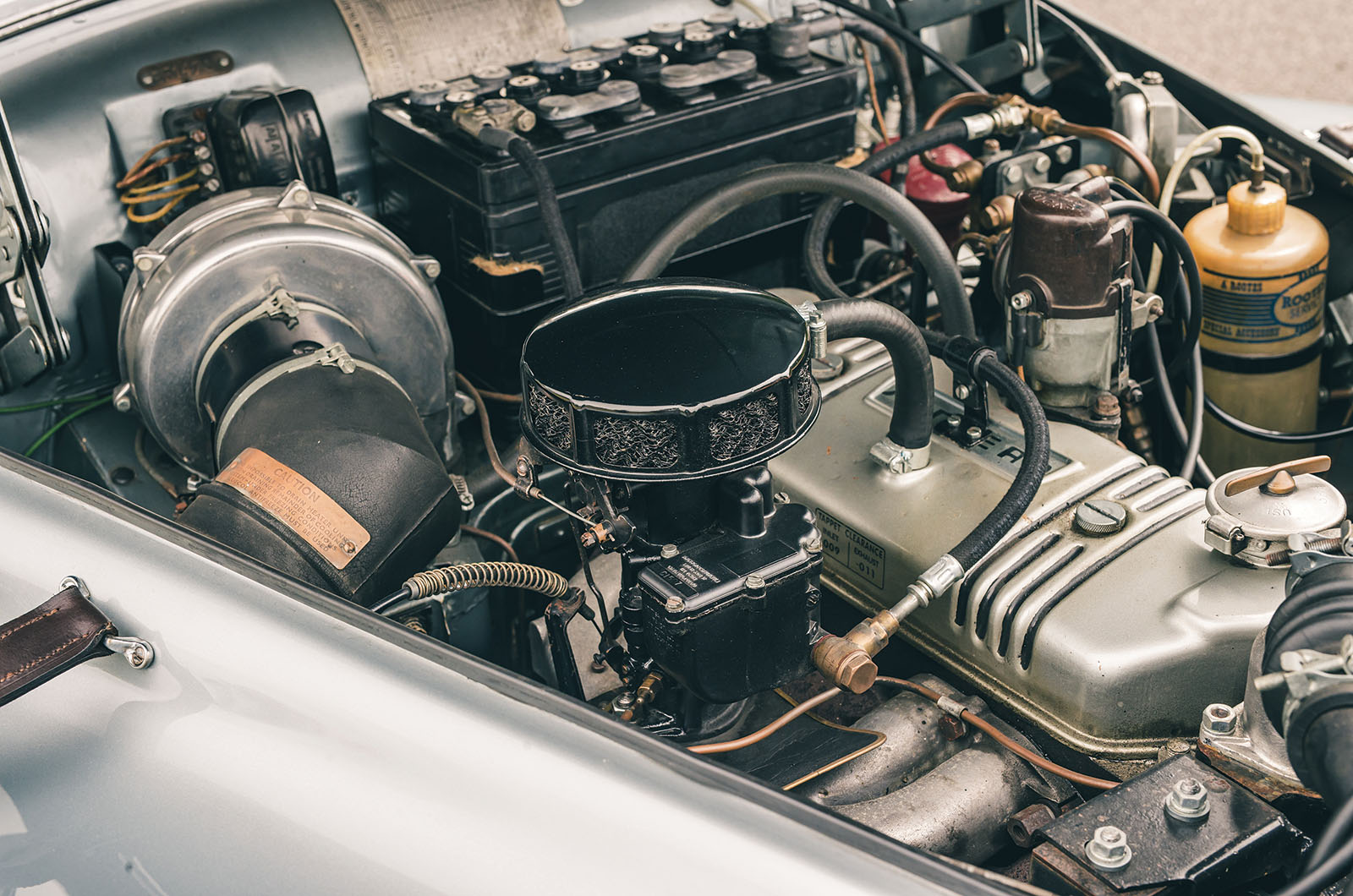
On its booming straight-through exhaust, the Alpine gallops up the road on the torque of a big ‘four’, whose underlying thump is subdued but unmistakable.
The big, white sprung wheel ties in well with the upbeat look of the half-circle speedo and scattered ivory switchgear.
You sit quite close to it, anticipating Hendon Police Training College-style wheel-feeding, although it is more positive than that – high-geared without being overly hefty.
It telegraphs the modest limits and benign intentions of both axles quite well.
Without using conspicuous amounts of revs or low gears, you build speed rapidly but are not particularly conscious of the acceleration.
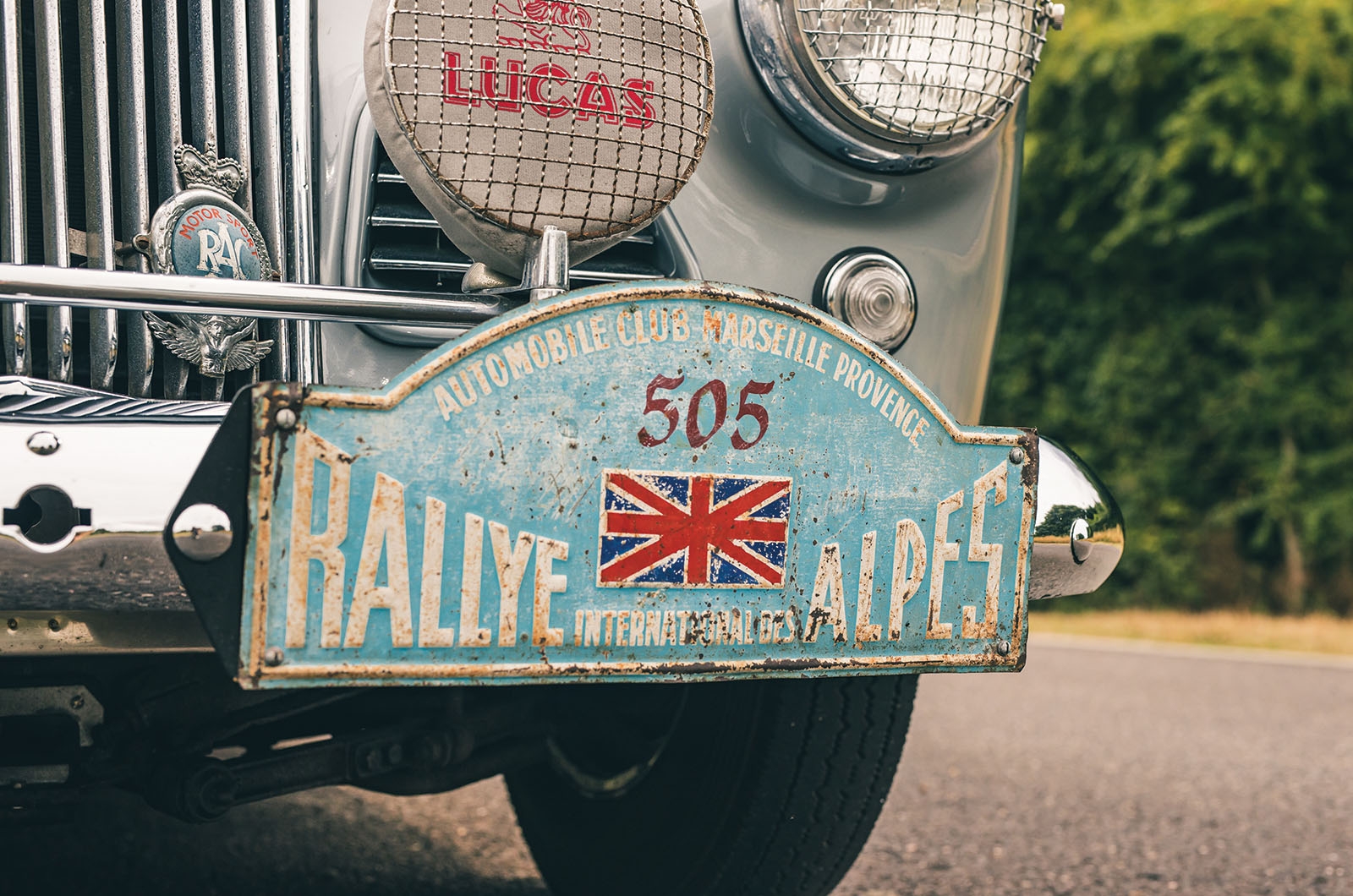
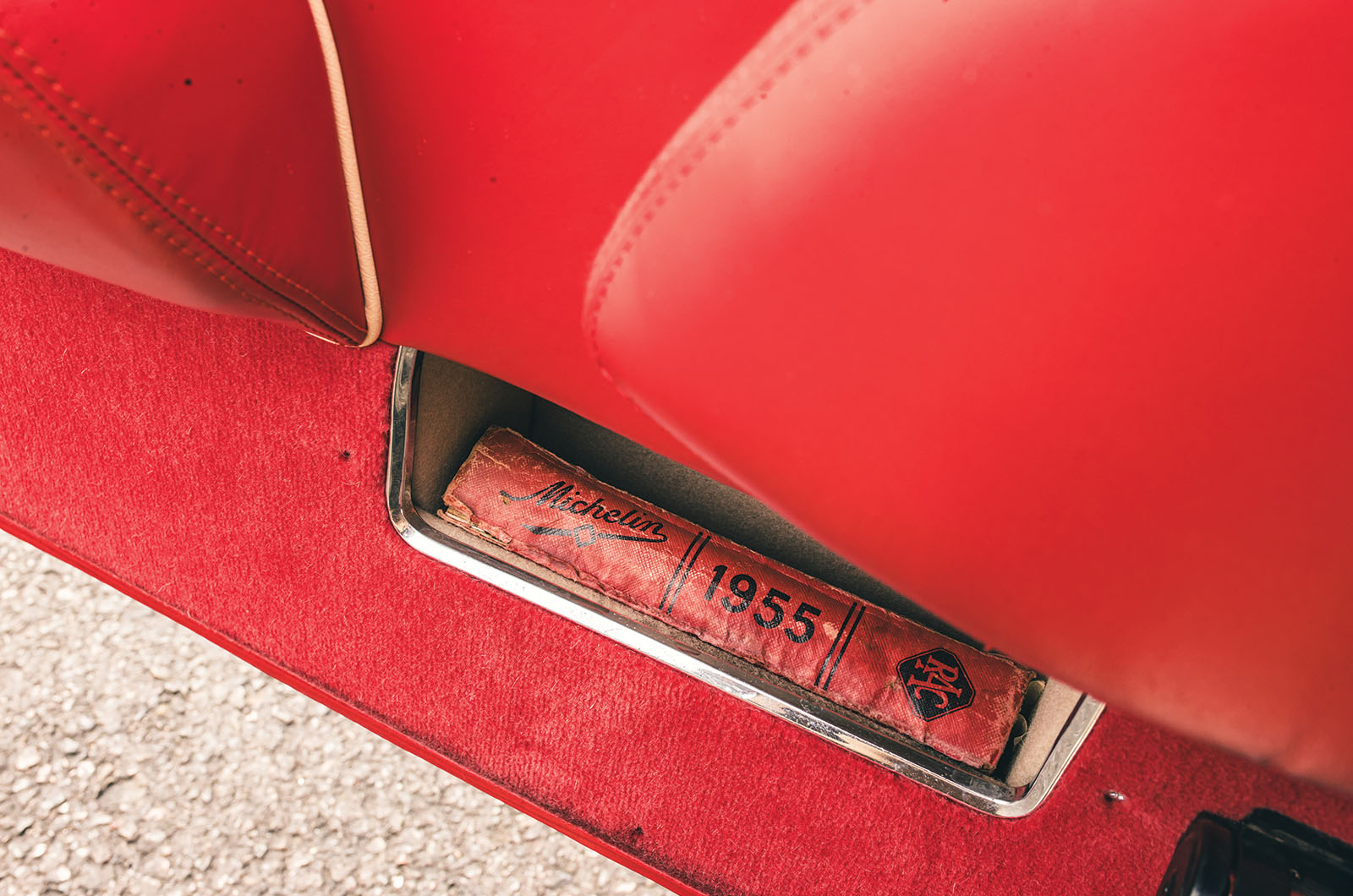
The Sunbeam Alpine’s period Michelin guide
You can’t rush the column change, but neither is it obstructive nor sloppy, and the strong pull in direct and overdrive top means you don’t use the clutch all that much.
First is unsynchronised, but second suffices for brisk pull-aways and you can play all sorts of tunes on the overdrive to keep the acceleration flowing. The generously sized brakes are strong and balanced.
“We met some lovely people who helped us get the car to where it is now,” says Jonathan. “Somebody even found the original type of compass in a garage clearance.”
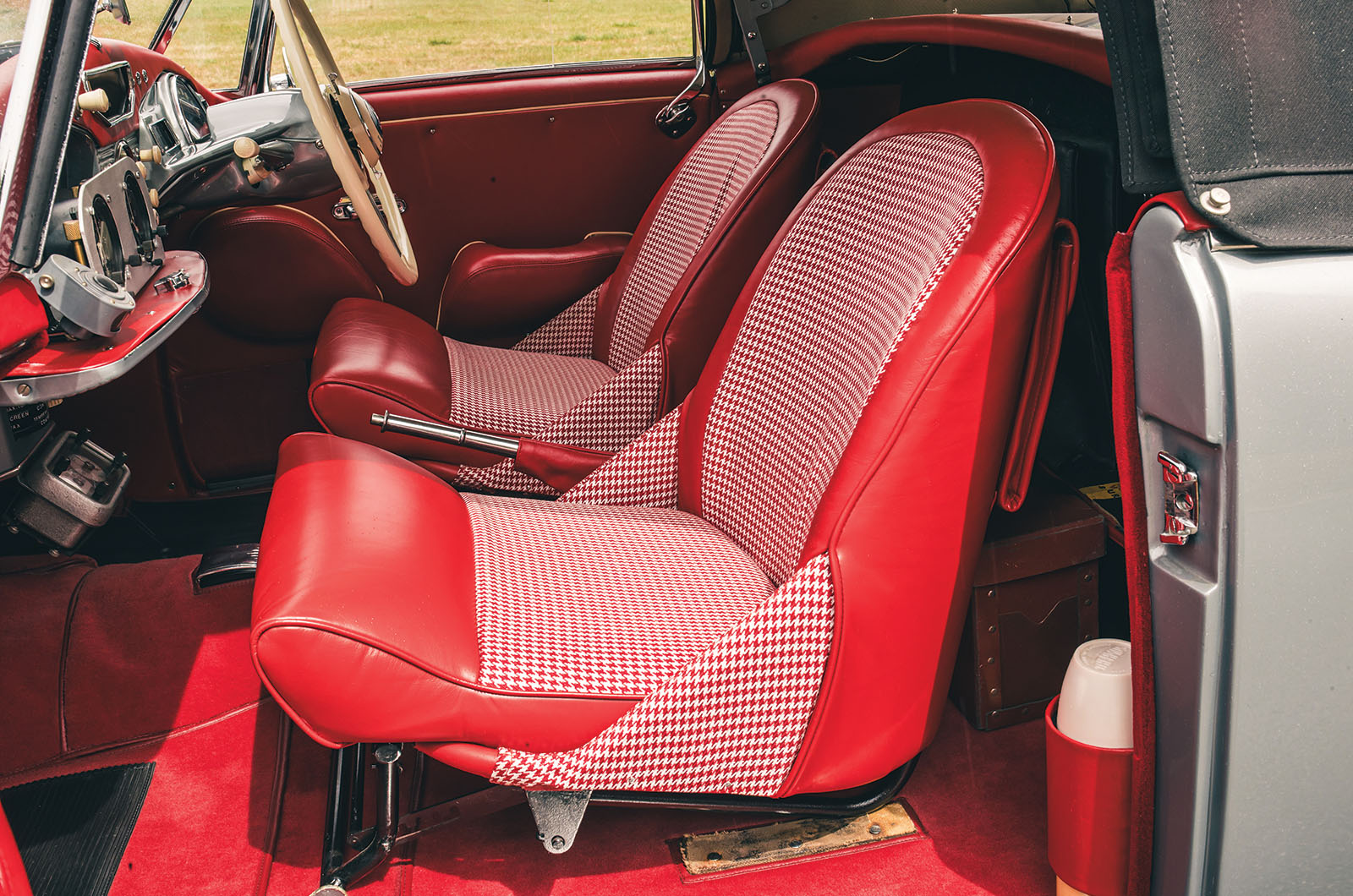
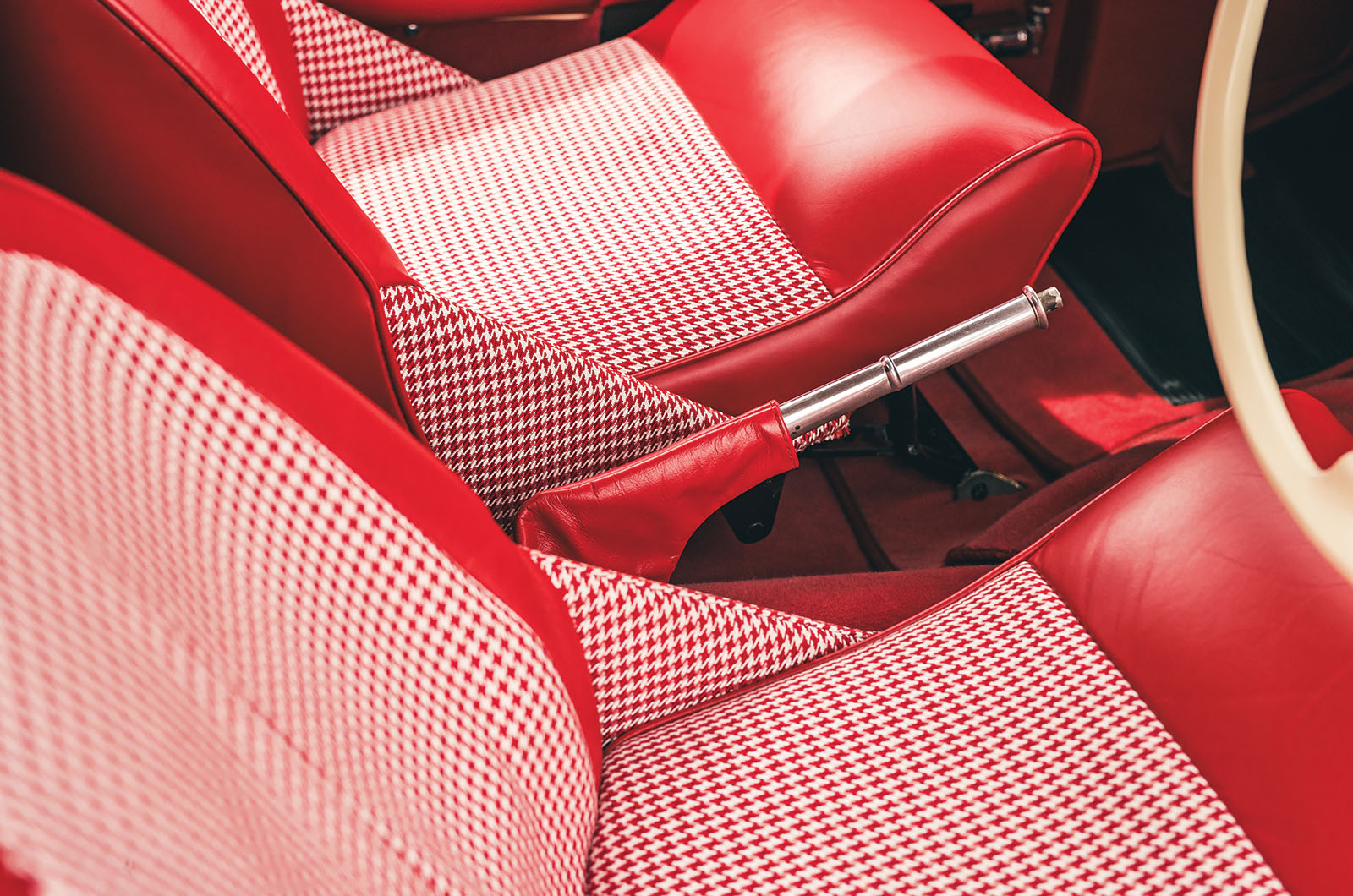
Jonathan had the superb bucket seats made by a company in Lancashire to original specification, trimmed in what was the very last roll of railway carriage-type scrubbable cloth, again just as the car would have been when the event was cancelled in 1955.
This Sunbeam Alpine was reupholstered with this last-of-its-kind trim
The seats free up room compared with the original, outsized chairs, and they feature satchels on the backrests to keep maps, tickets and paperwork tidy.
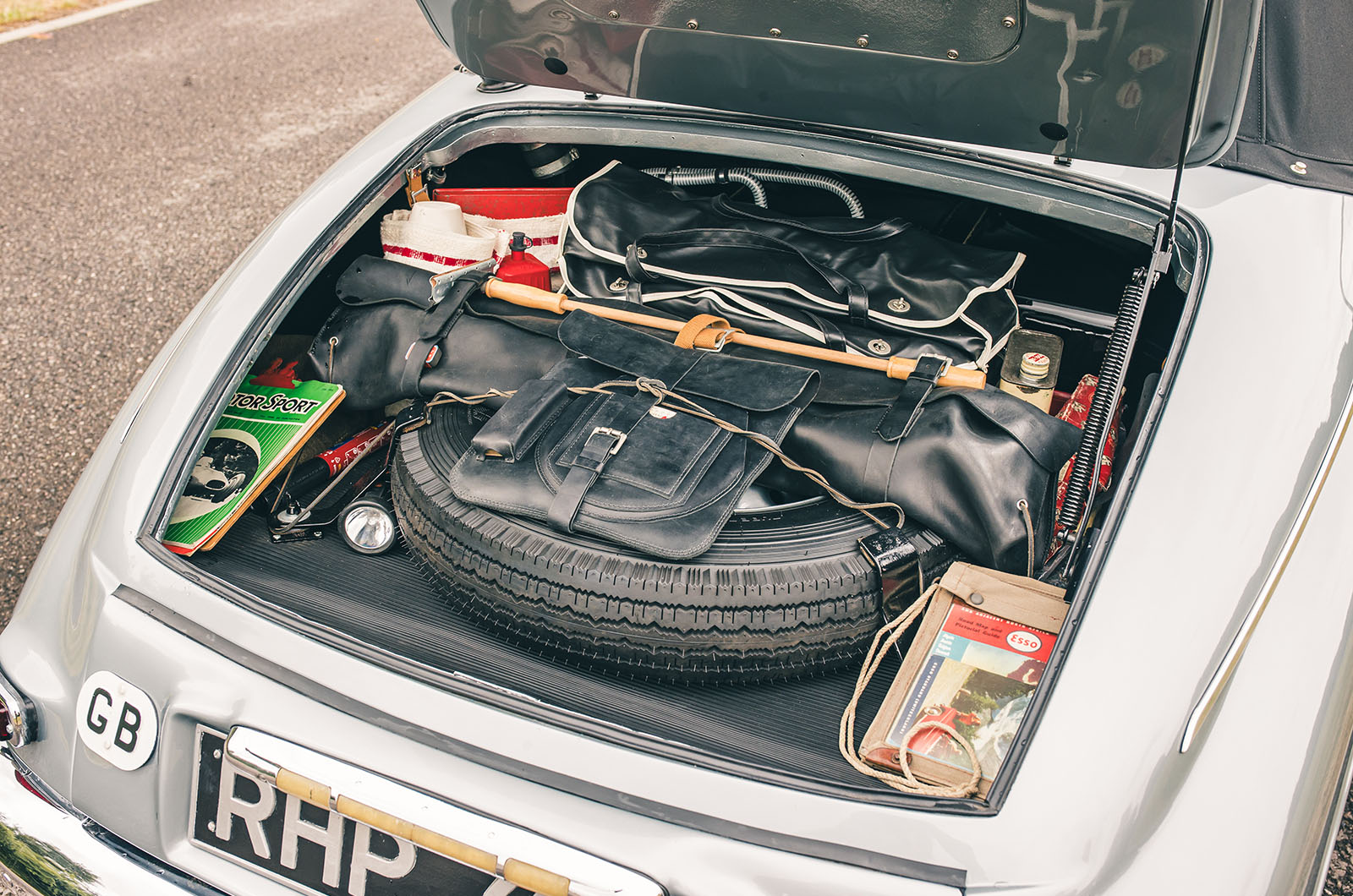
1950s flasks – lovingly restored by Jonathan – sit beside each seat, there’s a first-aid kit of the day and what looks like early NHS/Carry On Matron-style towelling, presumably for mopping fevered 1950s brows.
There is even a period clipboard, like you might have seen Garrad brandishing.
Perhaps the finishing touch is the packet of Benzedrine pills in a dashboard cubbyhole, the infamous ‘Wakey Wakey’ tablets that kept drivers alert on long-haul events.
In her book No Excuses, van Damm talks about having an out-of-body experience after downing too many.
‘You can’t rush the column change, but neither is it sloppy, and you can play tunes on the overdrive to keep the acceleration flowing’
To keep him on his toes, Moss had a picture of his Windmill Theatre chorus-line girlfriend attached to the dash of his Alpine, but RHP 700 was prepared for a less well-known guest driver called Jimmy Ray.
“He went on to rally the Reliant Sabre with Raymond Baxter,” says Jonathan, “and he won the 1955 RAC Rally in a Standard 10. His prize was a picnic set!”
The 1950s was a very different world.
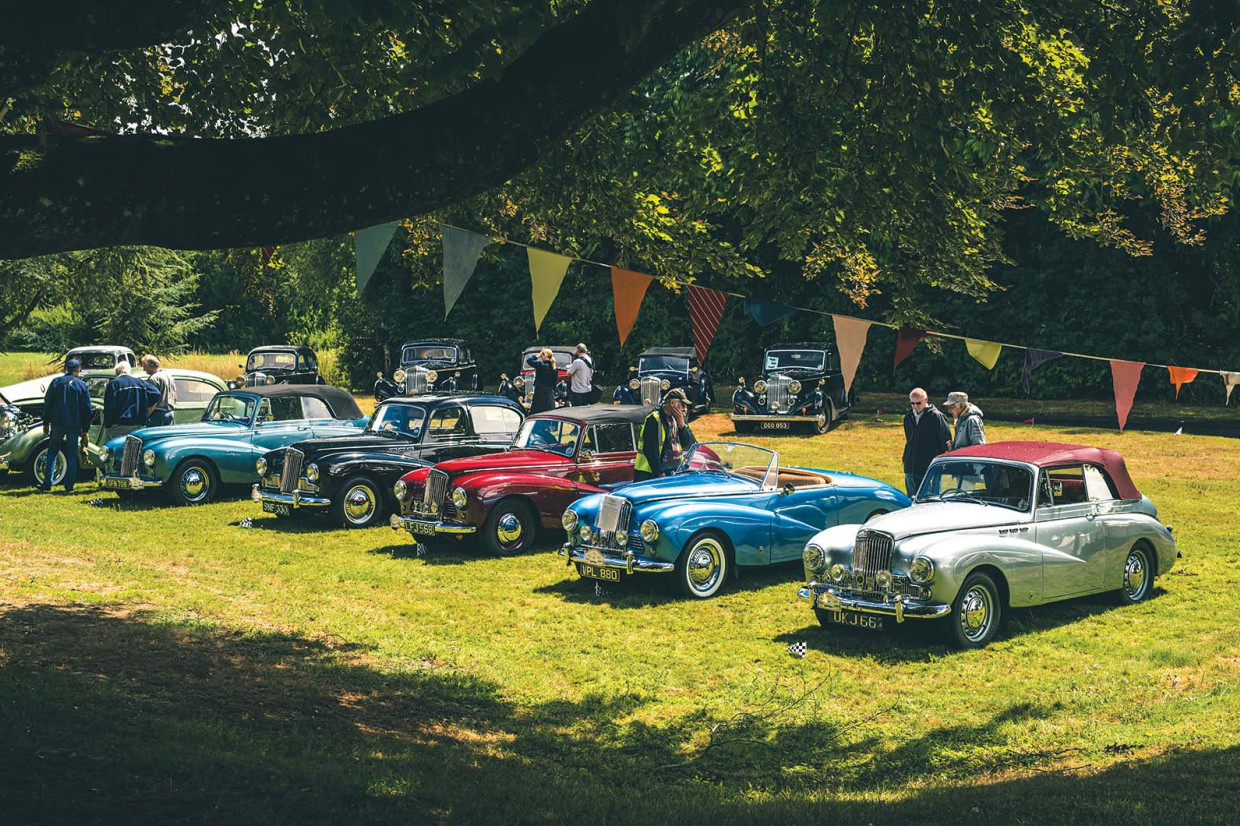
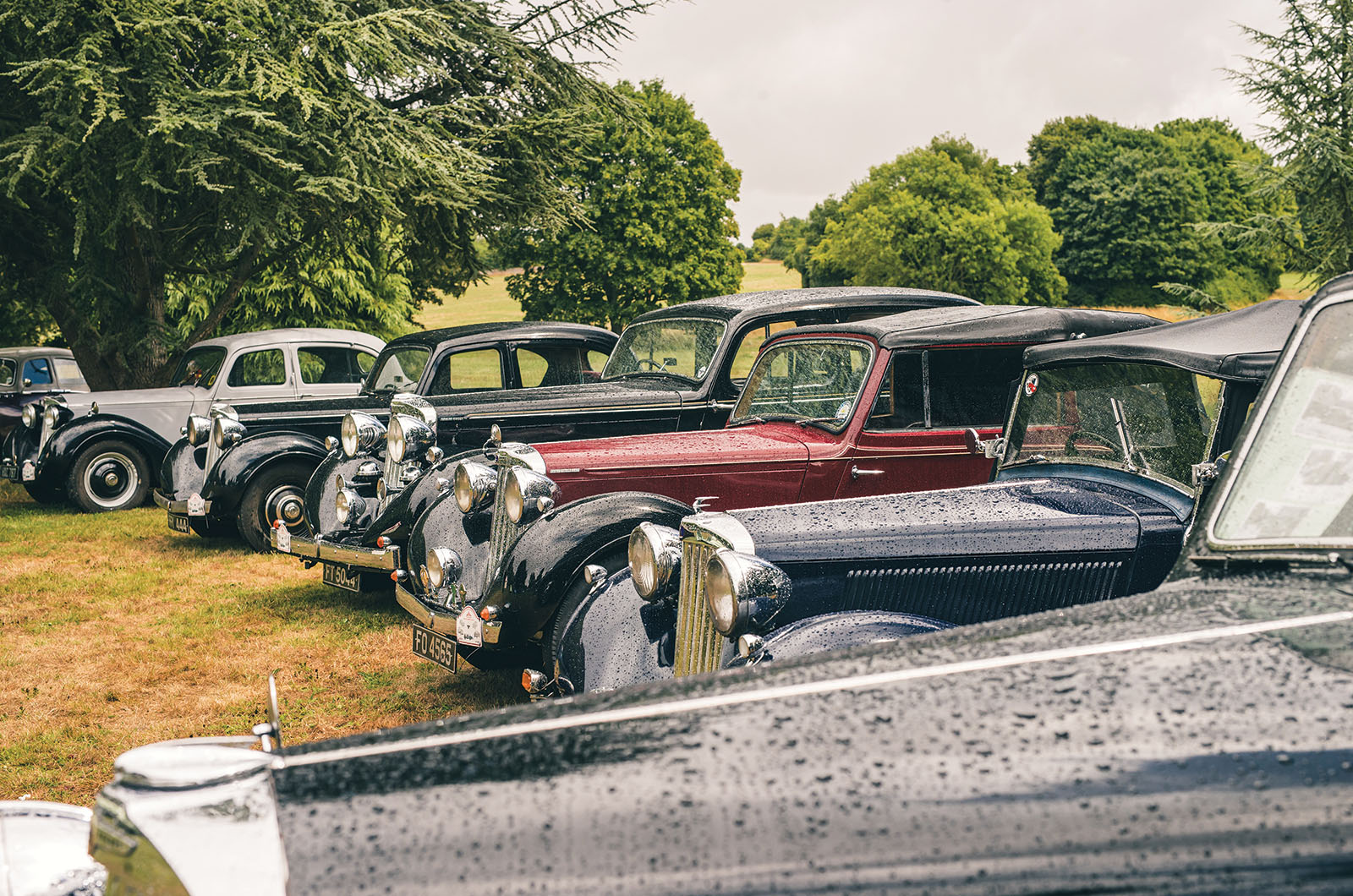
Jonathan Braim’s ‘RHP’ team car was just one of the fantastic classics at the STAR25 gathering. Here are some of the others…
1956 Sunbeam MkIII: Chris Derbyshire
Chris Derbyshire’s Sunbeam MkIII is still used for competition
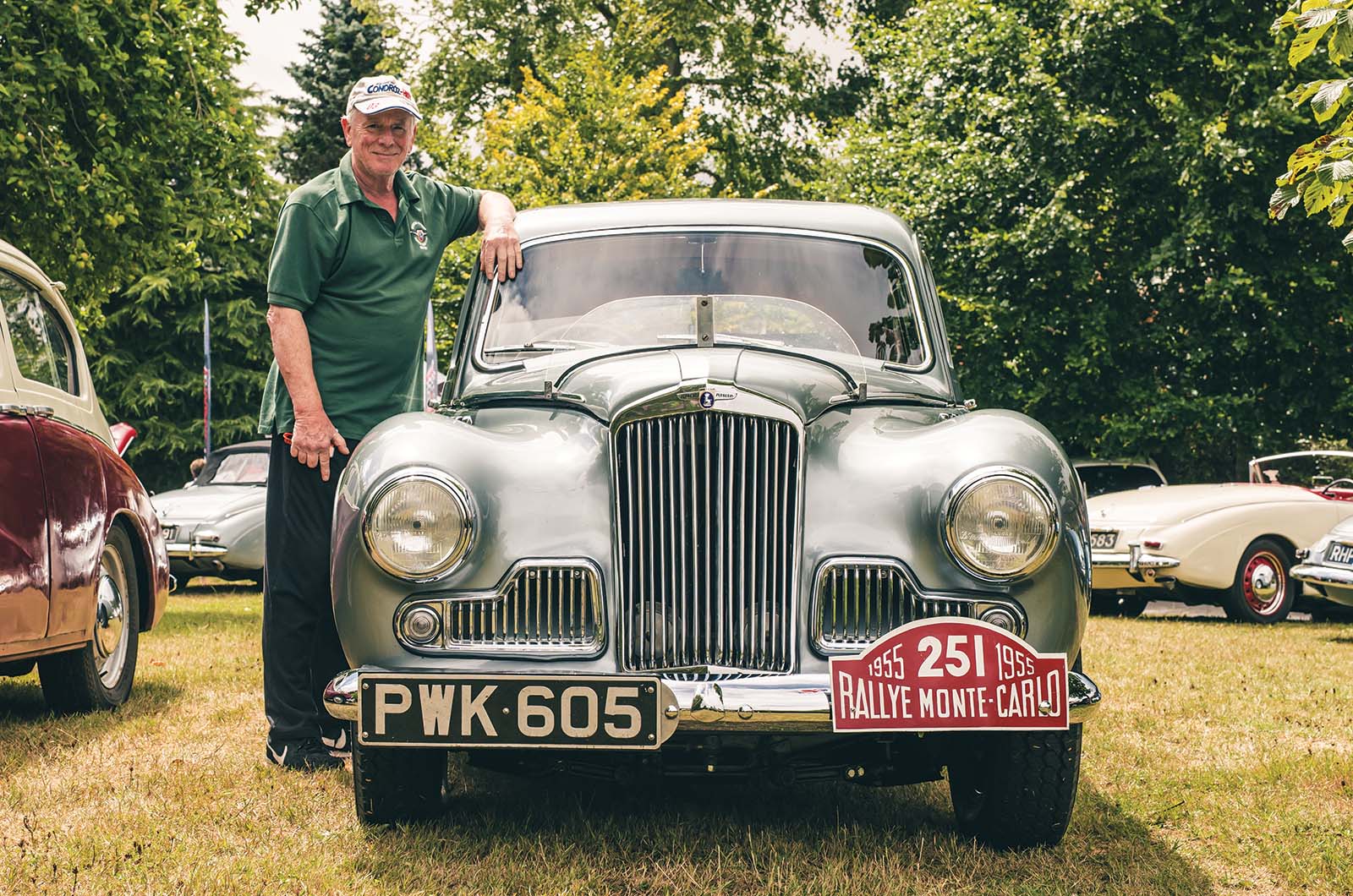
“I bought PWK 605, an ex-works rally car, in 1986. I was already a member of the Historic Rally Car Register, and it was looking for period competition cars.
“Most people knew where the Healeys and the Minis were, but not these. It was found in a barn in Wales in 1985 and acquired by Peter Harper, the original driver.
“A year later it came up for sale again and I bought it. I wanted a ’60s car, but my whole world changed when I bought this.
“I had never restored a car before, but loads of people helped and we had it on the road in 1994. I still go to the pub with the guy who did all the welding.
“I have done some regularity events and came fourth in the first one we entered – I used to work for Ordnance Survey, which helped!
“By the end of the season, we were first in class and placed sixth overall against Minis, MG Midgets and all sorts.”
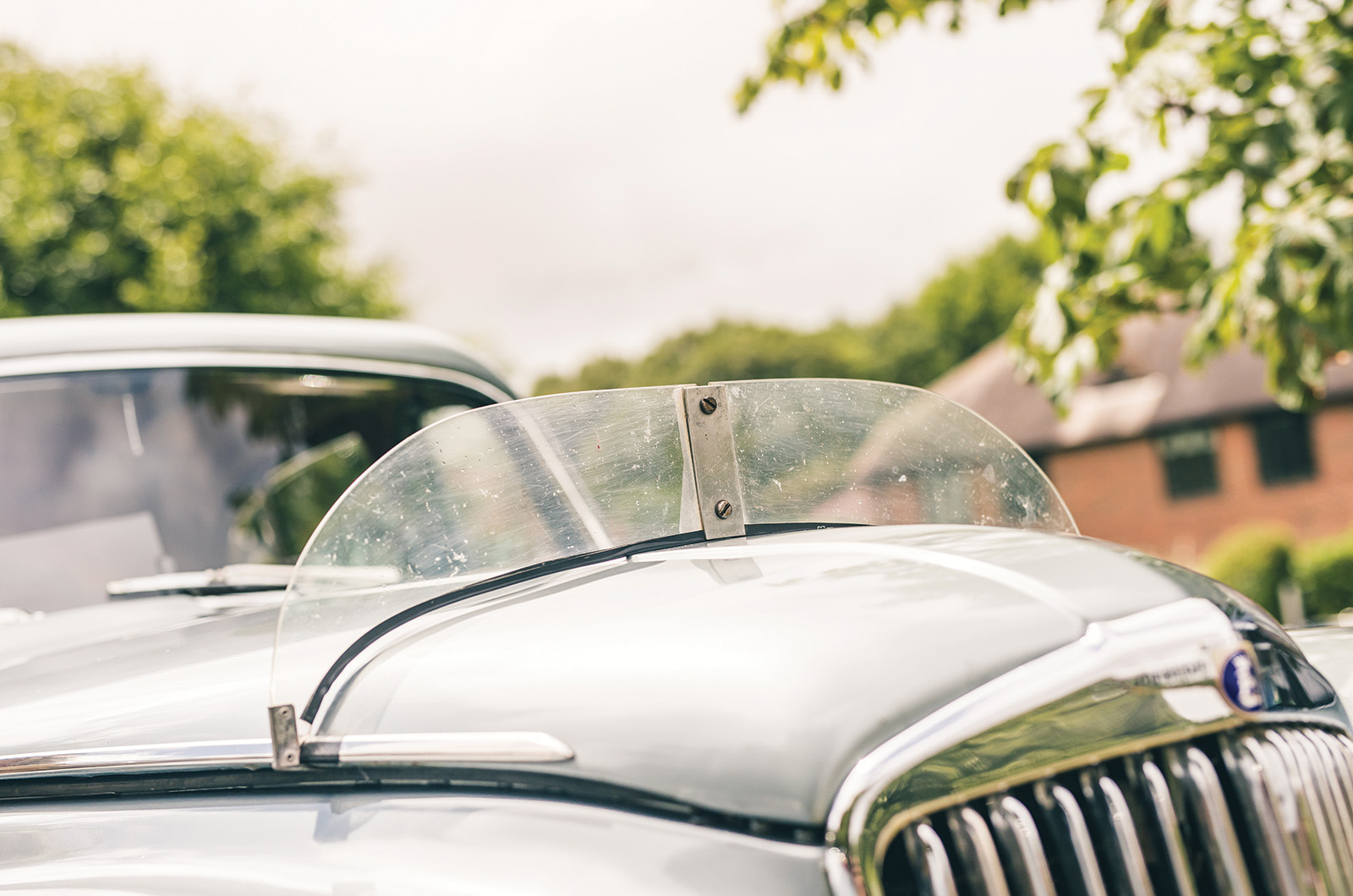
Period modifications reveal this Sunbeam MkIII was an ex-works rally car
“The car has been back to Monte Carlo twice and did a lot of the original course – I just wanted to go where they had been in period,” adds Chris. “It has been a privilege to own it.”
“The passenger has a giant headrest, and the seat reclines. They had three people in the car for the 1956 Monte: one sleeping, one driving, one navigating.
“It’s got a vacuum gauge rather than a rev counter.
“I asked Peter Harper what they did to them to make them go better and he said ‘nothing’ – they just took them off the production line and built them properly.”
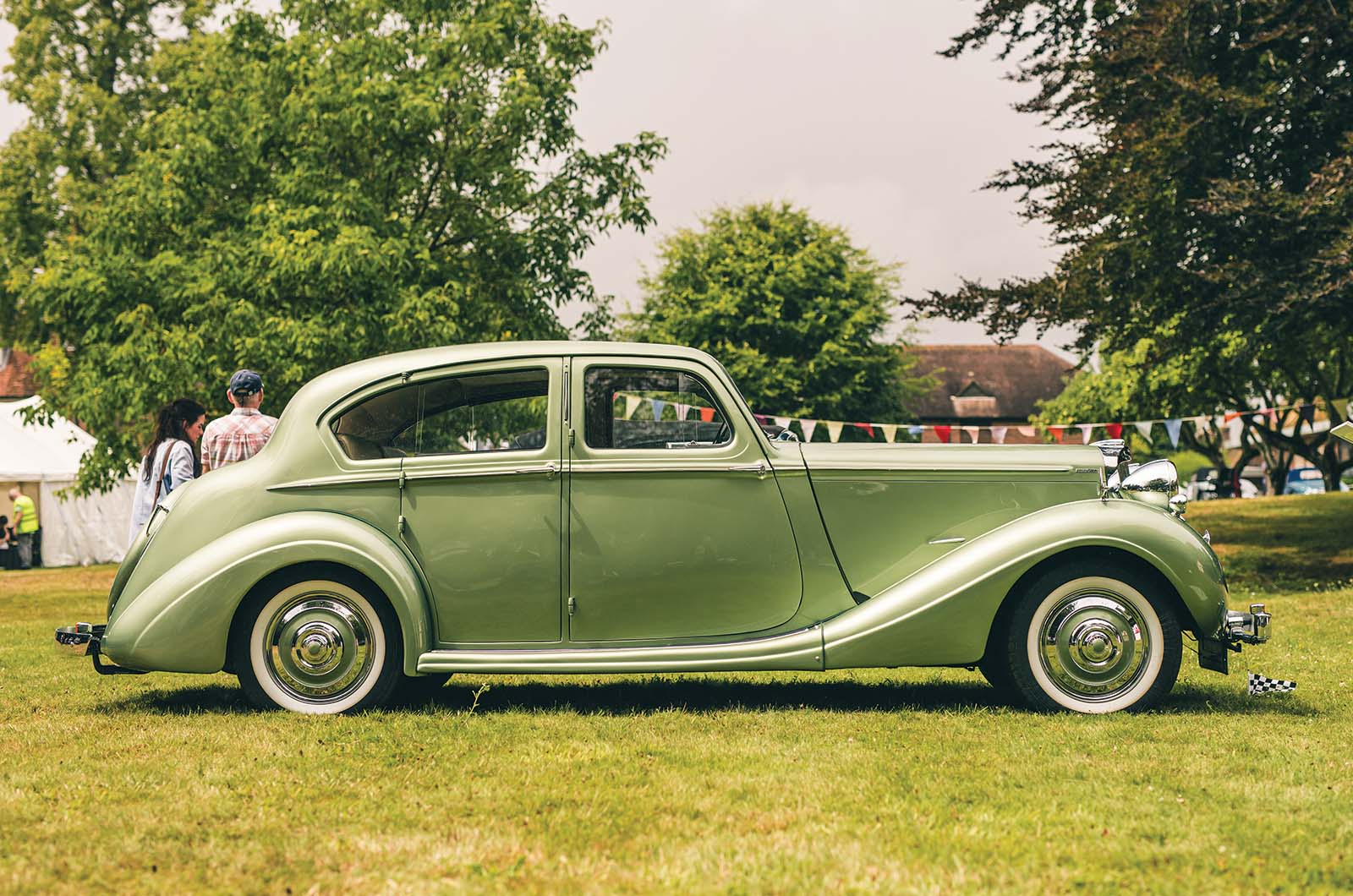
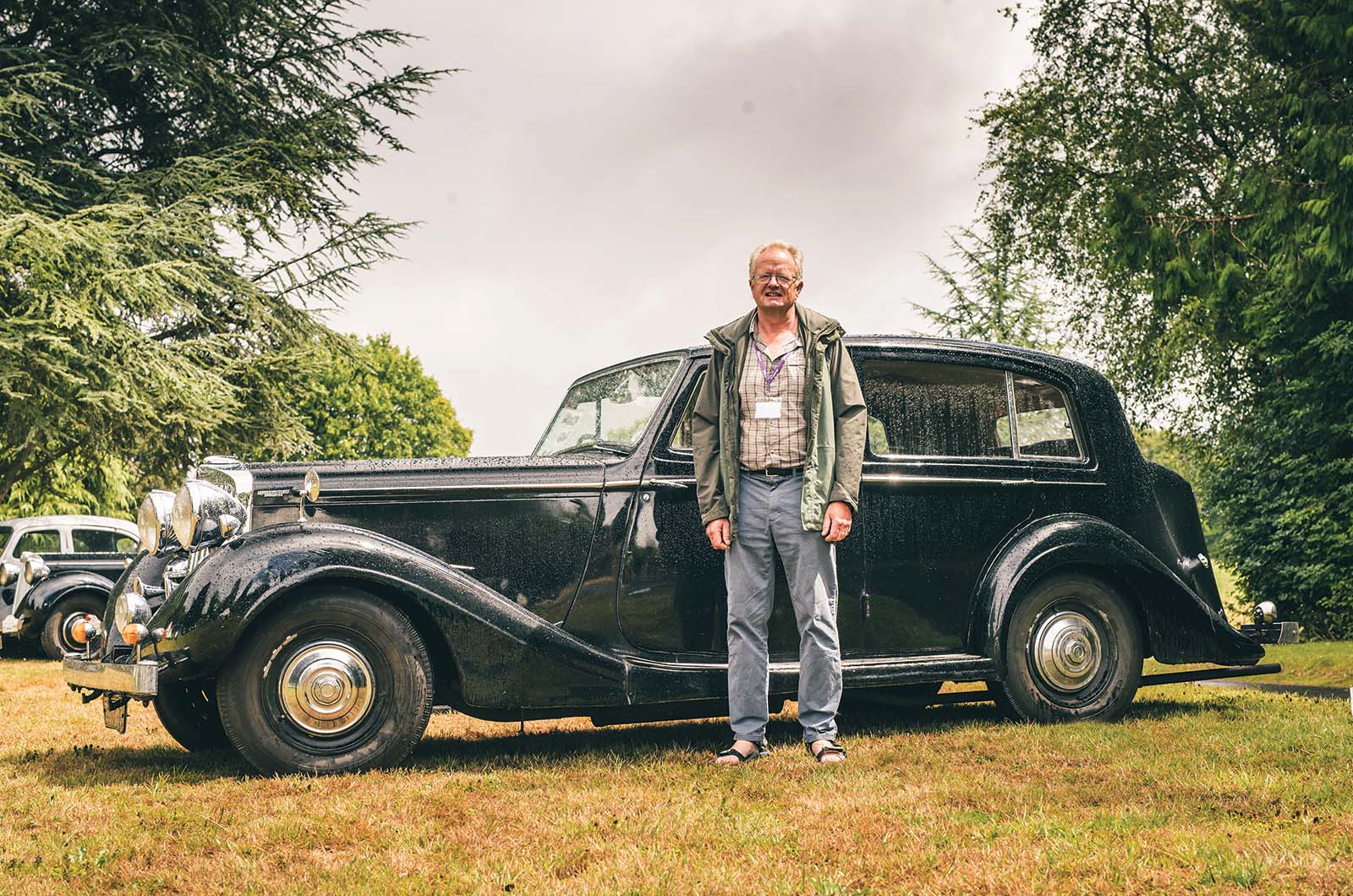
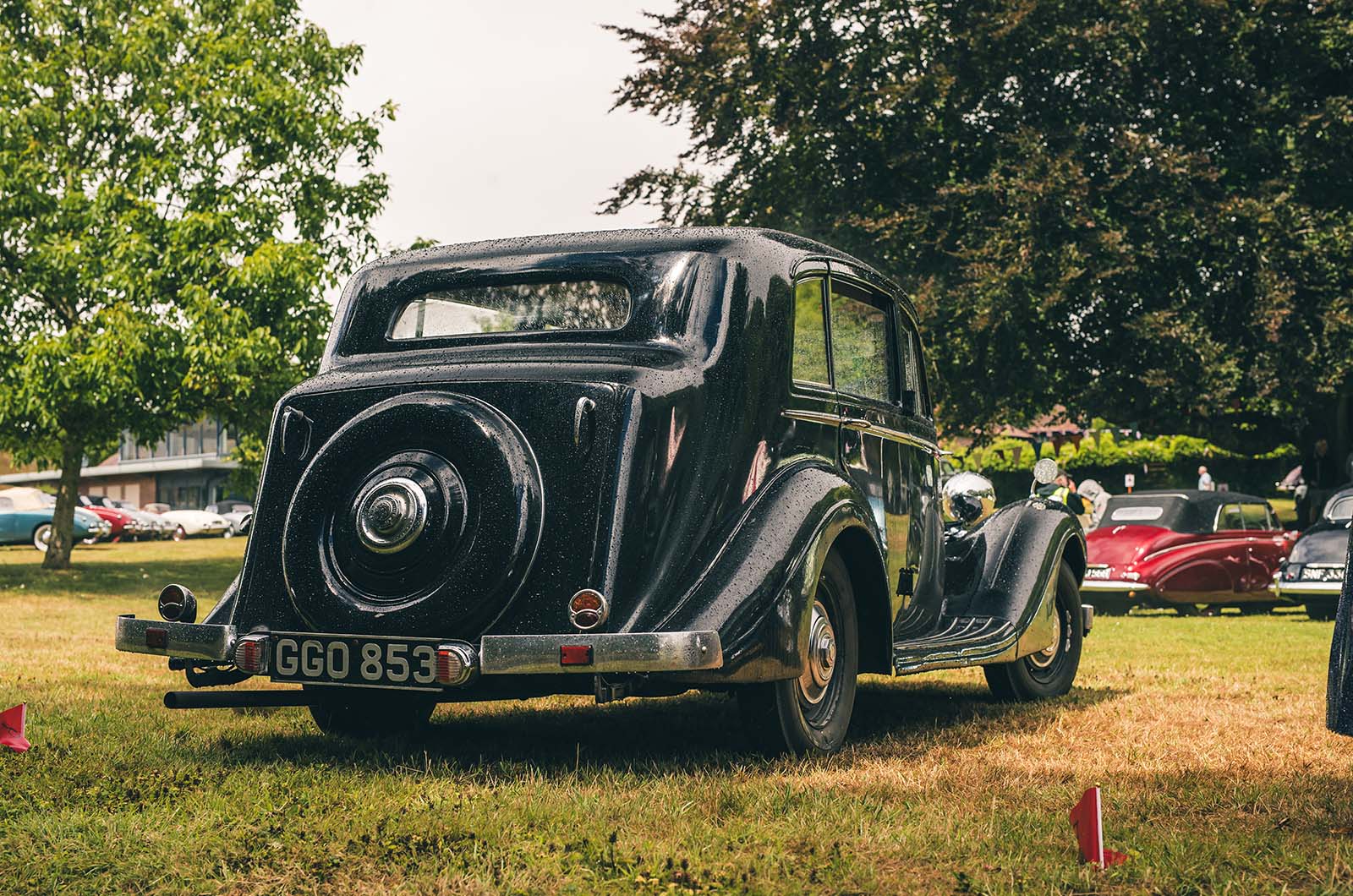
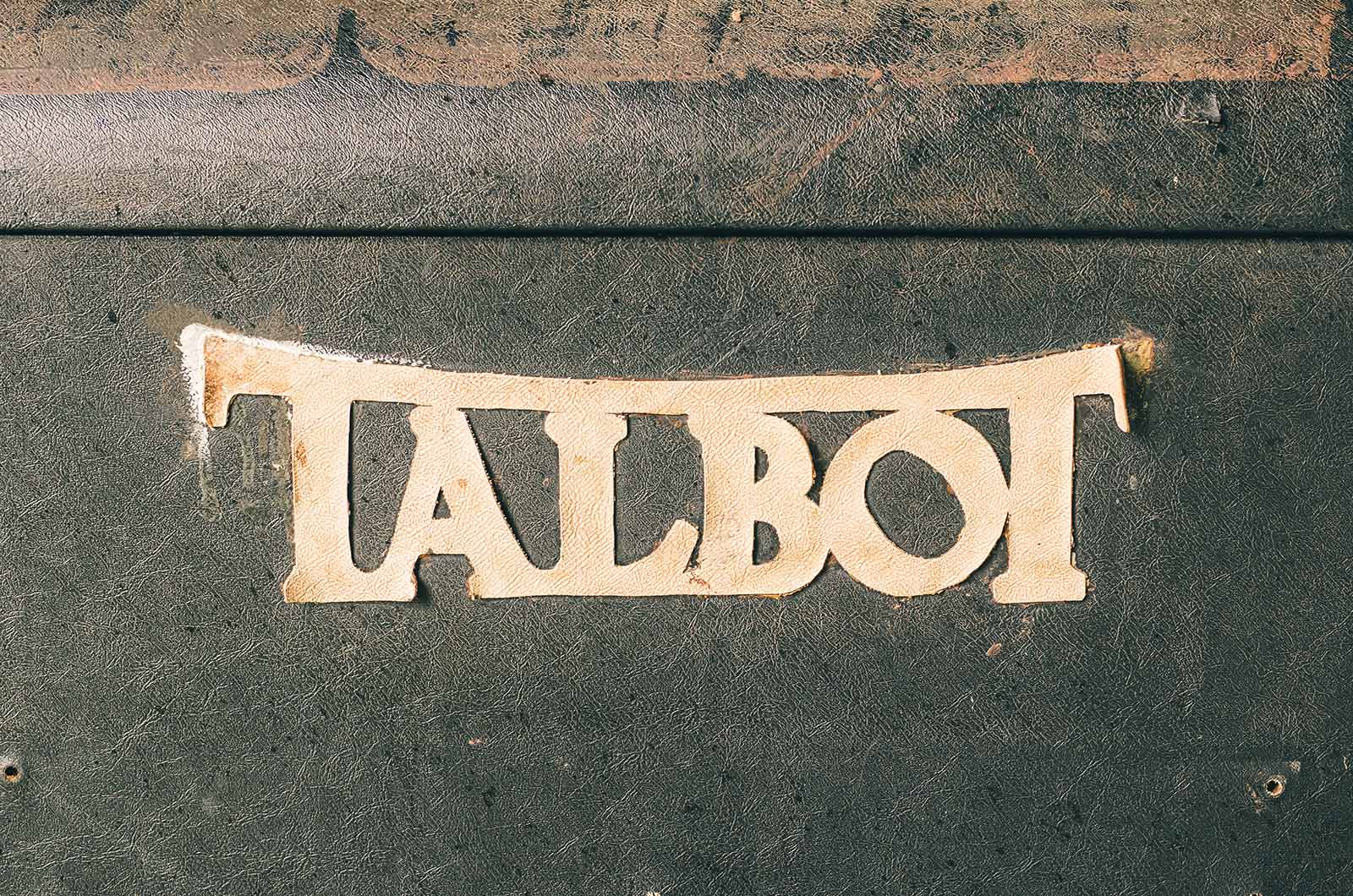
1939 Talbot 4-Litre: James Rickards
James Rickards’ Talbot 4-Litre has been part of his family for decades
“My grandfather bought the Talbot in 1944, when it was five years old. It was a Rootes demonstrator, and they were selling them cheap to get them out of London.
“He sold it in 1952, then my uncle found it again in Exchange & Mart in 1970. He got it for £100 and sold it to my father for £110! It’s been in the family ever since.
“It was my grandfather’s everyday car, and my father and uncle would sit on the roof to watch the cricket.”
This Talbot 4-Litre was a Rootes demonstrator
“It’s basically a Humber Super Snipe underneath, with a Thrupp & Maberly body: it’s a complete Rootes invention,” James explains.
“It features hard and soft adjustable dampers, and we have spent a lot of time sorting the suspension and steering.
“There is only 100bhp, so you just plod along at 55mph – it dies a bit on hills, but I enjoy driving it.
“The car is mostly original, even the paintwork – ‘a good 10-footer’, as my dad used to say.”
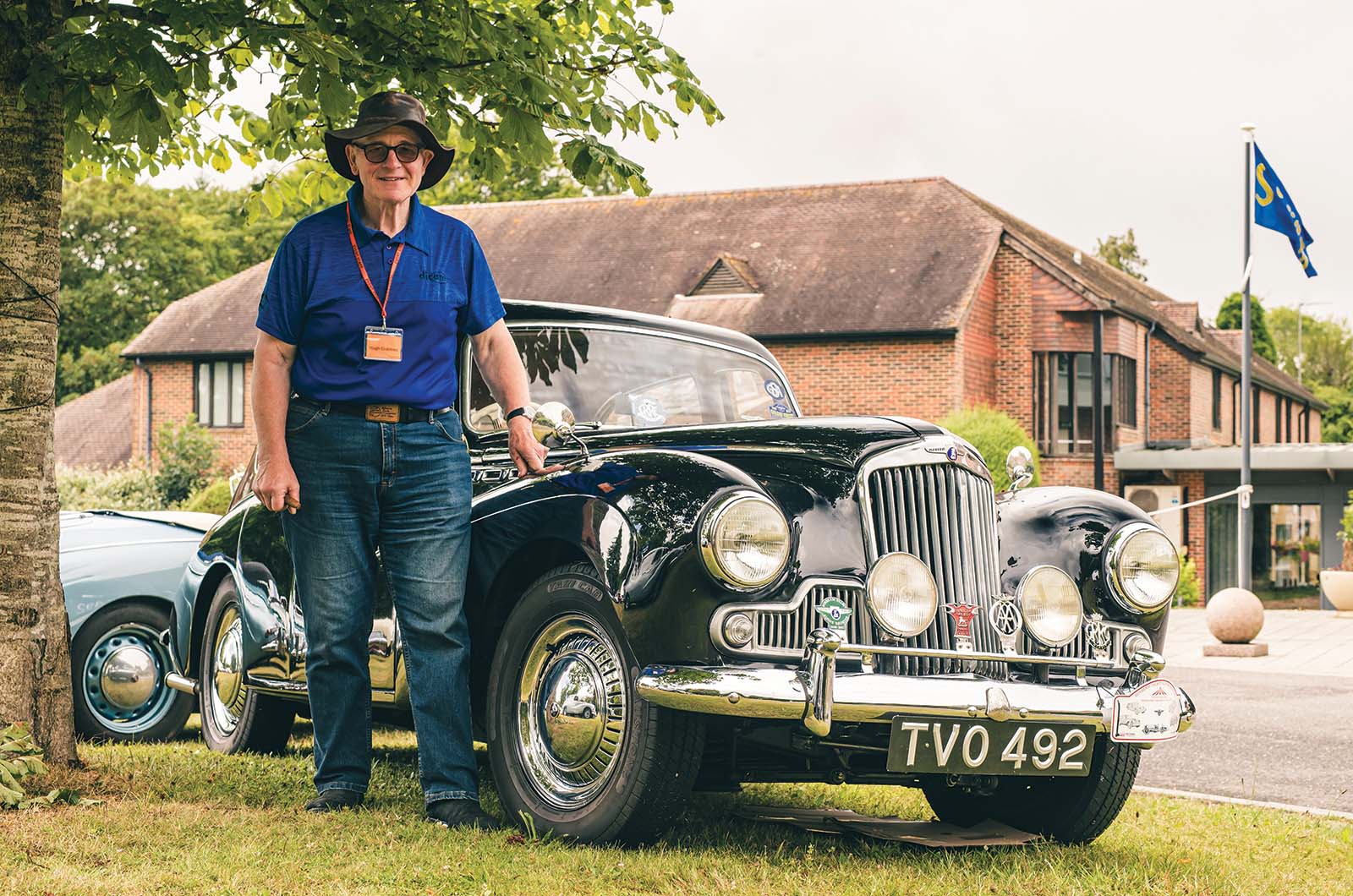
1957 Sunbeam MkIII: Hugh Crabtree
Hugh Crabtree’s Sunbeam MkIII took six years to restore
“I have the original invoice from when my father bought this car in 1959 – he part-exchanged a 1953 Sunbeam-Talbot 90, paying a net £250.
“They were pricey in their day but held their value. My father took TVO off the road in 1966 and put it into storage because he thought it would appreciate.
“He based this view on the success Rootes was having at the time in rallies. The Alpine is now doing well price-wise and Drophead Coupés are on the climb, but saloons like mine still languish below £10k.
“My father and I rescued it from storage in 1985, and it was given to me as a wedding present.”
This Sunbeam MkIII is helping to share the fun of 1950s classics with the next generation
“My storage arrangements were less kind to the car, and it was in a sorry state by the time restoration started in 2008, undertaken by David Sloan in Kent,” remembers Hugh.
“My wife asked me how we could afford such a project; I said that, as we had put our daughters through university and our son had gone straight to work from school, it was for him!
“The work was completed in 2014, but tragically we lost our son later that year so I now have to train my daughters in the joys of 1950s motoring and car maintenance.
“TVO has since completed two 2500-mile tours in Europe, and I am preparing it for the 2026 Rallye Monte-Carlo Historique. If our entry is accepted, that will be quite an adventure.”
1953 Sunbeam-Talbot 90 MkIIA: Brian Coles
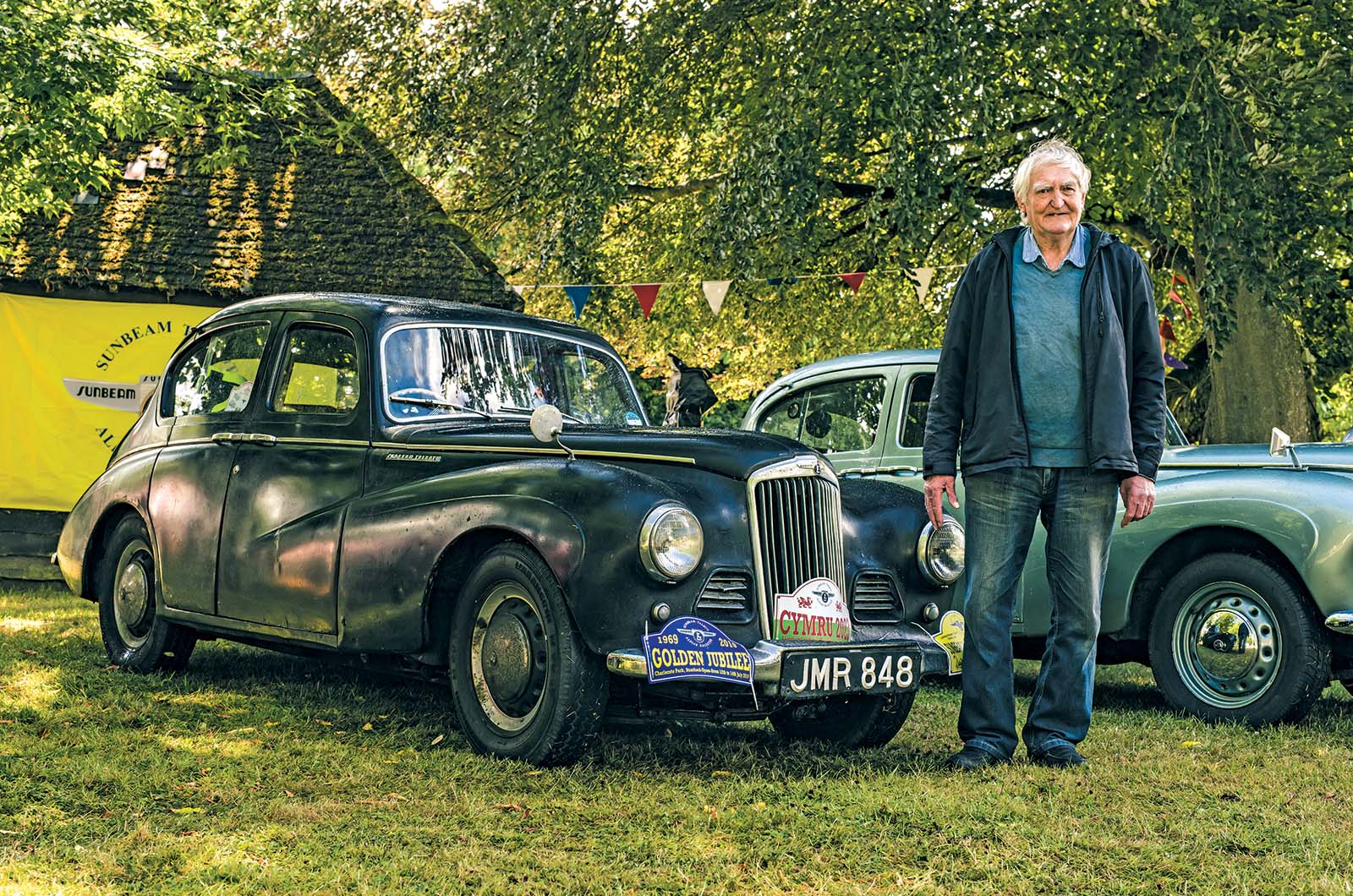
Brian Coles’ Sunbeam-Talbot 90 MkIIA was discovered in a local barn
“I used to be a farmer, and I went with a colleague to a neighbouring farm to get some straw out of one of their barns.
“I went in and thought, ‘I’m standing on something tinny here.’ The farmer said, ‘Yeah, that’s my father’s old car, it uses too much bloody petrol, so I shoved it in here. You can have it for £50.’
“That was in about 1970 – it wasn’t a classic then, it was just a spare car that we could use.
“Following that it was on and off the road for years. Then I got it going properly for the Golden Jubilee in 2019 after it hadn’t moved for 10 years.
“In just six weeks we had it running and drove it from Frome to Warwick with no problems. I’ve never done the paint, though.”
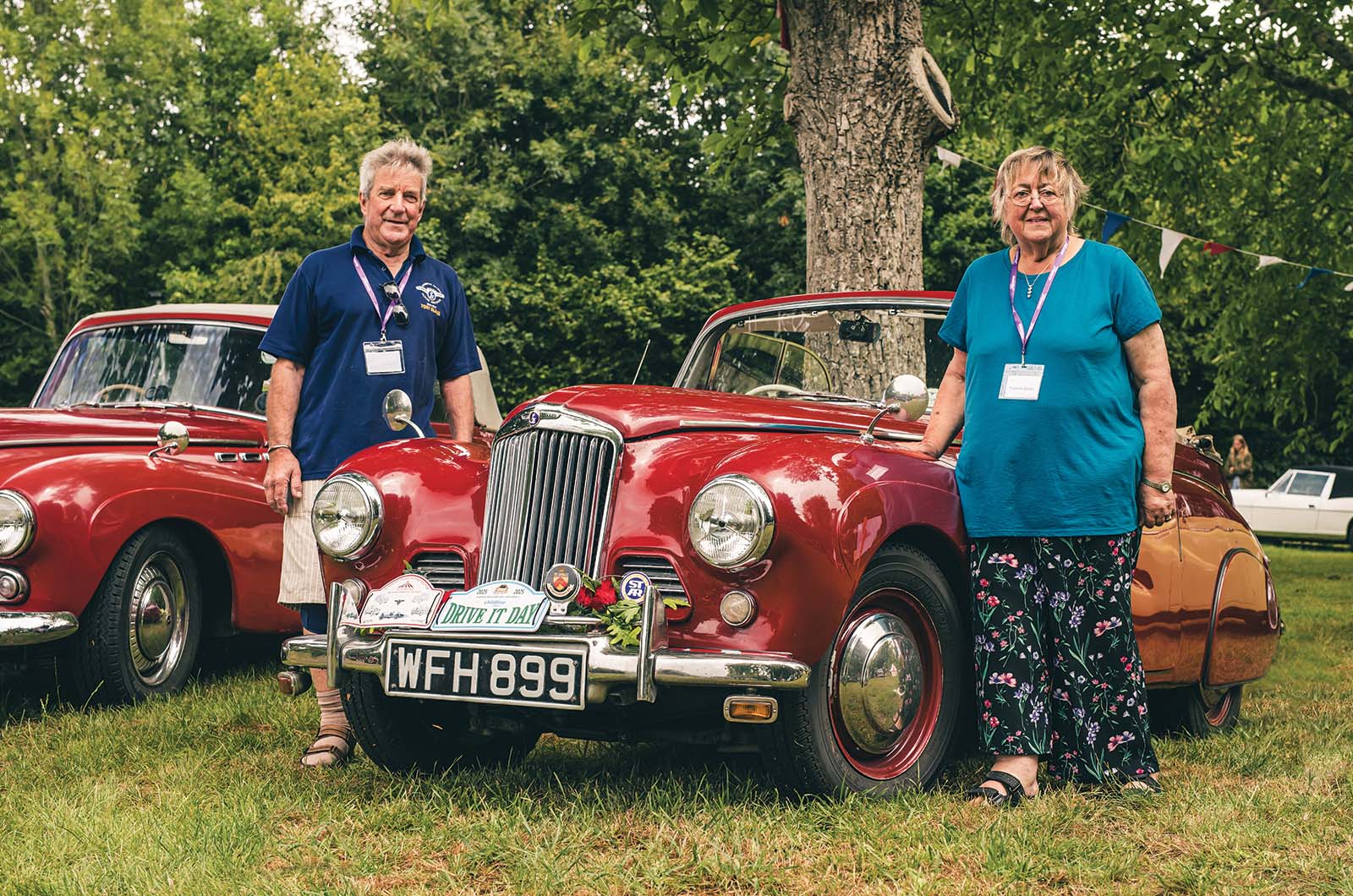
1951 Sunbeam-Talbot 90 Drophead Coupé: Tony & Pauline Blake
Tony (left) and Pauline Blake’s Sunbeam-Talbot 90 Drophead Coupé starred in a TV role
“We bought the Drophead 15 years ago from Derek Mathewson,” says Tony. “We also have a saloon as well. We live in south Derbyshire and go all over the place in it – to Scotland, Devon, Wales, even Belgium.
“It hasn’t got overdrive, although I guess I could put one in. I do lorry speeds on the motorway, but we try to avoid them because we like to have the top down if the weather is good.
“It turns 74 this year, but it really doesn’t seem that old, and we go shopping in it regularly. It’s quite practical, and it’s better to use these cars rather than leave them standing.”
“The Drophead had a role in Father Brown, which is filmed in the Cotswolds,” he continues. “It was driven by a character called Bunty and was in the show for three years.
“One of my claims to fame is that I showed Wanda Ventham – Benedict Cumberbatch’s mother – how to drive it. She took to it quite well.”
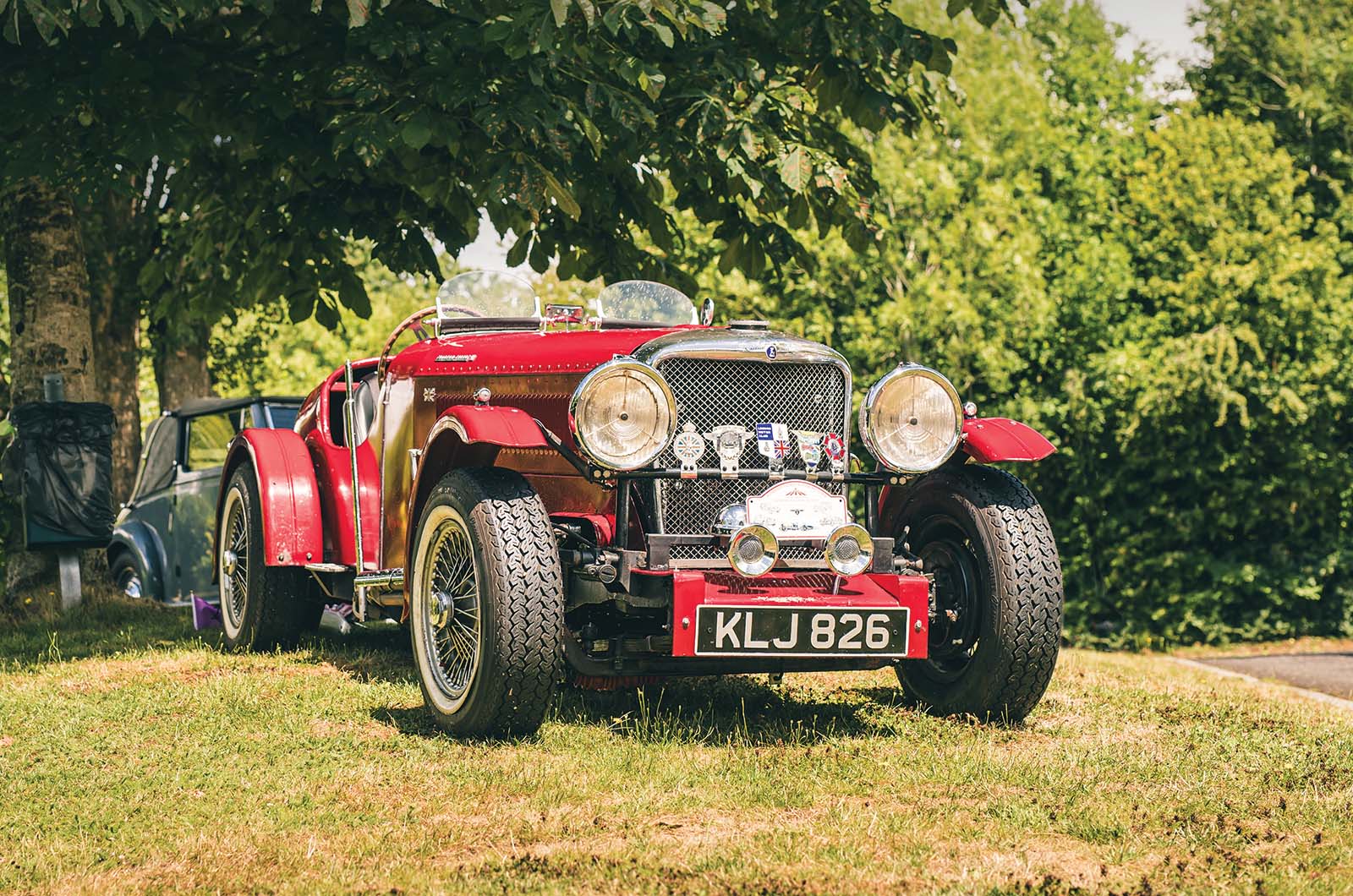
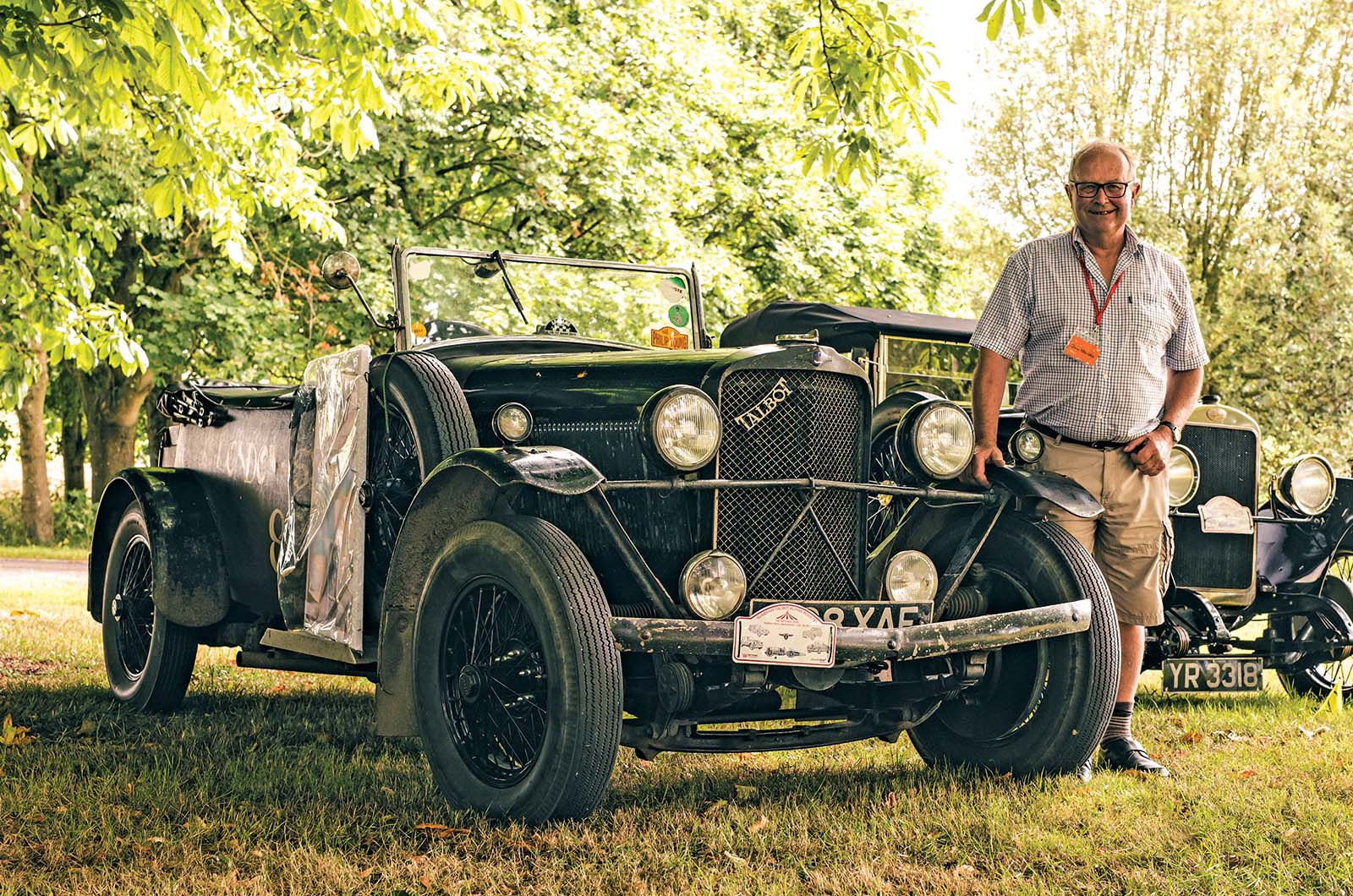
1930 Talbot 75: James Wheildon
James Wheildon and his globe-trotting 1930 Talbot 75
“I owned a 1934 Talbot 95 for many years. A good friend had a Talbot 90 Brooklands team-car replica, and we did the Mille Miglia in ’84 in that.
“On the way back we were thinking about what to do next and flippantly decided, ‘We’ll drive around the world’.
“In 1986 we saw an advert in Motor Sport for a drive to Sydney in 1988 for the Australian bicentennial; it was for pre-1931 cars.
“We had to prove which way we had made the trip: if we took the final crossing south of the equator, we had to do a tour of the major Australian cities; if we went over north of the equator, we only had to drive from Perth to Sydney. So we decided to take the route across Africa.”
This 1930 Talbot 75 has been to Australia
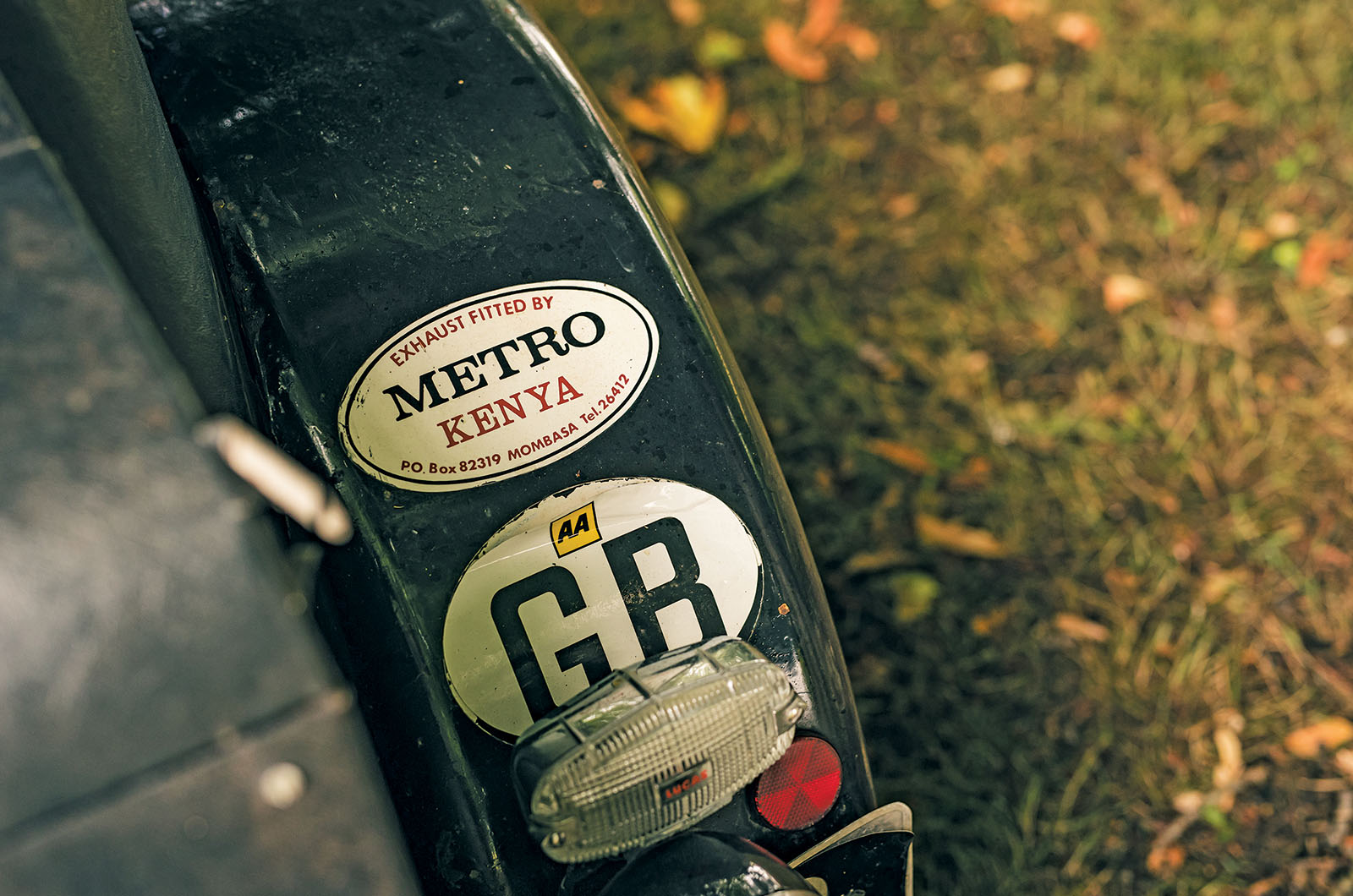
“We built the car from a heap of spares. The trip took 84 days, sleeping in tents for 35 of them, and we did 9867 miles. It was cold in the Sahara in January, with ice in our water.
“We had a route devised for us on the basis that a Series One Land-Rover could do it, but it was hard work with only two-wheel drive and we got stuck in the sand so many times.
“We soon learned in Zaire that five-year-old children could light a fire much better than we could. We had some wonderful times: in Nigeria we camped in the bush, and when we woke in the morning we found we had pitched the tent next to a sign that said ‘Beware – Elephants’.”
James’ 1930 Talbot 75 isn’t a pristine show car – and he intends to keep it that way
“I never had a cross word with co-driver Paul or even needed a sticking plaster,” adds James.
“Only six cars took part in the end: the others were a Lancia Lambda, two Model A Fords, a Morris Cowley and a Vauxhall 14/40.
“Since then, I’ve done the Monte Carlo Challenge and Le Jog.
“It’s a 2.3-litre six-cylinder, with 75bhp, and I’ve done more than 100,000 miles in it now, which is why it’s a rough old wreck. I could have rebuilt it into something a bit smarter, but anyone can have a shiny car.”
Images: Jack Harrison
Enjoy more of the world’s best classic car content every month when you subscribe to C&SC – get our latest deals here
READ MORE
Sunbeam Tigers: recreating Rallye Monte-Carlo magic
Driving record-breaker Sir Henry Segrave’s Sunbeam Twin Cam
A touch of class: Sunbeam MkIII vs Singer Hunter
Martin Buckley
Senior Contributor, Classic & Sports Car