Bizzarrini 5300 GT Strada: Giotto’s GTO

| 28 Aug 2026
Classic & Sports Car – Bizzarrini 5300 GT Strada: Giotto’s GTO

This is the sort of story that usually starts with plenty of fire and brimstone, about how raucous intent cascades down slender pipes at the turn of a key.

This time, however, in the beginning is the word, and the word is Strada.

You are probably already familiar with stradale (street) and, unsurprisingly, strada is much the same (road). Put that into your car’s name and there is a good reason for it.

Have you ever seen someone seriously campaigning an Alfa Romeo Tipo 33 Stradale, or a Lancia Delta S4 Stradale?

When we debated this in the office, we could think of the odd isolated case, more clubmans stuff really, but generally the name the creator chose to give the car – and all of the implications that came with it – appear to have been respected.

Classic & Sports Car – Bizzarrini 5300 GT Strada: Giotto’s GTO

After turning his back on Ferrari, Giotto Bizzarrini made it his mission to outdo Maranello on the race track. But the beautiful 5300 GT is even more memorable as a road car

Not so the Bizzarrini Strada.

Although hardly commonplace on the historic racing circuit – can anything this rare ever be commonplace? – they are certainly a fixture now, and it is easy to imagine that one day, maybe one day in the near future, there won’t actually be any road cars left as proper road cars (which, because of Giotto Bizzarrini’s predilection for racing, were as rare as the racers in the first place).

A Strada, then, will be everything but. And that would be a shame.

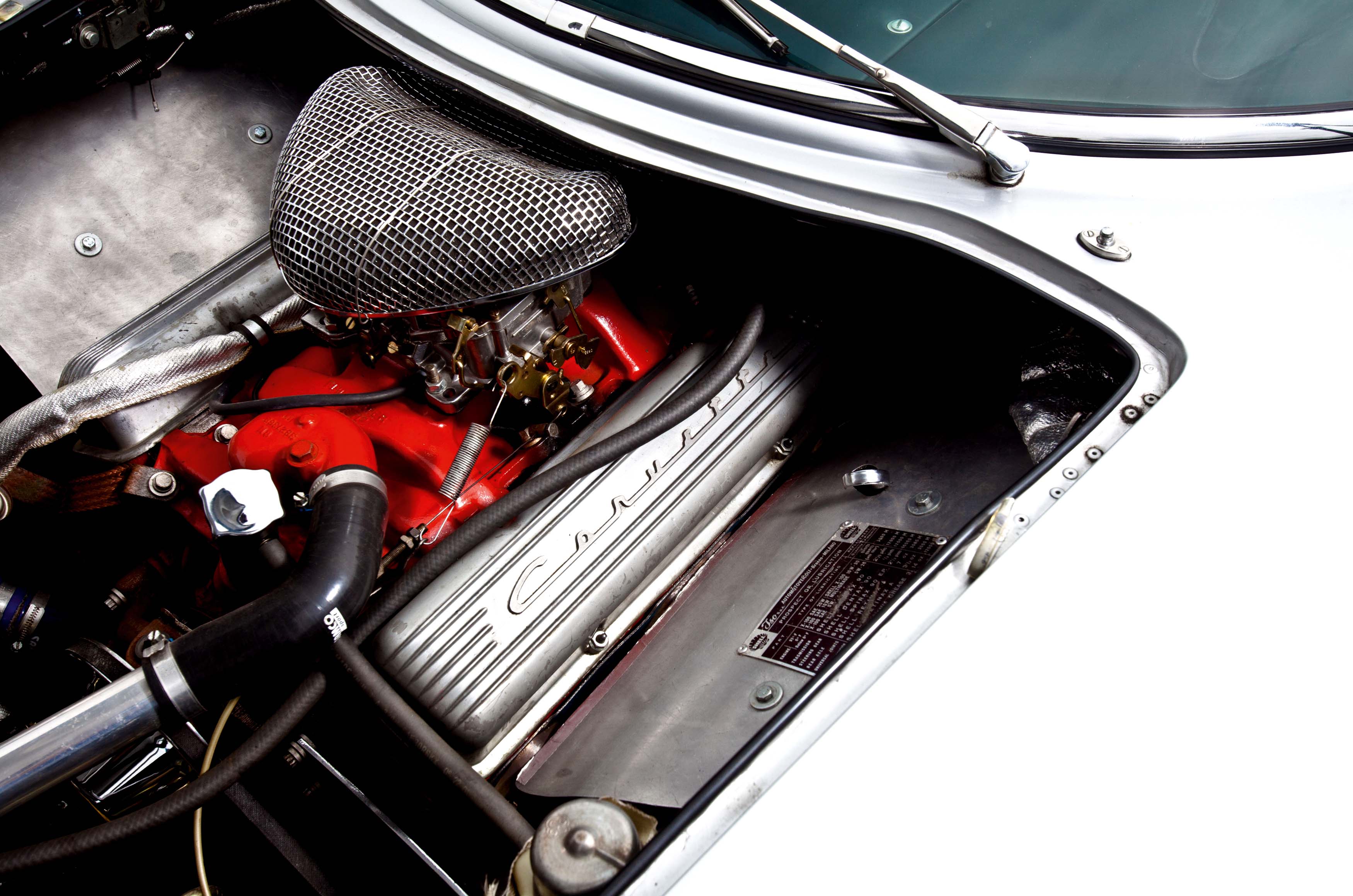
You can see the appeal for racing, with its front-mid-mounted Chevrolet Corvette lump set so far behind the leading axle line that you access parts of it through the dashboard, wrapped in a low, sleek, aerodynamic shape by Bertone.

Whatever its name may claim, it was a classic that was surely born to race – even those that weren’t actually born as the Corsa competition variant.

Especially when, given its until-recent outré status and so easily sniffed-at hybrid roots, it offered a competitiveness that massively outweighed its price.

This car, chassis BO232, sold for £125,000 with Coys at Techno-Classica Essen in 2003 – mind you, that was still Mercedes-Benz Gullwing money then.

Classic & Sports Car – Bizzarrini 5300 GT Strada: Giotto’s GTO

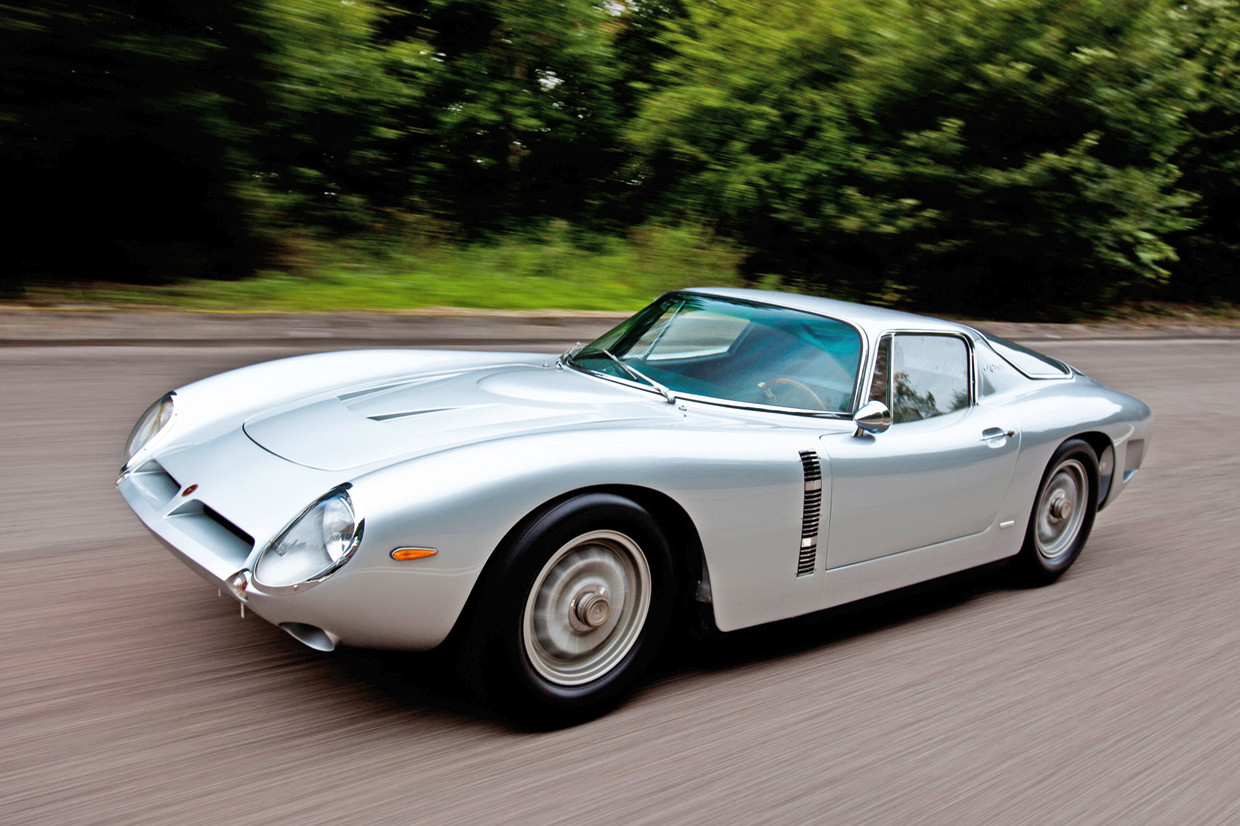
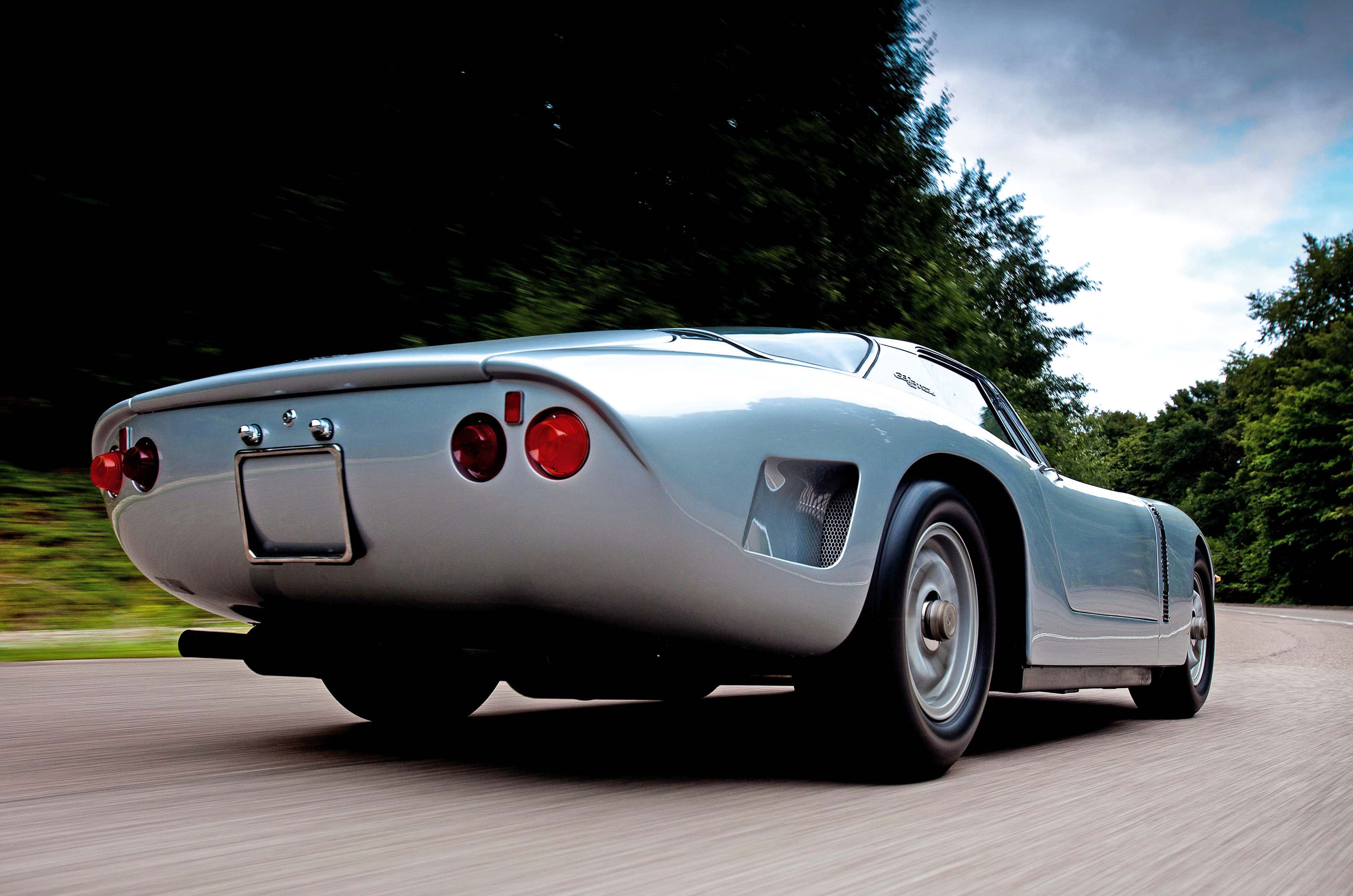
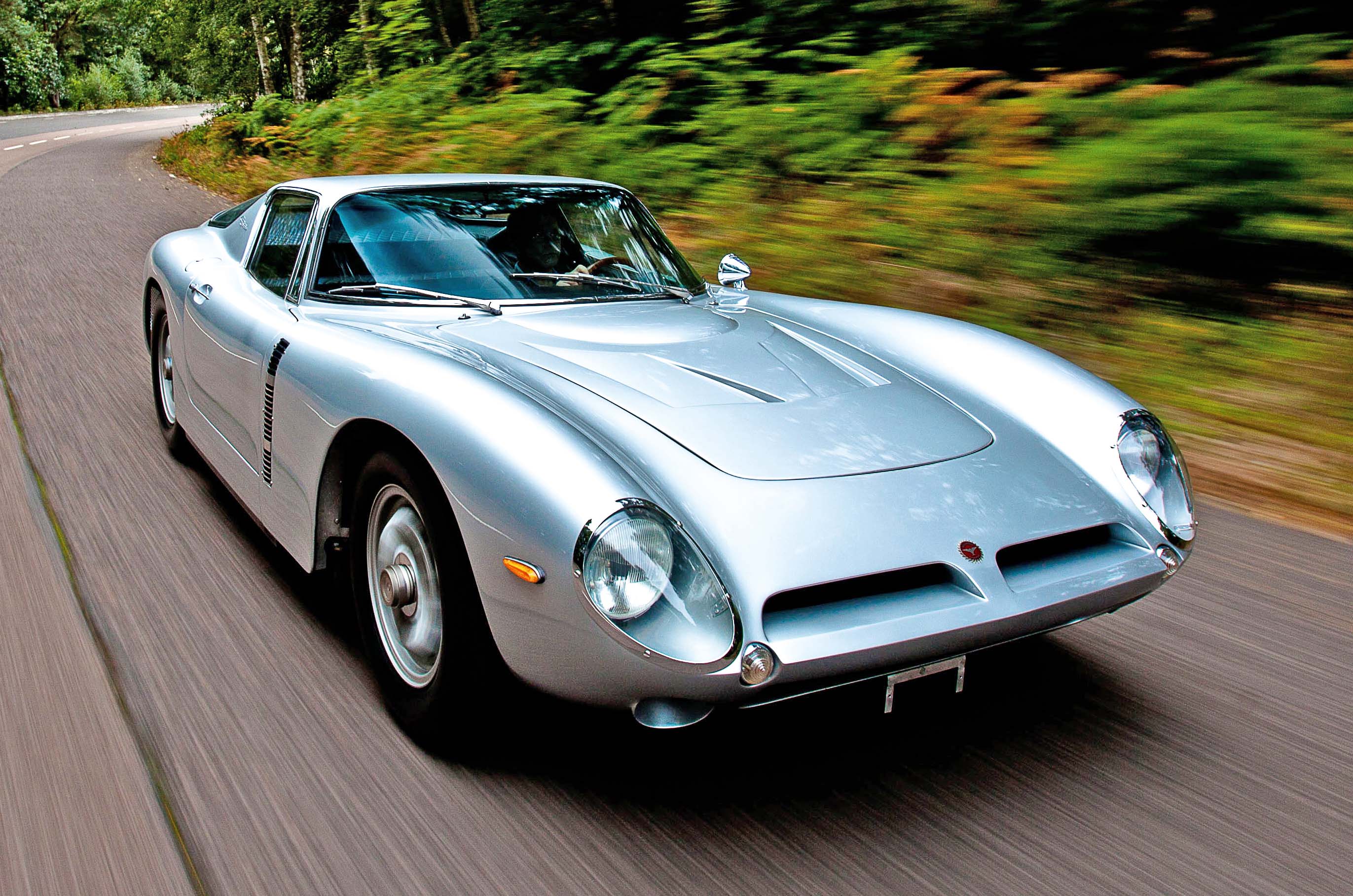
The Bizzarrini 5300 GT Strada is beguiling, if a little banana-shaped in profile

That is less the case today. Perhaps that reflects its potential to become a credible racer to take on the multi-million-pound Ferrari 250GTOs (and, yes, it has FIA papers), or maybe it reflects the fact that it is one of the few that isn’t one already.

Whichever way, what you know for sure is that it means that Bizzarrinis are no longer a leftfield choice: they are now part of the classic car firmament, sitting on high with the other Latin gods.

Giotto himself must be delighted: albeit several decades too late, his name has achieved everything he ever wanted it to become.

The Livorno-born engineer already had several key Alfa Romeos and a big hand in the Ferrari 250 Short Wheelbase, Testa Rossa and GTO under his belt when he had a spat with Il Commendatore Enzo – having started at Ferrari as a test driver before his engineering nous was recognised – and decided he could go it alone.

He departed as part of the 1961 Maranello mutiny and joined Count Volpi’s short-lived ATS concern.

Always busy, he also designed a magnificent V12 for Ferruccio Lamborghini, along with the restyled 250GT SWB ‘Breadvan’ as a GTO-beater for Volpi.

Bizzarrini was then drawn to the latest of the raft of 1960s Italian industrialists who fancied themselves as motor manufacturers.

Classic & Sports Car – Bizzarrini 5300 GT Strada: Giotto’s GTO

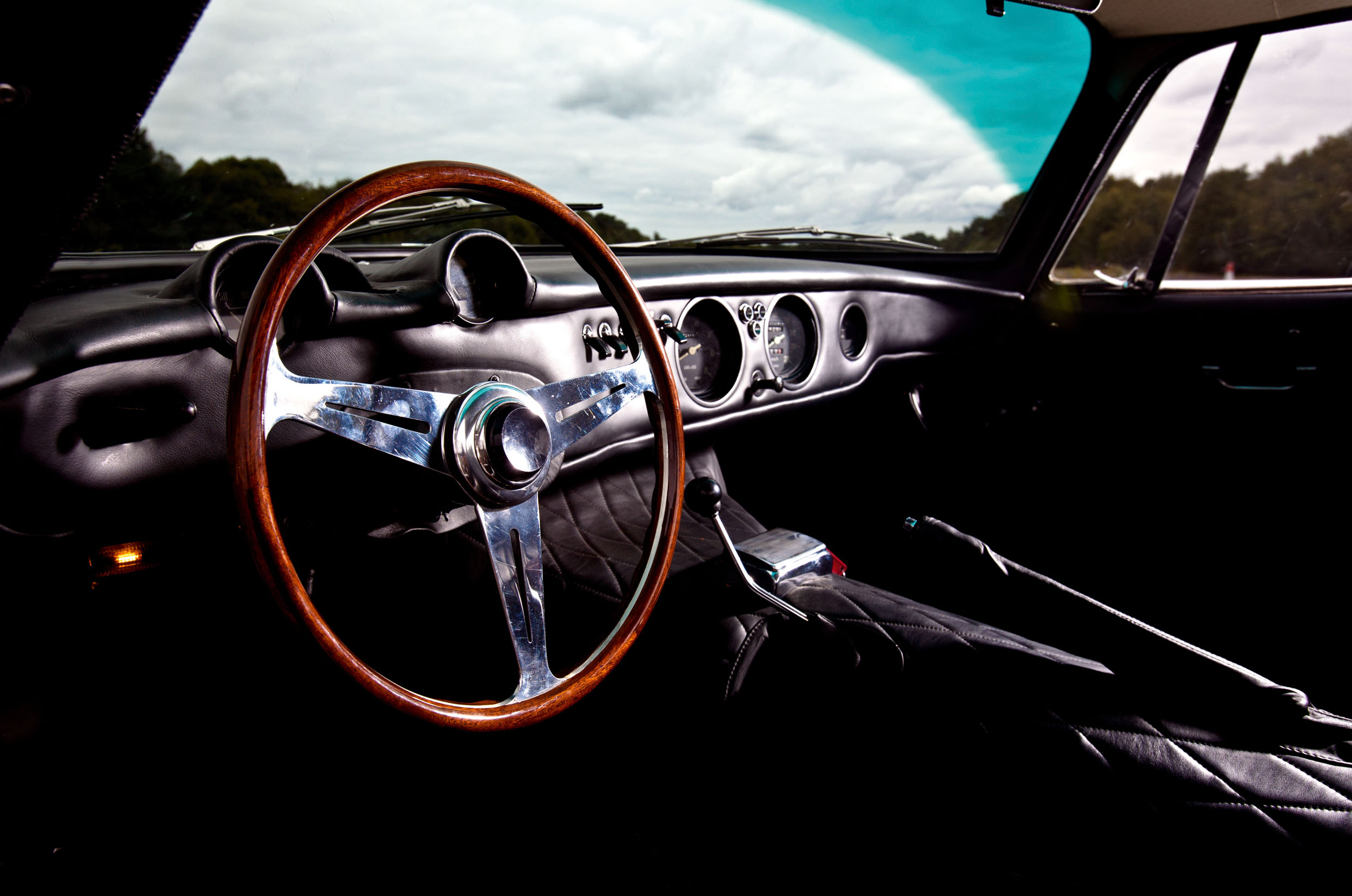
The Bizzarrini 5300 GT Strada’s cabin is a world of corduroy and diamond-stitched trim

Renzo Rivolta had already made his name with Isetta bubble cars when he decided to explore the other end of the motoring spectrum.

So for a short period, Bizzarrini’s corn came from Iso where, while working on the Rivolta 2+2 GT, itself developed from the British Gordon-Keeble GK1, like so many he became entranced by the possibilities of the Chevrolet Corvette engine.

It is easy to see why. The overhead-valve small-block V8 is incredibly flexible, powerful and compact. Official production ran from 1955 to 2003, after something close to 100 million units had been manufactured.

The base output might not be hugely greater than the compact Buick/Rover V8, but its tunability and capacity flexibility meant that the 327cu in unit used in the Rivolta – which would both be born and die in the 1960s – could offer anything from just below 250bhp right up to nudging 400bhp.

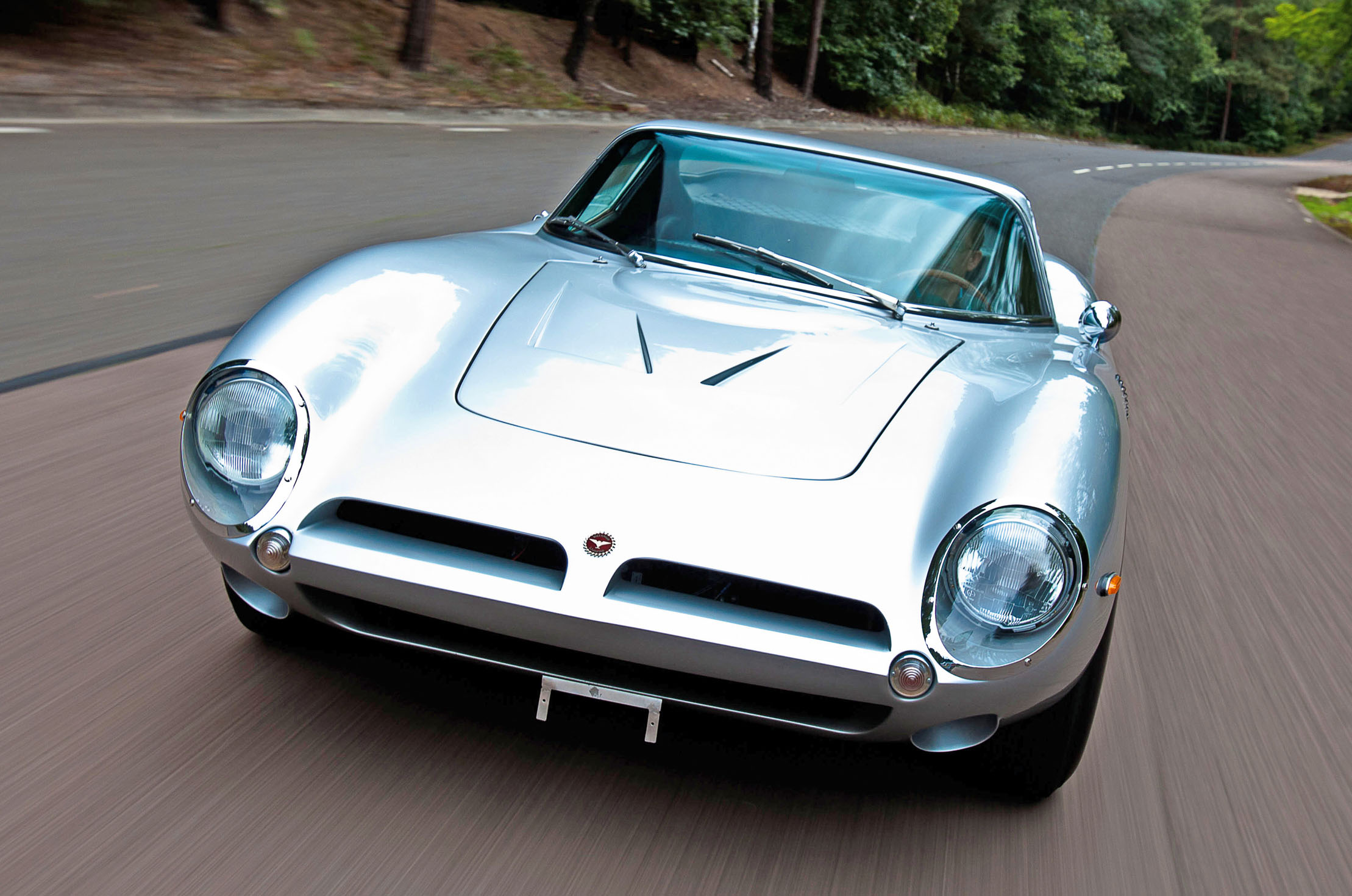
When Iso and Bizzarrini moved on to the two-seater Grifo, they took much of the Rivolta with them – including a shortened version of its platform chassis – but added a dash of one Giorgetto Giugiaro into the mix to give it a bewitching, super-low shape that manages to appear curious from some angles and mesmerisingly perfect from others.

The Grifo took a bow at the Turin motor show in 1963 as the A3L (L for lusso, or luxury) alongside Bizzarrini’s unfinished, track-orientated version of the car, the Iso A3C (corsa, or race) Competition Coupé.

This was lower still, faster still and built for serious competition – in particular for putting the Prancing Horses of his former boss into the shade.

Classic & Sports Car – Bizzarrini 5300 GT Strada: Giotto’s GTO

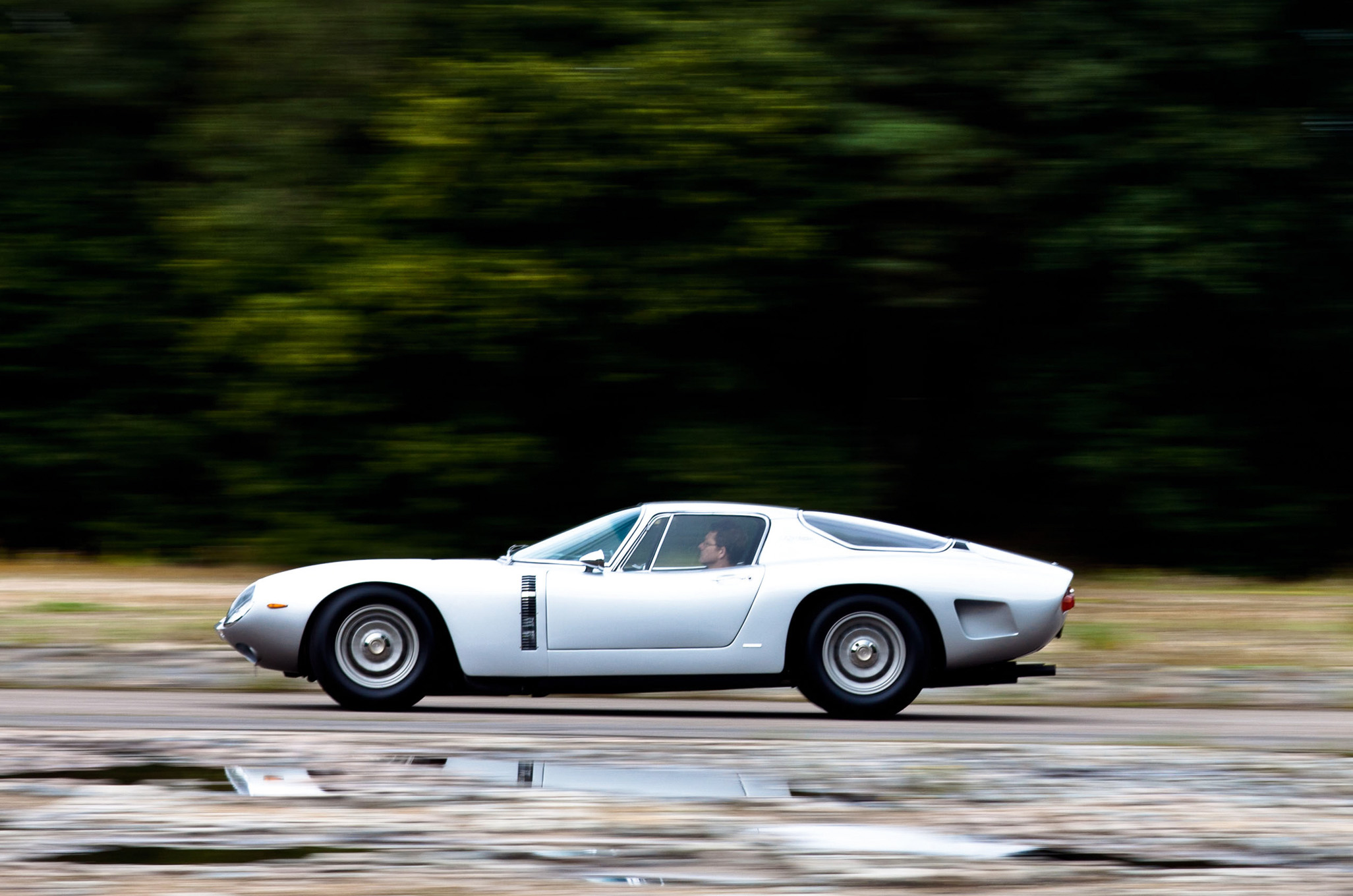
The Bizzarrini 5300 GT Strada’s rear vents take hot air away from the big brakes

The competition version certainly didn’t disappoint, winning the GT class at Le Mans two years running.

Yet as Rivolta became ever more determined to sell road cars, and as a result began to view Bizzarrini’s obsession with motorsport as detrimental to his business, relations between the pair soured.

When Giotto and Iso parted company in the mid-’60s, Bizzarrini in effect took the A3C with him in return for leaving the Grifo name behind.

He continued to offer a roadgoing version, too, christened the Bizzarrini 5300 GT Strada, and kept his order books open until the end of the decade, producing an exclusively limited run of just 149 cars.

The specification of the ‘new’ car was little different from that of the Grifo – hell, it was little different from the Rivolta, really – using the same 5358cc Chevy V8, manual four-speed gearbox, all-round disc brakes, independent front suspension, de Dion tube and limited-slip differential. The latter, especially, shows in the driving.

Before you get as far as doing anything as trivial as driving it, however, there are other issues to address, consider and conclude.

That shape for a start, crafted entirely out of aluminium for approximately half the model’s production run.

Classic & Sports Car – Bizzarrini 5300 GT Strada: Giotto’s GTO

There are no bumpers to protect the Bizzarrini 5300 GT Strada’s tender aluminium coachwork

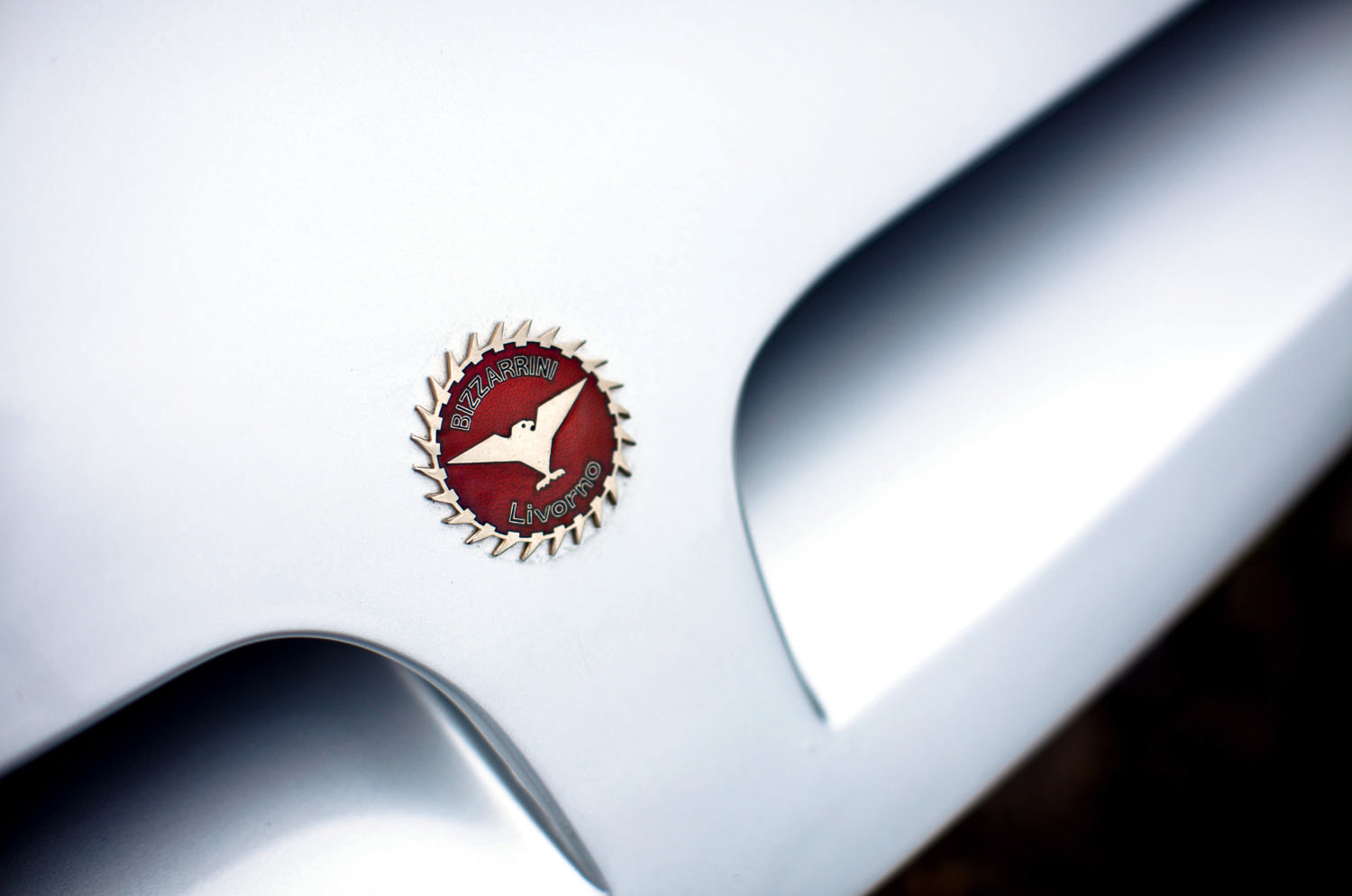
Yes, the headlights drop off the wings like tears, but in profile it is, well, slightly banana-shaped, proudly emblazoned with ‘Disegno di Bertone’ badges on the flanks as the rear window looks prepared to pop out.

The concave door-tops do it more than anything because the rest is less extravagant, the sparse simplicity of its well-spaced vents and minimal adornments – such as the early, super-slender curved door-pulls – adding to its sexiness.

What makes chassis BO232 interesting is that it is an especially early Strada and, as such, bears some of the features of the A3C, including the quartet of tail-lights, the delicate, slimmer doorhandles and the more cavernous vents.

Originally green, it has spent the majority of its life in Germany after its registration – to Shell & Söhne in Mainz – in October 1965. It moved to the USA in the 1980s and was awarded its FIA papers (to run as a pre-’65 GT) in 2004.

To slip into this missile – and it looks as much like a missile as any car ever created, especially in silver – you step over the wide, high sill to drop into a slender bucket seat on the floor.

Ensconced in a comfy cord, with the huge transmission tunnel wedging you in place, it dawns that the appointment is excellent for a thinly disguised racer, with heavy (very strada) door furniture and window winders, plus all that glass giving a surprisingly airy cabin.

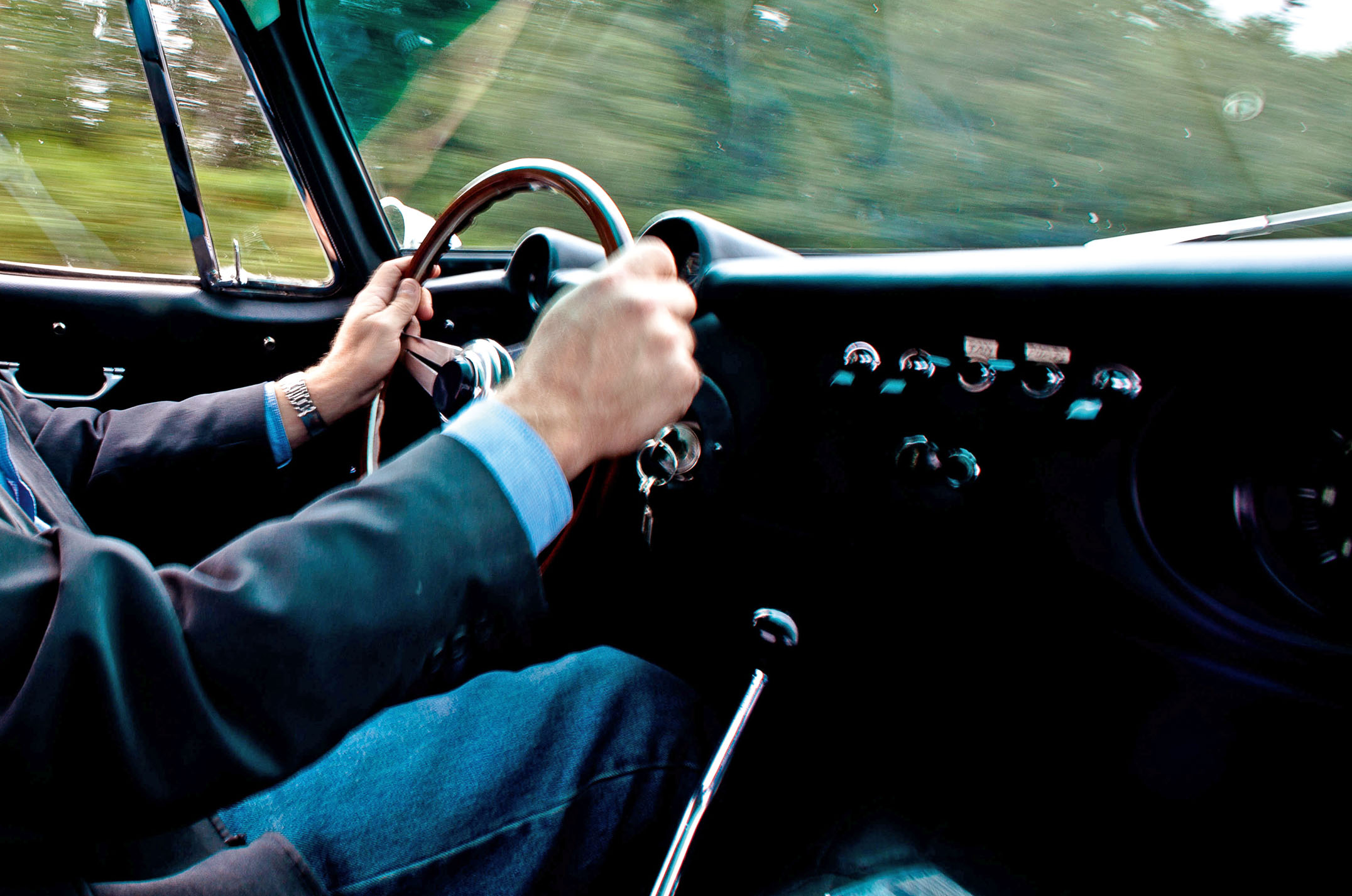
The indicator is merely a stalk spearing out of the dashboard, like a primitive British overdrive lever, and pointing straight at the driver’s head, but the rest of the interior layout tells you that this car means business.

Classic & Sports Car – Bizzarrini 5300 GT Strada: Giotto’s GTO

‘You can almost hear fuel tipping into the Bizzarrini’s huge four-barrel Holley, like water over the Niagara Falls’

There is a small, flat, three-spoke steering wheel mounted close to the dash, with just three dials visible through its spokes: oil temperature, oil pressure and water temperature. That doesn’t really say Strada, does it?

There is even a further bank of toggle switches before you can gaze across and see the ‘road’ instruments of a rev counter (calibrated to 7000rpm, with no redline) and speedometer (reading to 320kph) tilted towards the driver.

On the tunnel is an ashtray – ah, this must be a road car then! – and a vast handbrake lever that sprouts almost vertically. 

To counter the non-racer illusion, the three floor-mounted pedals have all the intricacies of their engineering exposed, to be admired.

Ironically, the least ‘race’-looking item is the most competition-orientated in operation: the slender, kinked wand of the gearlever is sensational in feel, even if selecting reverse means that you won’t then fit a cigarette paper between it and the steering wheel.

This weird mix of driver consideration and ergonomic irrelevance becomes all the more clear when finally you start it up and have to feed your arm through the steering wheel to turn the key.

Edging away – steering heavy, turning circle poor – this car gives you few hints of what it will do until you bury the throttle.

Then the Bizzarrini chassis, the Corvette engine and everything else come into their own.

Classic & Sports Car – Bizzarrini 5300 GT Strada: Giotto’s GTO

It’s easy to mistake the aluminium-bodied Bizzarrini 5300 GT Strada for an earlier Iso A3C, until you slide aboard

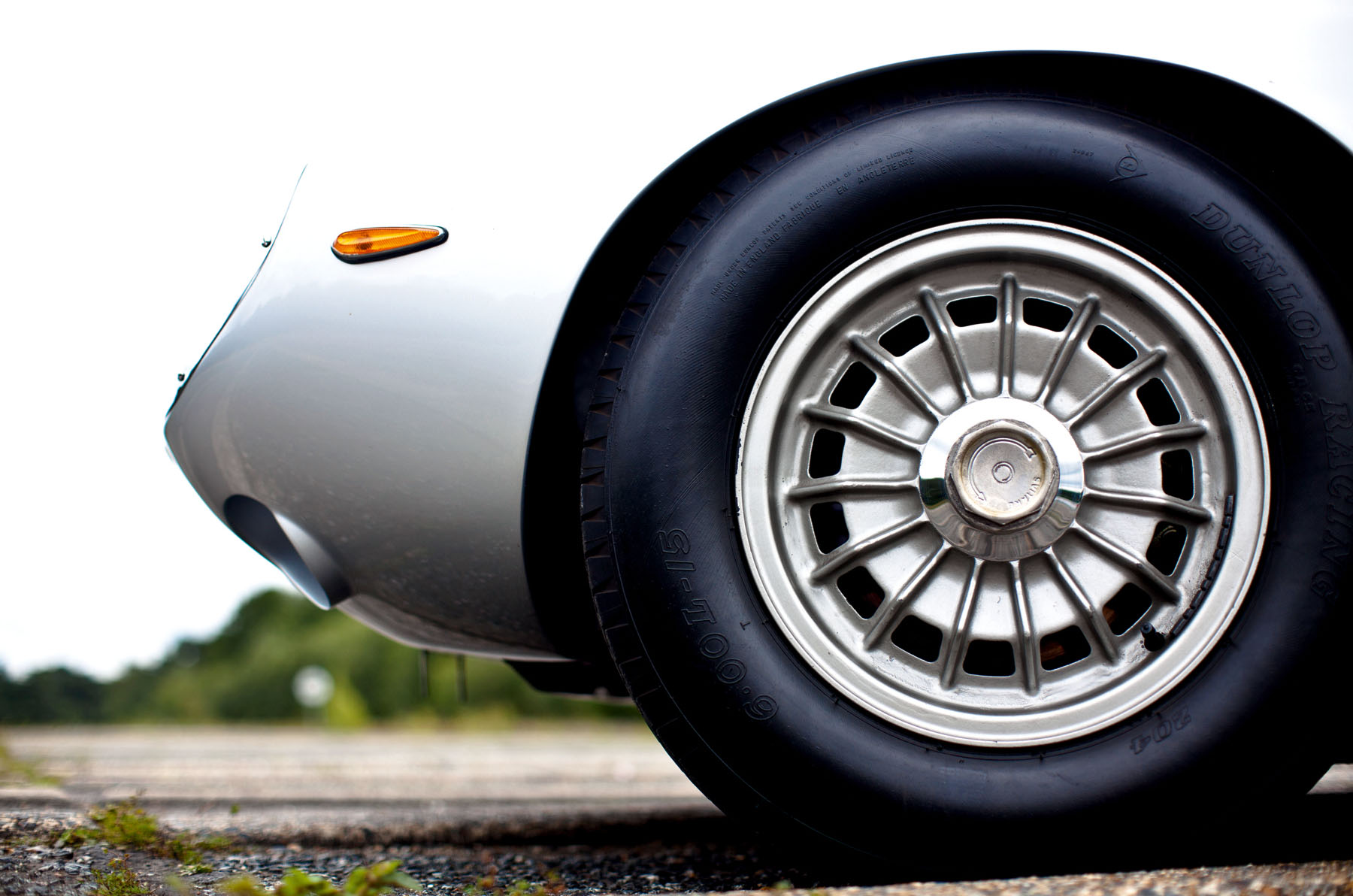
Boot it from standstill and the Dunlop racing tyres (6.50-L15s at the rear, 6.00s up front) don’t squirrel or squirm as much as lurch wildly before slingshotting you forwards with incredible force.

You can almost hear the fuel tipping into the huge, four-barrel Holley like water pouring over the Niagara Falls as you reach spheres of performance that don’t seem possible from such a physically small engine.

The brakes can almost keep up but are very 1960s, and the clutch is by no means light, yet it is far from disturbingly heavy: you are conscious of it, but not the effort it takes.

The highlights, though, are the thrust from the mighty engine and that gorgeous, positive gearchange.

Like a touring car, it offers big, long throws across a deep four-speed gate, but it is very definite and a joy to manipulate.

The semi-monocoque Bizzarrini handles well, too: cornering flat and sliding a bit, but generally gripping and balancing beautifully. 

It is genuinely controllable on the throttle, no doubt in large part thanks to having such a willing engine and the superb, near-perfect weight distribution.

Classic & Sports Car – Bizzarrini 5300 GT Strada: Giotto’s GTO

The Bizzarrini 5300 GT Strada’s Chevrolet Corvette small-block V8 is as sonorous as it is potent – who needs exotic pedigree when you have this much poke?

Ah, that engine! It is all that keeps this car from genuine greatness in the eyes of the paddock snobs.

Well, I have never been one to put much store by that: the best engine is the best engine, whoever made it.

And it doesn’t take very long in a Bizzarrini 5300 before you realise how good – albeit heavy – this cast-iron engine is – and why so many people take these machines racing.

But the essential question remains: is this a road car, a racing car or a Quisling? And does that mean that it offers the best of both worlds, or is it simply a jack of all trades and a master of none?

Auctioneer RM Sotheby’s reckoned it was the former, summing it up in its catalogue description thus: ‘This Bizzarrini is not only a welcome entrant in many of the most prestigious events, such as the Le Mans Classic, Goodwood Revival and Spa Six Hours, but also, with its beautiful lines, a welcome addition to the most prestigious concours events. As an early example with numerous interesting features, it literally ticks all of the boxes.’

Me? I’m not so certain.

It sure as hell performs like a racing car, and wears its potential on its sleeve, but even having driven it hard and enjoyed it, and therefore entertained such messianic thoughts, a big bit of me still thinks that there are enough racers, that, as genuine and original Stradas become ever more scarce, maybe this is one, despite its A3C features, should be left exactly as it is.

But then who am I to decide? Perhaps a more valid question is: ‘What would Bizzarrini do?’ And in my mind, there is no question: Giotto would choose to go racing.

Images: Malcolm Griffiths

Thanks to: RM Sotheby’s


Iso Grifo Series 2: the other Strada

Classic & Sports Car – Bizzarrini 5300 GT Strada: Giotto’s GTO

The gorgeous Iso Grifo Series 2

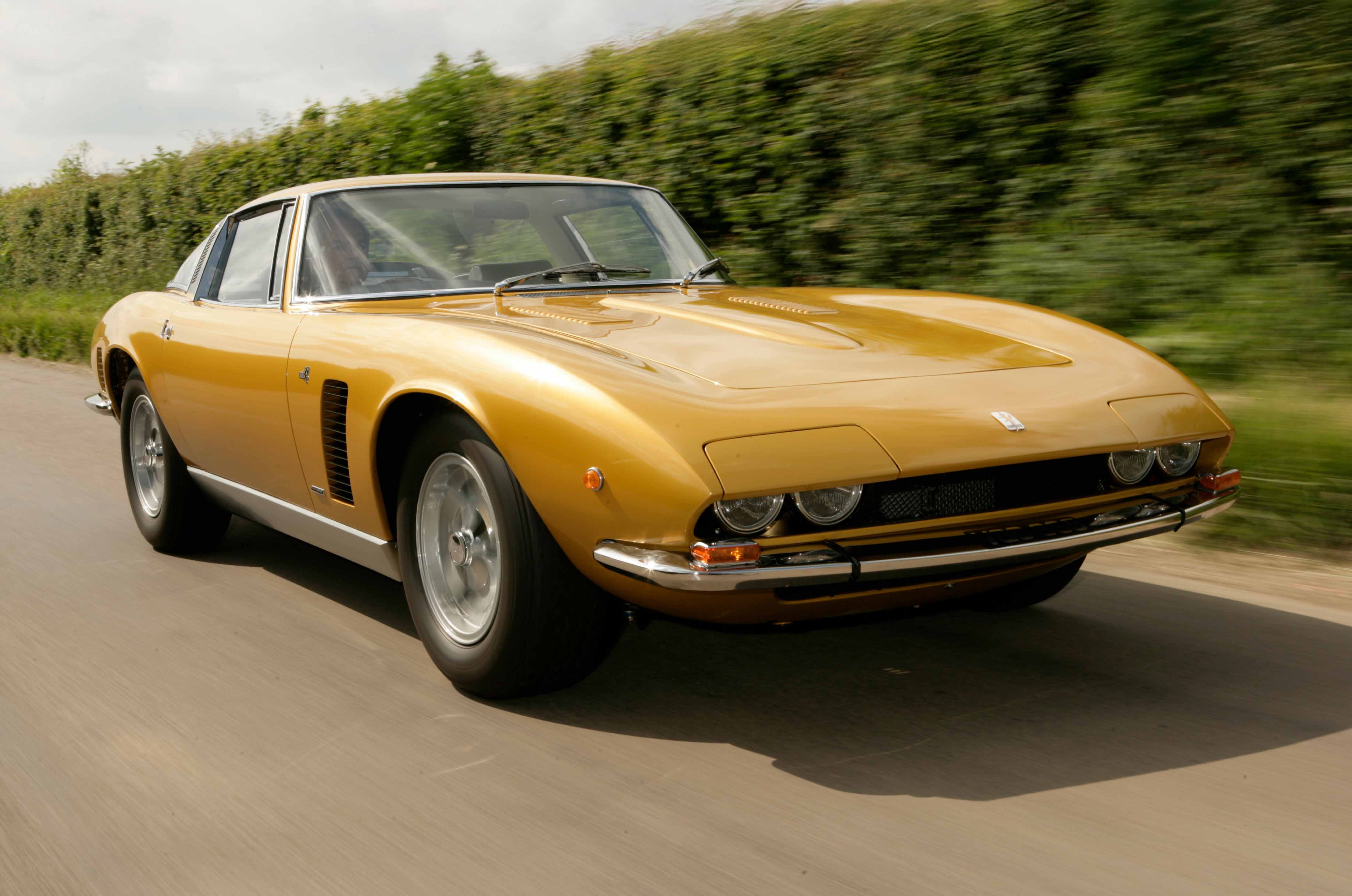
The Bizzarrini Strada 5300 evolved out of the original Iso Grifo A3C, but there was, of course, another Grifo that looked quite radically different.

There were no question marks over the Bertone-styled Grifo A3L’s purpose: this was a luxury GT, born to bait Maseratis and Aston Martins on the autostradas and autoroutes of Europe.

As Giugiaro left Bertone, so he passed the baton to incoming head of design Gandini for the Grifo Series 2, launched in 1970.

Other changes included the option of a 7-litre engine that took top speed to 170mph-plus and output past 400bhp.

Fewer than 100 S2s were built – 20 or so with a ZF five-speed ’box in place of the four-speed Chevy item – with their most distinctive features being headlights tucked away beneath svelte shrouds.

The shape of the S2, with its sharpened nose, is cleaner – except when fitted with the ‘mezzanine’ bonnet to accommodate the bigger engines.

Just four were made with targa-style removable roofs, and experts say they are the most desirable roadgoing Grifos of all.

Later cars even came with Ford Cleveland Boss 4BBL powerplants, before the Grifo name was killed off in ’74.


Factfile

Classic & Sports Car – Bizzarrini 5300 GT Strada: Giotto’s GTO

Bizzarrini 5300 GT Strada

  • Sold/number built 1965-’69/149
  • Construction steel platform chassis with aluminium body riveted to it, to form a semi-monocoque
  • Engine all-iron, ohv 5358cc 90° V8, single four-barrel Holley carburettor
  • Max power 365bhp @ 6000rpm
  • Max torque 344lb ft @ 4000rpm
  • Transmission four-speed manual, RWD via limited-slip differential
  • Suspension: front independent, by double wishbones rear de Dion tube, trailing arms, Panhard rod; coil springs, telescopic dampers, anti-roll bar f/r
  • Steering Burman recirculating ball
  • Brakes 12in front, 11¾in inboard rear discs, with twin servos
  • Length 14ft 4in (4369mm)
  • Width 5ft 8in (1727mm)
  • Height 3ft 7¾in (1117mm)
  • Wheelbase 8ft ½in (2439mm)
  • Weight 2530lb (1147kg)
  • Mpg n/a
  • 0-60mph 6.4 secs
  • Top speed 170mph
  • Price new not sold in UK

Enjoy more of the world’s best classic car content every month when you subscribe to C&SC – get our latest deals here


READ MORE

Iso Grifo GL: a waiting game

ATS 2500GT: built by rebels

Meccanica Maniero GT 4700: do-it-yourself exotic