Mini vs MINI at 25: BMW’s pretender battles last-of-the-line Cooper

| 5 Oct 2026
Classic & Sports Car – Mini vs MINI: the Cooper Sport battles BMW’s pretender

Phew, what a scorcher!

Not the weather – though the mercury is rising past the 30°C mark and each of today’s pair is without functioning air conditioning – but the cars themselves.

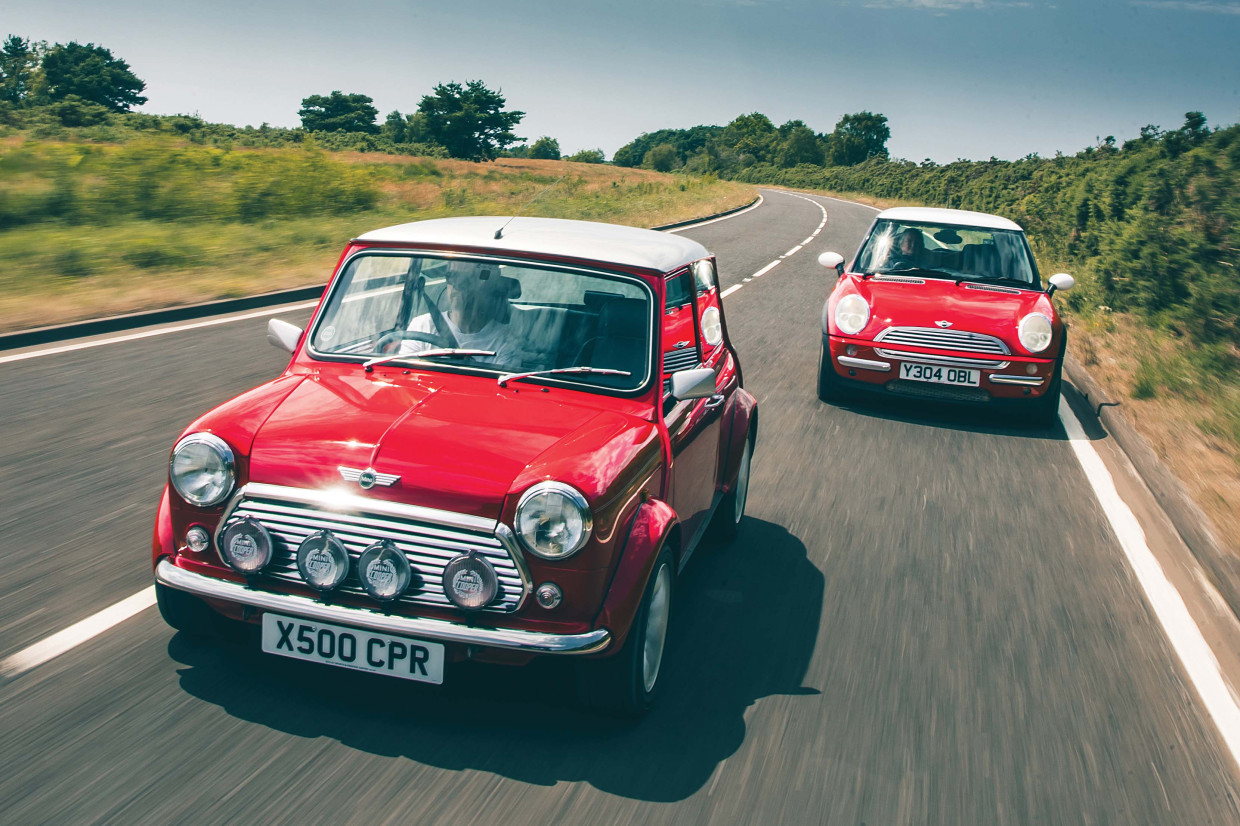
One is appropriately presented in Solar Red, representing the very last of its kind, and the other in Chili Red, suggesting heat of a different sort for an early example of its new breed.

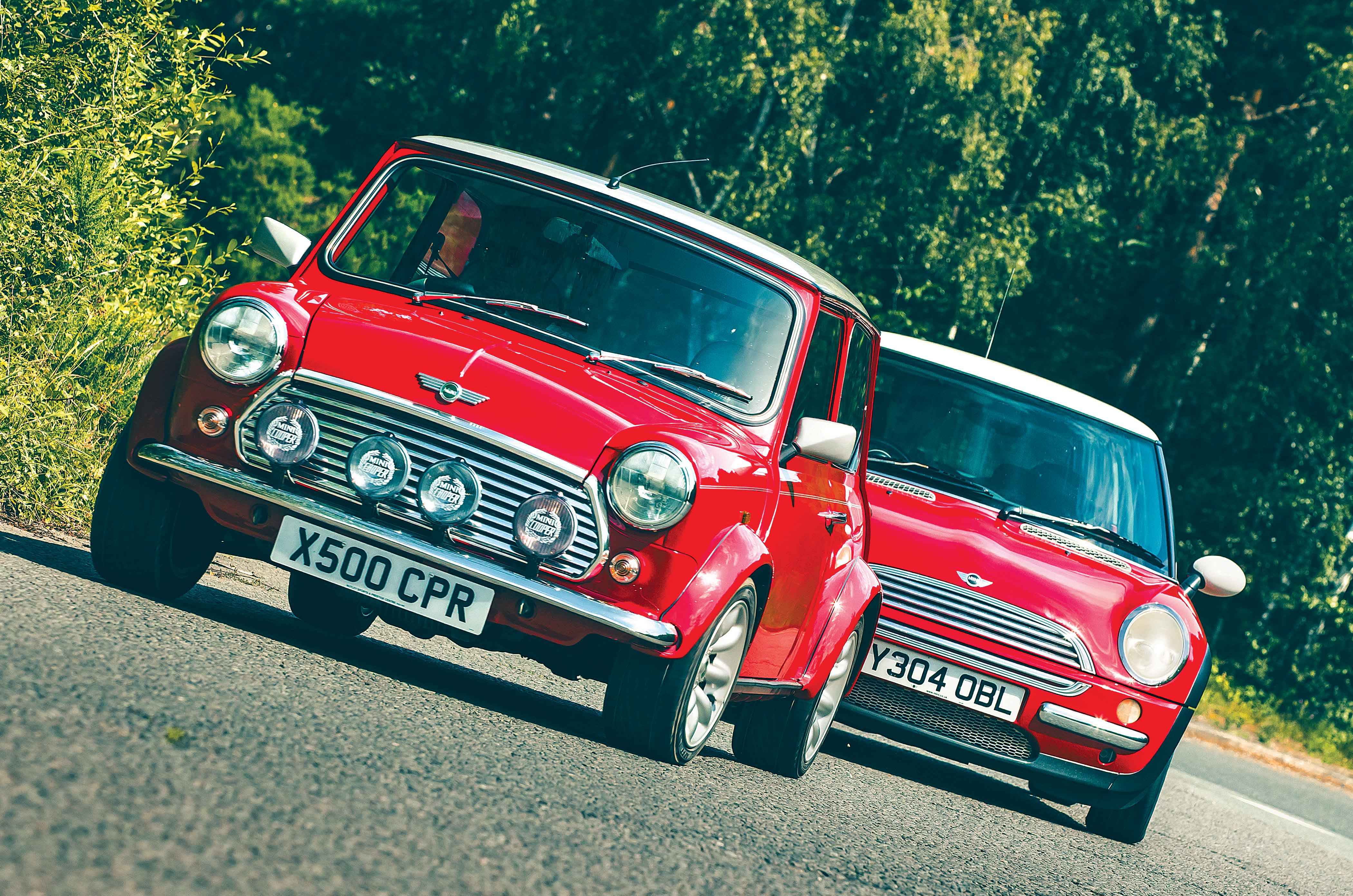
Their styling and features would have you believe otherwise, but only a year separates this Rover Mini Cooper Sport and the MINI Cooper parked next to it.

Classic & Sports Car – Mini vs MINI: the Cooper Sport battles BMW’s pretender

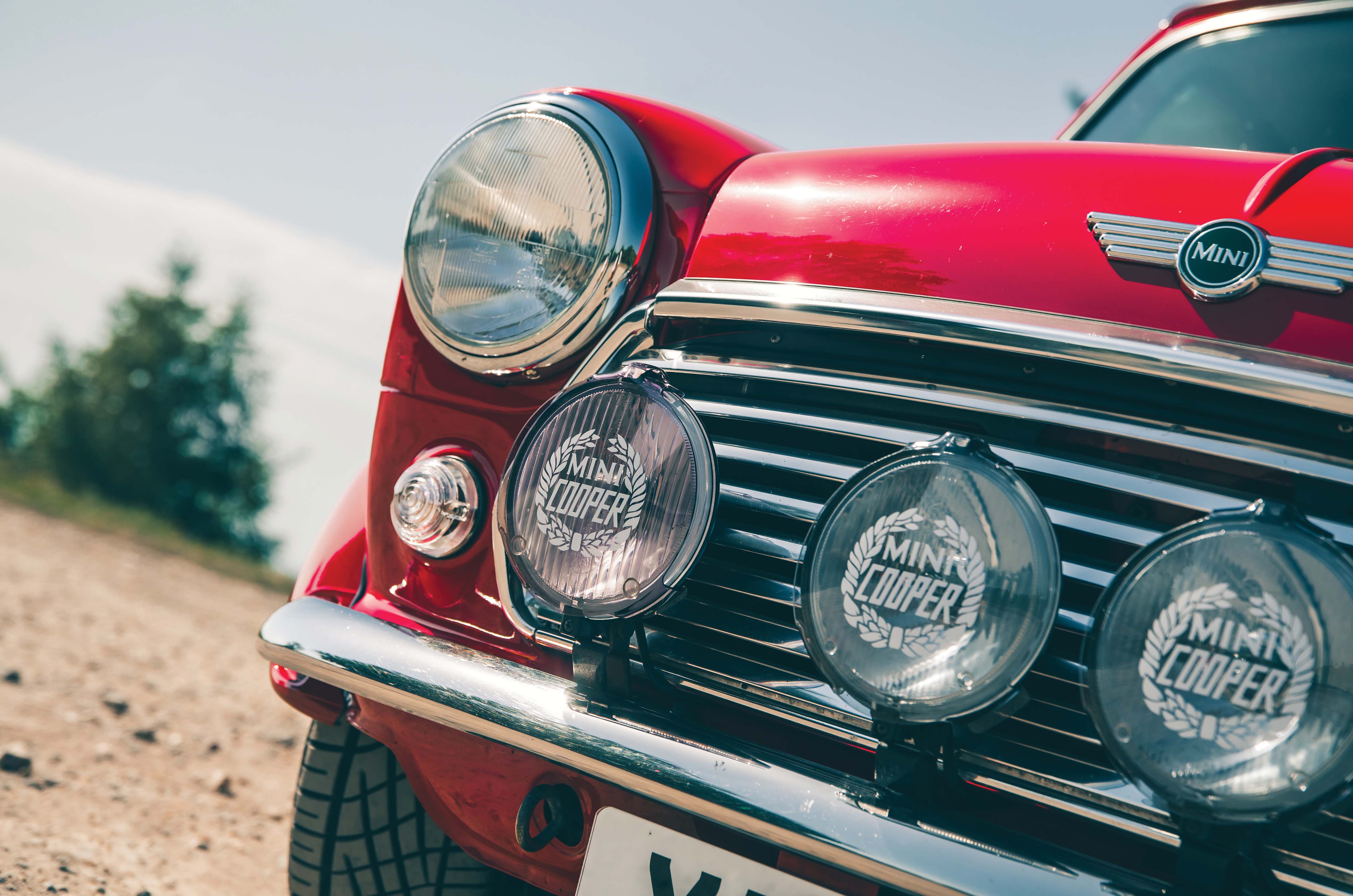
The spotlights on the Rover Mini Cooper Sport are a nod to the model’s rallying pedigree

There was even less time between the end of Rover Mini build in Longbridge and the start of R50 production under BMW’s watchful eye at Plant Oxford.

Either way, today’s cars are about as late as you will find of one, and as early of the other.

The fate of the classic Mini had already been decided, internally at least, by the time Rover unveiled the heavily revised ‘MkVII’ model in October 1996.

Just a few months later we would see the ACV30, a pumped-up two-seater with modernised Mini detailing, presented at the 1997 Rallye Monte-Carlo to celebrate the Mini’s victory there 30 years earlier.

Classic & Sports Car – Mini vs MINI: the Cooper Sport battles BMW’s pretender

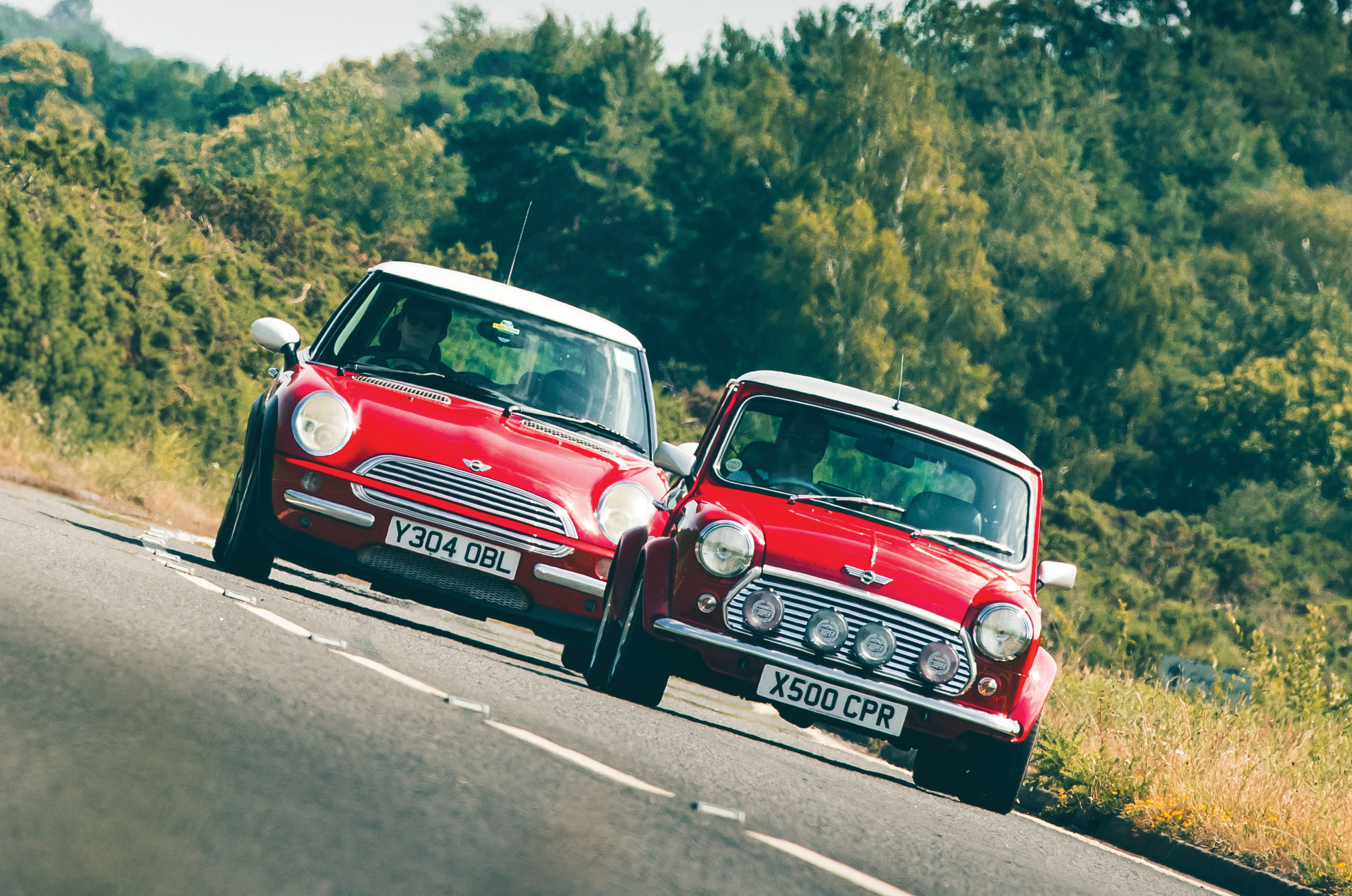
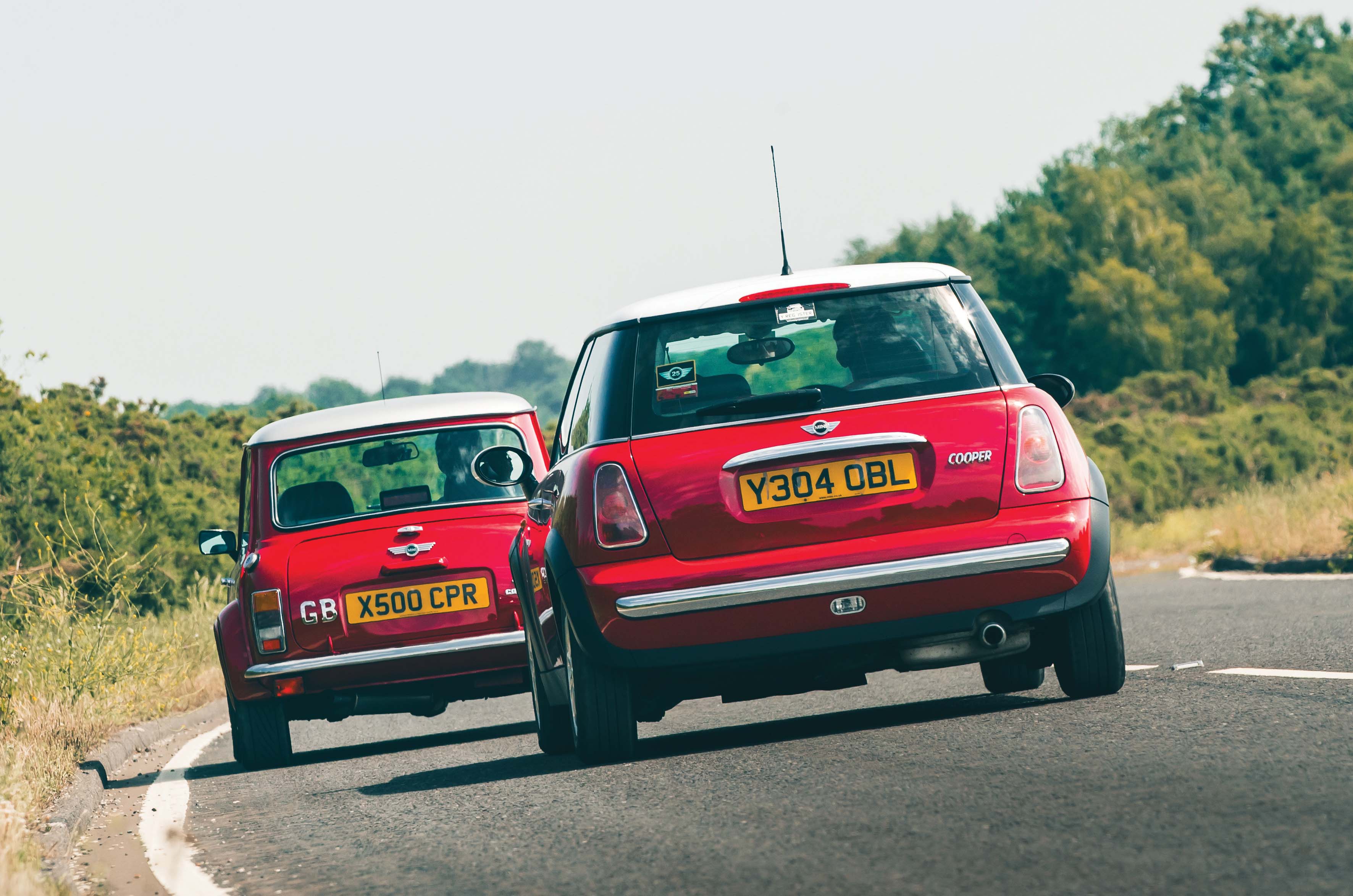
A quarter of a century on, BMW’s MINI (left) is an emerging classic, but how does it rate against the last-of-the-line Rover Mini Cooper Sport?

Then in March came the Spiritual and Spiritual Too – a pair of forward-looking and adorably cutesy show cars reimagining the Mini concept for the 21st century, more like Japanese kei cars than 2001’s eventual production model.

But the gap before that 2001 launch needed filling with a real product, and the 1996 car was the impressively thorough result.

Into the diminutive 10ft frame, Rover squeezed features that no Mini had ever seen before: an airbag, courtesy of the steering wheel from an MGF; a high-level centre brake light; a front-mounted radiator with an electric fan, no longer dumping hot air through vents on to the front-left brake disc; side-impact beams in the doors; even a two-speed ventilation fan and windscreen wipers with an intermittent setting.

Classic & Sports Car – Mini vs MINI: the Cooper Sport battles BMW’s pretender

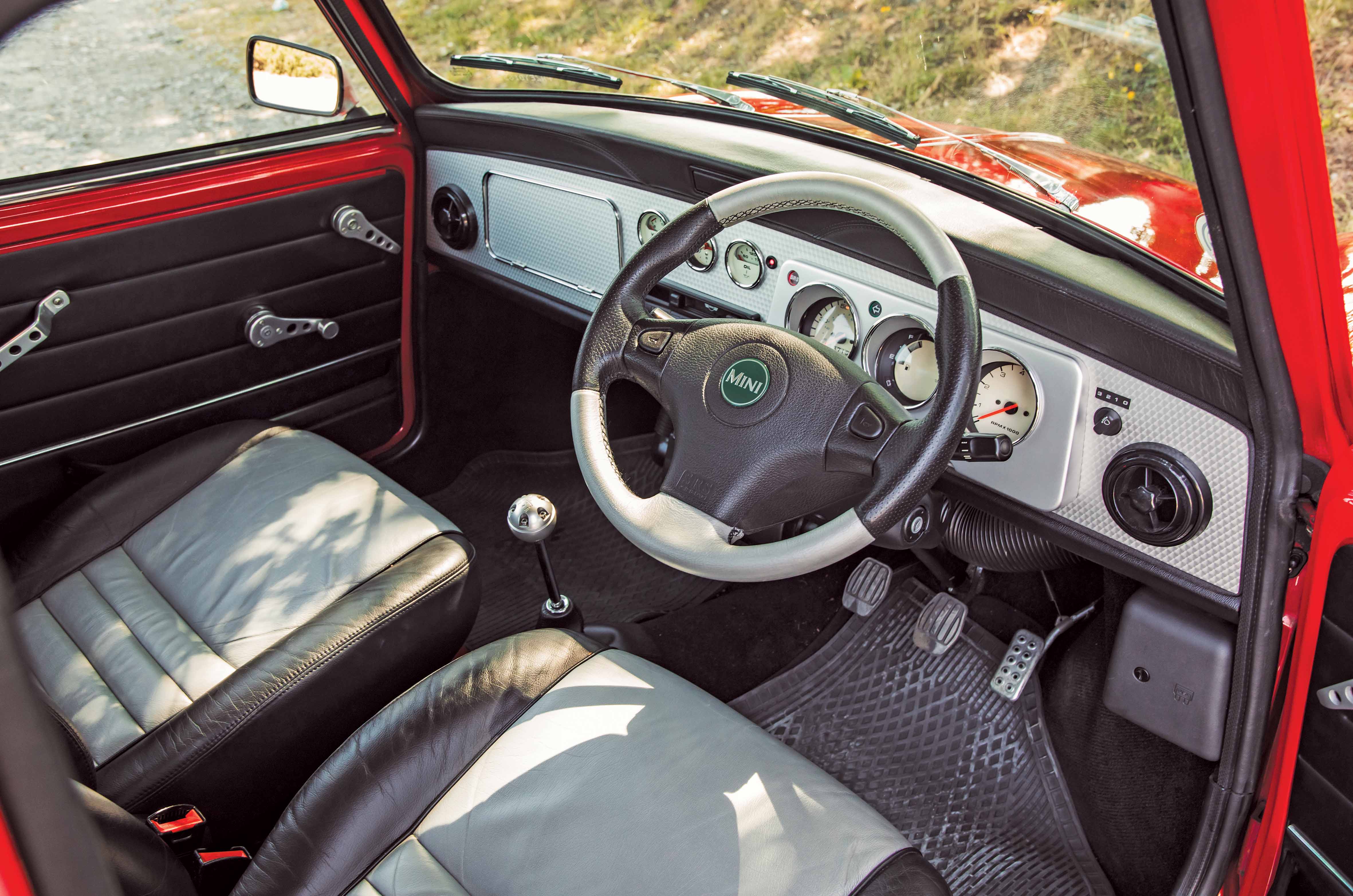
The Rover Mini Cooper Sport’s upmarket interior includes an MGF steering wheel

Minis were always ripe for customisation, but in a move that previewed its replacement, Rover significantly ramped up the accessories and options for the car.

On top of a spectacular array of vivid paint colours, buyers could apply bonnet stripes, roof decals, several alloy-wheel designs and visual features such as a wavy chrome grille or a full-length electric fabric sunroof.

The cabin was similarly open to personalisation, with the regular Mini getting two hide options along with Balmoral cloth.

The Cooper had its own fabric and leather variations, while the seats and carpets in all cars had several colours to choose from.

Classic & Sports Car – Mini vs MINI: the Cooper Sport battles BMW’s pretender

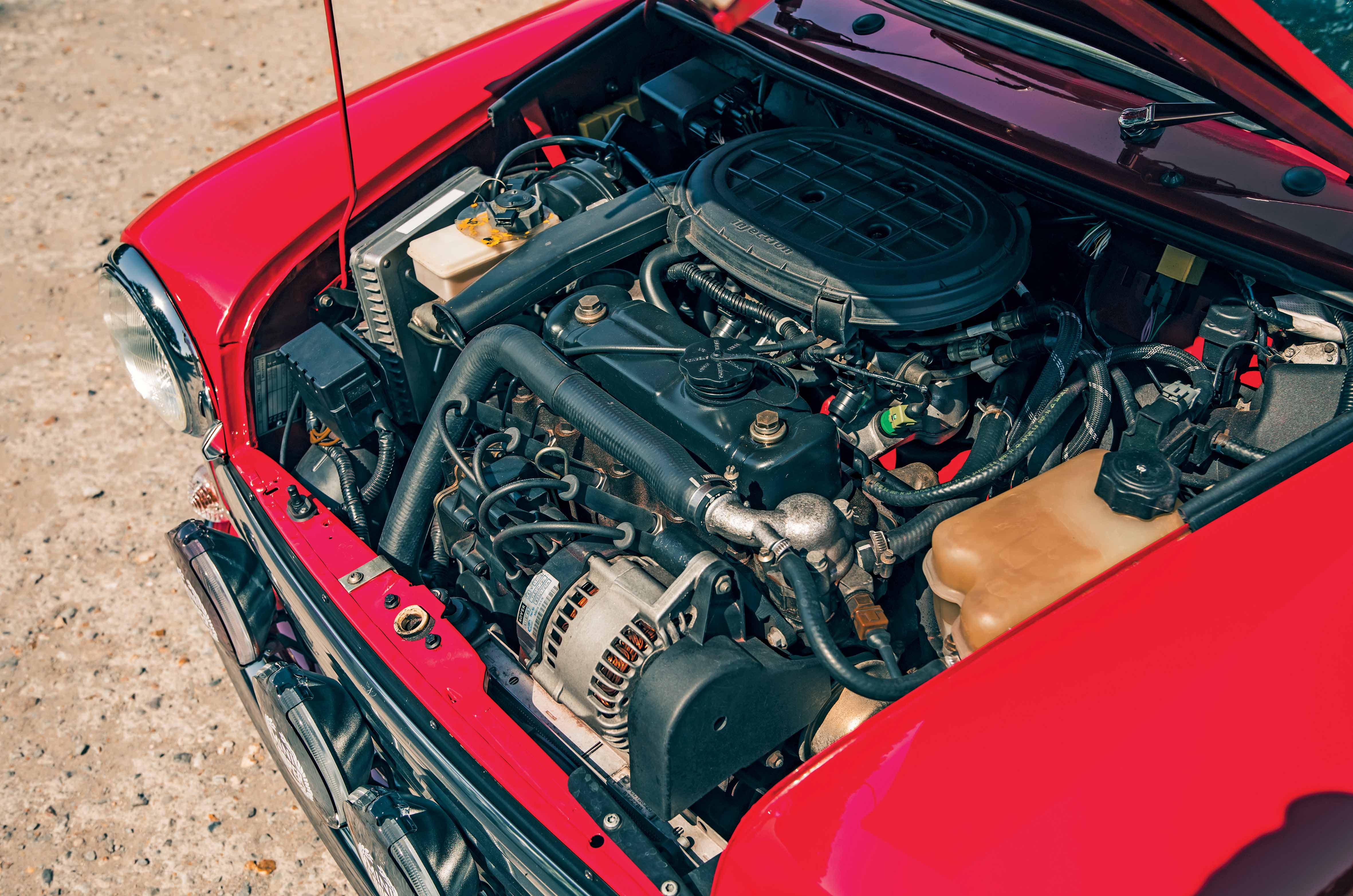
The Mini’s long-serving 1275cc ‘four’ received some updates for the heavily revised ‘MkVII’ model

Mechanically, the biggest change was the addition of multi-point fuel injection (strictly speaking, twin-point injection due to the Mini’s inlet-port design), up from the single-point set-up it had run since 1991.

That was paired with dry-coil ignition for better reliability, and more sophisticated engine management borrowed from further up the Rover range.

All Minis now made 63bhp at 5500rpm – there was no boost for the Cooper, though John Cooper Garages later offered an S Works package with 90bhp and a Jack Knight five-speed gearbox – and 70lb ft of torque, arriving 900rpm earlier than before, at 3000rpm.

At heart, though, it was the same gears-in-the-sump, long-in-the-tooth 1275cc A-series engine with which buyers were abundantly familiar.

Classic & Sports Car – Mini vs MINI: the Cooper Sport battles BMW’s pretender

‘Extended periods between Mini motoring make it easy to forget what a unique experience these cars provide’

Towards the very end of production, Rover launched a series of ‘Mini Classic’ models with unique colour and trim combinations, topped by the Cooper Sport and, at the very end, the Cooper Sport 500.

These had just about every accessory thrown at them, from full silver-and-black leather and a turned-aluminium dashboard to standard fitment of the most prominent option available on post-’96 Minis, the Sport Pack.

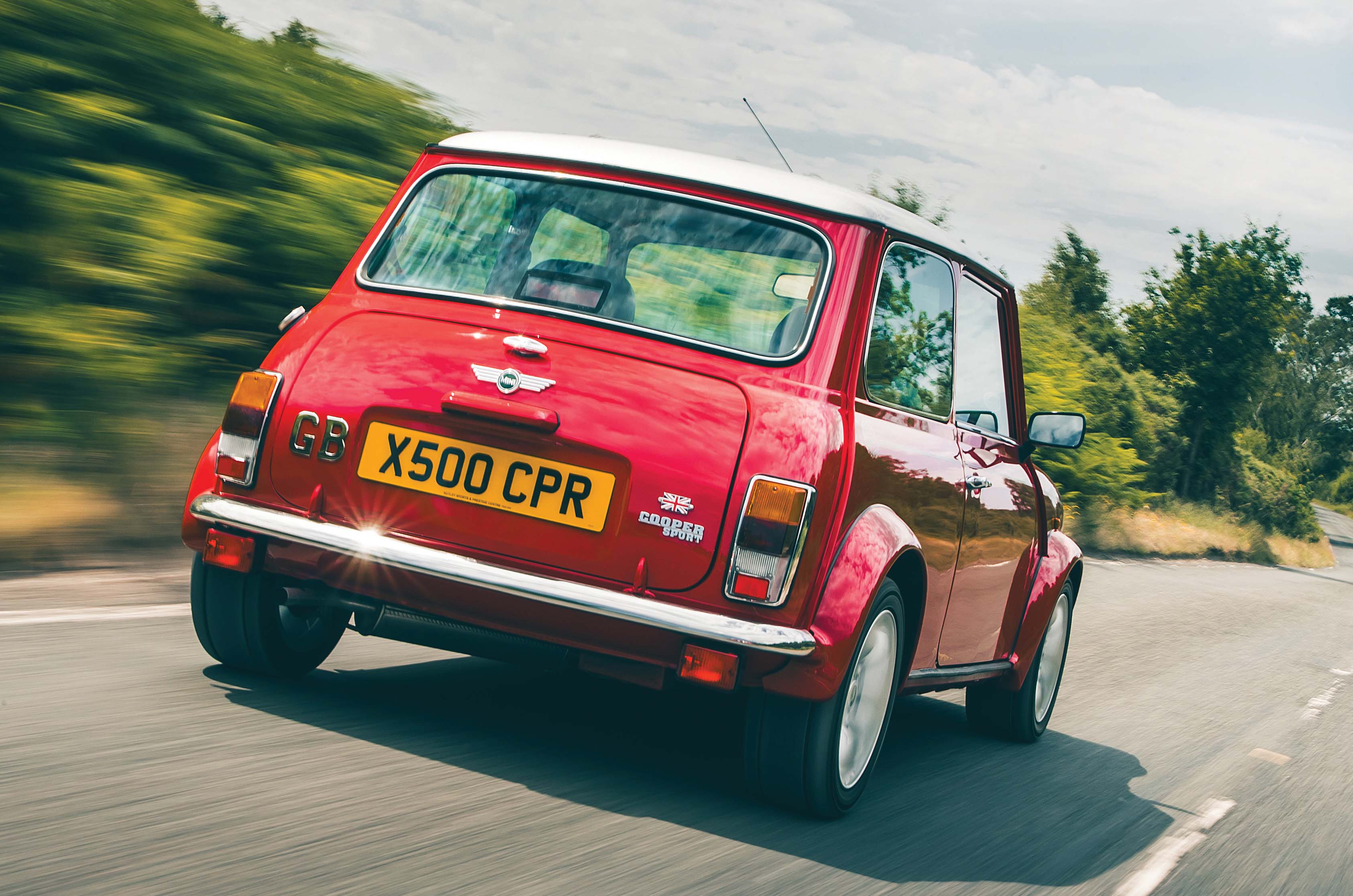
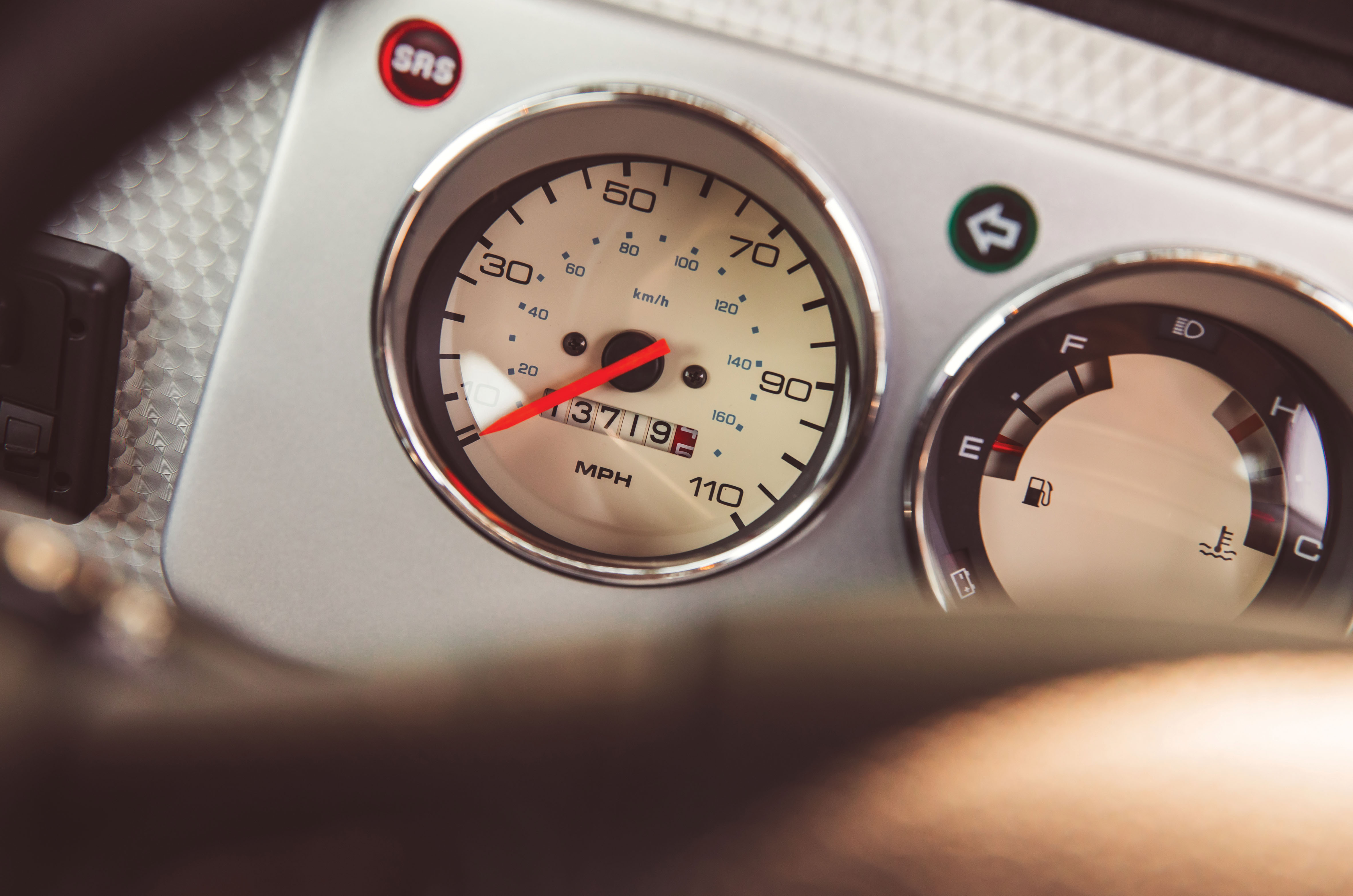
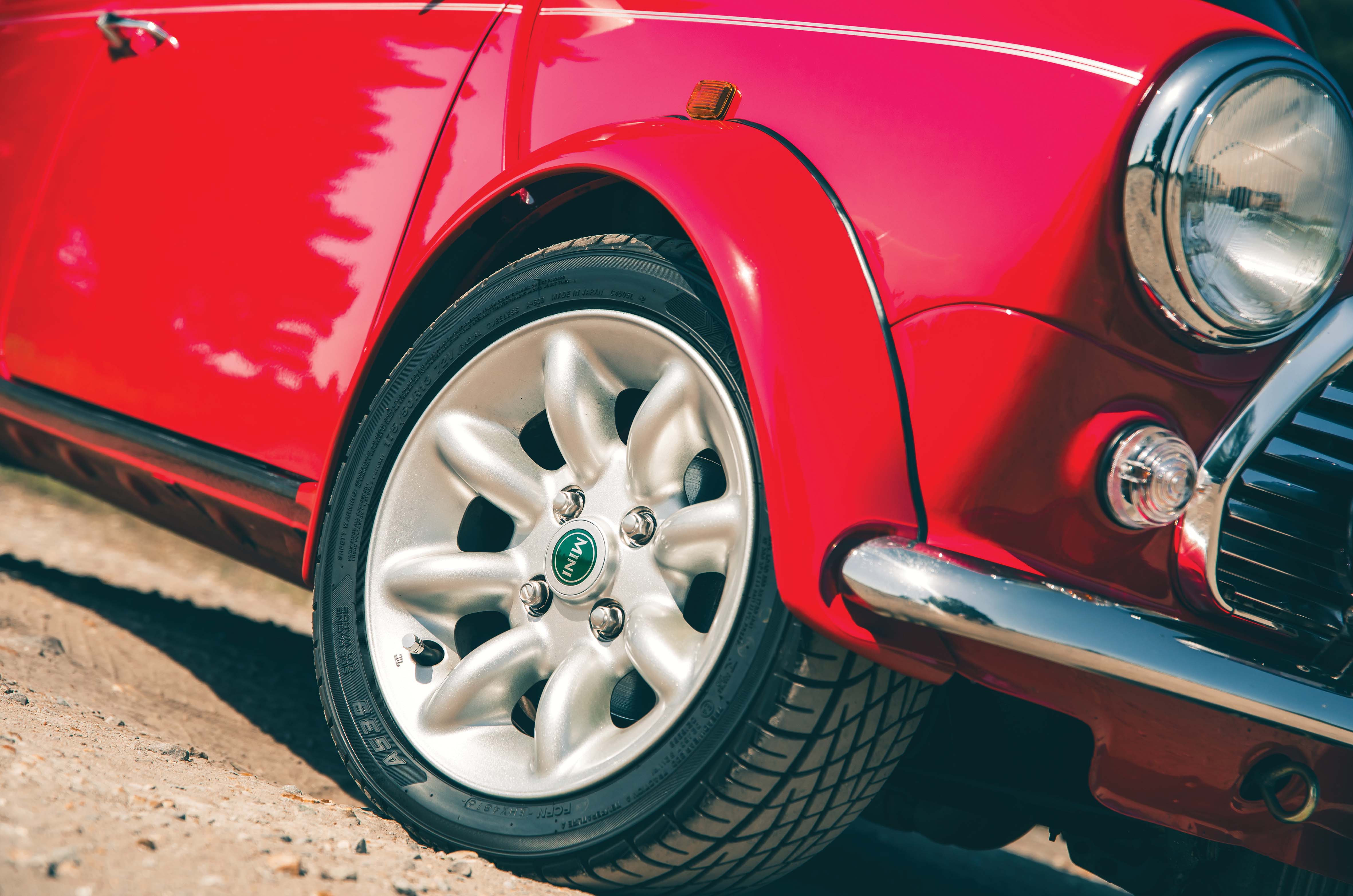
This comprised extra gauges in the binnacle, additional driving lamps and foglamps across the grille, a chromed big-bore exhaust tip and a set of body-coloured wheelarch extensions covering 13x6in, Minilite-style alloy wheels shod with 175/50 tyres.

Classic & Sports Car – Mini vs MINI: the Cooper Sport battles BMW’s pretender

The Rover Mini Cooper Sport’s wide wheelarches give it a squat stance

Every Cooper Sport’s roof was painted in Platinum Silver, over the four optional body colours: Anthracite, Solar Red, Tahiti Blue, or British Racing Green.

Sport 500s didn’t come cheap. While the standard Cooper was £8995, a Cooper Sport came in at £10,895 and the 500 was another £100 on top of that – though those final buyers did receive a goodie bag including a cap, fleece, T-shirt and anything else the supplying dealer decided to throw in.

Eleven grand doesn’t sound so bad today, but at the time around £300 less would have secured you a 90bhp Citroën Saxo VTR, and just a year later the all-new MINI Cooper was priced at only £11,600.

Classic & Sports Car – Mini vs MINI: the Cooper Sport battles BMW’s pretender

The Rover Mini Cooper Sport’s Lockwood dial set

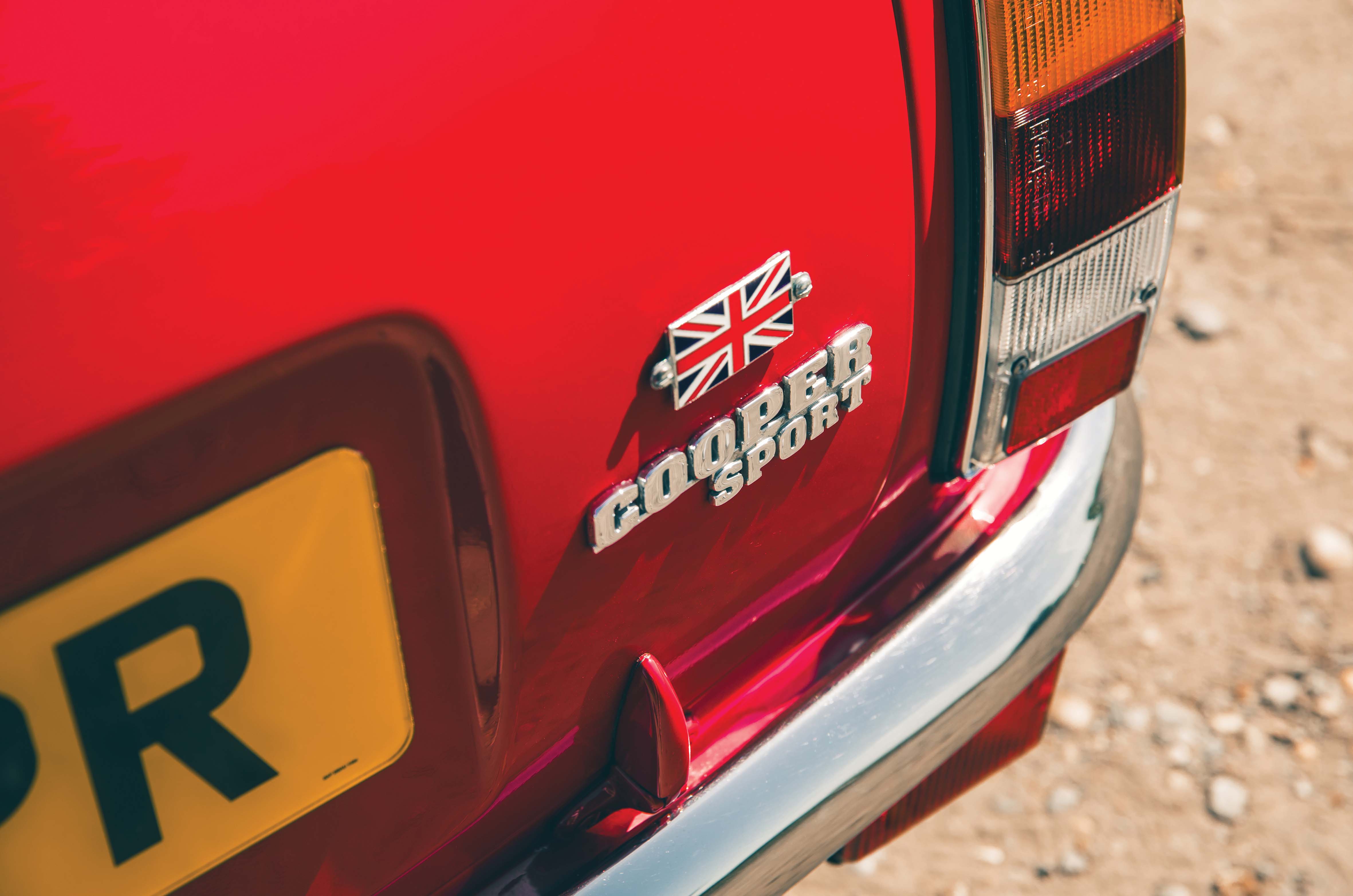
The other defining feature of the 500 in particular was a plaque on the dashboard stating its place in the final 500 cars – something the Cooper Sport 500 Register can verify against chassis numbers, because replicas are not unusual.

The car with us today is neither 500 nor replica, but it is a genuine late Cooper Sport, having been built in May 2000.

Owner Alistair Sommerville found the one-owner Sport in Wales in May 2025, and loves it for its Sport Pack look and late-model status; as a kid of the early 1990s, he admits his affection (and affliction) is very much for the post-1996 cars.

Classic & Sports Car – Mini vs MINI: the Cooper Sport battles BMW’s pretender

The Rover Mini Cooper Sport celebrates its heritage

Extended periods between Mini motoring make it easy to forget how wildly unique an experience these cars provide, with plenty of differences even among the Mini generations.

The late-model cars sit you notably higher than their earlier counterparts, and you are a little more hemmed in behind the bulkier, airbagged wheel, and prominent dash and door cards.

But the build quality is surprisingly high, and it’s laughably easy to settle into and feel comfortable – conceptually if not objectively.

With fuel injection, the A-series motor fires instantly (provided you remember to plip the immobiliser fob first) and the low miles on this example mean everything operates exactly as intended, from the engine’s friendly behaviour at low revs, and crisp mid-range response, to the precise action of the clutch.

Classic & Sports Car – Mini vs MINI: the Cooper Sport battles BMW’s pretender

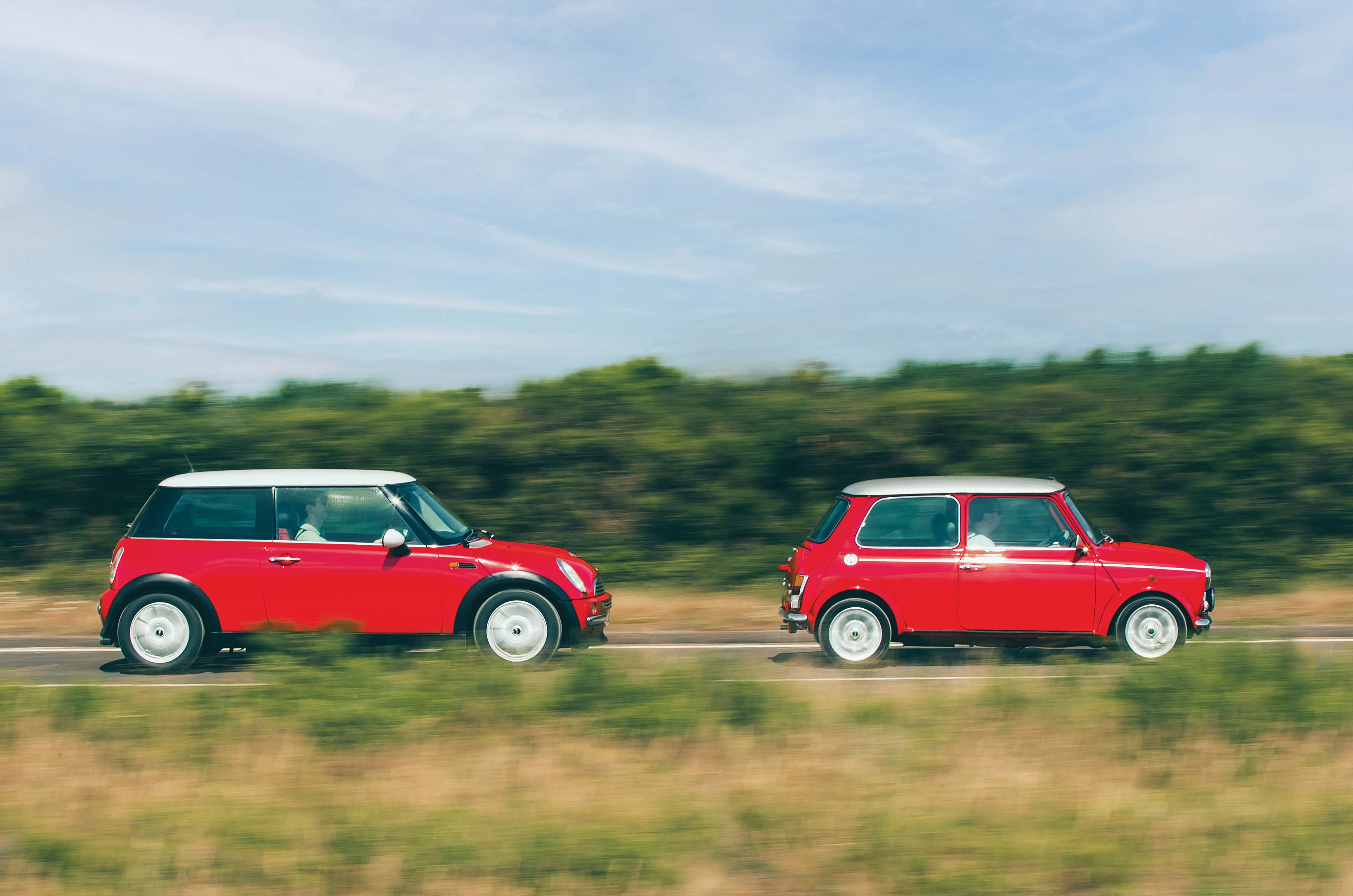
The pokey MINI bears down on its breathless ancestor on straights, but struggles to keep up when the going gets twisty

It’s the steering that defined Minis right until the very end, though.

The canted-back angle of the column encourages an eight-and-four grip on the rim, and from there you end up nudging the car this way and that with just your palms.

Only the lightest pressure is needed to set the nose on a new course, and while the rack quickly weights up through tight turns and roundabouts, requiring a firmer grip, the steering ratio is such that you rarely need more than quarter of a turn for any manoeuvre.

The size helps: every lane has its own racing line when you’ve a beam of only 1.4m.

Classic & Sports Car – Mini vs MINI: the Cooper Sport battles BMW’s pretender

The Rover Mini Cooper Sport’s chunky Minilite-style rims

Our test roads don’t tax the ride too much, despite the 13in Sports Pack wheels.

Owner Alistair feels there’s really not a huge difference between the 13s and the smaller 12in rims, but the wider alloys and 175-section rubber give it gumball adhesion the newer Cooper cannot match – features editor Charlie later admits to struggling to keep up through the bends.

That said, by the standards of the day the MINI Cooper, often nicknamed the R50 for its internal chassis code, was still a sporty little number.

Everyone involved in the project, from the engineers who developed the car to the high flyers at parent company BMW, was adamant that the new car would retain the energetic character of its predecessor, even if it had to meet modern expectations of size, safety, comfort and features.

Classic & Sports Car – Mini vs MINI: the Cooper Sport battles BMW’s pretender

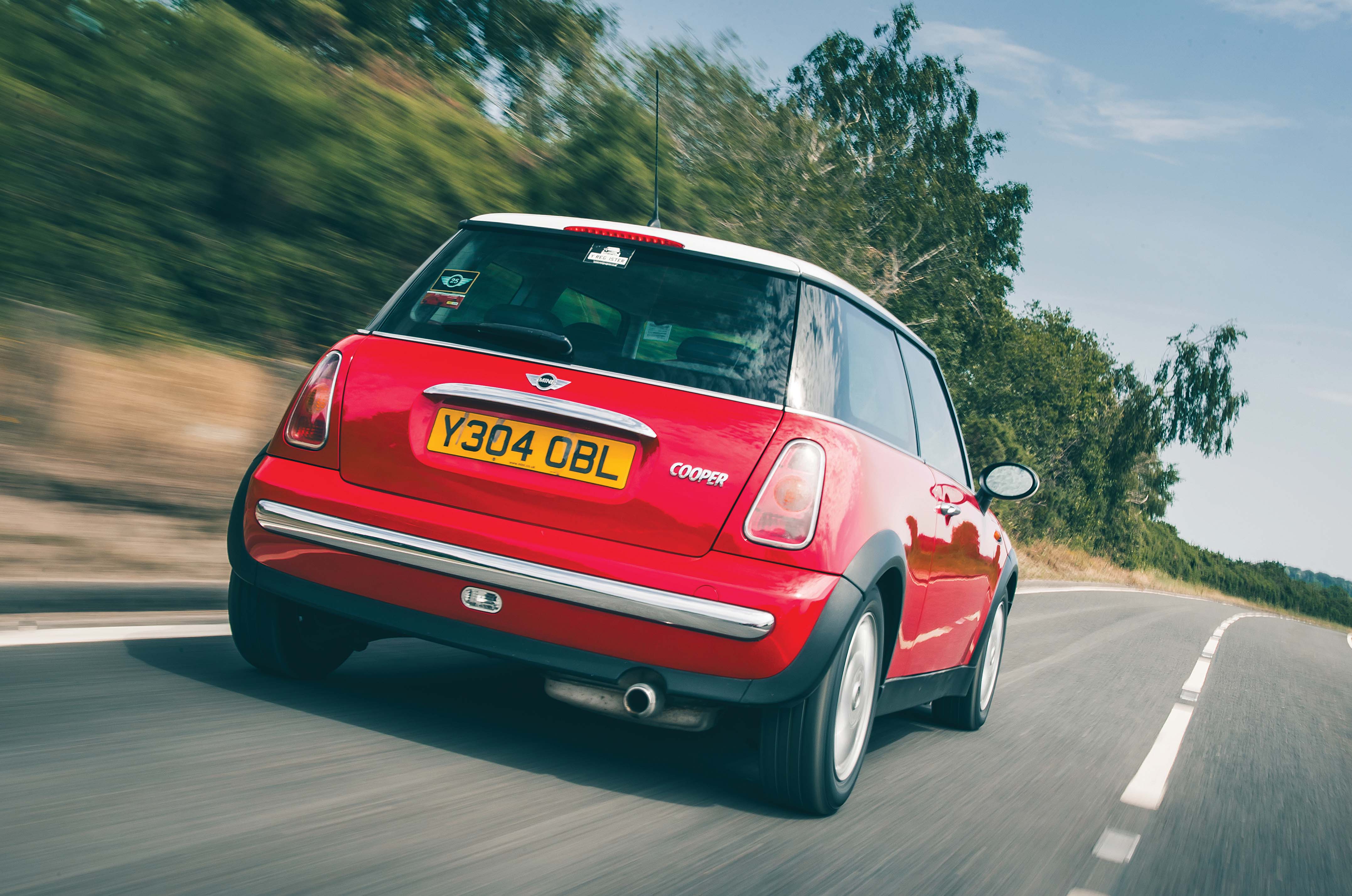
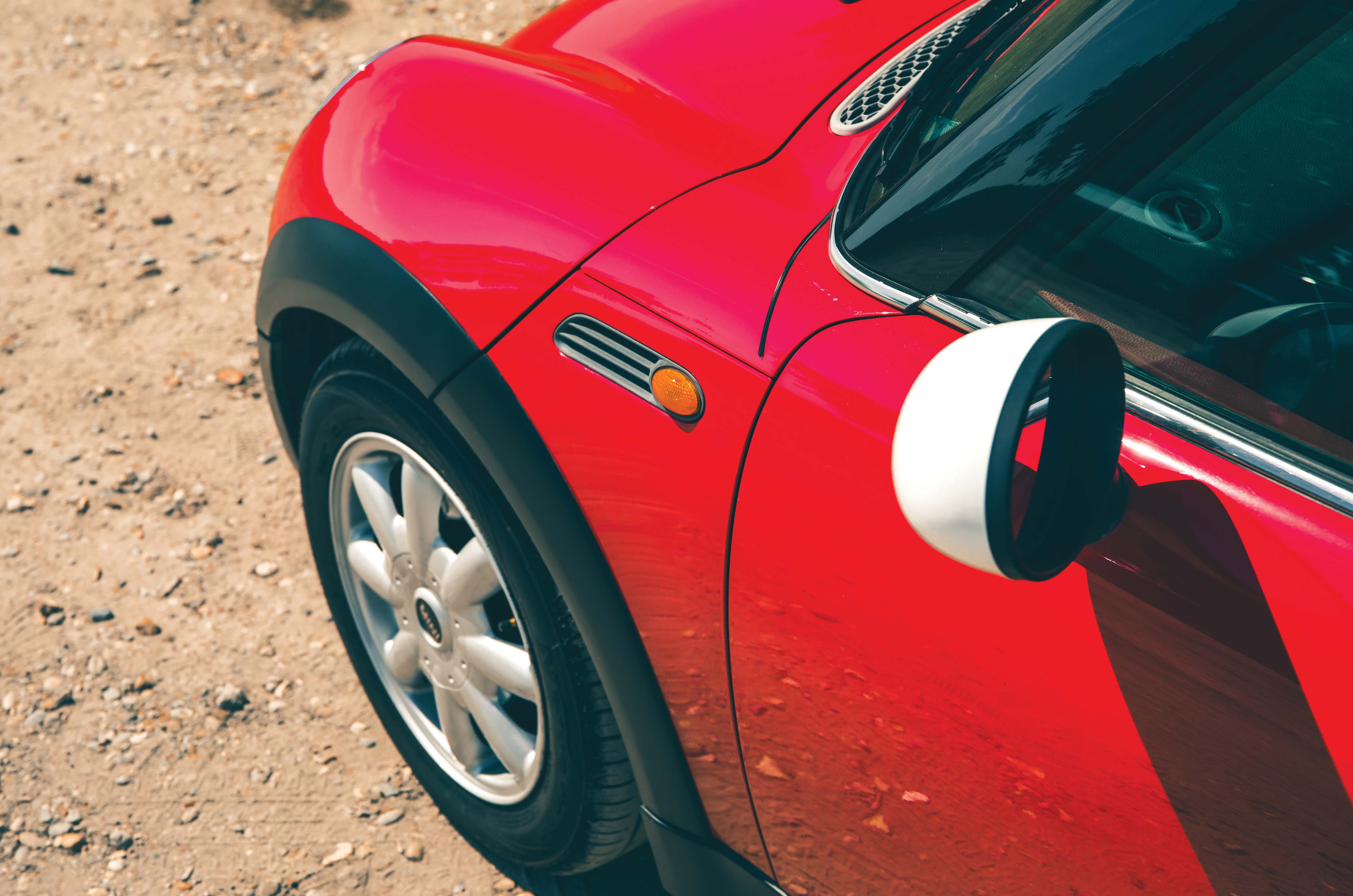
The MINI Cooper shares few details with the original, yet the R50 reflects the Mini spirit

It was also resolutely a Rover, despite the early press coverage.

BMW did set some stipulations during development – it would use an interpretation of the brand’s ‘Z-axle’ independent rear suspension (though the MINI’s set-up was designed in-house at Rover) – but the way the car was built, packaged and in particular the way it drove was very much down to the hundreds of talented engineers at Longbridge and Gaydon.

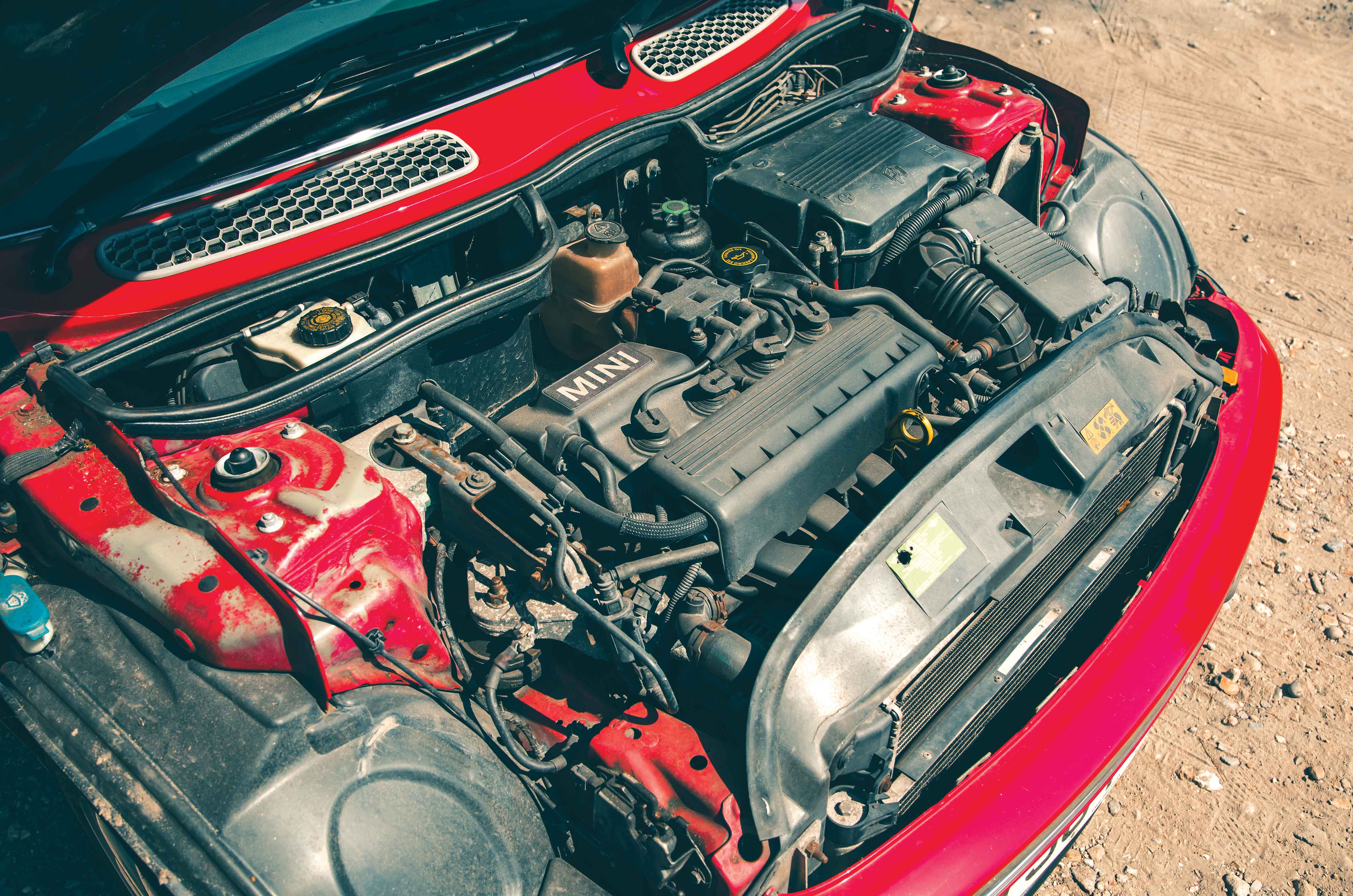
Not that Rover got its way on everything: the company tested several K-series-powered prototypes, but BMW struck a deal with Chrysler for a new 1.6-litre engine from a joint venture called Tritec Motors.

It was good for 90bhp in the basic MINI One, and 114bhp in the Cooper.

Classic & Sports Car – Mini vs MINI: the Cooper Sport battles BMW’s pretender

The MINI Cooper’s iron-block, alloy-head engine

Work on the car’s styling began in 1995 and is primarily credited to Frank Stephenson, working at BMW’s studio in Munich at the time.

It was a masterful reinterpretation of the Mini’s design language; Stephenson has since said he imagined the MINI as a Porsche 911-style product incorporating decades of evolution, even sketching the interim stages to imagine how the Mini might have looked had BMC and Austin Rover carried out regular generational updates.

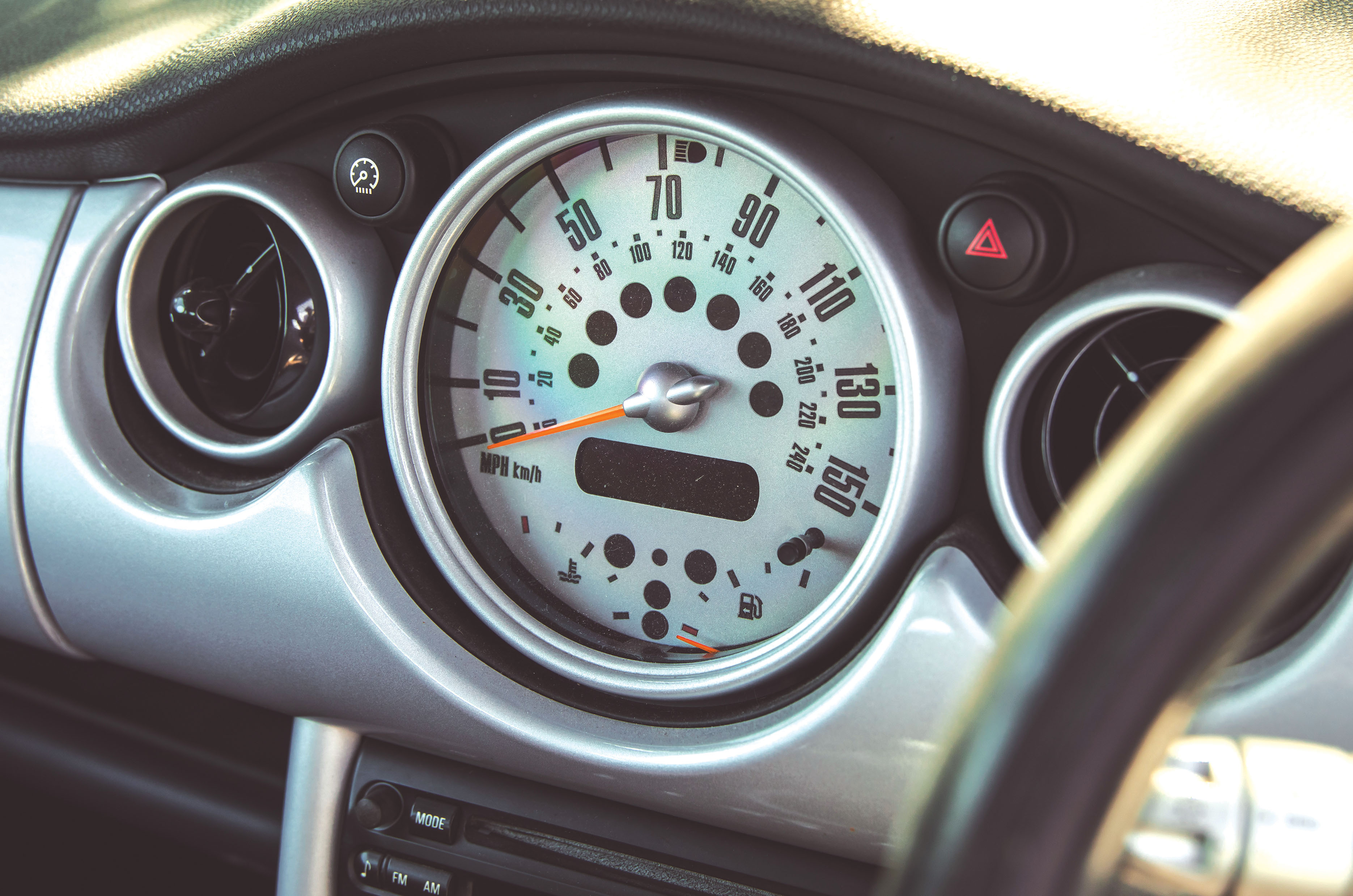
The interior, meanwhile, was the work of Tony Hunter (previously of Mini and MG) and Wynn Thomas, the standout feature being a large central speedometer, directly inspired by the dial’s location in the earliest Minis.

Classic & Sports Car – Mini vs MINI: the Cooper Sport battles BMW’s pretender

The MINI Cooper’s cartoon-like cabin, with central speedometer, inspired by its classic predecessor

The new car was revealed on 6 September 2000, but BMW had sold Rover to the ‘Phoenix Four’ back in May and taken the reins of MINI completely, dictating not just the model’s sales and marketing, but also much of the discourse that surrounded it.

This has undoubtedly been beneficial for the brand’s success in the long run, and it was under the leadership of Bernd Pischetsrieder (first cousin once removed of Sir Alec Issigonis, incidentally) that BMW drafted in names such as John Cooper Garages, which allowed the sportier variants of the new car to retain Cooper badging.

Production began in April 2001, with the MINI going on sale that July.

For collectors, it’s these early cars that have turned out to be the most coveted, identified by their Y-prefix numberplates, before the change to 51 plates that September.

Classic & Sports Car – Mini vs MINI: the Cooper Sport battles BMW’s pretender

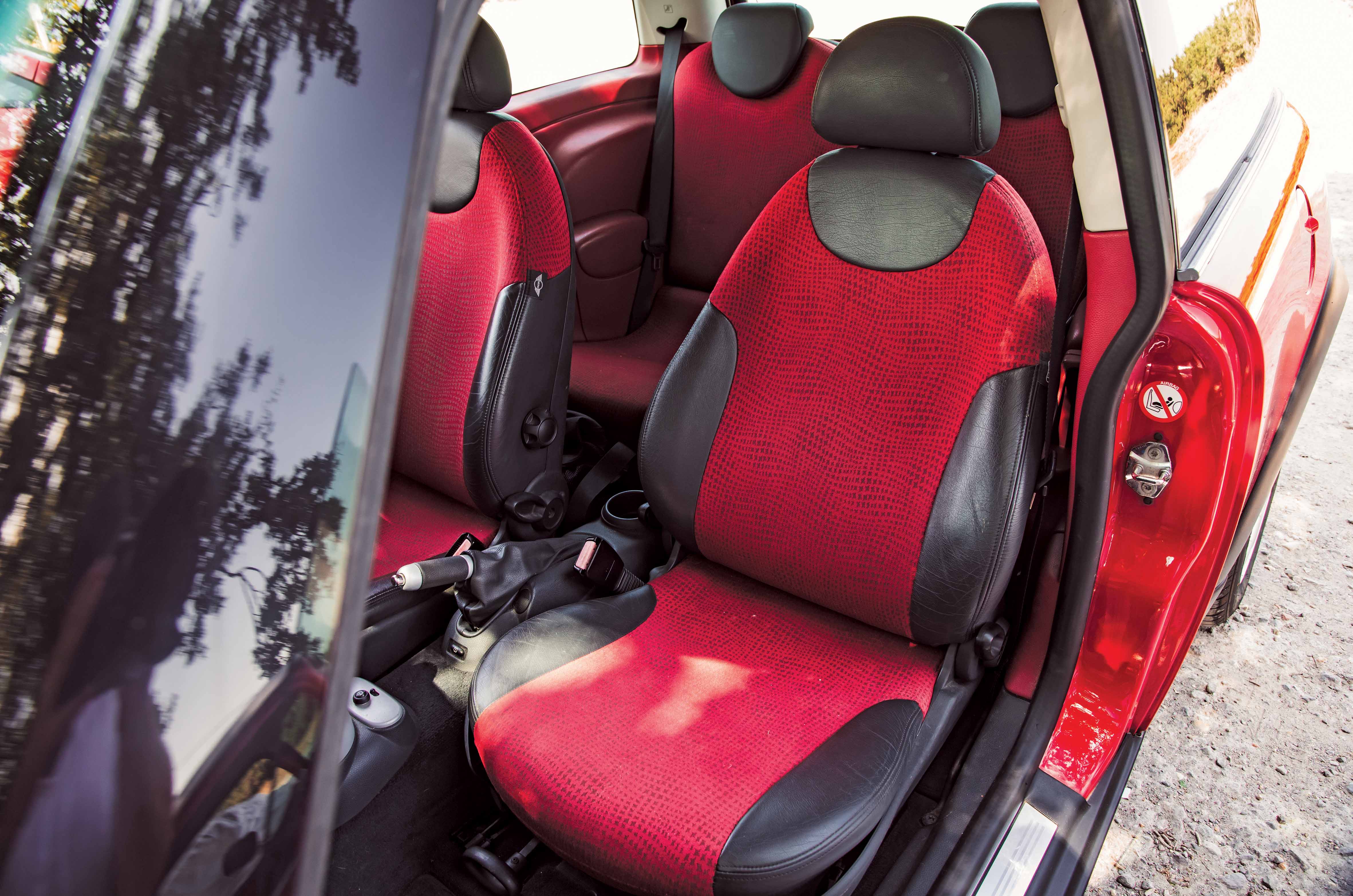
The MINI Cooper’s cheerful trim lifts the mood

Only 700 or so cars slipped through in this period, and a select handful were the cars handed out for press duty.

Today owned by Tanya Field from the MINI Y REGister, which tracks the earliest examples, Y304 OBL is one of those original press cars.

Built on 14 May 2001, it appeared on the cover of Autocar on 5 December 2001 as one of the ‘Top 10 new cars we love’, and includes certain features that disappeared when production really got into its swing, such as the bright-red door cards (black in later cars).

The 42 years that span the launches of the original and its retro successor are a better indication of what to expect from the R50 than the single year that splits their build dates, though the Rover’s modernised furnishings do close that gap somewhat.

Classic & Sports Car – Mini vs MINI: the Cooper Sport battles BMW’s pretender

The MINI Cooper’s alloy wheels pay tribute to earlier classic Minis

Yet in isolation the newer car is a joy in its own right. Away from the Rover’s Caterham-like agility, the R50 Cooper also steers sweetly.

At 2.5 turns from lock-to-lock the helm remains quick 25 years on, and the hydraulic assistance – which whines, A-series gearbox style, at low speeds – and its 175-section tyres make for relatively uncorrupted steering feel.

The ride is firmer than I remember, but still in a different league from the classic, giving the R50 an easygoing pliancy in town and a composed, untroubled stability on faster roads.

As such, the R50 Cooper is still a car you could genuinely use and enjoy every day, in all weathers and with no notable discomfort over longer trips.

Indeed, while Y-registered cars are rare, early MINIs remain a common sight on UK roads.

Purely for the driving experience, my heart will always be with a late Cooper Sport – there really is nothing else quite like it – but the ultimate millennial Mini collection really ought to include both.

Images: Jack Harrison

Thanks to: Tanya Field and Alistair Sommerville; the MINI Y REGister


Factfiles

Classic & Sports Car – Mini vs MINI: the Cooper Sport battles BMW’s pretender

Rover Mini Cooper Sport 

  • Sold/number built March-October 2000/2591 (Cooper Sport & 500)
  • Construction steel monocoque
  • Engine all-iron, ohv 1275cc ‘four’, multi-point fuel injection
  • Max power 63bhp @ 5500rpm
  • Max torque 70lb ft @ 3000rpm
  • Transmission four-speed manual, FWD
  • Suspension independent, at front by wishbones rear trailing arms; rubber-cone springs, telescopic dampers f/r
  • Steering rack and pinion
  • Brakes discs front, drums rear, with servo 
  • Length 10ft ¼in (3055mm)
  • Width 4ft 9in (1440mm)
  • Height 4ft 4¾in (1340mm)
  • Wheelbase 6ft 8in (2035mm)
  • Weight 1609lb (730kg)
  • 0-60mph 12.2 secs
  • Top speed 90mph
  • Mpg 43
  • Price new £10,895 (2000)
  • Price now £15,000+*


MINI Cooper (R50)

  • Sold/number built 2001-’09/1,628,324 (c700 Y-reg Apr-Aug 2001)
  • Construction steel monocoque
  • Engine iron-block, alloy-head, dohc 1598cc ‘four’, multi-point fuel injection
  • Max power 114bhp @ 6000rpm
  • Max torque 110lb ft @ 4500rpm
  • Transmission five-speed manual, FWD
  • Suspension independent, at front by MacPherson struts rear Z-axle, coil springs, telescopic dampers; anti-roll bar f/r 
  • Steering power-assisted rack and pinion
  • Brakes ventilated discs, with servo and anti-lock
  • Length 11ft 10¾in (3626mm)
  • Width 5ft 6½in (1689mm)
  • Height 4ft 7in (1396mm)
  • Wheelbase 8ft 1in (2467mm)
  • Weight 2480lb (1125kg)
  • 0-60mph 9.2 secs
  • Top speed 124mph
  • Mpg 42
  • Price new £11,600 (2001)
  • Price now £1500+*

*Prices correct at date of original publication


Enjoy more of the world’s best classic car content every month when you subscribe to C&SC – get our latest deals here


READ MORE

Mini masterclass: from Cooper to ERA Turbo

Mighty Minis: historic racing on a budget

Future classic: MINI Cooper S JCW