Audi quattro Roadster: five-pot soft-top

| 1 Oct 2025
Classic & Sports Car – Audi quattro Roadster: five-pot soft-top

It’s easy to sneer at aftermarket car conversions, particularly those involving roof removal.

And when the hacksaw is applied to a car as revered as the Audi quattro – and the result is anything less than an aesthetic masterpiece – then it’s surely an open invitation to ridicule.

Not that fear of criticism is likely to have worried Walter Treser when he began work on the quattro Roadster in autumn 1982.

Few engineers have a more impressive CV: former Alpina works driver Treser worked on the new generation of Pirelli low-profile tyres before joining Audi in 1977.
Classic & Sports Car – Audi quattro Roadster: five-pot soft-top

Was Walter Treser’s much-maligned Audi quattro Roadster mere whimsy, or the prototype for a new genre?

As engineering manager of advanced development, he oversaw the quattro road-car project and in 1980 became manager of Audi Sport, masterminding its development into an all-conquering rally machine.

His Audi career ended at Rally Greece in 1981 after a refuelling incident left him with burns and all three cars were disqualified on a technical infringement.

But Treser retained a close relationship with the marque and set up Walter Treser GmbH Automotive Engineering and Design in a Hofstetten farmyard, just 12km from Audi at Ingolstadt.
For Treser, the quattro was unfinished business. First he created a lower, stiffer version with styling upgrades and a power boost from 200 to 240bhp.

Classic & Sports Car – Audi quattro Roadster: five-pot soft-top

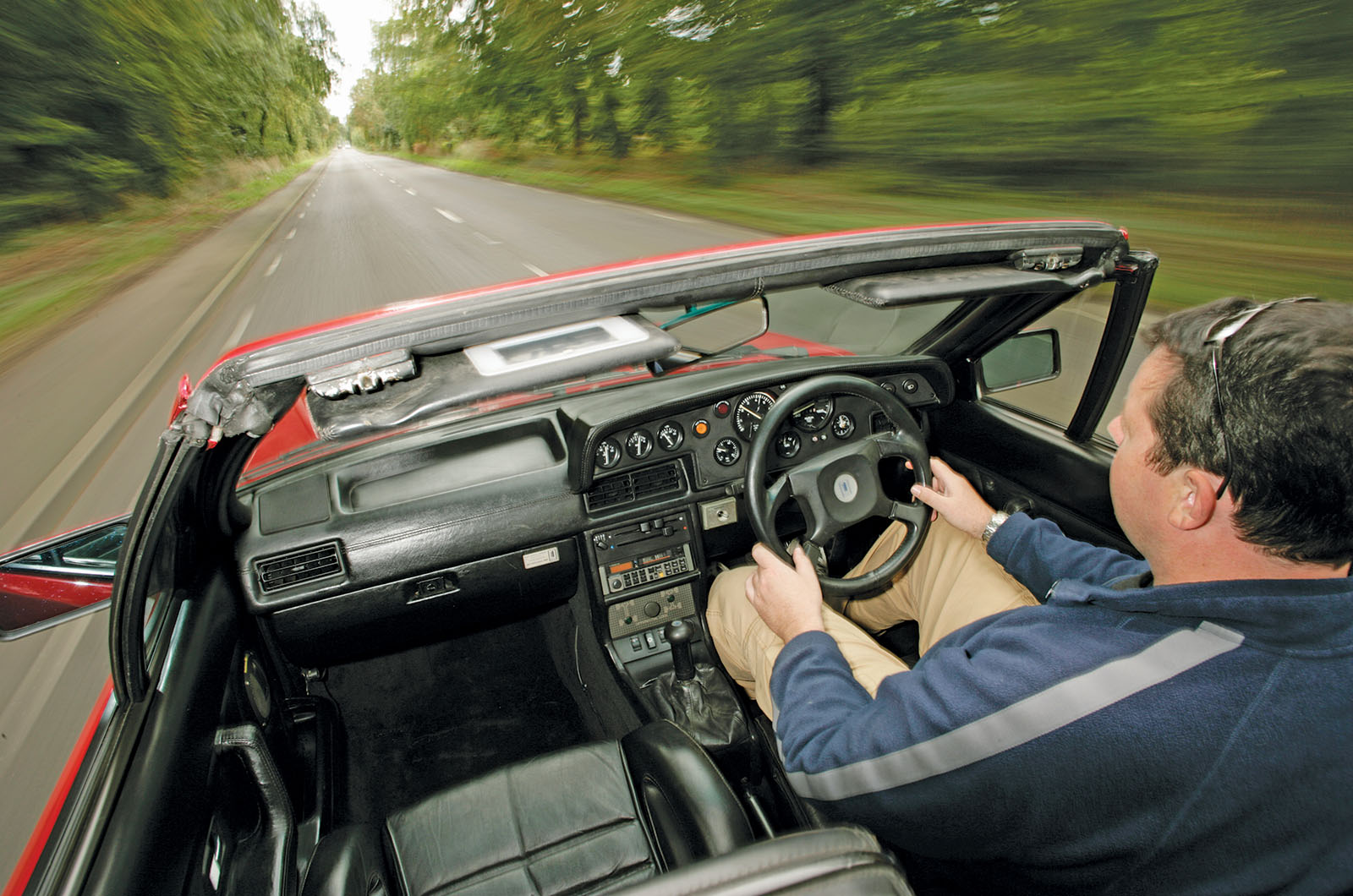
The Audi quattro Roadster’s cabin has some Treser upgrades, including a new steering wheel and VDO dials

Treser didn’t want for ambition and planned more extreme incarnations, as he explained: “We didn’t want to make what other manufacturers produced.

“The success of the four-wheel-drive idea showed us that, with the necessary application, we could achieve original technical solutions.”

That original solution turned out to be lopping the top off to create the first turbocharged, four-wheel-drive, four-seater soft-top.

When the Treser Roadster took a bow at the Frankfurt IAA in 1983 it caused a shock, but it hardly sent a shockwave through the industry like the quattro had three years earlier.

Yet its importance is not to be underestimated. The Audi Cabriolet became a cornerstone of the marque’s range and image, but in 1983 it wasn’t even in the product plan.

Classic & Sports Car – Audi quattro Roadster: five-pot soft-top

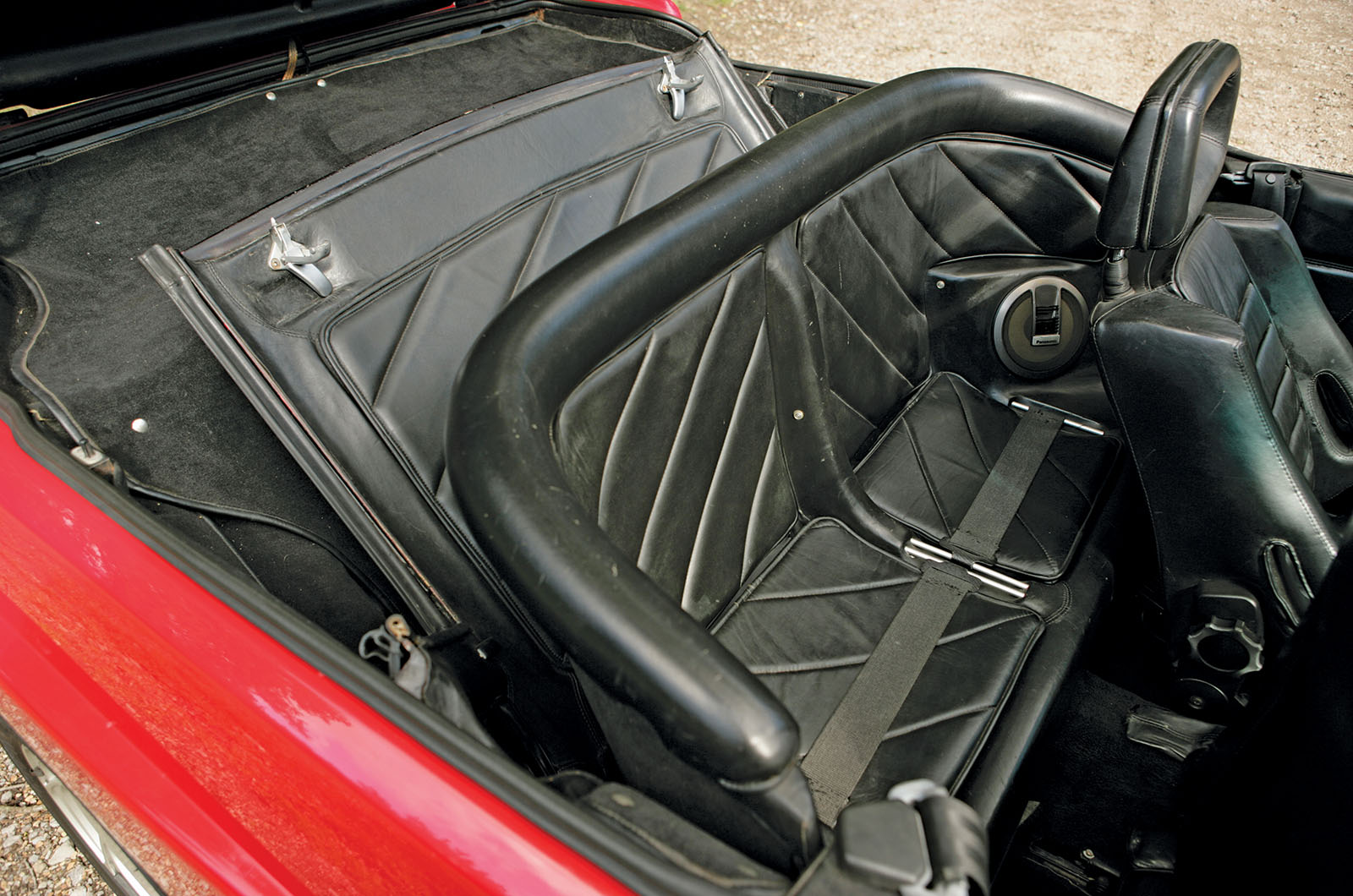
The Audi quattro Roadster’s boot space is the same as the coupé’s, but the rear bench is cramped, while the glassfibre hardtop has hide headlining and a heated ’screen

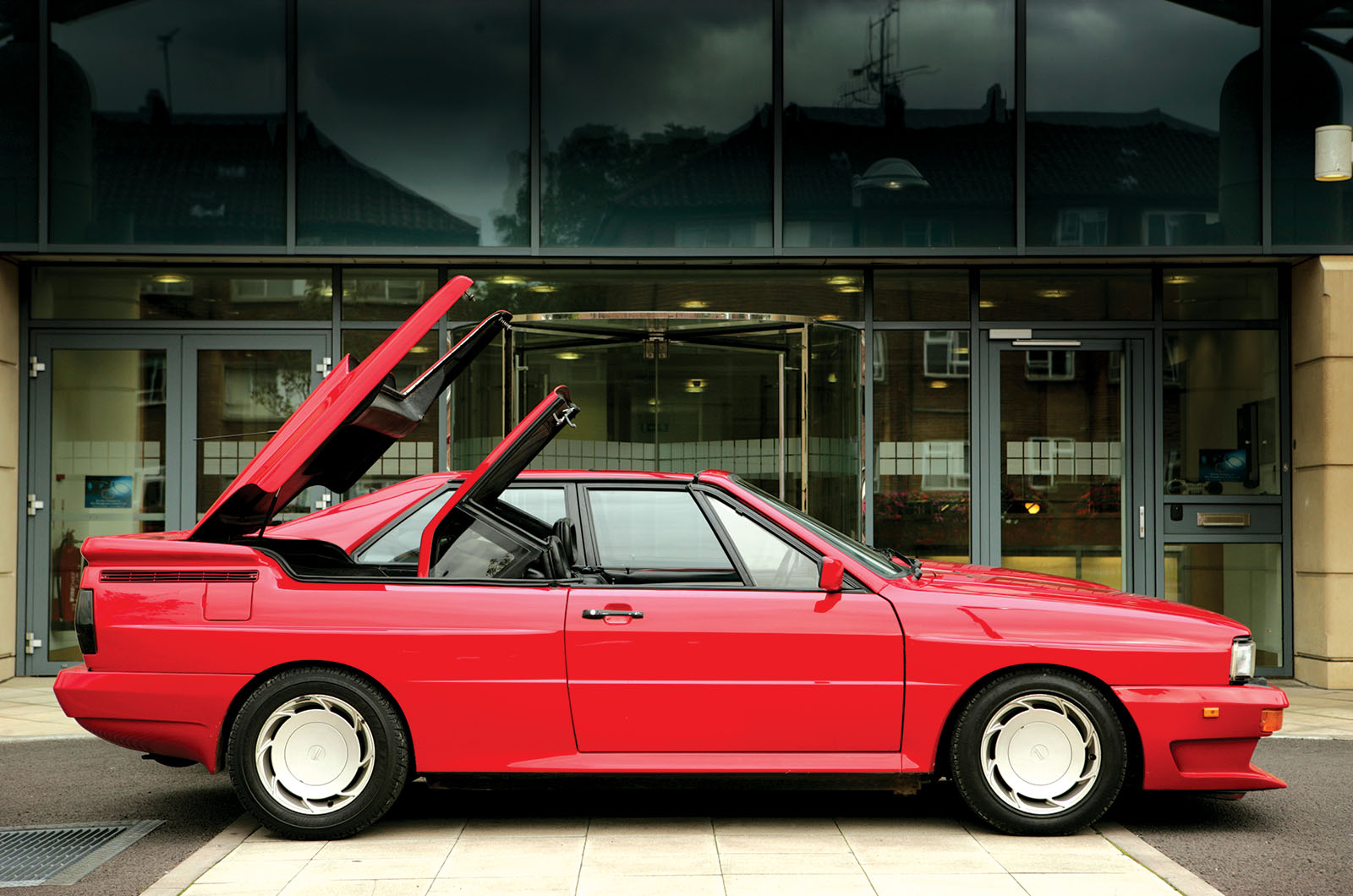
Yet more influential was the Treser’s folding solid roof.

Though hardly a world first – that honour went to Ben B Ellerbeck’s 1922 Hudson conversion – it can be credited with reviving the idea 25 years after the death of Ford’s Fairlane Skyliner.

It was the first modern-era car to boast a technically satisfying solution to this complex engineering conundrum, and its development laid the groundwork for Treser’s own TR1 in 1987, the Honda Civic CRX five years later and the Mercedes-Benz SLK of 1996, the car commonly credited with revolutionising open-topped motoring.

In the early 2000s it was anticipated that 70% of a 1.3-million-unit world convertible market would feature retractable hardtops, and the folding-roof phenomenon revived the fortunes of coachbuilders such as Heuliez, Karmann, Pininfarina and Webasto.

Classic & Sports Car – Audi quattro Roadster: five-pot soft-top

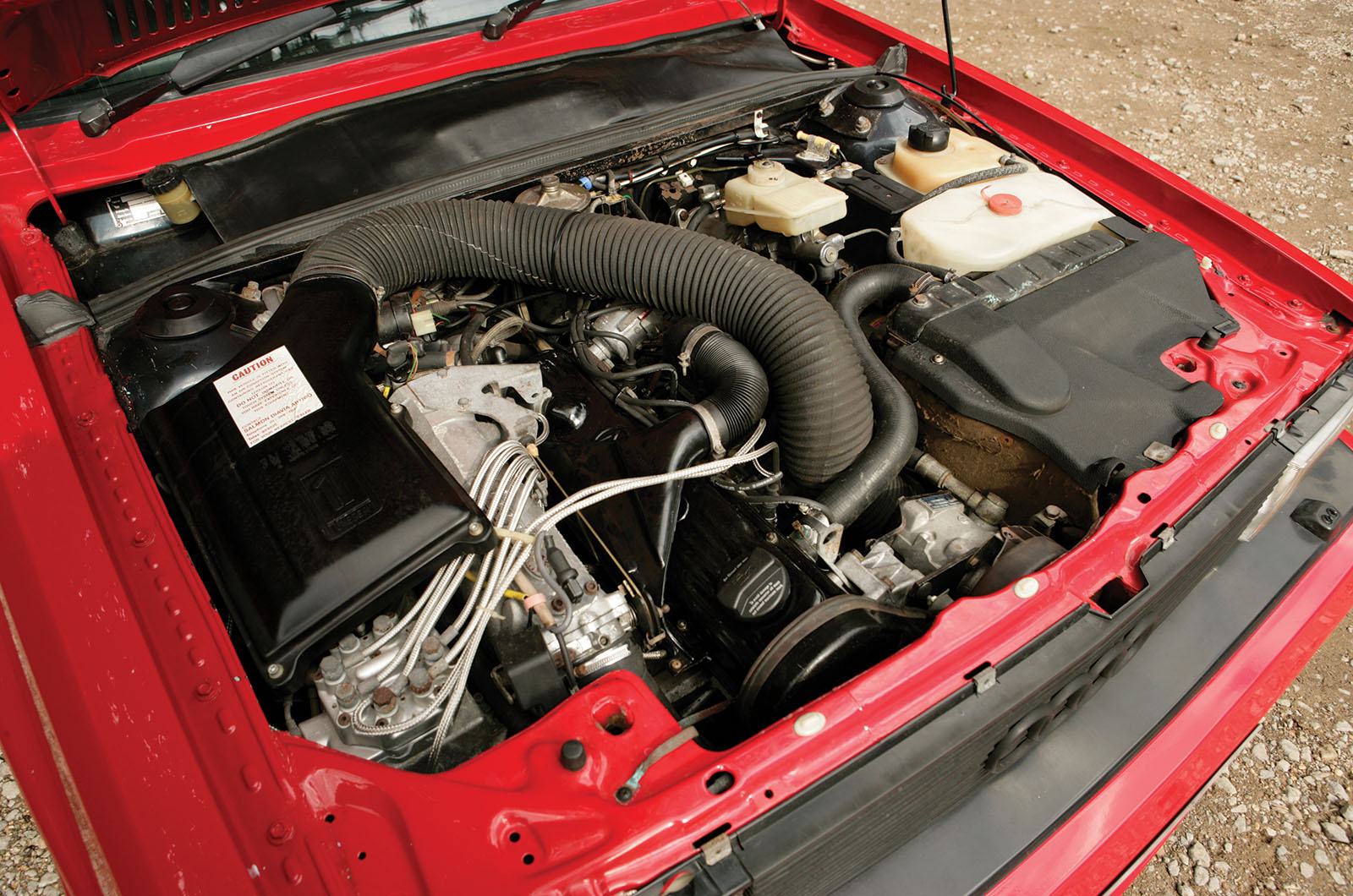
The Audi quattro Roadster’s uprated ‘five’ makes 250bhp

The Roadster’s case is harder to argue with the roof up.

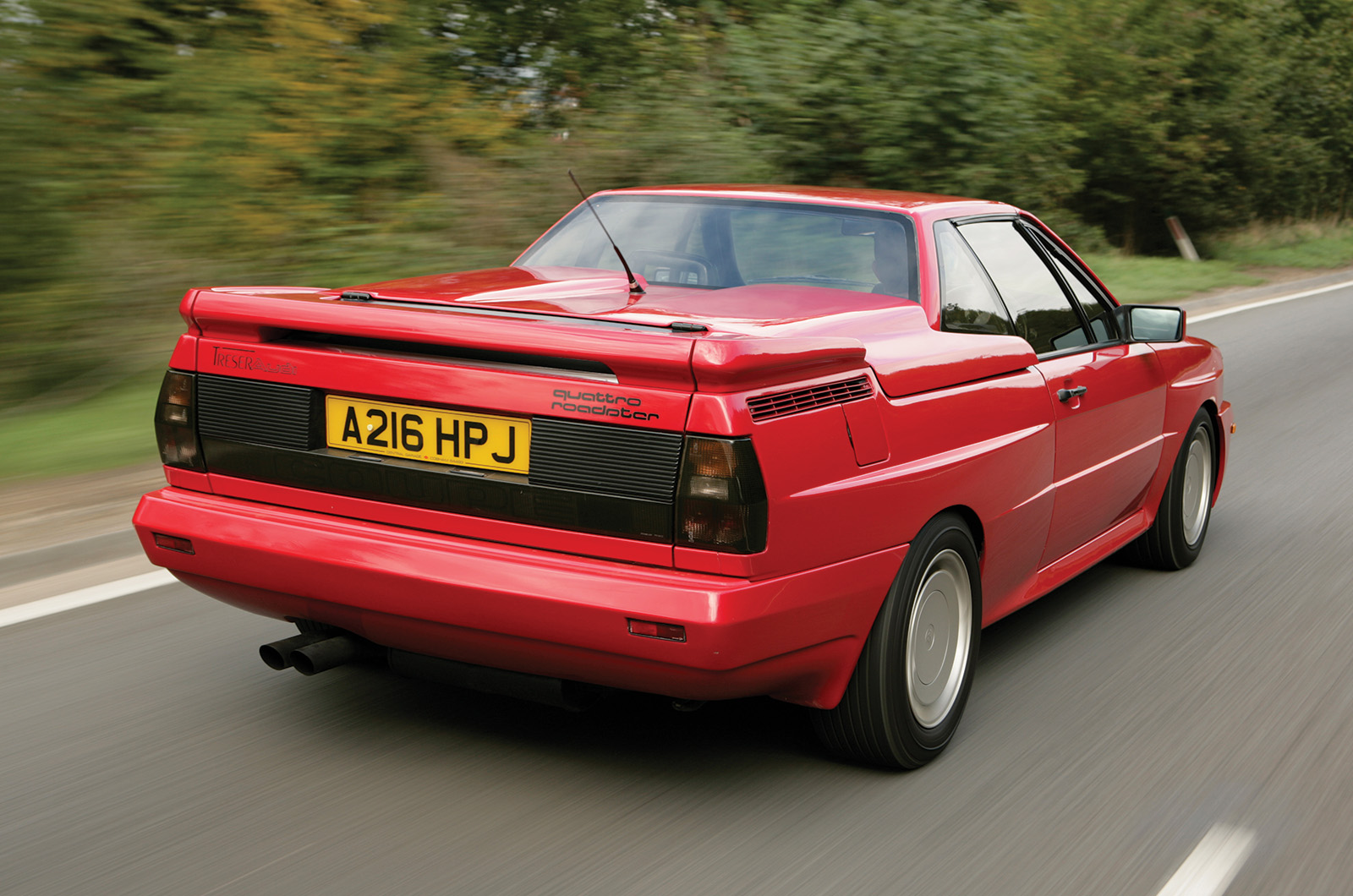
The compact, angular glassfibre top – the prototype was more rounded, but clashed with the quattro’s breeze-block shape – and long rear deck give a pick-up look at odds with Treser’s mantra: ‘Technology with style is the basis for a fascinating product.’

But release the glassfibre cover, via a button on the B-post, and it’s clear that this is no back-street roof chop: when new it cost twice the price of a standard coupé.

Designed using 1:1-scale templates in Treser’s cowshed studio, the one-piece assembly is beautifully resolved.

Manually operated on the first 12 – this, the sole right-hooker, is car 12 – the mechanism is simplicity itself: lift the cover, release two catches on the windscreen header rail and the hardtop – as light as its canvas equivalent thanks to ingenious counterbalancing – pivots back into a recess behind the rear seats and lies flat against the sloping rear bulkhead.

Classic & Sports Car – Audi quattro Roadster: five-pot soft-top

Engineer Walter Treser oversaw the quattro road-car project during his time at Audi

The quattros were supplied part-complete to Treser (UK cars had to be bought whole then returned to Germany to skirt Type Approval laws) and taken to Hanover to have their roofs removed.

Rather than an arbitrary chop, Treser’s conversion stayed faithful to the quattro’s shape where possible.

The original window line and kick up to the rear remain, with the trim following a natural fold across the pillar and disguised by the rear spoiler.

The door frames were removed and neat quarterlights introduced to balance the look of the relatively slender windscreen frame.

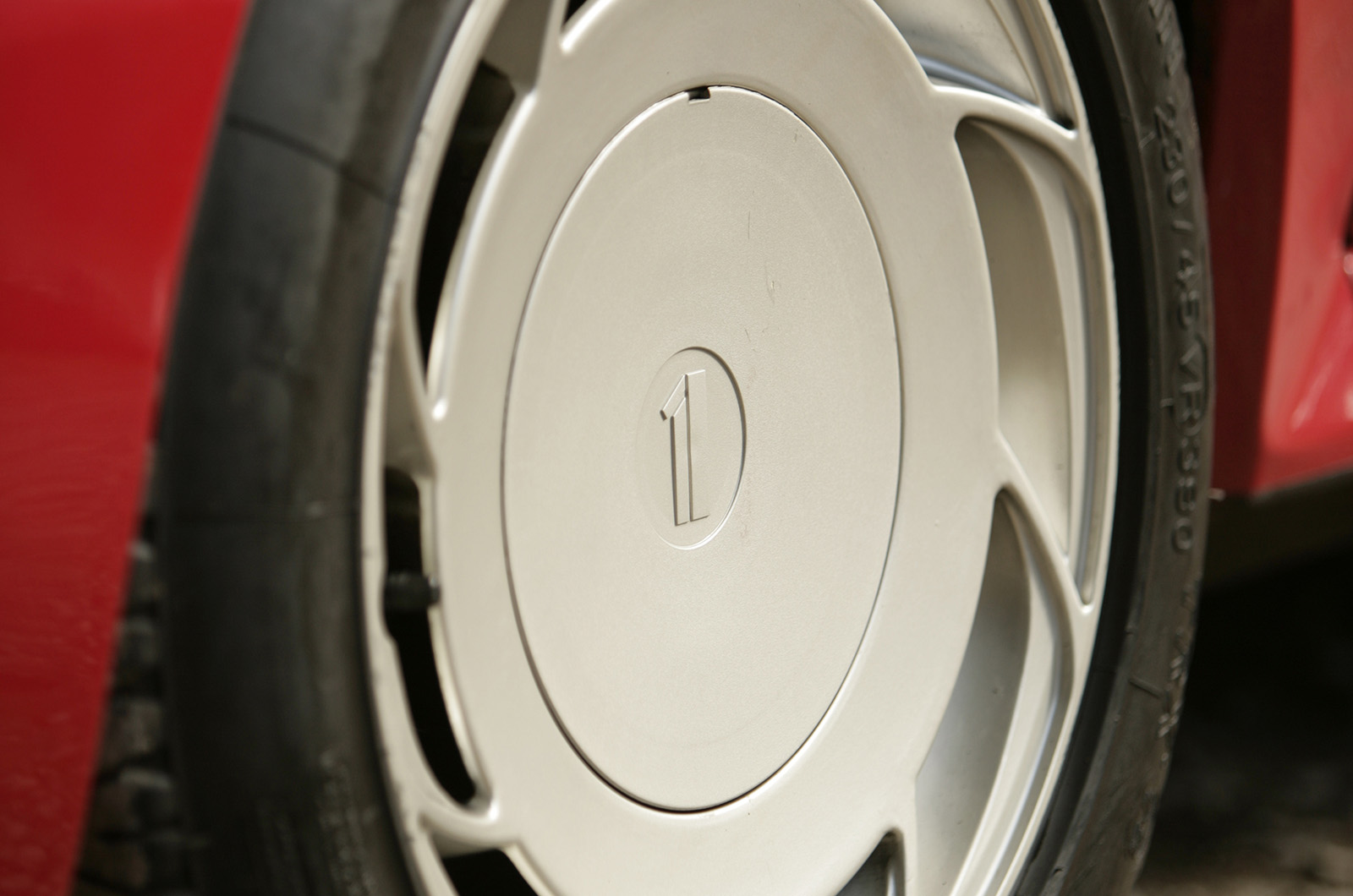
The makeover was completed by new front and rear bumpers and ‘Turborad’ alloys, the stylised vanes of which funnelled air to the brakes.


Classic & Sports Car – Audi quattro Roadster: five-pot soft-top

‘On a smooth road the Treser has much to offer. Losing the metal that separates ears from exhausts is a huge plus for fans of the quattro’s delicious five-pot warble’

It’s those add-ons that most date the car today – just as 1980s architecture turned the Spartan ’30s concrete-and-glass Modernist ideal into an over-adorned Post-Modern cliché.

Not that they put off well-heeled buyers, with Treser making deliveries to the Grimaldi royal family of Monaco and tennis pro Henri Leconte, along with four to the Sultan of Oman. And those wealthy owners demanded luxury.

This 1984 NEC Motorshow car demonstrates what nearly £40,000 would buy: a full retrim in pleated black leather, a state-of-the-art Panasonic stereo radio-cassette (with remote control), heated seats and a leather-trimmed dash with enlarged binnacle housing eight Treser-badged VDO dials in place of the original digital display.

From behind the wheel it’s comfortable and spacious, roof up or down, but the coupé’s generous rear seats have made way for a bench suitable only for the tiny.

Classic & Sports Car – Audi quattro Roadster: five-pot soft-top

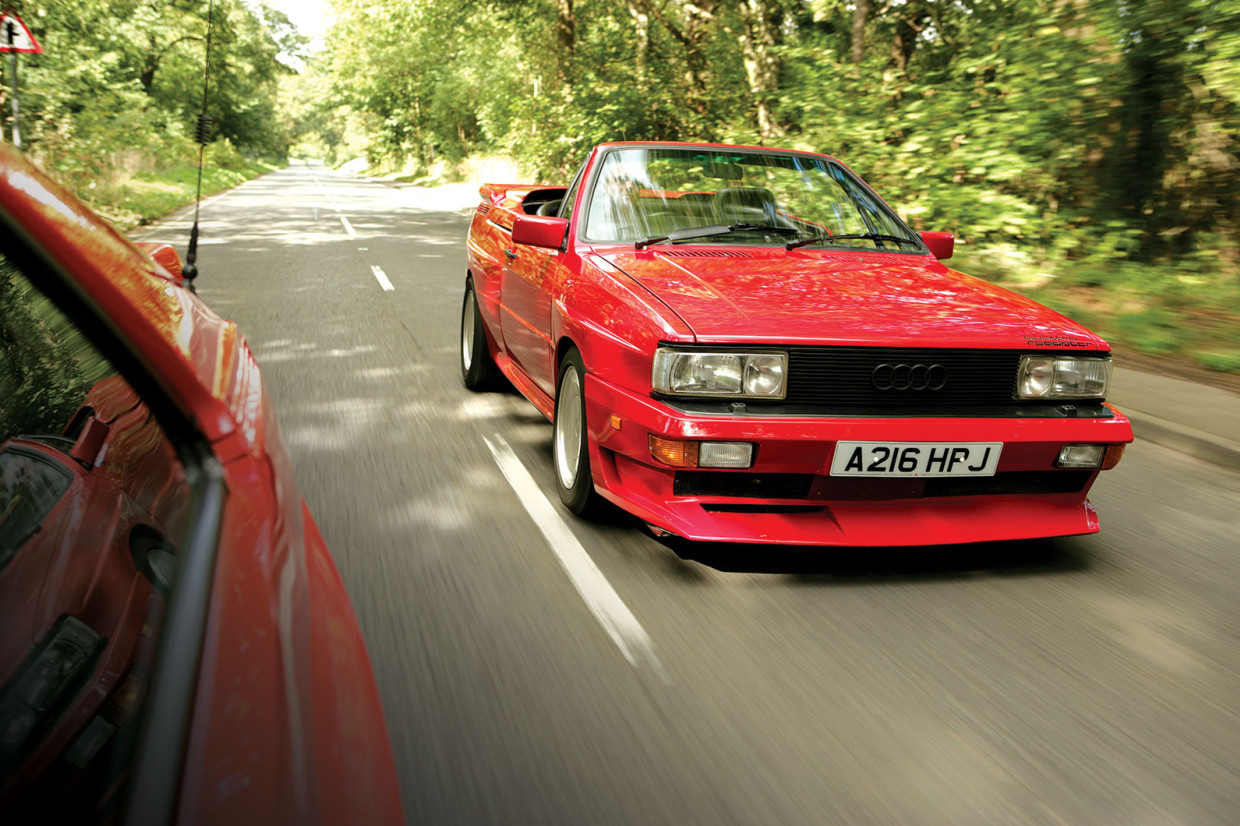
The Audi quattro Roadster takes most of its cues from the coupé’s lines

But the crucial question is this: how does chopping half of the structure out of a vehicle as stiff as the quattro affect its benchmark dynamics?

As you might expect, it doesn’t do much for rigidity.

Despite extensive bracing around the door apertures, sills, rear deck and between the suspension strut-tops, a rutted road induces terrible scuttle shake that sets the windscreen frame shuddering and the roof mechanism rattling.

It’s not aided by Treser’s chassis tweaks – 20mm lower suspension, stiffer Bilstein dampers and the standard 205/60 VR15 Goodyear NCTs ditched in favour of 230/45 VR390 Michelin TRXs – but at least the steering remains free from kickback.

Classic & Sports Car – Audi quattro Roadster: five-pot soft-top

The Audi quattro Roadster’s ‘Turborad’ alloys direct air to the disc brakes

On a smooth road you find the Treser has much to offer.

For a start, losing the mass of metal, glass and fabric that separates ears from exhausts is a huge plus for fans of the quattro’s delicious five-pot warble and turbo whistle.

And when you’ve had enough of the burbling and buffeting, in seconds you can restore much of the coupé’s refinement by replacing the lid – which also helps to reduce the shuddering.

Like any quattro, the Treser changes direction in a way that you’d never imagine after seeing how far forward the five-pot turbo motor is mounted in the engine bay.

Classic & Sports Car – Audi quattro Roadster: five-pot soft-top

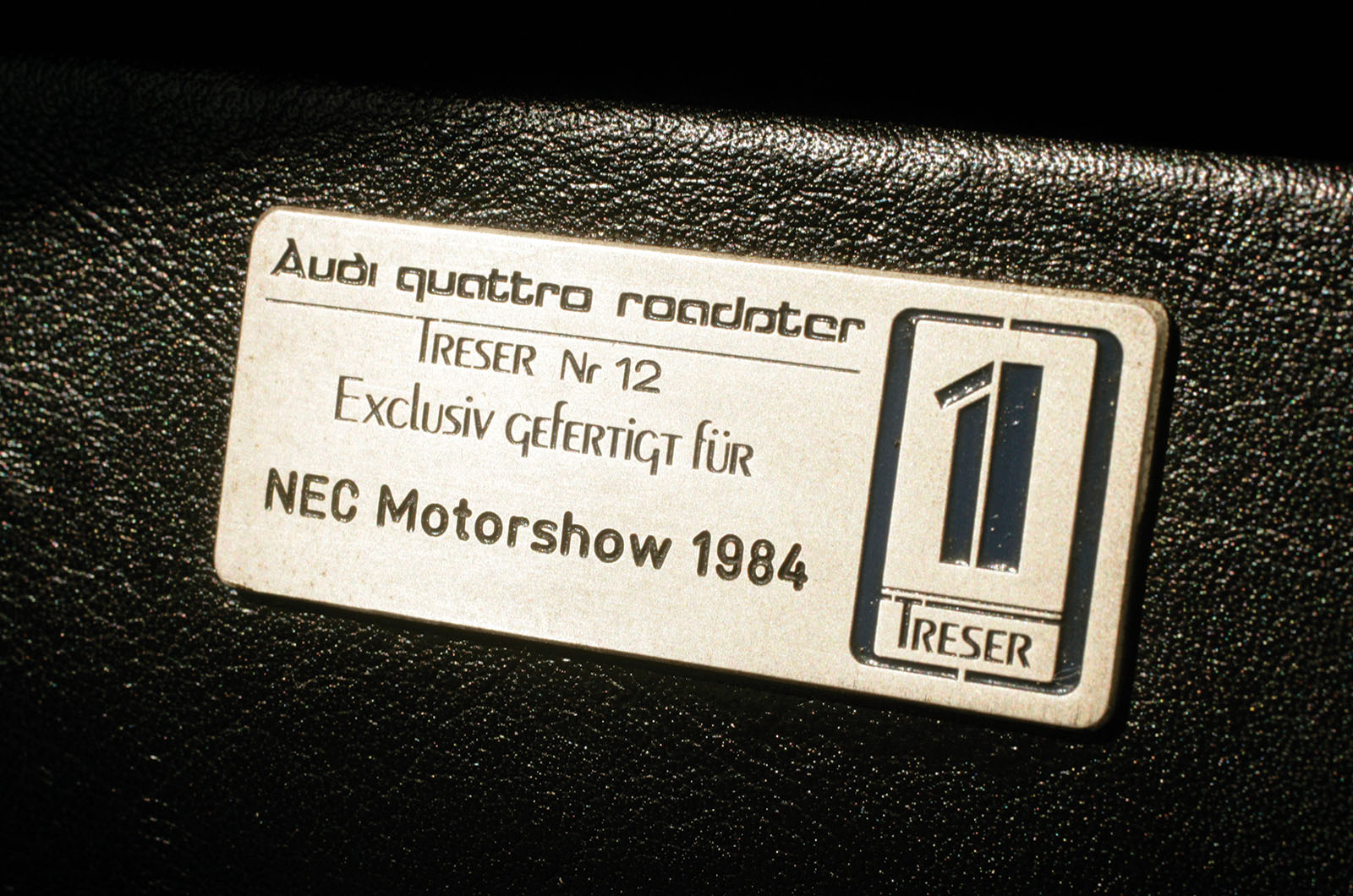
A plaque on the Audi quattro Roadster’s glovebox proclaims the sole right-hooker’s 1984 NEC show role – Treser was permitted to use Audi’s ‘1’ logo

The fatter tyres improve steering weight and response, giving superb turn-in and grip – as long as you avoid mid-corner potholes.

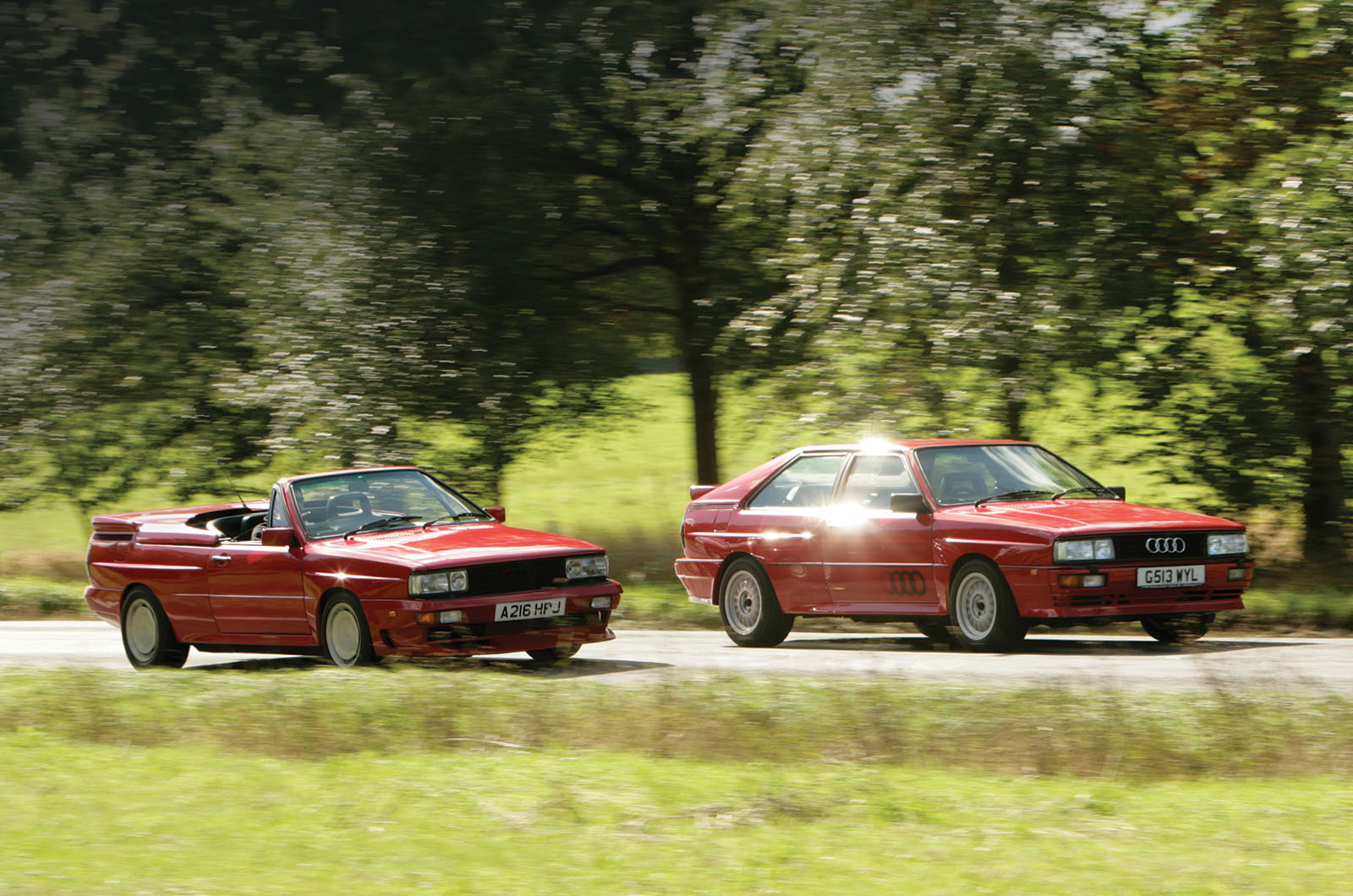
There’s also less body roll than in the 20v coupé we’ve brought along for comparison, and the centre of gravity feels lower, giving a more traditional sports-car feel.

But perhaps that sensation comes purely from the Roadster’s additional weight.

Treser claimed it was close to the coupe’s 1448kg, but this car’s chassis plate reveals that the truth is an extra 300kg, giving the standard brakes a serious workout and blunting acceleration.

And that’s despite the optional (£3000) 250bhp engine upgrade, with a high-lift cam, raised compression and boost, Porsche 928 airflow meter, bigger valves, Treser exhaust and an 86% larger intercooler fed by the new front airdam.

Classic & Sports Car – Audi quattro Roadster: five-pot soft-top

The Audi quattro Roadster is taut on smooth roads, but shakes over bumps

The trouble is, all that extra punch appears higher in the rev range and, combined with an unhealthy dose of turbo lag, needs to be worked to get it going.

But when you do keep the five-cylinder motor spinning over 4000rpm and the boost gauge flickering between 0.5-1.0bar, it delivers enough to make the chasing 20v coupé work hard to keep up.

Walter Treser later set up a club for the cars he created. If you fancy becoming a member, you’ll need to be a pretty passionate fan to
go for a Roadster.

But this coupé/cabriolet trendsetter gives a hint at what an impressive machine a Treser quattro coupé must be.

With the only criticism levelled at the quattro being its sober civility, perhaps we should forgive its co-creator this little bit of folly.

Images: Tony Baker

Thanks to: Chris at quattroConcepts; Sean and Scott McDonnell, SM Autos; Treser Club eV

This was first in our July 2006 magazine; all information was correct at the date of original publication


Treser’s other cars

Classic & Sports Car – Audi quattro Roadster: five-pot soft-top

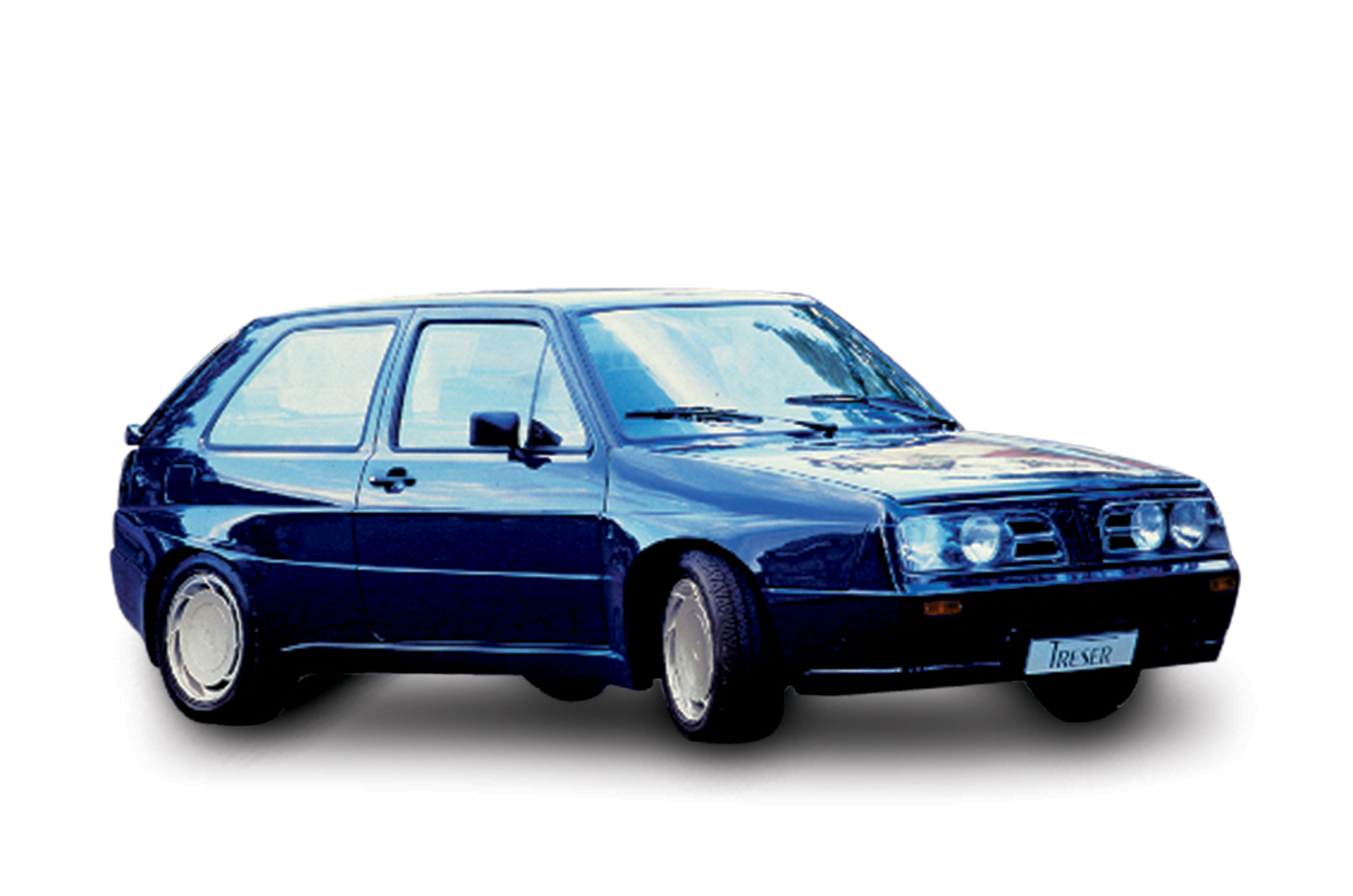
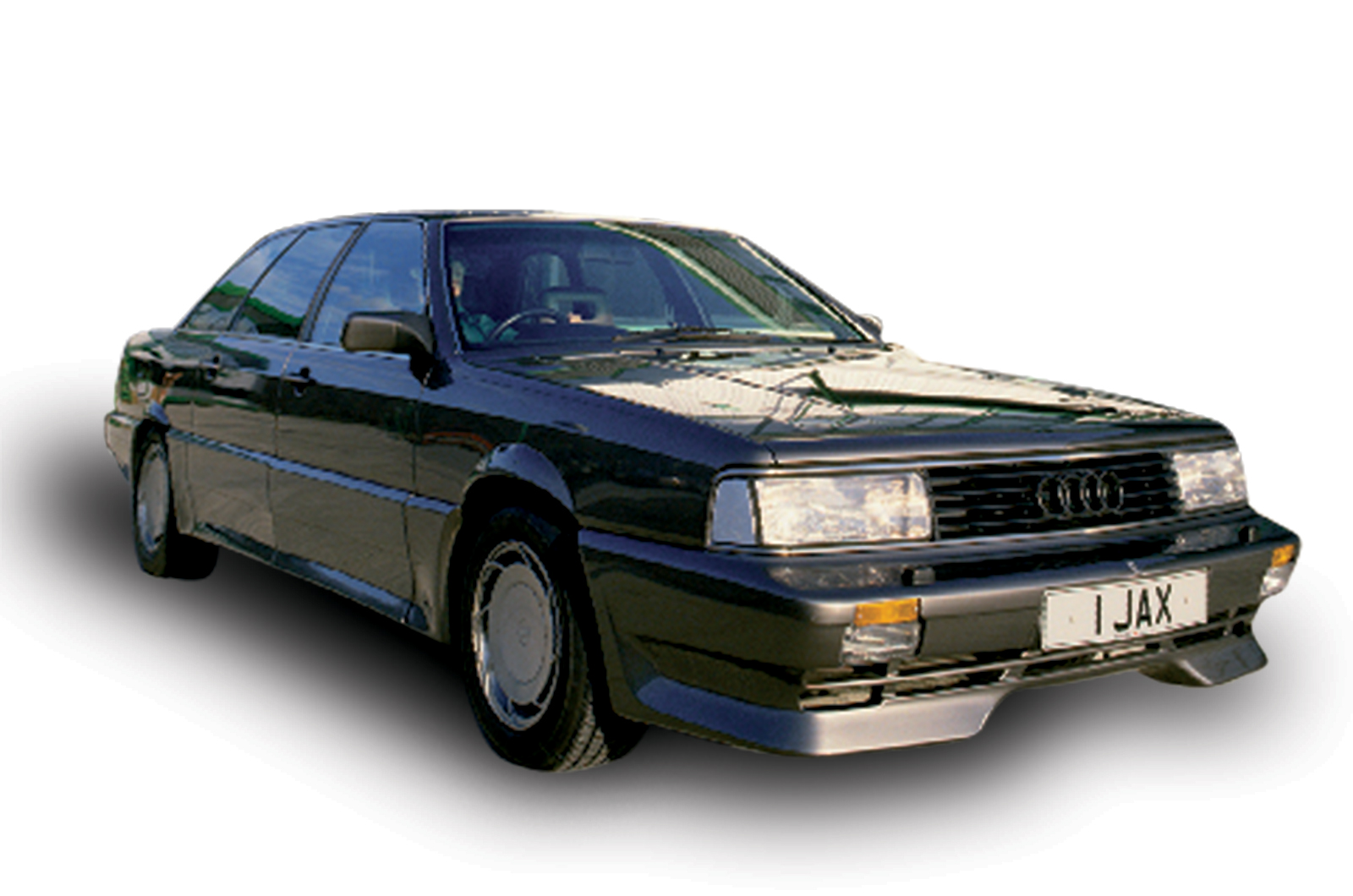
Walter Treser’s firm made bodykits for the VW Golf (left); the Largo was an Audi-based limousine

Despite later flirtations with Mercedes-Benz and Opel, Walter Treser will be best remembered for his work on Volkswagens and Audis.

Often dismissed as simply a tuner – with wild bodykits for the Golf (above) and Corrado, and most of the Audi range, plus uprated engines engineered by fellow former Audi man Roland Mayer – Walter Treser GmbH was much more.

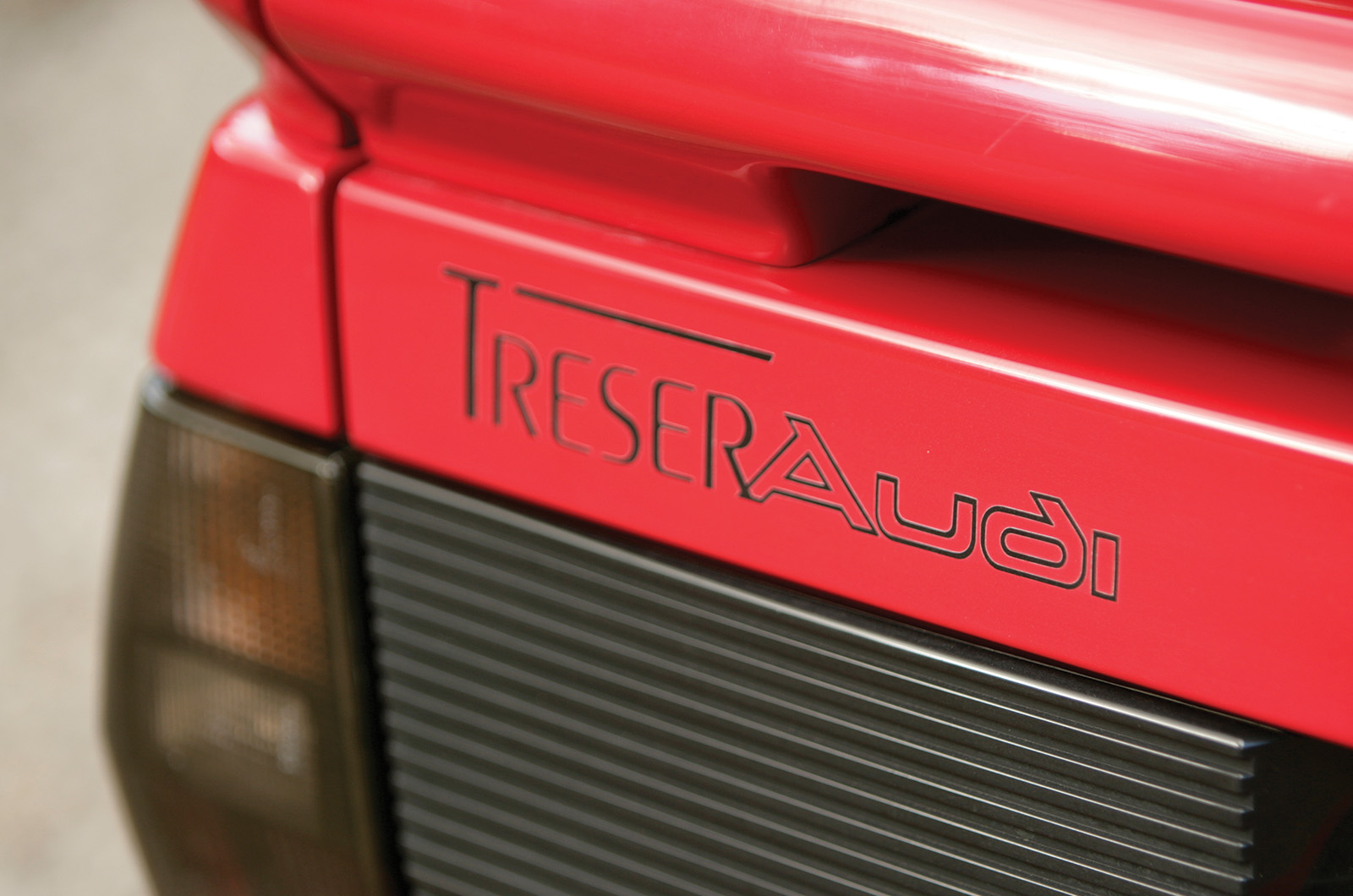
Alongside the quattro Roadster were folding-hardtop Volkswagen Polos and Mazda 626s, plus stretched (and often armoured) limousines based on the Audi 100/200 – the Largo (above) – and the Audi V8.

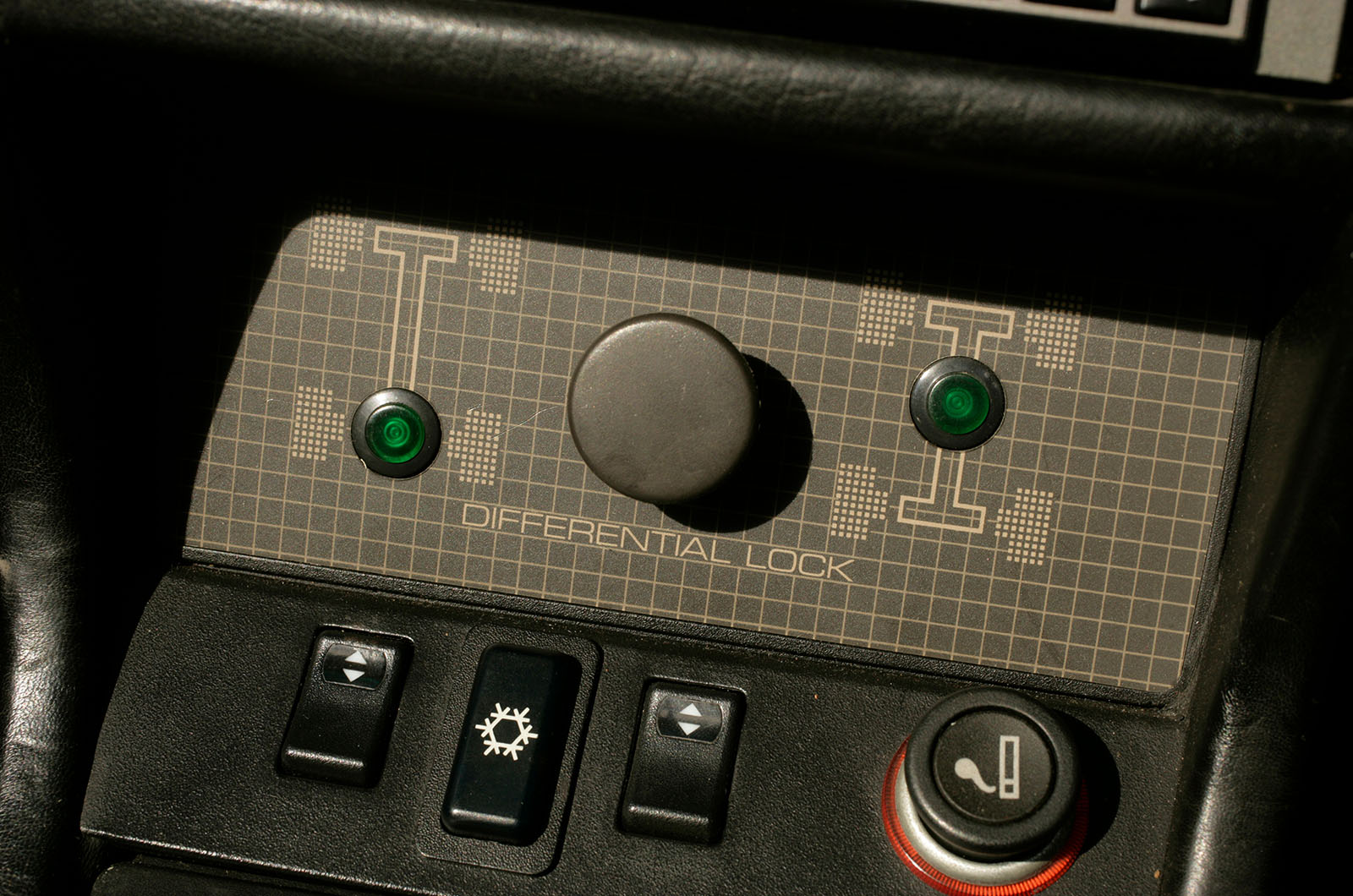
Still more extreme conversions included the Liner, a 180mph four-wheel-drive ‘bustleback’ super-estate, and the bizarre Hunter, an Audi 90-based off-roader/limo hybrid with a low-ratio ’box, diff locks, 180mm ground clearance, bullbars and a rear-mounted spare.

Classic & Sports Car – Audi quattro Roadster: five-pot soft-top

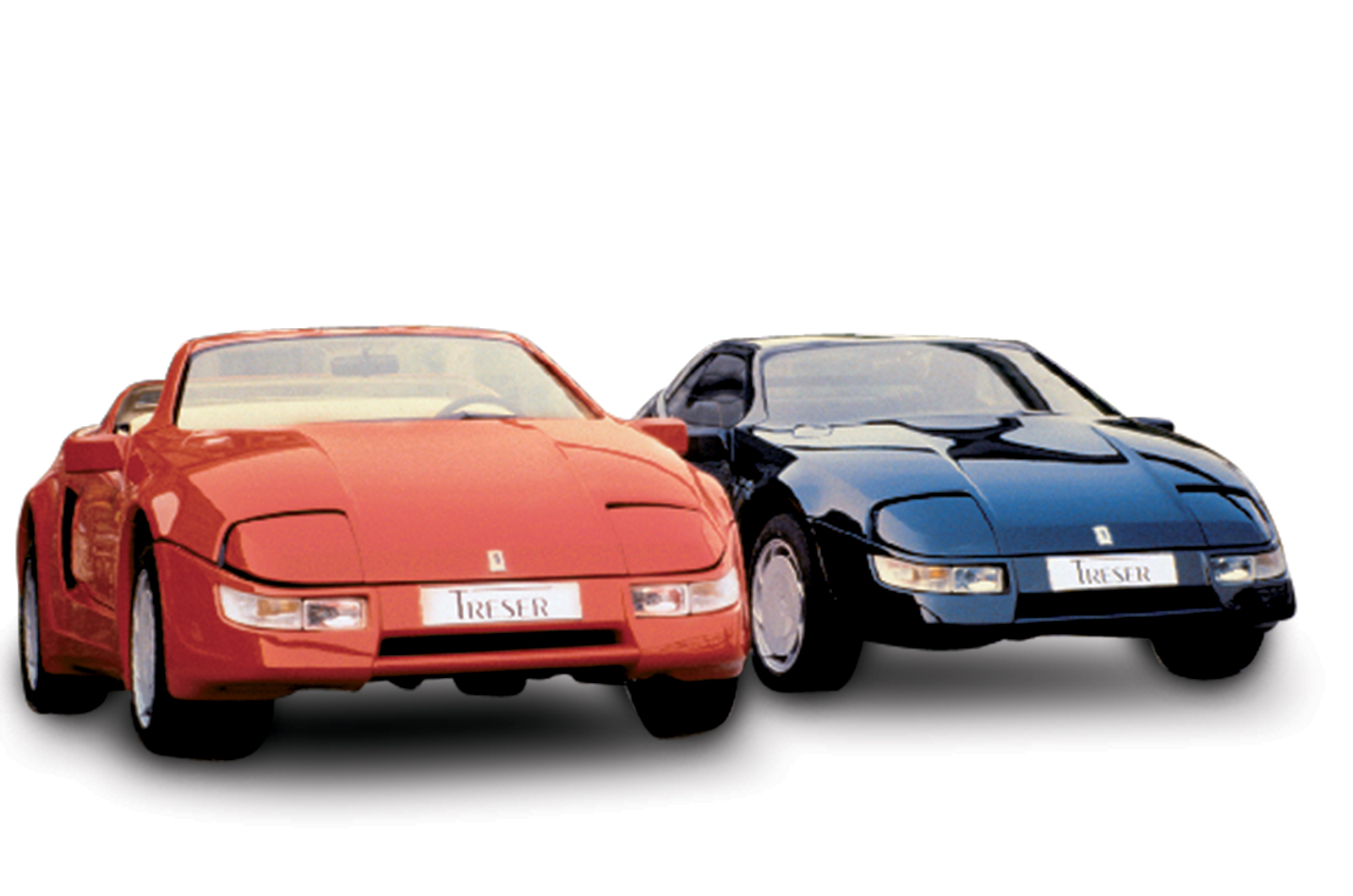
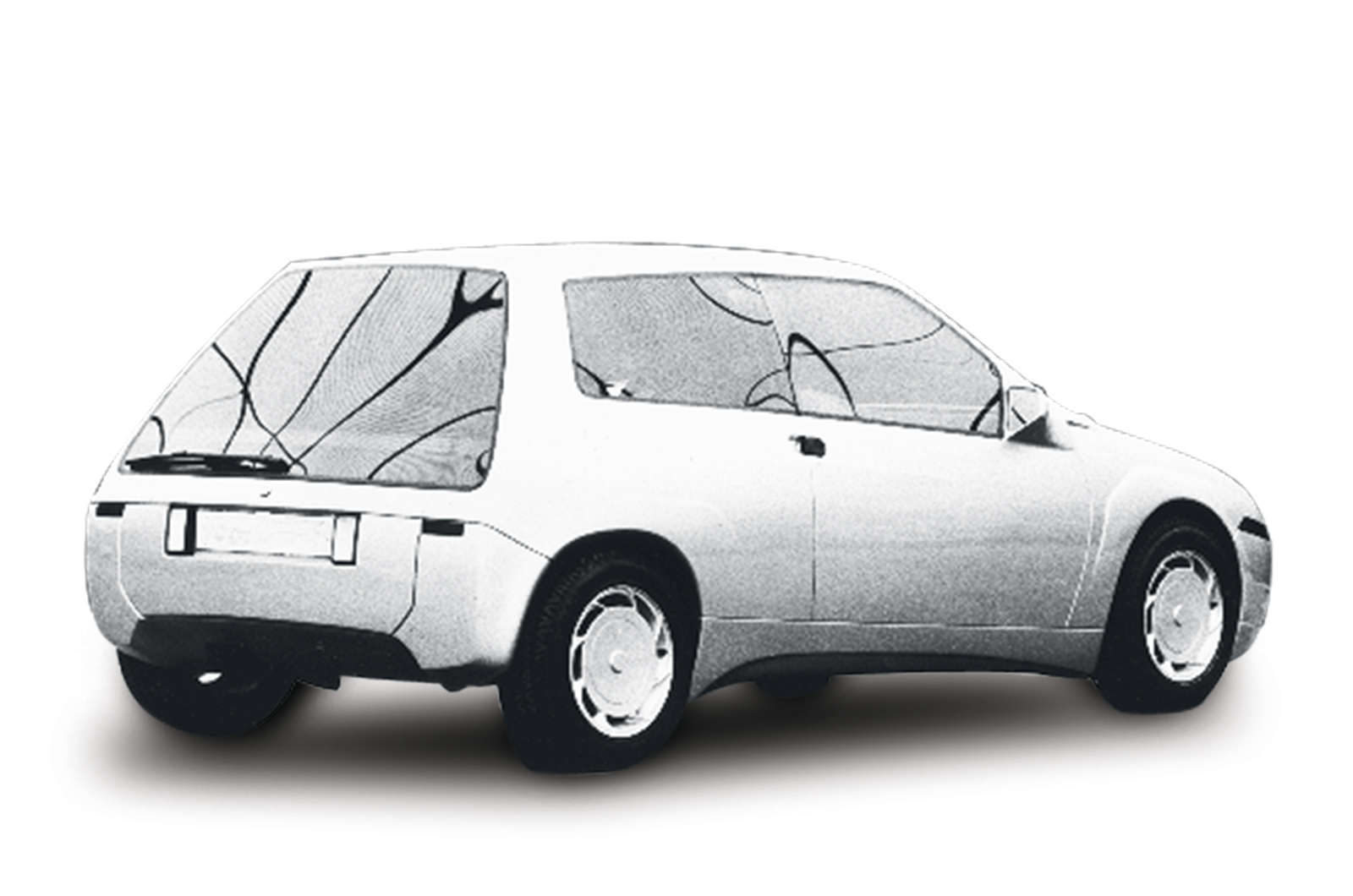
The TR1 was Treser’s first complete car (left); the TR2 never made it beyond the prototype stage

In 1987, Treser moved to Berlin and launched his first complete car, the TR1 (above). Powered by a 130bhp mid-mounted 1.8-litre 16v Golf GTI engine, the new two-seater featured an updated version of the Roadster’s retractable roof and employed extruded aluminium and glassfibre to keep weight down to 1100kg.

But, despite 27 sales and a one-make race series that launched Tom Kristensen’s career, the firm folded in August 1988.

The Golf-based TR2 (above) sadly remained just a prototype, but its bodykit and ‘1’ logo lived on when the rights were bought and it was marketed by Beutlich Body Design.


Factfile

Classic & Sports Car – Audi quattro Roadster: five-pot soft-top

Audi quattro Roadster

  • Sold/number built 1983-’86/39
  • Construction steel monocoque, with glassfibre hardtop and rear deck
  • Engine iron-block, alloy-head, ohc 2144cc ‘five’, two valves per cylinder, Bosch K-Jetronic fuel injection, KKK turbocharger and intercooler
  • Max power 197bhp @ 5500rpm [250bhp optional]
  • Max torque 210lb ft @ 3500rpm [272lb ft]
  • Transmission five-speed manual transaxle, 4WD
  • Suspension independent, by MacPherson struts with Bilstein gas shock absorbers, anti-roll bar f/r
  • Steering power-assisted rack and pinion
  • Brakes 11in (282mm) vented front, 9⅔in (244mm) solid rear discs, with servo
  • Length 14ft 5½in (4404mm)
  • Width 5ft 7¾in (1820mm)
  • Height 4ft 4¼in (1202mm)
  • Wheelbase 8ft 3½in (2300mm)
  • Weight 3880lb (1760kg)
  • 0-60mph 7.1 secs [6.6 secs]
  • Top speed 137mph [144mph]
  • Mpg 19.1
  • Price new £39,975 (1984)

Enjoy more of the world’s best classic car content every month when you subscribe to C&SC – get our latest deals here


READ MORE

Porsche 911 Carrera 2.7 MFI by Kremer: street-legal racer

Ferrari 512 Berlinetta Boxer by Koenig: singing a new tune

12 aftermarket tuners embraced by car makers