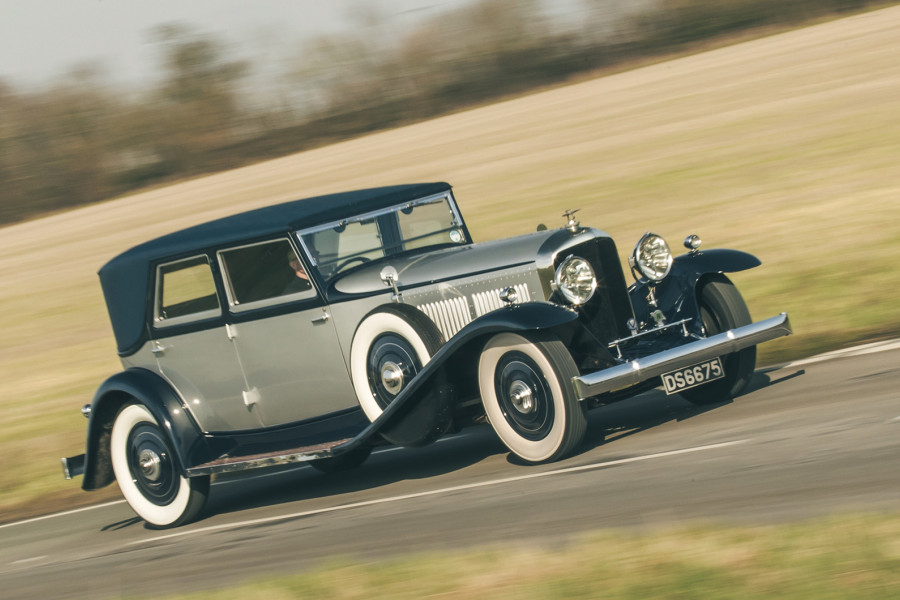
Bentley R-type Continental: elegance in excelsis

| 24 Oct 2025
Classic & Sports Car – Bentley R-type Continental: elegance in excelsis

The 208 R-type Continentals Bentley produced from 1951 to 1955 belong to that elite group of post-war classic cars that became ‘collectible’ almost from the moment they ceased production.

Art, science and engineering came together as never before in a Crewe product to make a car in which ultimate performance and ultimate refinement were no longer irreconcilable.

The Continental was not so much a silent sports car as a full-size, English interpretation of the gran turismo ideal, created to satisfy a pent-up appetite for a faster post-war Bentley with an identity separate from the rather pedestrian MkVI.

Classic & Sports Car – Bentley R-type Continental: elegance in excelsis

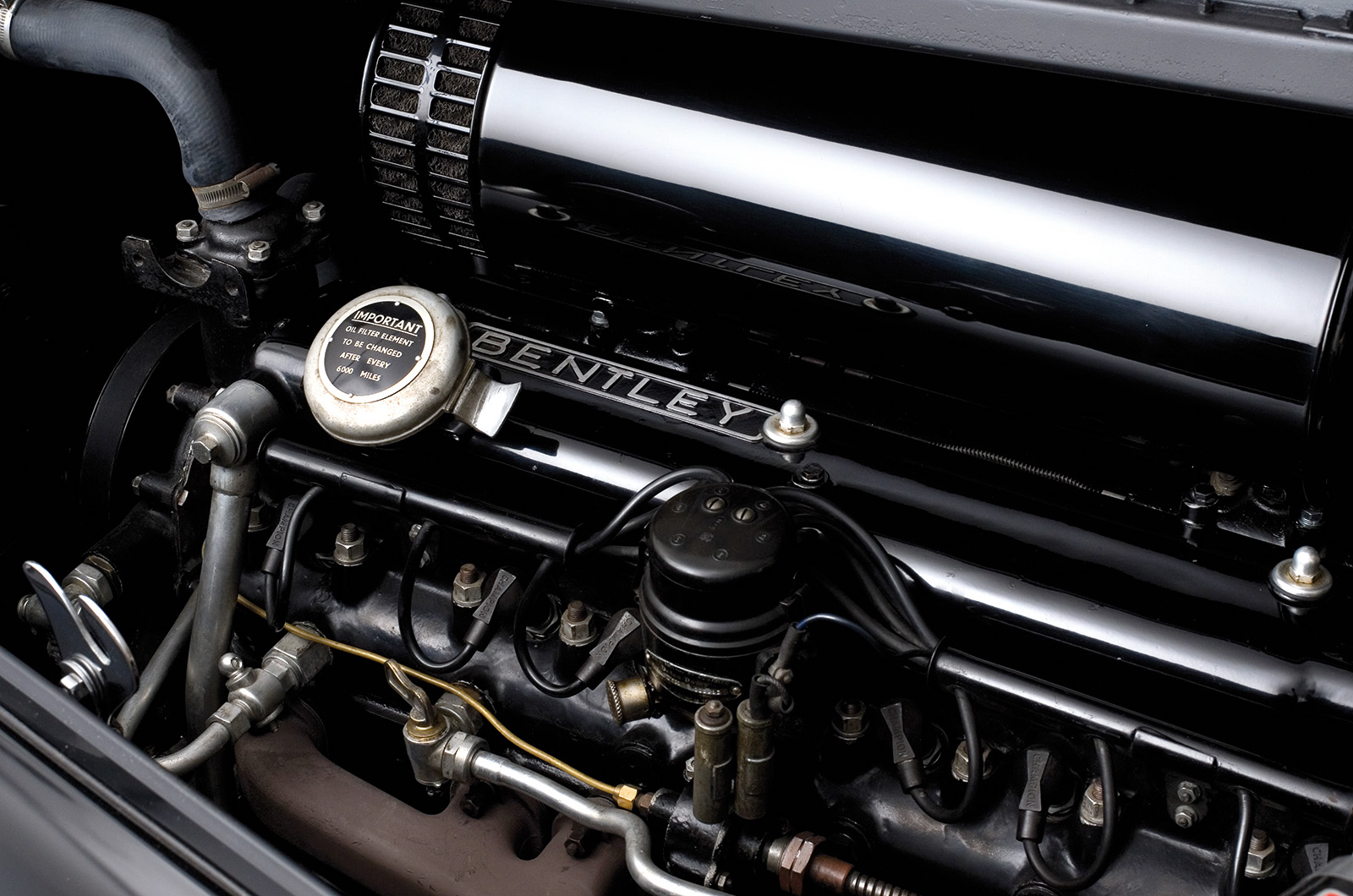
Bentley never disclosed the R-type Continental’s power output, but the torquey ‘six’ is thought to make about 158bhp

It was the fastest genuine four-seater automobile in the world at the time, capable of 120mph.

And, at £7300 after tax (around £200,000 in current money), it was also the world’s most expensive production car, within reach of only a few vastly wealthy tycoons in its domestic market.

Unsurprisingly, therefore, it was export-only initially, and overseas customers included the likes of Briggs Cunningham and Aristotle Onassis.

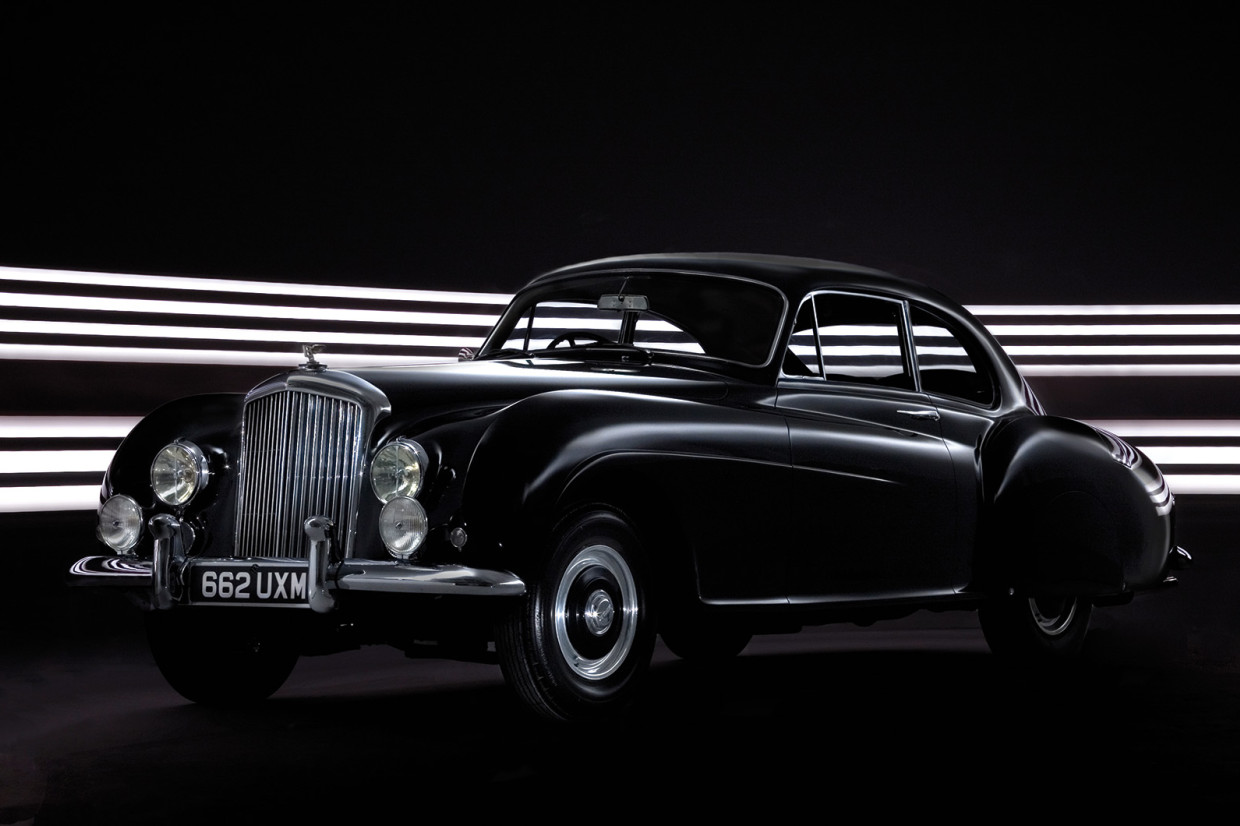
Wrought in aluminium over a steel frame by HJ Mulliner in London, the Bentley R-type was, and remains, the most effortlessly graceful of all big cars.

It evoked traditional imperiousness but reinterpreted by craftspeople who had designed and built aircraft during WW2.

Born in the era of the Comet and the Meteor, it was shaped in an aircraft wind tunnel and built light and slippery, like an airframe.

Voluptuous and commanding – large, but in no way flabby – the R-type Continental looked equally at home while hastening its wealthy occupants along a European highway as it did whispering them to a West End dinner appointment, its aspirating single-silencer exhaust note synonymous with quiet and expensive power.

Classic & Sports Car – Bentley R-type Continental: elegance in excelsis

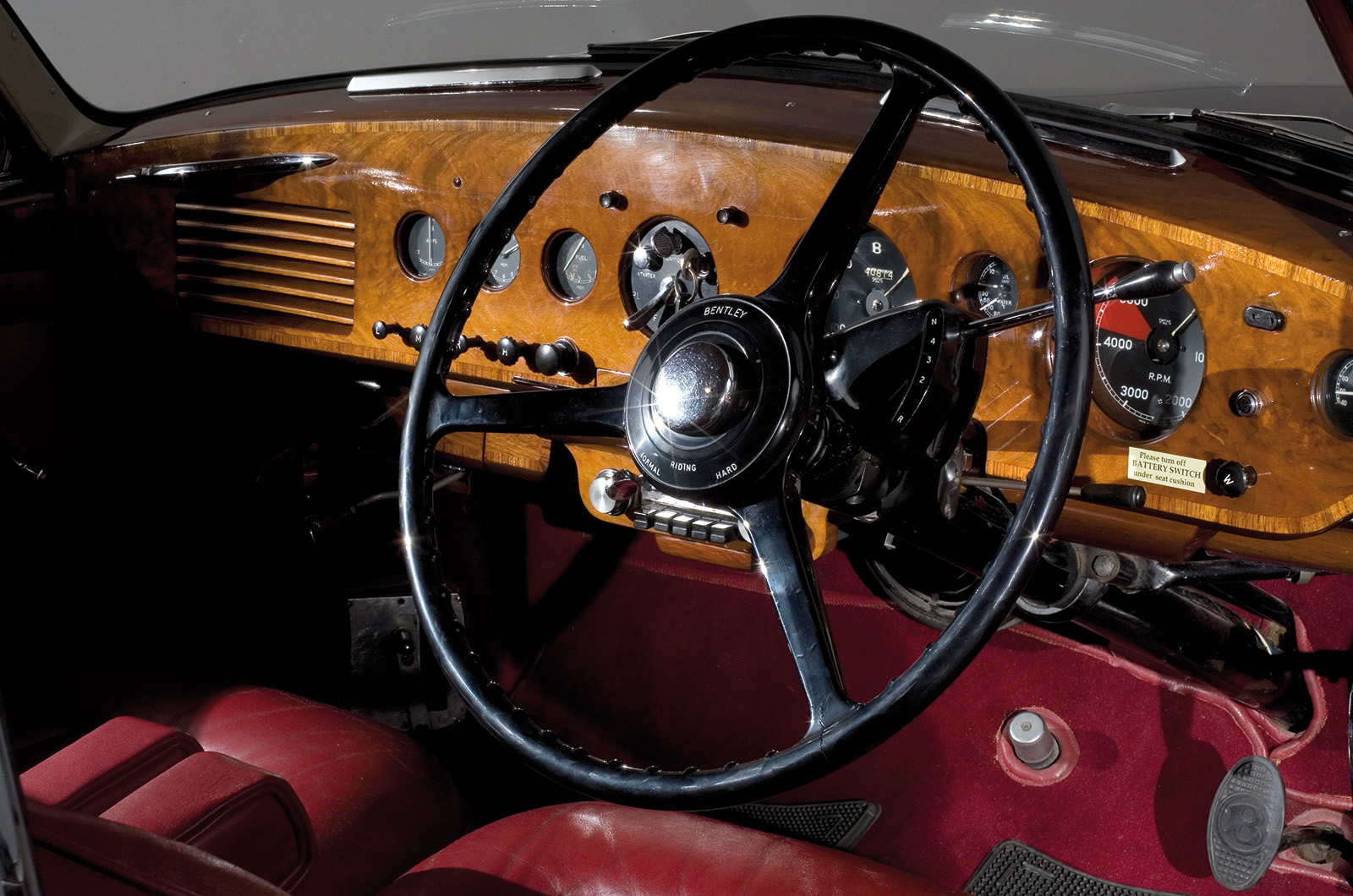
The Bentley R-type Continental’s cabin features voluptuous materials that disguise weight-saving measures

From the inside it was a car that exuded good living and refinement rather than decadence.

But the quality was unrivalled, the detailing exquisite: from the cut-glass interior light to the smooth action of the Yale key in the ignition ‘control box’, this was a place from which the world appeared a better place, even the tatty strife of austere, ration-book Britain.

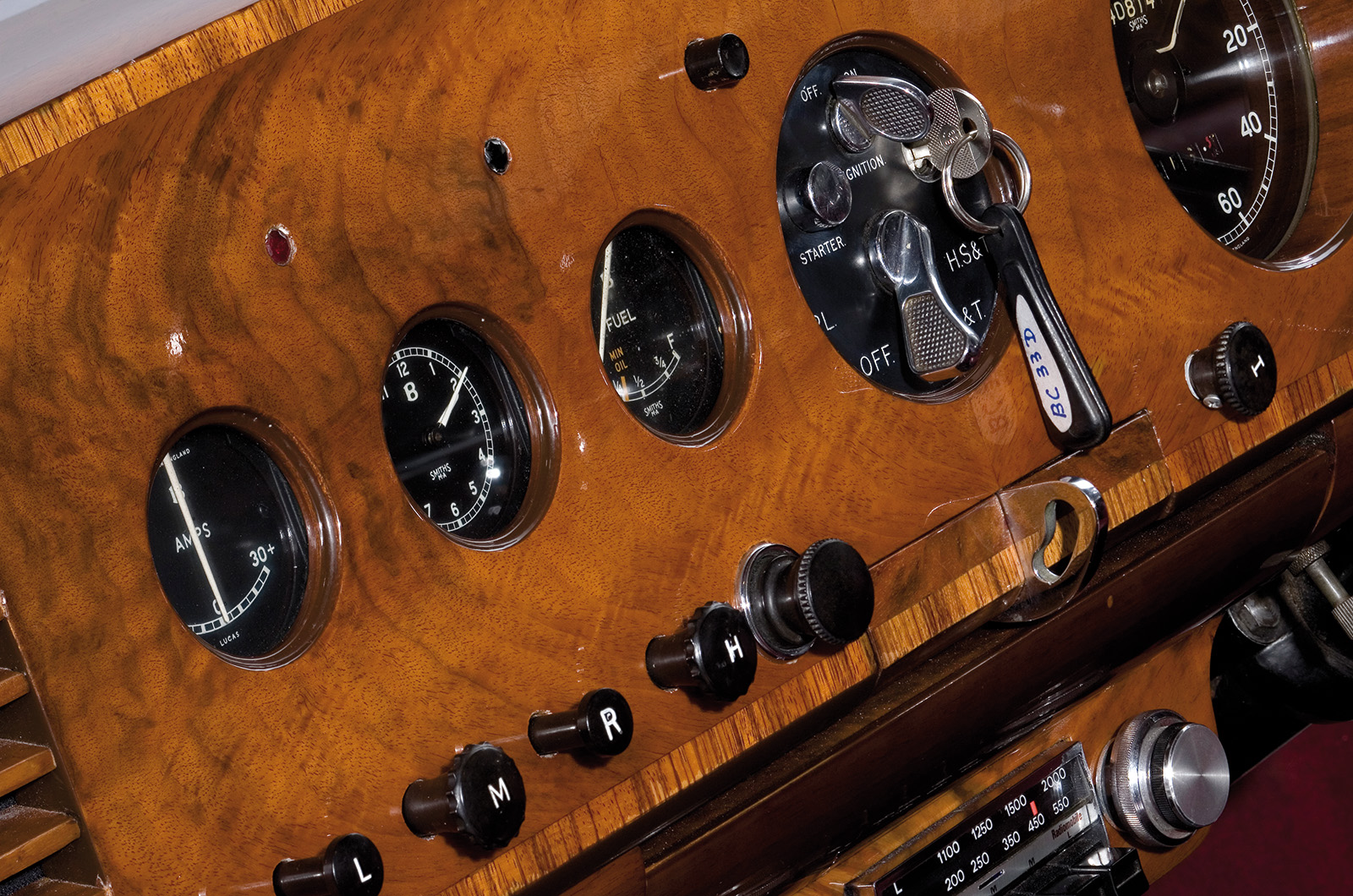
The minimal instrumentation of the Standard Steel saloons was replaced with a comprehensive array of individual gauges and a revolution counter in a far more attractive and simple fascia.

The Bentley’s slender, embracing bucket seats were a concession to lightening – along with special polished-aluminium bumpers and alloy window frames – but with rich walnut edging in contrasting straight grain, the finest leather, plus thick Wilton carpet underfoot, it showed that in no sense did the occupants of the Continental have to slum it.

There was rear head- and legroom for full-sized adults, and sufficient space in the sloping tail for a full complement of luggage.

The genesis of the Continental is rooted in the pre-war Corniche prototype and a 110mph two-door special built for André Embiricos in the late 1930s.

Slippery and high-geared, but prone to losing its tyre treads at high speed, it showed the direction a more sporting Bentley might take.

Classic & Sports Car – Bentley R-type Continental: elegance in excelsis

The Bentley R-type Continental’s lines are attributed to Ivan Evernden and John Blatchley

Once the war had ended, and the new Standard Steel MkVI had settled into regular production, the team at Crewe revisited the notion of a lighter, longer-striding and more powerful two-door Bentley.

Internally, it was referred to as the Corniche II, acknowledging that the new car was taking up where the pre-war prototypes had left off.

The Continental name made the link with the faster Rolls-Royce Phantoms, but ‘R-type’ was a retrospective sobriquet used merely to differentiate the car from S-type Continentals.

On introduction, the car’s official title was ‘Continental Sports Saloon’.

Joint authorship of the 1951 Continental is attributed to Ivan Evernden, who had joined Rolls-Royce in 1916, and John Blatchley, who would later style the Silver Cloud, a subsequent version of the Continental and the Silver Shadow.

The shape was crafted in the Rolls-Royce wind tunnel at the Hucknall Flight Test establishment, Derbyshire, in 1950, working at first with a quarter-scale clay model.

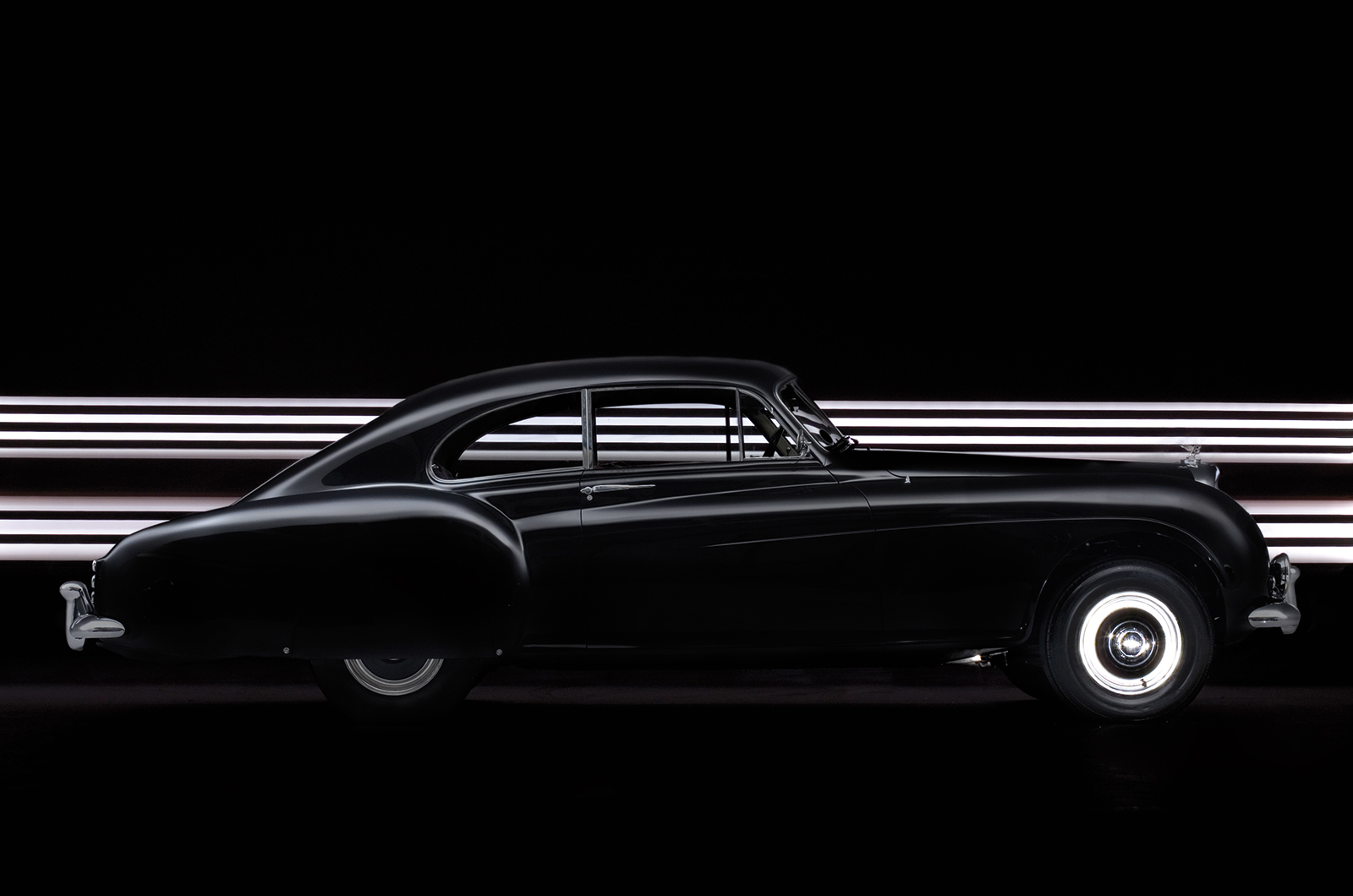
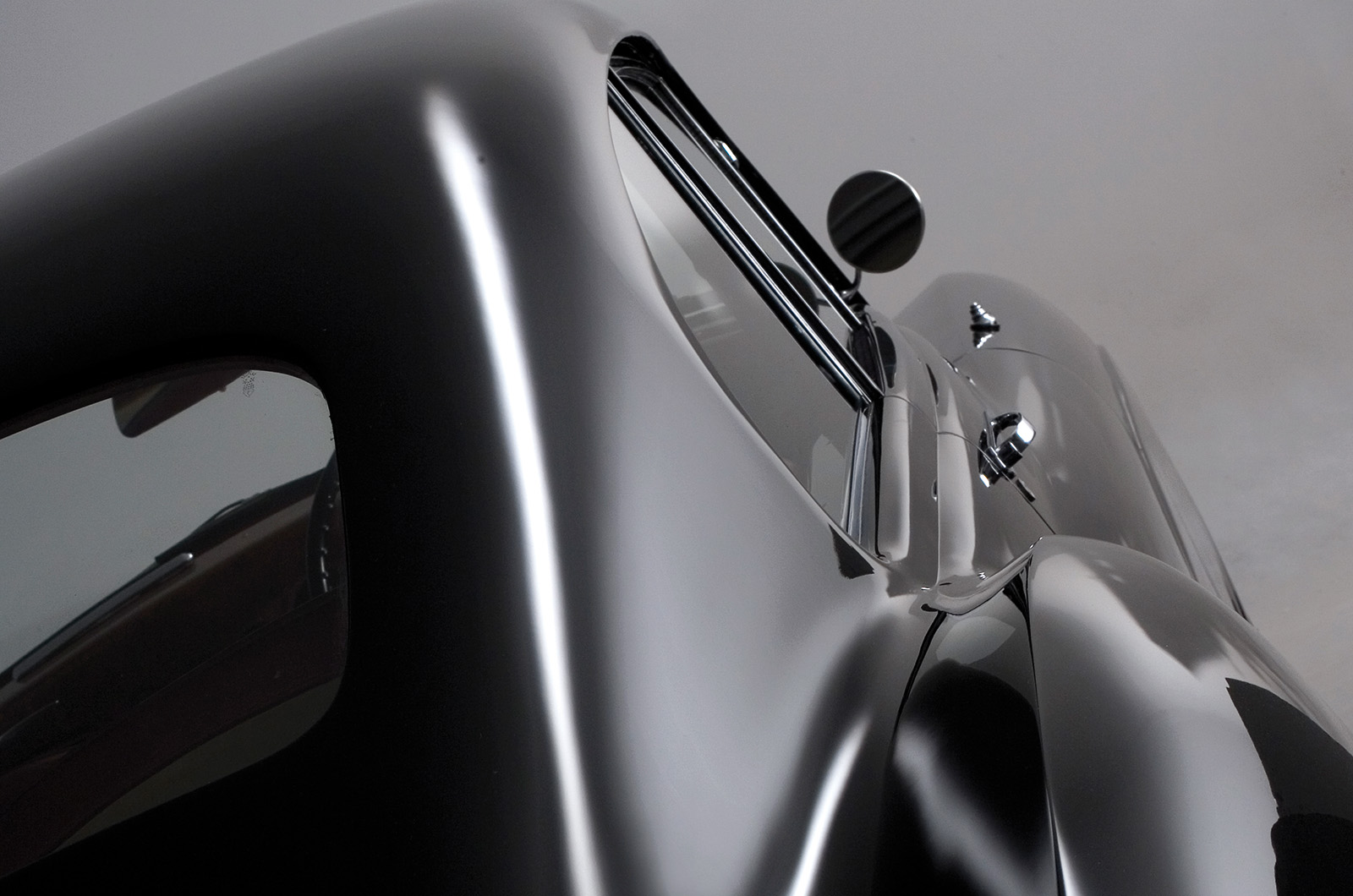
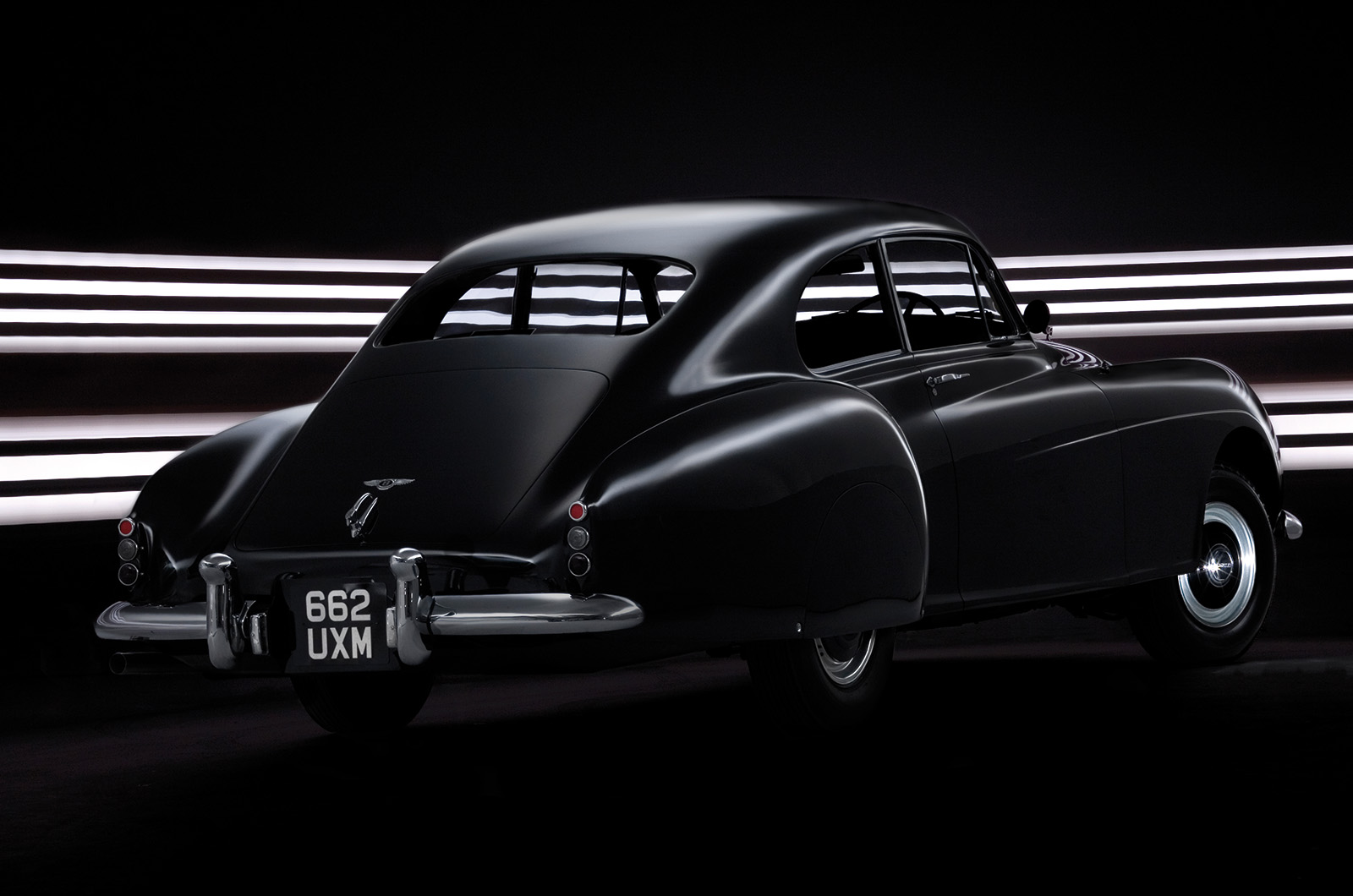
With its sweeping fastback rear end and muscular haunches, its shape was born from a skilful blend of streamlining requirements and a determination that the car would be very stable in a straight line.

Classic & Sports Car – Bentley R-type Continental: elegance in excelsis

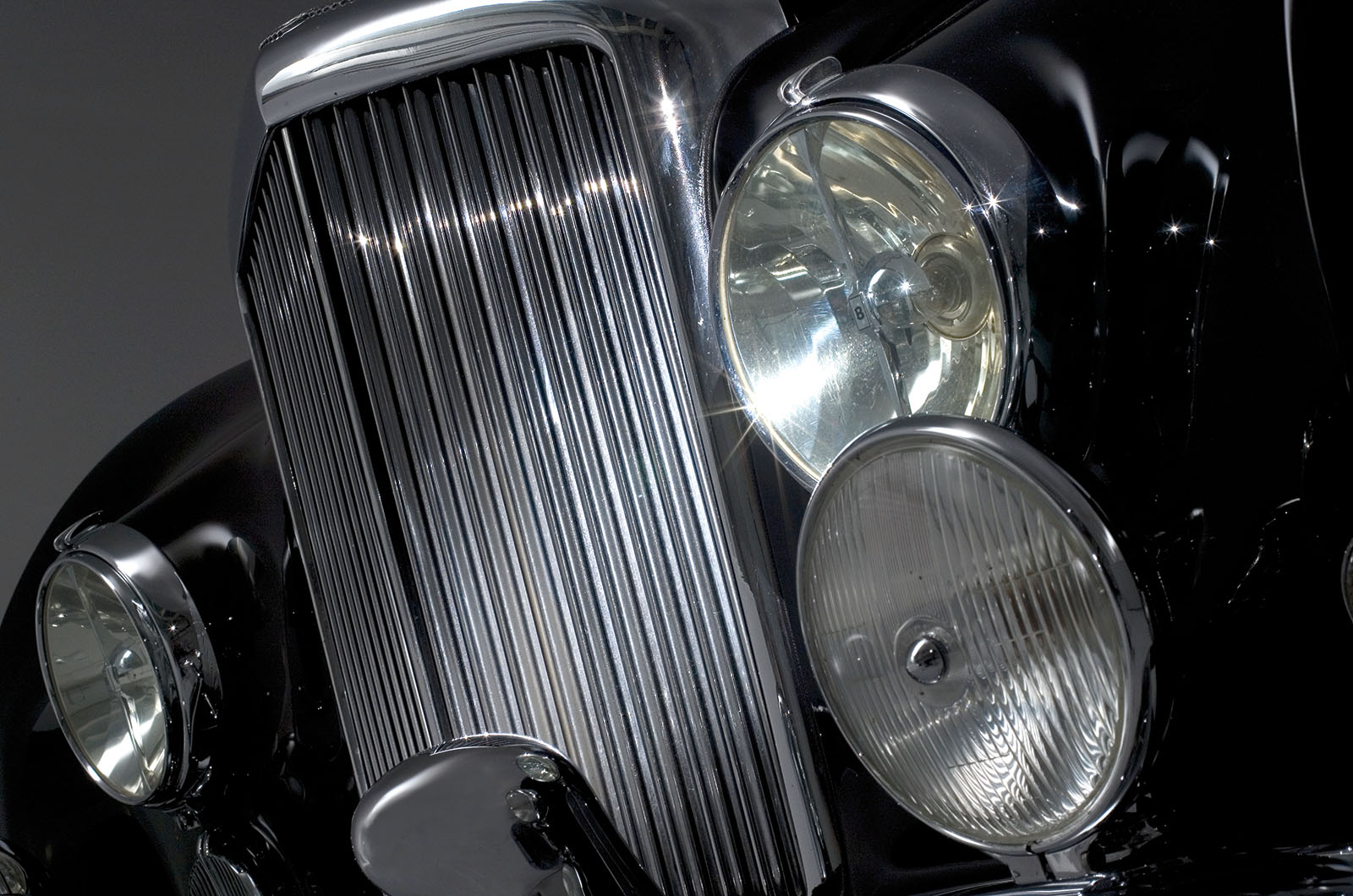
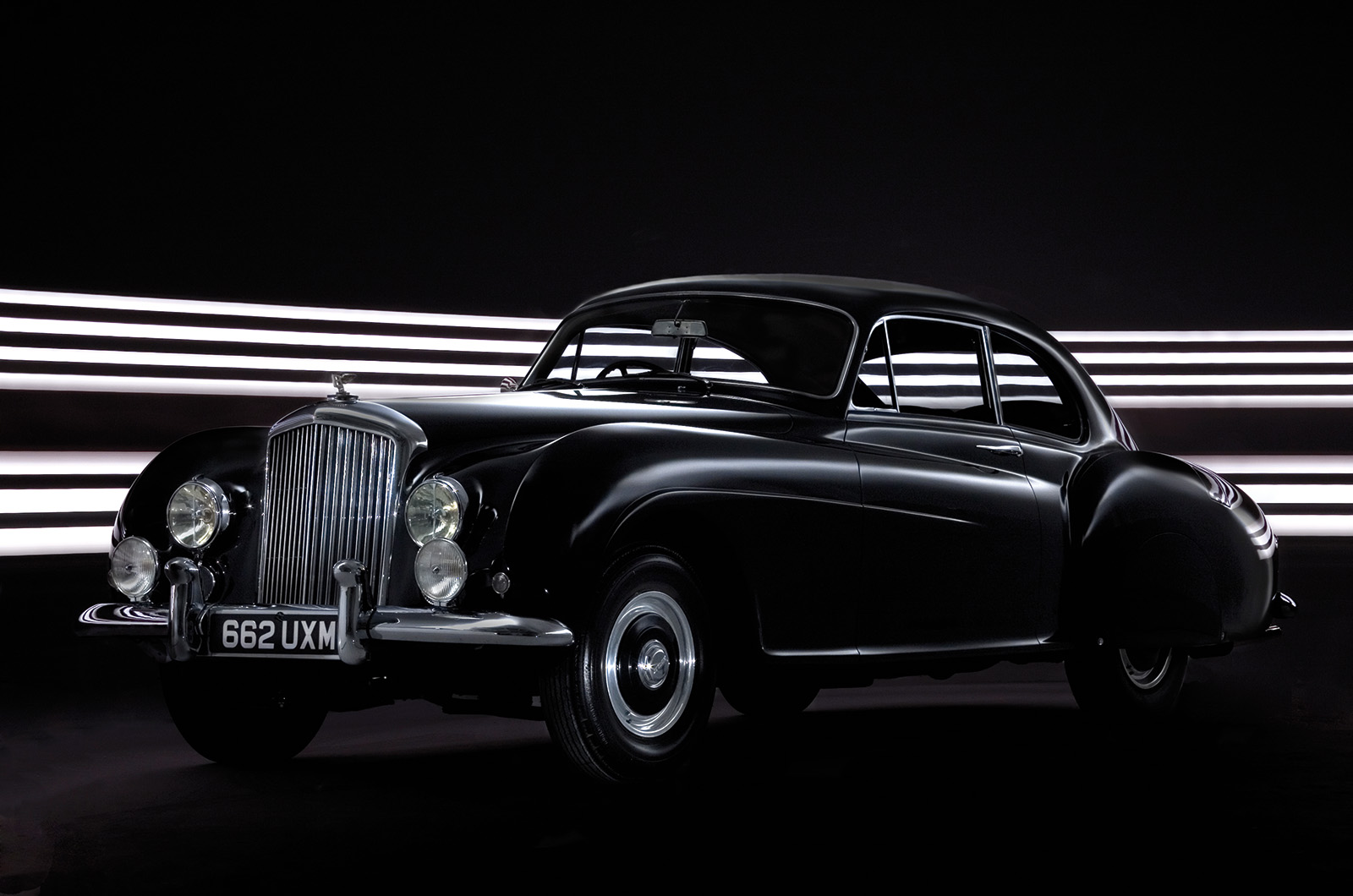
The R-type Continental’s grille had to be recognisably Bentley

The shape was tested at air speeds of up to 120mph and for side-wind stability, and it was found that raising the line of the rear wings made the design more resistant to lateral deflection in side gusts. 

Blatchley and Evernden also recognised, thanks to the testing, that the windscreen pillars would have to slope backwards more than they had on any previous Bentley, with a radius curve on the windscreen to allow air to spill away.

Curved safety glass technology was in its infancy then, which is why the Continental prototype, ‘Olga’, had a split front ’screen.

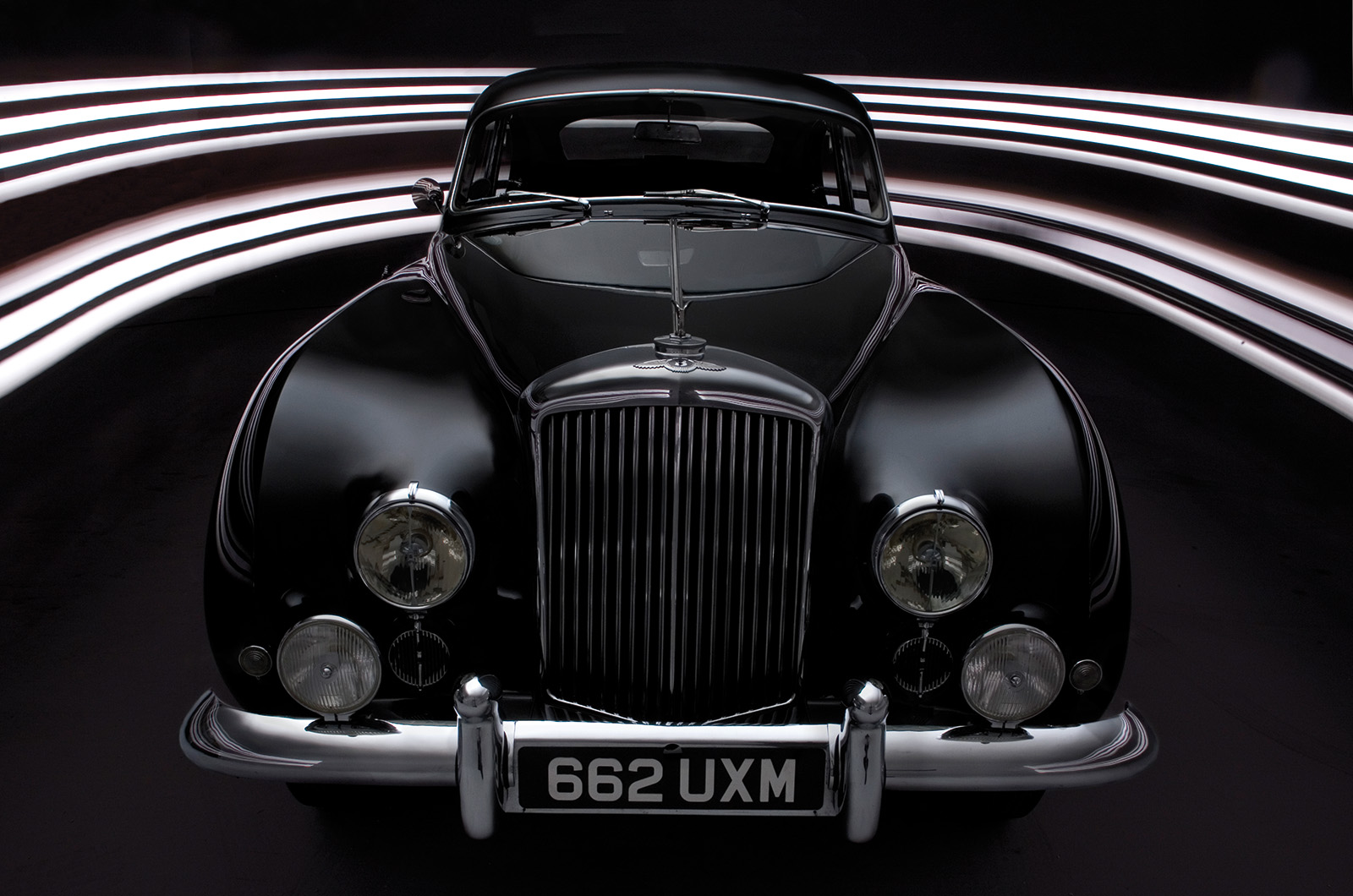
At the front it had to look like a Bentley, with a proper radiator shell: Evernden had wanted a more plunging nose but was granted a 1½in shorter grille for a lower, sleeker bonnet line.

The Continental was 7in longer than the R-type saloon and 2½in wider.

Also, the roofline of Olga was 1in higher than the production Continentals, but that didn’t hamper top speed, recorded at 124mph during testing in France.

Under the masterful body, a nicely massaged drivetrain was conceived around the twin longitudinal-section chassis, although, apart from the lower steering-column rake and the differently shaped fuel tank, it looked much the same.

Classic & Sports Car – Bentley R-type Continental: elegance in excelsis

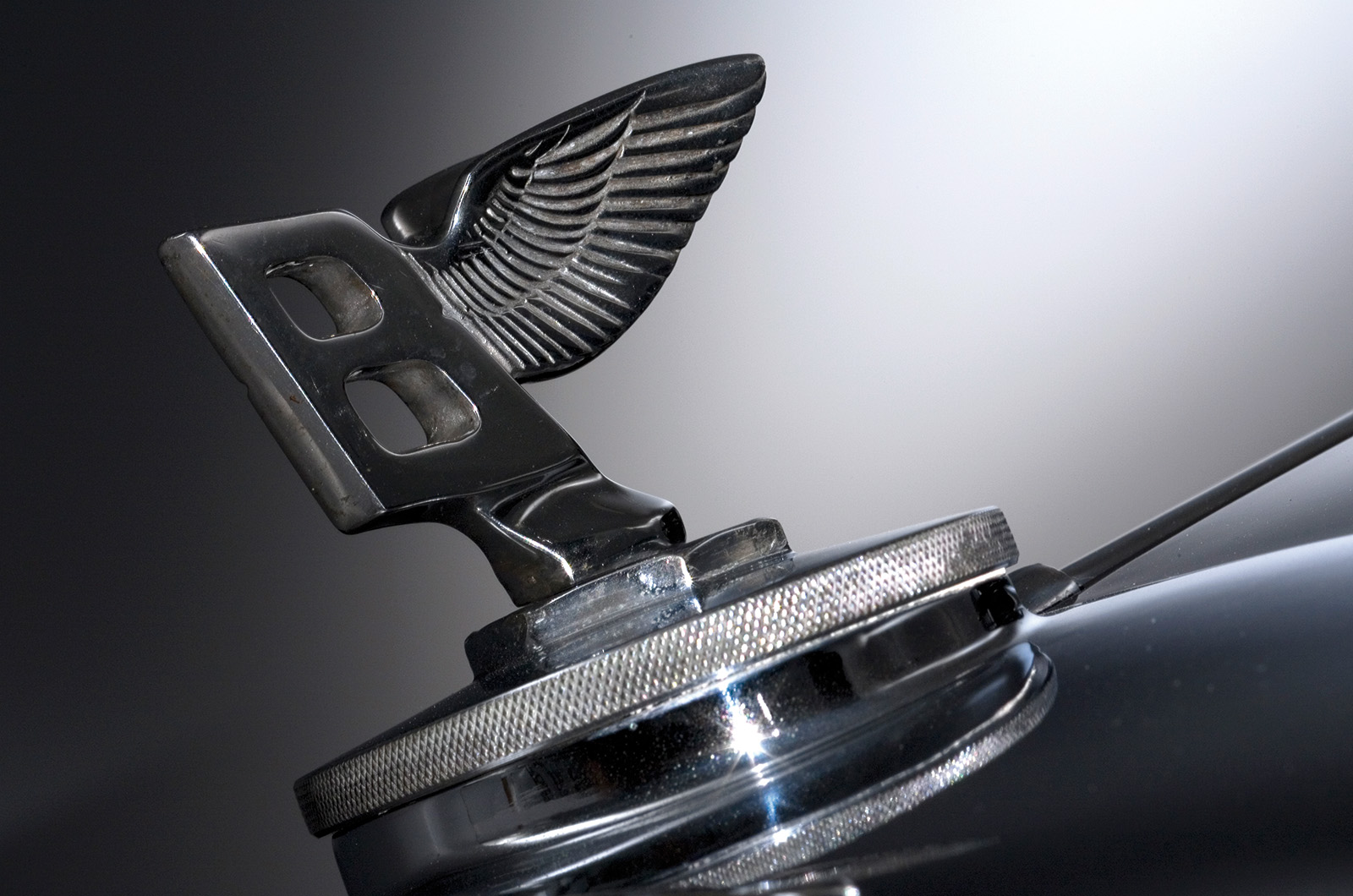
The Bentley R-type Continental’s famous badge

The first Bentley R-types had a riveted chassis, but a lighter, stiffer welded frame came in later.

Thanks to a higher compression ratio, at 7.25:1, plus a higher-lift camshaft and a more efficient exhaust system, a healthy additional 25bhp was realised from the B60 straight-six engine.

This middle child of a modular family of four-, six- and eight-cylinder inlet-over-exhaust engines maintained its smoothness and torque, and was hugely durable.

Although its true overall power figure was never officially revealed, it was thought to be about 158bhp, rising to 173bhp on the 4887cc D-series cars with 7.8:1 compression ratio.

A 3.07:1 final drive gave 28mph per 1000rpm in the overdriven fourth gear and reduced the possibility of over-revving the engine.

Using the delightfully smooth right-handed gearlever, the maxima in the intermediate ratios were as astonishing as the top speed: 45mph in first, 77mph in second and a heady 100mph in third.

Classic & Sports Car – Bentley R-type Continental: elegance in excelsis

The Bentley R-type Continental has a bluff front end, despite its overall swoopy shape

Bentley knew that a more streamlined shape and extra power would bring the greater urge it wanted, but tyres were a limiting factor.

There were none commercially available that could sustain the weight of a standard Bentley at the 120mph Crewe had projected for the Continental.

Thus, the weight of the car had to be kept under 34cwt (3808lb), both to maintain acceleration with the high gearing and to ensure the tyres would last more than a few miles at top speed.

At 3600lb, the prototype Continental was a creditable 360lb lighter than the R-type saloon, but most owners still didn’t get much more than 5000 miles from a set of tyres if they used the performance.

While drivers of the Standard Steel saloons would routinely pull away in second, the high gearing of the Continental meant the unsynchronised first gear was there to be used more often.

In fact, up to 70mph it was only marginally stronger than the Standard Steel in acceleration.

Beyond that, however, it gathered speed majestically but determinedly to leave virtually everything else behind it; in top gear, 100mph was a mere 3500rpm.

Classic & Sports Car – Bentley R-type Continental: elegance in excelsis

The Bentley R-type Continental’s shapely flanks

Fuel economy probably wasn’t a major concern to a person who could afford to blow the price of a house on personal transportation, but the fact that a quietly driven Bentley R-type Continental might achieve 20mpg did not go unnoticed.

With no power assistance to the steering, the Continental was not the most manoeuvrable of cars in the city, but it handled beautifully at higher speeds, with its smooth controls and lighter, lower build.

It understeered, of course, and it wasn’t really about aggression (buyers had to undertake never to enter the car in competition), but driven with anticipation and commitment few, if any, other big cars were anything like as capable.

The relative lack of lean and the shapely seats helped a lot.

A light, positive clutch was a bonus and the brakes, 12¼in drums boosted by a Rolls-Royce gearbox-driven servo, hauled up the large coupé tirelessly and progressively.

HJ Mulliner built royal limousines and, during the war, had produced engine cowls for Mosquitos.

Still independent of Rolls-Royce, the company had experience in constructing lightweight bodywork and had built a few MkVI specials with similar fastback styling to the Continental.

Nevertheless, in 1950 Mulliner felt compelled to consult Pinin Farina and other Turin coachbuilders over the best technique for attaching the car’s aluminium body to the Reynolds steel framework. 

Classic & Sports Car – Bentley R-type Continental: elegance in excelsis

The Bentley R-type Continental received an array of individual gauges

Mulliner delivered OLG 490 (Olga) to Crewe in August 1951, but production didn’t start until June 1952.

Of the 208 cars built (including the prototype), 108 were for the home market, the rest for export. France received 33, 28 went to North America and 24 to Switzerland, with the rest going as far afield as Cuba.

They were built in five series, A to E, most conforming to the ‘C’ suffix, about the time that an automatic transmission became available. 

Chassis were sent from Bentley in Crewe to Mulliner’s New Kings Road works by rail.

Although all the right-hand-drive manual-gearbox cars had the usual floor change; left-handed manuals had a fashionable column shift – it sounded less than promising, but is said to be excellent.

Less good is the central floor change, optional on both left- and right-hand-drive examples. 

Only the first handful of Continentals was to the original uncompromising lightweight specification.

Extreme weight-saving deletions such as the ashtray, radio and radiator cap were immediately reinstated on production cars.

Classic & Sports Car – Bentley R-type Continental: elegance in excelsis

The Bentley R-type Continental’s shape was determined by wind-tunnel tests

The alloy bumpers disappeared almost straight away in favour of the heavy-duty Wilmot Breedon ‘export’ type, and, increasingly, the customers who could actually afford such a car also craved their home comforts, insisting on fatter, heavier seats and electric windows.

The D-series models – with bigger, 4.9-litre engines – to some extent made up for the extra weight (the units were retrofitted to a number of the earlier-series cars), but it’s a mistake to think later cars are necessarily heavier.

Bentley R-type Continentals ranged in weight from 3749lb to 4033lb depending on specification, and in the end only 42 buyers chose the automatic option.

It should also be noted that not all Continentals had the HJ Mulliner bodywork: some 15 cars from the C, D and E series were fitted with alternative coachwork.

Park Ward built four dropheads and a couple of two-doors, while overseas coachbuilders Franay, Graber and Pinin Farina accounted for the rest.

Production of the Bentley R-type Continental ended in April 1955.

Although the Continental name was perpetuated on some beautiful coachbuilt coupés through to the mid-’60s, none of these recaptured the magic of the original.

Classic & Sports Car – Bentley R-type Continental: elegance in excelsis

This Bentley’s proud bonnet mascot

When it became increasingly obvious there would be no more lightweight, manual-gearbox S-type Continentals true to the word and spirit of the ’51 car, the market quickly recognised just what a special moment Bentley’s R-type had been, and its future as a gilt-edged classic was assured.

Even in the late ’60s, before the classic car movement was even close to critical mass, a good, straight, 15-year-old R-type Continental still achieved half the price of a new Silver Shadow. 

Such reputations are not easily made, and the Continental, less numerous than most kinds of ‘WO’ Bentley, is as deserving of the reverence in which it is held today as a Ferrari 250GT SWB, BMW 507 or Mercedes-Benz 300SL.

Without doubt the finest and fastest 1950s cross-continental road car, it is also, perhaps, the best Bentley ever.

Images: Peter Spinney

Thanks to: Frank Dale & Stepsons

This was first in our January 2008 magazine; all information was correct at the date of original publication


Factfile

Classic & Sports Car – Bentley R-type Continental: elegance in excelsis

Bentley R-type Continental

  • Sold/number built 1952-’55/208
  • Construction steel separate chassis, steel body frame and aluminium panels
  • Engine iron-block, alloy-head, inlet-over-exhaust ‘F-head’ 4566/4887cc straight-six, twin SU carburettors
  • Max power 158-173bhp @ 4500rpm
  • Max torque n/a
  • Transmission four-speed manual or four-speed automatic, RWD
  • Suspension: front independent, by wishbones, coil springs, anti-roll bar rear live axle, semi-elliptic leaf springs, ride control; adjustable lever-arm dampers f/r
  • Steering cam and roller
  • Brakes drums, with mechanical servo
  • Length 17ft 2⅛in (5235mm) 
  • Width 5ft 11½in (1816mm) 
  • Height 5ft 3in (1600mm)
  • Wheelbase 10ft (3048mm) 
  • Weight 3739lb (1696kg) 
  • 0-60mph 13.5 secs 
  • Top speed 120mph
  • Mpg 16.1
  • Price new £7300

Enjoy more of the world’s best classic car content every month when you subscribe to C&SC – get our latest deals here


READ MORE

Bentley MkV Corniche: unique prototype reborn

Bentley S2 Continental: a unique chop and change

Embiricos Bentley: unique Le Mans racer and family car